The Casual Blog

Cats and curiosity, humans and dishonesty

Isabelle, a/k/a Izzie, "The Wild One"

Isabelle, a/k/a Izzie, “The Wild One”

There was an amazing story in the NY Times last week about a house cat that got lost 200 miles from home and somehow found its way over unfamiliar territory to its human family. It sounds impossible, but apparently there was adequate proof, including a computer chip in the cat.

Sally dearly loves our cats — Phoebe, Isabelle, and Rita. She buys them toys, speaks babytalk to them, and lets them sleep on top of her. They make her laugh and coo. I admit they are beautiful, but I have never been as smitten. They shed hair everywhere. They periodically throw up hairballs and other sundries, usually at a prominent spot on a nice rug, and sneakily try to steal food from our plates. But for the last several years, most of the time I paid them little attention, and they did the same to me.

Phoebe ('Feed Me")

Phoebe (‘Feed Me”)

Lately, though, they’ve been wooing me. Rita wants to cuddle with me in the easy chair. Isabelle follows me to the bathroom and nuzzles my leg. Phoebe likes to get into my lap when I’m eating. They’ve gotten me to pet them more. They purr more. They haven’t tried to bite me in quite some time. It’s nice.

I tend to think of our cats as not very bright, even for cats, and mainly enjoy their grace. But they do have skills. They are wonderful at rapid acceleration and deceleration, and do amazing leaps. They seem at times to concentrate completely and at other times to relax completely. And they are extremely curious about anything new. They’ll thoroughly explore every new paper bag and box.

Rita, the sweet one

Rita, the sweet one

They’re getting older. Phoebe is now 12, Isabelle is 10, and Rita is 6. Perhaps age has a mellowing effect and accounts for their increased affectionateness. Perhaps they detected some change in me. There’s no doubt but they are working on me, and making some changes.

Still curious about how humans work and why we do do so many silly things, I finished reading Predictably Irrational, the Hidden Forces that Shape Our Decisions, by Dan Ariely, a psychology and behavioral economics professor at Duke. His style is a bit chatty, but some of the substance is fascinating. Working along some of the lines of Kahneman and Tvesky, he examines such problems as our difficulties in managing our money or avoiding unhealthy food and our inability to foresee the bad decisions we may make when sexually aroused.

One of the most interesting chapters describes an experiment designed to examine cheating. A control group took a simple knowledge test, and other groups took the same test with the answers “accidentally” provided to subjects. The basic finding was that a majority of those given a bit of temptation and opportunity to cheat did so. But Ariely found that the cheaters didn’t cheat as much as they could have. Instead, most cheated only a modest amount. There seemed to be some threshold beneath which the dishonest behavior was not particularly troubling, and above which it was.

There was an interesting essay by James Nortz in the current Docket, the magazine of the Association of Corporate Counsel, which describes some more of Ariely’s work on honest and cheating from his book The (Honest) Truth About Dishonesty: How We Lie to Everyone — Especially Ourselves. Nortz proposes that we view dishonesty as a universal human trait, but one which manifests itself according to varying circumstances. He suggests that facing up to these disturbing realities could help us design better compliance and ethics programs.

Stuart, still the greatest

Stuart, still the greatest

Beyonce’s Pepsi cluelessness, and a note on foam rolling

Rita, ready for her closeup

Rita, ready for her closeup

I’ve got nothing against Beyoncé, and in fact have for her the sort of warm feelings one has for overwhelmingly beautiful females one is unlikely ever to meet. Thus I was a little sorry to see her attacked in the press for her rich new deal to lend more of her celebrity to the cause of getting people to drink more Pepsi. Her critics noted that Pepsi and similar sweet fizzy drinks are a major cause of the obesity epidemic and related diseases such as diabetes. Why would a smart,creative, caring person with no desperate need for cash do such an awful thing?

Though a little sorry, I was also cheered that this issue was raised in mainstream publications. Of all the ways we might choose to make ourselves ill, drinking lots of Pepsi and similar drinks is surely one of the silliest. Just as with cigarettes, we’ve come over time to understand that the risks are serious, but even with that understanding, the evil brilliance of Madison Avenue advertising overwhelms logic. Beautiful celebrities can do a lot of damage along this line.

This all seems fairly obvious, but it was one of those things that, as recently as last week prior to the Beyoncé brouhaha, it was hard to say without seeming like a fanatical kook. The ad campaigns, pursued over generations now with increasing sophistication, have really worked — they’ve taken over our brains. Countless millions believe they need and enjoy their sodas, and the same goes for chips. Suggestions to the contrary can excite hostility. Recently I suggested to a friend that it would be a good idea to label salty crunchy fried products with some sort of warning — say, a skull and crossbones. He looked at me like I must have completely lost my mind!

Breaking the junk food and drink habit is not easy. The products have been formulated to satisfy some primal urge to slurp and crunch. If that weren’t enough, the endless advertisements overwhelm all logic and lots of attempts at self-control. Plus, the stuff is pervasive. Entire aisles of stores, and even entire stores (where you buy gas) are devoted to purveying junk food, sodas, and tobacco. And everywhere are people apparently enjoying it. We are social animals, and we enjoy doing as others do. So how can we resist?

It can be done. There are some hints in Charles Duhigg’s book dealing with breaking bad habits, which I wrote about recently. In a nutshell, you substitute good habits for bad ones. You identify the cue for the behavior, the routine, and the reward. If the cue is thirst, experiment with another routine, like having a glass of filtered water or a cup of green tea instead of a soda. If it’s wanting to be close to Beyoncé, watch her on YouTube.

On the subject of trying to live healthier, Larissa Lotz, my personal trainer, suggested recently that my thoracic spine could use some help, and recommended massage therapy with Brian Hagan. He’s the MT for the Carolina Hurricanes, who no doubt need a strong dose of massage therapy now and again. I got in to see him this week.

Brian was friendly, and seemed knowledgeable and skilled, and also really enthusiastic about the health benefits of massage. In addition to working on my T-spine, he give me an extensive lesson on foam rolling. He predicted it would be transformative in loosening muscles and increasing flexibility. I thought that sounded good, and agreed to give it a shot.

Left to right:  Phoebe, Foam Roller, Isabelle

Left to right: Phoebe, Foam Roller, Isabelle

Art, technology, and our bedroom v. 2.0

2013 01 12_0714_edited-1
I saw a story this week about the predictions of various tech company execs as to developments in 2013. The most interesting one to me was that 2013 would be the year of art. The prediction was that the coming year should bring a shift in which technology begins to enable a new creativity.

It struck me as unlikely that we’d see such a major cultural shift this year, but I liked the idea of focusing on how technology might advance creativity. Clearly, it sometimes does the opposite. Television, for example, has on balance surely made us duller, and I worry that Facebook may be no better. But the internet opens a vast number of possibilities, and the tools and portals keep improving.

A case in point: one of my 2012 projects was to learn to draw on my iPad. I found the tools I tried awkward and glitchy. The line would be flowing fine and then for no apparent reason stop working, and need to be reset. Frustrating. I put that endeavor aside for the time being. But the prospect of an amazingly convenient and flexible drawing tool with all the convenience of a tablet is close, if it’s not here already.

As regular readers have heard, I’ve been experimenting with digital photography in recent months. My hope was that with my entry-level DSLR (a Nikon D3200), I might find expressive possibilities that exceeded those of my trusty-but-inflexible Canon point-and-shoot. In any event, getting new equipment tends to inspire new efforts. This is, of course, a slippery slope — it’s possible to shovel a lot of money out the door on fantastic lenses and other equipment without realizing much of an artistic ROI — but so far I’ve kept equipment urges under control, and I’ve made some images I liked.

Lately I’ve been focusing more on what to do with those images Again, technology is expanding the possibilities. I’ve been experimenting with Photoshop Elements to tweak them, and with Flickr and Dropbox for storing and sharing them. Some I’ve shared in this blog. Sally gave me my first digital photo display frame for Christmas, and I set it up with a slide show of my images from our Christmas diving trip to the Turks and Caicos. I’ve been turning it on when I sit down for breakfast, and getting a quick taste of the remarkable beauty of the reefs.

Rita Tiller in bedroom v. 2.0

Rita Tiller in bedroom v. 2.0

Last week I took on a bit of a retro project. In the fall, we engaged Blair Sutton, an interior designer, to help us re-do our bedroom, which had a traditional look that didn’t work with the rest of the space. Blair somehow took our vague concepts and came up with a design that was contemporary but also relaxed and calming. She is truly an artist. One of her ideas concerned the space on the wall over the bed.

She proposed three frames from Pottery Barn hung side by side to be filled with small images of our creation. I’d been thinking for a while about getting some of my own images on our walls, but it never got high enough in the priority queue until Blair’s directive. I took the triptych as a challenge, and though it took a while, it finally got me focussed.

Eventually I picked three images from the Turks and Caicos set (two of which I previously published here) and took them to Rite Aid drugstore to print. (There turned out to be a small learning curve on this. I actually had to take them in twice, because I didn’t get them in an acceptable format the first time.) Anyhow, the prints turned out fine, and Sally volunteered to do the framing. We were both happy with the results, and enjoyed the collaborative process.
2013 01 12_0716_edited-1

New resolutions and my latest green smoothie

DSC_0013
I have a soft spot for New Year’s resolutions. It’s generally a good thing from time to time to think about where we are versus where we want to go. Few, if any, of us that are fully optimized. At the same time, there’s never any shortage of small feasible steps we could take to make our lives better.

But personal self-improvement resolutions usually don’t get the job done. A prime example is our most visible, common, and serious public health problem: obesity. There’s no great mystery what needs to be done (eat less and exercise more), and most of us who aren’t naturally optimized for body mass know that much perfectly well. Nevertheless, each year the incidence of obesity is about the same or worse, and the over all trend in the last thirty years is worse and worse.

Plainly this is not a simple problem with an easy solution, or we would have solved it. But part of the reason we can’t successfully address obesity and other serious behavioral problems is our poor understanding about how our own minds work — that is, our own impulses and motivations. As regular readers know, I’ve been learning more about this in the last couple of years from reading Daniel Kahneman, Michael Gazziniga, Jonathan Haidt, John Brooks, and Edward O. Wilson, and I’m currently reading Predictably Irrational by Dan Ariely. In addition to being inherently fascinating, these books have provided insights into life’s persistent problems, like over eating.

One of my main takeaways from these psychologists, biologists, and critics is that our reasoning processes, which seem at times so powerful and impressive, will get us only so far, and if we want to change behavior and minimize bad decisions we need other tools and tricks. Charles Duhigg’s book on habits and how to change them, which I wrote about recently, is a good signpost on this. If we understand our behavior in terms of the interaction of our emotional needs and our environment, we can experiment with changes.

But we may as well admit that eating is especially complicated. I’ve long been convinced that what we eat is a major component of how healthy we are and can expect in future to be. I try to keep up with current thinking about nutrition. Over the course of several years, I’ve developed a repertoire of habits that help me avoid most unhealthy foods and consume mostly things that have nutritional value.

But even so, I managed to pick up five pounds over the holidays. How did this happen? It was little things. Christmas parties and more restaurant meals, colleagues bringing to work delicious cookies that had to be sampled, and old friends sending gift baskets of treats. The combination of sweet things and childhood Christmas memories overwhelms all the circuits, and extra food is inserted in mouth, chewed, and swallowed. Of course, it was momentarily delightful, but it is so much harder to take the lbs off than to put them on.

Each year around January 2 we leave the land of the sweets and other excesses and things return to normal. New resolutions are made. Regarding eating, I’m trying some new ingredients in my breakfast green smoothies (pictured here and previously described here), including in various blendings, along with greens and fruit, hemp protein powder, marine phytoplankton, cacao nibs, and goji berries. It’s fun to mix a superdrink (as in superhero), and rewarding to be able to do something fabulously good for the body. I try to make it a point each day to be grateful for such good fortune.
DSC_0006

Beautiful diving in the Turks and Caicos

SeaLife DC1400

One of my resolutions for 2012 was to try something new, like a trip or minor adventure, once a month. I didn’t keep strict count, but I came pretty close, and the last trip of the year was novel enough to count for two. Sally and I opted out of the final feeding frenzy of Christmas and instead spent the holiday week staying under water as much as possible. We flew to the Turks and Caicos Islands, and boarded the Aggressor II, a 120-foot vessel designed to take about 18 hardy and fortunate souls on week-long scuba diving trips. It was a fantastic trip.

Exif_JPEG_PICTURE
We saw reef sharks, sting rays, spotted eagle rays, barracuda, hawksbill turtles, eels, grouper, jacks, grunts, tangs, porcupinefish, trumpetfish, angelfish, butterflyfish, squirrelfish, spadefish, parrotfish, and many small bright tropicals. On night dives we saw an octopus perform for several minutes, as well as a performing eel, enormous crabs and lobsters, and beautiful varied coral. Our most exciting siting was a giant manta, not common in those waters, an enormous and powerful fellow. There were also plenty of the beautiful-but-highly-destructive lion fish.
Exif_JPEG_PICTURE

I got a tee shirt that says Eat Sleep Dive, which tells most of the story for the week. The schedule included five daily dives, including one night dive, from Sunday to Thursday and two on Friday, and I did all but one. We spent most of our time off of French Cay and West Caicos, with dives on the last day off of Provo.
SeaLife DC1400
Most of the dives were wall dives, with a shelf around thirty or forty feet down dropping off mysteriously into the deep blue. My deepest dives were around 100 feet, but I spent most of my time in the 40-60 foot range. visibility varied but was for the most part reasonably good, with the best being about 70 feet and worst about 40 feet. Current was mostly very light to nonexistent. Bottom temperatures were mostly in the high 70s, which was OK, but there were a few chilly places (low 70s). Especially when the breeze was blowing, it was chilly getting out, and we were happy to use the yacht’s hot tub to warm up.
SeaLife DC1400
Exif_JPEG_PICTURE

We had strong winds the day we arrived, which led to big seas on Saturday night as we left Provideniciales. I learned later that there were swells up to 10 feet, with an average of 7-8 feet seas. Per the crew and experienced passengers, this was unusually bad weather. Even fortified with Bonine, the up and down, sometimes with a corkscrew twist, was more than my stomach could handle, and I spent the entire evening hanging over the rail, about as miserable as I ever recall being. By Sunday morning, the seas were calmer, and I felt better, though my stomach muscles felt sore for the next couple of days. It stayed tolerably calm the rest of the trip.
SeaLife DC1400
SeaLife DC1400

In preparation for the trip, I’d been reading up on underwater photography, and I signed up for a short course on the subject taught by our captain, Amanda Bryan. Amanda was a good teacher (as well as a good captain) and gave me encouragement and quite a few helpful tips. My camera had issues, with the strobe at first refusing to fire, and then the camera refusing to charge, and I ended up using a loaner for the last half of the trip.
Exif_JPEG_PICTURE
Exif_JPEG_PICTURE
Exif_JPEG_PICTURE
SeaLife DC1400

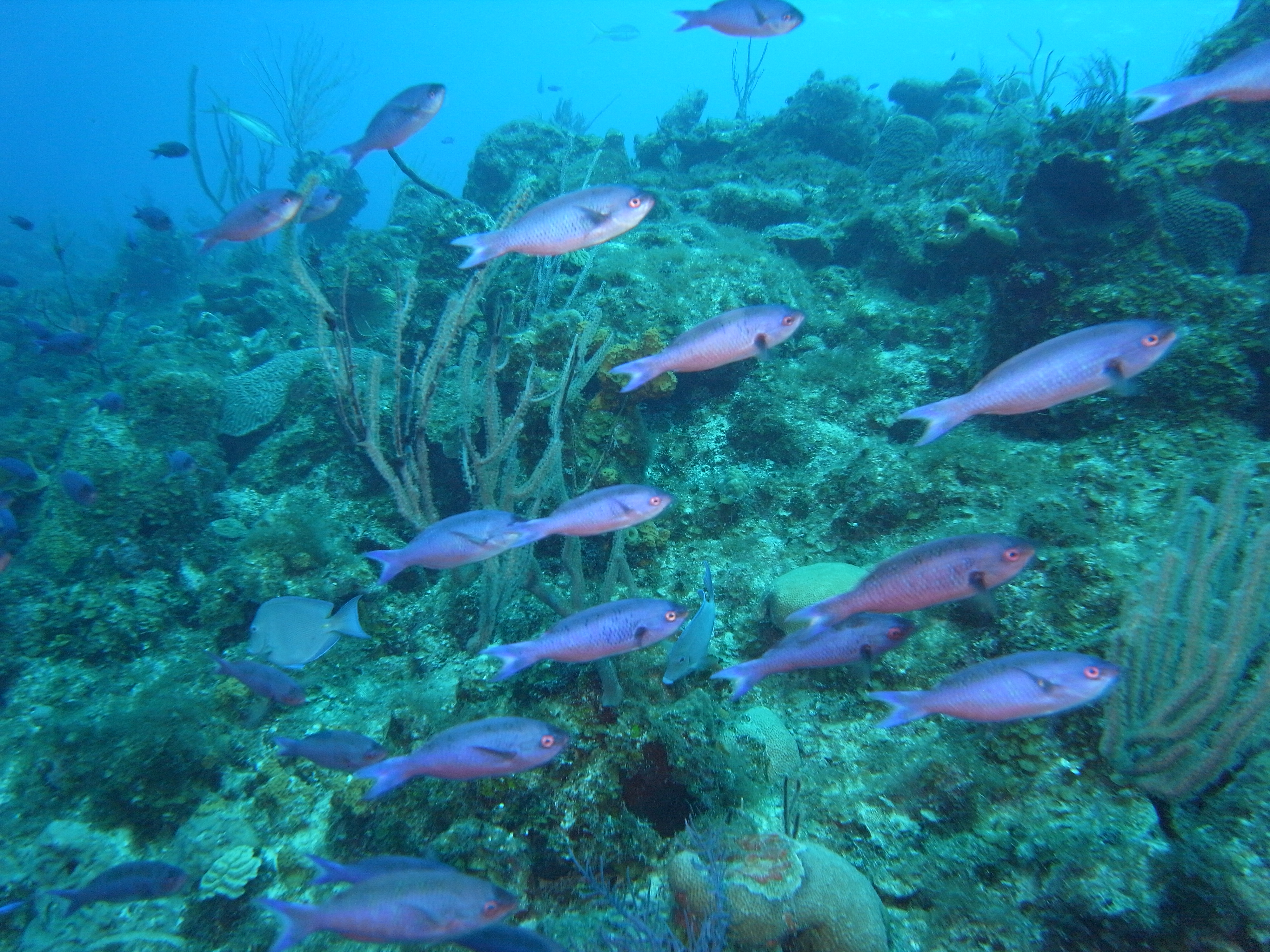
The reef environments we saw were really beautiful and abounding with life. One of our dive companions was a nudibranch enthusiast and inspired us to look for these and other small mollusks. This caused a shift in focus so that we saw more of the very small things. So much beauty! One could easily just bask in it. Photography works somewhat against the grain of that aesthetic and spiritual experience, because it’s necessary to think in a very left-brained way about technology and physics. I was glad I spent some of my time that way,though. I made a few images, shown above and below, that I liked and thought others might, too.
SeaLife DC1400
SeaLife DC1400
Exif_JPEG_PICTURE

What do we do? Good and bad habits

Periodically I get the bug to improve my Spanish, which has been stuck for a while at the low intermediate level. Rosetta Stone’s relentless marketing finally overcame my defenses, and I found myself signing up for its web-based offering on an all-you-can-eat-in-one-year basis. I like it.

It’s all in Spanish (no translations), with photographs to guide you toward basic vocabulary, and is broken into little bite-size challenges. It works well on my tablet device. Part of the genius is that it constantly quizzes you, asking you to think and make your best guess as to each new bit of vocabulary, and gives a small musical reward (a harp arpeggio) for a correct answer. (Wrong answers are punished with a less pleasing sound.)

When you’re a beginner at Spanish, or anything else, you have to exert a lot of conscious effort to accomplish anything. This “beginner’s mind” (see Zen) is fun, in a way. It’s involving. But eventually, if you keep at it, you advance, and you are no longer a beginner. Conscious incompetence changes gradually to unconscious competence — a habit. You can communicate more successfully, but without any particular feeling of accomplishment. Then you’re ready to begin German, or whatever. Education is, in part, the accretion of useful habits.

I wrote a bit last week about developing the habit of exercise, and have been thinking more about the significance of habits. A few moths back I read Charles Duhigg’s The Power of Habit. It has the air of one of those airport bookshop books that’s more like a padded-out magazine article, but it has a few worthwhile ideas.

According to Duhigg, hundreds of our everyday activities are just chunks of behavior that require no conscious thought. We may think that our days are spent considering and deciding on our actions, but typically we spend lots of time on autopilot. Think of getting up, showering, eating, brushing teeth, walking, driving, saying good morning, turning on your computer, web surfing & etc.

This is not in itself a bad thing, because it’s energy efficient. Once we’ve learned to drive and gotten to be experienced drivers, we don’t need to think about driving our daily commute, which frees up energy for other things — like texting. Just kidding! Kids, please don’t text while driving. But seriously, as much as I think conscious thinking is a worthwhile thing, life as we know it would be impossible without a large repertoire of behaviors that require no conscious thought.

Habits, like bacteria, get a bad rap because we forget about the good ones and mostly notice the bad ones. And we should give attention to those bad ones. Over and over, we do things that we know very well are bad for us, and it doesn’t help that we know it. Some bad habits just waste time, but others, like smoking or overeating, can take years off your life. What to do?

Duhigg proposes a simple approach to changing bad habits. Researchers have found that all habits have three parts: the cue, the routine, and the reward. For example, you feel bored and fidgety (the cue), you go to the snack station and grab a candy bar (the routine), and devour the sweet gooey thing and feel a moment of bliss (the reward). Then you feel unhappy that you ate something against your better judgment.

According to Duhigg, the trick to changing a bad habit is recognizing the routine, and experimenting with substituting a new routine that gives the same reward. He gives the example of his own snacking, which he thought was a function of hunger, but realized had more to do with needing social interaction. So instead of having a cookie, he started having a chat with a colleague, which yielded the same psychic reward.

This seems like a reasonable approach. Good intentions and raw willpower are usually not enough to dislodge entrenched bad habits. A bit of playful experimentation is worth a try.

My emergency eye surgery

DSC_0031
It took several years for me to develop the exercise habit, but now it’s deeply ingrained. I don’t have to think about whether or not to work out, because it’s almost automatic. Most mornings I just pop out of bed at 5:15 or so and head to the gym, yoga studio, or pool. Then I challenge myself with interval training, free weights, down dogs and half moons, spinning, swimming, or more offbeat functional training movements, and normally feel clear-headed and energized afterwards.

This past week, though, following my emergency eye surgery, I’ve been under doctor’s orders not to exercise. This seems unnatural, and I’ve been feeling like a slug. Still, I’m trying to keep in mind that I’m a very lucky person.

The eye is a marvelous organ, which, like all organs, I generally take for granted. Until last week, most of my knowledge of its constituent parts dated back to about the fifth grade, and hadn’t much advanced in the years since. As an amateur of science, I’m always interested when I come upon a gap in my knowledge and an opportunity to fill it in. From this perspective, opportunity was knocking when I unexpectedly developed a detached and torn retina, and I got a crash course in eye physiology and repair techniques.

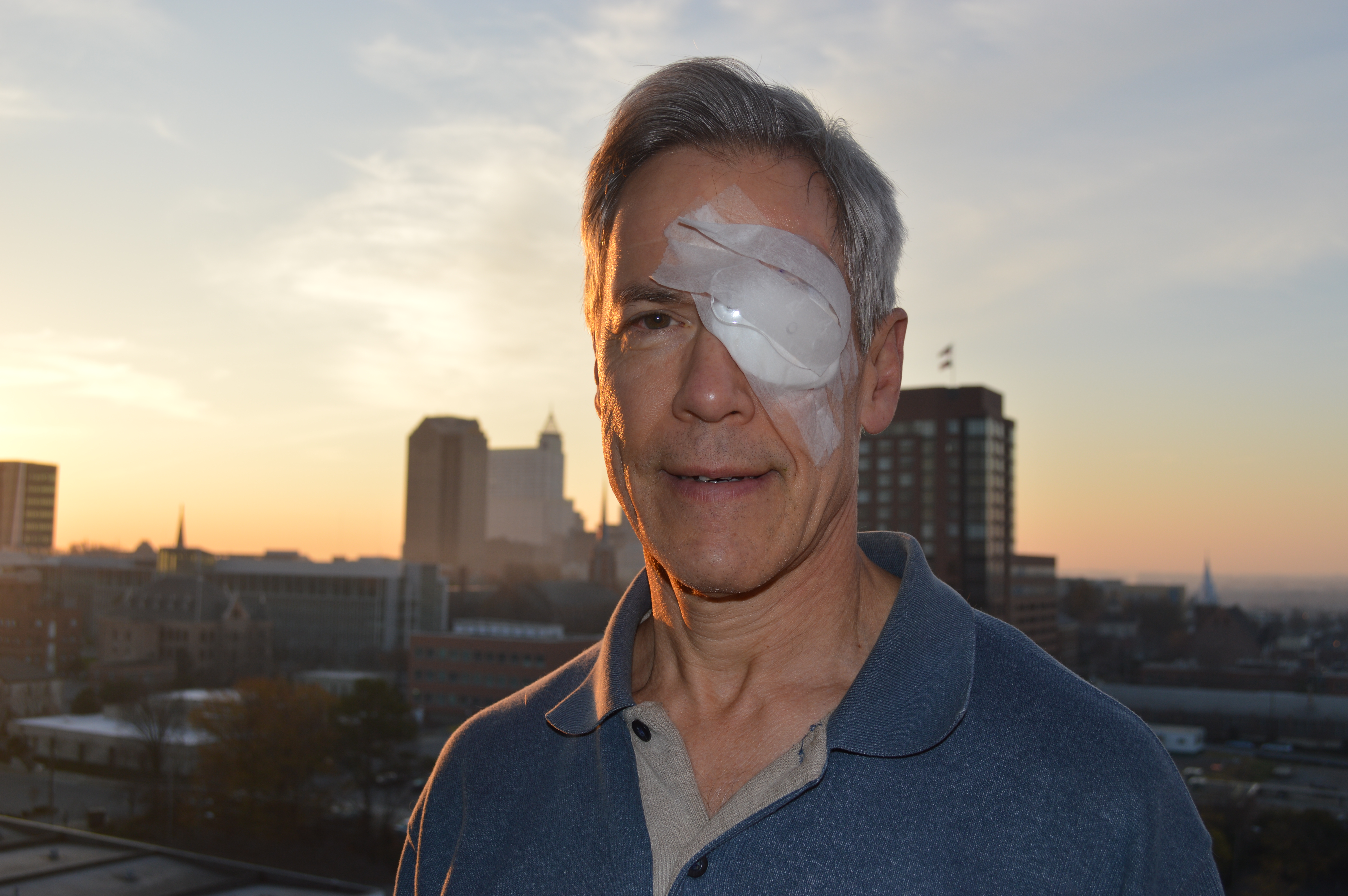
In brief, on Wednesday morning I worked out as usual, came home, showered, cleaned my glasses, put them on, and noticed that things looked a bit foggy. I cleaned my glasses again, but this didn’t fix it. I closed first one eye and the other, and found that only the left eye view was foggy. In the course of the day, this worsened, and I began to see increasingly dramatic floaters. I made up my mind to call for help if I didn’t improve over night, and I didn’t. My longtime optometrist and friend Don Cloninger worked me in and did several tests, from which he diagnosed a possible detached retina. I asked him to recommend a surgeon he would go to himself, to which he agreed, and got me an appointment with Dr. John Denny of NC Retina Associates.

My extracurricular science reading has at times filled me with a sense of awe and wonder at the things humans have figured out, but also has alerted me to vast areas of ignorance. In medical science as elsewhere, there are some problems we can solve with our technology, and many others that we can’t. Fortunately for me, detached retinas are well understood, and repair techniques are highly refined.

Dr. Denny described the success rate as 90 percent. There is no argument in favor of avoiding that last 10 percent. Once a retina detaches and tears as mine did, unless it is treated it will worsen until eyesight is gone. As to causation, Dr. D said it was the genes I was dealt plus age.
20121130_131124

My surgery, which was scheduled for the following day, was called a vitrectomy. The idea of sticking needles or other instruments in the eye sounds like medieval torture, and if you are squeamish you may want to skip this paragraph. I have a reasonably strong stomach, and I wanted to know the details of the treatment. It involved inserting very thin instruments into the eye, including a laser to do with Dr. Denny compared to spot welding. Most of my vitreous was temporarily replaced with a gas bubble, which pressed the retina back into place.

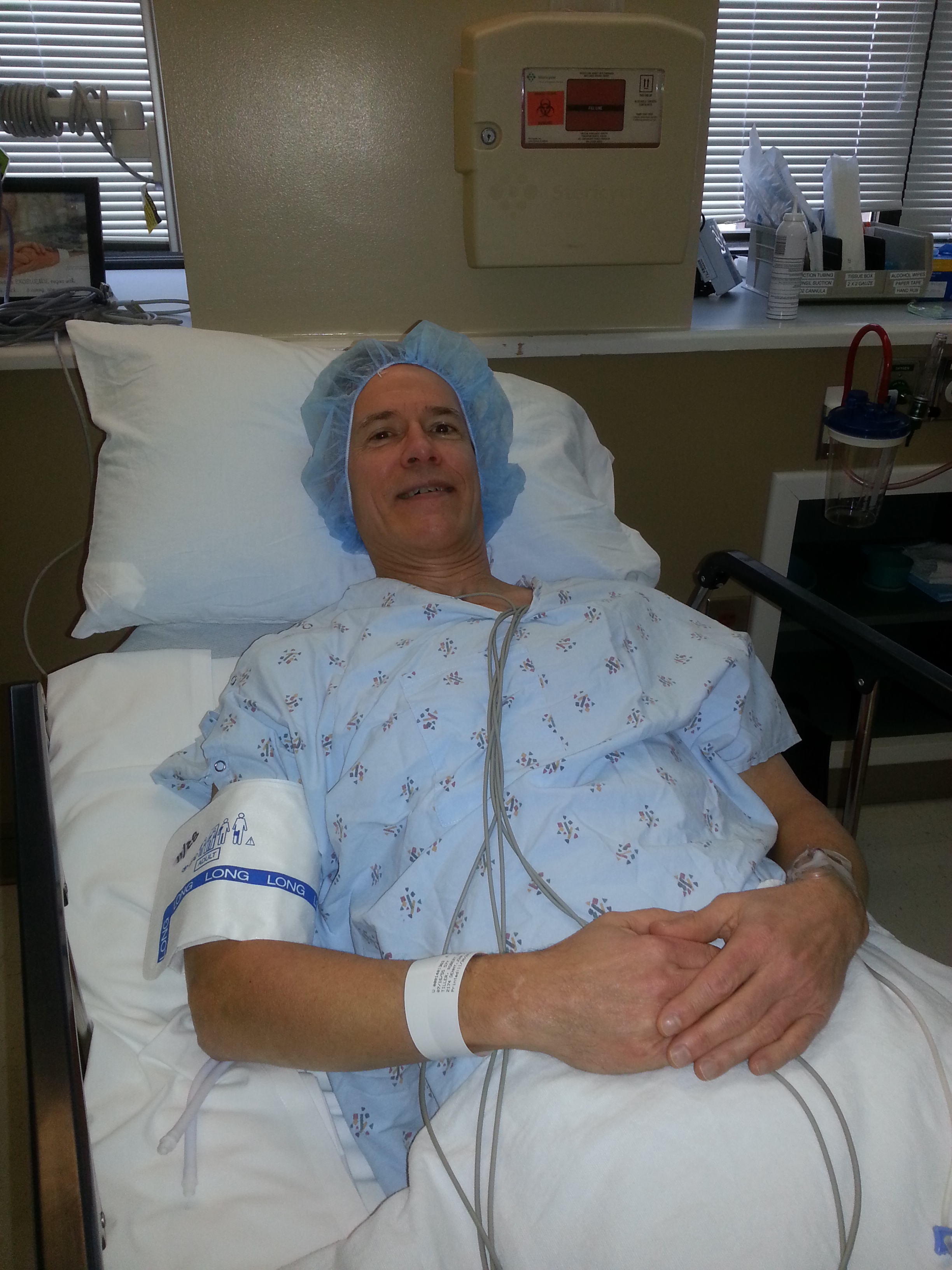
I’m not a big fan of hospitals, but I have to say I had a very positive experience at Rex Medical Center. My treatment team all introduced themselves in a friendly way and explained what they were going to be doing. My prep nurse did a great job at getting my IV in, and told me about the zumba class at her gym. The anesthesiologist told me that I would be semi-conscious during the procedure, but would not have traumatic memories. This last was certainly true. Afterwards, I was a little woozy from the anesthesia, but otherwise felt fine, and didn’t remember anything from the operation.
DSC_0035

My eye never did hurt, but I had to lie on my side for the next two days, which was a bore. I signed up for a free college history course with Coursera and listened to some lectures, which were well done. II also got a trial subscription for recorded books with Audible, and began my first MP3 book — The Adventures of Huckleberry Finn. Like many, I’d read it as a teenager, so I discovered a lot I didn’t remember and a lot I could not possibly have understood. It is an amazing book — humorous and tragic, understated and also epic.

I’m now one week out from surgery, and per Dr. Denny am healing normally, although my vision is still very blurry. One blurry eye and one clear one averages out to less-than-clear vision. I’ve been moving about more or less normally and driving, but more slowly and carefully than usual. I’d scheduled a day of track driving at VIR for next weekend, but decided it would be better not to push the envelope. I’m still hoping, though, to be ready for scuba diving in the Turks and Caicos over Christmas.
DSC_0051

Lincoln, political courage and pragmatism, and the war on drugs

As my Twitter followers (awful expression, sorry) and Facebook friends (also awful) already know, we saw the new movie Lincoln over the holiday, and really liked it. It works like a good old-fashioned Hollywood movie, which is to say it can be enjoyed as pure entertainment, but it does a lot more. It takes on a huge and deeply embarrassing subject, one that we still can barely bring ourselves to acknowledge or discuss a century and half later — American slavery — and contributes meaningfully to the dialog. This is remarkable. Kudos to Steven Spielberg and a great cast (especially Daniel Day-Lewis, Tommy Lee Jones, and Sally Field) and production team.

The movie reminds us that there are crucial moments when individual courage and moral vision matter. It concerns the last few weeks of the Civil War (1865) when the burning issues of how to stop the carnage and how to stop slavery were both pressing and pulling in opposite directions. About half of the members of Congress thought black people were subhuman and were opposed to recognizing them as in any sense equals. If the war ended, the matter of passing the Thirteenth Amendment ending slavery would become less politically pressing, and could conceivably not happen at all. The President was under great political pressure to end the horrific war, but insisting on abolition of slavery looked likely to prolong it. Resolving this dilemma required both courage and political genius.

David Brooks wrote an interesting column on Lincoln noting that the political solution required the President to act in ways that were, well, ethically questionable. That is, he engaged in tactics that could easily be viewed as bribery and other dishonesty. Brooks suggests that this is characteristic of politics — pure moral vision has to be balanced with pragmatic compromise to get anything done. Is some degree of dishonesty inescapable and even necessary for normal, effective politicians? I truly hope not, but it’s an interesting idea. In any case, the movie makes the case that Lincoln’s ethical compromises were justified.

Another theme of Lincoln is that words matter. The abolitionists, led by Thaddeus Stevens (Tommy Lee Jones) clearly saw the evil of slavery, and were prone to use language that prevented dialog with those that hated blacks, and also with those that saw slavery as a complex issue. Stevens could verbally disembowel his political opponents, but it just made them more determined to fight abolition. Persuading him to soften the rhetoric was a key part of the strategy for passing the Thirteenth Amendment.

And then there are the iconic words of Lincoln. The movie strains a little to get the Gettysburg Address and the Second Inaugural into the story, but the strain is worth it: these words are among his proudest accomplishments, now with quasi-Consitutional status, and are still inspiring. Listening to them again, I was struck by their chiseled beauty, but also their combination of directness with artful ambiguity. They start with a factual and moral premise that almost all could agree on — many have died, and it cannot be they have died in vain. The concept of equality is discussed, but the in terms that seem classical rather than radical. The idea of full equal rights for slaves is not explicitly mentioned, presumably because it would make political compromise impossible.

Speaking of issues that require some amount of political courage and some amount of pragmatism, here’s one: the war on drugs. There was good news a few weeks back when Colorado and Washington voted to legalize marijuana for recreational use. They expect to regulate and tax it and raise substantial revenue as a result. This seems rational in these tough budgetary times. As I’ve said before, it seems like terrible public policy to put people in prison for smoking marijuana. The drug war costs us more than $76 billion a year, including the costs of police, courts, prison buildings, guards, services, and foregone revenue. At the same time, we create an entire criminal economy that not only corrupts our society but wreaks violence across the globe.

Much of this is to discourage pot smoking. We’ve been trying it for several decades and it hasn’t work! Instead it has destroyed individual lives, families, communities, and governments. No matter how bad an idea you think pot smoking is (and I agree it can be bad for some people), you might still agree that the cost of the drug war is wildly disproportionate to its positive achievements. I”ve thought for a long time that the practical need to address budget woes and the huge economic upside of taxing marijuana might eventually overcome the moralism of those who support the drug war path. The votes in Colorado and Washington suggest on this I might be right.

Thanks to Joni Mitchell and my Supreme Court co-clerks


Happy Thanksgiving! I’m so thankful for Joni Mitchell, whose beautiful album Blue we listened we listened to last night. I’m still new enough to Spotify to find it marvelous to have instant access to such gorgeousness.

Blue is a unique shade of blue. Our experience of art depends on what we bring to it, of course, and my experience of Blue is rich in nostalgia for Paris, where I first heard it my friend Greg’s place in the Latin Quarter on his little cassette tape player. But I loved it just as much when it was new.

Notes of sadness, loneliness, and longing are balanced with joy and exhilaration. Yet it doesn’t seem calculated. It seems like a soul that’s seeking another soul, completely and almost frighteningly honest. Joni seems so vulnerable, and takes so many risks, that it’s unsettling. At the same time, it’s so sweet and true. Truly, I’m thankful for Joni and Blue.

Apropos of nostalgia and gratitude, I had another heavy dose week before last when I reunited in D.C. with my fellow Supreme Court clerks at the Court to honor one of our number, Justice Elena Kagan. In 1987, when I was one year out of law school, I won the lottery and got picked to join this extremely gifted group as a clerk for Justice Antonin Scalia.

The clerkship was a great honor, but also terrifying. Clerks are tasked with constantly and quickly mastering new areas of law without glitches that could lead to major policy errors or loss of life. This is not hyperbole. The death penalty docket involved review of cases a few hours before scheduled executions, which carries with it a level of responsibility that can cause severe sleeping problems.
During that year, the coin of the realm was legal knowledge and reasoning, and in these my co-clerks were often brilliant in a way I often found humbling. Fortunately my class was not only fearsomely bright but also distinguished by a high rate of decency, fellow feeling, and good humor.

Saturday afternoon, Justice Kagan led a tour of the Court for a dozen or so of us. As she observed, the Court was the same, or at least much the same. It was fun catching up on everyone’s doings. As we were entering the courtroom, I asked Elena if Justice Scalia was treating her all right, and she told me about going hunting with him. In her chambers, the technology seemed upgraded, and she had three computer screens. However, she said she could only use two of them at a time. Elena has a great smile and a great laugh, and was full of warmth and charm.
We had dinner that night at the Court, where more old friends showed up. Teresa Roseborough, who was our wonderful organizer-in-chief, had a slide show of us looking younger, and asked us each to stand up and give a story about our time at the Court.

There were many good stories. I reminisced about the basketball games on the highest court in the land. I was one of the less skilled players, but was still made to feel welcome. I noted that Elena and I had once scrambled for the same loose ball and our two heads had collided hard. It really hurt! Fortunately we didn’t sustain any serious damage. To think that I could have caused a head injury that would have changed the course of history!

Ballet paintings, fossils, and a piano recital

Light on One’s Feet by Nicole White Kennedy

Last Thursday Sally and I had lunch at the Remedy Diner, where my sandwich was the Tempeh Tantrum, then went to a gallery to to look at paintings by Nicole White Kennedy. Kennedy, a local artist, paints in an Impressionist/Post Impressionist style that I once thought of as old hat. My early art education stressed the triumph of modernism and abstraction. But over the years I’ve really enjoyed Kennedy’s landscapes and cityscapes in her husband’s fine Italian restaurant, Caffe Luna. I’ve gradually gotten past my prejudice in favor of the modernist aesthetic. Artists show us multiple ways to see the world, and it’s fun to try different ones.

Anyhow, I was intrigued to learn that Kennedy had worked up a show of works featuring dancers from the Carolina Ballet. We really liked the show. No doubt it helped that we came to it as balletomanes, and that we could recognize some of our favorite ballerinas. But she unquestionably had a feel for the interiors and exteriors of the dancers and their work places.

I was conscious that the works owed a debt to Degas, both in their behind-the-scenes intimacy and the juxtaposition of ethereal sweetness and stark angularity, but I didn’t find this bothersome. Artists always borrow ideas from other artists and build on them, just like scientists and inventors. We were particularly touched by the paintings above and just below, and bought them.

Dancer Removing Turquoise Points by NWK

The next day I flew up to DC for a gathering at the Supreme Court in honor of my old friend Justice Elena Kagan, which was highly nostalgic and which I will try to write about soon. But as post-election therapy, I’m focusing just now on art. With my free morning I sampled the Smithsonian museums, which always make me proud and happy to live in the USA.


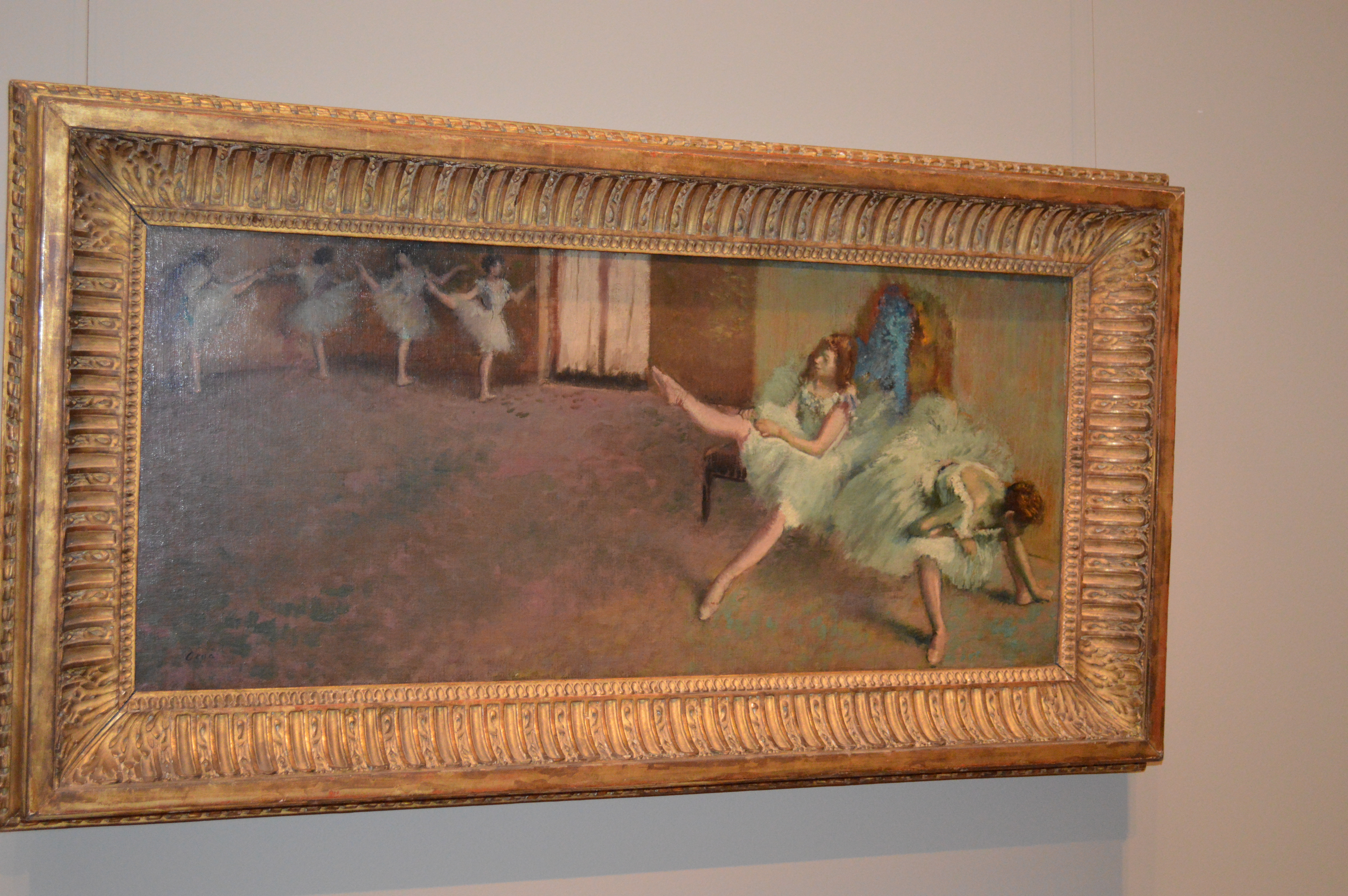
First I visited some of my favorite works at the National Gallery. These included the Rembrandts and other Dutch masters, including especially the two exquisite Vermeers, as well as the French Impressionists. Still thinking about dancers and art, I paid particular attention to the Degas paintings and sculptures of dancers. He clearly loved the subject, and it touched me. But I must say, his dancers are not as lithe and athletic as the Carolna Ballet ones.

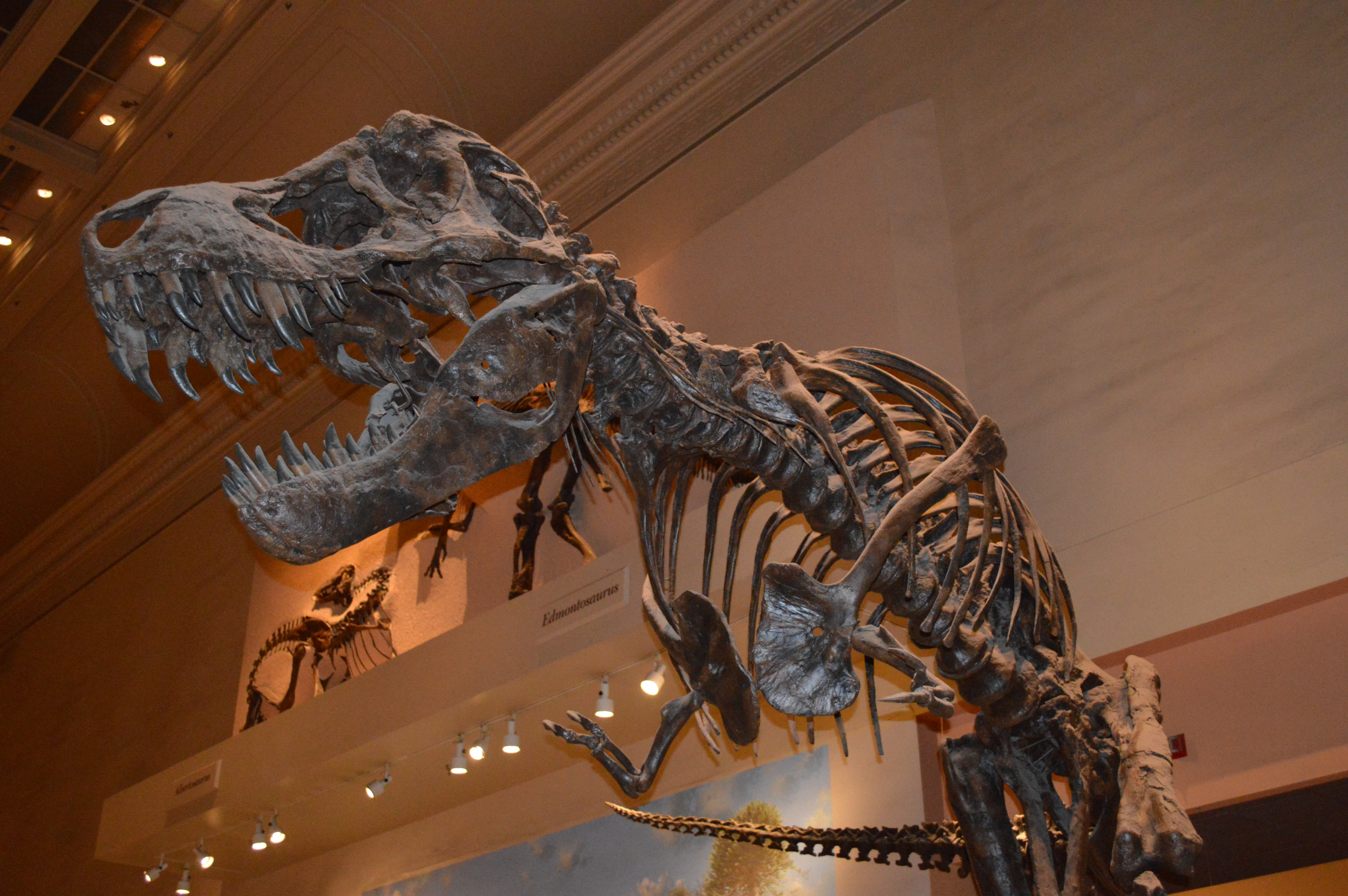
Next, I walked down the Mall to the Museum of Natural History. As always, I enjoyed looking at the dinosaur fossils, but I wanted to have a close look at the trilobites, which are much much older than dinosaurs.

Trilobites were marine arthropods that began their run around 520 million years ago. They developed an amazing variety of body types during the 270 million years (give or take) that preceded their extinction. RIP. Nature has done a lot of amazing experiments!

I returned to Raleigh on Sunday afternoon in time to go to the recital of my piano teacher, Olga Kleiankina. Her program, like her, was Russian: Alexandr Scriabin (1872-1915), Nikolai Medtner (1880-1951), and Sergai Rachmaninoff (1973-43). She played brilliantly. She’d told me a couple of weeks ago that she was struggling with memorizing the Medtner piece (the Tempest Sonata), and I was feeling a little anxious for her, but she seemed completely in command. The piece was very dense, and at first I was a bit bewildered, but then I got my bearings. I particularly enjoyed the Scriabin Black Mass sonata. From our work together, I know how intensely she focuses on sound colors, and now that I’ve learned to hear some of those things, the music took on a new dimension.

There was a good piece on the Sunday NY Times about the sense of hearing, and the difference between hearing and listening. According to Seth Horowitz, we react to auditory signals 10 times faster than visual ones. Hearing is an early warning system, among other things. He notes that close listening is hard in a world where there are endless distractions, but that we can get better at it. I concur.