The Casual Blog

Code Orange: Superstorm Sandy, climate change, and security threats

When Superstorm Sandy devastated the northeast earlier this week, Sally, Gabe, and Jocelyn were caught in New York City. Their planned short fun visit turned into a week-long ordeal. They were staying in SoHo when the storm hit and their hotel lost power and water, and stores, restaurants, and transportation systems all closed down. Thousands of flights, including theirs, were cancelled.

My sweet Tillers eventually made their way to the upper West Side and found a down-market hotel to stay in until LGA came back online and they could get flights out. As I write this, millions are still without electricity, water, food, and transportation, and dealing with enormous personal and financial losses.

I expected that the superstorm would get climate change and what to do about it onto the front page. Could there be any more dramatic example of what rising seas and increasingly severe storms could do to our coastal population centers? Wouldn’t the climate change-deniers find it impossible to deny the reality of such a catastrophe?

But the superstorm showed once again how difficult it is to get this difficult conversation going. It is not an issue politicians or editors, or ordinary people for that matter, usually like to talk about. Why? Because it is disturbing and depressing. We don’t have a comprehensive solution, but we can be pretty sure addressing it will require massive funding and considerable sacrifice. Some are receptive to voices that tell us we don’t need to sacrifice, because science is not 100% certain (which it never is). Humans in general, and Americans in particular, are usually good at recognizing and addressing emergencies like sinking ships and burning buildings. But if we’re not entirely convinced there’s a real emergency that has a direct impact on us, we generally prefer to kick the can down the road, and think about more cheerful things.

While New York was in the midst of the huge storm, it struck me that this disaster could be compared to a terrorist attack, and that it might be a good idea to use that comparison as a conceptual tool. It seems reasonable to think of climate change as a security issue. Massive storms threaten our lives and economy in much the way that bombs do. In terms of financial loss and dislocation, Sandy was far worse all of the terrorist attacks we’ve ever seen.

And the vocabulary of security seems to be one that gets people’s attention and inspires action. We’ve probably gone overboard in exaggerating the threat of terrorist attacks, as I’m reminded every time I get on an airplane, but that doesn’t mean we don’t have to address it.

To be sure, as to climate change, an important part of the worry is about the well-being of future generations, and it’s likely that most people give greater weight to the lives of living humans than to future ones. But as Superstorm Sandy showed dramatically, it’s also affecting us today.

Another thing that might help is basic science education. A lot of people don’t understand that science is in an important sense probabilistic. The most accurate conception we can ever form of nature includes a considerable range of uncertainty. There will never be a day when we can say with certainty that climate change was the sole or primary cause of a particular weather event, because of the inherent complexity of the ecosystem. But probabilities are also realities. Once the probability of rain gets high enough, we’ll take along an umbrella. If we can get a reasonable level of scientific literacy, we won’t use lack of complete certainty as an excuse for kicking the can down the road.

A piano tuning and a ballet board meeting

My Steinway grand piano (an A) is a gorgeous musical instrument, but it is subject to entropy. It needs a regular tuning, and lately a few notes in the lower-middle range sounded overly bright to me.

On Saturday, Phil Romano, a master Steinway technician, tuned it and did some voicing by needling the hammers. Phil was about to take off on another tour with Paul McCartney, and shared some interesting stories of Sir Paul’s performing in the Queen’s Jubilee, the Olympics, and South America.

With the benefit of Phil’s good tuning and voicing, I had a gratifying session with my instrument on Saturday. Recently I’ve felt a bit stuck on the same musical plateau. Although this has happened from time to time over the years, each time it’s uncomfortable, as I wonder whether I’ve gone as far as I can go. An essential part of the joy and challenge of the classical tradition, for me, is forward movement. It’s true that I’m now playing better than I ever imagined I would, but still, I would see no point to practicing if I didn’t expect to achieve greater technical and artistic mastery. This is one of the reasons it is so important to have a teacher — to get you unstuck when you’re stuck.

Anyhow, today felt as if I was getting unstuck. For a devoted student of the piano, there are few things more pleasurable than a freshly tuned Steinway. I played some of my favorite Chopin, Debussy, and Liszt works, and made some headway on my assignments from Olga — Rachmaninoff’s Elegy and Chopin’s etude op. 25 no. 12. Also, for a special treat, I read through some of Tchaikovsky’s Nutcracker. The Waltz of the Flowers really works as a piano piece! I’d like to polish it up for the holidays if I can find the time.

Speaking of the Nutcracker, this week I had my first meeting as a new member of the board of directors of the Carolina Ballet. I’m really pleased to be able to help support this wonderful company. It’s also good to meet other people who really love ballet. As Ricky Weiss pointed out at the meeting, not everyone likes it, and some actively dislike it, but those who care about it care a lot.

In his report, he noted that we have a particularly strong group of dancers now. In the all Balanchine program, he had four different Apollo’s. It is, he said, an extraordinary thing, particularly in a company of this size, to have four males who are all capable of fully expressing this difficult role. (In an interesting coincidence, this morning the dance critic of the New York Times discussed Balanchine’s Stravinsky ballets and led off the discussion with Apollo.)

There are lots of things to be happy about, including the company’s large number of performances, the large number of new works, and the consistently high standard of performance. Weiss noted that the current group of dancers have achieved a high level of individuality, by which I think he meant they are artists who express not only the classical tradition but also themselves.

At the same time, there is a real concern about company finances. This is no great surprise. Since the recession of 2008, times have been hard for lots of people, including lots of arts organizations. But realizing this does not lessen the difficulty for this particular organization. I continue to think that there are more people around here who would enjoy ballet who haven’t yet discovered it, including some who would find it rewarding to help support the company. I hope so.

Our week in Tuscany


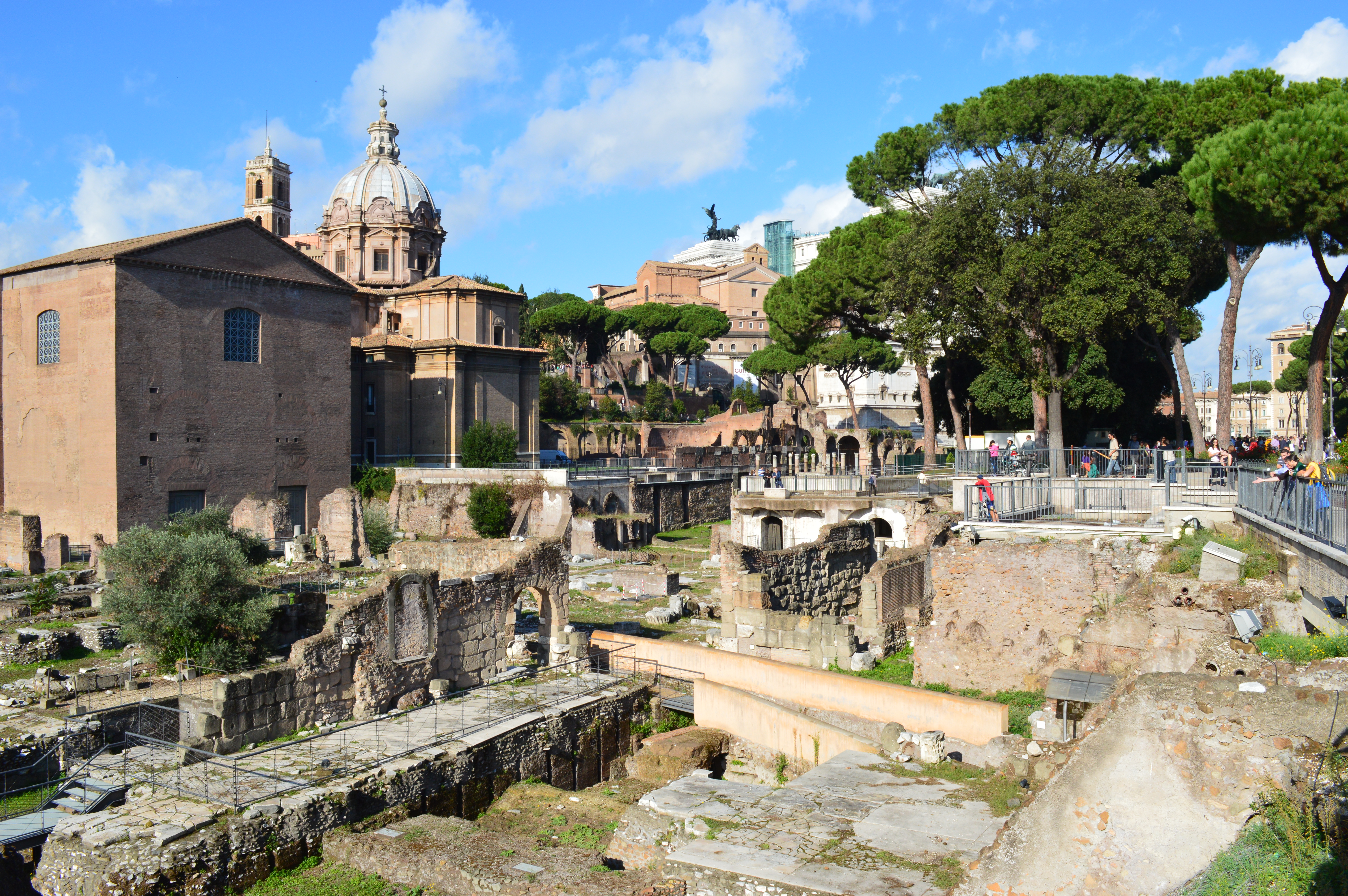
Sally and I got back on Sunday from our first trip to Italy, where we saw the major tourist sites of Rome, Siena, and Florence, as well as five medieval cities in central Tuscany. We took in a ton of Renaissance art and architecture, wandered for miles through narrow streets, and drank some wonderful wines. We also had our share of minor travel tribulations, such as lost luggage, lost car, and just plain lost. We got soaked by a sudden downpour on the way to the Vatican, but for the most part the skies were blue and temperatures were mild.

Hearing about other people’s vacations is usually either frustrating or boring, and I will therefore spare you a blow by blow of the beautiful places and fine food. But I will say, if at all possible, you should go. It was an amazing feast for the senses and the mind.

It was also a time machine. The antiquities of Rome, like the Colosseum and the Forum, are awe inspiring. I asked myself, would I have enjoyed gladiators fighting to the death or religious dissidents being fed to the lions? Probably not, but who knows? The Romans’ appropriation of Greek art, followed by the Renaissance reappropriation of those same ideas, all made sense. But the hard phyical facts were also mildly shocking. There were a lot of statues of nude people! I get that they decided to glorify the human form, but faced with all those bare bodies, it seems fairly obvious these were highly sensual people.

With the benefit of some education in art history, I was looking forward to many great masterpieces, and they were certainly there. We made a particular point of seeking out the paintings of Caravaggio, which are amazingly powerful, and the great sculptures of Michelangelo. I will also note that the Sistine Chapel ceiling was awesome. There were so many other master works that I looked at hard and was touched by.

At the same time, I was struck at how many fine examples of Renaissance and Baroque art were connected, using the same subjects, the same gestures, the same costumes, and so forth. So many Annunciations, so many Adorations, so many Crucifixions, with so many similar arrangements. Clearly artists were borrowing from each other all the time. On the trip, I finished reading The Knock Off Economy: How Imitation Sparks Innovation, by Kal Raustiala and Chris Sprigman. It makes the case that creative endeavors in certain fields, including fashion, haute cuisine, and football, develop through copying unconstrained by intellectual property law. Looking at art in terms of what is shared rather than what is original to the artist goes against the grain of art history as I learned it, but it helped me think about the art without getting completely overwhelmed. The art tells us about the community of people that it grew out of, and connects us with those communities.

There did come a point each day when I reached then saturation point, and could not stand to look at on more beautiful Madonna. But looking at these ancient objects had affected my perceptions. As I emerged from the last 12th or 14th century church of the day, I had the impression that the people around me were unusually vivid. Their faces seemed brighter. And they moved!

The Italians are not intent on your being a great art scholar. I was surprised at museums and churches generally gave little information about their treasures. They also are not much concerned with providing public restrooms. I finally figured out that it’s accepted to duck into a bar. Even so, there were further challenges, like finding water, soap, and paper towels all in one place. It is really disheartening, after a long search for a WC, and a moment of sweet release, to soap up your hands only to find there is nothing to rinse with.

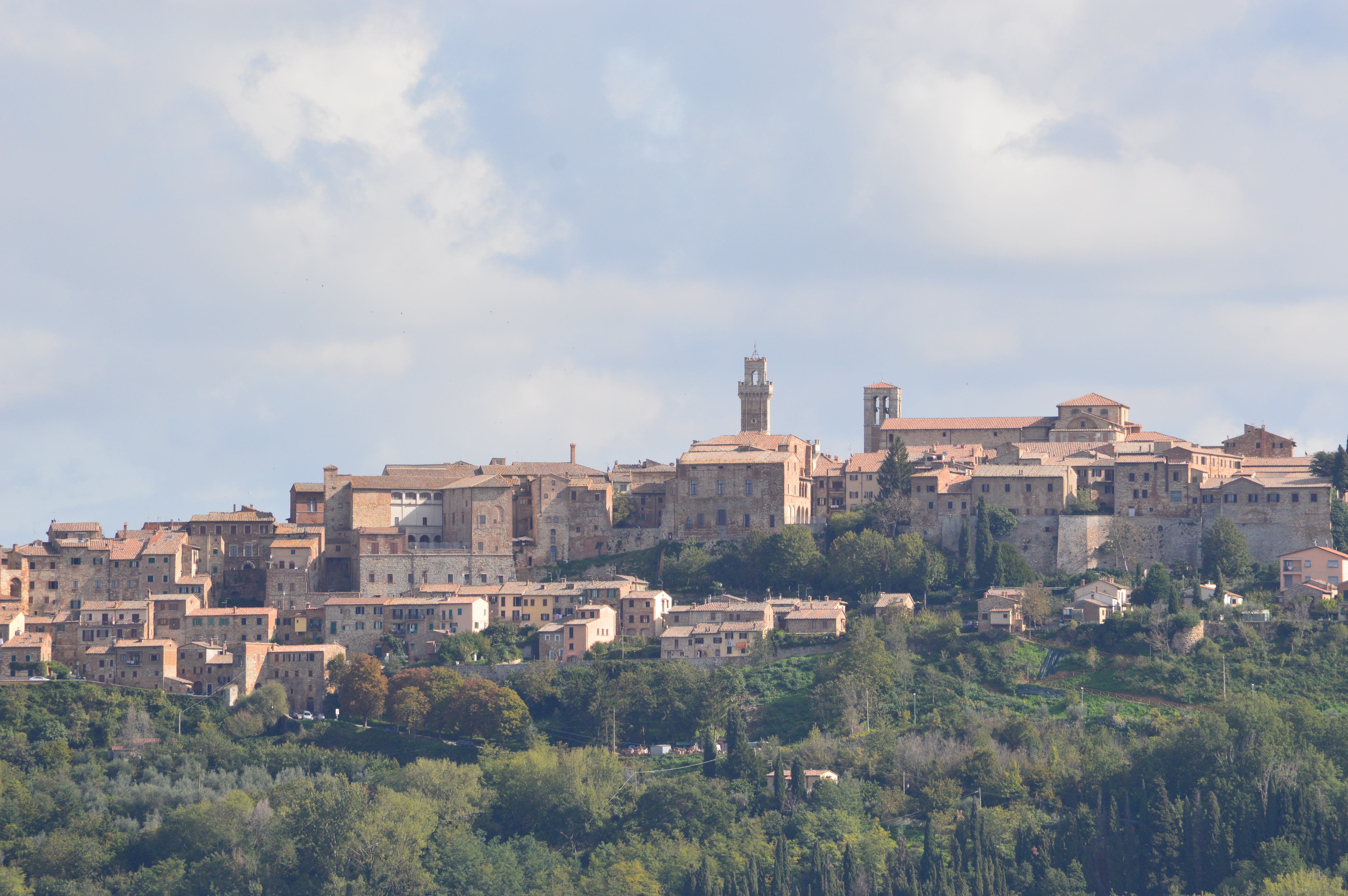
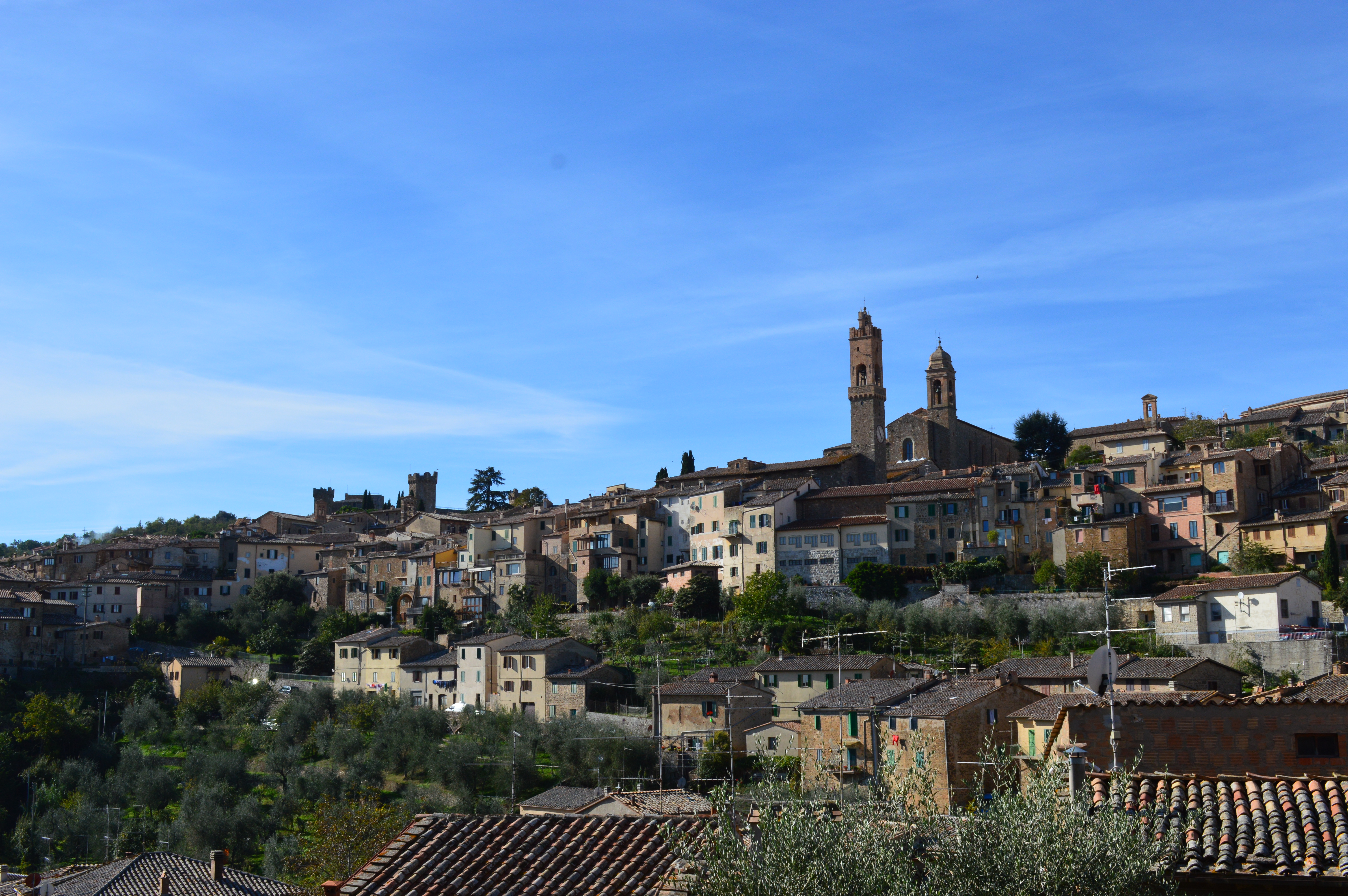
But these things pass. After two days in Rome, we spent two days based in Siena, a marvelous Medieval city, and ventured out by car to see the Tuscan countryside and taking in the beautiful ancient towns of San Gigminiano, Volterra, Montelcino, Pienza, and Moltepulciano. It was a great pleasure to drive the winding roads among vineyards and olive orchards. Seeing so much land devoted to wine gave me a new understanding and respect for the place of wine in this culture.

I’ve long had a fascination with medieval architecture. Walking along the narrow streets gives a window into a different kind of community. Somehow these people of several centuries ago organized themselves to produce a kind of hive that worked very well and endured. Their walls and battlements prove that fear and violence were part of their world, but their churches show that they had moments of peace and transcendence. By the way, the streets in these hill towns can be unbelievably steep. Montepulciano was especially challenging. Our work outs finally paid off; we were in good enough physical shape to walk them.

We also adored Siena. We we disconcerted at first that cars zoom down the narrow streets dodging pedestrians, rather than pedestrians dodging cars — the pedestrians seemed at high risk — but we got used to it. We developed a taste for gelatos. A high point was climbing the circular staircase of the spectacular cathedral to look out over the city at sunset.

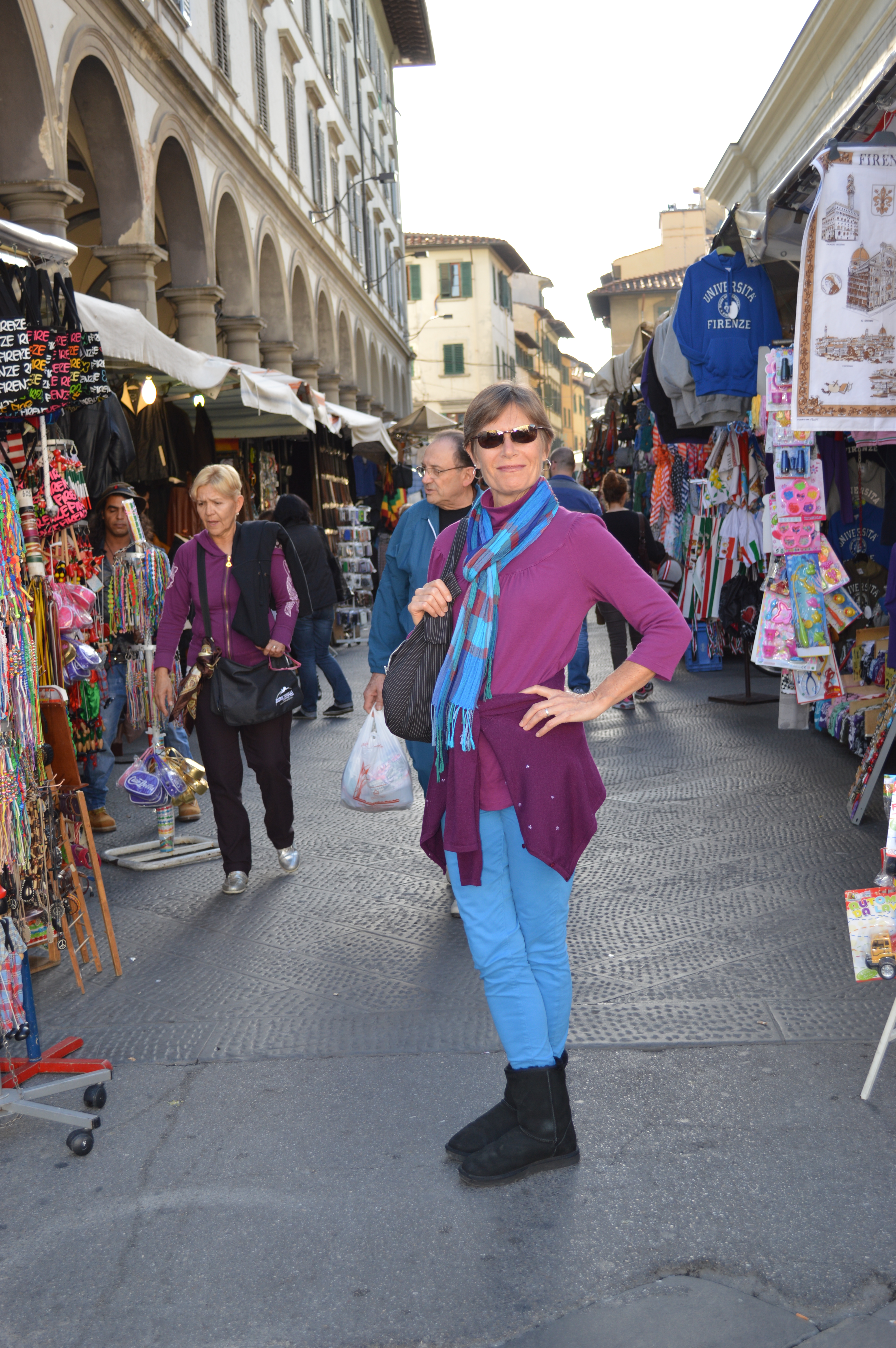
Arriving in Florence was another jump in the time machine, this time to the high Renaissance. It’s beautiful, and also easier to walk in. And the old part of the city thrummed with people. We did the famous churches and museums, including the Duomo, the Uffizi,the Accademia, Santa Croce, Santa Maria Novello, and San Marco. We crossed the Ponte Vecchio at sunset and sipped wine at an outdoor table at Piazza de Signoria. What a beautiful place! We agreed that Florence goes on the list of our favorite cities.

Wonderful Balanchine ballets, and friends

We just loved the new Carolina Ballet program, A Balanchine Celebration, which we saw when it opened on Thursday night.  It ran the emotional gamut, from wrenching (Agon) to carefree (Who Cares?), all, naturally, by George Balanchine, the greatest choreographer of the twentieth century.  
It was all wonderful, but I have to mention especially Lara O’Brien and Eugene Barnes in the Agon pas de deux, with music by Stravinsky.  As I mentioned to Lara afterward, it truly made me uncomfortable, as it surely is meant to do.  She took the angular movements to a frightening extreme.  I was reminded of something I once read about Suzanne Farrell:  she made the audience sweat.  Margaret Severin-Hansen and Pablo Javier Perez were deft and delightful in Tarantella.  I also had a new appreciation for Jan Burkhard in Valse Fantaisie and in Who Cares.  She’s got a spunk and sass, which worked particularly well in the Gershwin.
I need to give a special note of appreciation to the pianist for the Gershwin, Karl Moraski.  I was on the second row, practically inside the piano, and could hear every detail.  In my jazz period, I listened to multiple versions of all these iconic standards, and learned not just the tunes and harmonic structures, but also the words to all these songs.  Moraski was faithful to the spirit of the music; Gershwin would certainly have approved.  I spoke to him afterwards to congratulate him, and verified that he had done the arranging.  I noticed that the dancers seemed to be smiling a lot during the Gershwin, and wondered for a minute if they’d been coached smiling.  Then I realized I was smiling a lot, too.  The great music, and Balanchine’s lighthearted ballet translation of MGM musical-type dancing, was delightful.  
Last year we made a contribution that made us the pointe shoe sponsors of Lola Cooper, and so we always watch her performances with particular interest.  She had a charming pas de deuz with Nikolai Smirnov in the Gershwin piece, S’Wonderful.  She’s got a ton of warmth and vitality, and just keeps getting better.
One of the great things about having exceptional artists in the 42d largest city in America (as opposed, say, to the first, second, or third) is you can, if you want to, talk to them.  Earlier in the week, I’d sent Ricky Weiss a link to a Ted Talks talk by the choreographer Wayne McGregor.  At intermission, he told me that he really appreciated my sending it, and he absolutely hated it!  It was contrary to everything he believed dance should be trying to do.  He found it hollow and superficial.  I didn’t think it was quite that bad, but what do I know?  As I told Ricky, whatever the merits ot McGregor’s choreography, I thought it was worthwhile that the Ted conference was engaging with dance, and it suggested another avenue for exploring and communicating about creativity.  Ricky seemed to be of the view that there was no redeeming quality.  He just couldn’t stand it.  
At the other intermission, we had a glass of wine and a chocolate in the donor’s room, and two of the new dancers of the company came up and introduced themselves:  Colby and Laren Treat, who are twin sisters from Ilion, New York.  I was so impressed that they had the gumption to come right up to us and start talking.  That’s not an easy thing to do, for a young person or any person.  They were really friendly and had interesting things to say about the program.  
I feel so fortunate to be able to meet and be inspired by all these artists.  It’s one more great reason to live in Raleigh, NC.  Earlier in the week, I had lunch with my friend David Meeker, who was recruiting me to join the board the City of Raleigh Museum.  David is still in his twenties, but has contributed significantly to civic life by founding the Busy Bee Cafe and developing the building with Beazley’s and other properties.  We agreed that Raleigh had come a long way and had a ton of great things happening (e.g. arts, food, sports, commerce), but was still struggling with its branding.  I thought the museum might help develop a richer understanding of Raleigh, and agreed to consider joining the board.
As I’m posting this, we’re in RDU airport (free wifi!) about to depart for Italy.   is our first trip there, and has been a long time coming.  I almost made it when I was sixteen, and was recruited for an orchestral music program by the NC School of the Arts in Siena, but lacked the necessary funding.  I almost made it six years ago, but then my Mom fell ill.  So now we’re going to do it.  I’ve reviewed numerous guidebooks, and listened to 15 CDs of Pimsleur’s Italian.  I think it’s going to be great.  More to come.  

Listening to the Tokyo String Quartet for the last time

On Sunday afternoon Sally and I went to a concert of the Tokyo String Quartet. It was a wonderful concert by one of the world’s great chamber music groups, After 44 years, the TSQ is calling it quits after this season, so I don’t expect I’ll hear them again. It made me listen with more-than-usual concentration. They played Haydn’s quartet in D Major, Op. 20, No. 4, Webern’s five pieces Op. 5, and Schubert’s Quarter in G Major, Op. 161, D. 887.

It was such a privilege to hear these master musicians performing such great music. The group performed on Stradivarius instruments made in the early 18th century and collected by Niccolo Paganini for his own performances. Paganini loved the viola in this group he commissioned a work by Berlioz that featured it. I’ve wondered at times if the Stradivarius name was overhyped, but the sound of these instruments as individuals was gorgeous, and together they were stunningly beautiful. I particularly loved the cello, which sounded to me as rich as I’ve always imagined a cello could sound.

I particularly loved the Schubert, which has one of the most beautiful cello melodies ever written. If you do not know the piece, you should sample it. Here’s a performance on YouTube by the Skampa quartet. The TSQ’s performance was brilliant and very moving. I got major goosebumps.

As valuable as recordings are, they are no substitute for a live performance. At my last piano lesson, Olga and I discussed this. She’s drilled me in the importance of considering each tiny detail of the music, thinking about the many different ways each note could be approached, and planning out each aspect of each gesture. After all that, I was surprised to hear her say that she expected that each time we play a piece, it will be different. Each piano is different, the acoustics of each room are different, and we’ll have different feelings each time. The master musician is not a CD player.

I don’t think this is a well understood aspect of the classical tradition. I once heard an interview with James Levine (the conductor of the Metropolitan Opera), in which he said that a recorded performance was to live performance as a postcard of the Grand Canyon was to the actual Grand Canyon. I thought he meant that the sound was different, but he may have meant what Olga meant: master musicians are making unique music at a particular moment in their lives and ours, responding to subtle variables that will never again recur.

Sleepwalking and critical thinking

Some weeks ago I hurt myself sleepwalking when I wandered into the shower in the middle of the night. I remember not knowing where I was. I felt confused and frightened. Then I fell and hit my head on the tile, gashing my forehead, and woke up.

In the last couple of years, I’ve seen evidence a handful of times that I must have been sleepwalking in a fairly benign way, such as lights left on that I’d turned out the night before. On one occasion, I started to take off for a drive in the middle of the night and backed into a parked car. These incidents have been mildly or very unsettling. They make you wonder about what else is going on in your brain that you aren’t aware of.

Back in college, I enjoyed listening to a comedy album by Firesign Theatre titled Everything You Know Is Wrong. Earlier this week I checked out the first few minutes on in video form on YouTube, and verified that it still seems funny and disconcerting. The title has rattled around in my head for decades now ike a verbal Escher drawing, impossible either to forget or resolve. Lately it has seemed to me increasingly resonant as I’ve read more about neuroscience and consciousness. It’s inherently interesting, at least to me, and by moments I think it could lead toward a fuller, better understanding and a happier life. But if Everything I Know Is Wrong, this could also be wrong.

Speaking of sleepwalking, last month’s Scientific American had a somewhat sensationalistic but still interesting article on recent sleep research by James Vlahos titled The Case of the Sleeping Slayer. As you’d expect, it describes some violent and tragic cases, such as persons who commit murder while asleep, and also describes a new theory about the nature of sleep.

According to Vlahos, sleep is not a whole-brain phenomenon, but rather “a scattered, bottom-up process. ‘The new paradigm views sleep as an emergent property of the collective output of smaller functional units within the brain,” according to James Krueger of Washington State University. Krueger and other researchers think that individual parts of the brain “go to sleep at different times around the clock depending on how much they have been taxed recently.” What we think of as sleep (stillness, closed eyes, slackened muscles) happens when most of the neurons are in the sleep condition. Apparently parts of the brain may be snoozing without our looking like that.

There’s good evidence that other animals have modular sleeping habits. Vlahos’s article notes that dolphins sleep with half of heir brain at a time and keep an eye open for the non-sleep part. I’ve also read that birds also rest their brains in this modular way so they can always keep an eye out for predators. The theory seems promising. I occasionally note waking behaviours in myself, like forgetting where I parked, that could be explained by the partial wakefulness approach. It would explain not only sleepwalking, but other odd behavior, like people who sit on airplanes without reading anything.

When I get to thinking about thinking, I sometimes have flashbacks to the my days as a freshman at Oberlin College, where amidst the midwestern corn fields I got a hard blast of serious philosophy and critical thinking about social issues. It would be an understatement to say it was humbling. The air was dense with intense ideas. No matter how hard I worked, I usually had the feeling there was a lot I was missing, along with the feeling that some of my fellow students were getting a lot more. But by moments I felt real excitement as I wrestled with an idea and managed to pin it.

In retrospect, I think that learning the skill of wrestling with challenging ideas was more significant than any particular idea. A significant amount of what I learned was eventually superseded by new and better understandings. An example: we all took Freud seriously as a scientist, but now do not consider him as such.

But my teachers drilled into me the habit of testing an unfamiliar concept rather than simply swallowing it. It’s related to the scientific method in its insistence on evidence and logic, and its use of thought experiments. This habit of mind is sometimes called critical thinking. Once you start doing it, you tend to think it’s the best way to think.

My liberal arts education inspired me to be curious and to explore new ideas. But to some extent it may also have led me down the garden path. My recent reading in neuroscience and evolutionary biology has called into question some of my deeply held beliefs about the power of reason. It’s exciting, though: Its helping me understand various oddities about my own subjective experience and the observable lives of others.

If this sounds interesting, I recommend Jonathan Haidt’s recent book, The Righteous Mind, Why Good People Are Divided by Politics and Religion. You may recall that I wrote about this book some months back; I’ve been re-reading it and getting more out of it. Haidt, a professor at University of Virginia, (my law school alma mater) has a style that is accessible and friendly, but he challenges our usual was of thinking about thinking. The heart of his message is at odds with most of what I learned in my undergraduate years and have mostly assumed ever since.

There are a lot of big ideas in Haidt’s book, but probably the biggest is that the primary driver of our behavior is not rational conscious thought, but rather our unconscious system of feeling and emotion. It’s the system that tells us quickly what needs to be done. (Freud was right in guessing that there was subconscious, but he didn’t figure out much about what it did.) Haight compares our moral intuitions to an elephant, and the rational mind to the rider of the elephant. The rider developed to serve the elephant. The elephant usually goes where it wants to go, although the much-less-powerful rider can influence the elephant. This understanding of our nature leads Haidt to focus closely on the nature of our moral perceptions and beliefs.

Some of Haidt’s research relates to differences in moral systems among different communities. In one study, he used a questionnaire with narratives intended to invoke disgust (like incest and cruelty), but structured to defy an easy explanation for the disgust (no one was hurt). In the face of such dumbfounding problems, people came up with explanations for their feelings — but the explanations didn’t make much sense. This suggests that some of what our reasoning mind is doing is pretending to understand things it doesn’t, and making up post hoc rationalizations for feelings that start elsewhere.

Haidt contends that emotions are a kind of cognition — intuitive, rather than rational, but not inferior to reason. Intuitive processes are essential to our lives; we couldn’t possibly reason about the hundreds of decisions we make every day. We like or dislike things instantly and decisively, and adjust our behavior without noticing the process. Our conscious reasoning processes are along for the ride, and only get involved with explaining our behavior when there’s some anomaly or challenge.

Another theme of Haidt’s book relates to human cooperation. He observes that we are the best species in the animal kingdom at cooperating outside kinship groups. Haidt investigates this from an evolutionary perspective. In the days of our hunter-gatherer ancestors, we had to form effective groups in order to defendant against predators and find food. This involved development of intuitive cognitive skills, including the ability to easily track the emotions of other human beings.

Haidt suggests thinking about the most successful human groups not just as collections of individuals, but as superorganisms. Humans have evolved the ability by moments to lose their individuality and merge with a group, whether it be hunters, warriors, or dancers. Some of our peak moments come when we lose ourselves in such groups.

Looking at ourselves as having two natures, individual and group members, explains some of our apparent contradictions, such as how we can be both deeply selfish and deeply altruistic. Looking at emotions as driving reasoning explains a lot of political behavior, not to mention personal decisions that are from a rational standpoint inexplicable. It might even help us avoid some bad decisions.

How to eat and sleep better, and a brief report on my golfing

Sally and I stayed up late sipping wine with friends on Saturday night, and I overslept and almost missed my golf game at Raleigh Country Club on Sunday morning. I normally like to get to the course early and warm up before a round, but that didn’t work out. The day was sunny and mild, though breezy.

I walked the course with my push cart. My first drive was weak, and the succeeding drives were mostly shorter than my average.The rough was so thick that three balls disappeared never to be found, and those I found were difficult to liberate. These misfortunes and others caused several triple bogies and a disappointing net score of 103. Yet I hit some gorgeous approach shots. I sank three long putts (20-30 feet). But I missed three or four short ones (three to four feet). Golf is a beautiful but frustrating game.

Back in my New York days, everyone I knew read the Sunday New York Times. You had to read it too if you wanted to know what people were talking about and join in the conversation. I’ve kept the habit, though the original reason for it has largely gone by the wayside. Inasmuch as some of my best informed friends no longer read the Times, I will note two articles published today worth reading.

1. How to improve your health with food. An article by Dean Ornish, a professor of medicine at University of California, San Francisco, provides clinical support for the kind of eating I’ve been doing in the last few years. Ornish says “patients who ate mostly plant-based meals, with dishes like black bean vegetarian chili and whole wheat penne pasta with roasted vegetables, achieved reversal of even severe coronary artery disease. . . . The program [which included moderate exercise and stress management techniques] also led to improved blood flow and significantly less inflammation” and lowered risk of various types of cancer. The program also resulted in sustained weight loss.

According to Ornish, “Your diet needs to be high in healthful carbs like fruits, vegetables, whole grains, legumes, soy products in natural, unrefined forms and some fish, like salmon. There are hundreds of thousands of health-enhancing substances in these foods. And what’s good for you is good for the planet.” In contrast, he cites and large Harvard study that shows that consumption of red meat “is associated with an increased risk of premature death as well as greater incidence of cardiovascular disease, cancer and Type 2 diabetes.”

“About 75 percent of the 2.8 trillion in annual heath care costs in the United States is from chronic diseases that can often be reversed or prevented altogether by a healthy lifestyle. If we put money and effort into helping people make better food and exercise choices, we could improve our health and reduce the cost of health care.”

Ornish doesn’t say this, so I’ll say it: a vegetarian diet results in increased happiness. At least it does for me. There are so many delicious things to eat that also make you feel good. I mean physically and mentally, leaving aside the ethical dimension. But to be clear, the diet needs to include the kinds of foods noted above (though I take exception to the inclusion of fish on the list).

2. Rethinking Sleep. This article by David K Randall calls into question the standard wisdom that we all should be getting eight straight hours of sleep a night. It notes that much of the world today sleeps in other ways, such as millions of Chinese workers who stop for after-lunch naps. It also notes historical references to alternate sleep cycles, including from Chaucer, separating “firste sleep” and subsequent sleep. The article cites a current study in which a common pattern was for patients to wake up a little after midnight, stay up a couple of hours, and then go back to sleep.

This was of particular interest to me, because this happens to me a lot: I wake up in the middle of the night and can’t get back to sleep. I usually read something, and sometimes write. I enjoy the quiet time. But based on the received wisdom regarding how much sleep is generally needed, I’ve thought of it as sort of a health problem, and worried about it a bit. Now I’m wondering if the eight-hour sleep prescription is yet another instance of folk wisdom masquerading as medical science.

It’s reasonably clear that sleep serves some important functions for brain health, and that getting too little sleep can impair performance. But there’s evidence that power napping works well for some people. I’m hoping it gets to be more socially acceptable.

A fine start to a new dance season

Looking south from Casa Tiller at sunrise.

Raleigh, where I live, is definitely not New York or San Francisco, but still, it has interesting people, universities, sports, and good restaurants. Also, lots of beautiful trees. And a thriving arts scene, including excellent music and dance. I’m particularly proud of our ballet company, the Carolina Ballet, which punches way above its weight class, both in terms of great choreography and great dancers. It started its fifteenth season this week.

On Friday we had a fine dinner at Poole’s Diner and then saw the new program, which features four works by artistic director Robert Weiss. Weiss, an alum of the City Ballet, is a legitimate and distinguished heir of George Balanchine, and he’s still creating masterworks. Each piece of the new program was quite different from the others and touched on different emotional places.

My favorite was a new piece titled Meditation from Thais, with familiar music by Jules Massenet. It was an adagio pas de deux performed by Lara O’Brien and Marcelo Martinez. The dancers, both in white leotards, began clasped together in single shape, which gracefully transformed itself and then divided into other aspects. There were no program notes on the piece, probably because the subject was clear: a man and a woman. It was sensuous. Lara is at once willowy and strong, and in this piece, intensely tragic.

The other new Weiss ballet was Intimate Voices to music by Jean Sibelius. Its theme seemed to be families and loss. The distinguished cast was headed by Melissa Podcasy, who is retiring after this program and assuming new coaching duties. Fortunately, she’s still in great form. The first movement had gorgeous Edwardian costumes, with the ladies in pastels and hats and the gentlemen in tails, and ended with a patriarch’s death. The scenery involved projections of country scenes, which were effective. I found the piece touching and look forward to seeing it again.

We talked with Ricky Weiss at intermission. He was happy with the performances, but worried about the company’s finances. Ballet is a labor-intensive business, and even with dancers working for less than seems fair and reasonable, the costs are high, and balancing the budget is a constant challenge.

The most cheerful piece was the first one, set to Prokofiev’s first (“Classical”) symphony. This involved classical costumes, complete with tutus, and a more traditional movement vocabulary. The last piece was Symposium to music of Leonard Bernstein, which is one of my favorite Weiss ballets. Eugene Barnes was particularly wonderful as Dionysos.

On Saturday we walked a few blocks to the SparkCon street festival and looked at dozens of pastel drawings on the Fayetteville Street pavement. There were musicians and circus performers, and lots of spectators. At sunset we went to the top of a parking deck at Salisbury and Hargett and watched hundreds of chimney swifts darting and swarming, and finally dropping into a large chimney.

Take care of your body

I used to regard the taking care of my body as sort of a bother — something much less important and interesting than, say, reading a good book. As I’ve gotten older, I’ve come round to thinking of it as a fundamental — the thing that has to be done before anything else can get done. Being happy depends in large part on being healthy. And just as some people look forward to taking care of their pets or their cars, I’ve come to value the opportunity to care of my body with healthy food and exercise.

Getting healthier has made me happier, and happy about getting healthier — a virtuous cycle. It’s hard to believe — ten years ago I wouldn’t have believed it myself — but I actually look forward to getting up at 5:15 and going to the gym.

Lately I’ve particularly enjoyed my once-a-week early morning workout with Larissa at Studio Revolution. She’s sparky and cheery, and always innovative. This past week she had me doing a lot of new movements that required balance and coordination, and thus concentration. It isn’t always clear why we’re doing these things, but over all they seem to be producing good results. My rule of decision is, when in doubt, just trust her, and do the exercise. This is, I think, a good general rule: if you want to accomplish something, find a good guru, and then do what she says.

I applied this rule recently to a nagging shoulder injury. Most of my joints were working just fine, but my right shoulder did not feel good. What caused it I do not know. I could do most of the activities of daily life, but certain movements, like reaching behind my back to wash it, or taking off a tee-shirt, were painful.

After trying to ignore it, I tried healing it myself through strengthening it, which didn’t work, and then tried resting it, which didn’t work I tried massage, which helped a bit, but then the problem returned. I finally decided to return to the same physical therapist who resolved my lower back problems some years ago, Geert Audiens at Avante Physical Therapy. And two weeks later I’m feeling much better.

Geert (prouncounded Heert) diagnosed a small rotator cuff injury. To fully explain the situation, he had to use a lot of vocabulary I didn’t know. But the bottom line was clear: I had an imbalance of muscles that was causing pressure on nerves. He treated it with various stretches, exercises, and icing, and prescribed a somewhat involved set of these measures as homework. The exercises mostly involved 3-pound weights, which are so small I found it hard to believe they could do anything. But, they do! It’s amazing! If you have this problem, I recommend seeing Geert, and do what he tells you to do.

Great N.C. wreck diving, compassion for sea creatures, and collective intelligence


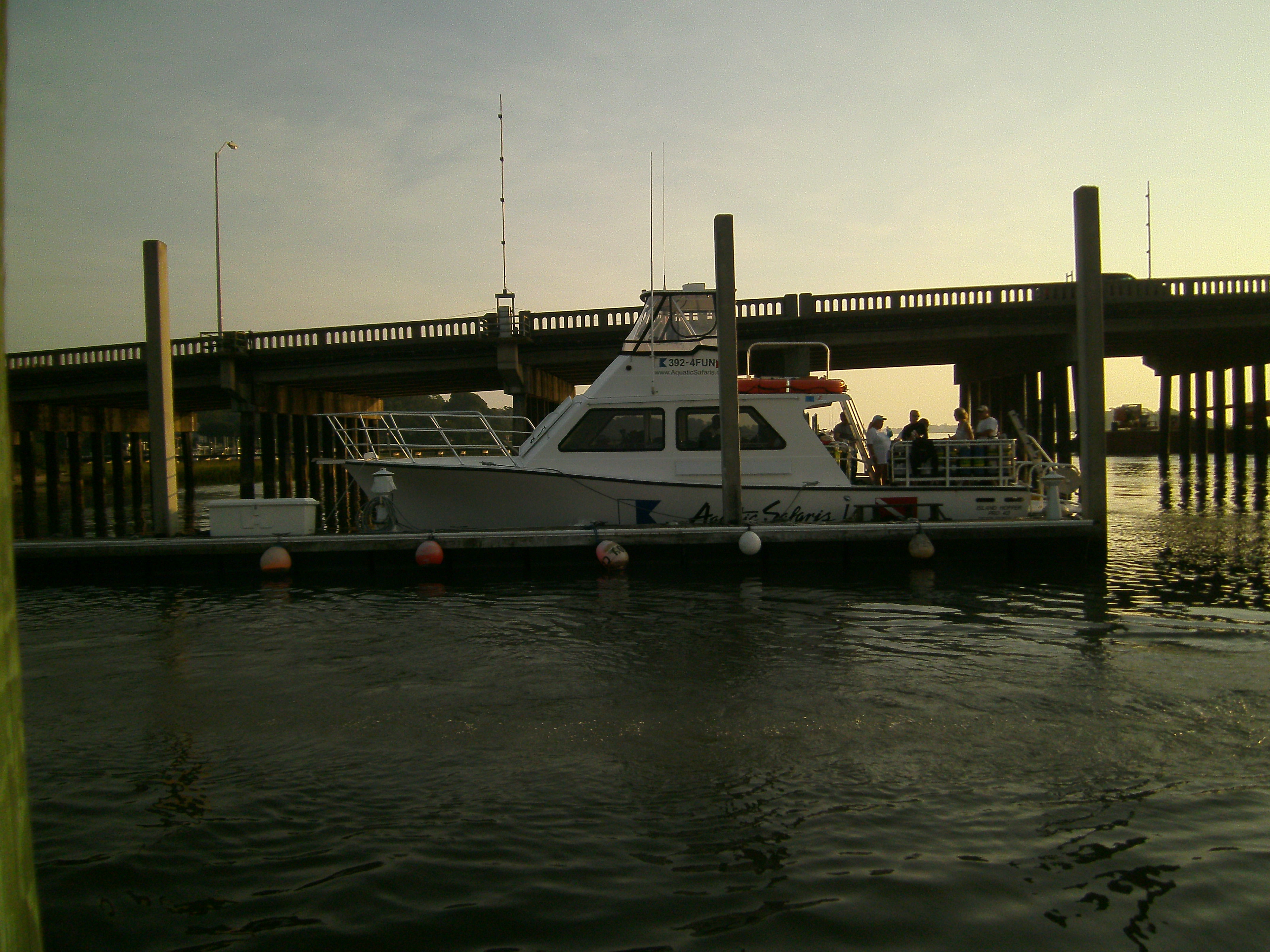
For Labor Day weekend, Sally and I went down to Wrightsville Beach, NC, for some wreck diving and extended our lucky streak of exceptional coastal dives. Our trip was organized by our friends at Down Under Surf and Scuba, and we went out on the Aquatic Safaris I. The 48-foot boat I carried 19 divers.

Saturday was warm and clear, with mild breezes and fairly calm seas. We dove the City of Houston, a passenger-freighter that foundered in a storm in 1878. She lies about 50 miles from Wrightsville. It took two and a half hours of hard traveling to get there. Shortly after we anchored and I visited the head, I felt queasy and promptly got sick. Then I felt mostly better, and we jumped in and headed down the anchor line to the wreck.

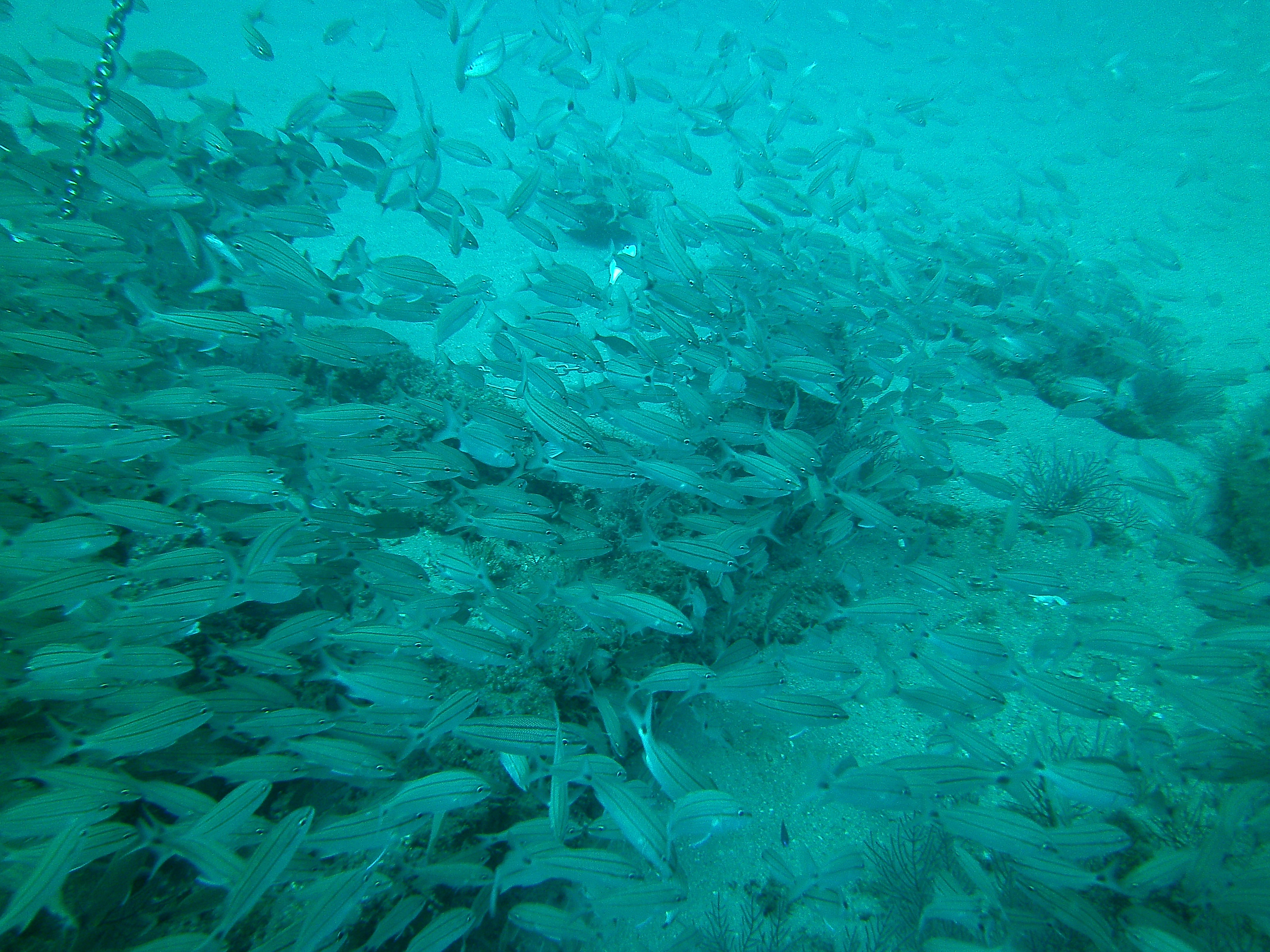
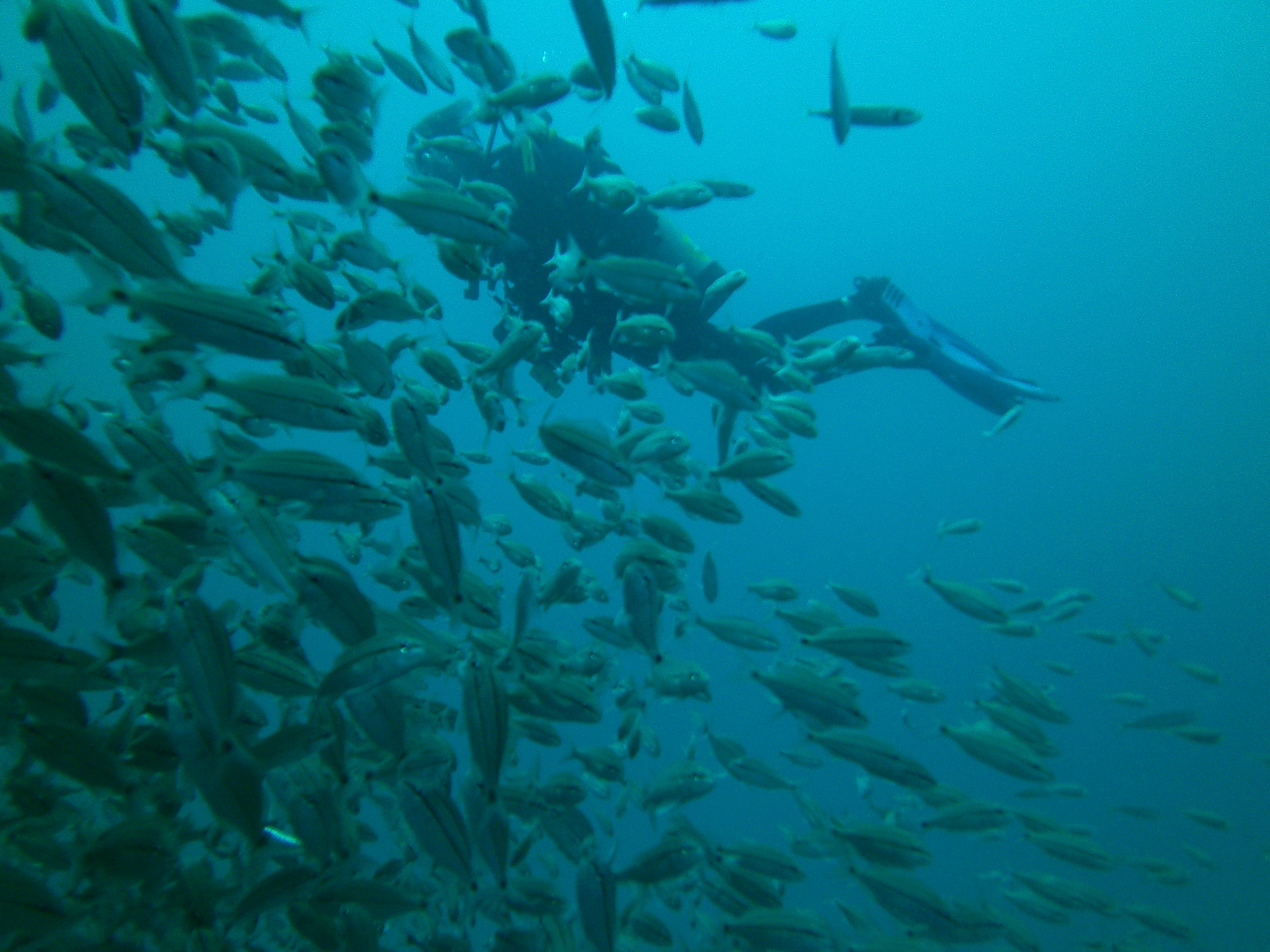
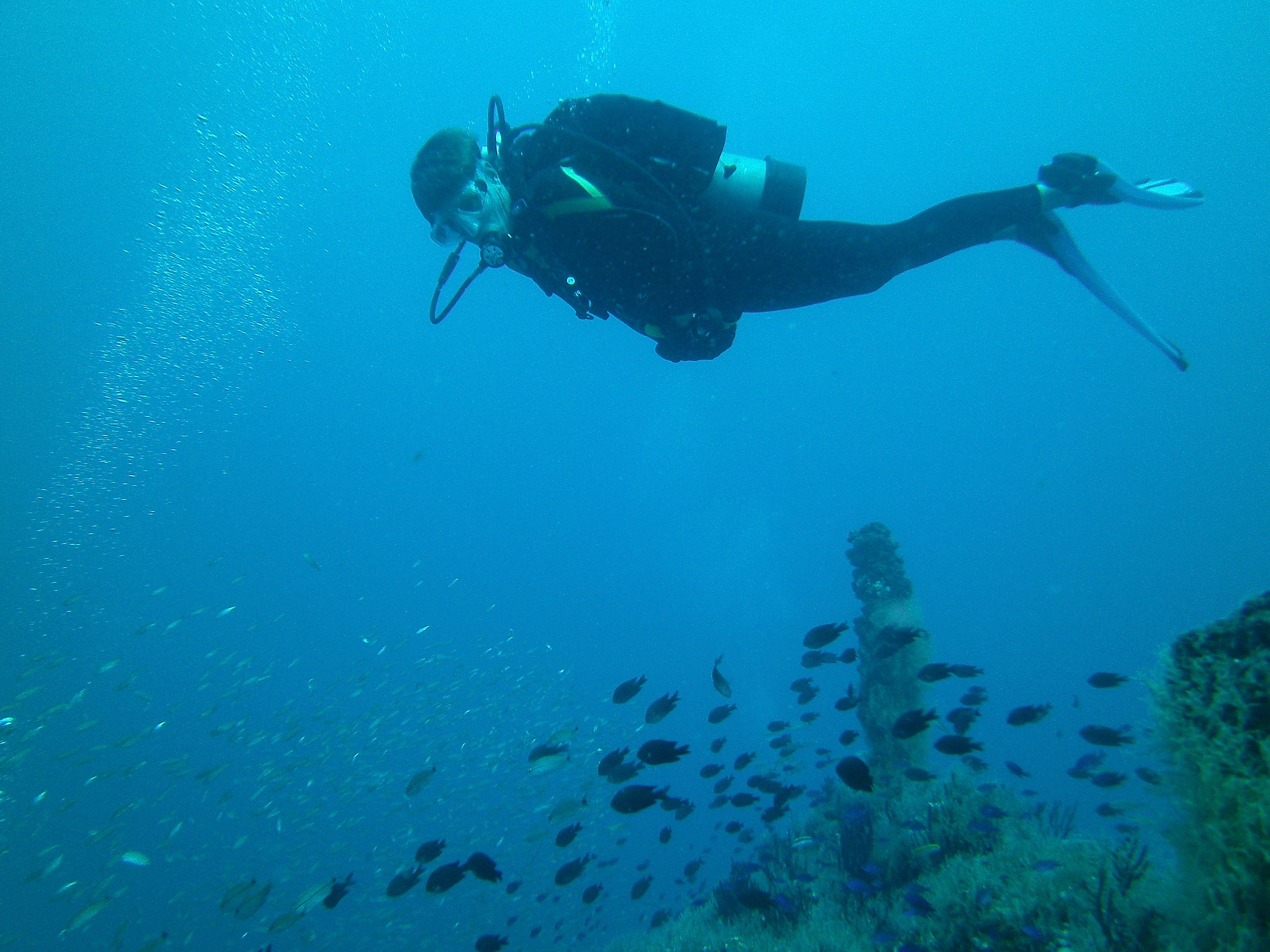
The Houston lies at about 95 feet down. Visibility was good (perhaps 60 feet) and the water temperature was a comfortable 82 degrees. There was a mild amount of current on the bottom. There were thousands of small fish. Our most dramatic sighting of the day was a goliath grouper, an enormous fellow, almost six feet long. My camera battery gave out when I tried to get a picture. I did, however, get some other pictures, including Sally examining something tiny with her magnifying glass (above) and great clouds of small fish.

After a second dive on the Houston, we headed in. Our seats were metal benches along the sides, in front of our tanks, so we couldn’t lean back and sleep. Some of our dive mates stretched out and slept on the deck, so it was difficult to move about as the boat sped along at a quick 25-knot pace. Diving sometimes takes fortitude.

We had a good Italian dinner with Sally’s sister in Wilmington at Nicola’s. There were a number of appealing vegetarian offerings. I had the eggplant rollatini with pink sauce, which was quite tasty. We had a lively conversation about, among other things, the automation of higher education, and how it is threatening the traditional university.

On Sunday we went out again on the Aquatic Safaris I, this time for a two-hour trip to the Normannia, a Danish freighter that foundered in 1924. The seas were calm and the trip went smoothly. I didn’t get sick. The wreck is about 115 feet deep. Like the previous day, the visibility was about 60 feet and the water was comfortable.

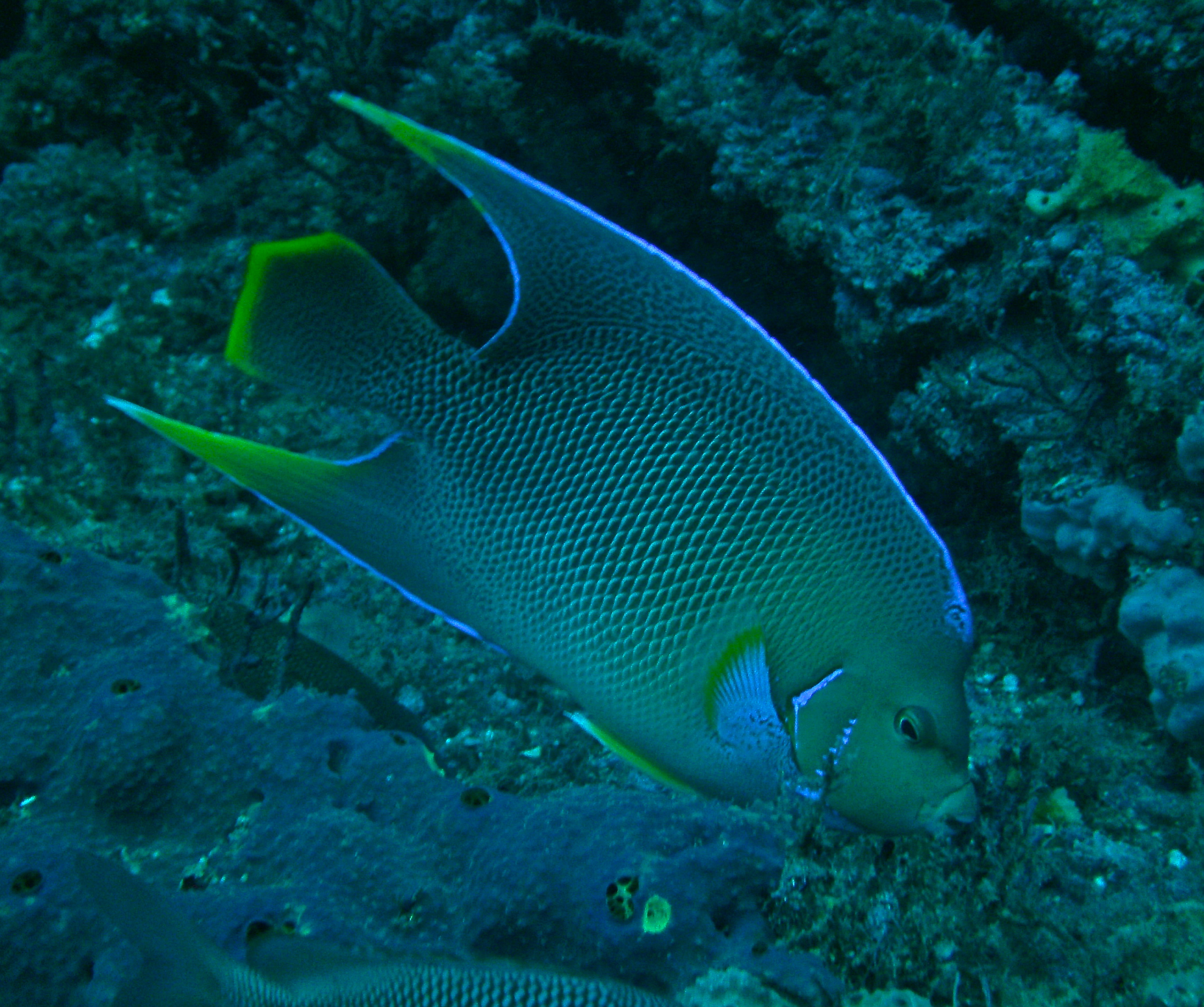
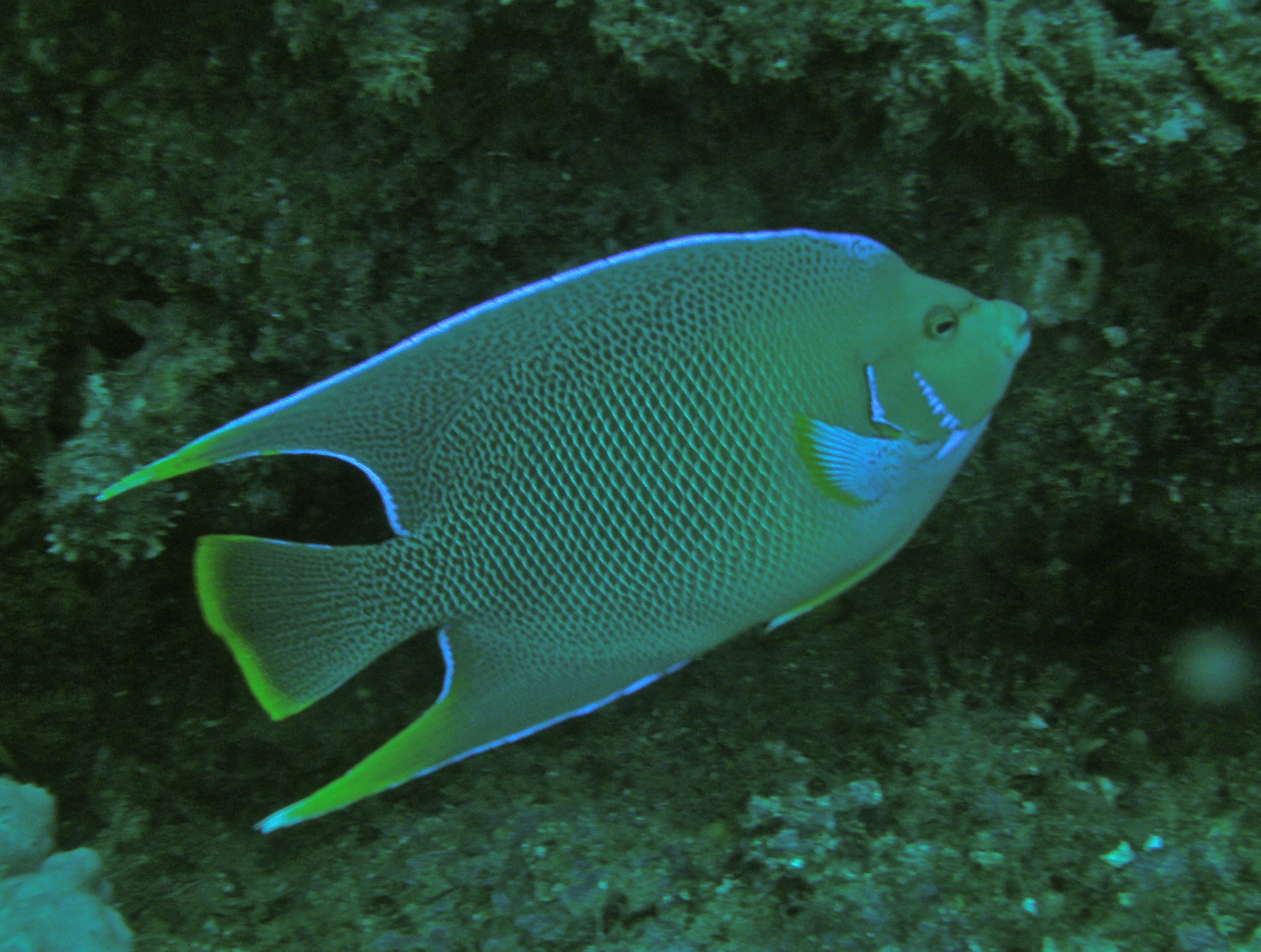
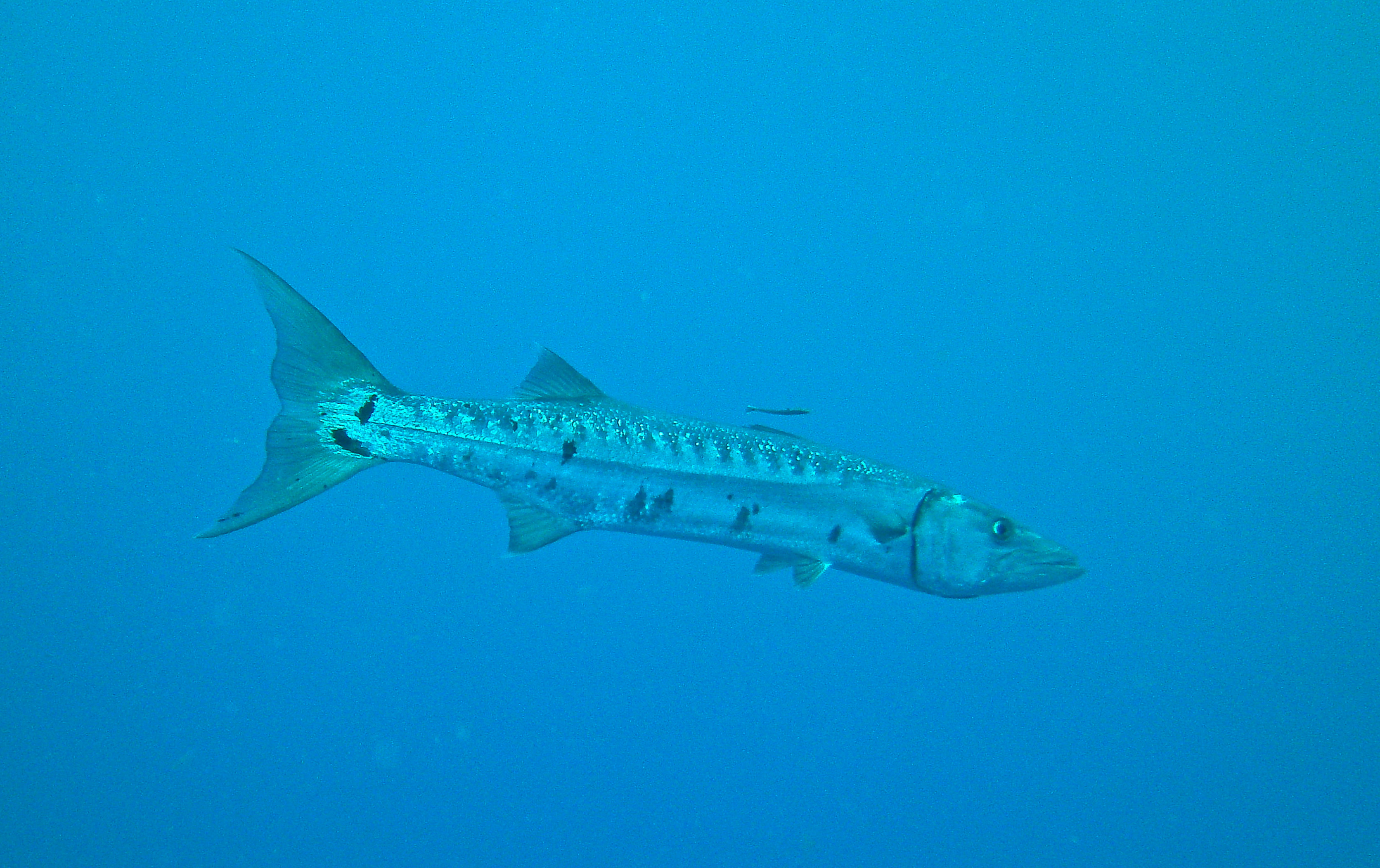
Even more than at the Houston, the Normannia had an amazing profusion of life. Along with thousands of small fish, we saw barracuda, a couple of gigantic lobsters, a well camouflaged frogfish, and my favorite, queen angelfish (several). I went to some trouble trying to get a good picture of one, and though these don’t really do it justice, they were the best I could do.

It is such a great pleasure to swim among fish. At times we were completely surrounded by thousands of small ones, and at times we swam alongside large ones. As I dive more, I feel increasingly touched by their beauty. They are amazingly varied in size, shape, color, and ways of moving about. Recent research indicates that they are much smarter than we’ve thought. For example, some can very quickly learn complex topography of a reef environment.


As I’ve spent more time with these creatures, I’ve come to consider them sentient beings worthy of respect and compassion. I regret to say I’m in a minority on this point. Among my fellow divers were some with spear guns and one who was capturing lobsters. I found it really painful to see him take an enormous lobster, perhaps decades old, and break off its antenna and shove it into an ice chest to suffocate.

My shipmate seemed otherwise a decent and friendly fellow. I’m certain he was not trying to torture the creature, though that was what he did. He didn’t derive pleasure from being cruel. He simply couldn’t comprehend that the animal was capable of suffering. I think he and others would find that expanding the circle of compassion to more animals is a happier and more fulfilling way to live.

Speaking of intelligence, I read recently that the human brain was unlikely to get larger in the normal course of future evolution, because it would serve no purpose. Brains working in isolation are not how things get done. Instead, as E.O. Wilson has pointed out, it’s humans’ ability to connect their individual brains that has been the secret to their evolutionary success. We keep getting better at that, developing over the millenia the tools of gesture, spoken language, and written language, with the internet being the latest game-changing technology.

In the midst of the depressing mendacity and nonsense of the Republican convention, I find it somewhat consoling to look at intelligence as potentially expanding through better networks. The Republicans are profoundly mistaken in thinking that entrepreneurs act primarily as fully independent rugged individualists. It’s more accurate, and also more useful, to look at achievement in terms of groups cooperating and competing. Our future success, and perhaps our survival, depends on our ability to improve our systems of cooperation, including our politics.