The Casual Blog

Category: scuba

Our diving trip to Fiji
13 12 27_6468_edited-1
Over the end-of-year holiday Sally and I went to Fiji for some scuba diving. It was a long journey with some rough spots, but also some thrilling spots, and on balance it was worth it. For those who might consider such a trip, here’s some of the nitty gritty on the diving, and also a note about our stop on the way home at the Getty Museum.

I’d always thought of Fiji as one of those “island paradise” places in the Pacific, but in fact didn’t know that much about it. The reason we decided to go was we’d heard the scuba diving was good, and it’s relatively uncomplicated to get to from the US. It is situated north of New Zealand, west of Tonga, and east of Vanuatu. Although it looks like a tiny speck on the world map, it is made up of 332 islands, though most of the population of 860,000 lives on just two of them. The large islands are mountainous and very green

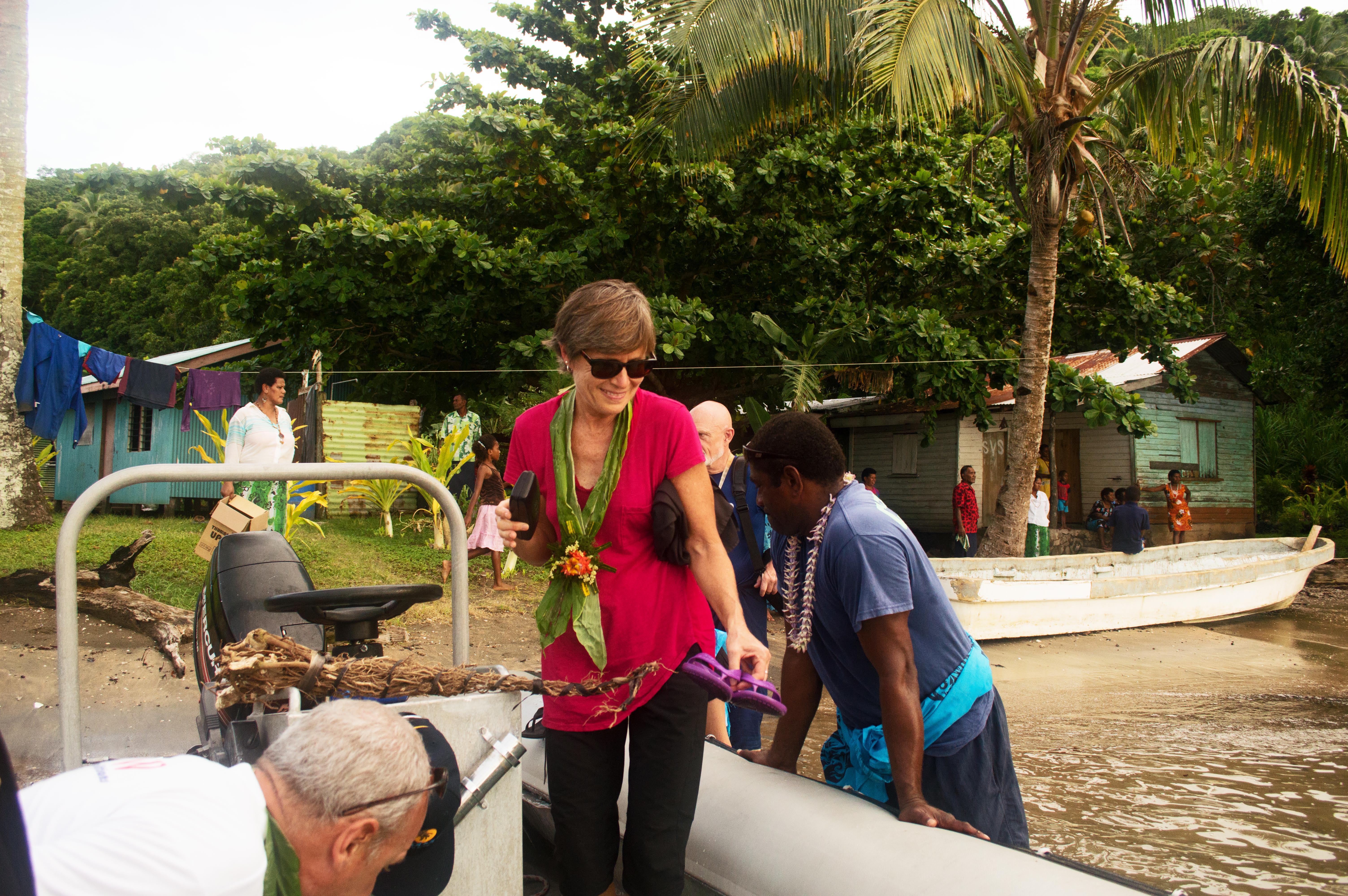
It took us about 26 hours door-to-door to get there. Going out, we had three flights, a long cab ride, a wait, and then an hour boat ride to get to Beqa (pronounced Ben-ga) Lagoon Resort. The staff was on the beach under the palms singing and clapping as we floated up. This was sweet, but we were surprised that there was no dry way to exit the boat. You had to step into the water and then onto the beach, and Sally was still in stockings, but on she went. One of the staff put a little garland with flowers around our neck.
13 12 25_6536_edited-1
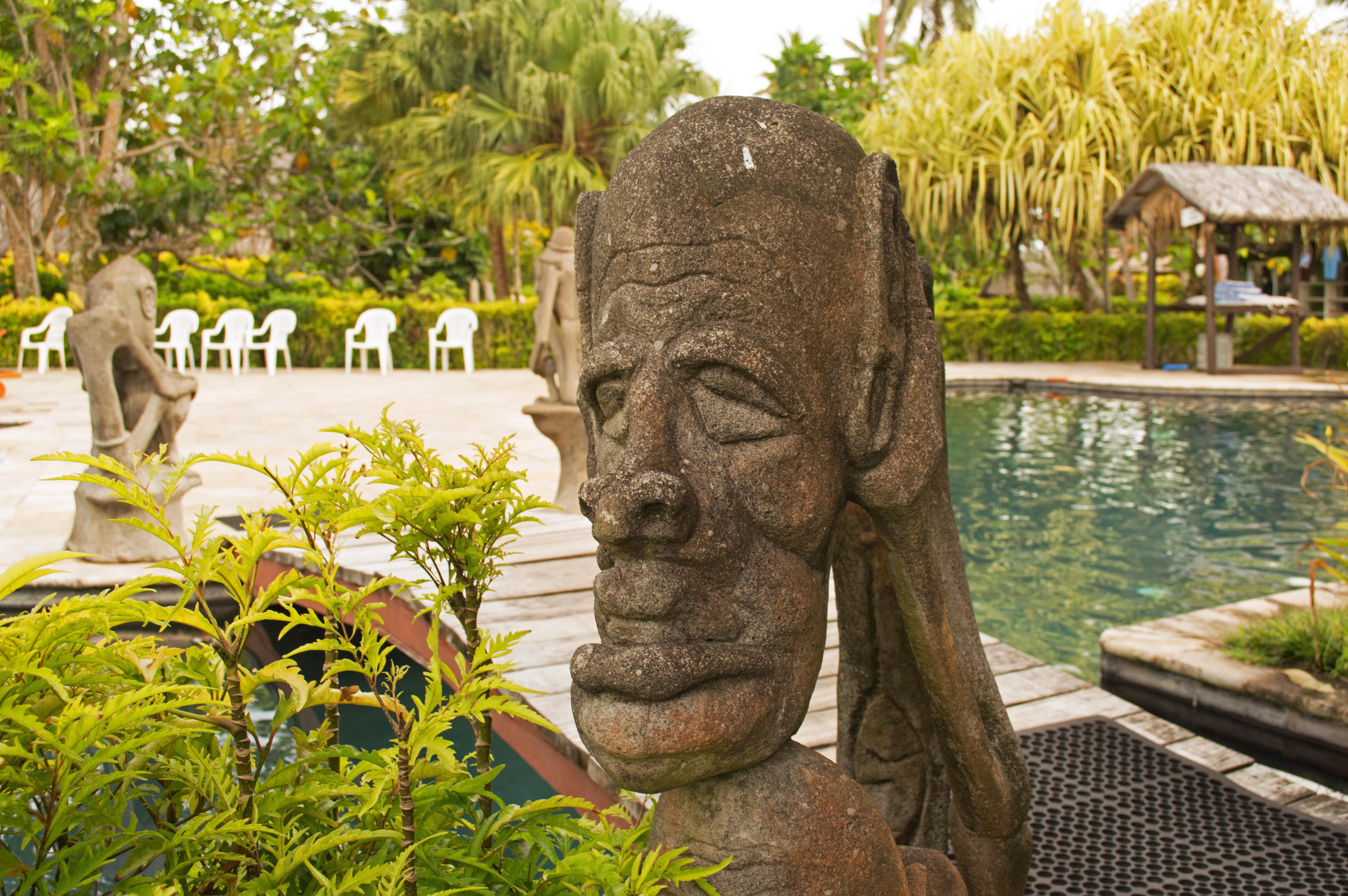
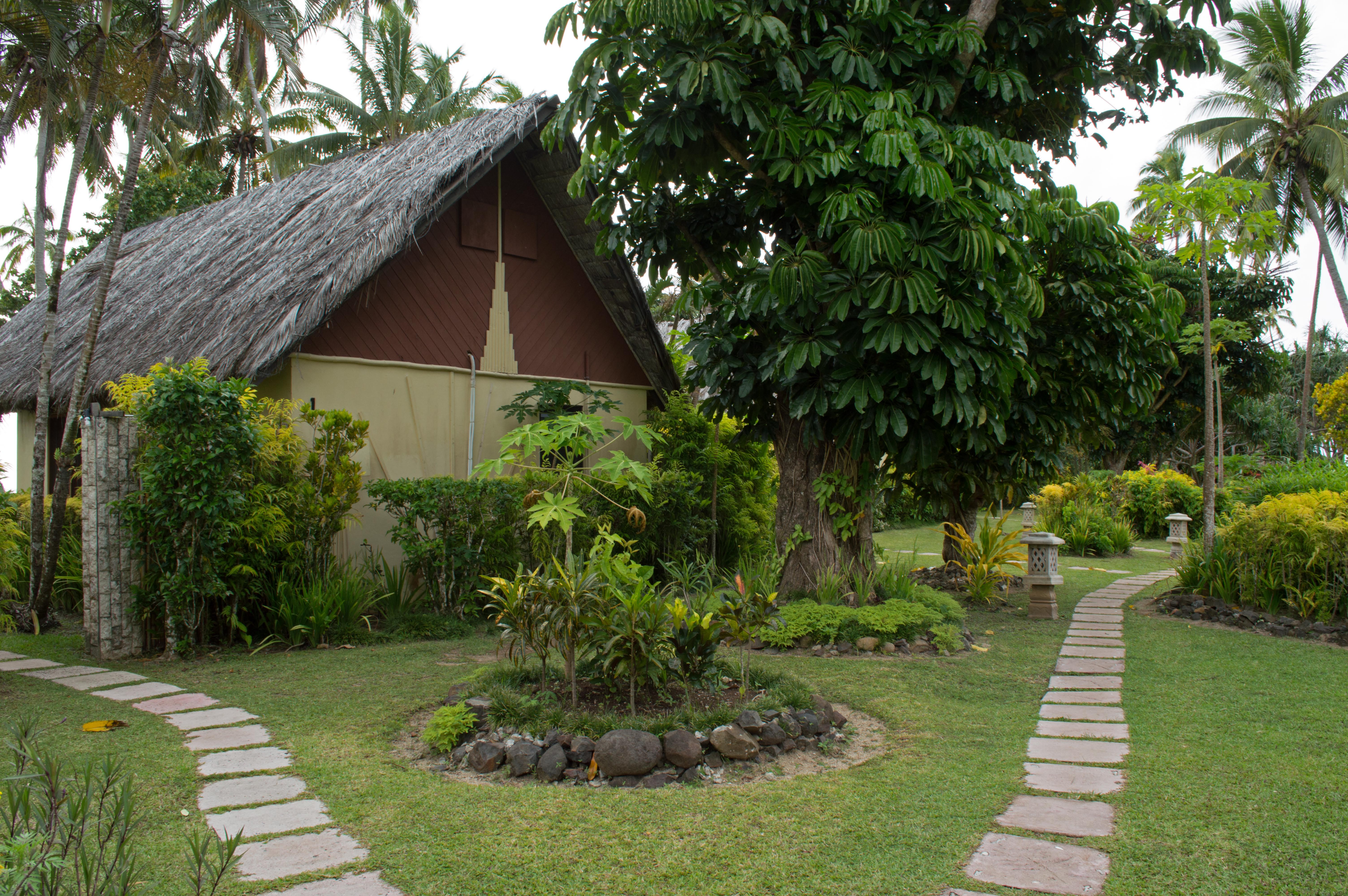
The resort didn’t look quite as gleaming as its website suggested, but it had tropical charm, with palms, flowers, sand, pools, and grass-roofed buildings, and the staff was warm, friendly, and competent. We were in Bure (which I’m guessing means cottage) No. 5, which fronted on the beach and had thick hedges on the side – great privacy. That afternoon, I did a short checkout dive, but otherwise we took it easy and had a couples massage at the spa. It was marvelous.

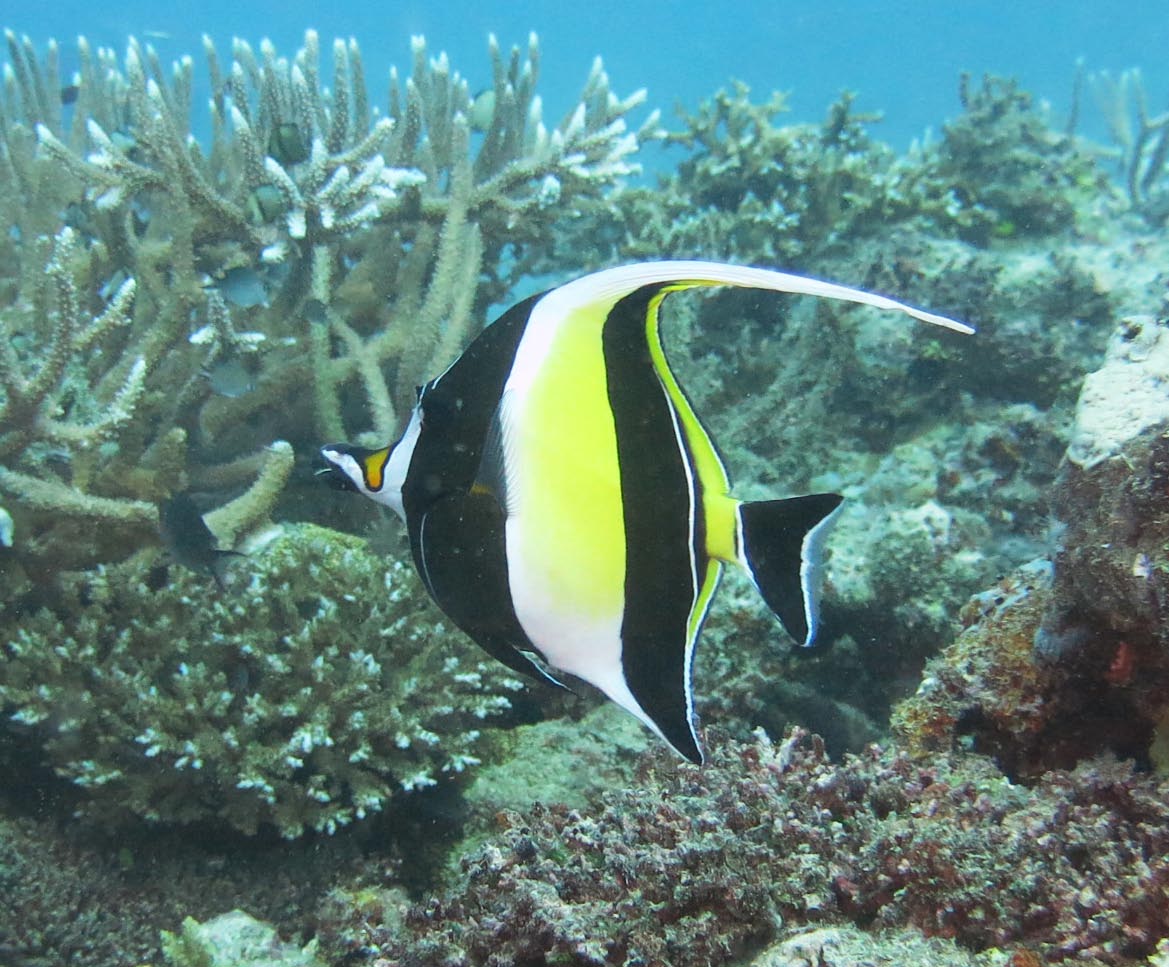
The next day we did two boat dives in the area. The water was a comfortable 82 degrees, but choppy, and the visibility was mediocre – at most 50 feet, rather than the super clear water we were expecting. We were looking forward to the fabled soft coral, of which we saw some, but we were also struck that there were big coral areas that were bleached white (prematurely dead). It was nice to see many small tropical fish that were new to us, including new species of angelfish, butterflyfish, damselfish, anemone fish, fusiliers, wrasse, parrot fish, and my new favorite, the Moorish idol.
14 01 02_6270_edited-1

At dinner that evening we sat down next to a youngish Swiss couple, Mark and Doris, who spoke excellent English and were charming and lively. We found a lot of interests in common, starting with diving but extending to skiing, travel, and world affairs. Our conversations that evening and for the rest of our stay were a highlight of the trip. As for the eating, the resort accommodated our request for vegetarian meals, and almost everything was tasty.

On the second day of Beqa diving, we enjoyed talking with Rick, a nice Mormon guy who owned a bunch of car dealerships in the heartland. He was up to speed on the self-driving car, a favorite subject of mine, and like me thinking about what this meant for employment and the economy. He was intrigued to hear about our scuba liveaboard trips, and wanted to learn more. He allowed, though, that he wasn’t sure he was passionate enough about diving to do a week focused entirely on that. I agreed – you’ve got to be passionate.
13 12 30_6421

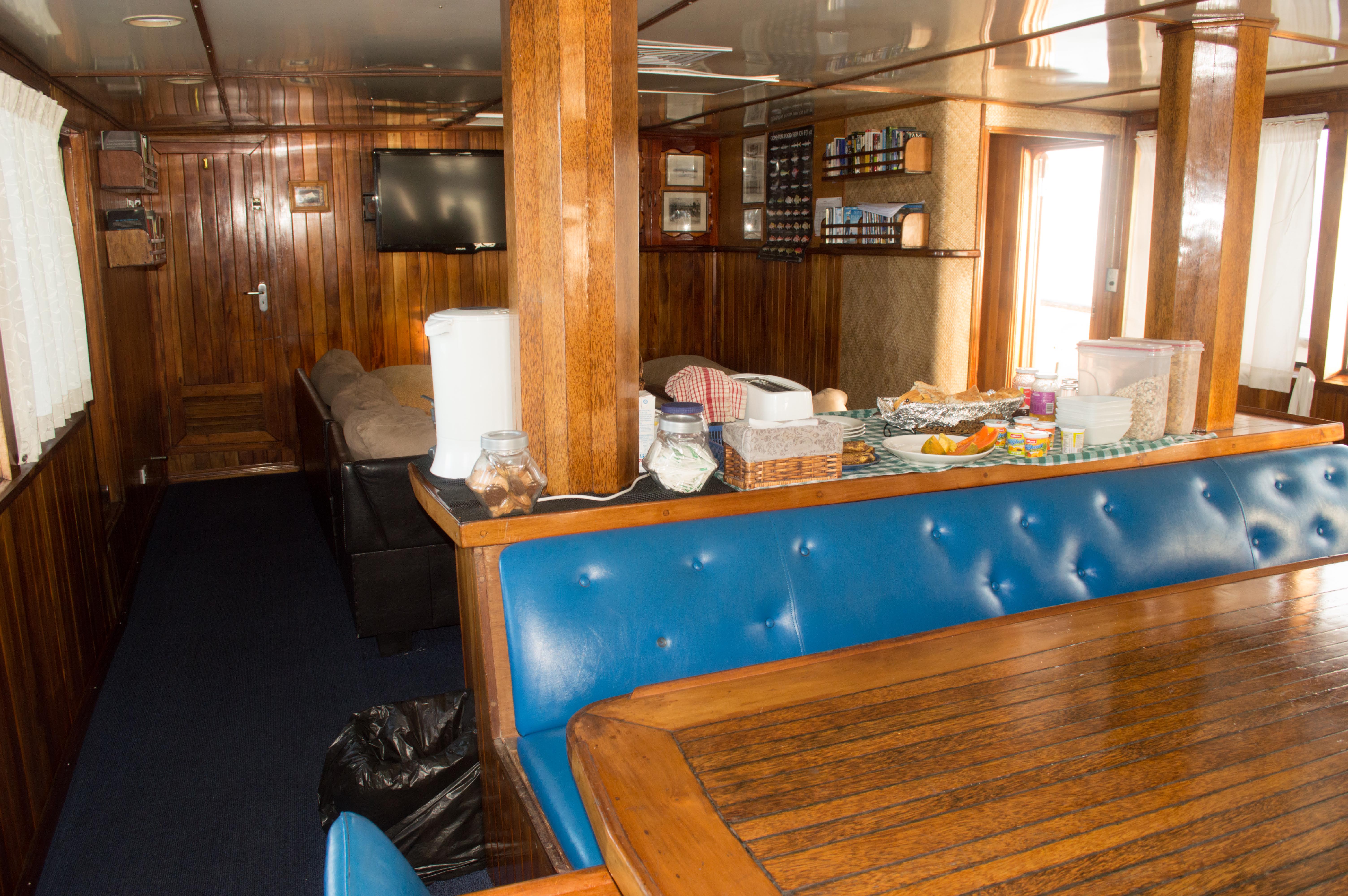
The next morning we crossed back over Beqa lagoon, and got a ride to our dive boat, the Island Dancer II. It was 101 feet long, 22 feet in the beam, and well-appointed for diving. Our cabin was on the main deck past eating/socializing area. It was air-conditioned and quite commodious and bright by marine standards, with a queen bed, desk, large windows, and private bathroom.
14 01 01_6316

Our crew, led by Captain Joji (pronounced Cho-chee) and divemaster Moses, was all Fijian, friendly and hardworking. Our seven shipmates were from D.C., San Francisco, Sydney, and Moscow, and all were very experienced divers who’d all been to several exotic dive locations before.
14 01 01_6376_edited-1

Our first night involved a nine-hour trip from Viti Levu (the main island) through the Makogai Channel toward Vanua Levu and Namena Reef. The weather was rainy, and the seas were choppy. The boat rocked enough to dump things off of countertops. Fortunately, our stomachs were up to the challenge (thank, Bonine). The next morning it was calm, and we did a check out dive – ostensibly to check how much weight we needed, but, I suspect, more to let the crew verify that no one was going to be a hazard to himself or others. That went smoothly, and we quickly settled into our routine.
13 12 29_5568

Our typical Island Dancer day went as follows: Up at 6:30 a.m. for pre-breakfast (e.g. yogurt, fruit, cereal), first dive at 7:30, breakfast of eggs or French toast at 9:00, second dive at 10:30, lunch at noon, third dive at 2:00 p.m., snack at 3:30, fourth dive at 4:30, dinner at 6:00, fifth dive (night dive) at 8:15, have a glass of wine at 9:30, and then sleep. In short, dive, eat, and sleep. In the background were gorgeous lush islands, lovely sunsets, and usually a mild tropical breeze. The water and air were both mostly in the low eighties. What could be more fun?13 12 31_5910_edited-1
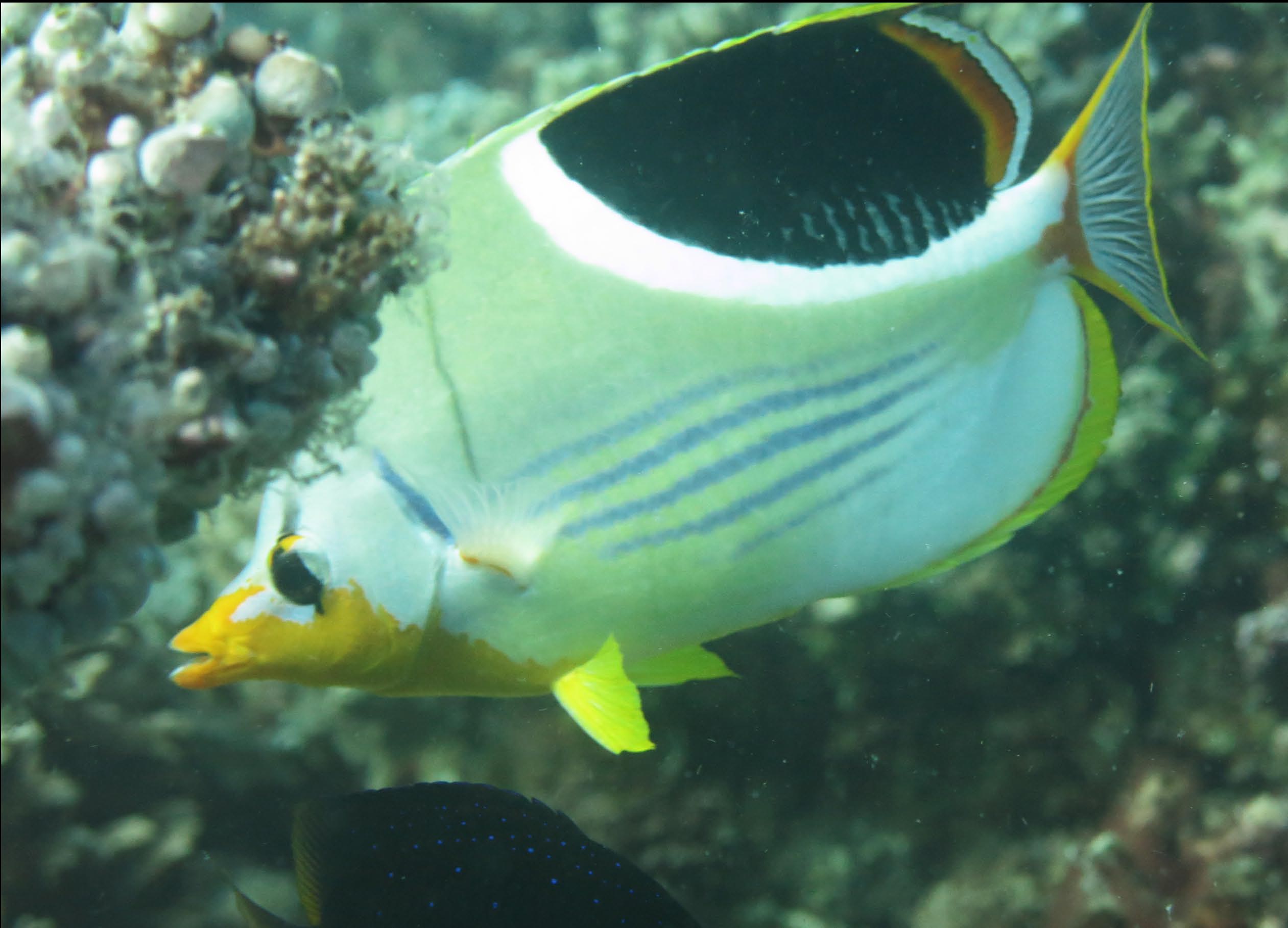
OK, not everything was perfect. The visibility was disappointing. It ranged from a best of about 50 feet down to 20 or so – far from the 80-100 feet we were expecting. The captain said at one point it was as bad as he’d seen it in many years of diving the area. He said a tropical depression shortly before we arrived was responsible. So, that was unlucky. We were also initially struck that there were significant areas of the reefs bleached white with not a lot of animal life. There were fewer big animals (big fish, turtles, rays) than we had hoped. At least one person saw a manta ray, but we did not.

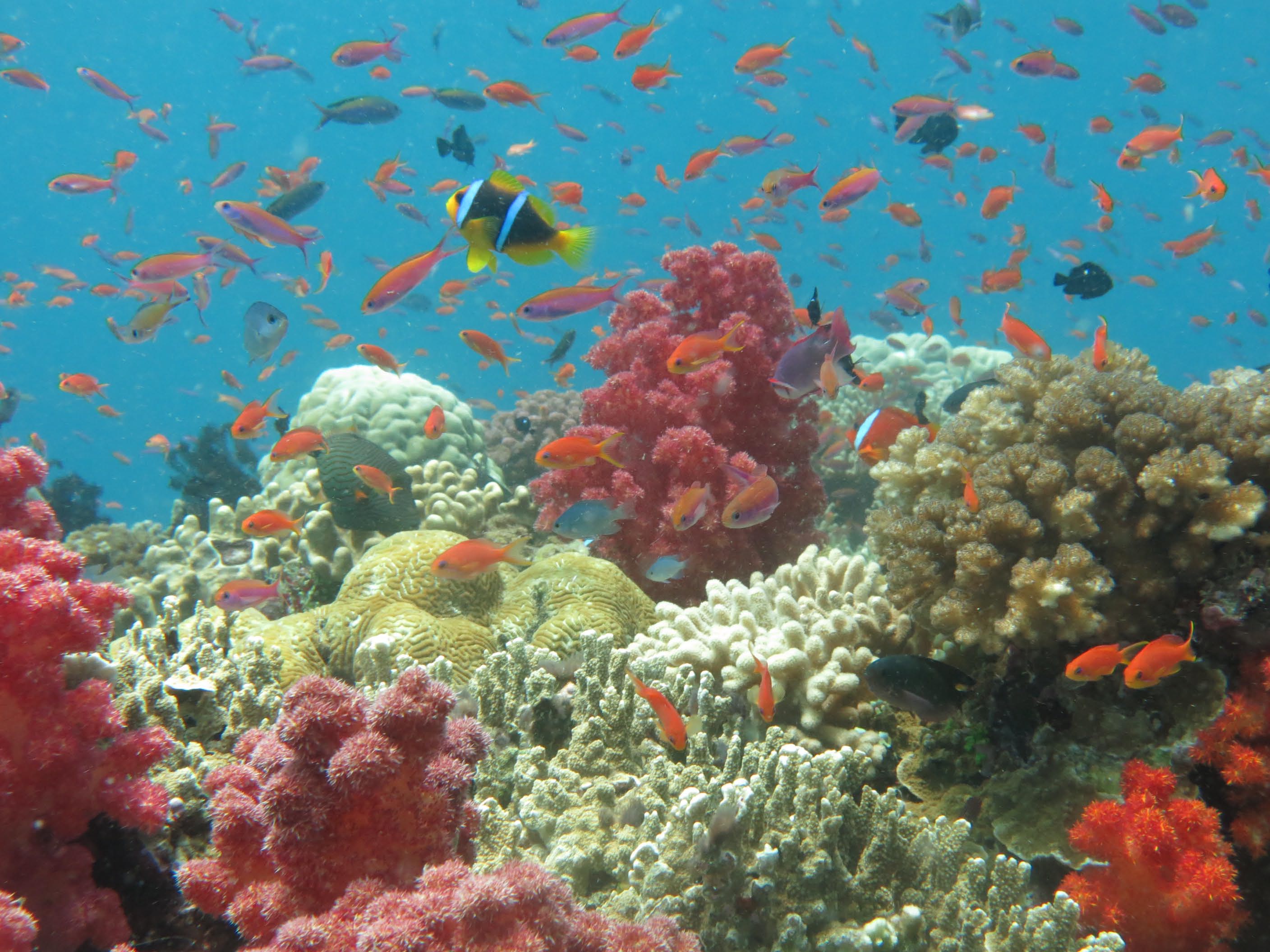
But still, there was a great deal to see. A typical site involved a pinnacle (that is, a column), of coral rising from the sand perhaps 50 feet. The top layer would generally be about 15 feet below the surface, and would have an enormous profusion of soft and hard coral, anemones, and thousands of tropical fish. With so many textures and colors, the coral looked in places like a fantastic garden – amazingly beautiful.
13 12 29_5526_edited-1

Along with the fish, we saw quite a few other interesting and strange small creatures, including various kinds of nudibranchs, flat worms, sea horses, tiny shrimp, pipe fish, blennies, and others still more obscure. There were a few turtles, and a couple of moray eels. One morning we watched a banded sea snake (highly poisonous) swimming for several minutes, and a very well-disguised octopus, who changed disguises a couple of more times. On one night dive we saw three leaf scorpionfish and a giant clam at least four feet across.
14 01 01_6149_edited-1
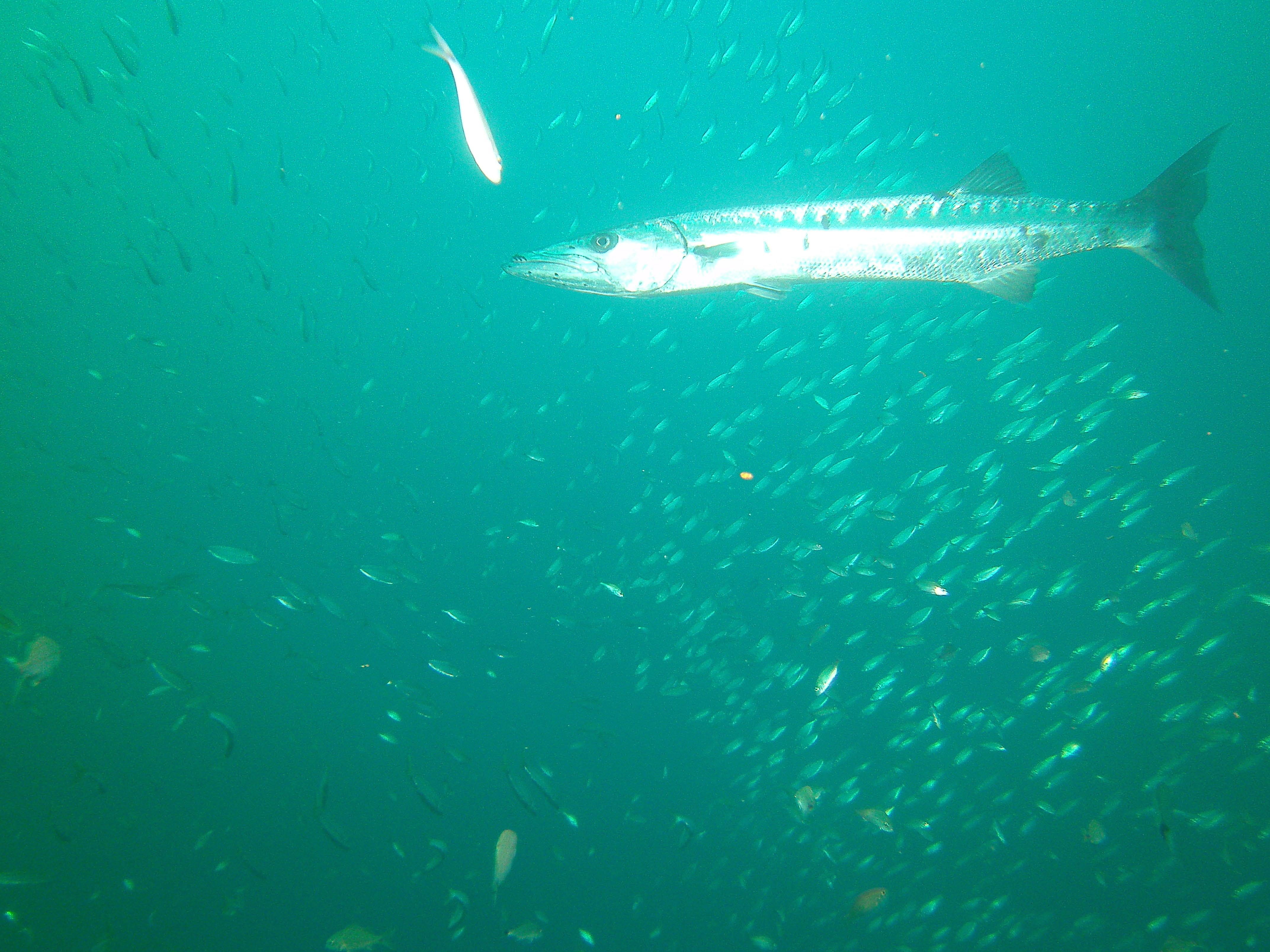
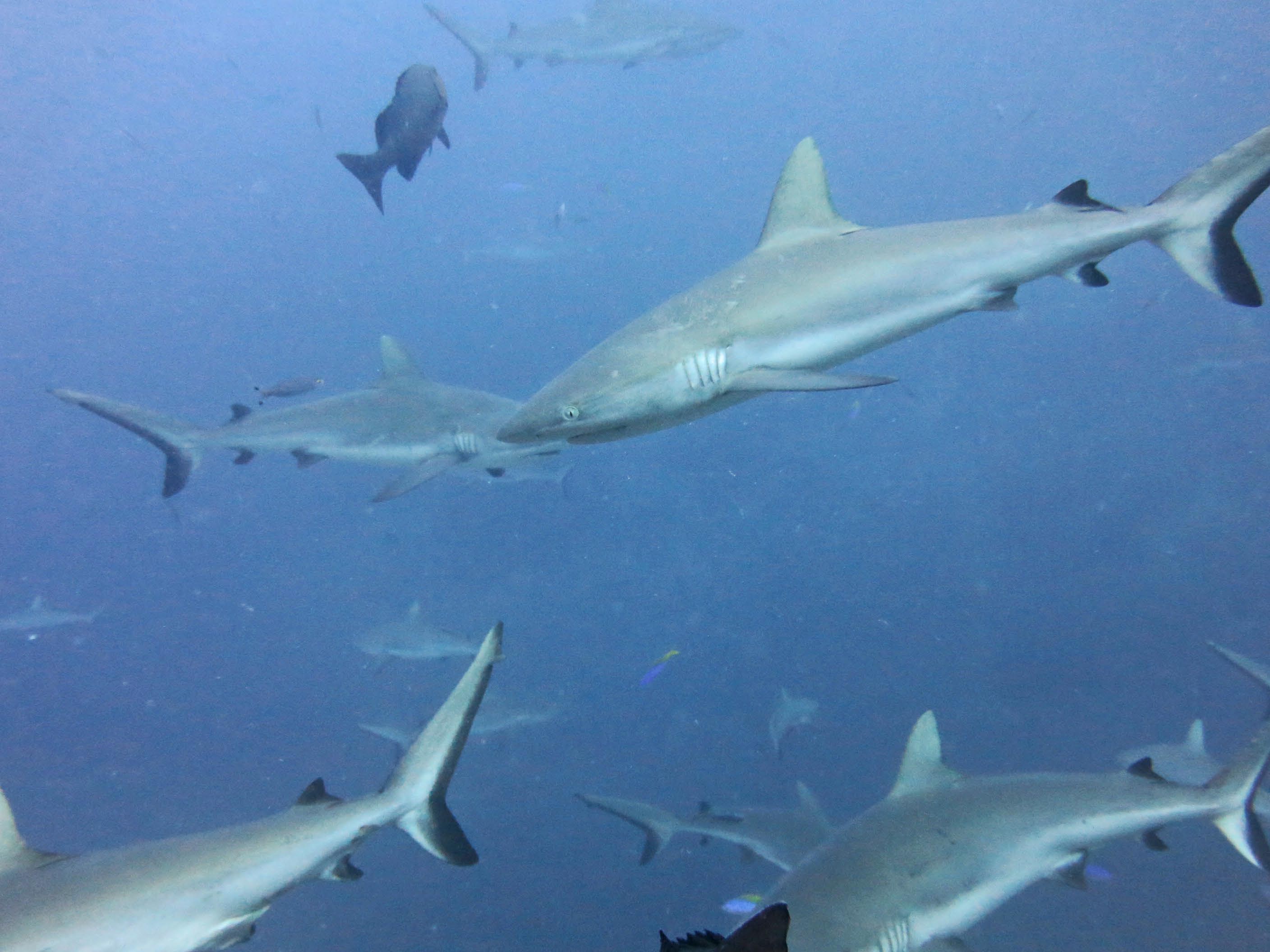
The fourth day in, off of Gau (pronounced Now) Island, we did two shark dives, where we saw dozens of gray reef sharks close up. With them were many red sea bass and smaller fish, as well as schools of barracuda. On the first dive we held in current behind a rock wall, while the sharks came in for fish heads. The second involved a drift dive in a fast current, with the sharks zooming in and out.
14 01 01_6122_edited-1
On that second dive, I got low on air, and shared Sally’s with her extra second stage as we got pushed hard by the current to the exit point. It was a challenging situation, but we worked well together, as usual. We saw a spotted eagle ray during the safety stop.
14 01 01_6372_edited-1

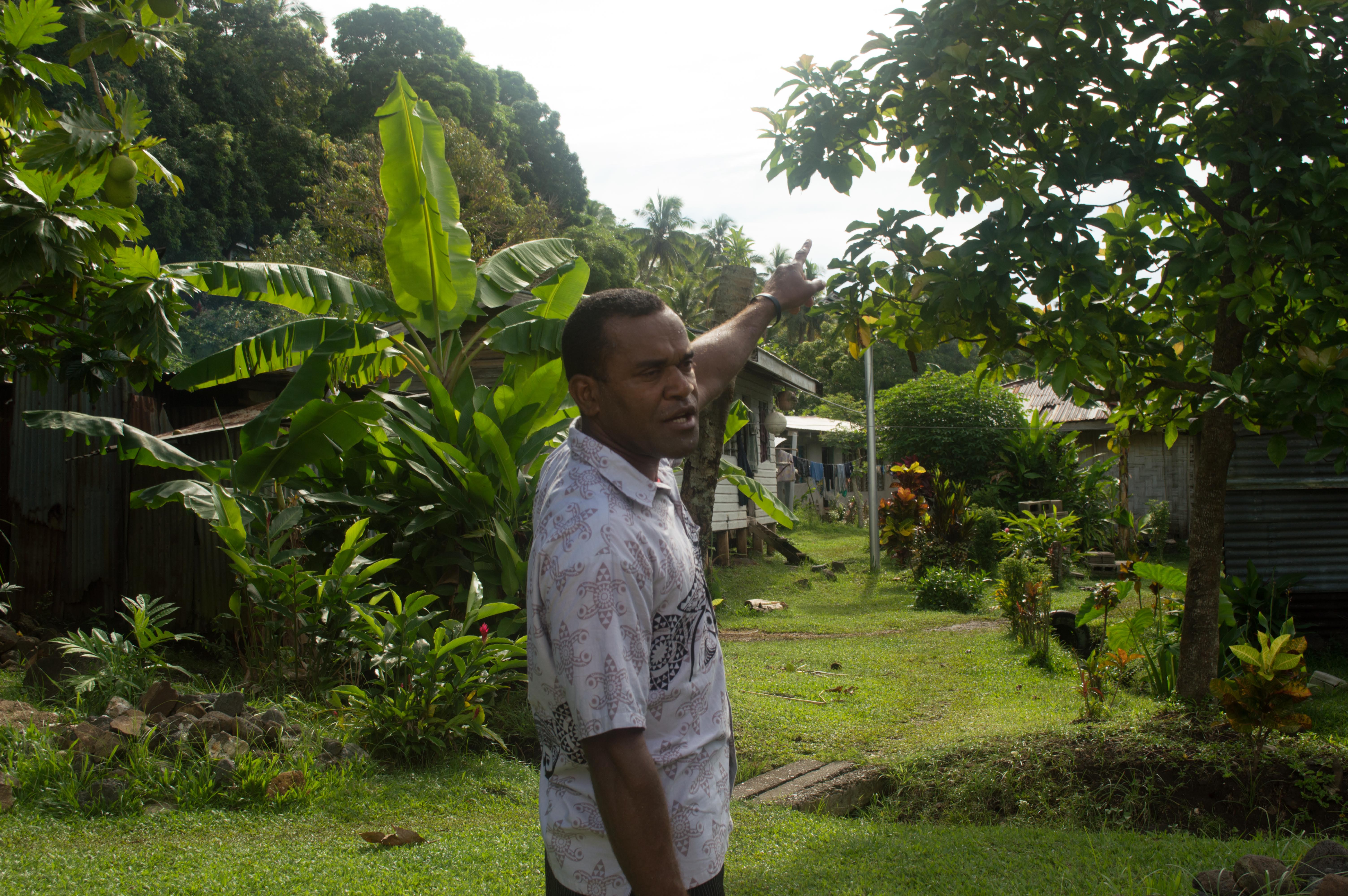
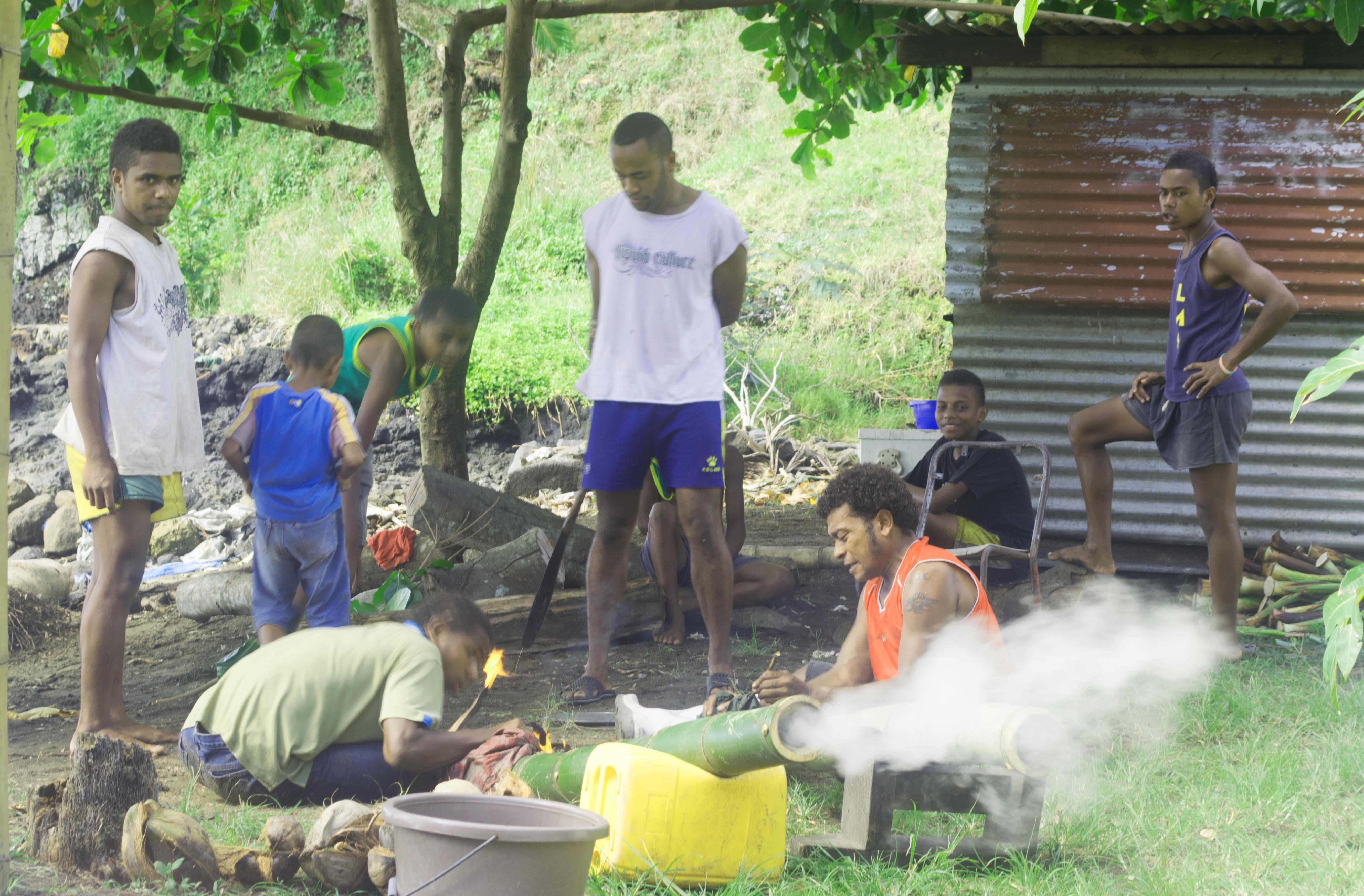
On the afternoon of the fourth day, we visited a little village on Gau island called Soma Soma. Our guide there told us that 114 people and 3 clans lived there. The people greeted us in a friendly way. Teenage boys were setting off fireworks with a palm cannon to celebrate the new year, and little kids were splashing in the water. We sampled kava, a watery drink made from soaking kava root. Supposedly it can produce a high, but I got only slight numbness in my mouth. The villagers did some singing and dancing, and got some of us to join in a dance.
14 01 01_6336_edited-1-1
14 01 01_6354

My Sea Life underwater camera quit working (wouldn’t turn on) after the second day of diving, and so I rented a little Canon G15 camera from the boat. Lacking a strobe, I used my Sola flash light for extra light, which was suboptimal. My photographic aspirations were simple, really – to get a few images that started to convey the incredible beauty down there – but it was still hard to do.

There were so many great shots that got away. A beautiful angelfish would present itself in all its splendor, and either the camera had gone to sleep, or wouldn’t focus. Or in the half second shutter lag interval, the fish would turn away, or another fish would swim between us, or another diver’s bubbles would mess things up. Then, after the shot, the camera would take a few second to recycle, during which time the subject fish would again look gorgeous, but as soon as the camera was ready to go – so was the fish. Some of those little fish are shy! Anyhow, I tried, and I a few times I got an image I liked.
14 01 01_6065_edited-1

Our trip back was a total of 41 hours, including layovers, but we made good use of the eleven-hour layover in L.A. with our first visit to the Getty Center. The logistics were a bit challenging, in that we couldn’t check our heavy dive bags and so had to cart them by cab and tram to the Getty’s coat check room, but it was worth it.

It is a wonderful museum! It’s perched on top of a hill, surrounded by gardens, with a good view of downtown L.A. It has several connected buildings, with a vibe that’s modern but evocative. The crowd was all ages, international, multiracial, and friendly.

And there was an outstanding collection of European art. We spent time looking at the excellent collection of paintings of Rembrandt and his contemporaries, and of the Impressionists and post-Impressionists. We also very much enjoyed the current exhibit of the works of Abelardo Morrell, a Cuban-American photographer. His works were highly conscious of texture and shape in a formal way, but also touched something emotionally powerful.

A beautiful Nutcracker, Xmas spinning, and getting ready for Fiji (including ebooks)

13 12 21_5389

We were on the fence about whether to go to the Carolina Ballet’s Nutcracker ballet this year. There have been many lovely Nutcrackers, even enchanting Nutcrackers, but after many years of cracking, I worried that the magic might be wearing a little thin for me. That Tchaikovsky music is great, but also very, very familiar. It would be a shame to find that the thrill was finally gone. But Will Levine, son of our friends David and Maggie, dancing the nephew/nutcracker/prince, we decided to go again.

I’m so glad we did. It was a particularly touching and magical Nutcracker. Having a live orchestra to play that delicious music really helped, and this was a good band, ably led by Al Sturges. There were the cute little kids and sumptuous costumes and settings. But most of all, there were the dancers. The Carolina Ballet has so many talented artists just now. They looked like they loved their work.

The star of the evening was Lara O’Brien as the Sugar Plum Fairy. Her SPF was elegant and assured, highly musical, with a slight note of tragic grace. Her pas de deux with Marcelo Martinez was beautiful and moving — so passionate – I got a bit misty.

Also especially wonderful was Alicia Fabry as Butterfly (the lead in the Flowers waltz), and newcomer Alyssa Pilger as the lead Ribbon Candy. Young Will did well, to the relief of his parents, and us, too. As in past years, there were a couple of little kids who could do fantastic handsprings, and big boys whose leaps seemed to defy gravity. It was all delightful. It took me into a magical place, in equal parts childhood fantasy and nostalgia, and reminded me of many happy times gone by.

In other Xmas news, I had an holiday-themed spin class at O2 this week led by the fabulous Jenn. She announced at the start that she just loved Christmas, and she’d made a special Christmas tunes mix for our spinning pleasure.

It turned out to be some hard-driving rock songs of the season, and she kicked us into a very high gear. There was lots of sprinting (including a killer sequence of fast, faster, and fastest) and intense climbing. One new trick – she can ride out of the saddle with no hands, and she thinks we can, too. I gave it a shot, and verified that it is not easy. Anyhow, the class was fun, in a brutal kind of way. I knew for certain at the end I had worked out.

For our holiday, Sally and I are heading out for a scuba diving trip to Fiji on Monday, which should be incredible. It’s taken a lot of planning, and the logistics are complicated. There are quite a few important pieces of dive gear, photo gear, and other stuff that must not be forgotten (some of which is pictured above).

In addition to all those details, I’ve given some thought to what books I want to read. Reading time is one thing to like about long flights. My tablet device makes it easier (less heavy) to carry a lot of books, but pre-loading was necessary, since I don’t expect to have much if any internet connectivity. Also, the tablet is not a good reader in direct sunlight, so I need some old-fashioned paper books as well.

Here’s a quick listing of my current books-in-progress and new ones that I may get going. The are ebooks unless otherwise noted.
.
Titan: The Life of John D. Rockefeller, Sr., by Ron Chernow. I figured it would be fairly interesting to find out how the Rockefeller became the most successful monopolist in history, and it has been, fairly. Rockefeller was a very driven person, with a high standard of personal morality (a lifelong Baptist) and a low standard of business morality. His trust was a primary inspiration for the beginnings of modern antitrust law.

Big Data: A Revolution That Will Transform How We Live, Work, and Think, by Viktor Mayer-Schonberger and Kenneth Cukier. I’m about done with this one. I don’t think the title is much of an exaggeration – big data is transforming many fields, including retail, finance, education, and medicine. definitely worth thinking about.

The Signal and the Noise: Why So Many Predictions Fail – but Some Don’t, by Nate Silver. The creator of the FiveThirtyEight blog and impressively successful political prognosticator talks about his methods and related things. Based on the first chapter, it appears somewhat padded as a book.

The New Digital Age: Reshaping the Future of People, Nations, and Business, by Eric Schmnidt and Jared Cohen. I picked this up out of curiosity regarding what the chairman of Google was thinking would come next. I’m about half way through, and finding it not particularly well organized, but there is interesting reporting and thinking on how technology is reshaping our lives. The portion on hacker-terrorist is hair-raising.

Rattling the Cage: Toward Legal Rights for Animals, by Steven Wise. The author recently brought a habeas corpus action on behalf of a champanizee, which struck me as a legal long shot, but interesting, and I was curious about his theory.

Ordinary Men, by Christopher Browning. A history of a small group of regular joes who worked at ground level as part of Hitler’s final solution. For a long time I’ve been interested in the question of how otherwise normal people could participate in mass murder on an industrial scale, and Browning sheds some light on this.

The First American: The Life and Times of Benjamin Franklin, by H.W. Brands. Franklin is by far my favorite founding father, and I’ve read most if not all of the other major contemporary biographies of him. Earlier this year I read Brands’s American Colossus: The Triumph of American Capitalism 1865-1900, and thought it was quite good, so I’m looking forward to getting his view of Franklin and his world.

Reef Fish Identification (Tropical Pacific), by Allen, Steen, Humann, and Deloach (in paper). There are an amazing number of amazing reef fish in the Pacific, and it’s fun to know a bit about them.

Zukerman Bound, by Philip Roth. I got this as a used paperback (price $4.50) of the three Zuckerman novels (The Ghost Writer, Zuckerman Unbound, and the Anatomy Lesson). Roth is my favorite living novelist, and for some reason I hadn’t read these key works of his early middle period. It will be a great pleasure.

The Odyssey, by Homer, translated by Robert Fagles. A classic, obviously.

Leaves of Grass, by Walt Whitman (paper). The embodiment of what is great – and strange – about America. It seems like a good time to read it again.

Diving out of Wrightsville — the good, the bad, and the ugly

SeaLife DC1400

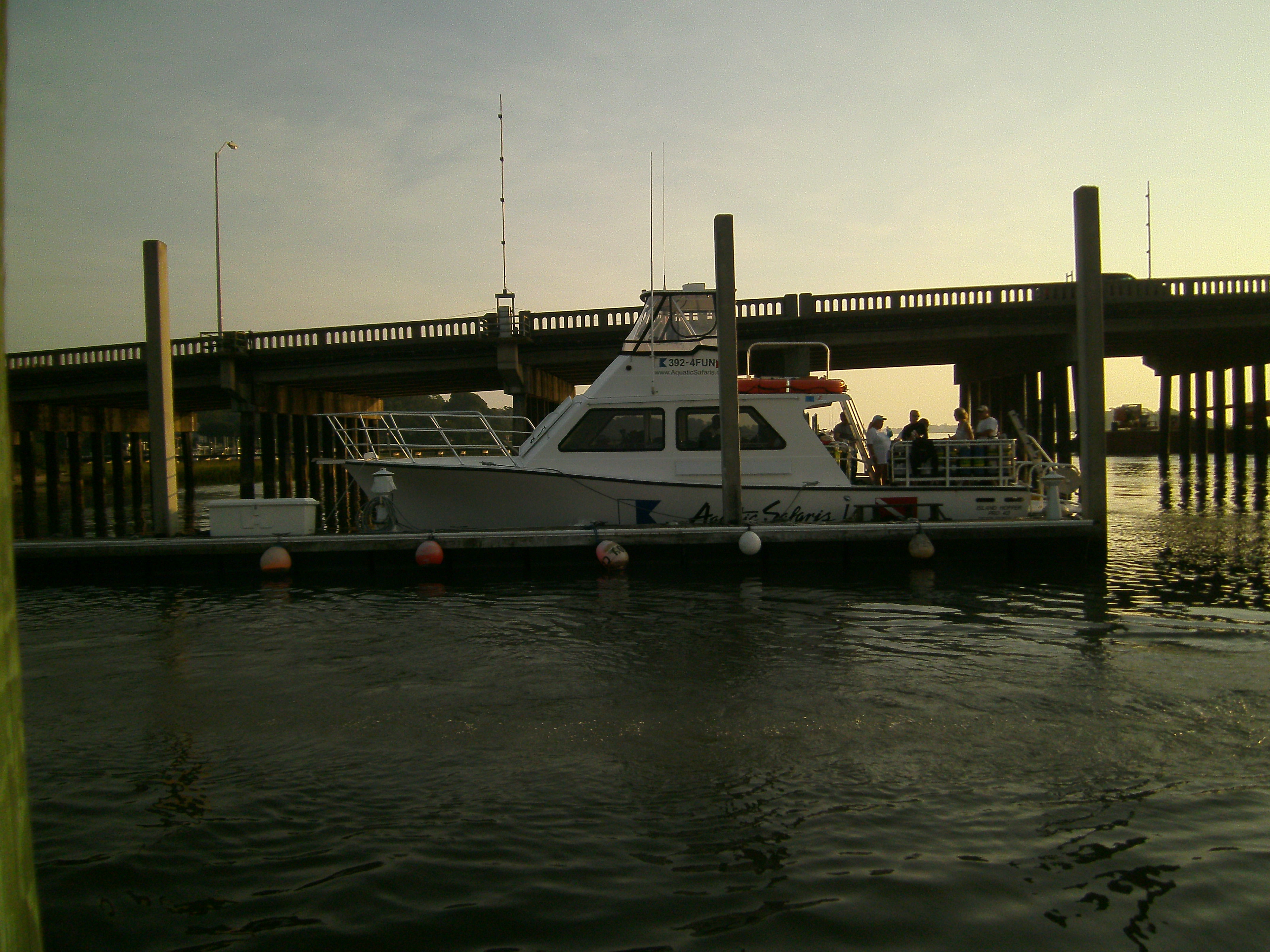
We had a dive trip this weekend out of Wrightsville Beach with Aquatic Safaris. We were scheduled to go to two wrecks on Saturday afternoon, the Hyde and Markham, but rough seas prevented that. Plan B was the Liberty Ship, which sits just three miles offshore. Things were bumpy with some current, and I found my heart rate and breathing increasing as I went down the anchor line. There were still a few leftover thoughts of my near death experience of a few weeks back.
SeaLife DC1400

Visibility was quite bad – perhaps 5-10 feet. We followed a line laid out by the mate. There wasn’t much we could see besides the line. It was nice to be diving again, but this was not pleasant diving. The second dive was similar. There were several divers taking a wreck diving course who laid out lines, and we got their lines confused with the mate’s line at one point. We finally figured it out and made it back to the anchor line and the boat.
SeaLife DC1400

Saturday night we stayed in Wilmington with Sally’s sister, Anne, and went to Cichetti, an Italian restaurant. We had a nice meal and a lively conversation. We discussed Shakespeare’s concept of evil, Greek playwrights, and youthful experimenting with psychedelics and pot.

We also talked some about slavery, which I’ve been reading about in a new history of the pre-civil war and civil war period called Ecstatic Nation by Brenda Wineappple. The book brings vivid life to the 1850s when there were slave states and free states, and it was by no means clear which would ultimately prevail. It require real imagination to understand the pro-slavery viewpoint. Wineapple is certainly not pro-slavery, but she gives a sense of the incredible intensity and complexity of the struggle.
SeaLife DC1400

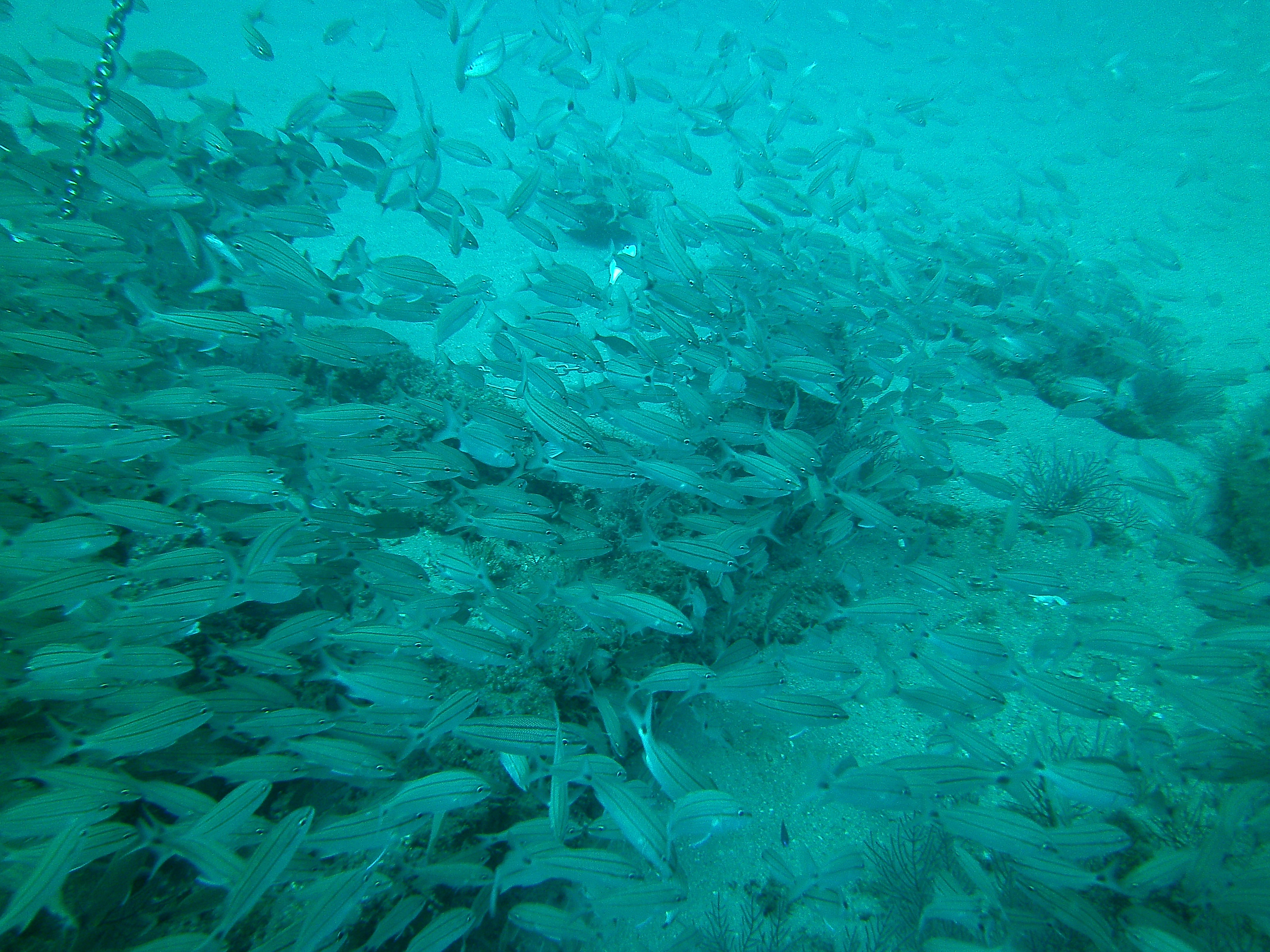
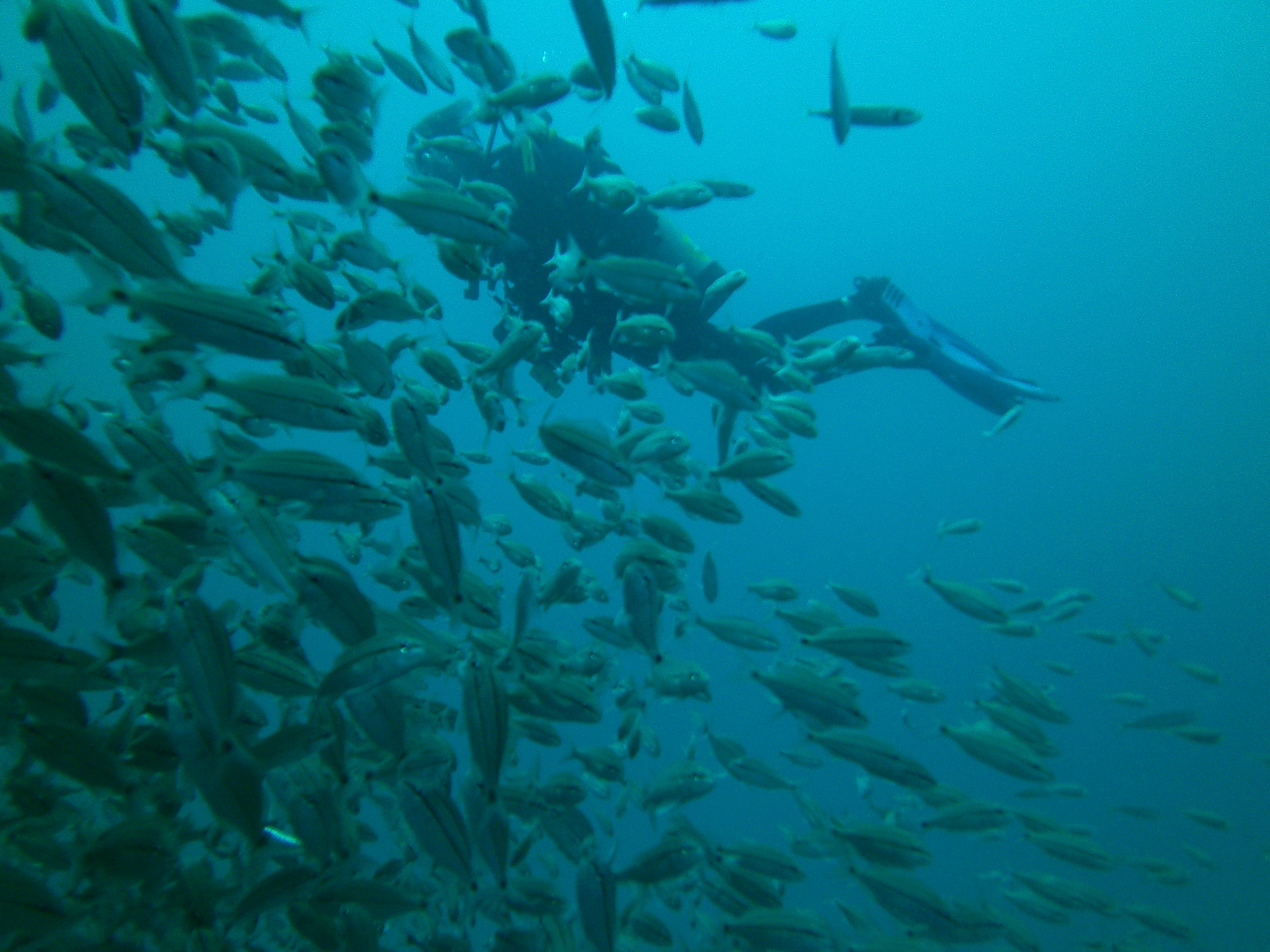
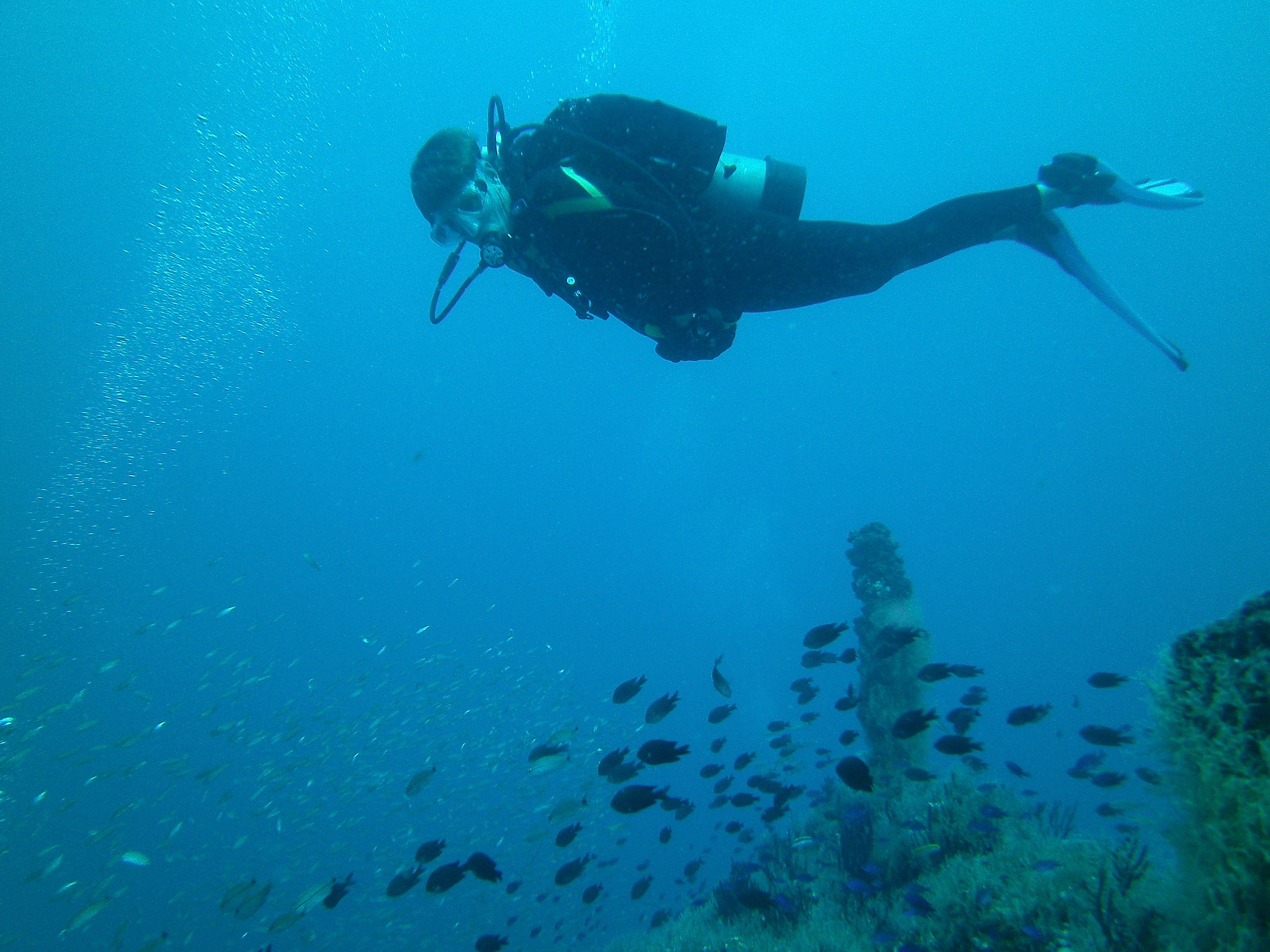
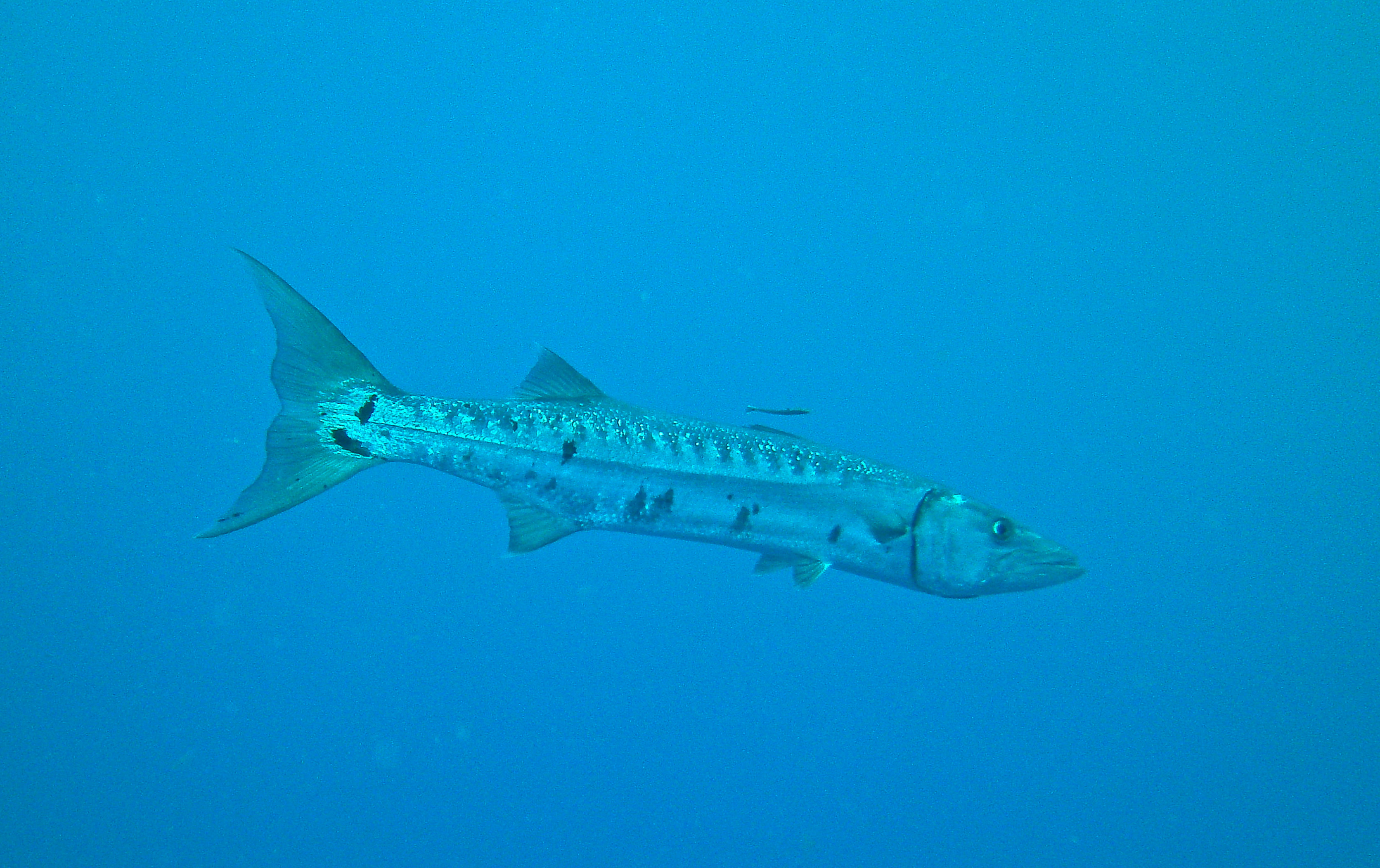
Early Sunday morning the skies were clear and calm, and the seas were calm as well. We left the marina about 7:30 a.m. and made it to the wreck of the John D. Gill in about an hour and half. The Gill was a tanker sunk by a German u-boat in WWII. Visibility was pretty good – perhap 50 feet. We saw several barracuda and thousands of small silvery fish, and we also spotted two large flounder.
SeaLife DC1400

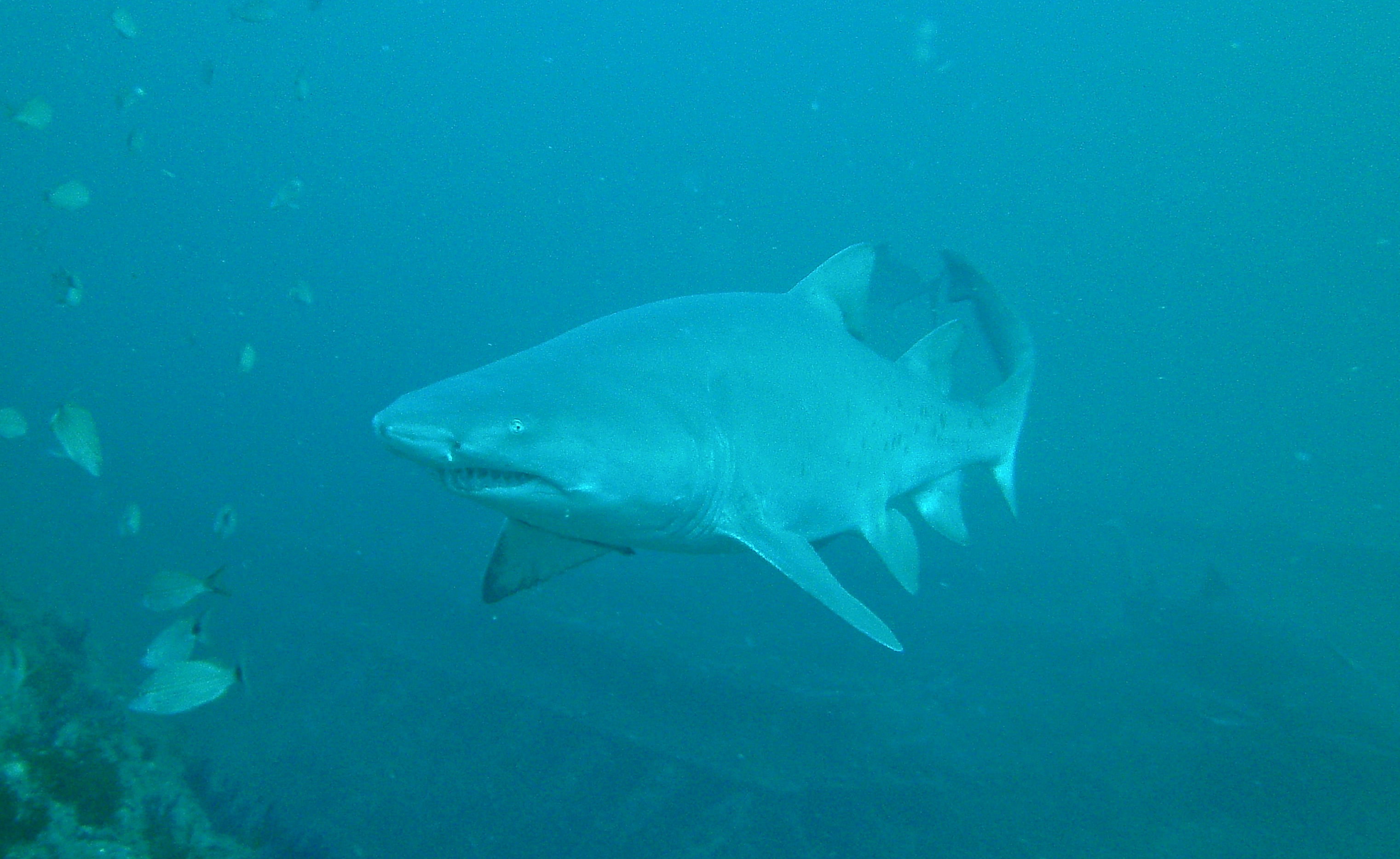
For the last dive, we went to the Hyde, a wreck that still look like a ship, though with lots of things growing on it and lots of fish around it. Visibility was less good – maybe 30-40 feet – but the wreck itself was interesting, and we could see thousands of little fish, along with many barracuda. One sand tiger shark passed close by.
SeaLife DC1400

A dive trip to Hatteras with a harrowing episode, visiting Manteo, and reading Robot Futures

13 08 01_3208-1
We undertook a four-day dive trip out of Cape Hatteras beginning last Thursday, but the weather didn’t cooperate. We made it OK to our base at Hatteras Landing, but high seas prevented our going out for the first three days. We made the best of things, enjoying some time together, exploring the local points of interest, listening to music, and reading.
13 08 01_3343

For us the most interesting non-diving local point was the N.C. Aquarium at Manteo. I particularly liked the sting ray encounter tank, where Atlantic and cownose rays came up to be petted. There was a large tank with several sand tiger and sand bar sharks, which are impressive. Their keeper got in the tank in scuba gear with a full face mask and speaking equipment, and answered questions as they swam around her. Her high degree of comfort with these fierce-looking creatures was, I’m sure, an educational moment for the kids and adults in attendance.
13 08 02_3289

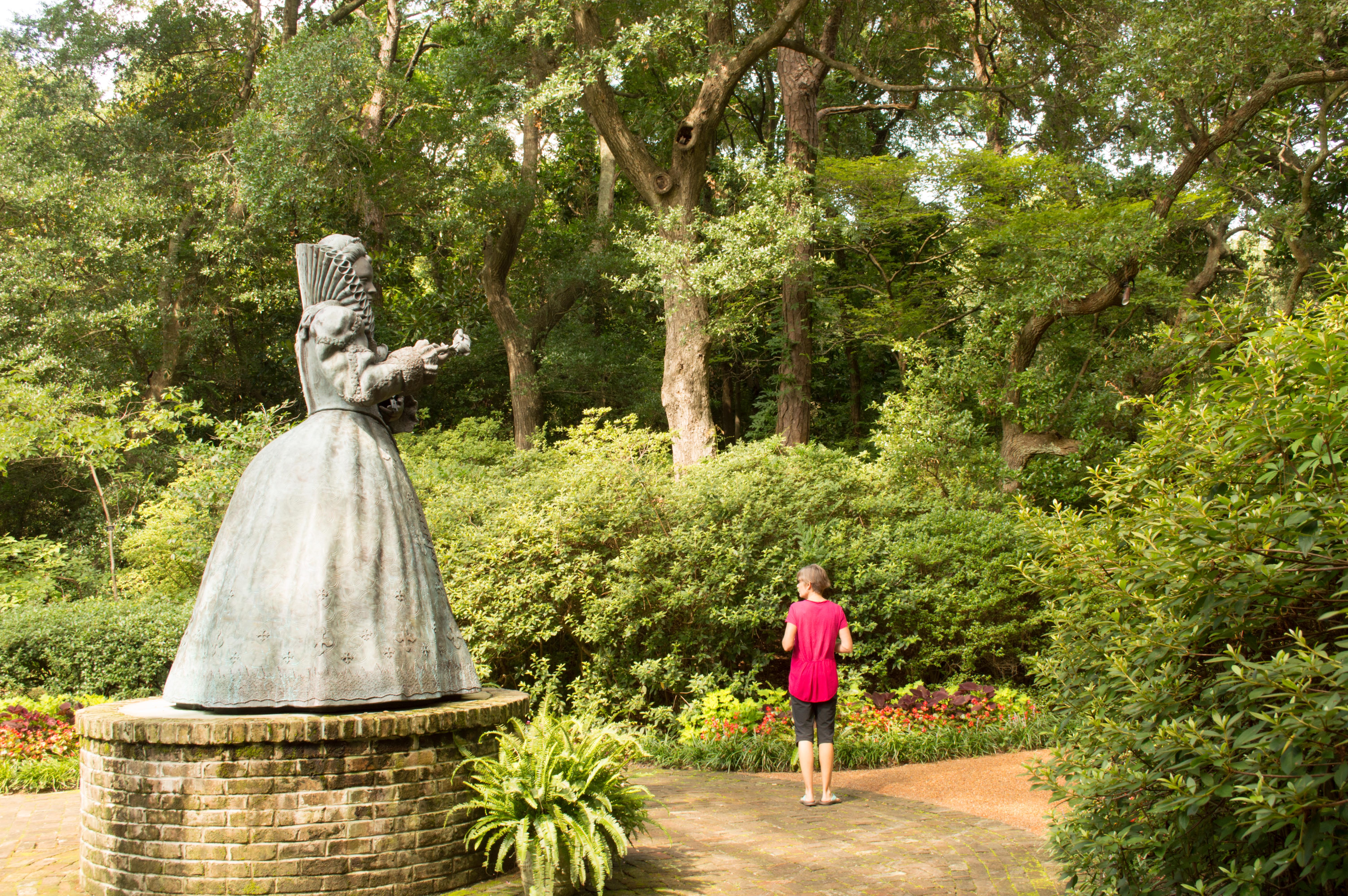
While in Manteo, we also visited the Elizabethan Gardens. Sally remembered my mother had talked about how beautiful it was, and we found it so. The first part is a formal garden with ornamental hedges, but the greater part of it is wooded, with enormous oaks and shade loving plants.
13 08 02_3300

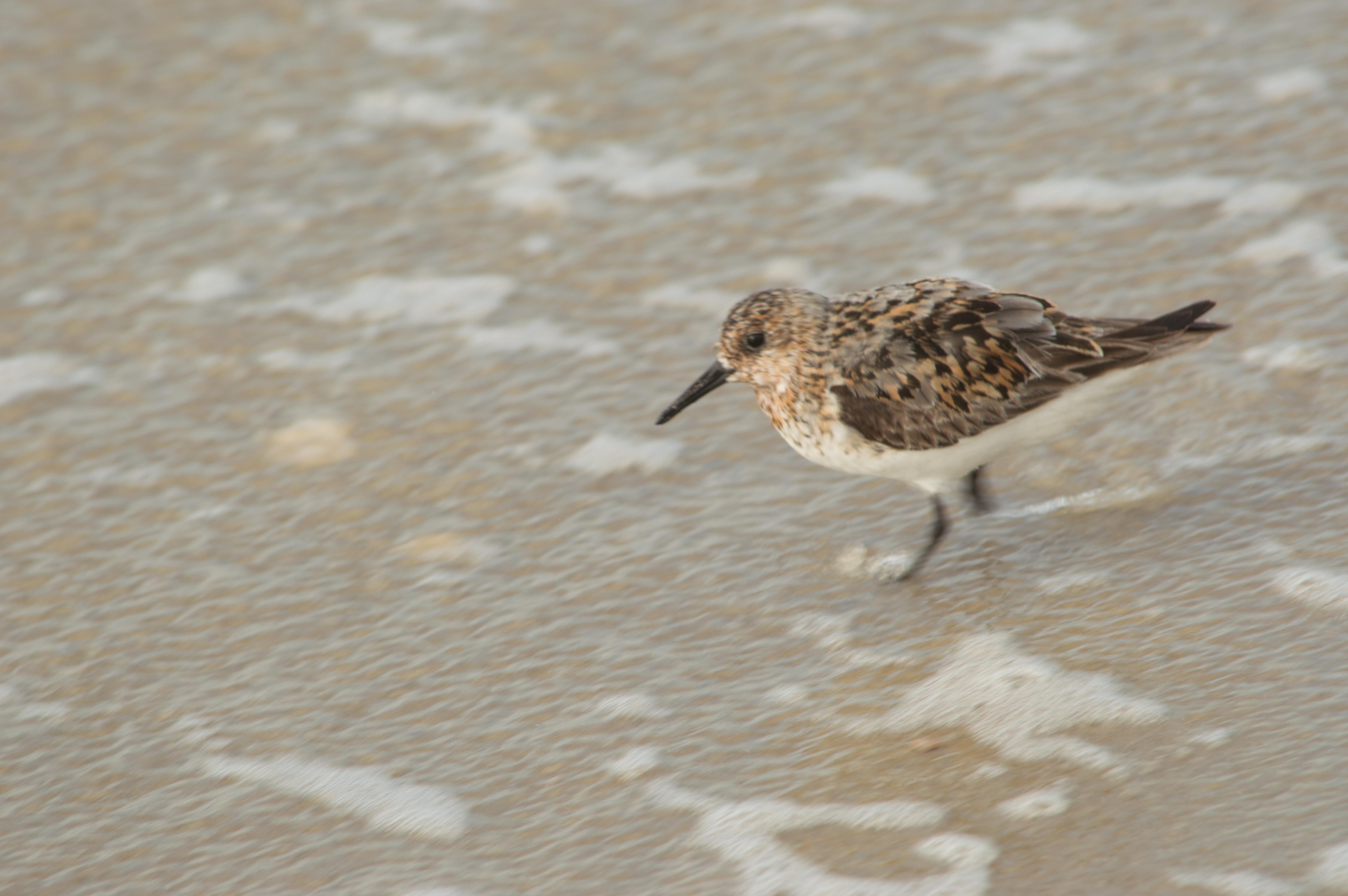
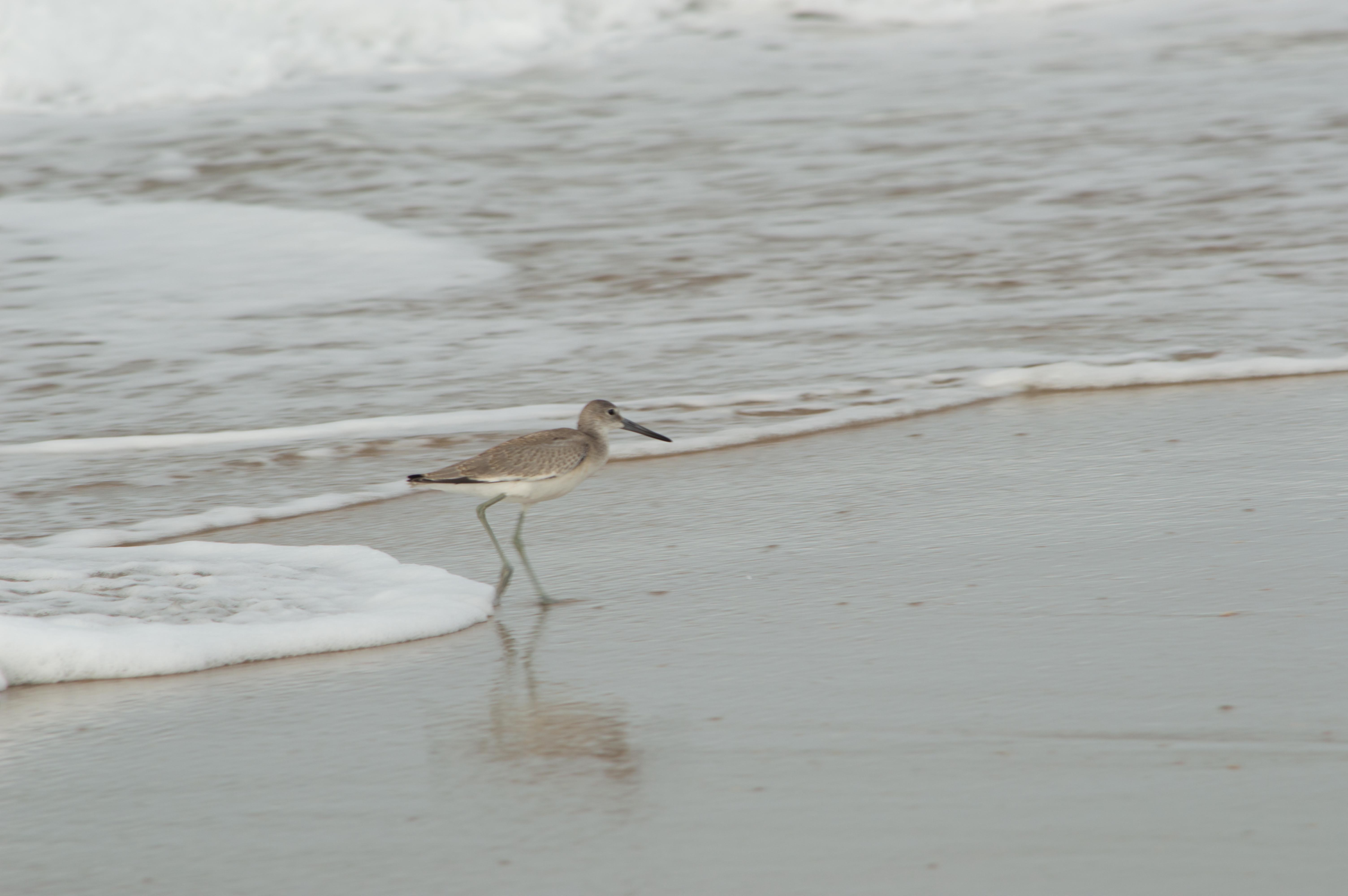
With no other pressing business, I did some walking on the Hatteras beach, and took some pictures of the birds at work there. I got a few of sanderlings and willets on the edge of the surf that I liked.
13 08 02_3318
13 08 02_3317
13 08 01_3275-1
13 08 01_3263-1
13 08 01_3232

As for reading, I started a biography of John D. Rockefeller, Titan by Ron Chernow, which seems lively so far. And I finished Robot Futures by Illah Reza Nourbakhsh. Nourbakhsh is a professor of robotics at Carnegie Mellon, and his book describes the current state of the art in robotics and also gives a forward projection of what several decades might bring. Some of it seems science fictiony, but that may be unavoidable – technology has already surpassed some of the science fiction of my youth.

Nourbakhsh describes robots as “a new form of living glue between our physical world and the digital universe we have created.” He gently makes clear that robots are not limited in their mental or physical abilities to what humans can do. Forget the Jetson and their butler robot. Real robots can be stronger and faster, and move in different ways (like flying, or crawling like a snake). They can perceive parts of the visual spectrum we can’t, and hear pitches that we can’t. They can connect to the internet more efficiently than humans, and potentially process information from numerous sources that are far beyond our capacities.

Robot Futures recognizes that there will be many different types of robots with widely varying abilities, including ones that are closely controlled by humans and others which will be partially or entirely autonomous. It will not be easy for humans to tell the difference. Autonomous robots with access to robot Google and links to other robot databases may well know more about us when we encounter them than we about them.

Nourbakhsh imagines a distant future where we can smoothly enter the consciousness of various robot agents that in effect teleport us to different places and allow interactions with multiple people and environments at once. He also has a darker vision of a possible world where human bodies are purchased for use as the physical casing for robot intelligence. Impossible? Let us hope so. But there is little doubt in my mind that, barring global catastrophe, the world of intelligent robots is taking shape. Robot Futures does a good job at starting the conversation of what that might mean for humans.

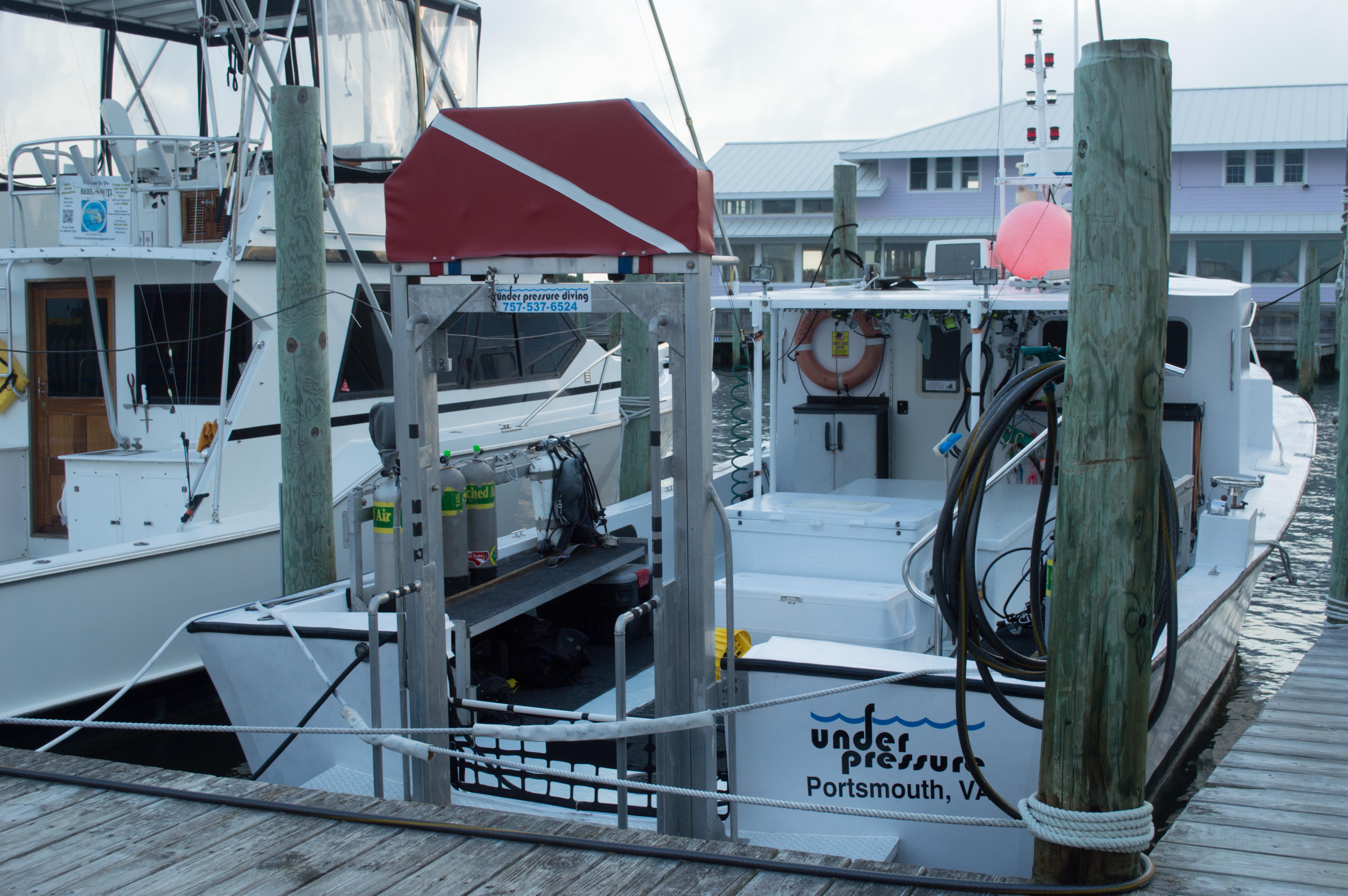
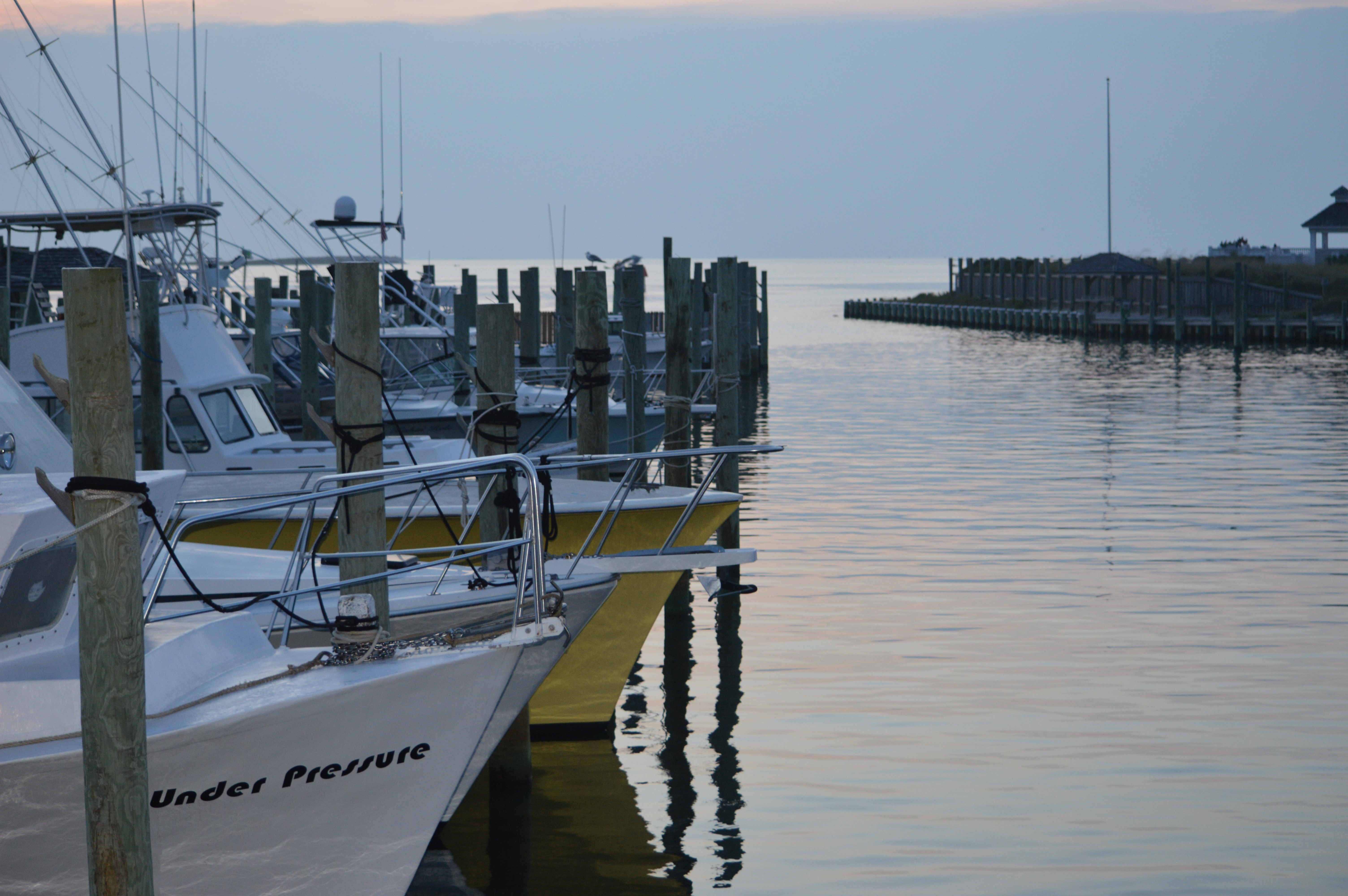
We finally got to dive on Sunday with Captain J.T. Barker on his dive boat, the Under Pressure. As I noted last year, J.T. designed and built an elevator on the back for getting divers out of the water. This comes in very handy in rough seas. The vessel has a large air-conditioned cabin, which permits some relaxing on long boat rides. Some video of the boat and our dives in early August last year is on his web site.
13 08 01_3201-1

We did two wrecks: the Proteus and the Dixie Arrow. The first was, for me, nearly disastrous. Immediately after I reached the bottom (118 feet), I paused briefly to clear water from my mask and tune my buoyancy. Visibility was limited to about 20 feet at that point. Then I looked around and saw no one and nothing. In just seconds, the current had carried me out of sight of the anchor line.

I struggled against the current for a bit, then relaxed and started working on plan B – ascend and find the boat. I began to slowly go up, then at 80 feet I suddenly noted that the air was not working at all well. The air pressure gauge showed zero. This seemed impossible – I had been under for only about 20 minutes, and usually the air lasts two or three times that long. Anyhow, it happened. Plainly, I should have checked the gauge earlier.

Although I thought it unlikely I could make an emergency ascent on one breath from 80 feet, I saw no choice but to have a go. I really didn’t feel panic, even at this point, though I was seriously concerned. I remembered my PADI training and exhaled gradually as I kicked upward. I ran out of air at about 30 feet, and hoped very much there was one last breath in the tank. I breathed in, and there was a tad — just enough to make it the rest of the way.

On the surface, I felt relief, but also concern that I might well have some degree of decompression sickness, a/k/a the bends. I was hoping to get some oxygen, but the boat, with oxygen, was far away.

As I started kicking against the current toward the board and watching to see if I was going to get sick, I felt something bump me. I reached down and felt a firm, smooth animal. A shark? I thought how really unfair it would be, after all my speaking up in defense of sharks, to end up as shark food. I finally figured out it was a ramora, which apparently wanted to attach itself to me.

I swam for quite a while with little progress, until at last Bobby, the mate, came out with a line. As we kicked, our divermaster Jim reeled us in. It was, of course, embarrassing. But I was grateful to be alive and not even ill, and it certainly was a learning experience.

During our surface interval, Captain J.T. put out some fishing lines, and hooked a fish. As the fish came near the boat, J.T. Announced with excitement that it was a wahoo, and grabbed a hook, with which he impaled the fish and hauled him aboard. The wahoo was about 3 feet long and about 30 pounds – a fine specimen.

Several folks commented on what a delicious meal he would make. Then J.T. and others observed Sally crying. These were tears for the wahoo. Our fellow divers were concerned but really puzzled. They just couldn’t comprehend Sally’s sadness at the brutal torture and death of this creature.

Our second dive, the Dixie Arrow, was less exciting, thank God. I had only a minor equipment problem: the wire to my strobe came loose – so no pictures. We got close to a lot of sand tiger sharks (maybe 10), a lot of Atlantic sting rays (maybe 12), a number of barricuda and thousands of minnows in shimmering thick clouds. It was fantastic.

Our dive trip to Cozumel

_DSC0015 copy

Sally and I just got back from a week of scuba diving in Cozumel, Mexico. As a friend recently noted, we like adventure vacations. If you do, too, you would probably like Cozumel. The diving was great, and the above-water scene was lively, too.

Cozumel is a warm and enterprising place. Most of the real beauty, for me, is in the reefs, but I also really liked the people. The Mexicans I met are mostly cheerful and good humored, but also polite and dignified. They worked hard to help us along our way.

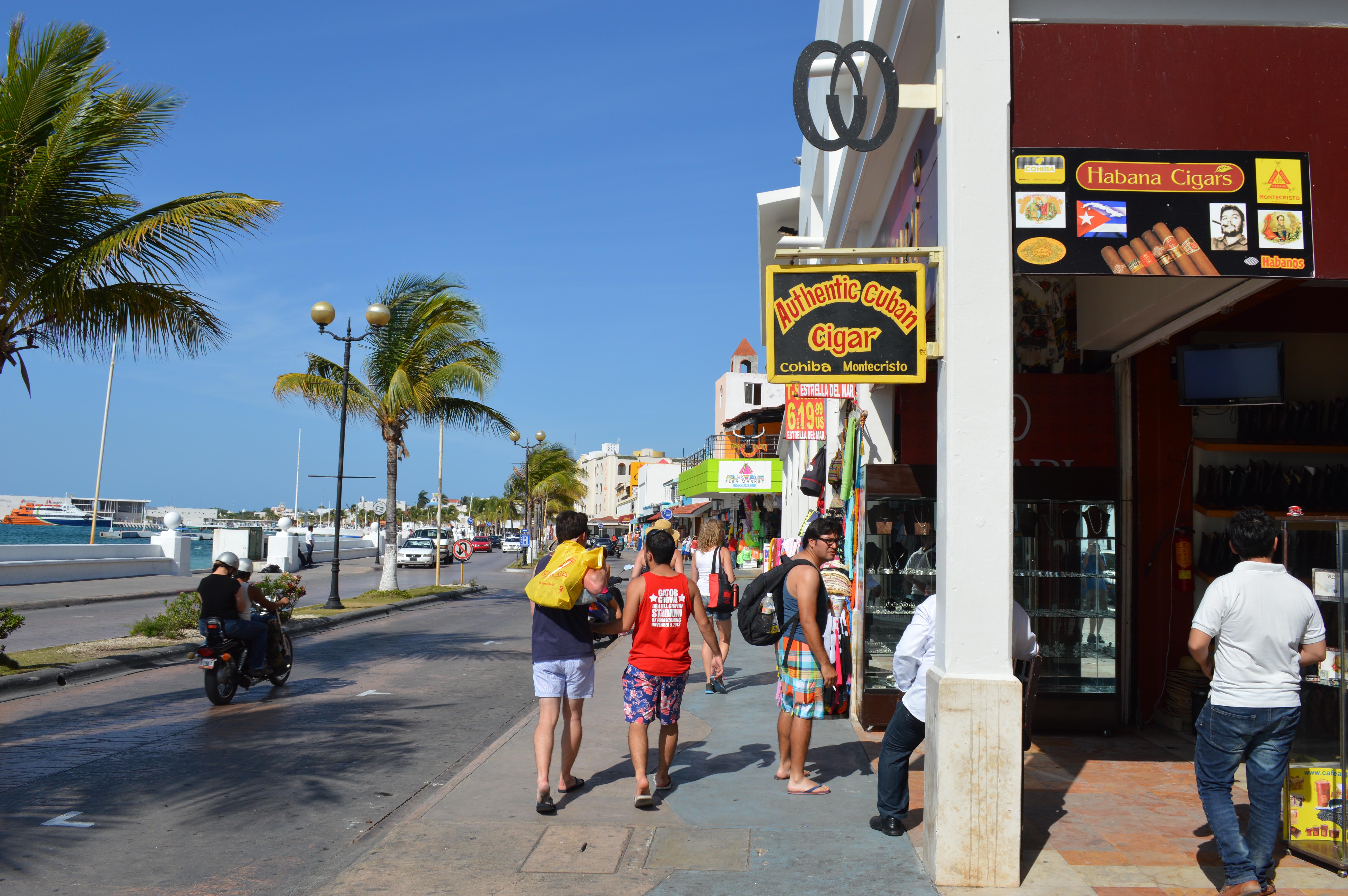
The business of Cozumel is tourism, and there are many layers to this business, from high end hotels to street hawkers. A stroll through the main part of town takes you past many gold and silver jewelry shops, clothing shops, crafts establishments, restaurants, and shops selling Cuban cigars. Most of these shops have a person who will try to persuade you to look inside, some of whom are aggressive and insistent. It’s a bit annoying if you’re not interested in the goods, but the beautiful blue water fronting the main street makes up for any inconvenience.
2013 05 04_1376

I’d been planning to use more of my Spanish, which is still a work in progress, but had little occasion to. The sales and service people of Cozumel have highly developed antennae for spotting los norteamericanos, and encourage expenditures by using English, which ranged from adequate to impressive. A couple of waiters gently corrected my usage mistakes, which I appreciated, and I think they appreciated my making some effort with their language, but it was clearly not required.

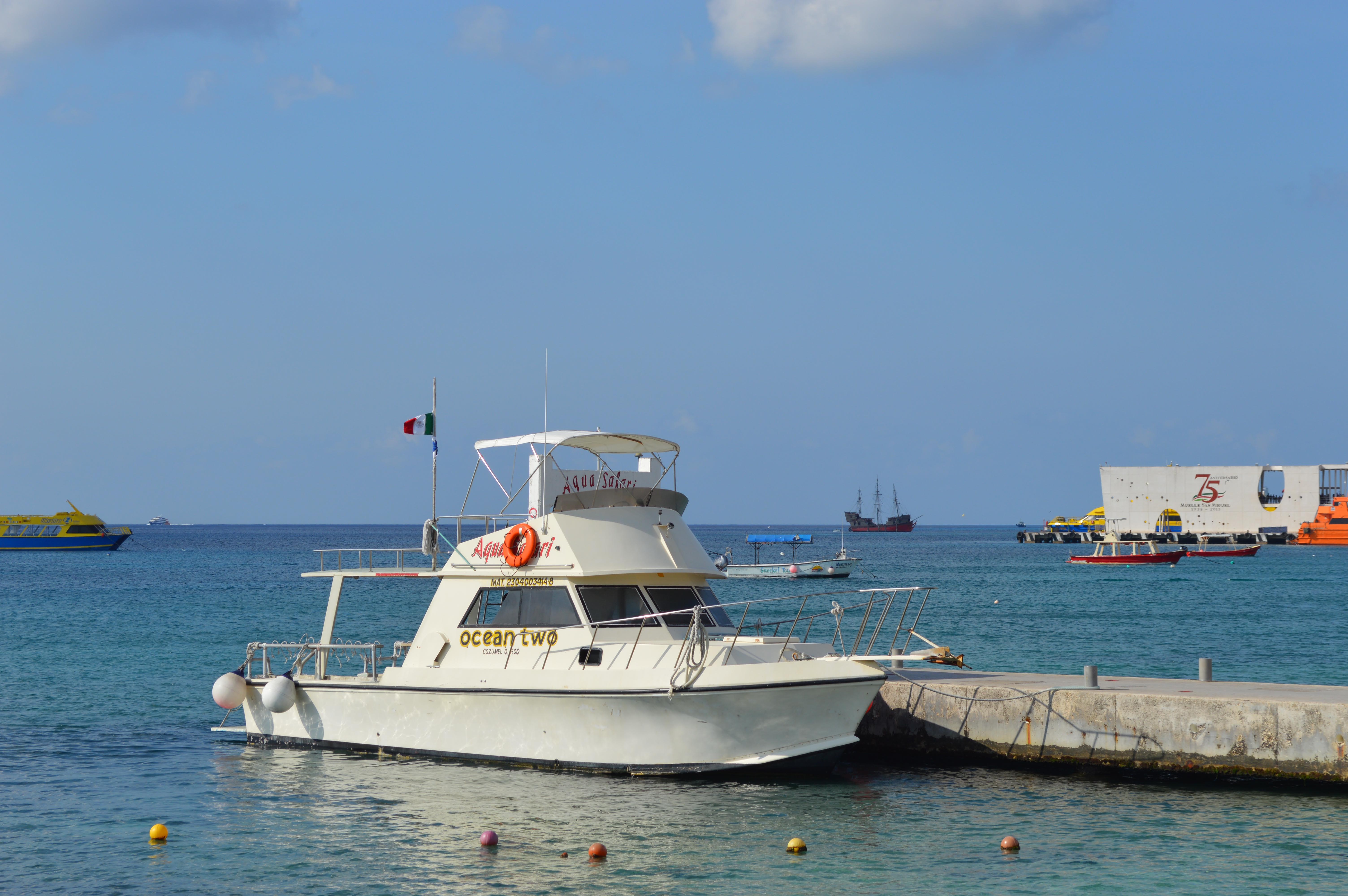
Our hotel was the Casa Mexicana, a mod-looking place on the water in the center of town. Our rooms was attractive and comfortable, with a balcony overlooking the courtyard restaurant where we ate very satisfying breakfasts. The lobby was on the second floor with a pool and deck chairs overlooking the water. Lots of restaurants were within walking distance, though we took a taxi to our favorite, Casa Mission. The hotel was only a few steps from the shop of the folks who took us diving, Aqua Safari, and the boat dock was just across the street.
2013 05 09_1356

Our boats usually had about fifteen divers. These included our group of six organized by our friend Dan out of Down Under Surf and Scuba. We did two dives in the morning, and after returning to the dock, we either ate quickly and went out for an afternoon dive, or on two days relaxed and then went out again at 7:00 for a night dive. The boat rides to the dive sites were generally one to 1.5 hours. Our guides were experienced, and showed us many interesting places and creatures. Early May seemed a good time to be there – sunny, breezy, and not un-Godly hot.

Our dive environments fell into three main groups: coral walls that went much deeper than we could dive, coral patches separated by sandy areas, and large coral structures shaped like pillars, boulders, mesas, and canyons, which made me think of southwest Utah. There were dozens of species of live coral. Some were vivid colors (purple, orange, green, yellow, red), and we also saw the famous black coral. Their shapes and textures were fantastically varied, including ones that looked like cactuses, pillars, antlers, brains, and various vegetables.
SeaLife DC1400

SeaLife DC1400
Cozumel is famous for drift diving, meaning a trip that goes where the strong current takes you. This can be exhilarating, but is also challenging at times. In the strongest current, there is no easy way to stop or reverse course, and it can feel by moments like Lost in Space. This requires alertness to avoid collisions with people or coral, and limits the chances to take photographs or look at things with deliberation. There were dive sites with little current, though, which were calm and sweet.

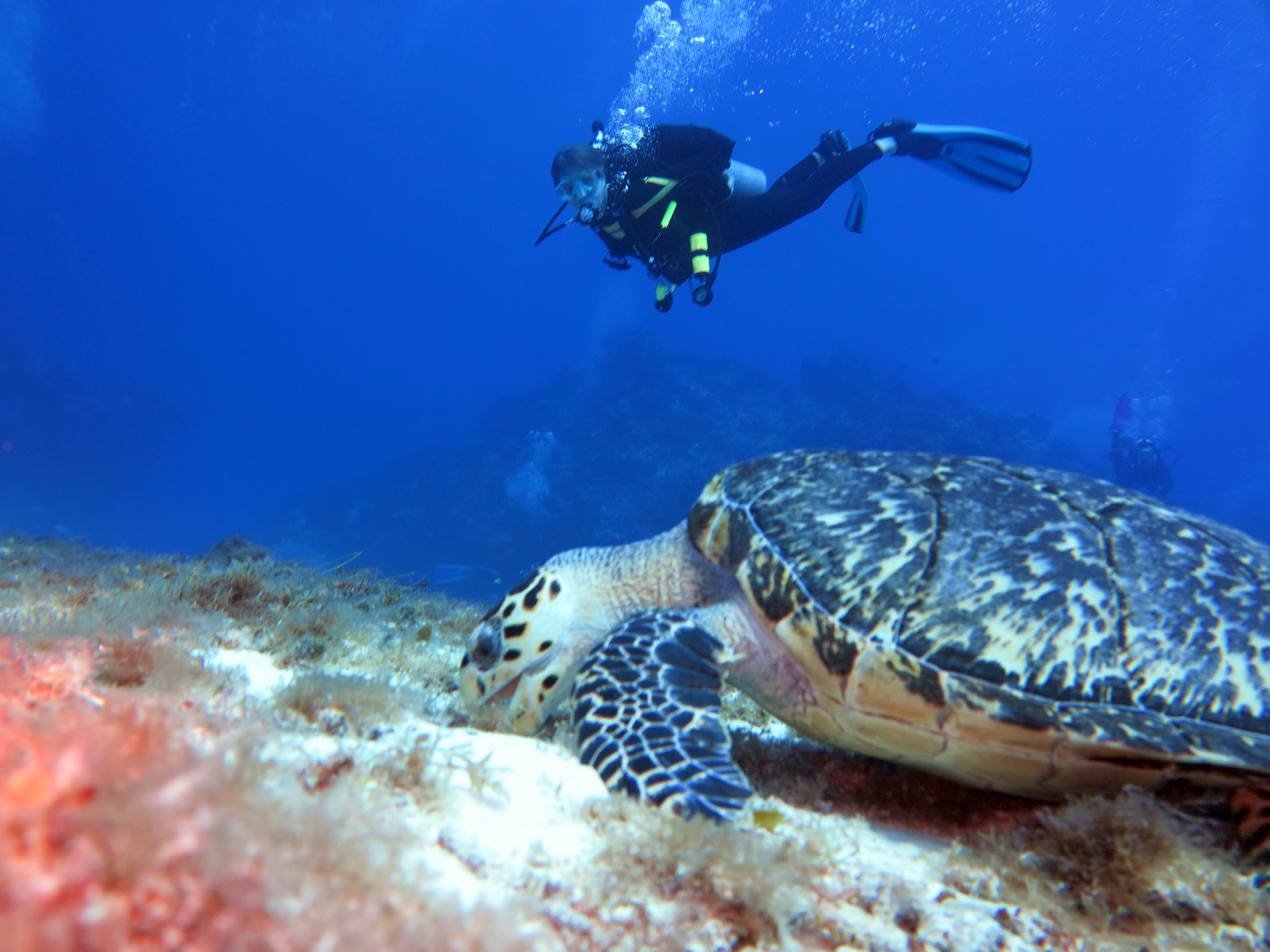
And of course, there were thousands of fish and other creatures. We’ve been trying to improve our identification skills, with the useful reference works on reef fish, creatures, and coral by Paul Humann and Ned Deloach. Sally was prepared to ID a green sea turtle, of which we saw only one, though we saw several hawksbills. She also introduced me to the whitenosed pipefish and various seahorses.

SeaLife DC1400
SeaLife DC1400
SeaLife DC1400

There was no shortage of bizarre looking creatures, including the porcupine fish, splendid toadfish, flying gurnard, smooth trunkfish, trumpetfish, honeycomb cowish, scrawled firefish, and queen triggerfish. We saw southern stingrays, as well as yellow rays and a Caribbean torpedo ray, and spotted and green moray eels. There were also large spiny lobsters and crabs. On a night dive I saw two octopuses that transformed themselves into objects of varying shapes and colors. It was fantastic!

One species we we pleased not to see many of was the lion fish. These invasive predators reproduce quickly, have no resident enemies, and consume voraciously. They’re now common in the northern Caribbean. Our main guide, Miguel, said that the dive guides in Cozumel had been authorized to kill them, and the numbers have been substantially reduced in the most dived areas of the south coast over the lat three years.

SeaLife DC1400
SeaLife DC1400

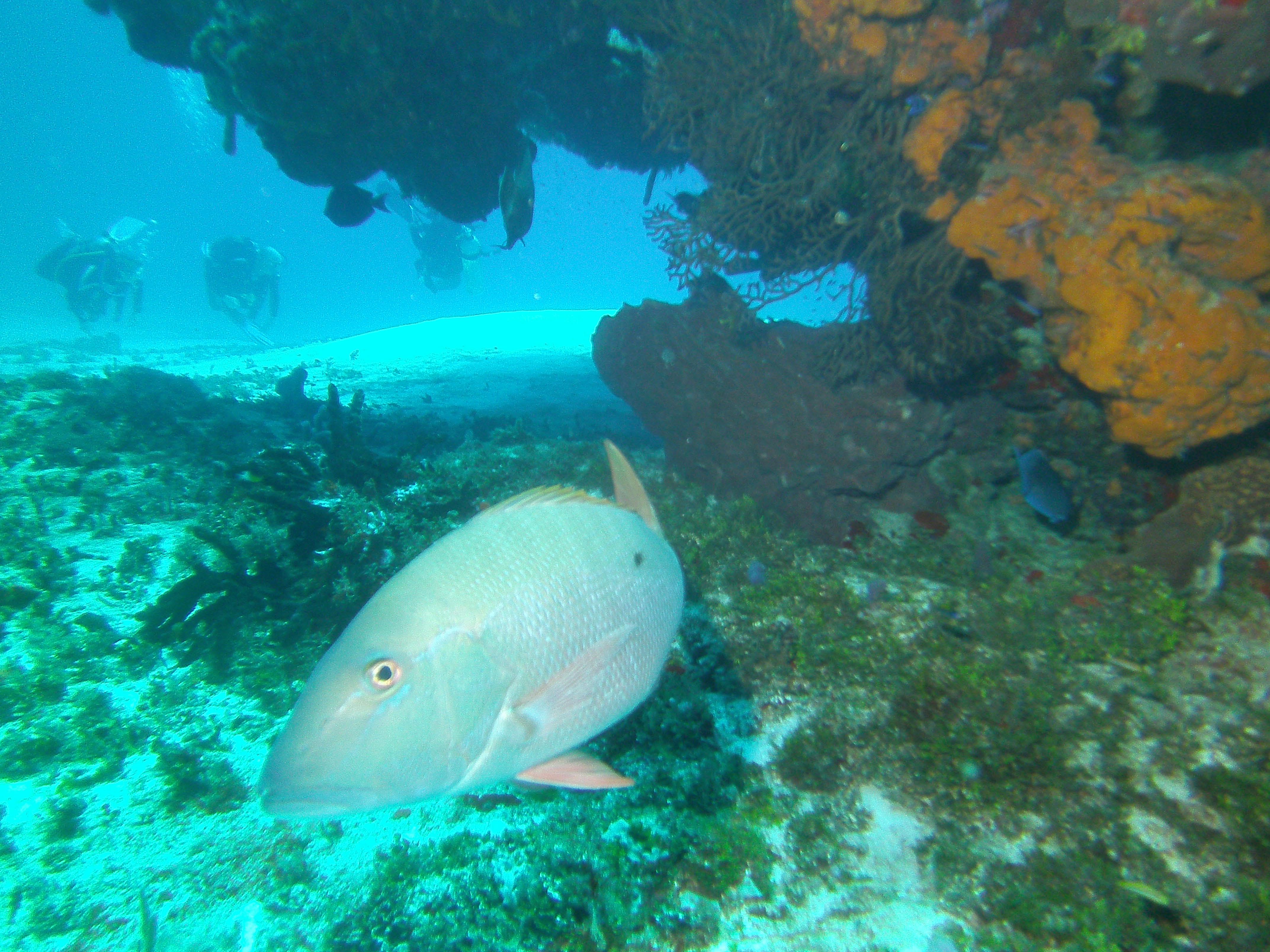
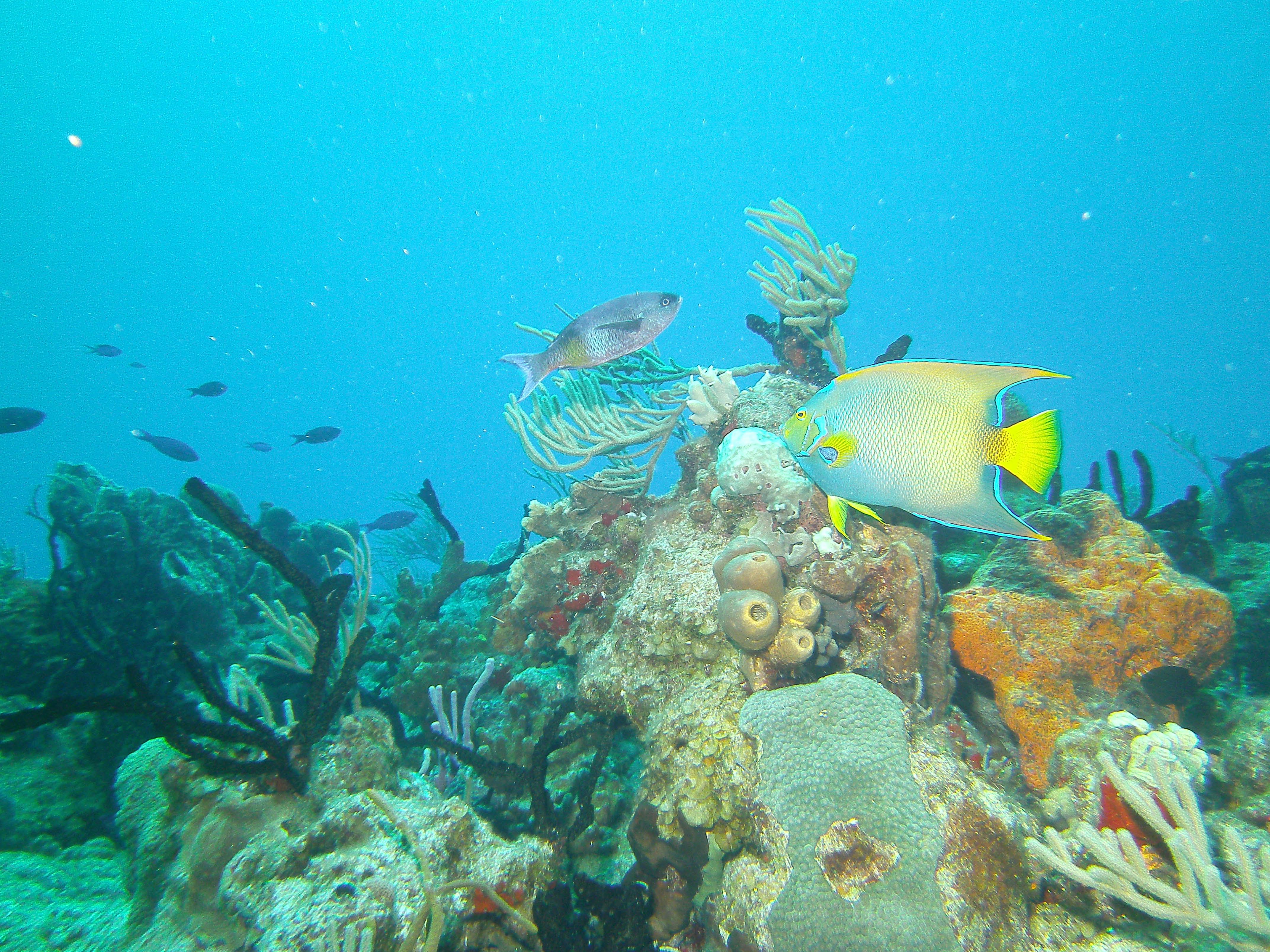
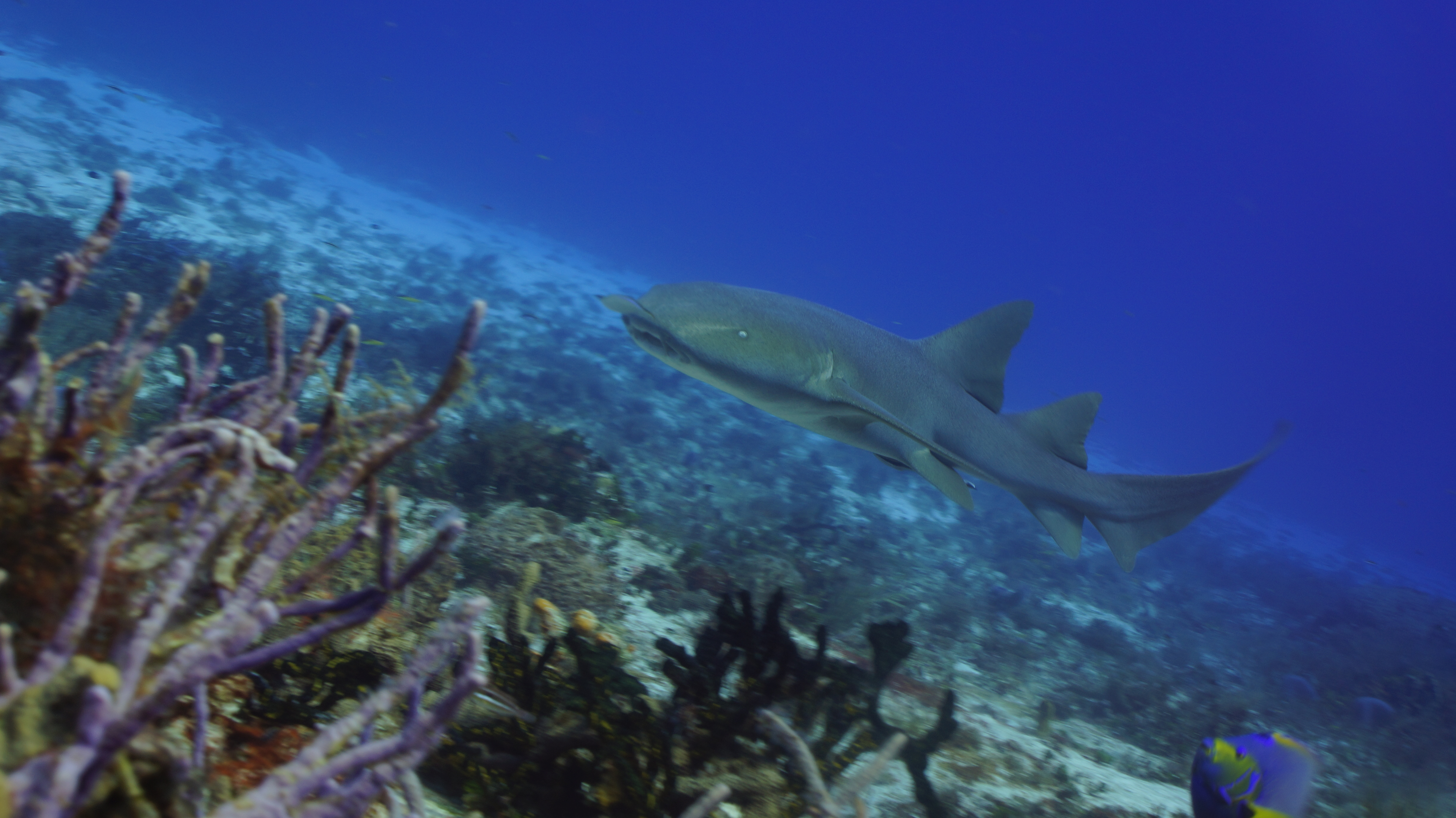
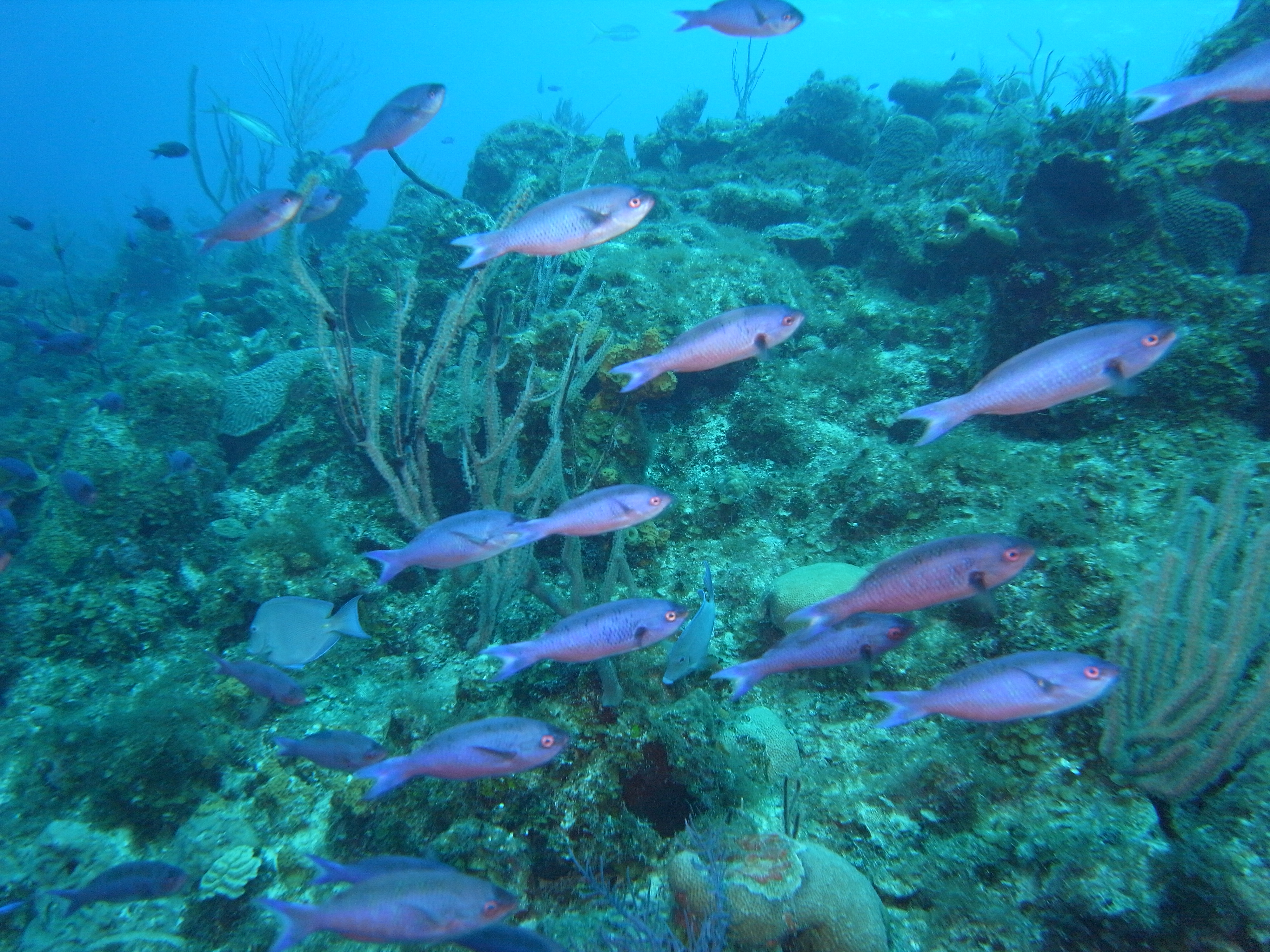
We also saw some big and medium creatures: nurse sharks, black groupers, barracuda, giant parrotfish, jacks, grunts, and snappers. I particularly adore the queen angelfish, and saw many, as well as French and gray angelfish. And there were untold numbers of colorful smaller tropicals – durgons, tangs, grunts, surgeon fish, butterflyfish, chromis, wrasse, and many others. The profusion of life is amazing, still!
_DSC0143 copy

My camera strobe worked fine on day one and two, but then the supporting arm’s joint broke, and so my photographs after that were mostly by natural life. This was disappointing, because there are things that just can’t be captured without a strobe, but I liked some of the images I got. The pictures here are all mine, except the first, the one immediatelhy above, and the ones below of Sally and me, which were taken by Pete, a professional. (Yes, I realize his look a lot better than mine. My excuse is he had better equipment, though also probably more talent.)
_DSC0397 copy
_DSC0489 copy
_DSC0511 copy
IMG_9175 copy

_DSC0237 copy
_DSC0207 copy
_DSC0176 copy
_DSC0202 copy
IMG_9063 copy

The morning before our flight home, we rented a jet ski and sported about for a half hour. The machine, a Yamaha, seemed very powerful. The water was choppy, and I never quite managed to take the machine to full throttle, as it jumped and bucked. Sally rode behind me, and proclaimed herself thoroughly shaken and glad to still be alive when we were done. But note, she never complained or requested that we slow down. That’s my gal!

Helping bluebirds, and some good and not-so-good internet experiences

DSC_0015

Since 2004, Sally has tended a group of bluebird houses in Cary on the Lochmere golf course, near where we used to live.  She keeps fourteen houses in good working order and keeps track of the numbers of eggs and numbers of hatchlings, then passes the data along to the North Carolina Bluebird Society.  Bluebird rely on human-built boxes for breeding spaces, and Sally likes helping them.  It’s the breeding season, and this week she invited me to come along after work to see the activity.

She already had secured a golf cart when I arrived.  It was a sunny, mild afternoon, and there were plenty of golfers out on the course.  She started with hole number 1, where Sally opened the door, pulled out the nest of pine straw, and found several dark gray nestlings, which snuggled together quietly.  Their mama was not at home, but at the next house, the mama bird shot out as we got close to the house and nearly hit my face.  

At the third house there were both bluebird and chickadee eggs. We saw several others populated by hatchlings and eggs that must have been close to hatching. In one, where there had been eggs the week before, there were none.  Sally said a snake had probably got them.  It seemed sad, though not, I guess, for the snake.  Anyhow it was most pleasant to see the birds and birds-to-be with my dear one, and learn more about their lives.
DSC_0020

We have tickets for a trip to Cozumel next week for several days of scuba diving, and this week we met with our group at Down Under Surf and Scuba to get briefed on drift diving and other procedures.  Back home, we began our preparations — checking over the gear, refreshing on protocols, and paging through our sea creature identification books.  My underwater strobe wasn’t working properly, so I’ll need to get that over to the dive shop for a consult.  

Cozumel is English-language friendly, but even so I’ve been inspired to try to advance my Spanish.  In addition to Rosetta Stone, I’ve been working on verb conjugation at a very helpful web site that generates drills for every tense. I’ve been focusing on the preterite and the imperfect, and improving.

I’ve also been sampling lessons at Livemocha.  This service invites native speakers of one language, like Spanish, to help those interested in learning their language, like me, and they may also get help in another language, like English, from someone like me. I’ve gotten useful written feedback from folks in Columbia and Mexico, and have tried to give others some helpful tips on English.

The idea of the internet connecting language students is exciting. At the same time, it’s a little unsettling. Livemocha allows for “friending” requests, and I’ve gotten a few of these, but so far I haven’t accepted. I’m not quite clear on what the responsibilities, and risks, might be. I’m more or less constantly overcommitted already, and I would be sorry to disappoint my as yet unknown “friends” in, say, Columbia. And I would be particularly sorry if they turned out to be violent sociopaths of some sort.

Speaking of internet risks, I had an odd experience this week. I finished The Self Illusion: How the Social Brain Creates Identity, by Bruce Hood, which I’d purchased from Amazon in the Kindle edition to read on my tablet device. The next day, I got an email from Amazon asking me how I liked The Self Illusion. !!! I hadn’t realized that Amazon had invited itself quite so intimately into my reading life. Of course, I didn’t read whatever they required me to click on (does anybody?), so it’s possible that I in some hyper legal sense agreed to let them monitor my reading. But really! That’s just icky!

Beautiful diving in the Turks and Caicos

SeaLife DC1400

One of my resolutions for 2012 was to try something new, like a trip or minor adventure, once a month. I didn’t keep strict count, but I came pretty close, and the last trip of the year was novel enough to count for two. Sally and I opted out of the final feeding frenzy of Christmas and instead spent the holiday week staying under water as much as possible. We flew to the Turks and Caicos Islands, and boarded the Aggressor II, a 120-foot vessel designed to take about 18 hardy and fortunate souls on week-long scuba diving trips. It was a fantastic trip.

Exif_JPEG_PICTURE
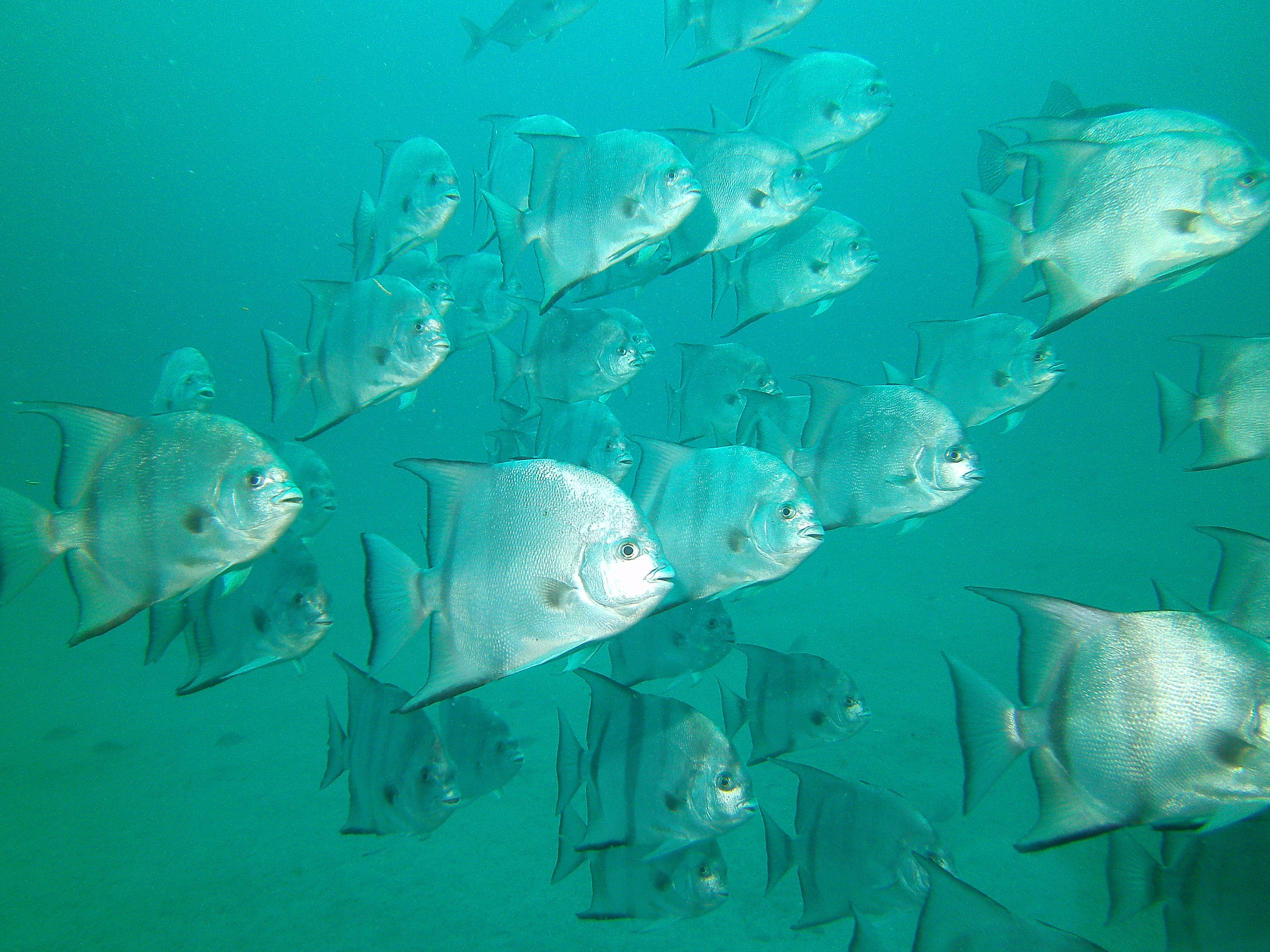
We saw reef sharks, sting rays, spotted eagle rays, barracuda, hawksbill turtles, eels, grouper, jacks, grunts, tangs, porcupinefish, trumpetfish, angelfish, butterflyfish, squirrelfish, spadefish, parrotfish, and many small bright tropicals. On night dives we saw an octopus perform for several minutes, as well as a performing eel, enormous crabs and lobsters, and beautiful varied coral. Our most exciting siting was a giant manta, not common in those waters, an enormous and powerful fellow. There were also plenty of the beautiful-but-highly-destructive lion fish.
Exif_JPEG_PICTURE

I got a tee shirt that says Eat Sleep Dive, which tells most of the story for the week. The schedule included five daily dives, including one night dive, from Sunday to Thursday and two on Friday, and I did all but one. We spent most of our time off of French Cay and West Caicos, with dives on the last day off of Provo.
SeaLife DC1400
Most of the dives were wall dives, with a shelf around thirty or forty feet down dropping off mysteriously into the deep blue. My deepest dives were around 100 feet, but I spent most of my time in the 40-60 foot range. visibility varied but was for the most part reasonably good, with the best being about 70 feet and worst about 40 feet. Current was mostly very light to nonexistent. Bottom temperatures were mostly in the high 70s, which was OK, but there were a few chilly places (low 70s). Especially when the breeze was blowing, it was chilly getting out, and we were happy to use the yacht’s hot tub to warm up.
SeaLife DC1400
Exif_JPEG_PICTURE

We had strong winds the day we arrived, which led to big seas on Saturday night as we left Provideniciales. I learned later that there were swells up to 10 feet, with an average of 7-8 feet seas. Per the crew and experienced passengers, this was unusually bad weather. Even fortified with Bonine, the up and down, sometimes with a corkscrew twist, was more than my stomach could handle, and I spent the entire evening hanging over the rail, about as miserable as I ever recall being. By Sunday morning, the seas were calmer, and I felt better, though my stomach muscles felt sore for the next couple of days. It stayed tolerably calm the rest of the trip.
SeaLife DC1400
SeaLife DC1400

In preparation for the trip, I’d been reading up on underwater photography, and I signed up for a short course on the subject taught by our captain, Amanda Bryan. Amanda was a good teacher (as well as a good captain) and gave me encouragement and quite a few helpful tips. My camera had issues, with the strobe at first refusing to fire, and then the camera refusing to charge, and I ended up using a loaner for the last half of the trip.
Exif_JPEG_PICTURE
Exif_JPEG_PICTURE
Exif_JPEG_PICTURE
SeaLife DC1400

The reef environments we saw were really beautiful and abounding with life. One of our dive companions was a nudibranch enthusiast and inspired us to look for these and other small mollusks. This caused a shift in focus so that we saw more of the very small things. So much beauty! One could easily just bask in it. Photography works somewhat against the grain of that aesthetic and spiritual experience, because it’s necessary to think in a very left-brained way about technology and physics. I was glad I spent some of my time that way,though. I made a few images, shown above and below, that I liked and thought others might, too.
SeaLife DC1400
SeaLife DC1400
Exif_JPEG_PICTURE

Great N.C. wreck diving, compassion for sea creatures, and collective intelligence


For Labor Day weekend, Sally and I went down to Wrightsville Beach, NC, for some wreck diving and extended our lucky streak of exceptional coastal dives. Our trip was organized by our friends at Down Under Surf and Scuba, and we went out on the Aquatic Safaris I. The 48-foot boat I carried 19 divers.

Saturday was warm and clear, with mild breezes and fairly calm seas. We dove the City of Houston, a passenger-freighter that foundered in a storm in 1878. She lies about 50 miles from Wrightsville. It took two and a half hours of hard traveling to get there. Shortly after we anchored and I visited the head, I felt queasy and promptly got sick. Then I felt mostly better, and we jumped in and headed down the anchor line to the wreck.

The Houston lies at about 95 feet down. Visibility was good (perhaps 60 feet) and the water temperature was a comfortable 82 degrees. There was a mild amount of current on the bottom. There were thousands of small fish. Our most dramatic sighting of the day was a goliath grouper, an enormous fellow, almost six feet long. My camera battery gave out when I tried to get a picture. I did, however, get some other pictures, including Sally examining something tiny with her magnifying glass (above) and great clouds of small fish.

After a second dive on the Houston, we headed in. Our seats were metal benches along the sides, in front of our tanks, so we couldn’t lean back and sleep. Some of our dive mates stretched out and slept on the deck, so it was difficult to move about as the boat sped along at a quick 25-knot pace. Diving sometimes takes fortitude.

We had a good Italian dinner with Sally’s sister in Wilmington at Nicola’s. There were a number of appealing vegetarian offerings. I had the eggplant rollatini with pink sauce, which was quite tasty. We had a lively conversation about, among other things, the automation of higher education, and how it is threatening the traditional university.

On Sunday we went out again on the Aquatic Safaris I, this time for a two-hour trip to the Normannia, a Danish freighter that foundered in 1924. The seas were calm and the trip went smoothly. I didn’t get sick. The wreck is about 115 feet deep. Like the previous day, the visibility was about 60 feet and the water was comfortable.

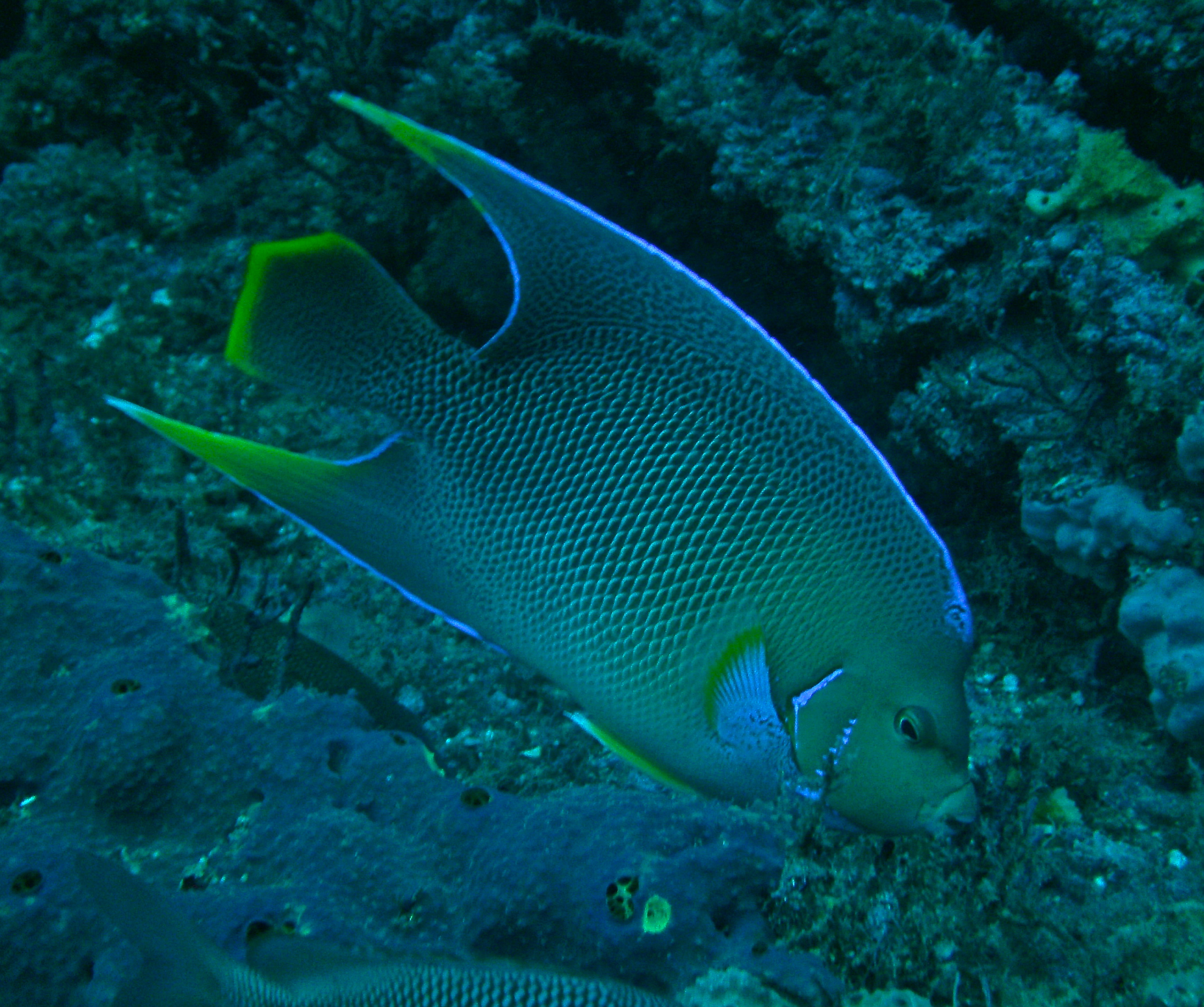
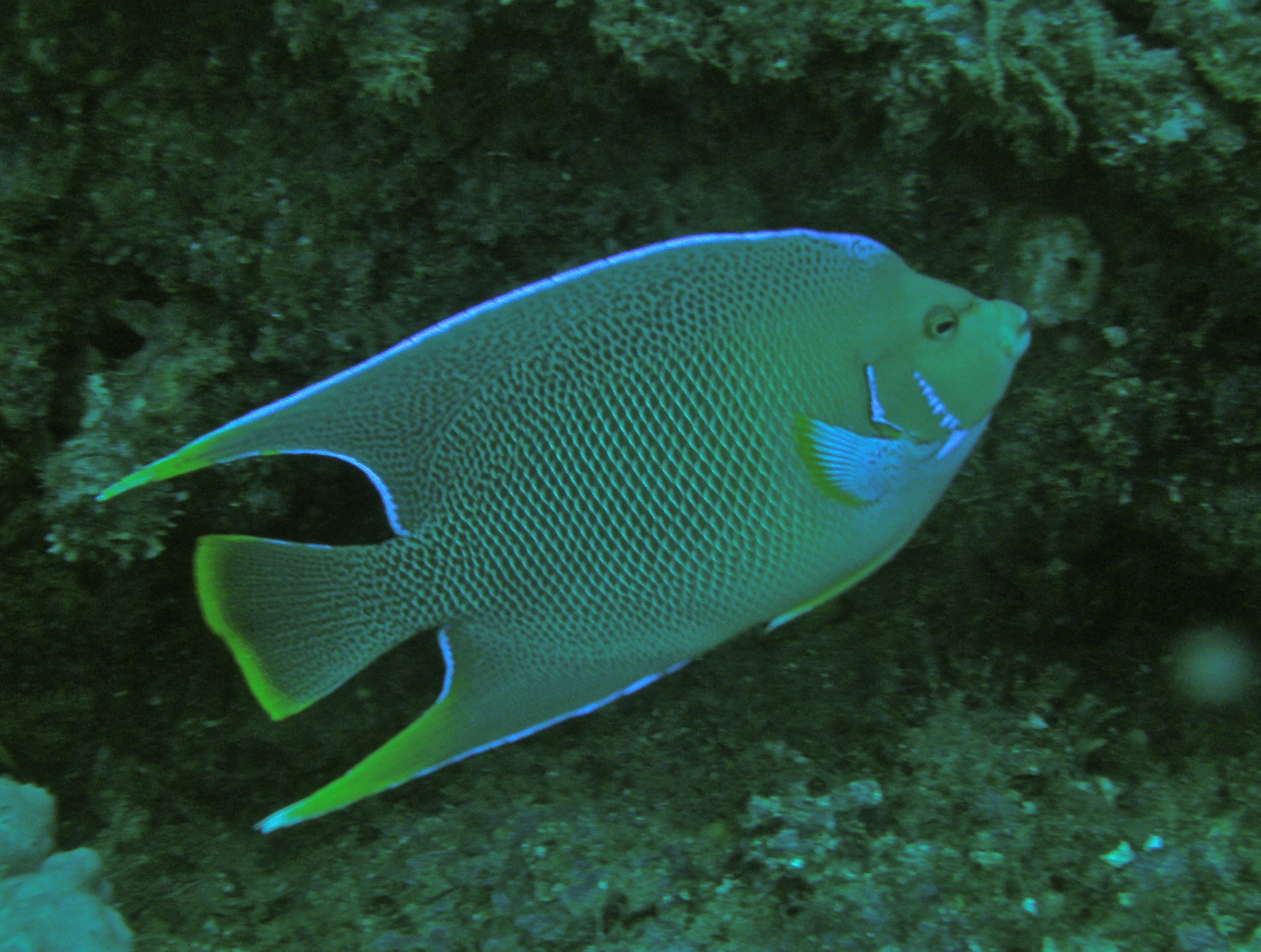
Even more than at the Houston, the Normannia had an amazing profusion of life. Along with thousands of small fish, we saw barracuda, a couple of gigantic lobsters, a well camouflaged frogfish, and my favorite, queen angelfish (several). I went to some trouble trying to get a good picture of one, and though these don’t really do it justice, they were the best I could do.

It is such a great pleasure to swim among fish. At times we were completely surrounded by thousands of small ones, and at times we swam alongside large ones. As I dive more, I feel increasingly touched by their beauty. They are amazingly varied in size, shape, color, and ways of moving about. Recent research indicates that they are much smarter than we’ve thought. For example, some can very quickly learn complex topography of a reef environment.


As I’ve spent more time with these creatures, I’ve come to consider them sentient beings worthy of respect and compassion. I regret to say I’m in a minority on this point. Among my fellow divers were some with spear guns and one who was capturing lobsters. I found it really painful to see him take an enormous lobster, perhaps decades old, and break off its antenna and shove it into an ice chest to suffocate.

My shipmate seemed otherwise a decent and friendly fellow. I’m certain he was not trying to torture the creature, though that was what he did. He didn’t derive pleasure from being cruel. He simply couldn’t comprehend that the animal was capable of suffering. I think he and others would find that expanding the circle of compassion to more animals is a happier and more fulfilling way to live.

Speaking of intelligence, I read recently that the human brain was unlikely to get larger in the normal course of future evolution, because it would serve no purpose. Brains working in isolation are not how things get done. Instead, as E.O. Wilson has pointed out, it’s humans’ ability to connect their individual brains that has been the secret to their evolutionary success. We keep getting better at that, developing over the millenia the tools of gesture, spoken language, and written language, with the internet being the latest game-changing technology.

In the midst of the depressing mendacity and nonsense of the Republican convention, I find it somewhat consoling to look at intelligence as potentially expanding through better networks. The Republicans are profoundly mistaken in thinking that entrepreneurs act primarily as fully independent rugged individualists. It’s more accurate, and also more useful, to look at achievement in terms of groups cooperating and competing. Our future success, and perhaps our survival, depends on our ability to improve our systems of cooperation, including our politics.

Wreck diving off of Cape Hatteras

Sally and I did a diving trip out of Cape Hatteras last Thursday-Sunday. Although we live in North Carolina and love diving, these were our first NC dives. We’d assumed that the sea life in the vicinity would be sparse and the visibility poor, and that we’d find it a bit of a comedown after our Caribbean trips. It turned out this was way off. The NC ship wrecks we dove had a profusion of sea creatures and ample light. Thousands and thousands of little fish, and some very big ones.

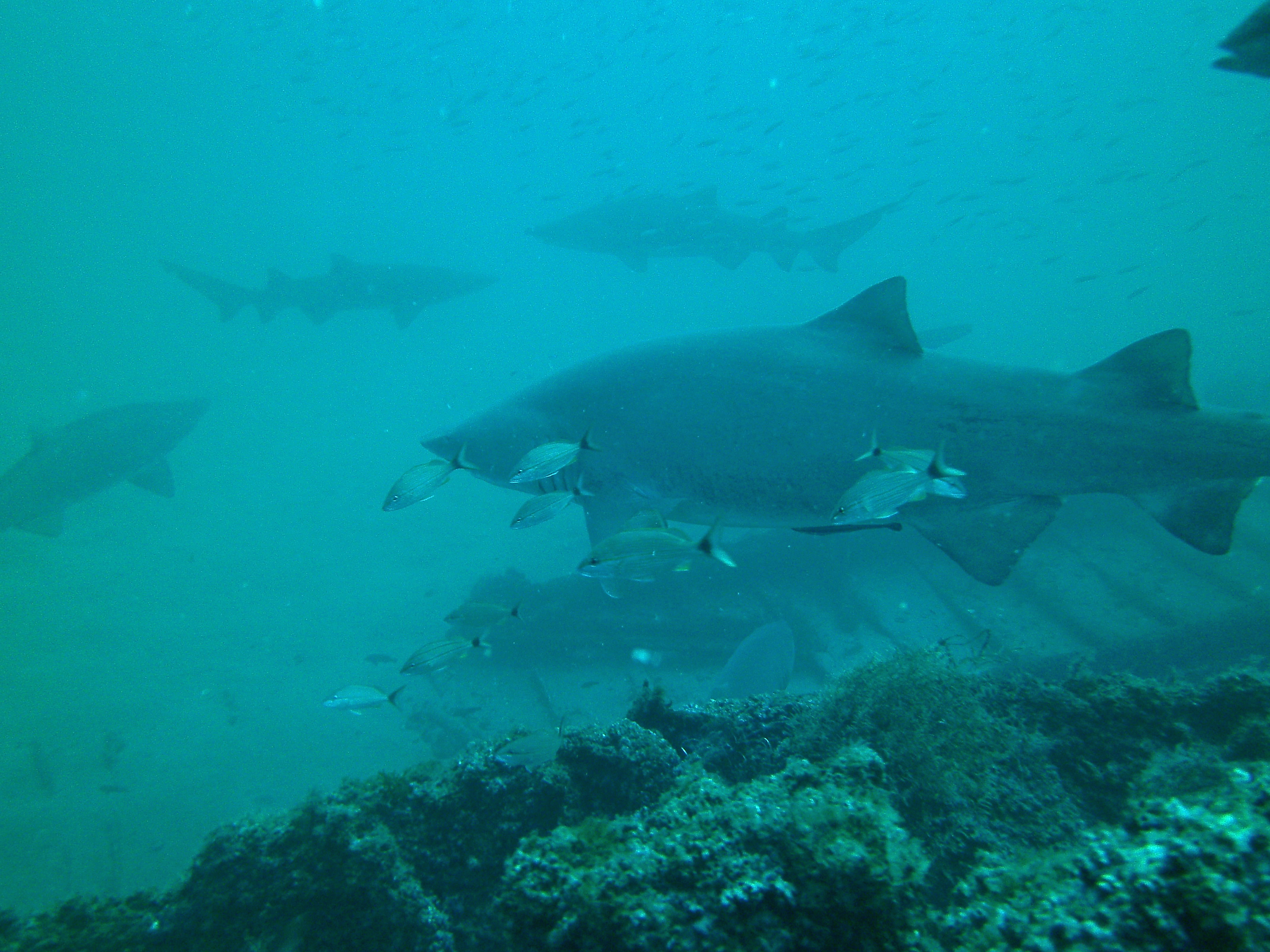
The most dramatic species we saw was the sand tiger shark. These shark are large (around 10 feet) and look mean. Apparently they are often used as the stock image for news stories about shark attacks. However, we saw dozens of them, and all were placid. They didn’t seem frightened of us, as was true of most of the species we saw, and we swam within a few feet of each other. They are beautifully designed and graceful, and of course, imposing.

I try to think of sharks in the way I think of bears — creatures that are potentially dangerous, but also fascinating parts of the natural world. They are not programmed killing machines or embodiments of evil. Shark attacks on humans are rare, and fatal attacks are freakishly rare — about ten a year worldwide. The risk of being killed in a shark attack is substantially less than being struck by lightning, or by an elephant. Also, as I learned this week, way less than the risk of being killed by a dog.

Why do most people fear them so much more intensely than, say bears or lightening? Shark phobia runs deep, and it’s unfortunate both for sharks that become victims of humans (100 million a year) and for humans who experience pointless fear rather than rapturous awe.

On this trip I tried underwater photography with a beginner-level underwater camera by Sea Life. I was glad I’d waited till I was reasonably competent as a diver to try this, because it could distract from doing the things that have got to be done in diving and enjoying the basic experience. But I was ready to give it a shot. Most of the images I got were not great, but I liked a few, and I had fun hunting for interesting things and fun looking at them afterwards.

NC wreck diving involves boat rides to the ship wrecks. Our longest trip, to the Proteus, took about two and a half hours. I wasn’t looking forward the boat ride part of the experience, but we had good weather — mostly clear skies and calm seas. Our vessel, the Under Pressure, was a 41 foot former commercial fishing boat that was substantially unfitted to accommodate six diving customers. It had a special lift on the back of the boat to haul out divers.

Once well offshore, out of sight of land, I was struck by how horizontal the landscape was. 360 degrees of flatness. At the same time, the quality of the water, its color and its energy kept changing. We saw flying fish, jumping dolphins, and one sea turtle on the surface. There were various gulls, pelicans, terns, and other sea birds. I spent part of the travel time recalling some of the great poems of Yeats, Frost, and Stevens.

Besides the Proteus, we did dives on the Dixie Arrow, the Kashena, the Monihan, the Abrams, and the tug near the channel. The wrecks were in varying states of ruin, but had attracted lots if life. Besides sharks, we saw a good number of sting rays, barracuda, tuna, snapper, a large sea turtle, and the occasional butterflyfish. Several people saw an octopus on the Arrow, but we missed it. We saw enormous clouds of thousands of tiny fish, which the locals refer to as “bait balls.”

Visibility for most of our dives was good — more than 70 feet. Our deepest dive, to the Proteus, was about 120 feet down. Bottom temperature was around 80. Current and waves were minimal for the first three days, though more challenging for the final day. I had an oxygen leak (which turned out to be from my BC inflator), which required me to cut the dive short and to ask Sally to share her air as we came back. Fortunately, she agreed. It was a learning experience.

Speaking of learning, I need to give a special shout out to Scott Powell, owner of Down Under Surf and Scuba, who organized the trip, led our group, and taught my course in wreck diving. Scott is a diving professional of the highest caliber, but he seems to really enjoy helping those of us less accomplished. He’s one of those rare gifted teachers that just loves his subject, never make you feel inferior, but make you excited about getting better. His passion and enthusiasm for diving are infectious and inspiring.

Diving in the Galapagos Islands

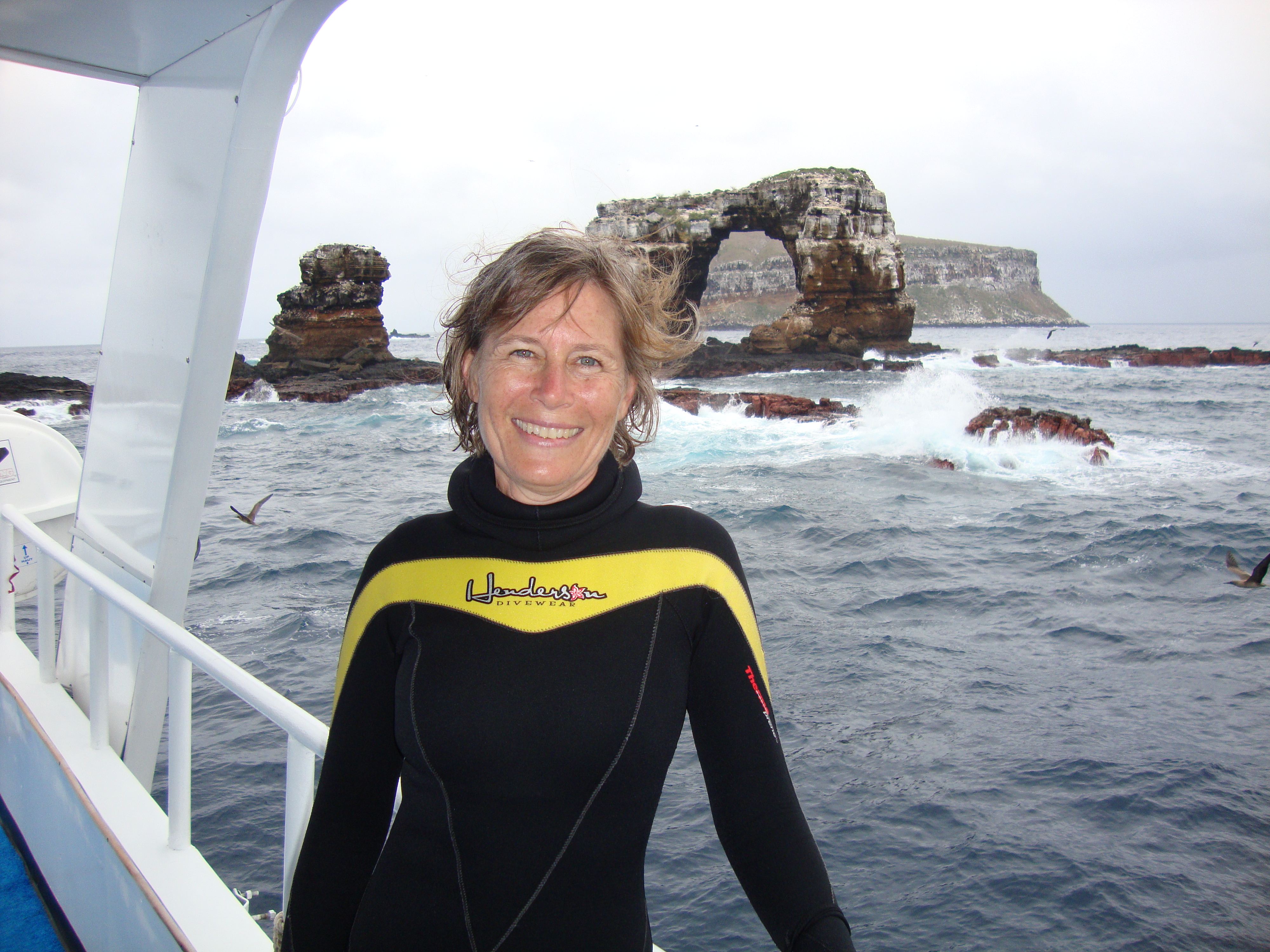
Sally at Darwin's Arch, Galapagos

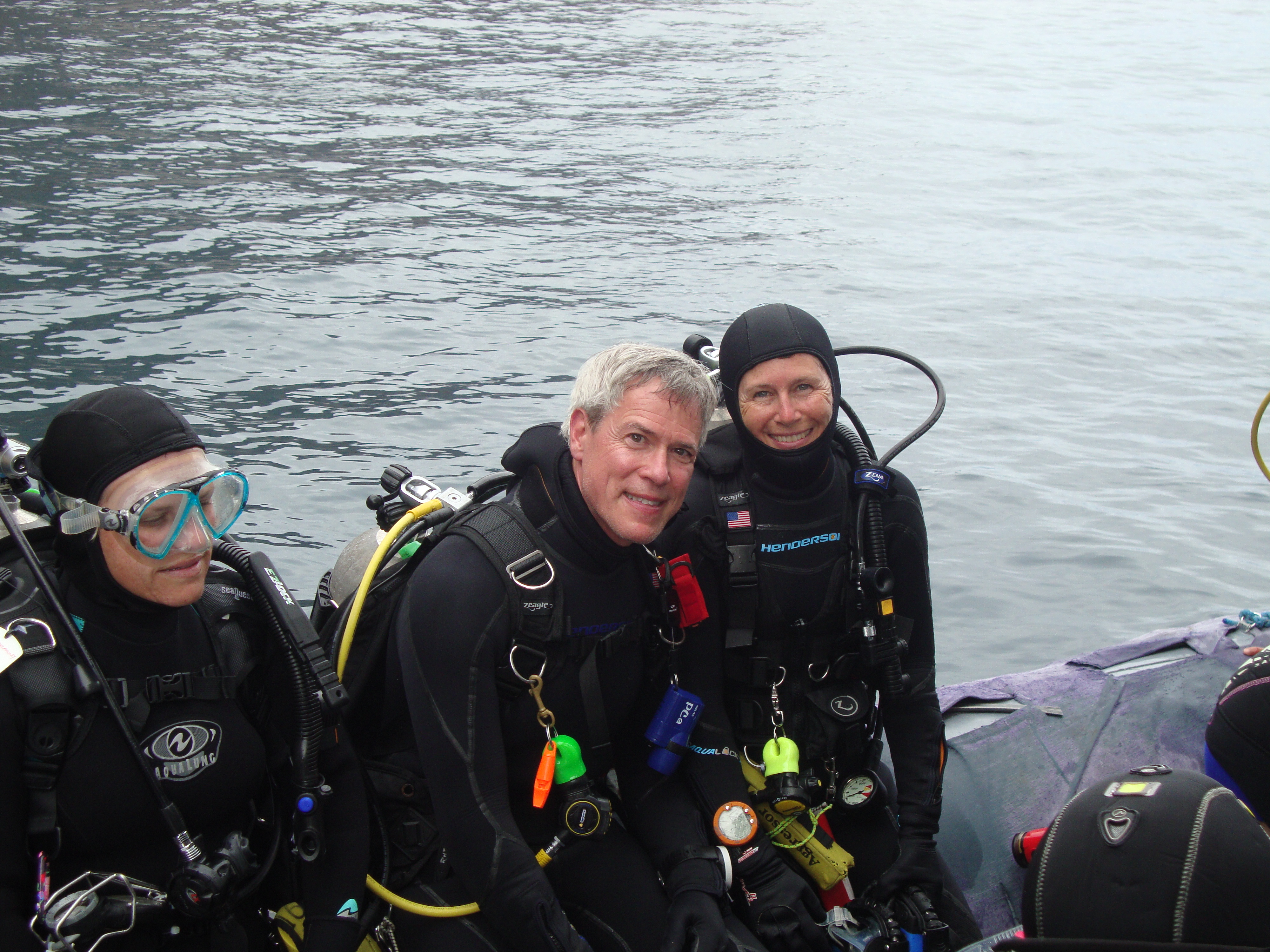
On Christmas day, we did our third day of scuba diving in the Galapagos Islands, some 600 miles west of the coast of Ecuador, at the foot of Darwin’s Arch. There was a strong current, and so we spent most of the fifty-minute dive clinging to barnacle-covered rocks. There were many patrolling hammerhead sharks, as well as a couple of large Galapagos sharks. We saw many large sea turtles and fine spotted moray eels. There were hundreds of small colorful tropical fish, such as Moorish idols, king angelfish, trumpetfish razor surgeonfish, Guineafowl puffers, barberfish and parrotfish, as well as huge schools of creolefish. It was fantastic!

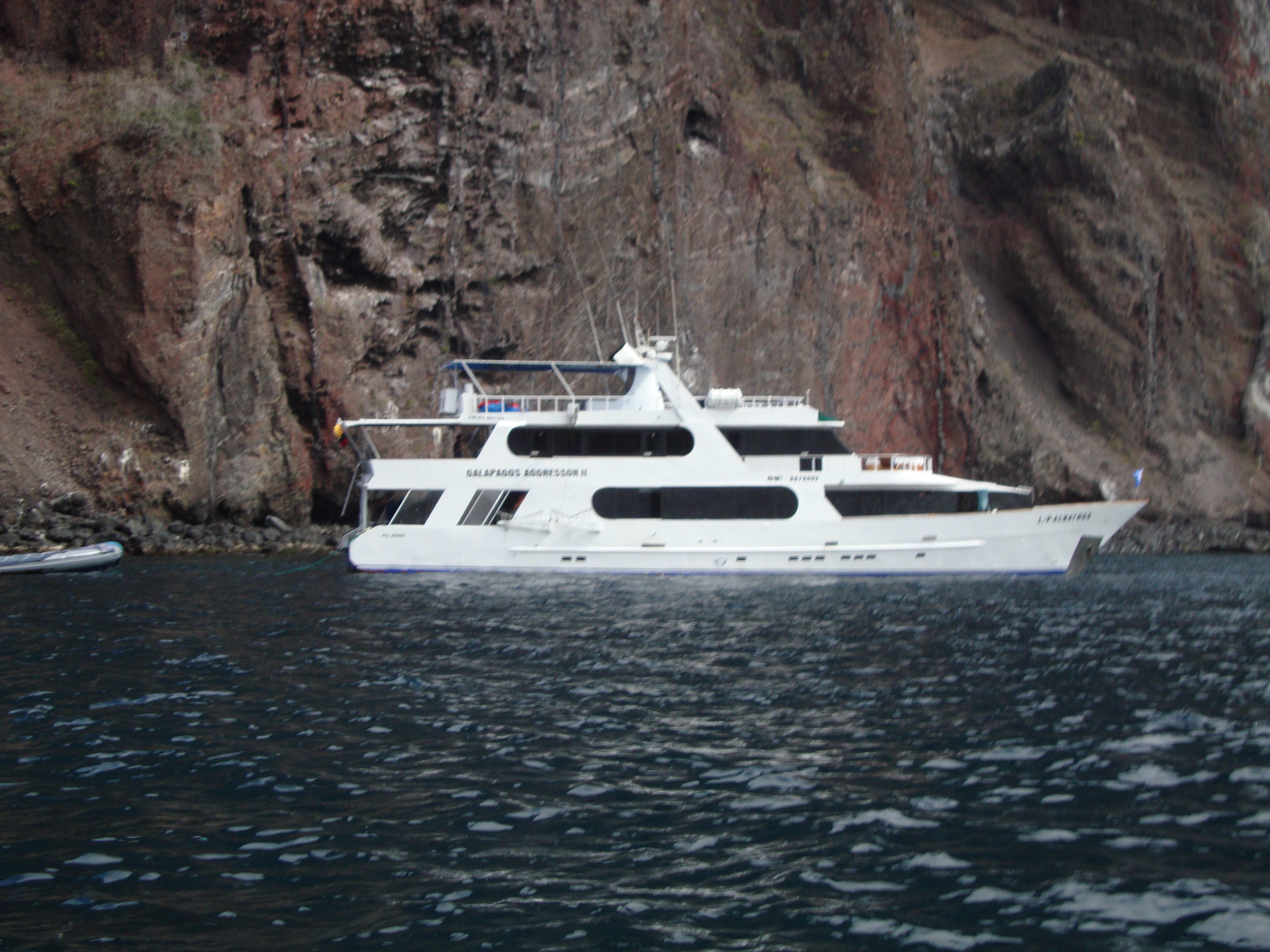
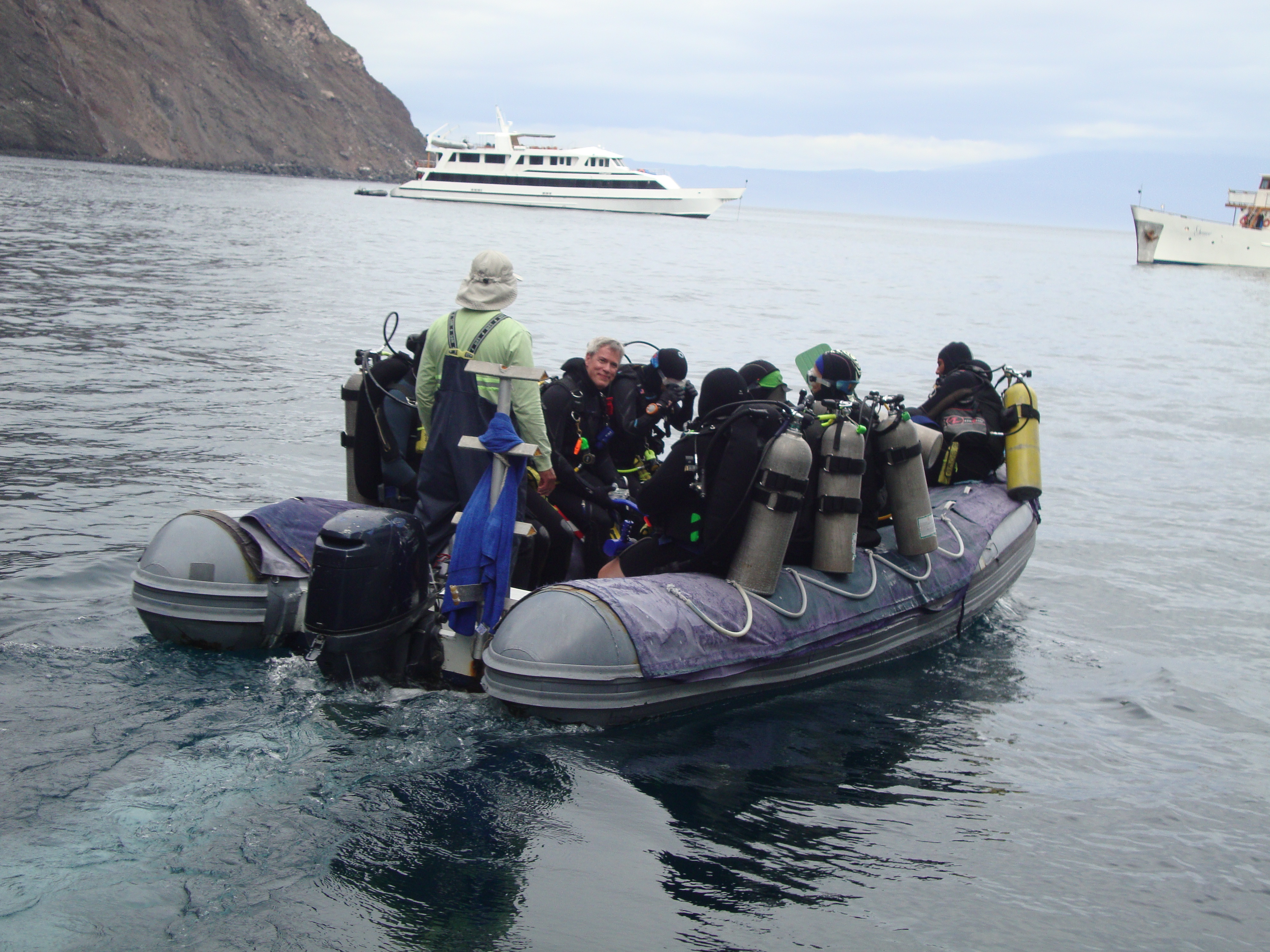
After the dive, we hoisted ourselves over the side of the inflatable dingy (or panga) and returned to the mother ship, the Galapagos Aggressor II. It was Sally’s hundredth dive. The crew presented her with a certificate, and our fellow divers gave her congratulations and hugs.

The Galapagos Aggressor II

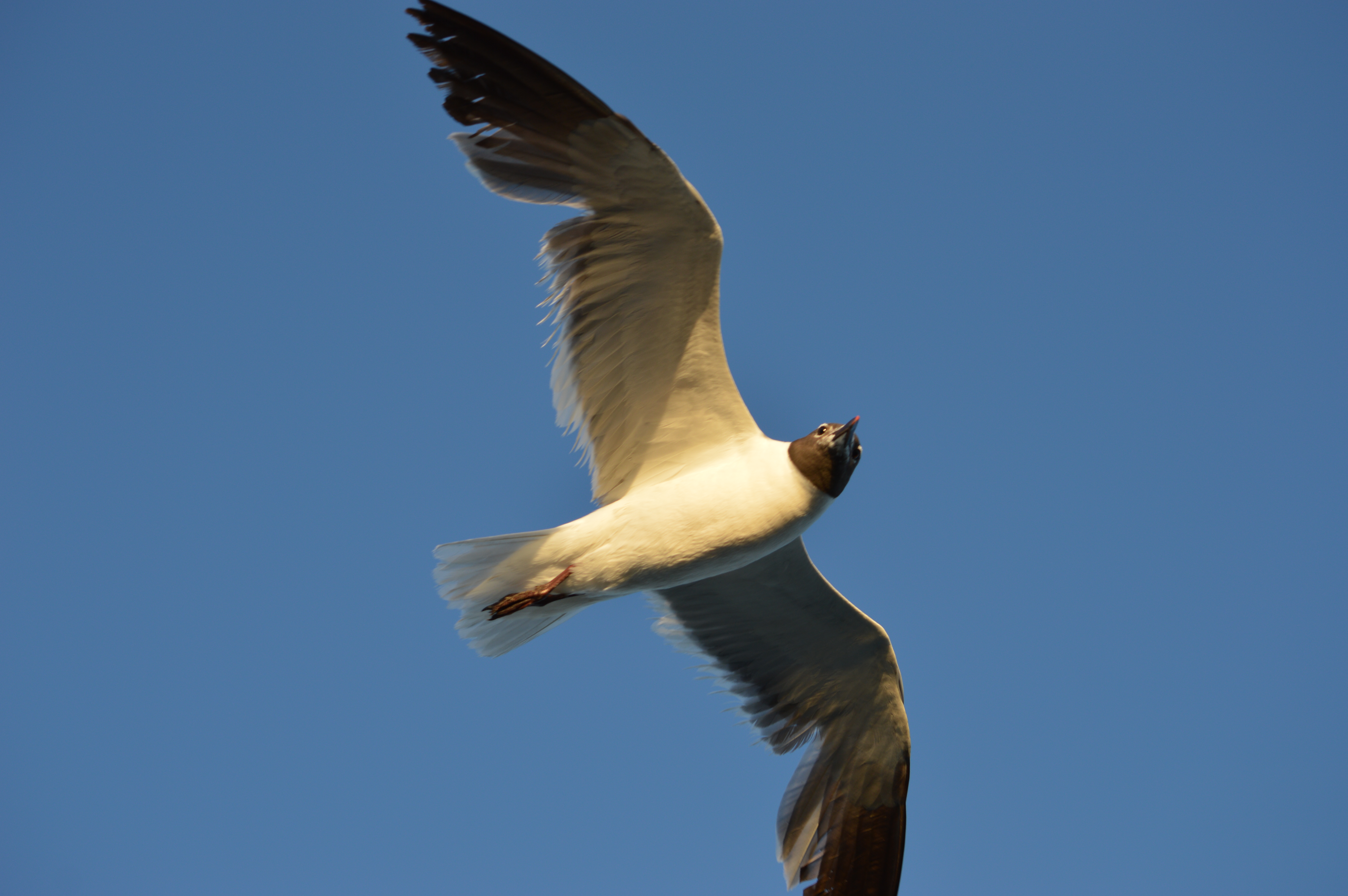
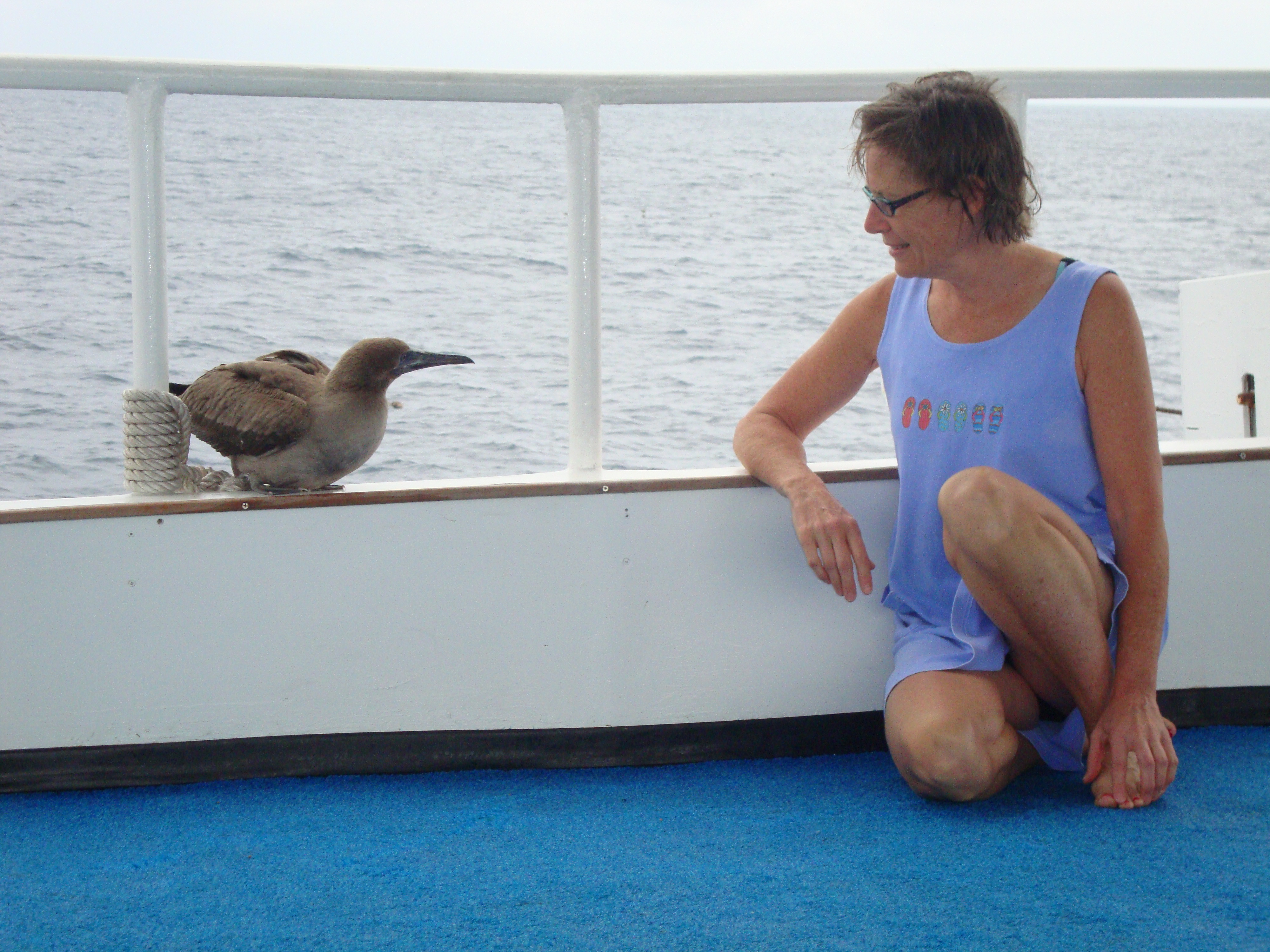
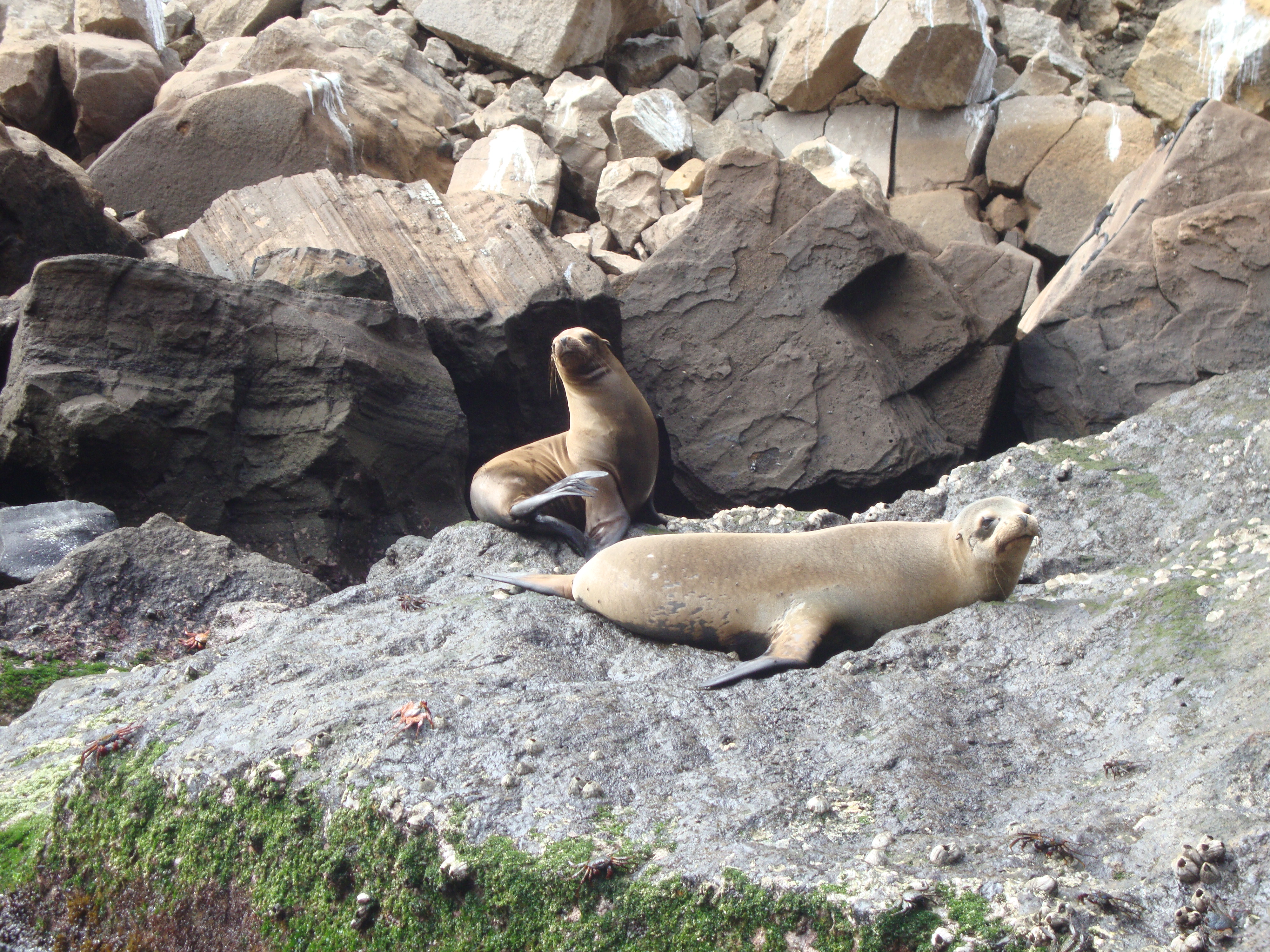
From the boat, we watched hundreds of flying boobies (large sea birds that resemble gulls with webbed feet) (Nazcas, red-footeds, and a few blue-footeds), frigate birds, swallow-tailed gulls, and storm petrols. Groups of dolphins came by periodically. Later that day, we did some snorkeling a few yards off of Darwin Island. The dolphins weren’t very interested in us, although I swam briefly with a group of six. We had better luck with a group of sea lions, who were curious about us, and came close by doing flips and loops.

Sally and a curious juvenile boobie (red footed, I think)

Darwin, like all of the islands we visited during the week, was the remains of a volcano that originated four or five million years ago — a mere babe in geological terms. It was mostly gray rock wall rising sharply several hundred feet to a plateau on top. It was very stark, but also thrumming with bird and sea life. We saw no other humans. It felt like the earth was brand new. The creativity and resourcefulness of nature was awe inspiring.

On the panga

During the trip, I finished reading The Better Angels of Our Nature by Steven Pinker. Pinker’s theseis is that human violence has declined dramatically over the course of history, and he explores the possible reasons for this. The book covers a lot of territory (all of human history) using a lot of tools (history, philosophy, statistics, biology, psychology), and still manages to be surprisingly lively and readable. Part of the book examines the increase in the last century of concerns for animal welfare — the sense that mindless cruelty to animals is unacceptable, and the suffering of animals is a moral concern. As with most violence, we’re ordinarily concerned with (and overgeneralize from) the violence and cruelty we observe, and tend to ignore examples of kindness and decency. It was cheering to learn of a trend toward greater respect for animal rights, and to consider that the trend could continue.

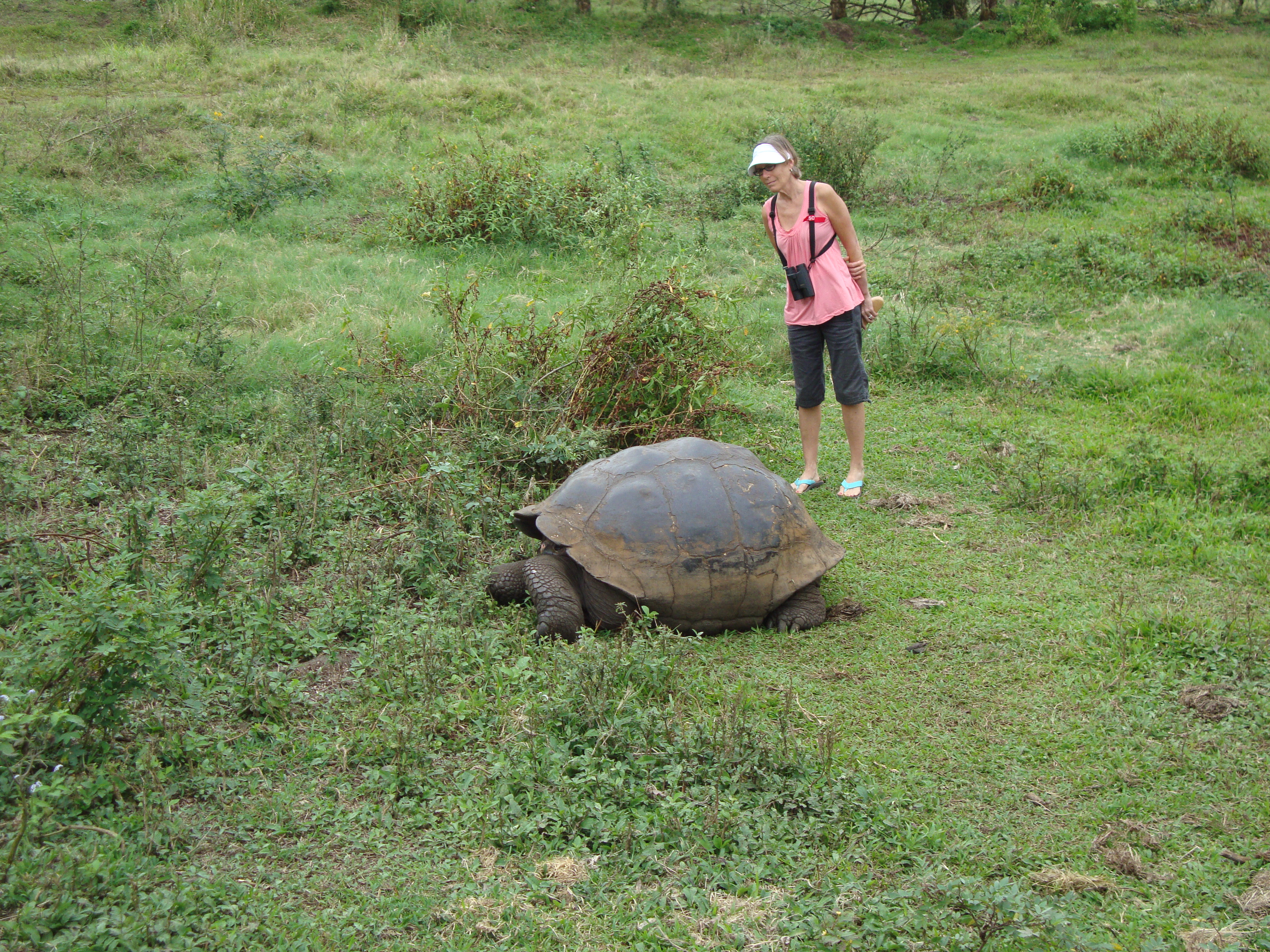
In our group of 11 divers, Sally and I were the only ones who did not dive with cameras. They were a cheerful, intelligent, and sociable group of folks, and all significantly more experienced at diving than we were. I’d taken the view that I’d prefer to look hard at what was in front of me without the distraction and intermediation of a camera, but especially after viewing some of their pictures, I was a little sorry that I didn’t get pictures of some of the amazing, strange, and beautiful things we saw under water. Perhaps next time. Here are some other above-water pictures from our trip.