The Casual Blog

An eye exam, a veggie burger, and a new ballet

It was a busy week at work, with many new issues popping up as I tried to address the existing backlog. I also made a visit to the Duke Eye Center for an exam in preparation for my eye surgery next week. My ophthalmologist, Dr. Prithvi Mruthyunjaya, seems both brilliant and humane, but his patients have to spend an awfully long time in the waiting room. This was also true of Drs. Denny and Casey. Is this a retinological tradition? Are damaged retina patients more-than-usually patient? Dr. M. described my prognosis as “guarded.” At a number of levels, I felt not so great.

On Friday Sally and I did dinner and a ballet. For dinner, we made our first visit to Chuck’s, a new place on Wilmington Street that features in gourmet hamburgers. We quit eating cows many years ago, and so initially assumed Chuck’s was not for us, but then were told on good authority that they made the best veggie burger in town. It was, in fact, really good. It had flavor and pleasing, chewy consistency. And it didn’t fall to pieces.

The Carolina Ballet led off with a new work called A Street Symphony by Zalman Raffael. It was set to hip hop music, which, as almost everyone knows, is music emphasizing pulsing polyrhythms and rhyming gritty lyrics, and deemphasizing melody and harmony. I developed a taste for hip hop a few years back, when I found the Sirius radio hip hop channels, and found it to be good music for driving a sports car. I liked the raw immediacy and experimental transgressiveness. It is also, of course, good dancing music, but hip hop dancing seems worlds away from the ballet tradition.

Combining radically different movement vocabularies could be a banal experiment or a disaster, but Raffael succeeded brilliantly. His work Rhapsody in Blue, presented earlier this season, was soundly designed and had some marvelous flashes, but seemed more the work of a skilled apprentice than a master. With A Street Symphony, he has arrived, with a strong sense of architecture and humor.

The work is made up of seven songs, with the dancers arrayed in solos, couples, and ensembles. The set and costumes are minimalist, with the women wearing gauzy tutus of various colors pulled above their tights. In the beginning, the pounding rhythm is unsettling, and the first piece, Clockwork, uses a robotics theme that is fairly familiar. But Alicia Fabry’s replicant is both energized and vulnerable, with limbs shooting about at amazing speeds and a startled doe-eyed gaze.

I also really liked Jan Burkhard and Yevgeny Shlapko in Best of Me. Jan is a dancer with an sensual quality, and here she was fearless. Classical dance walks a fine line with respect to sex: it candidly reveals dancers’ bodies and deals with intimate subject matter, but almost never references the act itself, and is careful not to push the red button. But hip hop is sexy, and Jan embraced it. So did Eugene, who had a rangey freedom that recalled the hood.

Lindsay Purrington was really touching and beautiful in Cry Me a River. She did various transformations, including a streetwise tough and a Swan Lake swan. At one point her tutu started to fall to pieces, which added an unplanned degree of tension to the performance, but she dealt with the issue with grace, eventually ditching the thing stage right, and strutting boldly forward. Adam Crawford Chavis lifted her magnificently overhead.

This was unquestionably ballet, with pointe shoes and the traditional vocabulary, but augmented with exciting movements from urban street culture. The most successful dancers seemed to personalize their roles, though some stuck close to the familiar classical lines. For one, Margaret Severin-Hansen, who is a fantastic classical technician, was sharp and intriguing, but seemed to me to hold back a bit from the street. On the other hand, I thought Sokvannara Sar, Nikolai Smirnov, and Cecilia Ilieusiu all found interesting individual ways of combining the upmarket and downmarket.

Anyhow, I really liked A Street Symphony, and also Robert Weiss’s new work Idyll, set to Richard Wagner’s lovely Siegfried Idyll. It featured three couples and flowing lines. I was looking forward to The Rite of Spring, but it came after the second intermission, and I was just too tired to take it all in. Sally thought it too was wonderful.

It’s time to subscribe to next year’s ballet season. We’ve been going on Friday nights for fourteen years and have excellent front-center orchestra seats, but I think we’ll switch to Saturdays. On Fridays I often find myself tired after a busy week that includes 5:30 a.m. workouts, and not always able to hang in there intently for a full evening of beautiful performances. Our NC Symphony subscription has been on Saturdays, and so we’ll have to manage some conflicts, but it seems worth it.

Utah ski tips

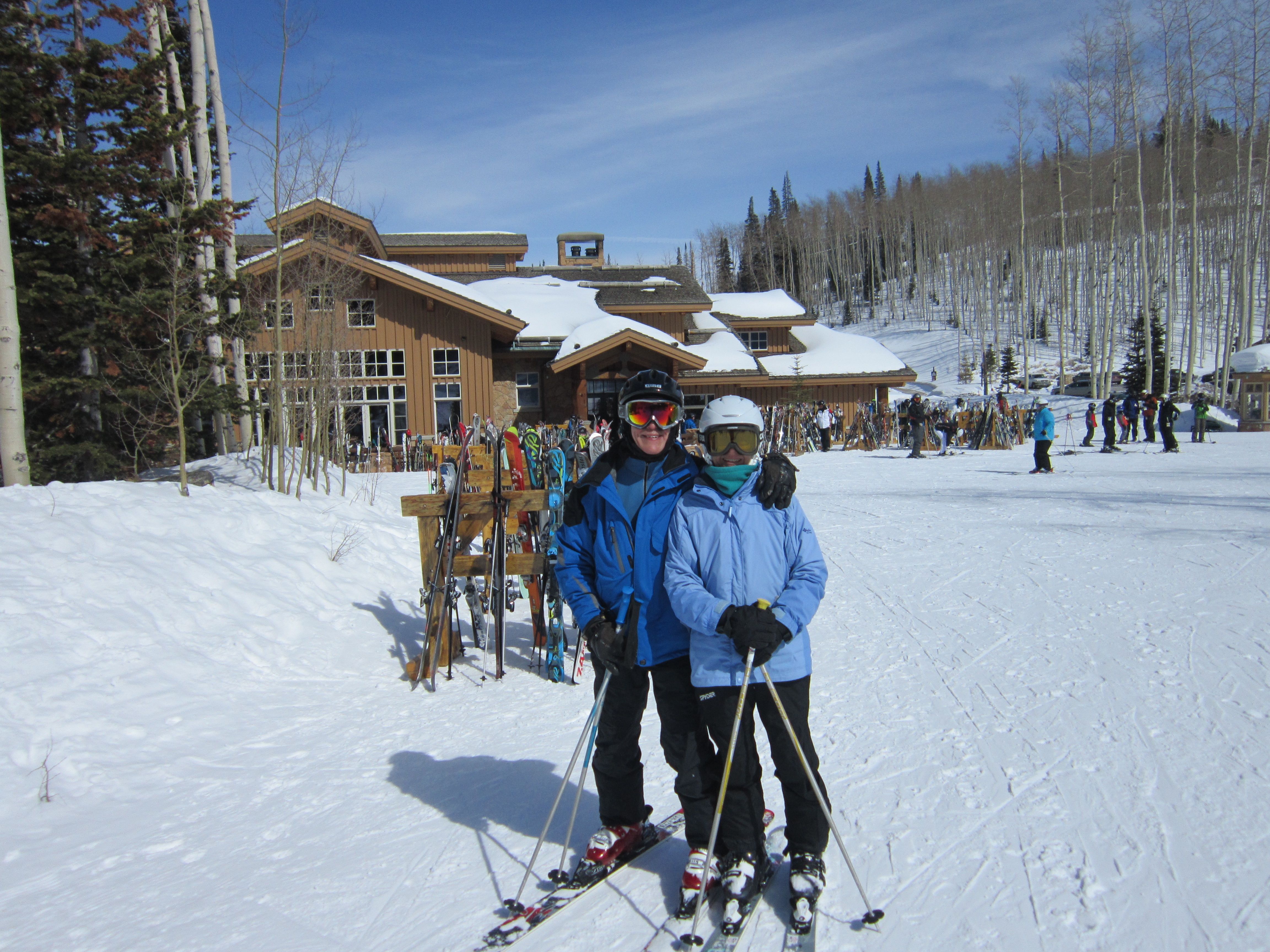
IMG_0480As much as I love skiing the big mountains of Utah, I had mixed feelings last week as we headed out to Park City. Vision in my left eye has been very limited, which has affected my depth perception and balance. But exploring physical limitations is part of what makes skiing interesting. I was looking forward to the kinetic excitement and raw alpine beauty, and to seeing old friends.

Our flight through Dallas went smoothly, and it was snowing hard when we landed in Salt Lake City. We took a shuttle (which our driver called “the Love Van”) up to Park City over snowy roads through limited visibility. When we arrived, some of our friends who’d arrived a day earlier were sitting by in the living room by the fire, and others were in the hot tub in the back. After saying hello, we walked three blocks to the lift area and to rent skis. I went with Volkyl Mantras, an all mountain ski I’d liked in previous editions, and which turned out again to be highly versatile in changing conditions (powder, groomed carving, chop, and bumps).

The next morning I cracked a good sweat trying to jam my feet into my ski boots, and for a few moments I thought they simply would not go, but in the end they did. The day was cold (low teens), but we were dressed adequately (five layers over the torso and two over the face). There was not as much powder on the mountain as we’d hoped, but on the whole the snow was light and workable. After doing two or three groomed runs, Sally and I tried some bumps. We were a little rusty at first, but managed ok.

We ended up skiing the first two days at Park City and the last two at Deer Valley. The usual knock on Deer Valley is that it’s too sweet, with such amenities as good on-mountain restaurants, comfortable lifts, and careful grooming. This is not untrue — the food, lifts, and grooming are quite nice — but it’s also not the full story. We loved the skiing there. The system is elegantly laid out and linked together. There were almost no lift lines. Yes, there are a lot of cruisers, but they’re really good cruisers, some quite steep, and there are also some exciting bumps and gladed areas.

At this stage of my ski career, I enjoy the rush of shooting down groomed cruisers, but I soon find myself craving more varied and challenging terrain (typically rated as black or double black diamond). Finding the right degree of challenge is part of the secret of happy skiing. When you’re right at the inside edge of what you can handle, you experience a special type of happiness. During th event, you don’t know your’re happy, because you’re completely focused and absorbed in solving the intricate speed chess problem of the next few dozen yards. The challenges are constantly changing.

This is an aspect of flow, which I read about last year in Flow by Mihaly Csikszentmihalyi, another book which has some worthwhile ideas but too much padding. Anyhow, I try not to spend too much time just doing those things that come easily. This trip I was focusing on steep moguls,and found myself getting more adept at them.

Here’s my tip, which I got from a teacher in Telluride: getting pressure to the inside edge of the down hill ski about twelve inches from the tip. Particularly when coming into the backside of a mogul, force this spot down into the snow. This causes you to press your weight forward, with your shins driving hard into the tongue of your ski boot. This technique helped me stay out of the back seat, which is where problems usually develop, and to feel well in control.

Anyhow, I felt stronger and more confident on the slopes than last year, or ever. It could be my personal trainer’s innovations, yoga, more swimming, foam rolling, or eating a healthier diet. Or perhaps a combination of some or all of these. At any rate, we skied hard every day, with many exciting challenges, and my legs never gave out.
My vision problem didn’t hamper me too much. Especially in more crowded areas, I tried to be conscious of looking around carefully for other skiers, but we usually stayed away from those places. It’s possible that my hearing and sense of touch were carrying more load. It’s also possible that adrenaline increased the speed of visual processing, and cropped some of the bad signals from the left eye. At any rate, I was able to forge ahead.

Sally really lifted her ski game this year. She was going much faster and looked relaxed and happy. I persuaded her to change out her trusty white cap for a white helmet, which she agreed was comfortable and warm as well as safe. It was a pleasure to watch her.
IMG_0494

Tire service, and new interior design

Tire care and repair is something I don’t usually think about very much. But there are times when it comes to the forefront of vital issues, and last week was such a time.

Some weeks back, my left front Michelin Pilot Super Sport (a primo tire) developed a slow leak, and was nearly flat by the time I first noticed it. I began stopping at the quickie mart every few days for air. On the latest fill stop, I apparently broke the valve stem on the left back Sport, which began hissing. Replacing the cap stopped the noise, but I wasn’t confident that it stopped the leak. I had visions of flat tires, waiting for a AAA tow truck, and the slightly condescending sympathy that car rescue guys can’t help feeling for those that need rescue.

In the end, I kept enough air to drive to the repair shop. I did a bit of Google searching on Raleigh tire shops, and settled on Murray’s New and Used Tires. The web site emphasized that it was a family business and an ethic of service to the customer, and had several positive costomer reviews.

When I got to Murray’s, even before I was completely out of the car, a young man was asking how they could help me. He went to get some pliers and made an adjustment to the back valve stem that fixed it immmediately. Hurray! He then offered to check the front tire, which he had off in a matter of seconds, and he located the hole a few seconds later. He said they’d fix it for $28 and guarantee the patch for the life of the tire. Not bad! I waited in their main office, where they offered me a coffee in a friendly way. Ten minutes later I leaving fully repaired and only $28 to the negative.

It is really cheering to discover a great service provider — one that can not only perform the service competently, but does it with pride and a certain style, and seems to enjoy displaying their expertise. The team at Murray’s had that air of competence and also of getting a kick out of life. I thought I might enjoy such work, though perhaps not for very long. In any case, I was really grateful that they could do it.

One downside: in a moment of weakness I agreed to give them my email address, and shortly after rhey began sending spammy ads to my email and phone. I guess they need more business. Please go over there if you have a tire problem and tell them it was not because of the spam, which they should stop.

Service, or helping othere, is a beautiful thhg. As social animals, we are always seeking ways to connect, and the services we give are primary connections. When we serve others and receive services, we build relationships and communities. With this in mind, I look differently at the person who is helping me buy groceries or clothes, or repair tires. The exchange is not just about money, but also about being humans together.

This has been one of the satisfying things about upgrading our apartment decor. Working with Blair Sutton has reminded me that there are types of skill and talent that are both enormous and sometimes barely noticeable. Blair makes good design look really easy, and fun. I know it’s not that easy, but it seems an authentic expression of who she is. In this sense and others, she is a true artist.

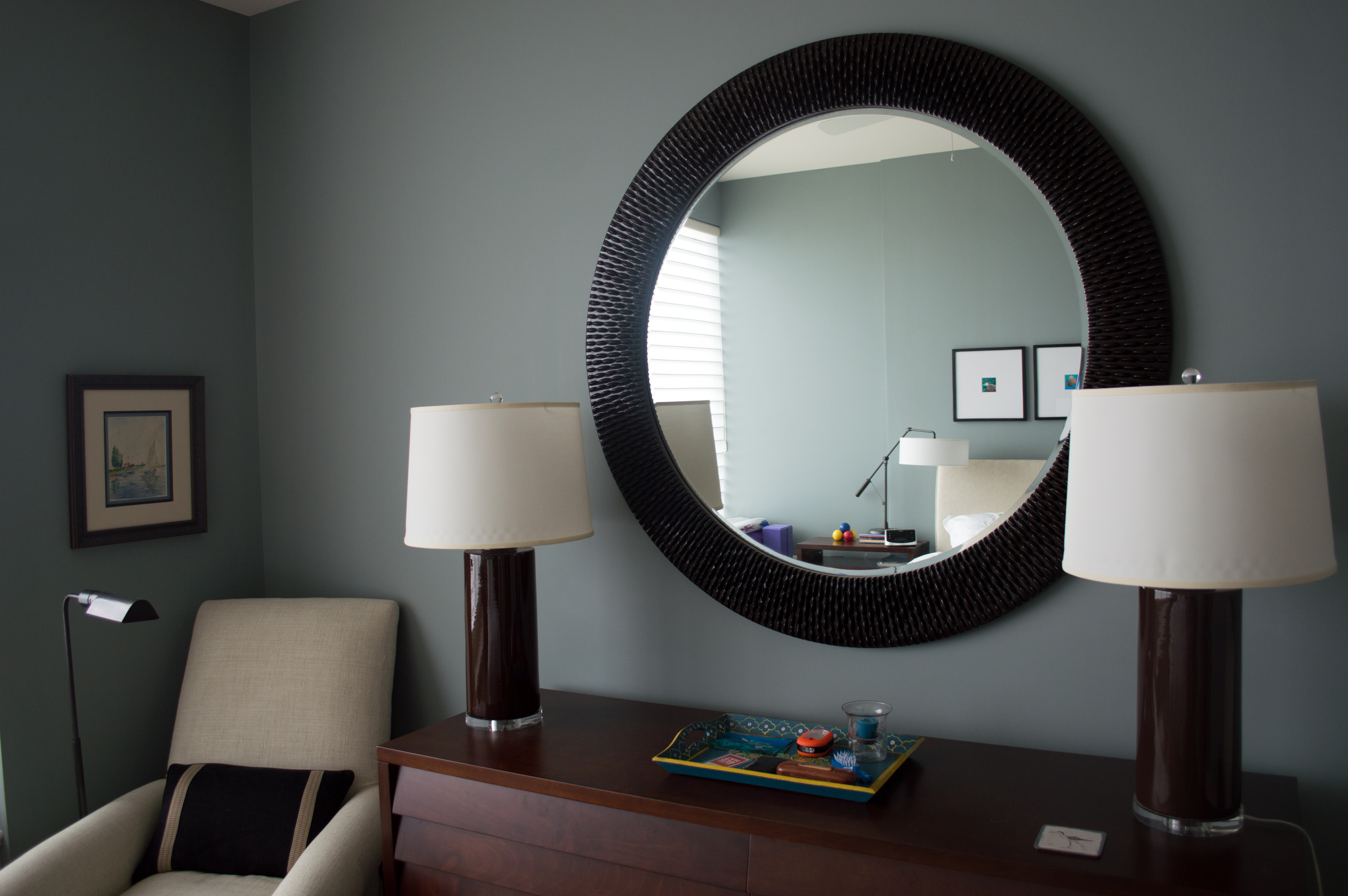
Our most recent project, the guest bedroom, was in full flight this week. The reason — once we got the other room looking good, the guest bedroom looked dowdy — the slippery slope when you start improving things. Blair consulted with us on functions we needed, like a desk for me and more storage for us both, and came up with a design that seemed like it had been somehow buried in our subconscious.

Blair hooked us up with some excellent painters, who covered over the cherry walls, which just never worked, with a cool gray. The painters seemed to like to paint, and were really good at it. The new furniture arrived, including a cute and functional desk that reminds me of Shaker furniture. We got sconces, and got electricians to put in the sconces, as well as to reroute the cable hookup to the other side of the room. The electricians also put spot lights on our new paintings, which makes them pop. They also gave good service.

We’re still waiting for the new headboard and a couple of other items, after which I’ll post some photos.

Snapchat, engineered forgetting, and a status update on my left eye

Snapchat is one of those ideas that sounds either silly or useless, and then turns out to be brilliant. It’s an app that allows sharing of photos that after a few seconds automatically disappear. It’s like engineering in a very human characteristic — forgetting.

We tend to forget how important it is that we are forgetful. We know we don’t remember everything, but tend to think of this as a bug rather than a feature. But think how social life would be different if we all remembered everything. How could we talk if we knew every word would be preserved forever? Every stumble, every foolish idea, every faux pas, every little falsehood? Who could bear to be accountable for each and every interaction?

Until the digital age, our basic problem was how to remember the things that mattered. Preserving memories was difficult, while forgetting happened naturally. As the digital age has progressed, this ordering has been turning upside down. Anything that can be digitized and send through the internet (words, images, sounds) is easy to save and hard to discard. Inevitably among the frozen perceptions are ones we’d rather forget.

We’ve only recently started to understand that this is not a trivial problem. We know or should know that change is constant and inevitable. Our ideas and opinions change, and the things we love today we may love much less of in years to come. This is one of the reasons that tattoos are generally a bad idea. There’s an element of risk every time we express ourselves in digital form — a risk that we’ll change in an unforeseen direction, and our expressive gesture will be something we come to regret.

If teenagers just can’t resist the urge to send naked pictures of themselves on the internet, it would be great for their present and future selves if they could avoid the potential of embarrassing themselves before an audience of billions. If Snapchat achieved no more than that, it would be a good thing. But it could point the way towards more nuanced and flexible digital communications. Lowering the stakes for our internet lives would open new possibilities for creative expression.

In writing posts for the Casual Blog, I try to imagine whether a future self, quite different from the current one, could comfortably coexist with this record, including parts that may be disagreeable. Of course, if my future self were really hateful, I would want nothing to do with him, and my current self wouldn’t mind unsettling him. It’s strange to think of battling a future self, but to some extent, each fixing of a position does so. It could even prevent the development of some aspects of the future self. Is that good or bad? Is there any way to know?

For friends who are following the saga, I’ll note that this week I got scheduled for additional eye surgery to be done in March. The operation on my left eye last November has not healed properly, and scar tissue on the eye wall has left me with very limited vision. At last test with the eye chart, I couldn’t see the topmost E.

This has made all the activities of daily life that involve depth perception (like moving or eating) or seeing things on the left side (like driving or going to parties) more challenging. The good news is that my original retina surgeon has passed me on to Dr. Prithvi Mruthyunjaya, a professor at Duke, who appears to be a rock star in this area, and who is experienced in the unusual procedure I need. I’m looking forward to recovering.

A new novel about AI and the Turing test

DSC_0032
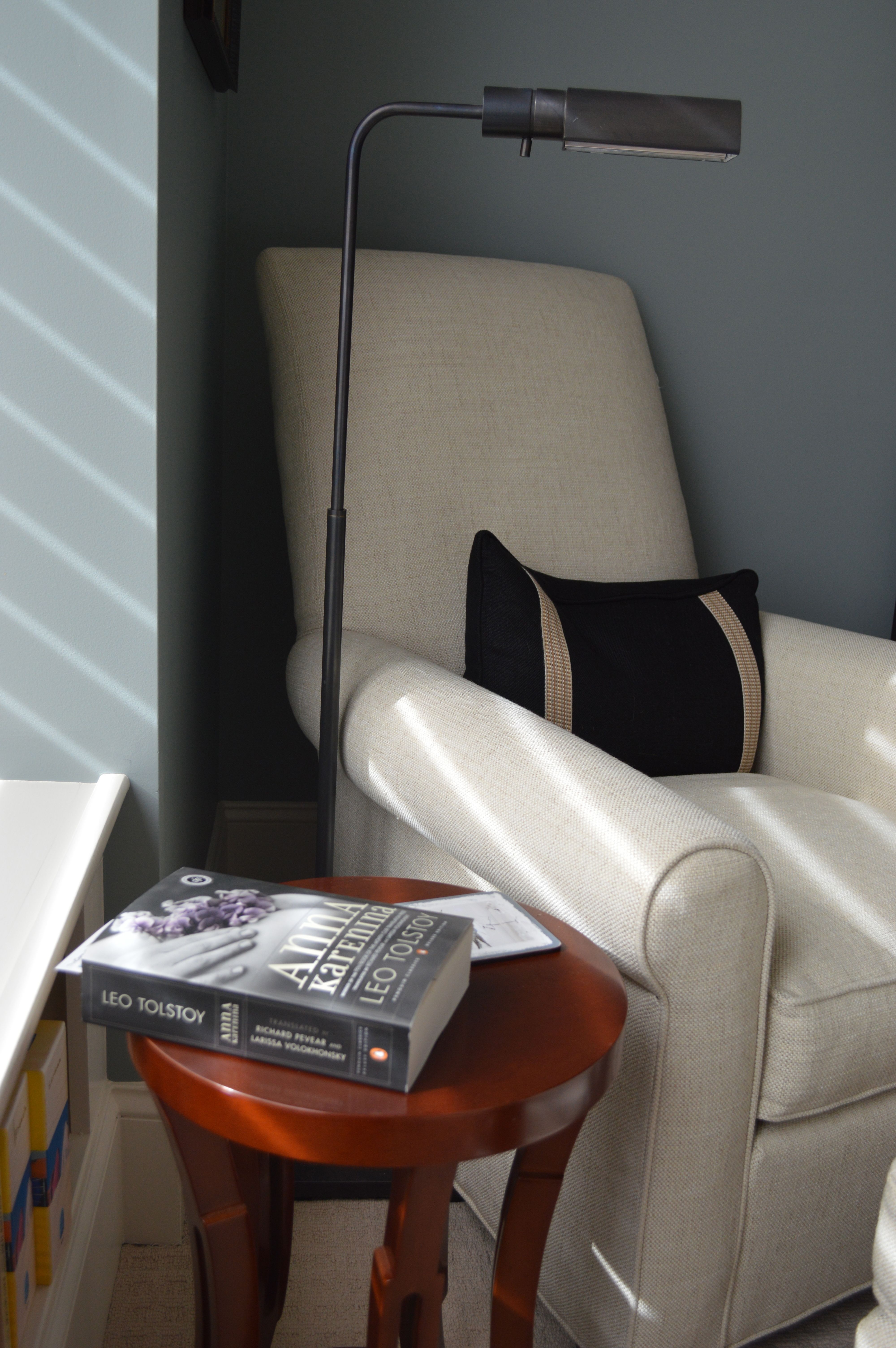
Sally’s re-reading Anna Karenina, which seems to me both admirable and exhausting. The recent movie version with Keira Knightley was highly stylized, but reminded me of what I enjoyed about the book when I read it in my twenties. It is rich book, full of feeling and thinking. But it’s long!

As a teenager and young adult, I read a lot of long novels, including ones by Tolstoy, Dickens, Dostoyevsky, Trollope, Elliot, James, and Proust. My “big novel” period was a time when I was coming of age and constructing a particular consciousness. Those big books were part of the process.
DSC_0039

Nowadays most of my waking hours are spent working, and there is stiff competition for precious non-work time. I’m still interested, though, in novels, and especially ones that take on issues that haven’t been thoroughly mined out. I just finished one such: A Working Theory of Love, by Scott Hutchins (Kindle edition). It’s about a guy who’s working on an artificial intelligence program designed to pass the Turing test, which is a real competition suggested by Alan Turing.

The Turing test is designed to probe whether machines can think. The challenge is to build a computer that can persuade 30 percent of humans that it is human. (I wrote about a very interesting non-fiction account of the test and artificial intelligence, The Most Human Human, by Brian Christian, here.)

Hutchins’s narrator bases his program on his father’s diaries. After getting the computer to converse coherently, he works on humanizing it by adding emotion and sex drive. As the program improves he has the feeling that his father is coming back to life. This creates an interesting moral dilemma. His father had committed suicide, but the project seems to be denying him his freedom to choose death.

I found Hutchins’s premise thought-provoking, but I ultimately didn’t care very much for his narrator. But he’s where the action is. It’s exciting and terrifying to see how fast robotics and artificial intelligence are transforming the world. The AP did a good overview piece last week, which I recommend highly. As they note (and as I’ve noted before), jobs involving any sort of routine (most manufacturing, transportation, retail, and office work) will soon be gone forever, taken over by robots and AI. This means increasing efficiency and wealth for some, and unemployment and anomie for a great many others.

We’re going to need to re-think and re-size our social programs for a world where humans are not needed to produce most goods and services. This is a daunting task, even leaving aside the extreme polarization of our politics. The shift away from human labor as a process that is the source of economic value and meaning is hard for us to grasp and accept. But we somehow need to provide a safety net for the millions who will be affected.

I’m not prepared to propose a program, but I do have the name for one: the Big Deal. It will need to be bigger than FDR’s New Deal. It will surely involve some sort of cash payments and medical care. I’d also add a work program that channeled redundant workers to activities that would provide them with a sense of meaning and purpose, like caring for other humans.

Cats and curiosity, humans and dishonesty

Isabelle, a/k/a Izzie, "The Wild One"

Isabelle, a/k/a Izzie, “The Wild One”

There was an amazing story in the NY Times last week about a house cat that got lost 200 miles from home and somehow found its way over unfamiliar territory to its human family. It sounds impossible, but apparently there was adequate proof, including a computer chip in the cat.

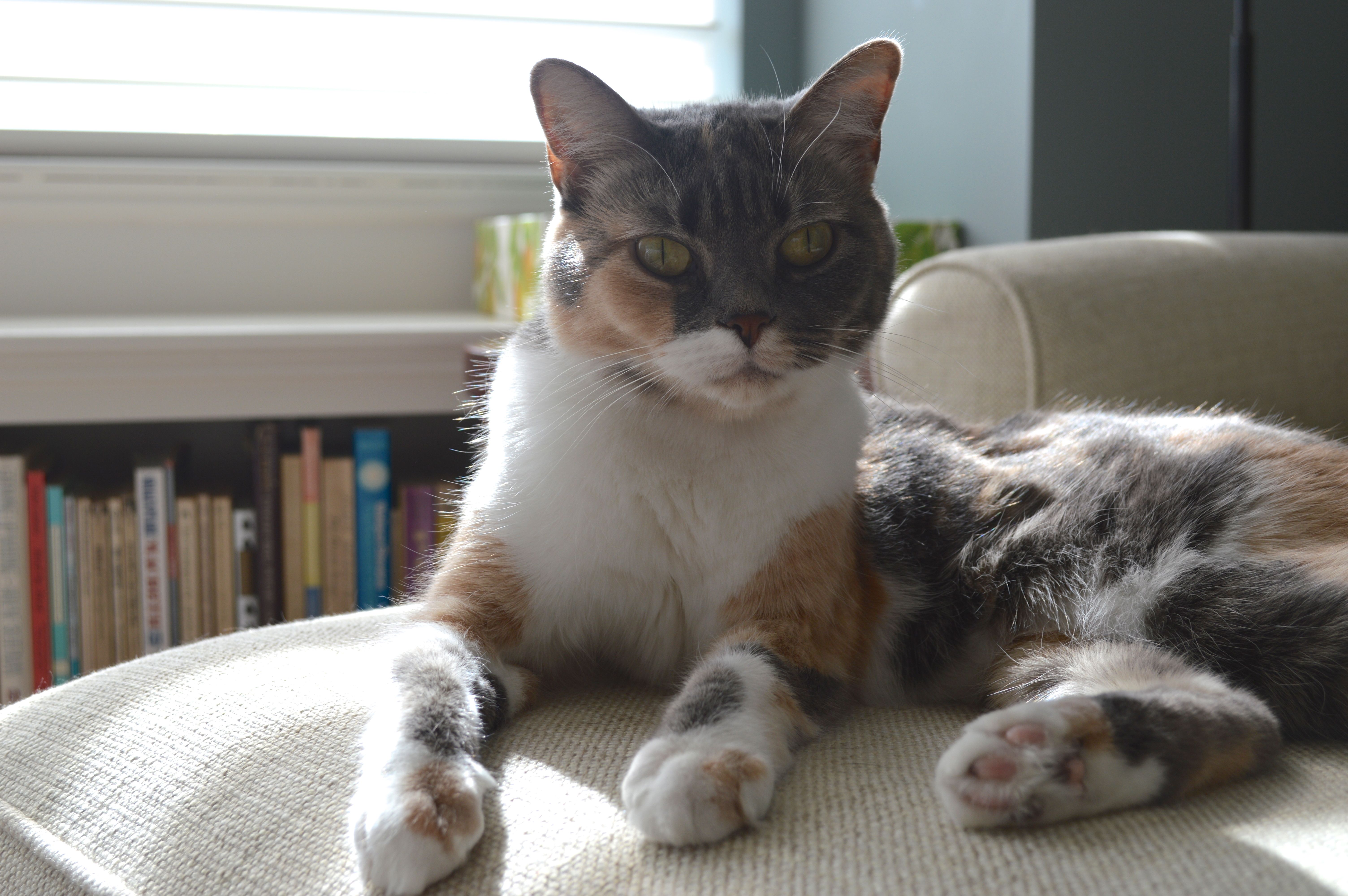
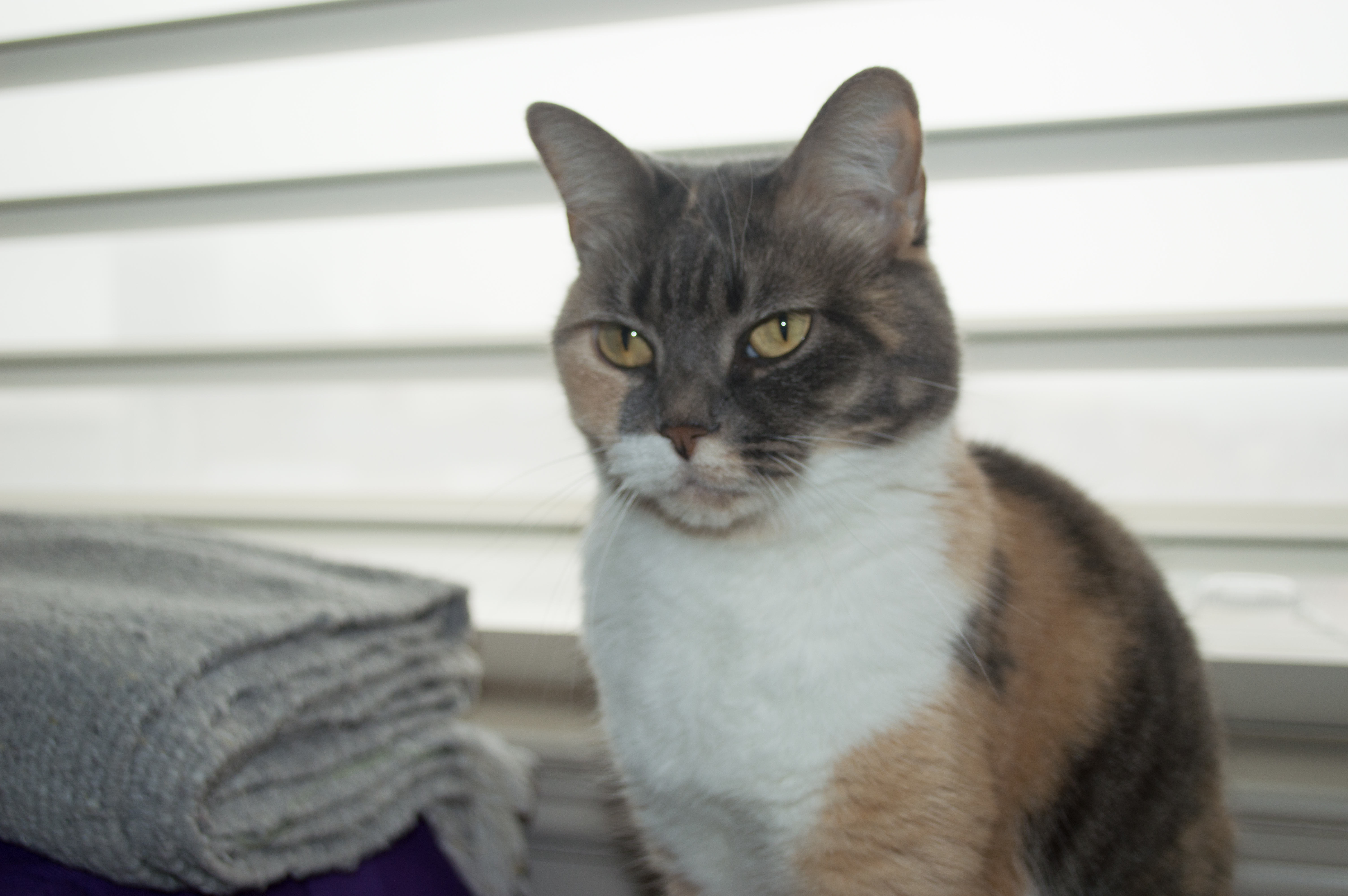
Sally dearly loves our cats — Phoebe, Isabelle, and Rita. She buys them toys, speaks babytalk to them, and lets them sleep on top of her. They make her laugh and coo. I admit they are beautiful, but I have never been as smitten. They shed hair everywhere. They periodically throw up hairballs and other sundries, usually at a prominent spot on a nice rug, and sneakily try to steal food from our plates. But for the last several years, most of the time I paid them little attention, and they did the same to me.

Phoebe ('Feed Me")

Phoebe (‘Feed Me”)

Lately, though, they’ve been wooing me. Rita wants to cuddle with me in the easy chair. Isabelle follows me to the bathroom and nuzzles my leg. Phoebe likes to get into my lap when I’m eating. They’ve gotten me to pet them more. They purr more. They haven’t tried to bite me in quite some time. It’s nice.

I tend to think of our cats as not very bright, even for cats, and mainly enjoy their grace. But they do have skills. They are wonderful at rapid acceleration and deceleration, and do amazing leaps. They seem at times to concentrate completely and at other times to relax completely. And they are extremely curious about anything new. They’ll thoroughly explore every new paper bag and box.

Rita, the sweet one

Rita, the sweet one

They’re getting older. Phoebe is now 12, Isabelle is 10, and Rita is 6. Perhaps age has a mellowing effect and accounts for their increased affectionateness. Perhaps they detected some change in me. There’s no doubt but they are working on me, and making some changes.

Still curious about how humans work and why we do do so many silly things, I finished reading Predictably Irrational, the Hidden Forces that Shape Our Decisions, by Dan Ariely, a psychology and behavioral economics professor at Duke. His style is a bit chatty, but some of the substance is fascinating. Working along some of the lines of Kahneman and Tvesky, he examines such problems as our difficulties in managing our money or avoiding unhealthy food and our inability to foresee the bad decisions we may make when sexually aroused.

One of the most interesting chapters describes an experiment designed to examine cheating. A control group took a simple knowledge test, and other groups took the same test with the answers “accidentally” provided to subjects. The basic finding was that a majority of those given a bit of temptation and opportunity to cheat did so. But Ariely found that the cheaters didn’t cheat as much as they could have. Instead, most cheated only a modest amount. There seemed to be some threshold beneath which the dishonest behavior was not particularly troubling, and above which it was.

There was an interesting essay by James Nortz in the current Docket, the magazine of the Association of Corporate Counsel, which describes some more of Ariely’s work on honest and cheating from his book The (Honest) Truth About Dishonesty: How We Lie to Everyone — Especially Ourselves. Nortz proposes that we view dishonesty as a universal human trait, but one which manifests itself according to varying circumstances. He suggests that facing up to these disturbing realities could help us design better compliance and ethics programs.

Stuart, still the greatest

Stuart, still the greatest

Beyonce’s Pepsi cluelessness, and a note on foam rolling

Rita, ready for her closeup

Rita, ready for her closeup

I’ve got nothing against Beyoncé, and in fact have for her the sort of warm feelings one has for overwhelmingly beautiful females one is unlikely ever to meet. Thus I was a little sorry to see her attacked in the press for her rich new deal to lend more of her celebrity to the cause of getting people to drink more Pepsi. Her critics noted that Pepsi and similar sweet fizzy drinks are a major cause of the obesity epidemic and related diseases such as diabetes. Why would a smart,creative, caring person with no desperate need for cash do such an awful thing?

Though a little sorry, I was also cheered that this issue was raised in mainstream publications. Of all the ways we might choose to make ourselves ill, drinking lots of Pepsi and similar drinks is surely one of the silliest. Just as with cigarettes, we’ve come over time to understand that the risks are serious, but even with that understanding, the evil brilliance of Madison Avenue advertising overwhelms logic. Beautiful celebrities can do a lot of damage along this line.

This all seems fairly obvious, but it was one of those things that, as recently as last week prior to the Beyoncé brouhaha, it was hard to say without seeming like a fanatical kook. The ad campaigns, pursued over generations now with increasing sophistication, have really worked — they’ve taken over our brains. Countless millions believe they need and enjoy their sodas, and the same goes for chips. Suggestions to the contrary can excite hostility. Recently I suggested to a friend that it would be a good idea to label salty crunchy fried products with some sort of warning — say, a skull and crossbones. He looked at me like I must have completely lost my mind!

Breaking the junk food and drink habit is not easy. The products have been formulated to satisfy some primal urge to slurp and crunch. If that weren’t enough, the endless advertisements overwhelm all logic and lots of attempts at self-control. Plus, the stuff is pervasive. Entire aisles of stores, and even entire stores (where you buy gas) are devoted to purveying junk food, sodas, and tobacco. And everywhere are people apparently enjoying it. We are social animals, and we enjoy doing as others do. So how can we resist?

It can be done. There are some hints in Charles Duhigg’s book dealing with breaking bad habits, which I wrote about recently. In a nutshell, you substitute good habits for bad ones. You identify the cue for the behavior, the routine, and the reward. If the cue is thirst, experiment with another routine, like having a glass of filtered water or a cup of green tea instead of a soda. If it’s wanting to be close to Beyoncé, watch her on YouTube.

On the subject of trying to live healthier, Larissa Lotz, my personal trainer, suggested recently that my thoracic spine could use some help, and recommended massage therapy with Brian Hagan. He’s the MT for the Carolina Hurricanes, who no doubt need a strong dose of massage therapy now and again. I got in to see him this week.

Brian was friendly, and seemed knowledgeable and skilled, and also really enthusiastic about the health benefits of massage. In addition to working on my T-spine, he give me an extensive lesson on foam rolling. He predicted it would be transformative in loosening muscles and increasing flexibility. I thought that sounded good, and agreed to give it a shot.

Left to right:  Phoebe, Foam Roller, Isabelle

Left to right: Phoebe, Foam Roller, Isabelle

Art, technology, and our bedroom v. 2.0

2013 01 12_0714_edited-1
I saw a story this week about the predictions of various tech company execs as to developments in 2013. The most interesting one to me was that 2013 would be the year of art. The prediction was that the coming year should bring a shift in which technology begins to enable a new creativity.

It struck me as unlikely that we’d see such a major cultural shift this year, but I liked the idea of focusing on how technology might advance creativity. Clearly, it sometimes does the opposite. Television, for example, has on balance surely made us duller, and I worry that Facebook may be no better. But the internet opens a vast number of possibilities, and the tools and portals keep improving.

A case in point: one of my 2012 projects was to learn to draw on my iPad. I found the tools I tried awkward and glitchy. The line would be flowing fine and then for no apparent reason stop working, and need to be reset. Frustrating. I put that endeavor aside for the time being. But the prospect of an amazingly convenient and flexible drawing tool with all the convenience of a tablet is close, if it’s not here already.

As regular readers have heard, I’ve been experimenting with digital photography in recent months. My hope was that with my entry-level DSLR (a Nikon D3200), I might find expressive possibilities that exceeded those of my trusty-but-inflexible Canon point-and-shoot. In any event, getting new equipment tends to inspire new efforts. This is, of course, a slippery slope — it’s possible to shovel a lot of money out the door on fantastic lenses and other equipment without realizing much of an artistic ROI — but so far I’ve kept equipment urges under control, and I’ve made some images I liked.

Lately I’ve been focusing more on what to do with those images Again, technology is expanding the possibilities. I’ve been experimenting with Photoshop Elements to tweak them, and with Flickr and Dropbox for storing and sharing them. Some I’ve shared in this blog. Sally gave me my first digital photo display frame for Christmas, and I set it up with a slide show of my images from our Christmas diving trip to the Turks and Caicos. I’ve been turning it on when I sit down for breakfast, and getting a quick taste of the remarkable beauty of the reefs.

Rita Tiller in bedroom v. 2.0

Rita Tiller in bedroom v. 2.0

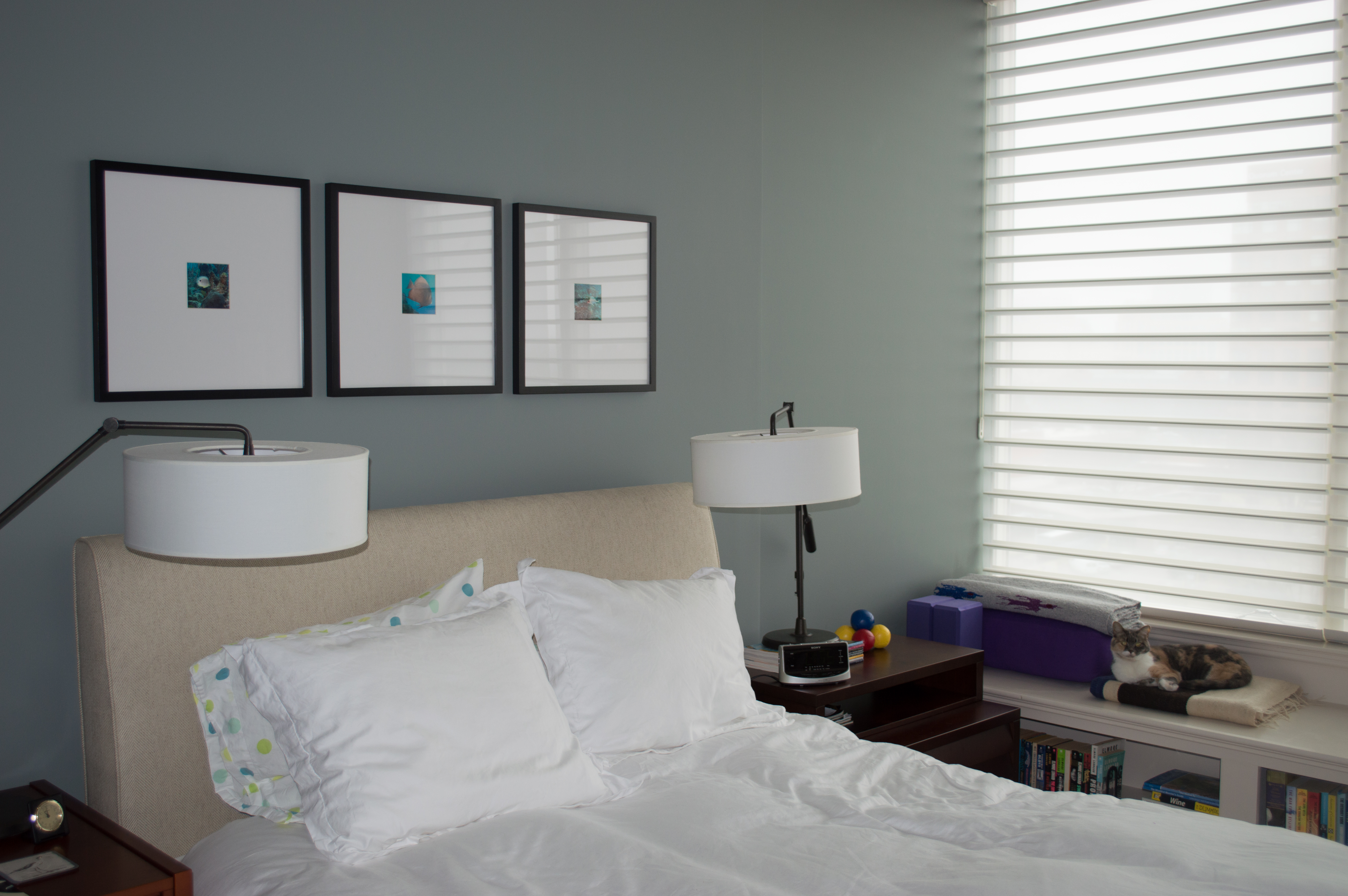
Last week I took on a bit of a retro project. In the fall, we engaged Blair Sutton, an interior designer, to help us re-do our bedroom, which had a traditional look that didn’t work with the rest of the space. Blair somehow took our vague concepts and came up with a design that was contemporary but also relaxed and calming. She is truly an artist. One of her ideas concerned the space on the wall over the bed.

She proposed three frames from Pottery Barn hung side by side to be filled with small images of our creation. I’d been thinking for a while about getting some of my own images on our walls, but it never got high enough in the priority queue until Blair’s directive. I took the triptych as a challenge, and though it took a while, it finally got me focussed.

Eventually I picked three images from the Turks and Caicos set (two of which I previously published here) and took them to Rite Aid drugstore to print. (There turned out to be a small learning curve on this. I actually had to take them in twice, because I didn’t get them in an acceptable format the first time.) Anyhow, the prints turned out fine, and Sally volunteered to do the framing. We were both happy with the results, and enjoyed the collaborative process.
2013 01 12_0716_edited-1

New resolutions and my latest green smoothie

DSC_0013
I have a soft spot for New Year’s resolutions. It’s generally a good thing from time to time to think about where we are versus where we want to go. Few, if any, of us that are fully optimized. At the same time, there’s never any shortage of small feasible steps we could take to make our lives better.

But personal self-improvement resolutions usually don’t get the job done. A prime example is our most visible, common, and serious public health problem: obesity. There’s no great mystery what needs to be done (eat less and exercise more), and most of us who aren’t naturally optimized for body mass know that much perfectly well. Nevertheless, each year the incidence of obesity is about the same or worse, and the over all trend in the last thirty years is worse and worse.

Plainly this is not a simple problem with an easy solution, or we would have solved it. But part of the reason we can’t successfully address obesity and other serious behavioral problems is our poor understanding about how our own minds work — that is, our own impulses and motivations. As regular readers know, I’ve been learning more about this in the last couple of years from reading Daniel Kahneman, Michael Gazziniga, Jonathan Haidt, John Brooks, and Edward O. Wilson, and I’m currently reading Predictably Irrational by Dan Ariely. In addition to being inherently fascinating, these books have provided insights into life’s persistent problems, like over eating.

One of my main takeaways from these psychologists, biologists, and critics is that our reasoning processes, which seem at times so powerful and impressive, will get us only so far, and if we want to change behavior and minimize bad decisions we need other tools and tricks. Charles Duhigg’s book on habits and how to change them, which I wrote about recently, is a good signpost on this. If we understand our behavior in terms of the interaction of our emotional needs and our environment, we can experiment with changes.

But we may as well admit that eating is especially complicated. I’ve long been convinced that what we eat is a major component of how healthy we are and can expect in future to be. I try to keep up with current thinking about nutrition. Over the course of several years, I’ve developed a repertoire of habits that help me avoid most unhealthy foods and consume mostly things that have nutritional value.

But even so, I managed to pick up five pounds over the holidays. How did this happen? It was little things. Christmas parties and more restaurant meals, colleagues bringing to work delicious cookies that had to be sampled, and old friends sending gift baskets of treats. The combination of sweet things and childhood Christmas memories overwhelms all the circuits, and extra food is inserted in mouth, chewed, and swallowed. Of course, it was momentarily delightful, but it is so much harder to take the lbs off than to put them on.

Each year around January 2 we leave the land of the sweets and other excesses and things return to normal. New resolutions are made. Regarding eating, I’m trying some new ingredients in my breakfast green smoothies (pictured here and previously described here), including in various blendings, along with greens and fruit, hemp protein powder, marine phytoplankton, cacao nibs, and goji berries. It’s fun to mix a superdrink (as in superhero), and rewarding to be able to do something fabulously good for the body. I try to make it a point each day to be grateful for such good fortune.
DSC_0006

Beautiful diving in the Turks and Caicos

SeaLife DC1400

One of my resolutions for 2012 was to try something new, like a trip or minor adventure, once a month. I didn’t keep strict count, but I came pretty close, and the last trip of the year was novel enough to count for two. Sally and I opted out of the final feeding frenzy of Christmas and instead spent the holiday week staying under water as much as possible. We flew to the Turks and Caicos Islands, and boarded the Aggressor II, a 120-foot vessel designed to take about 18 hardy and fortunate souls on week-long scuba diving trips. It was a fantastic trip.

Exif_JPEG_PICTURE
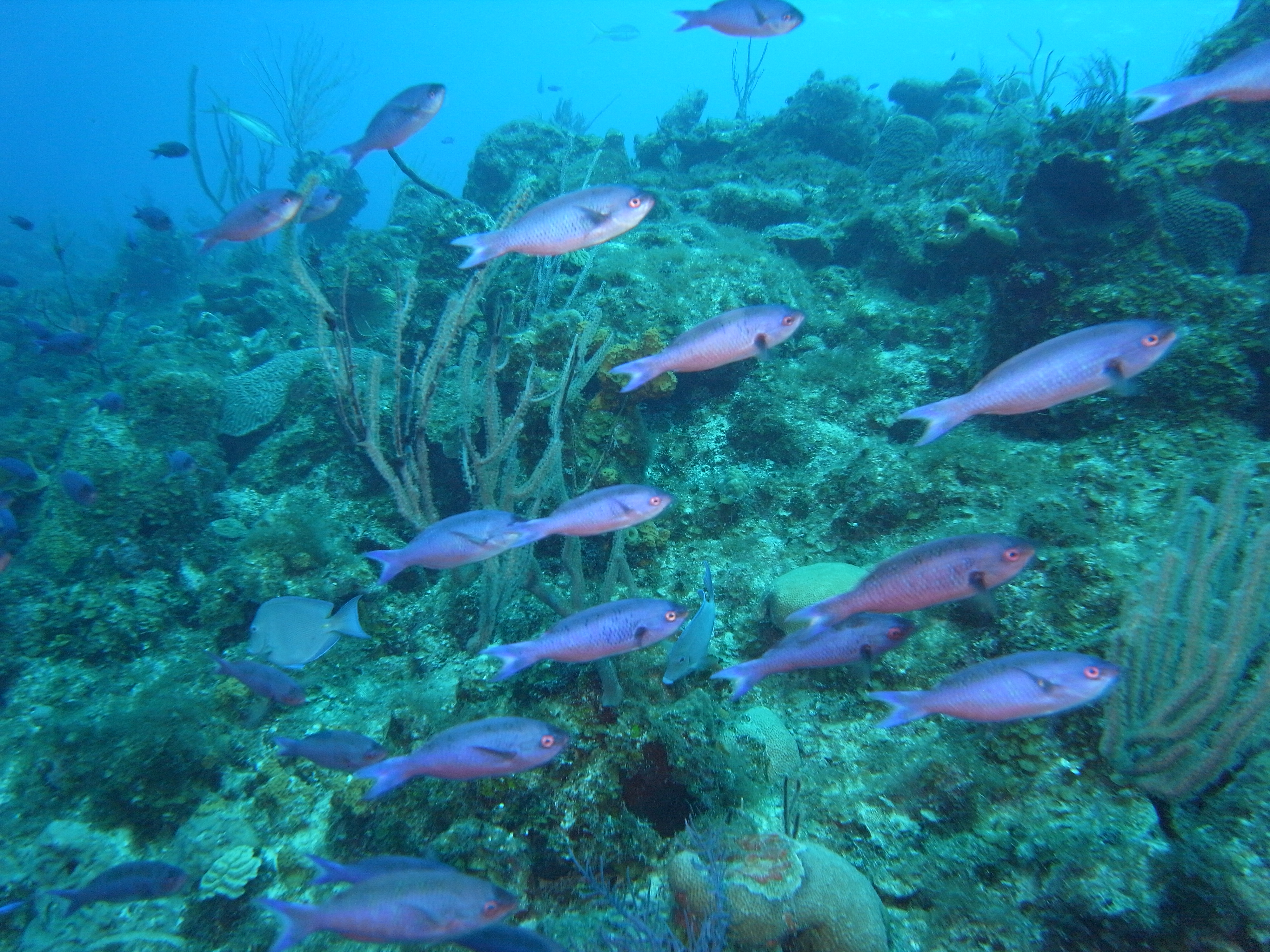
We saw reef sharks, sting rays, spotted eagle rays, barracuda, hawksbill turtles, eels, grouper, jacks, grunts, tangs, porcupinefish, trumpetfish, angelfish, butterflyfish, squirrelfish, spadefish, parrotfish, and many small bright tropicals. On night dives we saw an octopus perform for several minutes, as well as a performing eel, enormous crabs and lobsters, and beautiful varied coral. Our most exciting siting was a giant manta, not common in those waters, an enormous and powerful fellow. There were also plenty of the beautiful-but-highly-destructive lion fish.
Exif_JPEG_PICTURE

I got a tee shirt that says Eat Sleep Dive, which tells most of the story for the week. The schedule included five daily dives, including one night dive, from Sunday to Thursday and two on Friday, and I did all but one. We spent most of our time off of French Cay and West Caicos, with dives on the last day off of Provo.
SeaLife DC1400
Most of the dives were wall dives, with a shelf around thirty or forty feet down dropping off mysteriously into the deep blue. My deepest dives were around 100 feet, but I spent most of my time in the 40-60 foot range. visibility varied but was for the most part reasonably good, with the best being about 70 feet and worst about 40 feet. Current was mostly very light to nonexistent. Bottom temperatures were mostly in the high 70s, which was OK, but there were a few chilly places (low 70s). Especially when the breeze was blowing, it was chilly getting out, and we were happy to use the yacht’s hot tub to warm up.
SeaLife DC1400
Exif_JPEG_PICTURE

We had strong winds the day we arrived, which led to big seas on Saturday night as we left Provideniciales. I learned later that there were swells up to 10 feet, with an average of 7-8 feet seas. Per the crew and experienced passengers, this was unusually bad weather. Even fortified with Bonine, the up and down, sometimes with a corkscrew twist, was more than my stomach could handle, and I spent the entire evening hanging over the rail, about as miserable as I ever recall being. By Sunday morning, the seas were calmer, and I felt better, though my stomach muscles felt sore for the next couple of days. It stayed tolerably calm the rest of the trip.
SeaLife DC1400
SeaLife DC1400

In preparation for the trip, I’d been reading up on underwater photography, and I signed up for a short course on the subject taught by our captain, Amanda Bryan. Amanda was a good teacher (as well as a good captain) and gave me encouragement and quite a few helpful tips. My camera had issues, with the strobe at first refusing to fire, and then the camera refusing to charge, and I ended up using a loaner for the last half of the trip.
Exif_JPEG_PICTURE
Exif_JPEG_PICTURE
Exif_JPEG_PICTURE
SeaLife DC1400

The reef environments we saw were really beautiful and abounding with life. One of our dive companions was a nudibranch enthusiast and inspired us to look for these and other small mollusks. This caused a shift in focus so that we saw more of the very small things. So much beauty! One could easily just bask in it. Photography works somewhat against the grain of that aesthetic and spiritual experience, because it’s necessary to think in a very left-brained way about technology and physics. I was glad I spent some of my time that way,though. I made a few images, shown above and below, that I liked and thought others might, too.
SeaLife DC1400
SeaLife DC1400
Exif_JPEG_PICTURE