The Casual Blog

My digital frustrations and hopes
Our new wallpaper

Our new wallpaper

We lost the internet one evening this week, and felt unsettled and frustrated. No Googling? This is not acceptable! I called Time Warner, where a computer with a female voice fielded my call. “She” understood me the first time, and figured out the problem quickly. I needed to reboot my modem, and she coached me through. Then everything worked. Another success for artificial intelligence!

I confidently predict that this will happen more and more: our computers will help us solve everyday technology problems. But for the moment, those of us lucky enough to have various digital tools and conveniences frequently find ourselves bolixed. I had a lot of little tech problems this week: email that wouldn’t work, a smart phone that wouldn’t stop buzzing, a picture file that disappeared, an external hard drive that went haywire, underwater flash units that wouldn’t fire . . . . I could go on.

For most of those, I found friendly competent humans willing to spend some time with me and my devices, and eventually we got going again. Thanks and namaste, friends and strangers. Sometimes our tech problems bring us together, which is good.
14 12 20_3952

But I continue to be concerned that advancing AI is going to eliminate a lot of jobs and change our world economy, and we aren’t even close to ready. The NY Times had a front page piece this week quoting economists who were wondering whether the humans whose jobs get taken over by AI might be facing a permanently diminished job market. Now we’ve got to start coming up with new economic and political approaches to address these changes.

Whether that’s any more likely than our doing serious work to address global warming is questionable. On that subject, how disheartening that the nations of the world would declare it a success that they agreed that they would all to do something about climate change – but not what! The arctic ice is melting now. It’s not looking good for the polar bears.

But perhaps our computers will save the day. It’s not farfetched to think that they will in due course outdistance us in intelligence. They’re already building a lot of our cars and other goods. They’re already capable of replacing drivers of trucks, taxis, and cars, not to mention airplane and ship pilots. They’re already starting to replace some journalists, teachers, doctors, and lawyers.

So maybe they can replace our politicians. Could Watson be president? Sure, we’d have to amend the Constitution, but we might get less greed, fear, and ignorance, and more good decisions. We may conclude that humans are simply not up to the task of addressing global warming, habitat destruction, species extinction, the threat of nuclear weapons, etc. – and get Ms. AI to coach us through.

I’m not saying we should quit trying. On the contrary, we should be trying harder. Our existential problems are coming at us fast, and an AI solution might not arrive in time. Believe me, I’m trying to be optimistic.

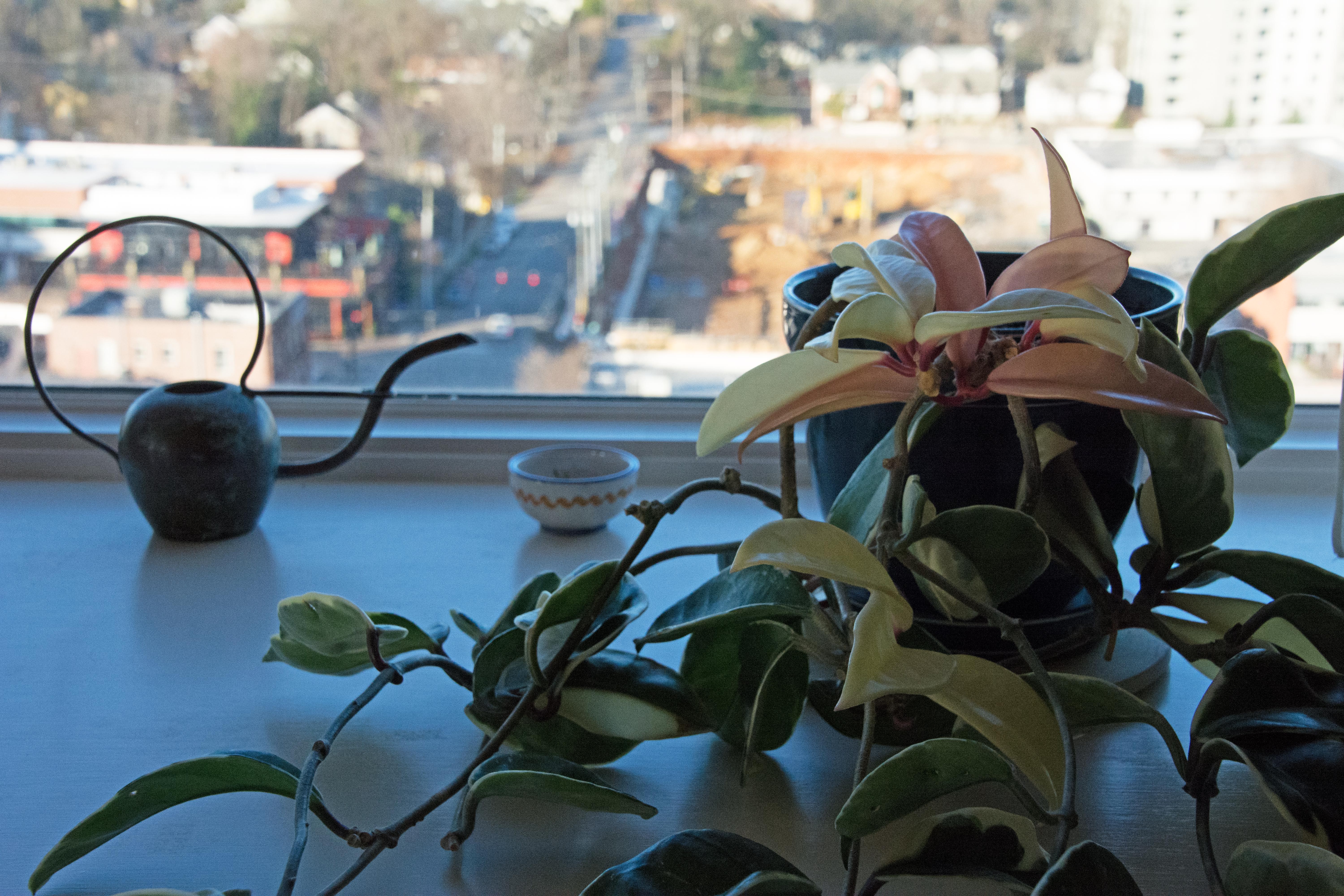
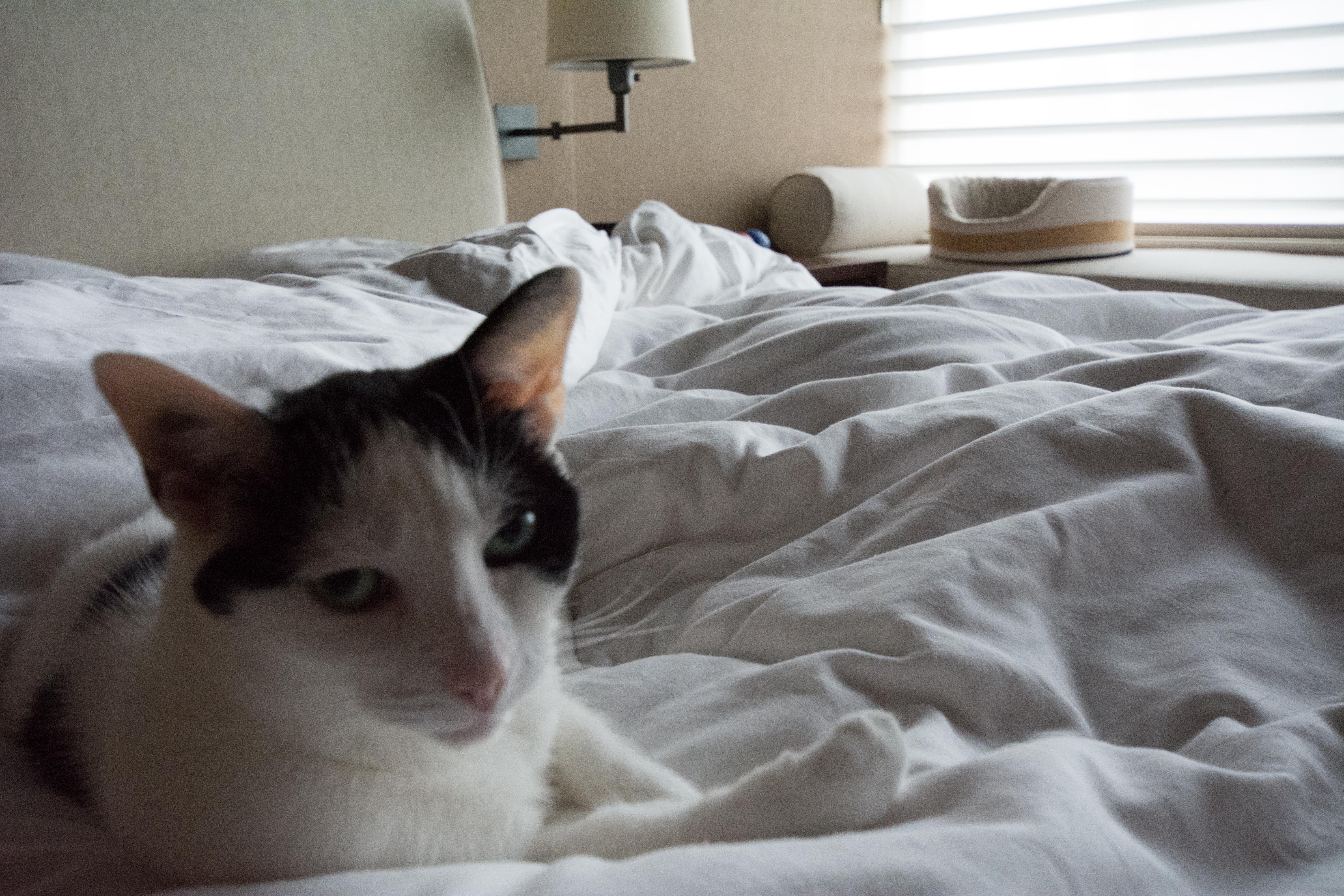
But let us not forget, we’re still here, and this is the season of hope. On a hopeful note, we got new paint and wallpaper for our bedroom this week. The wallpaper is textured, and the colors are cozy earth tones. Our neighbor and friend, the brilliant designer Blair (Sutton) Craig, coached us through. Thanks, Blair!
14 12 20_3976

Rectal feeding???

14 12 14_3866_edited-1
This week I was quite shaken by the new Senate report on the CIA’s program of “enhanced interrogation techniques” used on those suspected of Jihadist terrorist intentions. I had, of course, already heard there’d been some very rough stuff, like water boarding. But I hadn’t known (and may still not, since much information is still secret) the full extent of the barbarity and depravity.

For example, the concept of “rectal feeding” was new to me. I suspected based on high school biology that it was not possible to feed humans through the southern side, and I checked – this is correct. Folks, we’re talking about our government, which is to say, humans purporting to act on your and my behalf, anally raping prisoners. It’s hard to see how we can just let this pass.

I also hadn’t known that the foundation of the program included systematic and pervasive lies not just to the public but also to Congress and the Executive. It was certainly news to me that the architects of the program were amateurs with no prior experience in intelligence. And I hadn’t previously known for certain that the program was not remotely justified by intelligence gathering achievements.

Some may say I’m just sentimental about human dignity and the concept of the rule of law, and these are notions we can’t afford when we’re in an existential battle with evil. Perhaps. But the evidence from the Senate report is that the successes of the CIA interrogators actually came from conventional, non-“enhanced” methods. The enhanced techniques produced misery, madness, and death, but did not defuse any ticking time bombs. It may be that those who directed this program were the ones who were in a dream world, imagining both an existential threat from terrorism and a simple solution to that threat.

It’s fascinating, and disturbing, to see present and former CIA and Bush administration officials stepping up to praise and defend the program. It’s no surprise that they would defend their work, and perhaps they are in some sense sincere. They’ve probably got cognative dissonance, and are managing it as best they can. They could also have more practical and selfish motives, like heading off any discussion of whether they should be tried for war crimes.

In any event, the fact that these officials are still willing to defend the CIA torture program underlines the importance of our holding accountable those who directed and participated in this abomination. We cannot leave ambiguous the question of whether it is acceptable to torture prisoners. No future official should be in doubt that this is criminal behavior, for which they are subject to imprisonment.

Of course, though I hate to say, they’ll probably get away with it. There’s no special interest that will provide campaign dollars in exchange for standing up for human rights of prisoners. There are a few, but too few, of our representatives prepared to spend political capital on an issue that none of us enjoy thinking about.

And the knowledge, thanks to Edward Snowden, that our electronic communications may well be being screened by the NSA for signs of dissent will make some of us who feel outrage and shame hesitate to speak up and demand justice and accountability. These are, after all, the people who so far have the unchecked power to make us disappear into “black sites” and rectally feed us. I don’t mean to exaggerate. Plainly, I don’t think this is an immediate threat, since I’ve just made a critical public statement about it. But I must admit, I hesitated. I’m so sorry this has happened to our country.

I’d like to call out The Washington Post for its extensive and clear-eyed coverage of this dark and shameful chapter. Here is a particularly helpful quick guide to the Senate report from the Post.

Sorry to be difficult, but — why I’m going vegan

14 12 07_3799
While I’ve been a vegetarian for going on 20 years, I’ve been fine tuning my approach over time, and getting my habits aligned with my health needs and values is still a work in progress. Cutting out eating animals, starting with cows and pigs, was a significant step, but only part of the story. Just as important, for health purposes, was cutting out foods that taste good but are actually bad for you, like sodas and chips. More challenging has been increasing the percentage of foods that are really nourishing, including some that I’ve long resisted.

From persistent testing and trying, I’ve finally gotten comfortable with some healthy foods I used to detest, like beets, peas, and Brussels sprouts. I’m eating lots of dark green veggies (like kale, spinach, chard, turnip greens, and dandelion greens) and fruit in my breakfast smoothies, and I’ve been getting vitamin rich cold pressed juices to sip for snacks. My repertoire of tastes has expanded.

Recently I made the shift from vegetarian to aspiring vegan. So it’s goodbye to dairy and eggs (with the understanding that there will be occasional emergencies and slips). This is partly a matter of getting healthier, but even more a matter of values. The more I learn about factory farming, the more persuaded I am that we can’t go on like this.

It is truly horrific for the farm animals, to our great shame. It’s also sickening for us (E. coli, salmonella, antibiotics, steroids). Cutting cheese from the lineup is especially challenging, both because it’s tasty and it’s everywhere. And I will miss the wonderfulness of ice cream. But I will also feel better not supporting this unconscionable cruelty and heedlessness.

Our individual eating choices may seem trivial compared to our epic social problems, like global warming, but I think they are related in a couple of ways. Industrial farming of animals is a major part element of global warming, because of the huge emissions of greenhouse gases (CO2 and methane), not to mention pollution of surface and groundwater and other environmental problems. To the extent we don’t support factory farming, we’re working on those problems. In addition, by getting ourselves healthier, we improve the chances of having the clarity of thought and strength to take on our big social and environmental problems.
14 12 07_3798

So I don’t think it’s completely self-centered to focus on the physical self. But I admit my own motives are not purely altruistic. I’m also interested in feeling good now and functioning well for a long time to come. Exercise is also an important part of this, of course. So I’ll report briefly on my current cross-training system, which I’d say is working well. I feel good.

This week I’ve done two long gym work outs (cardio and resistance), lap swimming, two yoga classes, a spin class, a visit to my personal trainer, and outdoor running. For gym cardio, I’ve done the elliptical machine, rowing, treadmill running, stairs, and jump rope. I have a wide range of functional movements in the rotation, from lunges to box jumps to balancing to shuffles, and a variety of core work, as well as stretching of the major muscle systems.

It’s strange, I know, but I actually look forward to getting up around 5:05 a.m. Every day is always a little different, with a new challenge. I enjoy being with people in the classes, and I enjoy listening to music and reading when I’m working out on my own. And getting up early isn’t as hard as I once imagined, because it has become a habit. I don’t have to think whether or not to get up, because it’s just something I just do. But it’s also fun.
14 12 07_3782

On Saturday night, Sally and I tried our first vegan pizza at Lilly’s, and saw The Theory of Everything at the Rialto. The pizza wasn’t so great – there was something a bit off with the non-dairy “cheese” — but we really liked the movie. It’s basically a biopic on the British physicist Stephen Hawking, with particular focus on his marriage. As Hawking, Eddie Redmayne’s performance is a nuanced and remarkable tour de force. His gradual loss of control of his muscles is noted without mawkishness, and his courage and perseverance are noted without huzzahs. Having lost my own father to ALS, I’m particularly conscious of the brutality of this disease, and particularly amazed that Hawking managed to become a path breaking scientist while it ravaged his body and threatened to kill him.

Unconnected to the movie, early this week I read an interesting story in the BBC en espagnol web site regarding Hawking and artificial intelligence. I was surprised to see him saying in an interview that he expected AI would eventually not only surpass human intelligence, but would threaten it. I can see that our AI creations may eventually begin to improve themselves and leave us behind in terms of IQ, but they will not carry the emotional components that drive humans to compete for resources and domination. So why would they threaten us?

My happy Thanksgiving: racing, reading, camera tinkering, eating, and seeing Interstellar

14 11 30_3749
Lately I’ve been consciously trying to cultivate an attitude of increasing gratitude. As is traditional at the Thanksgiving holiday, I’ll note that I have a great many things to be grateful for. For me, gratitude also means noting connections and acknowledging how very little is attributable to my independent efforts. I really owe it all to everybody and everything else. And so, to you, dear reader, and everything else, I’m grateful.

On Thanksgiving morning, I was grateful to be, at 59, sufficiently healthy to undertake the Ridge Road Turkey Trot, an 8 kilometer (4.97 mile) race. I hadn’t tried a road race with thousands of other people for a great many years. Sally sweetly lent her moral support and driving skills, and got me to the starting line five minutes before the 8:00 a.m. start.

My idea was to challenge myself without collapsing or getting sick, and that much I accomplished. I completed the course in 44 minutes, or just under 9 minutes a mile. I wasn’t particularly proud about this time, since I still imagine myself as capable of 8 minute miles, but this T-day that wasn’t happening. My heart rate was in the low-to-mid 160s for much of the race, which is pretty high, and I didn’t want to find out what would happen if it stayed higher. The hills in the middle of the course took a lot out of me, and the last couple of miles were fairly miserable. Part of me badly wanted to try a bit of walking instead of running. But I didn’t quit, and I did survive.

After the race, I took a long hot shower, and then sat down and read for a while. I finished E.O. Wilson’s The Meaning of Human Existence. Wilson, a world-renowned exert on ants and a leading theorist on evolution, is now 85, and going strong. I enjoyed reading The Social Conquest of Earth, and liked this book as well, in spite of its grandiose title. Wilson puts things in perspective, and helps us grasp that humans are just one of the millions of species on the planet. His basic message is that we can improve our chances of survival and happiness by using the tools of science and better understanding our evolutionary nature.

Wilson contends that natural selection proceeded along two paths, individual and group. He argues that this accounts for our dual nature as selfish individuals and altruistic group members. These conflicting tendencies are fundamental drivers of the human experience, which means we’ll always be in some degree of tumult in our interior emotional lives. But Wilson thinks our contradictions are essential to what it means to be human, and we need to understand them and manage them. He seems to think there’s a chance that humanity can overcome ignorance, delusion, and violence, and quit destroying the natural world.
14 11 30_3737

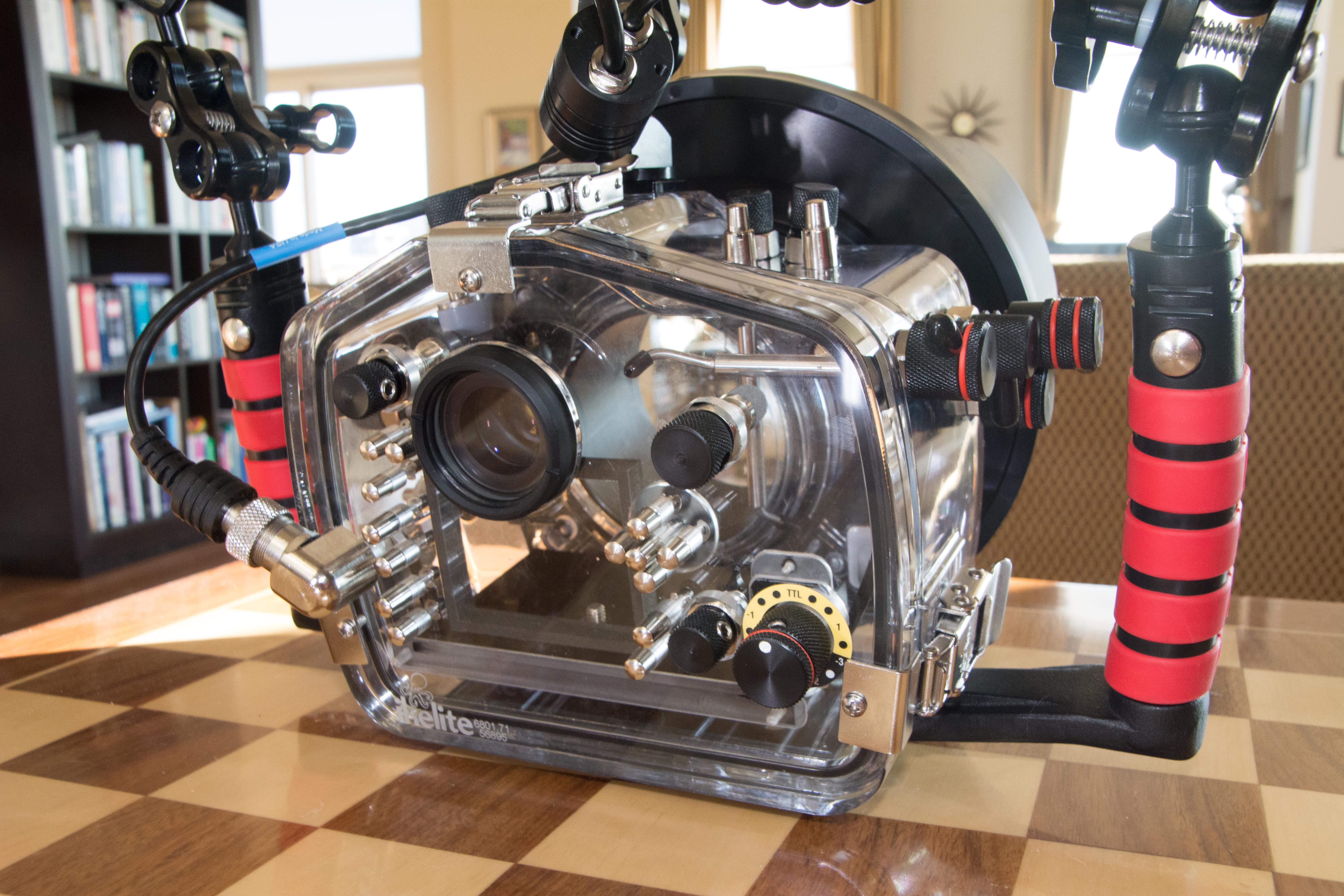
I spent part of the afternoon assembling and testing my new Ikelite underwater camera housing and strobe setup. I thought long and hard before buying the equipment, both because it is pricey and because it is labor intensive. But I’m really interested in sharing some of the joy of diving through images of the extreme beauty beneath the surface. Even in this time of over fishing, ocean acidification and reef destruction, there’s still an incredible profusion of life down there.

If you’re going to use an underwater housing with an expensive camera, the stakes are high. The Ikelite housing opens at the back to receive the camera and the front to receive the lens. You’ve got to be extremely careful to prevent leaks, which can easily be fatal to the equipment. And working the camera through many unlabeled buttons and levers is challenging. Just figuring out how to put it all together took me several hours. And hauling the it safely to dive spots while staying within airline weight restrictions will be challenging. But I’m looking forward to new dive photo adventures.

We had our Thanksgiving dinner at Irregardless, Raleigh’s first vegetarian restaurant, which now also accommodates meat eaters. Gabe and Jocelyn decided to wait until Christmas for a visit, so Sally and I ate with her mom and sister, Diane and Annie. We also were joined by Alyssa Pilger, the Carolina Ballet dancer we’ve been sponsoring, who is enormously talented. It was fun to hear about ballet company happenings, and about the professional dancer’s life. Professional dancers are almost by definition intensely focused people with superhuman work ethics, but Alyssa offstage seemed comfortable, relaxed and un-self-absorbed.

Sally and I saw the movie Interstellar on Friday night at the Marbles Imax theatre. I didn’t think it was particularly well constructed or acted. I found it cheering, though, that the movie has found a mass audience. The basic set up is a post-climate apocalypse world, which is something we should be trying hard to visualize and then prevent. It would be nice if a good-looking astronaut and his attractive physicist daughter could save us all, but that seems extremely unlikely. We’ve got to figure out how to repair our dysfunctional political structures so that we can get organized and address global warming and related problems with the intense commitment and resources we once used to go to the Moon.

Cutting out expensive razor blades, plus a beautiful Barber of Seville

14 11 22_3648
There are certain hygiene-related matters that are, if not taboo, at least highly sensitive to discuss in polite society. I’m referring, of course, to the price of razor blades. As a young man, I was given an electric shaver, and quickly discovered I disliked the buzzy noise it made. So without more ado I switched to the Gillette safety razor. The state-of-the-art Gillette product at that time had two steel blades instead of the traditional one, and worked perfectly well. The same was true when the state of the art became three blades. And four. And five!

But one thing became much worse: the price. Each price increase seemed minor in the great scheme of things, and I rationalized the expenditure with the thought that a good shave was important, and a small increase in price was not important. But in recent months I’ve found myself paying more than $3 per blade. That’s crazy! Somewhere along the way these products got so expensive that drugstores had to put them in special anti-theft shelves. How did they get so ridiculously costly? Dear reader, I say this with shame: because we were not being smart consumers and good stewards of our household resources. We let them take advantage.

Anyhow, this week I discovered a much less expensive alternative to the Gillette product and ordered some on line. Dorco razors have a terrible name, but appear equal to or better than Gillette in terms of form and function. The model I used, the Pace 6, has a slightly heavier handle than the Gillette Fusion, a slightly springier mechanism, and six rather than five blades. It shaves well. The cost is about $1 per blade. What’s not to like?!
14 11 22_3646

Speaking of great shaves, I want to give a quick shout out of appreciation to the Metropolitan Opera for its new production of The Barber of Seville, which we saw live in HD on Saturday afternoon at North Hills. This may be the most famous opera music of all time, owing partly to the hilarious Bugs Bunny send up, The Rabbit of Seville. But it turns out that Rossini’s 1816 work still has a lot of life in it. The Met’s presentation was bright, touching, and funny, and the singing was wonderful.

Isabel Leonard was a marvelous Roselina. How often do humans get to be great bel canto singers, great comic actors, and beautiful all at once? Lucky Isabel, and lucky us. Christopher Maltman was likewise a wonderful Figaro (the barber) – musical, intelligent, funny, and handsome. Maurizio Muraro was a great grumpy Bartalo, and Lawrence Brownlee was an ardent Count Almaviva with good high notes and amazing vocal agility. Sets and costumes were absolutely wonderful. This was a great Barber!

In the news: some problems with our nukes

This week there was some good and some bad technology news, but first the good news. Kudos to the European Space Agency, which managed the remarkable feat of landing a robot on a modest-sized comet. Understanding and managing the risk of asteroid and comet collisions is a big challenge, and it appears we’re making progress. Also three cheers that the world’s two largest contributors to global warming (that’s us and China) officially agreed to work on it. Sure, talk is cheap, but it’s a step in the right direction.

But I wanted to call attention to a news story that you may have missed, as I almost did: two separate Pentagon studies concluded that the infrastructure of our nuclear program is in serious disrepair and will cost billions to fix. The NY Times put this on page A16 (news death valley).

Though far from the front page, the language was strong: “a searing indictment” of how nuclear weapons facilities have been allowed to decay. They described “a culture of micromanagement and attention to the smallest detail . . . creating busywork, while huge problems with equipment and readiness, most arising from the age of the systems, were ignored.” One study found that morale was low and turnover high among crews for intercontinental ballistic missiles and long-range bombers. Missile submarines were frequently out of service.

You may remember the cheating scandal involving missile crews of some months back. One of the new reports blamed not the crews but “a culture of extreme testing” in which tests were required to be near perfect so that good results could be reported up the chain of command, instead of a program to improve the crews’ readiness.

A few months back I wrote about reading Eric Schlosser’s excellent book, Command and Control, Nuclear Weapons, the Damascus Accident, and the Illusion of Safety. The book cites chapter and verse of major problems in our nuclear program, including some that put Americans at serious risk of a catastrophic accidental nuclear explosion. Schlosser found there had been important improvements in safety, but the Times story made me worry.

The Times also reported that the President had told the Pentagon to plan for 12 new missile submarines, up to 100 new bombers, and 400 land-based missiles. Holy kamoly! I thought we were at least keeping in sight the possibility of reducing our nuclear stockpiles and the threat of nuclear war.

Before we spend billions or trillions more, I’d like to hear a good answer to the question, what is the purpose of our nuclear weapons? What good do they do?

The conventional wisdom, more or less, is that we need them to deter nuclear attacks and maintain our prestige. But no nation is currently threatening us, or anyone, with a nuclear attack. Only one nation has ever been the victim of a nuclear attack (by us, on Japan). All other nations without nuclear weapons – that is, those with no deterrence forces – have not come under nuclear attack. That includes ones that got us and other nuclear powers really mad, like North Korea, Vietnam, Cuba, Venezuela, Iran, Iraq, Libya, and Syria.

Furthermore, even if North Korea or Iran somehow managed to destroy one of our cites with a nuke, does anyone seriously think we’d retaliate against their civilians with a massive nuclear attack? I submit that deterrence, whatever its validity as a theory in the cold war, is valid no longer.

As to prestige, our nuclear weapons have not appeared to strengthen our negotiating power with enemies or friends. Iran and North Korea have been notably unimpressed. And our nukes certainly haven’t saved us the trouble of fighting conventional wars. We have surely not won the contest of who can spend the least on actual war fighting, having spent over a trillion dollars fighting in Iraq and Afghanistan. The nation with the most nuclear weapons is also the nation that has lost the most treasure through conventional warfare.

A major nuclear war would not only destroy millions of lives directly, but would alter the earth’s ecosystem so as to cause untold additional deaths. As Jonathan Schell explained in The Fate of the Earth, it could amount to the end of human civilization, not to mention the extinction of countless other animals and plants.

It would be nice to think that mismanagement of our nuclear force has reduced this risk, but I’m afraid that it suggests an increased risk of nuclear accidents, and an uncertain capacity for disaster. I submit we need to change our direction, and recommend a visit to http://nuclearrisk.org

Let me close on a positive note: civilization still exists! In fact, right here in Raleigh, NC, there is great music making and art. Last Sunday, the N.C. Opera did an excellent concert presentation of part of Richard Wagner’s Tristan and Isolde. This is very dramatic, romantic music. They did the prelude and second act, which focuses on the intoxicating love story of the title characters. Jay Hunter Morris, who was a sensation in the Met’s recent Siegfried, was a sensitive and moving Tristan, and Heidi Melton was an Isolde for the ages. Her voice was amazingly powerful, but also warm, flexible, and true. Conductor Timothy Myers seemed to have a real feeling for this strange and irresistible music, and he had a good band. Thank you N.C. Opera!

I should also give a plug for the current exhibits at Duke’s Nasher Museum of Art, which we visited on Sunday afternoon. We started with the late works of Joan Miro. I liked his sculptures, better than his paintings. It was inspiring to see him continuing to experiment with new ideas into his 70s and 80s. There was also a strong exhibit of the work of Robert Rauschenberg. I never quite got Rauschenberg before, but it really helped seeing the wide range of techniques and concepts he worked with. It turns out he was serious about his photography, as well as his painting and constructions. I liked it.

Is delusional thinking driving us once again to war in the Middle East? And reading Eating Animals.

14 11 09_3628
I used to think that mass delusions were historically rare and unlikely to recur, but I’m coming to think they’re common and unlikely to ever cease. We seem to have largely gotten over ideas like witches’ spells are dangerous and stars determine our fates, but we’re constantly exposed to and threatened by ideas that are just as loony.

It would be interesting to work out a taxonomy of mass delusions, from those that are usually harmless to those that may cause death. The classification system could also identify the strength of the delusion, from ones, like fear of black cats, that are persistent but not really serious, to those that are sometimes subject to reconsideration, to those whose adherents will kill to establish them as eternal truths.

Yesterday I learned that the President has ordered more troops into Iraq to fight ISIS. This is clearly premised on the view that this crazy outfit is bent on the destruction of our way of life, and will in due course attack us. There is, to be sure, some support for this view in their rhetoric and brutality, but it may be totally wrong. Remember, they haven’t attacked us, and it is entirely possible that their strategy is to provoke us to fight them so as to inspire their supporters. And if they aren’t really a threat to us, the idea that we must wipe them out to survive should be classed among the most pernicious of delusions – ones that seems so reasonable as to be beyond question, and that lead inexorably to violence and mass death.
14 11 09_3639

Tom Friedman wrote an unusually thoughtful column a week or so back comparing ISIS and North Vietnam. He reminded me that in the 1960s, US leaders, and presumably a majority of the electorate, were convinced that the Communists in North Vietnam were primarily motivated by an anti-capitalist ideology and a willingness to fight along with other Communists for world domination. Thus we pursued a war that led to the deaths of some 58 thousand of our soldiers and more than a million Vietnamese. We now know, or at least are starting to understand, that the Vietnamese were primarily driven by nationalist concerns. They weren’t a domino.

Friedman suggests that the success of ISIS may similarly be attributable less to religious or political ideology than to nationalist concerns and anger at Sunni oppression by Shiites. There clearly are some jihadists with dreams of regional, if not world, domination, but their numbers are probably much smaller than those who back them out of more pragmatic and local concerns. In short, this looks more like a civil war with mainly regional implications, not an existential threat to the western way of life. If this is correct, there is no way the US can wipe out this enemy, and it would be a horrific folly to try.
14 11 09_3635_edited-1

While I’m talking about uncomfortable subjects, I’ll mention I just finished reading Eating Animals by Jonathan Safran Foer. The book is part factual reportage, part memoir, and examines what factory farming means to the animal victims and to human society. I knew something about this subject beforehand, but learned a lot from the book. It’s written in an easy-going, thoughtful, personal voice, but includes some very disturbing subject matter, particularly the accounts of routine corporatized animal torture and abuse.

Here are some sample facts: “Animal agriculture makes a 40% greater contribution to global warming than all transportation in the world combined; it is the number one cause of climate change.” “More than ten billion land animals [are] slaughtered for food every year in America.” “We know, at least, that [not eating animals] will help prevent deforestation, curb global warming, reduce pollution, save oil reserves, lessen the burden on rural America, decrease human rights abuses, improve public health, and help eliminate the most systematic animal abuse in world history.”

Here is a sample aspirational thought: “What kind of world would we create if three times a day we activated our compassion and reason as we sat down to eat, if we had the moral imagination and the pragmatic will to change our most fundamental act of consumption?”

Taking in some art, sport, and food in New York

14 11 02_3603Last Friday I attended the Software Freedom Law Center’s tenth anniversary conference in New York, wishing my friends at the SFLC happy birthday and learning something about the state of the art in FOSS law. Afterwards I met up with Sally and daughter Jocelyn at the Warwick Hotel for a Manhattan weekend. I had in mind to see some painting, some photography, some opera, and some ballet, all of which we did, plus some good food and conversation and the New York City Marathan.

As for the painting, on Saturday we went to the Metropolitan Museum, where we focused mainly on the exhibit of recently donated Cubist paintings by Picasso, Braque, Leger, and Gris. Cubism has never been my favorite thing, but I was curious to see some reputed masterpieces not shown in public for generations. The exhibit ultimately had its way with me.

I’d known that Braque and Picasso collaborated, but I hadn’t understood that they were basically partners and co-inventors of the Cubist style. What remarkable courage for guys in their mid-twenties to work exclusively in a style that was so radically new and difficult. They must have known it would be tough to sell at a time when, I’m guessing, they needed money. How excited they must have been to be seeing visions no one had ever seen before, and imaging they would permanently change the cultural/visual world. And they were right!

Engaging with art, and particularly art that requires commitment and struggle, changes you at a fundamental level. Your brain rewires itself, neuronal axons and dendrites making new connections. You are a subtly different person afterwards, who sees the world a little differently.

And though it involved some commitment and struggle, I warmed up to the paintings. There is steely rigor, but there’s more than that. There are moods, from sunny to brooding, and a surprisingly amount of humor. But you have to give the paintings some time and let them speak.
14 11 02_3558

We met Jocelyn for lunch in a Korean place on 37th Street, where our table got covered with savory little vegetarian plates and vegetable dumplings. Our waitress intervened when she realized Sally didn’t know she was supposed to spice up and mix up her kimbap. It was drizzly and chill when we came out and walked up 6th Avenue to the International Museum of Photography.

There we saw an exhibit called Genesis by the Brazilian photographer Sebastiao Salgado. The black-and-white photos are of remote, vulnerable, and magnificent places around the globe, including Antarctica, Galapagos, Patagonia, Indonesia, and Africa. I was very moved by this art. The works were big, some like large posters, and they had lots to say. Some of the landscapes have a stately lyrical classicism, and his photos of indigenous people are frank and intimate. He succeeded in his aim of making me think more about how beautiful and fragile is our planet.

We had dinner at Robert restaurant on the 9th floor of Museum of Arts and Design looking out at Columbus Circle. The room had the energy of forward leaning design, and the food and service were both really good.

Then we walked up to the Metropolitan Opera to see The Death of Klinghoffer. After all the recent controversy (charges of anti-Semitism, which I thought were way off base), I had some worries that there would be protesters, and a tiny worry that there might be a homicidal fanatic ready to attack. But happily there were only normal opera folk. Sally and I both thought John Adams’s music was beautiful and expressive. However, I found the staging static and dull. I’m not sure how much this problem was a matter of direction and how much is inherent to the work. On the whole, I was glad I saw it, but a little disappointed.
14 11 02_3565

Sunday morning was clear but chilly as we walked up from the Warwick Hotel to Central Park South to a spot about half a mile from the end of the New York City Marathon. We saw the first wheelchair competitors, then the first women, and then the first men. After almost 26 miles, most looked like they were in a hard, painful place. But they were booking! The leaders were preceded by a truck with a sign showing the elapsed time. It was particularly interesting to see how close the fight was for number one and two for both women and men. As they passed us, both pairs were so close that I thought perhaps they were friends that enjoyed running together. The women’s finish was the closest in the history of the race, and the men’s was also quite close.
14 11 02_3585

After a quick lunch, Jocelyn came with me to Lincoln Center to a matinee performance of American Ballet Theatre. We saw Sinfonietta (music by Janacek, choreography byJiri Kylian), Bach Partita (Bach, Twyla Tharp), and Gaite Parisienne (Offenbach, Massine). I greatly enjoyed it all, but particularly adored Gaite Parisienne. It was like Nutcracker for grownups: sumptuous, slightly risque fun. Hee Seo was a gorgeous Glove Seller, and Herman Cornejo was a manic, hilarious Peruvian. There were a LOT of really good dancers!

After Jocelyn got on the subway to go home to Brooklyn, I had a little time before we were due to head to the airport. I walked down Fifth Avenue and over to the skating rink at Rockefeller Center. I noted that the varied collection of flags from many nations had at some point been replaced by all US flags. Good looking flags, though .

Scary stuff: Dracula, the ballet, and Ebola, the hysteria

14 10 24_3520
In general, I have very little interest in ghosts, ghouls, witches, vampires, and suchlike. There are enough truly scary things in the world that are real (e.g. global warming, thermonuclear weapons on hair-trigger alert, and tainted food from factory farms, to name a few). So it puzzles me a little that people spend mental energy scaring themselves with made-up monsters. Maybe it’s something like the fun/fear of riding the thrill rides at the fair (which I’m also over).

So, as much as I adore the Carolina Ballet, I was not eagerly anticipating Dracula, which we saw Saturday night. It is certainly not pure ballet. But boy, is it sexy! There was a good amount of stimulating vampire vamping, and even some touching dancing.

Marcelo Martinez was muscular and mesmerizing as Count D, and Lara O’Brien was a delicate, then demonic, Lucy. The marvelous Pablo Javier Perez played perhaps the scariest character, Renfeld the lunatic, who eats flies, prowls, and watches with superhuman intensity. The Twisted Sisters (Dracula’s harem, I guess) – Randi Osetek, Sarah Newton, Elizabeth Ousley – were naughty and highly exotic. I also particularly enjoyed the dancing of Elice McKinley and Nikolai Smirnov as Colette and Jack — sweet, innocent, loving mortals.

The other work on the program, The Masque of the Red Death, is based on the E.A. Poe story about a ball in a time of plague. The costumes for the costume ball were particularly sumptuous. Richard Krusch was the Red Death. He is a really fine dancer, but of extremely serious mien; he usually looks like he isn’t having any fun at all. But this was not a problem in this role, in which he wears a skull mask.

The dance of death/plague theme seemed timely, and a little jarring, after weeks of daily headlines about the Ebola virus in Africa, and also (a couple of cases) in the U.S. It is sad for the victims and their loved ones, but it strikes me that the media frenzy is out of all reasonable proportion. How many more people are dying daily of AIDS? Or the flu? Or car accidents, for that matter? Plainly, this is a dangerous bug, and we need to watch and take care, but why try to get more scared than necessary?

As I mentioned last week, I’m trying to spend a few minutes every day doing mindfulness meditation. The basic idea, which is well described in this short infographic is to sit quietly, focus on breathing, and observe what’s happening with your thoughts. It’s simple, but not easy.

By coincidence, Scientific American, which arrived this week, has a cover story on the neuroscience of meditation. The headline is that there is substantial research showing that it improves focus, reduces stress, and has other positive health effects. It also can boost feelings of well-being, and improve empathy and compassion.

The story doesn’t mention this, but I’m hopeful that if meditation helps us understand our thought processes, it might improve our ability to distinguish between imaginary threats and real ones, and apply our energy to problems we might be able to solve.
14 10 24_3523

Enjoying opera, and meditating

Looking west at new construction on Glenwood Avenue, October 18, 2014

Looking west at new construction on Glenwood Avenue, October 18, 2014

Some of my musical friends have a phobia about opera, which I can understand, but it’s really a shame. Some of the greatest music ever conceived is found there, and some of the greatest living musicians express themselves in the form. At its best, it is visual, kinetic, psychological — and fun. A case in point: Mozart’s Marriage of Figaro, which we saw on Saturday.

This was a new production from the Metropolitan Opera, performed live and simulcast in HD video to movie theatres around the world, including our own North Hills cinema in Raleigh. The main story concerns a servant, Figaro, about to marry another servant, Susanna, who is being pursued by their master, the Count. It’s a comedy about love and jealousy, but it also has a tragic side, with elements of deception, abuse of power, and corruption. It gets complicated, with various hard-to-follow schemes, impersonations, betrayals, and stolen letters – enough to make you wonder whether eighteenth-century audiences were smarter than we are. But with subtitles, we get the gist.

The new production, set in the 1930s, had interesting sets, gorgeous costumes, excellent singer-actors, and the great James Levine conducting. The music is perhaps Mozart’s finest — transcendently beautiful. The production took the story seriously, and not just as a sequence of wonderful songs. Along with belly laughs, there was surprising depth in the leads, who were all new to me. I was particularly charmed by Isabel Leonard as Cherubino, Marlis Peterson as Susanna, and Ying Fang as Barbarina. Peter Mattei as the Count sang wonderfully. Ildar Abdrazakov as Figaro was very human, funny, and musical.

The schedule for the remainder of the Met’s season of Live in HD productions includes a couple of other favorites of mine (Carmen and the Barber of Seville) and others that look interesting.

Waking Up

I’ve been reading a new book by Sam Harris titled Waking Up: A Guide to Spirituality Without Religion. Harris is scientist and outspoken atheist, and, it turns out, a serious and experienced practitioner of meditation. He proposes a middle way of approaching what he calls spiritual life that steers between religious mythology and strict scientific rationality. The book is a combination of meditation guide, neuroscience, neo-Buddhist thought, and memoir. It inspired me to find 20 minutes in the schedule for my own meditation practice. If I experience a major illumination, I’ll let you know.
14 10 18_3517