The Casual Blog

Category: restaurants

A few chimney swifts, fine Fiction Kitchen, finishing physical therapy, the fossil fuel endgame, and a fishing blue heron

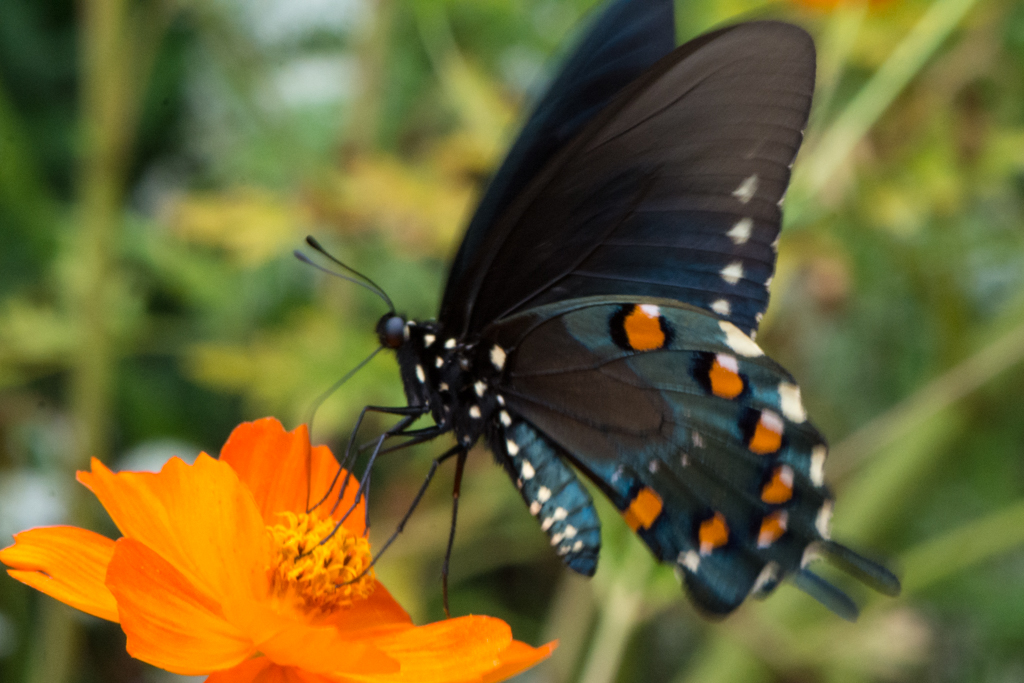
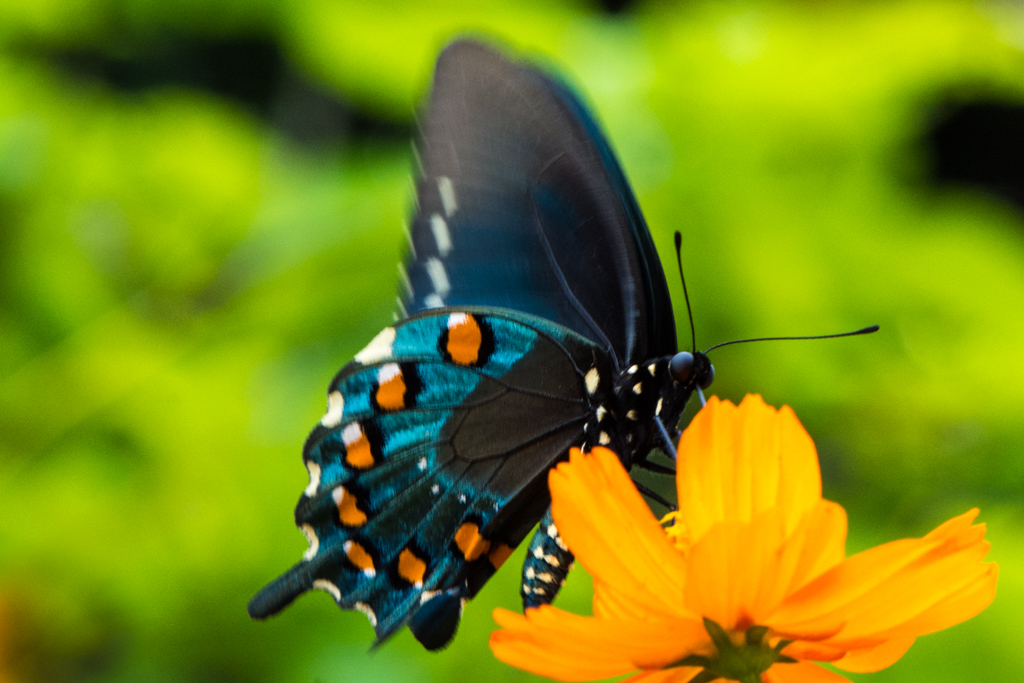
A spicebush swallowtail at Ralston Arboretum on September 11, 2015

A spicebush swallowtail at Ralston Arboretum on September 11, 2015

According to Sally’s calendar, this week should have been a good one to see the chimney swifts in downtown Raleigh. Last year at this time there were thousands, swarming and swirling, and eventually shooting down a large chimney to roost for the night. So we went downtown with our binoculars on Wednesday night and waited at sunset. There were some mini-flocks flying, and we kept hoping for the grand congregation, but it didn’t happen. We saw dozens of swifts, rather than thousands.

Afterwards we went a few blocks south to Fiction Kitchen, Raleigh’s best vegetarian restaurant. The last few times we’d tried to get in, the place had been full with many people waiting. This time it was full, but the wait was only a few minutes. The waiters we liked were still there. There were some new menu items, along with familiar favorites. We started with squash and zucchini cakes appetizer, which was delicious. For entrees, Sally had the succatash farro risotto. I had the mock pork BBQ, a tempeh-based dish that was so outrageously good that, as a vegetarian, I felt a bit guilty.
RTILLER3 (1 of 1)

The next day I had my graduation session from physical therapy. For the last few weeks, I’ve been trekking out to Cary to see Geert Audiens a couple of times a week to get treatment for my torn rotator cuff. As ordered, I’ve been doing my shoulder exercises twice a day (most days). The exercises were not too interesting at the start, and have gradually become a huge bore.

But most of the discomfort in my shoulder is gone, and the strength is improved. To complete the program, Geert directed me to continue doing the exercises for 25 minutes a day every day for the next three months. Then I should call him and give a report. This is a big assignment, but I’m going to try, since I am still motivated to get better. I expect to be using that shoulder for quite a few years yet.

Driving back to Raleigh, I saw a bald eagle fly across the beltline into the trees. There are some that live a bit west of here at Jordan Lake, but this was the first one I’d seen in Raleigh.
RTILLER4 (1 of 1)

On Saturday morning, I read a piece in the NY Times ran a piece on a new climate study that projected a more-than-200-foot rise in sea levels if we continue to use fossil fuels until they are used up in the 22nd century. That would mean no more New York, Amsterdam, London, Paris, Berlin, Rome, Beijing, Sydney, and Tokyo, among other nice places. All the ice on earth would melt, with half of that occurring in the next thousand years, and seas rising at 10 times the current rate. The study out of the Potsdarm Institute for Climate Impact Research was published in the journal Science Advances.

Curiously, the Times put this horrifying news on the bottom of page A10 of the print edition, rather than the top of page 1. It was similarly buried in the online edition. Did the editors think it wasn’t important? That’s doubtful. Did they think their readers are tired of bad climate news and would prefer not to hear more? Perhaps, but in whatever case, we’ve got to get our minds around this, and get to work, or things are going to get grimmer. We’ve had a good run with fossil fuels, but that’s over. It’s time to get serious about the alternatives.
RTILLER5 (1 of 1)

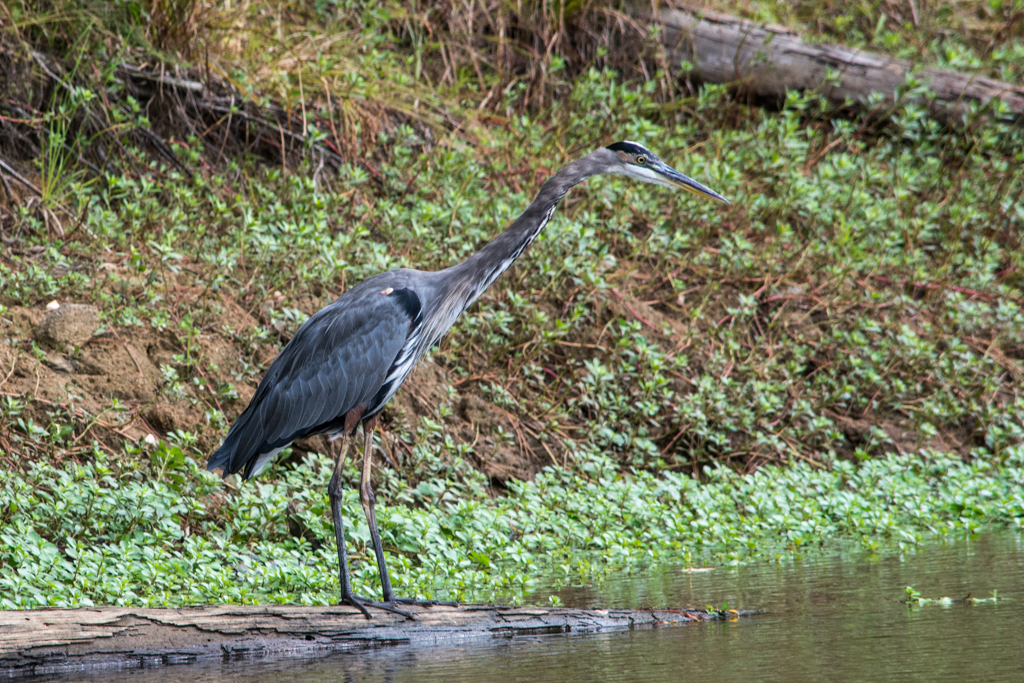
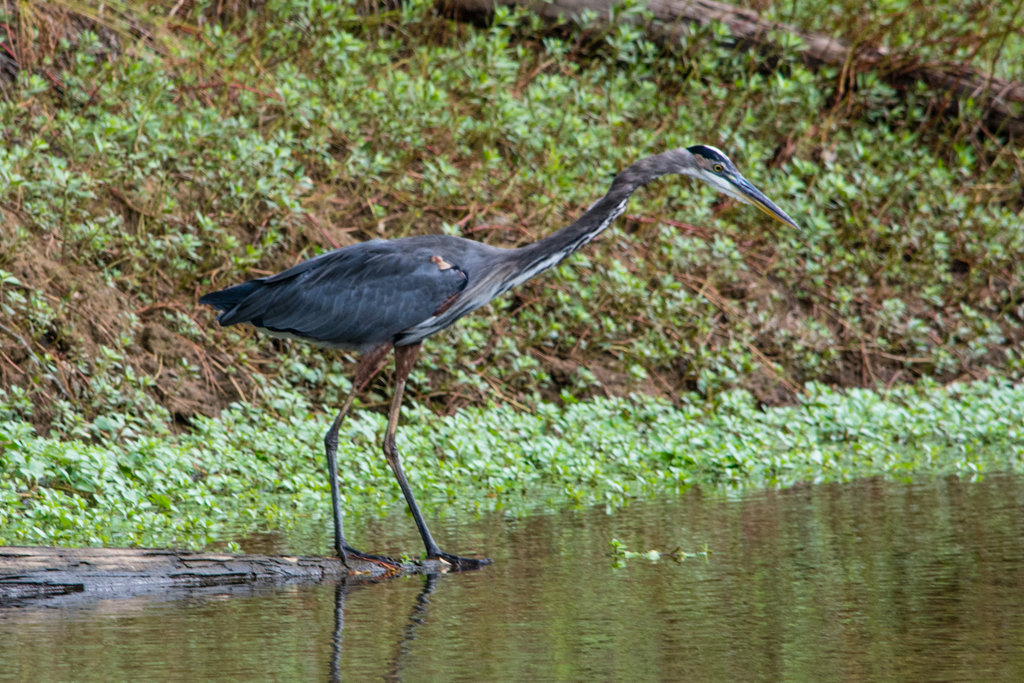
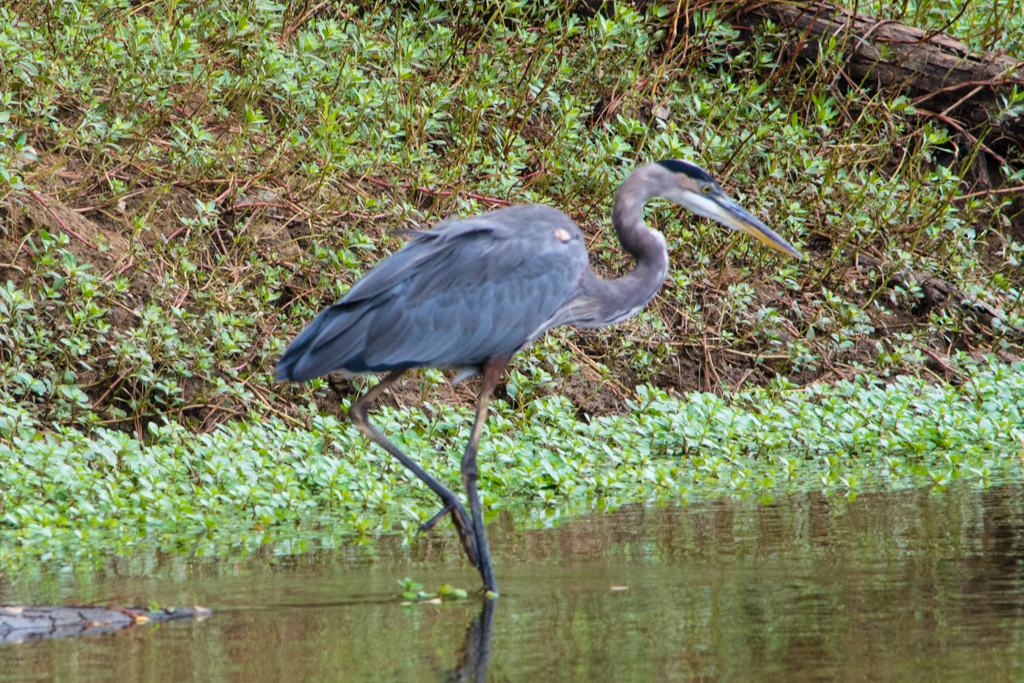
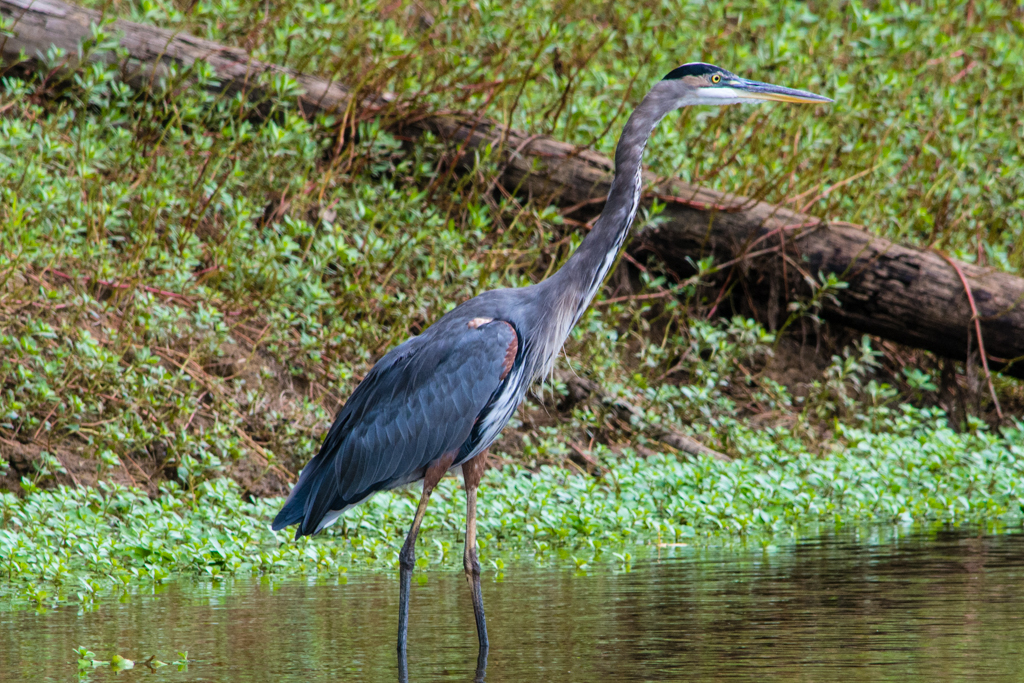
After reading of this and other unsettling things and finishing my coffee, I drove up to Falls Lake to look for birds and insects. I hadn’t been there in a while. My plan was to explore several spots, but I discovered they now charge $6 for the main areas. I found my way to a non-charging spot in the Beaverdam reservoir area, where the road was almost too rough and rutted for low-slung Clara. I spent twenty minutes or so watching this blue heron move very very slowly. I kept hoping she’d catch a fish, but she didn’t.
RTILLER6 (1 of 1)
RTILLER7 (1 of 1)

Our anniversary – Astonishing cave paintings – Our TSA – Fear itself

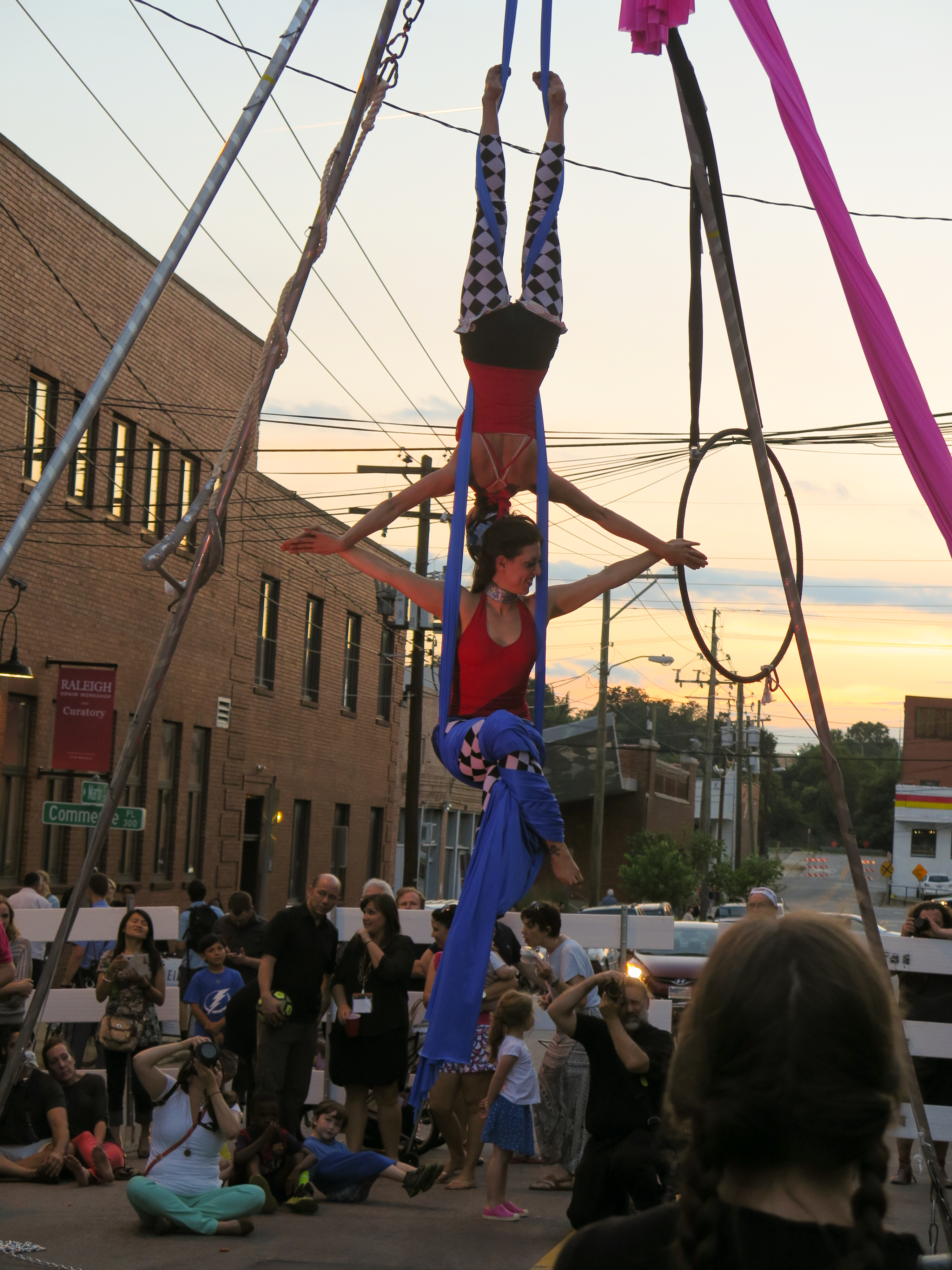
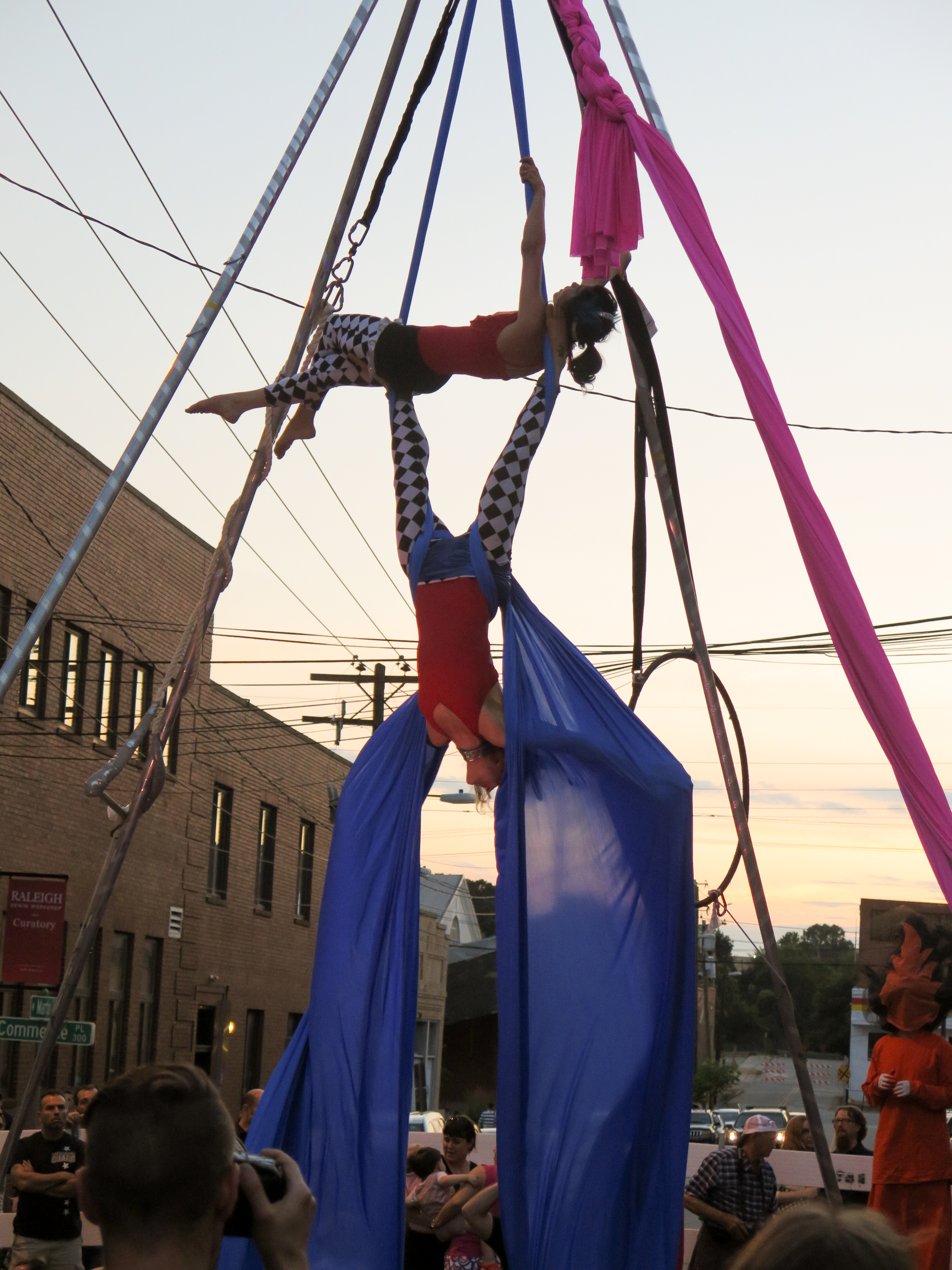
Performers on West Martin Street at sunset, June 5, 2015

Performers on West Martin Street at sunset, June 5, 2015

Friday was our 33rd anniversary. Yes, that is something. What amazing good fortune to find my beloved, to persuade her I was the one for her, and to get her to make me the happiest of men. We don’t usually do anniversary gifts, but we gave each other a kiss and affectionate cards, and I gave Sally a little heart-shaped stone, which she said she would treasure always. We had a fine Italian dinner at our old standby, Caffe Luna, where they had good pesto linguine and sweetly treated us to dessert.
20150605-IMG_0676First Friday-Anniversaryuntitled shoot

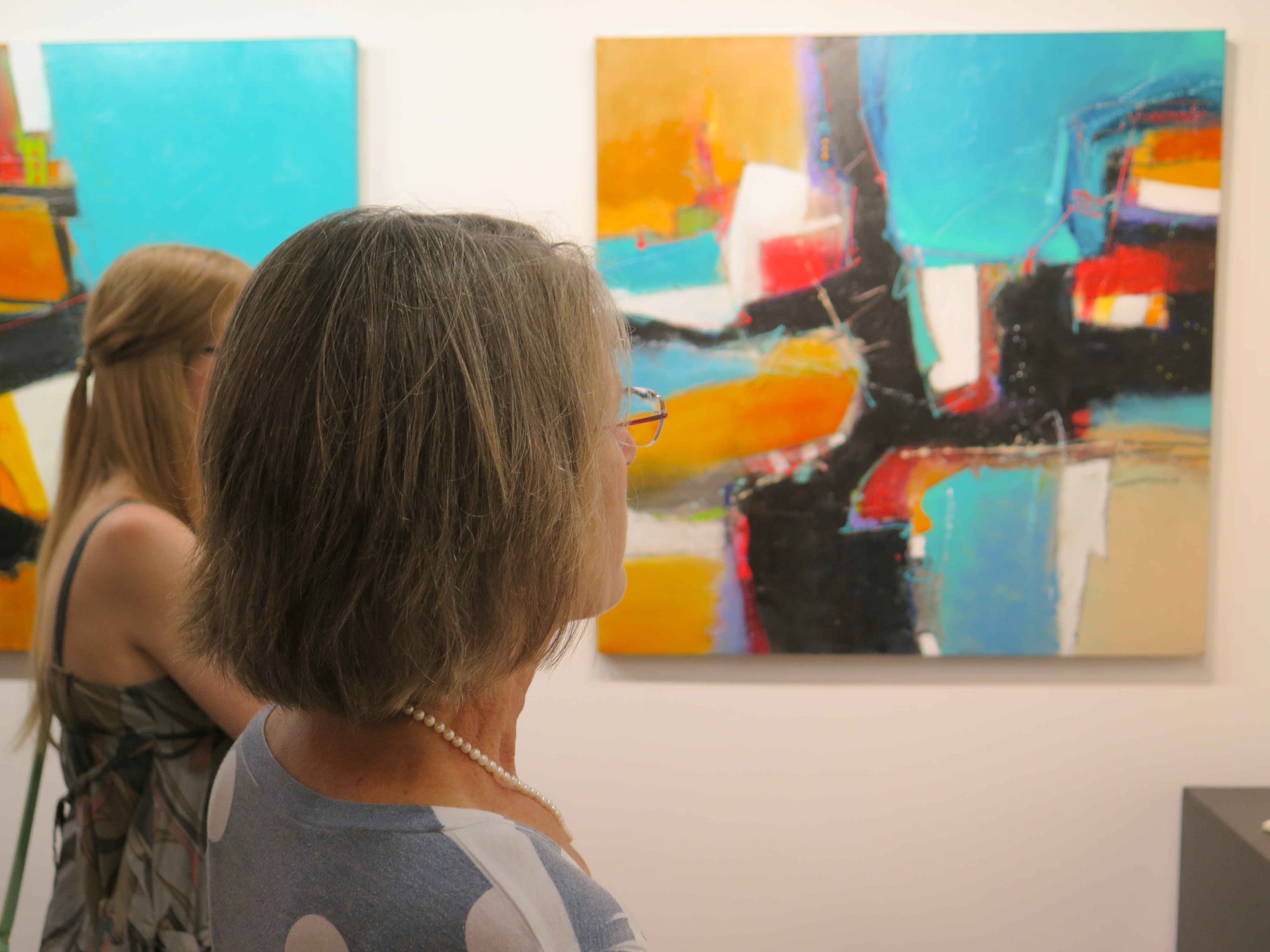
Then we looked in some galleries that were open late for First Friday. At ArtSpace, there were several engaging paintings that had been in a competition, and also some old friends to chat with. In the warehouse district, there was a mini-street fair, with circus performers and musicians. 311 Gallery had some colorful abstract paintings by Joseph DiGiulio that we particularly enjoyed.
20150605-IMG_0681First Friday-Anniversaryuntitled shoot

On Saturday evening, we cocooned at home: Indian takeout food from Blue Mango (delicious!) and Cave of Forgotten Dreams on Netflix. This documentary by Werner Herzog examines the Chauvet Cave paintings in Southern France. I’d been very curious to see these paintings, and since they are firmly closed to the public, this is likely the closest I’ll ever get. Herzog’s narration is rather stolid, but the paintings are thrilling. Painted some 30 thousand years ago, they depict bison, horses, rhinos and other creatures with astonishing freedom and vigor. Pictures are here.

At the gym, making my rounds among the various weight systems and cardio machines, I’ve been listening to a podcast called You Are Not So Smart. Its subject is human psychology, and particularly the biases and systemic flaws that our thinking is subject to. We tend to feel that our thinking is usually rational and objective, but this is very often not even close to true. Knowing this may sometimes help us avoid grievous mistakes. At any rate, it’s worth a shot.

Case in point: we learned last week that the TSA (the airport screening folks) performed quite badly in tests of their systems. When the testers impersonated potential terrorists, they were able to get forbidden items, like fake bombs and guns past the screeners in 95 percent of the cases. 95 percent! Let it be noted, however, that the screeners might have done better had they been tested on seizing expensive moisturizers and nail clippers.

Seriously, at first, I found this disturbing. And annoying! Think of almost every American air traveler, for years and years, all those hours, waiting anxiously in line – all the taking off your shoes, jackets, and belts, emptying all your pockets, pulling out laptops (but, oddly, not tablets), getting your privates exposed by scanning machines, and sometimes your stuff rifled through, and your self physically groped and interrogated, and occasionally missing your flight – and all of it accomplishing nothing.

The massive inconvenience that the TSA process imposes on the flying public looks like a huge waste of taxpayer dollars and time. But then I realized, we haven’t heard of any airplanes blowing up for a long time. If the TSA isn’t stopping would-be terrorists, and no planes are blowing up, that’s probably because there aren’t many terrorists trying to blow up planes. That’s a good thing! But it also suggests that the terrorist threat is way overblown (as I’ve long maintained).
20150606-_DSC0014First Friday-Anniversaryuntitled shoot-2

So why do we put up with this absurd system? The You Are Not So Smart podcast introduces various interesting terms for the psychological syndromes that lead us astray. I’m thinking there should be a name for the particular glitch in the human thinking system that inclines us to widespread panic once exposed to a dramatic dangerous event, like 9/11. Fourteen years after that horrible disaster, we’ve not seen anything remotely close to another such dangerous terrorist attack, and yet we’re obsessed with the idea.

What is the thing that makes us exaggerate our fear so much that we tolerate the TSA’s groping, the NSA’s incursions on our privacy, and invasions and occupations of countries that are not threatening us? Fearophilia? Politicians’ and journalists’ fear mongering helps produce it, so perhaps – mongerization? Probably not. Whatever we call it, it spreads rapidly through a population like a virus, and once an infection occurs it is devilishly hard to cure. For years now, we’ve seen the world through fear-colored glasses.

Part of this syndrome is a tendency to think violent radical ideologies are all focused on us, in a kind of mass egocentrism. This week the advances of ISIS gave strong evidence to the contrary, as these kooks with a surprising talent for horrific executions advanced in Syria and Iraq. As radical Sunnis, they’re eager to fight less radical Sunnis, Shiites, and any other Muslims or others that care to disagree with them, so they can establish the Caliphate. Do we care what their theological thinking is on this? Hardly. Who doesn’t have more interesting, pressing, and sane things to think about? It’s not our problem, or our world.

Last week there was NY Times reported that ISIS has been attacking the Taliban in Afghanistan. Which is worse? Before you answer, remember, we’ve been fighting the Taliban in Afghanistan since 2001, the longest war in American history. The Times also reported that Syria’s thuggish president Assad, a presumed target of ISIS, was coordinating with ISIS in giving air support for attacks on other rebel groups.

This seemed contrary to all previous reporting, and I wondered if it was pure propaganda (perhaps by another rebel group, or Assad, or ISIS, or – us?). But even if false, it reinforces that we cannot begin to fathom the complexity of the variables in this war, and so cannot reasonably hope to have a positive effect, let alone win it. It is just outside our realm, and our weapons will not resolve it.

Apropos of that, the Atlantic has a good piece by Dominic Tierney on the paradox of American military power: with the most powerful military on earth, we keep getting into military quagmires we cannot win. Tierney notes that we have failed to recognize that almost all modern wars are civil wars, in which our military advantage is less effective than in wars between nation states. And because we still think we cannot be defeated, we cannot admit defeat. The piece is bold, and worth reading.

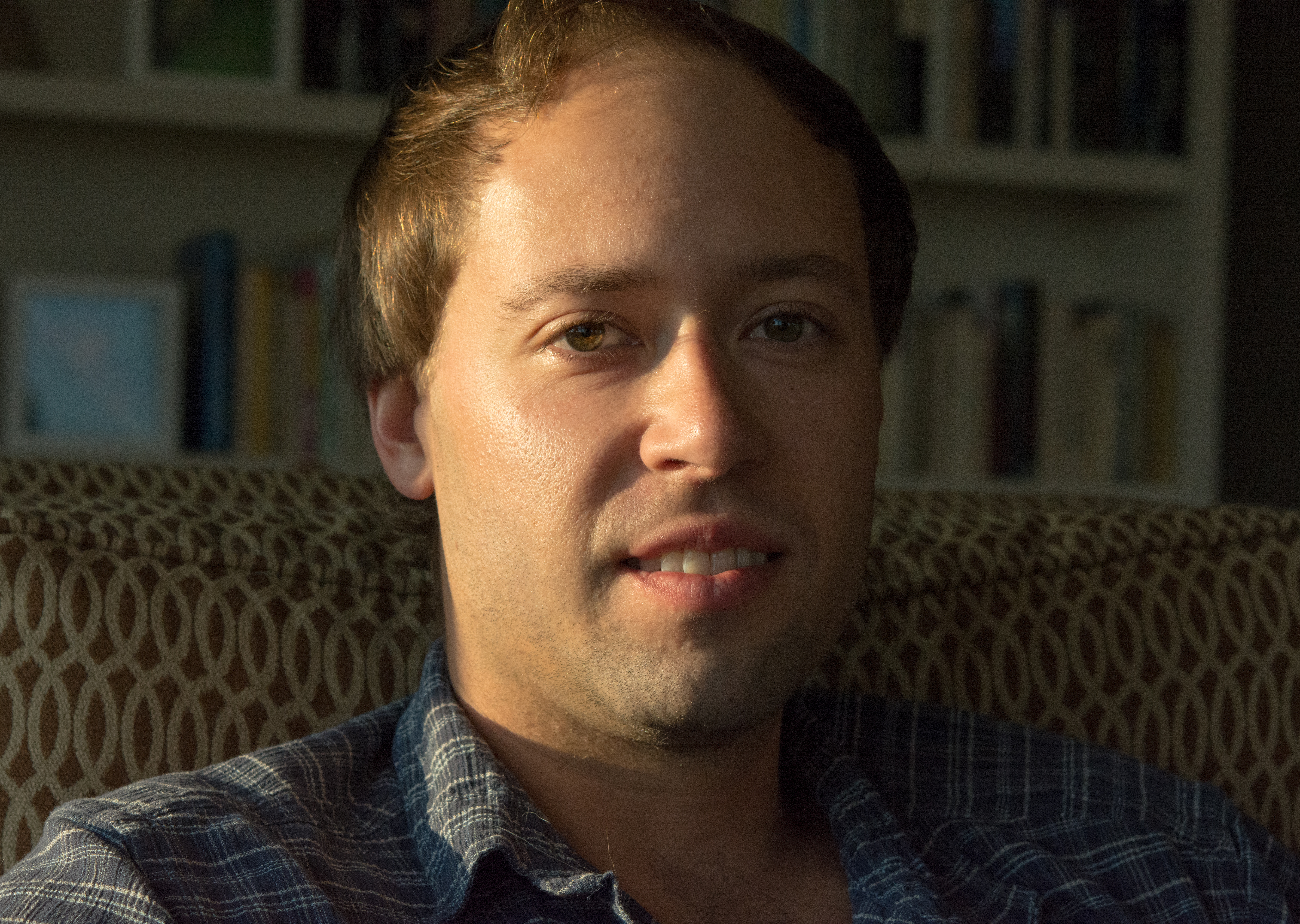
Gabe, testing out new glasses

Gabe, testing out new glasses

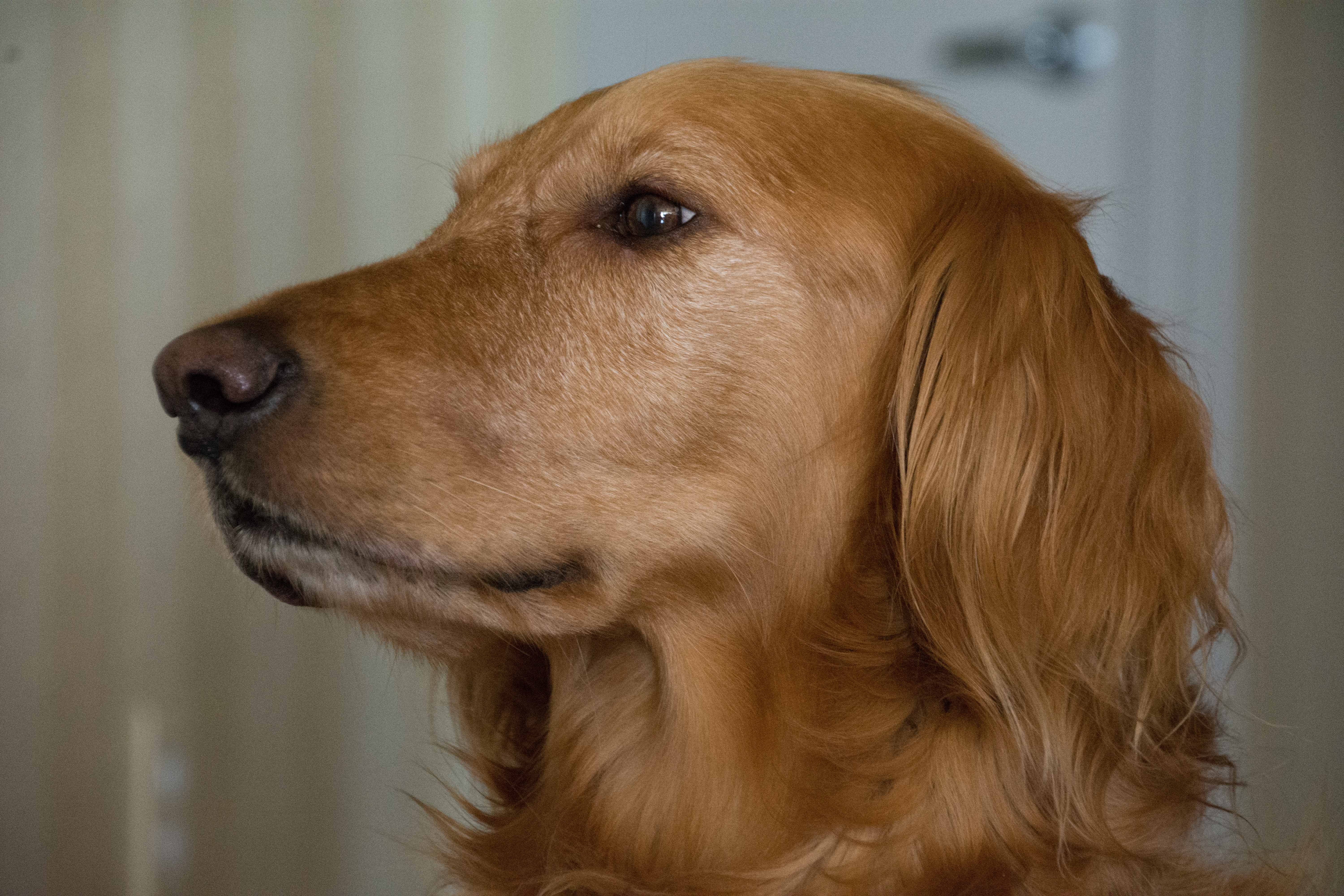
Gabe normally resists being photographed, but he agreed to let me take a few shots on Saturday at sunset. My favorite was one of him shirtless, looking handsome, but he did not want it published. I’ve also been trying to get a good shot of his golden retriever, Mowgli. He’s an affectionate dog, surprisingly laid back. This is the best pic so far.

20150606-_DSC9972First Friday-Anniversaryuntitled shoot

Our Memorial Day weekend in New York — great ballet, art, and ethnic food

The New York Palace (that's our place on the 32nd floor) and St. Patrick's Cathedral

The New York Palace (that’s our place on the 32nd floor) and St. Patrick’s Cathedral

For Memorial Day weekend, we went up to New York City to see our sweet Jocelyn and get an infusion of arts and food. I’d bought tickets to both the NYC Ballet and the American Ballet Theatre, and wanted to see the new Whitney Museum. We designated Jocelyn as the food concierge, and she booked us into some fun ethnic restaurants. After going back and forth, I decided not to lug along my big DSLR kit, and instead took my compact Canon G16, with the results shown here.

Sunset right after we checked in at the New York Palace

Sunset right after we checked in at the New York Palace

The flight up went smoothly (storage room remaining in the overhead bin, on time departure, seatmate not apparently infectious). I read a piece in the last New Yorker on Marc Andreessen, the famous Silicon Valley tech entrepreneur and venture capitalist. It was a good primer on what VC is and does, and seemed like a fair portrait of Andreesen and his firm (Andreesen Horowitz). He is, of course, intelligent and richer than Croesus, but, it turns out, sort of inexpressive and unadventurous in his personal life. (His likes watching television.) And for all his successful bets on where technology is about to go, he seems in complete denial about the big economic changes technology is bringing, like rising inequality and unemployment. Cognitive dissonance, perhaps?

We stayed at the New York Palace on Madison and 50th. This hotel opened in 1981, when we lived in Manhattan, and was known as the Helmsley Palace, with ads that featured a then-famous dragon lady named Leona Helmsley touting its remarkable luxuriousness in a loathsome way. Now rebranded (thank goodness), it is quite a fine hotel, and from our room on the 32d floor we had good views of Manhattan towers and a sliver of the East River.
IMG_0434
We had dinner in Curry Hill, the little Indian restaurant neighborhood at 28th and Lexington, at Chote Nawab. It’s a lively place, and the food was good, but our server was amazingly inattentive. Even so, we had fun catching up.

It was remarkably clear on Saturday morning and a bit chilly when we went down to the meat packing district to the new Whitney, which is situated on Gansevoort right where the High Line starts. It took a minute to absorb that the line to get in was a block long, and we kicked ourselves for not buying tickets in advance. But the line moved quickly, and we were inside in about 20 minutes. The place was crowded, but with a little patience we managed to get close to the pieces that interested us.

Eva Hesse's last work before her death at 34

Eva Hesse’s last work before her death at 34

The current exhibition is called America is Hard to See, which is so true, and is a loosely chronological survey of some of the key examples of the Whitney’s permanent collection. It starts on the eighth floor (the top) with the beginning of the 20th century, and comes down and toward the present. The works were given a good amount of space, and where there were narrative labels, they were helpful.

At this point in my own art historical education, Abstract Expressionism from the 50s seems more like an old friend than a shocker. But I found myself moved and shaken by some of the political art of the 60s (some of the big issues of that time are still big issues). I also engaged with the minimalism and conceptualism from more recent decades. It struck me that this was art intended to be discussed, to expand out into a social dialog. It wasn’t about just looking — it was also about talking.

The Whitney's decks

The Whitney’s decks

In addition to the fine display spaces, the new museum has large outdoor decks. We lucked out, with beautiful weather, and after each floor, we stepped out in the sun clear our heads and enjoy the wonderful cityscape views.

Looking south from the Whitney at the new Freedom Tower

Looking south from the Whitney at the new Freedom Tower

We’d thought of visiting some galleries in the area after the museum, but after two and a half hours at the Whitney I was more than sufficiently stimulated, and a bit wrung out. Jocelyn met us outside the museum, and we walked up to the Flatiron District, where we had good lunch at a Korean place called Barn Joo.

Then Jocelyn gave us a tour of her offices in the Flatiron Building. This iconic triangular building at 23d and Broadway, completed in 1902, was one of the first skyscrapers in New York. J’s employer, Macmillan Publishers, is now the sole tenant. The offices were nothing fancy, but still fun to see. It reminded me of our offices at The New Yorker in the late 70s. There was a great view of the Empire State Building from the northern point of the building.

The Flatiron Building

The Flatiron Building

We poked around in Eataly, a giant gourmet grocery and restaurants space, which was very crowded and fully of delicious smells. Jocelyn promoted the cookies at a bakery a few doors down as the best in New York, so we bought three and ordered coffee. The barista for some reason had trouble with our order, and took ten minutes to produce various beverages we had not ordered. We consumed them at a table near Madison Square Park. My cookie was a good mix of smooth and crunchy, and I enjoyed it very much.

The Empire State Building, from the Flatiron Building

The Empire State Building, from the Flatiron Building

We had dinner at Boulud Sud, a Mediterranean Restaurant at 64th St. near Lincoln Center. The place was bustling. There were no veggie options on the menu, but they proposed a gnocchi dish that was good.

We finished dinner with enough time (barely) to get to our seats at the Metropolitan Opera House to see the American Ballet Theatre perform Giselle. I was interested in Giselle in part for its historical significance as one of the oldest ballets still in the common repertoire. It was first performed in Paris in 1841, with Carlotta Grisi as Giselle and Lucien Petipa as Albrecht. It must have been astonishing at the time to see the women rise and hover en pointe.

This production had Stella Abrera as Giselle and Vladimir Shklyarov as Albrecht. Abrera was not previously known to me, but I will not forget her. She was sublime. Her gestures seemed somehow to be magnified and extended, with a remarkable emotional intensity, without being overstated. Shklyarov was also excellent. In the second act, the ethereal Wilis were spookily graceful, and when they tried to dance Albrecht to death, Shklyarov was so fervid that it seemed on the verge of real danger. The ovation was tremendous by New York standards, with the audience clapping for about 10 minutes. After I drafted this, I saw Alastair McCaulay’s review in the Times, which was a rave for Abrera.

The Metropolitan Museum of Art

The Metropolitan Museum of Art

On Sunday morning we took a taxi up to the Metropolitan Museum. I’d been looking forward to seeing an exhibit of the art of the plains Indians, but it had, unfortunately, closed. But there is always a lot to see at the Met. We started with a tiny exhibit of Van Gogh’s irises and roses, which had four paintings. The signs explained that the red pigment in the paintings had deteriorated and changed the colors of the paintings, and a video offered an interpretation of what they must have looked like. We spent time with the Lehman collection of Impressionists and Post-Impressionists, thirty or so great paintings that sum of the field amazingly well.
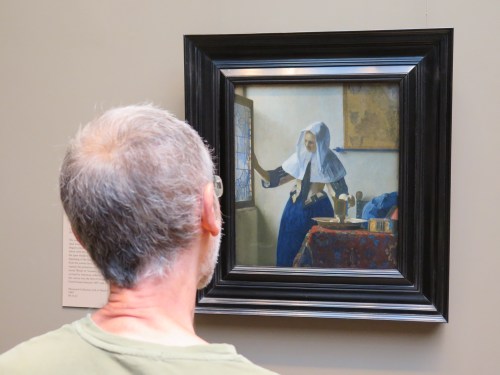
A Vermeer that just kills me

A Vermeer that just kills me

Then we made our way to the galleries with the Vermeers and Rembrandts. I listened to an interesting podcast the previous week with a debate on whether Rembrandt or Vermeer was the greater artist, and confirmed that I’m more of a Vermeer man. The Met has 5 of the 35 or so existing Vermeers, and I particularly love a couple of them. We also spent time looking at the pre-Colombian art, which is getting more and more interesting to me, and African art.
IMG_0605

We met Jocelyn for lunch on the West side at Nanoosh, a Mediterranean spot, and I had some delicious falafel. Then Jocelyn came with me to Lincoln Center to see the New York City Ballet perform La Sylphide. This was, again, for me partly about ballet history, since La Sylphide is another path-breaking early work, from 1834 by August Bournonville. Lauren Lovette was the Sylph, and Anthony Huxley was James. The corps of Sylphs in Act II was, like the Wilis in Giselle, all in diaphanous white tulle, and entrancing. Lovette danced beautifully.
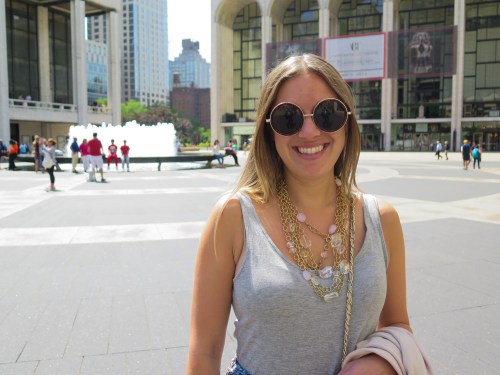
Jocelyn outside the David H. Koch (aka "El Diablo") Theater

Jocelyn outside the David H. Koch (aka “El Diablo”) Theater

After the ballet we went down to the west Village, where we found an outside table and sipped wine, then had dinner at Pagani, an Italian restaurant. We liked our food, and the service was good until dessert time, when things suddenly came to a halt. The staff regrouped, though, and comped our tiramisu.

On Sunday morning we checked out and took a cab out to Jocelyn’s place in Fort Greene, Brooklyn. Her area seemed sort of Village-like, at least on a sunny Memorial Day holiday. We met up with our and J’s old friend Kathryn M, and ate at a South African restaurant called Madiba, which had a lot of funky charm, though it took a while to get a beer. I had the vegetable Durban curry, and liked it, and heard about Kathryn’s new admin job at Victoria’s Secret.

Then we went to the Brooklyn Botanic Gardens, where there were things that were blooming and things that were not. I didn’t see a great diversity of species, but the landscaping was pretty. We also took a stroll through some of Prospect Park. There were hundreds of Brooklynites picnicking, playing, and soaking in the sun.
This Saturday: irises, exercise, protest riots, Schoenberg, Indian food, and soccer

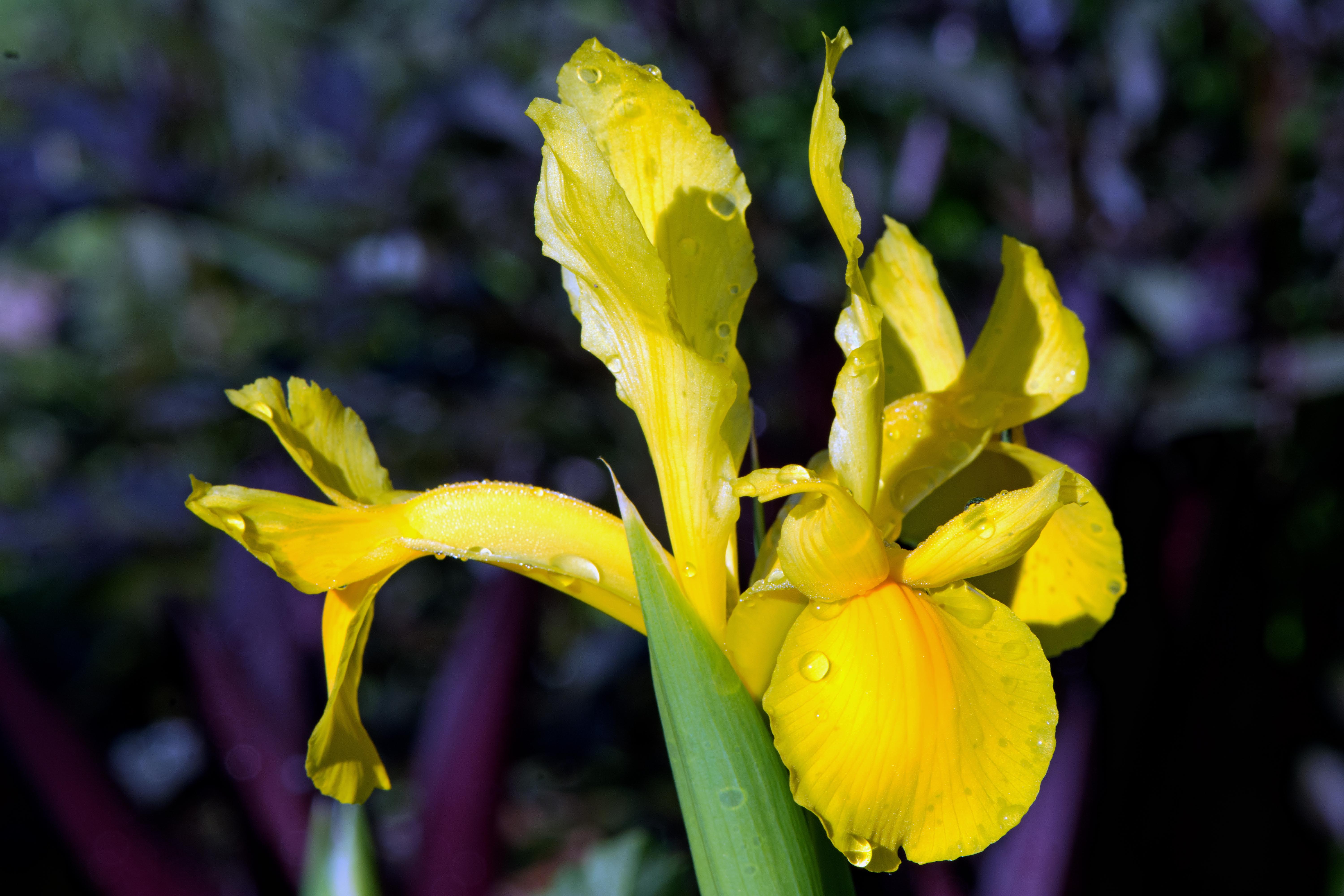
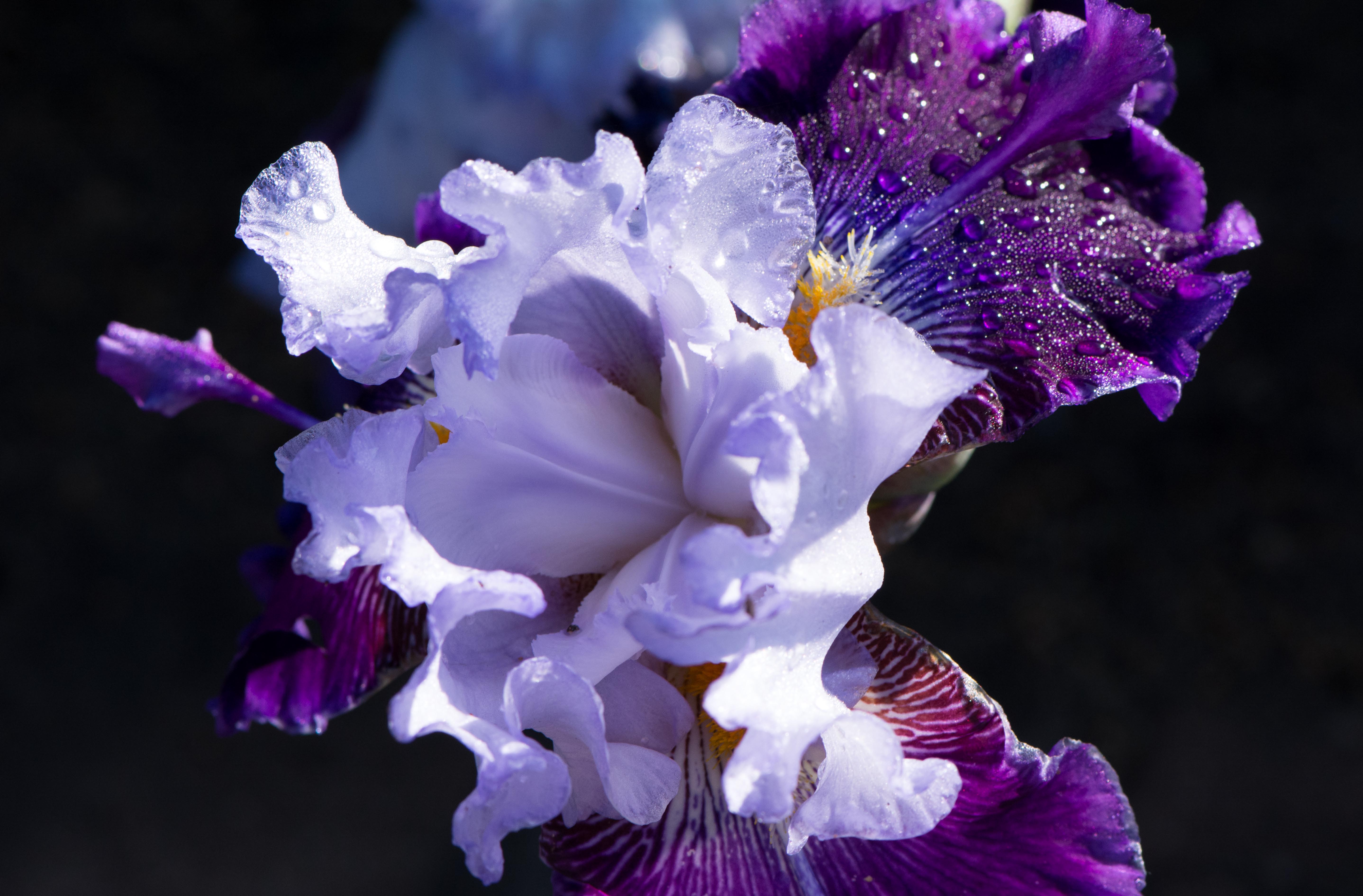
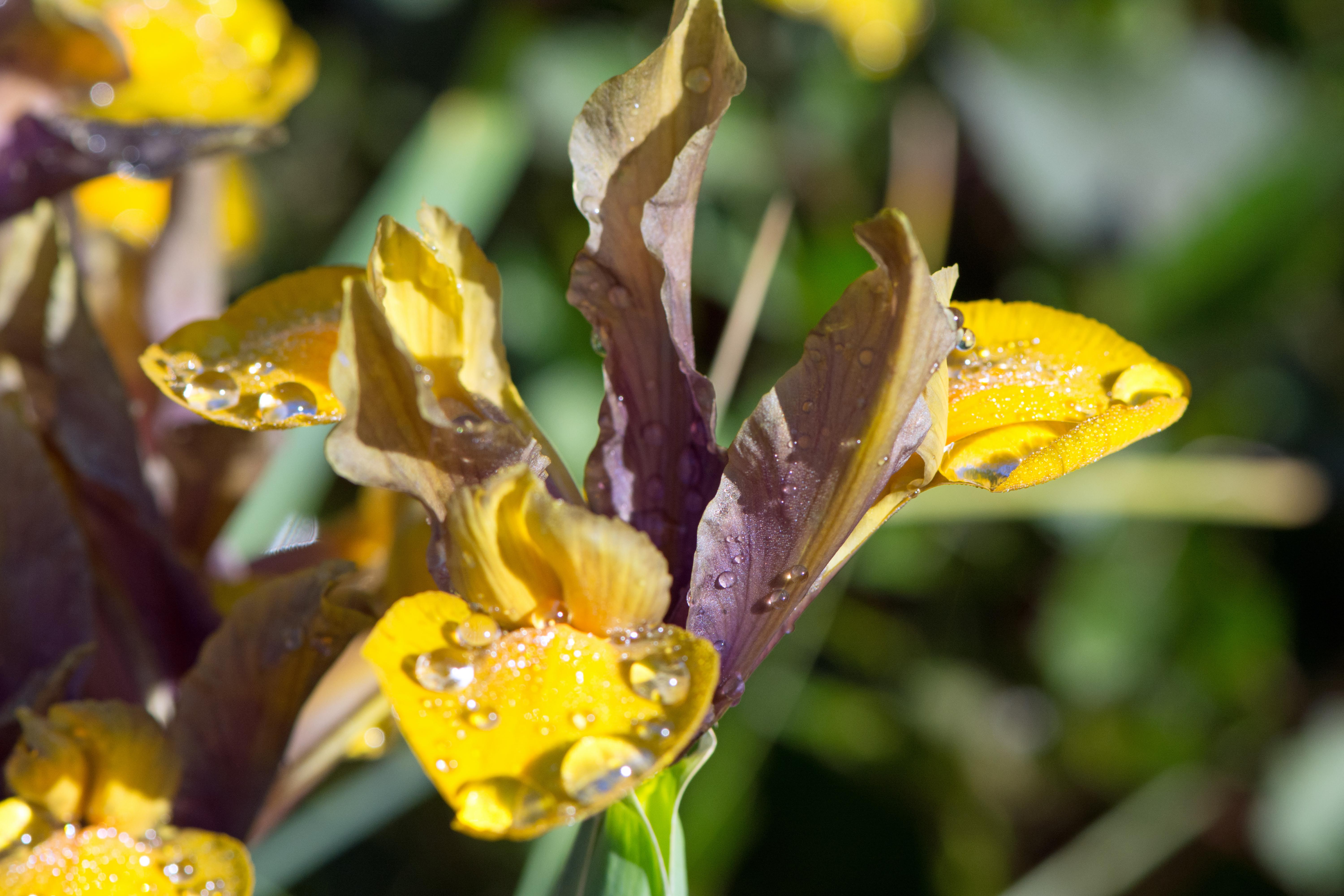
Iris, Raulston Arboretum, May 2, 2015

Iris, Raulston Arboretum, May 2, 2015

As usually happens when I travel, I picked up about three pounds, which I’d very much like to drop. Three isn’t a lot, but it can so easily become six, or twelve. And it’s so much easier to add than to subtract! With reducing in view, I’ve been focussing my exercise recently on fat burning, adding 15 minutes to my usual 30 of morning cardio, along with the usual resistance, core, and stretching. I’ve been doing various combinations of machines (elliptical, stairs, rowing, treadmill), classes (spinning, yoga), and outdoor running. On Saturday morning, I considered spinning at Flywheel or yoga at Blue Lotus, and decided to go to O2 for an aerobic martial arts-type class.

But first I went up to Raulston Arboretum, getting there a few minutes after 8:00 a.m. The big story this week was irises of various colors, boldly blooming, and still dewy when I got there. I spent an hour strolling and trying to capture their spirit, and then headed to the gym.

The exercise class was called Body Attack, and involved an hour of rhythmic footwork, punching, and kicking, to a throbbing club-type beat. I’m a highly non-violent person in real life, but I must admit, shadow boxing with a group is fun. I succeeded in sweating a lot and getting my heart rate into the mid-150s, and avoided either accidentally kicking or being kicked.
_DSC9536_edited-1

After showering back home, I drove out to Cary for a haircut with Ann S, my hair cutter of many years. I always enjoy talking with Ann about our families and doings. Part of her news this time was sad: their 14-year-old dog had to be put to sleep this week. The diagnosis was liver failure. I mentioned that I’d been thinking of our sweet Stuart’s mortality (as I noted last week), and we both struggled to articulate what is lost when a beloved pet goes.
15 05 02_5011_edited-1

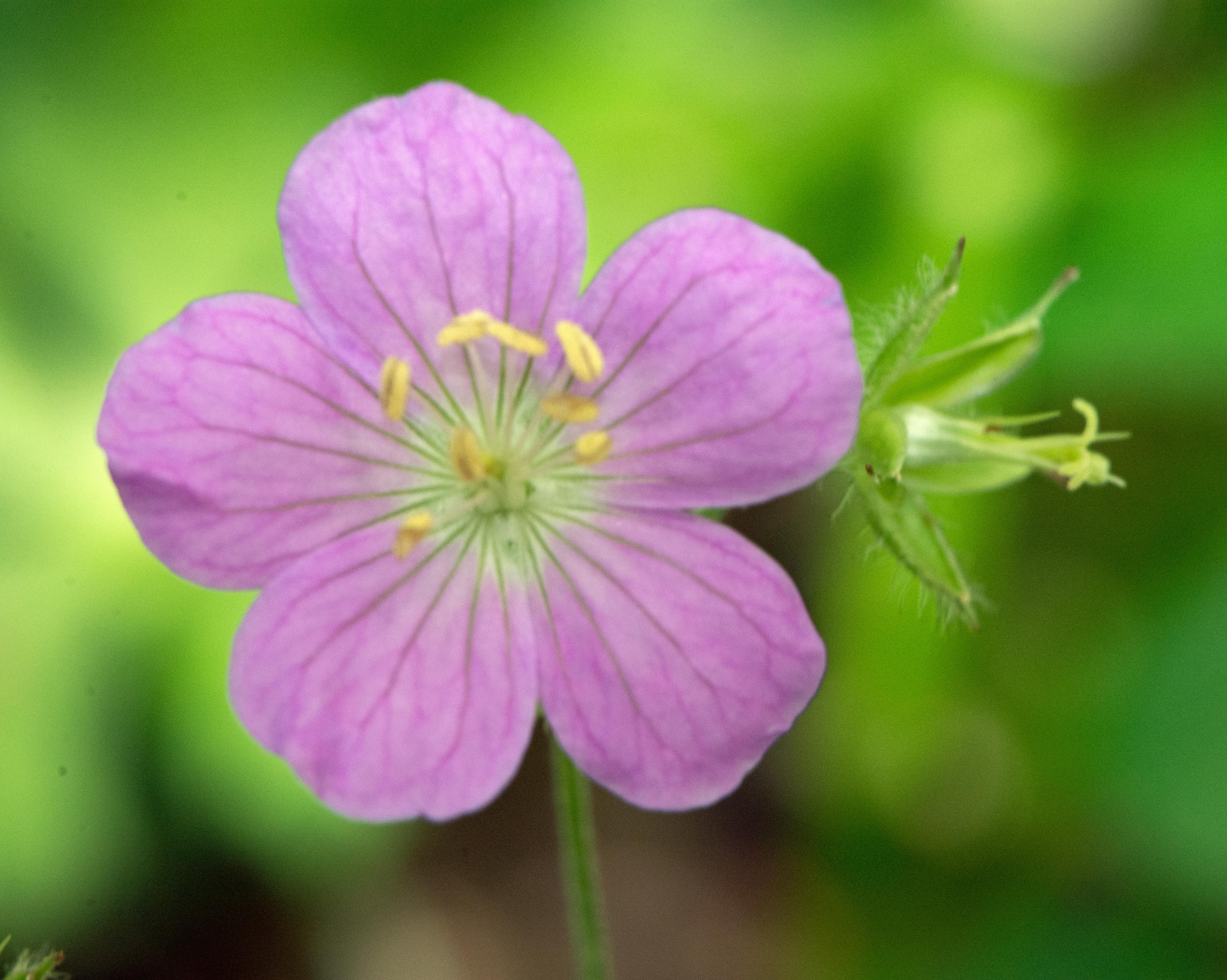
On the way back to Raleigh, I stopped at Swift Creek Bluffs for a walk in the woods. It was muddy from recent rains, and most of the wildflowers were gone, but things were green and lively. The creek was burbling, and a wood thrush sang brilliantly. I ran into Matt J., a fellow photographer who knows a ton about wildflowers, and we talked about plants and cameras. I saw this little guy:

Swift Creek Bluffs, May 2, 2015

Swift Creek Bluffs, May 2, 2015

On the drive back, I made a stop at the Washaroo to get Clara a shower, and listened to NPR reports on the protest violence in Baltimore. I was not aware, since I almost never watch TV news, that the right-wing media had been demonizing the protests. That’s crazy! I think I have a pretty good idea why Baltimore’s poor blacks (like those in Ferguson and many other cities) were angry. I learned a lot from Alice Goffman’s excellent book, On the Run, which vividly lays out what it means to live in a city (in her case, Philadelphia) where the police take the view that you are either a criminal or potential criminal and constantly harass and intimidate you.

It’s a harsh reality. It is unusual to be able to have a normal job, a loving family, and a comfortable place to live, and usual to face violence from both police and gangs, poverty, and betrayal. A legal system organized around criminalizing recreational drugs and draconian punishment for violators is a basic part of the problem, but there are other layers, including police militarization and racism. The people who are the victims of this system mostly suffer in silence, and so middle class America is mostly oblivious to the depth of the problem.

But that may be changing. When people destroy their own neighborhoods, it’s a wake up call – we at least know something is very wrong, and maybe we wonder what it is. I was cheered this week to read a news story that the leading presidential candidates on both sides agree that the system of mass incarceration for minor crimes needs to be turned around. Can our political system fix this humanitarian disaster? Repealing overly harsh sentencing laws and ending the war on drugs would be a good start.
_DSC9545_edited-1

In the afternoon, I read some and practiced the piano. At the moment, I’ve got on the workbench polishing and memorizing Chopin’s Preludes in C and G, Schubert’s G-flat Impromptu, Schumann’s Arabesque, Debussy’s Reverie, and Liszt’s Liebestraum No. 1, while working on my first music by Arnold Schoenberg – his Six Little Piano Pieces. Schoenberg wrote this in 1911 and uses his famous twelve-tone system, which systematically avoids traditional harmony. It’s highly angular music, and not easy to love, but seems much more approachable to me now. I’m finding strangely haunting melodies, and a sensuality not so far from Debussy’s.

On Saturday evening we went to see the Carolina Railhawks play Tampa Bay at the soccer park in Cary. We enjoy our soccer outings, but figuring out a food option has been challenging. There is no healthy vegetarian food on sale, and our system of smuggling in a sandwich went down last season when they began checking in bags at the gate (and we had to consume our Jimmy John’s veggie special standing in the parking lot). Sally had read a review of a new southern Indian vegetarian restaurant on Chatham Street just past the soccer park, and we tried it out before the game. At Sri Meenakshi Bhavan, the chaats were delicious, and there was a great selection of dosas. The décor was purely functional, and there was no alcohol, but the price for this marvelous food ($35 for two) was most definitely right.

At the game, it was a bit chilly, and we were glad we’d brought our sweaters. There were some exciting sequences, but I left displeased with the Railhawks’ sloppiness. We were fortunate to get away with a 1-1 tie. I’m hoping it was just an off night, and not a step down from the high level of play of last season. I was also displeased with the broadcasting of local advertising by a booming PA system during the course of play. There were several such ads in the second period, which were very annoying. Who thought this was a good idea? I intend to complain.

First Friday gallery hopping, new wildflowers, and tolerating Scientology

Dogwood blossom on Blount Street

Dogwood blossom on Blount Street

This week the big trees in Raleigh started to shoot out baby leaves, and the horizon got green. The mild temperatures encouraged me to walk to work, and on the way there were cherry blossoms on Lane Street and the season’s first blossoming dogwoods on the Capital grounds.

Cherry blossoms on Lane Street

Cherry blossoms on Lane Street

On First Friday evening we went out to visit some galleries. We particularly enjoyed the photographs of Simon Griffiths at 311 West Martin Street. There were Raleigh street scenes, landscapes, and portraits of workers in small businesses. The works were clearly subject to extensive post-production work, which caused the views to seem at once familiar and unfamiliar, somewhere between hyper-reality and a dream. His work can be seen here.

I would have loved to learn some technical details, but didn’t have a chance to ask him, because we were cutting it close for our dinner reservation and had to start walking. There were a lot of people out strolling. We ate Lebanese food at Sitti, where the baba ghanoush was delicious, but the falafel was a bit dry. Service was great, and the vibe was lively.

Spring beauty

Spring beauty

Over the weekend I went out to Cary’s Swift Creek Bluffs park to check for wildflowers. There were thousands of little white ones (spring beauties) and a few other interesting species. It was windy, so these guys were moving around. I had to get down on the ground with them to take their pictures, and got a bit muddy, but I thought it was worth it. These little wildflowers do not last long. If you’re interested, the time to see them is now.
_DSC8818_edited-1

We watched Going Clear, the much-discussed documentary on Scientology, on HBO this week, and liked it. It included both historical footage of L. Ron Hubbard, the science fiction writer and founder, and other movement leaders, as well as interviews with several ex-Scientologists. It recounted without particular ridicule the foundation myth, which involves beings from outer space and nuclear bombs exploding in volcanos, and its pseudo-scientific technique of E-meter auditing.

Although it’s tempting to make fun of the wackiness, many better established myths are no less untrue, and many long-established customs and rituals are unsupported by science. Tolerance of other beliefs (and non-beliefs) is a good and vitally important thing. The film focused on what deserves to be criticized: the group’s paranoia, abuse, and thuggery. Apparently it secured its US tax exempt status by harassing individual IRS officials with lawsuits. !!! It has harassed and intimidated many others, though not me (at least so far). _DSC8863_edited-1
_DSC8833_edited-1

Our amazing safety, veggie restaurants, blossoms, golfing hopes, and ISIS

Daffodil, Raulston Arboretum, March 21, 2015 Daffodil, Raulston Arboretum, March 21, 2015

Spring is here, with some good, and perhaps surprising, news: “America is safer than it has ever been and very likely safer than any country has ever been.” Writing in this month’s Atlantic, Jonathan Rauch drily sums up the gap between our perceptions of terrorist threats and reality: “American are about four times as likely to drown in their bathtub as they are to die in a terrorist attack.”

“Given how safe we are, and how frightened people nonetheless feel, it seems unlikely that Americans’ threat perception has ever before been quite as distorted as it is today. Never have so many feared so little, so much.” Rauch notes, “The United States faces no plausible invader or attacker. All we are really talking about, when we discuss threats from Iran or North Korea or ISIS, is whether our margin of safety should be very large or even larger.”

Why are we so scared? Rauch cites evolutionary biology, which equipped our ancestors to be hyperalert to the possibility of predators or enemies, and programmed them and us to err on the side of overreacting to threats. Part of it is also probably opportunistic politicians and sensationalistic media. Whatever it is, the cost is enormous. See, e.g., budgets of Defense Department, Justice Department, CIA, NSA, TSA, FBI, etc.
_DSC8588_edited-1

A new veggie-friendly restaurant. We tried Pho Pho Pho Noodle Kitchen, a new Vietnamese restaurant within walking distance of us on Glenwood Avenue this week. Our pho (noodle soup, basically) with tofu was tasty, and the place was lively, with a neo-Buddhist vibe. Our server must have been new, since she was a bit over eager – checking in on how we liked everything every 4.5 minutes or so – but we still liked her. Although there was only one vegetarian offering on the menu, we verified that there were several other items that could be done meatlessly. We’ll go back.

As Sally noted recently, we’ve been vegetarians now for 20 years. It’s gotten easier. There are a lot more fun vegetarian friendly restaurants these days, and we consciously try to support them. These are now quite a few good places with more than one veggie option, and vegetarians are clearly not second class citizens. My current favorites in downtown Raleigh are Fiction Kitchen, Capital Club 16, Buku, Sitti, Blue Mango, Kim Bop, and Bida Manda.
_DSC8566_edited-1

Saturday. On Saturday morning I did a sunrise five-mile run up Hillsborough Street, had a quick bowl of cereal, and went to an 8:30 yoga class with Yvonne across the street at Blue Lotus. My recent classes with Yvonne have been more about stretching and deep breathing than heavy working out, which works well after a run. Then I drove up Hillsborough to Raulston Arboretum for a slow walk with my camera.

It was a bit muddy from rain the day before, but things were quickly emerging. And also decaying: the beautiful blooms do not last long. The daffodils I saw last week were mostly gone, though there were some pretty new ones. Several oriental magnolias had particularly gorgeous blossoms. The birds were singing brightly.

In the afternoon, I practiced the piano, and then went over to RCC for some golf practice. As usually happens as spring arrives, I start thinking this could be my golf breakthrough year. Last year was pretty much a lost one for golf, due to eye, hand, and shoulder injuries, but I’ve been pretty healthy lately. And I’ve got some of the elements of a bona fide game. The thing is with golf, it’s remarkably hard to put it all together and make it happen on a consistent basis. Anyhow, I enjoy watching the little white ball fly up and away. Practice is fun.

We had delicious Thai food for dinner at Sawasdee on Glenwood Avenue, and went to the Raleigh Grande to see a documentary called Red Army. It tells the story of the Soviet hockey team that dominated the world in the 70s and 80s. The Soviet system was brutal, but they played brilliant hockey. I thought the subject was interesting, but the ex-players were not very expressive or insightful, and the analysis didn’t get much below the surface.

_DSC8585_edited-1
More on ISIS. I mentioned last week that we don’t know much about ISIS, but thanks to Graeme Wood I now know a good deal more. Wood wrote a piece for the Atlantic titled What ISIS Really Wants, which is well worth reading in its entirety. In a nutshell, ISIS takes the Koran completely literally, including the parts about militarily establishing and expanding a caliphate that applies Sharia law. It believes in requiring the allegiance of all Muslims, killing apostates, and enslaving non-believers.

Unlike Al Qaeda, they have no current interest in attacking western nations, but rather want the west to attack them. This would both help recruitment and gibe with their end-of-days theology. In fact, they don’t get along with Al Qaeda, which they view as insufficiently Islamic. As with other fervid fringe religious movements, for whatever reason this appeals to some, but a majority of Muslims and everyone else reject it as nutty, and the atrocities will always limit its appeal. Also, the ISIS ideology rules out cooperating or having diplomatic dealings with any who disagree even slightly with their views. Thus they can never have allies, which limits the possibilities for expansion.

Clearly, ISIS is a serious, and perhaps existential, threat for people who live within its range and disagree with it. But we should distinguish between possible terrorist threats to our lives and property, and the humanitarian concerns relating to the people of Iraq and Syria.
_DSC8607_edited-1

Our holiday in Cozumel: diving, eating, and reading

14 12 31_4444_edited-1

Gabe and Jocelyn joined us in Raleigh for Christmas for the first time in several years. We ate and drank well and had some good laughs. Gabe had given himself a Canon G15 camera, which he’ll be using to get scenic pictures of Telluride for his company’s website and other publicity. It was fun talking photography, and he was taking amazingly good pictures. I was struck and a bit envious of his natural talent.

Last year I offered scholarships to both Gabe and Jocelyn to get their scuba certification, with the kicker that graduates would also get a holiday trip with us to a dive resort. Gabe couldn’t work out the logistics, but Jocelyn found a dive shop in New York and took the course. Last weekend she, Sally, and I sadly said good-bye to Gabe, and gladly went to Cozumel, Mexico.
15 01 03_4830

We stayed at the Cozumel Hotel and Resort, and went diving with Dive Paradise. The good points of the hotel were: friendly service, large pool, beach (small), walking distance to town, good breakfasts, and dive shop and dock directly across the street. Dive Paradise was a large operation with several boats, but the service was personalized and friendly. Our boats were not overcrowded and the divemasters were knowledgeable and helpful.

15 01 01_4626_edited-1

We did two morning dives each day. The boat trips were between 30 minutes and about an hour. Particularly good spots were: Palancar Bricks, Cedral, San Francisco, Tunich, and Delilah. Visibility was generally 60-70 feet, water temperature 81 degrees F. The current was strong in places; think Lost in Space or Gravity. Every outing was a drift dive. We were usually down for 50-60 minutes.
15 01 02_4803_edited-1

Jocelyn spent the first two days finishing her Padi course by doing 4 open water dives , then joined us on the rest of our expeditions. She had no problem with the deeper dives (around 90 feet) or the places with strong current. She handled herself well, and I was a proud papa.

14 12 29_4221_edited-1

We saw a great deal of sea life, most of it familiar to Sally and me. Particularly thrilling were a pair of spotted eagle rays, an enormous (beastly huge!) green moray eel, large lobsters, and several hawksbill turtles. There were many beautiful angelfish and queen triggerfish. We saw a few nurse sharks and barracuda. Sally saw a pair of squid, and quite a few tiny things for which she needed her magnifying glass. The coral in places was highly varied and gorgeous.
15 01 01_4586_edited-1

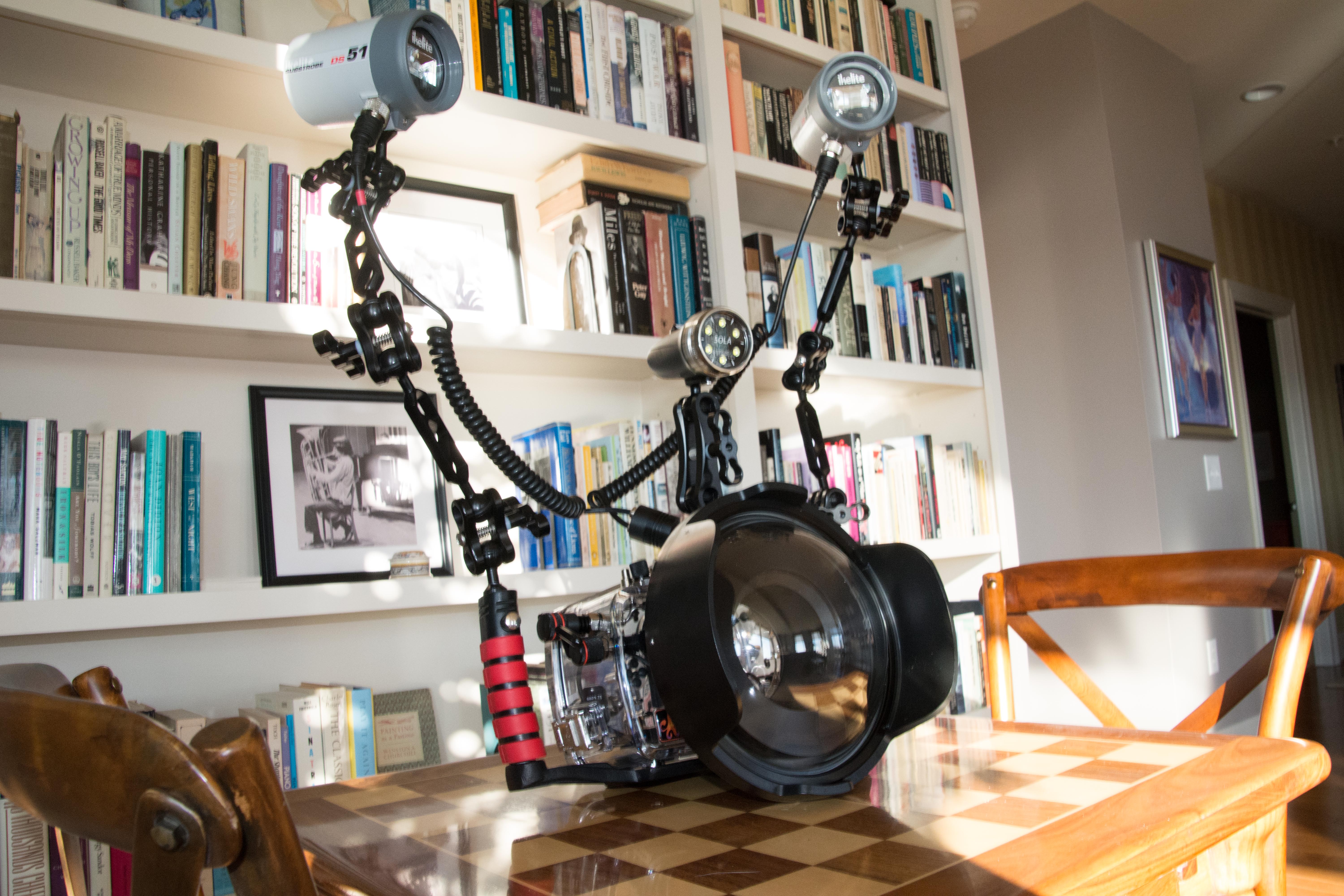
I took photographs with my new Ikelite housing and strobes for my Nikon D7100. The equipment was heavy and bulky, and difficult to transport, but I was pleased with the way it performed under water. One of my objectives was to get a good picture of a queen angelfish, which are challenging both because of their normally shy natures and their wild colors. I was fairly happy with the ones here.
15 01 02_4755_edited-1

We ate a lot of tasty Mexican food, including outstanding and creative meals at Kinto and Condesa. We also had Italian food one night at La Terraza, which we thought was good.

In the afternoons we sat by the pool and read. I made substantial progress on The Adventures of Augie March, by Saul Bellow. I read and loved this novel in my early twenties, but it seemed new upon re-reading. It’s exuberant and Whitmanesque, exhilarating, but also challenging, resistant to skimming.
15 01 02_4760_edited-1

I also got a good start on The Innovators, by Water Isaacson. This is basically a history of computers and computing that gives mini-biographies of leading actors but also emphasizes that innovation is primarily a product of collaboration, rather than lone geniuses. Isaacson’s writing is competent and engaging.

One other book worth mentioning is The Meat Racket: The Secret Takeover of America’s Food Business, by Christopher Leonard. It is an eye-opening account of the corporatization of the production of chicken, pork and beef, with a particular emphasis on chicken and Tyson Foods. There is nary a word about the horrific treatment of animals, but the story is still brutal from the point of view of the farmers and workers.

The farmers here were by degrees deprived of bargaining power, to the point that they stay in business only by the grace of Tyson or its few similarly enormous competitors. It’s also startling to learn about the extent to which government provided financial guarantees that allocated the risks to the taxpayers (that is, us) and farmers, but gave the big rewards to the food megacorps. This story deserves wider publicity. Another good reason to go veggie.
15 01 02_4781_edited-1

Sorry to be difficult, but — why I’m going vegan

14 12 07_3799
While I’ve been a vegetarian for going on 20 years, I’ve been fine tuning my approach over time, and getting my habits aligned with my health needs and values is still a work in progress. Cutting out eating animals, starting with cows and pigs, was a significant step, but only part of the story. Just as important, for health purposes, was cutting out foods that taste good but are actually bad for you, like sodas and chips. More challenging has been increasing the percentage of foods that are really nourishing, including some that I’ve long resisted.

From persistent testing and trying, I’ve finally gotten comfortable with some healthy foods I used to detest, like beets, peas, and Brussels sprouts. I’m eating lots of dark green veggies (like kale, spinach, chard, turnip greens, and dandelion greens) and fruit in my breakfast smoothies, and I’ve been getting vitamin rich cold pressed juices to sip for snacks. My repertoire of tastes has expanded.

Recently I made the shift from vegetarian to aspiring vegan. So it’s goodbye to dairy and eggs (with the understanding that there will be occasional emergencies and slips). This is partly a matter of getting healthier, but even more a matter of values. The more I learn about factory farming, the more persuaded I am that we can’t go on like this.

It is truly horrific for the farm animals, to our great shame. It’s also sickening for us (E. coli, salmonella, antibiotics, steroids). Cutting cheese from the lineup is especially challenging, both because it’s tasty and it’s everywhere. And I will miss the wonderfulness of ice cream. But I will also feel better not supporting this unconscionable cruelty and heedlessness.

Our individual eating choices may seem trivial compared to our epic social problems, like global warming, but I think they are related in a couple of ways. Industrial farming of animals is a major part element of global warming, because of the huge emissions of greenhouse gases (CO2 and methane), not to mention pollution of surface and groundwater and other environmental problems. To the extent we don’t support factory farming, we’re working on those problems. In addition, by getting ourselves healthier, we improve the chances of having the clarity of thought and strength to take on our big social and environmental problems.
14 12 07_3798

So I don’t think it’s completely self-centered to focus on the physical self. But I admit my own motives are not purely altruistic. I’m also interested in feeling good now and functioning well for a long time to come. Exercise is also an important part of this, of course. So I’ll report briefly on my current cross-training system, which I’d say is working well. I feel good.

This week I’ve done two long gym work outs (cardio and resistance), lap swimming, two yoga classes, a spin class, a visit to my personal trainer, and outdoor running. For gym cardio, I’ve done the elliptical machine, rowing, treadmill running, stairs, and jump rope. I have a wide range of functional movements in the rotation, from lunges to box jumps to balancing to shuffles, and a variety of core work, as well as stretching of the major muscle systems.

It’s strange, I know, but I actually look forward to getting up around 5:05 a.m. Every day is always a little different, with a new challenge. I enjoy being with people in the classes, and I enjoy listening to music and reading when I’m working out on my own. And getting up early isn’t as hard as I once imagined, because it has become a habit. I don’t have to think whether or not to get up, because it’s just something I just do. But it’s also fun.
14 12 07_3782

On Saturday night, Sally and I tried our first vegan pizza at Lilly’s, and saw The Theory of Everything at the Rialto. The pizza wasn’t so great – there was something a bit off with the non-dairy “cheese” — but we really liked the movie. It’s basically a biopic on the British physicist Stephen Hawking, with particular focus on his marriage. As Hawking, Eddie Redmayne’s performance is a nuanced and remarkable tour de force. His gradual loss of control of his muscles is noted without mawkishness, and his courage and perseverance are noted without huzzahs. Having lost my own father to ALS, I’m particularly conscious of the brutality of this disease, and particularly amazed that Hawking managed to become a path breaking scientist while it ravaged his body and threatened to kill him.

Unconnected to the movie, early this week I read an interesting story in the BBC en espagnol web site regarding Hawking and artificial intelligence. I was surprised to see him saying in an interview that he expected AI would eventually not only surpass human intelligence, but would threaten it. I can see that our AI creations may eventually begin to improve themselves and leave us behind in terms of IQ, but they will not carry the emotional components that drive humans to compete for resources and domination. So why would they threaten us?

My happy Thanksgiving: racing, reading, camera tinkering, eating, and seeing Interstellar

14 11 30_3749
Lately I’ve been consciously trying to cultivate an attitude of increasing gratitude. As is traditional at the Thanksgiving holiday, I’ll note that I have a great many things to be grateful for. For me, gratitude also means noting connections and acknowledging how very little is attributable to my independent efforts. I really owe it all to everybody and everything else. And so, to you, dear reader, and everything else, I’m grateful.

On Thanksgiving morning, I was grateful to be, at 59, sufficiently healthy to undertake the Ridge Road Turkey Trot, an 8 kilometer (4.97 mile) race. I hadn’t tried a road race with thousands of other people for a great many years. Sally sweetly lent her moral support and driving skills, and got me to the starting line five minutes before the 8:00 a.m. start.

My idea was to challenge myself without collapsing or getting sick, and that much I accomplished. I completed the course in 44 minutes, or just under 9 minutes a mile. I wasn’t particularly proud about this time, since I still imagine myself as capable of 8 minute miles, but this T-day that wasn’t happening. My heart rate was in the low-to-mid 160s for much of the race, which is pretty high, and I didn’t want to find out what would happen if it stayed higher. The hills in the middle of the course took a lot out of me, and the last couple of miles were fairly miserable. Part of me badly wanted to try a bit of walking instead of running. But I didn’t quit, and I did survive.

After the race, I took a long hot shower, and then sat down and read for a while. I finished E.O. Wilson’s The Meaning of Human Existence. Wilson, a world-renowned exert on ants and a leading theorist on evolution, is now 85, and going strong. I enjoyed reading The Social Conquest of Earth, and liked this book as well, in spite of its grandiose title. Wilson puts things in perspective, and helps us grasp that humans are just one of the millions of species on the planet. His basic message is that we can improve our chances of survival and happiness by using the tools of science and better understanding our evolutionary nature.

Wilson contends that natural selection proceeded along two paths, individual and group. He argues that this accounts for our dual nature as selfish individuals and altruistic group members. These conflicting tendencies are fundamental drivers of the human experience, which means we’ll always be in some degree of tumult in our interior emotional lives. But Wilson thinks our contradictions are essential to what it means to be human, and we need to understand them and manage them. He seems to think there’s a chance that humanity can overcome ignorance, delusion, and violence, and quit destroying the natural world.
14 11 30_3737

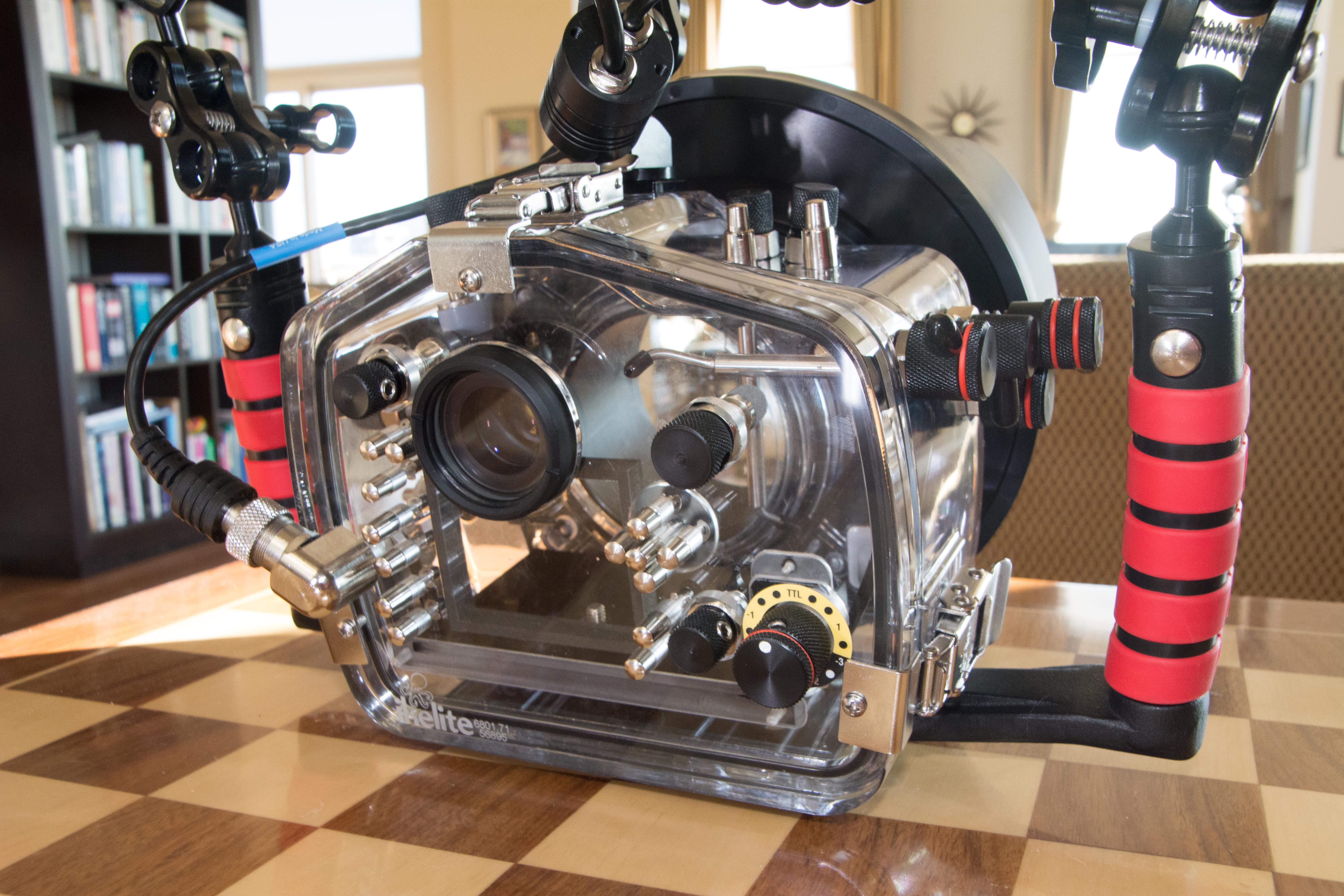
I spent part of the afternoon assembling and testing my new Ikelite underwater camera housing and strobe setup. I thought long and hard before buying the equipment, both because it is pricey and because it is labor intensive. But I’m really interested in sharing some of the joy of diving through images of the extreme beauty beneath the surface. Even in this time of over fishing, ocean acidification and reef destruction, there’s still an incredible profusion of life down there.

If you’re going to use an underwater housing with an expensive camera, the stakes are high. The Ikelite housing opens at the back to receive the camera and the front to receive the lens. You’ve got to be extremely careful to prevent leaks, which can easily be fatal to the equipment. And working the camera through many unlabeled buttons and levers is challenging. Just figuring out how to put it all together took me several hours. And hauling the it safely to dive spots while staying within airline weight restrictions will be challenging. But I’m looking forward to new dive photo adventures.

We had our Thanksgiving dinner at Irregardless, Raleigh’s first vegetarian restaurant, which now also accommodates meat eaters. Gabe and Jocelyn decided to wait until Christmas for a visit, so Sally and I ate with her mom and sister, Diane and Annie. We also were joined by Alyssa Pilger, the Carolina Ballet dancer we’ve been sponsoring, who is enormously talented. It was fun to hear about ballet company happenings, and about the professional dancer’s life. Professional dancers are almost by definition intensely focused people with superhuman work ethics, but Alyssa offstage seemed comfortable, relaxed and un-self-absorbed.

Sally and I saw the movie Interstellar on Friday night at the Marbles Imax theatre. I didn’t think it was particularly well constructed or acted. I found it cheering, though, that the movie has found a mass audience. The basic set up is a post-climate apocalypse world, which is something we should be trying hard to visualize and then prevent. It would be nice if a good-looking astronaut and his attractive physicist daughter could save us all, but that seems extremely unlikely. We’ve got to figure out how to repair our dysfunctional political structures so that we can get organized and address global warming and related problems with the intense commitment and resources we once used to go to the Moon.

Taking in some art, sport, and food in New York

14 11 02_3603Last Friday I attended the Software Freedom Law Center’s tenth anniversary conference in New York, wishing my friends at the SFLC happy birthday and learning something about the state of the art in FOSS law. Afterwards I met up with Sally and daughter Jocelyn at the Warwick Hotel for a Manhattan weekend. I had in mind to see some painting, some photography, some opera, and some ballet, all of which we did, plus some good food and conversation and the New York City Marathan.

As for the painting, on Saturday we went to the Metropolitan Museum, where we focused mainly on the exhibit of recently donated Cubist paintings by Picasso, Braque, Leger, and Gris. Cubism has never been my favorite thing, but I was curious to see some reputed masterpieces not shown in public for generations. The exhibit ultimately had its way with me.

I’d known that Braque and Picasso collaborated, but I hadn’t understood that they were basically partners and co-inventors of the Cubist style. What remarkable courage for guys in their mid-twenties to work exclusively in a style that was so radically new and difficult. They must have known it would be tough to sell at a time when, I’m guessing, they needed money. How excited they must have been to be seeing visions no one had ever seen before, and imaging they would permanently change the cultural/visual world. And they were right!

Engaging with art, and particularly art that requires commitment and struggle, changes you at a fundamental level. Your brain rewires itself, neuronal axons and dendrites making new connections. You are a subtly different person afterwards, who sees the world a little differently.

And though it involved some commitment and struggle, I warmed up to the paintings. There is steely rigor, but there’s more than that. There are moods, from sunny to brooding, and a surprisingly amount of humor. But you have to give the paintings some time and let them speak.
14 11 02_3558

We met Jocelyn for lunch in a Korean place on 37th Street, where our table got covered with savory little vegetarian plates and vegetable dumplings. Our waitress intervened when she realized Sally didn’t know she was supposed to spice up and mix up her kimbap. It was drizzly and chill when we came out and walked up 6th Avenue to the International Museum of Photography.

There we saw an exhibit called Genesis by the Brazilian photographer Sebastiao Salgado. The black-and-white photos are of remote, vulnerable, and magnificent places around the globe, including Antarctica, Galapagos, Patagonia, Indonesia, and Africa. I was very moved by this art. The works were big, some like large posters, and they had lots to say. Some of the landscapes have a stately lyrical classicism, and his photos of indigenous people are frank and intimate. He succeeded in his aim of making me think more about how beautiful and fragile is our planet.

We had dinner at Robert restaurant on the 9th floor of Museum of Arts and Design looking out at Columbus Circle. The room had the energy of forward leaning design, and the food and service were both really good.

Then we walked up to the Metropolitan Opera to see The Death of Klinghoffer. After all the recent controversy (charges of anti-Semitism, which I thought were way off base), I had some worries that there would be protesters, and a tiny worry that there might be a homicidal fanatic ready to attack. But happily there were only normal opera folk. Sally and I both thought John Adams’s music was beautiful and expressive. However, I found the staging static and dull. I’m not sure how much this problem was a matter of direction and how much is inherent to the work. On the whole, I was glad I saw it, but a little disappointed.
14 11 02_3565

Sunday morning was clear but chilly as we walked up from the Warwick Hotel to Central Park South to a spot about half a mile from the end of the New York City Marathon. We saw the first wheelchair competitors, then the first women, and then the first men. After almost 26 miles, most looked like they were in a hard, painful place. But they were booking! The leaders were preceded by a truck with a sign showing the elapsed time. It was particularly interesting to see how close the fight was for number one and two for both women and men. As they passed us, both pairs were so close that I thought perhaps they were friends that enjoyed running together. The women’s finish was the closest in the history of the race, and the men’s was also quite close.
14 11 02_3585

After a quick lunch, Jocelyn came with me to Lincoln Center to a matinee performance of American Ballet Theatre. We saw Sinfonietta (music by Janacek, choreography byJiri Kylian), Bach Partita (Bach, Twyla Tharp), and Gaite Parisienne (Offenbach, Massine). I greatly enjoyed it all, but particularly adored Gaite Parisienne. It was like Nutcracker for grownups: sumptuous, slightly risque fun. Hee Seo was a gorgeous Glove Seller, and Herman Cornejo was a manic, hilarious Peruvian. There were a LOT of really good dancers!

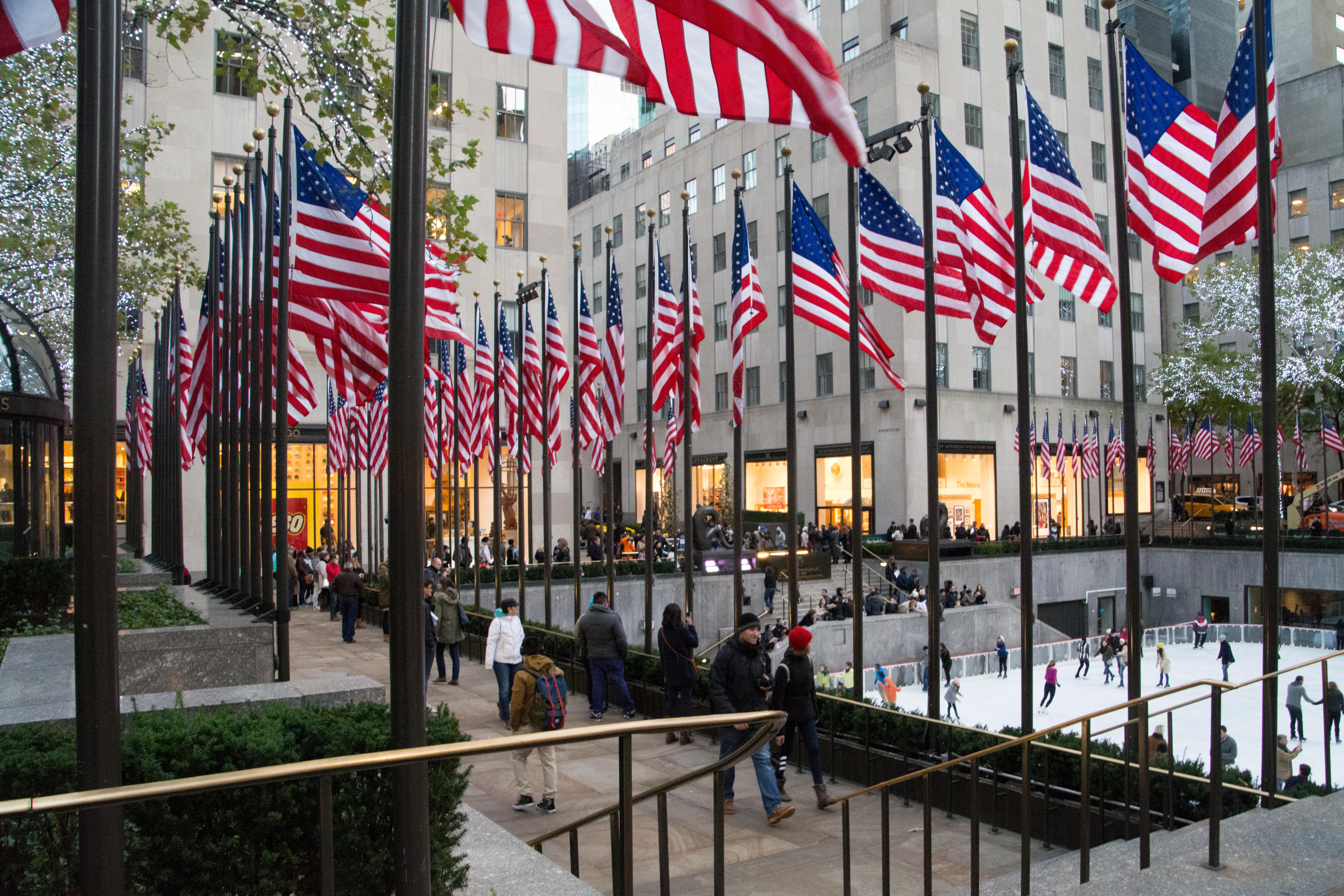
After Jocelyn got on the subway to go home to Brooklyn, I had a little time before we were due to head to the airport. I walked down Fifth Avenue and over to the skating rink at Rockefeller Center. I noted that the varied collection of flags from many nations had at some point been replaced by all US flags. Good looking flags, though .