The Casual Blog

Category: photography

A rodeo, a tennis match, a run, and a good curry meal
14 08 19_1548_edited-1
This was an unusually sporty week. I got to see a local rodeo and a semi-local professional tennis event, and took a run down memory lane.

It is always cheering and a little startling to find that there are communities of people who care passionately about something I know hardly anything about. Who knew there was a rodeo community in the Raleigh vicinity? Actually, I had just learned this the prior week from Walter magazine (an attractively designed and informative monthly that covers our area).

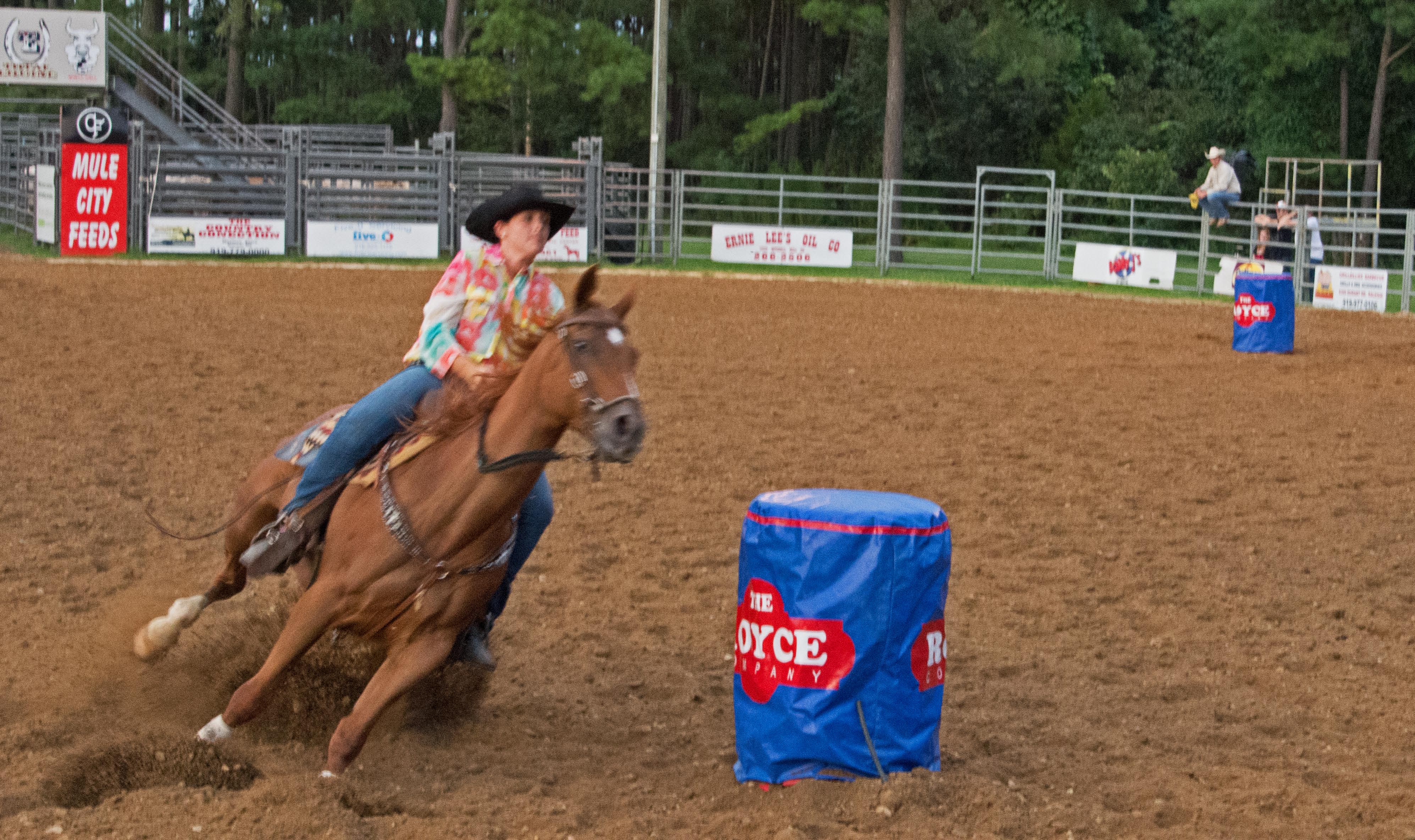
The rodeo was in northern Wake County off of Louisburg Road. The main events were barrel racing and bull riding. The barrel racers were all young women, and they rode their horses extremely fast. It reminded me of road course racing – in addition to extreme acceleration, they had to hit the brakes hard at the barrels. I was in awe of their riding skills.
14 08 19_1553_edited-1

The bull racers sat on bulls and got bucked off. This seems simple in concept, but the trick is not to get killed or severely injured by the bull. We got to see this event up close, and it looked extremely dangerous. I was not happy to think of the bulls being mistreated, but that didn’t prevent my appreciating the courage of the young riders.
14 08 21_1594

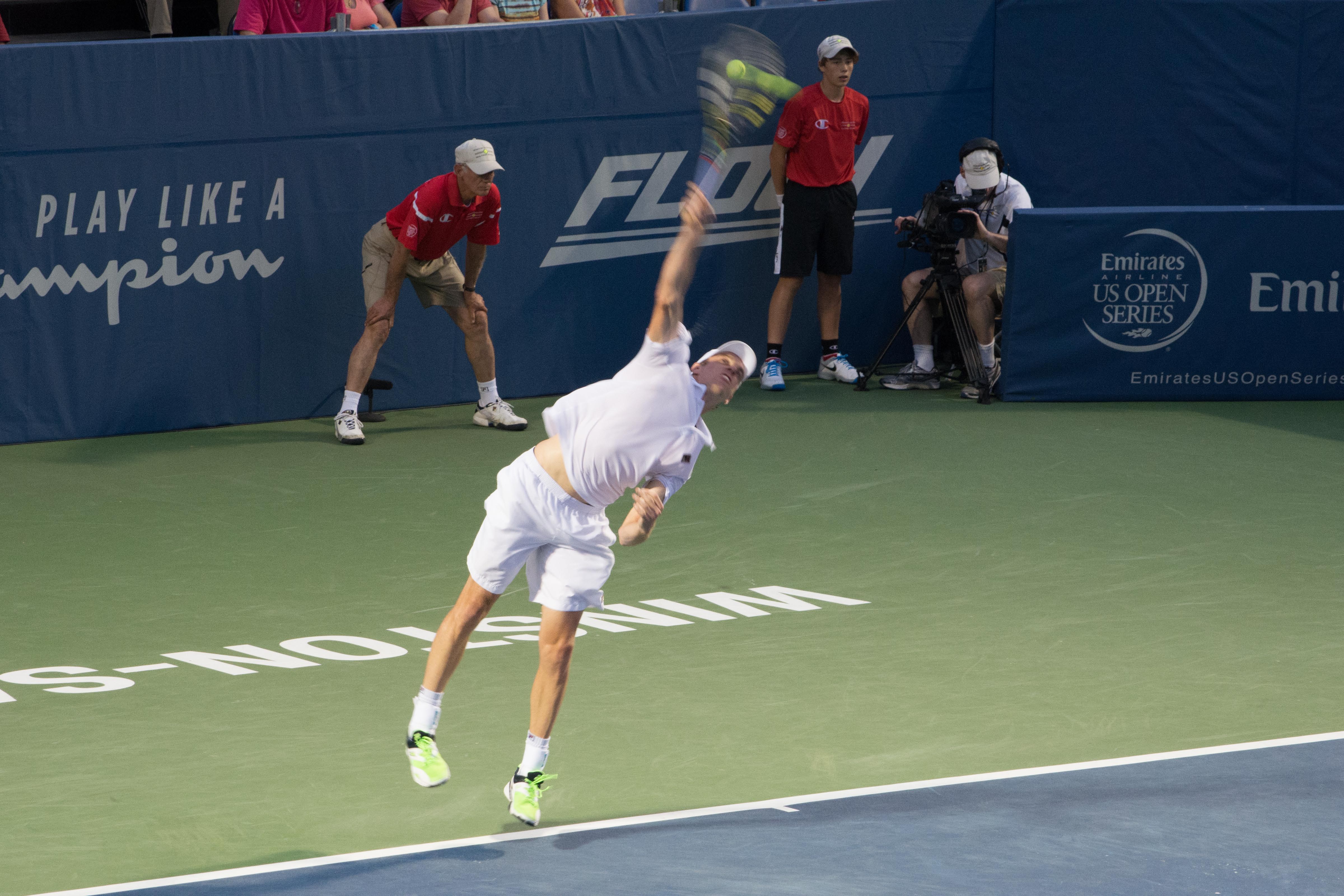
On Thursday Sally and I drove east to see some professional tennis at the Winston-Salem Open. We watched Sam Querrey play Guillermo Garcia-Lopez. These guys can play! Querrey had a huge serve which topped out at 137 mph. Garcia-Lopez had a beautiful one-handed backhand that he could hit with a lot of topspin. The match was close through two sets, but Querrey took control and prevailed in the third.
14 08 21_1592

That night we stayed in downtown Winston-Salem at the Brookstown Inn, built as a cotton mill in 1837 and now decorated with antiques and crafts. Our room was spacious (a 20 foot ceiling, at least), and the bed was particularly comfy.

When I’m on the road, I make it a habit to use the hotel gym first thing in the morning. The Brookstown’s web site didn’t mention an exercise facility (it turned out to have a tiny one), so I had packed most of what was needed for a run (forgot my tee-shirt). It was still dark at 6:15 when I went out, shirtless, for a run through the city of my youth.

There was hardly anyone out, so I don’t think I upset anyone with my shirtlessness. There was a pleasant breeze. Heading down Fourth Street, many of the businesses I remember were gone (no more Woolworth’s), but there were some interesting looking restaurants and galleries. I ran past the city’s most striking high rises, including the Reynolds Building (which looks just like a miniature Empire State Building), and along Main Street to Old Salem, the eighteenth-century Moravian town that’s now a tourist attraction. I went past the building where my parents had their bookstore and by the half-timbered brick buildings and grassy squares where I had a happy summer at Governor’s School.

This took about 40 minutes. I hadn’t run more than ten minutes for many a moon, because of various minor injuries. I felt comfortable and strong. The next day, though, my quads were sore.

On Saturday night we walked up to the Packapalooza festival on Hillsborough Street for some people watching and food. The festival was in celebration of the return of the students to N.C. State, and there were plenty of them there. It seems they get younger every year, as I get older. There was real diversity, including in music: some bluegrass, some hip hop, some rock, some Hare Krishna.

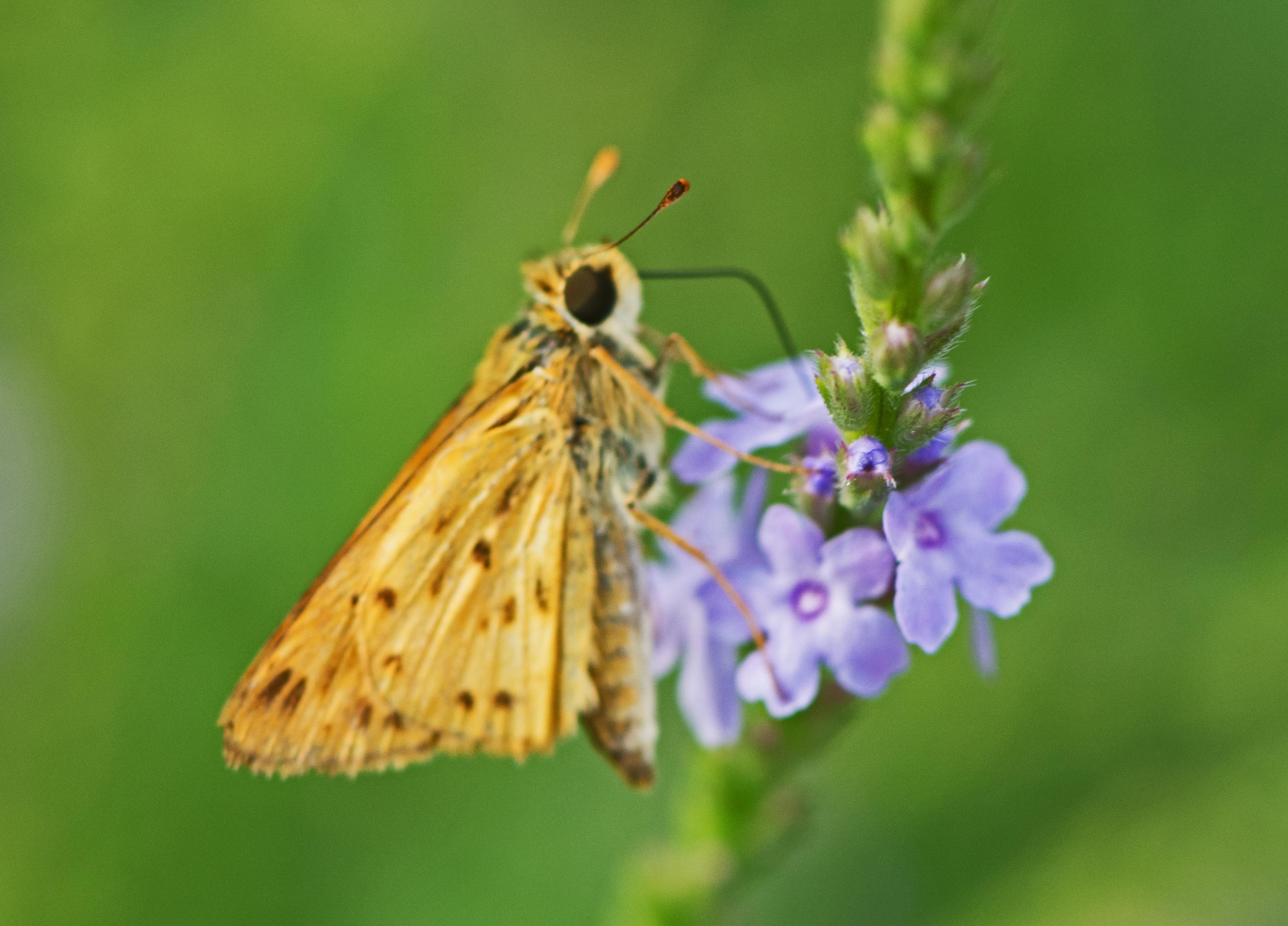
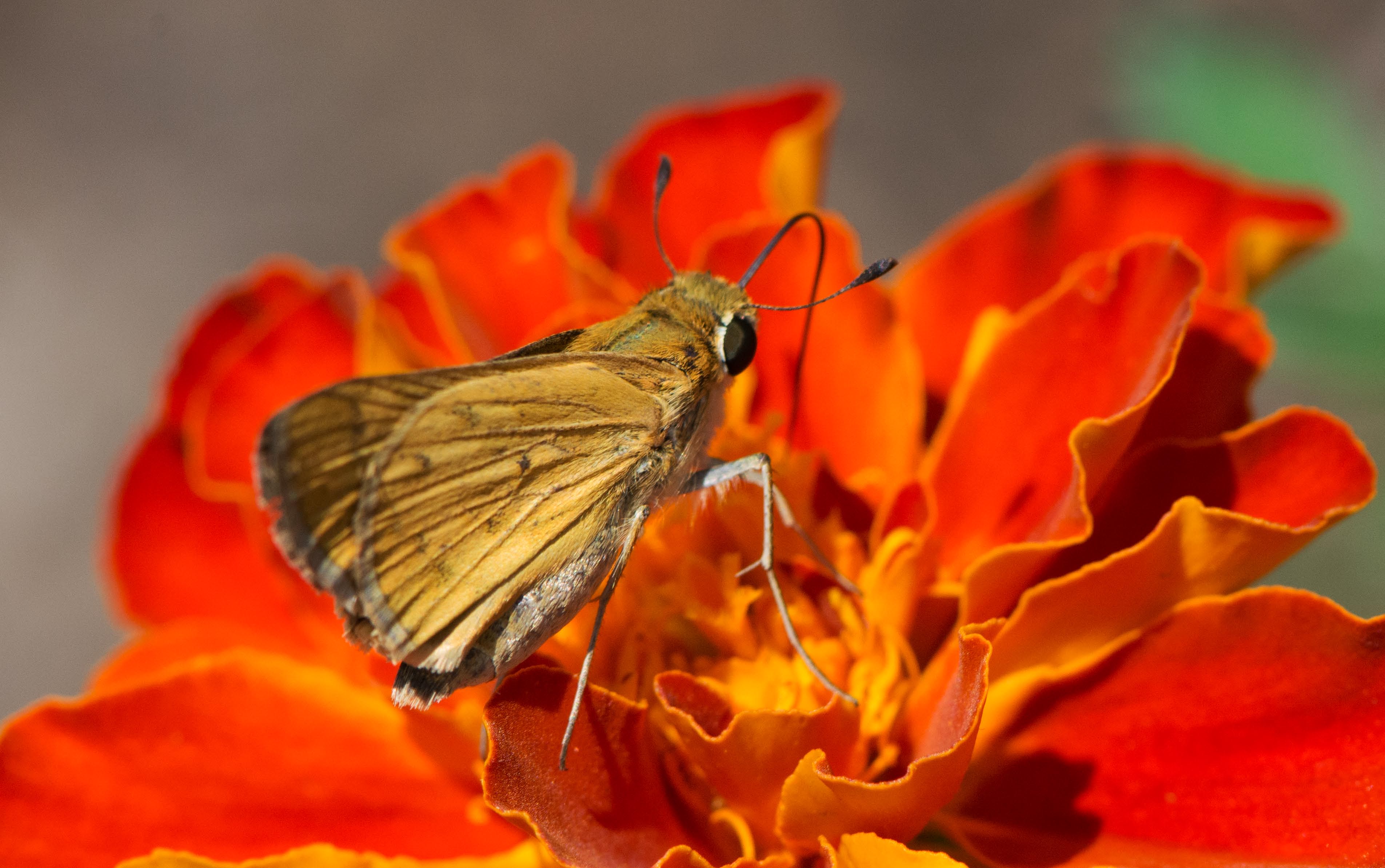
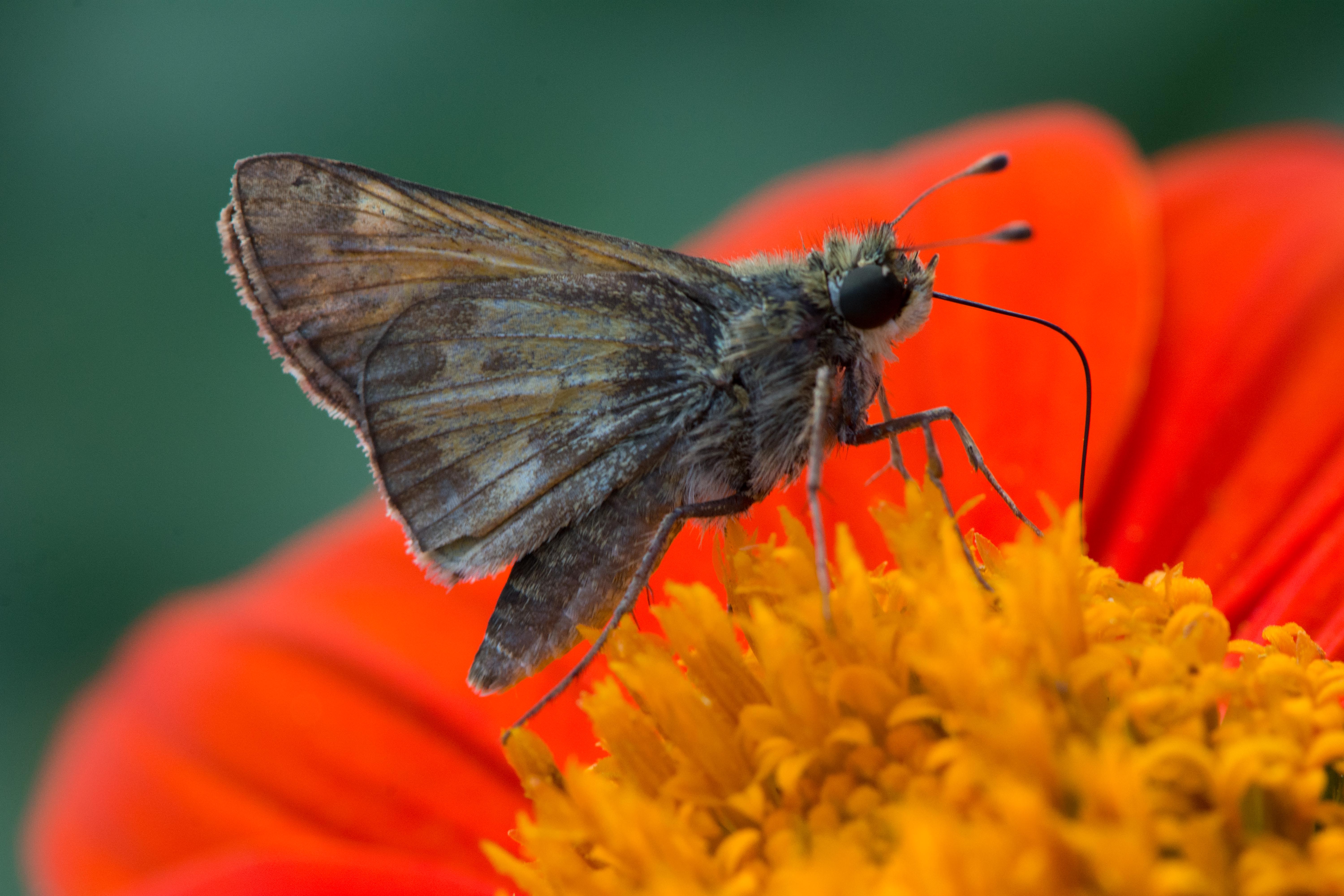
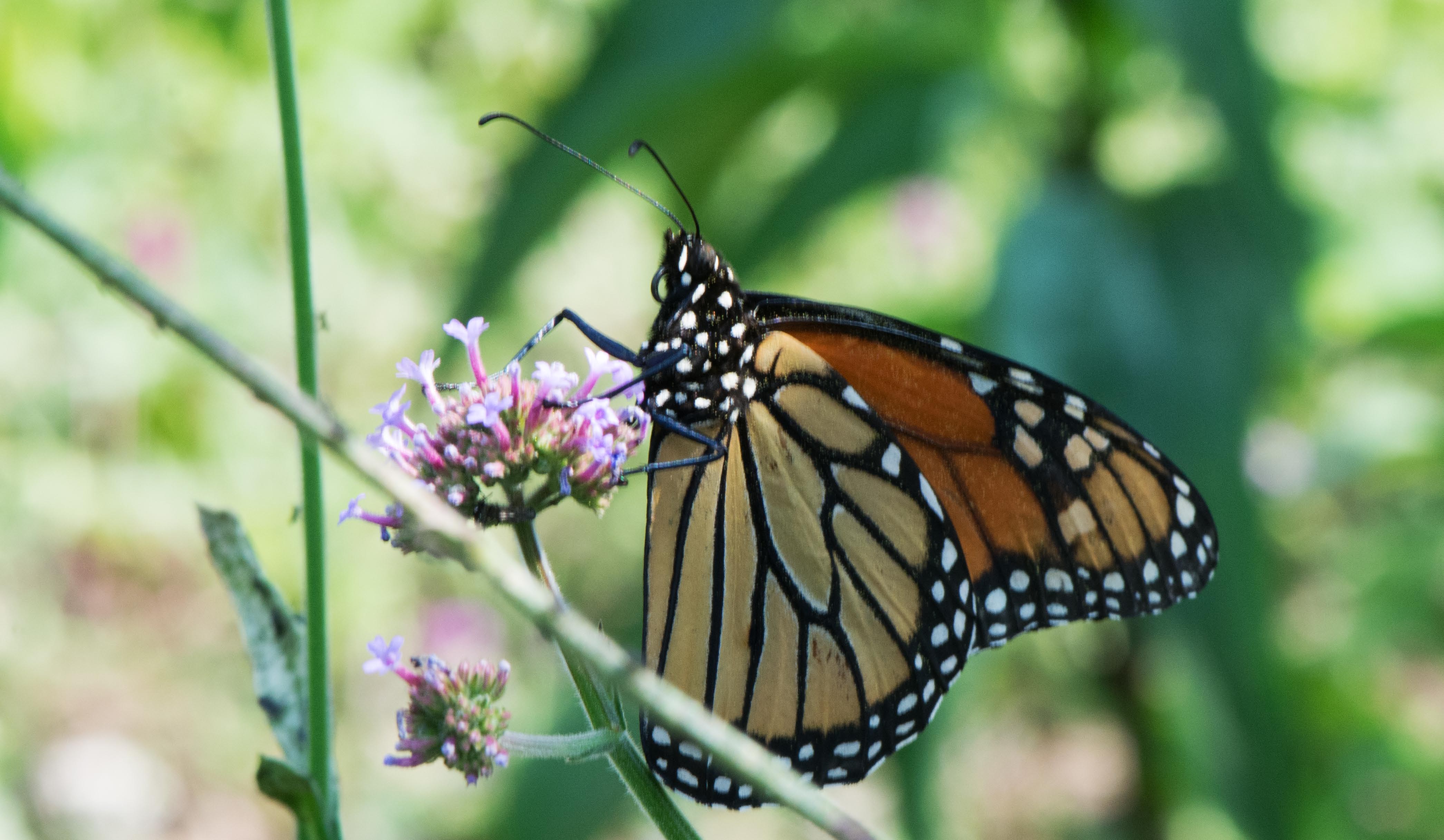
I had one moment of shock and horror, when my Nikon D7100 came loose from its strap. I’d gotten an over-the-shoulder strap that screws into the tripod mount, and it somehow got unscrewed. It hit the asphalt hard. Picking it up, I expected to see cracks in the lens and the back screen, but everything looked OK. My test shots seemed fine. The only apparent damage was a minor scratch on the bottom on the housing. It’s a tough little bugger! I got this butterfly at Fletcher Park the next morning.
14 08 24_1697

We ate at a new Nepalese/Indian restaurant on Hillsborough Street called Kabab and Curry. The menu had good options for vegetarians, and everything we tried was excellent. We shared veggie pakoras, and I had the vegetarian sampler, called rani thali, which included shahi paneer, alu gobi, chana masala, and dal makhani. The food was spicy in a colorful way, stimulating but not overwhelming, with a variety of textures. A bright addition to the local asian dining scene. I’ll definitely be going back.
14 08 23_1620_edited-1

Some edited bug photos and a new way of thinking about organized crime

14 08 15_1497_edited-1

It’s challenging to capture a convincing image of a fast-moving insect. It takes patience and also decisiveness. For these I was using a 105 mm lens with all manual settings, so I had to focus and adjust shutter speed quickly. My heart was going quickly, too – it was exciting to go after these little guys. These were shots I took late Friday afternoon at Raulston Arboretum.

It was also fun to examine the results in Photoshop Elements after the fact. To state the obvious, you can’t really see much detail in little insects with the unaided human eye. To me, it’s fantastic what you discover about these creatures with the aid of magnifying lenses and sensors. I’ve also been experimenting with improving the raw image with the Elements editing program. Typically I do some cropping and minor adjustments to the lighting and contrast. This week I decided to start working with the “expert” user interface and figured out (with help from some YouTube instructors) how to work with layers.
14 08 15_1512_edited-1

Is such editing somehow dishonest? I don’t think so. A photograph is always a combination of technology and human feeling, which is to say it is never purely objective. The sensor in my Nikon D7100 is amazing (24 million pixels!), but it is not God. My own vision has its imperfections and biases both from ocular structural issues and brain processing. Yours, too. We see through a glass darkly. But if we use our best tools as well as we can, we’ll see some new things and some amazing things.
14 08 15_1513_edited-1

How many of our fundamental assumptions are seriously flawed? Every so often, I get spun around when I find that an idea that I had thought was beyond question is far from it. This week in the New Yorker Malcolm Gladwell’s piece titled the Crooked Ladder, destabilized my assumptions about the Italian mafia and inner city drug gangs. I thought I knew that the mafia was a serious threat to the social order that was barely contained by virtue of strenuous law enforcement efforts. Gladwell cites scholarship indicating that the early mafia was generally less violent and lawless than the Godfather movies and journalism have led us to think. For some waves of new immigrants (including Irish and Jews), crime was a route to family stability and assimilation taken by relatively innovative community members. And it isn’t a curse on subsequent generations. On the contrary, the grandkids of mafia dons turn into ordinary suburbanites.

But Gladwell finds this pattern depended in part on societal tolerance, including relaxed policing during the liquor prohibition era. Few mafiosi went to jail. Gladwell suggests that what I always thought of as police corruption could have positive effects, in that it allows immigrants to feed their families, prosper, and gradually evolve and assimilate. But this process has not taken place for our inner city drug gangs. Instead, intense policing has resulted in mass incarceration at a terrible human cost.

Gladwell relies primarily on a new book titled On the Run: Fugitive Life in an American City, by Alice Goffman. Goffman was an undergraduate at University of Pennsylvania when she began tutoring a Black student in a rough Philadelphia neighborhood she calls 6th Street. She eventually spent several years living in the neighborhood and getting to know the young men who survived as minor league criminals, as well as their girlfriends, moms, and others. The young men generally had spent time in juvenile detention, jail, or prison, and were often on the run from the police for such wrongs as nonpayment of $173 in court costs or minor parole violations. They were constantly the targets of police harassment. It is no exaggeration to say they lived in a police state.

After I finished Gladwell’s article, I downloaded Goffman’s book and quickly read the first couple of chapters. It is vivid and hair-raising. It puts a human face on the urgent need to end the war on drugs, and more generally address the problem of overly severe policing and penal policies. Goffman illuminates a world that few middle-class white Americans have ever seen close up, or even learned about through books or newspapers. It seems particularly timely and important after the racial conflict this week in Ferguson, Missouri.

The beautiful Bay, and life without Robin Williams

14 08 10_1432_edited-1
I was privileged to attend the Linux Foundation member counsel’s conference this week in Palo Alto, where I joined several dozen smart lawyers who shared their views on legal issues in the open source space. Before the conference, on Sunday, I had a free afternoon to do some exploring.

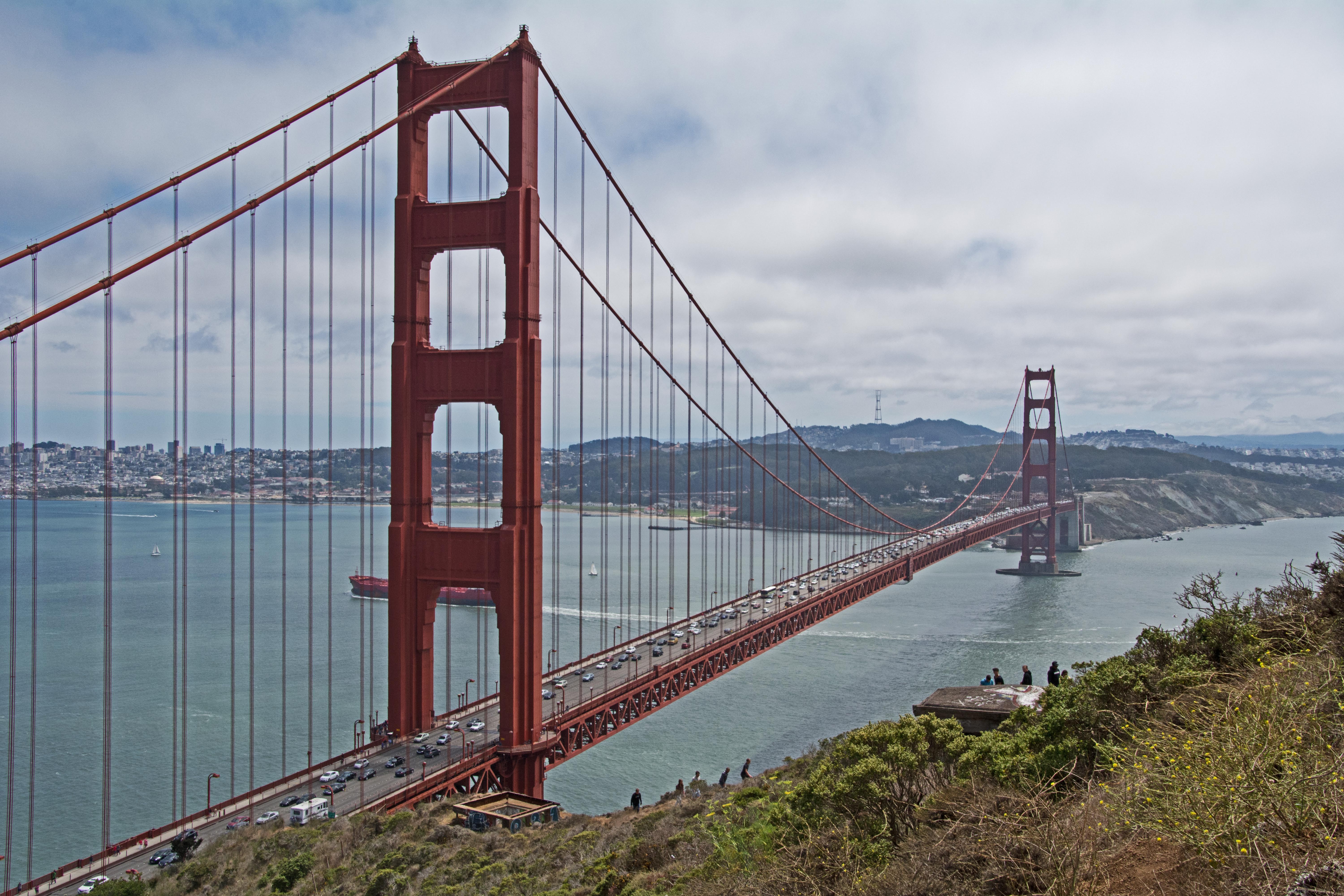
I drove my rental VW Jetta (which handled nicely) from San Francisco airport over the Golden Gate Bridge to the Marin Headlands park. I started with the visitor’s center, where I studied a map and formed a plan to drive a circuit with a couple of stops for some hiking and photography.

The road through the brown hills was windy. When I reached the Coastal Road, the view was spectacular. My plan to walk about almost fell apart when I could not find a free parking space, but on the last pass through someone pulled out, and I pulled in. Then I walked back down to Vista Point.
14 08 10_1429_edited-1

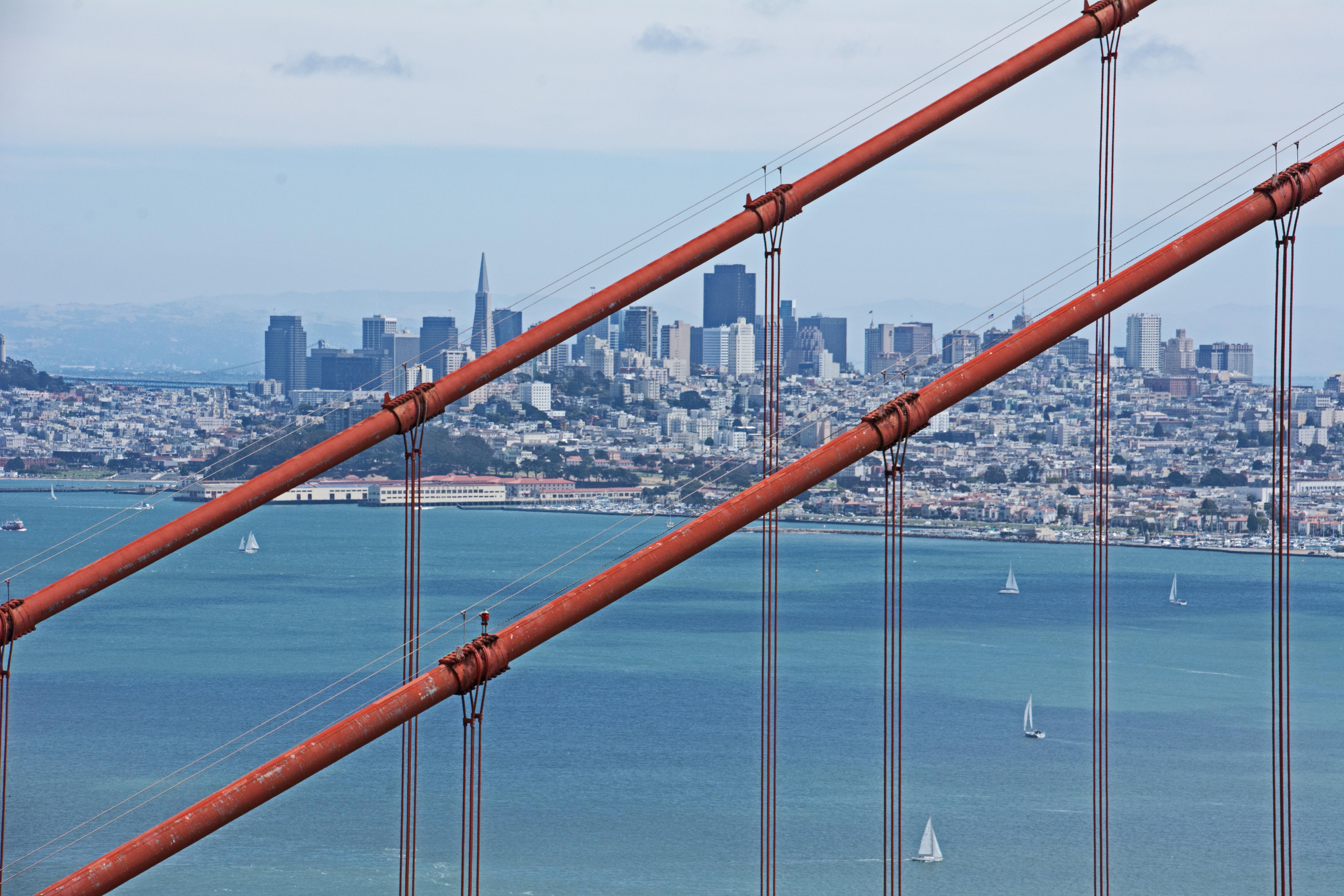
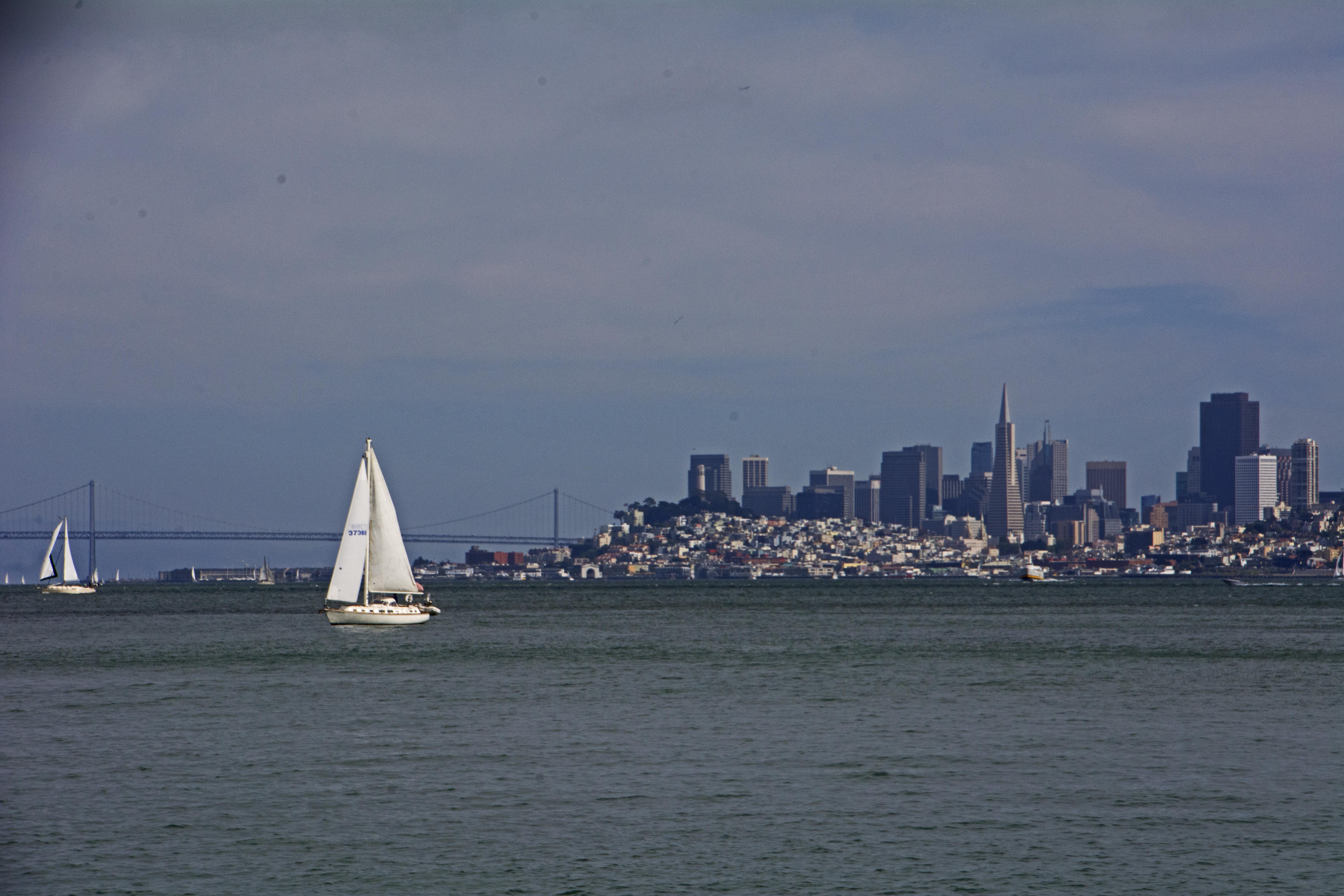
The weather was cool and windy, and the skies were extremely changeable, transforming from overcast to partial sun to dense fog in the space of a few minutes. There were, by moments, amazing views of the bridge, the bay with skimming sailboats, and San Francisco. Some high-spirited young people asked me to take their picture with their Polaroid camera, which I was happy to do.
14 08 10_1468_edited-1

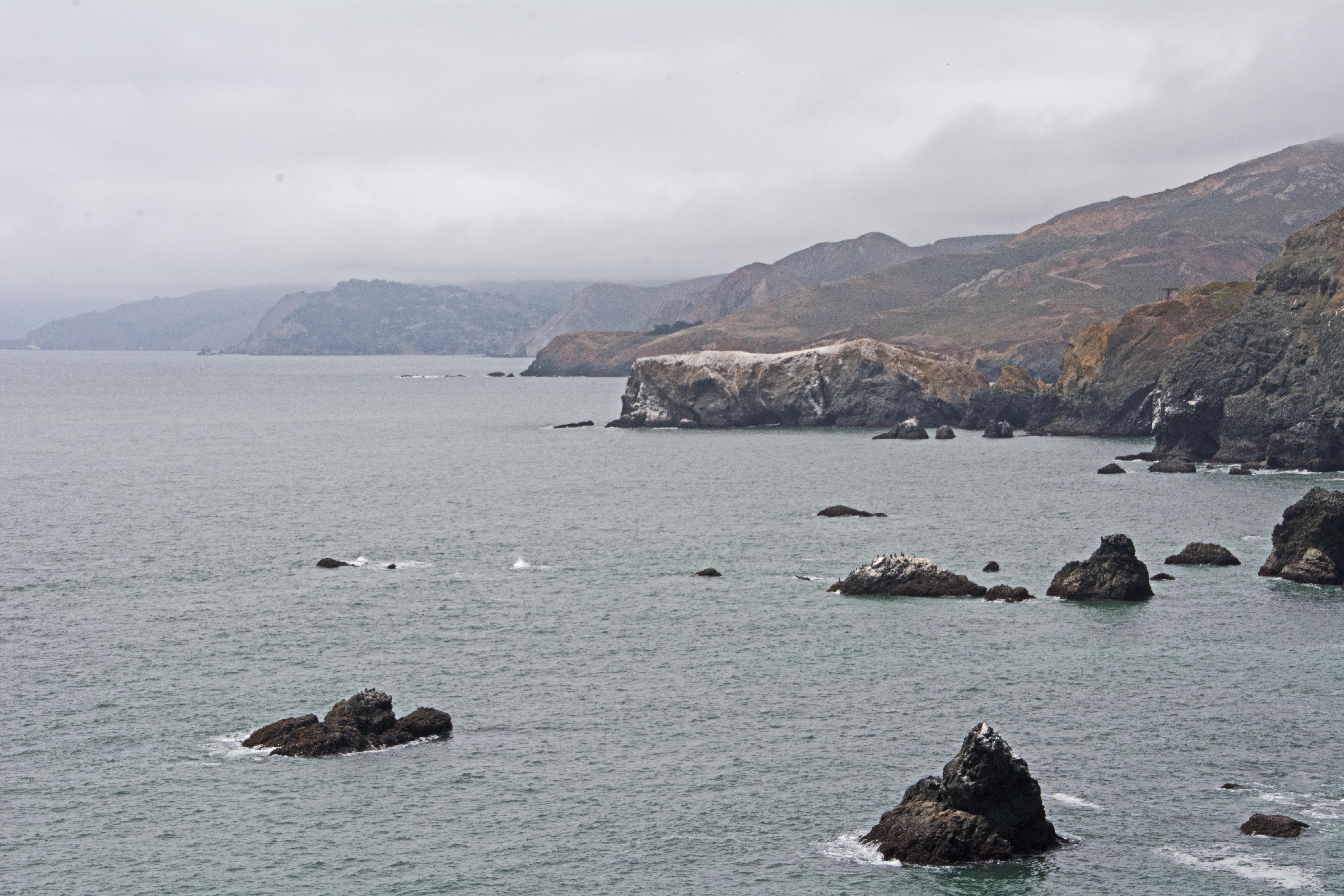
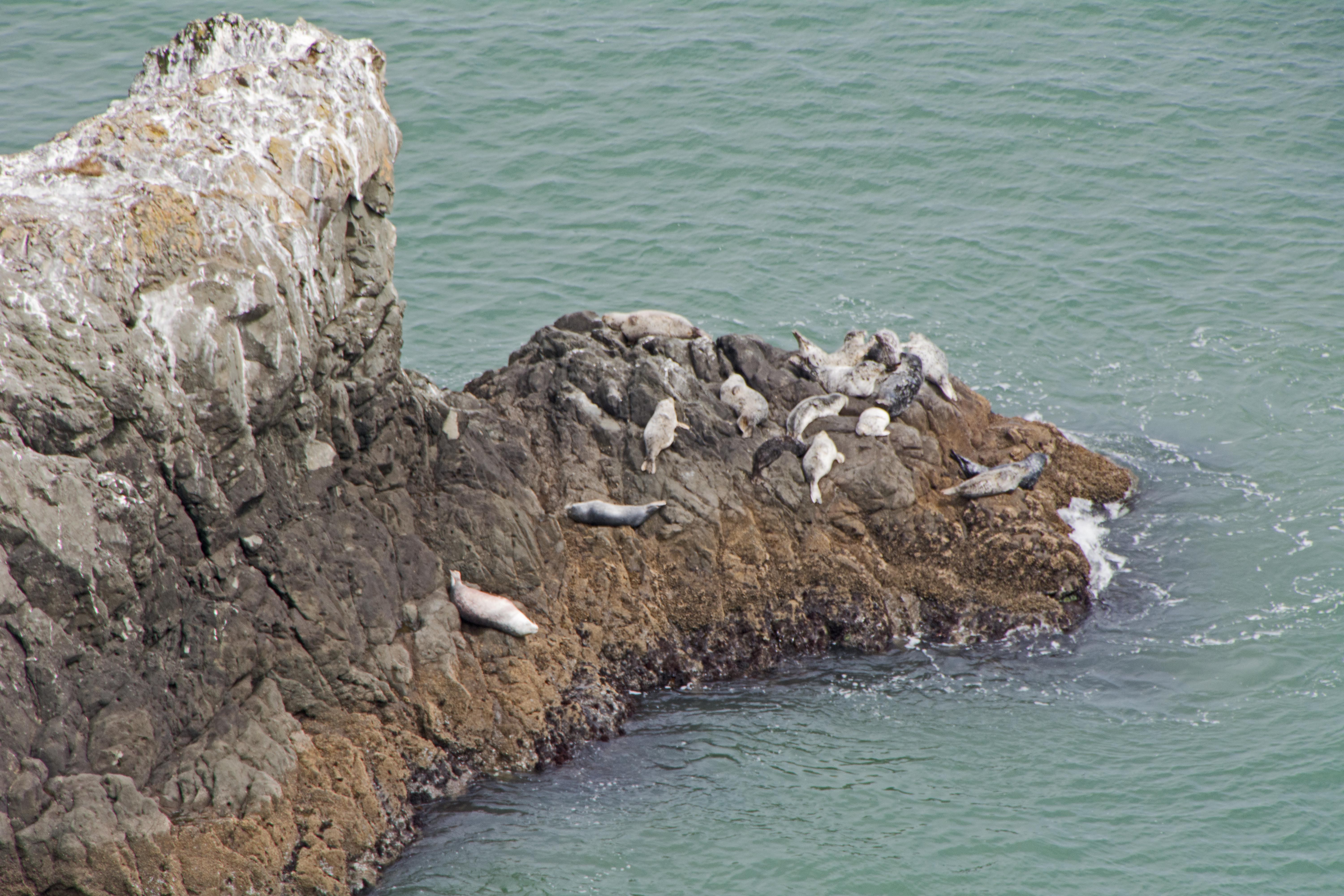
Then I drove on a very steep and winding road toward Point Bonita, where I hiked down to the lighthouse. There were harbor seals resting on a rock in the bay. From the suspension bridge to the lighthouse, there was a lovely view of cliffs coming down to the Pacific.
14 08 10_1456_edited-1

From Point Bonita I drove down to the town of Sausalito, where there were many bicyclists, yachts, street performers, and a fine view of San Francisco. I walked the main street of upscale shops and restaurants, and treated myself to an ice cream cone.
14 08 10_1473_edited-1

I’d thought of taking the ferry over to San Francisco, but was unable to find a legal parking space, and also was starting to feel tired. So I decided to drive on down to the hotel in Palo Alto. I’d counted on using my Galaxy smart phone and Google Maps to get directions, but the battery was very low. I put in the backup battery, and it failed to work. I looked for my extra backup battery, and couldn’t find it. My final backup system was the Enterprise rental car map, which did not have a detailed view of how to get through San Francisco. I felt a spike of fierce anxiety. I’ve gotten dependent on Google Maps. But my map reading and directional intuiting skills had not totally atrophied, and I eventually made it.

I learned the next day that Robin Williams had just died not far from where I’d been enjoying the bay and ocean views. I was a big fan of Williams, and felt shocked and sad to hear he’d gone, and even more sad to hear he’d apparently taken his own life. Such a brilliant comic talent.

At dinner that evening, we talked about his better movies, and I realized the works I cared about the most were his stand up comedy specials, which were both transgressive and sweet, full of manic energy and human warmth. I would have hoped that his special gifts gave him joy and satisfaction, and it’s hard to fathom how he could have come to the point of rejecting his own life. But he did. And although I can’t say it makes any sense to me, I think he was entitled to make the choice, and not be second-guessed.

My hopeful hand checkup, a new salad restaurant, a Porsche contretemps, and discussing legalization

14 08 03_1352I was a bit anxious about my check up for the torn ligament with the hand doctor earlier last week, but it turned out fine. After the doc twisting my fingers a bit and asked if it hurt (it did), he pronounced me improved, and lowered the chance of needing surgery to 5 percent (a big improvement from his previous estimate of 50 percent). He cleared me to play the piano gently (no Rachmaninoff, he said), but to otherwise keep my fingers taped up for another month. I asked about getting back to golf, and he strongly advised me to wait. This was disappointing, as I’d felt like this could be my year for a big golf breakthrough (as, admittedly, I’ve felt in previous years). Still, I I was pleased to be heading in the right direction.

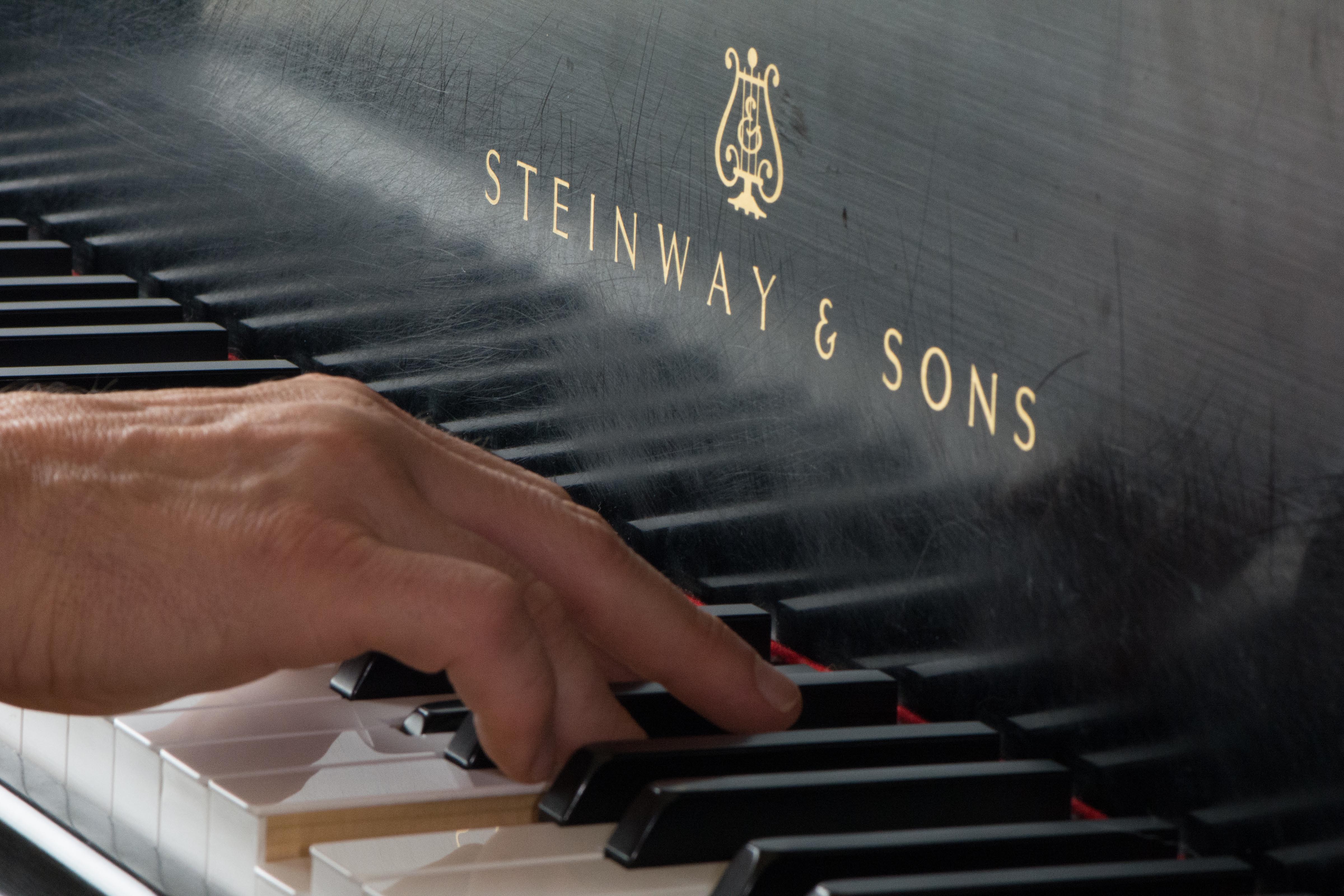
Playing the piano again was a rich, dense, textured pleasure. Going a month without playing is something that I hadn’t done for at least 30 years, and I missed it. I started gently with some Chopin mazurkas, and then some nocturnes. I couldn’t resist trying some Rachmaninoff – the Elegie, op. 3. It was all a bit rough, but I felt I was listening better, hearing more nuance, and playing with more rhythmic freedom. Perhaps the forced time off did my ears some good.

14 08 03_1277The next day I discovered Happy and Hale, a relatively new take-out restaurant on Fayetteville Street a couple of blocks from my office. It serves only three things: salads, smoothies, and juices. All are not only super healthy, but also lively, interesting combinations of ingredients. My first experience was the quinoa salad, which had quinoa, black beans, avocado, cilantro, feta cheese, and a couple of other things, with red pepper vinagrette. It was amazingly tasty. There was a long line, but I found this more cheering than annoying. It was good to see people interesting in eating something healthy, and to see this little business doing well.

The next day, I took Clara to the Porsche dealer for servicing. Her check engine light had come on, but even before the that, I’d felt something wasn’t right. Giving her more throttle in the higher RPMs yielded more noise, but not more thrust. I suspected a transmission issue, which turned out to be correct. I needed a new clutch and new flywheel, and the cost was a big ouch.

Waiting for the parts to come in, I drove a loaner Ford Explorer (a sport ute). I just don’t get why people like this type of vehicle, at least when they don’t have a big group of kids or other heavy loads to haul. To me it was not fun to drive. After my sports car, It felt lumbering and awkward. I had the impression of barely having enough road, like a truck pulling a massive mobile home, needing a “wide load” sign to warn other vehicles.

But I admit that I liked the instrumentation. It had a touch screen set up for the climate control, radio, blue tooth, etc., and a handsome virtual compass. In reverse, the touch screen showed the view behind, with the danger zone outlined in red. It had some sort of RFD key that allowed the vehicle to unlock when I pulled the handle without the need for any use of the key. A nice convenience.
14 08 03_1253
Reading the New York Times is a settled part of my morning breakfast ritual, and there is a sense in which I always enjoy it. But golly, the news has been grim! Part of it is structural: in conventional journalistic thought, information usually only qualifies as news if it involves dramatic conflict. So we don’t hear anything about the peaceful countries in, say, Africa. But the lead stories recently inspire a special mixture of horror and hopelessness, because they’re big and absolutely beyond any individual control. Examples: Syria, Iraq, Afghanistan, Russia, Ukraine, Israel, Gaza, Nigeria, Washington.
14 08 03_1242
This week, though, there was a welcome exception. I was pleased to see the Times came out in favor of partially ending the war and drugs and legalizing marijuana. The editorial board had clearly had thought hard about it, and put some elbow grease into collecting the arguments: including the enormous human cost, the huge economic cost, and the relatively low risk. It felt like a watershed moment. Maybe now it will be possible that we can have a debate based more on facts and less on myth, moralism, and hysteria. I don’t think marijuana is a particularly good thing; for some people it’s surely an unhealthy thing. But criminalizing it has been an absolutely terrible thing.

So we might be close to overcoming this particular moral hysteria and to ending of prohibition. Perhaps some of our other seemingly intractable problems aren’t beyond all hope.
14 08 03_1250_edited-1

A forced break from piano playing, and thoughts on autodidacts and other learners

14 07 25_1170
After work on Friday I drove up to Raulston Arboretum to check on the flowers and insects. The rose garden was gone – nothing there but dirt. But there were still plenty of things growing, and bees and other insects hard at work. I particularly liked this uninhibited butterfly.
14 07 25_1169
14 07 25_1171
14 07 25_1174

It’s been a whole month now that I’ve been unable to play the piano. I’ve been following my hand doctor’s orders and keeping my fingers taped up, hoping that the torn ligament serving the middle finger of my right hand will heal. Practicing the piano every day is a habit of many years. While I wouldn’t say I’m going through withdrawal, I certainly don’t feel as happy and balanced as usual. Piano music is a big part of my life, and I miss it.

But I’m trying to stay positive. The hand will get better eventually, probably. And I’ve used some of the time freed up from practicing to do ear training exercises that should make me a better musician. I had some exposure to these in my student days, and learned enough to pass the theory course, but not enough to feel really competent. The reason I didn’t do more was, it’s more work than fun. But I see now how a richer understanding of intervals and harmony could help me as a sight reader and interpreter.

Anyhow, I’m learning something. It feels normal to me to continually be learning new things. I tend to think that being curious and having the stamina and gumption required to take on new intellectual challenges is itself a gift, bequeathed by my parents and their ancestors, and also a product of my friends, teachers, and the books and other information that shaped me. But how it works, and why not everyone gets it, are mysteries.
14 07 26_1208_edited-1
14 07 26_1209_edited-1
There was a piece in Slate this week about education that suggested folks like me were outliers, “autodidacts,” and part of a minority able to learn without teachers, classrooms, and surrounding students. I suppose that’s possible. But I did not agree with the author’s premise that schools as they currently exist are optimal learning environments for most people. I suspect that as often as not schools destroy kids’ natural love of learning and at the same time fail to give them the tools they need to pursue their own learning paths.

So what is the best way to learn? Scientific American this month had a piece on recent research on this. The central idea was that we’ve done very little research into the most effective methods of helping people to learn. Instead we simply keep repeating traditional methods. The field of science-based education methods is still in its infancy, but there’s already enough to suggest that a lot of our methods are not very effective, and that we’ve got a lot of work to do.
14 07 26_1239

A charming New England beach trip, with friends, shorebirds, croquet, and a spot of evolutionary theory

14 07 20_0754_edited-1
Last weekend we took Friday off and flew to Boston, then drove down to Westport, Massachusetts, a small coastal town on the border with Rhode Island, where we were privileged to be guests of Sally’s cousin and her family. The area has a lot of New England charm, with stone walls and farm fields. Our hosts’ house was beautiful, and also well designed for relaxing. We did a lot of sitting around and talking, eating, and laughing.
14 07 20_0809_edited-1

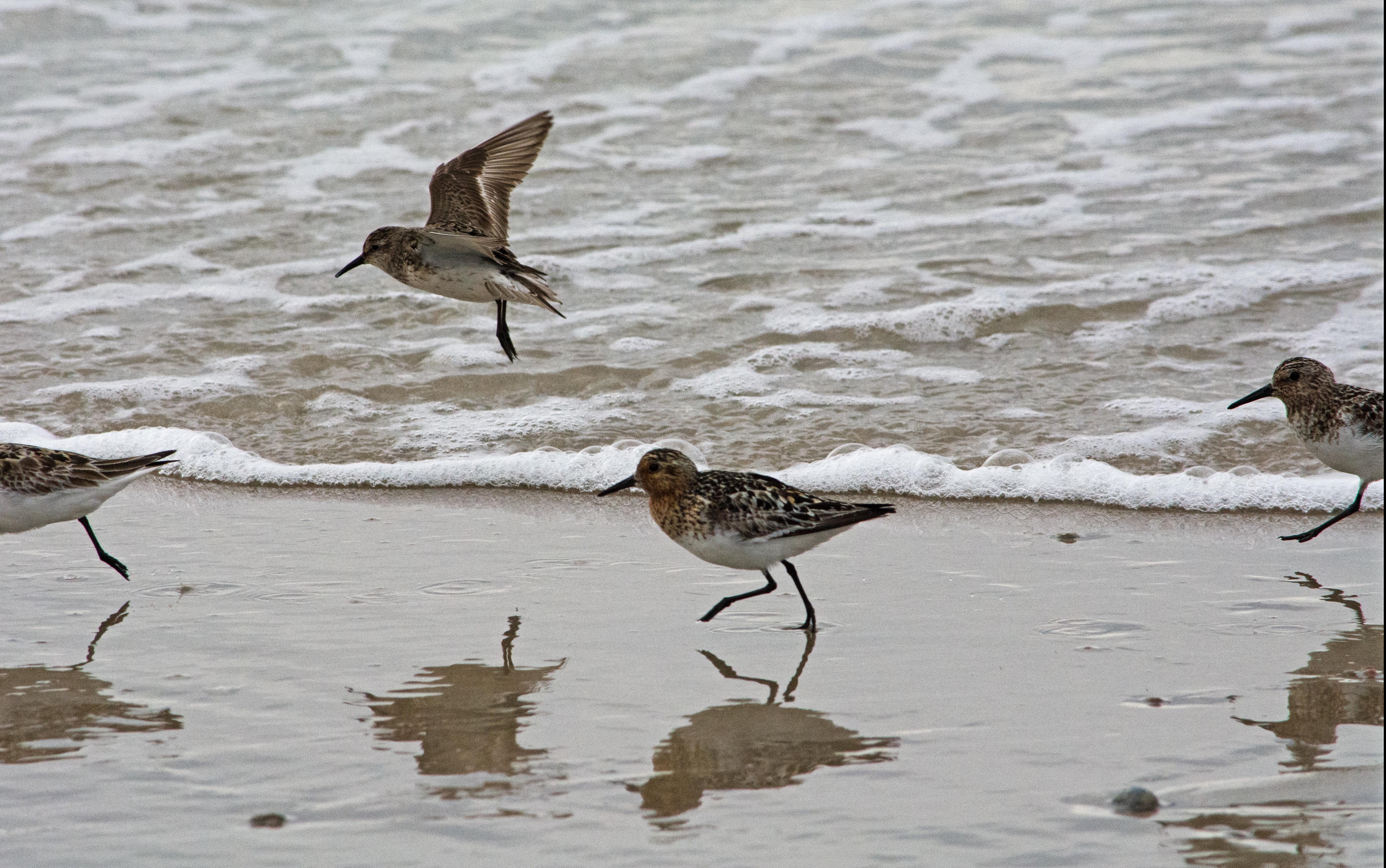
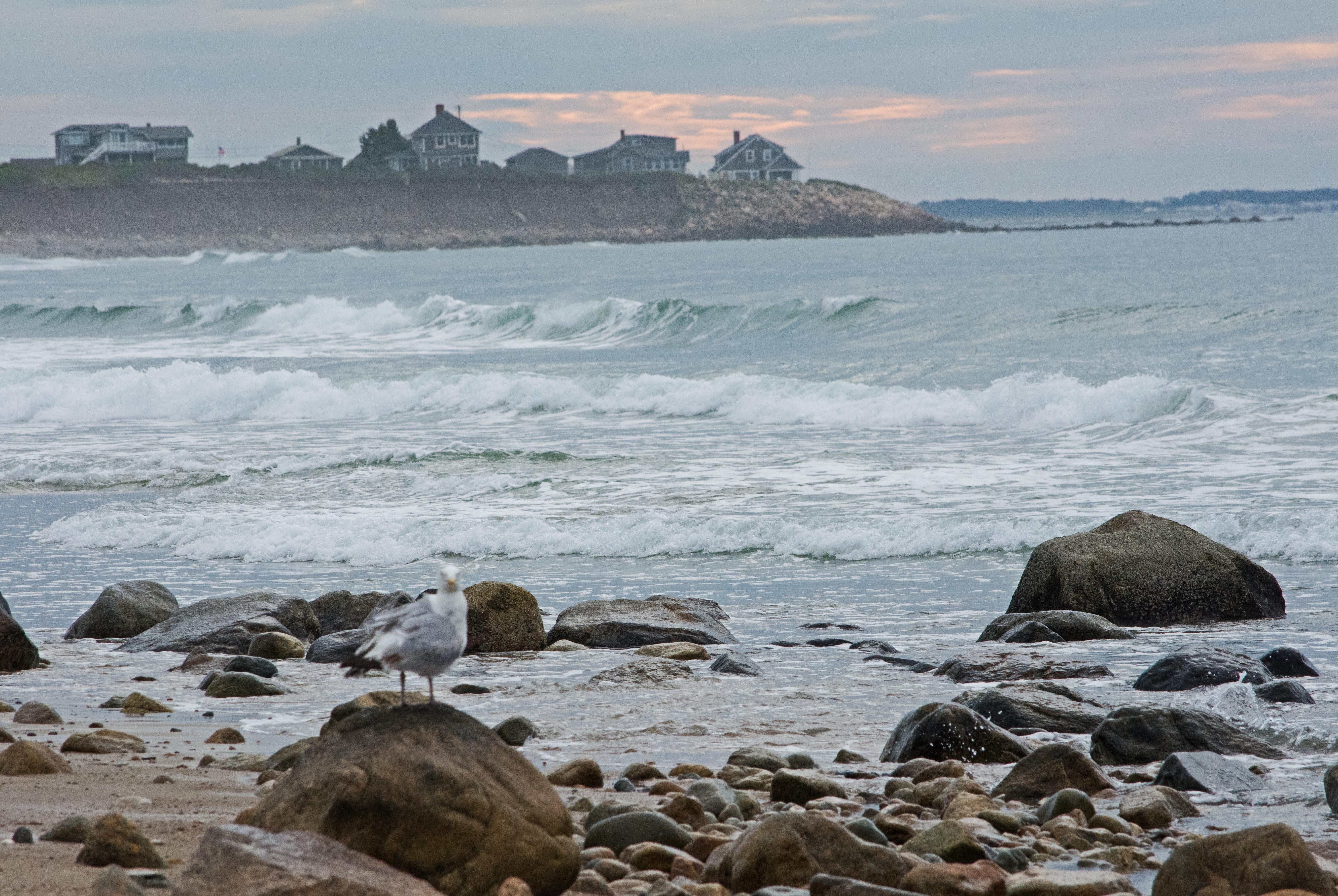
Two mornings I got up early and walked down to the beach to stroll with my camera. The beach was rocky, but pretty. It was peaceful to just walk with no one around as the sun came up. I watched the shore birds, and felt a combination of amusement, delight, and wonder.
14 07 20_0796_edited-1

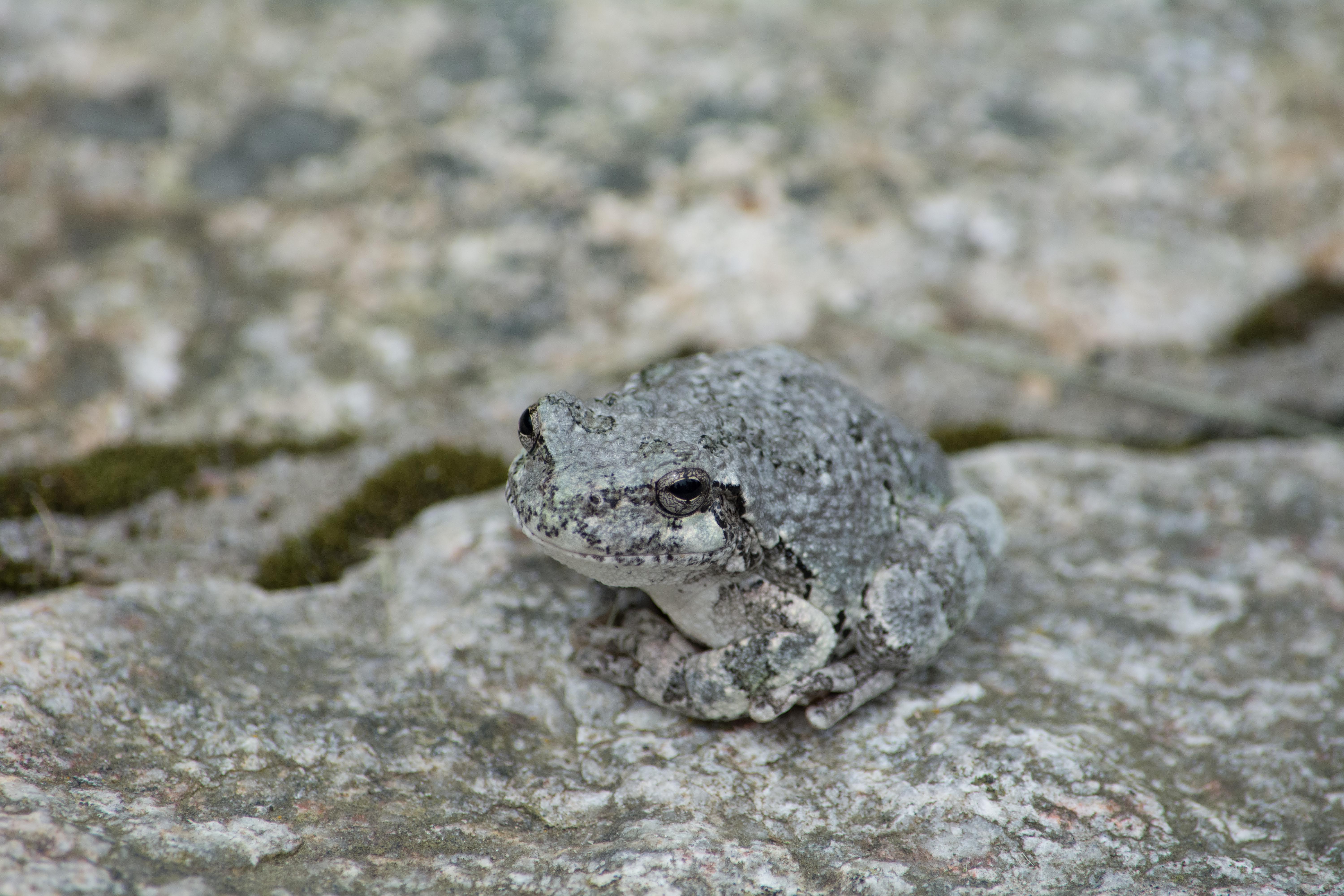
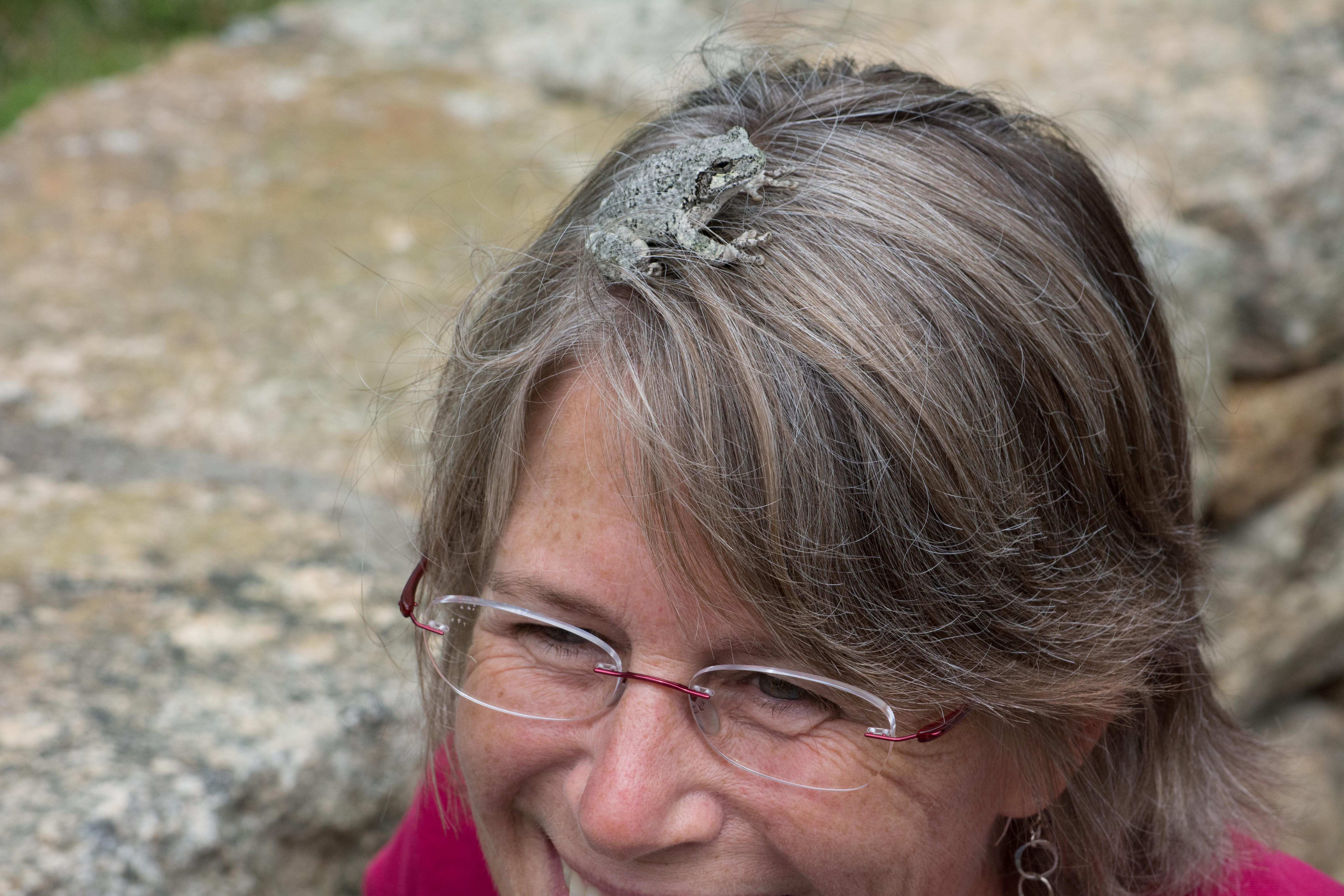
In the backyard, we saw a beautifully camouflaged tree frog sitting on the stone wall. It decided to jump onto Sally, which she liked.
14 07 19_0977
14 07 19_0984

We also took a boat ride and saw quite a few ospreys, including nesting fledglings and patrolling parents.
14 07 19_1035_edited-1

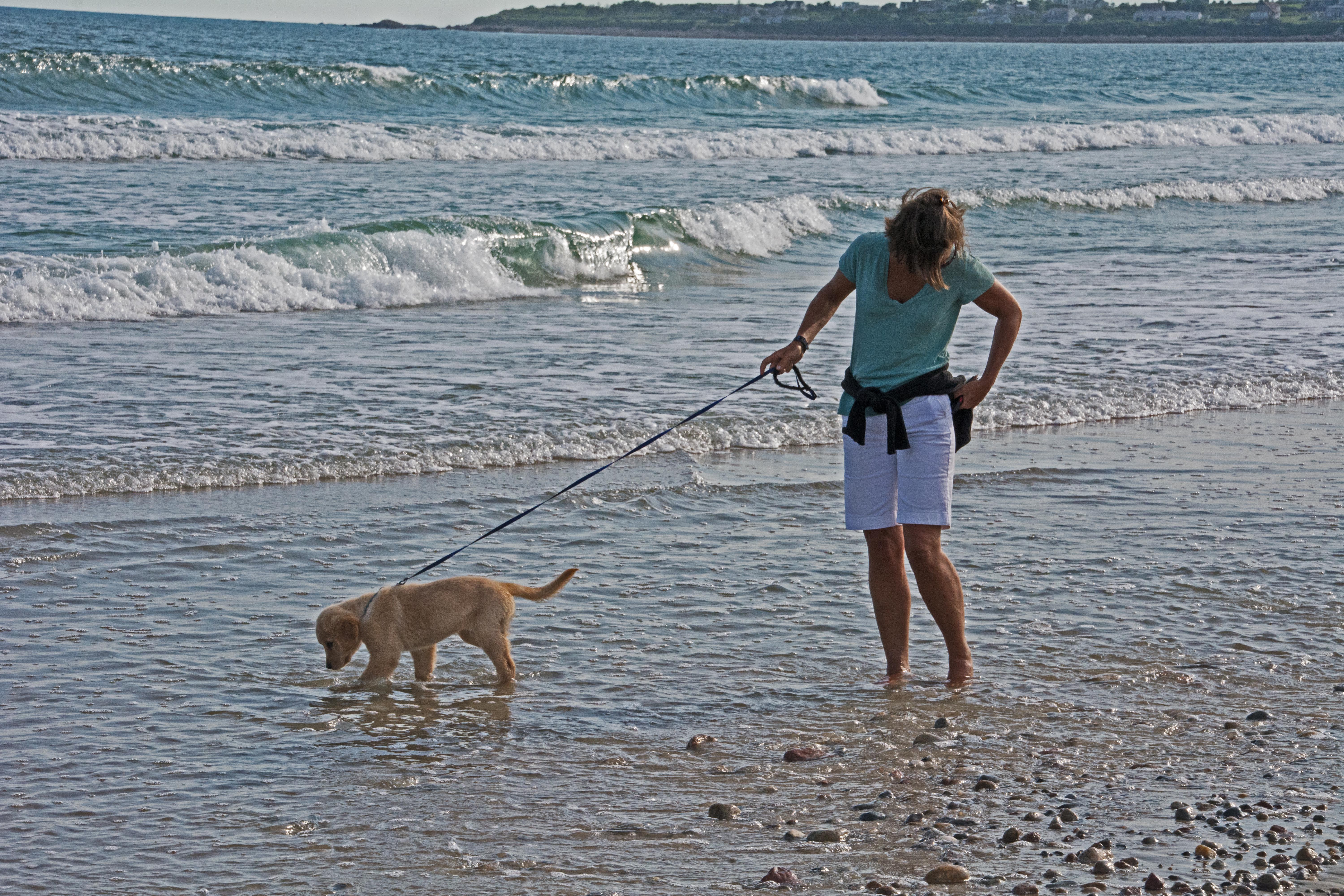
We took along a 12-week-old golden retriever puppy, the cutest thing ever, friendly and curious, with amazingly soft fur. This one had a specially designed life jacket.
14 07 18_1116
14 07 20_0832_edited-1
14 07 19_1028

14 07 18_1086_edited-1

On Sunday after a beach walk and a lovely breakfast, we watched the end of the British Open, where Rory McElroy triumphed like a true champion. Then we played some croquet in the backyard. It had been some years (like maybe 40) since last I tried croquet, and I was definitely rusty. But it’s a fun game, and I’d enjoy playing again.
14 07 20_0838_edited-1

It was also fun to sit on the back porch and read. I finished re-reading Last Ape Standing: The Seven-Million-Year Story of How and Why We Survived, by Chip Walter,a book that must have not been too successful, since Jocelyn had a free copy for me. It is a non-specialist science book about the evolution of homo sapiens and other humans.

I hadn’t known that we were only one of at least twenty-seven human species that existed in the last seven million years, some of which overlapped in time with us. Our kind originated about 200,000 years ago, but came close to extinction about 70,000 years ago, when only 10,000 or so individuals were alive in southern Africa. Walter’s book explores how it is that we alone survived and became what we are.
14 07 20_0765_edited-1

Our brains had something to do with it, of course, but that begs the question why our brains became what they are. According to Walter, it relates to our long childhoods, which relate to our ability to learn from other humans, which relates to our social natures. We are naturally curious – learning machines. And we are creative, because creativity gains attention for the individual and brings innovative progress for the group. Our development of symbolic thought and complex communication systems allowed for social organization that made us the dominant creature on the planet. There’s a lot interesting fact and theory here, and also an acknowledgement that there’s still much we don’t know about ourselves. A stimulating, worthwhile book.

A macro photography class, and two soccer games

14 07 13_0682_edited-1
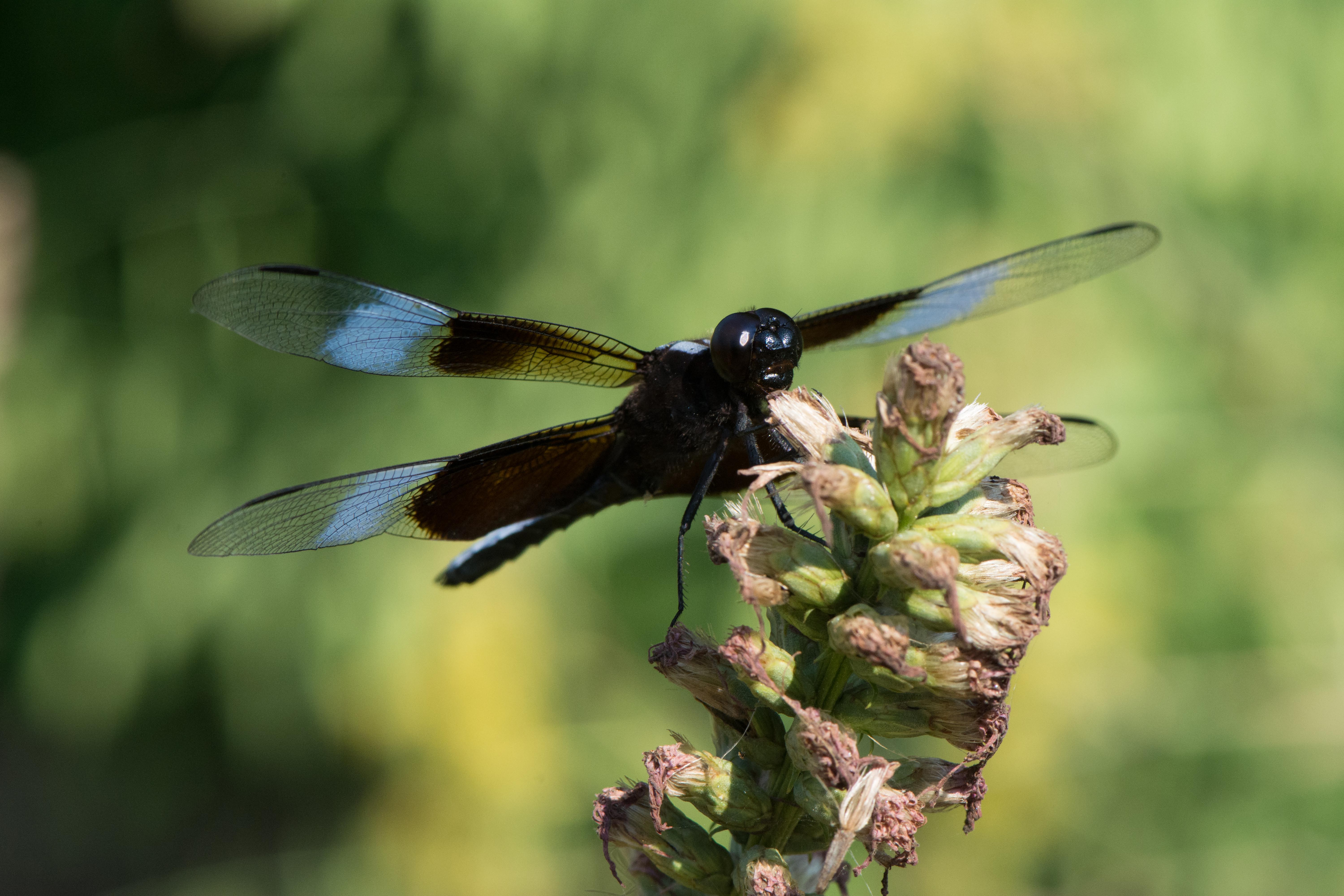
Today I took my first ever photography class: a three-hour session on macro photography. It was offered by the Raleigh Parks department at the Sertoma Arts Center at Shelley Lake. The teacher, Eric Krouse, was pleasant and knowledgeable, and an even bigger gear hound than I, and possibly as great a lover of dragonflies. After discussing theory, we went down to the lake, where we didn’t see much, but I got a couple of dragonfly shots I liked. The others below were taken at Raulston Arboretum yesterday.
14 07 13_0685_edited-1

It was a big soccer week for us, and I do not mean the World Cup. We went out to Cary on Wednesday night to see the Carolina RailHawks take on Dallas, a major league team, in the U.S. Open cup quarterfinals. The RailHawks played gamely, but finished the first half down 3-2. That turned out to be most of the story, though Dallas scored twice again in the last few minutes. In truth, Dallas had a couple of very speedy, impressive scoring threats, and we did not have a good answer. It was a good game, but after a long stretch of home wins, painful to lose.
14 07 12_0616

It’s been good to see the world enjoying World Cup soccer. Soccer is a pleasing sport in many ways, with speed, agility, grace, and force. Why hasn’t it become more popular in the U.S.? I would guess it’s mostly a matter of custom and tradition, with most people happy enough with what the games they learned about as children and a little fearful of trying to learn the rules of a new game.
14 07 12_0588_edited-1-1

On Saturday we saw the RailHawks lose again, this time to Indianapolis. We led at the half 1-0, but the Indianapolis team had a better attack, and ultimately prevailed 3-2. Again it was painful to lose, but good to be see great athletes.
14 07 12_0544_edited-1

Fireworks, wildlife, and Carl Hart’s book debunking drug myths

14 07 04_0378_edited-1-1
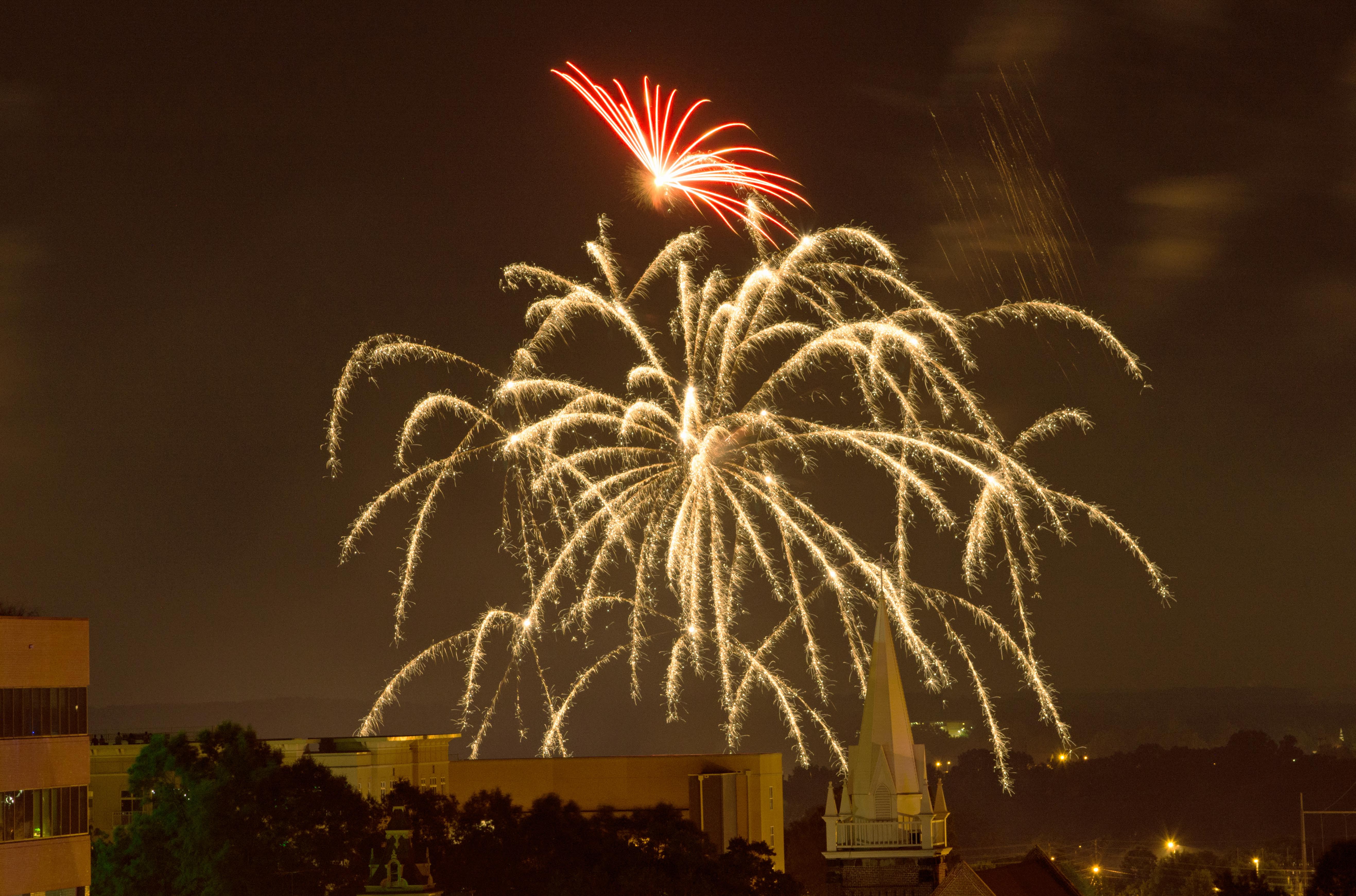
Fourth of July fireworks are hard not to like. As a friend once observed of sex, even when it’s not particularly well done, it’s magnificent. On Friday we were planning to walk a few blocks to see the one of the two downtown Raleigh fireworks shows, but Sally was not feeling well, so we got some takeout Indian food from Blue Mango and watched from our twelfth-floor balcony.
14 07 04_0402_edited-1

That afternoon I’d Googled how to take good fireworks photos, which is a bit involved (use a tripod, remote control, bulb setting, manual focus, etc.), but I found it interesting. I got a few images I liked of the display at Red Hat Amphitheater. I could also see parts of the display at Memorial Auditorium, which appeared to be more magnificent, but this could be the grass-is-greener effect.
14 07 04_0404_edited-1-1

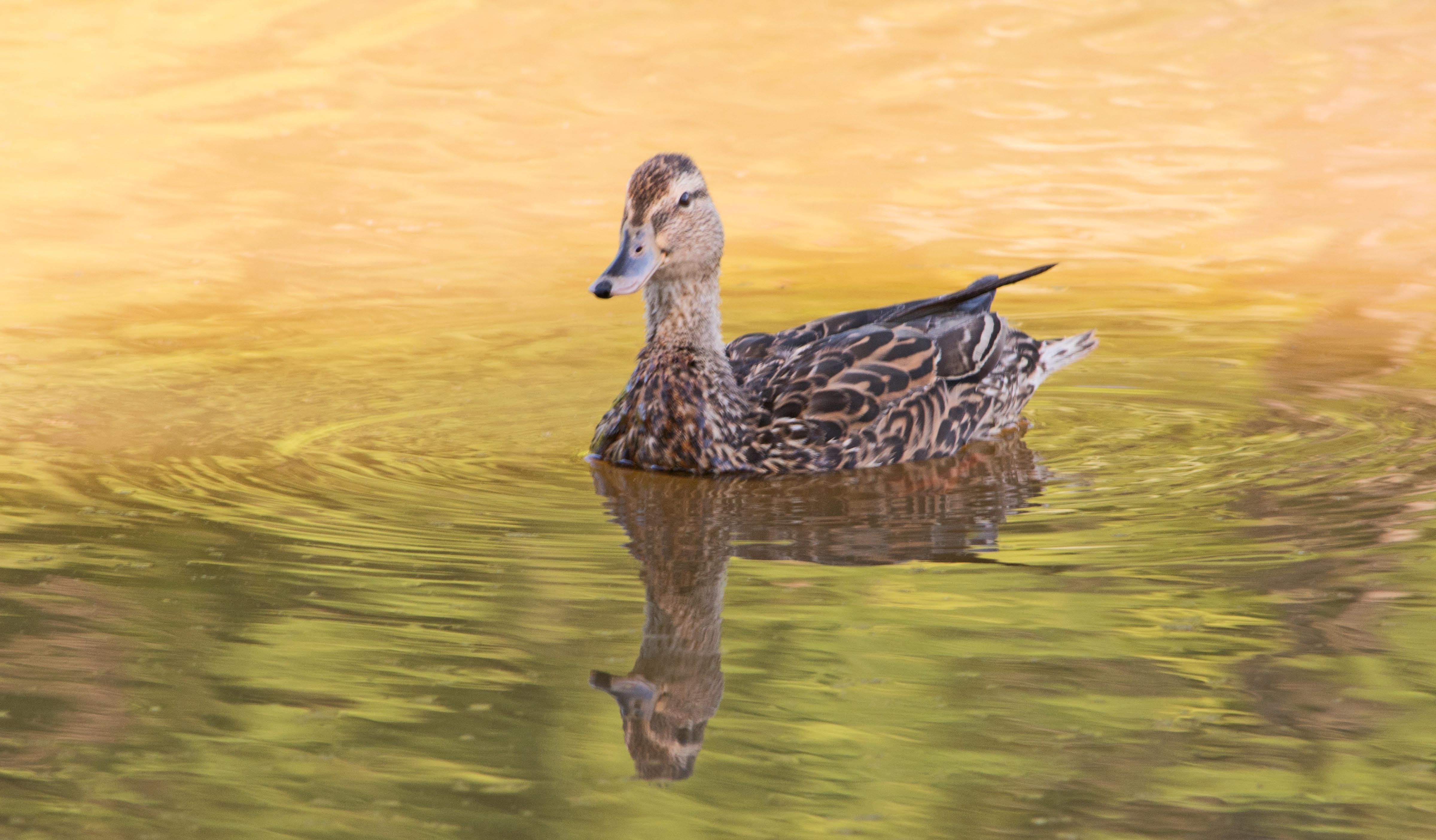
I continued exploring local parks, looking for dragonflies and other wildlife, this time stopping at Shelley Lake. There were lots of mallards and geese, but the one below, by herself, got my attention. I also stopped in at Raulston Arboretum on Sunday morning and focused on some little creatures communing with the flowers.
14 07 05_0538_edited-1

On Saturday I finished reading an unusual and worthwhile book: High Price: A Neuroscientist’s Journey of Self Discovery That Challenges Everything You Know About Drugs and Society, by Carl Hart. Hart is a professor at Columbia University who’s devoted his scholarly career to studying the effects of illegal drugs on the brain. His book is an autobiography of growing up poor and black in south Florida, and somehow not getting shot, becoming a dropout, becoming a hardened criminal, becoming an addict, or going to jail (which were common outcomes of his friends and family), and instead somehow getting an education, becoming a respected scientist, and learning to question his own assumptions. It’s remarkably honest.

I was particularly interested in his take on the war on drugs. As I’ve noted before, I view the drug prohibition regime as a terrible social policy from every perspective. Hart focuses particularly on the costs to the black community, with draconian laws resulting in mass long-term imprisonment and destruction of the social fabric. He combines an overview of the human toll with his own drug experiences.
14 07 06_0462_edited-1

Like almost all of us, he initially accepted uncritically the media/government claims that crack cocaine was a menace that threatened to make addicts of everyone who tried it and turn them into zombies who cared for nothing but the next high. He gradually realized, based on his own experience and his research, that this was a wild distortion of reality. Crack cocaine is chemically almost identical to cocaine, and the effects on the body are basically the same. The primary difference is social: crack cocaine is cheaper and marketed more to black communities, while cocaine is an expression of wealth and status. And crack prison sentences are much more severe.

This has become almost common knowledge, and the sentencing disparities have been substantially reduced (but not eliminated, unfortunately). For me, Hart’s account highlights how media and politics can create a moral panic, and even otherwise responsible scientists can get swept along. Thus the famous example of the experimental rats that can’t resist crack, which supposedly proved that crack was uniquely addictive. Hart explains that the rats, which are social creatures, were unhinged by isolation, and had no alternative activities to getting drugs.
14 07 06_0514_edited-1
Hart did experiments with human subjects who were in fact crack addicts, and offered them a choice of getting high or getting $5. They took the money frequently enough to disprove the idea that addicts cease caring about anything but drugs.

Hart contends that the problem of drugs in poor communities is complex, and viewing drugs as the primary source of social ills is mistaken. The kinds of social problems that he grew up with – domestic violence, petty crime, an extreme culture of honor magnifying violence, teenage pregnancy, and unemployment – preceded the arrival of crack. The central problem of poor communities is poverty. It’s not surprising that people with few other entertainment options are more prone to entertaining themselves with drugs.
Hart finds that the great majority of people who use drugs, including crack and heroin, are in no sense addicted. Most users have jobs, families, and orderly lives. The notion that addiction always results from exposure is simply false. This doesn’t mean that addiction never happens, or that it is not a serious medical and social problem. There are addicts who need help. But we need to get our facts straight, quit moralizing, and quit punishing people for addiction.

The war on drugs is a fascinating case study of how fantastically wrong ideas with horrendous consequences can propagate and take over entire societies. We tend to think of this happening in the distant past (think of witchcraft) or foreign lands (murderous religious extremists). But it happened to us! With all our wealth, education, science, and technology, we were still overpowered by groupthink that stopped critical thought. And while we may be winding down the war on drugs, it is definitely not over.

Thus it took courage for Hart to write this book. With an entire population raised on constant messages of moral panic, to challenge the basic foundations of the war on drugs is risky. You will be viewed by many as dangerous and immoral, which could be career-limiting.
But this book may help shift the debate. I was a little disappointed that Hart didn’t follow his sound reasoning all the way on the question of legalization, and ended up promoting instead decriminalization. As the Economist has repeatedly pointed out, decriminalization leaves the drug markets in the hands of criminals, whereas legalization with careful regulation would deprive criminals of a major source of revenue. But never mind. I’m grateful for Hart’s book.
14 07 06_0483_edited-1
14 07 06_0485_edited-1

Beautiful dragonflies, an unlikely soccer victory, and my hand injury

14 06 28_0215_edited-1
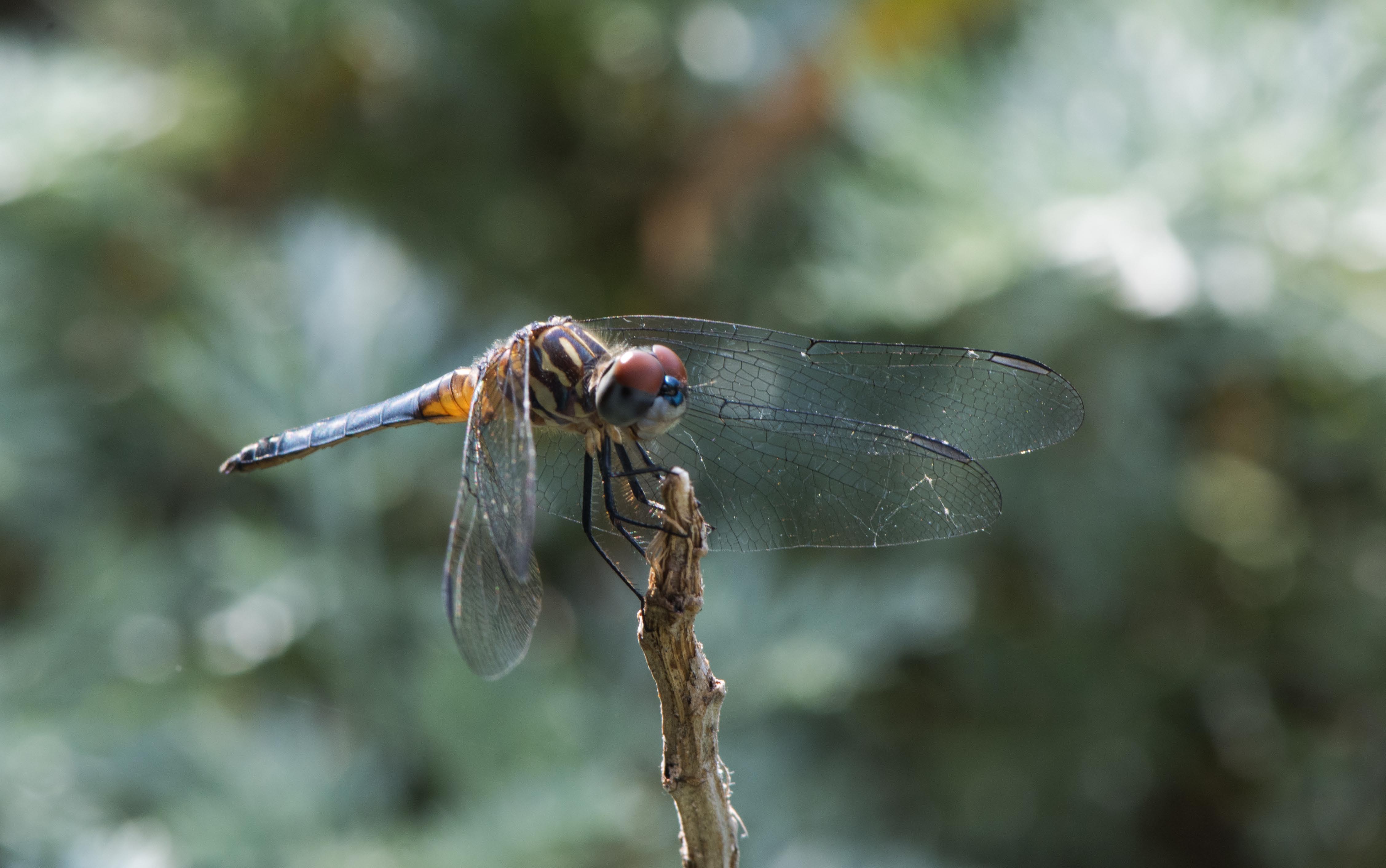
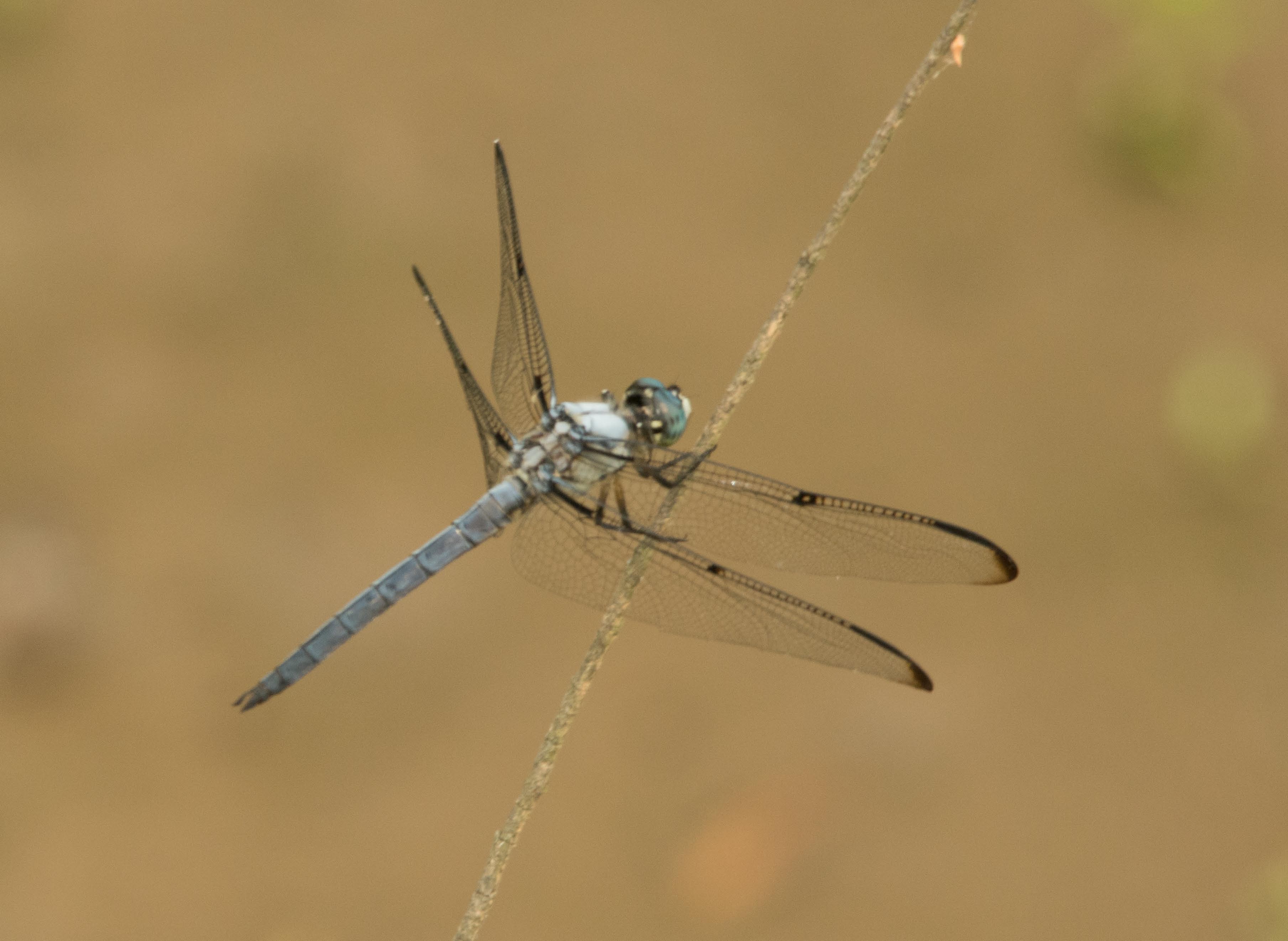
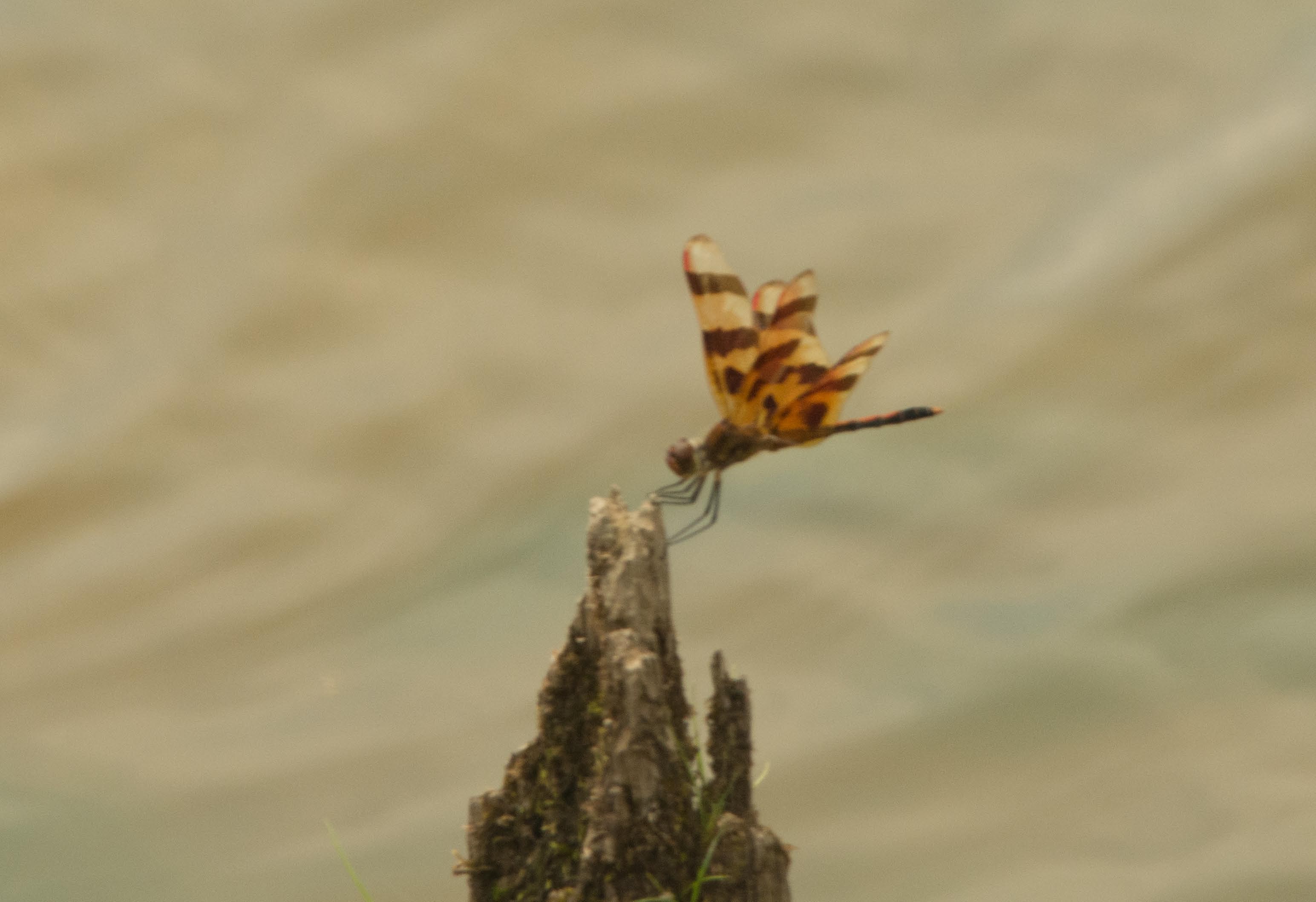
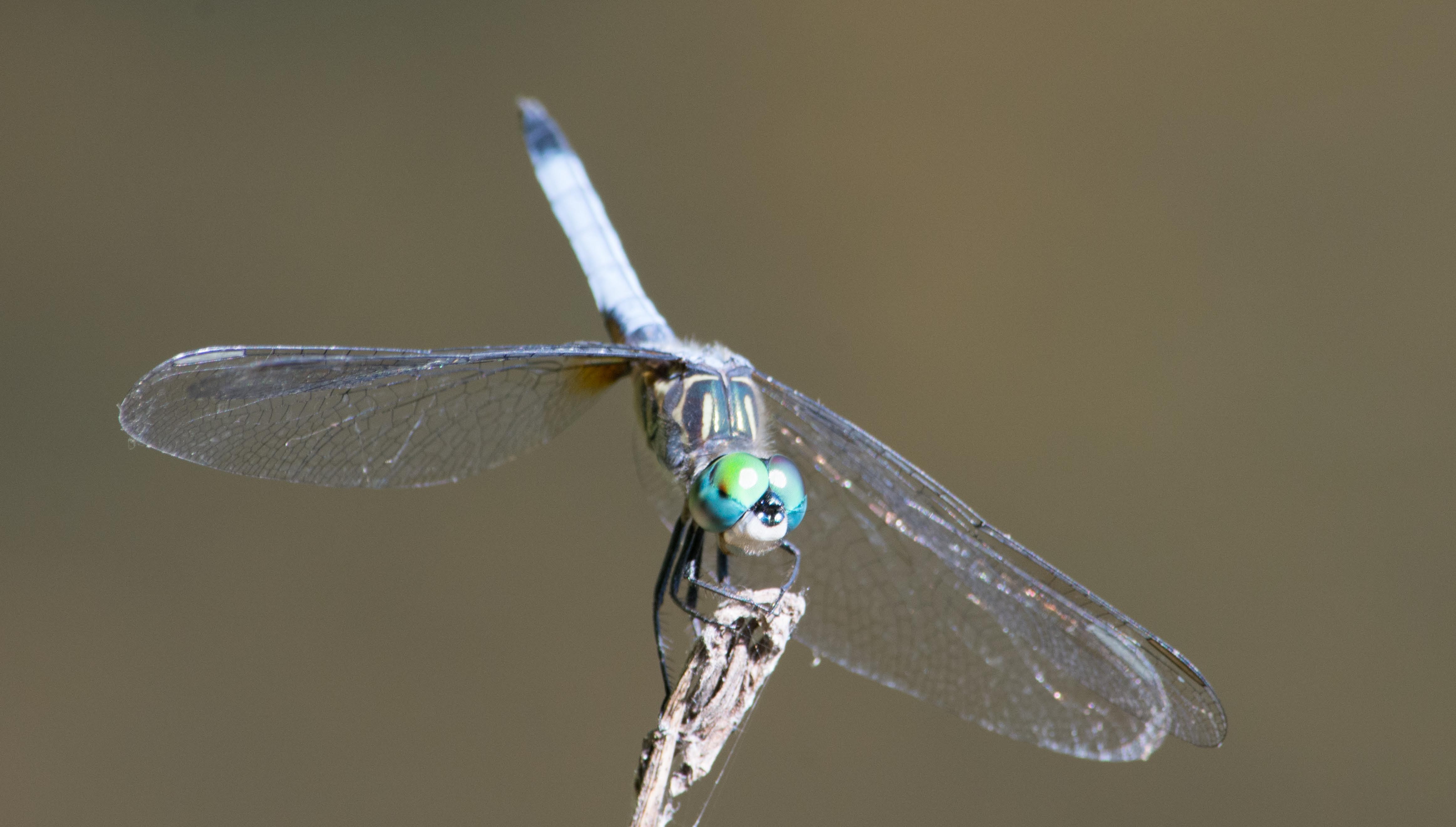
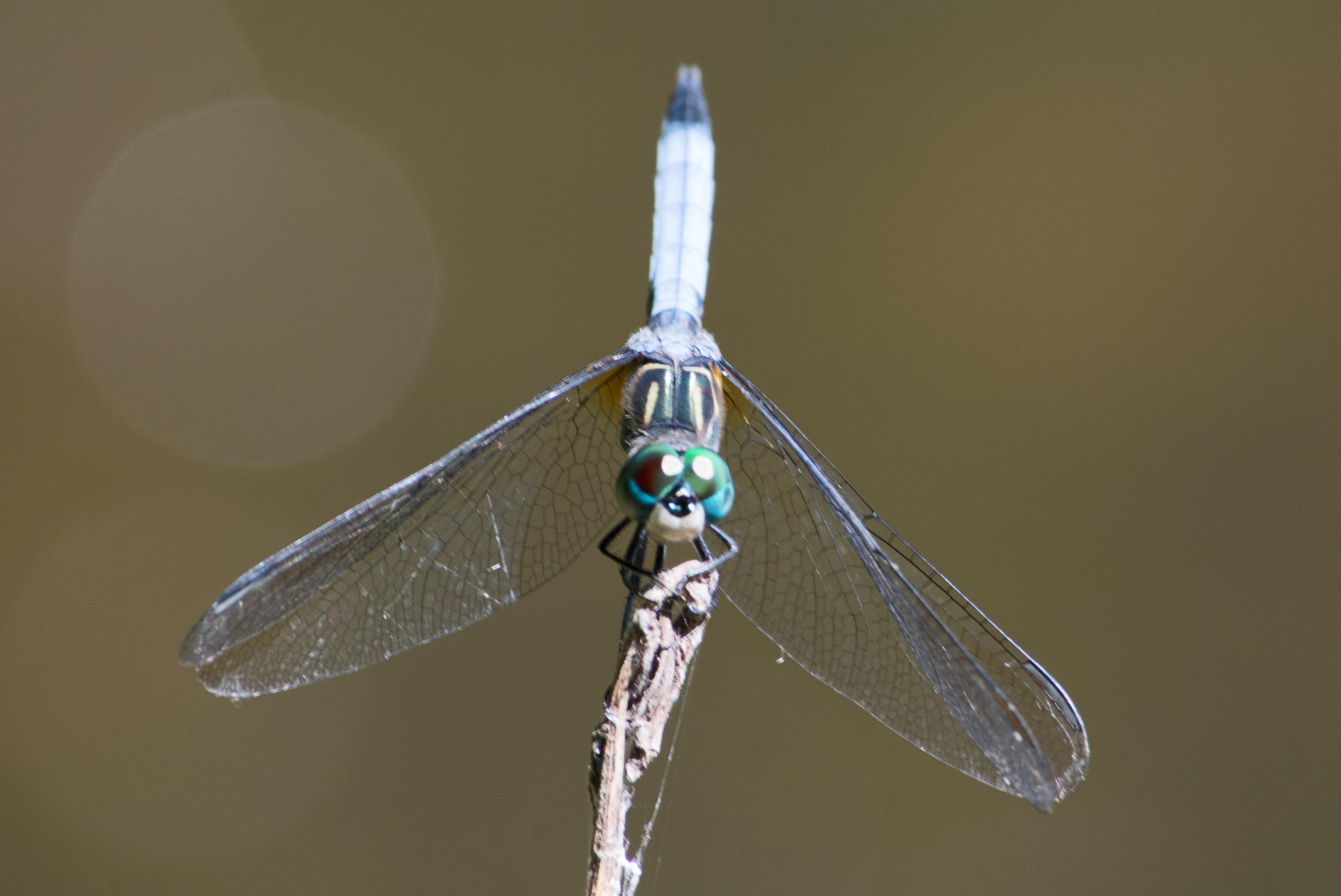
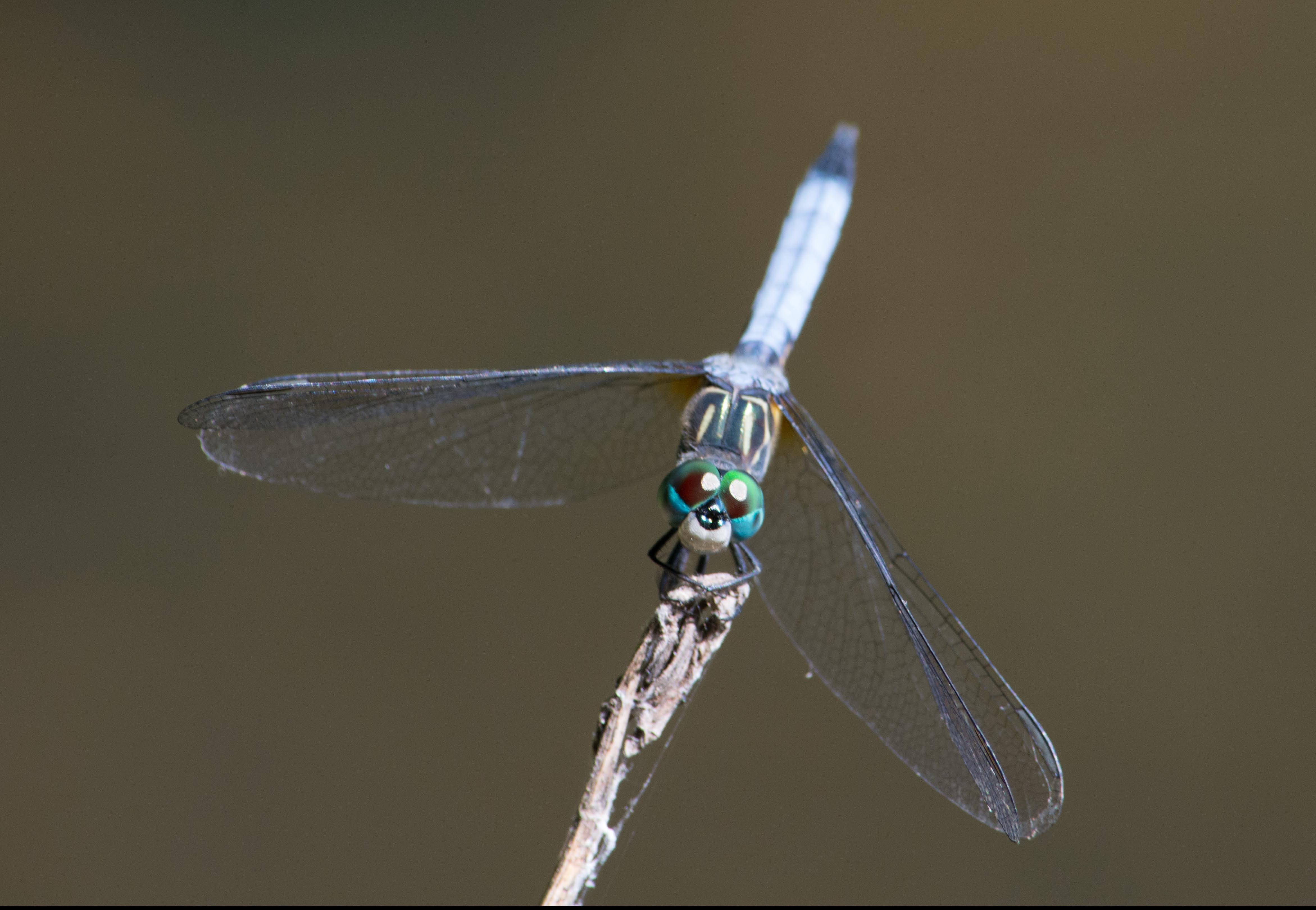
I spent some quality time this weekend with my camera looking for dragonflies. They are amazing aerialists, with the ability to hover, fly backwards and upside down, and attain speeds upwards of 30 miles an hour. They eat mosquitos, among other prey. Their eyes are the largest in the insect world, taking up most of their head and allowing them to look in all directions. And up close, some are quite beautiful. At the boardwalk over the swamp at Raleigh Boulevard, I found great blue skimmers, common whitetails, Halloween pennants, along with others who buzzed about but declined to perch for a picture. At Lake Lynn, I found a particularly cooperative blue dasher, who did a series of quick poses for me, three of which are below.
14 06 28_0239_edited-2

We got to see some high-grade soccer up close and personal this week when the L.A. Galaxy came to town to take on our Carolina RailHawks. The contest was part of the U.S. Open Cup, with the winner advancing to the round of sixteen. The Galaxy had been beaten twice before by the RailHawks at home, when they’d failed to send their top players, so this time they showed up with their stars, Landon Donovan and Robbie Keane.

We won! Even to my inexpert eye, it was clear that the Galaxy was the stronger team, dominating in possessions and shots on goal. But with a determined defense and heroic goal-keeping by Scott Goodwin, the RailHawks survived the first 90 minutes with a scoreless tie. They finally broke through with a powerful score by Daniel Jackson in the first of two fifteen-minute overtime periods. The moral of the story? Sometimes you win even when your opponent has superior resources. You may as well give it a shot, since the competition may stumble or you may exceed expectations — you never know. Anyhow, it was fun to see world class athletes competing, and satisfying to somehow come out on top.

14 06 29_0326_edited-1
14 06 29_0324_edited-1
14 06 29_0327_edited-1

I’ve been more-than-usually conscious of physical limits these last few weeks since hurting my hand during our holiday in Dominica. The accident occurred because of my unreliable depth perception, which stems from my retinal detachment last year. I was stepping onto a boat to go whale watching and thought the deck was six inches higher than it was. That is, I put my weight on thin air – then went down hard. All this happened fast, so it’s hard to be sure, but it’s likely I tried to protect my D7100 as I fell. Anyhow, I didn’t catch myself with both hands, but rather went down on my right hand, twisting it backward. Afterwards, it swelled up like Micky Mouse’s, and hurt a lot. But it was still usable, so I figured it was no worse than a bad sprain.

But after seven weeks, it was still hurting and weak. I could play the piano, but not with my usual gusto – loud octaves in Liszt pieces were painful, and twisting movements and trills did not work well. Certain simple daily tasks, like opening jars and buttoning buttons, were difficult. I wasn’t making much progress, and decided to go to a hand specialist.
14 06 28_0202_edited-1

Dr. George Edwards of the Raleigh Hand Center took some images and quickly diagnosed a radial collateral ligament tear in my middle finger. He taped it to my forefinger and instructed me to stay taped for the next few months. There’s a chance it will heal up, but an equal chance I’ll need surgery, and the surgery would involve many weeks of recovery. Meanwhile, no piano, and no golf.

I was shaken to hear this. The idea of hand surgery actually scares me more than eye surgery (of which I’m a battle-scarred veteran). Losing mobility in the middle of my dominant hand would be serious. In particular, losing the ability to play the piano would be catastrophic.

But I soon noted that my hand pain was mostly gone from the tape job, and I decided to focus on the 50 percent chance that everything will be fine. It will be challenging to maintain my usual good cheer without my usual daily dose of keyboard therapy, but I’ll do my best. I’m thinking that I’ll try to burn off some of my musical energy by working on my solfege (sight singing) and other listening skills.

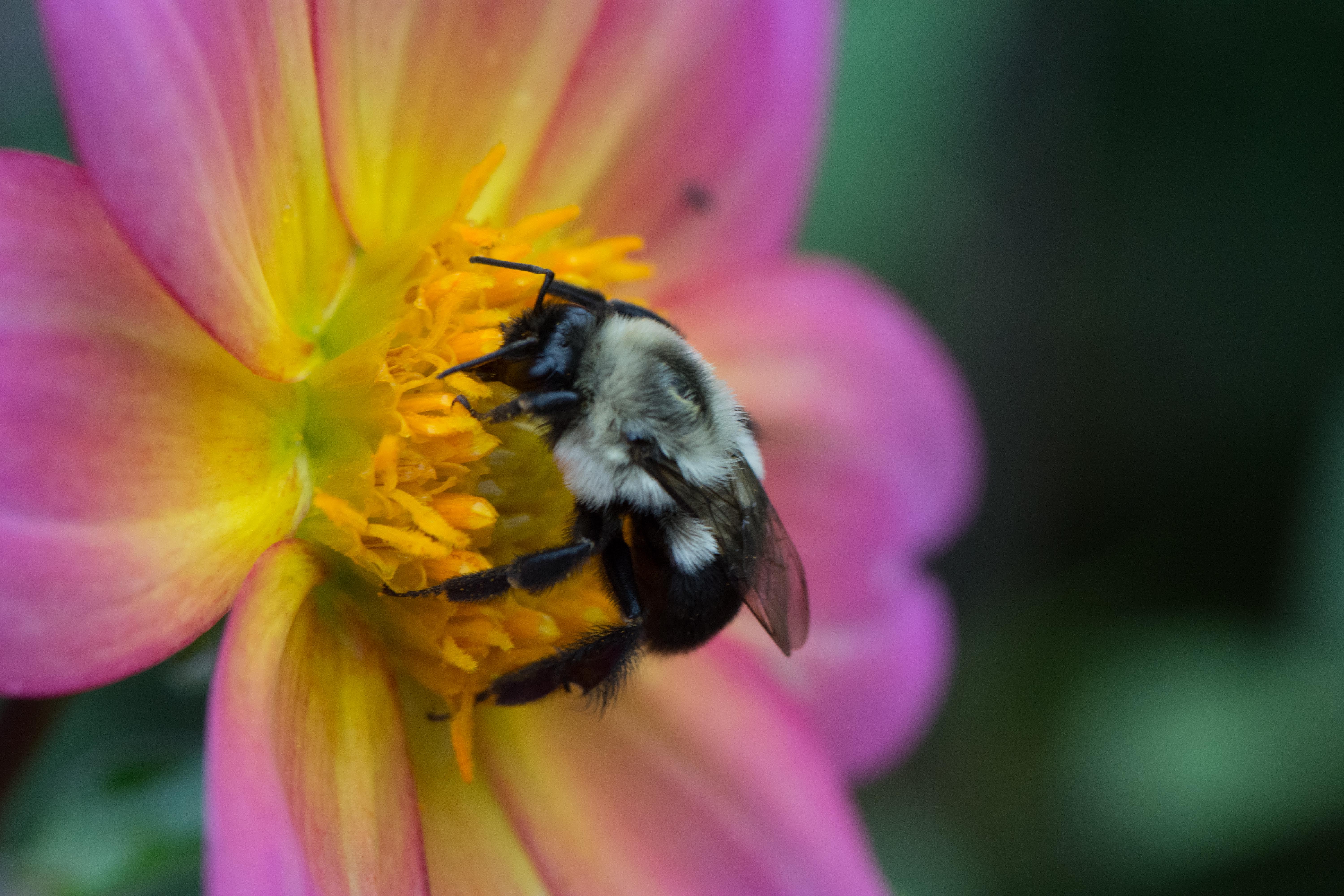
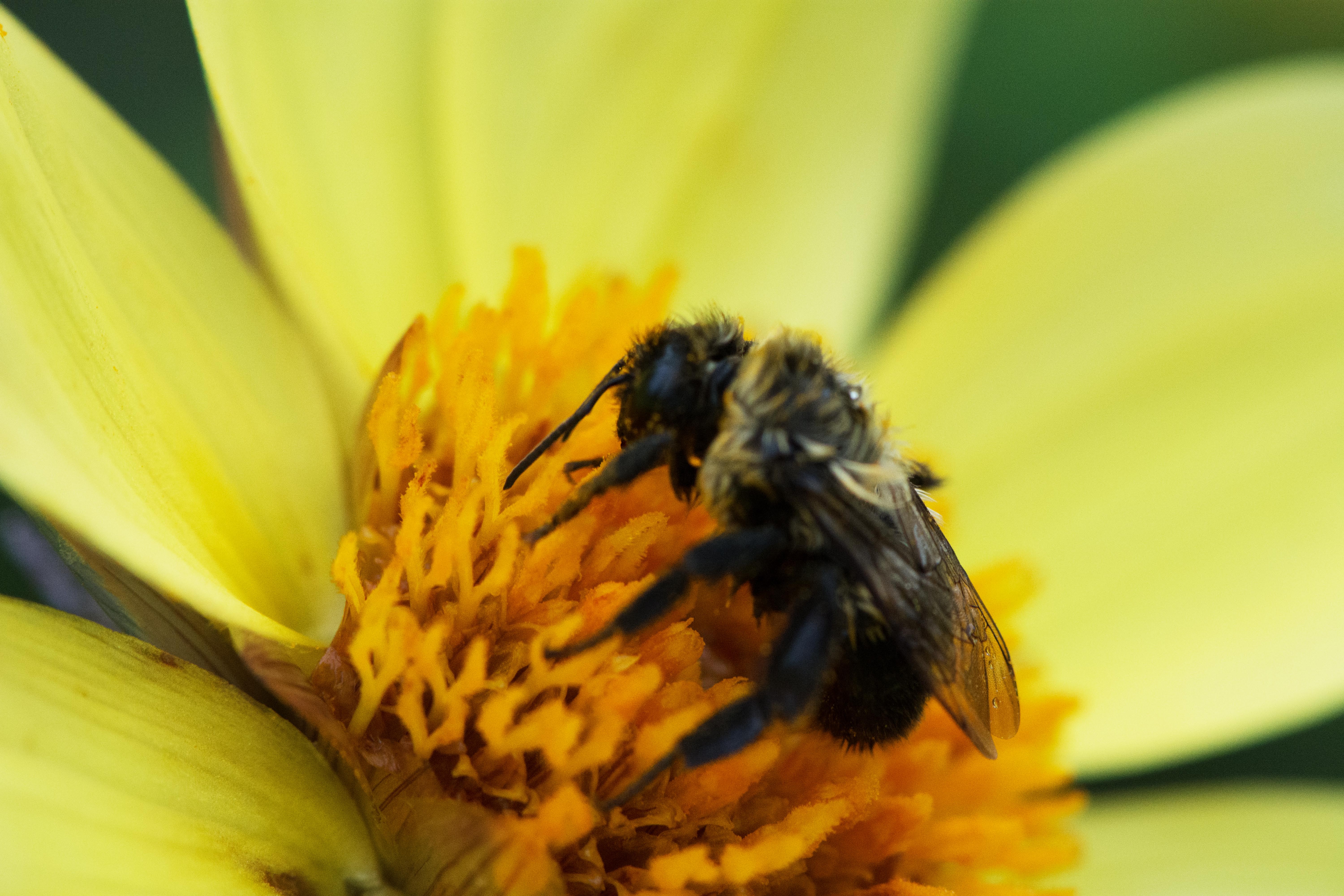
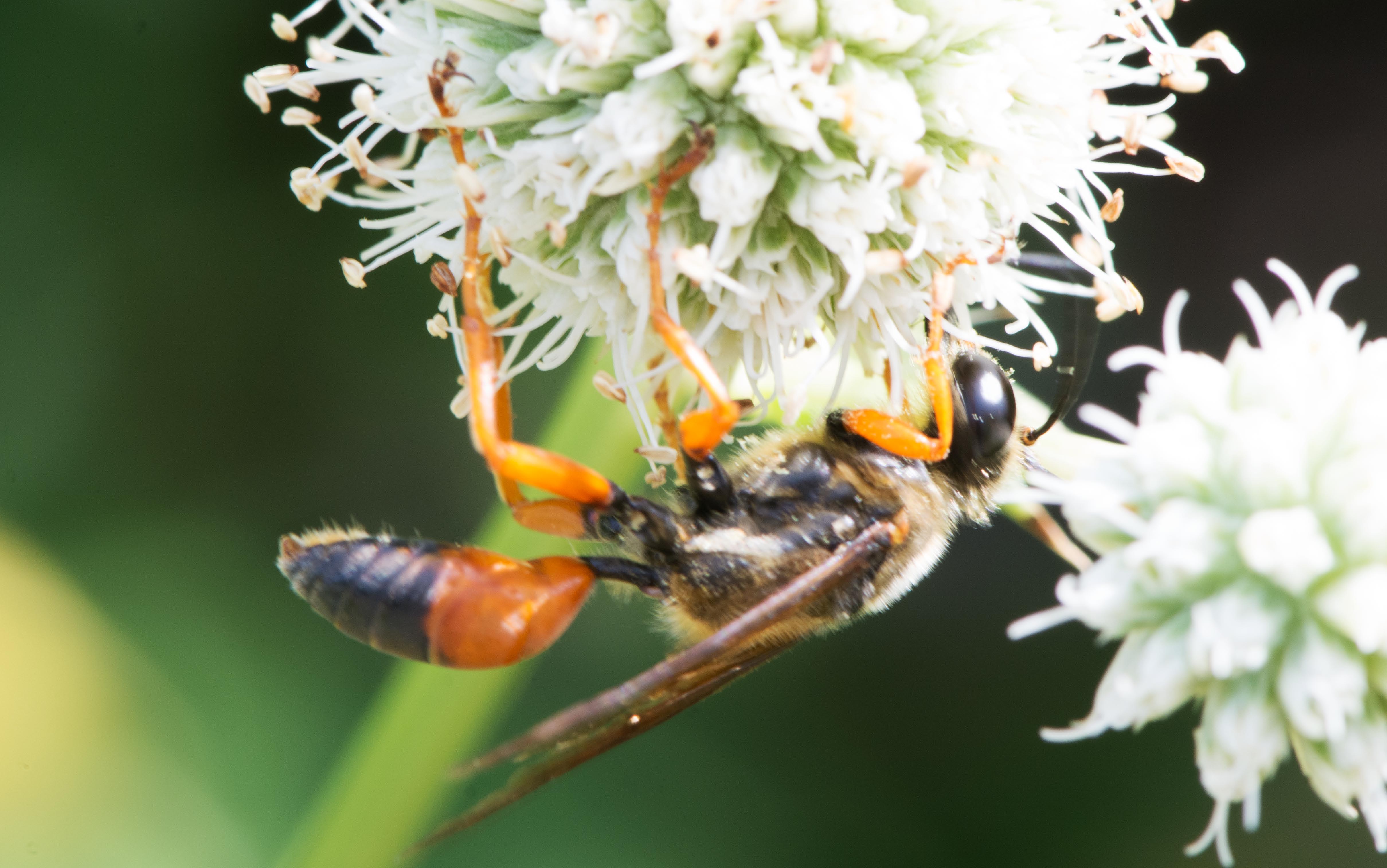
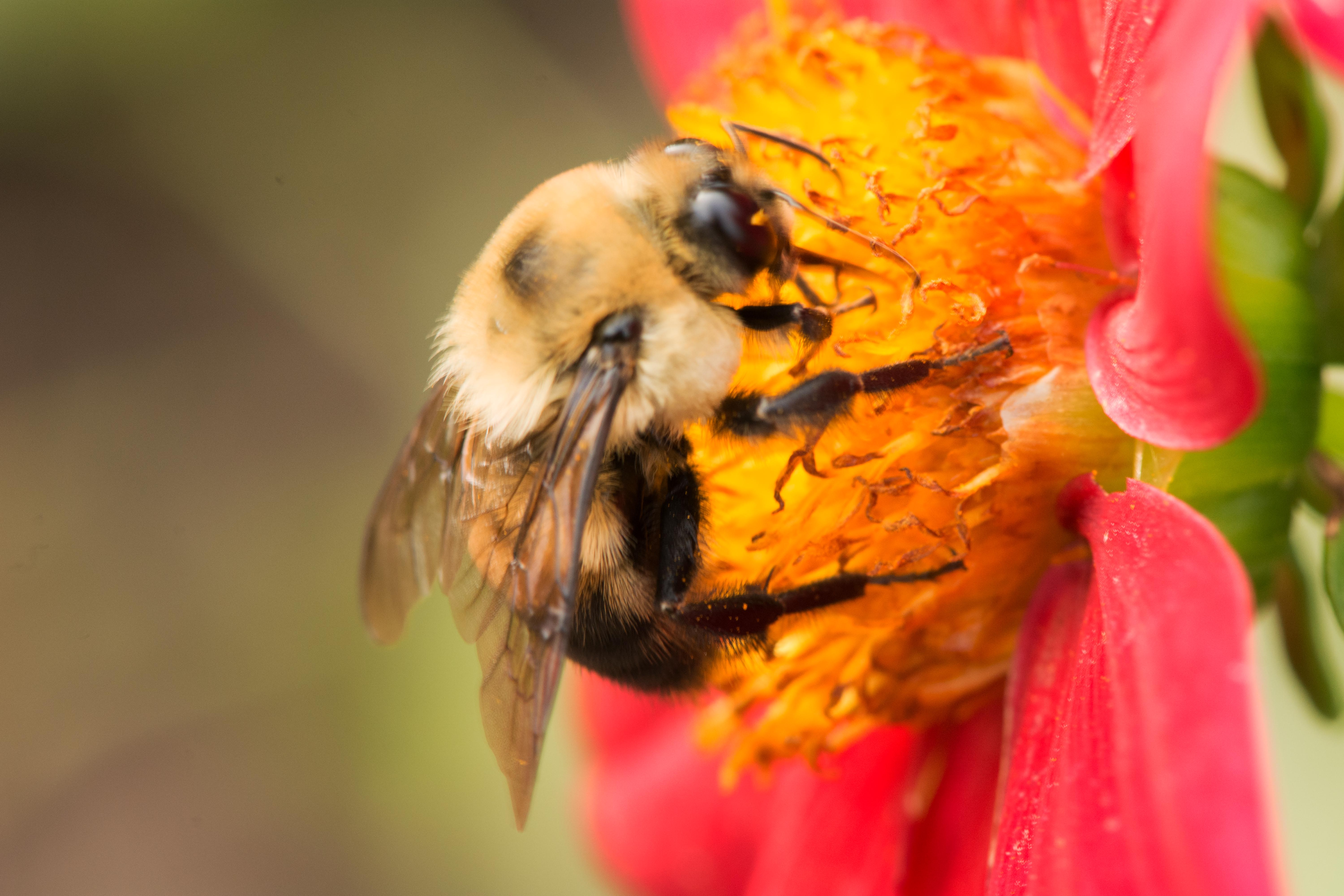
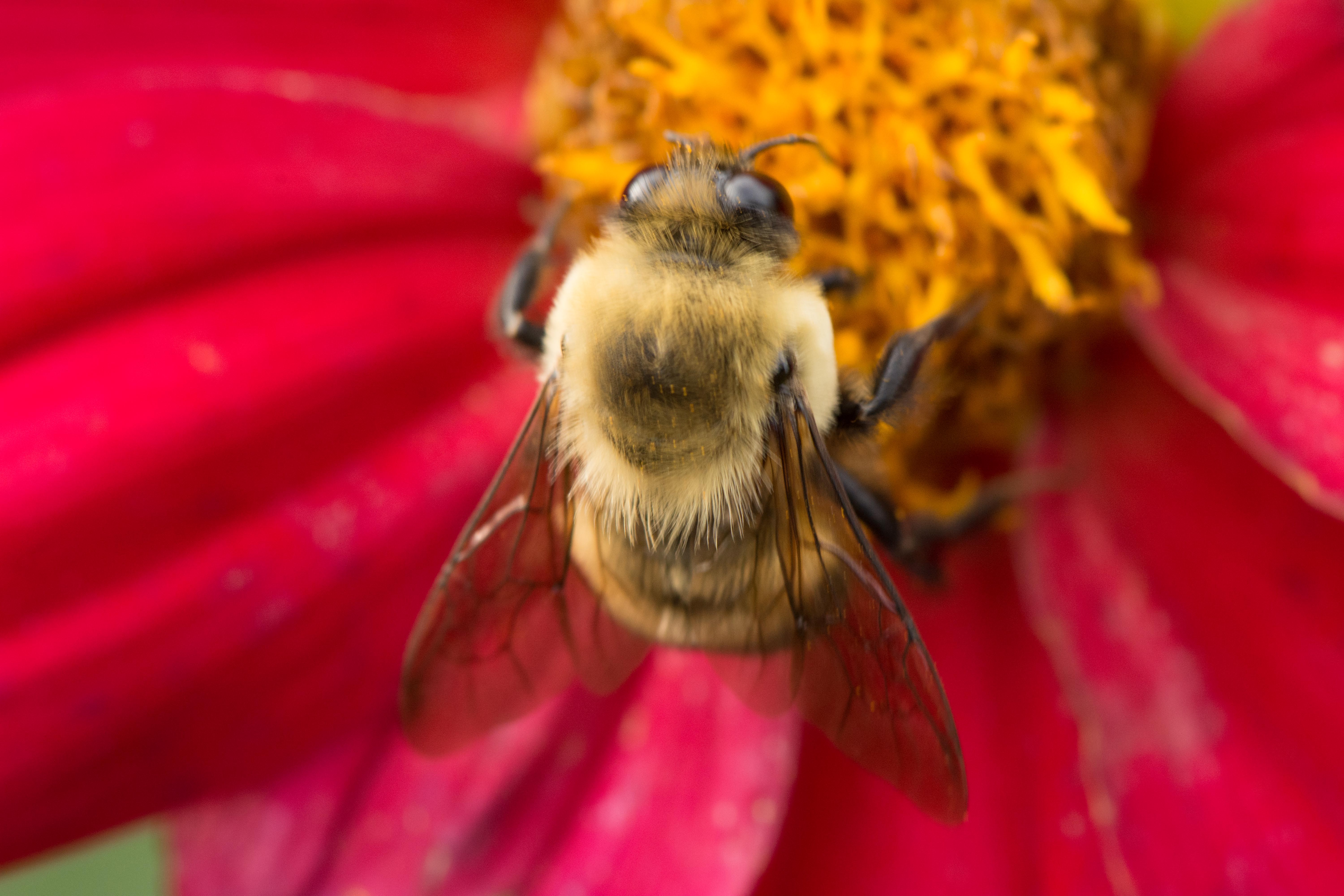
Speaking of more cheerful things, here are some photos I made on Friday evening at Raulston Arboretum of bees hard at work.

14 06 27_0176_edited-1

14 06 27_0171

14 06 27_0183

Business + pleasure at the Grove Park Inn, including the spa and the Blue Ridge Parkway

14 06 22_0095_edited-1
On Friday Sally and I took Clara from Raleigh to Asheville for a business + pleasure trip. I’d been invited to speak at the Federal Circuit’s Bench and Bar conference, which was being held at the famous Grove Park Inn, and after that ended we thought we’d do a little hiking near the Blue Ridge Parkway and get a treatment at the spa.

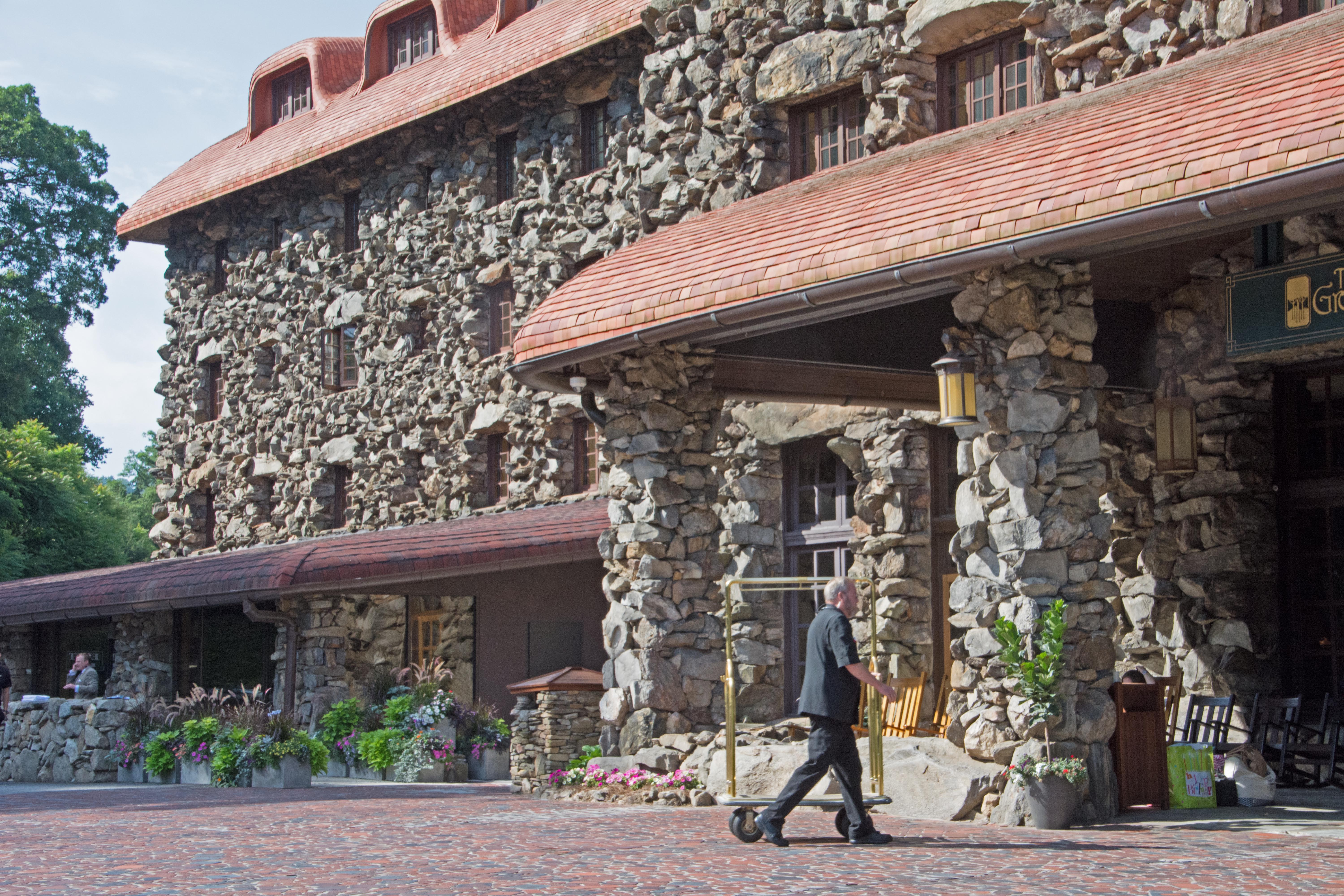
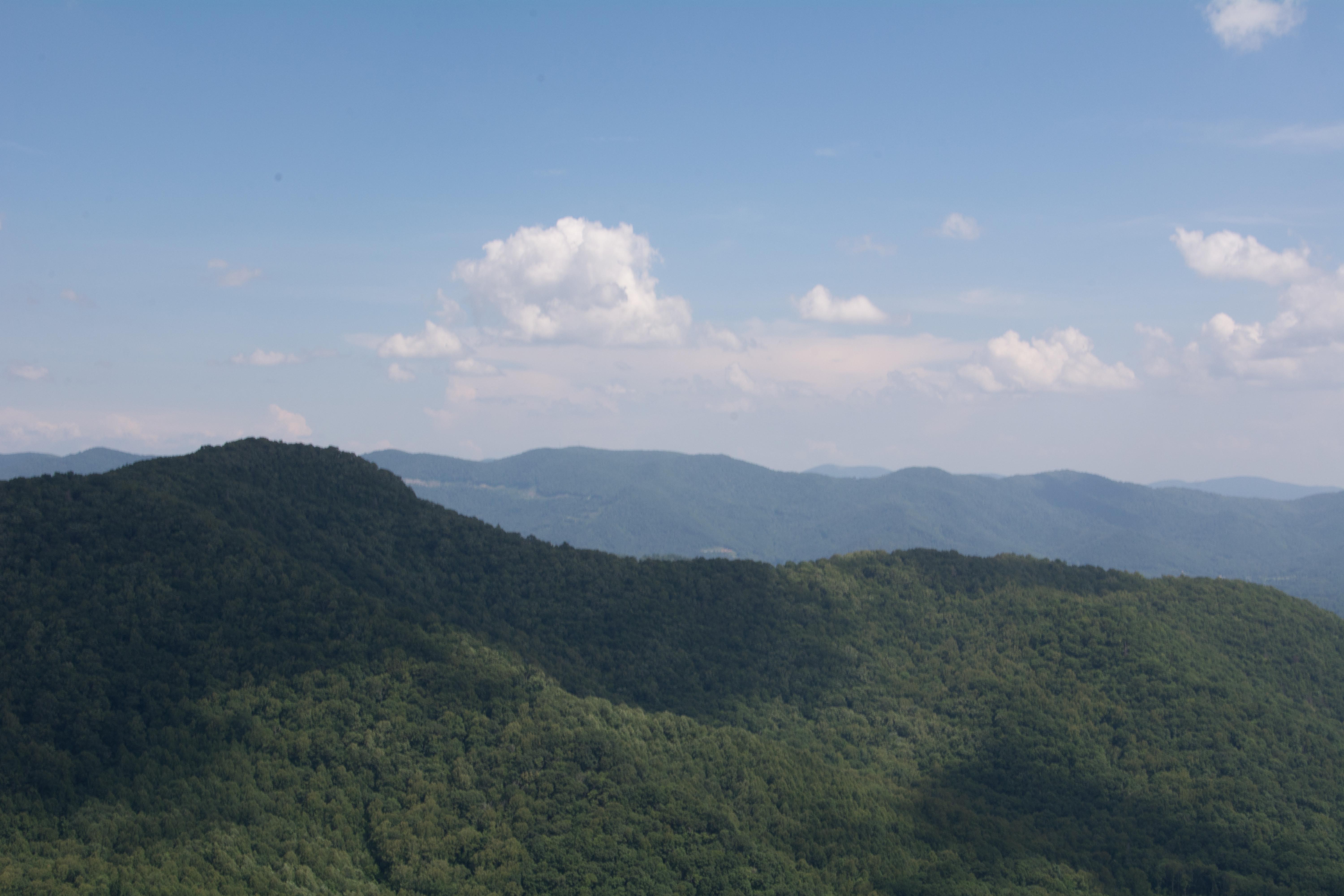
The Grove Park Inn is an odd but appealing place, with lovely views of the Blue Ridge mountains. It has massive stone masonry walls inside and out. It turned 100 last year, and is proud of its history. We found our room perfectly fine, and the service at the hotel, the various restaurants, and the spa to be attentive and exceptionally friendly.
14 06 21_0117_edited-1

As usual for me with professional speaking engagements, I enjoyed the actual doing of it, though I felt a certain dread in the last few days beforehand. I was one of four panelists, and it was far from clear even shortly beforehand how it was going to go. Fortunately, all were seasoned veterans, and it went fine. I had a chance to point up some of the serious problems with software patents, and give the conference an open source perspective on other issues. I gave my perspective that the patent system is seriously dysfunctional, and was happy that it sparked some debate, and I didn’t get run out of town on a rail.

That afternoon, we did a bit of driving on the Blue Ridge Parkway and took a pleasant hike at Craggy Gardens. When we returned, we went down to the spa to prepare for our massage.
14 06 21_0120

I’m a late convert to spa-ing. Until recently, I really could not see the point, and considered it a waste of valuable time. Both at work and play, I am normally a busy person, with more to do than there is time to do it. Workwise, the challenges are never ending. A lot of my leisure activities, like playing the piano and playing golf, demand a lot of commitment to improve, and that commitment requires time. And there are so many things I’m curious to know more about, and learning also requires time. Time is so valuable, and I try very hard not to waste it.

But I’ve gradually come to consider massage as valuable to good health, both physical and mental, and wanted to share a couples massage with Sally. Other than massage, I wasn’t quite sure what the Grove Park spa involved.

I’m here to tell you, it’s very nice. It carries forward the stone masonry motif of the Inn. There are numerous pools of different sizes and carefully graded temperatures, some with little waterfalls and some with big waterfalls. There was a eucalyptus infused steam room, pared with a whirlpool and a cold dunking tank. I was persuaded to go from the hot sweatiness of the steam room to a plunge in the cold tank, and it was definitely a shock — almost agonizing, but also refreshing.

After soaking in various pools inside and out, we repaired to a lounge and sat quietly for a few minutes in plush chairs next to a big fireplace. Then our massage therapists arrived, introduced themselves, and debriefed us on our health issues and massage likes and dislikes. My therapist, Sarah, was very good. She described her technique as basically Swedish massage, but she was very responsive to my request for firmer pressure, and attentive to the various knots and tensions of my body.

An aspect of the treatment was scented lotions and oils, as well as scents generally – aromatherapy, as they call it. I experienced something described as detoxifying citrus, with oils of lemon, orange and petitgrain (no idea what that is), and various other exotic substances. Did they do anything significant for my health and well-being? It’s hard to say. But it was very pleasant, and I certainly wouldn’t mind doing it again.

We felt quite wonderful after our massages, and though we had a dinner reservation pending, didn’t want to leave the spa immediately. Sarah helped us get the reservation pushed back, and we did some more soaking in the hot tub and other pools. It was delicious.

We eventually made our way to the Sunset Terrace restaurant, where they gave us a great seat on the edge of the porch looking out toward the mountains. So many restaurants try to seat you in the less desirable spaces unless you push back, but they did not try that on us at the Inn. They had a vegetarian entrée involving tofu, and it was fine. Afterwards, we sipped the last of our wine and listened to a local flamenco quartet. The musicians seemed quite fine, and their singer, a blonde Swedish-looking gringo, sang in Spanish that sounded appropriately tragic and passionate. It was an unexpected pleasure.
14 06 22_0116_edited-1
On Sunday, we did a little more driving on the Blue Ridge Parkway. It really is a national treasure – a road that exists for the pure beauty and pleasure of driving. It winds and twists along ridges with views of adjacent mountains and valleys. For a few miles, there was no one in front of us, and Clara could stretch her legs a little.
14 06 21_0140

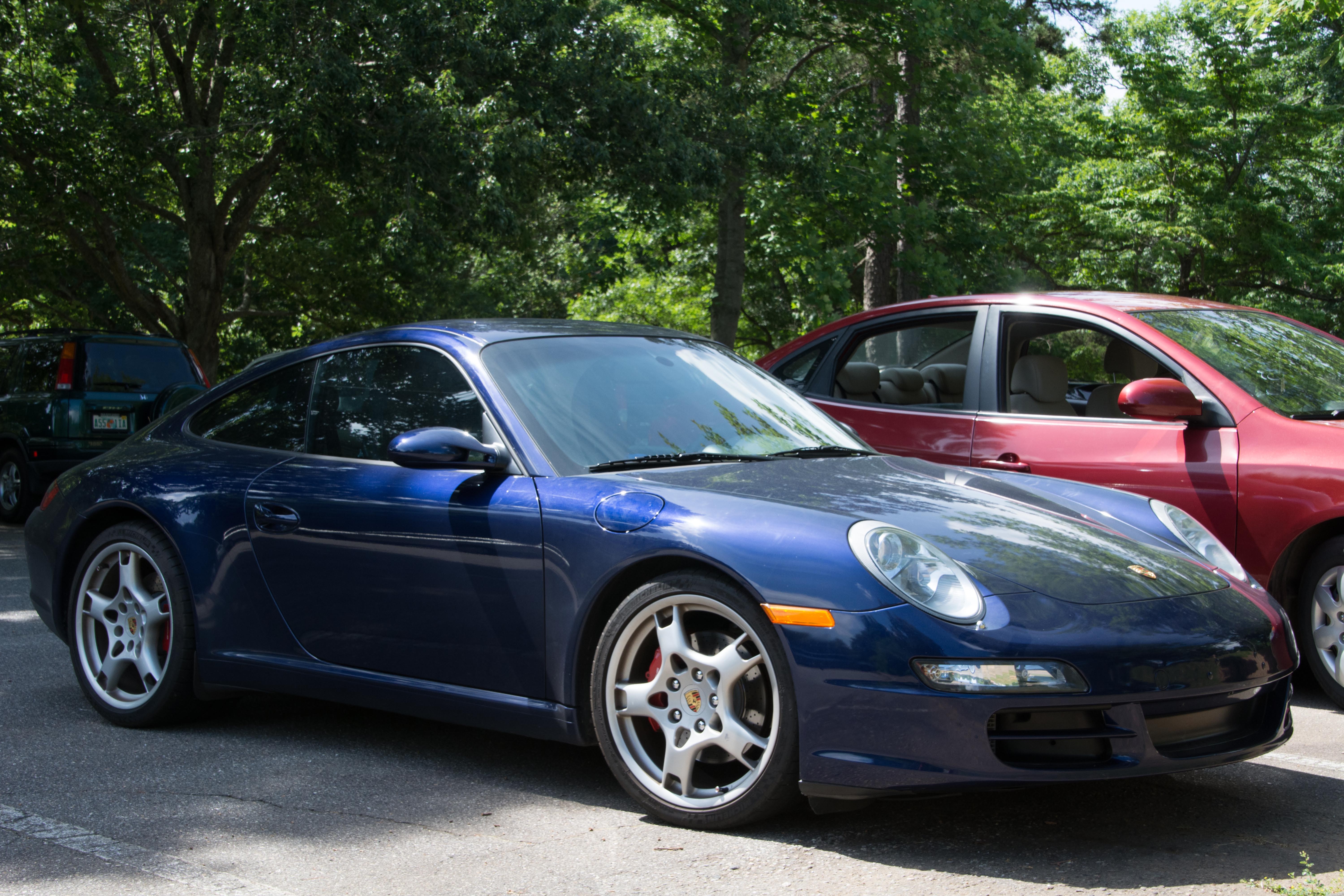
Clara catching her breath

Clara catching her breath