The Casual Blog

Category: music

A homecoming, new flowers, and a Shakespeare concert

Raulston Arboretum, Raleigh, NC  May 9, 2015

Raulston Arboretum, Raleigh, NC May 9, 2015

Our Gabe sold or tossed most of his possessions and loaded up the car with the rest, then he drove east, along with his golden retriever, Mowgli. He’d lived in the beautiful ski town of Telluride, Colorado for six years, and had decided that that was enough. He enjoyed the long drive, until his car broke down in eastern Tennessee on Sunday. He had to wait there until Monday to get it fixed. He arrived in Raleigh Monday night, and we gave him a big hug. Mowgli and Stuart sniffed each other.

Gabe, who’s been working as an accountant, is thinking of taking a new career direction. He’s planning to stay with us for a bit and consider his options. We’re all hoping to stay good friends and not make each other crazy. In his younger days, he had a bad habit of borrowing my clothes without permission, but so far he’s been good about that.
_DSC9672_edited-1

I made a quick trip to Raulston Arboretum on Saturday morning and took a close look at some new flowers. There were lots of little insects at work on them, and I had a go at capturing their images, but with limited success. Afterwards I went to Flywheel for a spin class, which was tough. I was happy to finish in the top four, but was way behind the champion.
_DSC9735_edited-1

In the afternoon, I spent some time experimenting with Lightroom, Adobe’s photography database program. I’m in the middle of my 30-day free trial, and am determined to test it out, if I can figure it out. I get the basics, but a lot of it isn’t at all intuitive. I’ve been reading and watching videos, and making some progress.
_DSC9726_edited-1

We went to the N.C. Symphony on Saturday night, where they were joined by actors from the Playmakers Repertory company and the N.C. School of the Arts in performing a musical version of A Midsummer Night’s Dream. We enjoyed the wonderful Mendelssohn and other music, but were less enamoured of the acting. In recent seasons, the Symphony’s programming has gotten increasingly conservative (lots of warhorses), and, for us, not very exciting. It’s good to see them trying something different, but this program didn’t really work for me.
_DSC9711_edited-1
_DSC9640_edited-1

This Saturday: irises, exercise, protest riots, Schoenberg, Indian food, and soccer

Iris, Raulston Arboretum, May 2, 2015

Iris, Raulston Arboretum, May 2, 2015

As usually happens when I travel, I picked up about three pounds, which I’d very much like to drop. Three isn’t a lot, but it can so easily become six, or twelve. And it’s so much easier to add than to subtract! With reducing in view, I’ve been focussing my exercise recently on fat burning, adding 15 minutes to my usual 30 of morning cardio, along with the usual resistance, core, and stretching. I’ve been doing various combinations of machines (elliptical, stairs, rowing, treadmill), classes (spinning, yoga), and outdoor running. On Saturday morning, I considered spinning at Flywheel or yoga at Blue Lotus, and decided to go to O2 for an aerobic martial arts-type class.

But first I went up to Raulston Arboretum, getting there a few minutes after 8:00 a.m. The big story this week was irises of various colors, boldly blooming, and still dewy when I got there. I spent an hour strolling and trying to capture their spirit, and then headed to the gym.

The exercise class was called Body Attack, and involved an hour of rhythmic footwork, punching, and kicking, to a throbbing club-type beat. I’m a highly non-violent person in real life, but I must admit, shadow boxing with a group is fun. I succeeded in sweating a lot and getting my heart rate into the mid-150s, and avoided either accidentally kicking or being kicked.
_DSC9536_edited-1

After showering back home, I drove out to Cary for a haircut with Ann S, my hair cutter of many years. I always enjoy talking with Ann about our families and doings. Part of her news this time was sad: their 14-year-old dog had to be put to sleep this week. The diagnosis was liver failure. I mentioned that I’d been thinking of our sweet Stuart’s mortality (as I noted last week), and we both struggled to articulate what is lost when a beloved pet goes.
15 05 02_5011_edited-1

On the way back to Raleigh, I stopped at Swift Creek Bluffs for a walk in the woods. It was muddy from recent rains, and most of the wildflowers were gone, but things were green and lively. The creek was burbling, and a wood thrush sang brilliantly. I ran into Matt J., a fellow photographer who knows a ton about wildflowers, and we talked about plants and cameras. I saw this little guy:

Swift Creek Bluffs, May 2, 2015

Swift Creek Bluffs, May 2, 2015

On the drive back, I made a stop at the Washaroo to get Clara a shower, and listened to NPR reports on the protest violence in Baltimore. I was not aware, since I almost never watch TV news, that the right-wing media had been demonizing the protests. That’s crazy! I think I have a pretty good idea why Baltimore’s poor blacks (like those in Ferguson and many other cities) were angry. I learned a lot from Alice Goffman’s excellent book, On the Run, which vividly lays out what it means to live in a city (in her case, Philadelphia) where the police take the view that you are either a criminal or potential criminal and constantly harass and intimidate you.

It’s a harsh reality. It is unusual to be able to have a normal job, a loving family, and a comfortable place to live, and usual to face violence from both police and gangs, poverty, and betrayal. A legal system organized around criminalizing recreational drugs and draconian punishment for violators is a basic part of the problem, but there are other layers, including police militarization and racism. The people who are the victims of this system mostly suffer in silence, and so middle class America is mostly oblivious to the depth of the problem.

But that may be changing. When people destroy their own neighborhoods, it’s a wake up call – we at least know something is very wrong, and maybe we wonder what it is. I was cheered this week to read a news story that the leading presidential candidates on both sides agree that the system of mass incarceration for minor crimes needs to be turned around. Can our political system fix this humanitarian disaster? Repealing overly harsh sentencing laws and ending the war on drugs would be a good start.
_DSC9545_edited-1

In the afternoon, I read some and practiced the piano. At the moment, I’ve got on the workbench polishing and memorizing Chopin’s Preludes in C and G, Schubert’s G-flat Impromptu, Schumann’s Arabesque, Debussy’s Reverie, and Liszt’s Liebestraum No. 1, while working on my first music by Arnold Schoenberg – his Six Little Piano Pieces. Schoenberg wrote this in 1911 and uses his famous twelve-tone system, which systematically avoids traditional harmony. It’s highly angular music, and not easy to love, but seems much more approachable to me now. I’m finding strangely haunting melodies, and a sensuality not so far from Debussy’s.

On Saturday evening we went to see the Carolina Railhawks play Tampa Bay at the soccer park in Cary. We enjoy our soccer outings, but figuring out a food option has been challenging. There is no healthy vegetarian food on sale, and our system of smuggling in a sandwich went down last season when they began checking in bags at the gate (and we had to consume our Jimmy John’s veggie special standing in the parking lot). Sally had read a review of a new southern Indian vegetarian restaurant on Chatham Street just past the soccer park, and we tried it out before the game. At Sri Meenakshi Bhavan, the chaats were delicious, and there was a great selection of dosas. The décor was purely functional, and there was no alcohol, but the price for this marvelous food ($35 for two) was most definitely right.

At the game, it was a bit chilly, and we were glad we’d brought our sweaters. There were some exciting sequences, but I left displeased with the Railhawks’ sloppiness. We were fortunate to get away with a 1-1 tie. I’m hoping it was just an off night, and not a step down from the high level of play of last season. I was also displeased with the broadcasting of local advertising by a booming PA system during the course of play. There were several such ads in the second period, which were very annoying. Who thought this was a good idea? I intend to complain.

Our old friend Stuart, rainy Duke Gardens, N.C. Opera, and Snowden reconsidered

Stuart Tiller, April 26, 2015

Stuart Tiller, April 26, 2015

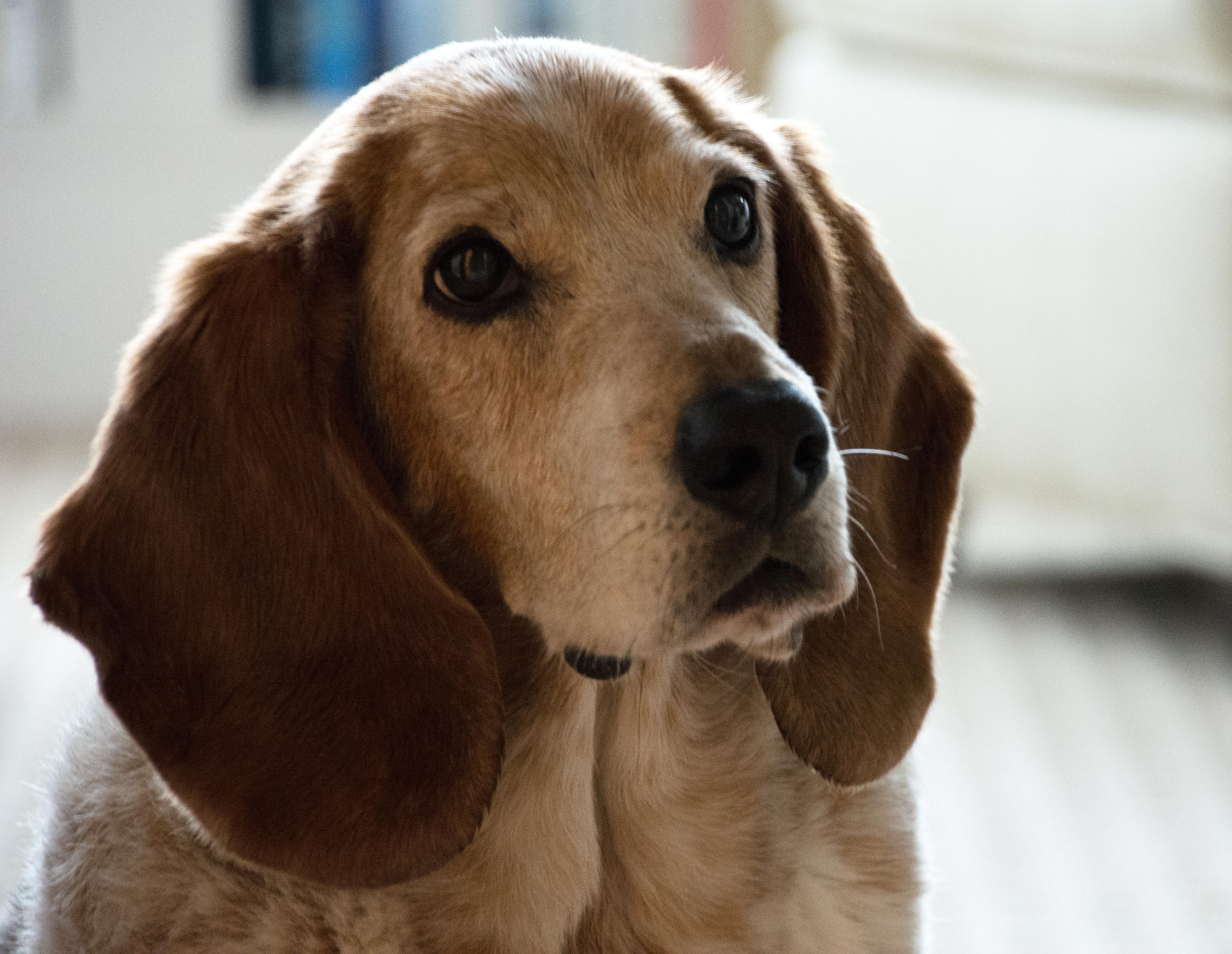
This week I was particularly aware that our sweet Stuart is getting grayer and slower. He’s almost thirteen, so this is no great surprise. But I had a sudden pang when I realized he will not be with us too much longer. He still likes eating and going for walks, and from time to time wants to play with the tennis ball, but only for a bit. He still really likes being petted, as I like petting him. It’s a good thing now and again to pause to note how precious this short time together with a good friend is.
_DSC9485_edited-1

Azalea at Duke Gardens, April 25, 2015

Azelea at Duke Gardens, April 25, 2015

Duke Gardens. On Saturday morning I drove over to Durham to visit Duke Gardens. It started to rain just after I arrived, so I took along an umbrella and tried to keep my Nikon from getting too wet. The rain fell gently, and the gardens were very peaceful and beautiful. This is a place I would love to live if I were a plant. The azaleas were spectacular. In the terrace garden, the tulips were gone, replaced by a wild profusion of white irises, orange poppies, and many colorful spiky and flowing flowers I could not name.
_DSC9456_edited-1
_DSC9481_edited-1

N.C. Opera. On Sunday we saw and heard the final performance of N.C. Opera’s new production of Don Giovanni. It was excellent! It really is hard to believe that we’ve got opera of this quality right here in the Piedmont. The singers were all young, but they all were well-trained musicians with depth and maturity.

I was particularly struck that all three sopranos had gorgeous and powerful voices, and big personalities. Hailey Clark (Donna Elvira) was probably my favorite for the beauty of her tone, but Alexandra Loutsion (Donna Anna) was also a wonderful singer, and Jennifer Cherest (Zerlina) was quite charming. Adam Lau (Leporello) had a fine bass-baritone and good sense of humor. Jeongchelo Cha was Don Giovanni, and ultimately delivered a convincing performance of this deeply flawed but fascinating character.
_DSC9409_edited-1
Snowden reconsidered. I finished reading No Place to Hide, by Glen Greenwald, about breaking the Edward Snowden story. Parts of it read like a Le Carre thriller, but the main points are highly thought-provoking. As the real events began unfolding almost two years ago, it was unclear to me whether Snowden was a kook or fanatic, and whether his disclosures had done more harm to America than good. Greenwald’s book makes clear that Snowden was careful, thoughtful, and idealistic, and his revelations were considered ones that showed that our security apparatus has pushed aside and undermined some of our most important constitutional values. He makes a strong argument for viewing Snowden as a patriot.

It may well be that the NSA folks looking at our personal electronic information mean well, supposing that they might find hidden terrorist threats and suchlike. But even if their work was productive and effective (which it hasn’t been), it is corrosive.

The consciousness that we might be being watched is very close to the consciousness that we are being watched. In either case we lose an important component of personal freedom. Consciously or not, as we come to understand our electronic lives may be constantly monitored, we modify our thoughts and behaviors. We become more passive and compliant. Both our inner lives and our social lives are deprived of oxygen. This is a psychological force that is hard to resist, though of course we need to try.

_DSC9436_edited-1

My New Yorker, a touching Traviata, Whiplash, and sparkling new ballets

_DSC8379_edited-2
As I’ve noted before, The New Yorker magazine was for me a formative influence, having given me my first job out of college, my True Love, and weekly jolts of literacy ever since. Thus it was with mild shock I received the February anniversary issue, which for 89 consecutive years has reprinted the same cover, and saw that Eustice Tilley, the top-hatted dandy, had been replaced by multiple new covers of various ages, styles, and ethnicities. But after a few deep breaths, I let it go and moved on: the new covers were bold and entertaining.
_DSC8399

There were several good short pieces on the history of the Magazine (as it was called by editorial staff then and perhaps now), and one longer one that I particularly relished. Mary Norris, who joined the Magazine around the time we did, contributed a piece about her career there as a junior minion and eventually a senior copy editor. I wouldn’t say Mary and I were close friends, but when I also was a minion, we were friendly, and would talk companionably at parties as we kept a lookout for potentially more exciting adventures.

It was a pleasant trip down memory lane remembering how we put out the Magazine and some of the now departed editorial figures of our world, like Eleanor Gould, Bob Bingham, Pat Crow, and William Shawn. And Mary successfully communicates the spirit of grammatical fanaticism that is part of what makes the Magazine unique. I’ve never seen a more humorous discussion of the serial comma, a punctuation practice that in those days I took as serious business. Thanks to Mary and her colleagues who have kept the fussy but proud tradition alive.
_DSC8396

Raleigh is not New York, and it is hard to believe, even for people who live here, that Raleigh is producing world class opera and ballet. But it’s true. In the last week, we’ve been treated to both.

The N.C. Opera’s production of La Traviata was really beautiful and moving. The story is simple in a way – a party girl and a playboy unexpectedly fall in love, break various social conventions, are separated by misunderstanding, and reunited, just as she dies. It works in large part because Verdi’s music is highly evocative – of joy, love, and tragedy.

I was especially moved by this production, which had a marvelous Violetta in Jacqueline Echols. She had an extraordinarily fine voice, as well as musicality and expression. She is a rising star. I also particularly loved the singing of Joo Won Kang as Giorgio. The costumes and settings were lovely. The staging was a bit meandering and uncertain, but it didn’t undermine the force of the performance. Conductor Timothy Myers was outstanding, always serving the music, but creatively, with flexibility of tempo and sensitivity in tone. In the sad parts, this strange thing happened with my eyes – they got all watery.

Also last week, we saw the movie Whiplash at home via streaming service. The story is about a music conservatory student (a jazz drummer) and a sadistic/idealistic music teacher who do battle and try to make great music. Aspects of it were pure Hollywood – no half-sane performer would ever sabotage a performance as here – but there was something true about it that drew me in. As a former conservatory student myself, I was reminded of the highly competitive aspect to music education, and the intense drive for perfection.

The student (Miles Teller) was believable, and reminded me of the hidden and scary sacrifices that all serious musicians make for their art. And J.K Simmons as the foul-mouthed professor was wonderfully evil. I’ll say, though, I could have done without the anti-gay slurs, which were copious and ugly. We’ve quit tolerating nigger, and we should quit tolerating faggot._DSC8412_edited-1

We saw the Carolina Ballet’s new program, Master Composers: Music for Dance, on Saturday night. The program of new works by Robert Weiss and Zalman Raffael featured dance music by Chopin, Byrd, Bach, Mozart, Beethoven, Granados, Brahms, Stravinsky, Adams, and Tchaikovsky. As Weiss’s program notes noted, there is there is a wealth of music in the classical tradition that is, in some sense, dance music, but has never been used for ballet, and this program mines those riches.

This company has so much talent! It was delightful to see some of the junior members shining in solo roles, including Elizabeth Ousley, Ashley Hathaway, Alyssa Pilger, Amanda Babyan, and Rammaru Shindo. There were moments of moody drama, particularly with Lara O’Brien and Cecilia Iliesiu, and also light-heartedness,with Sokvannara Sar having fun with six ballerinas. I thought that the Mozart and Brahms sections could have been trimmed a bit without loss of effect, but there was nothing I didn’t enjoy.
_DSC8415

A piano recital, Turing’s secrets, NSA surveillance, and the cure for addiction

_DSC8060_edited-1
It was rainy and raw on Friday evening when Sally and I drove over to Durham, and the traffic kept bunching up. We were a bit anxious about being late to meet our friends at Watts Grocery, and we were late – they’d already ordered drinks and salads. But they forgave us, we caught up, had a good dinner, and made it in good time to a concert at Duke’s Baldwin Auditorium, where we heard a program by the eminent pianist Jeremy Denk.

Denk is a musician’s musician. His program was, as he put it, a mix tape of Schubert dances shuffled together with short Janacek pieces, and also some atypical Haydn, some atypical Mozart, and Schumann’s odd and powerful Carnival. Everything he played seemed thought through to the smallest detail, but at the same time full of feeling.

For encores he played the slow movement of Ives’s Concord Sonata, and one of the slower Goldberg Variations, both of which were exceptionally colorful and beautiful. Though not a particularly good-looking guy, he was also fun to watch, with gestures that accorded with the music and magnified the feelings. Later, I re-read his wonderful autobiographical essay from the New Yorker, Every Good Boy Does Fine, which I highly recommend.
_DSC8033-1_edited-1

We saw The Imitation Game last week, which was a bit staid but also touching. I knew something of Alan Turing, including his brilliant contributions to computing theory (including the Turing machine and the Turing test) and that he helped break the Nazi’s Enigma code. I hadn’t known how he did it, or much about him as a person. From the movie, he appeared distinctly anti-social. This being Hollywood, it seems safe to assume he was probably even harder to like in real life. But he contributed enormously to the world, before being hounded to death at age 41 for the crime of being gay.

Turing’s death was a tragedy, but in earlier chapters he was lucky, in a way. How inspiring and daunting it must have been to think that thousands of lives, and perhaps the future of western civilization, depended on whether you could succeed in an almost impossibly difficult code-breaking task. And by golly, he did it!

Indeed, although I’ve never thought of it this way before, our forebears who found themselves facing Nazism and Fascism were lucky, in a similar way. They had an unambiguous enemy, a massive threat, that could only be defeated by joining together, and with heroism and sacrifice. We seem to need big enemies to unite us as a society. That may be why, when we don’t have big enemies, we magnify smaller ones.

And so, as I discussed here last week, we push forward with the 13-year-old war on terror, which continues to morph. This week a coup in Yemen resulted in headlines suggesting we should panic over a new terror threat. The coup was actually by sworn enemies of Al Qaeda, but the fear seemed to be that increasing disorder was likely to lead to increased space for militant anti-Americanism to expand. That’s possible, I guess. But it’s possible that this is a civil war with entirely different drivers, tribal, religious, or financial. Perhaps it’s not all about us.

_DSC8016-1_edited-1

The thing is, when we panic we do foolish and deplorable things – domestic spying, torture, assassinations, war. This week the New Yorker has a piece by Mattathias Schwartz about the NSA’s collection of internet searches, social media, and metadata on phone calls – hundreds of billions of records, at a cost of tens of billion of dollars ($10.5 billion in 2013). Schwartz examines the question of how many terrorist attacks were stopped by this program, and finds . . . perhaps one. Not exactly saving western civilization.

Actually, the one was not so much a potential attack, and not so much in the US, as a financial contribution of $8,500 by a Somali born U.S. citizen that may have been made to Somalian guerrillas (the Shabaab) who had jihadist ambitions and Al Qaeda connections. The evidence sounds ambiguous, but there were three convictions, and rightly or wrongly, the defendants were sentenced to prison terms of up to 18 years. That’s all we got, in return for billions of dollars and constant surveillance of our everyday lives that undermines our privacy, our public discourse, and our Constitution.
_DSC8025-1_edited-1

As crazy and depressing as this is, it should be noted that there’s hope: our mass panics can be overcome. For example, it seems like there’s a light at the end of the tunnel in our costly and tragic war on drugs, at least as to marijuana. With several states in various phases of legalization, it’s increasingly hard to argue that using pot should be punishable as a crime. But it is still being punished as a crime in places, and we’re still spending $51 billion a year on fighting drugs here and around the world.

Jocelyn pointed up a piece this week in the Huffington Post with a new, to me, take on drug addiction. A basic premise of the war on drugs is that some drugs are so fantastic that they’re irresistible, and so they take control of and destroy lives. But the piece, by Johann Hari, suggests an alternative paradigm.

Hari reexamines the famous rat-with-cocaine experiment, where the rat is alone in a cage and keeps taking cocaine until it dies. Later research by Professor Bruce Alexander focused on the environment of the rat – which was caged and alone. When rats were put in more stimulating environments, including toys and rat friends, and offered the same drugs, they mostly shunned them. Alexander found that even rats that were thoroughly addicted to heroin kicked the habit when they had the benefit of other rats to socialize with and stimulating environments.
_DSC7995-1_edited-1

The theory expounded by Hari is that what drives addiction is not primarily chemical hooks, but rather isolation, and that what prevents it are meaningful human connections. This may also explain some non-drug addictive behaviors, like gambling. That is, drugs or gambling may be responses to other problems, like loneliness.

Hari notes that Portugal, which once had a very high rate of drug use, decriminalized all drugs 15 years ago, and invested some of the money saved from drug warring in social programs, such as housing and jobs. The rate of injected drug use has fallen by 50 percent. Fifty percent! I recommend reading Hari’s piece.


Cutting out expensive razor blades, plus a beautiful Barber of Seville

14 11 22_3648
There are certain hygiene-related matters that are, if not taboo, at least highly sensitive to discuss in polite society. I’m referring, of course, to the price of razor blades. As a young man, I was given an electric shaver, and quickly discovered I disliked the buzzy noise it made. So without more ado I switched to the Gillette safety razor. The state-of-the-art Gillette product at that time had two steel blades instead of the traditional one, and worked perfectly well. The same was true when the state of the art became three blades. And four. And five!

But one thing became much worse: the price. Each price increase seemed minor in the great scheme of things, and I rationalized the expenditure with the thought that a good shave was important, and a small increase in price was not important. But in recent months I’ve found myself paying more than $3 per blade. That’s crazy! Somewhere along the way these products got so expensive that drugstores had to put them in special anti-theft shelves. How did they get so ridiculously costly? Dear reader, I say this with shame: because we were not being smart consumers and good stewards of our household resources. We let them take advantage.
Anyhow, this week I discovered a much less expensive alternative to the Gillette product and ordered some on line. Dorco razors have a terrible name, but appear equal to or better than Gillette in terms of form and function. The model I used, the Pace 6, has a slightly heavier handle than the Gillette Fusion, a slightly springier mechanism, and six rather than five blades. It shaves well. The cost is about $1 per blade. What’s not to like?!
14 11 22_3646

Speaking of great shaves, I want to give a quick shout out of appreciation to the Metropolitan Opera for its new production of The Barber of Seville, which we saw live in HD on Saturday afternoon at North Hills. This may be the most famous opera music of all time, owing partly to the hilarious Bugs Bunny send up, The Rabbit of Seville. But it turns out that Rossini’s 1816 work still has a lot of life in it. The Met’s presentation was bright, touching, and funny, and the singing was wonderful.

Isabel Leonard was a marvelous Roselina. How often do humans get to be great bel canto singers, great comic actors, and beautiful all at once? Lucky Isabel, and lucky us. Christopher Maltman was likewise a wonderful Figaro (the barber) – musical, intelligent, funny, and handsome. Maurizio Muraro was a great grumpy Bartalo, and Lawrence Brownlee was an ardent Count Almaviva with good high notes and amazing vocal agility. Sets and costumes were absolutely wonderful. This was a great Barber!

In the news: some problems with our nukes

This week there was some good and some bad technology news, but first the good news. Kudos to the European Space Agency, which managed the remarkable feat of landing a robot on a modest-sized comet. Understanding and managing the risk of asteroid and comet collisions is a big challenge, and it appears we’re making progress. Also three cheers that the world’s two largest contributors to global warming (that’s us and China) officially agreed to work on it. Sure, talk is cheap, but it’s a step in the right direction.

But I wanted to call attention to a news story that you may have missed, as I almost did: two separate Pentagon studies concluded that the infrastructure of our nuclear program is in serious disrepair and will cost billions to fix. The NY Times put this on page A16 (news death valley).

Though far from the front page, the language was strong: “a searing indictment” of how nuclear weapons facilities have been allowed to decay. They described “a culture of micromanagement and attention to the smallest detail . . . creating busywork, while huge problems with equipment and readiness, most arising from the age of the systems, were ignored.” One study found that morale was low and turnover high among crews for intercontinental ballistic missiles and long-range bombers. Missile submarines were frequently out of service.

You may remember the cheating scandal involving missile crews of some months back. One of the new reports blamed not the crews but “a culture of extreme testing” in which tests were required to be near perfect so that good results could be reported up the chain of command, instead of a program to improve the crews’ readiness.

A few months back I wrote about reading Eric Schlosser’s excellent book, Command and Control, Nuclear Weapons, the Damascus Accident, and the Illusion of Safety. The book cites chapter and verse of major problems in our nuclear program, including some that put Americans at serious risk of a catastrophic accidental nuclear explosion. Schlosser found there had been important improvements in safety, but the Times story made me worry.

The Times also reported that the President had told the Pentagon to plan for 12 new missile submarines, up to 100 new bombers, and 400 land-based missiles. Holy kamoly! I thought we were at least keeping in sight the possibility of reducing our nuclear stockpiles and the threat of nuclear war.

Before we spend billions or trillions more, I’d like to hear a good answer to the question, what is the purpose of our nuclear weapons? What good do they do?

The conventional wisdom, more or less, is that we need them to deter nuclear attacks and maintain our prestige. But no nation is currently threatening us, or anyone, with a nuclear attack. Only one nation has ever been the victim of a nuclear attack (by us, on Japan). All other nations without nuclear weapons – that is, those with no deterrence forces – have not come under nuclear attack. That includes ones that got us and other nuclear powers really mad, like North Korea, Vietnam, Cuba, Venezuela, Iran, Iraq, Libya, and Syria.

Furthermore, even if North Korea or Iran somehow managed to destroy one of our cites with a nuke, does anyone seriously think we’d retaliate against their civilians with a massive nuclear attack? I submit that deterrence, whatever its validity as a theory in the cold war, is valid no longer.

As to prestige, our nuclear weapons have not appeared to strengthen our negotiating power with enemies or friends. Iran and North Korea have been notably unimpressed. And our nukes certainly haven’t saved us the trouble of fighting conventional wars. We have surely not won the contest of who can spend the least on actual war fighting, having spent over a trillion dollars fighting in Iraq and Afghanistan. The nation with the most nuclear weapons is also the nation that has lost the most treasure through conventional warfare.

A major nuclear war would not only destroy millions of lives directly, but would alter the earth’s ecosystem so as to cause untold additional deaths. As Jonathan Schell explained in The Fate of the Earth, it could amount to the end of human civilization, not to mention the extinction of countless other animals and plants.

It would be nice to think that mismanagement of our nuclear force has reduced this risk, but I’m afraid that it suggests an increased risk of nuclear accidents, and an uncertain capacity for disaster. I submit we need to change our direction, and recommend a visit to http://nuclearrisk.org

Let me close on a positive note: civilization still exists! In fact, right here in Raleigh, NC, there is great music making and art. Last Sunday, the N.C. Opera did an excellent concert presentation of part of Richard Wagner’s Tristan and Isolde. This is very dramatic, romantic music. They did the prelude and second act, which focuses on the intoxicating love story of the title characters. Jay Hunter Morris, who was a sensation in the Met’s recent Siegfried, was a sensitive and moving Tristan, and Heidi Melton was an Isolde for the ages. Her voice was amazingly powerful, but also warm, flexible, and true. Conductor Timothy Myers seemed to have a real feeling for this strange and irresistible music, and he had a good band. Thank you N.C. Opera!

I should also give a plug for the current exhibits at Duke’s Nasher Museum of Art, which we visited on Sunday afternoon. We started with the late works of Joan Miro. I liked his sculptures, better than his paintings. It was inspiring to see him continuing to experiment with new ideas into his 70s and 80s. There was also a strong exhibit of the work of Robert Rauschenberg. I never quite got Rauschenberg before, but it really helped seeing the wide range of techniques and concepts he worked with. It turns out he was serious about his photography, as well as his painting and constructions. I liked it.

Taking in some art, sport, and food in New York

14 11 02_3603Last Friday I attended the Software Freedom Law Center’s tenth anniversary conference in New York, wishing my friends at the SFLC happy birthday and learning something about the state of the art in FOSS law. Afterwards I met up with Sally and daughter Jocelyn at the Warwick Hotel for a Manhattan weekend. I had in mind to see some painting, some photography, some opera, and some ballet, all of which we did, plus some good food and conversation and the New York City Marathan.

As for the painting, on Saturday we went to the Metropolitan Museum, where we focused mainly on the exhibit of recently donated Cubist paintings by Picasso, Braque, Leger, and Gris. Cubism has never been my favorite thing, but I was curious to see some reputed masterpieces not shown in public for generations. The exhibit ultimately had its way with me.

I’d known that Braque and Picasso collaborated, but I hadn’t understood that they were basically partners and co-inventors of the Cubist style. What remarkable courage for guys in their mid-twenties to work exclusively in a style that was so radically new and difficult. They must have known it would be tough to sell at a time when, I’m guessing, they needed money. How excited they must have been to be seeing visions no one had ever seen before, and imaging they would permanently change the cultural/visual world. And they were right!

Engaging with art, and particularly art that requires commitment and struggle, changes you at a fundamental level. Your brain rewires itself, neuronal axons and dendrites making new connections. You are a subtly different person afterwards, who sees the world a little differently.

And though it involved some commitment and struggle, I warmed up to the paintings. There is steely rigor, but there’s more than that. There are moods, from sunny to brooding, and a surprisingly amount of humor. But you have to give the paintings some time and let them speak.
14 11 02_3558

We met Jocelyn for lunch in a Korean place on 37th Street, where our table got covered with savory little vegetarian plates and vegetable dumplings. Our waitress intervened when she realized Sally didn’t know she was supposed to spice up and mix up her kimbap. It was drizzly and chill when we came out and walked up 6th Avenue to the International Museum of Photography.

There we saw an exhibit called Genesis by the Brazilian photographer Sebastiao Salgado. The black-and-white photos are of remote, vulnerable, and magnificent places around the globe, including Antarctica, Galapagos, Patagonia, Indonesia, and Africa. I was very moved by this art. The works were big, some like large posters, and they had lots to say. Some of the landscapes have a stately lyrical classicism, and his photos of indigenous people are frank and intimate. He succeeded in his aim of making me think more about how beautiful and fragile is our planet.

We had dinner at Robert restaurant on the 9th floor of Museum of Arts and Design looking out at Columbus Circle. The room had the energy of forward leaning design, and the food and service were both really good.

Then we walked up to the Metropolitan Opera to see The Death of Klinghoffer. After all the recent controversy (charges of anti-Semitism, which I thought were way off base), I had some worries that there would be protesters, and a tiny worry that there might be a homicidal fanatic ready to attack. But happily there were only normal opera folk. Sally and I both thought John Adams’s music was beautiful and expressive. However, I found the staging static and dull. I’m not sure how much this problem was a matter of direction and how much is inherent to the work. On the whole, I was glad I saw it, but a little disappointed.
14 11 02_3565

Sunday morning was clear but chilly as we walked up from the Warwick Hotel to Central Park South to a spot about half a mile from the end of the New York City Marathon. We saw the first wheelchair competitors, then the first women, and then the first men. After almost 26 miles, most looked like they were in a hard, painful place. But they were booking! The leaders were preceded by a truck with a sign showing the elapsed time. It was particularly interesting to see how close the fight was for number one and two for both women and men. As they passed us, both pairs were so close that I thought perhaps they were friends that enjoyed running together. The women’s finish was the closest in the history of the race, and the men’s was also quite close.
14 11 02_3585

After a quick lunch, Jocelyn came with me to Lincoln Center to a matinee performance of American Ballet Theatre. We saw Sinfonietta (music by Janacek, choreography byJiri Kylian), Bach Partita (Bach, Twyla Tharp), and Gaite Parisienne (Offenbach, Massine). I greatly enjoyed it all, but particularly adored Gaite Parisienne. It was like Nutcracker for grownups: sumptuous, slightly risque fun. Hee Seo was a gorgeous Glove Seller, and Herman Cornejo was a manic, hilarious Peruvian. There were a LOT of really good dancers!

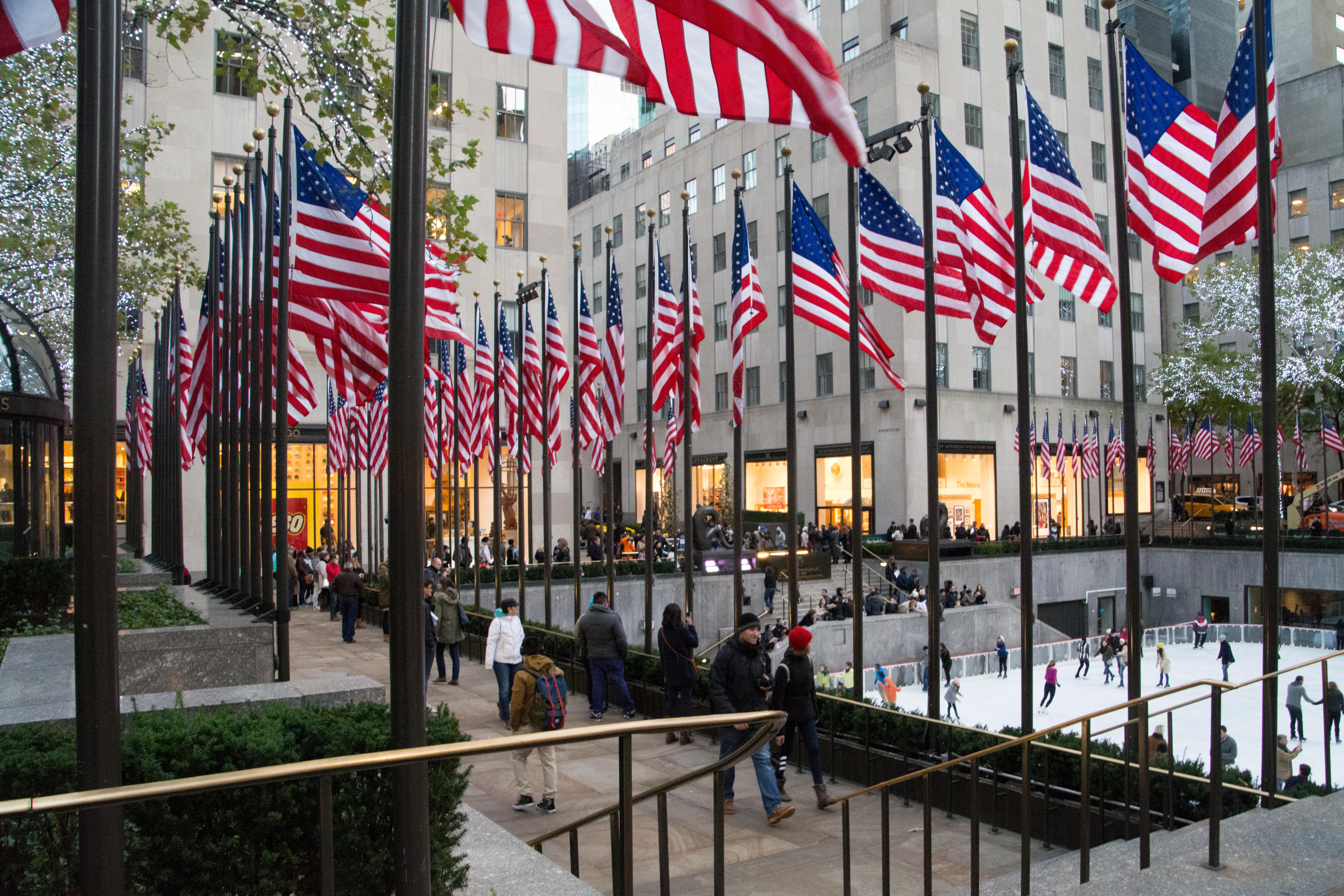
After Jocelyn got on the subway to go home to Brooklyn, I had a little time before we were due to head to the airport. I walked down Fifth Avenue and over to the skating rink at Rockefeller Center. I noted that the varied collection of flags from many nations had at some point been replaced by all US flags. Good looking flags, though .

Enjoying opera, and meditating

Looking west at new construction on Glenwood Avenue, October 18, 2014

Looking west at new construction on Glenwood Avenue, October 18, 2014

Some of my musical friends have a phobia about opera, which I can understand, but it’s really a shame. Some of the greatest music ever conceived is found there, and some of the greatest living musicians express themselves in the form. At its best, it is visual, kinetic, psychological — and fun. A case in point: Mozart’s Marriage of Figaro, which we saw on Saturday.

This was a new production from the Metropolitan Opera, performed live and simulcast in HD video to movie theatres around the world, including our own North Hills cinema in Raleigh. The main story concerns a servant, Figaro, about to marry another servant, Susanna, who is being pursued by their master, the Count. It’s a comedy about love and jealousy, but it also has a tragic side, with elements of deception, abuse of power, and corruption. It gets complicated, with various hard-to-follow schemes, impersonations, betrayals, and stolen letters – enough to make you wonder whether eighteenth-century audiences were smarter than we are. But with subtitles, we get the gist.

The new production, set in the 1930s, had interesting sets, gorgeous costumes, excellent singer-actors, and the great James Levine conducting. The music is perhaps Mozart’s finest — transcendently beautiful. The production took the story seriously, and not just as a sequence of wonderful songs. Along with belly laughs, there was surprising depth in the leads, who were all new to me. I was particularly charmed by Isabel Leonard as Cherubino, Marlis Peterson as Susanna, and Ying Fang as Barbarina. Peter Mattei as the Count sang wonderfully. Ildar Abdrazakov as Figaro was very human, funny, and musical.

The schedule for the remainder of the Met’s season of Live in HD productions includes a couple of other favorites of mine (Carmen and the Barber of Seville) and others that look interesting.

Waking Up

I’ve been reading a new book by Sam Harris titled Waking Up: A Guide to Spirituality Without Religion. Harris is scientist and outspoken atheist, and, it turns out, a serious and experienced practitioner of meditation. He proposes a middle way of approaching what he calls spiritual life that steers between religious mythology and strict scientific rationality. The book is a combination of meditation guide, neuroscience, neo-Buddhist thought, and memoir. It inspired me to find 20 minutes in the schedule for my own meditation practice. If I experience a major illumination, I’ll let you know.
14 10 18_3517

A new Firebird, and a great egret

14 09 14_2576_edited-1
Whew! We finally made it to the start of the new Carolina Ballet season. After a long summer without any dance, I was particularly looking forward to the CB’s first program, with The Firebird as the featured work. And I was particularly excited to see Alyssa Pilger make her debut in the role of Firebird.

Full disclosure: based on a donation to the company, we were invited to be the pointe shoe sponsor of a dancer, and we picked Alyssa. She was then in her second season with the company, and struck us as especially talented. It’s been fun getting to know her. The Firebird is a big, difficult part, and not usually (maybe never) danced by such a junior member of the company. I went over to see her first performance of the role at yesterday’s Saturday matinee, and felt a few butterflies, like an anxious parent.
14 09 14_2539_edited-1

Fortunately, she was fabulous! I’ve seen Weiss’s ballet to the great Stravinsky score at least twice before, and always enjoyed the solos for the magical sparkling red bird. The creature flits, darts and dashes, with sudden quickness and sudden stillness. Alyssa’s creation was a firebird of elegant exoticism and power. Out at the end of her long arms, her hands seemed almost like individual creatures, sending their own strange messages. With some of the extreme stretches and twists, it was easy to believe she was part bird. I found her performance completely transporting. It gave me goosebumps.
14 09 14_2562_edited-1

I also really enjoyed Zalman Raffael’s new ballet, Brahms’ Violin Sonata No 3. I’m a Brahms man from way back, and know this great piece very well, but it never occurred to me that it could be a ballet. If it had occurred to me, I wouldn’t have guessed that a young choreographer would grasp and know what to do with its complex romantic pleasures. Indeed, I don’t know many people who care much for this music, which sometimes makes me wistful.
14 09 14_2558_edited-1

Raffael, however, left no doubt of his grasp of Brahms. I found the ballet faithful to the spirit of the music, while managing to push against it and find new aspects. Jan Burkhard’s pas de deux with Yevgeny Shlapko showed tremendous emotional range. She was lovely and languid in the slow movement, as well as fiery in the finale. Jan has always had a lot of vivacious charm, but she seems to have extended her range into the darker modes in recent seasons. Yevgeny also looked great (he must have spent some time in the gym this summer).
14 09 14_2582_edited-1

The other piece on the program was a new ballet by Robert Weiss called Les Saltimbanques. The music, Stravinsky’s Symphony in C, was Weiss’s primary inspiration. The piece, which I was not familiar with, is not as tuneful and romantic as The Firebird, but instead is more polytonal with irregular accents. Here too, I thought the choreography was faithful to and illuminating of the music. The organizing idea of the ballet is street performers (acrobats, clowns, and the like) filtered through a Picasso-esque vision. I found it bright and involving, and look forward to seeing it again next week.

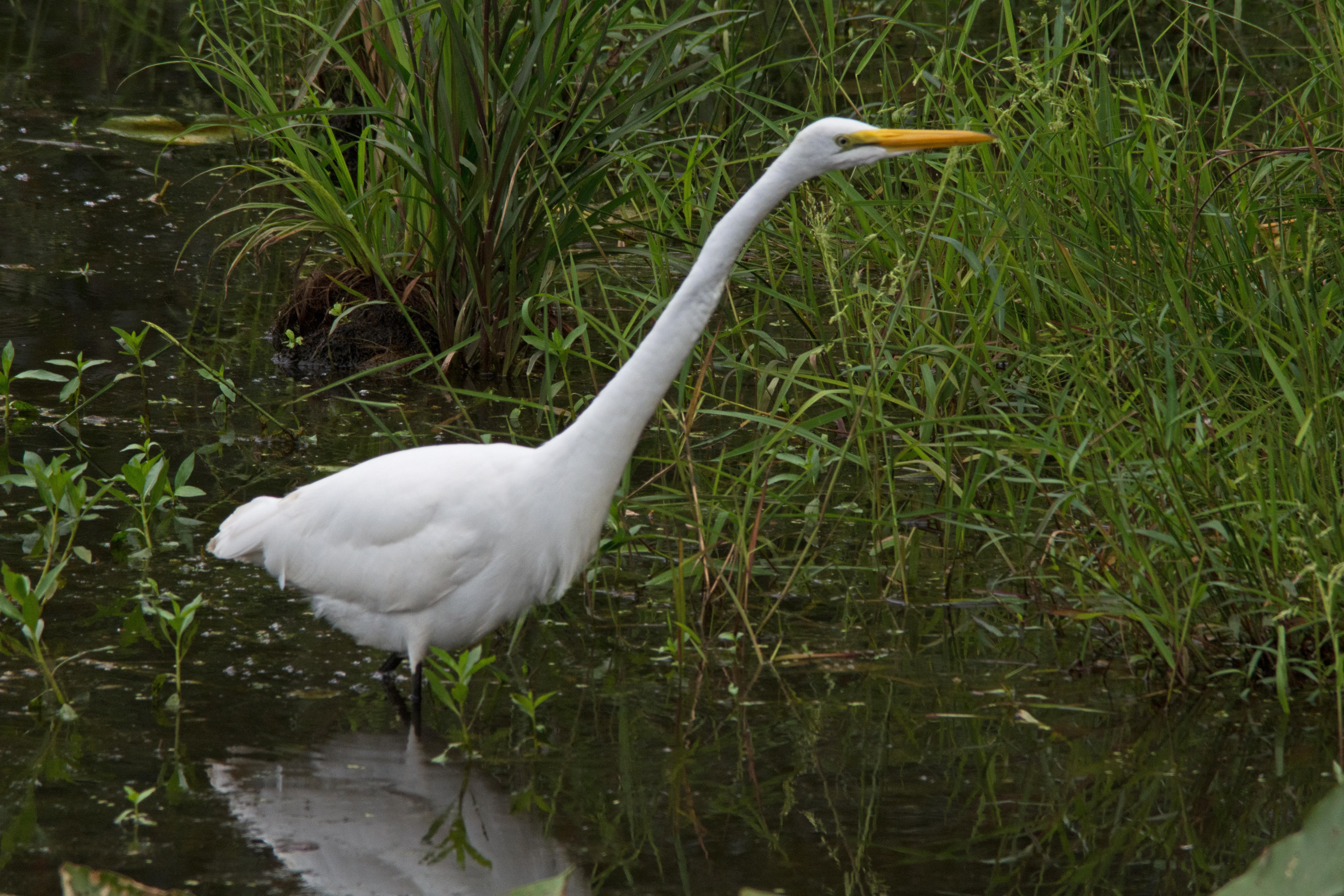
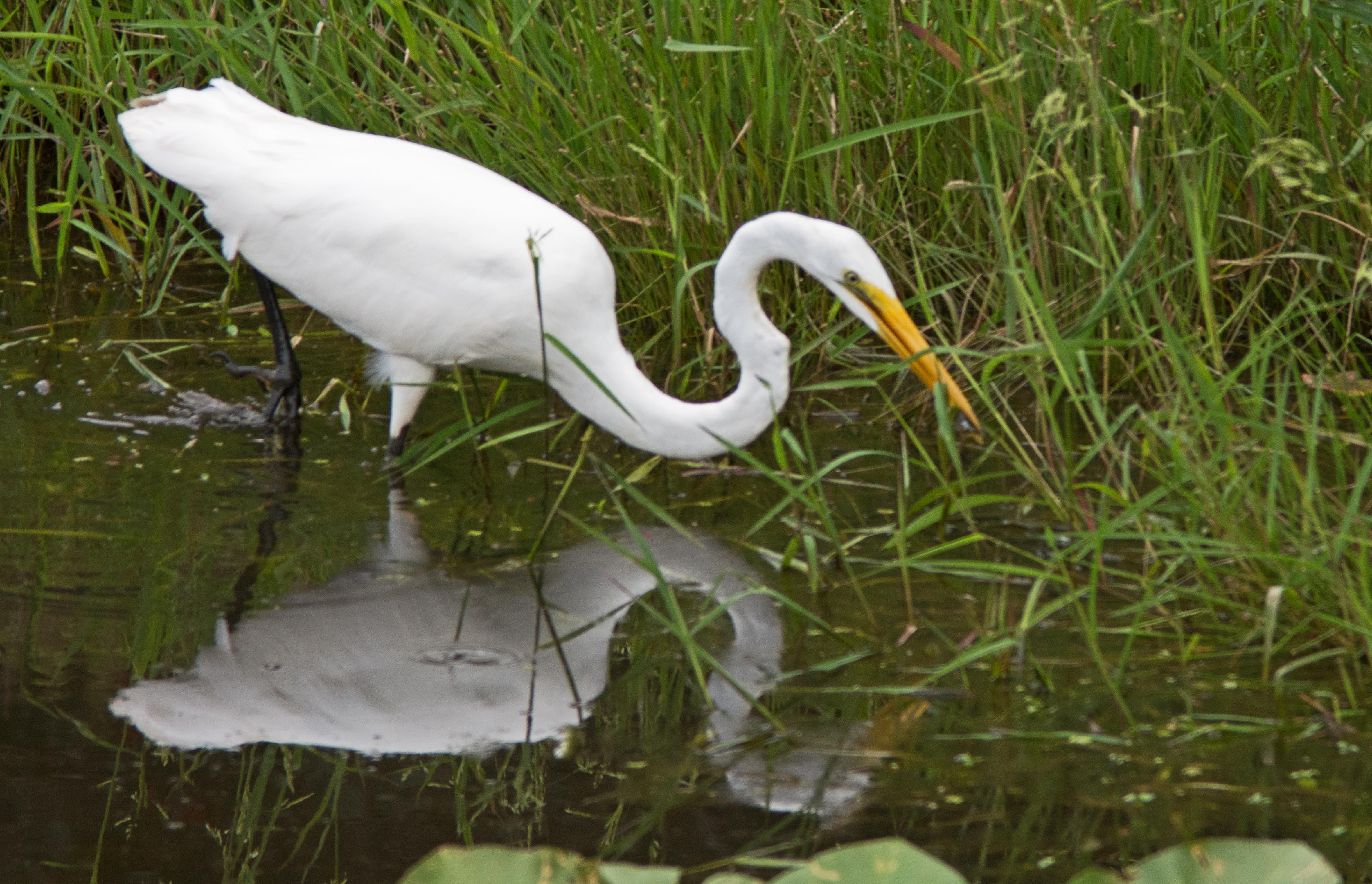
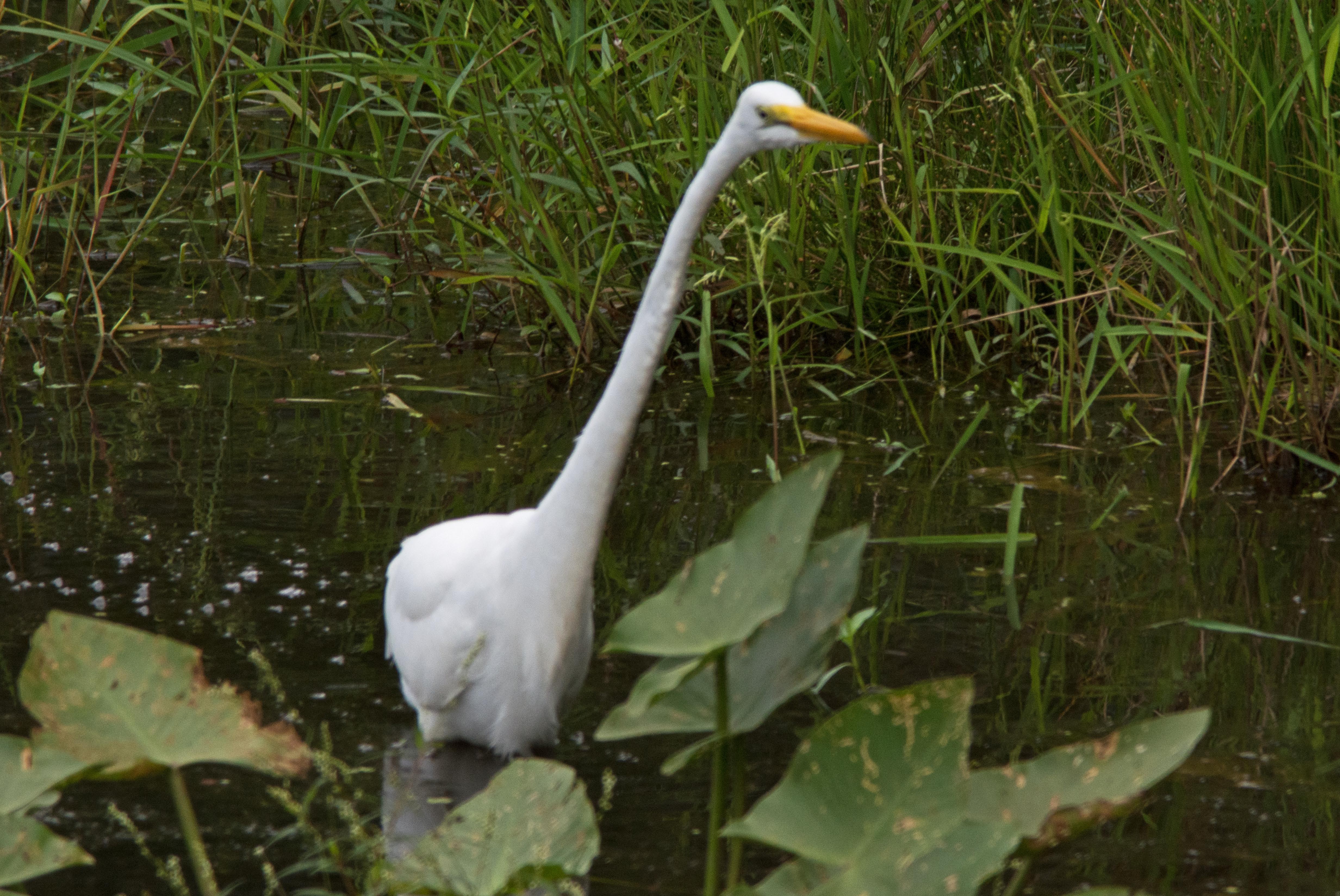
These pictures were taken this morning (September 14, 2014) at Yates Mill Pond in Raleigh. The great egret is a bird we don’t see every day around here. I watched this one hunting for a half hour or so, and was enraptured.
14 09 14_2596_edited-1