The Casual Blog

Category: books

No illusions, but not disillusioned

DSC_0034
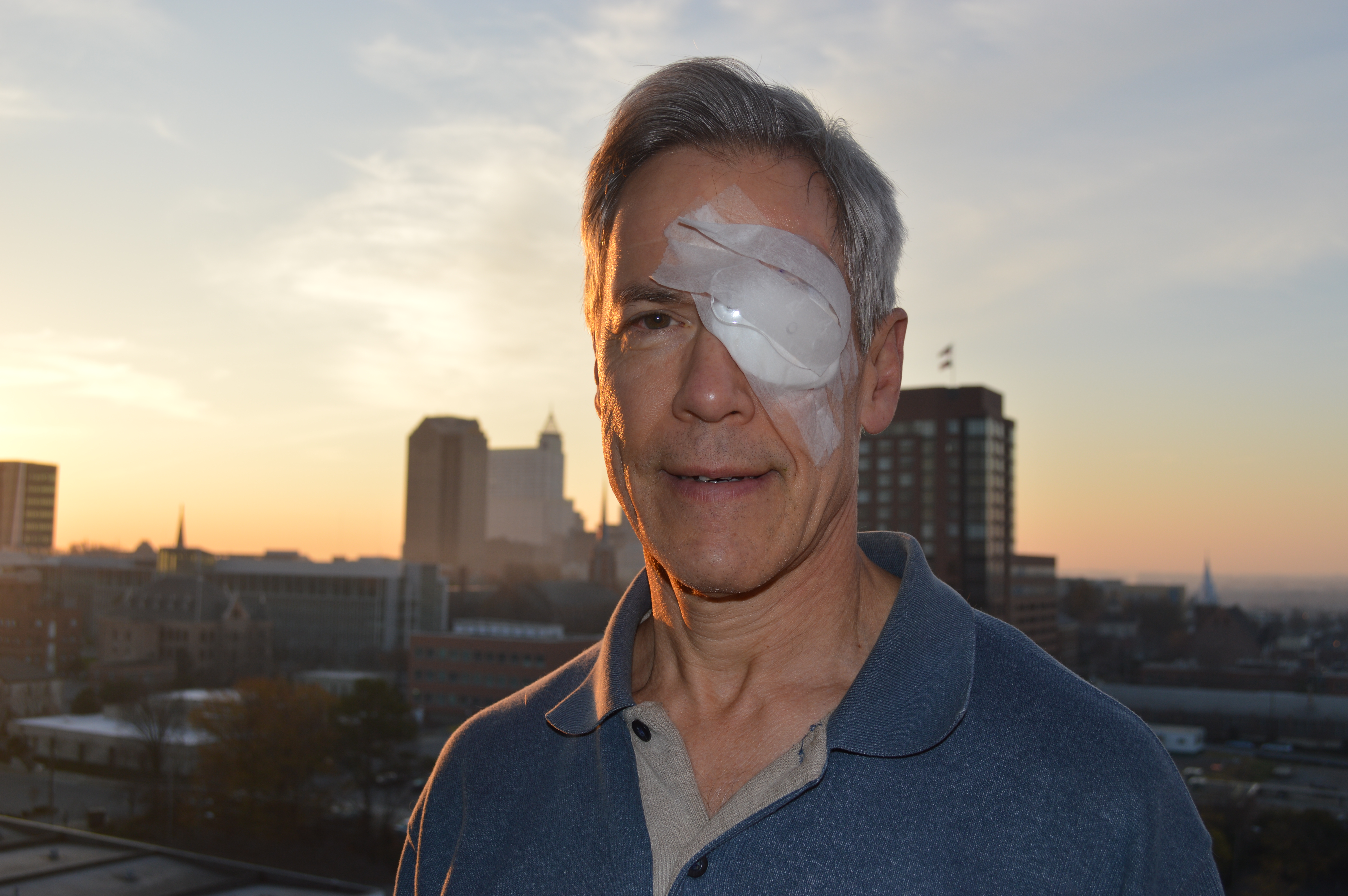
At my post-surgery eye checkup on Thursday, after being scanned, poked and peered at, I was happy to hear Dr. Mruthyunjaya declare, “I like what I’m seeing.” My retina was back where it was supposed to be. This doesn’t mean everything will be just fine. Vision in my left eye is quite blurry now, and it will be some months before we’ll know how much there will finally be. The likeliest answer is substantially less than before. But as Dr. M’s fellow, Dr. Martell, pointed out, even if there’s a lot of blur, it could still help with peripheral vision, and serve as a backup in the event of a right eye catastrophe.

Anyhow, it is what it is. The Nigerian novelist Chinua Achebe died this week at age 82. I have not read his work, but the Times obit made me think I might like it. It quoted Nadine Gordimer as saying he was “a writer who has no illusions but is not disillusioned.” A good way to be.

I was also happy that Dr. M cleared me to resume exercising, though he suggested I wait another week before my next killer spin class. So early Friday morning, my usual spinning day, I happily did a functional fitness routine and a half hour on the escalator stairs. The stairs are a relatively new machine at O2 Fitness, and they are remarkably effective at pushing up your heart rate. As usual, while sweating away I listened to some opera (the incredible second act of Mozart’s Marriage of Figaro) with my MP3 device and read on my tablet device.

I reread some on the ideas of Jonathan Haidt in The Righteous Mind: Why Good People Are Divided by Religion and Politics, whose name is pronounced “Hite,” as I learned this week when I heard him give a lecture at Duke. My earlier thoughts on Haidt’s theory are here, but I’m still processing his big ideas, which point dramatically away from traditional political theory and its reliance on rationality. His TED talk on the differences in ethical systems between liberals and conservatives is a nice introduction to his theory.

As Haidt observes in the TED talk, there are two types of people: those who like new ideas and experiences and those who prefer the safe and familiar. He notes that the latter are the people who like to eat at Applebee’s.

On Thursday Sally and I tried for the second time to eat at a new restaurant in our neighborhood, Dos Taquitos, and again failed. The place was cheerily hopping but the wait time was too long for us, so we went down Glenwood Avenue to the uncrowded Blue Mango for some Indian food. We had a delicious meal featuring masaledar allo gobhi (cauliflaur and potatos) and eggplant bhartha. We couldn’t finish it, and I asked for a take-home box, which I carefully prepared and then accidentally left on the table. Darn!

For more new musical ideas, I had a piano lesson with Olga on Saturday morning. It was invigorating! I played Liszt’s Liebestraum (Dream of Love) No. 3, a famously beautiful piece (here played wonderfully by Evgeny Kissin). She gave me a massive compliment, and I quote: “Wow!” She thought I’d vastly improved, and was getting a richer sound. But of course, it can always be better. We worked on getting a more stable connection between the body and the instrument, including not just the fingers, but also the back and the core. She showed me on a type of touch involving a very relaxed hand with mostly arm movement. She also gave me some new ideas on pedaling, including using a slow, slightly delayed release. As she noted, it makes magic.
DSC_0039

Utah ski tips

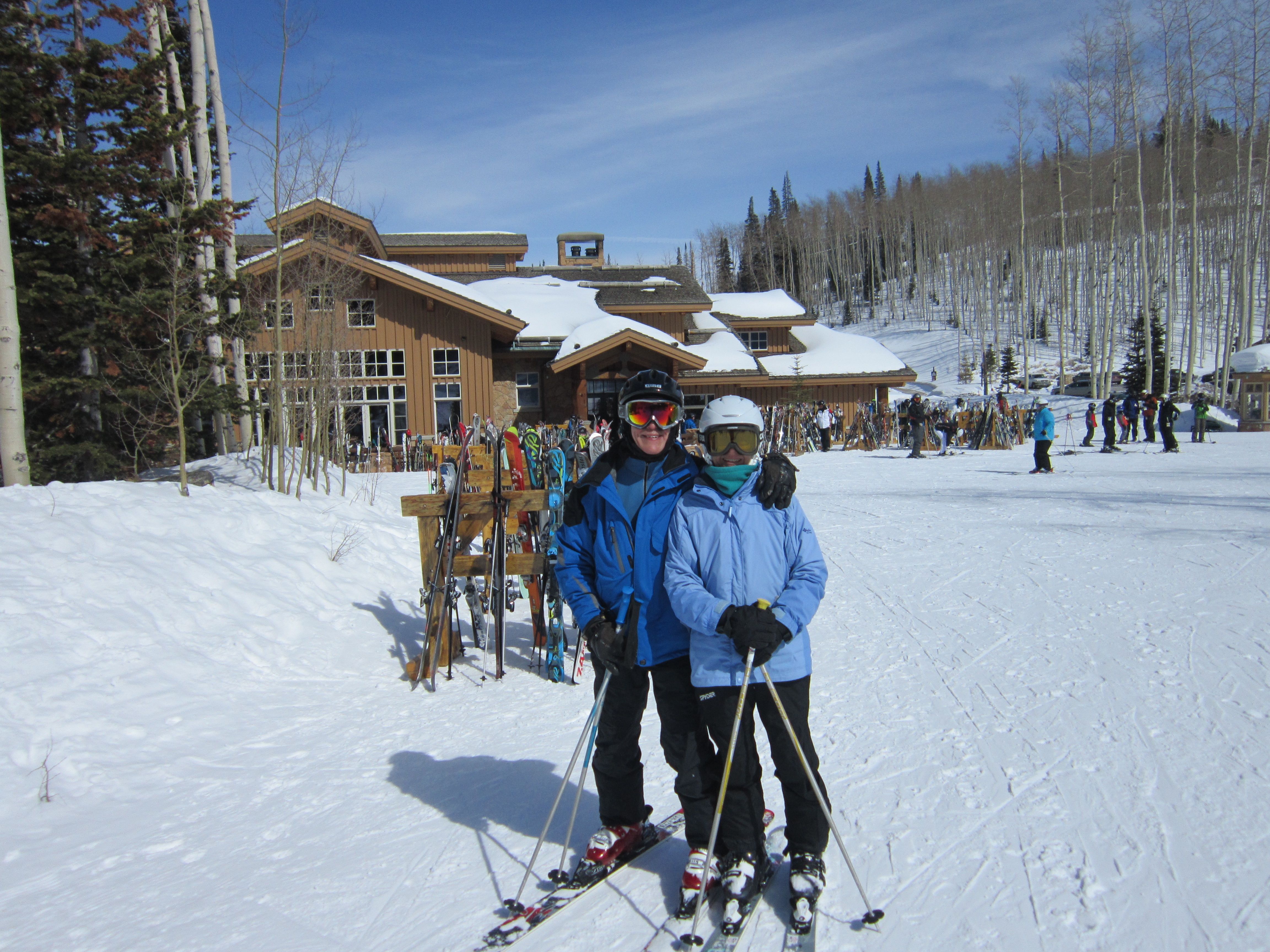
IMG_0480As much as I love skiing the big mountains of Utah, I had mixed feelings last week as we headed out to Park City. Vision in my left eye has been very limited, which has affected my depth perception and balance. But exploring physical limitations is part of what makes skiing interesting. I was looking forward to the kinetic excitement and raw alpine beauty, and to seeing old friends.

Our flight through Dallas went smoothly, and it was snowing hard when we landed in Salt Lake City. We took a shuttle (which our driver called “the Love Van”) up to Park City over snowy roads through limited visibility. When we arrived, some of our friends who’d arrived a day earlier were sitting by in the living room by the fire, and others were in the hot tub in the back. After saying hello, we walked three blocks to the lift area and to rent skis. I went with Volkyl Mantras, an all mountain ski I’d liked in previous editions, and which turned out again to be highly versatile in changing conditions (powder, groomed carving, chop, and bumps).

The next morning I cracked a good sweat trying to jam my feet into my ski boots, and for a few moments I thought they simply would not go, but in the end they did. The day was cold (low teens), but we were dressed adequately (five layers over the torso and two over the face). There was not as much powder on the mountain as we’d hoped, but on the whole the snow was light and workable. After doing two or three groomed runs, Sally and I tried some bumps. We were a little rusty at first, but managed ok.

We ended up skiing the first two days at Park City and the last two at Deer Valley. The usual knock on Deer Valley is that it’s too sweet, with such amenities as good on-mountain restaurants, comfortable lifts, and careful grooming. This is not untrue — the food, lifts, and grooming are quite nice — but it’s also not the full story. We loved the skiing there. The system is elegantly laid out and linked together. There were almost no lift lines. Yes, there are a lot of cruisers, but they’re really good cruisers, some quite steep, and there are also some exciting bumps and gladed areas.

At this stage of my ski career, I enjoy the rush of shooting down groomed cruisers, but I soon find myself craving more varied and challenging terrain (typically rated as black or double black diamond). Finding the right degree of challenge is part of the secret of happy skiing. When you’re right at the inside edge of what you can handle, you experience a special type of happiness. During th event, you don’t know your’re happy, because you’re completely focused and absorbed in solving the intricate speed chess problem of the next few dozen yards. The challenges are constantly changing.

This is an aspect of flow, which I read about last year in Flow by Mihaly Csikszentmihalyi, another book which has some worthwhile ideas but too much padding. Anyhow, I try not to spend too much time just doing those things that come easily. This trip I was focusing on steep moguls,and found myself getting more adept at them.

Here’s my tip, which I got from a teacher in Telluride: getting pressure to the inside edge of the down hill ski about twelve inches from the tip. Particularly when coming into the backside of a mogul, force this spot down into the snow. This causes you to press your weight forward, with your shins driving hard into the tongue of your ski boot. This technique helped me stay out of the back seat, which is where problems usually develop, and to feel well in control.

Anyhow, I felt stronger and more confident on the slopes than last year, or ever. It could be my personal trainer’s innovations, yoga, more swimming, foam rolling, or eating a healthier diet. Or perhaps a combination of some or all of these. At any rate, we skied hard every day, with many exciting challenges, and my legs never gave out.
My vision problem didn’t hamper me too much. Especially in more crowded areas, I tried to be conscious of looking around carefully for other skiers, but we usually stayed away from those places. It’s possible that my hearing and sense of touch were carrying more load. It’s also possible that adrenaline increased the speed of visual processing, and cropped some of the bad signals from the left eye. At any rate, I was able to forge ahead.

Sally really lifted her ski game this year. She was going much faster and looked relaxed and happy. I persuaded her to change out her trusty white cap for a white helmet, which she agreed was comfortable and warm as well as safe. It was a pleasure to watch her.
IMG_0494

A new novel about AI and the Turing test

DSC_0032
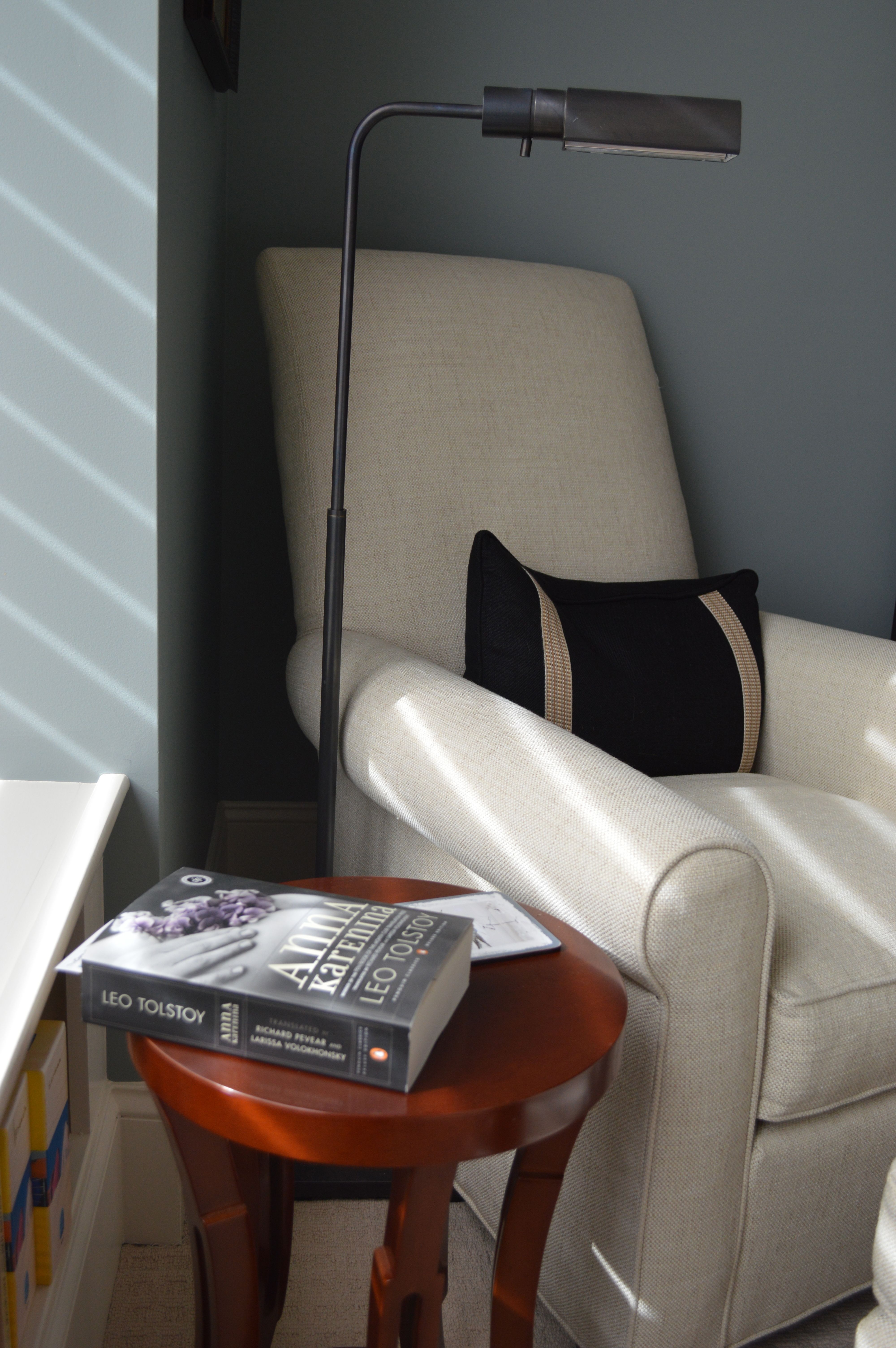
Sally’s re-reading Anna Karenina, which seems to me both admirable and exhausting. The recent movie version with Keira Knightley was highly stylized, but reminded me of what I enjoyed about the book when I read it in my twenties. It is rich book, full of feeling and thinking. But it’s long!

As a teenager and young adult, I read a lot of long novels, including ones by Tolstoy, Dickens, Dostoyevsky, Trollope, Elliot, James, and Proust. My “big novel” period was a time when I was coming of age and constructing a particular consciousness. Those big books were part of the process.
DSC_0039

Nowadays most of my waking hours are spent working, and there is stiff competition for precious non-work time. I’m still interested, though, in novels, and especially ones that take on issues that haven’t been thoroughly mined out. I just finished one such: A Working Theory of Love, by Scott Hutchins (Kindle edition). It’s about a guy who’s working on an artificial intelligence program designed to pass the Turing test, which is a real competition suggested by Alan Turing.

The Turing test is designed to probe whether machines can think. The challenge is to build a computer that can persuade 30 percent of humans that it is human. (I wrote about a very interesting non-fiction account of the test and artificial intelligence, The Most Human Human, by Brian Christian, here.)

Hutchins’s narrator bases his program on his father’s diaries. After getting the computer to converse coherently, he works on humanizing it by adding emotion and sex drive. As the program improves he has the feeling that his father is coming back to life. This creates an interesting moral dilemma. His father had committed suicide, but the project seems to be denying him his freedom to choose death.

I found Hutchins’s premise thought-provoking, but I ultimately didn’t care very much for his narrator. But he’s where the action is. It’s exciting and terrifying to see how fast robotics and artificial intelligence are transforming the world. The AP did a good overview piece last week, which I recommend highly. As they note (and as I’ve noted before), jobs involving any sort of routine (most manufacturing, transportation, retail, and office work) will soon be gone forever, taken over by robots and AI. This means increasing efficiency and wealth for some, and unemployment and anomie for a great many others.

We’re going to need to re-think and re-size our social programs for a world where humans are not needed to produce most goods and services. This is a daunting task, even leaving aside the extreme polarization of our politics. The shift away from human labor as a process that is the source of economic value and meaning is hard for us to grasp and accept. But we somehow need to provide a safety net for the millions who will be affected.

I’m not prepared to propose a program, but I do have the name for one: the Big Deal. It will need to be bigger than FDR’s New Deal. It will surely involve some sort of cash payments and medical care. I’d also add a work program that channeled redundant workers to activities that would provide them with a sense of meaning and purpose, like caring for other humans.

Cats and curiosity, humans and dishonesty

Isabelle, a/k/a Izzie, "The Wild One"

Isabelle, a/k/a Izzie, “The Wild One”

There was an amazing story in the NY Times last week about a house cat that got lost 200 miles from home and somehow found its way over unfamiliar territory to its human family. It sounds impossible, but apparently there was adequate proof, including a computer chip in the cat.

Sally dearly loves our cats — Phoebe, Isabelle, and Rita. She buys them toys, speaks babytalk to them, and lets them sleep on top of her. They make her laugh and coo. I admit they are beautiful, but I have never been as smitten. They shed hair everywhere. They periodically throw up hairballs and other sundries, usually at a prominent spot on a nice rug, and sneakily try to steal food from our plates. But for the last several years, most of the time I paid them little attention, and they did the same to me.

Phoebe ('Feed Me")

Phoebe (‘Feed Me”)

Lately, though, they’ve been wooing me. Rita wants to cuddle with me in the easy chair. Isabelle follows me to the bathroom and nuzzles my leg. Phoebe likes to get into my lap when I’m eating. They’ve gotten me to pet them more. They purr more. They haven’t tried to bite me in quite some time. It’s nice.

I tend to think of our cats as not very bright, even for cats, and mainly enjoy their grace. But they do have skills. They are wonderful at rapid acceleration and deceleration, and do amazing leaps. They seem at times to concentrate completely and at other times to relax completely. And they are extremely curious about anything new. They’ll thoroughly explore every new paper bag and box.

Rita, the sweet one

Rita, the sweet one

They’re getting older. Phoebe is now 12, Isabelle is 10, and Rita is 6. Perhaps age has a mellowing effect and accounts for their increased affectionateness. Perhaps they detected some change in me. There’s no doubt but they are working on me, and making some changes.

Still curious about how humans work and why we do do so many silly things, I finished reading Predictably Irrational, the Hidden Forces that Shape Our Decisions, by Dan Ariely, a psychology and behavioral economics professor at Duke. His style is a bit chatty, but some of the substance is fascinating. Working along some of the lines of Kahneman and Tvesky, he examines such problems as our difficulties in managing our money or avoiding unhealthy food and our inability to foresee the bad decisions we may make when sexually aroused.

One of the most interesting chapters describes an experiment designed to examine cheating. A control group took a simple knowledge test, and other groups took the same test with the answers “accidentally” provided to subjects. The basic finding was that a majority of those given a bit of temptation and opportunity to cheat did so. But Ariely found that the cheaters didn’t cheat as much as they could have. Instead, most cheated only a modest amount. There seemed to be some threshold beneath which the dishonest behavior was not particularly troubling, and above which it was.

There was an interesting essay by James Nortz in the current Docket, the magazine of the Association of Corporate Counsel, which describes some more of Ariely’s work on honest and cheating from his book The (Honest) Truth About Dishonesty: How We Lie to Everyone — Especially Ourselves. Nortz proposes that we view dishonesty as a universal human trait, but one which manifests itself according to varying circumstances. He suggests that facing up to these disturbing realities could help us design better compliance and ethics programs.

Stuart, still the greatest

Stuart, still the greatest

New resolutions and my latest green smoothie

DSC_0013
I have a soft spot for New Year’s resolutions. It’s generally a good thing from time to time to think about where we are versus where we want to go. Few, if any, of us that are fully optimized. At the same time, there’s never any shortage of small feasible steps we could take to make our lives better.

But personal self-improvement resolutions usually don’t get the job done. A prime example is our most visible, common, and serious public health problem: obesity. There’s no great mystery what needs to be done (eat less and exercise more), and most of us who aren’t naturally optimized for body mass know that much perfectly well. Nevertheless, each year the incidence of obesity is about the same or worse, and the over all trend in the last thirty years is worse and worse.

Plainly this is not a simple problem with an easy solution, or we would have solved it. But part of the reason we can’t successfully address obesity and other serious behavioral problems is our poor understanding about how our own minds work — that is, our own impulses and motivations. As regular readers know, I’ve been learning more about this in the last couple of years from reading Daniel Kahneman, Michael Gazziniga, Jonathan Haidt, John Brooks, and Edward O. Wilson, and I’m currently reading Predictably Irrational by Dan Ariely. In addition to being inherently fascinating, these books have provided insights into life’s persistent problems, like over eating.

One of my main takeaways from these psychologists, biologists, and critics is that our reasoning processes, which seem at times so powerful and impressive, will get us only so far, and if we want to change behavior and minimize bad decisions we need other tools and tricks. Charles Duhigg’s book on habits and how to change them, which I wrote about recently, is a good signpost on this. If we understand our behavior in terms of the interaction of our emotional needs and our environment, we can experiment with changes.

But we may as well admit that eating is especially complicated. I’ve long been convinced that what we eat is a major component of how healthy we are and can expect in future to be. I try to keep up with current thinking about nutrition. Over the course of several years, I’ve developed a repertoire of habits that help me avoid most unhealthy foods and consume mostly things that have nutritional value.

But even so, I managed to pick up five pounds over the holidays. How did this happen? It was little things. Christmas parties and more restaurant meals, colleagues bringing to work delicious cookies that had to be sampled, and old friends sending gift baskets of treats. The combination of sweet things and childhood Christmas memories overwhelms all the circuits, and extra food is inserted in mouth, chewed, and swallowed. Of course, it was momentarily delightful, but it is so much harder to take the lbs off than to put them on.

Each year around January 2 we leave the land of the sweets and other excesses and things return to normal. New resolutions are made. Regarding eating, I’m trying some new ingredients in my breakfast green smoothies (pictured here and previously described here), including in various blendings, along with greens and fruit, hemp protein powder, marine phytoplankton, cacao nibs, and goji berries. It’s fun to mix a superdrink (as in superhero), and rewarding to be able to do something fabulously good for the body. I try to make it a point each day to be grateful for such good fortune.
DSC_0006

What do we do? Good and bad habits

Periodically I get the bug to improve my Spanish, which has been stuck for a while at the low intermediate level. Rosetta Stone’s relentless marketing finally overcame my defenses, and I found myself signing up for its web-based offering on an all-you-can-eat-in-one-year basis. I like it.

It’s all in Spanish (no translations), with photographs to guide you toward basic vocabulary, and is broken into little bite-size challenges. It works well on my tablet device. Part of the genius is that it constantly quizzes you, asking you to think and make your best guess as to each new bit of vocabulary, and gives a small musical reward (a harp arpeggio) for a correct answer. (Wrong answers are punished with a less pleasing sound.)

When you’re a beginner at Spanish, or anything else, you have to exert a lot of conscious effort to accomplish anything. This “beginner’s mind” (see Zen) is fun, in a way. It’s involving. But eventually, if you keep at it, you advance, and you are no longer a beginner. Conscious incompetence changes gradually to unconscious competence — a habit. You can communicate more successfully, but without any particular feeling of accomplishment. Then you’re ready to begin German, or whatever. Education is, in part, the accretion of useful habits.

I wrote a bit last week about developing the habit of exercise, and have been thinking more about the significance of habits. A few moths back I read Charles Duhigg’s The Power of Habit. It has the air of one of those airport bookshop books that’s more like a padded-out magazine article, but it has a few worthwhile ideas.

According to Duhigg, hundreds of our everyday activities are just chunks of behavior that require no conscious thought. We may think that our days are spent considering and deciding on our actions, but typically we spend lots of time on autopilot. Think of getting up, showering, eating, brushing teeth, walking, driving, saying good morning, turning on your computer, web surfing & etc.

This is not in itself a bad thing, because it’s energy efficient. Once we’ve learned to drive and gotten to be experienced drivers, we don’t need to think about driving our daily commute, which frees up energy for other things — like texting. Just kidding! Kids, please don’t text while driving. But seriously, as much as I think conscious thinking is a worthwhile thing, life as we know it would be impossible without a large repertoire of behaviors that require no conscious thought.

Habits, like bacteria, get a bad rap because we forget about the good ones and mostly notice the bad ones. And we should give attention to those bad ones. Over and over, we do things that we know very well are bad for us, and it doesn’t help that we know it. Some bad habits just waste time, but others, like smoking or overeating, can take years off your life. What to do?

Duhigg proposes a simple approach to changing bad habits. Researchers have found that all habits have three parts: the cue, the routine, and the reward. For example, you feel bored and fidgety (the cue), you go to the snack station and grab a candy bar (the routine), and devour the sweet gooey thing and feel a moment of bliss (the reward). Then you feel unhappy that you ate something against your better judgment.

According to Duhigg, the trick to changing a bad habit is recognizing the routine, and experimenting with substituting a new routine that gives the same reward. He gives the example of his own snacking, which he thought was a function of hunger, but realized had more to do with needing social interaction. So instead of having a cookie, he started having a chat with a colleague, which yielded the same psychic reward.

This seems like a reasonable approach. Good intentions and raw willpower are usually not enough to dislodge entrenched bad habits. A bit of playful experimentation is worth a try.

My emergency eye surgery

DSC_0031
It took several years for me to develop the exercise habit, but now it’s deeply ingrained. I don’t have to think about whether or not to work out, because it’s almost automatic. Most mornings I just pop out of bed at 5:15 or so and head to the gym, yoga studio, or pool. Then I challenge myself with interval training, free weights, down dogs and half moons, spinning, swimming, or more offbeat functional training movements, and normally feel clear-headed and energized afterwards.

This past week, though, following my emergency eye surgery, I’ve been under doctor’s orders not to exercise. This seems unnatural, and I’ve been feeling like a slug. Still, I’m trying to keep in mind that I’m a very lucky person.

The eye is a marvelous organ, which, like all organs, I generally take for granted. Until last week, most of my knowledge of its constituent parts dated back to about the fifth grade, and hadn’t much advanced in the years since. As an amateur of science, I’m always interested when I come upon a gap in my knowledge and an opportunity to fill it in. From this perspective, opportunity was knocking when I unexpectedly developed a detached and torn retina, and I got a crash course in eye physiology and repair techniques.

In brief, on Wednesday morning I worked out as usual, came home, showered, cleaned my glasses, put them on, and noticed that things looked a bit foggy. I cleaned my glasses again, but this didn’t fix it. I closed first one eye and the other, and found that only the left eye view was foggy. In the course of the day, this worsened, and I began to see increasingly dramatic floaters. I made up my mind to call for help if I didn’t improve over night, and I didn’t. My longtime optometrist and friend Don Cloninger worked me in and did several tests, from which he diagnosed a possible detached retina. I asked him to recommend a surgeon he would go to himself, to which he agreed, and got me an appointment with Dr. John Denny of NC Retina Associates.

My extracurricular science reading has at times filled me with a sense of awe and wonder at the things humans have figured out, but also has alerted me to vast areas of ignorance. In medical science as elsewhere, there are some problems we can solve with our technology, and many others that we can’t. Fortunately for me, detached retinas are well understood, and repair techniques are highly refined.

Dr. Denny described the success rate as 90 percent. There is no argument in favor of avoiding that last 10 percent. Once a retina detaches and tears as mine did, unless it is treated it will worsen until eyesight is gone. As to causation, Dr. D said it was the genes I was dealt plus age.
20121130_131124

My surgery, which was scheduled for the following day, was called a vitrectomy. The idea of sticking needles or other instruments in the eye sounds like medieval torture, and if you are squeamish you may want to skip this paragraph. I have a reasonably strong stomach, and I wanted to know the details of the treatment. It involved inserting very thin instruments into the eye, including a laser to do with Dr. Denny compared to spot welding. Most of my vitreous was temporarily replaced with a gas bubble, which pressed the retina back into place.

I’m not a big fan of hospitals, but I have to say I had a very positive experience at Rex Medical Center. My treatment team all introduced themselves in a friendly way and explained what they were going to be doing. My prep nurse did a great job at getting my IV in, and told me about the zumba class at her gym. The anesthesiologist told me that I would be semi-conscious during the procedure, but would not have traumatic memories. This last was certainly true. Afterwards, I was a little woozy from the anesthesia, but otherwise felt fine, and didn’t remember anything from the operation.
DSC_0035

My eye never did hurt, but I had to lie on my side for the next two days, which was a bore. I signed up for a free college history course with Coursera and listened to some lectures, which were well done. II also got a trial subscription for recorded books with Audible, and began my first MP3 book — The Adventures of Huckleberry Finn. Like many, I’d read it as a teenager, so I discovered a lot I didn’t remember and a lot I could not possibly have understood. It is an amazing book — humorous and tragic, understated and also epic.

I’m now one week out from surgery, and per Dr. Denny am healing normally, although my vision is still very blurry. One blurry eye and one clear one averages out to less-than-clear vision. I’ve been moving about more or less normally and driving, but more slowly and carefully than usual. I’d scheduled a day of track driving at VIR for next weekend, but decided it would be better not to push the envelope. I’m still hoping, though, to be ready for scuba diving in the Turks and Caicos over Christmas.
DSC_0051

Sleepwalking and critical thinking

Some weeks ago I hurt myself sleepwalking when I wandered into the shower in the middle of the night. I remember not knowing where I was. I felt confused and frightened. Then I fell and hit my head on the tile, gashing my forehead, and woke up.

In the last couple of years, I’ve seen evidence a handful of times that I must have been sleepwalking in a fairly benign way, such as lights left on that I’d turned out the night before. On one occasion, I started to take off for a drive in the middle of the night and backed into a parked car. These incidents have been mildly or very unsettling. They make you wonder about what else is going on in your brain that you aren’t aware of.

Back in college, I enjoyed listening to a comedy album by Firesign Theatre titled Everything You Know Is Wrong. Earlier this week I checked out the first few minutes on in video form on YouTube, and verified that it still seems funny and disconcerting. The title has rattled around in my head for decades now ike a verbal Escher drawing, impossible either to forget or resolve. Lately it has seemed to me increasingly resonant as I’ve read more about neuroscience and consciousness. It’s inherently interesting, at least to me, and by moments I think it could lead toward a fuller, better understanding and a happier life. But if Everything I Know Is Wrong, this could also be wrong.

Speaking of sleepwalking, last month’s Scientific American had a somewhat sensationalistic but still interesting article on recent sleep research by James Vlahos titled The Case of the Sleeping Slayer. As you’d expect, it describes some violent and tragic cases, such as persons who commit murder while asleep, and also describes a new theory about the nature of sleep.

According to Vlahos, sleep is not a whole-brain phenomenon, but rather “a scattered, bottom-up process. ‘The new paradigm views sleep as an emergent property of the collective output of smaller functional units within the brain,” according to James Krueger of Washington State University. Krueger and other researchers think that individual parts of the brain “go to sleep at different times around the clock depending on how much they have been taxed recently.” What we think of as sleep (stillness, closed eyes, slackened muscles) happens when most of the neurons are in the sleep condition. Apparently parts of the brain may be snoozing without our looking like that.

There’s good evidence that other animals have modular sleeping habits. Vlahos’s article notes that dolphins sleep with half of heir brain at a time and keep an eye open for the non-sleep part. I’ve also read that birds also rest their brains in this modular way so they can always keep an eye out for predators. The theory seems promising. I occasionally note waking behaviours in myself, like forgetting where I parked, that could be explained by the partial wakefulness approach. It would explain not only sleepwalking, but other odd behavior, like people who sit on airplanes without reading anything.

When I get to thinking about thinking, I sometimes have flashbacks to the my days as a freshman at Oberlin College, where amidst the midwestern corn fields I got a hard blast of serious philosophy and critical thinking about social issues. It would be an understatement to say it was humbling. The air was dense with intense ideas. No matter how hard I worked, I usually had the feeling there was a lot I was missing, along with the feeling that some of my fellow students were getting a lot more. But by moments I felt real excitement as I wrestled with an idea and managed to pin it.

In retrospect, I think that learning the skill of wrestling with challenging ideas was more significant than any particular idea. A significant amount of what I learned was eventually superseded by new and better understandings. An example: we all took Freud seriously as a scientist, but now do not consider him as such.

But my teachers drilled into me the habit of testing an unfamiliar concept rather than simply swallowing it. It’s related to the scientific method in its insistence on evidence and logic, and its use of thought experiments. This habit of mind is sometimes called critical thinking. Once you start doing it, you tend to think it’s the best way to think.

My liberal arts education inspired me to be curious and to explore new ideas. But to some extent it may also have led me down the garden path. My recent reading in neuroscience and evolutionary biology has called into question some of my deeply held beliefs about the power of reason. It’s exciting, though: Its helping me understand various oddities about my own subjective experience and the observable lives of others.

If this sounds interesting, I recommend Jonathan Haidt’s recent book, The Righteous Mind, Why Good People Are Divided by Politics and Religion. You may recall that I wrote about this book some months back; I’ve been re-reading it and getting more out of it. Haidt, a professor at University of Virginia, (my law school alma mater) has a style that is accessible and friendly, but he challenges our usual was of thinking about thinking. The heart of his message is at odds with most of what I learned in my undergraduate years and have mostly assumed ever since.

There are a lot of big ideas in Haidt’s book, but probably the biggest is that the primary driver of our behavior is not rational conscious thought, but rather our unconscious system of feeling and emotion. It’s the system that tells us quickly what needs to be done. (Freud was right in guessing that there was subconscious, but he didn’t figure out much about what it did.) Haight compares our moral intuitions to an elephant, and the rational mind to the rider of the elephant. The rider developed to serve the elephant. The elephant usually goes where it wants to go, although the much-less-powerful rider can influence the elephant. This understanding of our nature leads Haidt to focus closely on the nature of our moral perceptions and beliefs.

Some of Haidt’s research relates to differences in moral systems among different communities. In one study, he used a questionnaire with narratives intended to invoke disgust (like incest and cruelty), but structured to defy an easy explanation for the disgust (no one was hurt). In the face of such dumbfounding problems, people came up with explanations for their feelings — but the explanations didn’t make much sense. This suggests that some of what our reasoning mind is doing is pretending to understand things it doesn’t, and making up post hoc rationalizations for feelings that start elsewhere.

Haidt contends that emotions are a kind of cognition — intuitive, rather than rational, but not inferior to reason. Intuitive processes are essential to our lives; we couldn’t possibly reason about the hundreds of decisions we make every day. We like or dislike things instantly and decisively, and adjust our behavior without noticing the process. Our conscious reasoning processes are along for the ride, and only get involved with explaining our behavior when there’s some anomaly or challenge.

Another theme of Haidt’s book relates to human cooperation. He observes that we are the best species in the animal kingdom at cooperating outside kinship groups. Haidt investigates this from an evolutionary perspective. In the days of our hunter-gatherer ancestors, we had to form effective groups in order to defendant against predators and find food. This involved development of intuitive cognitive skills, including the ability to easily track the emotions of other human beings.

Haidt suggests thinking about the most successful human groups not just as collections of individuals, but as superorganisms. Humans have evolved the ability by moments to lose their individuality and merge with a group, whether it be hunters, warriors, or dancers. Some of our peak moments come when we lose ourselves in such groups.

Looking at ourselves as having two natures, individual and group members, explains some of our apparent contradictions, such as how we can be both deeply selfish and deeply altruistic. Looking at emotions as driving reasoning explains a lot of political behavior, not to mention personal decisions that are from a rational standpoint inexplicable. It might even help us avoid some bad decisions.

Upfitting my new Android phone and thinking more about accelerating technological change

This week I got my new Android smartphone upfitted with my email accounts and a variety of apps. I’d been reluctant to give up my old smartphone partly because of the investment, both in money and effort, of apps, but on reflection I realized that a good many of the apps I’d previously downloaded were seldom or never used. The move to the Galaxy was sort of like moving to a new apartment — a good opportunity for some app house cleaning.

I easily and with little expense replaced those things that were useful, like internet searching, weather reports, navigation, travel support, news, and music. I got my most used apps organized in folders that I could quickly get to. I installed personalized wallpaper (our dog Stuart). Everything seems to work fine, with the exception of the voice activated search feature, which is not ready for prime time.

Through clumsiness, I dropped the device a couple of times in the first few days, fortunately without causing damage. This provided some proof of its durability and toughness, but also served as a reminder that devices are not immortal. I ordered a Seido case for protection, which fits well and looks good. It has a neat little kickstand on the back.

I’ve been reading The Lights in the Tunnel: Automation, Accelerating Technology and the Economy of the Future, by Martin Ford. Like Brynjolfsson and McAfee, Ford starts with the premise that technology is developing at an ever-accelerating rate, and examines the economic implications of that development. As our machines get smarter and smarter, they will replace people in more and more jobs. At some point, the kinds of jobs that most people do will be taken over by the machines. Those people who’ve become redundant will not be able to earn an income, and so will not be able to buy goods and services, and their numbers will continue to grow. Producers of goods and services will eventually have no markets. Then the economy collapses. Q.E.D.

Ford thinks there is a possibility of avoiding economic meltdown, but he thinks that will require dramatic shifts in the economic order. To continue production, we’ll have to find a way to sustain consumption. Ford’s solution involves taxation of producers to redistribute wealth to consumers. He suggests that we think about a system where supplemental incomes is distributed to sustain the cycle of production and consumption. In this vision, the individual’s primary contribution is as a consumer, rather than a producer. Production is done by the machines.

I came upon a lengthy essay by Marshall Brain on this same subject titled Robotic Nation, which is well worth reading. Like Ford, Brain accepts the premise that Moore’s law and its corollaries are leading inexorably towards computers so powerful that they will render a great many human workers redundant. To address the problem of economic meltdown, Brain has proposed a concrete solution: the government pays $25,000 to every citizen. He sets out a variety of ways this could be financed, from selling advertising to a smorgasbord of taxes.

Assuming Brain and Ford are correct and we manage to avoid economic collapse, the question I keep coming back to is what are humans going to do once they’re obsolete as economic producers? How are they going to find meaning and joy?

I’d like to think that when robots have taken over most of the world’s work, people who get Brain’s $25,000 payments would devote themselves to communities and caring for others, exploring the mysteries of the physical universe with science, creating aesthetic wonder with the fine arts, expressing their physical energy in competition and travel, appreciating the delights of the world of the senses, and otherwise expanding and expressing their creative powers. But I have some concern that they might just watch more TV and eat more junk food. Think of WALL-E, the touching and intelligent animated Pixar movie about the eponymous robot, and the degenerate blobby humans in his world.

To avoid massive blobbiness, we’ll need to revise and expand our value systems. Fortunately, that’s something that we can get started on without a major political reform or expenditure of funds. Even if the robot-driven future never arrives, it would be a worthwhile project, since there’s a certain amount of blobbiness already.

The place where I’d begin is with a deeper understanding of how our brains function, how human communities function, and how our systems of values and morality currently work. There’s a lot of exciting cross-disciplinary work being done, and I’ve written about some of it in the last few months (including on books by Jonathan Haidt,Michael Gazzaniga, Daniel Kahneman and E.O Wilson). I’m on the lookout for more.

My new free smartphone, and some thoughts about technology and unemployment

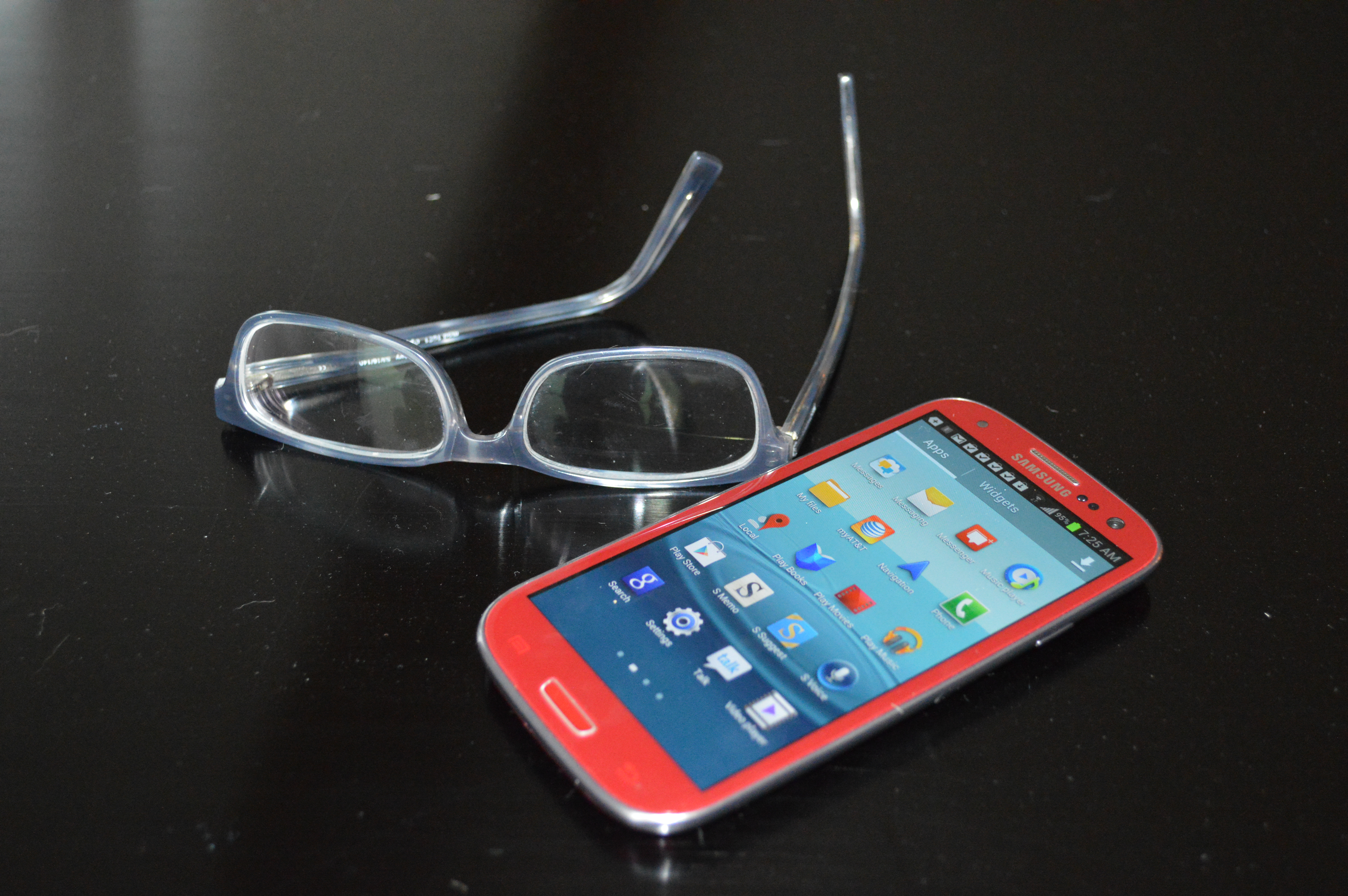
I got my first free (aka open source) smartphone a couple of days ago, a Samsung Galaxy S III with the Android operating system. I love the larger screen, with its excellent resolution, and the form factor in general — light, thin, and rounded, and still small enough to go in my pocket. It comes with a good array of apps, and there are thousands more available at free or low cost. The touchscreen interface is intuitive. The voice command option does not seem as smart as Siri is reported to be, but other apps load fast and work beautifully.

Will this change the place of a smartphone in my life? Probably a bit, because the bigger screen and faster speeds (4G) make it easier to use. The civil libertarian in me worries somewhat about the ability of such devices to track me and potentially invade my privacy, but I’m also amazed and happy with all the useful things it can do, such as helping me with directions, accessing every type of knowledge on the internet, performing word processing and other computing functions, entertaining me with movies, music, and photographs, and connecting me to people through text, email, and phone. Smartphones can potentially make us more productive and happier.

At the same time, our technology is transforming us in other ways that are more worrisome. This morning’s New York Times has a long story on remarkable advances in robotics, which are replacing skilled manufacturing jobs in electronics and logistics, along with lots of others. The story cites a book I recently read and would recommend: Race Against the Machine: How the Digital Revolution is Accelerating Innovation, Driving Productivity, and Irreversibly Transforming Employment and the Economy, by Erik Brynjolfsson and Andrew McAfee.

The authors, economists at MIT, present a clear overview of technological change, which they describe as increasing exponentially. Moore’s law continues to double processing power every 18 months, and software advances are moving much faster than that. Technology harbingers like Watson the Jeopardy champion and the Google self-driving car are the tip of the iceberg.

Brynjolfsson and McAfee recognize that computers can’t yet do everything humans can do, but they have already replaced many kinds of routine work, and inevitably will replace more and more skilled work. This accounts for part of our persistent problems of unemployment even as the economy is growing. Traditional economics assumes that new technologies will eventually produce new jobs, but B and M point out that if technology continues to improve exponentially, computers will be able to perform more and more human jobs better and more cheaply. It’s difficult to see how new jobs could equal those that are eliminated.

If they’re right (and I think they are), we’ve got major social dislocations ahead. In our society, people work not only to earn a living, but also define each other and themselves in large part according to their work. Thus unemployment is not just financially threatening — it’s humiliating. With more and more people unemployed, unable to buy goods and services and without social moorings, our social and financial system will face an existential crisis.

What is to be done? We’ll need to change the way we organize ourselves, the way we distribute wealth, and the way we think about value. We’ll need to find new approaches for valuing and caring for others, and for thinking about the meaning of our own lives.

I had a small epiphany on this yesterday when our friends Ken and Carol took us out on Falls Lake for some water skiing. They both retired early, and do things they enjoy doing, like boating, tennis, and travelling. I have trouble imagining myself retired in this sense. But as we sat on their boat on the lake in the late afternoon, we talked about our lives, told stories, and swam a little, and enjoyed the lake and surrounding forest. Then we took turns getting pulled by their quick little boat on one of their various toys. Ken rode a hydrofoil chair and a wakeboard, and I had a go with old school water skis, which I enjoyed enormously. These things have deep value: sharing stories and experiences.