The Casual Blog

Trump and Hitler

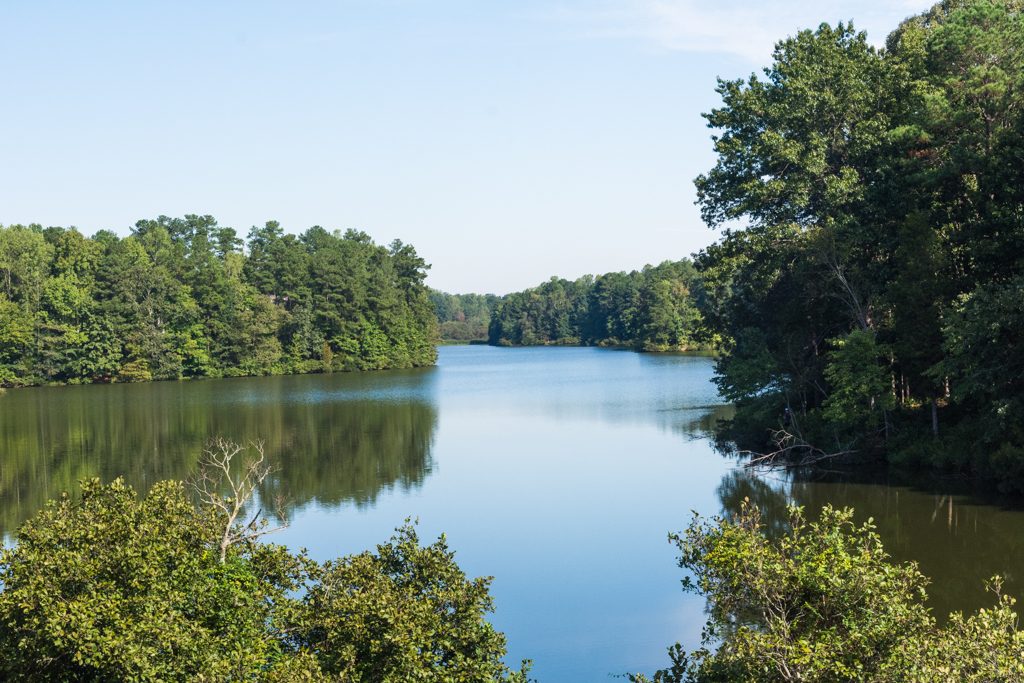
Lake Lynn, October 1, 2016

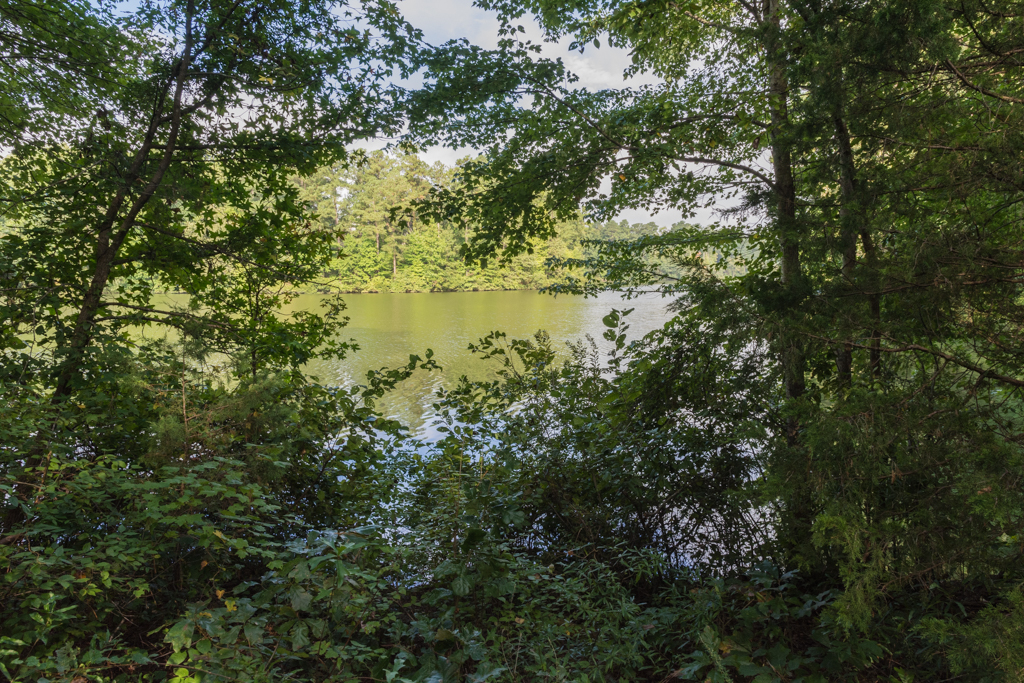
Lake Lynn, October 1, 2016

When I left work on Friday, the weather was pleasant, and I was thinking of hitting a few golf balls on the practice range, but I had an almost flat tire. Fortunately, Murray’s Tires was still open. I love those guys! As soon as I parked, before I could get out of the car, one of them was beside me asking if he could help. He had in stock a sporty used Continental Extreme Contact for a very reasonable price, and 20 minutes later I was back in business.

On Saturday evening, Sally and I walked over to Fayetteville Street, which was closed to traffic and lined with craft stands and food trucks, and sampled the free performances at the IBMA bluegrass festival. There were many talented fiddlers, banjo pickers, mandolin strummers, dobro sliders etc. making bouncy music. At The Haymaker, a new cocktail bar, I tried the Fabuloso, with vodka, mezcal, and lavender syrup, which was profoundly flavorful. For dinner we did The Remedy Diner, a casual veggie-friendly spot with a rock-and-roll vibe, where I had the tasty Tempeh Tantrum sandwich. We discussed the difficult question of how a lot of otherwise normal people can support Donald Trump.

Godwin’s Law has it that the longer and more vigorously an internet dispute continues, the likelier it is that one of the arguing parties will compare another to Hitler. This is a clever reminder of the evils of emotional hyperbole and the value of civility. The comparison is almost always over the top.
untitledbug-1-3

There was, however, a review by Michiko Kakutani of a new Hitler biography by Volker Ullrich in the NY Times that seemed startlingly relevant to our present moment. I was struck enough to pay for the ebook, which is now waiting on my iPad to be read when I do my trip to southern Utah next week. Check out these excerpts, and see if you too think that Hitler’s personality and methods sound disturbingly like someone we all have been watching with stunned amazement:

Hitler was often described as an egomaniac who “only loved himself” — a narcissist with a taste for self-dramatization and what Mr. Ullrich calls a “characteristic fondness for superlatives.” His manic speeches and penchant for taking all-or-nothing risks raised questions about his capacity for self-control, even his sanity.
. . . .

Hitler was known, among colleagues, for a “bottomless mendacity” . . . . A former finance minister wrote that Hitler “was so thoroughly untruthful that he could no longer recognize the difference between lies and truth” . . . .
. . . .

Hitler was an effective orator and actor, Mr. Ullrich reminds readers, adept at assuming various masks and feeding off the energy of his audiences. . . . “Hitler adapted the content of his speeches to suit the tastes of his lower-middle-class, nationalist-conservative, ethnic-chauvinist and anti-Semitic listeners,” Mr. Ullrich writes. He peppered his speeches with coarse phrases and put-downs of hecklers. Even as he fomented chaos by playing to crowds’ fears and resentments, he offered himself as the visionary leader who could restore law and order.
. . . .

He often harked back to a golden age for the country, Mr. Ullrich says, the better “to paint the present day in hues that were all the darker. Everywhere you looked now, there was only decline and decay.”
. . . .

Hitler’s repertoire of topics, Mr. Ullrich notes, was limited, and reading his speeches in retrospect, “it seems amazing that he attracted larger and larger audiences” with “repeated mantralike phrases” consisting largely of “accusations, vows of revenge and promises for the future.”
. . . .
He benefited from a “constellation of crises that he was able to exploit cleverly and unscrupulously” — in addition to economic woes and unemployment, there was an “erosion of the political center” and a growing resentment of the elites. The unwillingness of Germany’s political parties to compromise had contributed to a perception of government dysfunction, Mr. Ullrich suggests, and the belief of Hitler supporters that the country needed “a man of iron” who could shake things up. “Why not give the National Socialists a chance?” a prominent banker said of the Nazis. “They seem pretty gutsy to me.”
. . . .
Hitler’s ascension was aided and abetted by the naïveté of domestic adversaries who failed to appreciate his ruthlessness and tenacity . . . . Early on, revulsion at Hitler’s style and appearance, Mr. Ullrich writes, led some critics to underestimate the man and his popularity, while others dismissed him as a celebrity, a repellent but fascinating “evening’s entertainment.”

It’s nice to think that if you and I had been Germans in 1933, we would not have been among those who were seduced by him. Also, it may be we wouldn’t have been among those who dismissed him as merely a pathetic clown and ignored him. Perhaps we’d have been very brave, even when things started to get dangerous.

With reasonable luck, we won’t have to put ourselves to that dire test. That fellow whose personality defects and rabid style might remind you of Hitler continues to shoot himself first in one foot, and then the other, and the mainstream press is finally treating him less as a joke and more as a menace.

The WSJ had a good piece about his Atlantic City casino business that pretty well put stake through the heart of the fable that he was a brilliant business success. The story compared his casinos to others there, and found that they earned much less and fired many more employees, while going through multiple bankruptcies. The only person who made money out of the financial debacle was – guess who?
untitledbug-1-2

Missing dragonflies, and welcoming motorcycles, new ballets, and Wagner

untitledbug-1
I didn’t have any luck finding dragonflies this weekend. I tried Lake Benson, Lake Wheeler, and Yates Mill Pond, but it looks like we’ve about come to the end of another dragonfly season. I did see some butterflies and wildflowers, though, and enjoyed walking beside the calm and calming lakes. It was quiet, except for periodic thunderous roars from passing motorcycle groups.
untitledbug-1-6

It was the 12th annual Capital City Bikefest in Raleigh this weekend, and on Saturday evening we walked downtown to have a look at the hundreds of bikes parked on Fayetteville Street. The bikes were mostly enormous Harleys, but with endless gleaming customizations, objects of pride and passion. Lacking tattoos and denim, we may have stood out a bit, but we didn’t notice any negative energy directed our way.
untitledbug-1-7

We ate at Living Kitchen, the new vegan restaurant, where the clientele did not include any obvious biker types. I had the lunasagna, which was cool and tangy, and Sally enjoyed the living burrito, a collard green wrap. Our server, Rebecca, was friendly and efficient.
untitledbug-1-9

Afterwards, we strolled over to Fletcher Hall for the first Carolina Ballet program of the season. Zalman Raffael’s new work, La Mer was a “non-linear” story ballet involving family dynamics and natural forces. We liked it a lot. I was particularly taken with Amanda Babayan’s character, the daughter with the troubles of adolescence.
untitledbug-1-8

Robert Weiss’s first new piece was titled Stravinsky Pas de Deux, with highly dissonant music and angular gestures, danced with wonderful electricity by newcomers Lily Wills and Miles Sollars-White. Weiss’s The Double featured Alicia Fabry and Lindsay Purrington in startlingly close, tense unison. The final work was Weiss’s new Beethoven Piano Concerto # 5, which was very joyous and musical, with great leaps, spins, and lifts. I especially enjoyed Ashley Hathaway’s graceful solo in the second movement, and Alyssa Pilger imperial command in the finale.

Finally, I need to give a shout out to the N.C. Opera for its outstanding production last weekend of Wagner’s Das Rheingold. This little company somehow assembled a cast of world-class Wagnerians for two performances of this complex and thrilling work. Conductor Timothy Myers was masterful, and the singing was superb. Todd Thomas as Alberich managed to touch some unsettling psychological depths as he drove to his famous curse. I got goose bumps.
untitledbug-1-12

Our nukes problem

untitledbug-1-5
We live in a time of bad ideas. Not just a few bad ideas, but many, with major consequences, all around us. I used to think that the worst widely accepted and destructive ideas were mostly in the past, or at least had almost passed – the Inquisition, alchemy, witchcraft, fascism, Communism, anti-Communism, etc. I thought we had gradually gotten less likely to be swept up in a tide of confusion, fear, and hysteria. But I no longer think that.

As a passionate amateur of science, I’ve read a lot about the amazing power of the human brain, with its many billions of neurons and incredible complexity. And the human brain is a remarkable thing. But let’s not kid ourselves. All of us, including the very smartest, are full of biases, unfounded assumptions, and prejudices. Our powers of reasoning are frequently misdirected by logical fallacies and overwhelmed by our basic urges. We are prone to making poor decisions.
untitledbug-1-4

But this doesn’t come close to explaining our worst ideas. Here’s a major example: holding the entire world hostage to nuclear weapons. This week the NY Times reported that the U.S. would not declare a policy of no first use, meaning that it claims the prerogative to unleash the almost unimaginable force of our nuclear arsenal without being attacked first.
untitledbug-1-10

I seriously doubt that we (excepting Donald Trump) would do this intentionally. But nuclear mistakes can happen – they have happened before, with nearly disastrous consequences. See Command and Control, by Eric Schlosser. For now, it looks like we’ll continue to maintain our arsenal at the ready to obliterate entire populations, with a nuclear winter to follow that would destroy many or all of the rest of us. Thus we continue to face the risk each day that a computer glitch, mechanical malfunction, or human misjudgment could start a catastrophic chain reaction.

This is a dire situation. You might think that even if people were not so prone as they are to being easily panicked, they would still be terrified. Unlike many of low probability events we greatly and pointlessly fear (shark attacks, random terrorists, men in women’s restrooms ), this risk is truly existential. Yet amazingly we somehow mostly ignore it.
untitledbug-1-11

To some extent it has surfaced recently because of North Korea’s recent nuclear tests and missile tests. It is, of course, frightening to think that the bizarre dictator of that unfortunate country might target us or our friends with nuclear missiles, or use them to threaten and extort. And I hope we can find a way to stop the North Korean program.

But it’s hard to hold the moral high ground against the unlovely Kim Jong-Un, when our government, the only one ever to use nuclear weapons, continues to maintain on hair-trigger alert an arsenal big enough to destroy the planet and claim the right to wreak mass destruction at will. We ourselves pose an enormous threat, to the rest of the world and to ourselves.
untitledbug-1-9
I was surprised that President Obama decided not to embrace no first use , because he clearly understands the nuclear peril and has spoken passionately about reducing it. Perhaps he felt constrained by military leaders and the other stakeholders in the status quo, like the arms manufacturers and their politicians. At any rate, maintaining the nuclear hair-trigger that could so easily destroy the world is not acceptable. We’ve got to de-escalate.

For me, when I am shaken by the nuclear risk or other bad ideas, it is both calming and motivating to do some hiking and focus on the fragile beauty of the natural world. Nature is such a great artist of life. There are so many tiny, beautiful things flying, crawling, growing. May they live in peace. Let us work for life and peace.
untitledbug-1-8

Music therapy, and looking for new bugs

umstead-bugsbug-1-2
My work days are often nonstop meetings, calls, and electronic documents about new technologies and difficult problems, and for several hours my left brain is going at full throttle. I like the intensity, but there are a lot of stress hormones. Without a dose of classical music after work, I’d likely redline and blow up. Playing the piano, even for just a half hour, is like a warm, soothing bath.

untitledbug-1-4

One of the pieces back on my musical workbench is Liszt’s famous Benediction de Dieu dans la Solitude. (There’s also some Schubert, Chopin, and Debussy.) I’ve been infatuated by the Liszt piece for a long time, but discouraged from committing to it by two things. First, it has some daunting technical demands, including reaches and stretches that are awkward and even painful. Olga, my teacher, suggested a (to me) non-obvious way of refingering to avoid the worst stretches, and I’ve been working out the details of the new approach.

The other blocker is the length. Most of the piano music I try to master and embody is on the short side by classical standards – under 6 minutes, which I view as pushing the limits of attention spans for most non-specialists. Benediction comes in at around 16 minutes. But what minutes! It’s very lyrical, elaborated by Liszt’s rich harmonies, and conceived with the piano’s singing qualities in mind. Here’s a couple of good and interestingly different performances from YouTube here and here
untitledbug-1-2

We’ve been particularly enjoying listening to music since we had our stereo system reworked last week. This was not entirely optional. Our former system involved in-wall and under-floor connections, which ceased working properly after our new floors were installed. Dr. Video, who installed the system, advised that fixing it would be quite expensive. We eventually decided to reposition the speakers on the large bookshelf, and powered them with a Yamaha R-700 receiver tucked in an adjacent closet. The speakers – two NHT Class Threes and a subwoofer – sounded good before, but with the new position and more power, they sound excellent.
untitledbug-1-6

We inaugurated the new sound set up with Harmonielehre, a piece for orchestra by the contemporary American composer John Adams. This is one of my favorite orchestral pieces of all time, and that’s including all the symphonies of Brahms, Bruckner, and Mahler. It manages to cover an enormous emotional range, from a bouncy and cheery to fiery and fierce to wistful and contemplative. The harmonic language is mostly tonal, but with piquant dissonances, and the rhythm manages to seem propulsive and natural, though it is anything but simple. It takes you on the journey of discovery, much as Mahler does. I have the version by the City of Birmingham Symphony, but various other are available on Youtube and Spotify. I highly recommend giving it a listen.
untitledbug-1-7

Another great stress reliever is a walk through the woods and around a lake. On Saturday and Sunday mornings, I went to Umstead and Lake Crabtree parks and moved slowly, looking closely in the grasses and bushes for interesting insects. Most of the little creatures I saw did not hang around long enough to have their pictures taken, but I got a few shots I liked.
umstead-bugsbug-1

Vegetarian delights, and trying intermittent fasting

dragonBug 1
Downtown Raleigh is getting downright vegetarian friendly! I had my first lunch this week at the latest new place catering to those who prefer plant food, Living Kitchen. It’s an entirely organic, entirely plant-based restaurant, and I liked everything about it. It’s airy and lively, with smart, friendly servers, and quite a fine veggie burger. There were many things on the menu I wanted to try, and I’ll definitely going back.

Within just a three or so blocks of my office, along with Living Kitchen, there is interesting and tasty plant-based food at Happy and Hale, B-Good, Buku, Shish Kabob, and Capital Club 16, and excellent juices at Cold Off the Press. A little further is Fiction Kitchen, with a highly creative all veggie menu. I could easily eat too much!
damselsBug 1-3

Indeed, I have. I weigh in every morning on a digital scale, and in recent months have been about five pounds heavier than what I really wanted to be. Maybe my metabolism slowed down a bit.

Anyway, for the usual reasons (health, vanity), I’ve been trying to get rid of the excess, and it hasn’t been easy. I tried upping my daily aerobic activity from 40 to 45 hard minutes, and that didn’t make much of a dent. I looked for potential food intake problems that could be improved, and found few. I’d already cut way down on junk food, sweets, fat, and carbs. I’m used to eating smaller-than-typical portions. It wasn’t obvious what more could be done without leaving civilization and becoming a desert ascetic.

I finally decided to try intermittent fasting. I did some research on various systems for skipping certain meals. The version I settled on was no eating between lunch and breakfast two times a week. It made me a bit grouchy at first, but it got easier. The other significant shift was to cut out alcohol during the work week. Here again, it was a little grim at first, since I very much enjoy some wine with dinner, but the first week was the hardest. This week I finally made it to my weight target.
damselsBug 1

Admiring damselflies, Colombia at peace, recognizing addicts as humans, Syria’s bizarre war, and our Saudi problem

damselsBug 1
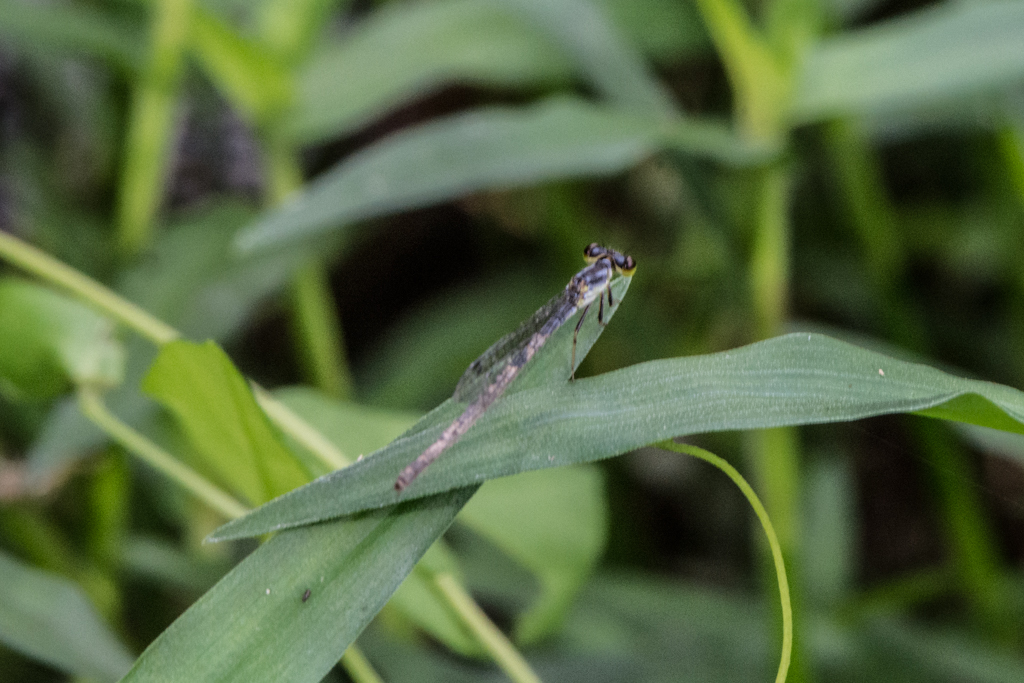
I’m ready for fall. It’s been a hot August here in Raleigh, and relentlessly humid. As usual, I got outside to see if I could find and photograph something beautiful in one of our parks, and found these damselflies and the dragonfly along the Buckeye Trail and at Lake Crabtree. They were very small and usually moved quickly. It took some exertion to make these images, handholding a heavy 180 mm lens, struggling to get tight focus and good exposure with sweat getting in my eyes, but I thought it was worth it.
damselsBug 1-3

When there is good news, it should be noted, and there was very good news this week from Colombia. The civil war between the government and FARC was tentatively resolved with a peace accord, subject to approval in a vote of the citizenry. This war, which began more than half a century ago, has cost hundreds of thousands lives and displaced millions. Columbia has so much beauty and so much human potential, but for my entire life has seemed a scary place. Now peace, after decades of horrendous carnage, is possible.
damselsBug 1-6

I also spotted some good news on the drug war out of Seattle. On Page A13 (far past where busy people normally stop skimming), the NY Times of Aug. 26 reported that an official Seattle task force established to combat the heroin epidemic has proposed establishing sites where addicts could take heroin and other illegal drugs under the supervision of trained professionals. The idea is to decrease the risk of infections and overdoses. Sites like this already exist in the Canada and the Netherlands.

This is huge! They’re thinking of addicts as human beings whose lives have value, rather than simply as worthless derelicts and criminals. That is, they’re recognizing that people who take illegal opioids are not really different from people who take legal opioids. Both groups include people with varying intensities of physical and mental pain, and also varying cravings for stimulation.

This is a big conceptual step toward the end of the drug war that has destroyed millions of lives. The idea that an arbitrarily defined group of chemicals is inherently evil has been official policy and a quasi-religion going back several generations. It’s a foolish idea, but it’s so deeply lodged in our brains that it’s going to be very hard to correct. Fingers crossed that we move forward.
damselsBug 1-2

Meanwhile, the Times presented a brilliant, though far less cheering, piece by Max Fisher on the complex dynamics of the war in Syria. I started to say “the civil war in Syria,” but as I finally grasped, this is not simply a struggle between two, three, or four internal groups seeking dominance within the country, but a multi-dimensional struggle for regional dominance involving several local groups and Saudi Arabia, Iran, Russia, Turkey, and, unfortunately, the US.

There are many forces that make this conflict particularly horrendous for civilians and assure it cannot quickly be resolved. An important perpetuator is the involvement of the outside nations, who have effectively endless military resources and do not bear the pain of the constant death. I can partially understand the political and venal interests that drive some of these actors to kill each other and hundreds of thousands of innocent civilians. The big exception is the United States of America. Why are we a primary arms supplier and dealer of death from above in this catastrophe?
damselsBug 1-7

Also worth reading is a piece on Saudi Arabia by Scott Shane, which asks the question, has Saudi Arabia been the primary exporter and supporter of the version of Sunni Islam (Wahhabism) that underpins the worst of the jihadist violence afflicting many countries? It seems that it has. Shane does point out, however, that there are other causes of such violence, including extreme poverty and authoritarian rulers.

But the Saudis have a lot to answer for. And, it should be noted, their primary armorer and military mentor is the United States. So we have a lot to answer for. Without thinking it through, we have indirectly supported Saudi exports of jihadist ideology, which morphed into al Qaeda, ISIS, Boko Haram, and other bloody-minded groups, which we then fight by dropping US bombs. And, of course, when we kill innocent civilians, we transform some of their relatives into vengeance-minded jihadis. To put it as mildly as possible, this is not a sensible policy.

Bye bye Trump, races against racialism, grasping science, and connecting with the Middle East

Raulston butterfliesBug 1-4
Lately I’m feeling way more cheerful about the presidential election, with many indications that Trumpism is headed straight off the cliff. Every morning I hum a little with pleasant anticipation, looking forward to a new campaign mini-disaster, whether another preposterous pronouncement, another astonishing display of ignorance, or another scandal. Worries that it all might be just a clever act, and that he actually is only pretending to be impulse-control-impaired and dim, are going by the boards. It’s finally sinking in that his vulgar loathsomeness is historic.
Raulston butterfliesBug 1-3

It’s been fun this week watching the Olympics, despite so many ads and so much blather. And despite the embarrassing naive jingoism. Here in the US, we see mainly the events the US athletes are good at, and almost nothing of events they aren’t. But even allowing for all that, there have been plenty of exciting and inspiring moments.

For example, this week we’ve seen some fantastic short and medium-distance running by the US women, who are most or all at least partially of African descent. Seeing all these beautiful, accomplished young women, I felt proud and also hopeful that we may still be making progress on our racial problem. The champions are, inarguably, our very best, and whatever our individual histories of race, it’s hard not to adore them.
Raulston butterfliesBug 1-5

Meanwhile, I’ve been listening to an engaging and challenging series of lectures from the Great Courses called Science Wars: What Scientists Know and How They Know It, by Steven L. Goldman. This is basically a short history of the philosophy of science. But Professor Goldman does not shy away from difficult issues.

It turns out that there is good ground for maintaining that the scientific method, which I at least thought was thoroughly settled and definitively established as a methodology, is nothing of the sort. There is good reason for doubt as to whether scientific knowledge that is necessary, universal, and certain is achievable. While scientists make undeniable progress in penetrating mysteries of the universe and facilitating amazing technologies, there is a sense in which they don’t know what they’re doing. The relation between science and the natural world is still uncertain. For those of us who are fascinated by science, it’s bracing and thought-provoking.
Raulston butterfliesBug 1

Also bracing is Fractured Lands, a long piece on the Middle East by Scott Anderson, with photographs by Paolo Pellegrin, in last week’s NY Times Sunday Magazine. The subject is the catastrophe following the US-led invasion of Iraq 13 years ago which led to the rise of ISIS and the refugee crisis. Anderson presents episodes in the lives of six individuals from various walks of life from Syria, Iraq, Egypt, and Libya. It is an extraordinarily powerful piece. The leading characters come to life, and we care about them – even the poor, uneducated young man who joined ISIS. Caring alone won’t solve this complex crisis, but it’s a necessary first step.

Enjoying the Olympics, a short scuba trip, and a piano lesson

OLYMPUS DIGITAL CAMERA
We can go literally for years without any special yearning to watch gymnastics, swimming, or beach volleyball. Yet every four years, like a periodic cicada, our inner fan emerges, and we are rapt before the summer Olympics. Of course, it is annoying to watch the same advertisements over and over, and listen to the commentators’ unhelpful hype and drivel. But the athletes are stupendous! It makes you proud to be part of the same species. All that drive and dedication, for years and years, and then the ultimate mastery at the decisive moment. It makes you wonder how much more each of us might be capable of.
OLYMPUS DIGITAL CAMERA

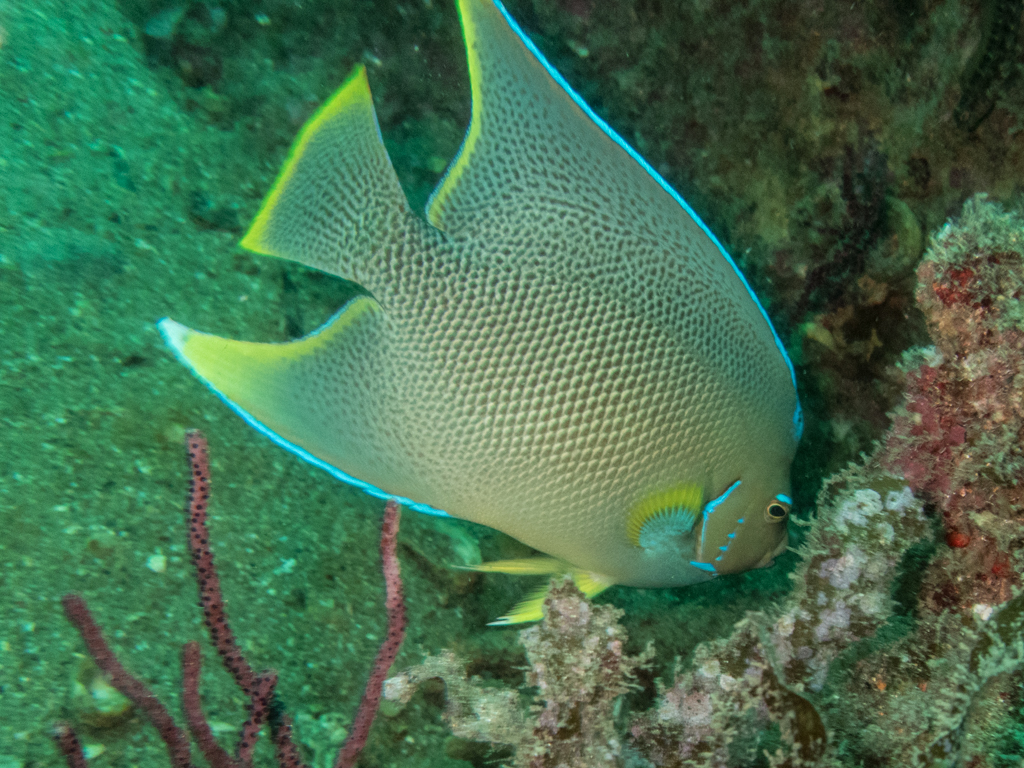
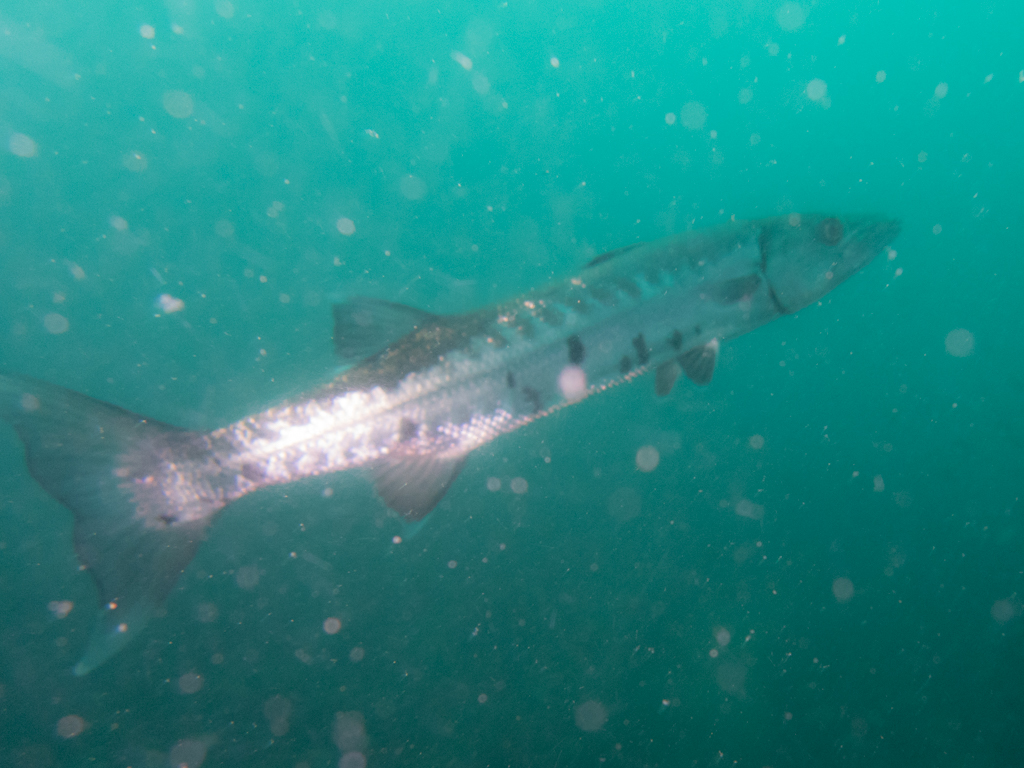
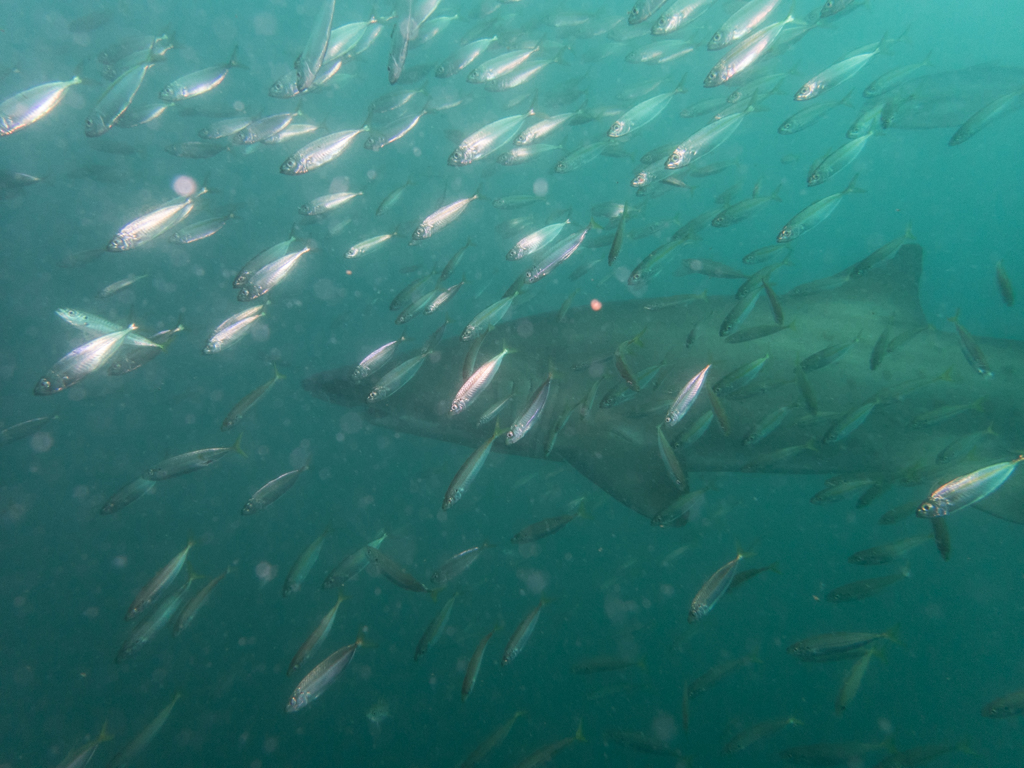
These photos are from our diving trip last week out of Wrightsville on the wrecks of the Gill and the Hyde. The water was murky — only 10 feet of visibility in places. But we still saw a lot of life, including sand tiger sharks, barracuda, and lots of little fish. On the Hyde, about 80 feet down, I lost Sally and Gabe near the end of the dive, as can so easily happen in poor visibility. Then I couldn’t find the anchor line, which was the planned route back to the boat. My air was getting low, and it occurred to me that things might turn out really badly. But I surfaced in an orderly manner and found the boat close by, and family safely aboard.
OLYMPUS DIGITAL CAMERA

Last week I had my last piano lesson with Olga for a while, since her baby is soon to arrive. We worked on Liszt’s Sospiro and Chopin’s first Intermezzo. As usual, she made me listen more closely, and think about new musical possibilities. And as always, there were little technical issues to address. For a long time now, she’s been trying to make me practice each hand separately. The idea is to get out in the open the little rough spots, and also to allow for the hands to have separate personalities. I’ve quietly resisted this kind of practice, because it just isn’t that much fun. I’ve decided, though, to make a point of it. I like getting better.

An open letter to my Republican friend about Donald Trump

Raulston butterfliesBug 1-2
My dear Republican friend,

As we both know, we often do not agree on political matters. This is no big deal, since we connect in other ways that are important. We have an unspoken understanding that we usually don’t talk about politics, so as not to stress our friendship. And so it is with some hesitation that I now ask you, with all respect, to please not vote for Donald Trump.

First, a point we can surely agree on: Trump is no ordinary politician. He is unfiltered. He says whatever he wants to say. He’s got a definite point of view. And he’s right about a few things, which of course just means I occasionally agree with him. He’s wrong, in my view, on a lot of things, but that’s not why I believe you should oppose him. You should oppose him because he’s a person completely lacking in every quality that could make a human worthy of trust or respect.
Raulston butterfliesBug 1-5
If you haven’t seen it yet, please read Jane Mayer’s New Yorker piece, Trump’s Boswell Speaks. It’s about Tony Schwartz, who ghost wrote The Art of the Deal. The book presented an idealized version of Trump as a brilliant dealmaker. Asked what he would title a book about Trump today, Schwartz said, “The Sociopath.” Over 18 months of working with Trump, Schwartz discovered a man who has no apparent interests other than himself – what excites him, what stuff he has, how much attention he can get. He apparently has never read an entire book.

Observing such a deficit of normal human curiosity and engagement, we can almost feel sorry for Trump. Almost, but not quite. His arrogance, his braggadocio, his hair-trigger temper, and his crudeness are legend. Even those we might forgive, if he had at least some capacity for caring. But Trump’s only interest in other humans is as objects to be exploited.
Raulston butterfliesBug 1-6
You should read a fascinating piece on the extraordinary number of lawsuits against Trump by people who made the mistake of trusting him. As shown by hundreds of court cases, Trump refused to pay what he’d promised for people who worked for him as plumbers, electricians, carpenters, and on and on. He seems to find it fun to take small business people to court and ruin them, even when his lawyers cost him more than just paying what he agreed. I can tell you, as a person who spent many years as a commercial litigator, that most people do not find litigation fun. This is not the behavior of a normal person.

An important part of Trump’s career has been as a snake oil salesman. You’ve probably read about Trump University, where he was in the business of defrauding people and taking their money in exchange for empty promises. There’s a good account here. He tried to franchise this concept with Trump Institute, described here. Check out this NY Times piece on how, for Trump, lying is not so much a shameful little secret as an addictive lifestyle.
Raulston butterfliesBug 1
He lies compulsively, outlandishly, non-stop, seemingly just for the thrill. Indeed, his central narrative – that he is an amazingly successful businessman, a master of the deal – is a huge lie. Check out these accounts of the spectacular failure of his attempt to make money in the casino business from the NY Times and this one from Newsweek.

Trump’s real talent is misleading, manipulating, and exploiting people. But, you say, isn’t that what all politicians do? A fair point, if a bit harsh, but Trump is off the charts. He presses people’s buttons in a way that causes them not only to stop thinking straight, but to start thinking badly. He inflames crowds and brings out latent strains of racism and misogyny. His followers, otherwise normal people, get his permission and encouragement to say and do ugly things. Have a look at this little video and see if you disagree.
So why might a thoughtful, well-informed person who cares about the future of this country and the world vote for him for president of the United States? I can think of only one reason that I can kind of understand – loyalty to the Republican party. Though not a Republican, I understand that political affiliations are deep-rooted, and I respect loyalty. But I’d point out that Trump has not been a Republican for much of his life, and many of his positions are at odds with Republican orthodoxy. Quite a few leading Republicans have already publicly declared their refusal to support him. There will be more.

I hope you will join them. Although I feel confident that Trump will be defeated in November, I think it is important that that defeat be crushing, and leave no doubt that the hate and violence that are central to his appeal have no place in mainstream American political life. Whatever you decide, thanks for considering these ideas, and for the good times we’ve shared and will share.

Your friend always,
Rob
Raulston butterfliesBug 1-3

Wildflowers, bug bites, and why I’m getting behind Hillary

Wrightsville divingBug 1-2It’s been unpleasantly hot and humid this week. On Saturday I got out early to avoid some of the heat and visited the park at the art museum and hiked in Schenk Forest. I enjoyed seeing and photographing the wildflowers and butterflies.
Wrightsville divingBug 1-7

Taking this kind of pictures involves getting heading into the woods and pushing through the high grass. On Saturday I was still recovering from fifteen or so bug bites on my legs from an outing at Jordan Lake two weeks ago. These were no ordinary mosquito bites. They were much bigger, itchier, and longer lasting. Some of them were probably chiggers, but I have no idea what creatures did the others. I also had a couple of tick bites.

There is a real risk of Lyme disease and other insect-borne illnesses in these parts, and I’ve made up my mind to take more care. No more wearing shorts on these kinds of outings, and more systematic insecticiding. I tried out Avon Skin-So-Soft Bug Guard Plus, which includes SPF 30 sunscreen. I got no new bites, though of course it’s possible the biting bugs were busy elsewhere.
Wrightsville divingBug 1-8

There’s an interesting recent essay by Jonathan Haidt, author of The Righteous Mind, explaining the rising tide of anti-immigrant paranoia in terms of the psychology of authoritarianism. Authoritarians, defined according to child-rearing preferences like prioritizing obedience, are in Haidt’s view not naturally intolerant, but become more so when they perceive a threat to their values and culture.

For example, Muslims who insist on their own distinctive customs pose an implicit challenge to traditional mainstream customs and values, and the authoritarian personality reacts with alarm and anger. This alarm isn’t so much fear of mass killings as of dilution of the values that bind together families and communities. Liberals don’t understand or sympathize with those feelings, but right wing demagogues understand and exploit them.

It’s an interesting theory, and seems to explain some of the weirdness now in the air. Even if not completely right, it reminds us how complicated and varied humans are, and how little we really understand about the drivers of our behavior as either individuals or groups. More study is needed, as the scholars say.
Wrightsville divingBug 1-9

Anyhow, many Democrats, including me, can affirm that perceived threats can draw us together. So it was this week that many of us, disturbed and mildly traumatized by the anger and barely repressed violence of the Republican Convention, decided it was time to put aside our differences and pull for Hillary. Whatever else, she is the lessor of the evils, by at least an order of magnitude.

I truly respect and admire Hillary Clinton for her intelligence, strength, and discipline, and her long record of public service. At the same time, I worry that her natural instincts will dispose her to continue the status quo of wide income inequality and destructive militarism. But there’s a possibility she can change. And there is no imaginable scenario in which she is the author of the kind of disasters and self-inflicted wounds surely in store under President Trump. We need to work together for a massive Hillary victory that leaves no question that the great majority of us completely reject him and his ideas.
Wrightsville divingBug 1-4