The Casual Blog

Admiring damselflies, Colombia at peace, recognizing addicts as humans, Syria’s bizarre war, and our Saudi problem

damselsBug 1
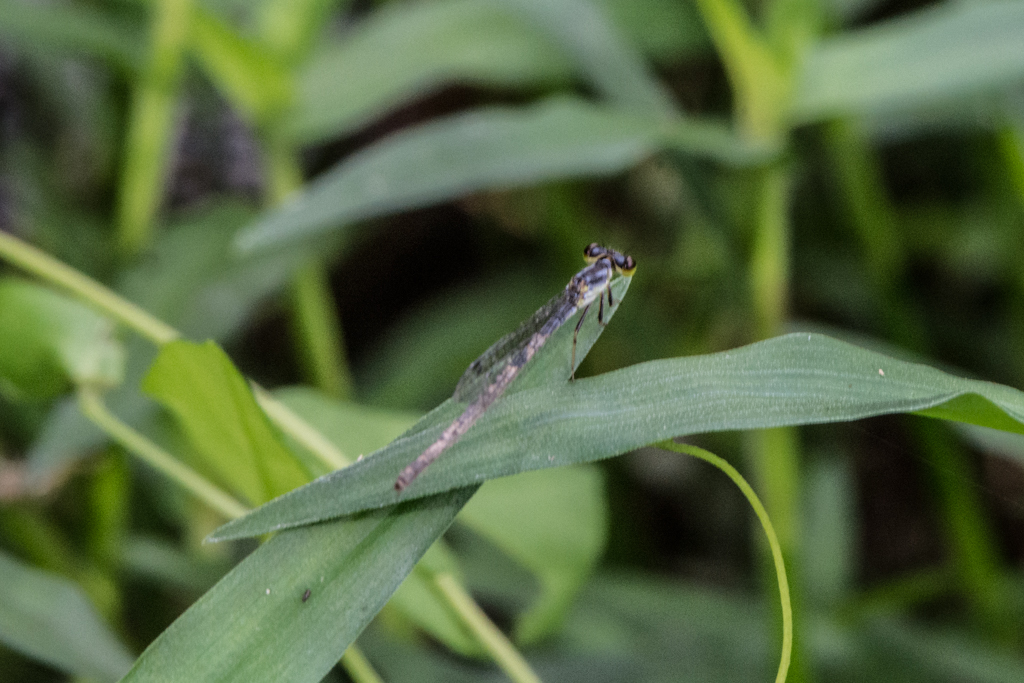
I’m ready for fall. It’s been a hot August here in Raleigh, and relentlessly humid. As usual, I got outside to see if I could find and photograph something beautiful in one of our parks, and found these damselflies and the dragonfly along the Buckeye Trail and at Lake Crabtree. They were very small and usually moved quickly. It took some exertion to make these images, handholding a heavy 180 mm lens, struggling to get tight focus and good exposure with sweat getting in my eyes, but I thought it was worth it.

damselsBug 1-3

When there is good news, it should be noted, and there was very good news this week from Colombia. The civil war between the government and FARC was tentatively resolved with a peace accord, subject to approval in a vote of the citizenry. This war, which began more than half a century ago, has cost hundreds of thousands lives and displaced millions. Columbia has so much beauty and so much human potential, but for my entire life has seemed a scary place. Now peace, after decades of horrendous carnage, is possible.

damselsBug 1-6

I also spotted some good news on the drug war out of Seattle. On Page A13 (far past where busy people normally stop skimming), the NY Times of Aug. 26 reported that an official Seattle task force established to combat the heroin epidemic has proposed establishing sites where addicts could take heroin and other illegal drugs under the supervision of trained professionals. The idea is to decrease the risk of infections and overdoses. Sites like this already exist in the Canada and the Netherlands.

This is huge! They’re thinking of addicts as human beings whose lives have value, rather than simply as worthless derelicts and criminals. That is, they’re recognizing that people who take illegal opioids are not really different from people who take legal opioids. Both groups include people with varying intensities of physical and mental pain, and also varying cravings for stimulation.

This is a big conceptual step toward the end of the drug war that has destroyed millions of lives. The idea that an arbitrarily defined group of chemicals is inherently evil has been official policy and a quasi-religion going back several generations. It’s a foolish idea, but it’s so deeply lodged in our brains that it’s going to be very hard to correct. Fingers crossed that we move forward.

damselsBug 1-2

Meanwhile, the Times presented a brilliant, though far less cheering, piece by Max Fisher on the complex dynamics of the war in Syria. I started to say “the civil war in Syria,” but as I finally grasped, this is not simply a struggle between two, three, or four internal groups seeking dominance within the country, but a multi-dimensional struggle for regional dominance involving several local groups and Saudi Arabia, Iran, Russia, Turkey, and, unfortunately, the US.

There are many forces that make this conflict particularly horrendous for civilians and assure it cannot quickly be resolved. An important perpetuator is the involvement of the outside nations, who have effectively endless military resources and do not bear the pain of the constant death. I can partially understand the political and venal interests that drive some of these actors to kill each other and hundreds of thousands of innocent civilians. The big exception is the United States of America. Why are we a primary arms supplier and dealer of death from above in this catastrophe?

damselsBug 1-7

Also worth reading is a piece on Saudi Arabia by Scott Shane, which asks the question, has Saudi Arabia been the primary exporter and supporter of the version of Sunni Islam (Wahhabism) that underpins the worst of the jihadist violence afflicting many countries? It seems that it has. Shane does point out, however, that there are other causes of such violence, including extreme poverty and authoritarian rulers.

But the Saudis have a lot to answer for. And, it should be noted, their primary armorer and military mentor is the United States. So we have a lot to answer for. Without thinking it through, we have indirectly supported Saudi exports of jihadist ideology, which morphed into al Qaeda, ISIS, Boko Haram, and other bloody-minded groups, which we then fight by dropping US bombs. And, of course, when we kill innocent civilians, we transform some of their relatives into vengeance-minded jihadis. To put it as mildly as possible, this is not a sensible policy.


Bye bye Trump, races against racialism, grasping science, and connecting with the Middle East

Raulston butterfliesBug 1-4
Lately I’m feeling way more cheerful about the presidential election, with many indications that Trumpism is headed straight off the cliff. Every morning I hum a little with pleasant anticipation, looking forward to a new campaign mini-disaster, whether another preposterous pronouncement, another astonishing display of ignorance, or another scandal. Worries that it all might be just a clever act, and that he actually is only pretending to be impulse-control-impaired and dim, are going by the boards. It’s finally sinking in that his vulgar loathsomeness is historic.
Raulston butterfliesBug 1-3

It’s been fun this week watching the Olympics, despite so many ads and so much blather. And despite the embarrassing naive jingoism. Here in the US, we see mainly the events the US athletes are good at, and almost nothing of events they aren’t. But even allowing for all that, there have been plenty of exciting and inspiring moments.

For example, this week we’ve seen some fantastic short and medium-distance running by the US women, who are most or all at least partially of African descent. Seeing all these beautiful, accomplished young women, I felt proud and also hopeful that we may still be making progress on our racial problem. The champions are, inarguably, our very best, and whatever our individual histories of race, it’s hard not to adore them.
Raulston butterfliesBug 1-5

Meanwhile, I’ve been listening to an engaging and challenging series of lectures from the Great Courses called Science Wars: What Scientists Know and How They Know It, by Steven L. Goldman. This is basically a short history of the philosophy of science. But Professor Goldman does not shy away from difficult issues.

It turns out that there is good ground for maintaining that the scientific method, which I at least thought was thoroughly settled and definitively established as a methodology, is nothing of the sort. There is good reason for doubt as to whether scientific knowledge that is necessary, universal, and certain is achievable. While scientists make undeniable progress in penetrating mysteries of the universe and facilitating amazing technologies, there is a sense in which they don’t know what they’re doing. The relation between science and the natural world is still uncertain. For those of us who are fascinated by science, it’s bracing and thought-provoking.
Raulston butterfliesBug 1

Also bracing is Fractured Lands, a long piece on the Middle East by Scott Anderson, with photographs by Paolo Pellegrin, in last week’s NY Times Sunday Magazine. The subject is the catastrophe following the US-led invasion of Iraq 13 years ago which led to the rise of ISIS and the refugee crisis. Anderson presents episodes in the lives of six individuals from various walks of life from Syria, Iraq, Egypt, and Libya. It is an extraordinarily powerful piece. The leading characters come to life, and we care about them – even the poor, uneducated young man who joined ISIS. Caring alone won’t solve this complex crisis, but it’s a necessary first step.

Enjoying the Olympics, a short scuba trip, and a piano lesson

OLYMPUS DIGITAL CAMERA
We can go literally for years without any special yearning to watch gymnastics, swimming, or beach volleyball. Yet every four years, like a periodic cicada, our inner fan emerges, and we are rapt before the summer Olympics. Of course, it is annoying to watch the same advertisements over and over, and listen to the commentators’ unhelpful hype and drivel. But the athletes are stupendous! It makes you proud to be part of the same species. All that drive and dedication, for years and years, and then the ultimate mastery at the decisive moment. It makes you wonder how much more each of us might be capable of.
OLYMPUS DIGITAL CAMERA

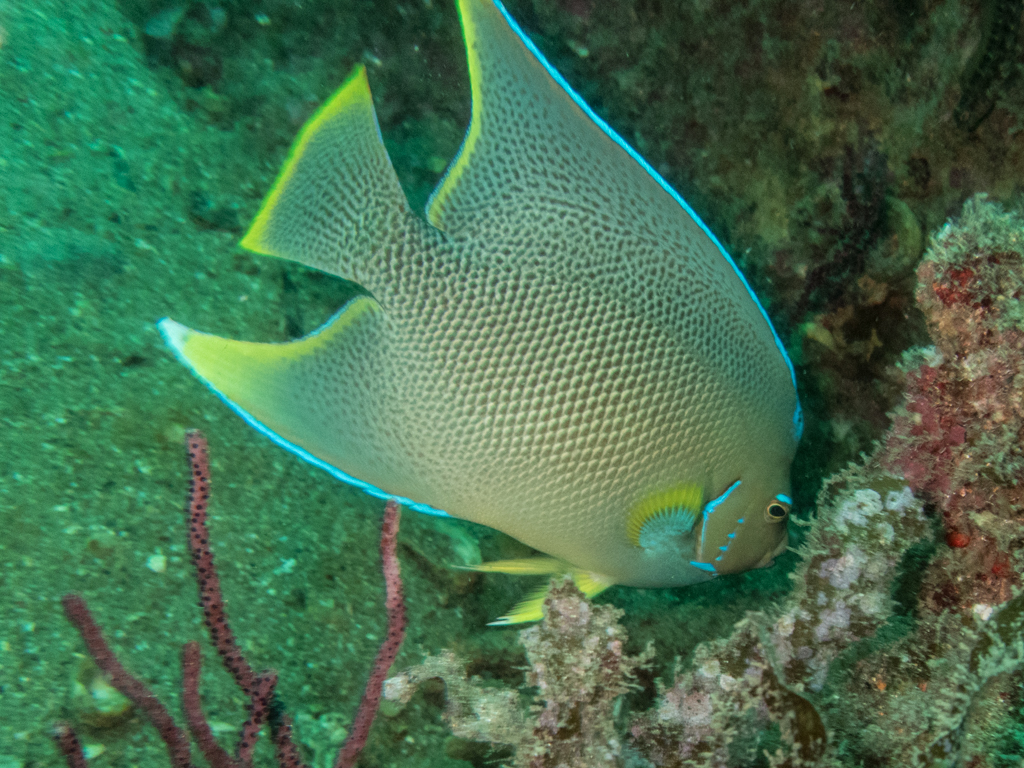
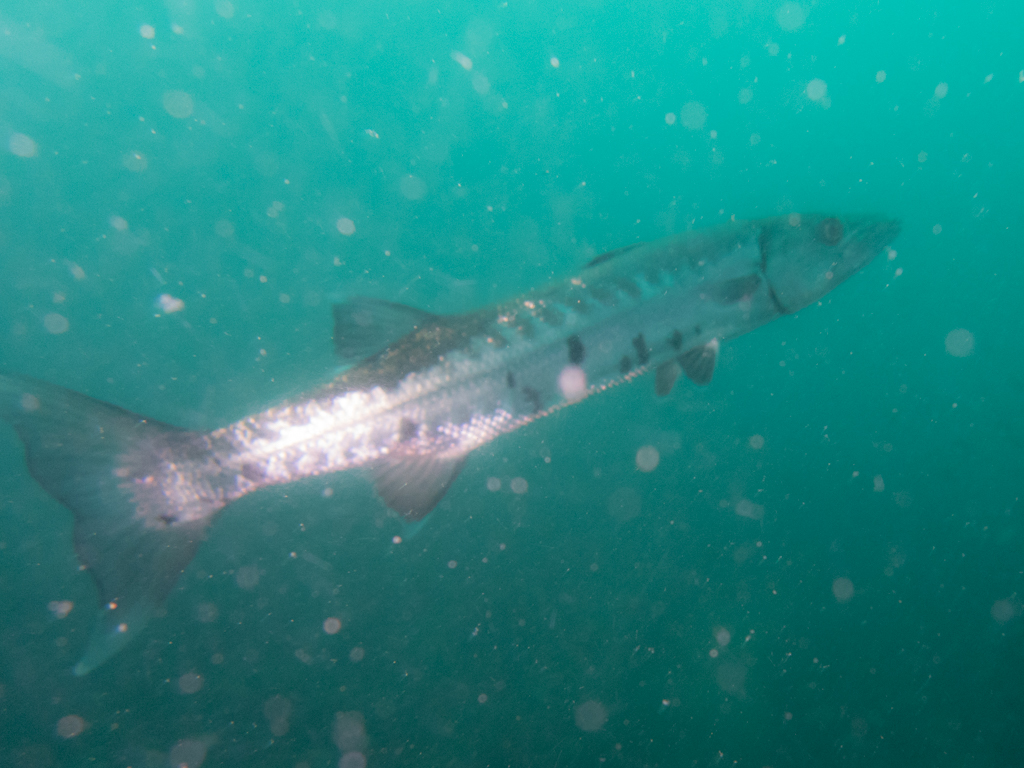
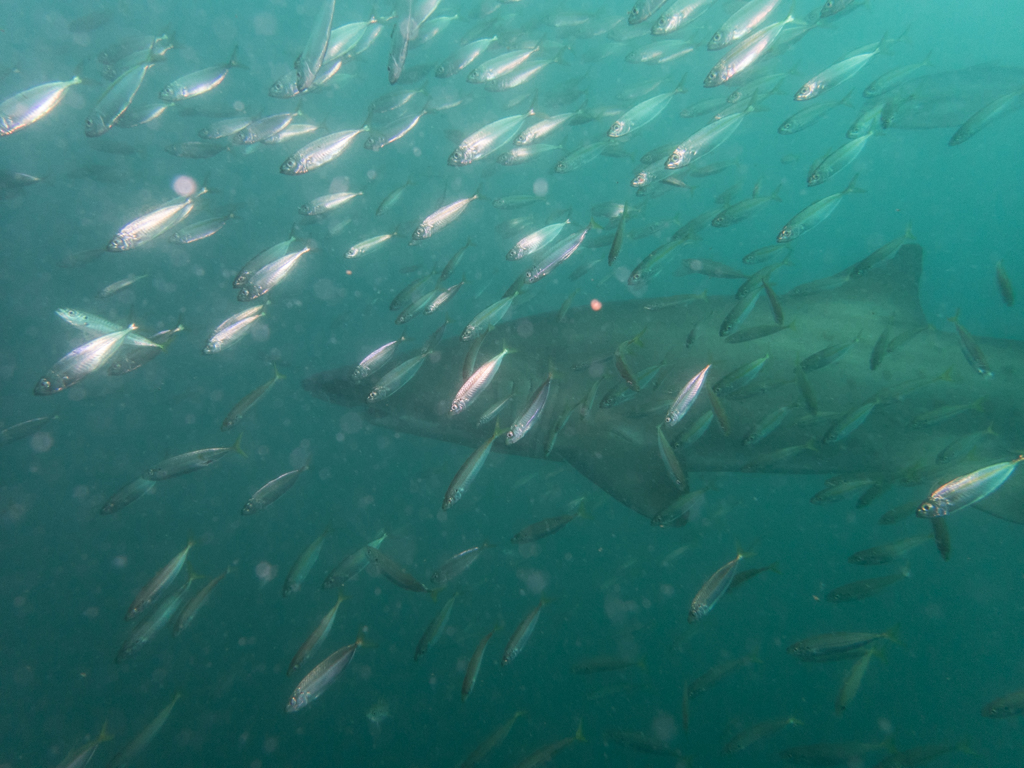
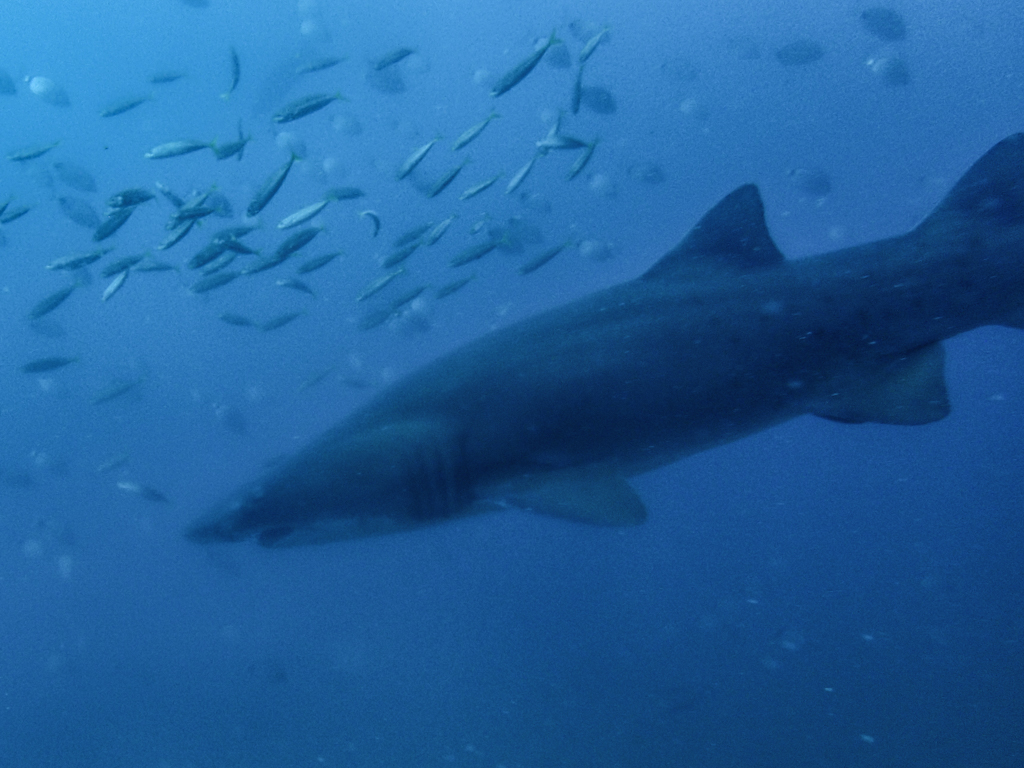
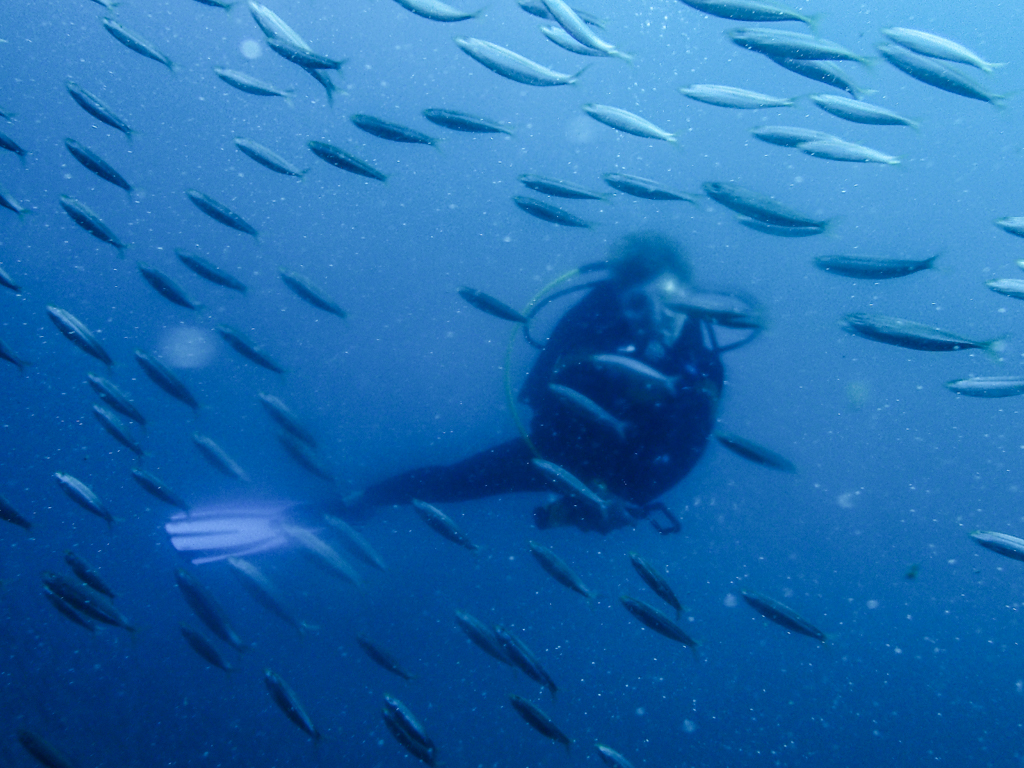
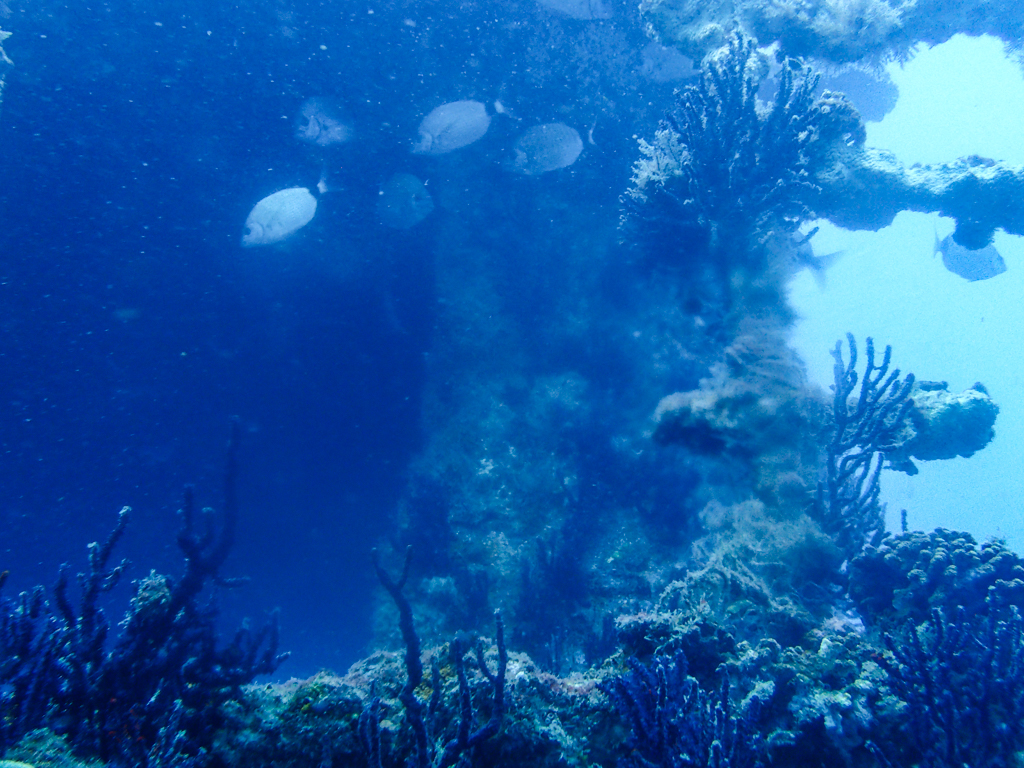
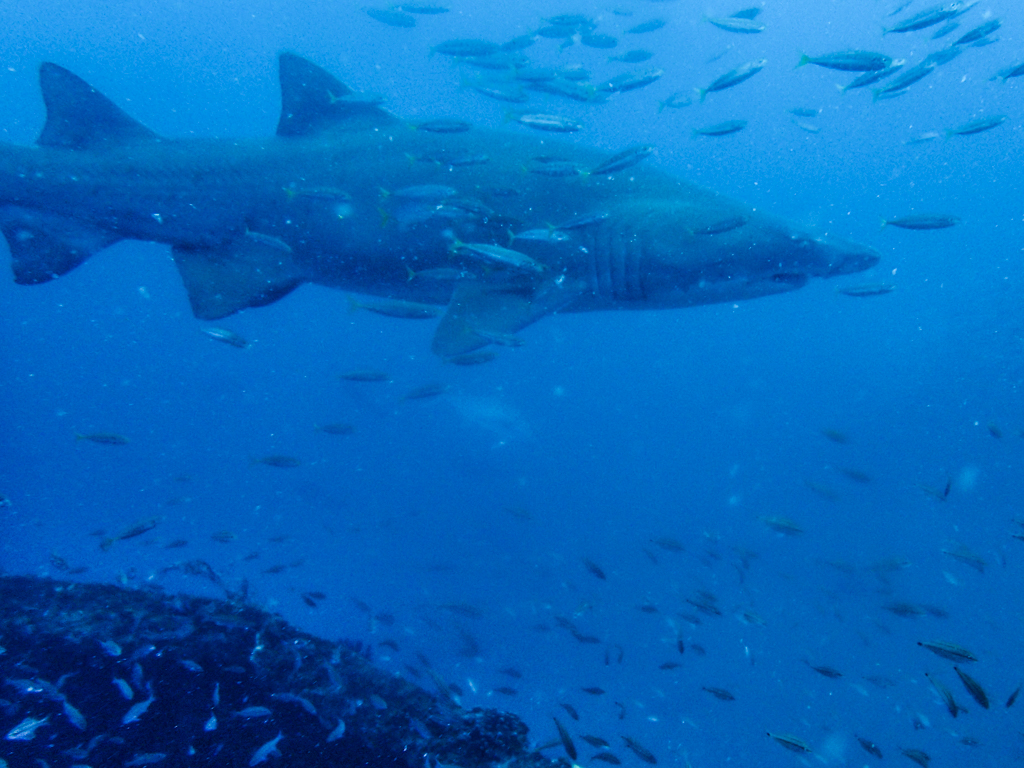
These photos are from our diving trip last week out of Wrightsville on the wrecks of the Gill and the Hyde. The water was murky — only 10 feet of visibility in places. But we still saw a lot of life, including sand tiger sharks, barracuda, and lots of little fish. On the Hyde, about 80 feet down, I lost Sally and Gabe near the end of the dive, as can so easily happen in poor visibility. Then I couldn’t find the anchor line, which was the planned route back to the boat. My air was getting low, and it occurred to me that things might turn out really badly. But I surfaced in an orderly manner and found the boat close by, and family safely aboard.
OLYMPUS DIGITAL CAMERA

Last week I had my last piano lesson with Olga for a while, since her baby is soon to arrive. We worked on Liszt’s Sospiro and Chopin’s first Intermezzo. As usual, she made me listen more closely, and think about new musical possibilities. And as always, there were little technical issues to address. For a long time now, she’s been trying to make me practice each hand separately. The idea is to get out in the open the little rough spots, and also to allow for the hands to have separate personalities. I’ve quietly resisted this kind of practice, because it just isn’t that much fun. I’ve decided, though, to make a point of it. I like getting better.

An open letter to my Republican friend about Donald Trump

Raulston butterfliesBug 1-2
My dear Republican friend,

As we both know, we often do not agree on political matters. This is no big deal, since we connect in other ways that are important. We have an unspoken understanding that we usually don’t talk about politics, so as not to stress our friendship. And so it is with some hesitation that I now ask you, with all respect, to please not vote for Donald Trump.

First, a point we can surely agree on: Trump is no ordinary politician. He is unfiltered. He says whatever he wants to say. He’s got a definite point of view. And he’s right about a few things, which of course just means I occasionally agree with him. He’s wrong, in my view, on a lot of things, but that’s not why I believe you should oppose him. You should oppose him because he’s a person completely lacking in every quality that could make a human worthy of trust or respect.
Raulston butterfliesBug 1-5
If you haven’t seen it yet, please read Jane Mayer’s New Yorker piece, Trump’s Boswell Speaks. It’s about Tony Schwartz, who ghost wrote The Art of the Deal. The book presented an idealized version of Trump as a brilliant dealmaker. Asked what he would title a book about Trump today, Schwartz said, “The Sociopath.” Over 18 months of working with Trump, Schwartz discovered a man who has no apparent interests other than himself – what excites him, what stuff he has, how much attention he can get. He apparently has never read an entire book.

Observing such a deficit of normal human curiosity and engagement, we can almost feel sorry for Trump. Almost, but not quite. His arrogance, his braggadocio, his hair-trigger temper, and his crudeness are legend. Even those we might forgive, if he had at least some capacity for caring. But Trump’s only interest in other humans is as objects to be exploited.
Raulston butterfliesBug 1-6
You should read a fascinating piece on the extraordinary number of lawsuits against Trump by people who made the mistake of trusting him. As shown by hundreds of court cases, Trump refused to pay what he’d promised for people who worked for him as plumbers, electricians, carpenters, and on and on. He seems to find it fun to take small business people to court and ruin them, even when his lawyers cost him more than just paying what he agreed. I can tell you, as a person who spent many years as a commercial litigator, that most people do not find litigation fun. This is not the behavior of a normal person.

An important part of Trump’s career has been as a snake oil salesman. You’ve probably read about Trump University, where he was in the business of defrauding people and taking their money in exchange for empty promises. There’s a good account here. He tried to franchise this concept with Trump Institute, described here. Check out this NY Times piece on how, for Trump, lying is not so much a shameful little secret as an addictive lifestyle.
Raulston butterfliesBug 1
He lies compulsively, outlandishly, non-stop, seemingly just for the thrill. Indeed, his central narrative – that he is an amazingly successful businessman, a master of the deal – is a huge lie. Check out these accounts of the spectacular failure of his attempt to make money in the casino business from the NY Times and this one from Newsweek.

Trump’s real talent is misleading, manipulating, and exploiting people. But, you say, isn’t that what all politicians do? A fair point, if a bit harsh, but Trump is off the charts. He presses people’s buttons in a way that causes them not only to stop thinking straight, but to start thinking badly. He inflames crowds and brings out latent strains of racism and misogyny. His followers, otherwise normal people, get his permission and encouragement to say and do ugly things. Have a look at this little video and see if you disagree.

So why might a thoughtful, well-informed person who cares about the future of this country and the world vote for him for president of the United States? I can think of only one reason that I can kind of understand – loyalty to the Republican party. Though not a Republican, I understand that political affiliations are deep-rooted, and I respect loyalty. But I’d point out that Trump has not been a Republican for much of his life, and many of his positions are at odds with Republican orthodoxy. Quite a few leading Republicans have already publicly declared their refusal to support him. There will be more.

I hope you will join them. Although I feel confident that Trump will be defeated in November, I think it is important that that defeat be crushing, and leave no doubt that the hate and violence that are central to his appeal have no place in mainstream American political life. Whatever you decide, thanks for considering these ideas, and for the good times we’ve shared and will share.

Your friend always,
Rob
Raulston butterfliesBug 1-3

Wildflowers, bug bites, and why I’m getting behind Hillary

Wrightsville divingBug 1-2It’s been unpleasantly hot and humid this week. On Saturday I got out early to avoid some of the heat and visited the park at the art museum and hiked in Schenk Forest. I enjoyed seeing and photographing the wildflowers and butterflies.
Wrightsville divingBug 1-7

Taking this kind of pictures involves getting heading into the woods and pushing through the high grass. On Saturday I was still recovering from fifteen or so bug bites on my legs from an outing at Jordan Lake two weeks ago. These were no ordinary mosquito bites. They were much bigger, itchier, and longer lasting. Some of them were probably chiggers, but I have no idea what creatures did the others. I also had a couple of tick bites.

There is a real risk of Lyme disease and other insect-borne illnesses in these parts, and I’ve made up my mind to take more care. No more wearing shorts on these kinds of outings, and more systematic insecticiding. I tried out Avon Skin-So-Soft Bug Guard Plus, which includes SPF 30 sunscreen. I got no new bites, though of course it’s possible the biting bugs were busy elsewhere.
Wrightsville divingBug 1-8

There’s an interesting recent essay by Jonathan Haidt, author of The Righteous Mind, explaining the rising tide of anti-immigrant paranoia in terms of the psychology of authoritarianism. Authoritarians, defined according to child-rearing preferences like prioritizing obedience, are in Haidt’s view not naturally intolerant, but become more so when they perceive a threat to their values and culture.

For example, Muslims who insist on their own distinctive customs pose an implicit challenge to traditional mainstream customs and values, and the authoritarian personality reacts with alarm and anger. This alarm isn’t so much fear of mass killings as of dilution of the values that bind together families and communities. Liberals don’t understand or sympathize with those feelings, but right wing demagogues understand and exploit them.

It’s an interesting theory, and seems to explain some of the weirdness now in the air. Even if not completely right, it reminds us how complicated and varied humans are, and how little we really understand about the drivers of our behavior as either individuals or groups. More study is needed, as the scholars say.
Wrightsville divingBug 1-9

Anyhow, many Democrats, including me, can affirm that perceived threats can draw us together. So it was this week that many of us, disturbed and mildly traumatized by the anger and barely repressed violence of the Republican Convention, decided it was time to put aside our differences and pull for Hillary. Whatever else, she is the lessor of the evils, by at least an order of magnitude.

I truly respect and admire Hillary Clinton for her intelligence, strength, and discipline, and her long record of public service. At the same time, I worry that her natural instincts will dispose her to continue the status quo of wide income inequality and destructive militarism. But there’s a possibility she can change. And there is no imaginable scenario in which she is the author of the kind of disasters and self-inflicted wounds surely in store under President Trump. We need to work together for a massive Hillary victory that leaves no question that the great majority of us completely reject him and his ideas.
Wrightsville divingBug 1-4

Inspiring art in New York

OLYMPUS DIGITAL CAMERA
This week I had a conference in New York on patents and patent trolls. I stayed in the conference hotel, the Times Square Sheraton. I was on the 32nd floor. Though there were minor glitches — no way to raise the window shade, wi-fi that required a long tech services call, slow elevator service — it was a reasonably nice hotel, and conveniently located.

After the conference, I took a vacation day to make a long weekend, and saw some old friends and some art. NPR had a story recently on the sale of the art collection of David Bowie. Asked to describe the collection, an art person said the works were mainly bold, and seemed to be things Bowie bought because they spoke to him, rather than as investments. He bought art for inspiration. That seemed to me a good criterion for deciding what art to spend time with, and so I made a point of looking for work that might inspire me.

On Thursday evening, I met up with Jocelyn in Chelsea, and got my introduction to gallery opening night, which happens every Thursday. We looked into four or five galleries, sipped cheap Chardonnay, and checked out the new work. Although I didn’t see anything life changing, there was work worth talking about, and we had fun talking.
OLYMPUS DIGITAL CAMERA

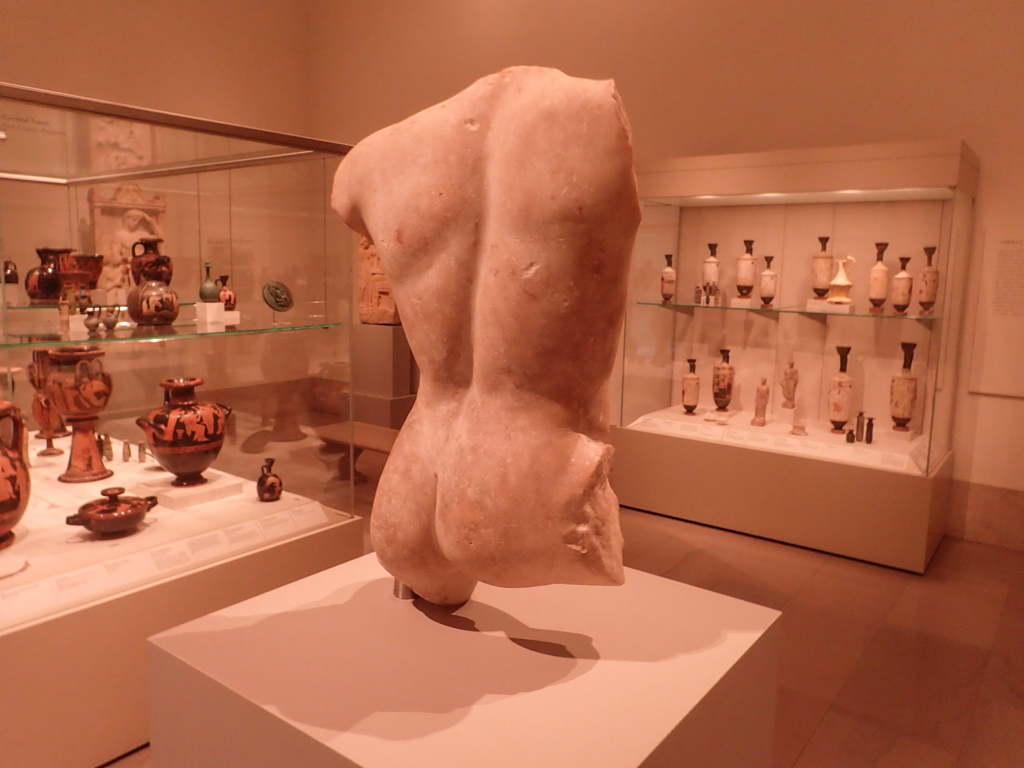
On Friday morning, I spent some time at the Metropolitan Museum. I focused on the Greco-Roman collection and art of ancient Near Eastern civilizations. These very old objects (some several thousand years old) are powerful, but also somehow calming. Civilizations rise and fall, but as far back as we can look, humans have a drive to make things of beauty.

In the afternoon, I went to the Met Breuer and saw In the Beginning, photographs of Diane Arbus. I’d thought of Arbus as being mainly about pictures of sideshow freaks and other oddities. This turned out to be not completely untrue, but still really wrong. Her portraits take their subjects completely seriously, regarding them as specific individuals with dignity. Arbus somehow got them to open up, and we find ourselves connecting with them. It’s a strange feeling, a new domain of human experience. Afterwards, looking around at ordinary people, I felt more curious, and noticed fleeting expressions and feelings.
imagejpeg_1

Jocelyn and I had a pre-theater dinner at the Robert, where we had a table by the window looking out from the 9th floor on Columbus Circle, Central Park, and Broadway. J had requested this particular spot, and it was truly a spectacular panorama. The couple ahead of us must have liked it, too, because they sat for forty minutes longer than expected, and caused us to get started on dinner behind schedule. The staff comped our cocktails, and sped service up to help us get out in time for our show. It was a hot struggling walk through the Times Square tourist crowd to get to the Minskoff theater, but we made it, with about ninety seconds to spare.

We saw The Lion King. It was, of course, wonderful. There’s a reason that it’s a huge long-running success, with a sweet story of coming of age, soaring melodies and exciting drumming, and those fantastic puppet costumes. I’m normally more of an opera person, and felt slightly out of place joining the LK crowd. But as Jocelyn noted, it would be too bad if you couldn’t enjoy something when they main thing it does is make you smile. We were definitely smiling.
OLYMPUS DIGITAL CAMERA

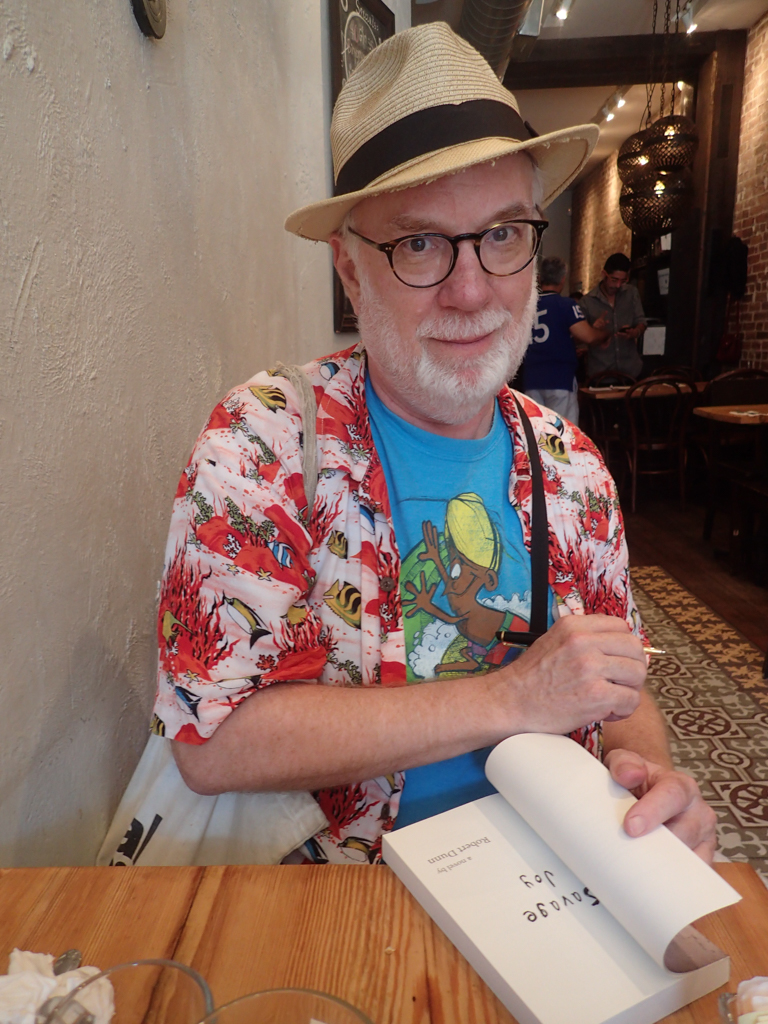
On Saturday, I had lunch with my old friend Bob Dunn, who gave me a copy of his new novel Savage Joy. He had news of several former colleagues from our New Yorker days, and caught me up on his writing, photography, teaching, and other career developments. We also discussed Trump.

The other art exhibit I saw that particularly affected me was by Danny Lyon, titled Message to the Future, at the Whitney. Lyon’s photography was highly socially engaged, including stints photographing the Civil Rights movement in the 1960s, migrant farm workers, prisoners, and other outsiders. Like Arbus, his subjects are particular individuals, rather than symbols. He’s adept at telling their stories. I was also intrigued by his montages, which combine photos and other materials in a way that suggests a multiplicity of connections. I watched a chunk of his film on a tattoo artist, which was painfully intimate.
IMG_5426

Butterflies, and constructing terror narratives

Wrightsville divingBug 1-4
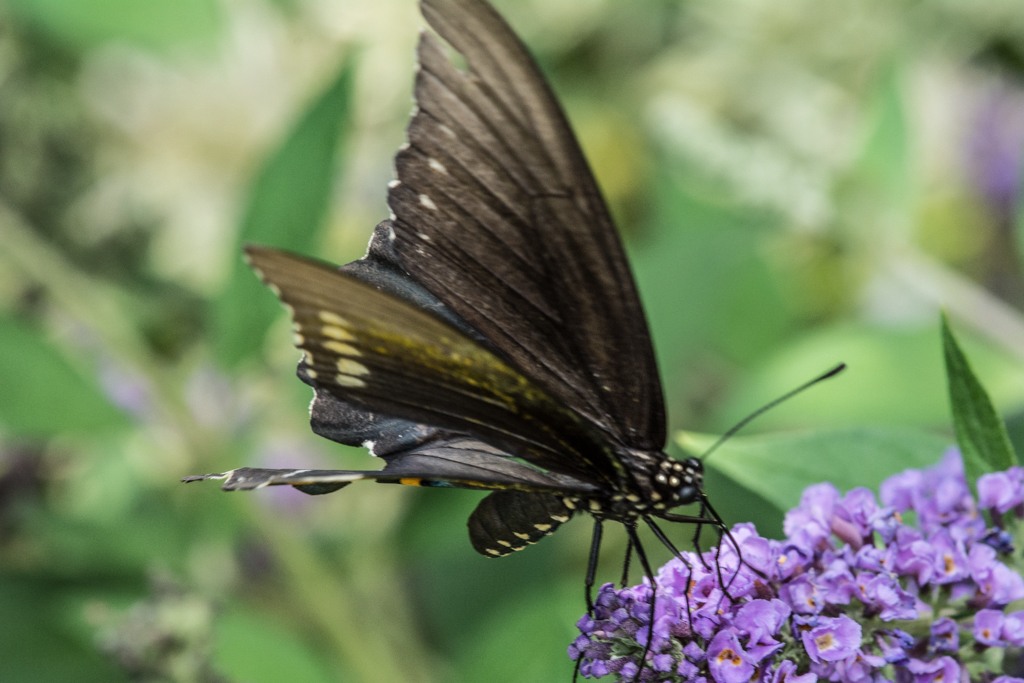
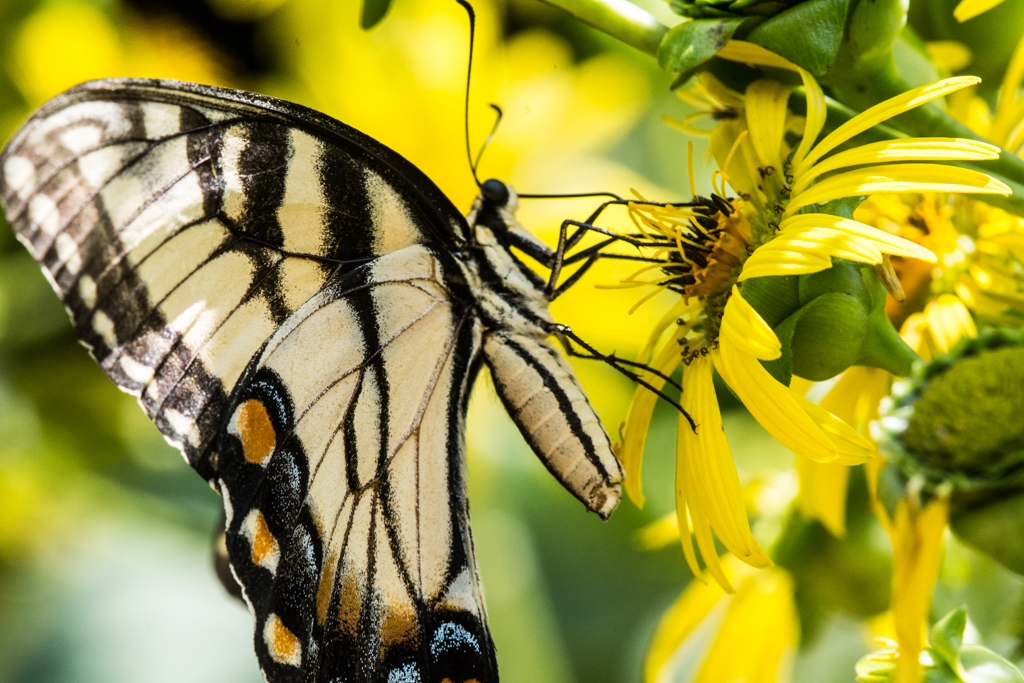
On Saturday morning I ran 5 miles, up Hillsborough Street and back. It was humid. I went slower than usual, and struggled to finish. That afternoon I went out to Cary for my monthly haircut with Ann, and we talked about our families and cars. Then I drove west to Jordan Lake. I stopped at Horton Pond and took some pictures of a spicebush swallowtail (above). (The other butterflies here were taken this week at Raulston Arboretum.) Afterwards, I put Clara in sport mode and had a lively drive on the winding country roads.
Wrightsville divingBug 1-9

It’s so interesting how intensely we insist on fitting disasters into familiar narratives. After the horrible Bastille Day truck massacre in Nice this week, leading politicians immediately dubbed the act “terrorist,” despite knowing nothing of the driver’s motivations. Now, three days later, there is still no evidence that the driver had any particular ideology, and there’s some evidence that he was just a sad, mentally disturbed, violent loner. Yet the press, including the NY Times, continues to characterize the mayhem as “terrorism” and to raise the alarm on the need to escalate the war on it.

Narratives are our way of making sense of the world. We create meaning by imposing a cause-and-effect ordering on events. But our compulsive drive for understandable narratives can also cause us to see things that aren’t there. When acts of deranged individuals or small, not-very-powerful groups are attributed to a single powerful force of evil, our fear level rises. Strong emotions make us less capable of careful analysis, more susceptible to demagogues, and more liable to overreact and do harm to others and ourselves.
Wrightsville divingBug 1-6

This is, in fact, what the real terrorists, like Osama bin Laden, hope: that we’ll react to their crimes by killing innocent people, whose relatives will swear vengeance on us and join the radical cause. Al Qaeda had remarkable success in provoking us this way. Our endless war in the Middle East allowed them to extend their influence and spawned even more bloody-minded imitators.
Wrightsville divingBug 1-7

In the face of a heinous mass killing, it’s hard not to be overwhelmed by grief and fear, and hard not to grab at a handy possible explanation. But more times than not, we can’t really know all the causes of such crimes, and sometimes we can’t pin down any of them. As much as we like stories, we need to accept that some things don’t fit into our familiar narratives. Fear narratives may feel satisfying, but by not exaggerating fear and avoiding overreacting, we are less likely to cause harm, and ultimately safer.
Wrightsville divingBug 1-5

A Wrightsville scuba weekend

OLYMPUS DIGITAL CAMERA
Last weekend Sally, Gabe, and I drove down to Wrightsville Beach for some scuba diving. We stayed in the Hilton Express in Wilmington, and went out to the wreck of the Hyde on Saturday, and the wreck of the Liberty ship on Sunday. It was good to gear up and get wet again.

The Hyde is about twenty miles out of Wrightsville, and getting there took over an hour, in seas that were a bit choppy. With seventeen divers, the small Aqua Safari boat was quite crowded. Once the tanks were all connected to the gear, there was a ledge of about 5 inches to sit on. It was not comfortable. Several divers got seasick.
OLYMPUS DIGITAL CAMERA

We did two dives on the Hyde, which was about 80 feet down. Visibility there was about 40 feet. We saw sand tiger sharks, southern sting rays, barracuda, and hundreds of small fish. I tried out my new Olympus TG-4 camera with a PT-056 housing and two Sea and Sea strobes. Although I didn’t get any career photos, I liked the feel of the equipment, which much smaller and easier to work with than my last rig, and ran glitch-free.OLYMPUS DIGITAL CAMERA

That evening we met up with my sister-in-law, Anne, and ate at a very nice restaurant called Manna. It was relatively upscale for Wilmington, with women in dresses and none of the men in tee shirts. Although there were no vegetarian entrees on the menu, our waiter explained that the chef could whip them up according to our directions or, if we preferred, according to his inspiration. I gave some directions based on the day’s non-meat accompaniments, and Sally decided to trust the chef entirely. We were all delighted with the food and the service.
OLYMPUS DIGITAL CAMERA

On Sunday morning, it was only a short boat ride to the Liberty ship. The visibility about 40 feet under was quite limited – about 10 feet – and the creatures we saw on our two dives were all small ones. We were hoping to find an octopus, which didn’t happen, though we did see some oyster toadfish and a striped burrfish. We were happy that we didn’t lose each other in the murky gloom, and that we managed to find our way back to the anchor line and the boat.
OLYMPUS DIGITAL CAMERA

My unfortunate tendonitis, and an amazing Tarzan

Tiller7Bug 1
I got a severe case of tendonitis in my left forearm, probably from trying too hard to improve my golf swing. I can handle ordinary pain without getting too alarmed, which may have led me to ignore warning signs when I should have stopped practicing. But I felt like I was on the threshold of grooving in the new, purer swing plane. From there, who knows!

Anyhow, last week my body spoke up unmistakably, and said, No mas! It was getting hard to pick up ordinary objects and pull things out of my pockets. So my golf improvement program is temporarily on pause, and I’m doing lots of resting, icing, and Advil.
Tiller7Bug 1-12

We had our greatest ever dinner-and-a-movie experience last week at the Cinemark Movie Bistro theatre in Cary. It exceeded expectations in every way. The seats are enormous and plush, electronically adjustable, with unlimited leg room, and tables on the front and glass holders on the side. Our server was sweet and smart, and our food came without a glitch. The veggie burgers were delicious! Also, with our bottle of pretty good Chardonnay, they brought out a free-standing ice bucket!

Our movie was The Legend of Tarzan. It, too, exceeded all expectations, and earned a place on my list of best-ever action-and-adventure movies. Africa has never seemed more sensual and thrilling. There were all the usual excitements of an action pic – chases, shoot-outs, explosions – and of course excellent vine-swinging. But there was something a little deeper, in the loving and respectful depictions of the big animals, and of village life.
Tiller7Bug 1-13

Unlike in so many action pics, Tarzan has believable high stakes. The background of this story is real history – the late 19th century genocidal colonialist exploitation of the Congo by King Leopold II of Belgium – and several of the characters were based on real people. Unfortunately – reverse spoiler alert — the real-life depredations of Leopold on the Congo were unspeakably worse. See King Leopold’s Ghost, by Adam Hochschold. Joseph Conrad personally witnessed this horror and turned it into immortal fiction in The Heart of Darkness, which I’m re-reading.

As Tarzan, Alexander Skarsgard manages to be both superhuman and appealingly understated. Margot Robbie is lovely and feisty as Jane. They’ve got chemistry. Christoph Waltz is a bone-chilling force of evil. The apes, wildebeests, ostriches, elephants, crocodiles, and other animals are fantastic!

A flooring experience, kind Canadians, and one good thing about Donald Trump

Tiller7Bug 1-2
This week while the flooring guys installed our new red oak floor, we stayed at the Hyatt Place, an increasingly uncharming unvacation, with nothing excitingly foreign and lacking the sweet comforts of home. With many years of marriage under our belt, Sally and I are good at comfortably sharing space, and we had no worrying collisions or conflicts, but also no room to spread out in the usual way.

We ate lots of local ethnic food (Indian, Thai, Mexican, Chinese, Ethiopian, Italian), which was fun, though I regretted eating so much, which is so easy to do in restaurants. I stuck with my resolution of using the hotel gym early every morning, but missed the machines and equipment at my usual gym. I missed making healthy green smoothies for breakfast. I missed my piano and exploring the intoxicating music of Chopin, Liszt, and Debussy.

But enough kvetching. On Friday evening, we moved back in to our condo, and found that our Latino flooring guys had done good work. We quickly hooked up the lamps and unpacked some essentials, and walked over to Pho Pho Pho for some good Vietnamese food. The dust gradually settled over the next couple of days – really, a lot of dust.
Tiller7Bug 1

It was a big week for ISIS mayhem in Istanbul, Dhaka, and Baghdad, which got lots of news coverage, and the epic humanitarian disaster of 65 million refugees and displaced persons continued, with little news coverage. There was one happy NY Times story about Syrian refugees being welcomed by Canadians. Ordinary folk have volunteered by the thousands to help unfortunates get resettled. Those Canadians are especially gifted in the way of kindness and generosity. Too bad they have such cold winters.

We could be moving there anyway if Donald Trump is elected. But happily that’s looking less and less likely, as more of his cons, schemes, and frauds come to light. Also, more and more, it looks as though he isn’t seriously working to win the election, but is primarily running to gratify his vanity and improve his personal bottom line.
Tiller7Bug 1-4

Now that he looks less like a serious threat to the Republic, it’s easier to admit that Trump has done something important and good. He brought attention to an enormous problem, which for many educated, well-off people was almost invisible before. I’m speaking of the distress, fear, and anger of millions of white working class males. It’s now clear that we ignore their welfare at our peril.

The anger and fear aren’t hard to understand. It wasn’t so long ago that these folks could play by the rules and pay a mortgage, go out to eat, go on vacations, and otherwise support their families and have a materially comfortable life. But complex forces, including globalization, automation, and institutionalized corruption have led to job losses, employment insecurity, and wage stagnation. These forces have been well described by Robert Reich (for example, here) and Jacob Hacker and Paul Pierson in their book Winner-Take-All Politics (summarized here).

As the working class lost ground over the last few years, I’ve puzzled over why they increasingly voted Republican, while Republican policies were increasingly skewed toward the wealthy and against them. They didn’t seem to notice that Republican tax breaks were mostly going to the super rich, and changes in labor law enforcement and other areas were to their disadvantage. It seemed that they were attracted and distracted by various social issues, such as abortion, affirmative action, guns, gays, and the “War on Christmas.”

Trump has shown that white working class males weren’t so concerned about the conservative social agenda, and weren’t really buying trickle down economics. He has ditched trickle down and generally steered clear of the social agenda issues (except for guns). This demographic may have noted that the Democrats quit doing much to help labor or otherwise serve their interests, and also noted that Democratic elites viewed them mostly with indifference, if not disdain. Most likely they identified with Republicans’ emphasis on rugged individualism, and therefore viewed Republicans as the lesser of the evils.
Tiller7Bug 1-3

In Trump, this population has found an outlet for their boiling frustration and anger. They like his commitment to change. Unfortunately, they are also well pleased and energized by his fantasizing, conspiracy theorizing, and demonizing. But most important, Trump has acknowledged that they exist, and their problems are real. For the first time in a generation, a politician has put their concerns and values front and center.

Like it or not, angry, frightened, downwardly mobile voters aren’t going to go away. In fact, absent major changes, there are going to be millions more of them, as political, corporate, and technological forces continue to take away jobs and the social safety net continues to fray. Democrats need to reconfigure to acknowledge and address their grievances. Bernie made a good start, but we better keep moving forward. If Democrats don’t offer real solutions, someone else will offer imaginary ones. It is all too possible that a future Trump, smarter, better looking, and even more cynical than the Donald, could mobilize their anger into a true nightmare. Think Germany in the 1930s.