The Casual Blog

Category: Uncategorized

Our sexism comes out, and the campaign to stop the Trump investigation boots up
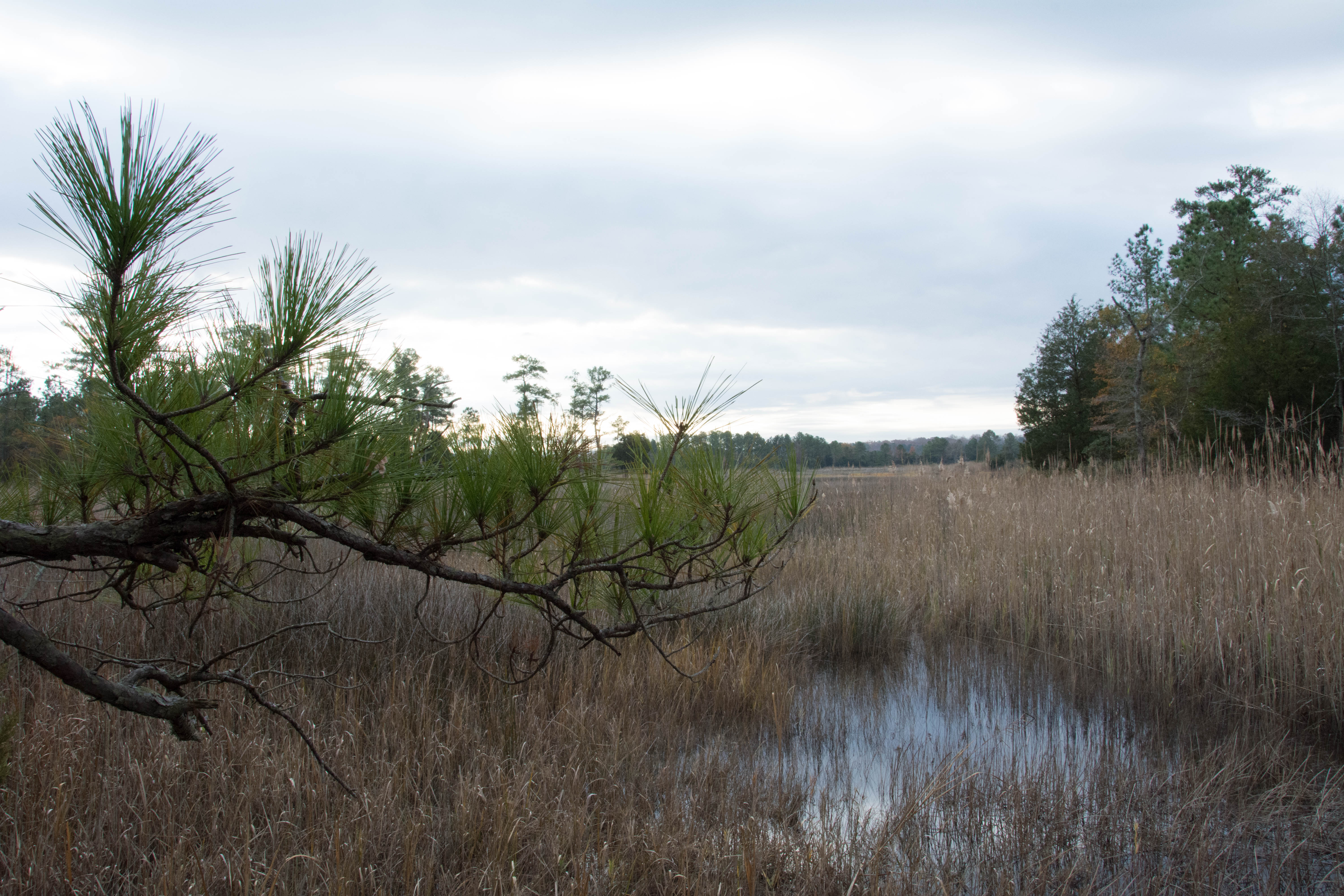
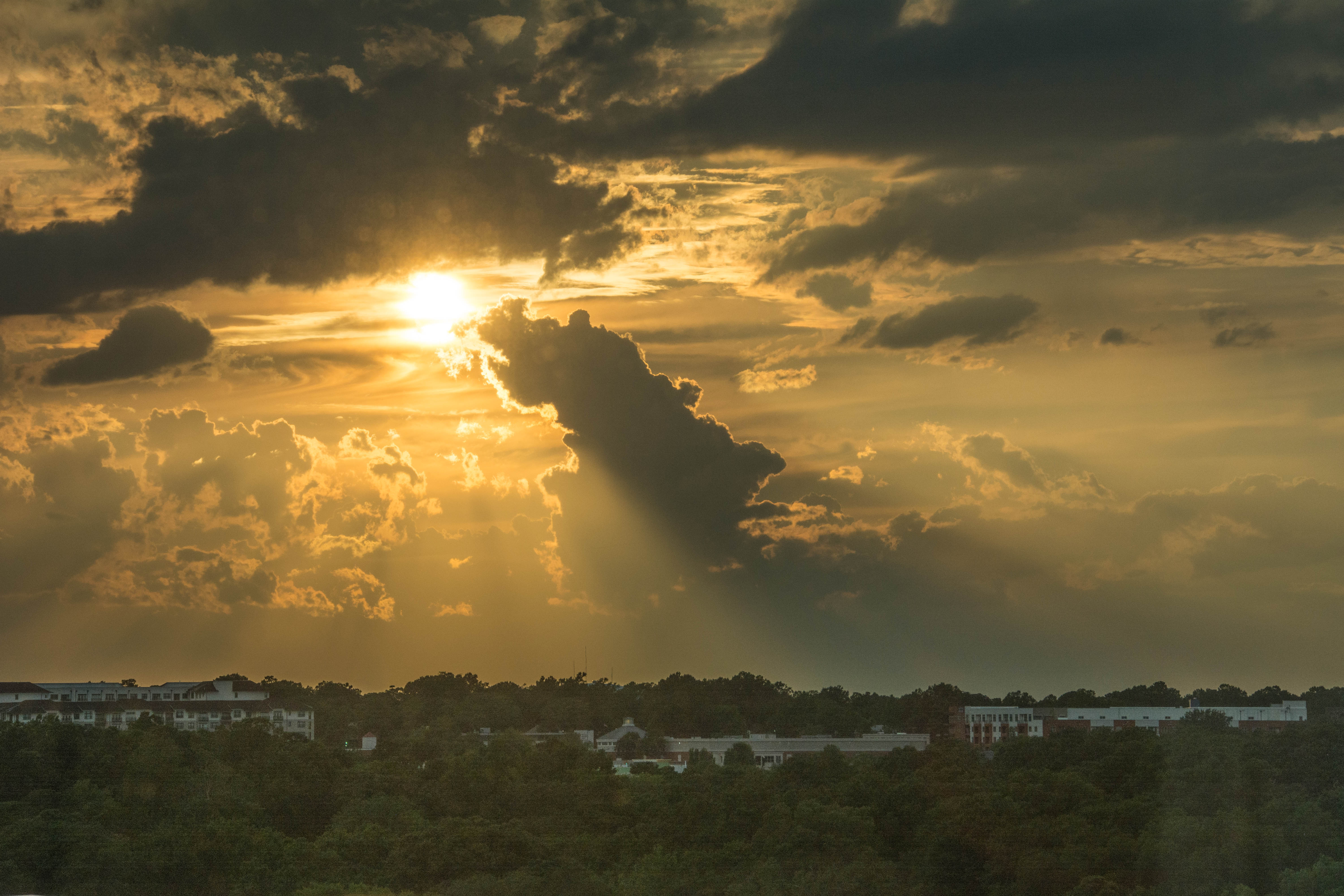
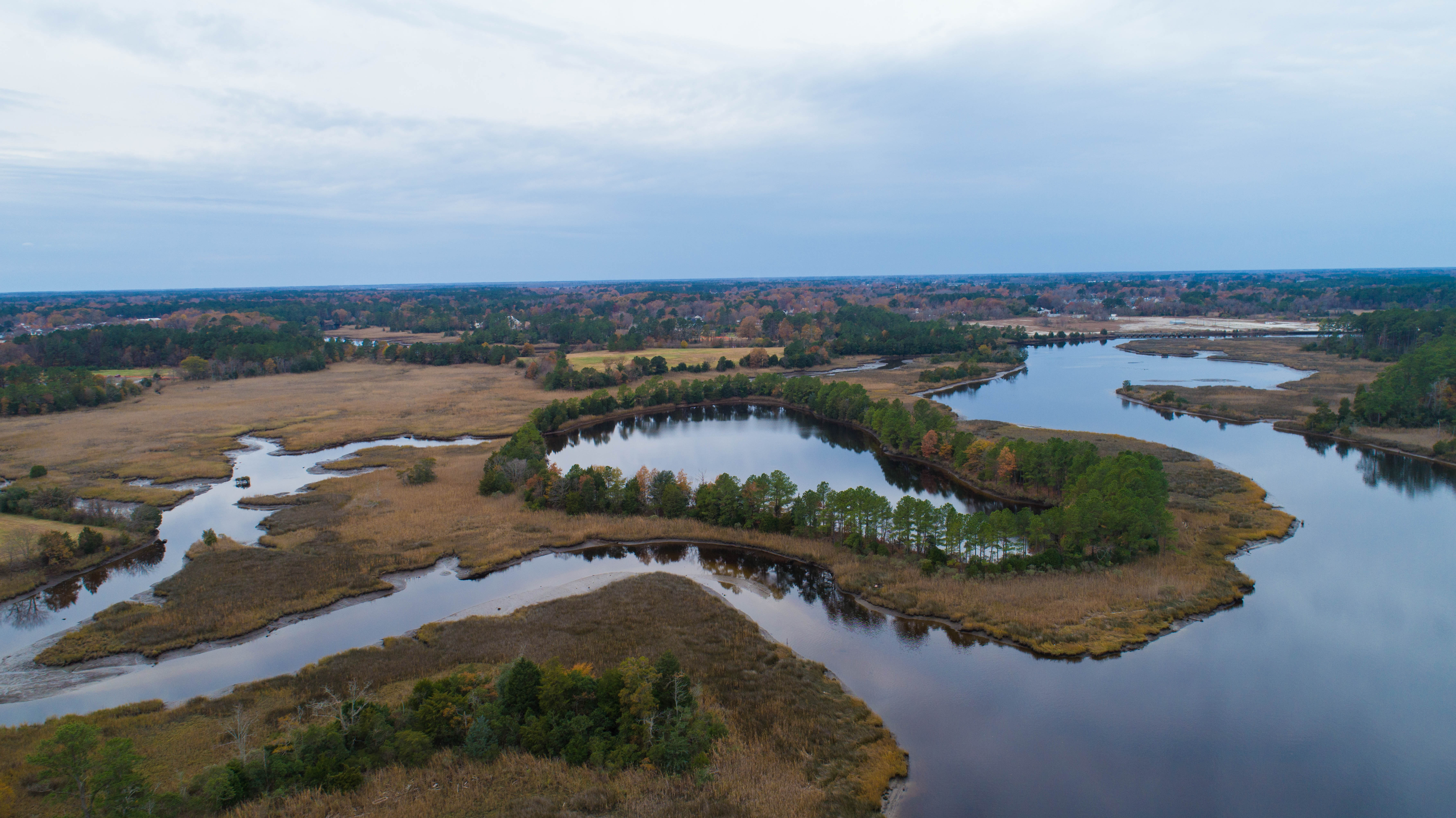
At the edge of the marsh near the Elizabeth River

Early Friday morning, I completed my hundredth spin class at Flywheel.  I did not meet my goal of 300 points (285), but I made it in in the top three, and I certainly got my heart rate well elevated (low 160s). Afterwards I drove over to O2 gym for some upper body resistance work and stretching.  Then I came home and fixed a green smoothie for breakfast, this time with orange juice, almond milk, kale, banana, baby carrots, celery, and blueberries.  That’s a lot of health in one glass, and it was also tasty.  

I’m exercising to feel good and increase the chances that I’ll still be here when Donald Trump is gone.  It helps my mood, which needs all the help it can get these days.  In particular, the recent flood of stories of powerful men sexually harassing women is depressing.  It suggests our problem is a lot worse than I thought, and we may well have not hit bottom yet.  

It’s no surprise that some percentage of males are dangerous sexual predators, and that there’s a larger percentage prone to crossing the line.  What’s new is the level of tolerance for such behavior. Last year almost half the population voted for a presidential candidate who bragged on tape about sexual assault.  Now a candidate in Alabama with a well documented record of molesting young teenage girls and lying about it stands a good chance of being elected to the United States Senate.

I formerly assumed that we all — Republican, Democrat, or other —  would agree that it is beyond the pale for middle-aged men to sexually assault fourteen-year-old girls.  That is, there are plenty of close questions when it comes to the boundary areas of sex, but there are some, like that one, that I thought were beyond debate. But apparently not.
What does this mean?   I think we’re seeing something that has been right in front of our noses all our lives but seldom noticed.  That is, we have a system in which women formally have equal rights, but in certain respects are regarded as unworthy.  In the US, we allow women to vote, attend school, work, and wear what they want. But we also systematically pay them less, give them less authority, and accept as normal that they’ll be subject to some degree of sexual misconduct.  

Ferguson and Black Lives Matter began a wrenching process that exposed a  hidden strain of racism.  Similarly, the disgusting and illegal behavior of Trump, Weinstein, Moore, and others  may be the start of a process that shines the light on our entrenched sexism.  We may expand the dialogue and expand the population that considers and treats women as fully human, and get to the point that nothing less will be tolerated.      

I hope so.  Meanwhile, I’m worried by the new effort to discredit and undermine the investigation of Russia’s interference in the last presidential election.  The evidence of Russian assistance to the Trump campaign is already extensive, and the evidence of ties between Trump’s top aides and the Russians is growing.  Now, as the plot thickens, Robert Mueller and the FBI are being accused of being partisan hacks out to get the President for no good reason. 

This campaign of slime is being led by Trump, Fox, and several Republican Congressmen.  There’s a good Washington Post piece on this by Paul Waldman here.  There’s also an account of the House Judiciary Committee’s work along this line here.  

I was sufficiently astonished by this idea that I decided to get out of my own bubble and watch, for the first time ever, an hour of Fox News.

So we saw Sean Hannity’s show on Thursday night, and it was both better and worse than expected.  Hannity and his guests are very skilled at weaving together uncontested facts with unfounded speculation and outright falsehoods so that they’re hard to distinguish.  The people are well-dressed and look serious and intelligent, and they all agree with each other on their key points.  

Thus several people at once will assent verbally and non-verbally to a proposition like “Hillary is the real criminal.”  They repeat their basic points over and over, but with enough variations that it isn’t completely obvious.  Unless you bring to the table a body of background knowledge, you might not notice the leaps in their reasoning, or the lack of any supporting evidence.    
So if you were to get all your news from Hannity, you might well believe that Trump is basically a good guy doing his level best and being unfairly thwarted by evil liberals.  And you might end up thinking that there’s no reason to worry about Russia taking over our political process.  At the same time, you might not be much concerned about electing sexual predators to high office.  

Hannity and Fox are really good at big lie propaganda.  Ordinary journalists can’t counter them as long as they are constrained by honesty and actual facts.  Reality based reporting doesn’t always fit neatly with our prejudices, and it just isn’t as exciting.  

Despite the effectiveness of Fox and Hannity, Trump’s poll numbers continue to sink.  I was heartened to read last week that his support among evangelical Christians had dropped by 17 percent since February.   Maybe it’s a trend.

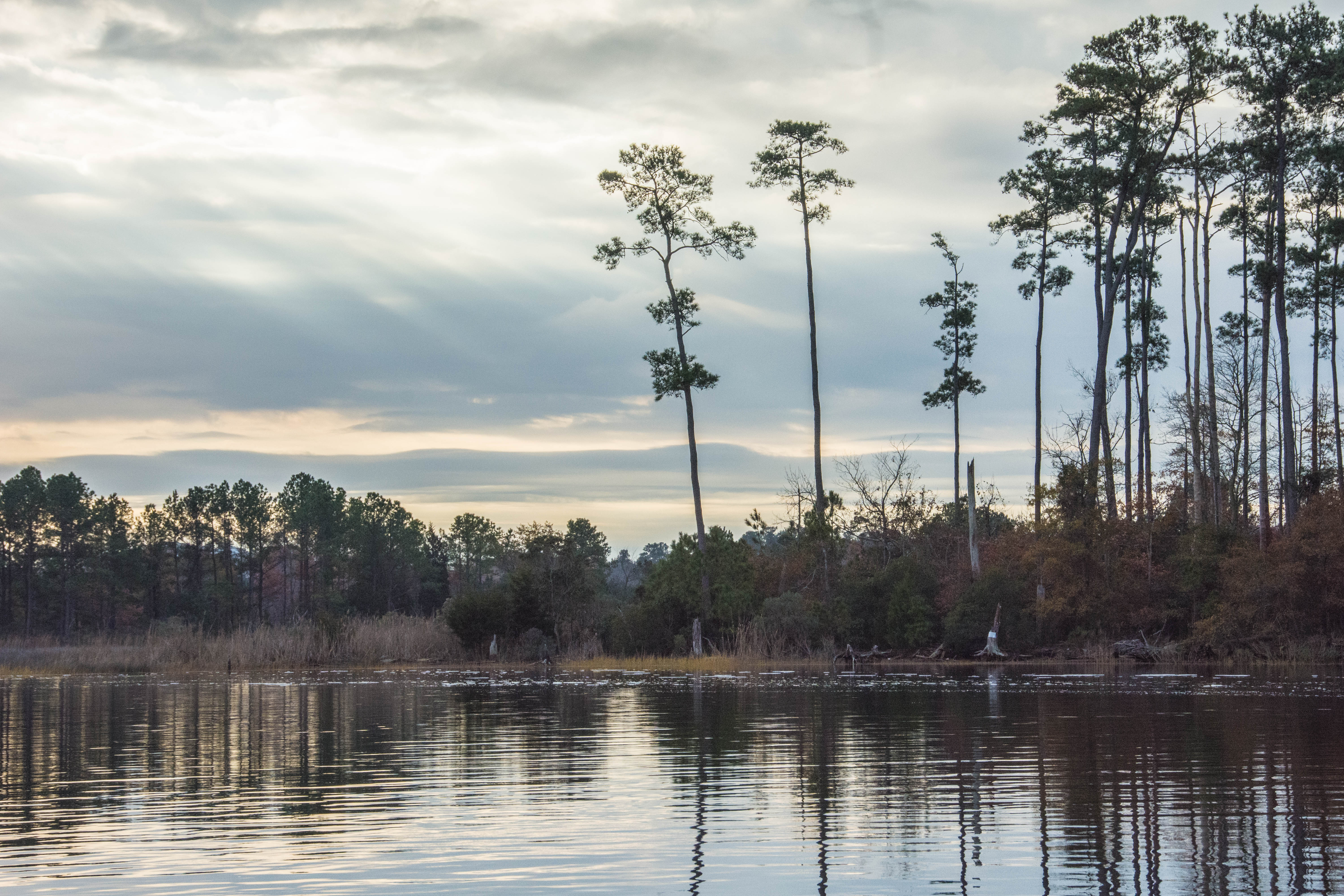
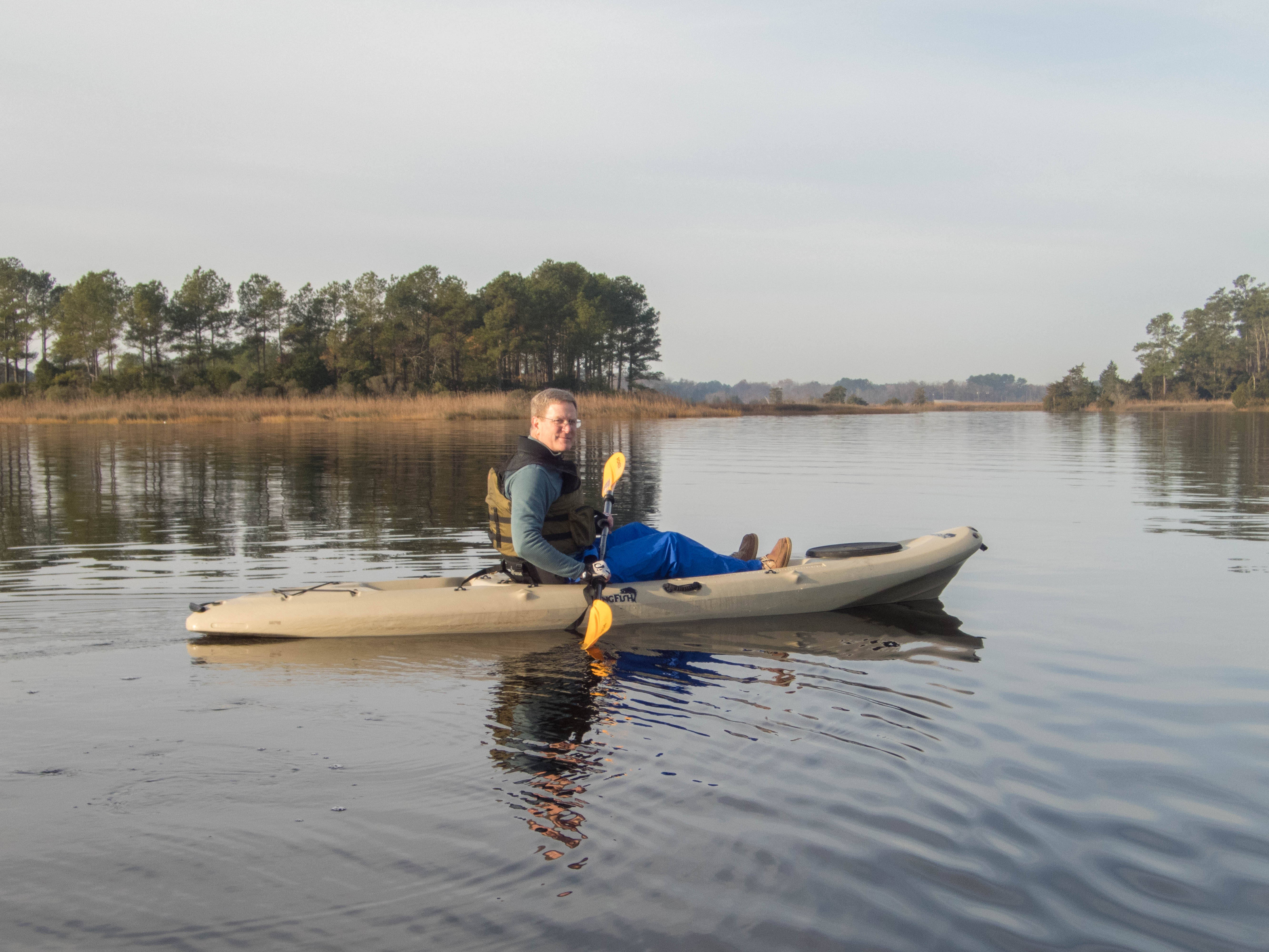
I took these pictures last weekend when we visited my brother in the Virginia Beach area.  We got out on the Intercostal Waterway and did some kayaking.  The water was smooth and peaceful.  
Thankfulness, and un-thankfulness

At Durant Nature Park, November 24, 2017

We had a good Thanksgiving with some beloved family members, and I was grateful, as was appropriate.  But it struck me that Thanksgiving needs a little balancing.  Along with things to be thankful for, most of us have a good number of things to mourn or regret, and these too should be acknowledged.  To balance our feasting, we could have an annual day of fasting, and focus a bit on the things that we’re sorry about and unhappy with.  It could be therapeutic.  

Flying at Durant

I got to try the fasting part this weekend in preparation for an ordinary course colonoscopy scheduled for tomorrow.  I normally maintain a decent level of skepticism regarding the medical-industrial complex’s  expensive procedures for apparently healthy people.  But I’m also fairly terrified of cancer.  So I followed the dietary recommendations, including several days with no fiber and a final day with no solid food.  I will spare you the details.  Fun it is not.  

At Umstead Park

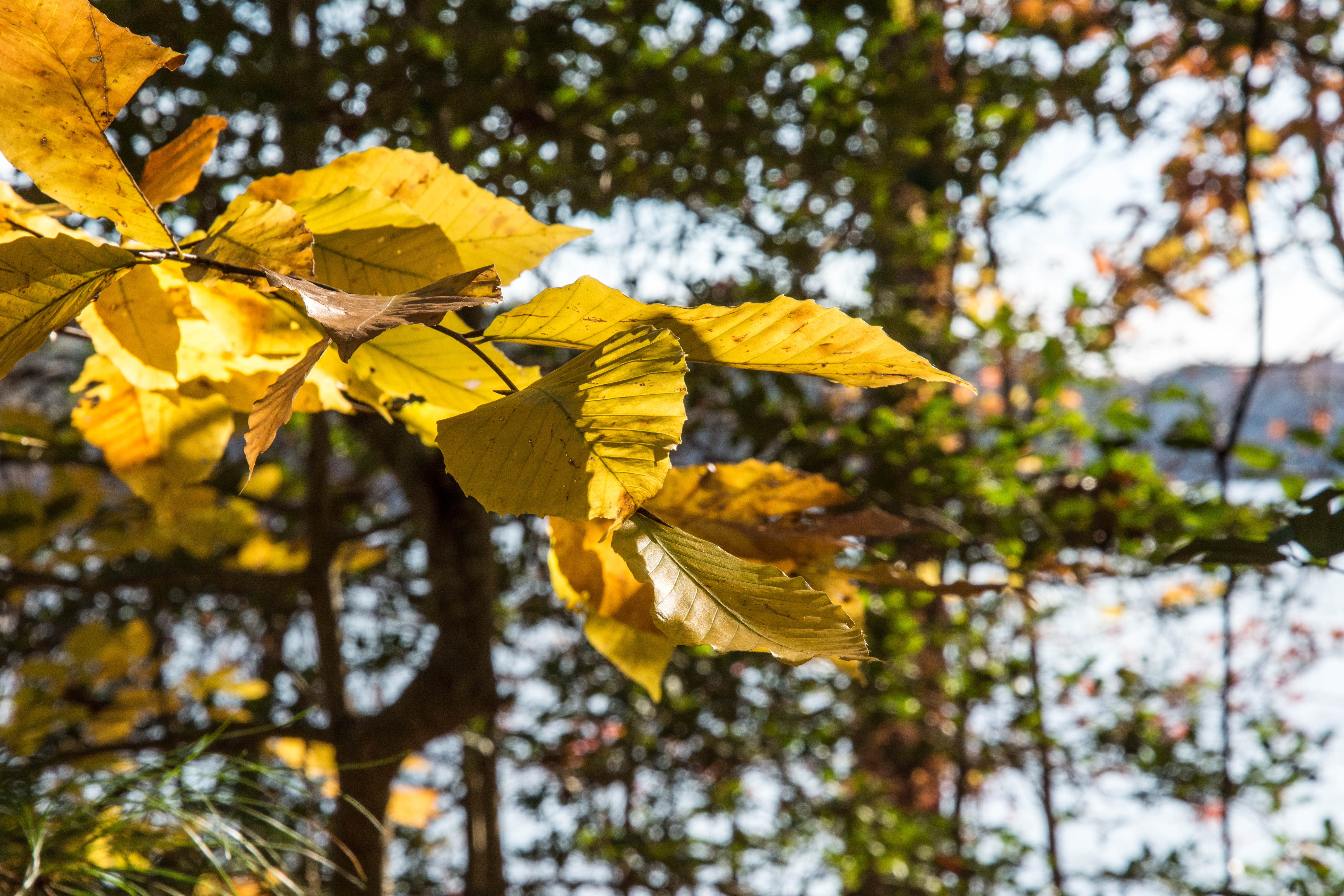
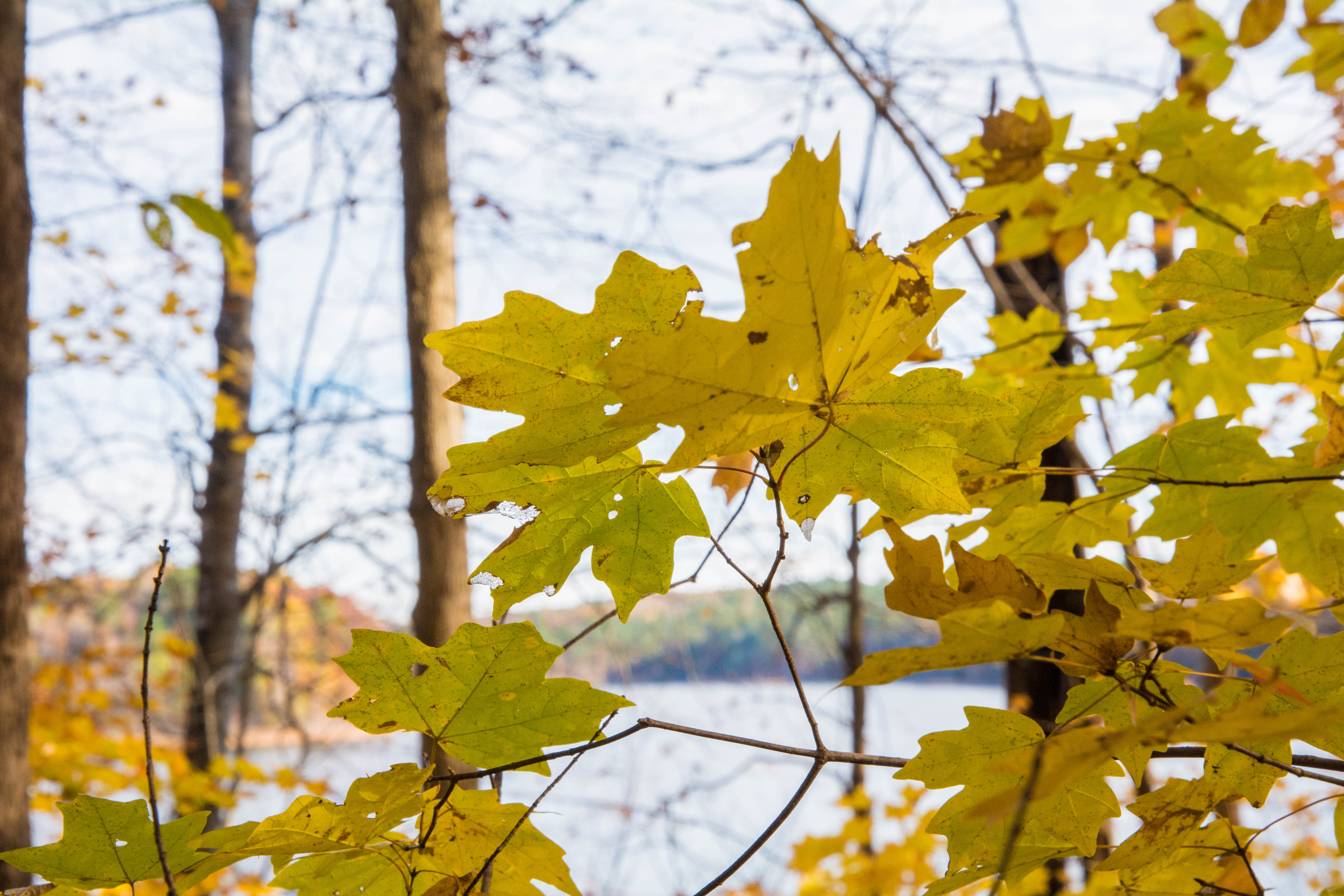
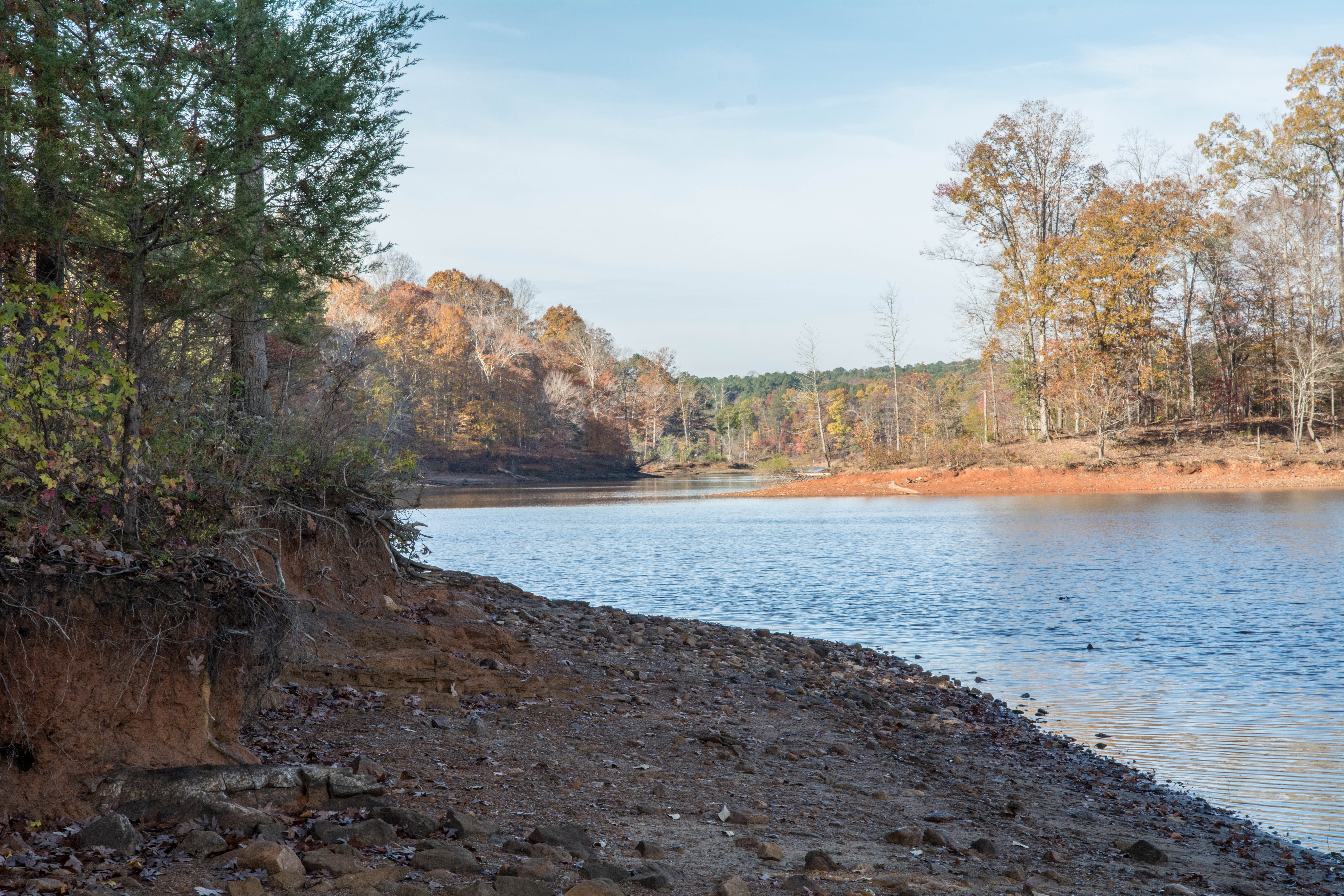
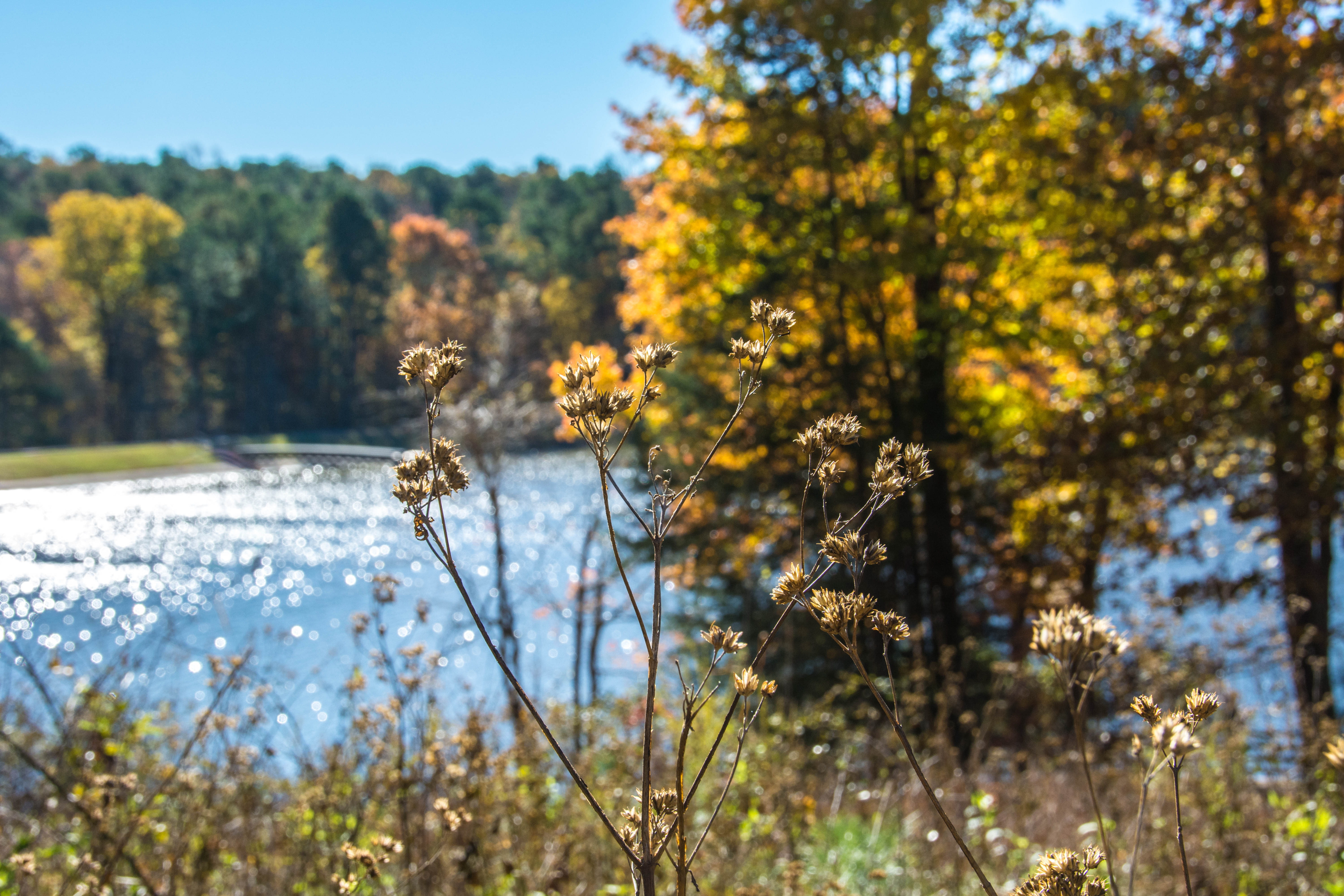
It was mostly clear and mild this weekend, and I enjoyed doing some hiking through the woods and around the local lakes.  I took these pictures with the Tiller Quadcopter and the terrestrial Nikon D7100. 

Missing meteors, fall colors, robot love, the end of nature, and Grosvenor the pianist

Flying over Blue Jay Point, November 18, 2017

Coming home from the concert in Durham on Friday night, I stopped to look for the Leonid meteor shower.  I hiked into the fields at the N.C. Museum of Art, which were dark enough to hope for good sightings, and also isolated enough to give a little twinge of fear.  But it was peaceful looking into the clear eastern part of the night sky, with stars shining bright.  I didn’t have much luck spotting meteors, which may have been shooting to the west where it was more cloudy.  

On Saturday morning I went up to Blue Jay Point to see some fall colors and take some pictures.  The dying leaves have not been very bright this year, but there was still some beauty there.  It was calming to walk in the woods and along the shore of Falls Lake, which was very quiet apart from a couple of passing motor boats.  It can be tricky keeping on the path this time of year, with everything covered in brown leaves, and I did in fact get off track on the way back, though I wasn’t lost for long.  I also took a fall when I tripped over a tree root that appeared out of nowhere.  My right hip got bruised, but fortunately the camera was OK.   

Sally and I finally got to the movie theater to see Blade Runner 2049.  I really liked the original Blade Runner, which had a visionary quality (though a fairly grim vision) folded into an intense sci-fi story, and had high hopes for the sequel.  The new movie was likewise a disturbing prophecy — a world where natural resources have been exhausted, inequalities have widened, violence is endemic, and humans lord over a race of human-like robot slaves.  But there was a strange beauty to it, and an oddly hopeful theme about new and unexpected kinds of love, including robot love.  

The end of nature in the movie, with no trees growing and no birds singing, doesn’t seem too far from where our current trend line could take us.  The situation is dire.  This was the view of a letter  published this week and signed by 15,366 scientists from 184 countries, which I hope will be widely read.  The scientists outlined damages and risks that you probably already know about ( though many still do not), including potentially catastrophic climate change, overpopulation (35 percent more humans since 1992), and mass extinction of “many current life forms.”  They note that time is running out.  

But the scientists also note that it is still possible for us to course correct with adoption of sustainable levels of consumption, preserving natural resources, promoting family planning, eating less meat, respecting nature, and prioritizing green technologies.

There are some signs that more of us are waking up.  199 of 200 nations have signed up for the Paris climate accord.   In the U.S., more states and cities are taking action, as Jerry Brown and Michael Bloomberg recently noted  in a NY Times piece, and so are more big businesses.  Despite the ascendance of Trumpanical contempt for nature,  government scientists recently issued a comprehensive climate assessment report that very frankly set out the dire threats to our dear planet.   There’s still hope.  

The Big Lake at Umstead Park, November 19, 2017

On Friday night, Sally had a conflict, so Olga Kleiankina, my piano teacher,  joined me at Duke’s Baldwin Auditorium to hear the young British pianist Benjamin Grosvenor.  For what it’s worth, the program director pronounced the artist’s name “Grovner” (with no sounding s).   Grosvenor was praised in the New York Times last week as perhaps the most cultivated pianist of his generation (he’s 24), and he did not disappoint.  

In the first half, his Bach, the fifth French Suite, was fast moving and elegant, with creative ornamentation,  and his Mozart sonata (K333) was well conceived and elegantly executed.  I think I liked it more than Olga, who did not dispute his technical excellence, but felt that the performance lacked heart.  She may well have heard things I didn’t or expected things I didn’t,  since she is unquestionably an artist.  

For the second half, I very much enjoyed Grosvenor’s performance of an Alban Berg’s Sonata op. 1 and of Ravel’s Gaspard de la Nuit.  Gaspard is a quintessential impressionistic piece, and I thought he fully grasped the spirit, with striking virtuosity.  Olga liked it as well.  We ran into a number of our musical friends there, so it was an enjoyable social event, too.


Our trip to Venice

Dragonflies

Sally in  Burano

Last Sunday Sally and I got back from a week in Venice, which was a lot more challenging and stimulating than I’d expected.  As everyone knows, there’s a lot of beautiful art and architecture to take in, or try to take in.  I hadn’t understood, though, some fairly basic aspects of the place.

Dragonflies-3

For example, there are no cars, or trucks, or motorcycles.  As far as I could tell, there are no powered terrestrial vehicles in Venice.  It is a city for walkers and boaters.  We walked a lot — between 16,000 and 18,000 steps most days.  And the walking is somewhat complicated — along quays, through narrow alleys, and up and down the steps of bridges over canals.  Once you leave sight of the Grand Canal, it’s easy to get lost in the twisty, narrow streets, though you eventually find your way back.  

Dragonflies-8.jpg

Given that there’s so much walking in Venice, I was surprised at how bad some people were at it.  People would veer in front of us, or stop with no warning in crowded areas.  I thought at first these must be tourists from places where there isn’t much walking who lack the sophisticated observation and signalling skills of big city pedestrians.  They may have been disoriented by the many luxury shops and other sights.  But it may be that they were just inconsiderate.  

Dragonflies-7

That said, most tourists were nice enough, and the service industry people we dealt with were almost all helpful.  I was a little hesitant about using the vaporetto (water bus) system, but the ticket sellers gave good directions in good English.  The system works really well, with many boats running regularly.    

Dragonflies-10

For lodgings, we used Airbnb, and found a little apartment with a balcony near (but not too near) St. Mark’s Square.  The young man who owned it  met us at the nearby Giglio vaporetto stop and guided  us in, and gave us a friendly briefing on the neighborhood shops and services.  A few steps from our door was an old leaning bell tower, with bells that pealed loudly at 7:30 each morning to make sure we got up.  There were minor issues (not enough soap and toilet paper), but the pros greatly outweighed the cons, and the cost was a fraction of an equivalent hotel room.  

Dragonflies-9

Our neighbors’ laundry

We stopped in many cafes and gelato shops, and ate well.  For dinners, the vegetarian offerings were mostly along the pasta line, but we also had tasty risottos, and one evening had the mother of all gnocchis.  The local wine was excellent.  I expected to come home several pounds heavier than I went out, but in fact gained less than two ounces.  All that walking surely helped.

Dragonflies-6

St. Mark’s square

Mid-October turned out to be a good time for a visit.  Daytime temperatures were in the high 60s to low 70s.  We had some sun but mostly clouds, and no rain.  There were plenty of other tourists, but not so many as to be overwhelming or depressing.  

Dragonflies-4

Near the Accademia Gallery

We were there in large part to take in the Biennale, the huge every-other-year art fair with exhibits by many nations and artists.  Most of the art did not involve paintings in frames.  There were many videos, multi-media constructions, music and non-musical sounds, happenings with human actors, and environments.  We looked at a lot, and found quite a few artists with something pressing to say.  There were very strong exhibits from some countries whose governments are authoritarian, including Russia and China.  The artists reminded us that these countries are much more than their leaders and elites.  

Dragonflies-5

We also loved seeing the extraordinary Renaissance art in the Doge’s Palace, the Accademia Gallery, and various churches, and particularly the Basilica di Santa Maria Gloriosa dei Frari (which is not singled out in every guidebook).  I’ve recently been reading about much earlier civilizations, and so art from five or six hundred years ago felt fairly recent.  Much of this art is devotional, in the sense of being inspired by and celebrating the religious thinking of the time, but some of those thoughts still resonate.  We are touched by the beauty of each new baby, and the suffering of those brutally victimized.

Dragonflies-2One day we took the train out to Padua, where we saw the marvelous Giotto frescoes at the Cappella degli Scrovegni and the impressive Basilica di  Sant’Antonio.  We got turned around, and unlike in Venice, had no canal to orient by.  We walked 22,000 steps that day.  Another day we took the vaporetto out to Murano and Burano.  In Murano, we saw some glass making, which looked hard to do well.  In one shop a salesman took a determined run at selling us some glass art costing thousands of Euros, but we managed to resist.  

Caribbean misfortunes, reconsidering Vietnam, good drug news from Portugal, and rising Carolina dancers

It’s been tough to see the devastation of the Caribbean islands by hurricanes Irma and Maria these last weeks.  I’ve got a warm connection to some of the most affected islands (Dominica, Turks and Caicos, the Virgin Islands, Key West)  from scuba trips.  I found so much beauty and joy there from both the natural world and the people.  I recently read a new history of the region,  Empire’s Crossroads, by Carrie Gibson, and discovered some unexpected complexity.  

Beginning in the late 15th century with Columbus’s voyages and extending for another three hundred some years, these islands were not vacation paradises but rather economic powerhouses for an expanding Europe.  They were  fought over repeatedly, because they produced enormous wealth, mostly from growing sugar with slave labor from Africa.  At the time of the American Revolution England and France both valued their Caribbean possessions more highly than the American colonies, and England’s need to protect those islands from the French was part of what created a power vacuum that led to the revolutionaries’ victory.  Their normally kind and beautiful exterior conceals a lot of tragedy, and they just got more.  

The people there face desperate conditions — homes and businesses destroyed, no electricity, no drinkable water.   And of course, the animals and plants there have also suffered greatly, which is seldom noted.  Our tendency as humans to forget about other species is deep seated, but not insurmountable.  It’s possible to view nature as worthy of caring and respect, rather than just something for humans to exploit.  This viewpoint makes possible a deeper engagement with nature, but it also makes natural and man-made disasters more painful.  

Speaking of painful subjects, we’ve been watching the new Burns-Novick documentary on the Vietnam war, and I highly recommend it.  It’s by no means fun, but it feels positive to get a more rounded understanding of this chapter.  There’s a lot of tension between our abiding central national narrative (we’re always on the side of good), and the death and mayhem that’s almost impossible to get our heads around (58,000 lost American lives are a lot — but we tend to forget the 3,000,000 Vietnamese ones) .  It’s amazing in a way that we’ve mostly repressed and forgotten the Vietnam experience, especially when its combination of good intentions, hubris, cynicism,  and sheer cluelessness continues to be relevant to our quagmire in Afghanistan and violence elsewhere.  

In other quagmire news, there was a relatively cheering piece by Nicholas Kristof in the NY Times today entitled How to Win a War on Drugs.  It summarizes the experience of Portugal after it decriminalized all illegal drugs fifteen years ago.  Portugal’s drug mortality rate is now the lowest in Western Europe and one-fiftieth (1/50) of that in the US.  Portugal’s rate of heroin use has dropped by seventy-five percent.  Meanwhile, deaths in the US from opioids have risen dramatically.  The core of Portugal’s approach is to devote resources to medical treatment for addiction.  Though far from perfect, this approach has been far more effective, and far less expensive, than the US’s war on drugs.  While there’s a lot we don’t understand about drug addiction, it could hardly be clearer that our war approach hasn’t worked, and that there are better alternatives.

We went to our first Carolina Ballet performance of the new season last night, and thoroughly enjoyed it.  With all the disasters in the headlines, to find a couple of hours of nourishing, energizing beauty is particularly welcome.  Some of our favorite dancers retired last season, and they’ll be missed, but the change has brought vibrant talent from the company ranks into view.  Lily Wills was a sweet and touching Ugly Duckling.  Jan Burkhard, back from maternity leave, was exquisite in Flower Festival in Genzano, a Bournonville pas de deux.  

Dialogues, the new ballet jointly choreographed by Robert Weiss and Zalman Raffael, was bold and refreshing.  The Dialogues music, Rachmaninoff’s Variations on a Theme by Chopin, was played by pianist William Wolfram, who performed with insight, power, and passion.  With his daughter, Lauren Wolfram, now part of the company, I hope we’ll get to hear this great artist again.  We also enjoyed the angularity of Les Saltimbanques, with choreography by Weiss and music by Stravinsky.  Ashley Hathaway, Amanda Babayan, and Courtney Schenberger were striking and lovely.

Getting some lessons

On Saturday morning I had another swimming lesson with Eric and worked more on my butterfly stroke.  It’s a very different way of moving through the water, and not easy to get your head around.  It surely does get the heart rate up.  I can now do intervals of 50 meters without being disqualified or dying, which I consider an accomplishment.

While figuring out the butterfly, I’ve been working with Eric on refining my freestyle, breast stroke, and back stroke, which are all by comparison quite relaxing.  It recently came into focus that swimming has always been for me a struggle  — at bottom, a thing to do to keep from drowning.  And now, finally, through the struggle to be a butterflyer,  I’m finding it can actually be fun.  

I’m sure I couldn’t have gotten even this far without a skilled teacher helping me.  I’ve said this before, but it bears repeating:  if you want to learn a complex skill,  find a good teacher.  There’s no substitute for having a guide in difficult unknown terrain.  You may get to where you’re going without a teacher — now and again people do — but you’d have to be more-than-ordinarily lucky.   

For this reason, I’ve continued getting lessons on the golf swing from Jessica at GolfTec, and had another this weekend.  We talked about hips, shoulders, and wrists.  Jessica knows a lot about the swing, and she also has helpful technology tools — sensors, computers, and video. I’m seeing improvement, both in my measurements and in how the ball flies, and I understand a lot more about how a good golf swing works.  But it’s hard to change ingrained habits.  When you fix one problem, you may create another.  I’m starting to understand that although there is improvement, there is never perfection.

I was hoping to also have a piano lesson this weekend, but Olga said she was too busy.  With a new baby, a full teaching load, and concert commitments, that’s understandable, but I was disappointed.  Among other things, I’ve been working on Chopin’s famous Nocturne in B flat minor, Op. 9, No. 1, and I’m eager to get her take on it.  Recently I had a minor epiphany that there would never be a point when her response to my playing would be:  that’s perfect, and there’s no way it could be improved.  In the great classical tradition there are always new possibilities and new things to be explored.  

Looking on the bright side — how to fix our nuclear problem

This week Trump has been threatening to start a nuclear war against North Korea, which got me rattled.  So far, the sun has come up every morning, and with each additional day with no mushroom clouds it seems more likely that those threats are just bombast.  His continuing along on his golfing vacation is also reassuring, if ridiculous.  But how could anyone with the slightest clue as to what nuclear war would do even talk like that?  And how could anyone think it a good idea to explore what happens when you provoke a nuclearized,  paranoid dictator with threats of ultimate destruction?   

Let’s keep our fingers crossed that Kim Jong-Un is only pretending to be crazy,  Trump’s impulsivity is contained, and we survive.  Even so, the threats will have done real damage.  Markets have been roiled.  In the community of nations, our government is viewed as even more irresponsible and unpredictable.  At the personal level, my own mood has been darker than normal, tense and uncertain, and I’m surely not the only one.  Our mental health is not good.

I usually try to find the bright side of dark situations, so I’ll take a swing at it here. If we’re lucky and avoid disaster, we might finally wake up, realize we’ve long been on the edge of the nuclear precipice, and carefully back away.  Nuclear risks are not something anyone likes to think about, which in part accounts for why we are where we are.  But we can’t not think about them now, with the threat so clear and close.  We might take this as an opportunity to reconsider received ideas and correct some mistakes.    

We thought initially  that nuclear weapons could assure our safety by terrifying others into submission.  When that didn’t work, we raced to build still more weapons, with ever more destructive force, until we could in a matter of hours destroy the world several times over.  We put the weapons on hair-trigger alerts, and the risks of accidents and miscalculations increased.  

In the past decades, there have been several nuclear accidents and close calls that could have killed thousands or sparked an all-out conflagration. In  Command and Control, Eric Schlosser  recounts a number of these, and there was a quick overview last week in the HuffPost .  Our engineering is imperfect, and always will be.  Maintaining large numbers of weapons on hair-trigger alert is incredibly dangerous.   

In addition to the risk of system accidents, we live each day with the risk of human failure.  People make mistakes in the use of violence for any number of reasons — lack of knowledge, lack of sleep, intoxication, mental illness, etc.  And people’s reasoning powers are frequently overwhelmed by  powerful emotions.  It’s far from impossible that fear or anger could cause a nuclear attack that results in a counter attack and the end of the world as we know it.  

The worst possible way to manage this risk is the one we’ve adopted:  give one person with no training or qualifications complete power to launch the missiles.  The dependence on the good judgment of a single individual with no constraints is inherently dangerous.  Even the best of us from time to time make poor decisions when angered or confused.  To put it mildly, Trump is not the best of us.  

So is the situation hopeless? No.  It’s not hard to imagine international agreements that greatly reduce nuclear forces and the risk of total annihilation.  Indeed,  the START treaties accomplished a lot.  The new U.N. treaty banning nuclear weapons adopted by 120 countries shows that more is possible.  It’s not hard to imagine doing away with the hair trigger and engineering in more time for analysis before launching.  Likewise, we could put in place checks and balances on the executive, as we do in other areas.  

But we need to start with adjusting our thinking, and recognizing that the nuclear risk is intolerable.  We need to treat this problem as time-sensitive and high priority.  If we do nothing . . . well, it’s unthinkable.

In New York: Trump-TV land, Rauschenberg’s big heart, Bolshoi beauty, and trying rugby

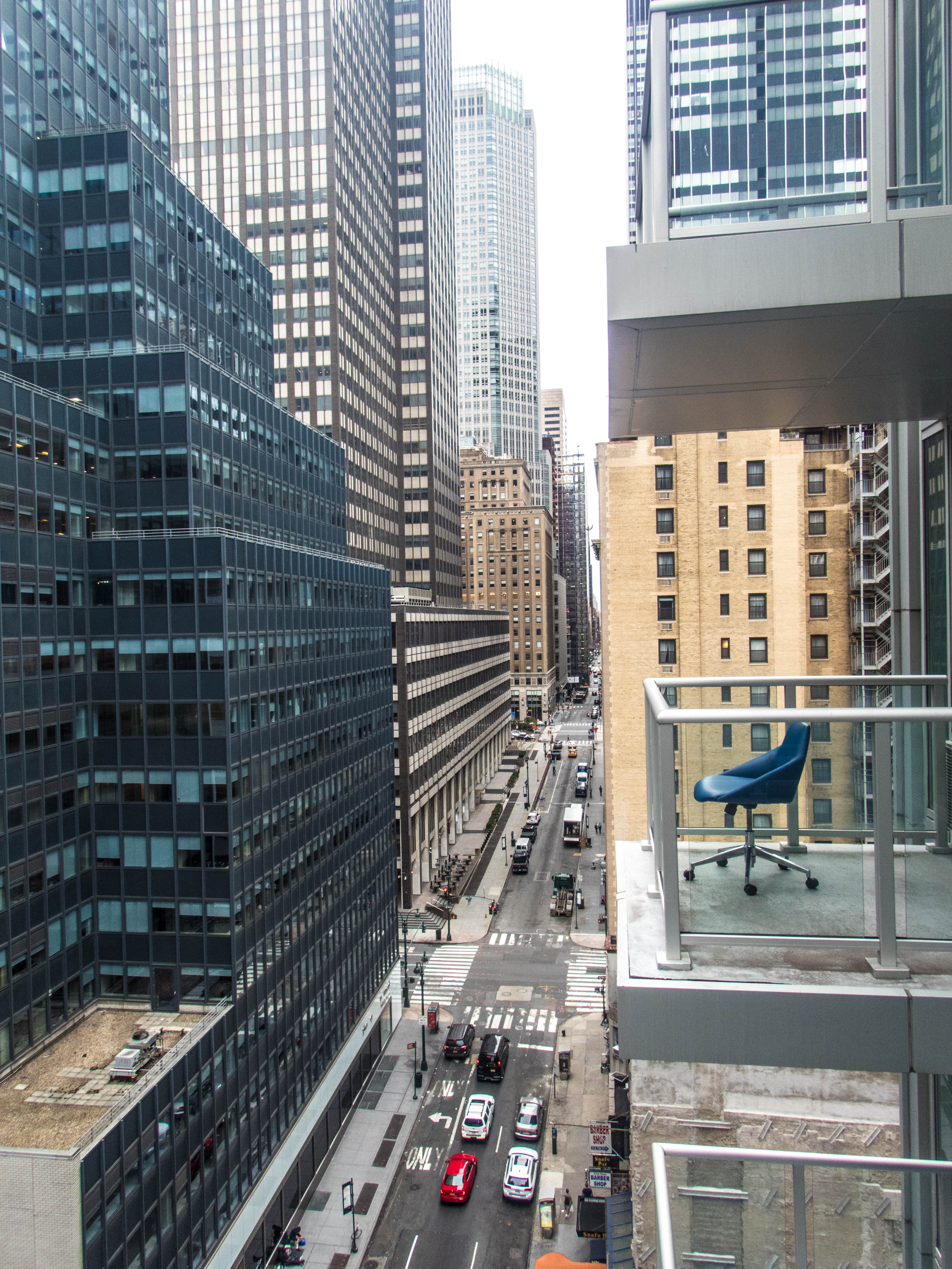
Looking west  from our balcony at the Bernic Hotel on 47th Street

We just got back from a long weekend in New York, where we celebrated Jocelyn’s birthday, went to art museums and galleries, stopped in at a double Dutch jump rope festival, saw the Bolshoi Ballet, and watched a rugby game.  

Of course we talked about the latest Trump oddities and outrages.  Though Jocelyn may have been the first to say it, it’s getting to be a commonplace that the current presidency resembles a reality television show, with ginned up drama that seems to have no point except drawing continued attention.  Indeed, Emily Nussbaum had an interesting piece in The New Yorker this week about Trump’s reality TV career.  Trump apparently liked the job, and may well think of the presidency as mainly about being surrounded by people who make him feel like a big shot.  

He may have no other objective, but I wonder whether there could be a long game.  It’s possible that somebody (maybe Bannon) has a plan that’s well served by stripping all dignity from the presidency and substituting crass vulgarity.  As we come to think of the president as an idiotic clown, we also may view the executive branch as basically ridiculous and unworthy of any respect.  This could make us more open to a solution along the lines of Russia’s Putinism or fascism.  But maybe we’ll be smarter than that.  

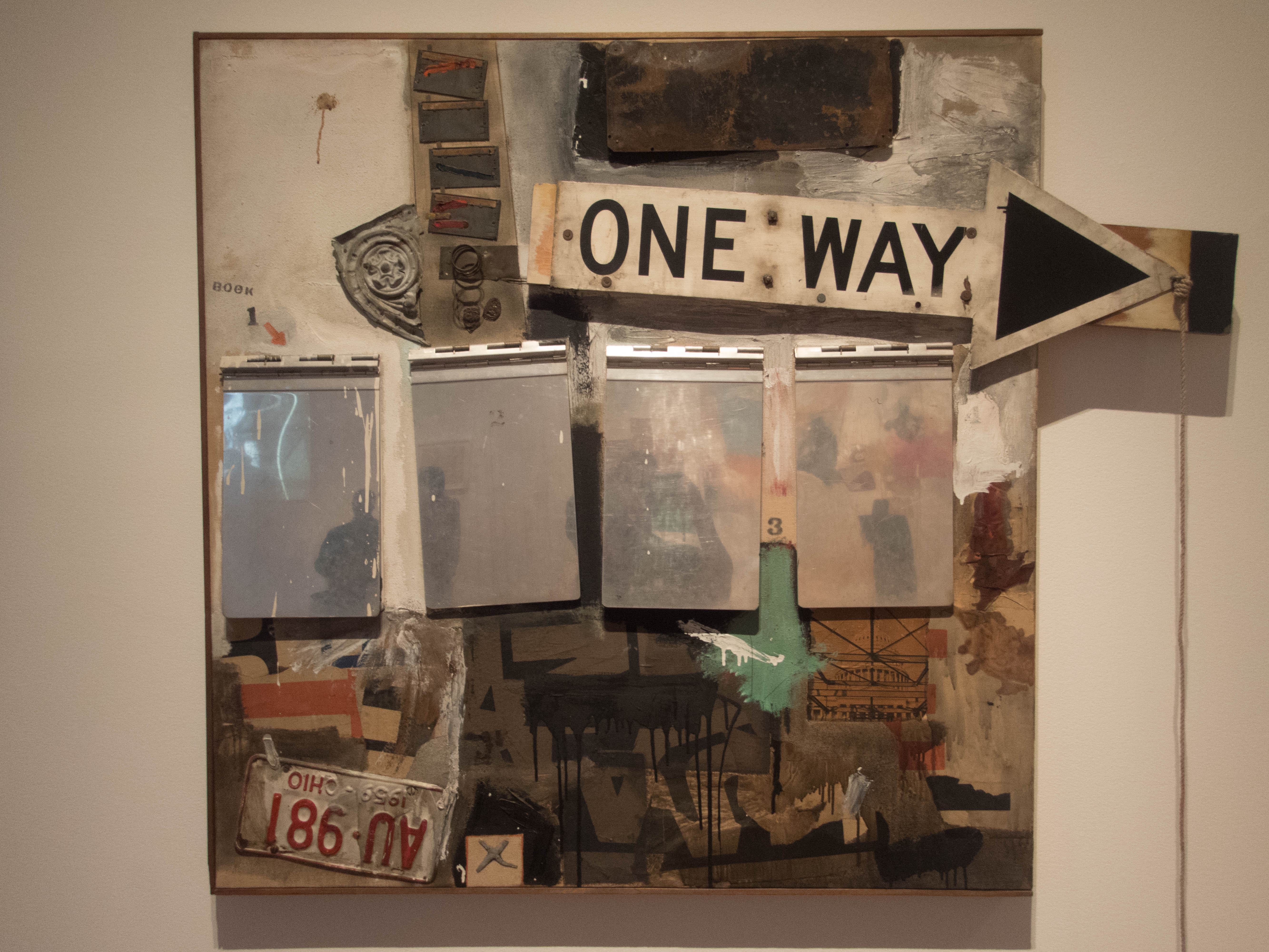
Black Market by Robert Rauschenberg

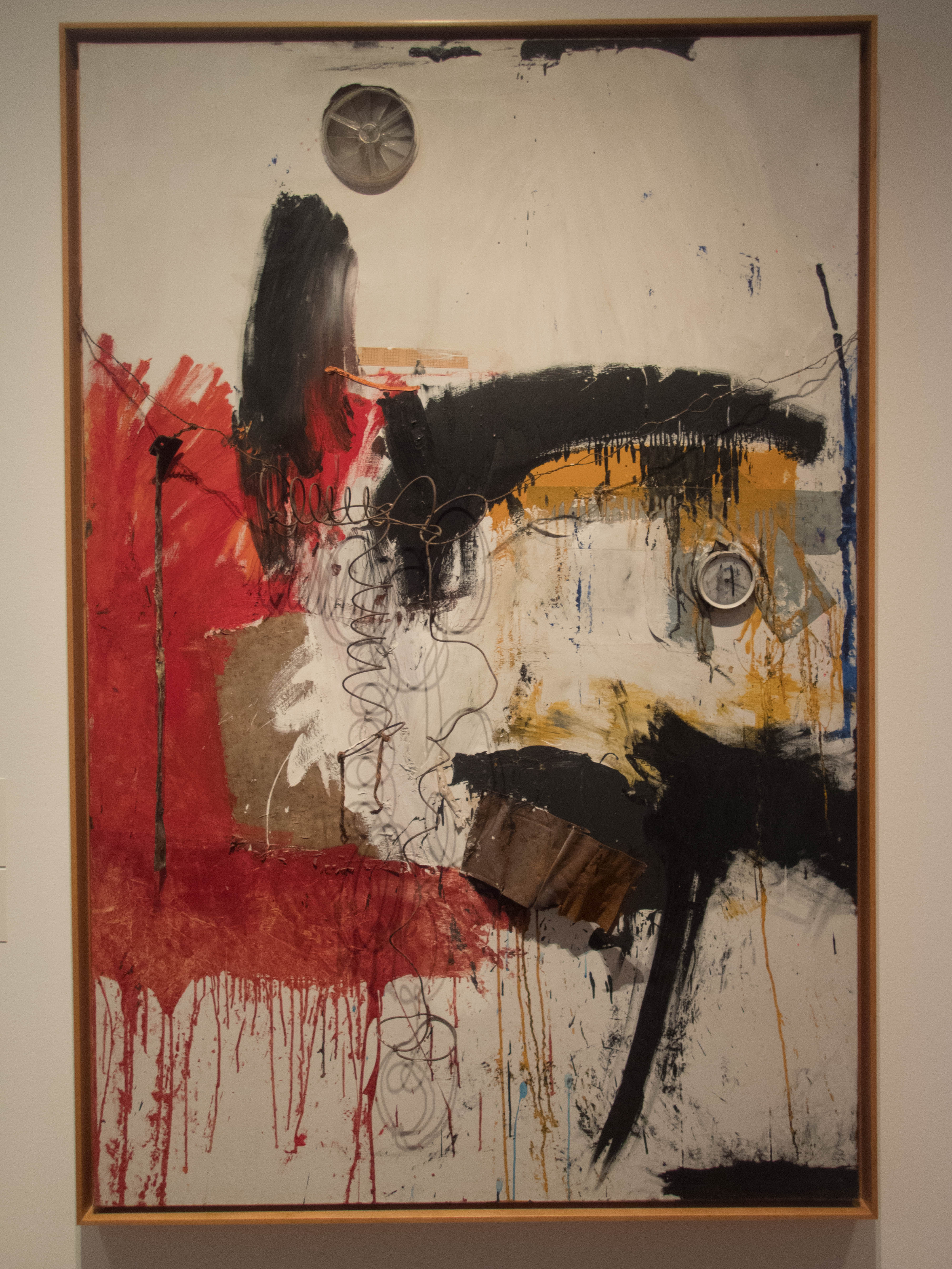
In New York I went to the Robert Rauschenberg show at the MoMA with low expectations.  From prior encounters, I’d thought of his painting and sculpture as facile and kind of messy.  This show changed my mind in a big way and  gave me some new ways of thinking about and looking at art.  Rauschenberg’s art emits swirling emotions and ideas, which are always subject to change, even as we try to comprehend a single painting over time.  He expects the viewer not just to look at the work but to bring feeling and intelligence to it, to become part of it.  Engaging with the art this way is exhilarating.  

Rauchenberg’s approach to art was open-hearted and continuously experimental, trying new materials, new sources, new subjects. There was such a range of feeling and humor, and engagement with the world.  His art was highly collaborative and connected to friendship and love.  These works are particularly resistant to photography, because of their rich textures and sculptural depth.  There’s no good substitute for standing in front of them and seeing what they do.

First Time Painting by Robert Rauschenberg

We also did some gallery hopping in Chelsea.  We noted a lot of new construction in the area,  which made me wonder if the galleries will eventually be priced out.  For the moment, the scene is still lively, and we saw works in many different styles.  Some people are still mining the 60s pop vein, just as some are continuing expressionism and other established styles, while some were creating objects that haven’t and may never be part of a movement.  I particularly liked the photo collages of a young Chinese artist named Ji Zhou at the Klein Sun Gallery and Sally loved a show of Japanese Nihonga painting.

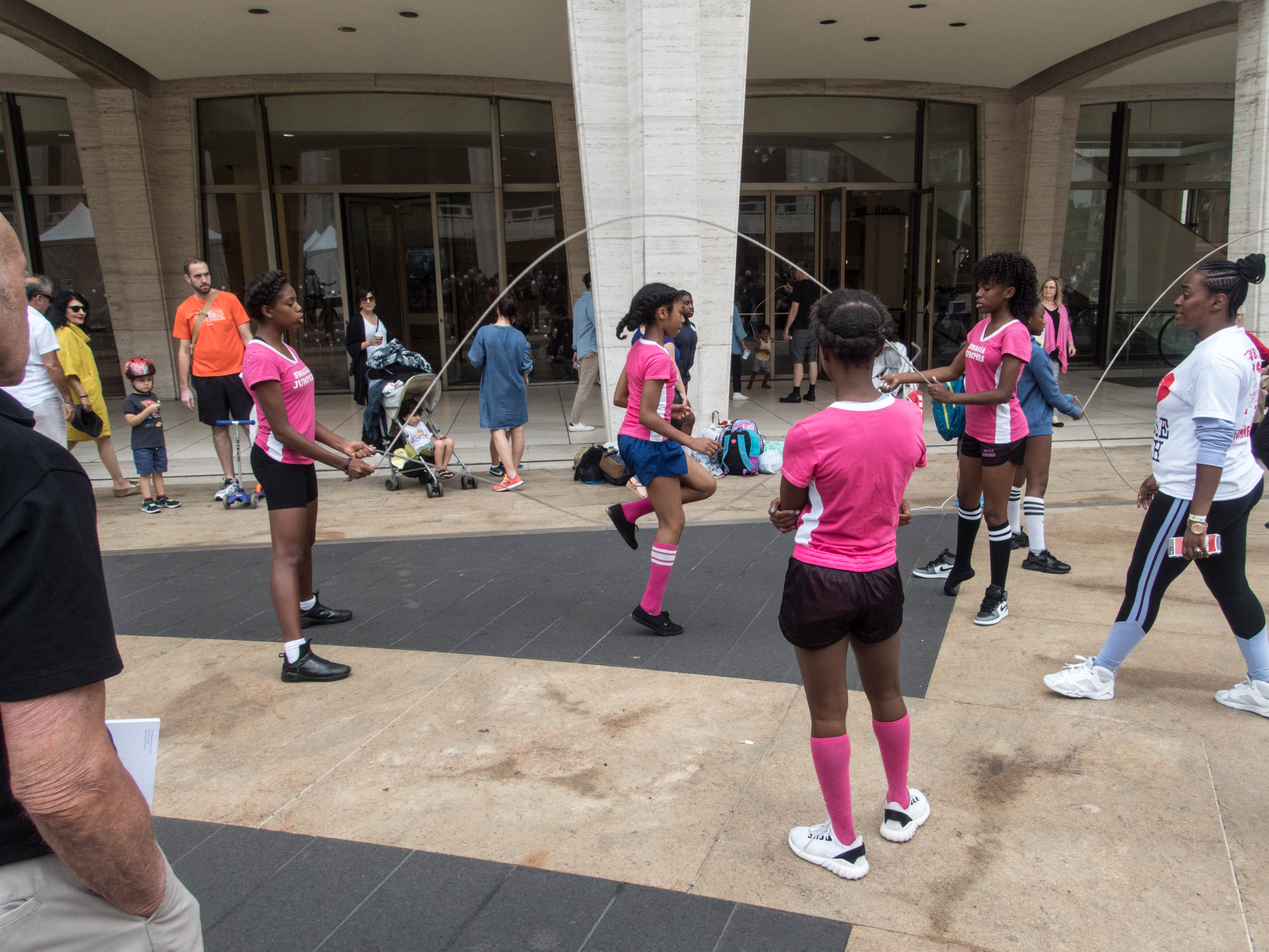
On Saturday afternoon at Lincoln Center we  watched kids of all ages showing their skills at double Dutch jump roping.  There were some impressive feats of speed and agility, as well as creative athleticism.  I briefly considered giving it a try, but couldn’t quite get in the right mental gear while wearing black loafers.  

After that, Sally, Jocelyn, and I saw the matinee show of the Bolshoi Ballet, which performed a new ballet version of the Taming of the Shrew.  We loved it!   The dancing was of the highest caliber, with athletic energy balanced by delicacy and natural-seeming ease.  The acting was strong throughout.  The leading ballerinas in this performance (Kristina Kretova and Anastasia Stashkevich) were beautiful and charismatic, and fully inhabited their roles.  Together with their male partners (Denis Savin and Artem Ovcharenko), they brought great romance to this sometimes disturbing drama.  

That evening, we went to Pier 40 on the Hudson and watched a rugby game between the New York Knights, Kyle’s team, and Boston.  Kyle was injured and unable to play, but was able to give us a tutorial on the rudiments of the sport and first lessons on tactics and strategy.  It was fun!  Happily, the Knights won, completing an unbeaten regular season.  

Learning new things, including the butterfly stroke and about our worst tendencies

It was brutally hot here in Raleigh this weekend, which made me consider breaking my commitment to getting outside with my camera at least once a week and trying to see something fresh in the natural world.  But I ultimately hung tough and did a short photo safari at Raulston Arboretum, which was not as miserable as I expected.  I was happy I got these pictures.

Learning new things is sometimes fun, and sometimes hard, but always important, to keep our brains from turning to mush.  And so I decided to take some swimming lessons, and had my first one this week.  As I told my teacher, a young woman named Deanna, I would like to try to learn the butterfly stroke.  It’s one of those things I’ve always wondered if I could do, and it would add another variation to my lap swimming.  My first efforts were awkward, but by the end of the lesson, I had a version of the dolphin kick going.  I found it hard and fun.  

In these tumultuous times, we’re learning a lot about our weaknesses and strengths.  Under a constant deluge of lies, vulgarities, and mad fantasies, it’s more difficult to be open and curious, to think rationally and critically.  Panic and anger seem natural, and at times overwhelming.  We’re seeing how some of our worst tendencies, like intolerance and bigotry, are unleashed and encouraged.  

It’s not exactly cheering news, but at least we have a more realistic idea of the extent of our ignorance, intolerance, and susceptibility to manipulation.  We’ve gotten these and other  problems out in the open where we can potentially address them.  Eventually we might figure out how to be better people.

In the policy area, we’re learning more about our health care system.  Repealing Obamacare somehow became a mantra for the right — a symbolic acid test for signalling membership in the conservative tribe.  It’s hard to feel great about the enormous waste of time, energy, and public funds from the repeal effort, and the failure so far to address pressing problems, but there is a slightly bright side.    

It’s looking like some delusions are getting cleared up.  We now know that the mantra of repeal had almost no relation to the real issues of our health care system.  Some who liked the mantra have belatedly realized that cutting off insurance means real humans die prematurely. It appears that even the most committed ideologues, or at least the majority, get uncomfortable once we reach a certain level of cruelty.    

This debate has cleared the landscape like a forest fire, and some fresh ideas are starting to germinate.  For the first time in a couple of generations, we’re starting to widen the discussion about health care.  It’s starting to be more widely understood that we pay way too much for it, and the quality of care is bad in comparison with our peers.  There’s a new openness to the possibility of a sensible single payer system, such as an expanded version of Medicare.  

It won’t be easy to get from here to there.  Even leaving aside our dysfunctional political leadership, there are powerful institutional forces supporting the status quo.  Here’s how the Economist recently put it:  If the amount the U.S. spends on health care were reduced to the level of France, Germany, or Switzerland, we would save a trillion dollars, or $8,000 per family.  “Much of that trillion dollars goes to enrich the owners and executives of drug companies, device manufacturers, and relentlessly consolidating hospitals.  This rent-seeking is supported by an army of lobbyists:  there are more than twice as many lobbyists for the pharmaceutical and health-products industry than there are Congressmen.”  

Indeed, there are quite a few other blockers, like doctors, many of whom would be resistant to having their incomes reduced, and insurers, with similar issues.  Real improvements don’t seem likely in the near term, but I’m not giving up hope that eventually we’ll make progress.

At the Outer Banks

Just before the four-wheeling area at Corolla

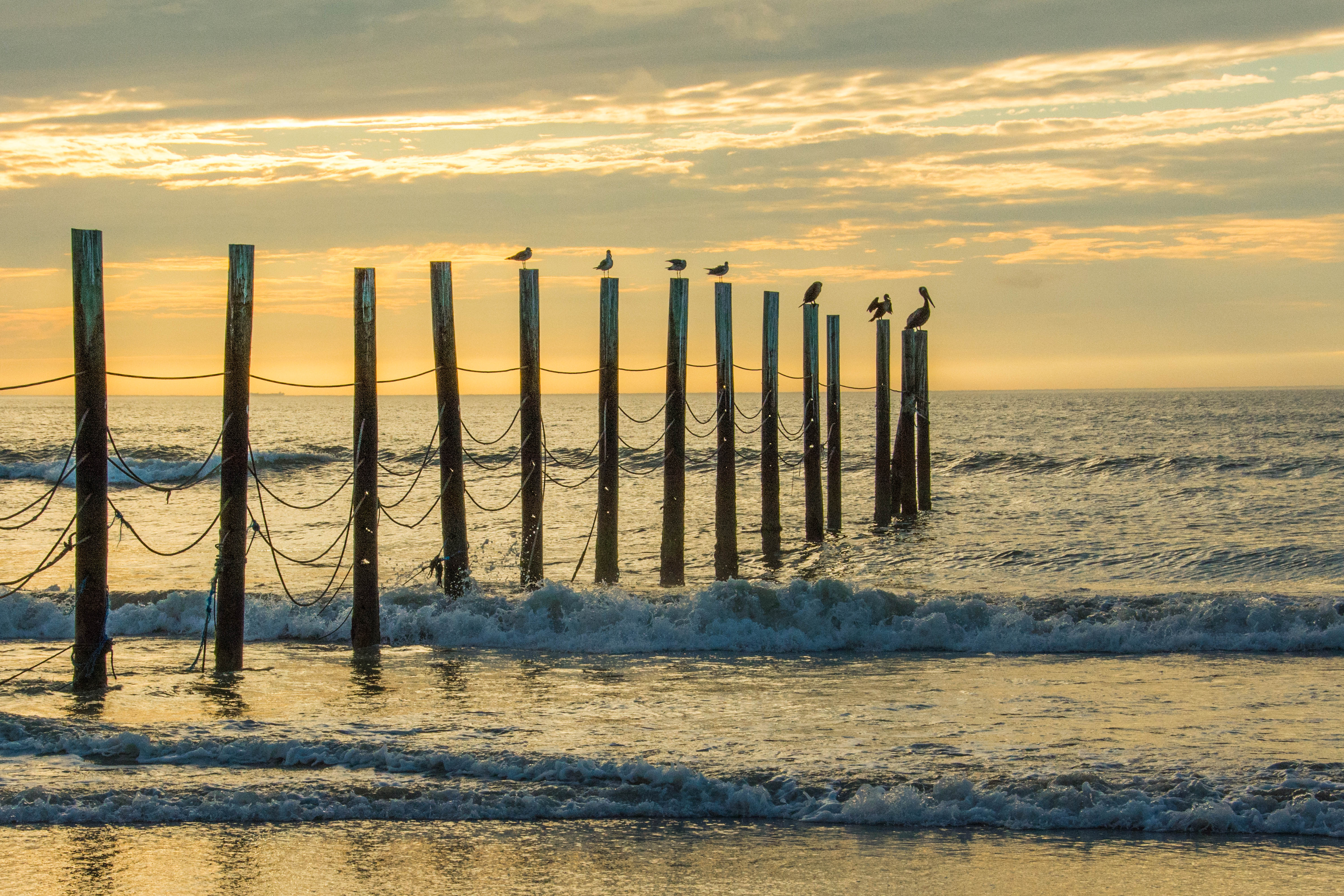
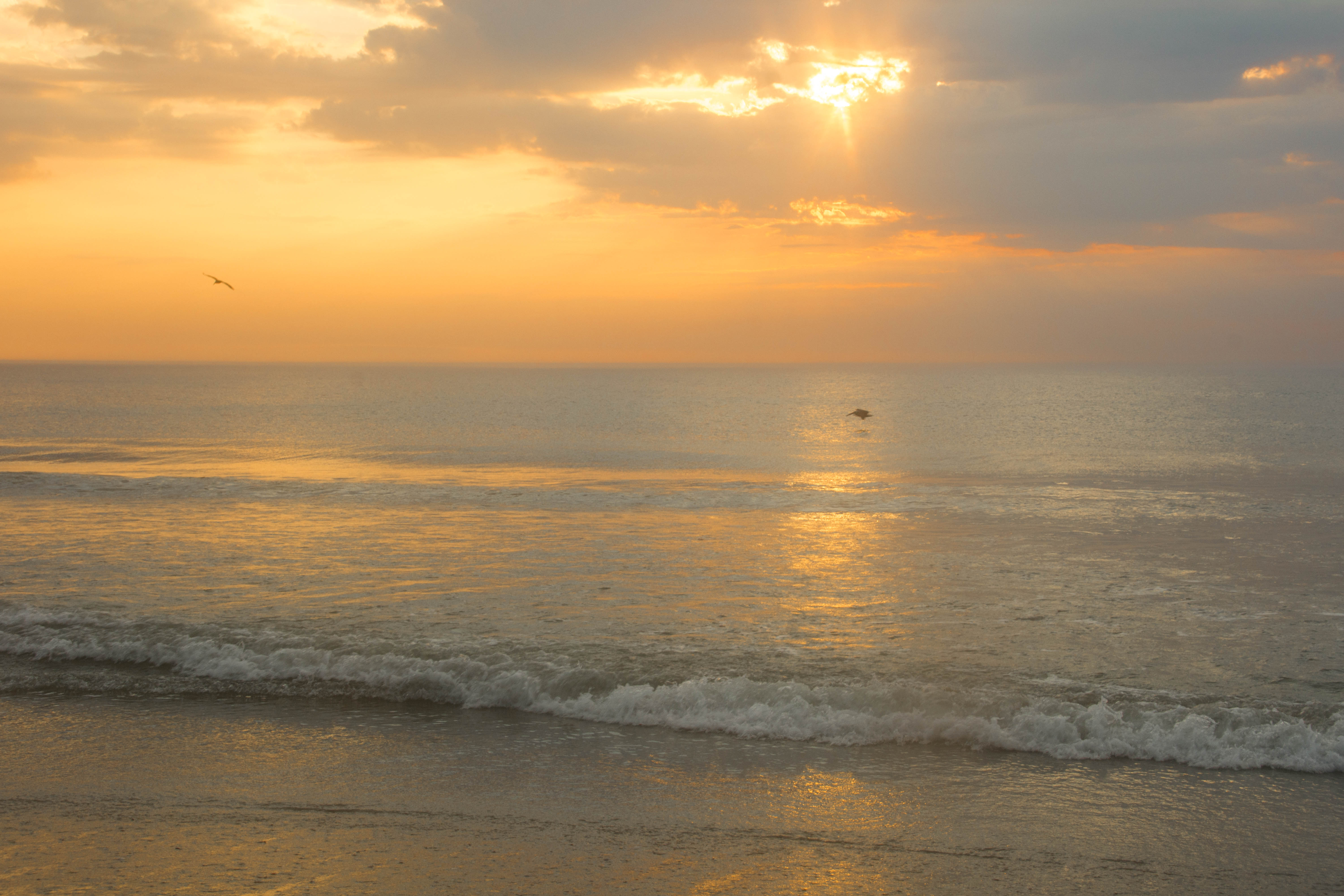
We had a family gathering at the Outer Banks for the Fourth of July Weekend.  My sister and her family made us welcome at their place in Corolla, and we did what you do at the beach:  some reading, dipping in the ocean, walking on the beach, getting sunburned.  I went out at sunrise with my camera and tripod.  I took some pictures of pelicans, got my new SUV stuck in the sand, and needed a pull to get out.  We ate and drank too much, and had some good laughs.  

It was good to relax, and take a little break from the Trump show.  You could easily wear yourself out with worrying these days, with so many big things to worry about, but  the resistance needs a little R&R from time to time.   

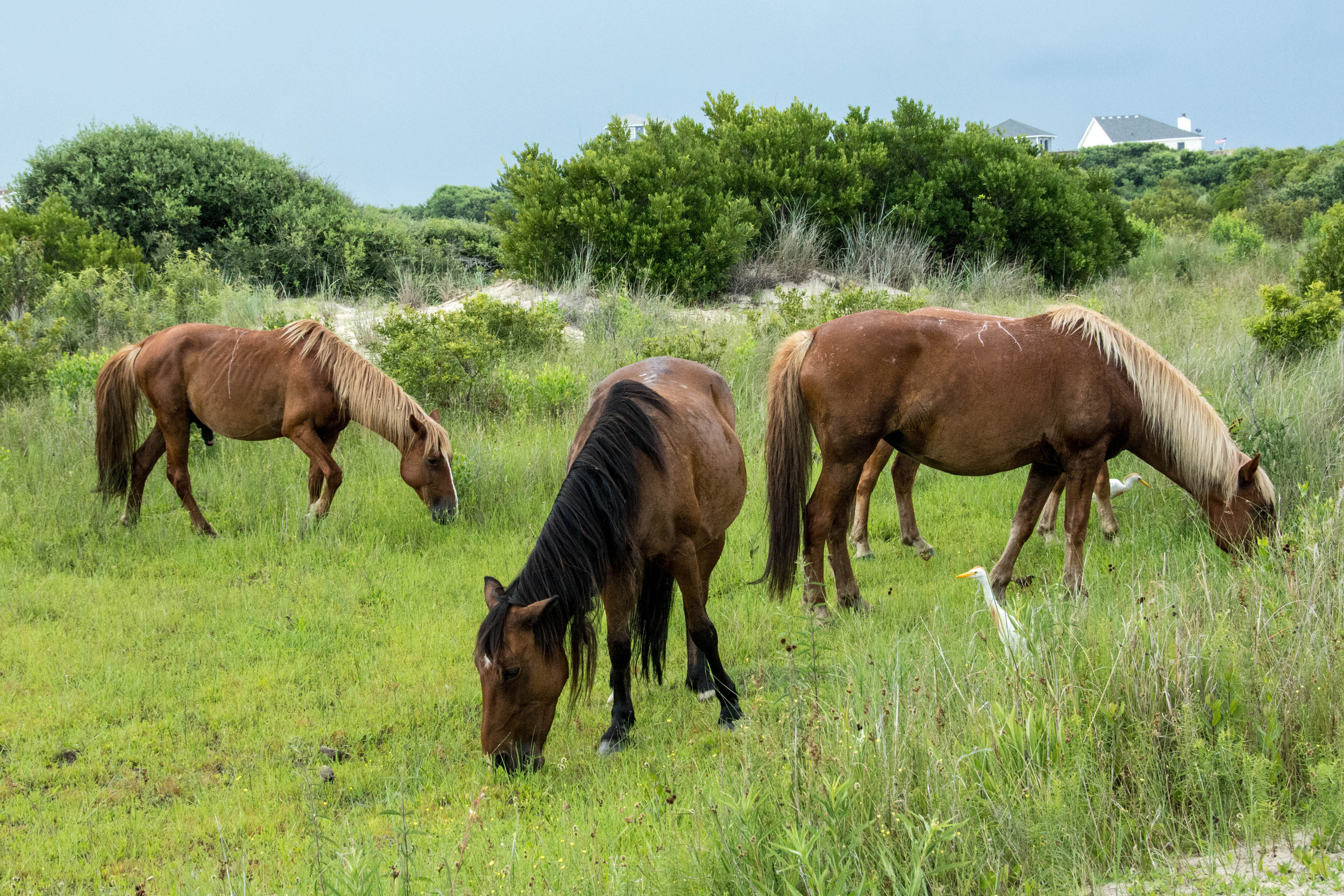
One afternoon three of us signed up for a wild horse tour — that is, a four-wheeling trip along the beach north of Corolla and up into the dunes to look about for the resident wild horses.  We had some good luck, and found a group of four eating before a storm moved in.  I felt a little better about getting stuck after I saw dozens of vehicles having the same problem.