The Casual Blog

Category: Uncategorized

Getting some lessons

On Saturday morning I had another swimming lesson with Eric and worked more on my butterfly stroke.  It’s a very different way of moving through the water, and not easy to get your head around.  It surely does get the heart rate up.  I can now do intervals of 50 meters without being disqualified or dying, which I consider an accomplishment.

While figuring out the butterfly, I’ve been working with Eric on refining my freestyle, breast stroke, and back stroke, which are all by comparison quite relaxing.  It recently came into focus that swimming has always been for me a struggle  — at bottom, a thing to do to keep from drowning.  And now, finally, through the struggle to be a butterflyer,  I’m finding it can actually be fun.  

I’m sure I couldn’t have gotten even this far without a skilled teacher helping me.  I’ve said this before, but it bears repeating:  if you want to learn a complex skill,  find a good teacher.  There’s no substitute for having a guide in difficult unknown terrain.  You may get to where you’re going without a teacher — now and again people do — but you’d have to be more-than-ordinarily lucky.   

For this reason, I’ve continued getting lessons on the golf swing from Jessica at GolfTec, and had another this weekend.  We talked about hips, shoulders, and wrists.  Jessica knows a lot about the swing, and she also has helpful technology tools — sensors, computers, and video. I’m seeing improvement, both in my measurements and in how the ball flies, and I understand a lot more about how a good golf swing works.  But it’s hard to change ingrained habits.  When you fix one problem, you may create another.  I’m starting to understand that although there is improvement, there is never perfection.

I was hoping to also have a piano lesson this weekend, but Olga said she was too busy.  With a new baby, a full teaching load, and concert commitments, that’s understandable, but I was disappointed.  Among other things, I’ve been working on Chopin’s famous Nocturne in B flat minor, Op. 9, No. 1, and I’m eager to get her take on it.  Recently I had a minor epiphany that there would never be a point when her response to my playing would be:  that’s perfect, and there’s no way it could be improved.  In the great classical tradition there are always new possibilities and new things to be explored.  

Looking on the bright side — how to fix our nuclear problem

This week Trump has been threatening to start a nuclear war against North Korea, which got me rattled.  So far, the sun has come up every morning, and with each additional day with no mushroom clouds it seems more likely that those threats are just bombast.  His continuing along on his golfing vacation is also reassuring, if ridiculous.  But how could anyone with the slightest clue as to what nuclear war would do even talk like that?  And how could anyone think it a good idea to explore what happens when you provoke a nuclearized,  paranoid dictator with threats of ultimate destruction?   

Let’s keep our fingers crossed that Kim Jong-Un is only pretending to be crazy,  Trump’s impulsivity is contained, and we survive.  Even so, the threats will have done real damage.  Markets have been roiled.  In the community of nations, our government is viewed as even more irresponsible and unpredictable.  At the personal level, my own mood has been darker than normal, tense and uncertain, and I’m surely not the only one.  Our mental health is not good.

I usually try to find the bright side of dark situations, so I’ll take a swing at it here. If we’re lucky and avoid disaster, we might finally wake up, realize we’ve long been on the edge of the nuclear precipice, and carefully back away.  Nuclear risks are not something anyone likes to think about, which in part accounts for why we are where we are.  But we can’t not think about them now, with the threat so clear and close.  We might take this as an opportunity to reconsider received ideas and correct some mistakes.    

We thought initially  that nuclear weapons could assure our safety by terrifying others into submission.  When that didn’t work, we raced to build still more weapons, with ever more destructive force, until we could in a matter of hours destroy the world several times over.  We put the weapons on hair-trigger alerts, and the risks of accidents and miscalculations increased.  

In the past decades, there have been several nuclear accidents and close calls that could have killed thousands or sparked an all-out conflagration. In  Command and Control, Eric Schlosser  recounts a number of these, and there was a quick overview last week in the HuffPost .  Our engineering is imperfect, and always will be.  Maintaining large numbers of weapons on hair-trigger alert is incredibly dangerous.   

In addition to the risk of system accidents, we live each day with the risk of human failure.  People make mistakes in the use of violence for any number of reasons — lack of knowledge, lack of sleep, intoxication, mental illness, etc.  And people’s reasoning powers are frequently overwhelmed by  powerful emotions.  It’s far from impossible that fear or anger could cause a nuclear attack that results in a counter attack and the end of the world as we know it.  

The worst possible way to manage this risk is the one we’ve adopted:  give one person with no training or qualifications complete power to launch the missiles.  The dependence on the good judgment of a single individual with no constraints is inherently dangerous.  Even the best of us from time to time make poor decisions when angered or confused.  To put it mildly, Trump is not the best of us.  

So is the situation hopeless? No.  It’s not hard to imagine international agreements that greatly reduce nuclear forces and the risk of total annihilation.  Indeed,  the START treaties accomplished a lot.  The new U.N. treaty banning nuclear weapons adopted by 120 countries shows that more is possible.  It’s not hard to imagine doing away with the hair trigger and engineering in more time for analysis before launching.  Likewise, we could put in place checks and balances on the executive, as we do in other areas.  

But we need to start with adjusting our thinking, and recognizing that the nuclear risk is intolerable.  We need to treat this problem as time-sensitive and high priority.  If we do nothing . . . well, it’s unthinkable.

In New York: Trump-TV land, Rauschenberg’s big heart, Bolshoi beauty, and trying rugby

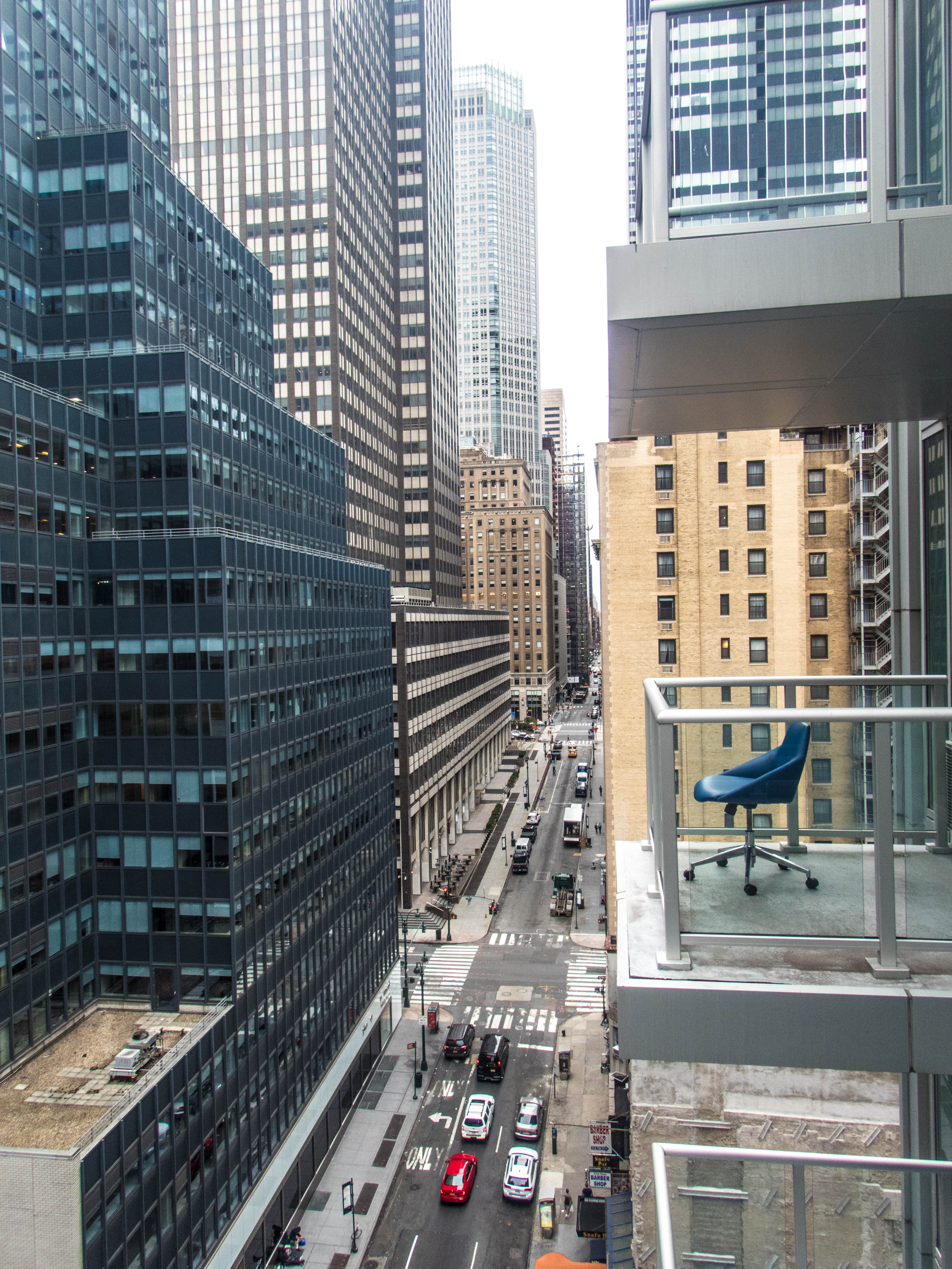
Looking west  from our balcony at the Bernic Hotel on 47th Street

We just got back from a long weekend in New York, where we celebrated Jocelyn’s birthday, went to art museums and galleries, stopped in at a double Dutch jump rope festival, saw the Bolshoi Ballet, and watched a rugby game.  

Of course we talked about the latest Trump oddities and outrages.  Though Jocelyn may have been the first to say it, it’s getting to be a commonplace that the current presidency resembles a reality television show, with ginned up drama that seems to have no point except drawing continued attention.  Indeed, Emily Nussbaum had an interesting piece in The New Yorker this week about Trump’s reality TV career.  Trump apparently liked the job, and may well think of the presidency as mainly about being surrounded by people who make him feel like a big shot.  

He may have no other objective, but I wonder whether there could be a long game.  It’s possible that somebody (maybe Bannon) has a plan that’s well served by stripping all dignity from the presidency and substituting crass vulgarity.  As we come to think of the president as an idiotic clown, we also may view the executive branch as basically ridiculous and unworthy of any respect.  This could make us more open to a solution along the lines of Russia’s Putinism or fascism.  But maybe we’ll be smarter than that.  

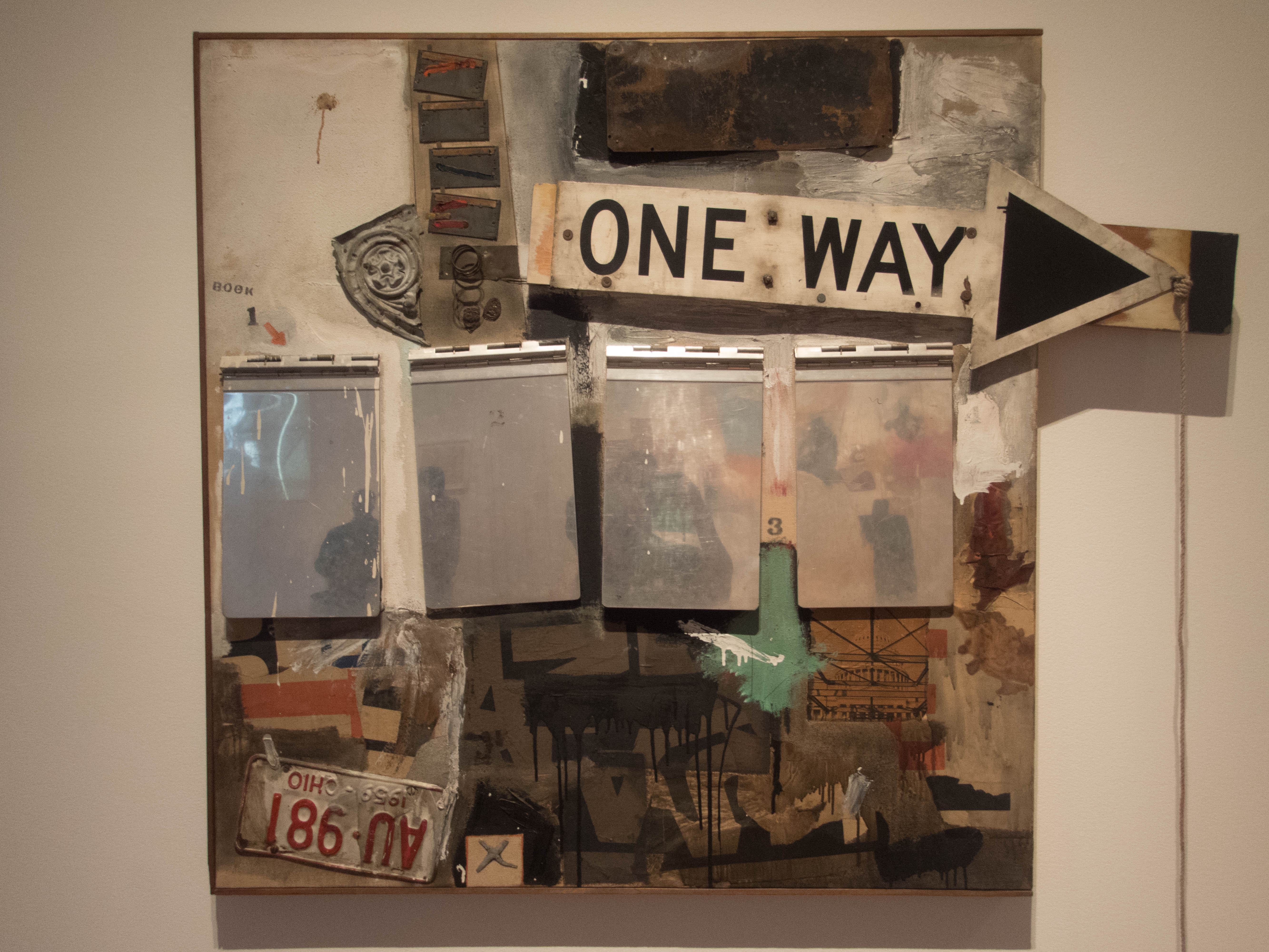
Black Market by Robert Rauschenberg

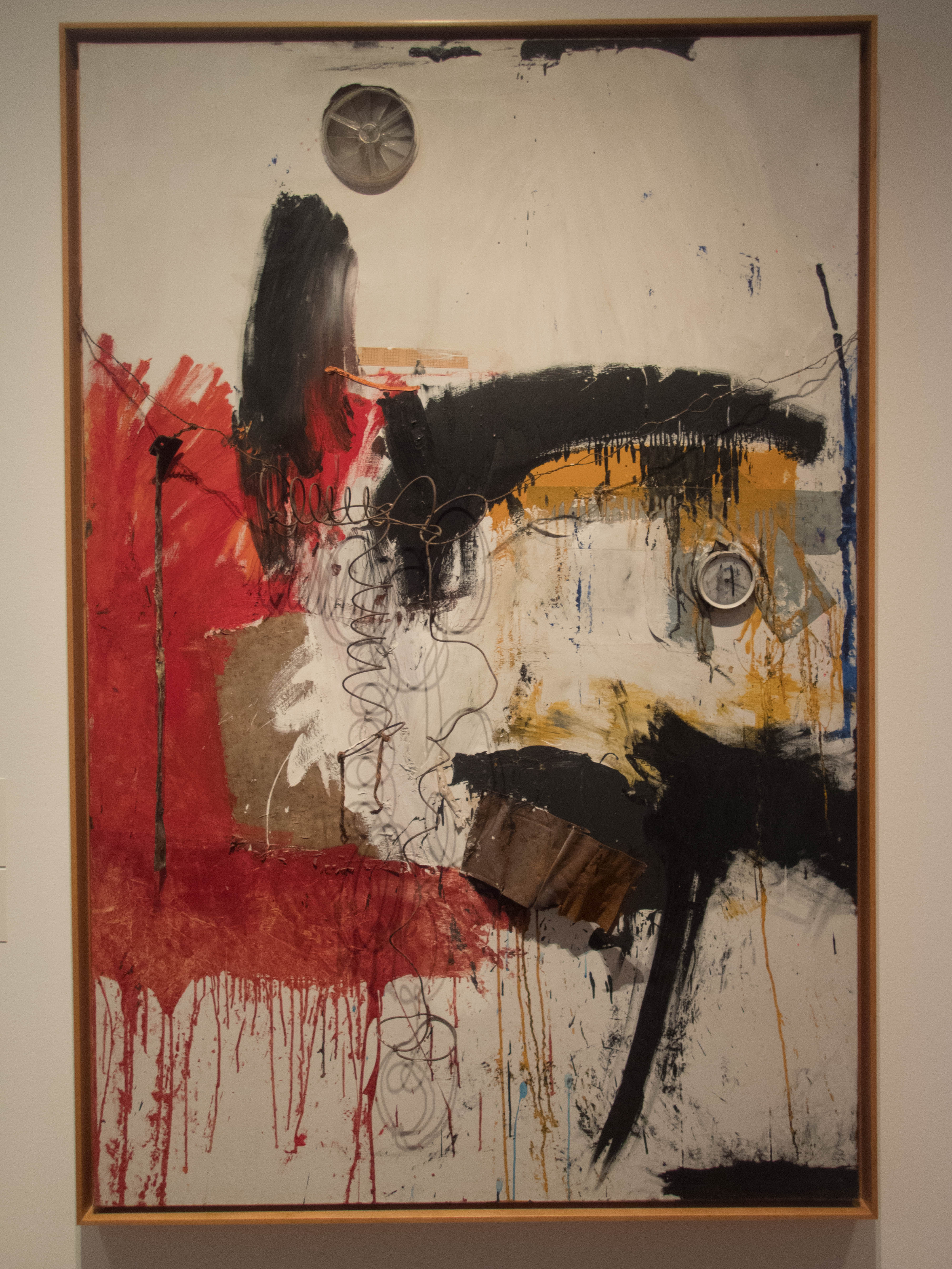
In New York I went to the Robert Rauschenberg show at the MoMA with low expectations.  From prior encounters, I’d thought of his painting and sculpture as facile and kind of messy.  This show changed my mind in a big way and  gave me some new ways of thinking about and looking at art.  Rauschenberg’s art emits swirling emotions and ideas, which are always subject to change, even as we try to comprehend a single painting over time.  He expects the viewer not just to look at the work but to bring feeling and intelligence to it, to become part of it.  Engaging with the art this way is exhilarating.  

Rauchenberg’s approach to art was open-hearted and continuously experimental, trying new materials, new sources, new subjects. There was such a range of feeling and humor, and engagement with the world.  His art was highly collaborative and connected to friendship and love.  These works are particularly resistant to photography, because of their rich textures and sculptural depth.  There’s no good substitute for standing in front of them and seeing what they do.

First Time Painting by Robert Rauschenberg

We also did some gallery hopping in Chelsea.  We noted a lot of new construction in the area,  which made me wonder if the galleries will eventually be priced out.  For the moment, the scene is still lively, and we saw works in many different styles.  Some people are still mining the 60s pop vein, just as some are continuing expressionism and other established styles, while some were creating objects that haven’t and may never be part of a movement.  I particularly liked the photo collages of a young Chinese artist named Ji Zhou at the Klein Sun Gallery and Sally loved a show of Japanese Nihonga painting.

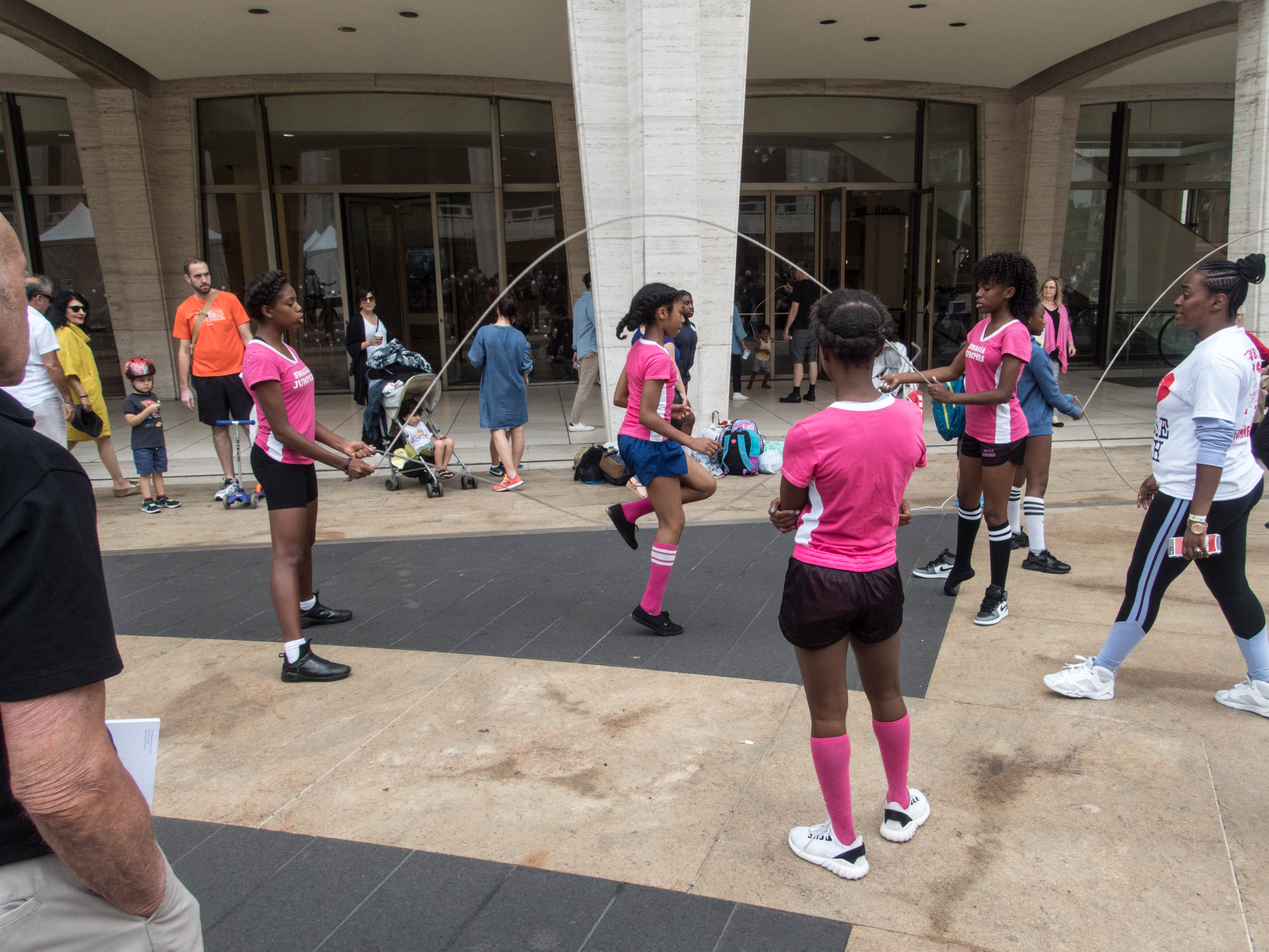
On Saturday afternoon at Lincoln Center we  watched kids of all ages showing their skills at double Dutch jump roping.  There were some impressive feats of speed and agility, as well as creative athleticism.  I briefly considered giving it a try, but couldn’t quite get in the right mental gear while wearing black loafers.  

After that, Sally, Jocelyn, and I saw the matinee show of the Bolshoi Ballet, which performed a new ballet version of the Taming of the Shrew.  We loved it!   The dancing was of the highest caliber, with athletic energy balanced by delicacy and natural-seeming ease.  The acting was strong throughout.  The leading ballerinas in this performance (Kristina Kretova and Anastasia Stashkevich) were beautiful and charismatic, and fully inhabited their roles.  Together with their male partners (Denis Savin and Artem Ovcharenko), they brought great romance to this sometimes disturbing drama.  

That evening, we went to Pier 40 on the Hudson and watched a rugby game between the New York Knights, Kyle’s team, and Boston.  Kyle was injured and unable to play, but was able to give us a tutorial on the rudiments of the sport and first lessons on tactics and strategy.  It was fun!  Happily, the Knights won, completing an unbeaten regular season.  

Learning new things, including the butterfly stroke and about our worst tendencies

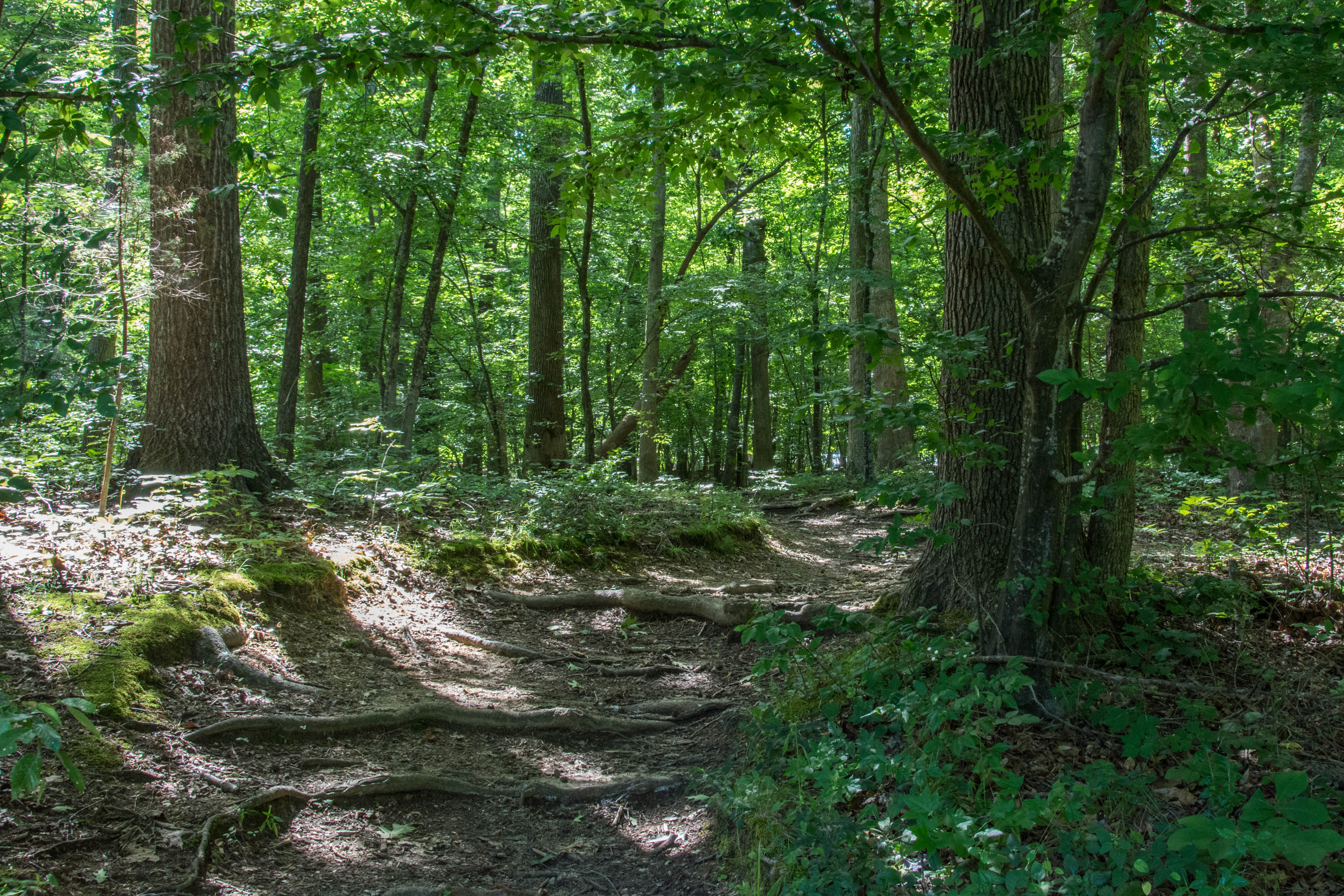
It was brutally hot here in Raleigh this weekend, which made me consider breaking my commitment to getting outside with my camera at least once a week and trying to see something fresh in the natural world.  But I ultimately hung tough and did a short photo safari at Raulston Arboretum, which was not as miserable as I expected.  I was happy I got these pictures.

Learning new things is sometimes fun, and sometimes hard, but always important, to keep our brains from turning to mush.  And so I decided to take some swimming lessons, and had my first one this week.  As I told my teacher, a young woman named Deanna, I would like to try to learn the butterfly stroke.  It’s one of those things I’ve always wondered if I could do, and it would add another variation to my lap swimming.  My first efforts were awkward, but by the end of the lesson, I had a version of the dolphin kick going.  I found it hard and fun.  

In these tumultuous times, we’re learning a lot about our weaknesses and strengths.  Under a constant deluge of lies, vulgarities, and mad fantasies, it’s more difficult to be open and curious, to think rationally and critically.  Panic and anger seem natural, and at times overwhelming.  We’re seeing how some of our worst tendencies, like intolerance and bigotry, are unleashed and encouraged.  

It’s not exactly cheering news, but at least we have a more realistic idea of the extent of our ignorance, intolerance, and susceptibility to manipulation.  We’ve gotten these and other  problems out in the open where we can potentially address them.  Eventually we might figure out how to be better people.

In the policy area, we’re learning more about our health care system.  Repealing Obamacare somehow became a mantra for the right — a symbolic acid test for signalling membership in the conservative tribe.  It’s hard to feel great about the enormous waste of time, energy, and public funds from the repeal effort, and the failure so far to address pressing problems, but there is a slightly bright side.    

It’s looking like some delusions are getting cleared up.  We now know that the mantra of repeal had almost no relation to the real issues of our health care system.  Some who liked the mantra have belatedly realized that cutting off insurance means real humans die prematurely. It appears that even the most committed ideologues, or at least the majority, get uncomfortable once we reach a certain level of cruelty.    

This debate has cleared the landscape like a forest fire, and some fresh ideas are starting to germinate.  For the first time in a couple of generations, we’re starting to widen the discussion about health care.  It’s starting to be more widely understood that we pay way too much for it, and the quality of care is bad in comparison with our peers.  There’s a new openness to the possibility of a sensible single payer system, such as an expanded version of Medicare.  

It won’t be easy to get from here to there.  Even leaving aside our dysfunctional political leadership, there are powerful institutional forces supporting the status quo.  Here’s how the Economist recently put it:  If the amount the U.S. spends on health care were reduced to the level of France, Germany, or Switzerland, we would save a trillion dollars, or $8,000 per family.  “Much of that trillion dollars goes to enrich the owners and executives of drug companies, device manufacturers, and relentlessly consolidating hospitals.  This rent-seeking is supported by an army of lobbyists:  there are more than twice as many lobbyists for the pharmaceutical and health-products industry than there are Congressmen.”  

Indeed, there are quite a few other blockers, like doctors, many of whom would be resistant to having their incomes reduced, and insurers, with similar issues.  Real improvements don’t seem likely in the near term, but I’m not giving up hope that eventually we’ll make progress.

At the Outer Banks

Just before the four-wheeling area at Corolla

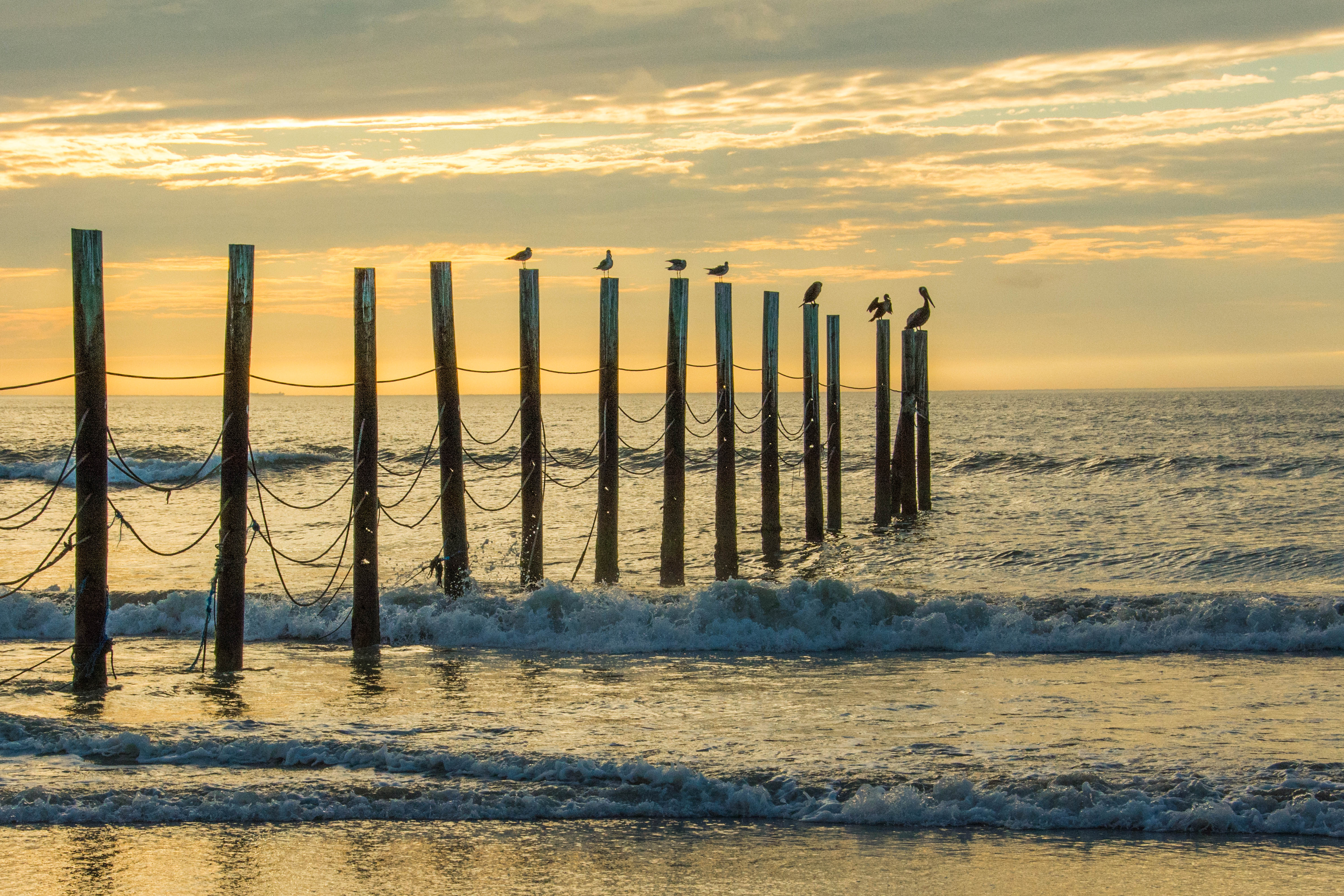
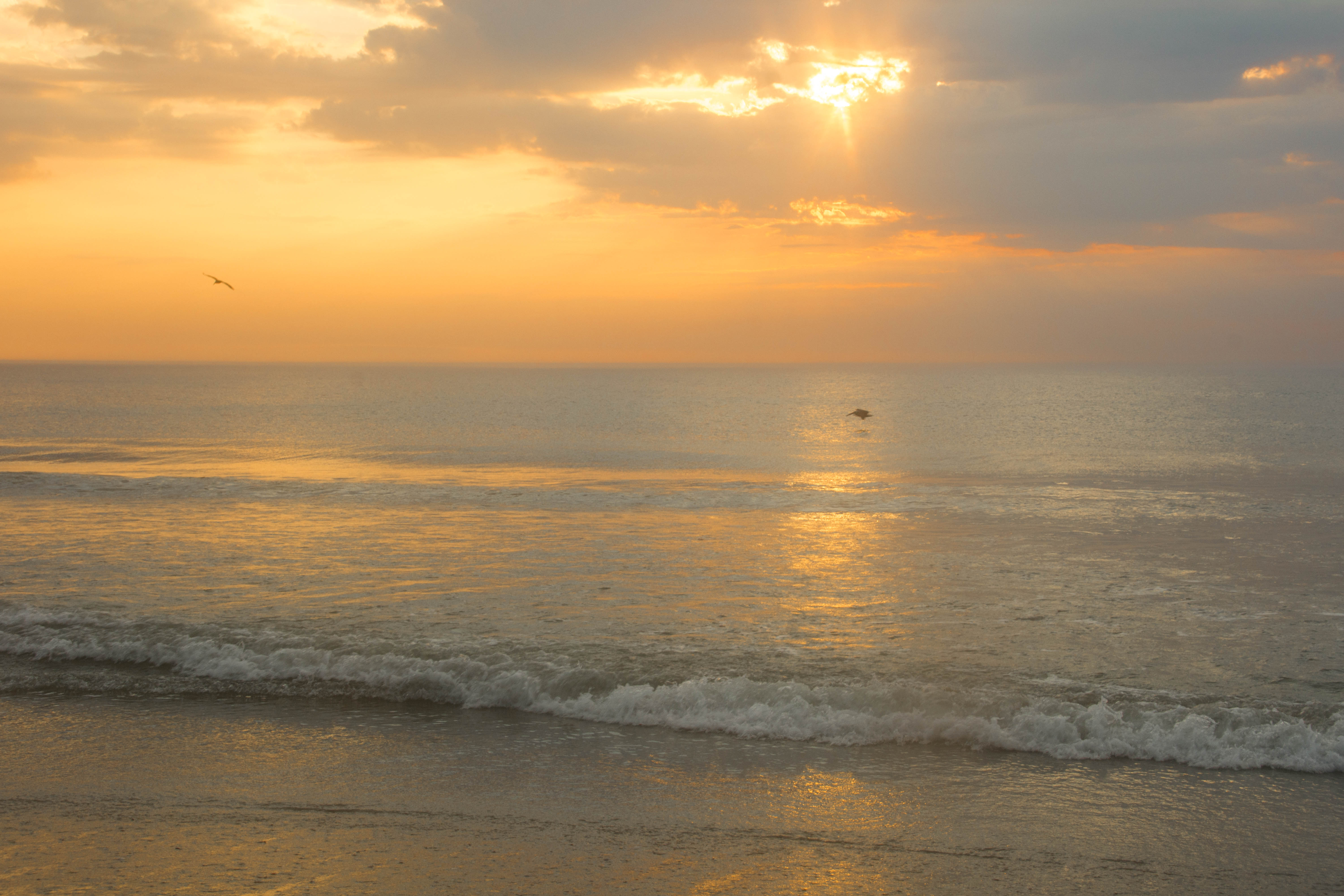
We had a family gathering at the Outer Banks for the Fourth of July Weekend.  My sister and her family made us welcome at their place in Corolla, and we did what you do at the beach:  some reading, dipping in the ocean, walking on the beach, getting sunburned.  I went out at sunrise with my camera and tripod.  I took some pictures of pelicans, got my new SUV stuck in the sand, and needed a pull to get out.  We ate and drank too much, and had some good laughs.  

It was good to relax, and take a little break from the Trump show.  You could easily wear yourself out with worrying these days, with so many big things to worry about, but  the resistance needs a little R&R from time to time.   

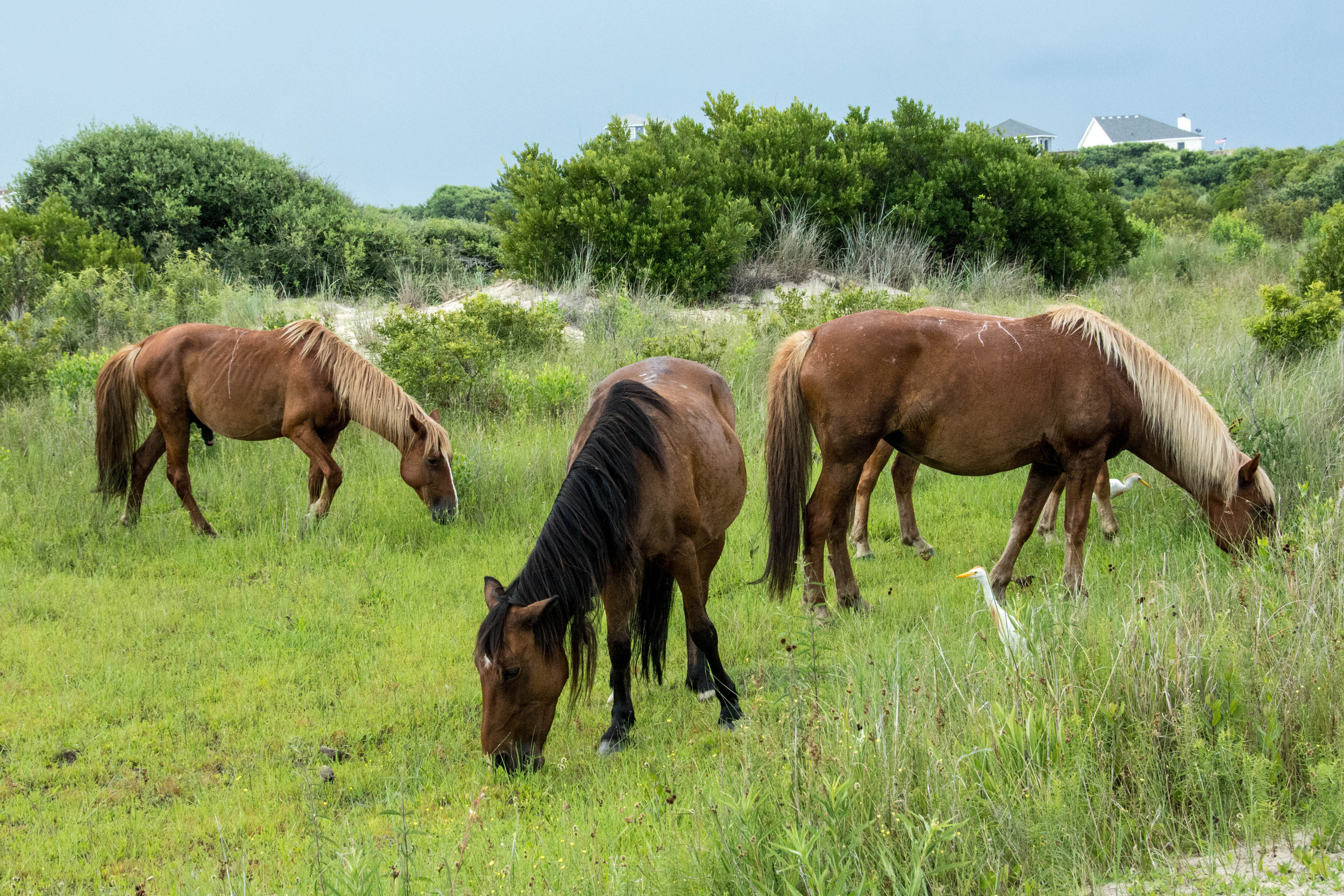
One afternoon three of us signed up for a wild horse tour — that is, a four-wheeling trip along the beach north of Corolla and up into the dunes to look about for the resident wild horses.  We had some good luck, and found a group of four eating before a storm moved in.  I felt a little better about getting stuck after I saw dozens of vehicles having the same problem.  

Feeling my new SUV, trying digital drawing, and learning Italian


At Durant Park

Getting used to a new car is kind of like moving into a new house — everything’s a little confused, but also fresh and exciting.  This week I’ve been figuring out the fine points of my new Mazda CX-5 (a/k/a the Tiller Advanced Photographic Expeditionary Vehicle), pushing buttons and turning knobs, and occasionally consulting the owner’s manual.  I’ve always thought of myself  as a person who doesn’t much care for SUVs, and I got the TAPEV for more practical reasons (getting to outdoor adventures) than romantic ones.  But unexpectedly, I may be falling in love!  

The biggest challenge for me is getting clear on where the outer edges of the vehicle are.  Because of my left eye injury, I don’t have very good depth perception, so getting into tight parking spots is a bit fraught.  At Gabe’s suggestion, I did some practicing in an empty parking lot, using some old paper boxes as obstacles.  It must have looked odd, if anyone noticed, but it helped.  I only mashed one box.  


Along with getting oriented in my new SUV, I’ve been learning to draw with digital tools.  I got an Apple Pencil to go with my iPad Pro, and have been refreshing on drawing fundamentals — lines, curves, shapes, shading — and trying some figure drawing with online models.  I found some helpful YouTube drawing lessons by Stan Prokopenko.  The Apple technology works great — it’s easy to vary the line, use  different colors, and erase.  It’s very portable, and the risk of embarrassment is low, since I can delete the things that don’t work, which at this stage is almost everything.  I enjoy it.  

An American Lady at Raulston Arboretum

I’ve also started studying Italian, trying to learn the fundamentals and maybe a little more for our trip to Venice this fall.  I put my German studies on pause, and got a discount on the Rosetta Stone Italian course.  What a gorgeous language!  It’s a cliché, but also true — it’s very musical.  The R’s are challenging, but I’m starting to get it.  I’ve got my basic greetings, colors, and numbers, and can accomplish a few simple things, like asking for a sandwich.  


The landscapes here were taken yesterday morning at Durant Park in north Raleigh, and the flowers and insects were taken this morning at Raulston Arboretum.  At Durant, I was hoping to get some close views of dragonflies, but didn’t.  It was hot, but also peaceful by the water.  I used the tripod on all these shots, which made the process slower and more deliberate. 

Saying farewell to our best dog

This week we said goodbye for the last time to Stuart, our beloved family dog. He was a long-eared, short-legged Beagle-Basset mix with soulful eyes and a waggly tail.  Stu was with us a long time — from puppyhood to almost 15 (about 100 in dog years).  In his younger days, he was playful and athletic, always eager for walks, and relishing every meal.  He was a sweet, friendly little guy who greatly liked being petted, and he made many friends in our building during elevator rides.  

In these last months, he lost almost all of his hearing and much of his eyesight, and with hip problems he found it increasingly painful to walk. His tail wagged less and less.  

Now Stu’s suffering is over, and I’m glad for that.  In this regard, we often treat our pets better than our fellow humans, accepting death as a reality and helping our animals to have a good death.  But it’s hard.  He added sparkle to the world.  We loved him, and he loved us.  In that way, he became part of us, and changed us for the better.  I keep thinking he’s here, just in the next room, and then remember with a sharp pang that he’s gone.

Speaking of complex emotions, I recommend the edition from last week of the podcast This American Life .   The first of its three stories related to a former physicist talking about Fermi’s Paradox, which raises the question of why, given the evidence we have that complex life can arise, we haven’t encountered any evidence of it elsewhere in the universe.  The reporter felt sadness in thinking we’re existentially alone, and discovered that those around him couldn’t relate to that sadness.  

The second story related to a couple in couple’s therapy with serious problems who discovered that talk was not the primary solution.  The third was about a delightful 9-year-old girl who kept asking her father annoyingly big questions about the world.  He worked on long scholarly answers, only to find that what she was really looking for was to connect with him.  In short, three explorations of the modes of loneliness and possible paths to redemption.  

A new floor disaster, a glorious chorus, the latest flowers, and provocative art by Abney

Duke Gardens on Saturday morning

Last week we had a minor household disaster.  Sometime in the middle of the night, the dishwasher overflowed and got the hardwood floor well soaked.  Within a few hours, the floor was badly warped, and it began to sink in that we were going to need an entire new floor.  We’d just gotten new hardwoods 10 months ago, which involved lots of packing and hotel life.  We aren’t looking forward to more of the same, though there’s one improvement:  it looks like the homeowners’ insurance will pay this time.  

On Friday we had a delicious Korean meal at Kimbap, then went to a concert by the N.C. Master Chorale.  The theme was war and peace, always a timely subject, and drew on music by Josquin (c. 1450), through Bach, Mendelssohn, and several living composers.  Some of the lyrics were poignant, and the musicianship was at a high level.  This is an excellent chorus!  Congratulations and many thanks to music director Al Sturgis.

On Saturday morning it had just stopped raining when I went over to Durham to see what was blooming at the Sarah P. Duke Gardens.  I hadn’t realized it was graduation time until I saw a lot of families with their new grads in caps and gowns posing for pictures.  The flowers were completely different from my last visit, and I was a little sorry my early spring favorites were all gone.  Still, there were some beautiful things growing, and lots of birds singing.

On the way back, I stopped at the nearby Nasher Museum of Art , and checked out Royal Flush, a show by Nina Chanel Abney.  Abney is a young African-American artist, and she’s clearly interested in matters of race, but also in lots of other things, including mass media, gender, celebrity, state-sanctioned violence, and inequality.  She has a bright palette, and a broad visual vocabulary that includes abstraction and figuration.  In some of her work there is a lot of humor, but some is biting and dark.  It’s worth seeing.

At least it was for me.  What you get from an art exhibit depends a lot on what you bring to it.  If you invest some time in looking at art, you start to see more.    

There was a report this week of an art prank in which students put a store-bought pineapple in an exhibition, which a janitor then covered by a glass case and became the subject of art criticism.  This reminded me of Marcel Duchamp’s famous work of 1917, Fountain, an ordinary urinal submitted for exhibit as a work of art.

Fountain was the subject of a show I saw last week in New York at the Francis M. Naumann gallery that presented 31 artists paying it homage.  I’d formerly thought of Fountain as a clever and outrageous stunt, which it certainly was.  But it was clearly more, or we wouldn’t still be thinking about it 100 years later.

Duchamp may have been getting at this:  art is not fundamentally about objects, but how we think about objects.  That is, the distinguishing characteristic that causes something to be a work of art is that we think of it as such.

While looking at art can change us in various ways and make us look at the world differently, we as viewers also are continually bringing art into existence, and changing its boundaries.  The more we are open to new experiences, curious, and brave, the more art can be generated.  At the same time, we keep growing.

Our NYC weekend: travel troubles, eating, and looking

Leaving NYC from Newark

We did a three-day trip to New York last weekend with three objectives: see Jocelyn and some old friends, see the NY City Ballet, and see some art, including the Whitney Biennial. As always, New York was challenging and invigorating.

We flew from Raleigh to Newark on United, which could have been worse.  At least we weren’t physically assaulted and dragged off the plane.  But really, how do we keep getting assigned the last boarding zone?  Yet again, there was that unwelcome anxiety of whether there would be a spot in the overhead for the roll aboard.   And why did they switch to those seats with backs as thin and hard as church pews?

Is the point to remind ordinary customers, the non-elite economy class,  of how far down the pecking order they are, and make them consider paying more?   In fairness, I should say, the flight attendants were really sweet, and I was grateful for their not charging for a vodka tonic.

Transportation near and in Manhattan is more challenging than ever.  We consciously chose  Newark airport this time, since a cab from LaGuardia to Manhattan has been taking longer than the flight from NC. The NJ Transit train to Penn Station picked us up promptly, but went out of service after one stop, and we had to wait for another train.

Stuff like that kept happening.  We were determined to use the subway for longer trips, but there were long delays said to be from signal problems.  And when we wanted a yellow cab, they all seemed to be occupied.  In desperation, we tried Uber, but that was very slow, too.

But no matter, we always eventually got to our destination, and there’s just nothing like New York.  One big thing I learned this time was how easy it is to explore art galleries.  From time to time I’ve gone to gallery shows  when there was something I heard about that sounded interesting, but I’d never before just poked into a bunch of galleries.  I wasn’t at all sure whether they expected you to call ahead, or to show interest in actual purchasing.

A charcoal drawing by Robert Longo from The Destroyer Cycl

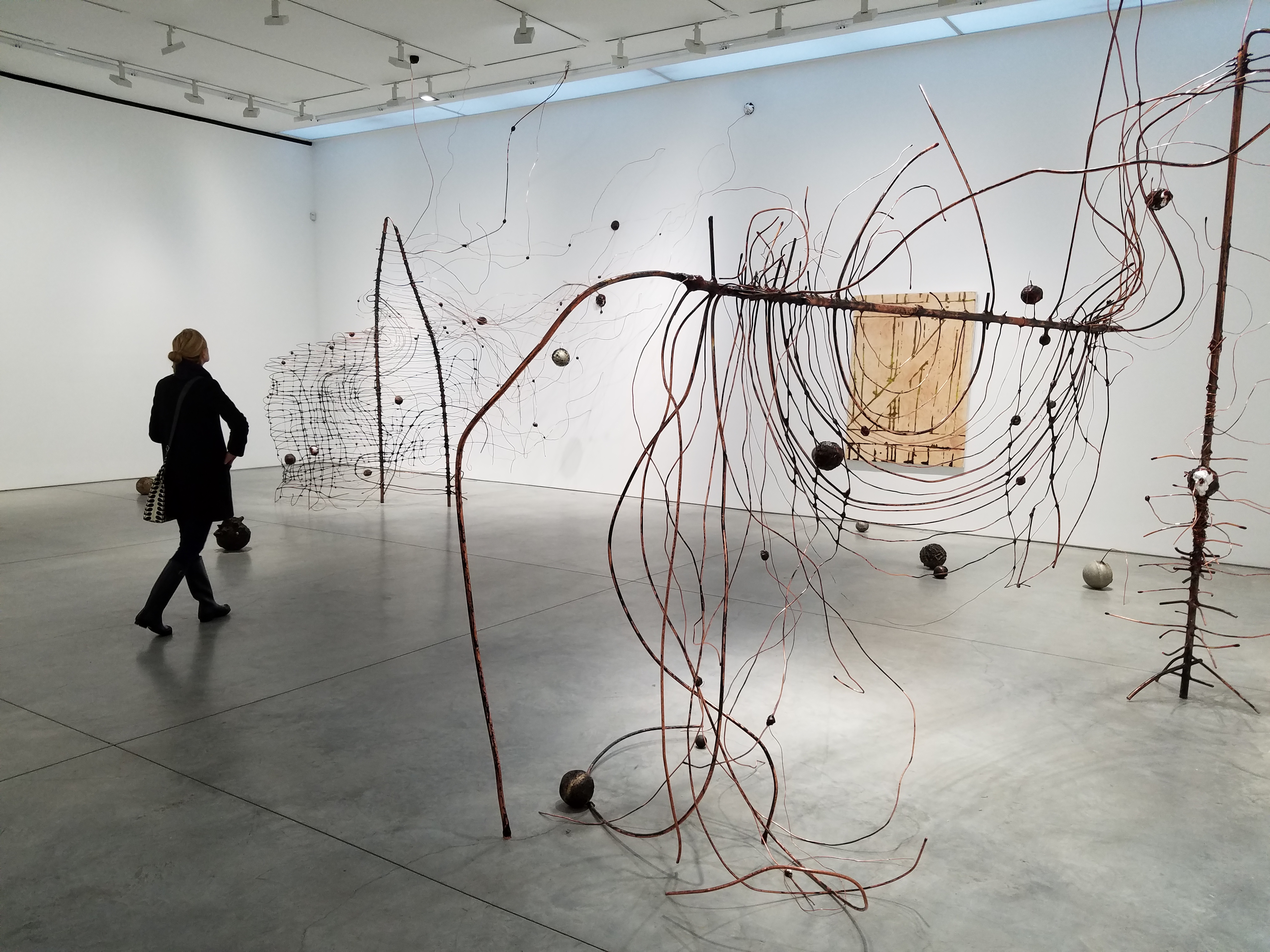
But after visiting several galleries on 24th Street on Friday and 57th Street on Saturday, I can say this:  they don’t mind at all if you just pop in and look around.  There are neighborhoods that are full of galleries, cheek by jowl.  I saw some things I liked, and some I didn’t.  But my major takeaway was that art is alive.  Amidst all the luxury goods on Fifth Avenue, art objects might be just another status symbol.  Yet there are real artists saying meaningful things, making us see more and feel more.  

From Keep Out, by Jay Heikes

On Friday, there was a torrential rain, and we got wet doing the Chelsea galleries, and then  soaked getting to 14th Street for lunch with our old friend Bob Dunn at a wonderful Sichuan restaurant, Auntie Guan’s Kitchen.   The rain was gentler when we finished eating and Ubered down to the Whitney to see the Biennial.  This is an exhibit of young, or at least living, artists, with several works of each of the featured artists.  

It’s hard to sum it up, since there were many different ideas and media.  There was a strong vein of protest and political engagement, and also some fascinating uses of technology.  As Sally noted, there were a few things that were repellent, but a little shock therapy can be good for you.  My favorite piece was an environment involving mirrors, interiors, and exteriors by Samara Golden called The Meat Grinder’s Iron Clothes.  It was at once disorienting and liberating.   I’m sorry to say, it is unphotographable.  You’ve just got to see it.  

At the Whitney Biennial: Exodus, by Jon Kessler

We met Jocelyn and Kyle for fancy drinks at Up and Up on MacDougal Street, and then walked to dinner at Olio e Piu.  My mushroom ravioli was delicious, and the conversation was wide-ranging.

On Saturday I went to an exhibit of ancient Greek art at the Onassis Foundation at 5th Avenue and 51st.   The works were mostly from 500-300  B.C. and drawn from great collections around the world.  The theme was emotion in Greek art and life.  This was a good lens for looking at the work.  There was love, jealousy, anger, and violence — the same emotions we know.

That evening we had a fine dinner with friends at Rosa Mexicano, and then walked over to Lincoln Center to see the New York City Ballet.  The program, one of the Here/Now series, included works by well established choreographers (Martins, Wheeldon, Ratmansky), and a couple of new choreographers from the company.  The dancers were excellent!  We particularly liked Wheeldon’s passionate pas de deux After the Rain, and Ratmansky’s brand new tango-ish piece, Odessa.

A family visit, defending against motivated reasoning, Mozart’s Figaro, and swimming

Sally’s flowers, with snow falling on Sunday morning

The weather in Raleigh was sunny and mild this week, and the trees started to leaf in.  I was looking forward to some outdoor activities for the weekend, but the temperature dropped into the thirties on Saturday, and on Sunday there was light snow.  

Jocelyn came down from New York to visit us this weekend, along with her friend Kyle.  Gabe and our granddog, Mowgli, also stopped by.  We had some of Sally’s good cooking and some lively conversation.  Among other topics, we considered what’s happening to journalism, including fake news, imaginary fake news, and partisan attacks on media, and how it is possible to be both highly intelligent and deeply deluded.

Jocelyn, ready for dinner

I told them about a podcast by Julia Galef called Rationally Speaking  in which Galef talks with intellectuals about their ideas.  She likes a good argument, and keeps things popping along.  I find her openness to new ideas and curiosity to be really cheering and inspiring.  

Kyle, ready for dinner

This week I came upon a talk Galef did last year at a Tedx conference titled Why You Think You’re Right, Even When You’re Wrong, in which she gives a good way of thinking about  motivated reasoning and how to do less of it.  She analogizes different thought habits to two types of army soldiers:  regular fighters and scouts. 

She summed up the idea here:

Our judgment is strongly influenced, unconsciously, by which side we want to win. And this is ubiquitous. This shapes how we think about our health, our relationships, how we decide how to vote, what we consider fair or ethical. What’s most scary to me about motivated reasoning or soldier mindset, is how unconscious it is. We can think we’re being objective and fair-minded and still wind up ruining the life of an innocent man. …

So  . . . what I call “scout mindset” [is] the drive not to make one idea win or another lose, but just to see what’s really there as honestly and accurately as you can, even if it’s not pretty or convenient or pleasant. This mindset is what I’m personally passionate about. And I’ve spent the last few years examining and trying to figure out what causes scout mindset. Why are some people, sometimes at least, able to cut through their own prejudices and biases and motivations and just try to see the facts and the evidence as objectively as they can?

And the answer is emotional. So, just as soldier mindset is rooted in emotions like defensiveness or tribalism, scout mindset is, too. It’s just rooted in different emotions.For example, scouts are curious. They’re more likely to say they feel pleasure when they learn new information or an itch to solve a puzzle. They’re more likely to feel intrigued when they encounter something that contradicts their expectations. Scouts also have different values. They’re more likely to say they think it’s virtuous to test your own beliefs,and they’re less likely to say that someone who changes his mind seems weak. And above all, scouts are grounded, which means their self-worth as a person isn’t tied to how right or wrong they are about any particular topic. So they can believe that capital punishment works. If studies come out showing that it doesn’t, they can say, “Huh. Looks like I might be wrong. Doesn’t mean I’m bad or stupid.”

Galef comes at some of these same issues from a different direction in a short (5:41) YouTube talk titled How to Want to Change Your Mind.  Here again, she proposes looking at reasoning as having an emotional component that needs to be addressed in the interest of better thinking.  We tend to get defensive and closed off when we feel threatened, and Galef has some helpful tips for counteracting that tendency.  For example, she suggests picturing your opinion as separate from your self.  She also notes that it’s possible to get comfortable and even pleased to discover your belief is mistaken — because you’ve just gotten wiser!

Gabe with beer

The Marriage of Figaro

Last week we saw and heard The Marriage of Figaro by W.A. Mozart and G. de Ponti in a performance by the N.C. Opera.  It was sublime.  The music all by itself is brilliant, well worth listening to even without benefit of story.  The story is essentially a comedy of love, but a unique and strange one — startlingly dark and cynical by moments, but also poignant by moments.

The leads all sang beautifully, and just as important, created believably human characters with their acting.  Jennifer Cherrest as Susanna brought wry saucy humor along with her tonal strength and range.  She had good chemistry with Figaro, her betrothed, the very fine Tyler Simpson.  Other standouts included D’Ana Lombard as Countess Almaviva, who had a lovely voice and musicality.  Cherubino (Jennifer Panara) was wonderfully comic.

Swimming again

Earlier in the week, I added back some lap swimming to my exercise regime.  I’d gotten out of the habit when the Pullen Park pool closed for repairs and then quit having morning hours.  The gym I joined earlier this year has a small lap pool, but I found it hard to get motivated to head toward the water in the early hours, when it’s cold and dark.  But once back in,  I quickly remembered what I like about swimming.  The water feels good on your skin.  There’s a rhythm to it, and quietness.

Our granddog, Mowgli