The Casual Blog

Category: travel

Seeing a bit of Barcelona and Madrid
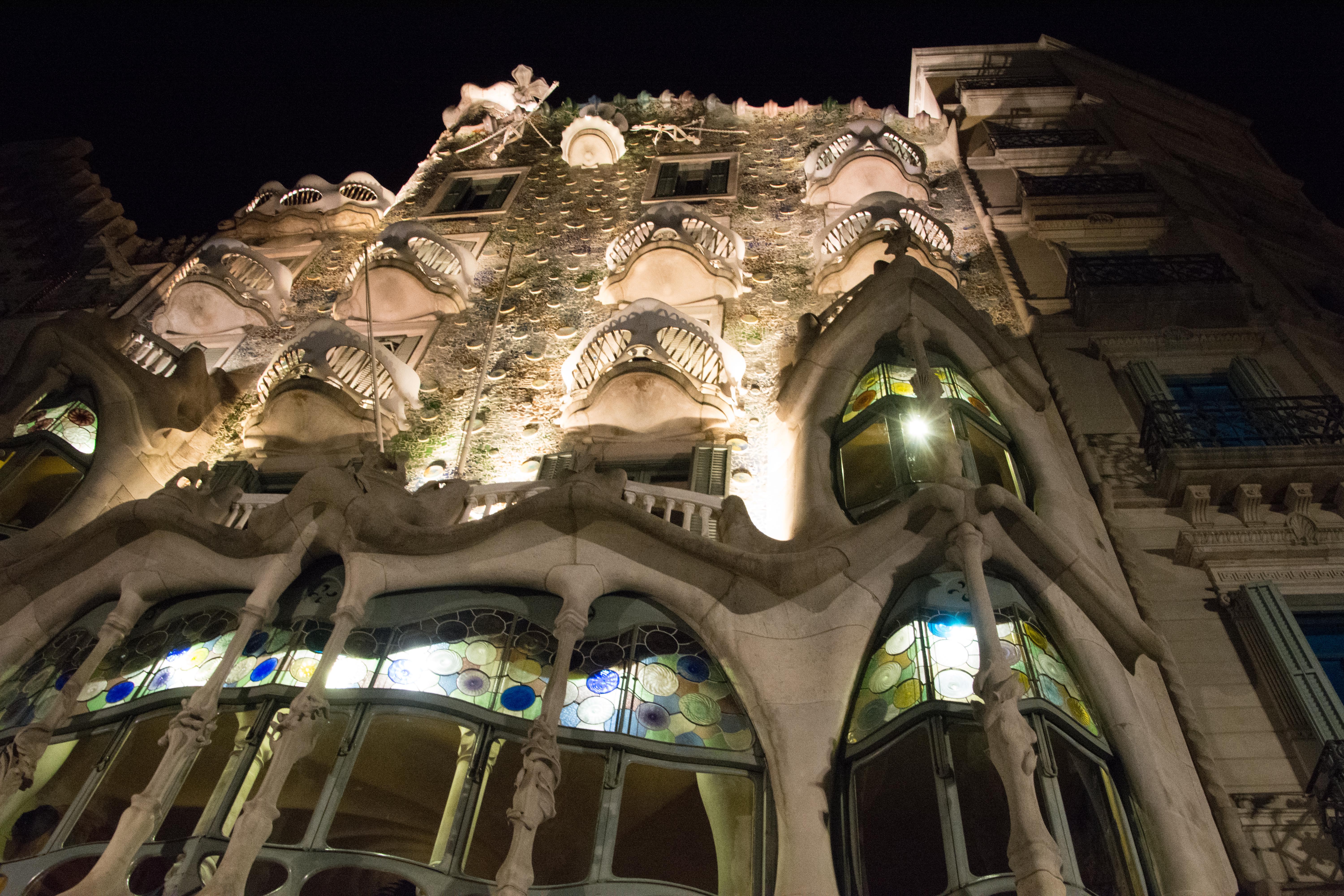
Antoni Gaudi's Casa Batllo

Antoni Gaudi’s Casa Batllo

Last week I went to Barcelona for the legal workshop of the Free Software Foundation Europe. The annual event attracts the leading legal thinkers on free and open source software from across Europe, as well as a good many from the US and Asia. This was my third year at the conference, and it was good to see friends and discuss FOSS issues. Before and after the conference I explored some of Barcelona and Madrid.
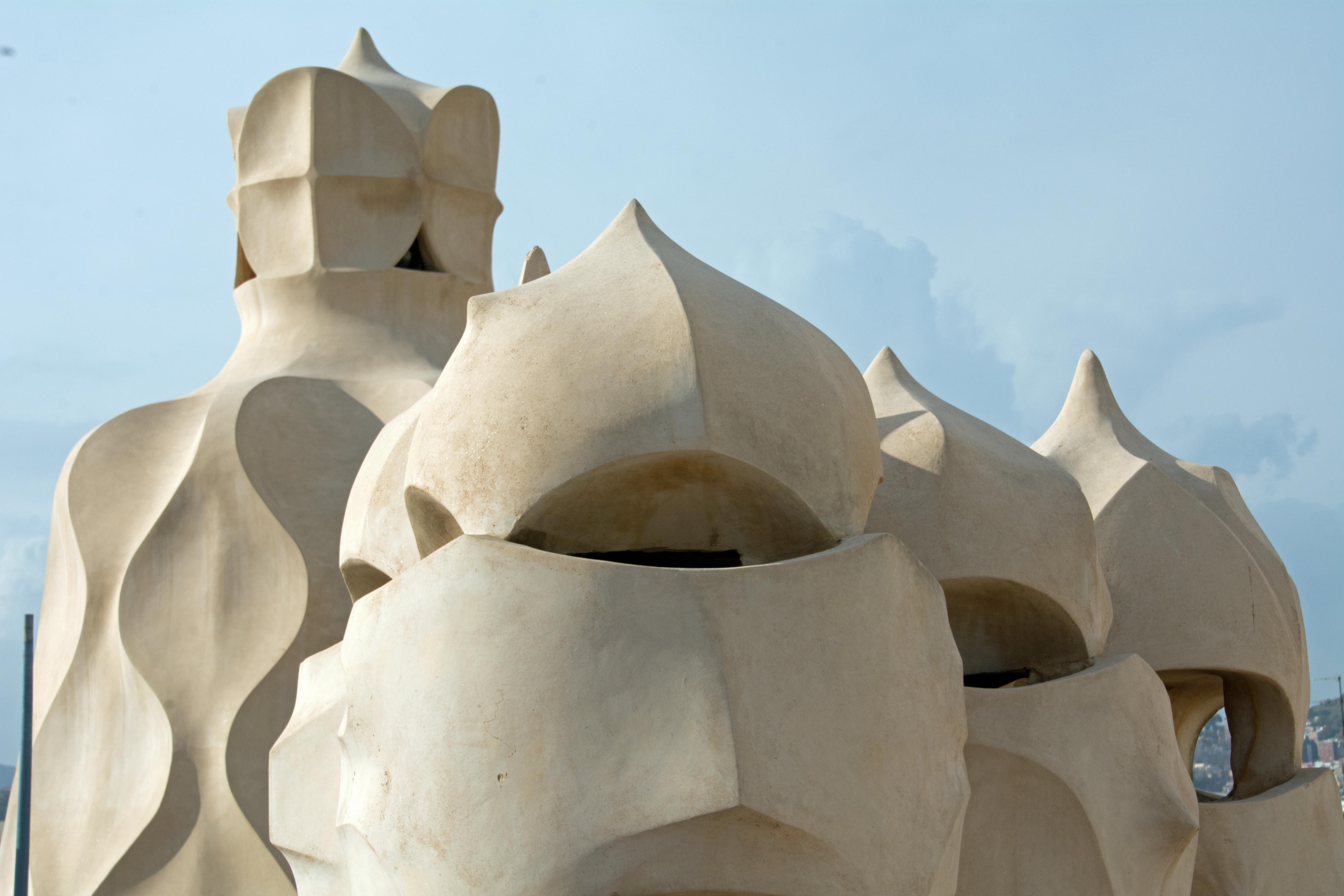
On the roof of Gaudi's La Pedrera

On the roof of Gaudi’s La Pedrera

The conference hotel was on Passeig de Gracia, one of Barcelona’s busy, broad, tree-lines avenues, in the area of some of Antoni Gaudi’s strange and compelling buildings. The FSFE group had a guided tour of Casa Batllo, a row house that Gaudi transformed early in the twentieth century with themes of St. George and the dragon and forms of nature. I also visited La Pedrera, his famous apartment house with undulating walls and sculpted chimneys, and La Sagrada Familia, his still unfinished soaring and dripping cathedral. I still can’t say I really love Gaudi, but I respect his refusal to compromise his vision, and I find it cheering that the city embraces it.

La Sagrada Familia
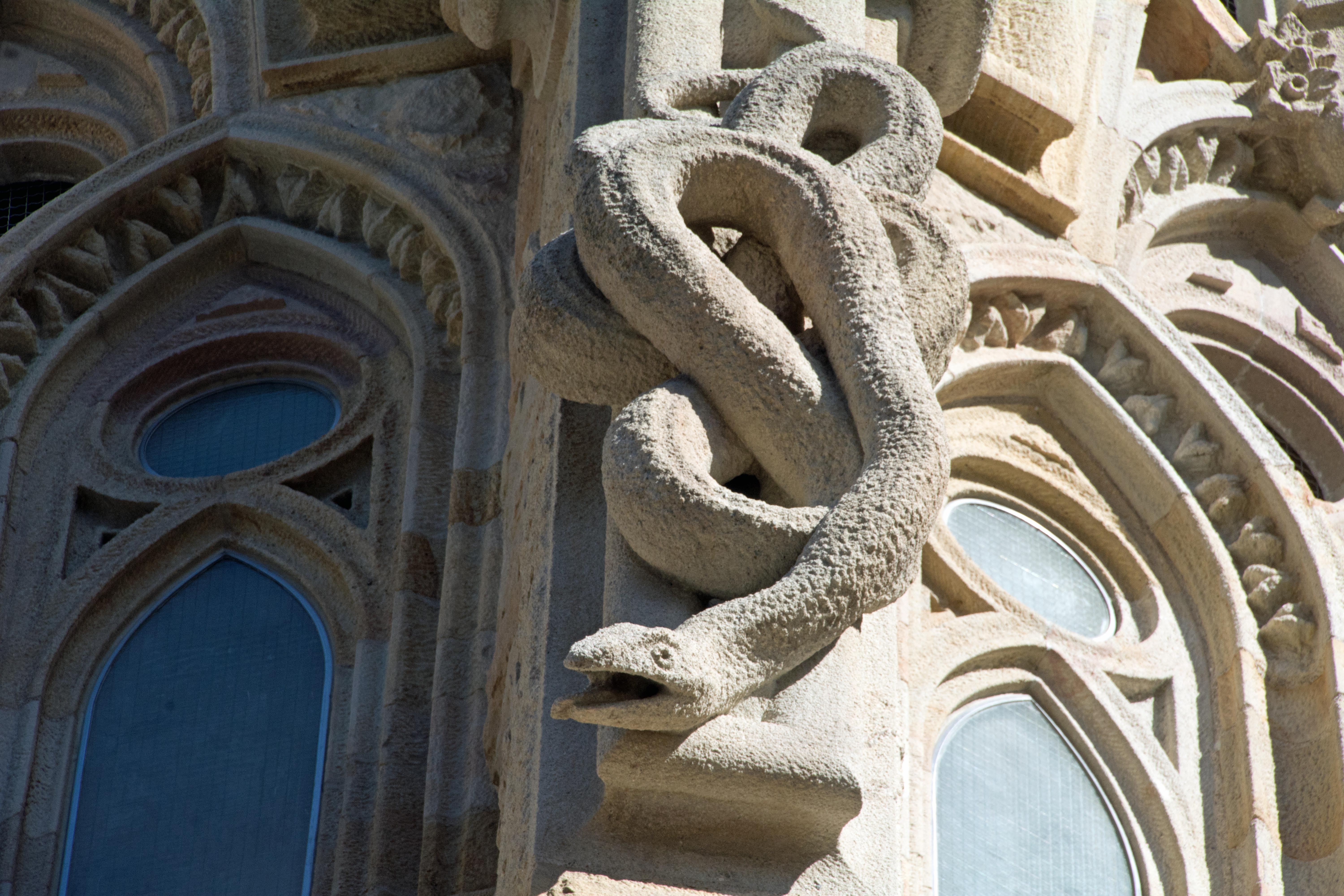
La Sagrada Familia


_DSC9141_edited-1

On Saturday I went to Madrid to look about. This was ambitious — something like deciding after a visit to D.C. to have a day to see New York City. I got off to a rough start. The cab driver loaded my bag in the back of his hatch back vehicle, and as I stepped forward to hand him my backpack, he forcefully slammed the back gate down and hit my head. I noticed I was dripping blood as he guided me back to the hotel.

The desk clerks looked shocked to see me, and when I got to the bathroom I saw why: I looked like Carrie after the prom went bad. I thought I might need to go to the hospital for some stitches, but decided to try holding a dressing on it to get the bleeding stopped as we went to the airport. This worked, though I got blood on my shirt, and the front of my hair had a distinctive red cast.
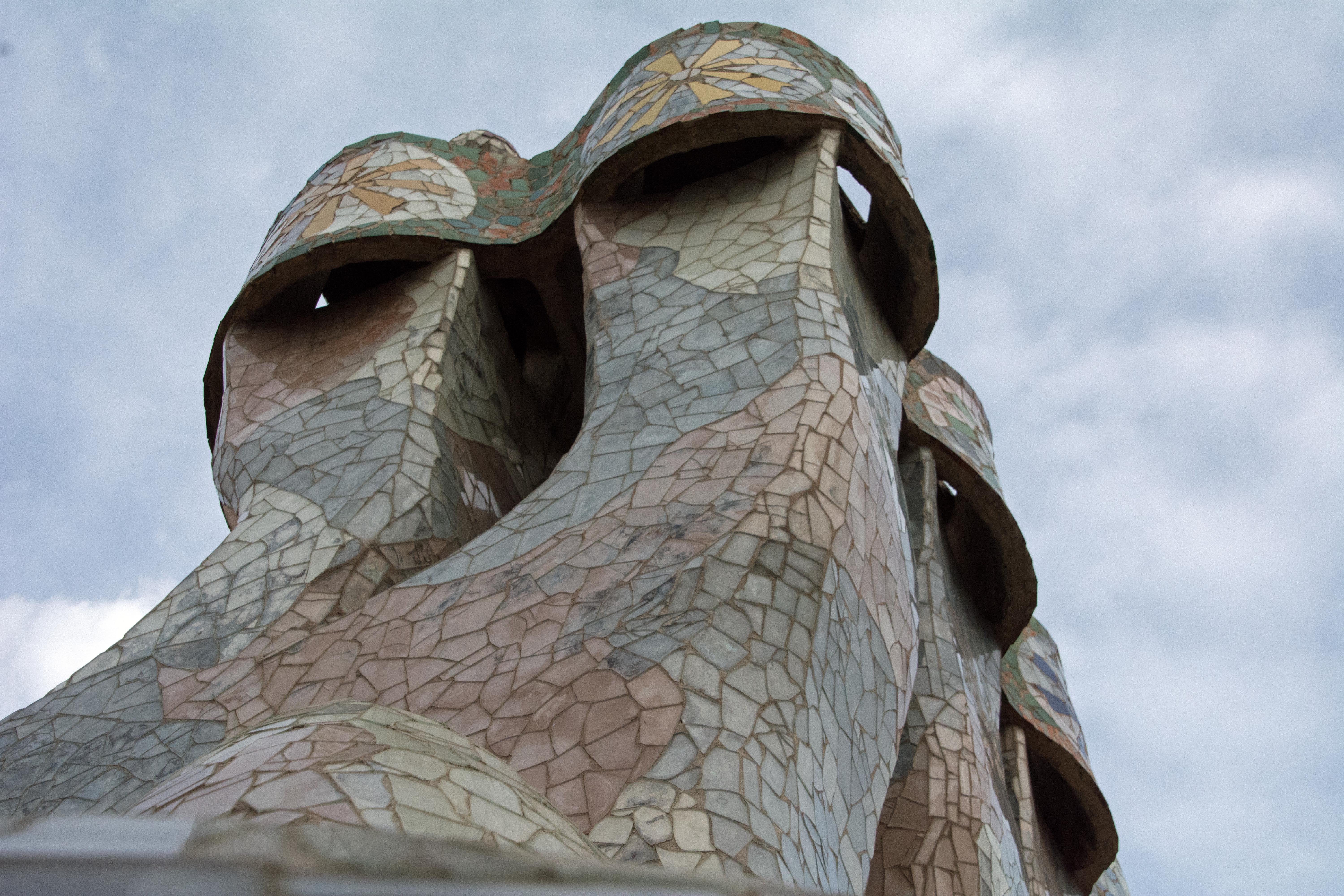
Casa Batllo

Casa Batllo

My flight went smoothly, and after checking into a hotel near the airport and cleaning up, I took a shuttle into Madrid, arriving at the Puerta de Alcala around noon. The weather was clear and breezy, with temperatures in the mid sixties. I bought a cheap guide with a map and went into power tourist mode.

My first impressions were: Madrid is magnificent! The big public squares have impressive sculptures, fountains, and buildings, including many ornate baroque and classical facades. It seemed energized, like New York, but also stately, like Rome.

My primary objective was to see some of the great art there. I made my way to the Prado via the impressive Plaza de Cibeles. There was a line to get into the museum, but it moved quickly, and although it was crowded at first, the crowds quickly thinned. I’d expected a fusty museum, but it was not that at all. The art was given plenty of space and helpful labeling both in Spanish and English. It did not seem as comprehensive as the Met, but was more digestible.
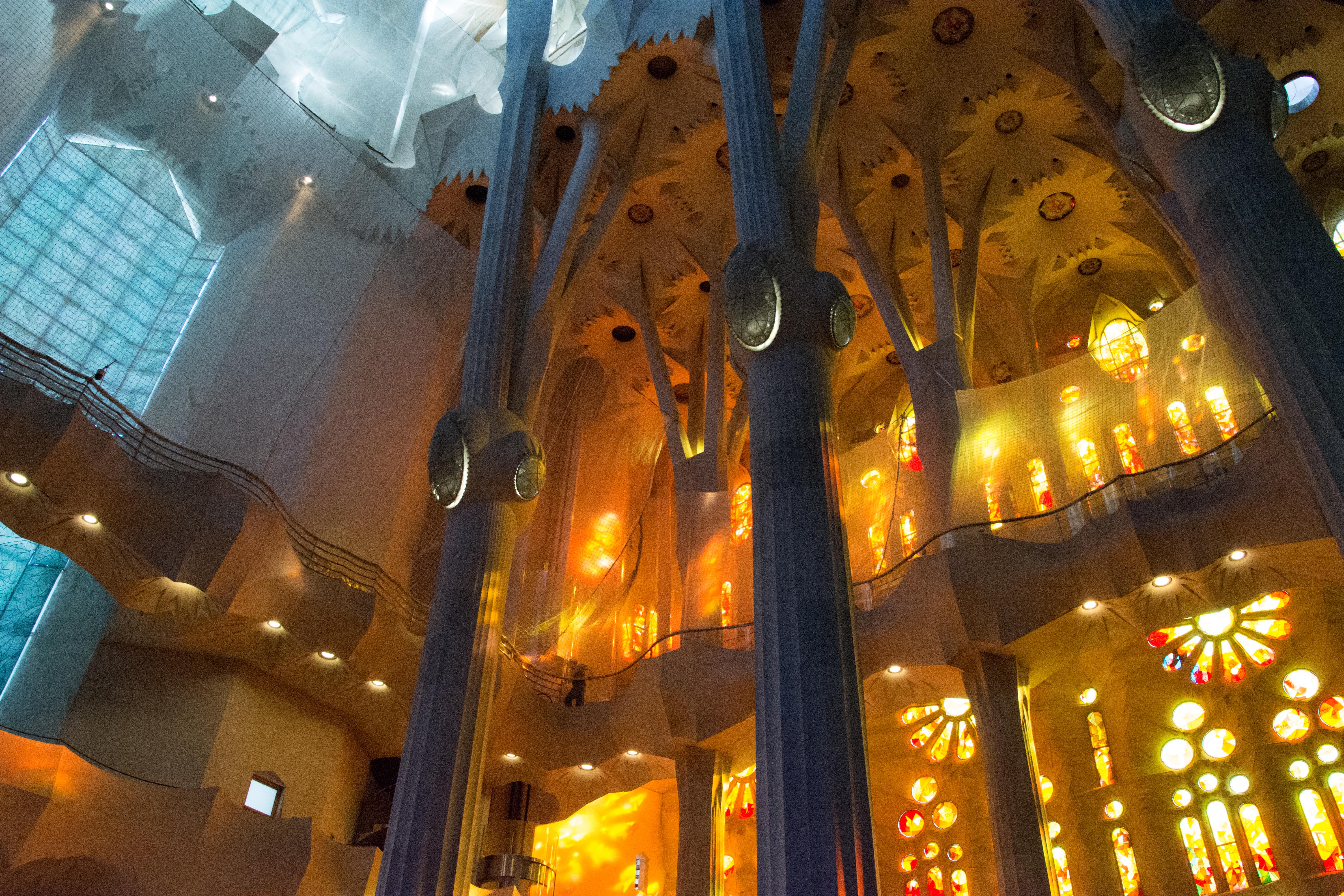
Inside La Sagrada Familia

Inside La Sagrada Familia

The particular strength of the collection is Spanish art, and I decided to focus on that. There are powerful collections of the iconic masters (El Greco, Valezquez, Goya), but good arguments for less well-known ones. None of these styles were new to me, but I tried to enter into the time and culture of some of the master works. There were some rooms that worked well as time machines, to scenes of battle, religious devotion, or daily life. I also looked at some of the works analytically, considering how the artist used the elements of line, form, texture, and, color to draw attention.

I’d planned to spend an hour or so at the Prado, but ended up staying for almost three. After a quick lunch, I took the short walk to the Reina Sofia museum, which is devoted mostly to twentieth century art. Here again, I found the works well displayed, though there was not much in the way of explanations. I was a bit puzzled by the organization, but there was a lot of great art, including particularly important works by Picasso, Gris, Leger, Braque, and an interesting collection of Surrealism.
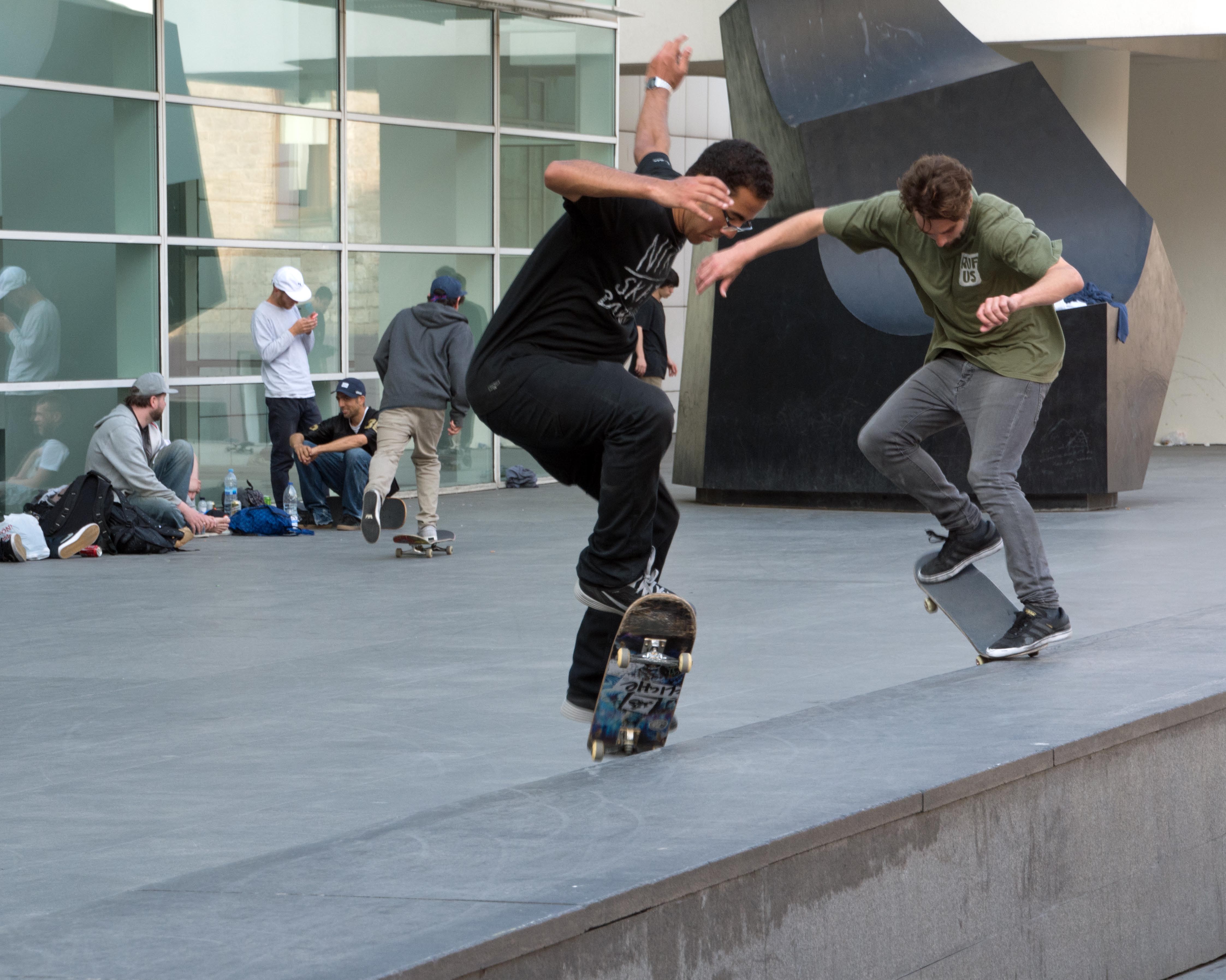
In front of the Barcelona Museum of Contemporary Art

In front of the Barcelona Museum of Contemporary Art

There were also some good examples of more recent movements, including conceptualism. So many of these schools, such as Cubism, began as a challenge to conventional thought, but have become assimilated, with their primary perceived purpose now being to serve as status symbols. But it’s still possible to approach them as expressive statements, and confront their challenges — to be affected or even discombobulated by them.

I’d planned to visit the Royal Botanical Gardens, and also to visit Thyssen-Bornemisza museum, but it was after 6:00 when I left Reina Sofia — not enough time. I decided to do a walk across the downtown area with looks at the major thoroughfares and public squares. I went up Calle de Atocha to Plaza Mayor, where there were hundreds of people out to see other people. From there I went to Puerta del Sol, with more hundreds of pedestrians, and up Gran Via, which reminded me of the tourist frenzy on New York’s Broadway.

I was relieved to exit that and make my way to the peaceful and elegant garden at Plaza de Oriente. Heading back to the west, I went through little side streets looking for a place for dinner. I was tired of vegetarian tapas, and had trouble finding a good alternative. My Android device battery was almost dead, but I ultimately had enough juice to call on Yelp to help me find an Indian restaurant for dinner. I had some comfort food — vegetable somosas and palak paneer. It was good.

To Durham, for an excellent documentary festival, and Duke Gardens

_DSC8905_edited-1
This weekend we did a documentary film marathon at the Full Frame Film Festival in Durham. Starting Thursday evening, we watched films, talked, ate, slept, and repeated, until Sunday. Our film days ended about midnight, and we stayed close by in the Hampton Inn. This was our third year at the Festival, and each year we’ve gotten a little more adept at getting tickets, getting good seats, getting well fed, getting shelter, and otherwise taking care of business. This year was the most entertaining and thought-provoking yet.

What are documentaries? They start with something real, and try to say something true. Documentarians, like all of us, have their biases and other limitations, and they sometimes make mistakes. But sometimes they’re remarkably wise and brave. The Full Frame staff screened thousands of proposed films, and from these picked 80 or so. Those we saw were almost all excellent.
_DSC8949-1

We covered a lot of geography, including films set in North Korea, the Indian Himalayas, Afghanistan, Cambodia, Mexico, Russia, Finland, Utah, Pennsylvania, New York, West Virginia, and the Dark Net. The films that affected me the most were journalistic in orientation, but took on subject matter, or angles on subject matter, that don’t get much coverage in the mainstream press, either because they’re too complicated or too politically risky.

Some told stories that, without the courage and dedication of film makers willing to work for several years, would have never been told. There weren’t a lot of happy endings. But as Sally noted, there were a lot of pockets of inspiration — humans struggling valiantly against difficult natural or political circumstances.

It was also great that for most of the showings, the filmmakers were there to answer questions. Most of the showings we saw were sell outs or close, and there were rousing ovations for the creators. It was a really stimulating weekend. Here are a few of the highlights.

Deep Web. This was the story Ross Ulbricht and Silk Road, the online drug emporium. I thought I was more or less up to speed on the Dark Net, but I learned a lot, and got new perspectives on it and on the War on Drugs. The story of how the Dark Web and cryptography may affect the drug war is potentially huge. Director Alex Winter said he planned to add some material on the indicted FBI agents who worked on the case. Definitely worth seeing.

Meru. The story of the first ascent of an imposing 21 thousand foot peak in the Himalayas, and the three men who did it. I always have mixed feelngs about the sort of adventure, which is at once amazing, inspiring, and just too dangerous. But it was a thrilling cinematic experience.

Overburden. This was about the long sad relationship of Appalachia and coal. I had a particular interest in this, since I come from hearty coal mining stock, and I feel a real affinity for the beauty and pathos of this country. Overburden is the lingo of the mining companies for the plants and soil on the mountaintops that have to be stripped away to get the coal. This film focused on a couple of community activists who raised people’s consciousness on the environmental and social damage of this kind of minng.

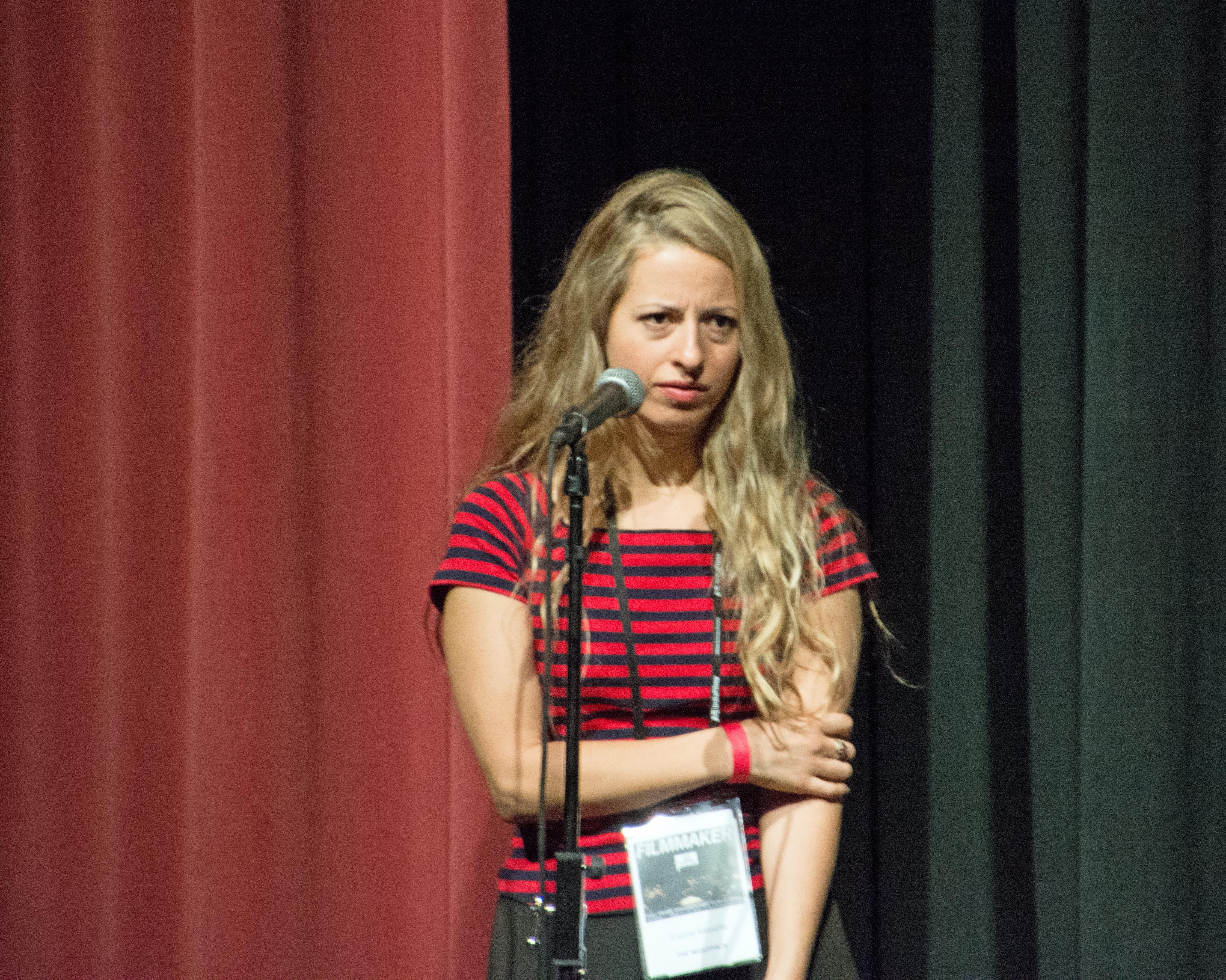
Crystal Moselle, director of The Wolfpack, answering questions

Crystal Moselle, director of The Wolfpack, answering questions

The Wolfpack. This concerned a family in New York who kept the kids inside their small apartment for almost their entire childhoods. Something was plainly wrong with the parents, but the kids seemed lively and creative, and probably not permanently impaired. The director, Crystal Moselle, spoke afterward, and gave some added context. She’d worked on the movie for about four years.

Peace Officer. This film was about the militarization of America’s police forces. The prime subject, William “Dub” Lawrence, is a former police officer and sheriff who started SWAT team in Utah that years later murdered his son-in-law. He’s an extraordinary person, who together with the directors spoke after the film. We were particularly happy that this one won an award — for human rights.

Peace Officer co-directors Scott Chritopherson and Brad Barber, and subject Dub Lawrence (speaking)

Peace Officer co-directors Scott Chritopherson and Brad Barber, and subject Dub Lawrence (speaking)

(T)error. This was about the FBI’s campaign against Islamic radicals using informants who try to entrap them in made up jihad efforts. It was a sort of a worm’s eye view, told from the perspective of an informant and a target. It would have been comical, had the subject not ultimately been sent to prison for eight years on a trumped up charge to shut him up. This one won a grand jury award.

(T)error co-directors Lyric Cabral and David Sutcliffe

(T)error co-directors Lyric Cabral and David Sutcliffe

Tell Spring Not to Come This Year. The subject of this was the Afghan National Army operating without the direct support of the US. They didn’t seem like a very well trained or determined fighting force. The Taliban seemed to be getting the upper hand. The battle scenes were vivid and harrowing. The co-director, Saeed Taji Farouki, spoke afterwards, with intelligence and humility.

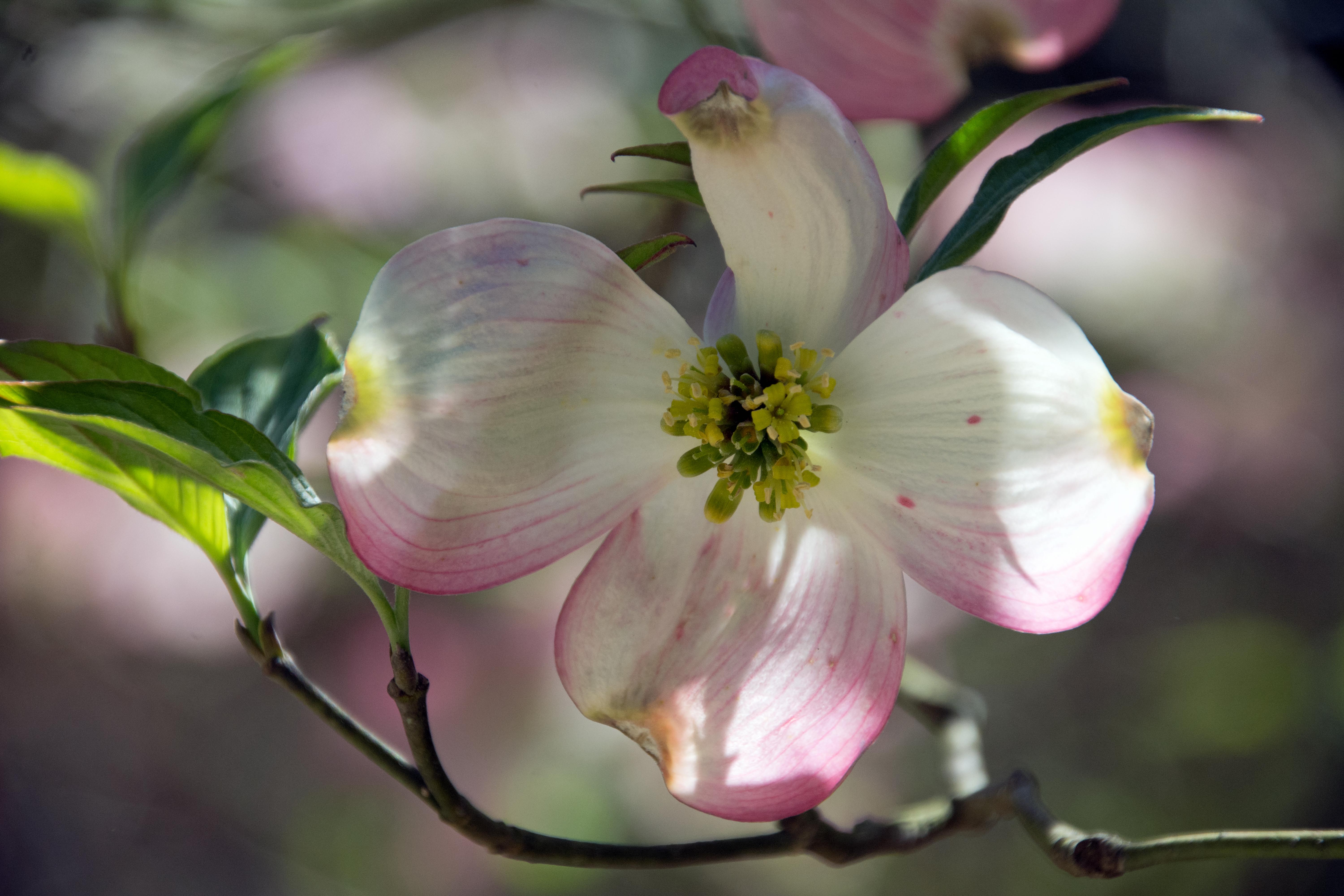
Dogwood at Duke Gardens, April 12, 2015

Dogwood at Duke Gardens, April 12, 2015

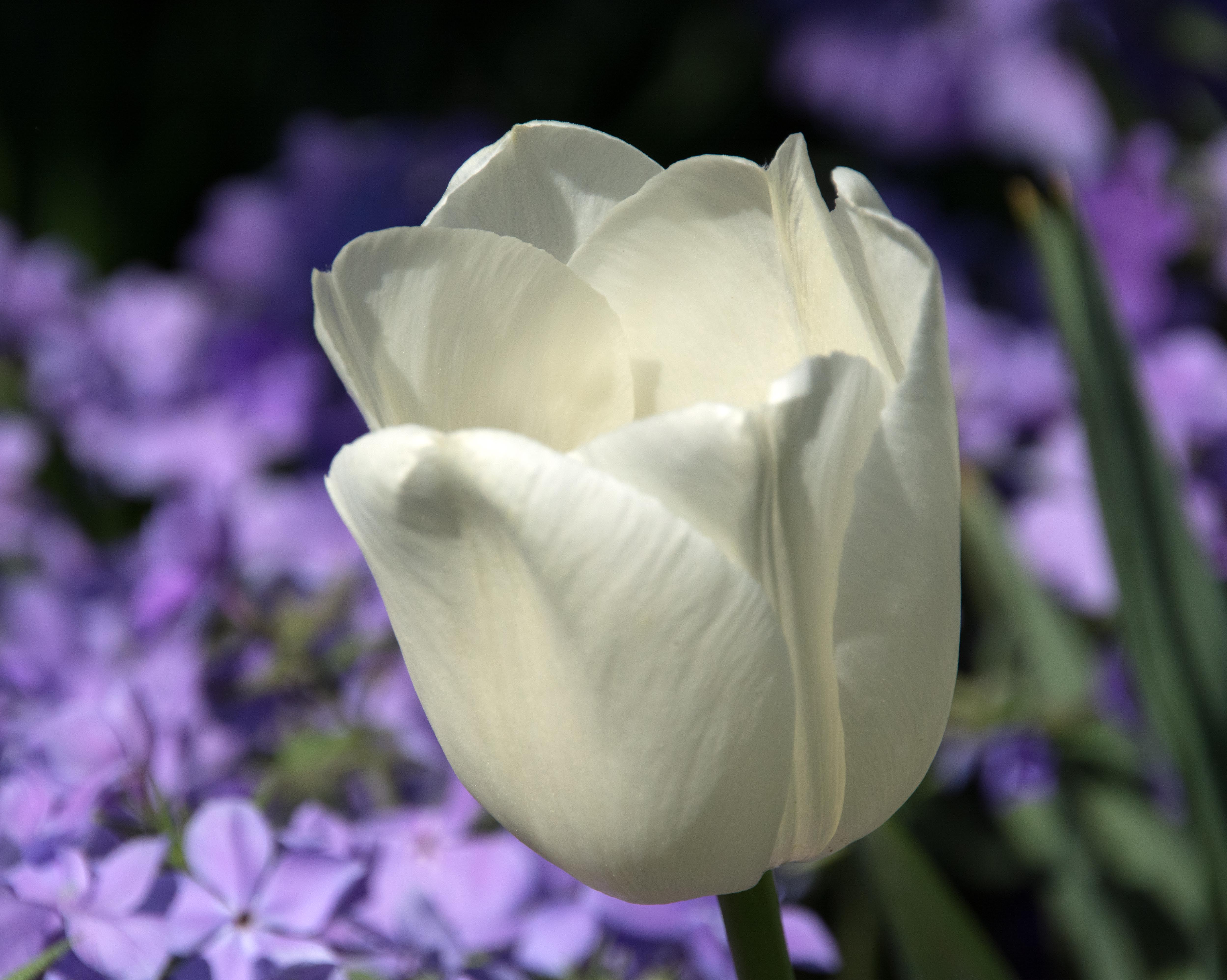
On Sunday morning, we took a break to check out the Duke Gardens. It was a lovely, clear day, and lots of things were blooming, including early azaleas and rhododendrons. The tulips were spectacular. Sally noted that this garden, too, was a pocket of beauty that, in spite of everything, gave us hope for humanity.

Azalea at Duke Gardens

Azalea at Duke Gardens


_DSC9030_edited-1
_DSC9043_edited-1
_DSC9048_edited-1
_DSC9064_edited-1

Whistler skiing, Invisibilia, and Oliver Sacks’s farewell

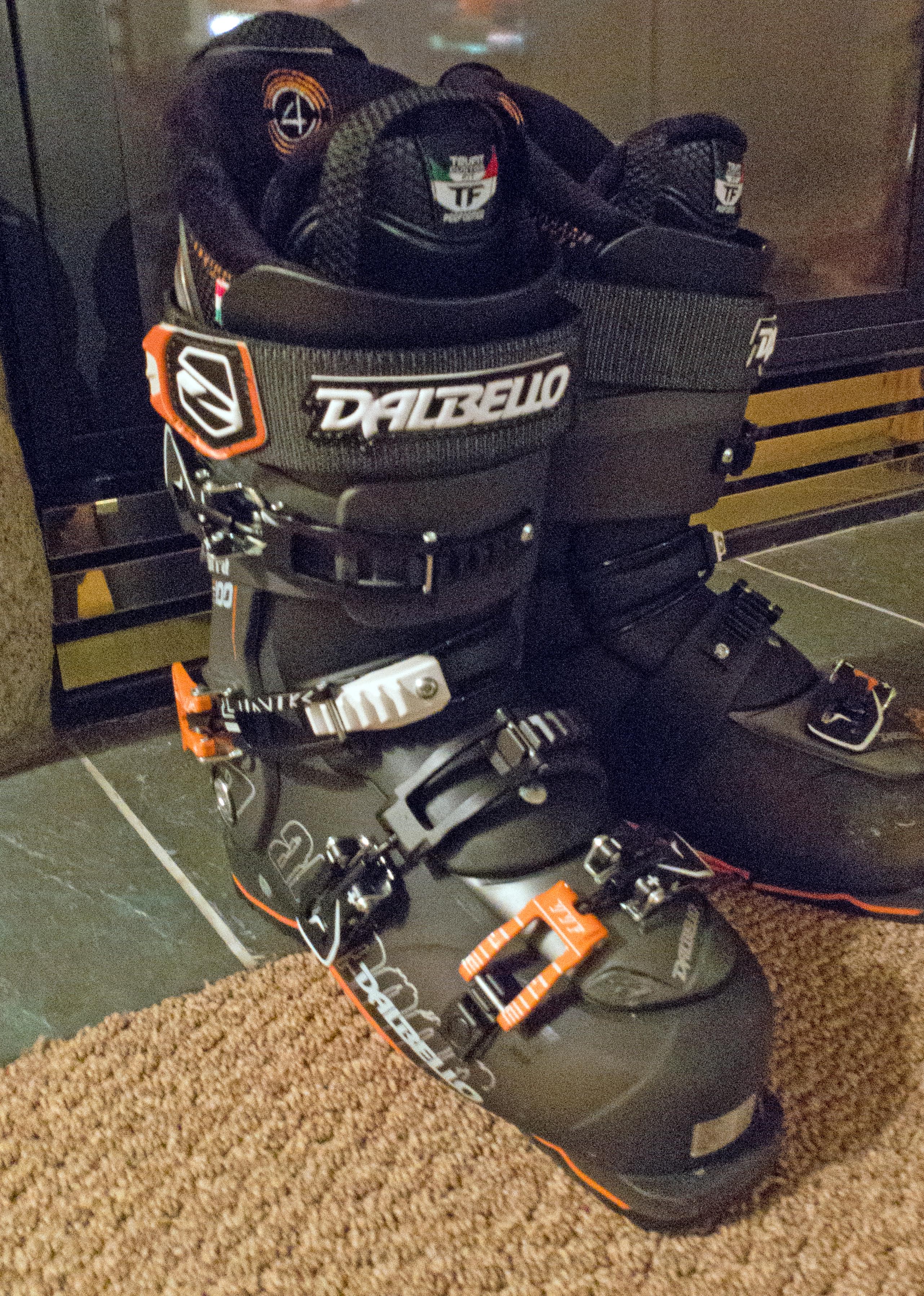
The new boots, after day one at Whistler

The new boots, after day one at Whistler

Early Friday morning we flew to Dallas, where we changed planes and continued on to Vancouver, where we got a car and drove to Whistler to do some skiing. The flying part of the trip was uneventful, though sitting in an economy seat for seven hours takes its toll. It’s good to have some uninterrupted time to read, listen, and think, but in the last couple of hours my bottom started to ache and my legs wanted to move.

The traffic getting out of Vancouver was terrible. With only brief prior exposure, I’d thought of Vancouver as a friendly and modern mid-size city, all of which it may be, but the traffic was more like Sao Paulo. We watched traffic lights change two and three times to progress one block. It took an hour and a half to get clear of the city, which was especially frustrating after a long flight.

The coastal road north to Whistler was curvaceous and lovely, wooded with evergreens and islands to the east. It would have been an excellent stretch of road to drive with Clara. We finally made it to Whistler Village in late afternoon, and checked in and got the key code to our condo in the upper village. We dropped our gear, picked our bunks, and went out to rent necessary equipment. I’d bought my own boots, newly purchased, but needed to rent skis and poles. By the time this got done, we were very tired and hungry, and ate at the first place we could find.

Skiing on Saturday was, ultimately, fun, though I was disappointed at first. It hadn’t snowed for some weeks, and the coverage was not good — almost nonexistent at the lower lower elevations. Higher up, there was snow, but a lot of it was very hard. Still, we found areas of good snow, and enjoyed the long runs and varied terrain. Gabe led the way, and I raised my game just by trying to keep up. The vistas were stunningly beautiful.
IMG_0193_edited-1

During the trip out, I listened more to a marvelous podcast called Invisibilia. It’s an NPR-based show with a style that resembles Serial in tone and mindset, anchored by Alix Spiegel and Lulu Miller, two very smart, funny, curious women. Each episode takes on a question or oddity of human psychology or behavior. Without seeming either overly technical or overly simplistic, it manages the neat trick of being at once entertaining and thought-provoking.

The episode I listened to en route was about categories. We all have to have lots of them, and usually give them no thought. But as the show pointed out, it would be a huge problem if every time we saw a couch, we had to figure out what it was for, whether it was potentially dangerous, etc. It’s a very good thing that we recognize couches, not to mention other categories of furniture.

Much of the show concerned gender categories, and specifically a transgender person who reported the experience of switching between male and female orientations often. It focused mainly on the challenges this presented to the individual in terms of relationships and emotions, but it also pointed up how the male-female categorization affects the way we interact with the world.

I was also thinking about Oliver Sacks, who revealed in an op-ed piece in the NY Times this week that he will soon die of liver cancer. Sacks, a distinguished neurologist, has written many fascinating books and articles about psychological oddities. Now 81, he noted that he’s written 5 books since he turned 65. I was saddened to hear he wouldn’t be with us much longer, but also inspired by the courage and calmness with which he addressed the subject of dying.

He wrote:

I cannot pretend I am without fear. But my predominant feeling is one of gratitude. I have loved and been loved; I have been given much and I have given something in return; I have read and traveled and thought and written. I have had an intercourse with the world, the special intercourse of writers and readers.

Above all, I have been a sentient being, a thinking animal, on this beautiful planet, and that in itself has been an enormous privilege and adventure.

I’m hoping I’ll be able to say the same when the time comes.

A down home ski trip

15 01 11_4879_edited-1
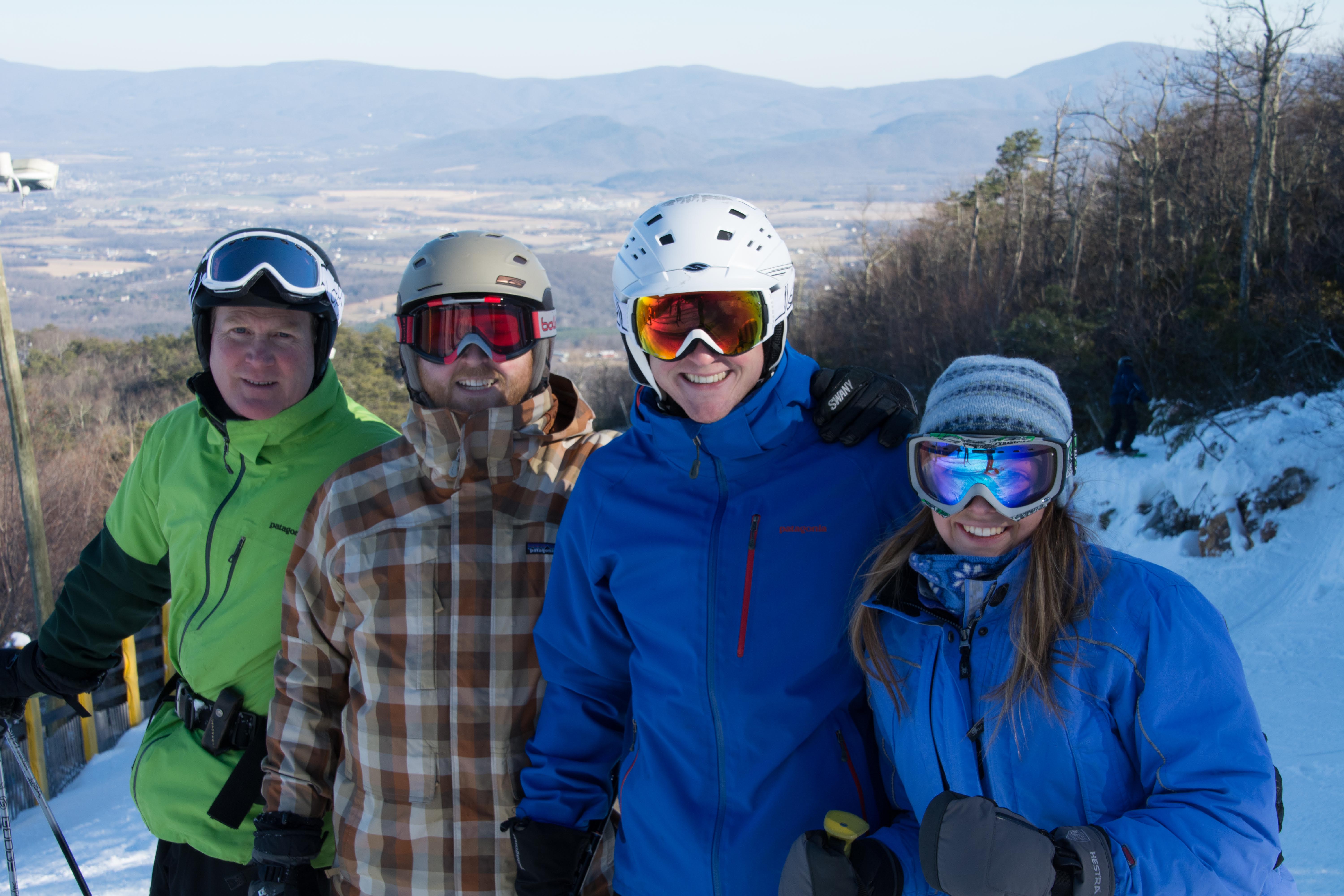
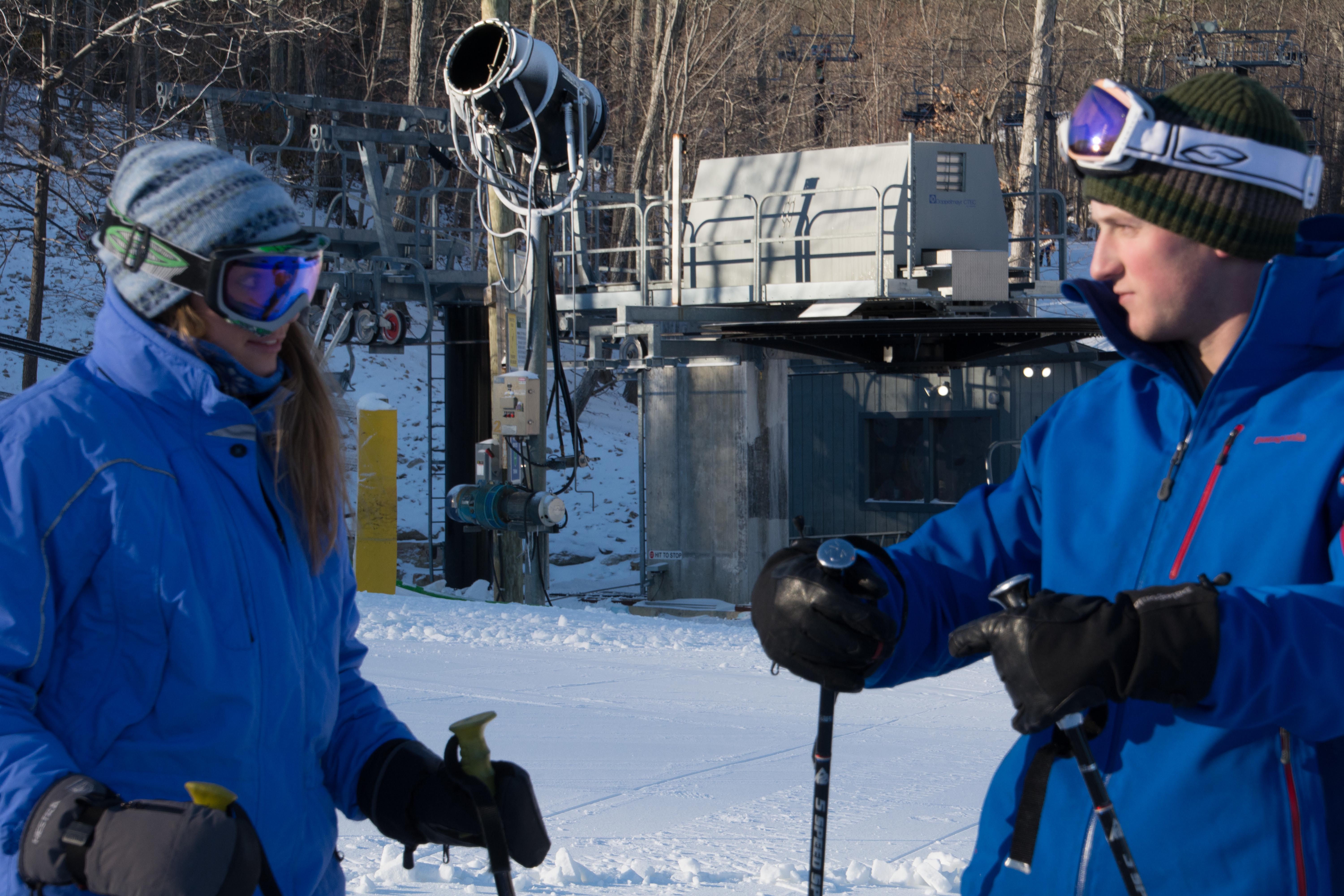
Last weekend I drove up to Massanutten, Virginia for a down home ski trip. Brother Paul is in his twenty-sixth year as a volunteer ski patroller there, and we’ve had many happy times on this unfancy mountain. This trip was especially happy, in that his three kids, my niece and nephews, were all there, with spouses and a spouse-to-be, little ones, and friends.

My nephews Josh and Adam are strong boarders/skiers (turns out both can do both). (Niece Lauren is also a good skier, but is expecting and so sat this one out.) We had a blast shooting down the steep places. It was sunny and cold, and the snow was good.
15 01 10_4858

We also spent some time helping a couple of beginners in the group. Paul has helped a lot of people learn to ski or improve (including me, come to think of it), and has a really kind, encouraging way of getting across the basic concepts.
15 01 10_4848
There’s no getting around the fact that being a beginner is hard. There are various specialized physical skills that you’ve got to grasp. Then there’s the fear of falling. And a certain amount of actual falling. It takes some gumption. It was great to see our newbies progressing quickly. When hanging with them on the gentler slopes, I practiced skiing on one ski (trying to work the counterintuitive outside edge) and skiing backwards.
15 01 10_4844

On the drive back, I listened to podcasts. I’m a recent convert to this technology/medium, which I got started loving after Jocelyn recommended Serial (now the most popular podcast in the history of – podcasts). I listened to several episodes of a BBC production called A History of the World in 100 Objects. Each show discusses an object from the British Museum, and uses it as a jumping off place for probing the society in which it was created. Some are very ancient (a hand ax 1.6 million years old) and some are just ancient (Clovis points 13,000 years old). I got up to 700 B.C., found most of it fascinating.

Our holiday in Cozumel: diving, eating, and reading

14 12 31_4444_edited-1

Gabe and Jocelyn joined us in Raleigh for Christmas for the first time in several years. We ate and drank well and had some good laughs. Gabe had given himself a Canon G15 camera, which he’ll be using to get scenic pictures of Telluride for his company’s website and other publicity. It was fun talking photography, and he was taking amazingly good pictures. I was struck and a bit envious of his natural talent.

Last year I offered scholarships to both Gabe and Jocelyn to get their scuba certification, with the kicker that graduates would also get a holiday trip with us to a dive resort. Gabe couldn’t work out the logistics, but Jocelyn found a dive shop in New York and took the course. Last weekend she, Sally, and I sadly said good-bye to Gabe, and gladly went to Cozumel, Mexico.
15 01 03_4830

We stayed at the Cozumel Hotel and Resort, and went diving with Dive Paradise. The good points of the hotel were: friendly service, large pool, beach (small), walking distance to town, good breakfasts, and dive shop and dock directly across the street. Dive Paradise was a large operation with several boats, but the service was personalized and friendly. Our boats were not overcrowded and the divemasters were knowledgeable and helpful.

15 01 01_4626_edited-1

We did two morning dives each day. The boat trips were between 30 minutes and about an hour. Particularly good spots were: Palancar Bricks, Cedral, San Francisco, Tunich, and Delilah. Visibility was generally 60-70 feet, water temperature 81 degrees F. The current was strong in places; think Lost in Space or Gravity. Every outing was a drift dive. We were usually down for 50-60 minutes.
15 01 02_4803_edited-1

Jocelyn spent the first two days finishing her Padi course by doing 4 open water dives , then joined us on the rest of our expeditions. She had no problem with the deeper dives (around 90 feet) or the places with strong current. She handled herself well, and I was a proud papa.

14 12 29_4221_edited-1

We saw a great deal of sea life, most of it familiar to Sally and me. Particularly thrilling were a pair of spotted eagle rays, an enormous (beastly huge!) green moray eel, large lobsters, and several hawksbill turtles. There were many beautiful angelfish and queen triggerfish. We saw a few nurse sharks and barracuda. Sally saw a pair of squid, and quite a few tiny things for which she needed her magnifying glass. The coral in places was highly varied and gorgeous.
15 01 01_4586_edited-1

I took photographs with my new Ikelite housing and strobes for my Nikon D7100. The equipment was heavy and bulky, and difficult to transport, but I was pleased with the way it performed under water. One of my objectives was to get a good picture of a queen angelfish, which are challenging both because of their normally shy natures and their wild colors. I was fairly happy with the ones here.
15 01 02_4755_edited-1

We ate a lot of tasty Mexican food, including outstanding and creative meals at Kinto and Condesa. We also had Italian food one night at La Terraza, which we thought was good.

In the afternoons we sat by the pool and read. I made substantial progress on The Adventures of Augie March, by Saul Bellow. I read and loved this novel in my early twenties, but it seemed new upon re-reading. It’s exuberant and Whitmanesque, exhilarating, but also challenging, resistant to skimming.
15 01 02_4760_edited-1

I also got a good start on The Innovators, by Water Isaacson. This is basically a history of computers and computing that gives mini-biographies of leading actors but also emphasizes that innovation is primarily a product of collaboration, rather than lone geniuses. Isaacson’s writing is competent and engaging.

One other book worth mentioning is The Meat Racket: The Secret Takeover of America’s Food Business, by Christopher Leonard. It is an eye-opening account of the corporatization of the production of chicken, pork and beef, with a particular emphasis on chicken and Tyson Foods. There is nary a word about the horrific treatment of animals, but the story is still brutal from the point of view of the farmers and workers.

The farmers here were by degrees deprived of bargaining power, to the point that they stay in business only by the grace of Tyson or its few similarly enormous competitors. It’s also startling to learn about the extent to which government provided financial guarantees that allocated the risks to the taxpayers (that is, us) and farmers, but gave the big rewards to the food megacorps. This story deserves wider publicity. Another good reason to go veggie.
15 01 02_4781_edited-1

Our Outer Banks holiday, with sanderlings

14 08 31_1974_edited-1
Last week my well-grown kids, Gabe and Jocelyn, came in from Colorado and New York, and we all headed to the Outer Banks for the long holiday weekend. My sister and her family put us up at their gracious place in Corolla, and made sure we ate and drank well.
14 08 30_2193

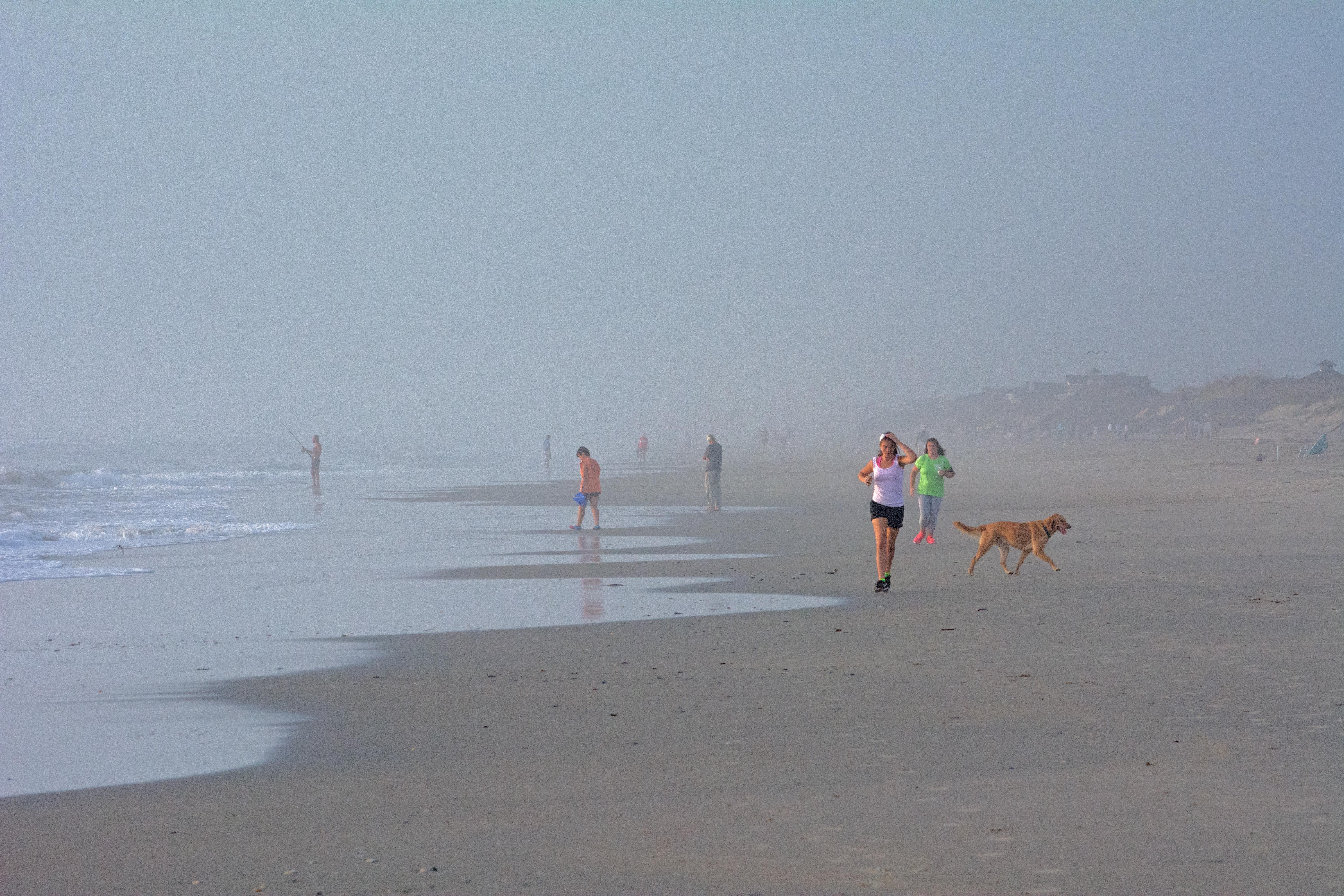
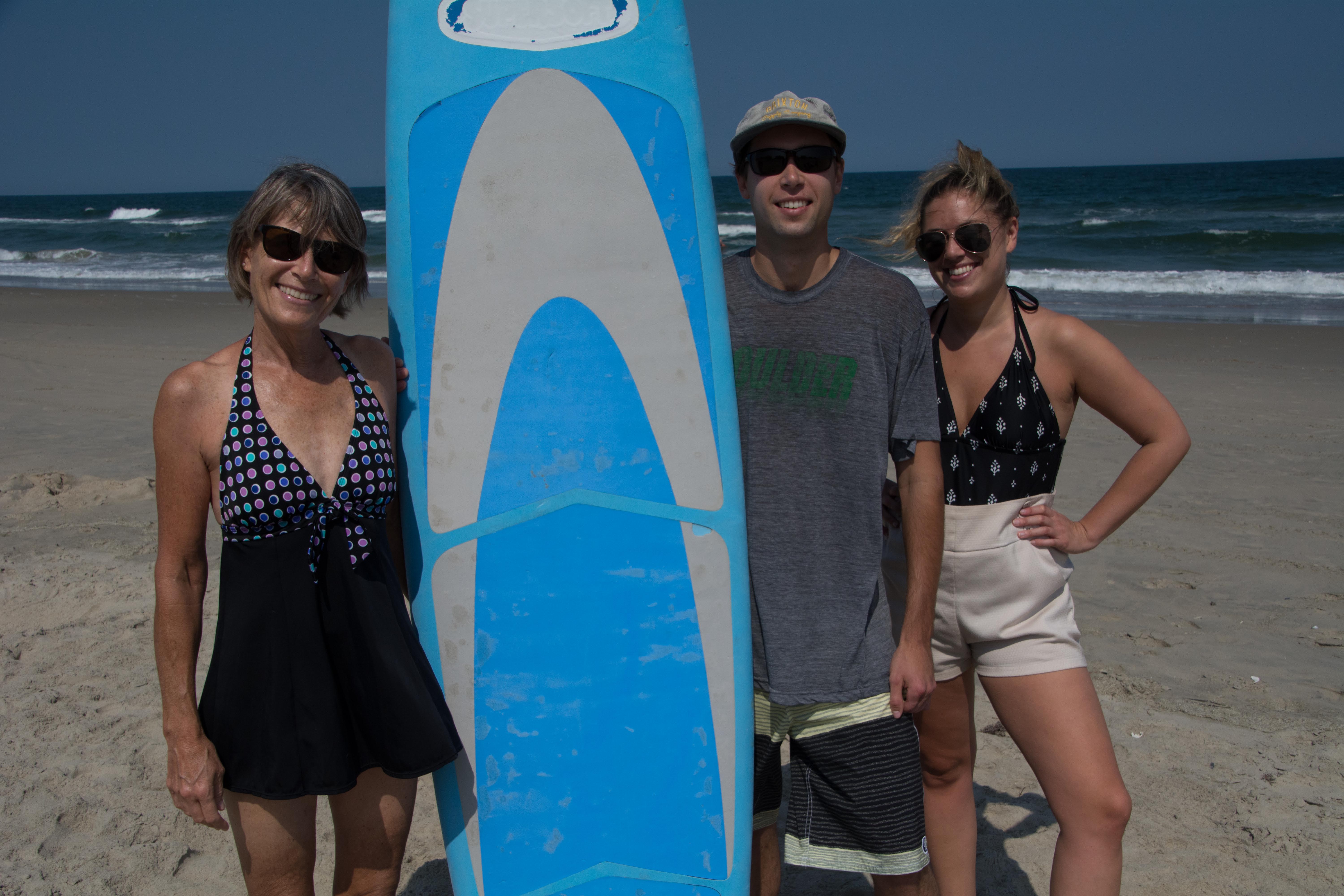
The beach at Corolla was wide, clean, and not at all crowded. The days were sunny and breezy. The water was cool at first. We tried out a surfboard, but had better success catching waves with boogie boards. I had one excellent ride of perhaps a hundred yards. On Sunday we went out about 3:30 in the afternoon, and I wrongly figured that sunblock would not be needed. Got a bit pink.

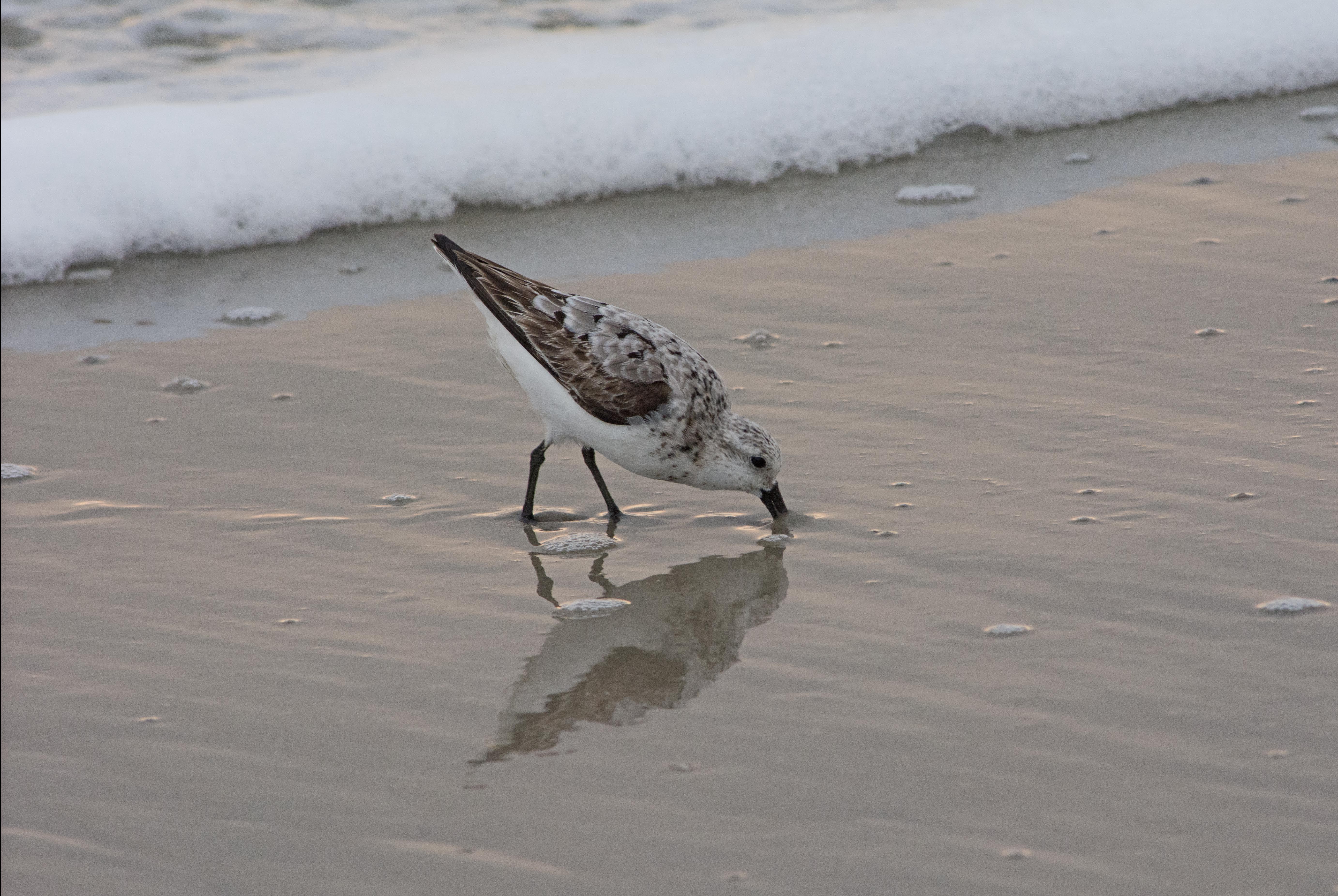
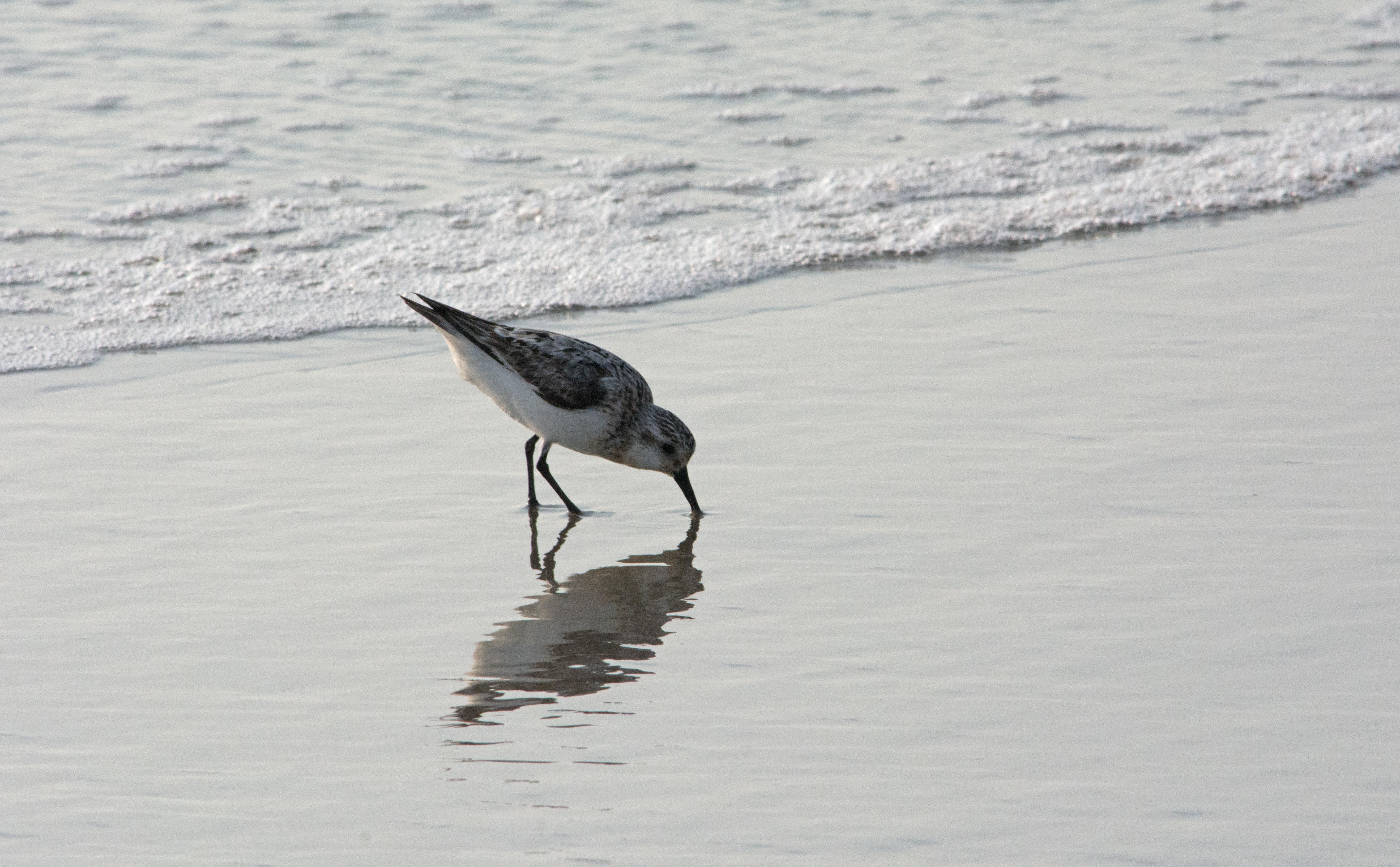
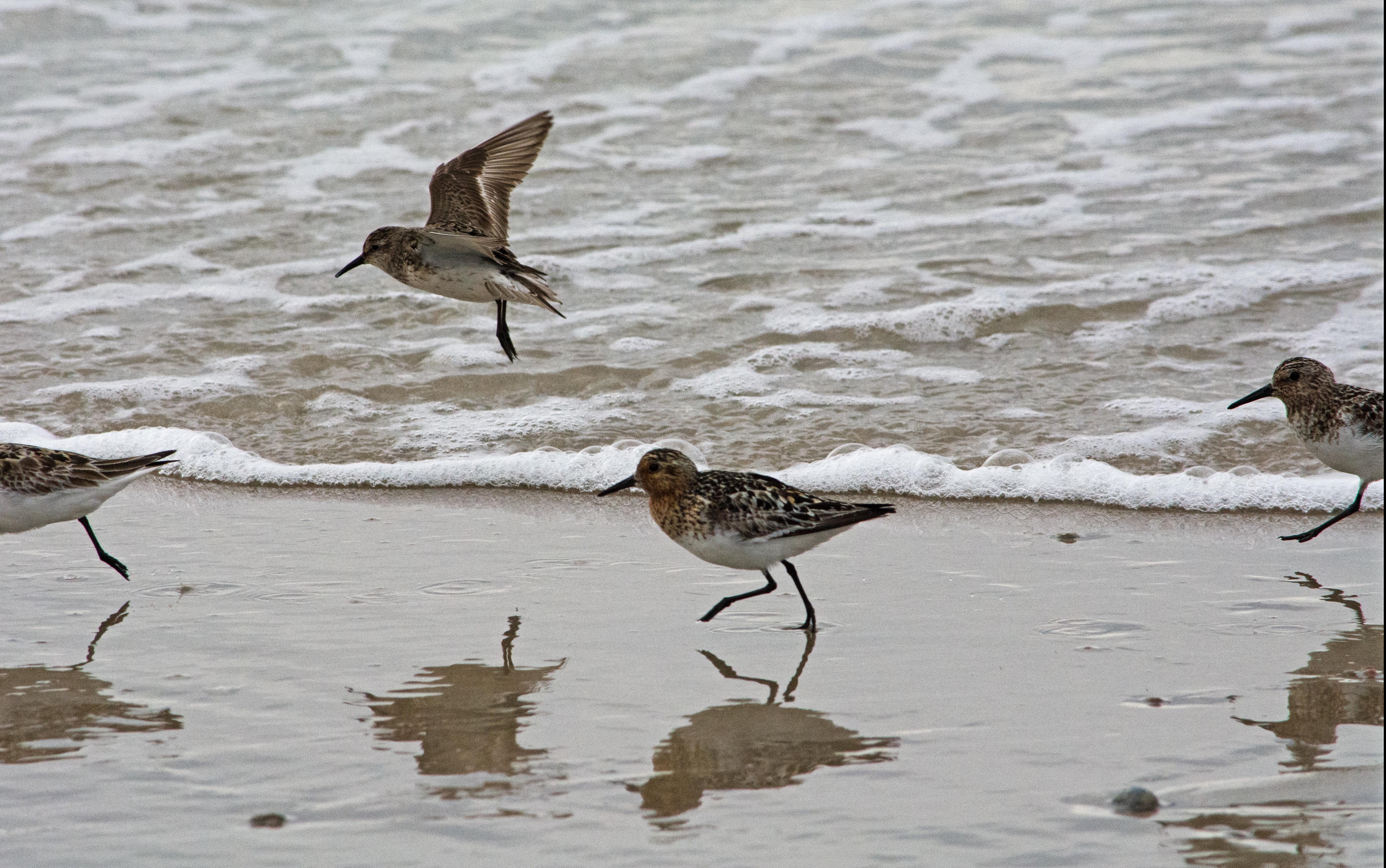
Each morning I got up around sunrise and took a long watch on the beach with my camera. I saw mostly sanderlings, hardworking little shorebirds that move with comical quickness. I took hundreds of pictures of them. Here are a few that I especially liked.
14 08 30_1789_edited-114 08 30_1795_edited-1-1
14 08 31_2049_edited-1
14 08 31_2139_edited-1
14 08 31_2141_edited-1

A rodeo, a tennis match, a run, and a good curry meal

14 08 19_1548_edited-1
This was an unusually sporty week. I got to see a local rodeo and a semi-local professional tennis event, and took a run down memory lane.

It is always cheering and a little startling to find that there are communities of people who care passionately about something I know hardly anything about. Who knew there was a rodeo community in the Raleigh vicinity? Actually, I had just learned this the prior week from Walter magazine (an attractively designed and informative monthly that covers our area).

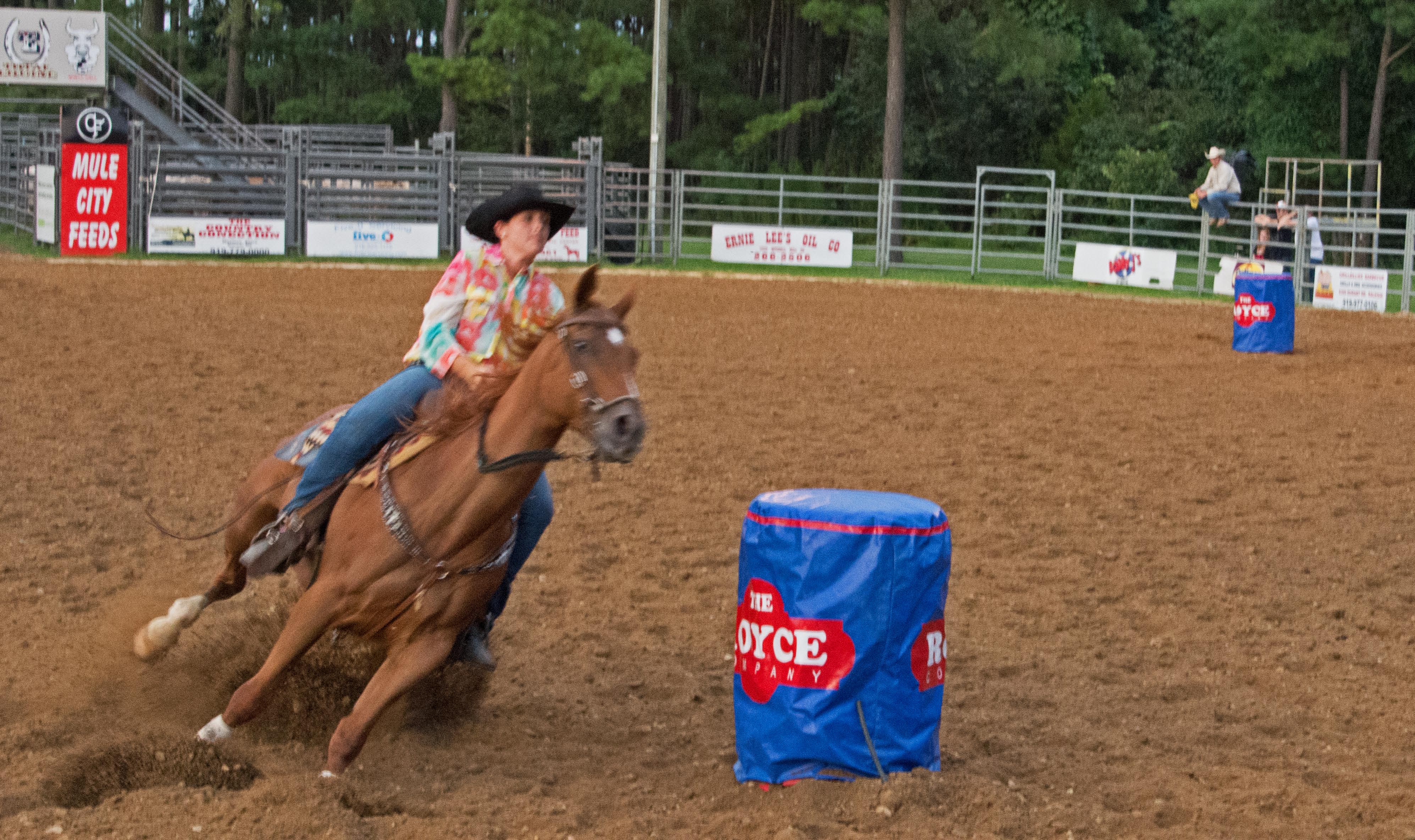
The rodeo was in northern Wake County off of Louisburg Road. The main events were barrel racing and bull riding. The barrel racers were all young women, and they rode their horses extremely fast. It reminded me of road course racing – in addition to extreme acceleration, they had to hit the brakes hard at the barrels. I was in awe of their riding skills.
14 08 19_1553_edited-1

The bull racers sat on bulls and got bucked off. This seems simple in concept, but the trick is not to get killed or severely injured by the bull. We got to see this event up close, and it looked extremely dangerous. I was not happy to think of the bulls being mistreated, but that didn’t prevent my appreciating the courage of the young riders.
14 08 21_1594

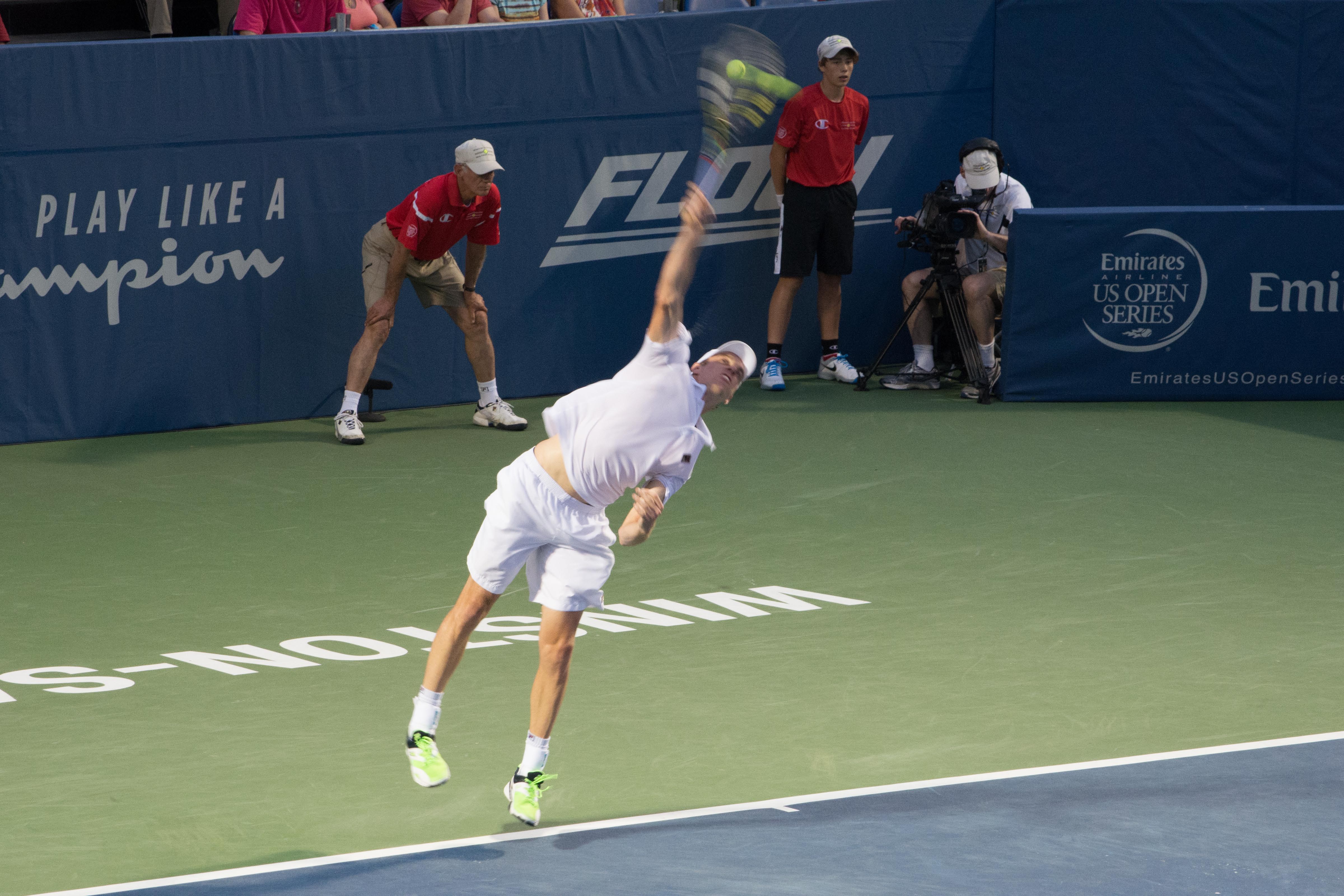
On Thursday Sally and I drove east to see some professional tennis at the Winston-Salem Open. We watched Sam Querrey play Guillermo Garcia-Lopez. These guys can play! Querrey had a huge serve which topped out at 137 mph. Garcia-Lopez had a beautiful one-handed backhand that he could hit with a lot of topspin. The match was close through two sets, but Querrey took control and prevailed in the third.
14 08 21_1592

That night we stayed in downtown Winston-Salem at the Brookstown Inn, built as a cotton mill in 1837 and now decorated with antiques and crafts. Our room was spacious (a 20 foot ceiling, at least), and the bed was particularly comfy.

When I’m on the road, I make it a habit to use the hotel gym first thing in the morning. The Brookstown’s web site didn’t mention an exercise facility (it turned out to have a tiny one), so I had packed most of what was needed for a run (forgot my tee-shirt). It was still dark at 6:15 when I went out, shirtless, for a run through the city of my youth.

There was hardly anyone out, so I don’t think I upset anyone with my shirtlessness. There was a pleasant breeze. Heading down Fourth Street, many of the businesses I remember were gone (no more Woolworth’s), but there were some interesting looking restaurants and galleries. I ran past the city’s most striking high rises, including the Reynolds Building (which looks just like a miniature Empire State Building), and along Main Street to Old Salem, the eighteenth-century Moravian town that’s now a tourist attraction. I went past the building where my parents had their bookstore and by the half-timbered brick buildings and grassy squares where I had a happy summer at Governor’s School.

This took about 40 minutes. I hadn’t run more than ten minutes for many a moon, because of various minor injuries. I felt comfortable and strong. The next day, though, my quads were sore.

On Saturday night we walked up to the Packapalooza festival on Hillsborough Street for some people watching and food. The festival was in celebration of the return of the students to N.C. State, and there were plenty of them there. It seems they get younger every year, as I get older. There was real diversity, including in music: some bluegrass, some hip hop, some rock, some Hare Krishna.
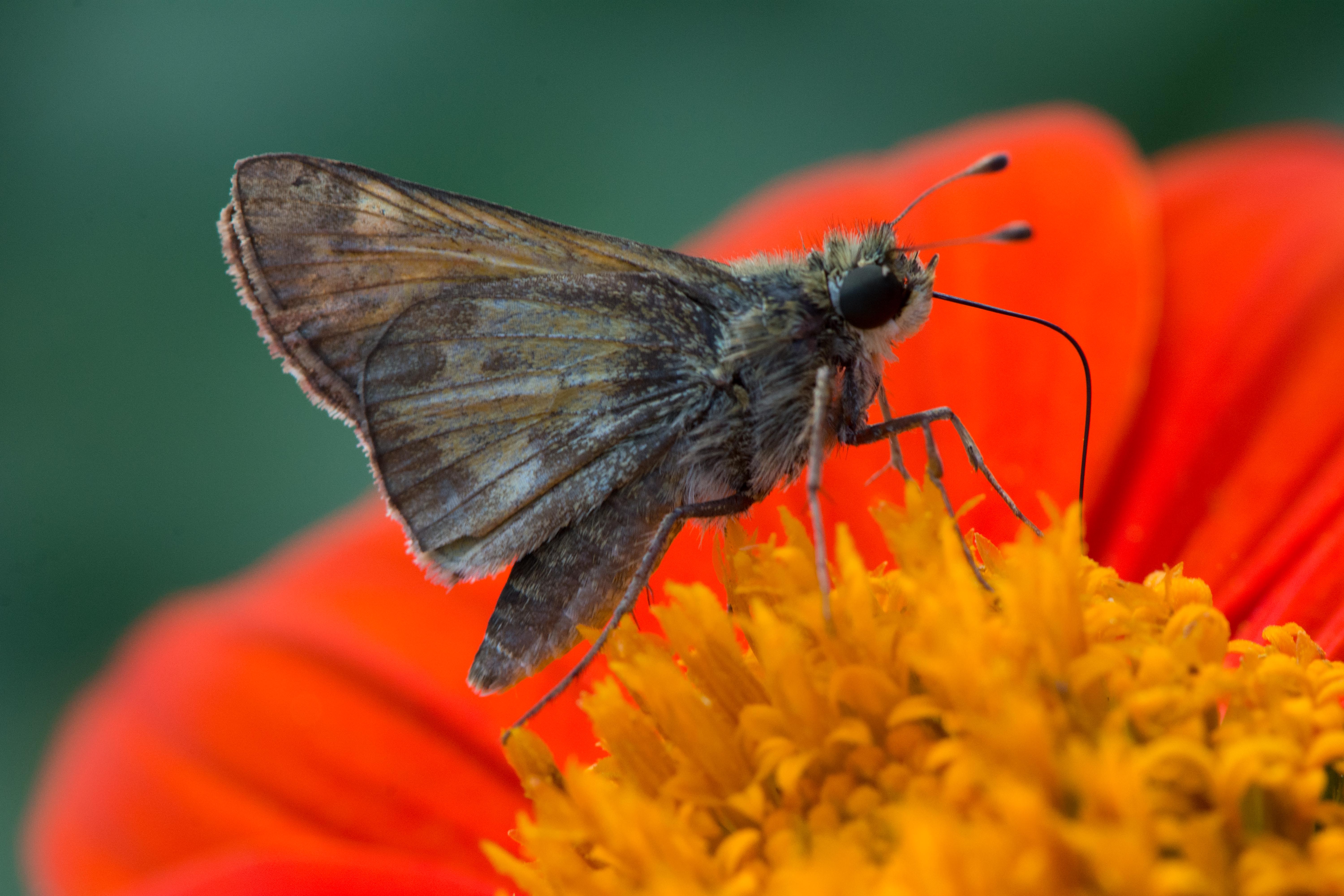
I had one moment of shock and horror, when my Nikon D7100 came loose from its strap. I’d gotten an over-the-shoulder strap that screws into the tripod mount, and it somehow got unscrewed. It hit the asphalt hard. Picking it up, I expected to see cracks in the lens and the back screen, but everything looked OK. My test shots seemed fine. The only apparent damage was a minor scratch on the bottom on the housing. It’s a tough little bugger! I got this butterfly at Fletcher Park the next morning.
14 08 24_1697

We ate at a new Nepalese/Indian restaurant on Hillsborough Street called Kabab and Curry. The menu had good options for vegetarians, and everything we tried was excellent. We shared veggie pakoras, and I had the vegetarian sampler, called rani thali, which included shahi paneer, alu gobi, chana masala, and dal makhani. The food was spicy in a colorful way, stimulating but not overwhelming, with a variety of textures. A bright addition to the local asian dining scene. I’ll definitely be going back.
14 08 23_1620_edited-1

The beautiful Bay, and life without Robin Williams

14 08 10_1432_edited-1
I was privileged to attend the Linux Foundation member counsel’s conference this week in Palo Alto, where I joined several dozen smart lawyers who shared their views on legal issues in the open source space. Before the conference, on Sunday, I had a free afternoon to do some exploring.

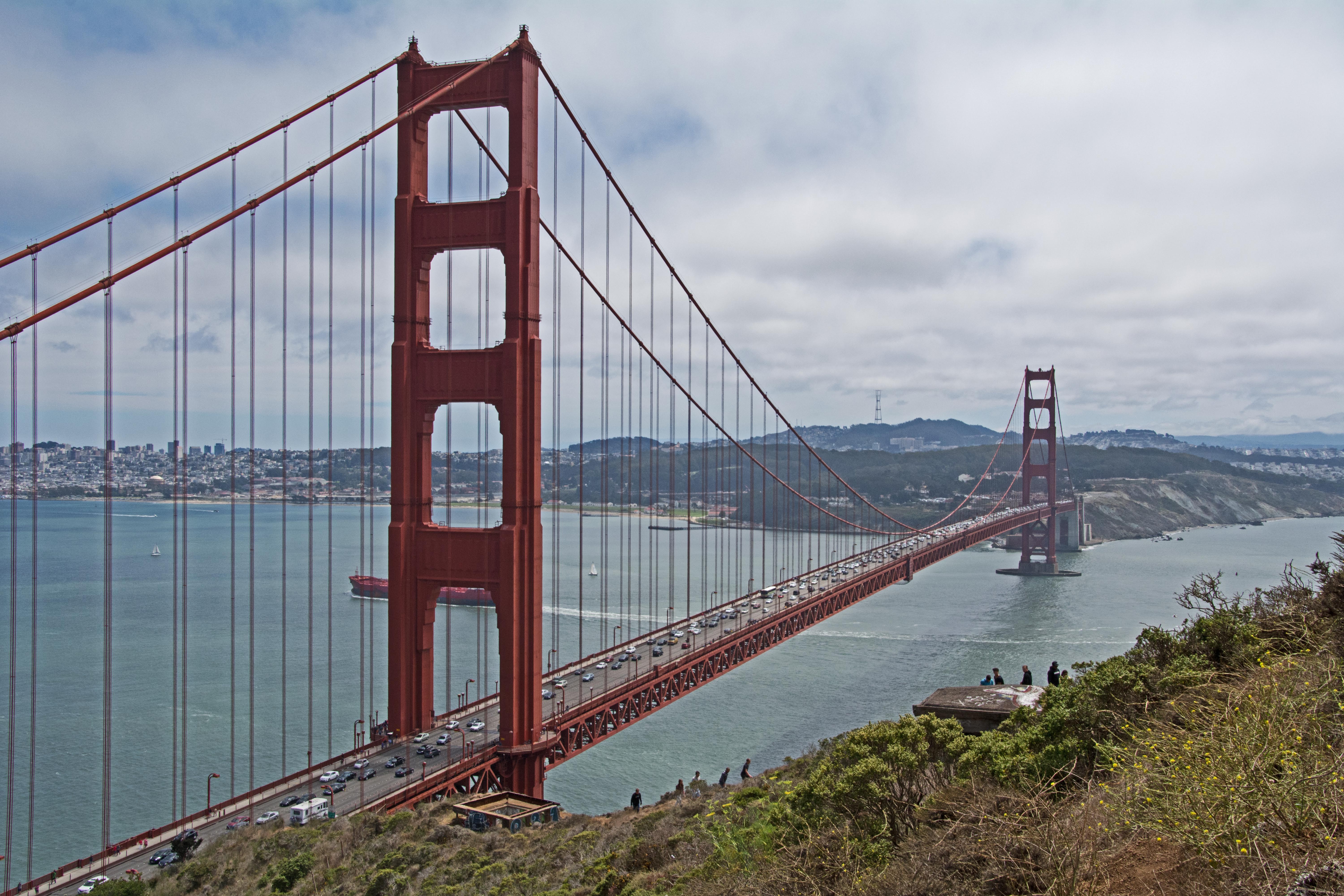
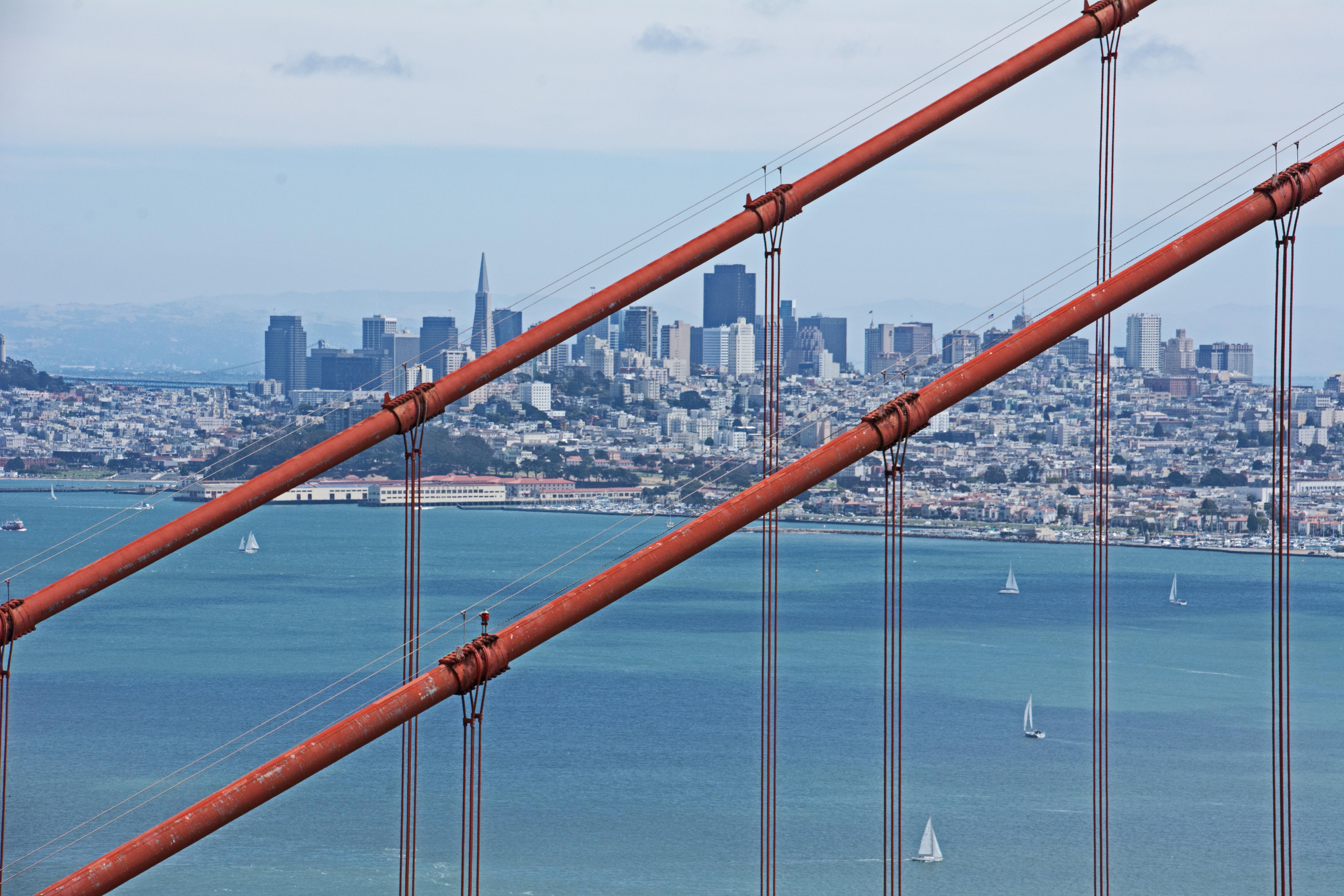
I drove my rental VW Jetta (which handled nicely) from San Francisco airport over the Golden Gate Bridge to the Marin Headlands park. I started with the visitor’s center, where I studied a map and formed a plan to drive a circuit with a couple of stops for some hiking and photography.

The road through the brown hills was windy. When I reached the Coastal Road, the view was spectacular. My plan to walk about almost fell apart when I could not find a free parking space, but on the last pass through someone pulled out, and I pulled in. Then I walked back down to Vista Point.
14 08 10_1429_edited-1

The weather was cool and windy, and the skies were extremely changeable, transforming from overcast to partial sun to dense fog in the space of a few minutes. There were, by moments, amazing views of the bridge, the bay with skimming sailboats, and San Francisco. Some high-spirited young people asked me to take their picture with their Polaroid camera, which I was happy to do.
14 08 10_1468_edited-1

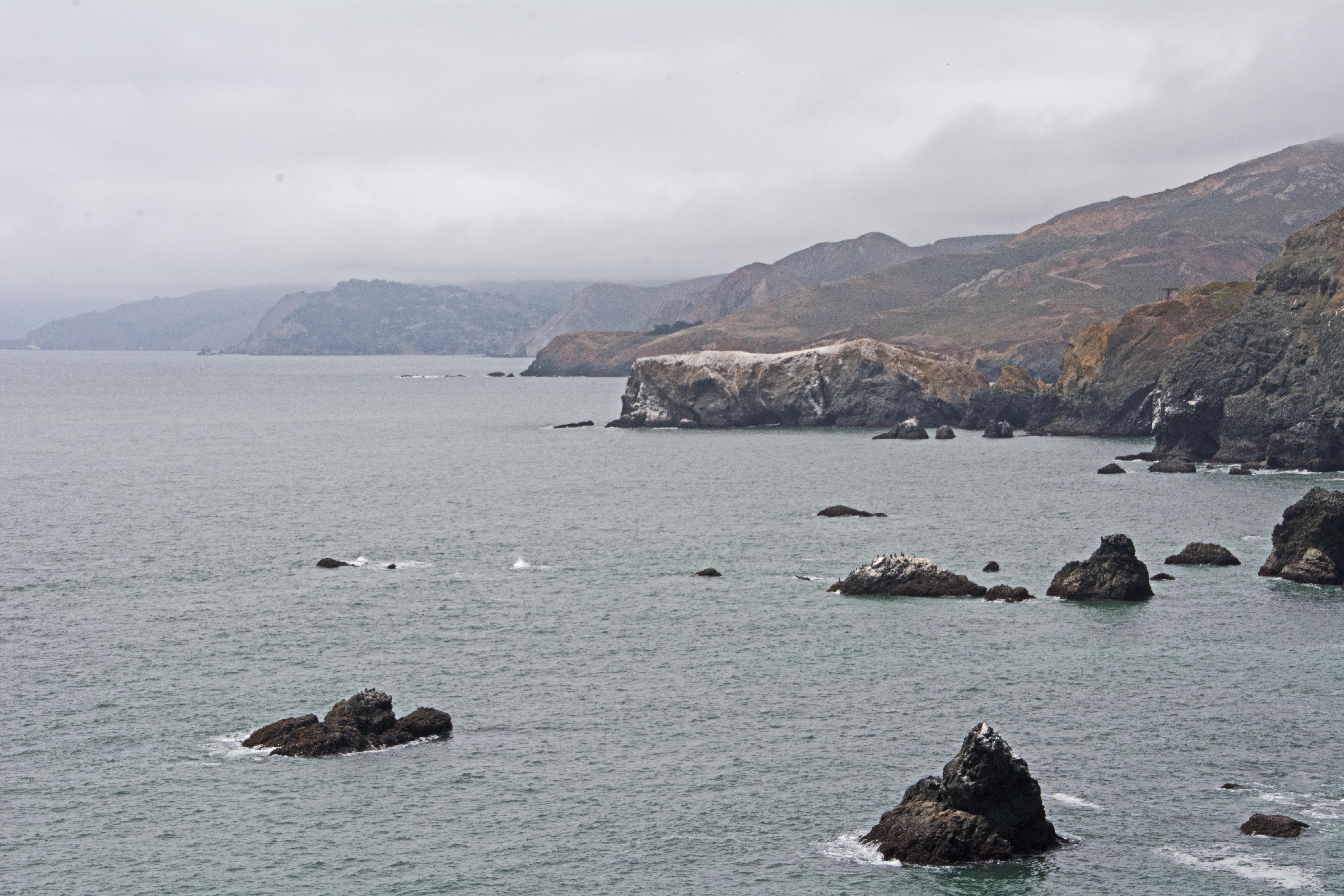
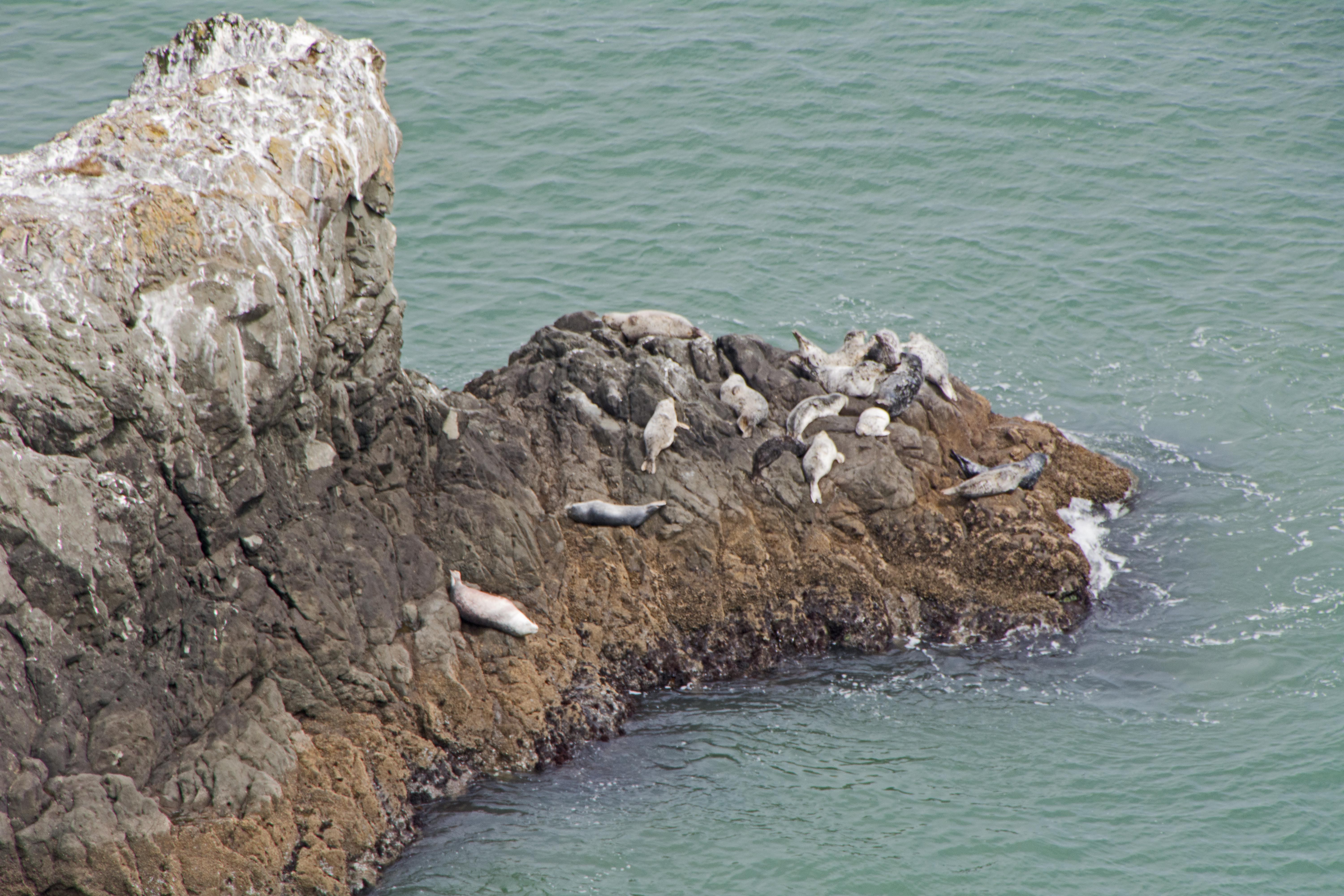
Then I drove on a very steep and winding road toward Point Bonita, where I hiked down to the lighthouse. There were harbor seals resting on a rock in the bay. From the suspension bridge to the lighthouse, there was a lovely view of cliffs coming down to the Pacific.
14 08 10_1456_edited-1

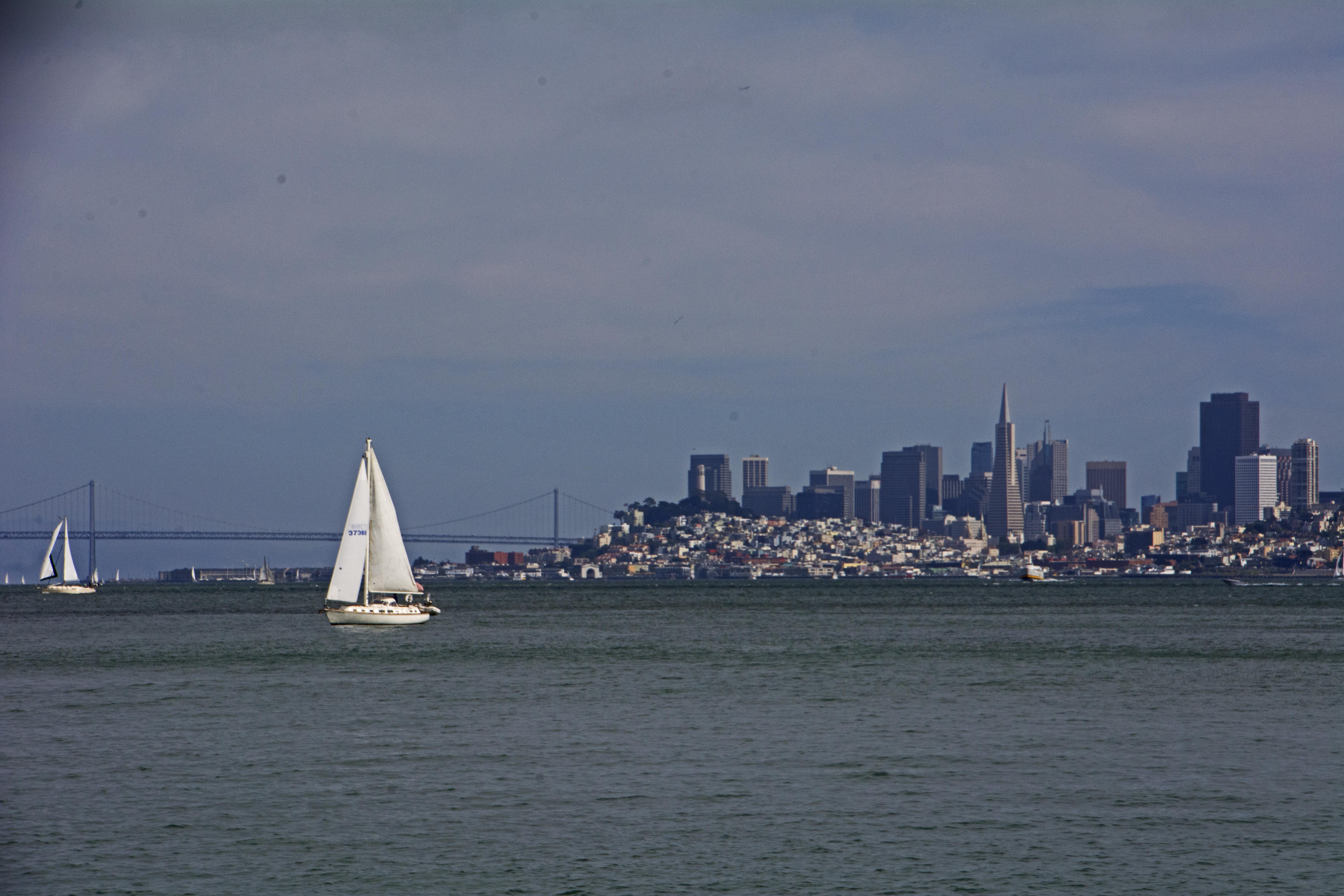
From Point Bonita I drove down to the town of Sausalito, where there were many bicyclists, yachts, street performers, and a fine view of San Francisco. I walked the main street of upscale shops and restaurants, and treated myself to an ice cream cone.
14 08 10_1473_edited-1

I’d thought of taking the ferry over to San Francisco, but was unable to find a legal parking space, and also was starting to feel tired. So I decided to drive on down to the hotel in Palo Alto. I’d counted on using my Galaxy smart phone and Google Maps to get directions, but the battery was very low. I put in the backup battery, and it failed to work. I looked for my extra backup battery, and couldn’t find it. My final backup system was the Enterprise rental car map, which did not have a detailed view of how to get through San Francisco. I felt a spike of fierce anxiety. I’ve gotten dependent on Google Maps. But my map reading and directional intuiting skills had not totally atrophied, and I eventually made it.

I learned the next day that Robin Williams had just died not far from where I’d been enjoying the bay and ocean views. I was a big fan of Williams, and felt shocked and sad to hear he’d gone, and even more sad to hear he’d apparently taken his own life. Such a brilliant comic talent.

At dinner that evening, we talked about his better movies, and I realized the works I cared about the most were his stand up comedy specials, which were both transgressive and sweet, full of manic energy and human warmth. I would have hoped that his special gifts gave him joy and satisfaction, and it’s hard to fathom how he could have come to the point of rejecting his own life. But he did. And although I can’t say it makes any sense to me, I think he was entitled to make the choice, and not be second-guessed.

A charming New England beach trip, with friends, shorebirds, croquet, and a spot of evolutionary theory

14 07 20_0754_edited-1
Last weekend we took Friday off and flew to Boston, then drove down to Westport, Massachusetts, a small coastal town on the border with Rhode Island, where we were privileged to be guests of Sally’s cousin and her family. The area has a lot of New England charm, with stone walls and farm fields. Our hosts’ house was beautiful, and also well designed for relaxing. We did a lot of sitting around and talking, eating, and laughing.
14 07 20_0809_edited-1

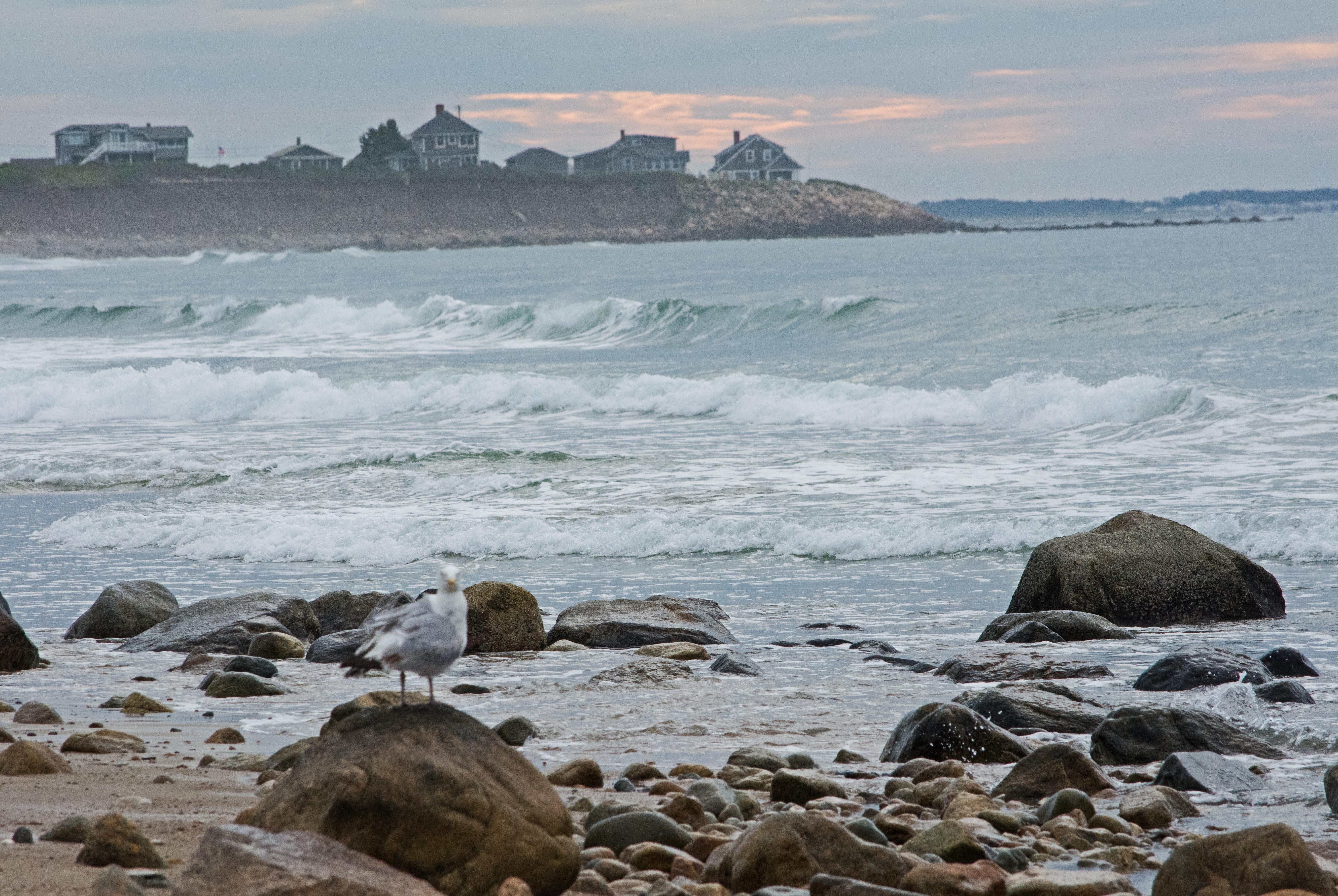
Two mornings I got up early and walked down to the beach to stroll with my camera. The beach was rocky, but pretty. It was peaceful to just walk with no one around as the sun came up. I watched the shore birds, and felt a combination of amusement, delight, and wonder.
14 07 20_0796_edited-1

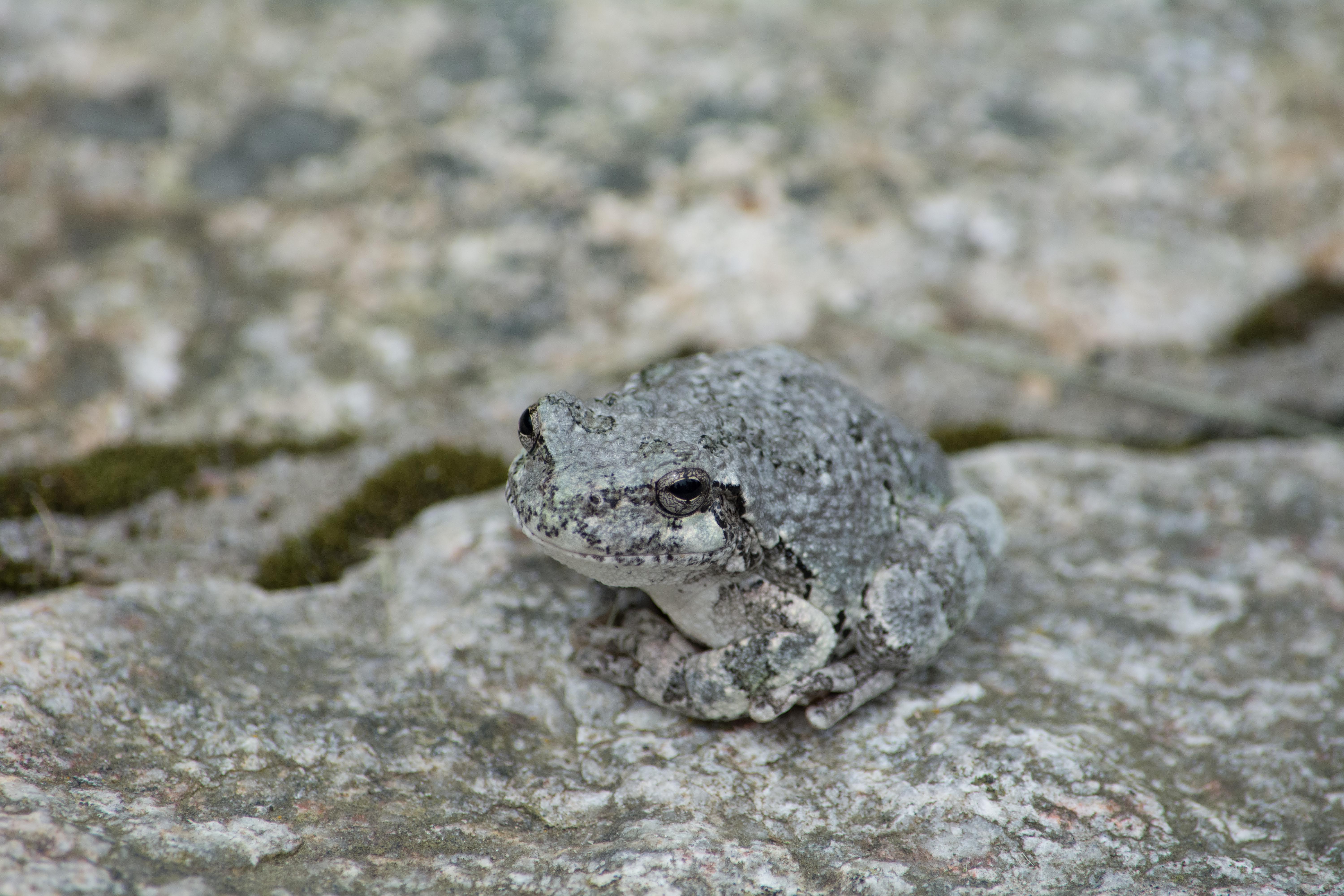
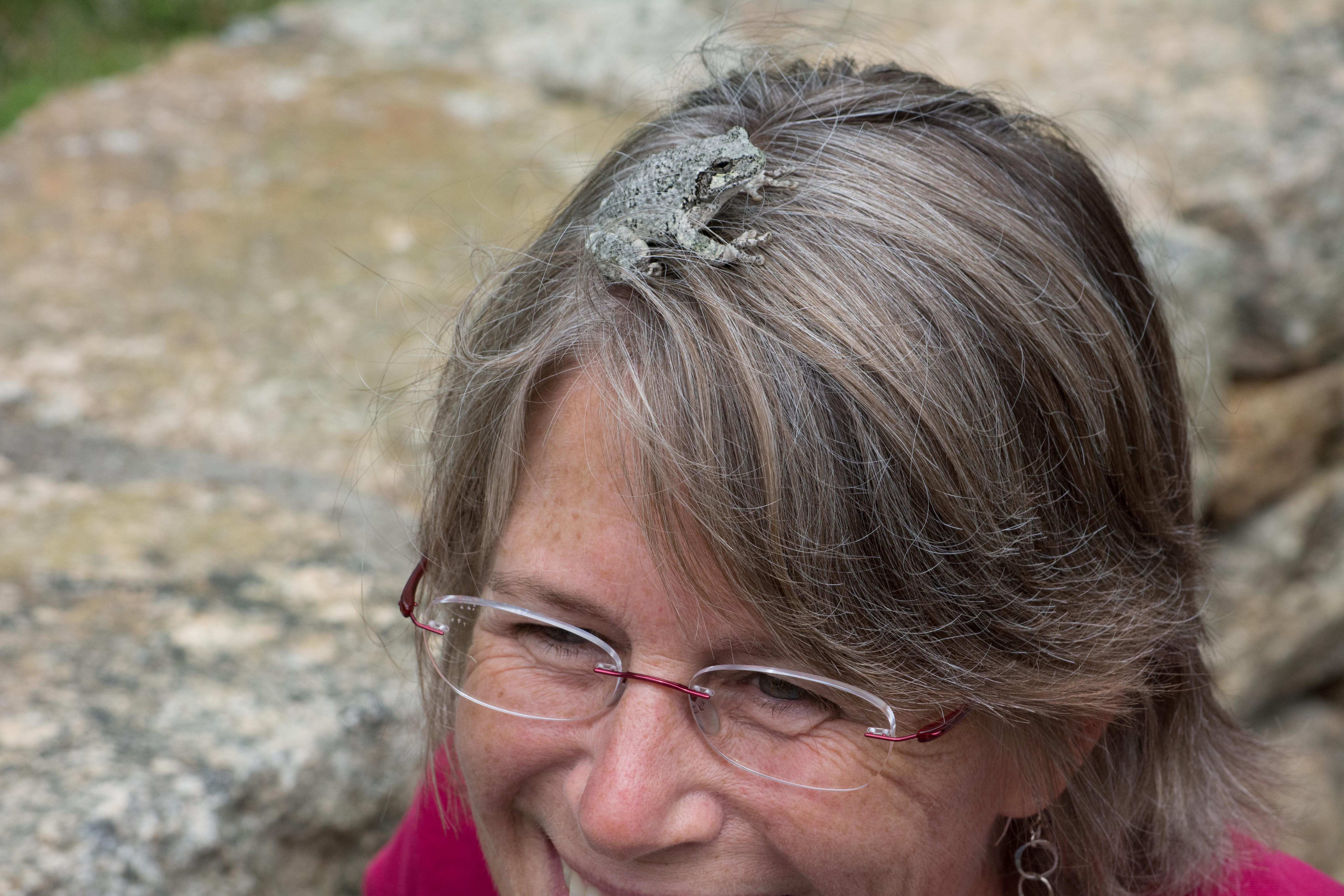
In the backyard, we saw a beautifully camouflaged tree frog sitting on the stone wall. It decided to jump onto Sally, which she liked.
14 07 19_0977
14 07 19_0984

We also took a boat ride and saw quite a few ospreys, including nesting fledglings and patrolling parents.
14 07 19_1035_edited-1

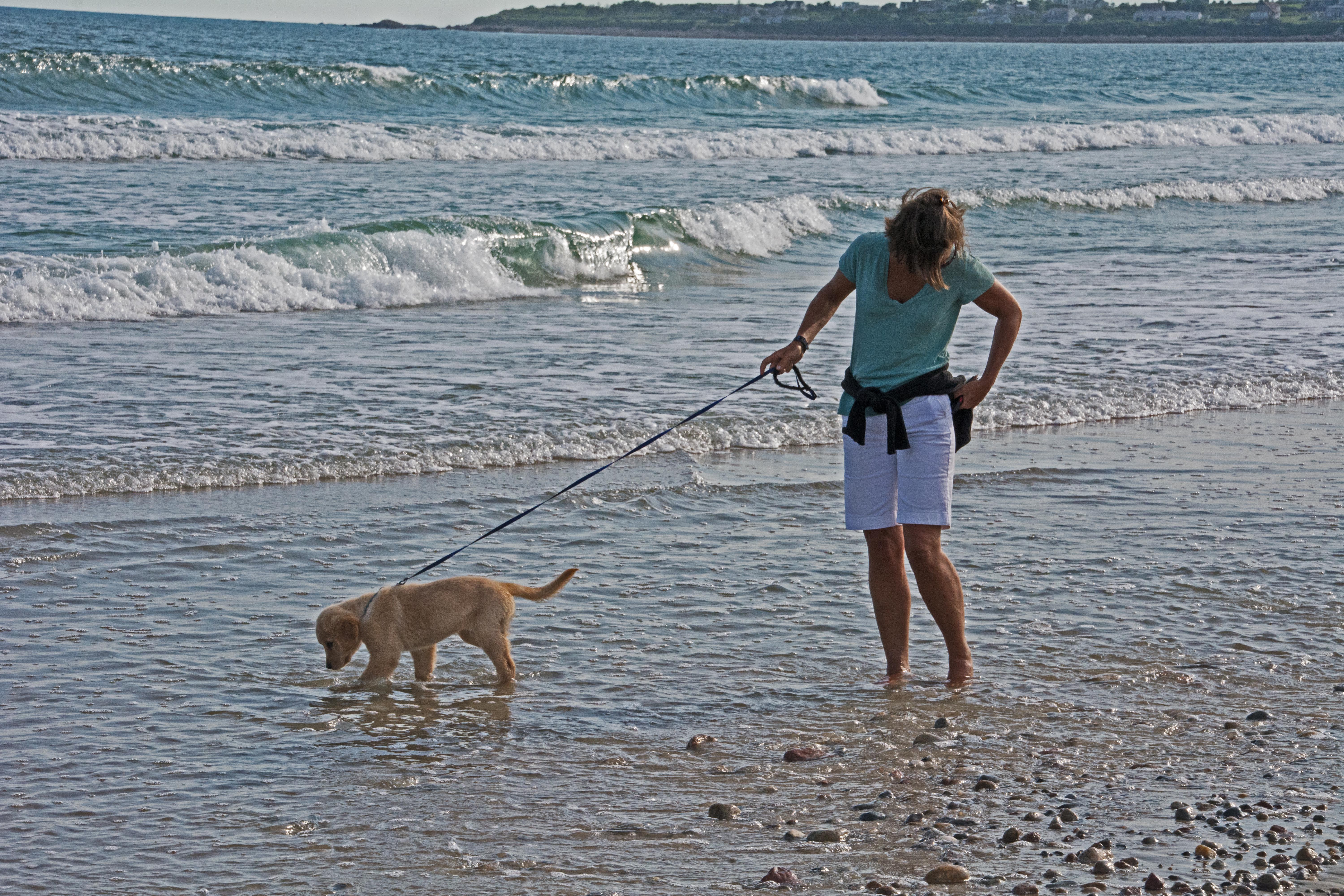
We took along a 12-week-old golden retriever puppy, the cutest thing ever, friendly and curious, with amazingly soft fur. This one had a specially designed life jacket.
14 07 18_1116
14 07 20_0832_edited-1
14 07 19_1028

14 07 18_1086_edited-1

On Sunday after a beach walk and a lovely breakfast, we watched the end of the British Open, where Rory McElroy triumphed like a true champion. Then we played some croquet in the backyard. It had been some years (like maybe 40) since last I tried croquet, and I was definitely rusty. But it’s a fun game, and I’d enjoy playing again.
14 07 20_0838_edited-1

It was also fun to sit on the back porch and read. I finished re-reading Last Ape Standing: The Seven-Million-Year Story of How and Why We Survived, by Chip Walter,a book that must have not been too successful, since Jocelyn had a free copy for me. It is a non-specialist science book about the evolution of homo sapiens and other humans.

I hadn’t known that we were only one of at least twenty-seven human species that existed in the last seven million years, some of which overlapped in time with us. Our kind originated about 200,000 years ago, but came close to extinction about 70,000 years ago, when only 10,000 or so individuals were alive in southern Africa. Walter’s book explores how it is that we alone survived and became what we are.
14 07 20_0765_edited-1

Our brains had something to do with it, of course, but that begs the question why our brains became what they are. According to Walter, it relates to our long childhoods, which relate to our ability to learn from other humans, which relates to our social natures. We are naturally curious – learning machines. And we are creative, because creativity gains attention for the individual and brings innovative progress for the group. Our development of symbolic thought and complex communication systems allowed for social organization that made us the dominant creature on the planet. There’s a lot interesting fact and theory here, and also an acknowledgement that there’s still much we don’t know about ourselves. A stimulating, worthwhile book.

Beautiful dragonflies, an unlikely soccer victory, and my hand injury

14 06 28_0215_edited-1
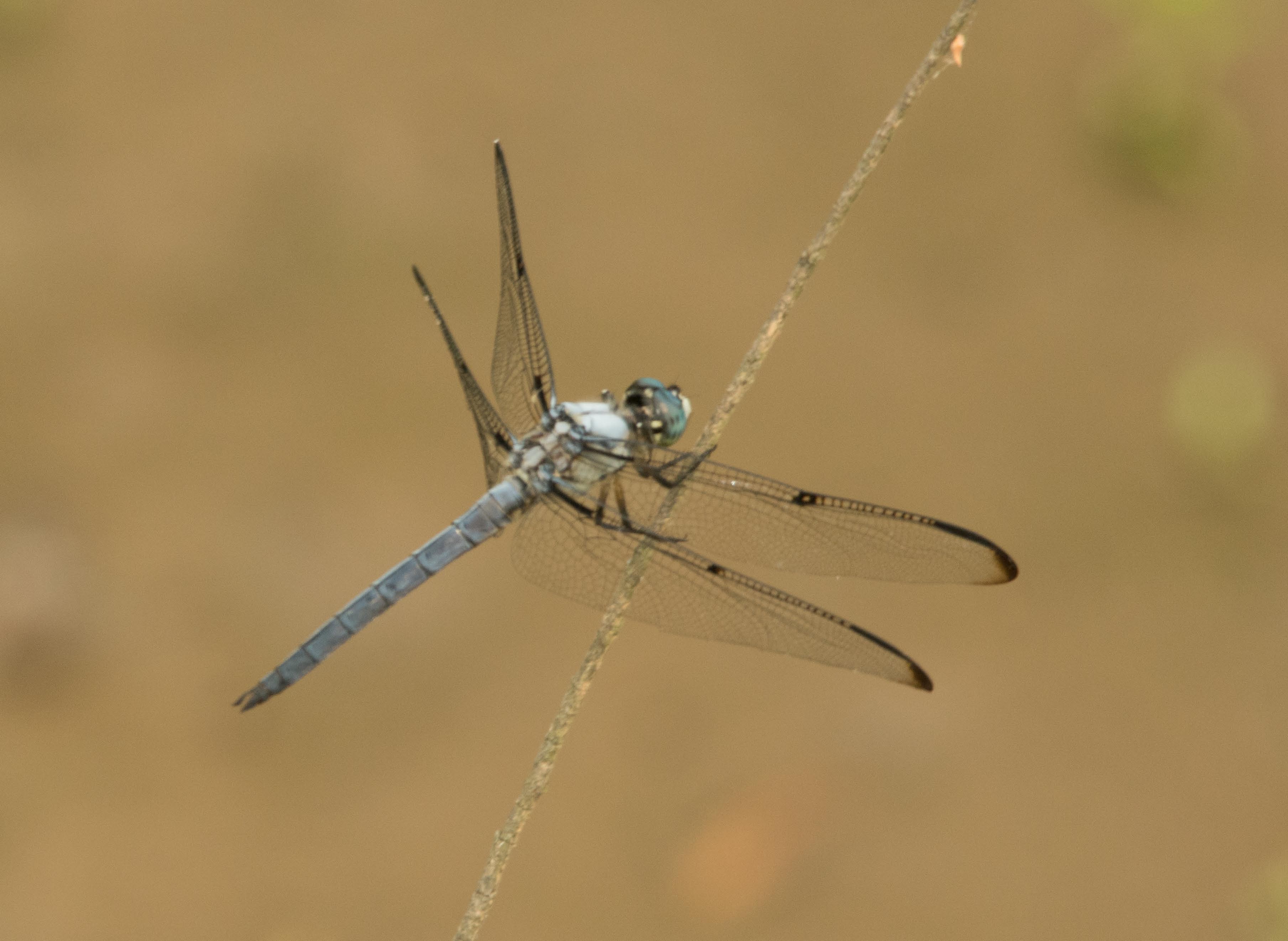
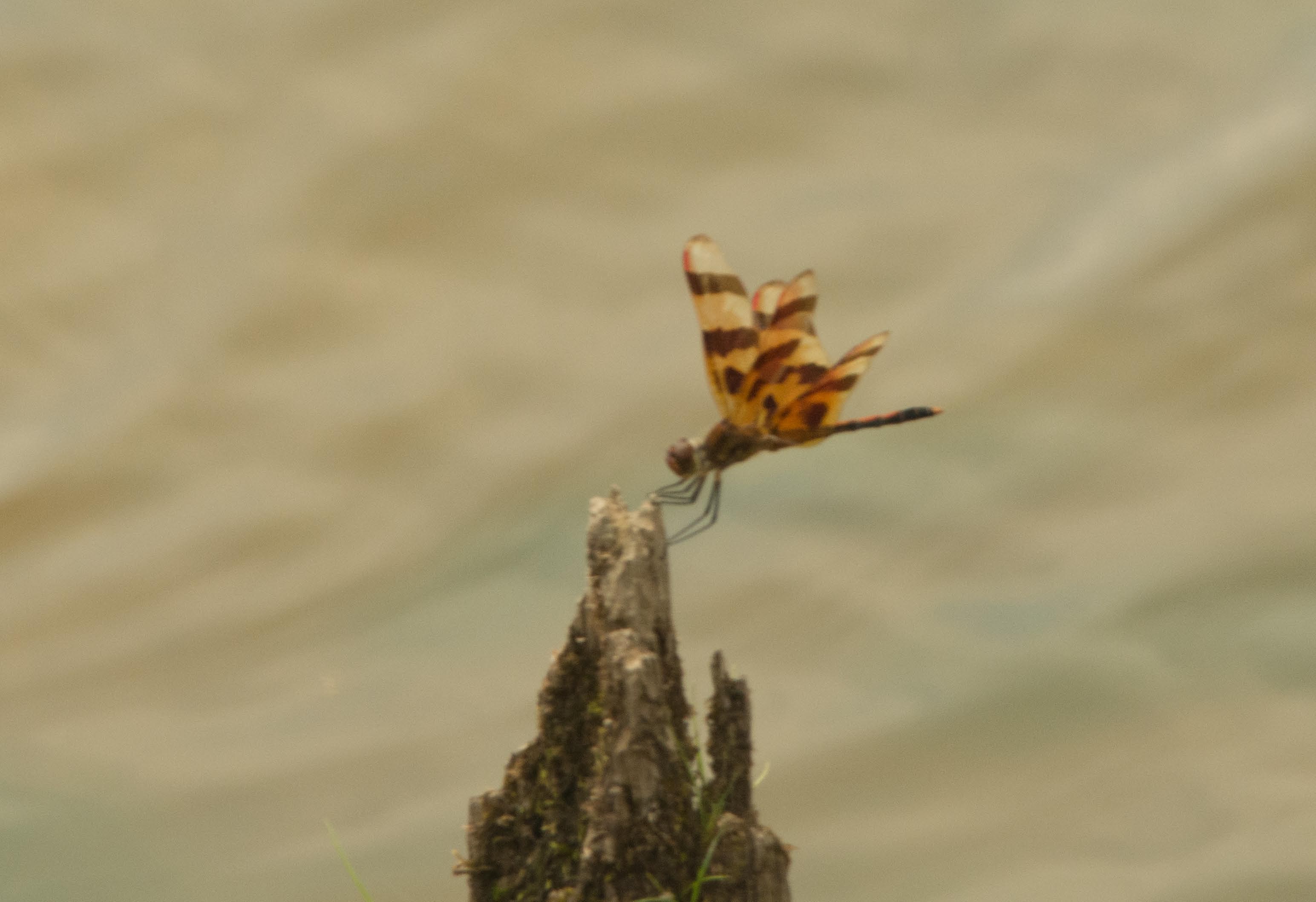
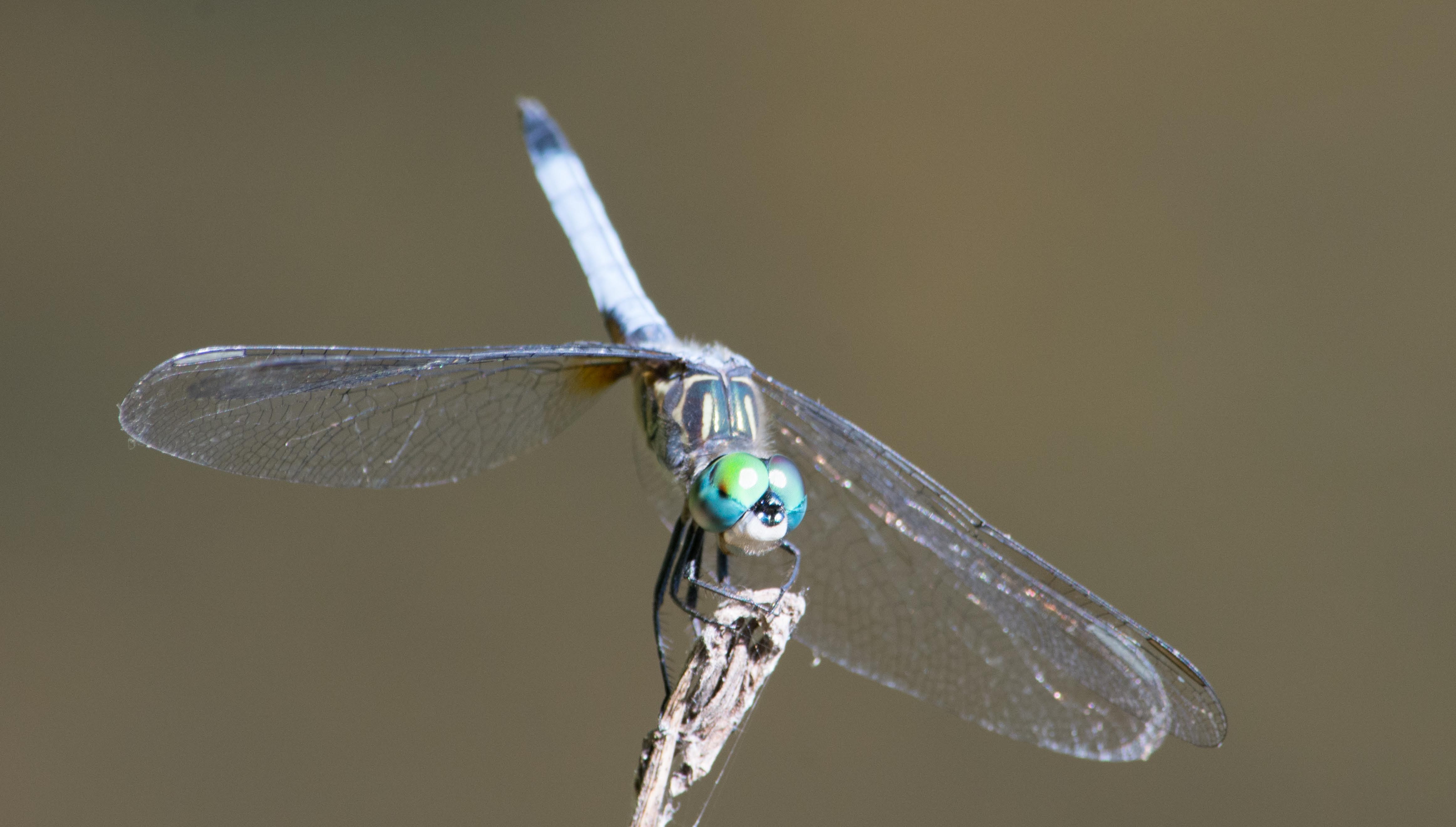
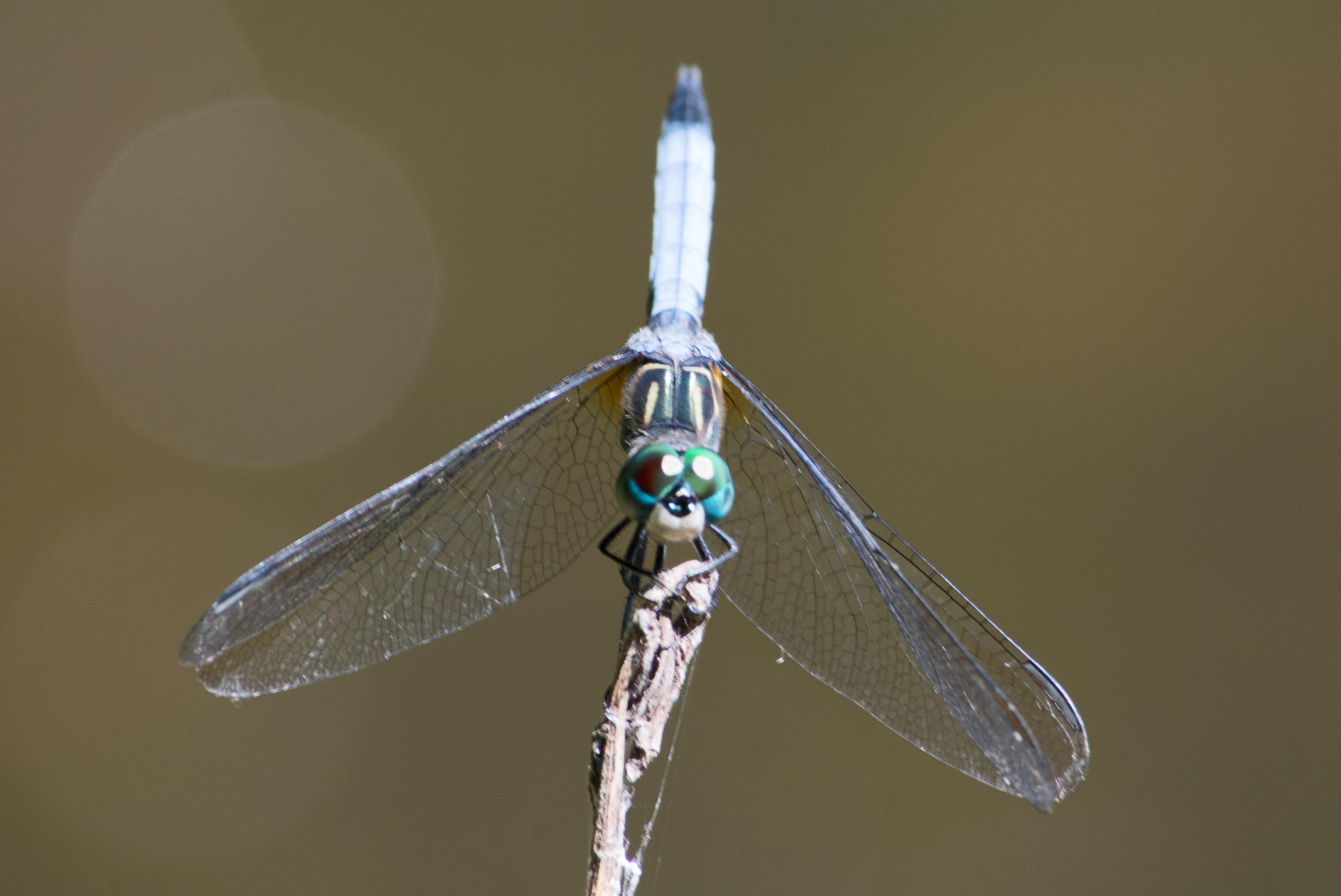
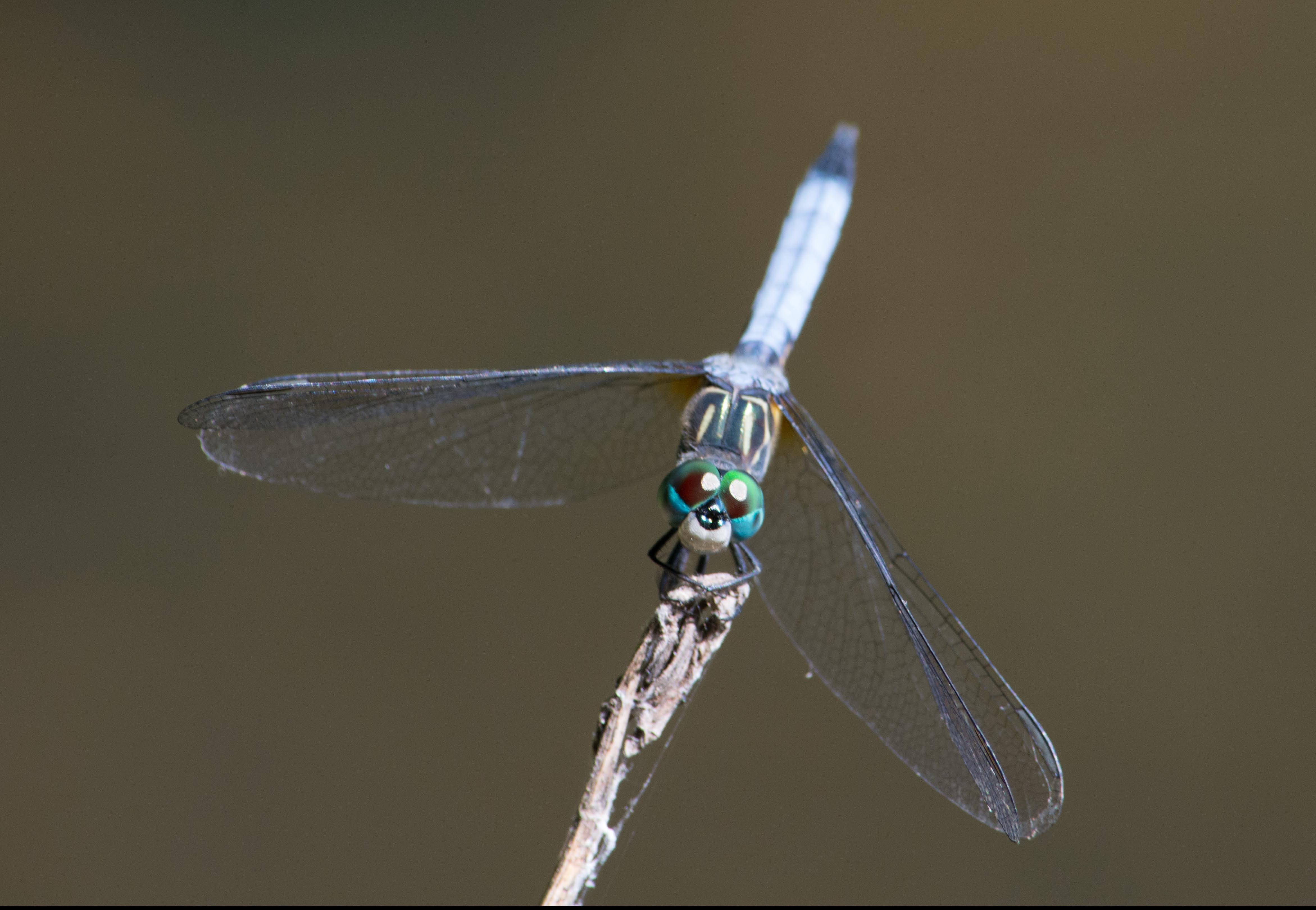
I spent some quality time this weekend with my camera looking for dragonflies. They are amazing aerialists, with the ability to hover, fly backwards and upside down, and attain speeds upwards of 30 miles an hour. They eat mosquitos, among other prey. Their eyes are the largest in the insect world, taking up most of their head and allowing them to look in all directions. And up close, some are quite beautiful. At the boardwalk over the swamp at Raleigh Boulevard, I found great blue skimmers, common whitetails, Halloween pennants, along with others who buzzed about but declined to perch for a picture. At Lake Lynn, I found a particularly cooperative blue dasher, who did a series of quick poses for me, three of which are below.
14 06 28_0239_edited-2

We got to see some high-grade soccer up close and personal this week when the L.A. Galaxy came to town to take on our Carolina RailHawks. The contest was part of the U.S. Open Cup, with the winner advancing to the round of sixteen. The Galaxy had been beaten twice before by the RailHawks at home, when they’d failed to send their top players, so this time they showed up with their stars, Landon Donovan and Robbie Keane.

We won! Even to my inexpert eye, it was clear that the Galaxy was the stronger team, dominating in possessions and shots on goal. But with a determined defense and heroic goal-keeping by Scott Goodwin, the RailHawks survived the first 90 minutes with a scoreless tie. They finally broke through with a powerful score by Daniel Jackson in the first of two fifteen-minute overtime periods. The moral of the story? Sometimes you win even when your opponent has superior resources. You may as well give it a shot, since the competition may stumble or you may exceed expectations — you never know. Anyhow, it was fun to see world class athletes competing, and satisfying to somehow come out on top.

14 06 29_0326_edited-1
14 06 29_0324_edited-1
14 06 29_0327_edited-1

I’ve been more-than-usually conscious of physical limits these last few weeks since hurting my hand during our holiday in Dominica. The accident occurred because of my unreliable depth perception, which stems from my retinal detachment last year. I was stepping onto a boat to go whale watching and thought the deck was six inches higher than it was. That is, I put my weight on thin air – then went down hard. All this happened fast, so it’s hard to be sure, but it’s likely I tried to protect my D7100 as I fell. Anyhow, I didn’t catch myself with both hands, but rather went down on my right hand, twisting it backward. Afterwards, it swelled up like Micky Mouse’s, and hurt a lot. But it was still usable, so I figured it was no worse than a bad sprain.

But after seven weeks, it was still hurting and weak. I could play the piano, but not with my usual gusto – loud octaves in Liszt pieces were painful, and twisting movements and trills did not work well. Certain simple daily tasks, like opening jars and buttoning buttons, were difficult. I wasn’t making much progress, and decided to go to a hand specialist.
14 06 28_0202_edited-1

Dr. George Edwards of the Raleigh Hand Center took some images and quickly diagnosed a radial collateral ligament tear in my middle finger. He taped it to my forefinger and instructed me to stay taped for the next few months. There’s a chance it will heal up, but an equal chance I’ll need surgery, and the surgery would involve many weeks of recovery. Meanwhile, no piano, and no golf.

I was shaken to hear this. The idea of hand surgery actually scares me more than eye surgery (of which I’m a battle-scarred veteran). Losing mobility in the middle of my dominant hand would be serious. In particular, losing the ability to play the piano would be catastrophic.

But I soon noted that my hand pain was mostly gone from the tape job, and I decided to focus on the 50 percent chance that everything will be fine. It will be challenging to maintain my usual good cheer without my usual daily dose of keyboard therapy, but I’ll do my best. I’m thinking that I’ll try to burn off some of my musical energy by working on my solfege (sight singing) and other listening skills.

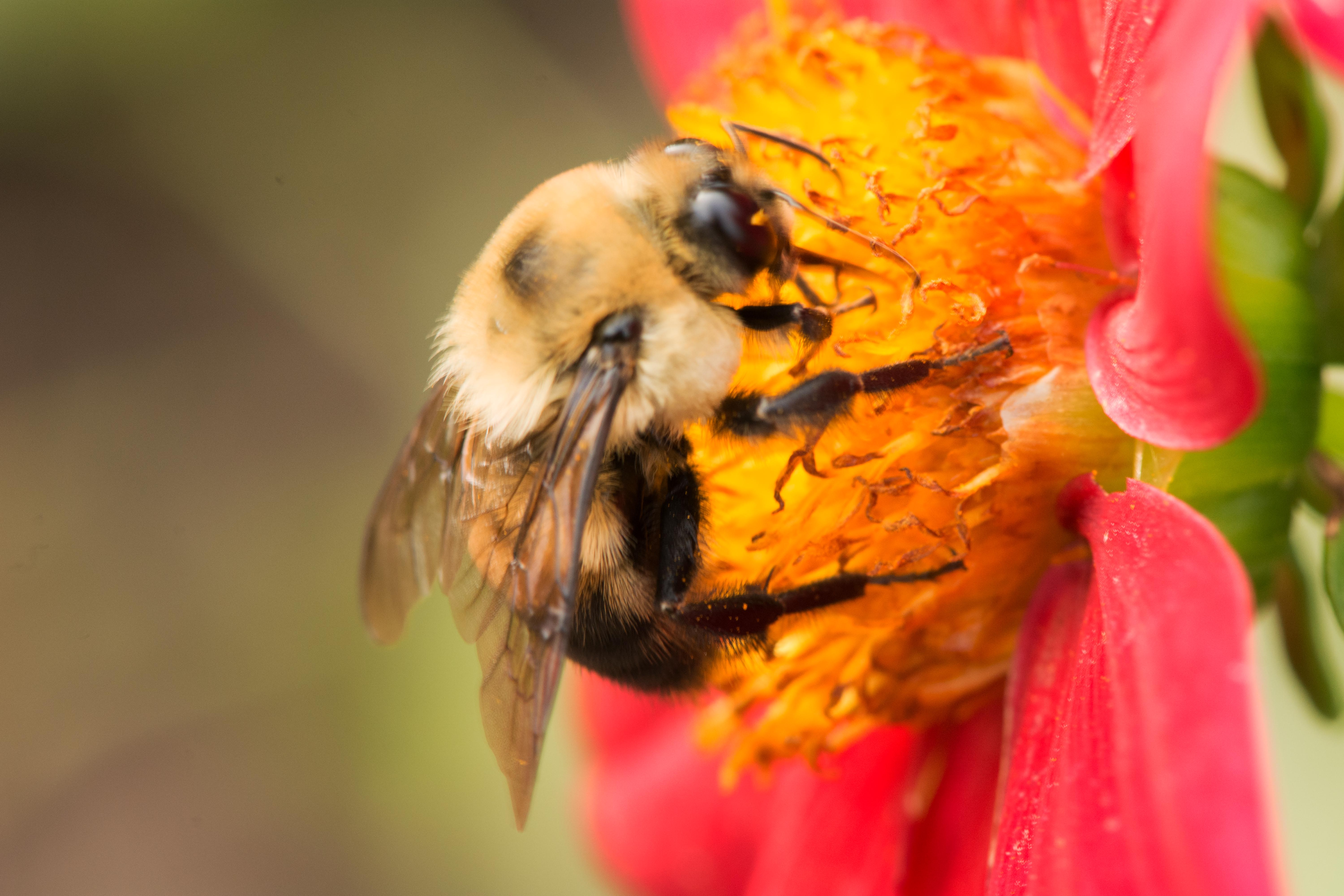
Speaking of more cheerful things, here are some photos I made on Friday evening at Raulston Arboretum of bees hard at work.

14 06 27_0176_edited-1

14 06 27_0171

14 06 27_0183