The Casual Blog

Category: public policy

Breathing better, climate change changes, and the amazing Birdman

_DSC8116
A lot of things that are good for us are kind of tough, at least initially. I’m thinking especially of avoiding junk food and exercising, which require an up-front investment of time and energy. So I was pleased to come upon a report of a good-for-you activity that’s free, easy, and immediately rewarding. According to the Wall Street Journal this week, deep, slow breathing can help with stress, migraines, and other disorders. This stimulates the vagus nerve and causes the release of acetylcholine, which slows down the digestive system and heart rate.

This beneficial effect was not completely surprising to me, as this is the kind of breathing we do in yoga, and it feels good. At our 6:00 a.m. yoga class last Tuesday, Suzanne was coaching us to breath in on a slow count of 4, pause, then breathe out to a count of 4, and pause again. I later tried this technique when I was having trouble sleeping, and whoosh, off I went to dreamland.

_DSC8140

I’ve been taking particular note lately of how many of our most fervent beliefs are dubious, and how resistant many of those beliefs are to change. For example, no amount of evidence seems to shake the certainties of opponents of evolution (forty some percent of Americans). I was worried that this was where we were on global warming, as we head toward the precipice.

But this week there was some good news: more people are taking the view that we’ve got to get serious about climate change. This week a NY Times poll“found that 83 percent of Americans, including 61 percent of Republicans and 86 percent of independents, say that if nothing is done to reduce emissions, global warming will be a very or somewhat serious problem in the future.” Two-thirds said they’re more likely to vote for political candidates that support addressing global warming. Even Republicans are moving in the right direction: 48 percent of them went with the majority.

So the overwhelming majority of us agree that we’ve got to get to work on saving the planet. This is encouraging.

Still, what could explain the people who think we have a serious problem but will not support doing anything about it? Is it amoral cynicism and greed? Whatever it is, we need to make sure those people do not win.
_DSC8115

We finally got out to see Birdman this week, and thought it was great. Michael Keaton plays Riggin Thomson, a former action movie star who’s gone downhill but has decided to take a big chance and direct and star in an angst-ridden play that’s opening on Broadway. Riggin seems to be going crazy, with bursts of despair and brilliance.

Is it a very dark comedy, or a surreal drama? It’s edgy and intense, and doesn’t fit neatly into any genre. It reminded me of the great movies of Bergman, Fellini, and Scorsese — psychological, visionary, and manic. A very interesting score (jazz drumming, Mahler), evocative photography, and very fine acting. It challenges us with ambiguities. It would like us to think.

I wish its gifted creators (including the remarkable Spanish director Alejandro Gonzalez Inarritu) good luck at the Academy Awards (where it has 9 nominations), but I’m afraid that it will be too original and unsettling for the Academy. I note that when Sally and I went to see it at the multiplex last Thursday, we were the only ones in the theatre.

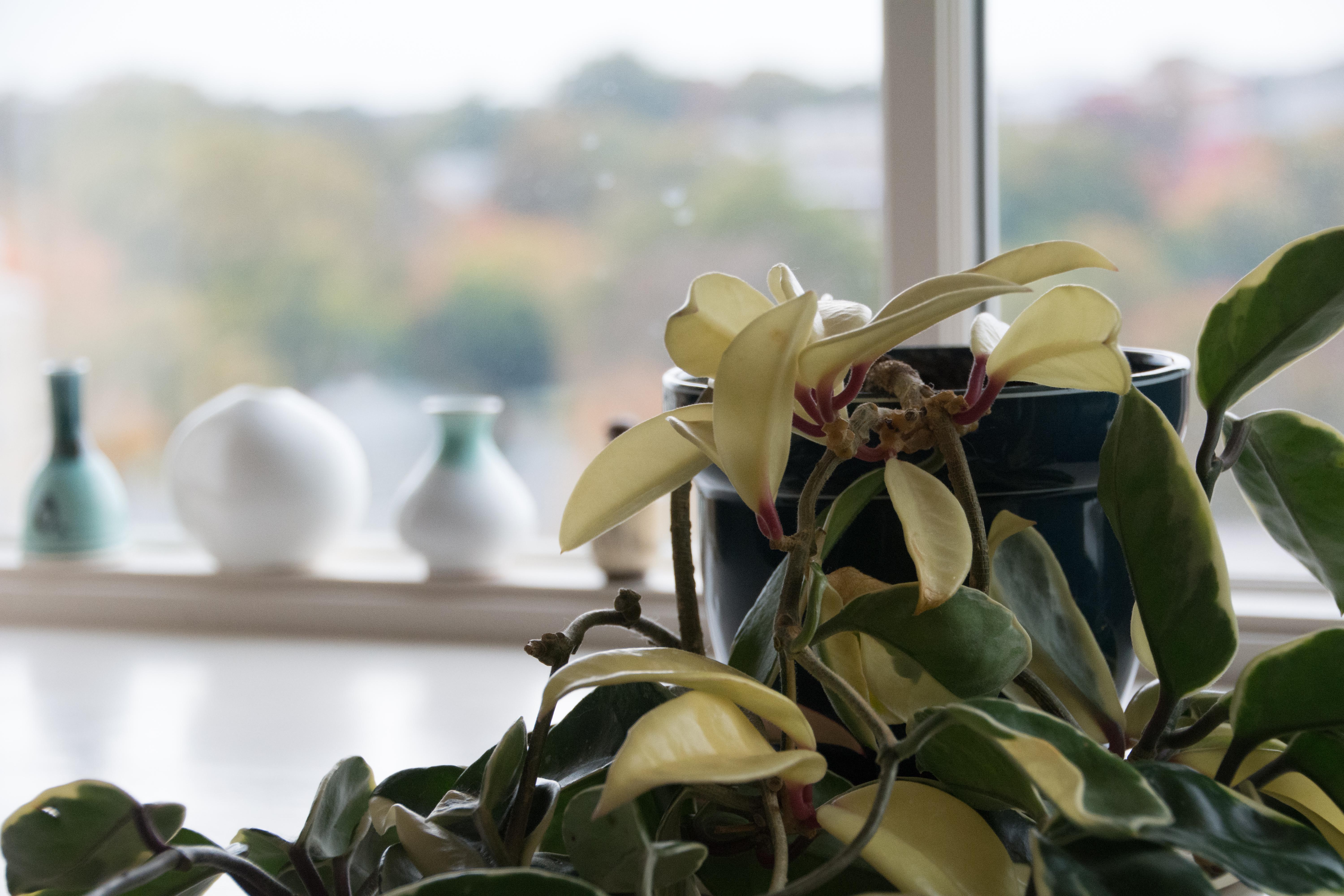
Re the pictures: Sally brought home some roses from Whole Foods and made a lovely arrangement. She’d discovered that though the cats like to eat certain flowers, and then throw up on the rugs, they were less drawn to this kind. I liked the light on Saturday morning.

_DSC8118

A piano recital, Turing’s secrets, NSA surveillance, and the cure for addiction

_DSC8060_edited-1
It was rainy and raw on Friday evening when Sally and I drove over to Durham, and the traffic kept bunching up. We were a bit anxious about being late to meet our friends at Watts Grocery, and we were late – they’d already ordered drinks and salads. But they forgave us, we caught up, had a good dinner, and made it in good time to a concert at Duke’s Baldwin Auditorium, where we heard a program by the eminent pianist Jeremy Denk.

Denk is a musician’s musician. His program was, as he put it, a mix tape of Schubert dances shuffled together with short Janacek pieces, and also some atypical Haydn, some atypical Mozart, and Schumann’s odd and powerful Carnival. Everything he played seemed thought through to the smallest detail, but at the same time full of feeling.

For encores he played the slow movement of Ives’s Concord Sonata, and one of the slower Goldberg Variations, both of which were exceptionally colorful and beautiful. Though not a particularly good-looking guy, he was also fun to watch, with gestures that accorded with the music and magnified the feelings. Later, I re-read his wonderful autobiographical essay from the New Yorker, Every Good Boy Does Fine, which I highly recommend.
_DSC8033-1_edited-1

We saw The Imitation Game last week, which was a bit staid but also touching. I knew something of Alan Turing, including his brilliant contributions to computing theory (including the Turing machine and the Turing test) and that he helped break the Nazi’s Enigma code. I hadn’t known how he did it, or much about him as a person. From the movie, he appeared distinctly anti-social. This being Hollywood, it seems safe to assume he was probably even harder to like in real life. But he contributed enormously to the world, before being hounded to death at age 41 for the crime of being gay.

Turing’s death was a tragedy, but in earlier chapters he was lucky, in a way. How inspiring and daunting it must have been to think that thousands of lives, and perhaps the future of western civilization, depended on whether you could succeed in an almost impossibly difficult code-breaking task. And by golly, he did it!

Indeed, although I’ve never thought of it this way before, our forebears who found themselves facing Nazism and Fascism were lucky, in a similar way. They had an unambiguous enemy, a massive threat, that could only be defeated by joining together, and with heroism and sacrifice. We seem to need big enemies to unite us as a society. That may be why, when we don’t have big enemies, we magnify smaller ones.

And so, as I discussed here last week, we push forward with the 13-year-old war on terror, which continues to morph. This week a coup in Yemen resulted in headlines suggesting we should panic over a new terror threat. The coup was actually by sworn enemies of Al Qaeda, but the fear seemed to be that increasing disorder was likely to lead to increased space for militant anti-Americanism to expand. That’s possible, I guess. But it’s possible that this is a civil war with entirely different drivers, tribal, religious, or financial. Perhaps it’s not all about us.
_DSC8016-1_edited-1

The thing is, when we panic we do foolish and deplorable things – domestic spying, torture, assassinations, war. This week the New Yorker has a piece by Mattathias Schwartz about the NSA’s collection of internet searches, social media, and metadata on phone calls – hundreds of billions of records, at a cost of tens of billion of dollars ($10.5 billion in 2013). Schwartz examines the question of how many terrorist attacks were stopped by this program, and finds . . . perhaps one. Not exactly saving western civilization.

Actually, the one was not so much a potential attack, and not so much in the US, as a financial contribution of $8,500 by a Somali born U.S. citizen that may have been made to Somalian guerrillas (the Shabaab) who had jihadist ambitions and Al Qaeda connections. The evidence sounds ambiguous, but there were three convictions, and rightly or wrongly, the defendants were sentenced to prison terms of up to 18 years. That’s all we got, in return for billions of dollars and constant surveillance of our everyday lives that undermines our privacy, our public discourse, and our Constitution.
_DSC8025-1_edited-1

As crazy and depressing as this is, it should be noted that there’s hope: our mass panics can be overcome. For example, it seems like there’s a light at the end of the tunnel in our costly and tragic war on drugs, at least as to marijuana. With several states in various phases of legalization, it’s increasingly hard to argue that using pot should be punishable as a crime. But it is still being punished as a crime in places, and we’re still spending $51 billion a year on fighting drugs here and around the world.

Jocelyn pointed up a piece this week in the Huffington Post with a new, to me, take on drug addiction. A basic premise of the war on drugs is that some drugs are so fantastic that they’re irresistible, and so they take control of and destroy lives. But the piece, by Johann Hari, suggests an alternative paradigm.

Hari reexamines the famous rat-with-cocaine experiment, where the rat is alone in a cage and keeps taking cocaine until it dies. Later research by Professor Bruce Alexander focused on the environment of the rat – which was caged and alone. When rats were put in more stimulating environments, including toys and rat friends, and offered the same drugs, they mostly shunned them. Alexander found that even rats that were thoroughly addicted to heroin kicked the habit when they had the benefit of other rats to socialize with and stimulating environments.
_DSC7995-1_edited-1

The theory expounded by Hari is that what drives addiction is not primarily chemical hooks, but rather isolation, and that what prevents it are meaningful human connections. This may also explain some non-drug addictive behaviors, like gambling. That is, drugs or gambling may be responses to other problems, like loneliness.

Hari notes that Portugal, which once had a very high rate of drug use, decriminalized all drugs 15 years ago, and invested some of the money saved from drug warring in social programs, such as housing and jobs. The rate of injected drug use has fallen by 50 percent. Fifty percent! I recommend reading Hari’s piece.

Sweet success at the Dawn Face, and a worrying new chapter in the war on terror

I was thrilled this week that Tommy Caldwell and Kevin Jorgeson completed their epic climb of El Capitan at Yosemite. It was widely agreed that this ascent of the Dawn Face, a 3,000 foot granite wall, was an almost impossible, transcendent athletic achievement. It took years of planning and preparation to complete this climb, and I’m sure they were not well-paid years. These guys were not motivated by desire for lucre or worldly success. It’s inspiring to see people with such passion and intensity. Hats off to them.

It’s good to cherish such heroic moments. They balance the difficult and depressing stories. It’s almost overwhelming to think about our enormous social and environmental risks and tragedies, but we’ve got to try. Part of the trick, at least for me, is making it a point to pay attention to the beauty around us.

The big depressing story this week was the aftermath of the shocking massacre at the French satirical magazine by religious extremists. This was a horrible crime, and it is inevitable that we feel shaken and confused by it. We want to have a narrative to make it make sense. But the emerging dominant narrative, organized around the idea that militant Islam poses a serious threat to the world order, could do far more harm than the Charlie Hebdo murderers.

It was only hours after the massacre that French politicians were declaring war on terror. I wanted to say, hey, wait, we tried that, and it was a disaster. America has so far spent thirteen years warring against terrorism – the longest war in American history – and there’s no clear light at the end of the tunnel. We’ve spent at least $1.5 trillion dollars and sacrificed the lives of many thousands of our soldiers while killing tens of thousands of enemy soldiers and hundreds of thousands of civilians. The net is that the small group of radical crazies that existed at the start of the “war on terror” is now a larger, more widespread group of radical crazies.

James Fallows wrote a piece in this months’s Atlantic about America’s puzzling worship of the military. As he notes, it is certainly true that individual soldiers commit acts of great bravery and make enormous personal sacrifices, and for these they should be honored. But as an institution, our military is enormously wasteful, seldom successful, and almost never accountable.

And the cost is staggering from any perspective. Fallows summarizes as follows:

The cost of defense, meanwhile, goes up and up and up, with little political resistance and barely any public discussion. By the fullest accounting, which is different from usual budget figures, the United States will spend more than $1 trillion on national security this year. That includes about $580 billion for the Pentagon’s baseline budget plus “overseas contingency” funds, $20 billion in the Department of Energy budget for nuclear weapons, nearly $200 billion for military pensions and Department of Veterans Affairs costs, and other expenses. But it doesn’t count more than $80 billion a year of interest on the military-related share of the national debt. After adjustments for inflation, the United States will spend about 50 percent more on the military this year than its average through the Cold War and Vietnam War. It will spend about as much as the next 10 nations combined—three to five times as much as China, depending on how you count, and seven to nine times as much as Russia. The world as a whole spends about 2 percent of its total income on its militaries; the United States, about 4 percent.

Got that? We’re spending more now on defense than in the Cold War, when we had an actual imposing enemy, and more than the next ten most armed nations combined. The sums involved are literally mind boggling. What has all this money got us? As noted, years and years of death and destruction. That’s about it.

The French are also debating whether they should beef up their security apparatus to allow more widespread spying on citizens. Again, there are some things they could learn from our experience. Our panic after the horrible killing in 2001 of almost three thousand of our citizens led us to create an enormous security apparatus that now surrounds us. Privacy is becoming a thing of the past. Our culture and political life are impaired, as we’re now conscious that our speech may be constantly monitored. We’ve repeatedly tortured prisoners. We’ve sacrificed some of our most fundamental constitutional principles and most sacred ideals.

How much terrorism does our massive security apparatus prevent? It’s impossible to know, though I suspect not much, in part because I don’t think there’s all that much terrorist violence that would happen anyway.

Although there are clearly some homicidal maniacs in the world, it doesn’t seem likely that the world is suddenly filled with homicidal maniacs, or that a large number of those are focussing their mania on you and me. We need to understand a lot more about militant Islam, which, to be sure, has a complement of maniacs that hate the West. But viewing militant Islam as primarily devoted to killing westerners is surely a mistake. Poor and ignorant Islamists have a lot of other things to worry about, like opposing ruling tyrants.

In the New Yorker this week, there’s a piece by Patrick Radden Keefe on corruption. It focuses in part on Afghanistan, where the regime installed by the US has been prodigious in looting the country. At last check, the CIA was continuing its deliveries to President Karzai of cash in paper bags amounting to tens of millions of dollars.

This systematic high level corruption is an outrage at many levels, but one that I hadn’t previously considered is the reaction of ordinary Afghans. According to research by Sarah Chayes, the leading reason that captured Taliban prisoners gave for joining the insurgency was the perception that the Afghan government was “irrevocably corrupt.” How ironic that our war on terror led to this.

It is, for us, hard to conceive of religious militancy as a rational response to extreme circumstances, but it’s worth thinking about. It seems more likely that the extremist movement is fueled more by such a combination of idealism, ignorance, and outrage at oppressive/criminal governments than it is by fury over women’s revealing clothing and comics about the Prophet. Anyhow, it’s a question to which we should find out the answer.

Seriously, let’s get the best possible research on why these people are fighting, what they really want, and what are possible responses before we continue for another decade, spending more trillions of dollars and sacrificing additional hundreds of thousands of lives.

Our holiday in Cozumel: diving, eating, and reading

14 12 31_4444_edited-1

Gabe and Jocelyn joined us in Raleigh for Christmas for the first time in several years. We ate and drank well and had some good laughs. Gabe had given himself a Canon G15 camera, which he’ll be using to get scenic pictures of Telluride for his company’s website and other publicity. It was fun talking photography, and he was taking amazingly good pictures. I was struck and a bit envious of his natural talent.

Last year I offered scholarships to both Gabe and Jocelyn to get their scuba certification, with the kicker that graduates would also get a holiday trip with us to a dive resort. Gabe couldn’t work out the logistics, but Jocelyn found a dive shop in New York and took the course. Last weekend she, Sally, and I sadly said good-bye to Gabe, and gladly went to Cozumel, Mexico.
15 01 03_4830

We stayed at the Cozumel Hotel and Resort, and went diving with Dive Paradise. The good points of the hotel were: friendly service, large pool, beach (small), walking distance to town, good breakfasts, and dive shop and dock directly across the street. Dive Paradise was a large operation with several boats, but the service was personalized and friendly. Our boats were not overcrowded and the divemasters were knowledgeable and helpful.

15 01 01_4626_edited-1

We did two morning dives each day. The boat trips were between 30 minutes and about an hour. Particularly good spots were: Palancar Bricks, Cedral, San Francisco, Tunich, and Delilah. Visibility was generally 60-70 feet, water temperature 81 degrees F. The current was strong in places; think Lost in Space or Gravity. Every outing was a drift dive. We were usually down for 50-60 minutes.
15 01 02_4803_edited-1

Jocelyn spent the first two days finishing her Padi course by doing 4 open water dives , then joined us on the rest of our expeditions. She had no problem with the deeper dives (around 90 feet) or the places with strong current. She handled herself well, and I was a proud papa.

14 12 29_4221_edited-1

We saw a great deal of sea life, most of it familiar to Sally and me. Particularly thrilling were a pair of spotted eagle rays, an enormous (beastly huge!) green moray eel, large lobsters, and several hawksbill turtles. There were many beautiful angelfish and queen triggerfish. We saw a few nurse sharks and barracuda. Sally saw a pair of squid, and quite a few tiny things for which she needed her magnifying glass. The coral in places was highly varied and gorgeous.
15 01 01_4586_edited-1

I took photographs with my new Ikelite housing and strobes for my Nikon D7100. The equipment was heavy and bulky, and difficult to transport, but I was pleased with the way it performed under water. One of my objectives was to get a good picture of a queen angelfish, which are challenging both because of their normally shy natures and their wild colors. I was fairly happy with the ones here.
15 01 02_4755_edited-1

We ate a lot of tasty Mexican food, including outstanding and creative meals at Kinto and Condesa. We also had Italian food one night at La Terraza, which we thought was good.

In the afternoons we sat by the pool and read. I made substantial progress on The Adventures of Augie March, by Saul Bellow. I read and loved this novel in my early twenties, but it seemed new upon re-reading. It’s exuberant and Whitmanesque, exhilarating, but also challenging, resistant to skimming.
15 01 02_4760_edited-1

I also got a good start on The Innovators, by Water Isaacson. This is basically a history of computers and computing that gives mini-biographies of leading actors but also emphasizes that innovation is primarily a product of collaboration, rather than lone geniuses. Isaacson’s writing is competent and engaging.

One other book worth mentioning is The Meat Racket: The Secret Takeover of America’s Food Business, by Christopher Leonard. It is an eye-opening account of the corporatization of the production of chicken, pork and beef, with a particular emphasis on chicken and Tyson Foods. There is nary a word about the horrific treatment of animals, but the story is still brutal from the point of view of the farmers and workers.

The farmers here were by degrees deprived of bargaining power, to the point that they stay in business only by the grace of Tyson or its few similarly enormous competitors. It’s also startling to learn about the extent to which government provided financial guarantees that allocated the risks to the taxpayers (that is, us) and farmers, but gave the big rewards to the food megacorps. This story deserves wider publicity. Another good reason to go veggie.
15 01 02_4781_edited-1

My digital frustrations and hopes

Our new wallpaper

Our new wallpaper

We lost the internet one evening this week, and felt unsettled and frustrated. No Googling? This is not acceptable! I called Time Warner, where a computer with a female voice fielded my call. “She” understood me the first time, and figured out the problem quickly. I needed to reboot my modem, and she coached me through. Then everything worked. Another success for artificial intelligence!

I confidently predict that this will happen more and more: our computers will help us solve everyday technology problems. But for the moment, those of us lucky enough to have various digital tools and conveniences frequently find ourselves bolixed. I had a lot of little tech problems this week: email that wouldn’t work, a smart phone that wouldn’t stop buzzing, a picture file that disappeared, an external hard drive that went haywire, underwater flash units that wouldn’t fire . . . . I could go on.

For most of those, I found friendly competent humans willing to spend some time with me and my devices, and eventually we got going again. Thanks and namaste, friends and strangers. Sometimes our tech problems bring us together, which is good.
14 12 20_3952

But I continue to be concerned that advancing AI is going to eliminate a lot of jobs and change our world economy, and we aren’t even close to ready. The NY Times had a front page piece this week quoting economists who were wondering whether the humans whose jobs get taken over by AI might be facing a permanently diminished job market. Now we’ve got to start coming up with new economic and political approaches to address these changes.

Whether that’s any more likely than our doing serious work to address global warming is questionable. On that subject, how disheartening that the nations of the world would declare it a success that they agreed that they would all to do something about climate change – but not what! The arctic ice is melting now. It’s not looking good for the polar bears.

But perhaps our computers will save the day. It’s not farfetched to think that they will in due course outdistance us in intelligence. They’re already building a lot of our cars and other goods. They’re already capable of replacing drivers of trucks, taxis, and cars, not to mention airplane and ship pilots. They’re already starting to replace some journalists, teachers, doctors, and lawyers.

So maybe they can replace our politicians. Could Watson be president? Sure, we’d have to amend the Constitution, but we might get less greed, fear, and ignorance, and more good decisions. We may conclude that humans are simply not up to the task of addressing global warming, habitat destruction, species extinction, the threat of nuclear weapons, etc. – and get Ms. AI to coach us through.

I’m not saying we should quit trying. On the contrary, we should be trying harder. Our existential problems are coming at us fast, and an AI solution might not arrive in time. Believe me, I’m trying to be optimistic.

But let us not forget, we’re still here, and this is the season of hope. On a hopeful note, we got new paint and wallpaper for our bedroom this week. The wallpaper is textured, and the colors are cozy earth tones. Our neighbor and friend, the brilliant designer Blair (Sutton) Craig, coached us through. Thanks, Blair!
14 12 20_3976

Rectal feeding???

14 12 14_3866_edited-1
This week I was quite shaken by the new Senate report on the CIA’s program of “enhanced interrogation techniques” used on those suspected of Jihadist terrorist intentions. I had, of course, already heard there’d been some very rough stuff, like water boarding. But I hadn’t known (and may still not, since much information is still secret) the full extent of the barbarity and depravity.

For example, the concept of “rectal feeding” was new to me. I suspected based on high school biology that it was not possible to feed humans through the southern side, and I checked – this is correct. Folks, we’re talking about our government, which is to say, humans purporting to act on your and my behalf, anally raping prisoners. It’s hard to see how we can just let this pass.

I also hadn’t known that the foundation of the program included systematic and pervasive lies not just to the public but also to Congress and the Executive. It was certainly news to me that the architects of the program were amateurs with no prior experience in intelligence. And I hadn’t previously known for certain that the program was not remotely justified by intelligence gathering achievements.

Some may say I’m just sentimental about human dignity and the concept of the rule of law, and these are notions we can’t afford when we’re in an existential battle with evil. Perhaps. But the evidence from the Senate report is that the successes of the CIA interrogators actually came from conventional, non-“enhanced” methods. The enhanced techniques produced misery, madness, and death, but did not defuse any ticking time bombs. It may be that those who directed this program were the ones who were in a dream world, imagining both an existential threat from terrorism and a simple solution to that threat.

It’s fascinating, and disturbing, to see present and former CIA and Bush administration officials stepping up to praise and defend the program. It’s no surprise that they would defend their work, and perhaps they are in some sense sincere. They’ve probably got cognative dissonance, and are managing it as best they can. They could also have more practical and selfish motives, like heading off any discussion of whether they should be tried for war crimes.

In any event, the fact that these officials are still willing to defend the CIA torture program underlines the importance of our holding accountable those who directed and participated in this abomination. We cannot leave ambiguous the question of whether it is acceptable to torture prisoners. No future official should be in doubt that this is criminal behavior, for which they are subject to imprisonment.

Of course, though I hate to say, they’ll probably get away with it. There’s no special interest that will provide campaign dollars in exchange for standing up for human rights of prisoners. There are a few, but too few, of our representatives prepared to spend political capital on an issue that none of us enjoy thinking about.

And the knowledge, thanks to Edward Snowden, that our electronic communications may well be being screened by the NSA for signs of dissent will make some of us who feel outrage and shame hesitate to speak up and demand justice and accountability. These are, after all, the people who so far have the unchecked power to make us disappear into “black sites” and rectally feed us. I don’t mean to exaggerate. Plainly, I don’t think this is an immediate threat, since I’ve just made a critical public statement about it. But I must admit, I hesitated. I’m so sorry this has happened to our country.

I’d like to call out The Washington Post for its extensive and clear-eyed coverage of this dark and shameful chapter. Here is a particularly helpful quick guide to the Senate report from the Post.

Sorry to be difficult, but — why I’m going vegan

14 12 07_3799
While I’ve been a vegetarian for going on 20 years, I’ve been fine tuning my approach over time, and getting my habits aligned with my health needs and values is still a work in progress. Cutting out eating animals, starting with cows and pigs, was a significant step, but only part of the story. Just as important, for health purposes, was cutting out foods that taste good but are actually bad for you, like sodas and chips. More challenging has been increasing the percentage of foods that are really nourishing, including some that I’ve long resisted.

From persistent testing and trying, I’ve finally gotten comfortable with some healthy foods I used to detest, like beets, peas, and Brussels sprouts. I’m eating lots of dark green veggies (like kale, spinach, chard, turnip greens, and dandelion greens) and fruit in my breakfast smoothies, and I’ve been getting vitamin rich cold pressed juices to sip for snacks. My repertoire of tastes has expanded.

Recently I made the shift from vegetarian to aspiring vegan. So it’s goodbye to dairy and eggs (with the understanding that there will be occasional emergencies and slips). This is partly a matter of getting healthier, but even more a matter of values. The more I learn about factory farming, the more persuaded I am that we can’t go on like this.

It is truly horrific for the farm animals, to our great shame. It’s also sickening for us (E. coli, salmonella, antibiotics, steroids). Cutting cheese from the lineup is especially challenging, both because it’s tasty and it’s everywhere. And I will miss the wonderfulness of ice cream. But I will also feel better not supporting this unconscionable cruelty and heedlessness.

Our individual eating choices may seem trivial compared to our epic social problems, like global warming, but I think they are related in a couple of ways. Industrial farming of animals is a major part element of global warming, because of the huge emissions of greenhouse gases (CO2 and methane), not to mention pollution of surface and groundwater and other environmental problems. To the extent we don’t support factory farming, we’re working on those problems. In addition, by getting ourselves healthier, we improve the chances of having the clarity of thought and strength to take on our big social and environmental problems.
14 12 07_3798

So I don’t think it’s completely self-centered to focus on the physical self. But I admit my own motives are not purely altruistic. I’m also interested in feeling good now and functioning well for a long time to come. Exercise is also an important part of this, of course. So I’ll report briefly on my current cross-training system, which I’d say is working well. I feel good.

This week I’ve done two long gym work outs (cardio and resistance), lap swimming, two yoga classes, a spin class, a visit to my personal trainer, and outdoor running. For gym cardio, I’ve done the elliptical machine, rowing, treadmill running, stairs, and jump rope. I have a wide range of functional movements in the rotation, from lunges to box jumps to balancing to shuffles, and a variety of core work, as well as stretching of the major muscle systems.

It’s strange, I know, but I actually look forward to getting up around 5:05 a.m. Every day is always a little different, with a new challenge. I enjoy being with people in the classes, and I enjoy listening to music and reading when I’m working out on my own. And getting up early isn’t as hard as I once imagined, because it has become a habit. I don’t have to think whether or not to get up, because it’s just something I just do. But it’s also fun.
14 12 07_3782

On Saturday night, Sally and I tried our first vegan pizza at Lilly’s, and saw The Theory of Everything at the Rialto. The pizza wasn’t so great – there was something a bit off with the non-dairy “cheese” — but we really liked the movie. It’s basically a biopic on the British physicist Stephen Hawking, with particular focus on his marriage. As Hawking, Eddie Redmayne’s performance is a nuanced and remarkable tour de force. His gradual loss of control of his muscles is noted without mawkishness, and his courage and perseverance are noted without huzzahs. Having lost my own father to ALS, I’m particularly conscious of the brutality of this disease, and particularly amazed that Hawking managed to become a path breaking scientist while it ravaged his body and threatened to kill him.

Unconnected to the movie, early this week I read an interesting story in the BBC en espagnol web site regarding Hawking and artificial intelligence. I was surprised to see him saying in an interview that he expected AI would eventually not only surpass human intelligence, but would threaten it. I can see that our AI creations may eventually begin to improve themselves and leave us behind in terms of IQ, but they will not carry the emotional components that drive humans to compete for resources and domination. So why would they threaten us?

My happy Thanksgiving: racing, reading, camera tinkering, eating, and seeing Interstellar

14 11 30_3749
Lately I’ve been consciously trying to cultivate an attitude of increasing gratitude. As is traditional at the Thanksgiving holiday, I’ll note that I have a great many things to be grateful for. For me, gratitude also means noting connections and acknowledging how very little is attributable to my independent efforts. I really owe it all to everybody and everything else. And so, to you, dear reader, and everything else, I’m grateful.

On Thanksgiving morning, I was grateful to be, at 59, sufficiently healthy to undertake the Ridge Road Turkey Trot, an 8 kilometer (4.97 mile) race. I hadn’t tried a road race with thousands of other people for a great many years. Sally sweetly lent her moral support and driving skills, and got me to the starting line five minutes before the 8:00 a.m. start.

My idea was to challenge myself without collapsing or getting sick, and that much I accomplished. I completed the course in 44 minutes, or just under 9 minutes a mile. I wasn’t particularly proud about this time, since I still imagine myself as capable of 8 minute miles, but this T-day that wasn’t happening. My heart rate was in the low-to-mid 160s for much of the race, which is pretty high, and I didn’t want to find out what would happen if it stayed higher. The hills in the middle of the course took a lot out of me, and the last couple of miles were fairly miserable. Part of me badly wanted to try a bit of walking instead of running. But I didn’t quit, and I did survive.

After the race, I took a long hot shower, and then sat down and read for a while. I finished E.O. Wilson’s The Meaning of Human Existence. Wilson, a world-renowned exert on ants and a leading theorist on evolution, is now 85, and going strong. I enjoyed reading The Social Conquest of Earth, and liked this book as well, in spite of its grandiose title. Wilson puts things in perspective, and helps us grasp that humans are just one of the millions of species on the planet. His basic message is that we can improve our chances of survival and happiness by using the tools of science and better understanding our evolutionary nature.

Wilson contends that natural selection proceeded along two paths, individual and group. He argues that this accounts for our dual nature as selfish individuals and altruistic group members. These conflicting tendencies are fundamental drivers of the human experience, which means we’ll always be in some degree of tumult in our interior emotional lives. But Wilson thinks our contradictions are essential to what it means to be human, and we need to understand them and manage them. He seems to think there’s a chance that humanity can overcome ignorance, delusion, and violence, and quit destroying the natural world.
14 11 30_3737

I spent part of the afternoon assembling and testing my new Ikelite underwater camera housing and strobe setup. I thought long and hard before buying the equipment, both because it is pricey and because it is labor intensive. But I’m really interested in sharing some of the joy of diving through images of the extreme beauty beneath the surface. Even in this time of over fishing, ocean acidification and reef destruction, there’s still an incredible profusion of life down there.

If you’re going to use an underwater housing with an expensive camera, the stakes are high. The Ikelite housing opens at the back to receive the camera and the front to receive the lens. You’ve got to be extremely careful to prevent leaks, which can easily be fatal to the equipment. And working the camera through many unlabeled buttons and levers is challenging. Just figuring out how to put it all together took me several hours. And hauling the it safely to dive spots while staying within airline weight restrictions will be challenging. But I’m looking forward to new dive photo adventures.

We had our Thanksgiving dinner at Irregardless, Raleigh’s first vegetarian restaurant, which now also accommodates meat eaters. Gabe and Jocelyn decided to wait until Christmas for a visit, so Sally and I ate with her mom and sister, Diane and Annie. We also were joined by Alyssa Pilger, the Carolina Ballet dancer we’ve been sponsoring, who is enormously talented. It was fun to hear about ballet company happenings, and about the professional dancer’s life. Professional dancers are almost by definition intensely focused people with superhuman work ethics, but Alyssa offstage seemed comfortable, relaxed and un-self-absorbed.

Sally and I saw the movie Interstellar on Friday night at the Marbles Imax theatre. I didn’t think it was particularly well constructed or acted. I found it cheering, though, that the movie has found a mass audience. The basic set up is a post-climate apocalypse world, which is something we should be trying hard to visualize and then prevent. It would be nice if a good-looking astronaut and his attractive physicist daughter could save us all, but that seems extremely unlikely. We’ve got to figure out how to repair our dysfunctional political structures so that we can get organized and address global warming and related problems with the intense commitment and resources we once used to go to the Moon.

In the news: some problems with our nukes

This week there was some good and some bad technology news, but first the good news. Kudos to the European Space Agency, which managed the remarkable feat of landing a robot on a modest-sized comet. Understanding and managing the risk of asteroid and comet collisions is a big challenge, and it appears we’re making progress. Also three cheers that the world’s two largest contributors to global warming (that’s us and China) officially agreed to work on it. Sure, talk is cheap, but it’s a step in the right direction.

But I wanted to call attention to a news story that you may have missed, as I almost did: two separate Pentagon studies concluded that the infrastructure of our nuclear program is in serious disrepair and will cost billions to fix. The NY Times put this on page A16 (news death valley).

Though far from the front page, the language was strong: “a searing indictment” of how nuclear weapons facilities have been allowed to decay. They described “a culture of micromanagement and attention to the smallest detail . . . creating busywork, while huge problems with equipment and readiness, most arising from the age of the systems, were ignored.” One study found that morale was low and turnover high among crews for intercontinental ballistic missiles and long-range bombers. Missile submarines were frequently out of service.

You may remember the cheating scandal involving missile crews of some months back. One of the new reports blamed not the crews but “a culture of extreme testing” in which tests were required to be near perfect so that good results could be reported up the chain of command, instead of a program to improve the crews’ readiness.

A few months back I wrote about reading Eric Schlosser’s excellent book, Command and Control, Nuclear Weapons, the Damascus Accident, and the Illusion of Safety. The book cites chapter and verse of major problems in our nuclear program, including some that put Americans at serious risk of a catastrophic accidental nuclear explosion. Schlosser found there had been important improvements in safety, but the Times story made me worry.

The Times also reported that the President had told the Pentagon to plan for 12 new missile submarines, up to 100 new bombers, and 400 land-based missiles. Holy kamoly! I thought we were at least keeping in sight the possibility of reducing our nuclear stockpiles and the threat of nuclear war.

Before we spend billions or trillions more, I’d like to hear a good answer to the question, what is the purpose of our nuclear weapons? What good do they do?

The conventional wisdom, more or less, is that we need them to deter nuclear attacks and maintain our prestige. But no nation is currently threatening us, or anyone, with a nuclear attack. Only one nation has ever been the victim of a nuclear attack (by us, on Japan). All other nations without nuclear weapons – that is, those with no deterrence forces – have not come under nuclear attack. That includes ones that got us and other nuclear powers really mad, like North Korea, Vietnam, Cuba, Venezuela, Iran, Iraq, Libya, and Syria.

Furthermore, even if North Korea or Iran somehow managed to destroy one of our cites with a nuke, does anyone seriously think we’d retaliate against their civilians with a massive nuclear attack? I submit that deterrence, whatever its validity as a theory in the cold war, is valid no longer.

As to prestige, our nuclear weapons have not appeared to strengthen our negotiating power with enemies or friends. Iran and North Korea have been notably unimpressed. And our nukes certainly haven’t saved us the trouble of fighting conventional wars. We have surely not won the contest of who can spend the least on actual war fighting, having spent over a trillion dollars fighting in Iraq and Afghanistan. The nation with the most nuclear weapons is also the nation that has lost the most treasure through conventional warfare.

A major nuclear war would not only destroy millions of lives directly, but would alter the earth’s ecosystem so as to cause untold additional deaths. As Jonathan Schell explained in The Fate of the Earth, it could amount to the end of human civilization, not to mention the extinction of countless other animals and plants.

It would be nice to think that mismanagement of our nuclear force has reduced this risk, but I’m afraid that it suggests an increased risk of nuclear accidents, and an uncertain capacity for disaster. I submit we need to change our direction, and recommend a visit to http://nuclearrisk.org

Let me close on a positive note: civilization still exists! In fact, right here in Raleigh, NC, there is great music making and art. Last Sunday, the N.C. Opera did an excellent concert presentation of part of Richard Wagner’s Tristan and Isolde. This is very dramatic, romantic music. They did the prelude and second act, which focuses on the intoxicating love story of the title characters. Jay Hunter Morris, who was a sensation in the Met’s recent Siegfried, was a sensitive and moving Tristan, and Heidi Melton was an Isolde for the ages. Her voice was amazingly powerful, but also warm, flexible, and true. Conductor Timothy Myers seemed to have a real feeling for this strange and irresistible music, and he had a good band. Thank you N.C. Opera!

I should also give a plug for the current exhibits at Duke’s Nasher Museum of Art, which we visited on Sunday afternoon. We started with the late works of Joan Miro. I liked his sculptures, better than his paintings. It was inspiring to see him continuing to experiment with new ideas into his 70s and 80s. There was also a strong exhibit of the work of Robert Rauschenberg. I never quite got Rauschenberg before, but it really helped seeing the wide range of techniques and concepts he worked with. It turns out he was serious about his photography, as well as his painting and constructions. I liked it.

Is delusional thinking driving us once again to war in the Middle East? And reading Eating Animals.

14 11 09_3628
I used to think that mass delusions were historically rare and unlikely to recur, but I’m coming to think they’re common and unlikely to ever cease. We seem to have largely gotten over ideas like witches’ spells are dangerous and stars determine our fates, but we’re constantly exposed to and threatened by ideas that are just as loony.

It would be interesting to work out a taxonomy of mass delusions, from those that are usually harmless to those that may cause death. The classification system could also identify the strength of the delusion, from ones, like fear of black cats, that are persistent but not really serious, to those that are sometimes subject to reconsideration, to those whose adherents will kill to establish them as eternal truths.

Yesterday I learned that the President has ordered more troops into Iraq to fight ISIS. This is clearly premised on the view that this crazy outfit is bent on the destruction of our way of life, and will in due course attack us. There is, to be sure, some support for this view in their rhetoric and brutality, but it may be totally wrong. Remember, they haven’t attacked us, and it is entirely possible that their strategy is to provoke us to fight them so as to inspire their supporters. And if they aren’t really a threat to us, the idea that we must wipe them out to survive should be classed among the most pernicious of delusions – ones that seems so reasonable as to be beyond question, and that lead inexorably to violence and mass death.
14 11 09_3639

Tom Friedman wrote an unusually thoughtful column a week or so back comparing ISIS and North Vietnam. He reminded me that in the 1960s, US leaders, and presumably a majority of the electorate, were convinced that the Communists in North Vietnam were primarily motivated by an anti-capitalist ideology and a willingness to fight along with other Communists for world domination. Thus we pursued a war that led to the deaths of some 58 thousand of our soldiers and more than a million Vietnamese. We now know, or at least are starting to understand, that the Vietnamese were primarily driven by nationalist concerns. They weren’t a domino.

Friedman suggests that the success of ISIS may similarly be attributable less to religious or political ideology than to nationalist concerns and anger at Sunni oppression by Shiites. There clearly are some jihadists with dreams of regional, if not world, domination, but their numbers are probably much smaller than those who back them out of more pragmatic and local concerns. In short, this looks more like a civil war with mainly regional implications, not an existential threat to the western way of life. If this is correct, there is no way the US can wipe out this enemy, and it would be a horrific folly to try.
14 11 09_3635_edited-1

While I’m talking about uncomfortable subjects, I’ll mention I just finished reading Eating Animals by Jonathan Safran Foer. The book is part factual reportage, part memoir, and examines what factory farming means to the animal victims and to human society. I knew something about this subject beforehand, but learned a lot from the book. It’s written in an easy-going, thoughtful, personal voice, but includes some very disturbing subject matter, particularly the accounts of routine corporatized animal torture and abuse.

Here are some sample facts: “Animal agriculture makes a 40% greater contribution to global warming than all transportation in the world combined; it is the number one cause of climate change.” “More than ten billion land animals [are] slaughtered for food every year in America.” “We know, at least, that [not eating animals] will help prevent deforestation, curb global warming, reduce pollution, save oil reserves, lessen the burden on rural America, decrease human rights abuses, improve public health, and help eliminate the most systematic animal abuse in world history.”

Here is a sample aspirational thought: “What kind of world would we create if three times a day we activated our compassion and reason as we sat down to eat, if we had the moral imagination and the pragmatic will to change our most fundamental act of consumption?”