The Casual Blog

Category: photography

A big spin, an op ed on free speech, Korean death fans, the unbelievable Donald, and what to say about Hiroshima

Tiller7Bug 1-3
Work bled over into Saturday, so I didn’t get outside for a photo-walk (these photos are from last week), but I did do an early spin class at Flywheel.All of my previous Flywheel spins there were 45 minutes, but this one was a full hour. I had some concerns that that extra quarter-hour could cause problems (such as woofing, or death), but I survived. Final score: 398. Finishing position: number one. Endorphins: plenty.

This week the Raleigh News & Observer and the Charlotte Observer published the op ed piece I co-authored with Michael Gerhardt about HB2 and the First Amendment. The thesis was that legislators who threaten retaliation for those who speak out against the transgender bathroom bill are chilling free speech guaranteed by the Constitution, and that should not be tolerated.

After I’d noticed the issue and decided it was serious, I reached out to Michael, a UNC Law professor and constitutional law expert, to see if he concurred in my analysis, and he suggested we collaborate on the piece. It was fun working together, and I got a kid-like thrill when the piece went live and people started posting reactions.

Tiller7Bug 1-4

Speaking of little newspaper pieces, there was a fascinating one in the NY Times this week about South Koreans’ fear of electric fans. South Koreans, a notably hard-working, sophisticated, tech-savvy people believe that sleeping with an electric fan blowing in the room can result in death. Fans are sold with special sleep timers. There are government warnings and media reports of fan deaths. Apparently this fear doesn’t exist outside South Korea.

We might once have thought it almost impossible for a large population to adopt an idea so comically loony, but no more. For example, right here in the USA, there are those who deny the fundamental facts of climate change or the need to do anything about it, including Donald Trump. And there is the stranger-than-truth story of Donald Trump, as of this week the official presumptive nominee of the Republican Party for president.

How could any significant number of people believe this man would make a good leader — of anything? How could anyone watch him for five minutes and fail to notice that he’s ignorant, crass, and shallow? How could large groups of people ignore the florid delusions and the almost non-stop lying, big lies, lies so blatant and transparent that they they seem proudly designed to be understood to be lies? Or the bullying, mean-spirited nastiness?

I’m not saying he’s all bad, mind you. At time he’s funny, and every now and again he says something that is not crazy. But it would be madness to entrust this guy with responsibility for addressing climate change, preventing nuclear war, or for cleaning up after himself, which is to say, any significant or insignificant responsibility. I continue to think that he will lose in a landslide that sweeps out a lot of other worse-than-useless pols. But even in that case, we’ll still have the not-so-funny, puzzling, and fairly disturbing reality that millions of our fellow citizens do not think the Donald is a contemptible joke.

Tiller7Bug 1-2

What would Trump say at Hiroshima? One shudders to think. This was clearly a problem this week for President Obama, a person in many ways Trump’s opposite. Let’s say you have sufficient moral capacity to understand it was horribly wrong to do a demo of the first atomic bomb by killing 140,000 civilians. Yet it would roil diplomatic alliances and certain important constituencies to apologize for this atrocity. So Obama, ever brilliant, delivered the most apologetic non-apology imaginable. He highlighted the horror, hugged victims, and called for movement towards a world without nuclear weapons.

His speech was in places Lincolnesque – moving, stirring, and inspiring — though also in places oddly ambiguous, disjointed, and restrained. Here are some of the good parts:

Why do we come to this place, to Hiroshima? We come to ponder a terrible force unleashed in a not-so-distant past. We come to mourn the dead, including over 100,000 Japanese men, women and children, thousands of Koreans, a dozen Americans held prisoner. Their souls speak to us. They ask us to look inward, to take stock of who we are and what we might become. . . .

Hiroshima teaches this truth. Technological progress without equivalent progress in human institutions can doom us. The scientific revolution that led to the splitting of an atom requires a moral revolution as well.

That I why we come to this place. We stand here in the middle of this city and force ourselves to imagine the moment the bomb fell. We force ourselves to feel the dread of children confused by what they see. We listen to a silent cry. . . .

Mere words cannot give voice to such suffering. But we have a shared responsibility to look directly into the eye of history and ask what we must do differently to curb such suffering again. . . . The memory of the morning of Aug. 6, 1945 must never fade. That memory allows us to fight complacency. It fuels our moral imagination. It allows us to change. . . .

Among those nations like my own that hold nuclear stockpiles, we must have the courage to escape the logic of fear and pursue a world without them. We may not realize this goal in my lifetime, but persistent effort can roll back the possibility of catastrophe. We can chart a course that leads to the destruction of these stockpiles. . . .

It’s clear that Obama understands the enormity of the nuclear peril, including the risk that our gigantic stockpile of nuclear weapons could end up destroying most every living thing on the planet including us. He’s repeatedly called attention to this existential risk. But he hasn’t made much progress in actually reducing it.

There are, of course, powerful institutional forces supporting the status quo of standing on the nuclear precipice – the military-industrial complex, now much more powerful than when President Eisenhower named it, and the fearful conservative mind set that exaggerates possible threats and reflexively resists reform. What if Obama just ordered destruction of half of our nukes? Would the missile officers refuse the order? Would there be impeachment proceedings, or a coup?

I doubt it, but there’s something that holds him back. Anyhow, he has made a judgment that he needs to change minds to prepare the way for a changed reality, and perhaps his speech will help with that.

Tiller7Bug 1

My Saturday: dog care, the arboretum, spinning, piano, golf, and Chinese food

Tiller7Bug 1
Sally went to Greensboro this week with her tennis team to play in the state championship, so I took over the primary dog duties – walking, feeding, and petting. Stuart, our friendly Beagle-Bassett mix, dropped into our life as a rescue pup 13 years ago, and grew up to become the best dog ever. In the last few months he has lost a lot of his sight and almost all of his hearing. But he still loves his walks, his food, and being petted. And I like petting him. It’s warm and calming.
Tiller7Bug 1-3
On Saturday morning, after taking care of Stuart and Rita (the cat), I went up to Raulston Arboretum with my camera. It had rained all night and stopped shortly before I got there. The garden was very lush, and the plants were glistening. There was hardly anyone else there, so I felt particularly privileged to see these beautiful blooms at their moment of perfection.

From the arboretum, I drove to Cameron Village to take a spin class at Flywheel with the peppy Vashti. She announced she was getting married next week, and seemed particularly energized. I battled hard with another rider for second place. My final score was 311, two points ahead of my rival. My average heart rate at 155, and my sweat was copious.
Tiller7Bug 1-2

That afternoon I worked on my photos in Lightroom, started writing an op-ed piece about transgender issues, and practiced the piano. I’m memorizing some gorgeous lyrical music by Schubert, Mendelssohn, and Brahms, and trying to master some challenging flying Chopin, Liszt and Debussy. For some time, I’ve been meaning to do some recording of my interpretations, which I will share on YouTube if I ever do.
Tiller7Bug 1-5

Afterwards, I went up to Golftec to practice my swing and check the results on their video monitors. After several weeks of lessons with Jessica, I’ve succeeded in eliminating some of my old, bad habits, and I understand a lot more about the elements of an effective swing, but my muscles are resistant to doing what’s needed. It’s discouraging. It could be that I’m close to the promised land, but I also might just be starting out on a long sojourn in the wilderness. It has occurred to me that it might be best to chuck it. But I still enjoy practicing and the beauty of the game, so I’m planning to forge on, at least for a while.
Tiller7Bug 1-6

Sally’s team won some and lost some, finishing in the middle of the pack, and she came home in the afternoon. For dinner we tried out a new restaurant in the neighborhood, China-O. Back in the day, Chinese was our favorite ethnic food, but then we moved on to other ethnicities, like Thai, Japanese, and Indian. China-O seems to be a sister of the adjacent Sushi-O, with similar mod decor, and seems to be emphasizing the Szechuan style. There were plenty of vegetarian options. Our dishes were spicy and delicious, and we’ll be going back.
Tiller7Bug 1-4

Getting close to big cats, a ballet Dream, transgender recognition, and Political Animals

Tiller7Bug 1
On Saturday morning I saw some big cats at the Conservators’ Center near Mebane, NC, where I got a tour with a group from the Carolina Nature Photographers’ Association. We got wonderfully close to lions, tigers, leopards, caracals, servals, and binturongs, as well as wolves, dingos, and coyotes. We were allowed to poke our lenses through holes in the fences, on the condition that we had to be ready to move back quickly when directed, which we were and did. A couple of times we heard several of the big cats roar together, which was a deep, rich sound. The friendly staff seemed devoted to these beautiful animals. Still, there’s no getting around the fact that their lives are unnaturally circumscribed, which made me kind of wistful.
Tiller7Bug 1-6

I got cheered up that evening by the Carolina Ballet’s last program of the season, with Robert Weiss’s Water Music and George Balanchine’s A Midsummer Night’s Dream. Water Music, with Handel’s iconic score, was at once regal and playful, danced with wonderful elegance by leads Margaret Severin-Hansen, Richard Krusch, and Alicia Fabry. Balanchine’s Dream, with Mendelssohn’s shimmering music, was gorgeous and funny. Pablo Javier Perez threatened to steal the show as an exotic Puck, and Ashley Hathaway, Lindsay Purrington, Adam Schiffer, and Oliver Beres had extended romantic complications. The children who played fireflies and ladybugs were delightful.
Tiller7Bug 1-7

With so much beauty and creativity in North Carolina, it’s particularly unfortunate that our Republican politicians continue to embarrass us on an industrial scale. We’re now known nationally and internationally for our anti-leadership in the area of transgender rights. This week they sued the Justice Department in federal court over their beloved HB 2, a/k/a the bathroom bill. I read the complaint, and I think I now understand how they can view themselves as non-discriminatory.

In a nutshell, these so-called conservatives do not believe transgender people actually exist. There are, for them, only two possible sexes, defined according to a look at the genitals of a just-emerged newborn. Any person whose behavior does not align with gender stereotypes – say, a person with a penis who likes wearing dresses – is by definition a fake and a fraud, and up to no good. We need to protect the children from them.

This binary categorization system is similar to that once widely used to marginalize and dehumanize blacks as inferior and gays as defective perverts. It is ignorant and mean. But, as I’ve noted, it is good that this prejudice is now out in the open where it can be debated and changed. The conservatives’ exclusion of gays from the joys and privileges of marriage got thrown on the ash heap of history more quickly than expected, and the view that trans people are not real people entitled to respect could change quickly, too.
Tiller7Bug 1-4

This week I finished reading Political Animals: How Our Stone Age Brains Get in the Way of Smart Politics, by Rick Shenkman. It’s about how our thinking processes often lead us astray because they were developed to serve hunter-gatherers living in small groups and facing many dangers (tigers, snakes, other hominoids). These thinking processes do not always work well in the modern world. For example, we’re strongly biased, when in doubt, to prioritize and react quickly to possible threats, and so overreact to some things that are not actually threats.

Shenkman, a historian, draws ideas from Kahneman and others, and applies them to illuminate various political and historical puzzles. He demonstrates that our powers of self-deception are amazing and almost limitless. I found particularly interesting his discussion of the evolutionary roots of empathy. He proposes that it was an evolutionary advantage to empathize and support our close kin, while regarding unrelated humans with indifference. By supporting and protecting kin who share more genes, our ancestors maximized the chances that their genes would be passed on, but doing the same for unrelated persons was wasted energy from the genes’ perspective.

It’s both helpful and disturbing that think that our most natural way of thinking is far from altruistic. It certainly could explain some of our puzzling indifference to war crimes not committed against ourselves and to large-scale humanitarian disasters, like the current refugee crisis. But we also know that it’s possible to acquire moral vision and empathy that extend beyond our close kin. This is one of the challenging lessons of Christianity (“love thy neighbor as thy self”) and other religions. We may be naturally selfish and brutish, but we can become better.
Tiller7Bug 1-5

More irises, a snake, and surviving an internet outage

Tiller7Bug 1-7
On Saturday morning, I saw some pretty irises at J.C. Raulston Arboretum on Saturday, including those pictured here. A plaque there said that J.C. Raulston was a highly respected professor of horticulture at N.C. State who founded the arboretum. He died in 1996 at age 56. The garden is a lovely memorial.

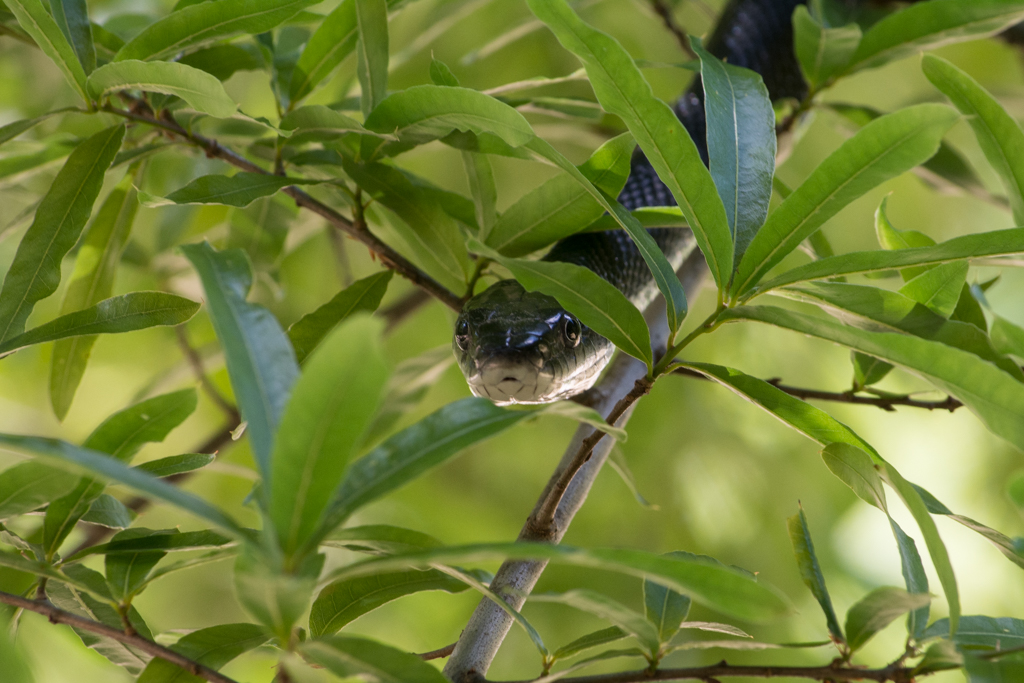
On Sunday, I went to Durant Park to try out some new graduated neutral density filters and other equipment. It was pretty and peaceful there. I saw a black snake climb around in and down from a tree. As I tried to photograph him, he calmly slithered toward me and gently passed within an inch of my foot.
Tiller7Bug 1-2

Tiller7Bug 1-3

Our wireless router died on Friday, and we felt very unsettled without our usual internet access. At some point, we got hooked. We need the internet for many practical things, but also just to feel potentially connected. Without it, we are not quite ourselves.

I made a trip to Best Buy (Amazon would have taken too long) and got a recommendation for a new Netgear router, with the assurance that set up would be no problem: “plug and play,” the sales guy said. This was not at all accurate. I spent about four hours on the project, counting time reading the useless instructions, Googling more instructions and FAQs, speaking with technicians, plugging and unplugging, and powering on and off. Finally, on Sunday afternoon, we got back online. It didn’t feel as good as I expected, but it was a relief, sort of like getting the water running again.

Tiller7Bug 1

Beauty, violence, and delusions: a Macbeth ballet, a Vietnam history, and a Kenya drone strike movie

Tiller7Bug 1-6
It was raining lightly on Saturday morning when I got to Raulston Arboretum, and there were quite a few new irises and roses. I enjoyed the colors, textures, and strange architecture, as accented by the raindrops. I had to work fast, because I’d scheduled a spin class for 9:30. But I had 25 minutes of strolling, peering, sniffing, and clicking, and made it to Flywheel in good time for the spin class with the cheery, peppy, hard-driving Vashti.

I’d felt a little discouraged after my spin class last week, when I was aiming for 300 points and managed only 281. I decided on a slightly different approach this week, involving more conscious pacing and allowing for short recovery periods. My results were better, with a final score of 307, and an average heart rate for the 45 minutes of 154, tying the record.

Tiller7Bug 1-10

That evening we went over to Durham for some food and ballet. We ate at Watts Grocery, where I had a delicious asparagus salad and couscous with beets. At DPAC we saw the new Carolina Ballet production of Macbeth. Shakespeare’s play is a bloody one, dense with painful emotion. This new ballet by Robert Weiss is also violent and anguished, but with interludes of light – friendship, play, and love. It succeeds as storytelling and as dance, with many subtleties and flourishes. Unfortunately, the music was not very interesting and highly repetitious. But I really liked the dancing, the craggy set, and the costumes.
Tiller7Bug 1-5

Speaking of bloody intervals, last week I finished reading a history of U.S. misconduct in Vietnam by Nick Turse, entitled Kill Anything That Moves. It is a difficult and almost unbearable story. The catalog of American atrocities is long – wanton murder of civilians, widespread rape, torture, and mutilation, not to mention the hundreds of thousands of civilians killed on a wholesale basis by massive bombing and artillery. Hardly any of those who engineered the policies behind this carnage or those who carried it out were held accountable.

This history has been substantially suppressed, ignored, and forgotten. The human capacity for sustaining ignorance and self-delusion is a remarkable thing. In general, we are amazingly adept at suppressing new information that’s inconsistent with our prior beliefs, at justifying bad conduct when it fits with our preferences and self-interest, and at repressing memories that don’t fit into our preferred narratives. For Americans, coming to grips with any story of American action where we aren’t heroes is extremely difficult.
Tiller7Bug 1-3

But doing so is important work. Understanding the conditions that give rise to cruelty can help us prevent it. Therefore, with some hesitation, I recommend Turse’s book, with the caveat that it should be read only by mature readers not currently considering suicide or other violence and that, when reading, they take frequent breaks from these dark chapters to get hugs and kisses from their loved ones. One of my takeaways was that it’s usually or never a good idea to invade distant countries where we are ignorant and contemptuous of the people and culture.
Tiller7Bug 1

We saw Eye in the Sky last week at the Raleigh Grande. It was our first visit to the recently upgraded theater, and we liked the soft reclining seats. The movie is about setting up a drone strike by combined British and American military leaders and technicians in Kenyan on Al-Shabab terrorists. The primary tension in the movie is whether they should fire a powerful hellfire missile when it looks like it will kill a sweet little girl.

I thought it was well-played, and it was interesting to see what may well be close to state-of-the-art spying and killing technology. It was nice, in a way, to think that some military leaders might find it hard to decide whether to kill one little girl when they had a chance to execute several terrorists. The big question I left with, though, was never addressed in the movie: why would the U.S. and Britain be devoting themselves to fighting enemies of Kenya?
Tiller7Bug 1-9

A surprise flower, Salgado photos, Mahler symphonies, stone-age brains, and bathroom fear-mongering

Tiller7Bug 1
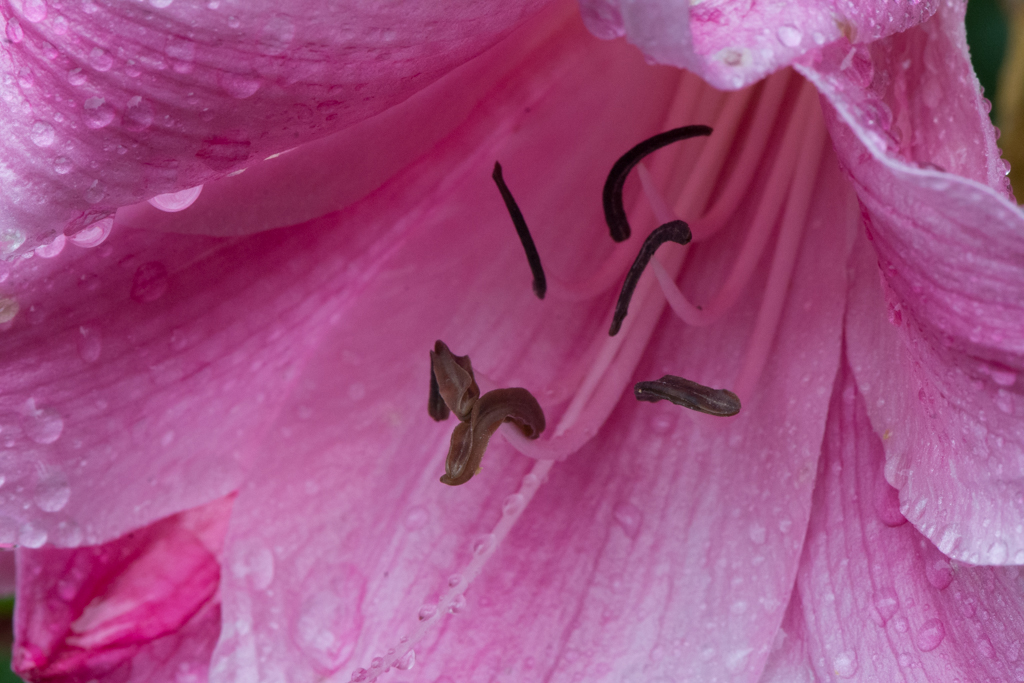
Earlier this week Sally was eager to show me a flower: the first we’d ever seen on a houseplant we’d had for 20 years. It was completely unexpected, delicate, and lovely. You never know what amazing things will turn up in nature, even when it’s this highly domesticated. In photographing the plant with my macro lens and Lightroom software, I discovered new colors and textures.

Speaking of amazing nature, I’ve been spending some time looking at Genesis, a book by Sabastiao Salgado, the great Brazilian photographer. I wrote about being greatly moved in seeing his exhibition in New York last year, and I’m very glad I got the catalog. It shows some of the most pristine and awe-inspiring places on earth, such as the Antarctic,the Amazon, and West Papua, with their native animals and people. If you have a loved one interested in photography and nature, this would be a wonderful gift. It took Salgado 32 trips over 8 years to get these images. We can take it in a lot quicker, though I expect to be drawing inspiration from these photographs for decades.
Tiller7Bug 1-7

Speaking of art that is at once accessible and challenging, I’ve been gorging on the symphonies of Gustav Mahler (1860-1911) for the last few weeks. I first fell in love with this music as a teenager, and I’ve returned to it every so often with great joy. I have CDs of all Mahler’s symphonies, but recently I discovered a trove of recordings unknown to me on Spotify. This was a revelation: hearing multiple recordings of a great work expands understanding.

It turns out that there are at least several great orchestras and conductors around the globe that perform this music splendidly. Who knew that the Tokyo Metropolitan and Seoul Philharmonic orchestras would be so excellent? If you haven’t ever explored this music, now you can, with a low barrier to entry: some time, and an inexpensive Spotify subscription. I recommend starting with Symphony No. 1, and following that with No. 4, No. 5, No. 2, No. 9, No. 6, No. 7, and No. 3. I still struggle with No. 8, and I’m just starting to learn the posthumously completed No. 10. It takes some time to grasp this music, but it is completely worth it.
Tiller7Bug 1-4

I was happy to discover this week that Bill Moyers has a podcast, and the first edition I listened to was a good one: an interview with Rick Shenkman, a historian with an interest in evolutionary biology. Shenkman thinks that a lot of our political problems stem from our having brain structures well adapted to life as hunter-gatherers of a million years ago – stone age brains. We react strongly and quickly to threats, which works well in responding to possible attacks of poisonous snakes or sabre tooth tigers. When in peril, we can’t consciously think at all – we just react.

Speedy automatic responses helped our ancestors survive, and they sometimes helps us, too. But politicians have figured out how to exploit this feature. By giving alarming messages (e.g. we’re being invaded by criminal immigrants!), they generate fear that prevents rational thought. The antidote is to somehow get past the first excited emotional reaction and to do more rational thinking, looking at the evidence and considering the most likely explanations. But that’s not so easy.
Tiller7Bug 1-5
A case in point: transgender people in bathrooms. This has suddenly become a new front in the culture wars, right here in NC, with even presidential candidates weighing in. The dominant right-wing narrative has it that trans folks are actually male sexual predators who would molest little girls in the ladies’ room absent a statute to prevent them. The child molester story has undeniable force – it’s horrible to think of – but there has yet to be a single confirmed case of a man pretending to be a woman so he can go to the ladies’ room and molest little children. It’s just raw fear-mongering.
Tiller7Bug 1-6

The mean-spirited ignoramuses who form the majority of the NC legislature are apparently impervious either to reason or economic self-interest. For the immediate future, they will continue to embarrass themselves and us, and cause increased pain and fear for unfortunate minorities. But there’s one silver lining: more people are finding out that transgender people exist, and that they are not freaky perverts. The conversation on this has really gotten started. Maybe we’ll move from ignorance and fear to tolerance quickly, as we’ve recently done for gays. Let’s hope so.

Meanwhile, let’s have a laugh when we can. Here’s a link to a wonderful mock news story about the bathroom law, including enforcement by requiring birth certificates and genital checks at public bathrooms.

A thought-provoking documentary film festival in Durham

20160409_093135
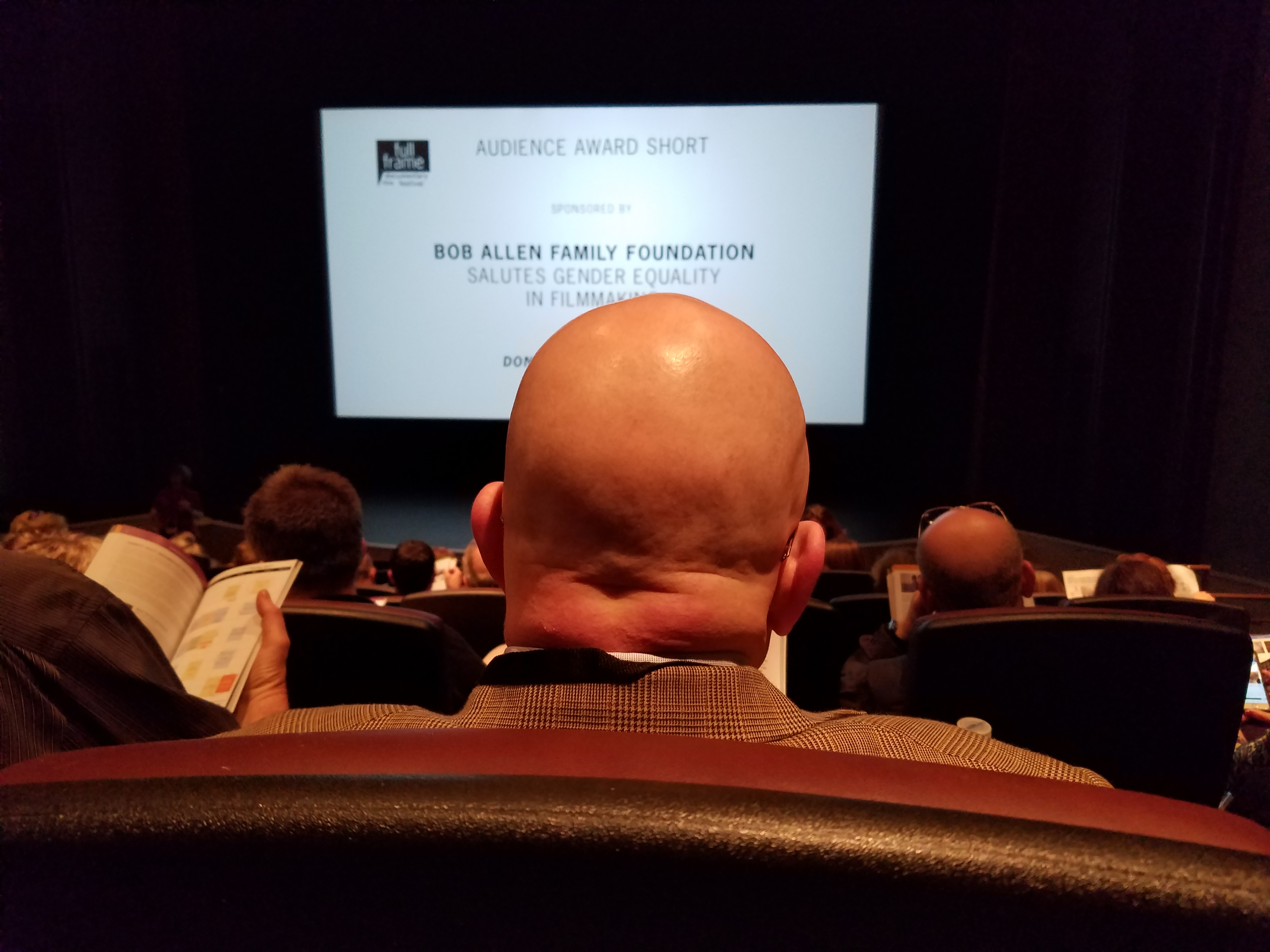
Having had such a good time last year at the Full Frame Documentary Film Festival, this year we decided to go all in. We got a room at the downtown Marriott, which connects to the site in the Durham Convention Center, and took some vacation so we could stay all four days. We saw some excellent documentaries, met some interesting people, and had a lot of good conversations and other fun.
20160408_183622

In high school I had a music theory teacher who was a practitioner of Eckankar, which teaches that the soul can separate from the body and travel about. I ordinarily think of Eckankar as an example of the useful rule that there’s no idea so bizarre that some subpopulation won’t believe it. Still, this weekend was soul travel of a sort. The documentaries whisked us around the world and also transported us into some remote and unfamiliar interior landscapes.

Another thing I like about documentaries is that in general they try to be truthful. Even when the filmmaker has a strong point of view, she’ll almost inevitably provide evidence for other points of view. We were particularly interested this year in the films that took on complex social issues. For several of those, the filmmakers answered questions afterwards, and the messages they thought they were sending were not always the same as the ones we took away. I viewed that not so much as an indication of the filmmaker’s weakness as of the medium’s strength.
20160409_095106

There were more than 100 films screened, of which we saw 17, including several that I expect to be thinking about for quite a while. Here are some quick notes on my favorites.

Weiner. This was about Anthony Weiner and his New York mayoral campaign, which ended in ignominy because of his social media sexting. Weiner became a late night TV punchline, and so it was a surprise to see him presented as a complex person with a great deal of intelligence and drive. As Sally noted, it was a great reminder that headlines can be misleading. I sat next to co-director Josh Kriegman at another film, and was happy to learn from him that Weiner is still married.

Sonita. Sonita is a 15-year-old Afghan girl living in Tehran who wants to be a successful rap artist. As crazy as it sounds, she may just do it. From her first informal performance with her girlfriends, you sense a prodigious talent. The odds against her are huge at the beginning, as her poor, traditional family plans to sell her to be married, but she records Brides for Sale, which becomes a minor sensation, and things start to happen. You should check out her gut-punching music video, which is here.
20160408_123303
Clinica de Migrantes. A clinic in south Philadelphia provides primary medical care for mostly Hispanic undocumented immigrant workers. The volunteer doctors and other personnel are overworked and overwhelmed, but they somehow soldier on, with empathy and kindness. The patients look a lot like the people we see cleaning our hotel rooms, preparing restaurant food, building our houses, and caring for our yards and our children. The film doesn’t preach about the injustice of leaving these people out of the health care system, but quietly makes you feel it. It also reminds you that there are some really good people in the world.

Unlocking the Cage. The subject is Steven Wise and the Nonhuman Rights Project, which has brought habeas corpus petitions on behalf of caged chimpanzees. Wise has worked for 30 years for animal rights, and has succeeded in raising the profile of the issues. He maintains a remarkable air of humanity and decency even with those who think he must be crazy.
20160407_095000

Raising Bertie. This film was made about 100 miles from here as the crow flies in Bertie Co., N.C., a poor, rural, majority African-American area. The filmmakers spent 6 years following 3 young black men trying to get through high school and become adults. They make some of the same mistakes that their parents made, such as starting families when they’re much too young, and struggle to find decent jobs. It’s a subject that we all think we know about, but have never seen this intimately, and it’s powerful. We got to meet with one of the filmmakers and a couple of the film’s subjects in the hotel bar last night.

Tony Robbins: I Am Not Your Guru. This film by master documentarian Joe Berlinger follow self-help impressario Robbins through a six-day seminar for which he charges $5,000 per head. It struck me as a mix of evangelical Christian revival and new product sales force meeting, where the attendees were encouraged to get excited and emotional and commit to a better life or more productive next quarter. Robbins struck me as a snake oil salesperson, though more well-meaning than some. I was surprised to learn, when Berlinger spoke afterwards, that he had attended a Robbins seminar and found it life changing in a good way. But as noted above, this disconnect speaks well of the medium, and also of Berlinger, in allowing for different interpretations.

Don’t Blink: Robert Frank. Laura Israel, the director, worked with Frank for years as an editor before making this remarkable film. I just started looking hard at Frank’s intense, quirky photography in the last couple of years, and came to this documentary knowing nothing of his experimental films and other work. I came away with even more respect for Frank, and more curiosity. The film says something fundamental about how artists make art: they never stop experimenting.

I could go on, but, enough. Footnote: I made all these photographs except the tulips on a Samsung Galaxy S7, which I got a week ago. So far, it seems like a very smart smartphone, with a surprisingly credible camera.
Tiller7Bug 1-12

Foolish LGBT discrimination in NC, more spring blossoms, and an excellent Barber of Seville

Tiller7Bug 1-2
North Carolina is my home, and I love it very much. There is a lot of natural beauty, and there are a lot of smart, warm people. But boy, we’ve got some really ignorant political leadership. It is hard to believe, at this point in history, anyone would truly fear gay and transgender folks. And it’s just shameful to start a fear mongering campaign about the risks posed by improper usage of bathrooms. Has anyone ever heard of an LGBT bathroom attack, or even an awkward moment? Unfortunately, the stupidity and/or cynicism of our legislative Republicans has brought cascades of ridicule on our state, and it looks like there could be real economic damage. Eventually we’ll vote those rascals out (maybe in November?), but meanwhile, it’s painful and embarrassing.
Tiller7Bug 1-3

But again, this is a good place to live, and a good time. The azaleas blossomed this week in pinks, whites, and purples, and the delicate dogwoods (our state tree) flowered. It was rainy on Saturday morning, when I went to Raulston Arboretum, and it was awkward holding an umbrella over the camera while taking some of these pictures, but I liked the water on the flowers. On Sunday morning, I went over to Duke Gardens. It was sunny, but breezy, and the flowers tended to move about when I got ready to take their pictures.
Tiller7Bug 1-5

On Sunday afternoon, we went with Diane to the N.C. Opera’s production of Rossini’s The Barber of Seville. It was wonderful! There was so much life, so much warmth and humor. Previous productions I’ve seen were mostly about delivering those blockbuster arias, but this one was as much about the characters. Stage director Stephanie Havey made it as much fun to watch as it was to listen to, with lots of comedy, some of it Marxist madcap, but some of it almost Shakespearean. The period costumes had elements of whimsey. It took me a while to warm up to the sets, which were sort of postmodern antique facades that rolled in and out, but in the end they worked.Tiller7Bug 1-9

The singing was all very good, and some was superb. I adored the lovely Cecilia Hall as Rosina. She had a richness and fluidity to her mezzo, and she was a fine actress, with intelligence and quick wit. Tyler Simpson as Dr. Bartolo was hilariously grumpy and obtuse, and also a wonderful low baritone, with marvelous diction in the patter songs. Troy Cook as Figaro was instantly likeable, and highly musical. Conductor Timothy Myers led with musical insight. He knew when to take some luxurious time, and when to push quickly forward. The orchestra sounded really good. There were quite a few moments when I had goosebumps and watery eyes at so much rare beauty. It was a privilege.
Tiller7Bug 1-10

Visiting New York friends, and some new (to me) art and opera

OLYMPUS DIGITAL CAMERA
I got up to New York City last week for the IP Counsel conference where I did a presentation on open source software legal issues. After the conference, I spent a long weekend in the city. It was great to see my sweet Jocelyn and some old friends, and to take in some new art and opera.

Jocelyn got a promotion at Macmillan this week, and was very excited. That’s three promotions in a year! She’s now a manager, titled Ebook Production Manager. She likes the company, likes the work, and is looking forward to the new role. We talked about the being a manager, among other things, as we tried some fun bars and restaurants.

Although opera is not Jocelyn’s most favorite thing, she agreed to come with me to the Met to see L’elisir d’amore (The Elixor of Love) on Saturday, and we both loved it. It’s a delightful confection of melody and feeling. The subject — romantic love — is forever young, and in Donizetti’s deft hands funny, painful, and touching. In this production, the bel canto style was alive and well, with astonishing vocal agility and sweet subtlety. Soprano Aleksandra Kurzak was a saucy and savvy Adina, very musical, and tenor Vittorio Grilolo was ardent, goofy, and then transcendent. As the doctor, Adam Plachetka was sublimely funny. Kudos to maestro Enrique Mazzola, who had great rhythmic flexibility and propulsive drive, and of course, to the fabulous Met orchestra.
OLYMPUS DIGITAL CAMERA

Another night Jocelyn and I had a lovely dinner with my old friend Ben Brantley at Niu Noodle House in the Village. Ben and I met in junior high school and started out in NYC together, and with a happy combination of brilliance and hard work became head theater critic of the New York Times. It was good to catch up and hear his views on current shows, being a vegetarian, and other matters.

As to art, I saw several things worth mentioning. I recommend the exhibit at the Whitney by Laura Poitras, the filmmaker who made Citizen Four and other interesting works questioning the War on Terror. This exhibit is political in the sense that it puts in issue the programs of invasion, imprisonment, interrogation, assassination, and mass surveillance that grew out of the great panic following 9/11. It consists mostly of video clips, many of which must be viewed through slits in the wall that remind us of slits through prison doors. It invites us to engage with some disturbing issues, including the possibility of our being monitored at all times.

I also found enriching, if not exactly enjoyable, the exhibit at the Neue Gallery of the works of Edward Munch and German Expressionists. Munch appears to have been a tortured soul, and his works powerfully express alienation, melancholy, and angst. These are feelings that we generally try to avoid or suppress, and seldom discuss with anything but disapproval. But there’s truth in these works that we could benefit from facing. There were strong paintings of several other Expressionists who built on Munch’s bold early works, including Beckmann, Kirschner, Nolde, Kokoschka and Schiele, who were themselves iconoclasts, with energetic new psychological insights into some of our darker recesses.
OLYMPUS DIGITAL CAMERA
At the Edwynn Houk Gallery I saw a photography exhibit by Nick Brandt. On display were ten enormous (6-8 feet wide) black-and-white images of Africa, each with a billboard size photo of an African animal, such as a lion, elephant, or rhinoceros. The billboards were positioned where the animals used to roam, but have been replaced by human activity– factories, roads, and waste dumps. There are people in the images trying to make a living, including by picking through the waste dumps. I found the pictures very powerful, and tragic.

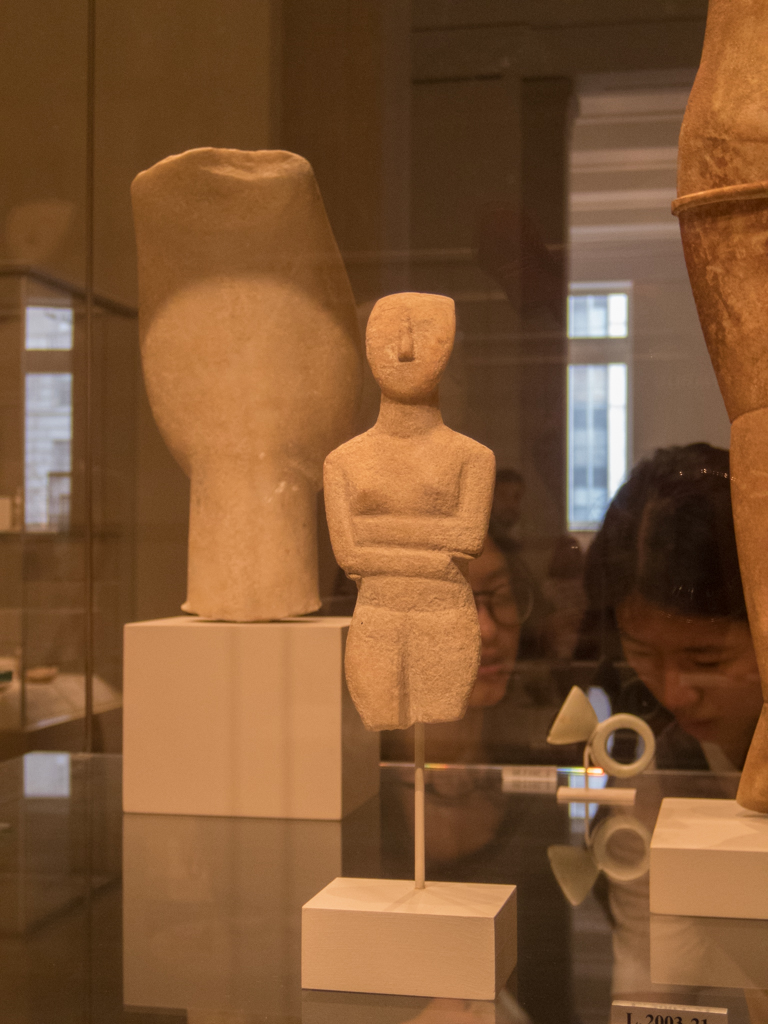
At the Brooklyn Museum, Jocelyn, Pam Tinnen, and I saw This Place, an exhibit of photographs about Israel and the West Bank. It included work of twelve photographers, some of whom did very large images of the people, cities, and stark landscapes. There was little direct reference to anger and armed struggle, but instead humanitarian efforts to comprehend the multiple facets of this complex situation. We also looked at the Assyrian and Egyptian art.
IMG_4858

Finally, I checked out the new Met Breuer, which is what the Met has done with the former Whitney museum. The main current exhibit is about unfinished works of famous artists starting in the Renaissance and coming up to now. It was interesting from a process perspective (seeing how paintings of various periods were assembled). I was surprised to learn that there were few answers on why artists chose not to finish particular works, or even how they determined what was a point of completion. But I enjoyed a lot of the art, particularly works of Rembrandt, Cezanne, and Turner.

Duke blossoms, rising ballerinas, AlphaGo’s victory, and the Age of Artificial Intelligence

Tiller7Bug 1-6
On Saturday morning it was overcast and threatening to rain when I drove over to Durham to see what was blooming at Duke Gardens. Did you know it’s one of the top 10 public gardens in the U.S.? It is certainly a treasure. There were new cherry blossoms, tulips, and many other delights. I shot 234 closeup images with my Nikkor 105 MM macro lens before it began to drizzle. I got a few that revealed aspects I’d never looked at as closely before, and expressed some of my own joy of the season. The images here are all from Duke, except for the daffodils, which I took late Friday afternoon at Fletcher Park.
Tiller7Bug 1-4

That evening we saw the Carolina Ballet with new works by Zalman Raffael and Robert Weiss. Raffael’s new piece was set to Rachmaninoff’s Rhapsody on a Theme by Paganini. As it launched, I worried a little that 24 variations to this familiar music could easily bog down, but far from it: this was a lively, kinetic work that developed organically with continual surprises. Working in the Balanchine tradition, like Weiss, Raffael makes ballets that are abstract but intensely expressive. He’s so accomplished and assured already, and so young!

In the performance we saw, some of the younger company members who normally are in the background stepped into the spotlight, and performed beautifully. I very much enjoyed the subtle elegance of Courtney Schenberger and Rammaru Shindo in Balanchine’s Valse Fantaisie. Ashley Hathaway, with Adam Crawford Chavis, was really sensual and powerful in the adagio Meditation from Thais. Amanda Babayan was a lovely Miranda in Weiss’s Tempest Fantasy. So much talent, developing quickly, like those blossoms. It’s a privilege to receive their art.
Tiller7Bug 1-3

Speaking of surprising progress, this week AlphaGo finished its five game Go match with a popular Korean grandmaster in Seoul, in which it prevailed 4-1. It was a significant moment in the advance of artificial intelligence. I learned the rudiments of Go a few years back. It seems so simple at the very beginning, as you take turns laying single stones, black or while. But it is massively more complex than chess. There are more possible moves than there are atoms in the universe.

Anyhow, I tweeted congratulations to the Google team, though with mixed feelings. The Age of AI is on its way, and the prospects are both good and bad. Computers are mastering tasks that we thought impossible for them a few years ago, like driving, reading MRIs, and reviewing legal documents. In the new Age of AI, there will be safer cars, more reliable medical care, and cheaper legal services. On the down side, a lot of jobs are going to disappear forever. We’re going to need to figure out what to do about having a lot of redundant humans. We’ll probably need to come up with a system with a guaranteed minimum wage, which seems impossible at present from a political perspective.
Tiller7Bug 1-2

But maybe the AI on the way can help with some of our political and mental problems. I’m thinking particularly of our magical thinking – areas where our biases and received ideas prevent us from seeing what’s right in front of us. The drug war is an example. After several decades of being taught that particular plants and chemicals are inherently evil and threatening, and that we need to fight those drugs, we have trouble conceiving of any alternative. It makes no difference that the drug war never moves any closer to victory, and that the human collateral damage is enormous. The facts that do not fit with our long held beliefs are suppressed or ignored.

Climate change denialism is another example of magical thinking. Another one: the Republican mainstream belief that cutting taxes will lead to increased growth, higher tax revenues, and balanced budgets. The New Yorker had a good essay by James Surowiecki this week explaining that decades of evidence now show that, as you might initially expect, cutting taxes leads to lower tax revenue. But current Republican leaders and followers, like those before them, devoutly and streadfastly deny the obvious.
Tiller7Bug 1

The WSJ had a must-read essay this week by David Gelernter on AI. Gelernter, a professor of computer science at Yale, argues that the intelligence of our machines will inevitably surpass our own, and we cannot reliably predict what will happen after that. Thinks of machines with IQs of 500, or 5000. They could be dangerous, perhaps viewing us as we view houseplants. Gelernter suggests that in experimenting we exercise the kind of caution we use with biological weapons.

But hey, assuming that the machines do not decide to enslave or kill us, they could really be helpful. They would almost surely see more possible moves in addressing difficult problems, like global warming. Perhaps it would be so obvious that they’re reliable authorities that we would give up on magical thinking. Then again, such thinking is almost perfectly hermetic and impervious.
Tiller7Bug 1-5