The Casual Blog

Chilling with Robert Frost and a new camera
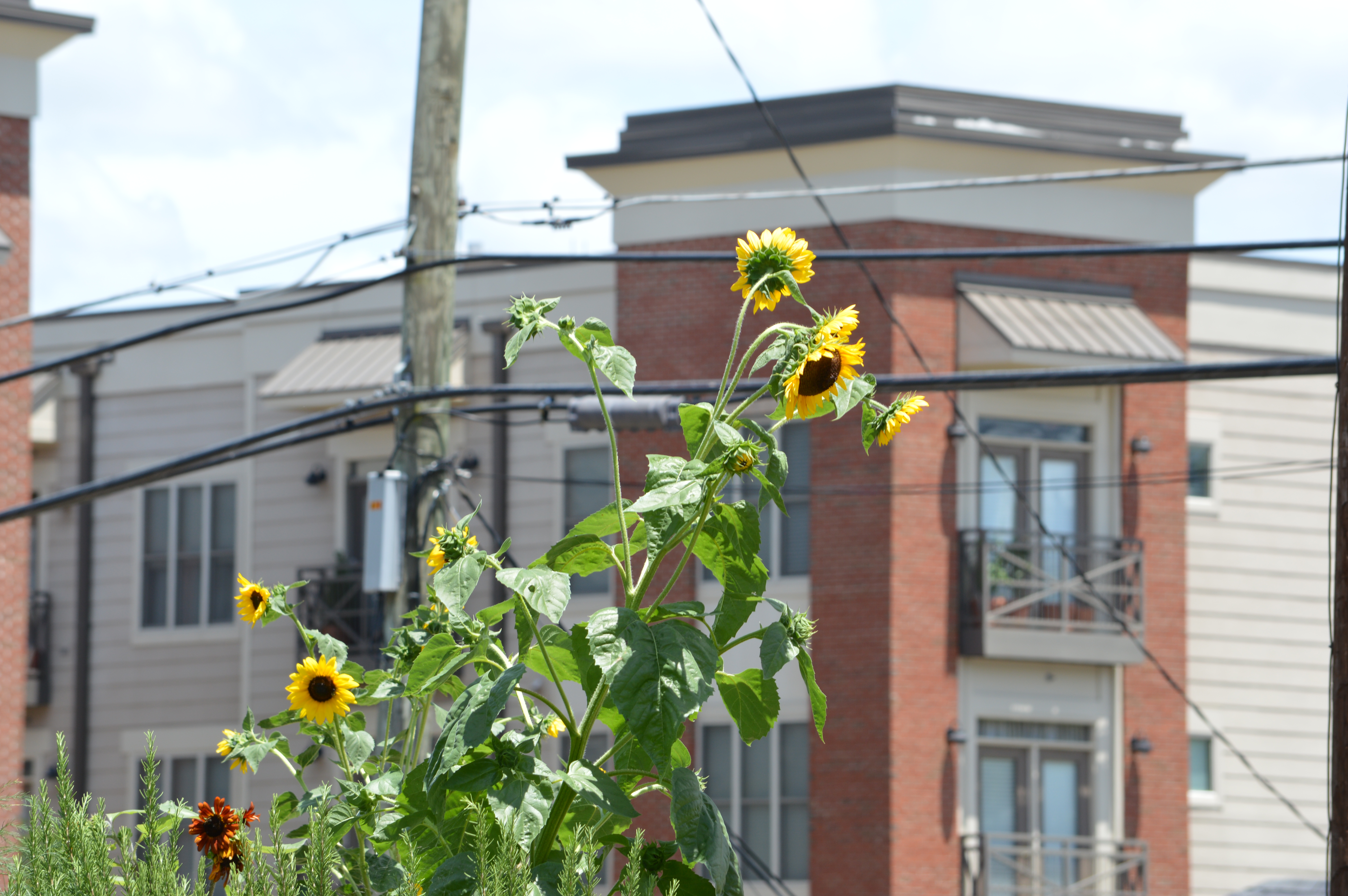
The hot weather finally broke last week, after setting a temperature record here in Raleigh for most consecutive days over 100 (6) and tying the all time high of 105. Most of the time, I’m in air-conditioned environments, but still, I usually try to spend some time in unprocessed air. During the recent heat wave, though, the idea of communion with the natural world seemed rash. The brutality of nature was in full display.
To cool off mentally, I refreshed on The Wood-Pile, a poem by Robert Frost. I memorized this chilly thing a while back for no good reason other than its stark strangeness. It begins, “Out walking in the frozen swamp one gray day, I …” The narrator at first sees nothing but “tall slim trees.” It seems matter of fact, but it’s completely strange! Who goes walking in a frozen swamp? Especially when the sky is gray and gloomy?

As with other great poems by Frost, what seems at first to be simple factual reporting turns out to raise question after question. The nominal focus of the poem is on a well-formed cord of wood incongruously left in the middle of the snowy swamp. The narrator has personal knowledge of the hard work required to cut so much maple with an ax, and is baffled and offended that anyone could invest such effort in a fine wood pile and leave it “far from a useful fireplace.” He speculates that such a person must be someone who “lived in turning to fresh tasks.” This is, from the narrator’s viewpoint, a strange and disturbing thing. And so we wonder more about the flinty narrator.

A woodchuck near the Buckeye Trail

Is it a bad thing to turn to fresh tasks? The poem make us wonder, but still I think, generally not. New challenges are, more often than not, good. I undertook one last week and bought my first digital SLR camera with the thought that I’d like to engage with the visual world a little differently and take better pictures. I’ve been drawn by photography since I was a kid, but in the pre-digital era was discouraged by the difficulty of working with film (dark rooms, chemicals, and so forth) and the expense.
I also worried about that the camera sometimes shuts off the photographer from experience. Think of gaggles of tourists taking snaps of the Grand Canyon — and forgetting to look at it. Direct experience of beautiful things, or even not-so-beautiful things, is a terrible thing to waste.

Balancing that risk, though, is the possibility of finding a different way of seeing, and also a different pathway for communication. I’ve enjoyed using my little point-and-shoot to share images with friends, and noticed that at times taking a picture created an interesting shift in my own visual perspective. A photograph is an abstraction from a larger visual reality, but being conscious of this can focus attention on the larger reality. Deciding whether something is worth snapping and how to snap can open things up.

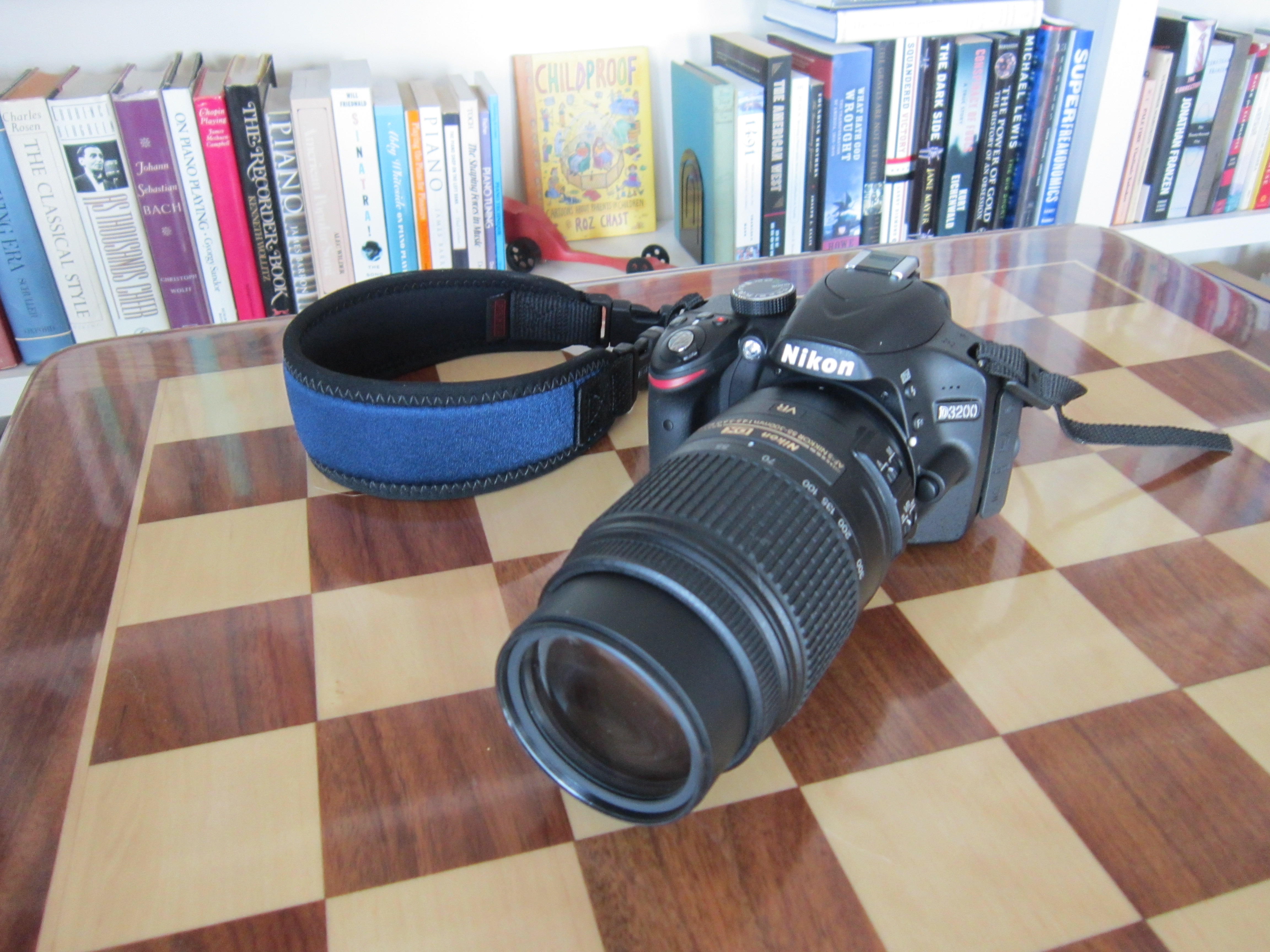
Anyhow, I got a Nikon D3200 with two Nikon lenses (an 18-55 zoom and a 55-300 zoom). Although the D3200 is an entry-level SLR, it is, to me, amazing technology. 24 million pixels! Four shots per second! ISO 100-6,400! Fast autofocus! A vibration reduction system! HD video with sound! And it fits my hands perfectly. All that it requires is knowledge, experience, and creativity.

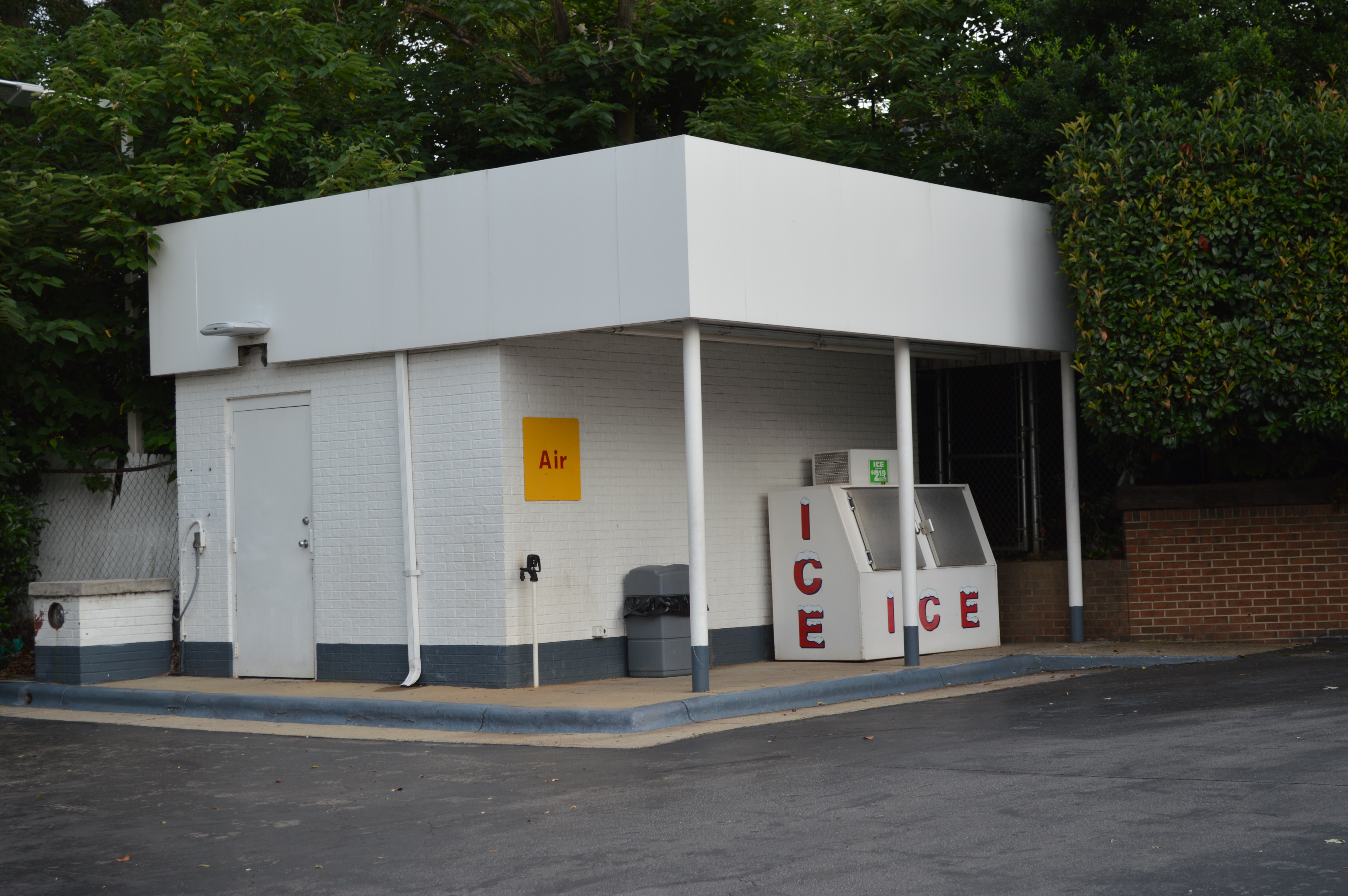
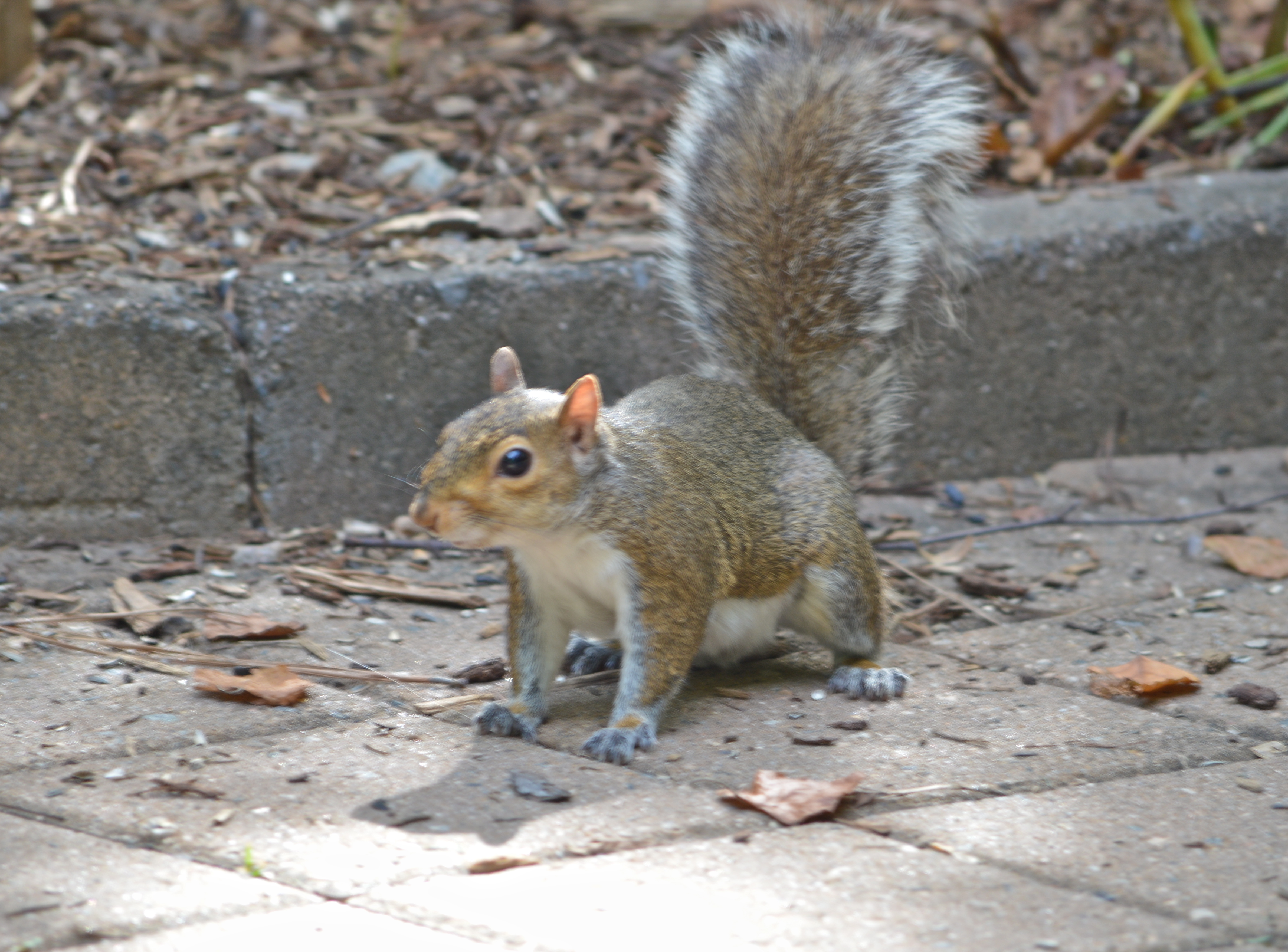
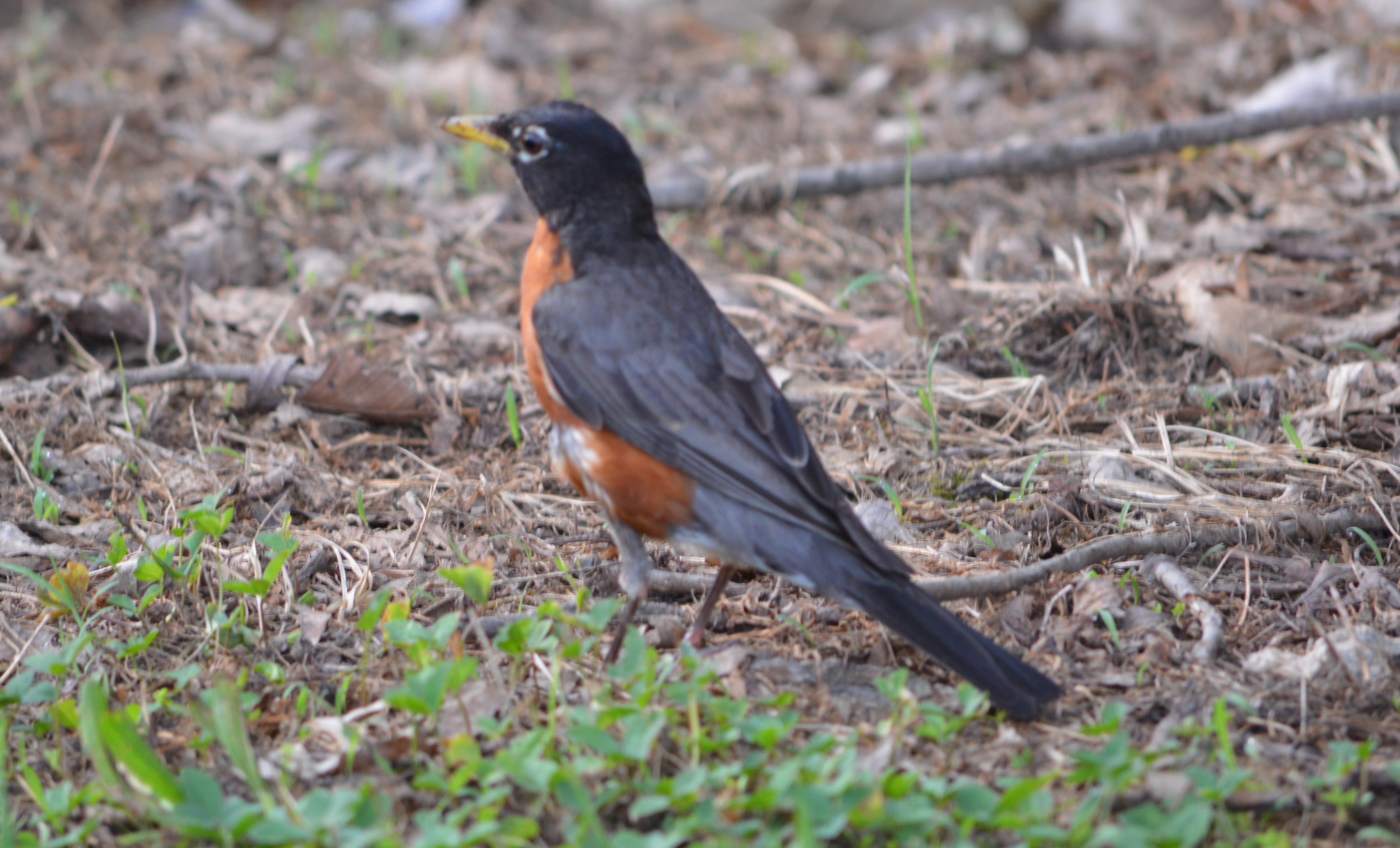
I was thinking that it would be fun to photograph wildlife, and especially birds. I’m also interested in trying to look at human-built places that are not intended for show, places that happen as a by-product of other objectives, to see what we might be missing. Above and below are some of my first efforts.

Mallard ducklings at Lake Johnson
Science news — the Higgs boson, global warming, the nature of consciousness

I’ve been trying to follow the story of the search for the Higgs boson for a long time, and so I felt excited by reports this week that scientists at CERN have discovered a new particle that could be it. Quantum mechanics is not something I would ever aspire to have a deep grasp of, but even skimming the surface is mind bending. The subatomic world has different rules from ours.

I also really like the purity of the enterprise. It’s primarily driven by curiosity, rather than motives of profit or power. These scientists aren’t much interested in practical applications; they want the truth. (Of course, they also may want tenure, grants, Nobel Prizes, dates, etc.) It’s cheering that there is still, in some places, political and financial support that makes their (very expensive) experiments possible.

Another thing that’s particularly cool about the Higgs search is that it is a massive collaboration. Thousands and thousands of scientists are involved. According to the Times account, there were two teams of 3,000 physicists each analyzing the data from hundreds of trillions of proton collisions in the latest round of the CERN effort. They’ve found ways, which I’m sure involve the Internet and massive computing power, to share their knowledge and coordinate their efforts. This is very different from the model of scientific discovery I was taught as a kid, where individuals worked by themselves in their laboratories until their eureka moment. It’s encouraging that scientists are learning to collaborate better just as they take on ever larger problems.

The practicality of the Higgs work may be to the researchers’ advantage in making them a low-value political target. This contrasts sharply with global warming research. In my home state of North Carolina, a majority of our legislators (mostly Republicans) embarrassed themselves again this week by enacting legislation designed to suppress, or at least defer, scientific reports of rising sea levels caused by global warming.

The coastal development lobby seems to have been involved. As my friend and House representative Deborah Ross cleverly observed, putting our heads in the sand is not really doing property owners any favors — they need real information. I’d also note that the sea is not going to read the study anyway. It is both funny and scary that a significant portion of our political leaders (for now a majority in NC) are either willfully ignorant or cynically determined to oppose science where it conflicts with their self-interest.

Yet science hasn’t thrown in the towel yet, and I’ve got to think that the truth will out. Speaking a little more of science, I’ve been reading a new book by Michael Gazzaniga titled Who’s in Charge: Free Will and the Science of the Brain. It’s about recent discoveries and theories in neuroscience, and parts of it are mind boggling. Gazzaniga is a distinguished professor (University of California) and researcher in cognitive neuroscience who made ground-breaking discoveries in the area of split-brain research.

Gazzaniga covers a lot of territory, and I will not attempt to summarize (indeed, I’m not certain I completely grasp) his view of free will. For me, the most stimulating sections had to do with his his model of conscious thought. At least since the time of the Periclean Athens, we’ve thought of our conscious experience as objective — that is, what you see is what there is to see, what you hear is objectively present in nature, and so on as to other senses and perceptions. In everyday life, we experience all these sensations predictable and reliable, and have difficulty imagining them as error prone and misleading.

I’ve read several interesting books recently discussing research on this, including Jonathan Haidt’s, Daniel Kahneman’s, and Jonah Lehrer’s, but Gazzinaga seems to have the clearest theoretical model and best supported theory for why we can’t accept that our conscious perceptions are at best an incomplete and fallible approximation of physical reality. His model of the mind involves hundreds or thousands of modules working on, say, vision, and forwarding their data to a module in the left brain which he calls The Interpreter.

The Interpreter takes in what it can (not everything), makes some quick guesstimates as to what data is reliable and what should be tossed out, fills in any gaps in the data with best guesses, and presents the result to consciousness as reality. Despite all the guesswork and potential for errors, the result feels to us instantaneous, smooth, continuous, and objective. If there are glaring problems or inconsistencies, The Interpreter comes up with a narrative or story that “explains” them. We are, in a really fundamental sense, story-telling animals.

Another aspect of Gazzaniga’s model struck me as particularly thought-provoking was his discussion of emergence theory. While giving respect and consideration to the researchers working at the scale of neurons and brain structures, Gazzinaga deems it unlikely that that approach will never explain conscious experience. The brain is just too complex.

Emergence theory addresses itself to phenomena are matters that arise out of inputs so numerous as to be incalculable. Examples include snowflakes, traffic jams and weather, which are in the aggregate clearly products of much simpler phenomena (hydrogen atoms, carburetors and other auto parts, breezes etc.), but which contain too many variables to be predictable. The brain’s 100 billion neurons and vastly larger number of synapses far exceeds the complexity of our analytical tools.

Finally, I was intrigued that Gazzaniga suggests the possibility that the basic unit of analysis for the study of human consciousness should not be an individual brain, but rather, groups of brains. That is, intelligence may be best understood as emerging from humans interacting with each other. The individual brain in isolation knows nothing that we would call intelligence, but needs other brains to develop. Prisoners in prolonged isolation quite literally lose their minds. We’ve barely begun to consider consciousness in terms of systems of brains, rather than individual brains. It could change the way we approach education, law, and most everything else.

It’s too hot for golf, and catching up on Mad Men and Girls


On Friday the temperature got up to Fahrenheit 105 here, setting a record. As happens periodically, I’ve been thinking lately about improving my golf game, and I was planning to do some practicing after work. My thought was to hit a 20 or so mid irons/hybrids, about the same number of three woods, then about the same number of drives. Then I thought I’d’d hit some finesse shots of thirty to sixty yards, some sand shots, some short chips, and some putts.

I enjoy swinging a golf club and watching the arc of the ball, and I don’t mind a bit of heat and sweat. But there comes a point somewhere in the high nineties when it’s just not fun anymore. I decided Friday was such a day, and cancelled the golf idea. Instead I went home and had one of Sally’s cocktails, a new recipe called Dirty Dick’s Downfall, involving Bombay Sapphire gin, dry vermouth, and Campari. It was delicious.

Lately we’ve been watching the early episodes of Mad Men, which we continued on Friday. We don’t watch much TV for the obvious reasons — it’s mostly dreck, we’re busy, and we usually have more interesting things to do. But after listening to enough interesting people make provocative comments about Mad Men, I decided to give it a chance. It still amazes me a bit that this is so easy with our little Roku box and streaming Netflix. We’re now up to episode 19 of the available 52.

The first thing I liked about Mad Men was the look. I was a kid in the early sixties, and the mise en scene take me back to when I was beginning to take shape as a personality. The clothes are spot on, as are the interiors and the ugly cars. The show reminds me of how much people smoked and drank — a lot! Smoking was, and is, a terrible habit, but the depiction seems true and evocative.

At first I had my doubts that a show about the advertising business could avoid boring clichés. I didn’t particularly like any of the characters, and the rampant sexism made me wince. But after a few episodes I began to see that beneath the gleaming, glamorous surface of the show there was another level. The writing and acting don’t call attention to this, and this is part of what I like. We are often unsure about the interior lives of the characters, which at first I took to be a failure, but I gradually came to see it as a conscious artistic strategy. Not all questions have answers. It’s bracing, and leaves room for imagination.

For all the boisterous high living, there is something fundamentally sad about the characters. Sadness is a part of normal life, of course, but is not usually visible or sustained on TV. This is part of what makes the show provocative. I don’t know if this eventually adds up to real tragedy, but even if it loses its way and flames out, it’s been worth watching.

Apropos of television, I’ll note one other show I thought well worth watching this season: Girls. The HBO comedy written and directed by and starring twenty-five-year-old Lena Dunham is about a group of young women living in Brooklyn. Dunham went to Oberlin, my alma mater, and I recognize something in her sensibility of my Oberlin and my early days in New York. It manages the amazing high wire act of being original and funny, at times scandalous, and at times undeniably true and moving. N.B., it is most definitely not suitable for children and may offend those offended by sexual subject matter.

My Father’s Day trip to a new race track (CMP)

Last weekend, I took Clara down to Carolina Motorsports Park in Kershaw, S.C. for some track driving. My Garmin GPS guided us down country roads and through small Baptist towns. I’ve gotten to like as a companion the Garmin’s female voice, except when she says, “Recalculating.” This can be interpreted as, “Can’t you even follow a simple instruction!” I’d like to defend myself, for example, when she didn’t describe a particular turn clearly, but we cannot have a dialog — yet. Anyhow, this was a pleasant trip of just three hours.

CMP is a road track with 14 turns, and my first objective was to learn the line for each turn. Even with this clear commitment and my experienced teacher beside me, I found it challenging to memorize the exact turning points of the track. There’s so much kinetic sensation, so much noise. After a dozen or so laps, I started to build up a body of knowledge, but even then, I had a few lapses.

In addition to learning the track, I learned more about performance driving techniques, including rev matching, dealing with understeer, the beginnings of trail breaking, and assorted other bits of car stuff. Not surprisingly, almost everyone at the event was into cars, and some were clearly crazy for cars.

Car-philia seems to be less common today than in my youth, as young people adore their smartphones more than their wheels. I remember my dad talking to relatives, acquaintances, and strangers about their cars and his, Ford versus Chevy, this year’s models versus last year’s, and on and on, and remember wondering why adults were always so boring. But the worm has turned, and now I find it all enjoyable. Even technical discussions of specific engine problems that I know absolutely nothing about, which I used to make me feel incompetent and confused, now seem intriguing, even though part of me realize we’re talking about relatively ancient technology.

At this event, organized by the Tar Heel Sports Car Club, there were some cars like Clara, pretty street cars with lots of power and a racing heritage. A Lamborghini stood out as the exotic queen of this subgroup.

But there were also a fair number of cars that at first glance looked like sad junkers, and on closer inspection turned out to be highly elaborate racing machines. I began to see how it could be fun to have an ugly car for which the only concern would be track performance. It would be nice, in a way, to not worry that Clara’s beautiful body might be seriously maimed by a poorly judged turn followed by a high-speed encounter with the tire wall.


On the other hand, this would involve a significant investment in infrastructure: a trailer, a vehicle to tow a trailer, a place to stow the trailer and vehicle, more tires, tools, etc. And a lot more time to take care of it all. There’s the rub. This would be fun, but there’s an opportunity cost — other fun foregone, other thoughts unthought.

My teacher, John, was a friendly, funny guy who turned out to know not only a ton about driving and cars, but also a lot about contemporary technology. We had a great conversation about robotics and economics.

He predicted that in the not-distant future driverless cars would end the need to buy a personal car, as groups of people subscribe to a share of a fleet of driverless cars that can appear to convey them at any time. In his view, states will eventually put strict legal limits on human driving, on the grounds that driverless cars are so much safer and more environmentally sound. The driverless cars will go much faster safely, and work together in a network to police themselves. If one should go rogue, the others will cooperate to avoid being damaged and to deal appropriately with the offender.

I told John about a story the prior week in the WSJ about the bomb-squad robots of the US Army in Afghanistan. The robots have saved plenty of human lives, which is good. But the surprising thing was that the units get attached to their particular robots and treat them as companions. When a unit’s robot gets blown up, when feasible it is shipped to the robot hospital. Its companion soldiers at times are specific that they want their robot repaired and returned to the unit, rather than a replacement.

I stayed at the Colony Inn in Camden in a ground floor room that opened onto the parking lot. It featured the three c’s: clean, comfortable, and quiet, and entirely worth $65 dollars a night, even if they didn’t throw in breakfast. I watched some of the Master’s golf tournament on non-HD TV and sipped some wine from the Piggly Wiggly. At the urging of Larisa, my personal trainer, I’d bought some TRX portable trainer cables. In the morning, since the Colony had no gym, I hooked the the TRX systen to the door and got in a workout.

It is my custom in all hotels to leave a few dollars for the housekeepers, which I figure they can use and which may create good karma. I was glad that I followed this custom at the Colony. When I checked out I left behind my phone charger. The manager gave me a call to let me know, and I was able to retrieve the charger. This was excellent karma.

There was nothing remotely like healthy vegetarian food at the snack bar at the track, but happily I found a Subway sandwich shop a few miles down the road. Oh Subway, you are the best! In the ugly wilderness of industrialized and unhealthy fast food, so many times you have nourished me well. I ordered my usual: whole grain bread, a variety of greens and vegetables, and that delightful honey-mustard dressing. It was tasty. My Subway sandwich guy made eyes at Clara.

I did not have any serious driving errors on this trip, but as I increased my speeds I also increased the stress on my brakes, and learned what happens when brakes overheat. It is more exciting than desirable to have big speed approaching a tight turn, to hit the brake pedal hard, and find that it goes all the way to the floor with half the usual braking power. I somehow stayed on the track. John counseled me to take the last few laps of that session slower and to drive a few minutes afterwards to cool the brakes down.

On the trip back, I got a call from Jocelyn, who wished me a happy Father’s Day. I regard this holiday as even more synthetic than Mother’s Day, an occasion for retailers to encourage watch and tie consumption and, except to them, of little real value. Yet it was ever so sweet to hear her voice. As I told her, she was one of my two proudest achievements as a father.

She’s currently working her first retail job in a high-end sportswear store in Telluride. It doesn’t sound like her ideal career path, but at least it’s a job. She’s been going out with a cute guy, a river rafting and fly fishing guide whom she really likes. It seemed like she was doing OK.

Later I got a Father’s Day text from Gabe, which said I was the best dad, which I am sure is not true, but I was grateful for the thought.

Our thirtieth anniversary celebration

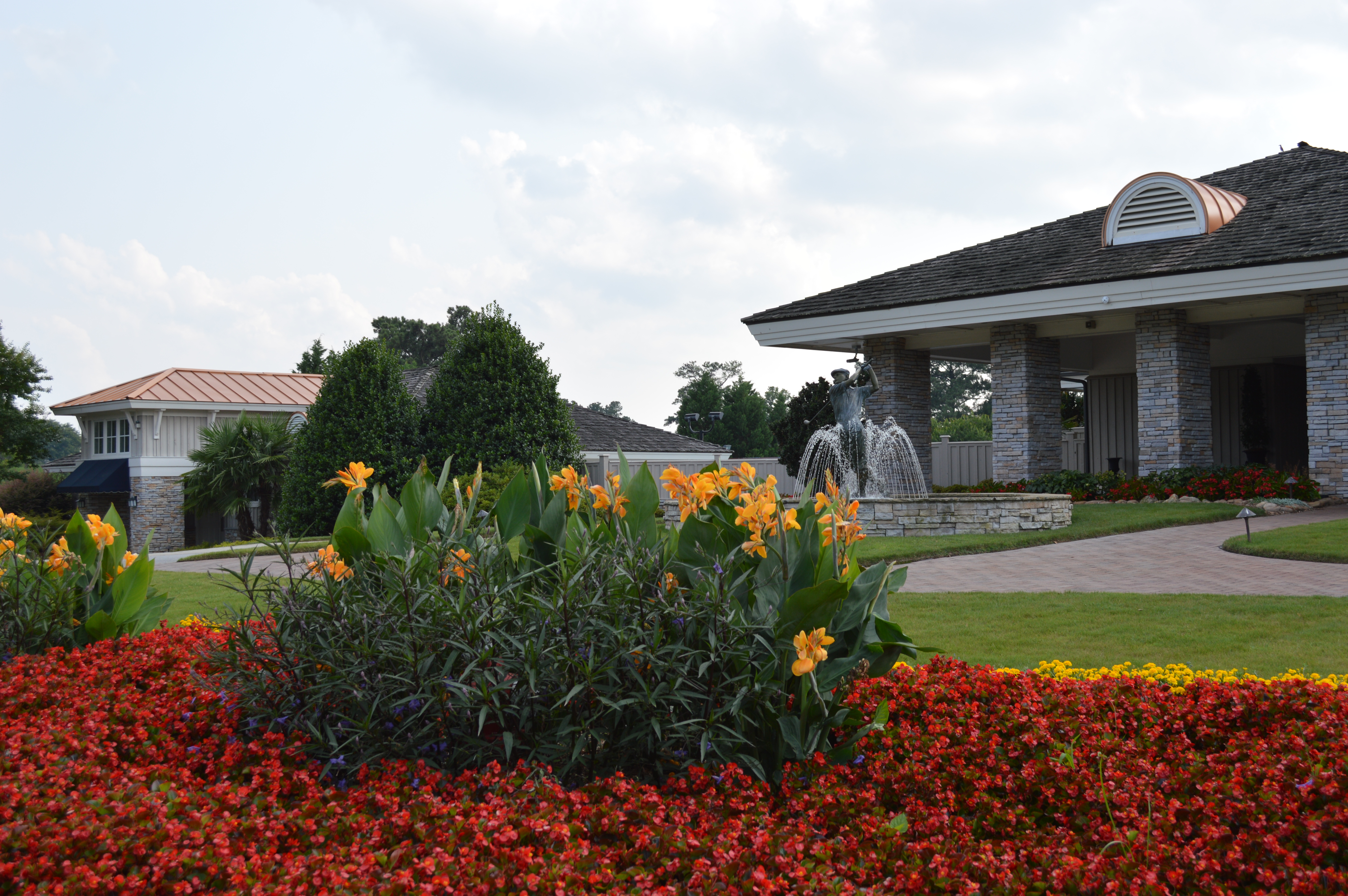
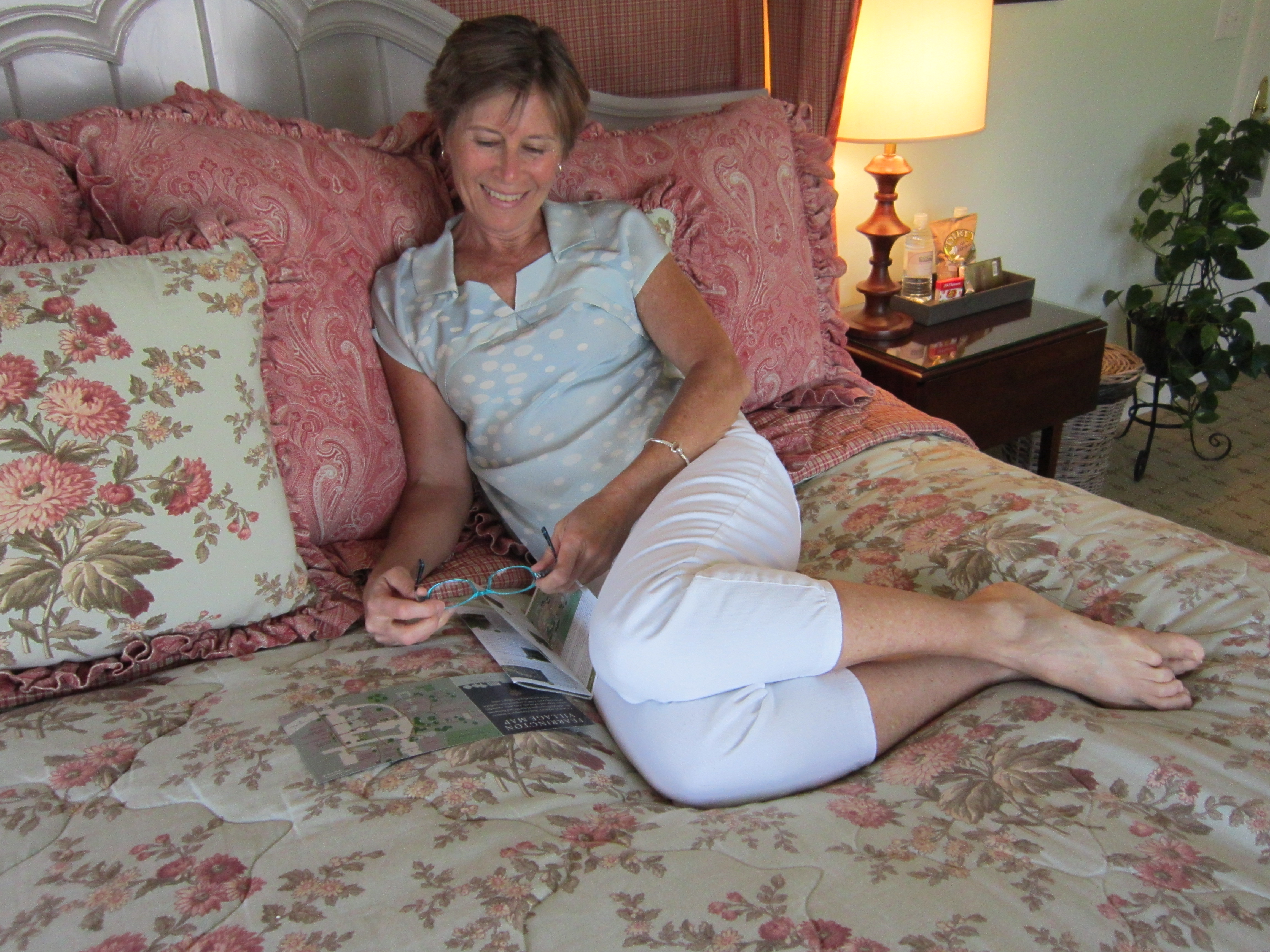
Sally and I celebrated our thirtieth anniversary last weekend. Thirty years! This struck us as a considerable milestone, and we considered taking a major trip to commemorate it. Because of work and other commitments, we couldn’t make that happen. Instead, we decided a weekend getaway to Fearrington Village.

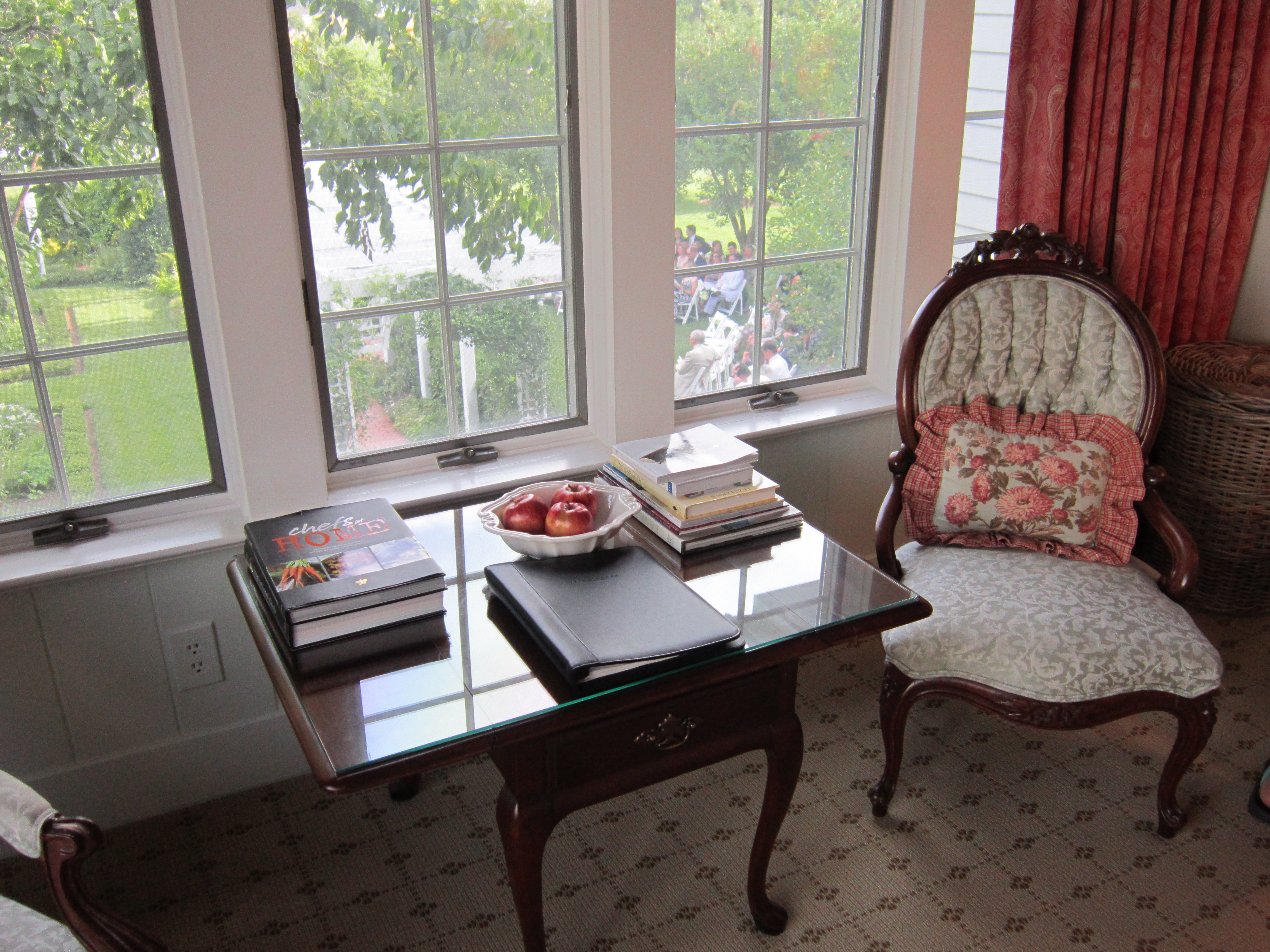
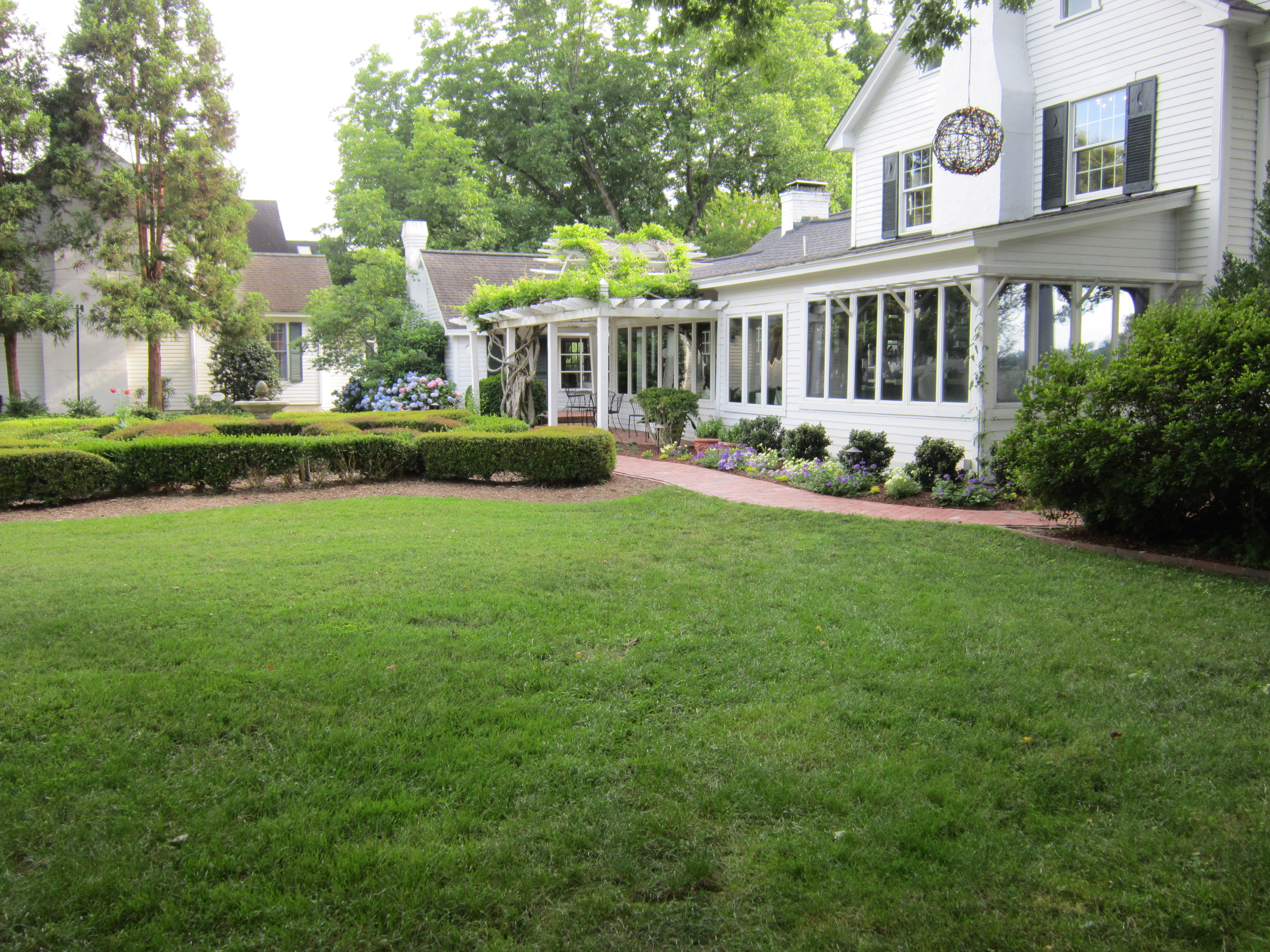
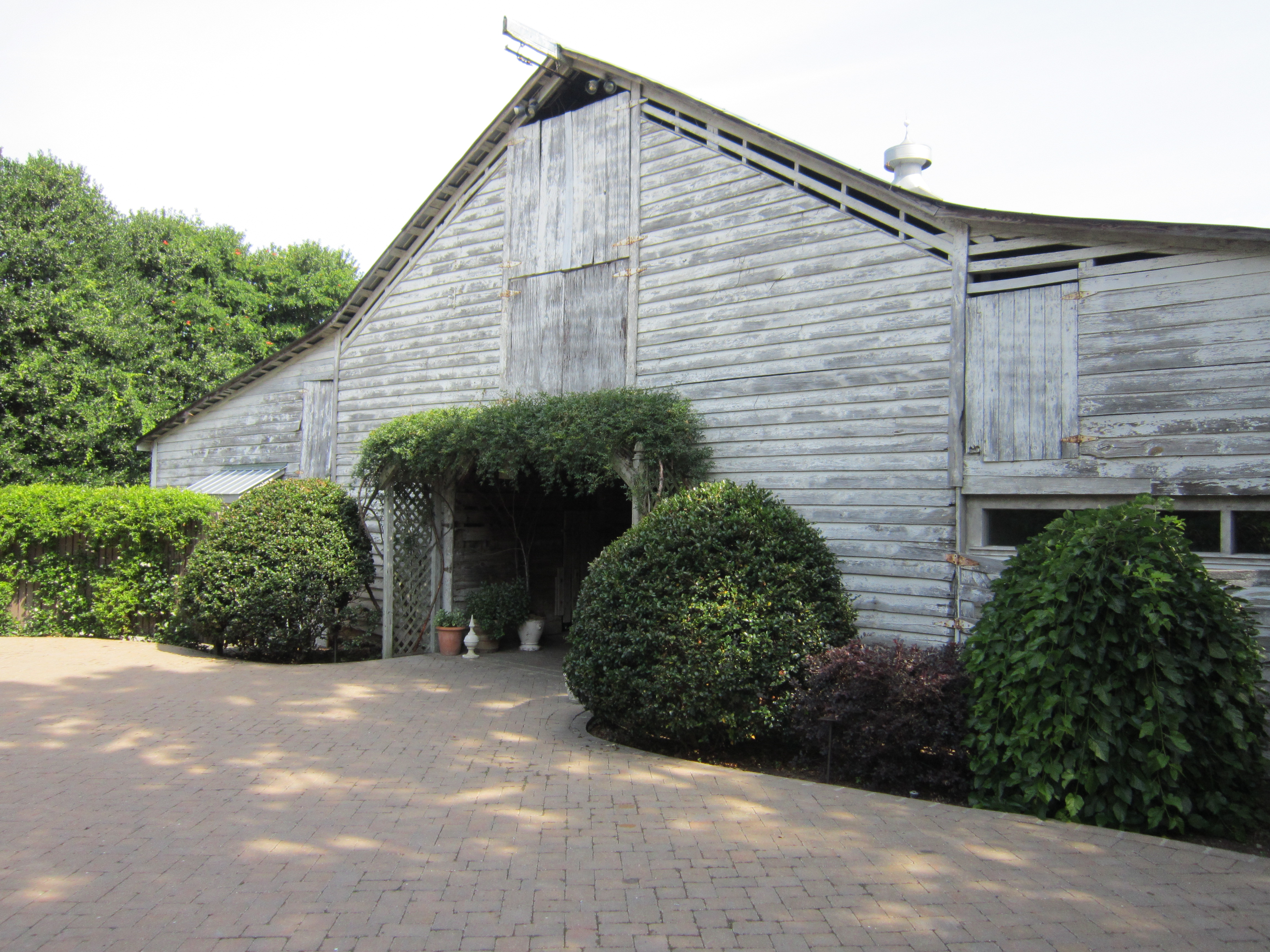
Fearrington is in Chatham County, one county over from us — about a forty minute drive from Raleigh. It was once a working farm, and still has a barn, a silo, and some pastures with unusual oreo-striped cows. It also has a few shops and our destination, the Fearrington Inn, where we had a sumptuous and charming room. It had a bowl of fresh fruit, and a bar of dark chocolate. After settling in, we walked across the square to the Spa, and had a couples massage — our first ever! It was extremely relaxing. Afterwards, we went into a housewares shop and perused the glassware and various objets, and smelled the floral candles.

When we got back to the second-floor room, we looked out the window and saw a wedding just beginning on the lawn below. The bride looked lovely. We talked about our wedding day, when we said our vows before family and close friends in Diane’s apartment on East 63rd Street, and then went downtown for the reception with a large group of family and friends. It was a happy day.

How wonderful it is to fall in love, and build a friendship that deepens with the years. We’ve had many remarkable chapters, and are looking forward to many more. The marriage contract involves a tacit NDA (corporate-speak for a non-disclosure agreement) that makes possible a special level of trust and confidence between the married persons. It creates a zone of safety where we can be something closer to our true selves.

In view of Sally’s and my NDA, I will not be writing about certain intimacies of our weekend, except for this sentence. That evening we ate at the Fearrington Inn, one of the finest restaurants in the region. When last we were there, several years ago, I’d found the food excellent but the service mannered and fussy. But that was not my impression this time: the food was excellent, and the service was both professional and friendly.


On Sunday morning I went for a run, then came back and read most of the Times before Sally got up. We had a breakfast with excellent coffee at the Inn, and then walked through the little village. There were dozens of barn swallows nesting in the barn. The parent shot in and out and rested near to the their nests, letting us get quite close to them and their babies.

Then we went over the McIntyre Books. It’s a bookstore with charm and taste. I was pleased to see a lot of books I’d cared about displayed as though someone else cared about them. Bookstores like McIntyre’s were never common, but now they’re vanishingly rare. To show a little support, I bought the fourth volume of Robert Caro’s biography of Lyndon Johnson, which I’ve been looking forward to reading since I finished volume 3, ten years ago.

We took a circuitous route home along the beautiful country roads of Chatham County, across Jordan Lake, and through the farmland and forests.

How to learn to play the piano

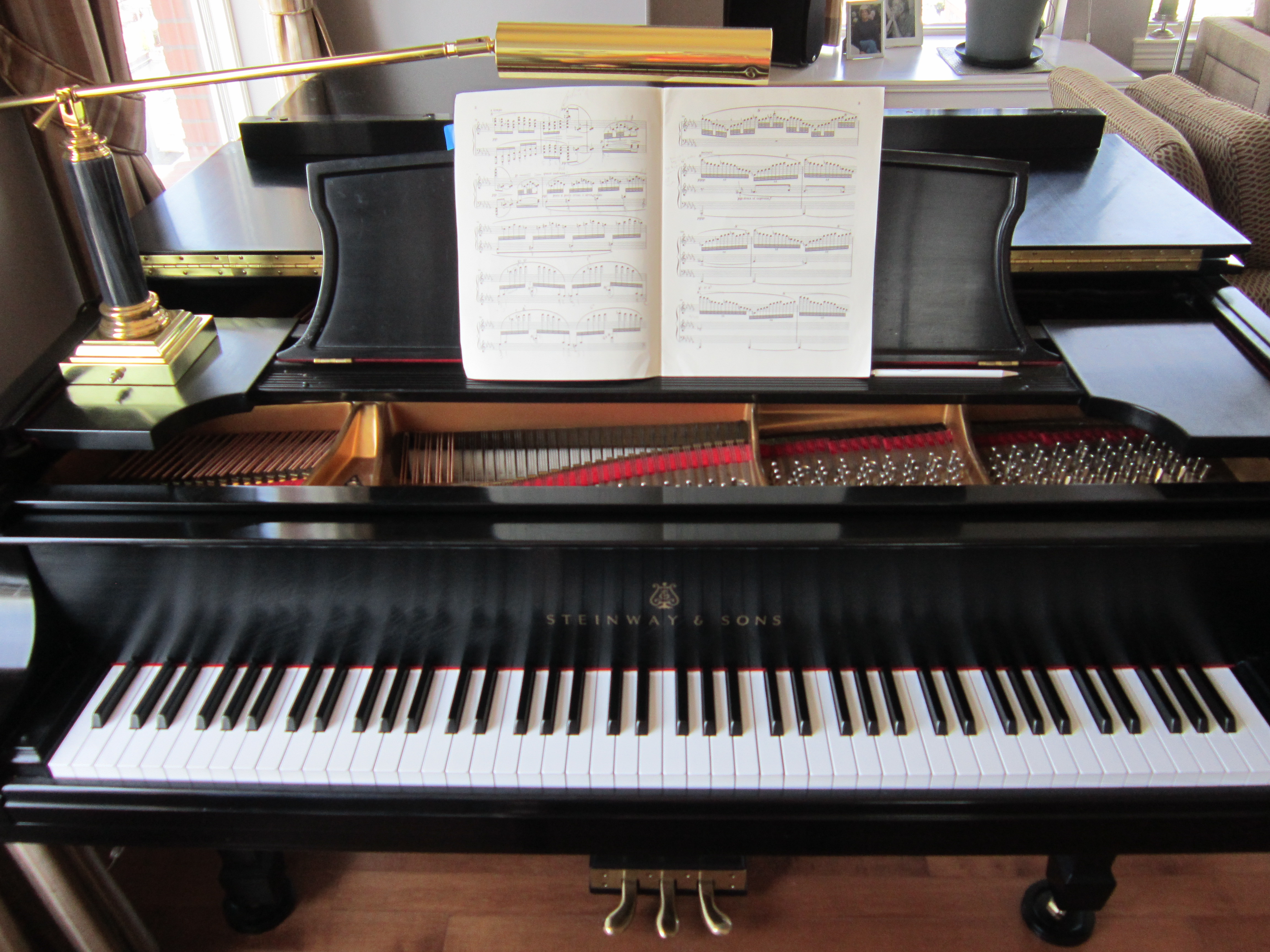
My working days are long, interesting, and often stressful. It’s hard on the brain. To refresh, most evenings I spend a little time playing music on the piano. It works. After a few minutes, my load has magically lifted.

For as far back as I can remember, I thought that the piano was an amazing thing. On holidays when my older cousins play Chopsticks and Heart and Soul on my grandmother’s spinet, I was (in retrospect, ridiculously) transported. I looked so simple, a black box, quite plain, but it produced music. All you had to do was press some buttons. But I quickly learned, when I tried pressing the buttons, it was harder than it looked.

Eventually I learned to play. In my less-than-perfect way, I’ve played the music of giants, running the genius of Chopin, Liszt, Debussy and many others straight into my head and out again, through my fingers, onto the keys, onto the strings, and into my ears, and sometimes the ears of friends. I learned the fundamentals of jazz and played the great songs of Kern, Gershwin, Berlin, and many others. Every Christmas, I play some carols and also some truly awful stuff that makes me smile, like The Christmas Song by Alvin and the Chipmunks. Another guilty pleasure for me is reading through transcriptions of Strauss waltzes and the marches of John Philip Sousa. It’s fun.

Of course, as they say, there’s no accounting for taste, and to each his own. But the piano accommodates an amazing range of musical expression. If you can’t immediately find a musical collaborator who likes the music you care about, no problem. You can approximate a full orchestra, melody and harmony, soprano, alto, tenor, and bass, all by yourself. Why doesn’t everyone do it?

This is the unfortunate thing: it’s a complicated skill and takes a considerable amount of time and effort to learn. In an age when we are accustomed to instant gratification, the gratification of playing the piano is highly delayed. You need to program your brain for several new skill sets. Reading music is a bit like reading a foreign language, which is hard enough, but you need to read it vertically, on two staffs, as well as horizontally. The sign system has many odd symbols, like sharps and flats, and double sharps and flats. You have to learn about meter and rhythm and tempo. You also have to learn bits of Italian, French, and German.

All this is separate and apart from another big challenge: how to touch the right keys rather than the wrong ones. And even that is not the whole story. You can touch the right keys, but in the wrong way, and make sounds that resemble the music, but aren’t really it. In other words, making real music requires more than just playing the notes. It requires getting in touch in a deep way with what the music is, and learning how to translate thought and bodily energy into sound that in turn evokes feeling.

Although learning all this was, in retrospect, an amazing challenge, I have to say, I always liked it. When I played beginner pieces, I thought they sounded good, and when I played intermediate student pieces, I thought they sounded good. Because they were at always just beyond the edge of the skills I had at the time, they were challenging and involving, and I felt a sense of accomplishment when I mastered them. So what might sound like a dreary journey actually had many wonderful episodes.

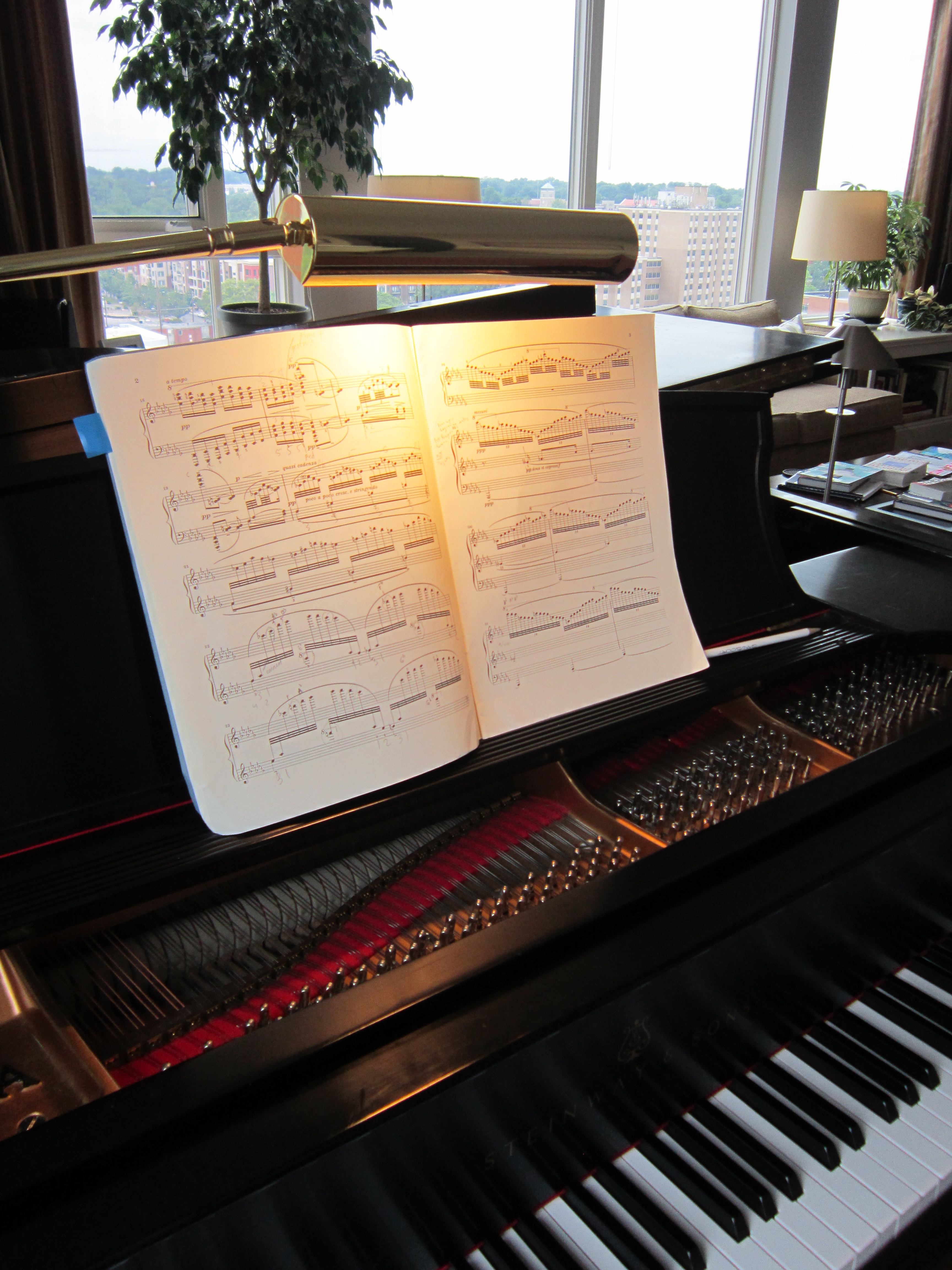
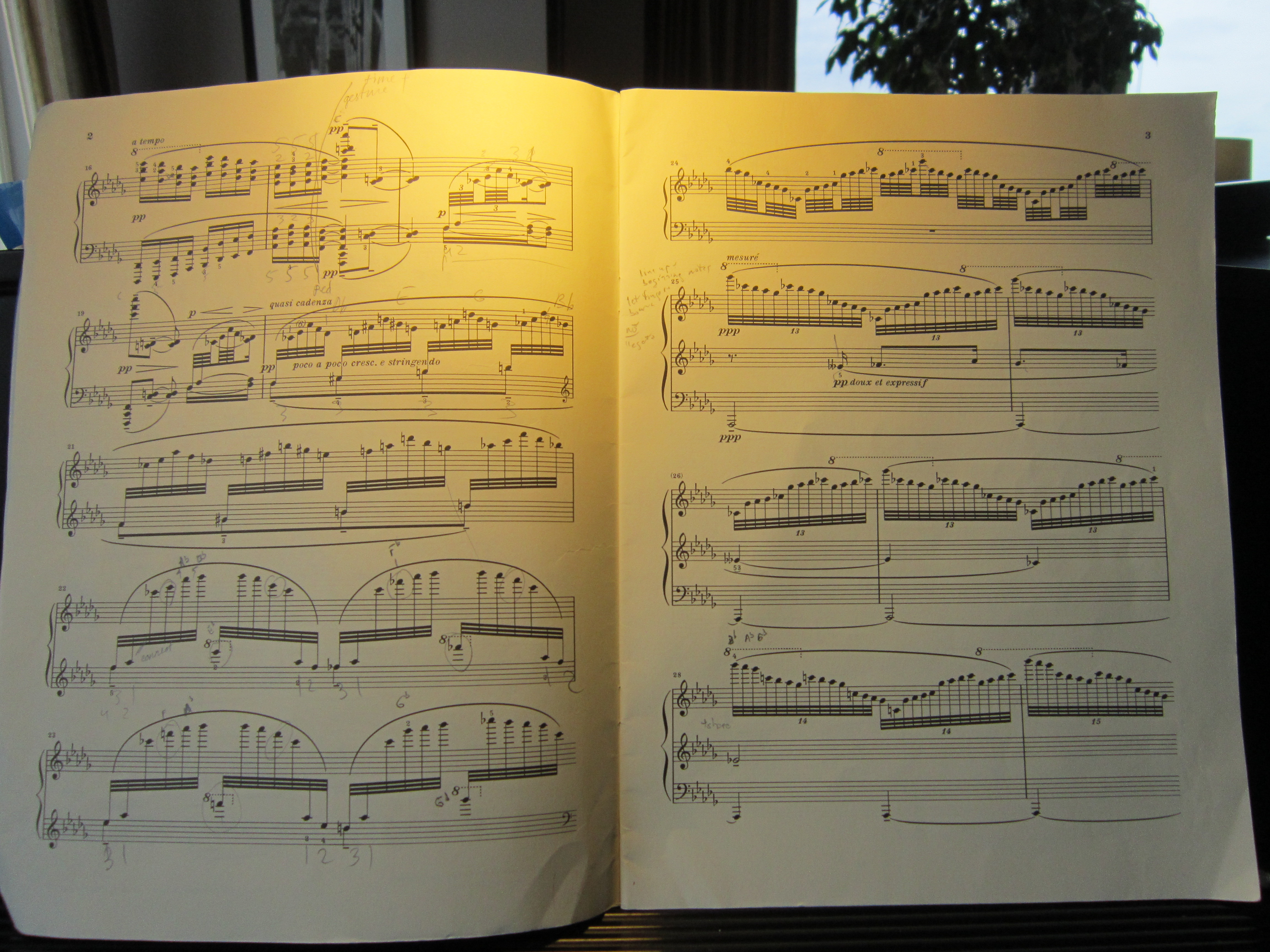
So what is the secret to learning the piano? Everyone already knows part of it: you’ve got to practice. By practice, I mean a concentrated daily devotion to the musical problems before you. If you’re working, as I am at the moment, on Un Sospiro, a gorgeous piece by Liszt, you will need to use skills you’ve built over a period of years, and also some new skills that are not in your repertoire. For these, you need time in the workshop, like an inventor trying to solve a technical problem. It’s lonely work at times, but then there are satisfying breakthroughs. Practice means asking many questions: what is the the best way to play each note, each chord, each phrase, and all the phrases of the piece? The process is potentially endless.

So if you understand the meaning of practice, how do you get yourself to do it? You need to start with a strong sense of purpose. It takes a full-hearted resolve. And then you need to figure out how to fit thirty minutes a day or so in for the work. And then, stay with it, week after week, month after month, year after year. Eventually, it becomes a habit. At that point, there’s a shift, and instead of being hard to do it, it’s hard not to do it.

But it can’t be a mindless habit. You have to somehow keep it fresh and stay mentally engaged. This is a separate challenge, and for this you will almost certainly need a good teacher. As I noted in my last post, you should find a good teacher for any complex skill, but you’d be making a big mistake to invest a lot of energy into playing the piano without a teacher. You’d waste precious time and probably be so frustrated you’d ultimately give up.

You always remember your first teacher. My first piano teacher, Mrs. McGee, had white hair, bad breath, and hands that were red and scaly, like lobster claws. I was 12 when I started with her. In her living room, where I waited for her to finish with the student ahead of me, she had a stack of Cosmopolitan magazines, which I perused with great interest. But eventually it would be time for the lesson. And I would learn something I never knew before.

Getting over personal trainer-phobia

Although I’ve worked out at various gyms over the years, I haven’t had a personal trainer — until now. My reasoning was that exercising isn’t all that complicated, and if I couldn’t figure out how to do something by myself I wouldn’t care to admit it. Some people seemed to find trainers helpful in getting motivated, but I didn’t really have a problem motivating myself. But I recently was got over my trainer-phobia, and it made me reflect on the value of good teachers.

To state the obvious, staying reasonably fit is a good idea for a lot of reasons: feel better, get sick less, look better, think more clearly, live longer, etc. But it isn’t so easy. It takes persistent, continuous effort. It’s a challenge to find the necessary time (early mornings work for me) and to find ways of moving that you enjoy. But over time, it can get to be a habit.

At that point, there’s a different kind of problem. Doing the same thing over and over gets boring, and also at a certain point stops producing improvements. You need to change things up now and again. So staying fit takes some creativity and a willingness to try new things. In recent times, I’ve gotten out of my comfort zone by exploring yoga, and more recently got an introduction to the Pilates system. My teacher, Julee, recently left to go to med school, but not before reminding me of the value of having a guide in a new area.

In domains other than fitness, I already knew this. Learning new things is wonderful. Through trying to teach myself about things as diverse as science, music, and various languages, I’ve come to the general view that the best way to learn a new thing is to find a good teacher. It isn’t the only way, but it’s the most efficient and fun, and so the one most likely to succeed. A good teacher knows the ultimate goal, but also the interim levels, and taking into account your particular strengths and weaknesses, she will propose various possible ways for you to get to the next level. She guides you past blind alleys and hazards. You waste less time, and make faster progress. This makes it less likely you will give up. You work harder when someone else challenges you. You want to acquire the skill, but you also want to please your teacher. And if you’re fortunate, you and your teacher will form a meaningful human connection.

Anyhow, Julee’s departure, though sad for me, made me think about other things that I might like to try. My yoga teachers at Blue Lotus directed me towards Studio Revolution, just a few doors down the street. And so it was that I began working once a week on functional and TRX training with Larisa. We’re doing lots of variations on lunges, bends, twists, and squats, pulling against cords, moving sand bags, throwing heavy balls, and other tools for increasing core strength. She has introduced me to foam rollers. Larisa’s also making me conscious of which muscles are working in various movements, and which ones aren’t. I’m meeting some parts of my own body for the first time.

Our Outer Banks weekend

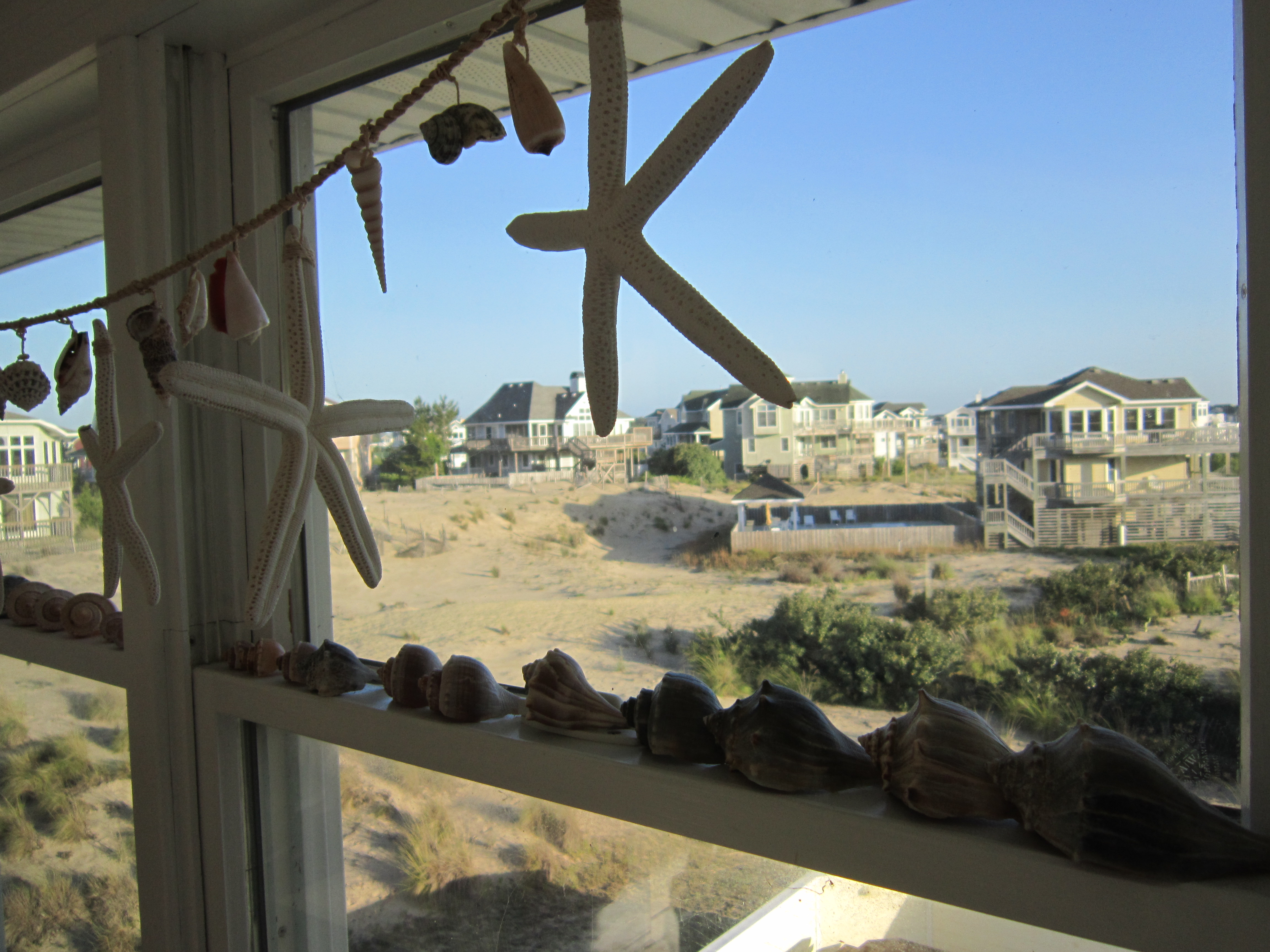
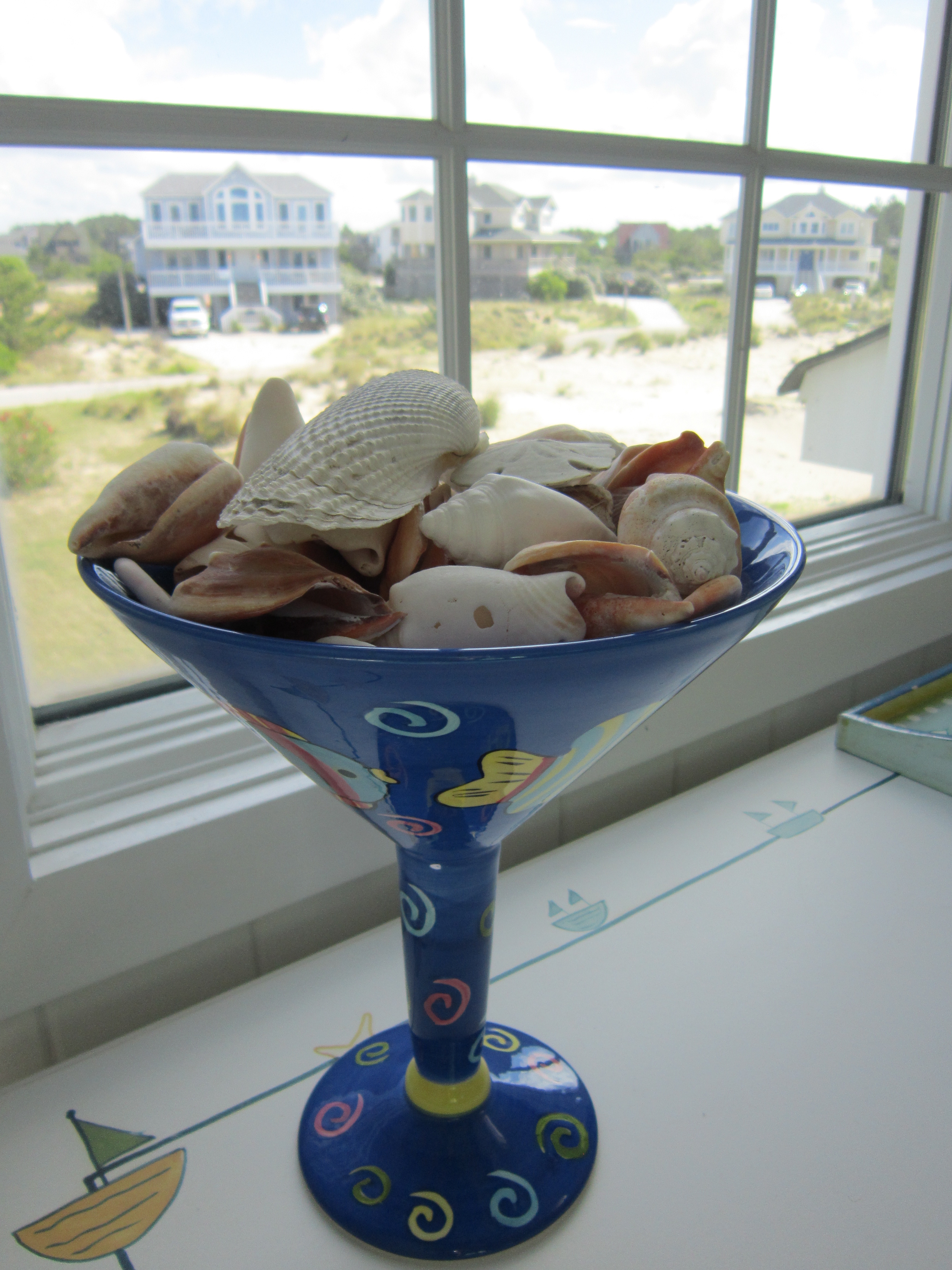
For Memorial Day weekend we drove to the Outer Banks to visit my sister Jane and her family. Their beach house in Corolla was comfortable and relaxing, with lots of seashells and board games. There were family dramas to discuss, as well as books to read, food to eat, and wild horses, shore birds, and other beach creatures to see. I also had a few new thoughts on economics and employment, as noted below.

My brother Paul and his wife Jackie came out from Virginia Beach on Saturday afternoon. Paul, in training for a marathon, ran the last seven miles, and arrived looking thinner than he has for at least a decade. The next morning I did my first outside run in a long time, a three-mile run along US 12. After persistent knee problems a few years back, I finally quit running and switched to low-impact activities like elliptical machines and stationary bikes. But I’ve recently seen running is good for bone density, and so have begun running a bit on the treadmill. The run along US 12 went well for a half hour, until I got a cramp in my calf.

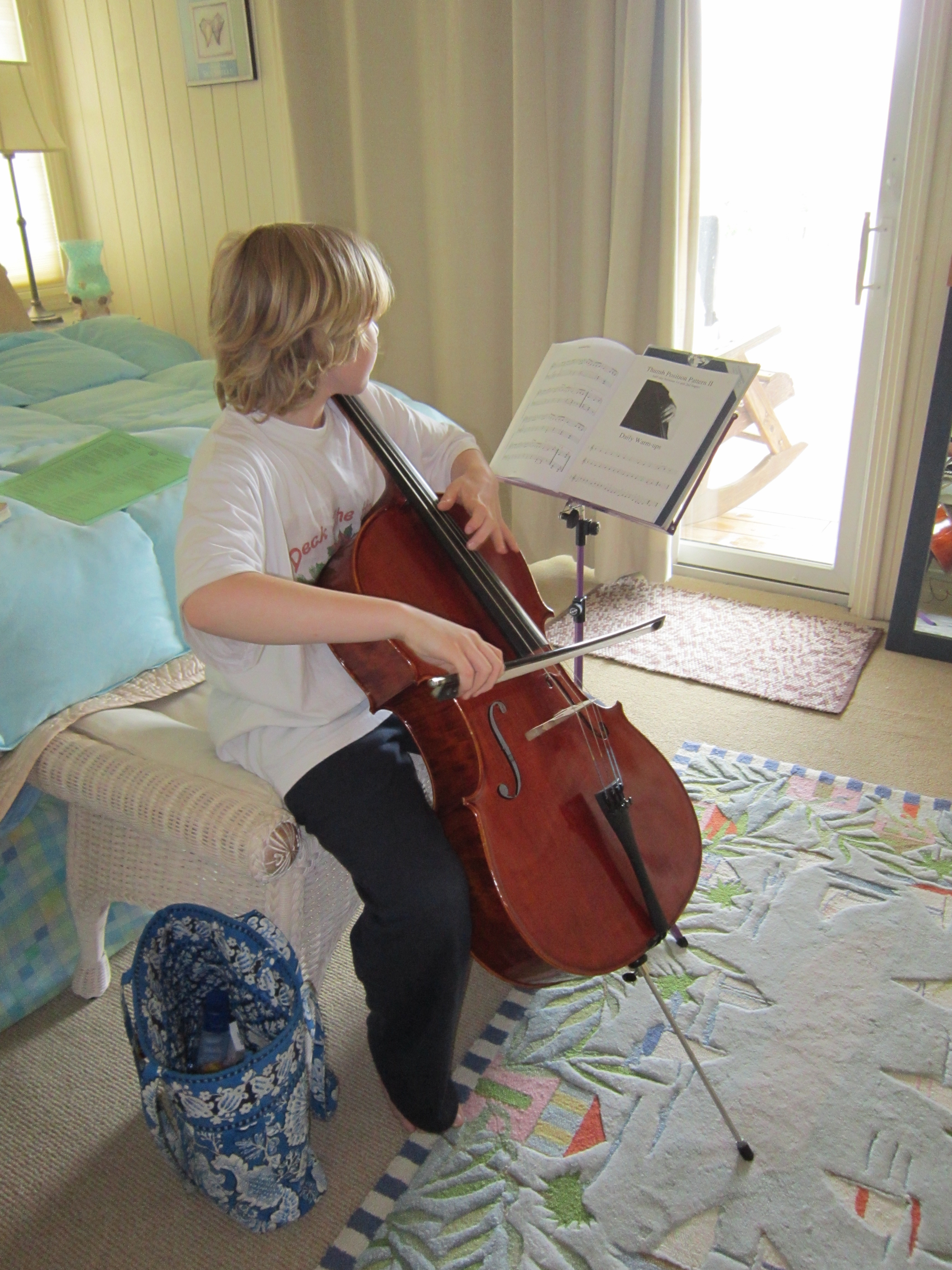
I took a break from practicing the piano, but enjoyed the musical activities of the rest of the family. Kylie is making good progress on the violin, as is David on the cello, and Jane has just started teaching herself piano. Paul is quite accomplished on the banjo, and played his version of the Star Spangled Banner in honor of memorial day.

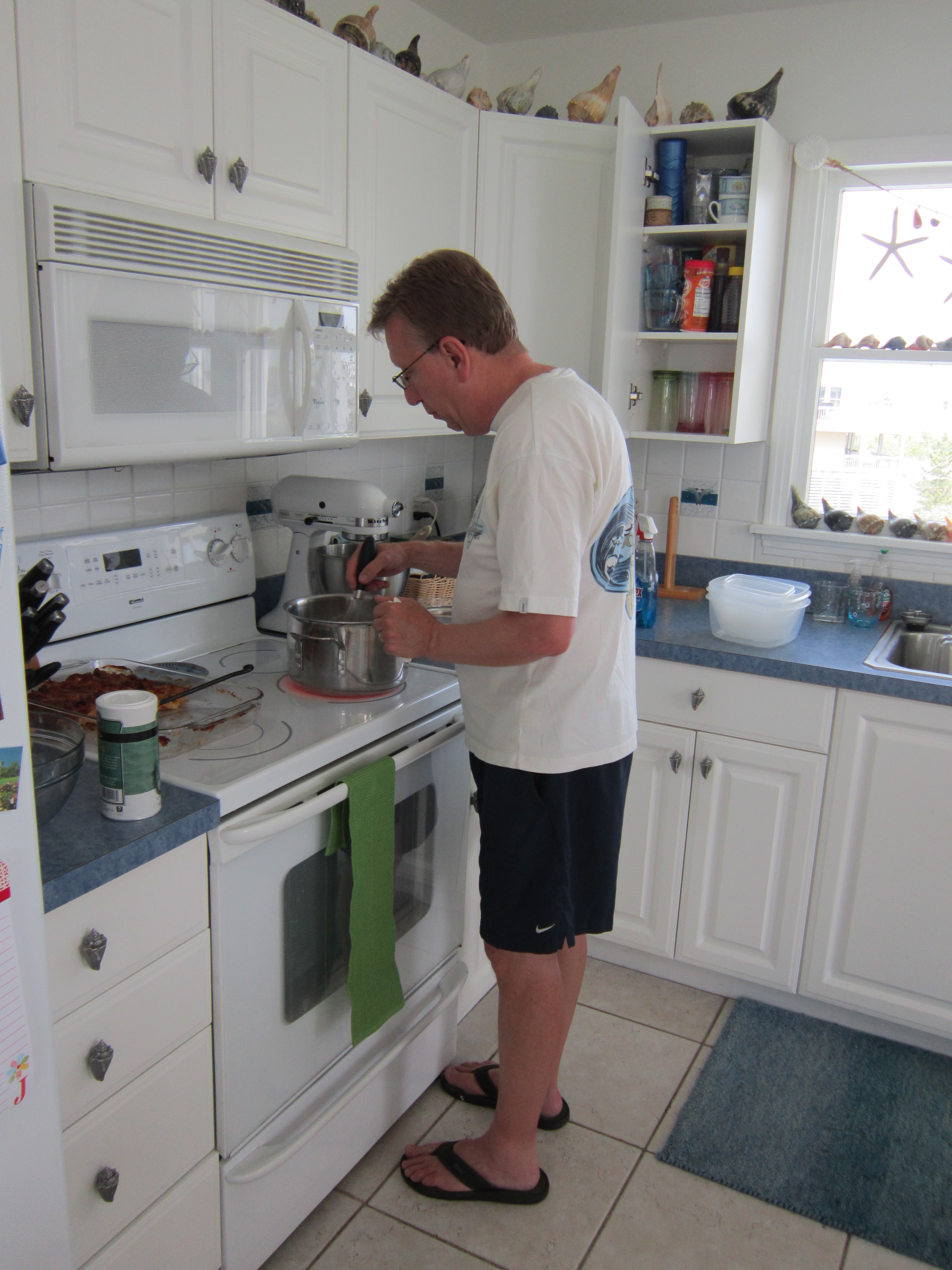
Keith cooked non-stop all weekend. On Saturday morning, he cooked gluten-free waffles with blueberries and strawberries, which were marvelously light. Soon after we cleaned up, he started to work on lunch, wonderful grilled vegetable sandwiches, and soon after that, he got to work on a vegetarian Mexican dinner, which was a complete success. The man loves to cook, and he’s really creative. We were all grateful.

In the Sunday Times, there was an op ed piece by Tim Jackson about how the drive for ever-increasing productivity was resulting in increased unemployment. This was a different lens on a problem I’ve pondered before — what should humans do when computer brains and robots render them redundant? Jackson proposes that the answer is to forget about increasing productivity and embrace lessening productivity.

Jackson broached a critical problem. As I’ve noted before, although we’ve hardly noticed it, robots and artificial intelligence are transforming the human world in fundamental ways. More and more of the manufacturing work that people used to do is now done by robots, and AI is starting to impinge on areas that we used to think of as forever and irreducibly human, such as medicine, law, and education. This is big. As far out in the future as we can see, we will need fewer and fewer people to make our products and perform our services.

We once thought of this as utopia: a world of plenty which required less and less labor to produce goods and services. We assumed it would result in more and more pleasant leisure. But this vision failed to take into account that we aren’t comfortable paying wages to people who aren’t working in a way that contributes meaningfully, and those without work do not feel at leisure.

Jackson suggests reorienting away from simple increases in productivity and towards activities involving caring, craft, and cultural activities, like art. This sounds promising. These are activities that humans have done as long as the species has existed. Once our ancestors had taken care of food, clothing, and shelter, they made jewelry, painted on cave walls, beat on drums, played lacrosse, or otherwise entertained each other. Caring for each other, making things, and making art are things we like to do. But we need to figure out how to associate these activities with fair wages.

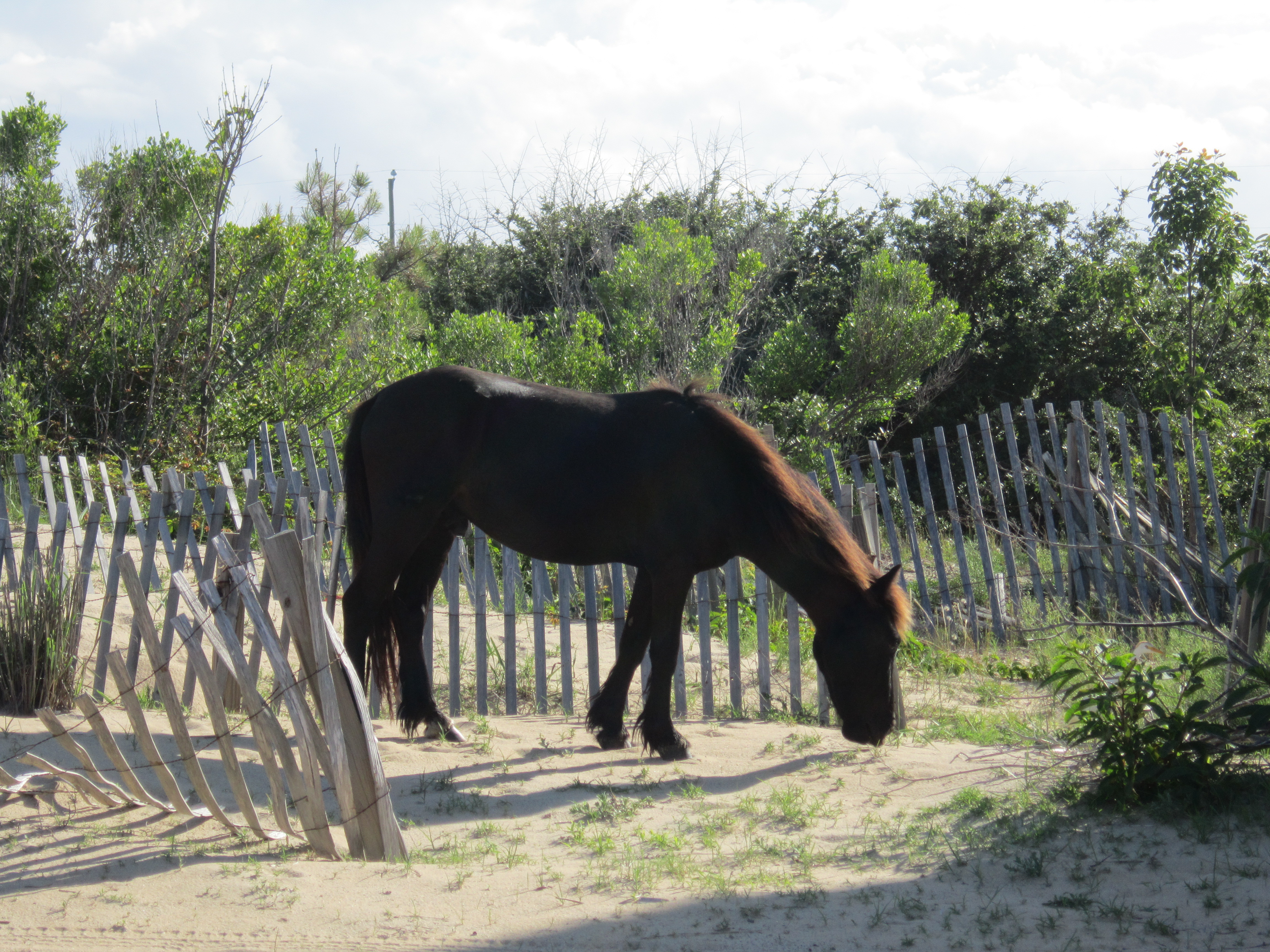
On Sunday afternoon we went four-wheeling northward to look for wild horses. Driving on the beach is fun, though I feel a bit guilty at what people like us do to the beach and its creatures. We saw lots of sanderlings and grackles in the shallows, and flying pelicans, gulls, terns, and one snowy egret. We drove through the narrow sandy pathways that wind through the marine forest, working our way around occasional pools of standing water. We finally found three groups of horses, and got close views of two of them.

We sat on the porch for a while and read and talked. Over the weekend, I dipped into the following books: I Am a Strange Loop, by Douglas Hofstadter, This Is Your Brain on Music, by Daniel Levitin, The Short Game Bible, by Dave Pelz (golf), Indignation, by Philip Roth, Winner Take All Politics, by Jacob Hacker, and The Social Conquest of Earth, by Edwin O. Wilson.

Sunday evening Sally mixed cocktails for the adults using cucumber vodka, ginger infused simple syrup, lime juice, and elderberry liquor. Keith made gluten-free vegetarian lasagna, which he had to complete with penne pasta because there were no lasagna noodles, but which turned out great. He’d also made vanilla ice cream and peach-and-blueberry cobbler. We played a game called “left right center” which involved rolling dice and losing or acquiring chips. It was a game requiring no skill, but gave the enjoyment of possible good fortune without exacting much pain for bad fortune. There was merriment. After dinner, we lit sparklers and set off some fireworks rockets.


Carolina Ballet’s brilliant Beethoven, and a Porsche track day

Clara at VIR on May 19, 2012

Sally and I went to the Carolina Ballet’s final program of the season on Thursday night. Ballet has so much emotional power. How fortunate are the dancers who can embody it and touch us with it. As they move, our minds move and feel. Could it be our mirror neurons? Perhaps that, combined with a common tradition and vocabulary of movement. Maybe, when all the stars align, we connect at a fundamental level with the dancers and the dance, and are changed ourselves.

On Thursday, we saw the world premier of Robert Weiss’s new ballet, Beethoven’s Ninth, and found it very powerful. The music is iconically familiar, but apart from the familiar ode to joy, extremely strange. Weiss’s creation honors the tradition of the music, and also brings it into the present. He uses a large cast and a lot of movement. The stage surges with high-speed running, leaping, and spinning in every direction, creating tension and excitement. It’s wonderfully dense and complex, like the music. The work seems more about groups and relationships than about individuals. I thought it was truly brilliant. Is this possible? Could a work of amazing complexity and transcendent beauty shine forth in Raleigh, our sweet but modest mid-size southern city Of course!

On Friday and Saturday, I took Clara up to Virginia International Raceway for some track driving fun. Both days were mild and sunny. There were dozens of beautiful Porsches, along with quite a few BMWs and Corvettes, and onesies and twosies of other vehicles. I was paired with Mike T, a very experienced teacher and Corvette guy.

There are seventeen turns in the 3.27 mile VIR course, and each one is different. Mike expected me to know them by name, and have a plan for each one. As we did laps, we communicated through in-helmet headsets. He coached me through each turn and gave instant feedback, such as, “You turned in too early,” “You need to brake earlier,” and, occasionally, “That was good.”

Like a lot of accomplished people, Mike was a perfectionist, and it was difficult to satisfy him. I felt a bit discouraged. At times he seemed to be coaching me towards a high-speed disaster, which in retrospect I think was the result of my not getting some of his vocabulary. Anyhow, there were some close calls involving taking too much speed into corners. But as the laps accumulated, the percentage of good turns increased, and I was passing most of the cars in my group. Mike didn’t make me feel great, but he may have helped me move me towards the next level.

A lovely Friday cocktail, Bill Cunningham, the anti-gay vote, David Brooks’s The Social Animal, learning to listen while playing the piano


How nice it is to have a cocktail and relax at home on Friday evening! Of course, strong drink must be handled with care. A glass of wine with dinner is certainly a pleasure, but the habit can sneak up on you, and a glass of wine can so easily turn into three.

A few weeks back, Sally and I decided to limit drinking to weekends. Among other good effects, this makes the Friday evening drink particularly delightful. Last night, Sally made us margaritas with fresh lime. For the first time in years, I had a sudden urge to listen to Stevie Wonder hits from the seventies, which we now can easily stream from Rhapsody. I dedicated my streaming of the wonderful Signed, Sealed, Delivered to my sweet Sally.

We watched a documentary called Bill Cunningham New York. Cunningham is a photographer whose specialty is candid shots of New Yorkers wearing interesting clothes. He has a feature in the Sunday NY Times style section in which he shows this week’s street fashion trend, which, although I’m far from a fashion person, I always enjoy looking at. But I didn’t know him by name, and would have missed the documentary but for Sally’s putting it at the top of the Netflix queue.

It was sweet and kind of inspiring. Cunningham is in his mid-80s. He’s still snapping pictures all the time (using 35 mm film), publishing weekly in the Times, and travelling by bicycle on the streets of Manhattan. Age may have slowed him down a bit, but he’s still passionately creative. He’s got a great, boyish smile.

We voted in the North Carolina primary this week, which involved primary races for governor, secretary of agriculture, and various other offices, and an amendment to the state constitution to ban gay marriage. Why a gay marriage ban? It’s mysterious, and bizarre. I am stunned that it passed by a 20-point margin. Raleigh, the part of North Carolina in which I spend most days is multi-cultural and tolerant, with a visible and completely uncontroversial gay population. (I blogged about this visibility a while ago.) But most of the state is rural. What is going on in the heads of homophobes? I’d like to understand, but I don’t get it. It’s a different culture. I believe that that culture is eventually going to change, but for now it’s still alive and kicking.

Speaking of culture, I’ve been reading The Social Animal, by David Brooks, the NY Times conservative columnist. Brooks has collected recent ideas on psychology and culture, including those of Daniel Kahneman and Jonathan Haidt, and woven them into a readable and, in places, intriguing book. The theme, which is getting considerable attention lately, is that people are primarily driven by unconscious perceptions and desires, rather than rational thought.

But Brooks views this in a positive light, arguing that although our brains make all kinds of mistakes, they work better than a completely rational system running in real time could. He argues that behavior is best viewed as a function of those around us and our surrounding environments rather than of individual intelligence, and proposes that we think about meaning more in terms of relationships and cultural systems. I don’t much like his device of two imaginary characters who gradually discover or rub up against the various theories he explores; the characters never really come to life. But I think it’s worthwhile — I’m more than half way through, and likely to finish.

On Saturday I had my last piano lesson of the season with Olga Kleiankana, who’s headed to Moldova for the summer. We talked about some Rachmaninoff and Scriabin pieces for me to work on over the summer, and then worked on Scriabin’s second prelude (op. 11). Olga admitted that it sounded significantly better, but pointed out places where the tone seemed flat. She continued to emphasize the importance of gesture in sound production and expression, and when pedaling problems emerged she taught me how to test out pedaling improvements.

Then I played Debussy’s Second Arabesque for her for the first time. She pointed out that I seemed to be reading note by note, when many of the elements were repeated with slight variations. As she went through a quick score analysis, I had a eureka moment: score analysis was not designed to torture hapless students, but rather to make it possible to understand and learn music more quickly and effectively.

Finally I played Debussy’s Reflets dans l’eau, from Images, premiere serie. This is a gorgeous impressionist piece that calls to mind (especially after hearing the title) reflections in water. It has dazzling effects, some of which are difficult. Olga noticed that I got tense in my shoulders in the fast 32nd-note passages, and advised me that that could be fixed by breaking the passages into simple parts for practice. We also talked about the relationship of touch and tone color. At one point, I played a simple chord, and she said, with a pained expression, “Don’t just play the notes! You need to always think before you touch the keys!”

And she was serious. She listens with a level of concentration that’s almost scary, and expects me to at least try to do the same. I’m having occasional glimmerings of what this might be like. The sound seems richer, with more depth and detail. It’s like hearing in 3D. Of course, little flaws, like unbalanced chords or inappropriate accents, are more jarring. But when a musical statement works, it touches more deeply.