The Casual Blog

Our Austrian adventure, including some good ski tips

OLYMPUS DIGITAL CAMERA

Last week we had a skiing adventure in the Arlberg region of Austria. This was our first ski experience in the European Alps, after quite a few trips to the U.S. and Canadian West. We were curious to experience the birthplace of alpine skiing and taste a different culture. It exceeded our expectations. If you love skiing, you should go.

We arrived in Lech on Sunday afternoon to find it had snowed a lot the previous day, but the snow had just changed to rain. As we got our bearings and rented equipment, hiking the roads with slush on top of ice, we managed not to fall, but our feet got wetter and wetter. We made a note to bring some water proof boots for the next trip. But some good news: with the weak Euro, the prices for lift tickets, equipment rentals, and hotels was substantially cheaper than out West.
OLYMPUS DIGITAL CAMERA

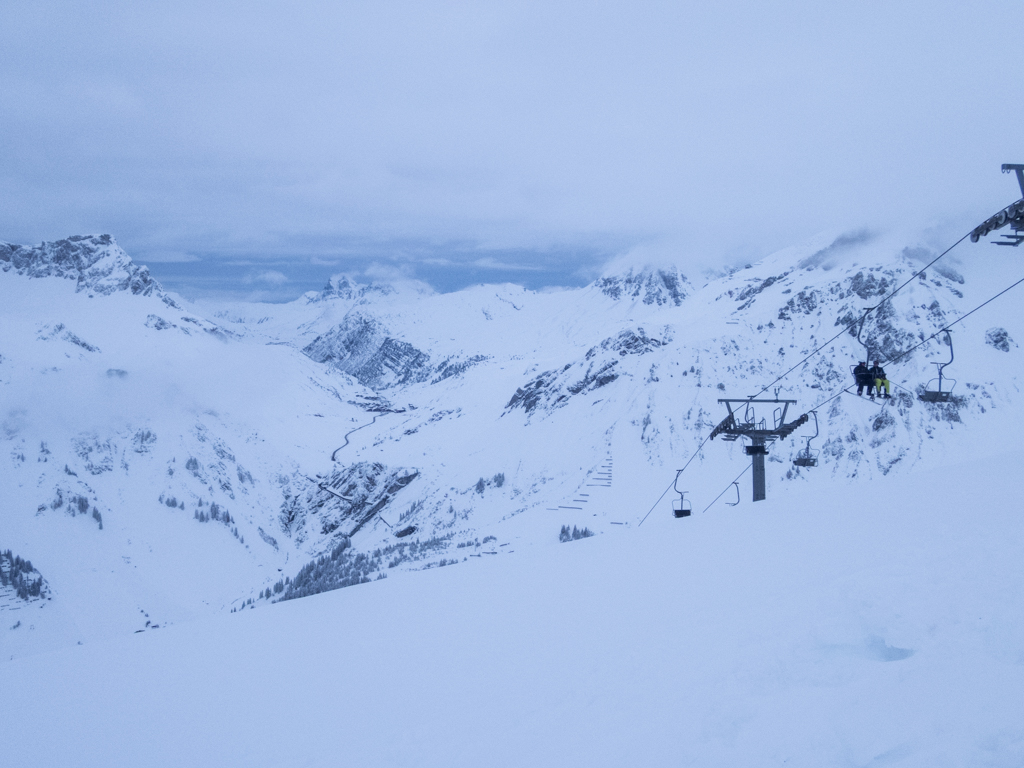
The next morning it cleared up, and we took our first runs at Lech (“leck,” more or less). It was beautiful. There are spots in the Rockies that rival it for magnificence, but here the craggy peaks were everywhere, towering above us and extending on and on. The slopes weren’t cut out of the mountain forest, as in the Rockies, but rather marked with posts on the mountain as nature made it. Snow coverage was good, though the snow was a bit heavy. We quickly adjusted and had many good runs on several different slopes.
OLYMPUS DIGITAL CAMERA

Early on we figured out that the official ski map gives only the most general idea of the lifts and slopes. The total Arlberg ski area is huge, with 97 lifts, and we discovered that the large maps near certain lifts were essential for navigation. There seemed to be an assumption that everyone could read a map and exercise good sense; we saw no greeters or patrollers looking to help the confused. But the slopes and lifts had a kind of logic, and almost without fail we ended up where we were aiming.
OLYMPUS DIGITAL CAMERA

The lifts were mostly modern, high-speed, highly automated, high-capacity marvels. They had little gates, like at horse races, that let skiers onto conveyor belts, which generally deposited the skiers in the ideal spot to get gently swept onto the seat. Many of the lifts had a plastic bubble that could be lowered to protect against wind and snow, and some of the seats were heated. There were some exceptions, ranging from old school T-bars to enclosed gondolas. But over all the system was amazing. And unlike in our experience in the U.S., the lifts almost never stopped. Most of our time there, we had no lift lines, and many times had 4 or 6 chair lifts to ourselves.
OLYMPUS DIGITAL CAMERA

My rented skis were Atomic Vantage 90s, with wide rocker tips, some center camber, and 90 cms under foot. I found them not too stiff and not too loose — a Goldilocks all mountain ski. They performed well in both hard and soft snow, though I did not really figure out how to work them in very deep powder. I brought my own Dalbello boots, which performed well, though I got a blister on my left shin (driving those shins forward!) and a very bruised left ankle bone.

We stayed in Hotel Knappaboda, a 22-room family-run hotel that felt cozy and friendly, like the ideal bed-and-breakfast. The manager/owner, Gertrude Walch, also served as our concierge, recommending a new restaurant each night, securing reservations, and giving directions. It was not quite, as advertised, ski-in ski-out — the lift was about an 8-minute walk — but no matter. Our room had all the modern conveniences, including free and fast wi-fi, and was pretty and comfortable. It was also quiet. Especially after it started snowing again, at night we heard nothing from the street, nothing from neighbors, and practically nothing from the building itself. So peaceful!
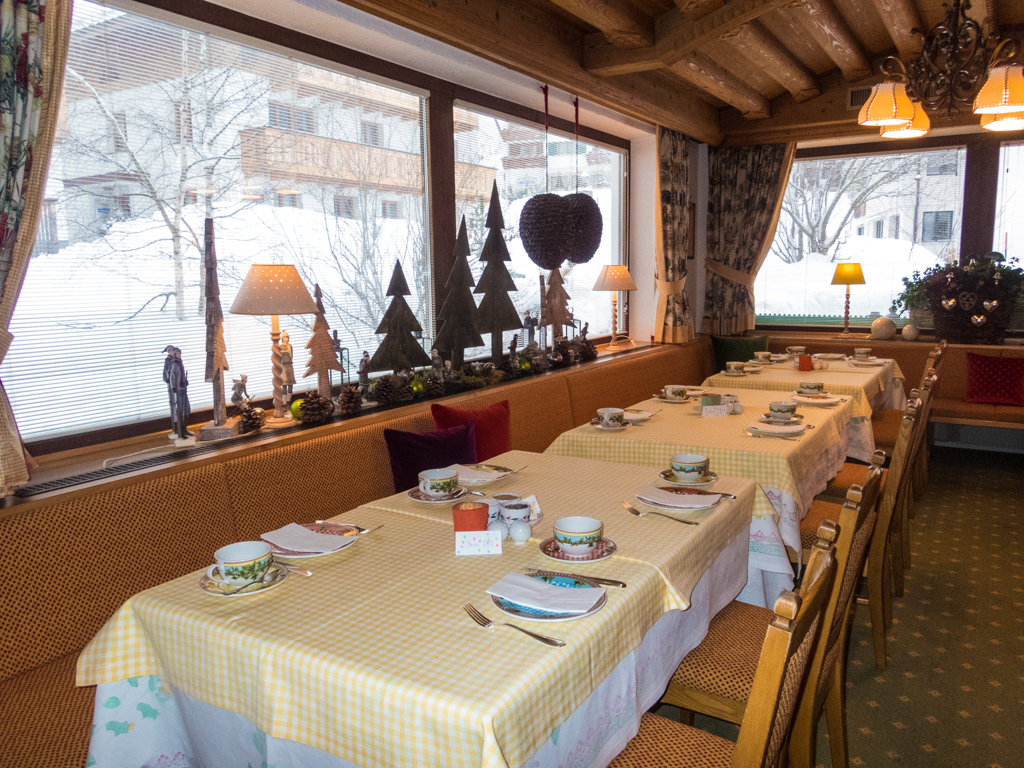
Ready for breakfast at the Knappaboda

Ready for breakfast at the Knappaboda

We hired a teacher-guide for Wednesday, when it started to snow again (and continued to snow until mid-Friday). Our ski guru was Walter Goggelmann. He turned out to be quite an accomplished person: a 20-year professional instructor who also worked in the off-season as a critic for a Berlin magazine, who spoke German, English, French, Spanish, Russian, Dutch, some Italian, and some Turkish. He also was an experienced scuba diver with good knowledge of Indonesia.

Walter watched us ski briefly, and identified three things we needed to work on. 1. Press into the snow with the downhill big toe. 2. Turn the uphill knee out. 3. Turn the head 45 degrees toward the next turn. The toe trick works to get your weight forward and the front edge better engaged. You should try it! We also learned that on the flats, you go faster if you press down with all ten toes. After a few hundred more turns, our skiing was both stronger and more relaxed.
OLYMPUS DIGITAL CAMERA

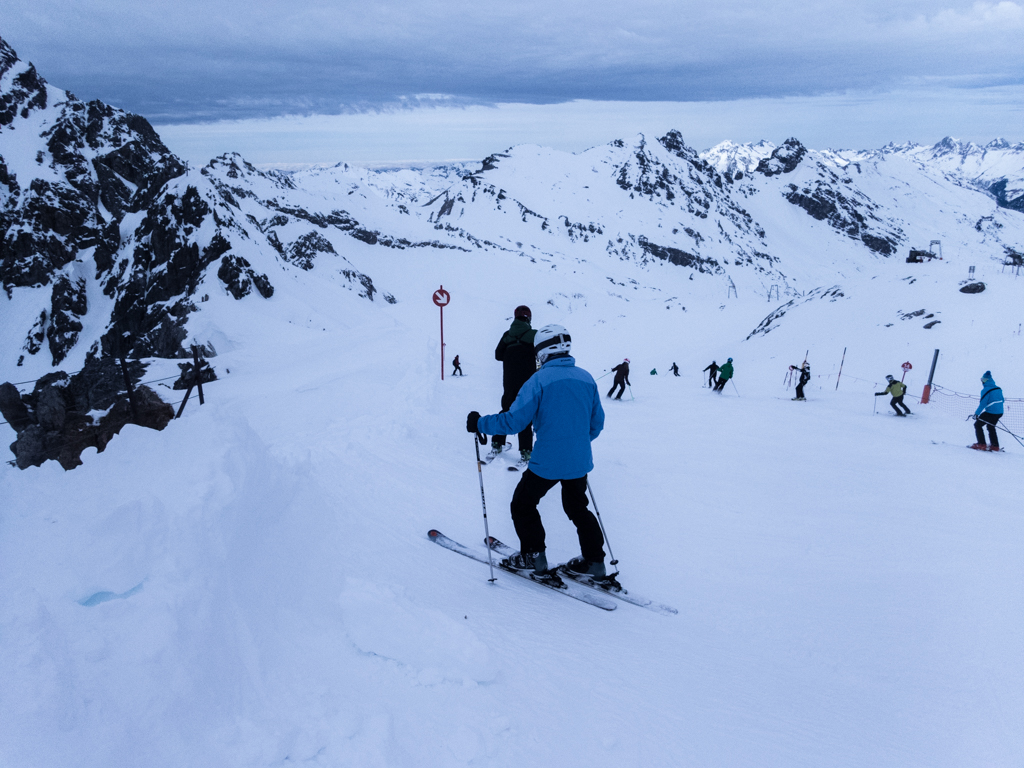
Walter took us on der Weisse Ring, a signature tour route which started at Lech and ended a couple of hours later with a very long run at Zurs. Walter stopped at one point at did a bit of yodeling where there was a long echo. At the end of the day, Walter suggested we check with him the next day, since he suspected his afternoon client might cancel, and he’d enjoy skiing with us at no charge. It was a nice compliment — hey, we must be pretty good! — though in the end he couldn’t make it.

We also skied two days at St. Anton. It was gorgeous there on Tuesday, and though the snow was hard (not quite ice) in the morning, we liked the steep long runs. When we returned on Friday, it was snowing hard, and visibility was very limited — we really couldn’t see the snow underneath us, and could barely see the next piste markers. With no beautiful views to distract us, we concentrated on polishing our technique. At midday we went over to the Steuben area for lunch. The lifts there were old-school, slow fellows, but the visibility got better, and the snow was good.
OLYMPUS DIGITAL CAMERA

I felt a certain reverence for Arlberg, like a golfer might for St. Andrews. The people looked a lot like us, but there was a different culture, which we enjoyed observing. There was a certain formality, and less extrovertedness — not much apparent interest in engaging strangers. There was a certain pushiness in the few lift lines we had. At the same time, people laughed a lot, and quickly responded when a skier fell or had problems. People seemed to particularly love little kids.

The restaurants we tried all had carved wooden ceilings, interesting fabrics, figurines, and a dramatic crucifix in one corner. We’d worried a bit about finding vegetarian food, but this generally worked out fine, though with more pasta and other carbs than I’d want to eat all the time. Our favorites were the Kroner and the Omesberg.

People speak German. I note this, because, before we went, several people said to me, well, everyone speaks English. Not exactly. Of those in the hospitality business, most speak some English, but there’s a wide range of skill levels. We could have gotten along with English only, but I was glad to have a little very basic German. We enjoyed being surrounded by the language, which made it very clear we were somewhere different.

One thing that was the same: pop music. At the apres skis bars, we heard almost all U.S. rock from various eras, and in the restaurants there was classic jazz. Since we seldom listen to this music at home, this was a change for us. We also noted that fewer Austrians are overweight. Unfortunately, more people smoke.
OLYMPUS DIGITAL CAMERA

I had only one real fall all week. On Thursday near Warth, after perhaps two feet of new snow had fallen, and with visibility still quite limited, I felt moved to test the deep powder. A few turns later I went down, and my face ended up under the snow. Nothing was hurt, but getting out was a problem. At first I tried hiking, but this was not possible, since the snow was almost up to my waist. Eventually I used a ski to pound the snow into a little platform that would hold the skis while I got remounted.

Anyhow, we got a taste of the culture, and a taste of the skiing — enough to want to come back. Early Saturday morning, we sadly bid Gertrude auf wiedersehn (she waved as our taxi pulled off), and took the bus to the Zürich airport. From there we took the train to the main station in Zürich and explored the winding cobblestone streets of the old part of the city.
OLYMPUS DIGITAL CAMERA

Zürich was quite charming. The high point for us was the Kunsthaus art museum, which has an excellent Impressionist and Post Impressionist collection, as well as some interesting old masters and current exhibits. We walked along Bahnhofstrasse and went into the Teuscher chocolate store, and after some looking, purchased their smallest box of truffles (two for each). We sat by the river and had cappacinos, and watched the gulls, ducks, and swans. Then we had a look at the famous Marc Chagall stained glass in Fraumunster church. After more strolling, we ate at a nice Mediterranean restaurant called Mere Catharine.

Our ice storm, Eugene Onegin, getting ready to ski Lech, and learning some German

Tiller7Bug 1-8
On Friday much of the East Coast was walloped by a big snowstorm, but here in Raleigh, we got mostly sleet and freezing rain. It left a treacherous coating of ice on the roads. Sally ventured out once in the Subaru for groceries, but otherwise we hunkered down till Sunday, when it warmed up and most of the ice melted.

That afternoon we went to the N.C. Opera’s concert production of Tchaikovsky’s Eugene Onegin. It was really good! I was particularly struck by Joyce El-Khoury as Tatiana, a brilliant young singer, with amazing dynamic range, subtlety, and feeling. Eric Barry’s Linsky was also very fine. Indeed, all the principals were excellent, and the chorus and orchestra sounded good, too. Hats off to maestro Timothy Myers! I’m happy to say that Red Hat is sponsoring a broadcast/webcast of this performance on WCPE on May 5.
Tiller7Bug 1-10

Next Saturday we’re headed to Lech am Arlberg, Austria for a week. Skiing the beautiful and challenging Alps, in the birthplace of the exhilarating sport of alpine skiing, has been a long time dream, and we’re finally going to do it. I settled on Lech based on recommendations of friends and data indicating that it is one of the snowiest places in Europe. The snow reports haven’t been looking great, but in the last few days coverage seems to be improving. As of today, they claim 55 inches, with 93 of 97 lifts open, and 193 miles of pistes. And close by is St. Anton, with lots more. With mother nature, you never know, but I’m optimistic.

In happy anticipation, I’ve been learning some German with the Rosetta Stone program. I’ve gotten my basic greetings, numbers, colors, days of the week, basic types of housing, furnishings, appliances, food and drink, transportation methods, payment methods (e.g. Kreditkarte!), body states (e.g. ich habe Hunger!), and a other very practical words and phrases.
Tiller7Bug 1-9
It helps that there are a lot of cognate cousins with English, and the vocal sounds correspond closely. But there are also a lot of little, intense puzzles. Whoever thought of the devilish declension system? And irregular pluralization? Etc. But it is quietly absorbing, much like learning music. As with music, you work as your own programmer, becoming something a little different, expanding.

But I’m under no illusion that I’ll be a fluent German conversationalist by next week, or even next year. For possible language emergencies in Austria, I downloaded Google Translate onto my smartphone, and practiced with it a bit. It receives spoken messages in English and broadcasts them back in German (or other languages), and vice versa. In my tests, it was quite accurate. Amazing!

Spinning, credit card fraud problems, and the tax system for the super rich

Tiller7Bug 1-3

On Saturday morning I had a particularly good spinning outing led by Heather at Flywheel. The previous week was a disappointing one, when I tried hard to reach 300 but finished with a total score of 286.  It made me wonder if I’d finally started that long slide down to the bottom. But this week I finished first in the class with 341! My average heart rate for the 45 minutes was 157 — a record.  There was one guy who stayed close on my tail the whole way, and was just two points behind when the music stopped. Whew!

That afternoon, I had my monthly deep tissue massage session with Ken Katchuk (K2). Ken is really generous with his skills and time, and we set a new personal best: two hours and twenty minutes on the table. It was challenging at times, but we had a good talk about sports, movies, politics, and dogs, and I felt great afterwards.

One of the greatest of modern conveniences has got to be the credit card, which has greatly shrunk the time and distance between a wish and its fulfillment. How amazing to have a need or want, have an online merchant, have a credit card, and very quickly have that object of desire. At the end of this week, though, I had my Visa card declined, first at Happy and Hale (for a lovely salad), then at Hayes Barton Pharmacy, then at Fandango (movie tickets).

I called Capital One, and a cheery fellow in the fraud department read out several charges from Ft. Worth, Texas that were definitely not mine. He said someone had made a counterfeit version of my card. Anyhow, that account is now history. I’m happy Capital One detected the fraud promptly, and happy I won’t be responsible for the fraudulent charges. Still, it’s a bit of a pain, since I’ve got to get a new card and remember to pass then new number to various providers of goods and services.

I don’t suppose we’ll ever prevent all fraud, and we may even be headed in the opposite direction. There’s little doubt that our electronic transaction system is a point of vulnerability. There are highly skilled, ethically challenged people in front of computer screens all around the globe searching for ways to take our money. Thus I’ve gradually converted to non-obvious passwords. You do what you can.

Tiller7Bug 1-2Speaking of systems and fraud, the Times had a significant piece recently about the corruption just below the surface of the US tax system. Here’s a bit from the beginning:
With inequality at its highest levels in nearly a century and public debate rising over whether the government should respond to it through higher taxes on the wealthy, the very richest Americans have financed a sophisticated and astonishingly effective apparatus for shielding their fortunes. Some call it the “income defense industry,” consisting of a high-priced phalanx of lawyers, estate planners, lobbyists and anti-tax activists who exploit and defend a dizzying array of tax maneuvers, virtually none of them available to taxpayers of more modest means.

Operating largely out of public view — in tax court, through arcane legislative provisions and in private negotiations with the Internal Revenue Service — the wealthy have used their influence to steadily whittle away at the government’s ability to tax them. The effect has been to create a kind of private tax system, catering to only several thousand Americans.”

The article gives various examples, and explains that the very wealthiest and their tax experts are continually devising sophisticated new schemes. These same people are also the biggest contributors to political campaigns. Could these facts not be related? Once you begin to get you head around this, you might (unless you’re in the one-thousandth percentile) start to get mad. It’s not fair.

So why is this not a huge political issue? I see two main reasons. 1. The existing candidates for the most part are complicit in the status quo. 2. It’s too complicated. That’s part of the point: the tax dodges are designed by experts to defy understanding. Just comprehending a single tax scheme (there are many such) is beyond the mental capacity of most of us, including the IRS, and we’ve got other demands on our time and brain power.

I should note that there’s one major exception among the presidential candidates, who is very focused on the unfairness of favoring the super rich in the tax system: Bernie Sanders. He’s put the issue of addressing inequality and eliminating their special tax breaks  front and center. And against all odds, he’s still in the hunt for the democratic nomination. I have trouble picturing him in the oval office, but I’m very glad he’s getting fundamental issues like this one onto the discussion agenda.

My recent reading and listening

Tiller7Bug 1-5
One thing that I hate about vacations is that I always come back heavier than I went out. It’s strange, but predictable, that a week of traveling makes me about five pounds heavier. There’s nothing particularly terrible about gaining five, but if you do it enough times, it adds up. I really prefer not to carry around excess pounds, which means, post vacation, I’ve got some reducing to do.

That requires some time exercising, which, fortunately, I enjoy, in a way. It’s a lot more enjoyable since I started combining working out with listening to podcasts and audio books. This week at the gym I’ve been listening to the new Serial, about Sergeant Bowe Bergdahl, which examines the mystery of what he was really up to when he was kidnapped by the Taliban. It’s good. I also discovered WTF, an interview podcast by Marc Maron, and listened to an interview with Eric Bogosian, the actor, playwright, and author. He was a student at Oberlin when I was there. Among other impressive talents, he has an amazing voice.

Speaking of talented people I knew slightly, I saw articles in both the NYT and WSJ this week about the artist Robert Irwin. I met Irwin when I was a fact checker at the New Yorker and checked a piece about him by Lawrence (Ren) Weschler that became a book, Seeing is Forgetting the Name of the Thing One Sees, which is still in print.

I really liked Irwin, and was affected by his vision. His work is difficult to describe, but generally involves transforming spaces so that they reveal different things. He has spent most of a restless career, based in Los Angeles and then San Diego, creating subtle, at times vanishingly evanescent, environments with plain materials — fabric scrim, glass, lights, plants and trees — “to make you a little more aware than you were the day before,” as he puts it, “of how beautiful the world is.” He’s now 87, and has various interesting works in progress. Anyhow, I recommend Ren’s book, and the articles, and I’m planning to try to get io his new show at the Hirshhorn.
Tiller7Bug 1-4

One thing I like about vacations is some time to really read. Last week I finished a couple of significant books and made substantial progress in others.

I finished Don’t Panic: ISIS, Terror and Today’s Middle East, by Gwynne Dyer. It helped me get a better grip on the geopolitics that led to ISIS, and that sustain the violence going on right now. The atrocities of ISIS are horrifying, but per Dyer we really have to quit freaking out, because it doesn’t help, and they are not an existential threat to us.

Which is not to say they aren’t wreaking havoc on the Middle East. The plight of millions of Syrian and other refugees is horrendous, and winter is just well started. I did a bit of research of what we as individuals might do to help, and ended up making a contribution to the International Rescue Committee. The Times endorsed it and some other charitable organizations. Please consider whether you might be able to help.

I also finished Black Earth, the Holocaust as History and Warning, by Timothy Snyder. The subject of Hitler’s genocide is, of course, tough to think about, but it turns out that there are very important aspects of it that our history professors and museums mostly missed until – Snyder. For example, most of the Jews killed in the Holocaust were victims of mass shootings, rather than gassing, and the likelihood of dying varied according to the degree to which the existing state apparatus was destroyed, as it was in Poland and the Baltic states. As depressing as it is that humans can be as depraved as the Nazis, it is also cheering that we can understand the past in new ways, and maybe change ourselves.

I made substantial progress on re-reading Your Atomic Self: The Invisible Elements that Connect You to Everything Else in the Universe, by Curt Stager. Stager does a good job showing how atoms relate to life as we know it, which is both well known and very difficult to grasp. He breaks the world down to its essentials, starting with hydrogen, oxygen, carbon, and nitrogen, and shows how basic recycled elements form our bodies. I’ve finally got firmly in mind how a lot of the atoms we are made of are the products of long-dead stars. Joni Mitchell was right that we are stardust. And, just as we are continually transforming our surrounding environment, it is transforming us.

A new colleague at work, Jeff K, recommended I read Hackers, by Steven Levy. It’s a history of the computer programming pioneers of the sixties and seventies at MIT, Silicon Valley, and elsewhere. I quickly got absorbed, and have made it about halfway through so far. These people were obsessed, and in some cases brilliant, as they discovered/created the new digital world that we live in today. A lot of them were awkward and odd, and did not have normal social lives (e.g. girlfriends). I thought that seemed sad, but gradually realized how full they were of the joy of discovery. A lot of these pathfinders were making free and open source software well before anyone labelled it as such.Tiller7Bug 1-2

Finally, I made substantial progress on The Goldfinch, by Donna Tartt. I was interested in the book initially because I love Dutch painting of the 17th Century, and I’ve seen Fabritius’s famous, gorgeous Goldfinch. I’m finding Tart’s book extraordinary, in the way Catcher in the Rye is extraordinary, with perceptions that have the freshness of youth and the risk of fatal error of youth. She’s a great novelist in the old-fashioned way, with a deft grasp of quick emotions and richness of character and incident.

While I’m thinking of brilliant artists, I’ll mention one more recent discovery: the violinist Sarah Chang. As I now know, she was a child prodigy and is now a seasoned concert artist, but I discovered her a few weeks back by chance when I felt like listening to the Brahms violin concerto, and picked her recording from those available for streaming on Rhapsody. (The same recording is available on YouTube) She’s amazing! Volcanic intensity, and yet sensitive to the finest nuance. She’s got a big, gleaming, shimmering sound. Here she is in a wonderful live performance of the Carmen Fantasy.

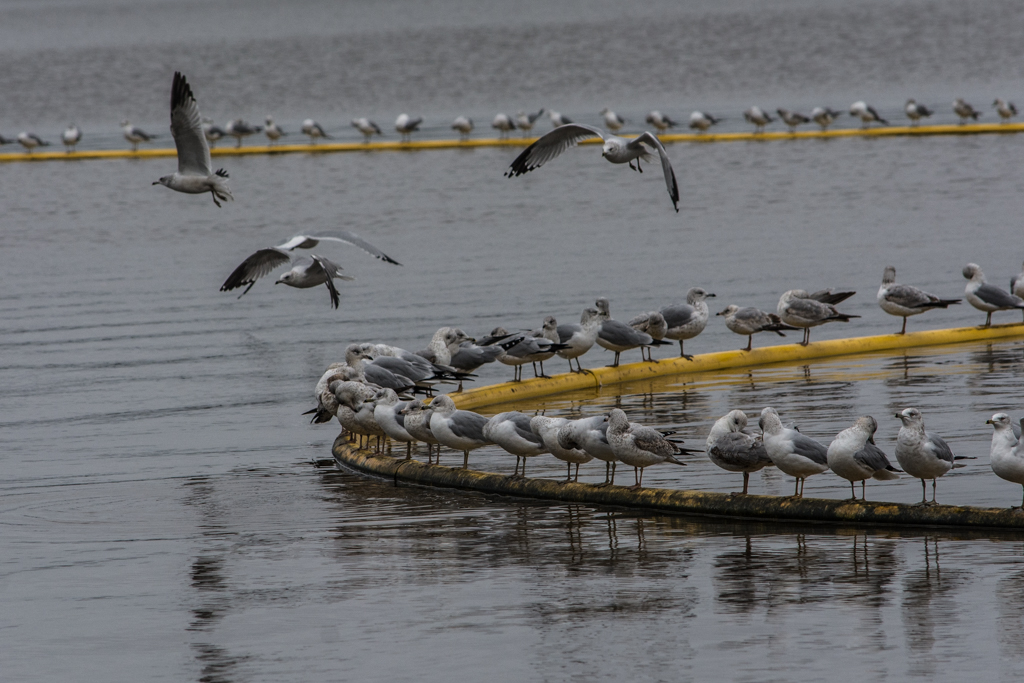
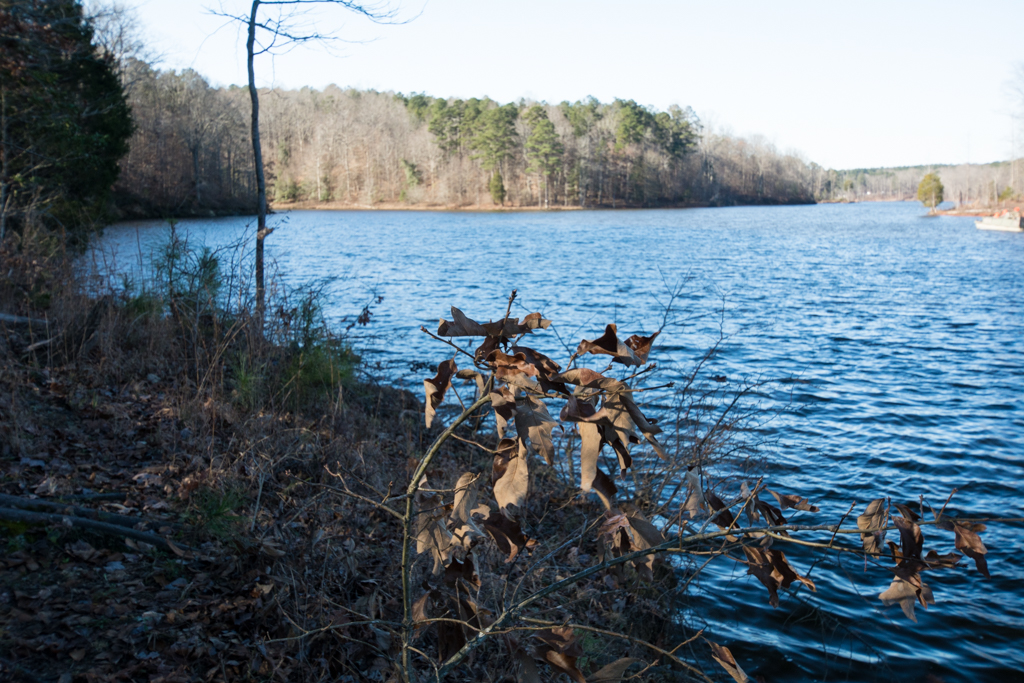
Saturday I drove out to Cary for my haircut with Ann S, and got caught up on her holiday doings. Afterwards I drove east to Chatham County and visited Jordan Lake. It was gray and raw, with rain threatening, and the water level was high. There were hundreds of gulls at Ebenezer Point, mostly ring-bills and a few herrings.

The diving Tillers do Belize

imagejpeg_2
We got home at about 4:00 a.m. Sunday from our trip to Belize. There were various minor setbacks and challenges, like weather, malfunctioning gear, and cancelled flights, but all in all it was a good trip.

One of the great satisfactions for me was getting the last member of our little family certified as a PADI open water diver. Jocelyn did the course in 2014, and Gabe decided to buckle down late in 2015, while juggling his grad school course work. He completed everything but the open water dive requirements with two days before the trip to spare.

Jocelyn flew in from NYC on Christmas Eve, full of energy and humor. As will happen this time of year, I felt the spell of Christmases past, and needed to read through some Christmas carols at the piano (Joy to the World! We Three Kings, What Child Is This, O Come, All Ye Faithful, Hark the Herald Angels, etc.). We listened to the Nutcracker during our present exchange.

But for our family reunion dinner, we listened to the Beatles, whose work had just become available on Spotify, Rhapsody, and other streaming services that day. Starting with I Want to Hold Your Hand, we worked through a good part of the canon. That music is densely evocative of adolescence for me, but it still has a cheery, lively power, too, and a lot of variety. We talked a lot about the Fab Four, and it turned out that Gabe and Jocelyn knew every song and a lot of the backstories.
IMG_4484
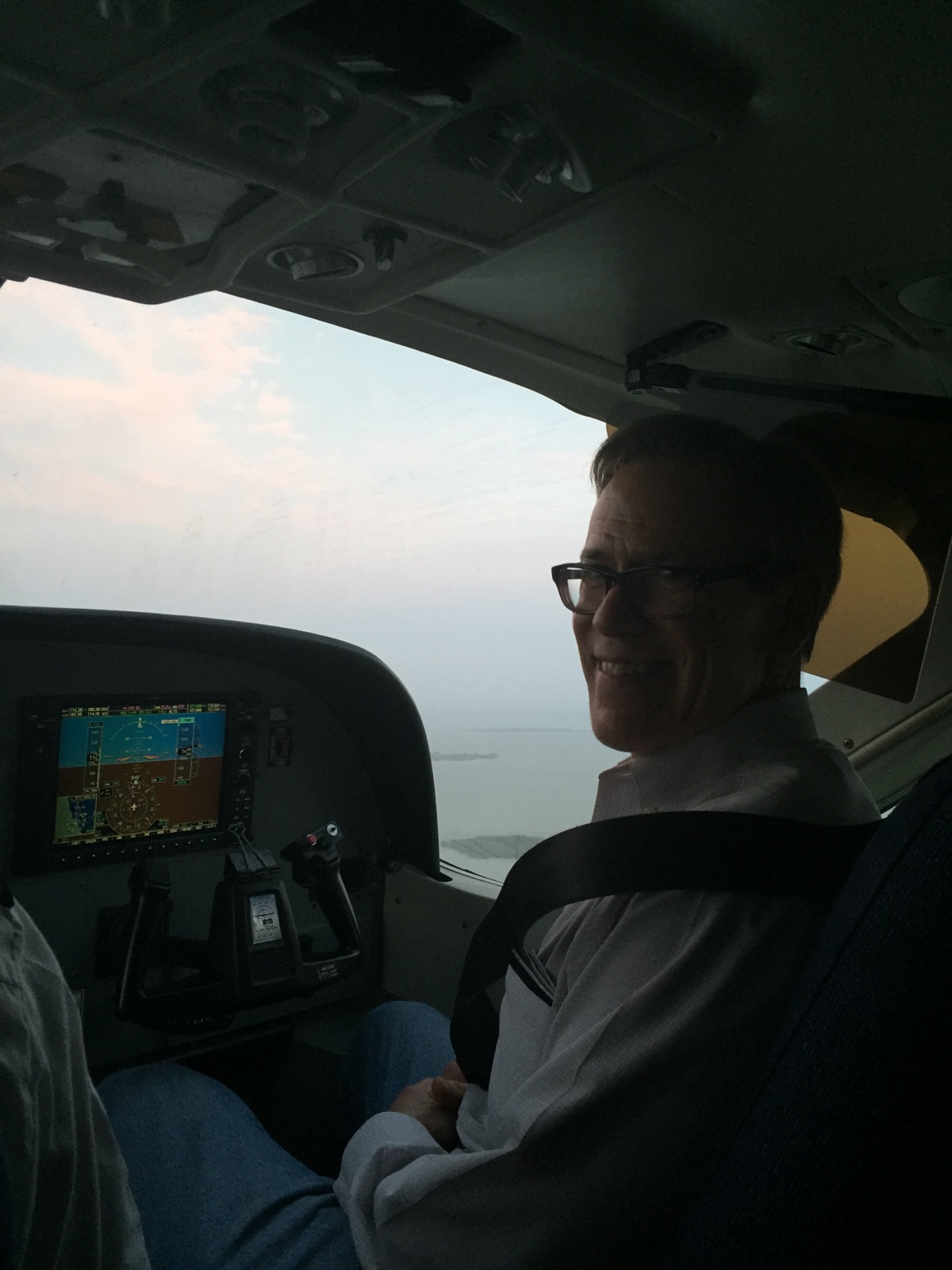
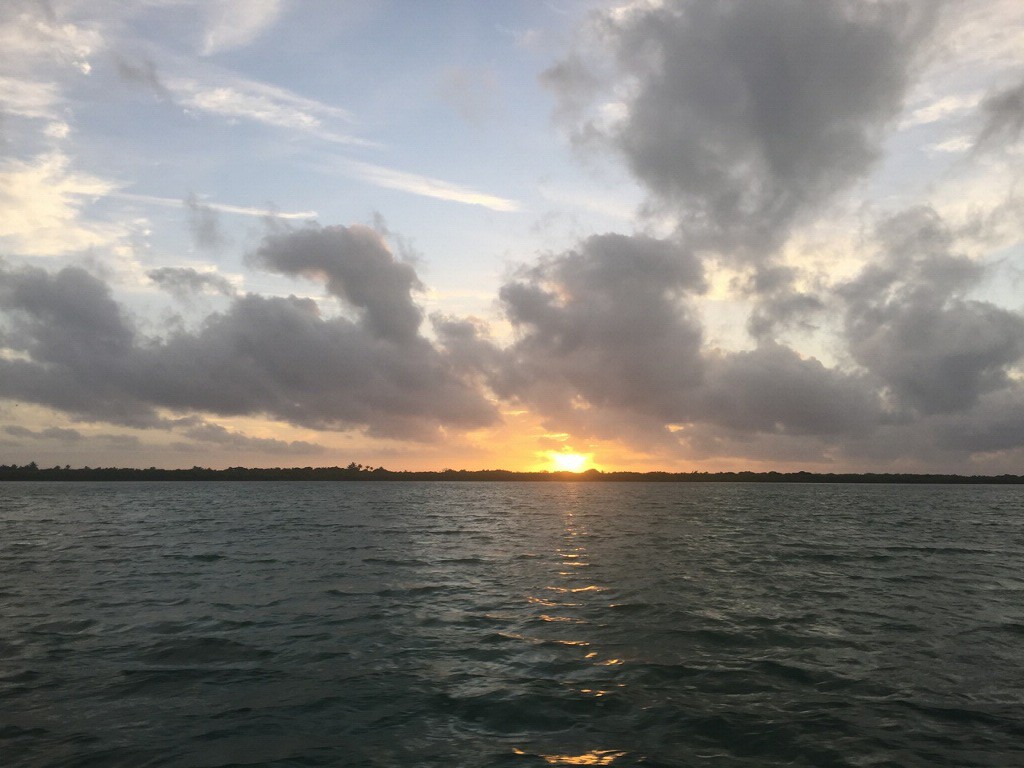
We left for the airport at 3:30 a.m. Our first flight took us to Houston, where we waited a while and then got a plane for Belize City, where we eventually got into a single engine plane for a 15-minute flight to Ambergris Caye. I got to sit next to the pilot and monitor the instruments, which was fun. We landed at sunset, then took a short cab ride to a nearby dock, where we and our stuff got loaded onto a speedy water taxi for a twenty-minute trip north.

We stayed at Costa Blu Resort, which, we came to learn, had just opened for the first time two weeks earlier. We thought it was pretty, comfortable, and well situated for diving, with a dive center on the property, along with palm trees and swimming pools.

The next day the wind was blowing hard – perhaps 25 miles per hour – and so morning diving was cancelled. We came to learn that the wind had been going like that for the previous two weeks or so, and even old-timers couldn’t recall so long a stretch of hard wind at this time of year. The skies were mostly sunny. We got out in the afternoon for a shallow (12 foot) dive in the afternoon, and Gabe completed the first of his two open water certification dives. The weather the next day was the same, which meant the small boats at our dive operation could not get out beyond the reef, so we did another shallow dive nearby, and Gabe completed his course. We were so proud!

On Tuesday, we took a longer boat ride out to Turneff Atoll, and did three separate dives. The visibility was about 50 feet, and the water was a pleasant 82 degrees F. We saw the locally common tropicals, such as durgons, surgeonfish, parrotfish, blue wrasse, butterflyfish, yellowtail snappers, and three kinds of angelfish. There were lobsters, and a yellow ray. Our guide, Bernie, speared five or six lionfish, which are beautiful but very destructive for the ecosystem. The dive was fun, though I was a little disappointed not to see sharks or other larger creatures.
imagejpeg_3

We’d found the restaurant at Costa Blu adequate. The food was good, and the service was friendly, but really really slow. We deduced that the staff was mostly very green, and just learning. Anyhow, we walked along the beach to Temple Run resort for dinner on Tuesday. The walk was a little tricky in the dark, and we had to make our way through thick sargassum and other flotsam on the beach, but the dinner was good.

It was still blowing hard on Wednesday, so we decided not to dive, and instead to explore the little town of San Pedro. This required a 20- minute water taxi trip, on a little boat that was speedy, and crowded. It started to rain hard for the first time that week during the short trip, and it looked like we might have a damp and bedraggled afternoon. But it stopped raining and the sun came out just as we pulled up to the dock. San Pedro proper is colorful though bit down at the heels, with rust and peeling paint, but its narrow streets are full of local people strolling and buzzing around in golf carts. We ate at Casa Picasso, a highly rated spot run by friendly expats from Connecticut. We loved their Carrot Chic cocktail, and my eggplant napolean entree was excellent.
imagejpeg_1
On Thursday, we tried to take a larger boat to the Blue Hole, the famous deep circular structure about three hours’ ride from San Pedro, and planned to do two other dives. The trip started badly, very early in the a.m., when we discovered that our equipment had not all been delivered to the boat, and we had to do last-minute rentals. Then, about 45 minutes into the trip, the boat developed engine trouble. We limped into a local village, and waited for a mechanic. The ultimate diagnosis was a blown gasket, which meant a blown trip.

But we did get in an afternoon shallow dive near Costa Blu at Mexican Reef with just us Tillers and our guide, Giovanni. We saw a pair of large sting rays that seemed to be courting, and a friendly green turtle that swam close enough to be petted. There was a large green moray eel, spade fish, and several nurse sharks, as well as many pretty small tropicals. It was especially sweet to be with my loved ones, and see our new divers keeping a good eye on their gauges.

Throughout the week, I’d been trying to get some pictures with my Canon G16 camera with an Ikelite housing. The equipment would work fine when I tested it out of the water, but under water there was one problem after another. On the Thursday dive, it worked fine when I took a few test shots, and then quit responding to any directions. I couldn’t even turn it off! It was disappointing to miss a lot of good shots. I couldn’t figure out why this equipment was so glitchy, but it was, and I made up my mind to get rid of it. I haven’t been able to find the camera (mislaid, or stolen from my bag?) so the problem may have resolved itself.

On Friday, the wind finally let up, and we were able to do three tanks outside the reef near Costa Blu in the morning. We got down to about 100 feet and admired the varied coral and tropicals, but didn’t see many larger creatures. I feel like we saw more marine life when we were last there in (I think) 2009. But we all know or should know that the long-term prospects for coral reefs all over the world are not good. For now, there’s still a lot of beauty to be savored.

Delicious pears and a magnificent Sugar Plum

Tiller6Bug 1
One of my favorite things in the holiday season is Harry and David’s Royal Riviera Pears. Every year, we get a box from Sally’s dear godmother (whom I’ve never met), and every year they are incredibly sweet and dripping with deliciousness. So it was this week. You may have seen the Harry and David’s ads and wondered whether a mere fruit could ever be an appropriate holiday gift. Well, my view is yes. They are amazing: the fruit of the gods!

The Nutcracker ballet is another great seasonal treat. It endures because there are a lot of things to like: a great Tchaikovsky score, a story with recognizable characters, a bit of naughtiness, and a lot of sweetness. The Carolina Ballet production has gorgeous costumes and sets. There are a lot of children in the production, who seemed particularly young and touching this year. But the main reason I go to see it is for the wonderful dancers in solos, small ensembles, and choruses.
Tiller6Bug 1-3

Saturday evening Alyssa Pilger, our pointe shoe sponsoree and friend, made her debut as the Sugar Plum Fairy on Saturday. As a dancer, Alyssa has a natural elegance about her. She seems at first delicate, but then there is also a quality that’s almost fierce. Her moments of stillness don’t seem like rests or pauses, but rather radiate energy. She has a musician’s musicality, which goes beyond just staying with the basic rhythmic framework, to understanding it deeply and realizing when and how it can be creatively opposed.

Sugar Plum is a big role. It makes little girls want to be ballerinas, while transporting the big boys and girls to transcendent place. Alyssa rose to the occasion. Her technique was impeccable, as fluent in adagio as in allegro. And there was that extra something, that expressive spark. I got goosebumps, and, I admit it, tears from both eyes. It was so beautiful!

It was, for me, Alyssa’s night, but I need to mention that Adam Crawford Chavis as her partner, the Cavalier, was also wonderful. He’s big and handsome, and amazingly poised and strong. Their pas de deux was intensely romantic. The crowd gave them long and loud hurrahs.
Tiller6Bug 1-5

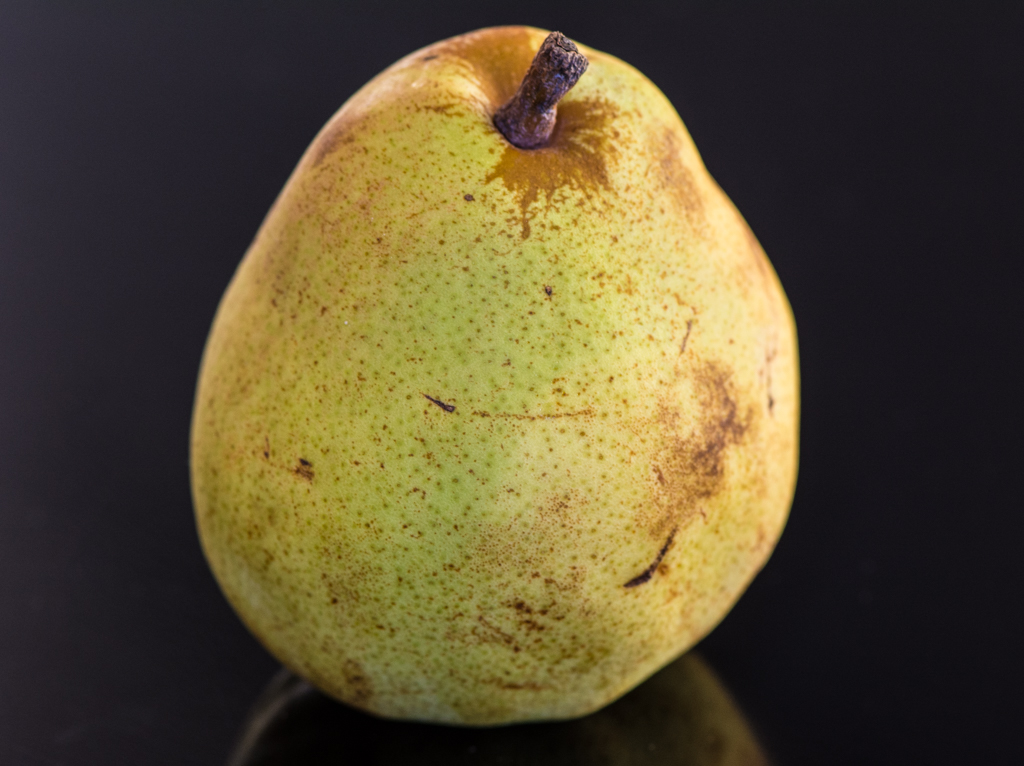
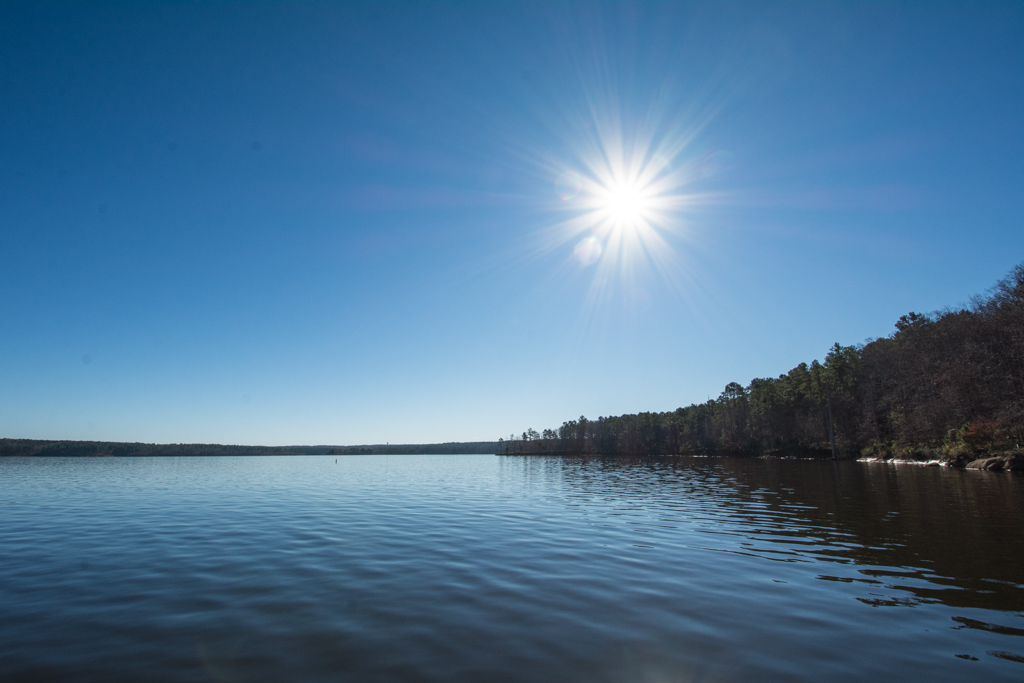
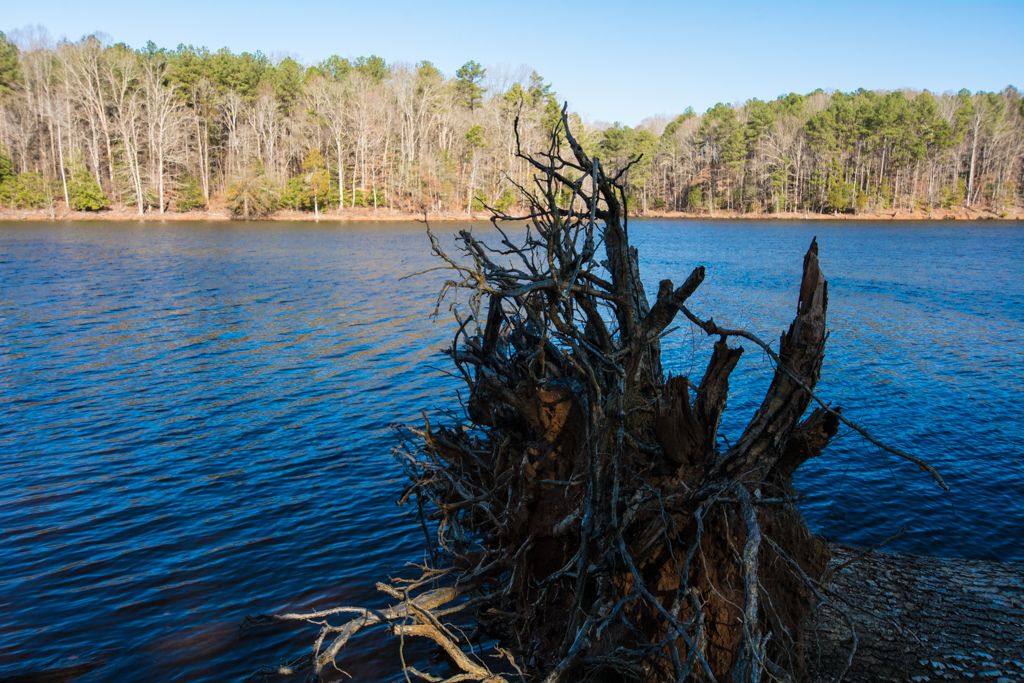
Re the pictures, this weekend I continued, and concluded for the year, my project of visiting and photographing local parks I didn’t already know well. I went up to Falls Lake on Saturday morning to Blue Jay Point, and then again on Sunday to Rolling View. It was clear and bright and cold both days, and there were almost no people. I also spent some time experimenting with my new Nikon SB910 speedlight in making the portrait here of a Harry and David’s pear sitting on my piano. Afterwards, I ate that pear, which was delicious.

The Casual Blog will be on a holiday break for the last couple of weekends, while we’re traveling. I’m hoping to have some pictures of pretty tropical fish when we return. For my dear readers who celebrate Christmas, I wish you a merry one.
Tiller6Bug 1-6

Raleigh parks, climate change hopes, and a treatment for Islamaphobia

Tiller6Bug 1
For the last several Saturdays, I’ve made a point of visiting the Raleigh parks that I did not already know well. There are several pretty lakes and miles of trails close by. When inspiration strikes, I take some pictures. But mostly I just walk and look, look and listen, listen and breathe deeply. It’s good for the lungs and the head.

This Saturday I drove north a little farther, to Falls Lake. It was mild and overcast when I arrived, but gradually cleared up. I did some hiking and took some pictures, including those here. I also enjoyed driving the long and winding country roads with Clara in sport mode.
Tiller6Bug 1-2

That afternoon there was word that 195 nations at the Paris climate conference had agreed on wording to address global warming. It’s good to know there’s acceptance among world leaders that global warming is real and humans can and must act to address it. Unfortunately, they only agreed to CO2 reductions amounting to half of what is widely accepted as necessary to prevent rising sea levels, droughts, more destructive storms, and widespread food shortages.

In other words, absent further progress, we’re still screwed. But there’s still a chance that we won’t utterly destroy human civilization and much of the rest of the natural world. Perhaps we’ll have a major technological breakthrough, like practical nuclear fusion. Fingers crossed.

One thing barely being discussed is population control. The population of the planet has quadrupled in the last 100 years. I guess this is politically sensitive. But really, isn’t overpopulation a big part of the climate change problem? If we don’t figure out a way to control population growth in a humane way, aren’t we likely to see it unfold in a horrifying way (desperate people fighting for survival against each other and perhaps us)? Viz. the refugee crisis unfolding right now.
Tiller6Bug 1-3

This week was full of anti-Muslim fear and panic, with calls for addressing terrorist threats by extreme measures, including monitoring mosques and barring all Muslims from the U.S. Even more moderate voices saw no alternative to escalating the war against ISIS and other radical groups, and those who questioned this course were increasingly at risk of being branded terrorist sympathizers. But there were a couple of articles pointing the other way, which I flagged on Twitter (@robtiller). There was one by Gwynne Dyer in, of all places, the Raleigh News & Observer of Dec. 10. That evening, when I went to get a link, it seemed to have vanished from the internet, but fortunately I still had the paper copy.

Dyer pointed out that for Americans, the panic at the terrorist threat does not have much basis. In the last 14 years, we’ve had an average of two people per year killed in the U.S. by Muslim terrorists. He calculated that “Americans are 170 times more likely to drown in the bath than to be killed by Islamist terrorists.” This is something public figures feel they can’t mention, because of the extreme dissonance with related facts: more than 6,000 U.S. soldiers killed in this period fighting terrorism, and a trillion dollars has been spent on the War on Terror. Dyer acknowledges that if you live in Arab countries, the terror threat is real and serious, and that western countries fighting ISIS might do some good for some Syrians. But it probably won’t reduce the already tiny risk of terrorist attacks here.
Tiller6Bug 1-4

Older athletes, my 5K race, working out with audio books, CRISPR, and Uber

IMG_4297
I like stories of successful athletes who have passed the normal age for athletic achievement, for obvious reasons. There was a good one this week in the WSJ, which featured Klaus Obermayer, founder of an outdoor clothing company. At 95, he lives in Aspen, skis whenever there’s snow, does Akido, and swims, along with getting gym workouts, and eats a mostly vegan diet. I’ve previously challenged myself to still be skiing the big mountains at 85, but it looks like I may need to raise the bar.

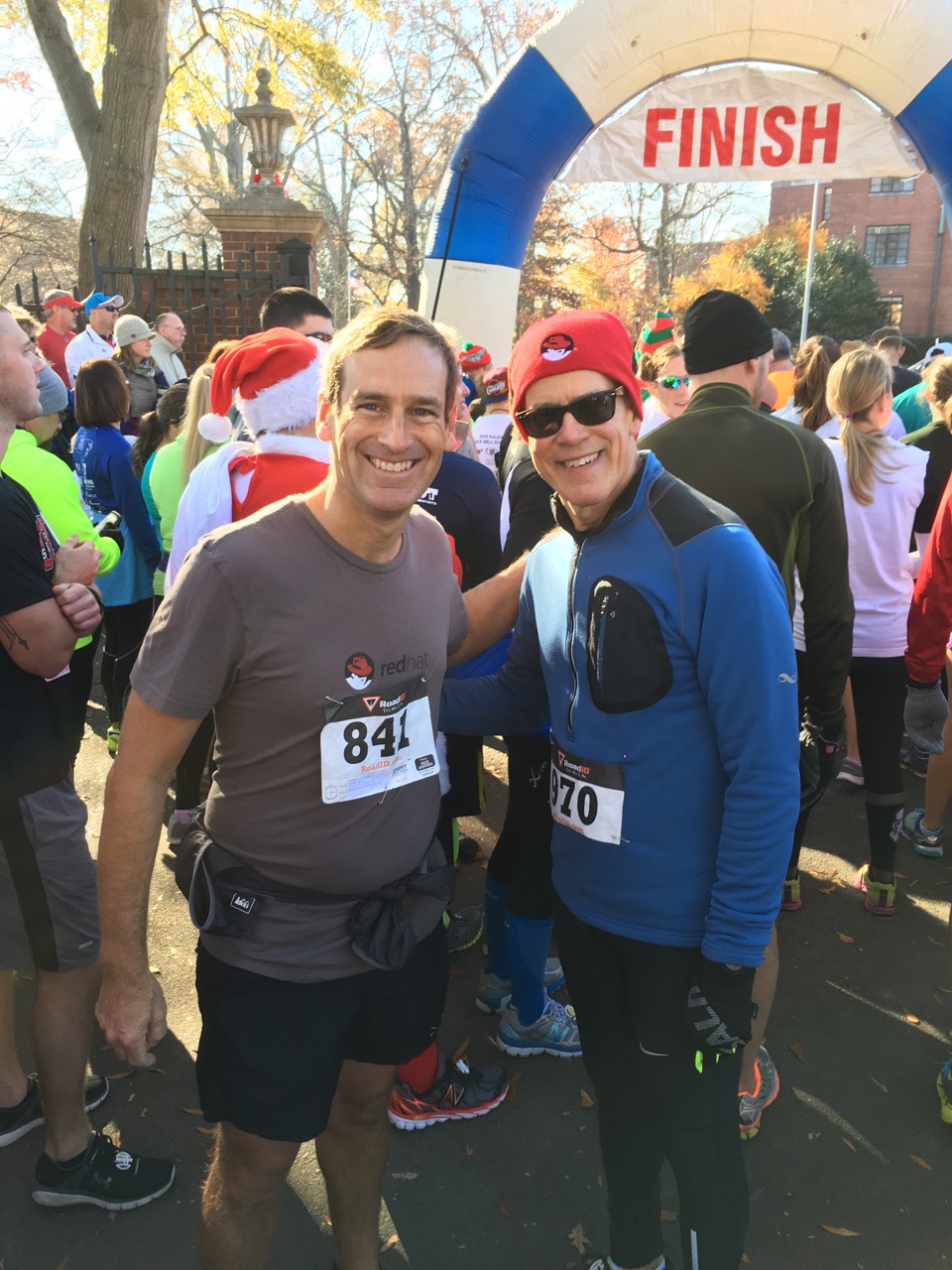
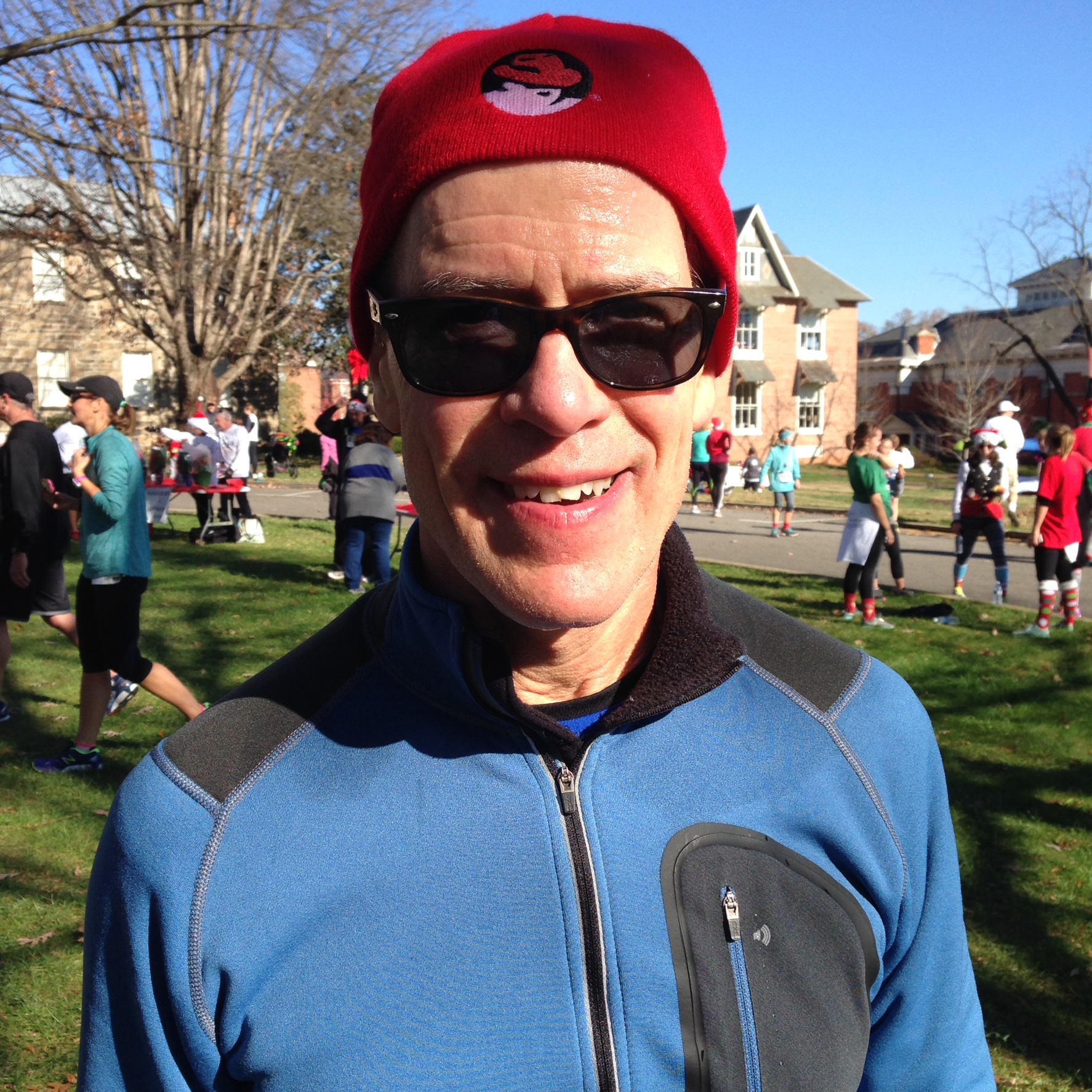
On Saturday morning I ran a 5K race in downtown Raleigh – the Jingle Bell Run, a charity event for the Arthritis Foundation. It was a beautiful fall day, clear and chilly, and a lot of my Red Hat colleagues showed up at Saint Mary’s School. Jonathan C, an accomplished runner, let me tag along as he did his warm up routine. Sally came along with Stuart and lent moral support.

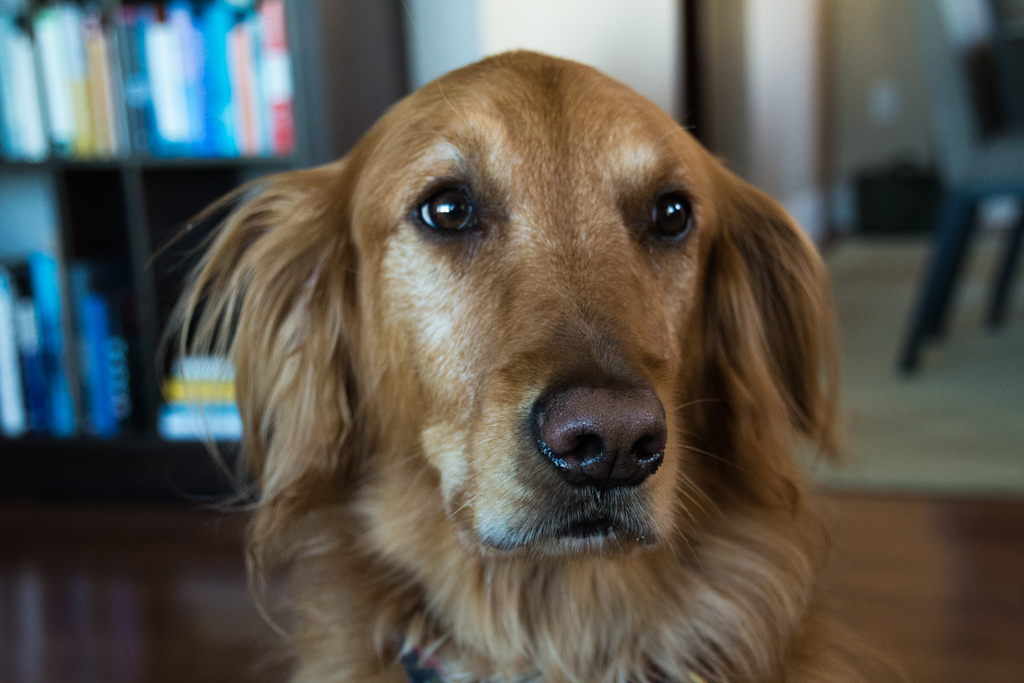
The route was up and back on Hillsborough Street, which is a long climb going out, but it went OK. On the home stretch, as I passed the International House of Pancakes, I had a shot of pain in my left hamstring, and struggled to the finish. But I still ended up with an official time of 25:12. That’s average miles of 8:10, which was close to my planned best case scenario. Jonathan came in third, at 18:02 (5:49/mile). Sally said Stuart had a nice time: lots of people petted him, and asked his name and how old he was (13).

At the gym lately, I’ve been dividing my time among the various cardio machines – treadmill, elliptical, stationary bike, rowing, and stairs – putting in about 45 minutes of total sweat time, plus core work, resistance training, and stretching. Listening to audiobooks and podcasts makes this a lot more fun. This week I discovered News in Slow Spanish, which is exactly what it sounds like – a podcast for intermediate Spanish learners who like to listen to the news. My comprehension went way up when the announcers slowed way down.

I’ve also been listening to Redefining Reality: The Intellectual Implications of Modern Science, by Steven Gimbel. Gimbel has really helped me with the last 100 years of physics. I’m not prepared to claim deep understanding, but I’m getting more comfortable with, for example, the idea of gravity as a bend in space-time, and matter as just an expression of energy.

We like magazines, but it’s hard to keep up with them. In the last couple of weekends I made good progress in dealing with the pile of New Yorkers, Economists, Atlantics, Opera Newses, and Scientific Americans (but didn’t get to the pile of golfing, photography, and scuba magazines). I finally got a fix on what CRISPR is from a New Yorker piece by Michael Specter, and realized this is a technology that is going to change the world as we know it. The CRISPR tools allow biologists to edit DNA relatively simply and cheaply. This holds the potential for understanding and treating various serious diseases, and also improving food and industrial products. And, of course, there’s the possibility of creating Frankenstein monsters. Anyhow, for better or worse, or both, the genie is out of the bottle.

Last week came the end of driving as we know it – the beginning, for us, of the age of Uber. We scheduled a trip to our old favorite, Caffe Luna, and with a view to avoiding post-wine driving, I downloaded the Uber app. Our first experience was entirely friction free – no telephone call, no waiting, no tipping, and automatic payment, at an entirely reasonable rate. We gave our drivers high ratings, and hoped they did the same for us. I’ve been tracking the progress of driverless cars closely, but had sort of ignored Uber. Now I get it – it’s fantastic.
IMG_0481

Our Thanksgiving – spinning, piano, football, eating, and talking about terrorism

Mowgli Tiller

Mowgli Tiller

Thanksgiving morning, after I walked the dogs and read the newspapers, Jocelyn and I went to Flywheel for a spin class – our first together, and her first Flywheel experience. After getting the bike adjusted and bike shoes clipped in, the music started, loudly. I pushed hard, in a close battle for first place, and ended with a score of 325 – 10 ahead of the nearest male competition (and well behind one amazing woman). It was my first ever first, and I was kind of proud! Jocelyn also did well, staying well out of the cellar.

That afternoon, I practiced the piano with a view to getting ready for a lesson with Olga on Sunday. I’ve been working on several challenging and beautiful pieces, including Liszt’s Un Sospiro, Debussy’s Reflets dans l’Eau, and Schumann’s Arabesque. I’ve also finally felt strong enough to take on Liszt’s powerful Vallee d’Oberman. I think I’ve gotten off a plateau and climbed a bit higher. My playing lately feels more technically secure, and also more fluid and imaginative. Olga has certainly been a wonderful guide and inspiration. The meta lesson she gives is simple in concept, but hard to do: listen, listen, listen, more closely, and then more closely still.
Tiller6Bug 1-5

Then Jocelyn and I watched most of the Carolina Panthers v. Dallas Cowboys. The Panthers were 10 and 0 coming in to the game, a streak that had caught my interest and turned me into a fair weather fan. Jocelyn said that the Panthers were considered underdogs, which we agreed seemed disrespectful, and we were particularly happy to see them score early and go on to win decisively. Eleven and 0!

For Thanksgiving dinner, Jocelyn, a former professional bartender, created a new cocktail that she dubbed Apple Pie Manhattan, which involved infusing bourbon with apple, vanilla and cinnamon, and adding maple syrup, and dry Vermouth. It was delicious! Sally’s sister, Annie, brought Diane and her friend Debbie over, and Sally served a righteous butternut squash soup, black rice, and Mexican lasagna. Just like the Pilgrims!
Tiller6Bug 1-4

We spent part of the meal discussing politics, and debated whether Obama had been sufficiently forceful in opposing the anti-refugee backlash, and whether Trump had gone from being a mildly entertaining fool to being an instrument of evil. By using his media platform to demonize Muslims, he’s giving permission and energy to a large racist element of the population. The Times had a report on New Yorkers harassing and spitting on Muslim women, which is appalling and frightening.

At the same time, there seems to be a growing consensus that the solution to the terrorist threat is a coalition of nations to wipe out ISIS. This seems to me a bad strategy. We’ve spent the last 14 years using bullets and bombs trying to wipe out al Qaeda and the Taliban, without success. Indeed, our military efforts in Afghanistan and Iraq helped spawn al Qaeda v. 2 – ISIS.

The source of terrorist violence is not particular individuals who can be killed, but social conditions, like poverty, lack of opportunity, lack of education, corruption, violence, and authoritarianism, which produce feelings of alienation, desperation, and rage. When we kill one terrorist, we inspire new ones to swear vengeance and take up arms, and the cycle repeats. If we obliterate ISIS, without social change, there will be a successor to ISIS. Bullets and bombs will never work.

I wonder if there is already a good name for our tendency to insist on a direct or even violent solution to a scary problem, even when part of us can recognize that there’s no quick fix. If not, there should be, because we do it over and over. I suggest calling it Fear Control Activity Disorder. The person or society with this disorder seeks to overcome a feeling of fear with a feeling of control by taking action that is dramatic though unlikely to address the actual source of the fear. We crave the feeling of being in control, and insist on seeking control even when it’s objectively unachievable. The disorder could account for a lot of our military adventures, our overimprisonment of criminals, and our overspending on medical goods and services.
Tiller6Bug 1-3

More leaves, Beethoven ballet, and fear of refugees

Tiller6Bug 1-2
Last week Jocelyn took over her cell phone account, thereby cutting the last part of the financial cord from home. Oh happy day! The timing was good, in that she’d recently gotten a promotion and a substantial salary increase. She asked me for my Verizon password to do the changeover, and I told her I didn’t believe I had one. But she found out that I did, and hacked into it after correctly answering my security question. I was both proud and a little unsettled.

On Saturday morning I went up to Durant Park and took the trail around the lower lake. It was chilly, still, and very clear. I was looking for leaf colors and patterns, and particularly for some reds and oranges , of which there were only a few. I got close to another great blue heron, but unlike the one last week, this one flew off as soon as I came into sight.

Tiller6Bug 1-4
Saturday evening we had dinner with friends at Sono and then went to see the Carolina Ballet’s Beethoven Ninth program. The dancer we’ve been sponsoring, Alyssa Pilger, was recently promoted from the corps to soloist, and she had good solos in the Beethoven. There’s an ethereal quality to Alyssa’s dancing – light and evanescent – but at the same time commanding and incisive. The Beethoven was powerful, and she delivered, brilliantly.
Tiller6Bug 1-3

The famous choral Ode to Joy at the end of the Beethoven is always inspiring, and the message of the universal brotherhood seemed particularly timely this week, when a lot of U.S. politicians responded to the Syrian refugee crisis by seeking to keep them out. This is disgraceful. I thought the New York Times editorial on Saturday put the problem well:

After the attacks in Paris, the world is again challenged by fear. With every bombing, beheading and mass shooting, the dread spreads, along with the urgency of defeating this nihilism.
But no less a challenge for the civilized world is the danger of self-inflicted injury. In the reaction and overreaction to terrorism comes the risk that society will lose its way.
History is replete with examples of the power of fear and ignorance, to which even the great can fall prey. Franklin Roosevelt calmed a nation in bleakest days of the Depression, but he also signed the executive order imprisoning tens of thousands of American citizens for the crime of Japanese ancestry.
In our time, disastrous things have been done in the name of safety: the invasion of Iraq, spawned by delusion and lies; the creation of an offshore fortress, sequestered from the Constitution, to lock up those perceived as threats, no matter the cost and injustice; an ever-expanding surveillance apparatus, to spy on the people, no matter the futility.
Al Qaeda and the Islamic State did not compel us to shackle ourselves to a security state, or to disgrace our values by vilifying and fearing. refugees and immigrants.

Along this same line, Nicolas Kristof had a good column in today’s Times. Kristof calculates that the risk of a refugee turning out to be a terrorist attacker is about 100 times smaller than that the a given resident of Florida will turn out to be a murderer in a ten-year period. He notes, “When we’re fearful we make bad decisions. That was true around World War II, when we denied refuge to European Jews and interned Japanese-Americans. That was true after 9/11, when we invaded Iraq and engaged in torture.”
Tiller6Bug 1