The Casual Blog

Delicious pears and a magnificent Sugar Plum
Tiller6Bug 1
One of my favorite things in the holiday season is Harry and David’s Royal Riviera Pears. Every year, we get a box from Sally’s dear godmother (whom I’ve never met), and every year they are incredibly sweet and dripping with deliciousness. So it was this week. You may have seen the Harry and David’s ads and wondered whether a mere fruit could ever be an appropriate holiday gift. Well, my view is yes. They are amazing: the fruit of the gods!

The Nutcracker ballet is another great seasonal treat. It endures because there are a lot of things to like: a great Tchaikovsky score, a story with recognizable characters, a bit of naughtiness, and a lot of sweetness. The Carolina Ballet production has gorgeous costumes and sets. There are a lot of children in the production, who seemed particularly young and touching this year. But the main reason I go to see it is for the wonderful dancers in solos, small ensembles, and choruses.

Tiller6Bug 1-3

Saturday evening Alyssa Pilger, our pointe shoe sponsoree and friend, made her debut as the Sugar Plum Fairy on Saturday. As a dancer, Alyssa has a natural elegance about her. She seems at first delicate, but then there is also a quality that’s almost fierce. Her moments of stillness don’t seem like rests or pauses, but rather radiate energy. She has a musician’s musicality, which goes beyond just staying with the basic rhythmic framework, to understanding it deeply and realizing when and how it can be creatively opposed.

Sugar Plum is a big role. It makes little girls want to be ballerinas, while transporting the big boys and girls to transcendent place. Alyssa rose to the occasion. Her technique was impeccable, as fluent in adagio as in allegro. And there was that extra something, that expressive spark. I got goosebumps, and, I admit it, tears from both eyes. It was so beautiful!

It was, for me, Alyssa’s night, but I need to mention that Adam Crawford Chavis as her partner, the Cavalier, was also wonderful. He’s big and handsome, and amazingly poised and strong. Their pas de deux was intensely romantic. The crowd gave them long and loud hurrahs.
Tiller6Bug 1-5

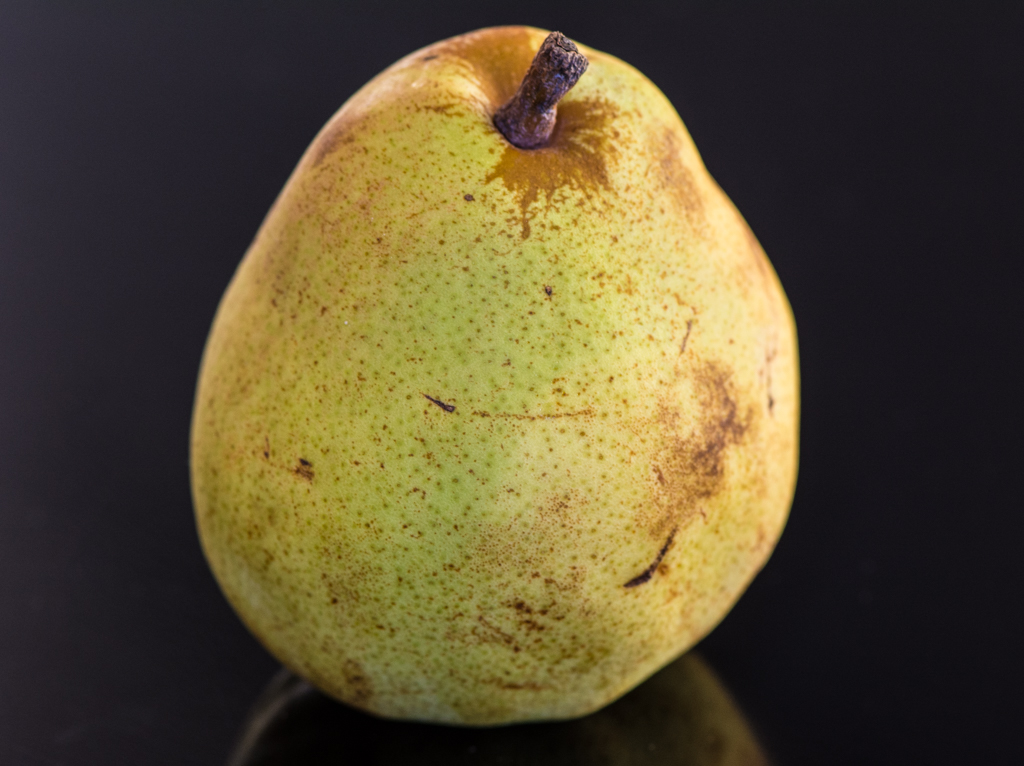
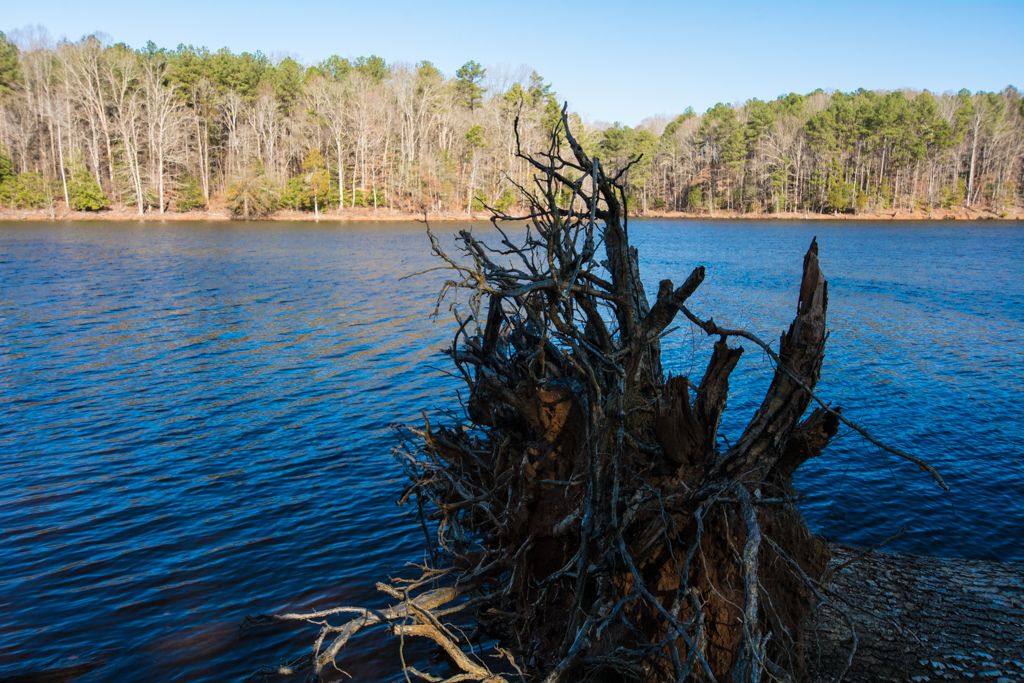
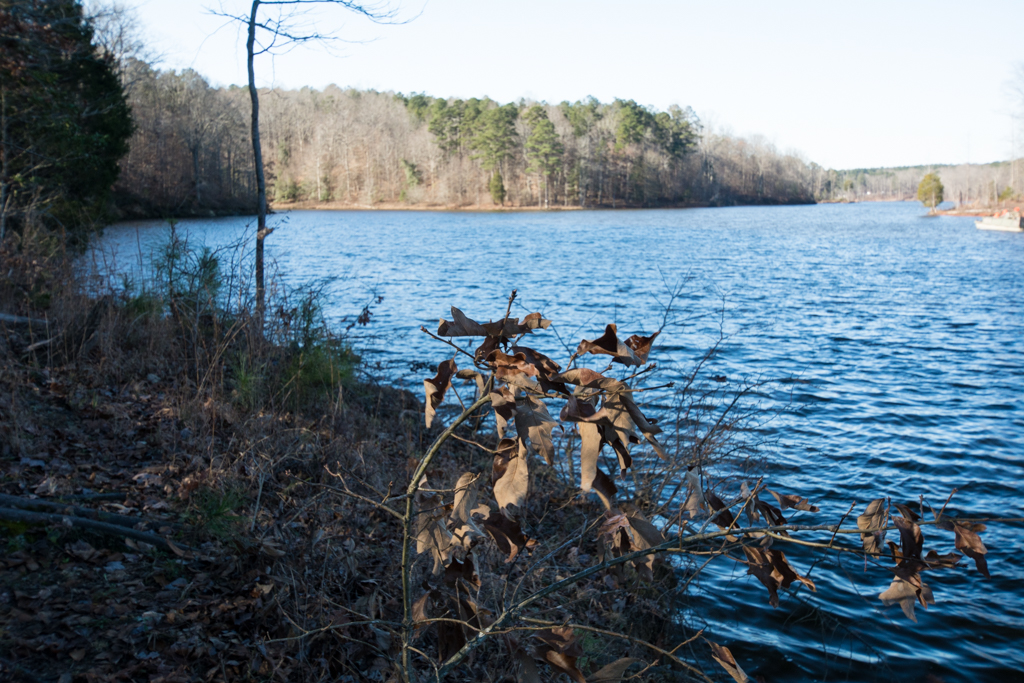
Re the pictures, this weekend I continued, and concluded for the year, my project of visiting and photographing local parks I didn’t already know well. I went up to Falls Lake on Saturday morning to Blue Jay Point, and then again on Sunday to Rolling View. It was clear and bright and cold both days, and there were almost no people. I also spent some time experimenting with my new Nikon SB910 speedlight in making the portrait here of a Harry and David’s pear sitting on my piano. Afterwards, I ate that pear, which was delicious.

The Casual Blog will be on a holiday break for the last couple of weekends, while we’re traveling. I’m hoping to have some pictures of pretty tropical fish when we return. For my dear readers who celebrate Christmas, I wish you a merry one.
Tiller6Bug 1-6

Raleigh parks, climate change hopes, and a treatment for Islamaphobia

Tiller6Bug 1
For the last several Saturdays, I’ve made a point of visiting the Raleigh parks that I did not already know well. There are several pretty lakes and miles of trails close by. When inspiration strikes, I take some pictures. But mostly I just walk and look, look and listen, listen and breathe deeply. It’s good for the lungs and the head.

This Saturday I drove north a little farther, to Falls Lake. It was mild and overcast when I arrived, but gradually cleared up. I did some hiking and took some pictures, including those here. I also enjoyed driving the long and winding country roads with Clara in sport mode.
Tiller6Bug 1-2

That afternoon there was word that 195 nations at the Paris climate conference had agreed on wording to address global warming. It’s good to know there’s acceptance among world leaders that global warming is real and humans can and must act to address it. Unfortunately, they only agreed to CO2 reductions amounting to half of what is widely accepted as necessary to prevent rising sea levels, droughts, more destructive storms, and widespread food shortages.

In other words, absent further progress, we’re still screwed. But there’s still a chance that we won’t utterly destroy human civilization and much of the rest of the natural world. Perhaps we’ll have a major technological breakthrough, like practical nuclear fusion. Fingers crossed.

One thing barely being discussed is population control. The population of the planet has quadrupled in the last 100 years. I guess this is politically sensitive. But really, isn’t overpopulation a big part of the climate change problem? If we don’t figure out a way to control population growth in a humane way, aren’t we likely to see it unfold in a horrifying way (desperate people fighting for survival against each other and perhaps us)? Viz. the refugee crisis unfolding right now.
Tiller6Bug 1-3

This week was full of anti-Muslim fear and panic, with calls for addressing terrorist threats by extreme measures, including monitoring mosques and barring all Muslims from the U.S. Even more moderate voices saw no alternative to escalating the war against ISIS and other radical groups, and those who questioned this course were increasingly at risk of being branded terrorist sympathizers. But there were a couple of articles pointing the other way, which I flagged on Twitter (@robtiller). There was one by Gwynne Dyer in, of all places, the Raleigh News & Observer of Dec. 10. That evening, when I went to get a link, it seemed to have vanished from the internet, but fortunately I still had the paper copy.

Dyer pointed out that for Americans, the panic at the terrorist threat does not have much basis. In the last 14 years, we’ve had an average of two people per year killed in the U.S. by Muslim terrorists. He calculated that “Americans are 170 times more likely to drown in the bath than to be killed by Islamist terrorists.” This is something public figures feel they can’t mention, because of the extreme dissonance with related facts: more than 6,000 U.S. soldiers killed in this period fighting terrorism, and a trillion dollars has been spent on the War on Terror. Dyer acknowledges that if you live in Arab countries, the terror threat is real and serious, and that western countries fighting ISIS might do some good for some Syrians. But it probably won’t reduce the already tiny risk of terrorist attacks here.
Tiller6Bug 1-4

Older athletes, my 5K race, working out with audio books, CRISPR, and Uber

IMG_4297
I like stories of successful athletes who have passed the normal age for athletic achievement, for obvious reasons. There was a good one this week in the WSJ, which featured Klaus Obermayer, founder of an outdoor clothing company. At 95, he lives in Aspen, skis whenever there’s snow, does Akido, and swims, along with getting gym workouts, and eats a mostly vegan diet. I’ve previously challenged myself to still be skiing the big mountains at 85, but it looks like I may need to raise the bar.

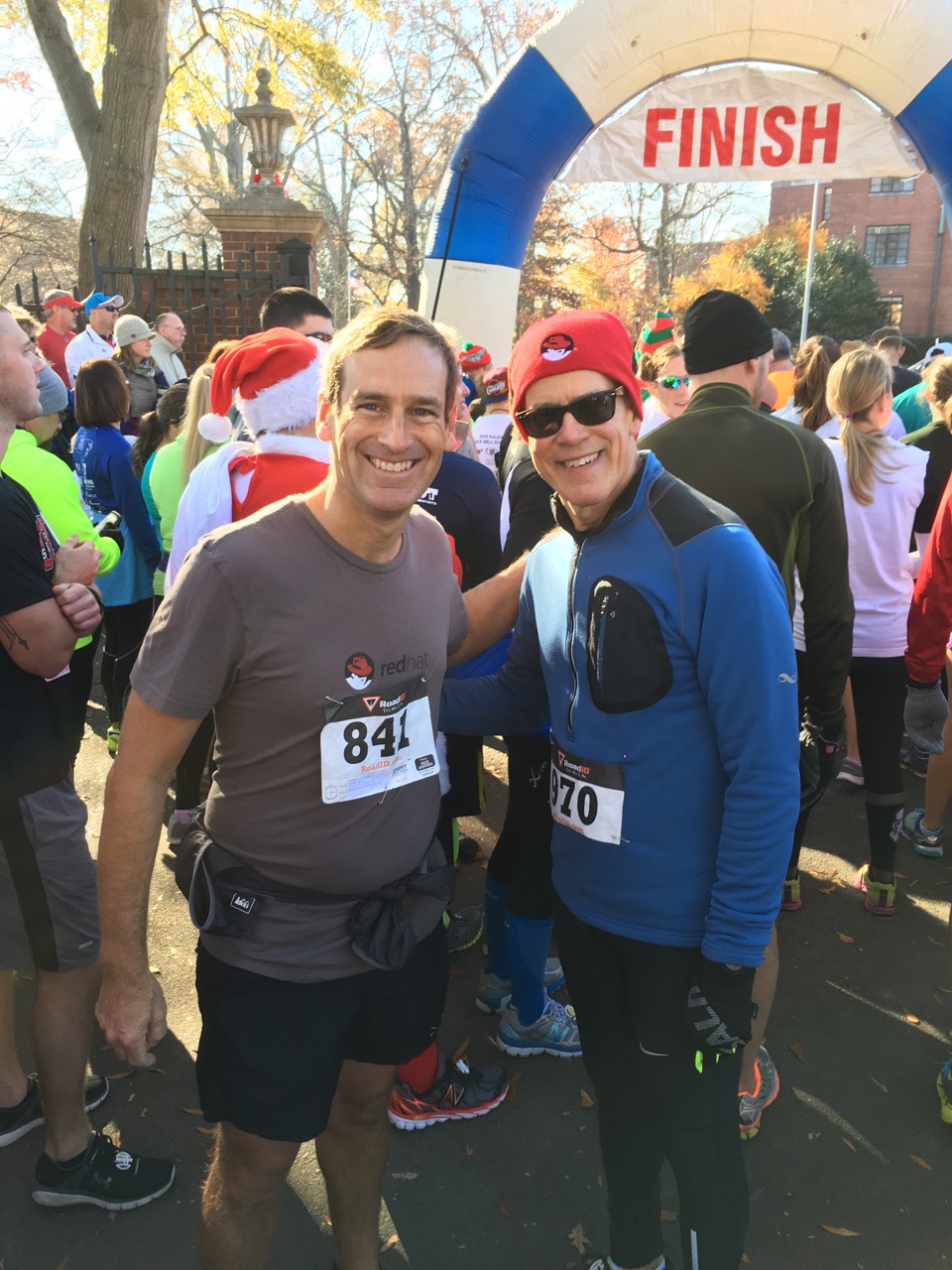
On Saturday morning I ran a 5K race in downtown Raleigh – the Jingle Bell Run, a charity event for the Arthritis Foundation. It was a beautiful fall day, clear and chilly, and a lot of my Red Hat colleagues showed up at Saint Mary’s School. Jonathan C, an accomplished runner, let me tag along as he did his warm up routine. Sally came along with Stuart and lent moral support.

The route was up and back on Hillsborough Street, which is a long climb going out, but it went OK. On the home stretch, as I passed the International House of Pancakes, I had a shot of pain in my left hamstring, and struggled to the finish. But I still ended up with an official time of 25:12. That’s average miles of 8:10, which was close to my planned best case scenario. Jonathan came in third, at 18:02 (5:49/mile). Sally said Stuart had a nice time: lots of people petted him, and asked his name and how old he was (13).

At the gym lately, I’ve been dividing my time among the various cardio machines – treadmill, elliptical, stationary bike, rowing, and stairs – putting in about 45 minutes of total sweat time, plus core work, resistance training, and stretching. Listening to audiobooks and podcasts makes this a lot more fun. This week I discovered News in Slow Spanish, which is exactly what it sounds like – a podcast for intermediate Spanish learners who like to listen to the news. My comprehension went way up when the announcers slowed way down.

I’ve also been listening to Redefining Reality: The Intellectual Implications of Modern Science, by Steven Gimbel. Gimbel has really helped me with the last 100 years of physics. I’m not prepared to claim deep understanding, but I’m getting more comfortable with, for example, the idea of gravity as a bend in space-time, and matter as just an expression of energy.

We like magazines, but it’s hard to keep up with them. In the last couple of weekends I made good progress in dealing with the pile of New Yorkers, Economists, Atlantics, Opera Newses, and Scientific Americans (but didn’t get to the pile of golfing, photography, and scuba magazines). I finally got a fix on what CRISPR is from a New Yorker piece by Michael Specter, and realized this is a technology that is going to change the world as we know it. The CRISPR tools allow biologists to edit DNA relatively simply and cheaply. This holds the potential for understanding and treating various serious diseases, and also improving food and industrial products. And, of course, there’s the possibility of creating Frankenstein monsters. Anyhow, for better or worse, or both, the genie is out of the bottle.

Last week came the end of driving as we know it – the beginning, for us, of the age of Uber. We scheduled a trip to our old favorite, Caffe Luna, and with a view to avoiding post-wine driving, I downloaded the Uber app. Our first experience was entirely friction free – no telephone call, no waiting, no tipping, and automatic payment, at an entirely reasonable rate. We gave our drivers high ratings, and hoped they did the same for us. I’ve been tracking the progress of driverless cars closely, but had sort of ignored Uber. Now I get it – it’s fantastic.
IMG_0481

Our Thanksgiving – spinning, piano, football, eating, and talking about terrorism

Mowgli Tiller

Mowgli Tiller

Thanksgiving morning, after I walked the dogs and read the newspapers, Jocelyn and I went to Flywheel for a spin class – our first together, and her first Flywheel experience. After getting the bike adjusted and bike shoes clipped in, the music started, loudly. I pushed hard, in a close battle for first place, and ended with a score of 325 – 10 ahead of the nearest male competition (and well behind one amazing woman). It was my first ever first, and I was kind of proud! Jocelyn also did well, staying well out of the cellar.

That afternoon, I practiced the piano with a view to getting ready for a lesson with Olga on Sunday. I’ve been working on several challenging and beautiful pieces, including Liszt’s Un Sospiro, Debussy’s Reflets dans l’Eau, and Schumann’s Arabesque. I’ve also finally felt strong enough to take on Liszt’s powerful Vallee d’Oberman. I think I’ve gotten off a plateau and climbed a bit higher. My playing lately feels more technically secure, and also more fluid and imaginative. Olga has certainly been a wonderful guide and inspiration. The meta lesson she gives is simple in concept, but hard to do: listen, listen, listen, more closely, and then more closely still.
Tiller6Bug 1-5

Then Jocelyn and I watched most of the Carolina Panthers v. Dallas Cowboys. The Panthers were 10 and 0 coming in to the game, a streak that had caught my interest and turned me into a fair weather fan. Jocelyn said that the Panthers were considered underdogs, which we agreed seemed disrespectful, and we were particularly happy to see them score early and go on to win decisively. Eleven and 0!

For Thanksgiving dinner, Jocelyn, a former professional bartender, created a new cocktail that she dubbed Apple Pie Manhattan, which involved infusing bourbon with apple, vanilla and cinnamon, and adding maple syrup, and dry Vermouth. It was delicious! Sally’s sister, Annie, brought Diane and her friend Debbie over, and Sally served a righteous butternut squash soup, black rice, and Mexican lasagna. Just like the Pilgrims!
Tiller6Bug 1-4

We spent part of the meal discussing politics, and debated whether Obama had been sufficiently forceful in opposing the anti-refugee backlash, and whether Trump had gone from being a mildly entertaining fool to being an instrument of evil. By using his media platform to demonize Muslims, he’s giving permission and energy to a large racist element of the population. The Times had a report on New Yorkers harassing and spitting on Muslim women, which is appalling and frightening.

At the same time, there seems to be a growing consensus that the solution to the terrorist threat is a coalition of nations to wipe out ISIS. This seems to me a bad strategy. We’ve spent the last 14 years using bullets and bombs trying to wipe out al Qaeda and the Taliban, without success. Indeed, our military efforts in Afghanistan and Iraq helped spawn al Qaeda v. 2 – ISIS.

The source of terrorist violence is not particular individuals who can be killed, but social conditions, like poverty, lack of opportunity, lack of education, corruption, violence, and authoritarianism, which produce feelings of alienation, desperation, and rage. When we kill one terrorist, we inspire new ones to swear vengeance and take up arms, and the cycle repeats. If we obliterate ISIS, without social change, there will be a successor to ISIS. Bullets and bombs will never work.

I wonder if there is already a good name for our tendency to insist on a direct or even violent solution to a scary problem, even when part of us can recognize that there’s no quick fix. If not, there should be, because we do it over and over. I suggest calling it Fear Control Activity Disorder. The person or society with this disorder seeks to overcome a feeling of fear with a feeling of control by taking action that is dramatic though unlikely to address the actual source of the fear. We crave the feeling of being in control, and insist on seeking control even when it’s objectively unachievable. The disorder could account for a lot of our military adventures, our overimprisonment of criminals, and our overspending on medical goods and services.
Tiller6Bug 1-3

More leaves, Beethoven ballet, and fear of refugees

Tiller6Bug 1-2
Last week Jocelyn took over her cell phone account, thereby cutting the last part of the financial cord from home. Oh happy day! The timing was good, in that she’d recently gotten a promotion and a substantial salary increase. She asked me for my Verizon password to do the changeover, and I told her I didn’t believe I had one. But she found out that I did, and hacked into it after correctly answering my security question. I was both proud and a little unsettled.
On Saturday morning I went up to Durant Park and took the trail around the lower lake. It was chilly, still, and very clear. I was looking for leaf colors and patterns, and particularly for some reds and oranges , of which there were only a few. I got close to another great blue heron, but unlike the one last week, this one flew off as soon as I came into sight.

Tiller6Bug 1-4
Saturday evening we had dinner with friends at Sono and then went to see the Carolina Ballet’s Beethoven Ninth program. The dancer we’ve been sponsoring, Alyssa Pilger, was recently promoted from the corps to soloist, and she had good solos in the Beethoven. There’s an ethereal quality to Alyssa’s dancing – light and evanescent – but at the same time commanding and incisive. The Beethoven was powerful, and she delivered, brilliantly.
Tiller6Bug 1-3

The famous choral Ode to Joy at the end of the Beethoven is always inspiring, and the message of the universal brotherhood seemed particularly timely this week, when a lot of U.S. politicians responded to the Syrian refugee crisis by seeking to keep them out. This is disgraceful. I thought the New York Times editorial on Saturday put the problem well:

After the attacks in Paris, the world is again challenged by fear. With every bombing, beheading and mass shooting, the dread spreads, along with the urgency of defeating this nihilism.
But no less a challenge for the civilized world is the danger of self-inflicted injury. In the reaction and overreaction to terrorism comes the risk that society will lose its way.
History is replete with examples of the power of fear and ignorance, to which even the great can fall prey. Franklin Roosevelt calmed a nation in bleakest days of the Depression, but he also signed the executive order imprisoning tens of thousands of American citizens for the crime of Japanese ancestry.
In our time, disastrous things have been done in the name of safety: the invasion of Iraq, spawned by delusion and lies; the creation of an offshore fortress, sequestered from the Constitution, to lock up those perceived as threats, no matter the cost and injustice; an ever-expanding surveillance apparatus, to spy on the people, no matter the futility.
Al Qaeda and the Islamic State did not compel us to shackle ourselves to a security state, or to disgrace our values by vilifying and fearing. refugees and immigrants.

Along this same line, Nicolas Kristof had a good column in today’s Times. Kristof calculates that the risk of a refugee turning out to be a terrorist attacker is about 100 times smaller than that the a given resident of Florida will turn out to be a murderer in a ten-year period. He notes, “When we’re fearful we make bad decisions. That was true around World War II, when we denied refuge to European Jews and interned Japanese-Americans. That was true after 9/11, when we invaded Iraq and engaged in torture.”
Tiller6Bug 1

My surefire tax cut system, and some thoughts on the military and terrorism

Great blue heron at Shelley Lake, November 15, 2015

Great blue heron at Shelley Lake, November 15, 2015

Gabe had his birthday this week, and we went out for dinner at An to celebrate. Diane, who’s not been well recently, joined us, and seemed in good form, as did Gabe’s sparky redheaded girlfriend, Clark. I had a lychee cosmopolitan and veggie ramen, and enjoyed everything.

Gabe is about two-thirds through his first semester as an on-line grad student in graphic design at Parsons, and seems to be kicking it. Initially I was dubious about the on-line approach, but it’s working well for him. He’s getting challenging assignments and feedback that keeps him focused and motivated, working really hard. His projects look fantastic. He’s played some of the audio critiques he’s received from teachers and students, and they are trenchant and highly positive.
Tiller6Bug 1-7

Because of the birthday dinner, we missed the Republican debate, which I wanted to catch, because I really would like to understand the Republican mindset better. But from reading the press accounts, it didn’t sound like I missed much that was ground breaking. The candidates all are in favor of lower taxes, and most are in favor of a stronger military.

One exchange between Marco Rubio and Rand Paul was particularly revealing. I strongly agree with Paul on a couple of things (and disagree on many), and could probably agree with Rubio on something. But I was stunned to learn that Rubio wants to raise the military budget by a trillion dollars.

Our current military budget is around $615 billion , so raising by a trillion would be a 162 percent increase. Leaving to one side the obvious impossibility that this could be paid for while lowering taxes, there’s the question of why anyone would think this a good idea. We have the most expensive military in the world by far. Our military expenditures are currently greater than the next seven countries in the world combined. To state the obvious, our relative military power is unparalleled.
Tiller6Bug 1-3

Our military strength is wonderful, in a way, but also useless, in a way. It is of no help at all against a disciplined, determined cell of terrorists. Indeed, it could well be that our military activities of recent decades have inspired and invigorated more terrorists than they’ve destroyed. In any case, there’s no basis for thinking that even massive amounts of bombs and bullets could ever eliminate a fanatical, violent ideology. We’ve already tried that, and it doesn’t work.

I have written before about the havoc wrought by our military misadventures, and I still think there’s a huge disconnect between our ideals and our misdeeds in the late twentieth and early twenty-first centuries. But for argument’s sake, forget all that, and just look at the finances. We’ve spent a huge portion of our wealth on those unnecessary and unsuccessful wars. And we continue to to spend sums that are barely conceivable on them. There’s an interesting graphic showing how we’re hemorrhaging money for military purposes here.

So, for those who believe the most important possible political reform is to lower taxes, wouldn’t it be appealing to take the largest single item of nonrecurring expenses – defense – and cut it by, say, twenty-five percent? Could anyone seriously doubt that there’s at least that much waste and useless spending in the existing defense budget? Admittedly, we might need to think more carefully before embarking on and continuing unnecessary wars, but that would not be a bad thing. So, for my friends who view the issue of lowering taxes as the preeminent public policy, could we agree on this: we’d be better off, in a lot of ways, if we stopped the financial bleeding of an out-of-control military?
Tiller6Bug 1-6

I wrote most of these thoughts before the horrible carnage this week in Paris, where the death toll from 8 suicide attackers now stands at 129. I lived in Paris for several months years ago, and feel a special affection for the city, and like everyone, I’m in the midst of shock and sorrow at the attacks.

We should be outraged. But these strong emotions may lead France and other countries to policies that cause many more deaths and ultimately increase the risk of terrorism, as happened after 9/11. Already President Hollande has characterized the attackers as “a terrorist army” that committed “an act of war,” and Nicolas Sarkozy has called for “extermination” of ISIS. But it wasn’t an army, and we can’t end jihad fanaticism by killing all the jihadists. As I learned in my rescue diver course, in an emergency, the first thing to do is stop, and think.

On Saturday I went out to Cary for a haircut with Ann, my longtime hair cutter, and then went for a walk in Swift Creek Bluffs park. The path was covered with brown leaves, and they crunched as I walked. A few leaves were falling. The colors were mostly yellows, browns, and pale greens.
Tiller6Bug 1-4

Purity, the Montrose Trio, Gore, and Gates

Tiller6Bug 1
It’s been a foggy, drizzly week in Raleigh, which tends to lower high spirits, but is good for introspection. I finished Jonathan Franzen’s new novel, Purity. The book offers several interesting characters, including social activists who think about the big issues like out-of-control surveillance and global warming. Mostly, though, the book is about close family and romantic relationships, and shame and guilt. There’s enough that’s closely observed and honest here to be affecting, and I found myself hypnotically absorbed in some sections. As I neared the end, though, it, or I, lost steam, and I was glad to be done with it.

Saturday night we went over to Durham for dinner at Watt’s Grocery with friends and a concert. It turns out Watt’s is more vegetarian friendly than shown on the menu, willing to create a custom plate of the non-meat offerings, and mine was good. At Duke’s Baldwin auditorium, we heard the Montrose Trio, a new group made up of two former members of the Tokyo Quartet and pianist Jon Kimura Parker. They performed works of Turina, Beethoven and Brahms. Turina was new to me — Spanish, 1882-1949 – and reminded me pleasantly of Ravel, while the other pieces were old friends. Montrose was truly excellent – musicianship of the highest order, applied to great music.

The November issue of the Atlantic has an interesting piece on Al Gore and his involvement with Generation Investment Management, a global equity fund. The company has significantly out-performed the market since 2005 by investing in companies that are not only well-managed compared to their competition but conscious and responsible in their social and environmental actions. This approach runs counter to the conventional wisdom that successful capitalists must place profits ahead of values. The theory of Generation is that long-term profits require long-term thinking, including thinking about sustainability.

The same Atlantic has an interview with Bill Gates on his new endeavor to address climate change. He’s of the view that we’ve got to make major technological breakthroughs relating to energy to prevent or mitigate disastrous environmental changes, which will require research to go into overdrive, and he’s committing $2 billion of his money to the effort. He’s obviously studied up on the subject, and he hasn’t lost all hope or become hysterical. As he points out, either we focus our resources on finding a solution, or we run the experiment of what happens when the planet’s temperature rises by two degrees – and then three degrees and then four.

In New York — FOSS, museums, Broadway, and the marathon

A window table at Stella 34, with the Empire State Building in the background

A window table at Stella 34, with the Empire State Building in the background

New York City is still the greatest! It’s so energizing. I went up Thursday night to attend the Software Freedom Law Center’s fall conference on Friday, and for the weekend we did some fun city things – museums, Broadway, sports, and food.

The conference at Columbia Law School was in part a celebration of how far free and open source software has come, but also discussed less pleasant things, like copyright trolls and security. I enjoyed seeing a number of business friends from leading tech companies and catching up.

Jocelyn picked out some fun places to eat, including Stella 34, which is on the fifth floor of Macy’s. The Italian food was good, and we had an epic view of the Empire State Building.
Tiller6Bug 1-6

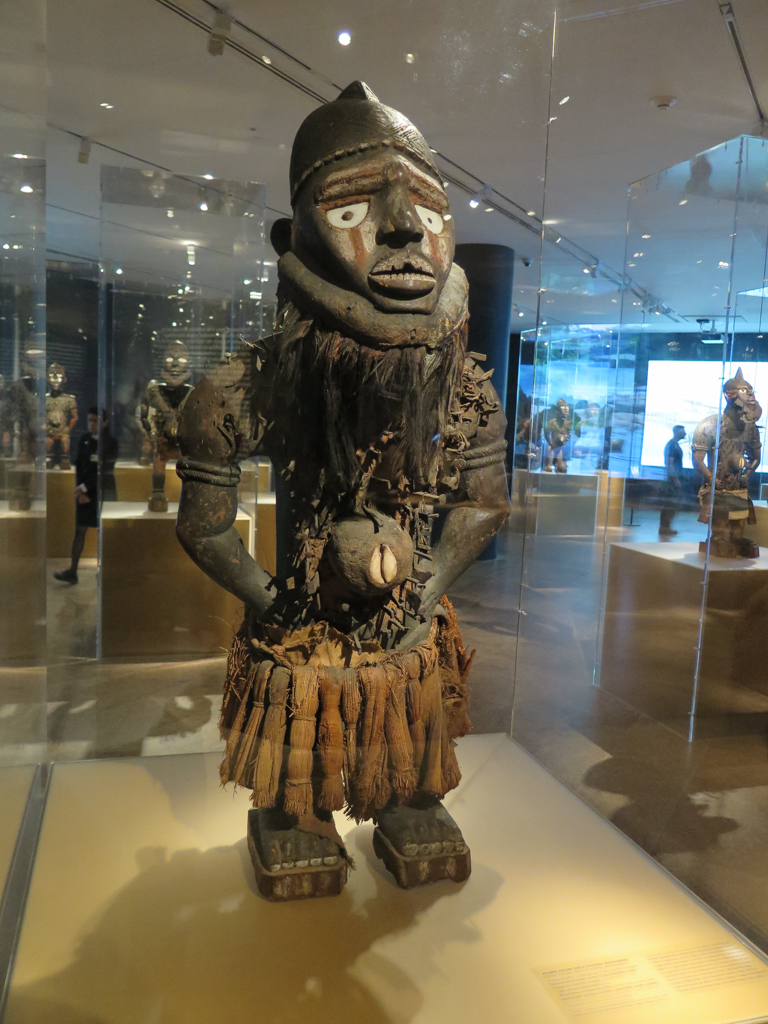
On Saturday morning Sally and I went to the Metropolitan Museum and saw two special exhibits – Kongo: Power and Majesty (art of central Africa), and Ancient Egypt Transformed: the Middle Kingdom. After our recent Africa trip, I’ve been listening to African music, and was eager to learn more about its art.

Slavery and horrendous colonial exploitation is what I think of first when I think of central and western Africa, but the exhibit demonstrates that there was an elaborate and well-developed culture and artistic tradition before Europeans arrived. There was extraordinary craftsmanship in their carvings and weaving, and something powerful in their religious objects. If you can’t get to the Met, you can see all the objects here.
Tiller6Bug 1-7
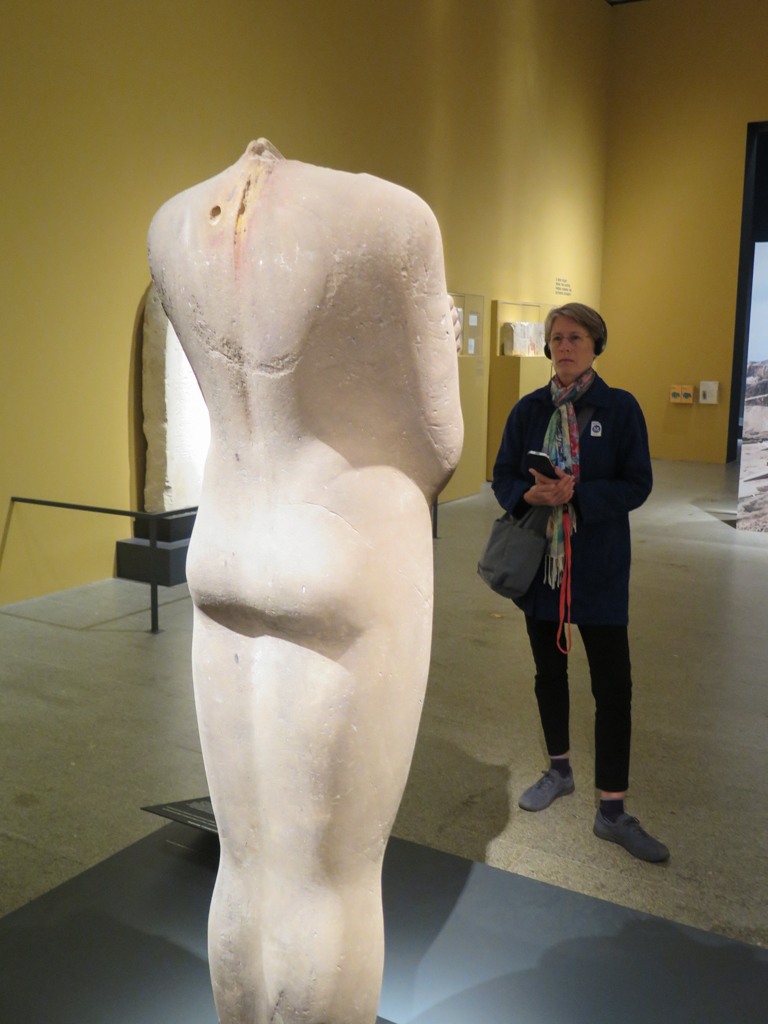
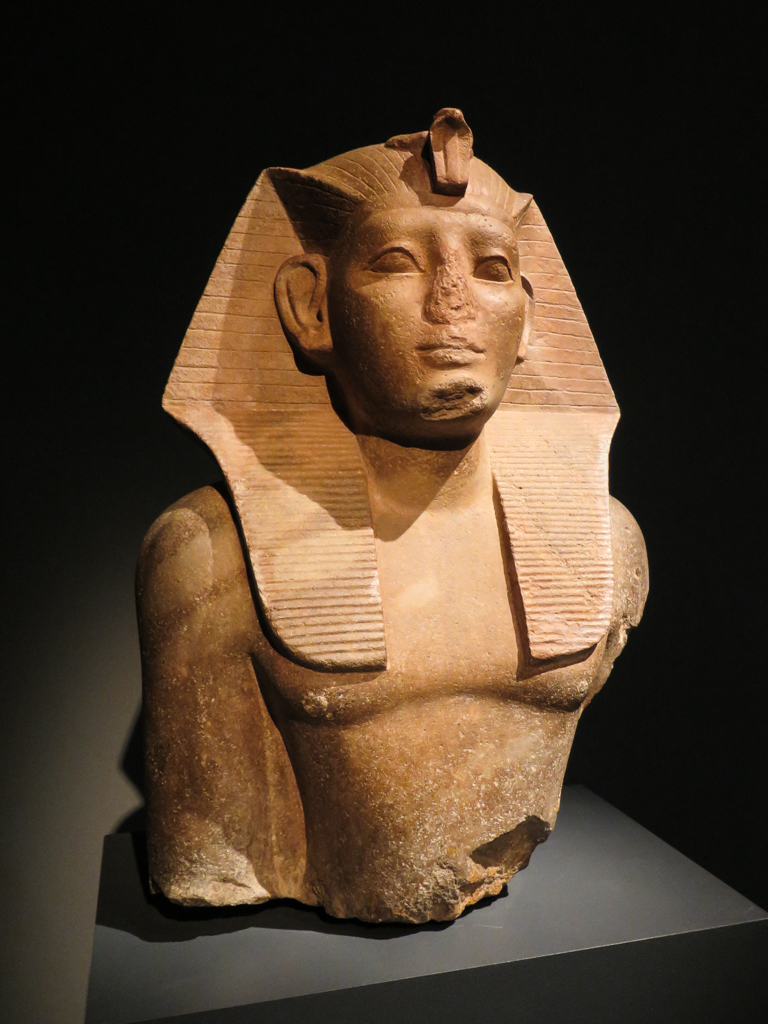
As for Egypt, the Middle Kingdom ran from 2030-1650 BC and from the 11th through the 13th dynasties. This exhibit also changed the way I thought of this society. It’s strange, of course, to think that pharaohs were viewed as gods, but all religions have their quirks. I’d thought of the sculpture as normally cold and formulaic, if well crafted, but was struck by how tenderly human and individual some of it was. Here again, you can check it all online.
Tiller6Bug 1-9

I’ve generally avoided museum audio guides, on the theory that it’s good to struggle with finding the message of objects than to be spoon fed. But it was well worth using the Met’s audio guide for these exhibits. The commentary was usually intelligent, and it was helpful to hear the pronunciation of the unfamiliar African and Egyptian words.
Tiller6Bug 1-5

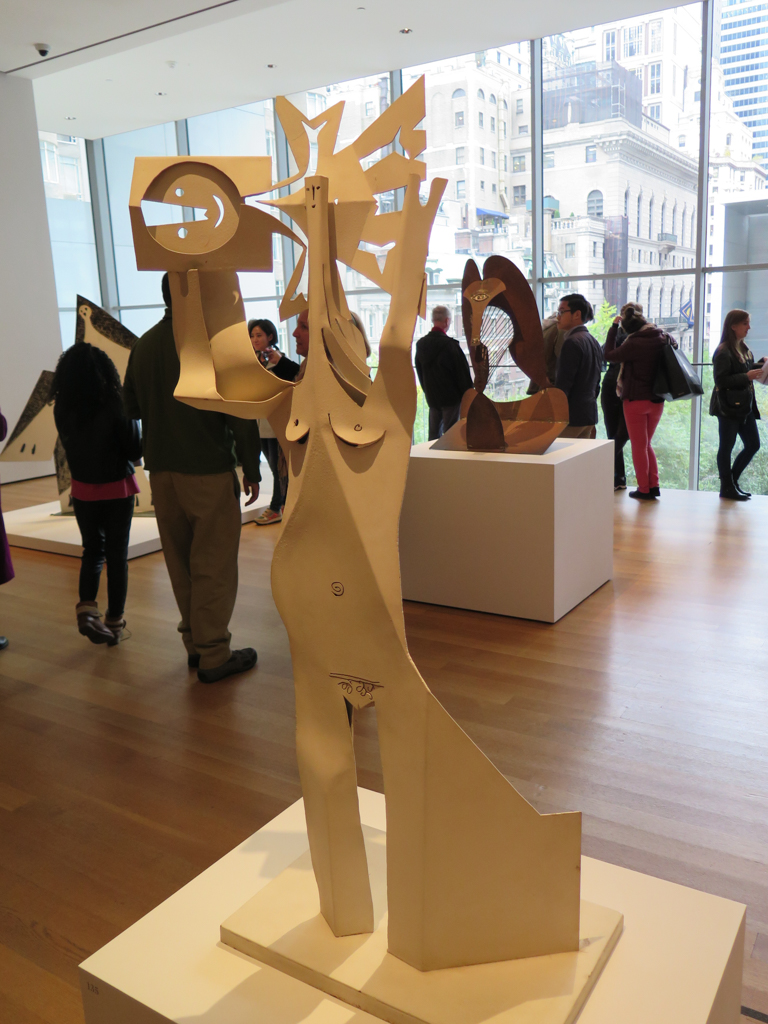
Afterwards, I went down to the Museum of Modern Art to see a special exhibit of the sculpture of Picasso. Apparently Picasso did not think of himself as a sculptor, but used sculptural tools for exploring new ideas. These were often witty and lively works, in a variety of styles and media. Picasso is really inspiring in his never-ending curiosity and energy.
Tiller6Bug 1-4

That evening we went to see Hamilton, a big hit on Broadway about the life of Alexander Hamilton told in the hip hop vernacular. Jocelyn had seen it twice off-Broadway, and was hugely excited about seeing it again. Her enthusiasm had motivated me to do a bit of homework beforehand, including reading the Ron Chernow biography of Hamilton, listening to the cast recording, and listening to some of the big hip hop hits of the last three decades.

I really liked the show. Hamilton’s life story is richly dramatic, and his achievements were extraordinary. That’s a good start, but to bring them into the present with an urban vernacular is such a great idea! At the same time, to take on some complicated history, with a spirit that is both playful and serious, is remarkable! The creator and star, Lin-Manuel Miranda is surely brilliant, and seems to understand that history is not something that is fixed, but rather always subject to reexamination and new understandings. Anyhow, it’s both a fun show, and richly thoughtful. How often does that happen?
Tiller6Bug 1

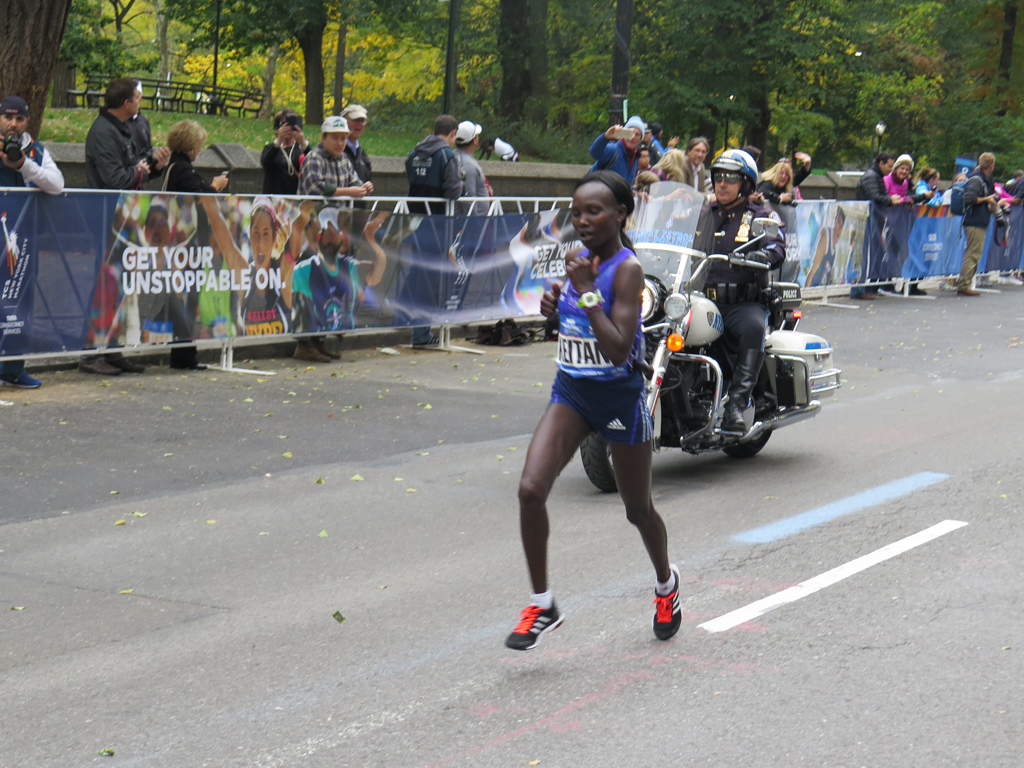
On Sunday morning we walked up to Central Park South to see the New York City Marathon. It is, of course, remarkable that people can run 26.2 miles at any speed, much less the pace that the elite athletes do. We were privileged to see the top finishers approaching Columbus Circle, close to the end. They looked focused, but not miserable. I read the next day that the men’s winner, Stanley Biwott of Kenya, ran mile 21 in 4:24, and only a few seconds slower for the next two miles. That is beyond amazing!

Winner Mary Keitany of Kenya, with about a third of a mile to go

Winner Mary Keitany of Kenya, with about a third of a mile to go

In Boston, seeing Dutch masters, Four Big Ideas, and some problems in Afghanistan

Tiller5Bug 1
I was in Boston this week for the annual meeting of the Association of Corporate Counsel, where I was a presenter in a session on open source software licensing, and a student at various other continuing legal education sessions. Boston was having its first cold snap of the season, and I had neglected to bring a coat. Brrr!

I managed a quick visit to the Museum of Fine Arts, which I’d only visited once before a long time ago. It’s a really good museum! I was keen to see an exhibit called Class Distinctions, Dutch Painting in the Age of Rembrandt and Vermeer. I mainly wanted to see the two Vermeer works, A Lady Writing and the Astronomer. The Lady, who sits at her desk in a yellow fur-trimmed jacket, was ravishing. There were several excellent Rembrandts.

The exhibit was organized in sections according to the social classes depicted, starting with the nobility, through the merchants, and on down to the poorest. When they were made, the paintings served some of the same purposes as paintings today (e.g. status symbols for the high born), and sent elaborate social signals through the clothing, settings, and objects. My art history education was more oriented toward the formal properties of the works (color, line, texture, composition). This was instead approaching art more as anthropology, which seemed worthwhile.

One evening I met up with a couple of old friends from student days for a dinner at Puritan & Company on Cambridge Street. Through the years of career building and child raising, we’d almost lost touch. It was really gratifying to find that we could quickly reconnect. There was, naturally, news: jobs, travels, civic activities, kids, kids’ girl and boyfriends, parents, funny stories. The food (a southern, organic vibe) was good, too.

On the flight back, I was happy to see that I’d finally made it up the airline classification food chain at Delta to Zone 1 for boarding – that is, the first group (after families with children, business, first class, elite, diamond, service members, and others specially designated or needing special consideration). Well, it’s still good. I really like not having to worry whether there’s a place in the overhead bin for my carry on bag.

With some time for travel reading, I finished The Shape of the New: Four Big Ideas and How They Made the Modern World, by Scott L. Montgomery and Daniel Chirot, and I recommend it. The four ideas are the thought systems of Adam Smith (classical capitalism), Karl Marx (communism), Charles Darwin (evolution), and Thomas Jefferson and Alexander Hamilton (American democracy). Montgomery and Chirot do a good job giving lively short bios and summarizing the thought systems. They also give helpful context, including predecessors and successors. The second half of the book discusses the counter-enlightenment, including fascism, Christian fundamentalism, and Islamic fundamentalism. There’s a lot here to chew on.

Speaking of chewing, a few days ago, the President announced that instead of wrapping up the long war in Afghanistan, as previously promised, he’s sending more troops there. I was really sorry to hear this, as I’d say our Afghan adventure has been mainly a disaster, but my view seems to be in the minority. For anyone who cares to think more about this, I recommend a piece by Jeff Vaux in the Huffington Post, which is a bit of a rant, but not uncalled for.

Here are some excerpts: “After 14 years of fighting -at a cost of over 2200 American lives, 20,000 seriously wounded, countless mentally damaged and a trillion dollars – it is obvious that we cannot accomplish our stated objectives. The Taliban cannot be destroyed and the Afghan people will not support a US-imposed government. …

“Today the Taliban controls or is contesting more territory than at any time since the war began. Outside Kabul and a few other areas where mountains of our money buy molehills of temporary allegiance, the government’s army and police are hated for their oppression and human right abuses. Its courts are crooked and criminally unresponsive, while Taliban justice — although harsh — is swift, works without bribes and legal fees, and is honestly administered. Warlords, paid for and armed by the CIA and the Pentagon, indulge in brutal behavior toward their people, including a delight in raping children, which the US army orders its soldiers to ignore.”

Is this being unfair? Are we forgetting some benefits that could possibly justify all this wreckage and pain? Are we Americans (or anyone else) somehow safer, or have we just provided more inspiration and anger to those inclined to hate us?

Diving in Mozambique

Tiller4-8
Heading to Africa week before last, my dream was to dive with some really big creatures, including manta rays, whale sharks, and humpback whales. My research indicated that these and other species should all be present in October (spring) in southeastern Mozambique. The diving didn’t turn out as well as hoped, but I was not sorry we tried. We saw some amazing sights, and learned some things.

Our first dive destination was Zavorra, in Inhambane province. We stayed at Zavorra Lodge, a somewhat rustic hotel at the end of a long sandy road. It was very windy when we arrived, and we were warned that the wind was making the waters rough and murky. It was less windy when we went out early the next morning, but visibility was quite poor. And it was chilly (65 Farenheit). We saw medium and small fish, including a large group of barracudas, but no giants.

This was basically the story for the following two days – cold and dark. I had some suspicion that unregulated fishing had reduced the fish populations, based on some of the locals’ comments about government corruption and Chinese factory ships, but who knows? There could have been a lot of creatures that we didn’t see, since we didn’t often see more than 10 feet.

One afternoon we took a short walk to a nearby village, where there was a shaman who for cash purported to tell fortunes. We were surprised that most of our group of mostly Dutch tourists paid up and sat still for quite a bit of this nonsense. But it was interesting to see the local people, the grass roofed dwellings, goats, and chickens.
Tiller4-4

Our last afternoon we went horse riding on the beach. It was many years since I’d been on a horse, and my mount, a handsome white horse named Obsession, may have noticed this. We were behind Sally, and Obsession kept wanting to pass her, and I kept having to apply the brakes.

But it was lovely riding on the beach. For a bit. Then, when we were moving just inside the backwash of the waves, Obsession unexpectedly flopped onto his side. Happily, I got my bottom leg out from under him in time and didn’t get crushed, though I did get wet. Obsession went straight out into the breakers for a dip. Our guide finally got him to come out, and we found he’d lost one stirrup in the water. The guide gave me one of his, and we finished the ride.

Next we went to Tofo. This place has the widest white sand beach I’ve ever seen, and a lively little town. Here we learned how to launch a pontoon boat into the waves (push when they say push, and then hoist yourself up and in). The ride out on the little boat (30-45 minutes) was generally bumpy. Once at the dive site, we got into the water by rolling backwards on the count of three. At the end of the dive, we took off your heavy equipment and hand it up, then hoisted ourselves up into the boat.

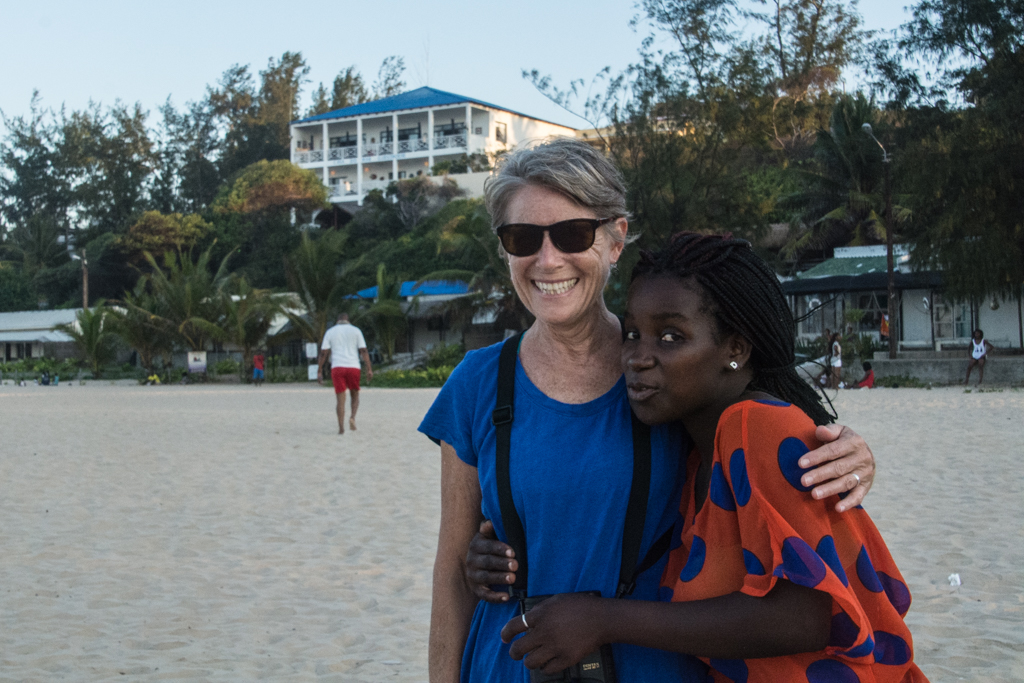
That's Caso do Mar in the background, and Sally with a young woman who rushed over to be photographed

That’s Caso do Mar in the background, and Sally with a young woman who rushed over to be photographed

Our first day out, the dive was down to about 100 feet. The current was quite strong, and we had to fight it to stay near the reef. Here, too, it was dark and chilly, with visibility less than 10 feet. We enjoyed seeing some pretty small tropicals. But this is not diving for the timid or out of shape.

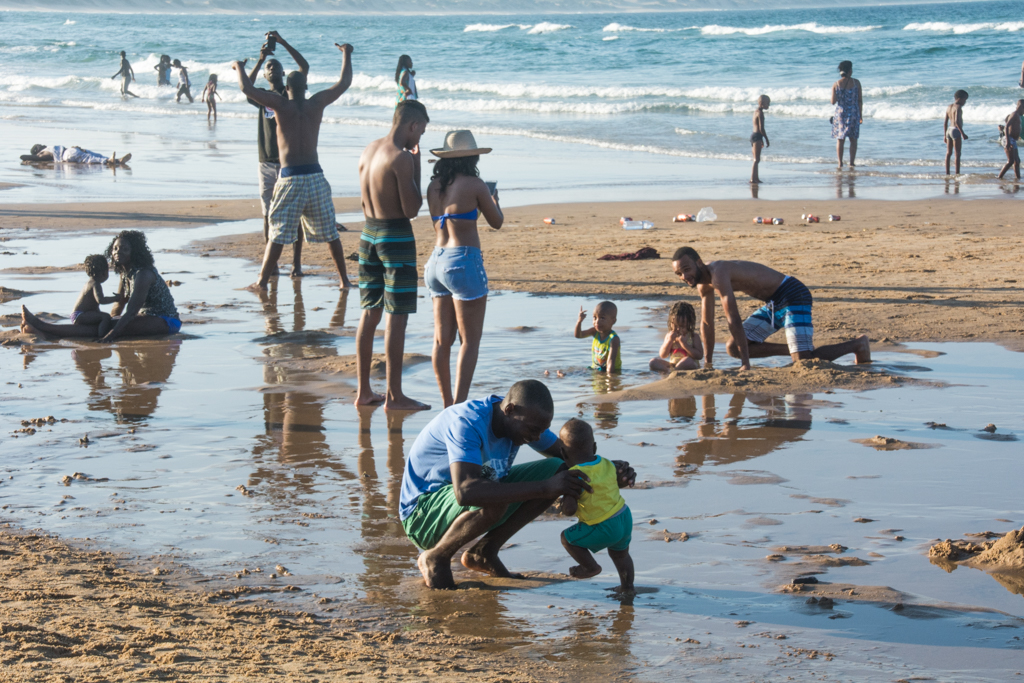
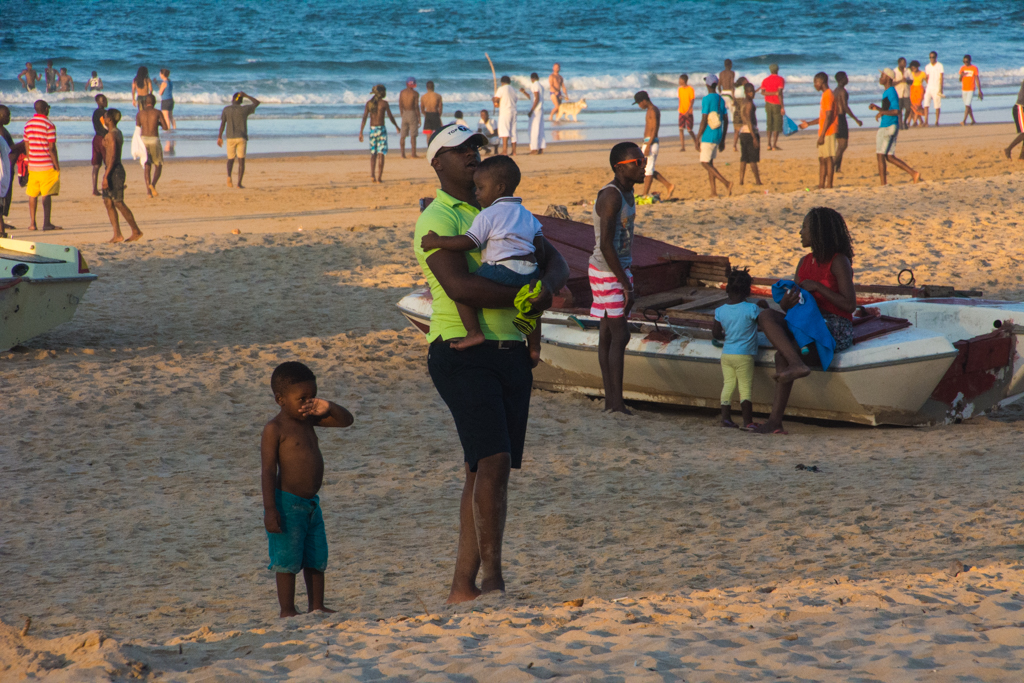
We liked our hotel, the Caso do Mar, and we liked the dive outfit, Peri Peri. Our main divemaster, Frieda, was unfailingly cheerful, and consistently safety minded. We had some good talks with her about great dives past, and ones we hoped to make. We liked walking on the beach as the young men played soccer and the young families played with their babies.
Tiller4

We saw a good number of humpback whales during our boat rides, and heard them singing when we were under water. We saw one white tipped shark, but no others, and a honey-combed moray eel. We never did see a manta.

But I finally realized my dream of swimming with a whale shark. Our skipper spotted the enormous animal near the surface, and we all slipped off the pontoon boat with snorkel gear. I found myself over the creature, just off its right side and perhaps 6 feet above. Even with murky water, I could see it clearly from tip to tail. My fellow snorkelers were not within view. The whale shark and I swam together for perhaps two minutes, and then it began to pull away. Soon all I could see was the tail, and then just dark water.

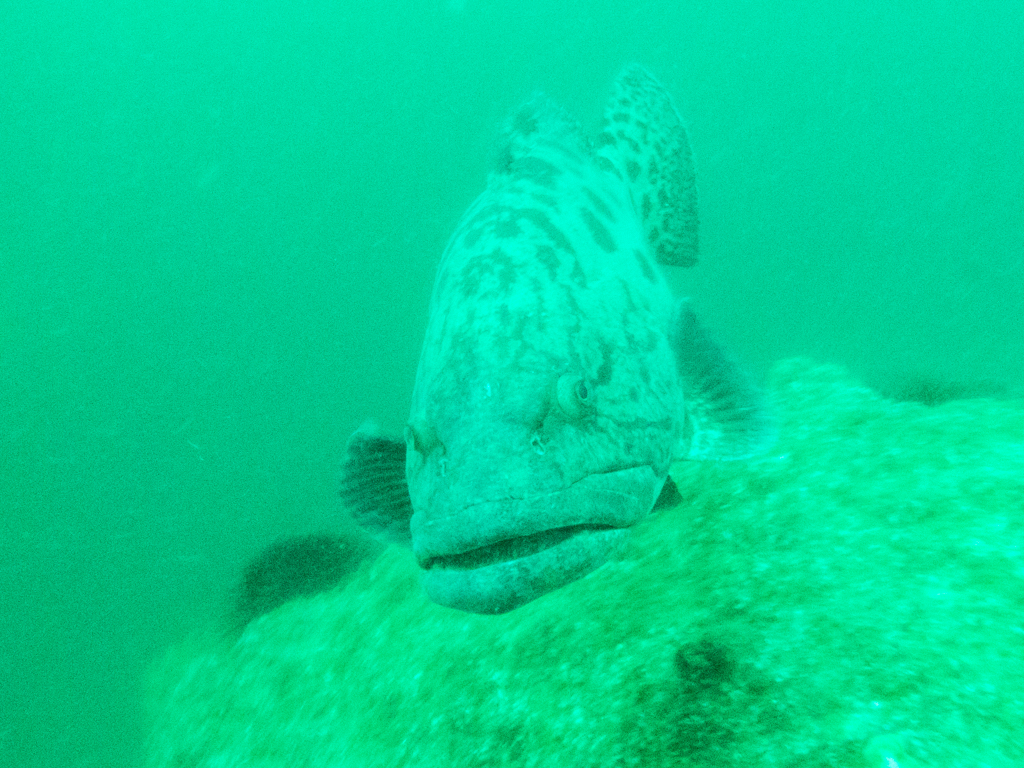
I spent a fair bit of money and energy getting ready to photograph the sea creatures of Mozambique, and it didn’t work out so well. There were various equipment problems (the strobes wouldn’t work, then the zoom wouldn’t work, etc.), but the biggest problem was the very limited visibility. So it goes; sometimes nature is uncooperative. I will surely be more appreciative the next time I’m in clearer waters.
Tiller4-7