The Casual Blog

A lovely wedding, and new books on evictions and the war on drugs

20160416_194912
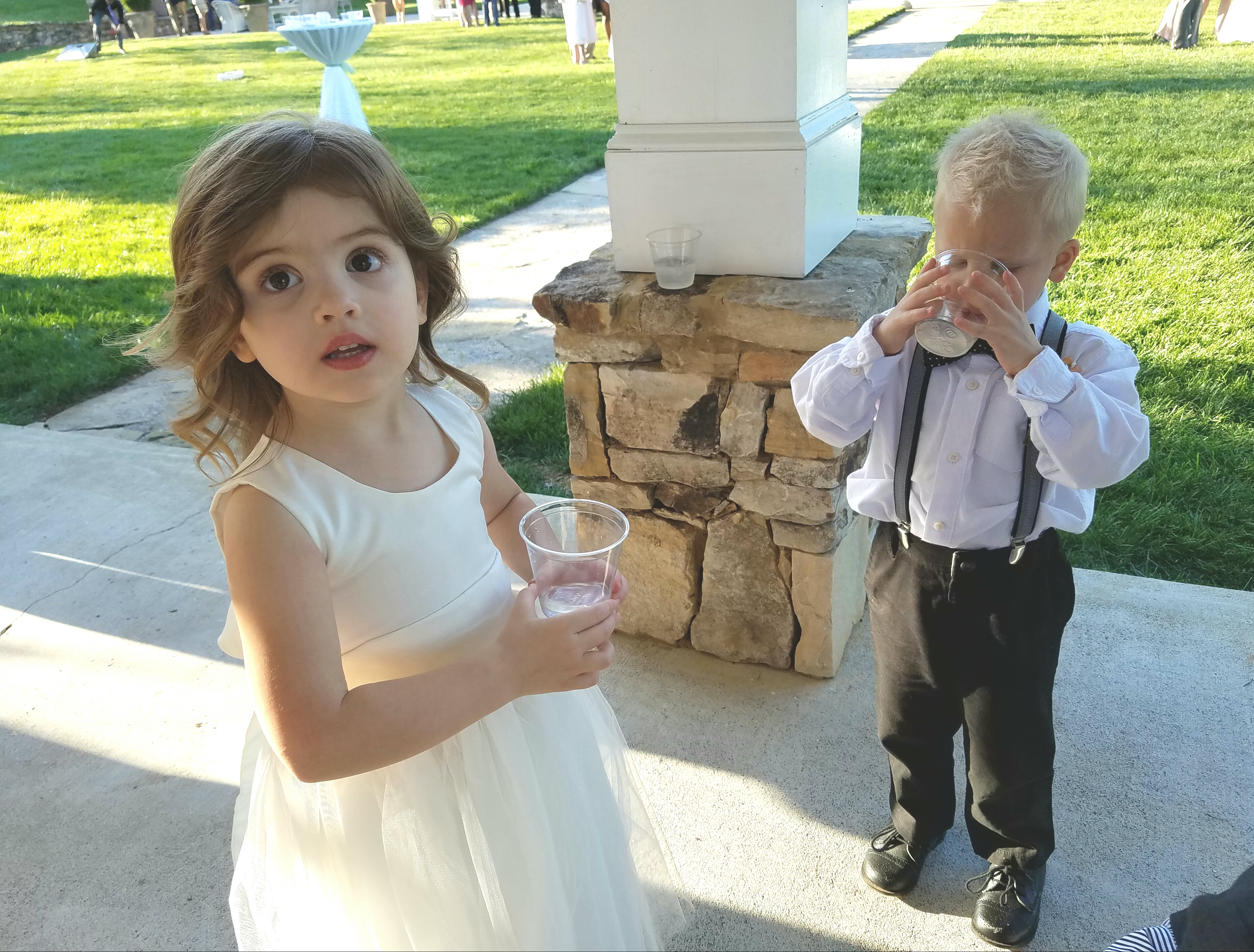
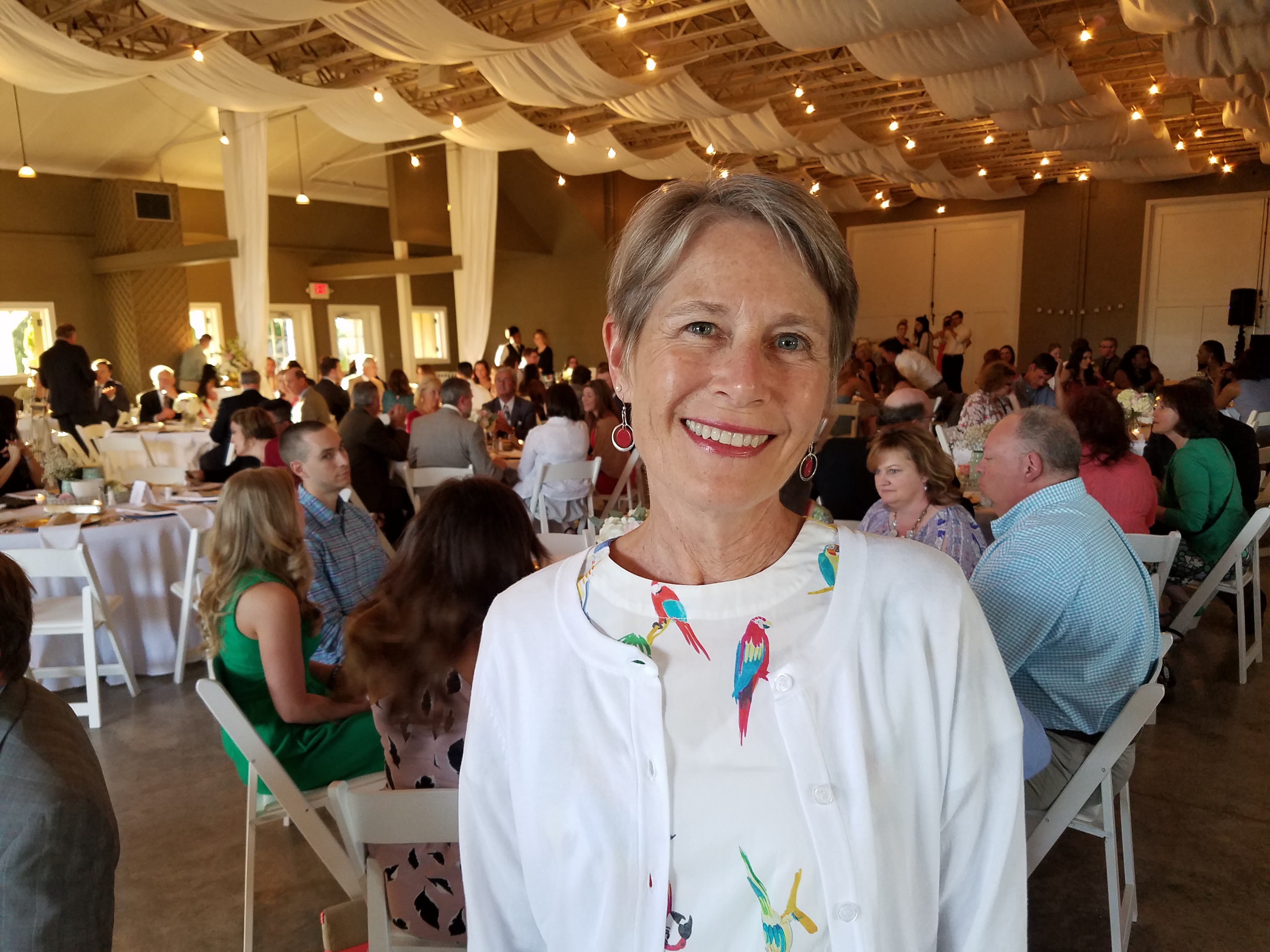
On Saturday we drove down to Charlotte and then flew to Chattanooga for my nephew’s wedding. After we checked in to the downtown Holiday Inn, we took a cab to Dalton, Georgia for the ceremony.  The venue was a converted farm, with green meadows and mountains in the distance, and the skies were sunny and blue.  It was good to see family, and good to see the loving groom and bride.

On Sunday morning we walked from the hotel down to the river, and that was all the time we had to check out Chattanooga before flying out.  We would have visited the aquarium if we’d had a little more time.  People we encountered seemed unusually friendly.
20160417_174136

With the benefit of all that happiness, I was able to have a look at some counterbalancing sad truths, including finishing reading Evicted, by Matthew Desmond.  It’s a close up view of the lives of poor people in Milwaukee who can sometimes barely, and sometimes can’t, make rent.  The problems related to housing insecurity are basic but also big — joblessness, poor nutrition, poor education, and lack of community.  It’s an eye- opening  and disturbing portrait, and a call for reform. I highly recommend it.

I also finished a Chasing the Scream, by Johann Hari, a book about our war on drugs.  The book focuses on a few individuals who were either drug warriors (government officials, drug logs) or victims. I hadn’t known the story of Harry Anslinger, a primary architect of the federalization and internationalizing of the war on drugs starting in the 1930s. In this telling, he is a ignorant, peculiar man, but, unfortunately, highly effective in promoting the idea that some drugs are inherently evil, and the people who take them should be treated as criminals.

Hari offers the alternative view that illegal drugs are not inherently different from legal ones, and although they can be harmful, we’ve inherited a greatly exaggerated view of their harmfulness.  Drug addicts are not zombie monsters, but rather troubled human beings who can be helped.  He examines the results of the legalization programs in Portugal and elsewhere, and looks at how we might get to legalization in the U.S.  I thought the book was a bit heavy on the human interest anecdotes and sometimes light on the science, but still well worth reading.
20160416_193101

There was also a good short primer this week on the history of the war on drugs in the Huffington Post by Tessie Castillo. Castillo makes a good case that the main reason we treat certain drugs as illegal was economics and cultural prejudice, and particularly fear of immigrants.  Opium was perfectly legal and widely available until Chinese workers were demonized as taking American jobs, at which point it was criminalized.  Similarly, marijuana was legal until it became associated with Mexican immigrants and other minorities, at which point it became “dangerous.”  The myths required to sustain this view, including explicitly racist nonsense, eventually began to seem real.  

Richard Nixon has been treated unfairly by history in some respects, such as our tendency to forget his progressive social programs, but he deserves disdain and disgust for his whipping up the hysteria on drugs.  According to reporting by Dan Baum, John Ehrlichman, White House counsel to President Nixon, fessed up as follows: “The Nixon campaign in 1968 and the Nixon White House after that had two enemies: the antiwar Left and black people… We knew we couldn’t make it illegal to be either against the war or black. But by getting the public to associate hippies with marijuana and blacks with heroin, and then criminalizing both heavily, we could disrupt those communities. We could arrest their leaders, raid their homes, break up their meetings, and vilify them night after night on the evening news. Did we know we were lying about the drugs? Of course we did.”

Political cynicism? Perhaps a wee bit. But note, President Reagan followed suit, and President Clinton, and …. Well, we’re still fighting a war on drugs that with enormous costs in dollars and lives, based on fundamentally false premises. I think we’re starting to realize this is crazy, but we’ve still got a ways to go.

A thought-provoking documentary film festival in Durham

20160409_093135
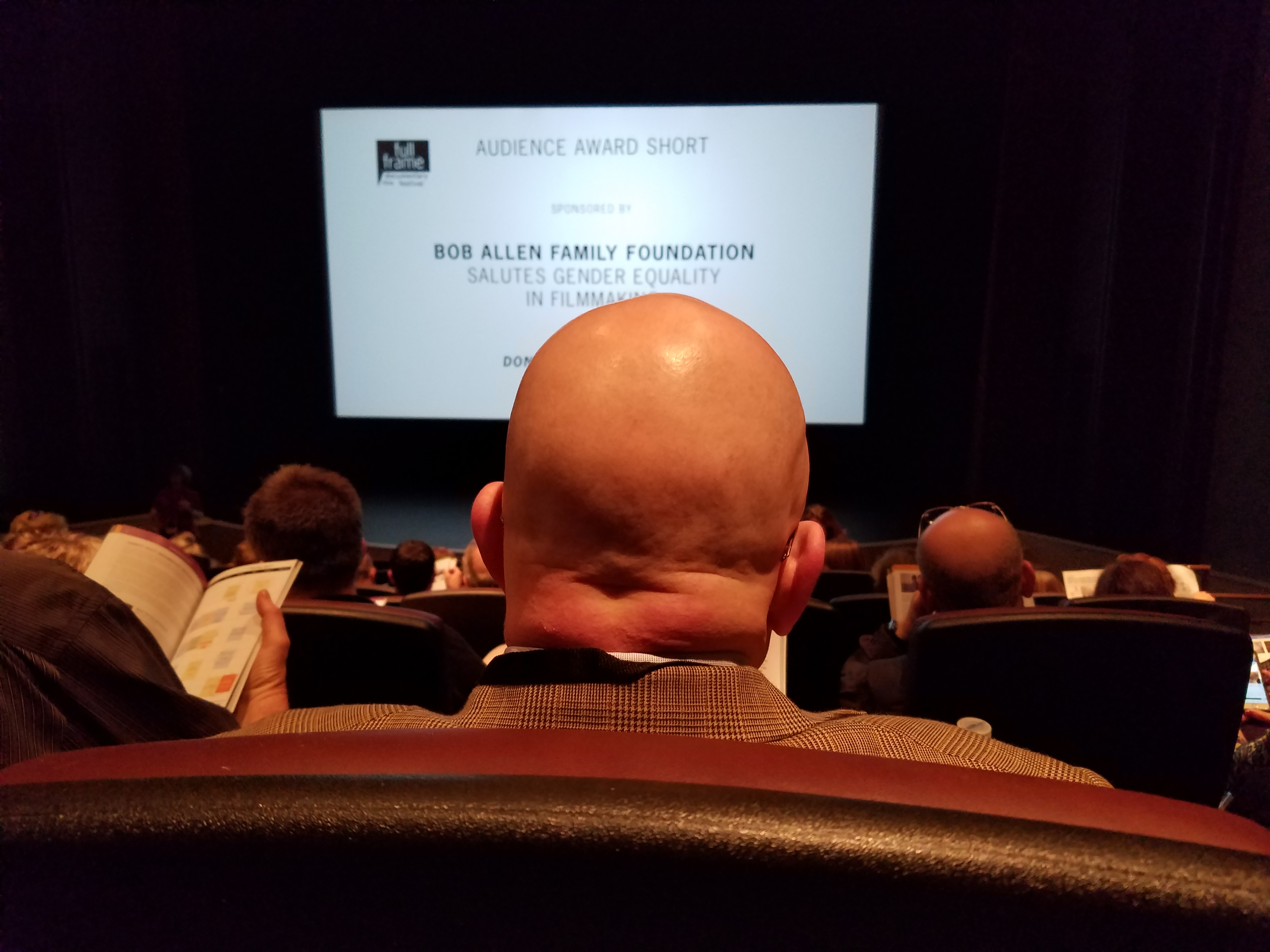
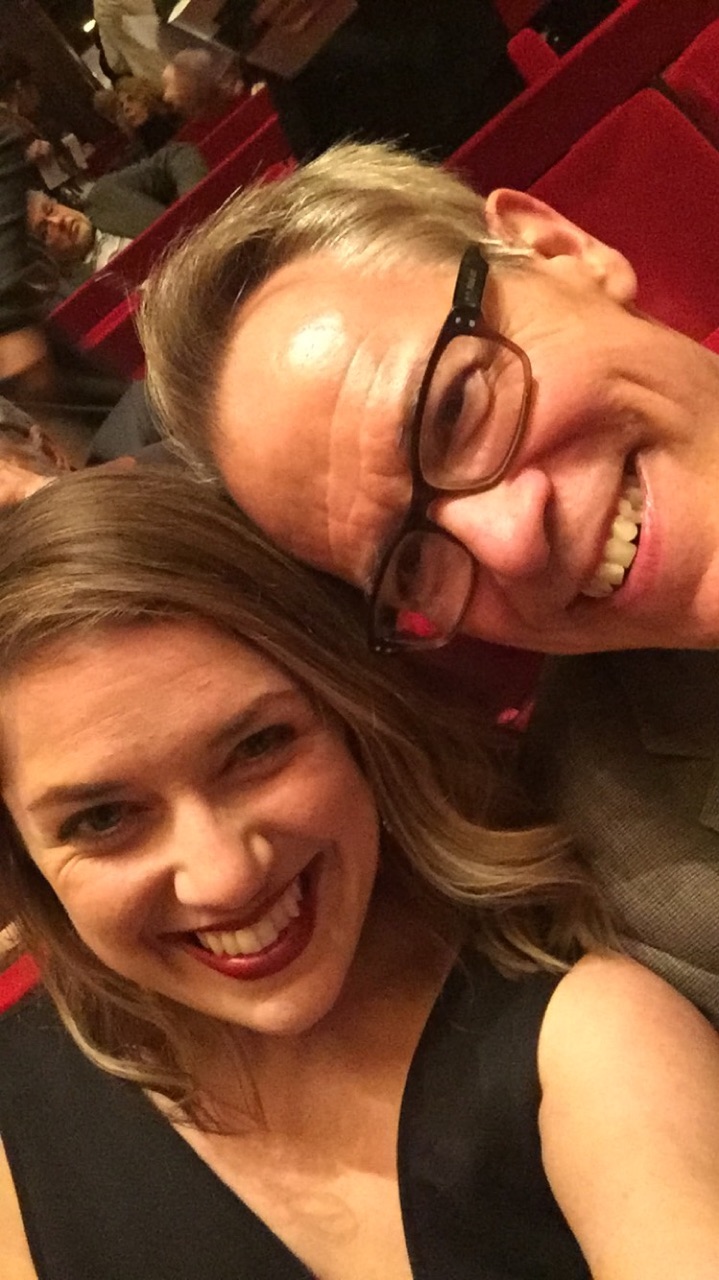
Having had such a good time last year at the Full Frame Documentary Film Festival, this year we decided to go all in. We got a room at the downtown Marriott, which connects to the site in the Durham Convention Center, and took some vacation so we could stay all four days. We saw some excellent documentaries, met some interesting people, and had a lot of good conversations and other fun.
20160408_183622

In high school I had a music theory teacher who was a practitioner of Eckankar, which teaches that the soul can separate from the body and travel about. I ordinarily think of Eckankar as an example of the useful rule that there’s no idea so bizarre that some subpopulation won’t believe it. Still, this weekend was soul travel of a sort. The documentaries whisked us around the world and also transported us into some remote and unfamiliar interior landscapes.

Another thing I like about documentaries is that in general they try to be truthful. Even when the filmmaker has a strong point of view, she’ll almost inevitably provide evidence for other points of view. We were particularly interested this year in the films that took on complex social issues. For several of those, the filmmakers answered questions afterwards, and the messages they thought they were sending were not always the same as the ones we took away. I viewed that not so much as an indication of the filmmaker’s weakness as of the medium’s strength.
20160409_095106

There were more than 100 films screened, of which we saw 17, including several that I expect to be thinking about for quite a while. Here are some quick notes on my favorites.

Weiner. This was about Anthony Weiner and his New York mayoral campaign, which ended in ignominy because of his social media sexting. Weiner became a late night TV punchline, and so it was a surprise to see him presented as a complex person with a great deal of intelligence and drive. As Sally noted, it was a great reminder that headlines can be misleading. I sat next to co-director Josh Kriegman at another film, and was happy to learn from him that Weiner is still married.

Sonita. Sonita is a 15-year-old Afghan girl living in Tehran who wants to be a successful rap artist. As crazy as it sounds, she may just do it. From her first informal performance with her girlfriends, you sense a prodigious talent. The odds against her are huge at the beginning, as her poor, traditional family plans to sell her to be married, but she records Brides for Sale, which becomes a minor sensation, and things start to happen. You should check out her gut-punching music video, which is here.
20160408_123303
Clinica de Migrantes. A clinic in south Philadelphia provides primary medical care for mostly Hispanic undocumented immigrant workers. The volunteer doctors and other personnel are overworked and overwhelmed, but they somehow soldier on, with empathy and kindness. The patients look a lot like the people we see cleaning our hotel rooms, preparing restaurant food, building our houses, and caring for our yards and our children. The film doesn’t preach about the injustice of leaving these people out of the health care system, but quietly makes you feel it. It also reminds you that there are some really good people in the world.

Unlocking the Cage. The subject is Steven Wise and the Nonhuman Rights Project, which has brought habeas corpus petitions on behalf of caged chimpanzees. Wise has worked for 30 years for animal rights, and has succeeded in raising the profile of the issues. He maintains a remarkable air of humanity and decency even with those who think he must be crazy.
20160407_095000

Raising Bertie. This film was made about 100 miles from here as the crow flies in Bertie Co., N.C., a poor, rural, majority African-American area. The filmmakers spent 6 years following 3 young black men trying to get through high school and become adults. They make some of the same mistakes that their parents made, such as starting families when they’re much too young, and struggle to find decent jobs. It’s a subject that we all think we know about, but have never seen this intimately, and it’s powerful. We got to meet with one of the filmmakers and a couple of the film’s subjects in the hotel bar last night.

Tony Robbins: I Am Not Your Guru. This film by master documentarian Joe Berlinger follow self-help impressario Robbins through a six-day seminar for which he charges $5,000 per head. It struck me as a mix of evangelical Christian revival and new product sales force meeting, where the attendees were encouraged to get excited and emotional and commit to a better life or more productive next quarter. Robbins struck me as a snake oil salesperson, though more well-meaning than some. I was surprised to learn, when Berlinger spoke afterwards, that he had attended a Robbins seminar and found it life changing in a good way. But as noted above, this disconnect speaks well of the medium, and also of Berlinger, in allowing for different interpretations.

Don’t Blink: Robert Frank. Laura Israel, the director, worked with Frank for years as an editor before making this remarkable film. I just started looking hard at Frank’s intense, quirky photography in the last couple of years, and came to this documentary knowing nothing of his experimental films and other work. I came away with even more respect for Frank, and more curiosity. The film says something fundamental about how artists make art: they never stop experimenting.

I could go on, but, enough. Footnote: I made all these photographs except the tulips on a Samsung Galaxy S7, which I got a week ago. So far, it seems like a very smart smartphone, with a surprisingly credible camera.

Tiller7Bug 1-12

Foolish LGBT discrimination in NC, more spring blossoms, and an excellent Barber of Seville

Tiller7Bug 1-2
North Carolina is my home, and I love it very much. There is a lot of natural beauty, and there are a lot of smart, warm people. But boy, we’ve got some really ignorant political leadership. It is hard to believe, at this point in history, anyone would truly fear gay and transgender folks. And it’s just shameful to start a fear mongering campaign about the risks posed by improper usage of bathrooms. Has anyone ever heard of an LGBT bathroom attack, or even an awkward moment? Unfortunately, the stupidity and/or cynicism of our legislative Republicans has brought cascades of ridicule on our state, and it looks like there could be real economic damage. Eventually we’ll vote those rascals out (maybe in November?), but meanwhile, it’s painful and embarrassing.
Tiller7Bug 1-3

But again, this is a good place to live, and a good time. The azaleas blossomed this week in pinks, whites, and purples, and the delicate dogwoods (our state tree) flowered. It was rainy on Saturday morning, when I went to Raulston Arboretum, and it was awkward holding an umbrella over the camera while taking some of these pictures, but I liked the water on the flowers. On Sunday morning, I went over to Duke Gardens. It was sunny, but breezy, and the flowers tended to move about when I got ready to take their pictures.
Tiller7Bug 1-5

On Sunday afternoon, we went with Diane to the N.C. Opera’s production of Rossini’s The Barber of Seville. It was wonderful! There was so much life, so much warmth and humor. Previous productions I’ve seen were mostly about delivering those blockbuster arias, but this one was as much about the characters. Stage director Stephanie Havey made it as much fun to watch as it was to listen to, with lots of comedy, some of it Marxist madcap, but some of it almost Shakespearean. The period costumes had elements of whimsey. It took me a while to warm up to the sets, which were sort of postmodern antique facades that rolled in and out, but in the end they worked.Tiller7Bug 1-9

The singing was all very good, and some was superb. I adored the lovely Cecilia Hall as Rosina. She had a richness and fluidity to her mezzo, and she was a fine actress, with intelligence and quick wit. Tyler Simpson as Dr. Bartolo was hilariously grumpy and obtuse, and also a wonderful low baritone, with marvelous diction in the patter songs. Troy Cook as Figaro was instantly likeable, and highly musical. Conductor Timothy Myers led with musical insight. He knew when to take some luxurious time, and when to push quickly forward. The orchestra sounded really good. There were quite a few moments when I had goosebumps and watery eyes at so much rare beauty. It was a privilege.
Tiller7Bug 1-10

Visiting New York friends, and some new (to me) art and opera

OLYMPUS DIGITAL CAMERA
I got up to New York City last week for the IP Counsel conference where I did a presentation on open source software legal issues. After the conference, I spent a long weekend in the city. It was great to see my sweet Jocelyn and some old friends, and to take in some new art and opera.

Jocelyn got a promotion at Macmillan this week, and was very excited. That’s three promotions in a year! She’s now a manager, titled Ebook Production Manager. She likes the company, likes the work, and is looking forward to the new role. We talked about the being a manager, among other things, as we tried some fun bars and restaurants.

Although opera is not Jocelyn’s most favorite thing, she agreed to come with me to the Met to see L’elisir d’amore (The Elixor of Love) on Saturday, and we both loved it. It’s a delightful confection of melody and feeling. The subject — romantic love — is forever young, and in Donizetti’s deft hands funny, painful, and touching. In this production, the bel canto style was alive and well, with astonishing vocal agility and sweet subtlety. Soprano Aleksandra Kurzak was a saucy and savvy Adina, very musical, and tenor Vittorio Grilolo was ardent, goofy, and then transcendent. As the doctor, Adam Plachetka was sublimely funny. Kudos to maestro Enrique Mazzola, who had great rhythmic flexibility and propulsive drive, and of course, to the fabulous Met orchestra.
OLYMPUS DIGITAL CAMERA

Another night Jocelyn and I had a lovely dinner with my old friend Ben Brantley at Niu Noodle House in the Village. Ben and I met in junior high school and started out in NYC together, and with a happy combination of brilliance and hard work became head theater critic of the New York Times. It was good to catch up and hear his views on current shows, being a vegetarian, and other matters.

As to art, I saw several things worth mentioning. I recommend the exhibit at the Whitney by Laura Poitras, the filmmaker who made Citizen Four and other interesting works questioning the War on Terror. This exhibit is political in the sense that it puts in issue the programs of invasion, imprisonment, interrogation, assassination, and mass surveillance that grew out of the great panic following 9/11. It consists mostly of video clips, many of which must be viewed through slits in the wall that remind us of slits through prison doors. It invites us to engage with some disturbing issues, including the possibility of our being monitored at all times.

I also found enriching, if not exactly enjoyable, the exhibit at the Neue Gallery of the works of Edward Munch and German Expressionists. Munch appears to have been a tortured soul, and his works powerfully express alienation, melancholy, and angst. These are feelings that we generally try to avoid or suppress, and seldom discuss with anything but disapproval. But there’s truth in these works that we could benefit from facing. There were strong paintings of several other Expressionists who built on Munch’s bold early works, including Beckmann, Kirschner, Nolde, Kokoschka and Schiele, who were themselves iconoclasts, with energetic new psychological insights into some of our darker recesses.
OLYMPUS DIGITAL CAMERA
At the Edwynn Houk Gallery I saw a photography exhibit by Nick Brandt. On display were ten enormous (6-8 feet wide) black-and-white images of Africa, each with a billboard size photo of an African animal, such as a lion, elephant, or rhinoceros. The billboards were positioned where the animals used to roam, but have been replaced by human activity– factories, roads, and waste dumps. There are people in the images trying to make a living, including by picking through the waste dumps. I found the pictures very powerful, and tragic.

At the Brooklyn Museum, Jocelyn, Pam Tinnen, and I saw This Place, an exhibit of photographs about Israel and the West Bank. It included work of twelve photographers, some of whom did very large images of the people, cities, and stark landscapes. There was little direct reference to anger and armed struggle, but instead humanitarian efforts to comprehend the multiple facets of this complex situation. We also looked at the Assyrian and Egyptian art.
IMG_4858

Finally, I checked out the new Met Breuer, which is what the Met has done with the former Whitney museum. The main current exhibit is about unfinished works of famous artists starting in the Renaissance and coming up to now. It was interesting from a process perspective (seeing how paintings of various periods were assembled). I was surprised to learn that there were few answers on why artists chose not to finish particular works, or even how they determined what was a point of completion. But I enjoyed a lot of the art, particularly works of Rembrandt, Cezanne, and Turner.

Duke blossoms, rising ballerinas, AlphaGo’s victory, and the Age of Artificial Intelligence

Tiller7Bug 1-6
On Saturday morning it was overcast and threatening to rain when I drove over to Durham to see what was blooming at Duke Gardens. Did you know it’s one of the top 10 public gardens in the U.S.? It is certainly a treasure. There were new cherry blossoms, tulips, and many other delights. I shot 234 closeup images with my Nikkor 105 MM macro lens before it began to drizzle. I got a few that revealed aspects I’d never looked at as closely before, and expressed some of my own joy of the season. The images here are all from Duke, except for the daffodils, which I took late Friday afternoon at Fletcher Park.
Tiller7Bug 1-4

That evening we saw the Carolina Ballet with new works by Zalman Raffael and Robert Weiss. Raffael’s new piece was set to Rachmaninoff’s Rhapsody on a Theme by Paganini. As it launched, I worried a little that 24 variations to this familiar music could easily bog down, but far from it: this was a lively, kinetic work that developed organically with continual surprises. Working in the Balanchine tradition, like Weiss, Raffael makes ballets that are abstract but intensely expressive. He’s so accomplished and assured already, and so young!

In the performance we saw, some of the younger company members who normally are in the background stepped into the spotlight, and performed beautifully. I very much enjoyed the subtle elegance of Courtney Schenberger and Rammaru Shindo in Balanchine’s Valse Fantaisie. Ashley Hathaway, with Adam Crawford Chavis, was really sensual and powerful in the adagio Meditation from Thais. Amanda Babayan was a lovely Miranda in Weiss’s Tempest Fantasy. So much talent, developing quickly, like those blossoms. It’s a privilege to receive their art.
Tiller7Bug 1-3

Speaking of surprising progress, this week AlphaGo finished its five game Go match with a popular Korean grandmaster in Seoul, in which it prevailed 4-1. It was a significant moment in the advance of artificial intelligence. I learned the rudiments of Go a few years back. It seems so simple at the very beginning, as you take turns laying single stones, black or while. But it is massively more complex than chess. There are more possible moves than there are atoms in the universe.

Anyhow, I tweeted congratulations to the Google team, though with mixed feelings. The Age of AI is on its way, and the prospects are both good and bad. Computers are mastering tasks that we thought impossible for them a few years ago, like driving, reading MRIs, and reviewing legal documents. In the new Age of AI, there will be safer cars, more reliable medical care, and cheaper legal services. On the down side, a lot of jobs are going to disappear forever. We’re going to need to figure out what to do about having a lot of redundant humans. We’ll probably need to come up with a system with a guaranteed minimum wage, which seems impossible at present from a political perspective.
Tiller7Bug 1-2

But maybe the AI on the way can help with some of our political and mental problems. I’m thinking particularly of our magical thinking – areas where our biases and received ideas prevent us from seeing what’s right in front of us. The drug war is an example. After several decades of being taught that particular plants and chemicals are inherently evil and threatening, and that we need to fight those drugs, we have trouble conceiving of any alternative. It makes no difference that the drug war never moves any closer to victory, and that the human collateral damage is enormous. The facts that do not fit with our long held beliefs are suppressed or ignored.

Climate change denialism is another example of magical thinking. Another one: the Republican mainstream belief that cutting taxes will lead to increased growth, higher tax revenues, and balanced budgets. The New Yorker had a good essay by James Surowiecki this week explaining that decades of evidence now show that, as you might initially expect, cutting taxes leads to lower tax revenue. But current Republican leaders and followers, like those before them, devoutly and streadfastly deny the obvious.
Tiller7Bug 1

The WSJ had a must-read essay this week by David Gelernter on AI. Gelernter, a professor of computer science at Yale, argues that the intelligence of our machines will inevitably surpass our own, and we cannot reliably predict what will happen after that. Thinks of machines with IQs of 500, or 5000. They could be dangerous, perhaps viewing us as we view houseplants. Gelernter suggests that in experimenting we exercise the kind of caution we use with biological weapons.

But hey, assuming that the machines do not decide to enslave or kill us, they could really be helpful. They would almost surely see more possible moves in addressing difficult problems, like global warming. Perhaps it would be so obvious that they’re reliable authorities that we would give up on magical thinking. Then again, such thinking is almost perfectly hermetic and impervious.
Tiller7Bug 1-5

Spring, some explosive questions, including a nuclear one, and hope

Tiller7Bug 1
More harbingers of spring arrived in Raleigh this week: forsythia, red buds, and more daffodils started blossoming. Those colorful little flowers will cheer you right up. Look closely and you can see more buds getting ready. The flowers do not last long, so to enjoy them you need to get outside quickly and focus intently. They remind us that life is such a precious, precarious thing.
Tiller7Bug 1-2

Last week a white policeman in Raleigh shot and killed a young black man. I felt very sad, and also concerned about possible damage, physical and mental, to our community. I’d like to think the race relations and police-black community relations here are much better than, say, Ferguson Missouri. But it’s also fair to say that there could be big problems that people like me just don’t know about. One thing I’ve learned from Black Lives Matter, Ta-Nehisi Coates, Alice Goffman, and others is that while I almost never see it in its raw form, racism is real, and being black in this society is still a big health risk.

Soon after the shooting, hundreds of people marched in the street in protest. There were some traffic problems, but there was no reported harm to persons or property. Also no reports of police in military armor and tanks.
Tiller7Bug 1-4

The first descriptions of the incident featured a fleeing suspect getting shot several times in the back. The official police description differed greatly, saying the man who was killed tried to shoot the officer and was wanted for drug crimes. We tend to see these things in the way that fits most comfortably with our preconceptions. Most white people I’ve discussed this with are inclined to accept the police account as true, despite eyewitnesses who say otherwise. But just as insidious racism can shape perceptions, it’s possible that eyewitnesses who fear and distrust police conformed their memories to fit their larger life narrative. I’m consciously uncertain. Either way, any time a person is killed in the course of our misbegotten war on drugs, it’s an avoidable tragedy. We need to keep working on ending prohibition.
Tiller7Bug 1-3

Also last week, the U.S. killed 150 new recruits of al Shabaab in Somalia. Using bombs from drones and manned aircraft, we caught them standing in formation, perhaps graduating from terror school. According to Pentagon sources, they were going to be part of an imminent attack in Somalia on African soldiers and a few U.S. advisors. This is very similar to the bombing of possible terrorist recruits in Libya recently, so it seems to now be a thing – mass execution of young men who could potentially attack people we don’t know much about. Are we really sure this killing was justified? Is there no possible non-fatal way of addressing such threats? Could we be increasing the chaos and the risk of more mayhem through such attacks?

We don’t have a good track record in using our military in a carefully calibrated way, or in telling the truth about our attacks. See Vietnam, Cambodia, Laos, Iraq, Afghanistan, and Syria. Now Libya and Somalia. Tomorrow?
Tiller7Bug 1-5

You may have missed the story, which I did not see in a major U.S. newspaper, of the trial of the Marshall Islands lawsuit in the International Court of Justice seeking to stop nuclear proliferation. The Marshall Islands were used by the U.S. as a test site for 67 nuclear explosions in the 40s-60s, which devastated the area and sickened and killed part of the population. The lawsuit is about the lack of compliance with the Nuclear Non-Proliferation Treaty of 1968, in which some nuclear powers agreed to work in good faith towards disarmament. Apparently the suit is seeking a declaration that this hasn’t been done, and must be done.

For quite a while I’ve been thinking about whether there’s any way nuclear arsenals can be justified. They need a strong justification, because the risks are extremely high – accidental explosions, theft by crazed terrorists, escalating counterattacks, all out annihilation and the end of the world as we know it.

Here’s my current view: no political dispute could possibly justify killing thousands or millions of innocent people, which is the intended purpose of our most powerful nuclear weapons. No sane person would willingly subject the planet to nuclear winter, when much of the animal and plant life that initially survived a major nuclear war would die. Deterrence only works if an adversary is sane and rational (it doesn’t work on madmen), so deterrence is either unnecessary (as to the sane), or ineffective (as to the mad). So we cannot reasonably support the state’s creating and maintaining the risk of nuclear war. That leaves disarmament as the only credible, ethical strategy.

You may agree or disagree, but in either case, why aren’t we talking about this? Perhaps we assume that there’s nothing that can be done, or that it’s something we as individuals can’t effect. The Marshall Islands, a very small country, has challenged that stance. It’s election season, so let’s ask the candidates: what steps will you take to lower the risk of a nuclear holocaust and move towards a nuclear-free world?

On Friday, Bernie Sanders was speaking at noon at Memorial Auditorium in Raleigh, which is just a couple of blocks from where I work. It was a mild, sunny day, and so I thought it would be nice to see him, and perhaps ask him his view on the nuclear risk. By the time I got there, the line was very long. It took me ten minutes to walk to the end of it, by which time I realized there was no chance I was getting into the hall. But it was nice to see the crowd. They were very young! And, I’m guessing, hopeful. Anyhow, it made me hopeful.
Tiller7Bug 1-7

Welcoming daffodils, and re-starting golf lessons

Tiller7Bug 1-2
This week I saw the first daffodils! I just love those little guys, especially the early ones –- the harbingers. On Sunday, I got up to Raulston Arboretum, where the daffs were exuberant, while most other occupants were still slumbering.

Through the long winter nights, I spent some time learning more about photography and adding to my tool kit. I’ve got some new tools to try out, including a nice flash (the Nikon SB-910) and a new macro lens (Tamron 180 MM) that should be great for closeups of insects. I’ve got new software (the CC versions of Lightroom and Photoshop) and have been experimenting with image healing, filters, and focus stacking. I’m ready for the great blossoming of spring.
Tiller7Bug 1-4

Partly with spring in view, I began taking golf lessons a couple of weeks ago. A golf course is a type of garden, and we are privileged to have a good number of such extraordinary gardens in piedmont North Carolina. It seems a waste not to explore and enjoy them. And so I’ve vowed once again to try to get over the hump that separates me from playing golf at a better-than-mediocre level. I’m healthy, fit, and mentally able, so it’s not implausible. I just have to improve my technique – by a lot.

As I’ve noted before, when there’s something difficult to be learned, I’m a big believer in finding a gifted teacher and doing what she says. The teacher-student relationship can be rich human experience, but even when it isn’t, it’s generally the most efficient way to get a skill set. When you don’t know how to do something, it’s hard to teach yourself. This is especially true of complex physical endeavors.
Tiller7Bug 1-6

I found my way to GolfTEC in north Raleigh, and Jessica Yadlocsky. Jessica is an ex NCAA all American and a former touring professional on the European tour, so she knows something about the game. She’s patient and encouraging, and has a good supply of tricks and strategies for addressing common problems.

At our first lesson, she said my set up was fantastic – tour quality. The problems began, however, when I put the club in motion. I have a bad habit of coming over the top, a not uncommon swing flaw. I found her diagnosis persuasive, and her suggested treatments made sense. She stipulated that I should practice at least two hours a week.

As the name suggests, GolfTEC has a technology angle, with lots of video equipment and measurement algorithms. Jessica set up a space just for me on their website with video of my lesson and video drills. As her student, I’m entitled to practice in their shop, which allows viewing every swing from two angles in slow motion. That feedback is revealing and helpful, although also a bit humbling. Already, thanks to Jessica and the video feedback, I’ve made progress addressing some of my swaying, overswinging, and going off plane. I’m optimistic.
Tiller7Bug 1

A sliver of hope

Raleigh 3
We had some weird weather in Raleigh this week, including hail, intense winds, and tornado warnings. I was in a meeting on the 18th floor of Red Hat Tower when everyone’s smart phone gave a warning signal, and we agreed it was time to get away from the windows. We took our computers to a big interior closet, where we continued the meeting. The building was still intact when we emerged.

Was it global warming? Hard to say. Good scientists are by training careful and conservative, and usually avoid ascribing root causes to particular weather events. But we know for sure the globe is warming, and the problem is big. Make that existential.

This is not an easy subject to think about. First, it’s depressing: the long-term risks for humans, other animals, and other living things are grave. Also, it’s uncomfortable: in trying to understand the problem, we ultimately end up seeing part of it in the mirror. All of us who like having electricity and traveling with internal combustion or jet engines are complicit. Also, there isn’t a clear path to a solution with our existing dysfunctional institutions.

But there’s still a sliver of hope, which I try to keep in mind. Helpful on this is Al Gore’s new TED talk. He doesn’t pull any punches in describing the destruction humans have wreaked on the planet with greenhouse gas emissions, but he also notes that we’ve made tremendous progress in wind and solar power, and progress is continuing. We may turn this around. Anyhow, it’s encouraging that he hasn’t thrown in the towel.

In reading a Times report this week about rising sea levels and increases in coastal flooding, I clicked on this link
which is a great little primer on global warming. It’s organized in a FAQ format, with short form answers to questions like how much is the planet heating up, how much trouble are we in, and is there anything we can do. It takes just a few minutes to get the basic facts. And armed with those, there are some things we can do, like elect leaders who have a clue.

On the climate hope front, I also need to give a shout out to Bill Gates, whom I have not always viewed as a force for freedom and progress. Gates may ultimately do far more good for the world as a promoter of emissions reduction technology than he has done as a software technologist. Anyhow, he’s got up on his bully pulpit, and he’s clearly working hard to encourage innovative energy ideas.

Izzie the cat, questionable executions, and ballet love

Tiller7Bug 1-2
Izzie the cat took her last trip to the vet this week. After almost 14 years together, we were sad. Our pets enrich our lives and make us better, more loving humans, even the ones with mercurial moods like Izzie. One minute, she would be seeking affection, angelically purring, and hissing like a little demon the next. Of course, we probably seemed strange to her.

From time to time I tried to get her to do some modeling for me and my camera, but she never cared much for that. I cannot say that any of my photos quite got her essence. White with black splotches and wings, she was a strange, pretty thing. It will be a slightly different world without her.

Deciding to put down a beloved pet is a hard decision. We considered for a while the evidence of Izzie’s diminishing capacities and increasing behavioral problems, and balanced as best we could the pros and the cons. In the end, we decided it was a good time for her death. But there remains a little nagging discomfort, along with sadness. To actively take on the choice of life or death is unsettling, which it should be.
Tiller7Bug 1-3

This week U.S. fighter planes reportedly blew up several dozen people in a Libyan terrorist training camp. The target was a single Tunisian individual I’d never heard of, Noureddine Chouchane, based on his participation in terrorist attacks in Tunisia. I found this disturbing. Assuming Noureddine Chouchane was a thoroughly evil person who committed heinous acts (we couldn’t possibly get that wrong, could we?), should we be the judges and executioners for all terrorist acts, no matter how far removed from the U.S.? And even if we can justify that, how to justify taking the lives of dozens of other people who, so far as we know, committed no crimes? Do we really think it’s OK to kill all potential terrorists (who are, after all, also potential future non-terrorists)?

The Times had a story this week headlined (in the print edition) “Scars Left by American Bombs Resist Fading, 25 Years Later.” The particular scar in issue was damage from our bombing of civilians in 1991 at the beginning of the Persian Gulf War. We dropped an especially powerful bunker busting bomb on a shelter in a middle class Baghdad neighborhood and killed 408 people, most of whom were burned alive.

I can see how ordinary Iraqis could find this a moral outrage. Wouldn’t anyone? Yet I had never heard of the incident before, and after digging through 25 years of Times coverage on Iraq, couldn’t find an earlier story about it. It makes you wonder whether there are some other military atrocities that even faithful Times readers have not heard about.
Tiller7Bug 1-4

The Atlantic has a good piece by Peter Beinart titled “Why Attacking ISIS Won’t Make America Safer.” Beinart notes that most Americans favor attacking ISIS, but argues that history shows that our military actions in the Middle East have resulted in inceased, not decreased, terrorist attacks. He calls it “the terror trap”: the more terrorists we kill, the more terrorists there are trying to kill us. Beinart doesn’t say this, but I will: the military solution will not work.

On a lighter note: Saturday night we went to the new Carolina Ballet show, Love Speaks. It was delightful! The theme of romantic love never gets old, and it’s right in the sweet spot of this wonderfully talented company. Lynn Taylor-Corbett’s new work has a narrator providing some poetry of Shakespeare, and a sort of Elizabethan look, but also kind of jazzy, with quickly developing flirtations, fascinations, and jealousies. I really liked it. I also particularly enjoyed Jan Burkhard and Richard Krusch in the balcony scene of Weiss’s Romeo and Juliet. It was profoundly romantic.
Tiller7Bug 1-5

Justice Scalia’s passing, Beethoven quartets, and Reich on the problem of extreme inequality

Raleigh at sunrise

Raleigh at sunrise

Yesterday we were getting ready to head for Durham for dinner and a concert when I learned that Justice Scalia had died. The news was unexpected, and disorienting. I spent an intense year working a few steps away from him as one of his clerks, and felt close to him in a way. He was a good boss and mentor. Despite our very different political orientations, I admired his intelligence, energy, and humor. He demonstrated (including by hiring non-conservative clerks) that engaging with people who disagreed with one’s views was not a thing to avoid, but rather to embrace — stimulating and potentially creative. I disagreed with him vigorously on many things, but I liked him, and will miss him. This will take some time to process.

We met our friends John and Laurie for dinner at Dos Perros, a stylish Mexican restaurant, where we had good food and conversation. Then we went over to Duke’s Baldwin Auditorium to hear the Danish String Quartet, three young Danish guys, and one Norwegian one. They played an all Beethoven program, including two famous late quartets (Op. 131 and 135). This is challenging, craggy music, which the Scandinavians played with fearless commitment, embracing all the extremes of angularity and the subtlety. I thought the sound of violist Asbjorn Norgaard was particularly beautiful.

Zürich at sunset

Zurich at sunset

There’s been a lot in the press recently about the extreme inequality in the U.S., and frequent references to such facts as the top .1 percent own almost as much wealth as the bottom 90 percent. This seems disturbing on its face, but I got a much better grasp of its implications from reading Saving Capitalism: For the Many, Not the Few, by Robert Reich. Reich is a former Secretary of Labor (Clinton administration) and a professor of public policy at Berkeley. In Saving Capitalism, he argues that the increasing concentration of economic and political power in the hands of very wealthy individuals and corporations threatens the fabric of our society. Dramatic inequalities of wealth and opportunity strike the majority as deeply unfair, undermining the trust that’s essential for social order. Without redress, the system could fail.

Reich contends that the arguments over whether the free market is preferable to the government are based on a false premise, inasmuch as the market is created by human beings and is subject to modification, for better or worse, by those same beings. At various times in American history, the rules have been dramatically changed (the Jacksonian era, the Progressives in the late 19th and early 20th centuries, the New Deal), and they can be changed again. Only relatively recently have corporations been viewed as limited to serving shareholders, without regard to other stakeholders (employees, consumers, the public at large). The system can be fixed.

Reich is primarily focused on identifying the problems, rather than proposing solutions, but he does offer some preliminary thoughts on fixes. He notes that we need to get big money out of politics. Campaign finance reform is surely an important step. A more equitable tax system is another. We need to fix the rule system that applies to intellectual property, along with other legal reforms. Reich also favors a basic minimum income that guarantees everyone a minimally decent standard of living. He recognizes that automation and artificial intelligence are going to cost many more jobs, and we have to help those who get hurt. This is a timely book, well worth reading.