The Casual Blog

Category: travel

A fun Memorial Day weekend on the Outer Banks — eating, talking, running, looking at wild horses and birds, and reading

Jane and Keith's beach house in Corolla, NC

Jane and Keith’s beach house in Corolla, NC

Again this year, my sister Jane invited us out to the Outer Banks for Memorial Day weekend, and we happily accepted. The beach is a good place to relax and restore. After weighing the pros and cons, we decided to drive out in Clara, who with her sporting heritage rides rougher than the Suburu Outback, but is also prettier and more exciting. Traffic wasn’t bad. We went at the speed limit plus 9, and the heavy complement of state troopers along I-64 tolerated the overage.
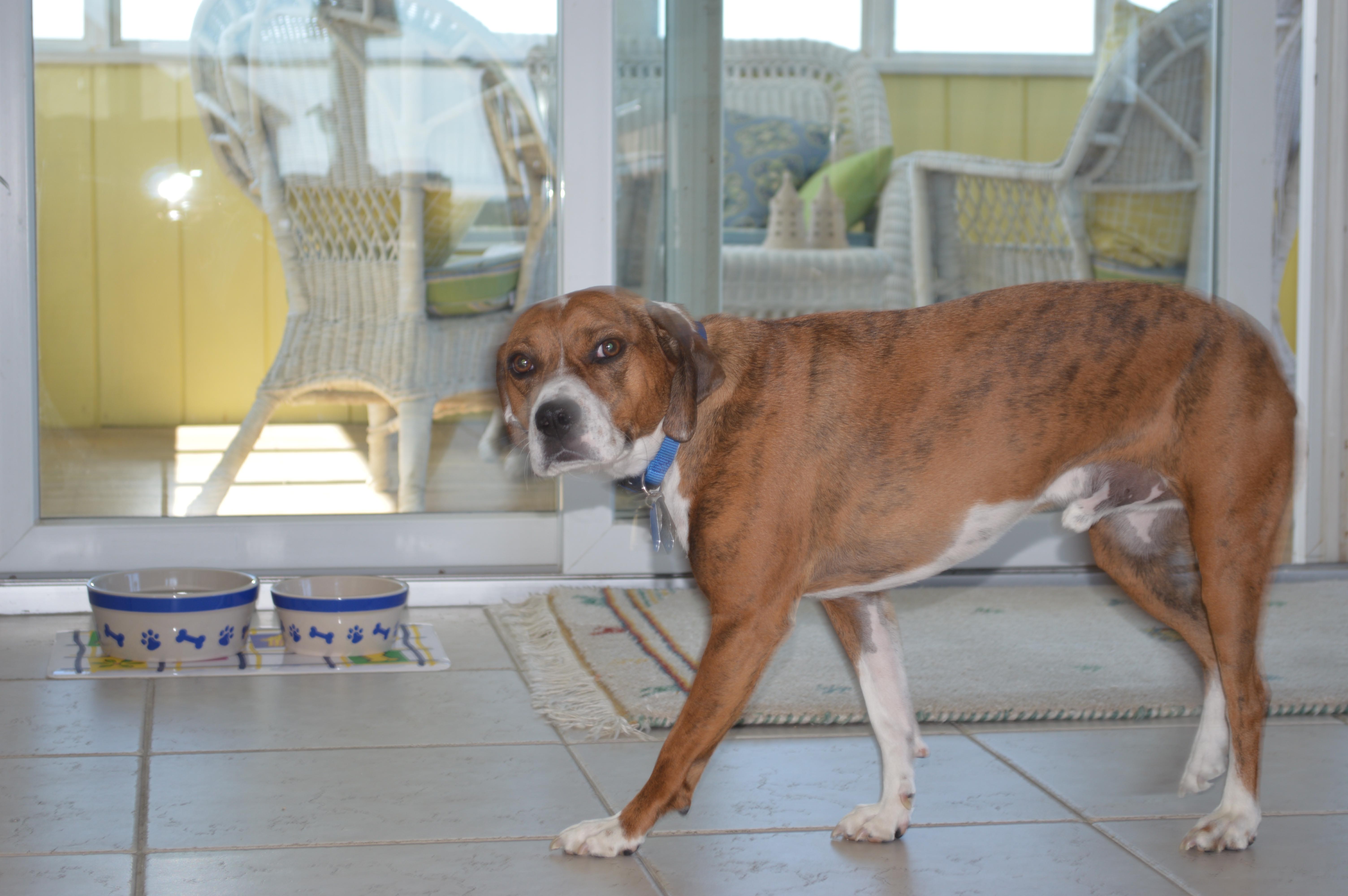
Charlie the Boogle

Charlie the Boogle

We got to Corolla about 9:30 p.m., and everyone was up and happy to see us. We enjoyed a glass of Keith’s merlot before bed. We also met their new dog, Charlie, a friendly beagle-boxer, or boogle. The camera made him a little nervous.

The next morning was sunny but chilly and windy. Keith prepared an egg casserole and fruit salad for breakfast, and we caught up on family news.
13 05 24_1703
We also talked a bit about technology and biology. I briefed them on some of the progress on understanding the human microbial community, which I read more about in the piece by Michael Pollen in last Sunday’s NY Times. Pollen wrote, “It turns out that we are only 10 percent human: for every human cell that is intrinsic to our body, there are about 10 resident microbes . . . . To the extent that we are bearers of genetic information, more than 99 percent of it is microbial. And it appears increasingly likely that this ‘second genome,’ as it is sometimes called, exerts an influence on our health as great and possibly even greater than the genes we inherit from our parents.”

This is mind-blowing, paradigm-shifting stuff. One researcher says “we would do well to begin regarding the human body as ‘an elaborate vessel optimized for the growth and spread of our microbial inhabitants.’” We’re just starting to understand some of the links between human health and microbial health. It’s a huge mistake, which most of us have previously made, to think of all germs as things that should be exterminated. Certain bacteria are essential to health, and problems in the microbiome appear to relate to chronic disease and some infections. Human health can be thought of as “a collective property of the human-associated microbiota . . . that is, as a function of the community, not the individual.”

The Pollen article is a great introduction to this subject, which is also discussed in The Wild in Our Bodies by Robert Dunn.
13 05 25_1642_edited-2

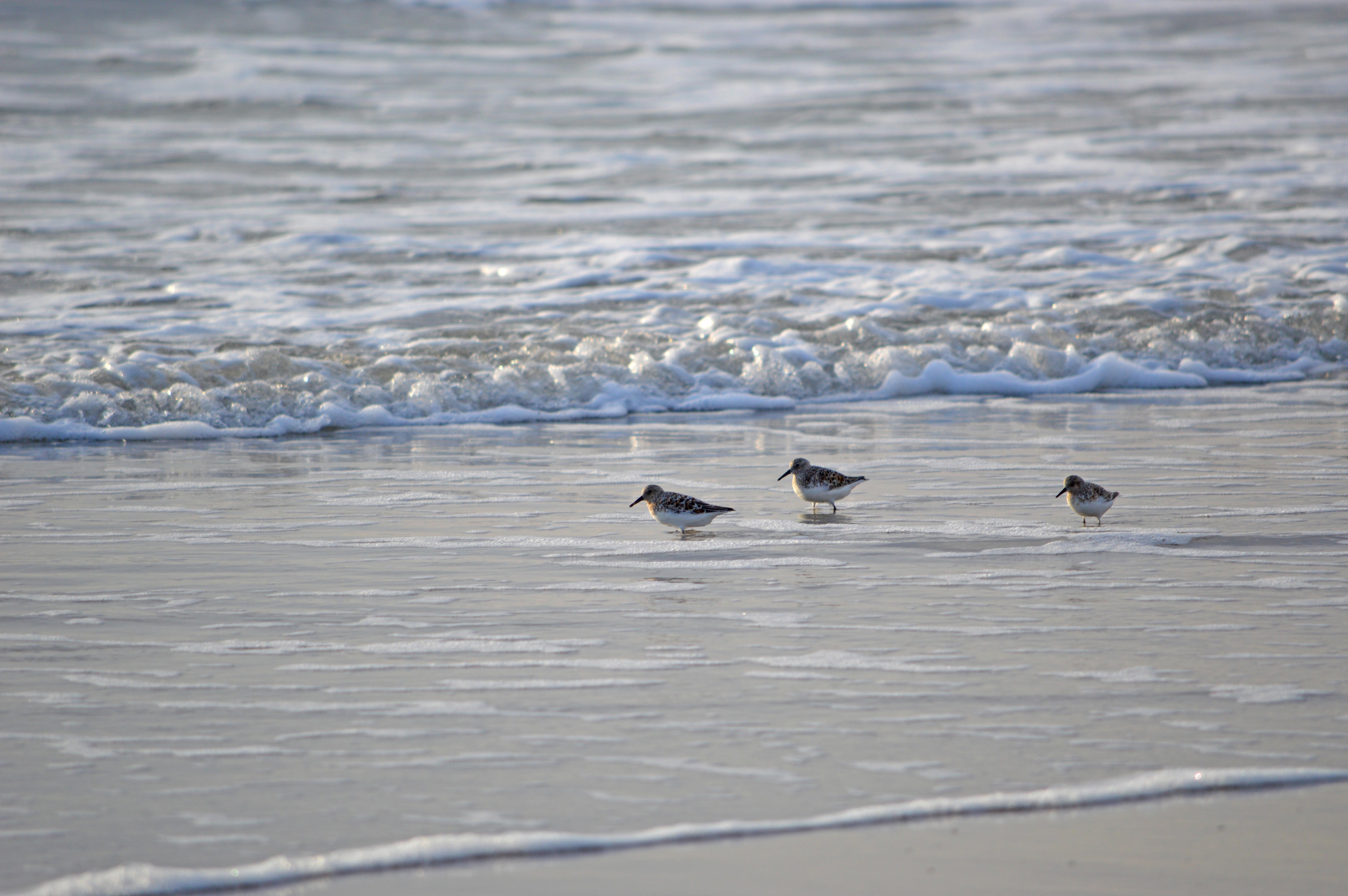
After breakfast, I went out for a run with my nephew David, now 13 and growing fast. David has fallen in love with lacrosse and is getting lots of playing time as his team’s goalie, so I figured he would probably run me into the ground. Instead, he developed a major cramp problem, and so we did more walking than running. I learned about his prize-winning science fair project, which involved growing and measuring characteristics of a fast growing plant called brassica rapa.
13 05 25_1640_edited-1
13 05 26_1751

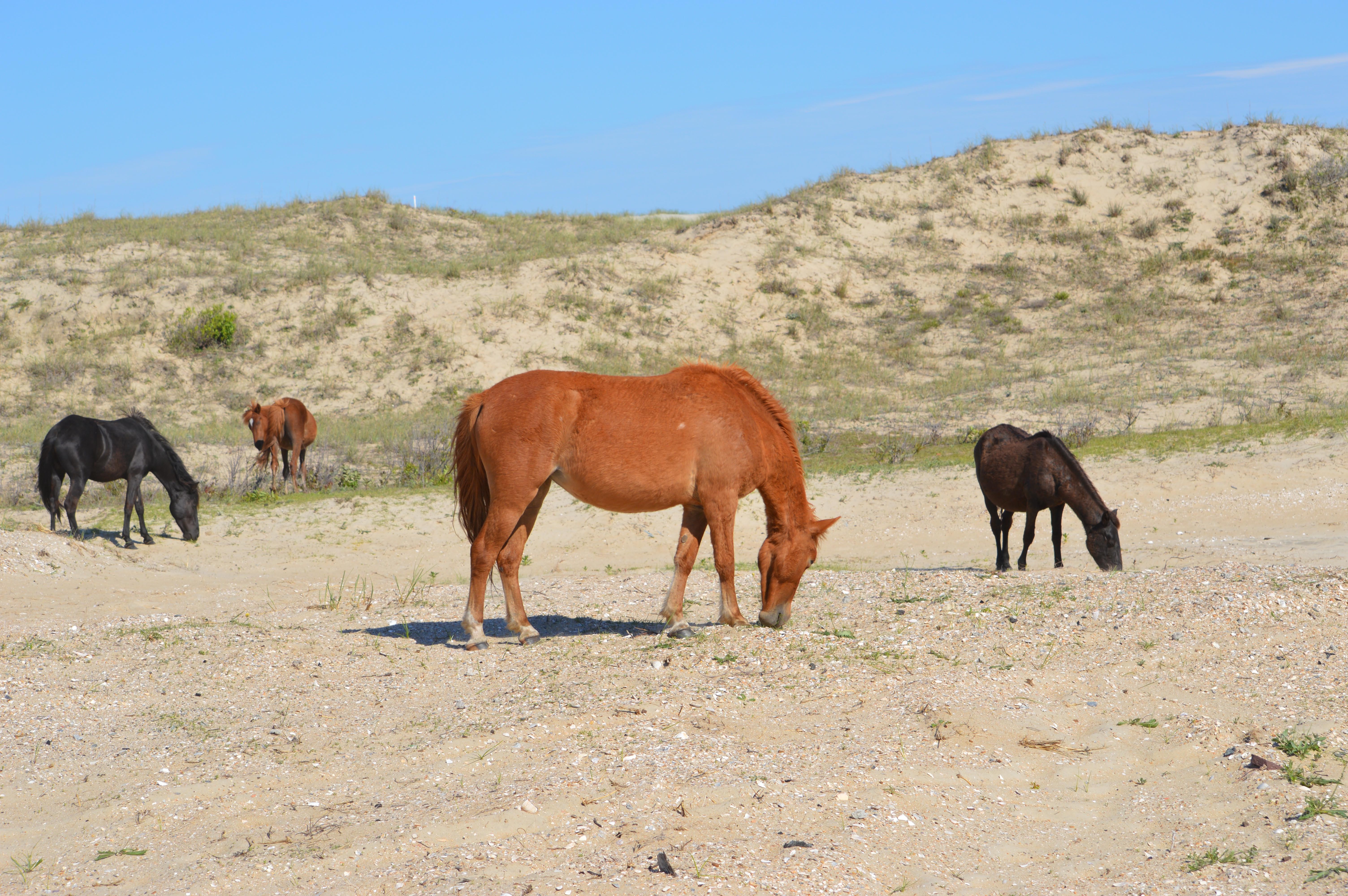
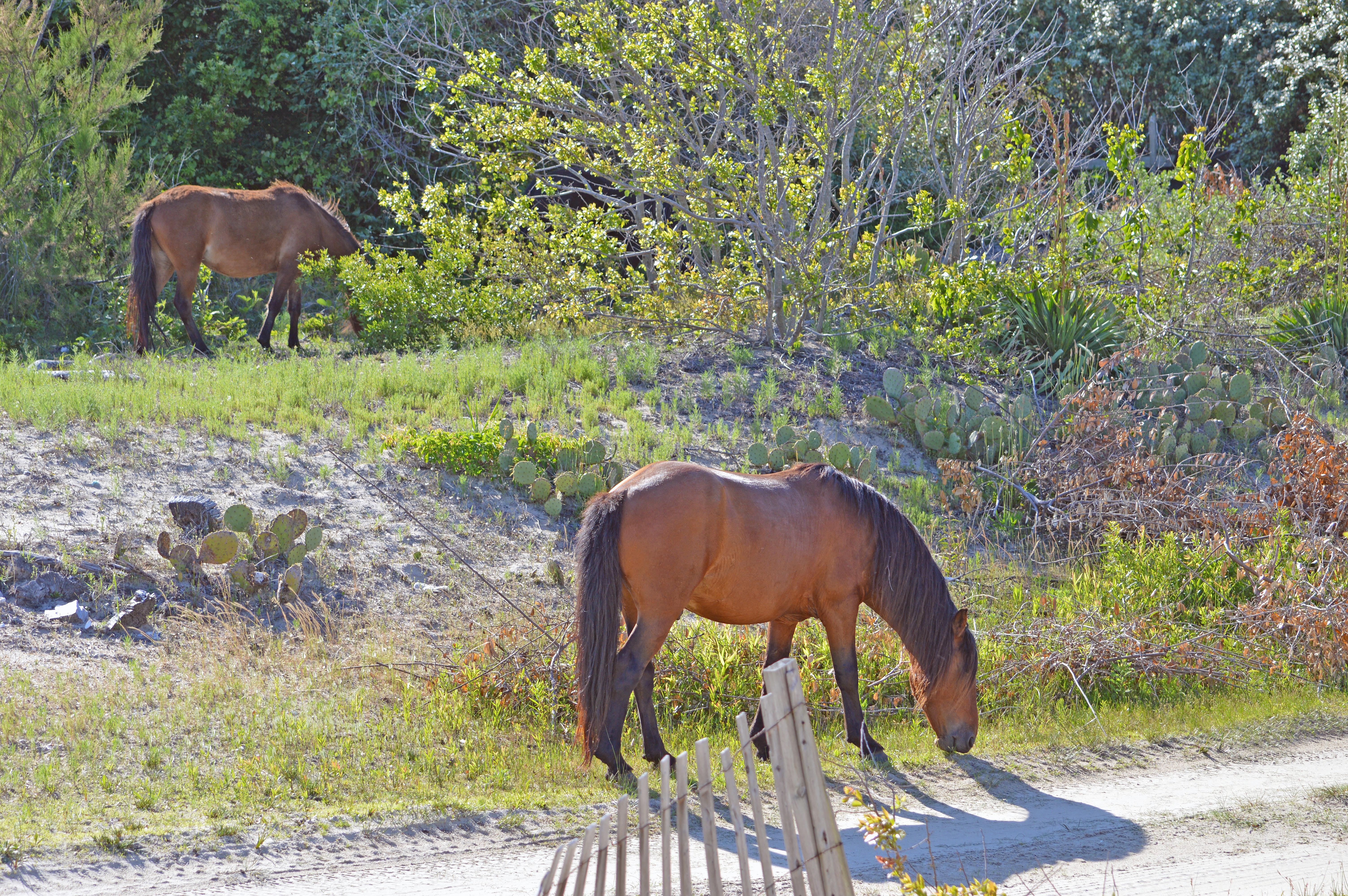
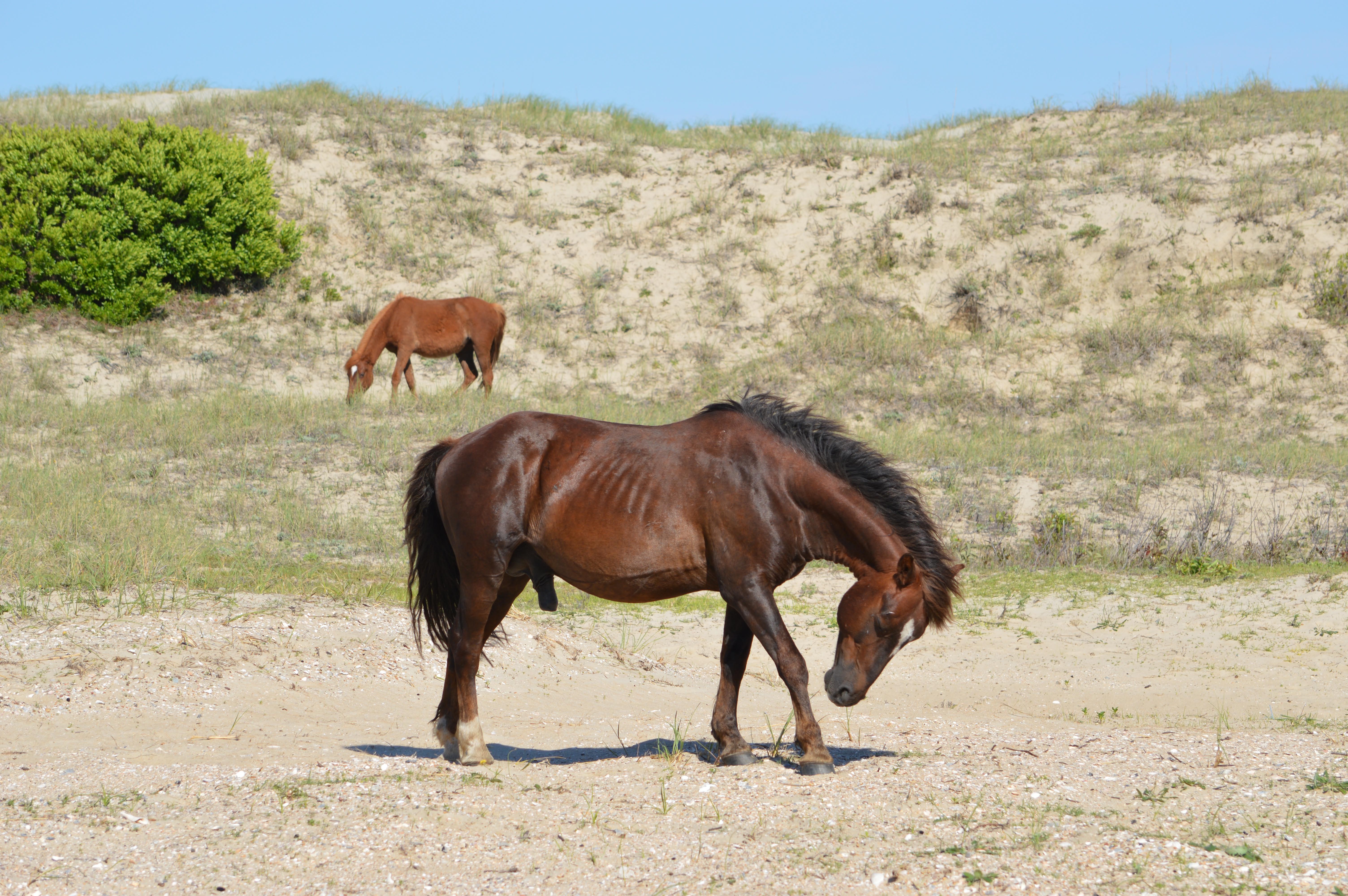
Keith cooked an amazing lunch – cucumber soup and pasta asparagus salad. Then we loaded up in the 4WD sport ute, and drove north on the beach looking for wild horses. Past the lifeguard station, we turned left into the sand roads through the gnarled trees and bushes of the maritime forest. We found several horses. It’s cheering somehow that these big animals can make their own way in small wild areas surrounded by development. We also saw a fox.
13 05 25_1571
13 05 25_156013 05 25_1608_edited-1

I had time for some reading in the afternoon, and got a good start on Things Fall Apart by Chinua Achebe, the Nigerian writer who died recently. This is his first and most famous book, and perhaps the most famous work of African literature to date. I was immediately hooked. The prose combines the muscular economy of Hemingway at his best with the vision of Faulkner, with an overarching tenderness and humanity. The story is about African village life, which, it turns out, has many of the same emotional components as our lives.

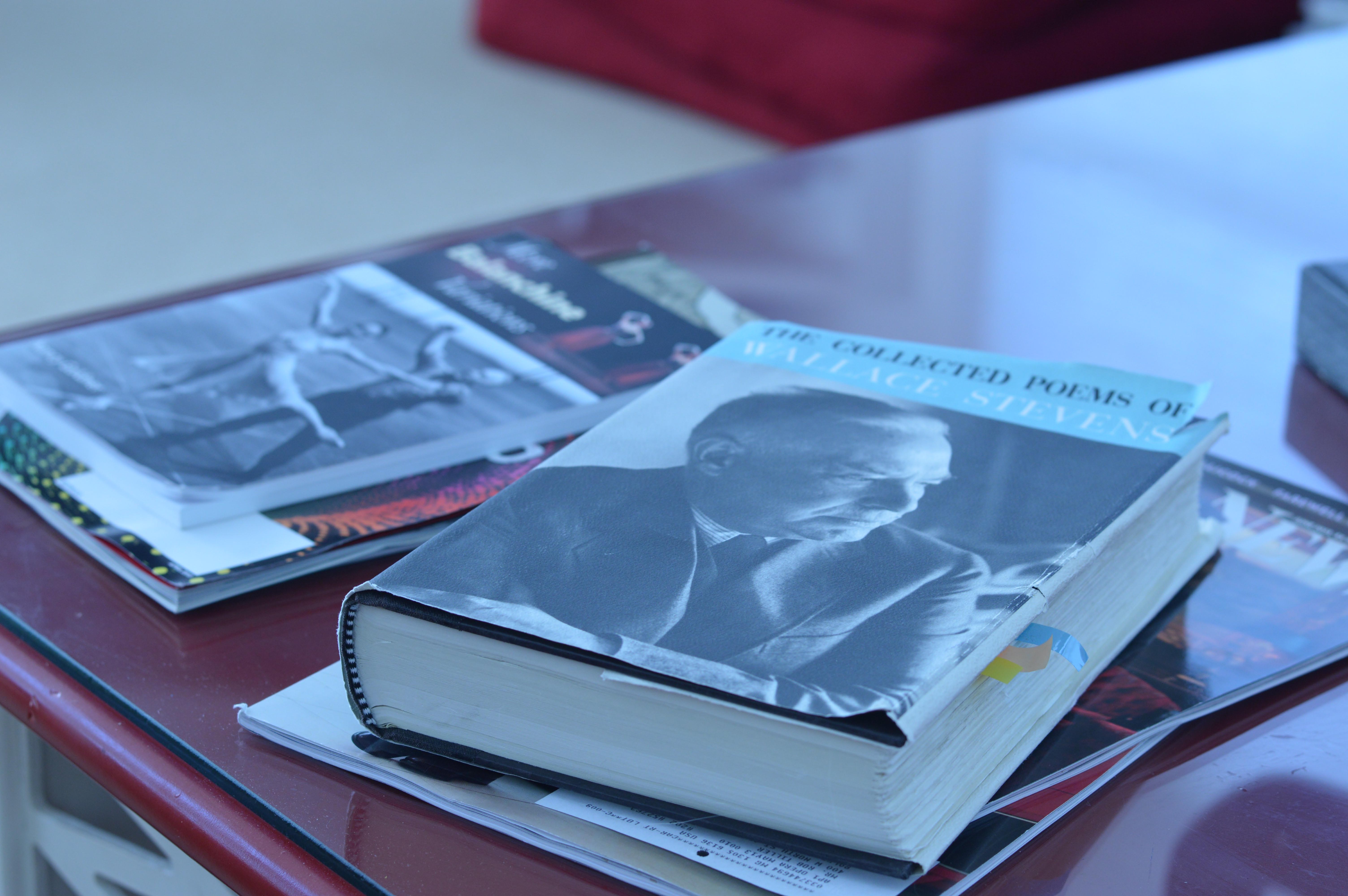
I also read more of More Balanchine Variations by Nancy Goldner, which is a book about various Balanchine ballets. Goldner is a generous-hearted critic, and she loves her subject. It’s so hard to bring dance to life other than by dancing, but she comes close.
13 05 25_1678

One other major bit of reading was chunks of the complete poems of Wallace Stevens. I came close to reading them all last year, before shelving the project some months back. Stevens is challenging, and not uniformly great – some of the poems seem mannered or even mad. But the greatest poems are both beautiful and profound. My favorite is still Sunday Morning, which is a sly, subversive, arresting, sensual, and humorous. I memorized it, and it still gives me goosebumps at the end, with its powerful image of “casual flocks of pigeons make/ ambiguous undulations as they sink,/ downward to darkness, on extended wings.”

Stevens proposes this joy in nature as an answer to religious asceticism, and it works for me. It also makes me look at the world with different eyes. For example, in back of Jane and Keith’s beach house, purple martins are still numerous, and still flying fast feeding on insects. It was a pleasure to watch them.

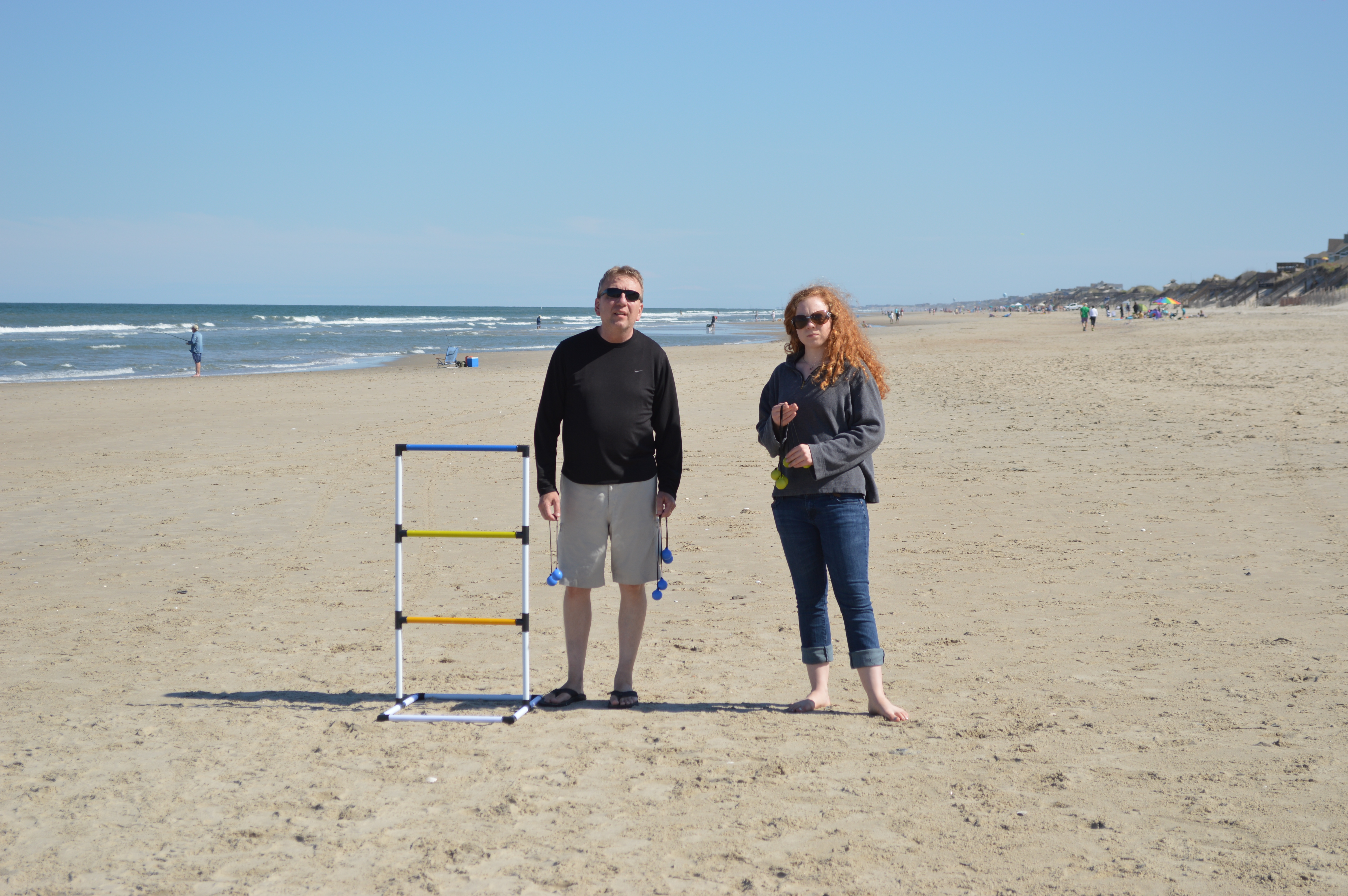
We played a new beach game on Sunday afternoon. It’s one of the many variations on horse shoes, but a good one. Points are scored by throwing a string with weighted balls on each end around a bar. They couldn’t remember the name of it, but no matter. It was fun!
13 05 26_1763

13 05 26_1759

Utah ski tips

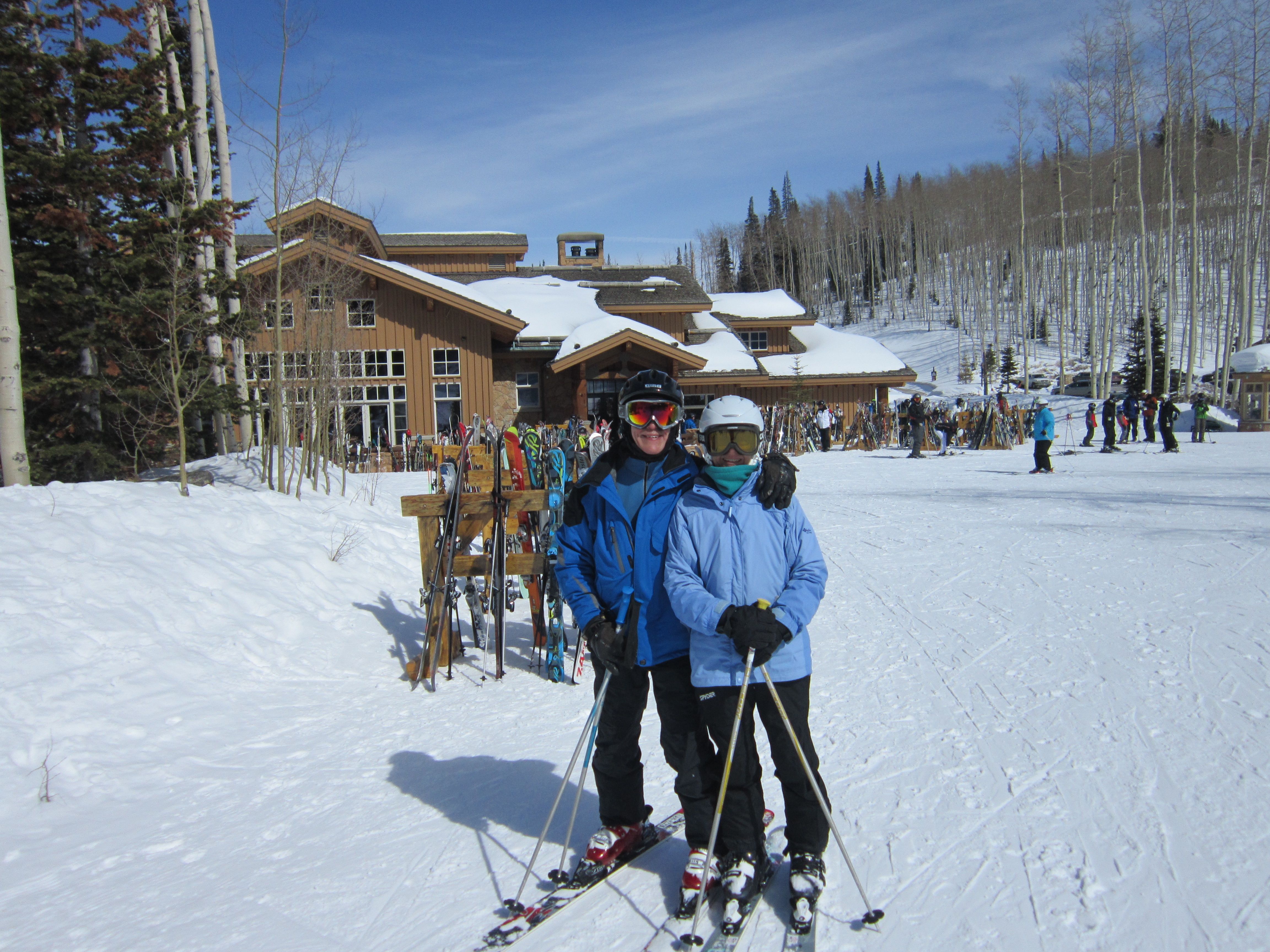
IMG_0480As much as I love skiing the big mountains of Utah, I had mixed feelings last week as we headed out to Park City. Vision in my left eye has been very limited, which has affected my depth perception and balance. But exploring physical limitations is part of what makes skiing interesting. I was looking forward to the kinetic excitement and raw alpine beauty, and to seeing old friends.

Our flight through Dallas went smoothly, and it was snowing hard when we landed in Salt Lake City. We took a shuttle (which our driver called “the Love Van”) up to Park City over snowy roads through limited visibility. When we arrived, some of our friends who’d arrived a day earlier were sitting by in the living room by the fire, and others were in the hot tub in the back. After saying hello, we walked three blocks to the lift area and to rent skis. I went with Volkyl Mantras, an all mountain ski I’d liked in previous editions, and which turned out again to be highly versatile in changing conditions (powder, groomed carving, chop, and bumps).

The next morning I cracked a good sweat trying to jam my feet into my ski boots, and for a few moments I thought they simply would not go, but in the end they did. The day was cold (low teens), but we were dressed adequately (five layers over the torso and two over the face). There was not as much powder on the mountain as we’d hoped, but on the whole the snow was light and workable. After doing two or three groomed runs, Sally and I tried some bumps. We were a little rusty at first, but managed ok.

We ended up skiing the first two days at Park City and the last two at Deer Valley. The usual knock on Deer Valley is that it’s too sweet, with such amenities as good on-mountain restaurants, comfortable lifts, and careful grooming. This is not untrue — the food, lifts, and grooming are quite nice — but it’s also not the full story. We loved the skiing there. The system is elegantly laid out and linked together. There were almost no lift lines. Yes, there are a lot of cruisers, but they’re really good cruisers, some quite steep, and there are also some exciting bumps and gladed areas.

At this stage of my ski career, I enjoy the rush of shooting down groomed cruisers, but I soon find myself craving more varied and challenging terrain (typically rated as black or double black diamond). Finding the right degree of challenge is part of the secret of happy skiing. When you’re right at the inside edge of what you can handle, you experience a special type of happiness. During th event, you don’t know your’re happy, because you’re completely focused and absorbed in solving the intricate speed chess problem of the next few dozen yards. The challenges are constantly changing.

This is an aspect of flow, which I read about last year in Flow by Mihaly Csikszentmihalyi, another book which has some worthwhile ideas but too much padding. Anyhow, I try not to spend too much time just doing those things that come easily. This trip I was focusing on steep moguls,and found myself getting more adept at them.

Here’s my tip, which I got from a teacher in Telluride: getting pressure to the inside edge of the down hill ski about twelve inches from the tip. Particularly when coming into the backside of a mogul, force this spot down into the snow. This causes you to press your weight forward, with your shins driving hard into the tongue of your ski boot. This technique helped me stay out of the back seat, which is where problems usually develop, and to feel well in control.

Anyhow, I felt stronger and more confident on the slopes than last year, or ever. It could be my personal trainer’s innovations, yoga, more swimming, foam rolling, or eating a healthier diet. Or perhaps a combination of some or all of these. At any rate, we skied hard every day, with many exciting challenges, and my legs never gave out.
My vision problem didn’t hamper me too much. Especially in more crowded areas, I tried to be conscious of looking around carefully for other skiers, but we usually stayed away from those places. It’s possible that my hearing and sense of touch were carrying more load. It’s also possible that adrenaline increased the speed of visual processing, and cropped some of the bad signals from the left eye. At any rate, I was able to forge ahead.

Sally really lifted her ski game this year. She was going much faster and looked relaxed and happy. I persuaded her to change out her trusty white cap for a white helmet, which she agreed was comfortable and warm as well as safe. It was a pleasure to watch her.
IMG_0494

Beautiful diving in the Turks and Caicos

SeaLife DC1400

One of my resolutions for 2012 was to try something new, like a trip or minor adventure, once a month. I didn’t keep strict count, but I came pretty close, and the last trip of the year was novel enough to count for two. Sally and I opted out of the final feeding frenzy of Christmas and instead spent the holiday week staying under water as much as possible. We flew to the Turks and Caicos Islands, and boarded the Aggressor II, a 120-foot vessel designed to take about 18 hardy and fortunate souls on week-long scuba diving trips. It was a fantastic trip.

Exif_JPEG_PICTURE
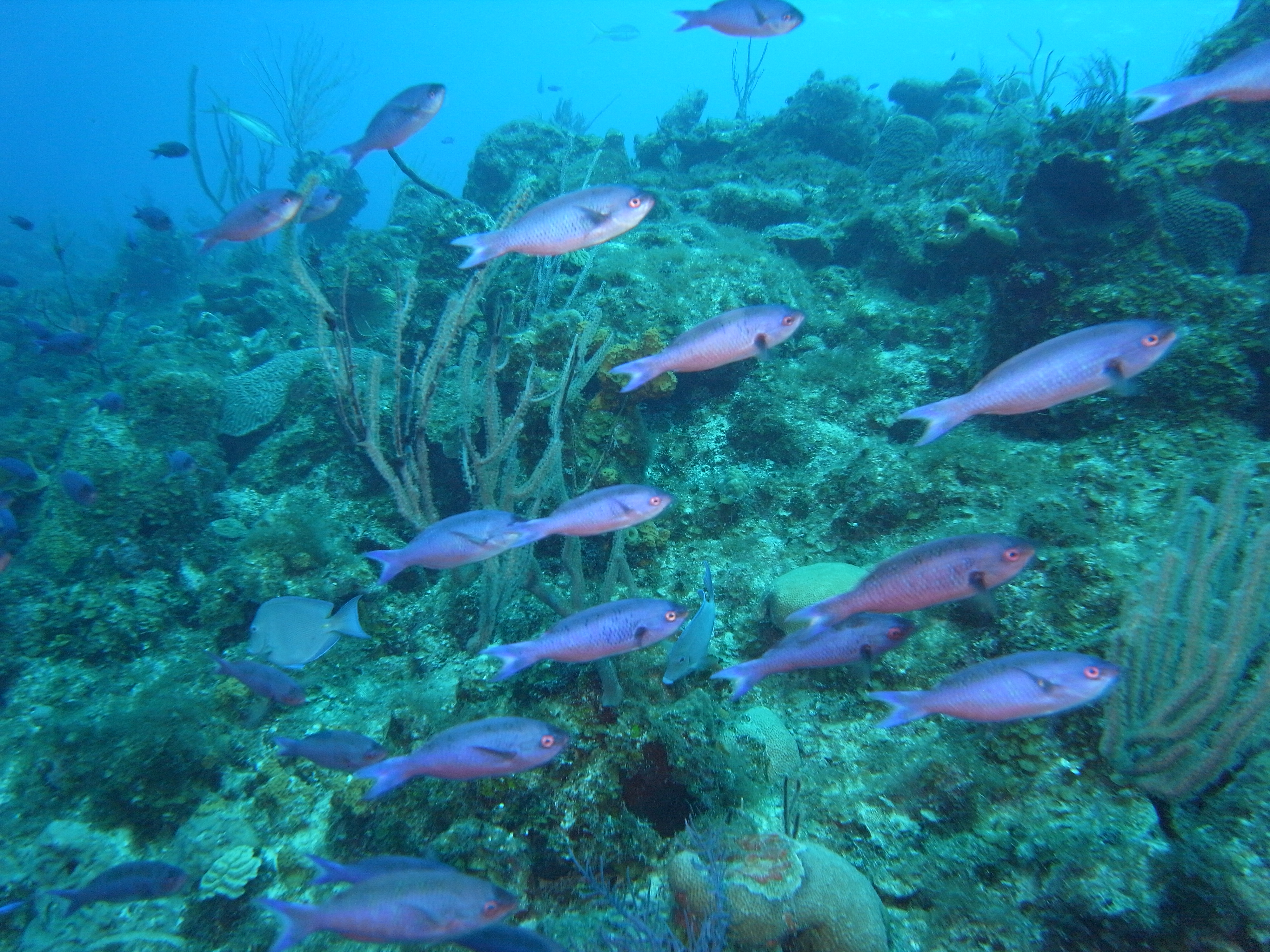
We saw reef sharks, sting rays, spotted eagle rays, barracuda, hawksbill turtles, eels, grouper, jacks, grunts, tangs, porcupinefish, trumpetfish, angelfish, butterflyfish, squirrelfish, spadefish, parrotfish, and many small bright tropicals. On night dives we saw an octopus perform for several minutes, as well as a performing eel, enormous crabs and lobsters, and beautiful varied coral. Our most exciting siting was a giant manta, not common in those waters, an enormous and powerful fellow. There were also plenty of the beautiful-but-highly-destructive lion fish.
Exif_JPEG_PICTURE

I got a tee shirt that says Eat Sleep Dive, which tells most of the story for the week. The schedule included five daily dives, including one night dive, from Sunday to Thursday and two on Friday, and I did all but one. We spent most of our time off of French Cay and West Caicos, with dives on the last day off of Provo.
SeaLife DC1400
Most of the dives were wall dives, with a shelf around thirty or forty feet down dropping off mysteriously into the deep blue. My deepest dives were around 100 feet, but I spent most of my time in the 40-60 foot range. visibility varied but was for the most part reasonably good, with the best being about 70 feet and worst about 40 feet. Current was mostly very light to nonexistent. Bottom temperatures were mostly in the high 70s, which was OK, but there were a few chilly places (low 70s). Especially when the breeze was blowing, it was chilly getting out, and we were happy to use the yacht’s hot tub to warm up.
SeaLife DC1400
Exif_JPEG_PICTURE

We had strong winds the day we arrived, which led to big seas on Saturday night as we left Provideniciales. I learned later that there were swells up to 10 feet, with an average of 7-8 feet seas. Per the crew and experienced passengers, this was unusually bad weather. Even fortified with Bonine, the up and down, sometimes with a corkscrew twist, was more than my stomach could handle, and I spent the entire evening hanging over the rail, about as miserable as I ever recall being. By Sunday morning, the seas were calmer, and I felt better, though my stomach muscles felt sore for the next couple of days. It stayed tolerably calm the rest of the trip.
SeaLife DC1400
SeaLife DC1400

In preparation for the trip, I’d been reading up on underwater photography, and I signed up for a short course on the subject taught by our captain, Amanda Bryan. Amanda was a good teacher (as well as a good captain) and gave me encouragement and quite a few helpful tips. My camera had issues, with the strobe at first refusing to fire, and then the camera refusing to charge, and I ended up using a loaner for the last half of the trip.
Exif_JPEG_PICTURE
Exif_JPEG_PICTURE
Exif_JPEG_PICTURE
SeaLife DC1400

The reef environments we saw were really beautiful and abounding with life. One of our dive companions was a nudibranch enthusiast and inspired us to look for these and other small mollusks. This caused a shift in focus so that we saw more of the very small things. So much beauty! One could easily just bask in it. Photography works somewhat against the grain of that aesthetic and spiritual experience, because it’s necessary to think in a very left-brained way about technology and physics. I was glad I spent some of my time that way,though. I made a few images, shown above and below, that I liked and thought others might, too.
SeaLife DC1400
SeaLife DC1400
Exif_JPEG_PICTURE

Thanks to Joni Mitchell and my Supreme Court co-clerks


Happy Thanksgiving! I’m so thankful for Joni Mitchell, whose beautiful album Blue we listened we listened to last night. I’m still new enough to Spotify to find it marvelous to have instant access to such gorgeousness.

Blue is a unique shade of blue. Our experience of art depends on what we bring to it, of course, and my experience of Blue is rich in nostalgia for Paris, where I first heard it my friend Greg’s place in the Latin Quarter on his little cassette tape player. But I loved it just as much when it was new.

Notes of sadness, loneliness, and longing are balanced with joy and exhilaration. Yet it doesn’t seem calculated. It seems like a soul that’s seeking another soul, completely and almost frighteningly honest. Joni seems so vulnerable, and takes so many risks, that it’s unsettling. At the same time, it’s so sweet and true. Truly, I’m thankful for Joni and Blue.

Apropos of nostalgia and gratitude, I had another heavy dose week before last when I reunited in D.C. with my fellow Supreme Court clerks at the Court to honor one of our number, Justice Elena Kagan. In 1987, when I was one year out of law school, I won the lottery and got picked to join this extremely gifted group as a clerk for Justice Antonin Scalia.

The clerkship was a great honor, but also terrifying. Clerks are tasked with constantly and quickly mastering new areas of law without glitches that could lead to major policy errors or loss of life. This is not hyperbole. The death penalty docket involved review of cases a few hours before scheduled executions, which carries with it a level of responsibility that can cause severe sleeping problems.
During that year, the coin of the realm was legal knowledge and reasoning, and in these my co-clerks were often brilliant in a way I often found humbling. Fortunately my class was not only fearsomely bright but also distinguished by a high rate of decency, fellow feeling, and good humor.

Saturday afternoon, Justice Kagan led a tour of the Court for a dozen or so of us. As she observed, the Court was the same, or at least much the same. It was fun catching up on everyone’s doings. As we were entering the courtroom, I asked Elena if Justice Scalia was treating her all right, and she told me about going hunting with him. In her chambers, the technology seemed upgraded, and she had three computer screens. However, she said she could only use two of them at a time. Elena has a great smile and a great laugh, and was full of warmth and charm.
We had dinner that night at the Court, where more old friends showed up. Teresa Roseborough, who was our wonderful organizer-in-chief, had a slide show of us looking younger, and asked us each to stand up and give a story about our time at the Court.

There were many good stories. I reminisced about the basketball games on the highest court in the land. I was one of the less skilled players, but was still made to feel welcome. I noted that Elena and I had once scrambled for the same loose ball and our two heads had collided hard. It really hurt! Fortunately we didn’t sustain any serious damage. To think that I could have caused a head injury that would have changed the course of history!

Ballet paintings, fossils, and a piano recital

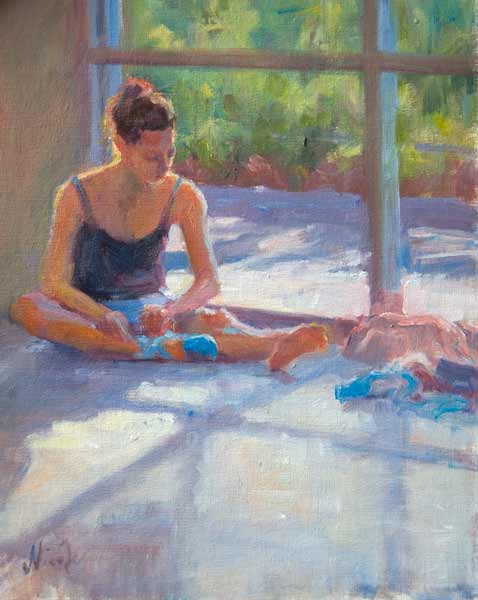
Light on One’s Feet by Nicole White Kennedy

Last Thursday Sally and I had lunch at the Remedy Diner, where my sandwich was the Tempeh Tantrum, then went to a gallery to to look at paintings by Nicole White Kennedy. Kennedy, a local artist, paints in an Impressionist/Post Impressionist style that I once thought of as old hat. My early art education stressed the triumph of modernism and abstraction. But over the years I’ve really enjoyed Kennedy’s landscapes and cityscapes in her husband’s fine Italian restaurant, Caffe Luna. I’ve gradually gotten past my prejudice in favor of the modernist aesthetic. Artists show us multiple ways to see the world, and it’s fun to try different ones.

Anyhow, I was intrigued to learn that Kennedy had worked up a show of works featuring dancers from the Carolina Ballet. We really liked the show. No doubt it helped that we came to it as balletomanes, and that we could recognize some of our favorite ballerinas. But she unquestionably had a feel for the interiors and exteriors of the dancers and their work places.

I was conscious that the works owed a debt to Degas, both in their behind-the-scenes intimacy and the juxtaposition of ethereal sweetness and stark angularity, but I didn’t find this bothersome. Artists always borrow ideas from other artists and build on them, just like scientists and inventors. We were particularly touched by the paintings above and just below, and bought them.

Dancer Removing Turquoise Points by NWK

The next day I flew up to DC for a gathering at the Supreme Court in honor of my old friend Justice Elena Kagan, which was highly nostalgic and which I will try to write about soon. But as post-election therapy, I’m focusing just now on art. With my free morning I sampled the Smithsonian museums, which always make me proud and happy to live in the USA.


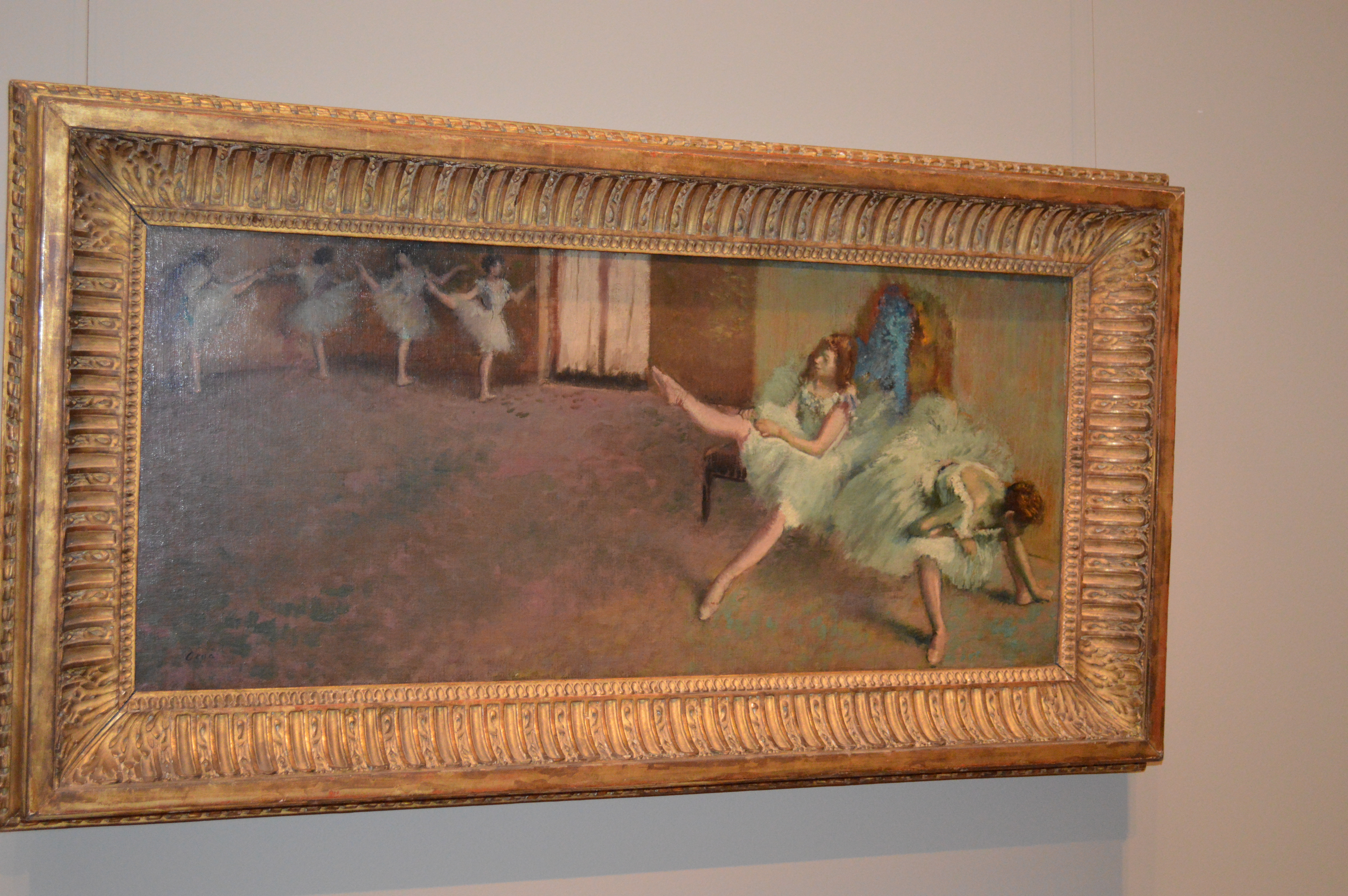
First I visited some of my favorite works at the National Gallery. These included the Rembrandts and other Dutch masters, including especially the two exquisite Vermeers, as well as the French Impressionists. Still thinking about dancers and art, I paid particular attention to the Degas paintings and sculptures of dancers. He clearly loved the subject, and it touched me. But I must say, his dancers are not as lithe and athletic as the Carolna Ballet ones.

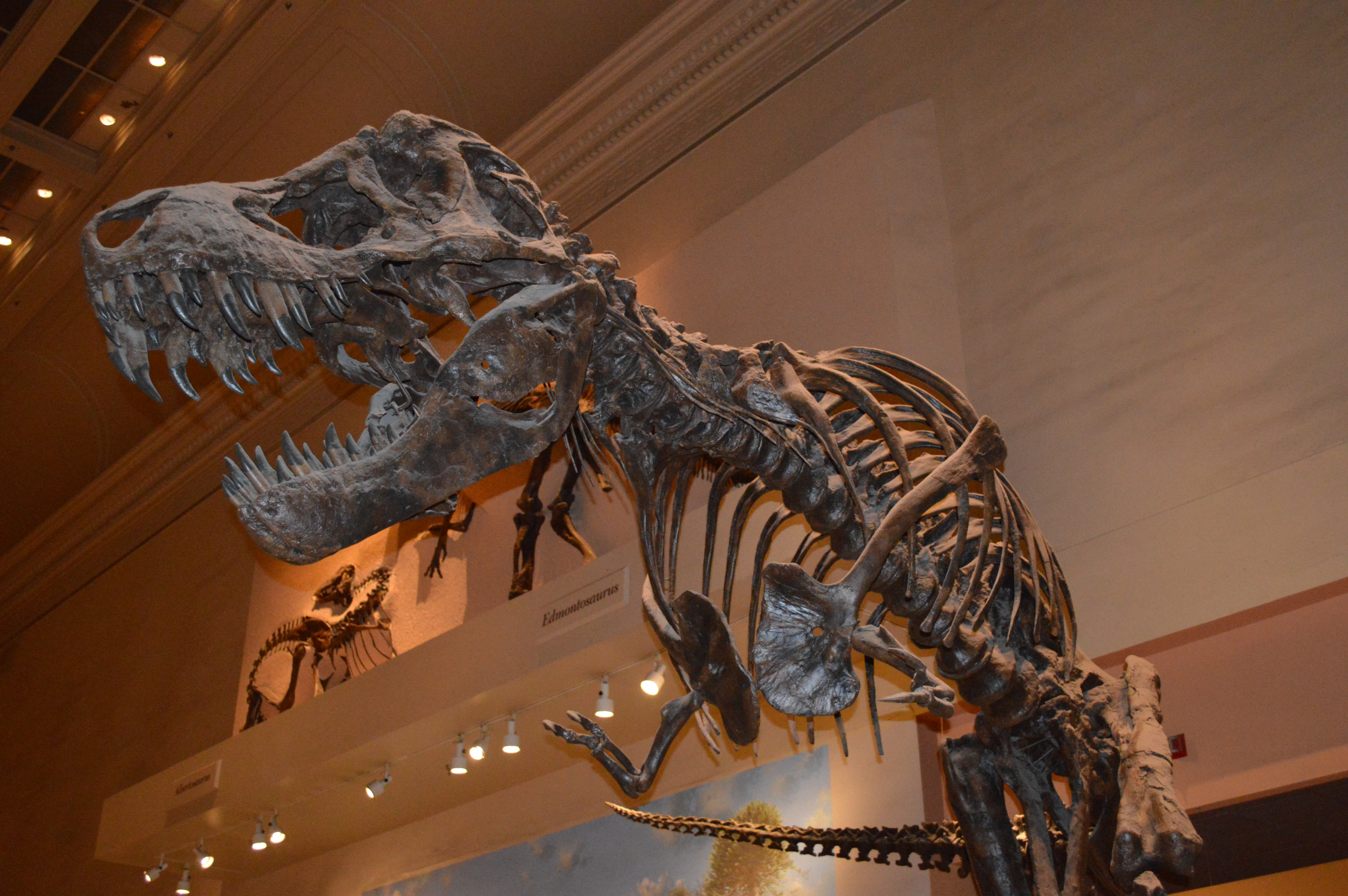
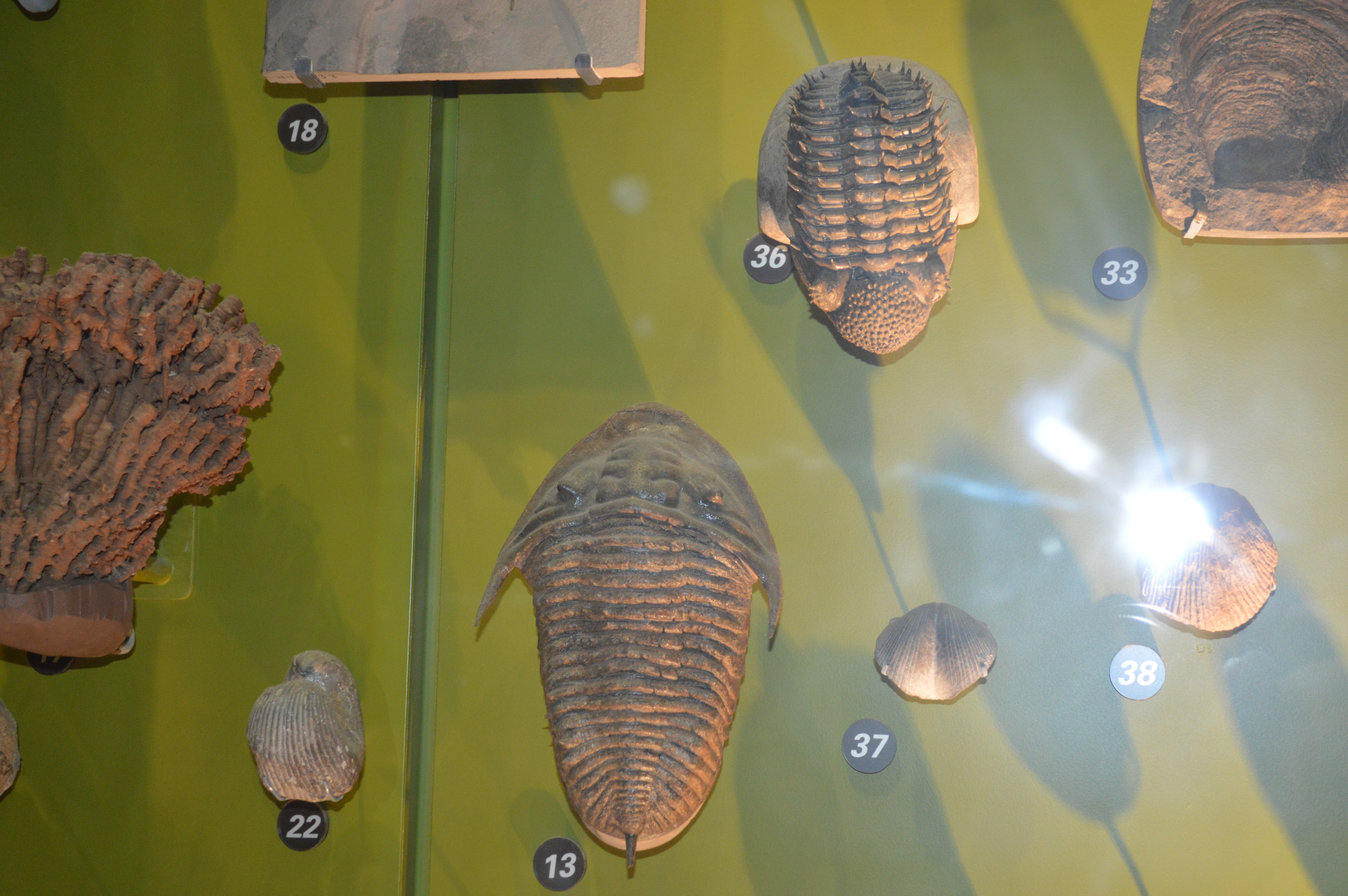
Next, I walked down the Mall to the Museum of Natural History. As always, I enjoyed looking at the dinosaur fossils, but I wanted to have a close look at the trilobites, which are much much older than dinosaurs.

Trilobites were marine arthropods that began their run around 520 million years ago. They developed an amazing variety of body types during the 270 million years (give or take) that preceded their extinction. RIP. Nature has done a lot of amazing experiments!

I returned to Raleigh on Sunday afternoon in time to go to the recital of my piano teacher, Olga Kleiankina. Her program, like her, was Russian: Alexandr Scriabin (1872-1915), Nikolai Medtner (1880-1951), and Sergai Rachmaninoff (1973-43). She played brilliantly. She’d told me a couple of weeks ago that she was struggling with memorizing the Medtner piece (the Tempest Sonata), and I was feeling a little anxious for her, but she seemed completely in command. The piece was very dense, and at first I was a bit bewildered, but then I got my bearings. I particularly enjoyed the Scriabin Black Mass sonata. From our work together, I know how intensely she focuses on sound colors, and now that I’ve learned to hear some of those things, the music took on a new dimension.

There was a good piece on the Sunday NY Times about the sense of hearing, and the difference between hearing and listening. According to Seth Horowitz, we react to auditory signals 10 times faster than visual ones. Hearing is an early warning system, among other things. He notes that close listening is hard in a world where there are endless distractions, but that we can get better at it. I concur.

Code Orange: Superstorm Sandy, climate change, and security threats

When Superstorm Sandy devastated the northeast earlier this week, Sally, Gabe, and Jocelyn were caught in New York City. Their planned short fun visit turned into a week-long ordeal. They were staying in SoHo when the storm hit and their hotel lost power and water, and stores, restaurants, and transportation systems all closed down. Thousands of flights, including theirs, were cancelled.

My sweet Tillers eventually made their way to the upper West Side and found a down-market hotel to stay in until LGA came back online and they could get flights out. As I write this, millions are still without electricity, water, food, and transportation, and dealing with enormous personal and financial losses.

I expected that the superstorm would get climate change and what to do about it onto the front page. Could there be any more dramatic example of what rising seas and increasingly severe storms could do to our coastal population centers? Wouldn’t the climate change-deniers find it impossible to deny the reality of such a catastrophe?

But the superstorm showed once again how difficult it is to get this difficult conversation going. It is not an issue politicians or editors, or ordinary people for that matter, usually like to talk about. Why? Because it is disturbing and depressing. We don’t have a comprehensive solution, but we can be pretty sure addressing it will require massive funding and considerable sacrifice. Some are receptive to voices that tell us we don’t need to sacrifice, because science is not 100% certain (which it never is). Humans in general, and Americans in particular, are usually good at recognizing and addressing emergencies like sinking ships and burning buildings. But if we’re not entirely convinced there’s a real emergency that has a direct impact on us, we generally prefer to kick the can down the road, and think about more cheerful things.

While New York was in the midst of the huge storm, it struck me that this disaster could be compared to a terrorist attack, and that it might be a good idea to use that comparison as a conceptual tool. It seems reasonable to think of climate change as a security issue. Massive storms threaten our lives and economy in much the way that bombs do. In terms of financial loss and dislocation, Sandy was far worse all of the terrorist attacks we’ve ever seen.

And the vocabulary of security seems to be one that gets people’s attention and inspires action. We’ve probably gone overboard in exaggerating the threat of terrorist attacks, as I’m reminded every time I get on an airplane, but that doesn’t mean we don’t have to address it.

To be sure, as to climate change, an important part of the worry is about the well-being of future generations, and it’s likely that most people give greater weight to the lives of living humans than to future ones. But as Superstorm Sandy showed dramatically, it’s also affecting us today.

Another thing that might help is basic science education. A lot of people don’t understand that science is in an important sense probabilistic. The most accurate conception we can ever form of nature includes a considerable range of uncertainty. There will never be a day when we can say with certainty that climate change was the sole or primary cause of a particular weather event, because of the inherent complexity of the ecosystem. But probabilities are also realities. Once the probability of rain gets high enough, we’ll take along an umbrella. If we can get a reasonable level of scientific literacy, we won’t use lack of complete certainty as an excuse for kicking the can down the road.

Our week in Tuscany


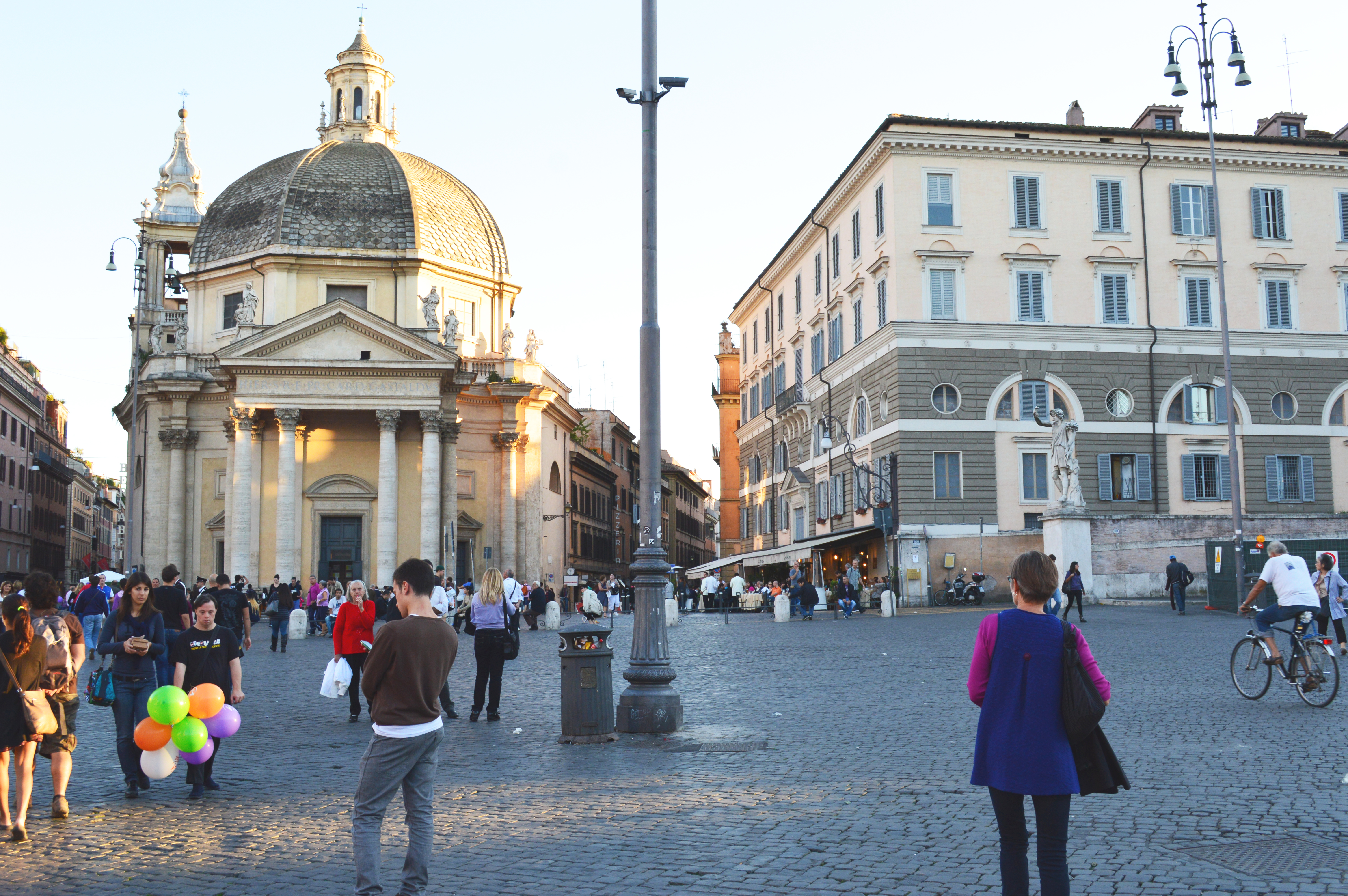
Sally and I got back on Sunday from our first trip to Italy, where we saw the major tourist sites of Rome, Siena, and Florence, as well as five medieval cities in central Tuscany. We took in a ton of Renaissance art and architecture, wandered for miles through narrow streets, and drank some wonderful wines. We also had our share of minor travel tribulations, such as lost luggage, lost car, and just plain lost. We got soaked by a sudden downpour on the way to the Vatican, but for the most part the skies were blue and temperatures were mild.

Hearing about other people’s vacations is usually either frustrating or boring, and I will therefore spare you a blow by blow of the beautiful places and fine food. But I will say, if at all possible, you should go. It was an amazing feast for the senses and the mind.

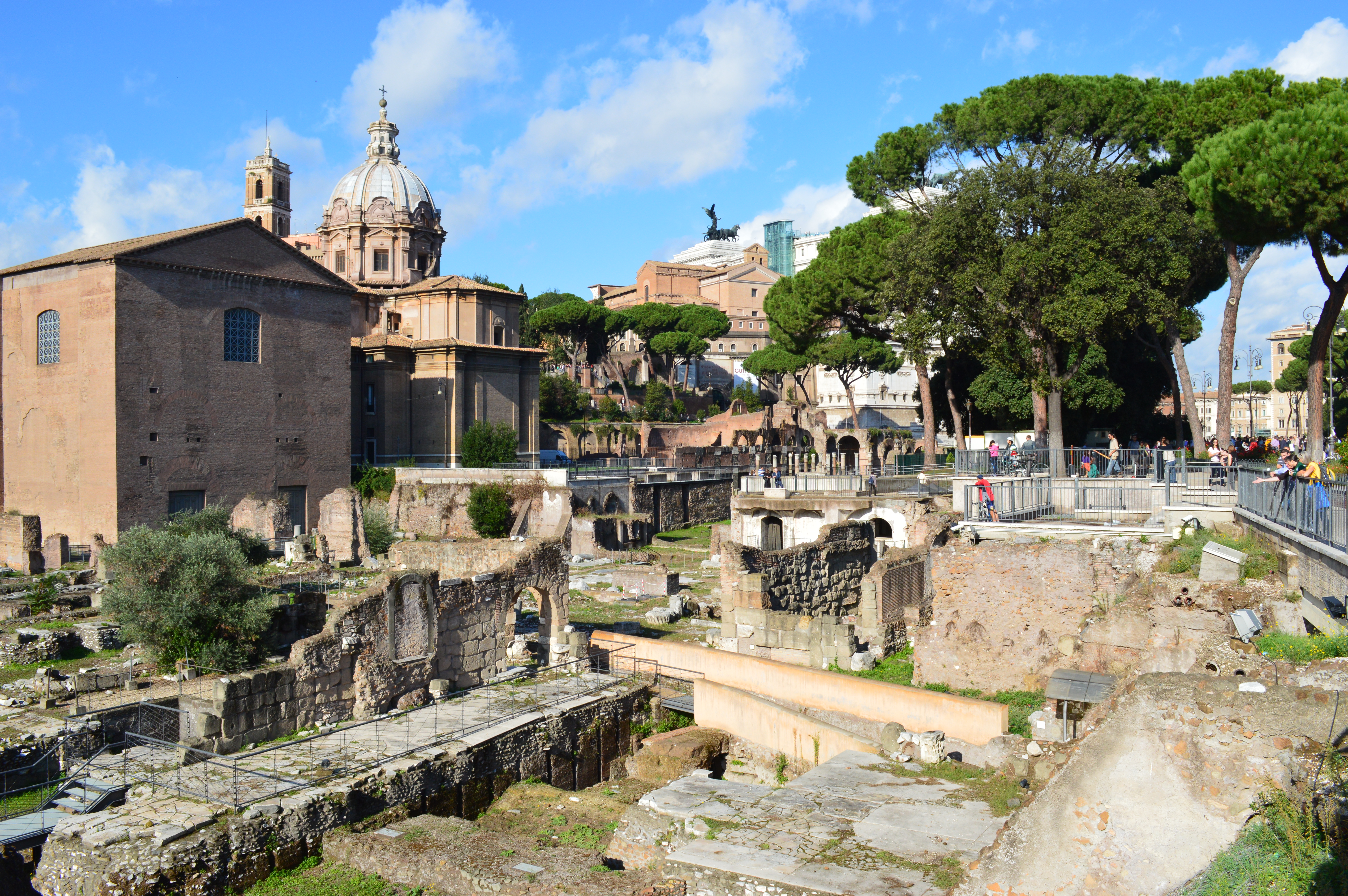
It was also a time machine. The antiquities of Rome, like the Colosseum and the Forum, are awe inspiring. I asked myself, would I have enjoyed gladiators fighting to the death or religious dissidents being fed to the lions? Probably not, but who knows? The Romans’ appropriation of Greek art, followed by the Renaissance reappropriation of those same ideas, all made sense. But the hard phyical facts were also mildly shocking. There were a lot of statues of nude people! I get that they decided to glorify the human form, but faced with all those bare bodies, it seems fairly obvious these were highly sensual people.

With the benefit of some education in art history, I was looking forward to many great masterpieces, and they were certainly there. We made a particular point of seeking out the paintings of Caravaggio, which are amazingly powerful, and the great sculptures of Michelangelo. I will also note that the Sistine Chapel ceiling was awesome. There were so many other master works that I looked at hard and was touched by.

At the same time, I was struck at how many fine examples of Renaissance and Baroque art were connected, using the same subjects, the same gestures, the same costumes, and so forth. So many Annunciations, so many Adorations, so many Crucifixions, with so many similar arrangements. Clearly artists were borrowing from each other all the time. On the trip, I finished reading The Knock Off Economy: How Imitation Sparks Innovation, by Kal Raustiala and Chris Sprigman. It makes the case that creative endeavors in certain fields, including fashion, haute cuisine, and football, develop through copying unconstrained by intellectual property law. Looking at art in terms of what is shared rather than what is original to the artist goes against the grain of art history as I learned it, but it helped me think about the art without getting completely overwhelmed. The art tells us about the community of people that it grew out of, and connects us with those communities.

There did come a point each day when I reached then saturation point, and could not stand to look at on more beautiful Madonna. But looking at these ancient objects had affected my perceptions. As I emerged from the last 12th or 14th century church of the day, I had the impression that the people around me were unusually vivid. Their faces seemed brighter. And they moved!

The Italians are not intent on your being a great art scholar. I was surprised at museums and churches generally gave little information about their treasures. They also are not much concerned with providing public restrooms. I finally figured out that it’s accepted to duck into a bar. Even so, there were further challenges, like finding water, soap, and paper towels all in one place. It is really disheartening, after a long search for a WC, and a moment of sweet release, to soap up your hands only to find there is nothing to rinse with.

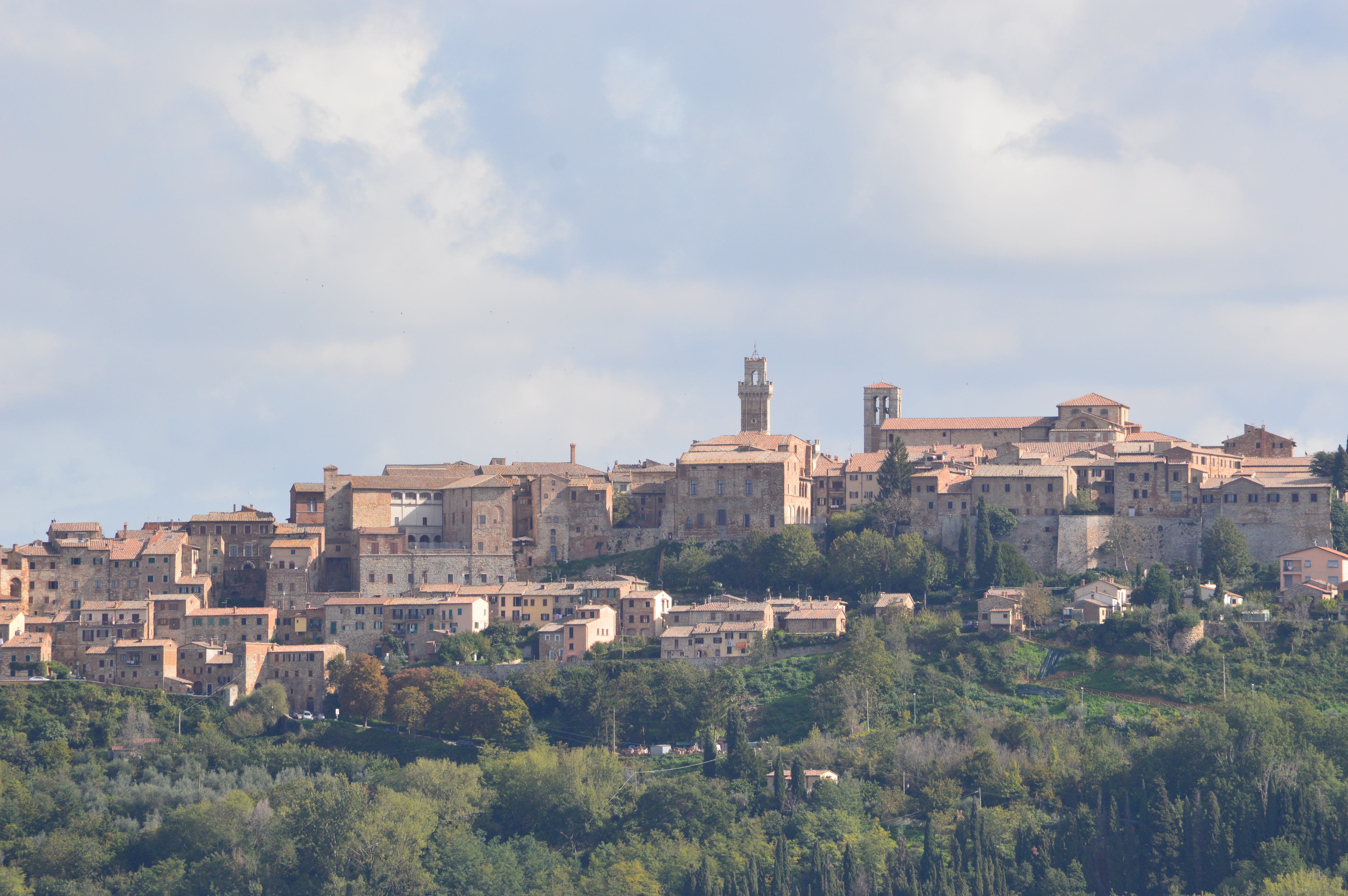
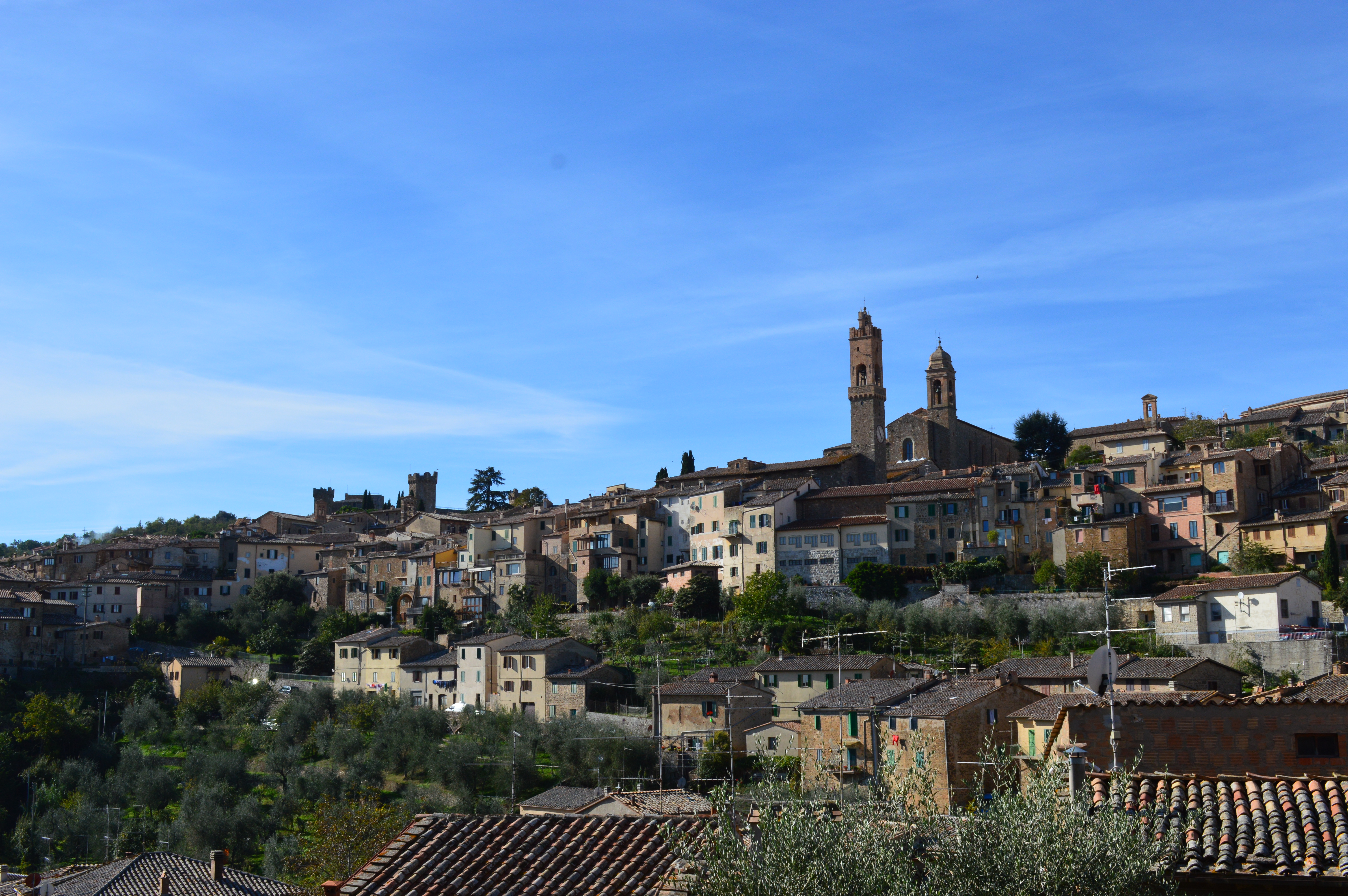
But these things pass. After two days in Rome, we spent two days based in Siena, a marvelous Medieval city, and ventured out by car to see the Tuscan countryside and taking in the beautiful ancient towns of San Gigminiano, Volterra, Montelcino, Pienza, and Moltepulciano. It was a great pleasure to drive the winding roads among vineyards and olive orchards. Seeing so much land devoted to wine gave me a new understanding and respect for the place of wine in this culture.

I’ve long had a fascination with medieval architecture. Walking along the narrow streets gives a window into a different kind of community. Somehow these people of several centuries ago organized themselves to produce a kind of hive that worked very well and endured. Their walls and battlements prove that fear and violence were part of their world, but their churches show that they had moments of peace and transcendence. By the way, the streets in these hill towns can be unbelievably steep. Montepulciano was especially challenging. Our work outs finally paid off; we were in good enough physical shape to walk them.

We also adored Siena. We we disconcerted at first that cars zoom down the narrow streets dodging pedestrians, rather than pedestrians dodging cars — the pedestrians seemed at high risk — but we got used to it. We developed a taste for gelatos. A high point was climbing the circular staircase of the spectacular cathedral to look out over the city at sunset.

Arriving in Florence was another jump in the time machine, this time to the high Renaissance. It’s beautiful, and also easier to walk in. And the old part of the city thrummed with people. We did the famous churches and museums, including the Duomo, the Uffizi,the Accademia, Santa Croce, Santa Maria Novello, and San Marco. We crossed the Ponte Vecchio at sunset and sipped wine at an outdoor table at Piazza de Signoria. What a beautiful place! We agreed that Florence goes on the list of our favorite cities.

Great N.C. wreck diving, compassion for sea creatures, and collective intelligence


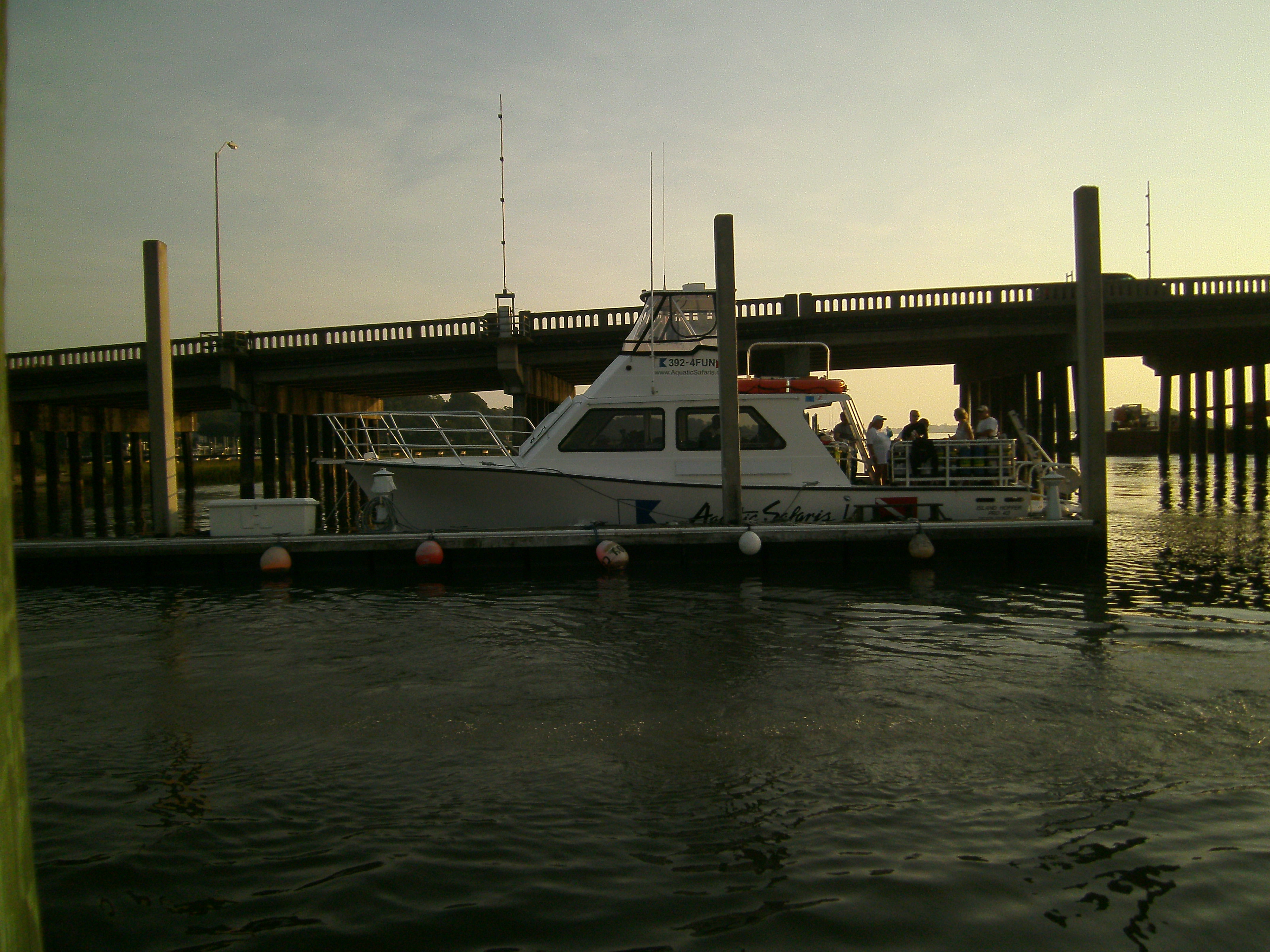
For Labor Day weekend, Sally and I went down to Wrightsville Beach, NC, for some wreck diving and extended our lucky streak of exceptional coastal dives. Our trip was organized by our friends at Down Under Surf and Scuba, and we went out on the Aquatic Safaris I. The 48-foot boat I carried 19 divers.

Saturday was warm and clear, with mild breezes and fairly calm seas. We dove the City of Houston, a passenger-freighter that foundered in a storm in 1878. She lies about 50 miles from Wrightsville. It took two and a half hours of hard traveling to get there. Shortly after we anchored and I visited the head, I felt queasy and promptly got sick. Then I felt mostly better, and we jumped in and headed down the anchor line to the wreck.

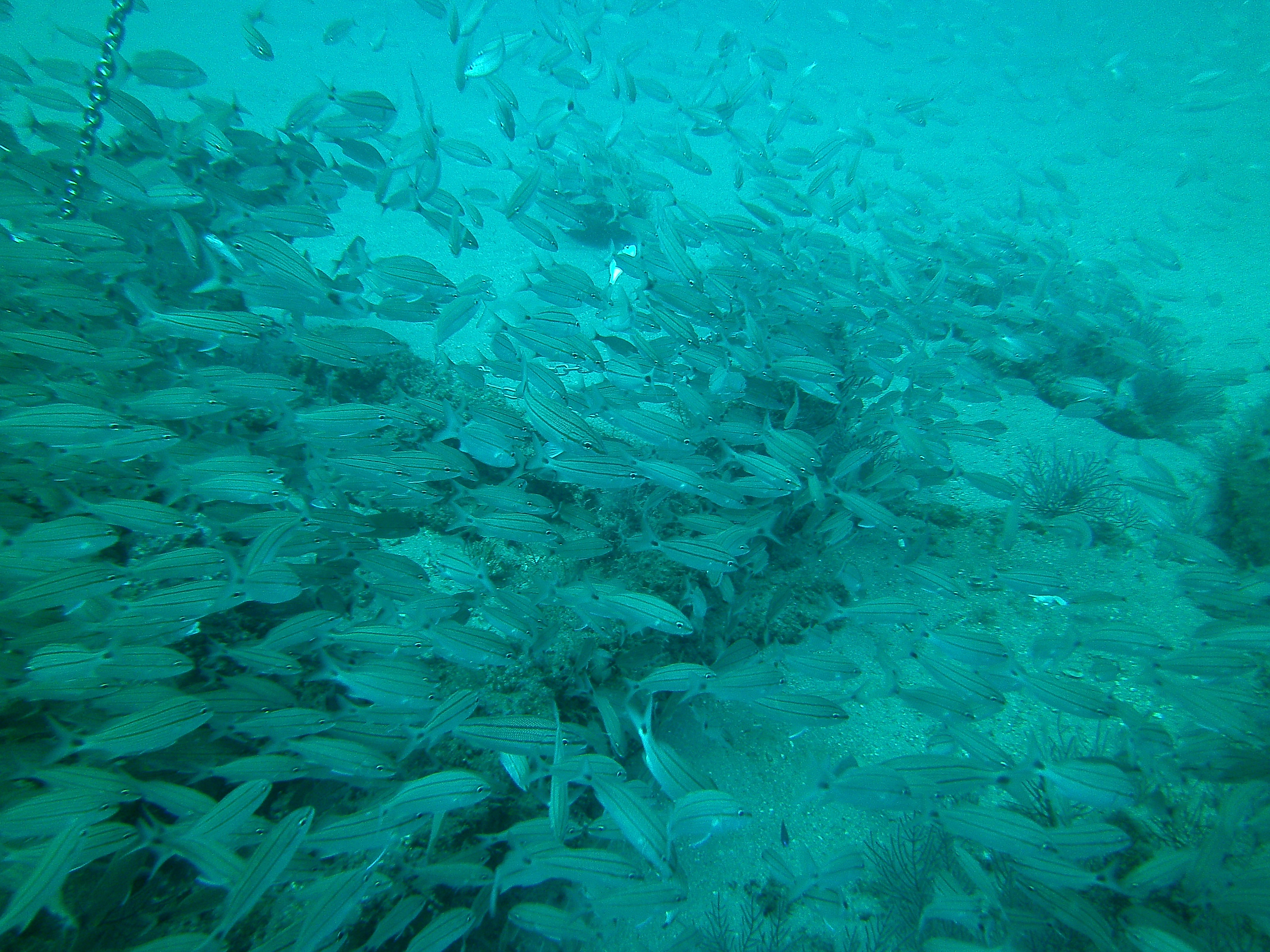
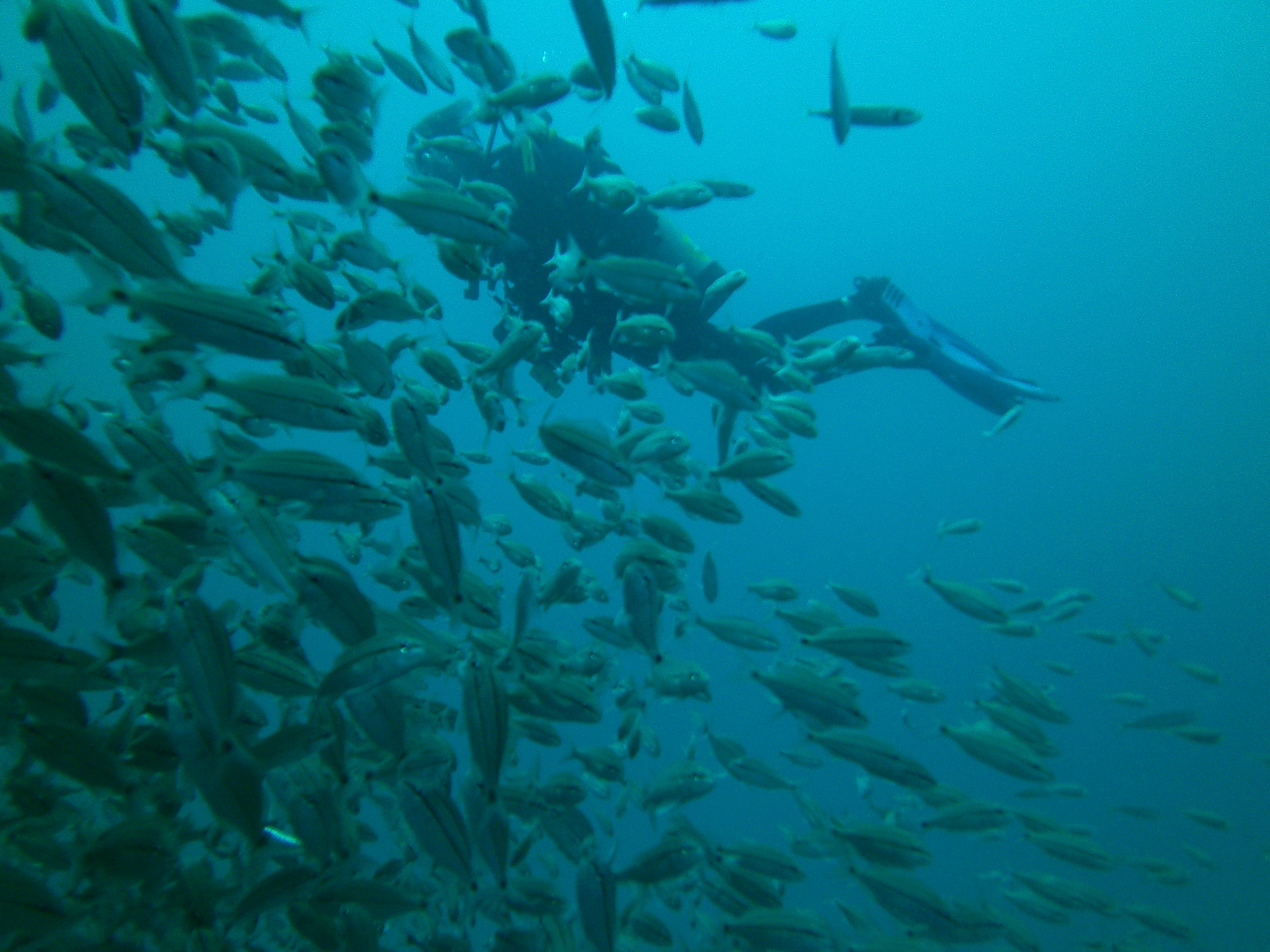
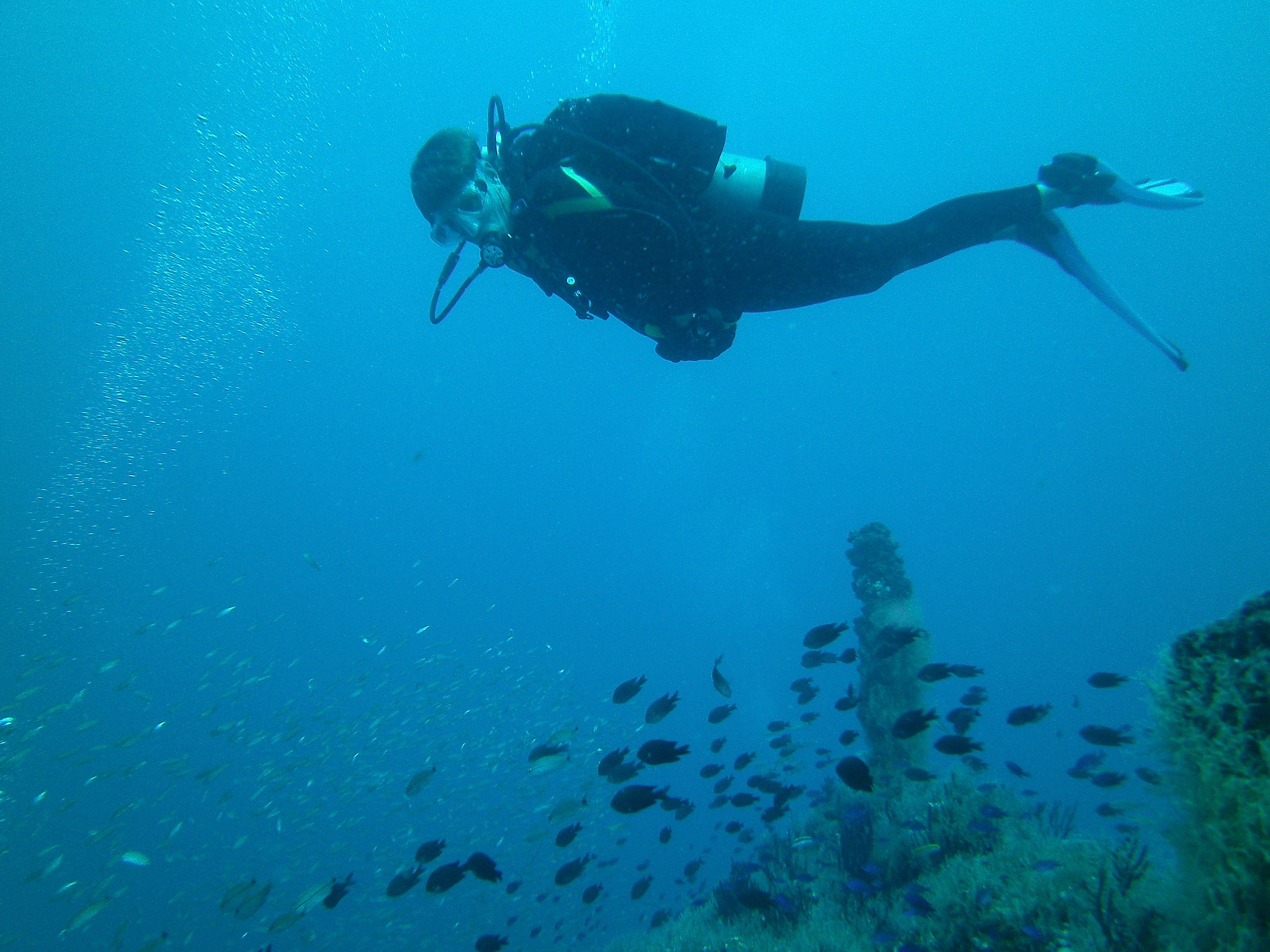
The Houston lies at about 95 feet down. Visibility was good (perhaps 60 feet) and the water temperature was a comfortable 82 degrees. There was a mild amount of current on the bottom. There were thousands of small fish. Our most dramatic sighting of the day was a goliath grouper, an enormous fellow, almost six feet long. My camera battery gave out when I tried to get a picture. I did, however, get some other pictures, including Sally examining something tiny with her magnifying glass (above) and great clouds of small fish.

After a second dive on the Houston, we headed in. Our seats were metal benches along the sides, in front of our tanks, so we couldn’t lean back and sleep. Some of our dive mates stretched out and slept on the deck, so it was difficult to move about as the boat sped along at a quick 25-knot pace. Diving sometimes takes fortitude.

We had a good Italian dinner with Sally’s sister in Wilmington at Nicola’s. There were a number of appealing vegetarian offerings. I had the eggplant rollatini with pink sauce, which was quite tasty. We had a lively conversation about, among other things, the automation of higher education, and how it is threatening the traditional university.

On Sunday we went out again on the Aquatic Safaris I, this time for a two-hour trip to the Normannia, a Danish freighter that foundered in 1924. The seas were calm and the trip went smoothly. I didn’t get sick. The wreck is about 115 feet deep. Like the previous day, the visibility was about 60 feet and the water was comfortable.

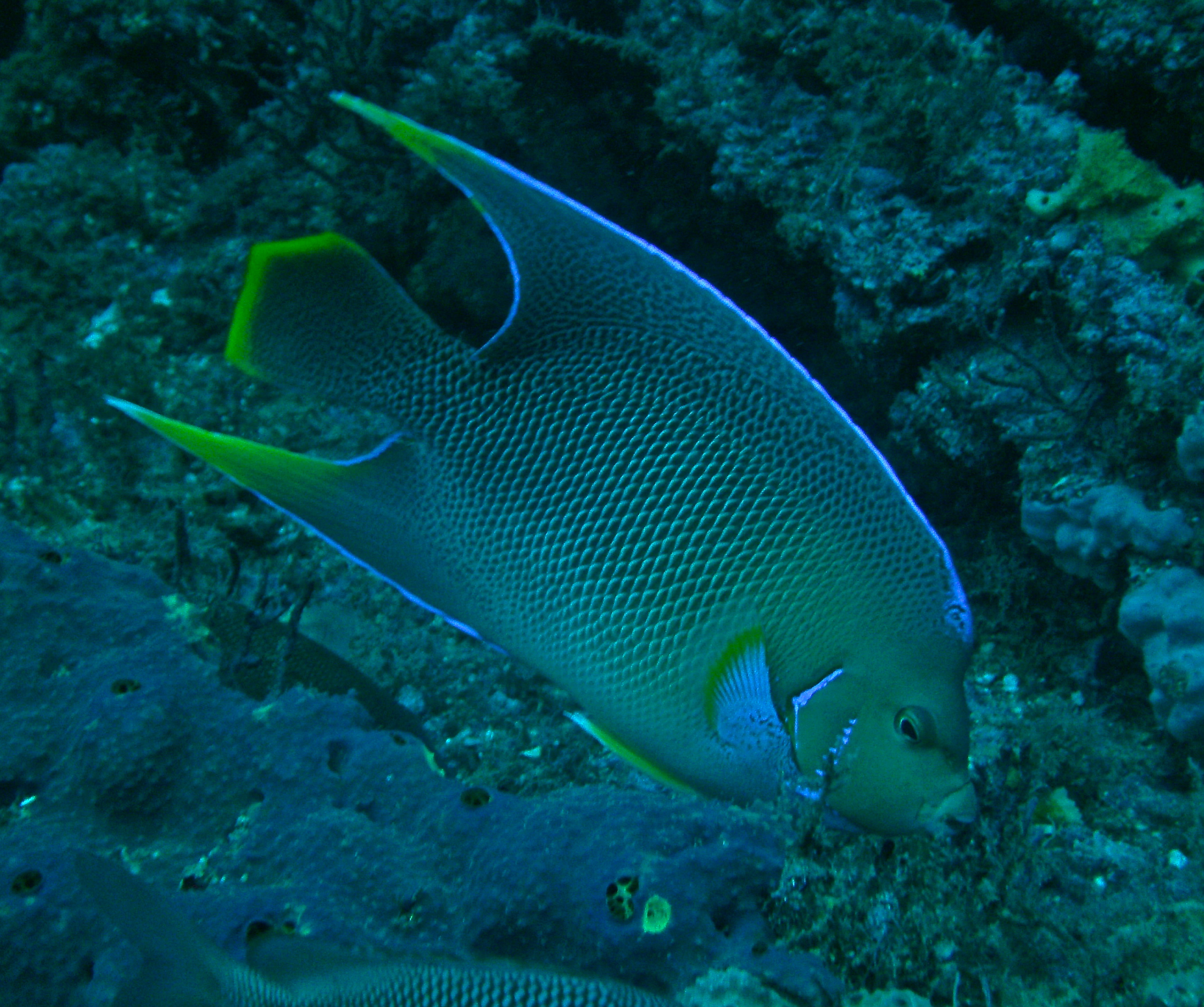
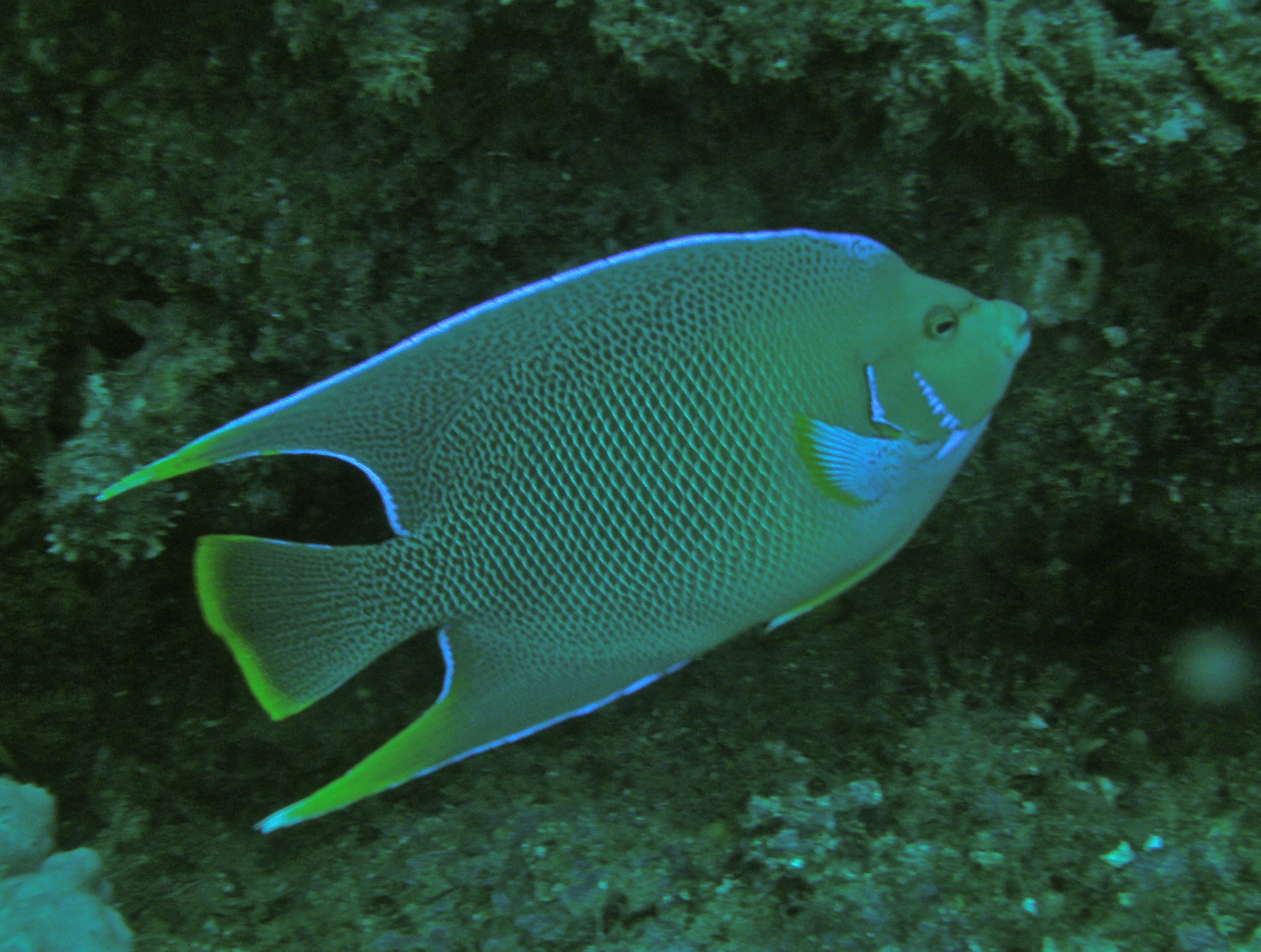
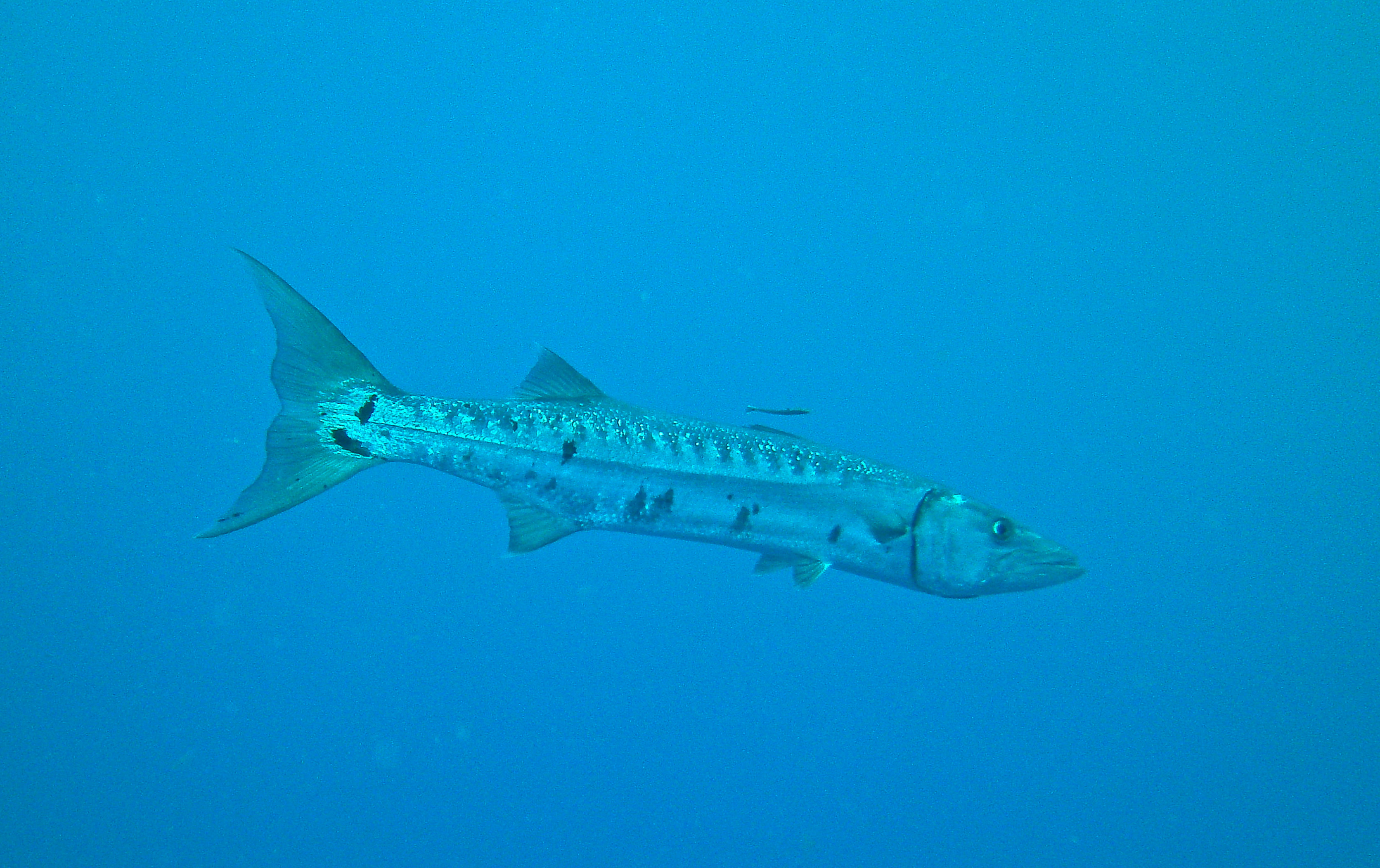
Even more than at the Houston, the Normannia had an amazing profusion of life. Along with thousands of small fish, we saw barracuda, a couple of gigantic lobsters, a well camouflaged frogfish, and my favorite, queen angelfish (several). I went to some trouble trying to get a good picture of one, and though these don’t really do it justice, they were the best I could do.

It is such a great pleasure to swim among fish. At times we were completely surrounded by thousands of small ones, and at times we swam alongside large ones. As I dive more, I feel increasingly touched by their beauty. They are amazingly varied in size, shape, color, and ways of moving about. Recent research indicates that they are much smarter than we’ve thought. For example, some can very quickly learn complex topography of a reef environment.


As I’ve spent more time with these creatures, I’ve come to consider them sentient beings worthy of respect and compassion. I regret to say I’m in a minority on this point. Among my fellow divers were some with spear guns and one who was capturing lobsters. I found it really painful to see him take an enormous lobster, perhaps decades old, and break off its antenna and shove it into an ice chest to suffocate.

My shipmate seemed otherwise a decent and friendly fellow. I’m certain he was not trying to torture the creature, though that was what he did. He didn’t derive pleasure from being cruel. He simply couldn’t comprehend that the animal was capable of suffering. I think he and others would find that expanding the circle of compassion to more animals is a happier and more fulfilling way to live.

Speaking of intelligence, I read recently that the human brain was unlikely to get larger in the normal course of future evolution, because it would serve no purpose. Brains working in isolation are not how things get done. Instead, as E.O. Wilson has pointed out, it’s humans’ ability to connect their individual brains that has been the secret to their evolutionary success. We keep getting better at that, developing over the millenia the tools of gesture, spoken language, and written language, with the internet being the latest game-changing technology.

In the midst of the depressing mendacity and nonsense of the Republican convention, I find it somewhat consoling to look at intelligence as potentially expanding through better networks. The Republicans are profoundly mistaken in thinking that entrepreneurs act primarily as fully independent rugged individualists. It’s more accurate, and also more useful, to look at achievement in terms of groups cooperating and competing. Our future success, and perhaps our survival, depends on our ability to improve our systems of cooperation, including our politics.

Wreck diving off of Cape Hatteras

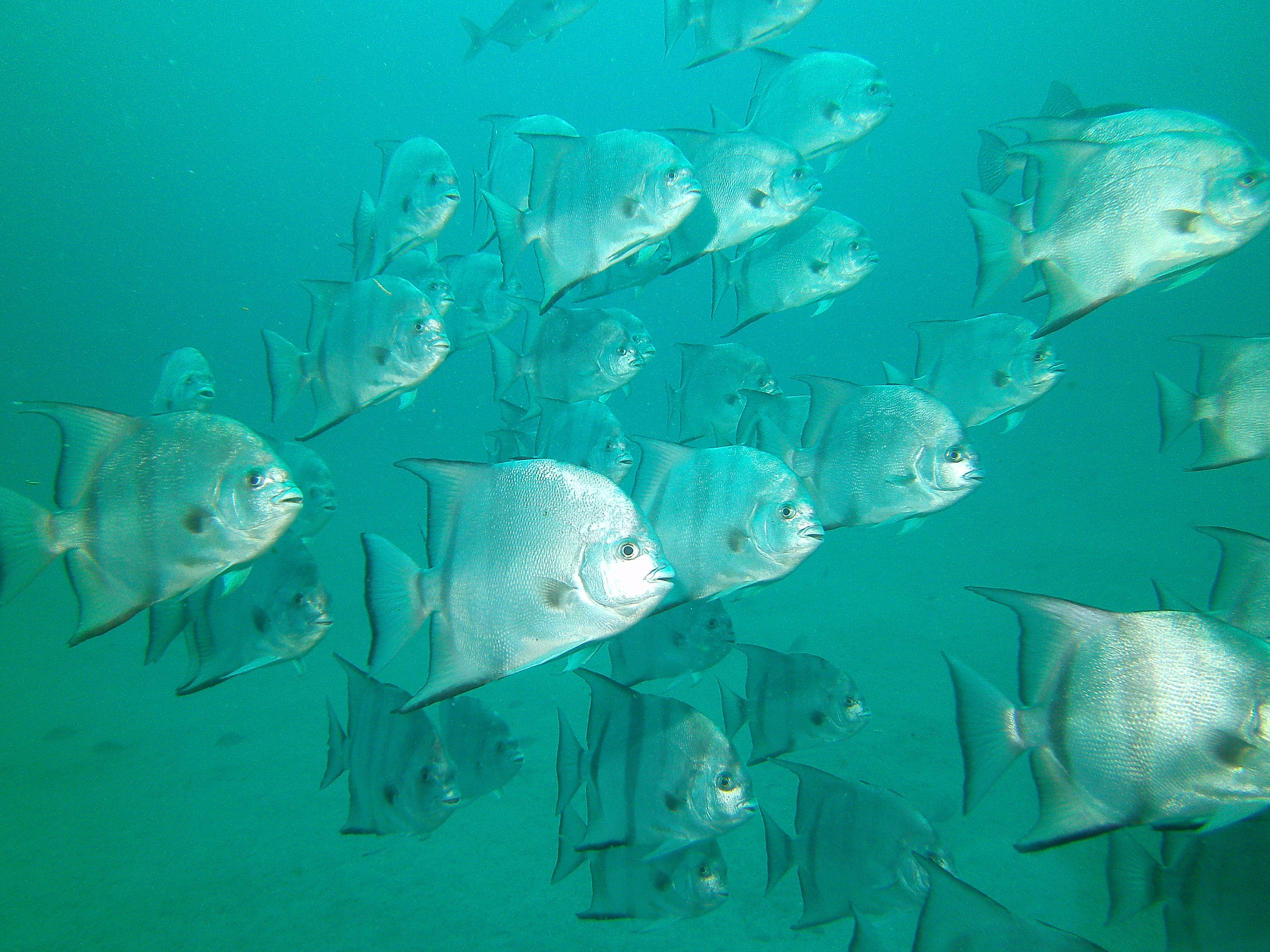
Sally and I did a diving trip out of Cape Hatteras last Thursday-Sunday. Although we live in North Carolina and love diving, these were our first NC dives. We’d assumed that the sea life in the vicinity would be sparse and the visibility poor, and that we’d find it a bit of a comedown after our Caribbean trips. It turned out this was way off. The NC ship wrecks we dove had a profusion of sea creatures and ample light. Thousands and thousands of little fish, and some very big ones.

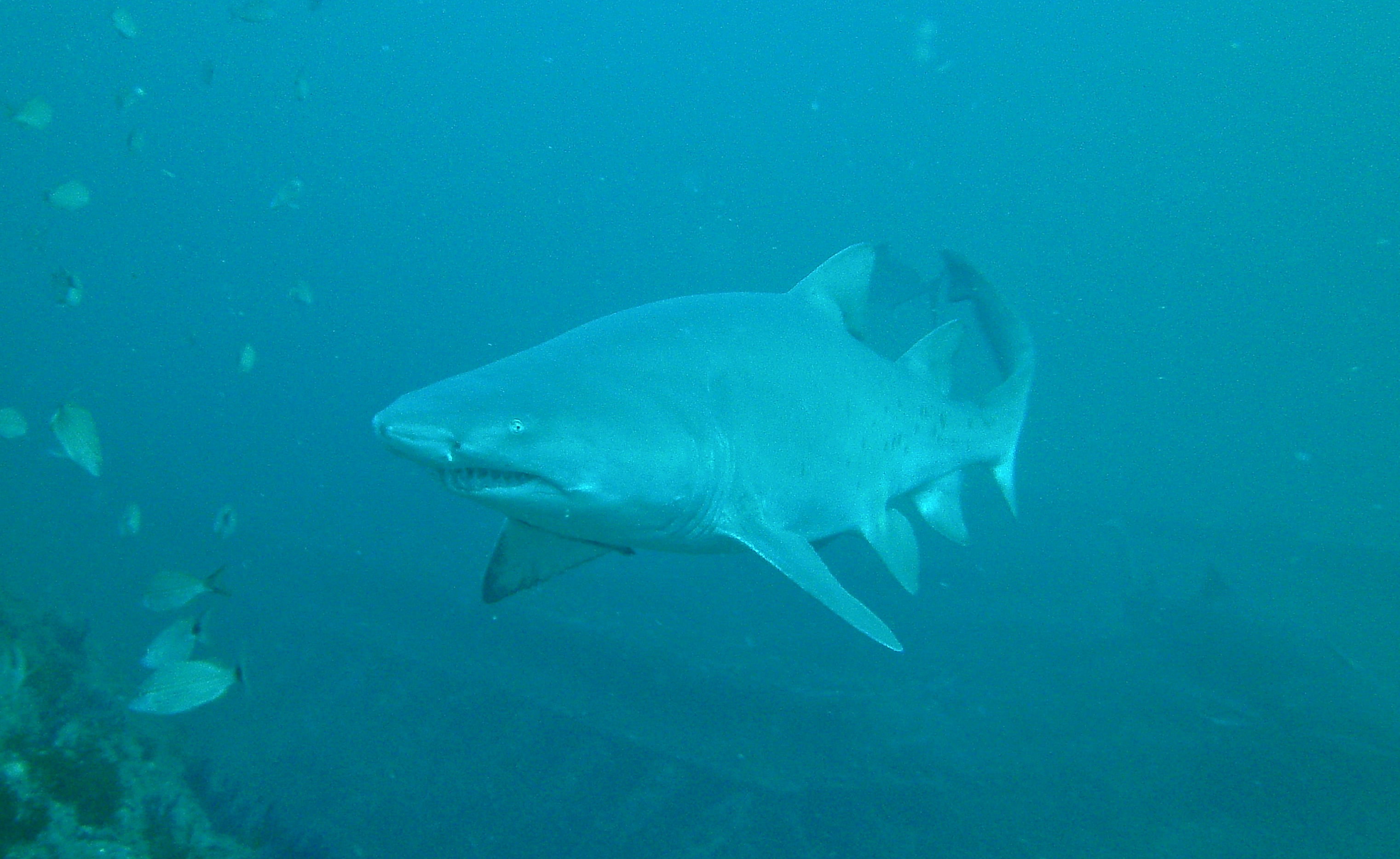
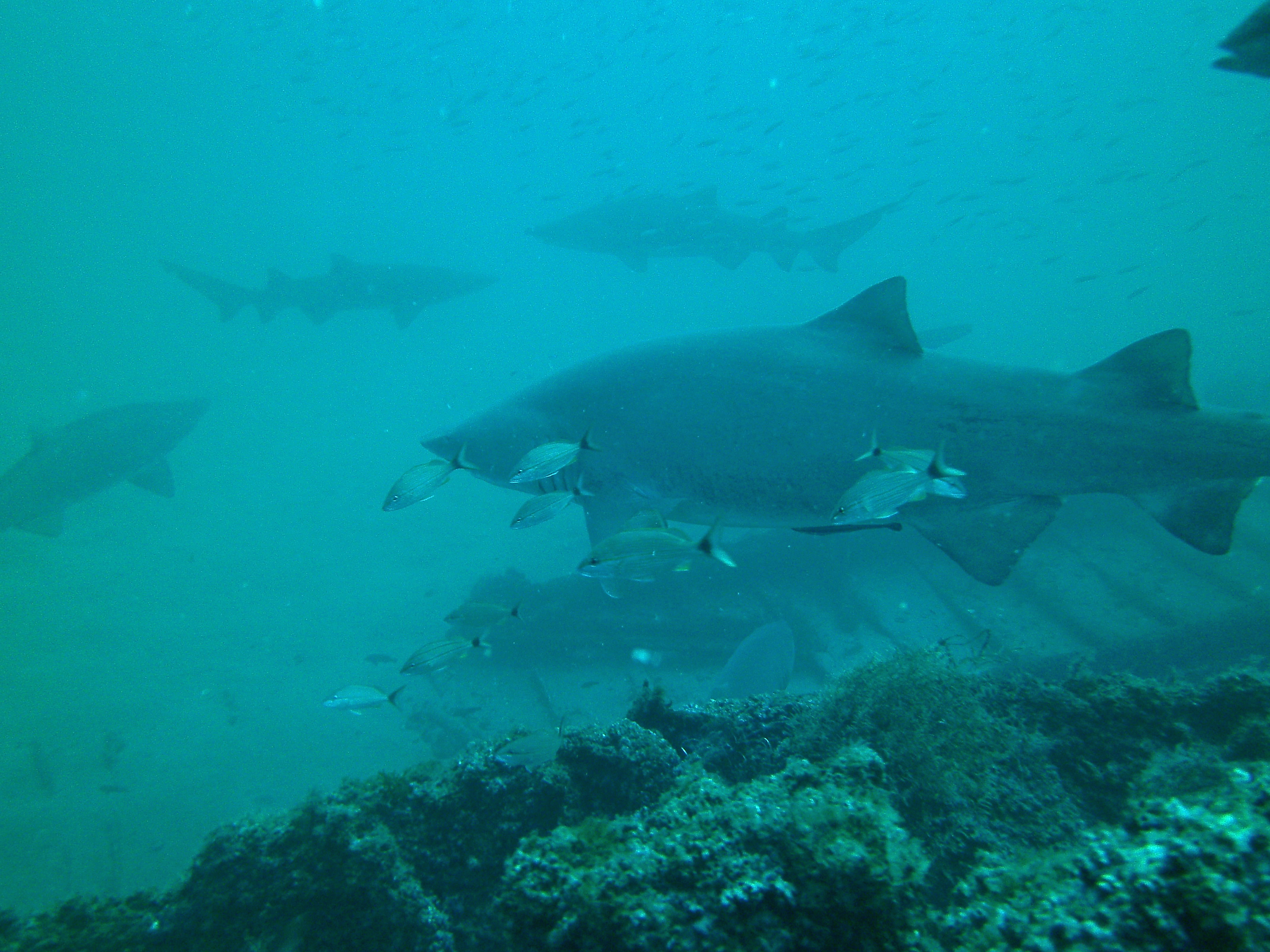
The most dramatic species we saw was the sand tiger shark. These shark are large (around 10 feet) and look mean. Apparently they are often used as the stock image for news stories about shark attacks. However, we saw dozens of them, and all were placid. They didn’t seem frightened of us, as was true of most of the species we saw, and we swam within a few feet of each other. They are beautifully designed and graceful, and of course, imposing.

I try to think of sharks in the way I think of bears — creatures that are potentially dangerous, but also fascinating parts of the natural world. They are not programmed killing machines or embodiments of evil. Shark attacks on humans are rare, and fatal attacks are freakishly rare — about ten a year worldwide. The risk of being killed in a shark attack is substantially less than being struck by lightning, or by an elephant. Also, as I learned this week, way less than the risk of being killed by a dog.

Why do most people fear them so much more intensely than, say bears or lightening? Shark phobia runs deep, and it’s unfortunate both for sharks that become victims of humans (100 million a year) and for humans who experience pointless fear rather than rapturous awe.

On this trip I tried underwater photography with a beginner-level underwater camera by Sea Life. I was glad I’d waited till I was reasonably competent as a diver to try this, because it could distract from doing the things that have got to be done in diving and enjoying the basic experience. But I was ready to give it a shot. Most of the images I got were not great, but I liked a few, and I had fun hunting for interesting things and fun looking at them afterwards.

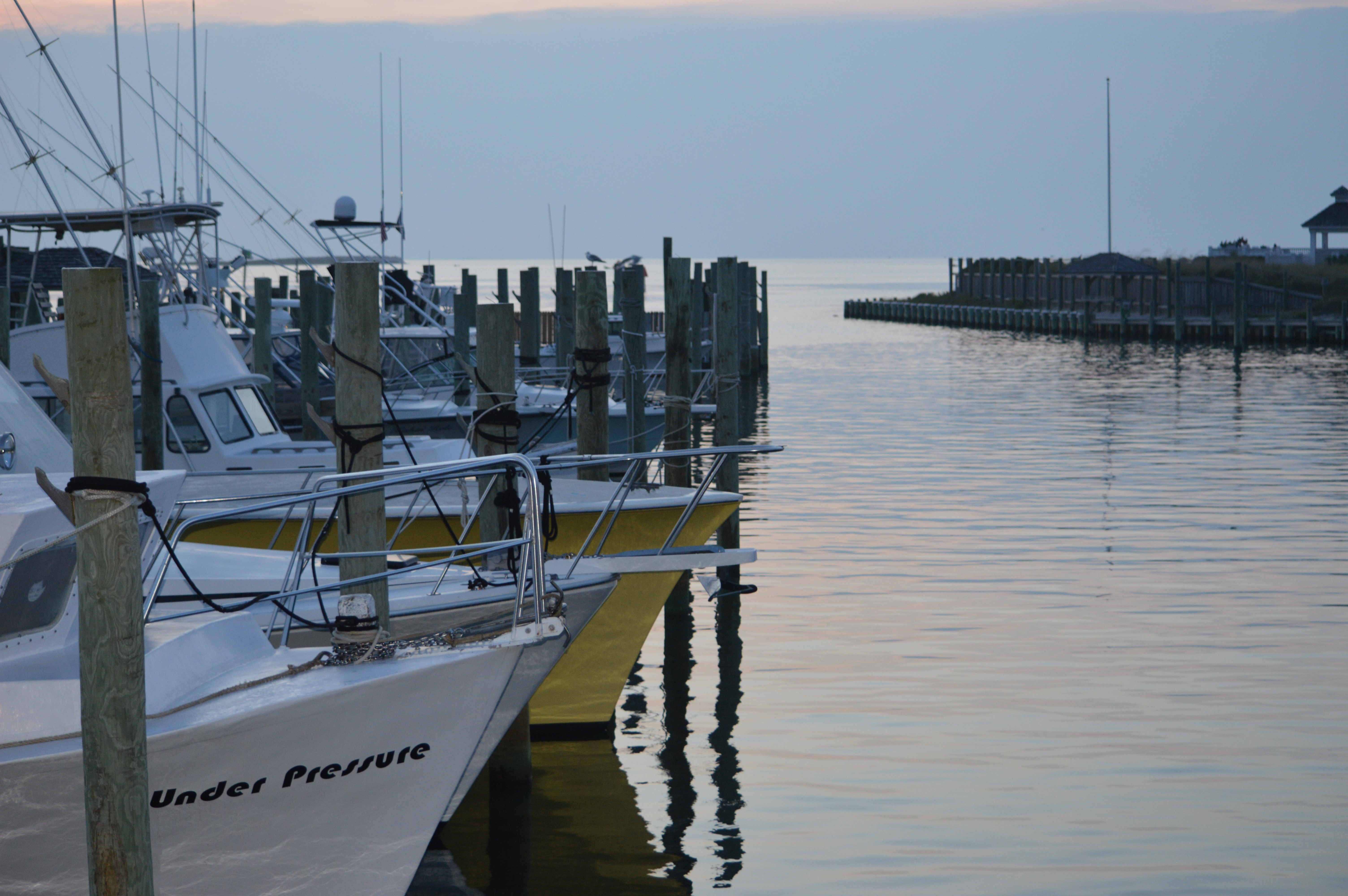
NC wreck diving involves boat rides to the ship wrecks. Our longest trip, to the Proteus, took about two and a half hours. I wasn’t looking forward the boat ride part of the experience, but we had good weather — mostly clear skies and calm seas. Our vessel, the Under Pressure, was a 41 foot former commercial fishing boat that was substantially unfitted to accommodate six diving customers. It had a special lift on the back of the boat to haul out divers.

Once well offshore, out of sight of land, I was struck by how horizontal the landscape was. 360 degrees of flatness. At the same time, the quality of the water, its color and its energy kept changing. We saw flying fish, jumping dolphins, and one sea turtle on the surface. There were various gulls, pelicans, terns, and other sea birds. I spent part of the travel time recalling some of the great poems of Yeats, Frost, and Stevens.

Besides the Proteus, we did dives on the Dixie Arrow, the Kashena, the Monihan, the Abrams, and the tug near the channel. The wrecks were in varying states of ruin, but had attracted lots if life. Besides sharks, we saw a good number of sting rays, barracuda, tuna, snapper, a large sea turtle, and the occasional butterflyfish. Several people saw an octopus on the Arrow, but we missed it. We saw enormous clouds of thousands of tiny fish, which the locals refer to as “bait balls.”

Visibility for most of our dives was good — more than 70 feet. Our deepest dive, to the Proteus, was about 120 feet down. Bottom temperature was around 80. Current and waves were minimal for the first three days, though more challenging for the final day. I had an oxygen leak (which turned out to be from my BC inflator), which required me to cut the dive short and to ask Sally to share her air as we came back. Fortunately, she agreed. It was a learning experience.

Speaking of learning, I need to give a special shout out to Scott Powell, owner of Down Under Surf and Scuba, who organized the trip, led our group, and taught my course in wreck diving. Scott is a diving professional of the highest caliber, but he seems to really enjoy helping those of us less accomplished. He’s one of those rare gifted teachers that just loves his subject, never make you feel inferior, but make you excited about getting better. His passion and enthusiasm for diving are infectious and inspiring.

The way to San Jose, Ridge Winery, and E.O. Wilson on human nature

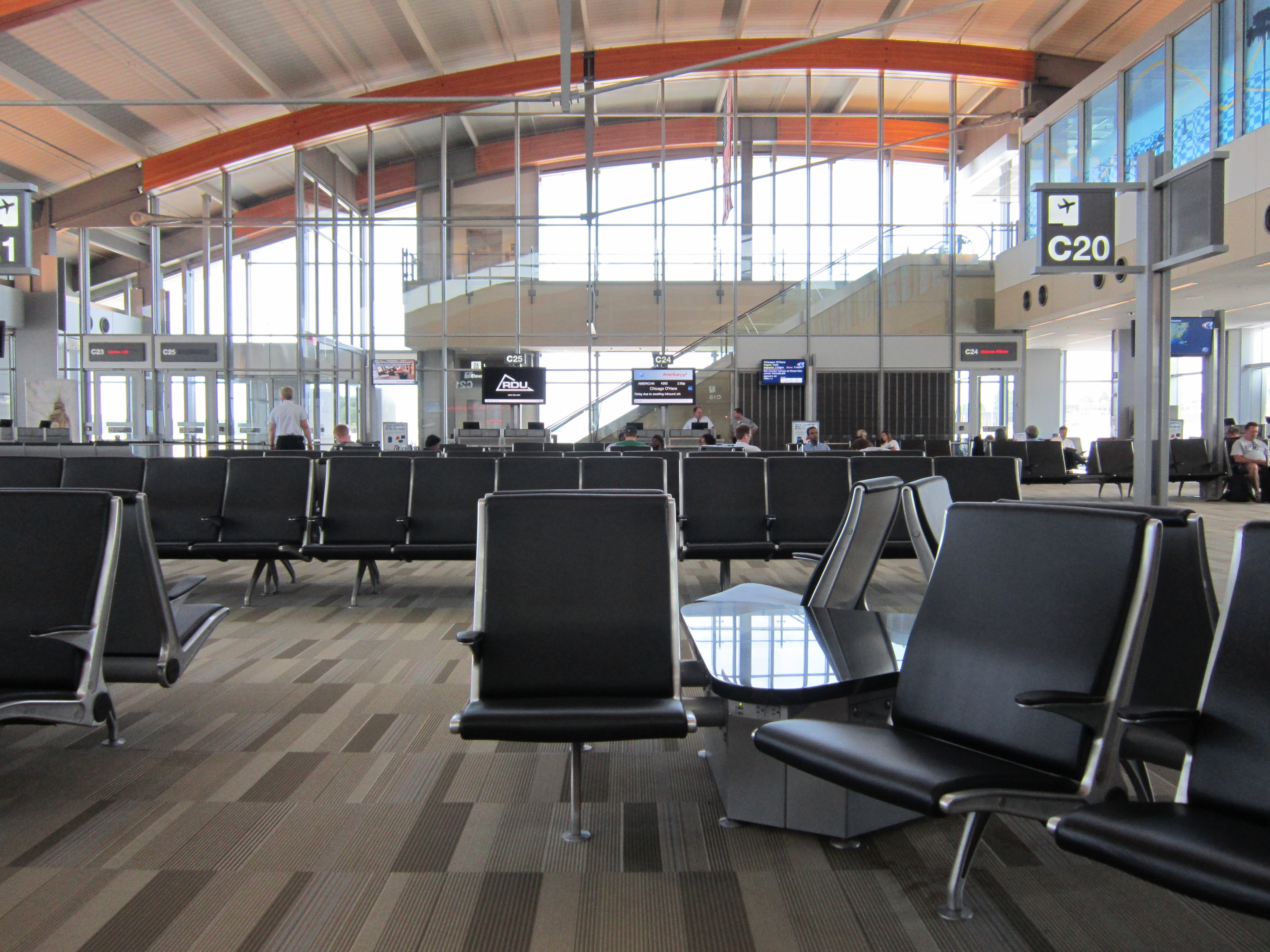
I missed my flight out of RDU on Tuesday morning after trying to send off one too many emails. On the drive to the airport, as reality set in, I went through the five stages of travel anxiety: concern, serious concern, alarm, panic, and finally, acceptance. By the time I made it through the American Airlines queue and the agent said I was too late, I was able to agree calmly, and ask politely what my next best option was. She put me on standby for a flight three hours later.

With my unexpected airport time, I got an excellent shoe shine and a half-hour chair massage at Express Spa. A couple of times a month I try to get a chair massage from the Red Hat massage therapist, which I had to miss because of my trip. I was interested in some work on my shoulder, where there have been minor issues. I assumed that an airport massage would be more about feeling pleasant than serious therapy, but I was not averse to a release of some endorphins.

My masseur, a small guy from China, asked how hard I liked it. I said pretty hard. He obliged with a serious deep tissue approach. It took all my determination to resist begging for mercy. At one point I took note that massage therapists are required to pass a licensing exam, as it was coming into focus that massage could cause bodily harm. Then I realized I had no way of knowing if my guy was licensed. He finished with some blows that shook me like a punching bag. It was almost frightening. But once it was over, I felt great!

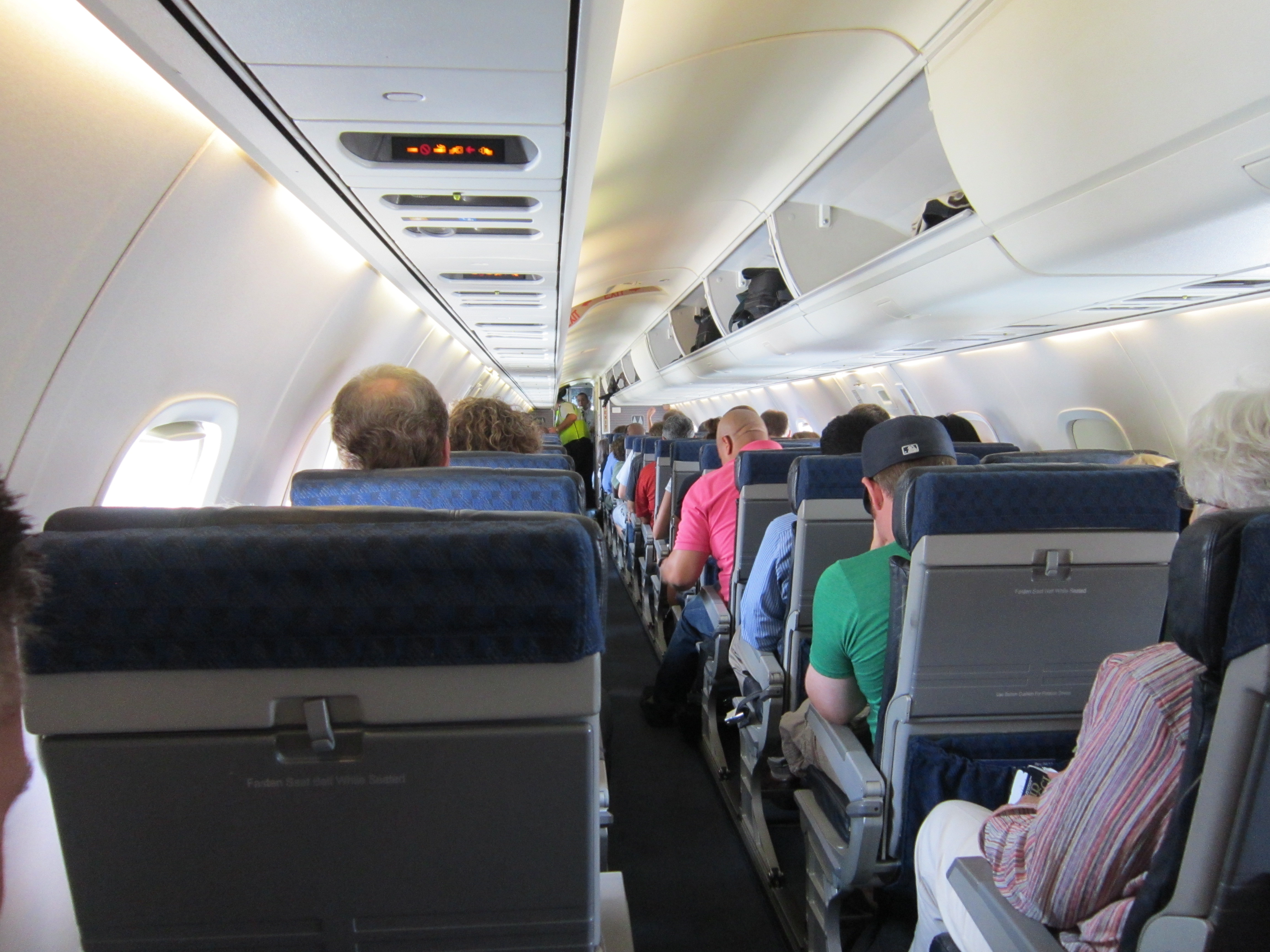
Being on standby involves a degree of anxiety. You’re either barely making the flight, or you’re going back to square one. On this trip, the gate agent said the I had a good chance of getting on the flight out of Raleigh, but a less good chance of getting on the connecting flight in Chicago. When I felt a wave of tension, I took a few deep calming yoga breaths, and tried to stay positive. Eventually, four and a half hours late, I got to San Jose, got a rental car, and headed to the hotel.

I was assisted by a Garmin GPS device, which smoothly directed me through every turn. This little tool has greatly reduced the anxiety of travel to unknown lands. Getting lost is almost a thing of the past. I still carry printed directions as a fail safe system, but I haven’t used them in a while. Thus have I outsourced a part of my mental load, and in using this now-common tool become a little more of a cyborg. I could lament the possible loss of map-reading skills, but won’t. Thanks to Garmin and all the scientists, engineers, and technicians who’ve reduced my worry level and bestowed more creative mental space.


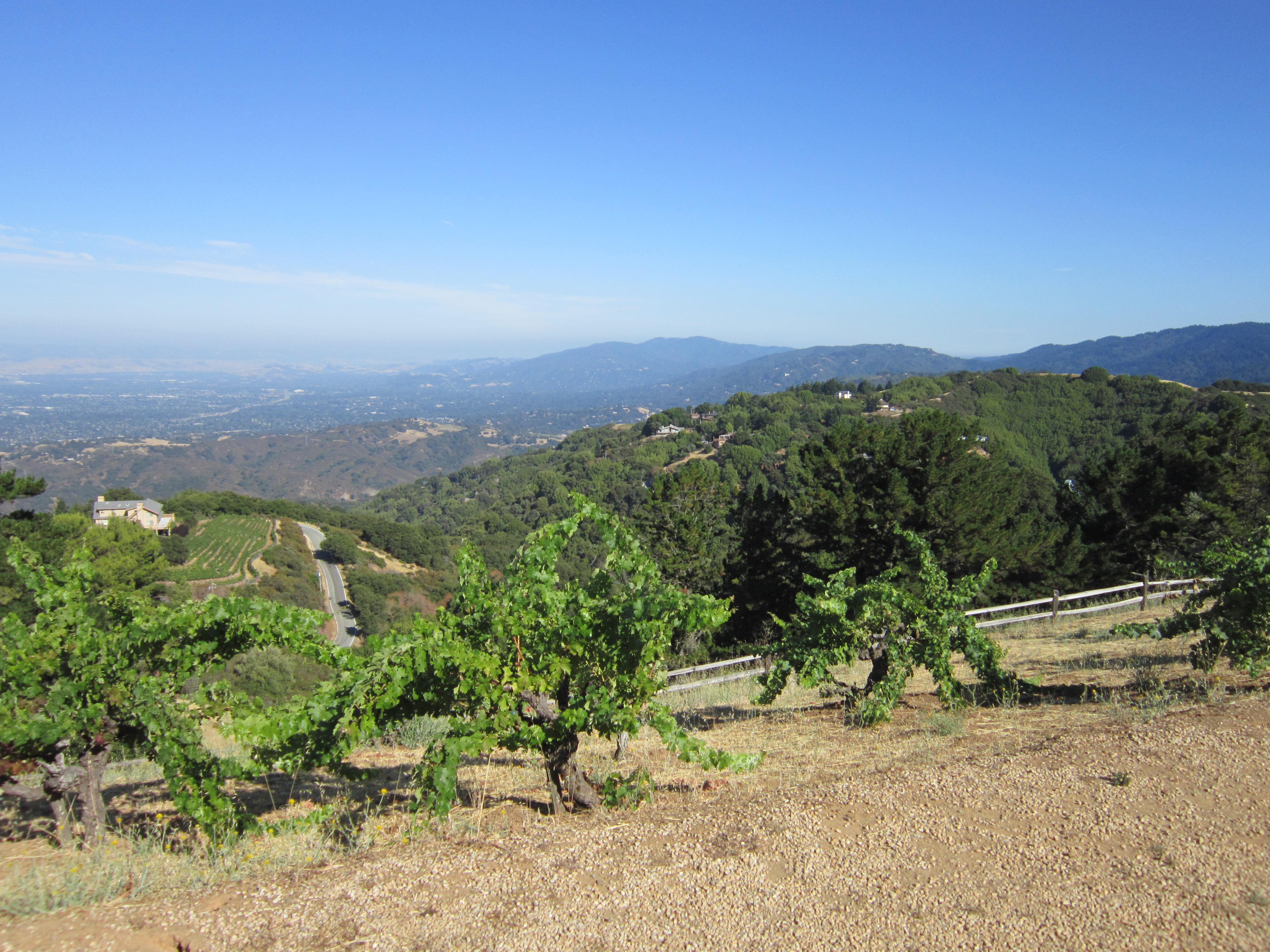
There’s something about northern California that I really love. It isn’t the glamor, which I was far from, but it may be something about the light. After various meetings, I got a chance to tour Ridge Vineyards in the Santa Cruz mountains. It involved a drive ascending 2,0000 feet along narrow roads with hairpin turns. The landscape was dry and craggy.

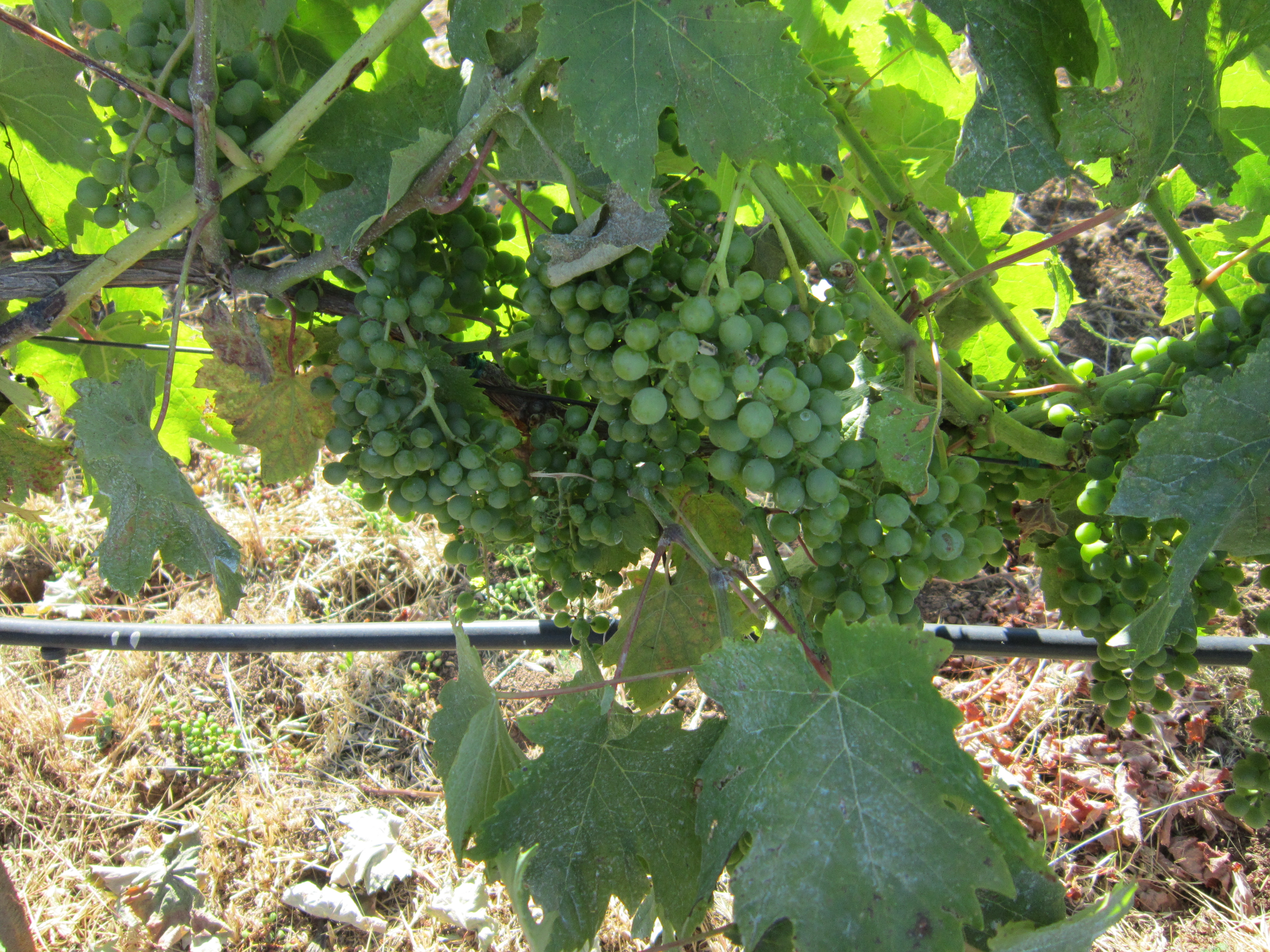
Our tour guides were experts and scholars of wine making, and I got a deeper understanding of the significance of soil and water conditions, vine life cycles, vine placement and spacing, pests, harvesting techniques, pressing, oaking options, considerations for blending, and aging decisions. The vineyard mountain views were beautiful, and the wines were excellent. It was also a great pleasure to meet our guides and experience their joy and passion for their craft.

On the long flight home, I finished reading for the second time The Social Conquest of Earth by E.O. Wilson. Wilson, a senior professor at Harvard, is one of our foremost experts on ants, but his scientific passions are wide-ranging. In this latest book, he attempts to revive and develop an approach to evolution that includes selection not only at the individual level but also at the level of groups. He argues that this accounts for some of the defining characteristics of homo sapiens, including our intense desire to be part of a tribe or group and our superlative skills at interpreting the thoughts, feelings, and intentions of others.

These skills made it possible for our ancestors to cooperate in a way that led to success versus other animals (including predators and our close relatives the Neanderthals), and to collaborate in agriculture, technology, and artistic expression. He also thinks multilevel evolution (individual and group) accounts for our never-ending interior conflicts between the urge toward cooperation and altruism (which benefits the tribe) and the opposite urge to seek competitive advantage over other individuals.

Wilson has a persuasive account of the origins and persistence of religious thought. In his view, it is characteristic for human animals to generate narratives to explain the unknown, and thus natural for communities to compose creation myths. Myths and rituals are adaptive in creating group cohesiveness, which contributes to tribal success. Religion has inspired great art and helped groups and individuals in difficult times. But Wilson ultimately concludes the costs of religion thinking outweigh the benefits, particularly once humankind acquired the tools of science.

Wilson would admit that the evidence for his multilevel approach to evolution is incomplete, and his theory is bound to be controversial. But right or wrong, I admire his willingness to engage and take some intellectual risks on the big questions, like the nature of human nature and the foundations of morality. He brings to the table spirited curiosity and the ability to draw on recent discoveries from biology, neurology, genetics, anthropology, climatology, and paleontology, not to mention, of course, myrmecology. He demonstrates the use of science as both a method and a world view — a world view that is both practical and inspiring.

My flight out of San Jose left 20 minutes late for Dallas, and my original Dallas connection was only 25 minutes. Dallas is a big airport, and getting from a gate on one side to a gate on the other can easily take 30 minutes. It seems I never leave from a nearby gate, so I had some worries, and took some yoga breaths. We came in at A37, and the flight out was at A33. I heard the announcement for final boarding for Raleigh as I stepped into the terminal, and took off in the OJ Simpson airport sprint. (I’ve noticed that gate agents sometimes look around for last second sprinters.). I was the last to board. Kind Fortuna!

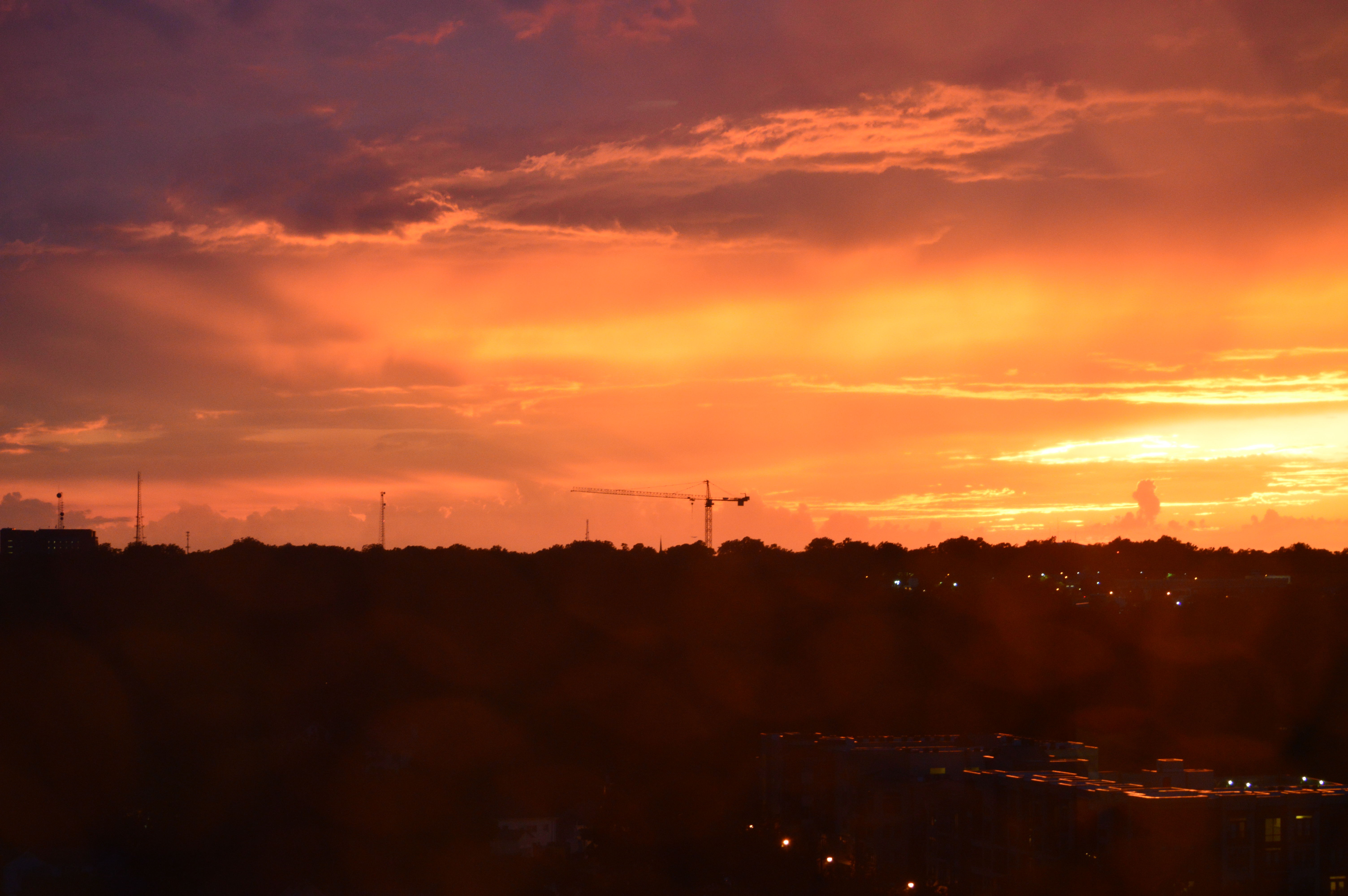
Shortly after I got home, we had a thunderstorm and a strange sunset.

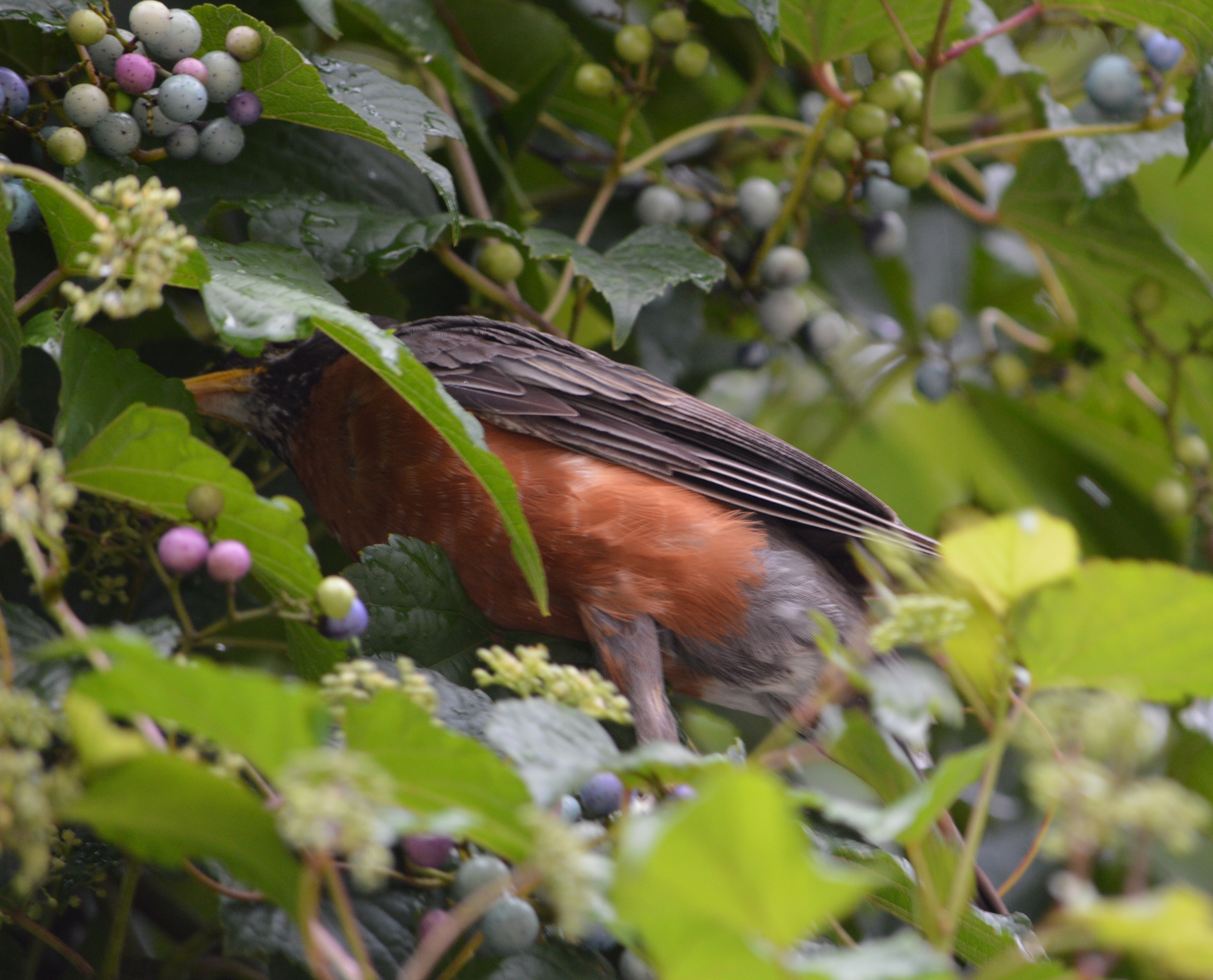
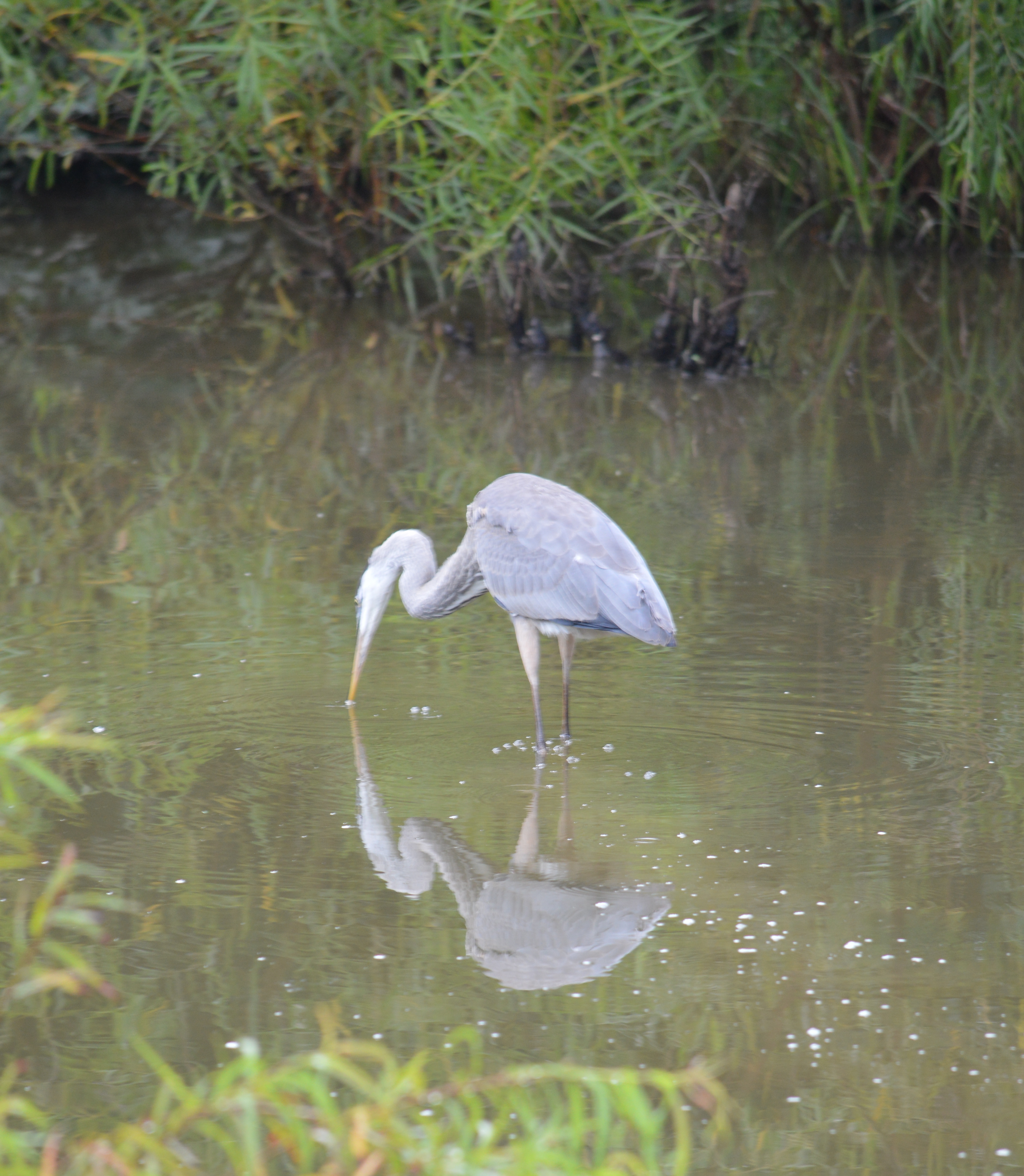
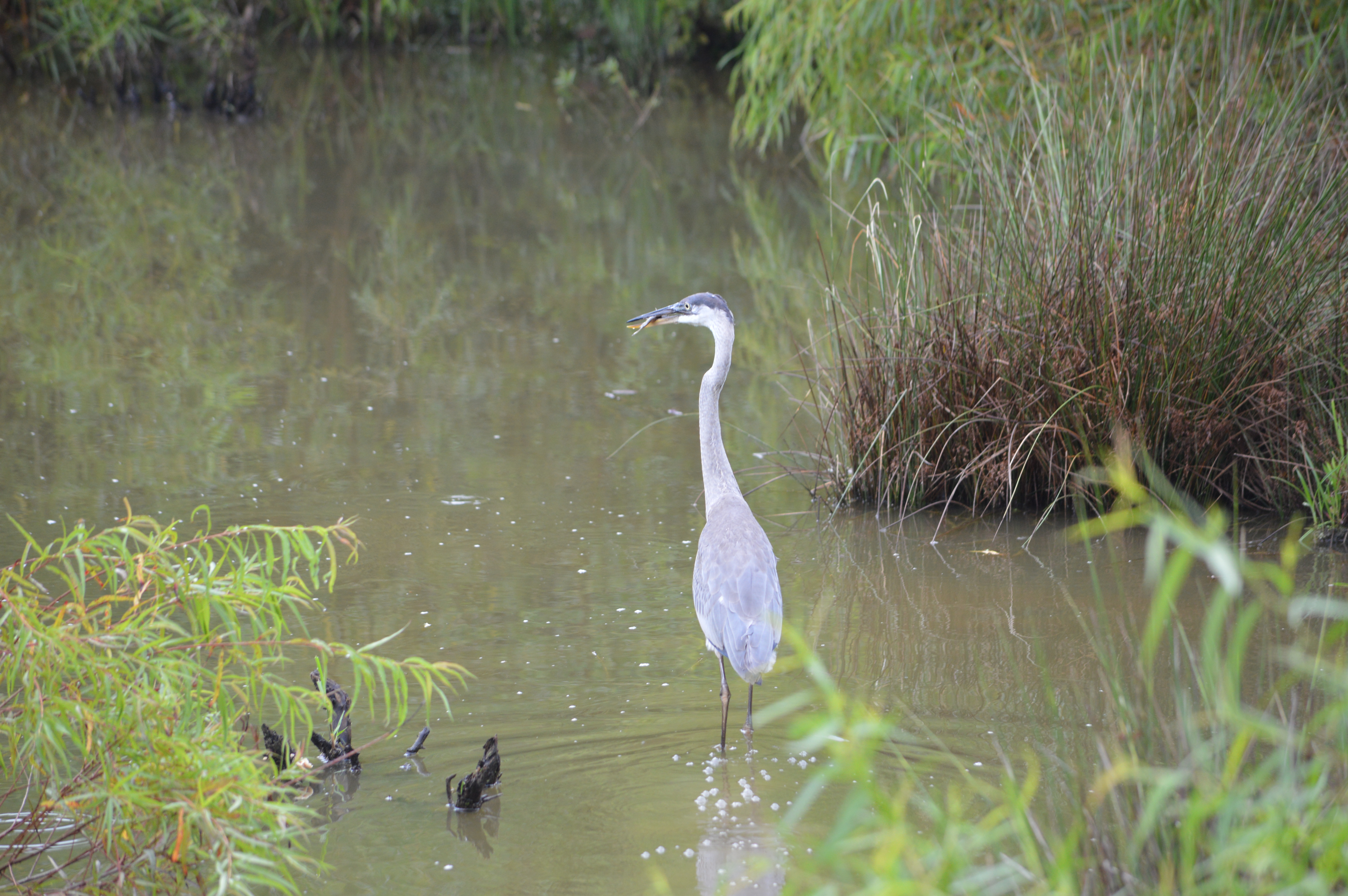
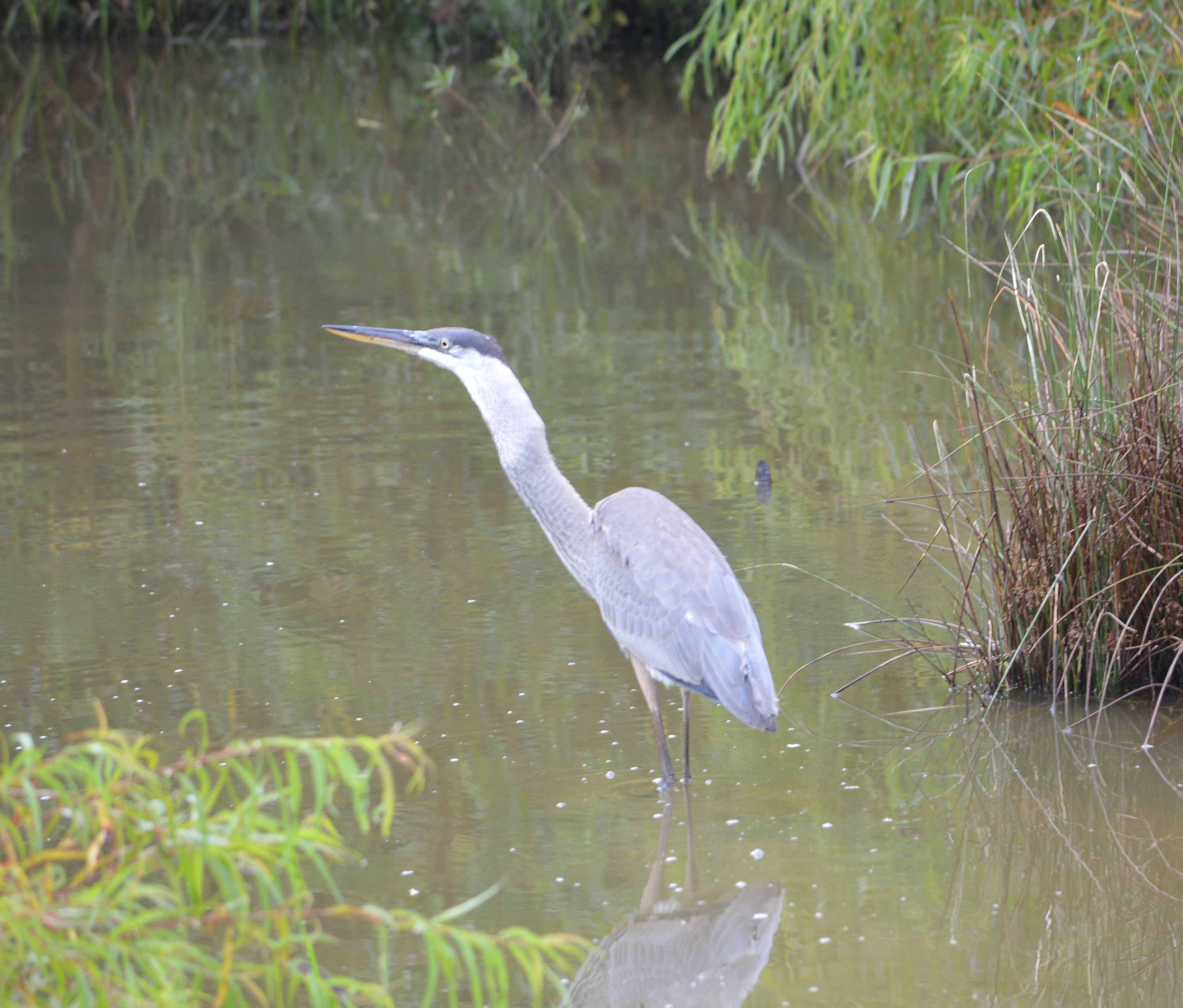
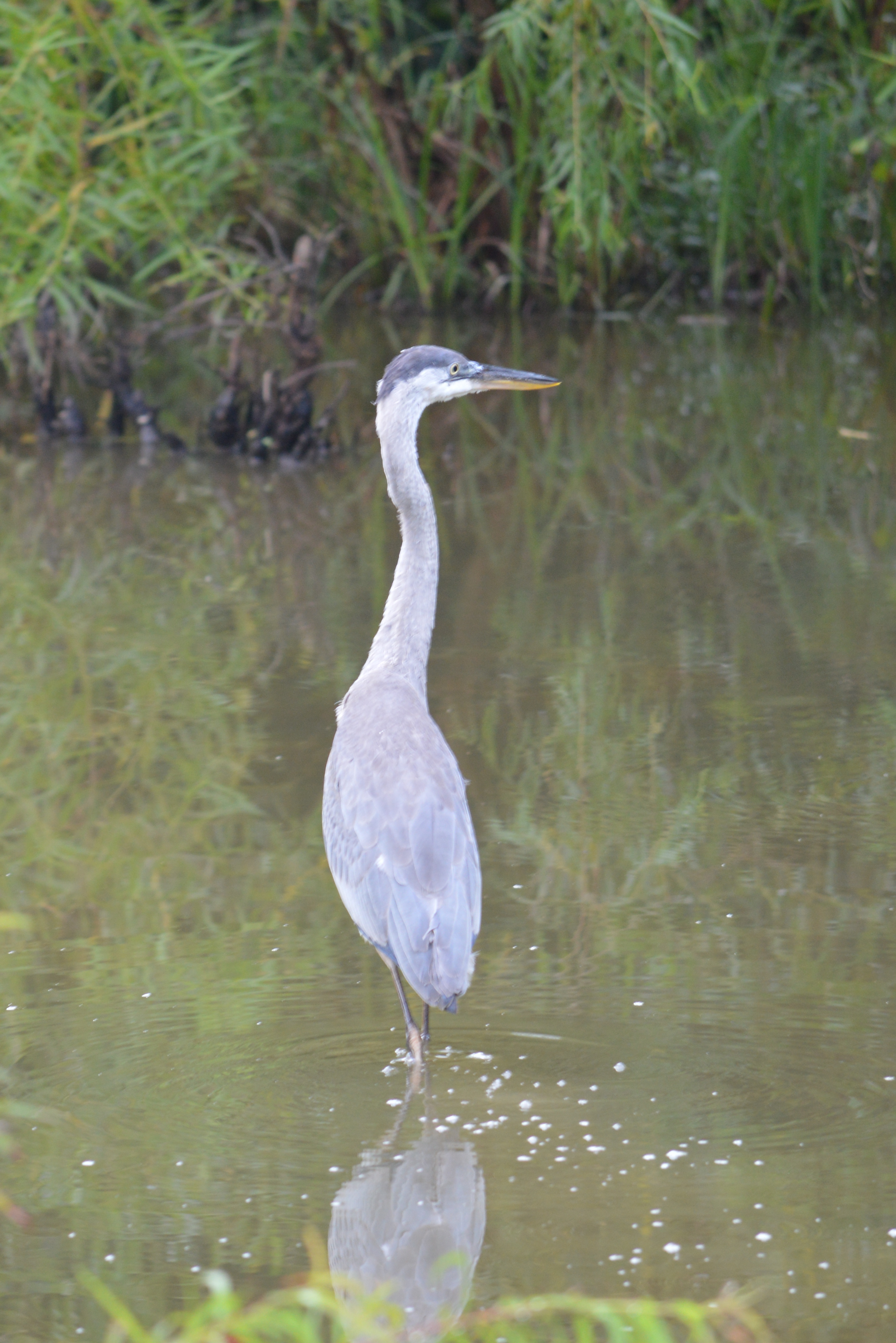
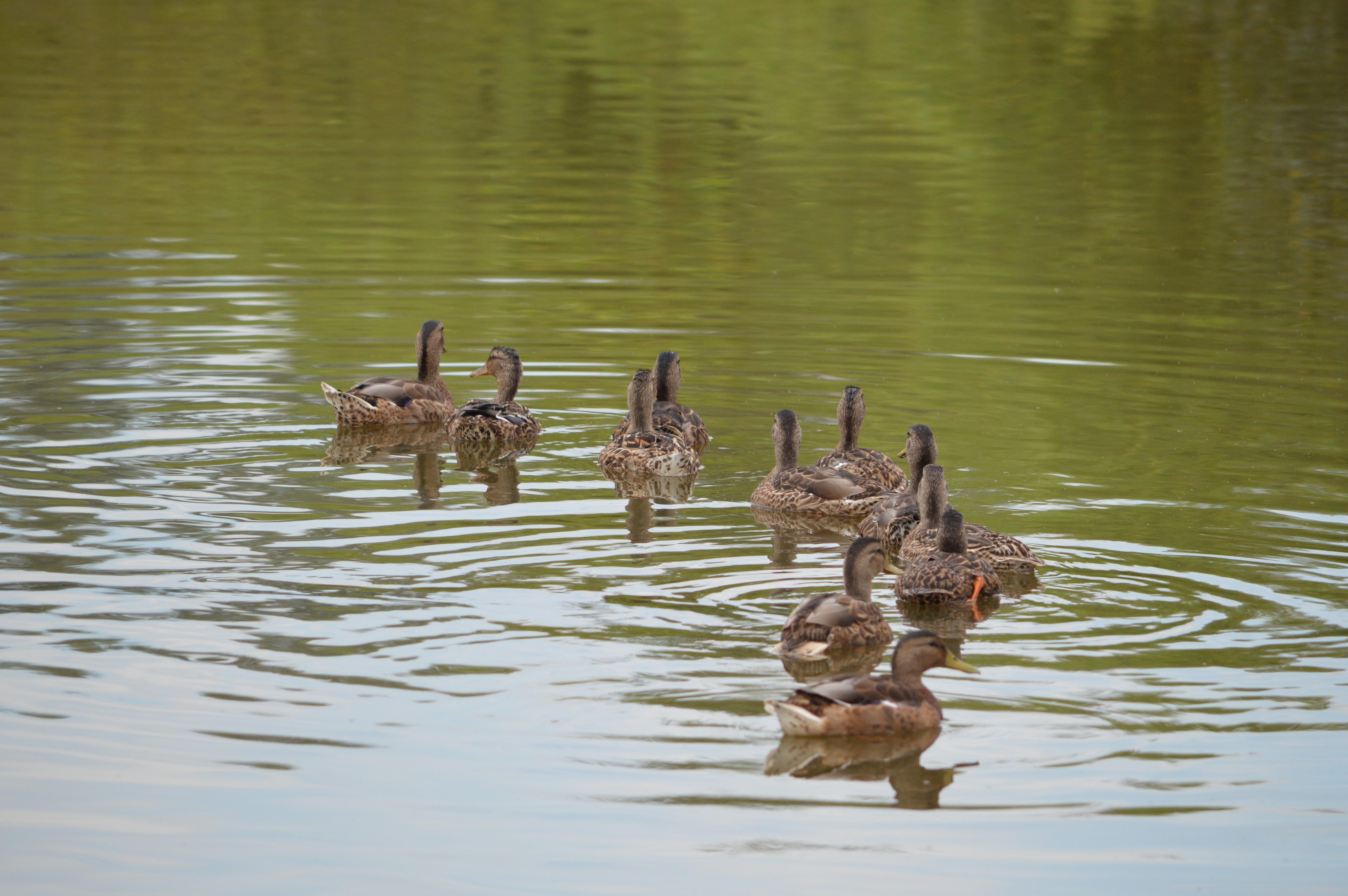
There were some birds this morning at the boardwalk off of Raleigh Boulevard. Most of them hid from me (like that small bird in the Frost poem), but a robin, a great blue heron, and a mallard family didn’t.