The Casual Blog

Category: music

A rodeo, a tennis match, a run, and a good curry meal
14 08 19_1548_edited-1
This was an unusually sporty week. I got to see a local rodeo and a semi-local professional tennis event, and took a run down memory lane.

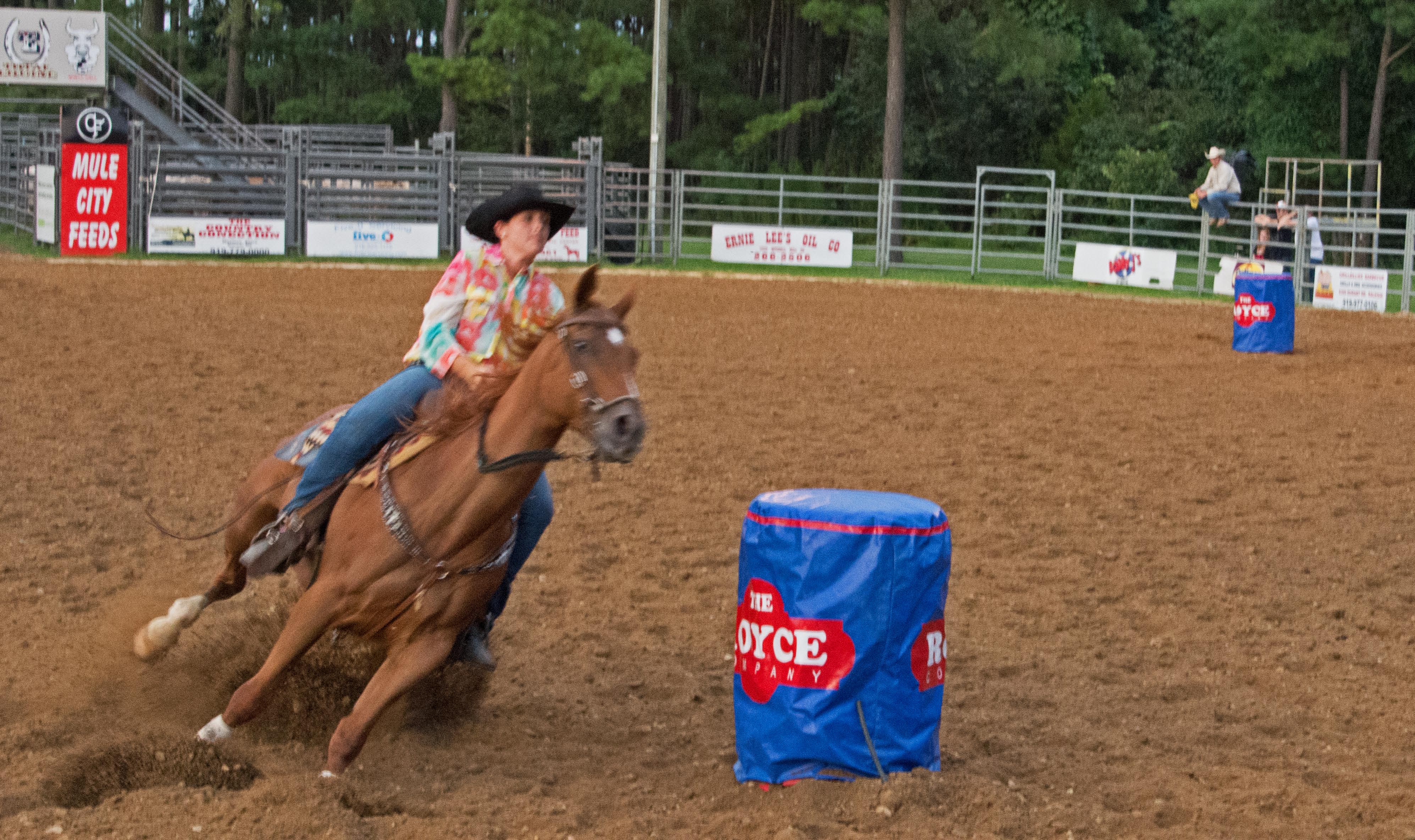
It is always cheering and a little startling to find that there are communities of people who care passionately about something I know hardly anything about. Who knew there was a rodeo community in the Raleigh vicinity? Actually, I had just learned this the prior week from Walter magazine (an attractively designed and informative monthly that covers our area).

The rodeo was in northern Wake County off of Louisburg Road. The main events were barrel racing and bull riding. The barrel racers were all young women, and they rode their horses extremely fast. It reminded me of road course racing – in addition to extreme acceleration, they had to hit the brakes hard at the barrels. I was in awe of their riding skills.
14 08 19_1553_edited-1

The bull racers sat on bulls and got bucked off. This seems simple in concept, but the trick is not to get killed or severely injured by the bull. We got to see this event up close, and it looked extremely dangerous. I was not happy to think of the bulls being mistreated, but that didn’t prevent my appreciating the courage of the young riders.
14 08 21_1594

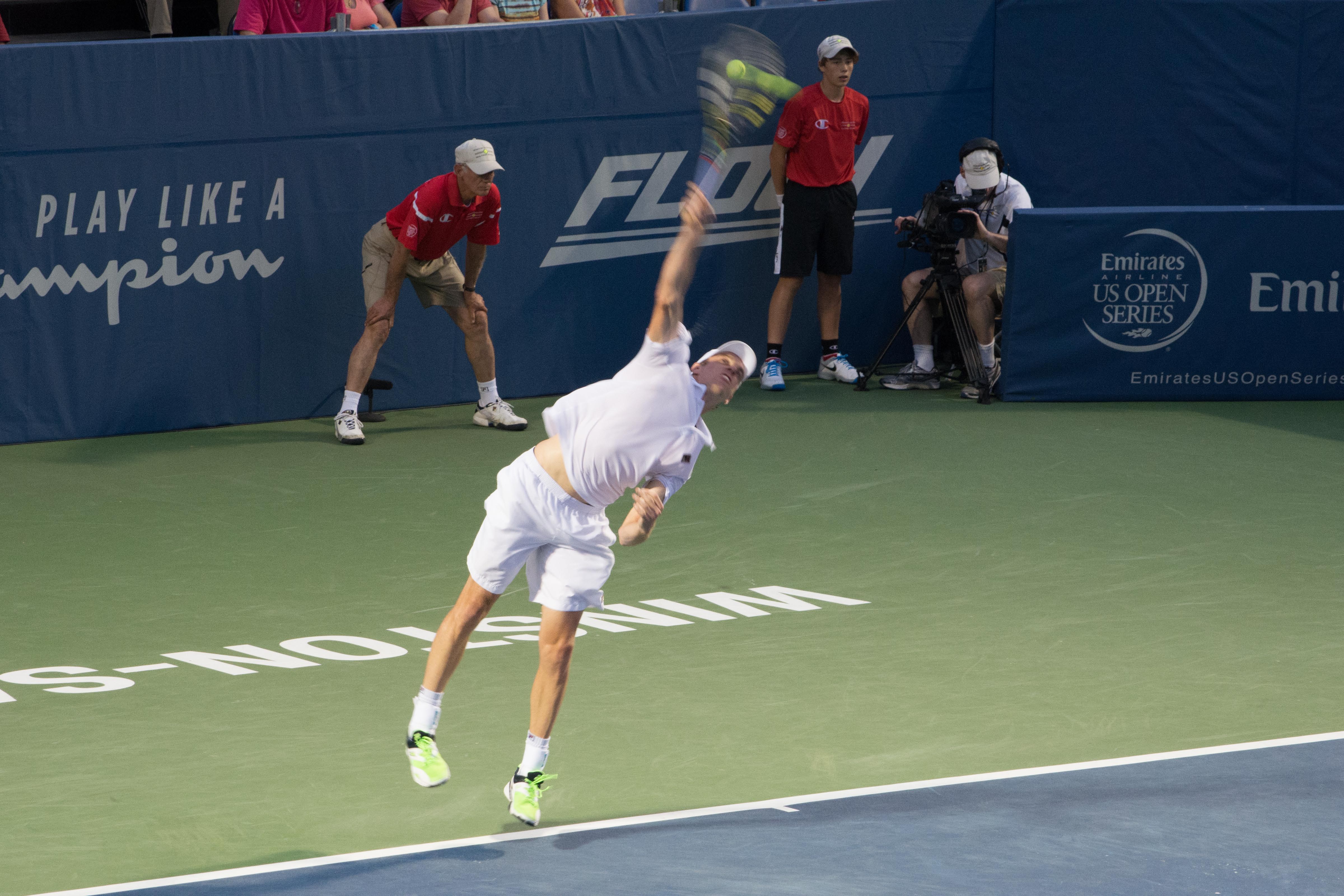
On Thursday Sally and I drove east to see some professional tennis at the Winston-Salem Open. We watched Sam Querrey play Guillermo Garcia-Lopez. These guys can play! Querrey had a huge serve which topped out at 137 mph. Garcia-Lopez had a beautiful one-handed backhand that he could hit with a lot of topspin. The match was close through two sets, but Querrey took control and prevailed in the third.
14 08 21_1592

That night we stayed in downtown Winston-Salem at the Brookstown Inn, built as a cotton mill in 1837 and now decorated with antiques and crafts. Our room was spacious (a 20 foot ceiling, at least), and the bed was particularly comfy.

When I’m on the road, I make it a habit to use the hotel gym first thing in the morning. The Brookstown’s web site didn’t mention an exercise facility (it turned out to have a tiny one), so I had packed most of what was needed for a run (forgot my tee-shirt). It was still dark at 6:15 when I went out, shirtless, for a run through the city of my youth.

There was hardly anyone out, so I don’t think I upset anyone with my shirtlessness. There was a pleasant breeze. Heading down Fourth Street, many of the businesses I remember were gone (no more Woolworth’s), but there were some interesting looking restaurants and galleries. I ran past the city’s most striking high rises, including the Reynolds Building (which looks just like a miniature Empire State Building), and along Main Street to Old Salem, the eighteenth-century Moravian town that’s now a tourist attraction. I went past the building where my parents had their bookstore and by the half-timbered brick buildings and grassy squares where I had a happy summer at Governor’s School.

This took about 40 minutes. I hadn’t run more than ten minutes for many a moon, because of various minor injuries. I felt comfortable and strong. The next day, though, my quads were sore.

On Saturday night we walked up to the Packapalooza festival on Hillsborough Street for some people watching and food. The festival was in celebration of the return of the students to N.C. State, and there were plenty of them there. It seems they get younger every year, as I get older. There was real diversity, including in music: some bluegrass, some hip hop, some rock, some Hare Krishna.

I had one moment of shock and horror, when my Nikon D7100 came loose from its strap. I’d gotten an over-the-shoulder strap that screws into the tripod mount, and it somehow got unscrewed. It hit the asphalt hard. Picking it up, I expected to see cracks in the lens and the back screen, but everything looked OK. My test shots seemed fine. The only apparent damage was a minor scratch on the bottom on the housing. It’s a tough little bugger! I got this butterfly at Fletcher Park the next morning.

14 08 24_1697

We ate at a new Nepalese/Indian restaurant on Hillsborough Street called Kabab and Curry. The menu had good options for vegetarians, and everything we tried was excellent. We shared veggie pakoras, and I had the vegetarian sampler, called rani thali, which included shahi paneer, alu gobi, chana masala, and dal makhani. The food was spicy in a colorful way, stimulating but not overwhelming, with a variety of textures. A bright addition to the local asian dining scene. I’ll definitely be going back.
14 08 23_1620_edited-1

My hopeful hand checkup, a new salad restaurant, a Porsche contretemps, and discussing legalization

14 08 03_1352I was a bit anxious about my check up for the torn ligament with the hand doctor earlier last week, but it turned out fine. After the doc twisting my fingers a bit and asked if it hurt (it did), he pronounced me improved, and lowered the chance of needing surgery to 5 percent (a big improvement from his previous estimate of 50 percent). He cleared me to play the piano gently (no Rachmaninoff, he said), but to otherwise keep my fingers taped up for another month. I asked about getting back to golf, and he strongly advised me to wait. This was disappointing, as I’d felt like this could be my year for a big golf breakthrough (as, admittedly, I’ve felt in previous years). Still, I I was pleased to be heading in the right direction.

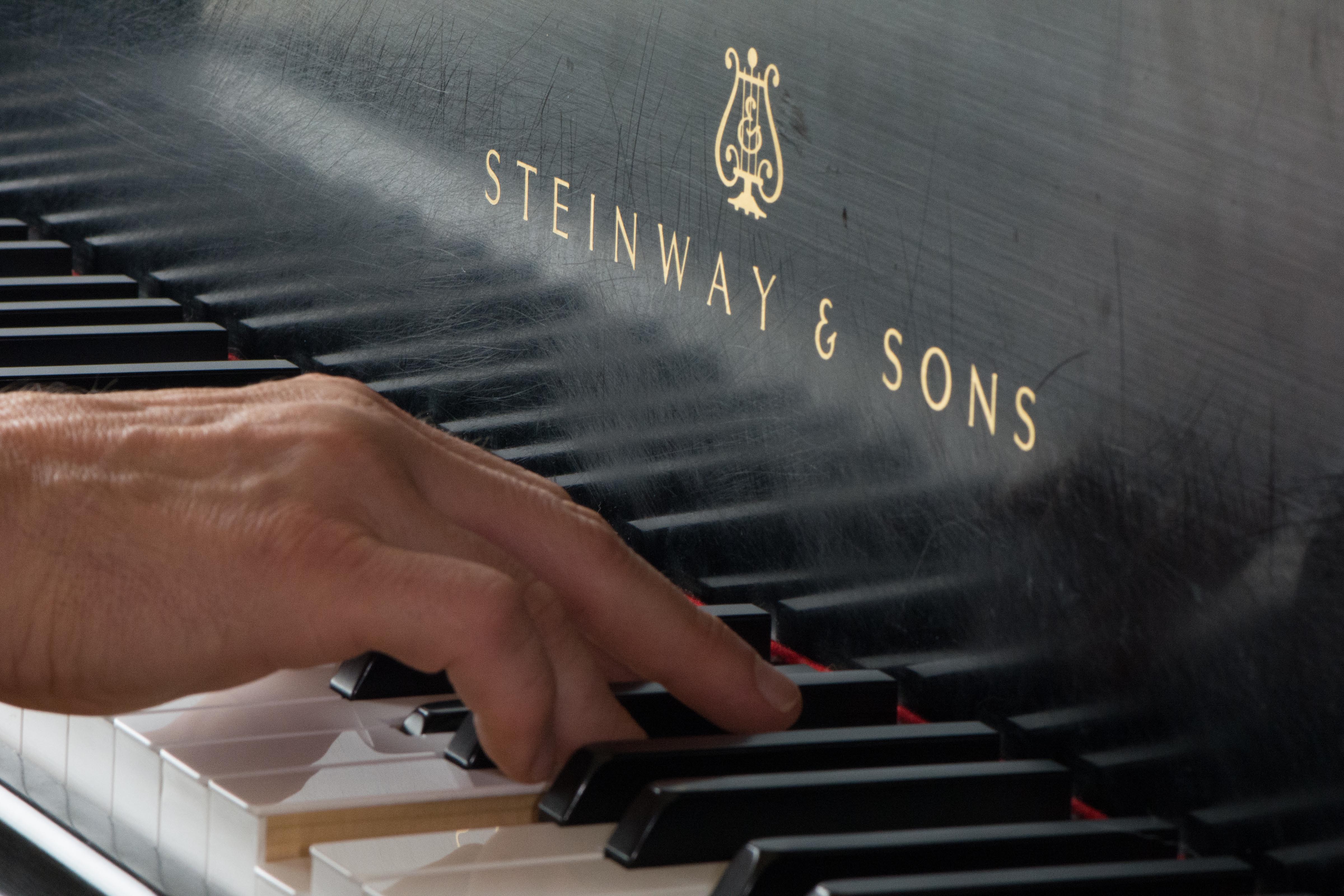
Playing the piano again was a rich, dense, textured pleasure. Going a month without playing is something that I hadn’t done for at least 30 years, and I missed it. I started gently with some Chopin mazurkas, and then some nocturnes. I couldn’t resist trying some Rachmaninoff – the Elegie, op. 3. It was all a bit rough, but I felt I was listening better, hearing more nuance, and playing with more rhythmic freedom. Perhaps the forced time off did my ears some good.

14 08 03_1277The next day I discovered Happy and Hale, a relatively new take-out restaurant on Fayetteville Street a couple of blocks from my office. It serves only three things: salads, smoothies, and juices. All are not only super healthy, but also lively, interesting combinations of ingredients. My first experience was the quinoa salad, which had quinoa, black beans, avocado, cilantro, feta cheese, and a couple of other things, with red pepper vinagrette. It was amazingly tasty. There was a long line, but I found this more cheering than annoying. It was good to see people interesting in eating something healthy, and to see this little business doing well.

The next day, I took Clara to the Porsche dealer for servicing. Her check engine light had come on, but even before the that, I’d felt something wasn’t right. Giving her more throttle in the higher RPMs yielded more noise, but not more thrust. I suspected a transmission issue, which turned out to be correct. I needed a new clutch and new flywheel, and the cost was a big ouch.

Waiting for the parts to come in, I drove a loaner Ford Explorer (a sport ute). I just don’t get why people like this type of vehicle, at least when they don’t have a big group of kids or other heavy loads to haul. To me it was not fun to drive. After my sports car, It felt lumbering and awkward. I had the impression of barely having enough road, like a truck pulling a massive mobile home, needing a “wide load” sign to warn other vehicles.

But I admit that I liked the instrumentation. It had a touch screen set up for the climate control, radio, blue tooth, etc., and a handsome virtual compass. In reverse, the touch screen showed the view behind, with the danger zone outlined in red. It had some sort of RFD key that allowed the vehicle to unlock when I pulled the handle without the need for any use of the key. A nice convenience.
14 08 03_1253
Reading the New York Times is a settled part of my morning breakfast ritual, and there is a sense in which I always enjoy it. But golly, the news has been grim! Part of it is structural: in conventional journalistic thought, information usually only qualifies as news if it involves dramatic conflict. So we don’t hear anything about the peaceful countries in, say, Africa. But the lead stories recently inspire a special mixture of horror and hopelessness, because they’re big and absolutely beyond any individual control. Examples: Syria, Iraq, Afghanistan, Russia, Ukraine, Israel, Gaza, Nigeria, Washington.
14 08 03_1242
This week, though, there was a welcome exception. I was pleased to see the Times came out in favor of partially ending the war and drugs and legalizing marijuana. The editorial board had clearly had thought hard about it, and put some elbow grease into collecting the arguments: including the enormous human cost, the huge economic cost, and the relatively low risk. It felt like a watershed moment. Maybe now it will be possible that we can have a debate based more on facts and less on myth, moralism, and hysteria. I don’t think marijuana is a particularly good thing; for some people it’s surely an unhealthy thing. But criminalizing it has been an absolutely terrible thing.

So we might be close to overcoming this particular moral hysteria and to ending of prohibition. Perhaps some of our other seemingly intractable problems aren’t beyond all hope.
14 08 03_1250_edited-1

A forced break from piano playing, and thoughts on autodidacts and other learners

14 07 25_1170
After work on Friday I drove up to Raulston Arboretum to check on the flowers and insects. The rose garden was gone – nothing there but dirt. But there were still plenty of things growing, and bees and other insects hard at work. I particularly liked this uninhibited butterfly.
14 07 25_1169
14 07 25_1171
14 07 25_1174

It’s been a whole month now that I’ve been unable to play the piano. I’ve been following my hand doctor’s orders and keeping my fingers taped up, hoping that the torn ligament serving the middle finger of my right hand will heal. Practicing the piano every day is a habit of many years. While I wouldn’t say I’m going through withdrawal, I certainly don’t feel as happy and balanced as usual. Piano music is a big part of my life, and I miss it.

But I’m trying to stay positive. The hand will get better eventually, probably. And I’ve used some of the time freed up from practicing to do ear training exercises that should make me a better musician. I had some exposure to these in my student days, and learned enough to pass the theory course, but not enough to feel really competent. The reason I didn’t do more was, it’s more work than fun. But I see now how a richer understanding of intervals and harmony could help me as a sight reader and interpreter.

Anyhow, I’m learning something. It feels normal to me to continually be learning new things. I tend to think that being curious and having the stamina and gumption required to take on new intellectual challenges is itself a gift, bequeathed by my parents and their ancestors, and also a product of my friends, teachers, and the books and other information that shaped me. But how it works, and why not everyone gets it, are mysteries.
14 07 26_1208_edited-1
14 07 26_1209_edited-1
There was a piece in Slate this week about education that suggested folks like me were outliers, “autodidacts,” and part of a minority able to learn without teachers, classrooms, and surrounding students. I suppose that’s possible. But I did not agree with the author’s premise that schools as they currently exist are optimal learning environments for most people. I suspect that as often as not schools destroy kids’ natural love of learning and at the same time fail to give them the tools they need to pursue their own learning paths.

So what is the best way to learn? Scientific American this month had a piece on recent research on this. The central idea was that we’ve done very little research into the most effective methods of helping people to learn. Instead we simply keep repeating traditional methods. The field of science-based education methods is still in its infancy, but there’s already enough to suggest that a lot of our methods are not very effective, and that we’ve got a lot of work to do.
14 07 26_1239

A great Mozart opera

There’s a classic New Yorker cartoon titled “Life without Mozart,” which shows a desert with a few scattered pieces of junk. Such pith! It is probably an overstatement to say that Mozart is the source of all meaning and order in life, but it is difficult to imagine so much harmony without him.

On Saturday afternoon, I took D, my mother-in-law, up to North Hills Cinema, to experience a live HD broadcast from the Metropolitan Opera of Mozart’s Cosi Fan Tutte. The music is some of Mozart’s greatest. I’ve listened to the opera a lot recently while working out, and the glorious fountains of melody carries me through the tough intervals.

The basic plot seems sexist and jarring to 21st century sensibilities. Here’s the concept: two soldiers are wooing two sisters and praising their faithfulness, when an older, more cynical friend asserts that all women are by nature prone to stray. They argue, make a wager, and then the soldiers put on disguises and each seduces the other sister. It’s supposed to be light and funny, but the amorality of the plot line is disorienting. Why would the guys do such a crummy thing? But this production explored a more humane side, and also more difficult, aspect of the story.

James Levine conducted this performance. Maestro Levine is a transcendently great musician, but has been in poor health these last few years, and I doubted we would see him again. But he was in great form on Saturday. The broadcast showed close-ups of his face as he conducted the overture, which showed that he conducts with his face as much as his hands. He smiled with pleasure at the beautiful phrases, and I imagined that his musicians felt well supported and inspired by his warmth and enthusiasm.

The show was altogether wonderful, and much more emotionally complex than I expected. There was humor but also strong notes of pain. The sisters seemed genuinely conflicted and struggling with the temptation of new lovers, and the lovers were tortured by forces they did not understand.

The work is an ensemble piece, in the sense that various combinations of voices have great moments – duets, trios, quartets, quintets, and sextets. The acting of this cast was particularly compelling. Susanna Philips as one of the sisters (Fiordiligi) seemed to truly anguished in struggling with the temptation of new love. Her soprano was a little thin at the bottom but full at the top, and very expressive. She had a way of easing into notes, so that the sound seemed to emerge gently from the silence. She had a couple of long pauses where the silence itself was filled with powerful emotion.

The other sister (Dorabella), played by Isabel Leonard, was less complex, but she sang well and looked sensational – she’s quite a beautiful woman. As to the soldiers, there were not simply heartless cads, but in part victims pushed by larger forces (authority, peer pressure, pride, vanity) to betray their lovers and themselves. Tenor Matthew Polenzani and baritone Rodion Pogossov as the soldiers/Turkish suitors both had great moments, and Maurizio Muraro as Don Alfonso anchored the ensemble with a full bass baritone. I thought Danielle de Niese as Despina, the scheming house maid, was funny and sexy, but as a full on proponent of the view that love meant nothing other than having fun, too exuberant and bubbly for this darker Cosi.

On Sunday I had a piano lesson with Olga. She’d warned me that she was juggling a lot of end-of-school-year projects and could only give me an hour, but in the end we worked for an hour and a half. Like Maestro Levine, she’s a generous musical spirit, patient but also exacting. We did a Brahms Op. 39 waltz, Rachmaninoff’s Elegie, and Chopin’s Fantasie Impromptu. We talked about slow versus fast attacks and worked on some pedaling techniques that were new to me, including doing a slow release. I always go in thinking I’ve been listening to the music carefully, and she always makes me hear new things.

Our Stuart, some worries, a piano lesson, and a fine young violinist

14 03 08_7551The weather was dicey this week – wet and icy. With rain freezing on the street, I decided it was safer to walk to work than drive. This may have been true, but walking was also dicey – I had some bobbles and barely avoided falling. One day the temperature was 19 when I set out, and the wind blowing in my face was going about 20 mph, like little needles.

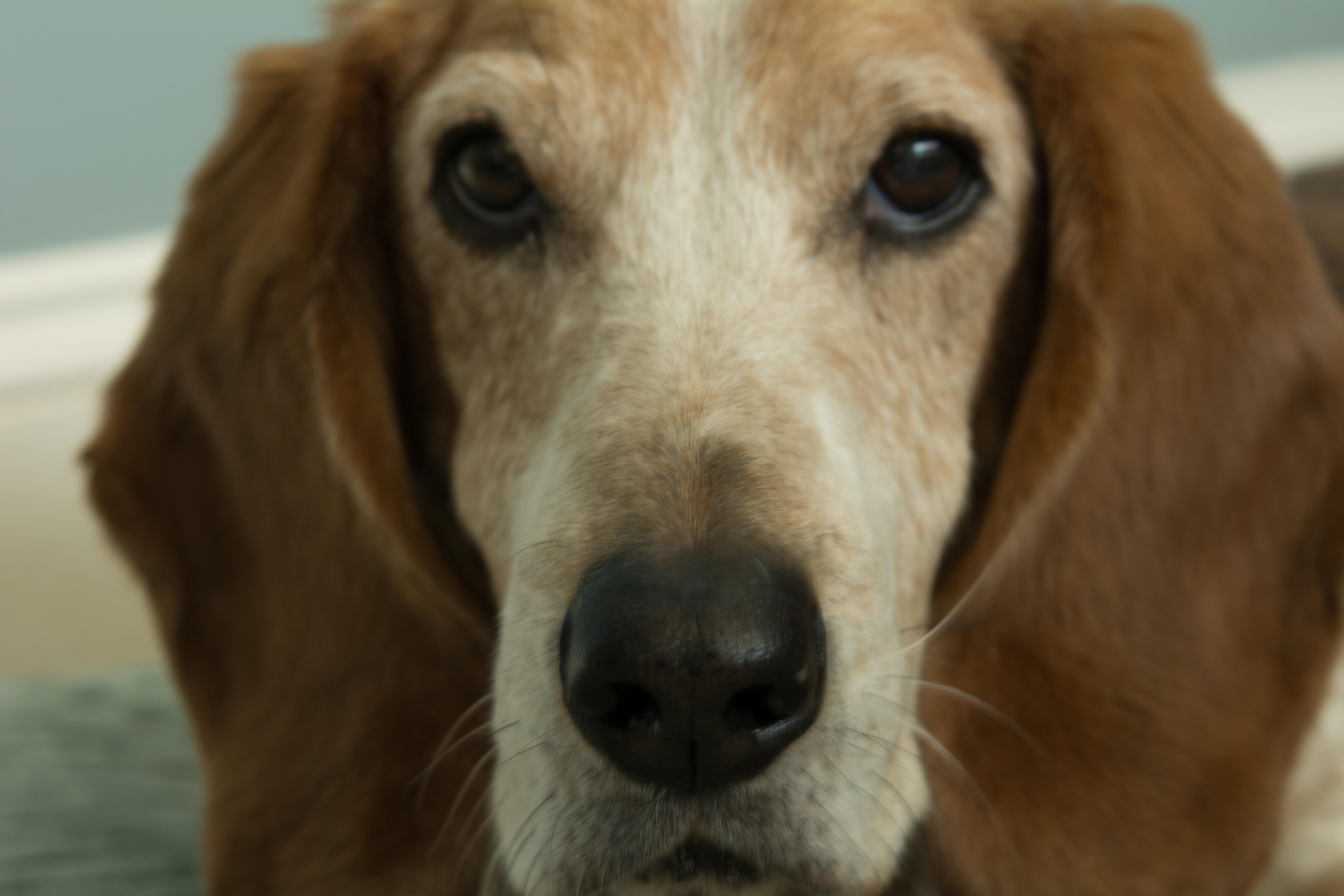
Stuart, our basset/beagle, trotted out to greet me at the door each day when I got home. He’s now twelve, and while still, in my opinion, the world’s greatest dog, he’s not as spry as in days gone by. But he remains a warm, sensitive, supportive little soul. He came around for a pet more than usual this week, nuzzling his snout against my leg, as though he sensed I needed a little extra support.
14 03 08_7545_edited-1

Which I did. Along with the usual daily stresses and strains, I was dealing with an extra load of physical pain from the ski trip to Colorado. My sunburned lip really hurt, which sounds minor, but actually seemed major – my face felt like a giant stinging throbbing lower lip. My left should was tender and bruised from a crash in the trees. So was my right leg, which had the mother of all bruises – a huge area of purple, brown, and yellow, shading to black. The leg bruise worried me a little, because I couldn’t remember a fall that could have caused it. It just appeared. Then came the lump.

On Wednesday morning in the shower I felt a lump the size of a golf ball in the inside part of my leg behind the knee. I immediately thought of my friend who’d recently survived a deep vein thrombosis – that is, a blood clot in a leg vein, which if untreated could have been fatal. He had a battery of tests and emergency surgery, followed by months of blood thinning medication – all complicated, time-consuming, and unpleasant, but he got through OK. I gave him a call and confirmed that my symptoms sounded similar, and quickly called my GP, only to learn he’d recently closed his practice. His answering machine suggested trying an urgent care facility.

At this point I felt sure I was going to have a very bad day involving multiple imaging tests, surgery, and possibly death. The more I thought about it, the more certain I was that this was the end. I’d miss the spring blossoms and butterflies in Raulston Arboretum, the migrating warblers, the Carolina Ballet’s Romeo and Juliet, diving in Dominica, and the new season of Railhawks soccer. I would never taste another one of Sally’s delicious margaritas. Oh woe.

Of course, it turned out to be nothing. An experienced nurse practitioner took a careful look and diagnosed it as either hematoma or lipoma, which would become clearer in a week or two. She was familiar with deep vein thrombosis, which she said would be in a different place on the leg. I felt resurrected! Before me was a good long stretch of the road of life (assuming no freak accidents, major diseases, or other catastrophes).
14 03 08_7563

I had another piano lesson with Olga Kleiankina on Saturday, and as usual, she was inspiring and challenging. I played a famous Brahms waltz (A flat major), a tender and touching thing which I heard on the radio recently and decided to work up. There are no serious technical challenges; the challenge is to make it musical and fresh. Olga’s approach was to work for different tonal colors for each hand. This takes a combination of extremely close listening and subtle muscle control (not just the hands, but even more the arms and back).

I also played Rachmaninoff’s Elegy, a lyrical and tragic piece which I thought sounded good — until she began to disassemble it. It seems I was playing it too much like Debussy, without enough firmness and depth. She was not persuaded that I really understood the structure of the piece, and encouraged me to practice the broken chords as block chords to get it under better control. The journey continues.
14 03 01_7606

I’ve been reading Play It Again, by Alan Rusburger, editor of the Guardian newspaper and an enthusiastic amateur pianist. His book is organized around his quest to learn Chopin’s first ballade (g minor) while at the same time publishing the Wikileaks leaks and performing other journalistic feats. It’s touching that he loves the Chopin piece so much, and I can relate, having also spent a good deal of effort working on it some years back. I was struck by the odd combination of musical sophistication with a certain naiveté. It was clear to me from the first few pages that he taking on a piece that was just too far beyond his capabilities, and was likely to spin his wheels for quite a while. But I admired his pluck, and was glad to learn of others like me who with no hope of gain or worldly honor pour a big part of themselves into this music and tradition.

On Sunday afternoon I went to a concert by the young American violinist Rachel Barton Pine, who was accompanied by Matthew Hagle on the piano. The concert included works by Schubert, Prokofiev, and Franck, and a selection of lullabies that Ms. Pine had collected after having a baby. She was an excellent musician, both poised and passionate, with lovely tone and interesting variety of tone. She also seemed like a friendly, down-to-earth person, to judge from her spoken introductions. She plays a famous violin made by Joseph Guarnerius del Gesu in 1742, which Brahms himself singled out for its beauty. For an encore, she played a funny but fiendishly difficult showpiece which I think she said was by Bezzeti. She tossed off with vigor and charm, earning a standing ovation. Kudos also to Mr. Hagle, who was also an excellent musician, and a sensitive collaborator.

Birds of paradise, Dvorak, and Puccini

On Saturday afternoon I walked over to the N.C. Museum of Natural Sciences to see the Birds of Paradise exhibit. I loved it! It was about the exotic and colorful species that live mostly in the rainforests of New Guinea and Australia. There were sections on early European encounters with the birds and the efforts of trailblazing naturalists, but the heart of the exhibit was gorgeous recent photos and videos by Tim Laman, who worked in partnership with ornithologist Edwin Scholes.

In 2004, these two brave souls undertook to document all 39 species of birds of paradise. This required numerous expeditions through dense forests and up into the mountains. Some of the species do their amazing displays in the treetops, so documenting them required building blinds high up in trees and sitting there for days at a time. Getting to the sites and getting the shots sounded more like the first ascent of Everest than a bird walk. This was high adventure. There’s a good web site about their work here. For an aspiring nature photographer, it was really inspiring.

And the birds are amazing! Some have iridescent colors, and others have wire like structures coming out of their tails. Some can transform their shapes into modernist sculptures. Their mating displays are hugely dramatic. It made me feel privileged to live on planet earth, where remarkable adventures are still possible, and such amazing creatures still exist.

We went to the N.C. Symphony that night, and heard Dvorak’s 7th Symphony. The orchestra was led by guest conductor Christian Knapp. Described in the program as “one of today’s foremost young conductor’s,” he seemed a bit shy and eccentric when he first appeared, and his gestural style seemed quirky and unathletic.

But he could play the orchestra! By that I mean, the orchestra was his instrument. He had a strong artistic vision, and the will to shape the music. His rhythmic flexibility was a welcome change from Grant Llewellan’s typically more foursquare approach. As Olga, my piano teacher, observed recently, the music is supposed to be interesting, not boring, and to make it interesting we have to find rhythmic solutions that go beyond the metronome.

On Sunday morning it was too chilly for golf. I took some pictures with my new wide angle lens, then went to O2 Fitness for a two-hour workout. I had success with my handstand (on the eleventh attempt)! I was focusing on doing a good variety of functional movements along with a lot of cardio: jumping rope, rowing, running, stairs, and elliptical. My average heart rate over the two hours was 135, with a high of 161, and I burned 1537 calories.

We had tickets to the Sunday afternoon performance by the N.C. Opera of Puccini’s La Boheme. I was planning to go mainly to give our local musicians some moral support, and wasn’t especially looking forward to it. In the past, I’ve found Puccini not quite to my taste – overly lush, with big, obvious emotions, and not much subtlety. But I also recognized that his music is dense and complex, and thought I might get him better if I listened more.

I’m so glad I didn’t skip it. This was a visually and musically spectacular production that was satisfying on every level. The sets by Peter Dean Beck were highly evocative (a long step up from NCO’s usual standard). The costumes were expressive and lively. The orchestra was a group of experienced professionals who sounded great. Guest conductor Robert Moody seemed to have a good feel for the music and good rapport with the singers.

The leads were all good, and tenor Eric Barry as Rodolfo was terrific. He did his big arias with great sensitivity and feeling, but he also had a sweet, funny presence, and good chemistry with his Mimi, Angela Fout. I enjoyed her singing, too, which I didn’t find quite as technically satisfying, but did find very expressive. Baritone Troy Cook as Marcello was also a fine singer and good actor. The chorus sounded good, the children’s chorus sounded good, and even the marching band sounded good. The crowd scenes were wonderfully staged – very lively. The English subtitles, projected above the stage, were also well done.

But the really amazing thing was how all these performers and technicians came together, melding into something that was, for 2:40, a complete world. This is the magic of opera. I really was drawn into Puccini’s vision of 1840s Paris and sweet, romantic, artistic Bohemians, and I cared about those dreamers. I got quite misty when poor Mimi died. It was a complete, powerful experience.

A beautiful Nutcracker, Xmas spinning, and getting ready for Fiji (including ebooks)

13 12 21_5389

We were on the fence about whether to go to the Carolina Ballet’s Nutcracker ballet this year. There have been many lovely Nutcrackers, even enchanting Nutcrackers, but after many years of cracking, I worried that the magic might be wearing a little thin for me. That Tchaikovsky music is great, but also very, very familiar. It would be a shame to find that the thrill was finally gone. But Will Levine, son of our friends David and Maggie, dancing the nephew/nutcracker/prince, we decided to go again.

I’m so glad we did. It was a particularly touching and magical Nutcracker. Having a live orchestra to play that delicious music really helped, and this was a good band, ably led by Al Sturges. There were the cute little kids and sumptuous costumes and settings. But most of all, there were the dancers. The Carolina Ballet has so many talented artists just now. They looked like they loved their work.

The star of the evening was Lara O’Brien as the Sugar Plum Fairy. Her SPF was elegant and assured, highly musical, with a slight note of tragic grace. Her pas de deux with Marcelo Martinez was beautiful and moving — so passionate – I got a bit misty.

Also especially wonderful was Alicia Fabry as Butterfly (the lead in the Flowers waltz), and newcomer Alyssa Pilger as the lead Ribbon Candy. Young Will did well, to the relief of his parents, and us, too. As in past years, there were a couple of little kids who could do fantastic handsprings, and big boys whose leaps seemed to defy gravity. It was all delightful. It took me into a magical place, in equal parts childhood fantasy and nostalgia, and reminded me of many happy times gone by.

In other Xmas news, I had an holiday-themed spin class at O2 this week led by the fabulous Jenn. She announced at the start that she just loved Christmas, and she’d made a special Christmas tunes mix for our spinning pleasure.

It turned out to be some hard-driving rock songs of the season, and she kicked us into a very high gear. There was lots of sprinting (including a killer sequence of fast, faster, and fastest) and intense climbing. One new trick – she can ride out of the saddle with no hands, and she thinks we can, too. I gave it a shot, and verified that it is not easy. Anyhow, the class was fun, in a brutal kind of way. I knew for certain at the end I had worked out.

For our holiday, Sally and I are heading out for a scuba diving trip to Fiji on Monday, which should be incredible. It’s taken a lot of planning, and the logistics are complicated. There are quite a few important pieces of dive gear, photo gear, and other stuff that must not be forgotten (some of which is pictured above).

In addition to all those details, I’ve given some thought to what books I want to read. Reading time is one thing to like about long flights. My tablet device makes it easier (less heavy) to carry a lot of books, but pre-loading was necessary, since I don’t expect to have much if any internet connectivity. Also, the tablet is not a good reader in direct sunlight, so I need some old-fashioned paper books as well.

Here’s a quick listing of my current books-in-progress and new ones that I may get going. The are ebooks unless otherwise noted.
.
Titan: The Life of John D. Rockefeller, Sr., by Ron Chernow. I figured it would be fairly interesting to find out how the Rockefeller became the most successful monopolist in history, and it has been, fairly. Rockefeller was a very driven person, with a high standard of personal morality (a lifelong Baptist) and a low standard of business morality. His trust was a primary inspiration for the beginnings of modern antitrust law.

Big Data: A Revolution That Will Transform How We Live, Work, and Think, by Viktor Mayer-Schonberger and Kenneth Cukier. I’m about done with this one. I don’t think the title is much of an exaggeration – big data is transforming many fields, including retail, finance, education, and medicine. definitely worth thinking about.

The Signal and the Noise: Why So Many Predictions Fail – but Some Don’t, by Nate Silver. The creator of the FiveThirtyEight blog and impressively successful political prognosticator talks about his methods and related things. Based on the first chapter, it appears somewhat padded as a book.

The New Digital Age: Reshaping the Future of People, Nations, and Business, by Eric Schmnidt and Jared Cohen. I picked this up out of curiosity regarding what the chairman of Google was thinking would come next. I’m about half way through, and finding it not particularly well organized, but there is interesting reporting and thinking on how technology is reshaping our lives. The portion on hacker-terrorist is hair-raising.

Rattling the Cage: Toward Legal Rights for Animals, by Steven Wise. The author recently brought a habeas corpus action on behalf of a champanizee, which struck me as a legal long shot, but interesting, and I was curious about his theory.

Ordinary Men, by Christopher Browning. A history of a small group of regular joes who worked at ground level as part of Hitler’s final solution. For a long time I’ve been interested in the question of how otherwise normal people could participate in mass murder on an industrial scale, and Browning sheds some light on this.

The First American: The Life and Times of Benjamin Franklin, by H.W. Brands. Franklin is by far my favorite founding father, and I’ve read most if not all of the other major contemporary biographies of him. Earlier this year I read Brands’s American Colossus: The Triumph of American Capitalism 1865-1900, and thought it was quite good, so I’m looking forward to getting his view of Franklin and his world.

Reef Fish Identification (Tropical Pacific), by Allen, Steen, Humann, and Deloach (in paper). There are an amazing number of amazing reef fish in the Pacific, and it’s fun to know a bit about them.

Zukerman Bound, by Philip Roth. I got this as a used paperback (price $4.50) of the three Zuckerman novels (The Ghost Writer, Zuckerman Unbound, and the Anatomy Lesson). Roth is my favorite living novelist, and for some reason I hadn’t read these key works of his early middle period. It will be a great pleasure.

The Odyssey, by Homer, translated by Robert Fagles. A classic, obviously.

Leaves of Grass, by Walt Whitman (paper). The embodiment of what is great – and strange – about America. It seems like a good time to read it again.

My fabulous teachers (fitness, yoga, and music) and seeing Dallas Buyers’ Club

13 12 12_5362

Our geranium on the balcony is a true survivor! Here we are in mid-December, after several nights sub-freezing nights, and it still looks perky. Sally asked me to take a picture of this marvelous plant, and so I did — several in fact, but these are the best.
13 12 12_5368
Getting out of a rut and trying new things takes some energy and effort. It also really helps to have a good teacher. As I came into the home stretch of this week, it struck me that I’m fortunate to have found several such teachers, who’ve been helping me with fitness, yoga, and music.

First, there’s Larisa Lotz, who is my regular personal trainer each Thursday at 5:30 a.m. at Studio Revolution. I always look forward to it, because there’s an element of play and fun, but I also always find I’m barely able to make it through. This is not by accident, of course. Larisa has got my number, and knows about where my limits and weak points are. And she works on those weak points – which get stronger.

This week, as usual, she had some new activities and combinations. For core work, I had a side plank with the top leg pulling in and kicking out to the side, and a TRX suspended push up from the ground followed by drawing the legs in. She had me throwing a soft heavy medicine ball as high as possible, to work on “explosive energy,” which she said was a gap in most people’s fitness regimen.

We did some agility drills with quick stepping in various patterns through a rope ladder. We also did some sandbag work, including a fast intense series with dead lifts, cleans, squats, presses, and rows. And several other things. I took home several ideas for new things to work on.

On Friday morning I got to O2 Fitness at 5:35, and did some of Larisa’s hip and leg exercises and some more traditional upper body work – chin ups, dips, push ups, rows, and presses. Then I took my weekly RPM spinning class with Christy. This class involves dance club music of the throbbing, driving sort, which is not my favorite music, but it makes the hard biking in place in a dark room relatively fun. Our class on Friday involved more sprints than usual. I kept an eye on my heart rate monitor so as not to redline for too long. I topped out at 162 – high, but with all that effort, I was surprised it wasn’t a little higher.
13 12 12_5376

Later that day, at lunchtime, I shot over to Massage Wallah for some therepeutic massage work with Emily Alexander. My neck and shoulders were in need of special attention, so that’s what she worked on. This was my second session with Emily, and it was fairly intense, but good. Emily is not overly chatty, which I appreciate – it’s good to concentrate on the sensation. But I asked her about her story, and learned that she, like me, went to high school at the N.C. School of the Arts, and went on to film school at NYU and movie and TV work in Hollywood. We compared notes on digital cameras. My neck was much better afterwards, and I thought my shoulder was improved.

On Saturday morning I went to Yvonne Cropp‘s Juicy Flow yoga class at Blue Lotus. This is an hour-and-a-half class that combines traditional vinyasa work with kriya practice, which as presented by Yvonne involves three minute or so segments set to dance music with rhythmic movements working different muscle groups. It definitely gets the heart going. I ordinarily can figure out the exercise, but there is one I can’t: rolling backward, then forward and standing up without using the hands. Most of my fellow yogis were doing it, so it’s definitely possible. Another challenge for the future.

It was rainy on Saturday afternoon, which was good weather for a piano lesson with Olga Kleiankina. I played Debussy’s second Arabesque and the first movement of Bach’s Italian Concerto. As usual, Olga made me aware of some new dimensions of sound. We spent a long time working on the silences around the staccato notes in the Debussy. Along with a number of such tiny details, we worked on rhythm in connection with the larger structures.

For the Bach, she pointed out that one could never mistake Bach for Mozart, because Bach made much more use of interior parts of the measure for beginning and ending phrases – sort of like syncopation. She showed me how certain accents and timing tricks would bring the piece to life. Of course, knowing about it is one thing, and doing is another. It will take practice.

That evening Sally and I went out to Cary for dinner and a movie. When we go to the Regal at Crossroads, we like to eat at Tom Yum Thai, where the food is delicious and the service warm and friendly. They will take you at your word if you require things very spicy, and for me medium spicy is about right.

During dinner we talked about Dasani, the eleven-year-old homeless girl featured in a series of five articles in the Times this week. She’s a plucky, smart, athletic kid who faces very long odds at the bottom of the economic food chain. We got to know her large family, her teachers, and her homeless shelter in Brooklyn, where the conditions were dire. The series, by Andrea Elliott, is an extraordinary window into the world of poverty – well worth reading.

We saw Dallas Buyers Club, which concerns a macho Texas rodeo-type guy who gets AIDs in the 1980s and starts a business supplying unapproved AIDs drugs to the gay etc. demimonde. There are some colorful and funny characters, and a tour de force performance by Matthew McConaughey. He is almost unrecognizable, very gaunt, with a ton of grit and attitude. Of course, the subject is tragic. It reminded me of the first wave of the AIDs epidemic, and some of my own precious friends hid in death’s dateless night.

Sleepwalking, yoga, Bach, Schlosser on the nuclear precipice, and Spiegelman’s Maus

13 12 07_5337
So I apparently had another bizarre sleepwalking experience. After what seemed like a normal night’s sleep, I got up to find several unusual things. There were two wine glasses full of beer on the coffee table – one sitting on top of my laptop. There was a bowl with popcorn kernels, and a lot of popcorn on the floor. In the kitchen, the light on the stove hood vent was on, and the microwave popcorn wrappers were strewn about.

My first thought was that we’d had a break in, but the various quasi-valuable things in the vicinity were still around, and the door was locked from inside. That left just two possibilities – Sally and me. When she got up, she verified she had not knowingly done any of this eating and drinking.

From my prior somnambulism, I figured it had to be me. But I had absolutely no recollection of any such activity. And I would never, ever put beer in a wine glass – or worse, set the glass on my computer! And I did not know exactly how to operate the light on the stove hood, which I never use.

It is very strange to think of such complex activity happening without any consciousness whatever. Eating and drinking without meaning to is bad, but it could get worse. Is there any safety module that keeps the sleepwalker from going over the balcony rail? And falling twelve stories?
13 12 07_5349

In the last few days, I’ve taken note of various waking automatic behaviors and strange forgetful episodes. I expect everyone has some. Did I take that pill already or not? I parked that car, but where? My foot is bouncing up and down, which I did not tell it to do. Sally had a good one: she couldn’t find the pomegranate juice, and looked high and low, before realizing she’d already gotten it out of the refrigerator.

So a lot of our behavior is taking place without our consciously knowing anything about it. This is at times surely a good thing, allowing us to save mental energy for where it’s most needed. Cultivating good habits is partly an accommodation to the reality that there’s just not enough time or energy to think about every behavior. We choose a template that we think is likely to be effective in different future situations and repeat it until it is automatic.

But still, sleepwalking is pretty weird.

13 11 27_5360-1

Some yoga

The weather for most of this week was unseasonably warm and sunny, but it turned cold and rainy for the weekend. So no golf, but I did get in two yoga classes. On Saturday morning Suzanne filled in for Yvonne at Blue Lotus, and led an hour-long open level vinyasa class. She kept things flowing pretty fast, which I like, and I did a reasonable amount of sweating.

On Sunday morning, based on the recommendation of Larisa (my personal trainer), I tried a class with Hayley at Evolve. Her style involved holding poses for longer, which was challenging. When she said we’re going to do hand stands, I was surprised, but game. I managed to kick up and stay up for a while against the wall. Then Larisa asked Hayley to give me some pointers, and I had another go and managed to have a fairly spectacular crash. But I learned something: Hayley theorized that I got a little surprised when I touched the wall and let my elbow bend. Onward and upward.

Bach’s Christmas Oratorio

On Saturday night we had a fine Italian dinner a Caffe Luna, then went to a performance of the N.C. Symphony and the N.C. Master Chorale of Bach’s Christmas Oratorio. I was not familiar with the piece, but liked it very much. The chorus sounded great in some very challenging choral writing. The four soloists had pleasing voices and style, and the orchestra played well. Our friend trumpeter Paul Randall had a very high and prominent part in the last cantata, and shined.

My only complaint was conductor Grant Llewellyn seemed overly metronomic — without much rhythmic flexibility. I guess that’s one way to do it, but it seemed to me Bach would have liked more expression. We went out for a drink with Paul and a couple of his colleagues afterwards. It was interesting hearing the younger musicians talk about the intense challenges of auditioning for orchestra jobs.

Command and Control — the Nuclear Weapons Precipice

Speaking again of sleeping problems, for several nights recently I had anxiety dreams, inspired, I think, by reading Command and Control: Nuclear Weapons, the Damascus Accident, and the Illusion o Safety, by Eric Schlosser. The headline is: for decades we lived frighteningly close to the edge of an accidental nuclear disaster. A hydrogen bomb could have exploded in any of numerous training or maintenance accidents, while the huge arsenal of missiles could have been unleashed through computer error or human misjudgment.

In the final chapter Schlosser indicates that the risk of an accidental explosion from a US weapon has gone down, but it may have gone up in countries like Pakistan and India. And we’ve still got the irreducible human factor – that is, imperfect humans are in charge of these incredibly destructive weapons, and they could make a bad decision that could cost thousands or millions of lives.

Even before reading the book, I was generally of the view that it is insane to build, maintain, and keep on alert nuclear weapons capable of destroying many millions of innocent civilians and much of the planetary ecosystem – ending, as they say, life as we know it. This was true in the cold war, but even more so now, when there is no existential military threat. Why would any rational person or society do such a thing? After reading the book, and learning more about the theories of nuclear war and the practical engineering problems of the weapons, it seems even crazier.

How can it be that de-nuclearization is not a high priority issue in national and world politics? Of course, we do much hand wringing about Iran’s potential for a nuclear weapon, which makes it even odder that we somehow mostly avoid discussing our own weapons and their disastrous potential. It’s like we’re sleepwalking. Perhaps Schlosser’s book will help us start to wake up.

Maus

On a cheerier note (ha!), I started reading Maus, Art Spiegelman’s graphic novel masterpiece about the Holocaust. It’s in part about Spiegelman’s relationship with his father, who was concentration camp survivor. The early pages are about his life in pre-war Poland, first as a bachelor and then meeting Spiegelman’s mother. It’s surprisingly sweet, but also direct and honest, and remarkably vivid. I’ve never read anything remotely like it, and I really like it.

NYC: finding a nice hotel, good food, great art, and mildly disappointing opera

13 11 24_5292
Sally and I went up to New York City last weekend to see sweet Jocelyn, eat, and see some art and some opera. Here’s a report.

Accommodations

For all the great things about New York, one problem for visitors is that good hotels tend to be painfully expensive. In quest of the holy grail of a nice-but-not-exceedingly-dear hotel, we tried a new one: the Carlton, at Madison and 28th. Perhaps because it’s not in a high-profile neighborhood, the value proposition is strong: charm, good service, and rooms under $200.

The high-ceilinged lobby was an eclectic-but-stimulating mix of styles (modern, beaux arts, art nouveau). Our room was quiet and comfy. The shower pressure and hot water supply met Sally’s exacting standards. The furniture and fittings were attractive and modern, except for the bathroom sink, which was old school (rounded porcelain with no shelf space). The gym was adequate and available 24 hours. The location was a comfortable walk from the theatre district and within 10 cab-minutes of everything we had planned.

Food

Jocelyn was waiting for us at the hotel when we arrived, and she’d already scoped restaurants and made a reservation for that evening. We checked in, unpacked, and walked one block to Lexington Avenue and an area rife with Indian restaurants known as “Curry Hill.”

The one Jocelyn picked was Chote Nawab. We love eating Indian, although there are common shortcomings: the food often isn’t very pretty (lots of brown), or the atmosphere is a little formal and downbeat. But Chote Nawab was really lively, with many cheerful young people, excellent service, and delicious curries well presented. Jocelyn was as cheerful and lively as any. She was very excited about her new life in New York, and had lots to report.
13 11 23_5301

Art

On Saturday we did two very different art exhibits: the Art Spiegelman restrospective at the Jewish Museum (92d and Fifth) and the Dutch masters exhibit at the Frick (70th and Fifth).

I was generally aware of Art Spiegelman as a comics artist, but until this exhibit had no clue as to his wide range and depth. He uses a lot of styles and reference points, with courage, exuberance and also humility. His masterpiece, Maus, is a graphic novel about his father’s experience in the Holocaust, which established the graphic novel as a serious art form. The sections I looked at were intriguing and moving. After the show, I ordered a copy.
vermeer-670-girl-with-a-pearl-earring

The show at the Frick was headlined by Girl with a Pearl Earring by Johannes Vermeer (1632-75). This is a painting generally regarded as a transcendent masterpiece, and one that I’d been wanting to see for many years. Vermeer’s work is extremely subtle, with seemingly ordinary subject matter, and seeming straight-ahead realism, but a mysterious emotional power.

The Girl is, at first sight, a fairly ordinary girl. But with more time, the painting transmits a more complicated message. She looks as though she’s been surprised, but not unpleasantly so. Could something be going on between her and the artist, as Tracey Chevalier imagined in her novel? Maybe. The painting is ambiguous, but the truth seems just barely out of reach.

She gave me big, long-lasting goose bumps. I enjoyed the rest of the show, which included works by Rembrandt, Hals, and several other Dutchmen of the 17th century, but nothing that was as affecting. I also revisited the Frick’s permanent collection, which is one of the finest small collections of European painting in the world. Henry Clay Frick seems to have been a particularly brutal captain of industry in the gilded age, but still, he had very good taste. However good or bad the motivation for his philanthropy, I’m grateful.

More good food and some opera

After we finished at the Frick, Jocelyn, Sally and I walked across Central Park as the sun was setting. It was getting colder, so we stopped for some coffee, and then made our way to an early dinner at the Leopard, an Italian restaurant on west 67th Street.
13 11 23_5328
Jocelyn’s friend Mike joined us, and we had an extraordinarily fine meal. My ravioli with braised artichoke and a tomato marjoram sauce managed to be both hearty and delicate. We shared two desserts, which were delicious, and lost track of time. It was snowing when we got out on the street, and we had to hurry to Lincoln Center to make the 8:00 curtain at the Metropolitan Opera.

We saw Tchaikovsky’s Eugene Onegin, which is a new production for this season and was completely new to me. I thought the music was gorgeous – as fine as anything Tchaikovsky ever wrote. But dramatically the thing is puzzling and for substantial stretches fairly boring. Why does Eugene reject Tatiana? Why does he ultimately desperately long for her? I don’t know, and worse, the drama didn’t really make me care.

It was quite cold and snowing when we finished the opera at about 11:15, and there were many more people looking for cabs than there were cabs. We walked past Columbus Circle and over to Sixth Avenue, and finally found a cab to get us back to the Carlton.

A little more art
13 11 23_5313

On Sunday we had breakfast at the hotel, and then walked a few blocks up Madison to the Morgan Library. They had an exhibit of Leonardo’s drawings and notebooks, including the famous Codex on the Flight of Birds. Leonardo was, of course, an extraordinary individual – a true Renaissance man, curious about everything in the natural and human world, and constantly innovating, or imagining future innovations.

I didn’t realize how few paintings he made, perhaps because he was so interested in everything. His drawings seem effortless and timeless. But his presumed self portrait in red chalk shows an old, bearded man looking extremely remote and grumpy, if not bitter. It’s hard to reconcile his extreme gifts and imagination, which seem reason for great joy, with this persona.