The Casual Blog

Tag: Met Breuer

Visiting the Lower East Side, Turandot, recent Chinese art, and The Patterning Instinct
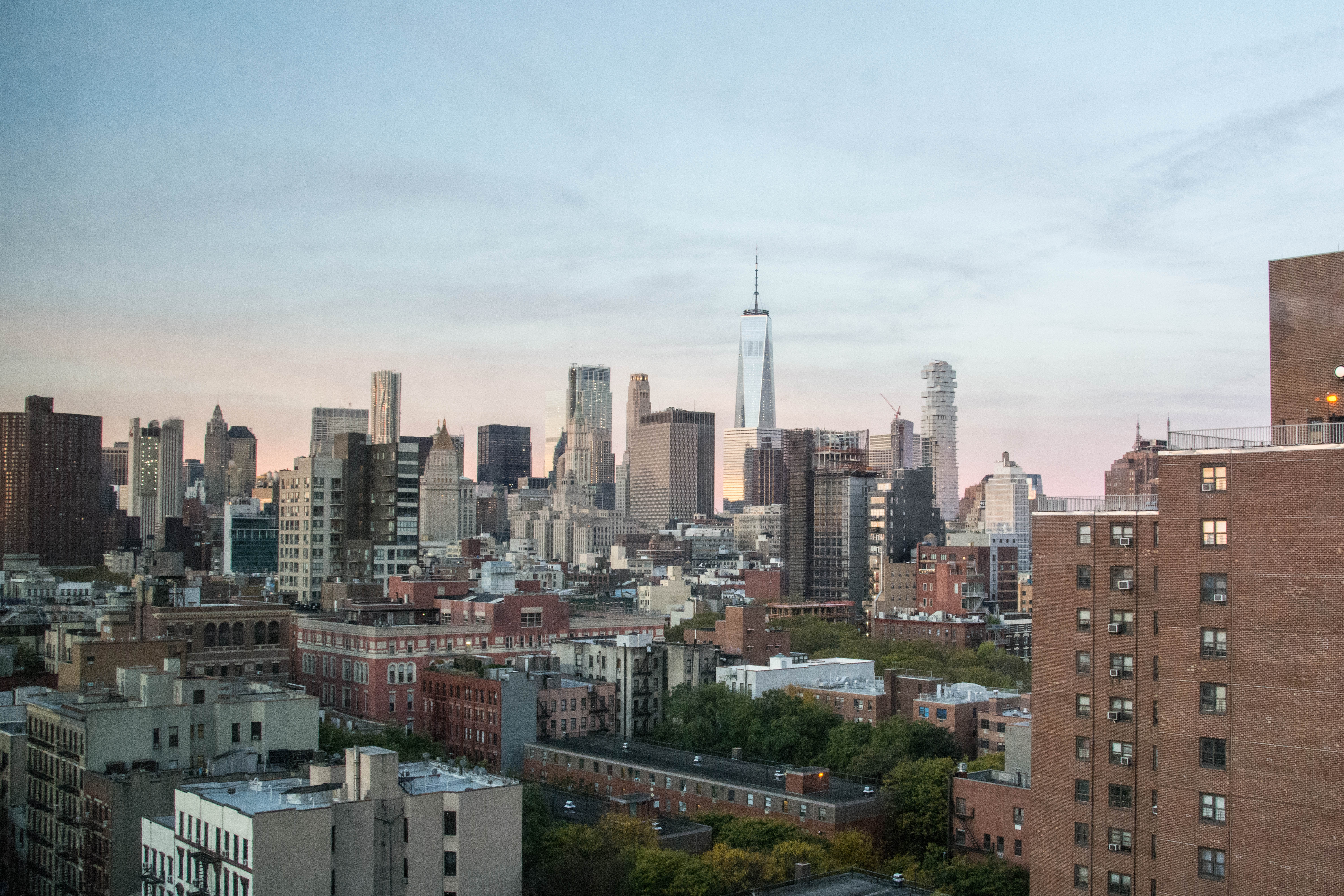
Looking southwest from the Sixty on Allen Street

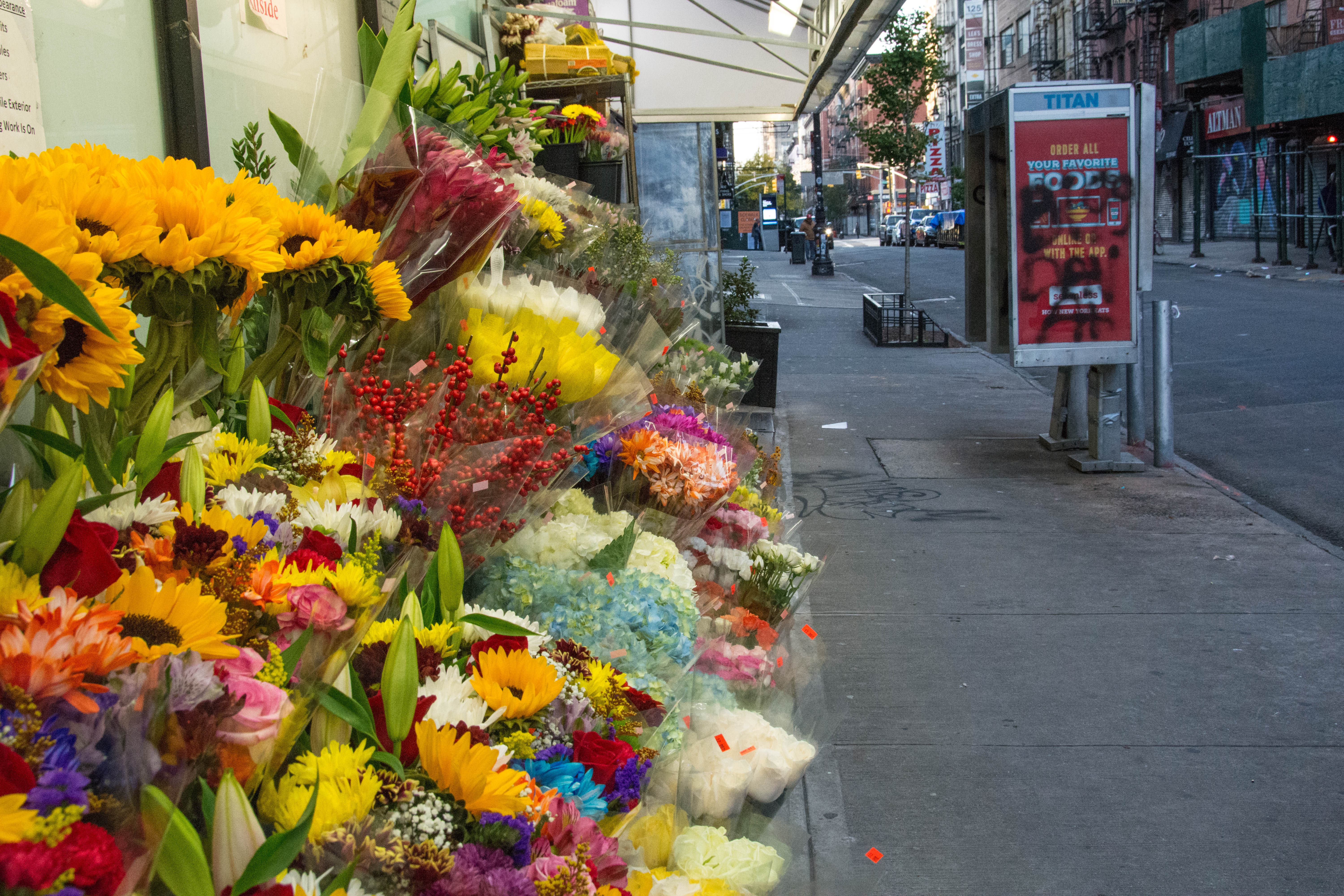
Friday before last I went to the Software Freedom Law Center conference, and afterwards Sally and I stayed on in New York to see friends and take in some art and music.  We stayed at the Sixty LES (Lower East Side) near Jocelyn and Kyle’s new apartment.  Back in the day, we viewed this neighborhood as a place to be avoided after dark, but now it’s what Soho and Chelsea used to be — a lively and relatively affordable area where young people live and new art can be made.  It hasn’t yet been completely gentrified — there’s graffiti and trash, and little Bohemian businesses.  I enjoyed walking around early in the morning and taking pictures, including the street scenes here.
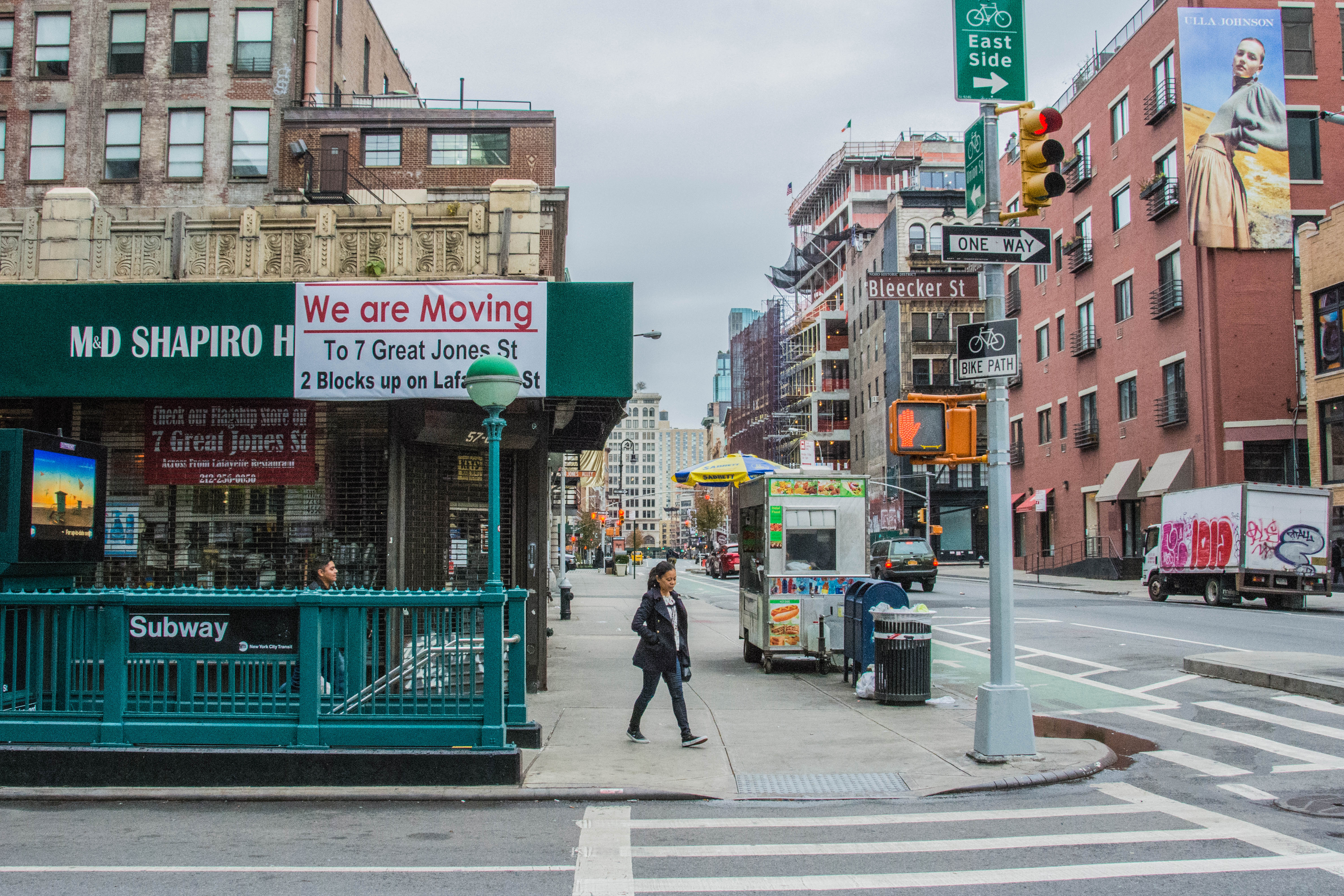
We Are Moving

We went to the Metropolitan Opera on Saturday afternoon and saw Puccini’s last opera, Turandot.  My only prior experience with Turandot was from recordings, and I had not particularly loved  the music.  The story,  involving a Chinese princess who murdered all her suitors, seemed far from alluring.

Nevertheless, I absolutely loved it.  Opera is a hydra-headed art with many elements, and here the music, sets, costumes, and acting made a compelling whole.  For this story, Puccini’s music worked brilliantly.  The Zeffirelli production looked fantastic, the orchestra sounded great, and the chorus was excellent.  Sopranos  Oksana Dyka and Maria Agresta sang beautifully, and the tenor, Aleksandrs Atonenk, absolutely killed in the famous Nessun Dorma aria.  
Also on Saturday, we spent some time at the Met Breuer looking at  the photographs of Raghubir Singh and at the Met looking at the old masters drawings exhibit, Leonardo to Matisse.  On Sunday, while Sally went with Jocelyn to see the NYC marathon, I went up to the Guggenheim to see Art in China after 1989.  In that year a decade of relative political freedom in China ended with the Tiananmen Square massacre.  Young Chinese artists went in various directions, with many leaving China, and in various landing spots looking to express their political and personal concerns. There were 71 artists and groups represented, and multiple media and approaches.  Not all of them spoke to me, but a few did, powerfully.  
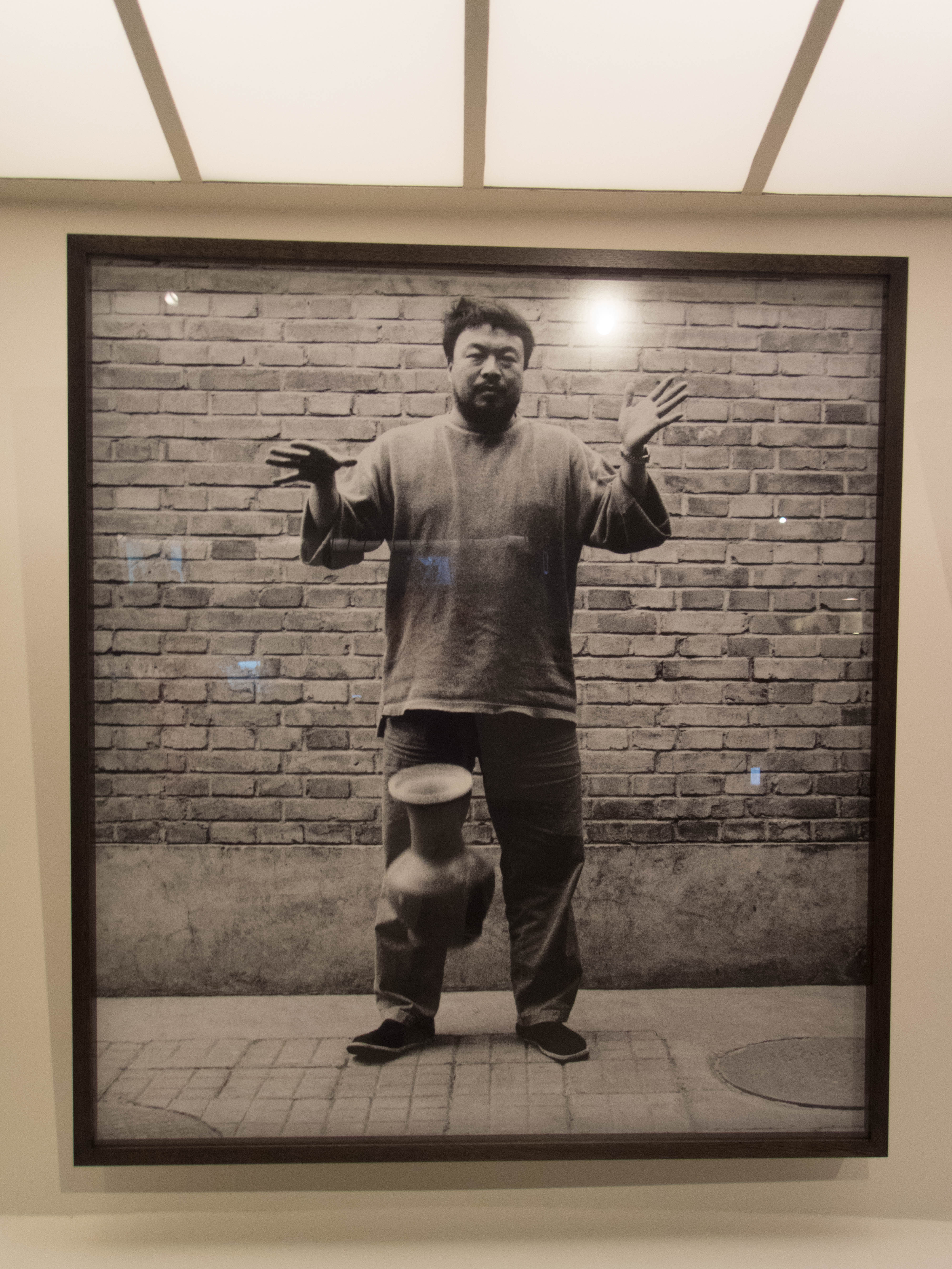
Ai Weiwei breaking a Han dynasty urn

One of the best known artists in the show is Ai Weiwei, whom I’ve found inspiring as a dissident thinker and conceptual artist.  One of his works here was a room that brought to light thousands of  unnecessary deaths of school children in the 2008 Sichuan earthquake due to a corrupt system and  shoddy construction of schools.  The work was as much journalism as art, but that was not by accident.  In the exhibition notes he is quoted as saying, “Fight for freedom.  Forget about art.”   I don’t think he means to be taken literally on the forgetting part, but he’s serious about the fight.   
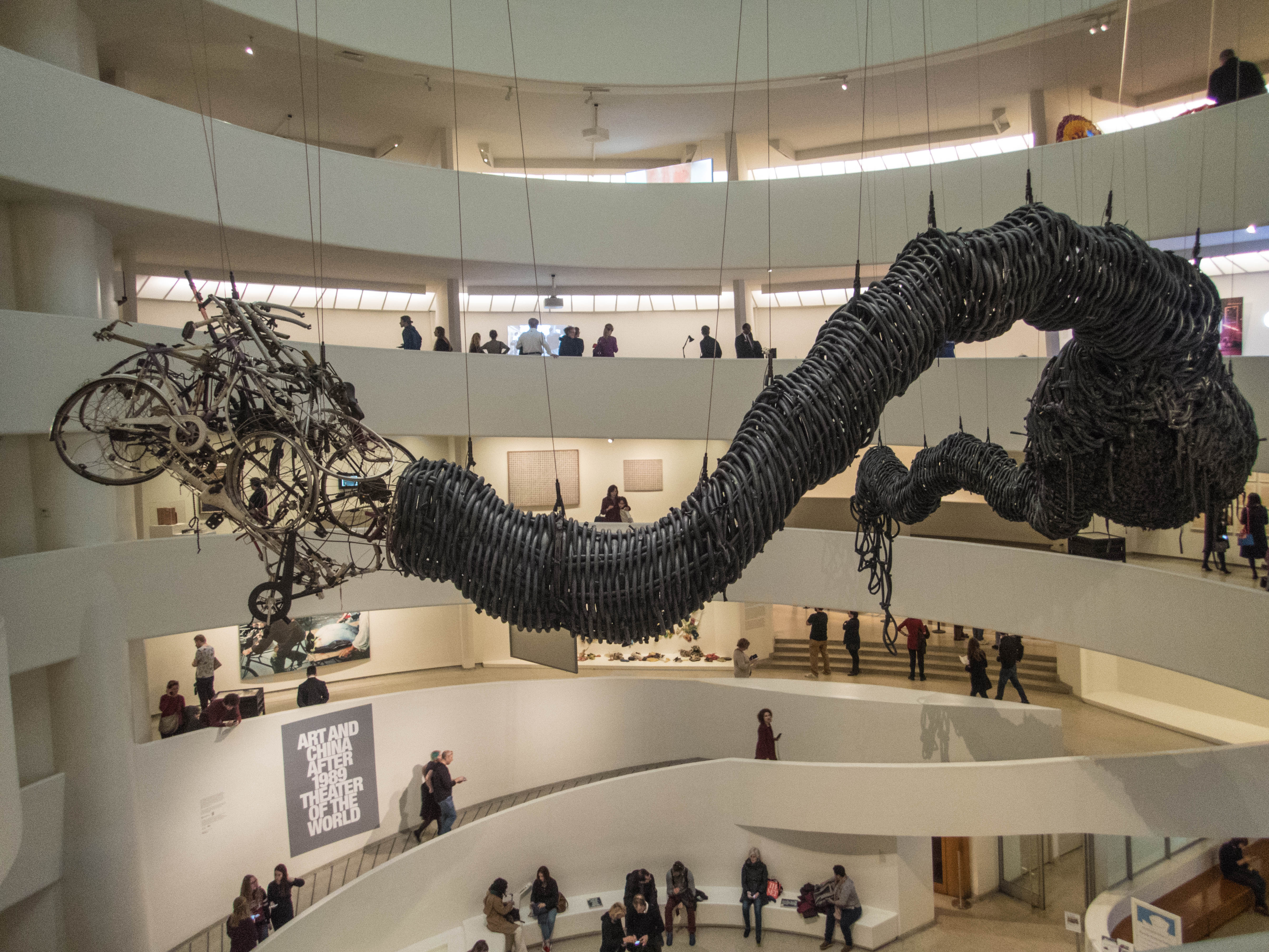
Chen Zhen’s dragon

The big hanging sculpture  by Chen Zhen of a dragon made of bicycle tires and parts was delightful and thought-provoking, invoking China’s shift from bicycles to cars and other technology.  I also liked Chen Zhen’s upside down Buddha room which had little Buddha statues, parts of old computers and other detritus hanging underneath a suspended garden.   Liu Dan had a large work that evoked traditional landscape painting but with a severe twist.  Others used video with varying degrees of success.  I liked the one that had a dozen or so monitors showing people scratching.  
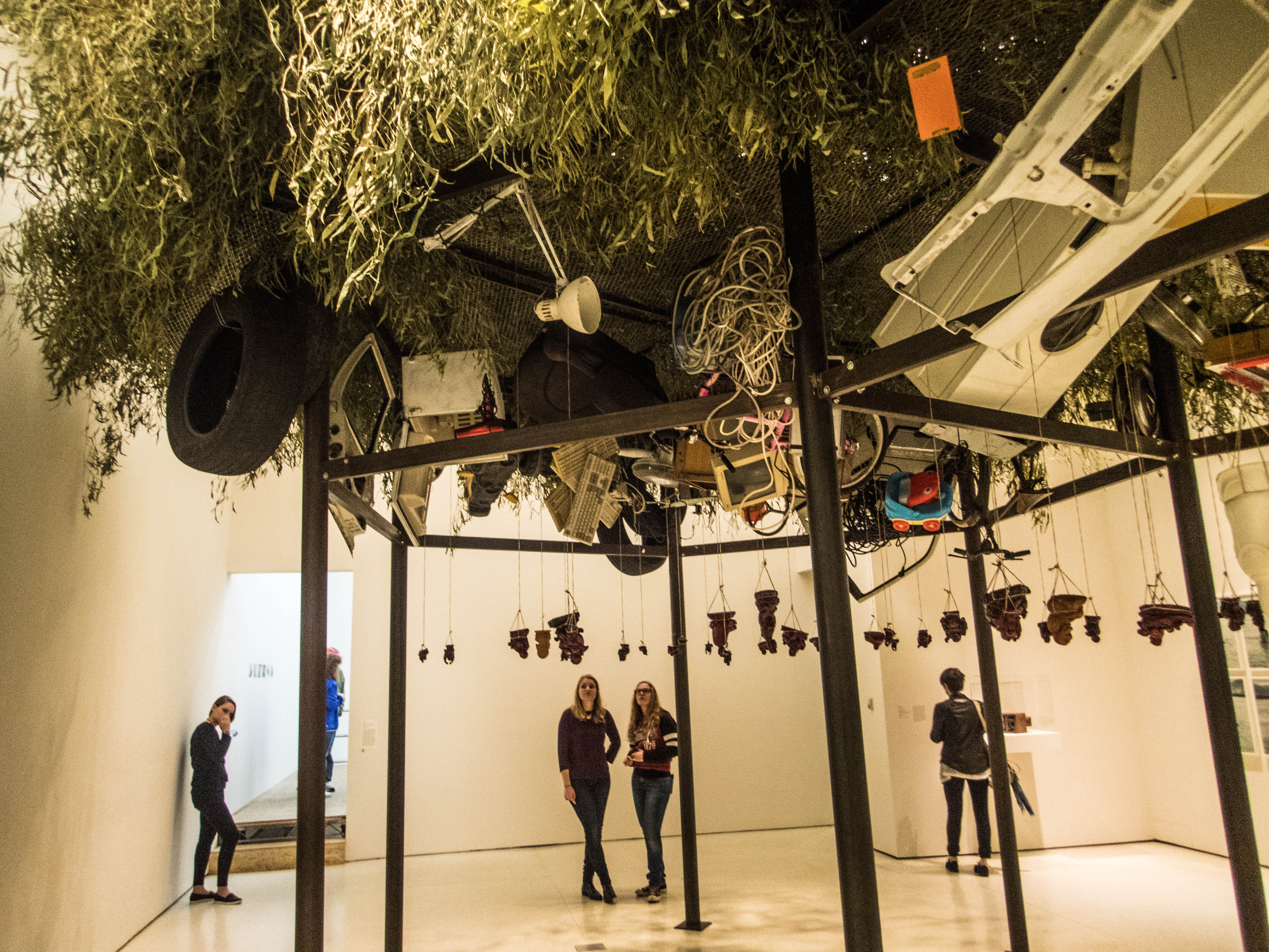
Chen Zhen’s upside down Buddhas

Most of these Chinese artists had been influenced both by their traditional culture and by Western culture, just as we in the West are absorbing Asian influences. I’ve been reading a new and intriguing book about how cultures are made and evolve:  The Patterning Instinct, by Jeremy Lent.  Lent traces the development of several Eastern and Western foundational ideas, including Taoism and neo-Confucianism, which he argues have been successful and remain vital.  He also contends that certain core ideas of monotheism and science, including the mandate to dominate nature, are closely related to each other and are drivers in our global ecological crisis.  There’s a lot in the Patterning Instinct to process, which is why I’m now working my way through it for a second time.  
 

In New York with my kids, and a Snap Pea dinner in Raleigh

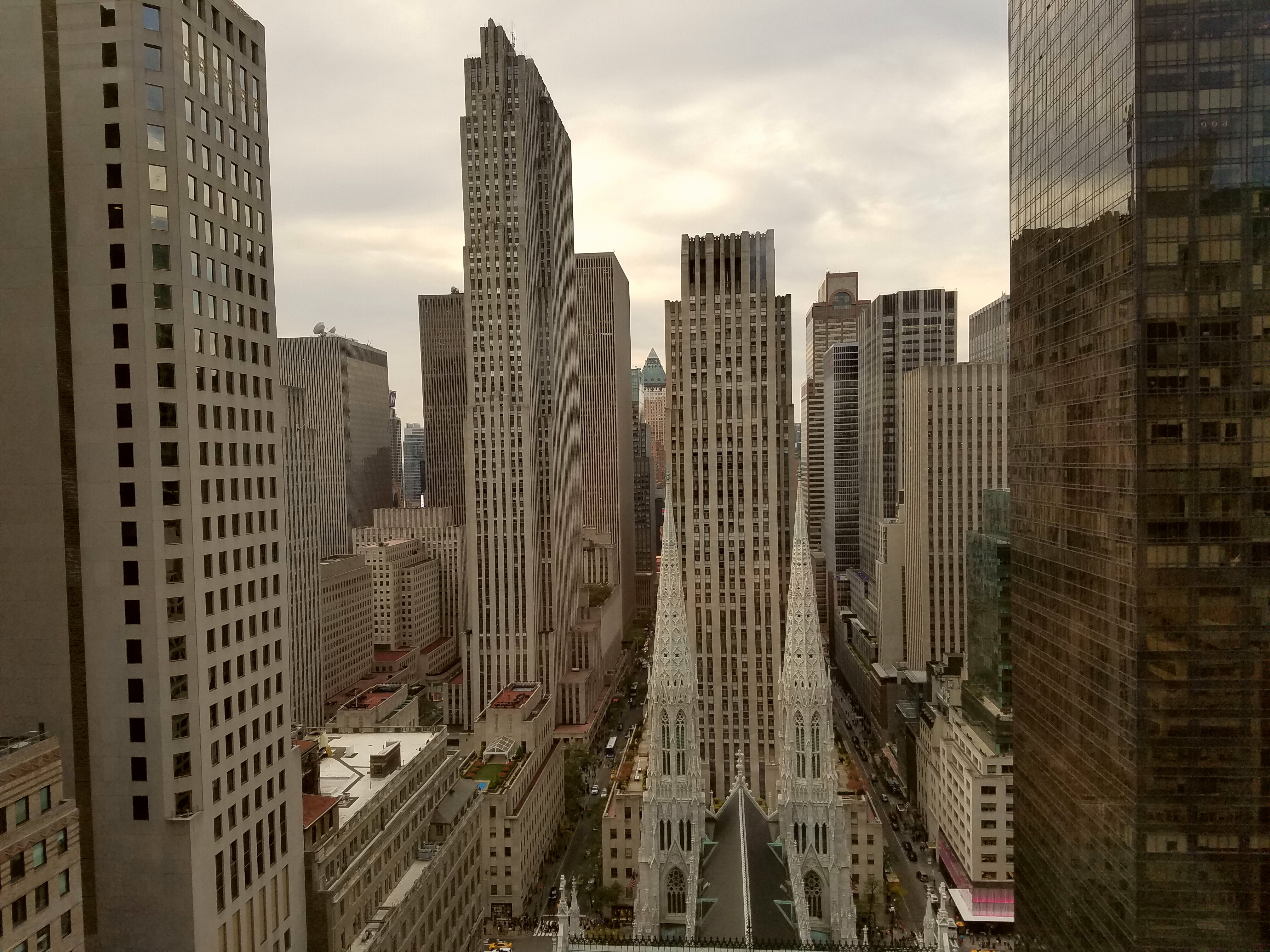
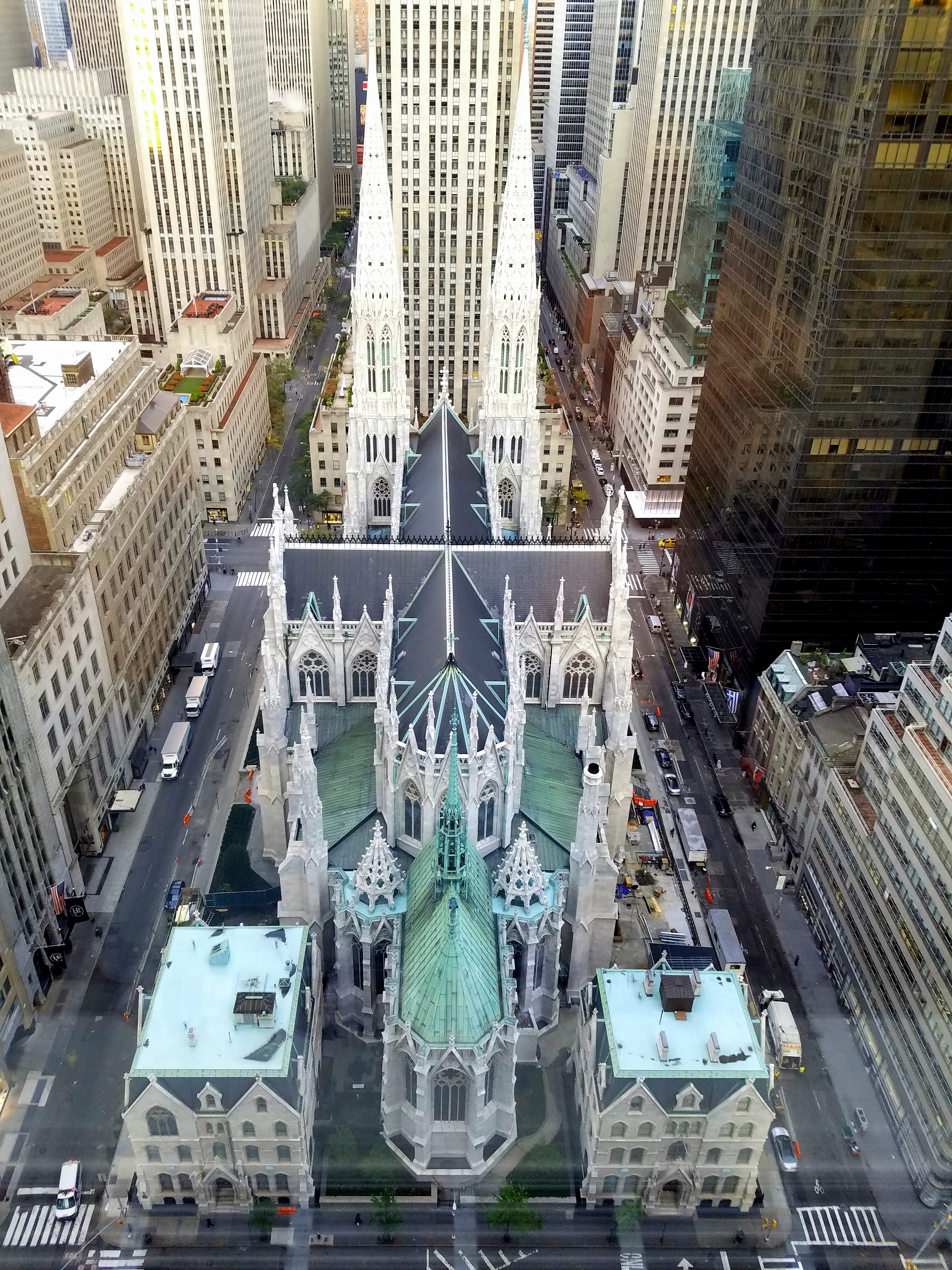
St. Patrick's Cathedral from the 35th floor of the New York Palace

St. Patrick’s Cathedral from the 35th floor of the New York Palace

After the Softer Freedom Law Center conference on Friday, I grabbed a cab and headed downtown. The plan was to meet up with Gabe, Jocelyn, and J’s friend Kyle for Italian food and then some jazz. I allowed an hour for the trip from Columbia (116th St.) to the West Village, but the traffic was epically bad, and the trip took almost two hours.

My cabbie was a compulsive talker, and he really wanted to talk about Trump. Out of desperation for another subject – any subject — I started asking him about himself, and learned about his upbringing in Ecuador, his work as a commercial printer with diminishing opportunities as those jobs moved abroad, and his plans to move to California. I ended up liking him.

Olio e Piu, a fine Italian restaurant on Greenwich Ave., was crowded, but they quickly got us a table. My ravioli al funghi was to die for. Afterwards, we walked over to the legendary Village Vanguard and listened to a quartet led by the pianist Enrico Pieranunzi.

Pieranunzi had the elegant pointillism of Bill Evans joined with the percussive emotionality of McCoy Tyner. His original charts were both engaging and bold, and three bandmates were excellent. I particularly loved drummer Clarence Penn, who was a hard-driving yet subtle polyrhythmist with a huge smile, and tenor Seamus Blake channelled the smoldering intensity of John Coltrane. I couldn’t find any online recordings of this current group, but here’s a sample of Pieranunzi’s playing.

st-pats-and-city

On Saturday afternoon Gabe and I went to the Frick. Since he’s well along in his graphic design program at Parsons, he’s got a high level of visual sophistication, but he hadn’t yet experienced the world class collection of old masters there. It was fun sharing some of my favorite paintings, including the Vermeers and Rembrandts. We had an espresso afterwards, and then he headed downtown to do some studio work, and I walked over to the Met Breuer.

There, I had my second close encounter with the fantastic Diane Arbus exhibit (leaving Nov. 27), and my first with the paintings of Kerry James Marshall. These included some very large-scale works with a lot of painterly quotes, references and influences, with most of the works prominently depicting black people.

Marshall’s art is political in a vital sense: it makes visible previously hidden social forces and assumptions that limit us. Marshall points up that blackness is normal and part of us, but black people have been largely excluded from the paintings in our museums. The implications of this are interesting. His black people as really black – darker than any American with African ancestors that I’ve ever seen. That seemed to be part of his playfulness, but it was also provocative.

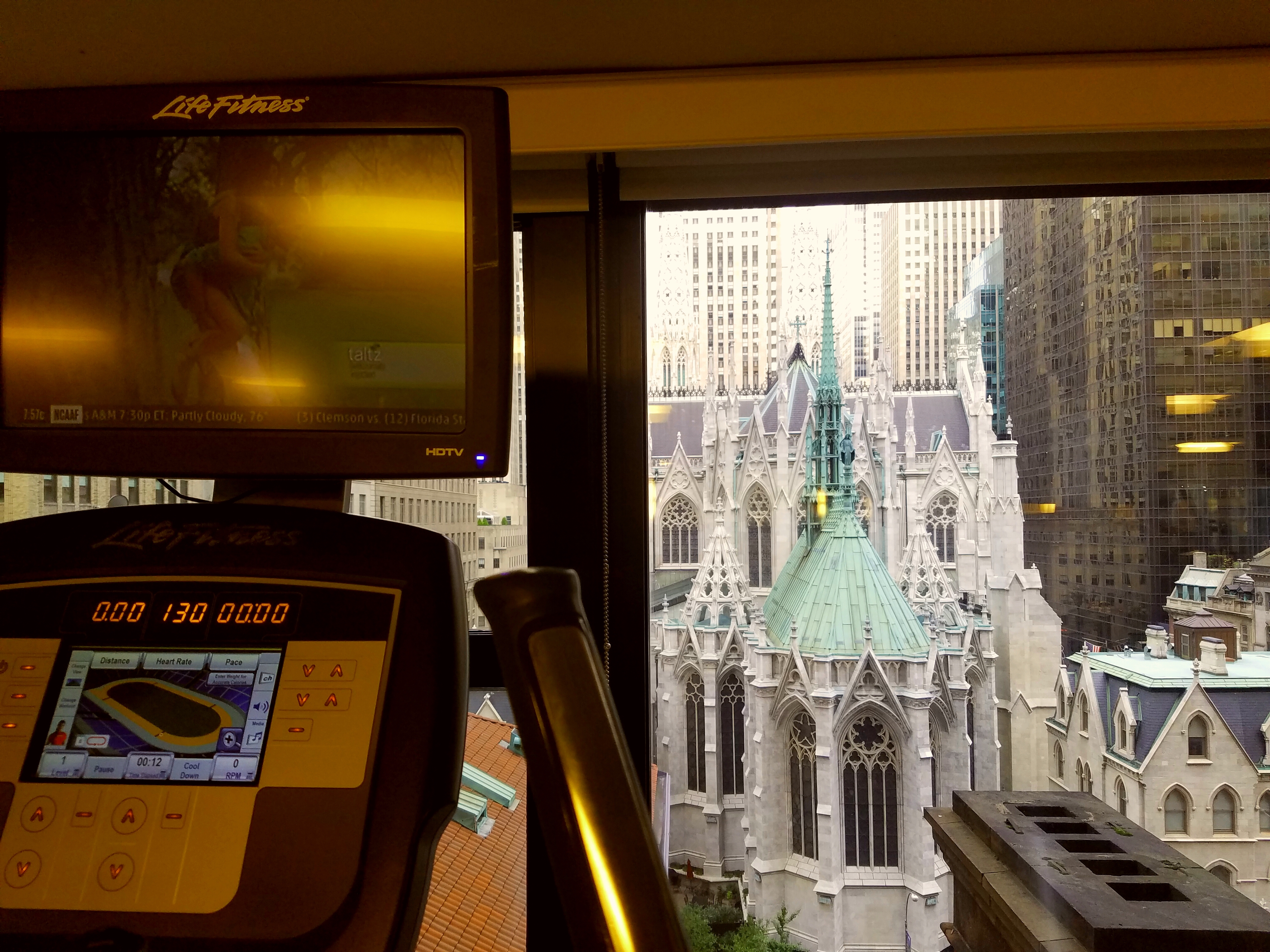
A view of St. Pat's from the hotel gym.

A view of St. Pat’s from the hotel gym.

Afer that, I walked over to the main Met to check out the work of Max Beckmann. He’s generally thought of as an Expressionist, though he rejected that label. His best work has the psychological depth and penetration of Picasso. Some of it was dark and macabre, but there were also elements of humor. I liked it. I also spent some time with the pre-Columbian collection and a small current exhibit of Native American work.

That evening, Jocelyn and I ate at Rosa Mexicana on Columbus and 61st, where they made guacamole at the table and served fantastic vegetarian hongo tacos. It was just across the street from Lincoln Center, and so we were confident that we’d get to the opera on time. I was very excited about seeing Rossini’s L’Italiani in Algerie, which I’d prepped for with a recording from Spotify. But it was canceled. New York’s Finest were there in force when we arrived. Apparently there was a scare having to do with a patron throwing some brown substance (possibly human remains) into the orchestra pit.
imagepng_0

Jocelyn proposed a Plan B, which was to go to a Jazz at Lincoln Center concert: Vince Giordano and the Nighthawks. We got in to the 9:30 show off the waiting list. The band was some 14 ace musicians who recreated the hot jazz of the 1920s with passion and erudition. Vince G played tuba, string bass, and bass sax, and sang a bit as well. It was delightful, toe-tapping fun!musicians

On Sunday, my flight back to Raleigh went smoothly. That evening, we went to our first pop-up dinner by Snap Pea with our friends Gerry and Gay. The Snappea dinners are multi-course vegetarian events held in surprise venues (revealed only hours before) with food created around a theme paired with the physical space.

Jacob Boehm, the owner and executive chef, was inspired by an abstract mural gracing an otherwise vacant shop in North Hills Mall, and used different colors for the 9 courses. As each course came out, he told the group about where the ingredients came from and what he’d done with them. He helped you taste more. I especially liked the spoonbread with turmeric butter and the chestnut soup. Jacob explained that the reason he did not use meat in these dinners was for him not premised on animals rights or health, but rather because using plants inspired more interesting experimental cooking and tasting.

Inspiring art in New York

OLYMPUS DIGITAL CAMERA
This week I had a conference in New York on patents and patent trolls. I stayed in the conference hotel, the Times Square Sheraton. I was on the 32nd floor. Though there were minor glitches — no way to raise the window shade, wi-fi that required a long tech services call, slow elevator service — it was a reasonably nice hotel, and conveniently located.

After the conference, I took a vacation day to make a long weekend, and saw some old friends and some art. NPR had a story recently on the sale of the art collection of David Bowie. Asked to describe the collection, an art person said the works were mainly bold, and seemed to be things Bowie bought because they spoke to him, rather than as investments. He bought art for inspiration. That seemed to me a good criterion for deciding what art to spend time with, and so I made a point of looking for work that might inspire me.

On Thursday evening, I met up with Jocelyn in Chelsea, and got my introduction to gallery opening night, which happens every Thursday. We looked into four or five galleries, sipped cheap Chardonnay, and checked out the new work. Although I didn’t see anything life changing, there was work worth talking about, and we had fun talking.
OLYMPUS DIGITAL CAMERA

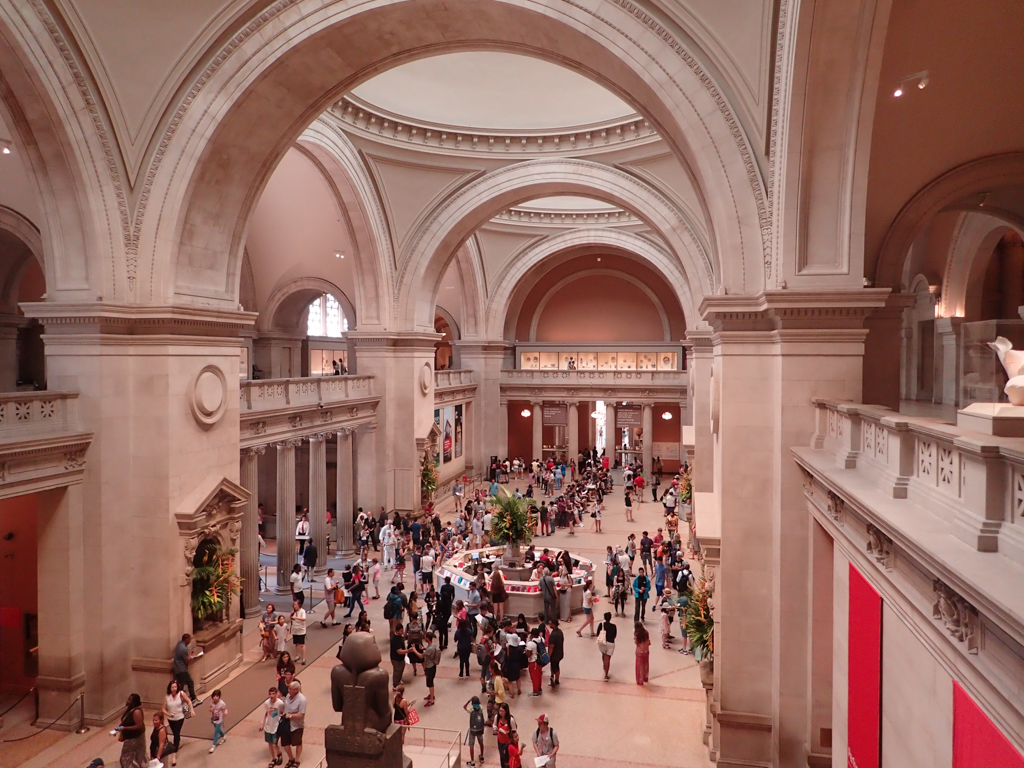
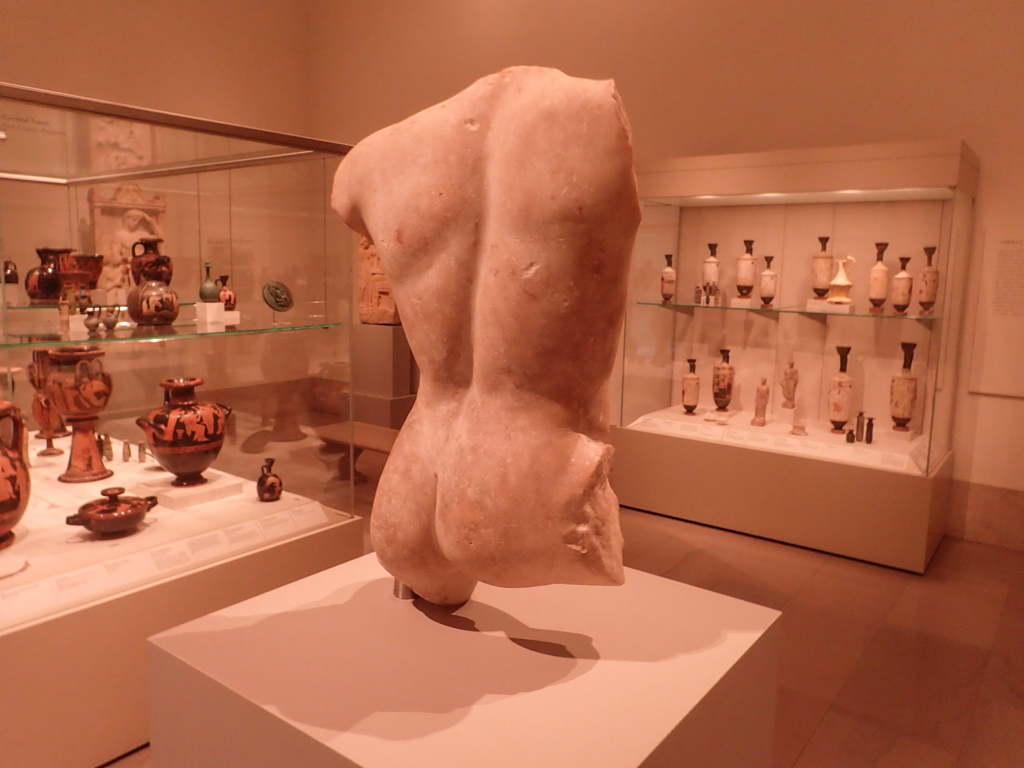
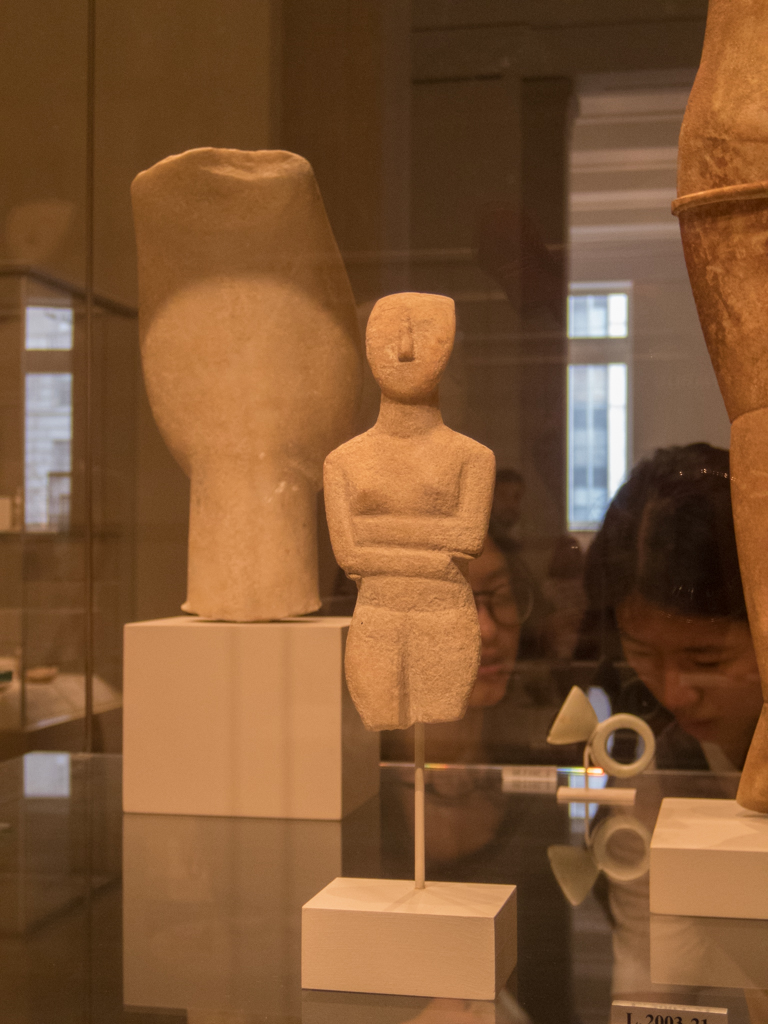
On Friday morning, I spent some time at the Metropolitan Museum. I focused on the Greco-Roman collection and art of ancient Near Eastern civilizations. These very old objects (some several thousand years old) are powerful, but also somehow calming. Civilizations rise and fall, but as far back as we can look, humans have a drive to make things of beauty.

In the afternoon, I went to the Met Breuer and saw In the Beginning, photographs of Diane Arbus. I’d thought of Arbus as being mainly about pictures of sideshow freaks and other oddities. This turned out to be not completely untrue, but still really wrong. Her portraits take their subjects completely seriously, regarding them as specific individuals with dignity. Arbus somehow got them to open up, and we find ourselves connecting with them. It’s a strange feeling, a new domain of human experience. Afterwards, looking around at ordinary people, I felt more curious, and noticed fleeting expressions and feelings.
imagejpeg_1

Jocelyn and I had a pre-theater dinner at the Robert, where we had a table by the window looking out from the 9th floor on Columbus Circle, Central Park, and Broadway. J had requested this particular spot, and it was truly a spectacular panorama. The couple ahead of us must have liked it, too, because they sat for forty minutes longer than expected, and caused us to get started on dinner behind schedule. The staff comped our cocktails, and sped service up to help us get out in time for our show. It was a hot struggling walk through the Times Square tourist crowd to get to the Minskoff theater, but we made it, with about ninety seconds to spare.

We saw The Lion King. It was, of course, wonderful. There’s a reason that it’s a huge long-running success, with a sweet story of coming of age, soaring melodies and exciting drumming, and those fantastic puppet costumes. I’m normally more of an opera person, and felt slightly out of place joining the LK crowd. But as Jocelyn noted, it would be too bad if you couldn’t enjoy something when they main thing it does is make you smile. We were definitely smiling.
OLYMPUS DIGITAL CAMERA

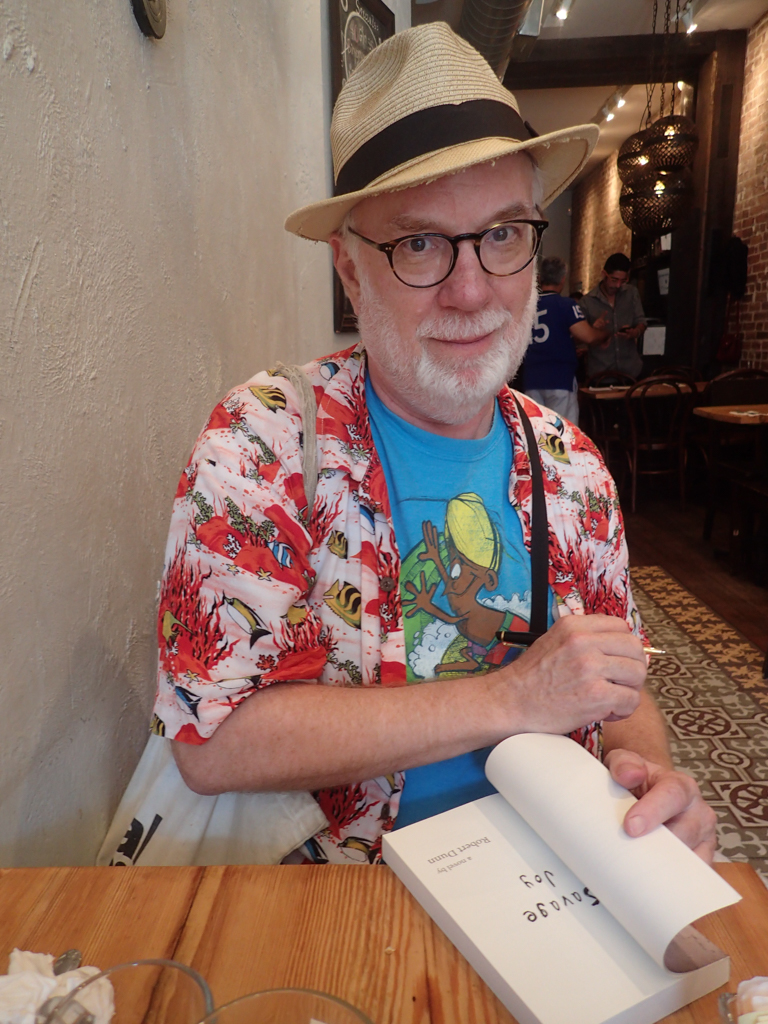
On Saturday, I had lunch with my old friend Bob Dunn, who gave me a copy of his new novel Savage Joy. He had news of several former colleagues from our New Yorker days, and caught me up on his writing, photography, teaching, and other career developments. We also discussed Trump.

The other art exhibit I saw that particularly affected me was by Danny Lyon, titled Message to the Future, at the Whitney. Lyon’s photography was highly socially engaged, including stints photographing the Civil Rights movement in the 1960s, migrant farm workers, prisoners, and other outsiders. Like Arbus, his subjects are particular individuals, rather than symbols. He’s adept at telling their stories. I was also intrigued by his montages, which combine photos and other materials in a way that suggests a multiplicity of connections. I watched a chunk of his film on a tattoo artist, which was painfully intimate.
IMG_5426

Visiting New York friends, and some new (to me) art and opera

OLYMPUS DIGITAL CAMERA
I got up to New York City last week for the IP Counsel conference where I did a presentation on open source software legal issues. After the conference, I spent a long weekend in the city. It was great to see my sweet Jocelyn and some old friends, and to take in some new art and opera.

Jocelyn got a promotion at Macmillan this week, and was very excited. That’s three promotions in a year! She’s now a manager, titled Ebook Production Manager. She likes the company, likes the work, and is looking forward to the new role. We talked about the being a manager, among other things, as we tried some fun bars and restaurants.

Although opera is not Jocelyn’s most favorite thing, she agreed to come with me to the Met to see L’elisir d’amore (The Elixor of Love) on Saturday, and we both loved it. It’s a delightful confection of melody and feeling. The subject — romantic love — is forever young, and in Donizetti’s deft hands funny, painful, and touching. In this production, the bel canto style was alive and well, with astonishing vocal agility and sweet subtlety. Soprano Aleksandra Kurzak was a saucy and savvy Adina, very musical, and tenor Vittorio Grilolo was ardent, goofy, and then transcendent. As the doctor, Adam Plachetka was sublimely funny. Kudos to maestro Enrique Mazzola, who had great rhythmic flexibility and propulsive drive, and of course, to the fabulous Met orchestra.
OLYMPUS DIGITAL CAMERA

Another night Jocelyn and I had a lovely dinner with my old friend Ben Brantley at Niu Noodle House in the Village. Ben and I met in junior high school and started out in NYC together, and with a happy combination of brilliance and hard work became head theater critic of the New York Times. It was good to catch up and hear his views on current shows, being a vegetarian, and other matters.

As to art, I saw several things worth mentioning. I recommend the exhibit at the Whitney by Laura Poitras, the filmmaker who made Citizen Four and other interesting works questioning the War on Terror. This exhibit is political in the sense that it puts in issue the programs of invasion, imprisonment, interrogation, assassination, and mass surveillance that grew out of the great panic following 9/11. It consists mostly of video clips, many of which must be viewed through slits in the wall that remind us of slits through prison doors. It invites us to engage with some disturbing issues, including the possibility of our being monitored at all times.

I also found enriching, if not exactly enjoyable, the exhibit at the Neue Gallery of the works of Edward Munch and German Expressionists. Munch appears to have been a tortured soul, and his works powerfully express alienation, melancholy, and angst. These are feelings that we generally try to avoid or suppress, and seldom discuss with anything but disapproval. But there’s truth in these works that we could benefit from facing. There were strong paintings of several other Expressionists who built on Munch’s bold early works, including Beckmann, Kirschner, Nolde, Kokoschka and Schiele, who were themselves iconoclasts, with energetic new psychological insights into some of our darker recesses.
OLYMPUS DIGITAL CAMERA
At the Edwynn Houk Gallery I saw a photography exhibit by Nick Brandt. On display were ten enormous (6-8 feet wide) black-and-white images of Africa, each with a billboard size photo of an African animal, such as a lion, elephant, or rhinoceros. The billboards were positioned where the animals used to roam, but have been replaced by human activity– factories, roads, and waste dumps. There are people in the images trying to make a living, including by picking through the waste dumps. I found the pictures very powerful, and tragic.

At the Brooklyn Museum, Jocelyn, Pam Tinnen, and I saw This Place, an exhibit of photographs about Israel and the West Bank. It included work of twelve photographers, some of whom did very large images of the people, cities, and stark landscapes. There was little direct reference to anger and armed struggle, but instead humanitarian efforts to comprehend the multiple facets of this complex situation. We also looked at the Assyrian and Egyptian art.
IMG_4858

Finally, I checked out the new Met Breuer, which is what the Met has done with the former Whitney museum. The main current exhibit is about unfinished works of famous artists starting in the Renaissance and coming up to now. It was interesting from a process perspective (seeing how paintings of various periods were assembled). I was surprised to learn that there were few answers on why artists chose not to finish particular works, or even how they determined what was a point of completion. But I enjoyed a lot of the art, particularly works of Rembrandt, Cezanne, and Turner.