The Casual Blog

A Philip Glass opera and remembering B Berkeley

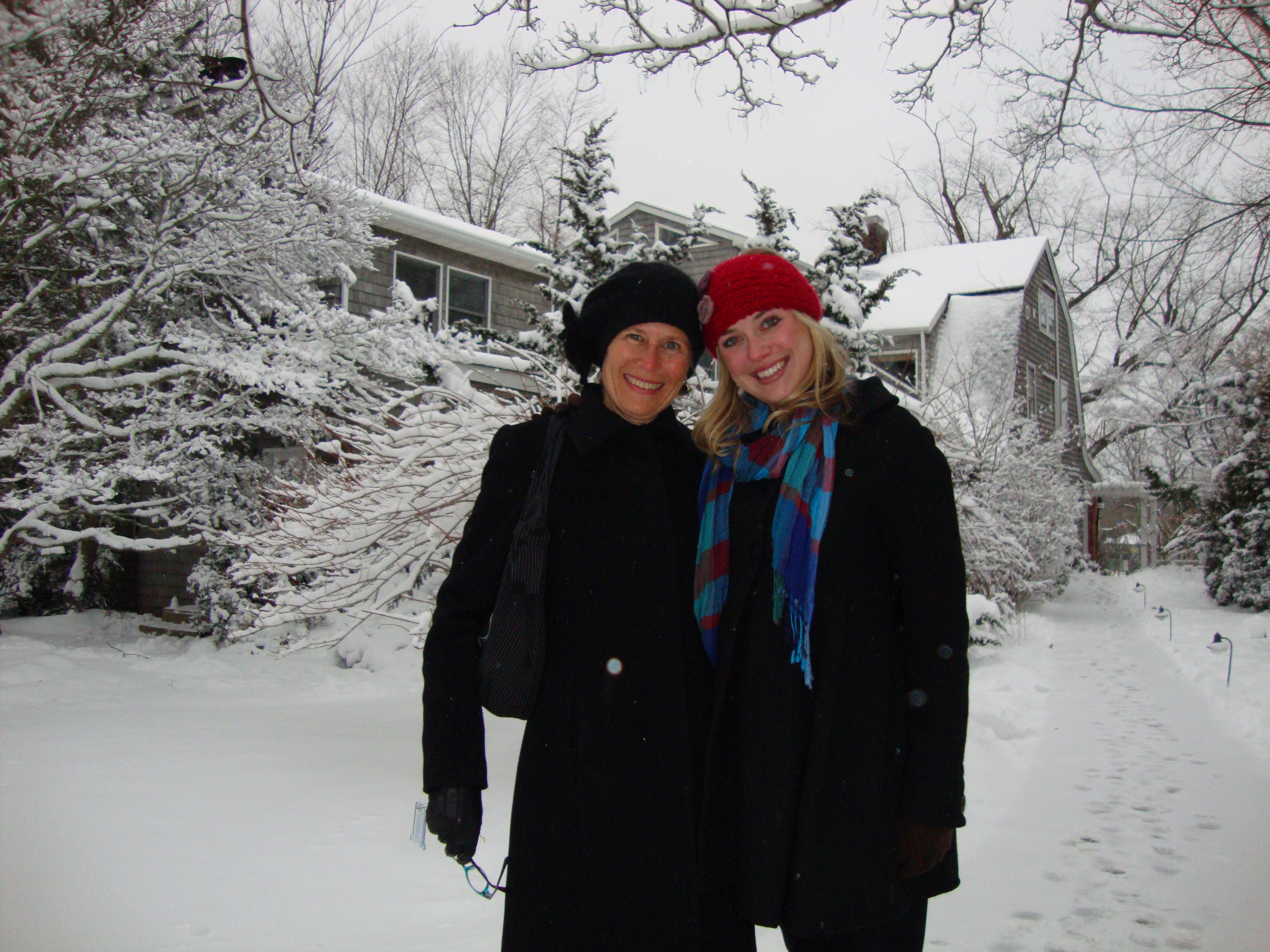
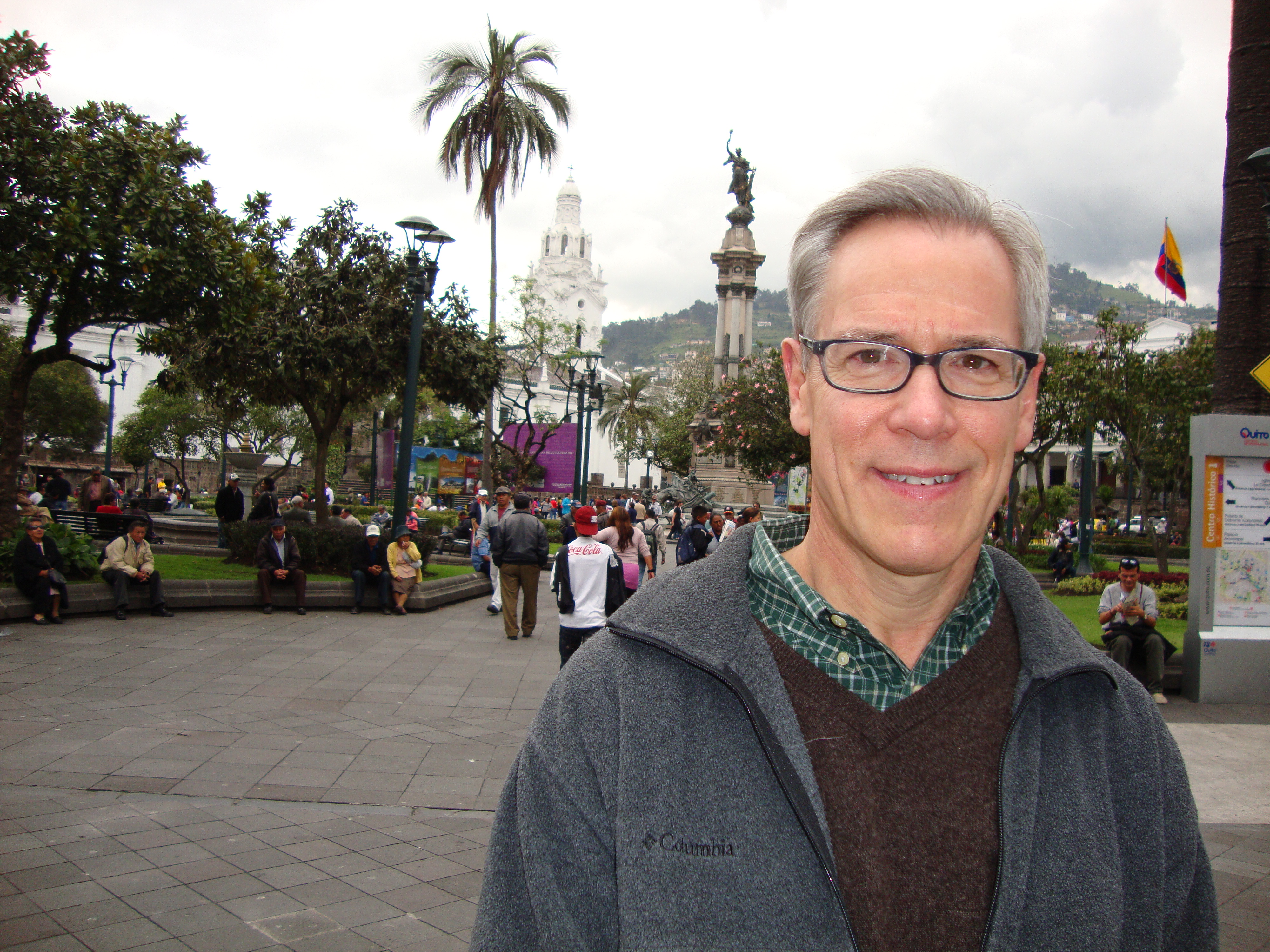
Sally and Jocelyn at the Mill House Inn, East Hampton, New York

Thursday night I went with friends to see the NC Opera’s production of Les Enfants Terrible by Philip Glass. I was interested for three reasons: I like some of Glass’s minimalist music, I like to support the NC Opera, and this production was billed as a dance opera. Ricky Weiss, artistic director of the Carolina Ballet, choreographed and directed the production.

I liked it. The story is a strange, surreal, dark tale of a brother and sister who are close — too close. The music is both driving and dreamlike. Each character had two physical bodies — a singer and a dancer — and each body expressed part of the emotional reality. This opened up interesting expressive possibilities. Opera fans are familiar with the enormous range of emotional possibilities from singing plus acting, and adding dance in as a vital element was fascinating.

One problem, though, was that the dancers could so easily steal their scenes, without meaning to. They are so much more graceful and expressive than ordinary humans, and even more than trained actors. At times it was difficult to give equal weight to the non-dance parts of the action, because the dancers were so compelling. The singing was rather good, particularly the soprano Jessica Cates as Lise. But her dancer twin, Lara O’Brien, had tremendous emotional range, and a kind of wildness. I thought the idea of the singer-dancer pairs was great, and worth exploring further.

The next day Sally and I flew to New York to attend the memorial service for her father, Norborne Berkeley, Jr., affectionately known to my generation as B. Gabe and Jocelyn flew in from Colorado and we rendezvoused at a hotel near La Guardia, then drove out to East Hampton. I was so happy to see the kids! We stayed in a lovely bed and breakfast called The Mill House Inn. It was good to see the Berkeley side of the family, and revive happy memories of East Hampton from our younger days.

We drove by the old Berkeley place in Bridgehampton and did a little shopping in East Hampton. I bought Gabe a pair of corduroy pants and The Unbearable Lightness of Being by Milan Kundera, on the sole condition that once he finished it he tell me his impressions. Such a rich book, and I know too few people who have read it. It snowed six inches that night.

The service on Saturday was in an Episcapol church and was well attended despite the snow. It had a heavier religious component than I expected from this relatively unreligious family. But Bill Berkeley did a fine job in his eulogy recognizing the strengths and accomplishments of B, and the good qualities we’ll want to remember. B meant a great deal in my own life, and I’ll miss him.

How to keep lost weight from coming back

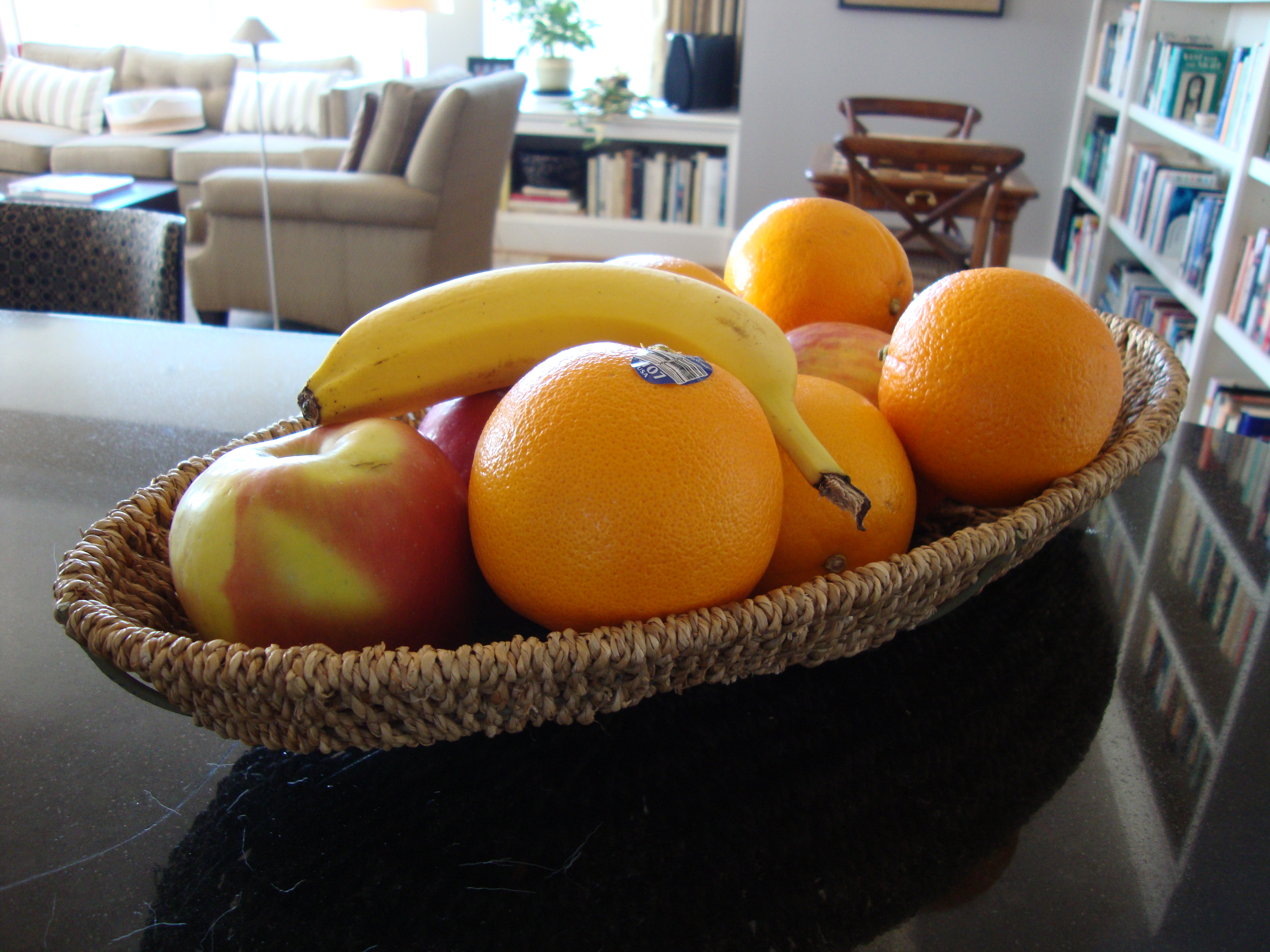
Healthy snacks on the counter at Casa Tiller

Returning from travels over the holiday break, I stepped on the scales to find myself three pounds heavier. It always happens! I swear, though there were temptations aplenty, I was reasonably moderate in my eating and drinking. How amazing that the body can accumulate mass so quickly! Also, a little scary.

In recent years, I’ve not been much concerned with losing weight, but I’ve been working hard not to add it. This basically means being careful about eating and diligent about exercising. That sounds — so — boring! Even if you do it, who wants to hear about it!

Thus, I was interested to read the NY Times magazine piece titled The Fat Trap: Do You Have to Be Superhuman to Lose Weight? by Tara Parker-Pope. According to the article, sustaining a healthy weight after losing a lot of pounds is not just unusual — it’s extraordinary. Those who do it are a “tiny percentage.”

That’s a bummer, both for the individuals who struggle with their weight and for our health as a society. Scientists are trying to figure out why people usually gain back weight after losing it and what can be done about it. Meanwhile, as a member of the fortunate “tiny percentage”, I may have something helpful to contribute. I’ve previously posted about losing 50 pounds, but here are some additional thoughts specifically related to how I’ve kept that weight off for several years.

It isn’t easy, but it also isn’t impossible — obviously! In fact, the methodology is basically the same as any worthwhile achievement that takes sustained effort. If you’ve learned to play the piano, speak a foreign language, play golf, or whatever, you’ve probably already employed most of the same methods you need for ongoing weight control. You need to find your motivation, keep it simple, be empirical, and have fun.

1. Find your motivation. Actors talk about needing to find a character’s motivation to bring the character to life. Try it: ask yourself what you really want, and why. For anything that’s going to take a long, sustained effort, you’ll need a motive that carries real meaning for you — something that’s more important than simply feeling good right now. It helps to articulate it clearly. My own guiding motivation has to do with the battle with father time. More concretely, I’m working today to be able to ski the deep snow in the big mountains of Colorado and Utah when I’m in my eighties. The snow on the mountains is beautiful. I sometimes think of this in the very early morning when it’s still dark and I’m making myself go to the gym.

My friend in the gym on the roof -- the elliptical machine

2. Keep it simple. If a system is too complicated, it will not be sustainable. A good system is one you don’t have to think about very much once it’s in place. It involves turning good intentions into good habits. For myself, I have some simple rules that help in avoiding bad eating decisions, such as: no chips, no sodas, and no candy bars. For snacks, I put in place simple and nutritious substitutes, like apples, bananas, and baby carrots. If you are considering going vegetarian, I’ll note that one of its many benefits is helping to simplify the challenge of eating a healthy, less fattening diet. Anyhow, these types of snack choices have gradually become habitual for me, and as habits they don’t take much mental energy. Of course, there’s the countervailing powerful force of other lifelong personal habits, customs, traditions, and advertising tempting you to make bad eating choices. There will be slip ups — and hello, there’s three new pounds. Then you refocus, and move on.

3. Be empirical. Look at the available data, and consciously monitor how you feel. I bought a digital bathroom scale and use it every day. I watch food portions carefully, and notice whether I’m feeling too hungry or unenergetic. I have not adopted a single off-the-shelf theory of eating and exercise, because I think every body has somewhat different needs. What works for you may not work for me. You need to be experimental. If an approach isn’t working, chuck it, and try something else. If you test a healthy snack or an exercise approach that seems to work for you, try it again and see if it still works.

4. Be creative and playful. We’re talking about a long-term approach here, and if it is no fun, you will eventually give it up. Simple repetition is boring. Try out interesting new healthy foods and new exercises and sports. When traveling, I make it a little game in airports to find the least unhealthy meal, and to find something interesting to do in the little hotel gym. I vary activities over the course of a normal week, so that at the moment I alternate among the elliptical machine, the stationary bike, and swimming, and various types of resistance training. For more fun, I enjoy listening to music and reading while doing the elliptical. I’ve found that classes liven up the cycling experience. Every so often, I change the mix of activities and try something new.

So there you are, for whatever it’s worth. Having said all that, I’ll note again, sustaining weight loss isn’t easy. It takes conscious work every day and every meal. But it doesn’t have to be white-knuckle misery or boredom. The guidelines of motivation, simplicity, empiricism, and playfulness help. And developing skill with the guidelines could lead to other good things. They can be applied to any rewarding long-term objective, like learning a sport or a musical instrument.

Some thoughts on golf and Miami

One of the things I’d really like to improve in 2012 is chipping. Sure, I’d like to get more fit, be a better person, etc., but fulfilling this resolution could be transformative in a small, practical way. My golf game would be so pleased if I could consistently get short shots from off the green closer to the hole. Compared to a lot of things, it’s not that hard. It’s just a matter of practice.

You may ask, what is the point of golf? I’ve asked the same question many times. It can be, as the old saying goes, a good walk spoiled. It’s fears, frustrations, humiliations, and disappointments. At times it’s uncomfortable and even painful. But it’s also about overcoming these things. It’s about courage and strength. It’s very much about honesty and integrity, and friendship.

Golf is full of beauty — the beauty of unique gardens with flowers, trees, lakes, and birds, of magnificent vistas. The beauty of the little dimpled white ball flying as hoped for in a high parabola against a clear sky. It is wonderful to stroke a long putt that curves several feet before finding its way to the bottom of the hole. For all the horrors and rigors, there are incredible moments of transcendence.

And so it was with hope and pleasant anticipation that on Wednesday I played my first eighteen holes of 2012 at the Doral club, in Miami. The skies were blue, and although it was a bit cool and breezy, the palm trees seemed calm and welcoming. With some business colleagues I played Greg Norman’s Great White course. (The other, more famous course, the Blue Monster, was about to host a tournament and closed to the public.) There was lots of water, and lots of sandy waste areas. My tee shots were fairly consistent, and I hit some long and satisfying fairway woods. I did not find the greens particularly difficult. The trouble spots had to do with chips. I’d like to wipe a few of those from memory, such as shots within a few yards off the green that didn’t get to the green. Aaargh!

I stayed two nights at South Beach in a gorgeous little hotel called The Betsy. The lobby has dark wood, palms, and ceiling fans. My room had white furnishings accented with surprising tastefulness in bright pink and orange. There was a television in the bathroom mirror. I’d never thought of needing such a thing, but I loved it immediately. It really improved the shaving experience.

The art deco architecture and bright colors of South Beach are lovely. I’ve thought of Miami in recent years primarily as an airport which, once in, I looked forward to escaping, but I started to see it as a unique and lively international city. It reminded me that I need to keep working on my Spanish.

Diving in the Galapagos Islands

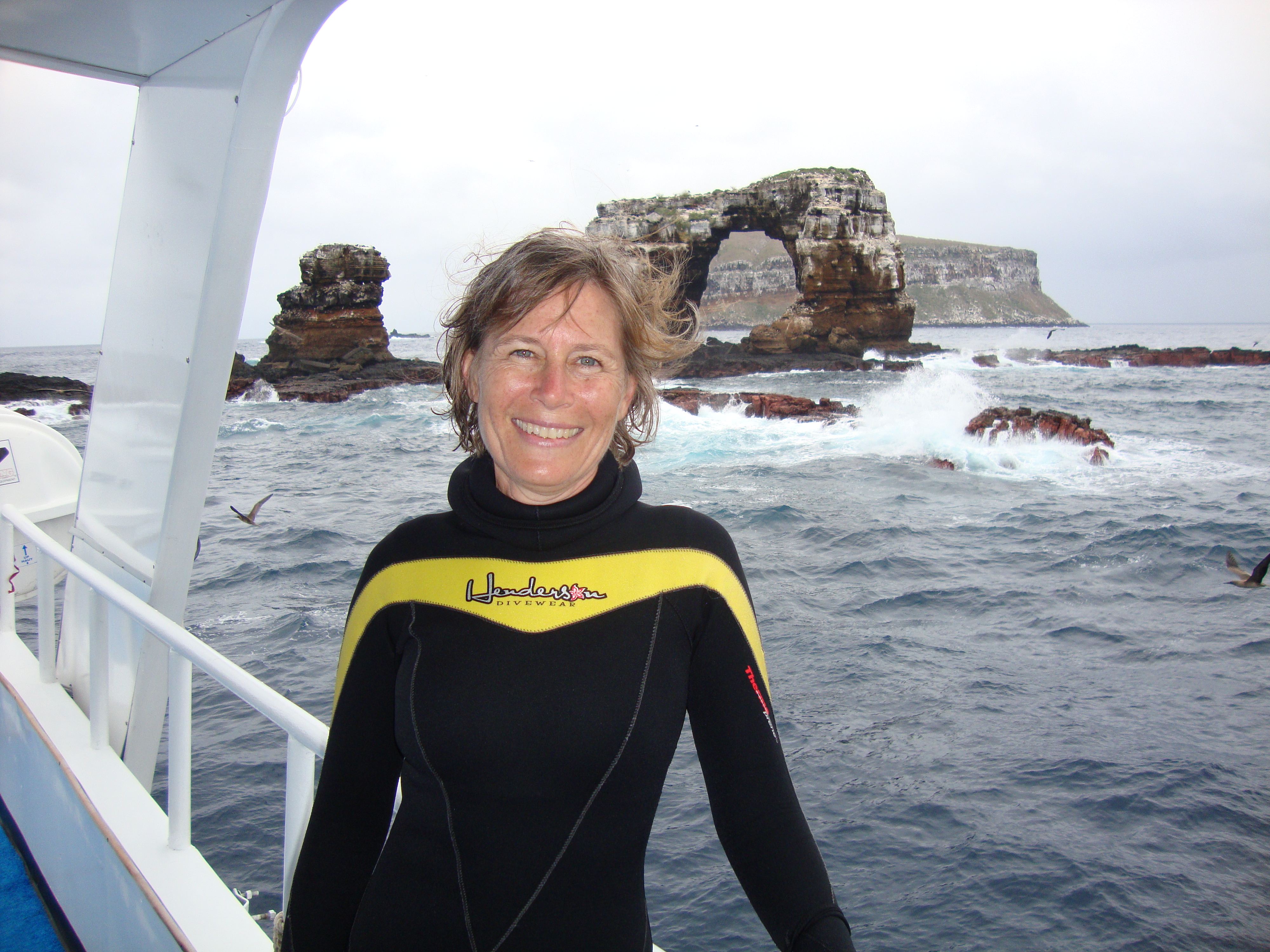
Sally at Darwin's Arch, Galapagos

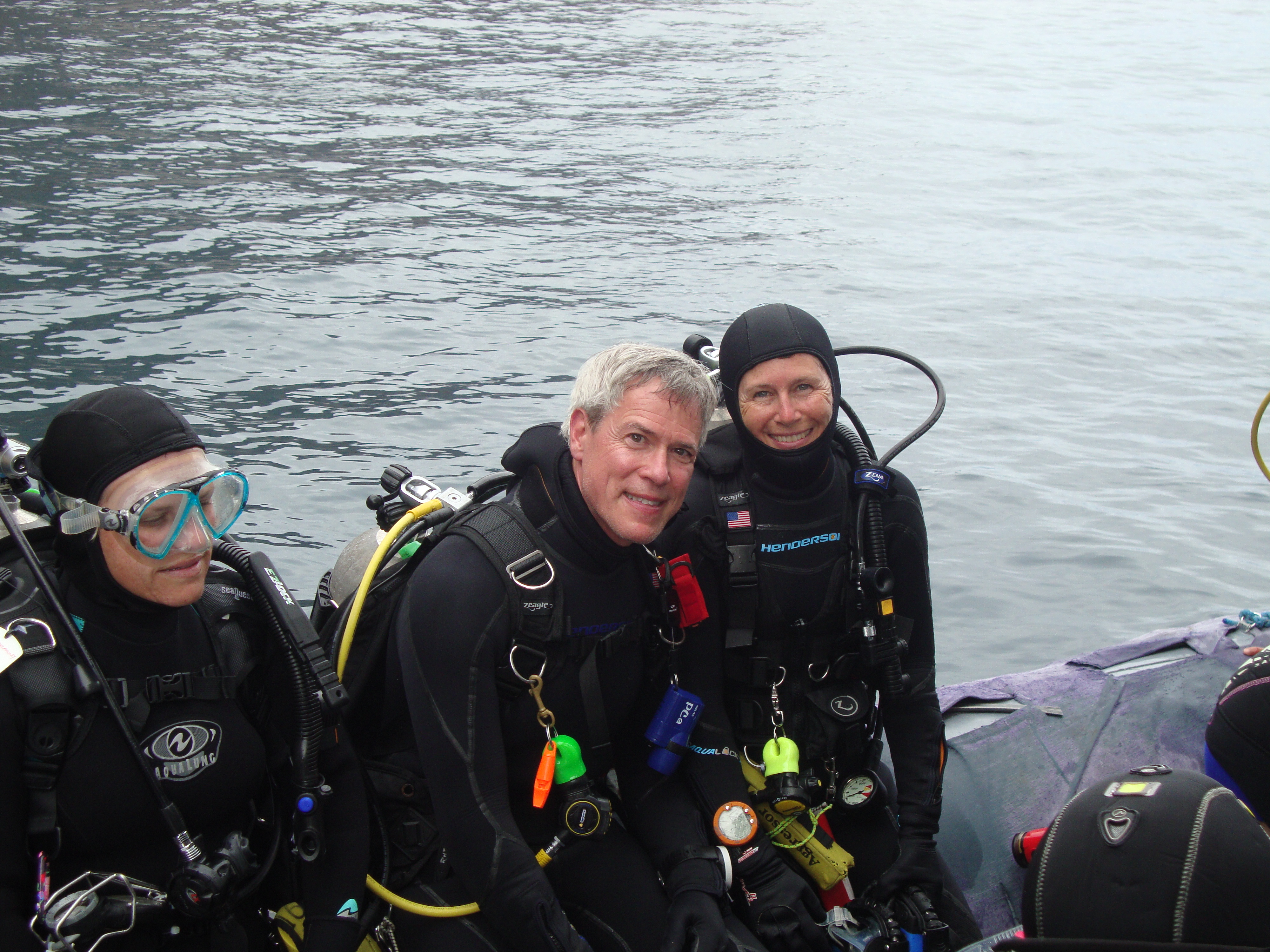
On Christmas day, we did our third day of scuba diving in the Galapagos Islands, some 600 miles west of the coast of Ecuador, at the foot of Darwin’s Arch. There was a strong current, and so we spent most of the fifty-minute dive clinging to barnacle-covered rocks. There were many patrolling hammerhead sharks, as well as a couple of large Galapagos sharks. We saw many large sea turtles and fine spotted moray eels. There were hundreds of small colorful tropical fish, such as Moorish idols, king angelfish, trumpetfish razor surgeonfish, Guineafowl puffers, barberfish and parrotfish, as well as huge schools of creolefish. It was fantastic!

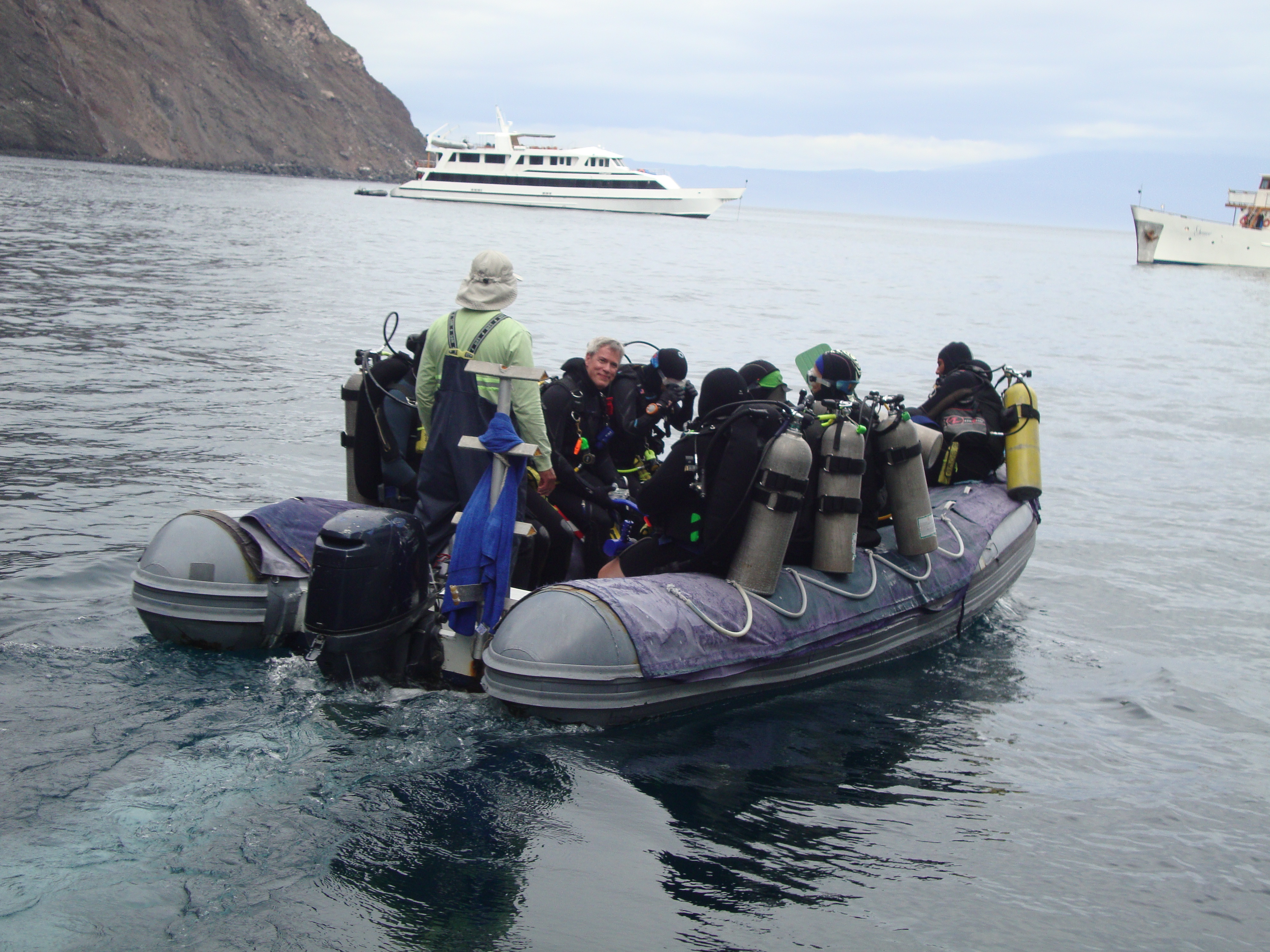
After the dive, we hoisted ourselves over the side of the inflatable dingy (or panga) and returned to the mother ship, the Galapagos Aggressor II. It was Sally’s hundredth dive. The crew presented her with a certificate, and our fellow divers gave her congratulations and hugs.

The Galapagos Aggressor II

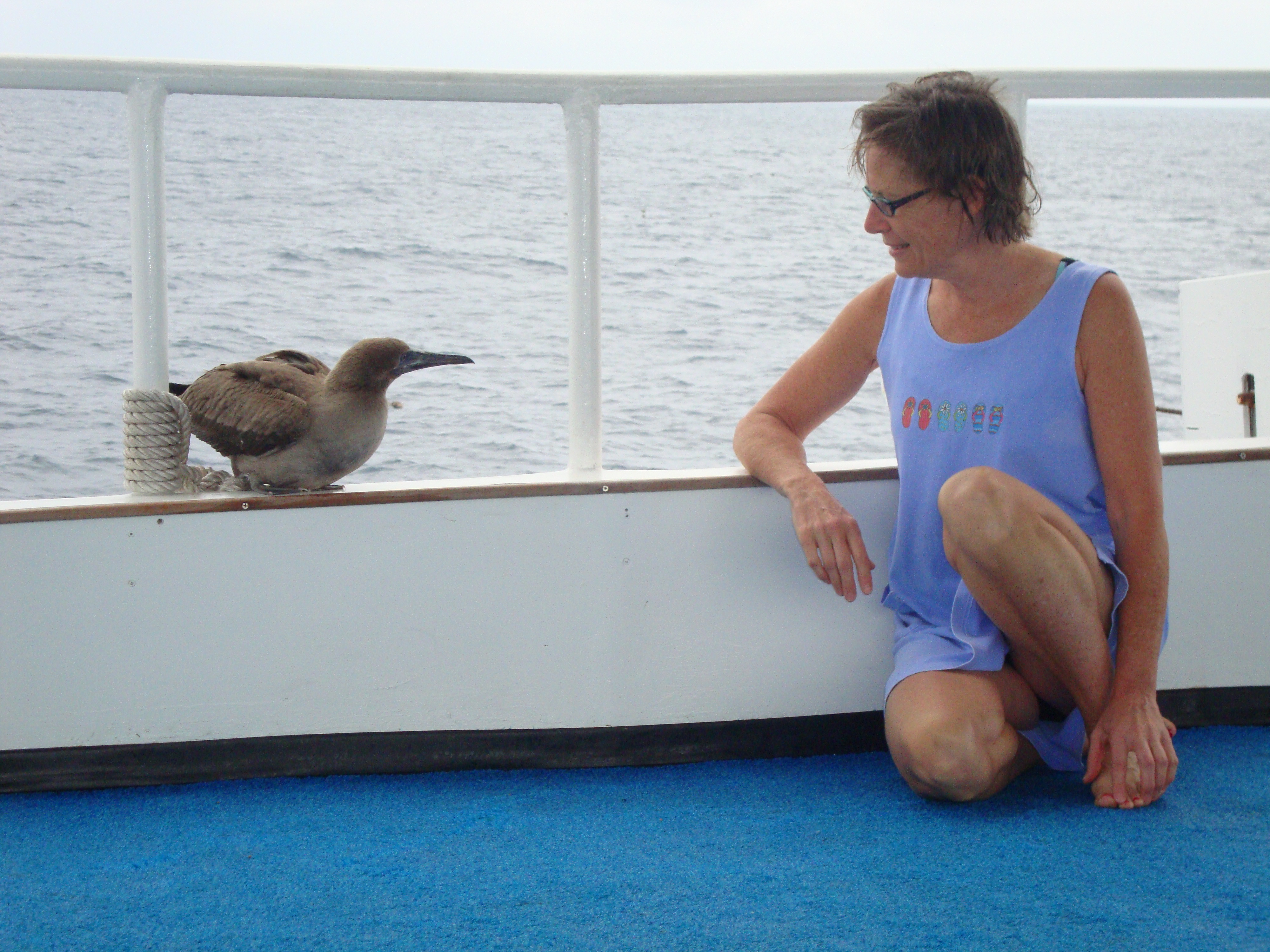
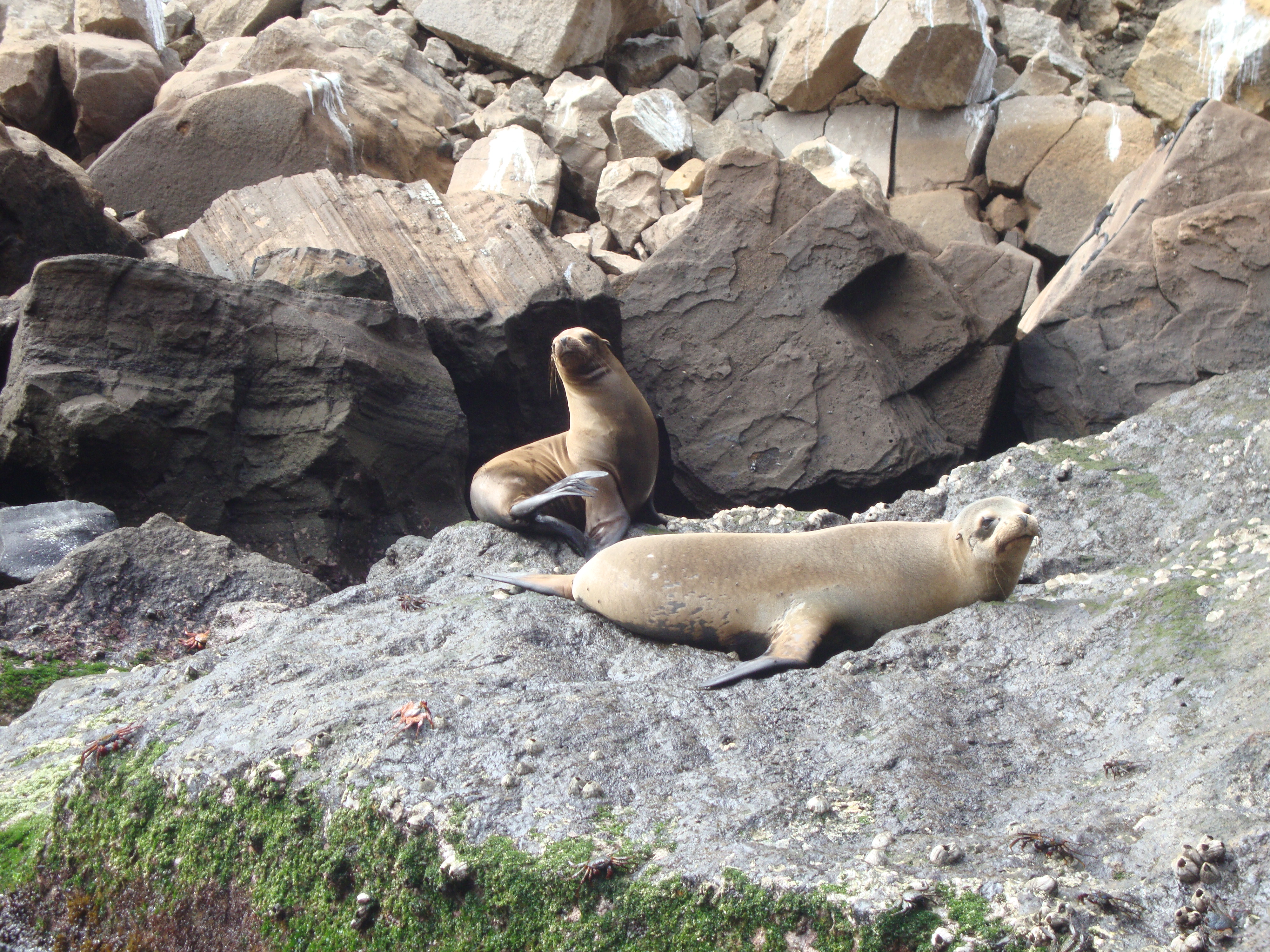
From the boat, we watched hundreds of flying boobies (large sea birds that resemble gulls with webbed feet) (Nazcas, red-footeds, and a few blue-footeds), frigate birds, swallow-tailed gulls, and storm petrols. Groups of dolphins came by periodically. Later that day, we did some snorkeling a few yards off of Darwin Island. The dolphins weren’t very interested in us, although I swam briefly with a group of six. We had better luck with a group of sea lions, who were curious about us, and came close by doing flips and loops.

Sally and a curious juvenile boobie (red footed, I think)

Darwin, like all of the islands we visited during the week, was the remains of a volcano that originated four or five million years ago — a mere babe in geological terms. It was mostly gray rock wall rising sharply several hundred feet to a plateau on top. It was very stark, but also thrumming with bird and sea life. We saw no other humans. It felt like the earth was brand new. The creativity and resourcefulness of nature was awe inspiring.

On the panga

During the trip, I finished reading The Better Angels of Our Nature by Steven Pinker. Pinker’s theseis is that human violence has declined dramatically over the course of history, and he explores the possible reasons for this. The book covers a lot of territory (all of human history) using a lot of tools (history, philosophy, statistics, biology, psychology), and still manages to be surprisingly lively and readable. Part of the book examines the increase in the last century of concerns for animal welfare — the sense that mindless cruelty to animals is unacceptable, and the suffering of animals is a moral concern. As with most violence, we’re ordinarily concerned with (and overgeneralize from) the violence and cruelty we observe, and tend to ignore examples of kindness and decency. It was cheering to learn of a trend toward greater respect for animal rights, and to consider that the trend could continue.

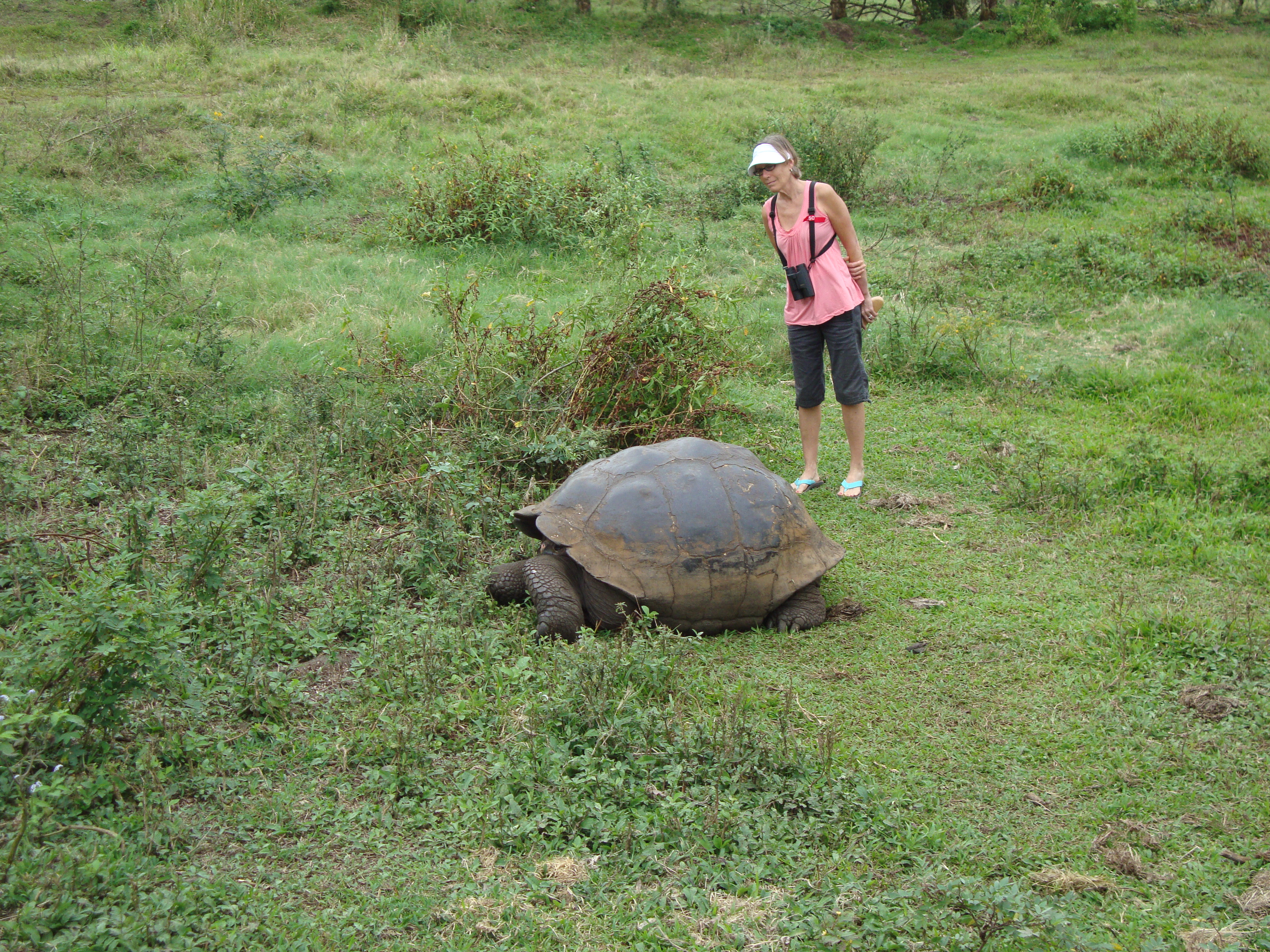
In our group of 11 divers, Sally and I were the only ones who did not dive with cameras. They were a cheerful, intelligent, and sociable group of folks, and all significantly more experienced at diving than we were. I’d taken the view that I’d prefer to look hard at what was in front of me without the distraction and intermediation of a camera, but especially after viewing some of their pictures, I was a little sorry that I didn’t get pictures of some of the amazing, strange, and beautiful things we saw under water. Perhaps next time. Here are some other above-water pictures from our trip.


The Nutcracker and a piano lesson

We went to the Carolina Ballet’s new production of The Nutcracker last week. Over the years, I’ve seen many Nutcrackers, from student productions to the NY City Ballet’s. In days gone by we used to listen to the Tchaikovsky music when we decorated the Christmas tree. I’ve never actually gotten sick of it, but a few years back I started to worry that it could happen. With the ballet music, just as earlier happened with the Brahms symphonies, I decided that I needed to be careful not to get so familiar as to lose the great joy of the thing. And so we hadn’t gone to the Carolina Ballet’s Nutcracker for the last couple of years.

I’m glad we returned. The CB production was substantially upgraded with new sets and effects. I enjoyed the upgraded magic tricks in Act 1, and thought the costumes in the ball scene were opulent. Act 1 is the children’s act — with magic tricks and children playing, but not a lot of dancing. Act 2 is more for the grown-ups, with a variety of virtuosic classical dance. The leading female roles in the performance I saw were wonderful, including Lilyan Vigo as a regal Sugarplum Fairy, Jan Burkhard as an outgoing Dewdrop, and Lara O’Brien as an unusually poignant, melancholy Tea. The men seemed especially athletic (gravity-defying) this year, including a particularly impressive Richard Krusch and Nikolai Smirnov.

Before the show, we agreed to celebrate the occasion by relaxing as completely as possible and just drink in the production — that is, clear the mind of everything except the beauty in the moment. We mostly succeeded. There were a couple of rough spots with the props, including the giant book with the false back that didn’t quite get closed in time. The sound quality from the live orchestra coming through speakers was less than excellent. But mostly we were swept away to a beautiful, magical place.

We met up with Lola and her boyfriend, Rodrigo, after the show, and learned that she’d had to switch roles at the last minute and, due to another dancer’s health problem, perform in a position she’d never done before. She said it was one of the least enjoyable shows of her life, because it took so much work, and was very far from solid. Of course, none of that was visible to us — she looked great. It was good, though, to be reminded of how hard the performers work to create the appearance of effortlessness.

At my piano lesson last week, Olga touched on this point. I’ve been bringing at least some memorized music to our lessons, and from time to time memory glitches occur. To fix this, part of her approach is to minimize dependence on muscle memory and build security through harmonic analysis. At the same time, she recommends thinking about the movements of the arms, wrists, and fingers as choreography — that is, gestures that have beauty separate from the beauty of the sound (but contributing to it). Planning the gestures and getting them ingrained is part of learning the piece.

At the lesson I began with Chopin’s mazurka opus 63, no. 3 (c sharp minor). (It’s unfortunate that great composers of the Romantic period passed on giving their works names. With 51 published mazurkas, it’s hard even for musicians to keep them straight by number. I generally try to think of a name for the ones I learn. I think of this one as: Sharp Longing.) It has unusually strange, sad harmonies and dissonances. I managed to play it coherently, and was pleased that Olga noted some interesting and lovely things. But, she noted, there was still a lot of work to do.

It is daunting to face Olga’s listening powers. At one point she perceived, correctly, that I was not carefully listening to what I was doing. “You’re faking it,” she said. Note, I was playing the right notes, but not balancing them in a considered way. This is a high standard — not just playing right, but playing with deep understanding. She acknowledges that there are many possible ways to play a phrase, but it is not acceptable to just play the notes without understanding and feeling.

As best I can tell, she does not draw a sharp line between the physical, intellectual, and emotional aspects of playing the piano. She recommended that I think about touching the keys as though I were speaking, which I found helpful. She also forced me to consider carefully about how my thumb moved to contact a key as opposed to the other fingers. We also talked for a while about the role of the elbow in certain situations. Not to mention the wrists! And that’s before we even get to the form or the music, or what it is trying to say. After the mazurka, we worked on the Etude Op. 25, No. 1, and Debussy’s Reverie. At the end, I felt tired, but inspired: there’s so much more challenging, beautiful music ahead.

How to change the world

At my early yoga class on Thursday, Sandy, the teacher, postulated that everything we do has ripple effects, first on our selves, and then on others. She suggested, as I understood it, that our yoga practice ia not purely personal. Our large, calming breaths lead to other good things for our bodies, which lead to other good things for others. Thus one person can change the world, at least a bit.

It’s hard to know if this is true, but it doesn’t seem completely crazy. There is no doubt that yoga has improved my levels of consciousness and happiness. And it’s possible that this has some small effect on others. And their attitudes affect others, and so on and on. I do not see this as a complete solution to anything, but it seems fairly clear that the human race, or even my little circle, has not come close to its carrying capacity for happiness, so the effort couldn’t do any harm.

In another effort to work for positive change, on Friday I flew to DC for the day and met with a group of folks at the Google offices to discuss possible approaches to future patent reform. The deep disconnect between the patent system as it was originally conceived and the way it sometimes works today to undermine innovation gets me worked up. Software innovation has very little to do with our patent system, which at times actually undermines such innovation.

It was good to brainstorm with some smart people with similar-but-not-identical perspectives. Anyhow, our ad hoc group made some progress in getting focused on possible areas for more work (e.g. damages apportionment, written description and enablement), and possible methodologies (e.g. a wiki), and agreed to keep working.

Changing the legal system, whether through better regulatory and court decisions or future legislation, even a little, is a daunting undertaking. I think the pro-reform forces have the better arguments, but better ideas do not always carry the day, as the recent legislative battles on patent reform demonstrated. Good policy reform arguments lose all the time, for all kinds of reasons, including self-interest, certainly, but also ignorance and inertia. It takes a lot of energy, commitment, and organization over the long term to achieve change. The first thing to do is not give up, and keep on thinking, and keep on communicating.

Speaking of change, I recommend the movie Amazing Grace (2006) about the ending of the British slave trade. Great Britain, a hugely powerful, successful country, the economy of which rested in significant part on slavery, decided in 1807 by act of Parliament to end slave trading. The change was in significant part due to the efforts of a relatively small group of abolutionists, including MP William Wilberforce. It took them some 25 years.

For more inspiration, on the trip to DC I reread some of Last Call by Daniel Okrent, a history of Prohibition. We all know that Prohibition (banning the sale of intoxicating beverages) was a disastrous policy, right? But we don’t all know, or at least I didn’t, how it came to be a cause, and then a Constitutional amendment. It’s a complicated story. There were many cross-currents and otherwise-unconnected groups that opposed alcoholic beverages in the 19th and early 20th centuries, including such disparate groups as religious revivalists, women’s rights advocates, advocates for the poor, anti-Semites (which disliked the successful Jewish distillers), and anti-Germans (which targeted the successful German beer brewers). These folks worked for decades to organize and change the United States from a hard-drinking country to an abstimonious one. And by gum, they changed the Constitution.

Unfortunately, they didn’t foresee that this would form the breeding ground for organized crime, violence, and massive corruption, among other problems. It made ordinary citizens who desired nothing more than a drink into law breakers, thereby undermining respect for the law more generally. As horribly wrong as the Prohibition forces were, I respect the idealism of some of them, and admire their pluck and persistence. The leaders who built popular support and those who organized legislative change could teach us a few things.

We, of course, wouldn’t do anything as silly as Prohibition, would we? Ha-ha! The NY Times yesterday had an interesting story entitled (somewhat confusingly) Police Officers Find That Dissent on Drug Laws May Come With a Price. In brief, a border patrol agent was dismissed for saying to another agent that if marijuana were legalized, the drug-related violence at the border would cease. It turns out that an outfit call Law Enforcement Against Prohibition (LEAP) supports this perspective, and includes 145 judges, prosecutors, and police offices, as well as an email list of 48,000.

These are courageous people. As one police officer said, “We all know the drug war is a bad joke. . . . But we also know that you’ll never get promoted if you’re seen as soft on drugs.” The very existence of LEAP suggests that the possibility of a more sane approach to regulating now-illegal drugs may be getting closer.

Thanksgiving in Nassau with sharks and Proust

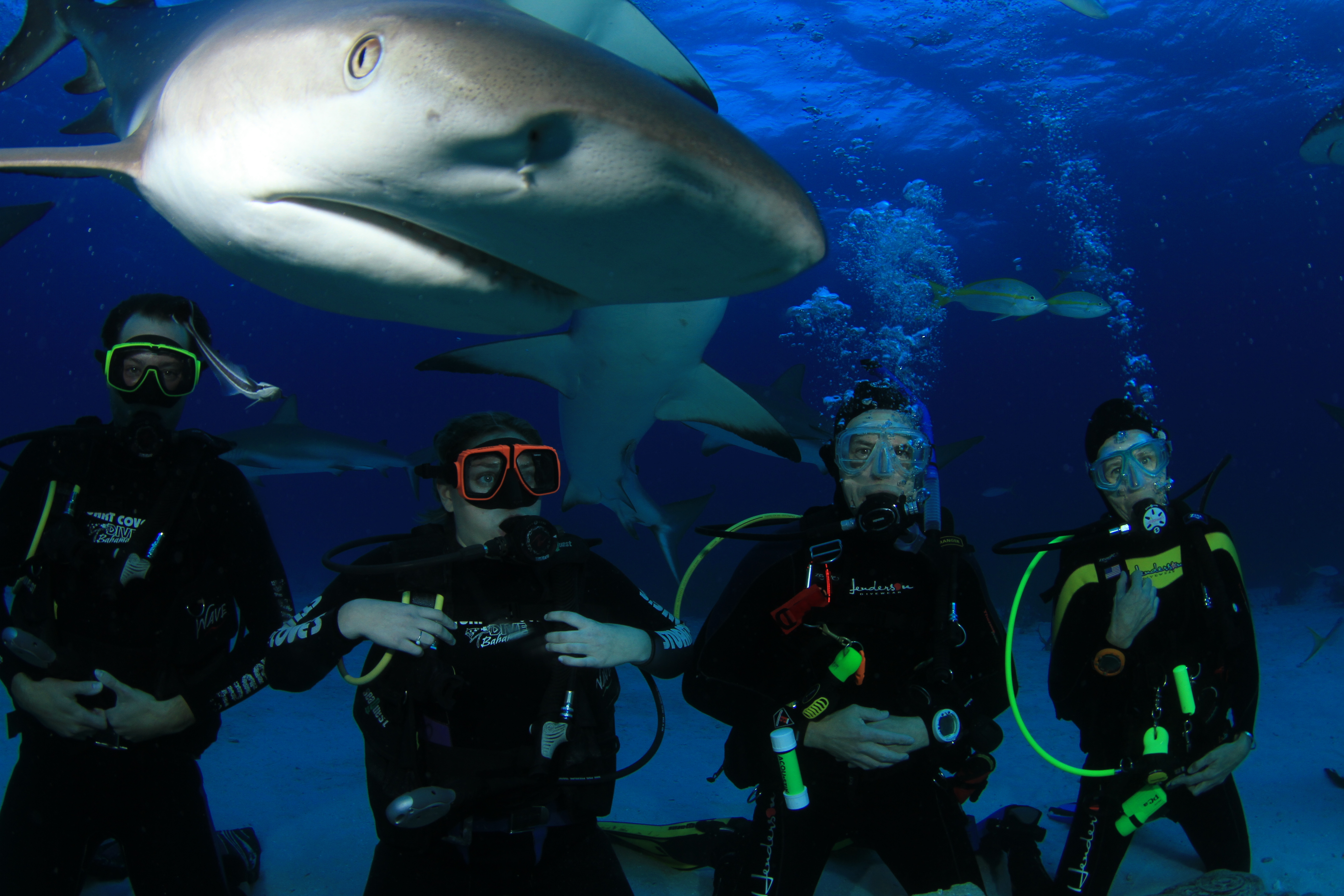
Gabe, Jocelyn, reef shark, Rob, and Sally

For Thanksgiving we went down to Nassau, Bahamas, and did some scuba diving with sharks. I was looking forward to some time with Sally, Gabe, and Jocelyn, and also to the palm trees, beaches, and beautiful turquoise water. But we chose the destination in large part because of the abundance of reef sharks.

For those with long exposure to anti-shark hysteria (Jaws, cheesy nature channel specials), this probably sounds crazy. In fact, people do these dives safely every day. For me, there was some element of facing down an irrational inner fear, but the bigger driver was curiosity and a desire to experience a particularly beautiful force of nature.

We stayed at the Sheraton on Cable Beach, a large hotel with a white sandy beach, lots of curvaceous pools with waterfalls, palms, and plenty of deck chairs. The staff seemed friendly, though slightly shy. Restaurant service both in the hotel and elsewhere was surprisingly slow (except for Luciano’s, where the food and service were both excellent). One bummer: the food was much more expensive than I expected — about three times the price of equivalent meals at home. There was a casino, which we walked through, and where no one looked like an extra for Bond film. I tried, unsuccessfully, to comprehend why these people couldn’t find something more fun to do than just throw away their money.

Sheraton Hotel, Nassau, Bahamas -- our view

But there is no accounting for taste, and no explaining some of the strange things people like to do. Which brings me back to the sharks. Humans kill around 100 million of them a year (a substantial number of those by torture — cutting off fins for shark fin soup and leaving the fish to drown), whereas unprovoked sharks around the world account for around four human deaths a year. Of those exceedingly rare deaths, the perpetrators are only four of the 360 species (great white, oceanic whitetip, bull, and tiger). It is simply a myth that sharks are mindless killing machines. Some species are highly social and demonstrate problem solving skills, curiosity, and play.

Some species of modern sharks reached their current form about 100 million years ago, in the age of dinosaurs. Species come and go (for mammals, the average species lasts about a million years), but the sharks have remained. The basic, gorgeous design has clearly stood the test of time.

We dove with Stuart Cove’s dive operation, which was generally well run with cheerful young dive leaders and staff. Sally and I did ten dives and all. Gabe and Jocelyn were not certified divers, but after refreshing on their skills with a resort course, they came with us on four dives with an instructor, a smart, well-travelled (including a stint diving in Mozambique, which she recommended highly), and good-humored young Englishwoman named Ruth.

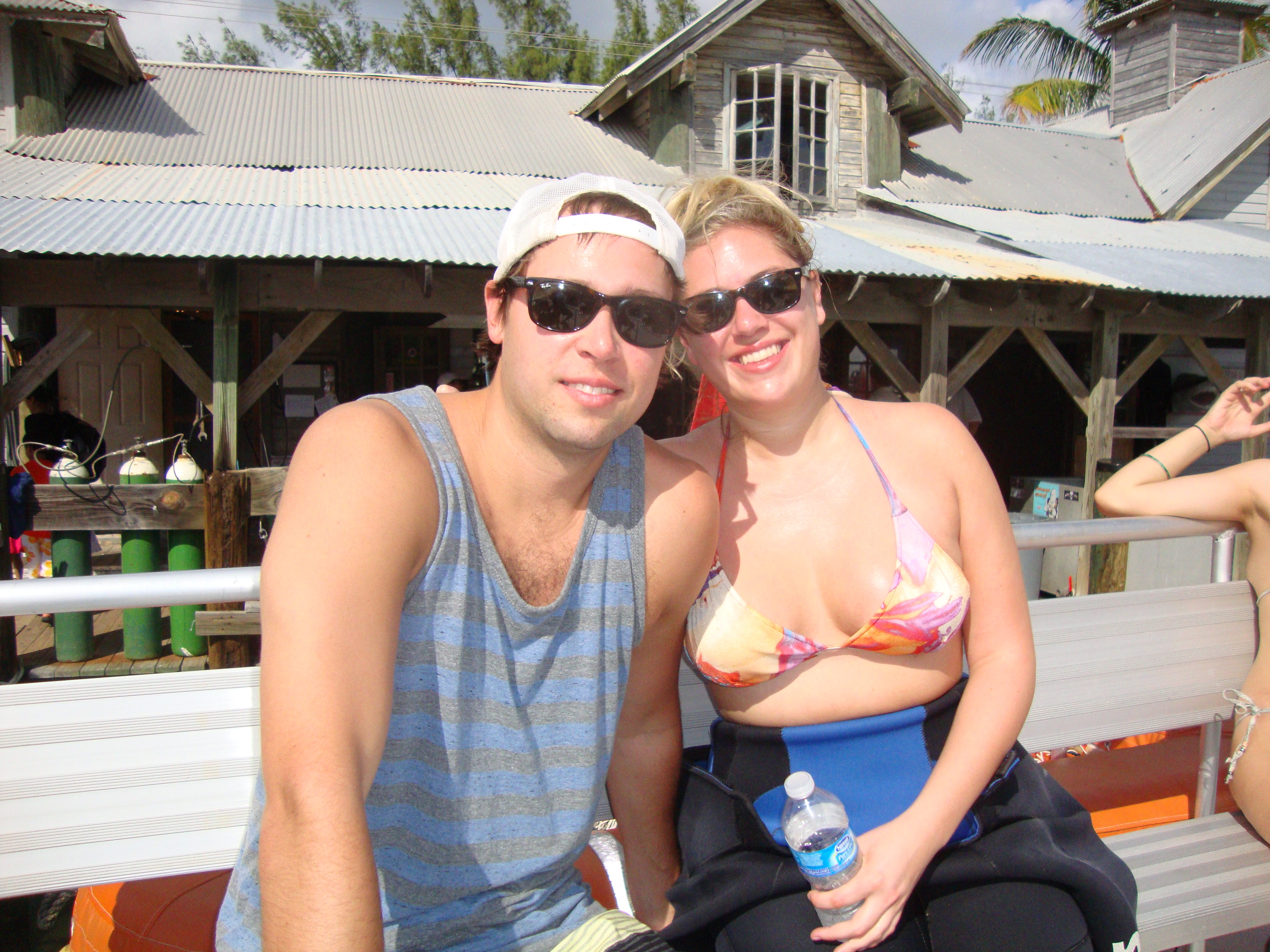
Gabe and Jocelyn at the start of a shark dive

The climax of our diving was Thanksgiving day, when we did an area called Runway Wall, where Sally and I swam at about 70 feet (with G and S shallower) along a wall that goes down to a depth of 5,000 feet. Beside us, in front of us, and behind us were reef sharks. I counted 15. At times they swam quite close (inches), coming up on us from behind, or heading straight for us. We also got to within a few feet of a large sea turtle (probably a loggerhead), and saw a few Atlantic spadefish, a spotted drum, a spotted moray eel, and a Goliath grouper, along with many smaller fish.

After a surface interval, we descended again and sat in a circle in a sandy area. One of the staff, Rich, had donned a chain mail body suit, hood, and gloves, and brought down a cage with chum. The sharks increased in number (perhaps 20-25 showed up), and began swimming faster and closer to the cage. Rich would take a thin metal pole, spear a steak-size piece of chum, and whip it upward quickly, and the closest shark would instantly bite and swallow it. Rich would position himself in front of each diver and do some feeding while the staff took photos and videos.

I had mixed feelings about feeding sharks (or any wild animal), out of concern that it might lead to dependency or otherwise disrupt the ecosystem. I also wasn’t crazy about the emphasis on photography. But in the end I put those ideas to one side and was simply overwhelmed by the experience: about 50 minutes of a close encounter with prehistory. The distance between us got down to zero (I was bumped a few times). After a few minutes, I began to distinguish individual differences among the sharks. One had a mouth that gaped on one side, another had a fish hook in his back. They would swim in lazy circles, and then suddenly accelerate toward the food, sometimes colliding. All told, I was deeply moved by their power, grace, and beauty.

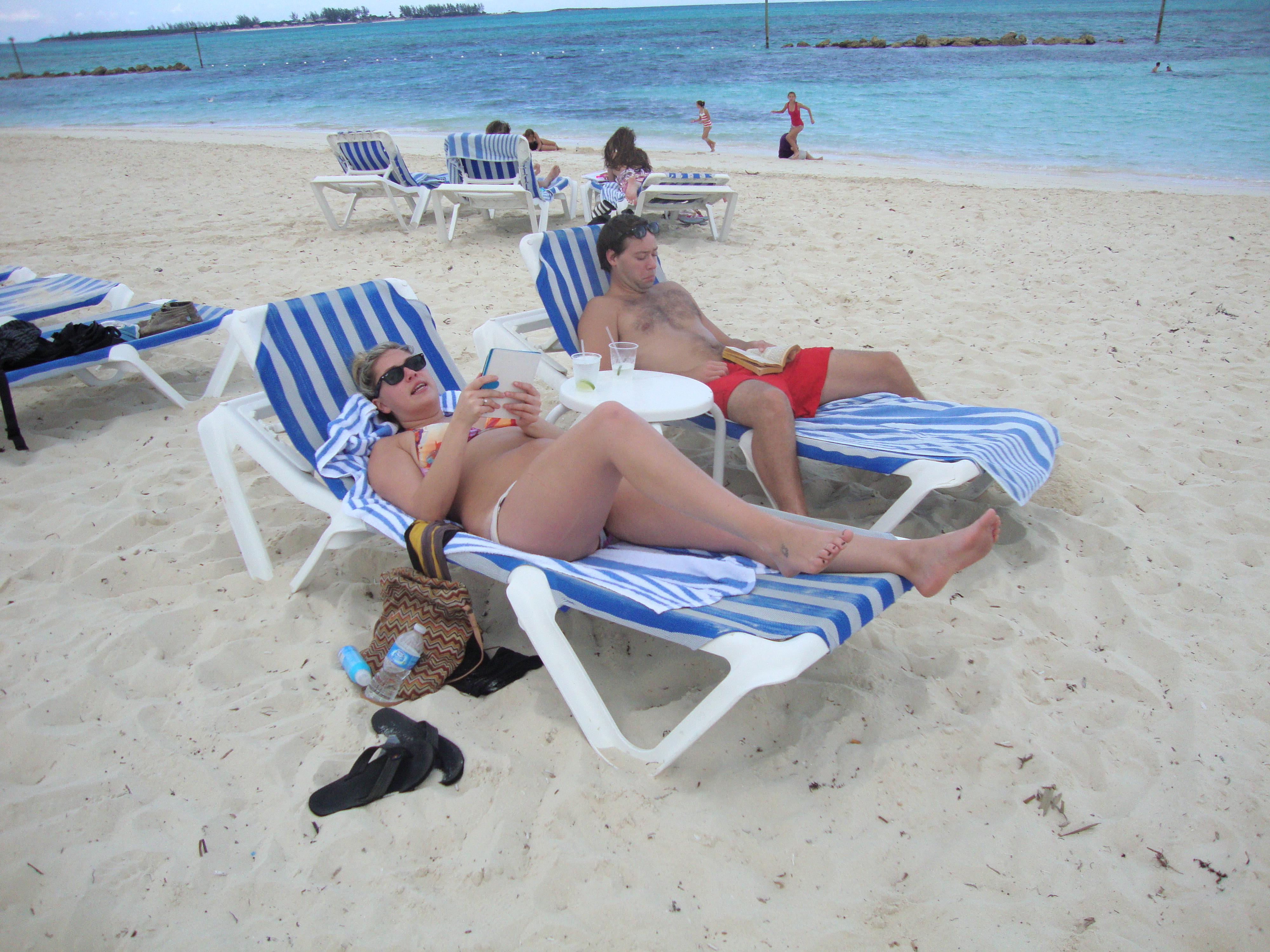
We did not dive on our last day before flying home to decrease the risk of decompression illness. We spent much of the day lounging on the beach or by one of the pools reading our various books. It was windy, sometimes cloudy, but sometimes sunny. It was lovely to see our kids reading for hours. I used to worry that they’d end up as hopeless TV addicts. But they didn’t!

I began rereading Swan’s Way, this time in a translation by Lydia Davis. Many years ago, I read the entirety of Remembrance of Things Past, and have from time to time returned to sections of it, but the length of the work is daunting in these frantic times. I found the Davis translation much more graceful and lively than the Moncrieff and Kilmartin. It may be that accumulating more life experience makes the book itself better. In any event, I was struck once again by the strange hypnotic beauty of the prose.

For the first time, I saw how the apparently casual, improvised sound of the early part of the book includes a lot of delicate prefiguring of people and events that will gradually come into sharp focus. There is so much richness in the book. It makes us realize how rich our own lives can be in perception and feeling, and makes us want to use our memories and our eyes, ears, noses, touch, and taste buds better. But it is not a self-help book; there’s something magical about it. I had the odd, strong feeling as I was reading that the book was my own consciousness coming into being. Of course, it’s only a novel — or is it?

More shark photos:


Sleep walking, coming home, and good lies

Lately I’ve been feeling more-than-usually pleasantly aware of the world of the senses, such as fall light and colors, sounds of people walking, and even just breathing. There’s so much variation in perceptual engagement, both among people and for each person over time. I like to think yoga is helping to shift my perceptional experience towards greater engagement. But the changes are not uniform and consistent.

A dramatic case in point: I had a sleep walking experience a few nights ago. My only evidence was waking up with a badly bruised and scraped left shoulder. Seriously, I was hurt! I’d taken an Ambien, as I do now and again for insomnia, and attribute the bizarre incident to this usually reliable little helper. What did I do while in my altered state? Go to Fight Club? Could there be an outstanding warrant for my arrest? Could I defend based on lack of knowledge? Sleep walking unsettles the usual assumptions about intentional behavior and personality.

Gabe and Jocelyn Tiller flew in from Telluride, Colorado this week for a holiday. We hadn’t seen them for several months, and it was wonderful to be together again. But Gabe quickly put my fatherly affection to the test by asking for a loan of the 911 (Clara, that is) to go to Boone overnight to see an old girlfriend. I hesitated. I have feelings for Clara — if she were injured, I would be distraught. But I knew Gabe to be an excellent driver (I trained him). And I knew it would be good to share some my happiness with him. So I gave my blessing, and off they went. I experienced some separation anxiety, but Gabe brought Clara home safe and sound.

Jocelyn is blossoming. She’s gotten more blonde, and beams. Her work as a bartender seems to have enhanced her comedic skills, as well as her skill with a cocktail shaker. She made us a delicious green drink with creme de menthe for dessert.

Before and during dinner, Jocelyn, Sally, and I had a lively conversation about truth and lies. We found ourselves in agreement that absolute honesty was not only impossible, but also a bad idea. The social world as we know it depends on some degree of dishonesty. We all are taught that lying is wrong, but this is a lesson that would wreak havoc if taken literally. Could social life even continue if we always insisted on telling each other exactly what we thought of each other? In fact, there are important exceptions to the taboo against lying, Although there is no standard manual of exceptions, most of us eventually learn them. With experience and practice, we can distinguish between social lies that support and advance relationships, and those that undermine them.

Credibility and trust are vital to human relationships. The lies that undermine credibility and trust are the dangerous ones. As Jocelyn observed, it is puzzling and unsettling when one comes across an otherwise appealing person who is a habitual liar. Why don’t they see their lies as hurting themselves and others? Jocelyn theorized that this is manifestation of a mild species of sociopathy. They seem lack of empathy for others, and an unusual need for attention. Their lack of empathy and difficulty in forming human connections is distinctive, but not so dramatically so that the problem is easy to spot. I think she’s on to something.

Twenty-seven, headed down hill fast, and a note on healthy eating

Gabe Tiller at Telluride (February 9, 2011)

Gabe turned twenty-seven this week. I called to wish him a happy birthday, and felt more than usually happy myself. How wonderful to be twenty-seven! Particularly if you’re healthy, bright, athletic, good-looking, agreeable, upstanding, and employed, what could be more wonderful? Of course, that’s leaving aside all fears, insecurities, and uncertainties, of which there could be any number. But still, how marvelous to have traversed the perils of childhood and the agonies of adolescence, and stand no longer on the verge of adulthood, but actually there, strong, in your prime.

I told Gabe that it’s all down hill from here, but I was kidding. His first twenty-seven are, of course, my last twenty-seven, and I have to say that in many ways I feel healthier, more energetic, and happier than when he was born. How stressful it was to be a new parent. Also to be a grizzled veteran parent. And now, all that stress is gone! After all those years of parental anxiety and self-doubt, now he inspires me.

The picture above (which is Sally’s screen saver) reminds me of some of our skiing together the last couple of years. Even more vivid is his first POV ski video made at Telluride last March, which is exciting but I’m sure not nearly as hair-raising as the reality (such as that narrow chute). Seeing these images reminds me that I need to stay in really good shape so we can share more adventures next winter. As I mentioned to him this week, I’m thinking we should try heli-skiing (accessing backcountry powder by helicopter). He was definitely up for it.

The possibility of new adventures helps keep me focused with my continuing project to take good care of myself and eat healthy as much as reasonably possible. I’m trying to approach everyday eating in the spirit of doing a good, nourishing thing for my body — an act of kindness to my physical self. I’m steering clear of junk food, fast food, soda, and most processed food. It’s going pretty well.

Most days for breakfast I make a smoothie with dark green leafy plants (such as spinach, kale, collards, swiss chard, dandelion greens, etc.) and fruit (such as bananas and strawberries, or, this week, fresh pineapple and blueberries). In fact, I recently wore out our blender pitcher, which started leaking just outside the one-year warranty. Here’s a shout out to the good folks at Kitchen Aid, who did the right thing and agreed to replace it anyway! My smoothies are different every day and are mostly tasty (though sometimes less so — the mustard greens did not work for me) and always very green.

I’ve organized a system for addressing hunger pangs with healthy snacks such as unsalted cashews and almonds, apples, bananas, oranges, low-fat soy yogurt, and celery with peanut butter. For lunch, I typically have something like a microwave vegetarian Indian meal (Amy’s organic is good). And most nights Sally cooks a delicious vegetarian dinner, which just this week including Thai noodles with tofu (with whole wheat noodles) and Mom’s zucchini pie. She and I have gotten in the habit of having smaller portions. So my diet is mostly organic plant food of many types. I enjoy it very much.

Cultural diversity: yoga, Gambia, Lucretius, hockey, and Wagner

Looking west from the balcony

Daylight savings time ended this morning, and so we gained back the hour we lost in the spring. It’s strange that hours can be moved from one season to another. Anyhow, the leaves are changing, with yellows, oranges, and reds, and the temperatures are cooler. It’s fall.

Tuesday is my usual day for the Early Bird Yoga class at Blue Lotus with Suzanne. I normally get up at 5:30, do half an hour of interval work on the elliptical machine in my building, change out of my sweaty tee shirt into a fresh one, grab my yoga mat, and get to the 6:30 class in good time. Some yoga breathing, lowering, lifting, balancing and stretching is a good way to start the day.

Suzanne’s instructions are direct and clear, and her strength and grace are beautiful and inspiring. Each class is different, and lately she’s been taking us noticeably beyond our comfort zone. She seemed really pleased last week when she got us all up in tripod headstands. This week she had us all try side crow. This did not work at all for anyone (except her). Lately I’ve been working on front crow, and making progress, so perhaps we’ll do side crow one day.

Early Wednesday morning (5:40) I got in a cab to go to the airport. The cab driver was winded, and said he’d been doing jumping jacks to stay awake while waiting for me. It was better, he said, not to drink too much coffee. I agreed. He asked me where I was going, and I told him the bare fact (Boston), thinking I’d rather not get involved in a chat. There’s effort involved, and no guaranteed reward. But after a couple of minutes of silence, I relented. I figured I would try to be a decent chap and throw a lifeline to a lonely soul, so I asked him where he was from. Answer: Gambia, a tiny country in west Africa which I knew almost nothing about, and which he dearly loved.

He was a lively guy, and much more interesting than NPR. He described the government in terms that sounded benign though authoritarian, and improvements in roads, schools, and hospitals. He said that most people were at least part-time farmers and described how they stored crops in their own warehouses. When I asked him about his languages, he said he spoke seven, including three from Gambia and French, Spanish, and German. His English was accented but just fine.

The weather was clear and mild in northern Massachusetts, but there was still snow on the ground from an early season storm that had left many thousands without power. I did a bunch of meetings in Westford and then went down to Cambridge for more. On the flight back I read How to Read Montaigne by Terence Cave. Montaigne (1533-1592) is a startlingly original, modern thinker.

I was inspired to start exploring Montaigne by a few comments in an excellent book I finished a couple of weeks back: The Swerve: How the World Became Modern, by Stephen Greenblatt. The Swerve recounts the discovery in a monastery in 1417 of a copy of an ancient Roman manuscript, and explains how that discovery changed history. The discoverer, Poggio Bracciolini, was a former apostolic secretary for a deposed Pope with a classical education and passion for finding and saving ancient books. The book that was almost lost, On the Nature of Things, was written by Lucretius about 50 BCE. It’s an epic poem that describes the philosophy of Epicureanism. Greenblatt covers a lot of ground, from the philosophers of Greece and Rome, the creation of libraries, the fanaticism of early Christianity, the preservation of books in medieval monasteries, the intrigues of the popes, religious wars, the intellectuals of the Renaissance (including Montaigne), and onward.

In addition to a lot of lively history, there’s a pithy account of the ideas of Epicurus (b. 342 BCE), including the notion that the entire universe is constructed of tiny indivisible building blocks called atoms. This carried with it a view of the world as a natural phenomenon, not something magical created and controlled by gods. Epicurus espoused freedom from superstition and the pursuit of pleasure.

By pleasure he meant not pursuit of wealth or debauchery, but something more nuanced that included a sense of wonder at the beauty of the natural world.. According to Philodemus, a follower of Epicurus, “It is impossible to live pleasurably … without living prudently and honourably and justly, and also without living courageously and temperately and magnanimously, and without making friends, and without being philanthropic.” The Epicureans celebrated friendship, emphasized charity and forgiveness, and were suspicious of worldly ambition.

According to Greenblatt, Epicureans, including Lucretius, believed that the gods existed, but that they couldn’t possibly be concerned with human beings. Along with atoms, Lucretius’s ideas encompassed the notion that living beings have evolved through a long process of trial and error, that the world exists for reasons that have nothing to do with humans, that humans are not unique but rather linked to all other life forms and to inorganic matter, there is no afterlife, that religions are superstitious delusions based on longings, fears, and ignorance, and that by fashioning gods humans became enslaved to their own dreams. Happiness could be attained through discarding delusions through reasons, looking squarely at the true nature of things, and discovering a sense of wonder.

These ideas were, of course, not congenial to early Christians, who almost succeeded in stamping them out. But somehow a copy survived, which Poggio discovered and copied, and which is recopied many times, and ultimately influenced thinkers in subsequent generations up to our own. Greenblatt’s book is a true pleasure.

We saw some professional hockey on Friday night: the Caroline Hurricanes vs. the Washington Capitols. I’d learned from my new assistant about a free bus that runs between downtown and the hockey games, and it turned out that it made a stop right at our building. The bus arrived on time, with many cheerful fans dressed in Hurricanes red and white. We had a good view from box seats.

The Hurricanes started strong but collapsed in the third period and got trounced. As long as the game was close, it was fun. As with soccer, the more hockey I watch, the more I see and appreciate the incredible athleticism. The drama is simple, but effective: there’s a surge of great joy at every goal our team makes, and stab of pain at a goal of the opponents. The bus trip back home seemed slower and much less cheerful.

On Saturday we saw quite a different sort of drama, Siegfried, the third opera of Wager’s Ring cycle, broadcast live from the Metropolitan Opera to all over the world, including the North Hills Cinema. I know the music well from CDs, and love it, but had some qualms about the amount of sitting required: five and a half hours. Wagner is musically dense, and that’s a lot of Wagner. It was, it turned out, for us, incredibly powerful.

The story is about courage. Siegfried is a callow young hero who forges a magic sword and uses it to slay a dragon and an evil dwarf, then travels though a ring of fire to save and win a beautiful maiden. In pre-broadcast comments, Renee Fleming (a great soprano who would know) described Siegfried as the most difficult tenor role in the world. Our Siegfried was Jay Hunter Morris, a relative unknown who subbed in at the last moment and had a total of three performances under his belt when he performed before a worldwide audience of many thousands yesterday. This took true courage. Morris gave a performance for the ages, vocally powerful but nuanced throughout. The entire cast was superb, and the technical effects (especially the ring of fire) were impressive. Fabio Luisi conducted brilliantly. The famous horn solo, the exciting few bars that horn players test and polish their whole lives, was perfect.

This Siegfried, the opera, moved me deeply (tears). Driving home afterwards, I felt wrung out but exhilarated. Sally also loved it, and announced that she was now a Wagnerian. I found this very cheering.