The Casual Blog

A dive trip to Hatteras with a harrowing episode, visiting Manteo, and reading Robot Futures

13 08 01_3208-1
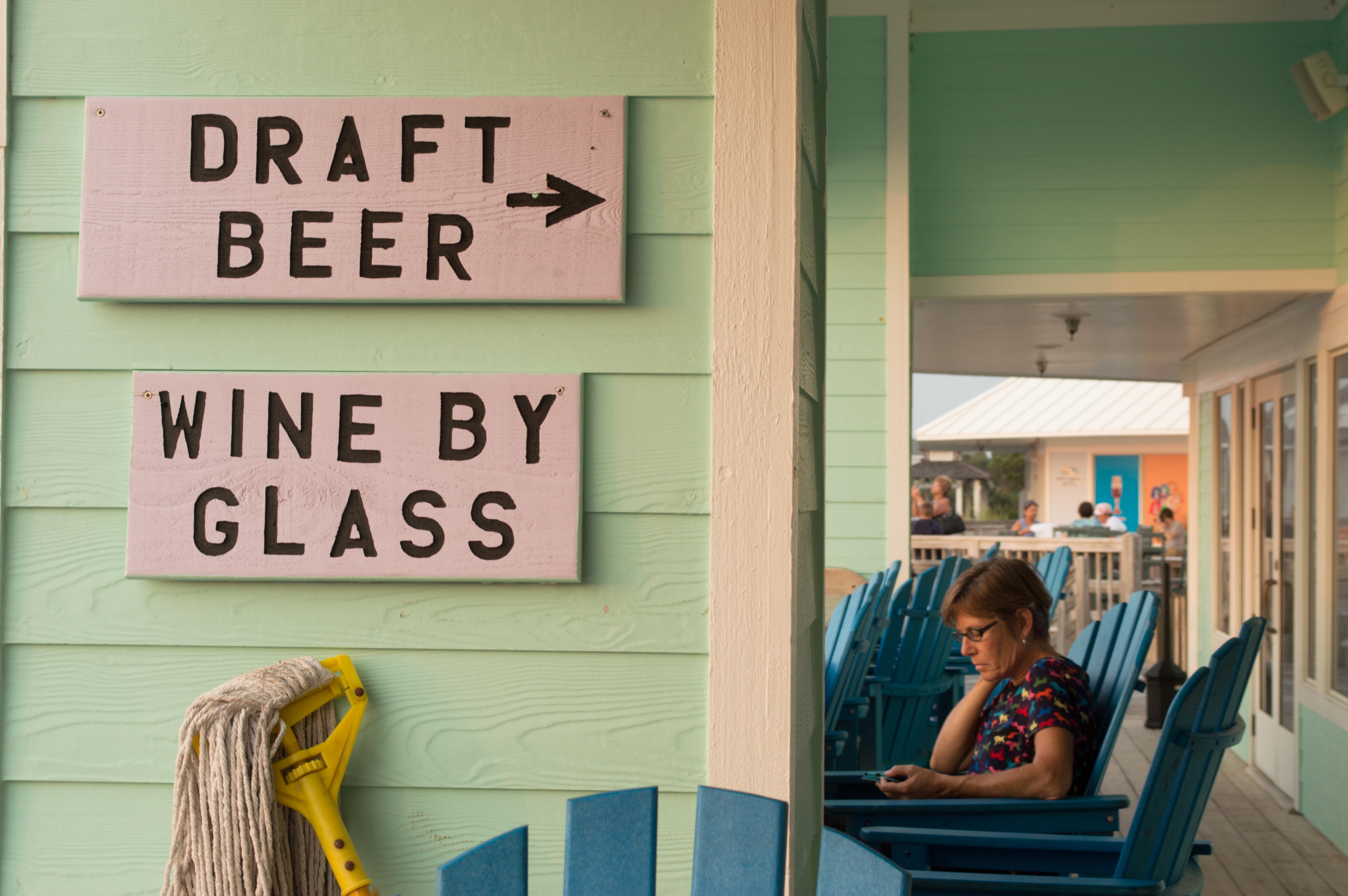
We undertook a four-day dive trip out of Cape Hatteras beginning last Thursday, but the weather didn’t cooperate. We made it OK to our base at Hatteras Landing, but high seas prevented our going out for the first three days. We made the best of things, enjoying some time together, exploring the local points of interest, listening to music, and reading.
13 08 01_3343

For us the most interesting non-diving local point was the N.C. Aquarium at Manteo. I particularly liked the sting ray encounter tank, where Atlantic and cownose rays came up to be petted. There was a large tank with several sand tiger and sand bar sharks, which are impressive. Their keeper got in the tank in scuba gear with a full face mask and speaking equipment, and answered questions as they swam around her. Her high degree of comfort with these fierce-looking creatures was, I’m sure, an educational moment for the kids and adults in attendance.
13 08 02_3289

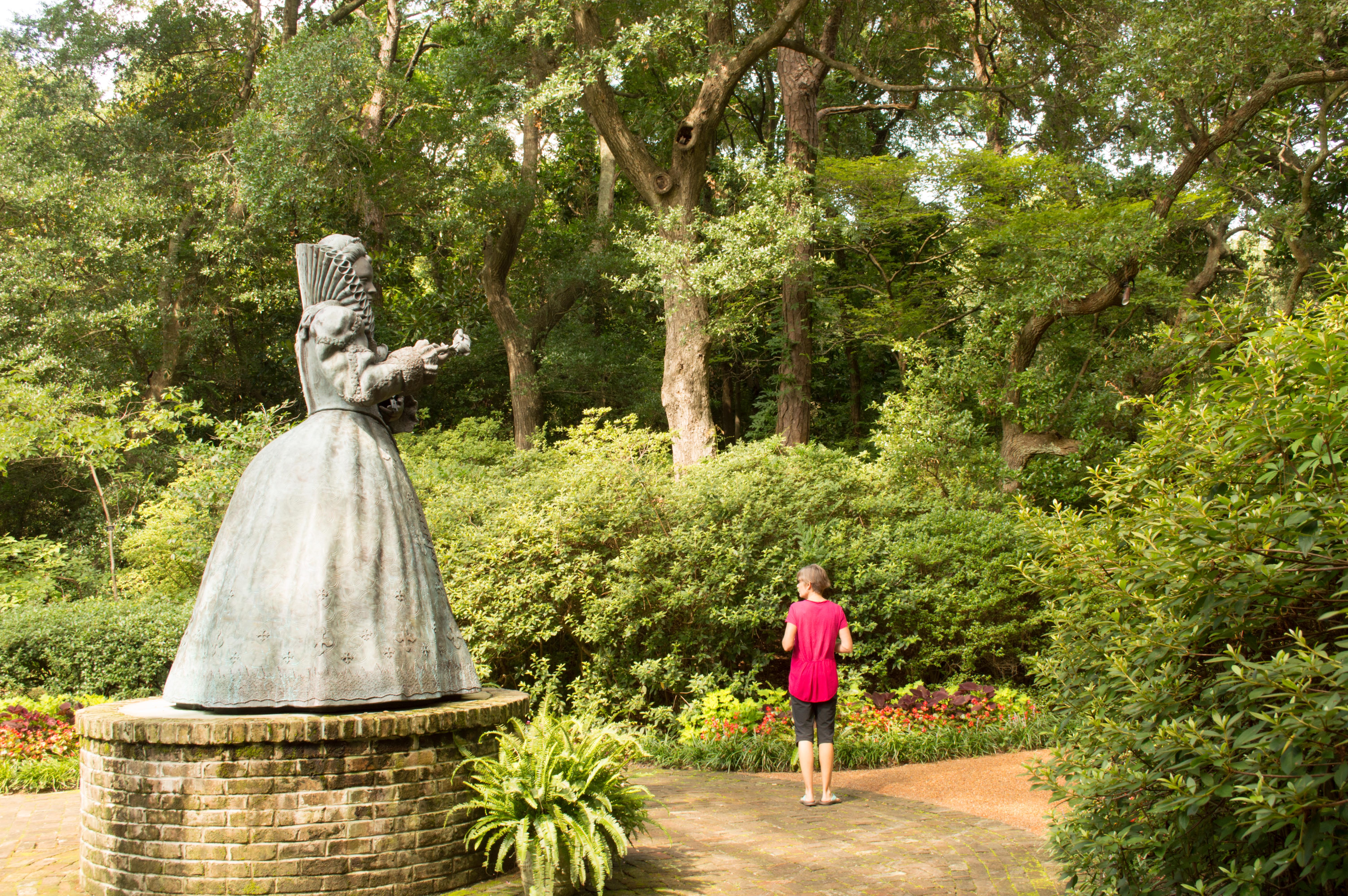
While in Manteo, we also visited the Elizabethan Gardens. Sally remembered my mother had talked about how beautiful it was, and we found it so. The first part is a formal garden with ornamental hedges, but the greater part of it is wooded, with enormous oaks and shade loving plants.
13 08 02_3300

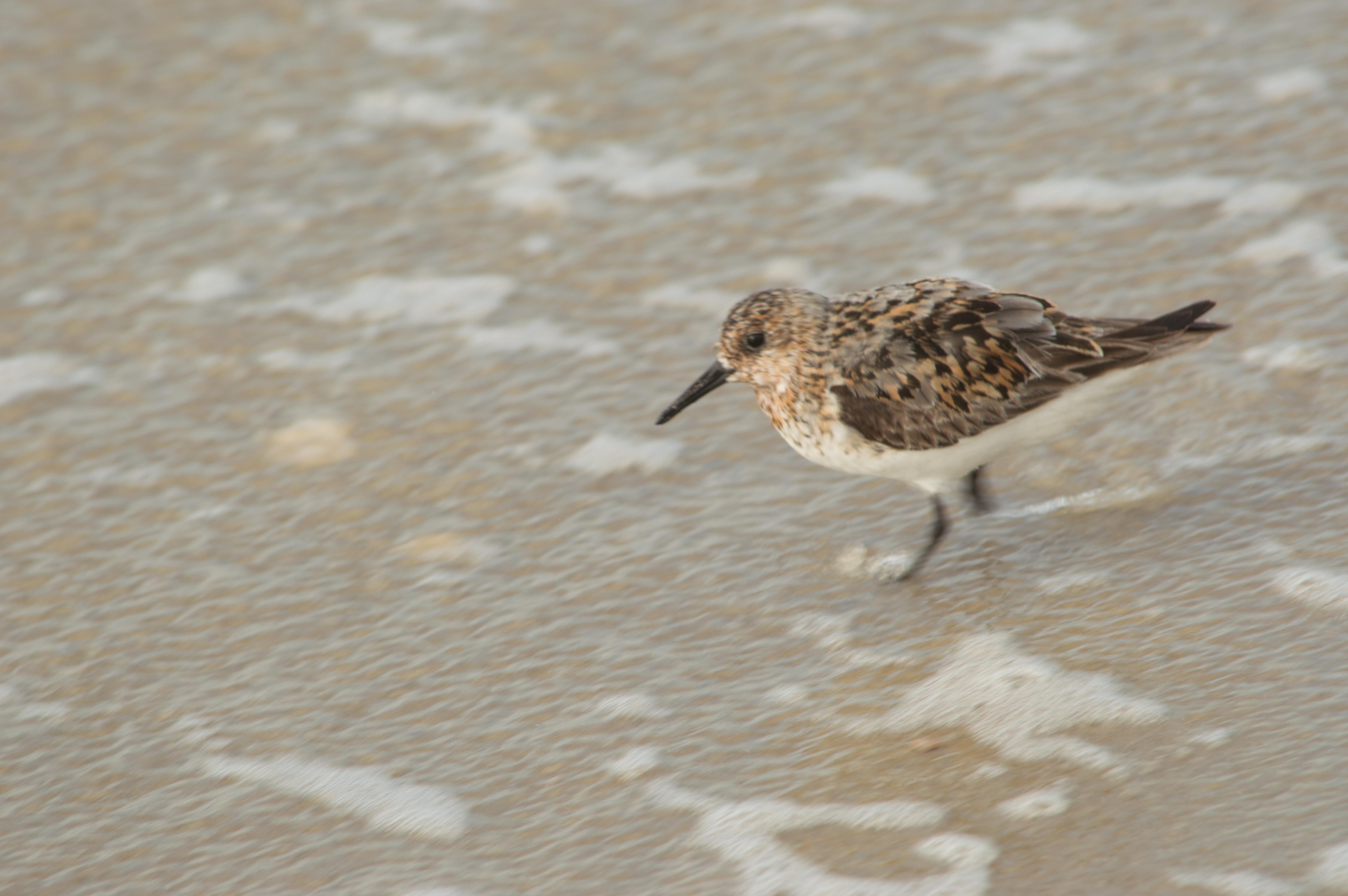
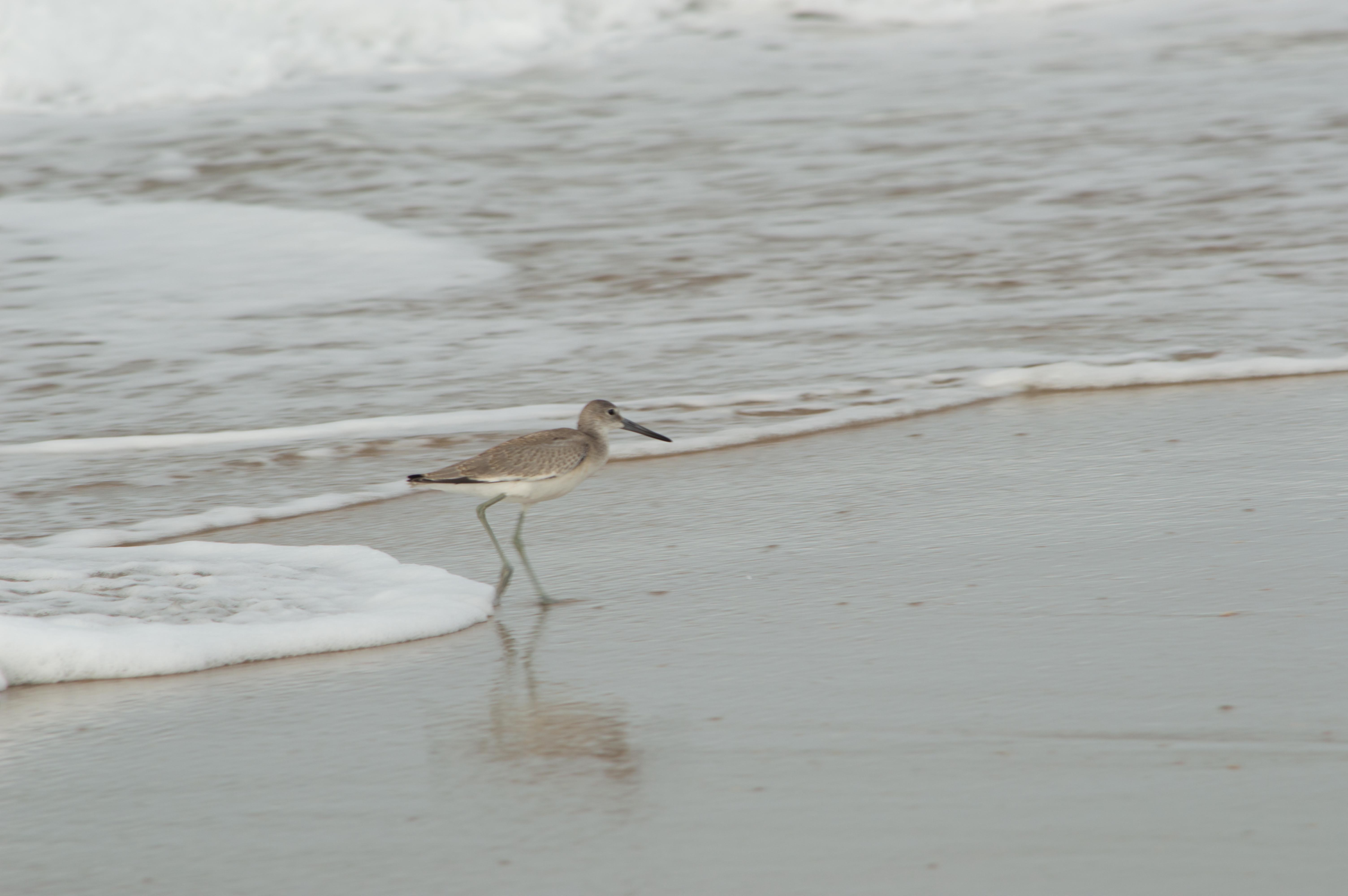
With no other pressing business, I did some walking on the Hatteras beach, and took some pictures of the birds at work there. I got a few of sanderlings and willets on the edge of the surf that I liked.
13 08 02_3318
13 08 02_3317
13 08 01_3275-1
13 08 01_3263-1
13 08 01_3232

As for reading, I started a biography of John D. Rockefeller, Titan by Ron Chernow, which seems lively so far. And I finished Robot Futures by Illah Reza Nourbakhsh. Nourbakhsh is a professor of robotics at Carnegie Mellon, and his book describes the current state of the art in robotics and also gives a forward projection of what several decades might bring. Some of it seems science fictiony, but that may be unavoidable – technology has already surpassed some of the science fiction of my youth.

Nourbakhsh describes robots as “a new form of living glue between our physical world and the digital universe we have created.” He gently makes clear that robots are not limited in their mental or physical abilities to what humans can do. Forget the Jetson and their butler robot. Real robots can be stronger and faster, and move in different ways (like flying, or crawling like a snake). They can perceive parts of the visual spectrum we can’t, and hear pitches that we can’t. They can connect to the internet more efficiently than humans, and potentially process information from numerous sources that are far beyond our capacities.

Robot Futures recognizes that there will be many different types of robots with widely varying abilities, including ones that are closely controlled by humans and others which will be partially or entirely autonomous. It will not be easy for humans to tell the difference. Autonomous robots with access to robot Google and links to other robot databases may well know more about us when we encounter them than we about them.

Nourbakhsh imagines a distant future where we can smoothly enter the consciousness of various robot agents that in effect teleport us to different places and allow interactions with multiple people and environments at once. He also has a darker vision of a possible world where human bodies are purchased for use as the physical casing for robot intelligence. Impossible? Let us hope so. But there is little doubt in my mind that, barring global catastrophe, the world of intelligent robots is taking shape. Robot Futures does a good job at starting the conversation of what that might mean for humans.

We finally got to dive on Sunday with Captain J.T. Barker on his dive boat, the Under Pressure. As I noted last year, J.T. designed and built an elevator on the back for getting divers out of the water. This comes in very handy in rough seas. The vessel has a large air-conditioned cabin, which permits some relaxing on long boat rides. Some video of the boat and our dives in early August last year is on his web site.
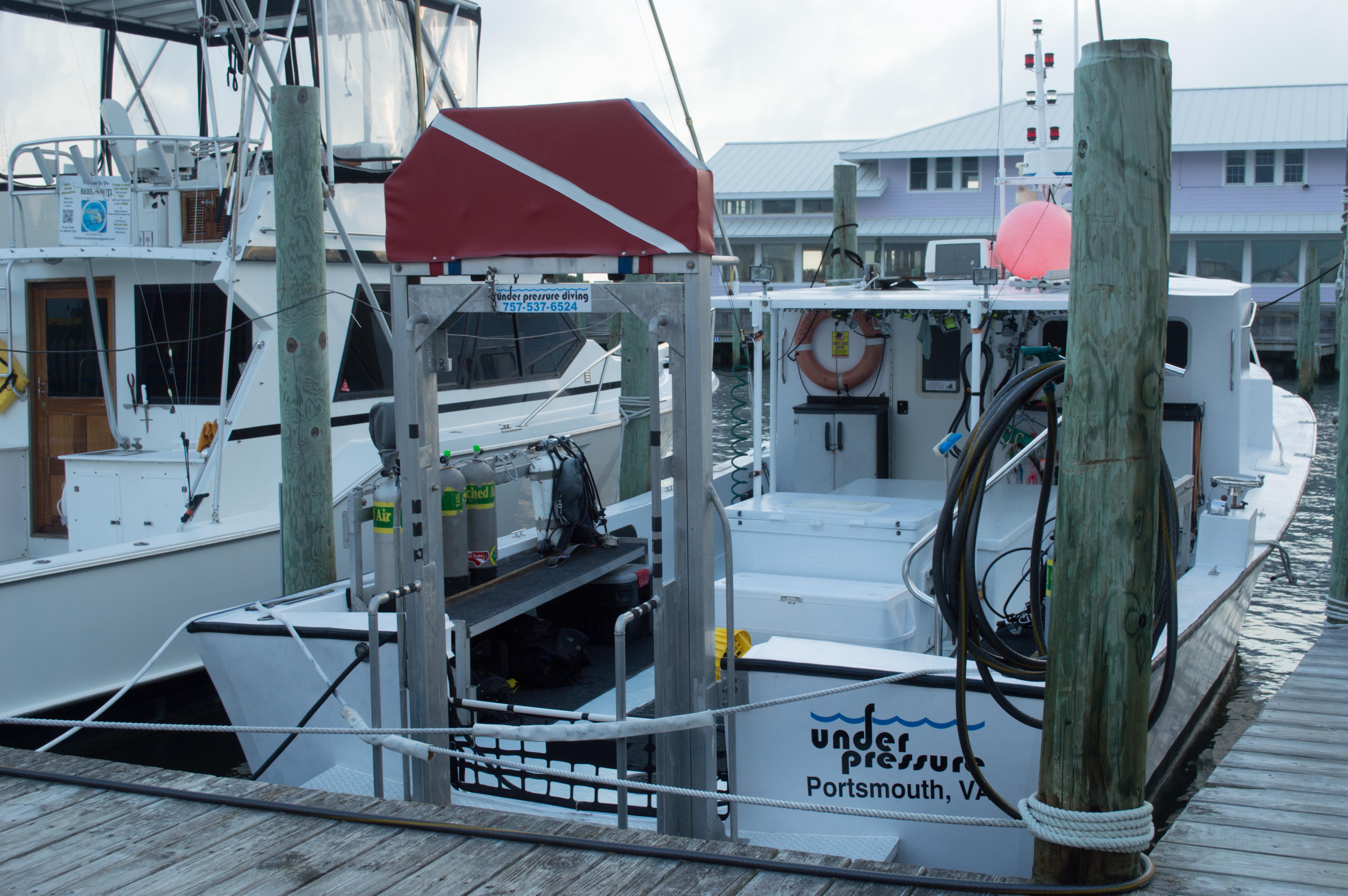
13 08 01_3201-1

We did two wrecks: the Proteus and the Dixie Arrow. The first was, for me, nearly disastrous. Immediately after I reached the bottom (118 feet), I paused briefly to clear water from my mask and tune my buoyancy. Visibility was limited to about 20 feet at that point. Then I looked around and saw no one and nothing. In just seconds, the current had carried me out of sight of the anchor line.

I struggled against the current for a bit, then relaxed and started working on plan B – ascend and find the boat. I began to slowly go up, then at 80 feet I suddenly noted that the air was not working at all well. The air pressure gauge showed zero. This seemed impossible – I had been under for only about 20 minutes, and usually the air lasts two or three times that long. Anyhow, it happened. Plainly, I should have checked the gauge earlier.

Although I thought it unlikely I could make an emergency ascent on one breath from 80 feet, I saw no choice but to have a go. I really didn’t feel panic, even at this point, though I was seriously concerned. I remembered my PADI training and exhaled gradually as I kicked upward. I ran out of air at about 30 feet, and hoped very much there was one last breath in the tank. I breathed in, and there was a tad — just enough to make it the rest of the way.

On the surface, I felt relief, but also concern that I might well have some degree of decompression sickness, a/k/a the bends. I was hoping to get some oxygen, but the boat, with oxygen, was far away.

As I started kicking against the current toward the board and watching to see if I was going to get sick, I felt something bump me. I reached down and felt a firm, smooth animal. A shark? I thought how really unfair it would be, after all my speaking up in defense of sharks, to end up as shark food. I finally figured out it was a ramora, which apparently wanted to attach itself to me.

I swam for quite a while with little progress, until at last Bobby, the mate, came out with a line. As we kicked, our divermaster Jim reeled us in. It was, of course, embarrassing. But I was grateful to be alive and not even ill, and it certainly was a learning experience.

During our surface interval, Captain J.T. put out some fishing lines, and hooked a fish. As the fish came near the boat, J.T. Announced with excitement that it was a wahoo, and grabbed a hook, with which he impaled the fish and hauled him aboard. The wahoo was about 3 feet long and about 30 pounds – a fine specimen.

Several folks commented on what a delicious meal he would make. Then J.T. and others observed Sally crying. These were tears for the wahoo. Our fellow divers were concerned but really puzzled. They just couldn’t comprehend Sally’s sadness at the brutal torture and death of this creature.

Our second dive, the Dixie Arrow, was less exciting, thank God. I had only a minor equipment problem: the wire to my strobe came loose – so no pictures. We got close to a lot of sand tiger sharks (maybe 10), a lot of Atlantic sting rays (maybe 12), a number of barricuda and thousands of minnows in shimmering thick clouds. It was fantastic.

Farewell to Cory Monteith of Glee, and a new pop science book on the unconscious

13 07 26_2802
Last week I was greatly saddened to hear of the death of Cory Monteith, the actor who played Finn in the TV show Glee. For a couple of years (though less so recently), Glee was one of my happiest guilty pleasures, a sweet spot on the largely mindless and boring TV firmament. I wouldn’t care to defend Glee as wholly original. It is, at one level, mostly about recycled pop songs, dance video conventions, and predictable plot lines. But they sing and dance with more than just precision. The total effect is of youthful energy and exuberance. Pop music that I never much cared for when it was new becomes fun and sometimes even moving.
13 07 26_2796

The existence of gays who were sweet, talented, and creative has been a major point of Glee, and it has pressed for tolerance for gays as a central value. How much has this affected the American zeitgeist? Some, I’ve got to think. The poll numbers of Americans supporting gay marriage have gone from negative to positive during the show’s run. Gay marriage is legal in several states, and the Supreme Court has gotten on board. Making anti-gay jokes and comments is becoming less socially acceptable. This is progress.
13 07 26_2815

Cory Monteith was probably the least flashy of core Glee cast in terms of good looks and song-and-dance talent. But he served as the anchor, allowing those around him to emote without floating into outer space. His relative normalcy gave the show more texture and sweetness than a simple music video. He was a point of stability.
13 07 26_2830

It was surprising, at least to me, to learn in his obituary that he “struggled with substance abuse,” and his death was attributed to a combination of alcohol and heroin. Plainly, he was a talented and hard-working actor. It simply is not possible to put out a weekly TV show without lots of hard work, and the supercharged Glee production numbers have got to be incredibly taxing on actors and crew alike. Monteith performed consistently at a high level, so it seems safe to say that he was not completely controlled by addiction. I don’t know more than that about his back story, and I won’t speculate. As I said, I’m sad such a talented young actor is gone.

I hope his death will encourage others to avoid addiction to dangerous drugs, but I also hope it will nudge forward the shift from a moralistic view of addiction. The “struggling with addiction” language in the news reports suggests a more medical view of the problem, instead of the traditional junkies-are-evil-zombies view. Glee reruns will give testimony for years to come that Monteith was so much more than that.
13 07 26_2848

There’s still a lot we don’t understand about our brains, but also so much we’re learning. I just finished a new book on this fascinating subject this week: Subliminal: How Your Unconscious Mind Rules Your Behavior, by Leonard Mlodinow. Mlodinow, a physicist by training, covers some of the same territory as Kahneman and Gazzaniga, taking an evolutionary perspective on the brain and describing research into conscious versus unconscious processes and the social nature of the human brain. But his emphasis is different, and in some ways more practical.

For example, he spends little time lamenting how little of our lives are lived at a conscious, rational level, instead emphasizing how useful and efficient our unconscious processes are. Yet we normally overlook this part of life or deny the extent to which it is critical. We trust our reasoning processes without noting their common biases and errors. We rely on our memories without accounting for their imprecision and shifts. Even our most basic perceptions and emotions are prone to manipulation and error. But Mlodinow is not a pessimist. Like Kahneman, he is ultimately hopeful that understanding how prone we are to mistakes and delusions can help us improve our lives.
13 07 26_2855

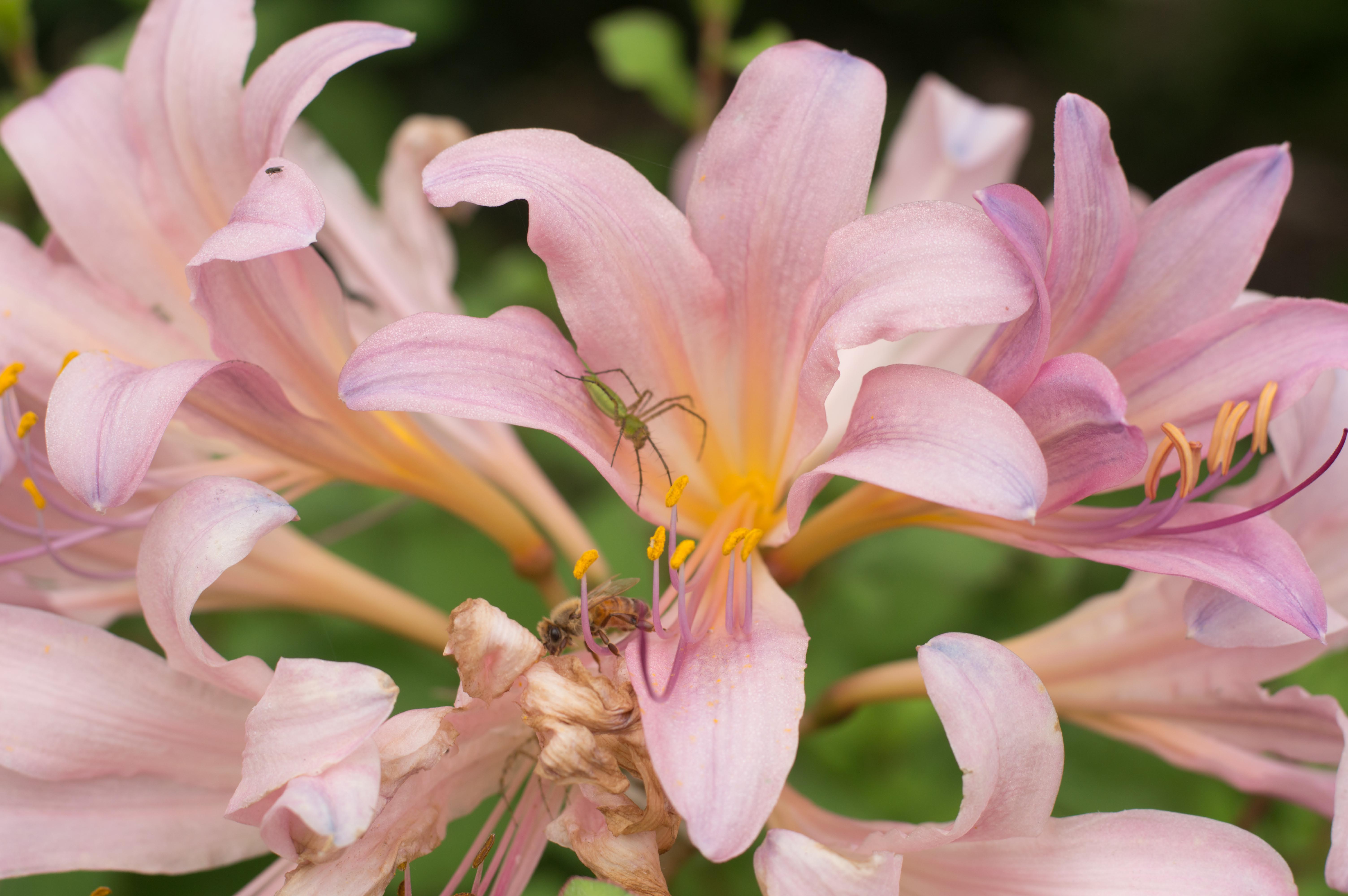
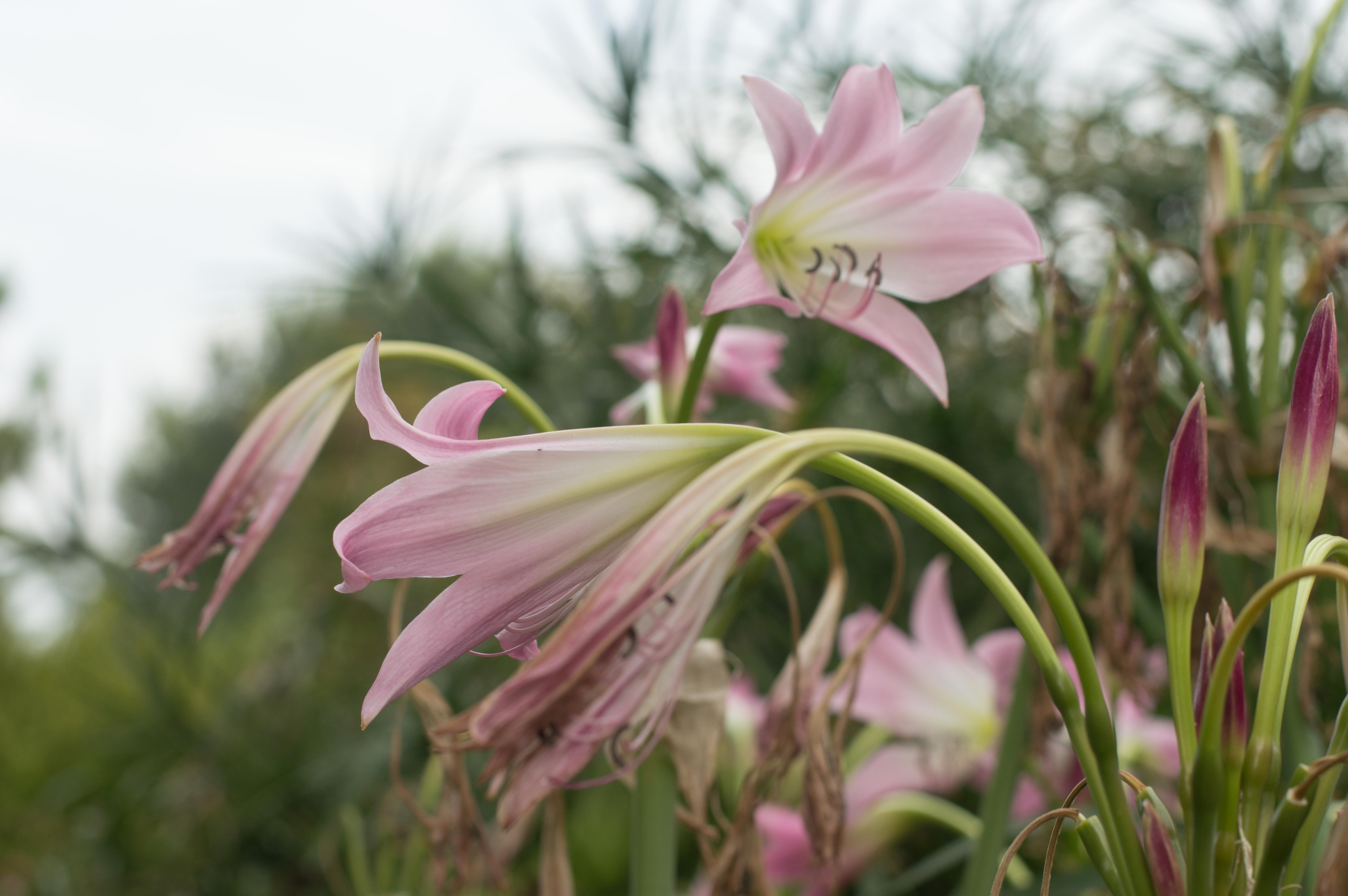
The photos above are from my latest photo safari to Raulston Arboretum on Saturday morning. As usual, there were new things blooming, including some spectacular lilies. Also there were quite a few butterflies, including a gorgeous tiger swallowtail.
13 07 26_2841

Stuart’s and my birthdays, a yoga class, a new green smoothie, and Beautiful Whales

13 07 14_2716

It was Stuart’s eleventh birthday on Tuesday. This is not ancient, but in dog years it is getting up there. It seems fitting to note that he is still the best little doggie ever. Sure, he’s grayer, but he still loves going on walks and being petted, and gets excited (drools) at meal time. He used to love to play with other dogs, but now, he doesn’t. But he’s very skilled at that greatest of dog skills: figuring out what his humans are feeling and making them feel better. He tolerates Rita, Isabel, and Phoebe (the cats).
13 07 14_2730
13 07 14_2726
13 07 14_2723

The next day was my own fifty-eighth birthday. I normally keep a low profile on birthdays. It just seems awkward, unfair in a way, to get extra affectionate attention for something that demands no skill beyond bare survival. And as will happen, those birthday numbers have gotten bigger. One of my coping mechanisms is to start thinking in the months running up to, say, the 58th birthday, that I’m about 58. Then when the day arrives, I initially think, good God, I’m 59. Then I realize I’m actually only 58, and feel a little better. I won’t be 59 for another whole year!

I don’t think I’m unusually fearful of death, but I’m still keenly interested in postponing it for as long as possible. Regular readers know that I have an interest in taking care of my physical self in a way that, if I observed it in a person I disliked, I might view as wacky. But if you’re in your later fifties, either you’re fighting the forces of entropy or you’re going downhill. I’m still getting up early almost every day and either going to the gym, swimming, doing a yoga class, seeing a personal trainer, or taking a spin class. And amazingly, I enjoy it! I wish I’d discovered how good it makes me feel when I was in my salad days.

Tuesday morning was my usual day for Early Bird Yoga at 6:30 with Suzanne. One of the things I like about Suzanne’s class is it’s always different, and usually fresh and lively.  Suzanne is inspired by ancient Vedic texts, which are not a particular interest of mine, but I’m glad they inspire her, because she inspires me. Her voice is sweet and low, with a lovely Trinidadian British accent. I just clear out my head, listen and do whatever she says to do. It’s simple, in a way, though not easy.

This week she had us go quickly through a typical flow (planks, chatarangas, cobras, down dogs, warrior ones, steps to the front of the mat, rising up, folds, half lift, fold, repeat, repeat again, etc.), then started throwing in side movements, twists, back bends, leg raises, and a series of one-legged balance poses. Then a few lovely minutes of complete relaxation in savasana. After considerable stress, I felt pleasantly calm at the end, and ready for an active day.

After crossing the street and taking the elevator back home, I made myself my usual weekday breakfast, a green smoothie. Each one is a little different. This one had kale and dandelion greens, a little orange juice and soy milk, a little flaxseed oil, a scoop of Vega One protein shake powder, strawberries, blueberries, and a banana. A little ice for coolness and texture. My restaurant grade blender is still working well, though I wish it were not so noisy. The smoothie was, as usual, dark green. I put it in the refrigerator to chill while I took a hot shower.

Back home after work, Sally gave me a birthday card with a male and female cardinal (birds that have strong couple bonds), and three presents: some workout shorts, a portable scales for luggage, and a book. I appreciated the new shorts and will find the scales useful for avoiding excess luggage fees, but I loved the book: Beautiful Whale, by Bryan Austin. It is an oversize coffee table volume with large photos of humpback, sperm, and other whales. One of my big dreams is to swim with these amazing creatures. The book is about as close to that experience as a book will get. The images are indeed beautiful and moving.

Flowers, robotic challenges, and a note on this blog

13 07 12_2639_edited-2
On Saturday morning as I drove up to Raulston Arboretum to look at the blooms and take some pictures, it began to drizzle, and I considered scrubbing the mission. But I decided instead to take my golf umbrella. Working the camera while sheltering it from the rain was awkward, but I got a few images of flowers with raindrops that I liked, which are above and below.
13 07 12_2627

You may have missed, as I almost did, an interesting story this week about the DARPA robotics challenge. DARPA is holding a humanoid robot competition similar to its contest that pushed forward the boundaries for autonomous vehicles. Teams of technologist will compete for a $2 million prize with a robot that will be able to perform rescue functions in difficult conditions and do things like climb into a vehicle, drive it, get out, walk on uneven ground, open doors, operate power tools, and shut off valves. A prototype called Atlas is being provided by the Pentagon to teams of programmers, while other teams are building their own devices.

While the Pentagon is emphasizing the humanitarian possibilities of such a device, it could obviously have less benign military applications. And, as the Times notes, the new robots could also work in department stores. Or, I’d add, just about any place that humans work. As I’ve noted before, the quick advance of such technology is going to cause unemployment and economic dislocation, which we need to be thinking about. Along with these public policy issues, there are existential ones. In the not-too-distant world of brilliant and powerful computers and robots that can do almost any human activity better than humans, what does it mean to be human? What is the point of being human? What is our highest and best use?
13 07 12_2625

I was pleased to see that yesterday The Casual Blog set a new record: 251 views. Most of those views had to do with a post about getting older, Gary Player’s diet and exercise routine, and yoga. I wrote the thing a couple of years ago, and I have no idea why it is suddenly getting attention.

One of my self-imposed rules for The Casual Blog is that I do not actively promote it. Some of my friends have never heard of it. I am fortunate in not needing to make money from it. I don’t need to worry about whether something that seems interesting to me will appeal to anyone else. I’m free, in theory, to say whatever I think, and it matters not if no one reads it.

Except that it does. There is no doubt that I like having readers. This is slightly embarrassing, but I’ll confess: I check my blog stats every day, and feel pleased when the number is above average and less-than-pleased when it’s below. There’s a little frisson of pleasure when someone I know mentions something they read in TCB, and a particular thrill when I meet a new person who has read it. Would I continue to write it if the readership fell to zero? Possibly, but only if I thought some future person would one day read it.

Of course, much (though as noted not all) of my satisfaction in TCB is the self-contained but complex pleasure of writing. Taking the raw material of a particular part of my experience – the things I do for fun in non-working hours – and molding it into something coherent and possibly interesting is an absorbing challenge.

13 07 12_2605

There was an interesting recent essay by Verlyn Klinkenborg in the NY Times defending the humanities as an educational objective, which drew a connection between learning to articulate experience and general life satisfaction. I thought Klinkenborg put it well:

Writing well used to be a fundamental principle of the humanities, as essential as the knowledge of mathematics and statistics in the sciences. But writing well isn’t merely a utilitarian skill. It is about developing a rational grace and energy in your conversation with the world around you.
No one has found a way to put a dollar sign on this kind of literacy, and I doubt anyone ever will. But everyone who possesses it — no matter how or when it was acquired — knows that it is a rare and precious inheritance.

A rare and precious inheritance indeed.
13 07 12_2633_edited-2

Fireworks, new bluebirds, right-wing NC Republicans, and bees at work

13 07 05_2398-1

Sally fixed chilled cucumber soup and two salads for our July 4th dinner, with homemade coffee ice cream for dessert. From our condo on the twelfth floor we had a good view of the fireworks show at Red Hat Amphitheater. Fireworks shows vary, but I’ve never seen one I really didn’t like, and this was no exception. OK, it could have been faster and bigger, but there were interesting shapes and sparkling colors, and lots of noise. This may be my favorite ritual in the American civil religion.
13 07 04_2543_edited-1

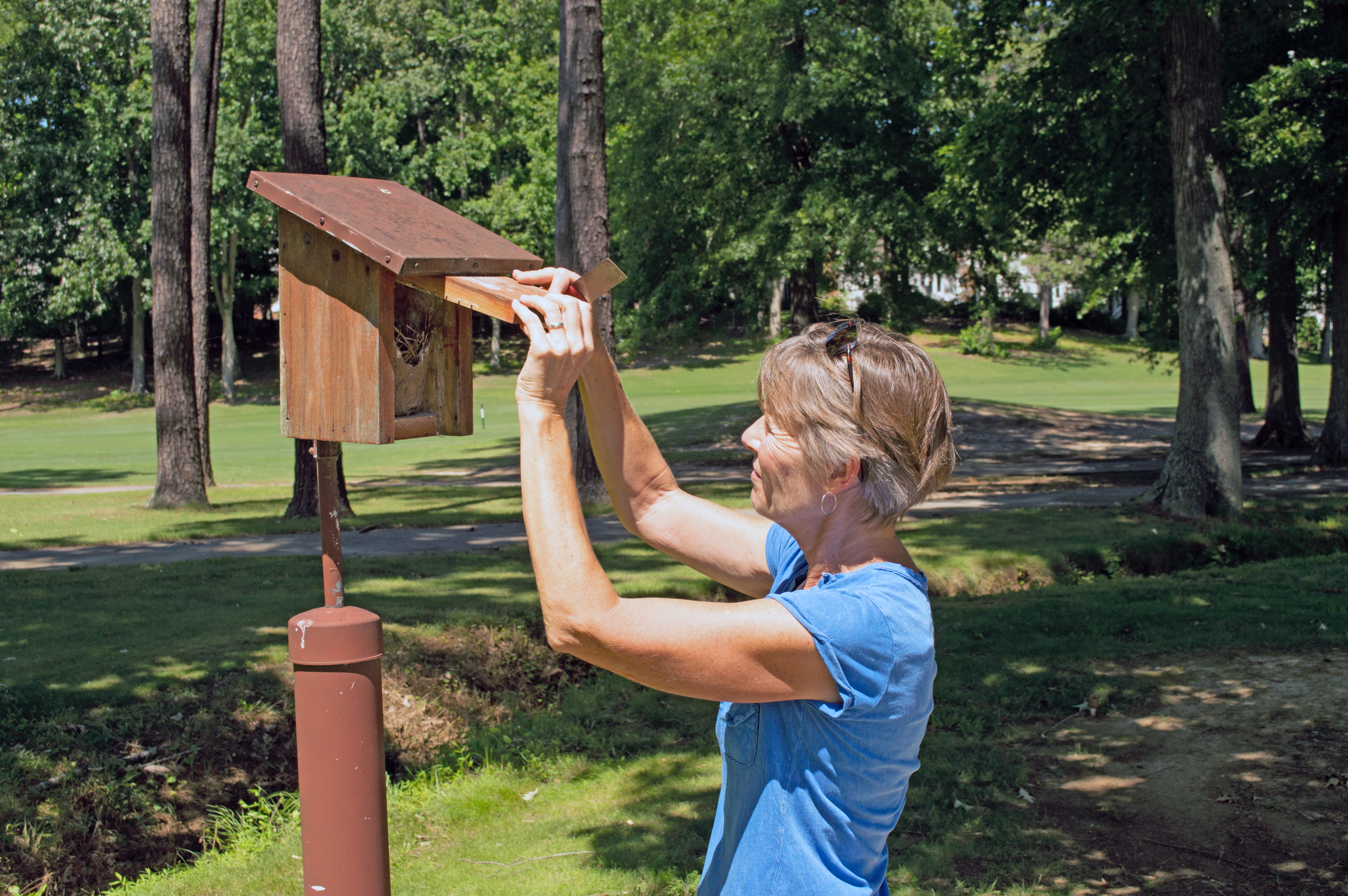
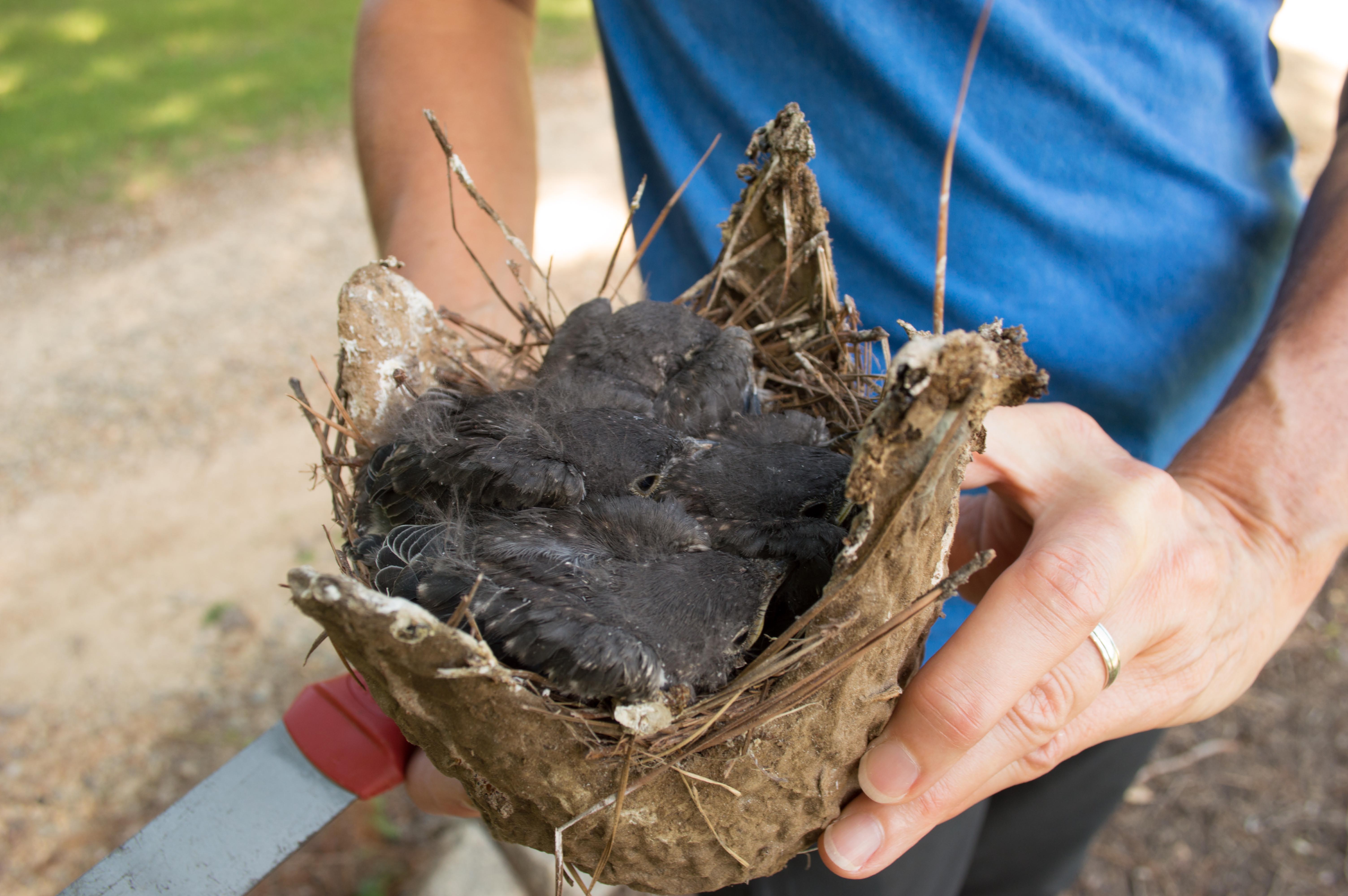
Earlier that day, Sally took me along when she monitored the bluebird houses at Lochmere Golf Club. She’d promised that there should be some new eggs and nestlings, and there were! We were pleased to see the new arrivals.
13 07 04_2570

Speaking of country clubs, the News & Observer reported this week that Carolina Country Club, Raleigh’s old line club, finally admitted its first black member. This was front page news, and I was glad to hear it. CCC maintained the color barrier for way too long. Now that the curse has been broken, I hope they will implement a policy of true non-discrimination going forward.

In my lifetime, we’ve made so much progress on the race issue, for which I am happy and grateful. For all my disappointments with President Obama, every day I feel proud and a little amazed that we have a black president. I can go for weeks or months without observing anything like the racial prejudice that was pervasive when I was a boy.

But we’re still not done. Republican measures to limit the voting power of blacks in NC and elsewhere by imposing ID requirements are moving forward. This is just shameful. With this movement in process, the Supreme Court was surely wrong in striking down part of the Voting Rights Act. There’s still a ways to go to build a color-blind society.
13 07 05_2414

Our North Carolina Republican legislators have gone on a right-wing tear this session. Some of their activities make sense from the point of view of bettering the lot of the wealthy or pandering to the ignorant, but some are inexplicable in ordinary moral or practical terms.

Does any rational person, no matter how selfish or cynical, think it makes sense to get more people carrying concealed firearms into more public spaces? Would a person with a shred of decency change the law to protect agriculture operations that abuse farm animals and criminalize the behavior of those who seek to expose the abuse? Would a normal caring parent or employer find it sane to reduce school funding and increase class size? Would any responsible leader or citizen turn down federal funds meant to help the unemployed or ailing? Does any moderately educated person school think that North Carolina has the right to establish its own state religion? In establishing the highest priorities, does anyone think Is outlawing Sharia law makes the top-thousand list?

And while we’re outlawing Sharia law, why not work in a slew of anti-abortion measures? This actually happened this week without fanfare and without the usual legislative formalities, presumably to minimize the chance of organized opposition. I’ve never found the abortion issue as easy as some of my friends, but the state Senate’s work this week under cover of darkness is really disturbing from a process point of view, and looks like a huge mistake. In the aftermath of this latest fiasco, my liberal friends were looking glum, and worrying at the damage this is doing both to the humans affected (such as women with unwanted pregnancies and poor people) and to the image of our state.
13 07 05_2401

This onslaught really doesn’t seem like the result of a theory of government. To the extent it has a direction, it seems aimed less at accomplishing any policy objective than at making liberals screaming mad. Once a liberal value gets identified, it is attacked with extreme prejudice.

To a certain extent, the NC right-wingers seem to be reproducing the values battles identified by national-level right-wingers. What else could be going on? I heard an NPR interview with Bill McKibben, an environmentalist and college professor, who said the problem with building a green movement was that a movement needed an enemy. In a sense, all of us are conflicted on environmental issues, since we all like cars and electricity. We can’t be our own enemy and still feel motivated to get into the streets. His solution was to declare the oil companies the enemy. This would, he thought, allow a green movement to cohere.
13 07 05_2480

So maybe that’s what our NC right-wingers are up to: building their group cohesion by identifying liberals as the enemy and trying to cut out their hearts (metaphorically speaking). It’s hard for a liberal to find a silver lining at the moment, but I’ll still take a swing. I don’t think this is the direction a majority of the state, or even a majority of Republicans, want to go. And by forcing minorities, low-income people, women, immigrants, and the reality-based community to see their common interest, the wing-nut legislators are increasing the chances that their “public service” will not last past the next election.
13 07 05_2466

In the meantime, President Obama has seized the initiative on climate change by ordering rules on power plant reductions for CO2 and other measures. Longtime readers of the Casual Blog will know that this is a big issue for me that I think should be a big issue for everyone. At issue are mass extinctions and dislocations on a scale previously unknown in human history. The significance is much greater than putting a man on the moon, and we ought to mobilize with a level of commitment on a scale comparable to the Apollo project. I hope this is the start.
13 07 05_2522

And while we’re on the subject of things to feel good about and continue working on, let us not forget, the long fight for gay rights has made real progress. The Supreme Court, a highly conservative institution (even if not all of its justices are conservative), struck down the Defense of Marriage Act! A majority recognized this as a human rights issue. It seems the tide has turned.
13 07 05_2538

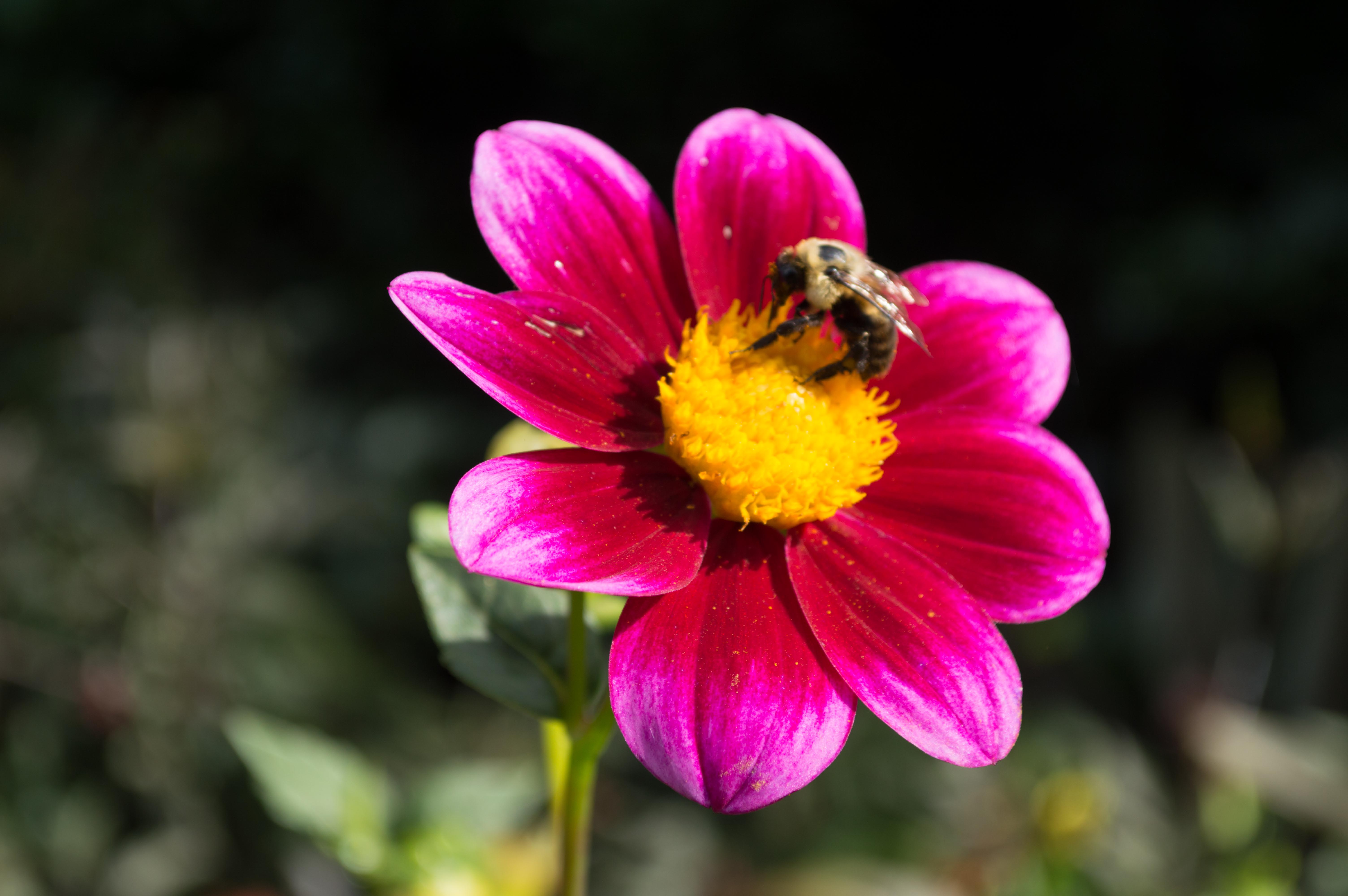
Well, that’s it, I’m climbing off my soap box. I got out to Raulston Arboretum on Saturday and found a lot of bees hard at work. I took along my tripod and used a Nikkor 18-55 mm lens in aperture priority mode. Along with a variety of bees and flowers, I was struck by the sculptural qualities of some of the blooms. My favorites are above and below.
13 07 05_2396
13 07 05_2452

My eye outlook, a tuba reminiscence, and enjoying some Mendelssohn and Wagner

I saw Dr. Mruthyunjaya for an eye checkup last week,and the news was basically good. The eye test results were mixed — with my injured left eye I couldn’t see any letters on the chart, but I could tell how many fingers the PA held up.

By now I’m thoroughly acclimated to the check routine — getting pressure tested, dilated, photographed, and poked, prodded, and peered into. I used to think of the eye as sort of a delicate thing, but now not so much. Anyhow, after giving me a thorough going over, Dr. M. said those words I longed to hear: “I like what I’m seeing.” My retinal scarring had not gotten substantially worse. My cataract was larger, but he says that’s relatively easy to address. We’ll likely do the surgery in September. I’m optimistic that I’ll be seeing better.

Sally and I drove over to Greensboro on Friday for the opening concert of the Eastern Music Festival. We had dinner with friends beforehand at the Green Valley Grill, where we enjoyed their potato leek soup and cauliflower steak. I talked about being a student musician at EMF as a rising high school senior, when I played the tuba in the student orchestra.

Why the tuba? I remember Mr. Shelton, my first band teacher, asking if any of the trumpet players wanted to switch to tuba, because the band needed one. I liked the look of the big horn, and liked the idea of doing something others didn’t. Other ideas came later: the tuba as a unique voice, as bass French horn, as brass cello. But the start was mainly out of curiosity. It seemed like it might be fun. Which it was.

Getting back to the Guilford College campus brought back happy memories of friends and wonderful music. The concert was the first event of the EMF season by the faculty orchestra conducted by Gerard Schwarz. The first work of the evening was by Schwarz, and featured a choir of boy sopranos. They looked like normal goofy boys, and sounded completely gorgeous.

The highlight was Joshua Bell performing the Mendelssohn violin concerto. It’is a brilliant, gorgeous piece, and Bell was fantastic. Within the first few notes, it was clear that he was a master musician, and he’d considered many possibilities for every note. Along with the logic was a lot of passion and excitement. He played a solo encore that seemed to be variations on Yankee Doodle Dandy in the style of Paganini. The double stops and harmonics were amazing!

The last work of the evening was excerpts from Wagner’s Götterdämmerung, including Siegfried’s Rhine Journey, Siegfried’s Funeral March, and Brunhilde’s Immolation. This is amazing music, elemental in its force. The soft parts were a bit tentative, but the loud parts were thrilling!

Hammering nails, my sweet cable repair robot, privacy concerns, and some flower pictures

13 06 21_2142
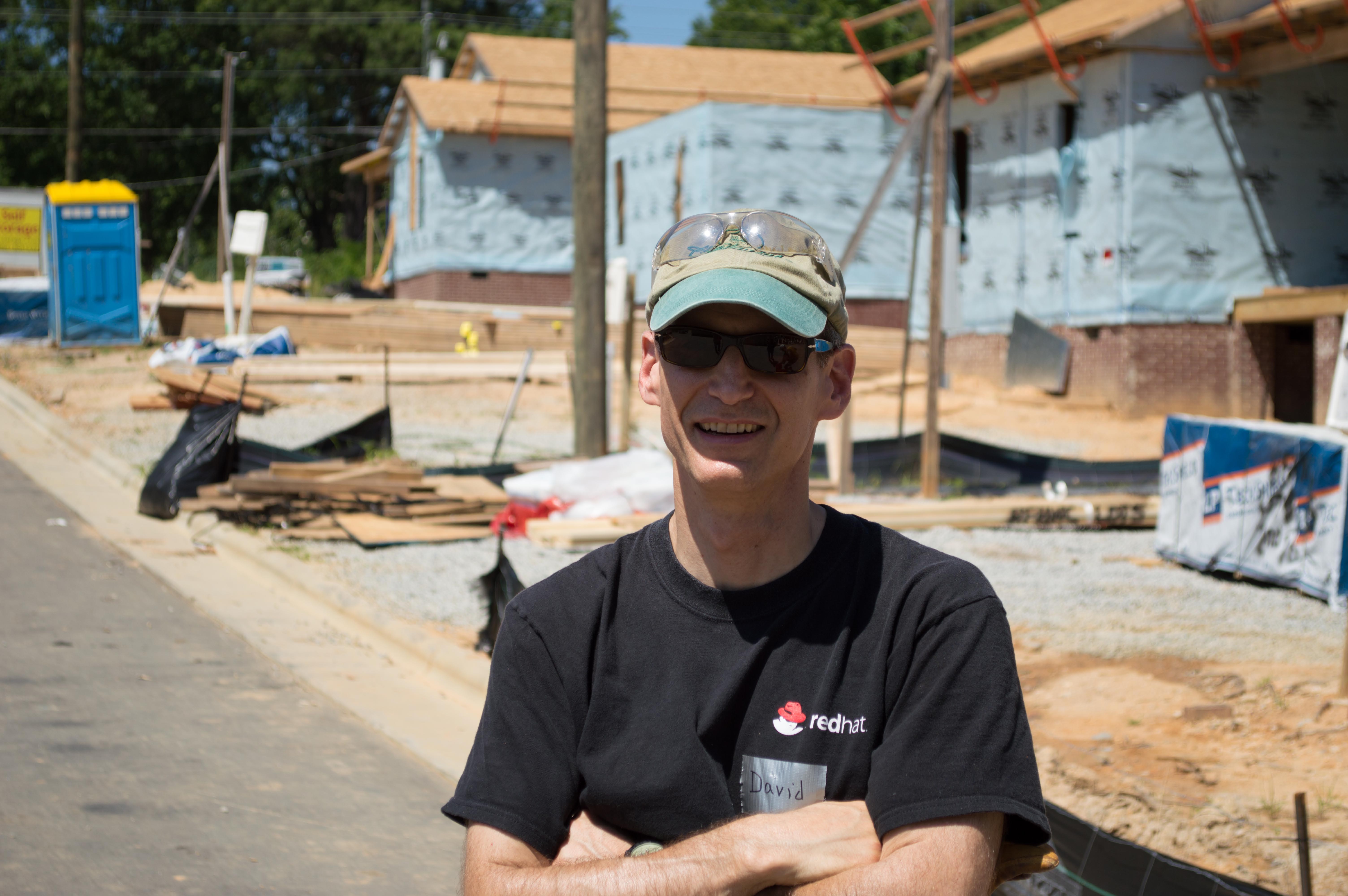
On Friday afternoon the Red Hat legal department in Raleigh worked on a Habitat for Humanity house in Apex. We met the owner to be, who sounded like he might have originally been from west Africa, and who said this was his dream house. I watched a group of colleagues get trained in installing windows, and then got drafted to do some work in the rafters, including repairing some mistakes of a previous crew.
13 06 21_2134

Hammering nails is not something I’m particularly good at, and I learned that this was even more true when standing on a ladder, reaching upward, and swinging within limited space. My wrist and arm got tired. But, though slow, I got quite a few nails well in, and avoided serious injury. I do not think the next crew will need to re-do them.
13 06 21_2133_edited-1

Speaking of repair work, I had an interesting experience on the frontiers of automation this week with my cable service, Time Warner. Our on-demand movie service didn’t work properly last week. When I called TW, my call was answered by an automated female voice of the sort that usually reads service options (press 2 for billing inquiries, etc.).

It (she) asked me to describe the problem. She then correctly paraphrased it, and said she’d be right back. Then she said that she’d checked and my cable box needed to be re-set. She said she would do that. She did it! This was the first fully automated repair encounter I’ve ever had, and it was excellent! When the automated repair entity told me I could hang up, I couldn’t help myself: I thanked her.
13 06 21_2205

On Saturday morning I got up with the plan of being at Raulston Arboretum when it opened at 8:00 a.m. to walk about and take some pictures with early light. I got slowed down by some interesting stories in the Times — market reactions to the Fed’s new strategy, dysfunctional courts in the Bronx, arms for Syrian rebels, protests in Brazil and Turkey, China’s and Russia’s economic policies. And particularly by the latest on Edward Snowden and the NSA surveillance program.

I’m still trying to figure out what I think about Snowden and the NSA data collectors. Clearly, it’s wrong to break your oath and betray your employer. Clearly, it’s wrong for the government to invade our privacy without due process. Clearly, it would be a mistake to acquiesce in terrorist plotting.

These conflicting imperatives make this a tough one. I tend to focus on the high risk of governmental abuse of power. Curiously, though, for some reason I’ve felt less fear and outrage over the data mining than I would have expected. I don’t think I’m alone on this. Possibly, as my colleague David said, we exhausted our outrage muscles over the Patriot Act, and the NSA intrusions are not such a big surprise.

We may have already passed an inflection point in the history of privacy. Most of us understand that Google, Facebook, Amazon, and others are using our data in ways we wouldn’t necessarily approve, but which don’t do any noticeable harm. Is the NSA program a bigger threat to civil liberties?

Well, the government is awesomely powerful, so the risk is plainly greater. But for most of us, the harm is abstract — an automated intrusion into our personal space that we never directly perceive. Will we eventually come to accept this diminution of private space as the new normal? Probably yes. Will that change our thinking and behavior? Probably yes.

A more immediate by-product of this affair is a new round of erosion of trust between government and the governed. Privacy’s cousin, honesty, has also been compromised. Can we ever be sure that any government explanation of the project is true?
13 06 21_2163

When I finally got to the arboretum, it was cloudy, but pleasantly mild, and many flowers were blooming. It smelled wonderful! I took many deep breaths. Wouldn’t it be nice if we could record those smells?

In the meantime, we’ve got digital photography, which is itself pretty amazing. I was looking for dramatic colors and shapes, and interesting textures. I was also thinking about the complex patterns that nature made, and others that the gardeners made, and others that only I could make on that particular morning with those particular blooms. I generally focused on the flowers that were at their resplendent peaks, but I also caught a few that were well into the process of dying, and beautiful in sadder way.
13 06 21_2170
13 06 21_2191
13 06 21_2154
13 06 21_2186
13 06 21_2179
13 06 21_2219
13 06 21_2156
13 06 21_2210
13 06 21_2217

My walk to work, seeing Before Midnight, and eating at Dos Taquitos

13 06 12_2091
Now that we’ve moved our offices into Red Hat Tower, I’m within walking distance of work. How sweet it is! Last week I went carless three times. If I focus on moving along, I can make it in seventeen minutes. On a warm, humid day, that leaves me in a bit of a lather. On Thursday, I went a little slower, and took some pictures with my trusty Canon point-and-shoot, which are above and below in the order they were taken.
13 06 12_2095

On Saturday we went to the Rialto to see Before Midnight. I loved the two predecessor pictures, Before Sunrise and Before Sunset, both of which were romantic but also smart. Along with My Dinner with Andre, these movies prove that great conversations can be art. In both earlier movies, Ethan Hawke and Julie Delpy were astonishing in their seeming naturalness, and with great chemistry.

In the new movie, they return as the same characters, but middle-aged, and firmly a couple, with children of their own. Instead of gauzy romantic possibilities, they have frustrations and disappointments with life and each other, and anger. But they’re still talking. Boy can they talk! I really liked the movie.
13 06 12_2101

There’s a little conversational strand early in the film about the nature of the self that could have been inspired by The Self Illusion by Bruce Hood, which I’ve been re-reading. Hood works hard to deconstruct the conventional view of an unchanging self with conscious thought at the center. The characters briefly take notice of the force of this argument, but then do what we all usually do, which is plunge into a narrative.
13 06 12_2106

After the movie, we had dinner at Dos Taquitos on Glenwood. We’d tried to get in twice before, but both times the place was packed and the waits were long. The third time was a charm, although even at 9:00 we still had to wait half an hour. It was lively, with busy, colorful decor and lots of noise, and the food was just fine. I think the secret of their popularity is: it’s relatively inexpensive. And their margaritas have some kick.
13 06 12_2108
13 06 12_2116
13 06 12_2121

Is it 1984, with the NSA as Big Brother, or will Watson come to the rescue? Plus notes on a birthday, an anniversary, a soccer game, and an opera documentary

13 06 09_1924_edited-1What to make of the federal government’s massive program for gathering telephone and social media data? My first reaction was fear and horror. Is 1984 finally here? Is the Fourth Amendment a quaint artifact of a bygone era? Of course, we don’t actually know very much about the program, which is still classified. Is it like Big Brother, or more like the airport security services of the TSA, which inconvenience millions and accomplishes little?

As for the TSA, no doubt it’s supposed to make us feel more secure about flying, but for me the predominant emotion is frustration, with additional notes of anger and humiliation when my property and person are touched by uniformed strangers. And we’re afraid that if we complain, we may get put on the do not fly list and subjected to even more frustration and humiliation. Dear NSA analyst, if you’re reading this, I swear I’m not going to cause any mayhem – please please don’t put me on the do not fly list.

I’m kidding, of course (no I’m not – I want to stay off that list). I seriously doubt humans look at more than an infinitesimal fraction of this data, which is sufficiently massive as to defy all hope of human comprehension. It may be that this is why the program continues to exist: it’s become so big and complicated that no one can understand it. The computer doing the heavy lifting has almost certainly surpassed its minders in the complex skills at the core of this program. So who can reasonably make a judgment as to whether it’s a useful or safe project. The computer?

I realize this sounds a bit science fictiony, but if it isn’t already true, it probably will be soon. Remember, IBM’s Watson didn’t just win at Jeopardy, he or it trounced the strongest human players to ever have played the game. The Times reported this morning that the NSA and CIA have been testing Watson for intelligence purposes the last couple of years. He’s already way better at quickly analyzing massive amounts of data than any human ever will be, and he’s likely getting smarter and smarter.

In some ways this is comforting. I greatly doubt that Watson or his peers in artificial intelligence mean us any harm. Good AI is, at least so far, not complicated by the emotions that drive human behavior, including those that make us behave badly. Watson is not greedy, or prejudiced, or power mad. Once he gets this security thing well in hand, maybe he can take on more governmental responsibility. Could this be the way out of partisan gridlock? Watson for president?

Speaking of technological transformations, I recommend an essay in today’s NY Times by Jaron Lanier called Fixing the Digital Economy. Lanier is wrestling with an issue I’ve also written about: what happens to the economy (i.e. us) as human labor is increasingly replaced by robots and AI? He suggests that the source of both increasing decentralization of power and increasing disparities in wealth is computing power, and that the most powerful players are the ones with the most server power. I think he’s wrong to emphasize giant computers as primary sources of wealth, but he’s thrown out some provocative ideas. Here’s one: let’s revamp the economy so that those who take your digital data pay you for it. We could set up market in which Google, Facebook, the NSA and other data miners send out quarterly checks to all of us who provide the data.

Speaking of data and devices, Sally had a birthday this week, and I got her an iPad mini. She was thrilled! I got it at the Apple store at the Crabtree Valley Mall, which as usual was packed, and where I had a completely satisfactory buying experience. My salesman was knowledgeable and funny in a dry way. There are things to dislike about Apple as an organization, but they are really good at customer service. And their devices are designed with emphasis on a pleasant, intuitive human-machine interface, so non-specialists can enjoy them.

We also had our 31st anniversary this week, and celebrated with a fancy dinner at St. Jacques. The restaurant sits in a common strip mall, but inside it manages to convey the joie de vivre of fine French cuisine. I love that they have a special vegetarian menu. It took a little too long to get a visit from the sommelier, but eventually he gave us his full attention. A true and expressive Frenchman, he dissuaded us from getting the chardonnay that we additionally asked about, and with a dramatic explanation of the food flavors and wine flavors at issue persuaded us to try a sauvignon blanc. It worked beautifully. We savored every bite and sip.

13 06 08_1940

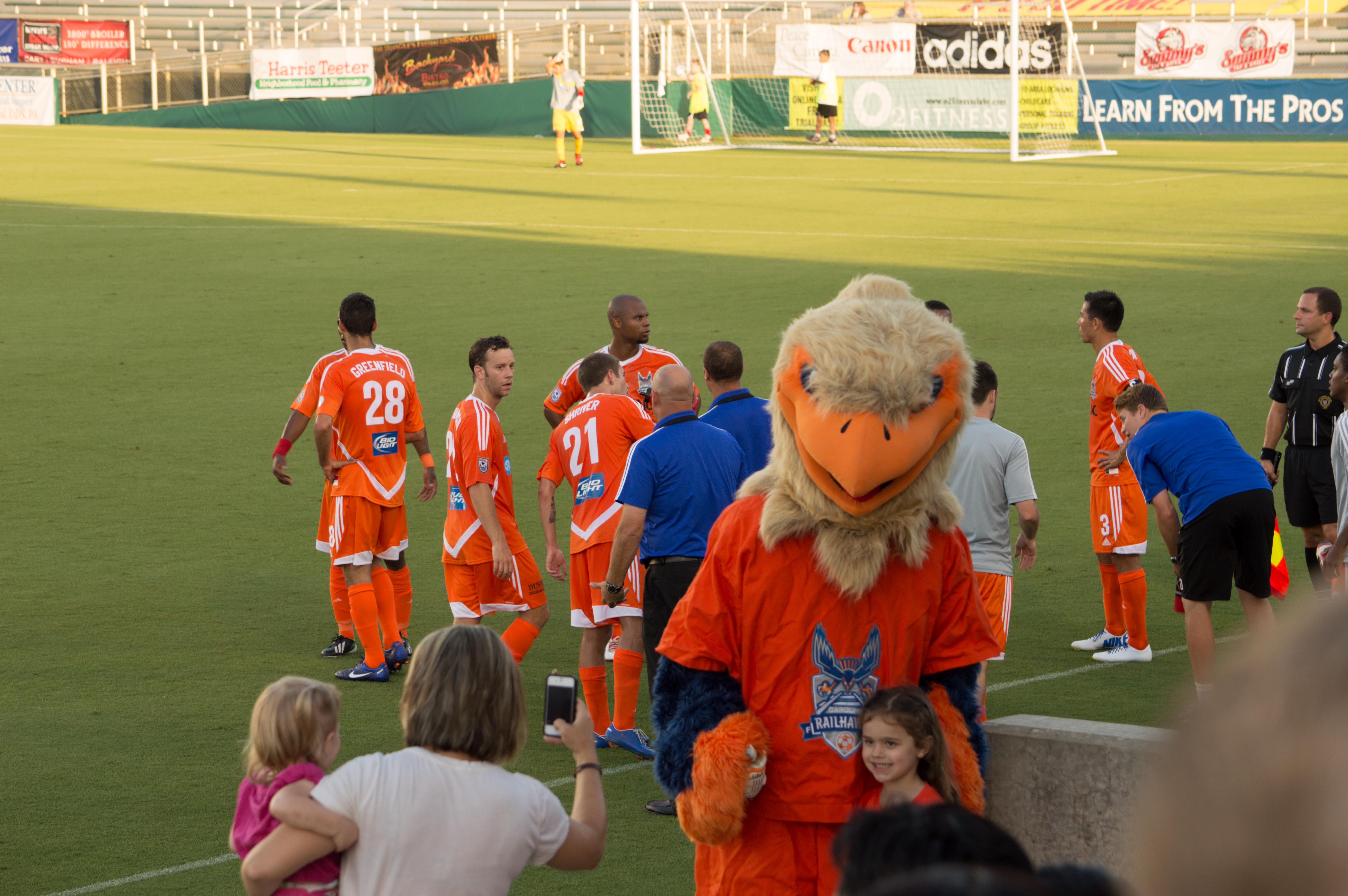
On Saturday night we went out to Cary to see a soccer game – the Carolina Railhawks played the Tampa Bay Rowdies. It was a clear, mild evening. We took along a couple of veggie subs at Jersey Mike’s, because last year we’d learned there wasn’t much in the way of healthful nourishment at the soccer stadium. But we were pleased to see they had improved their beer selection since last year. The field looked green and immaculate. We had good seats near centerfield on row G, and had a pleasant picnic there.
13 06 08_1967

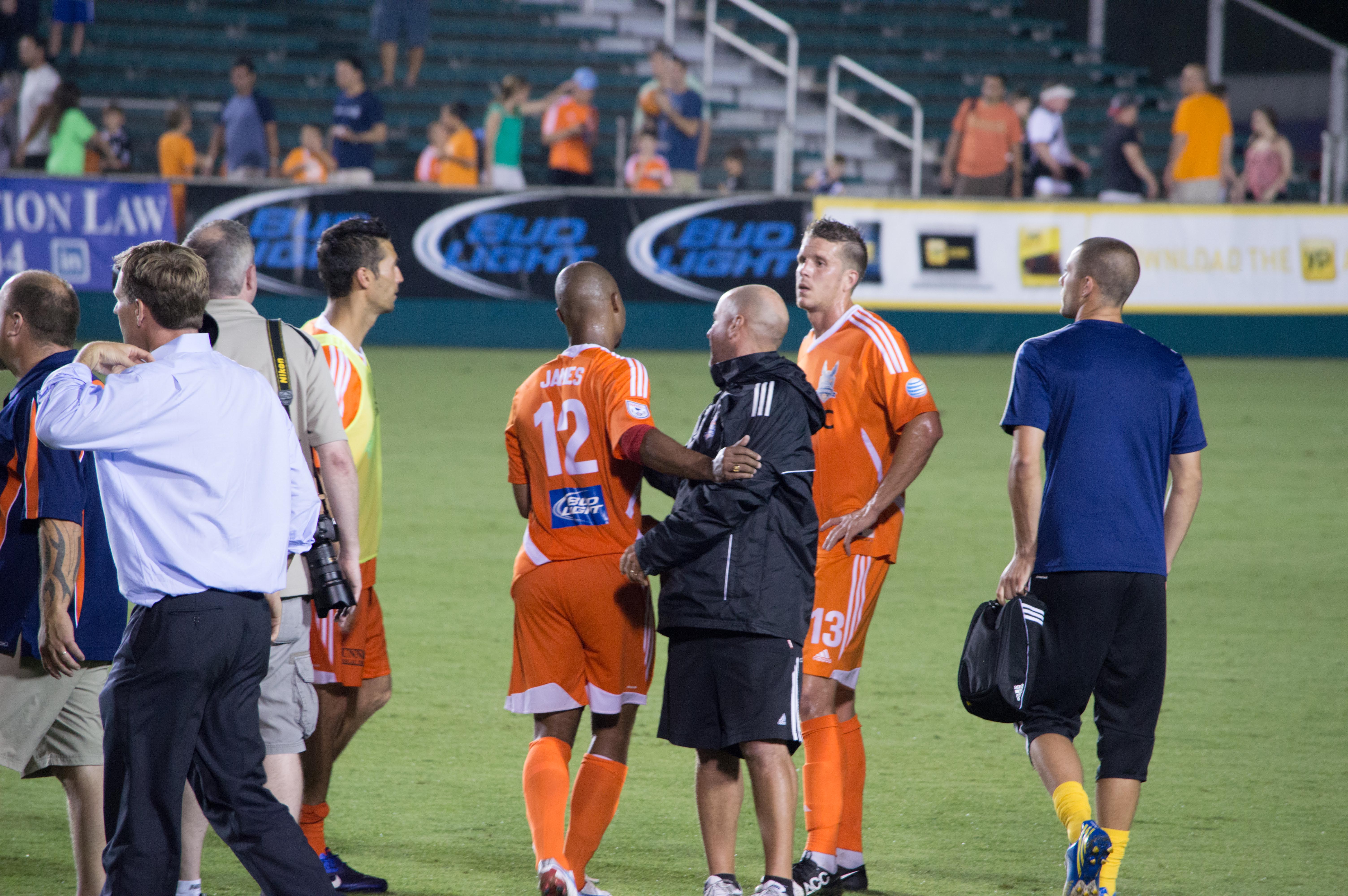
The teams came into the game tied for the lead in the league and seemed well matched. I thought the Railhawks seemed sharper and less thuggish than last year. There were moments of skill and excitement, but no scoring until the 87th minute, when Tampa Bay took advantage of a defensive let down to put in a goal. When time expired there was an additional four minutes. During that time, the Railhawks proceeded to score, and then score again. We won!
13 06 08_1953

One of the Railhawks, Brian Ackley, is an old friend of Jocelyn’s going all the way back to middle school. We’d texted Jocelyn that we were going to the game, who’d texted Brian, and so he was prepared when we hailed him after the game and had a word. He’d played the last part of the game and had almost scored on a header. He’s a fine athlete and warm human being, and it was nice to see him.

Brian victorious (the Railhawk on the right)

Brian victorious (the Railhawk on the right)

When we got home, we watched a fine short documentary on HBO On Demand about Renee Fleming doing a master class for four aspiring young opera singers. The basic format, as with all master classes, is for a student to perform in front of other students and the master, and then receive criticism from the master. Here the students were all thrilled to have the opportunity to sing for Fleming, who is unquestionably one of our greatest singers. She was warm, generous, and a great listener. She gave some very specific advice on producing good vocal sounds, and spoke frankly about things like pre-concert nervousness. She gives a window into how difficult it is to be a great singer, but at the same time how wonderful.

Home alone with the animals and our new doggy portrait

13 05 31_1866
Sally went to Ashville with her tennis team to compete in the state finals this week. They’ve had success this year competing at the 4.0 senior level, and Sally’s feeling good about her game. I was happy for her, but a little melancholy to be home alone. I missed her.

So did the animals. The first day they spent time sitting by the front door waiting for her. The cats showered me with affection that they would normally give to her, and Stuart was much more excited than usual when I came home from work. Our routine called for a pee walk outside and dinner, which are certainly high points of any dog’s day, but even after dinner he wanted extra petting.
13 05 31_1862_edited-1
Stuart was immortalized recently in a drawing by Sally’s cousin, Alison (Muffy) Brush. Muffy turned out to be really talented, and we were very pleased with the work. It’s based on some of my photographs, but captures his essence much better than the photos did. As our dance friends will note, he has beautiful turnout. I think Sally’s frame selection really works.

Stuart is 10 now, and showing his age. He’s a basset-beagle mix – a bagle, or perhaps a beset. He still likes people and being petted – he’s met many people during elevator rides and is quite popular in the building – but unlike in his younger days, he’s wary of other dogs. Anyhow, as we often say, he’s a good dog. Handsome, too, I think.

I was somewhat the worse for wear from our trip to the Outer Banks last weekend. For the first time in many moons, I went for a substantial run – four miles – on Sunday. It was a lovely day, sunny and mild, and I felt fine, even when I got my heart rate up to the low 160s. Only hours later did I begin to feel pain in my knee, and more and more soreness in my quadriceps. The next day I was so sore I could barely walk.

Also, according to my usual pre-morning-shower weigh-ins, I somehow gained 6.8 pounds between Friday and Tuesday. This was a shock! Did I really eat that much? I enjoyed Keith’s food, but I consciously kept from stuffing myself – no second helpings, for example. I snacked on pistachios, which were kept in a bowl that somehow never emptied out, and that may have had something to do with it.

Anyhow, I was gimpy and heavy, but things improved over the course of the week. On Friday, I got to the gym when it opened at 5:30 a.m. and got in a mega-workout: 30 minutes of lunges, squats, step-ups etc. a 50-minute spin class (a major aerobic accomplishment), 25 minutes of upper body work, 10 minutes of core exercises, and 10 minutes of stretching. By the time of my morning weigh-in, I had lost 3 pounds from the previous day, and six for the week.

On the drive back from Corolla, Sally and I talked about possibilities for our next adventure. We try to do something fun outside the usual routine every month or so, and the next four week interval brings us almost to the July 4 week. The Fourth is on Thursday, so if I can get off that Friday, presto, we’ve got a four-day weekend. We’ve been wanting to visit Gabe in Colorado, and also wanting for a long time to visit some of the beautiful country in southern Utah, which is within driving distance of Telluride. I took on the job of researching the possibilities of fitting this into a July 4 trip.

Saturday morning I decided to skip yoga and go on a little photo safari to see what was blooming at Raulston Arboretum. There were some beautiful flowers, and it was quiet and calm. I made a few images I liked. 13 05 31_1883
13 05 31_1885
13 05 31_1900
13 05 31_1911
13 05 31_1888
13 05 31_1892
13 05 31_1917