The Casual Blog

Category: science

Cityscapes, intelligent plants, and weight loss work and play

14 02 08_6991_edited-1
I got up a little after 6:00 on Saturday morning to allow time for walking Stuart, feeding him and the cats, breakfast, newspaper, and a little neighborhood photo safari at sunrise before yoga class. I’m still figuring out all the buttons, dials, numbers, icons, and graphs on my Nikon D7100, and experimenting with my new 10-24mm (wideangle) Nikkor lens. Adding to the challenge – wearing gloves. It was overcast, with temperature in the mid-30s.
14 02 09_7111_edited-1

My neighborhood in downtown Raleigh has some stylish, pretty spots, and my usual way of seeing is to pay the most attention to those. But this morning I forcefully looked at older, grittier thing, and their shapes, patterns, and textures. I always enjoy construction sites, where you can see the innards of a building-to-be, but it was interesting looking at the opposite – destruction sites, and places where humans had run out of money or just don’t care anymore how things look. In those places, there’s nature: plants competing with concrete, pushing into cracks and crevices, revealing and exploiting areas that humans neglect.
14 02 08_7015

I read an interesting article this week by Michael Pollan on recent research into plant biology, and specifically neurobiology – how plants sense their environment and exchange information. Plant biologists are sharply divided on whether to call these abilities intelligence. Some scientists insist there cannot be intelligence unless there’s a brain, while others define it in terms of the ability to solve problems, which plants can do. But there seems to be general agreement that plants have some remarkable perceptual abilities.

Pollan describes plants’ “unique existential predicament as their being rooted to the ground and therefore unable to pick up and move when they need something or conditions turn unfavorable. The ‘sessile life style,’ as plant biologists term it, calls for an extensive and nuanced understanding of one’s immediate environment, since the plant has to find everything it needs, and has to defend itself, while remaining fixed in place. A highly developed sensory apparatus is required to locate food and identify threats. Plants have evolved between fifteen and twenty distinct senses, including analogues of our five . . . .”

Plants have also developed some remarkable chemical methods of defending against marauding insects and communicating with others of their species regarding threats and food opportunities, and even recruiting other species to perform services. One researcher estimated that a plant has three thousand chemicals in its vocabulary. Researchers have also found examples of plant learning and memory. Most plant behavior is either invisible or happens too slowly for humans to perceive, but time-lapse photography is opening new windows.
14 02 08_6989_edited-1

One of the challenges of this research is the ethical implications. One scientist, Stefano Mancuso of the University of Florence, argues that “because plants are sensitive and intelligent beings, we are obliged to treat them with some degree of respect. That means protecting their habitats from destruction and avoiding practices such as genetic manipulation, growing plants in monocultures, and training them in bonsai.” Mancuso doesn’t go so far as to avoid eating them. He contends they have evolved to be eaten, which accounts for their modular structure and lack of irreplaceable organs.

Most of this research was news to me, but I didn’t find it hard to believe that plants have extraordinary abilities, or that humans might find this hard to accept. Some people have the same problem dealing with the existence of (non-human) animal intelligence. I guess it’s insecurity. To me, learning about and appreciating the abilities of other species of life makes the world that much more amazing.
14 02 09_7129_edited-1

In health news, I’m happy to say I finally got back to my fighting weight of 155 lbs this week (that’s a BMI of 22), after gaining 5 during our Xmas holiday travels. It is certainly harder to take them off than to put them on. I did it by working more interval training into my workouts, like jumping rope or rowing as part of a weight circuit, and lengthening my longer cardio work (elliptical, stairs, and such) from 30 to 40 minutes. Also, of course, eating sensible portions of healthy things (fruit, vegetables, legumes, and whole grains).

I also am grateful to my health and fitness guides, especially Larisa Lotz, who meets me each Thursday at 5:30 a.m. at Studio Revolution with several mind and body surprises. This week, for example, her latest workout creation had me lunging and twisting, slamming down a heavy medicine ball, squatting with a sandbag, old school dead lifts, rowing with kettle bells in plank position, and fast agility movements through a rope ladder, among several other aerobic and anaerobic activities. She didn’t have a new balance activity this week, but she’s got me working on several, including balancing on my knees on an exercise ball.

This week I also tried a new morning exercise class at O2 Fitness called Chisel. I’ve been enjoying/enduring the spinning class there on Fridays with Jenn, who is funny, inspiring, and relentless, and she told me I should give it a try. I hadn’t previously done gym classes other than spinning, in part because I’ve got plenty of other things I like to do, but also in part because of shyness – a little bit of fear of the unknown, of confusion and possible embarrassment.

But with Jenn’s encouragement, I showed up last Monday. She was, as usual tough and inspiring, and funny. The hour-long class involved a background of driving dance club music and foreground of intense intervals both with and without dumbbells. Hardest for me were the jumping lunges. I found it very sweat inducing, and after hanging on for dear life, I felt great afterwards – an endorphin surge.

On Saturday morning as usual I went to Blue Lotus Yoga for Yvonne Cropp’s open level Vinyasa class. This weekend is Blueversary – the seventh birthday for the studio – which made me particularly conscious of how grateful I am that it’s there. There were several new people in the class, which may have accounted for Yvonne’s keeping things relatively low-keyed, well within normal yoga conventions. It was good, as always, to really stretch and to breathe together with the class. Afterwards, there was a drawing for special prizes, and I won one – a basket with lavender-scented soap and such. I didn’t really need the lavender, but still, I felt lucky.


Flowers, robotic challenges, and a note on this blog

13 07 12_2639_edited-2
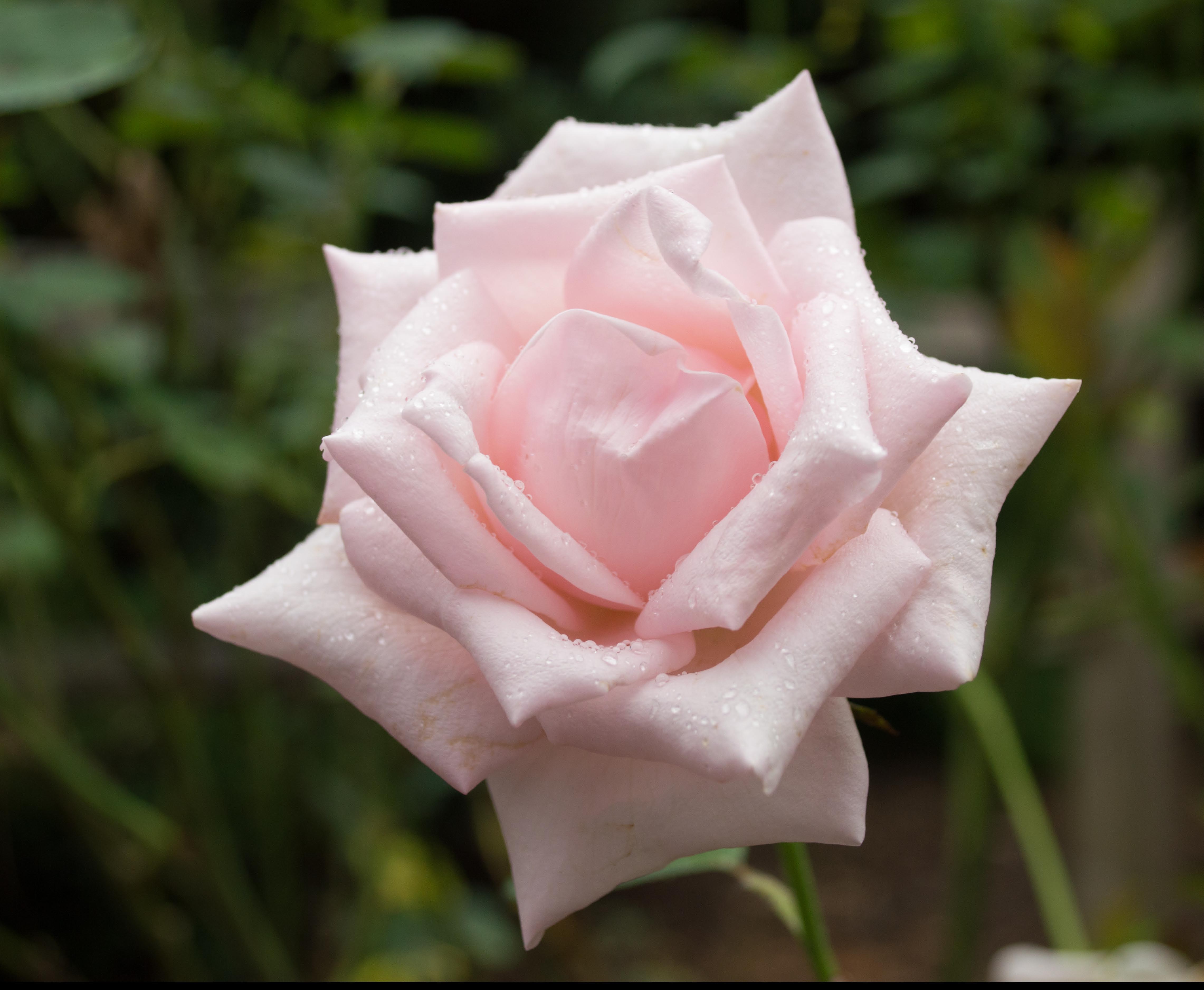
On Saturday morning as I drove up to Raulston Arboretum to look at the blooms and take some pictures, it began to drizzle, and I considered scrubbing the mission. But I decided instead to take my golf umbrella. Working the camera while sheltering it from the rain was awkward, but I got a few images of flowers with raindrops that I liked, which are above and below.
13 07 12_2627

You may have missed, as I almost did, an interesting story this week about the DARPA robotics challenge. DARPA is holding a humanoid robot competition similar to its contest that pushed forward the boundaries for autonomous vehicles. Teams of technologist will compete for a $2 million prize with a robot that will be able to perform rescue functions in difficult conditions and do things like climb into a vehicle, drive it, get out, walk on uneven ground, open doors, operate power tools, and shut off valves. A prototype called Atlas is being provided by the Pentagon to teams of programmers, while other teams are building their own devices.

While the Pentagon is emphasizing the humanitarian possibilities of such a device, it could obviously have less benign military applications. And, as the Times notes, the new robots could also work in department stores. Or, I’d add, just about any place that humans work. As I’ve noted before, the quick advance of such technology is going to cause unemployment and economic dislocation, which we need to be thinking about. Along with these public policy issues, there are existential ones. In the not-too-distant world of brilliant and powerful computers and robots that can do almost any human activity better than humans, what does it mean to be human? What is the point of being human? What is our highest and best use?
13 07 12_2625

I was pleased to see that yesterday The Casual Blog set a new record: 251 views. Most of those views had to do with a post about getting older, Gary Player’s diet and exercise routine, and yoga. I wrote the thing a couple of years ago, and I have no idea why it is suddenly getting attention.

One of my self-imposed rules for The Casual Blog is that I do not actively promote it. Some of my friends have never heard of it. I am fortunate in not needing to make money from it. I don’t need to worry about whether something that seems interesting to me will appeal to anyone else. I’m free, in theory, to say whatever I think, and it matters not if no one reads it.

Except that it does. There is no doubt that I like having readers. This is slightly embarrassing, but I’ll confess: I check my blog stats every day, and feel pleased when the number is above average and less-than-pleased when it’s below. There’s a little frisson of pleasure when someone I know mentions something they read in TCB, and a particular thrill when I meet a new person who has read it. Would I continue to write it if the readership fell to zero? Possibly, but only if I thought some future person would one day read it.

Of course, much (though as noted not all) of my satisfaction in TCB is the self-contained but complex pleasure of writing. Taking the raw material of a particular part of my experience – the things I do for fun in non-working hours – and molding it into something coherent and possibly interesting is an absorbing challenge.

13 07 12_2605

There was an interesting recent essay by Verlyn Klinkenborg in the NY Times defending the humanities as an educational objective, which drew a connection between learning to articulate experience and general life satisfaction. I thought Klinkenborg put it well:

Writing well used to be a fundamental principle of the humanities, as essential as the knowledge of mathematics and statistics in the sciences. But writing well isn’t merely a utilitarian skill. It is about developing a rational grace and energy in your conversation with the world around you.
No one has found a way to put a dollar sign on this kind of literacy, and I doubt anyone ever will. But everyone who possesses it — no matter how or when it was acquired — knows that it is a rare and precious inheritance.

A rare and precious inheritance indeed.
13 07 12_2633_edited-2

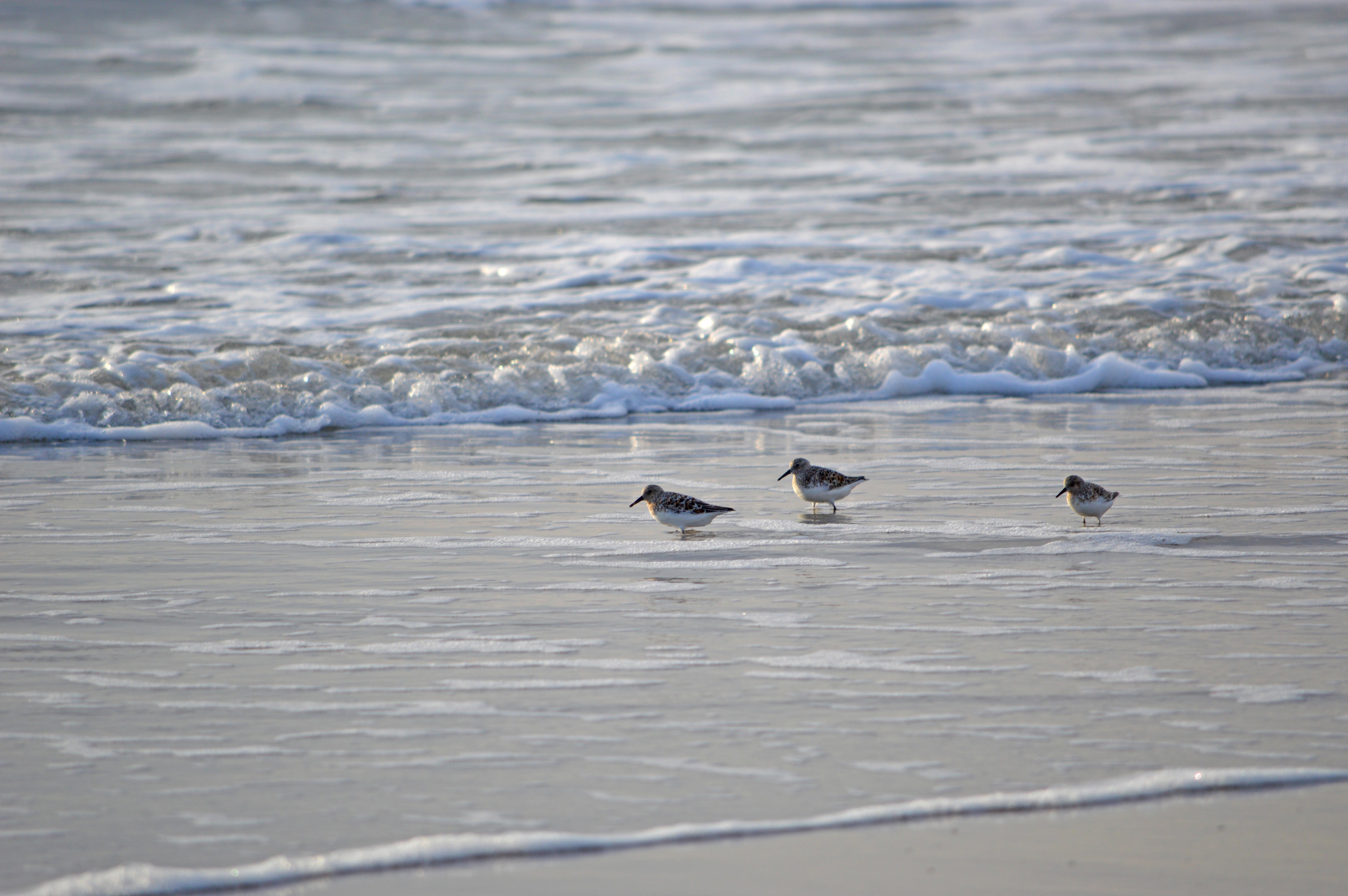
A fun Memorial Day weekend on the Outer Banks — eating, talking, running, looking at wild horses and birds, and reading

Jane and Keith's beach house in Corolla, NC

Jane and Keith’s beach house in Corolla, NC

Again this year, my sister Jane invited us out to the Outer Banks for Memorial Day weekend, and we happily accepted. The beach is a good place to relax and restore. After weighing the pros and cons, we decided to drive out in Clara, who with her sporting heritage rides rougher than the Suburu Outback, but is also prettier and more exciting. Traffic wasn’t bad. We went at the speed limit plus 9, and the heavy complement of state troopers along I-64 tolerated the overage.

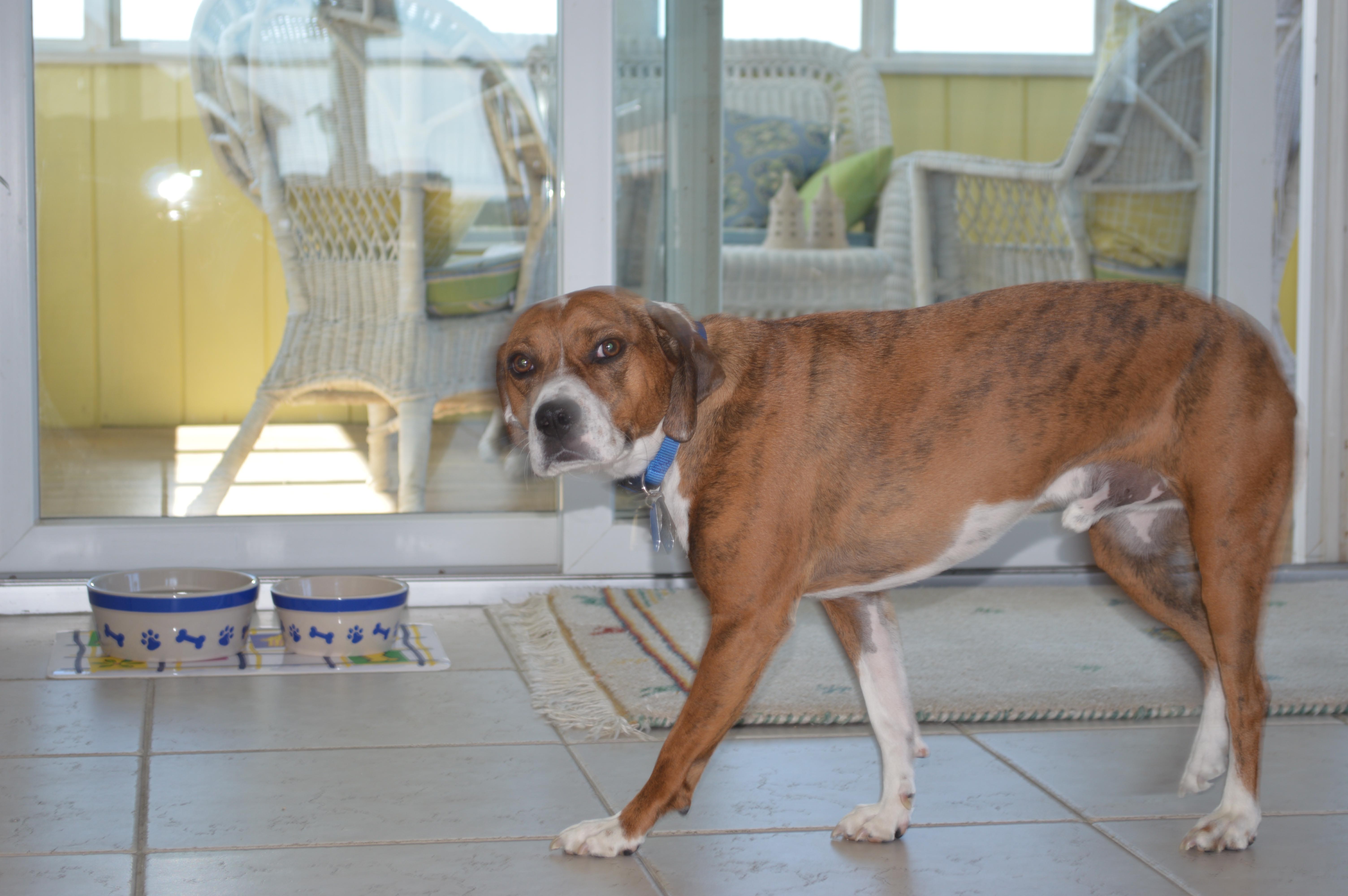
Charlie the Boogle

Charlie the Boogle

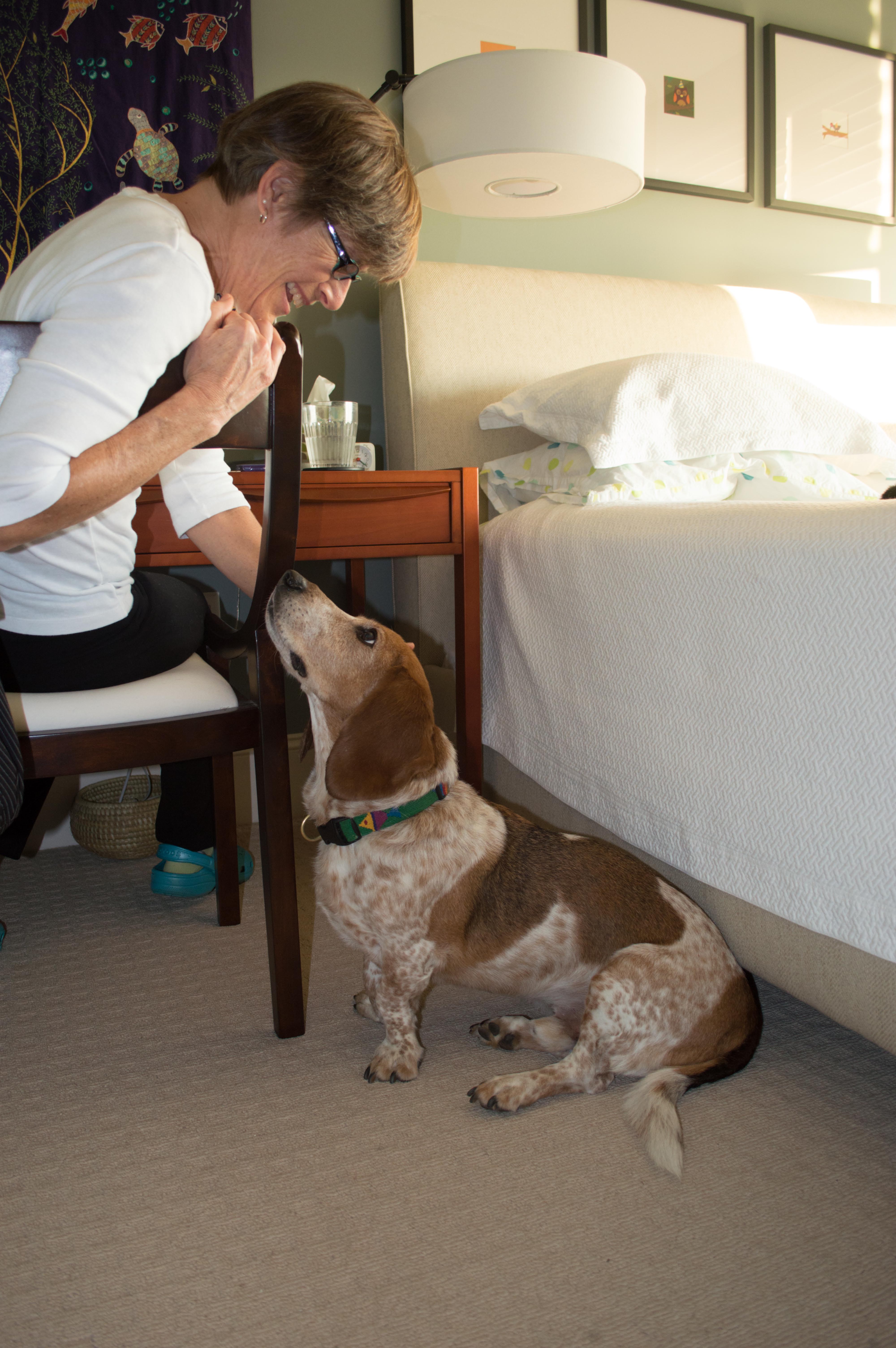
We got to Corolla about 9:30 p.m., and everyone was up and happy to see us. We enjoyed a glass of Keith’s merlot before bed. We also met their new dog, Charlie, a friendly beagle-boxer, or boogle. The camera made him a little nervous.

The next morning was sunny but chilly and windy. Keith prepared an egg casserole and fruit salad for breakfast, and we caught up on family news.

13 05 24_1703
We also talked a bit about technology and biology. I briefed them on some of the progress on understanding the human microbial community, which I read more about in the piece by Michael Pollen in last Sunday’s NY Times. Pollen wrote, “It turns out that we are only 10 percent human: for every human cell that is intrinsic to our body, there are about 10 resident microbes . . . . To the extent that we are bearers of genetic information, more than 99 percent of it is microbial. And it appears increasingly likely that this ‘second genome,’ as it is sometimes called, exerts an influence on our health as great and possibly even greater than the genes we inherit from our parents.”

This is mind-blowing, paradigm-shifting stuff. One researcher says “we would do well to begin regarding the human body as ‘an elaborate vessel optimized for the growth and spread of our microbial inhabitants.’” We’re just starting to understand some of the links between human health and microbial health. It’s a huge mistake, which most of us have previously made, to think of all germs as things that should be exterminated. Certain bacteria are essential to health, and problems in the microbiome appear to relate to chronic disease and some infections. Human health can be thought of as “a collective property of the human-associated microbiota . . . that is, as a function of the community, not the individual.”

The Pollen article is a great introduction to this subject, which is also discussed in The Wild in Our Bodies by Robert Dunn.
13 05 25_1642_edited-2

After breakfast, I went out for a run with my nephew David, now 13 and growing fast. David has fallen in love with lacrosse and is getting lots of playing time as his team’s goalie, so I figured he would probably run me into the ground. Instead, he developed a major cramp problem, and so we did more walking than running. I learned about his prize-winning science fair project, which involved growing and measuring characteristics of a fast growing plant called brassica rapa.
13 05 25_1640_edited-1
13 05 26_1751

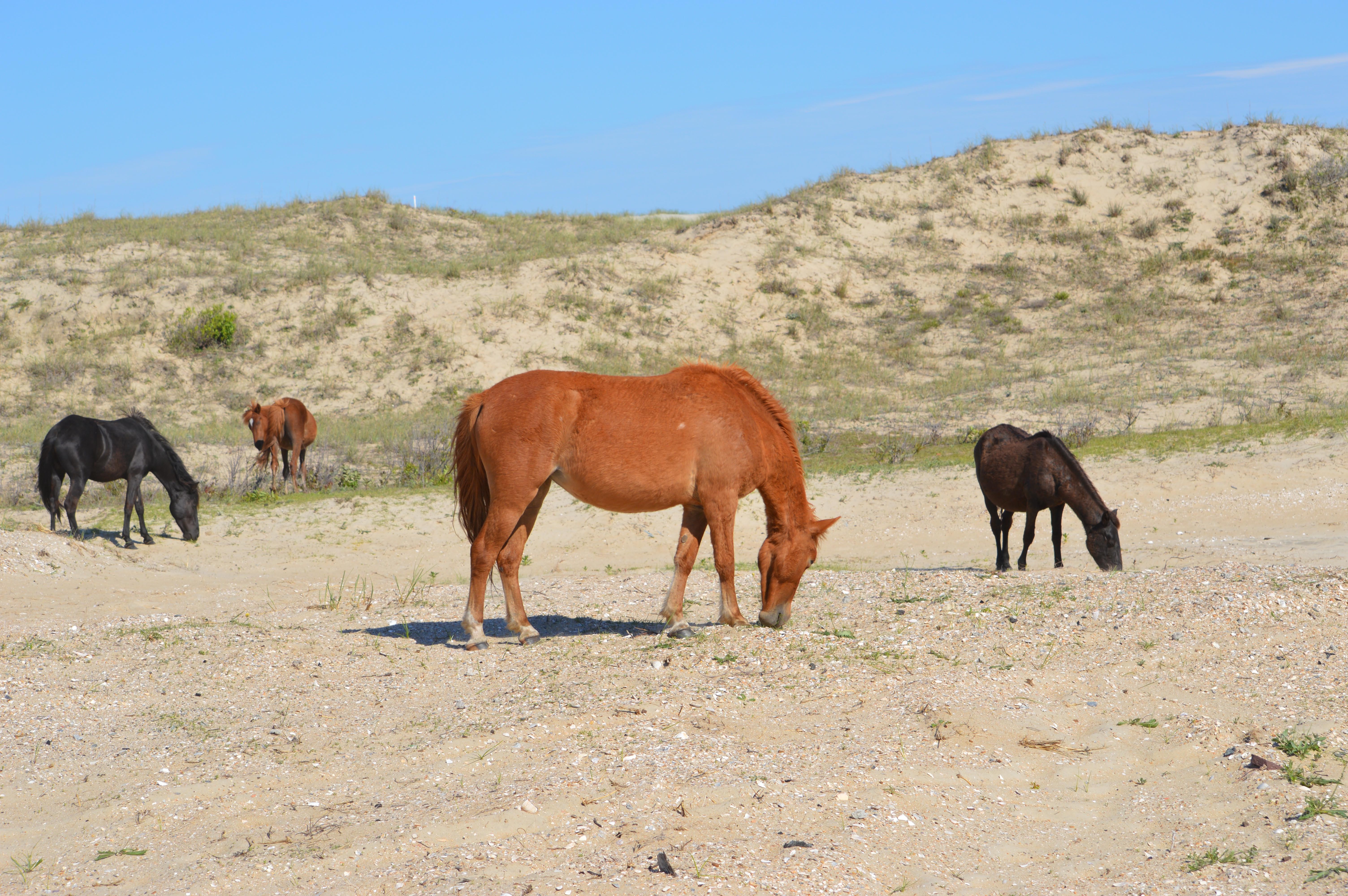
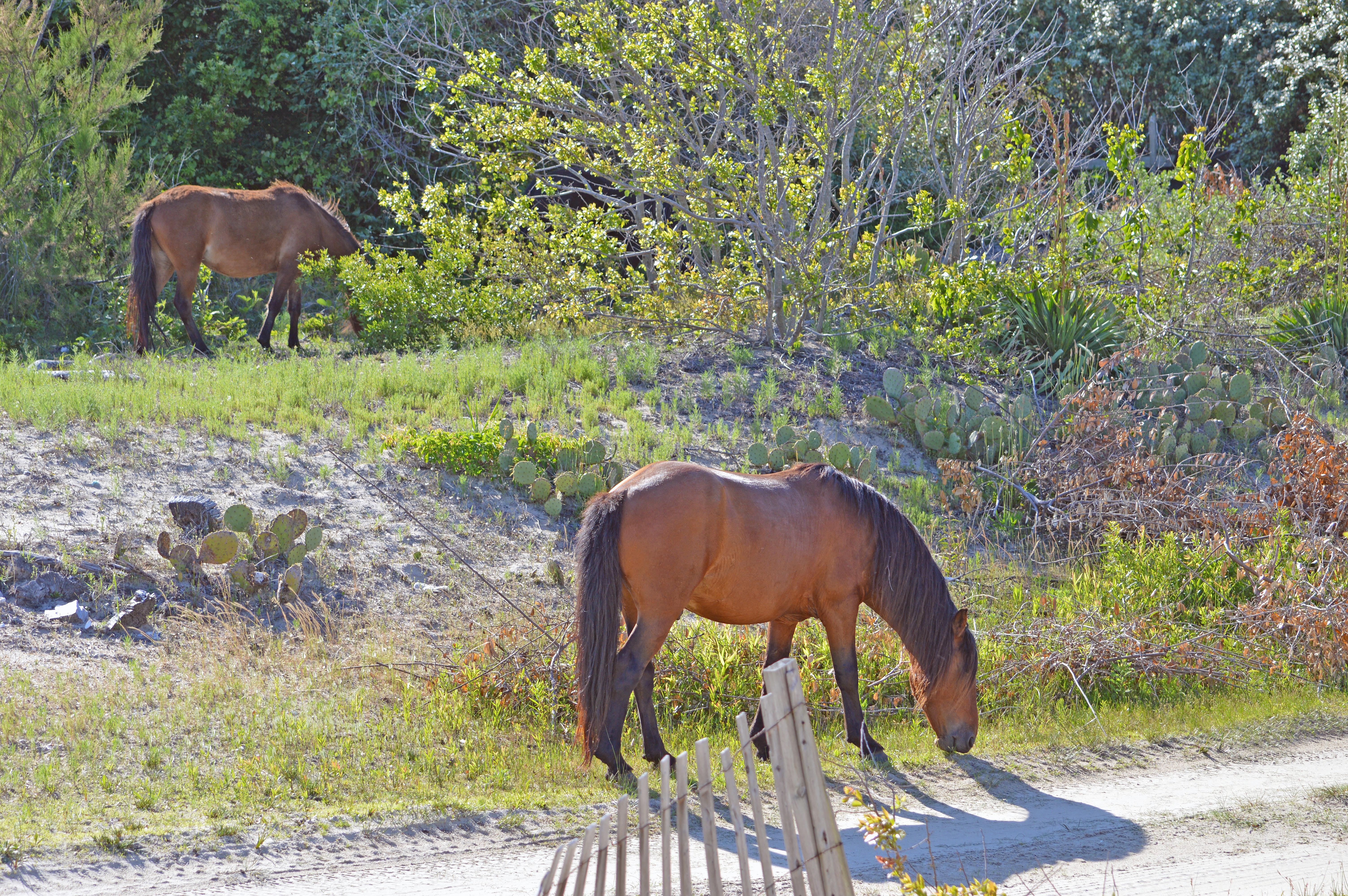
Keith cooked an amazing lunch – cucumber soup and pasta asparagus salad. Then we loaded up in the 4WD sport ute, and drove north on the beach looking for wild horses. Past the lifeguard station, we turned left into the sand roads through the gnarled trees and bushes of the maritime forest. We found several horses. It’s cheering somehow that these big animals can make their own way in small wild areas surrounded by development. We also saw a fox.
13 05 25_1571
13 05 25_156013 05 25_1608_edited-1

I had time for some reading in the afternoon, and got a good start on Things Fall Apart by Chinua Achebe, the Nigerian writer who died recently. This is his first and most famous book, and perhaps the most famous work of African literature to date. I was immediately hooked. The prose combines the muscular economy of Hemingway at his best with the vision of Faulkner, with an overarching tenderness and humanity. The story is about African village life, which, it turns out, has many of the same emotional components as our lives.

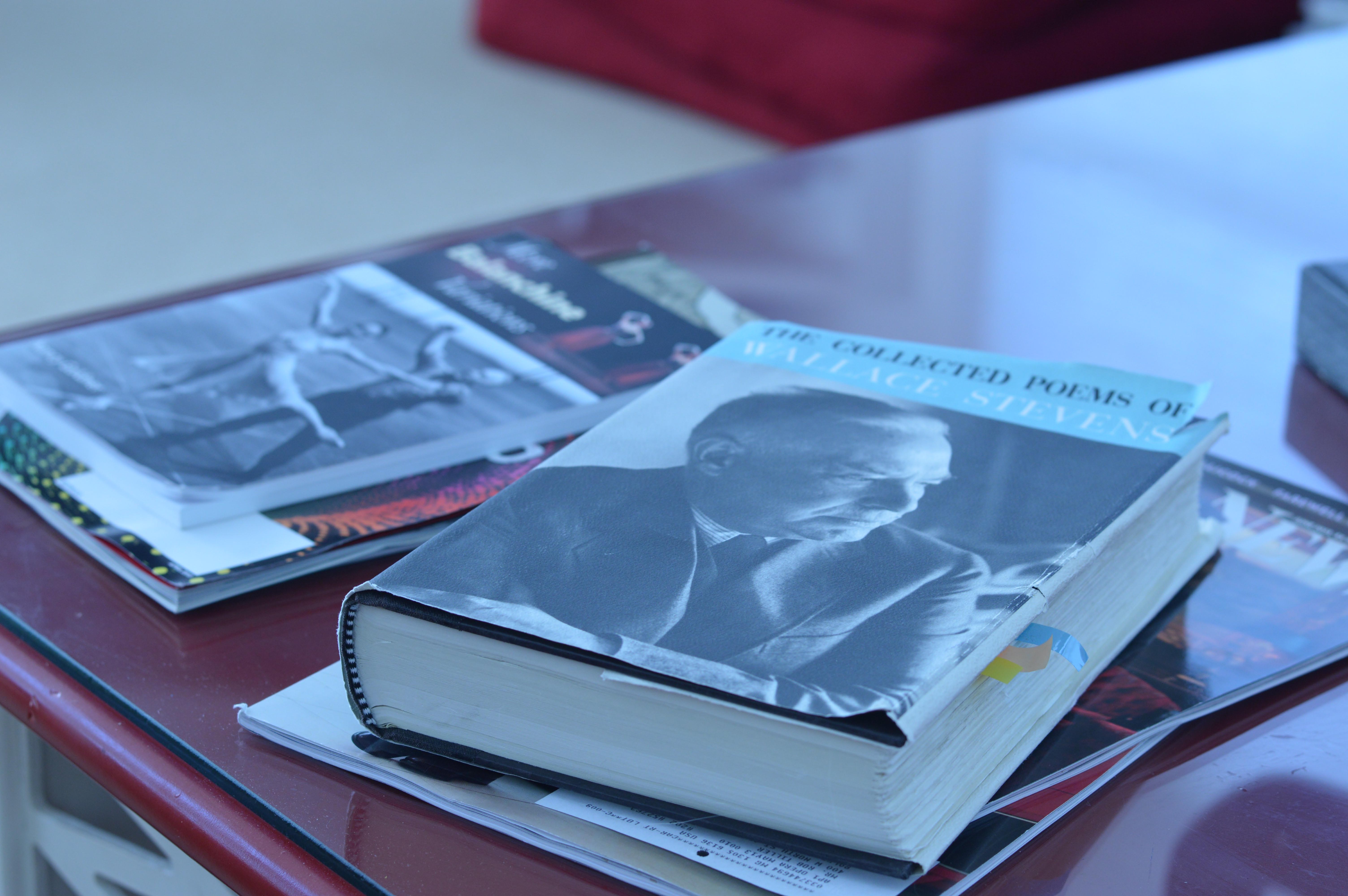
I also read more of More Balanchine Variations by Nancy Goldner, which is a book about various Balanchine ballets. Goldner is a generous-hearted critic, and she loves her subject. It’s so hard to bring dance to life other than by dancing, but she comes close.
13 05 25_1678

One other major bit of reading was chunks of the complete poems of Wallace Stevens. I came close to reading them all last year, before shelving the project some months back. Stevens is challenging, and not uniformly great – some of the poems seem mannered or even mad. But the greatest poems are both beautiful and profound. My favorite is still Sunday Morning, which is a sly, subversive, arresting, sensual, and humorous. I memorized it, and it still gives me goosebumps at the end, with its powerful image of “casual flocks of pigeons make/ ambiguous undulations as they sink,/ downward to darkness, on extended wings.”

Stevens proposes this joy in nature as an answer to religious asceticism, and it works for me. It also makes me look at the world with different eyes. For example, in back of Jane and Keith’s beach house, purple martins are still numerous, and still flying fast feeding on insects. It was a pleasure to watch them.

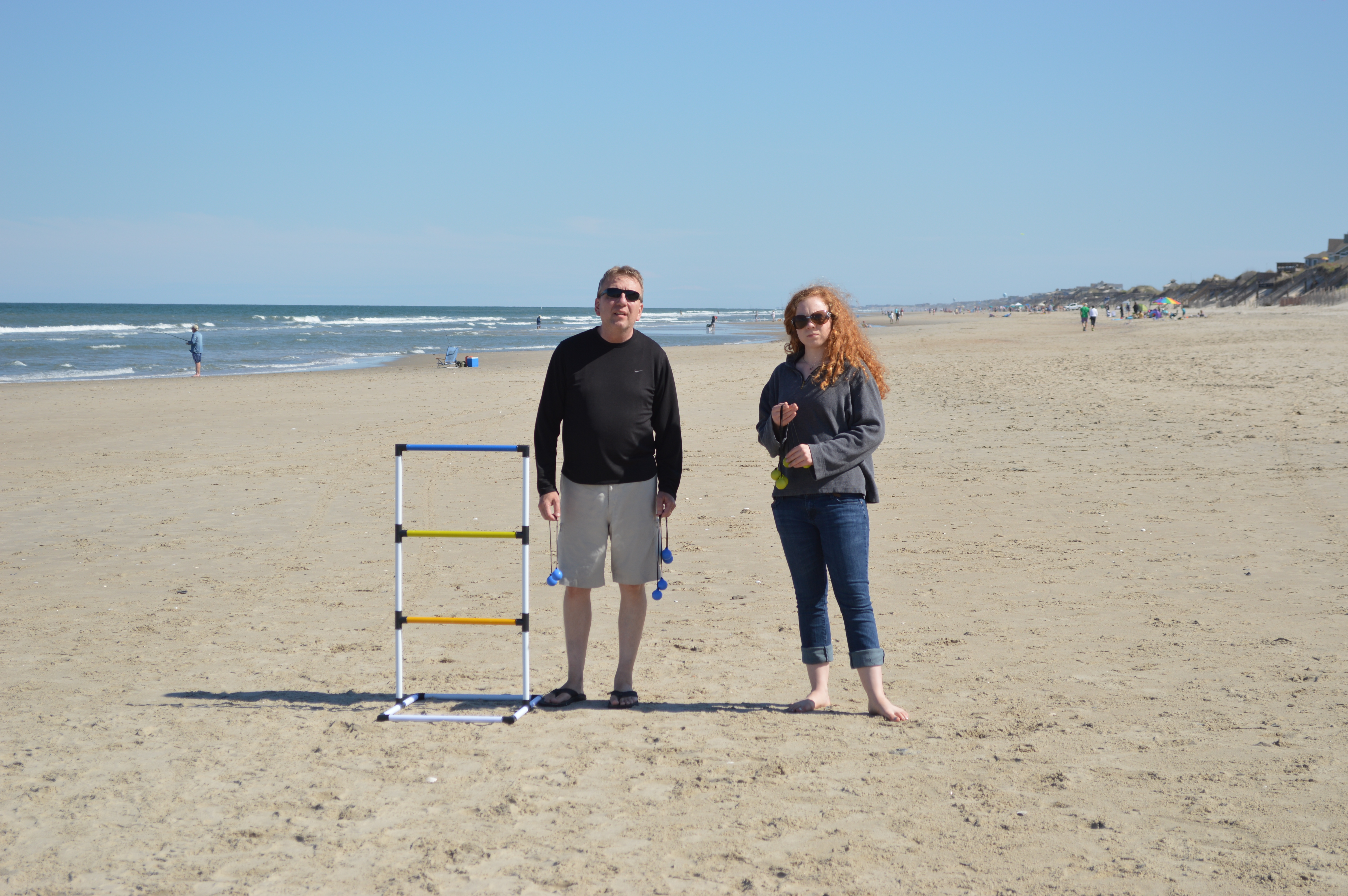
We played a new beach game on Sunday afternoon. It’s one of the many variations on horse shoes, but a good one. Points are scored by throwing a string with weighted balls on each end around a bar. They couldn’t remember the name of it, but no matter. It was fun!
13 05 26_1763

13 05 26_1759

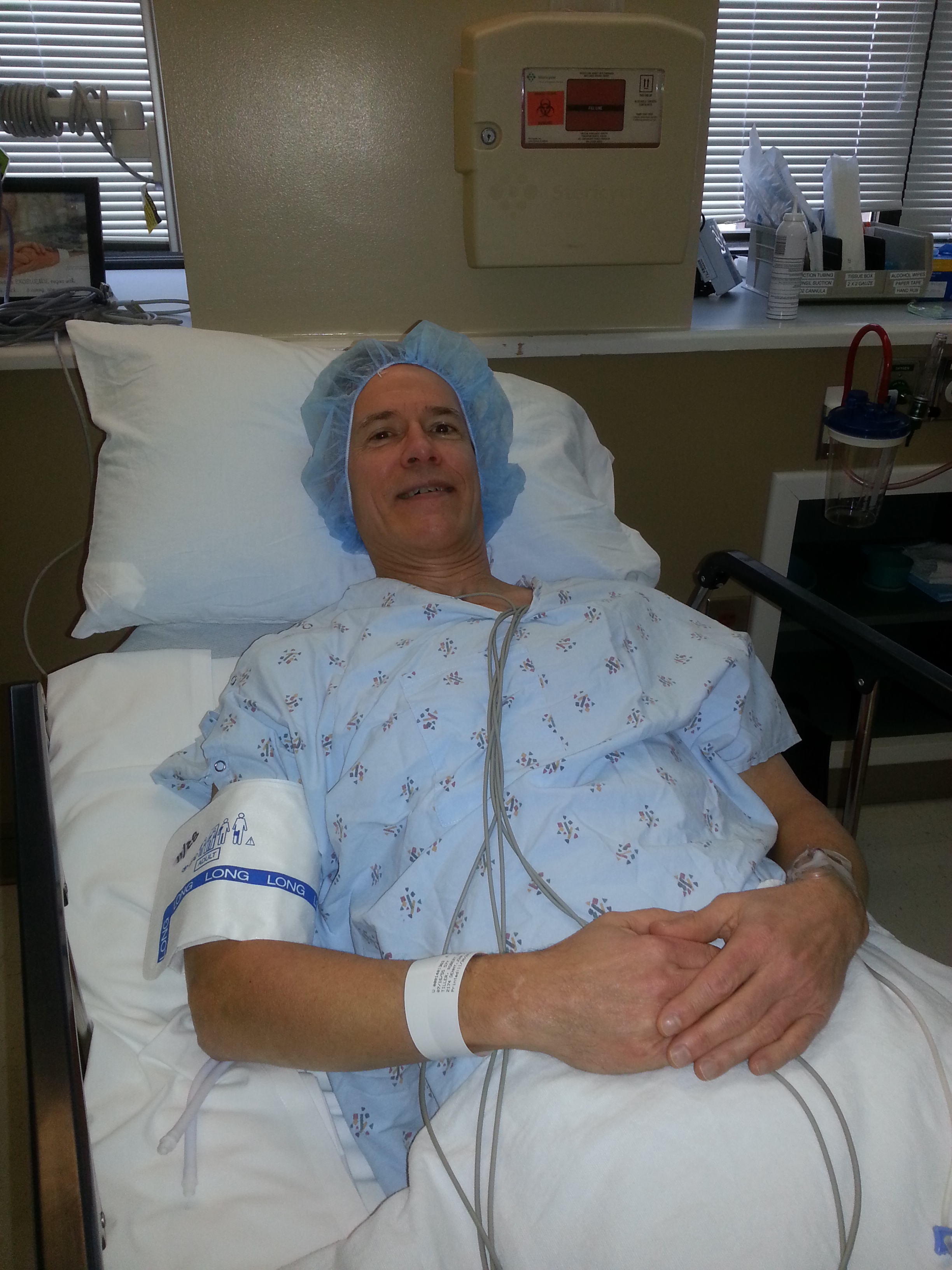
My emergency eye surgery

DSC_0031
It took several years for me to develop the exercise habit, but now it’s deeply ingrained. I don’t have to think about whether or not to work out, because it’s almost automatic. Most mornings I just pop out of bed at 5:15 or so and head to the gym, yoga studio, or pool. Then I challenge myself with interval training, free weights, down dogs and half moons, spinning, swimming, or more offbeat functional training movements, and normally feel clear-headed and energized afterwards.

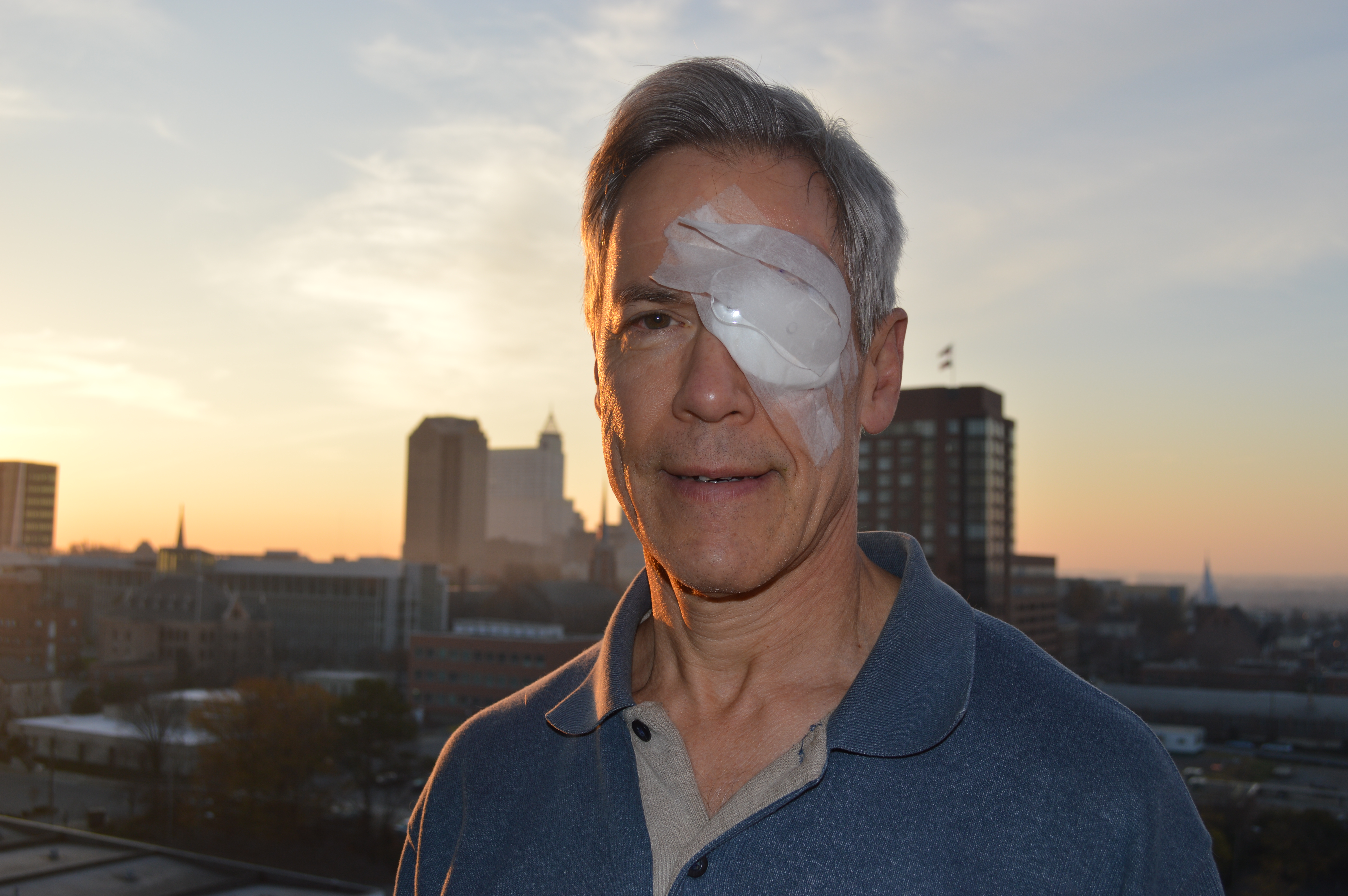
This past week, though, following my emergency eye surgery, I’ve been under doctor’s orders not to exercise. This seems unnatural, and I’ve been feeling like a slug. Still, I’m trying to keep in mind that I’m a very lucky person.

The eye is a marvelous organ, which, like all organs, I generally take for granted. Until last week, most of my knowledge of its constituent parts dated back to about the fifth grade, and hadn’t much advanced in the years since. As an amateur of science, I’m always interested when I come upon a gap in my knowledge and an opportunity to fill it in. From this perspective, opportunity was knocking when I unexpectedly developed a detached and torn retina, and I got a crash course in eye physiology and repair techniques.

In brief, on Wednesday morning I worked out as usual, came home, showered, cleaned my glasses, put them on, and noticed that things looked a bit foggy. I cleaned my glasses again, but this didn’t fix it. I closed first one eye and the other, and found that only the left eye view was foggy. In the course of the day, this worsened, and I began to see increasingly dramatic floaters. I made up my mind to call for help if I didn’t improve over night, and I didn’t. My longtime optometrist and friend Don Cloninger worked me in and did several tests, from which he diagnosed a possible detached retina. I asked him to recommend a surgeon he would go to himself, to which he agreed, and got me an appointment with Dr. John Denny of NC Retina Associates.

My extracurricular science reading has at times filled me with a sense of awe and wonder at the things humans have figured out, but also has alerted me to vast areas of ignorance. In medical science as elsewhere, there are some problems we can solve with our technology, and many others that we can’t. Fortunately for me, detached retinas are well understood, and repair techniques are highly refined.

Dr. Denny described the success rate as 90 percent. There is no argument in favor of avoiding that last 10 percent. Once a retina detaches and tears as mine did, unless it is treated it will worsen until eyesight is gone. As to causation, Dr. D said it was the genes I was dealt plus age.
20121130_131124

My surgery, which was scheduled for the following day, was called a vitrectomy. The idea of sticking needles or other instruments in the eye sounds like medieval torture, and if you are squeamish you may want to skip this paragraph. I have a reasonably strong stomach, and I wanted to know the details of the treatment. It involved inserting very thin instruments into the eye, including a laser to do with Dr. Denny compared to spot welding. Most of my vitreous was temporarily replaced with a gas bubble, which pressed the retina back into place.

I’m not a big fan of hospitals, but I have to say I had a very positive experience at Rex Medical Center. My treatment team all introduced themselves in a friendly way and explained what they were going to be doing. My prep nurse did a great job at getting my IV in, and told me about the zumba class at her gym. The anesthesiologist told me that I would be semi-conscious during the procedure, but would not have traumatic memories. This last was certainly true. Afterwards, I was a little woozy from the anesthesia, but otherwise felt fine, and didn’t remember anything from the operation.
DSC_0035

My eye never did hurt, but I had to lie on my side for the next two days, which was a bore. I signed up for a free college history course with Coursera and listened to some lectures, which were well done. II also got a trial subscription for recorded books with Audible, and began my first MP3 book — The Adventures of Huckleberry Finn. Like many, I’d read it as a teenager, so I discovered a lot I didn’t remember and a lot I could not possibly have understood. It is an amazing book — humorous and tragic, understated and also epic.

I’m now one week out from surgery, and per Dr. Denny am healing normally, although my vision is still very blurry. One blurry eye and one clear one averages out to less-than-clear vision. I’ve been moving about more or less normally and driving, but more slowly and carefully than usual. I’d scheduled a day of track driving at VIR for next weekend, but decided it would be better not to push the envelope. I’m still hoping, though, to be ready for scuba diving in the Turks and Caicos over Christmas.
DSC_0051

Ballet paintings, fossils, and a piano recital

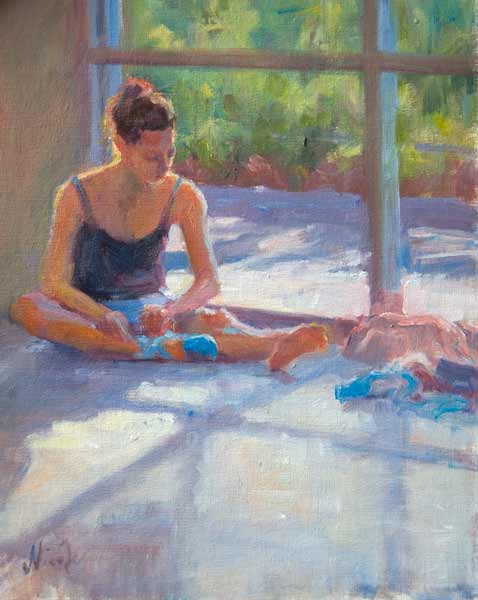
Light on One’s Feet by Nicole White Kennedy

Last Thursday Sally and I had lunch at the Remedy Diner, where my sandwich was the Tempeh Tantrum, then went to a gallery to to look at paintings by Nicole White Kennedy. Kennedy, a local artist, paints in an Impressionist/Post Impressionist style that I once thought of as old hat. My early art education stressed the triumph of modernism and abstraction. But over the years I’ve really enjoyed Kennedy’s landscapes and cityscapes in her husband’s fine Italian restaurant, Caffe Luna. I’ve gradually gotten past my prejudice in favor of the modernist aesthetic. Artists show us multiple ways to see the world, and it’s fun to try different ones.

Anyhow, I was intrigued to learn that Kennedy had worked up a show of works featuring dancers from the Carolina Ballet. We really liked the show. No doubt it helped that we came to it as balletomanes, and that we could recognize some of our favorite ballerinas. But she unquestionably had a feel for the interiors and exteriors of the dancers and their work places.

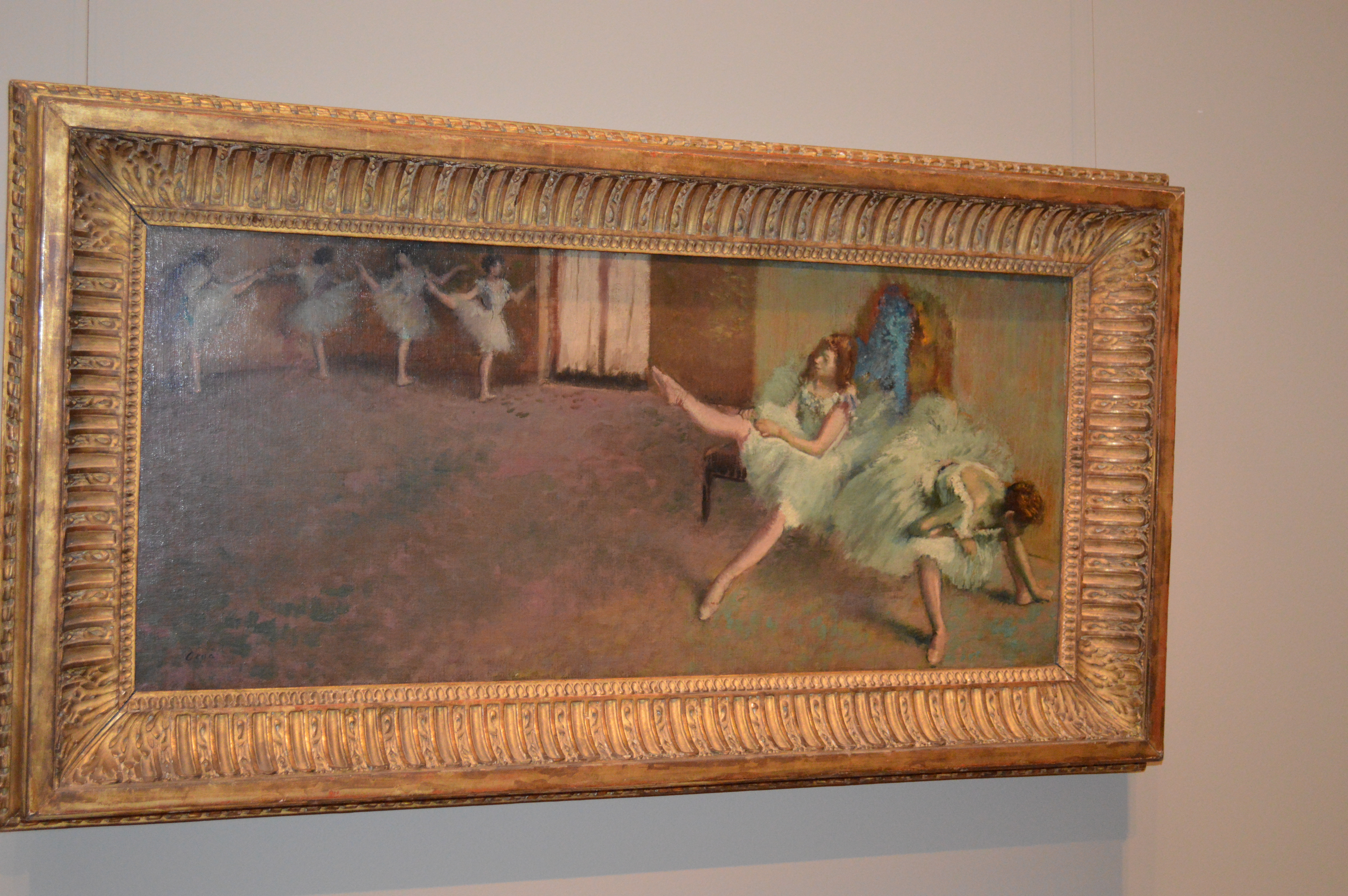
I was conscious that the works owed a debt to Degas, both in their behind-the-scenes intimacy and the juxtaposition of ethereal sweetness and stark angularity, but I didn’t find this bothersome. Artists always borrow ideas from other artists and build on them, just like scientists and inventors. We were particularly touched by the paintings above and just below, and bought them.

Dancer Removing Turquoise Points by NWK

The next day I flew up to DC for a gathering at the Supreme Court in honor of my old friend Justice Elena Kagan, which was highly nostalgic and which I will try to write about soon. But as post-election therapy, I’m focusing just now on art. With my free morning I sampled the Smithsonian museums, which always make me proud and happy to live in the USA.


First I visited some of my favorite works at the National Gallery. These included the Rembrandts and other Dutch masters, including especially the two exquisite Vermeers, as well as the French Impressionists. Still thinking about dancers and art, I paid particular attention to the Degas paintings and sculptures of dancers. He clearly loved the subject, and it touched me. But I must say, his dancers are not as lithe and athletic as the Carolna Ballet ones.

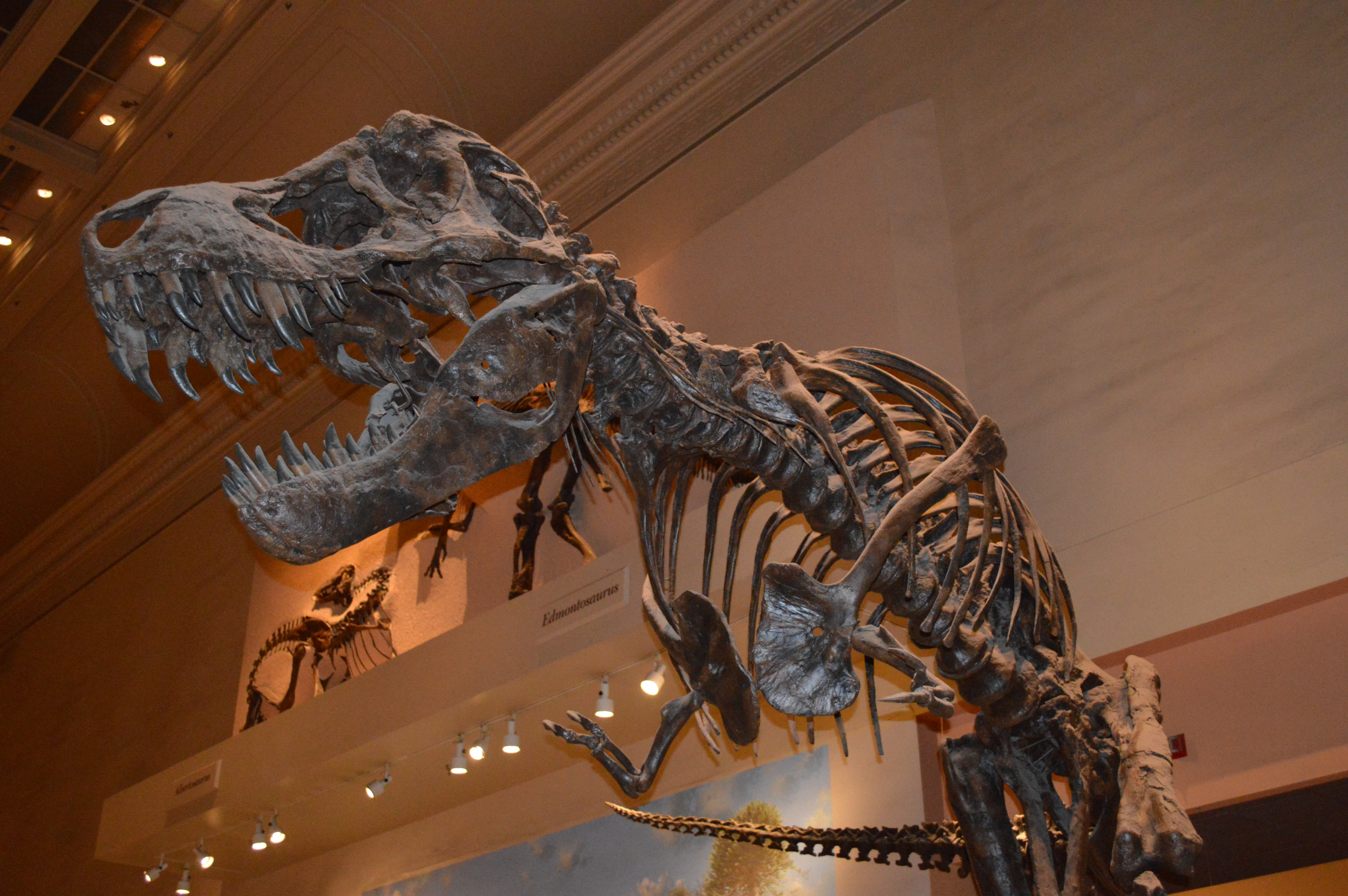
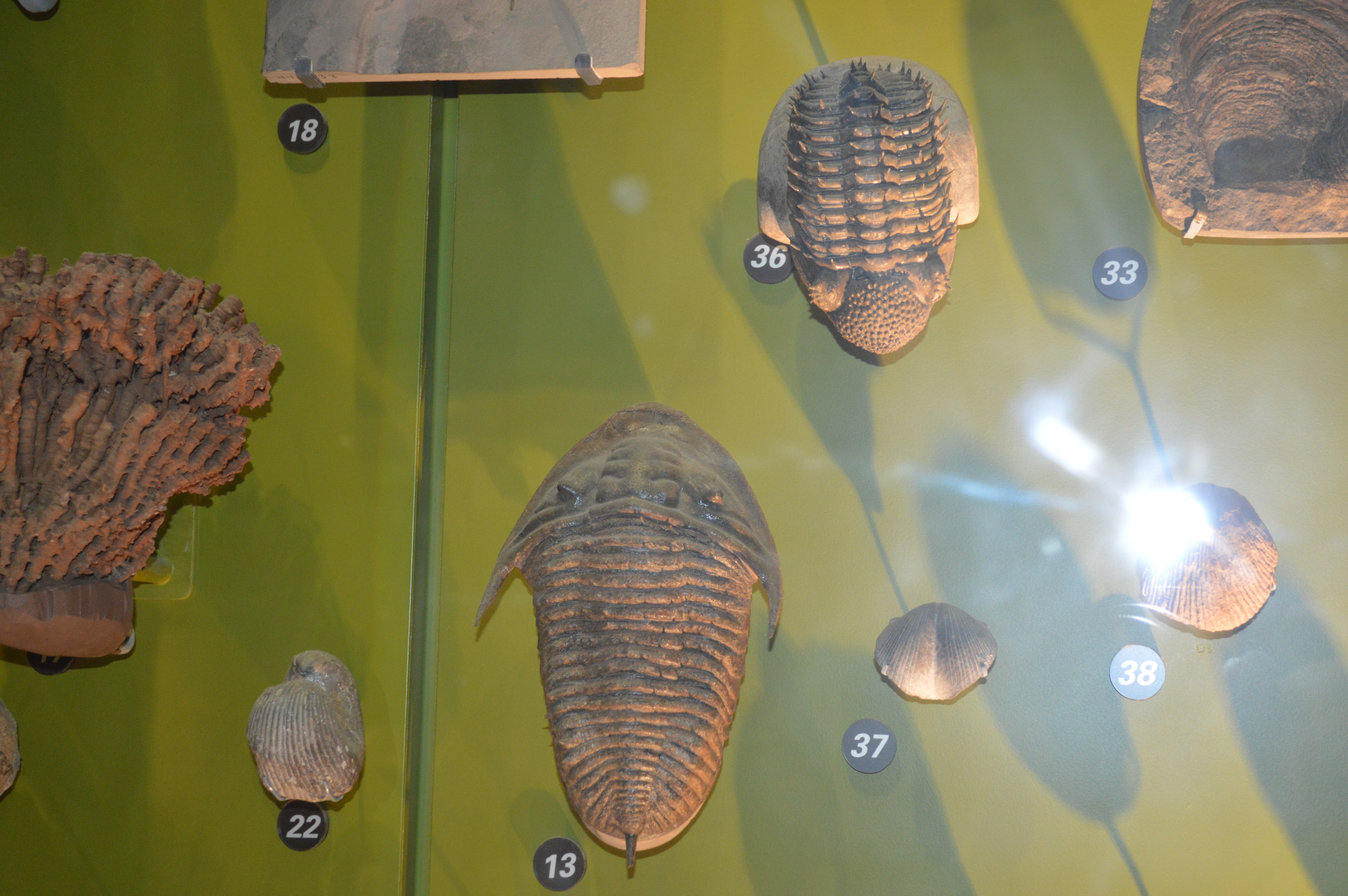
Next, I walked down the Mall to the Museum of Natural History. As always, I enjoyed looking at the dinosaur fossils, but I wanted to have a close look at the trilobites, which are much much older than dinosaurs.

Trilobites were marine arthropods that began their run around 520 million years ago. They developed an amazing variety of body types during the 270 million years (give or take) that preceded their extinction. RIP. Nature has done a lot of amazing experiments!

I returned to Raleigh on Sunday afternoon in time to go to the recital of my piano teacher, Olga Kleiankina. Her program, like her, was Russian: Alexandr Scriabin (1872-1915), Nikolai Medtner (1880-1951), and Sergai Rachmaninoff (1973-43). She played brilliantly. She’d told me a couple of weeks ago that she was struggling with memorizing the Medtner piece (the Tempest Sonata), and I was feeling a little anxious for her, but she seemed completely in command. The piece was very dense, and at first I was a bit bewildered, but then I got my bearings. I particularly enjoyed the Scriabin Black Mass sonata. From our work together, I know how intensely she focuses on sound colors, and now that I’ve learned to hear some of those things, the music took on a new dimension.

There was a good piece on the Sunday NY Times about the sense of hearing, and the difference between hearing and listening. According to Seth Horowitz, we react to auditory signals 10 times faster than visual ones. Hearing is an early warning system, among other things. He notes that close listening is hard in a world where there are endless distractions, but that we can get better at it. I concur.

Sleepwalking and critical thinking

Some weeks ago I hurt myself sleepwalking when I wandered into the shower in the middle of the night. I remember not knowing where I was. I felt confused and frightened. Then I fell and hit my head on the tile, gashing my forehead, and woke up.

In the last couple of years, I’ve seen evidence a handful of times that I must have been sleepwalking in a fairly benign way, such as lights left on that I’d turned out the night before. On one occasion, I started to take off for a drive in the middle of the night and backed into a parked car. These incidents have been mildly or very unsettling. They make you wonder about what else is going on in your brain that you aren’t aware of.

Back in college, I enjoyed listening to a comedy album by Firesign Theatre titled Everything You Know Is Wrong. Earlier this week I checked out the first few minutes on in video form on YouTube, and verified that it still seems funny and disconcerting. The title has rattled around in my head for decades now ike a verbal Escher drawing, impossible either to forget or resolve. Lately it has seemed to me increasingly resonant as I’ve read more about neuroscience and consciousness. It’s inherently interesting, at least to me, and by moments I think it could lead toward a fuller, better understanding and a happier life. But if Everything I Know Is Wrong, this could also be wrong.

Speaking of sleepwalking, last month’s Scientific American had a somewhat sensationalistic but still interesting article on recent sleep research by James Vlahos titled The Case of the Sleeping Slayer. As you’d expect, it describes some violent and tragic cases, such as persons who commit murder while asleep, and also describes a new theory about the nature of sleep.

According to Vlahos, sleep is not a whole-brain phenomenon, but rather “a scattered, bottom-up process. ‘The new paradigm views sleep as an emergent property of the collective output of smaller functional units within the brain,” according to James Krueger of Washington State University. Krueger and other researchers think that individual parts of the brain “go to sleep at different times around the clock depending on how much they have been taxed recently.” What we think of as sleep (stillness, closed eyes, slackened muscles) happens when most of the neurons are in the sleep condition. Apparently parts of the brain may be snoozing without our looking like that.

There’s good evidence that other animals have modular sleeping habits. Vlahos’s article notes that dolphins sleep with half of heir brain at a time and keep an eye open for the non-sleep part. I’ve also read that birds also rest their brains in this modular way so they can always keep an eye out for predators. The theory seems promising. I occasionally note waking behaviours in myself, like forgetting where I parked, that could be explained by the partial wakefulness approach. It would explain not only sleepwalking, but other odd behavior, like people who sit on airplanes without reading anything.

When I get to thinking about thinking, I sometimes have flashbacks to the my days as a freshman at Oberlin College, where amidst the midwestern corn fields I got a hard blast of serious philosophy and critical thinking about social issues. It would be an understatement to say it was humbling. The air was dense with intense ideas. No matter how hard I worked, I usually had the feeling there was a lot I was missing, along with the feeling that some of my fellow students were getting a lot more. But by moments I felt real excitement as I wrestled with an idea and managed to pin it.

In retrospect, I think that learning the skill of wrestling with challenging ideas was more significant than any particular idea. A significant amount of what I learned was eventually superseded by new and better understandings. An example: we all took Freud seriously as a scientist, but now do not consider him as such.

But my teachers drilled into me the habit of testing an unfamiliar concept rather than simply swallowing it. It’s related to the scientific method in its insistence on evidence and logic, and its use of thought experiments. This habit of mind is sometimes called critical thinking. Once you start doing it, you tend to think it’s the best way to think.

My liberal arts education inspired me to be curious and to explore new ideas. But to some extent it may also have led me down the garden path. My recent reading in neuroscience and evolutionary biology has called into question some of my deeply held beliefs about the power of reason. It’s exciting, though: Its helping me understand various oddities about my own subjective experience and the observable lives of others.

If this sounds interesting, I recommend Jonathan Haidt’s recent book, The Righteous Mind, Why Good People Are Divided by Politics and Religion. You may recall that I wrote about this book some months back; I’ve been re-reading it and getting more out of it. Haidt, a professor at University of Virginia, (my law school alma mater) has a style that is accessible and friendly, but he challenges our usual was of thinking about thinking. The heart of his message is at odds with most of what I learned in my undergraduate years and have mostly assumed ever since.

There are a lot of big ideas in Haidt’s book, but probably the biggest is that the primary driver of our behavior is not rational conscious thought, but rather our unconscious system of feeling and emotion. It’s the system that tells us quickly what needs to be done. (Freud was right in guessing that there was subconscious, but he didn’t figure out much about what it did.) Haight compares our moral intuitions to an elephant, and the rational mind to the rider of the elephant. The rider developed to serve the elephant. The elephant usually goes where it wants to go, although the much-less-powerful rider can influence the elephant. This understanding of our nature leads Haidt to focus closely on the nature of our moral perceptions and beliefs.

Some of Haidt’s research relates to differences in moral systems among different communities. In one study, he used a questionnaire with narratives intended to invoke disgust (like incest and cruelty), but structured to defy an easy explanation for the disgust (no one was hurt). In the face of such dumbfounding problems, people came up with explanations for their feelings — but the explanations didn’t make much sense. This suggests that some of what our reasoning mind is doing is pretending to understand things it doesn’t, and making up post hoc rationalizations for feelings that start elsewhere.

Haidt contends that emotions are a kind of cognition — intuitive, rather than rational, but not inferior to reason. Intuitive processes are essential to our lives; we couldn’t possibly reason about the hundreds of decisions we make every day. We like or dislike things instantly and decisively, and adjust our behavior without noticing the process. Our conscious reasoning processes are along for the ride, and only get involved with explaining our behavior when there’s some anomaly or challenge.

Another theme of Haidt’s book relates to human cooperation. He observes that we are the best species in the animal kingdom at cooperating outside kinship groups. Haidt investigates this from an evolutionary perspective. In the days of our hunter-gatherer ancestors, we had to form effective groups in order to defendant against predators and find food. This involved development of intuitive cognitive skills, including the ability to easily track the emotions of other human beings.

Haidt suggests thinking about the most successful human groups not just as collections of individuals, but as superorganisms. Humans have evolved the ability by moments to lose their individuality and merge with a group, whether it be hunters, warriors, or dancers. Some of our peak moments come when we lose ourselves in such groups.

Looking at ourselves as having two natures, individual and group members, explains some of our apparent contradictions, such as how we can be both deeply selfish and deeply altruistic. Looking at emotions as driving reasoning explains a lot of political behavior, not to mention personal decisions that are from a rational standpoint inexplicable. It might even help us avoid some bad decisions.

How to eat and sleep better, and a brief report on my golfing

Sally and I stayed up late sipping wine with friends on Saturday night, and I overslept and almost missed my golf game at Raleigh Country Club on Sunday morning. I normally like to get to the course early and warm up before a round, but that didn’t work out. The day was sunny and mild, though breezy.

I walked the course with my push cart. My first drive was weak, and the succeeding drives were mostly shorter than my average.The rough was so thick that three balls disappeared never to be found, and those I found were difficult to liberate. These misfortunes and others caused several triple bogies and a disappointing net score of 103. Yet I hit some gorgeous approach shots. I sank three long putts (20-30 feet). But I missed three or four short ones (three to four feet). Golf is a beautiful but frustrating game.

Back in my New York days, everyone I knew read the Sunday New York Times. You had to read it too if you wanted to know what people were talking about and join in the conversation. I’ve kept the habit, though the original reason for it has largely gone by the wayside. Inasmuch as some of my best informed friends no longer read the Times, I will note two articles published today worth reading.

1. How to improve your health with food. An article by Dean Ornish, a professor of medicine at University of California, San Francisco, provides clinical support for the kind of eating I’ve been doing in the last few years. Ornish says “patients who ate mostly plant-based meals, with dishes like black bean vegetarian chili and whole wheat penne pasta with roasted vegetables, achieved reversal of even severe coronary artery disease. . . . The program [which included moderate exercise and stress management techniques] also led to improved blood flow and significantly less inflammation” and lowered risk of various types of cancer. The program also resulted in sustained weight loss.

According to Ornish, “Your diet needs to be high in healthful carbs like fruits, vegetables, whole grains, legumes, soy products in natural, unrefined forms and some fish, like salmon. There are hundreds of thousands of health-enhancing substances in these foods. And what’s good for you is good for the planet.” In contrast, he cites and large Harvard study that shows that consumption of red meat “is associated with an increased risk of premature death as well as greater incidence of cardiovascular disease, cancer and Type 2 diabetes.”

“About 75 percent of the 2.8 trillion in annual heath care costs in the United States is from chronic diseases that can often be reversed or prevented altogether by a healthy lifestyle. If we put money and effort into helping people make better food and exercise choices, we could improve our health and reduce the cost of health care.”

Ornish doesn’t say this, so I’ll say it: a vegetarian diet results in increased happiness. At least it does for me. There are so many delicious things to eat that also make you feel good. I mean physically and mentally, leaving aside the ethical dimension. But to be clear, the diet needs to include the kinds of foods noted above (though I take exception to the inclusion of fish on the list).

2. Rethinking Sleep. This article by David K Randall calls into question the standard wisdom that we all should be getting eight straight hours of sleep a night. It notes that much of the world today sleeps in other ways, such as millions of Chinese workers who stop for after-lunch naps. It also notes historical references to alternate sleep cycles, including from Chaucer, separating “firste sleep” and subsequent sleep. The article cites a current study in which a common pattern was for patients to wake up a little after midnight, stay up a couple of hours, and then go back to sleep.

This was of particular interest to me, because this happens to me a lot: I wake up in the middle of the night and can’t get back to sleep. I usually read something, and sometimes write. I enjoy the quiet time. But based on the received wisdom regarding how much sleep is generally needed, I’ve thought of it as sort of a health problem, and worried about it a bit. Now I’m wondering if the eight-hour sleep prescription is yet another instance of folk wisdom masquerading as medical science.

It’s reasonably clear that sleep serves some important functions for brain health, and that getting too little sleep can impair performance. But there’s evidence that power napping works well for some people. I’m hoping it gets to be more socially acceptable.

The way to San Jose, Ridge Winery, and E.O. Wilson on human nature

I missed my flight out of RDU on Tuesday morning after trying to send off one too many emails. On the drive to the airport, as reality set in, I went through the five stages of travel anxiety: concern, serious concern, alarm, panic, and finally, acceptance. By the time I made it through the American Airlines queue and the agent said I was too late, I was able to agree calmly, and ask politely what my next best option was. She put me on standby for a flight three hours later.

With my unexpected airport time, I got an excellent shoe shine and a half-hour chair massage at Express Spa. A couple of times a month I try to get a chair massage from the Red Hat massage therapist, which I had to miss because of my trip. I was interested in some work on my shoulder, where there have been minor issues. I assumed that an airport massage would be more about feeling pleasant than serious therapy, but I was not averse to a release of some endorphins.

My masseur, a small guy from China, asked how hard I liked it. I said pretty hard. He obliged with a serious deep tissue approach. It took all my determination to resist begging for mercy. At one point I took note that massage therapists are required to pass a licensing exam, as it was coming into focus that massage could cause bodily harm. Then I realized I had no way of knowing if my guy was licensed. He finished with some blows that shook me like a punching bag. It was almost frightening. But once it was over, I felt great!

Being on standby involves a degree of anxiety. You’re either barely making the flight, or you’re going back to square one. On this trip, the gate agent said the I had a good chance of getting on the flight out of Raleigh, but a less good chance of getting on the connecting flight in Chicago. When I felt a wave of tension, I took a few deep calming yoga breaths, and tried to stay positive. Eventually, four and a half hours late, I got to San Jose, got a rental car, and headed to the hotel.

I was assisted by a Garmin GPS device, which smoothly directed me through every turn. This little tool has greatly reduced the anxiety of travel to unknown lands. Getting lost is almost a thing of the past. I still carry printed directions as a fail safe system, but I haven’t used them in a while. Thus have I outsourced a part of my mental load, and in using this now-common tool become a little more of a cyborg. I could lament the possible loss of map-reading skills, but won’t. Thanks to Garmin and all the scientists, engineers, and technicians who’ve reduced my worry level and bestowed more creative mental space.


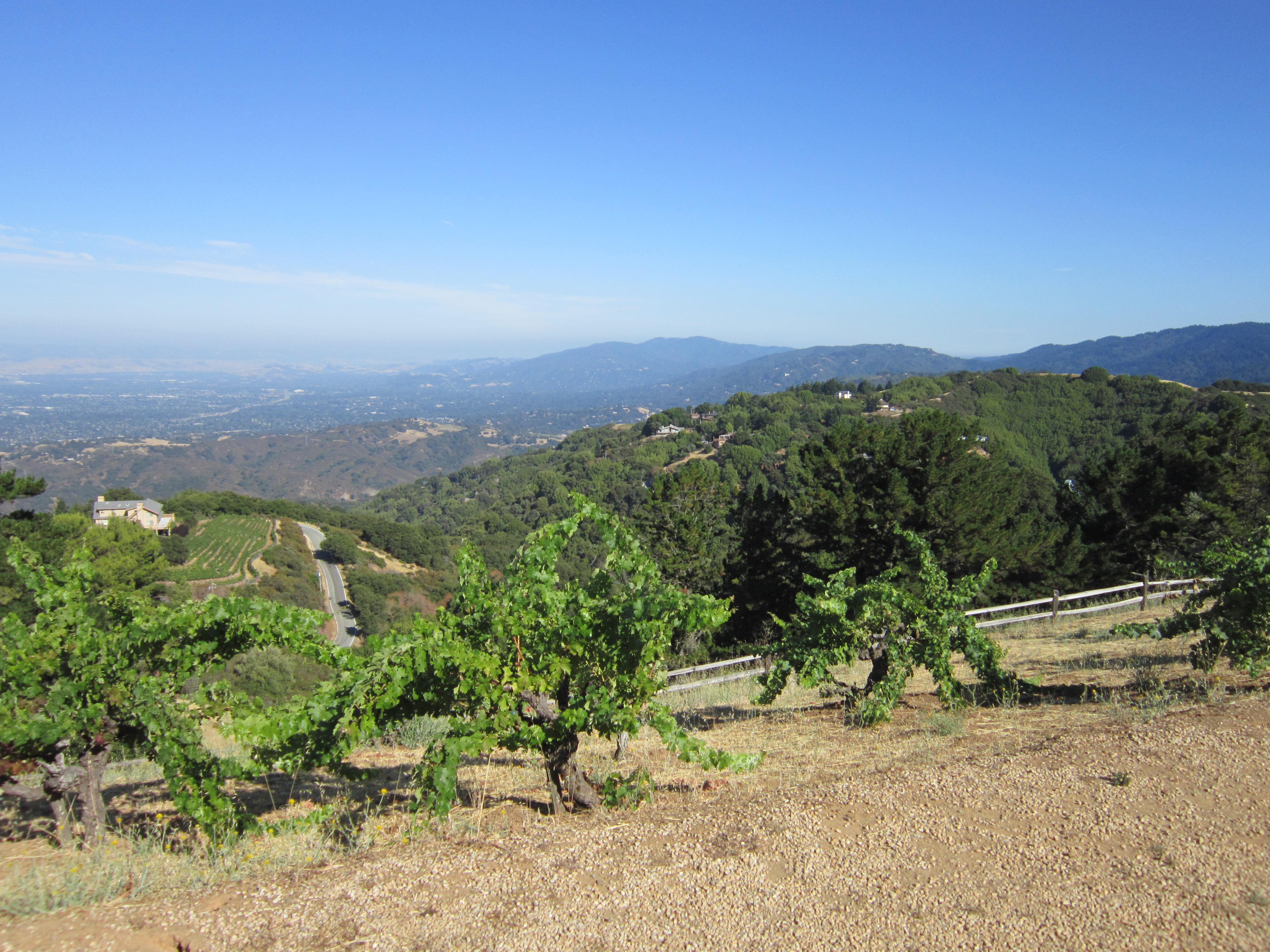
There’s something about northern California that I really love. It isn’t the glamor, which I was far from, but it may be something about the light. After various meetings, I got a chance to tour Ridge Vineyards in the Santa Cruz mountains. It involved a drive ascending 2,0000 feet along narrow roads with hairpin turns. The landscape was dry and craggy.

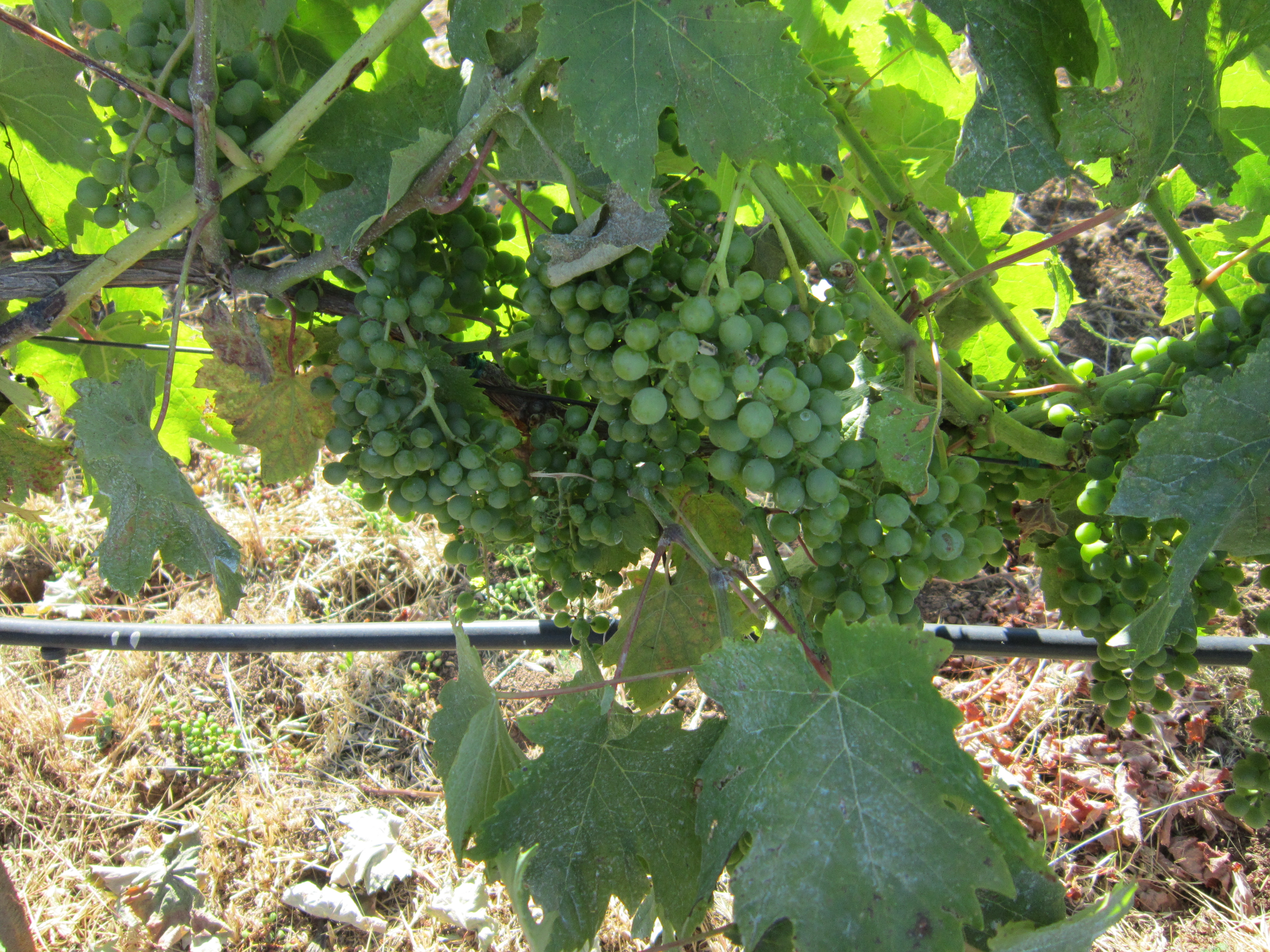
Our tour guides were experts and scholars of wine making, and I got a deeper understanding of the significance of soil and water conditions, vine life cycles, vine placement and spacing, pests, harvesting techniques, pressing, oaking options, considerations for blending, and aging decisions. The vineyard mountain views were beautiful, and the wines were excellent. It was also a great pleasure to meet our guides and experience their joy and passion for their craft.

On the long flight home, I finished reading for the second time The Social Conquest of Earth by E.O. Wilson. Wilson, a senior professor at Harvard, is one of our foremost experts on ants, but his scientific passions are wide-ranging. In this latest book, he attempts to revive and develop an approach to evolution that includes selection not only at the individual level but also at the level of groups. He argues that this accounts for some of the defining characteristics of homo sapiens, including our intense desire to be part of a tribe or group and our superlative skills at interpreting the thoughts, feelings, and intentions of others.

These skills made it possible for our ancestors to cooperate in a way that led to success versus other animals (including predators and our close relatives the Neanderthals), and to collaborate in agriculture, technology, and artistic expression. He also thinks multilevel evolution (individual and group) accounts for our never-ending interior conflicts between the urge toward cooperation and altruism (which benefits the tribe) and the opposite urge to seek competitive advantage over other individuals.

Wilson has a persuasive account of the origins and persistence of religious thought. In his view, it is characteristic for human animals to generate narratives to explain the unknown, and thus natural for communities to compose creation myths. Myths and rituals are adaptive in creating group cohesiveness, which contributes to tribal success. Religion has inspired great art and helped groups and individuals in difficult times. But Wilson ultimately concludes the costs of religion thinking outweigh the benefits, particularly once humankind acquired the tools of science.

Wilson would admit that the evidence for his multilevel approach to evolution is incomplete, and his theory is bound to be controversial. But right or wrong, I admire his willingness to engage and take some intellectual risks on the big questions, like the nature of human nature and the foundations of morality. He brings to the table spirited curiosity and the ability to draw on recent discoveries from biology, neurology, genetics, anthropology, climatology, and paleontology, not to mention, of course, myrmecology. He demonstrates the use of science as both a method and a world view — a world view that is both practical and inspiring.

My flight out of San Jose left 20 minutes late for Dallas, and my original Dallas connection was only 25 minutes. Dallas is a big airport, and getting from a gate on one side to a gate on the other can easily take 30 minutes. It seems I never leave from a nearby gate, so I had some worries, and took some yoga breaths. We came in at A37, and the flight out was at A33. I heard the announcement for final boarding for Raleigh as I stepped into the terminal, and took off in the OJ Simpson airport sprint. (I’ve noticed that gate agents sometimes look around for last second sprinters.). I was the last to board. Kind Fortuna!

Shortly after I got home, we had a thunderstorm and a strange sunset.

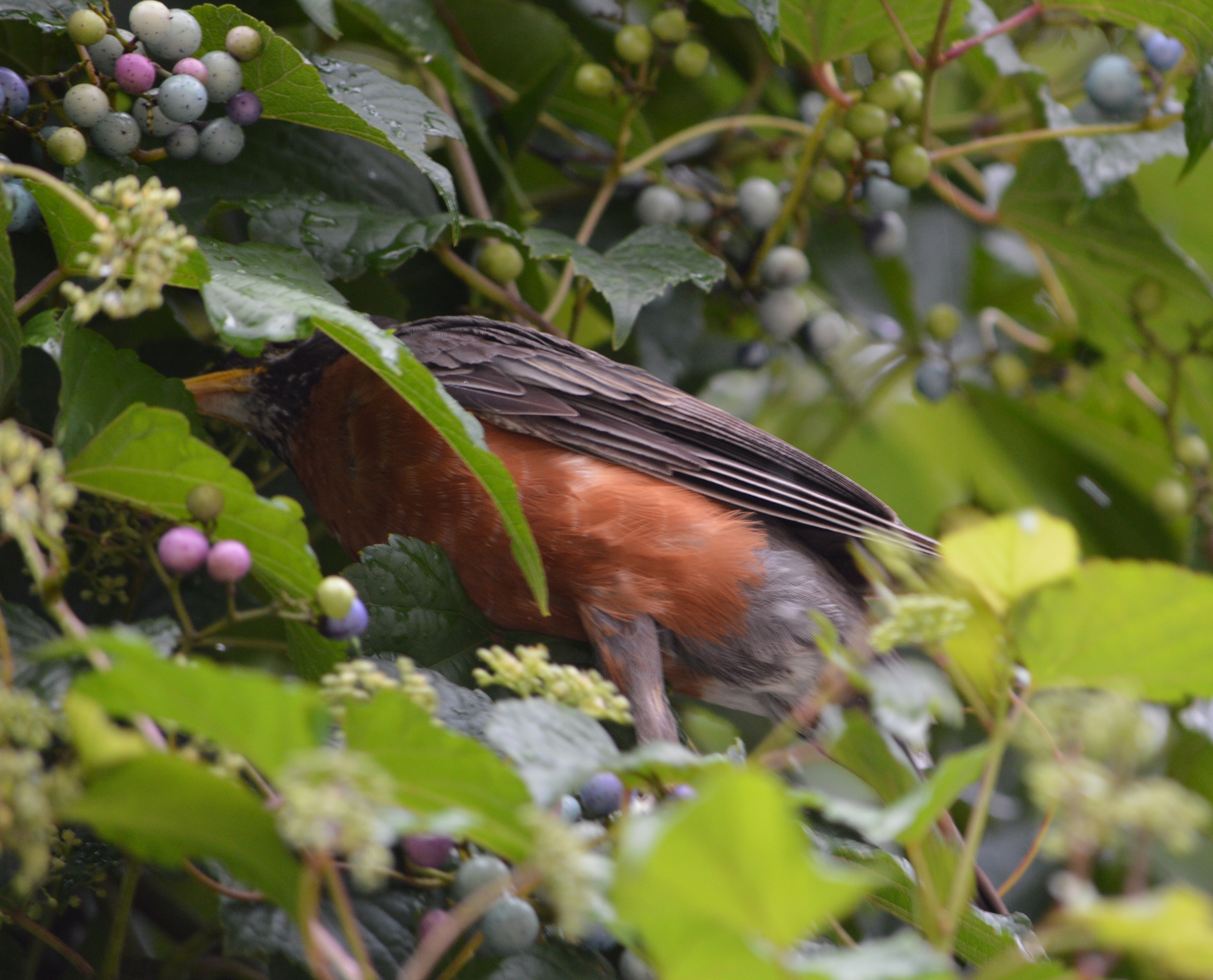
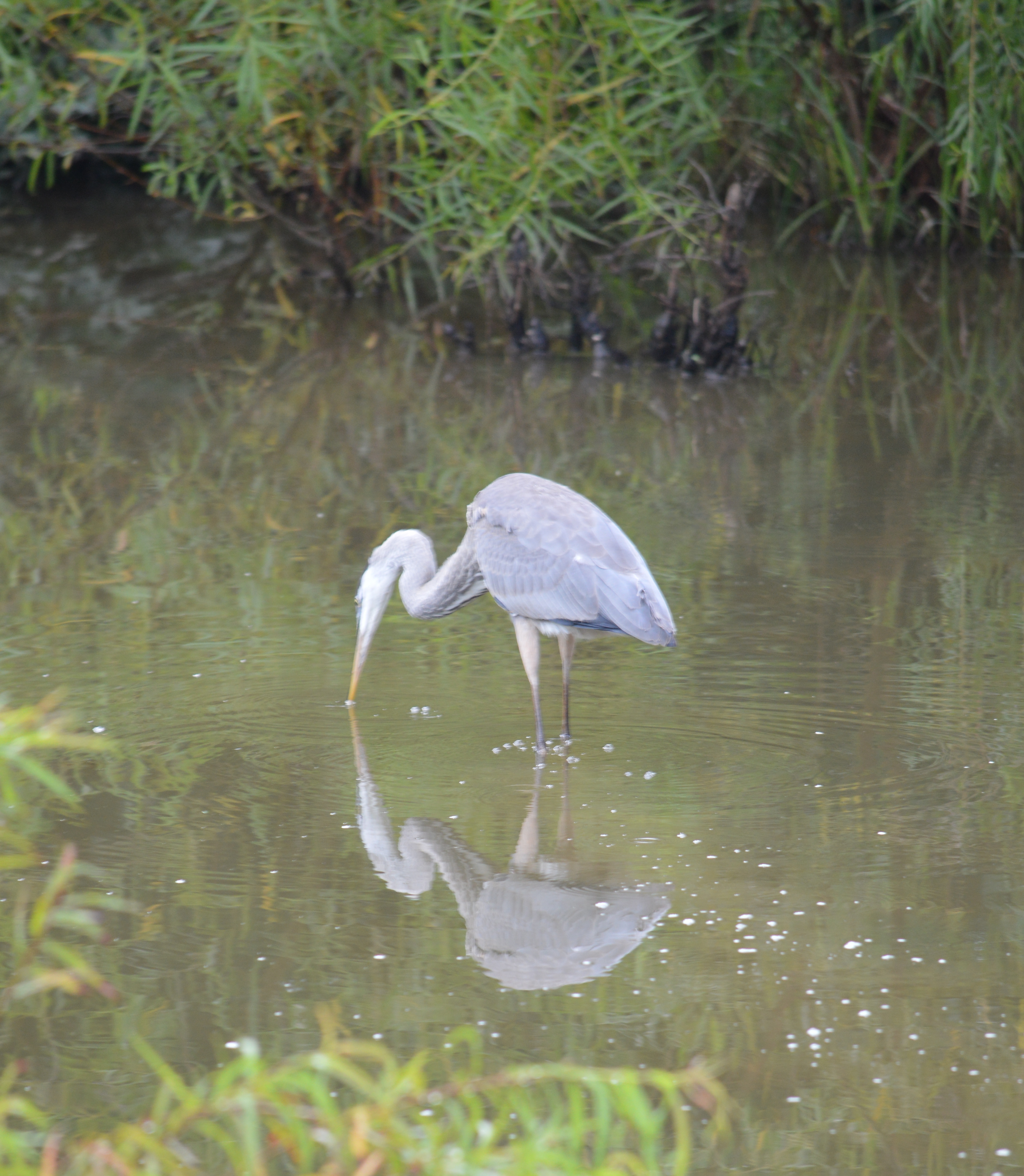
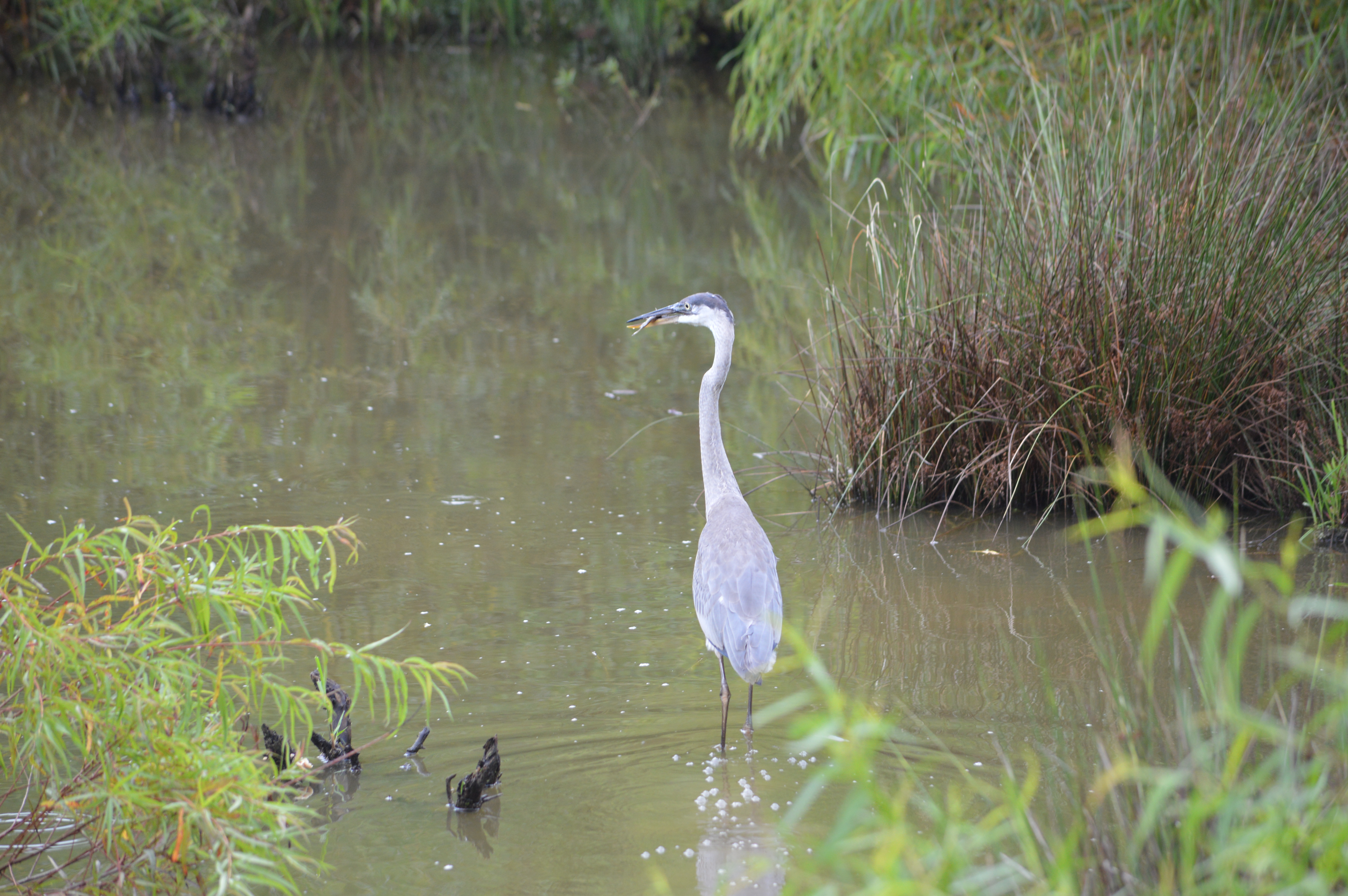
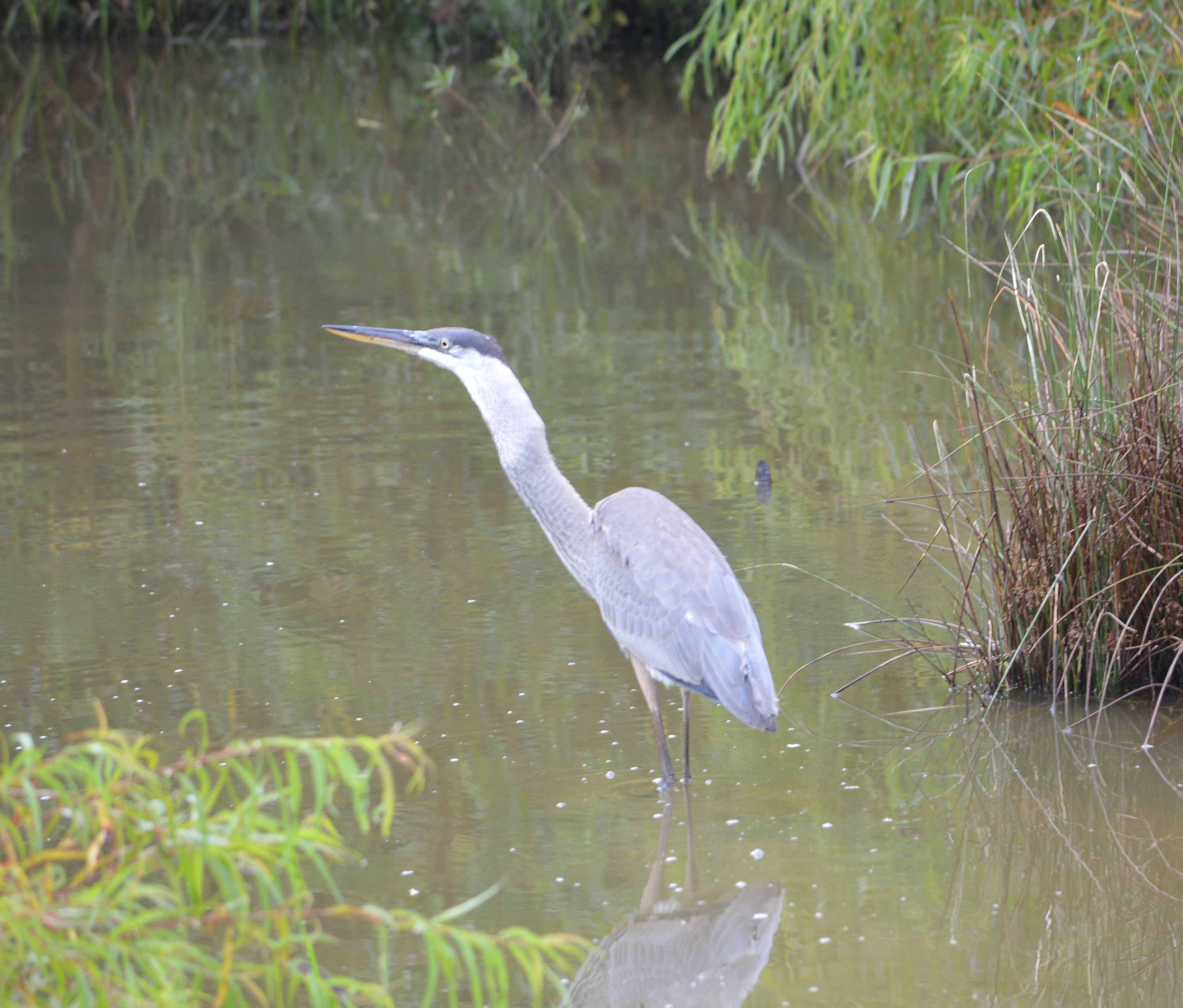
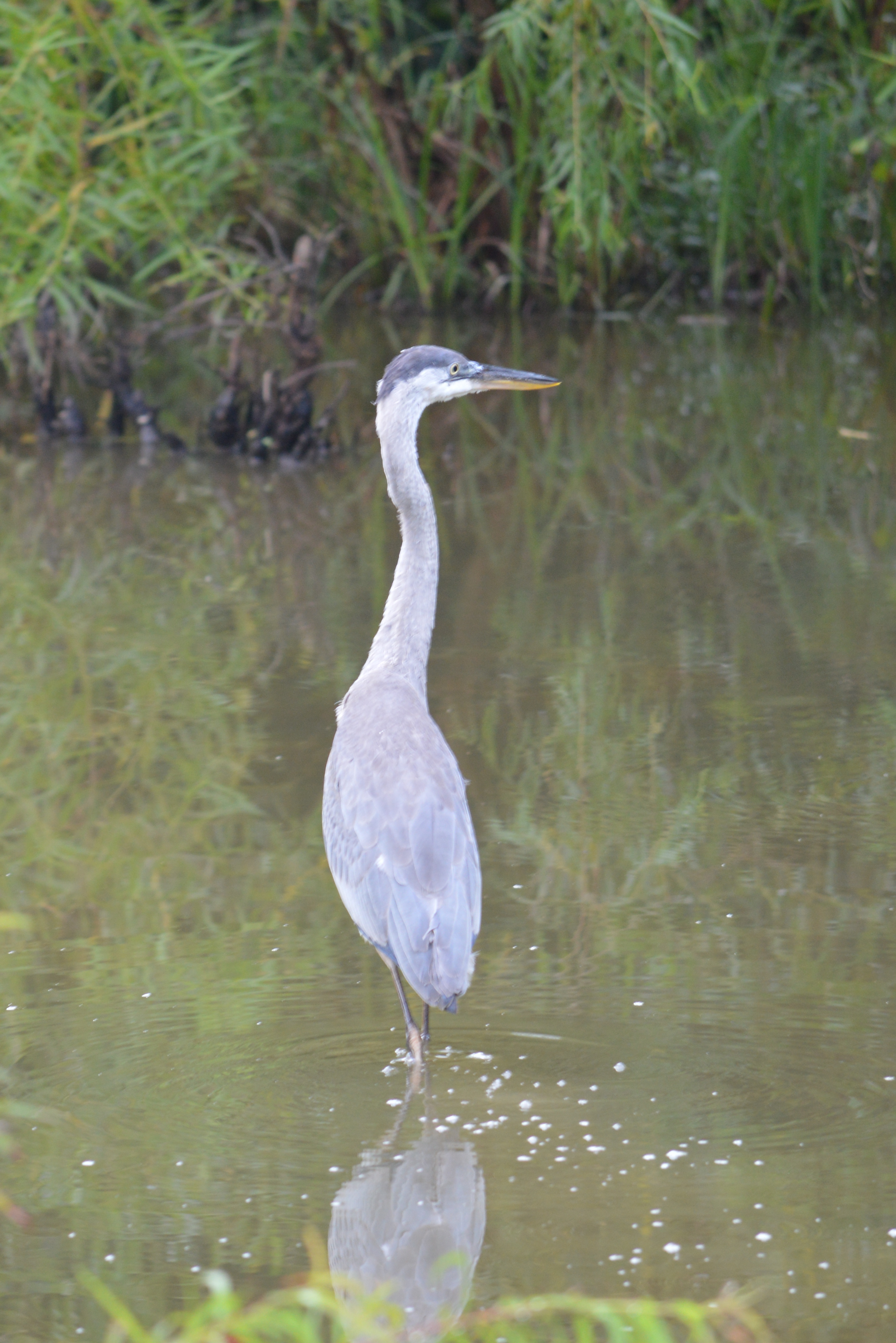
There were some birds this morning at the boardwalk off of Raleigh Boulevard. Most of them hid from me (like that small bird in the Frost poem), but a robin, a great blue heron, and a mallard family didn’t.


Science news — the Higgs boson, global warming, the nature of consciousness

I’ve been trying to follow the story of the search for the Higgs boson for a long time, and so I felt excited by reports this week that scientists at CERN have discovered a new particle that could be it. Quantum mechanics is not something I would ever aspire to have a deep grasp of, but even skimming the surface is mind bending. The subatomic world has different rules from ours.

I also really like the purity of the enterprise. It’s primarily driven by curiosity, rather than motives of profit or power. These scientists aren’t much interested in practical applications; they want the truth. (Of course, they also may want tenure, grants, Nobel Prizes, dates, etc.) It’s cheering that there is still, in some places, political and financial support that makes their (very expensive) experiments possible.

Another thing that’s particularly cool about the Higgs search is that it is a massive collaboration. Thousands and thousands of scientists are involved. According to the Times account, there were two teams of 3,000 physicists each analyzing the data from hundreds of trillions of proton collisions in the latest round of the CERN effort. They’ve found ways, which I’m sure involve the Internet and massive computing power, to share their knowledge and coordinate their efforts. This is very different from the model of scientific discovery I was taught as a kid, where individuals worked by themselves in their laboratories until their eureka moment. It’s encouraging that scientists are learning to collaborate better just as they take on ever larger problems.

The practicality of the Higgs work may be to the researchers’ advantage in making them a low-value political target. This contrasts sharply with global warming research. In my home state of North Carolina, a majority of our legislators (mostly Republicans) embarrassed themselves again this week by enacting legislation designed to suppress, or at least defer, scientific reports of rising sea levels caused by global warming.

The coastal development lobby seems to have been involved. As my friend and House representative Deborah Ross cleverly observed, putting our heads in the sand is not really doing property owners any favors — they need real information. I’d also note that the sea is not going to read the study anyway. It is both funny and scary that a significant portion of our political leaders (for now a majority in NC) are either willfully ignorant or cynically determined to oppose science where it conflicts with their self-interest.

Yet science hasn’t thrown in the towel yet, and I’ve got to think that the truth will out. Speaking a little more of science, I’ve been reading a new book by Michael Gazzaniga titled Who’s in Charge: Free Will and the Science of the Brain. It’s about recent discoveries and theories in neuroscience, and parts of it are mind boggling. Gazzaniga is a distinguished professor (University of California) and researcher in cognitive neuroscience who made ground-breaking discoveries in the area of split-brain research.

Gazzaniga covers a lot of territory, and I will not attempt to summarize (indeed, I’m not certain I completely grasp) his view of free will. For me, the most stimulating sections had to do with his his model of conscious thought. At least since the time of the Periclean Athens, we’ve thought of our conscious experience as objective — that is, what you see is what there is to see, what you hear is objectively present in nature, and so on as to other senses and perceptions. In everyday life, we experience all these sensations predictable and reliable, and have difficulty imagining them as error prone and misleading.

I’ve read several interesting books recently discussing research on this, including Jonathan Haidt’s, Daniel Kahneman’s, and Jonah Lehrer’s, but Gazzinaga seems to have the clearest theoretical model and best supported theory for why we can’t accept that our conscious perceptions are at best an incomplete and fallible approximation of physical reality. His model of the mind involves hundreds or thousands of modules working on, say, vision, and forwarding their data to a module in the left brain which he calls The Interpreter.

The Interpreter takes in what it can (not everything), makes some quick guesstimates as to what data is reliable and what should be tossed out, fills in any gaps in the data with best guesses, and presents the result to consciousness as reality. Despite all the guesswork and potential for errors, the result feels to us instantaneous, smooth, continuous, and objective. If there are glaring problems or inconsistencies, The Interpreter comes up with a narrative or story that “explains” them. We are, in a really fundamental sense, story-telling animals.

Another aspect of Gazzaniga’s model struck me as particularly thought-provoking was his discussion of emergence theory. While giving respect and consideration to the researchers working at the scale of neurons and brain structures, Gazzinaga deems it unlikely that that approach will never explain conscious experience. The brain is just too complex.

Emergence theory addresses itself to phenomena are matters that arise out of inputs so numerous as to be incalculable. Examples include snowflakes, traffic jams and weather, which are in the aggregate clearly products of much simpler phenomena (hydrogen atoms, carburetors and other auto parts, breezes etc.), but which contain too many variables to be predictable. The brain’s 100 billion neurons and vastly larger number of synapses far exceeds the complexity of our analytical tools.

Finally, I was intrigued that Gazzaniga suggests the possibility that the basic unit of analysis for the study of human consciousness should not be an individual brain, but rather, groups of brains. That is, intelligence may be best understood as emerging from humans interacting with each other. The individual brain in isolation knows nothing that we would call intelligence, but needs other brains to develop. Prisoners in prolonged isolation quite literally lose their minds. We’ve barely begun to consider consciousness in terms of systems of brains, rather than individual brains. It could change the way we approach education, law, and most everything else.

Coping with pollen, trying Pilates, and news on how to eat to reduce cancer risks

Spring is definitely here, greener and greener and blossoms everywhere. Also here is a cloud of heavy yellow pine pollen settling on cars, including mine. The pollen surprises me every year. Last year it arrived the day after I got Clara detailed, and the pollen turned the beautiful dark blue car yellow. This year, I resolved to get the big spring car cleaning done well in advance of pine pollination, and got the full treatment from Dave of A to Z Auto Detailing. She looked great, until the pollen arrived, two days later. Pine trees, stop trying to impregnate Clara!

It was a homey week — no travel — and I got up early each day and had a work out done by 7:00 or 7:30. On Monday, I did intervals on the elliptical machine on the roof and then some weights and stretching. Tuesday I did forty minutes on the elliptical machine first, then went across the street to early bird yoga at Blue Lotus. Wednesday I went to Pullen Park pool and swam intervals and then stretched. A lifeguard complimented my stretch routine (though not, I noted, my swimming).

Friday I went to O2 gym at Seaboard Station for an hour-long RPM spinning class. Spinning means riding an exercise bike to loud music at the intensity the teacher directs, and it is much more demanding than it sounds. The teacher Friday was a substitute who was six months pregnant. At the start, I felt fairly confident that I could keep up with her, but in fact she kicked my butt. I predict her baby will be a champion.

Backing up, Thursday I had my third Pilates lesson at Evolve with Julee. What is Pilates? My friend Chuck and others had recommended it, but I found it hard to get a clear description. But I felt ready to try some new type of exercising. It’s good to shake things up from time to time. Meredith, my wonderful massage therapist, turned out to be a big Pilates fan, and she recommended Julee, whom she regarded as highly gifted.

Pilates is named for its inventor, a German named Joseph Pilates, who came up with his system early in the twentieth century. It involves various contraptions that he invented. It entails a particular way of breathing, of focusing on the core area, and of contracting various muscles. Yes, it could be yet another nutty exercise fad, but there seems to be more to it. I say this based on (1) my very limited experience trying it and (2) observing that Pilates students are exceptionally fit looking.

It seems to involve a sophisticated understanding of human biology, and as an experience it nicely balances the physical and the mental. As Julee has introduced me to the various exercises, I’ve found myself focusing hard on just one thing: the movements. I’m just starting to get my bearings on the system, but so far it seems stimulating in a healthy, fun way.

In other health news, there was an interesting news story this week on the health effects of aspirin. Two significant new British studies found that a daily dose of aspirin was associated with large reductions in cancer. One study found a 46% reduction in colon, lung, and prostate cancer, and both found large reductions in other common cancers. That’s huge!

I’d taken a baby aspirin for some time to reduce the risk of a heart attack, but quit after a recent study indicated that for healthy patients the heart benefits may not outweigh the risks. I was sufficiently impressed by the new studies to dig out my aspirin bottle and start taking the little pill again.

Also noteworthy is a NY Times report of a new study that eating red meat is associated with death from heart disease and cancer, with the risk increasing with increased consumption of meat. The study involved 121,342 men and women and data from 1980 to 2006. Each increase of meat consumption by three ounces increased the risk of death from cancer by 10 percent and death from cardiovascular disease by 16 percent. It sounds like, if the norm is six ounces of meat a day, eating no meat would reduce your cancer risk by 20 percent and cardiovascular disease by 32 percent. That’s also huge!

For some reason, the Times did not put this on the front page, or even as the lead item in the health section, but rather buried it deep in general news section. A new drug that dramatically reduced cancer and heart disease would surely have been treated as a major news event. I’d think this new study would be something most people would want to think about.

Of course, people generally don’t like hearing that their ingrained habits are unhealthy, and tune out news that causes dissonance, so I will leave the subject for now. On a more cheerful note, I will just mention that I greatly enjoyed listening to some Haydn symphonies on my iPod touch while exercising and doing other activities this week. I had sort of forgotten how wonderful they are. I was listening to numbers 100, 101, 103, and 104. Here’s the second movement of number 100. My recording, which I prefer, is by Christopher Hogwood directing the Academy of Ancient Music (on period instruments).