The Casual Blog

Category: restaurants

A rodeo, a tennis match, a run, and a good curry meal
14 08 19_1548_edited-1
This was an unusually sporty week. I got to see a local rodeo and a semi-local professional tennis event, and took a run down memory lane.

It is always cheering and a little startling to find that there are communities of people who care passionately about something I know hardly anything about. Who knew there was a rodeo community in the Raleigh vicinity? Actually, I had just learned this the prior week from Walter magazine (an attractively designed and informative monthly that covers our area).

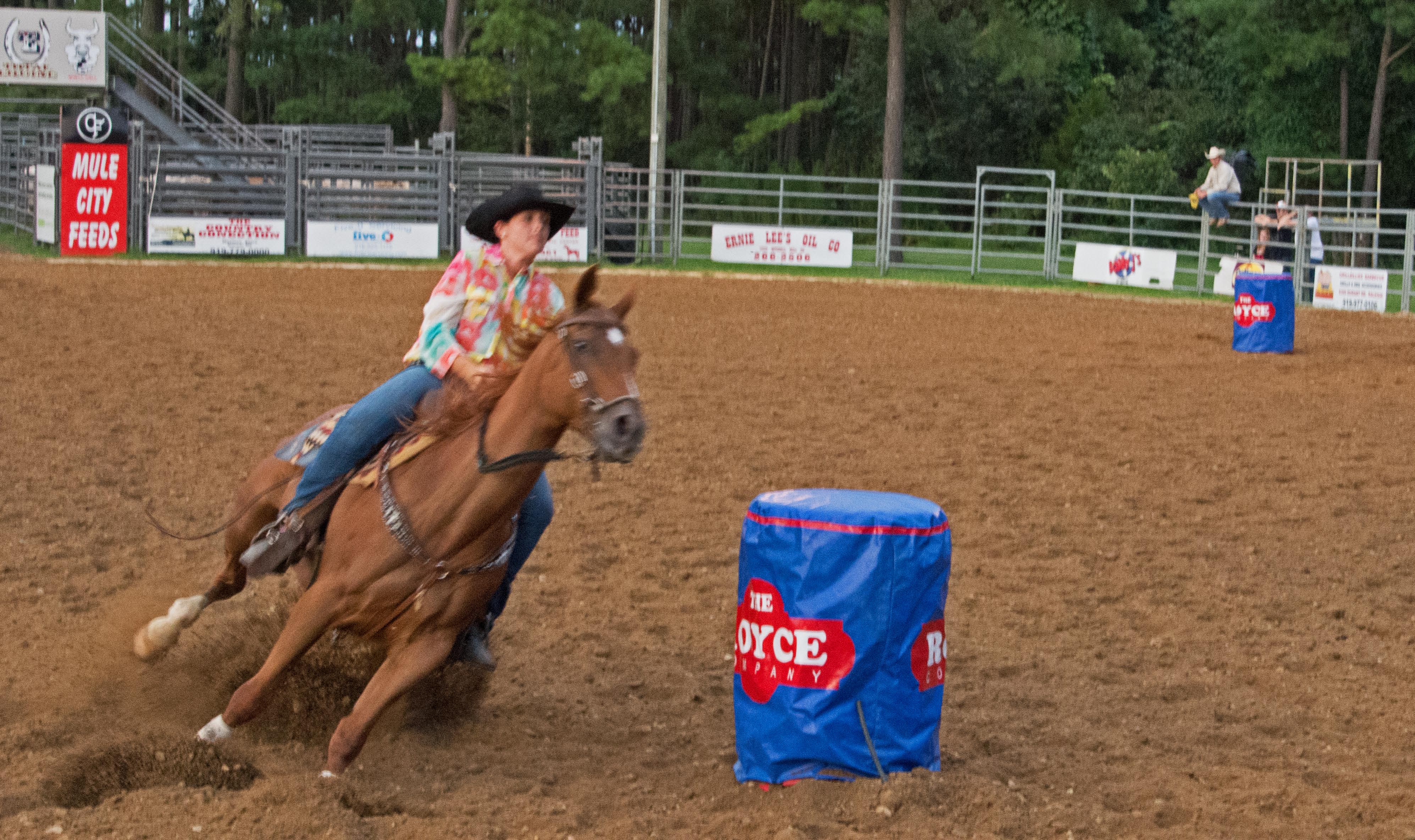
The rodeo was in northern Wake County off of Louisburg Road. The main events were barrel racing and bull riding. The barrel racers were all young women, and they rode their horses extremely fast. It reminded me of road course racing – in addition to extreme acceleration, they had to hit the brakes hard at the barrels. I was in awe of their riding skills.
14 08 19_1553_edited-1

The bull racers sat on bulls and got bucked off. This seems simple in concept, but the trick is not to get killed or severely injured by the bull. We got to see this event up close, and it looked extremely dangerous. I was not happy to think of the bulls being mistreated, but that didn’t prevent my appreciating the courage of the young riders.
14 08 21_1594

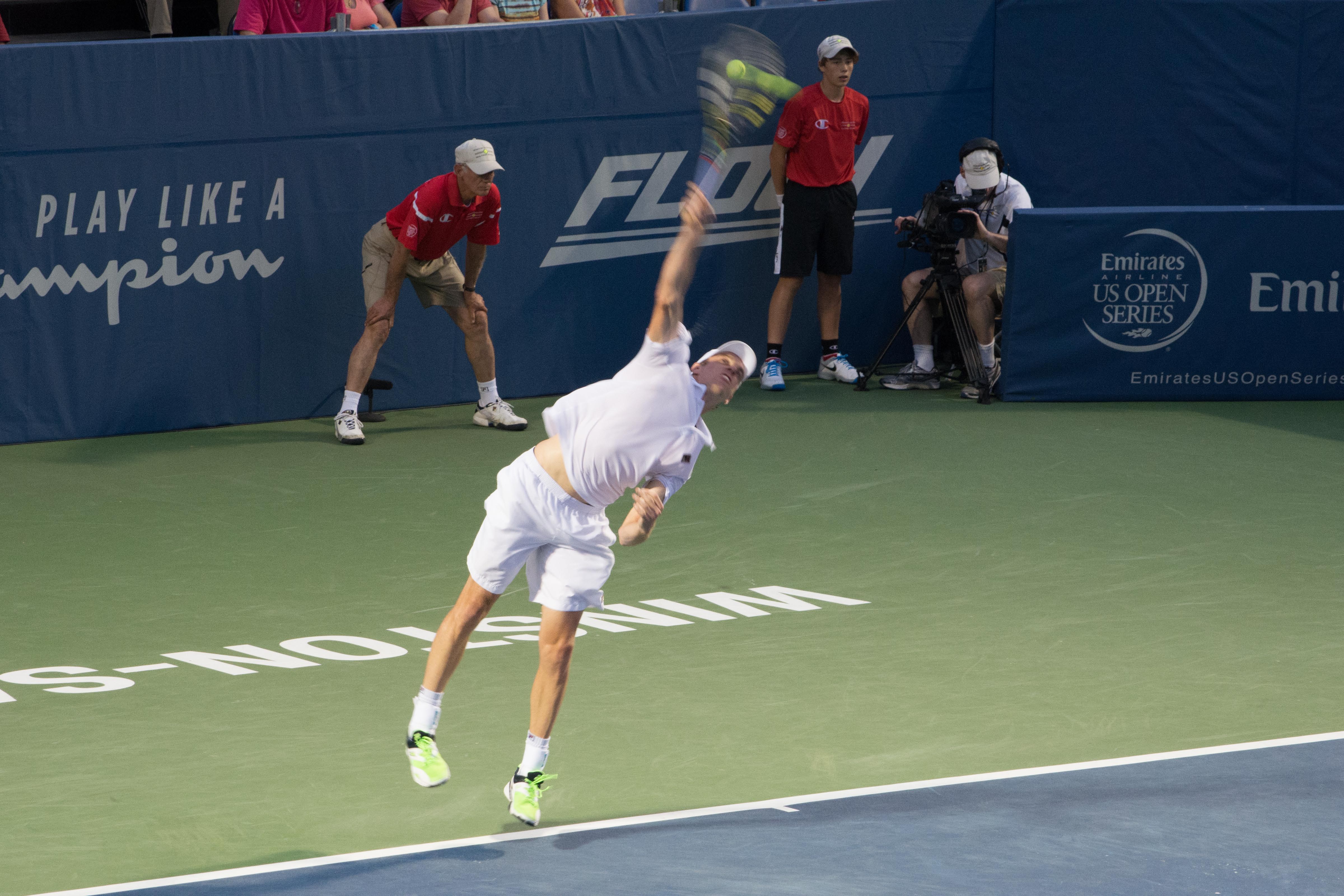
On Thursday Sally and I drove east to see some professional tennis at the Winston-Salem Open. We watched Sam Querrey play Guillermo Garcia-Lopez. These guys can play! Querrey had a huge serve which topped out at 137 mph. Garcia-Lopez had a beautiful one-handed backhand that he could hit with a lot of topspin. The match was close through two sets, but Querrey took control and prevailed in the third.
14 08 21_1592

That night we stayed in downtown Winston-Salem at the Brookstown Inn, built as a cotton mill in 1837 and now decorated with antiques and crafts. Our room was spacious (a 20 foot ceiling, at least), and the bed was particularly comfy.

When I’m on the road, I make it a habit to use the hotel gym first thing in the morning. The Brookstown’s web site didn’t mention an exercise facility (it turned out to have a tiny one), so I had packed most of what was needed for a run (forgot my tee-shirt). It was still dark at 6:15 when I went out, shirtless, for a run through the city of my youth.

There was hardly anyone out, so I don’t think I upset anyone with my shirtlessness. There was a pleasant breeze. Heading down Fourth Street, many of the businesses I remember were gone (no more Woolworth’s), but there were some interesting looking restaurants and galleries. I ran past the city’s most striking high rises, including the Reynolds Building (which looks just like a miniature Empire State Building), and along Main Street to Old Salem, the eighteenth-century Moravian town that’s now a tourist attraction. I went past the building where my parents had their bookstore and by the half-timbered brick buildings and grassy squares where I had a happy summer at Governor’s School.

This took about 40 minutes. I hadn’t run more than ten minutes for many a moon, because of various minor injuries. I felt comfortable and strong. The next day, though, my quads were sore.

On Saturday night we walked up to the Packapalooza festival on Hillsborough Street for some people watching and food. The festival was in celebration of the return of the students to N.C. State, and there were plenty of them there. It seems they get younger every year, as I get older. There was real diversity, including in music: some bluegrass, some hip hop, some rock, some Hare Krishna.

I had one moment of shock and horror, when my Nikon D7100 came loose from its strap. I’d gotten an over-the-shoulder strap that screws into the tripod mount, and it somehow got unscrewed. It hit the asphalt hard. Picking it up, I expected to see cracks in the lens and the back screen, but everything looked OK. My test shots seemed fine. The only apparent damage was a minor scratch on the bottom on the housing. It’s a tough little bugger! I got this butterfly at Fletcher Park the next morning.

14 08 24_1697

We ate at a new Nepalese/Indian restaurant on Hillsborough Street called Kabab and Curry. The menu had good options for vegetarians, and everything we tried was excellent. We shared veggie pakoras, and I had the vegetarian sampler, called rani thali, which included shahi paneer, alu gobi, chana masala, and dal makhani. The food was spicy in a colorful way, stimulating but not overwhelming, with a variety of textures. A bright addition to the local asian dining scene. I’ll definitely be going back.
14 08 23_1620_edited-1

My hopeful hand checkup, a new salad restaurant, a Porsche contretemps, and discussing legalization

14 08 03_1352I was a bit anxious about my check up for the torn ligament with the hand doctor earlier last week, but it turned out fine. After the doc twisting my fingers a bit and asked if it hurt (it did), he pronounced me improved, and lowered the chance of needing surgery to 5 percent (a big improvement from his previous estimate of 50 percent). He cleared me to play the piano gently (no Rachmaninoff, he said), but to otherwise keep my fingers taped up for another month. I asked about getting back to golf, and he strongly advised me to wait. This was disappointing, as I’d felt like this could be my year for a big golf breakthrough (as, admittedly, I’ve felt in previous years). Still, I I was pleased to be heading in the right direction.

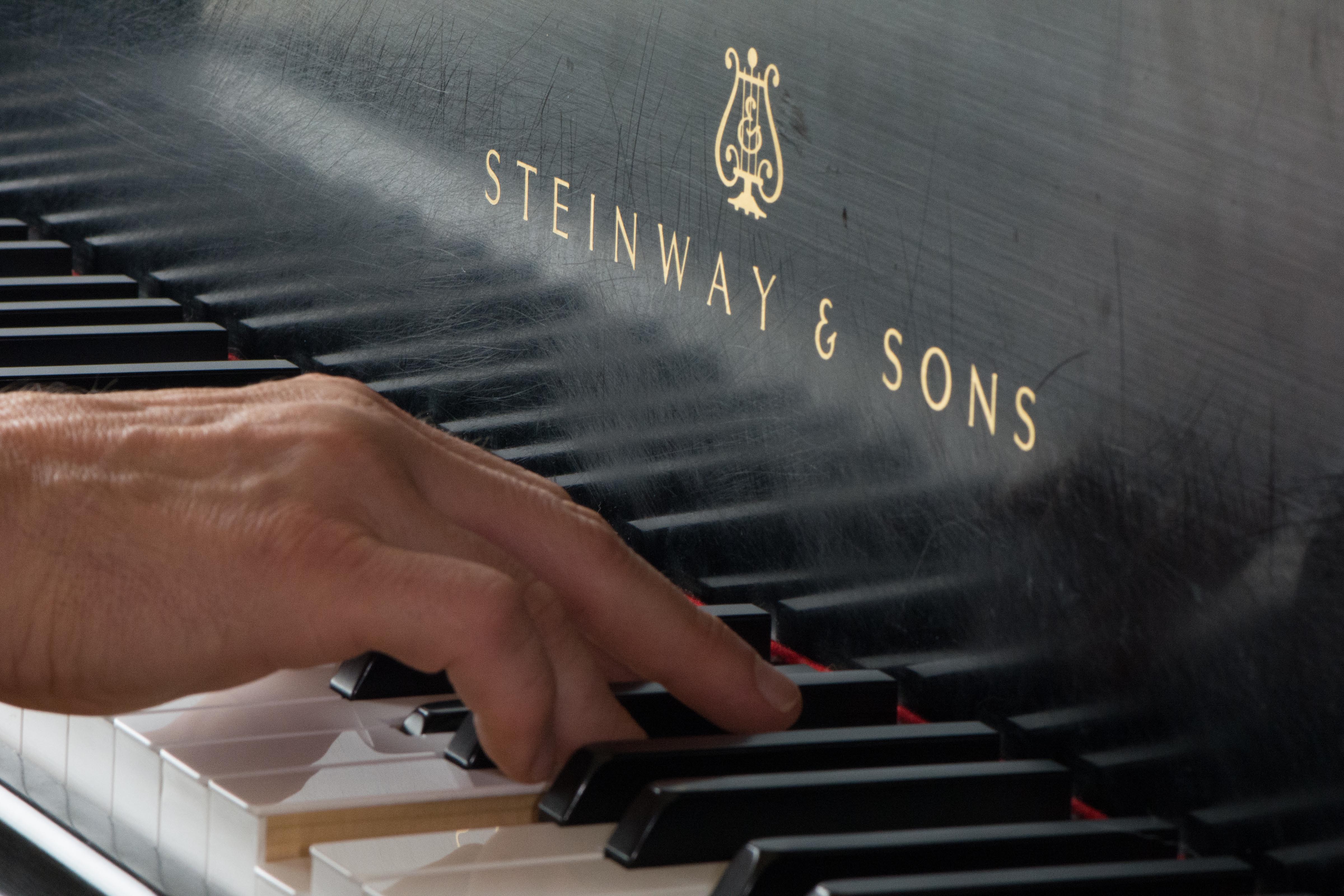
Playing the piano again was a rich, dense, textured pleasure. Going a month without playing is something that I hadn’t done for at least 30 years, and I missed it. I started gently with some Chopin mazurkas, and then some nocturnes. I couldn’t resist trying some Rachmaninoff – the Elegie, op. 3. It was all a bit rough, but I felt I was listening better, hearing more nuance, and playing with more rhythmic freedom. Perhaps the forced time off did my ears some good.

14 08 03_1277The next day I discovered Happy and Hale, a relatively new take-out restaurant on Fayetteville Street a couple of blocks from my office. It serves only three things: salads, smoothies, and juices. All are not only super healthy, but also lively, interesting combinations of ingredients. My first experience was the quinoa salad, which had quinoa, black beans, avocado, cilantro, feta cheese, and a couple of other things, with red pepper vinagrette. It was amazingly tasty. There was a long line, but I found this more cheering than annoying. It was good to see people interesting in eating something healthy, and to see this little business doing well.

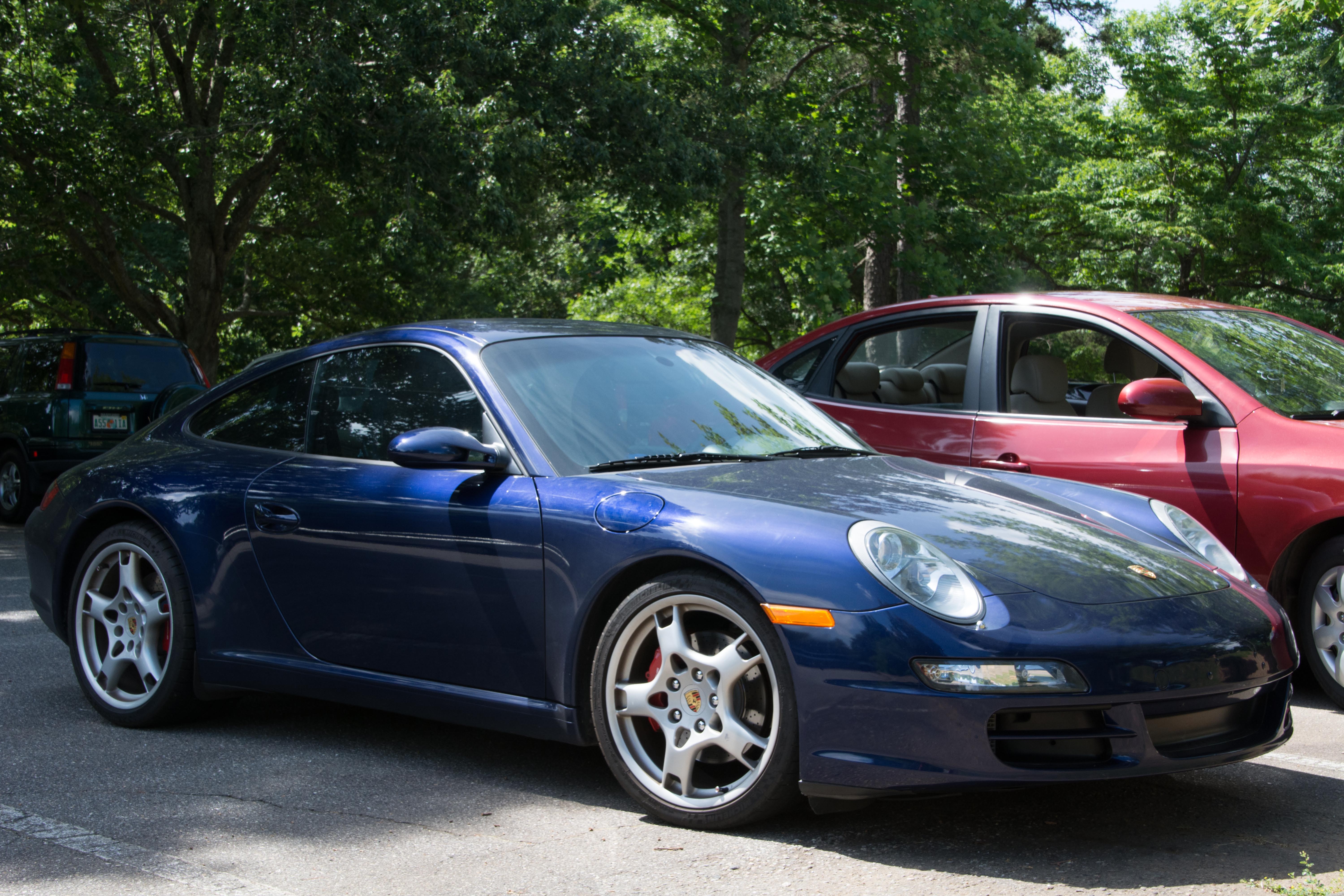
The next day, I took Clara to the Porsche dealer for servicing. Her check engine light had come on, but even before the that, I’d felt something wasn’t right. Giving her more throttle in the higher RPMs yielded more noise, but not more thrust. I suspected a transmission issue, which turned out to be correct. I needed a new clutch and new flywheel, and the cost was a big ouch.

Waiting for the parts to come in, I drove a loaner Ford Explorer (a sport ute). I just don’t get why people like this type of vehicle, at least when they don’t have a big group of kids or other heavy loads to haul. To me it was not fun to drive. After my sports car, It felt lumbering and awkward. I had the impression of barely having enough road, like a truck pulling a massive mobile home, needing a “wide load” sign to warn other vehicles.

But I admit that I liked the instrumentation. It had a touch screen set up for the climate control, radio, blue tooth, etc., and a handsome virtual compass. In reverse, the touch screen showed the view behind, with the danger zone outlined in red. It had some sort of RFD key that allowed the vehicle to unlock when I pulled the handle without the need for any use of the key. A nice convenience.
14 08 03_1253
Reading the New York Times is a settled part of my morning breakfast ritual, and there is a sense in which I always enjoy it. But golly, the news has been grim! Part of it is structural: in conventional journalistic thought, information usually only qualifies as news if it involves dramatic conflict. So we don’t hear anything about the peaceful countries in, say, Africa. But the lead stories recently inspire a special mixture of horror and hopelessness, because they’re big and absolutely beyond any individual control. Examples: Syria, Iraq, Afghanistan, Russia, Ukraine, Israel, Gaza, Nigeria, Washington.
14 08 03_1242
This week, though, there was a welcome exception. I was pleased to see the Times came out in favor of partially ending the war and drugs and legalizing marijuana. The editorial board had clearly had thought hard about it, and put some elbow grease into collecting the arguments: including the enormous human cost, the huge economic cost, and the relatively low risk. It felt like a watershed moment. Maybe now it will be possible that we can have a debate based more on facts and less on myth, moralism, and hysteria. I don’t think marijuana is a particularly good thing; for some people it’s surely an unhealthy thing. But criminalizing it has been an absolutely terrible thing.

So we might be close to overcoming this particular moral hysteria and to ending of prohibition. Perhaps some of our other seemingly intractable problems aren’t beyond all hope.
14 08 03_1250_edited-1

Business + pleasure at the Grove Park Inn, including the spa and the Blue Ridge Parkway

14 06 22_0095_edited-1
On Friday Sally and I took Clara from Raleigh to Asheville for a business + pleasure trip. I’d been invited to speak at the Federal Circuit’s Bench and Bar conference, which was being held at the famous Grove Park Inn, and after that ended we thought we’d do a little hiking near the Blue Ridge Parkway and get a treatment at the spa.

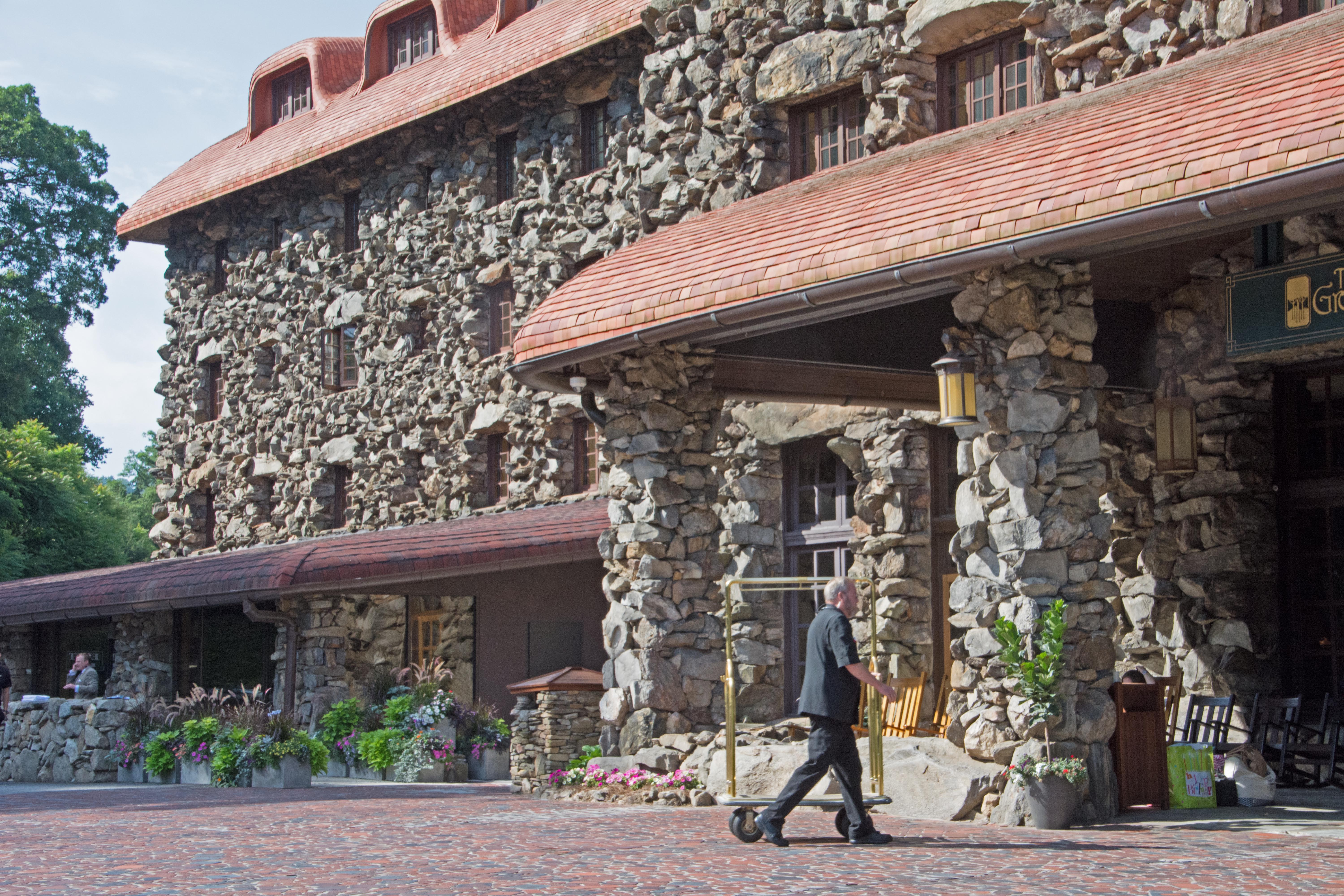
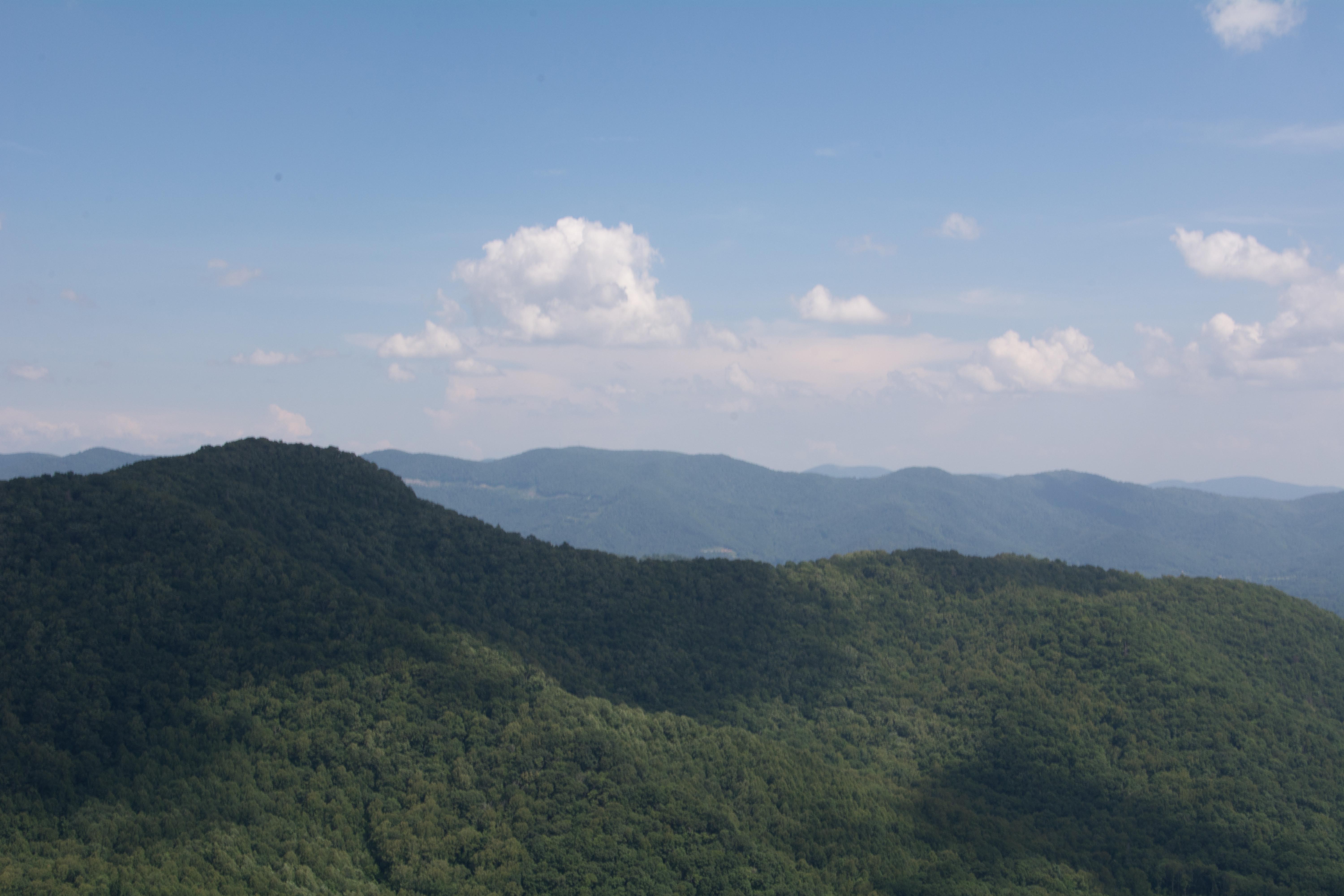
The Grove Park Inn is an odd but appealing place, with lovely views of the Blue Ridge mountains. It has massive stone masonry walls inside and out. It turned 100 last year, and is proud of its history. We found our room perfectly fine, and the service at the hotel, the various restaurants, and the spa to be attentive and exceptionally friendly.
14 06 21_0117_edited-1

As usual for me with professional speaking engagements, I enjoyed the actual doing of it, though I felt a certain dread in the last few days beforehand. I was one of four panelists, and it was far from clear even shortly beforehand how it was going to go. Fortunately, all were seasoned veterans, and it went fine. I had a chance to point up some of the serious problems with software patents, and give the conference an open source perspective on other issues. I gave my perspective that the patent system is seriously dysfunctional, and was happy that it sparked some debate, and I didn’t get run out of town on a rail.

That afternoon, we did a bit of driving on the Blue Ridge Parkway and took a pleasant hike at Craggy Gardens. When we returned, we went down to the spa to prepare for our massage.
14 06 21_0120

I’m a late convert to spa-ing. Until recently, I really could not see the point, and considered it a waste of valuable time. Both at work and play, I am normally a busy person, with more to do than there is time to do it. Workwise, the challenges are never ending. A lot of my leisure activities, like playing the piano and playing golf, demand a lot of commitment to improve, and that commitment requires time. And there are so many things I’m curious to know more about, and learning also requires time. Time is so valuable, and I try very hard not to waste it.

But I’ve gradually come to consider massage as valuable to good health, both physical and mental, and wanted to share a couples massage with Sally. Other than massage, I wasn’t quite sure what the Grove Park spa involved.

I’m here to tell you, it’s very nice. It carries forward the stone masonry motif of the Inn. There are numerous pools of different sizes and carefully graded temperatures, some with little waterfalls and some with big waterfalls. There was a eucalyptus infused steam room, pared with a whirlpool and a cold dunking tank. I was persuaded to go from the hot sweatiness of the steam room to a plunge in the cold tank, and it was definitely a shock — almost agonizing, but also refreshing.

After soaking in various pools inside and out, we repaired to a lounge and sat quietly for a few minutes in plush chairs next to a big fireplace. Then our massage therapists arrived, introduced themselves, and debriefed us on our health issues and massage likes and dislikes. My therapist, Sarah, was very good. She described her technique as basically Swedish massage, but she was very responsive to my request for firmer pressure, and attentive to the various knots and tensions of my body.

An aspect of the treatment was scented lotions and oils, as well as scents generally – aromatherapy, as they call it. I experienced something described as detoxifying citrus, with oils of lemon, orange and petitgrain (no idea what that is), and various other exotic substances. Did they do anything significant for my health and well-being? It’s hard to say. But it was very pleasant, and I certainly wouldn’t mind doing it again.

We felt quite wonderful after our massages, and though we had a dinner reservation pending, didn’t want to leave the spa immediately. Sarah helped us get the reservation pushed back, and we did some more soaking in the hot tub and other pools. It was delicious.

We eventually made our way to the Sunset Terrace restaurant, where they gave us a great seat on the edge of the porch looking out toward the mountains. So many restaurants try to seat you in the less desirable spaces unless you push back, but they did not try that on us at the Inn. They had a vegetarian entrée involving tofu, and it was fine. Afterwards, we sipped the last of our wine and listened to a local flamenco quartet. The musicians seemed quite fine, and their singer, a blonde Swedish-looking gringo, sang in Spanish that sounded appropriately tragic and passionate. It was an unexpected pleasure.
14 06 22_0116_edited-1
On Sunday, we did a little more driving on the Blue Ridge Parkway. It really is a national treasure – a road that exists for the pure beauty and pleasure of driving. It winds and twists along ridges with views of adjacent mountains and valleys. For a few miles, there was no one in front of us, and Clara could stretch her legs a little.
14 06 21_0140

Clara catching her breath

Clara catching her breath

Bluebird skiing in Telluride, a brief briefing, and reading The Second Machine Age

14 02 26_7309
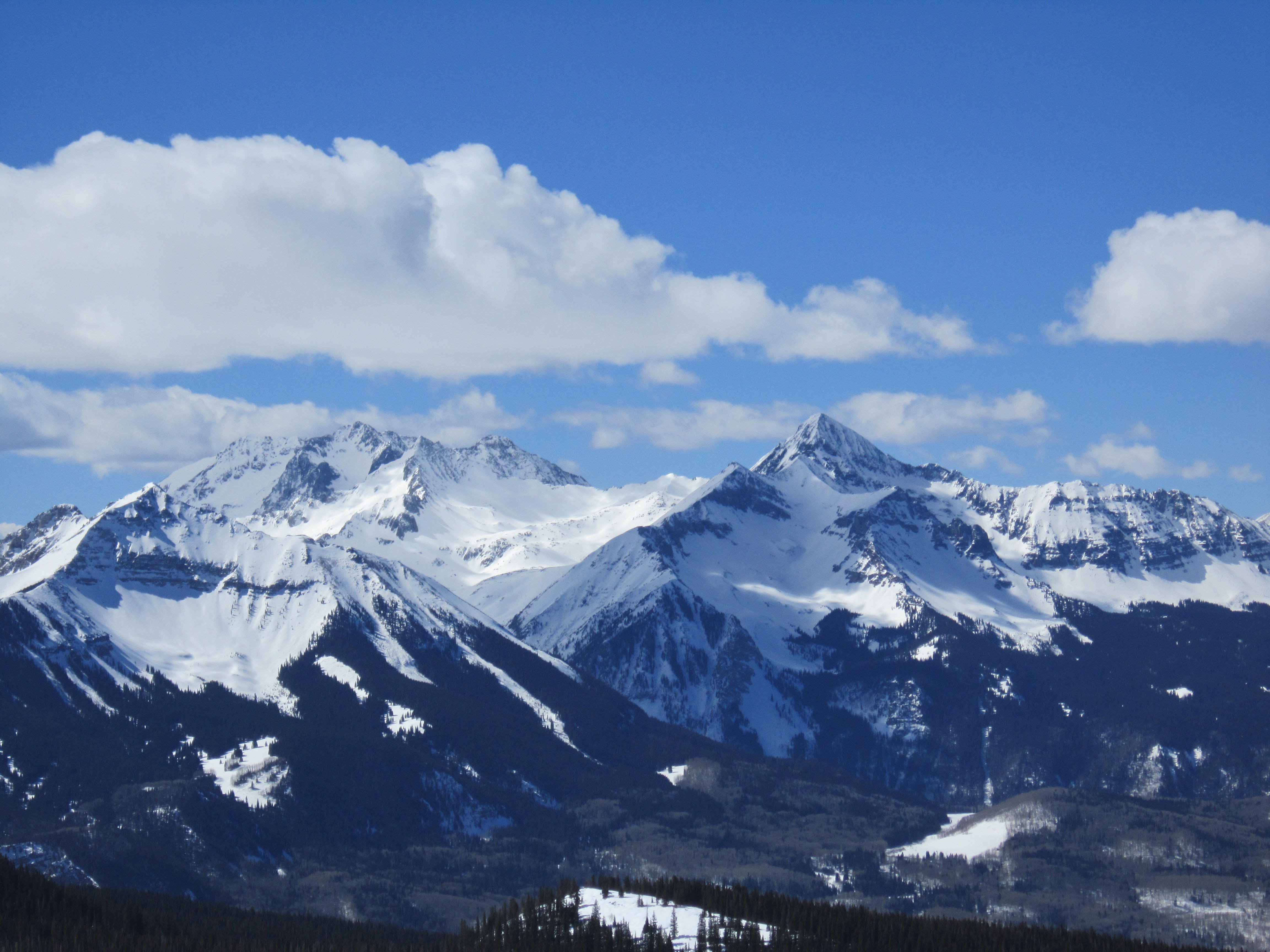
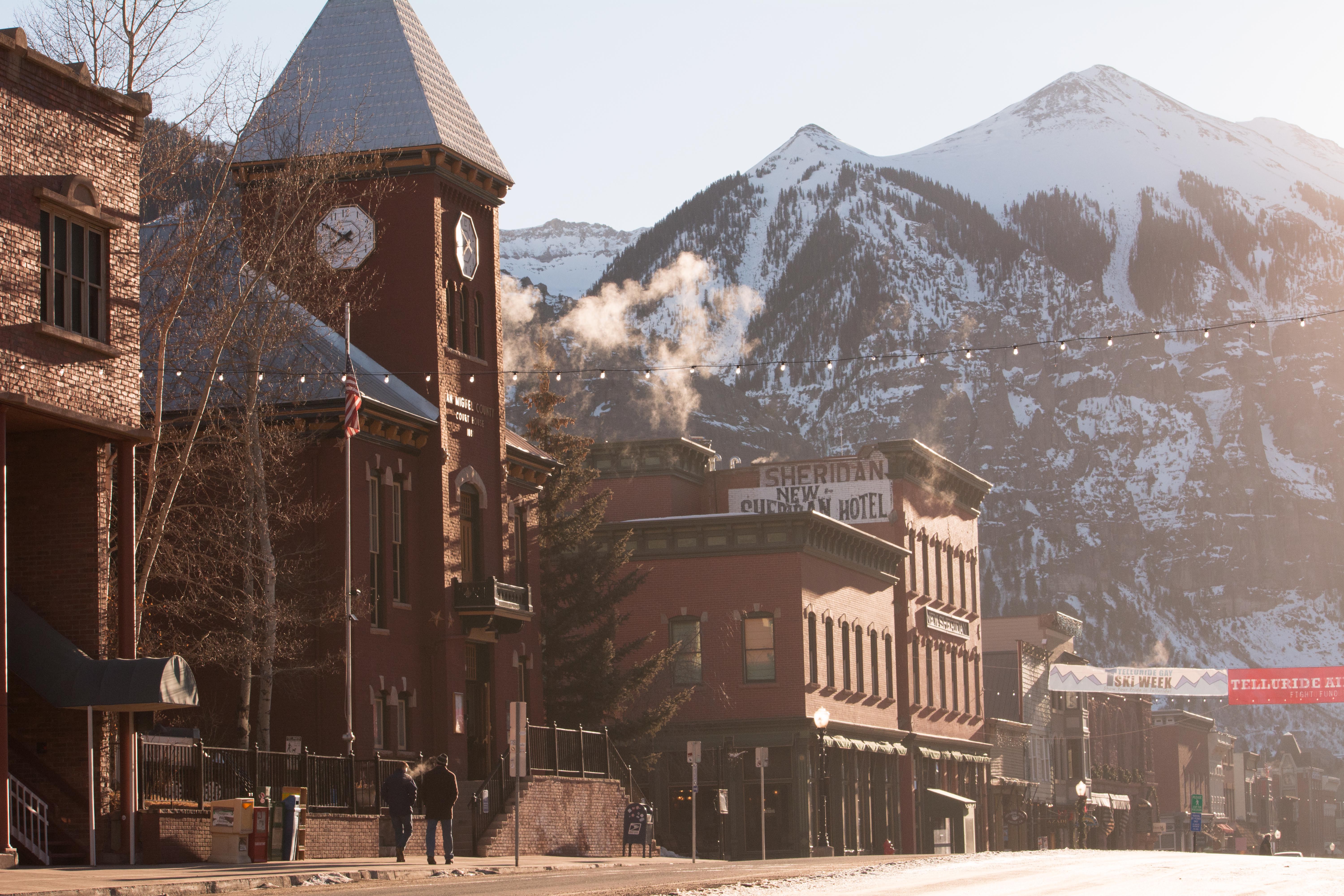
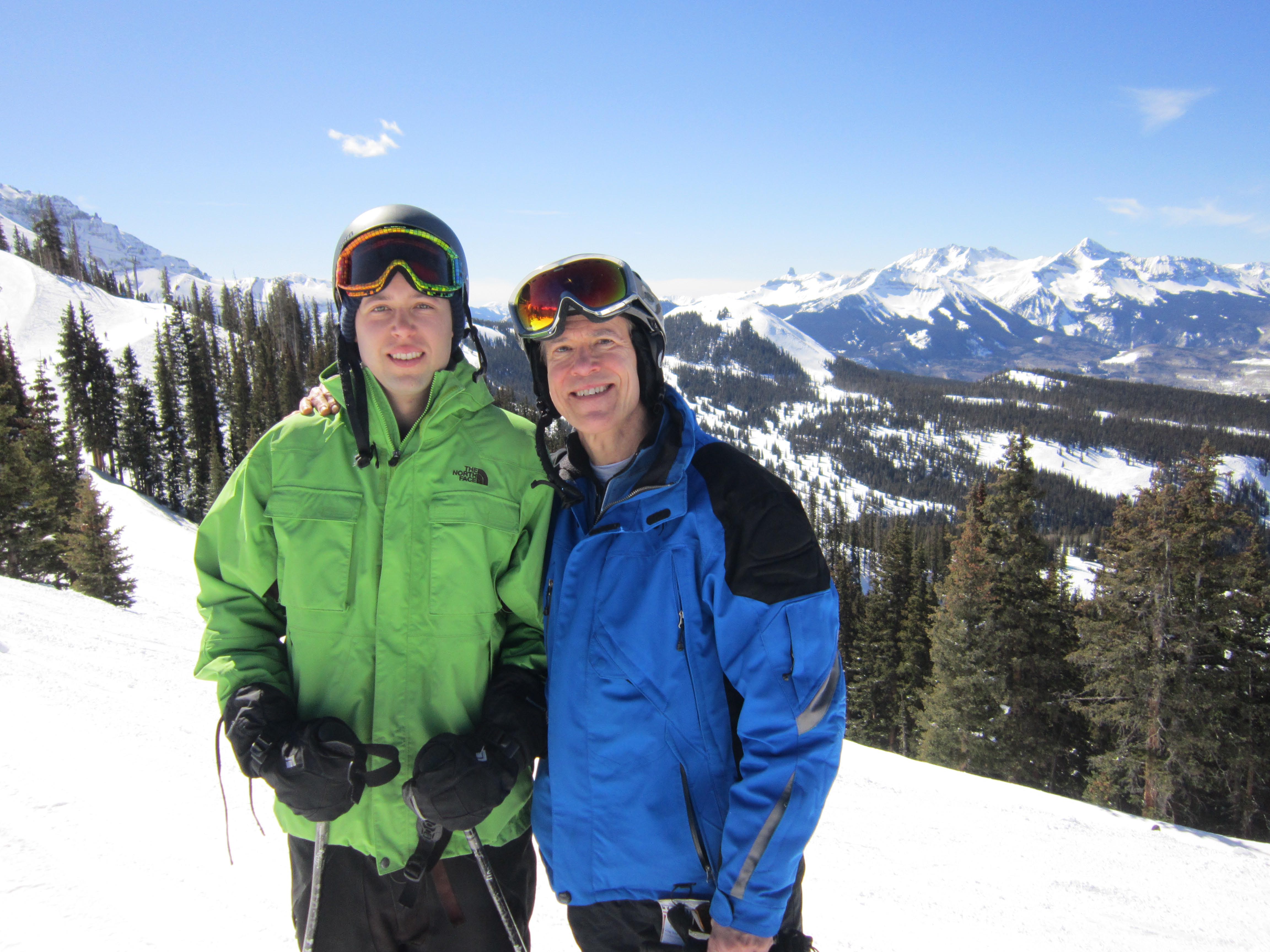
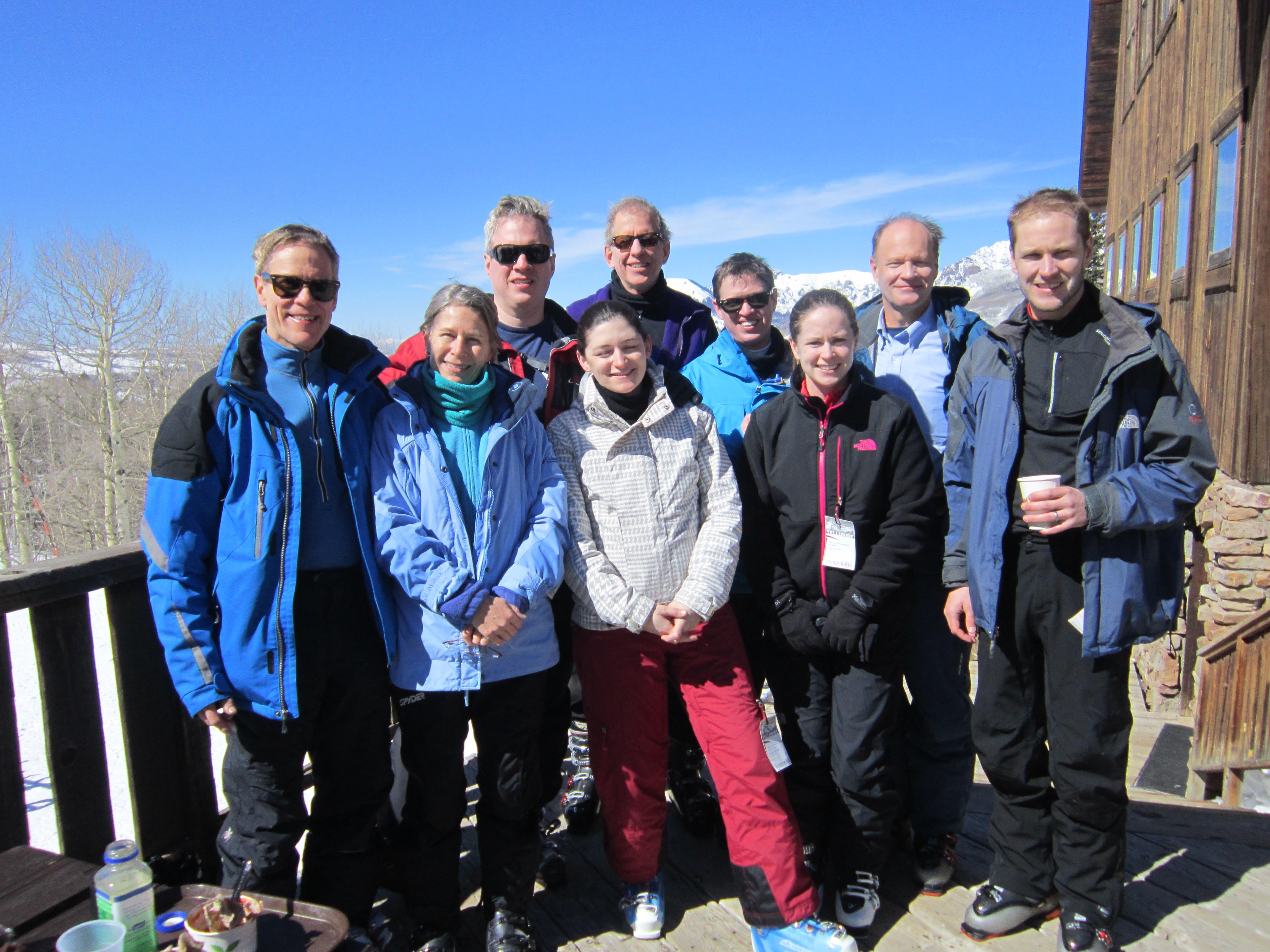
Last week Sally and I joined Gabe and several friends in Telluride, Colorado, for a few days of skiing, eating, and talking. When I describe Telluride, I always mention how beautiful it is, but when I got there, I realized I’d forgotten how massive and magnificent the mountains are. The craggy alpine vistas surround you, regal and timeless. And the town itself has a friendly, unassuming charm. I tried to capture some of these feelings, but was uncomfortable taking my D7100 onto the slopes, and so used my little Canon point-and-shoot up there.
14 02 25_7422_edited-1

Telluride has a lot of challenging terrain, and the question always is, can you handle it? Gabe Tiller has been living here five years, and he can answer that question with a yes. On our first day, he took me down a double black diamond mogul run called spiral stairs, which, once we were committed, he told me was “really steep.” He wasn’t kidding! He also led me into a tree run called Log Pile. These were pressing the outer edge of the envelope for me. Getting through in one piece was a great happiness!
14 02 26_7307
14 02 23_7352

Moguls — aka bumps, or areas of irregular snow that form in steep areas — are terrifying for beginners, frustrating for intermediates, and challenging in varying degrees for those more advanced. If you want to ski the steep wild places, you just need to figure out moguls, and there’s no simple solution. It’s like three-dimensional chess – or make that speed chess. We complimented Gabe on how smooth and strong he looked in the tough mogul runs, and he noted, with admirably humility, that it only took him five years of work.

There is no way I’ll ever reach Gabe’s level, but I got a bit stronger and more stylish this week. I averaged three falls a day, which I take as an indicator that I’m still pushing my limits and improving. I also found new joy in the gladed runs – basically moguls with trees. These require creativity and intense concentration. We did on called Captain Jack’s, which Gabe told me would get “kind of loggy.” Indeed. I had only one scary crash, after I saw Gabe flash by doing hyperspeed turns, and was inspired to give chase. I made the first three turns, but missed the fourth and ran into a tree. I did some minor damage to my left shoulder, but I think it will heal up OK. My worst injury was sunburn on my lips. I got everything except the lips protected with sunblock – a rookie mistake.
14 02 24_7340

Our four ski days were all remarkably clear and sunny, with pleasant ski temperatures in the mid-30s. The snow was generally good – not too hard and not too soft – Goldilocks snow. Of course, it’s always a treat to get fresh light powder, but if it doesn’t happen, I’ll take bluebird days and Goldilocks. We were on the lifts almost as soon as they opened at nine and went at it hard until 3:30 or so. Then hot tub, relaxing, cocktails, and dinner. We particularly enjoyed eating at the Telluride Bistro, Siam, 221, and Hongas.
14 02 25_7312

I had one important work project: an amicus brief in the U.S. Supreme Court in the case of Alice Corp. v. CLS Bank. The case involves a patent concerning financial intermediation, and presents the question of when software is patent eligible under 35 U.S.C. Section 101. I’ve thought about the paradox of software patents for a long time: how a system meant to foster innovation ends up hindering it. I was happy to take on the out-of-ordinary-course assignment of writing the brief myself, but the due date fell in the middle of the ski trip. With hard work, I got most of the writing done before the trip, and while my colleagues took care of cite checking and filing mechanics, I took responsibility for the needless worrying. In the end, I was reasonably happy with the brief, which I hope will help move the debate in the right direction. It can be downloaded here.
14 02 24_7333

For leisure reading, I made it most of the way through Brynjolfsson & McAfee’s new book , The Second Machine Age: Work, Progress, and Prosperity in a Time of Brilliant Technologies. Their subject is how robots and automation are dramatically changing the world. Technology tends to provide more and more extraordinary wealth for the lucky few and the risk of redundancy for the rest. It’s a good introduction to the subject. They explain with clarity and verve why technological change is accelerating, point up examples of the disruptive technologies just starting to take over human work, and play out some of the economic implications.

They seem determined to be optimistic about the future, with examples of how humans and machines can each complement the other. I didn’t think some of their policy prescriptions (e.g. improved education, improve infrastructure, immigration reform, IP reform ) matched up very well with the long-term risks they identified (that is, machines becoming better than humans at almost everything and destroying the labor market). They give some weight to the idea of a guaranteed basic income, which would serve the purpose of preventing mass starvation, but they worry that it might result in dysfunctional communities. The identify employment as a social good, and like the idea of a negative income tax, because it would subsidize and encourage employment. This seems worth thinking about.

Picturing light snow, and thinking about privacy and our digital selves

14 01 29_6909
It snowed in Raleigh this week, which was kind of exciting and kind of annoying. I love the transformative quality of snow – all that clean white soft quietness. But moving about in a normal human way becomes difficult. When I tried to drive rear-wheel-drive Clara to work, we got stuck as soon as I cleared the door of the apartment building garage. Unable to get up the modest slope, we managed to back down to a lucky parking space, and I walked the mile or so into work – in 18 degree cold. Burrr!
14 01 29_6916-1

On the way, I used my new camera, a Nikon D7100 with a Nikkor 10-24mm lens, to get a few images of my snowy neighborhood. I forgot to adjust the ISO, which I’d previously set at 800, but it didn’t seem to cause noise problems. I’ve been reading a book titled Mastering the Nikon D7100, which sounds very boring, but doesn’t seem so at all – which suggests I’m becoming a photo nerd. Oh well. There really is a lot to learn about this camera, but it can do so much! It sounds a little weird, but I’m feeling warmly towards it – almost like a new friend.
14 01 29_6919_edited-1

Speaking of digital devices and friends, there was a lively essay by Colin Koopman in the NY Times this week about why we’re struggling so to grasp the nature of the problem with the NSA’s increasing intrusiveness into our lives. Koopman proposes that we should start viewing ourselves more as data (“info persons”). It is, after all, the way we’re viewed by our internet service providers (Google, Bing, Facebook,LinkedIn, Twitter, Amazon, eBay, Opentable, Angry Birds, etc. etc.).

Koopman proposes a simple thought experiment: imagine what would happen if all our digital data, from social security numbers to credit card accounts, medical records, school records, bank records, insurance records, search queries, book preferences, food preferences, porn preferences, avatars, Instagrams, Tweats, and posts – suddenly disappeared. Try it.

When I did, my stomach did a quick shimmy and I felt a bit of vertigo.

His point, I think, is that we have trouble grasping the privacy issue posed by mass electronic surveillance, because we have trouble grasping how our digital technology has transformed us, changed what a human being is. Our digital selves are an increasingly integral part of the human fabric. Because we still don’t quite get how they relate to the pre-digital revolution part of our lives, we tend to not notice them or downplay their significance.

But advertisers and spys have realized that, from another point of view, the digital self is a high value target, enabling the intruder to predict with a high degree of accuracy what we will buy on Amazon and view of Netflix tonight and do with ourselves tomorrow. The new Age of Information is transforming commerce and law enforcement, but it we haven’t evolved political or legal tools to address it.

Our privacy is closely related to our dignity, and to community. We all have imperfections or oddities that we prefer to keep concealed. They may be physical flaws, financial limitations, unusual appetites, or unpopular ideas. Our ability to maintain self-respect and to live in cooperative groups depends on a tacit mutual agreement to respect boundaries for these differences, and to not insist that they be exposed.

We didn’t realize until recently that just by using the new normal tools of communication and commerce, we had opened the door on our private selves. Once we know that our health problems, financial problems, sexual proclivities, and other traits are within view of strangers, we feel diminished and alienated. This is why, even leaving aside the risk of tyranny, data privacy matters.

Speaking of technology and transformation, on Friday we had a nice dinner at Capital Club 16 (an eclectic and vegetarian-friendly place) and went over to Mission Valley to see Her, starring Joaquin Phoenix, the voice of Scarlett Johansson, and the wonderful Amy Adams. It’s about a new sort of digital assistant app that is so human that humans fall in love with it – and it with them.

The premise didn’t seem farfetched to me. I thought it was touching and unsettling, though kind of slow toward the end. The next day I was still thinking about the themes: how prone to loneliness we are, how desperate to connect, how ecstatic in love, how despondent in loss, how changeable, and also how resilient.
14 01 29_6925_edited-1

My fabulous teachers (fitness, yoga, and music) and seeing Dallas Buyers’ Club

13 12 12_5362

Our geranium on the balcony is a true survivor! Here we are in mid-December, after several nights sub-freezing nights, and it still looks perky. Sally asked me to take a picture of this marvelous plant, and so I did — several in fact, but these are the best.
13 12 12_5368
Getting out of a rut and trying new things takes some energy and effort. It also really helps to have a good teacher. As I came into the home stretch of this week, it struck me that I’m fortunate to have found several such teachers, who’ve been helping me with fitness, yoga, and music.

First, there’s Larisa Lotz, who is my regular personal trainer each Thursday at 5:30 a.m. at Studio Revolution. I always look forward to it, because there’s an element of play and fun, but I also always find I’m barely able to make it through. This is not by accident, of course. Larisa has got my number, and knows about where my limits and weak points are. And she works on those weak points – which get stronger.

This week, as usual, she had some new activities and combinations. For core work, I had a side plank with the top leg pulling in and kicking out to the side, and a TRX suspended push up from the ground followed by drawing the legs in. She had me throwing a soft heavy medicine ball as high as possible, to work on “explosive energy,” which she said was a gap in most people’s fitness regimen.

We did some agility drills with quick stepping in various patterns through a rope ladder. We also did some sandbag work, including a fast intense series with dead lifts, cleans, squats, presses, and rows. And several other things. I took home several ideas for new things to work on.

On Friday morning I got to O2 Fitness at 5:35, and did some of Larisa’s hip and leg exercises and some more traditional upper body work – chin ups, dips, push ups, rows, and presses. Then I took my weekly RPM spinning class with Christy. This class involves dance club music of the throbbing, driving sort, which is not my favorite music, but it makes the hard biking in place in a dark room relatively fun. Our class on Friday involved more sprints than usual. I kept an eye on my heart rate monitor so as not to redline for too long. I topped out at 162 – high, but with all that effort, I was surprised it wasn’t a little higher.
13 12 12_5376

Later that day, at lunchtime, I shot over to Massage Wallah for some therepeutic massage work with Emily Alexander. My neck and shoulders were in need of special attention, so that’s what she worked on. This was my second session with Emily, and it was fairly intense, but good. Emily is not overly chatty, which I appreciate – it’s good to concentrate on the sensation. But I asked her about her story, and learned that she, like me, went to high school at the N.C. School of the Arts, and went on to film school at NYU and movie and TV work in Hollywood. We compared notes on digital cameras. My neck was much better afterwards, and I thought my shoulder was improved.

On Saturday morning I went to Yvonne Cropp‘s Juicy Flow yoga class at Blue Lotus. This is an hour-and-a-half class that combines traditional vinyasa work with kriya practice, which as presented by Yvonne involves three minute or so segments set to dance music with rhythmic movements working different muscle groups. It definitely gets the heart going. I ordinarily can figure out the exercise, but there is one I can’t: rolling backward, then forward and standing up without using the hands. Most of my fellow yogis were doing it, so it’s definitely possible. Another challenge for the future.

It was rainy on Saturday afternoon, which was good weather for a piano lesson with Olga Kleiankina. I played Debussy’s second Arabesque and the first movement of Bach’s Italian Concerto. As usual, Olga made me aware of some new dimensions of sound. We spent a long time working on the silences around the staccato notes in the Debussy. Along with a number of such tiny details, we worked on rhythm in connection with the larger structures.

For the Bach, she pointed out that one could never mistake Bach for Mozart, because Bach made much more use of interior parts of the measure for beginning and ending phrases – sort of like syncopation. She showed me how certain accents and timing tricks would bring the piece to life. Of course, knowing about it is one thing, and doing is another. It will take practice.

That evening Sally and I went out to Cary for dinner and a movie. When we go to the Regal at Crossroads, we like to eat at Tom Yum Thai, where the food is delicious and the service warm and friendly. They will take you at your word if you require things very spicy, and for me medium spicy is about right.

During dinner we talked about Dasani, the eleven-year-old homeless girl featured in a series of five articles in the Times this week. She’s a plucky, smart, athletic kid who faces very long odds at the bottom of the economic food chain. We got to know her large family, her teachers, and her homeless shelter in Brooklyn, where the conditions were dire. The series, by Andrea Elliott, is an extraordinary window into the world of poverty – well worth reading.

We saw Dallas Buyers Club, which concerns a macho Texas rodeo-type guy who gets AIDs in the 1980s and starts a business supplying unapproved AIDs drugs to the gay etc. demimonde. There are some colorful and funny characters, and a tour de force performance by Matthew McConaughey. He is almost unrecognizable, very gaunt, with a ton of grit and attitude. Of course, the subject is tragic. It reminded me of the first wave of the AIDs epidemic, and some of my own precious friends hid in death’s dateless night.

Sleepwalking, yoga, Bach, Schlosser on the nuclear precipice, and Spiegelman’s Maus

13 12 07_5337
So I apparently had another bizarre sleepwalking experience. After what seemed like a normal night’s sleep, I got up to find several unusual things. There were two wine glasses full of beer on the coffee table – one sitting on top of my laptop. There was a bowl with popcorn kernels, and a lot of popcorn on the floor. In the kitchen, the light on the stove hood vent was on, and the microwave popcorn wrappers were strewn about.

My first thought was that we’d had a break in, but the various quasi-valuable things in the vicinity were still around, and the door was locked from inside. That left just two possibilities – Sally and me. When she got up, she verified she had not knowingly done any of this eating and drinking.

From my prior somnambulism, I figured it had to be me. But I had absolutely no recollection of any such activity. And I would never, ever put beer in a wine glass – or worse, set the glass on my computer! And I did not know exactly how to operate the light on the stove hood, which I never use.

It is very strange to think of such complex activity happening without any consciousness whatever. Eating and drinking without meaning to is bad, but it could get worse. Is there any safety module that keeps the sleepwalker from going over the balcony rail? And falling twelve stories?
13 12 07_5349

In the last few days, I’ve taken note of various waking automatic behaviors and strange forgetful episodes. I expect everyone has some. Did I take that pill already or not? I parked that car, but where? My foot is bouncing up and down, which I did not tell it to do. Sally had a good one: she couldn’t find the pomegranate juice, and looked high and low, before realizing she’d already gotten it out of the refrigerator.

So a lot of our behavior is taking place without our consciously knowing anything about it. This is at times surely a good thing, allowing us to save mental energy for where it’s most needed. Cultivating good habits is partly an accommodation to the reality that there’s just not enough time or energy to think about every behavior. We choose a template that we think is likely to be effective in different future situations and repeat it until it is automatic.

But still, sleepwalking is pretty weird.

13 11 27_5360-1

Some yoga

The weather for most of this week was unseasonably warm and sunny, but it turned cold and rainy for the weekend. So no golf, but I did get in two yoga classes. On Saturday morning Suzanne filled in for Yvonne at Blue Lotus, and led an hour-long open level vinyasa class. She kept things flowing pretty fast, which I like, and I did a reasonable amount of sweating.

On Sunday morning, based on the recommendation of Larisa (my personal trainer), I tried a class with Hayley at Evolve. Her style involved holding poses for longer, which was challenging. When she said we’re going to do hand stands, I was surprised, but game. I managed to kick up and stay up for a while against the wall. Then Larisa asked Hayley to give me some pointers, and I had another go and managed to have a fairly spectacular crash. But I learned something: Hayley theorized that I got a little surprised when I touched the wall and let my elbow bend. Onward and upward.

Bach’s Christmas Oratorio

On Saturday night we had a fine Italian dinner a Caffe Luna, then went to a performance of the N.C. Symphony and the N.C. Master Chorale of Bach’s Christmas Oratorio. I was not familiar with the piece, but liked it very much. The chorus sounded great in some very challenging choral writing. The four soloists had pleasing voices and style, and the orchestra played well. Our friend trumpeter Paul Randall had a very high and prominent part in the last cantata, and shined.

My only complaint was conductor Grant Llewellyn seemed overly metronomic — without much rhythmic flexibility. I guess that’s one way to do it, but it seemed to me Bach would have liked more expression. We went out for a drink with Paul and a couple of his colleagues afterwards. It was interesting hearing the younger musicians talk about the intense challenges of auditioning for orchestra jobs.

Command and Control — the Nuclear Weapons Precipice

Speaking again of sleeping problems, for several nights recently I had anxiety dreams, inspired, I think, by reading Command and Control: Nuclear Weapons, the Damascus Accident, and the Illusion o Safety, by Eric Schlosser. The headline is: for decades we lived frighteningly close to the edge of an accidental nuclear disaster. A hydrogen bomb could have exploded in any of numerous training or maintenance accidents, while the huge arsenal of missiles could have been unleashed through computer error or human misjudgment.

In the final chapter Schlosser indicates that the risk of an accidental explosion from a US weapon has gone down, but it may have gone up in countries like Pakistan and India. And we’ve still got the irreducible human factor – that is, imperfect humans are in charge of these incredibly destructive weapons, and they could make a bad decision that could cost thousands or millions of lives.

Even before reading the book, I was generally of the view that it is insane to build, maintain, and keep on alert nuclear weapons capable of destroying many millions of innocent civilians and much of the planetary ecosystem – ending, as they say, life as we know it. This was true in the cold war, but even more so now, when there is no existential military threat. Why would any rational person or society do such a thing? After reading the book, and learning more about the theories of nuclear war and the practical engineering problems of the weapons, it seems even crazier.

How can it be that de-nuclearization is not a high priority issue in national and world politics? Of course, we do much hand wringing about Iran’s potential for a nuclear weapon, which makes it even odder that we somehow mostly avoid discussing our own weapons and their disastrous potential. It’s like we’re sleepwalking. Perhaps Schlosser’s book will help us start to wake up.

Maus

On a cheerier note (ha!), I started reading Maus, Art Spiegelman’s graphic novel masterpiece about the Holocaust. It’s in part about Spiegelman’s relationship with his father, who was concentration camp survivor. The early pages are about his life in pre-war Poland, first as a bachelor and then meeting Spiegelman’s mother. It’s surprisingly sweet, but also direct and honest, and remarkably vivid. I’ve never read anything remotely like it, and I really like it.

NYC: finding a nice hotel, good food, great art, and mildly disappointing opera

13 11 24_5292
Sally and I went up to New York City last weekend to see sweet Jocelyn, eat, and see some art and some opera. Here’s a report.

Accommodations

For all the great things about New York, one problem for visitors is that good hotels tend to be painfully expensive. In quest of the holy grail of a nice-but-not-exceedingly-dear hotel, we tried a new one: the Carlton, at Madison and 28th. Perhaps because it’s not in a high-profile neighborhood, the value proposition is strong: charm, good service, and rooms under $200.

The high-ceilinged lobby was an eclectic-but-stimulating mix of styles (modern, beaux arts, art nouveau). Our room was quiet and comfy. The shower pressure and hot water supply met Sally’s exacting standards. The furniture and fittings were attractive and modern, except for the bathroom sink, which was old school (rounded porcelain with no shelf space). The gym was adequate and available 24 hours. The location was a comfortable walk from the theatre district and within 10 cab-minutes of everything we had planned.

Food

Jocelyn was waiting for us at the hotel when we arrived, and she’d already scoped restaurants and made a reservation for that evening. We checked in, unpacked, and walked one block to Lexington Avenue and an area rife with Indian restaurants known as “Curry Hill.”

The one Jocelyn picked was Chote Nawab. We love eating Indian, although there are common shortcomings: the food often isn’t very pretty (lots of brown), or the atmosphere is a little formal and downbeat. But Chote Nawab was really lively, with many cheerful young people, excellent service, and delicious curries well presented. Jocelyn was as cheerful and lively as any. She was very excited about her new life in New York, and had lots to report.
13 11 23_5301

Art

On Saturday we did two very different art exhibits: the Art Spiegelman restrospective at the Jewish Museum (92d and Fifth) and the Dutch masters exhibit at the Frick (70th and Fifth).

I was generally aware of Art Spiegelman as a comics artist, but until this exhibit had no clue as to his wide range and depth. He uses a lot of styles and reference points, with courage, exuberance and also humility. His masterpiece, Maus, is a graphic novel about his father’s experience in the Holocaust, which established the graphic novel as a serious art form. The sections I looked at were intriguing and moving. After the show, I ordered a copy.
vermeer-670-girl-with-a-pearl-earring

The show at the Frick was headlined by Girl with a Pearl Earring by Johannes Vermeer (1632-75). This is a painting generally regarded as a transcendent masterpiece, and one that I’d been wanting to see for many years. Vermeer’s work is extremely subtle, with seemingly ordinary subject matter, and seeming straight-ahead realism, but a mysterious emotional power.

The Girl is, at first sight, a fairly ordinary girl. But with more time, the painting transmits a more complicated message. She looks as though she’s been surprised, but not unpleasantly so. Could something be going on between her and the artist, as Tracey Chevalier imagined in her novel? Maybe. The painting is ambiguous, but the truth seems just barely out of reach.

She gave me big, long-lasting goose bumps. I enjoyed the rest of the show, which included works by Rembrandt, Hals, and several other Dutchmen of the 17th century, but nothing that was as affecting. I also revisited the Frick’s permanent collection, which is one of the finest small collections of European painting in the world. Henry Clay Frick seems to have been a particularly brutal captain of industry in the gilded age, but still, he had very good taste. However good or bad the motivation for his philanthropy, I’m grateful.

More good food and some opera

After we finished at the Frick, Jocelyn, Sally and I walked across Central Park as the sun was setting. It was getting colder, so we stopped for some coffee, and then made our way to an early dinner at the Leopard, an Italian restaurant on west 67th Street.
13 11 23_5328
Jocelyn’s friend Mike joined us, and we had an extraordinarily fine meal. My ravioli with braised artichoke and a tomato marjoram sauce managed to be both hearty and delicate. We shared two desserts, which were delicious, and lost track of time. It was snowing when we got out on the street, and we had to hurry to Lincoln Center to make the 8:00 curtain at the Metropolitan Opera.

We saw Tchaikovsky’s Eugene Onegin, which is a new production for this season and was completely new to me. I thought the music was gorgeous – as fine as anything Tchaikovsky ever wrote. But dramatically the thing is puzzling and for substantial stretches fairly boring. Why does Eugene reject Tatiana? Why does he ultimately desperately long for her? I don’t know, and worse, the drama didn’t really make me care.

It was quite cold and snowing when we finished the opera at about 11:15, and there were many more people looking for cabs than there were cabs. We walked past Columbus Circle and over to Sixth Avenue, and finally found a cab to get us back to the Carlton.

A little more art
13 11 23_5313

On Sunday we had breakfast at the hotel, and then walked a few blocks up Madison to the Morgan Library. They had an exhibit of Leonardo’s drawings and notebooks, including the famous Codex on the Flight of Birds. Leonardo was, of course, an extraordinary individual – a true Renaissance man, curious about everything in the natural and human world, and constantly innovating, or imagining future innovations.

I didn’t realize how few paintings he made, perhaps because he was so interested in everything. His drawings seem effortless and timeless. But his presumed self portrait in red chalk shows an old, bearded man looking extremely remote and grumpy, if not bitter. It’s hard to reconcile his extreme gifts and imagination, which seem reason for great joy, with this persona.

Ecstasy and agony: a sweet homecoming, my first handstand, a good massage, a difficult dental appointment, and some beastly Brahms

13 11 10_5168_edited-1-1

Happy birthday to Gabe! He’s 29 today, and his mumsy and popsy are proud as can be. He came out from Telluride to visit us for a few days, and it’s been good to catch up.

He’s working hard on his music, experimenting and doing some recording with his band mates. In high school, he got to be a strong drummer, but then lost interest. But he’s come back to making music! All those music lessons were not wasted! And he’s learned the secret of getting better at his instrument (and other things): practice, practice, practice.

Along with his music, Gabe has been experimenting with photography using his iPhone and Snapseed. He starts with something straightforward and does various color processes for a new look. It’s lively and interesting. He’s also following others on Instagram, including someone called yoga_girl. He showed me a couple of yoga_girl’s yoga feats, which included some extraordinary handstand variations.

I hadn’t mentioned that I’d made up my mind to learn how to do a handstand against a wall. I’d gotten a short lesson from Larisa, my wonderful functional fitness trainer, and also gotten Suzanne, my wonderful yoga teacher, to show me her approach after a recent class. And I’d given it several serious tries, which were close – but no cigar.

But after seeing Gabe and yoga_girl, the next morning I had my 5:30 a.m. session with Larissa, and amidst her other challenges, requested another handstand lesson. She suggested approaching it like a cartwheel. We worked on cartwheels for a bit, with some improvement, and then tried again. And I did it! Thanks, Larisa!

When I told Gabe of my milestone the next evening, he was of the view that I also owed some thanks to him and yoga_girl. True enough. He was inspired to try his own handstand. Without a wall. He was there by the third try. That’s my boy!
13 11 09_5117

The same day I did my first handstand, at lunchtime, I had my first massage with Kirsten Bachmann. After a massage hiatus, I’d decided to audition some new massage talent, and possibly get a regular routine for taking care of that part of my make up. I liked Kirsten. She started out with this surprisingly effective machine called the Thumper, which gives you a good Thumping. She did some great work on my right shoulder, which needed it. I look forward to our next session.
13 11 09_5111

But not all my experiences with new technology this week were as wonderful. I was two months late for my six-month tooth cleaning, and drew a new hygienist who used a device called the Cavitron. The tool vibrates at a high frequency, which, she said, “blasts the bacteria.” Maybe. But my it also caused my tooth nerves to vibrate at a frequency resembling a root canal. I like to think that I have a fairly high pain threshold, and tried hard to bear up, but finally had to say, no mas.

Also unpleasant was the piano soloist at the N.C. Symphony on Friday night. Beforehand we had tasty empanadas and margaritas at Calavera, and we enjoyed the first half of the program, which featured Sibelius’s moody and quirky Third Symphony.

But the second half of the concert, Brahms’s First Piano Concerto, featured a Finnish pianist named Olli Mustonen, who was almost comically bad. For the first few minutes, I thought perhaps I was simply not understanding his radical conception, or was just put off by his ridiculously broad gesticulating and other affectations.

But I ultimately concluded that he wasn’t listening to the orchestra, or even to himself. At times he shrugged off the conventions of normal musical phrasing and shaping, and what was left was just not musical. To me, it was painful. I should note, though, that many in the audience apparently found his waving, swaying, banging, and jumping around exciting, since a majority stood up and clapped at the end.

Find out your fitness age

13 11 03_5107
Jocelyn came home for a visit on Thursday, and she was glowing. After six months in New York, she’d (1) learned her way around, (2) found good friends, and (3) got a job she really liked. Also, she’d joined a gym and started working out regularly, and gotten focussed on nourishing herself in a healthy way.

This was music to my ears! My messaging on healthy habits, which I realize can be annoying, has not been all in vain. I’m delighted that my beloved offspring (including also Gabe) are taking good care of themselves.

That same day I came across an article in the online NY Times about assessing your “fitness age,” defined with reference to peak oxygen intake, which apparently is a strong predictor of future health. A large-scale Norwegian study examined oxygen intake levels at ages between 20 and 90, and also developed a tool using indicators including resting heart rate, waist size, and activity levels to determine fitness age.

The article had a link to the fitness age calculator. Needless to say, I gave it a shot. My fitness age? 28! Not bad for a guy born in 1955, right? But I soon began considering how I might get it down to 27.
13 11 01_5047

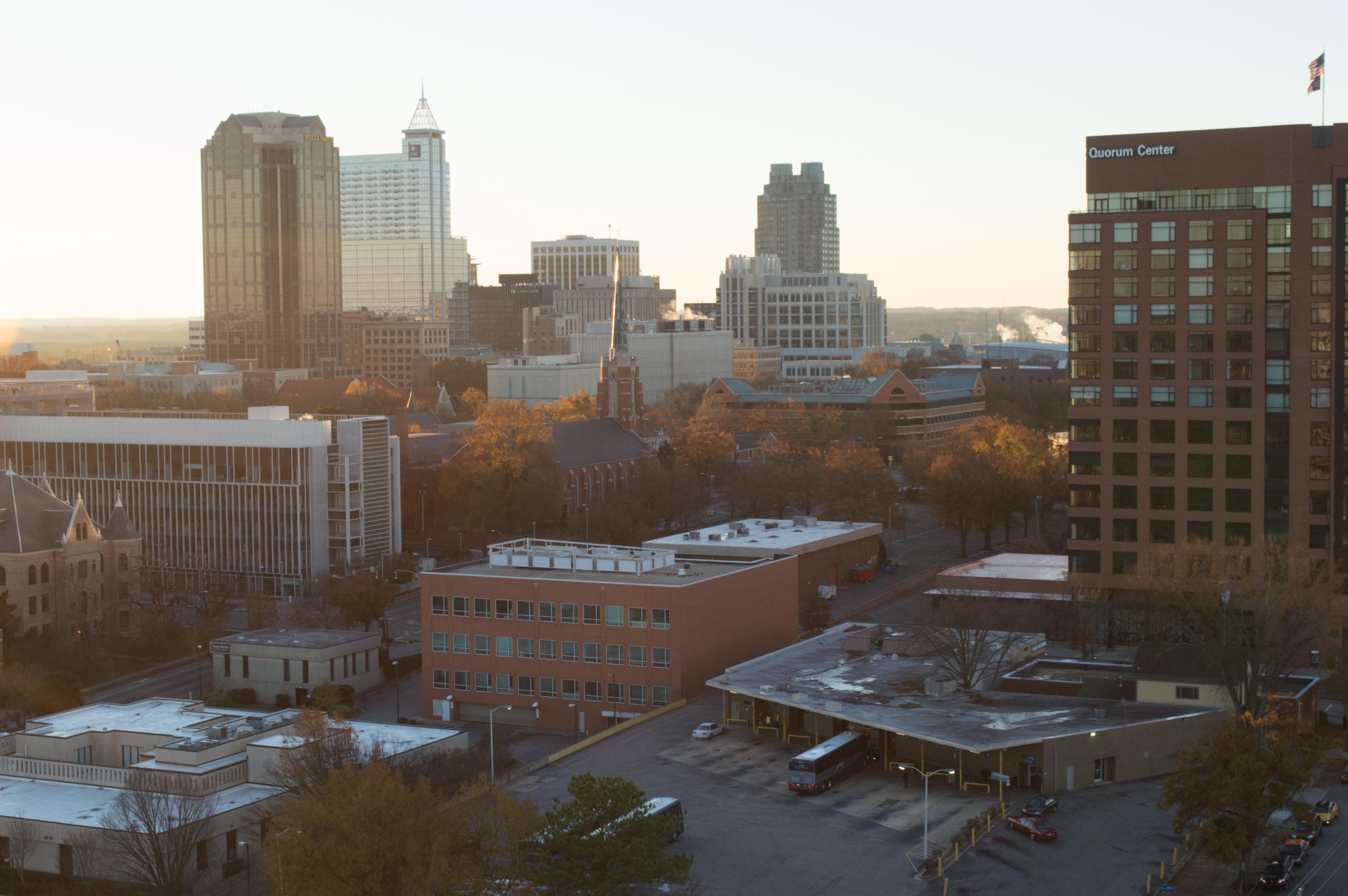
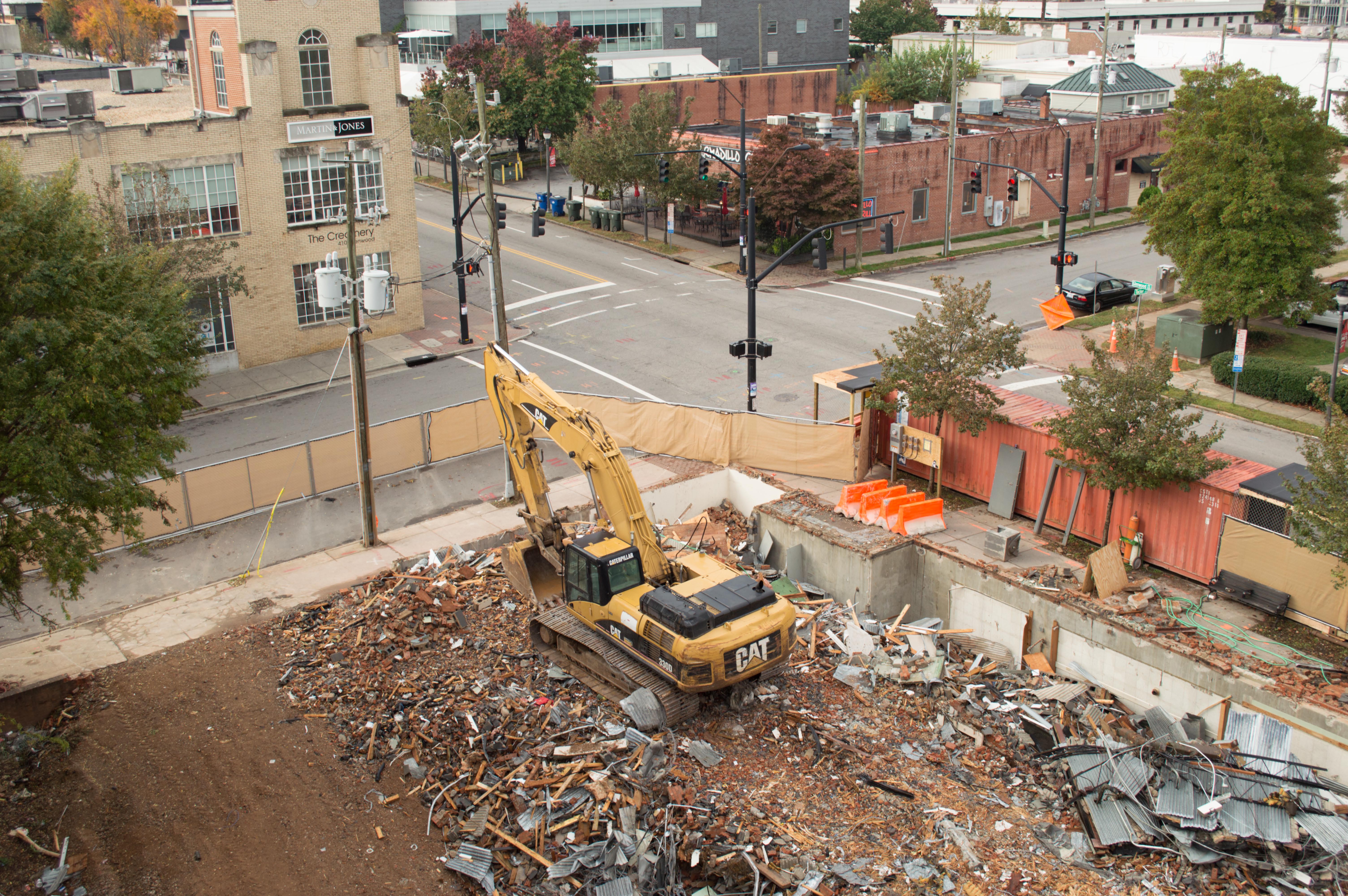
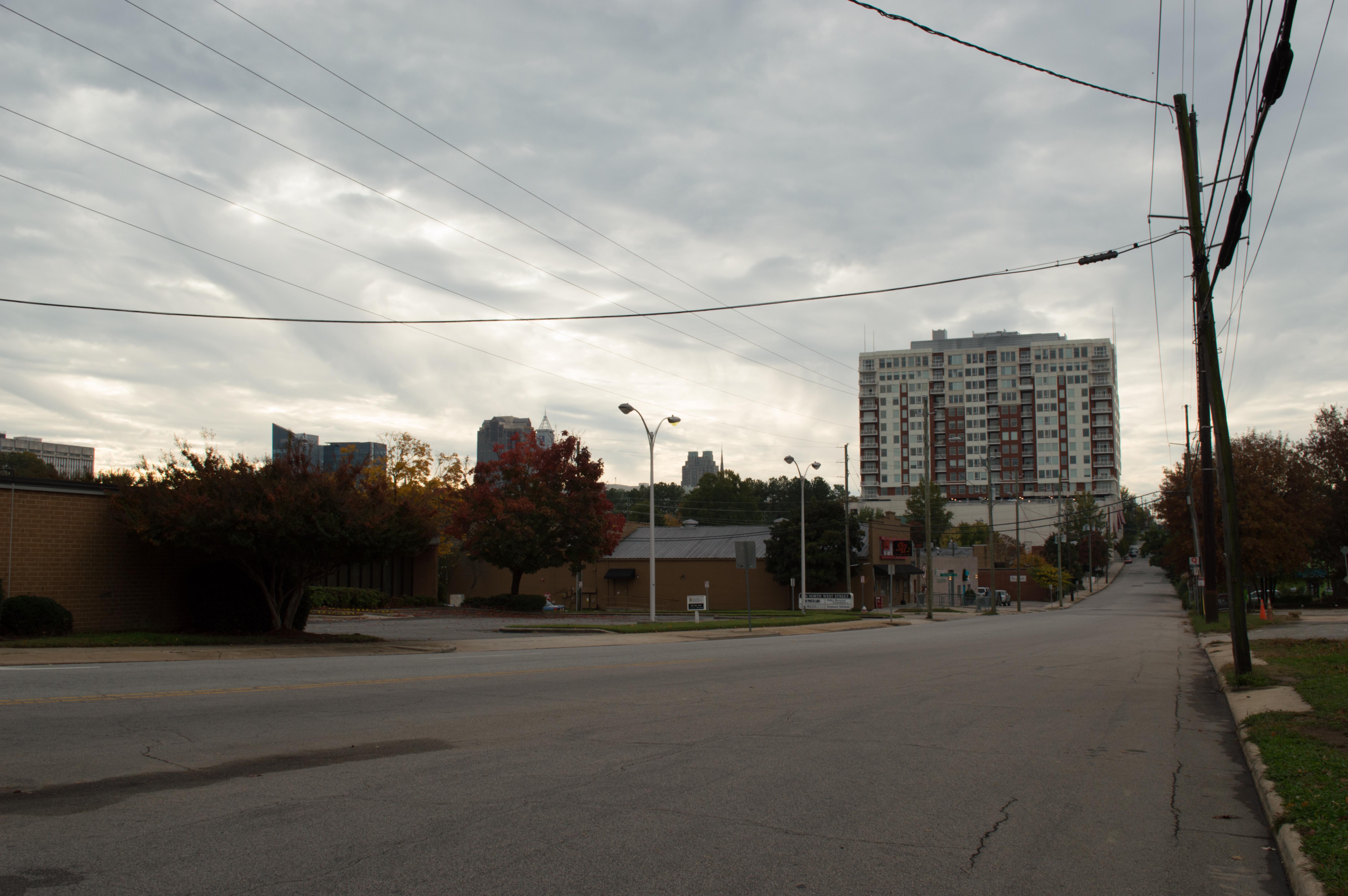
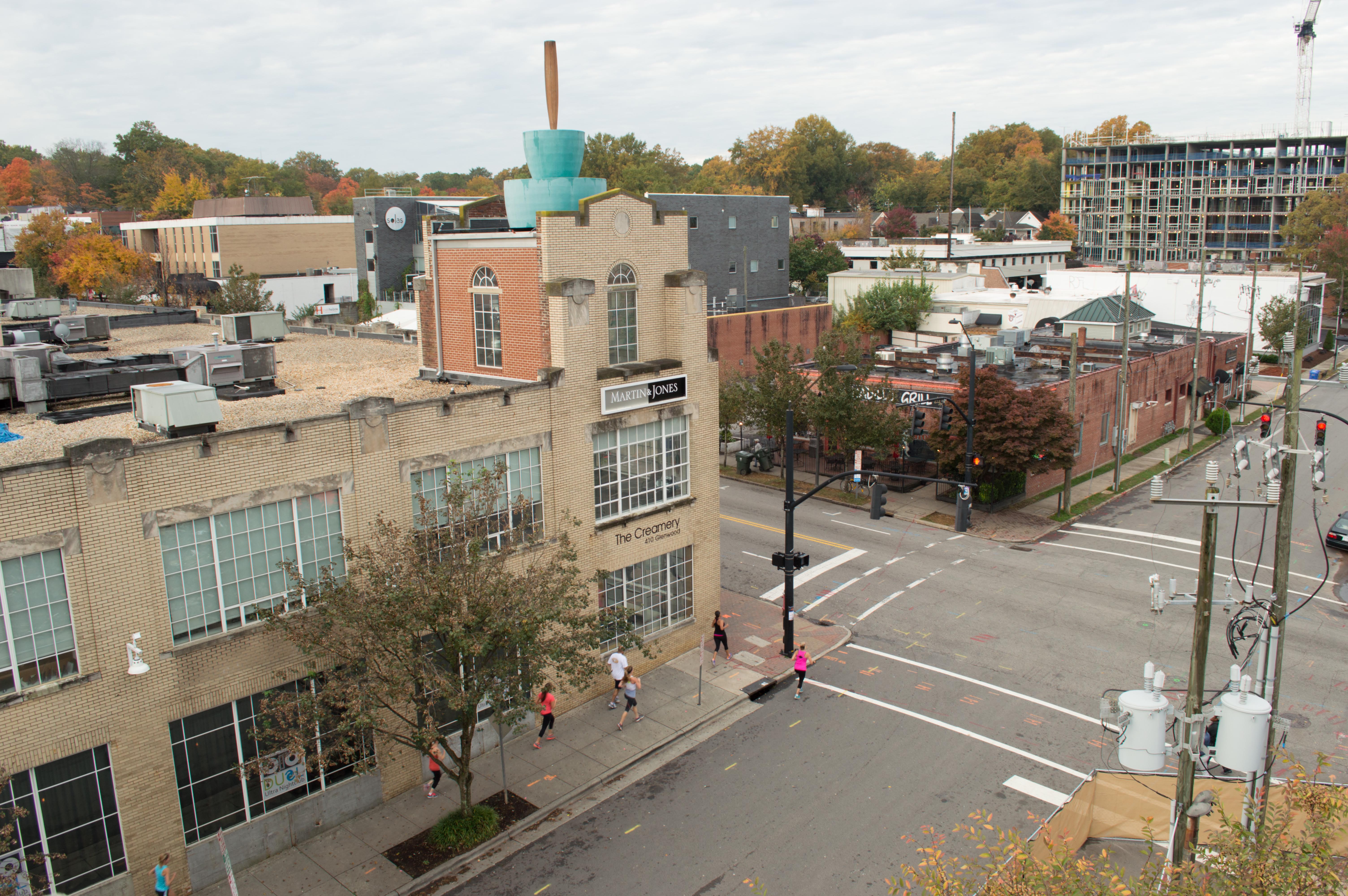
In our neighborhood, Glenwood South, there’s been a fair bit of construction, and also some destruction. Sally told me that an unattractive building on Glenwood across from the Creamery and catty-corner to the Armadillo Grill that had just been demolished, and I went over to inspect the site on Saturday morning. They’d walled off the site, but I got a good view from the adjacent parking deck. Sure enough, all that was left was rubble. It was overcast, but there was still a nice quality to the light, and I took some other pictures of the neighborhood on my walk over to the gym.

13 11 01_5036

13 11 01_5078
13 11 01_5083
13 11 01_5084-1