The Casual Blog

Category: politics

Sleepwalking and critical thinking

Some weeks ago I hurt myself sleepwalking when I wandered into the shower in the middle of the night. I remember not knowing where I was. I felt confused and frightened. Then I fell and hit my head on the tile, gashing my forehead, and woke up.

In the last couple of years, I’ve seen evidence a handful of times that I must have been sleepwalking in a fairly benign way, such as lights left on that I’d turned out the night before. On one occasion, I started to take off for a drive in the middle of the night and backed into a parked car. These incidents have been mildly or very unsettling. They make you wonder about what else is going on in your brain that you aren’t aware of.

Back in college, I enjoyed listening to a comedy album by Firesign Theatre titled Everything You Know Is Wrong. Earlier this week I checked out the first few minutes on in video form on YouTube, and verified that it still seems funny and disconcerting. The title has rattled around in my head for decades now ike a verbal Escher drawing, impossible either to forget or resolve. Lately it has seemed to me increasingly resonant as I’ve read more about neuroscience and consciousness. It’s inherently interesting, at least to me, and by moments I think it could lead toward a fuller, better understanding and a happier life. But if Everything I Know Is Wrong, this could also be wrong.

Speaking of sleepwalking, last month’s Scientific American had a somewhat sensationalistic but still interesting article on recent sleep research by James Vlahos titled The Case of the Sleeping Slayer. As you’d expect, it describes some violent and tragic cases, such as persons who commit murder while asleep, and also describes a new theory about the nature of sleep.

According to Vlahos, sleep is not a whole-brain phenomenon, but rather “a scattered, bottom-up process. ‘The new paradigm views sleep as an emergent property of the collective output of smaller functional units within the brain,” according to James Krueger of Washington State University. Krueger and other researchers think that individual parts of the brain “go to sleep at different times around the clock depending on how much they have been taxed recently.” What we think of as sleep (stillness, closed eyes, slackened muscles) happens when most of the neurons are in the sleep condition. Apparently parts of the brain may be snoozing without our looking like that.

There’s good evidence that other animals have modular sleeping habits. Vlahos’s article notes that dolphins sleep with half of heir brain at a time and keep an eye open for the non-sleep part. I’ve also read that birds also rest their brains in this modular way so they can always keep an eye out for predators. The theory seems promising. I occasionally note waking behaviours in myself, like forgetting where I parked, that could be explained by the partial wakefulness approach. It would explain not only sleepwalking, but other odd behavior, like people who sit on airplanes without reading anything.

When I get to thinking about thinking, I sometimes have flashbacks to the my days as a freshman at Oberlin College, where amidst the midwestern corn fields I got a hard blast of serious philosophy and critical thinking about social issues. It would be an understatement to say it was humbling. The air was dense with intense ideas. No matter how hard I worked, I usually had the feeling there was a lot I was missing, along with the feeling that some of my fellow students were getting a lot more. But by moments I felt real excitement as I wrestled with an idea and managed to pin it.

In retrospect, I think that learning the skill of wrestling with challenging ideas was more significant than any particular idea. A significant amount of what I learned was eventually superseded by new and better understandings. An example: we all took Freud seriously as a scientist, but now do not consider him as such.

But my teachers drilled into me the habit of testing an unfamiliar concept rather than simply swallowing it. It’s related to the scientific method in its insistence on evidence and logic, and its use of thought experiments. This habit of mind is sometimes called critical thinking. Once you start doing it, you tend to think it’s the best way to think.

My liberal arts education inspired me to be curious and to explore new ideas. But to some extent it may also have led me down the garden path. My recent reading in neuroscience and evolutionary biology has called into question some of my deeply held beliefs about the power of reason. It’s exciting, though: Its helping me understand various oddities about my own subjective experience and the observable lives of others.

If this sounds interesting, I recommend Jonathan Haidt’s recent book, The Righteous Mind, Why Good People Are Divided by Politics and Religion. You may recall that I wrote about this book some months back; I’ve been re-reading it and getting more out of it. Haidt, a professor at University of Virginia, (my law school alma mater) has a style that is accessible and friendly, but he challenges our usual was of thinking about thinking. The heart of his message is at odds with most of what I learned in my undergraduate years and have mostly assumed ever since.

There are a lot of big ideas in Haidt’s book, but probably the biggest is that the primary driver of our behavior is not rational conscious thought, but rather our unconscious system of feeling and emotion. It’s the system that tells us quickly what needs to be done. (Freud was right in guessing that there was subconscious, but he didn’t figure out much about what it did.) Haight compares our moral intuitions to an elephant, and the rational mind to the rider of the elephant. The rider developed to serve the elephant. The elephant usually goes where it wants to go, although the much-less-powerful rider can influence the elephant. This understanding of our nature leads Haidt to focus closely on the nature of our moral perceptions and beliefs.

Some of Haidt’s research relates to differences in moral systems among different communities. In one study, he used a questionnaire with narratives intended to invoke disgust (like incest and cruelty), but structured to defy an easy explanation for the disgust (no one was hurt). In the face of such dumbfounding problems, people came up with explanations for their feelings — but the explanations didn’t make much sense. This suggests that some of what our reasoning mind is doing is pretending to understand things it doesn’t, and making up post hoc rationalizations for feelings that start elsewhere.

Haidt contends that emotions are a kind of cognition — intuitive, rather than rational, but not inferior to reason. Intuitive processes are essential to our lives; we couldn’t possibly reason about the hundreds of decisions we make every day. We like or dislike things instantly and decisively, and adjust our behavior without noticing the process. Our conscious reasoning processes are along for the ride, and only get involved with explaining our behavior when there’s some anomaly or challenge.

Another theme of Haidt’s book relates to human cooperation. He observes that we are the best species in the animal kingdom at cooperating outside kinship groups. Haidt investigates this from an evolutionary perspective. In the days of our hunter-gatherer ancestors, we had to form effective groups in order to defendant against predators and find food. This involved development of intuitive cognitive skills, including the ability to easily track the emotions of other human beings.

Haidt suggests thinking about the most successful human groups not just as collections of individuals, but as superorganisms. Humans have evolved the ability by moments to lose their individuality and merge with a group, whether it be hunters, warriors, or dancers. Some of our peak moments come when we lose ourselves in such groups.

Looking at ourselves as having two natures, individual and group members, explains some of our apparent contradictions, such as how we can be both deeply selfish and deeply altruistic. Looking at emotions as driving reasoning explains a lot of political behavior, not to mention personal decisions that are from a rational standpoint inexplicable. It might even help us avoid some bad decisions.

Great N.C. wreck diving, compassion for sea creatures, and collective intelligence


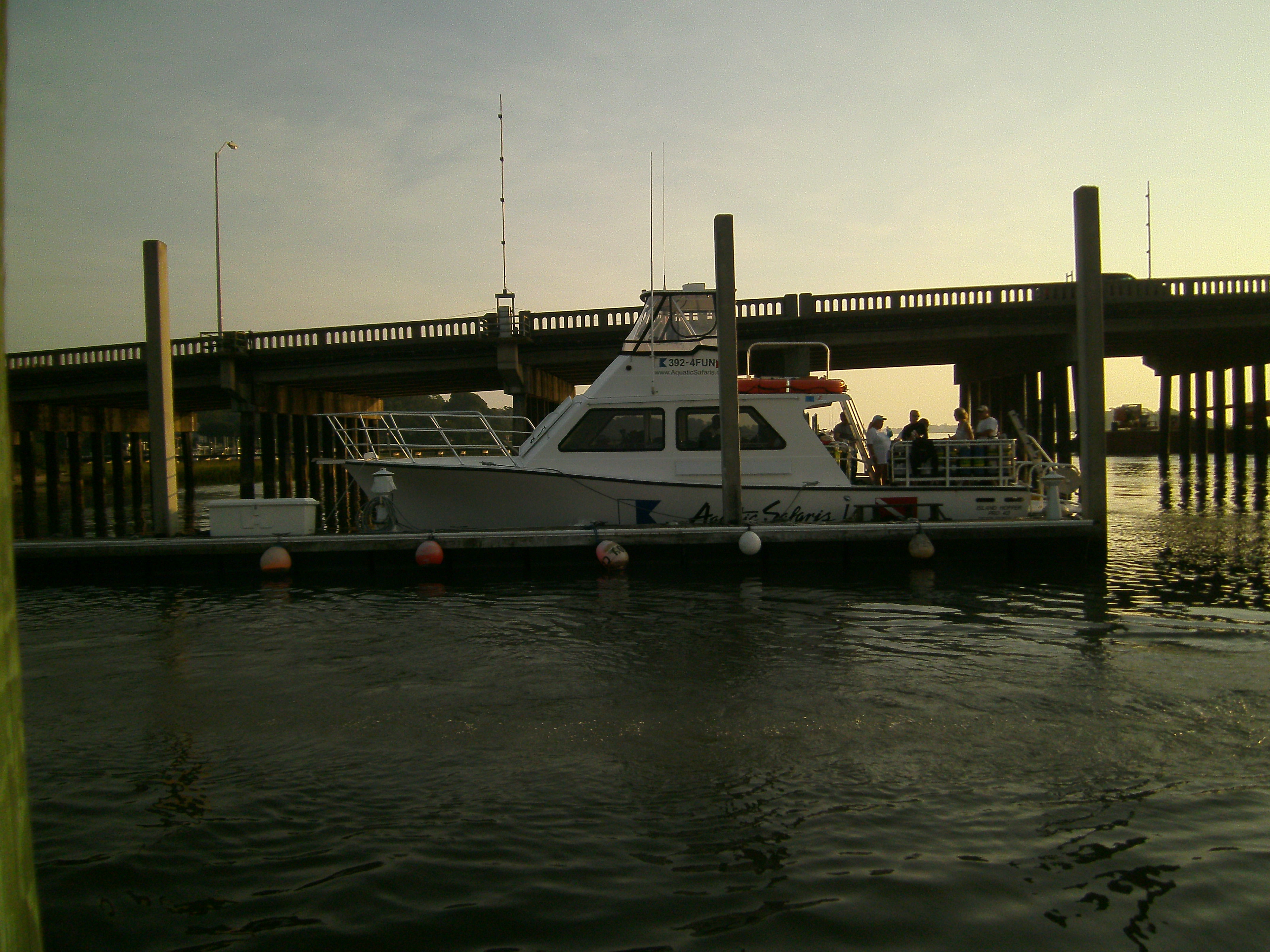
For Labor Day weekend, Sally and I went down to Wrightsville Beach, NC, for some wreck diving and extended our lucky streak of exceptional coastal dives. Our trip was organized by our friends at Down Under Surf and Scuba, and we went out on the Aquatic Safaris I. The 48-foot boat I carried 19 divers.

Saturday was warm and clear, with mild breezes and fairly calm seas. We dove the City of Houston, a passenger-freighter that foundered in a storm in 1878. She lies about 50 miles from Wrightsville. It took two and a half hours of hard traveling to get there. Shortly after we anchored and I visited the head, I felt queasy and promptly got sick. Then I felt mostly better, and we jumped in and headed down the anchor line to the wreck.

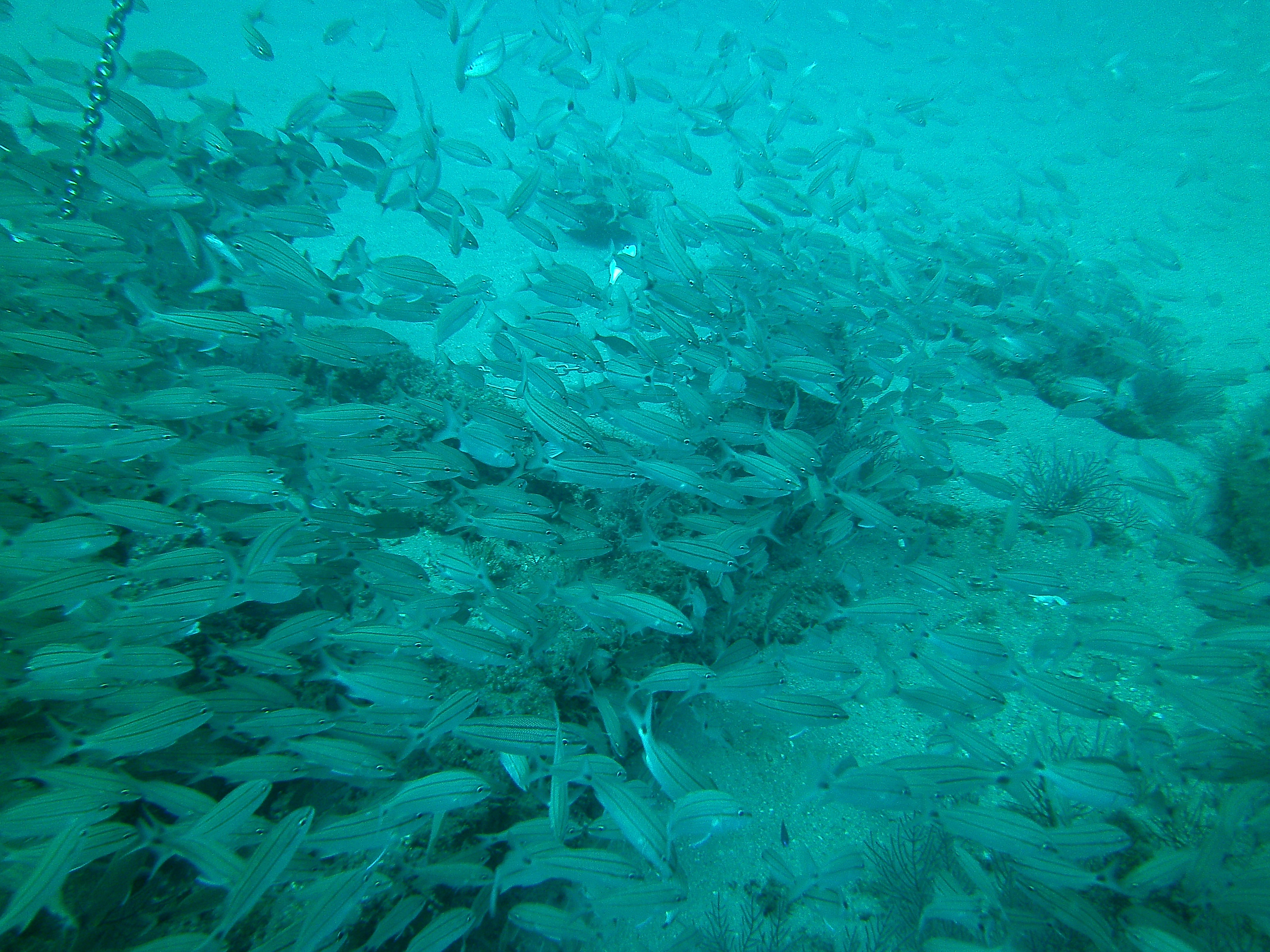
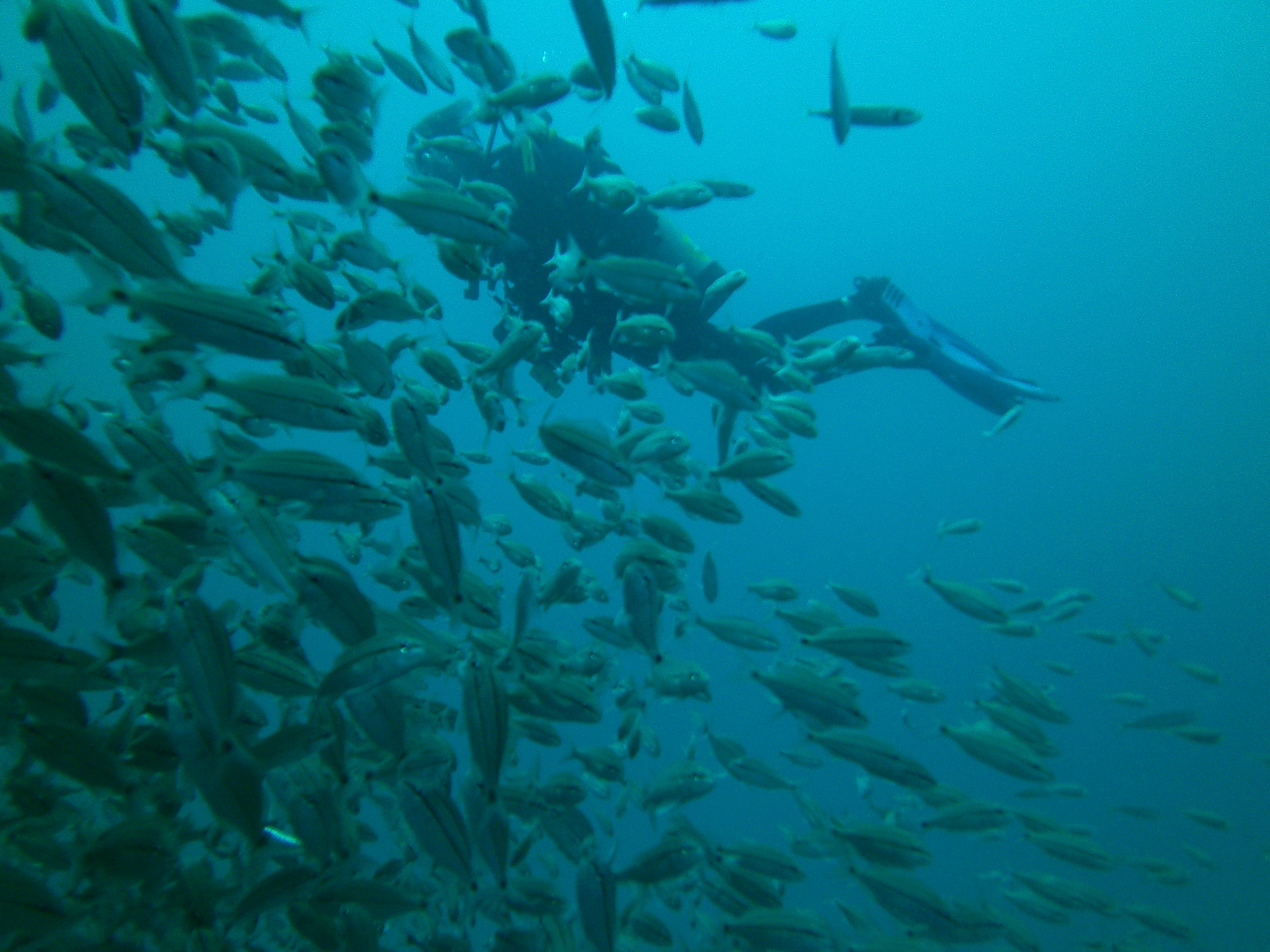
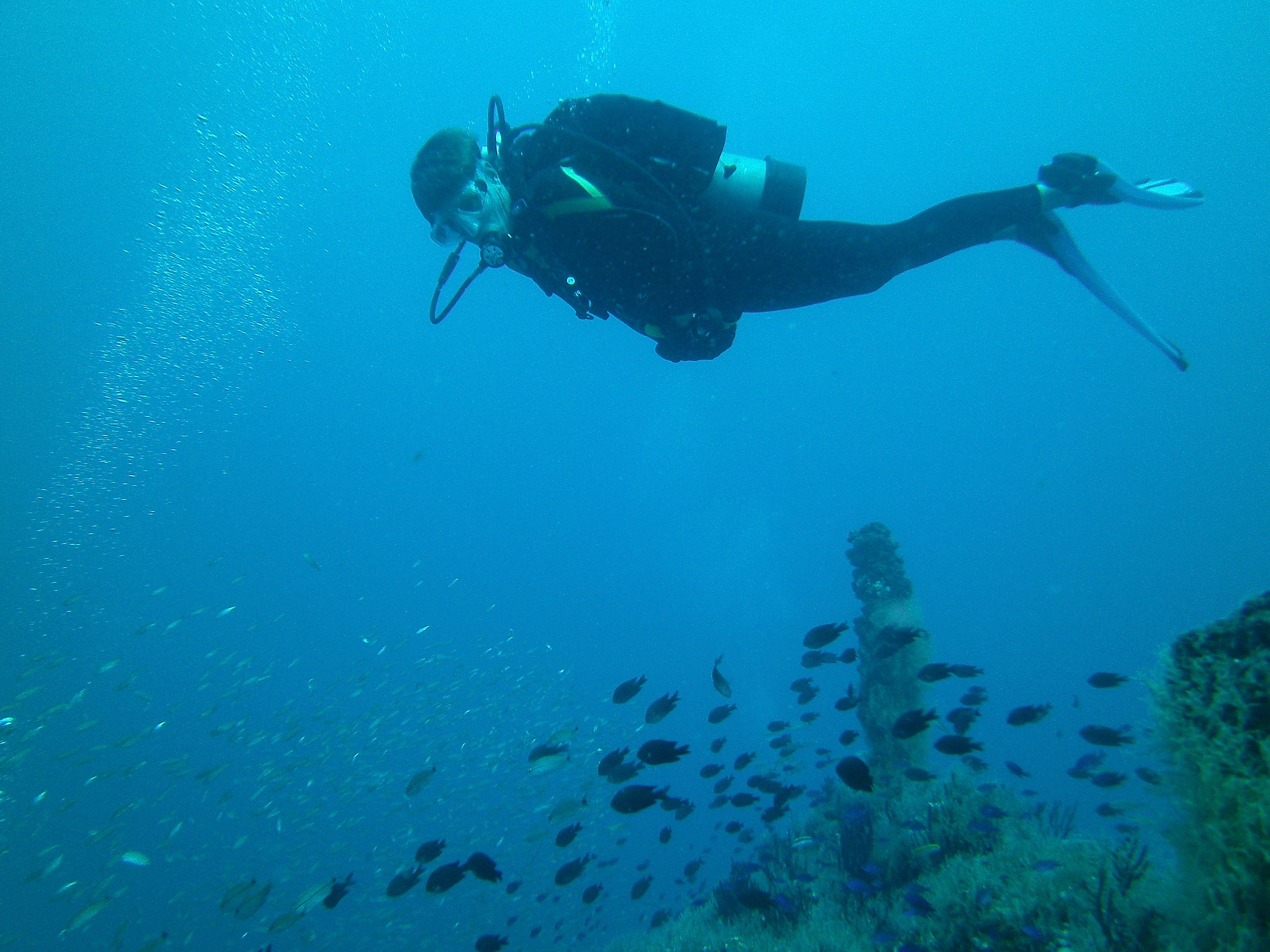
The Houston lies at about 95 feet down. Visibility was good (perhaps 60 feet) and the water temperature was a comfortable 82 degrees. There was a mild amount of current on the bottom. There were thousands of small fish. Our most dramatic sighting of the day was a goliath grouper, an enormous fellow, almost six feet long. My camera battery gave out when I tried to get a picture. I did, however, get some other pictures, including Sally examining something tiny with her magnifying glass (above) and great clouds of small fish.

After a second dive on the Houston, we headed in. Our seats were metal benches along the sides, in front of our tanks, so we couldn’t lean back and sleep. Some of our dive mates stretched out and slept on the deck, so it was difficult to move about as the boat sped along at a quick 25-knot pace. Diving sometimes takes fortitude.

We had a good Italian dinner with Sally’s sister in Wilmington at Nicola’s. There were a number of appealing vegetarian offerings. I had the eggplant rollatini with pink sauce, which was quite tasty. We had a lively conversation about, among other things, the automation of higher education, and how it is threatening the traditional university.

On Sunday we went out again on the Aquatic Safaris I, this time for a two-hour trip to the Normannia, a Danish freighter that foundered in 1924. The seas were calm and the trip went smoothly. I didn’t get sick. The wreck is about 115 feet deep. Like the previous day, the visibility was about 60 feet and the water was comfortable.

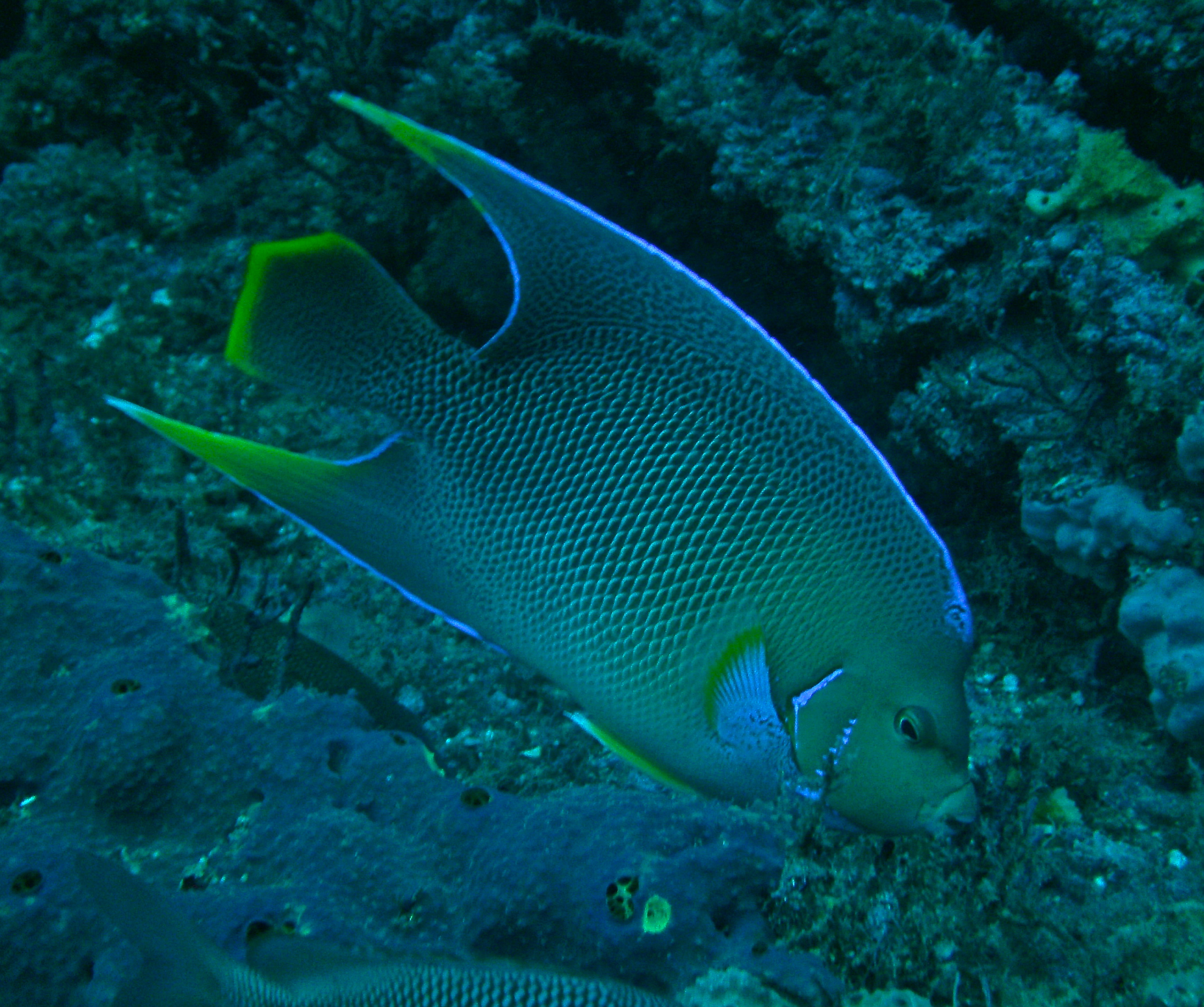
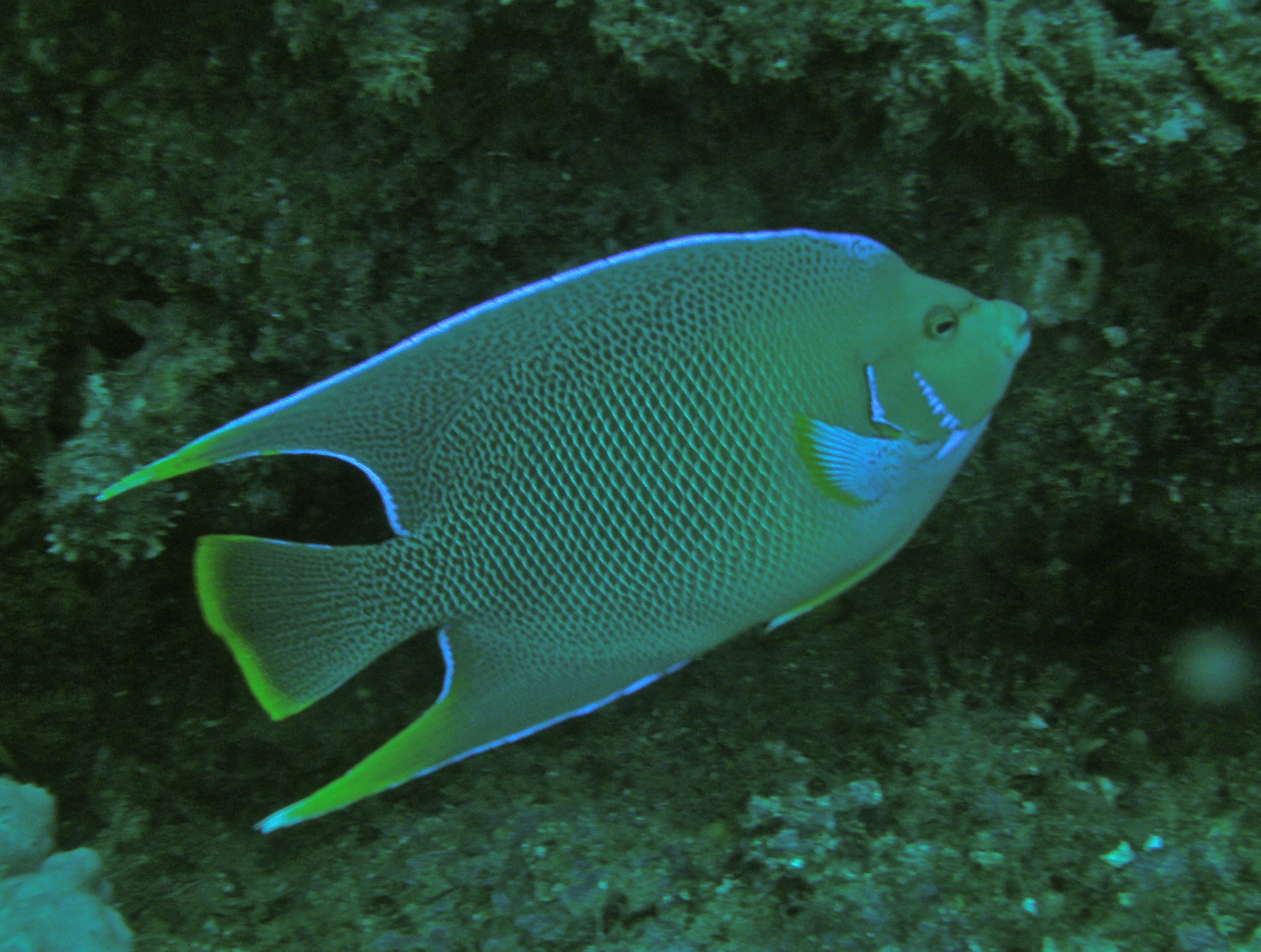
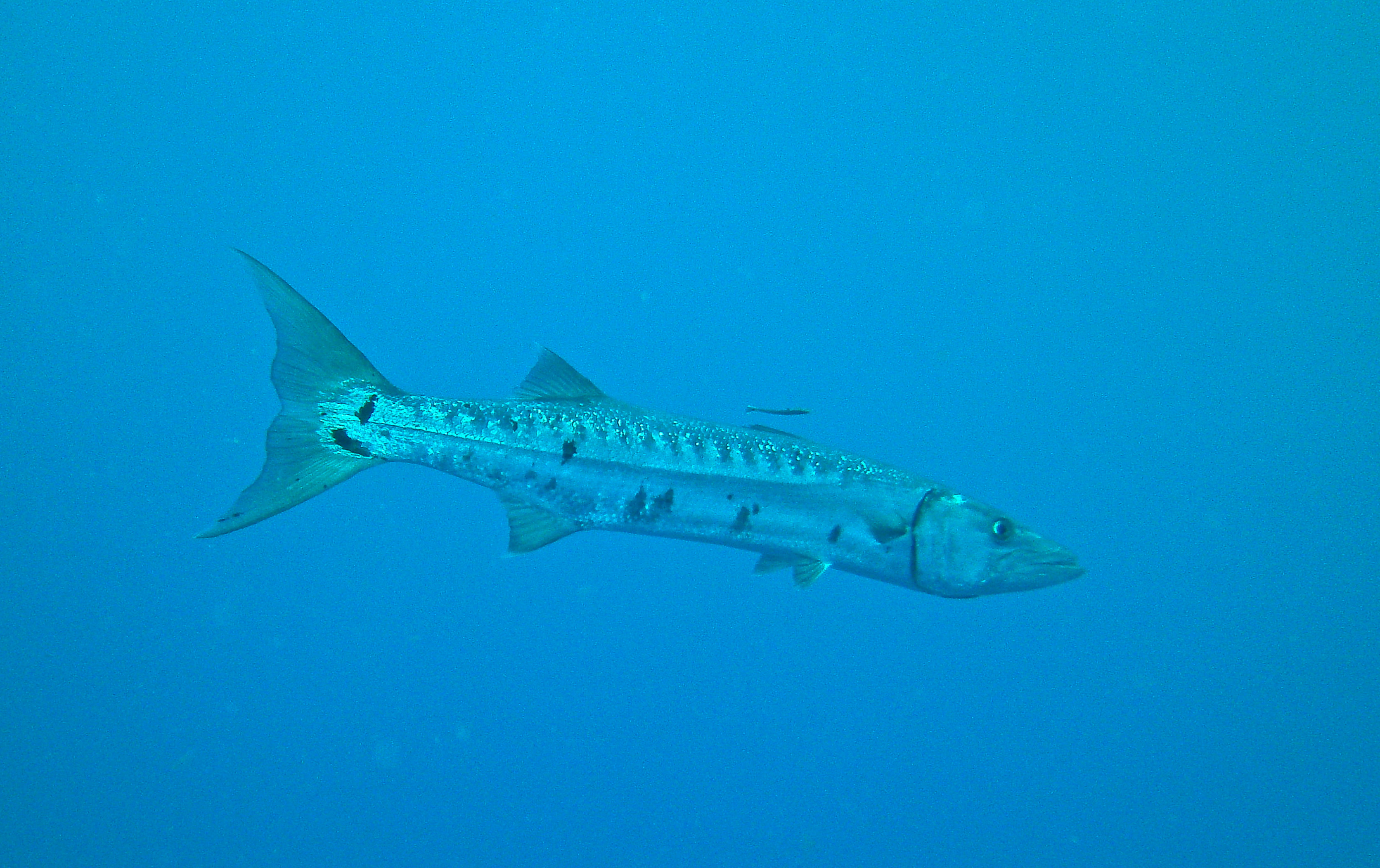
Even more than at the Houston, the Normannia had an amazing profusion of life. Along with thousands of small fish, we saw barracuda, a couple of gigantic lobsters, a well camouflaged frogfish, and my favorite, queen angelfish (several). I went to some trouble trying to get a good picture of one, and though these don’t really do it justice, they were the best I could do.

It is such a great pleasure to swim among fish. At times we were completely surrounded by thousands of small ones, and at times we swam alongside large ones. As I dive more, I feel increasingly touched by their beauty. They are amazingly varied in size, shape, color, and ways of moving about. Recent research indicates that they are much smarter than we’ve thought. For example, some can very quickly learn complex topography of a reef environment.


As I’ve spent more time with these creatures, I’ve come to consider them sentient beings worthy of respect and compassion. I regret to say I’m in a minority on this point. Among my fellow divers were some with spear guns and one who was capturing lobsters. I found it really painful to see him take an enormous lobster, perhaps decades old, and break off its antenna and shove it into an ice chest to suffocate.

My shipmate seemed otherwise a decent and friendly fellow. I’m certain he was not trying to torture the creature, though that was what he did. He didn’t derive pleasure from being cruel. He simply couldn’t comprehend that the animal was capable of suffering. I think he and others would find that expanding the circle of compassion to more animals is a happier and more fulfilling way to live.

Speaking of intelligence, I read recently that the human brain was unlikely to get larger in the normal course of future evolution, because it would serve no purpose. Brains working in isolation are not how things get done. Instead, as E.O. Wilson has pointed out, it’s humans’ ability to connect their individual brains that has been the secret to their evolutionary success. We keep getting better at that, developing over the millenia the tools of gesture, spoken language, and written language, with the internet being the latest game-changing technology.

In the midst of the depressing mendacity and nonsense of the Republican convention, I find it somewhat consoling to look at intelligence as potentially expanding through better networks. The Republicans are profoundly mistaken in thinking that entrepreneurs act primarily as fully independent rugged individualists. It’s more accurate, and also more useful, to look at achievement in terms of groups cooperating and competing. Our future success, and perhaps our survival, depends on our ability to improve our systems of cooperation, including our politics.

A lovely Friday cocktail, Bill Cunningham, the anti-gay vote, David Brooks’s The Social Animal, learning to listen while playing the piano


How nice it is to have a cocktail and relax at home on Friday evening! Of course, strong drink must be handled with care. A glass of wine with dinner is certainly a pleasure, but the habit can sneak up on you, and a glass of wine can so easily turn into three.

A few weeks back, Sally and I decided to limit drinking to weekends. Among other good effects, this makes the Friday evening drink particularly delightful. Last night, Sally made us margaritas with fresh lime. For the first time in years, I had a sudden urge to listen to Stevie Wonder hits from the seventies, which we now can easily stream from Rhapsody. I dedicated my streaming of the wonderful Signed, Sealed, Delivered to my sweet Sally.

We watched a documentary called Bill Cunningham New York. Cunningham is a photographer whose specialty is candid shots of New Yorkers wearing interesting clothes. He has a feature in the Sunday NY Times style section in which he shows this week’s street fashion trend, which, although I’m far from a fashion person, I always enjoy looking at. But I didn’t know him by name, and would have missed the documentary but for Sally’s putting it at the top of the Netflix queue.

It was sweet and kind of inspiring. Cunningham is in his mid-80s. He’s still snapping pictures all the time (using 35 mm film), publishing weekly in the Times, and travelling by bicycle on the streets of Manhattan. Age may have slowed him down a bit, but he’s still passionately creative. He’s got a great, boyish smile.

We voted in the North Carolina primary this week, which involved primary races for governor, secretary of agriculture, and various other offices, and an amendment to the state constitution to ban gay marriage. Why a gay marriage ban? It’s mysterious, and bizarre. I am stunned that it passed by a 20-point margin. Raleigh, the part of North Carolina in which I spend most days is multi-cultural and tolerant, with a visible and completely uncontroversial gay population. (I blogged about this visibility a while ago.) But most of the state is rural. What is going on in the heads of homophobes? I’d like to understand, but I don’t get it. It’s a different culture. I believe that that culture is eventually going to change, but for now it’s still alive and kicking.

Speaking of culture, I’ve been reading The Social Animal, by David Brooks, the NY Times conservative columnist. Brooks has collected recent ideas on psychology and culture, including those of Daniel Kahneman and Jonathan Haidt, and woven them into a readable and, in places, intriguing book. The theme, which is getting considerable attention lately, is that people are primarily driven by unconscious perceptions and desires, rather than rational thought.

But Brooks views this in a positive light, arguing that although our brains make all kinds of mistakes, they work better than a completely rational system running in real time could. He argues that behavior is best viewed as a function of those around us and our surrounding environments rather than of individual intelligence, and proposes that we think about meaning more in terms of relationships and cultural systems. I don’t much like his device of two imaginary characters who gradually discover or rub up against the various theories he explores; the characters never really come to life. But I think it’s worthwhile — I’m more than half way through, and likely to finish.

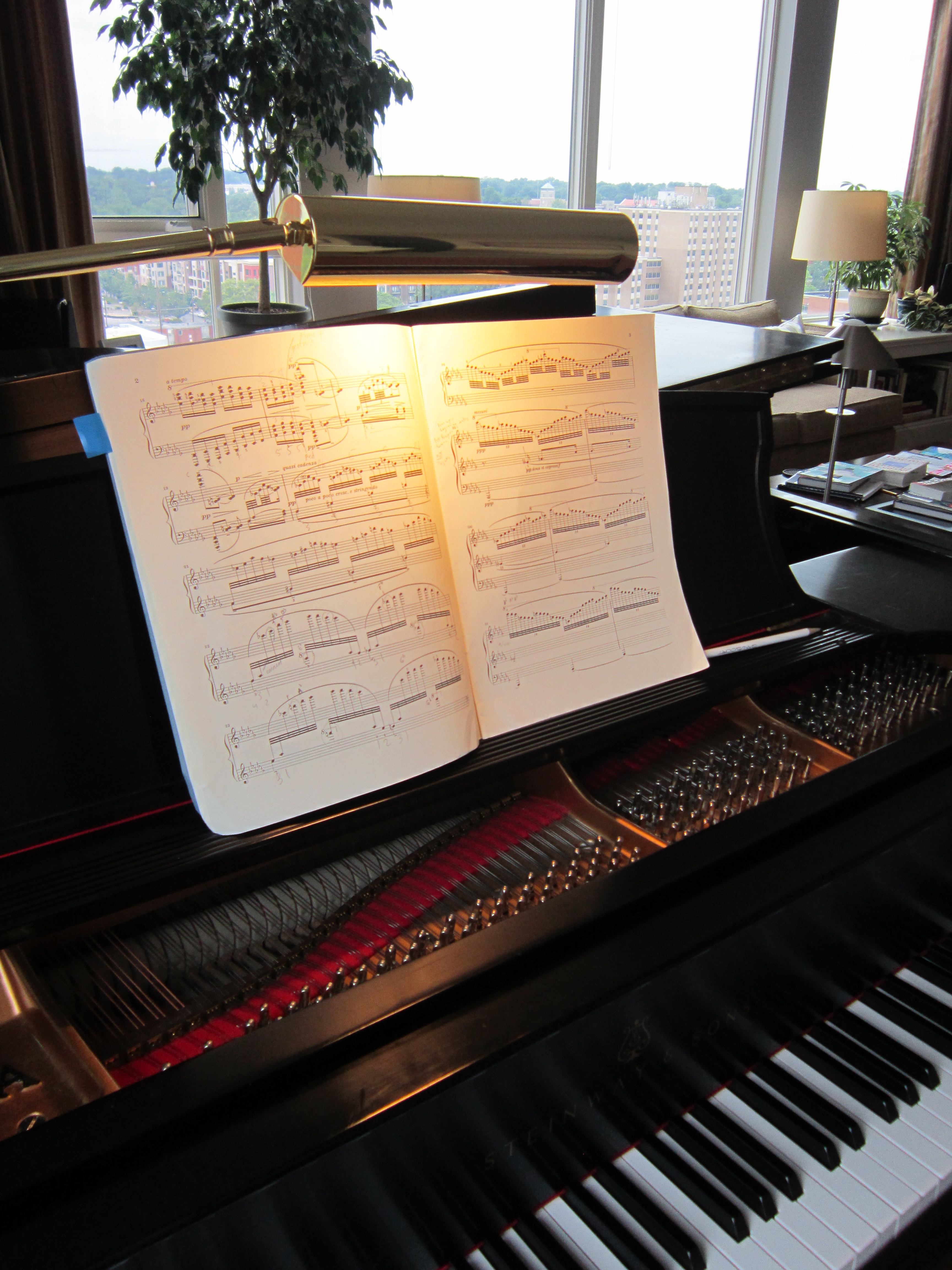
On Saturday I had my last piano lesson of the season with Olga Kleiankana, who’s headed to Moldova for the summer. We talked about some Rachmaninoff and Scriabin pieces for me to work on over the summer, and then worked on Scriabin’s second prelude (op. 11). Olga admitted that it sounded significantly better, but pointed out places where the tone seemed flat. She continued to emphasize the importance of gesture in sound production and expression, and when pedaling problems emerged she taught me how to test out pedaling improvements.

Then I played Debussy’s Second Arabesque for her for the first time. She pointed out that I seemed to be reading note by note, when many of the elements were repeated with slight variations. As she went through a quick score analysis, I had a eureka moment: score analysis was not designed to torture hapless students, but rather to make it possible to understand and learn music more quickly and effectively.

Finally I played Debussy’s Reflets dans l’eau, from Images, premiere serie. This is a gorgeous impressionist piece that calls to mind (especially after hearing the title) reflections in water. It has dazzling effects, some of which are difficult. Olga noticed that I got tense in my shoulders in the fast 32nd-note passages, and advised me that that could be fixed by breaking the passages into simple parts for practice. We also talked about the relationship of touch and tone color. At one point, I played a simple chord, and she said, with a pained expression, “Don’t just play the notes! You need to always think before you touch the keys!”

And she was serious. She listens with a level of concentration that’s almost scary, and expects me to at least try to do the same. I’m having occasional glimmerings of what this might be like. The sound seems richer, with more depth and detail. It’s like hearing in 3D. Of course, little flaws, like unbalanced chords or inappropriate accents, are more jarring. But when a musical statement works, it touches more deeply.

Climate changing and improving decision-making

It was unseasonably warm this week in central North Carolina. Some daffodils and forsythia are starting to bloom. They’re beautiful, of course, but there’s something that doesn’t feel right. They’re not supposed to be here for another month or so. It’s hard not to think about climate change (a/k/a global warming) and be worried.

At least, hard for some of us. There’s a vocal minority of climate change-deniers that somehow keep grabbing the spotlight and the microphone. They create enough of a stir to prevent any serious political discourse on the most serious global environmental problem humankind has ever faced. It’s bizarre.

Yesterday’s NY Times reports that Tea Party activists are fighting local efforts to conserve energy on the grounds that such efforts are part of a United Nations-led conspiracy. Fox News is also involved in spreading of this lunacy. What is wrong with these people? There should be no debate about whether or not to pay attention to overwhelming body of scientific evidence establishing global warming and its potentially disastrous consequences — but there is.

Our species is headed towards the edge of a cliff. We should be focusing enormous resources on minimizing CO2 and other emissions. This should be our new Apollo program — to land our grandchildren on a planet that’s sustainable.

We’ve really got to get this effort started. I suggest as a first step we agree that the opinions of science-deniers be subjected to appropriate brief ridicule and then ignored. Yes, everyone’s entitled to their opinions, but not every opinion is entitled to be taken seriously. Whether the source is ignorance, greed, or mental illness, opinions that have no basis in factual reality are at best a waste of time. In this case, they’re also increasing the risk of mortal peril. Basta!

For step two, or maybe step one-and-a-half, we should read Thinking, Fast and Slow, by Daniel Kahneman. I’m about two-thirds of the way through, and I’m confident it will be in my list of top thought-provoking books of 2012. Kahneman is a Nobel-prize-winning psychologist and founding father of behavioral economics. His most recent book summarizes the research he, Amos Tversky, and others have done in the last few decades into the psychology of decision-making.

Kahneman divides judgment into two main parts: intuitive processes (thinking fast) and rational ones (thinking slow). The fast part plays a much greater part in our decisions that we think. We all rely on heuristics and biases to simplify complex matters. This mode of thinking is important — without it we’d be paralyzed — but it also sometimes leads to very bad decisions. Understanding more about the points of failure of our ordinary thought processes may help us avoid some errors and make better decisions. I hope.

Republicans and science

Last week Paul Krugman departed from his usual subject matter (the economy) to present the case that Republicans are becoming the anti-science party. His argument included a quote from a Republican official accusing a conspiracy of scientists of fabricating global warming data to promote their own careers.

It would be nice if such lunacy could be dismissed as a fringe phenomenon. But the speaker was the current governor of Texas and a leading candidate for President. And according to Krugman only 21% of Iowa Republican voters believe in global warming, and only 35% of them believe in evolution. Holy Toledo!

Is it possible that we could elect as President a person who opposes factual analysis and critical thought generally? As unbelievable as it sounds, the answer, apparently, is yes. At any rate, none of the current Republican candidates is prepared to stand up for rational thought over patent nonsense when their potential supporters prefer the nonsense.

I’ve never considered it particularly heroic to acknowledge factual reality or base action on the best available data. I thought this was what people ordinarily did. There have always been people who were disconnected from reality, but traditionally we either feared or pitied them. No sane person would consider taking their views seriously. So how is it possible that the anti-science Republicans (surely, or at least I hope, still a minority among Republicans) have developed into a political force? This is crazy!

Now, I have nothing against people who prefer their fantasies to hard reality. It’s OK if they want to believe, for example, that it’s possible to have public services without paying taxes, or that climate change is nothing to worry about. But it would be folly to let such people have serious responsibility for anything. Just as we don’t let young children drive cars, we don’t want the anti-science people making important decisions. As opponents of science, they just don’t have the tools necessary for good decision-making. Why would we even consider trusting them?

Improved propaganda and healthier diets

For all the money and energy we spend on health care, you’d think we’d be more focussed on eating practices that improved our health. But changing eating habits is difficult. The forces of advertising and tradition powerfully reinforce our bad habits. Thus I was pleasantly surprised to see the government’s replacement for the food pyramid this week.
It’s far from perfect, but it’s a significant improvement.

The pyramid was supposed to help us eat healthier, but it didn’t do that very well. The various versions of the pyramid were confusing where they weren’t downright misleading. In the past, the food industry has battled hard against changing the food pyramid, as well described in Food Politics by Marion Nestle. It would be interesting to know what happened to bring about the new symbol. Could it be Michelle Obama?

In any case, the new symbol emphasizes that half of your diet should be fruit and vegetables, and another significant portion should be whole grains. The other large chunk is dubbed protein.

The oddity, of course, is that there isn’t anything in the grocery store called protein. Many believe that eating meat is necessary to get adequate protein, although this is a myth. In fact, many plant foods (whole grains, legumes, vegetables, and nuts) are good sources of protein. It may be that the meat lobby figured that the meat-protein association is so firmly lodged in public consciousness that it will not be shaken loose any time soon, and so their markets won’t be threatened

The new graphic treats dairy products in a confusing way — a circle to one side of the main plate. This could be interpreted as a suggestion to drink lots of milk, but it could also mean that dairy is not entitled to the same status as the main dietary categories. This smacks of a political compromise with the dairy industry. There’s a growing body of evidence that cow’s milk is not good for humans, but the official new guidelines contain no hint of this. It’s good, though, that they recommend low-fat options.

Another subtle problem with the new graphic is that by depicting a plate completely covered with food groups, it reinforces our tendency to eat too much. Americans already have trouble not covering every square inch of their plates with food, and eating all of it. Our obesity epidemic proves the point. To be fair, the new web site (see link above) acknowledges the importance of reasonable serving sizes. Still, a better graphic would show that we should eat only as much as we really need to nourish ourselves, which for most of us means: eat less.

Facing facts — the car needed body work, and the planet does, too

Clara restored in a moment of tranquility

Facing unpleasant facts is no fun, but you generally feel better after you’ve done it. And so I’m happy that I got my sports car repaired this week. I’d had not one but two embarrassing parking garage incidents recently. In one, I took a sharp a turn at an unfamiliar entrance, and hit an unusually high curb, producing a horrible scraping noise and an unsightly gouge. In the other, I (partially) woke up in the middle of the night, thought it was early morning, and headed out for a swim at Pullen Park. In my dazed state I backed into a neighbor’s parked vehicle. This broke a tail light on my car and produced lesser damage on his bumper, which he eventually determined was not worth repairing, in view of other prior dinks.

But part of what I enjoy about my car (Clara) is her beauty, and I knew I would never feel good trying to ignore the damage. So I contacted the good folks at State Farm insurance, and I found my way to Paragon Collision, which specializes in body work with loving care. The repairs took two weeks and two substantial deductibles, but it was worth it. Clara is gorgeous again.

I was sorry that my neighborhood gym, Rapid Fitness, closed this week. It was not a beautiful gym, but it was fabulously convenient — right across the street. And it was good enough to inspire me to regularly get up at 5:30 a.m. for a workout. It provided my introducing to spinning, which raised my heart rate to new heights. They are planning to open a less convenient replacement gym late in the summer. We’ll see.

Much more dramatic events were unfolding across the country this week, including floods on the Mississippi and killer tornadoes ranging across the country. On a quick trip to Dallas, I came in behind a massive hailstorm that totalled half the cars in the Hertz fleet at DFW and took a large number of planes there out of commission. The next day, when I was there, the skies were clear. The flight back was bumpy.

According to the NY Times, there is not a scientific consensus that the rash of bizarre weather disasters is associated with global warming, but you wonder, right? Anyhow, there is scientific consensus that global warming is occurring, and that absent dramatic change more disasters lie ahead. The News & Observer reported this morning that Republican presidential hopefuls, including those who have previously acknowledged the imperative of reducing greenhouse gas emissions, are now taking the position that science is wrong and there is no problem. One party operative said that a requirement for these Republican candidates to succeed is to oppose all solutions.

This is really appalling. To some extent we all step around hard problems, and kid ourselves about unpleasant realities. But this is huge — bigger even than mass catastrophe for the human race. We’re facing, or in the midst of, a mass extinction of species comparable to the end of the age of dinosaurs. Self-delusion is unacceptable, and willfully obscuring reality is reprehensible. We’ve got to face facts, and get to work on possible solutions.

Bin Laden is dead, so let’s end the War on Terror

So Osama bin Laden is dead. I can’t get as excited and happy about this as some people . He inspired murderous activity on a large scale, but it isn’t self evident to me that the U.S. government is entitled to execute him without trial. However, I recognize I’m in a minority in questioning this, and I could be wrong.

How do you know if a belief that feels good, that lines up with your predilections and hopes, is wrong? You can’t, really. There’s no measuring device that infallibly separates truth from fantasy. But you can stress test ideas to some extent. You can ask yourself, could this idea be wrong, even though it is appealing? Could the pleasantness of an idea make it difficult to see its weaknesses? If the idea is popular and widespread, could it be that fear of unpopularity, of separation from the group, quiets critical thinking about it? You can also ask yourself, is there any evidence supporting this idea, or supporting the opposite of this idea? What is the evidence on both sides?

Given that Osama bin Laden was one of the people responsible for the murderous activities of September 11, 2001, how do we determine whether killing him without trial is the right thing to do? On the one hand, it accords with the idea of fair retribution, of an eye for an eye. And revenge is undeniably satisfying. But we could consider other values and issues. Killing humans is, in general, wrong, right? Due process is, in general, a good thing, right? Viewed in instrumental terms, we could ask, is the net effect of killing him likelier to be to reduce terrorist activity, or increase it? Does killing him without trial confer on him martyr status and amplify his message, or does it discourage those inclined to follow him so that they give up?

It’s hard to resolve these questions. But it’s verifiable that the War on Terror that the US declared in response to bin Laden’s crime has caused enormous misery. Persons killed: more than a million. Dollars spent in foreign military operations: $1.2 trillion and counting. Total pain from wounds and post-traumatic stress: unknown, but clearly enormous. Total productivity lost and indignities and annoyance caused by airport searches: don’t ask. Terrorism plots thwarted in the US: a tiny number. Lives saved in the US that would otherwise have been lost: not many.

The War on Terror has achieved very little in terms of making us safer, and wasted many lives and much wealth. One product, of course, is that we killed Osama bin Laden. OK, I say. Let’s make the best of things, and declare victory in the War on Terror. Let’s just say we won. Now the War can end. Let’s bring the troops home, and redeploy our resources.

Birther psychology, lacrosse, and another call to end the war on drugs

Some of the nicest people I know are Republicans, so I say this with all due respect: how is it that 45% of Republicans are birthers? That’s a lot of Republicans! As the NY Times noted this week, not for the first time, there’s overwhelming evidence that the President is a natural born citizen, and so a birther is almost by definition someone resistant to considering evidence and applying reason. The Times got opinions from various academics and pundits about this odd phenomenon, and one by David Redlawske struck me as particularly thoughtful. He observed that feelings often trump facts:

We are all somewhat impervious to new information, preferring the beliefs in which we are already invested. We often ignore new contradictory information, actively argue against it or discount its source, all in an effort to maintain existing evaluations. Reasoning away contradictions this way is psychologically easier than revising our feelings. In this sense, our emotions color how we perceive “facts.”

This isn’t groundbreaking, of course, but it’s easy to forget how fragile and subject to failure rationality is, and how hard it is for the reason to overcome prejudice. Major political issues can get invented, distorted, or ignored based on likes and dislikes, without regard to evidence or analysis. We all do this to some extent, but some more than others. And our dysfunctional political process is a result of this resistance to evidence and reason.

Friday night Sally, Diane (Sally’s Mom), and I went over to Durham to see some lacrosse — Duke and Virginia in the ACC championship semifinals. Diane has developed an unlikely passion for lacrosse, and with her encouragement we’ve been to a couple of games this season. It’s a great sport, with some of the speed and fury of hockey and the strategy and finesse of soccer. The evening was cool and drizzly, and we were damp and shivering by the end. The Dukies had their way with the UVa, 19-10.

On the way back, I asked Diane about her views on the war on drugs. She wasn’t familiar with the term. Diane reads the NY Times every day and is extremely well-informed on current events, so her lack of knowledge on this subject worried me. I suspect that a lot of bright people filter out news on the drug issue, because the news is confusing and frequently painful. The drug war is costing billions of dollars, exhausting the capacities of our courts and prisons, destroying lives, financing organized crime, and destabilizing entire countries (Mexico, Afghanistan, Honduras, Nicuragua, El Salvador etc.).

But some good news: there are more and more people ready to talk about our failed drug policy and what to do about it. According to a reliable sounding blog in the Huffington Post (how’s that for sourcing?), the Obama administration invited questions for various “town meetings,” and the most frequently raised topic was drug legalization. Unfortunately the President avoided the issue. But the political tide is moving, and may be turning.

So what’s the problem? Almost everyone knows that many people like mood and perception altering substances. That was true of our remote ancestors, and it’s true of us. But too much media coverage of the drug issue is alarmist fear mongering, which creates fearful beliefs that make it difficult to proceed with reasoned discourse. Thus we’ve had the rise and fall of the crack epidemic — a drug originally reported to be so addictive that no one could use it responsibly and so powerful that it was going to destroy our cities. This was plainly a huge exaggeration. Before that were such stories as the tendency of LSD to induce psychosis (huge exaggeration), and of pot to cause bizarre criminal behavior (Reefer Madness) (a complete fabrication). The fact in plain view that was ignored, and is still ignored: most people that use illegal recreational drugs are functioning just fine.

I say this not to encourage illegal drug use. It’s been many moons since I myself used an illegal drug. I avoid them because I think they’re too risky, both in terms of criminal liability and otherwise. Some people (you? me?) are prone to addiction, which is a serious health problem with multiple dimensions. Also, there is no particular reason to trust an unknown unregulated chemist, and no reason to be confident that his chemical product will not cause either immediate or long-term physical harm. There are plainly many degrees of risk, and individual preferences for risk taking vary. Some people like to jump out of airplanes, and some people like to try new designer drugs. Others, like me, are uncomfortable with such levels of risk.

But as a matter of ethics, there’s just no distinction between most of the intoxicating substances that we’ve legalized and those that we put people in jail for. Alcoholic beverages for most people are pleasant diversions, and for an unfortunate minority they are career-destroying, family-destroying, health-destroying addictions. The same is true of cocaine, and the same is true of recreational use of legal pharmaceuticals. The Times reported this week that Oxycontin abuse is widespread in Ohio, and resulting in addiction and deadly overdoses. These health problems should be recognized and addressed, but not exaggerated. We need to confront fears and assumptions with evidence, and figure out how to make an orderly withdrawal from the war on drugs.

Artificial intelligence, The Most Human Human, and a walk at Crabtree Creek

I’m still feeling odd and shaken by Watson’s victory over the human champions of Jeopardy. It is truly awe-inspiring that our greatest software engineers have created a program that behaves in some ways like human intelligence, but, at least as far as raw knowledge and research is concerned, much better. What’s unsettling to me is not just the economic implications of this new generation of artificial intelligence, but also the moral/ ethical ones. The new AI is getting very good at the sort of intelligence that we’ve always considered the crowning and distinctive feature of the human race. It’s now clear that our destiny is not to be the most intelligent beings in the universe. So then, what is it? What do we do?

Like Ken Jennings, the former Jeopardy champ who acknowledged defeat with becoming humor and grace, I also welcome our new computer overlords. They already are making daily life better in some ways. I recently had an encounter by telephone with a computer dealing with a travel reservation problem that performed substantially more efficiently than some humans. Later, when I found myself in a phone conversation with a human on another routine matter (activating a new credit card), as I tried to understand the person’s accent and waited for a sales pitch to conclude, I thought affectionately and longingly of my dear computer. Our computers are getting to be good clerks, and I expect they will soon be good scientists, doctors, and lawyers. The trend is clear.

So, what’s left to aspire to? I’ve been reading The Most Human Human: What Talking to Computers Teaches Us About What It Means to Be Alive, by Brian Christian (in the Kindle edition). Christian treats the implications of artificial intelligence for humanity in a lively way. He takes off from his participation in an annual competition for the Loebner Prize, which involves the Turing test. Human judges converse (via networked computers) with both humans and AI programs, and the annual prize goes to the program that does the best job of convincing the human judges that it is human. There’s also a prize for the humans that talk with the judges, and Christian competed for this: the most human human.

The success of some programs points up how much of human discourse is routine and predictable. The weaknesses of the program show that there’s still some human behavior that is creative and (so far) unpredictable. Christian uses the Loebner Prize as a jumping off point for an entertaining, though jumpy and digressive, introduction to AI and its philosophical implications.

As Christian notes, humans are distinguishable from programs with respect to the physical world. We have bodies that are, in their non-rational way, intelligent. Our cells are connected with each other, and our individual bodies are connected to other humans, other species, and the earth, the air, and the Sun. We depend on all these connections. As obvious as this sounds, we still as a race we have trouble keeping in mind our connection to physical reality.

This may be part of the explanation for the right-wing attack on the environment. In the NY Times today, there’s a front page story by with the headline Push in States to Deregulate the Environment. As the story notes, Republicans in North Carolina are proposing enormous cuts to the budget of the NC Department of Environment and Natural Resources. I’d been monitoring the NC story, but learned that the same thing is happening in other states. At the same time, the Republicans in Congress are looking to cut the EPA and gear back environmental regulation.

What is the matter with these people! In the midst of ongoing extinction of entire species and global warming that threatens entire human populations, there should be no debate about the need for new and more effective conservation of natural resources. I have assumed that the opponents of science and environmental regulation are either unbelievably ignorant or unbelievably greedy and cynical, concerned only with immediate short-term gain and without concern for future generations or the earth itself. But to give them a slight benefit of a doubt, perhaps the problem is that they’ve really lost touch with their bodies and the earth.

Anyhow, in addition to enjoying new AI tools, I’ve been trying to make a point to spend a little more time outside. This morning I went to the swamp area of Crabtree Creek off Raleigh Boulevard. It was overcast and windy, but there were hundreds of birds singing and flying. I walked along the boardwalk at the side of the swamp. There were six great egrets, several great blue herons, and numerous swifts and swallows. I saw a black-and-white warbler, a phoebe, a yellow-rumped warbler, cedar waxwings, and heard, along with the common residents, a parula, and a hooded warbler, as well as a handful of songs I couldn’t identify. I love the spring migration season. It’s good to just clear out the mind and just look and listen.