The Casual Blog

Category: politics

Rectal feeding???

14 12 14_3866_edited-1
This week I was quite shaken by the new Senate report on the CIA’s program of “enhanced interrogation techniques” used on those suspected of Jihadist terrorist intentions. I had, of course, already heard there’d been some very rough stuff, like water boarding. But I hadn’t known (and may still not, since much information is still secret) the full extent of the barbarity and depravity.

For example, the concept of “rectal feeding” was new to me. I suspected based on high school biology that it was not possible to feed humans through the southern side, and I checked – this is correct. Folks, we’re talking about our government, which is to say, humans purporting to act on your and my behalf, anally raping prisoners. It’s hard to see how we can just let this pass.

I also hadn’t known that the foundation of the program included systematic and pervasive lies not just to the public but also to Congress and the Executive. It was certainly news to me that the architects of the program were amateurs with no prior experience in intelligence. And I hadn’t previously known for certain that the program was not remotely justified by intelligence gathering achievements.

Some may say I’m just sentimental about human dignity and the concept of the rule of law, and these are notions we can’t afford when we’re in an existential battle with evil. Perhaps. But the evidence from the Senate report is that the successes of the CIA interrogators actually came from conventional, non-“enhanced” methods. The enhanced techniques produced misery, madness, and death, but did not defuse any ticking time bombs. It may be that those who directed this program were the ones who were in a dream world, imagining both an existential threat from terrorism and a simple solution to that threat.

It’s fascinating, and disturbing, to see present and former CIA and Bush administration officials stepping up to praise and defend the program. It’s no surprise that they would defend their work, and perhaps they are in some sense sincere. They’ve probably got cognative dissonance, and are managing it as best they can. They could also have more practical and selfish motives, like heading off any discussion of whether they should be tried for war crimes.

In any event, the fact that these officials are still willing to defend the CIA torture program underlines the importance of our holding accountable those who directed and participated in this abomination. We cannot leave ambiguous the question of whether it is acceptable to torture prisoners. No future official should be in doubt that this is criminal behavior, for which they are subject to imprisonment.

Of course, though I hate to say, they’ll probably get away with it. There’s no special interest that will provide campaign dollars in exchange for standing up for human rights of prisoners. There are a few, but too few, of our representatives prepared to spend political capital on an issue that none of us enjoy thinking about.

And the knowledge, thanks to Edward Snowden, that our electronic communications may well be being screened by the NSA for signs of dissent will make some of us who feel outrage and shame hesitate to speak up and demand justice and accountability. These are, after all, the people who so far have the unchecked power to make us disappear into “black sites” and rectally feed us. I don’t mean to exaggerate. Plainly, I don’t think this is an immediate threat, since I’ve just made a critical public statement about it. But I must admit, I hesitated. I’m so sorry this has happened to our country.

I’d like to call out The Washington Post for its extensive and clear-eyed coverage of this dark and shameful chapter. Here is a particularly helpful quick guide to the Senate report from the Post.
My happy Thanksgiving: racing, reading, camera tinkering, eating, and seeing Interstellar

14 11 30_3749
Lately I’ve been consciously trying to cultivate an attitude of increasing gratitude. As is traditional at the Thanksgiving holiday, I’ll note that I have a great many things to be grateful for. For me, gratitude also means noting connections and acknowledging how very little is attributable to my independent efforts. I really owe it all to everybody and everything else. And so, to you, dear reader, and everything else, I’m grateful.

On Thanksgiving morning, I was grateful to be, at 59, sufficiently healthy to undertake the Ridge Road Turkey Trot, an 8 kilometer (4.97 mile) race. I hadn’t tried a road race with thousands of other people for a great many years. Sally sweetly lent her moral support and driving skills, and got me to the starting line five minutes before the 8:00 a.m. start.

My idea was to challenge myself without collapsing or getting sick, and that much I accomplished. I completed the course in 44 minutes, or just under 9 minutes a mile. I wasn’t particularly proud about this time, since I still imagine myself as capable of 8 minute miles, but this T-day that wasn’t happening. My heart rate was in the low-to-mid 160s for much of the race, which is pretty high, and I didn’t want to find out what would happen if it stayed higher. The hills in the middle of the course took a lot out of me, and the last couple of miles were fairly miserable. Part of me badly wanted to try a bit of walking instead of running. But I didn’t quit, and I did survive.

After the race, I took a long hot shower, and then sat down and read for a while. I finished E.O. Wilson’s The Meaning of Human Existence. Wilson, a world-renowned exert on ants and a leading theorist on evolution, is now 85, and going strong. I enjoyed reading The Social Conquest of Earth, and liked this book as well, in spite of its grandiose title. Wilson puts things in perspective, and helps us grasp that humans are just one of the millions of species on the planet. His basic message is that we can improve our chances of survival and happiness by using the tools of science and better understanding our evolutionary nature.

Wilson contends that natural selection proceeded along two paths, individual and group. He argues that this accounts for our dual nature as selfish individuals and altruistic group members. These conflicting tendencies are fundamental drivers of the human experience, which means we’ll always be in some degree of tumult in our interior emotional lives. But Wilson thinks our contradictions are essential to what it means to be human, and we need to understand them and manage them. He seems to think there’s a chance that humanity can overcome ignorance, delusion, and violence, and quit destroying the natural world.
14 11 30_3737

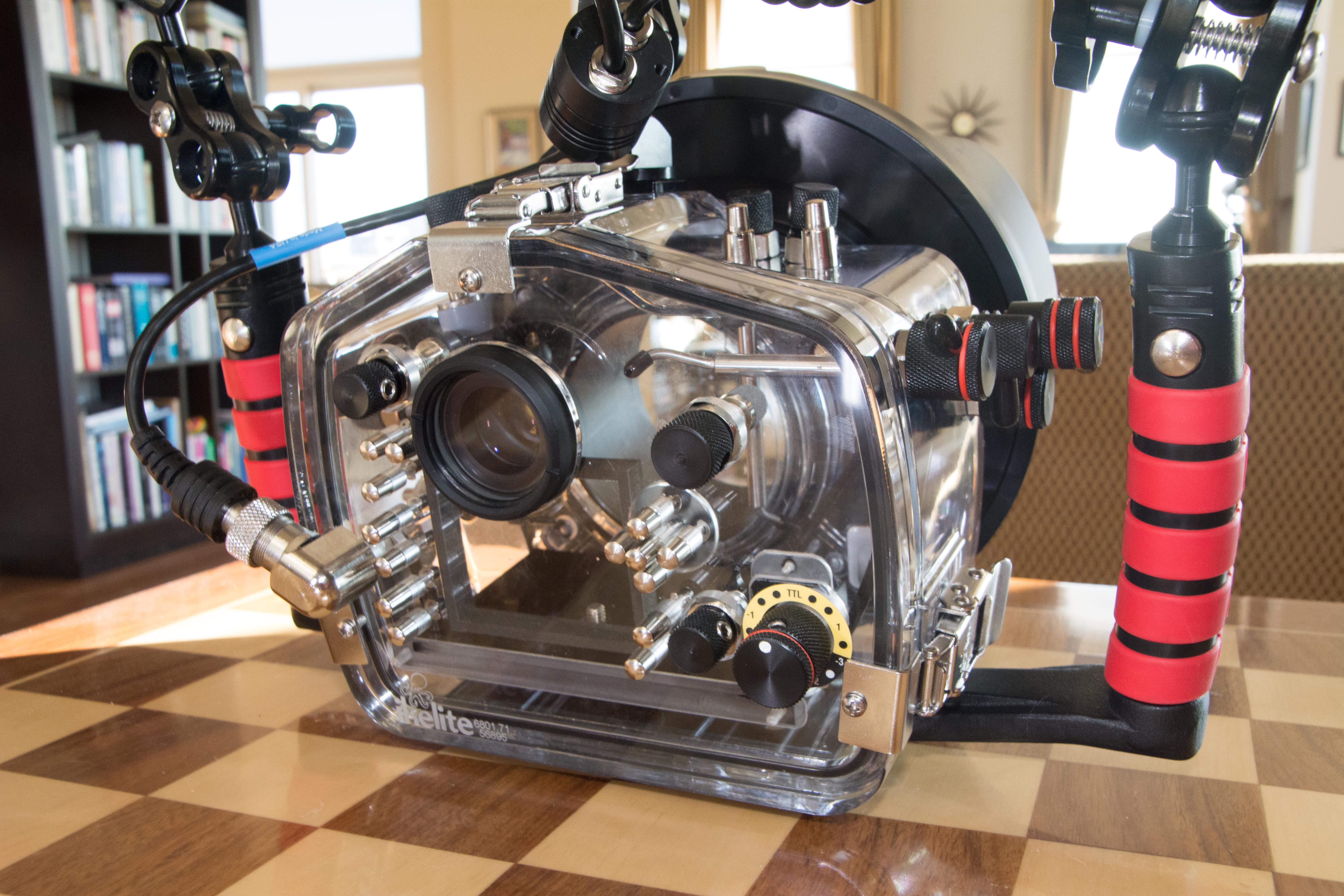
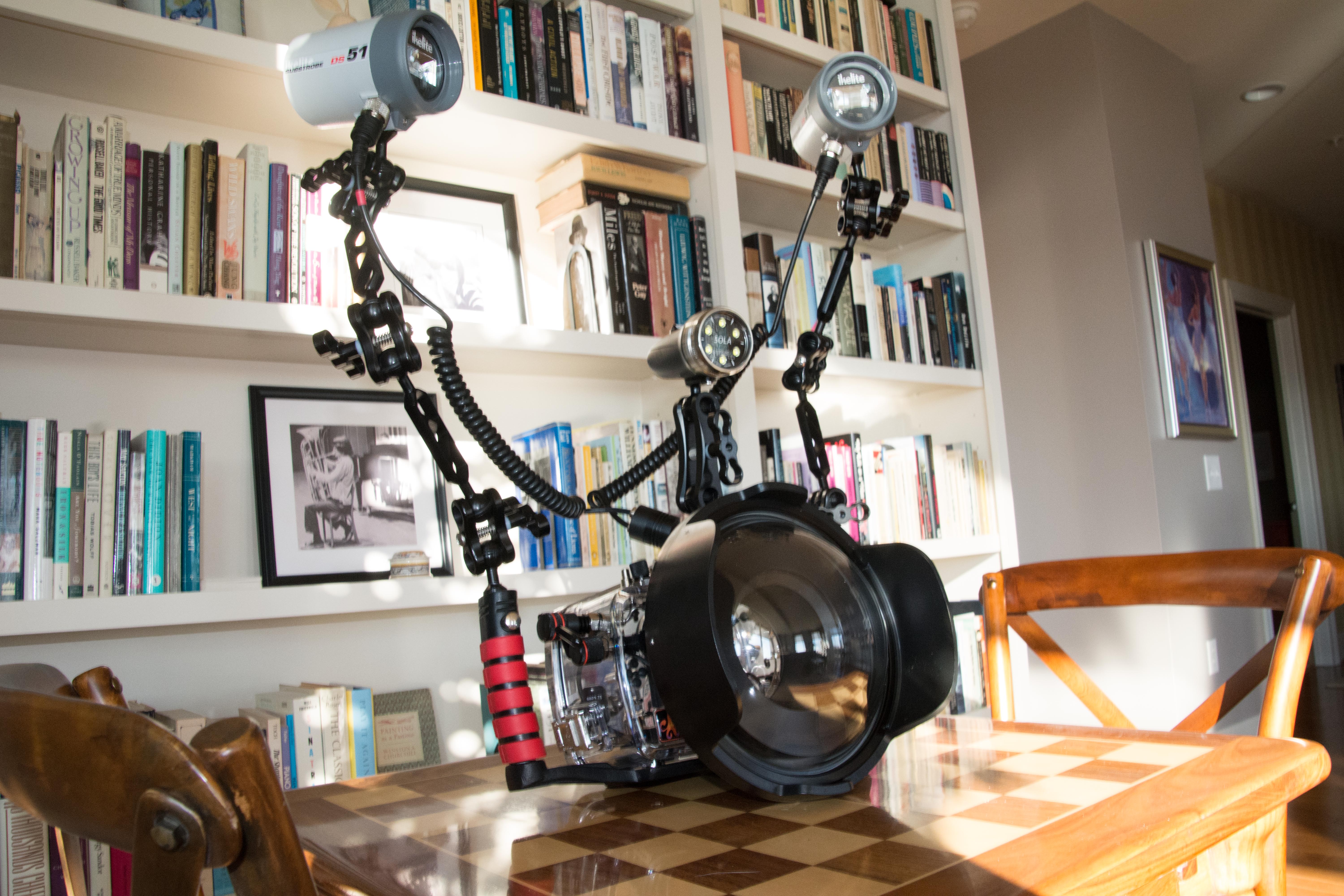
I spent part of the afternoon assembling and testing my new Ikelite underwater camera housing and strobe setup. I thought long and hard before buying the equipment, both because it is pricey and because it is labor intensive. But I’m really interested in sharing some of the joy of diving through images of the extreme beauty beneath the surface. Even in this time of over fishing, ocean acidification and reef destruction, there’s still an incredible profusion of life down there.

If you’re going to use an underwater housing with an expensive camera, the stakes are high. The Ikelite housing opens at the back to receive the camera and the front to receive the lens. You’ve got to be extremely careful to prevent leaks, which can easily be fatal to the equipment. And working the camera through many unlabeled buttons and levers is challenging. Just figuring out how to put it all together took me several hours. And hauling the it safely to dive spots while staying within airline weight restrictions will be challenging. But I’m looking forward to new dive photo adventures.

We had our Thanksgiving dinner at Irregardless, Raleigh’s first vegetarian restaurant, which now also accommodates meat eaters. Gabe and Jocelyn decided to wait until Christmas for a visit, so Sally and I ate with her mom and sister, Diane and Annie. We also were joined by Alyssa Pilger, the Carolina Ballet dancer we’ve been sponsoring, who is enormously talented. It was fun to hear about ballet company happenings, and about the professional dancer’s life. Professional dancers are almost by definition intensely focused people with superhuman work ethics, but Alyssa offstage seemed comfortable, relaxed and un-self-absorbed.

Sally and I saw the movie Interstellar on Friday night at the Marbles Imax theatre. I didn’t think it was particularly well constructed or acted. I found it cheering, though, that the movie has found a mass audience. The basic set up is a post-climate apocalypse world, which is something we should be trying hard to visualize and then prevent. It would be nice if a good-looking astronaut and his attractive physicist daughter could save us all, but that seems extremely unlikely. We’ve got to figure out how to repair our dysfunctional political structures so that we can get organized and address global warming and related problems with the intense commitment and resources we once used to go to the Moon.

Is delusional thinking driving us once again to war in the Middle East? And reading Eating Animals.

14 11 09_3628
I used to think that mass delusions were historically rare and unlikely to recur, but I’m coming to think they’re common and unlikely to ever cease. We seem to have largely gotten over ideas like witches’ spells are dangerous and stars determine our fates, but we’re constantly exposed to and threatened by ideas that are just as loony.

It would be interesting to work out a taxonomy of mass delusions, from those that are usually harmless to those that may cause death. The classification system could also identify the strength of the delusion, from ones, like fear of black cats, that are persistent but not really serious, to those that are sometimes subject to reconsideration, to those whose adherents will kill to establish them as eternal truths.

Yesterday I learned that the President has ordered more troops into Iraq to fight ISIS. This is clearly premised on the view that this crazy outfit is bent on the destruction of our way of life, and will in due course attack us. There is, to be sure, some support for this view in their rhetoric and brutality, but it may be totally wrong. Remember, they haven’t attacked us, and it is entirely possible that their strategy is to provoke us to fight them so as to inspire their supporters. And if they aren’t really a threat to us, the idea that we must wipe them out to survive should be classed among the most pernicious of delusions – ones that seems so reasonable as to be beyond question, and that lead inexorably to violence and mass death.
14 11 09_3639

Tom Friedman wrote an unusually thoughtful column a week or so back comparing ISIS and North Vietnam. He reminded me that in the 1960s, US leaders, and presumably a majority of the electorate, were convinced that the Communists in North Vietnam were primarily motivated by an anti-capitalist ideology and a willingness to fight along with other Communists for world domination. Thus we pursued a war that led to the deaths of some 58 thousand of our soldiers and more than a million Vietnamese. We now know, or at least are starting to understand, that the Vietnamese were primarily driven by nationalist concerns. They weren’t a domino.

Friedman suggests that the success of ISIS may similarly be attributable less to religious or political ideology than to nationalist concerns and anger at Sunni oppression by Shiites. There clearly are some jihadists with dreams of regional, if not world, domination, but their numbers are probably much smaller than those who back them out of more pragmatic and local concerns. In short, this looks more like a civil war with mainly regional implications, not an existential threat to the western way of life. If this is correct, there is no way the US can wipe out this enemy, and it would be a horrific folly to try.
14 11 09_3635_edited-1

While I’m talking about uncomfortable subjects, I’ll mention I just finished reading Eating Animals by Jonathan Safran Foer. The book is part factual reportage, part memoir, and examines what factory farming means to the animal victims and to human society. I knew something about this subject beforehand, but learned a lot from the book. It’s written in an easy-going, thoughtful, personal voice, but includes some very disturbing subject matter, particularly the accounts of routine corporatized animal torture and abuse.

Here are some sample facts: “Animal agriculture makes a 40% greater contribution to global warming than all transportation in the world combined; it is the number one cause of climate change.” “More than ten billion land animals [are] slaughtered for food every year in America.” “We know, at least, that [not eating animals] will help prevent deforestation, curb global warming, reduce pollution, save oil reserves, lessen the burden on rural America, decrease human rights abuses, improve public health, and help eliminate the most systematic animal abuse in world history.”

Here is a sample aspirational thought: “What kind of world would we create if three times a day we activated our compassion and reason as we sat down to eat, if we had the moral imagination and the pragmatic will to change our most fundamental act of consumption?”

The neverending war against terrorism: some questions

14 09 27_2794_edited-1

Having learned this week that our leaders have committed our military once again to fighting in the Middle East with Islamic fundamentalists that have not attacked our country and so far as is known do not immediately threaten to do so, I’m deeply disturbed. I admit that I have no particular Middle Eastern or military expertise, which, you may say, is a good enough reason to sit down and shut up. And I would agree it is a good enough reason for a bit of humility and for avoiding categorical pronouncements. But I would be remiss if I did not tell you, I have a few questions. They are as follows, colon.

Is it possible that we’ve overestimated the threat of terrorism and terrorists? Could the shocking violence of a few psychotic fanatics have caused us to be overcome with panic and fear, and to temporarily (at least) lose a good part of our capacity for reasoning and sound judgment?

Have we thoroughly considered what it means to send our sons and daughters to kill other human beings without firm evidence that they are mortal threats to us? Are we prepared for the deaths of more of our children, and the permanent physical and mental injury of many others, for objectives that are far from clear?

As for our latest enemies, can we conceive of the anger, despair, and vengefulness of those who survive attacks from our powerful weapons and have seen their families and comrades blown to pieces? Would we knowingly choose to perpetuate a cycle of blood oaths and revenge with no apparent end?

If we thought that yet another Middle Eastern war was ill-considered and likely to yield only further death, destruction and enormous waste of resources, could we stay silent? Have we really lost all hope that our political institutions allow for thoughtful debate and weighing of costs and benefits? If we started articulating to ourselves, and each other, our questions, and demanded that our leaders provide answers supported by evidence and reason, could we change course?
14 09 07_2445_edited-1

Warning: contains political content, and flowers

14 06 01_9706
There was a triathelon in Raleigh this morning, and the route included a road I was planning to take up to Raulston Arboretum to see the blossoms. So no go. I tried again in the late afternoon, and got to see the flowers in some wonderful golden sunlight. I’ve been learning to use the DSLR in manual mode without autofocus, and am just starting to feel comfortable taking full responsibility for the exposure. Most of these photos were taken with my Nikon 60 mm 1:2.8 macro lens. There was no postproduction Photoshopping of any sort. Pretty nice, huh?
14 05 25_9552

Being the President has got to be a pretty hard job. In addition to being hated with a white-hot hatred by many no matter what you do, your inner critic is also always there. You want to do the right thing, but what is the right thing? And when you’re reasonably sure you know the right thing, what if you can’t do it by yourself? Which of course is always the case.
14 06 01_9715

I really have many warm feelings for President Obama, and one of things that makes me proud of this country is that we elected him. But I’m so frustrated and disappointed with him. We’re still in Afghanistan, killing and being killed without any reasonably achievable objective, still brutalizing prisoners in Guantanamo, still imprisoning people and destroying families for victimless drug crimes, still running headlong toward climate apocalypse. We’ve instituted a surveillance state with the potential to rival Orwell’s darkest visions.

There are, no doubt, many forces quite separate from the President’s own desires that are driving these horrors and disasters. He probably regrets them. But like it or not, he’s the President, and that’s where the buck stops.
14 06 01_9720

The President’s speech at West Point this week proposed to reframe our global mission for the foreseeable future as stamping out terrorism. Is this less absurd than fighting to obliterate communism, or more? Is there any chance that we will ever kill every crazy fanatic that would like to do us harm? Does it really make sense to make this our mission?

So, you ask, have I got a better idea to address the real menace of the homicidal religious fanatics? I thought a bit, and had an idea: we change their minds. We get them to see things from our point of view. That would about do it, wouldn’t it? We help them to see that the idea of blowing up people as a suicide bomber and then being a martyr and having the 72 virgins in paradise is just nutty, and so they stop murdering people.
14 06 01_9709

You see the problem, of course: how do we change their minds? True, we do not currently have the technology to do this. We have amazingly little knowledge of why people think the way they do about the need for Sharia law, jihad, or most anything else. We assume it has to do with their culture and upbringing, with economic disadvantage and resentments, but we can’t frame those out with precision. More important, we have no precise knowledge of how to address and prevent really bad ideas, like racism or religious intolerance, or really bad acts, like suicide bombing.

Or anything else, for that matter. But what if we created a major program with some billions of dollars to figuring this out? And we’re already spending millions and millions to understand the brain and human behavior. If we treated it like the Apollo program, eventually we might get there. Instead of killing terrorists, and thereby creating new terrorists, we’d change their minds.
14 06 01_9728

This sounded like a good idea, but after a little more thinking, I realized it would probably be disastrous. If we replaced our vast ignorance of the causes of human behavior with perfect knowledge, we’d be even worse off.

Think about it. What if we figured out how to make everyone agree with us? What if our government, or any government, had the necessary tools to prevent opposing thoughts and eliminate all anger? Would that government happily tolerate reasonable people who advocate, say, a major change in abortion policy, or drug policy, or climate policy? Has there ever been a government that happily tolerated opposition? Once we got the terrorists minds under control, who would be next? Overly vocal dissidents?

Skiing in Virginia, and considering, has the NSA ended privacy as we know it?

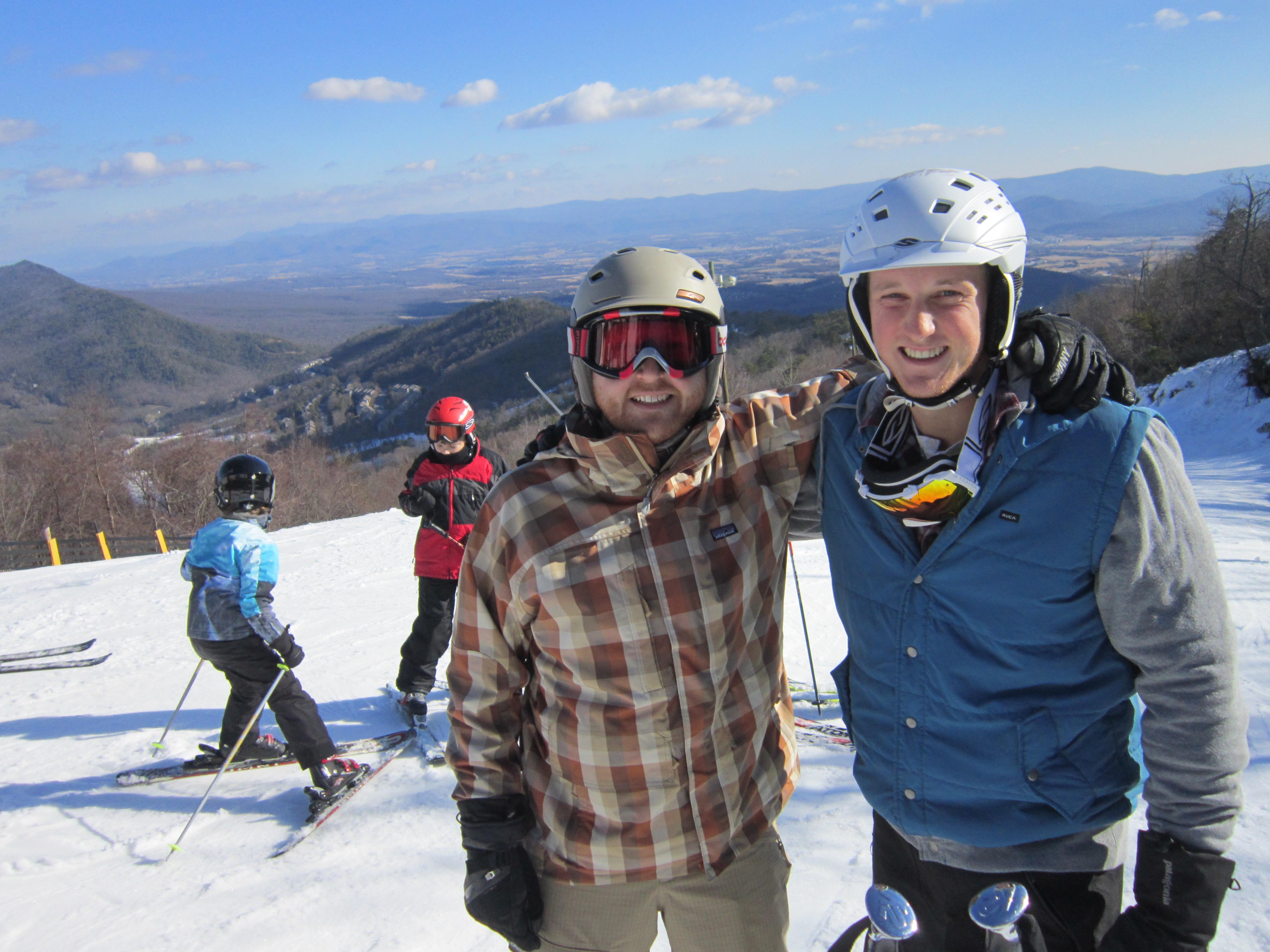
My nephews Josh and Adam, humoring me with a short pause on Sunday

My nephews Josh and Adam, humoring me with a short pause on Sunday

Last weekend I went skiing at Massanutten Resort, near Harrisonburg,l Virginia. I thought it would be good to see my brother and nephews, and have a little ski tune up before our Colorado trip in February. The drive up on Friday night was five and a half hours through fog and rain, and the ski conditions were far from optimal, but it was still well worth it.

On Saturday the weather report was for rain, and it did rain a bit, but the snow was pretty good. It was fun skiing with my nephews, both in their twenties and fast. They decided at lunch time to go to the movies, but my brother had ski patrol duty, and I decided to keep skiing with him on the advanced slope (number 6).

He had to leave for a period, and it got very foggy, with perhaps 50 feet of visibility. It rained a little. On the first run on my own, I noted that I didn’t see a single skier on the mountain. The same was true on the second, third – and fifth. It was the better part of an hour before a few other hardy souls ventured out.

Despite the fog, I enjoyed the skiing. I focused on sensing more of the ski edges, and making smooth, graceful turns. And I enjoyed the solitude of the trips up the mountain in the chair lift.

It occurred to later, though, that my smartphone was still sending out signals of my movements. My perception of privacy has been changing with the Snowden revelations, and I suspect I’m not alone. (LOL) Is it real so bad? I think it is, and have a concrete example.

A few weeks back, I wrote an email letter to the President. The gist of it was to commend him for commuting the sentences of some non-violent drug offenders, and to recommend that he expand that effort to help more of the thousands serving lengthy prison terms for minor drug crimes. As I prepared to send the email, I paused, thinking that this communication could easily mean a new NSA or other agency file would be opened on me, with unpredictable consequences.

Paranoid? Maybe. I sent the email anyway. But I expect that many citizens, now knowing how easily they can be monitored and how committed the spy bureaucracy is to expansive monitoring, might decide that expressing a political view just isn’t worth the risk of becoming a target.

There was a good piece in the New Yorker of a few weeks back by Ryan Lizza on the history of the NSA’s domestic metadata collection program, including efforts to establish a legal basis for it. It wasn’t surprising that a spy agency would tend to conceal its work, but it was surprising that agency representatives repeatedly lied to Congress and the FISA (special secret programs) court.

It raises the question, is this agency unconstrained by law? I expect most people involved in massive electronic surveillance are patriotic and well-intentioned, and not personally seeking world domination. But what if an agency with effectively unlimited resources and powers came within the control of a megalomaniac sociopath?Impossible? Remember J. Edgar Hoover?

If we’re lucky, we won’t become a police state in the Big Brother sense. But just knowing we’re subject to constant surveillance will probably change us. The interesting question is how much.

If the government forbade curtains on windows, we’d quit doing certain things within sight lines of the street. Maybe, without much discussion, we’ll get more guarded or stop discussing controversial topics using our electronic devices. Once that habit develops, it could extend to our face-to-face exchanges, or even our interior monologues. It wouldn’t happen all at once, but little by little. We might not even notice the change.

The justification for the government’s massive technology surveillance programs, of course, is prevention of terrorism. It’s hard to argue with that, since anything that grows the database of human activity could also increase information about terrorism. But is it possible that we’ve gone a little overboard with this fear-of-terrorism thing? Does it remind you a little of people preparing to end the world as we know with a nuclear conflagration it to prevent a takeover by communism?

There was a very interesting piece in Slate last week on the national hysteria over alleged sexual abuse and Satanic rituals in preschools back in the 80s. There were several of these cases in which little children testified that their preschool teachers molested them and also engaged in ritual murders and other bizarre and horrifying conduct.

Based almost exclusively on the testimony of the children, juries sent a number of these teachers to jail for lengthy terms. It slowly emerged that the abuse stories were fabrications produced by so-called therapists who essentially planted false memories in the children’s heads. Most of the teacher-victims eventually were freed.

In retrospect, the children’s stories seem way too bizarre to be believed – yet most of us believed. It’s a reminder of how our powers of reason and critical thinking are limited, and how they can be overwhelmed and defeated by sensational media and groupthink.

P.S. Needless to say, I paused again before publishing this post. But I think the danger of silence and retreat from dialog is even greater than the danger of surveillance run amok.

Fireworks, new bluebirds, right-wing NC Republicans, and bees at work

13 07 05_2398-1

Sally fixed chilled cucumber soup and two salads for our July 4th dinner, with homemade coffee ice cream for dessert. From our condo on the twelfth floor we had a good view of the fireworks show at Red Hat Amphitheater. Fireworks shows vary, but I’ve never seen one I really didn’t like, and this was no exception. OK, it could have been faster and bigger, but there were interesting shapes and sparkling colors, and lots of noise. This may be my favorite ritual in the American civil religion.
13 07 04_2543_edited-1

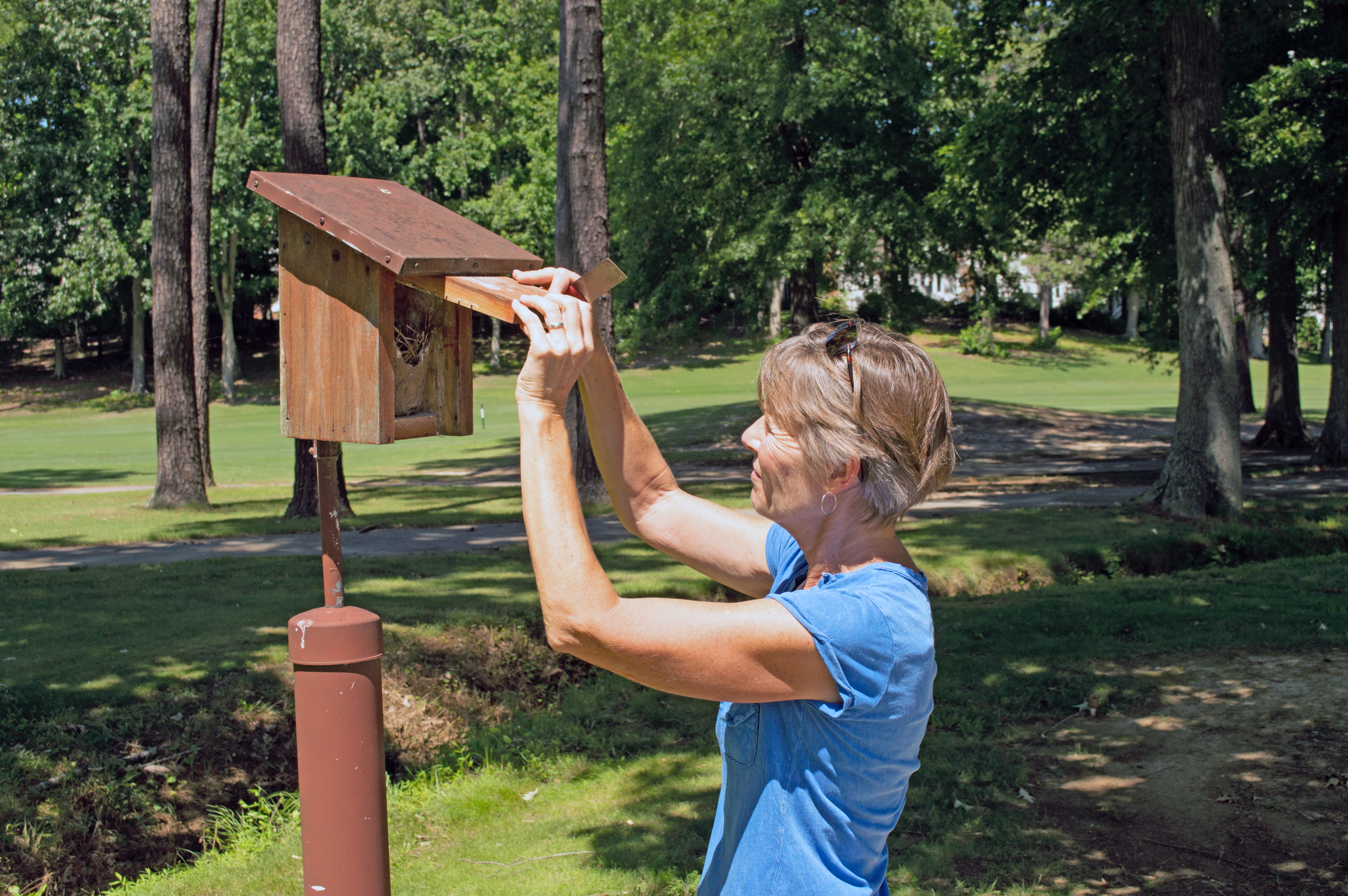
Earlier that day, Sally took me along when she monitored the bluebird houses at Lochmere Golf Club. She’d promised that there should be some new eggs and nestlings, and there were! We were pleased to see the new arrivals.
13 07 04_2570

Speaking of country clubs, the News & Observer reported this week that Carolina Country Club, Raleigh’s old line club, finally admitted its first black member. This was front page news, and I was glad to hear it. CCC maintained the color barrier for way too long. Now that the curse has been broken, I hope they will implement a policy of true non-discrimination going forward.

In my lifetime, we’ve made so much progress on the race issue, for which I am happy and grateful. For all my disappointments with President Obama, every day I feel proud and a little amazed that we have a black president. I can go for weeks or months without observing anything like the racial prejudice that was pervasive when I was a boy.

But we’re still not done. Republican measures to limit the voting power of blacks in NC and elsewhere by imposing ID requirements are moving forward. This is just shameful. With this movement in process, the Supreme Court was surely wrong in striking down part of the Voting Rights Act. There’s still a ways to go to build a color-blind society.
13 07 05_2414

Our North Carolina Republican legislators have gone on a right-wing tear this session. Some of their activities make sense from the point of view of bettering the lot of the wealthy or pandering to the ignorant, but some are inexplicable in ordinary moral or practical terms.

Does any rational person, no matter how selfish or cynical, think it makes sense to get more people carrying concealed firearms into more public spaces? Would a person with a shred of decency change the law to protect agriculture operations that abuse farm animals and criminalize the behavior of those who seek to expose the abuse? Would a normal caring parent or employer find it sane to reduce school funding and increase class size? Would any responsible leader or citizen turn down federal funds meant to help the unemployed or ailing? Does any moderately educated person school think that North Carolina has the right to establish its own state religion? In establishing the highest priorities, does anyone think Is outlawing Sharia law makes the top-thousand list?

And while we’re outlawing Sharia law, why not work in a slew of anti-abortion measures? This actually happened this week without fanfare and without the usual legislative formalities, presumably to minimize the chance of organized opposition. I’ve never found the abortion issue as easy as some of my friends, but the state Senate’s work this week under cover of darkness is really disturbing from a process point of view, and looks like a huge mistake. In the aftermath of this latest fiasco, my liberal friends were looking glum, and worrying at the damage this is doing both to the humans affected (such as women with unwanted pregnancies and poor people) and to the image of our state.
13 07 05_2401

This onslaught really doesn’t seem like the result of a theory of government. To the extent it has a direction, it seems aimed less at accomplishing any policy objective than at making liberals screaming mad. Once a liberal value gets identified, it is attacked with extreme prejudice.

To a certain extent, the NC right-wingers seem to be reproducing the values battles identified by national-level right-wingers. What else could be going on? I heard an NPR interview with Bill McKibben, an environmentalist and college professor, who said the problem with building a green movement was that a movement needed an enemy. In a sense, all of us are conflicted on environmental issues, since we all like cars and electricity. We can’t be our own enemy and still feel motivated to get into the streets. His solution was to declare the oil companies the enemy. This would, he thought, allow a green movement to cohere.
13 07 05_2480

So maybe that’s what our NC right-wingers are up to: building their group cohesion by identifying liberals as the enemy and trying to cut out their hearts (metaphorically speaking). It’s hard for a liberal to find a silver lining at the moment, but I’ll still take a swing. I don’t think this is the direction a majority of the state, or even a majority of Republicans, want to go. And by forcing minorities, low-income people, women, immigrants, and the reality-based community to see their common interest, the wing-nut legislators are increasing the chances that their “public service” will not last past the next election.
13 07 05_2466

In the meantime, President Obama has seized the initiative on climate change by ordering rules on power plant reductions for CO2 and other measures. Longtime readers of the Casual Blog will know that this is a big issue for me that I think should be a big issue for everyone. At issue are mass extinctions and dislocations on a scale previously unknown in human history. The significance is much greater than putting a man on the moon, and we ought to mobilize with a level of commitment on a scale comparable to the Apollo project. I hope this is the start.
13 07 05_2522

And while we’re on the subject of things to feel good about and continue working on, let us not forget, the long fight for gay rights has made real progress. The Supreme Court, a highly conservative institution (even if not all of its justices are conservative), struck down the Defense of Marriage Act! A majority recognized this as a human rights issue. It seems the tide has turned.
13 07 05_2538

Well, that’s it, I’m climbing off my soap box. I got out to Raulston Arboretum on Saturday and found a lot of bees hard at work. I took along my tripod and used a Nikkor 18-55 mm lens in aperture priority mode. Along with a variety of bees and flowers, I was struck by the sculptural qualities of some of the blooms. My favorites are above and below.
13 07 05_2396
13 07 05_2452

Hammering nails, my sweet cable repair robot, privacy concerns, and some flower pictures

13 06 21_2142
On Friday afternoon the Red Hat legal department in Raleigh worked on a Habitat for Humanity house in Apex. We met the owner to be, who sounded like he might have originally been from west Africa, and who said this was his dream house. I watched a group of colleagues get trained in installing windows, and then got drafted to do some work in the rafters, including repairing some mistakes of a previous crew.
13 06 21_2134

Hammering nails is not something I’m particularly good at, and I learned that this was even more true when standing on a ladder, reaching upward, and swinging within limited space. My wrist and arm got tired. But, though slow, I got quite a few nails well in, and avoided serious injury. I do not think the next crew will need to re-do them.
13 06 21_2133_edited-1

Speaking of repair work, I had an interesting experience on the frontiers of automation this week with my cable service, Time Warner. Our on-demand movie service didn’t work properly last week. When I called TW, my call was answered by an automated female voice of the sort that usually reads service options (press 2 for billing inquiries, etc.).

It (she) asked me to describe the problem. She then correctly paraphrased it, and said she’d be right back. Then she said that she’d checked and my cable box needed to be re-set. She said she would do that. She did it! This was the first fully automated repair encounter I’ve ever had, and it was excellent! When the automated repair entity told me I could hang up, I couldn’t help myself: I thanked her.
13 06 21_2205

On Saturday morning I got up with the plan of being at Raulston Arboretum when it opened at 8:00 a.m. to walk about and take some pictures with early light. I got slowed down by some interesting stories in the Times — market reactions to the Fed’s new strategy, dysfunctional courts in the Bronx, arms for Syrian rebels, protests in Brazil and Turkey, China’s and Russia’s economic policies. And particularly by the latest on Edward Snowden and the NSA surveillance program.

I’m still trying to figure out what I think about Snowden and the NSA data collectors. Clearly, it’s wrong to break your oath and betray your employer. Clearly, it’s wrong for the government to invade our privacy without due process. Clearly, it would be a mistake to acquiesce in terrorist plotting.

These conflicting imperatives make this a tough one. I tend to focus on the high risk of governmental abuse of power. Curiously, though, for some reason I’ve felt less fear and outrage over the data mining than I would have expected. I don’t think I’m alone on this. Possibly, as my colleague David said, we exhausted our outrage muscles over the Patriot Act, and the NSA intrusions are not such a big surprise.

We may have already passed an inflection point in the history of privacy. Most of us understand that Google, Facebook, Amazon, and others are using our data in ways we wouldn’t necessarily approve, but which don’t do any noticeable harm. Is the NSA program a bigger threat to civil liberties?

Well, the government is awesomely powerful, so the risk is plainly greater. But for most of us, the harm is abstract — an automated intrusion into our personal space that we never directly perceive. Will we eventually come to accept this diminution of private space as the new normal? Probably yes. Will that change our thinking and behavior? Probably yes.

A more immediate by-product of this affair is a new round of erosion of trust between government and the governed. Privacy’s cousin, honesty, has also been compromised. Can we ever be sure that any government explanation of the project is true?
13 06 21_2163

When I finally got to the arboretum, it was cloudy, but pleasantly mild, and many flowers were blooming. It smelled wonderful! I took many deep breaths. Wouldn’t it be nice if we could record those smells?

In the meantime, we’ve got digital photography, which is itself pretty amazing. I was looking for dramatic colors and shapes, and interesting textures. I was also thinking about the complex patterns that nature made, and others that the gardeners made, and others that only I could make on that particular morning with those particular blooms. I generally focused on the flowers that were at their resplendent peaks, but I also caught a few that were well into the process of dying, and beautiful in sadder way.
13 06 21_2170
13 06 21_2191
13 06 21_2154
13 06 21_2186
13 06 21_2179
13 06 21_2219
13 06 21_2156
13 06 21_2210
13 06 21_2217

Is it 1984, with the NSA as Big Brother, or will Watson come to the rescue? Plus notes on a birthday, an anniversary, a soccer game, and an opera documentary

13 06 09_1924_edited-1What to make of the federal government’s massive program for gathering telephone and social media data? My first reaction was fear and horror. Is 1984 finally here? Is the Fourth Amendment a quaint artifact of a bygone era? Of course, we don’t actually know very much about the program, which is still classified. Is it like Big Brother, or more like the airport security services of the TSA, which inconvenience millions and accomplishes little?

As for the TSA, no doubt it’s supposed to make us feel more secure about flying, but for me the predominant emotion is frustration, with additional notes of anger and humiliation when my property and person are touched by uniformed strangers. And we’re afraid that if we complain, we may get put on the do not fly list and subjected to even more frustration and humiliation. Dear NSA analyst, if you’re reading this, I swear I’m not going to cause any mayhem – please please don’t put me on the do not fly list.

I’m kidding, of course (no I’m not – I want to stay off that list). I seriously doubt humans look at more than an infinitesimal fraction of this data, which is sufficiently massive as to defy all hope of human comprehension. It may be that this is why the program continues to exist: it’s become so big and complicated that no one can understand it. The computer doing the heavy lifting has almost certainly surpassed its minders in the complex skills at the core of this program. So who can reasonably make a judgment as to whether it’s a useful or safe project. The computer?


I realize this sounds a bit science fictiony, but if it isn’t already true, it probably will be soon. Remember, IBM’s Watson didn’t just win at Jeopardy, he or it trounced the strongest human players to ever have played the game. The Times reported this morning that the NSA and CIA have been testing Watson for intelligence purposes the last couple of years. He’s already way better at quickly analyzing massive amounts of data than any human ever will be, and he’s likely getting smarter and smarter.

In some ways this is comforting. I greatly doubt that Watson or his peers in artificial intelligence mean us any harm. Good AI is, at least so far, not complicated by the emotions that drive human behavior, including those that make us behave badly. Watson is not greedy, or prejudiced, or power mad. Once he gets this security thing well in hand, maybe he can take on more governmental responsibility. Could this be the way out of partisan gridlock? Watson for president?

Speaking of technological transformations, I recommend an essay in today’s NY Times by Jaron Lanier called Fixing the Digital Economy. Lanier is wrestling with an issue I’ve also written about: what happens to the economy (i.e. us) as human labor is increasingly replaced by robots and AI? He suggests that the source of both increasing decentralization of power and increasing disparities in wealth is computing power, and that the most powerful players are the ones with the most server power. I think he’s wrong to emphasize giant computers as primary sources of wealth, but he’s thrown out some provocative ideas. Here’s one: let’s revamp the economy so that those who take your digital data pay you for it. We could set up market in which Google, Facebook, the NSA and other data miners send out quarterly checks to all of us who provide the data.

Speaking of data and devices, Sally had a birthday this week, and I got her an iPad mini. She was thrilled! I got it at the Apple store at the Crabtree Valley Mall, which as usual was packed, and where I had a completely satisfactory buying experience. My salesman was knowledgeable and funny in a dry way. There are things to dislike about Apple as an organization, but they are really good at customer service. And their devices are designed with emphasis on a pleasant, intuitive human-machine interface, so non-specialists can enjoy them.

We also had our 31st anniversary this week, and celebrated with a fancy dinner at St. Jacques. The restaurant sits in a common strip mall, but inside it manages to convey the joie de vivre of fine French cuisine. I love that they have a special vegetarian menu. It took a little too long to get a visit from the sommelier, but eventually he gave us his full attention. A true and expressive Frenchman, he dissuaded us from getting the chardonnay that we additionally asked about, and with a dramatic explanation of the food flavors and wine flavors at issue persuaded us to try a sauvignon blanc. It worked beautifully. We savored every bite and sip.
13 06 08_1940

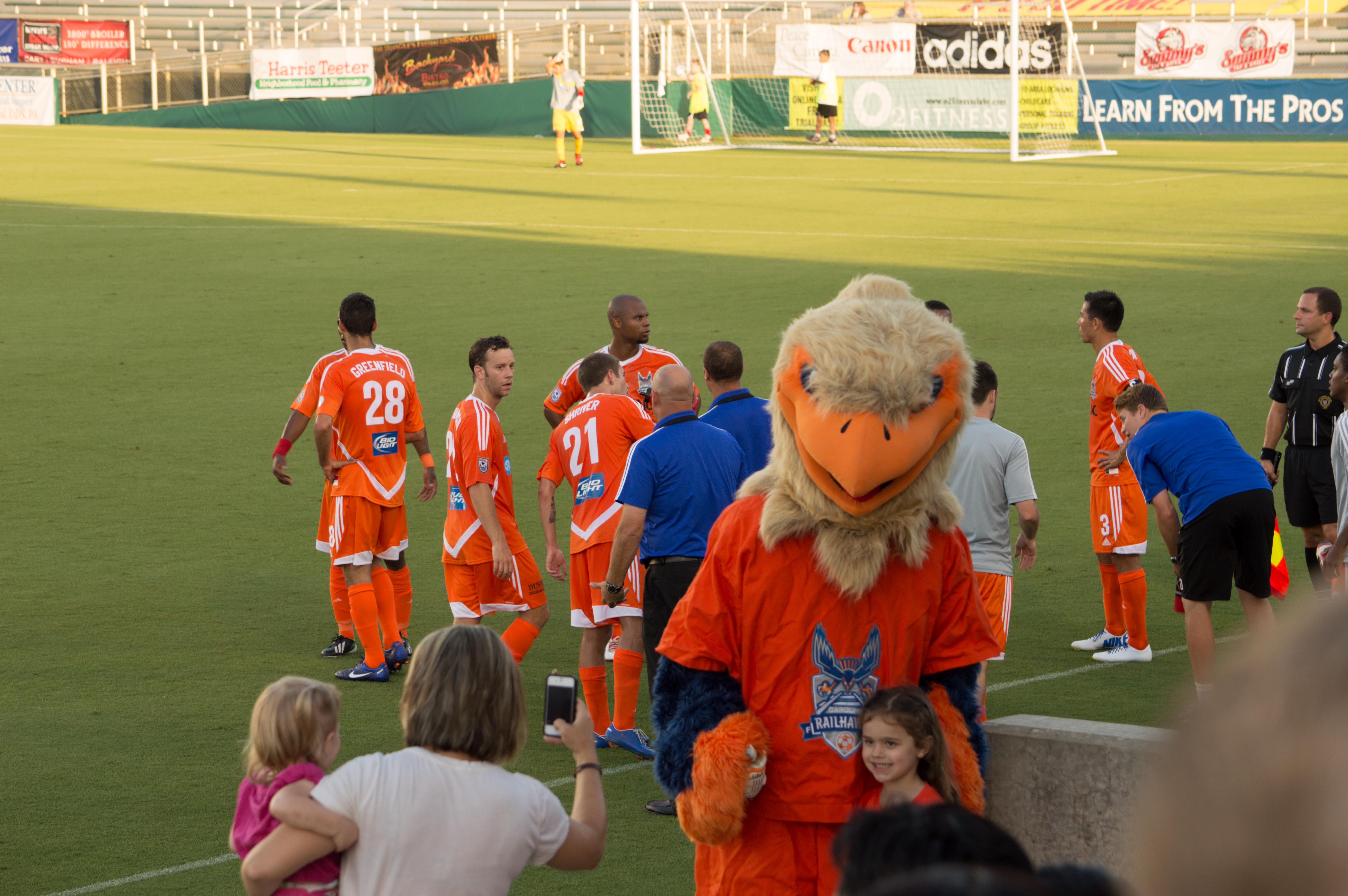
On Saturday night we went out to Cary to see a soccer game – the Carolina Railhawks played the Tampa Bay Rowdies. It was a clear, mild evening. We took along a couple of veggie subs at Jersey Mike’s, because last year we’d learned there wasn’t much in the way of healthful nourishment at the soccer stadium. But we were pleased to see they had improved their beer selection since last year. The field looked green and immaculate. We had good seats near centerfield on row G, and had a pleasant picnic there.
13 06 08_1967

The teams came into the game tied for the lead in the league and seemed well matched. I thought the Railhawks seemed sharper and less thuggish than last year. There were moments of skill and excitement, but no scoring until the 87th minute, when Tampa Bay took advantage of a defensive let down to put in a goal. When time expired there was an additional four minutes. During that time, the Railhawks proceeded to score, and then score again. We won!
13 06 08_1953

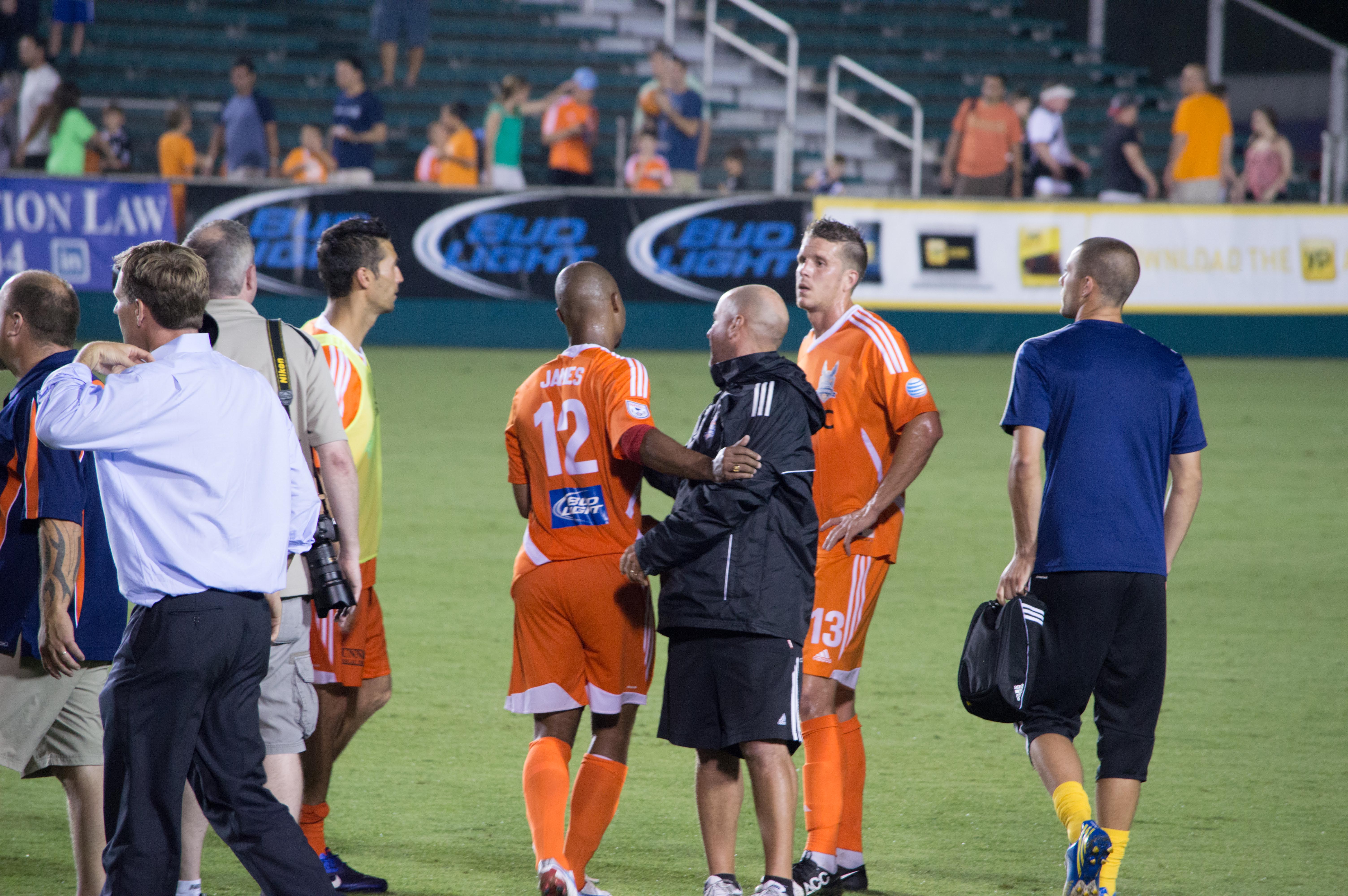
One of the Railhawks, Brian Ackley, is an old friend of Jocelyn’s going all the way back to middle school. We’d texted Jocelyn that we were going to the game, who’d texted Brian, and so he was prepared when we hailed him after the game and had a word. He’d played the last part of the game and had almost scored on a header. He’s a fine athlete and warm human being, and it was nice to see him.

Brian victorious (the Railhawk on the right)

Brian victorious (the Railhawk on the right)

When we got home, we watched a fine short documentary on HBO On Demand about Renee Fleming doing a master class for four aspiring young opera singers. The basic format, as with all master classes, is for a student to perform in front of other students and the master, and then receive criticism from the master. Here the students were all thrilled to have the opportunity to sing for Fleming, who is unquestionably one of our greatest singers. She was warm, generous, and a great listener. She gave some very specific advice on producing good vocal sounds, and spoke frankly about things like pre-concert nervousness. She gives a window into how difficult it is to be a great singer, but at the same time how wonderful.

A new novel about AI and the Turing test

DSC_0032
Sally’s re-reading Anna Karenina, which seems to me both admirable and exhausting. The recent movie version with Keira Knightley was highly stylized, but reminded me of what I enjoyed about the book when I read it in my twenties. It is rich book, full of feeling and thinking. But it’s long!

As a teenager and young adult, I read a lot of long novels, including ones by Tolstoy, Dickens, Dostoyevsky, Trollope, Elliot, James, and Proust. My “big novel” period was a time when I was coming of age and constructing a particular consciousness. Those big books were part of the process.
DSC_0039

Nowadays most of my waking hours are spent working, and there is stiff competition for precious non-work time. I’m still interested, though, in novels, and especially ones that take on issues that haven’t been thoroughly mined out. I just finished one such: A Working Theory of Love, by Scott Hutchins (Kindle edition). It’s about a guy who’s working on an artificial intelligence program designed to pass the Turing test, which is a real competition suggested by Alan Turing.

The Turing test is designed to probe whether machines can think. The challenge is to build a computer that can persuade 30 percent of humans that it is human. (I wrote about a very interesting non-fiction account of the test and artificial intelligence, The Most Human Human, by Brian Christian, here.)

Hutchins’s narrator bases his program on his father’s diaries. After getting the computer to converse coherently, he works on humanizing it by adding emotion and sex drive. As the program improves he has the feeling that his father is coming back to life. This creates an interesting moral dilemma. His father had committed suicide, but the project seems to be denying him his freedom to choose death.

I found Hutchins’s premise thought-provoking, but I ultimately didn’t care very much for his narrator. But he’s where the action is. It’s exciting and terrifying to see how fast robotics and artificial intelligence are transforming the world. The AP did a good overview piece last week, which I recommend highly. As they note (and as I’ve noted before), jobs involving any sort of routine (most manufacturing, transportation, retail, and office work) will soon be gone forever, taken over by robots and AI. This means increasing efficiency and wealth for some, and unemployment and anomie for a great many others.

We’re going to need to re-think and re-size our social programs for a world where humans are not needed to produce most goods and services. This is a daunting task, even leaving aside the extreme polarization of our politics. The shift away from human labor as a process that is the source of economic value and meaning is hard for us to grasp and accept. But we somehow need to provide a safety net for the millions who will be affected.

I’m not prepared to propose a program, but I do have the name for one: the Big Deal. It will need to be bigger than FDR’s New Deal. It will surely involve some sort of cash payments and medical care. I’d also add a work program that channeled redundant workers to activities that would provide them with a sense of meaning and purpose, like caring for other humans.