The Casual Blog

Category: piano

My hopeful hand checkup, a new salad restaurant, a Porsche contretemps, and discussing legalization
14 08 03_1352I was a bit anxious about my check up for the torn ligament with the hand doctor earlier last week, but it turned out fine. After the doc twisting my fingers a bit and asked if it hurt (it did), he pronounced me improved, and lowered the chance of needing surgery to 5 percent (a big improvement from his previous estimate of 50 percent). He cleared me to play the piano gently (no Rachmaninoff, he said), but to otherwise keep my fingers taped up for another month. I asked about getting back to golf, and he strongly advised me to wait. This was disappointing, as I’d felt like this could be my year for a big golf breakthrough (as, admittedly, I’ve felt in previous years). Still, I I was pleased to be heading in the right direction.

Playing the piano again was a rich, dense, textured pleasure. Going a month without playing is something that I hadn’t done for at least 30 years, and I missed it. I started gently with some Chopin mazurkas, and then some nocturnes. I couldn’t resist trying some Rachmaninoff – the Elegie, op. 3. It was all a bit rough, but I felt I was listening better, hearing more nuance, and playing with more rhythmic freedom. Perhaps the forced time off did my ears some good.

14 08 03_1277The next day I discovered Happy and Hale, a relatively new take-out restaurant on Fayetteville Street a couple of blocks from my office. It serves only three things: salads, smoothies, and juices. All are not only super healthy, but also lively, interesting combinations of ingredients. My first experience was the quinoa salad, which had quinoa, black beans, avocado, cilantro, feta cheese, and a couple of other things, with red pepper vinagrette. It was amazingly tasty. There was a long line, but I found this more cheering than annoying. It was good to see people interesting in eating something healthy, and to see this little business doing well.

The next day, I took Clara to the Porsche dealer for servicing. Her check engine light had come on, but even before the that, I’d felt something wasn’t right. Giving her more throttle in the higher RPMs yielded more noise, but not more thrust. I suspected a transmission issue, which turned out to be correct. I needed a new clutch and new flywheel, and the cost was a big ouch.

Waiting for the parts to come in, I drove a loaner Ford Explorer (a sport ute). I just don’t get why people like this type of vehicle, at least when they don’t have a big group of kids or other heavy loads to haul. To me it was not fun to drive. After my sports car, It felt lumbering and awkward. I had the impression of barely having enough road, like a truck pulling a massive mobile home, needing a “wide load” sign to warn other vehicles.

But I admit that I liked the instrumentation. It had a touch screen set up for the climate control, radio, blue tooth, etc., and a handsome virtual compass. In reverse, the touch screen showed the view behind, with the danger zone outlined in red. It had some sort of RFD key that allowed the vehicle to unlock when I pulled the handle without the need for any use of the key. A nice convenience.
14 08 03_1253
Reading the New York Times is a settled part of my morning breakfast ritual, and there is a sense in which I always enjoy it. But golly, the news has been grim! Part of it is structural: in conventional journalistic thought, information usually only qualifies as news if it involves dramatic conflict. So we don’t hear anything about the peaceful countries in, say, Africa. But the lead stories recently inspire a special mixture of horror and hopelessness, because they’re big and absolutely beyond any individual control. Examples: Syria, Iraq, Afghanistan, Russia, Ukraine, Israel, Gaza, Nigeria, Washington.
14 08 03_1242
This week, though, there was a welcome exception. I was pleased to see the Times came out in favor of partially ending the war and drugs and legalizing marijuana. The editorial board had clearly had thought hard about it, and put some elbow grease into collecting the arguments: including the enormous human cost, the huge economic cost, and the relatively low risk. It felt like a watershed moment. Maybe now it will be possible that we can have a debate based more on facts and less on myth, moralism, and hysteria. I don’t think marijuana is a particularly good thing; for some people it’s surely an unhealthy thing. But criminalizing it has been an absolutely terrible thing.

So we might be close to overcoming this particular moral hysteria and to ending of prohibition. Perhaps some of our other seemingly intractable problems aren’t beyond all hope.
14 08 03_1250_edited-1

A great Mozart opera

There’s a classic New Yorker cartoon titled “Life without Mozart,” which shows a desert with a few scattered pieces of junk. Such pith! It is probably an overstatement to say that Mozart is the source of all meaning and order in life, but it is difficult to imagine so much harmony without him.

On Saturday afternoon, I took D, my mother-in-law, up to North Hills Cinema, to experience a live HD broadcast from the Metropolitan Opera of Mozart’s Cosi Fan Tutte. The music is some of Mozart’s greatest. I’ve listened to the opera a lot recently while working out, and the glorious fountains of melody carries me through the tough intervals.

The basic plot seems sexist and jarring to 21st century sensibilities. Here’s the concept: two soldiers are wooing two sisters and praising their faithfulness, when an older, more cynical friend asserts that all women are by nature prone to stray. They argue, make a wager, and then the soldiers put on disguises and each seduces the other sister. It’s supposed to be light and funny, but the amorality of the plot line is disorienting. Why would the guys do such a crummy thing? But this production explored a more humane side, and also more difficult, aspect of the story.

James Levine conducted this performance. Maestro Levine is a transcendently great musician, but has been in poor health these last few years, and I doubted we would see him again. But he was in great form on Saturday. The broadcast showed close-ups of his face as he conducted the overture, which showed that he conducts with his face as much as his hands. He smiled with pleasure at the beautiful phrases, and I imagined that his musicians felt well supported and inspired by his warmth and enthusiasm.

The show was altogether wonderful, and much more emotionally complex than I expected. There was humor but also strong notes of pain. The sisters seemed genuinely conflicted and struggling with the temptation of new lovers, and the lovers were tortured by forces they did not understand.

The work is an ensemble piece, in the sense that various combinations of voices have great moments – duets, trios, quartets, quintets, and sextets. The acting of this cast was particularly compelling. Susanna Philips as one of the sisters (Fiordiligi) seemed to truly anguished in struggling with the temptation of new love. Her soprano was a little thin at the bottom but full at the top, and very expressive. She had a way of easing into notes, so that the sound seemed to emerge gently from the silence. She had a couple of long pauses where the silence itself was filled with powerful emotion.

The other sister (Dorabella), played by Isabel Leonard, was less complex, but she sang well and looked sensational – she’s quite a beautiful woman. As to the soldiers, there were not simply heartless cads, but in part victims pushed by larger forces (authority, peer pressure, pride, vanity) to betray their lovers and themselves. Tenor Matthew Polenzani and baritone Rodion Pogossov as the soldiers/Turkish suitors both had great moments, and Maurizio Muraro as Don Alfonso anchored the ensemble with a full bass baritone. I thought Danielle de Niese as Despina, the scheming house maid, was funny and sexy, but as a full on proponent of the view that love meant nothing other than having fun, too exuberant and bubbly for this darker Cosi.

On Sunday I had a piano lesson with Olga. She’d warned me that she was juggling a lot of end-of-school-year projects and could only give me an hour, but in the end we worked for an hour and a half. Like Maestro Levine, she’s a generous musical spirit, patient but also exacting. We did a Brahms Op. 39 waltz, Rachmaninoff’s Elegie, and Chopin’s Fantasie Impromptu. We talked about slow versus fast attacks and worked on some pedaling techniques that were new to me, including doing a slow release. I always go in thinking I’ve been listening to the music carefully, and she always makes me hear new things.

Our Stuart, some worries, a piano lesson, and a fine young violinist

14 03 08_7551The weather was dicey this week – wet and icy. With rain freezing on the street, I decided it was safer to walk to work than drive. This may have been true, but walking was also dicey – I had some bobbles and barely avoided falling. One day the temperature was 19 when I set out, and the wind blowing in my face was going about 20 mph, like little needles.

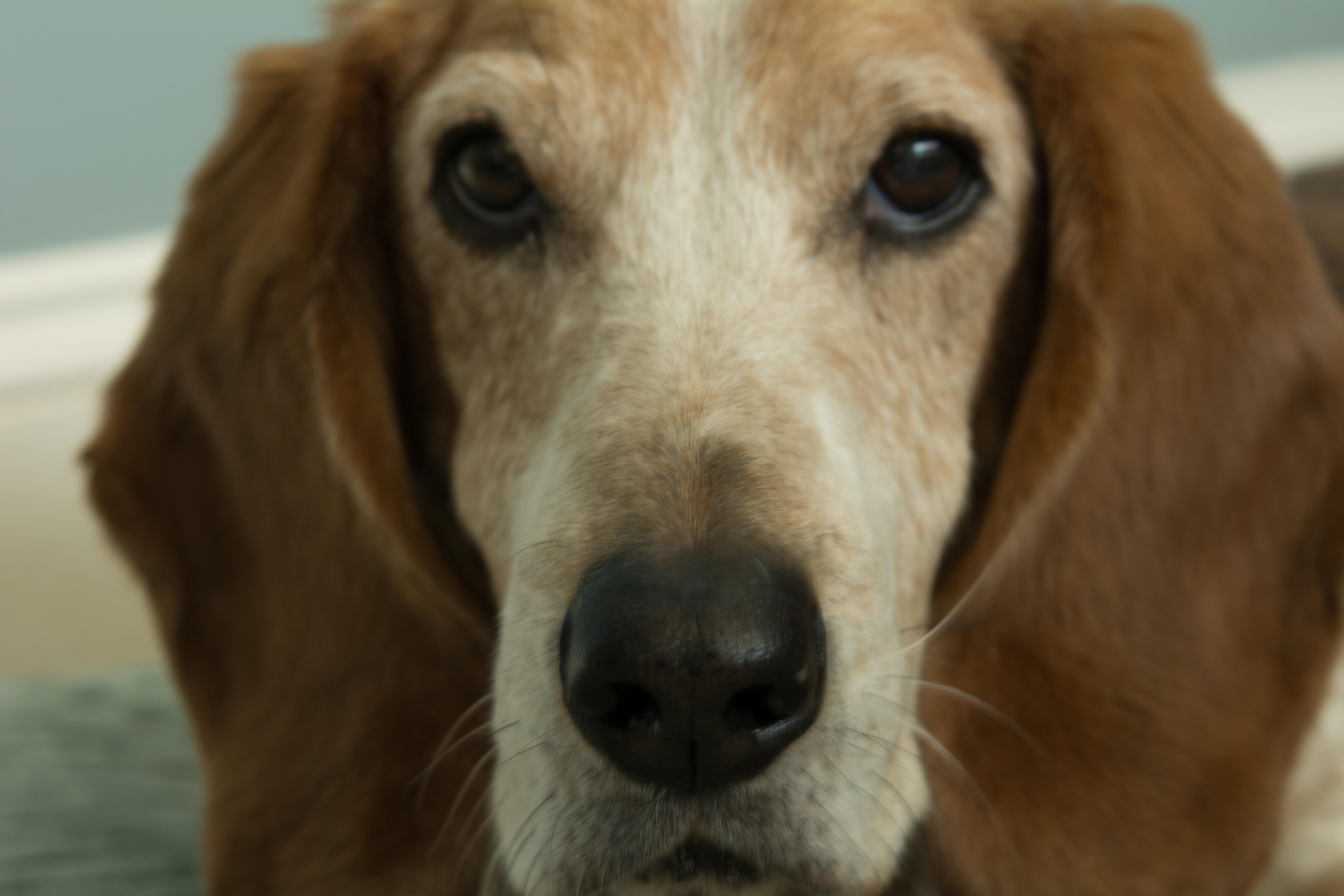
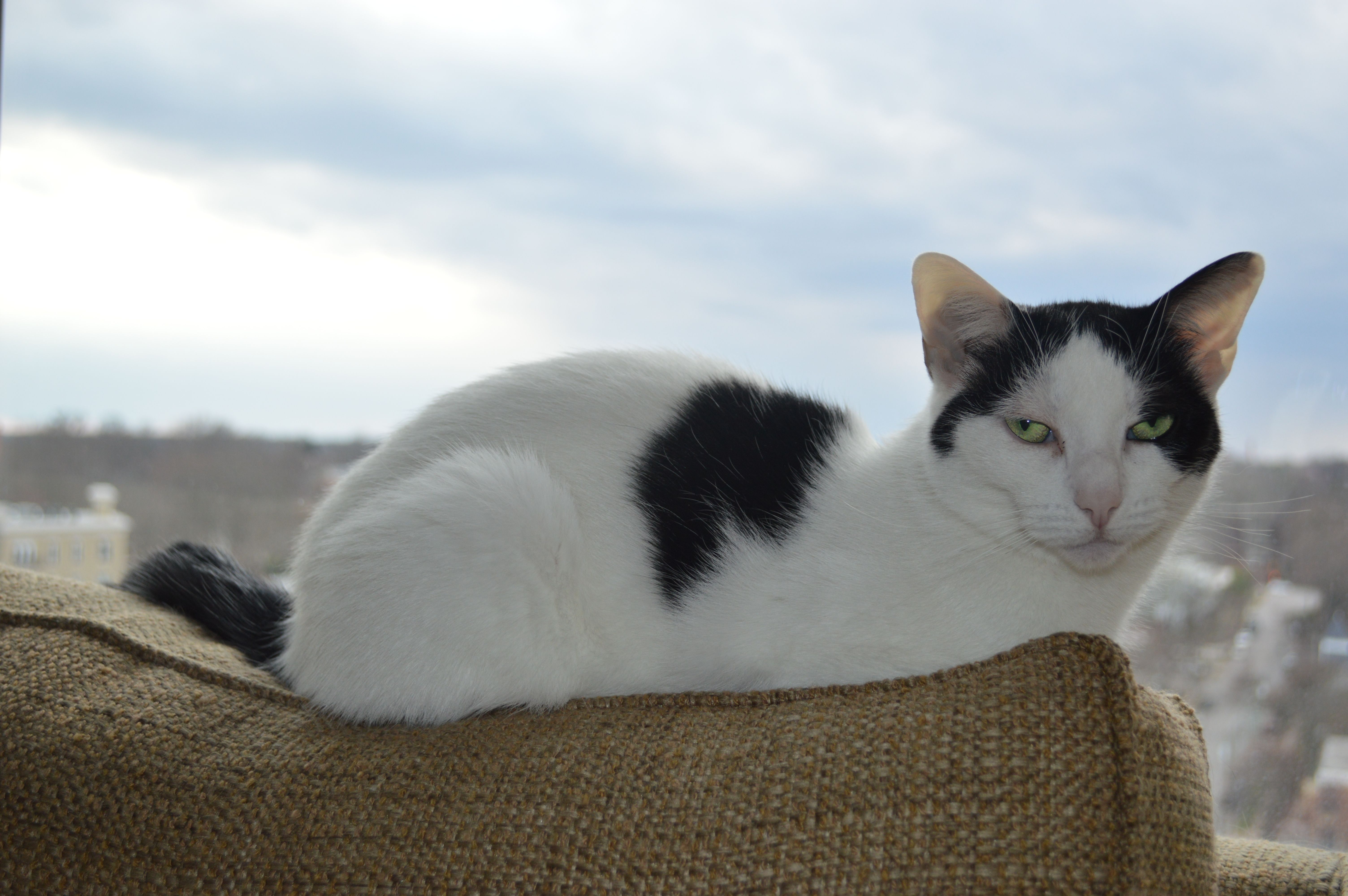
Stuart, our basset/beagle, trotted out to greet me at the door each day when I got home. He’s now twelve, and while still, in my opinion, the world’s greatest dog, he’s not as spry as in days gone by. But he remains a warm, sensitive, supportive little soul. He came around for a pet more than usual this week, nuzzling his snout against my leg, as though he sensed I needed a little extra support.
14 03 08_7545_edited-1

Which I did. Along with the usual daily stresses and strains, I was dealing with an extra load of physical pain from the ski trip to Colorado. My sunburned lip really hurt, which sounds minor, but actually seemed major – my face felt like a giant stinging throbbing lower lip. My left should was tender and bruised from a crash in the trees. So was my right leg, which had the mother of all bruises – a huge area of purple, brown, and yellow, shading to black. The leg bruise worried me a little, because I couldn’t remember a fall that could have caused it. It just appeared. Then came the lump.

On Wednesday morning in the shower I felt a lump the size of a golf ball in the inside part of my leg behind the knee. I immediately thought of my friend who’d recently survived a deep vein thrombosis – that is, a blood clot in a leg vein, which if untreated could have been fatal. He had a battery of tests and emergency surgery, followed by months of blood thinning medication – all complicated, time-consuming, and unpleasant, but he got through OK. I gave him a call and confirmed that my symptoms sounded similar, and quickly called my GP, only to learn he’d recently closed his practice. His answering machine suggested trying an urgent care facility.

At this point I felt sure I was going to have a very bad day involving multiple imaging tests, surgery, and possibly death. The more I thought about it, the more certain I was that this was the end. I’d miss the spring blossoms and butterflies in Raulston Arboretum, the migrating warblers, the Carolina Ballet’s Romeo and Juliet, diving in Dominica, and the new season of Railhawks soccer. I would never taste another one of Sally’s delicious margaritas. Oh woe.

Of course, it turned out to be nothing. An experienced nurse practitioner took a careful look and diagnosed it as either hematoma or lipoma, which would become clearer in a week or two. She was familiar with deep vein thrombosis, which she said would be in a different place on the leg. I felt resurrected! Before me was a good long stretch of the road of life (assuming no freak accidents, major diseases, or other catastrophes).
14 03 08_7563

I had another piano lesson with Olga Kleiankina on Saturday, and as usual, she was inspiring and challenging. I played a famous Brahms waltz (A flat major), a tender and touching thing which I heard on the radio recently and decided to work up. There are no serious technical challenges; the challenge is to make it musical and fresh. Olga’s approach was to work for different tonal colors for each hand. This takes a combination of extremely close listening and subtle muscle control (not just the hands, but even more the arms and back).

I also played Rachmaninoff’s Elegy, a lyrical and tragic piece which I thought sounded good — until she began to disassemble it. It seems I was playing it too much like Debussy, without enough firmness and depth. She was not persuaded that I really understood the structure of the piece, and encouraged me to practice the broken chords as block chords to get it under better control. The journey continues.
14 03 01_7606

I’ve been reading Play It Again, by Alan Rusburger, editor of the Guardian newspaper and an enthusiastic amateur pianist. His book is organized around his quest to learn Chopin’s first ballade (g minor) while at the same time publishing the Wikileaks leaks and performing other journalistic feats. It’s touching that he loves the Chopin piece so much, and I can relate, having also spent a good deal of effort working on it some years back. I was struck by the odd combination of musical sophistication with a certain naiveté. It was clear to me from the first few pages that he taking on a piece that was just too far beyond his capabilities, and was likely to spin his wheels for quite a while. But I admired his pluck, and was glad to learn of others like me who with no hope of gain or worldly honor pour a big part of themselves into this music and tradition.

On Sunday afternoon I went to a concert by the young American violinist Rachel Barton Pine, who was accompanied by Matthew Hagle on the piano. The concert included works by Schubert, Prokofiev, and Franck, and a selection of lullabies that Ms. Pine had collected after having a baby. She was an excellent musician, both poised and passionate, with lovely tone and interesting variety of tone. She also seemed like a friendly, down-to-earth person, to judge from her spoken introductions. She plays a famous violin made by Joseph Guarnerius del Gesu in 1742, which Brahms himself singled out for its beauty. For an encore, she played a funny but fiendishly difficult showpiece which I think she said was by Bezzeti. She tossed off with vigor and charm, earning a standing ovation. Kudos also to Mr. Hagle, who was also an excellent musician, and a sensitive collaborator.

My fabulous teachers (fitness, yoga, and music) and seeing Dallas Buyers’ Club

13 12 12_5362

Our geranium on the balcony is a true survivor! Here we are in mid-December, after several nights sub-freezing nights, and it still looks perky. Sally asked me to take a picture of this marvelous plant, and so I did — several in fact, but these are the best.
13 12 12_5368
Getting out of a rut and trying new things takes some energy and effort. It also really helps to have a good teacher. As I came into the home stretch of this week, it struck me that I’m fortunate to have found several such teachers, who’ve been helping me with fitness, yoga, and music.

First, there’s Larisa Lotz, who is my regular personal trainer each Thursday at 5:30 a.m. at Studio Revolution. I always look forward to it, because there’s an element of play and fun, but I also always find I’m barely able to make it through. This is not by accident, of course. Larisa has got my number, and knows about where my limits and weak points are. And she works on those weak points – which get stronger.

This week, as usual, she had some new activities and combinations. For core work, I had a side plank with the top leg pulling in and kicking out to the side, and a TRX suspended push up from the ground followed by drawing the legs in. She had me throwing a soft heavy medicine ball as high as possible, to work on “explosive energy,” which she said was a gap in most people’s fitness regimen.

We did some agility drills with quick stepping in various patterns through a rope ladder. We also did some sandbag work, including a fast intense series with dead lifts, cleans, squats, presses, and rows. And several other things. I took home several ideas for new things to work on.

On Friday morning I got to O2 Fitness at 5:35, and did some of Larisa’s hip and leg exercises and some more traditional upper body work – chin ups, dips, push ups, rows, and presses. Then I took my weekly RPM spinning class with Christy. This class involves dance club music of the throbbing, driving sort, which is not my favorite music, but it makes the hard biking in place in a dark room relatively fun. Our class on Friday involved more sprints than usual. I kept an eye on my heart rate monitor so as not to redline for too long. I topped out at 162 – high, but with all that effort, I was surprised it wasn’t a little higher.
13 12 12_5376

Later that day, at lunchtime, I shot over to Massage Wallah for some therepeutic massage work with Emily Alexander. My neck and shoulders were in need of special attention, so that’s what she worked on. This was my second session with Emily, and it was fairly intense, but good. Emily is not overly chatty, which I appreciate – it’s good to concentrate on the sensation. But I asked her about her story, and learned that she, like me, went to high school at the N.C. School of the Arts, and went on to film school at NYU and movie and TV work in Hollywood. We compared notes on digital cameras. My neck was much better afterwards, and I thought my shoulder was improved.

On Saturday morning I went to Yvonne Cropp‘s Juicy Flow yoga class at Blue Lotus. This is an hour-and-a-half class that combines traditional vinyasa work with kriya practice, which as presented by Yvonne involves three minute or so segments set to dance music with rhythmic movements working different muscle groups. It definitely gets the heart going. I ordinarily can figure out the exercise, but there is one I can’t: rolling backward, then forward and standing up without using the hands. Most of my fellow yogis were doing it, so it’s definitely possible. Another challenge for the future.

It was rainy on Saturday afternoon, which was good weather for a piano lesson with Olga Kleiankina. I played Debussy’s second Arabesque and the first movement of Bach’s Italian Concerto. As usual, Olga made me aware of some new dimensions of sound. We spent a long time working on the silences around the staccato notes in the Debussy. Along with a number of such tiny details, we worked on rhythm in connection with the larger structures.

For the Bach, she pointed out that one could never mistake Bach for Mozart, because Bach made much more use of interior parts of the measure for beginning and ending phrases – sort of like syncopation. She showed me how certain accents and timing tricks would bring the piece to life. Of course, knowing about it is one thing, and doing is another. It will take practice.

That evening Sally and I went out to Cary for dinner and a movie. When we go to the Regal at Crossroads, we like to eat at Tom Yum Thai, where the food is delicious and the service warm and friendly. They will take you at your word if you require things very spicy, and for me medium spicy is about right.

During dinner we talked about Dasani, the eleven-year-old homeless girl featured in a series of five articles in the Times this week. She’s a plucky, smart, athletic kid who faces very long odds at the bottom of the economic food chain. We got to know her large family, her teachers, and her homeless shelter in Brooklyn, where the conditions were dire. The series, by Andrea Elliott, is an extraordinary window into the world of poverty – well worth reading.

We saw Dallas Buyers Club, which concerns a macho Texas rodeo-type guy who gets AIDs in the 1980s and starts a business supplying unapproved AIDs drugs to the gay etc. demimonde. There are some colorful and funny characters, and a tour de force performance by Matthew McConaughey. He is almost unrecognizable, very gaunt, with a ton of grit and attitude. Of course, the subject is tragic. It reminded me of the first wave of the AIDs epidemic, and some of my own precious friends hid in death’s dateless night.

Saturday: the Farmers’ Market, the gym, physical therapy, and SparkCon

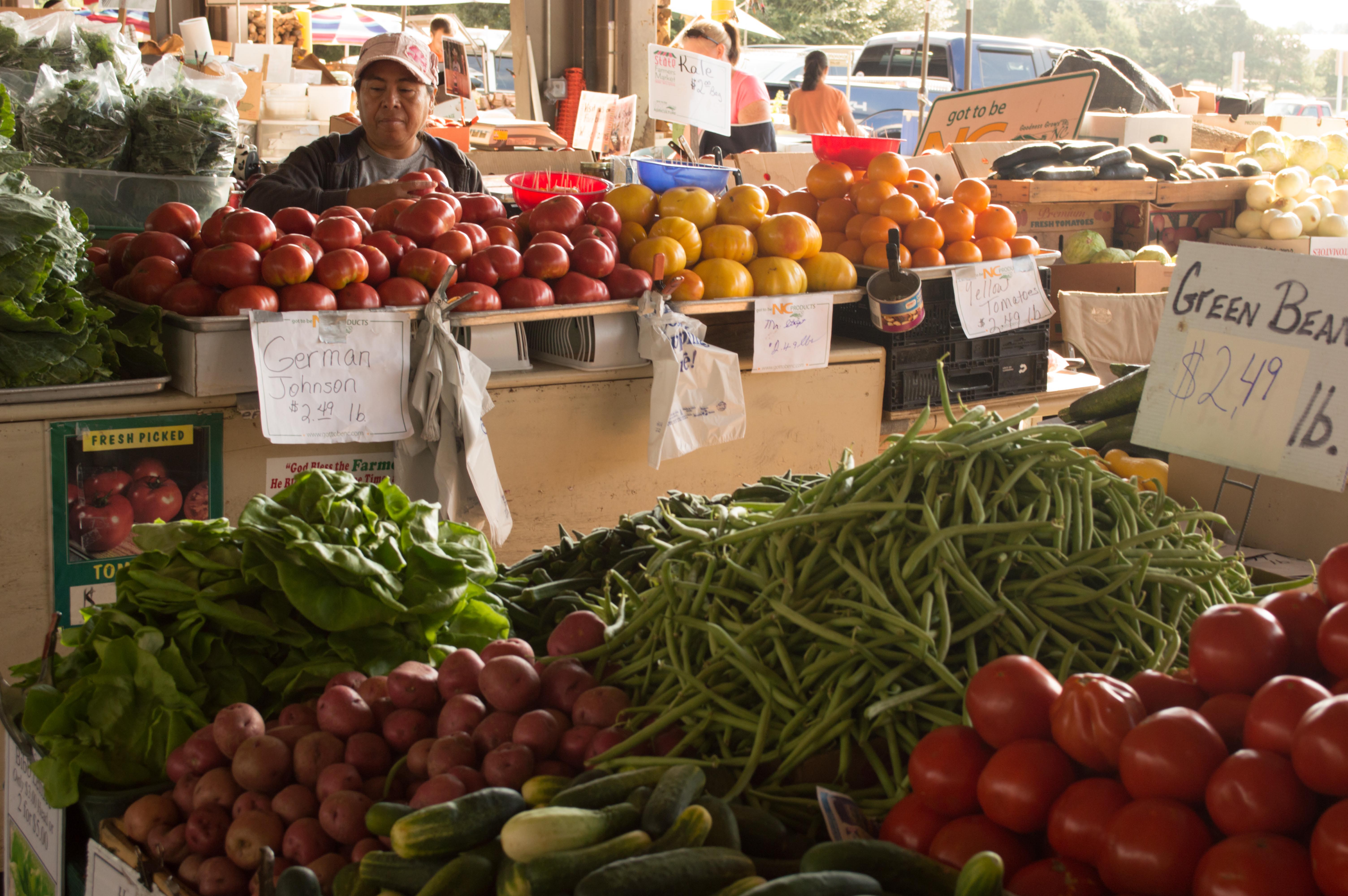
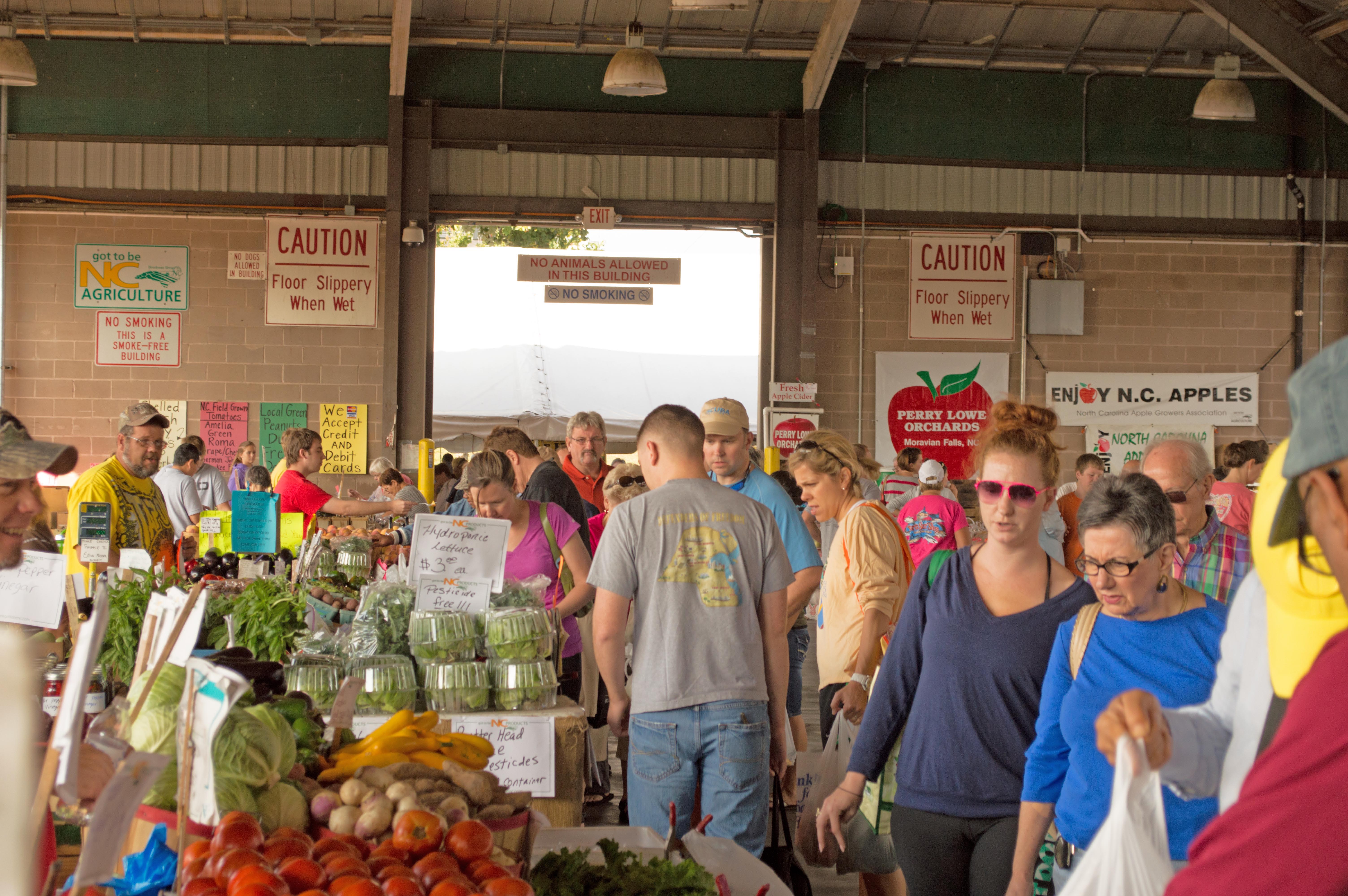
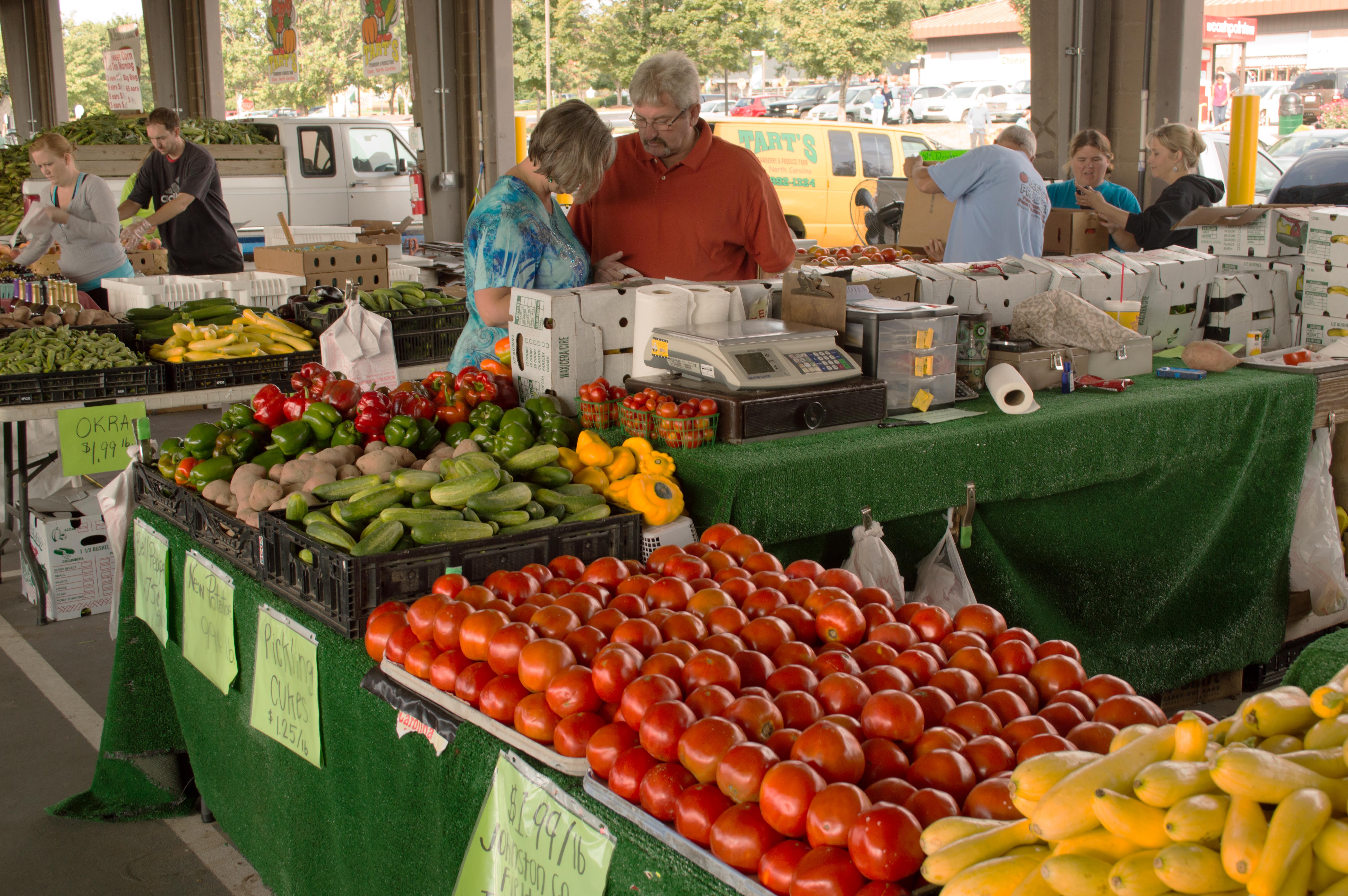
13 09 13_4296It was a particularly intense week at work, and I was glad we hadn’t planned any major travel adventures for the weekend. The weather turned cooler on Friday night, and Saturday morning was sunny when I went over the N.C. farmers’ market. It was colorful, with gorgeous squash, peppers, beans, tomatoes, and apples. I bought some kale and collard greens for smoothies and a basket of peaches.
13 09 13_4302_edited-1

After that I went to O2 Fitness, where I did a work out inspired by my session earlier in the week with Larissa. Along with a variety of lunges, bends, squats, hops, balances, twists, pulls, and pushes, I worked in some high intensity rowing (two-minute intervals) and jump roping. I rigged my TRX cord device to a chin up bar, put my feet in the grips, and did some side planks, level planks, and a complex core series including pikes. Then 10 minutes on the treadmill and 20 minutes on the escalator-style stairs. The stairs device looks ridiculously retro but gets the heart to seriously pumping. Then stretching, and finally some foam rolling. All this took a little over two hours, during which I listened to most of The Marriage of Figaro. I felt really good afterwards.
13 09 13_4291_edited-1.

Good health is a fundamental element of happiness, and you can’t take it for granted. It’s a moving target, and it can get away from you quickly. My right arm has been feeling not so good in recent months, and my various attempted home remedies (rest, ice, stretching) were not successful. Twisting and lateral movements were particular problems. As it got worse, I began to have some trouble turning the steering wheel when driving and lifting a fork from plate to mouth. This caused an intimation of mortality, and reflections on how life would be much more difficult without the ability to use arms for, say, eating, dressing, driving, typing, golfing, piano playing, hugging, etc.

Larissa, probably tired of hearing that she had to take it easy on my arm, referred me to Jeff Vajay at Impact Orthopaedics, a physical therapist with a specialty in arms. I’ve had good luck with physical therapy, which I mention because I suspect there are many people who have no idea it can be so effective. There is a species of physical problem that MDs have no idea what to do with, and well-trained, experienced physical therapists do. I’ve had complete long-term cures to lower back and rotator cuff injuries. It took an investment of time in each case, and a continuing commitment to special exercises, but it was a small price to pay.

Anyhow, Jeff ultimately diagnosed my problem as muscle related, and he worked on it with some intense massage and dry needling. The needing involves using small needles to penetrate muscles and release tension. In places it hurt a bit. But the results were positive. Now, after three weekly visits, I feel 90 percent cured and optimistic about the last 10 percent.
13 09 14_4320_edited-1

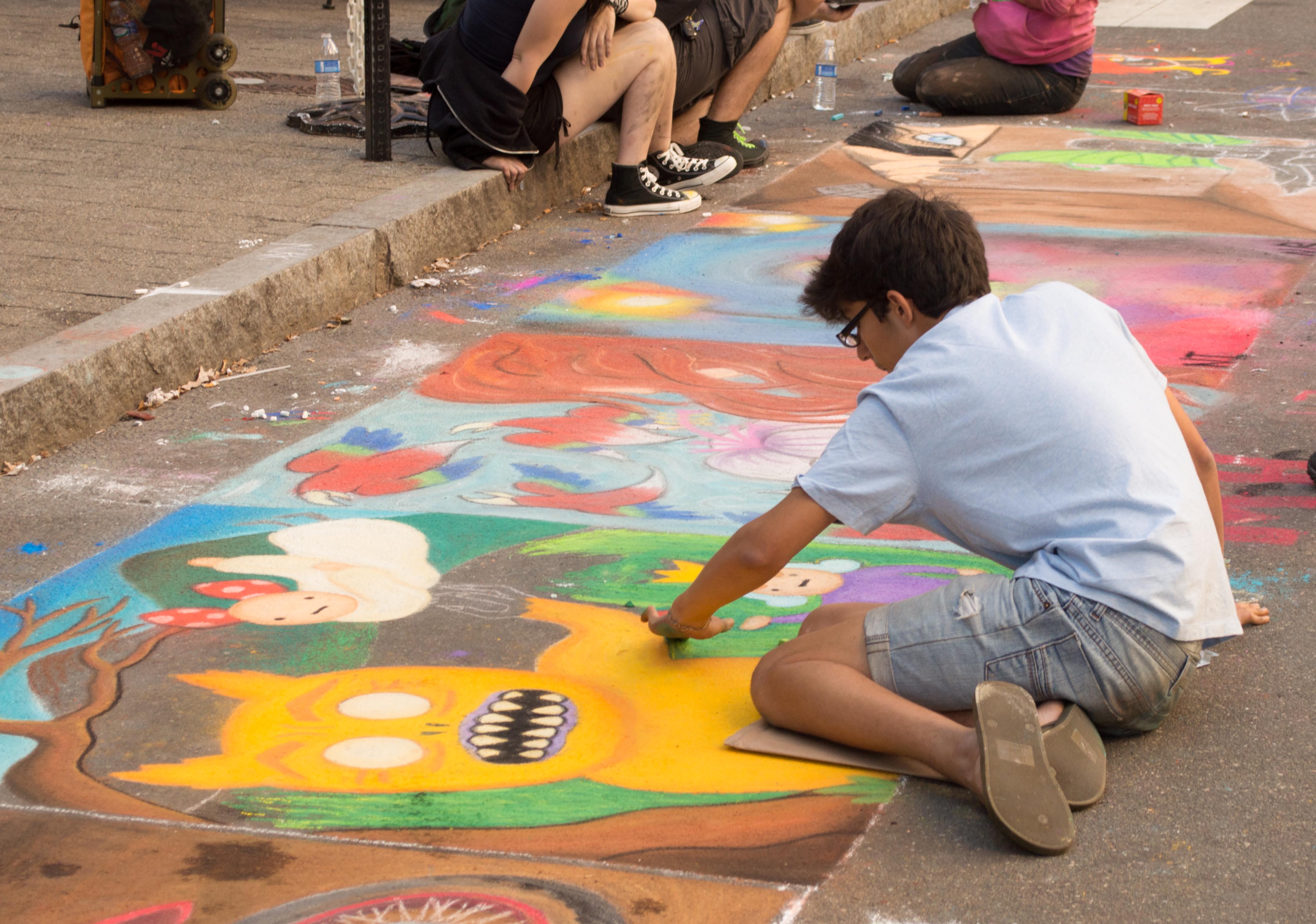
In the afternoon I practiced the piano with a view to getting ready for a lesson on Sunday with Olga. I considered playing a few holes of golf, but didn’t leave quite enough time, so intead I walked over to Fayetteville Street to see the SparkCon street fair. There were several musical groups performing, the loudest of which were, wouldn’t you know, the worst. There was a circus group and various craft and food stalls. My favorite part was the chalk sidewalk art. It’s not so much about artistic profundity as energy and life. Most of the artists were done by the time I got there, but a couple were still at work.
13 09 14_4325

How to touch a piano key, and enjoying some dissonant music

13 08 23_3962
Last week I had my first piano lesson of the new school year. Olga was back from concertizing in Moldova and serving as artist-in-residence at a piano camp in Tennessee, and ready to get to work.

We started with Debussy’s Second Arabesque. I learned the flowing First Arabesque a few years back and continue to discover new aspects of it, and thought it would be fun to add the Second, which is ripply and jumpy, to my repertoire. Here’s a link to an interesting recording of the piece by master himself.

Olga thought there were some fundamental problems. We ended up working for perhaps forty-five minutes on how to touch the keys and play a single short phrase. It was difficult! Not difficult to make the basic tones, but rather to play them with exactly the right weight and color.

For starting the sound, we talked about leaning in with the body, the action of the wrist, the positioning of the elbow, the role of the index finger and the middle finger, the role of the thumb, starting to sink into the key, finding the bottom — all with exactitude. We also discussed ending the sound with similar precision. It was daunting. You might have thought, as I did, that I should have learned the best way to touch a piano key long ago. But then I had a minor epiphany: it takes years to get the foundational physical and mental skills to play one note on the piano really well. So I’m finally really getting started.
13 08 25_3939

We also worked on a section of Rachmaninoff’s Elegy, a hauntingly melancholy piece, and began Chopin’s famous Fantaisie-Impromptu. The FI is a show piece, with a fast beginning section based on a 6 (left hand) against 8 (right hand) polyrhythm. The slow middle section is one of Chopin’s most luxurious melodies. Here’s a link to a performance that I liked by Horowitz. I got Olga to play it for me to get some new ideas of the kind of rhythmic flexibility that might be possible.

Later in the week I read a piece by my friend Michael Tiemann on opensource.com (where I am also a moderator and contributor) promoting open source music. Michael is passionate about music and open source, but I didn’t think his analogy to open source software really worked. Music in the great European tradition has always been open, in the sense that anyone can get the score and fashion their own interpretation. Each musician has access to the composer’s code. It’s hard to get much freer (in the sense of liberty, not beer).

In other musical news, for months I’ve been filling my ears with Mozart’s operas when I travel and each morning when I exercise. But it’s good to try new things. Recently my friend John G gave me a CD of Arnold Schoenberg’s piano music performed by Pollini. Schoenberg was a pathbreaking modernist with his 12-tone system that largely eliminated conventional melody and assured extreme dissonance, which I have always found more interesting in theory than in listening.

But I really liked a lot of the piano music. It is dissonant, but also very expressive – not completely different from Debussy’s later work. Here’s a link to Pollini playing Op. 11, No. 2.

In fact, I ordered the sheet music for Drei Klavierstucke Op. 11, and read through some of it. It would take a lot of work to really play this music, and even after that, a lot of listeners would hate it. I’ve got plenty of other musical projects at the moment, including Liszt’s gorgeous Benediction de Dieu dans la Solitude, to keep me busy, but I may take on some Schoenberg one of these days.
13 08 24_3952

No illusions, but not disillusioned

DSC_0034
At my post-surgery eye checkup on Thursday, after being scanned, poked and peered at, I was happy to hear Dr. Mruthyunjaya declare, “I like what I’m seeing.” My retina was back where it was supposed to be. This doesn’t mean everything will be just fine. Vision in my left eye is quite blurry now, and it will be some months before we’ll know how much there will finally be. The likeliest answer is substantially less than before. But as Dr. M’s fellow, Dr. Martell, pointed out, even if there’s a lot of blur, it could still help with peripheral vision, and serve as a backup in the event of a right eye catastrophe.

Anyhow, it is what it is. The Nigerian novelist Chinua Achebe died this week at age 82. I have not read his work, but the Times obit made me think I might like it. It quoted Nadine Gordimer as saying he was “a writer who has no illusions but is not disillusioned.” A good way to be.

I was also happy that Dr. M cleared me to resume exercising, though he suggested I wait another week before my next killer spin class. So early Friday morning, my usual spinning day, I happily did a functional fitness routine and a half hour on the escalator stairs. The stairs are a relatively new machine at O2 Fitness, and they are remarkably effective at pushing up your heart rate. As usual, while sweating away I listened to some opera (the incredible second act of Mozart’s Marriage of Figaro) with my MP3 device and read on my tablet device.

I reread some on the ideas of Jonathan Haidt in The Righteous Mind: Why Good People Are Divided by Religion and Politics, whose name is pronounced “Hite,” as I learned this week when I heard him give a lecture at Duke. My earlier thoughts on Haidt’s theory are here, but I’m still processing his big ideas, which point dramatically away from traditional political theory and its reliance on rationality. His TED talk on the differences in ethical systems between liberals and conservatives is a nice introduction to his theory.

As Haidt observes in the TED talk, there are two types of people: those who like new ideas and experiences and those who prefer the safe and familiar. He notes that the latter are the people who like to eat at Applebee’s.

On Thursday Sally and I tried for the second time to eat at a new restaurant in our neighborhood, Dos Taquitos, and again failed. The place was cheerily hopping but the wait time was too long for us, so we went down Glenwood Avenue to the uncrowded Blue Mango for some Indian food. We had a delicious meal featuring masaledar allo gobhi (cauliflaur and potatos) and eggplant bhartha. We couldn’t finish it, and I asked for a take-home box, which I carefully prepared and then accidentally left on the table. Darn!

For more new musical ideas, I had a piano lesson with Olga on Saturday morning. It was invigorating! I played Liszt’s Liebestraum (Dream of Love) No. 3, a famously beautiful piece (here played wonderfully by Evgeny Kissin). She gave me a massive compliment, and I quote: “Wow!” She thought I’d vastly improved, and was getting a richer sound. But of course, it can always be better. We worked on getting a more stable connection between the body and the instrument, including not just the fingers, but also the back and the core. She showed me on a type of touch involving a very relaxed hand with mostly arm movement. She also gave me some new ideas on pedaling, including using a slow, slightly delayed release. As she noted, it makes magic.
DSC_0039

Ballet paintings, fossils, and a piano recital

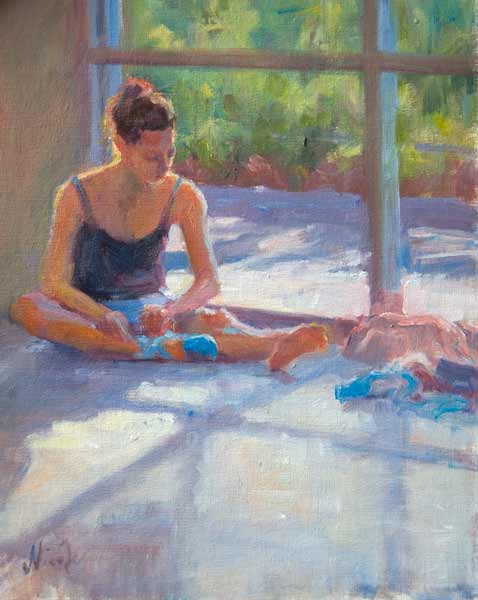
Light on One’s Feet by Nicole White Kennedy

Last Thursday Sally and I had lunch at the Remedy Diner, where my sandwich was the Tempeh Tantrum, then went to a gallery to to look at paintings by Nicole White Kennedy. Kennedy, a local artist, paints in an Impressionist/Post Impressionist style that I once thought of as old hat. My early art education stressed the triumph of modernism and abstraction. But over the years I’ve really enjoyed Kennedy’s landscapes and cityscapes in her husband’s fine Italian restaurant, Caffe Luna. I’ve gradually gotten past my prejudice in favor of the modernist aesthetic. Artists show us multiple ways to see the world, and it’s fun to try different ones.

Anyhow, I was intrigued to learn that Kennedy had worked up a show of works featuring dancers from the Carolina Ballet. We really liked the show. No doubt it helped that we came to it as balletomanes, and that we could recognize some of our favorite ballerinas. But she unquestionably had a feel for the interiors and exteriors of the dancers and their work places.

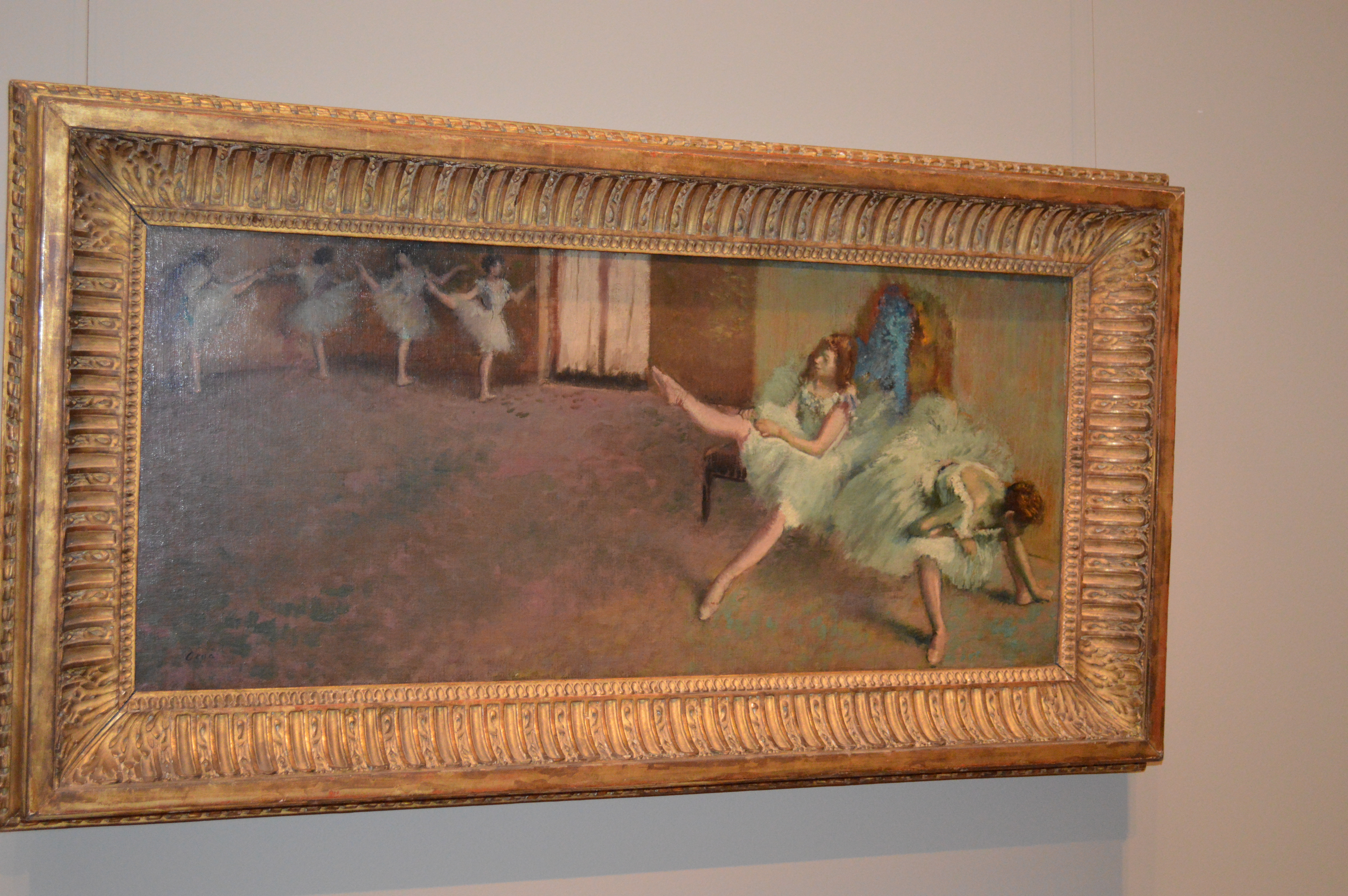
I was conscious that the works owed a debt to Degas, both in their behind-the-scenes intimacy and the juxtaposition of ethereal sweetness and stark angularity, but I didn’t find this bothersome. Artists always borrow ideas from other artists and build on them, just like scientists and inventors. We were particularly touched by the paintings above and just below, and bought them.

Dancer Removing Turquoise Points by NWK

The next day I flew up to DC for a gathering at the Supreme Court in honor of my old friend Justice Elena Kagan, which was highly nostalgic and which I will try to write about soon. But as post-election therapy, I’m focusing just now on art. With my free morning I sampled the Smithsonian museums, which always make me proud and happy to live in the USA.


First I visited some of my favorite works at the National Gallery. These included the Rembrandts and other Dutch masters, including especially the two exquisite Vermeers, as well as the French Impressionists. Still thinking about dancers and art, I paid particular attention to the Degas paintings and sculptures of dancers. He clearly loved the subject, and it touched me. But I must say, his dancers are not as lithe and athletic as the Carolna Ballet ones.

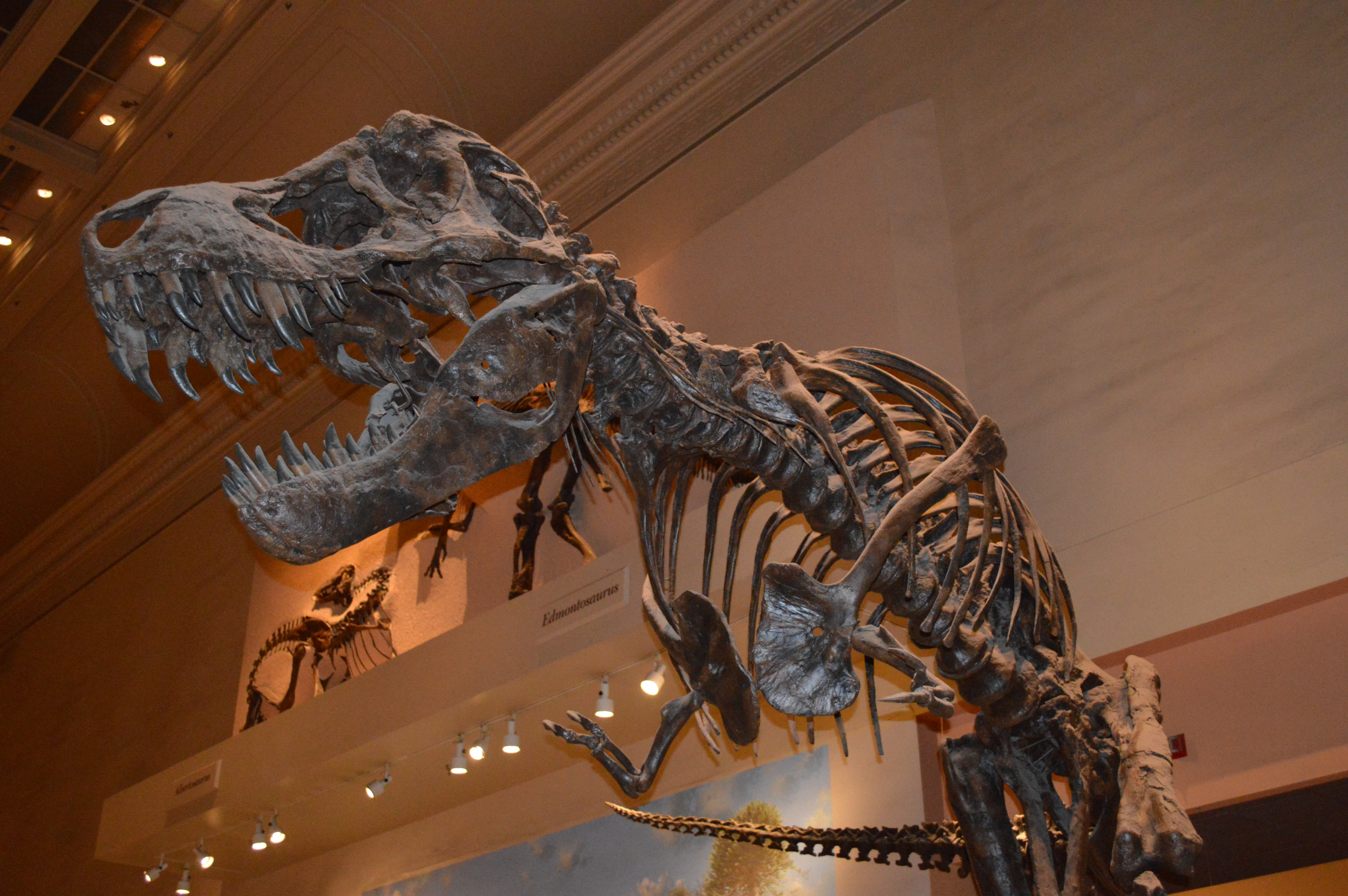
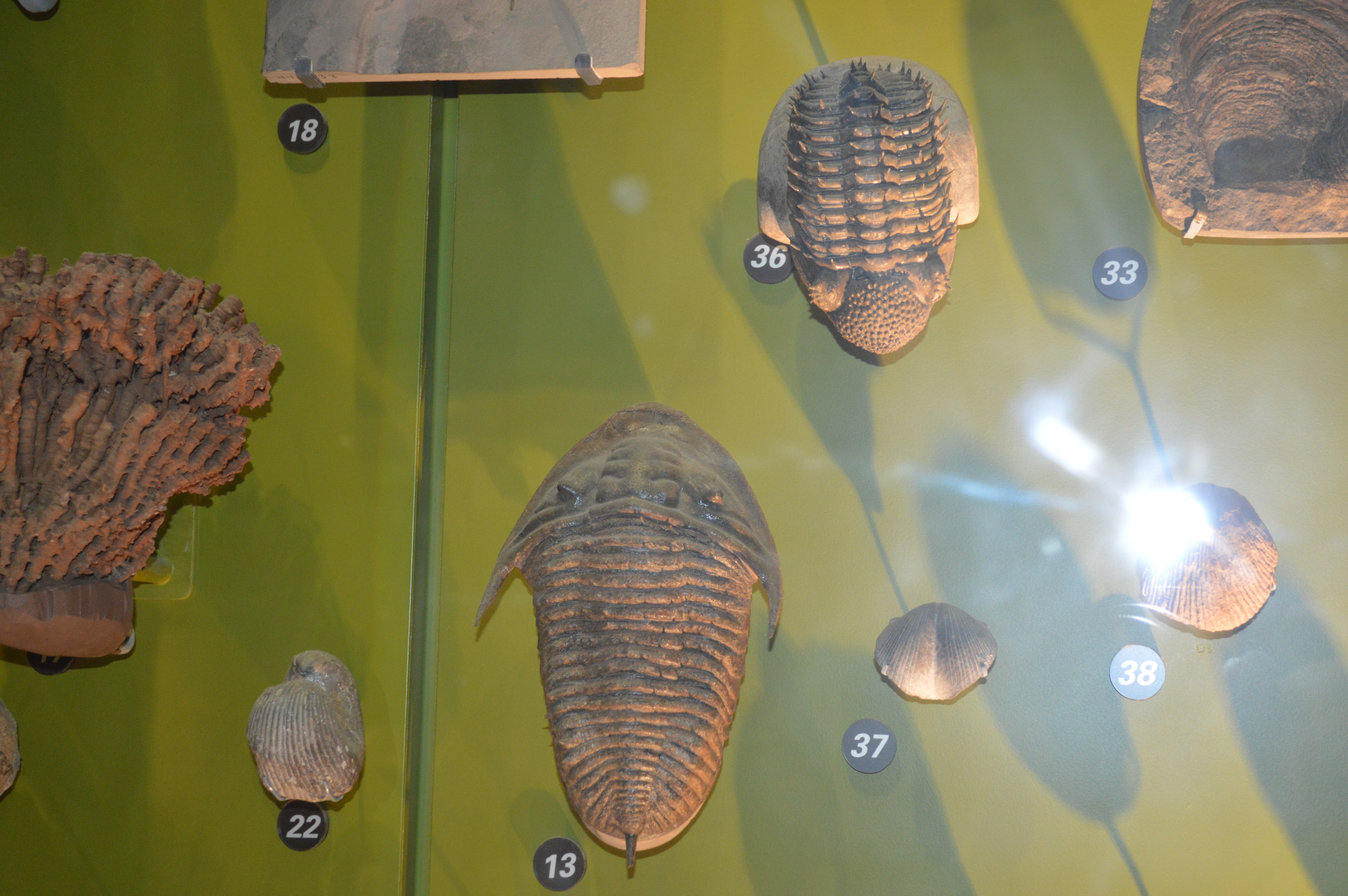
Next, I walked down the Mall to the Museum of Natural History. As always, I enjoyed looking at the dinosaur fossils, but I wanted to have a close look at the trilobites, which are much much older than dinosaurs.

Trilobites were marine arthropods that began their run around 520 million years ago. They developed an amazing variety of body types during the 270 million years (give or take) that preceded their extinction. RIP. Nature has done a lot of amazing experiments!

I returned to Raleigh on Sunday afternoon in time to go to the recital of my piano teacher, Olga Kleiankina. Her program, like her, was Russian: Alexandr Scriabin (1872-1915), Nikolai Medtner (1880-1951), and Sergai Rachmaninoff (1973-43). She played brilliantly. She’d told me a couple of weeks ago that she was struggling with memorizing the Medtner piece (the Tempest Sonata), and I was feeling a little anxious for her, but she seemed completely in command. The piece was very dense, and at first I was a bit bewildered, but then I got my bearings. I particularly enjoyed the Scriabin Black Mass sonata. From our work together, I know how intensely she focuses on sound colors, and now that I’ve learned to hear some of those things, the music took on a new dimension.

There was a good piece on the Sunday NY Times about the sense of hearing, and the difference between hearing and listening. According to Seth Horowitz, we react to auditory signals 10 times faster than visual ones. Hearing is an early warning system, among other things. He notes that close listening is hard in a world where there are endless distractions, but that we can get better at it. I concur.

A piano tuning and a ballet board meeting

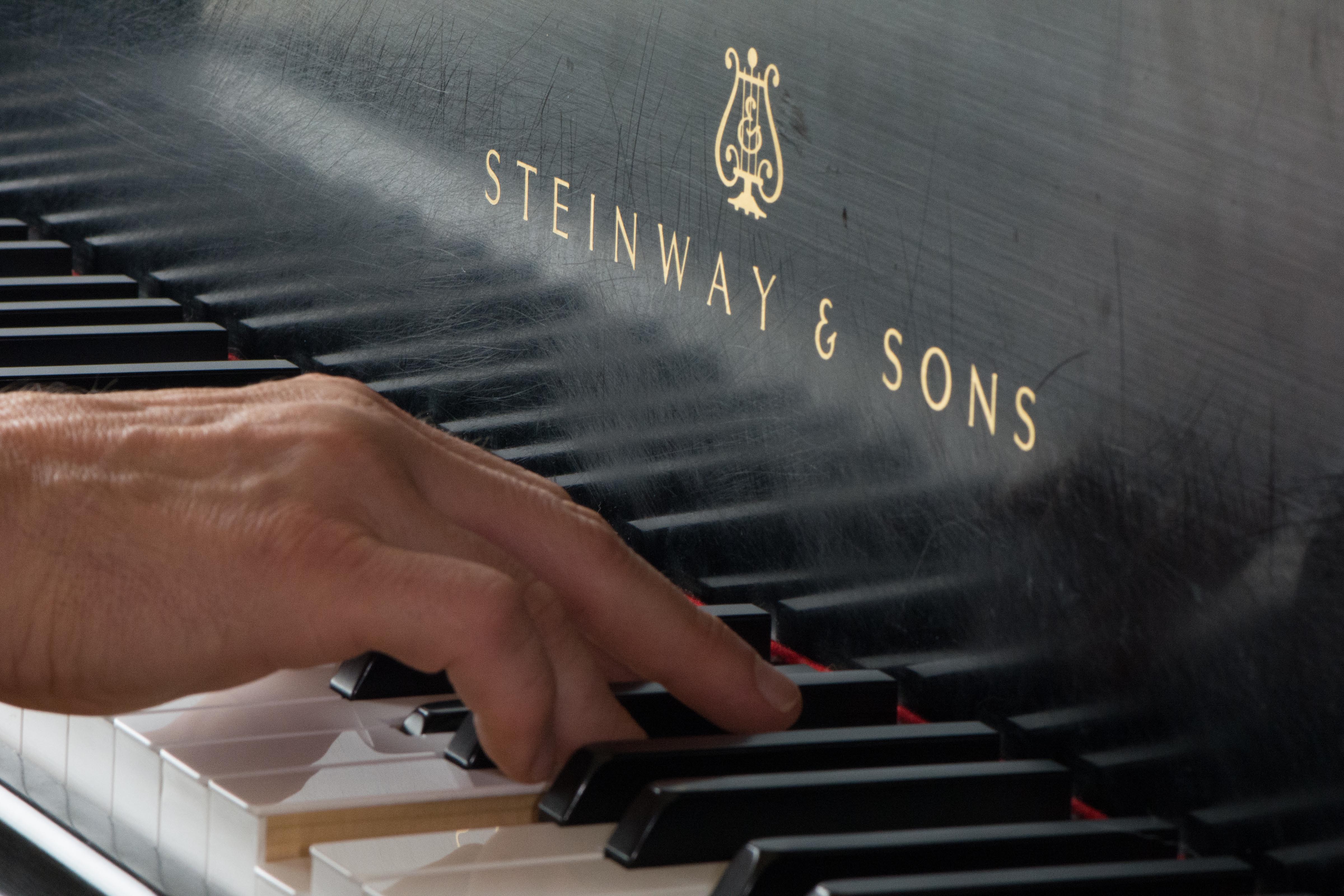
My Steinway grand piano (an A) is a gorgeous musical instrument, but it is subject to entropy. It needs a regular tuning, and lately a few notes in the lower-middle range sounded overly bright to me.

On Saturday, Phil Romano, a master Steinway technician, tuned it and did some voicing by needling the hammers. Phil was about to take off on another tour with Paul McCartney, and shared some interesting stories of Sir Paul’s performing in the Queen’s Jubilee, the Olympics, and South America.

With the benefit of Phil’s good tuning and voicing, I had a gratifying session with my instrument on Saturday. Recently I’ve felt a bit stuck on the same musical plateau. Although this has happened from time to time over the years, each time it’s uncomfortable, as I wonder whether I’ve gone as far as I can go. An essential part of the joy and challenge of the classical tradition, for me, is forward movement. It’s true that I’m now playing better than I ever imagined I would, but still, I would see no point to practicing if I didn’t expect to achieve greater technical and artistic mastery. This is one of the reasons it is so important to have a teacher — to get you unstuck when you’re stuck.

Anyhow, today felt as if I was getting unstuck. For a devoted student of the piano, there are few things more pleasurable than a freshly tuned Steinway. I played some of my favorite Chopin, Debussy, and Liszt works, and made some headway on my assignments from Olga — Rachmaninoff’s Elegy and Chopin’s etude op. 25 no. 12. Also, for a special treat, I read through some of Tchaikovsky’s Nutcracker. The Waltz of the Flowers really works as a piano piece! I’d like to polish it up for the holidays if I can find the time.

Speaking of the Nutcracker, this week I had my first meeting as a new member of the board of directors of the Carolina Ballet. I’m really pleased to be able to help support this wonderful company. It’s also good to meet other people who really love ballet. As Ricky Weiss pointed out at the meeting, not everyone likes it, and some actively dislike it, but those who care about it care a lot.

In his report, he noted that we have a particularly strong group of dancers now. In the all Balanchine program, he had four different Apollo’s. It is, he said, an extraordinary thing, particularly in a company of this size, to have four males who are all capable of fully expressing this difficult role. (In an interesting coincidence, this morning the dance critic of the New York Times discussed Balanchine’s Stravinsky ballets and led off the discussion with Apollo.)

There are lots of things to be happy about, including the company’s large number of performances, the large number of new works, and the consistently high standard of performance. Weiss noted that the current group of dancers have achieved a high level of individuality, by which I think he meant they are artists who express not only the classical tradition but also themselves.

At the same time, there is a real concern about company finances. This is no great surprise. Since the recession of 2008, times have been hard for lots of people, including lots of arts organizations. But realizing this does not lessen the difficulty for this particular organization. I continue to think that there are more people around here who would enjoy ballet who haven’t yet discovered it, including some who would find it rewarding to help support the company. I hope so.