The Casual Blog

Category: photography

Home alone with the animals and our new doggy portrait

13 05 31_1866
Sally went to Ashville with her tennis team to compete in the state finals this week. They’ve had success this year competing at the 4.0 senior level, and Sally’s feeling good about her game. I was happy for her, but a little melancholy to be home alone. I missed her.

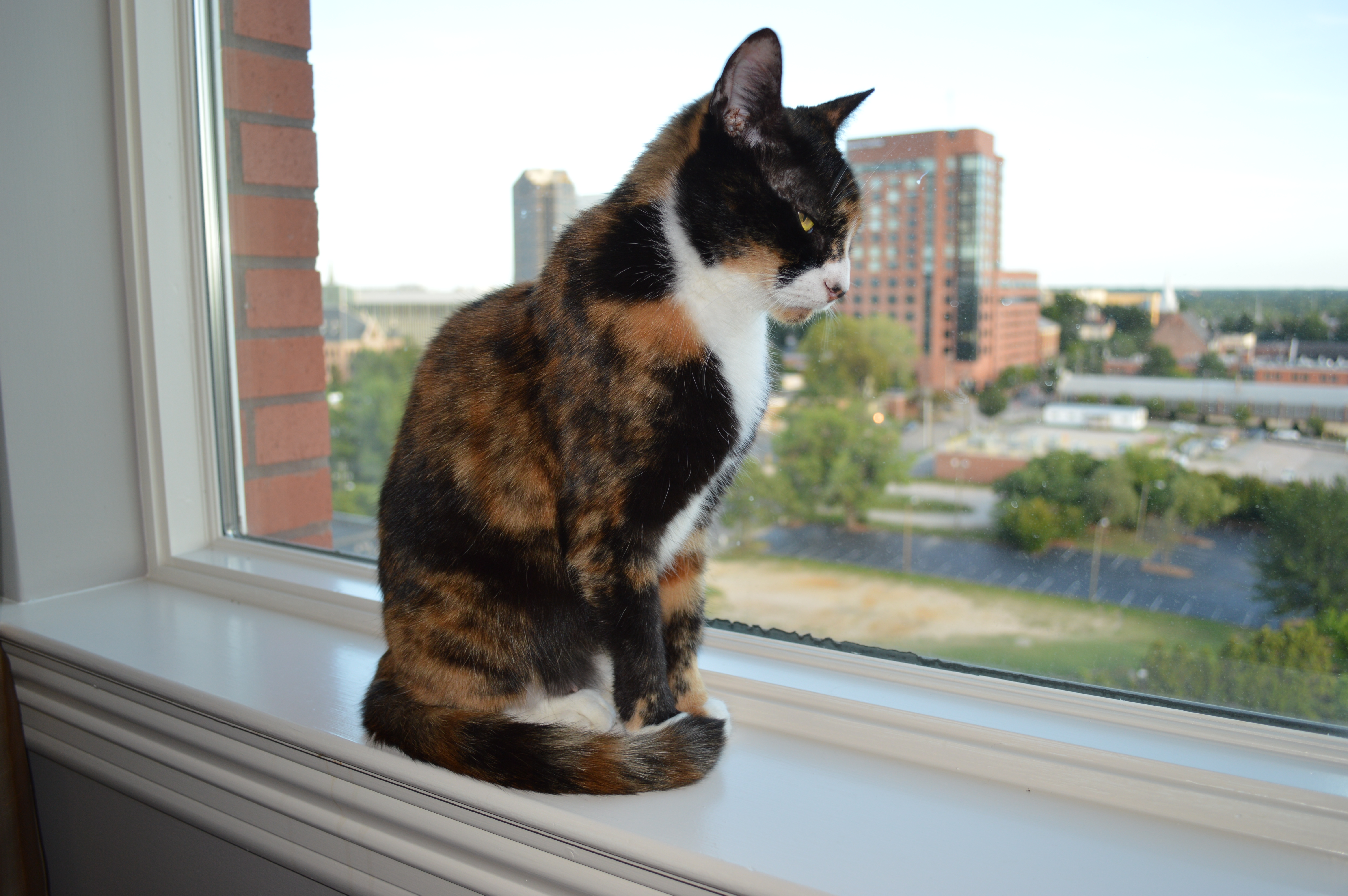
So did the animals. The first day they spent time sitting by the front door waiting for her. The cats showered me with affection that they would normally give to her, and Stuart was much more excited than usual when I came home from work. Our routine called for a pee walk outside and dinner, which are certainly high points of any dog’s day, but even after dinner he wanted extra petting.
13 05 31_1862_edited-1
Stuart was immortalized recently in a drawing by Sally’s cousin, Alison (Muffy) Brush. Muffy turned out to be really talented, and we were very pleased with the work. It’s based on some of my photographs, but captures his essence much better than the photos did. As our dance friends will note, he has beautiful turnout. I think Sally’s frame selection really works.

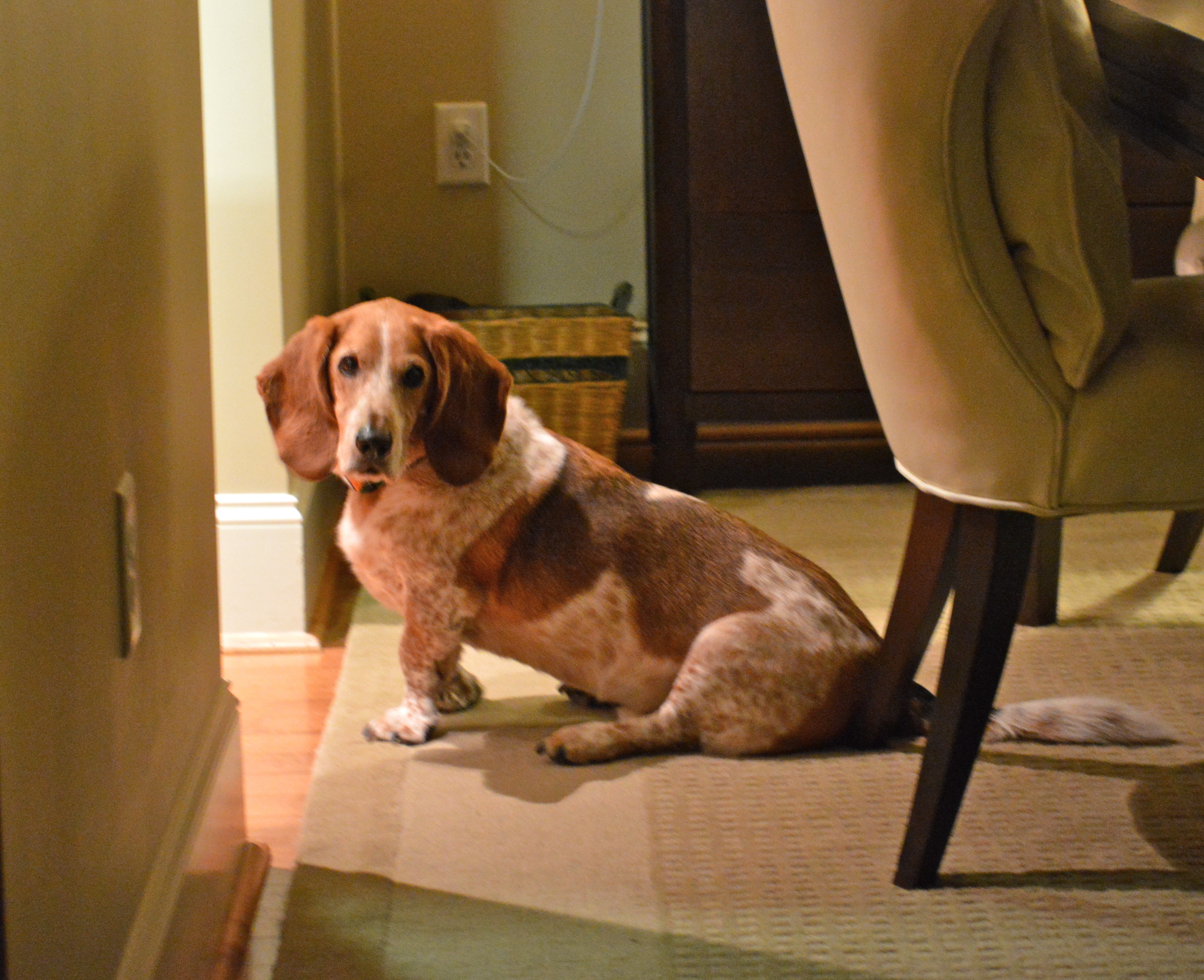
Stuart is 10 now, and showing his age. He’s a basset-beagle mix – a bagle, or perhaps a beset. He still likes people and being petted – he’s met many people during elevator rides and is quite popular in the building – but unlike in his younger days, he’s wary of other dogs. Anyhow, as we often say, he’s a good dog. Handsome, too, I think.

I was somewhat the worse for wear from our trip to the Outer Banks last weekend. For the first time in many moons, I went for a substantial run – four miles – on Sunday. It was a lovely day, sunny and mild, and I felt fine, even when I got my heart rate up to the low 160s. Only hours later did I begin to feel pain in my knee, and more and more soreness in my quadriceps. The next day I was so sore I could barely walk.

Also, according to my usual pre-morning-shower weigh-ins, I somehow gained 6.8 pounds between Friday and Tuesday. This was a shock! Did I really eat that much? I enjoyed Keith’s food, but I consciously kept from stuffing myself – no second helpings, for example. I snacked on pistachios, which were kept in a bowl that somehow never emptied out, and that may have had something to do with it.

Anyhow, I was gimpy and heavy, but things improved over the course of the week. On Friday, I got to the gym when it opened at 5:30 a.m. and got in a mega-workout: 30 minutes of lunges, squats, step-ups etc. a 50-minute spin class (a major aerobic accomplishment), 25 minutes of upper body work, 10 minutes of core exercises, and 10 minutes of stretching. By the time of my morning weigh-in, I had lost 3 pounds from the previous day, and six for the week.

On the drive back from Corolla, Sally and I talked about possibilities for our next adventure. We try to do something fun outside the usual routine every month or so, and the next four week interval brings us almost to the July 4 week. The Fourth is on Thursday, so if I can get off that Friday, presto, we’ve got a four-day weekend. We’ve been wanting to visit Gabe in Colorado, and also wanting for a long time to visit some of the beautiful country in southern Utah, which is within driving distance of Telluride. I took on the job of researching the possibilities of fitting this into a July 4 trip.

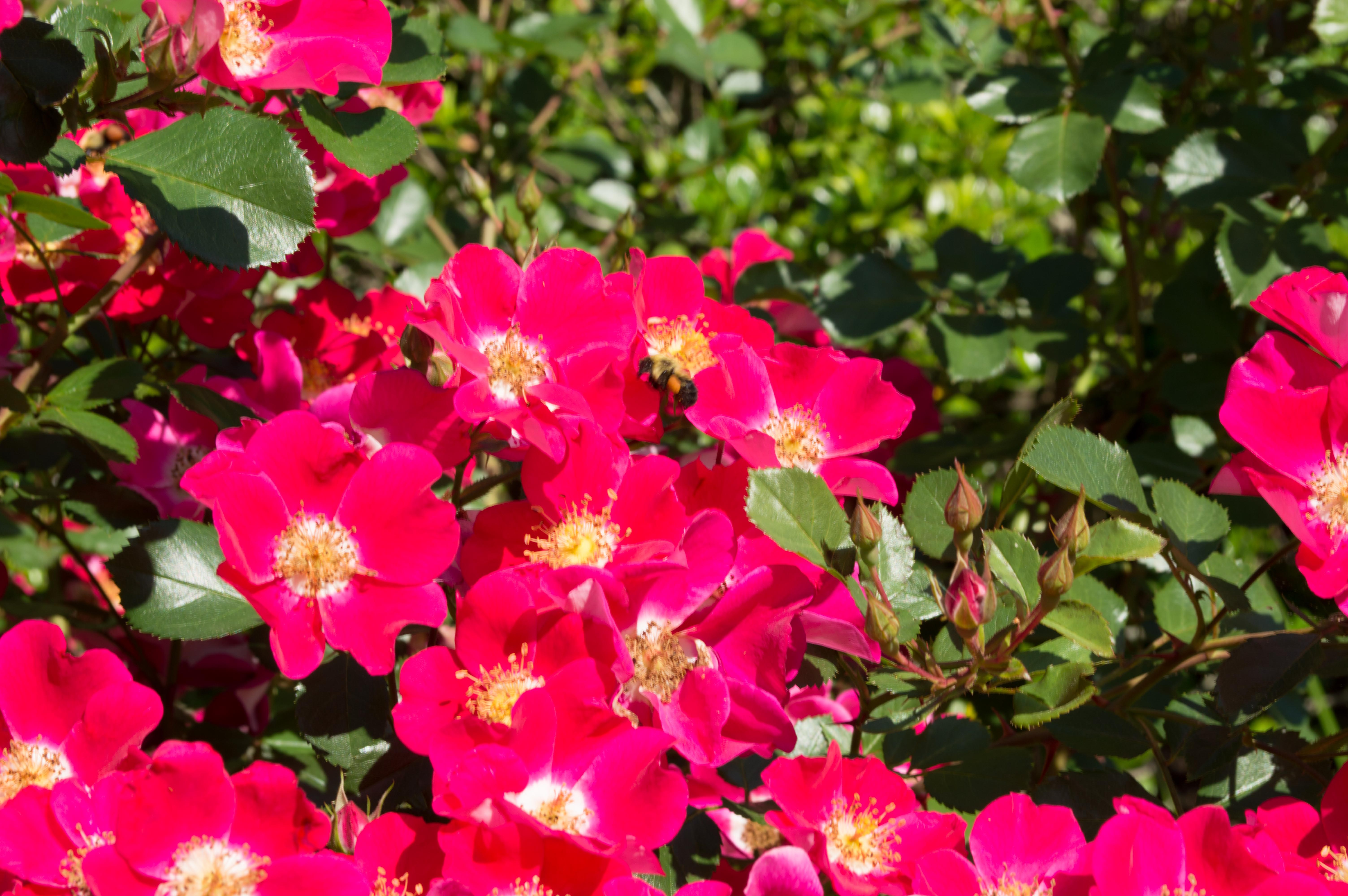
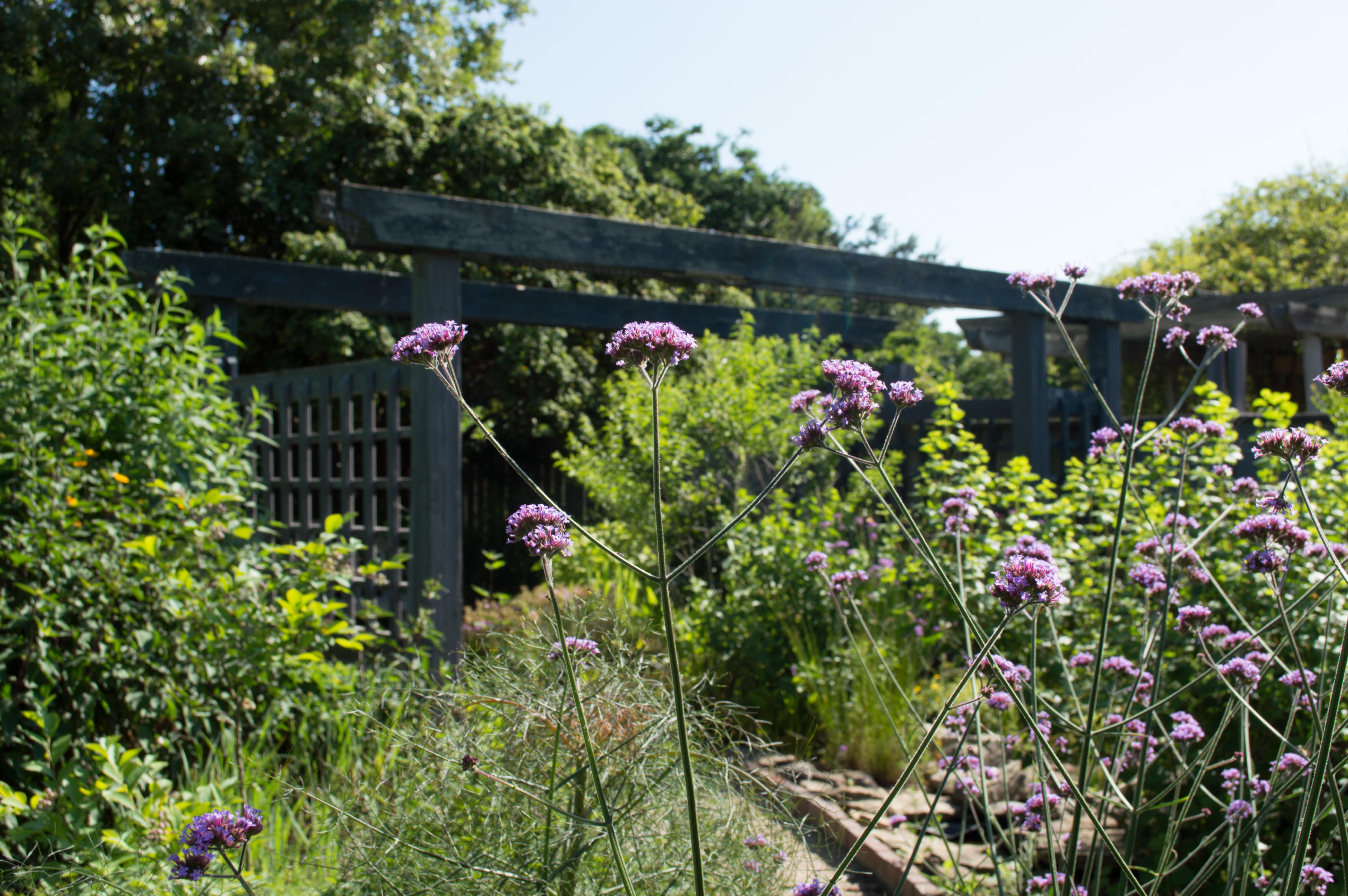
Saturday morning I decided to skip yoga and go on a little photo safari to see what was blooming at Raulston Arboretum. There were some beautiful flowers, and it was quiet and calm. I made a few images I liked. 13 05 31_1883
13 05 31_1885
13 05 31_1900
13 05 31_1911
13 05 31_1888
13 05 31_1892
13 05 31_1917

A fun Memorial Day weekend on the Outer Banks — eating, talking, running, looking at wild horses and birds, and reading

Jane and Keith's beach house in Corolla, NC

Jane and Keith’s beach house in Corolla, NC

Again this year, my sister Jane invited us out to the Outer Banks for Memorial Day weekend, and we happily accepted. The beach is a good place to relax and restore. After weighing the pros and cons, we decided to drive out in Clara, who with her sporting heritage rides rougher than the Suburu Outback, but is also prettier and more exciting. Traffic wasn’t bad. We went at the speed limit plus 9, and the heavy complement of state troopers along I-64 tolerated the overage.

Charlie the Boogle

Charlie the Boogle

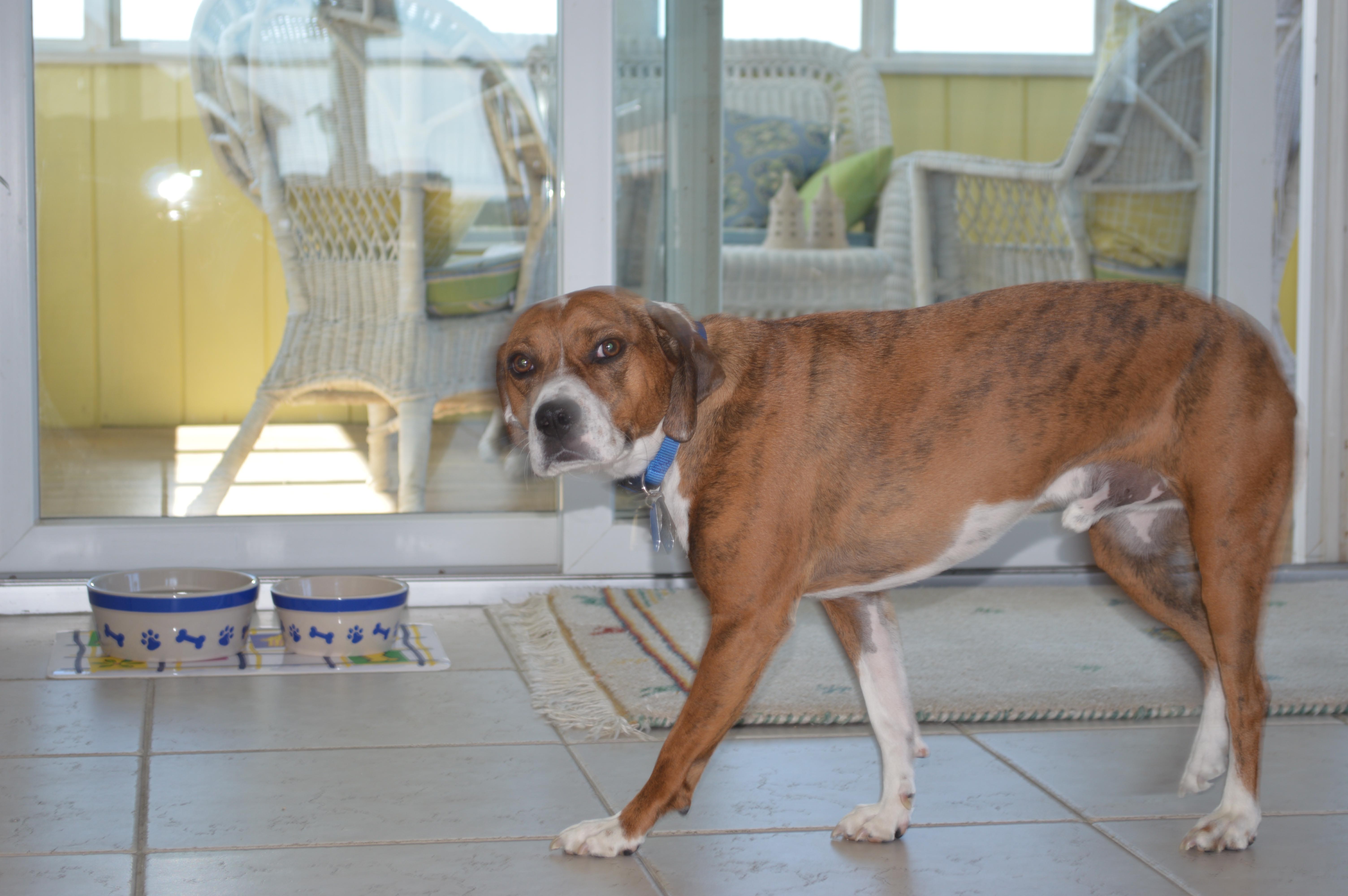
We got to Corolla about 9:30 p.m., and everyone was up and happy to see us. We enjoyed a glass of Keith’s merlot before bed. We also met their new dog, Charlie, a friendly beagle-boxer, or boogle. The camera made him a little nervous.

The next morning was sunny but chilly and windy. Keith prepared an egg casserole and fruit salad for breakfast, and we caught up on family news.
13 05 24_1703
We also talked a bit about technology and biology. I briefed them on some of the progress on understanding the human microbial community, which I read more about in the piece by Michael Pollen in last Sunday’s NY Times. Pollen wrote, “It turns out that we are only 10 percent human: for every human cell that is intrinsic to our body, there are about 10 resident microbes . . . . To the extent that we are bearers of genetic information, more than 99 percent of it is microbial. And it appears increasingly likely that this ‘second genome,’ as it is sometimes called, exerts an influence on our health as great and possibly even greater than the genes we inherit from our parents.”

This is mind-blowing, paradigm-shifting stuff. One researcher says “we would do well to begin regarding the human body as ‘an elaborate vessel optimized for the growth and spread of our microbial inhabitants.’” We’re just starting to understand some of the links between human health and microbial health. It’s a huge mistake, which most of us have previously made, to think of all germs as things that should be exterminated. Certain bacteria are essential to health, and problems in the microbiome appear to relate to chronic disease and some infections. Human health can be thought of as “a collective property of the human-associated microbiota . . . that is, as a function of the community, not the individual.”

The Pollen article is a great introduction to this subject, which is also discussed in The Wild in Our Bodies by Robert Dunn.
13 05 25_1642_edited-2

After breakfast, I went out for a run with my nephew David, now 13 and growing fast. David has fallen in love with lacrosse and is getting lots of playing time as his team’s goalie, so I figured he would probably run me into the ground. Instead, he developed a major cramp problem, and so we did more walking than running. I learned about his prize-winning science fair project, which involved growing and measuring characteristics of a fast growing plant called brassica rapa.
13 05 25_1640_edited-1
13 05 26_1751

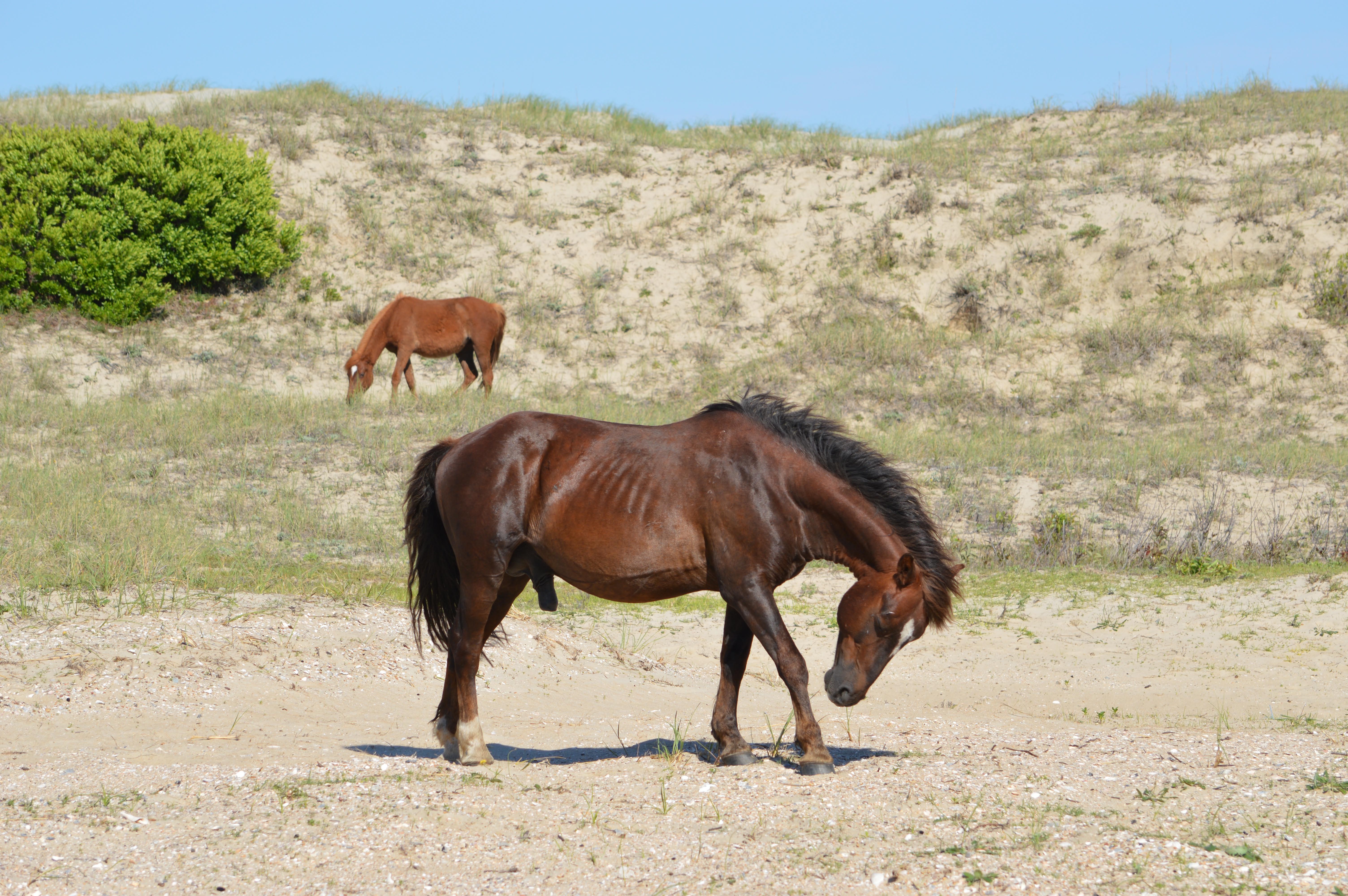
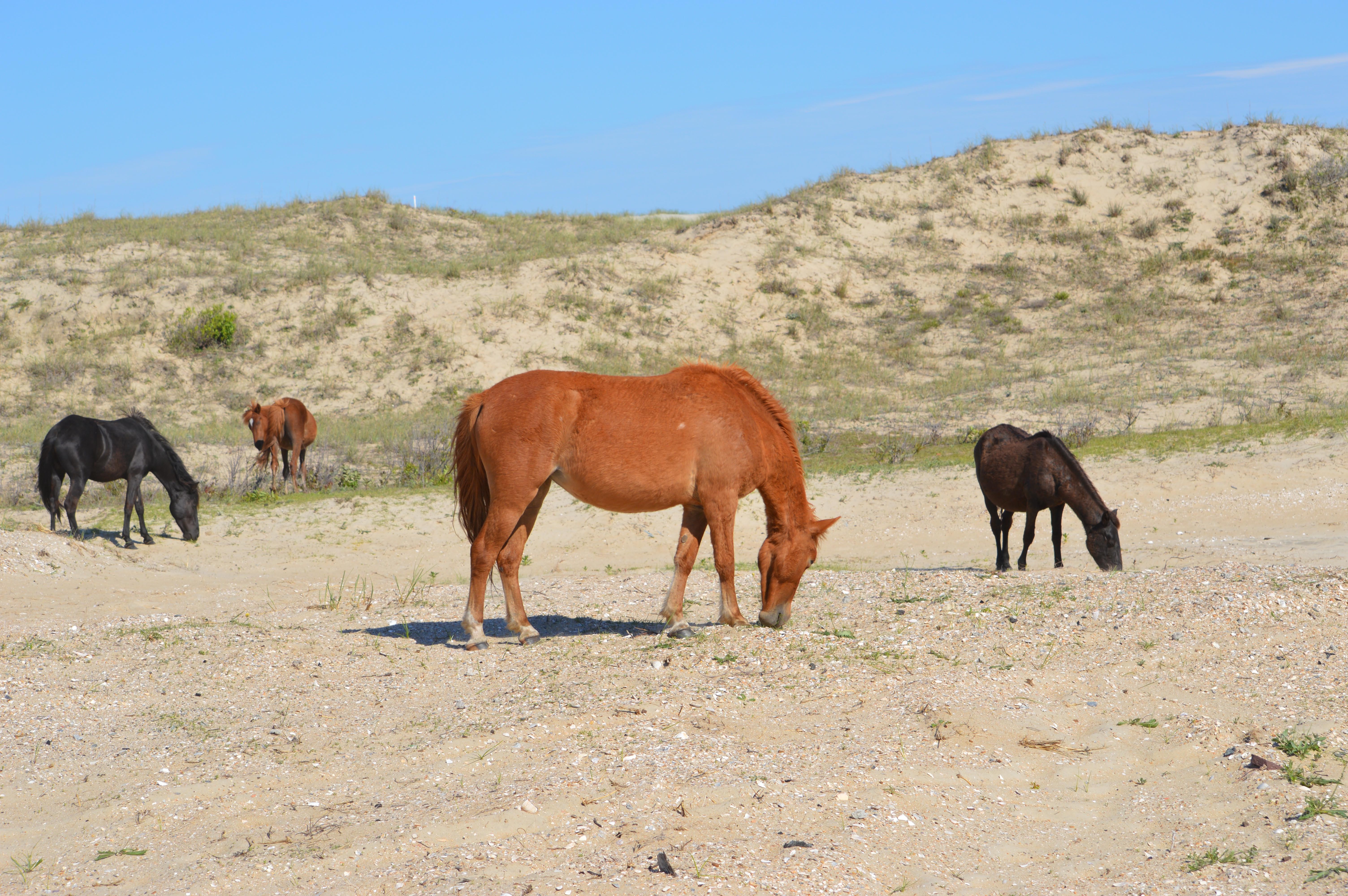
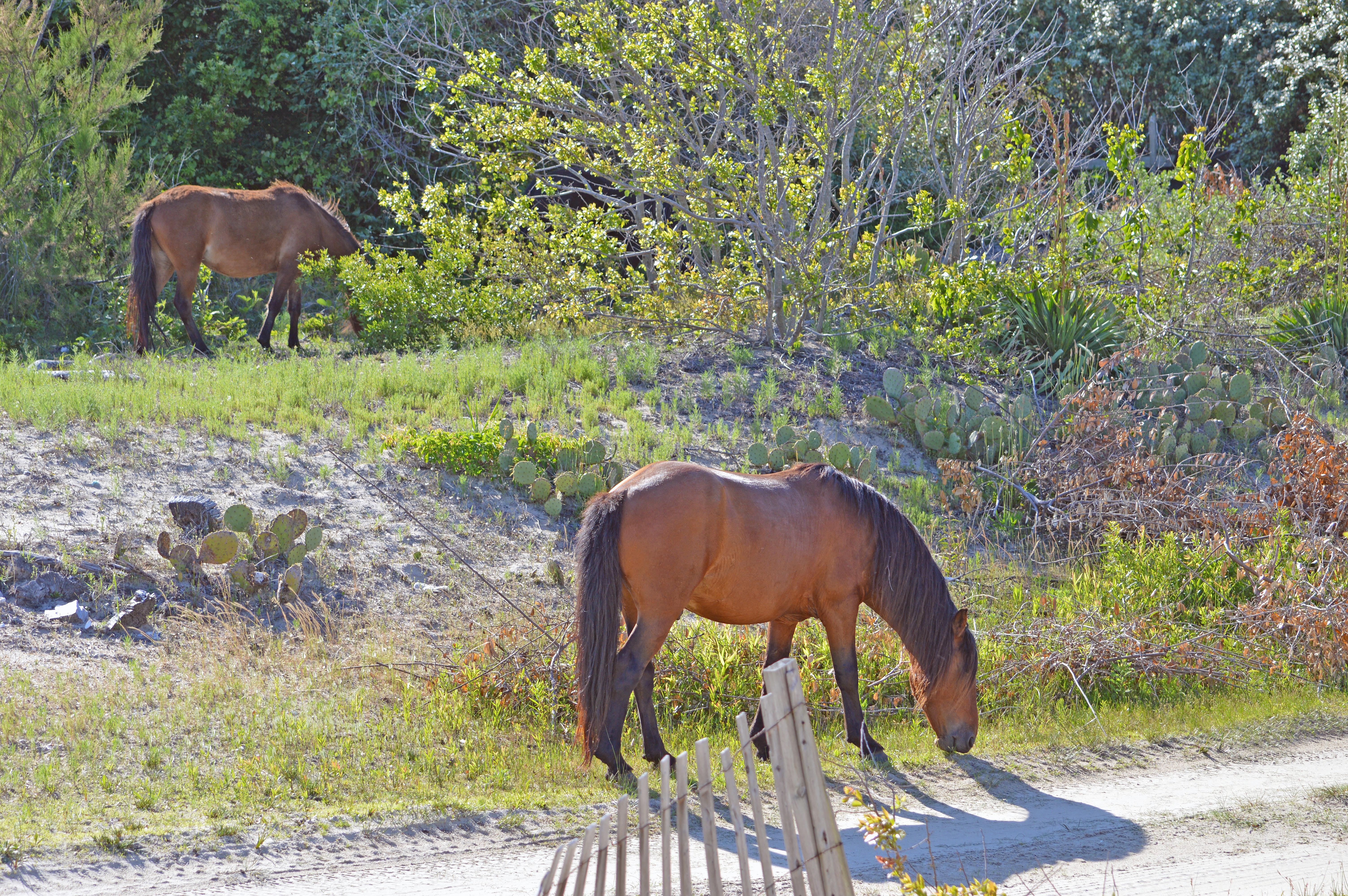
Keith cooked an amazing lunch – cucumber soup and pasta asparagus salad. Then we loaded up in the 4WD sport ute, and drove north on the beach looking for wild horses. Past the lifeguard station, we turned left into the sand roads through the gnarled trees and bushes of the maritime forest. We found several horses. It’s cheering somehow that these big animals can make their own way in small wild areas surrounded by development. We also saw a fox.
13 05 25_1571
13 05 25_156013 05 25_1608_edited-1

I had time for some reading in the afternoon, and got a good start on Things Fall Apart by Chinua Achebe, the Nigerian writer who died recently. This is his first and most famous book, and perhaps the most famous work of African literature to date. I was immediately hooked. The prose combines the muscular economy of Hemingway at his best with the vision of Faulkner, with an overarching tenderness and humanity. The story is about African village life, which, it turns out, has many of the same emotional components as our lives.
I also read more of More Balanchine Variations by Nancy Goldner, which is a book about various Balanchine ballets. Goldner is a generous-hearted critic, and she loves her subject. It’s so hard to bring dance to life other than by dancing, but she comes close.
13 05 25_1678

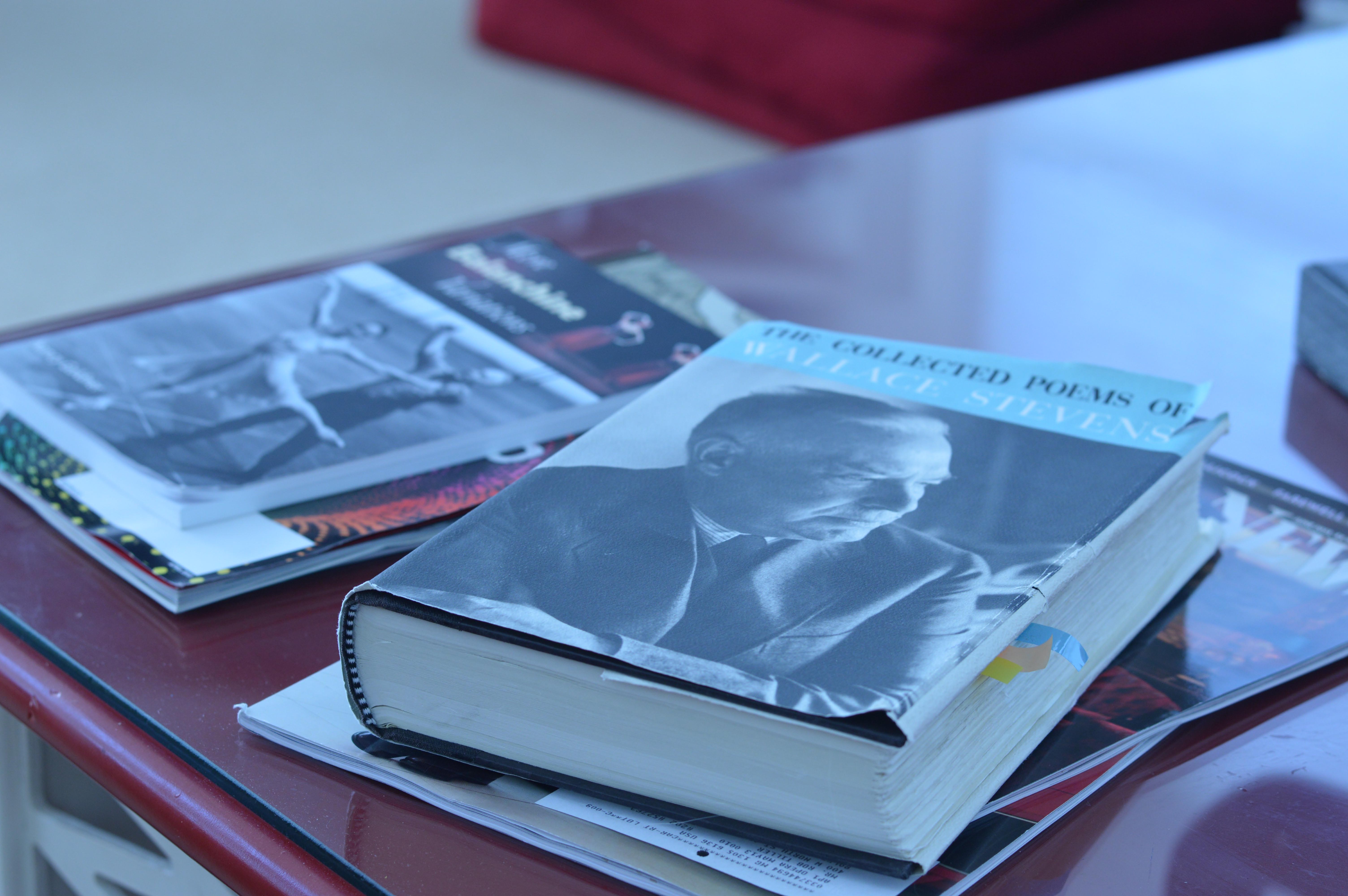
One other major bit of reading was chunks of the complete poems of Wallace Stevens. I came close to reading them all last year, before shelving the project some months back. Stevens is challenging, and not uniformly great – some of the poems seem mannered or even mad. But the greatest poems are both beautiful and profound. My favorite is still Sunday Morning, which is a sly, subversive, arresting, sensual, and humorous. I memorized it, and it still gives me goosebumps at the end, with its powerful image of “casual flocks of pigeons make/ ambiguous undulations as they sink,/ downward to darkness, on extended wings.”

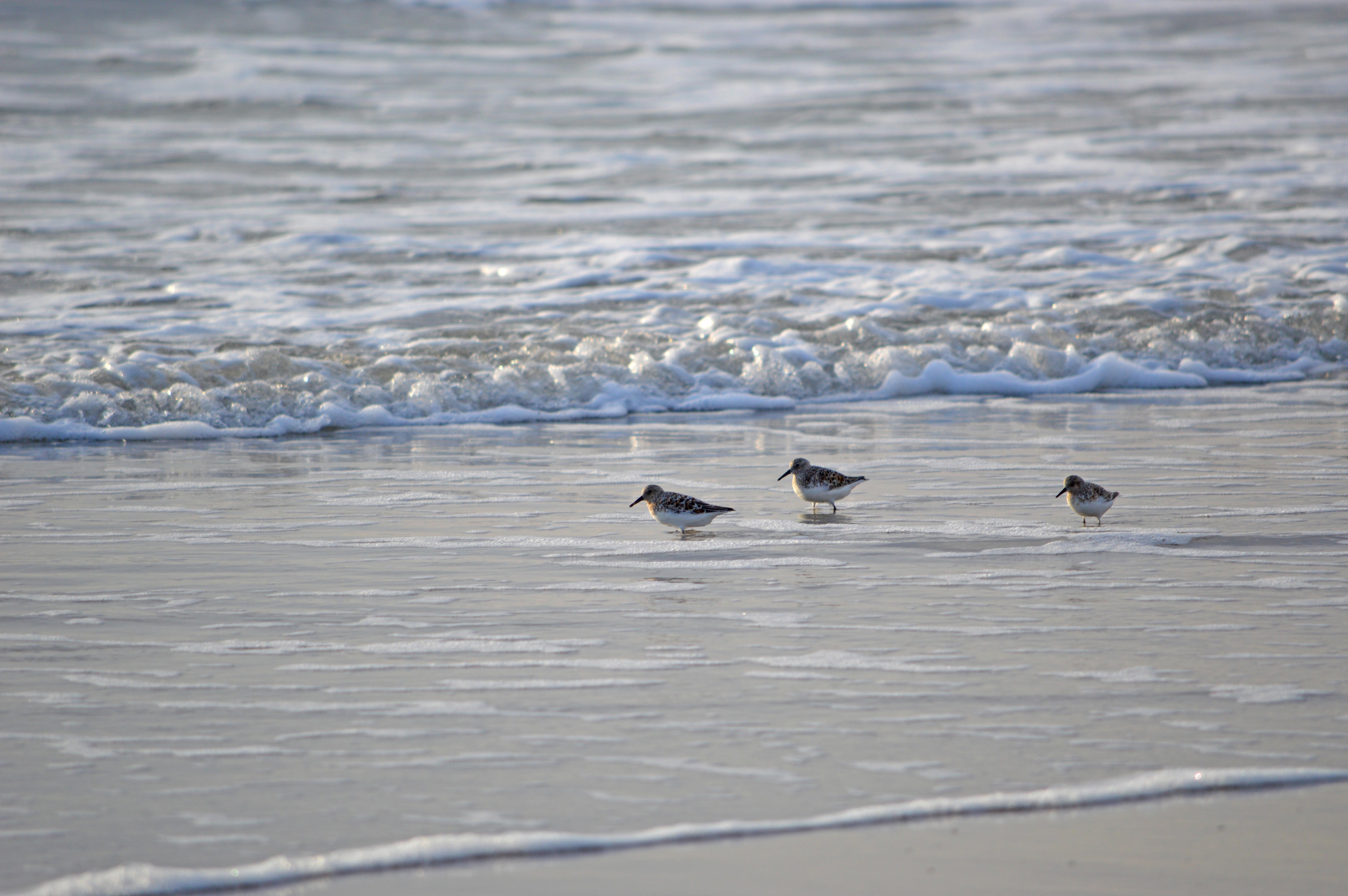
Stevens proposes this joy in nature as an answer to religious asceticism, and it works for me. It also makes me look at the world with different eyes. For example, in back of Jane and Keith’s beach house, purple martins are still numerous, and still flying fast feeding on insects. It was a pleasure to watch them.

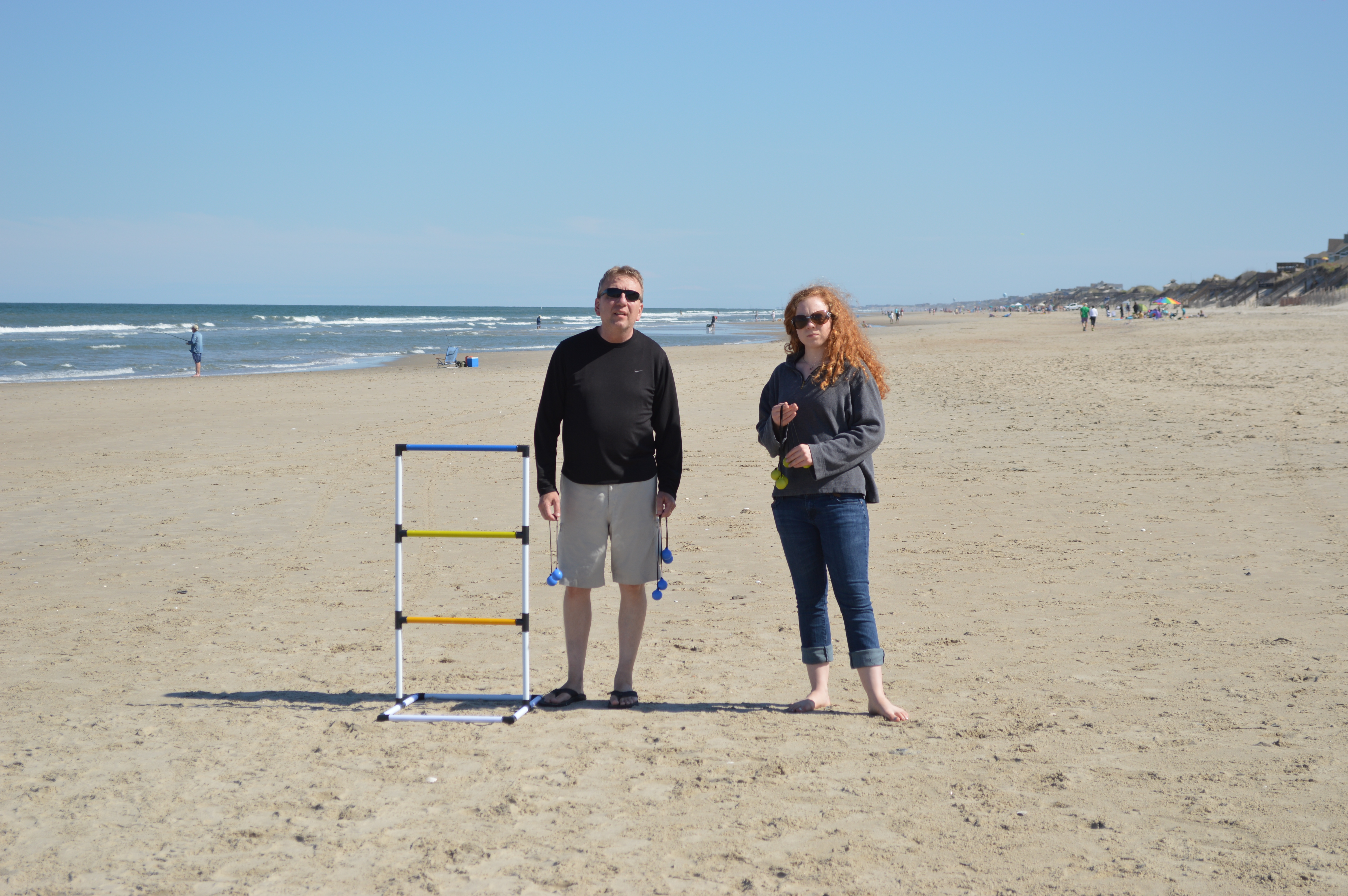
We played a new beach game on Sunday afternoon. It’s one of the many variations on horse shoes, but a good one. Points are scored by throwing a string with weighted balls on each end around a bar. They couldn’t remember the name of it, but no matter. It was fun!
13 05 26_1763

13 05 26_1759

Our dive trip to Cozumel

_DSC0015 copy

Sally and I just got back from a week of scuba diving in Cozumel, Mexico. As a friend recently noted, we like adventure vacations. If you do, too, you would probably like Cozumel. The diving was great, and the above-water scene was lively, too.

Cozumel is a warm and enterprising place. Most of the real beauty, for me, is in the reefs, but I also really liked the people. The Mexicans I met are mostly cheerful and good humored, but also polite and dignified. They worked hard to help us along our way.

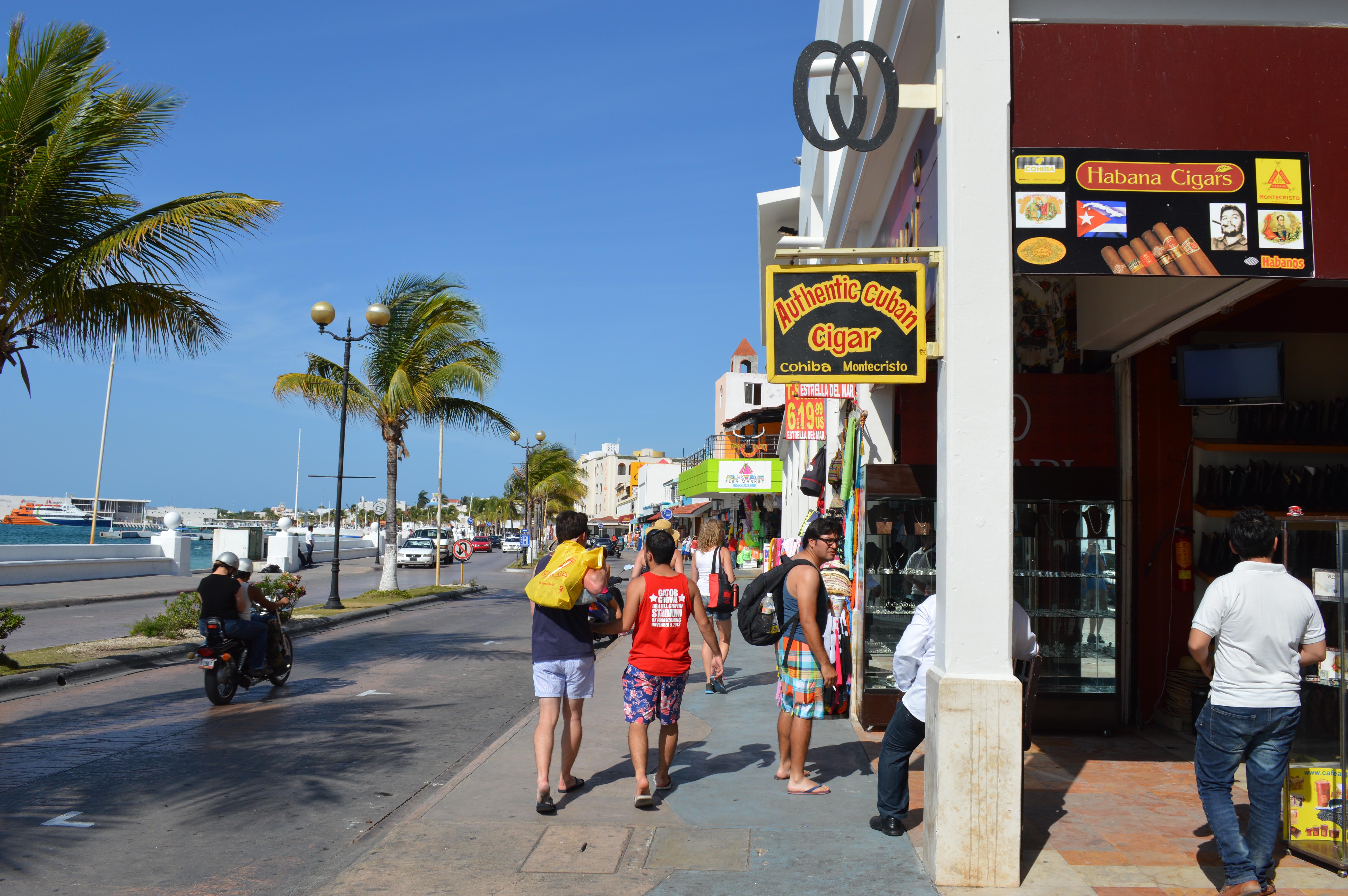
The business of Cozumel is tourism, and there are many layers to this business, from high end hotels to street hawkers. A stroll through the main part of town takes you past many gold and silver jewelry shops, clothing shops, crafts establishments, restaurants, and shops selling Cuban cigars. Most of these shops have a person who will try to persuade you to look inside, some of whom are aggressive and insistent. It’s a bit annoying if you’re not interested in the goods, but the beautiful blue water fronting the main street makes up for any inconvenience.
2013 05 04_1376

I’d been planning to use more of my Spanish, which is still a work in progress, but had little occasion to. The sales and service people of Cozumel have highly developed antennae for spotting los norteamericanos, and encourage expenditures by using English, which ranged from adequate to impressive. A couple of waiters gently corrected my usage mistakes, which I appreciated, and I think they appreciated my making some effort with their language, but it was clearly not required.

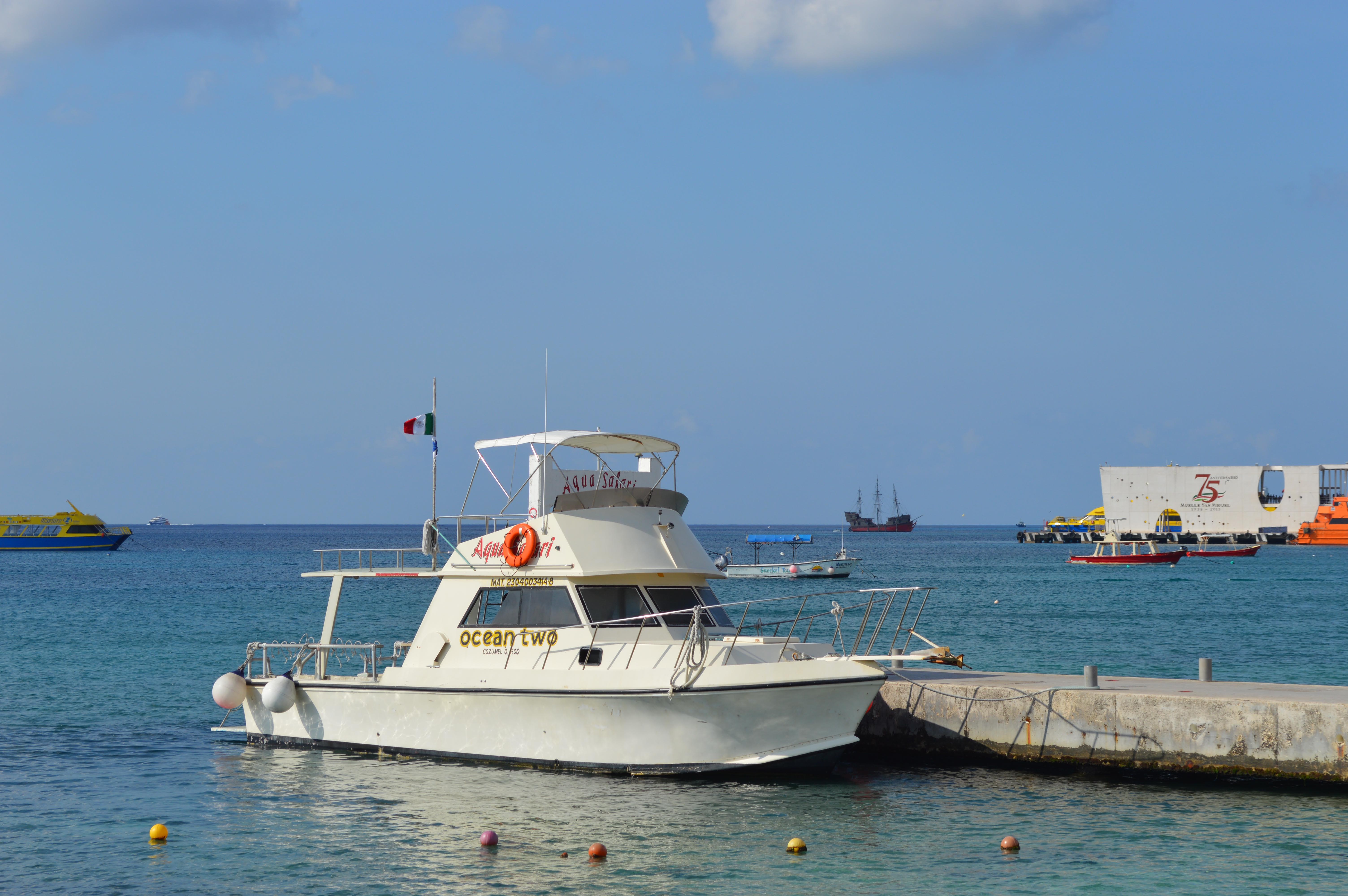
Our hotel was the Casa Mexicana, a mod-looking place on the water in the center of town. Our rooms was attractive and comfortable, with a balcony overlooking the courtyard restaurant where we ate very satisfying breakfasts. The lobby was on the second floor with a pool and deck chairs overlooking the water. Lots of restaurants were within walking distance, though we took a taxi to our favorite, Casa Mission. The hotel was only a few steps from the shop of the folks who took us diving, Aqua Safari, and the boat dock was just across the street.
2013 05 09_1356

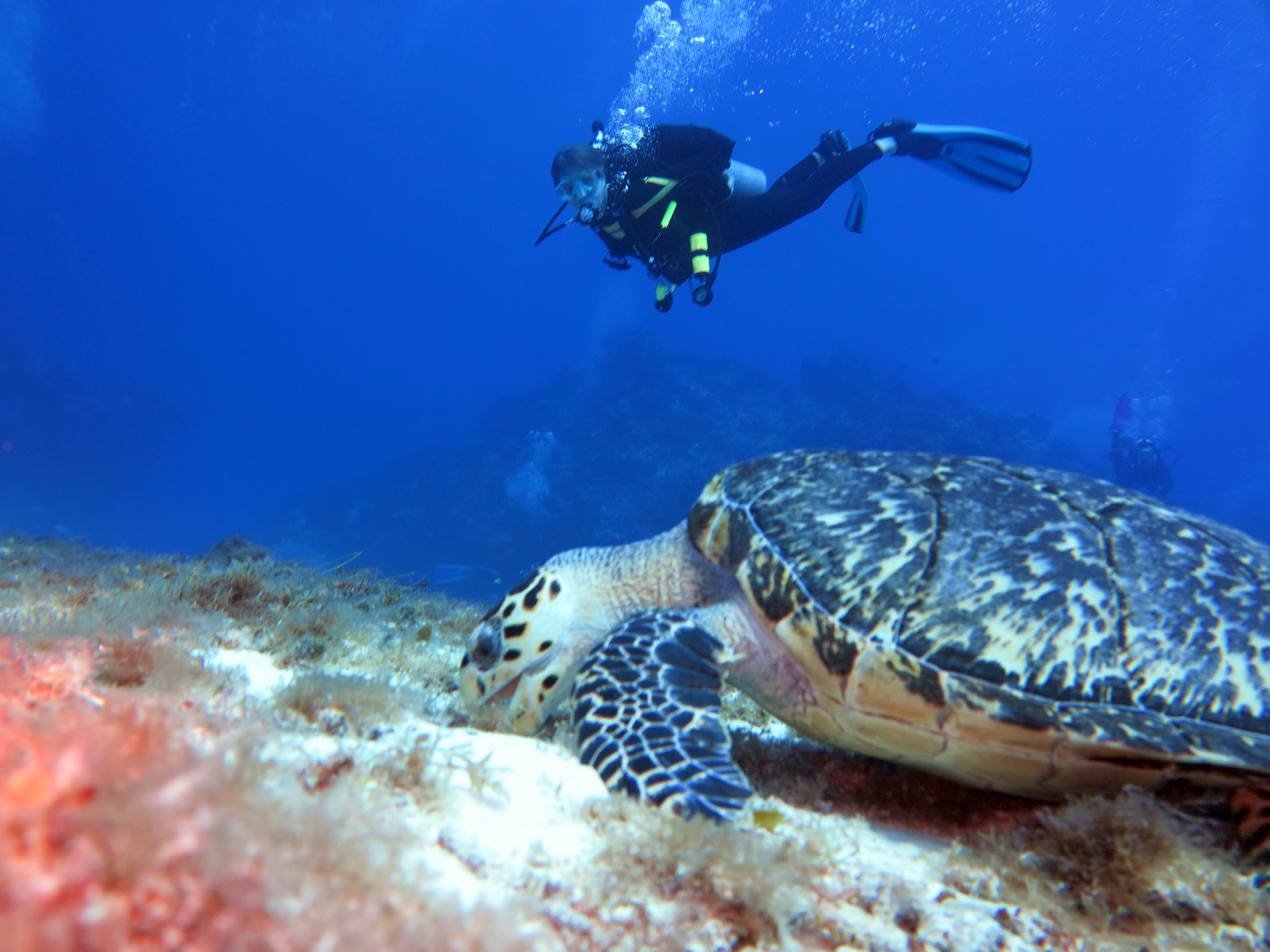
Our boats usually had about fifteen divers. These included our group of six organized by our friend Dan out of Down Under Surf and Scuba. We did two dives in the morning, and after returning to the dock, we either ate quickly and went out for an afternoon dive, or on two days relaxed and then went out again at 7:00 for a night dive. The boat rides to the dive sites were generally one to 1.5 hours. Our guides were experienced, and showed us many interesting places and creatures. Early May seemed a good time to be there – sunny, breezy, and not un-Godly hot.

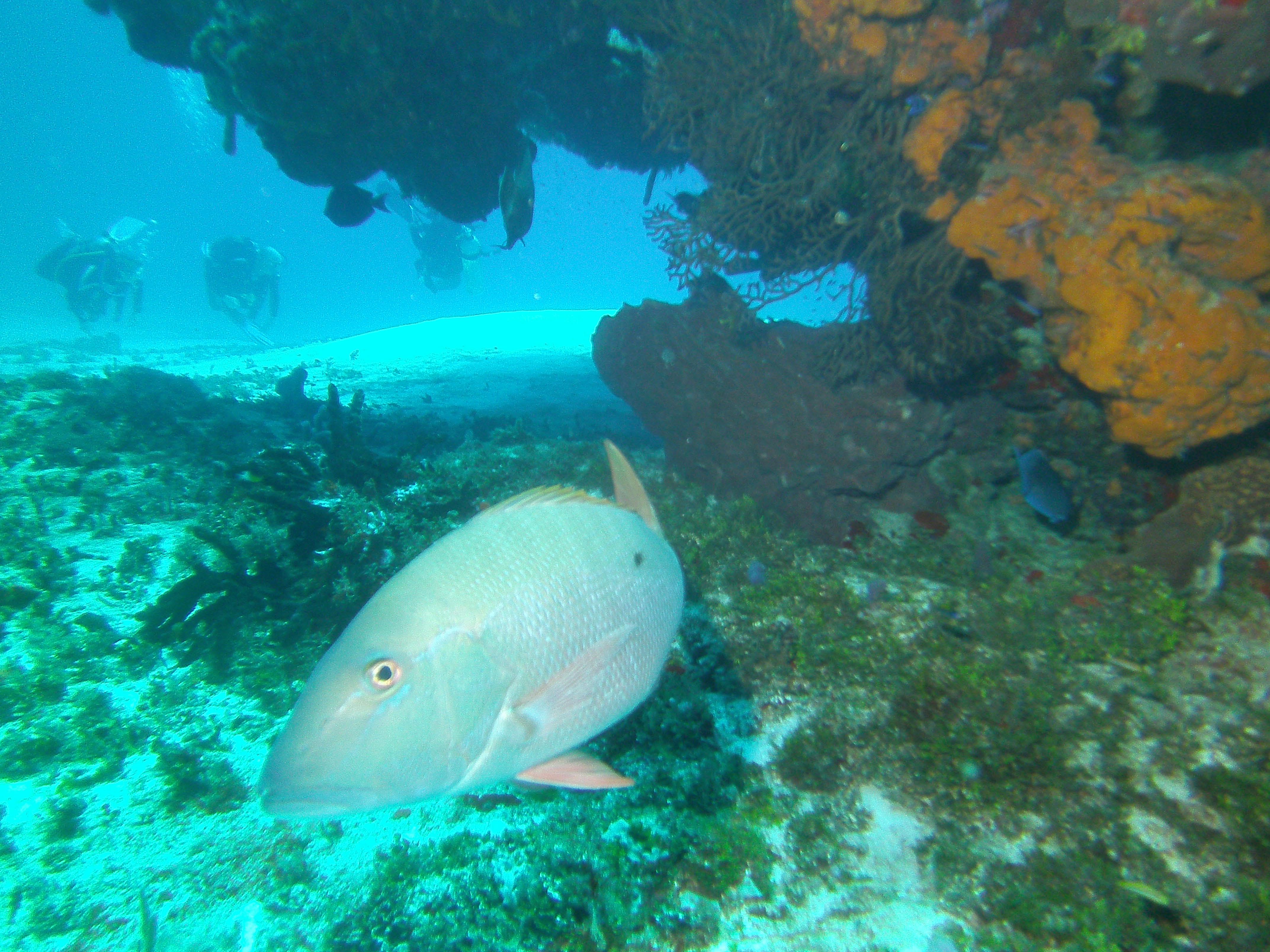
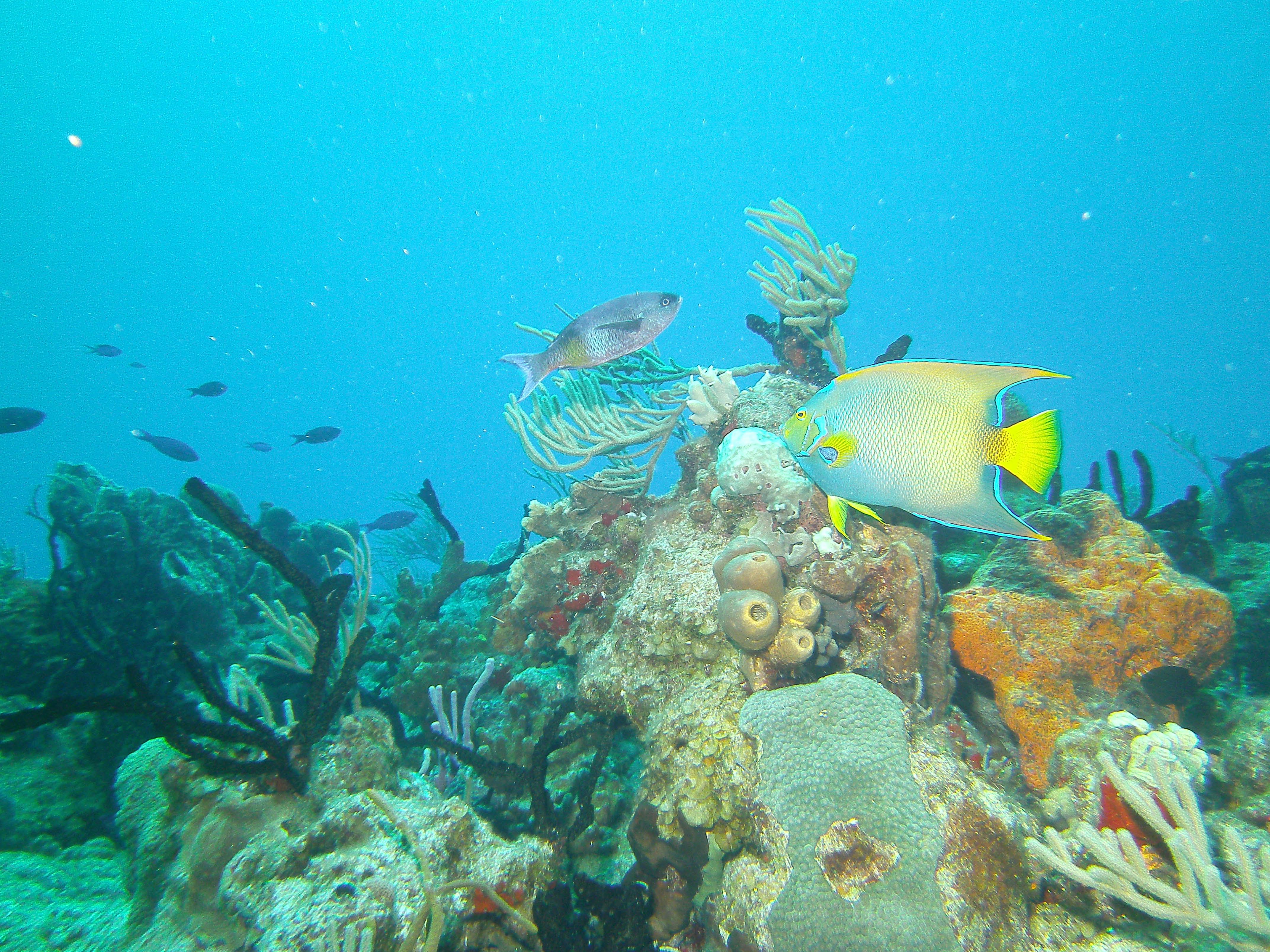
Our dive environments fell into three main groups: coral walls that went much deeper than we could dive, coral patches separated by sandy areas, and large coral structures shaped like pillars, boulders, mesas, and canyons, which made me think of southwest Utah. There were dozens of species of live coral. Some were vivid colors (purple, orange, green, yellow, red), and we also saw the famous black coral. Their shapes and textures were fantastically varied, including ones that looked like cactuses, pillars, antlers, brains, and various vegetables.
SeaLife DC1400

SeaLife DC1400
Cozumel is famous for drift diving, meaning a trip that goes where the strong current takes you. This can be exhilarating, but is also challenging at times. In the strongest current, there is no easy way to stop or reverse course, and it can feel by moments like Lost in Space. This requires alertness to avoid collisions with people or coral, and limits the chances to take photographs or look at things with deliberation. There were dive sites with little current, though, which were calm and sweet.

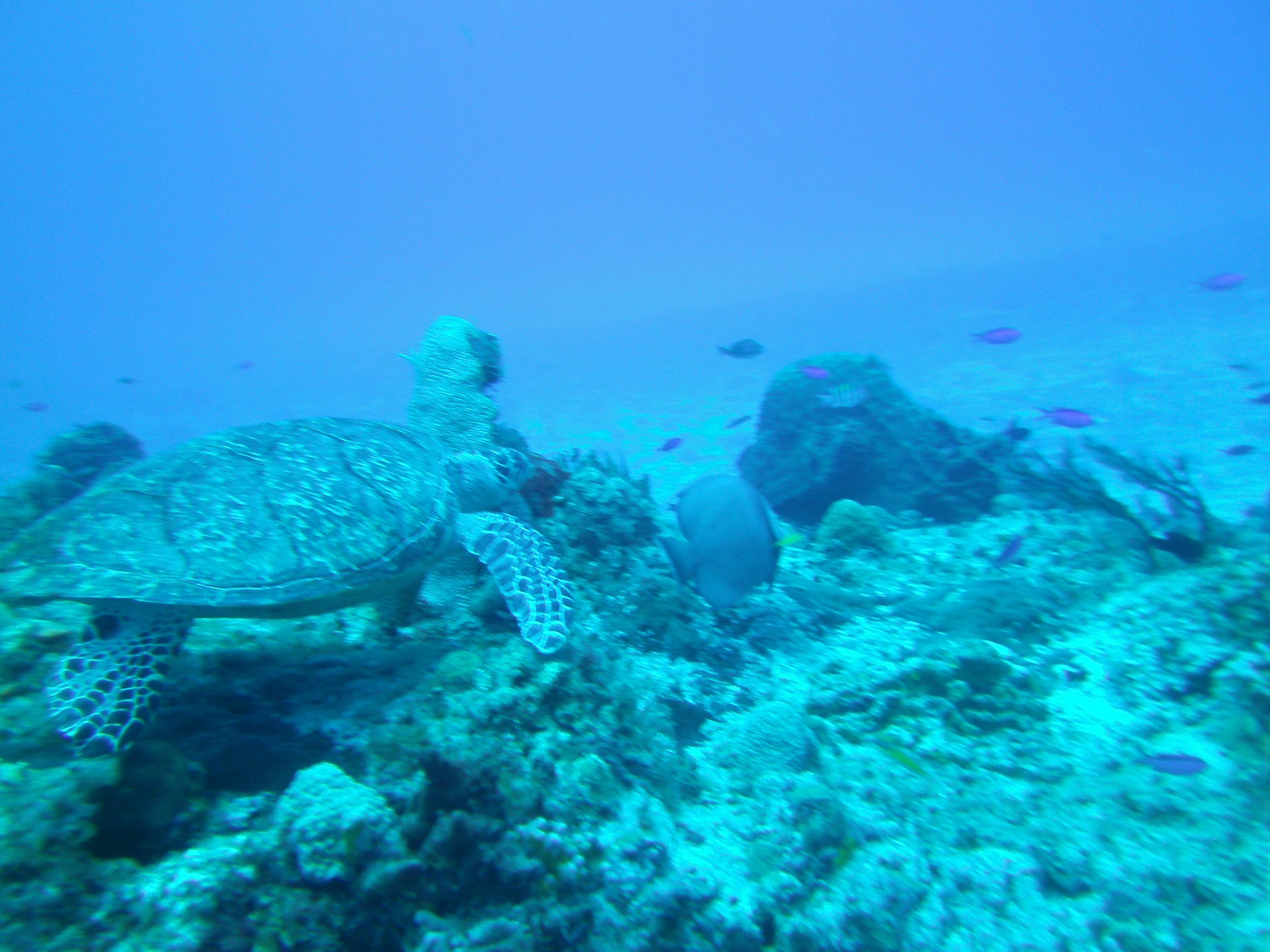
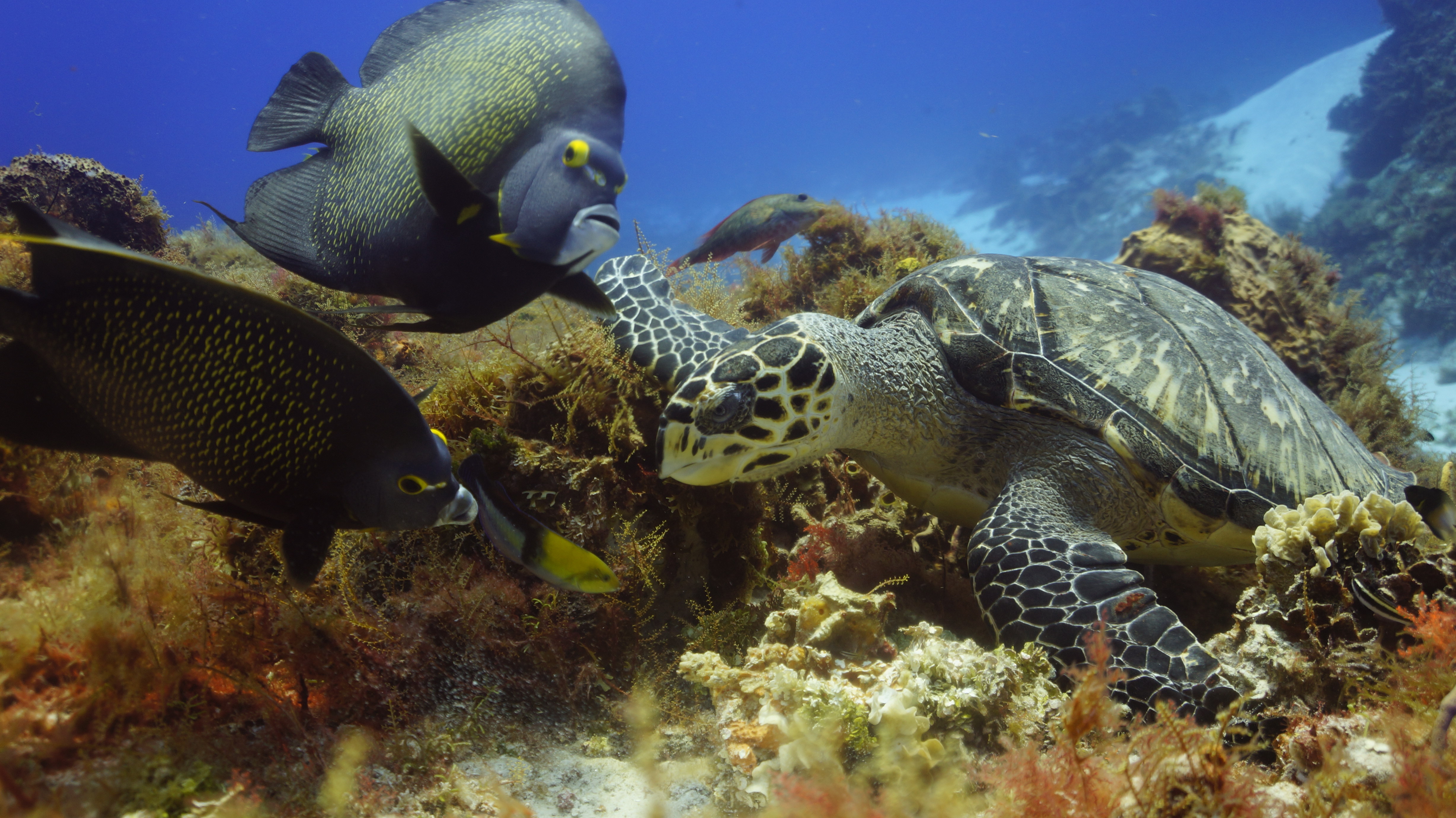
And of course, there were thousands of fish and other creatures. We’ve been trying to improve our identification skills, with the useful reference works on reef fish, creatures, and coral by Paul Humann and Ned Deloach. Sally was prepared to ID a green sea turtle, of which we saw only one, though we saw several hawksbills. She also introduced me to the whitenosed pipefish and various seahorses.

SeaLife DC1400
SeaLife DC1400
SeaLife DC1400

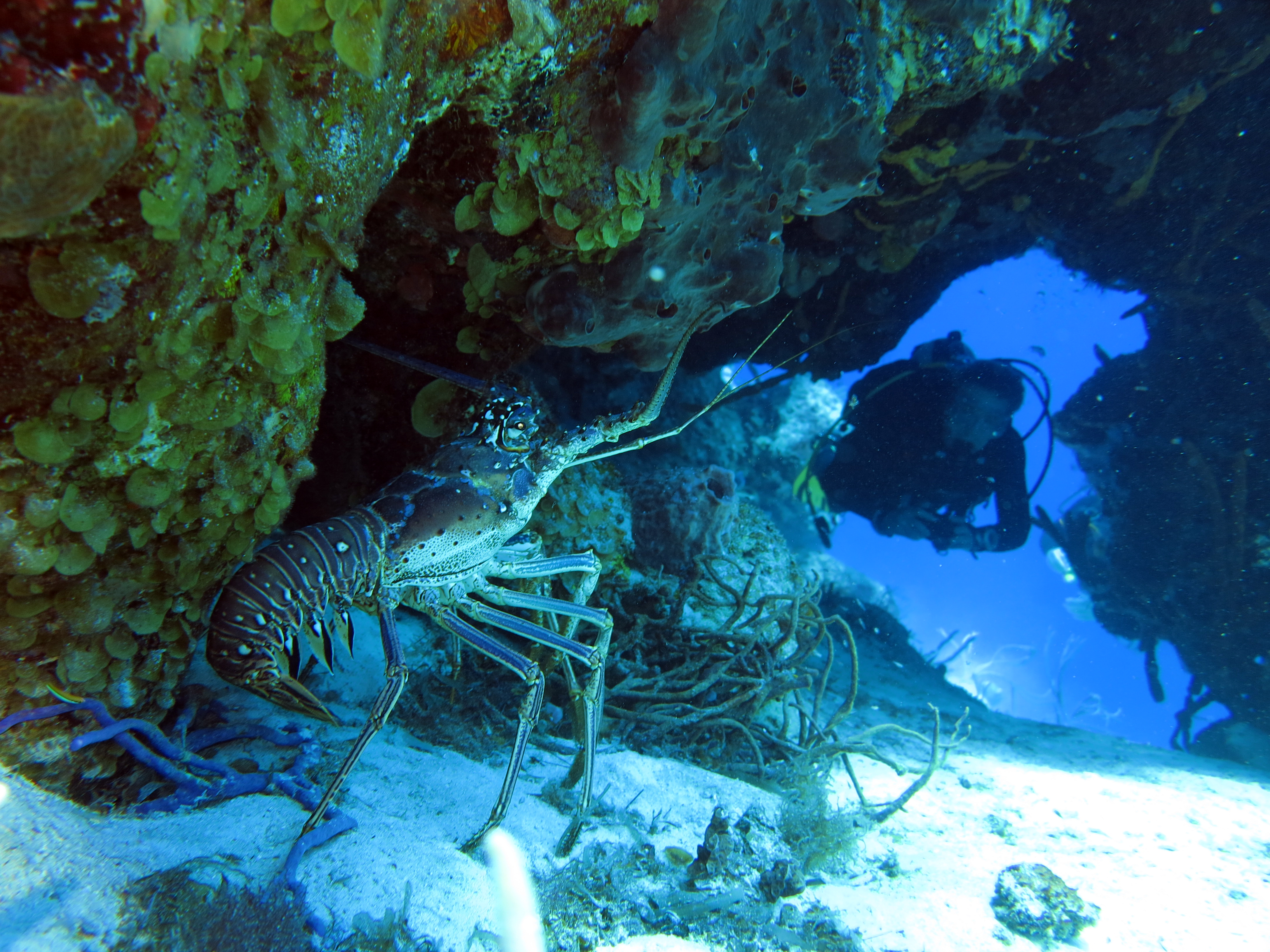
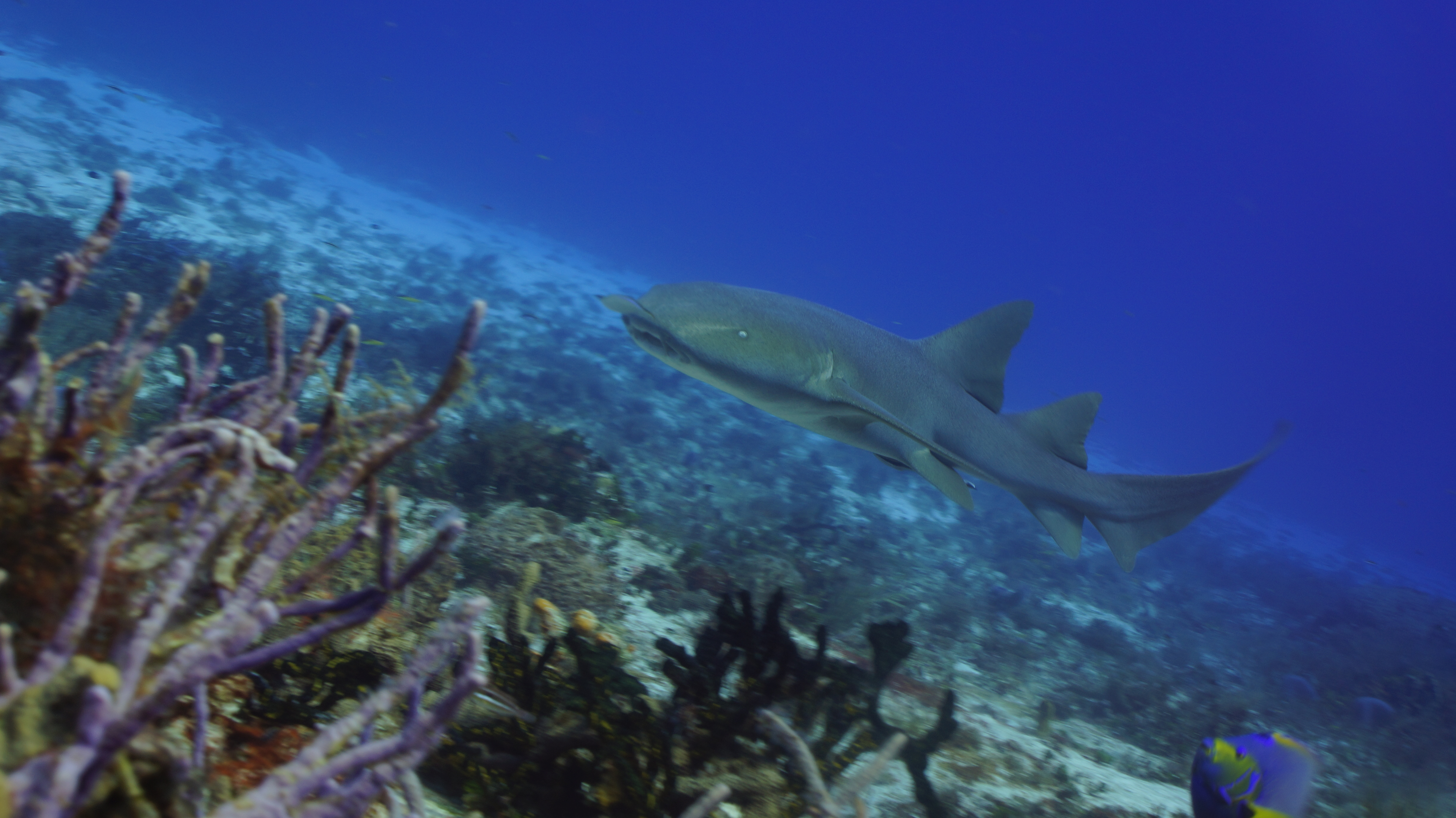
There was no shortage of bizarre looking creatures, including the porcupine fish, splendid toadfish, flying gurnard, smooth trunkfish, trumpetfish, honeycomb cowish, scrawled firefish, and queen triggerfish. We saw southern stingrays, as well as yellow rays and a Caribbean torpedo ray, and spotted and green moray eels. There were also large spiny lobsters and crabs. On a night dive I saw two octopuses that transformed themselves into objects of varying shapes and colors. It was fantastic!

One species we we pleased not to see many of was the lion fish. These invasive predators reproduce quickly, have no resident enemies, and consume voraciously. They’re now common in the northern Caribbean. Our main guide, Miguel, said that the dive guides in Cozumel had been authorized to kill them, and the numbers have been substantially reduced in the most dived areas of the south coast over the lat three years.

SeaLife DC1400
SeaLife DC1400

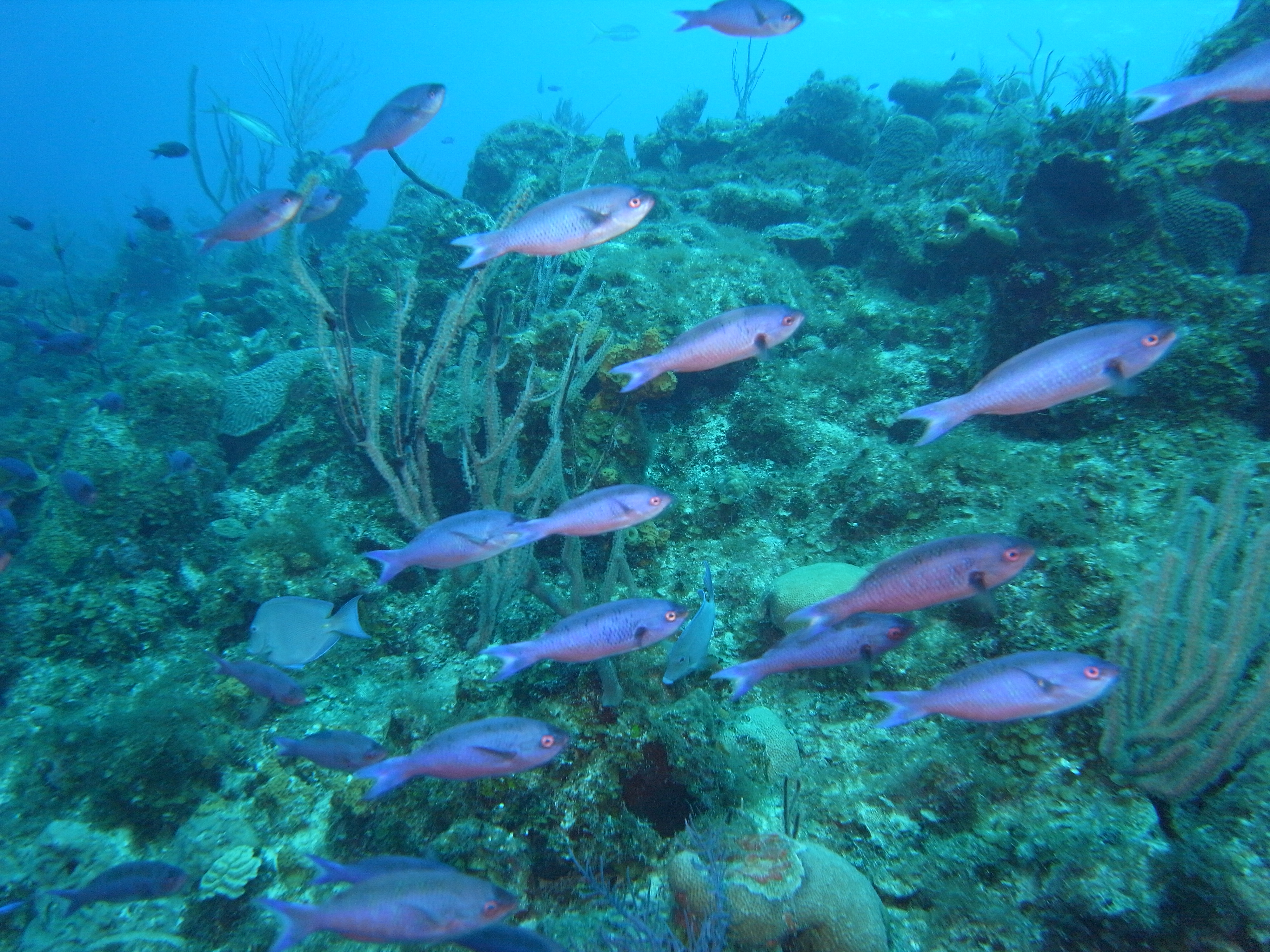
We also saw some big and medium creatures: nurse sharks, black groupers, barracuda, giant parrotfish, jacks, grunts, and snappers. I particularly adore the queen angelfish, and saw many, as well as French and gray angelfish. And there were untold numbers of colorful smaller tropicals – durgons, tangs, grunts, surgeon fish, butterflyfish, chromis, wrasse, and many others. The profusion of life is amazing, still!
_DSC0143 copy

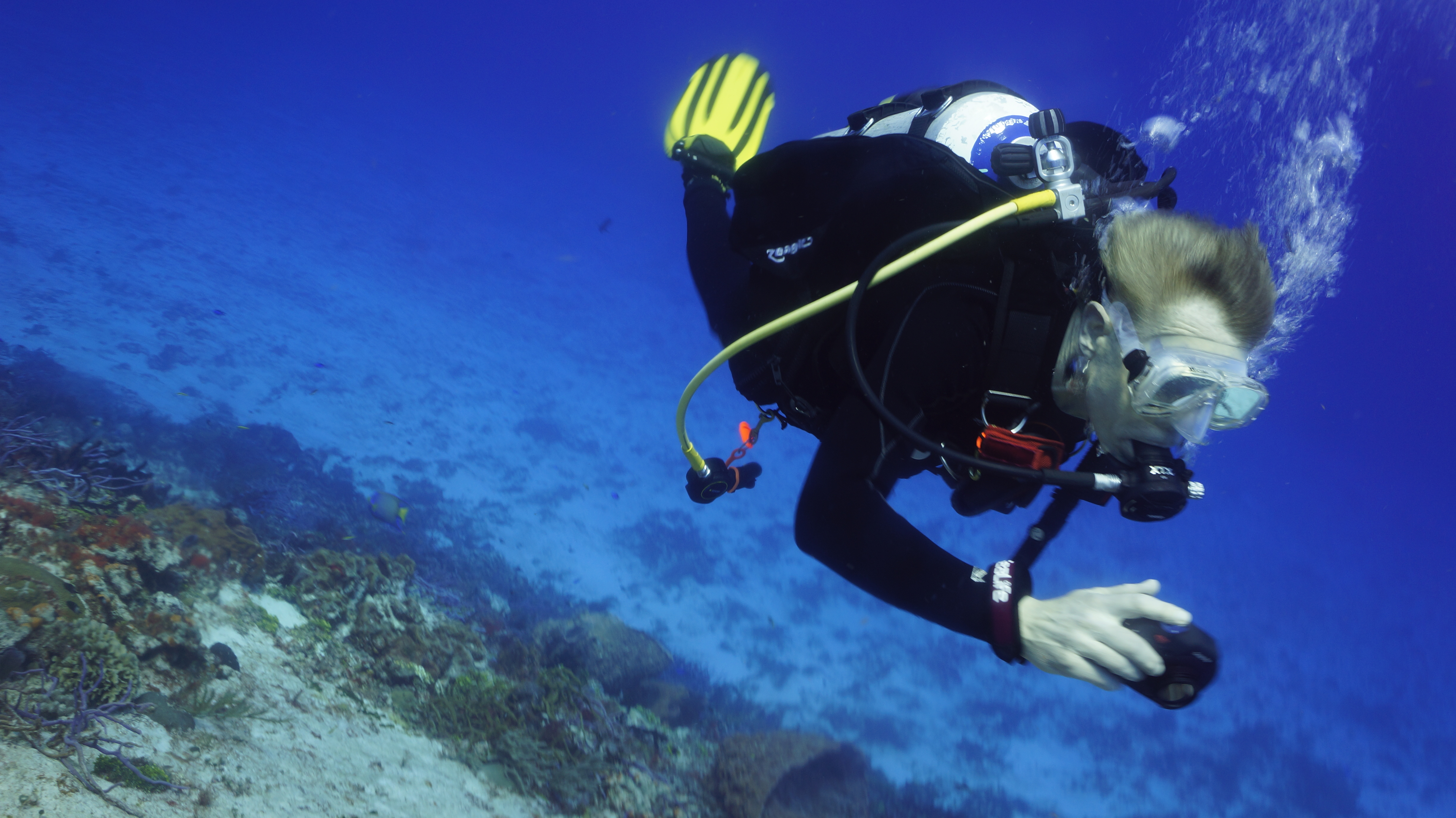
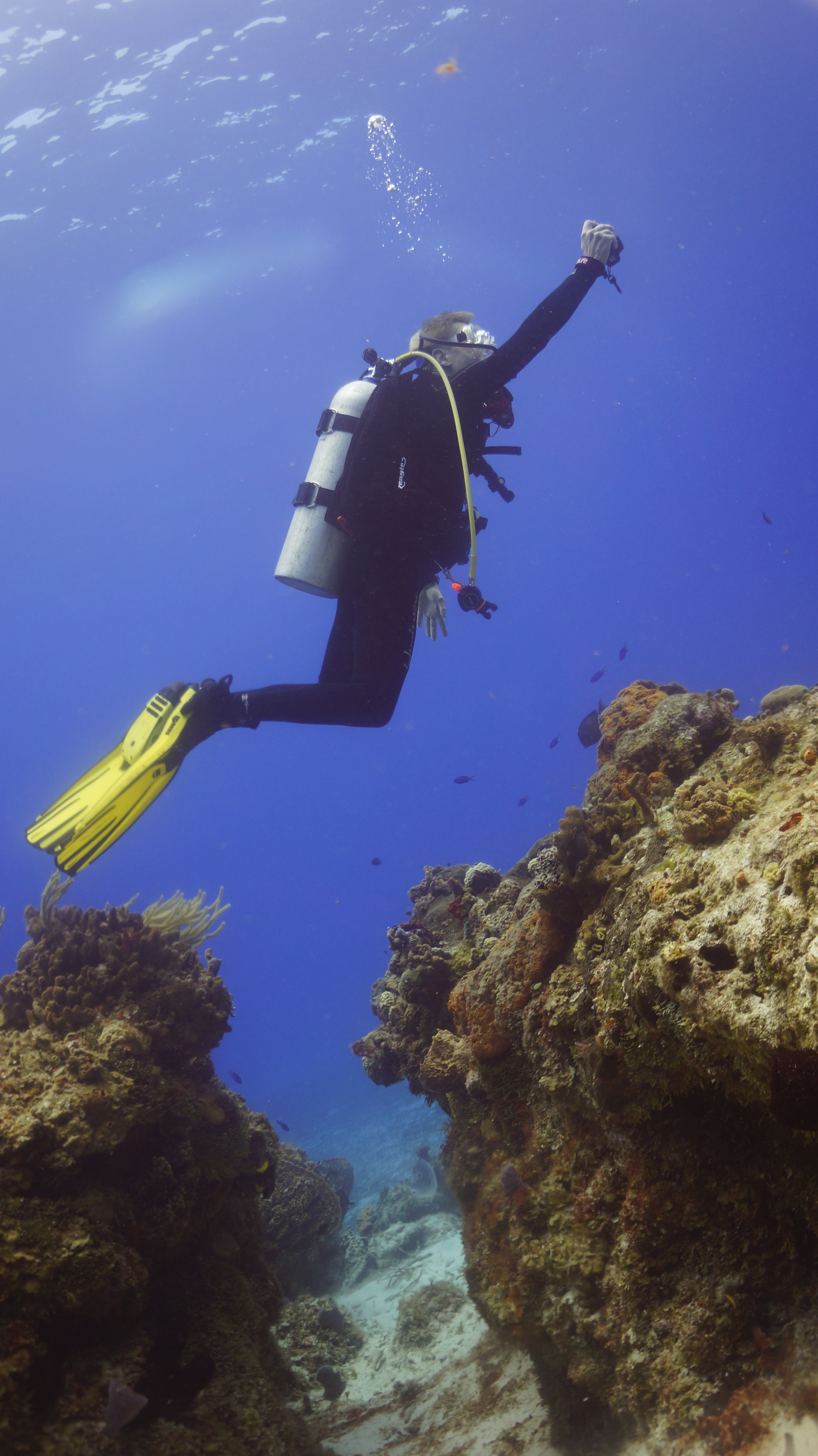
My camera strobe worked fine on day one and two, but then the supporting arm’s joint broke, and so my photographs after that were mostly by natural life. This was disappointing, because there are things that just can’t be captured without a strobe, but I liked some of the images I got. The pictures here are all mine, except the first, the one immediatelhy above, and the ones below of Sally and me, which were taken by Pete, a professional. (Yes, I realize his look a lot better than mine. My excuse is he had better equipment, though also probably more talent.)
_DSC0397 copy
_DSC0489 copy
_DSC0511 copy
IMG_9175 copy

_DSC0237 copy
_DSC0207 copy
_DSC0176 copy
_DSC0202 copy
IMG_9063 copy

The morning before our flight home, we rented a jet ski and sported about for a half hour. The machine, a Yamaha, seemed very powerful. The water was choppy, and I never quite managed to take the machine to full throttle, as it jumped and bucked. Sally rode behind me, and proclaimed herself thoroughly shaken and glad to still be alive when we were done. But note, she never complained or requested that we slow down. That’s my gal!

Educational opportunities

Jocelyn doesn’t use the phone for talking too much anymore, at least to her dad, but she called this week to tell me she was admitted to the Columbia University publishing program. She was thrilled, relieved, and ready to start a new chapter: life in New York City. Her boss at the apres ski bar in Telluride agreed to buy her aging Nissan Altima, and she asked me to figure out the legalities. I said I’d be happy to do so.

Whatever doubts I may have about job prospects in the publishing business, I’m keeping to myself for the time being. It’s wonderful to see Jocelyn, so smart and talented, moving forward and exploring. Wouldn’t it be nice if we could all go to New York and be students again?

As a matter of fact, one of the great things about my job is that I get to talk to and learn from really interesting and gifted people. This week I had lunch with Jamie Boyle, professor of law at Duke and one of the most clear-eyed scholars of intellectual property law. His last book, The Public Domain: Enclosing the Commons of the Mind, explains with clarity and force some of the enormous problems with our patent and copyright systems, including how IP law can hinder innovation and creativity. He really is a brilliant guy, and a delightful conversationalist.

We ate at the Washington Duke Inn, which has a cozy clubby feel, and talked about some of the usual things, like sports and food, but also about his leading role in producing the Hargreaves Commission report, which advocated an evidence-based approach to IP protection. We discussed the possibilities for patent reform in Congress and the courts. We also talked about some of the hyper conservative activity in the N.C. legislature, and the N.C. constitutional amendment against gay marriage. We agreed that this right-wing crowd has gone beyond being embarrassing and is hurting the reputation and economy of our state. I also got to see his new car, a sporty and beautiful Jaguar XK.

In other education news, the NY Times reported this week that EdX, the online education consortium, has developed software that automatically grades students’ essays. Its new software is, it says, not perfect but about as reliable as human graders, and gives almost instant feedback to the student. This could be a game changer in education at all levels, potentially helping students with instant feedback, and also potentially eliminating a lot of teaching jobs. Will the net of it be better education at lower cost? And/or will it be another nail in the coffin of the traditional university, without a satisfactory replacement on the horizon?

David Brooks wrote a good column this week about online education and the role of the university. He proposed regarding the mission of higher education as having a technical knowledge part and a practical part. Technical knowledge is about things like formulas and facts, and practical knowledge is about skills that can’t be written down and memorized. Online outfits like EdX and Coursera can cover the technical part, but at least so far aren’t as effective at the practical part. We seem to need human-to-human interaction to learn some things.

Three Sparrows and a Cup, by Byron Gin

Three Sparrows and a Cup, by Byron Gin

At any rate, the human touch is a pleasant thing. On Friday Sally and I went out to First Friday, downtown Raleigh’s monthly art and food celebration. We stopped in the Adam Cave Gallery, where we’d bought a painting some months back, and met the painter, Byron Gin. His current show, titled Aviary, continues the theme of the work we bought, with abstract elements, rough textures, and birds. Byron was a pleasant, soft-spoken guy, who seemed happy to discuss how he made his paintings. We remembered the painting we bought, and it was good to be able to tell him how it had brought as daily joy. Among other things, we learned that we shared an interest in bird feeders and photography.

For dinner, we tried without success to get into Bida Manda (wait time 1.75 hours), Centro (wait time 1.5 hours), and noted crammed dining rooms or lines out the door at Caffe Luna, Remedy Diner, and Sitti. It’s good to see our restaurants doing a brisk business, but when you’re hungry, you’re hungry. We finally got a table at Gravy, an Italian place, and had a pleasant meal including a Tuscan Chianti.

On Saturday, we went over to Durham to take in some of the Full Frame Documentary Film Festival. The festival is an annual event that this year featured more than 100 documentaries, 7 different screens, and hundreds of cinephiles, which we somehow had never managed to get to in years past. The afternoon was sunny, and there was a happy energy to the crowd, an eclectic mix that reminded me of Oberlin (where the film club screened classic films once a week) and upper west side New York. The films we saw were all sold out, as were several others we couldn’t get tickets for.

Our favorites were a double bill by featured film maker Jennifer Yu: The Guide and Breathing Lessons. The first was about a park in Mozambique and a young man whose big dream was to be a tour guide. It explored serious environmental issues with a light touch. It featured E.O. Wilson, who at 82 was still charmingly fascinated by ants and other small creatures. Breathing Lessons was about Mark O’Brien, a writer who was paralyzed by polio as a child and spent most of the rest of his life in an iron lung. He seemed very honest about living with an extreme disability. Yu was in attendance, and after each film answered questions from the audience. She seemed really smart and likeable.

No illusions, but not disillusioned

DSC_0034
At my post-surgery eye checkup on Thursday, after being scanned, poked and peered at, I was happy to hear Dr. Mruthyunjaya declare, “I like what I’m seeing.” My retina was back where it was supposed to be. This doesn’t mean everything will be just fine. Vision in my left eye is quite blurry now, and it will be some months before we’ll know how much there will finally be. The likeliest answer is substantially less than before. But as Dr. M’s fellow, Dr. Martell, pointed out, even if there’s a lot of blur, it could still help with peripheral vision, and serve as a backup in the event of a right eye catastrophe.

Anyhow, it is what it is. The Nigerian novelist Chinua Achebe died this week at age 82. I have not read his work, but the Times obit made me think I might like it. It quoted Nadine Gordimer as saying he was “a writer who has no illusions but is not disillusioned.” A good way to be.

I was also happy that Dr. M cleared me to resume exercising, though he suggested I wait another week before my next killer spin class. So early Friday morning, my usual spinning day, I happily did a functional fitness routine and a half hour on the escalator stairs. The stairs are a relatively new machine at O2 Fitness, and they are remarkably effective at pushing up your heart rate. As usual, while sweating away I listened to some opera (the incredible second act of Mozart’s Marriage of Figaro) with my MP3 device and read on my tablet device.

I reread some on the ideas of Jonathan Haidt in The Righteous Mind: Why Good People Are Divided by Religion and Politics, whose name is pronounced “Hite,” as I learned this week when I heard him give a lecture at Duke. My earlier thoughts on Haidt’s theory are here, but I’m still processing his big ideas, which point dramatically away from traditional political theory and its reliance on rationality. His TED talk on the differences in ethical systems between liberals and conservatives is a nice introduction to his theory.

As Haidt observes in the TED talk, there are two types of people: those who like new ideas and experiences and those who prefer the safe and familiar. He notes that the latter are the people who like to eat at Applebee’s.

On Thursday Sally and I tried for the second time to eat at a new restaurant in our neighborhood, Dos Taquitos, and again failed. The place was cheerily hopping but the wait time was too long for us, so we went down Glenwood Avenue to the uncrowded Blue Mango for some Indian food. We had a delicious meal featuring masaledar allo gobhi (cauliflaur and potatos) and eggplant bhartha. We couldn’t finish it, and I asked for a take-home box, which I carefully prepared and then accidentally left on the table. Darn!

For more new musical ideas, I had a piano lesson with Olga on Saturday morning. It was invigorating! I played Liszt’s Liebestraum (Dream of Love) No. 3, a famously beautiful piece (here played wonderfully by Evgeny Kissin). She gave me a massive compliment, and I quote: “Wow!” She thought I’d vastly improved, and was getting a richer sound. But of course, it can always be better. We worked on getting a more stable connection between the body and the instrument, including not just the fingers, but also the back and the core. She showed me on a type of touch involving a very relaxed hand with mostly arm movement. She also gave me some new ideas on pedaling, including using a slow, slightly delayed release. As she noted, it makes magic.
DSC_0039

Beautiful diving in the Turks and Caicos

SeaLife DC1400

One of my resolutions for 2012 was to try something new, like a trip or minor adventure, once a month. I didn’t keep strict count, but I came pretty close, and the last trip of the year was novel enough to count for two. Sally and I opted out of the final feeding frenzy of Christmas and instead spent the holiday week staying under water as much as possible. We flew to the Turks and Caicos Islands, and boarded the Aggressor II, a 120-foot vessel designed to take about 18 hardy and fortunate souls on week-long scuba diving trips. It was a fantastic trip.

Exif_JPEG_PICTURE
We saw reef sharks, sting rays, spotted eagle rays, barracuda, hawksbill turtles, eels, grouper, jacks, grunts, tangs, porcupinefish, trumpetfish, angelfish, butterflyfish, squirrelfish, spadefish, parrotfish, and many small bright tropicals. On night dives we saw an octopus perform for several minutes, as well as a performing eel, enormous crabs and lobsters, and beautiful varied coral. Our most exciting siting was a giant manta, not common in those waters, an enormous and powerful fellow. There were also plenty of the beautiful-but-highly-destructive lion fish.
Exif_JPEG_PICTURE

I got a tee shirt that says Eat Sleep Dive, which tells most of the story for the week. The schedule included five daily dives, including one night dive, from Sunday to Thursday and two on Friday, and I did all but one. We spent most of our time off of French Cay and West Caicos, with dives on the last day off of Provo.
SeaLife DC1400
Most of the dives were wall dives, with a shelf around thirty or forty feet down dropping off mysteriously into the deep blue. My deepest dives were around 100 feet, but I spent most of my time in the 40-60 foot range. visibility varied but was for the most part reasonably good, with the best being about 70 feet and worst about 40 feet. Current was mostly very light to nonexistent. Bottom temperatures were mostly in the high 70s, which was OK, but there were a few chilly places (low 70s). Especially when the breeze was blowing, it was chilly getting out, and we were happy to use the yacht’s hot tub to warm up.
SeaLife DC1400
Exif_JPEG_PICTURE

We had strong winds the day we arrived, which led to big seas on Saturday night as we left Provideniciales. I learned later that there were swells up to 10 feet, with an average of 7-8 feet seas. Per the crew and experienced passengers, this was unusually bad weather. Even fortified with Bonine, the up and down, sometimes with a corkscrew twist, was more than my stomach could handle, and I spent the entire evening hanging over the rail, about as miserable as I ever recall being. By Sunday morning, the seas were calmer, and I felt better, though my stomach muscles felt sore for the next couple of days. It stayed tolerably calm the rest of the trip.
SeaLife DC1400
SeaLife DC1400

In preparation for the trip, I’d been reading up on underwater photography, and I signed up for a short course on the subject taught by our captain, Amanda Bryan. Amanda was a good teacher (as well as a good captain) and gave me encouragement and quite a few helpful tips. My camera had issues, with the strobe at first refusing to fire, and then the camera refusing to charge, and I ended up using a loaner for the last half of the trip.
Exif_JPEG_PICTURE
Exif_JPEG_PICTURE
Exif_JPEG_PICTURE
SeaLife DC1400

The reef environments we saw were really beautiful and abounding with life. One of our dive companions was a nudibranch enthusiast and inspired us to look for these and other small mollusks. This caused a shift in focus so that we saw more of the very small things. So much beauty! One could easily just bask in it. Photography works somewhat against the grain of that aesthetic and spiritual experience, because it’s necessary to think in a very left-brained way about technology and physics. I was glad I spent some of my time that way,though. I made a few images, shown above and below, that I liked and thought others might, too.
SeaLife DC1400
SeaLife DC1400
Exif_JPEG_PICTURE

The way to San Jose, Ridge Winery, and E.O. Wilson on human nature

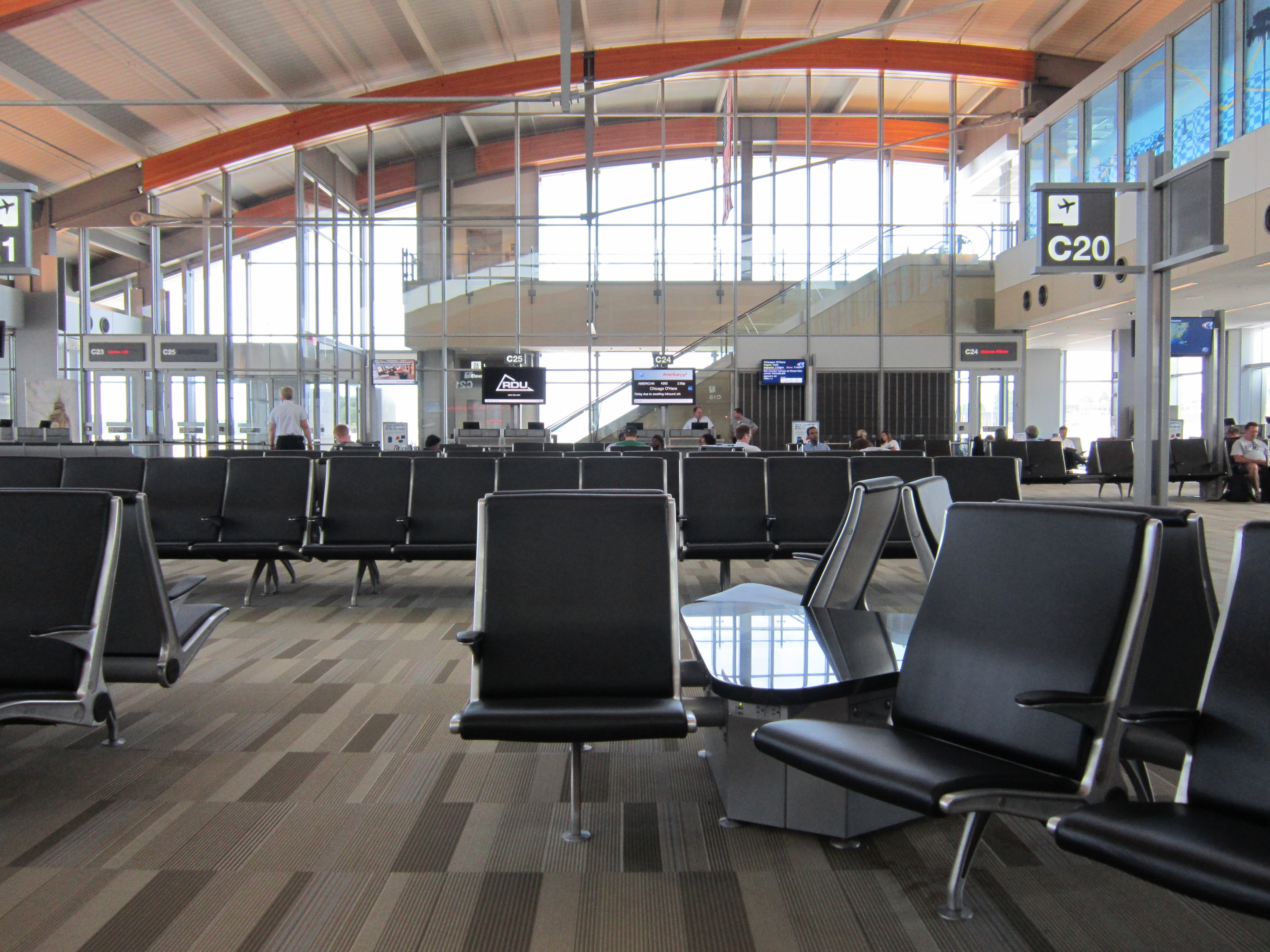
I missed my flight out of RDU on Tuesday morning after trying to send off one too many emails. On the drive to the airport, as reality set in, I went through the five stages of travel anxiety: concern, serious concern, alarm, panic, and finally, acceptance. By the time I made it through the American Airlines queue and the agent said I was too late, I was able to agree calmly, and ask politely what my next best option was. She put me on standby for a flight three hours later.

With my unexpected airport time, I got an excellent shoe shine and a half-hour chair massage at Express Spa. A couple of times a month I try to get a chair massage from the Red Hat massage therapist, which I had to miss because of my trip. I was interested in some work on my shoulder, where there have been minor issues. I assumed that an airport massage would be more about feeling pleasant than serious therapy, but I was not averse to a release of some endorphins.

My masseur, a small guy from China, asked how hard I liked it. I said pretty hard. He obliged with a serious deep tissue approach. It took all my determination to resist begging for mercy. At one point I took note that massage therapists are required to pass a licensing exam, as it was coming into focus that massage could cause bodily harm. Then I realized I had no way of knowing if my guy was licensed. He finished with some blows that shook me like a punching bag. It was almost frightening. But once it was over, I felt great!

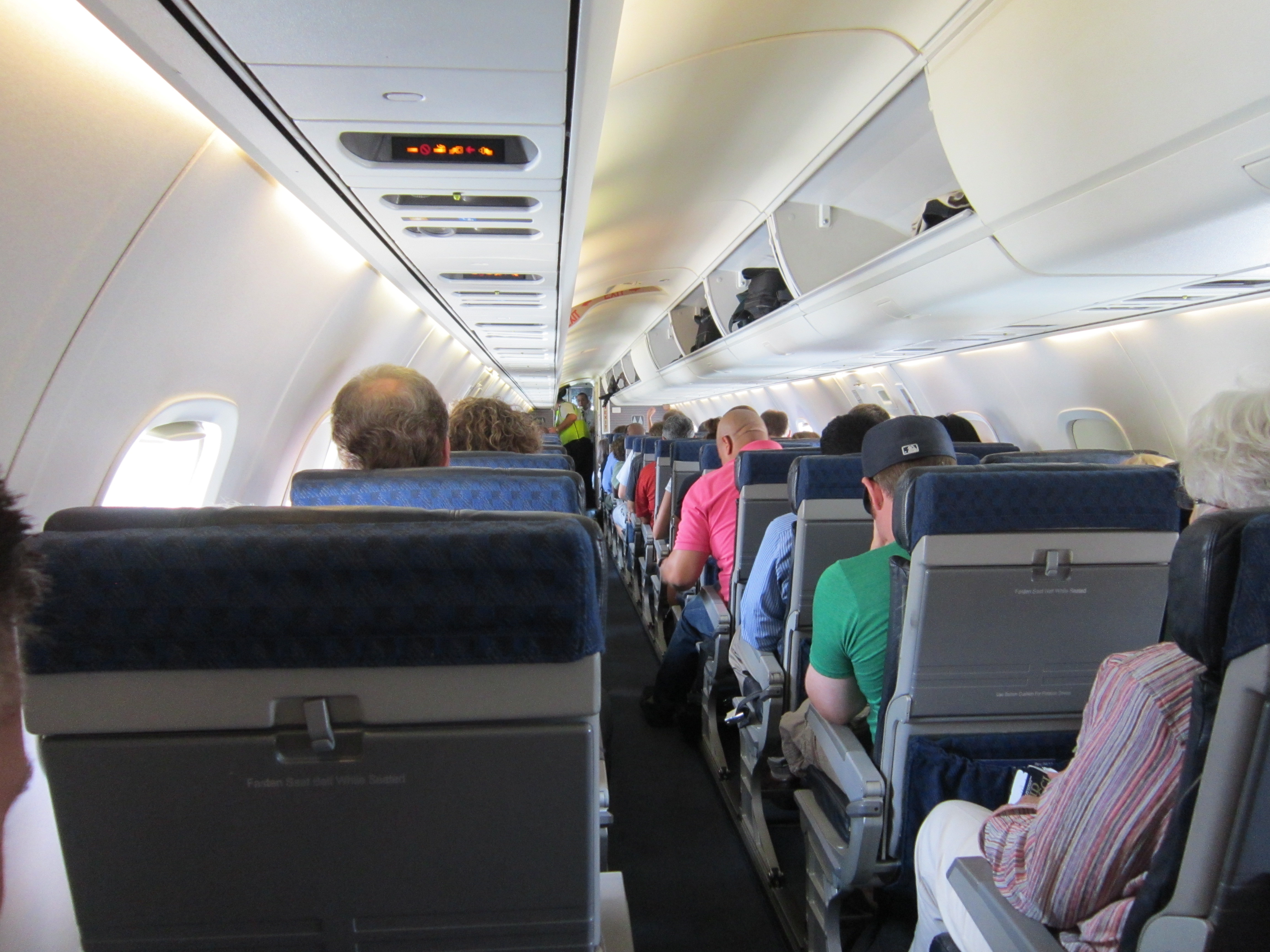
Being on standby involves a degree of anxiety. You’re either barely making the flight, or you’re going back to square one. On this trip, the gate agent said the I had a good chance of getting on the flight out of Raleigh, but a less good chance of getting on the connecting flight in Chicago. When I felt a wave of tension, I took a few deep calming yoga breaths, and tried to stay positive. Eventually, four and a half hours late, I got to San Jose, got a rental car, and headed to the hotel.

I was assisted by a Garmin GPS device, which smoothly directed me through every turn. This little tool has greatly reduced the anxiety of travel to unknown lands. Getting lost is almost a thing of the past. I still carry printed directions as a fail safe system, but I haven’t used them in a while. Thus have I outsourced a part of my mental load, and in using this now-common tool become a little more of a cyborg. I could lament the possible loss of map-reading skills, but won’t. Thanks to Garmin and all the scientists, engineers, and technicians who’ve reduced my worry level and bestowed more creative mental space.


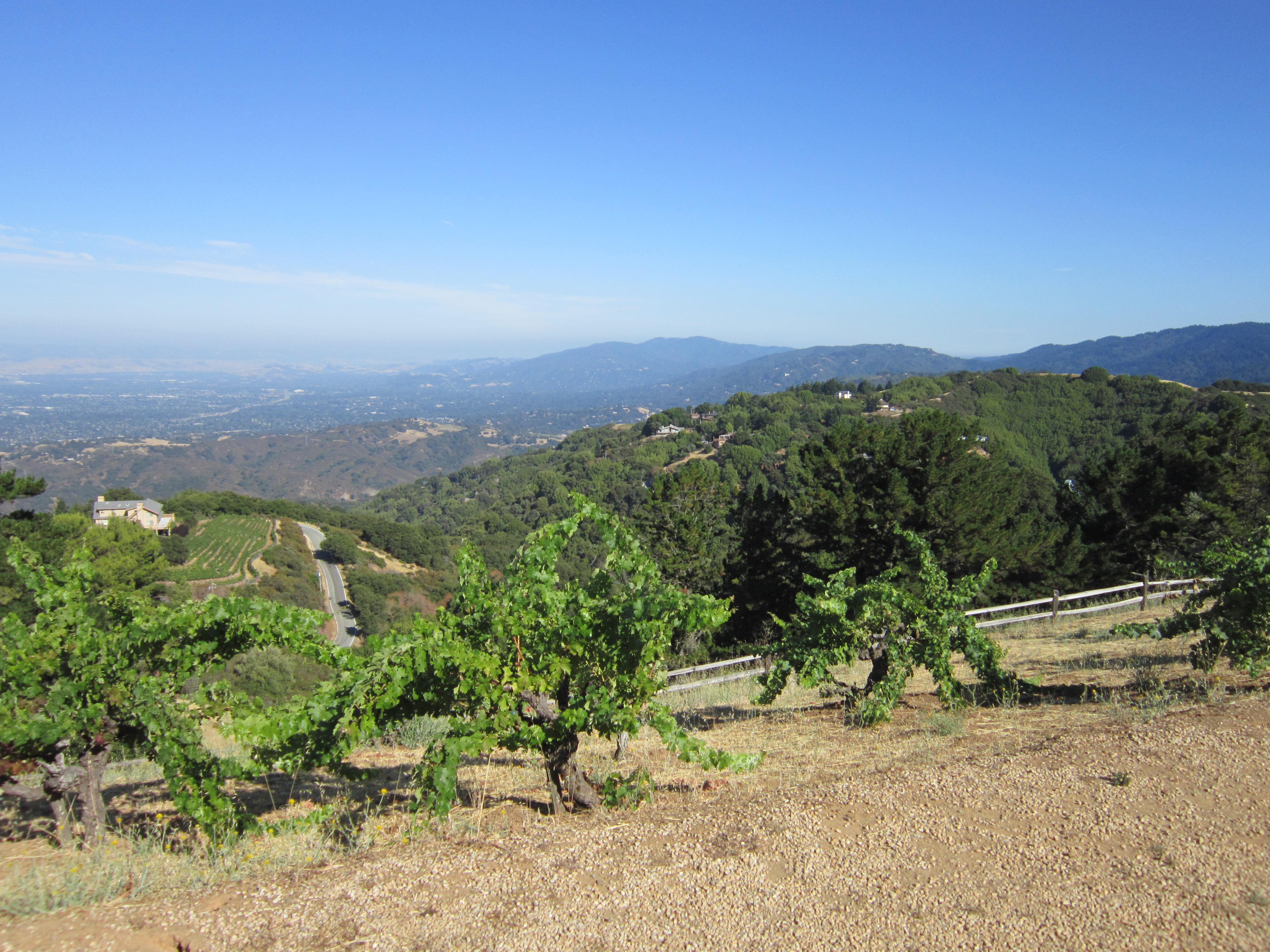
There’s something about northern California that I really love. It isn’t the glamor, which I was far from, but it may be something about the light. After various meetings, I got a chance to tour Ridge Vineyards in the Santa Cruz mountains. It involved a drive ascending 2,0000 feet along narrow roads with hairpin turns. The landscape was dry and craggy.

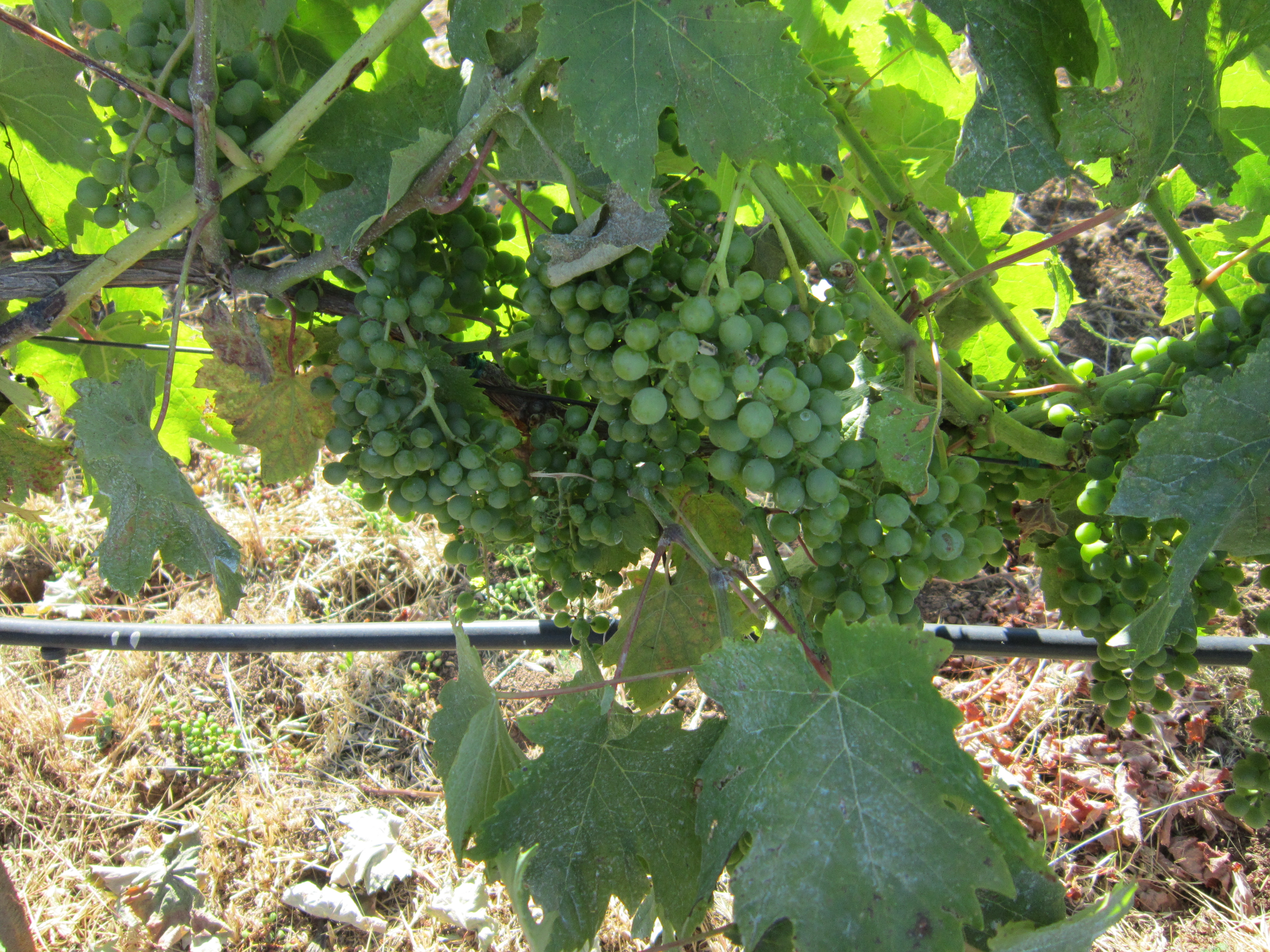
Our tour guides were experts and scholars of wine making, and I got a deeper understanding of the significance of soil and water conditions, vine life cycles, vine placement and spacing, pests, harvesting techniques, pressing, oaking options, considerations for blending, and aging decisions. The vineyard mountain views were beautiful, and the wines were excellent. It was also a great pleasure to meet our guides and experience their joy and passion for their craft.

On the long flight home, I finished reading for the second time The Social Conquest of Earth by E.O. Wilson. Wilson, a senior professor at Harvard, is one of our foremost experts on ants, but his scientific passions are wide-ranging. In this latest book, he attempts to revive and develop an approach to evolution that includes selection not only at the individual level but also at the level of groups. He argues that this accounts for some of the defining characteristics of homo sapiens, including our intense desire to be part of a tribe or group and our superlative skills at interpreting the thoughts, feelings, and intentions of others.

These skills made it possible for our ancestors to cooperate in a way that led to success versus other animals (including predators and our close relatives the Neanderthals), and to collaborate in agriculture, technology, and artistic expression. He also thinks multilevel evolution (individual and group) accounts for our never-ending interior conflicts between the urge toward cooperation and altruism (which benefits the tribe) and the opposite urge to seek competitive advantage over other individuals.

Wilson has a persuasive account of the origins and persistence of religious thought. In his view, it is characteristic for human animals to generate narratives to explain the unknown, and thus natural for communities to compose creation myths. Myths and rituals are adaptive in creating group cohesiveness, which contributes to tribal success. Religion has inspired great art and helped groups and individuals in difficult times. But Wilson ultimately concludes the costs of religion thinking outweigh the benefits, particularly once humankind acquired the tools of science.

Wilson would admit that the evidence for his multilevel approach to evolution is incomplete, and his theory is bound to be controversial. But right or wrong, I admire his willingness to engage and take some intellectual risks on the big questions, like the nature of human nature and the foundations of morality. He brings to the table spirited curiosity and the ability to draw on recent discoveries from biology, neurology, genetics, anthropology, climatology, and paleontology, not to mention, of course, myrmecology. He demonstrates the use of science as both a method and a world view — a world view that is both practical and inspiring.

My flight out of San Jose left 20 minutes late for Dallas, and my original Dallas connection was only 25 minutes. Dallas is a big airport, and getting from a gate on one side to a gate on the other can easily take 30 minutes. It seems I never leave from a nearby gate, so I had some worries, and took some yoga breaths. We came in at A37, and the flight out was at A33. I heard the announcement for final boarding for Raleigh as I stepped into the terminal, and took off in the OJ Simpson airport sprint. (I’ve noticed that gate agents sometimes look around for last second sprinters.). I was the last to board. Kind Fortuna!

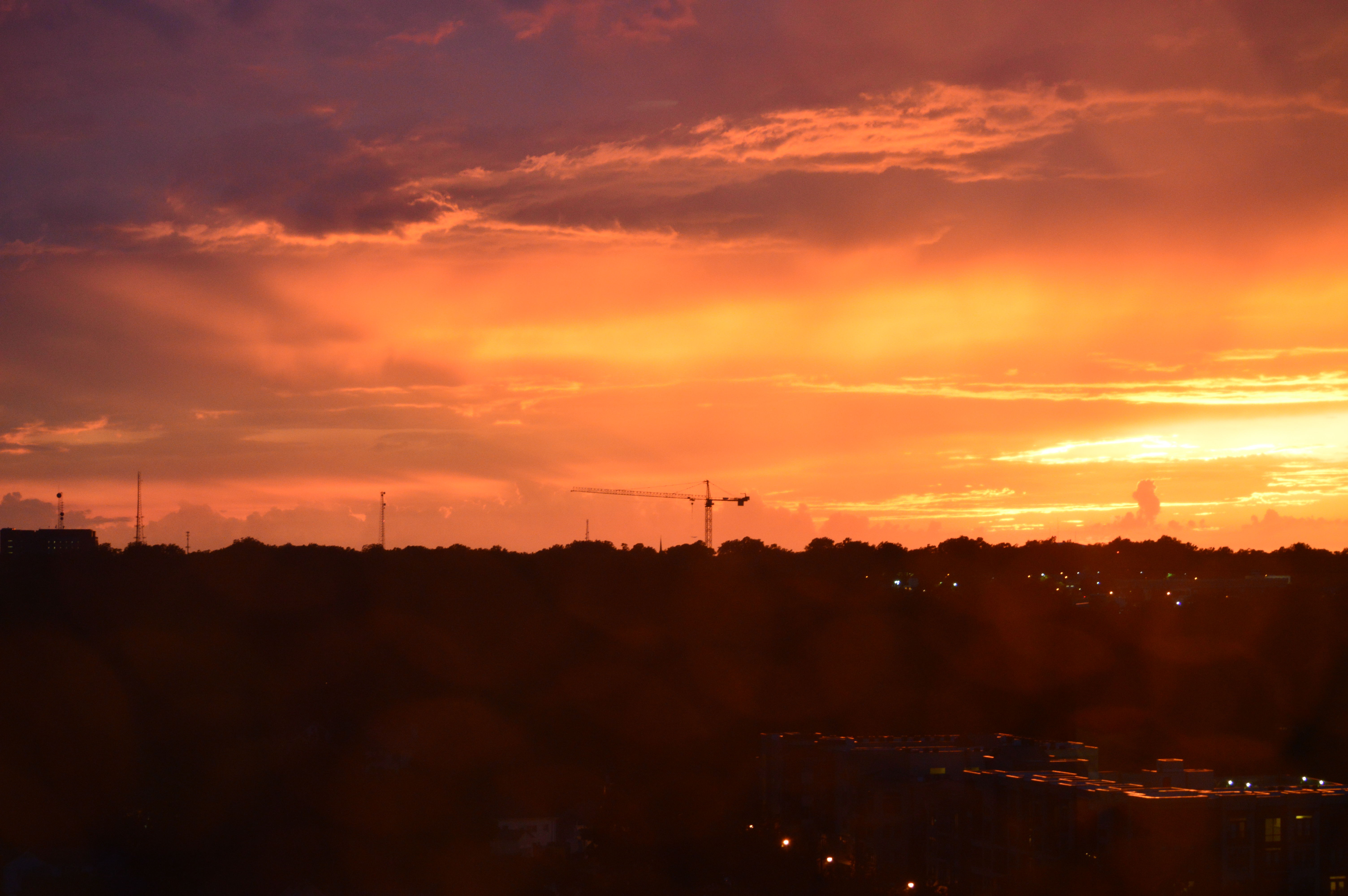
Shortly after I got home, we had a thunderstorm and a strange sunset.

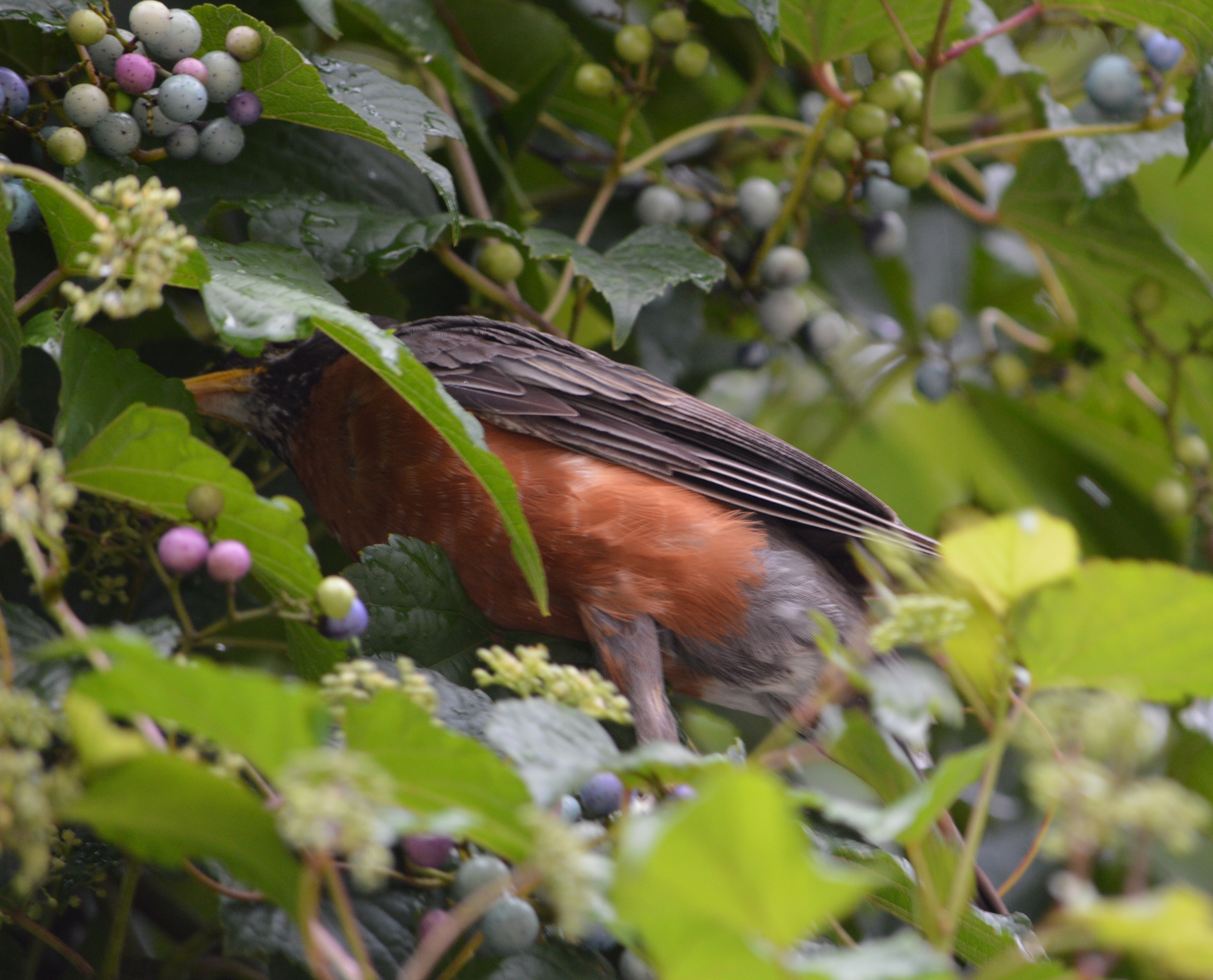
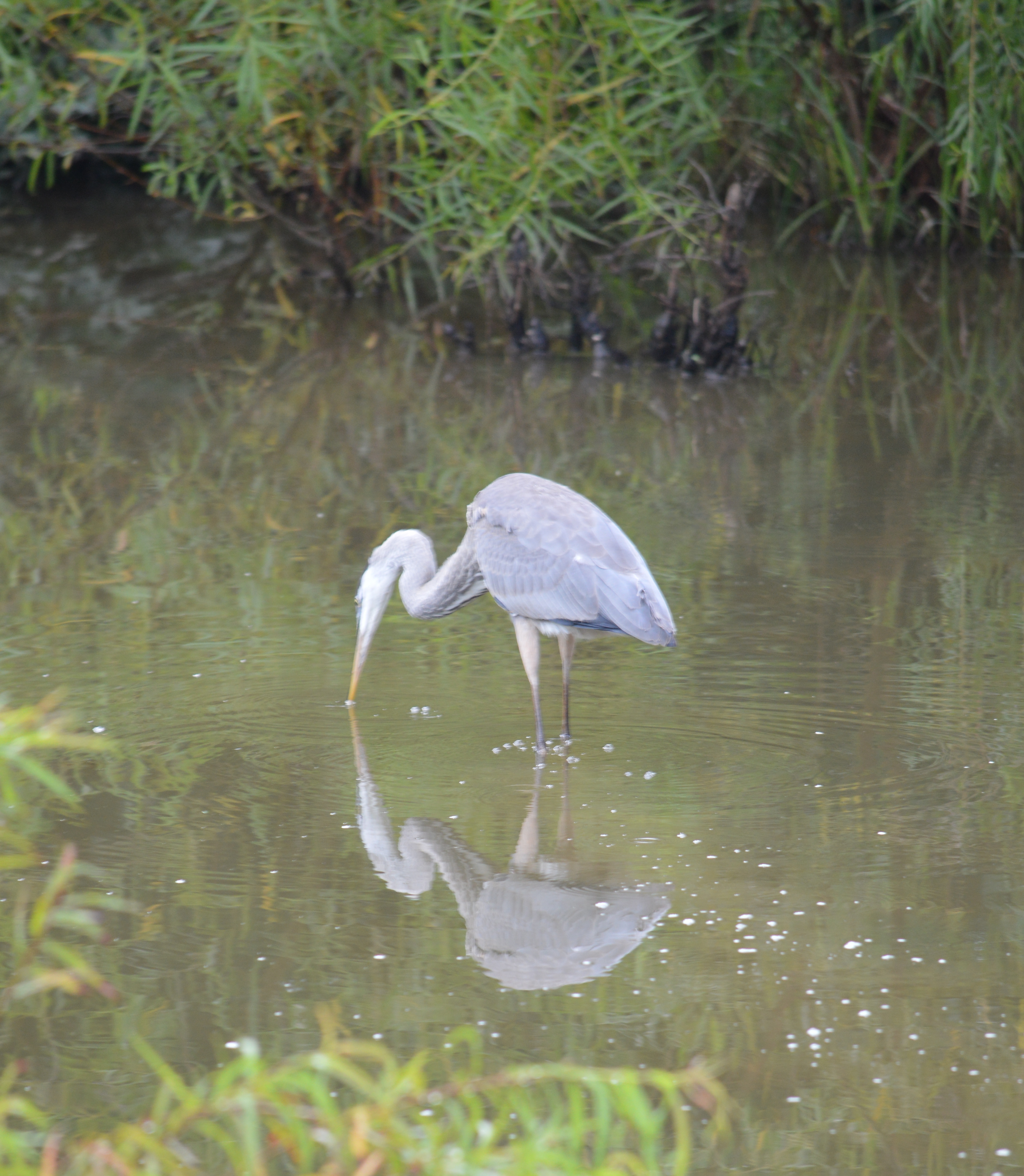
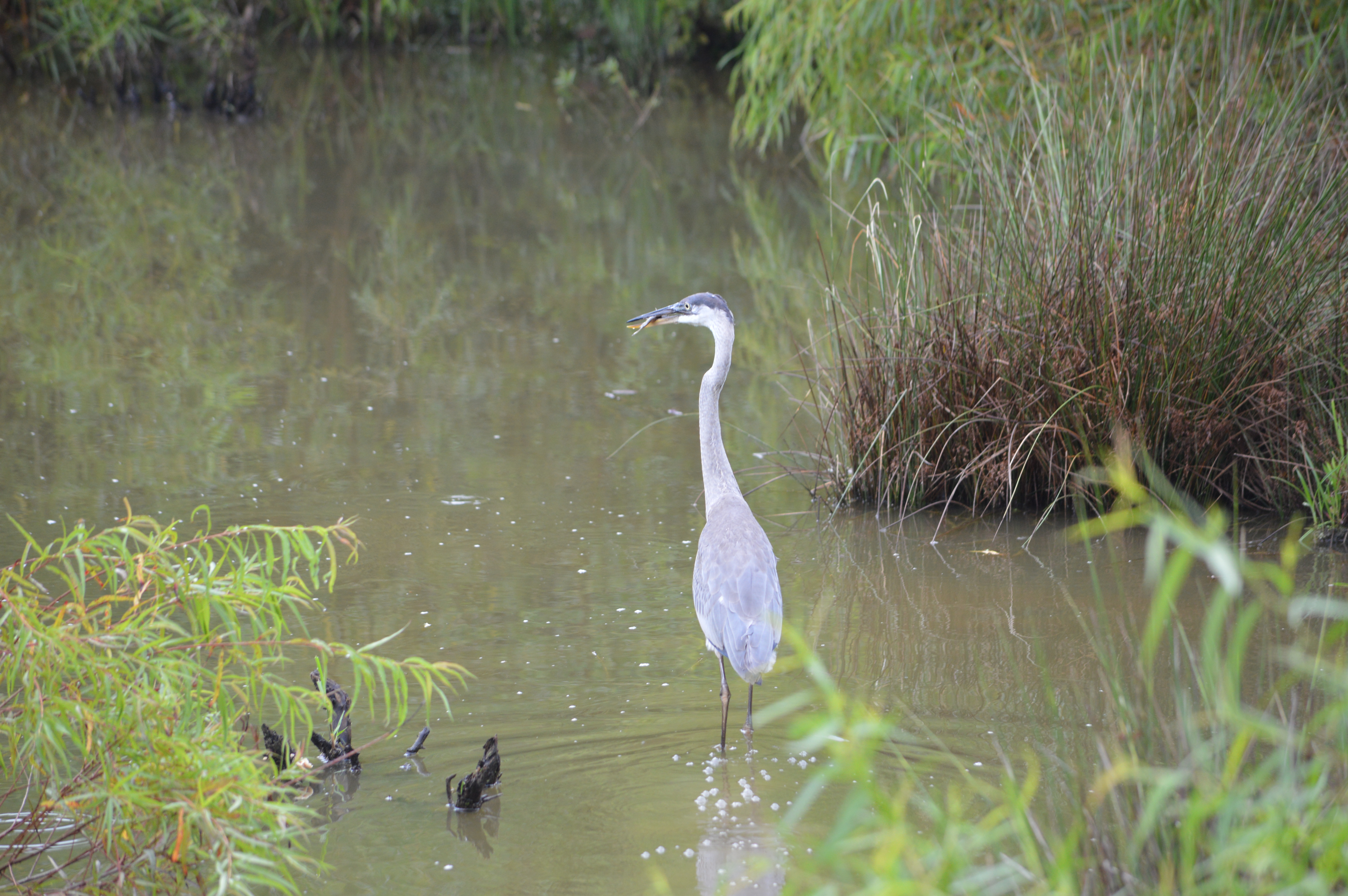
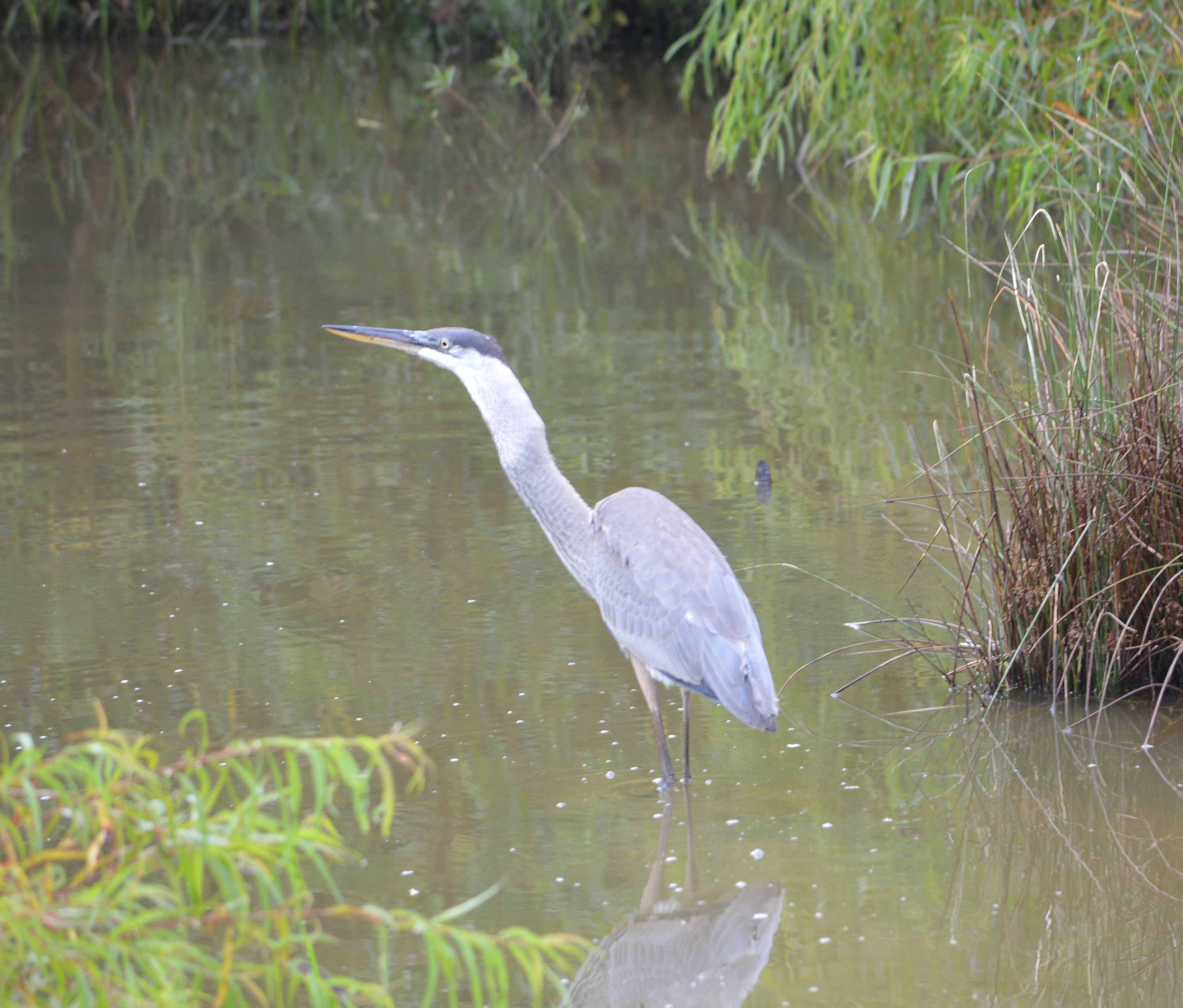
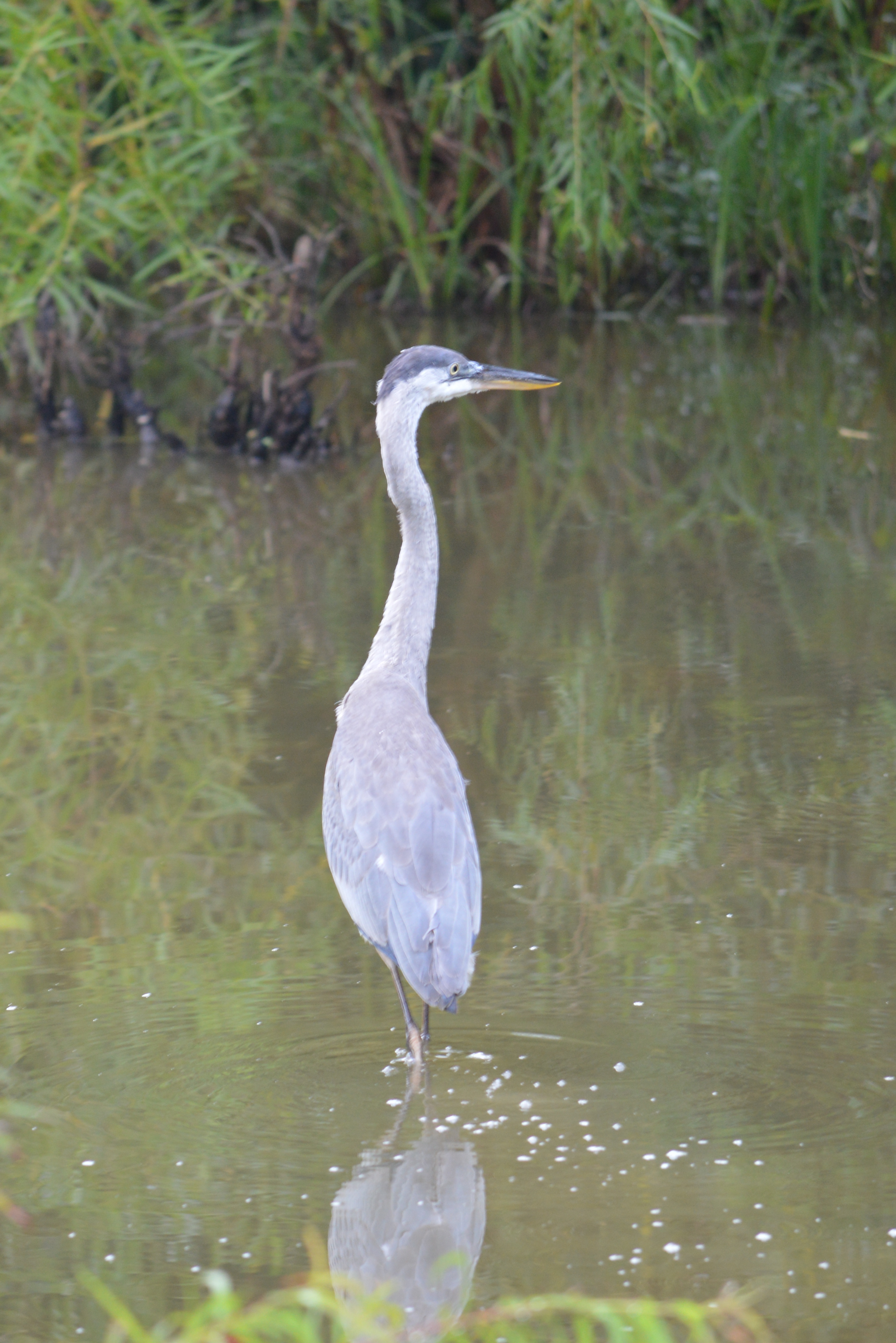
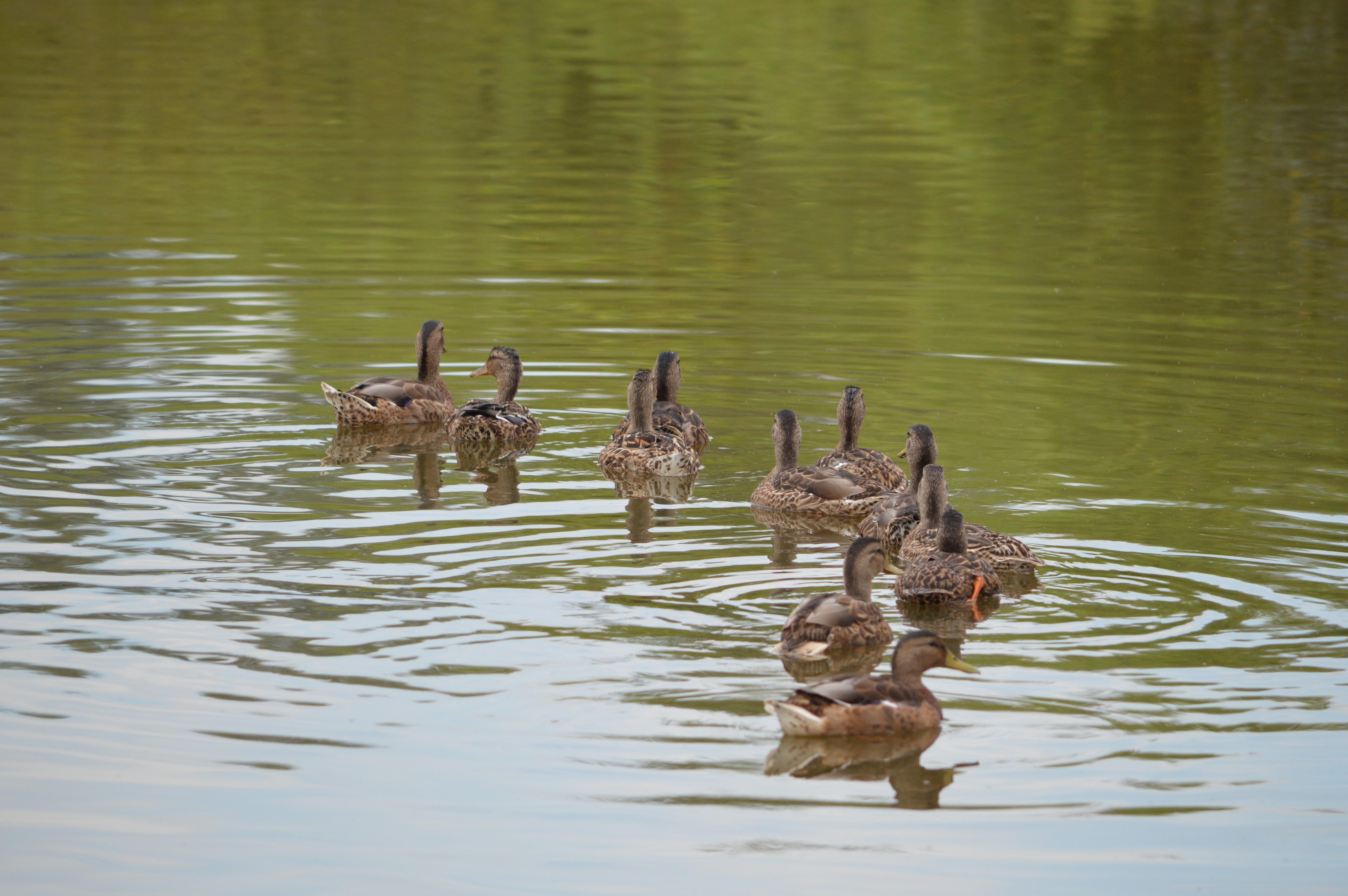
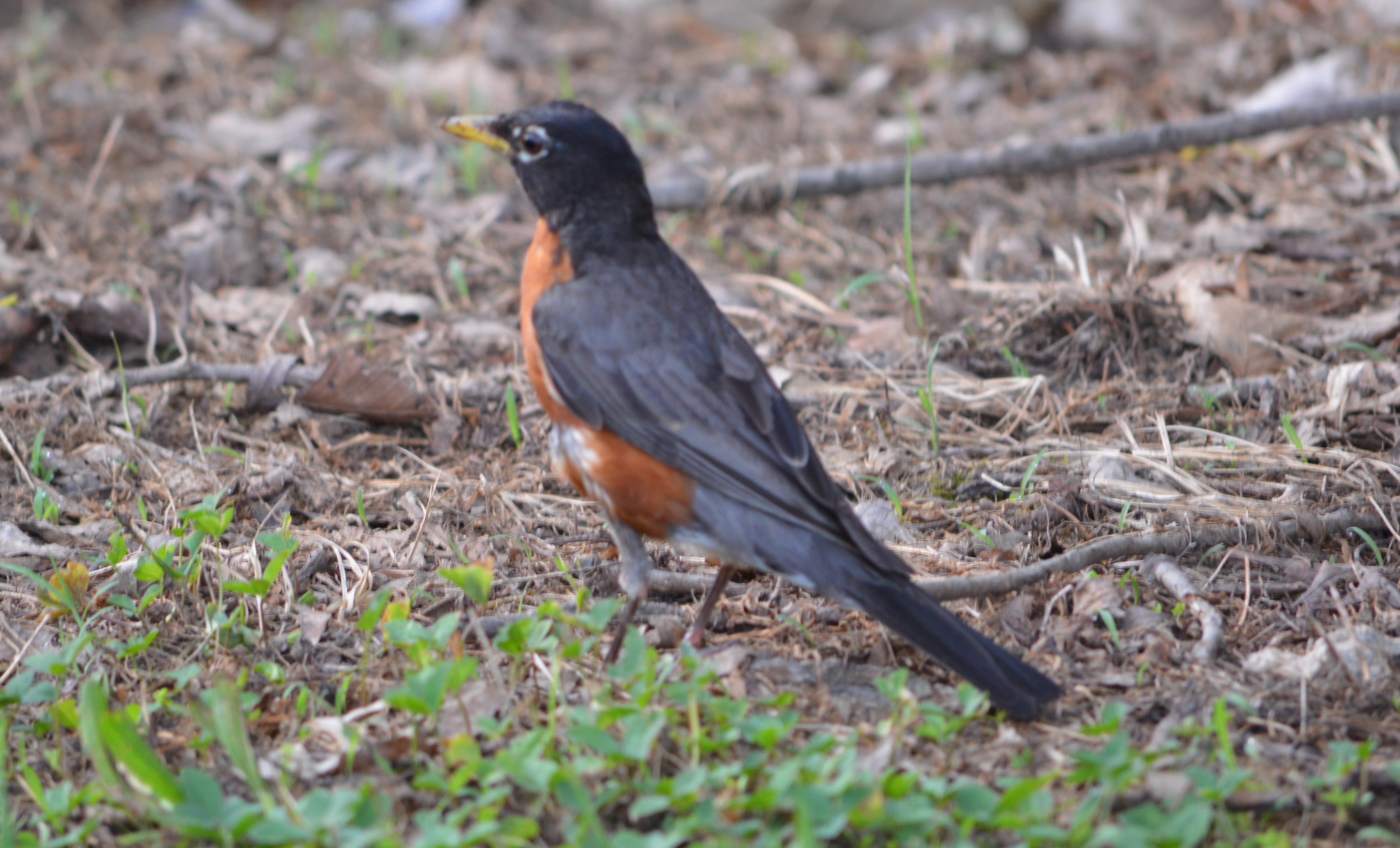
There were some birds this morning at the boardwalk off of Raleigh Boulevard. Most of them hid from me (like that small bird in the Frost poem), but a robin, a great blue heron, and a mallard family didn’t.


Make way for Segways, Scouting intolerance, and speaking of ear protection


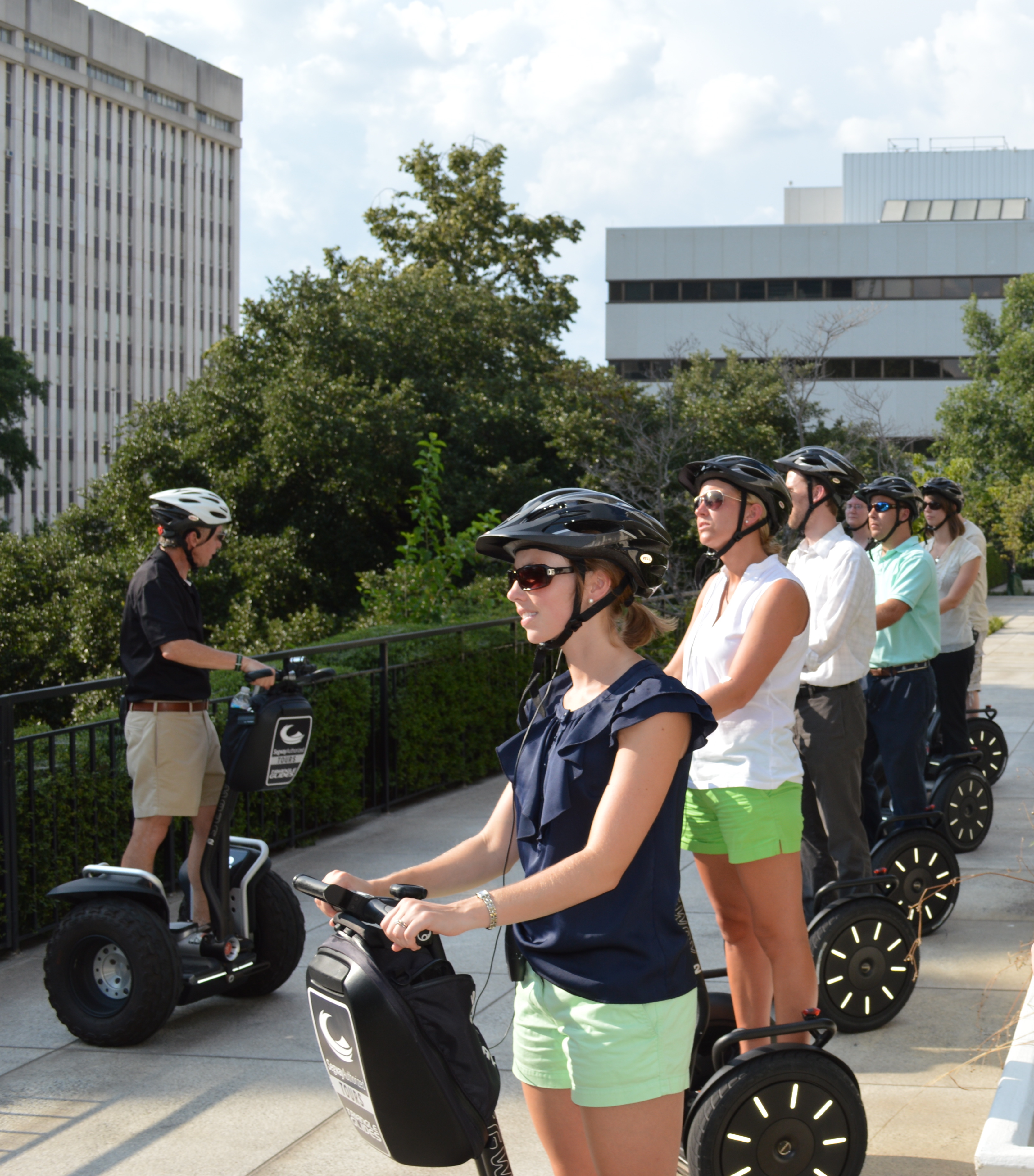
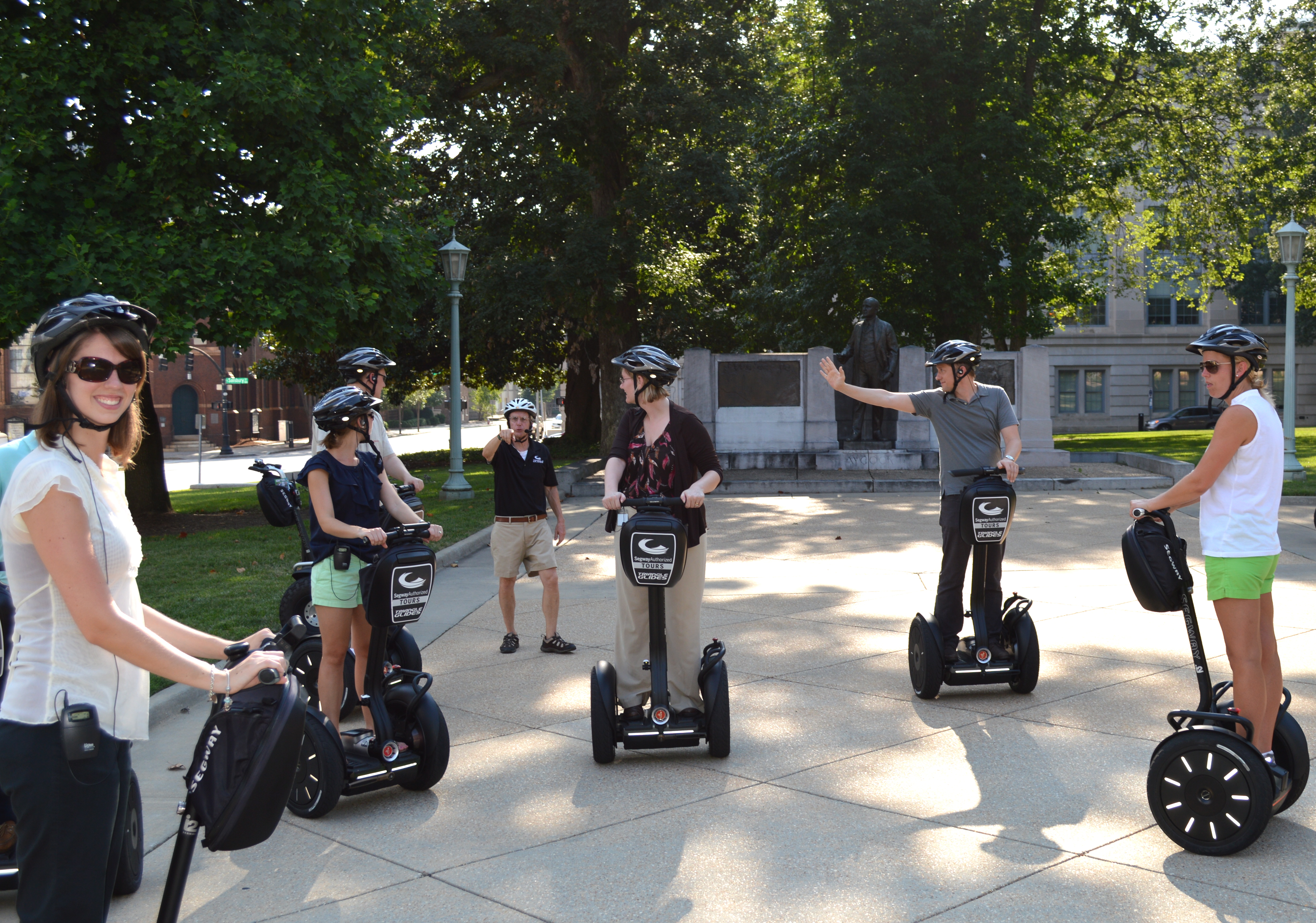
This week a group of us took an hour-long tour of downtown Raleigh on Segways, those self-balancing two-wheeled scooters. I learned that several Raleigh street names were the names of councilmen who approved the purchase of farmland for the city in 1792, and other similar facts. But more important, I learned how to move forward, backward, and turn. It takes approximately 5 minutes to learn, and 5 more to feel reasonably confident. A few minutes later at the old Capitol I was wondering how fast the thing would go, and the guide was begging me to slow down. I felt like one of the Jetsons.

When I think of fun adventures, I still think of my early years with the Boy Scouts. Even at the time, I thought the uniforms were a bit goofy, but I valued the friends I made and our close encounters with the natural world while camping, hiking, and canoeing. With this happy history, it pains me that the Scouts decided last week to reaffirm their ban on gay members. The Scouts instilled in me a highly serviceable code of conduct: a scout is “trustworthy, loyal, helpful, friendly, courteous, kind, obedient, cheerful, thrifty, brave, clean, and reverent.”

But there’s at least one cardinal virtue missing from the list: tolerance. Willingness to tolerate and accept differences is vital for individual and collective happiness. It doesn’t come easily or naturally, and it needs continual tending and encouragement. The Scouts should be promoting it without exception. As much as I was a committed Scout, as long as they have a policy of intolerance of gays and non-believers, I cannot support them.

At times it’s unclear whether unhealthy behavior is the result of ignorance or wilfulness. I’ve generally assumed that exposure to dangerous noise levels was an issue of ignorance. But a story in the NY Times last week suggested that some noise polluters had something close to a criminal mindset. Certain retailers, restaurants, and clubs have raised noise levels to the point where hearing loss is almost inevitable, and have done so with a view to attracting youthful customers to buy and drink more, and to repelling oldsters. If this is done knowingly, it’s despicable!

Young people, and indeed most people, assume that businesses and governments wouldn’t knowingly expose them to serious harm. It reminds me of marketing that used to hook kids on cigarettes, and still hooks them on sugary cereals and fatty fast food. According to the Times story, employees of noisy businesses have hearing and other problems, but regulations are almost never enforced, and few people complain. Here’s a thought — let’s start complaining.

Stuart, who had his tenth birthday this week, says, “Protect your precious ears!”

Chilling with Robert Frost and a new camera

The hot weather finally broke last week, after setting a temperature record here in Raleigh for most consecutive days over 100 (6) and tying the all time high of 105. Most of the time, I’m in air-conditioned environments, but still, I usually try to spend some time in unprocessed air. During the recent heat wave, though, the idea of communion with the natural world seemed rash. The brutality of nature was in full display.

To cool off mentally, I refreshed on The Wood-Pile, a poem by Robert Frost. I memorized this chilly thing a while back for no good reason other than its stark strangeness. It begins, “Out walking in the frozen swamp one gray day, I …” The narrator at first sees nothing but “tall slim trees.” It seems matter of fact, but it’s completely strange! Who goes walking in a frozen swamp? Especially when the sky is gray and gloomy?

As with other great poems by Frost, what seems at first to be simple factual reporting turns out to raise question after question. The nominal focus of the poem is on a well-formed cord of wood incongruously left in the middle of the snowy swamp. The narrator has personal knowledge of the hard work required to cut so much maple with an ax, and is baffled and offended that anyone could invest such effort in a fine wood pile and leave it “far from a useful fireplace.” He speculates that such a person must be someone who “lived in turning to fresh tasks.” This is, from the narrator’s viewpoint, a strange and disturbing thing. And so we wonder more about the flinty narrator.

A woodchuck near the Buckeye Trail

Is it a bad thing to turn to fresh tasks? The poem make us wonder, but still I think, generally not. New challenges are, more often than not, good. I undertook one last week and bought my first digital SLR camera with the thought that I’d like to engage with the visual world a little differently and take better pictures. I’ve been drawn by photography since I was a kid, but in the pre-digital era was discouraged by the difficulty of working with film (dark rooms, chemicals, and so forth) and the expense.

I also worried about that the camera sometimes shuts off the photographer from experience. Think of gaggles of tourists taking snaps of the Grand Canyon — and forgetting to look at it. Direct experience of beautiful things, or even not-so-beautiful things, is a terrible thing to waste.

Balancing that risk, though, is the possibility of finding a different way of seeing, and also a different pathway for communication. I’ve enjoyed using my little point-and-shoot to share images with friends, and noticed that at times taking a picture created an interesting shift in my own visual perspective. A photograph is an abstraction from a larger visual reality, but being conscious of this can focus attention on the larger reality. Deciding whether something is worth snapping and how to snap can open things up.

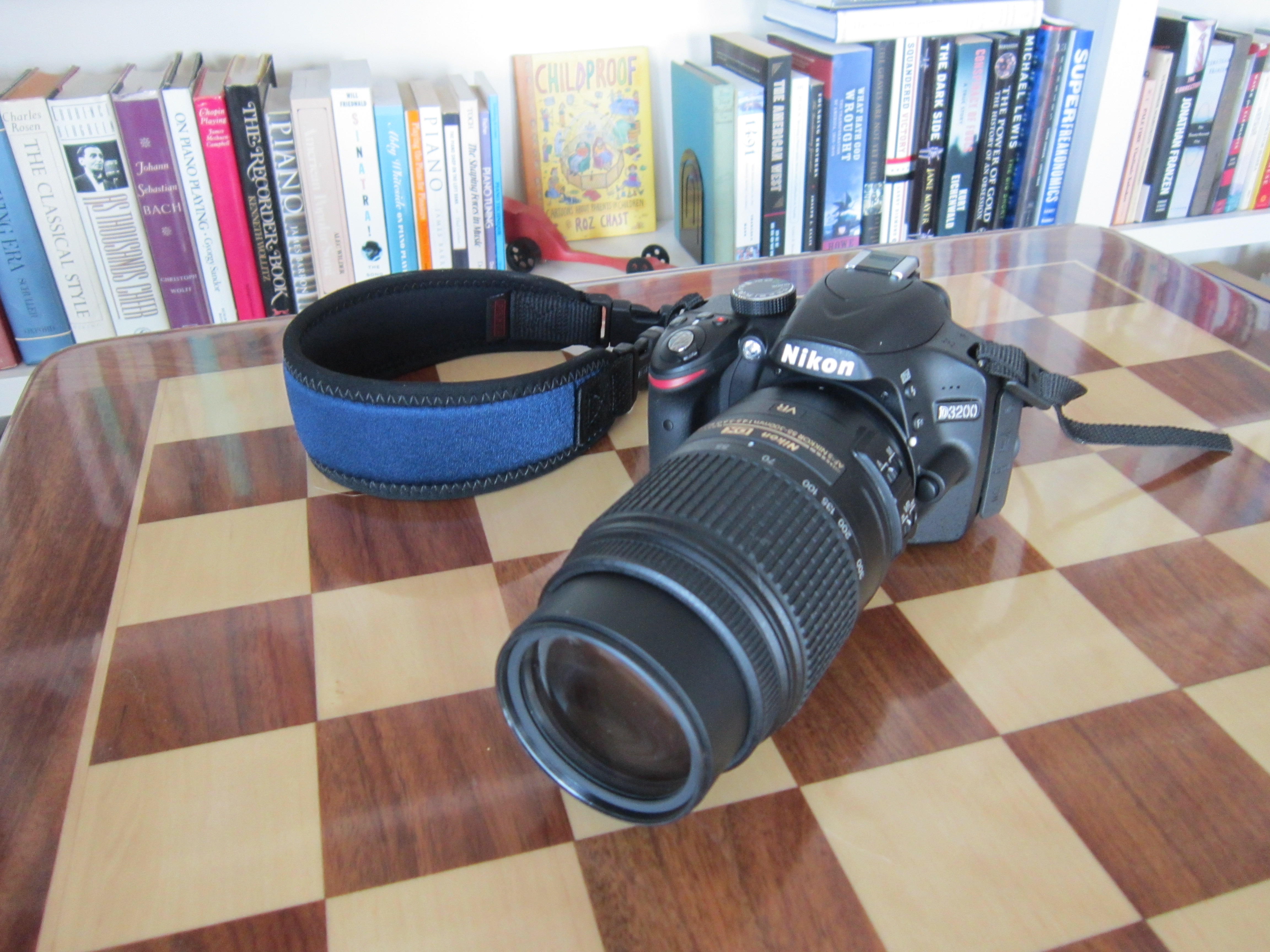
Anyhow, I got a Nikon D3200 with two Nikon lenses (an 18-55 zoom and a 55-300 zoom). Although the D3200 is an entry-level SLR, it is, to me, amazing technology. 24 million pixels! Four shots per second! ISO 100-6,400! Fast autofocus! A vibration reduction system! HD video with sound! And it fits my hands perfectly. All that it requires is knowledge, experience, and creativity.

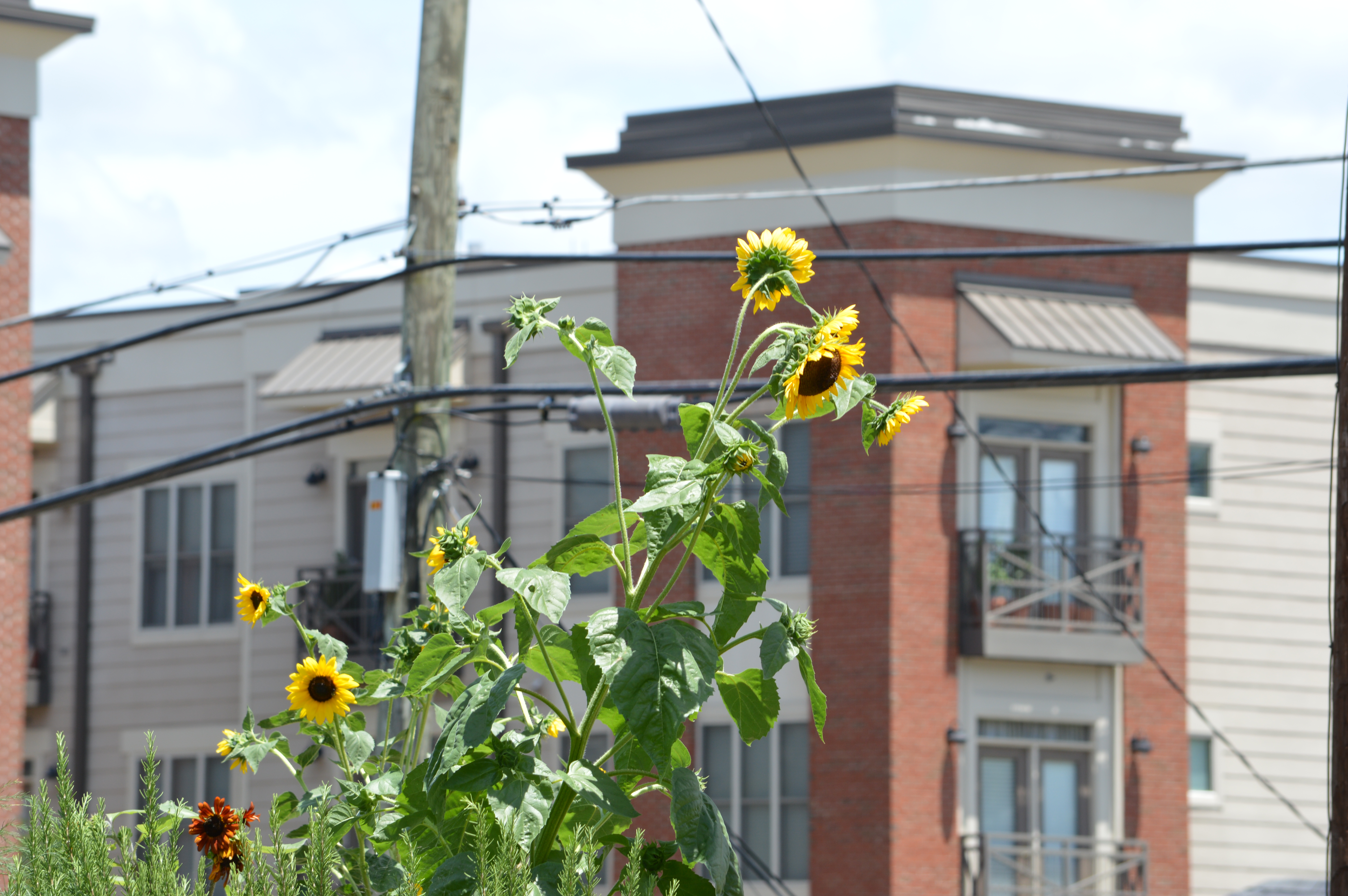
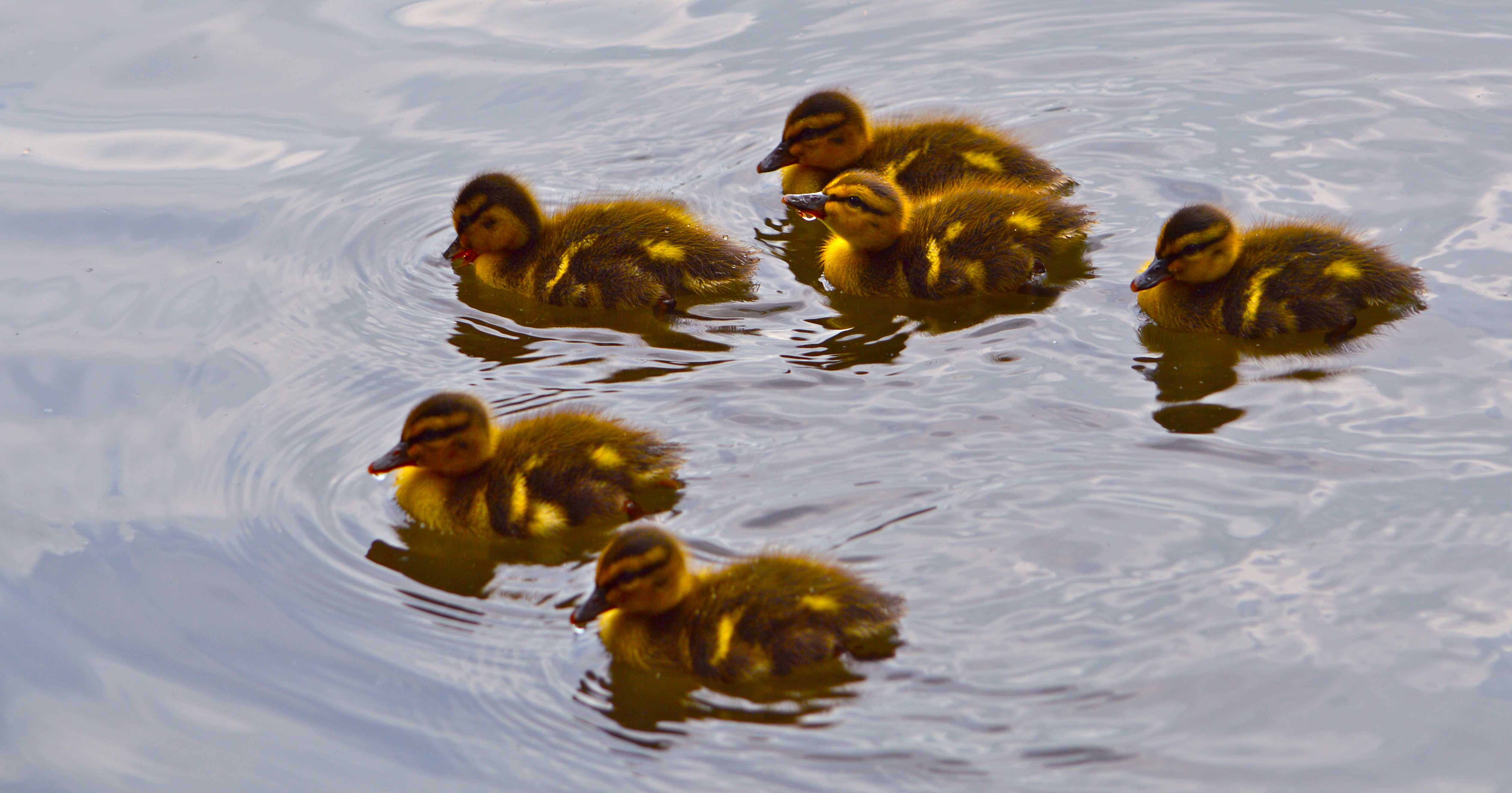
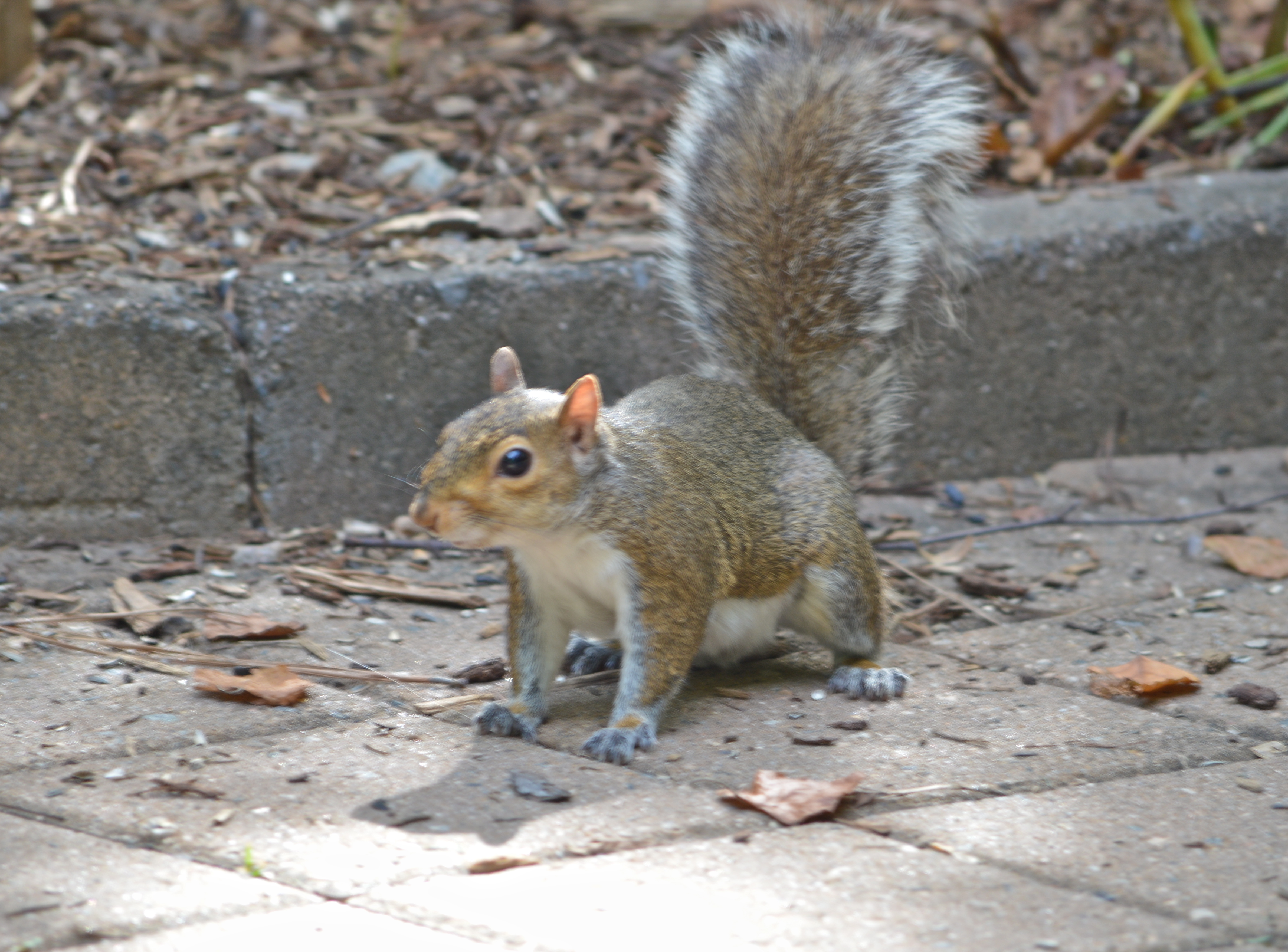
I was thinking that it would be fun to photograph wildlife, and especially birds. I’m also interested in trying to look at human-built places that are not intended for show, places that happen as a by-product of other objectives, to see what we might be missing. Above and below are some of my first efforts.

Mallard ducklings at Lake Johnson