The Casual Blog

Category: photography

Bluebird skiing in Telluride, a brief briefing, and reading The Second Machine Age

14 02 26_7309
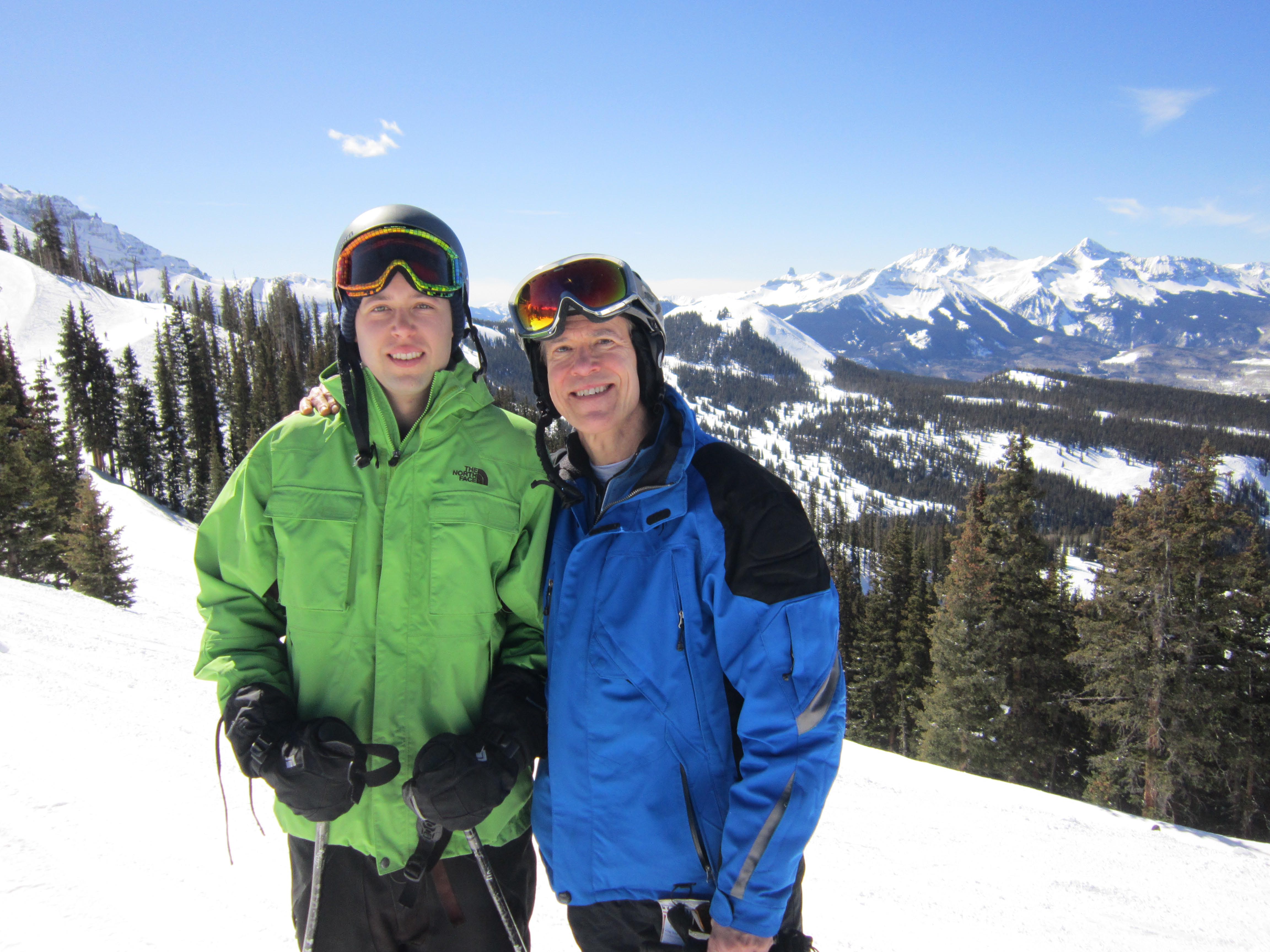
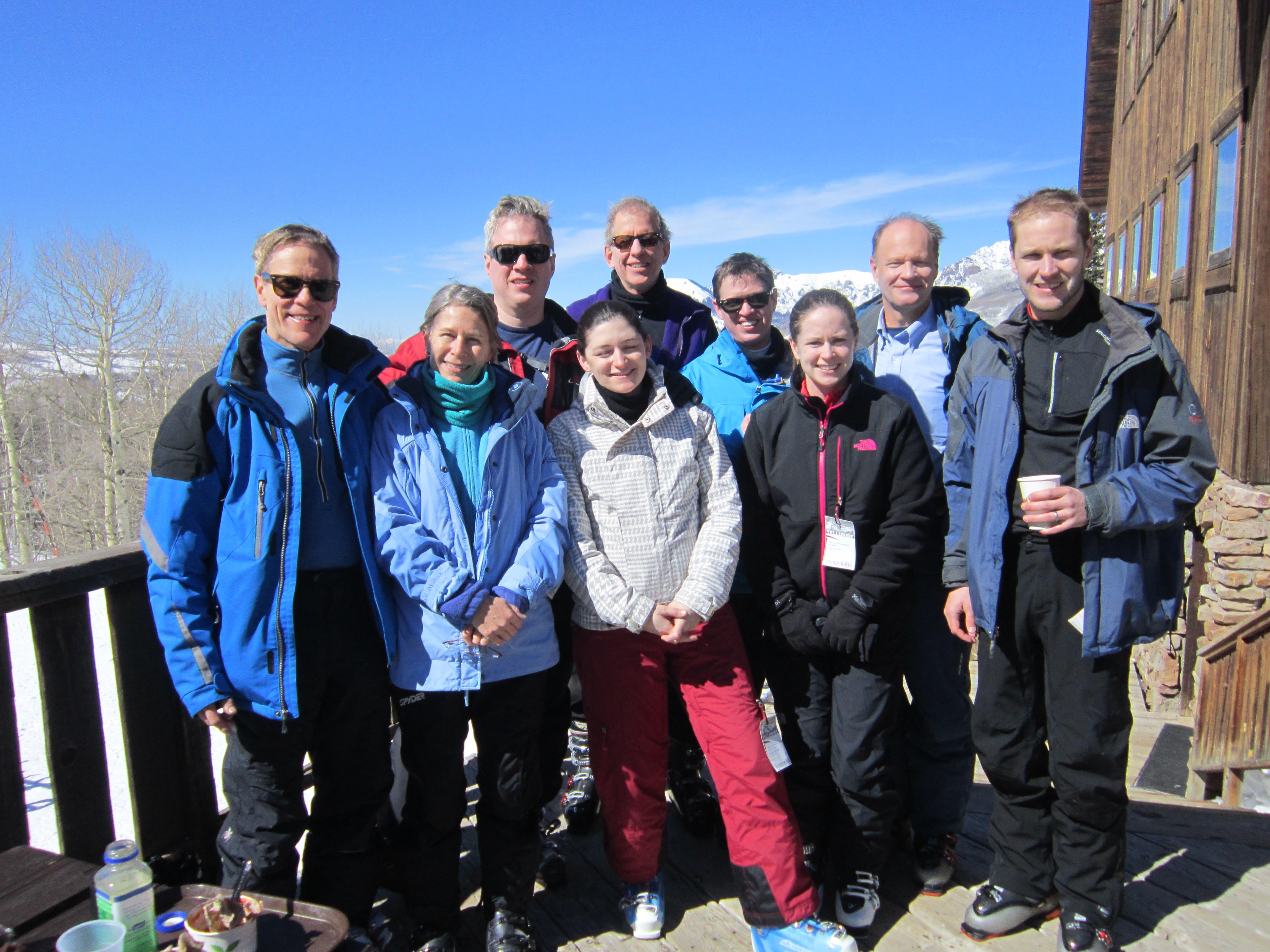
Last week Sally and I joined Gabe and several friends in Telluride, Colorado, for a few days of skiing, eating, and talking. When I describe Telluride, I always mention how beautiful it is, but when I got there, I realized I’d forgotten how massive and magnificent the mountains are. The craggy alpine vistas surround you, regal and timeless. And the town itself has a friendly, unassuming charm. I tried to capture some of these feelings, but was uncomfortable taking my D7100 onto the slopes, and so used my little Canon point-and-shoot up there.

14 02 25_7422_edited-1

Telluride has a lot of challenging terrain, and the question always is, can you handle it? Gabe Tiller has been living here five years, and he can answer that question with a yes. On our first day, he took me down a double black diamond mogul run called spiral stairs, which, once we were committed, he told me was “really steep.” He wasn’t kidding! He also led me into a tree run called Log Pile. These were pressing the outer edge of the envelope for me. Getting through in one piece was a great happiness!
14 02 26_7307
14 02 23_7352

Moguls — aka bumps, or areas of irregular snow that form in steep areas — are terrifying for beginners, frustrating for intermediates, and challenging in varying degrees for those more advanced. If you want to ski the steep wild places, you just need to figure out moguls, and there’s no simple solution. It’s like three-dimensional chess – or make that speed chess. We complimented Gabe on how smooth and strong he looked in the tough mogul runs, and he noted, with admirably humility, that it only took him five years of work.

There is no way I’ll ever reach Gabe’s level, but I got a bit stronger and more stylish this week. I averaged three falls a day, which I take as an indicator that I’m still pushing my limits and improving. I also found new joy in the gladed runs – basically moguls with trees. These require creativity and intense concentration. We did on called Captain Jack’s, which Gabe told me would get “kind of loggy.” Indeed. I had only one scary crash, after I saw Gabe flash by doing hyperspeed turns, and was inspired to give chase. I made the first three turns, but missed the fourth and ran into a tree. I did some minor damage to my left shoulder, but I think it will heal up OK. My worst injury was sunburn on my lips. I got everything except the lips protected with sunblock – a rookie mistake.
14 02 24_7340

Our four ski days were all remarkably clear and sunny, with pleasant ski temperatures in the mid-30s. The snow was generally good – not too hard and not too soft – Goldilocks snow. Of course, it’s always a treat to get fresh light powder, but if it doesn’t happen, I’ll take bluebird days and Goldilocks. We were on the lifts almost as soon as they opened at nine and went at it hard until 3:30 or so. Then hot tub, relaxing, cocktails, and dinner. We particularly enjoyed eating at the Telluride Bistro, Siam, 221, and Hongas.
14 02 25_7312

I had one important work project: an amicus brief in the U.S. Supreme Court in the case of Alice Corp. v. CLS Bank. The case involves a patent concerning financial intermediation, and presents the question of when software is patent eligible under 35 U.S.C. Section 101. I’ve thought about the paradox of software patents for a long time: how a system meant to foster innovation ends up hindering it. I was happy to take on the out-of-ordinary-course assignment of writing the brief myself, but the due date fell in the middle of the ski trip. With hard work, I got most of the writing done before the trip, and while my colleagues took care of cite checking and filing mechanics, I took responsibility for the needless worrying. In the end, I was reasonably happy with the brief, which I hope will help move the debate in the right direction. It can be downloaded here.
14 02 24_7333

For leisure reading, I made it most of the way through Brynjolfsson & McAfee’s new book , The Second Machine Age: Work, Progress, and Prosperity in a Time of Brilliant Technologies. Their subject is how robots and automation are dramatically changing the world. Technology tends to provide more and more extraordinary wealth for the lucky few and the risk of redundancy for the rest. It’s a good introduction to the subject. They explain with clarity and verve why technological change is accelerating, point up examples of the disruptive technologies just starting to take over human work, and play out some of the economic implications.

They seem determined to be optimistic about the future, with examples of how humans and machines can each complement the other. I didn’t think some of their policy prescriptions (e.g. improved education, improve infrastructure, immigration reform, IP reform ) matched up very well with the long-term risks they identified (that is, machines becoming better than humans at almost everything and destroying the labor market). They give some weight to the idea of a guaranteed basic income, which would serve the purpose of preventing mass starvation, but they worry that it might result in dysfunctional communities. The identify employment as a social good, and like the idea of a negative income tax, because it would subsidize and encourage employment. This seems worth thinking about.


A wintry mix, musical Mormons, and Wall Street wolves

14 02 13_7166_edited-1
It started to snow and sleet in Raleigh around noon Wednesday, and Red Hat and many other businesses shut down that afternoon. There were many who got stuck on the road and lost power, but I was able to walk home, which was cozy and warm. The next morning Larisa couldn’t make it to our personal training session, so I worked out in the little gym on our building’s top floor. Just after sunrise, I got some pictures of clouds and ice.
14 02 13_7181_edited-1

It was windy and cold, and the sidewalks were icy, when I walked to work on Thursday. The office was officially closed. It was pleasant to have some uninterrupted time to think, read, and write. I worked on an amicus brief for the Supreme Court concerning a complex legal and social problem, and felt the flow. I’d been scheduled to do a speaking engagement for the NC Bar on Thursday afternoon, but this was cancelled on account of weather, so I could make some good progress on the brief.
14 02 13_7162_edited-1

On Friday we went to see the musical The Book of Mormon in Durham. Diane, my mother-in-law, generously treated us to the seats. I was glad to see the show, which had some good laughs. But the things I thought were good were mostly in the dialog and lyrics. The music was almost willfully unoriginal. At its best, it sounded like a really good commercial for a new Ford. But I will say the soaring anthem, I am a Mormon (and a Mormon just believes) is, however derivative, a truly clever, and sort of moving, hoot.

I expected to feel a little guilty for being complicit in making fun of a minority religion, especially when there are people who I really like and respect who subscribe to it. But the Mormons actually come off as mostly likeable, responsible, and with high ideals, and with the same problems as everybody else. Of course, the doctrine seems bizarre to non-believers. But a lot of the barbs could easily be read as aimed at religion in general.
14 02 13_7222_edited-1

There was an interview with Leonardo DiCaprio in the Saturday NY Times about The Wolf of Wall Street, which we saw last weekend. While I didn’t think it was a movie for the ages, and did think it was too long, I also found myself thinking about it through the week which means it touched something.

The subject matter is the rise and fall of a penny stock boiler room fraudster, and the atmosphere is one of extreme excess – the biggest mansion, biggest yacht, most exotic cars, most beautiful prostitutes, and lots and lots of cocaine. LD is in almost every scene, and holds our interest, as a character with incredible drive and confidence, and an absolute indifference to the plight of the people he’s exploiting. He’s addicted, not only to drugs, but even more to money. He’s sick, but also recognizably human.

I suspected, and the interview tended to confirm, that Scorsese and DiCaprio viewed the penny stock king as emblematic of the more-difficult-to-dramatize Wall Street shenanigans of the mid-2000s leading up to the crash of 2008. Of course, pure stock fraud and financial engineering + speculation aren’t the same thing, but they both run on greed and require similar heedlessness and indifference to others.
14 02 16_7257_edited-1

Cityscapes, intelligent plants, and weight loss work and play

14 02 08_6991_edited-1
I got up a little after 6:00 on Saturday morning to allow time for walking Stuart, feeding him and the cats, breakfast, newspaper, and a little neighborhood photo safari at sunrise before yoga class. I’m still figuring out all the buttons, dials, numbers, icons, and graphs on my Nikon D7100, and experimenting with my new 10-24mm (wideangle) Nikkor lens. Adding to the challenge – wearing gloves. It was overcast, with temperature in the mid-30s.
14 02 09_7111_edited-1

My neighborhood in downtown Raleigh has some stylish, pretty spots, and my usual way of seeing is to pay the most attention to those. But this morning I forcefully looked at older, grittier thing, and their shapes, patterns, and textures. I always enjoy construction sites, where you can see the innards of a building-to-be, but it was interesting looking at the opposite – destruction sites, and places where humans had run out of money or just don’t care anymore how things look. In those places, there’s nature: plants competing with concrete, pushing into cracks and crevices, revealing and exploiting areas that humans neglect.
14 02 08_7015

I read an interesting article this week by Michael Pollan on recent research into plant biology, and specifically neurobiology – how plants sense their environment and exchange information. Plant biologists are sharply divided on whether to call these abilities intelligence. Some scientists insist there cannot be intelligence unless there’s a brain, while others define it in terms of the ability to solve problems, which plants can do. But there seems to be general agreement that plants have some remarkable perceptual abilities.

Pollan describes plants’ “unique existential predicament as their being rooted to the ground and therefore unable to pick up and move when they need something or conditions turn unfavorable. The ‘sessile life style,’ as plant biologists term it, calls for an extensive and nuanced understanding of one’s immediate environment, since the plant has to find everything it needs, and has to defend itself, while remaining fixed in place. A highly developed sensory apparatus is required to locate food and identify threats. Plants have evolved between fifteen and twenty distinct senses, including analogues of our five . . . .”

Plants have also developed some remarkable chemical methods of defending against marauding insects and communicating with others of their species regarding threats and food opportunities, and even recruiting other species to perform services. One researcher estimated that a plant has three thousand chemicals in its vocabulary. Researchers have also found examples of plant learning and memory. Most plant behavior is either invisible or happens too slowly for humans to perceive, but time-lapse photography is opening new windows.
14 02 08_6989_edited-1

One of the challenges of this research is the ethical implications. One scientist, Stefano Mancuso of the University of Florence, argues that “because plants are sensitive and intelligent beings, we are obliged to treat them with some degree of respect. That means protecting their habitats from destruction and avoiding practices such as genetic manipulation, growing plants in monocultures, and training them in bonsai.” Mancuso doesn’t go so far as to avoid eating them. He contends they have evolved to be eaten, which accounts for their modular structure and lack of irreplaceable organs.

Most of this research was news to me, but I didn’t find it hard to believe that plants have extraordinary abilities, or that humans might find this hard to accept. Some people have the same problem dealing with the existence of (non-human) animal intelligence. I guess it’s insecurity. To me, learning about and appreciating the abilities of other species of life makes the world that much more amazing.
14 02 09_7129_edited-1

In health news, I’m happy to say I finally got back to my fighting weight of 155 lbs this week (that’s a BMI of 22), after gaining 5 during our Xmas holiday travels. It is certainly harder to take them off than to put them on. I did it by working more interval training into my workouts, like jumping rope or rowing as part of a weight circuit, and lengthening my longer cardio work (elliptical, stairs, and such) from 30 to 40 minutes. Also, of course, eating sensible portions of healthy things (fruit, vegetables, legumes, and whole grains).

I also am grateful to my health and fitness guides, especially Larisa Lotz, who meets me each Thursday at 5:30 a.m. at Studio Revolution with several mind and body surprises. This week, for example, her latest workout creation had me lunging and twisting, slamming down a heavy medicine ball, squatting with a sandbag, old school dead lifts, rowing with kettle bells in plank position, and fast agility movements through a rope ladder, among several other aerobic and anaerobic activities. She didn’t have a new balance activity this week, but she’s got me working on several, including balancing on my knees on an exercise ball.

This week I also tried a new morning exercise class at O2 Fitness called Chisel. I’ve been enjoying/enduring the spinning class there on Fridays with Jenn, who is funny, inspiring, and relentless, and she told me I should give it a try. I hadn’t previously done gym classes other than spinning, in part because I’ve got plenty of other things I like to do, but also in part because of shyness – a little bit of fear of the unknown, of confusion and possible embarrassment.

But with Jenn’s encouragement, I showed up last Monday. She was, as usual tough and inspiring, and funny. The hour-long class involved a background of driving dance club music and foreground of intense intervals both with and without dumbbells. Hardest for me were the jumping lunges. I found it very sweat inducing, and after hanging on for dear life, I felt great afterwards – an endorphin surge.

On Saturday morning as usual I went to Blue Lotus Yoga for Yvonne Cropp’s open level Vinyasa class. This weekend is Blueversary – the seventh birthday for the studio – which made me particularly conscious of how grateful I am that it’s there. There were several new people in the class, which may have accounted for Yvonne’s keeping things relatively low-keyed, well within normal yoga conventions. It was good, as always, to really stretch and to breathe together with the class. Afterwards, there was a drawing for special prizes, and I won one – a basket with lavender-scented soap and such. I didn’t really need the lavender, but still, I felt lucky.

Picturing light snow, and thinking about privacy and our digital selves

14 01 29_6909
It snowed in Raleigh this week, which was kind of exciting and kind of annoying. I love the transformative quality of snow – all that clean white soft quietness. But moving about in a normal human way becomes difficult. When I tried to drive rear-wheel-drive Clara to work, we got stuck as soon as I cleared the door of the apartment building garage. Unable to get up the modest slope, we managed to back down to a lucky parking space, and I walked the mile or so into work – in 18 degree cold. Burrr!
14 01 29_6916-1

On the way, I used my new camera, a Nikon D7100 with a Nikkor 10-24mm lens, to get a few images of my snowy neighborhood. I forgot to adjust the ISO, which I’d previously set at 800, but it didn’t seem to cause noise problems. I’ve been reading a book titled Mastering the Nikon D7100, which sounds very boring, but doesn’t seem so at all – which suggests I’m becoming a photo nerd. Oh well. There really is a lot to learn about this camera, but it can do so much! It sounds a little weird, but I’m feeling warmly towards it – almost like a new friend.
14 01 29_6919_edited-1

Speaking of digital devices and friends, there was a lively essay by Colin Koopman in the NY Times this week about why we’re struggling so to grasp the nature of the problem with the NSA’s increasing intrusiveness into our lives. Koopman proposes that we should start viewing ourselves more as data (“info persons”). It is, after all, the way we’re viewed by our internet service providers (Google, Bing, Facebook,LinkedIn, Twitter, Amazon, eBay, Opentable, Angry Birds, etc. etc.).

Koopman proposes a simple thought experiment: imagine what would happen if all our digital data, from social security numbers to credit card accounts, medical records, school records, bank records, insurance records, search queries, book preferences, food preferences, porn preferences, avatars, Instagrams, Tweats, and posts – suddenly disappeared. Try it.

When I did, my stomach did a quick shimmy and I felt a bit of vertigo.

His point, I think, is that we have trouble grasping the privacy issue posed by mass electronic surveillance, because we have trouble grasping how our digital technology has transformed us, changed what a human being is. Our digital selves are an increasingly integral part of the human fabric. Because we still don’t quite get how they relate to the pre-digital revolution part of our lives, we tend to not notice them or downplay their significance.

But advertisers and spys have realized that, from another point of view, the digital self is a high value target, enabling the intruder to predict with a high degree of accuracy what we will buy on Amazon and view of Netflix tonight and do with ourselves tomorrow. The new Age of Information is transforming commerce and law enforcement, but it we haven’t evolved political or legal tools to address it.

Our privacy is closely related to our dignity, and to community. We all have imperfections or oddities that we prefer to keep concealed. They may be physical flaws, financial limitations, unusual appetites, or unpopular ideas. Our ability to maintain self-respect and to live in cooperative groups depends on a tacit mutual agreement to respect boundaries for these differences, and to not insist that they be exposed.

We didn’t realize until recently that just by using the new normal tools of communication and commerce, we had opened the door on our private selves. Once we know that our health problems, financial problems, sexual proclivities, and other traits are within view of strangers, we feel diminished and alienated. This is why, even leaving aside the risk of tyranny, data privacy matters.

Speaking of technology and transformation, on Friday we had a nice dinner at Capital Club 16 (an eclectic and vegetarian-friendly place) and went over to Mission Valley to see Her, starring Joaquin Phoenix, the voice of Scarlett Johansson, and the wonderful Amy Adams. It’s about a new sort of digital assistant app that is so human that humans fall in love with it – and it with them.

The premise didn’t seem farfetched to me. I thought it was touching and unsettling, though kind of slow toward the end. The next day I was still thinking about the themes: how prone to loneliness we are, how desperate to connect, how ecstatic in love, how despondent in loss, how changeable, and also how resilient.
14 01 29_6925_edited-1

Birds of paradise, Dvorak, and Puccini

On Saturday afternoon I walked over to the N.C. Museum of Natural Sciences to see the Birds of Paradise exhibit. I loved it! It was about the exotic and colorful species that live mostly in the rainforests of New Guinea and Australia. There were sections on early European encounters with the birds and the efforts of trailblazing naturalists, but the heart of the exhibit was gorgeous recent photos and videos by Tim Laman, who worked in partnership with ornithologist Edwin Scholes.

In 2004, these two brave souls undertook to document all 39 species of birds of paradise. This required numerous expeditions through dense forests and up into the mountains. Some of the species do their amazing displays in the treetops, so documenting them required building blinds high up in trees and sitting there for days at a time. Getting to the sites and getting the shots sounded more like the first ascent of Everest than a bird walk. This was high adventure. There’s a good web site about their work here. For an aspiring nature photographer, it was really inspiring.

And the birds are amazing! Some have iridescent colors, and others have wire like structures coming out of their tails. Some can transform their shapes into modernist sculptures. Their mating displays are hugely dramatic. It made me feel privileged to live on planet earth, where remarkable adventures are still possible, and such amazing creatures still exist.

We went to the N.C. Symphony that night, and heard Dvorak’s 7th Symphony. The orchestra was led by guest conductor Christian Knapp. Described in the program as “one of today’s foremost young conductor’s,” he seemed a bit shy and eccentric when he first appeared, and his gestural style seemed quirky and unathletic.

But he could play the orchestra! By that I mean, the orchestra was his instrument. He had a strong artistic vision, and the will to shape the music. His rhythmic flexibility was a welcome change from Grant Llewellan’s typically more foursquare approach. As Olga, my piano teacher, observed recently, the music is supposed to be interesting, not boring, and to make it interesting we have to find rhythmic solutions that go beyond the metronome.

On Sunday morning it was too chilly for golf. I took some pictures with my new wide angle lens, then went to O2 Fitness for a two-hour workout. I had success with my handstand (on the eleventh attempt)! I was focusing on doing a good variety of functional movements along with a lot of cardio: jumping rope, rowing, running, stairs, and elliptical. My average heart rate over the two hours was 135, with a high of 161, and I burned 1537 calories.

We had tickets to the Sunday afternoon performance by the N.C. Opera of Puccini’s La Boheme. I was planning to go mainly to give our local musicians some moral support, and wasn’t especially looking forward to it. In the past, I’ve found Puccini not quite to my taste – overly lush, with big, obvious emotions, and not much subtlety. But I also recognized that his music is dense and complex, and thought I might get him better if I listened more.

I’m so glad I didn’t skip it. This was a visually and musically spectacular production that was satisfying on every level. The sets by Peter Dean Beck were highly evocative (a long step up from NCO’s usual standard). The costumes were expressive and lively. The orchestra was a group of experienced professionals who sounded great. Guest conductor Robert Moody seemed to have a good feel for the music and good rapport with the singers.

The leads were all good, and tenor Eric Barry as Rodolfo was terrific. He did his big arias with great sensitivity and feeling, but he also had a sweet, funny presence, and good chemistry with his Mimi, Angela Fout. I enjoyed her singing, too, which I didn’t find quite as technically satisfying, but did find very expressive. Baritone Troy Cook as Marcello was also a fine singer and good actor. The chorus sounded good, the children’s chorus sounded good, and even the marching band sounded good. The crowd scenes were wonderfully staged – very lively. The English subtitles, projected above the stage, were also well done.

But the really amazing thing was how all these performers and technicians came together, melding into something that was, for 2:40, a complete world. This is the magic of opera. I really was drawn into Puccini’s vision of 1840s Paris and sweet, romantic, artistic Bohemians, and I cared about those dreamers. I got quite misty when poor Mimi died. It was a complete, powerful experience.

Our diving trip to Fiji

13 12 27_6468_edited-1
Over the end-of-year holiday Sally and I went to Fiji for some scuba diving. It was a long journey with some rough spots, but also some thrilling spots, and on balance it was worth it. For those who might consider such a trip, here’s some of the nitty gritty on the diving, and also a note about our stop on the way home at the Getty Museum.

I’d always thought of Fiji as one of those “island paradise” places in the Pacific, but in fact didn’t know that much about it. The reason we decided to go was we’d heard the scuba diving was good, and it’s relatively uncomplicated to get to from the US. It is situated north of New Zealand, west of Tonga, and east of Vanuatu. Although it looks like a tiny speck on the world map, it is made up of 332 islands, though most of the population of 860,000 lives on just two of them. The large islands are mountainous and very green

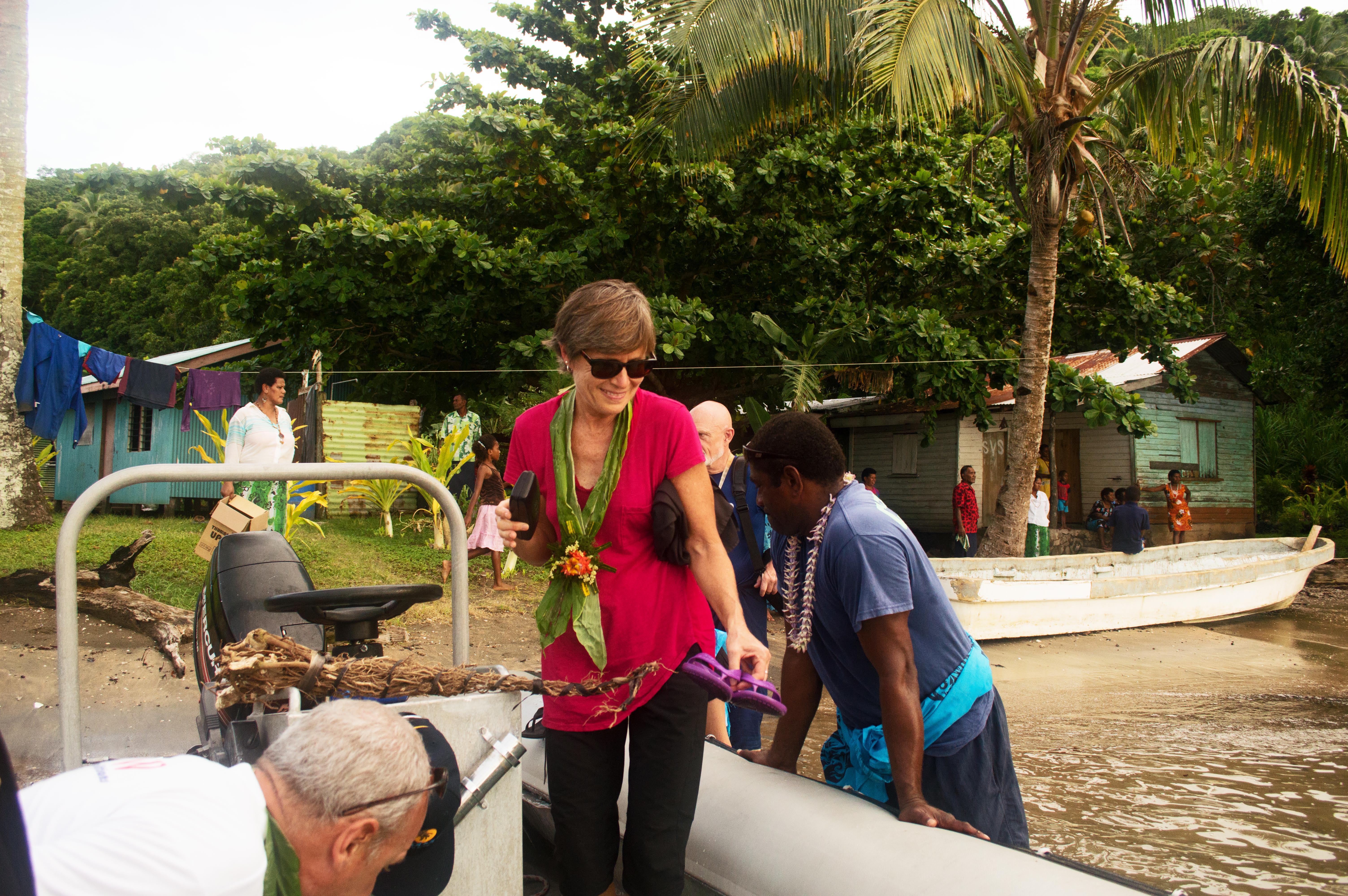
It took us about 26 hours door-to-door to get there. Going out, we had three flights, a long cab ride, a wait, and then an hour boat ride to get to Beqa (pronounced Ben-ga) Lagoon Resort. The staff was on the beach under the palms singing and clapping as we floated up. This was sweet, but we were surprised that there was no dry way to exit the boat. You had to step into the water and then onto the beach, and Sally was still in stockings, but on she went. One of the staff put a little garland with flowers around our neck.

13 12 25_6536_edited-1
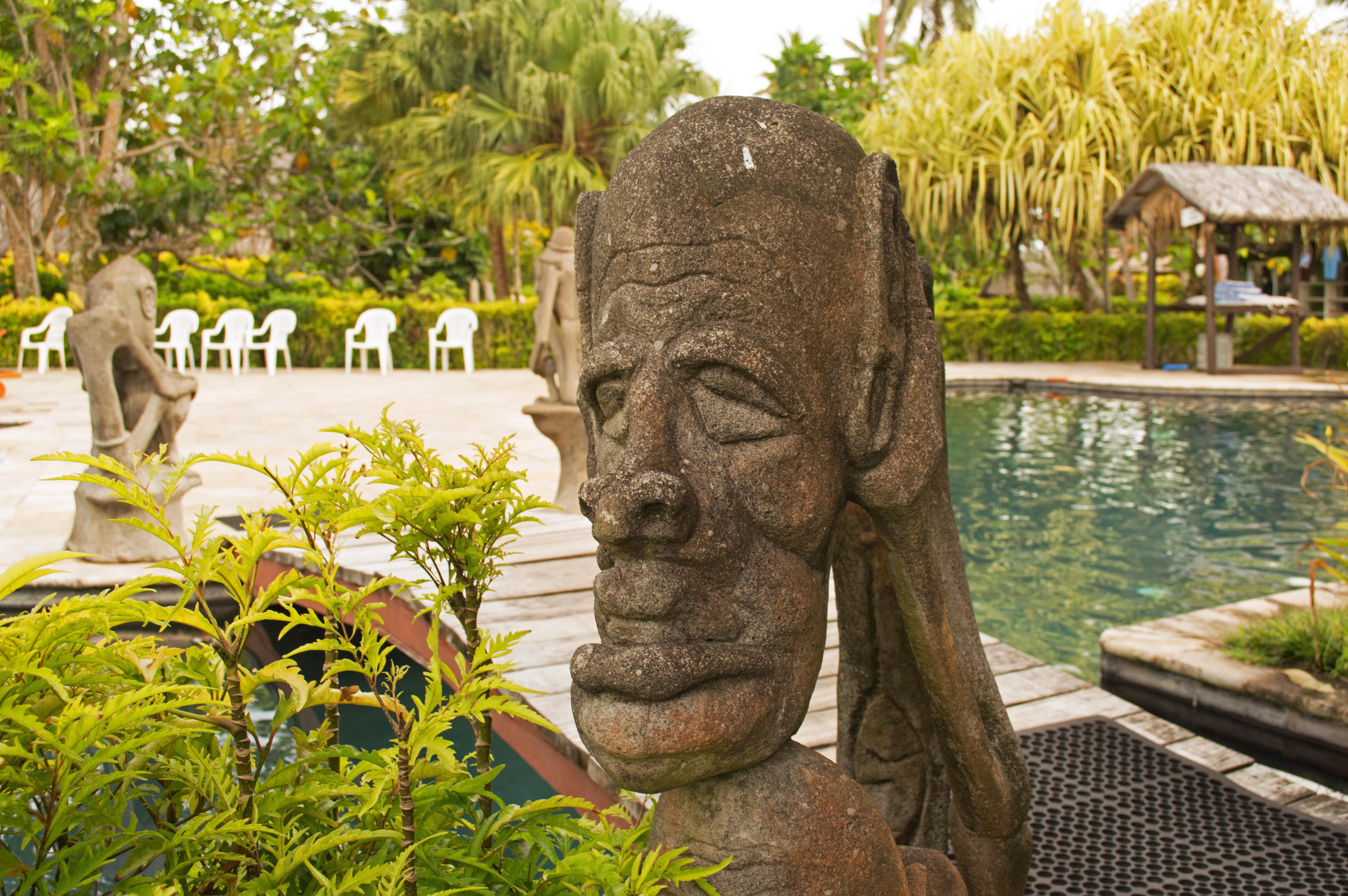
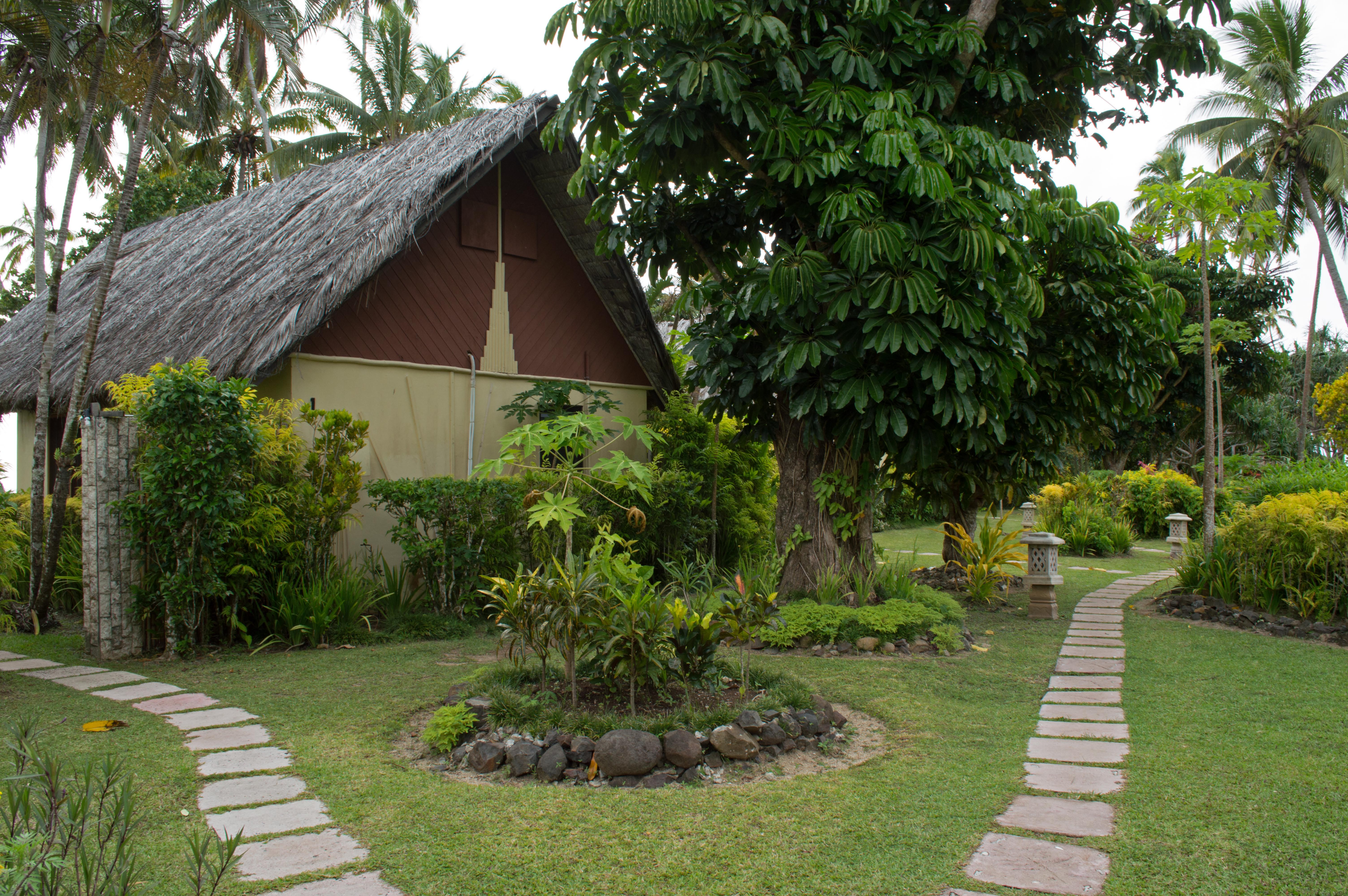
The resort didn’t look quite as gleaming as its website suggested, but it had tropical charm, with palms, flowers, sand, pools, and grass-roofed buildings, and the staff was warm, friendly, and competent. We were in Bure (which I’m guessing means cottage) No. 5, which fronted on the beach and had thick hedges on the side – great privacy. That afternoon, I did a short checkout dive, but otherwise we took it easy and had a couples massage at the spa. It was marvelous.

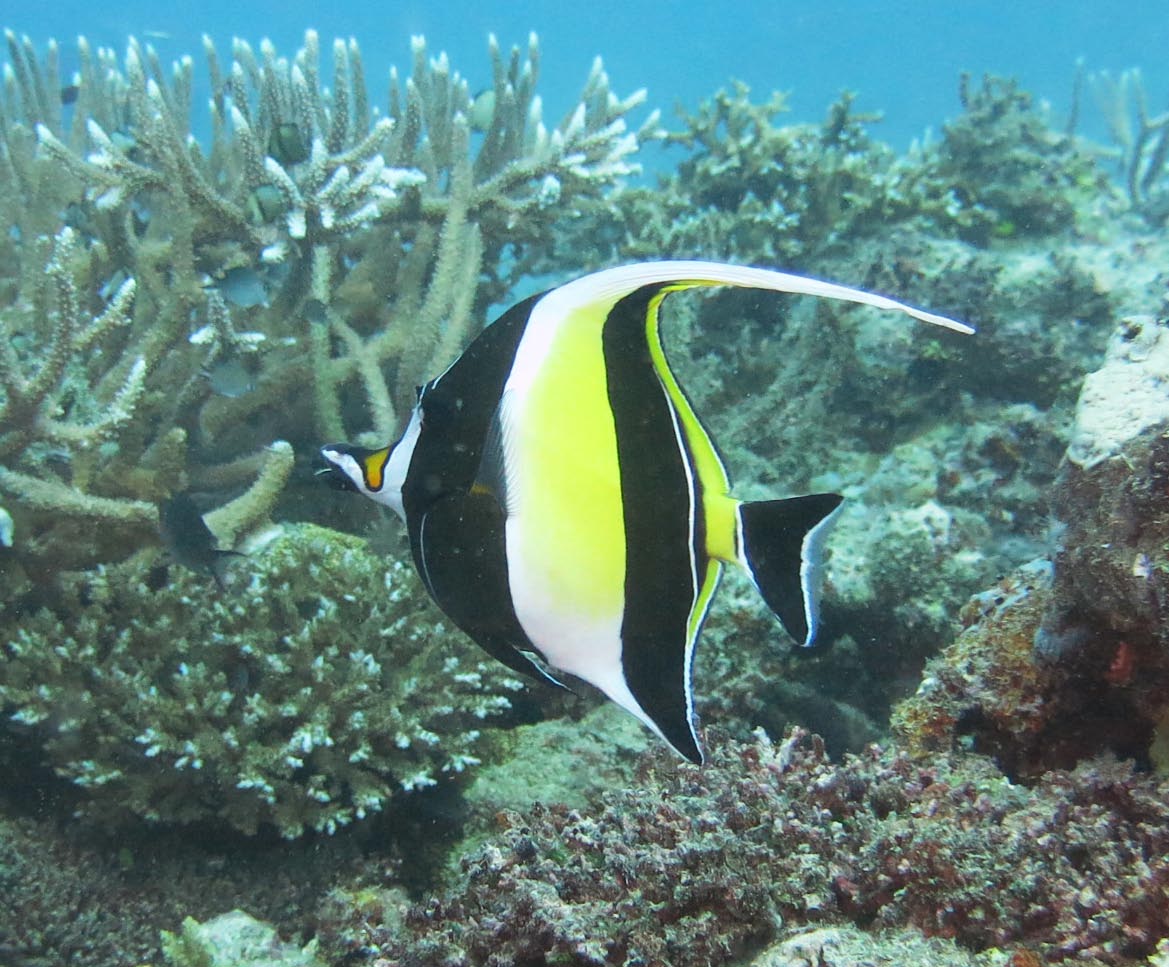
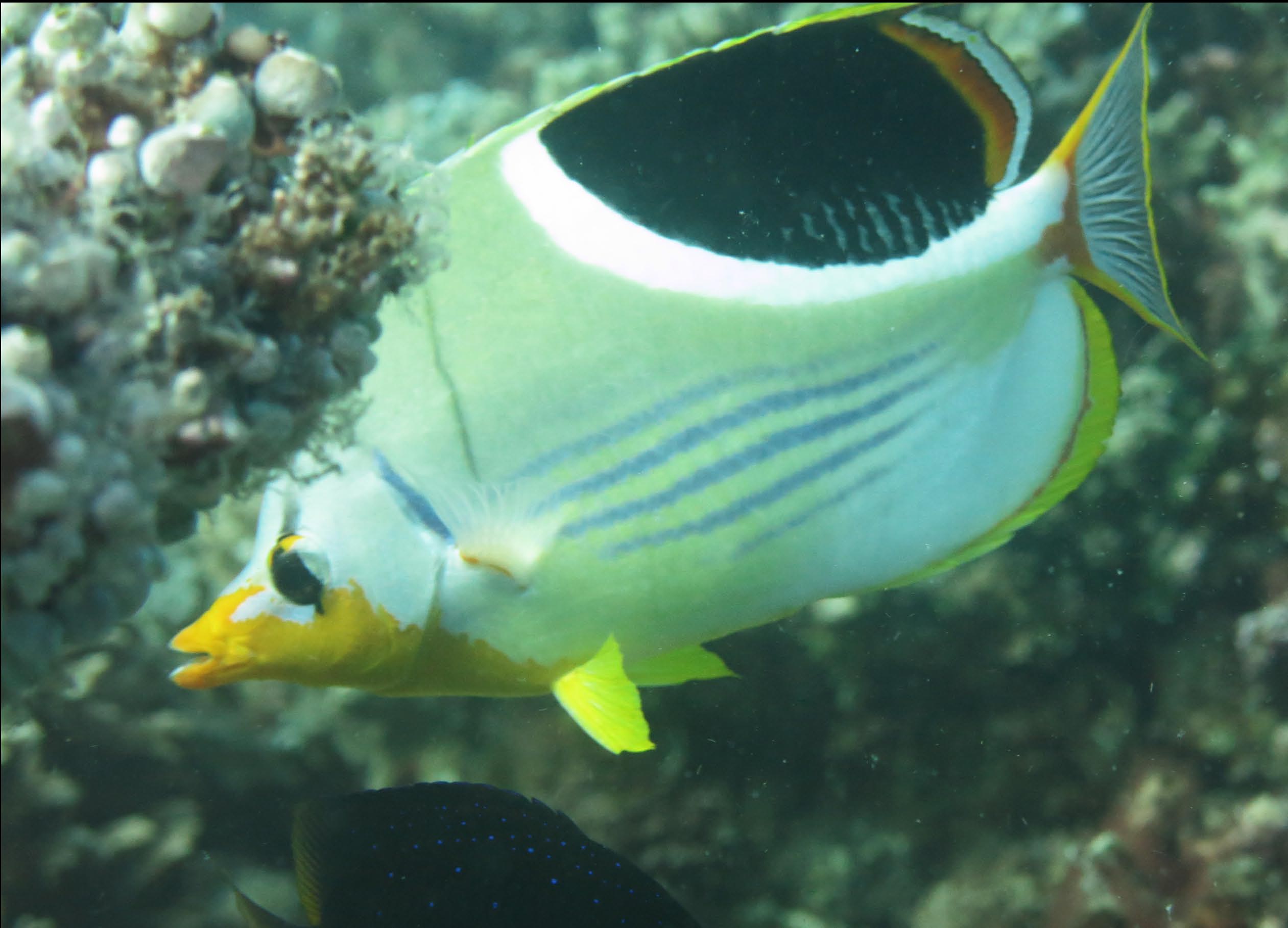
The next day we did two boat dives in the area. The water was a comfortable 82 degrees, but choppy, and the visibility was mediocre – at most 50 feet, rather than the super clear water we were expecting. We were looking forward to the fabled soft coral, of which we saw some, but we were also struck that there were big coral areas that were bleached white (prematurely dead). It was nice to see many small tropical fish that were new to us, including new species of angelfish, butterflyfish, damselfish, anemone fish, fusiliers, wrasse, parrot fish, and my new favorite, the Moorish idol.
14 01 02_6270_edited-1

At dinner that evening we sat down next to a youngish Swiss couple, Mark and Doris, who spoke excellent English and were charming and lively. We found a lot of interests in common, starting with diving but extending to skiing, travel, and world affairs. Our conversations that evening and for the rest of our stay were a highlight of the trip. As for the eating, the resort accommodated our request for vegetarian meals, and almost everything was tasty.

On the second day of Beqa diving, we enjoyed talking with Rick, a nice Mormon guy who owned a bunch of car dealerships in the heartland. He was up to speed on the self-driving car, a favorite subject of mine, and like me thinking about what this meant for employment and the economy. He was intrigued to hear about our scuba liveaboard trips, and wanted to learn more. He allowed, though, that he wasn’t sure he was passionate enough about diving to do a week focused entirely on that. I agreed – you’ve got to be passionate.
13 12 30_6421

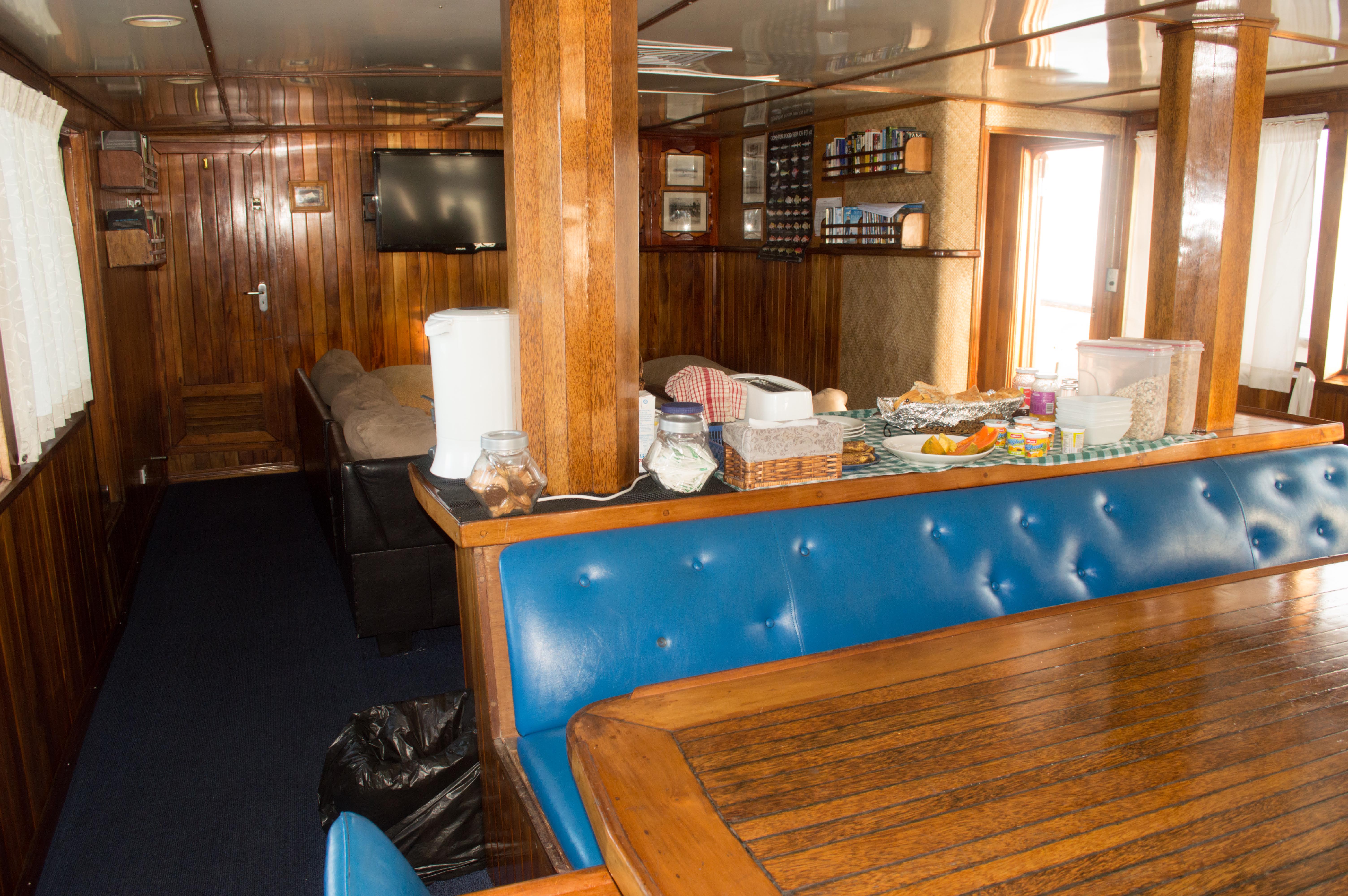
The next morning we crossed back over Beqa lagoon, and got a ride to our dive boat, the Island Dancer II. It was 101 feet long, 22 feet in the beam, and well-appointed for diving. Our cabin was on the main deck past eating/socializing area. It was air-conditioned and quite commodious and bright by marine standards, with a queen bed, desk, large windows, and private bathroom.

14 01 01_6316

Our crew, led by Captain Joji (pronounced Cho-chee) and divemaster Moses, was all Fijian, friendly and hardworking. Our seven shipmates were from D.C., San Francisco, Sydney, and Moscow, and all were very experienced divers who’d all been to several exotic dive locations before.
14 01 01_6376_edited-1

Our first night involved a nine-hour trip from Viti Levu (the main island) through the Makogai Channel toward Vanua Levu and Namena Reef. The weather was rainy, and the seas were choppy. The boat rocked enough to dump things off of countertops. Fortunately, our stomachs were up to the challenge (thank, Bonine). The next morning it was calm, and we did a check out dive – ostensibly to check how much weight we needed, but, I suspect, more to let the crew verify that no one was going to be a hazard to himself or others. That went smoothly, and we quickly settled into our routine.
13 12 29_5568

Our typical Island Dancer day went as follows: Up at 6:30 a.m. for pre-breakfast (e.g. yogurt, fruit, cereal), first dive at 7:30, breakfast of eggs or French toast at 9:00, second dive at 10:30, lunch at noon, third dive at 2:00 p.m., snack at 3:30, fourth dive at 4:30, dinner at 6:00, fifth dive (night dive) at 8:15, have a glass of wine at 9:30, and then sleep. In short, dive, eat, and sleep. In the background were gorgeous lush islands, lovely sunsets, and usually a mild tropical breeze. The water and air were both mostly in the low eighties. What could be more fun?13 12 31_5910_edited-1

OK, not everything was perfect. The visibility was disappointing. It ranged from a best of about 50 feet down to 20 or so – far from the 80-100 feet we were expecting. The captain said at one point it was as bad as he’d seen it in many years of diving the area. He said a tropical depression shortly before we arrived was responsible. So, that was unlucky. We were also initially struck that there were significant areas of the reefs bleached white with not a lot of animal life. There were fewer big animals (big fish, turtles, rays) than we had hoped. At least one person saw a manta ray, but we did not.

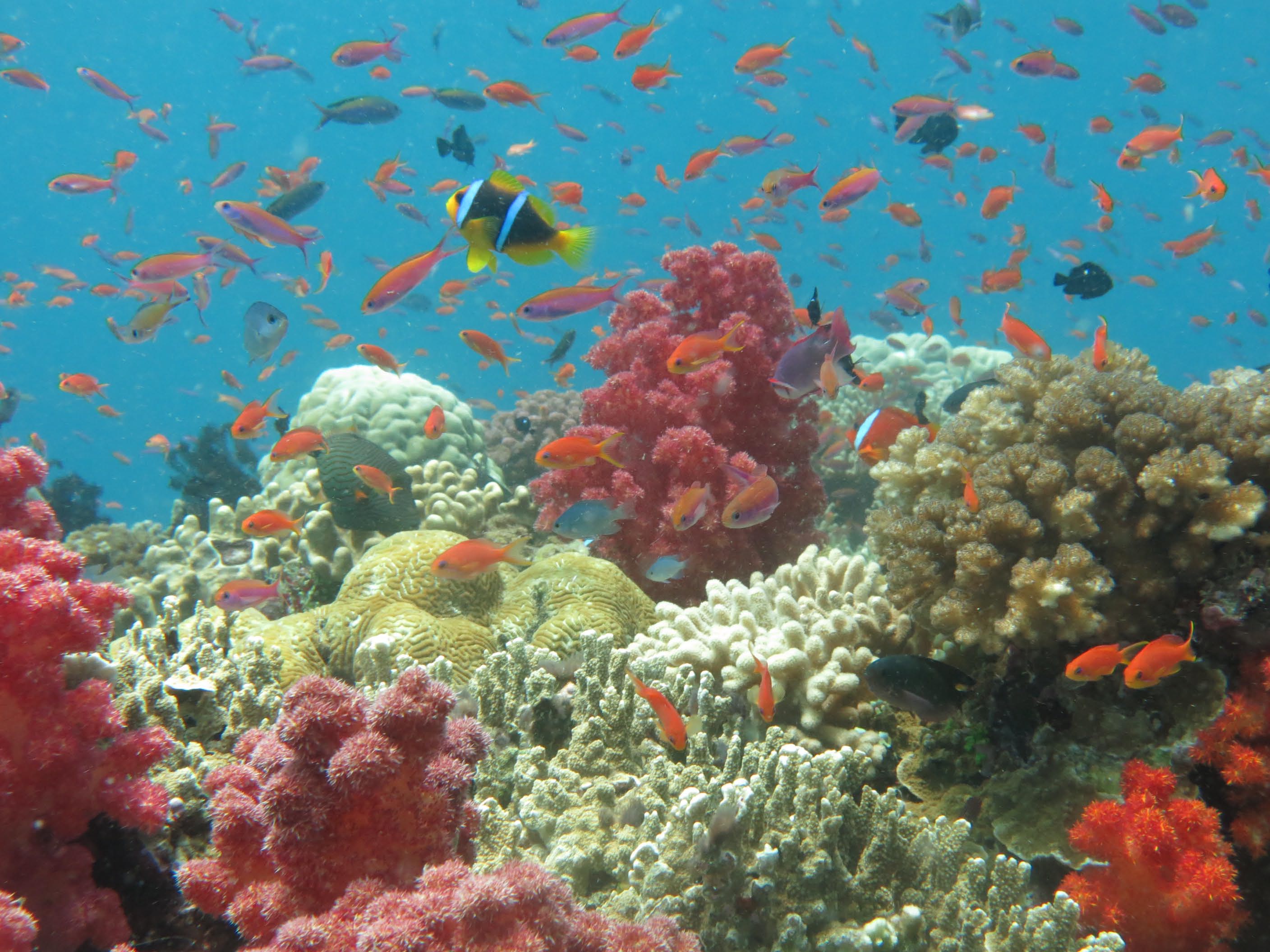
But still, there was a great deal to see. A typical site involved a pinnacle (that is, a column), of coral rising from the sand perhaps 50 feet. The top layer would generally be about 15 feet below the surface, and would have an enormous profusion of soft and hard coral, anemones, and thousands of tropical fish. With so many textures and colors, the coral looked in places like a fantastic garden – amazingly beautiful.
13 12 29_5526_edited-1

Along with the fish, we saw quite a few other interesting and strange small creatures, including various kinds of nudibranchs, flat worms, sea horses, tiny shrimp, pipe fish, blennies, and others still more obscure. There were a few turtles, and a couple of moray eels. One morning we watched a banded sea snake (highly poisonous) swimming for several minutes, and a very well-disguised octopus, who changed disguises a couple of more times. On one night dive we saw three leaf scorpionfish and a giant clam at least four feet across.
14 01 01_6149_edited-1
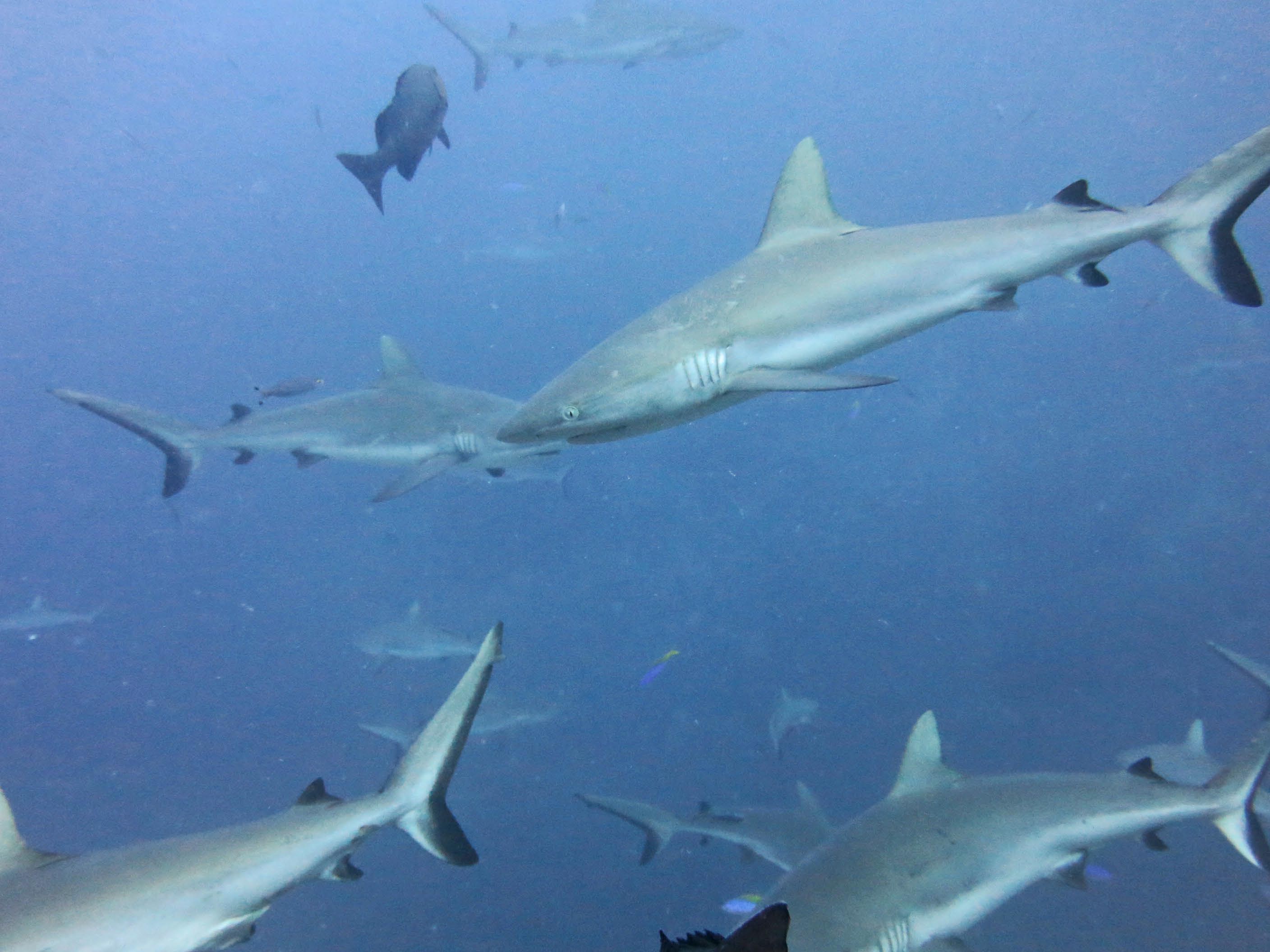
The fourth day in, off of Gau (pronounced Now) Island, we did two shark dives, where we saw dozens of gray reef sharks close up. With them were many red sea bass and smaller fish, as well as schools of barracuda. On the first dive we held in current behind a rock wall, while the sharks came in for fish heads. The second involved a drift dive in a fast current, with the sharks zooming in and out.
14 01 01_6122_edited-1
On that second dive, I got low on air, and shared Sally’s with her extra second stage as we got pushed hard by the current to the exit point. It was a challenging situation, but we worked well together, as usual. We saw a spotted eagle ray during the safety stop.

14 01 01_6372_edited-1

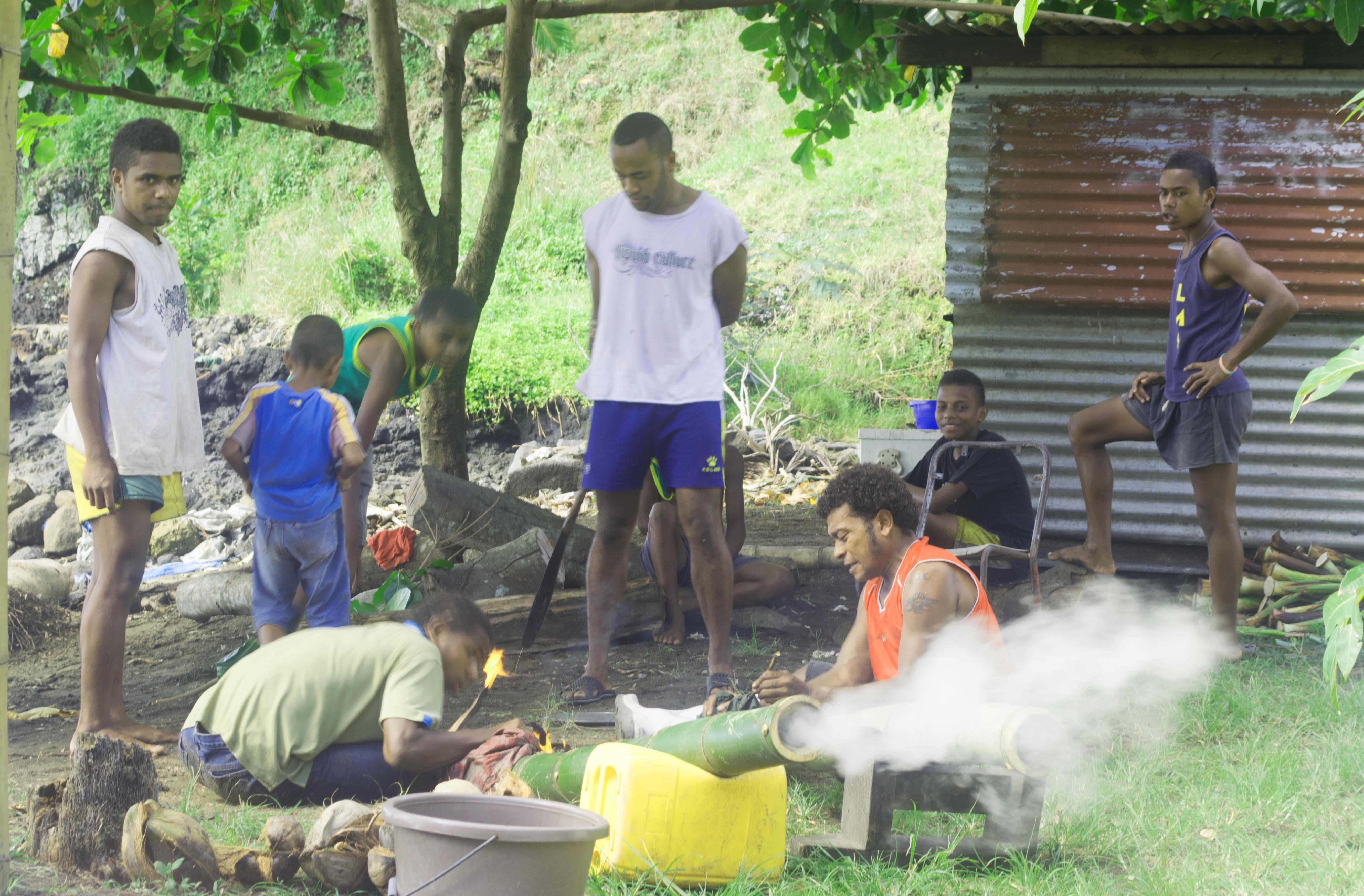
On the afternoon of the fourth day, we visited a little village on Gau island called Soma Soma. Our guide there told us that 114 people and 3 clans lived there. The people greeted us in a friendly way. Teenage boys were setting off fireworks with a palm cannon to celebrate the new year, and little kids were splashing in the water. We sampled kava, a watery drink made from soaking kava root. Supposedly it can produce a high, but I got only slight numbness in my mouth. The villagers did some singing and dancing, and got some of us to join in a dance.
14 01 01_6336_edited-1-1
14 01 01_6354

My Sea Life underwater camera quit working (wouldn’t turn on) after the second day of diving, and so I rented a little Canon G15 camera from the boat. Lacking a strobe, I used my Sola flash light for extra light, which was suboptimal. My photographic aspirations were simple, really – to get a few images that started to convey the incredible beauty down there – but it was still hard to do.

There were so many great shots that got away. A beautiful angelfish would present itself in all its splendor, and either the camera had gone to sleep, or wouldn’t focus. Or in the half second shutter lag interval, the fish would turn away, or another fish would swim between us, or another diver’s bubbles would mess things up. Then, after the shot, the camera would take a few second to recycle, during which time the subject fish would again look gorgeous, but as soon as the camera was ready to go – so was the fish. Some of those little fish are shy! Anyhow, I tried, and I a few times I got an image I liked.
14 01 01_6065_edited-1

Our trip back was a total of 41 hours, including layovers, but we made good use of the eleven-hour layover in L.A. with our first visit to the Getty Center. The logistics were a bit challenging, in that we couldn’t check our heavy dive bags and so had to cart them by cab and tram to the Getty’s coat check room, but it was worth it.

It is a wonderful museum! It’s perched on top of a hill, surrounded by gardens, with a good view of downtown L.A. It has several connected buildings, with a vibe that’s modern but evocative. The crowd was all ages, international, multiracial, and friendly.

And there was an outstanding collection of European art. We spent time looking at the excellent collection of paintings of Rembrandt and his contemporaries, and of the Impressionists and post-Impressionists. We also very much enjoyed the current exhibit of the works of Abelardo Morrell, a Cuban-American photographer. His works were highly conscious of texture and shape in a formal way, but also touched something emotionally powerful.

A beautiful Nutcracker, Xmas spinning, and getting ready for Fiji (including ebooks)

13 12 21_5389

We were on the fence about whether to go to the Carolina Ballet’s Nutcracker ballet this year. There have been many lovely Nutcrackers, even enchanting Nutcrackers, but after many years of cracking, I worried that the magic might be wearing a little thin for me. That Tchaikovsky music is great, but also very, very familiar. It would be a shame to find that the thrill was finally gone. But Will Levine, son of our friends David and Maggie, dancing the nephew/nutcracker/prince, we decided to go again.

I’m so glad we did. It was a particularly touching and magical Nutcracker. Having a live orchestra to play that delicious music really helped, and this was a good band, ably led by Al Sturges. There were the cute little kids and sumptuous costumes and settings. But most of all, there were the dancers. The Carolina Ballet has so many talented artists just now. They looked like they loved their work.

The star of the evening was Lara O’Brien as the Sugar Plum Fairy. Her SPF was elegant and assured, highly musical, with a slight note of tragic grace. Her pas de deux with Marcelo Martinez was beautiful and moving — so passionate – I got a bit misty.

Also especially wonderful was Alicia Fabry as Butterfly (the lead in the Flowers waltz), and newcomer Alyssa Pilger as the lead Ribbon Candy. Young Will did well, to the relief of his parents, and us, too. As in past years, there were a couple of little kids who could do fantastic handsprings, and big boys whose leaps seemed to defy gravity. It was all delightful. It took me into a magical place, in equal parts childhood fantasy and nostalgia, and reminded me of many happy times gone by.

In other Xmas news, I had an holiday-themed spin class at O2 this week led by the fabulous Jenn. She announced at the start that she just loved Christmas, and she’d made a special Christmas tunes mix for our spinning pleasure.

It turned out to be some hard-driving rock songs of the season, and she kicked us into a very high gear. There was lots of sprinting (including a killer sequence of fast, faster, and fastest) and intense climbing. One new trick – she can ride out of the saddle with no hands, and she thinks we can, too. I gave it a shot, and verified that it is not easy. Anyhow, the class was fun, in a brutal kind of way. I knew for certain at the end I had worked out.

For our holiday, Sally and I are heading out for a scuba diving trip to Fiji on Monday, which should be incredible. It’s taken a lot of planning, and the logistics are complicated. There are quite a few important pieces of dive gear, photo gear, and other stuff that must not be forgotten (some of which is pictured above).

In addition to all those details, I’ve given some thought to what books I want to read. Reading time is one thing to like about long flights. My tablet device makes it easier (less heavy) to carry a lot of books, but pre-loading was necessary, since I don’t expect to have much if any internet connectivity. Also, the tablet is not a good reader in direct sunlight, so I need some old-fashioned paper books as well.

Here’s a quick listing of my current books-in-progress and new ones that I may get going. The are ebooks unless otherwise noted.
.
Titan: The Life of John D. Rockefeller, Sr., by Ron Chernow. I figured it would be fairly interesting to find out how the Rockefeller became the most successful monopolist in history, and it has been, fairly. Rockefeller was a very driven person, with a high standard of personal morality (a lifelong Baptist) and a low standard of business morality. His trust was a primary inspiration for the beginnings of modern antitrust law.

Big Data: A Revolution That Will Transform How We Live, Work, and Think, by Viktor Mayer-Schonberger and Kenneth Cukier. I’m about done with this one. I don’t think the title is much of an exaggeration – big data is transforming many fields, including retail, finance, education, and medicine. definitely worth thinking about.

The Signal and the Noise: Why So Many Predictions Fail – but Some Don’t, by Nate Silver. The creator of the FiveThirtyEight blog and impressively successful political prognosticator talks about his methods and related things. Based on the first chapter, it appears somewhat padded as a book.

The New Digital Age: Reshaping the Future of People, Nations, and Business, by Eric Schmnidt and Jared Cohen. I picked this up out of curiosity regarding what the chairman of Google was thinking would come next. I’m about half way through, and finding it not particularly well organized, but there is interesting reporting and thinking on how technology is reshaping our lives. The portion on hacker-terrorist is hair-raising.

Rattling the Cage: Toward Legal Rights for Animals, by Steven Wise. The author recently brought a habeas corpus action on behalf of a champanizee, which struck me as a legal long shot, but interesting, and I was curious about his theory.

Ordinary Men, by Christopher Browning. A history of a small group of regular joes who worked at ground level as part of Hitler’s final solution. For a long time I’ve been interested in the question of how otherwise normal people could participate in mass murder on an industrial scale, and Browning sheds some light on this.

The First American: The Life and Times of Benjamin Franklin, by H.W. Brands. Franklin is by far my favorite founding father, and I’ve read most if not all of the other major contemporary biographies of him. Earlier this year I read Brands’s American Colossus: The Triumph of American Capitalism 1865-1900, and thought it was quite good, so I’m looking forward to getting his view of Franklin and his world.

Reef Fish Identification (Tropical Pacific), by Allen, Steen, Humann, and Deloach (in paper). There are an amazing number of amazing reef fish in the Pacific, and it’s fun to know a bit about them.

Zukerman Bound, by Philip Roth. I got this as a used paperback (price $4.50) of the three Zuckerman novels (The Ghost Writer, Zuckerman Unbound, and the Anatomy Lesson). Roth is my favorite living novelist, and for some reason I hadn’t read these key works of his early middle period. It will be a great pleasure.

The Odyssey, by Homer, translated by Robert Fagles. A classic, obviously.

Leaves of Grass, by Walt Whitman (paper). The embodiment of what is great – and strange – about America. It seems like a good time to read it again.

My fabulous teachers (fitness, yoga, and music) and seeing Dallas Buyers’ Club

13 12 12_5362

Our geranium on the balcony is a true survivor! Here we are in mid-December, after several nights sub-freezing nights, and it still looks perky. Sally asked me to take a picture of this marvelous plant, and so I did — several in fact, but these are the best.
13 12 12_5368
Getting out of a rut and trying new things takes some energy and effort. It also really helps to have a good teacher. As I came into the home stretch of this week, it struck me that I’m fortunate to have found several such teachers, who’ve been helping me with fitness, yoga, and music.

First, there’s Larisa Lotz, who is my regular personal trainer each Thursday at 5:30 a.m. at Studio Revolution. I always look forward to it, because there’s an element of play and fun, but I also always find I’m barely able to make it through. This is not by accident, of course. Larisa has got my number, and knows about where my limits and weak points are. And she works on those weak points – which get stronger.

This week, as usual, she had some new activities and combinations. For core work, I had a side plank with the top leg pulling in and kicking out to the side, and a TRX suspended push up from the ground followed by drawing the legs in. She had me throwing a soft heavy medicine ball as high as possible, to work on “explosive energy,” which she said was a gap in most people’s fitness regimen.

We did some agility drills with quick stepping in various patterns through a rope ladder. We also did some sandbag work, including a fast intense series with dead lifts, cleans, squats, presses, and rows. And several other things. I took home several ideas for new things to work on.

On Friday morning I got to O2 Fitness at 5:35, and did some of Larisa’s hip and leg exercises and some more traditional upper body work – chin ups, dips, push ups, rows, and presses. Then I took my weekly RPM spinning class with Christy. This class involves dance club music of the throbbing, driving sort, which is not my favorite music, but it makes the hard biking in place in a dark room relatively fun. Our class on Friday involved more sprints than usual. I kept an eye on my heart rate monitor so as not to redline for too long. I topped out at 162 – high, but with all that effort, I was surprised it wasn’t a little higher.
13 12 12_5376

Later that day, at lunchtime, I shot over to Massage Wallah for some therepeutic massage work with Emily Alexander. My neck and shoulders were in need of special attention, so that’s what she worked on. This was my second session with Emily, and it was fairly intense, but good. Emily is not overly chatty, which I appreciate – it’s good to concentrate on the sensation. But I asked her about her story, and learned that she, like me, went to high school at the N.C. School of the Arts, and went on to film school at NYU and movie and TV work in Hollywood. We compared notes on digital cameras. My neck was much better afterwards, and I thought my shoulder was improved.

On Saturday morning I went to Yvonne Cropp‘s Juicy Flow yoga class at Blue Lotus. This is an hour-and-a-half class that combines traditional vinyasa work with kriya practice, which as presented by Yvonne involves three minute or so segments set to dance music with rhythmic movements working different muscle groups. It definitely gets the heart going. I ordinarily can figure out the exercise, but there is one I can’t: rolling backward, then forward and standing up without using the hands. Most of my fellow yogis were doing it, so it’s definitely possible. Another challenge for the future.

It was rainy on Saturday afternoon, which was good weather for a piano lesson with Olga Kleiankina. I played Debussy’s second Arabesque and the first movement of Bach’s Italian Concerto. As usual, Olga made me aware of some new dimensions of sound. We spent a long time working on the silences around the staccato notes in the Debussy. Along with a number of such tiny details, we worked on rhythm in connection with the larger structures.

For the Bach, she pointed out that one could never mistake Bach for Mozart, because Bach made much more use of interior parts of the measure for beginning and ending phrases – sort of like syncopation. She showed me how certain accents and timing tricks would bring the piece to life. Of course, knowing about it is one thing, and doing is another. It will take practice.

That evening Sally and I went out to Cary for dinner and a movie. When we go to the Regal at Crossroads, we like to eat at Tom Yum Thai, where the food is delicious and the service warm and friendly. They will take you at your word if you require things very spicy, and for me medium spicy is about right.

During dinner we talked about Dasani, the eleven-year-old homeless girl featured in a series of five articles in the Times this week. She’s a plucky, smart, athletic kid who faces very long odds at the bottom of the economic food chain. We got to know her large family, her teachers, and her homeless shelter in Brooklyn, where the conditions were dire. The series, by Andrea Elliott, is an extraordinary window into the world of poverty – well worth reading.

We saw Dallas Buyers Club, which concerns a macho Texas rodeo-type guy who gets AIDs in the 1980s and starts a business supplying unapproved AIDs drugs to the gay etc. demimonde. There are some colorful and funny characters, and a tour de force performance by Matthew McConaughey. He is almost unrecognizable, very gaunt, with a ton of grit and attitude. Of course, the subject is tragic. It reminded me of the first wave of the AIDs epidemic, and some of my own precious friends hid in death’s dateless night.

Sleepwalking, yoga, Bach, Schlosser on the nuclear precipice, and Spiegelman’s Maus

13 12 07_5337
So I apparently had another bizarre sleepwalking experience. After what seemed like a normal night’s sleep, I got up to find several unusual things. There were two wine glasses full of beer on the coffee table – one sitting on top of my laptop. There was a bowl with popcorn kernels, and a lot of popcorn on the floor. In the kitchen, the light on the stove hood vent was on, and the microwave popcorn wrappers were strewn about.

My first thought was that we’d had a break in, but the various quasi-valuable things in the vicinity were still around, and the door was locked from inside. That left just two possibilities – Sally and me. When she got up, she verified she had not knowingly done any of this eating and drinking.

From my prior somnambulism, I figured it had to be me. But I had absolutely no recollection of any such activity. And I would never, ever put beer in a wine glass – or worse, set the glass on my computer! And I did not know exactly how to operate the light on the stove hood, which I never use.

It is very strange to think of such complex activity happening without any consciousness whatever. Eating and drinking without meaning to is bad, but it could get worse. Is there any safety module that keeps the sleepwalker from going over the balcony rail? And falling twelve stories?
13 12 07_5349

In the last few days, I’ve taken note of various waking automatic behaviors and strange forgetful episodes. I expect everyone has some. Did I take that pill already or not? I parked that car, but where? My foot is bouncing up and down, which I did not tell it to do. Sally had a good one: she couldn’t find the pomegranate juice, and looked high and low, before realizing she’d already gotten it out of the refrigerator.

So a lot of our behavior is taking place without our consciously knowing anything about it. This is at times surely a good thing, allowing us to save mental energy for where it’s most needed. Cultivating good habits is partly an accommodation to the reality that there’s just not enough time or energy to think about every behavior. We choose a template that we think is likely to be effective in different future situations and repeat it until it is automatic.

But still, sleepwalking is pretty weird.

13 11 27_5360-1

Some yoga

The weather for most of this week was unseasonably warm and sunny, but it turned cold and rainy for the weekend. So no golf, but I did get in two yoga classes. On Saturday morning Suzanne filled in for Yvonne at Blue Lotus, and led an hour-long open level vinyasa class. She kept things flowing pretty fast, which I like, and I did a reasonable amount of sweating.

On Sunday morning, based on the recommendation of Larisa (my personal trainer), I tried a class with Hayley at Evolve. Her style involved holding poses for longer, which was challenging. When she said we’re going to do hand stands, I was surprised, but game. I managed to kick up and stay up for a while against the wall. Then Larisa asked Hayley to give me some pointers, and I had another go and managed to have a fairly spectacular crash. But I learned something: Hayley theorized that I got a little surprised when I touched the wall and let my elbow bend. Onward and upward.

Bach’s Christmas Oratorio

On Saturday night we had a fine Italian dinner a Caffe Luna, then went to a performance of the N.C. Symphony and the N.C. Master Chorale of Bach’s Christmas Oratorio. I was not familiar with the piece, but liked it very much. The chorus sounded great in some very challenging choral writing. The four soloists had pleasing voices and style, and the orchestra played well. Our friend trumpeter Paul Randall had a very high and prominent part in the last cantata, and shined.

My only complaint was conductor Grant Llewellyn seemed overly metronomic — without much rhythmic flexibility. I guess that’s one way to do it, but it seemed to me Bach would have liked more expression. We went out for a drink with Paul and a couple of his colleagues afterwards. It was interesting hearing the younger musicians talk about the intense challenges of auditioning for orchestra jobs.

Command and Control — the Nuclear Weapons Precipice

Speaking again of sleeping problems, for several nights recently I had anxiety dreams, inspired, I think, by reading Command and Control: Nuclear Weapons, the Damascus Accident, and the Illusion o Safety, by Eric Schlosser. The headline is: for decades we lived frighteningly close to the edge of an accidental nuclear disaster. A hydrogen bomb could have exploded in any of numerous training or maintenance accidents, while the huge arsenal of missiles could have been unleashed through computer error or human misjudgment.

In the final chapter Schlosser indicates that the risk of an accidental explosion from a US weapon has gone down, but it may have gone up in countries like Pakistan and India. And we’ve still got the irreducible human factor – that is, imperfect humans are in charge of these incredibly destructive weapons, and they could make a bad decision that could cost thousands or millions of lives.

Even before reading the book, I was generally of the view that it is insane to build, maintain, and keep on alert nuclear weapons capable of destroying many millions of innocent civilians and much of the planetary ecosystem – ending, as they say, life as we know it. This was true in the cold war, but even more so now, when there is no existential military threat. Why would any rational person or society do such a thing? After reading the book, and learning more about the theories of nuclear war and the practical engineering problems of the weapons, it seems even crazier.

How can it be that de-nuclearization is not a high priority issue in national and world politics? Of course, we do much hand wringing about Iran’s potential for a nuclear weapon, which makes it even odder that we somehow mostly avoid discussing our own weapons and their disastrous potential. It’s like we’re sleepwalking. Perhaps Schlosser’s book will help us start to wake up.

Maus

On a cheerier note (ha!), I started reading Maus, Art Spiegelman’s graphic novel masterpiece about the Holocaust. It’s in part about Spiegelman’s relationship with his father, who was concentration camp survivor. The early pages are about his life in pre-war Poland, first as a bachelor and then meeting Spiegelman’s mother. It’s surprisingly sweet, but also direct and honest, and remarkably vivid. I’ve never read anything remotely like it, and I really like it.

NYC: finding a nice hotel, good food, great art, and mildly disappointing opera

13 11 24_5292
Sally and I went up to New York City last weekend to see sweet Jocelyn, eat, and see some art and some opera. Here’s a report.

Accommodations

For all the great things about New York, one problem for visitors is that good hotels tend to be painfully expensive. In quest of the holy grail of a nice-but-not-exceedingly-dear hotel, we tried a new one: the Carlton, at Madison and 28th. Perhaps because it’s not in a high-profile neighborhood, the value proposition is strong: charm, good service, and rooms under $200.

The high-ceilinged lobby was an eclectic-but-stimulating mix of styles (modern, beaux arts, art nouveau). Our room was quiet and comfy. The shower pressure and hot water supply met Sally’s exacting standards. The furniture and fittings were attractive and modern, except for the bathroom sink, which was old school (rounded porcelain with no shelf space). The gym was adequate and available 24 hours. The location was a comfortable walk from the theatre district and within 10 cab-minutes of everything we had planned.

Food

Jocelyn was waiting for us at the hotel when we arrived, and she’d already scoped restaurants and made a reservation for that evening. We checked in, unpacked, and walked one block to Lexington Avenue and an area rife with Indian restaurants known as “Curry Hill.”

The one Jocelyn picked was Chote Nawab. We love eating Indian, although there are common shortcomings: the food often isn’t very pretty (lots of brown), or the atmosphere is a little formal and downbeat. But Chote Nawab was really lively, with many cheerful young people, excellent service, and delicious curries well presented. Jocelyn was as cheerful and lively as any. She was very excited about her new life in New York, and had lots to report.
13 11 23_5301

Art

On Saturday we did two very different art exhibits: the Art Spiegelman restrospective at the Jewish Museum (92d and Fifth) and the Dutch masters exhibit at the Frick (70th and Fifth).

I was generally aware of Art Spiegelman as a comics artist, but until this exhibit had no clue as to his wide range and depth. He uses a lot of styles and reference points, with courage, exuberance and also humility. His masterpiece, Maus, is a graphic novel about his father’s experience in the Holocaust, which established the graphic novel as a serious art form. The sections I looked at were intriguing and moving. After the show, I ordered a copy.
vermeer-670-girl-with-a-pearl-earring

The show at the Frick was headlined by Girl with a Pearl Earring by Johannes Vermeer (1632-75). This is a painting generally regarded as a transcendent masterpiece, and one that I’d been wanting to see for many years. Vermeer’s work is extremely subtle, with seemingly ordinary subject matter, and seeming straight-ahead realism, but a mysterious emotional power.

The Girl is, at first sight, a fairly ordinary girl. But with more time, the painting transmits a more complicated message. She looks as though she’s been surprised, but not unpleasantly so. Could something be going on between her and the artist, as Tracey Chevalier imagined in her novel? Maybe. The painting is ambiguous, but the truth seems just barely out of reach.

She gave me big, long-lasting goose bumps. I enjoyed the rest of the show, which included works by Rembrandt, Hals, and several other Dutchmen of the 17th century, but nothing that was as affecting. I also revisited the Frick’s permanent collection, which is one of the finest small collections of European painting in the world. Henry Clay Frick seems to have been a particularly brutal captain of industry in the gilded age, but still, he had very good taste. However good or bad the motivation for his philanthropy, I’m grateful.

More good food and some opera

After we finished at the Frick, Jocelyn, Sally and I walked across Central Park as the sun was setting. It was getting colder, so we stopped for some coffee, and then made our way to an early dinner at the Leopard, an Italian restaurant on west 67th Street.
13 11 23_5328
Jocelyn’s friend Mike joined us, and we had an extraordinarily fine meal. My ravioli with braised artichoke and a tomato marjoram sauce managed to be both hearty and delicate. We shared two desserts, which were delicious, and lost track of time. It was snowing when we got out on the street, and we had to hurry to Lincoln Center to make the 8:00 curtain at the Metropolitan Opera.

We saw Tchaikovsky’s Eugene Onegin, which is a new production for this season and was completely new to me. I thought the music was gorgeous – as fine as anything Tchaikovsky ever wrote. But dramatically the thing is puzzling and for substantial stretches fairly boring. Why does Eugene reject Tatiana? Why does he ultimately desperately long for her? I don’t know, and worse, the drama didn’t really make me care.

It was quite cold and snowing when we finished the opera at about 11:15, and there were many more people looking for cabs than there were cabs. We walked past Columbus Circle and over to Sixth Avenue, and finally found a cab to get us back to the Carlton.

A little more art
13 11 23_5313

On Sunday we had breakfast at the hotel, and then walked a few blocks up Madison to the Morgan Library. They had an exhibit of Leonardo’s drawings and notebooks, including the famous Codex on the Flight of Birds. Leonardo was, of course, an extraordinary individual – a true Renaissance man, curious about everything in the natural and human world, and constantly innovating, or imagining future innovations.

I didn’t realize how few paintings he made, perhaps because he was so interested in everything. His drawings seem effortless and timeless. But his presumed self portrait in red chalk shows an old, bearded man looking extremely remote and grumpy, if not bitter. It’s hard to reconcile his extreme gifts and imagination, which seem reason for great joy, with this persona.