The Casual Blog

Category: photography

Dragonflies, playful mice, fearful crayfish, and an argument for personhood for animals

14 06 14_9977_edited-2
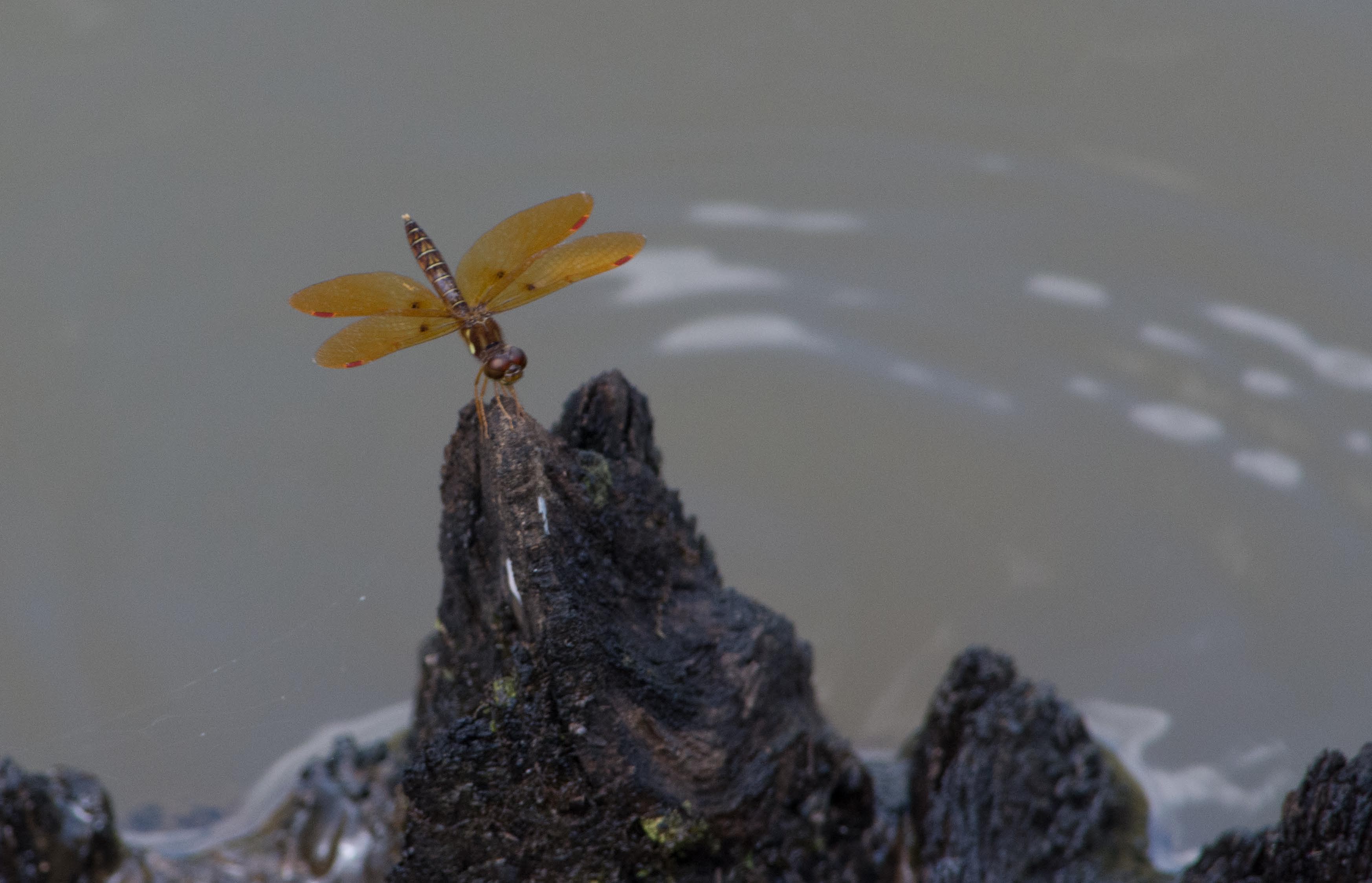
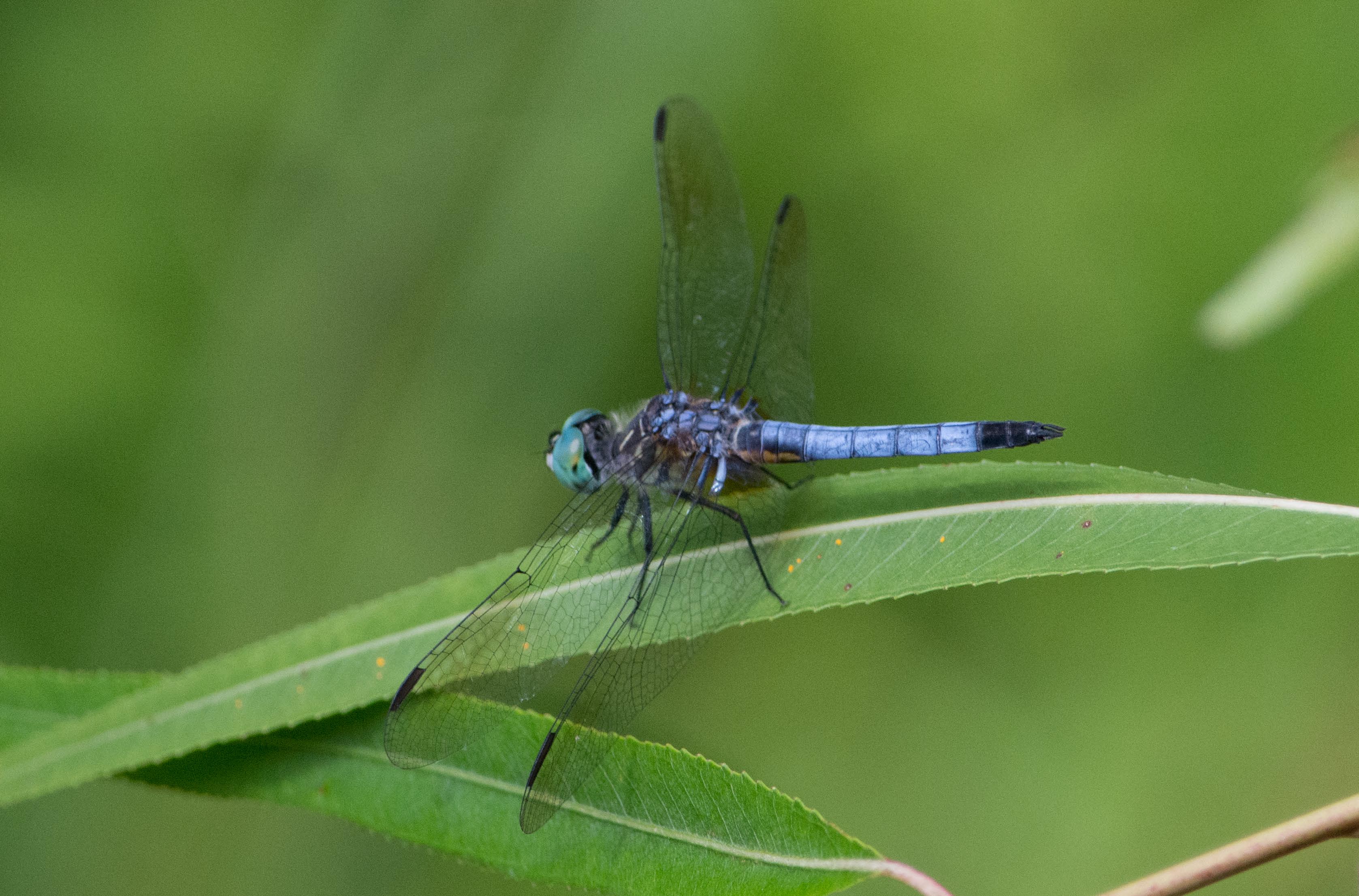
On Saturday I was thinking of heading to Raulston Arboretum to look at the latest blossoms and bugs, but Sally suggested I check out the doings at boardwalk over the pond off of Crabtree Boulevard. She’d found a shortcut to get there, and coached me through it. As she foretold there were some pretty dragonflies and damselflies. 14 06 14_0008_edited-1
This week I’m doing a round-up of animal news, some cheery, and some disturbing. Here are notes on playful mice, fearful crayfish, Your Inner Shark, and the struggle for legal rights of persons for animals.

Have you ever wondered whether mice like to run on exercise wheels? Scientists at the University of Leiden did. As reported in the NY Times, they put a couple of wheels in the wild and monitored with video cameras for several years. The results were unequivocal: the mice like to get on the wheel and run. They came “like human beings to a health club.”

The researchers seemed to be addressing the issue of whether forcing mice to run in laboratory environments was cruel, but the work also speaks to another issue: why run when you don’t have to? One scientist suggested it was no great mystery: “All you have to do is watch a bunch of little kids in a playground or a park. They run and run and run.” In other words, mice play.
14 06 14_0015_edited-1

In another apartment of the animal kingdom, researchers tested crayfish to see if they experienced anxiety. At the University of Bordeaux, crayfish who got a mild electric shock were timid and withdrawn compared to unshocked crayfish, who were more adventurous. But the shocked ones improved when they got anti-anxiety medication. Is this amazing? Not exactly, but it made me think for the first time about crayfish as creatures with emotional lives.
14 06 14_9993_edited-1

This week I finished reading Your Inner Fish, a Journey into the 3.5 Billion Year History of the Human Body, by Neil Shubin. Shubin is a palentologist and professor of biology and anatomy at University of Chicago. The book is about paleontology, genetics, and anatomy applied to the human body. It makes the case that the mechanisms of the human body all have predecessors in much more ancient creatures.

Shubin recounts his early experiences hunting for fossils and failing miserably. But eventually, his mind learned to distinguish tiny fossils from tiny ordinary minerals. He communicates the joy of scientific discovery in studying comparative anatomy and seeing the amazing similarities in body structure that run through all the creatures at the zoo – including us.

This is true not just at the level of large-scale architecture (creatures with heads, limbs, fronts and backs), but also with regard to the workings of subsystems like eyes, ears, and smelling organs, and sub-sub systems like tissue cells, and the systems for connecting tissue cells. Shubin approaches the body from multiple angles, extending all the way back to the first single-celled microbes of 3.5 billion years ago, and focuses on various levels, like the features we share with all vertebrates, those we share with all fish, and those we share with all worms.

I found some of the science, and particularly the genetics, tough sledding, but learned a lot. Our bodies are certainly amazing, but this is true of all animal bodies. Shubin made me see more of the connections between all living creatures, and the connections of all those creatures with the earth over the eons.
14 06 14_0006_edited-1

Finally, a couple of weeks ago I finished reading Rattling the Cage: Towards Legal Rights for Animals, by Stephen Wise. Wise is a lawyer who recently brought a habeas corpus action on behalf of a chimpanzee, and I was curious about his theory. His book is a useful compendium of the literature of non-human primate intelligence. He argues that the evidence of language, math, and other accomplishments of chimpanzees and other primates entitles them to be treated as persons with certain rights under the law. He includes quite a few stories of horrendous treatment of chimpanzees in laboratories.

Wise’s larger point is that the sharp dividing line in the law between humans and other animals is a relic of ancient times that is unsustainable in the light of science. His account of the ancient roots of jurisprudence classifying animals as chattel (mere things) is interesting. He does a good job challenging the traditional categories, though he doesn’t address all the difficult questions of breaking down those categories. He seems to understand that no matter how wrong legal ideas are, changing them is a long-term project.

Some new bug pics, a new smartphone friend, and more on robotization

14 06 07_9828_edited-1
This week I had a bit of a photography breakthrough. The books I’ve been reading advised against it, but I decided to experiment with the high-end ISO settings of my Nikon D71000.
14 06 07_9859_edited-1

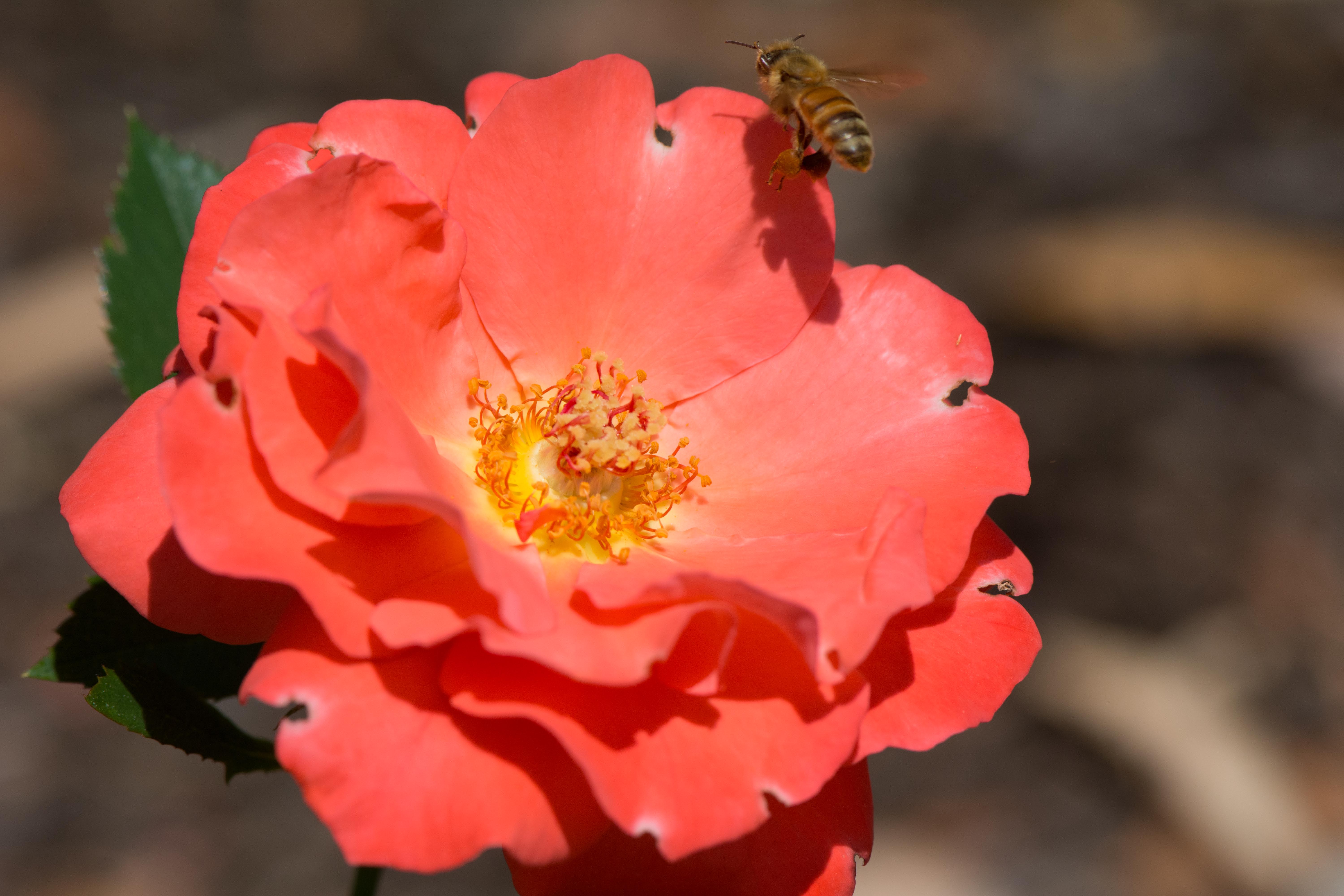
Even at levels up to 5,000, I could not detect degradation in the image quality. This made it possible to use much smaller apertures with my 105 mm macro lens to get improved depth of field, while keeping shutter speeds high enough to capture some quickly moving insects. Here are a few of the images I got at Raulston Arboretum on Saturday morning. Thank you, brilliant sensor engineers of Nikon. Your technology is amazing and liberating.

14 06 07_9747

I got a Samsung Galaxy S5 smartphone this week, and I’m a little in love. It’s a marvelous device in most every way. The screen is a little larger than the S3 and a lot larger than the iPhone, but still fits in pants pockets. The screen is brighter and more vivid than leading competitors. It responds to you quickly, and gets things done more reliably. The voice recognition technology is improving, and sometimes works great. It is water resistant. It has biometric (finger swipe) security. Battery life is longer, and the battery is replaceable. (I always carry a backup.) And needless to say, as an effective interface to the internet, it can help answer any question that has an answer.
14 06 07_9901

As with every new device, there are switching costs and learning curves, but for me they turned out to be minor. My existing apps switched over automatically as soon as I followed the new phone protocol. I then spent a chunk of last weekend going through my apps, deleting those I never used, getting resituated with services I used (including hunting down old passwords), and getting the rest into new folders.
14 06 07_9849_edited-1

I kept the S5’s new health app, which can monitor your heart rate and count steps and calories, and experimented with its phone, which is surprisingly good – not not as good as my Nikon D7100, but also way less bulky. It took a few tries, but I eventually got my personal photos of roses and lilies on as wallpaper, found new ringtones that I kind of liked, got a pretty and practical new font. I put it in a handsome blue rubber case to protect against the inevitable jars, jolts, and plops. Even with the case, she’s amazingly thin and light.
14 06 07_9900

As I started to get to know her better, I noticed that the autofill feature of Swiftkey, which anticipates either the rest of a word I’m typing or the next word I was going to type, was getting more accurate. I’d type something like “Let’s” and up would pop “go.” Sure, that may seem obvious, but there were some that suggested a deeper understanding of my psyche, occasionally connecting words in a way that sounded like my own voice. This could be fun for a while, but it could also be heading towards a dark place. What if, when I typed I, it autofilled “worried that you might have taken my awkwardness for something more sinister, and resented it, when actually, I adore you.” And that was what I was starting to say? What if it allowed for the outsourcing not just of spelling and grammar, but actual feeling? Impossible? We shall see.

The effort, the struggle to communicate feeling in language is part of what I like about writing, and if that struggle were not so necessary our lives would be different, and possibly poorer. Could technology change the game on that? Of course.
14 06 07_9808_edited-1

Speaking of the transformative force of technology, this week I read the 2013 paper of Carl Frey and Michael Osborne out of Oxford on the continuing effects of computerization and roboticization. They draw on the work of Brynjolfsson and McAfee, which I’ve written about before, and add interesting historical and social context.

They find that 47% of American jobs are at risk of vanishing in the next decade or two as a result of increasing automation and artificial intelligence. That’s almost half! Jobs in manufacturing, transportation, logistics, office work, and administrative support are all at substantial risk, while jobs requiring creativity and social intelligence are less so. Big economic changes are coming, folks, just as big climate changes are coming, and we need to be preparing for both.
14 06 07_9780_edited-1
14 06 07_9782_edited-114 06 07_9784_edited-1

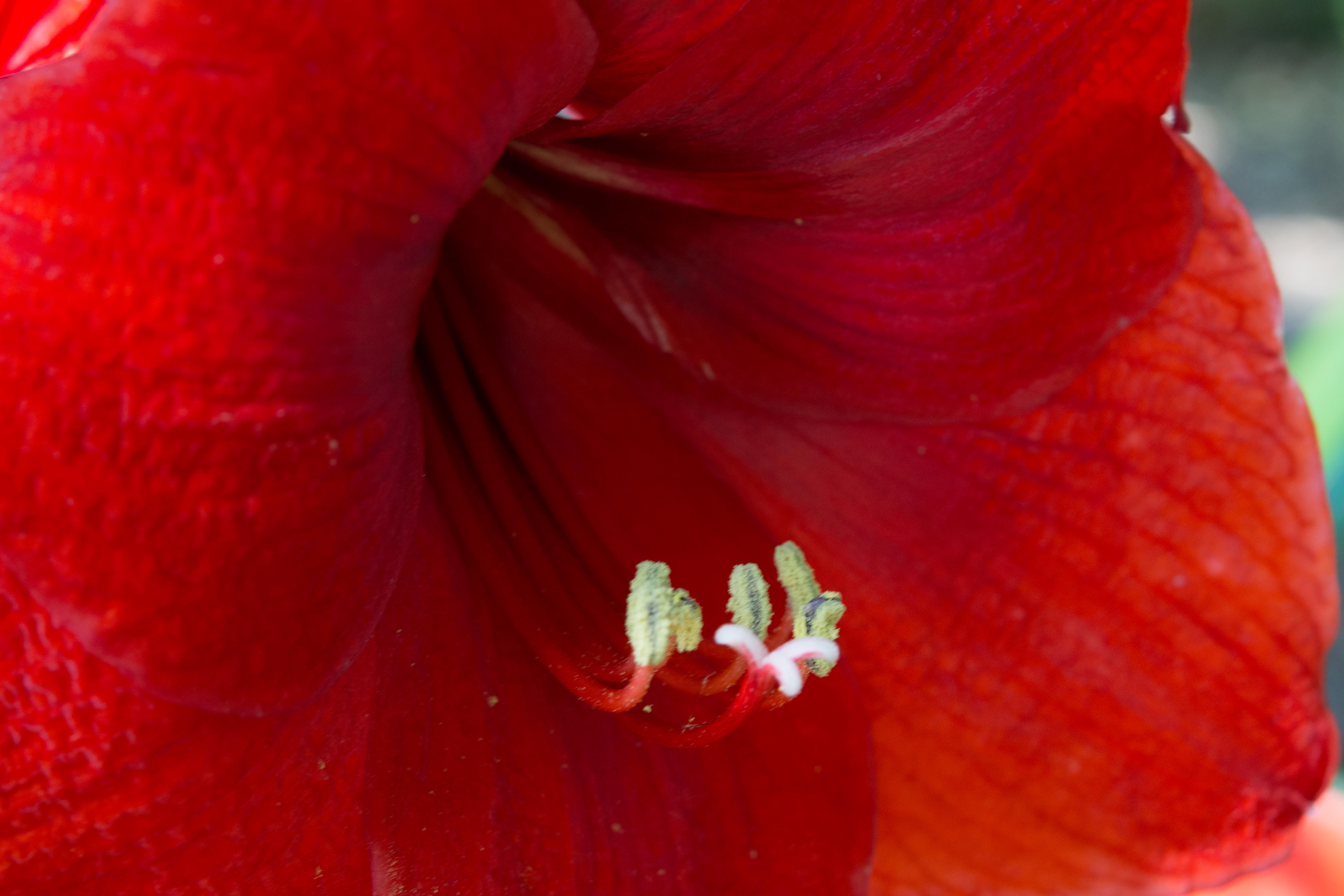
Warning: contains political content, and flowers

14 06 01_9706
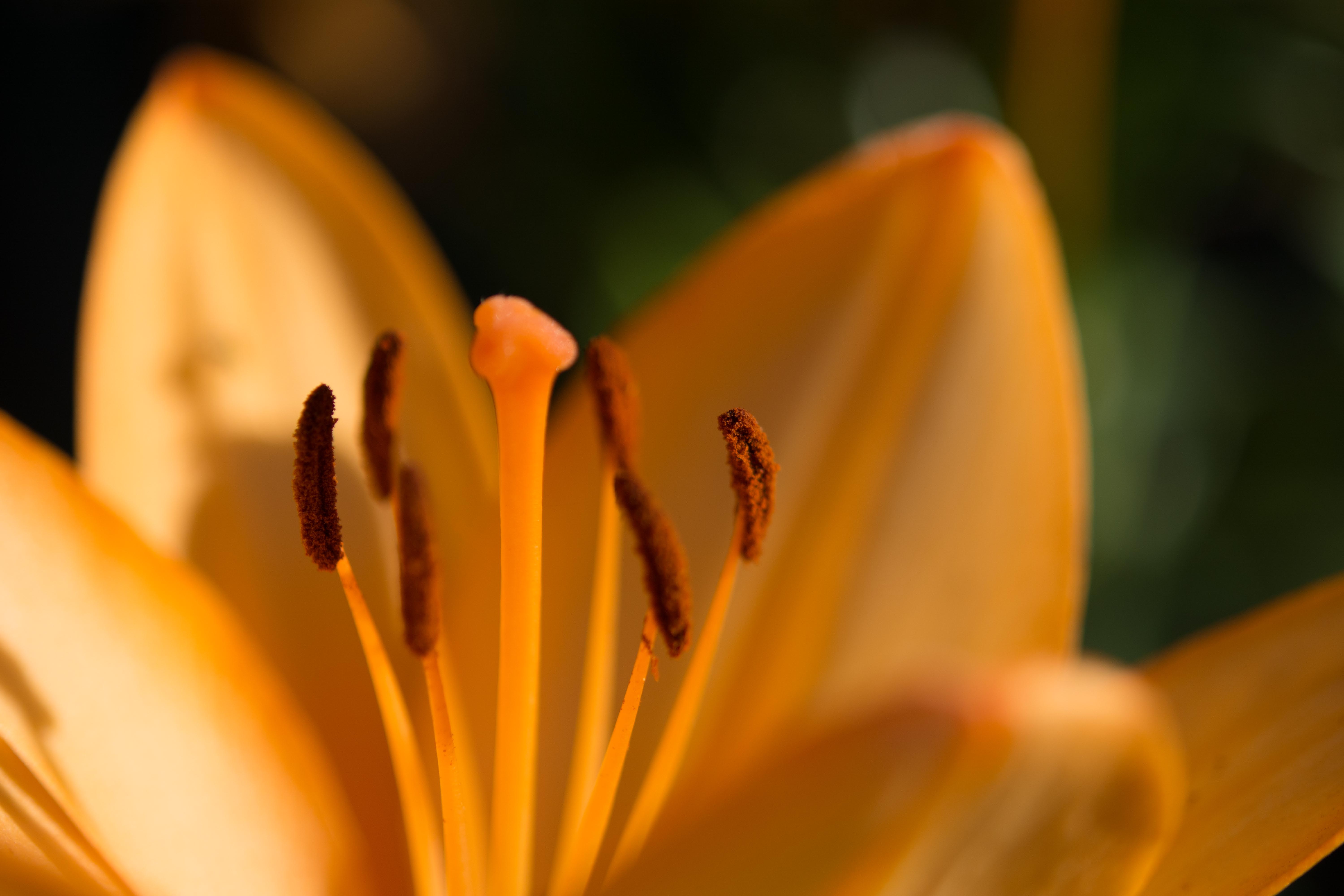
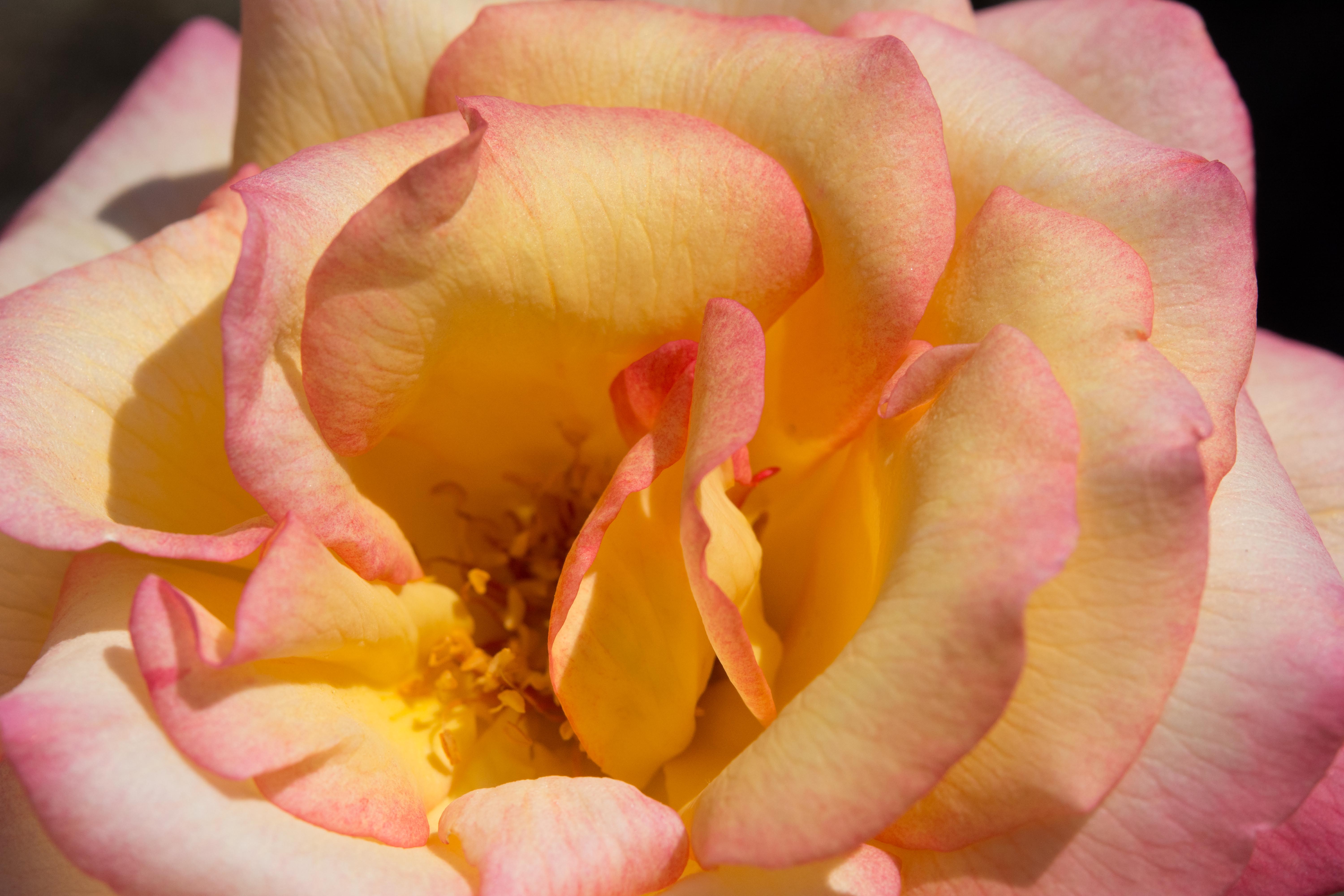
There was a triathelon in Raleigh this morning, and the route included a road I was planning to take up to Raulston Arboretum to see the blossoms. So no go. I tried again in the late afternoon, and got to see the flowers in some wonderful golden sunlight. I’ve been learning to use the DSLR in manual mode without autofocus, and am just starting to feel comfortable taking full responsibility for the exposure. Most of these photos were taken with my Nikon 60 mm 1:2.8 macro lens. There was no postproduction Photoshopping of any sort. Pretty nice, huh?
14 05 25_9552

Being the President has got to be a pretty hard job. In addition to being hated with a white-hot hatred by many no matter what you do, your inner critic is also always there. You want to do the right thing, but what is the right thing? And when you’re reasonably sure you know the right thing, what if you can’t do it by yourself? Which of course is always the case.
14 06 01_9715

I really have many warm feelings for President Obama, and one of things that makes me proud of this country is that we elected him. But I’m so frustrated and disappointed with him. We’re still in Afghanistan, killing and being killed without any reasonably achievable objective, still brutalizing prisoners in Guantanamo, still imprisoning people and destroying families for victimless drug crimes, still running headlong toward climate apocalypse. We’ve instituted a surveillance state with the potential to rival Orwell’s darkest visions.

There are, no doubt, many forces quite separate from the President’s own desires that are driving these horrors and disasters. He probably regrets them. But like it or not, he’s the President, and that’s where the buck stops.
14 06 01_9720

The President’s speech at West Point this week proposed to reframe our global mission for the foreseeable future as stamping out terrorism. Is this less absurd than fighting to obliterate communism, or more? Is there any chance that we will ever kill every crazy fanatic that would like to do us harm? Does it really make sense to make this our mission?

So, you ask, have I got a better idea to address the real menace of the homicidal religious fanatics? I thought a bit, and had an idea: we change their minds. We get them to see things from our point of view. That would about do it, wouldn’t it? We help them to see that the idea of blowing up people as a suicide bomber and then being a martyr and having the 72 virgins in paradise is just nutty, and so they stop murdering people.
14 06 01_9709

You see the problem, of course: how do we change their minds? True, we do not currently have the technology to do this. We have amazingly little knowledge of why people think the way they do about the need for Sharia law, jihad, or most anything else. We assume it has to do with their culture and upbringing, with economic disadvantage and resentments, but we can’t frame those out with precision. More important, we have no precise knowledge of how to address and prevent really bad ideas, like racism or religious intolerance, or really bad acts, like suicide bombing.

Or anything else, for that matter. But what if we created a major program with some billions of dollars to figuring this out? And we’re already spending millions and millions to understand the brain and human behavior. If we treated it like the Apollo program, eventually we might get there. Instead of killing terrorists, and thereby creating new terrorists, we’d change their minds.
14 06 01_9728

This sounded like a good idea, but after a little more thinking, I realized it would probably be disastrous. If we replaced our vast ignorance of the causes of human behavior with perfect knowledge, we’d be even worse off.

Think about it. What if we figured out how to make everyone agree with us? What if our government, or any government, had the necessary tools to prevent opposing thoughts and eliminate all anger? Would that government happily tolerate reasonable people who advocate, say, a major change in abortion policy, or drug policy, or climate policy? Has there ever been a government that happily tolerated opposition? Once we got the terrorists minds under control, who would be next? Overly vocal dissidents?

Recovering, reading about B. Franklin, and addressing climate change

14 05 20_9462_edited-1
This week the weather in Raleigh was mild, and it was pleasant to walk to work. The walk takes 15-20 minutes, depending on how I catch the lights and whether I’m trying to get there for an early meeting. When I wasn’t especially pressed, I made a few pictures of people working and playing.
14 05 23_9501_edited-1

Now, after two weeks from our return from Dominica, my various wounds (assorted bruises, scrapes, and blisters) are mostly healed up. The most worrisome, my severely sprained right hand, is still swollen and sore, but hurting less, and I’m able to play octaves on the piano, though not loudly. It reminded me of when I first tried to learn to catch a football as a little kid, and jammed up my fingers.
14 05 20_9468

It is remarkable how the body can overcome and regenerate. In fact, did you ever notice how sometimes a new injury seems to help an old one to heal? My nagging shoulder issues, which I’ve been trying to get over for several months, seem to have gone away, cured or obscured by the addition of new, more pressing discomforts.
14 05 19_9472

It’s Memorial Day weekend, and we’re still full of memories of our friend Scott, who shuffled off this mortal coil right after leading our Dominica trip. He managed, by being an unusually vibrant and generous person, to hook himself into the fabric our lives, and his departure has ripped that fabric. We’ve been talking about him, his good deeds and his goofiness, and looking back at photos. For therapy and comfort, I’ve been rereading some of In Memoriam, Tennyson’s poetic memorial to his beloved friend Arthur Hallam. Yes, it rhymes, in a style that’s way out of fashion now, but it can still speak to us. It takes grief and loss seriously, and delves deep.
14 05 19_9470

As I’ve noted before, my favorite founding father is Benjamin Franklin. Last week I finished another biography of him, by H.W. Brands. Franklin was a protean genius with many aspects, and so the biographer will inevitably neglect some of them. Brands is most interested in the political and literary Franklin, and less in the scientist and philosopher. But in describing Franklin’s diplomatic efforts in England prior to the revolution and his diplomacy in France during it, he gave me new perspectives on the war. For those of us who cut our historical teeth on revisionism, it is reassuring that Franklin, who loved England dearly, could conclude that there was no alternative to war.

For all Franklin’s enormous fame during his lifetime, it’s interesting that there are significant gaps in the record, and much we don’t know about his inner life. But what keeps shining through is his insatiable curiosity about the natural world and his constant effort to make the human world better. It’s also inspiring to me, as I get on in years, that a good portion of his greatest achievements, including helping invent and establish American democracy, were in the last quarter of his long life.
14 05 17_9378

Apropos of making things better, there’s a good short op ed piece on climate change by Tom Friedman in the NY Times, which poses a question I’ve been wondering about: “How do we do something about [global warming] at the scale required, when many remain skeptical or preoccupied with the demands of daily life[?] He also quickly hones in on the central moral and political quandary – the conflict between the welfare of this generation and future generations: “our ethical values point one way, towards intergenerational responsibility, but our political system points another, towards the short-term horizon of the next generation.” (Quoting Thomas Wells, a Dutch philosopher.) Friedman argues for urgent change, including a carbon tax and energy efficiency standards. This seems sensible, at least as a starting place.
14 05 25_9560

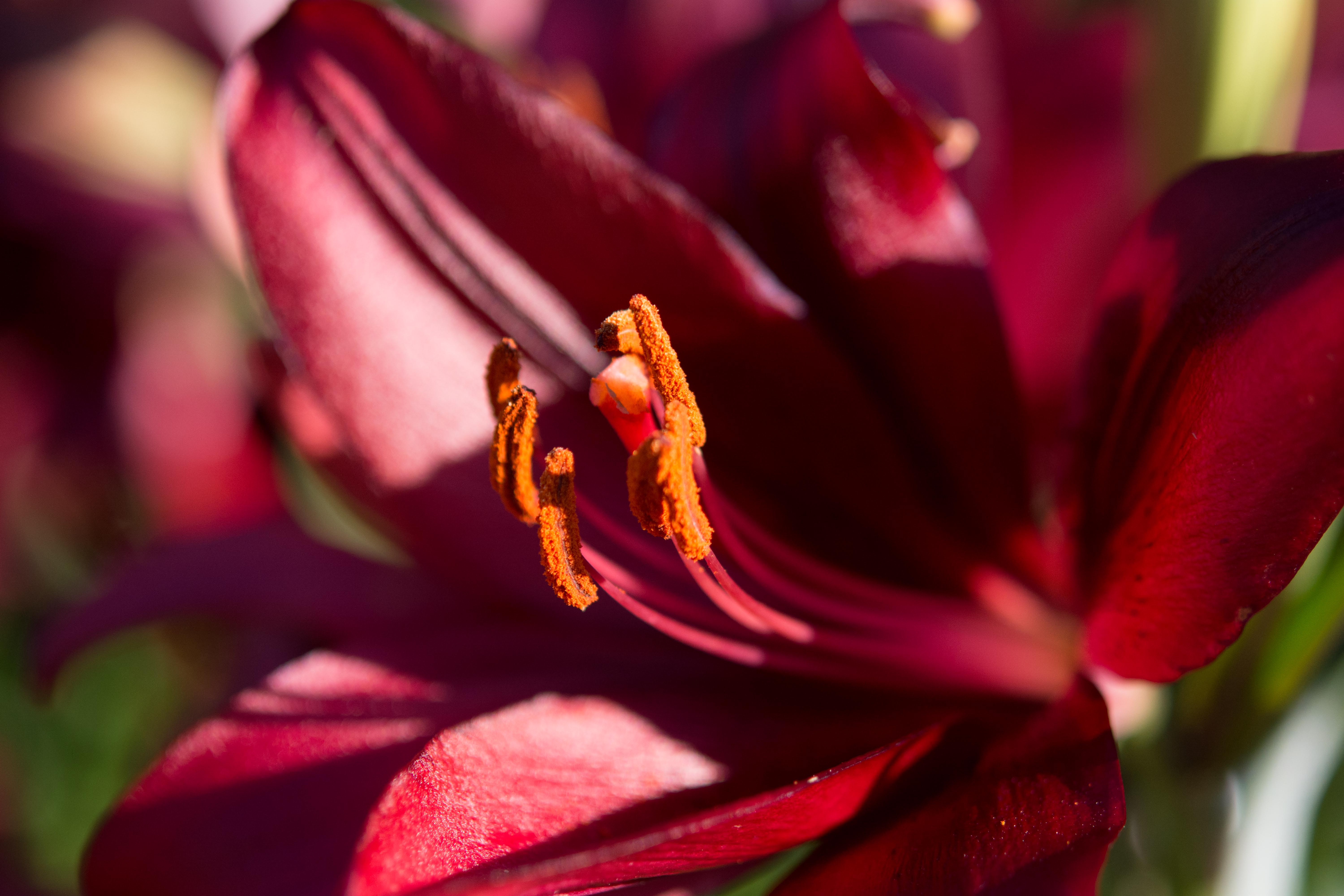
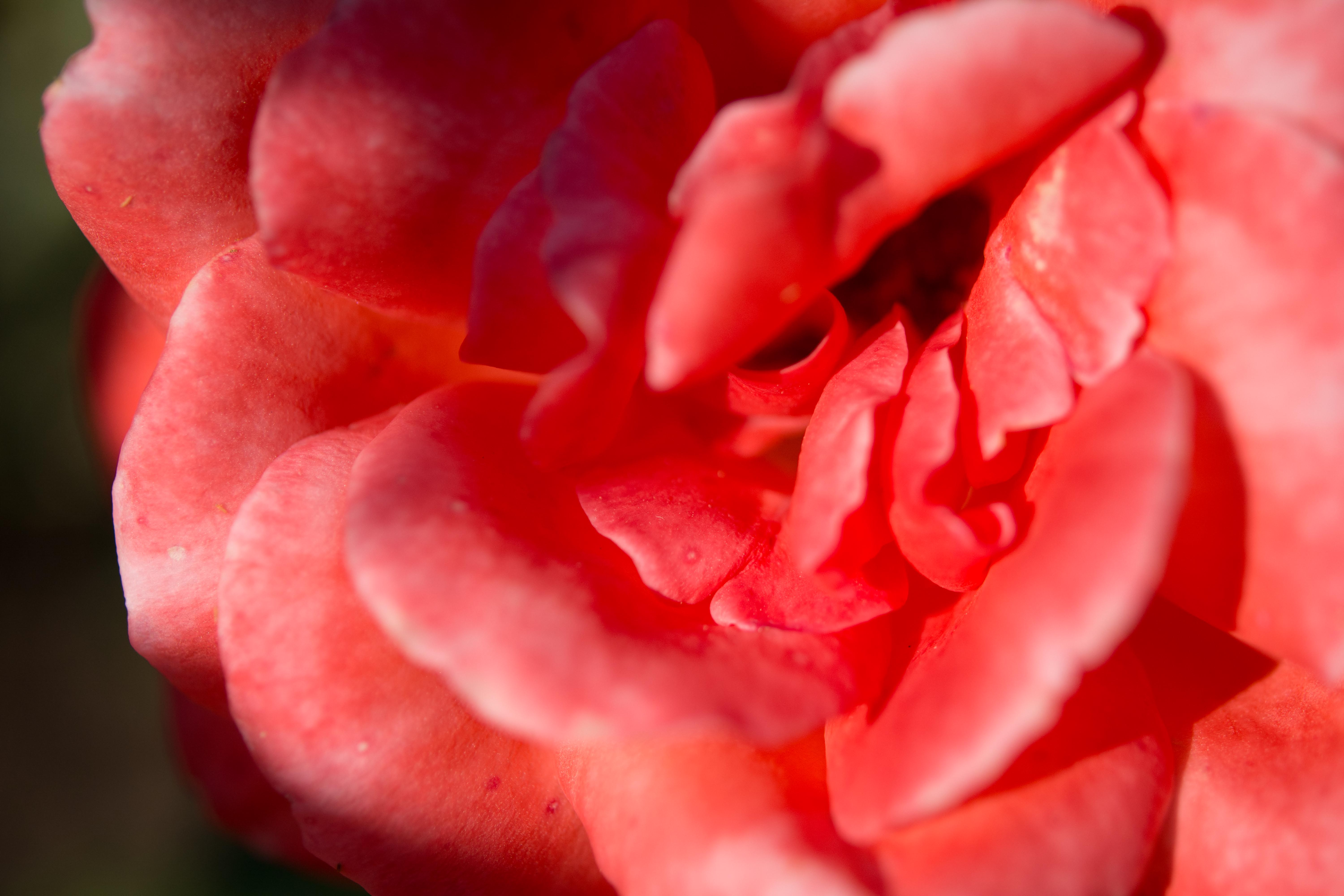
On Sunday I took a walk through Raulston Arboretum, which I try to do once a week, but missed recently. I completely missed the irises — they’d come and gone while I was traveling. But the roses are in full bloom, and there are some remarkable lilies.
14 05 25_9563
14 05 25_957414 05 25_9553

On lovely dogwoods, exercise as medicine, and golf with a big big hole

14 04 20_8527_edited-1
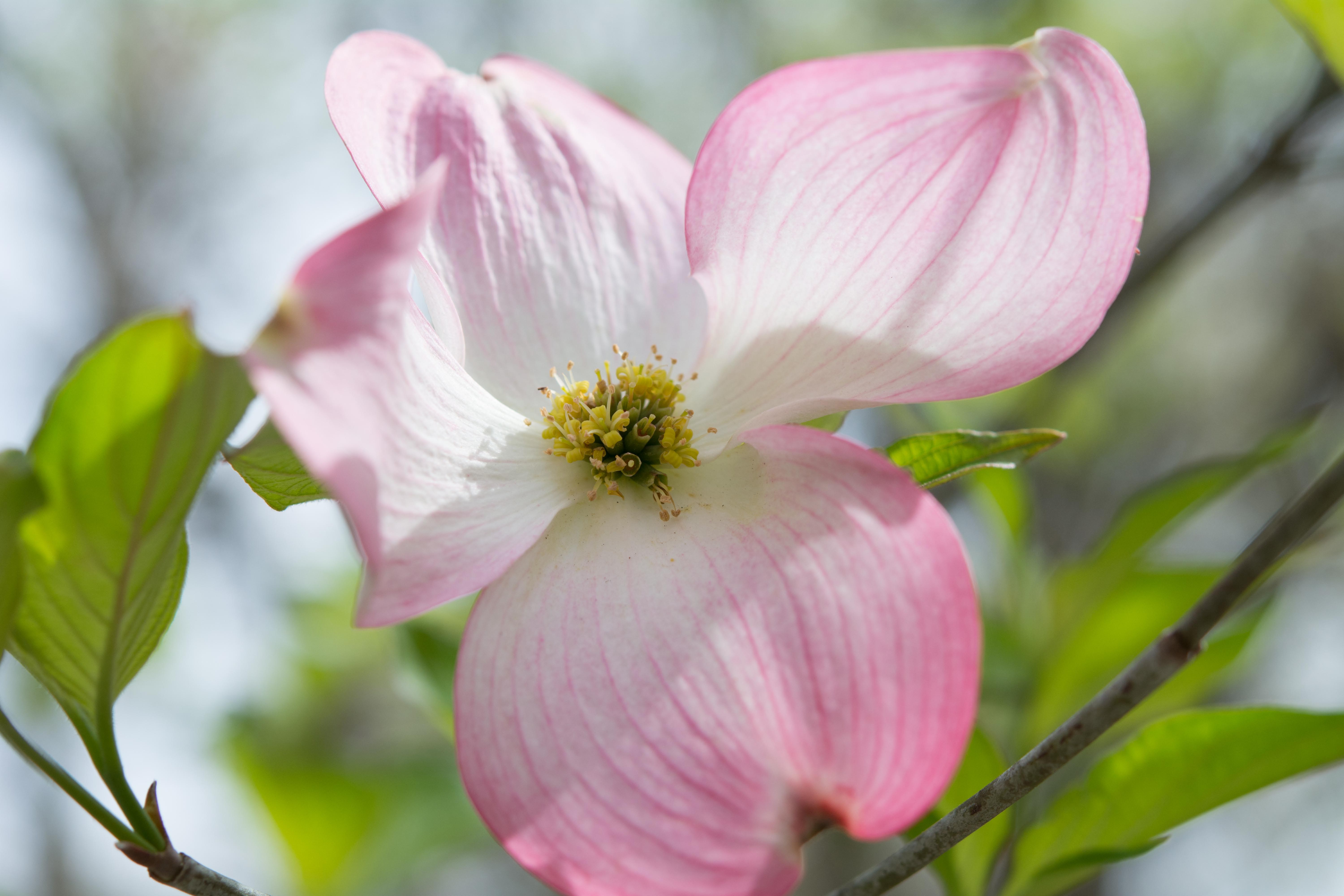
This week in Raleigh the dogwoods were blossoming. By the time I got to Fletcher Park this morning, they were past their peak, but still lovely. The tulips had come and almost all gone while I was away in Spain, and I was sorry to have missed them. I took some photos of the remains.
14 04 20_8524
Gabe came out from Telluride this week for a visit with mom and dad. I was very glad to hear of his successful first season in an adult amateur hockey league, in which he scored some goals. He’s kept up his running, and also has been experimenting yoga, using lessons on YouTube. He asked for some pointers on his down dog pose, and also for a demonstration of a headstand. Fortunately, I got up smoothly and didn’t topple over, and he was suitably impressed.
14 04 20_8502_edited-1

I heard a doc on an NPR program recently say that exercise is the best medicine. This makes sense. Staying active surely does a body more good most of the time than any pill, injection, or ointment. I’d note obvious exceptions for traumatic injuries and serious diseases, and still say, exercise is tremendously important for health.

So I feel good knowing my progeny are exercising. In a phone call this week, Jocelyn confirmed that she was doing so, having joined a new gym convenient to her subway stop in Brooklyn. It turns out that she, like me, gets a lot of reading done on a cardio machine. Her boyfriend, a former college athlete, has been trying to give her a little coaching on gym activities, which she has strongly discourage. She likes to find her own way.
14 04 20_8520

I used to be more like that, but now I am usually grateful for knowledgeable coaching. Figuring everything out yourself, even if it were possible, would just take too long. An example: when Jenn, my regular spin class instructor, made an announcement recently that anyone who comes to class regularly should have special cycling shoes, I took it on board. After several years of spinning, I finally bought my first pair of Shimanos at REI this week. Unfortunately, at my Friday class, Jenn was out sick – I’d been looking forward to letting her know I was listening to what she said. Anyhow, the shoes, which clip only the pedals, did change the experience. They allow you to pull as well as push. New muscles can get into the act.
14 04 20_8518

I’d hoped we’d have good golfing for the weekend, so that Gabe and I could get out for a round, but it turned out to be wet and a bit raw on Saturday, and cool and gusty on Sunday. In golfing news, there were stories about an interesting new variation of golf in the New York Times and Wall Street Journal Instead of the regulation 4.25 inch hole, the hole is 15 inches wide. This turns 10 foot putts into gimmes, and 30 foot putts into opportunities.

This sounds like fun to me. The putting is the most frustrating part of the game. I don’t consider myself particularly bad at putting, but you can putt fairly well and still miss – a lot. I wouldn’t propose to change the whole game, since I’m sure there are those who love putting towards small holes more than anything, and some who are uncomfortable with any change on principle. But it would be nice to have the option of dialing down the fraughtness a bit with a larger hole.
My first visit to Barcelona

14 04 12_8135_edited-1
Last week I did a quick trip to Barcelona for the FSF-Europe Free Software Workshop, and got a chance to see the city a bit. There was good energy and good attendance at the conference, with some old friends and major thought leaders in free software, and my talk on software patents and the Supreme Court was well received. It was really cheering to be with a large group of really smart, really nice people working to advance the cause of free and open source software.
14 04 09_8236_edited-1

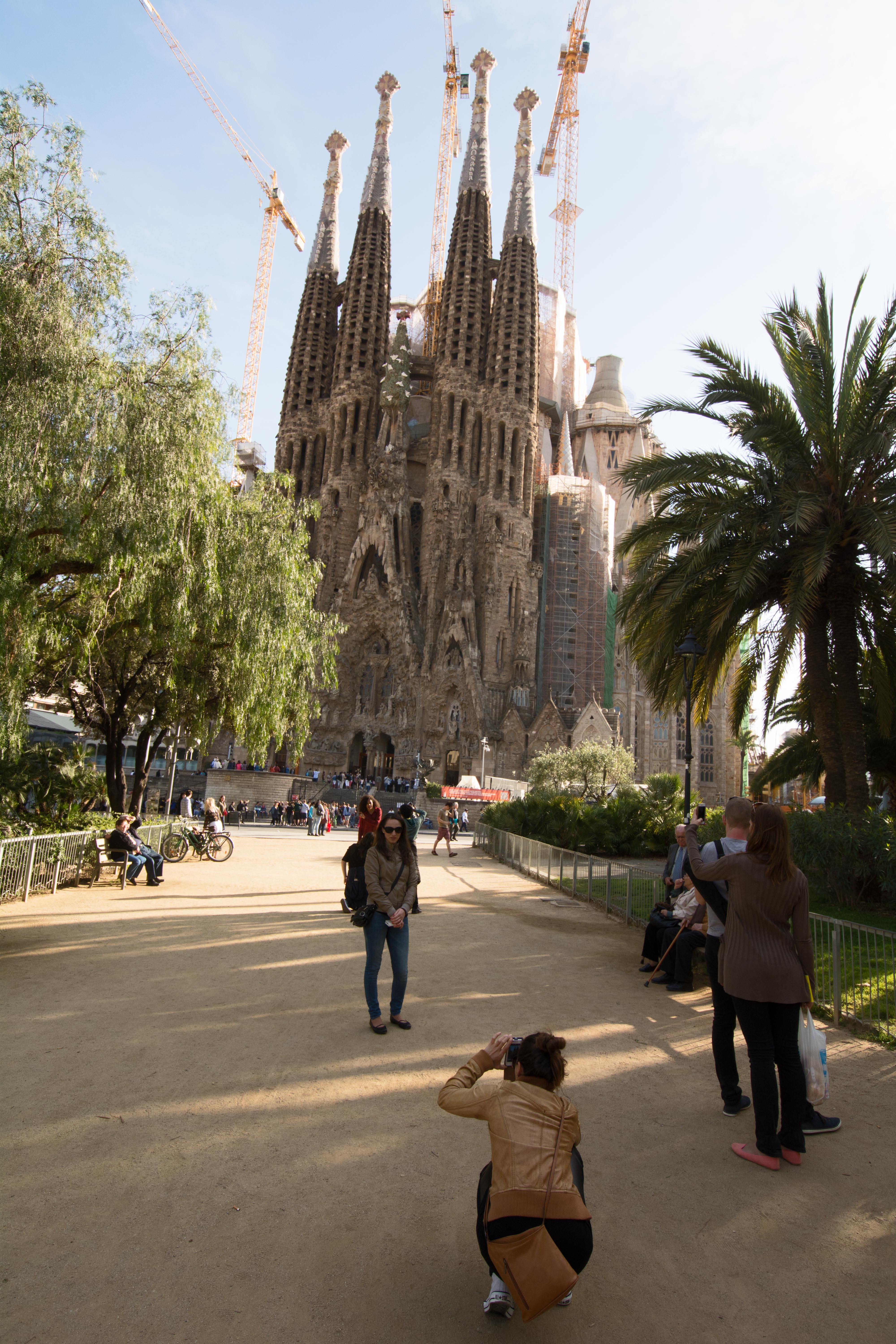
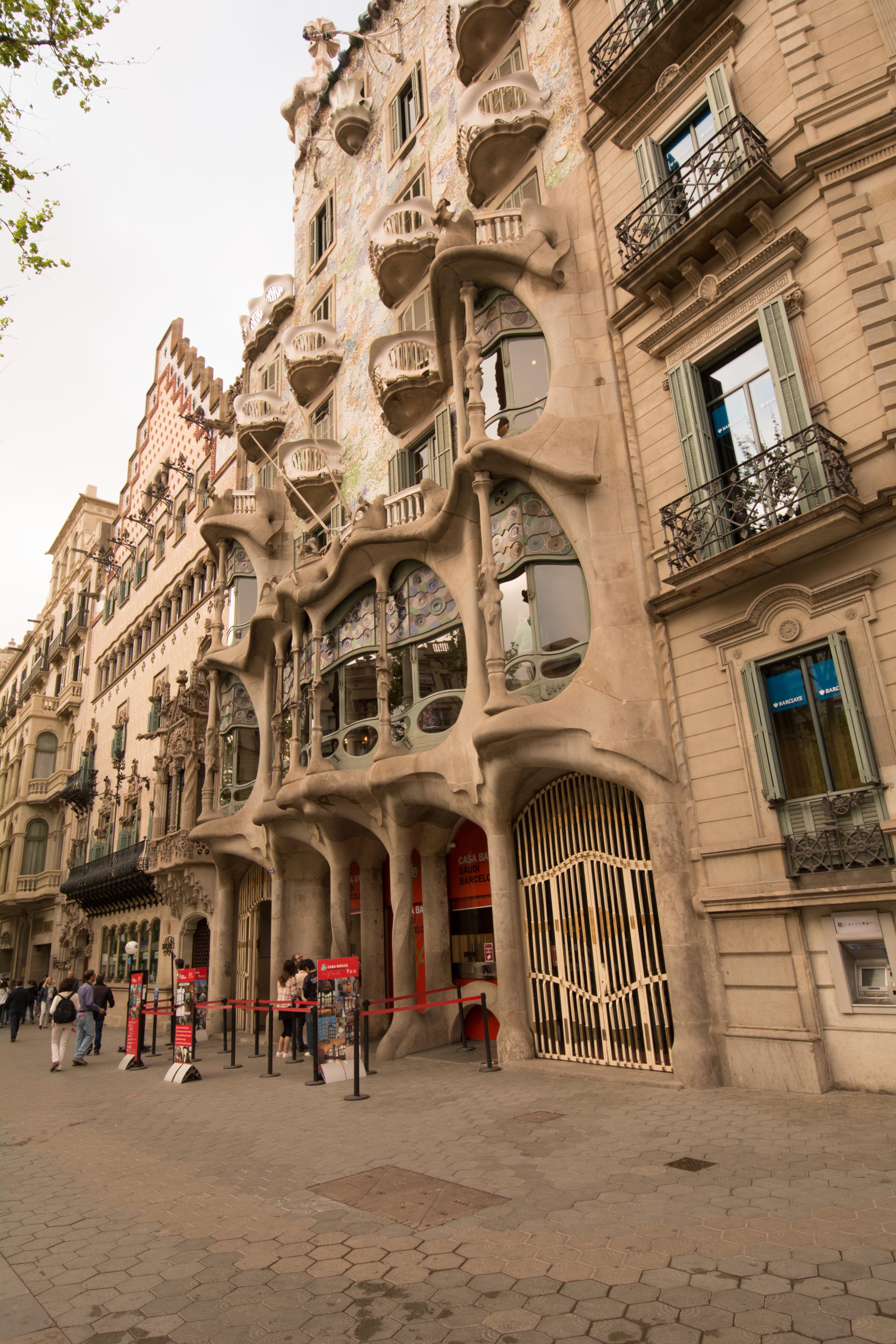
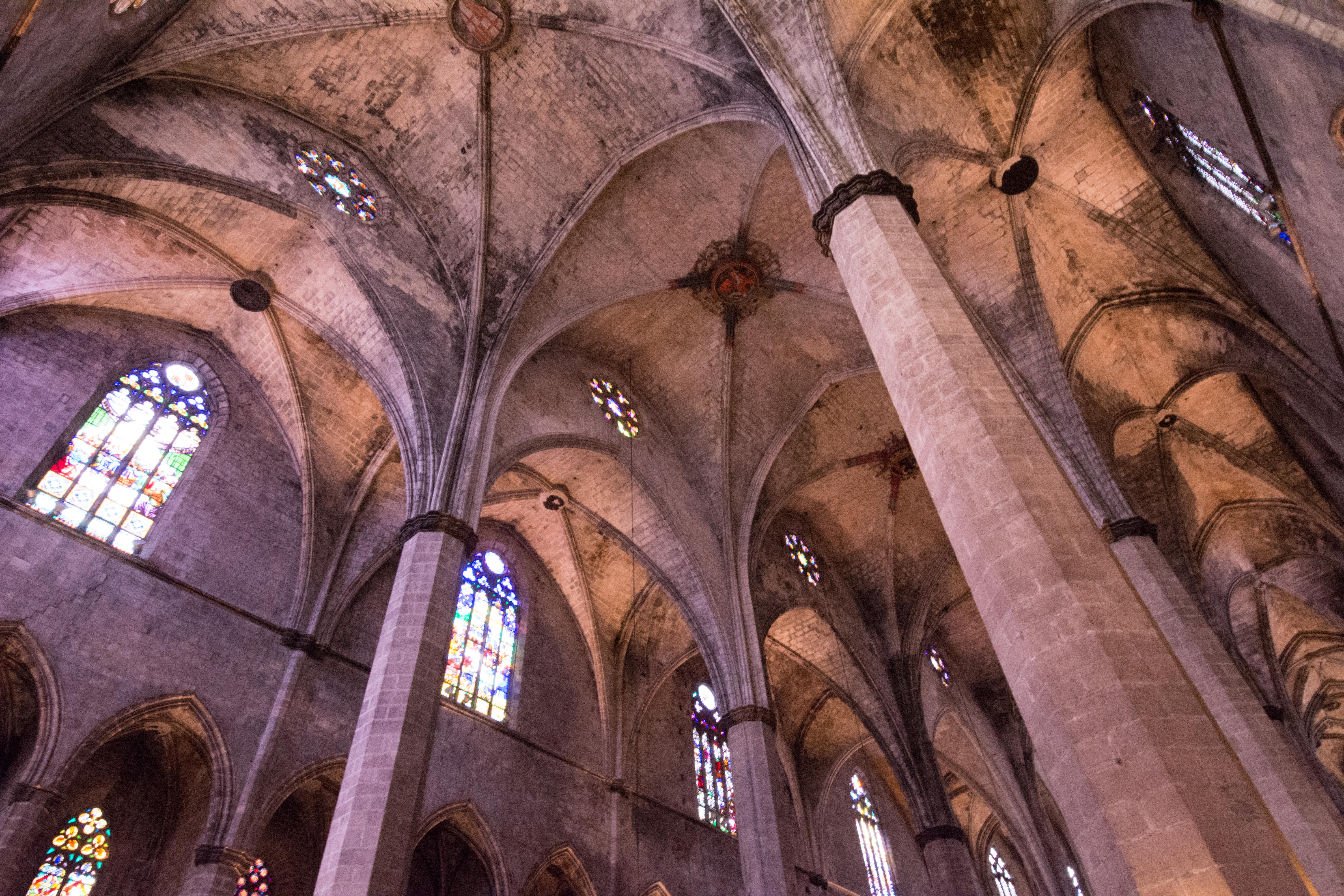
We took a tour of the Sagrada Familia, the famous cathedral designed by Anton Gaudi and still a work in progress 122 years after it was started. It’s a strange building, half modern and half gothic, and massive. As with the great gothic cathedrals, it overwhelms the senses – it’s impossible to take it all in at once. Our tour guide took us inside late in the day, as the light was changing quickly, and showed how the windows were designed to manipulate the light. The guide made it clear that the work is both source of controversy and of enormous pride for the Barcelonans. I can’t say I liked it, exactly, but I found it wildly ambitious, bizarre, and intriguing.
14 04 09_8208_edited-1

After the conference, starting Saturday morning, I shifted from work mode to super-tourist mode, and spent about 14 hours exploring the city. At first I thought it seemed a bit like a cross between Paris and Florence, but in the end I found it distinctive, just itself. It has grand boulevards with trees and fashionable shops, warrens of narrow medieval streets, and large parks. There are a couple of distinguished gothic cathedrals, some excellent art museums, and a modern (with TVs!) and efficient modern metro. It was easy to figure out how to get a ticket and get going in the right direction, and I never waited more than three minutes for a train.

Barcelona was energized and energizing. It seemed very cosmopolitan and sophisticated. The Catalans have their own language, Catalan, which seemed not too different from Spanish. Like people of other small European language groups, Barcelonans are more likely to need a second or third language. I found that the service people all spoke adequate-to-excellent English. In fact, using advanced Yankee detection radar, they sometimes spoke to me in English before I even opened my mouthand so I didn’t get to use my still-a-work-in-progress Spanish very much.
14 04 12_8116

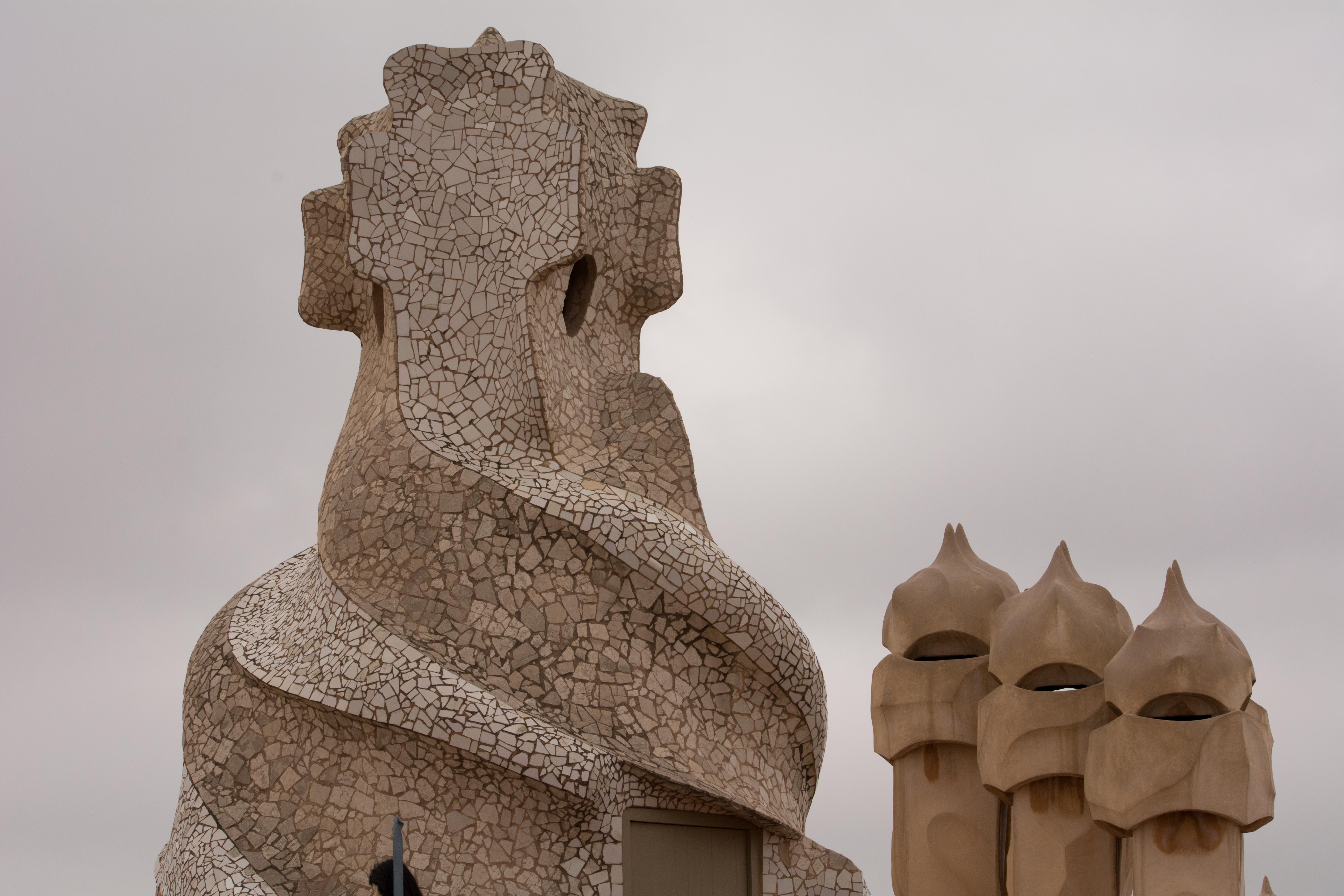
Since the Barcelonans are so proud of Gaudi and the school of modernisme (which struck me as a species of art nouvea), I decided to check out another well-known Gaudi building — the Pedrero, an apartment building. Unfortunately the façade was covered up for renovation, but it was worth seeing the roof and a large apartment. The roof had mysterious sculptural objects with undulating surfaces, bulges, and points. I have no idea what they mean, but somehow in the context of city rooftops they work. The apartment was remarkably spacious, and well-furnished and decorated in the period.
14 04 12_8139

Gaudi was a visionary and a maverick, unwilling to accept existing conventions and aesthetic categories, like our Frank Lloyd Wright. But Gaudi’s aesthetic is odder – whimsical in places, but also suggesting memories of nightmares. It’s amazing that he found funding in the first place, and that he also found lasting fame. The local obsession with Guadi is another sign that Castilians are different in an interesting way.
14 04 12_8184
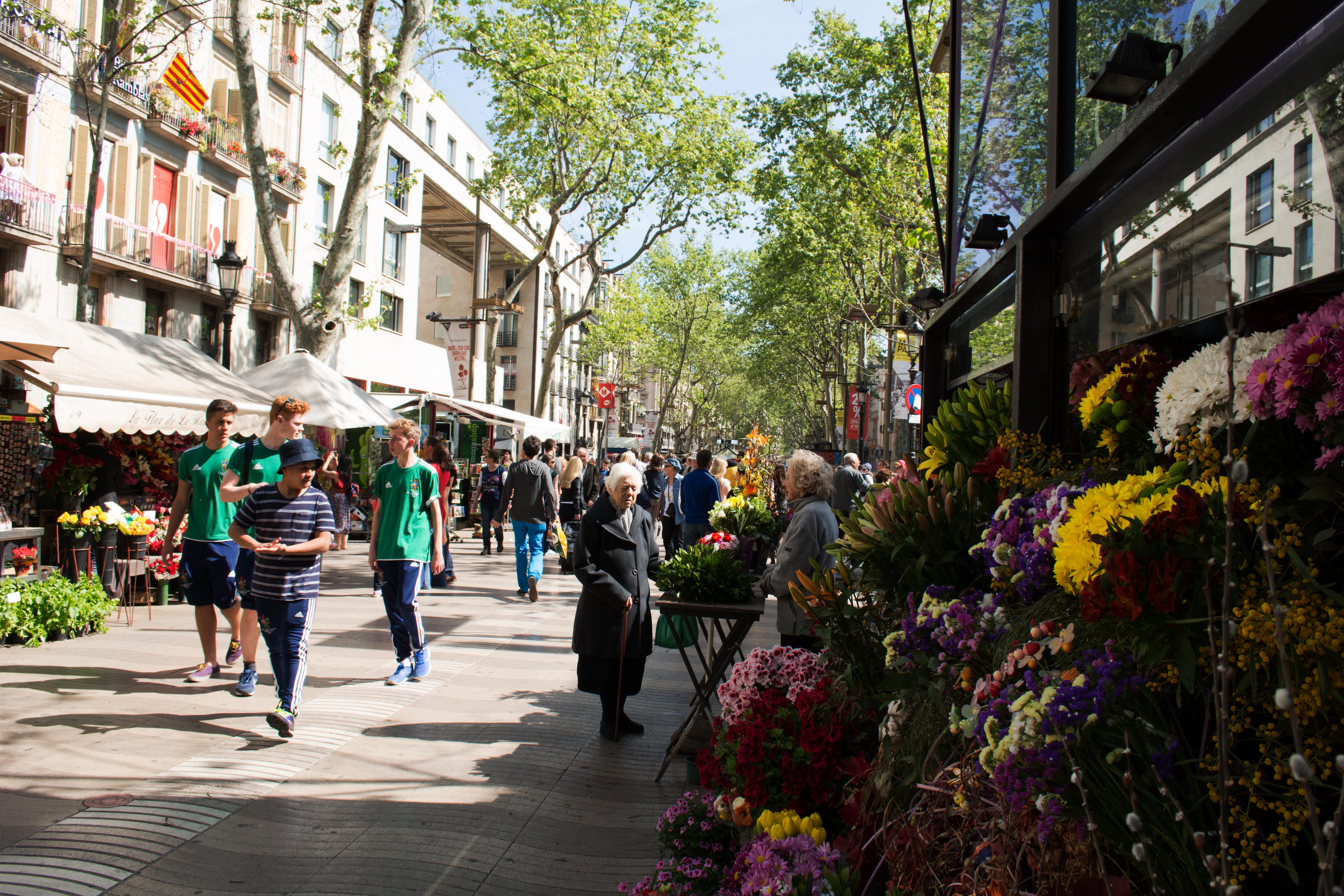
After looking at some other modernist buildings, including Casa Battlo, I took a longish walk south which included La Rambla, the famous pedestrians-only boulevard, and through the gothic quarter to the Picasso museum. It doesn’t have the world’s most distinguished Picassos, but for Picasso fans it’s satisfying – particularly some fine works from the blue period. There was also an interesting temporary exhibition on Picasso’s influence on contemporary art.

After more explorations in the old quarter, late in the afternoon I made my way across town to the Juan Miro museum. I came in with the impression that Miro was overrated – an artist who’d taken a few charming ideas, mined them out, and kept on digging. The museum showed that he had more range than I’d realized, and more willingness to experiment, assimilate new ideas, and grow. I particularly liked his found-object sculptures. The temporary exhibit included some interesting conceptual works, including one that showed, side by side, a three-foot-high pile of dirt and a three-foot-high pile of thick paint.

On the flight back on Sunday, I had a good block of reading time, and finally finished The Odyssey, in the Robert Fagles translation. I was sort of looking towards the suitors of Penelope getting their comeuppance, but even so the violence was so extreme it was shocking. Homer’s world was definitely different from ours. Were the suitors really so bad as to deserve butchering? But there were also surprisingly modern descriptions of affection and love. When Penelope finally realized that Odysseus was actually home, after twenty years’ absence, and husband and wife were united, it had the emotional resonance of Shakespeare’s greatest lovers. It made me eager to get home.

Full Frame Documentary Film Festival — some highlights

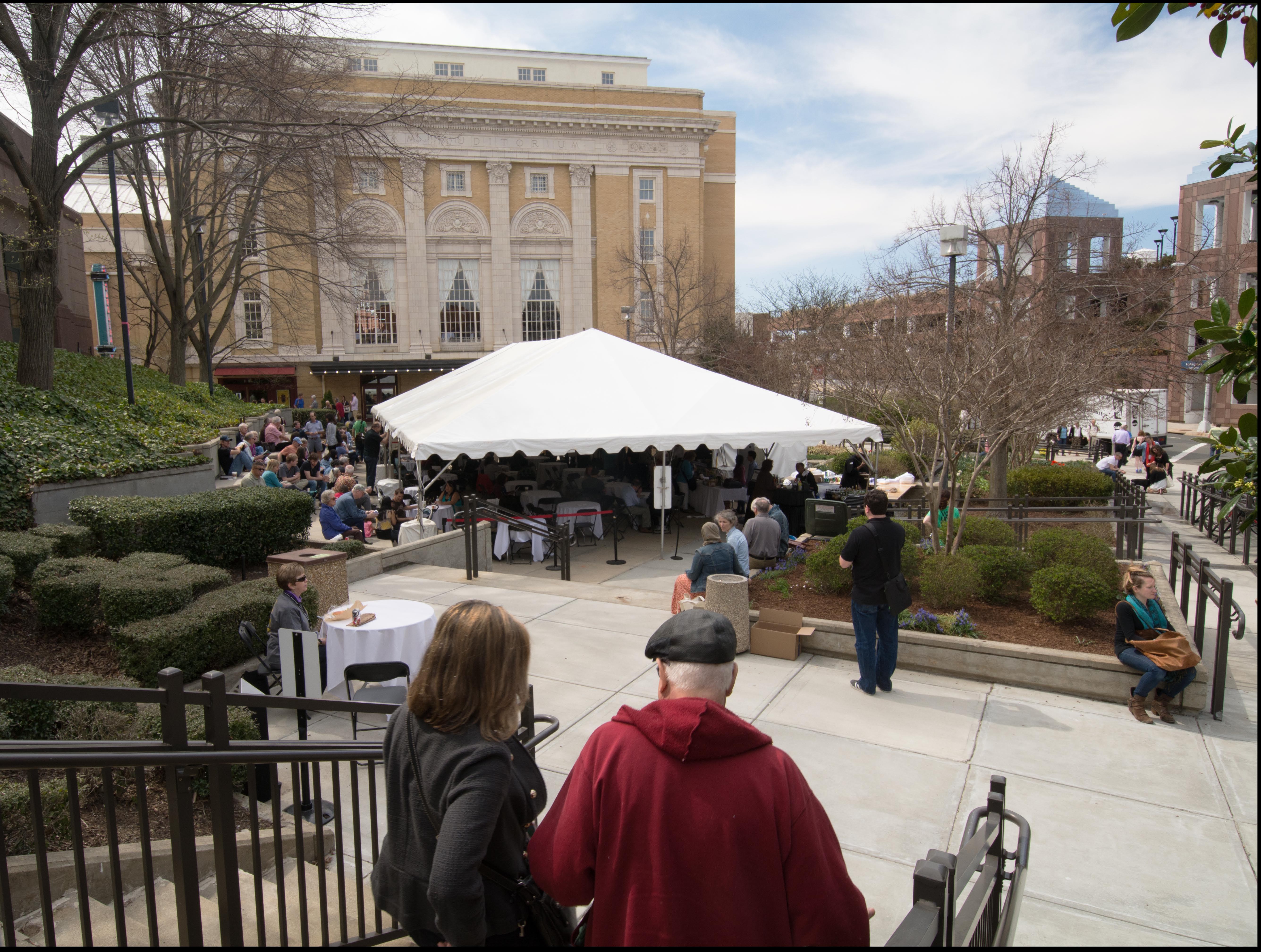
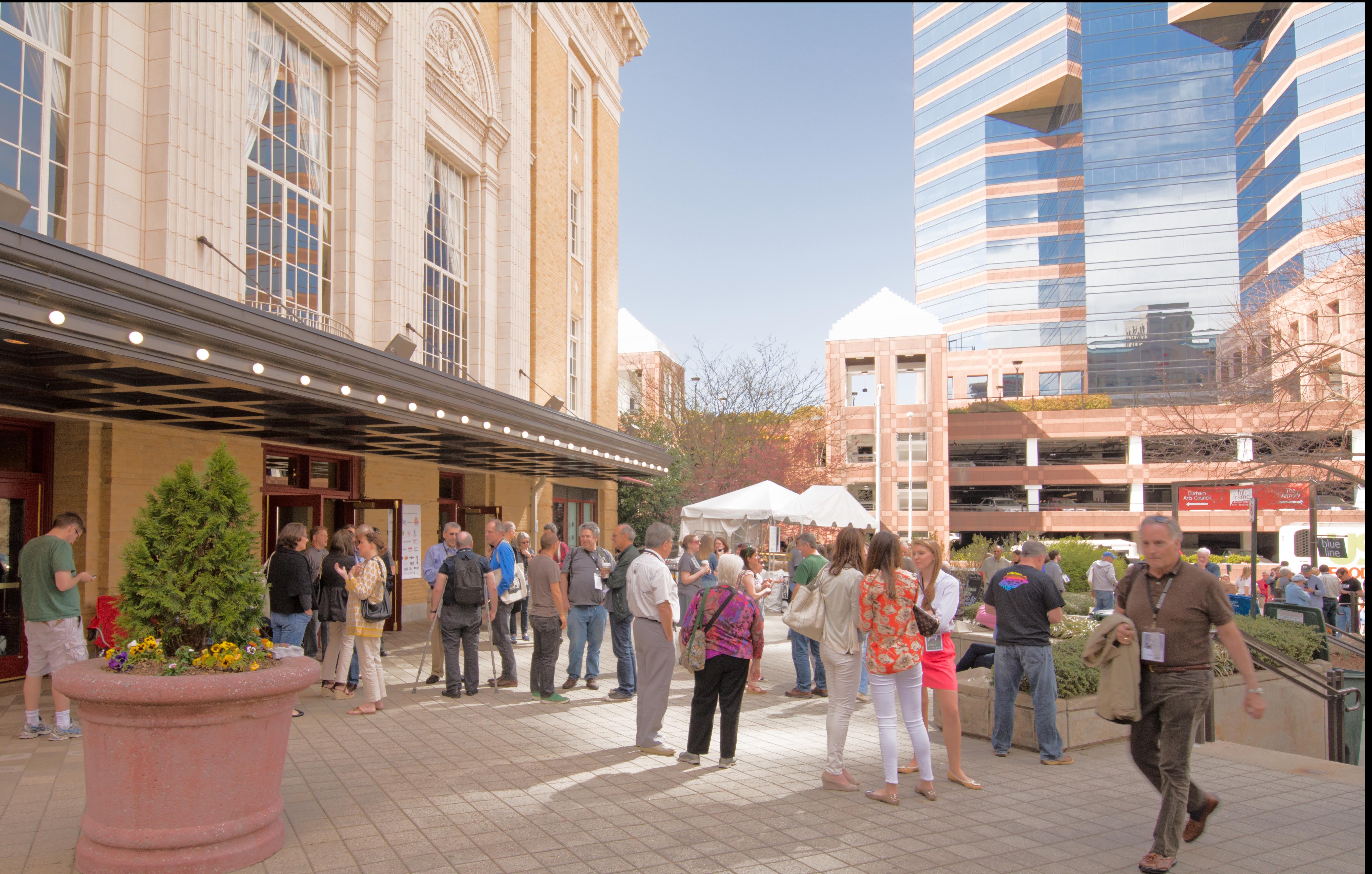
14 04 05_7994_edited-1Kudos to the Full Frame Documentary Film Festival which ran from last Thursday through the weekend in Durham, NC. The Festival had five main screens on which it screened more than 100 films. There were lots of helpful volunteers, and things ran on time and from what I saw, mostly glitch free. Many shows were sold out, and the crowds were enthusiastic.

I like documentaries most when the makers are passionate about the subject but also trying to maintain their critical distance and integrity. Documentary filmmakers, like all of us, have their blind spots and biases. Objectivity is a fine ideal, but I don’t think it’s possible to tell a coherent story based on reality in any medium without filtering, editing, and reworking; reality is just too messy to present raw. And no doubt some filmmakers are consciously manipulative. But a lot of documentary people seem to work hard to be truthful.

This was, I think true of all five films we saw, which covered a lot of artistic, social, and political ground. Here’s the list, in the order we saw them.

1. Afternoon of a Faun: Taniquil Le Clerq, by Nancy Buirski, is about the famous ballerina with the NY City Ballet. She married George Ballanchine and at her artistic peak contracted polio and never danced, or walked, again. This will be of most interest to other balletomanes, but I very much enjoyed the archival footage of Le Clerq and other great dancers and the interviews with Ballanchine, Jerome Robbins, Jacques d’Amboise, and others.

2. Whitey: The United States v. James J. Bulger, by Joe Berlinger, was organized around the criminal trial in Boston last year of Whitey Bulger, the crime boss who controlled South Boston for decades and then eluded capture for 16 years. You may recall from press reports that the trial was somewhat bizarre, in that Bulger didn’t deny many of the criminal acts that the government was trying to prove, but used the trial to deny that he was a government informant (“rat”) – which wasn’t an issue in the trial.

Bulger’s point seemed to be that a lot of state and federal law enforcement officials were working for him, rather than the other way around. There was ample proof that at least a couple of FBI agents were thoroughtly corrupt. This wasn’t so surprising – one expects that every barrel will have a few bad apples, – but there were indications that the officials working with Bulger were numerous and included some in high places (like the U.S. Attorney’s office). This could explain how he was permitted to run his operation for decades, murdering numerous people and destroying the lives of many others, while Italian Mafia competitors were arrested and convicted. The story was complicated, but the over all impression was that the law enforcement system came off the rails, and may not yet be back on them. It was truly shocking.
14 04 05_7997_edited-1

3. Freedom Summer, by Stanley Nelson, was about the struggle for Black voting rights in Mississippi, including the work by about a thousand mostly white college students who worked there in the summer of 1964. I knew these folks had been courageous and idealistic, but I hadn’t quite realized how harrowing things had been. The old guard racists were fire bombing and shooting at them, and killed three. The film was ultimately inspiring, reminding us that it may not be futile to work for political change in the face of difficult odds.

4. Ivory Tower, by Andrew Rossi, is about the structural problems of higher education in America, including dramatically risings costs, crushing student debt, deteriorating study habits, and confused mission (e.g. whether to get kids ready for the world of work, challenge them intellectually, or entertain them). I was particularly interested in the reporting new education models, incorporating MOOCs and hybrid approaches to teaching.

5. Rich Hill, by Tracy Droz Tragos and Andrew Droz Palermo, is an intimate look at the lives of three adolescent boys in a small Missouri town. The families were all working (at least at times) poor, and their situations were unsettled and frequently chaotic. With a lot of anger and despair, it was difficult to watch at times — almost too real, with no apparent good solutions.

In addition to the stimulating films, the food concession was good; I was very happy with my salad combo plate. There was an unfortunate postscript for me – I lost my iPad Air. I probably left it in the theatre on Saturday night. It has most of the books I’m reading on it, as well as many other things I care about. In short, it’s gotten to be more than just another computing device, but more like a little piece of me. I’m feeling a bit shaken to be missing it.
14 04 05_7987_edited-1

Buds, laughs, and cries, including Romeo and Juliet (the ballet)

14 03 22_7848
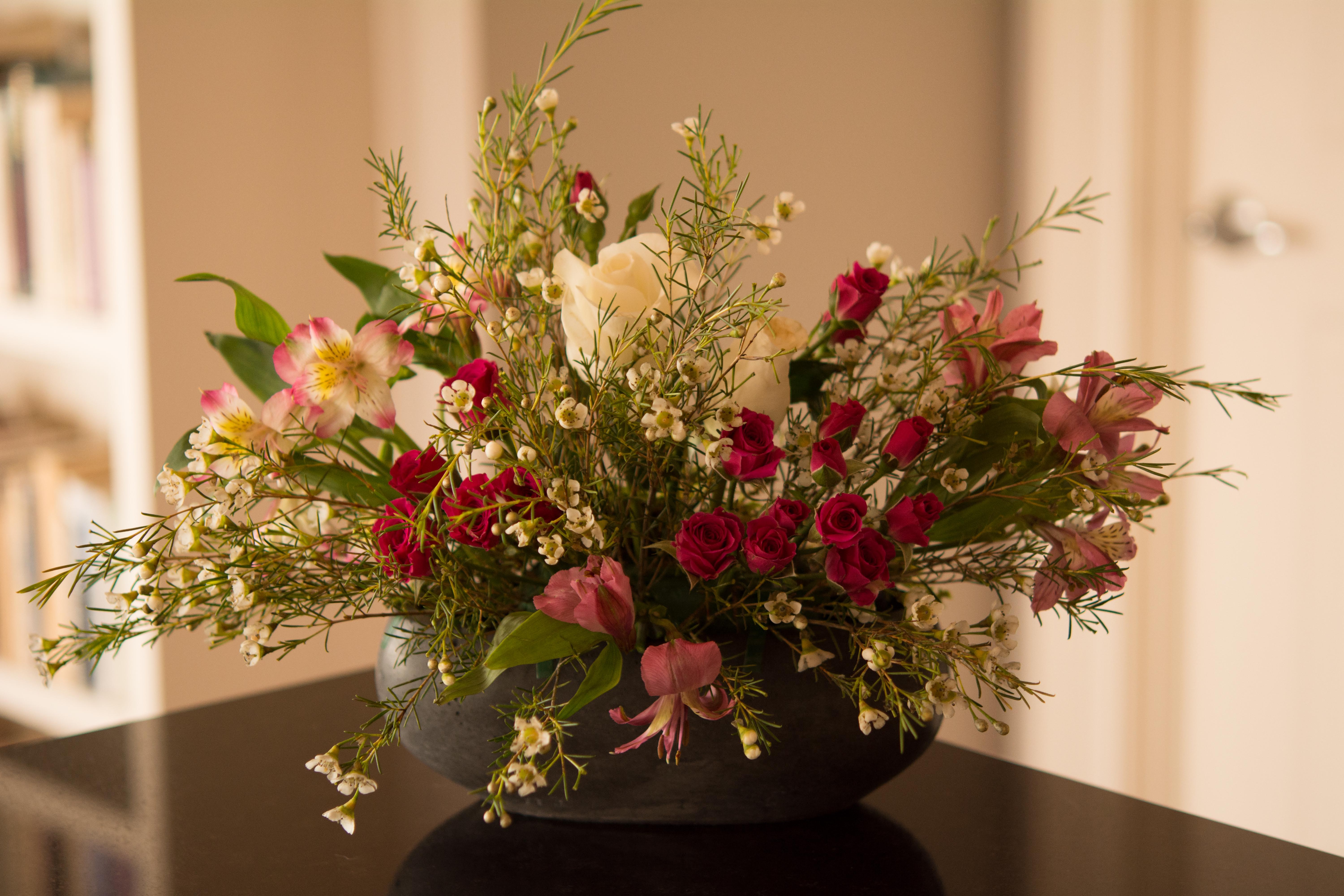
Sally’s taking a flower arranging class at Wake Tech, and here is her latest project, which I really liked. With spring officially here, I’m very much ready for the big blossoming , and took a Saturday morning walk through Fletcher Park and Raulston Arboretum to see what was up. They’re not here in numbers just yet. But it was fun to take a close look at some things on the point of bursting out.
14 03 22_7831
Is there anything more boring than people bragging about their marvelous kids? Perhaps hearing people complain about their aches and pains. But other people’s impressive kids are still a serious problem, conversation-wise. Why is it, then, that stories about my own kids are so interesting?

So, sorry, but here goes a proud papa: Jocelyn, having conquered the book publishing business in Manhattan (i.e. getting an entry-level job in ebooks at Macmillan), has now published her first professional writing. It’s a humorous essay about getting the fun of a good cry, which you may read at Quarterlette, a site for twenty-something women. The pay was not good (zero), but she was very excited to be a beginning author. Who knows what comes next? She’s got a piece on online dating in the works, and we kicked around ideas for a funny piece about the annoyances of Facebook.
14 03 22_7829

At an opposite extreme, there’s a piece in last week’s New Yorker by Andrew Solomon about Peter Lanza, the father of Adam Lanza. Remember Adam, the Sandy Hook killer, who took the life of 26 little kids, his mom, and himself? This is worse than a parent’s worst nightmare. I hadn’t known that he was a high functioning autistic kid who may also have been psychotic. We want to know why he did what he did or what might have made things unfold differently, but there are no full, satisfying answers. Nobody saw Adam’s potential for horrific violence, including the mental health professionals who examined him or his parents. I was moved by Peter Lanza’s struggle with both the pain of loss and profound guilt.
14 03 22_7816

There’s another good story about death and love called Romeo and Juliet, which the Carolina Ballet performed on Saturday night. We’ve seen Robert Weiss’s choreographed version several times over the past 15 years, and it’s one of my favorites. Shakespeare’s story, it turns out, works quite well without words. The language of ballet is fully sufficient to convey the richness of the trembling, tingling ecstasy of first love, and the explosive violence of feuding clans.

In this production, Margaret Severin-Hansen played Juliet with sweet innocence, and her Romeo, Sokvannara Sar, was strong and sensitive. Their balcony scene was complete, unmitigated, overwhelming love — love that obliterates everything else. Eugene Barnes was a smoldering, intimidating Tybalt. I thought the group sword fights could have used a bit more edge and brio, though I hesitate to say so – I wouldn’t want any dancers to actually get hurt.

Lindsay Turkel was radiant in the trio of gypsy street dancers. We were also happy to see Alyssa Pilger, a corps member and our pointe shoe sponsoree, get a high-profile solo as the Mandolin Girl. She rocked! I’d previously been struck by her beautiful technique, but last night she danced with amazing power, impassioned and electrifying.

Some pre-spring photography, and appreciating Diana Nyad, a swimmer for the ages

14 03 16_7805This week we had one day in the high 20s, and another in the low 70s. It’s been a roller coaster winter, and we’re all ready for spring. On Saturday morning after yoga, I went to Fletcher Park with my camera and checked for signs of emerging life. Daffodils had popped out, and tulips and others were getting ready. On Sunday I scouted Raulston Arboretum, which was mostly brown and gray (as in photo at bottom), but there were some delicate blooms and buds. Spring is getting close. We’ve just got to hang on!
14 03 16_7790

As I’ve been taking more pictures I’ve also been trying to figure out what it is I’m trying to do. Make a picture, of course, but there’s more to it. The camera subtly changes the way you see and feel. You look a little harder, and discover there are feelings associated with objects. You wonder, can they be captured, and can they be shared? Your relationship to the visual world has changed. Sure, there’s always a risk that the camera will distance you from the world, but I’m finding it can also draw you closer.
14 03 16_7782

So there’s a little voyage of discovery that happens in photographic outings, even when the output isn’t especially remarkable. It’s a type of meditation. And from time to time everything is right – the light and shapes and the colors – and none of the many things that can go wrong go wrong (you didn’t forget to take the lens cover off, or get a cat hair off the lens, or to adjust the white balance, ISO, aperture, etc.). At just the right second, you push the shutter, and everything clicks. Ah, happiness.
14 03 15_7740

It’s just a tiny fraction of a second (say, one six-thousandth). But it ‘s the culmination of many moments – years and years. It depends on your having looked carefully at your subject, but also your having looked for a long time at nature with intensity and affection. It also takes having looked at a lot of art, and considered how humans use images to represent things and communicate emotions. It also depends on your having learned your craft – how to hold the camera steady, how to frame the subject, how to choose the settings. It takes time. And usually there’s something a little off. There are so many not bad, almost-good, but ultimately useless, pictures. But you keep trying, and gradually get better.
14 03 15_7762

I’m crazy about my new Nikon D7100. Such marvelous engineering – a sensor with twenty-four million pixels! Fifty-one point auto-focus! The focus responsiveness is truly amazing. But I’m also a bit overwhelmed by the apparatus. Weeks into our relationship, I’ve got the basics, but I’m still finding new little buttons I hadn’t previously noticed. I seldom read users manuals, but for the D7100, I’ve felt moved to purchase two additional how-to books. Seriously, its complicated. But on the bright side, I don’t feel the equipment is holding me back. It’s more like I’m holding it back. So I’m daunted, but also inspired. I don’t want its brilliance to go to waste.

Also inspiring: Diana Nyad, who finally made the swim from Cuba to Florida at age 64 – a 53-hour, 110 mile swim, which she was the first to do without a shark cage. This is a feat of human endurance almost beyond imagination. I got round to reading Ariel Levy’s piece on her in the Feb. 10 New Yorker, which gave me a new appreciation for the amazing grit and relentlessness behind this feat. Nyad turns out to be at once a dreamer and a grinder, a brilliant, charming personality with considerable gaps and flaws. It soundss like she has OCD, relationship problems, and no money sense. She was horribly molested as a child. She has a drive that surpasses all known limits.

She started thinking about the Cuba-Florida swim when she was a little girl, and became a world-famous endurance swimmer in her twenties. After becoming the first to swim from the Bahamas to Florida (102 miles), she retired at age 30 and became a network sportscaster and did other things. Then she took up the quest for the Cuba to Florida at age 60. She failed. Then failed again. Then again. And each of these was physically harrowing – hours of nausea, shark worries (perhaps exaggerated, but understandable), and jelly fish stings. And then she did it. After two nights of swimming, she saw the lights of Key West, and knew she had 14 or 15 more hours to go. Which for her was a mere training swim.
14 03 16_7797

Our Stuart, some worries, a piano lesson, and a fine young violinist

14 03 08_7551The weather was dicey this week – wet and icy. With rain freezing on the street, I decided it was safer to walk to work than drive. This may have been true, but walking was also dicey – I had some bobbles and barely avoided falling. One day the temperature was 19 when I set out, and the wind blowing in my face was going about 20 mph, like little needles.

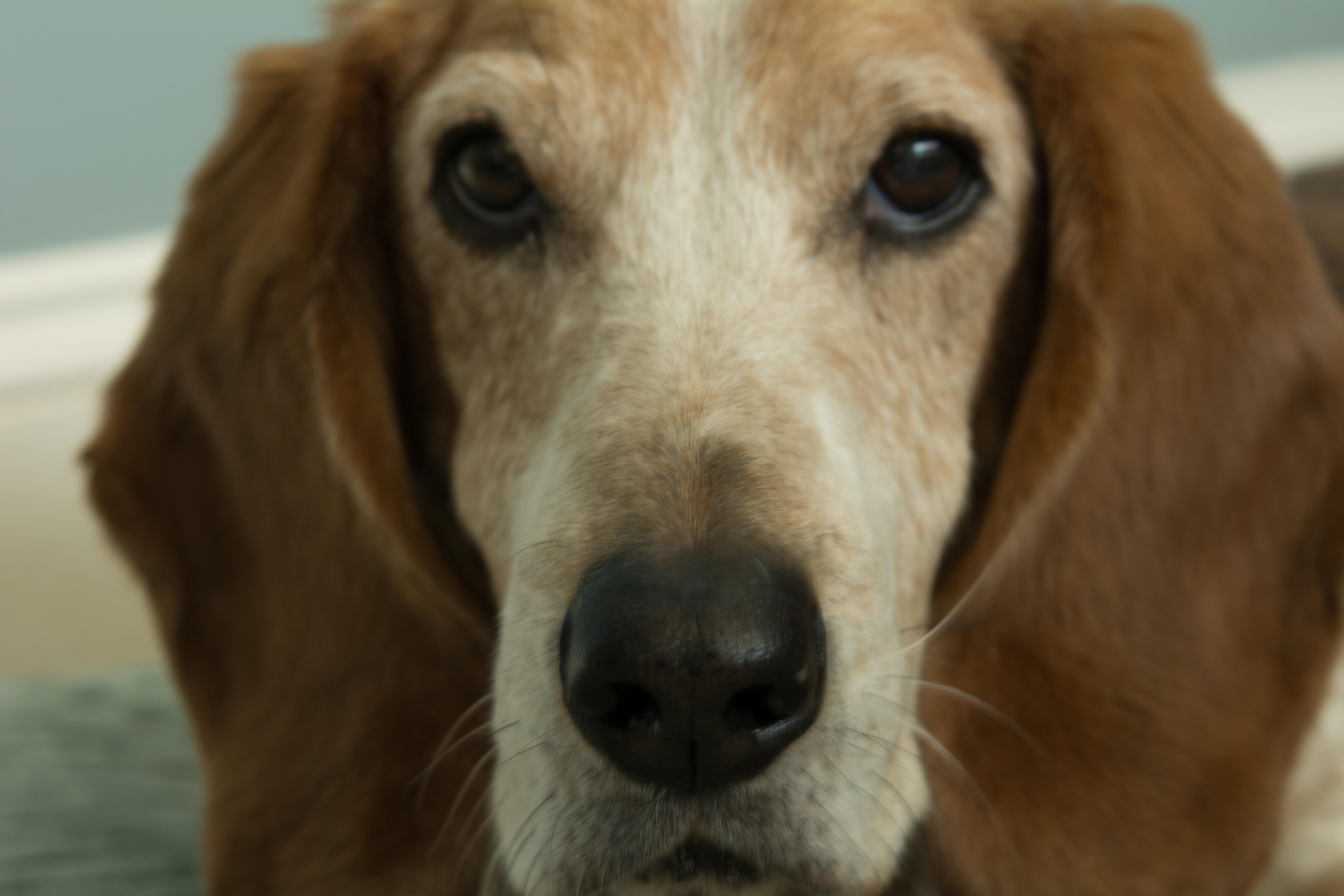
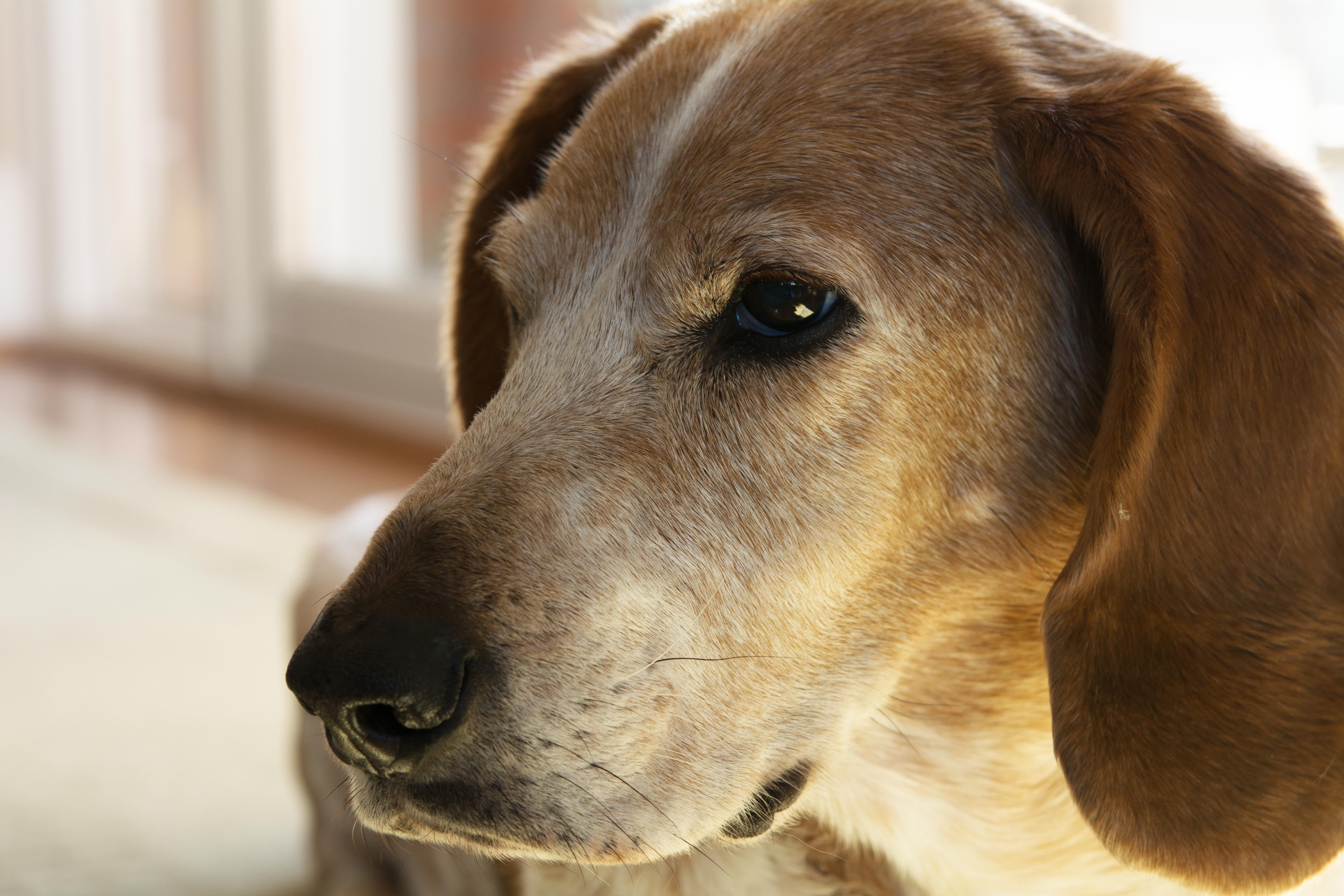
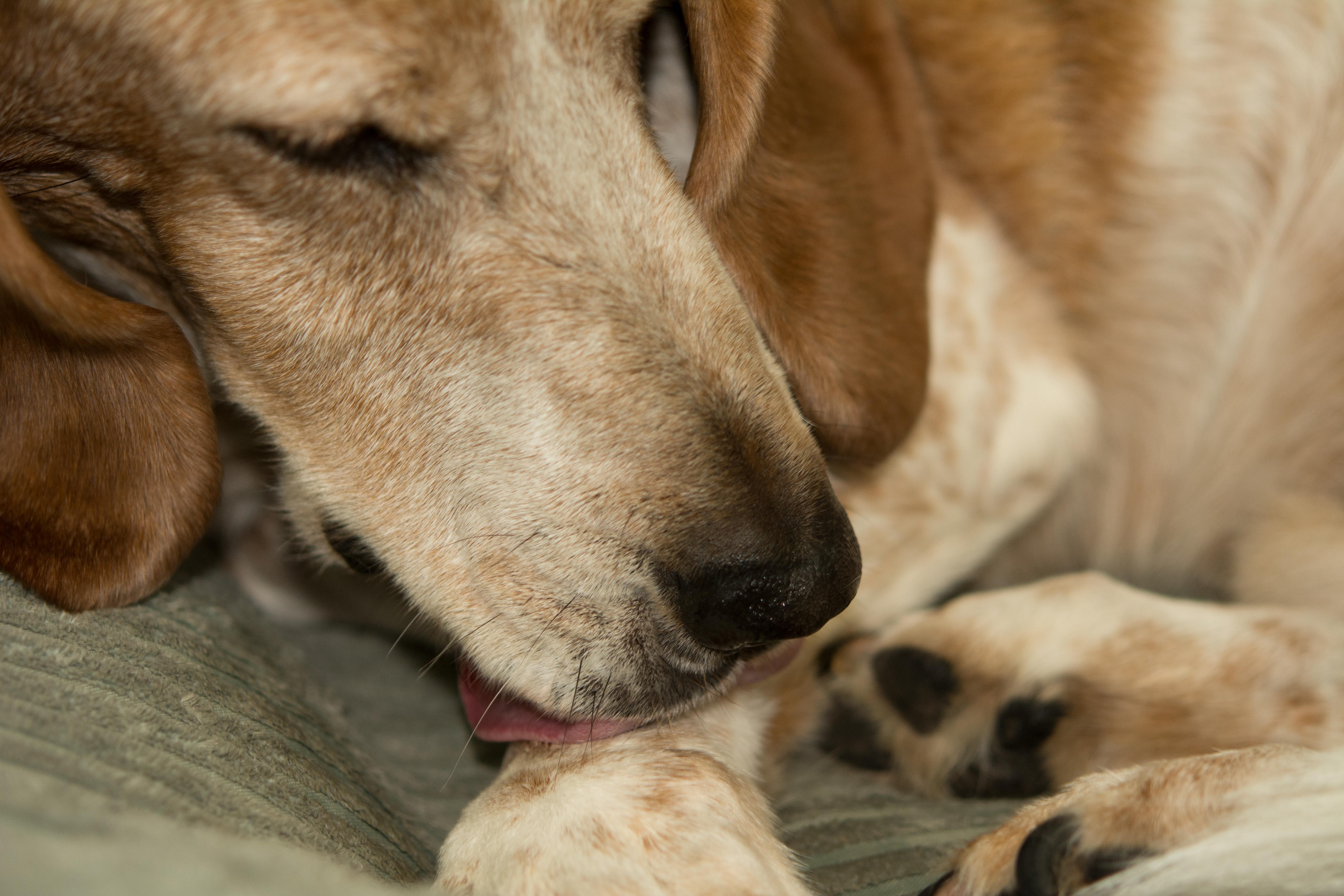
Stuart, our basset/beagle, trotted out to greet me at the door each day when I got home. He’s now twelve, and while still, in my opinion, the world’s greatest dog, he’s not as spry as in days gone by. But he remains a warm, sensitive, supportive little soul. He came around for a pet more than usual this week, nuzzling his snout against my leg, as though he sensed I needed a little extra support.
14 03 08_7545_edited-1

Which I did. Along with the usual daily stresses and strains, I was dealing with an extra load of physical pain from the ski trip to Colorado. My sunburned lip really hurt, which sounds minor, but actually seemed major – my face felt like a giant stinging throbbing lower lip. My left should was tender and bruised from a crash in the trees. So was my right leg, which had the mother of all bruises – a huge area of purple, brown, and yellow, shading to black. The leg bruise worried me a little, because I couldn’t remember a fall that could have caused it. It just appeared. Then came the lump.

On Wednesday morning in the shower I felt a lump the size of a golf ball in the inside part of my leg behind the knee. I immediately thought of my friend who’d recently survived a deep vein thrombosis – that is, a blood clot in a leg vein, which if untreated could have been fatal. He had a battery of tests and emergency surgery, followed by months of blood thinning medication – all complicated, time-consuming, and unpleasant, but he got through OK. I gave him a call and confirmed that my symptoms sounded similar, and quickly called my GP, only to learn he’d recently closed his practice. His answering machine suggested trying an urgent care facility.

At this point I felt sure I was going to have a very bad day involving multiple imaging tests, surgery, and possibly death. The more I thought about it, the more certain I was that this was the end. I’d miss the spring blossoms and butterflies in Raulston Arboretum, the migrating warblers, the Carolina Ballet’s Romeo and Juliet, diving in Dominica, and the new season of Railhawks soccer. I would never taste another one of Sally’s delicious margaritas. Oh woe.

Of course, it turned out to be nothing. An experienced nurse practitioner took a careful look and diagnosed it as either hematoma or lipoma, which would become clearer in a week or two. She was familiar with deep vein thrombosis, which she said would be in a different place on the leg. I felt resurrected! Before me was a good long stretch of the road of life (assuming no freak accidents, major diseases, or other catastrophes).
14 03 08_7563

I had another piano lesson with Olga Kleiankina on Saturday, and as usual, she was inspiring and challenging. I played a famous Brahms waltz (A flat major), a tender and touching thing which I heard on the radio recently and decided to work up. There are no serious technical challenges; the challenge is to make it musical and fresh. Olga’s approach was to work for different tonal colors for each hand. This takes a combination of extremely close listening and subtle muscle control (not just the hands, but even more the arms and back).

I also played Rachmaninoff’s Elegy, a lyrical and tragic piece which I thought sounded good — until she began to disassemble it. It seems I was playing it too much like Debussy, without enough firmness and depth. She was not persuaded that I really understood the structure of the piece, and encouraged me to practice the broken chords as block chords to get it under better control. The journey continues.
14 03 01_7606

I’ve been reading Play It Again, by Alan Rusburger, editor of the Guardian newspaper and an enthusiastic amateur pianist. His book is organized around his quest to learn Chopin’s first ballade (g minor) while at the same time publishing the Wikileaks leaks and performing other journalistic feats. It’s touching that he loves the Chopin piece so much, and I can relate, having also spent a good deal of effort working on it some years back. I was struck by the odd combination of musical sophistication with a certain naiveté. It was clear to me from the first few pages that he taking on a piece that was just too far beyond his capabilities, and was likely to spin his wheels for quite a while. But I admired his pluck, and was glad to learn of others like me who with no hope of gain or worldly honor pour a big part of themselves into this music and tradition.

On Sunday afternoon I went to a concert by the young American violinist Rachel Barton Pine, who was accompanied by Matthew Hagle on the piano. The concert included works by Schubert, Prokofiev, and Franck, and a selection of lullabies that Ms. Pine had collected after having a baby. She was an excellent musician, both poised and passionate, with lovely tone and interesting variety of tone. She also seemed like a friendly, down-to-earth person, to judge from her spoken introductions. She plays a famous violin made by Joseph Guarnerius del Gesu in 1742, which Brahms himself singled out for its beauty. For an encore, she played a funny but fiendishly difficult showpiece which I think she said was by Bezzeti. She tossed off with vigor and charm, earning a standing ovation. Kudos also to Mr. Hagle, who was also an excellent musician, and a sensitive collaborator.