The Casual Blog

Category: photography

My happy Thanksgiving: racing, reading, camera tinkering, eating, and seeing Interstellar
14 11 30_3749
Lately I’ve been consciously trying to cultivate an attitude of increasing gratitude. As is traditional at the Thanksgiving holiday, I’ll note that I have a great many things to be grateful for. For me, gratitude also means noting connections and acknowledging how very little is attributable to my independent efforts. I really owe it all to everybody and everything else. And so, to you, dear reader, and everything else, I’m grateful.

On Thanksgiving morning, I was grateful to be, at 59, sufficiently healthy to undertake the Ridge Road Turkey Trot, an 8 kilometer (4.97 mile) race. I hadn’t tried a road race with thousands of other people for a great many years. Sally sweetly lent her moral support and driving skills, and got me to the starting line five minutes before the 8:00 a.m. start.

My idea was to challenge myself without collapsing or getting sick, and that much I accomplished. I completed the course in 44 minutes, or just under 9 minutes a mile. I wasn’t particularly proud about this time, since I still imagine myself as capable of 8 minute miles, but this T-day that wasn’t happening. My heart rate was in the low-to-mid 160s for much of the race, which is pretty high, and I didn’t want to find out what would happen if it stayed higher. The hills in the middle of the course took a lot out of me, and the last couple of miles were fairly miserable. Part of me badly wanted to try a bit of walking instead of running. But I didn’t quit, and I did survive.

After the race, I took a long hot shower, and then sat down and read for a while. I finished E.O. Wilson’s The Meaning of Human Existence. Wilson, a world-renowned exert on ants and a leading theorist on evolution, is now 85, and going strong. I enjoyed reading The Social Conquest of Earth, and liked this book as well, in spite of its grandiose title. Wilson puts things in perspective, and helps us grasp that humans are just one of the millions of species on the planet. His basic message is that we can improve our chances of survival and happiness by using the tools of science and better understanding our evolutionary nature.

Wilson contends that natural selection proceeded along two paths, individual and group. He argues that this accounts for our dual nature as selfish individuals and altruistic group members. These conflicting tendencies are fundamental drivers of the human experience, which means we’ll always be in some degree of tumult in our interior emotional lives. But Wilson thinks our contradictions are essential to what it means to be human, and we need to understand them and manage them. He seems to think there’s a chance that humanity can overcome ignorance, delusion, and violence, and quit destroying the natural world.

14 11 30_3737

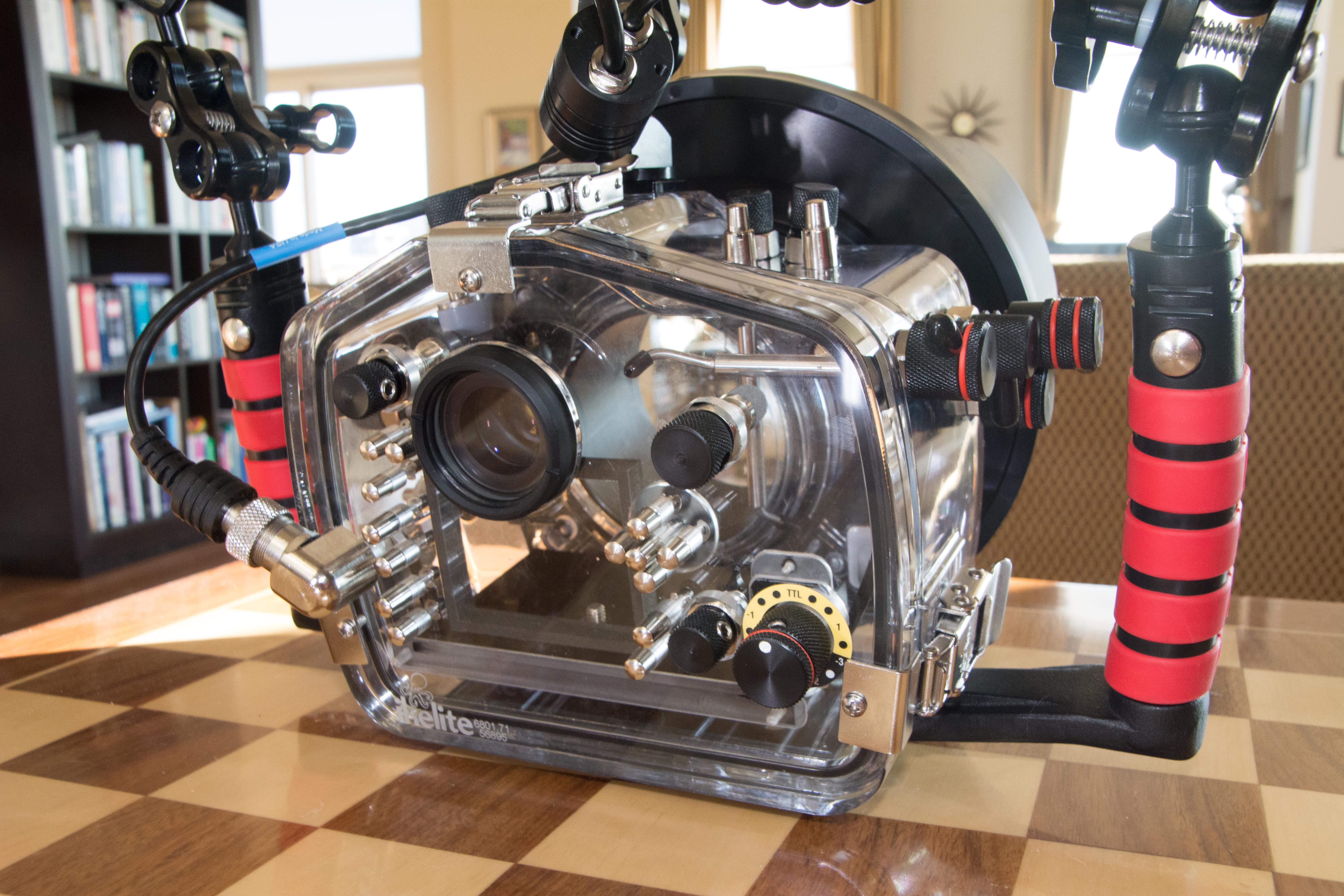
I spent part of the afternoon assembling and testing my new Ikelite underwater camera housing and strobe setup. I thought long and hard before buying the equipment, both because it is pricey and because it is labor intensive. But I’m really interested in sharing some of the joy of diving through images of the extreme beauty beneath the surface. Even in this time of over fishing, ocean acidification and reef destruction, there’s still an incredible profusion of life down there.

If you’re going to use an underwater housing with an expensive camera, the stakes are high. The Ikelite housing opens at the back to receive the camera and the front to receive the lens. You’ve got to be extremely careful to prevent leaks, which can easily be fatal to the equipment. And working the camera through many unlabeled buttons and levers is challenging. Just figuring out how to put it all together took me several hours. And hauling the it safely to dive spots while staying within airline weight restrictions will be challenging. But I’m looking forward to new dive photo adventures.

We had our Thanksgiving dinner at Irregardless, Raleigh’s first vegetarian restaurant, which now also accommodates meat eaters. Gabe and Jocelyn decided to wait until Christmas for a visit, so Sally and I ate with her mom and sister, Diane and Annie. We also were joined by Alyssa Pilger, the Carolina Ballet dancer we’ve been sponsoring, who is enormously talented. It was fun to hear about ballet company happenings, and about the professional dancer’s life. Professional dancers are almost by definition intensely focused people with superhuman work ethics, but Alyssa offstage seemed comfortable, relaxed and un-self-absorbed.

Sally and I saw the movie Interstellar on Friday night at the Marbles Imax theatre. I didn’t think it was particularly well constructed or acted. I found it cheering, though, that the movie has found a mass audience. The basic set up is a post-climate apocalypse world, which is something we should be trying hard to visualize and then prevent. It would be nice if a good-looking astronaut and his attractive physicist daughter could save us all, but that seems extremely unlikely. We’ve got to figure out how to repair our dysfunctional political structures so that we can get organized and address global warming and related problems with the intense commitment and resources we once used to go to the Moon.

Cutting out expensive razor blades, plus a beautiful Barber of Seville

14 11 22_3648
There are certain hygiene-related matters that are, if not taboo, at least highly sensitive to discuss in polite society. I’m referring, of course, to the price of razor blades. As a young man, I was given an electric shaver, and quickly discovered I disliked the buzzy noise it made. So without more ado I switched to the Gillette safety razor. The state-of-the-art Gillette product at that time had two steel blades instead of the traditional one, and worked perfectly well. The same was true when the state of the art became three blades. And four. And five!

But one thing became much worse: the price. Each price increase seemed minor in the great scheme of things, and I rationalized the expenditure with the thought that a good shave was important, and a small increase in price was not important. But in recent months I’ve found myself paying more than $3 per blade. That’s crazy! Somewhere along the way these products got so expensive that drugstores had to put them in special anti-theft shelves. How did they get so ridiculously costly? Dear reader, I say this with shame: because we were not being smart consumers and good stewards of our household resources. We let them take advantage.

Anyhow, this week I discovered a much less expensive alternative to the Gillette product and ordered some on line. Dorco razors have a terrible name, but appear equal to or better than Gillette in terms of form and function. The model I used, the Pace 6, has a slightly heavier handle than the Gillette Fusion, a slightly springier mechanism, and six rather than five blades. It shaves well. The cost is about $1 per blade. What’s not to like?!
14 11 22_3646

Speaking of great shaves, I want to give a quick shout out of appreciation to the Metropolitan Opera for its new production of The Barber of Seville, which we saw live in HD on Saturday afternoon at North Hills. This may be the most famous opera music of all time, owing partly to the hilarious Bugs Bunny send up, The Rabbit of Seville. But it turns out that Rossini’s 1816 work still has a lot of life in it. The Met’s presentation was bright, touching, and funny, and the singing was wonderful.

Isabel Leonard was a marvelous Roselina. How often do humans get to be great bel canto singers, great comic actors, and beautiful all at once? Lucky Isabel, and lucky us. Christopher Maltman was likewise a wonderful Figaro (the barber) – musical, intelligent, funny, and handsome. Maurizio Muraro was a great grumpy Bartalo, and Lawrence Brownlee was an ardent Count Almaviva with good high notes and amazing vocal agility. Sets and costumes were absolutely wonderful. This was a great Barber!

Is delusional thinking driving us once again to war in the Middle East? And reading Eating Animals.

14 11 09_3628
I used to think that mass delusions were historically rare and unlikely to recur, but I’m coming to think they’re common and unlikely to ever cease. We seem to have largely gotten over ideas like witches’ spells are dangerous and stars determine our fates, but we’re constantly exposed to and threatened by ideas that are just as loony.

It would be interesting to work out a taxonomy of mass delusions, from those that are usually harmless to those that may cause death. The classification system could also identify the strength of the delusion, from ones, like fear of black cats, that are persistent but not really serious, to those that are sometimes subject to reconsideration, to those whose adherents will kill to establish them as eternal truths.

Yesterday I learned that the President has ordered more troops into Iraq to fight ISIS. This is clearly premised on the view that this crazy outfit is bent on the destruction of our way of life, and will in due course attack us. There is, to be sure, some support for this view in their rhetoric and brutality, but it may be totally wrong. Remember, they haven’t attacked us, and it is entirely possible that their strategy is to provoke us to fight them so as to inspire their supporters. And if they aren’t really a threat to us, the idea that we must wipe them out to survive should be classed among the most pernicious of delusions – ones that seems so reasonable as to be beyond question, and that lead inexorably to violence and mass death.
14 11 09_3639

Tom Friedman wrote an unusually thoughtful column a week or so back comparing ISIS and North Vietnam. He reminded me that in the 1960s, US leaders, and presumably a majority of the electorate, were convinced that the Communists in North Vietnam were primarily motivated by an anti-capitalist ideology and a willingness to fight along with other Communists for world domination. Thus we pursued a war that led to the deaths of some 58 thousand of our soldiers and more than a million Vietnamese. We now know, or at least are starting to understand, that the Vietnamese were primarily driven by nationalist concerns. They weren’t a domino.

Friedman suggests that the success of ISIS may similarly be attributable less to religious or political ideology than to nationalist concerns and anger at Sunni oppression by Shiites. There clearly are some jihadists with dreams of regional, if not world, domination, but their numbers are probably much smaller than those who back them out of more pragmatic and local concerns. In short, this looks more like a civil war with mainly regional implications, not an existential threat to the western way of life. If this is correct, there is no way the US can wipe out this enemy, and it would be a horrific folly to try.
14 11 09_3635_edited-1

While I’m talking about uncomfortable subjects, I’ll mention I just finished reading Eating Animals by Jonathan Safran Foer. The book is part factual reportage, part memoir, and examines what factory farming means to the animal victims and to human society. I knew something about this subject beforehand, but learned a lot from the book. It’s written in an easy-going, thoughtful, personal voice, but includes some very disturbing subject matter, particularly the accounts of routine corporatized animal torture and abuse.

Here are some sample facts: “Animal agriculture makes a 40% greater contribution to global warming than all transportation in the world combined; it is the number one cause of climate change.” “More than ten billion land animals [are] slaughtered for food every year in America.” “We know, at least, that [not eating animals] will help prevent deforestation, curb global warming, reduce pollution, save oil reserves, lessen the burden on rural America, decrease human rights abuses, improve public health, and help eliminate the most systematic animal abuse in world history.”

Here is a sample aspirational thought: “What kind of world would we create if three times a day we activated our compassion and reason as we sat down to eat, if we had the moral imagination and the pragmatic will to change our most fundamental act of consumption?”

Taking in some art, sport, and food in New York

14 11 02_3603Last Friday I attended the Software Freedom Law Center’s tenth anniversary conference in New York, wishing my friends at the SFLC happy birthday and learning something about the state of the art in FOSS law. Afterwards I met up with Sally and daughter Jocelyn at the Warwick Hotel for a Manhattan weekend. I had in mind to see some painting, some photography, some opera, and some ballet, all of which we did, plus some good food and conversation and the New York City Marathan.

As for the painting, on Saturday we went to the Metropolitan Museum, where we focused mainly on the exhibit of recently donated Cubist paintings by Picasso, Braque, Leger, and Gris. Cubism has never been my favorite thing, but I was curious to see some reputed masterpieces not shown in public for generations. The exhibit ultimately had its way with me.

I’d known that Braque and Picasso collaborated, but I hadn’t understood that they were basically partners and co-inventors of the Cubist style. What remarkable courage for guys in their mid-twenties to work exclusively in a style that was so radically new and difficult. They must have known it would be tough to sell at a time when, I’m guessing, they needed money. How excited they must have been to be seeing visions no one had ever seen before, and imaging they would permanently change the cultural/visual world. And they were right!

Engaging with art, and particularly art that requires commitment and struggle, changes you at a fundamental level. Your brain rewires itself, neuronal axons and dendrites making new connections. You are a subtly different person afterwards, who sees the world a little differently.

And though it involved some commitment and struggle, I warmed up to the paintings. There is steely rigor, but there’s more than that. There are moods, from sunny to brooding, and a surprisingly amount of humor. But you have to give the paintings some time and let them speak.
14 11 02_3558

We met Jocelyn for lunch in a Korean place on 37th Street, where our table got covered with savory little vegetarian plates and vegetable dumplings. Our waitress intervened when she realized Sally didn’t know she was supposed to spice up and mix up her kimbap. It was drizzly and chill when we came out and walked up 6th Avenue to the International Museum of Photography.

There we saw an exhibit called Genesis by the Brazilian photographer Sebastiao Salgado. The black-and-white photos are of remote, vulnerable, and magnificent places around the globe, including Antarctica, Galapagos, Patagonia, Indonesia, and Africa. I was very moved by this art. The works were big, some like large posters, and they had lots to say. Some of the landscapes have a stately lyrical classicism, and his photos of indigenous people are frank and intimate. He succeeded in his aim of making me think more about how beautiful and fragile is our planet.

We had dinner at Robert restaurant on the 9th floor of Museum of Arts and Design looking out at Columbus Circle. The room had the energy of forward leaning design, and the food and service were both really good.

Then we walked up to the Metropolitan Opera to see The Death of Klinghoffer. After all the recent controversy (charges of anti-Semitism, which I thought were way off base), I had some worries that there would be protesters, and a tiny worry that there might be a homicidal fanatic ready to attack. But happily there were only normal opera folk. Sally and I both thought John Adams’s music was beautiful and expressive. However, I found the staging static and dull. I’m not sure how much this problem was a matter of direction and how much is inherent to the work. On the whole, I was glad I saw it, but a little disappointed.
14 11 02_3565

Sunday morning was clear but chilly as we walked up from the Warwick Hotel to Central Park South to a spot about half a mile from the end of the New York City Marathon. We saw the first wheelchair competitors, then the first women, and then the first men. After almost 26 miles, most looked like they were in a hard, painful place. But they were booking! The leaders were preceded by a truck with a sign showing the elapsed time. It was particularly interesting to see how close the fight was for number one and two for both women and men. As they passed us, both pairs were so close that I thought perhaps they were friends that enjoyed running together. The women’s finish was the closest in the history of the race, and the men’s was also quite close.
14 11 02_3585

After a quick lunch, Jocelyn came with me to Lincoln Center to a matinee performance of American Ballet Theatre. We saw Sinfonietta (music by Janacek, choreography byJiri Kylian), Bach Partita (Bach, Twyla Tharp), and Gaite Parisienne (Offenbach, Massine). I greatly enjoyed it all, but particularly adored Gaite Parisienne. It was like Nutcracker for grownups: sumptuous, slightly risque fun. Hee Seo was a gorgeous Glove Seller, and Herman Cornejo was a manic, hilarious Peruvian. There were a LOT of really good dancers!

After Jocelyn got on the subway to go home to Brooklyn, I had a little time before we were due to head to the airport. I walked down Fifth Avenue and over to the skating rink at Rockefeller Center. I noted that the varied collection of flags from many nations had at some point been replaced by all US flags. Good looking flags, though .

Scary stuff: Dracula, the ballet, and Ebola, the hysteria

14 10 24_3520
In general, I have very little interest in ghosts, ghouls, witches, vampires, and suchlike. There are enough truly scary things in the world that are real (e.g. global warming, thermonuclear weapons on hair-trigger alert, and tainted food from factory farms, to name a few). So it puzzles me a little that people spend mental energy scaring themselves with made-up monsters. Maybe it’s something like the fun/fear of riding the thrill rides at the fair (which I’m also over).

So, as much as I adore the Carolina Ballet, I was not eagerly anticipating Dracula, which we saw Saturday night. It is certainly not pure ballet. But boy, is it sexy! There was a good amount of stimulating vampire vamping, and even some touching dancing.

Marcelo Martinez was muscular and mesmerizing as Count D, and Lara O’Brien was a delicate, then demonic, Lucy. The marvelous Pablo Javier Perez played perhaps the scariest character, Renfeld the lunatic, who eats flies, prowls, and watches with superhuman intensity. The Twisted Sisters (Dracula’s harem, I guess) – Randi Osetek, Sarah Newton, Elizabeth Ousley – were naughty and highly exotic. I also particularly enjoyed the dancing of Elice McKinley and Nikolai Smirnov as Colette and Jack — sweet, innocent, loving mortals.

The other work on the program, The Masque of the Red Death, is based on the E.A. Poe story about a ball in a time of plague. The costumes for the costume ball were particularly sumptuous. Richard Krusch was the Red Death. He is a really fine dancer, but of extremely serious mien; he usually looks like he isn’t having any fun at all. But this was not a problem in this role, in which he wears a skull mask.

The dance of death/plague theme seemed timely, and a little jarring, after weeks of daily headlines about the Ebola virus in Africa, and also (a couple of cases) in the U.S. It is sad for the victims and their loved ones, but it strikes me that the media frenzy is out of all reasonable proportion. How many more people are dying daily of AIDS? Or the flu? Or car accidents, for that matter? Plainly, this is a dangerous bug, and we need to watch and take care, but why try to get more scared than necessary?

As I mentioned last week, I’m trying to spend a few minutes every day doing mindfulness meditation. The basic idea, which is well described in this short infographic is to sit quietly, focus on breathing, and observe what’s happening with your thoughts. It’s simple, but not easy.

By coincidence, Scientific American, which arrived this week, has a cover story on the neuroscience of meditation. The headline is that there is substantial research showing that it improves focus, reduces stress, and has other positive health effects. It also can boost feelings of well-being, and improve empathy and compassion.

The story doesn’t mention this, but I’m hopeful that if meditation helps us understand our thought processes, it might improve our ability to distinguish between imaginary threats and real ones, and apply our energy to problems we might be able to solve.
14 10 24_3523

Enjoying opera, and meditating

Looking west at new construction on Glenwood Avenue, October 18, 2014

Looking west at new construction on Glenwood Avenue, October 18, 2014

Some of my musical friends have a phobia about opera, which I can understand, but it’s really a shame. Some of the greatest music ever conceived is found there, and some of the greatest living musicians express themselves in the form. At its best, it is visual, kinetic, psychological — and fun. A case in point: Mozart’s Marriage of Figaro, which we saw on Saturday.

This was a new production from the Metropolitan Opera, performed live and simulcast in HD video to movie theatres around the world, including our own North Hills cinema in Raleigh. The main story concerns a servant, Figaro, about to marry another servant, Susanna, who is being pursued by their master, the Count. It’s a comedy about love and jealousy, but it also has a tragic side, with elements of deception, abuse of power, and corruption. It gets complicated, with various hard-to-follow schemes, impersonations, betrayals, and stolen letters – enough to make you wonder whether eighteenth-century audiences were smarter than we are. But with subtitles, we get the gist.

The new production, set in the 1930s, had interesting sets, gorgeous costumes, excellent singer-actors, and the great James Levine conducting. The music is perhaps Mozart’s finest — transcendently beautiful. The production took the story seriously, and not just as a sequence of wonderful songs. Along with belly laughs, there was surprising depth in the leads, who were all new to me. I was particularly charmed by Isabel Leonard as Cherubino, Marlis Peterson as Susanna, and Ying Fang as Barbarina. Peter Mattei as the Count sang wonderfully. Ildar Abdrazakov as Figaro was very human, funny, and musical.

The schedule for the remainder of the Met’s season of Live in HD productions includes a couple of other favorites of mine (Carmen and the Barber of Seville) and others that look interesting.

Waking Up

I’ve been reading a new book by Sam Harris titled Waking Up: A Guide to Spirituality Without Religion. Harris is scientist and outspoken atheist, and, it turns out, a serious and experienced practitioner of meditation. He proposes a middle way of approaching what he calls spiritual life that steers between religious mythology and strict scientific rationality. The book is a combination of meditation guide, neuroscience, neo-Buddhist thought, and memoir. It inspired me to find 20 minutes in the schedule for my own meditation practice. If I experience a major illumination, I’ll let you know.
14 10 18_3517

My three-hundredth post

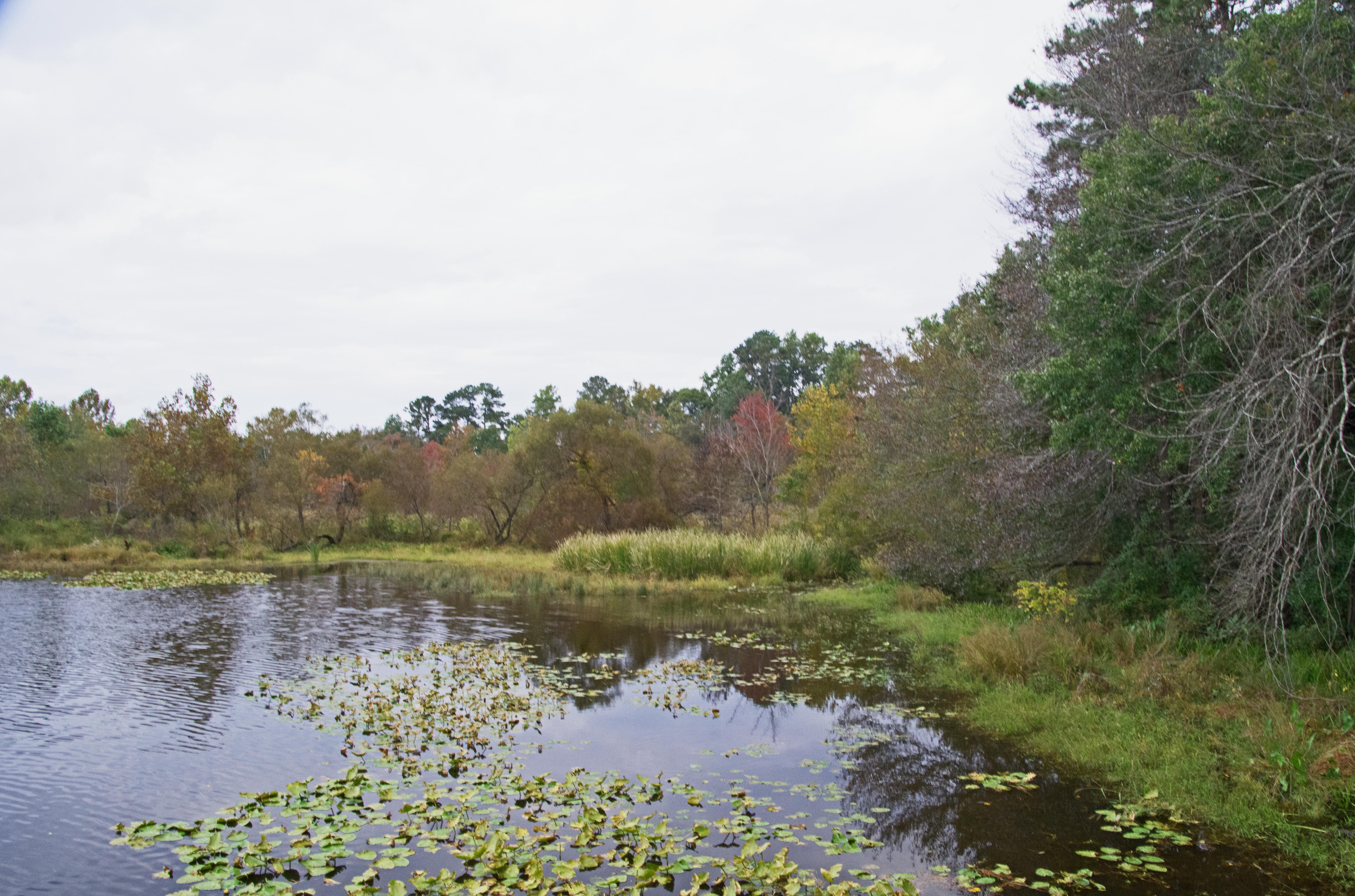
Yates Mill Pond, October 11, 2014

Yates Mill Pond, October 11, 2014

Early Wednesday morning I saw the lunar eclipse. On Thursday I reinstituted my meditation practice after a long sabbatical. On Friday evening I attended an inspiring recital by the great pianist Richard Goode, and reconnected with several of my good piano friends. On Saturday, for the first (and possibly last) time, I finished first in my spin class at Flywheel, and happily read the front page headline of the first gay couples in North Carolina to experience legal wedded bliss. These would ordinarily be potential subjects for this week’s post. But this week is special, inasmuch as it’s the 300th edition of the Casual Blog.

Many moons ago, I set myself the goal of writing one post a week on my non-professional activities and thoughts, and that’s pretty much what I’ve done. I’ve been trying to think what to say about this milestone, and it occurred to me to explain why I create the Casual Blog, or what I get out of it. But if I’m honest, which I try to be, I must admit I’m still not completely sure.

I enjoy finishing a post, but starting one always involves a degree of existential dread. Once a week, I ask myself, do I have anything else worth saying/sharing, and I always worry that the answer is no, I’ve run dry. And so it was this week. But I’ve already succeeded in writing three paragraphs!

I generally dislike writing about writing, and now I’ve gone and done it. But onward! There’s some odd part of me that enjoys the exertion of forcing the buzzing blooming flood of experience into the narrow channel of language. Writing about an experience usually shows me something about the experience I hadn’t known before. And there is at times a joy in language that has less to do with the meaning than with pure sound.
14 10 11_3469_edited-1

Then there’s always the struggle for understanding, for meaning. Things happen. Events flow out of other events, sometimes cohering in an orderly way, with pleasing patterns, and other times cracking and scattering. What does it all mean? Blogging will likely not yield an ultimate answer, but it creates a platform, a workbench for reviewing experience that yields new perspectives.

As with Heisenberg’s famous uncertainty principle, we can’t observe and record our lives without changing them. That is, writing about one’s life changes the life. The imperative to make a post non-boring could lead to inauthenticity, but not necessarily. It could also inspire curiosity and get you out of your shell. The blogging commitment could lead to adventure!

Most important, there’s also the complicated sensation of communicating with another human. For the writer, the reader is ever-present as an as idea and concern, but almost never physically present. Without the reader, the writer would never write, but the connection is always tenuous. Who is the reader? Open or closed? Friend or foe? Can we connect? The writer in the act of writing is never certain.

And whenever we reach out to another human, trying to be honest, showing something about ourselves that’s real, there’s an element of risk. There’s a chance we’ll make total fools of ourselves. This gets the juices going. It’s kind of exciting. Actually, it is exciting!
14 10 11_3463

But it is also difficult. Whatever words are chosen means other words are not chosen. So many possible words, and possible choices, but whatever the choices, however good they are, others just as good will be excluded, sacrified. You know this when you start. But something still causes you to reach out, to explore, to experiment. There are satisfying little discoveries, and sometimes there’s evidence that you got through, made a connection.

So, you ask, what lies ahead for the Casual Blog? I really don’t know. Part of what I like about it is it’s voluntary, unnecessary, and contingent. It doesn’t have to be any particular thing, and could cease at any time. As I said, I’m always aware of the possibility of running dry, and I would stop posting if it stopped being fun. Or if my readers disappeared.

But part of me feels that I’m just getting well started, and I’m still enjoying experimenting and learning. If there were somehow more hours in the day, I could imagine writing a number of more specialized blogs, in addition to my professional writing. It would be fun to tend blogs on scuba diving, playing the piano, travel, global warming, opera, golfing, animal rights, ballet, political corruption, vegetarian restaurants, exercise, neuroscience, nuclear weapons, nature photography, poetry, artificial intelligence, the surveillance state, migratory birds, history, books I’m reading, etc. We shall see.

A monarch in downtown Raleigh, October 8, 2014

A monarch in downtown Raleigh, October 8, 2014

Big birds at Crabtree Swamp, and a first spin class at Flywheel

14 09 28_2902There’s a wide-but-shallow wide body of water to one side of Raleigh Boulevard which is fed by Crabtree Creek. It has no official name that I can find, so I’m hereby naming it Crabtree Swamp. CS is worth knowing about if you enjoy seeing birds, turtles, dragonflies, and other creatures. There isn’t usually much drama, though I once saw a doe leaping and splashing in desperate flight from a pursuing buck. It has a long boardwalk over it that allows for good views into the woods and out over the water.
14 09 28_2865_edited-1

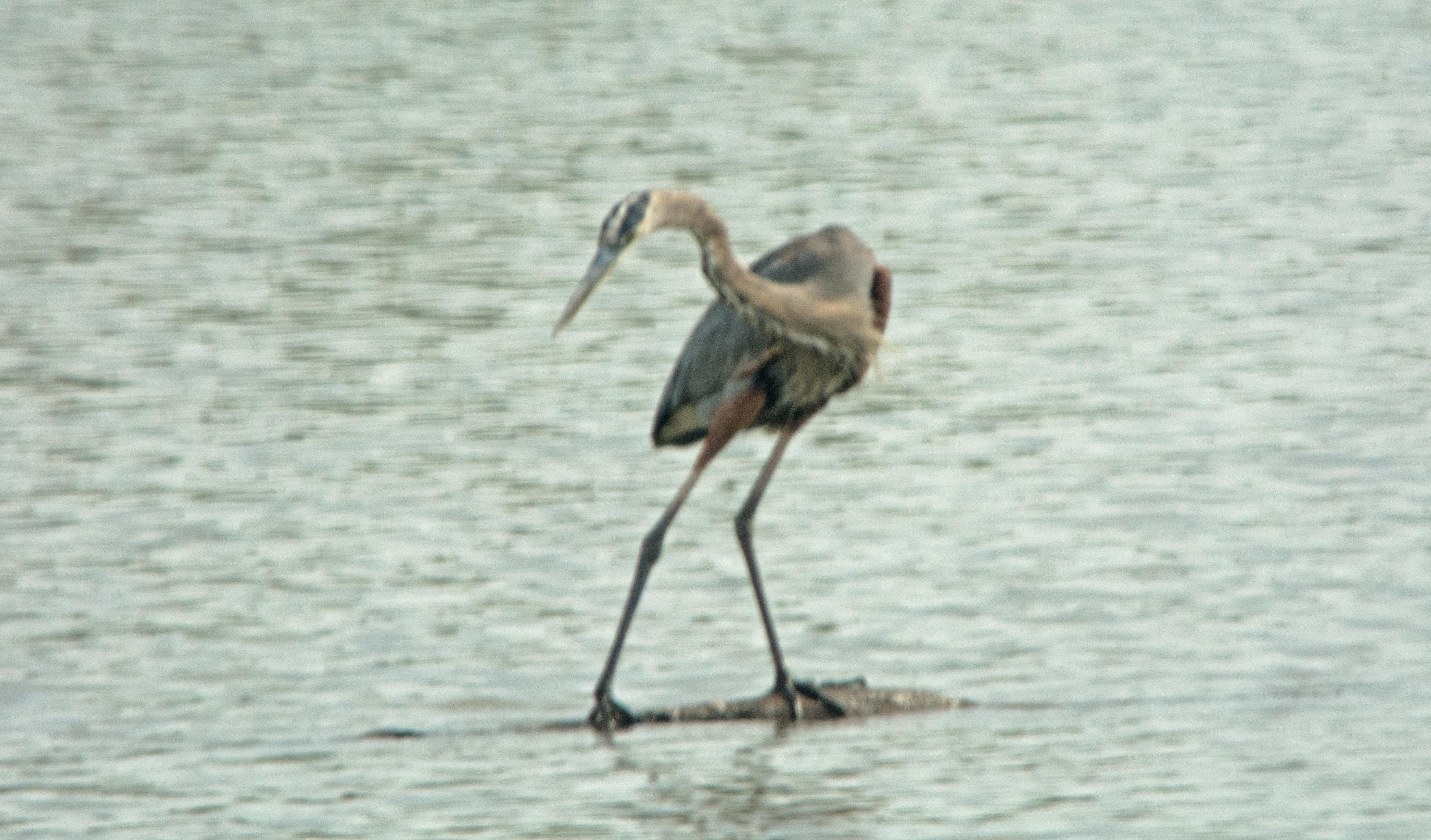
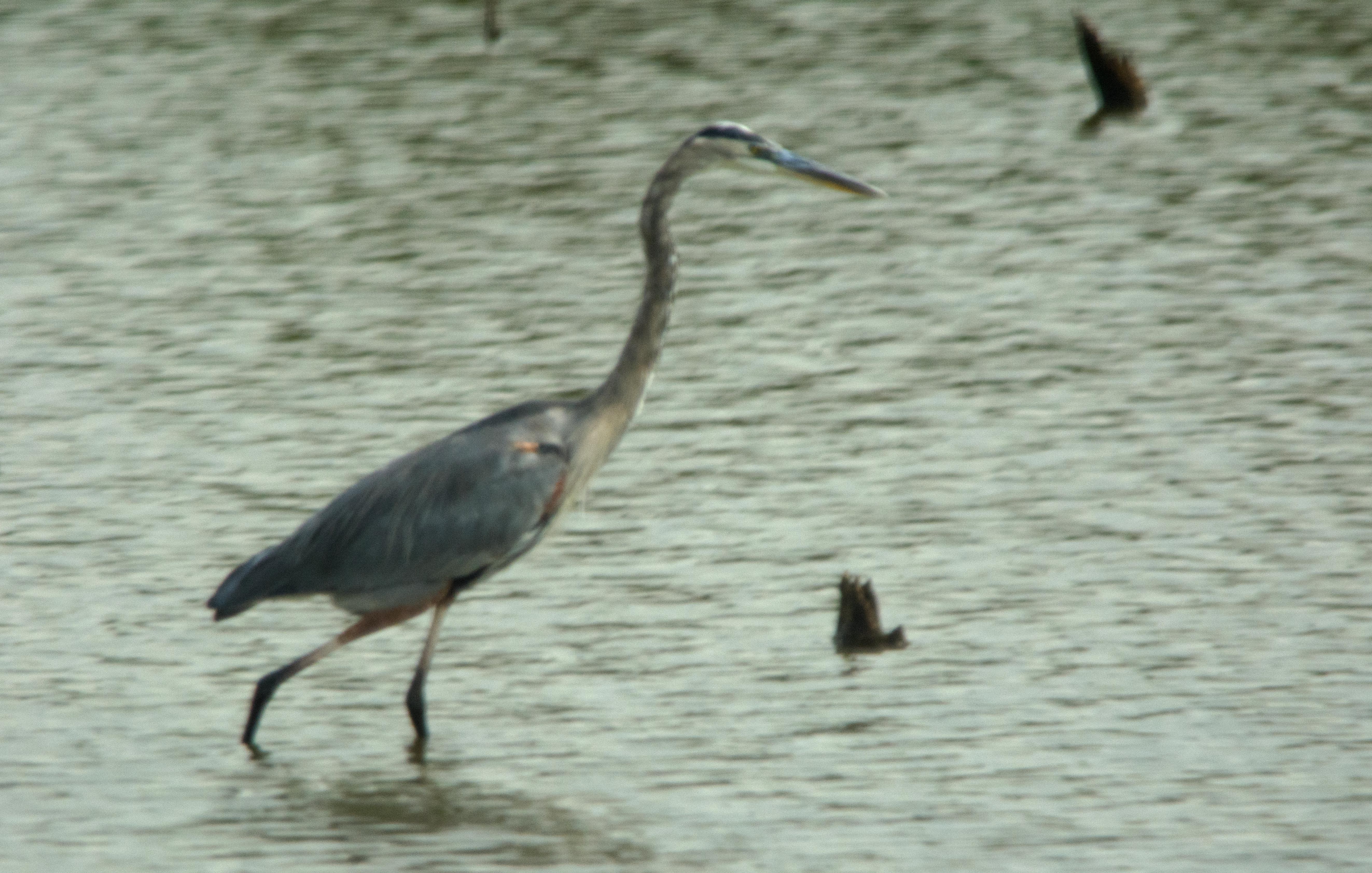
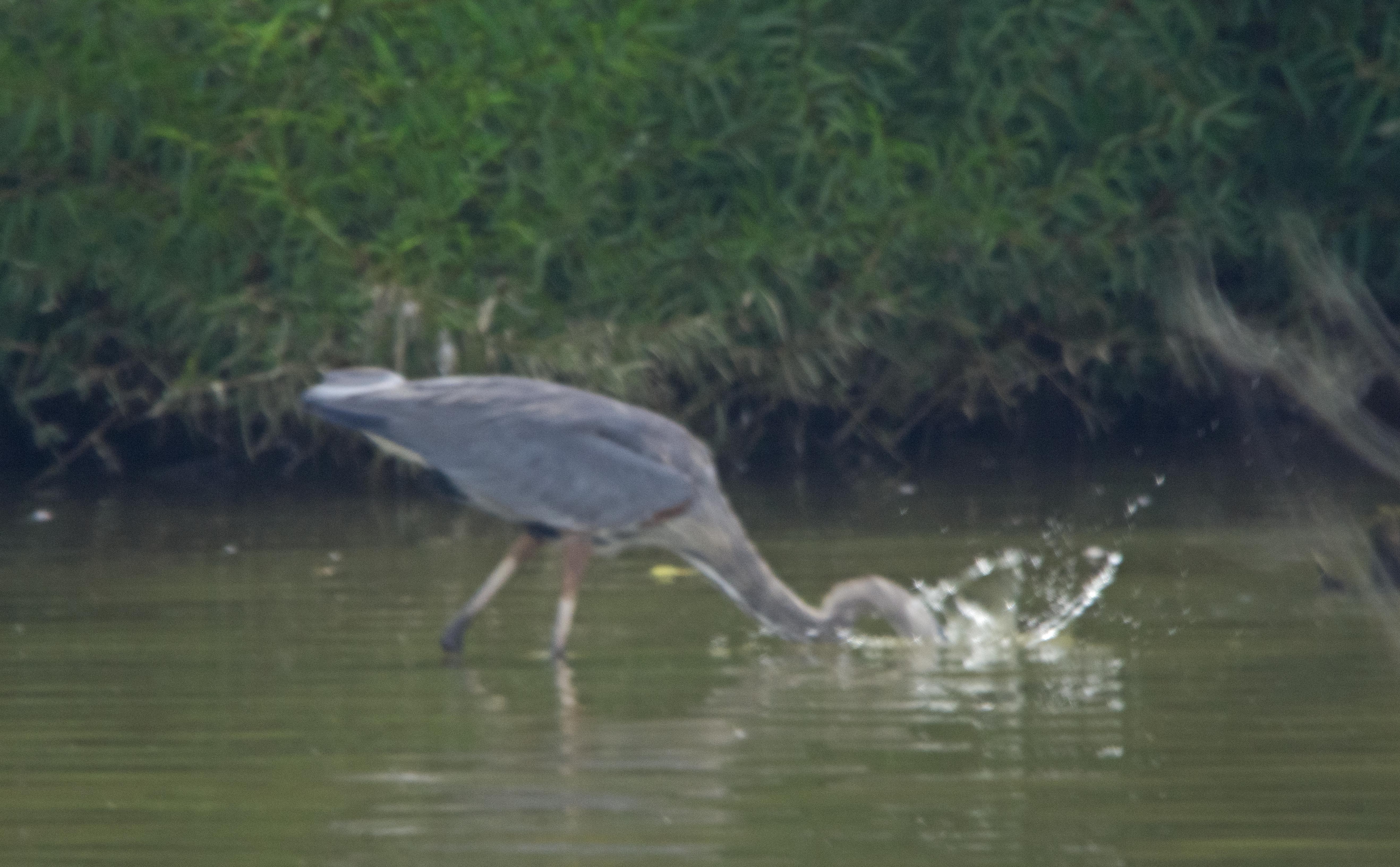
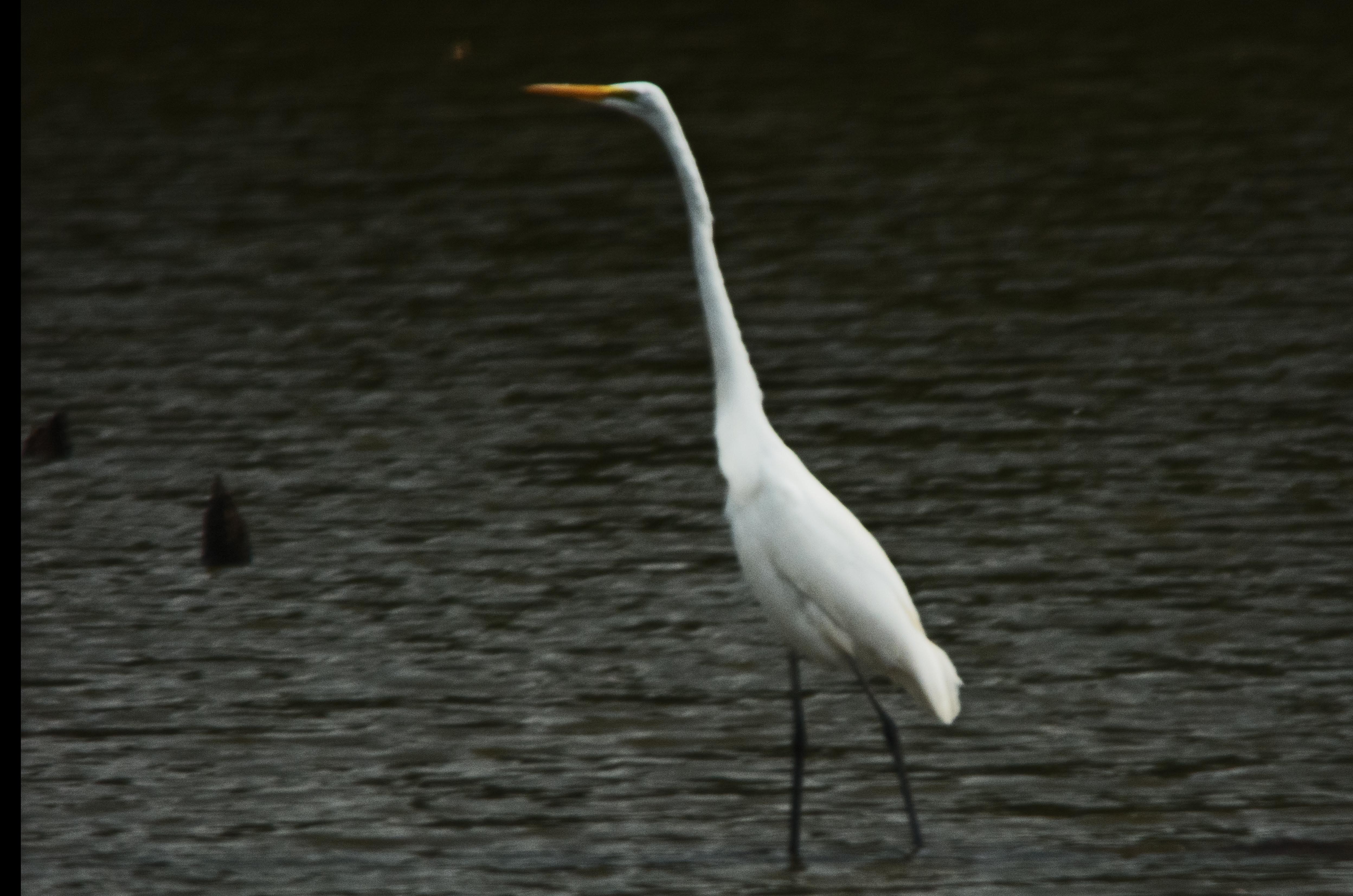
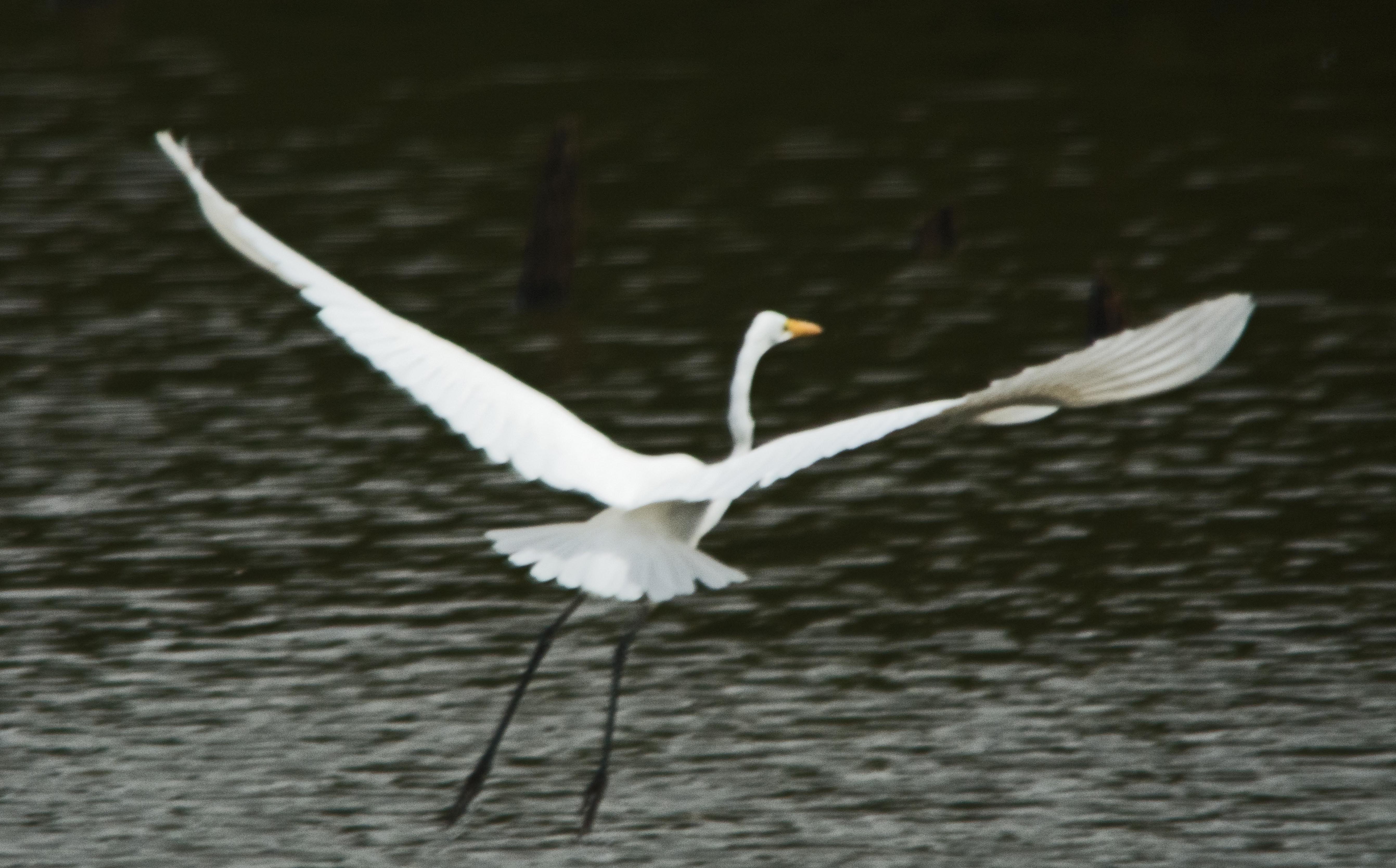
Sally had mentioned to me that she’d taken Stuart (our dog) for a walk up there recently, and seen a great blue heron and a great egret. They were still around fishing when I got there with my equipment last weekend. I used my long Sigma zoom lens (150-500 mm) with a 2x tele converter, a heavy set up that required a tripod.
14 09 28_3032_edited-1

Both birds would stand frozen, watching, for periods, and then move almost imperceptibly, and then, suddenly, they would radically change shape and position. A hundred yards or so away, I stood on the boardwalk for well over an hour, watching them, working hard to get them in focus with proper exposure, trying to anticipate their next phase shift. It was absorbing.
14 09 28_3193_edited-1

Happy as I was watching these brilliant creatures, later that day, when I downloaded the 423 new images, I wasn’t thrilled with the quality. Alas, I’d forgotten to switch on the lens’s image stabilization system. In any case, there were a few photos I liked enough to share.
14 09 28_3145_edited-1

In contrast to the subtle joys of trying to capture the essence of the big birds, also last weekend I tried a new spinning experience — Flywheel, at Cameron Village. I liked it. Whenever I try to describe spinning to a non-spinner, I realize it sounds a little crazy. The basic situation is, you ride on a stationary bike as ordered by an outrageously fit teacher to thumping club music. What’s to like? Well, it’s an amazing workout. You quit thinking, just follow orders, listen to the music, sweat, become one with the class, and feel the endorphins.
14 09 28_3113_edited-1

The new Flywheel operation has been successful in New York and other cities, and I can see why. They let you pre-register and reserve a bike. They figure out if you’re new the moment you walk in and take care to show you the ropes. They provide special shoes, towels, lockers, and (a great idea – it’s loud) earplugs. The bikes are set on risers, stadium style, and they’re nice, heavy non-vehicles that have digital read outs showing the amount of effort you’re putting in.
14 09 28_3155_edited-1
Once the class starts, the room is dark. You can see the teacher at the front (very fit) and also a screen that lists (if you opt in) your units of effort relative to those of others. Yes, there’s a kind of race – who can spin the hardest? At the end of the 45 minutes, I managed, barely, to come in second (one unit ahead of the next male down). I felt tired but good.
14 09 28_3140_edited-1

A new crane, a wrongful execution avoided, and factoring in dissonance

14 09 17_2621_edited-1I like watching work at construction sites, and I particularly like cranes. They denote strength and optimism. So it was a particular treat this week to get a close view of some hardworking guys putting up a big crane on a building site one block up from, and almost level with, our apartment. It took two guys about a day a a half to put up the structure, and a group of five worked on the cabling for another day and a half.
14 09 17_2633_edited-1

Exoneration

There are lots of good arguments against the death penalty, including that it doesn’t deter crime, it costs way too much, and it conflicts with the fundamental moral rule against killing. Recently I was powerfully reminded of another one: our criminal justice system inevitably gets some cases wrong and convicts innocent people.

It was front page national and local news recently that Henry Lee McCollum was found innocent after 31 years on death row. As a younger attorney, I volunteered to represent McCollum in one of his appeals (to the N.C. Supreme Court). He’d been convicted – found guilty beyond a reasonable doubt by a unanimous jury – of a horrible crime – a particularly gruesome rape and murder of a 13-year-old girl. After I’d spent many hours studying the record and the elaborate constitutional doctrines surrounding the death penalty, I pulled together a lengthy brief of what I thought were the best arguments for not executing him.

In my brief, I did not mention the possibility of innocence. Truly, despite McCollum’s innocence claims, I never seriously considered the possibility. He’d made an elaborate, detailed, signed confession. Why would anyone confess to a crime they didn’t commit?

Of course, we know now that this is all too possible. Coerced confessions happen. The case of the Central Park five, young men convicted of a brutal rape of a young woman jogging in the park back in the 80s, is a dramatic example. Just this month New York City agreed to a settlement of $41 million to compensate the young men for their wrongful conviction and imprisonment.

McCollum was and is a mentally disabled person (IQ of around 60, as I recall), and when I met him, in the visiting room at Central Prison, he seem gentle and soft spoken. He was still a teenager at the time of the crime. It’s not hard to imagine that he could be coerced into doing something contrary to his interests. Apparently after the interrogation and confession were complete, he asked, Can I go home now?
14 09 17_2652_edited-1

I’d thought about him from time to time over the years, and figured he would probably escape execution because of later developing Eighth Amendment (“cruel and unusual punishment”) law barring execution of the severely mentally disabled. It was cheering to hear that a team from the Center for Death Penalty Litigation had worked diligently on his behalf. But it’s also horrible to think of the injustice our state (that is, us) inflicted. Putting a man on death row for 31 years is, in a very real sense, robbing him of his life.

We now know that eye witness identifications are far from completely reliable. Confessions are not always reliable. Memories can seem absolutely certain, and still be wrong. We are inevitably going to make some mistakes in on the basic question of guilt or innocence. This argues strongly against punishing people with death.

Mistakes Were Made

The more I learn about how error-prone our thinking processes are, the more I think we should be a little more humble about the power of our brains and the reliability of our notions. I’m re-reading Mistakes Were Made (But Not by Me), by Carol Tavris and Elliott Aronson. Tavris and Aronson are social psychologists, and their book is a lively guide to the systemic flaws in our perceptions and theorizing. Their primary subject is cognitive dissonance, and the comedy and tragedy of self-justification that flow from it.
14 09 18_2687_edited-1

Dissonance occurs when we try to hold two conflicting ideas in our heads at once. It causes us discomfort, and we will perform remarkable mental gyrations to avoid it. Thus it is amazingly hard to talk someone out of strongly held beliefs. Dissonance makes us ignore and suppress facts and arguments that don’t fit with those beliefs. To avoid dissonance, we come up with justifications for our most egregious mistakes.

Tavris and Aronson convinced me that this is not something that happens only now and then, but rather is pervasive. One of their numerous examples is police coercion. The police “know” (strongly believe) that a suspect is guilty, and therefore feel justified in using extreme coercion to extract a confession. The innocent suspect is confronted with powerful dissonance – actual innocence and authority figures forcefully insisting on guilt. One path to eliminating dissonance is to confess. It isn’t that hard to imagine that a young or weak person could go that way.

They note that even scientists are vulnerable to this basic mechanism, but suggest that science itself can help us address our inborn tendency to avoid dissonance. The ability to allow for the possibility that we might be wrong is incredibly valuable. It can keep us from making terrible mistakes.
14 09 18_2668

Our Outer Banks holiday, with sanderlings

14 08 31_1974_edited-1
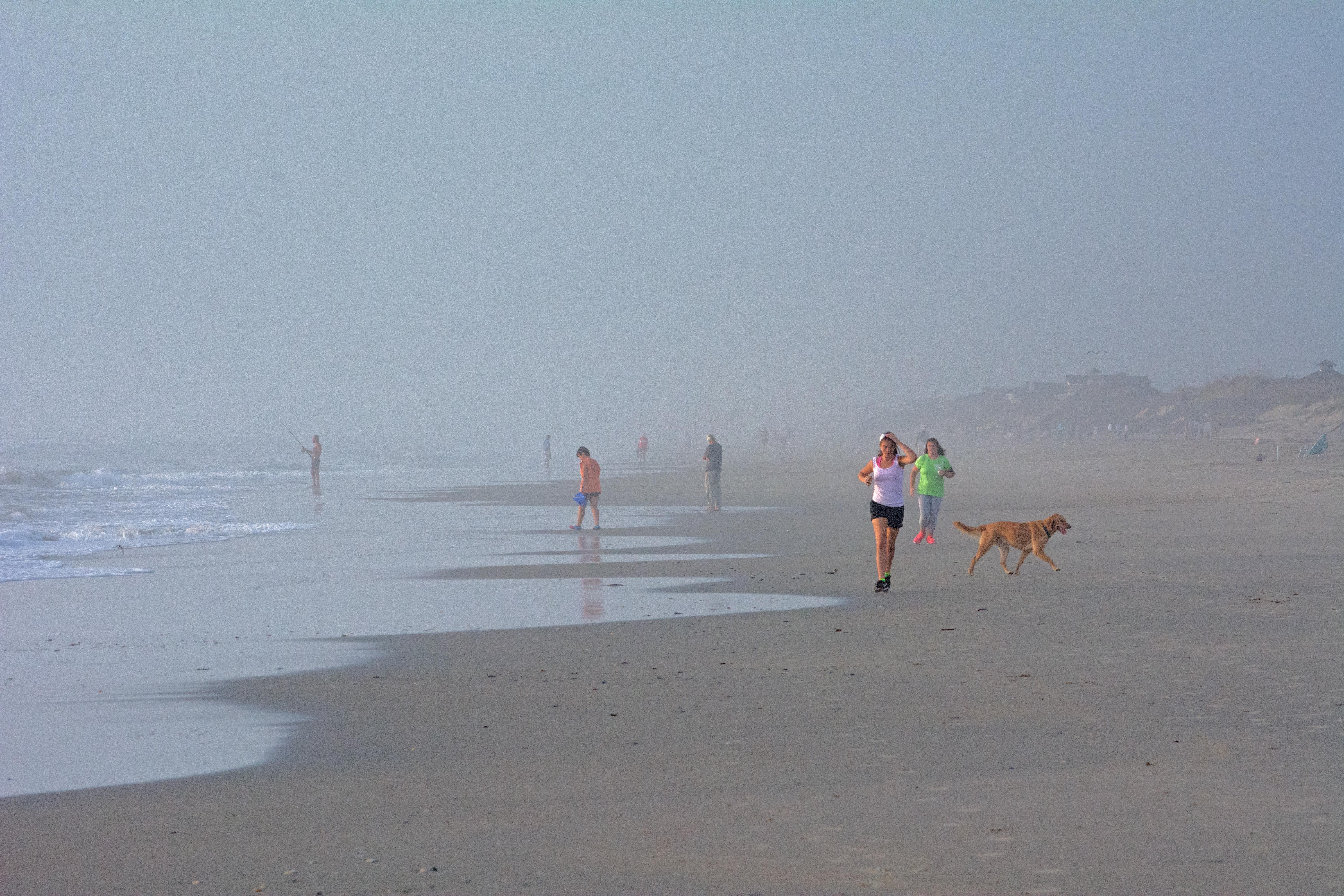
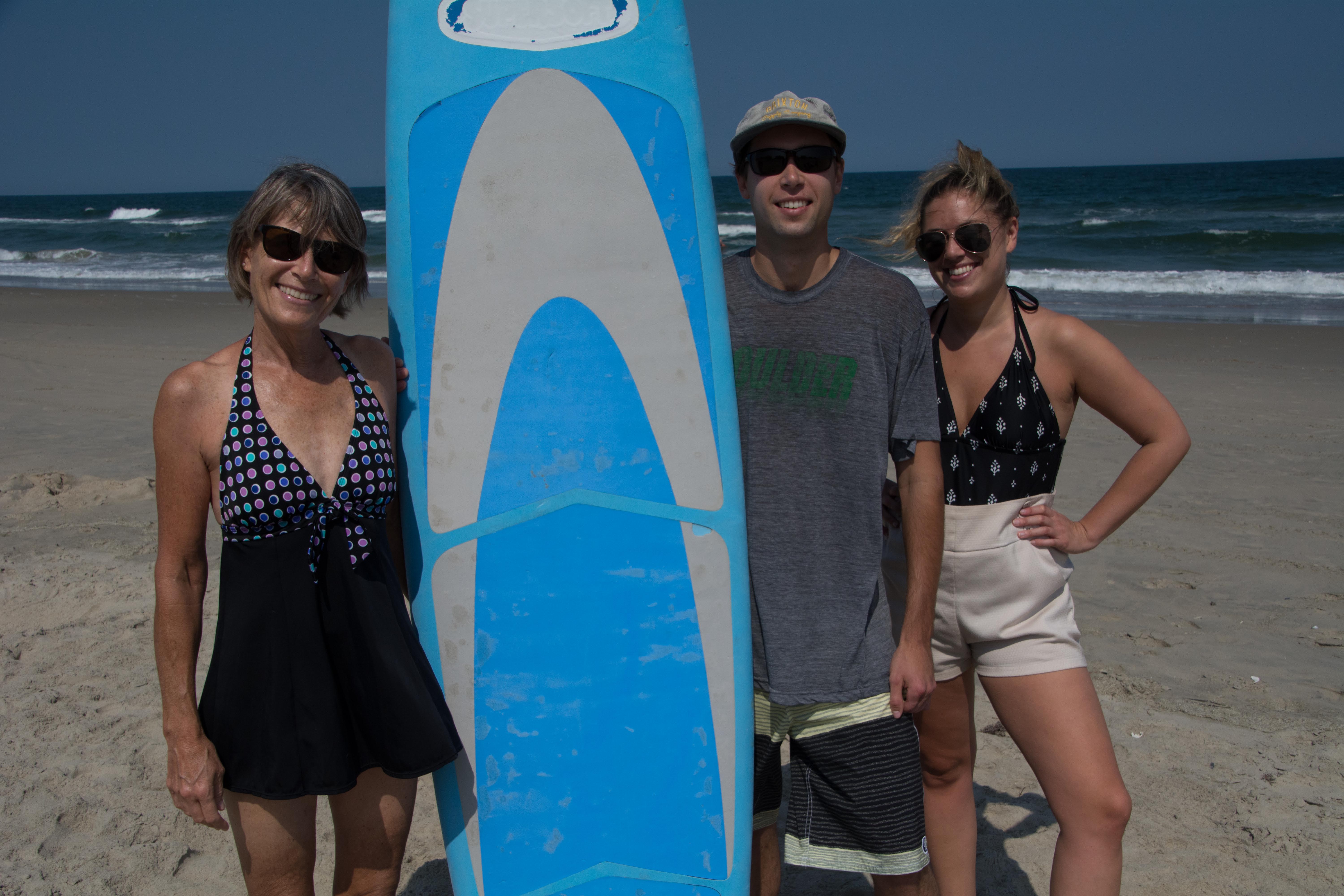
Last week my well-grown kids, Gabe and Jocelyn, came in from Colorado and New York, and we all headed to the Outer Banks for the long holiday weekend. My sister and her family put us up at their gracious place in Corolla, and made sure we ate and drank well.
14 08 30_2193

The beach at Corolla was wide, clean, and not at all crowded. The days were sunny and breezy. The water was cool at first. We tried out a surfboard, but had better success catching waves with boogie boards. I had one excellent ride of perhaps a hundred yards. On Sunday we went out about 3:30 in the afternoon, and I wrongly figured that sunblock would not be needed. Got a bit pink.

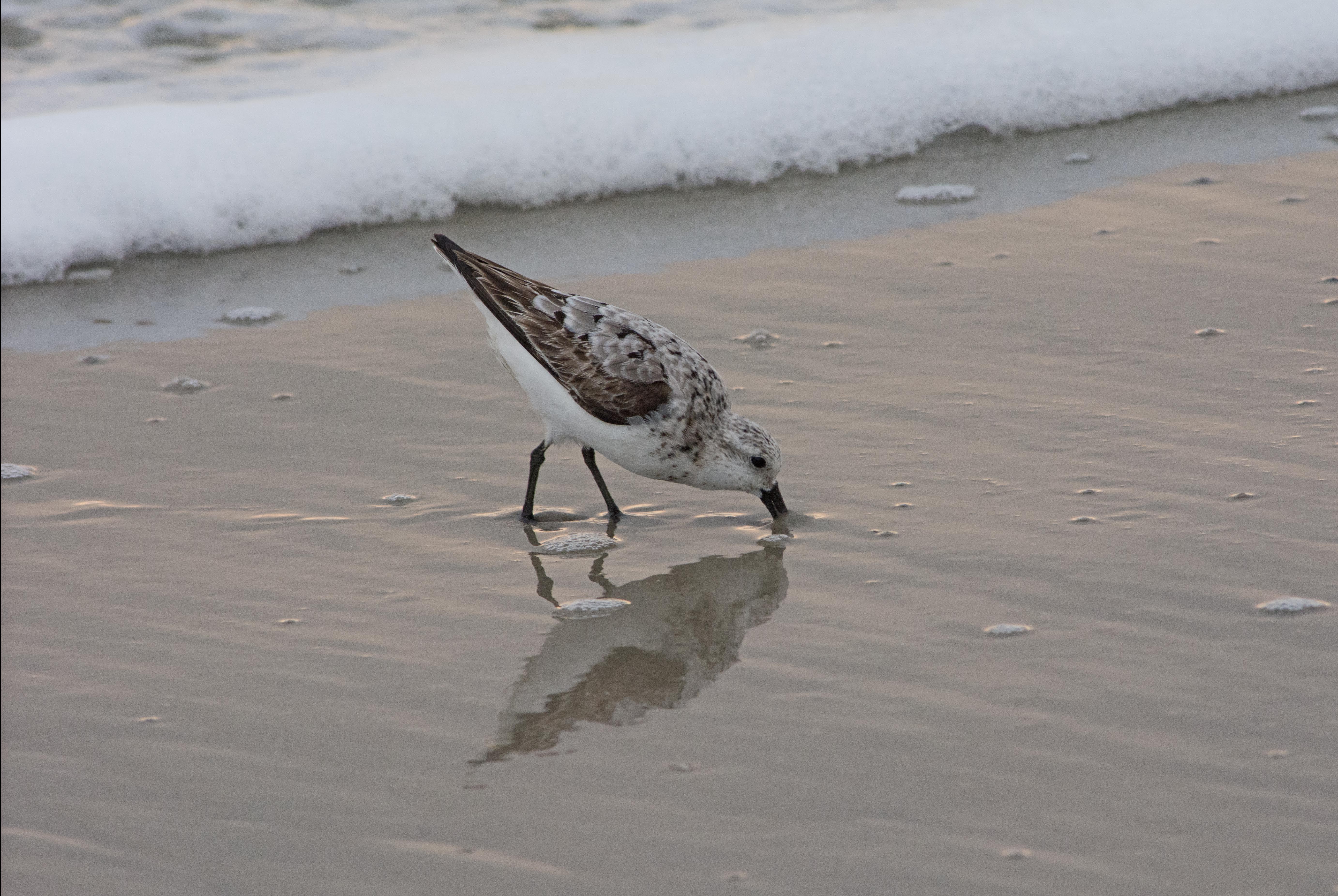
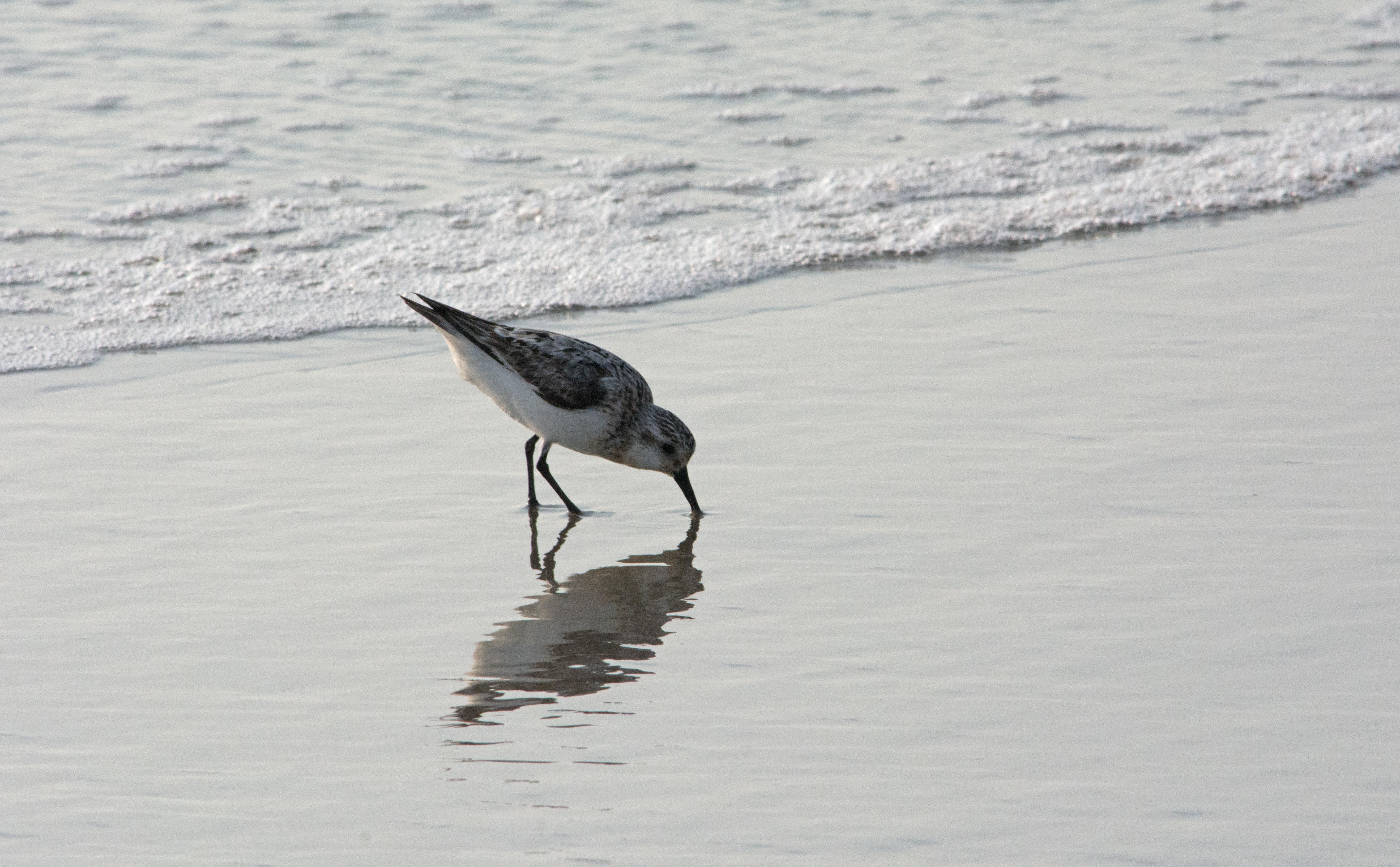
Each morning I got up around sunrise and took a long watch on the beach with my camera. I saw mostly sanderlings, hardworking little shorebirds that move with comical quickness. I took hundreds of pictures of them. Here are a few that I especially liked.
14 08 30_1789_edited-114 08 30_1795_edited-1-1
14 08 31_2049_edited-1
14 08 31_2139_edited-1
14 08 31_2141_edited-1