The Casual Blog

Category: music

A piano tuning and a ballet board meeting

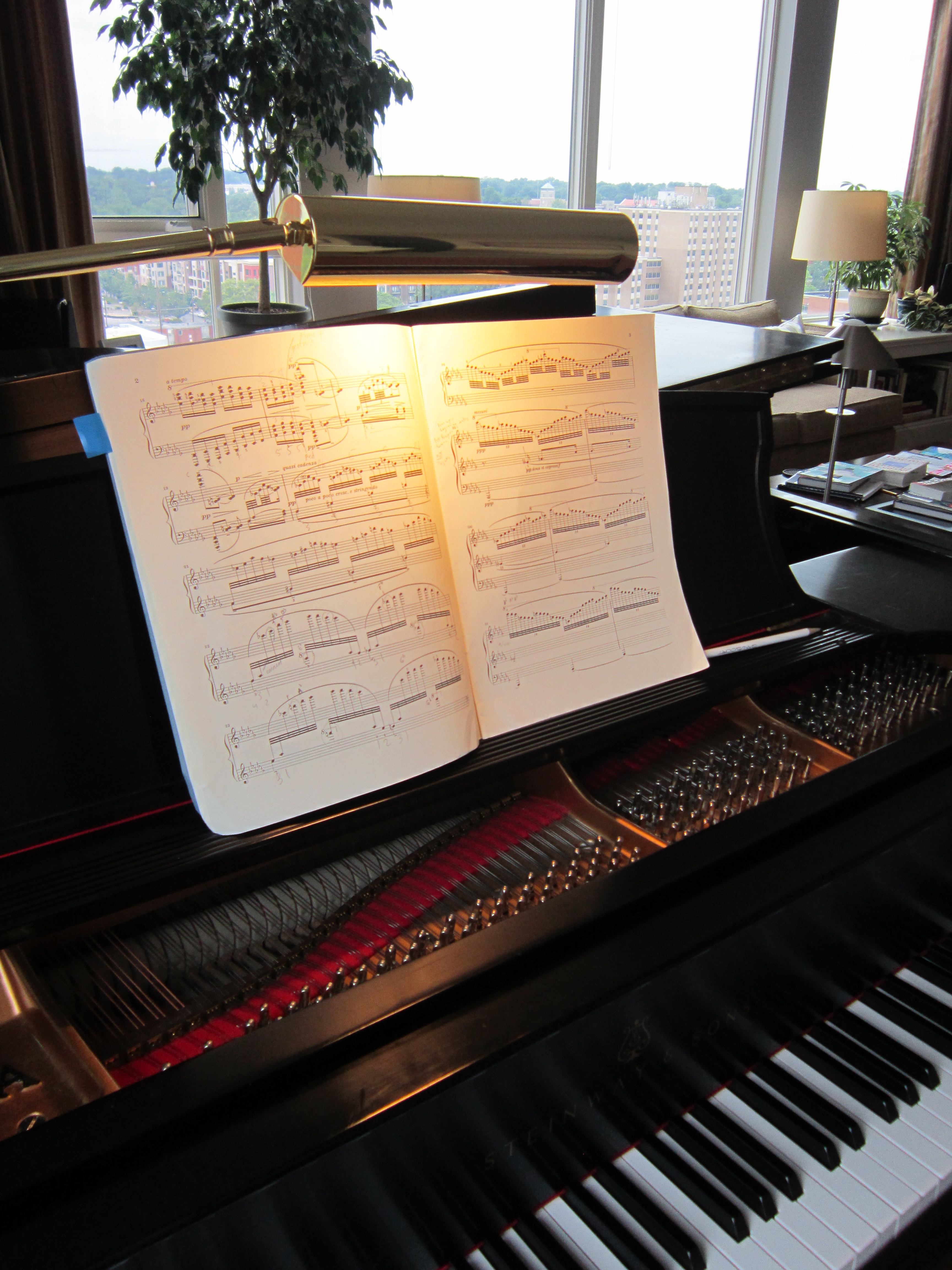
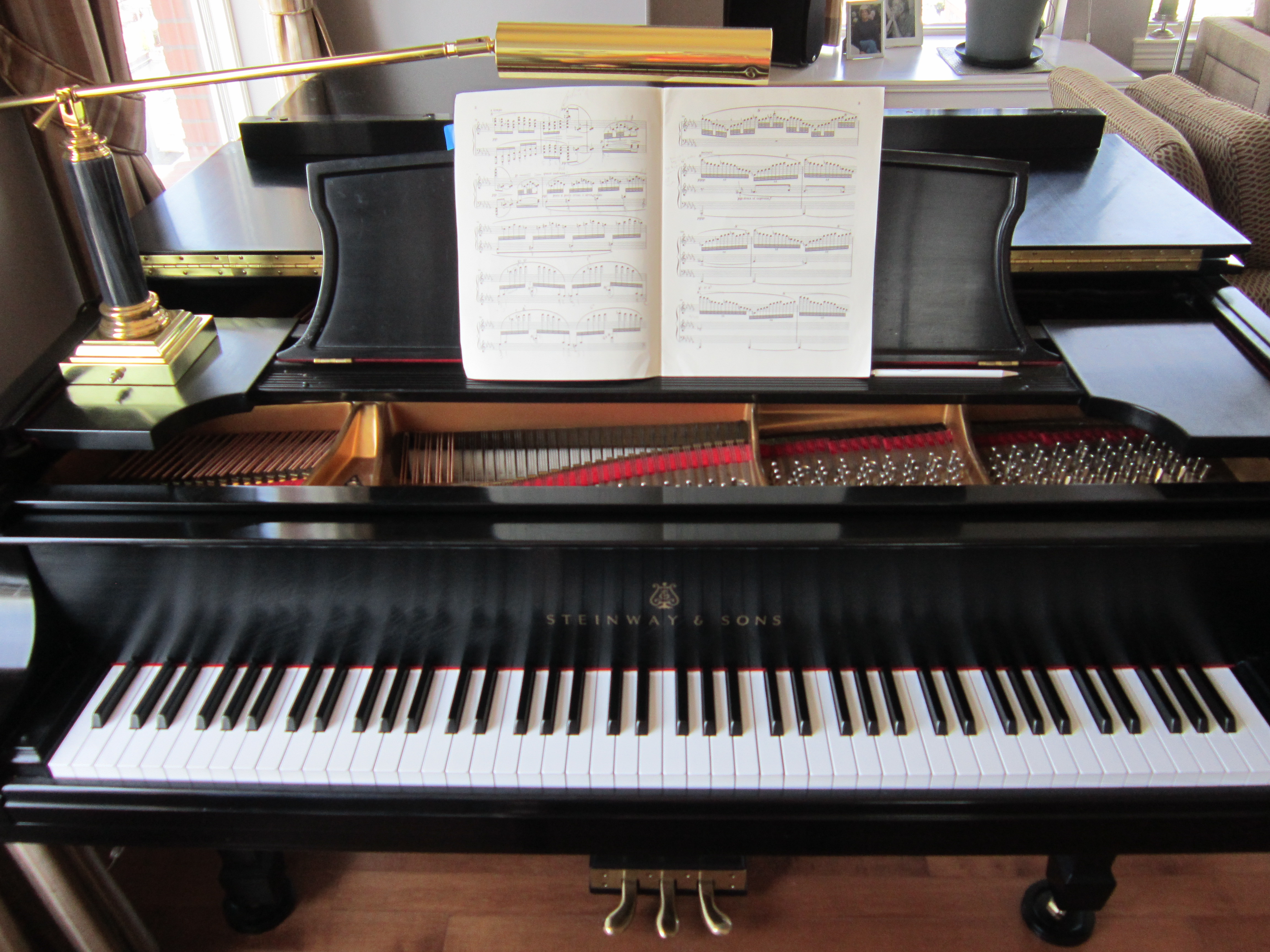
My Steinway grand piano (an A) is a gorgeous musical instrument, but it is subject to entropy. It needs a regular tuning, and lately a few notes in the lower-middle range sounded overly bright to me.

On Saturday, Phil Romano, a master Steinway technician, tuned it and did some voicing by needling the hammers. Phil was about to take off on another tour with Paul McCartney, and shared some interesting stories of Sir Paul’s performing in the Queen’s Jubilee, the Olympics, and South America.

With the benefit of Phil’s good tuning and voicing, I had a gratifying session with my instrument on Saturday. Recently I’ve felt a bit stuck on the same musical plateau. Although this has happened from time to time over the years, each time it’s uncomfortable, as I wonder whether I’ve gone as far as I can go. An essential part of the joy and challenge of the classical tradition, for me, is forward movement. It’s true that I’m now playing better than I ever imagined I would, but still, I would see no point to practicing if I didn’t expect to achieve greater technical and artistic mastery. This is one of the reasons it is so important to have a teacher — to get you unstuck when you’re stuck.

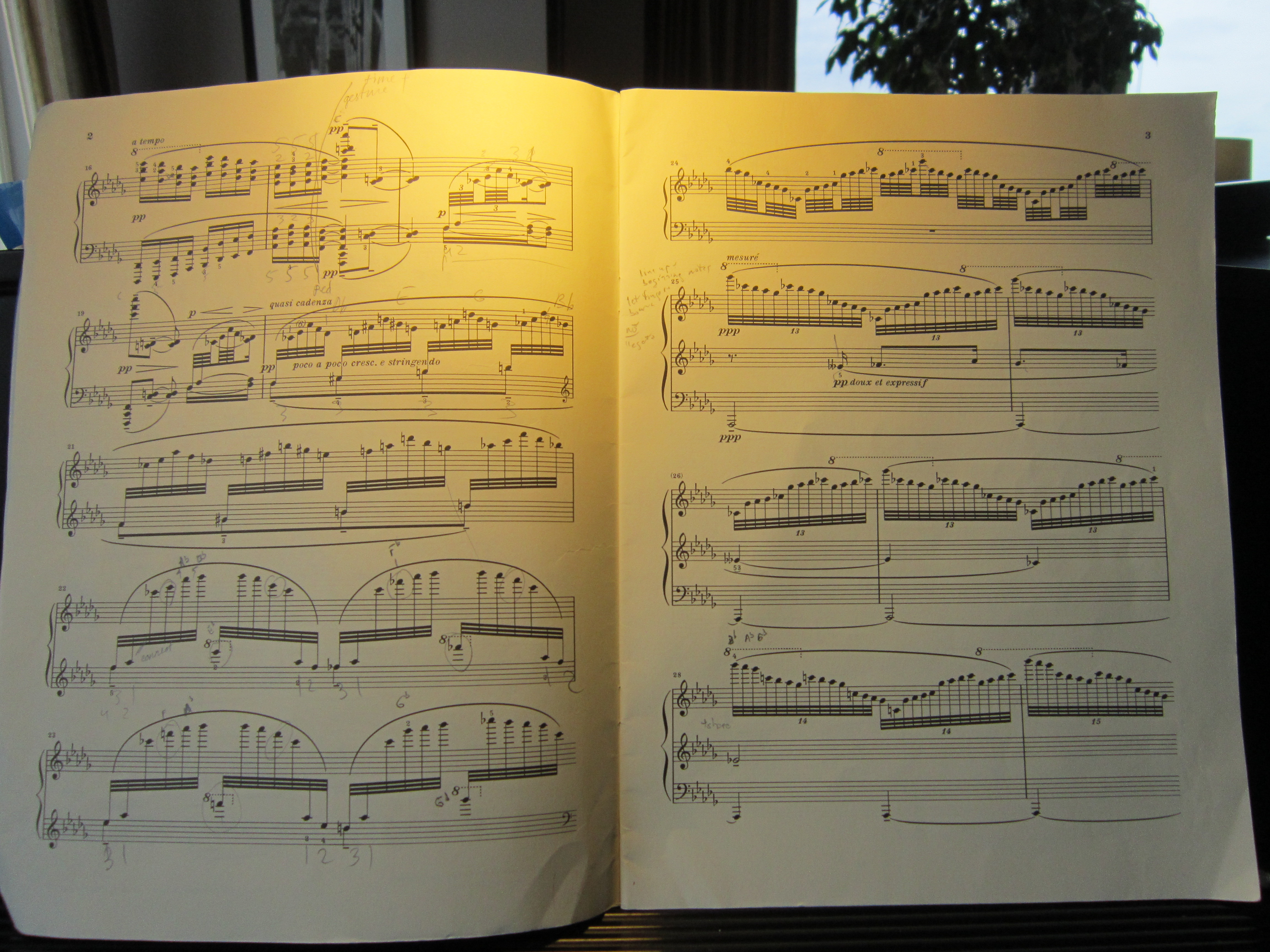
Anyhow, today felt as if I was getting unstuck. For a devoted student of the piano, there are few things more pleasurable than a freshly tuned Steinway. I played some of my favorite Chopin, Debussy, and Liszt works, and made some headway on my assignments from Olga — Rachmaninoff’s Elegy and Chopin’s etude op. 25 no. 12. Also, for a special treat, I read through some of Tchaikovsky’s Nutcracker. The Waltz of the Flowers really works as a piano piece! I’d like to polish it up for the holidays if I can find the time.

Speaking of the Nutcracker, this week I had my first meeting as a new member of the board of directors of the Carolina Ballet. I’m really pleased to be able to help support this wonderful company. It’s also good to meet other people who really love ballet. As Ricky Weiss pointed out at the meeting, not everyone likes it, and some actively dislike it, but those who care about it care a lot.

In his report, he noted that we have a particularly strong group of dancers now. In the all Balanchine program, he had four different Apollo’s. It is, he said, an extraordinary thing, particularly in a company of this size, to have four males who are all capable of fully expressing this difficult role. (In an interesting coincidence, this morning the dance critic of the New York Times discussed Balanchine’s Stravinsky ballets and led off the discussion with Apollo.)

There are lots of things to be happy about, including the company’s large number of performances, the large number of new works, and the consistently high standard of performance. Weiss noted that the current group of dancers have achieved a high level of individuality, by which I think he meant they are artists who express not only the classical tradition but also themselves.

At the same time, there is a real concern about company finances. This is no great surprise. Since the recession of 2008, times have been hard for lots of people, including lots of arts organizations. But realizing this does not lessen the difficulty for this particular organization. I continue to think that there are more people around here who would enjoy ballet who haven’t yet discovered it, including some who would find it rewarding to help support the company. I hope so.
Listening to the Tokyo String Quartet for the last time

On Sunday afternoon Sally and I went to a concert of the Tokyo String Quartet. It was a wonderful concert by one of the world’s great chamber music groups, After 44 years, the TSQ is calling it quits after this season, so I don’t expect I’ll hear them again. It made me listen with more-than-usual concentration. They played Haydn’s quartet in D Major, Op. 20, No. 4, Webern’s five pieces Op. 5, and Schubert’s Quarter in G Major, Op. 161, D. 887.

It was such a privilege to hear these master musicians performing such great music. The group performed on Stradivarius instruments made in the early 18th century and collected by Niccolo Paganini for his own performances. Paganini loved the viola in this group he commissioned a work by Berlioz that featured it. I’ve wondered at times if the Stradivarius name was overhyped, but the sound of these instruments as individuals was gorgeous, and together they were stunningly beautiful. I particularly loved the cello, which sounded to me as rich as I’ve always imagined a cello could sound.

I particularly loved the Schubert, which has one of the most beautiful cello melodies ever written. If you do not know the piece, you should sample it. Here’s a performance on YouTube by the Skampa quartet. The TSQ’s performance was brilliant and very moving. I got major goosebumps.

As valuable as recordings are, they are no substitute for a live performance. At my last piano lesson, Olga and I discussed this. She’s drilled me in the importance of considering each tiny detail of the music, thinking about the many different ways each note could be approached, and planning out each aspect of each gesture. After all that, I was surprised to hear her say that she expected that each time we play a piece, it will be different. Each piano is different, the acoustics of each room are different, and we’ll have different feelings each time. The master musician is not a CD player.

I don’t think this is a well understood aspect of the classical tradition. I once heard an interview with James Levine (the conductor of the Metropolitan Opera), in which he said that a recorded performance was to live performance as a postcard of the Grand Canyon was to the actual Grand Canyon. I thought he meant that the sound was different, but he may have meant what Olga meant: master musicians are making unique music at a particular moment in their lives and ours, responding to subtle variables that will never again recur.

How to learn to play the piano

My working days are long, interesting, and often stressful. It’s hard on the brain. To refresh, most evenings I spend a little time playing music on the piano. It works. After a few minutes, my load has magically lifted.

For as far back as I can remember, I thought that the piano was an amazing thing. On holidays when my older cousins play Chopsticks and Heart and Soul on my grandmother’s spinet, I was (in retrospect, ridiculously) transported. I looked so simple, a black box, quite plain, but it produced music. All you had to do was press some buttons. But I quickly learned, when I tried pressing the buttons, it was harder than it looked.

Eventually I learned to play. In my less-than-perfect way, I’ve played the music of giants, running the genius of Chopin, Liszt, Debussy and many others straight into my head and out again, through my fingers, onto the keys, onto the strings, and into my ears, and sometimes the ears of friends. I learned the fundamentals of jazz and played the great songs of Kern, Gershwin, Berlin, and many others. Every Christmas, I play some carols and also some truly awful stuff that makes me smile, like The Christmas Song by Alvin and the Chipmunks. Another guilty pleasure for me is reading through transcriptions of Strauss waltzes and the marches of John Philip Sousa. It’s fun.

Of course, as they say, there’s no accounting for taste, and to each his own. But the piano accommodates an amazing range of musical expression. If you can’t immediately find a musical collaborator who likes the music you care about, no problem. You can approximate a full orchestra, melody and harmony, soprano, alto, tenor, and bass, all by yourself. Why doesn’t everyone do it?

This is the unfortunate thing: it’s a complicated skill and takes a considerable amount of time and effort to learn. In an age when we are accustomed to instant gratification, the gratification of playing the piano is highly delayed. You need to program your brain for several new skill sets. Reading music is a bit like reading a foreign language, which is hard enough, but you need to read it vertically, on two staffs, as well as horizontally. The sign system has many odd symbols, like sharps and flats, and double sharps and flats. You have to learn about meter and rhythm and tempo. You also have to learn bits of Italian, French, and German.

All this is separate and apart from another big challenge: how to touch the right keys rather than the wrong ones. And even that is not the whole story. You can touch the right keys, but in the wrong way, and make sounds that resemble the music, but aren’t really it. In other words, making real music requires more than just playing the notes. It requires getting in touch in a deep way with what the music is, and learning how to translate thought and bodily energy into sound that in turn evokes feeling.

Although learning all this was, in retrospect, an amazing challenge, I have to say, I always liked it. When I played beginner pieces, I thought they sounded good, and when I played intermediate student pieces, I thought they sounded good. Because they were at always just beyond the edge of the skills I had at the time, they were challenging and involving, and I felt a sense of accomplishment when I mastered them. So what might sound like a dreary journey actually had many wonderful episodes.

So what is the secret to learning the piano? Everyone already knows part of it: you’ve got to practice. By practice, I mean a concentrated daily devotion to the musical problems before you. If you’re working, as I am at the moment, on Un Sospiro, a gorgeous piece by Liszt, you will need to use skills you’ve built over a period of years, and also some new skills that are not in your repertoire. For these, you need time in the workshop, like an inventor trying to solve a technical problem. It’s lonely work at times, but then there are satisfying breakthroughs. Practice means asking many questions: what is the the best way to play each note, each chord, each phrase, and all the phrases of the piece? The process is potentially endless.

So if you understand the meaning of practice, how do you get yourself to do it? You need to start with a strong sense of purpose. It takes a full-hearted resolve. And then you need to figure out how to fit thirty minutes a day or so in for the work. And then, stay with it, week after week, month after month, year after year. Eventually, it becomes a habit. At that point, there’s a shift, and instead of being hard to do it, it’s hard not to do it.

But it can’t be a mindless habit. You have to somehow keep it fresh and stay mentally engaged. This is a separate challenge, and for this you will almost certainly need a good teacher. As I noted in my last post, you should find a good teacher for any complex skill, but you’d be making a big mistake to invest a lot of energy into playing the piano without a teacher. You’d waste precious time and probably be so frustrated you’d ultimately give up.

You always remember your first teacher. My first piano teacher, Mrs. McGee, had white hair, bad breath, and hands that were red and scaly, like lobster claws. I was 12 when I started with her. In her living room, where I waited for her to finish with the student ahead of me, she had a stack of Cosmopolitan magazines, which I perused with great interest. But eventually it would be time for the lesson. And I would learn something I never knew before.

Our Outer Banks weekend

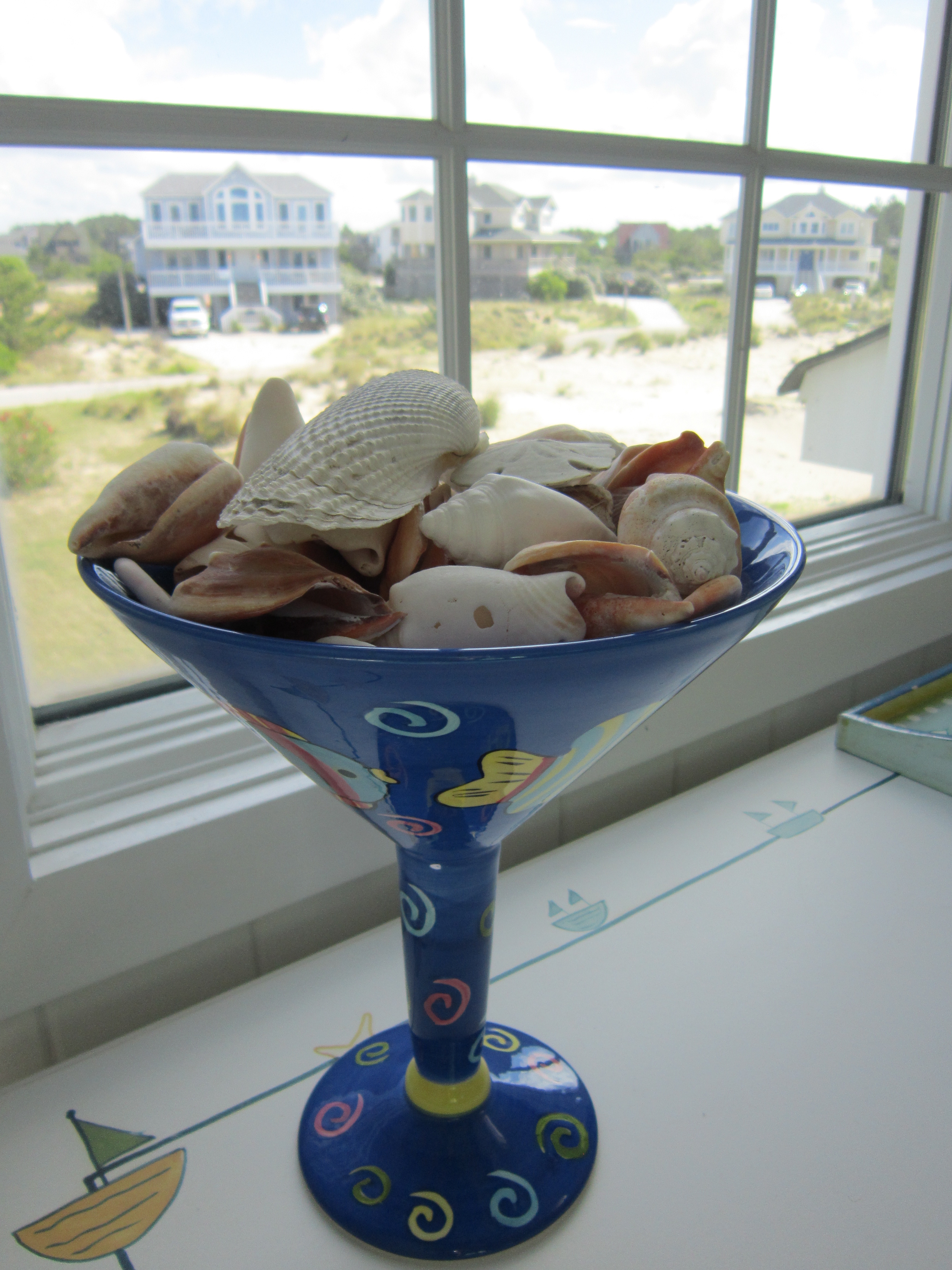
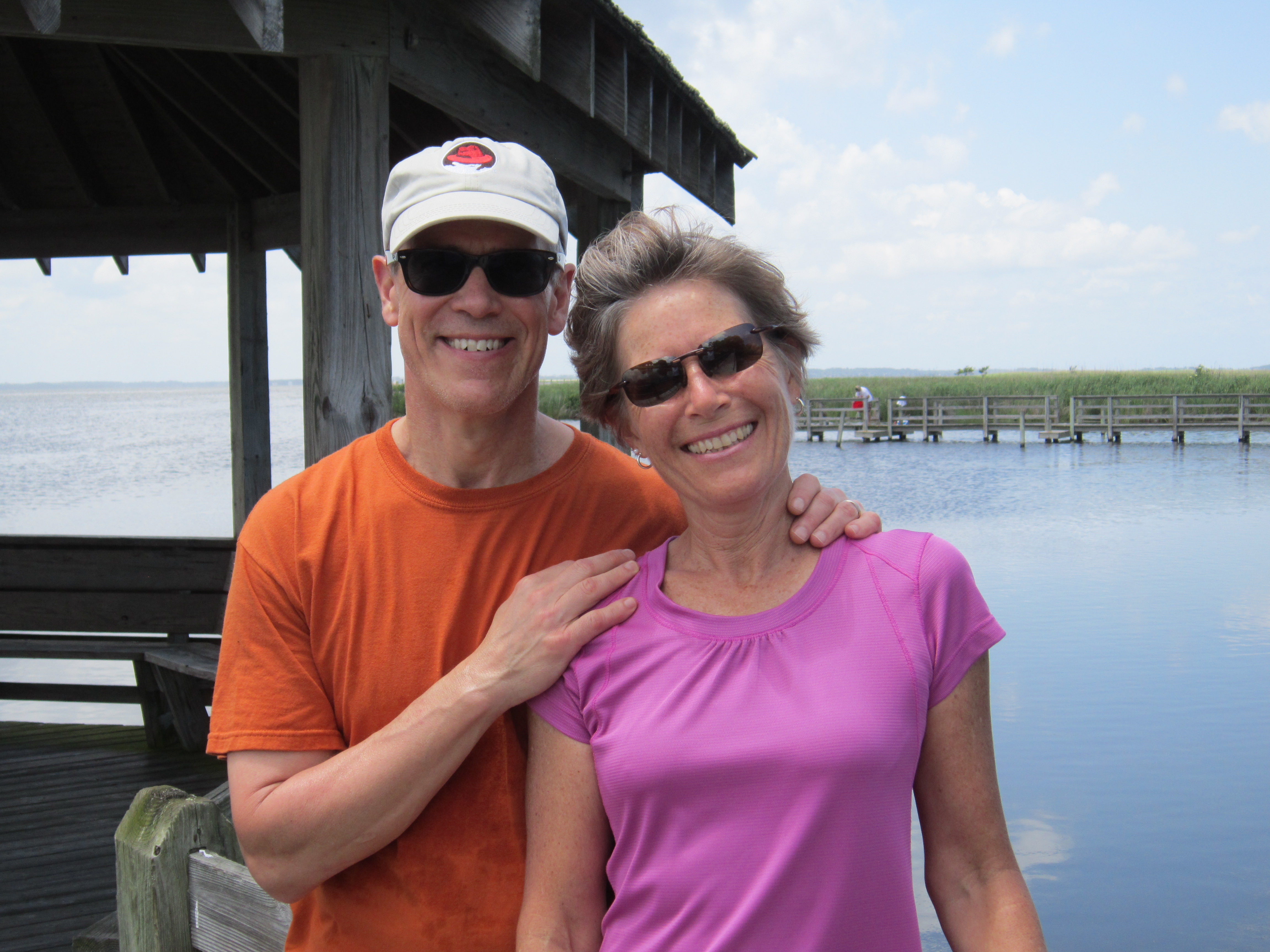
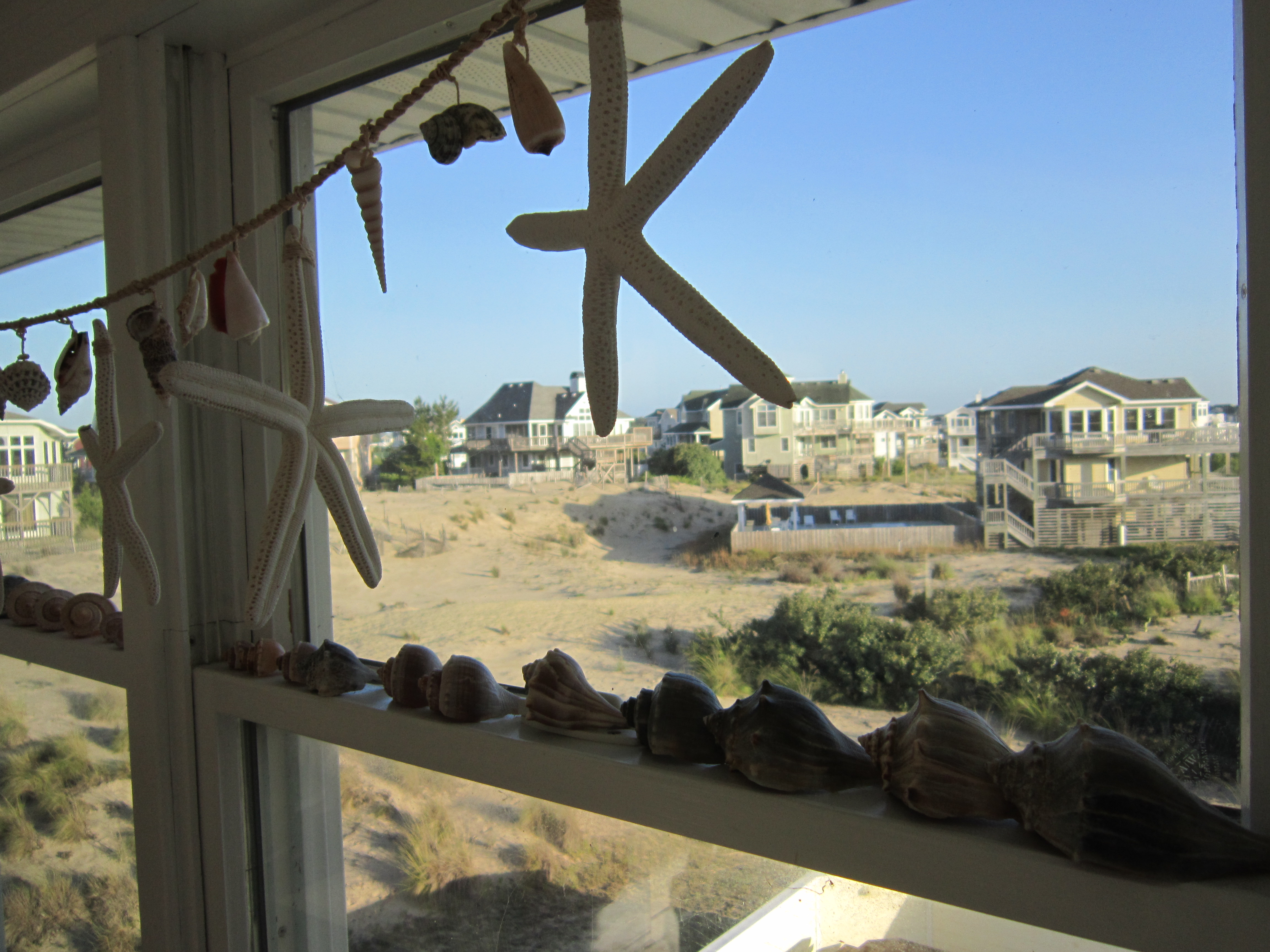
For Memorial Day weekend we drove to the Outer Banks to visit my sister Jane and her family. Their beach house in Corolla was comfortable and relaxing, with lots of seashells and board games. There were family dramas to discuss, as well as books to read, food to eat, and wild horses, shore birds, and other beach creatures to see. I also had a few new thoughts on economics and employment, as noted below.

My brother Paul and his wife Jackie came out from Virginia Beach on Saturday afternoon. Paul, in training for a marathon, ran the last seven miles, and arrived looking thinner than he has for at least a decade. The next morning I did my first outside run in a long time, a three-mile run along US 12. After persistent knee problems a few years back, I finally quit running and switched to low-impact activities like elliptical machines and stationary bikes. But I’ve recently seen running is good for bone density, and so have begun running a bit on the treadmill. The run along US 12 went well for a half hour, until I got a cramp in my calf.

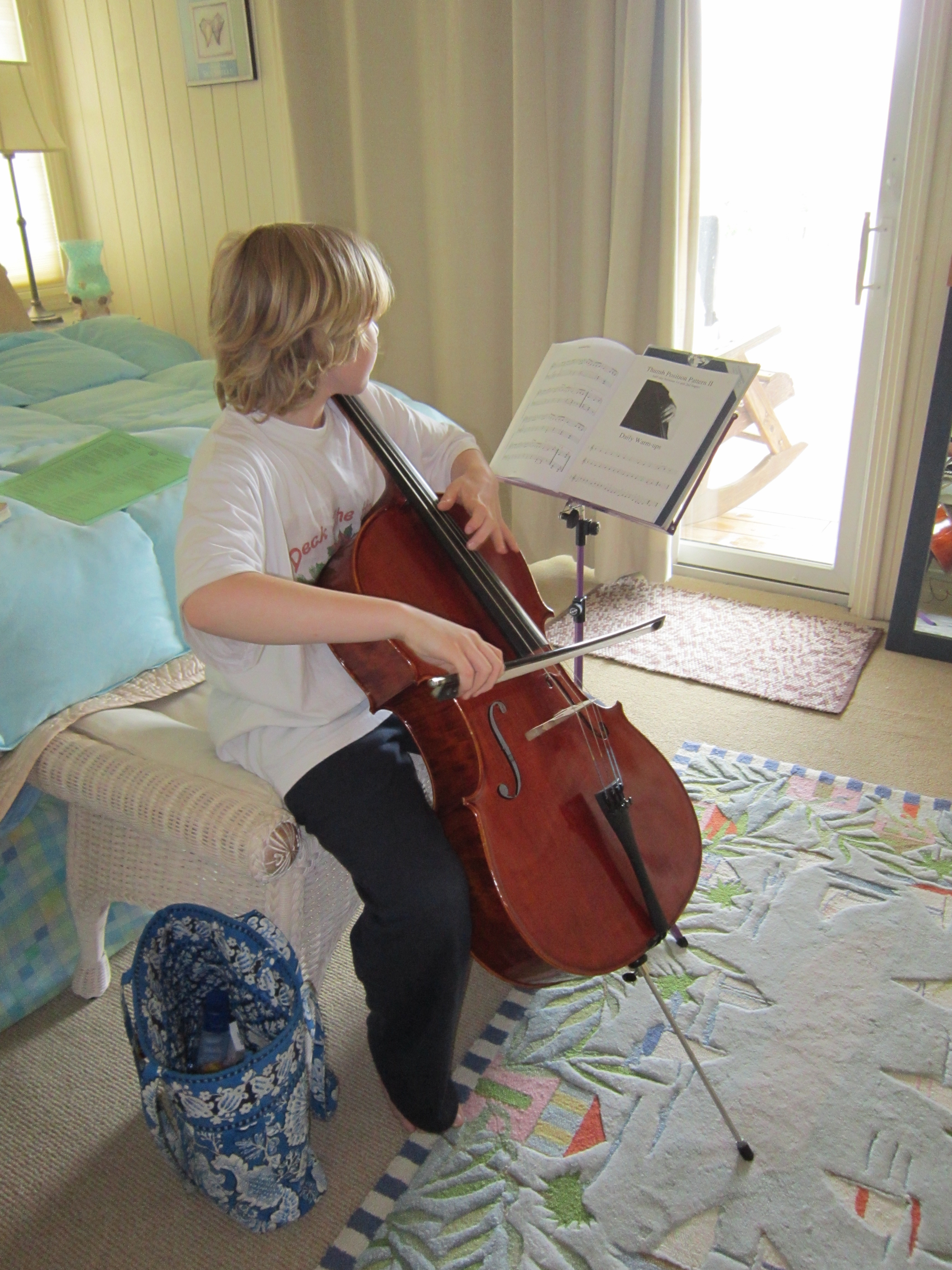
I took a break from practicing the piano, but enjoyed the musical activities of the rest of the family. Kylie is making good progress on the violin, as is David on the cello, and Jane has just started teaching herself piano. Paul is quite accomplished on the banjo, and played his version of the Star Spangled Banner in honor of memorial day.

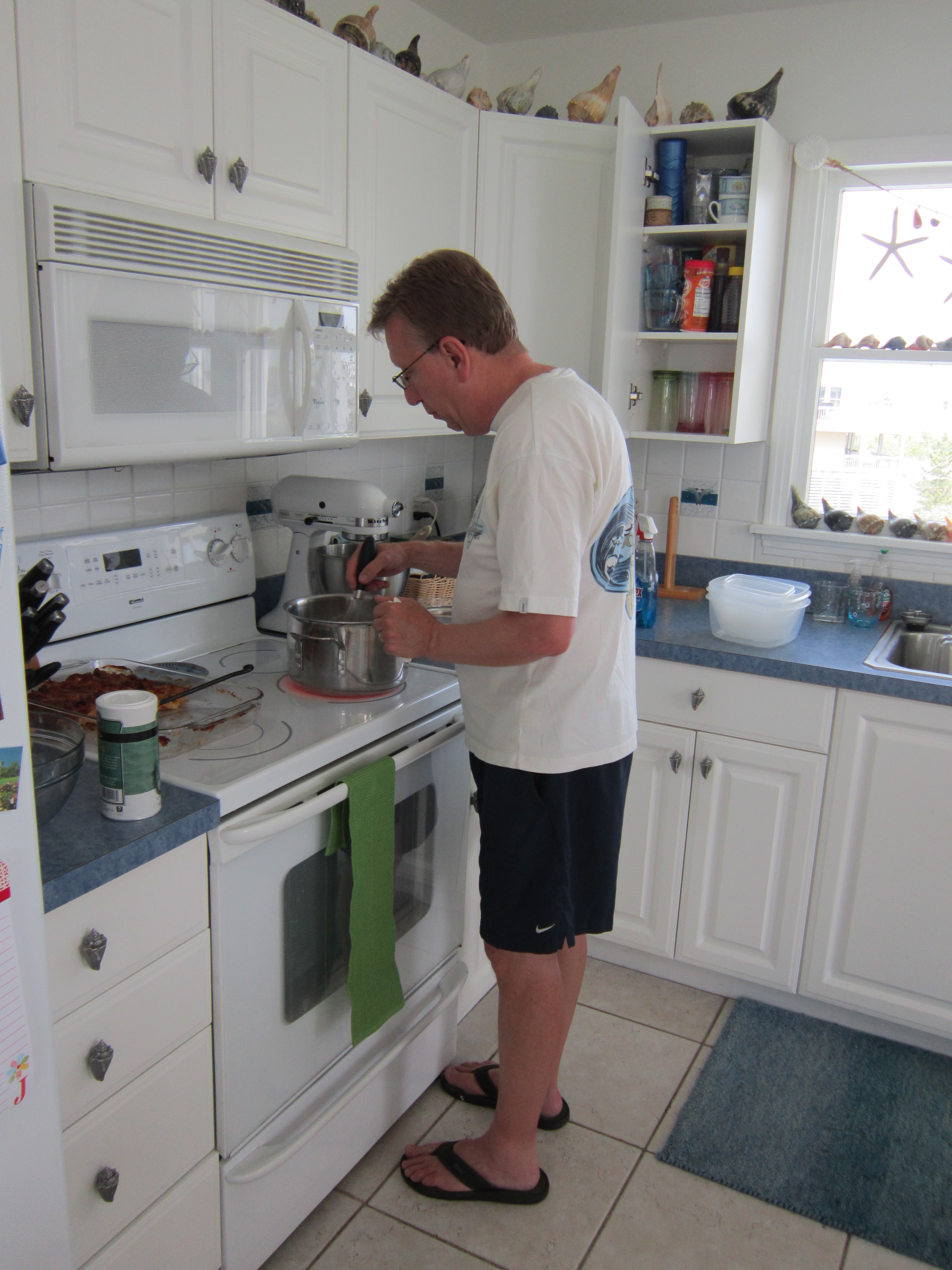
Keith cooked non-stop all weekend. On Saturday morning, he cooked gluten-free waffles with blueberries and strawberries, which were marvelously light. Soon after we cleaned up, he started to work on lunch, wonderful grilled vegetable sandwiches, and soon after that, he got to work on a vegetarian Mexican dinner, which was a complete success. The man loves to cook, and he’s really creative. We were all grateful.

In the Sunday Times, there was an op ed piece by Tim Jackson about how the drive for ever-increasing productivity was resulting in increased unemployment. This was a different lens on a problem I’ve pondered before — what should humans do when computer brains and robots render them redundant? Jackson proposes that the answer is to forget about increasing productivity and embrace lessening productivity.

Jackson broached a critical problem. As I’ve noted before, although we’ve hardly noticed it, robots and artificial intelligence are transforming the human world in fundamental ways. More and more of the manufacturing work that people used to do is now done by robots, and AI is starting to impinge on areas that we used to think of as forever and irreducibly human, such as medicine, law, and education. This is big. As far out in the future as we can see, we will need fewer and fewer people to make our products and perform our services.

We once thought of this as utopia: a world of plenty which required less and less labor to produce goods and services. We assumed it would result in more and more pleasant leisure. But this vision failed to take into account that we aren’t comfortable paying wages to people who aren’t working in a way that contributes meaningfully, and those without work do not feel at leisure.

Jackson suggests reorienting away from simple increases in productivity and towards activities involving caring, craft, and cultural activities, like art. This sounds promising. These are activities that humans have done as long as the species has existed. Once our ancestors had taken care of food, clothing, and shelter, they made jewelry, painted on cave walls, beat on drums, played lacrosse, or otherwise entertained each other. Caring for each other, making things, and making art are things we like to do. But we need to figure out how to associate these activities with fair wages.

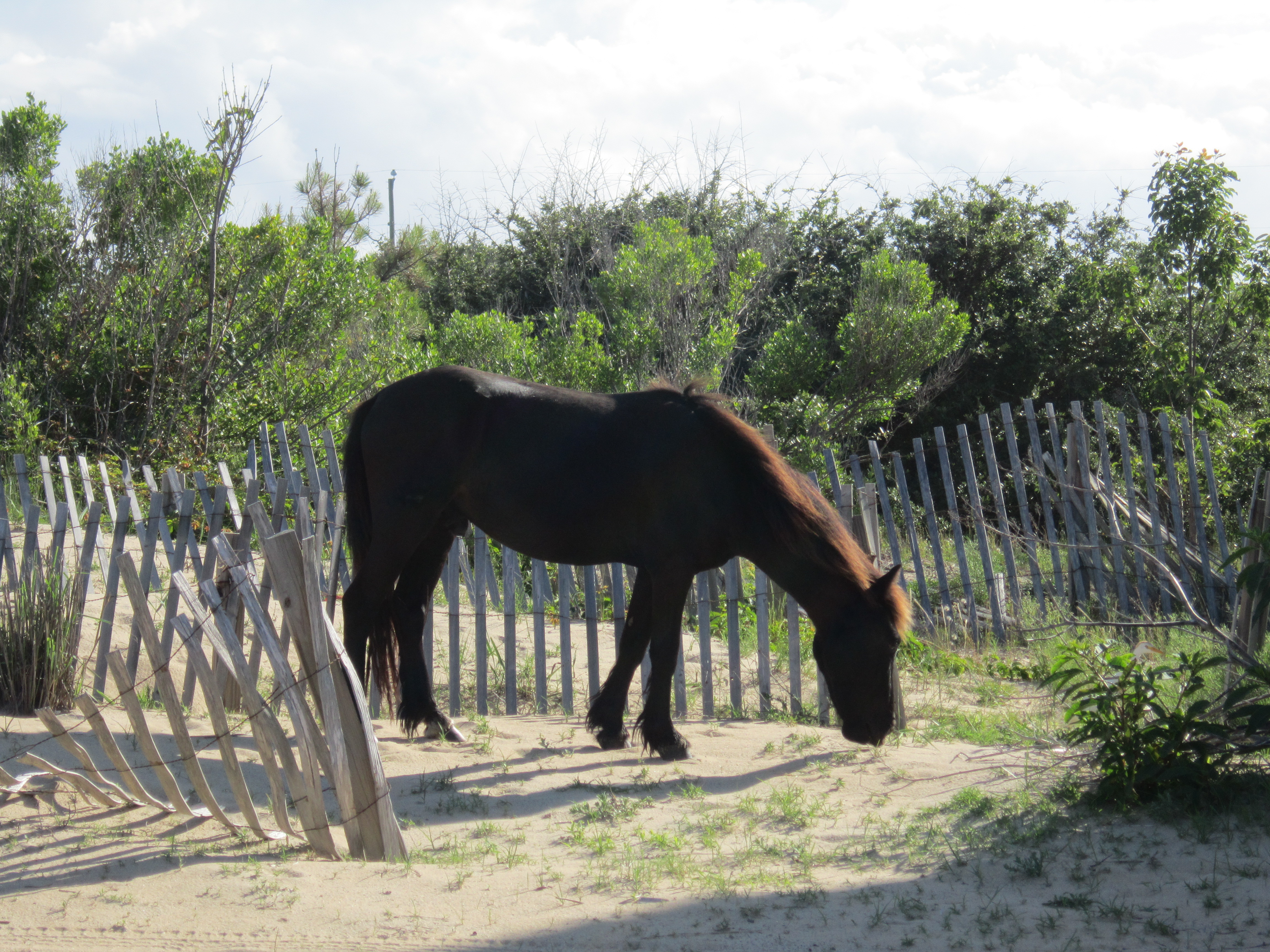
On Sunday afternoon we went four-wheeling northward to look for wild horses. Driving on the beach is fun, though I feel a bit guilty at what people like us do to the beach and its creatures. We saw lots of sanderlings and grackles in the shallows, and flying pelicans, gulls, terns, and one snowy egret. We drove through the narrow sandy pathways that wind through the marine forest, working our way around occasional pools of standing water. We finally found three groups of horses, and got close views of two of them.

We sat on the porch for a while and read and talked. Over the weekend, I dipped into the following books: I Am a Strange Loop, by Douglas Hofstadter, This Is Your Brain on Music, by Daniel Levitin, The Short Game Bible, by Dave Pelz (golf), Indignation, by Philip Roth, Winner Take All Politics, by Jacob Hacker, and The Social Conquest of Earth, by Edwin O. Wilson.

Sunday evening Sally mixed cocktails for the adults using cucumber vodka, ginger infused simple syrup, lime juice, and elderberry liquor. Keith made gluten-free vegetarian lasagna, which he had to complete with penne pasta because there were no lasagna noodles, but which turned out great. He’d also made vanilla ice cream and peach-and-blueberry cobbler. We played a game called “left right center” which involved rolling dice and losing or acquiring chips. It was a game requiring no skill, but gave the enjoyment of possible good fortune without exacting much pain for bad fortune. There was merriment. After dinner, we lit sparklers and set off some fireworks rockets.


A lovely Friday cocktail, Bill Cunningham, the anti-gay vote, David Brooks’s The Social Animal, learning to listen while playing the piano


How nice it is to have a cocktail and relax at home on Friday evening! Of course, strong drink must be handled with care. A glass of wine with dinner is certainly a pleasure, but the habit can sneak up on you, and a glass of wine can so easily turn into three.

A few weeks back, Sally and I decided to limit drinking to weekends. Among other good effects, this makes the Friday evening drink particularly delightful. Last night, Sally made us margaritas with fresh lime. For the first time in years, I had a sudden urge to listen to Stevie Wonder hits from the seventies, which we now can easily stream from Rhapsody. I dedicated my streaming of the wonderful Signed, Sealed, Delivered to my sweet Sally.

We watched a documentary called Bill Cunningham New York. Cunningham is a photographer whose specialty is candid shots of New Yorkers wearing interesting clothes. He has a feature in the Sunday NY Times style section in which he shows this week’s street fashion trend, which, although I’m far from a fashion person, I always enjoy looking at. But I didn’t know him by name, and would have missed the documentary but for Sally’s putting it at the top of the Netflix queue.

It was sweet and kind of inspiring. Cunningham is in his mid-80s. He’s still snapping pictures all the time (using 35 mm film), publishing weekly in the Times, and travelling by bicycle on the streets of Manhattan. Age may have slowed him down a bit, but he’s still passionately creative. He’s got a great, boyish smile.

We voted in the North Carolina primary this week, which involved primary races for governor, secretary of agriculture, and various other offices, and an amendment to the state constitution to ban gay marriage. Why a gay marriage ban? It’s mysterious, and bizarre. I am stunned that it passed by a 20-point margin. Raleigh, the part of North Carolina in which I spend most days is multi-cultural and tolerant, with a visible and completely uncontroversial gay population. (I blogged about this visibility a while ago.) But most of the state is rural. What is going on in the heads of homophobes? I’d like to understand, but I don’t get it. It’s a different culture. I believe that that culture is eventually going to change, but for now it’s still alive and kicking.

Speaking of culture, I’ve been reading The Social Animal, by David Brooks, the NY Times conservative columnist. Brooks has collected recent ideas on psychology and culture, including those of Daniel Kahneman and Jonathan Haidt, and woven them into a readable and, in places, intriguing book. The theme, which is getting considerable attention lately, is that people are primarily driven by unconscious perceptions and desires, rather than rational thought.

But Brooks views this in a positive light, arguing that although our brains make all kinds of mistakes, they work better than a completely rational system running in real time could. He argues that behavior is best viewed as a function of those around us and our surrounding environments rather than of individual intelligence, and proposes that we think about meaning more in terms of relationships and cultural systems. I don’t much like his device of two imaginary characters who gradually discover or rub up against the various theories he explores; the characters never really come to life. But I think it’s worthwhile — I’m more than half way through, and likely to finish.

On Saturday I had my last piano lesson of the season with Olga Kleiankana, who’s headed to Moldova for the summer. We talked about some Rachmaninoff and Scriabin pieces for me to work on over the summer, and then worked on Scriabin’s second prelude (op. 11). Olga admitted that it sounded significantly better, but pointed out places where the tone seemed flat. She continued to emphasize the importance of gesture in sound production and expression, and when pedaling problems emerged she taught me how to test out pedaling improvements.

Then I played Debussy’s Second Arabesque for her for the first time. She pointed out that I seemed to be reading note by note, when many of the elements were repeated with slight variations. As she went through a quick score analysis, I had a eureka moment: score analysis was not designed to torture hapless students, but rather to make it possible to understand and learn music more quickly and effectively.

Finally I played Debussy’s Reflets dans l’eau, from Images, premiere serie. This is a gorgeous impressionist piece that calls to mind (especially after hearing the title) reflections in water. It has dazzling effects, some of which are difficult. Olga noticed that I got tense in my shoulders in the fast 32nd-note passages, and advised me that that could be fixed by breaking the passages into simple parts for practice. We also talked about the relationship of touch and tone color. At one point, I played a simple chord, and she said, with a pained expression, “Don’t just play the notes! You need to always think before you touch the keys!”

And she was serious. She listens with a level of concentration that’s almost scary, and expects me to at least try to do the same. I’m having occasional glimmerings of what this might be like. The sound seems richer, with more depth and detail. It’s like hearing in 3D. Of course, little flaws, like unbalanced chords or inappropriate accents, are more jarring. But when a musical statement works, it touches more deeply.

A sweet but sick dog, a touching movie, and a concert of Renaissance music

Stuart Tiller feeling better

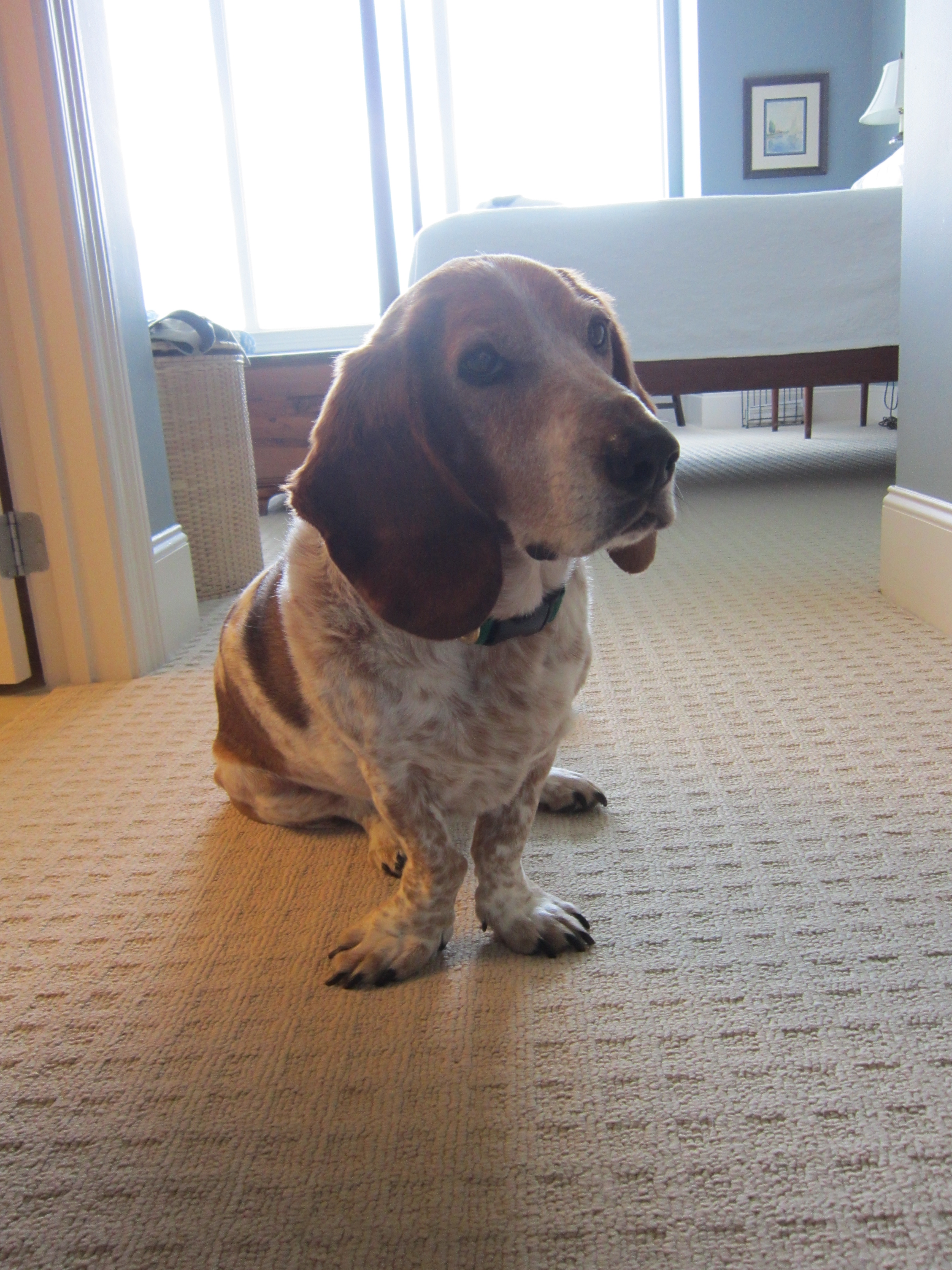
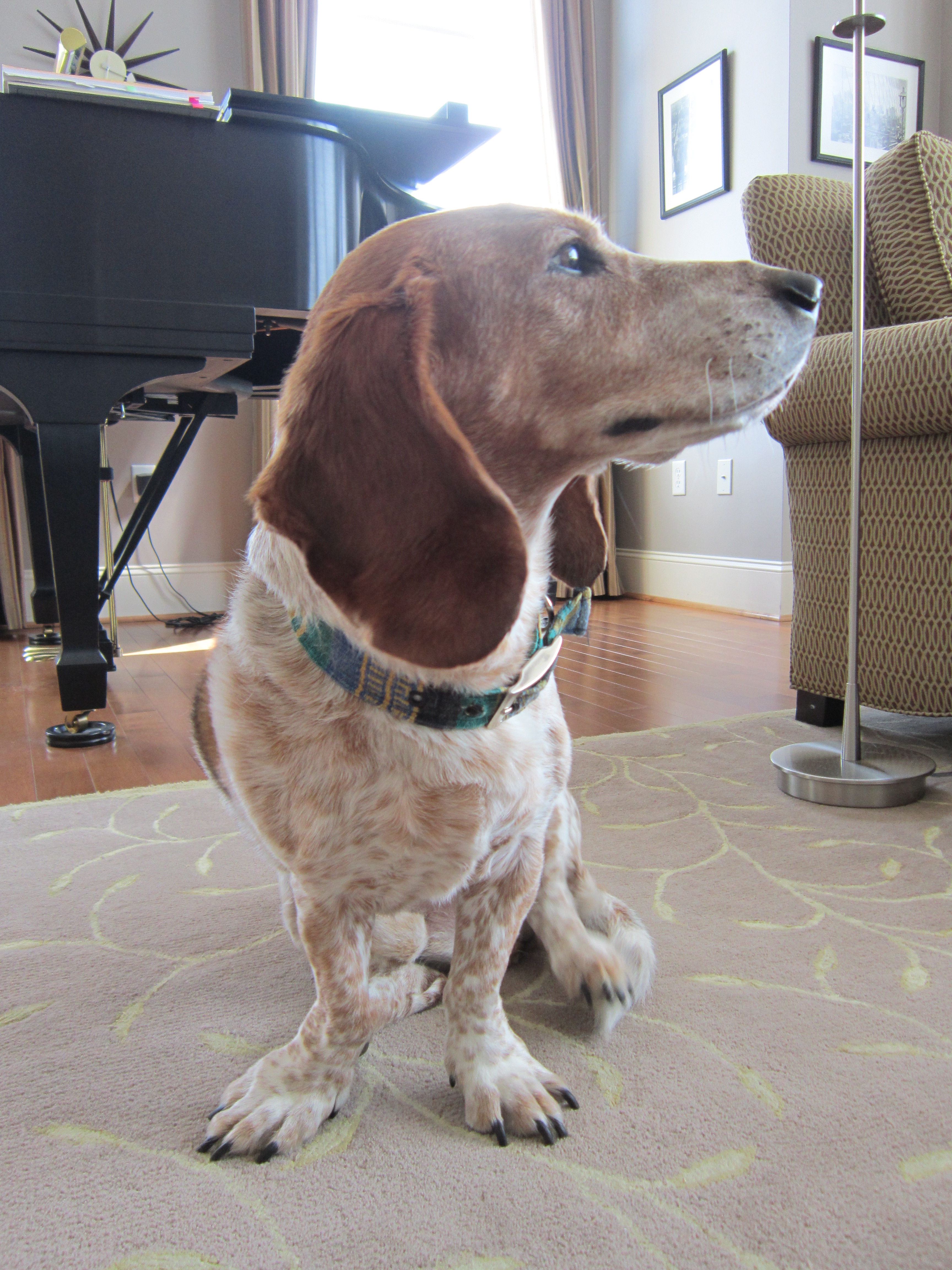
Sally believes that Stuart has the most friends of anyone in our building, and from our elevator rides down to take him out to pee, I’m certain that more people know his name than know mine. He’s a Bassett-Beagle mix, with short legs, long ears, and big brown eyes. He’s nine now, and not as athletic a leaper as he used to be, but he still has a lively step and a perpetually wagging tail. He’s a sweet, curious, affectionate little dog. His three great passions are eating, going for walks, and being petted. Yes, he’s prone to barking loudly when visitors first arrive, but nobody’s perfect.

Earlier this week Stuart got very sick. We’re familiar with bouts of digestive problems when he eats something inedible off the street, but this was different. In the afternoon, he seemed subdued, moving about very slowly with his back arched and his tail down. That night, he woke us in the wee hours with high-pitched whining — a sound he’d never made before. When I got up and knelt beside him to pet him, he suddenly let out a loud bark that sounded like a scream. He seemed to be in agony.

The sweetest dog not feeling at all well

We discussed taking him to the emergency vet and decided to wait until morning. He still seemed to be in pain when we got up, but Sally doubted that the vet would be able to easily diagnose the problem, and might cause additional discomfort from probing and testing. By that evening, he had quit whining and seemed to be out of the crisis. He seems to be most of the way back to normal now.

On the subject of caring for those less fortunate, on Friday night we watched a Netflix move — What’s Eating Gilbert Grape. Released in 1993, it stars Johnny Depp, Leonardo DiCaprio and Juliette Lewis. Depp plays Gilbert Grape, who lives a hardscrabble life in a small town with his family and is charged with caring for Arnie, his retarded younger brother played by DiCaprio. I missed it when it originally came out, when I think I thought it was about something else. It was surprisingly honest about the deceptions and indignities of small town life, and also about the hates and loves of family life.

DiCaprio, who got an Academy Award nomination, is completely believable, and somehow manages to give the younger Grape a sweetness and inherent dignity beneath the surface of unregulated id. I have a hard time putting to one side his character in Titanic, but this is a reminder that he’s a actor with considerable range.

On Sunday afternoon we went over to Durham to hear a concert by the Tallis Scholars in Duke Chapel. The outstanding group of ten singers and director Peter Phillips did a program of music of William Cornysh and Jean Mouton, court composers of Henry VIII and Francis I respectively. The monarchs met in June 1520 for political discussions and a festival that featured their finest music. In short, it was early Renaissance music. The concert was a time machine that brought to life an ancient world.

The music was gorgeous. The Scholars blended into one extremely subtle instrument. The prevailing mood was more melancholy and introspective than I expected from the description of the Henry-Francis summit, but that was OK. I was happy to hear these great musicians and this rich, almost unknown repertoire. I was also happy to see that several hundred people showed up to hear this out-of-the-mainstream entertainment.

Coping with pollen, trying Pilates, and news on how to eat to reduce cancer risks

Spring is definitely here, greener and greener and blossoms everywhere. Also here is a cloud of heavy yellow pine pollen settling on cars, including mine. The pollen surprises me every year. Last year it arrived the day after I got Clara detailed, and the pollen turned the beautiful dark blue car yellow. This year, I resolved to get the big spring car cleaning done well in advance of pine pollination, and got the full treatment from Dave of A to Z Auto Detailing. She looked great, until the pollen arrived, two days later. Pine trees, stop trying to impregnate Clara!

It was a homey week — no travel — and I got up early each day and had a work out done by 7:00 or 7:30. On Monday, I did intervals on the elliptical machine on the roof and then some weights and stretching. Tuesday I did forty minutes on the elliptical machine first, then went across the street to early bird yoga at Blue Lotus. Wednesday I went to Pullen Park pool and swam intervals and then stretched. A lifeguard complimented my stretch routine (though not, I noted, my swimming).

Friday I went to O2 gym at Seaboard Station for an hour-long RPM spinning class. Spinning means riding an exercise bike to loud music at the intensity the teacher directs, and it is much more demanding than it sounds. The teacher Friday was a substitute who was six months pregnant. At the start, I felt fairly confident that I could keep up with her, but in fact she kicked my butt. I predict her baby will be a champion.

Backing up, Thursday I had my third Pilates lesson at Evolve with Julee. What is Pilates? My friend Chuck and others had recommended it, but I found it hard to get a clear description. But I felt ready to try some new type of exercising. It’s good to shake things up from time to time. Meredith, my wonderful massage therapist, turned out to be a big Pilates fan, and she recommended Julee, whom she regarded as highly gifted.

Pilates is named for its inventor, a German named Joseph Pilates, who came up with his system early in the twentieth century. It involves various contraptions that he invented. It entails a particular way of breathing, of focusing on the core area, and of contracting various muscles. Yes, it could be yet another nutty exercise fad, but there seems to be more to it. I say this based on (1) my very limited experience trying it and (2) observing that Pilates students are exceptionally fit looking.

It seems to involve a sophisticated understanding of human biology, and as an experience it nicely balances the physical and the mental. As Julee has introduced me to the various exercises, I’ve found myself focusing hard on just one thing: the movements. I’m just starting to get my bearings on the system, but so far it seems stimulating in a healthy, fun way.

In other health news, there was an interesting news story this week on the health effects of aspirin. Two significant new British studies found that a daily dose of aspirin was associated with large reductions in cancer. One study found a 46% reduction in colon, lung, and prostate cancer, and both found large reductions in other common cancers. That’s huge!

I’d taken a baby aspirin for some time to reduce the risk of a heart attack, but quit after a recent study indicated that for healthy patients the heart benefits may not outweigh the risks. I was sufficiently impressed by the new studies to dig out my aspirin bottle and start taking the little pill again.

Also noteworthy is a NY Times report of a new study that eating red meat is associated with death from heart disease and cancer, with the risk increasing with increased consumption of meat. The study involved 121,342 men and women and data from 1980 to 2006. Each increase of meat consumption by three ounces increased the risk of death from cancer by 10 percent and death from cardiovascular disease by 16 percent. It sounds like, if the norm is six ounces of meat a day, eating no meat would reduce your cancer risk by 20 percent and cardiovascular disease by 32 percent. That’s also huge!

For some reason, the Times did not put this on the front page, or even as the lead item in the health section, but rather buried it deep in general news section. A new drug that dramatically reduced cancer and heart disease would surely have been treated as a major news event. I’d think this new study would be something most people would want to think about.

Of course, people generally don’t like hearing that their ingrained habits are unhealthy, and tune out news that causes dissonance, so I will leave the subject for now. On a more cheerful note, I will just mention that I greatly enjoyed listening to some Haydn symphonies on my iPod touch while exercising and doing other activities this week. I had sort of forgotten how wonderful they are. I was listening to numbers 100, 101, 103, and 104. Here’s the second movement of number 100. My recording, which I prefer, is by Christopher Hogwood directing the Academy of Ancient Music (on period instruments).

Sharing piano music, buying a painting, and going to a new ballet

Stuart is not overly excited about our new painting

What does art mean to life? I’ll take a strong position, and say, simply, everything.

My brother, Paul, and sister-in-law Jackie were passing through last week, and we convened for dinner at Zely and Ritz. But first, they came up to our apartment to see the view and have a cocktail. I wanted to play some piano music for them, but hesitated to propose it. Sharing serious music just isn’t something people normally do in these modern times.

I also recognize that for some people it would be an imposition. I think my playing is thoughtful and nuanced, but it isn’t perfect. Even if I were a seasoned professional concert artist, it would still be true that my nineteenth and early twentieth century repertoire would not be to the taste of everyone. Although it amazes me, I understand that some people find it bewildering or boring. I hope this is mostly because of lack of education and exposure — which is one reason I think it’s important to share it.

Fortunately, Paul and Jackie studied music in college and enjoy various genres. And so I played for them some Chopin (the Nocturnes in c-sharp minor and D flat) and Debussy (the First Arabesque). They sounded good, though maybe a little stiffer than when I play for myself alone. Playing for someone else dramatically changes the sensation of making music. Perhaps it’s from adding adrenalin. Things that seemed settled can become unsettled. Sometimes new beauty emerges, and sometimes things fall to pieces. This is one of the reasons I was happy to have these family listeners — without listeners, it’s impossible to learn how to communicate the music. Paul and Jackie seemed to enjoy it, and were very gracious.

At lunch time on Wednesday, Sally and I met at the Adam Cave gallery to look at some paintings. Sally had followed up on a review she’d read with investigation on the Internet, and come up with some works that might work for us by Byron Gin. Adam, the proprietor of the gallery, had agreed to pull together his stock of Gin works, and told us more about the artist. We both felt excited about Three Birds and a Cup, and discussed it more over a lunch at the Remedy Diner (great veggie sandwiches and rock music). The next day, we decided to take him up on his offer to take the painting home and see how it looked before committing.

Three Birds and a Cup, by Byron Gin

I think it’s a touching, slightly funny and engaging painting. The house sparrows look like quizzical house sparrows, but the space looks vibrant blue and gold paint. The yellow cup looks like a cup. The eye and mind shift back and forth between the birds and the cup, and the natural and human world. I find it nourishing and stimulating.

Friday night, we ate at Buku before going to the ballet. It was unseasonably mild, so we sat outside at dinner. Buku has increased its vegetarian offerings, and the ones we tried were good: baba ghanoush, arepas, and lentil wat. I also had the flight of three half glasses of Chilean wines, which were quite delicious.

At Fletcher Hall, we heard choreographer Lynne Taylor-Corbett speak on the new work to be performed that evening, The Little Mermaid. We’ve liked many of LTC’s works, including Carmina Burana and Carolina Jamboree. She’s a very engaging personality, and articulate and down-to-earth about what she’s trying to do.

She didn’t put it this way, but The Little Mermaid seems designed for ballet newcomers and kids. This was somewhat true of her The Ugly Duckling, but I found Duckling more elegant and touching. Jan Burkhard as the mermaid was lovely and girlish, and fun to watch, and Randi Oseteck as the sea witch was a great villain. And I particularly liked Lindsay Purrington as the sly village girl who tricks the prince. She made the part more sympathetic than the story might have suggest, so that I was sorry when she got her comeuppance. The costumes were mostly delightful. But I found the music intensely cloying, and the narration at times plodding.

The second half of the program was duets of a serious and more classical nature. I particularly enjoyed Lara O’Brien in an intensely tragic Weiss pas de deux with music by Gustav Mahler (one of the true greats). Peggy Severin-Hanson and Marcelo Martinez were powerful and delightful in Le Corsaire pas de deux. It was great to see this significant chapter in ballet history brought intensely to life.

I recently finished reading Apollo’s Angels, a history of ballet by Jennifer Homans. I found some of it heavy going, particularly the early stages, but it was worth it all for the last couple of chapters, including her writing on Balanchine, which was full of insight. It’s unfortunate that she ends the book on a sour note in which she opines that ballet is dying. From where I sit, there’s still a lot of life. I just checked the repertoire list of the Carolina Ballet, and noted that they’ve presented versions of many of the works that Homans discusses and treats as high points of the art. I’m so glad they’re here.

My latest piano lesson, a new Indian restaurant, and some good news in the Sunday Times

At home with Stuart and the Sunday New York Times

On Saturday morning I had my first piano lesson with Olga in several weeks. I played the second Scriabin prelude, Debussy’s Reverie, Chopin’s etude in c minor op. 25, no. 12, and Liszt’s Un Sospiro. We continued to talk about subtle aspects of touch and tone. In slow lyrical passages, she asked me to keep listening closely to tones as they decay all the way to the next note — a more intense kind of listening. She got me focused on my elbow as a tool in shaping a long melodic line. In the etude, she coached me on how to make it really loud and fast. After I played the Liszt for her last time, she was inspired to learn the piece, and this time she taught me some of the tricks she’d developed for the tricky places. By the end, I felt exhausted but inspired.

That night Sally and I had dinner at a new Indian restaurant in our neighborhood called Blue Mango. I usually like Indian food as food, but as a restaurant dining experience is often lackluster. Many dishes that I like arrive in the form of brown goop; the emphasis is not on the presentation. Mantra, another Indian restaurant close to us that opened a few months back, departed from this stereotype and presented food that was pleasant to look at as well as to eat. Blue Mango’s dishes were not as pretty, but the restaurant had a cool vibe, and the food was very tasty. Service was friendly but still getting the kinks out. The veggie samosas were excellent.

We ate early with a view to seeing an 8:00 movie at the Blue Ridge, a second run theatre where tickets cost $2. We who are normally so lucky were not so at the Blue Ridge. Every parking spot in the place was taken. We drove around for 10 minutes looking, and finally came home. We ended up watching Trading Places with Eddie Murphy and Dan Aykroyd, which was kind of funny.

Early Sunday morning is the time to get a paper copy of the New York Times and a cup of coffee, and start with the front page. With the sections properly sorted and ready for perusal, I find spending some time with the paper soothing, even when the news of the day involves various disasters. The Times makes mistakes, but it never gives up, and from time to time it is enlightening. Also, it is a sort of barometer of ideas that are getting solidified in public consciousness, and thus a leading indicator of possible social change.

Today I was happy to see a front-page story on solitary confinement in U.S. prisons. Erica Goode writes that the supermax prison model that has grown in the last three decades and kept prisoners in nearly complete isolation has resulted in increased prison violence, increased recidivism, and, for the prisoners, increased mental illness — all at enormous expense to the government (i.e. your and my tax dollars at work). There was an excellent piece on psychological costs of solitary confinement by Atal Gawande in the New Yorker some months back. Anyhow, Goode reports good news: several states have been reducing the numbers of prisoners in solitary confinement. The motivation appears to be more cost savings in tough budget times than humanitarian concerns, but still, progress is progress.

On the cover of the Sunday Review section is a piece by Mark Bittman on the problems of eating chickens, and alternatives to doing so. Bittman asks, “Would I rather eat cruelly raised, polluting, unhealthful chicken, or a plant product that’s nutritionally similar or superior, good enough to fool me and requires no antibiotics, butting off of heads or other nasty things?” Or putting it another way, “If you know that food won’t hurt your body or the environment and it didn’t cause any suffering to an animal, why wouldn’t you choose it?” According to the story, there are new fake chicken products that are perfectly fine. That sounds like good news for the chicken species, and for humans.

Also in the Review section, Tom Friedman writes about the greatest non-natural resource a country can have — a good education system. He cites a recent study comparing the wealth of countries according to their natural resources such as oil and metals and the education level of their citizens. More oil resources do not lead to higher levels of knowledge and skills, but knowledge and skills are tied to countries’ economic success. Friedman is surely right that education should take pride of place as a societal focus.

One story I expected to see in the Review section, but didn’t, was the report earlier in the week that the televangelist Pat Robertson had spoken in favor of legalization of marijuana. My comment on Twitter (see @robtiller) was: Pigs fly! Robertson’s positions are generally consistent with the “conservative” “Christian” “family values” camp, and I would have guessed that even if he privately concluded that prohibition was a failure, he would be the last person to speak out on the subject. But he has acknowledged that the war on drugs has failed, after enormous expenditures and a huge toll of imprisoned victims. He proposes that we treat marijuana like we treat alcohol. It pains me to say so, but for once, I strenuously agree with the man. The important question, though, is will his followers?

Curiosity, live chamber music, and wonderful ballet

Curiosity killed the cat, but I’ve come to see curiosity and openness to new experiences as major contributors to happiness. This week the NY Times science section had a story that supported this view. The story by John Tierney focuses on “novelty seeking” as a personality trait. According to one study, persons with the highest life satisfaction were those who scored high in novelty seeking and balanced that trait with high levels of persistence, meaning staying with an effort when there’s no immediate reward.

The same study mentioned a third trait associated with those who flourished most, in terms of health, friends, and emotional satisfaction, which it labeled “self-transcendence.” This is “the capacity to get lost in the moment doing what you love to do, to feel a connection to nature and humanity and the universe.” Tierney cites research indicating that novelty seekers exhibit more personality growth as they age. But it is also associated with such problems as gambling and drug addiction, compulsive spending, and criminal behavior. Too much of a good thing, perhaps.

I’ve noticed that lately I’m getting more and more enjoyment from music and dance, which may derive from persistently seeking novel forms and self-transcendence. I’ve been getting out to more live performances these last few years, which helps. I heard an interview with James Levine, the great conductor, in which he compared a recorded performance to music to a post card of a scenic view — that is, a pale reflection of the live event. That may be an exaggeration, but I think he was right that there is no good substitute for live performance.

And so Sally and I made our way to Fletcher Hall last Sunday afternoon to hear one of the world’s premier piano trios, named for its members: the Kalichstein- Laredo-Robinson Trio. They were master musicians and played an excellent program of Mozart, Debussy, Richard Danielpour (b. 1956), and Ravel. Laredo (violin) and Robinson (cello) have been married for 35 years, and the Danielpour piece was a duet written for them entitled Inventions on a Marriage. It covered a range of moods, from passionate to tender to humorous, and the musicians were, as you’d expect, in intimate communication.

Unfortunately, the audience was sparse — about 160 people. I felt embarrassed on behalf of Raleigh that there weren’t more people to hear these truly great performers. As a member of the board of the sponsor, the Raleigh Chamber Music Guild, I felt some responsibility. Afterwards, several board members exchanged emails theorizing about what happened.

Did we not publicize the event enough? I think we did not. Is the audience for this music disappearing? I sincerely hope not, but I guess it’s possible. Chamber groups like string quartets are what TV ad writers plug in when they want to quickly depict the opposite of cool and hip. And they aren’t really wrong. Unlike things that are cool, chamber music is not instantly accessible. It takes years of training and devotion to play, and it also takes education and experience to enjoy. Those of us who have been privileged to have such education had better figure out some way to educate others, or we may lose something precious.

Enjoying ballet also requires some amount of education and experience, although it doesn’t rank as high on the endangered-arts list. I’ve been fortunate to have had early exposure, starting with my sisters’ elementary ballet recitals and continuing through high school at the N.C. School of the Arts. I got to see George Balanchine’s New York City Ballet and other great companies. And I’m continuing to learn from watching the work of great choreographers and dancers, and also reading. I’ve almost finished Apollo’s Angel’s, Jennifer Homan’s impressive, and daunting, history of ballet.

On Thursday we went to opening night of the Carolina Ballet’s new program, Balanchine Rarities. The program opened with three short but very technically demanding Balanchine works. The dancers were beautiful, even in sequences that seemed designed to test their physical limits. I especially enjoyed A la Francaix, a piece in the playful spirit of Jerome Robbins’s Fancy-Free, with two rambunctious sailors, a fun-loving Flirt, a Dandy with a tennis racket, and a diaphanous Sylph, who competes with the Flirt for the Dandy. Jan Burkhard was delightful as the sexy Flirt, and Lindsay Purringon found a sweet combination of elegance and humor in the Sylph. Eugene Shlapko was athletic and funny as the Dandy. He’s getting better and better.

At intermission we talked with Lola Cooper, who had the night off. She was fighting a bad cold and losing her voice, but excited about working with Marina Eglevsky, who staged the Balanchine works. We also talked with Alicia Fabry, who had broken her right metatarsal the previous week during rehearsal. She was in a plastic cast and using a crutch. Poor thing! She said the break could have been worse and did not require surgery, but would take several weeks to heal.

The company also performed Lynn Taylor-Corbett’s Lost and Found, inspired by the 9/11 attacks and set to piano music by Robert Schumann. It is a elegaic work, somber but beautiful. The last work was Robert Weiss’s Moving Life to piano music of Erik Satie. Roy Dicks’s review in the News and Observer singled out Cecilia Iliesiu for her performance, which I thought was fitting; I also thought she seemed like a rising star.