The Casual Blog

Category: music

A surprise flower, Salgado photos, Mahler symphonies, stone-age brains, and bathroom fear-mongering

Tiller7Bug 1
Earlier this week Sally was eager to show me a flower: the first we’d ever seen on a houseplant we’d had for 20 years. It was completely unexpected, delicate, and lovely. You never know what amazing things will turn up in nature, even when it’s this highly domesticated. In photographing the plant with my macro lens and Lightroom software, I discovered new colors and textures.

Speaking of amazing nature, I’ve been spending some time looking at Genesis, a book by Sabastiao Salgado, the great Brazilian photographer. I wrote about being greatly moved in seeing his exhibition in New York last year, and I’m very glad I got the catalog. It shows some of the most pristine and awe-inspiring places on earth, such as the Antarctic,the Amazon, and West Papua, with their native animals and people. If you have a loved one interested in photography and nature, this would be a wonderful gift. It took Salgado 32 trips over 8 years to get these images. We can take it in a lot quicker, though I expect to be drawing inspiration from these photographs for decades.

Tiller7Bug 1-7

Speaking of art that is at once accessible and challenging, I’ve been gorging on the symphonies of Gustav Mahler (1860-1911) for the last few weeks. I first fell in love with this music as a teenager, and I’ve returned to it every so often with great joy. I have CDs of all Mahler’s symphonies, but recently I discovered a trove of recordings unknown to me on Spotify. This was a revelation: hearing multiple recordings of a great work expands understanding.

It turns out that there are at least several great orchestras and conductors around the globe that perform this music splendidly. Who knew that the Tokyo Metropolitan and Seoul Philharmonic orchestras would be so excellent? If you haven’t ever explored this music, now you can, with a low barrier to entry: some time, and an inexpensive Spotify subscription. I recommend starting with Symphony No. 1, and following that with No. 4, No. 5, No. 2, No. 9, No. 6, No. 7, and No. 3. I still struggle with No. 8, and I’m just starting to learn the posthumously completed No. 10. It takes some time to grasp this music, but it is completely worth it.

Tiller7Bug 1-4

I was happy to discover this week that Bill Moyers has a podcast, and the first edition I listened to was a good one: an interview with Rick Shenkman, a historian with an interest in evolutionary biology. Shenkman thinks that a lot of our political problems stem from our having brain structures well adapted to life as hunter-gatherers of a million years ago – stone age brains. We react strongly and quickly to threats, which works well in responding to possible attacks of poisonous snakes or sabre tooth tigers. When in peril, we can’t consciously think at all – we just react.

Speedy automatic responses helped our ancestors survive, and they sometimes helps us, too. But politicians have figured out how to exploit this feature. By giving alarming messages (e.g. we’re being invaded by criminal immigrants!), they generate fear that prevents rational thought. The antidote is to somehow get past the first excited emotional reaction and to do more rational thinking, looking at the evidence and considering the most likely explanations. But that’s not so easy.

Tiller7Bug 1-5
A case in point: transgender people in bathrooms. This has suddenly become a new front in the culture wars, right here in NC, with even presidential candidates weighing in. The dominant right-wing narrative has it that trans folks are actually male sexual predators who would molest little girls in the ladies’ room absent a statute to prevent them. The child molester story has undeniable force – it’s horrible to think of – but there has yet to be a single confirmed case of a man pretending to be a woman so he can go to the ladies’ room and molest little children. It’s just raw fear-mongering.
Tiller7Bug 1-6

The mean-spirited ignoramuses who form the majority of the NC legislature are apparently impervious either to reason or economic self-interest. For the immediate future, they will continue to embarrass themselves and us, and cause increased pain and fear for unfortunate minorities. But there’s one silver lining: more people are finding out that transgender people exist, and that they are not freaky perverts. The conversation on this has really gotten started. Maybe we’ll move from ignorance and fear to tolerance quickly, as we’ve recently done for gays. Let’s hope so.

Meanwhile, let’s have a laugh when we can. Here’s a link to a wonderful mock news story about the bathroom law, including enforcement by requiring birth certificates and genital checks at public bathrooms.

Foolish LGBT discrimination in NC, more spring blossoms, and an excellent Barber of Seville

Tiller7Bug 1-2
North Carolina is my home, and I love it very much. There is a lot of natural beauty, and there are a lot of smart, warm people. But boy, we’ve got some really ignorant political leadership. It is hard to believe, at this point in history, anyone would truly fear gay and transgender folks. And it’s just shameful to start a fear mongering campaign about the risks posed by improper usage of bathrooms. Has anyone ever heard of an LGBT bathroom attack, or even an awkward moment? Unfortunately, the stupidity and/or cynicism of our legislative Republicans has brought cascades of ridicule on our state, and it looks like there could be real economic damage. Eventually we’ll vote those rascals out (maybe in November?), but meanwhile, it’s painful and embarrassing.
Tiller7Bug 1-3

But again, this is a good place to live, and a good time. The azaleas blossomed this week in pinks, whites, and purples, and the delicate dogwoods (our state tree) flowered. It was rainy on Saturday morning, when I went to Raulston Arboretum, and it was awkward holding an umbrella over the camera while taking some of these pictures, but I liked the water on the flowers. On Sunday morning, I went over to Duke Gardens. It was sunny, but breezy, and the flowers tended to move about when I got ready to take their pictures.
Tiller7Bug 1-5

On Sunday afternoon, we went with Diane to the N.C. Opera’s production of Rossini’s The Barber of Seville. It was wonderful! There was so much life, so much warmth and humor. Previous productions I’ve seen were mostly about delivering those blockbuster arias, but this one was as much about the characters. Stage director Stephanie Havey made it as much fun to watch as it was to listen to, with lots of comedy, some of it Marxist madcap, but some of it almost Shakespearean. The period costumes had elements of whimsey. It took me a while to warm up to the sets, which were sort of postmodern antique facades that rolled in and out, but in the end they worked.Tiller7Bug 1-9

The singing was all very good, and some was superb. I adored the lovely Cecilia Hall as Rosina. She had a richness and fluidity to her mezzo, and she was a fine actress, with intelligence and quick wit. Tyler Simpson as Dr. Bartolo was hilariously grumpy and obtuse, and also a wonderful low baritone, with marvelous diction in the patter songs. Troy Cook as Figaro was instantly likeable, and highly musical. Conductor Timothy Myers led with musical insight. He knew when to take some luxurious time, and when to push quickly forward. The orchestra sounded really good. There were quite a few moments when I had goosebumps and watery eyes at so much rare beauty. It was a privilege.
Tiller7Bug 1-10

Visiting New York friends, and some new (to me) art and opera

OLYMPUS DIGITAL CAMERA
I got up to New York City last week for the IP Counsel conference where I did a presentation on open source software legal issues. After the conference, I spent a long weekend in the city. It was great to see my sweet Jocelyn and some old friends, and to take in some new art and opera.

Jocelyn got a promotion at Macmillan this week, and was very excited. That’s three promotions in a year! She’s now a manager, titled Ebook Production Manager. She likes the company, likes the work, and is looking forward to the new role. We talked about the being a manager, among other things, as we tried some fun bars and restaurants.

Although opera is not Jocelyn’s most favorite thing, she agreed to come with me to the Met to see L’elisir d’amore (The Elixor of Love) on Saturday, and we both loved it. It’s a delightful confection of melody and feeling. The subject — romantic love — is forever young, and in Donizetti’s deft hands funny, painful, and touching. In this production, the bel canto style was alive and well, with astonishing vocal agility and sweet subtlety. Soprano Aleksandra Kurzak was a saucy and savvy Adina, very musical, and tenor Vittorio Grilolo was ardent, goofy, and then transcendent. As the doctor, Adam Plachetka was sublimely funny. Kudos to maestro Enrique Mazzola, who had great rhythmic flexibility and propulsive drive, and of course, to the fabulous Met orchestra.
OLYMPUS DIGITAL CAMERA

Another night Jocelyn and I had a lovely dinner with my old friend Ben Brantley at Niu Noodle House in the Village. Ben and I met in junior high school and started out in NYC together, and with a happy combination of brilliance and hard work became head theater critic of the New York Times. It was good to catch up and hear his views on current shows, being a vegetarian, and other matters.

As to art, I saw several things worth mentioning. I recommend the exhibit at the Whitney by Laura Poitras, the filmmaker who made Citizen Four and other interesting works questioning the War on Terror. This exhibit is political in the sense that it puts in issue the programs of invasion, imprisonment, interrogation, assassination, and mass surveillance that grew out of the great panic following 9/11. It consists mostly of video clips, many of which must be viewed through slits in the wall that remind us of slits through prison doors. It invites us to engage with some disturbing issues, including the possibility of our being monitored at all times.

I also found enriching, if not exactly enjoyable, the exhibit at the Neue Gallery of the works of Edward Munch and German Expressionists. Munch appears to have been a tortured soul, and his works powerfully express alienation, melancholy, and angst. These are feelings that we generally try to avoid or suppress, and seldom discuss with anything but disapproval. But there’s truth in these works that we could benefit from facing. There were strong paintings of several other Expressionists who built on Munch’s bold early works, including Beckmann, Kirschner, Nolde, Kokoschka and Schiele, who were themselves iconoclasts, with energetic new psychological insights into some of our darker recesses.
OLYMPUS DIGITAL CAMERA
At the Edwynn Houk Gallery I saw a photography exhibit by Nick Brandt. On display were ten enormous (6-8 feet wide) black-and-white images of Africa, each with a billboard size photo of an African animal, such as a lion, elephant, or rhinoceros. The billboards were positioned where the animals used to roam, but have been replaced by human activity– factories, roads, and waste dumps. There are people in the images trying to make a living, including by picking through the waste dumps. I found the pictures very powerful, and tragic.

At the Brooklyn Museum, Jocelyn, Pam Tinnen, and I saw This Place, an exhibit of photographs about Israel and the West Bank. It included work of twelve photographers, some of whom did very large images of the people, cities, and stark landscapes. There was little direct reference to anger and armed struggle, but instead humanitarian efforts to comprehend the multiple facets of this complex situation. We also looked at the Assyrian and Egyptian art.
IMG_4858

Finally, I checked out the new Met Breuer, which is what the Met has done with the former Whitney museum. The main current exhibit is about unfinished works of famous artists starting in the Renaissance and coming up to now. It was interesting from a process perspective (seeing how paintings of various periods were assembled). I was surprised to learn that there were few answers on why artists chose not to finish particular works, or even how they determined what was a point of completion. But I enjoyed a lot of the art, particularly works of Rembrandt, Cezanne, and Turner.

Justice Scalia’s passing, Beethoven quartets, and Reich on the problem of extreme inequality

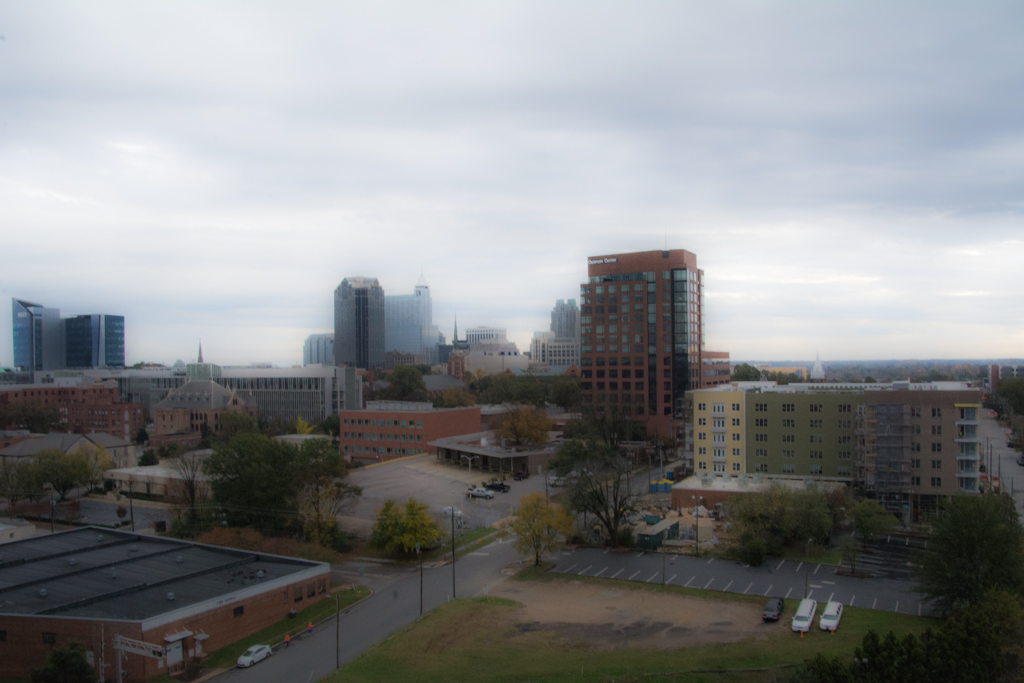
Raleigh at sunrise

Raleigh at sunrise

Yesterday we were getting ready to head for Durham for dinner and a concert when I learned that Justice Scalia had died. The news was unexpected, and disorienting. I spent an intense year working a few steps away from him as one of his clerks, and felt close to him in a way. He was a good boss and mentor. Despite our very different political orientations, I admired his intelligence, energy, and humor. He demonstrated (including by hiring non-conservative clerks) that engaging with people who disagreed with one’s views was not a thing to avoid, but rather to embrace — stimulating and potentially creative. I disagreed with him vigorously on many things, but I liked him, and will miss him. This will take some time to process.

We met our friends John and Laurie for dinner at Dos Perros, a stylish Mexican restaurant, where we had good food and conversation. Then we went over to Duke’s Baldwin Auditorium to hear the Danish String Quartet, three young Danish guys, and one Norwegian one. They played an all Beethoven program, including two famous late quartets (Op. 131 and 135). This is challenging, craggy music, which the Scandinavians played with fearless commitment, embracing all the extremes of angularity and the subtlety. I thought the sound of violist Asbjorn Norgaard was particularly beautiful.

Zürich at sunset

Zurich at sunset

There’s been a lot in the press recently about the extreme inequality in the U.S., and frequent references to such facts as the top .1 percent own almost as much wealth as the bottom 90 percent. This seems disturbing on its face, but I got a much better grasp of its implications from reading Saving Capitalism: For the Many, Not the Few, by Robert Reich. Reich is a former Secretary of Labor (Clinton administration) and a professor of public policy at Berkeley. In Saving Capitalism, he argues that the increasing concentration of economic and political power in the hands of very wealthy individuals and corporations threatens the fabric of our society. Dramatic inequalities of wealth and opportunity strike the majority as deeply unfair, undermining the trust that’s essential for social order. Without redress, the system could fail.

Reich contends that the arguments over whether the free market is preferable to the government are based on a false premise, inasmuch as the market is created by human beings and is subject to modification, for better or worse, by those same beings. At various times in American history, the rules have been dramatically changed (the Jacksonian era, the Progressives in the late 19th and early 20th centuries, the New Deal), and they can be changed again. Only relatively recently have corporations been viewed as limited to serving shareholders, without regard to other stakeholders (employees, consumers, the public at large). The system can be fixed.

Reich is primarily focused on identifying the problems, rather than proposing solutions, but he does offer some preliminary thoughts on fixes. He notes that we need to get big money out of politics. Campaign finance reform is surely an important step. A more equitable tax system is another. We need to fix the rule system that applies to intellectual property, along with other legal reforms. Reich also favors a basic minimum income that guarantees everyone a minimally decent standard of living. He recognizes that automation and artificial intelligence are going to cost many more jobs, and we have to help those who get hurt. This is a timely book, well worth reading.

Our ice storm, Eugene Onegin, getting ready to ski Lech, and learning some German

Tiller7Bug 1-8
On Friday much of the East Coast was walloped by a big snowstorm, but here in Raleigh, we got mostly sleet and freezing rain. It left a treacherous coating of ice on the roads. Sally ventured out once in the Subaru for groceries, but otherwise we hunkered down till Sunday, when it warmed up and most of the ice melted.

That afternoon we went to the N.C. Opera’s concert production of Tchaikovsky’s Eugene Onegin. It was really good! I was particularly struck by Joyce El-Khoury as Tatiana, a brilliant young singer, with amazing dynamic range, subtlety, and feeling. Eric Barry’s Linsky was also very fine. Indeed, all the principals were excellent, and the chorus and orchestra sounded good, too. Hats off to maestro Timothy Myers! I’m happy to say that Red Hat is sponsoring a broadcast/webcast of this performance on WCPE on May 5.
Tiller7Bug 1-10

Next Saturday we’re headed to Lech am Arlberg, Austria for a week. Skiing the beautiful and challenging Alps, in the birthplace of the exhilarating sport of alpine skiing, has been a long time dream, and we’re finally going to do it. I settled on Lech based on recommendations of friends and data indicating that it is one of the snowiest places in Europe. The snow reports haven’t been looking great, but in the last few days coverage seems to be improving. As of today, they claim 55 inches, with 93 of 97 lifts open, and 193 miles of pistes. And close by is St. Anton, with lots more. With mother nature, you never know, but I’m optimistic.

In happy anticipation, I’ve been learning some German with the Rosetta Stone program. I’ve gotten my basic greetings, numbers, colors, days of the week, basic types of housing, furnishings, appliances, food and drink, transportation methods, payment methods (e.g. Kreditkarte!), body states (e.g. ich habe Hunger!), and a other very practical words and phrases.
Tiller7Bug 1-9
It helps that there are a lot of cognate cousins with English, and the vocal sounds correspond closely. But there are also a lot of little, intense puzzles. Whoever thought of the devilish declension system? And irregular pluralization? Etc. But it is quietly absorbing, much like learning music. As with music, you work as your own programmer, becoming something a little different, expanding.

But I’m under no illusion that I’ll be a fluent German conversationalist by next week, or even next year. For possible language emergencies in Austria, I downloaded Google Translate onto my smartphone, and practiced with it a bit. It receives spoken messages in English and broadcasts them back in German (or other languages), and vice versa. In my tests, it was quite accurate. Amazing!

My recent reading and listening

Tiller7Bug 1-5
One thing that I hate about vacations is that I always come back heavier than I went out. It’s strange, but predictable, that a week of traveling makes me about five pounds heavier. There’s nothing particularly terrible about gaining five, but if you do it enough times, it adds up. I really prefer not to carry around excess pounds, which means, post vacation, I’ve got some reducing to do.

That requires some time exercising, which, fortunately, I enjoy, in a way. It’s a lot more enjoyable since I started combining working out with listening to podcasts and audio books. This week at the gym I’ve been listening to the new Serial, about Sergeant Bowe Bergdahl, which examines the mystery of what he was really up to when he was kidnapped by the Taliban. It’s good. I also discovered WTF, an interview podcast by Marc Maron, and listened to an interview with Eric Bogosian, the actor, playwright, and author. He was a student at Oberlin when I was there. Among other impressive talents, he has an amazing voice.

Speaking of talented people I knew slightly, I saw articles in both the NYT and WSJ this week about the artist Robert Irwin. I met Irwin when I was a fact checker at the New Yorker and checked a piece about him by Lawrence (Ren) Weschler that became a book, Seeing is Forgetting the Name of the Thing One Sees, which is still in print.

I really liked Irwin, and was affected by his vision. His work is difficult to describe, but generally involves transforming spaces so that they reveal different things. He has spent most of a restless career, based in Los Angeles and then San Diego, creating subtle, at times vanishingly evanescent, environments with plain materials — fabric scrim, glass, lights, plants and trees — “to make you a little more aware than you were the day before,” as he puts it, “of how beautiful the world is.” He’s now 87, and has various interesting works in progress. Anyhow, I recommend Ren’s book, and the articles, and I’m planning to try to get io his new show at the Hirshhorn.
Tiller7Bug 1-4

One thing I like about vacations is some time to really read. Last week I finished a couple of significant books and made substantial progress in others.

I finished Don’t Panic: ISIS, Terror and Today’s Middle East, by Gwynne Dyer. It helped me get a better grip on the geopolitics that led to ISIS, and that sustain the violence going on right now. The atrocities of ISIS are horrifying, but per Dyer we really have to quit freaking out, because it doesn’t help, and they are not an existential threat to us.

Which is not to say they aren’t wreaking havoc on the Middle East. The plight of millions of Syrian and other refugees is horrendous, and winter is just well started. I did a bit of research of what we as individuals might do to help, and ended up making a contribution to the International Rescue Committee. The Times endorsed it and some other charitable organizations. Please consider whether you might be able to help.

I also finished Black Earth, the Holocaust as History and Warning, by Timothy Snyder. The subject of Hitler’s genocide is, of course, tough to think about, but it turns out that there are very important aspects of it that our history professors and museums mostly missed until – Snyder. For example, most of the Jews killed in the Holocaust were victims of mass shootings, rather than gassing, and the likelihood of dying varied according to the degree to which the existing state apparatus was destroyed, as it was in Poland and the Baltic states. As depressing as it is that humans can be as depraved as the Nazis, it is also cheering that we can understand the past in new ways, and maybe change ourselves.

I made substantial progress on re-reading Your Atomic Self: The Invisible Elements that Connect You to Everything Else in the Universe, by Curt Stager. Stager does a good job showing how atoms relate to life as we know it, which is both well known and very difficult to grasp. He breaks the world down to its essentials, starting with hydrogen, oxygen, carbon, and nitrogen, and shows how basic recycled elements form our bodies. I’ve finally got firmly in mind how a lot of the atoms we are made of are the products of long-dead stars. Joni Mitchell was right that we are stardust. And, just as we are continually transforming our surrounding environment, it is transforming us.

A new colleague at work, Jeff K, recommended I read Hackers, by Steven Levy. It’s a history of the computer programming pioneers of the sixties and seventies at MIT, Silicon Valley, and elsewhere. I quickly got absorbed, and have made it about halfway through so far. These people were obsessed, and in some cases brilliant, as they discovered/created the new digital world that we live in today. A lot of them were awkward and odd, and did not have normal social lives (e.g. girlfriends). I thought that seemed sad, but gradually realized how full they were of the joy of discovery. A lot of these pathfinders were making free and open source software well before anyone labelled it as such.Tiller7Bug 1-2

Finally, I made substantial progress on The Goldfinch, by Donna Tartt. I was interested in the book initially because I love Dutch painting of the 17th Century, and I’ve seen Fabritius’s famous, gorgeous Goldfinch. I’m finding Tart’s book extraordinary, in the way Catcher in the Rye is extraordinary, with perceptions that have the freshness of youth and the risk of fatal error of youth. She’s a great novelist in the old-fashioned way, with a deft grasp of quick emotions and richness of character and incident.

While I’m thinking of brilliant artists, I’ll mention one more recent discovery: the violinist Sarah Chang. As I now know, she was a child prodigy and is now a seasoned concert artist, but I discovered her a few weeks back by chance when I felt like listening to the Brahms violin concerto, and picked her recording from those available for streaming on Rhapsody. (The same recording is available on YouTube) She’s amazing! Volcanic intensity, and yet sensitive to the finest nuance. She’s got a big, gleaming, shimmering sound. Here she is in a wonderful live performance of the Carmen Fantasy.

Saturday I drove out to Cary for my haircut with Ann S, and got caught up on her holiday doings. Afterwards I drove east to Chatham County and visited Jordan Lake. It was gray and raw, with rain threatening, and the water level was high. There were hundreds of gulls at Ebenezer Point, mostly ring-bills and a few herrings.

Our Thanksgiving – spinning, piano, football, eating, and talking about terrorism

Mowgli Tiller

Mowgli Tiller

Thanksgiving morning, after I walked the dogs and read the newspapers, Jocelyn and I went to Flywheel for a spin class – our first together, and her first Flywheel experience. After getting the bike adjusted and bike shoes clipped in, the music started, loudly. I pushed hard, in a close battle for first place, and ended with a score of 325 – 10 ahead of the nearest male competition (and well behind one amazing woman). It was my first ever first, and I was kind of proud! Jocelyn also did well, staying well out of the cellar.

That afternoon, I practiced the piano with a view to getting ready for a lesson with Olga on Sunday. I’ve been working on several challenging and beautiful pieces, including Liszt’s Un Sospiro, Debussy’s Reflets dans l’Eau, and Schumann’s Arabesque. I’ve also finally felt strong enough to take on Liszt’s powerful Vallee d’Oberman. I think I’ve gotten off a plateau and climbed a bit higher. My playing lately feels more technically secure, and also more fluid and imaginative. Olga has certainly been a wonderful guide and inspiration. The meta lesson she gives is simple in concept, but hard to do: listen, listen, listen, more closely, and then more closely still.
Tiller6Bug 1-5

Then Jocelyn and I watched most of the Carolina Panthers v. Dallas Cowboys. The Panthers were 10 and 0 coming in to the game, a streak that had caught my interest and turned me into a fair weather fan. Jocelyn said that the Panthers were considered underdogs, which we agreed seemed disrespectful, and we were particularly happy to see them score early and go on to win decisively. Eleven and 0!

For Thanksgiving dinner, Jocelyn, a former professional bartender, created a new cocktail that she dubbed Apple Pie Manhattan, which involved infusing bourbon with apple, vanilla and cinnamon, and adding maple syrup, and dry Vermouth. It was delicious! Sally’s sister, Annie, brought Diane and her friend Debbie over, and Sally served a righteous butternut squash soup, black rice, and Mexican lasagna. Just like the Pilgrims!
Tiller6Bug 1-4

We spent part of the meal discussing politics, and debated whether Obama had been sufficiently forceful in opposing the anti-refugee backlash, and whether Trump had gone from being a mildly entertaining fool to being an instrument of evil. By using his media platform to demonize Muslims, he’s giving permission and energy to a large racist element of the population. The Times had a report on New Yorkers harassing and spitting on Muslim women, which is appalling and frightening.

At the same time, there seems to be a growing consensus that the solution to the terrorist threat is a coalition of nations to wipe out ISIS. This seems to me a bad strategy. We’ve spent the last 14 years using bullets and bombs trying to wipe out al Qaeda and the Taliban, without success. Indeed, our military efforts in Afghanistan and Iraq helped spawn al Qaeda v. 2 – ISIS.

The source of terrorist violence is not particular individuals who can be killed, but social conditions, like poverty, lack of opportunity, lack of education, corruption, violence, and authoritarianism, which produce feelings of alienation, desperation, and rage. When we kill one terrorist, we inspire new ones to swear vengeance and take up arms, and the cycle repeats. If we obliterate ISIS, without social change, there will be a successor to ISIS. Bullets and bombs will never work.

I wonder if there is already a good name for our tendency to insist on a direct or even violent solution to a scary problem, even when part of us can recognize that there’s no quick fix. If not, there should be, because we do it over and over. I suggest calling it Fear Control Activity Disorder. The person or society with this disorder seeks to overcome a feeling of fear with a feeling of control by taking action that is dramatic though unlikely to address the actual source of the fear. We crave the feeling of being in control, and insist on seeking control even when it’s objectively unachievable. The disorder could account for a lot of our military adventures, our overimprisonment of criminals, and our overspending on medical goods and services.
Tiller6Bug 1-3

Purity, the Montrose Trio, Gore, and Gates

Tiller6Bug 1
It’s been a foggy, drizzly week in Raleigh, which tends to lower high spirits, but is good for introspection. I finished Jonathan Franzen’s new novel, Purity. The book offers several interesting characters, including social activists who think about the big issues like out-of-control surveillance and global warming. Mostly, though, the book is about close family and romantic relationships, and shame and guilt. There’s enough that’s closely observed and honest here to be affecting, and I found myself hypnotically absorbed in some sections. As I neared the end, though, it, or I, lost steam, and I was glad to be done with it.

Saturday night we went over to Durham for dinner at Watt’s Grocery with friends and a concert. It turns out Watt’s is more vegetarian friendly than shown on the menu, willing to create a custom plate of the non-meat offerings, and mine was good. At Duke’s Baldwin auditorium, we heard the Montrose Trio, a new group made up of two former members of the Tokyo Quartet and pianist Jon Kimura Parker. They performed works of Turina, Beethoven and Brahms. Turina was new to me — Spanish, 1882-1949 – and reminded me pleasantly of Ravel, while the other pieces were old friends. Montrose was truly excellent – musicianship of the highest order, applied to great music.

The November issue of the Atlantic has an interesting piece on Al Gore and his involvement with Generation Investment Management, a global equity fund. The company has significantly out-performed the market since 2005 by investing in companies that are not only well-managed compared to their competition but conscious and responsible in their social and environmental actions. This approach runs counter to the conventional wisdom that successful capitalists must place profits ahead of values. The theory of Generation is that long-term profits require long-term thinking, including thinking about sustainability.

The same Atlantic has an interview with Bill Gates on his new endeavor to address climate change. He’s of the view that we’ve got to make major technological breakthroughs relating to energy to prevent or mitigate disastrous environmental changes, which will require research to go into overdrive, and he’s committing $2 billion of his money to the effort. He’s obviously studied up on the subject, and he hasn’t lost all hope or become hysterical. As he points out, either we focus our resources on finding a solution, or we run the experiment of what happens when the planet’s temperature rises by two degrees – and then three degrees and then four.

In New York — FOSS, museums, Broadway, and the marathon

A window table at Stella 34, with the Empire State Building in the background

A window table at Stella 34, with the Empire State Building in the background

New York City is still the greatest! It’s so energizing. I went up Thursday night to attend the Software Freedom Law Center’s fall conference on Friday, and for the weekend we did some fun city things – museums, Broadway, sports, and food.

The conference at Columbia Law School was in part a celebration of how far free and open source software has come, but also discussed less pleasant things, like copyright trolls and security. I enjoyed seeing a number of business friends from leading tech companies and catching up.

Jocelyn picked out some fun places to eat, including Stella 34, which is on the fifth floor of Macy’s. The Italian food was good, and we had an epic view of the Empire State Building.
Tiller6Bug 1-6

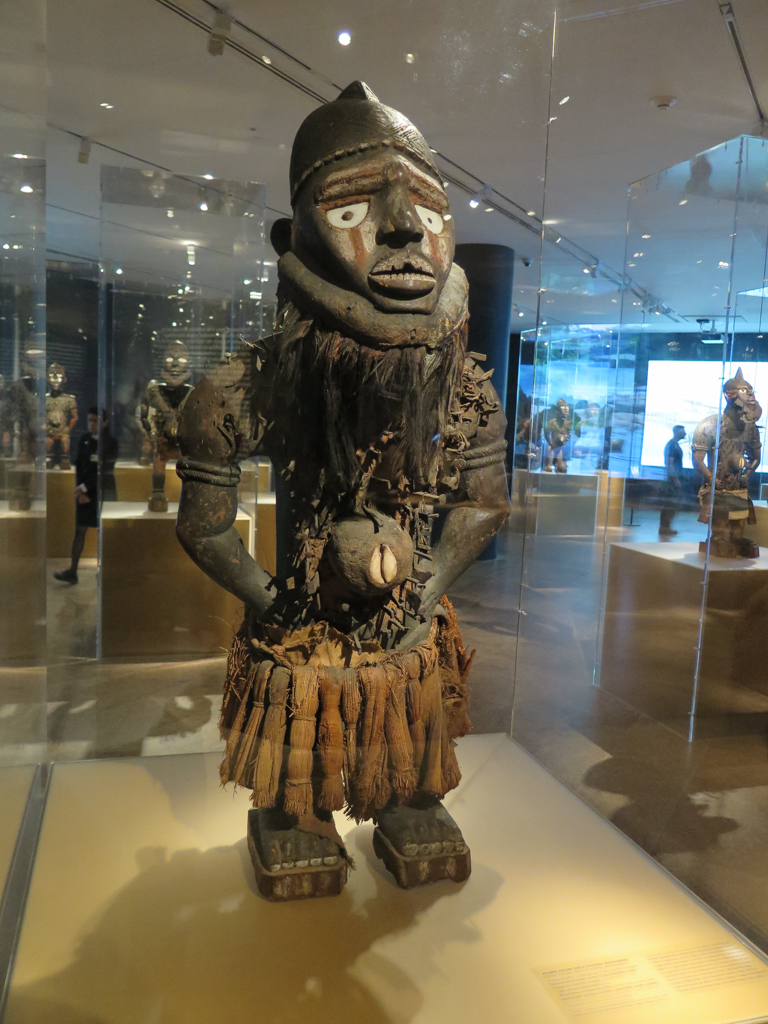
On Saturday morning Sally and I went to the Metropolitan Museum and saw two special exhibits – Kongo: Power and Majesty (art of central Africa), and Ancient Egypt Transformed: the Middle Kingdom. After our recent Africa trip, I’ve been listening to African music, and was eager to learn more about its art.

Slavery and horrendous colonial exploitation is what I think of first when I think of central and western Africa, but the exhibit demonstrates that there was an elaborate and well-developed culture and artistic tradition before Europeans arrived. There was extraordinary craftsmanship in their carvings and weaving, and something powerful in their religious objects. If you can’t get to the Met, you can see all the objects here.
Tiller6Bug 1-7
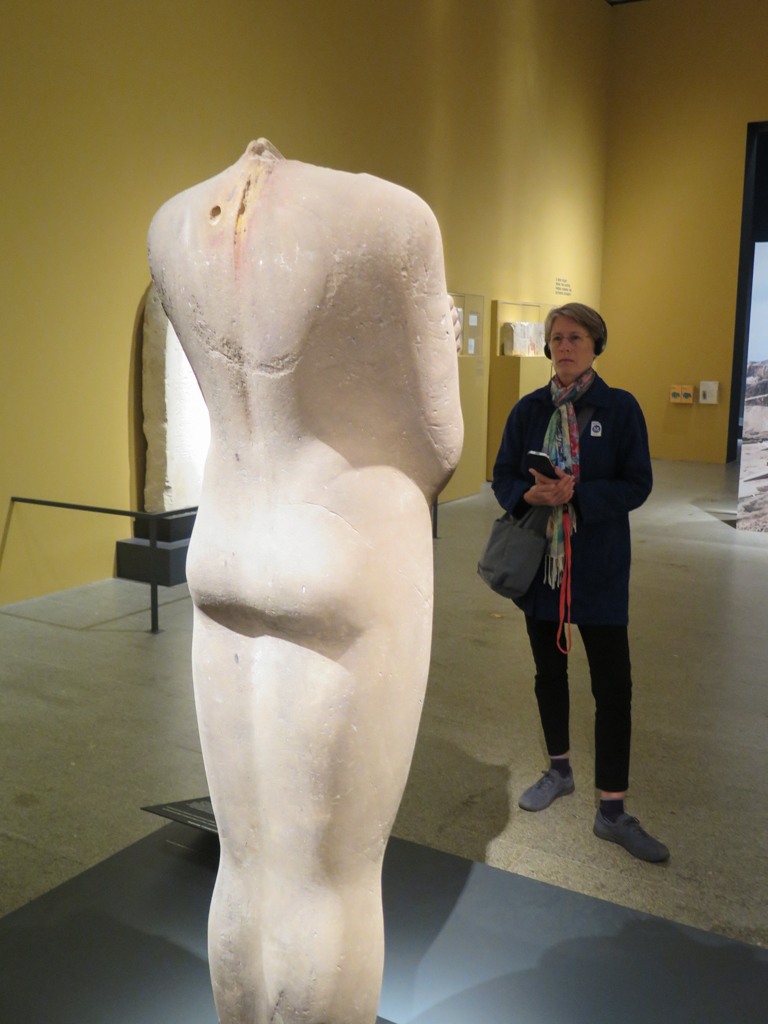
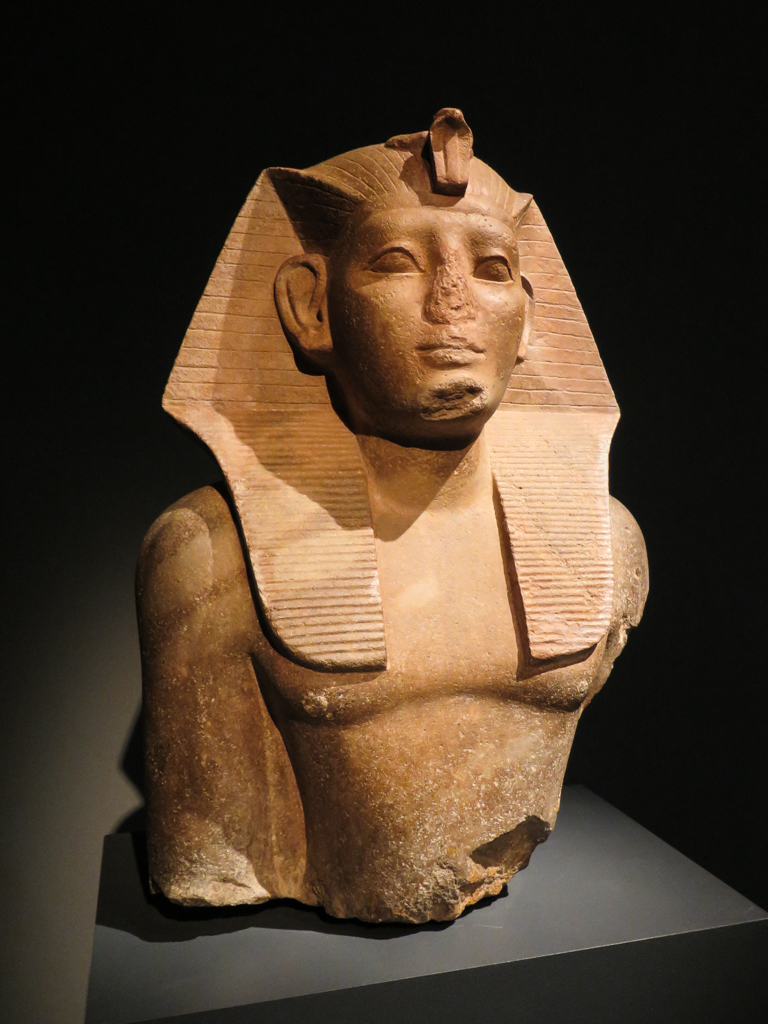
As for Egypt, the Middle Kingdom ran from 2030-1650 BC and from the 11th through the 13th dynasties. This exhibit also changed the way I thought of this society. It’s strange, of course, to think that pharaohs were viewed as gods, but all religions have their quirks. I’d thought of the sculpture as normally cold and formulaic, if well crafted, but was struck by how tenderly human and individual some of it was. Here again, you can check it all online.
Tiller6Bug 1-9

I’ve generally avoided museum audio guides, on the theory that it’s good to struggle with finding the message of objects than to be spoon fed. But it was well worth using the Met’s audio guide for these exhibits. The commentary was usually intelligent, and it was helpful to hear the pronunciation of the unfamiliar African and Egyptian words.
Tiller6Bug 1-5

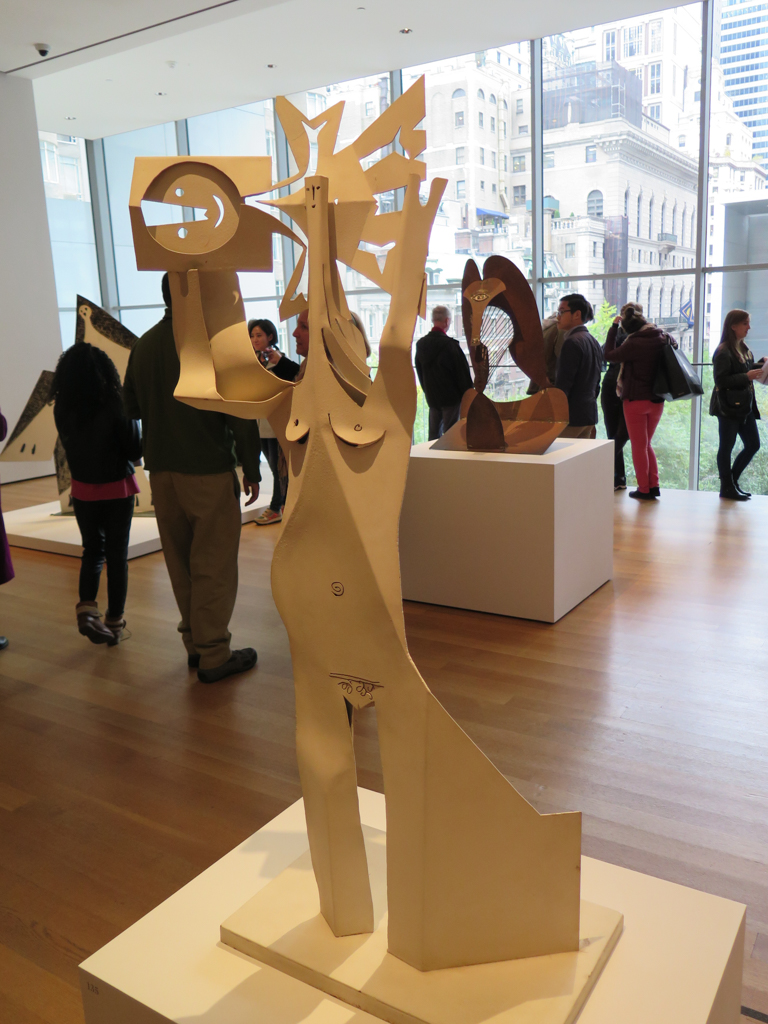
Afterwards, I went down to the Museum of Modern Art to see a special exhibit of the sculpture of Picasso. Apparently Picasso did not think of himself as a sculptor, but used sculptural tools for exploring new ideas. These were often witty and lively works, in a variety of styles and media. Picasso is really inspiring in his never-ending curiosity and energy.
Tiller6Bug 1-4

That evening we went to see Hamilton, a big hit on Broadway about the life of Alexander Hamilton told in the hip hop vernacular. Jocelyn had seen it twice off-Broadway, and was hugely excited about seeing it again. Her enthusiasm had motivated me to do a bit of homework beforehand, including reading the Ron Chernow biography of Hamilton, listening to the cast recording, and listening to some of the big hip hop hits of the last three decades.

I really liked the show. Hamilton’s life story is richly dramatic, and his achievements were extraordinary. That’s a good start, but to bring them into the present with an urban vernacular is such a great idea! At the same time, to take on some complicated history, with a spirit that is both playful and serious, is remarkable! The creator and star, Lin-Manuel Miranda is surely brilliant, and seems to understand that history is not something that is fixed, but rather always subject to reexamination and new understandings. Anyhow, it’s both a fun show, and richly thoughtful. How often does that happen?
Tiller6Bug 1

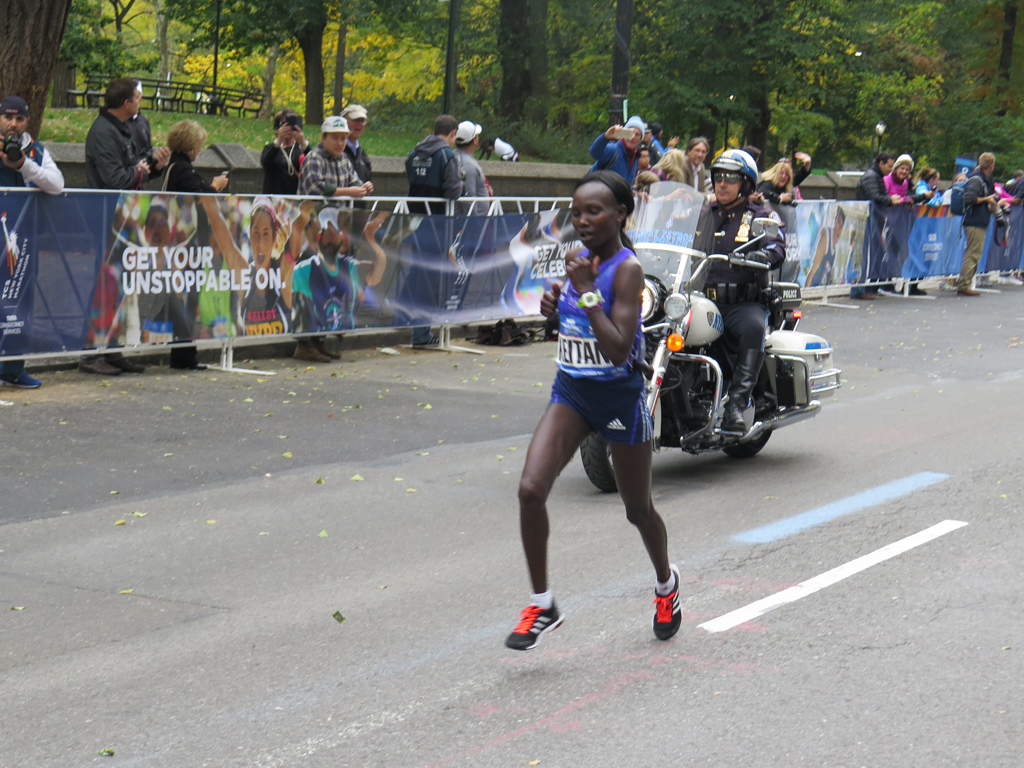
On Sunday morning we walked up to Central Park South to see the New York City Marathon. It is, of course, remarkable that people can run 26.2 miles at any speed, much less the pace that the elite athletes do. We were privileged to see the top finishers approaching Columbus Circle, close to the end. They looked focused, but not miserable. I read the next day that the men’s winner, Stanley Biwott of Kenya, ran mile 21 in 4:24, and only a few seconds slower for the next two miles. That is beyond amazing!

Winner Mary Keitany of Kenya, with about a third of a mile to go

Winner Mary Keitany of Kenya, with about a third of a mile to go

Processing a hand problem, Shen Wei dance, and The Unpersuadables

Raulston 6-12-15-0039
It’s been more than a year since I injured my right hand in Dominica, and though it got better for a while, it still does not feel right. I was trying to play Chopin’s Fantaisie Impromptu recently, and just could not get the loud, fast parts to go loud and fast. I made an appointment with Dr. Edwards at the Raleigh Hand Clinic, with a view to getting a referral to an occupational therapist I’d heard about, and getting some helpful exercises to fix me up. I saw him on Friday, and got some bad news.

Based on X-rays (which he showed me on his iPhone), Dr. E quickly diagnosed osteoarthritis. This is one of those things that don’t get better, and generally get worse. He could not say how quickly it would progress. The doc recommended Aleve for pain. He mentioned that if it got a lot worse, I could eventually be a candidate for finger joint replacement surgery. Yikes!

As a youth, I tended to view intellectual pleasures as superior to physical ones, but eventually I came to welcome the physical side of life as a glorious thing. I’ve taken great satisfaction in dexterous use of my hands, on the piano keys, the computer keys, the camera buttons, and many other places. This diagnosis will take some time to process. Though, of course, life will go on.
Raulston 6-12-15-0050

On Saturday we met up with some friends in Durham and had fine dinner at Rue Cler. Then we walked over to DPAC and saw a modern dance program by Shen Wei, the first show of the season at the American Dance Festival. The first SW piece, Untitled No. 12-2, started slowly: the curtain came up to reveal gray fog, and there was silence and blankness happened for a surprisingly long interval. Then we saw projections of abstract paintings by Mr. Wei. Eventually the troop began a slow traverse of the stage, with accents by individuals. The music was sparse percussion sounds. I found the piece overly spare and intellectual and underly physical.

The second piece, Map, was much livelier, with music of Steve Reich and large helium balloons. The choreography seemed well atuned to the energetic music, with sweeping gestures and twists, and small groupings moving in and out of phase. We liked it.

Afterwards, we walked over to 21C, the new luxury hotel in the former SunTrust building, and looked at their bold and brash collection of contemporary art. It’s open to the public, and free, and fun. Afterwards we stopped in a new place, Bar Lusconi, for an exotic beer.
Raulston 6-12-15-0062

Today I finished reading The Unpersuadables: Adventures with the Enemies of Science, by Will Storr. Storr narrates his encounters with intelligent people who believe crazy things, such as Holocaust deniers, past life regressionists, alien abduction experiencers, climate change deniers, and young earth creationists. In interviews, Storr challenges these folks, and confirms that they are impervious to reason and facts. Nothing can shake their beliefs. By way of partial psychological explanation, he draws on the work of Kahneman, Haidt, Ariely, Gazzaniga, Tavris, and Aronson regarding the inherent flaws in our mental processes, such as cognitive dissonance, confirmation bias, and unstable memories.

Storr is a journalist rather than a scientist, but he incorporates good source material and has genuine insight into the powerful illusions of consciousness. The book is also surprisingly personal, as Storr unflinchingly addresses his own biases and weaknesses. He recognizes that scientists can at times be highly unscientific, engaging in groupthink and suppression of evidence that doesn’t fit their world view. Perhaps most amazingly, as he engages with individuals who construct bizarre and odious theories, he manages to subject their ideas to fair scrutiny and at the same time respect their humanity.
Raulston 6-12-15-0082