The Casual Blog

Category: books

The way to San Jose, Ridge Winery, and E.O. Wilson on human nature
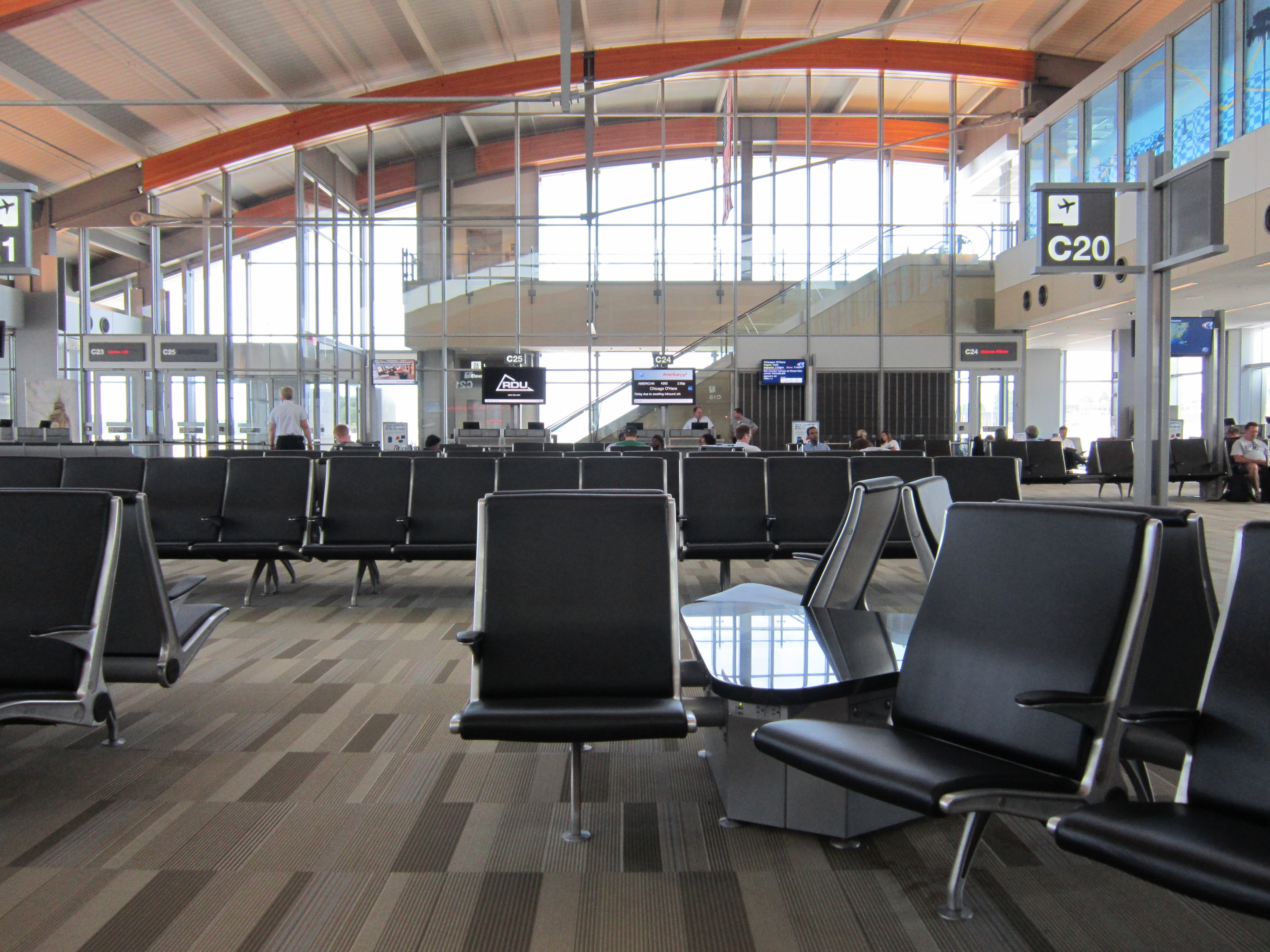
I missed my flight out of RDU on Tuesday morning after trying to send off one too many emails. On the drive to the airport, as reality set in, I went through the five stages of travel anxiety: concern, serious concern, alarm, panic, and finally, acceptance. By the time I made it through the American Airlines queue and the agent said I was too late, I was able to agree calmly, and ask politely what my next best option was. She put me on standby for a flight three hours later.

With my unexpected airport time, I got an excellent shoe shine and a half-hour chair massage at Express Spa. A couple of times a month I try to get a chair massage from the Red Hat massage therapist, which I had to miss because of my trip. I was interested in some work on my shoulder, where there have been minor issues. I assumed that an airport massage would be more about feeling pleasant than serious therapy, but I was not averse to a release of some endorphins.

My masseur, a small guy from China, asked how hard I liked it. I said pretty hard. He obliged with a serious deep tissue approach. It took all my determination to resist begging for mercy. At one point I took note that massage therapists are required to pass a licensing exam, as it was coming into focus that massage could cause bodily harm. Then I realized I had no way of knowing if my guy was licensed. He finished with some blows that shook me like a punching bag. It was almost frightening. But once it was over, I felt great!

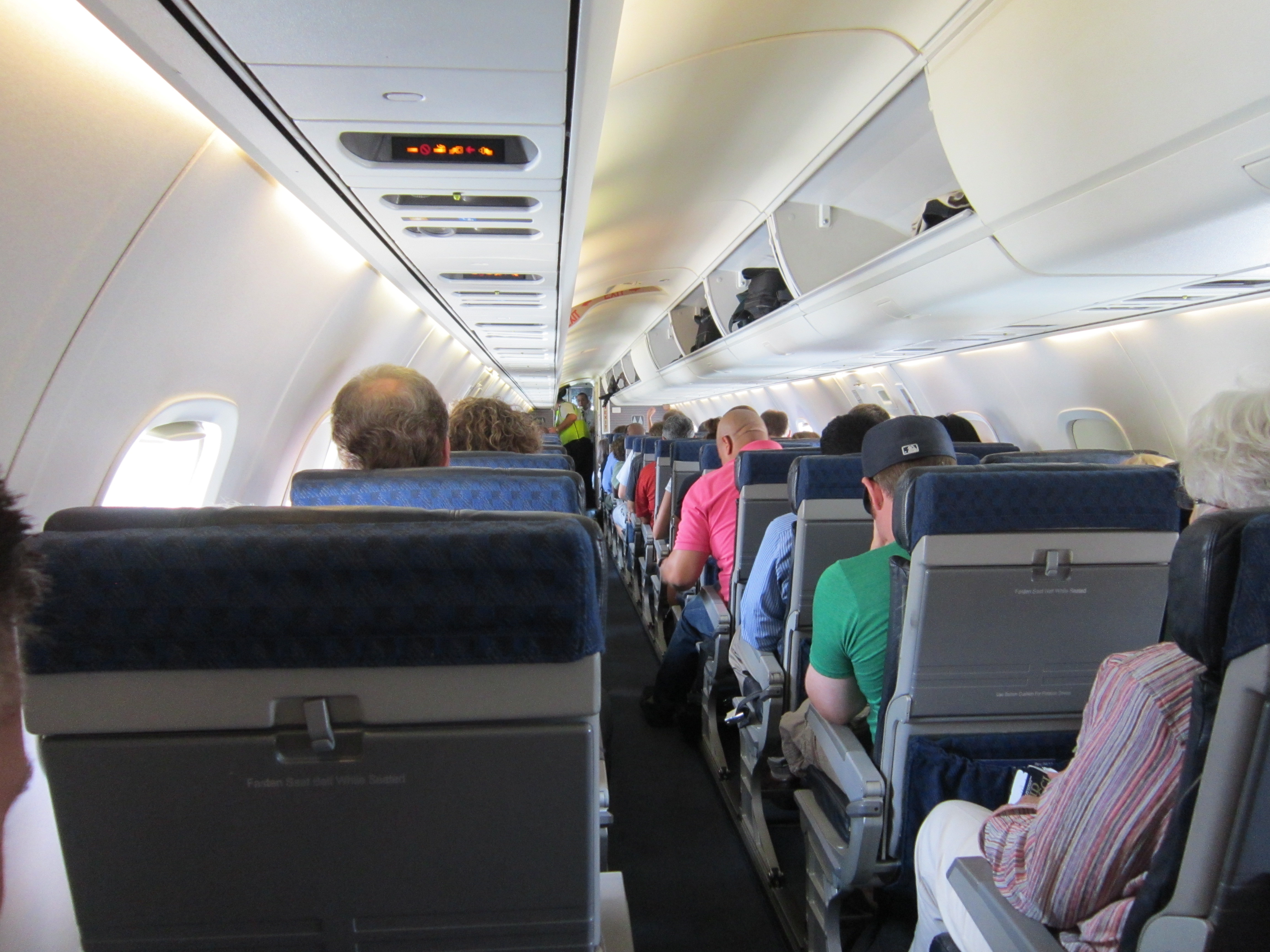
Being on standby involves a degree of anxiety. You’re either barely making the flight, or you’re going back to square one. On this trip, the gate agent said the I had a good chance of getting on the flight out of Raleigh, but a less good chance of getting on the connecting flight in Chicago. When I felt a wave of tension, I took a few deep calming yoga breaths, and tried to stay positive. Eventually, four and a half hours late, I got to San Jose, got a rental car, and headed to the hotel.

I was assisted by a Garmin GPS device, which smoothly directed me through every turn. This little tool has greatly reduced the anxiety of travel to unknown lands. Getting lost is almost a thing of the past. I still carry printed directions as a fail safe system, but I haven’t used them in a while. Thus have I outsourced a part of my mental load, and in using this now-common tool become a little more of a cyborg. I could lament the possible loss of map-reading skills, but won’t. Thanks to Garmin and all the scientists, engineers, and technicians who’ve reduced my worry level and bestowed more creative mental space.
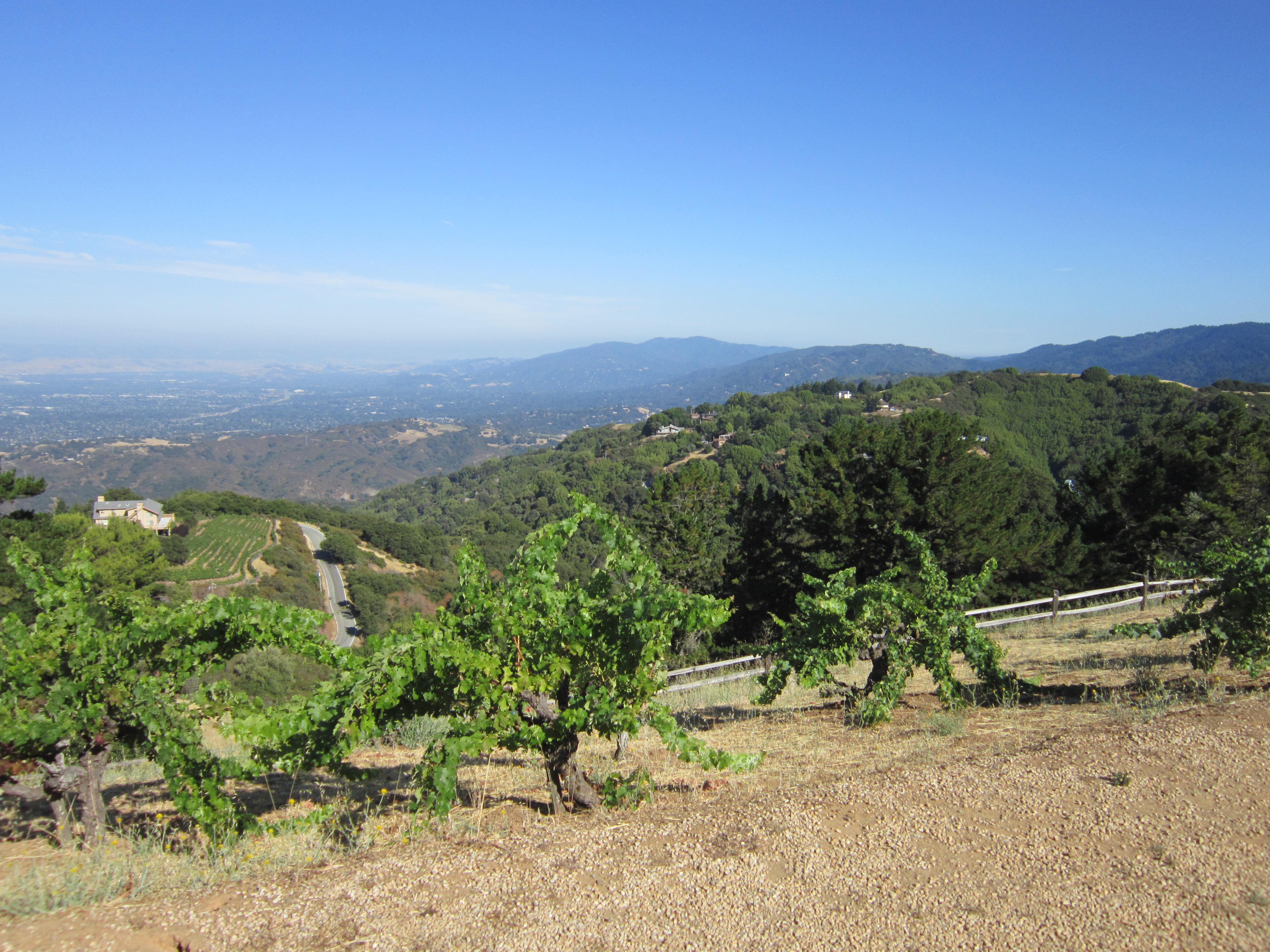

There’s something about northern California that I really love. It isn’t the glamor, which I was far from, but it may be something about the light. After various meetings, I got a chance to tour Ridge Vineyards in the Santa Cruz mountains. It involved a drive ascending 2,0000 feet along narrow roads with hairpin turns. The landscape was dry and craggy.

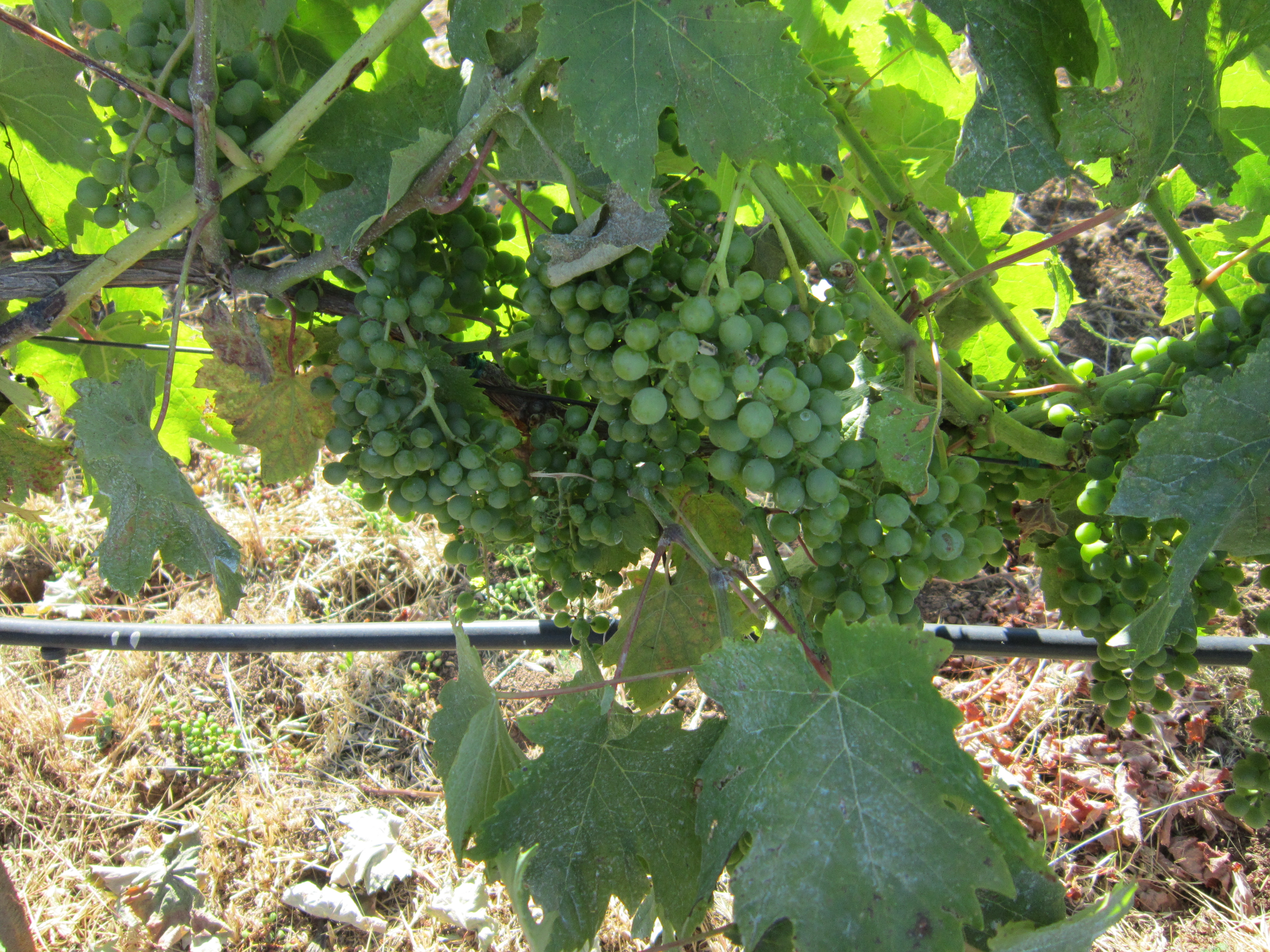
Our tour guides were experts and scholars of wine making, and I got a deeper understanding of the significance of soil and water conditions, vine life cycles, vine placement and spacing, pests, harvesting techniques, pressing, oaking options, considerations for blending, and aging decisions. The vineyard mountain views were beautiful, and the wines were excellent. It was also a great pleasure to meet our guides and experience their joy and passion for their craft.
On the long flight home, I finished reading for the second time The Social Conquest of Earth by E.O. Wilson. Wilson, a senior professor at Harvard, is one of our foremost experts on ants, but his scientific passions are wide-ranging. In this latest book, he attempts to revive and develop an approach to evolution that includes selection not only at the individual level but also at the level of groups. He argues that this accounts for some of the defining characteristics of homo sapiens, including our intense desire to be part of a tribe or group and our superlative skills at interpreting the thoughts, feelings, and intentions of others.

These skills made it possible for our ancestors to cooperate in a way that led to success versus other animals (including predators and our close relatives the Neanderthals), and to collaborate in agriculture, technology, and artistic expression. He also thinks multilevel evolution (individual and group) accounts for our never-ending interior conflicts between the urge toward cooperation and altruism (which benefits the tribe) and the opposite urge to seek competitive advantage over other individuals.
Wilson has a persuasive account of the origins and persistence of religious thought. In his view, it is characteristic for human animals to generate narratives to explain the unknown, and thus natural for communities to compose creation myths. Myths and rituals are adaptive in creating group cohesiveness, which contributes to tribal success. Religion has inspired great art and helped groups and individuals in difficult times. But Wilson ultimately concludes the costs of religion thinking outweigh the benefits, particularly once humankind acquired the tools of science.

Wilson would admit that the evidence for his multilevel approach to evolution is incomplete, and his theory is bound to be controversial. But right or wrong, I admire his willingness to engage and take some intellectual risks on the big questions, like the nature of human nature and the foundations of morality. He brings to the table spirited curiosity and the ability to draw on recent discoveries from biology, neurology, genetics, anthropology, climatology, and paleontology, not to mention, of course, myrmecology. He demonstrates the use of science as both a method and a world view — a world view that is both practical and inspiring.

My flight out of San Jose left 20 minutes late for Dallas, and my original Dallas connection was only 25 minutes. Dallas is a big airport, and getting from a gate on one side to a gate on the other can easily take 30 minutes. It seems I never leave from a nearby gate, so I had some worries, and took some yoga breaths. We came in at A37, and the flight out was at A33. I heard the announcement for final boarding for Raleigh as I stepped into the terminal, and took off in the OJ Simpson airport sprint. (I’ve noticed that gate agents sometimes look around for last second sprinters.). I was the last to board. Kind Fortuna!

Shortly after I got home, we had a thunderstorm and a strange sunset.

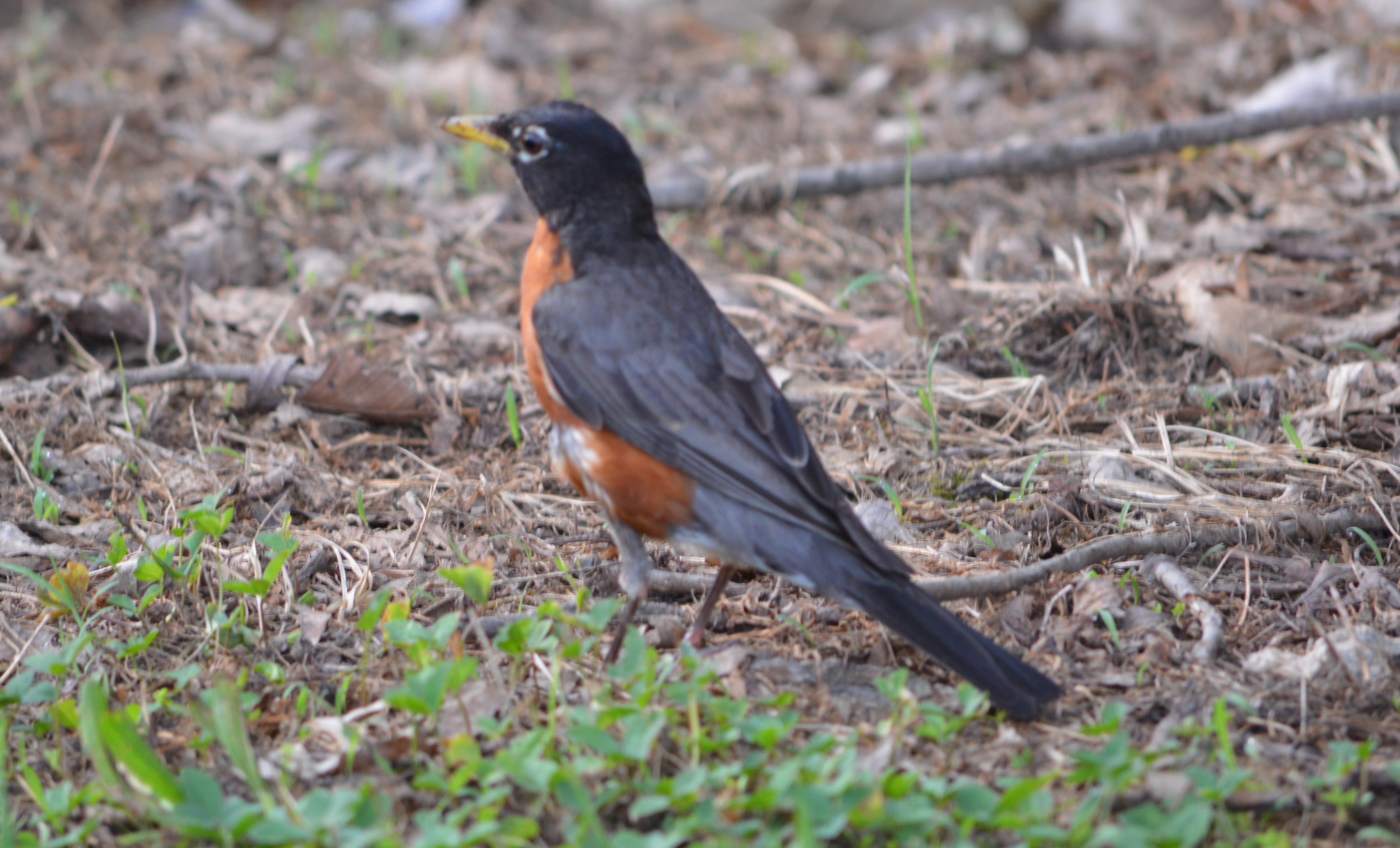
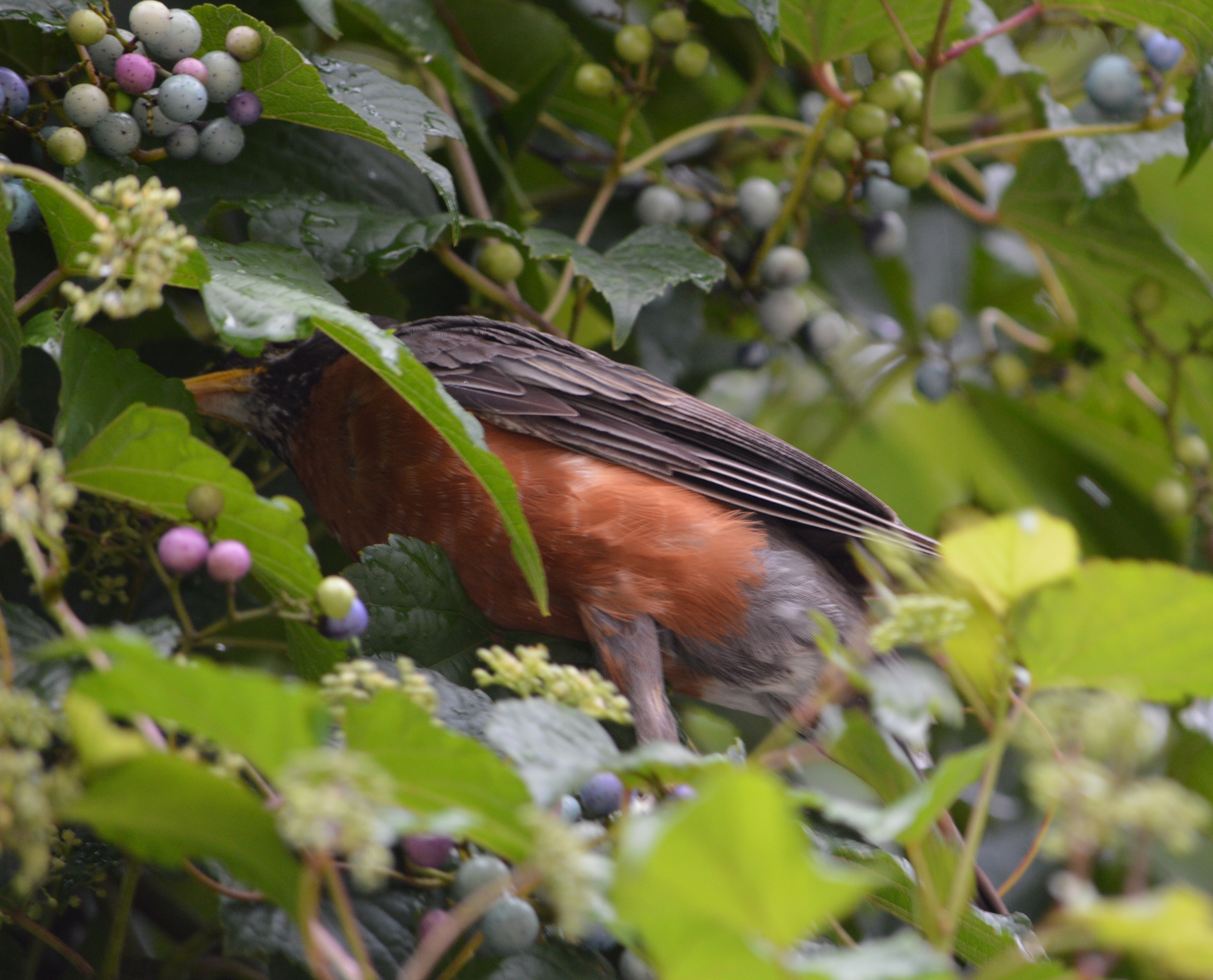
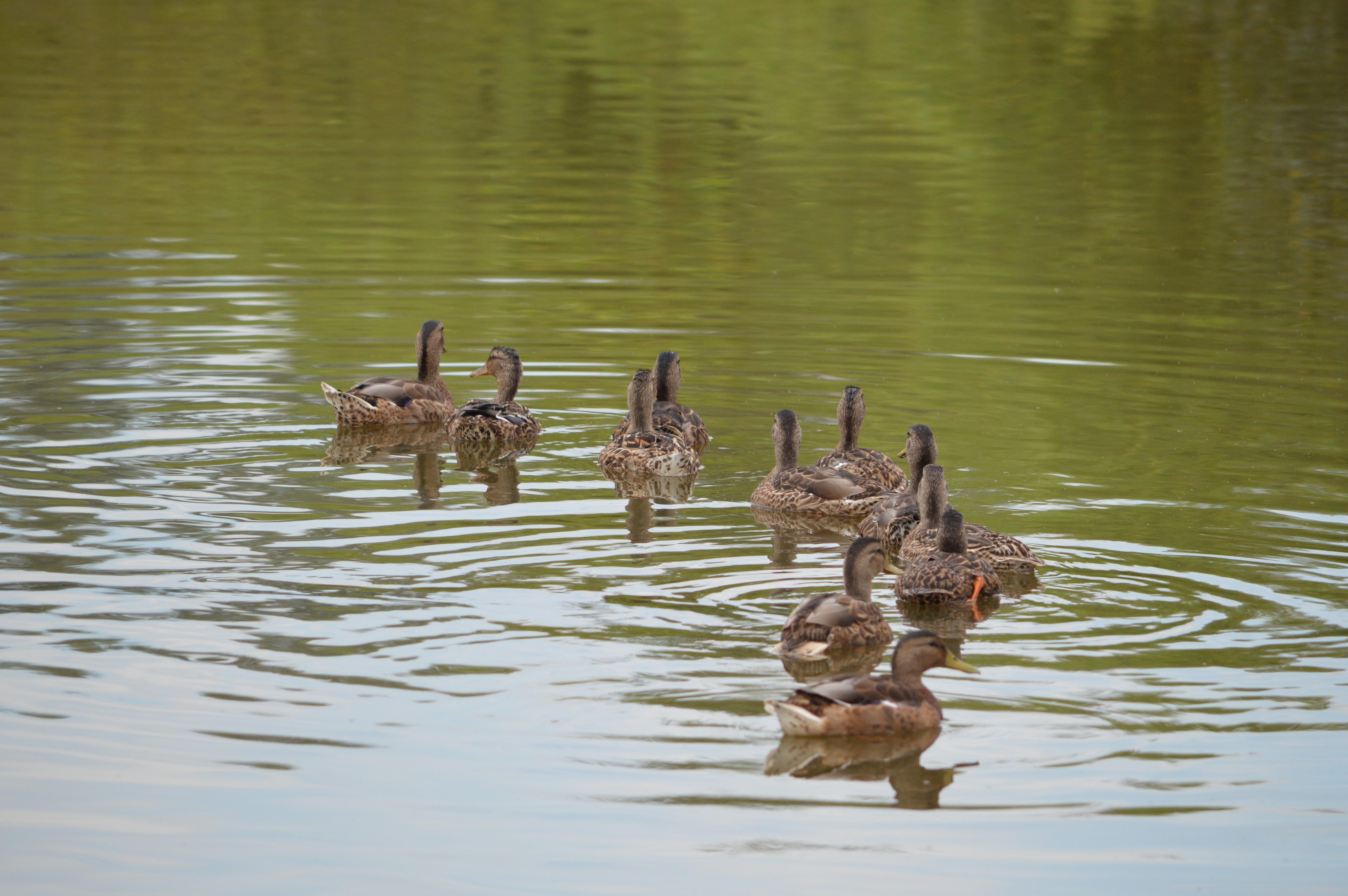
There were some birds this morning at the boardwalk off of Raleigh Boulevard. Most of them hid from me (like that small bird in the Frost poem), but a robin, a great blue heron, and a mallard family didn’t.
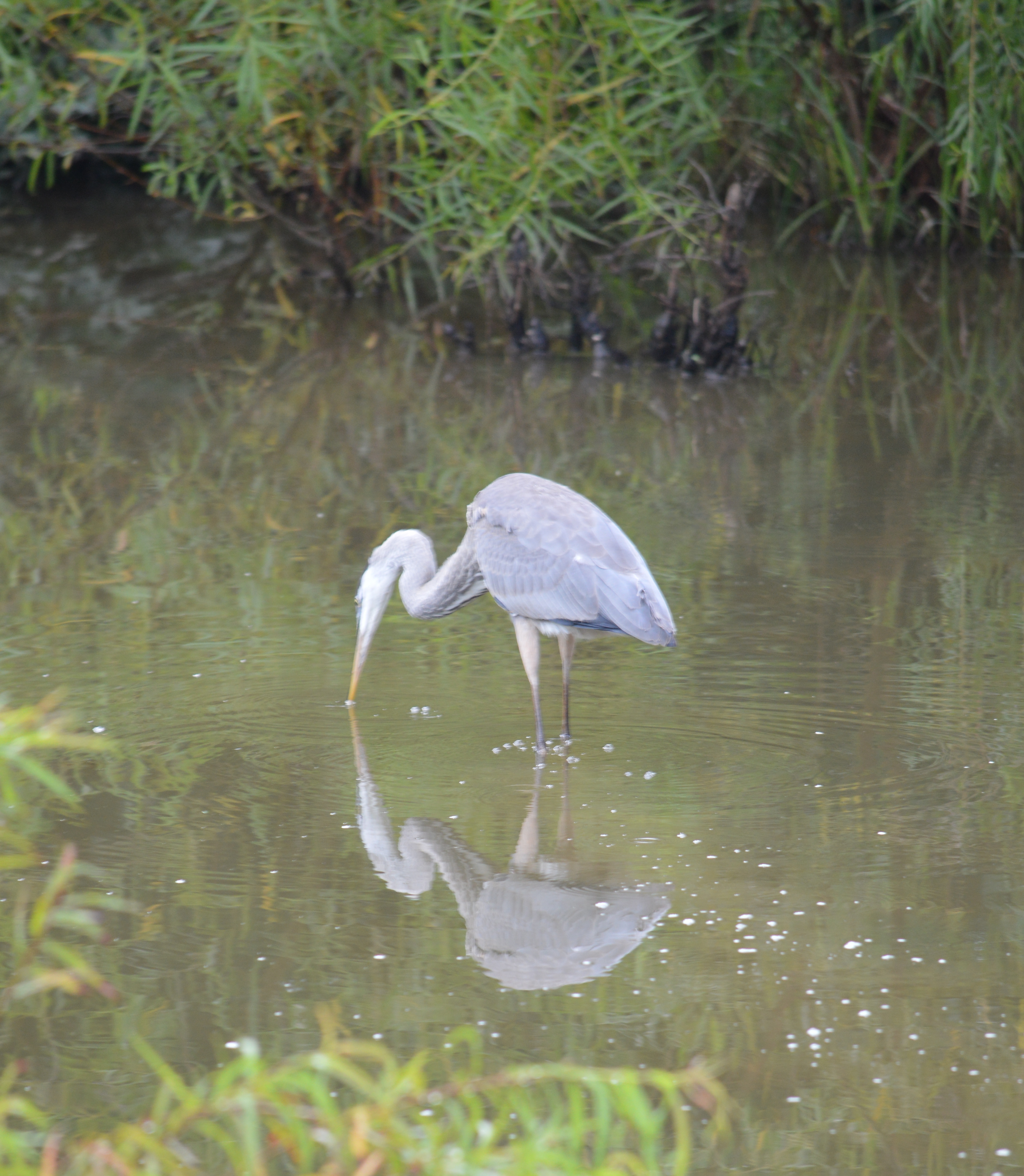
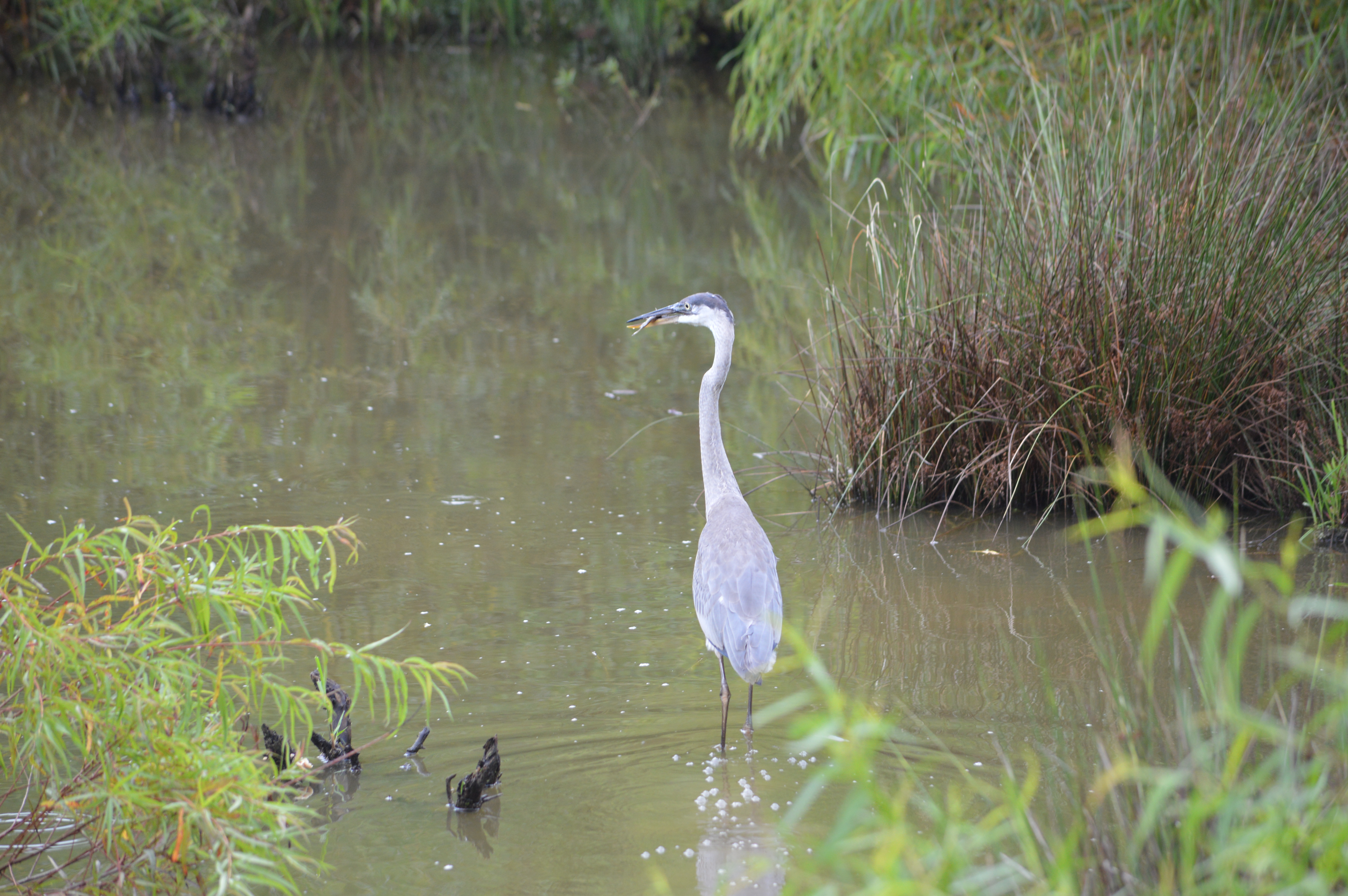
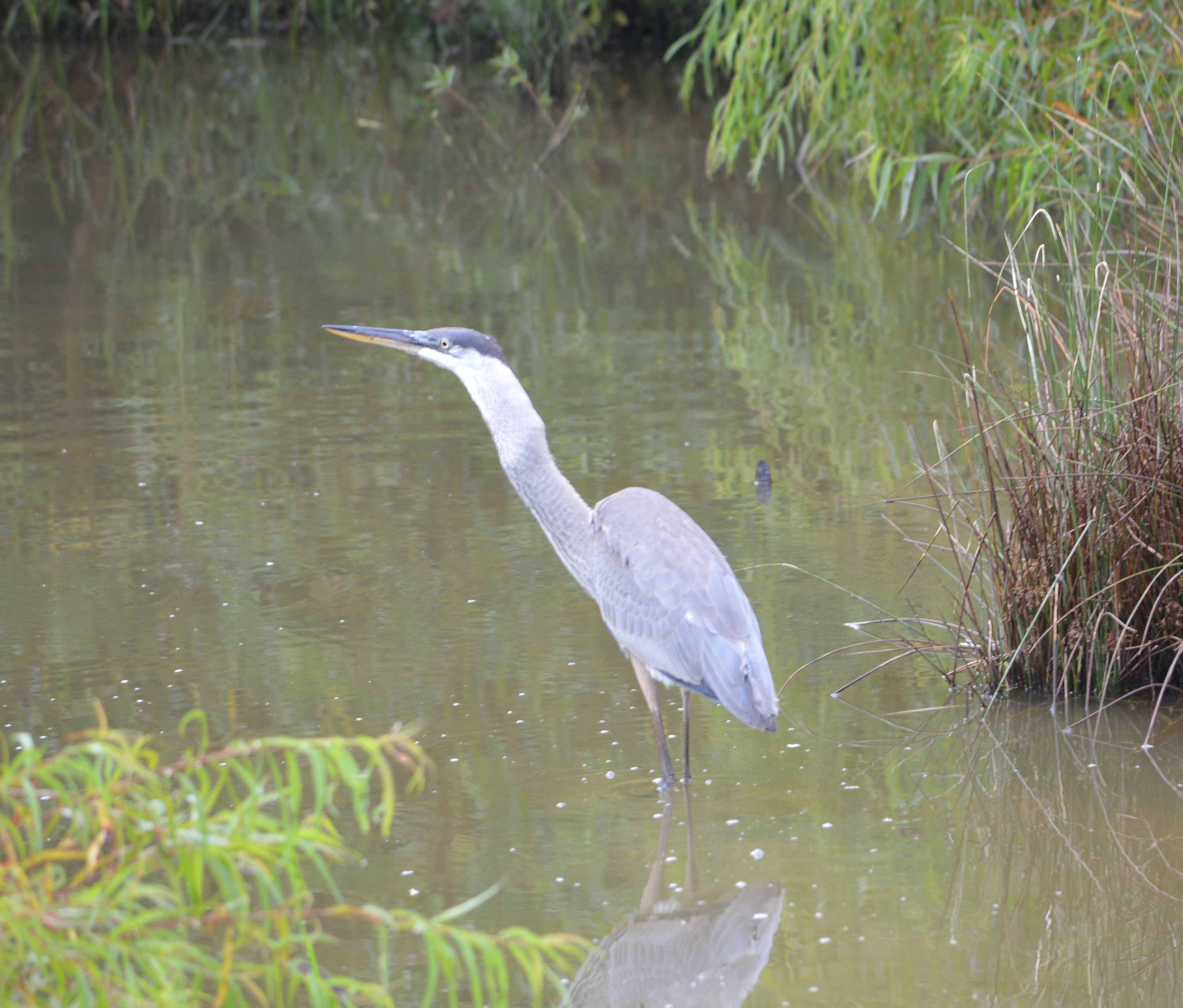
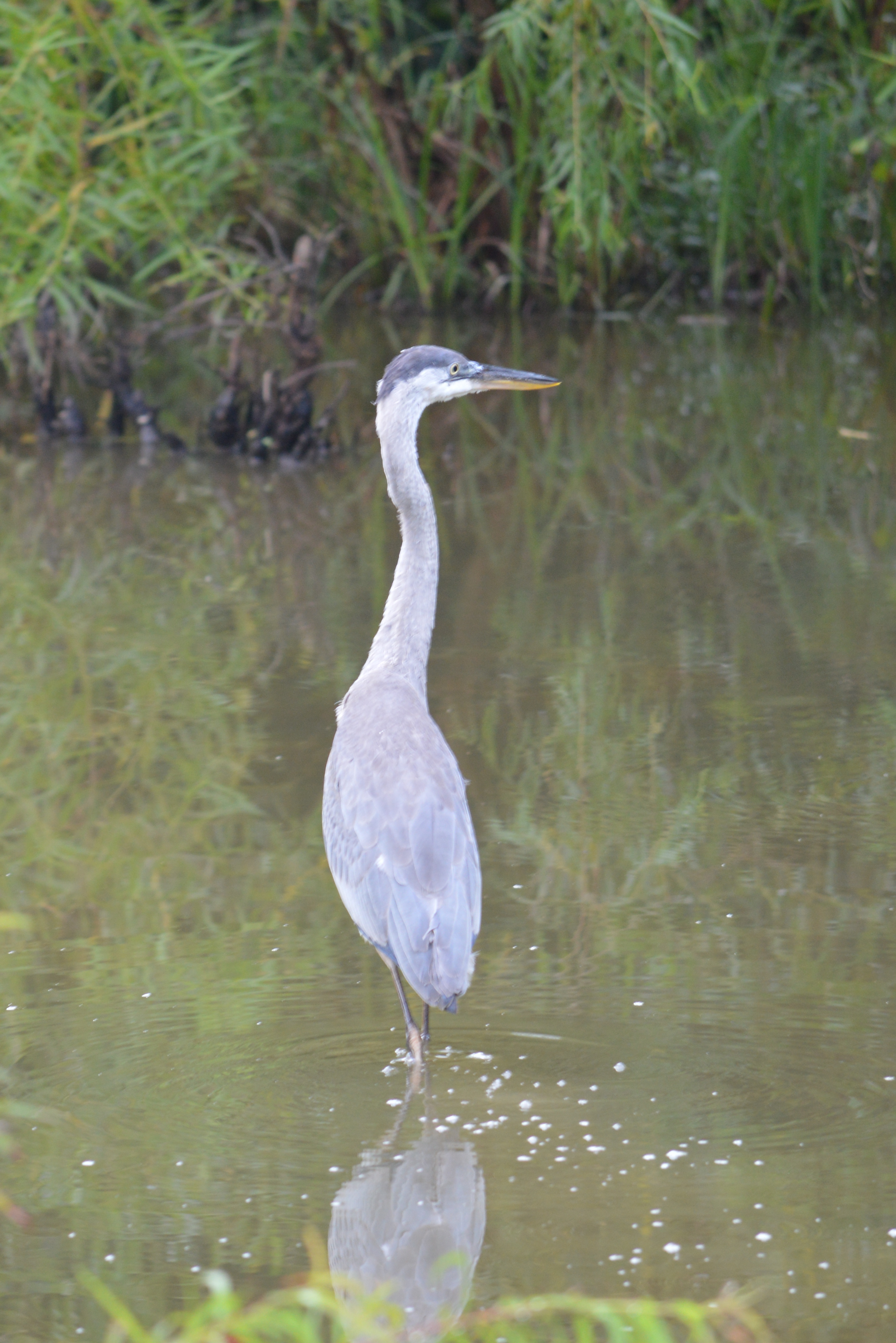
Chilling with Robert Frost and a new camera

The hot weather finally broke last week, after setting a temperature record here in Raleigh for most consecutive days over 100 (6) and tying the all time high of 105. Most of the time, I’m in air-conditioned environments, but still, I usually try to spend some time in unprocessed air. During the recent heat wave, though, the idea of communion with the natural world seemed rash. The brutality of nature was in full display.

To cool off mentally, I refreshed on The Wood-Pile, a poem by Robert Frost. I memorized this chilly thing a while back for no good reason other than its stark strangeness. It begins, “Out walking in the frozen swamp one gray day, I …” The narrator at first sees nothing but “tall slim trees.” It seems matter of fact, but it’s completely strange! Who goes walking in a frozen swamp? Especially when the sky is gray and gloomy?

As with other great poems by Frost, what seems at first to be simple factual reporting turns out to raise question after question. The nominal focus of the poem is on a well-formed cord of wood incongruously left in the middle of the snowy swamp. The narrator has personal knowledge of the hard work required to cut so much maple with an ax, and is baffled and offended that anyone could invest such effort in a fine wood pile and leave it “far from a useful fireplace.” He speculates that such a person must be someone who “lived in turning to fresh tasks.” This is, from the narrator’s viewpoint, a strange and disturbing thing. And so we wonder more about the flinty narrator.

A woodchuck near the Buckeye Trail

Is it a bad thing to turn to fresh tasks? The poem make us wonder, but still I think, generally not. New challenges are, more often than not, good. I undertook one last week and bought my first digital SLR camera with the thought that I’d like to engage with the visual world a little differently and take better pictures. I’ve been drawn by photography since I was a kid, but in the pre-digital era was discouraged by the difficulty of working with film (dark rooms, chemicals, and so forth) and the expense.

I also worried about that the camera sometimes shuts off the photographer from experience. Think of gaggles of tourists taking snaps of the Grand Canyon — and forgetting to look at it. Direct experience of beautiful things, or even not-so-beautiful things, is a terrible thing to waste.

Balancing that risk, though, is the possibility of finding a different way of seeing, and also a different pathway for communication. I’ve enjoyed using my little point-and-shoot to share images with friends, and noticed that at times taking a picture created an interesting shift in my own visual perspective. A photograph is an abstraction from a larger visual reality, but being conscious of this can focus attention on the larger reality. Deciding whether something is worth snapping and how to snap can open things up.

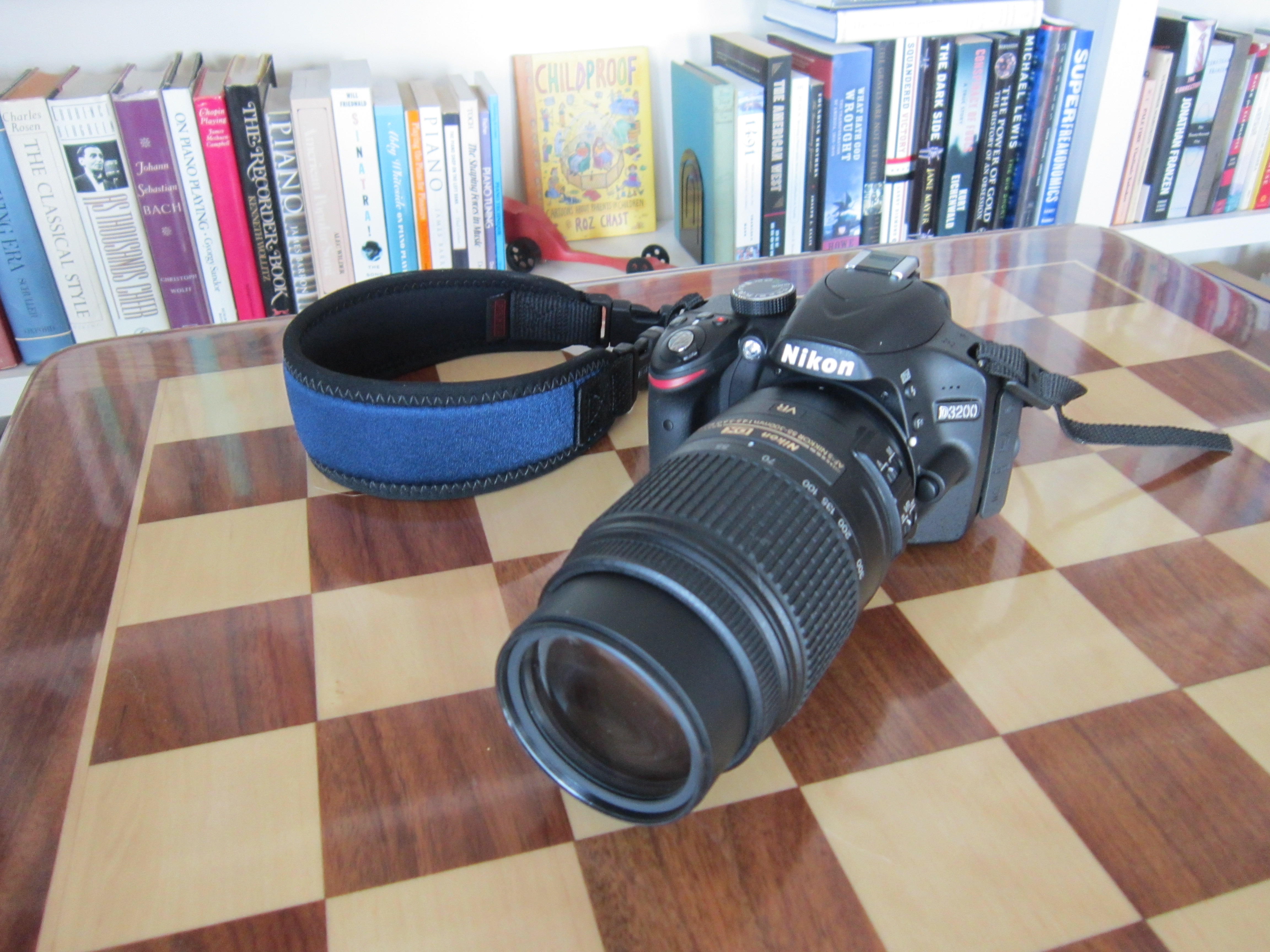
Anyhow, I got a Nikon D3200 with two Nikon lenses (an 18-55 zoom and a 55-300 zoom). Although the D3200 is an entry-level SLR, it is, to me, amazing technology. 24 million pixels! Four shots per second! ISO 100-6,400! Fast autofocus! A vibration reduction system! HD video with sound! And it fits my hands perfectly. All that it requires is knowledge, experience, and creativity.

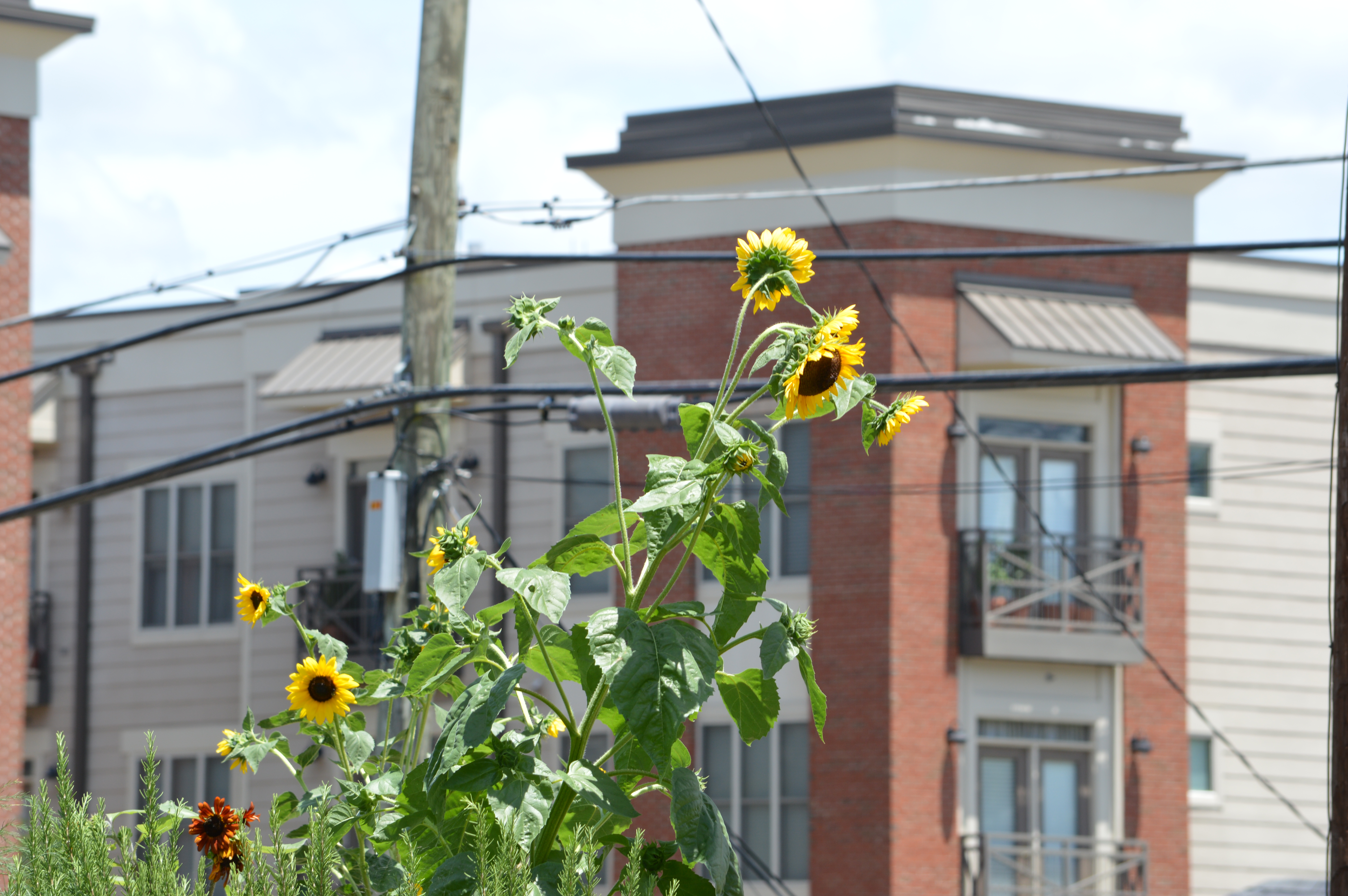
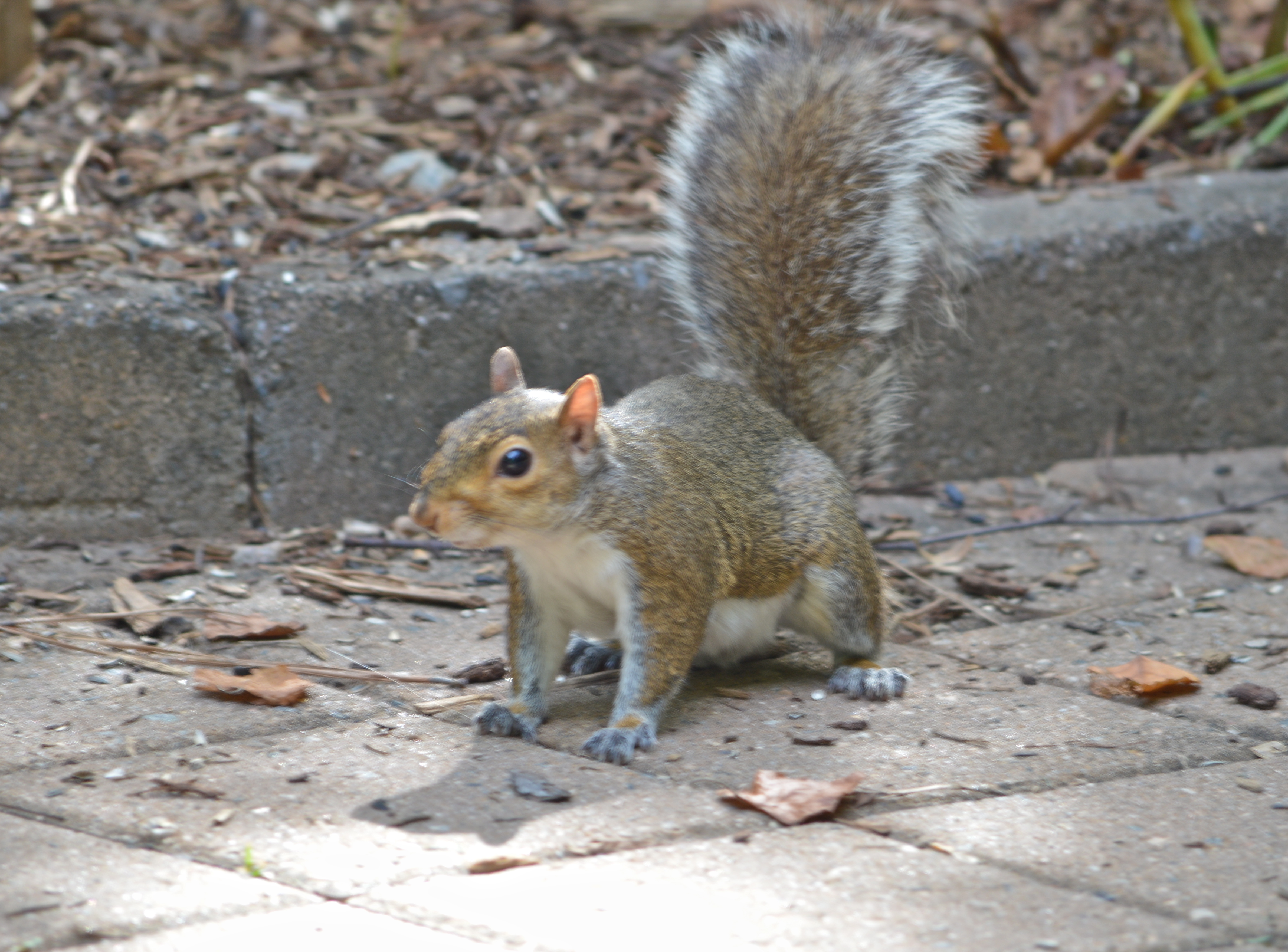
I was thinking that it would be fun to photograph wildlife, and especially birds. I’m also interested in trying to look at human-built places that are not intended for show, places that happen as a by-product of other objectives, to see what we might be missing. Above and below are some of my first efforts.

Mallard ducklings at Lake Johnson

Science news — the Higgs boson, global warming, the nature of consciousness

I’ve been trying to follow the story of the search for the Higgs boson for a long time, and so I felt excited by reports this week that scientists at CERN have discovered a new particle that could be it. Quantum mechanics is not something I would ever aspire to have a deep grasp of, but even skimming the surface is mind bending. The subatomic world has different rules from ours.

I also really like the purity of the enterprise. It’s primarily driven by curiosity, rather than motives of profit or power. These scientists aren’t much interested in practical applications; they want the truth. (Of course, they also may want tenure, grants, Nobel Prizes, dates, etc.) It’s cheering that there is still, in some places, political and financial support that makes their (very expensive) experiments possible.

Another thing that’s particularly cool about the Higgs search is that it is a massive collaboration. Thousands and thousands of scientists are involved. According to the Times account, there were two teams of 3,000 physicists each analyzing the data from hundreds of trillions of proton collisions in the latest round of the CERN effort. They’ve found ways, which I’m sure involve the Internet and massive computing power, to share their knowledge and coordinate their efforts. This is very different from the model of scientific discovery I was taught as a kid, where individuals worked by themselves in their laboratories until their eureka moment. It’s encouraging that scientists are learning to collaborate better just as they take on ever larger problems.

The practicality of the Higgs work may be to the researchers’ advantage in making them a low-value political target. This contrasts sharply with global warming research. In my home state of North Carolina, a majority of our legislators (mostly Republicans) embarrassed themselves again this week by enacting legislation designed to suppress, or at least defer, scientific reports of rising sea levels caused by global warming.

The coastal development lobby seems to have been involved. As my friend and House representative Deborah Ross cleverly observed, putting our heads in the sand is not really doing property owners any favors — they need real information. I’d also note that the sea is not going to read the study anyway. It is both funny and scary that a significant portion of our political leaders (for now a majority in NC) are either willfully ignorant or cynically determined to oppose science where it conflicts with their self-interest.

Yet science hasn’t thrown in the towel yet, and I’ve got to think that the truth will out. Speaking a little more of science, I’ve been reading a new book by Michael Gazzaniga titled Who’s in Charge: Free Will and the Science of the Brain. It’s about recent discoveries and theories in neuroscience, and parts of it are mind boggling. Gazzaniga is a distinguished professor (University of California) and researcher in cognitive neuroscience who made ground-breaking discoveries in the area of split-brain research.

Gazzaniga covers a lot of territory, and I will not attempt to summarize (indeed, I’m not certain I completely grasp) his view of free will. For me, the most stimulating sections had to do with his his model of conscious thought. At least since the time of the Periclean Athens, we’ve thought of our conscious experience as objective — that is, what you see is what there is to see, what you hear is objectively present in nature, and so on as to other senses and perceptions. In everyday life, we experience all these sensations predictable and reliable, and have difficulty imagining them as error prone and misleading.

I’ve read several interesting books recently discussing research on this, including Jonathan Haidt’s, Daniel Kahneman’s, and Jonah Lehrer’s, but Gazzinaga seems to have the clearest theoretical model and best supported theory for why we can’t accept that our conscious perceptions are at best an incomplete and fallible approximation of physical reality. His model of the mind involves hundreds or thousands of modules working on, say, vision, and forwarding their data to a module in the left brain which he calls The Interpreter.

The Interpreter takes in what it can (not everything), makes some quick guesstimates as to what data is reliable and what should be tossed out, fills in any gaps in the data with best guesses, and presents the result to consciousness as reality. Despite all the guesswork and potential for errors, the result feels to us instantaneous, smooth, continuous, and objective. If there are glaring problems or inconsistencies, The Interpreter comes up with a narrative or story that “explains” them. We are, in a really fundamental sense, story-telling animals.

Another aspect of Gazzaniga’s model struck me as particularly thought-provoking was his discussion of emergence theory. While giving respect and consideration to the researchers working at the scale of neurons and brain structures, Gazzinaga deems it unlikely that that approach will never explain conscious experience. The brain is just too complex.

Emergence theory addresses itself to phenomena are matters that arise out of inputs so numerous as to be incalculable. Examples include snowflakes, traffic jams and weather, which are in the aggregate clearly products of much simpler phenomena (hydrogen atoms, carburetors and other auto parts, breezes etc.), but which contain too many variables to be predictable. The brain’s 100 billion neurons and vastly larger number of synapses far exceeds the complexity of our analytical tools.

Finally, I was intrigued that Gazzaniga suggests the possibility that the basic unit of analysis for the study of human consciousness should not be an individual brain, but rather, groups of brains. That is, intelligence may be best understood as emerging from humans interacting with each other. The individual brain in isolation knows nothing that we would call intelligence, but needs other brains to develop. Prisoners in prolonged isolation quite literally lose their minds. We’ve barely begun to consider consciousness in terms of systems of brains, rather than individual brains. It could change the way we approach education, law, and most everything else.

Our thirtieth anniversary celebration

Sally and I celebrated our thirtieth anniversary last weekend. Thirty years! This struck us as a considerable milestone, and we considered taking a major trip to commemorate it. Because of work and other commitments, we couldn’t make that happen. Instead, we decided a weekend getaway to Fearrington Village.

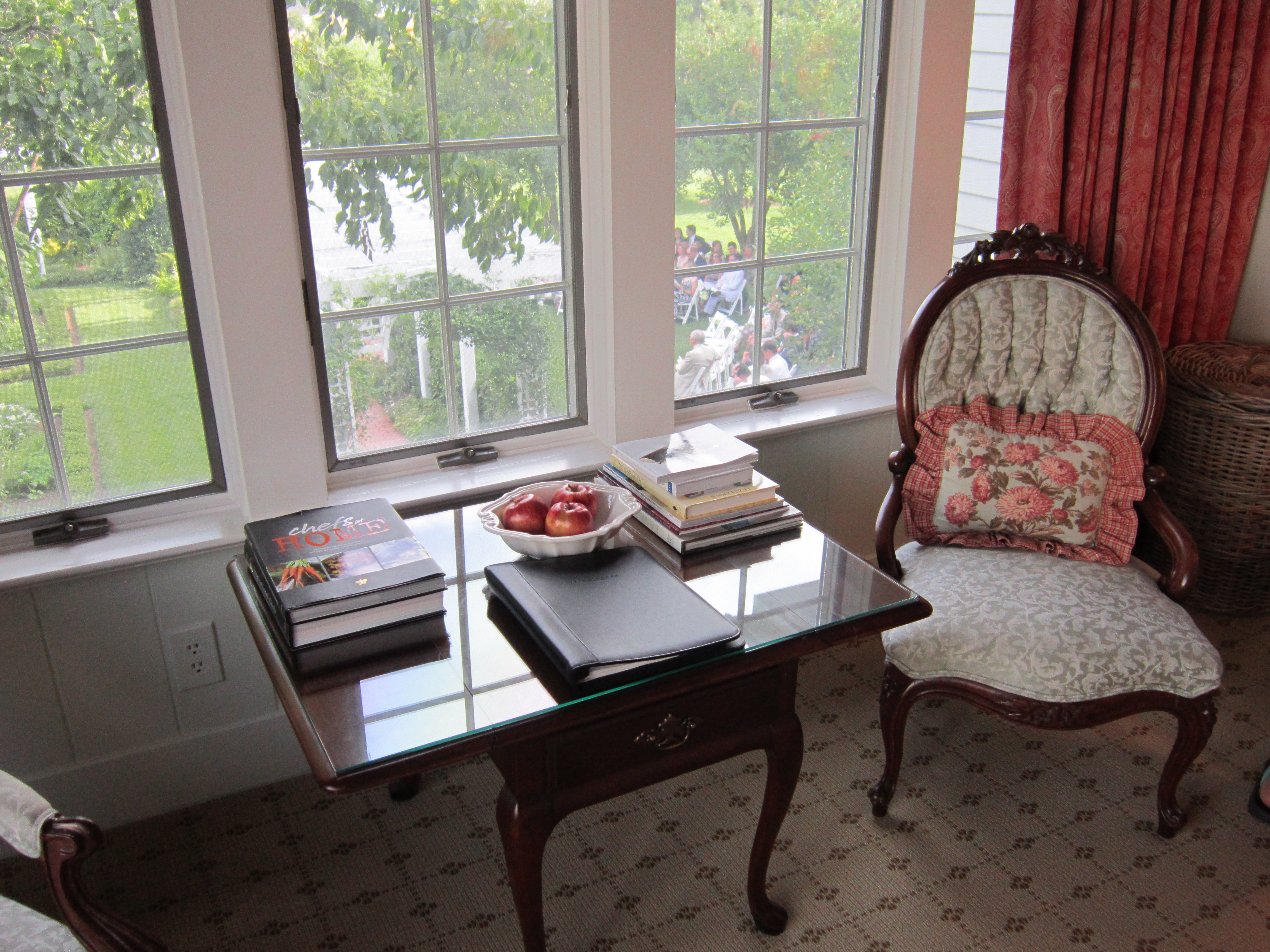
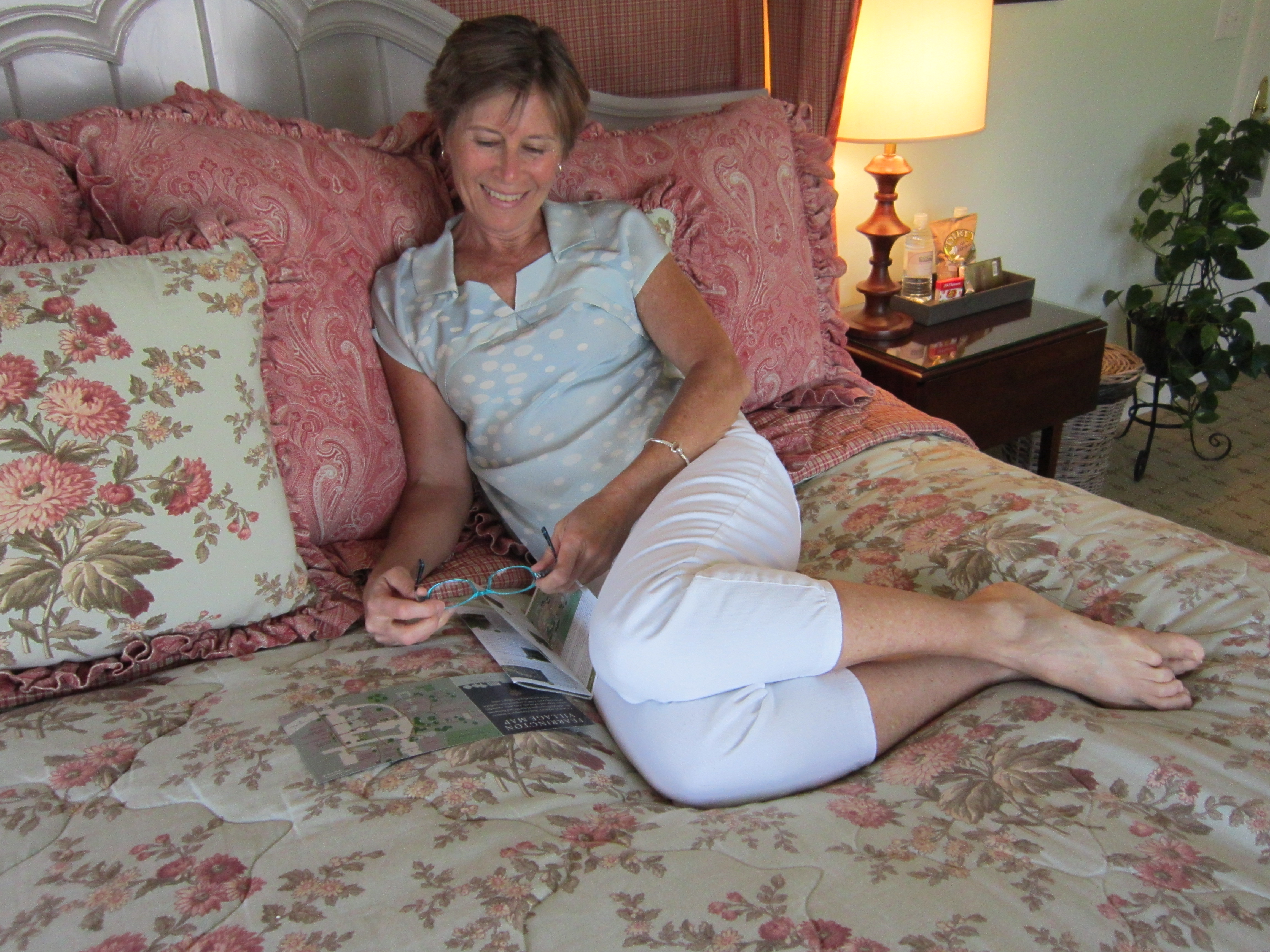
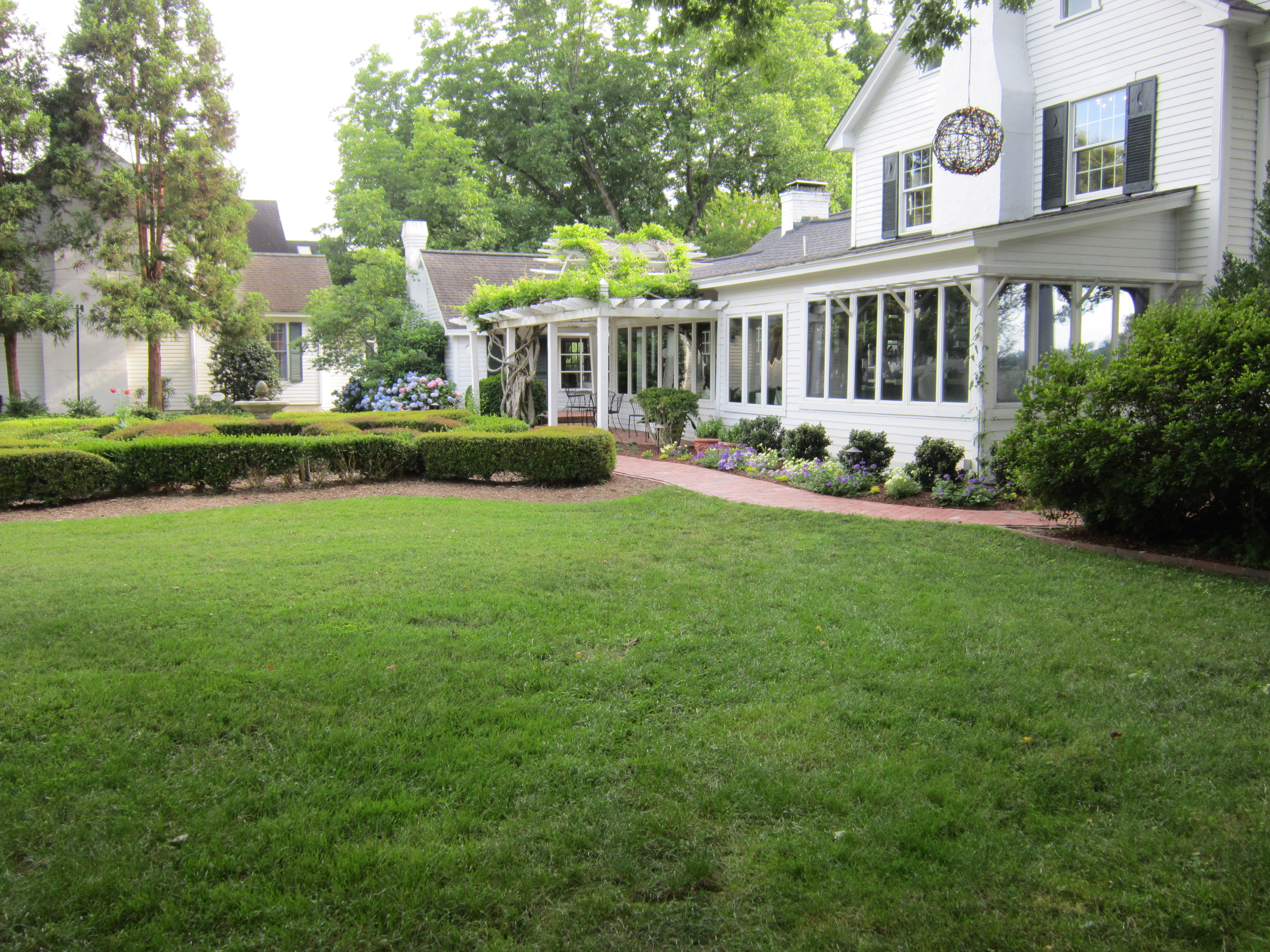
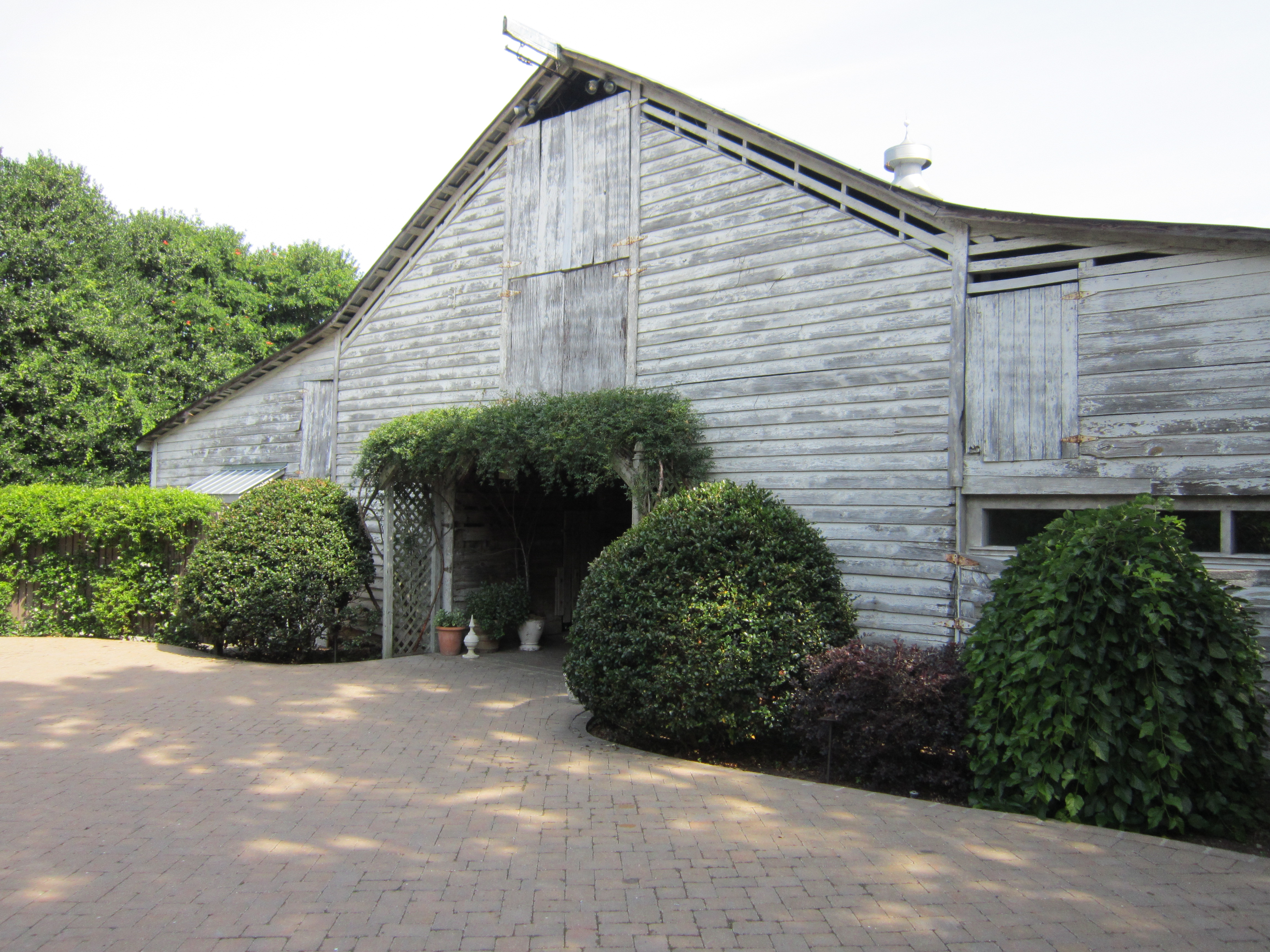
Fearrington is in Chatham County, one county over from us — about a forty minute drive from Raleigh. It was once a working farm, and still has a barn, a silo, and some pastures with unusual oreo-striped cows. It also has a few shops and our destination, the Fearrington Inn, where we had a sumptuous and charming room. It had a bowl of fresh fruit, and a bar of dark chocolate. After settling in, we walked across the square to the Spa, and had a couples massage — our first ever! It was extremely relaxing. Afterwards, we went into a housewares shop and perused the glassware and various objets, and smelled the floral candles.

When we got back to the second-floor room, we looked out the window and saw a wedding just beginning on the lawn below. The bride looked lovely. We talked about our wedding day, when we said our vows before family and close friends in Diane’s apartment on East 63rd Street, and then went downtown for the reception with a large group of family and friends. It was a happy day.

How wonderful it is to fall in love, and build a friendship that deepens with the years. We’ve had many remarkable chapters, and are looking forward to many more. The marriage contract involves a tacit NDA (corporate-speak for a non-disclosure agreement) that makes possible a special level of trust and confidence between the married persons. It creates a zone of safety where we can be something closer to our true selves.

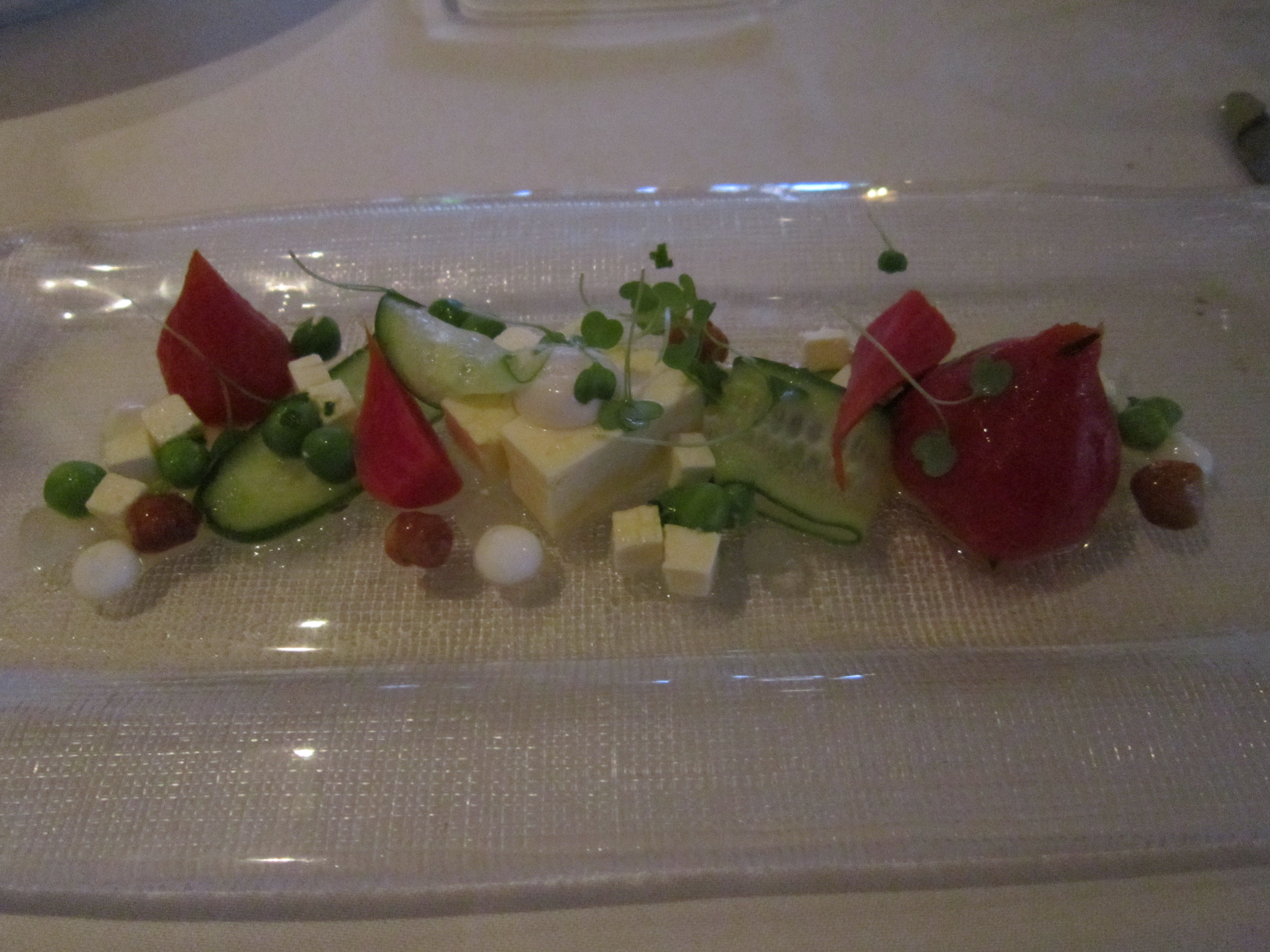
In view of Sally’s and my NDA, I will not be writing about certain intimacies of our weekend, except for this sentence. That evening we ate at the Fearrington Inn, one of the finest restaurants in the region. When last we were there, several years ago, I’d found the food excellent but the service mannered and fussy. But that was not my impression this time: the food was excellent, and the service was both professional and friendly.


On Sunday morning I went for a run, then came back and read most of the Times before Sally got up. We had a breakfast with excellent coffee at the Inn, and then walked through the little village. There were dozens of barn swallows nesting in the barn. The parent shot in and out and rested near to the their nests, letting us get quite close to them and their babies.

Then we went over the McIntyre Books. It’s a bookstore with charm and taste. I was pleased to see a lot of books I’d cared about displayed as though someone else cared about them. Bookstores like McIntyre’s were never common, but now they’re vanishingly rare. To show a little support, I bought the fourth volume of Robert Caro’s biography of Lyndon Johnson, which I’ve been looking forward to reading since I finished volume 3, ten years ago.

We took a circuitous route home along the beautiful country roads of Chatham County, across Jordan Lake, and through the farmland and forests.

Our Outer Banks weekend

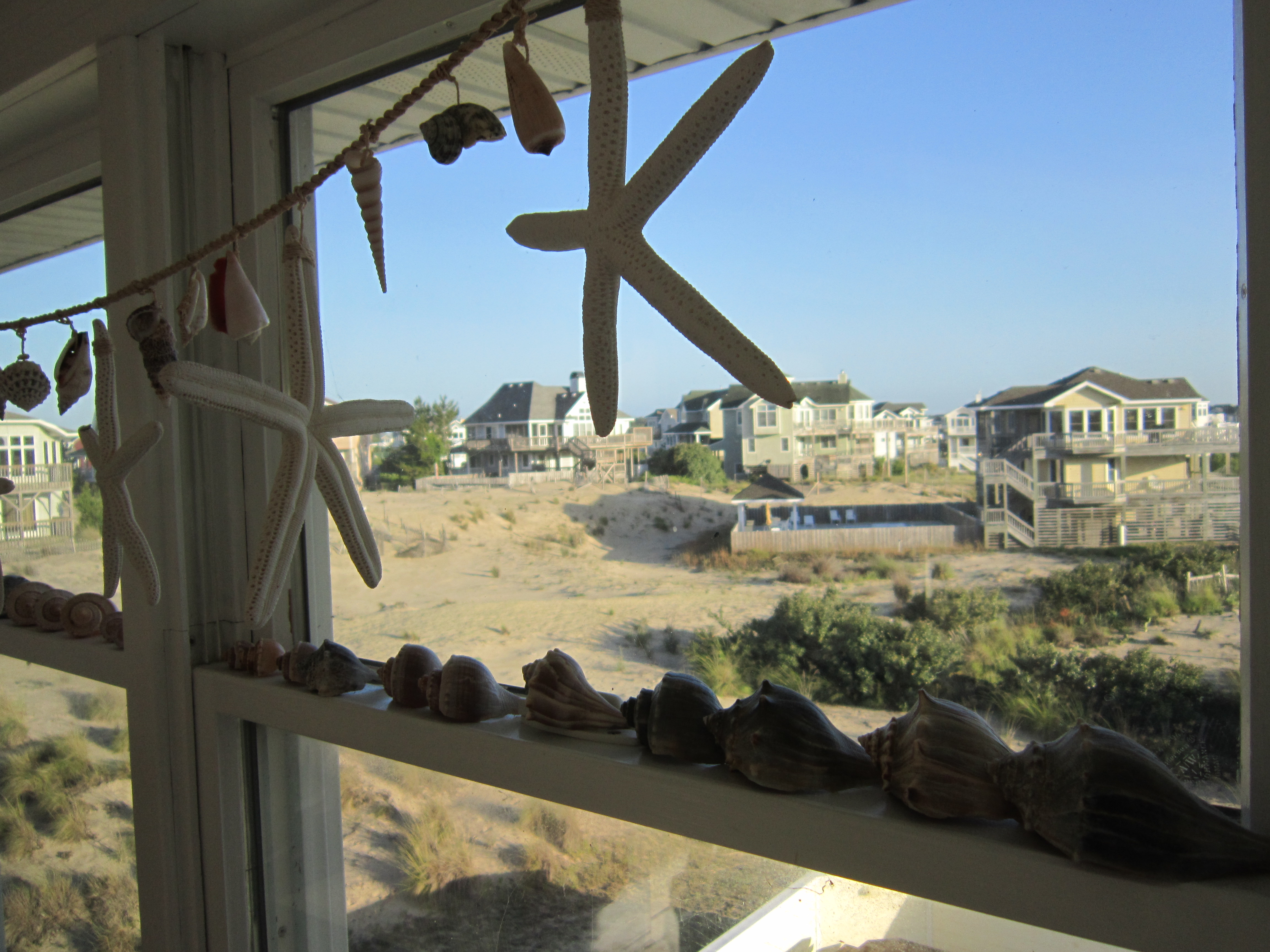
For Memorial Day weekend we drove to the Outer Banks to visit my sister Jane and her family. Their beach house in Corolla was comfortable and relaxing, with lots of seashells and board games. There were family dramas to discuss, as well as books to read, food to eat, and wild horses, shore birds, and other beach creatures to see. I also had a few new thoughts on economics and employment, as noted below.

My brother Paul and his wife Jackie came out from Virginia Beach on Saturday afternoon. Paul, in training for a marathon, ran the last seven miles, and arrived looking thinner than he has for at least a decade. The next morning I did my first outside run in a long time, a three-mile run along US 12. After persistent knee problems a few years back, I finally quit running and switched to low-impact activities like elliptical machines and stationary bikes. But I’ve recently seen running is good for bone density, and so have begun running a bit on the treadmill. The run along US 12 went well for a half hour, until I got a cramp in my calf.

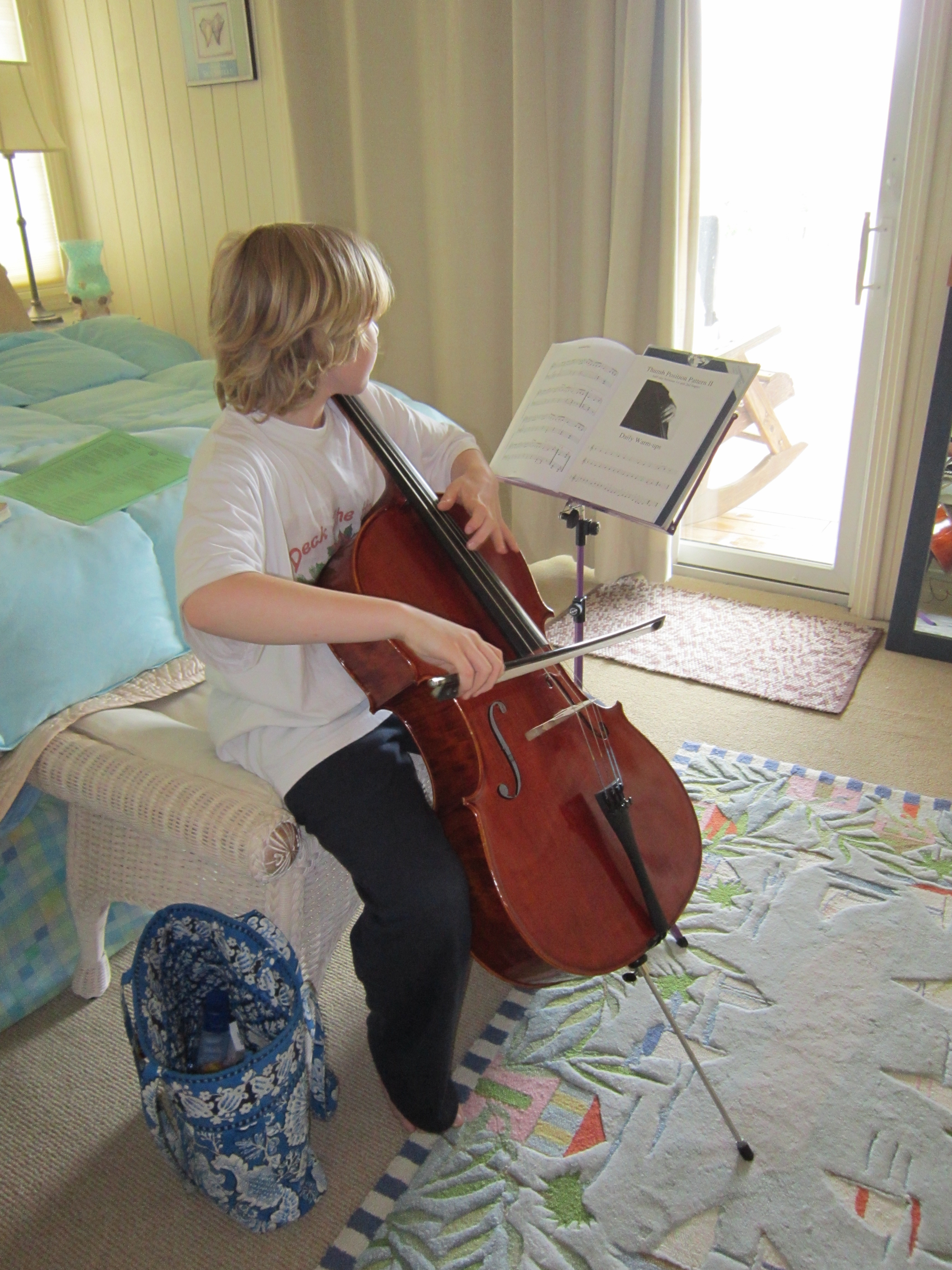
I took a break from practicing the piano, but enjoyed the musical activities of the rest of the family. Kylie is making good progress on the violin, as is David on the cello, and Jane has just started teaching herself piano. Paul is quite accomplished on the banjo, and played his version of the Star Spangled Banner in honor of memorial day.

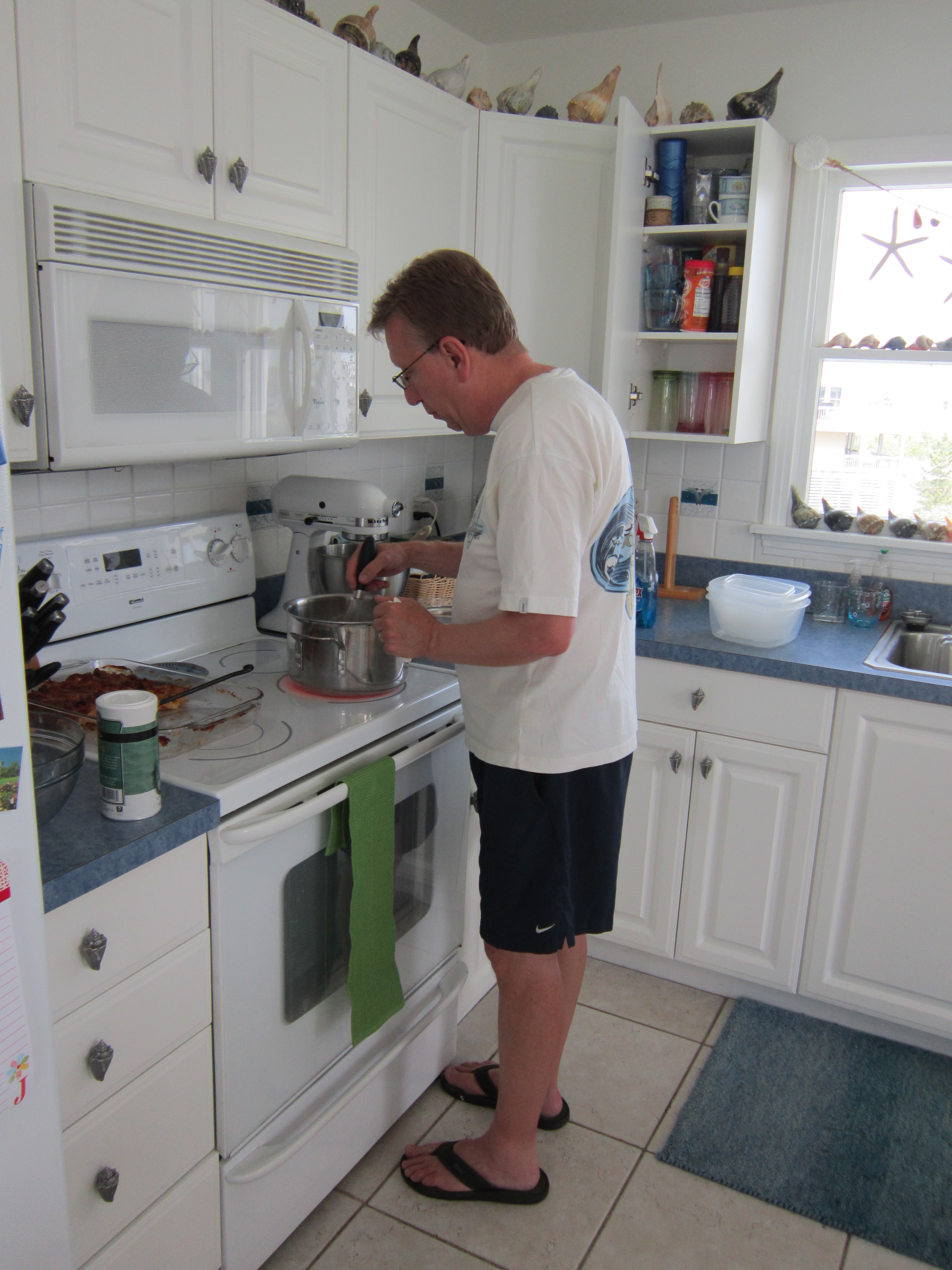
Keith cooked non-stop all weekend. On Saturday morning, he cooked gluten-free waffles with blueberries and strawberries, which were marvelously light. Soon after we cleaned up, he started to work on lunch, wonderful grilled vegetable sandwiches, and soon after that, he got to work on a vegetarian Mexican dinner, which was a complete success. The man loves to cook, and he’s really creative. We were all grateful.

In the Sunday Times, there was an op ed piece by Tim Jackson about how the drive for ever-increasing productivity was resulting in increased unemployment. This was a different lens on a problem I’ve pondered before — what should humans do when computer brains and robots render them redundant? Jackson proposes that the answer is to forget about increasing productivity and embrace lessening productivity.

Jackson broached a critical problem. As I’ve noted before, although we’ve hardly noticed it, robots and artificial intelligence are transforming the human world in fundamental ways. More and more of the manufacturing work that people used to do is now done by robots, and AI is starting to impinge on areas that we used to think of as forever and irreducibly human, such as medicine, law, and education. This is big. As far out in the future as we can see, we will need fewer and fewer people to make our products and perform our services.

We once thought of this as utopia: a world of plenty which required less and less labor to produce goods and services. We assumed it would result in more and more pleasant leisure. But this vision failed to take into account that we aren’t comfortable paying wages to people who aren’t working in a way that contributes meaningfully, and those without work do not feel at leisure.

Jackson suggests reorienting away from simple increases in productivity and towards activities involving caring, craft, and cultural activities, like art. This sounds promising. These are activities that humans have done as long as the species has existed. Once our ancestors had taken care of food, clothing, and shelter, they made jewelry, painted on cave walls, beat on drums, played lacrosse, or otherwise entertained each other. Caring for each other, making things, and making art are things we like to do. But we need to figure out how to associate these activities with fair wages.

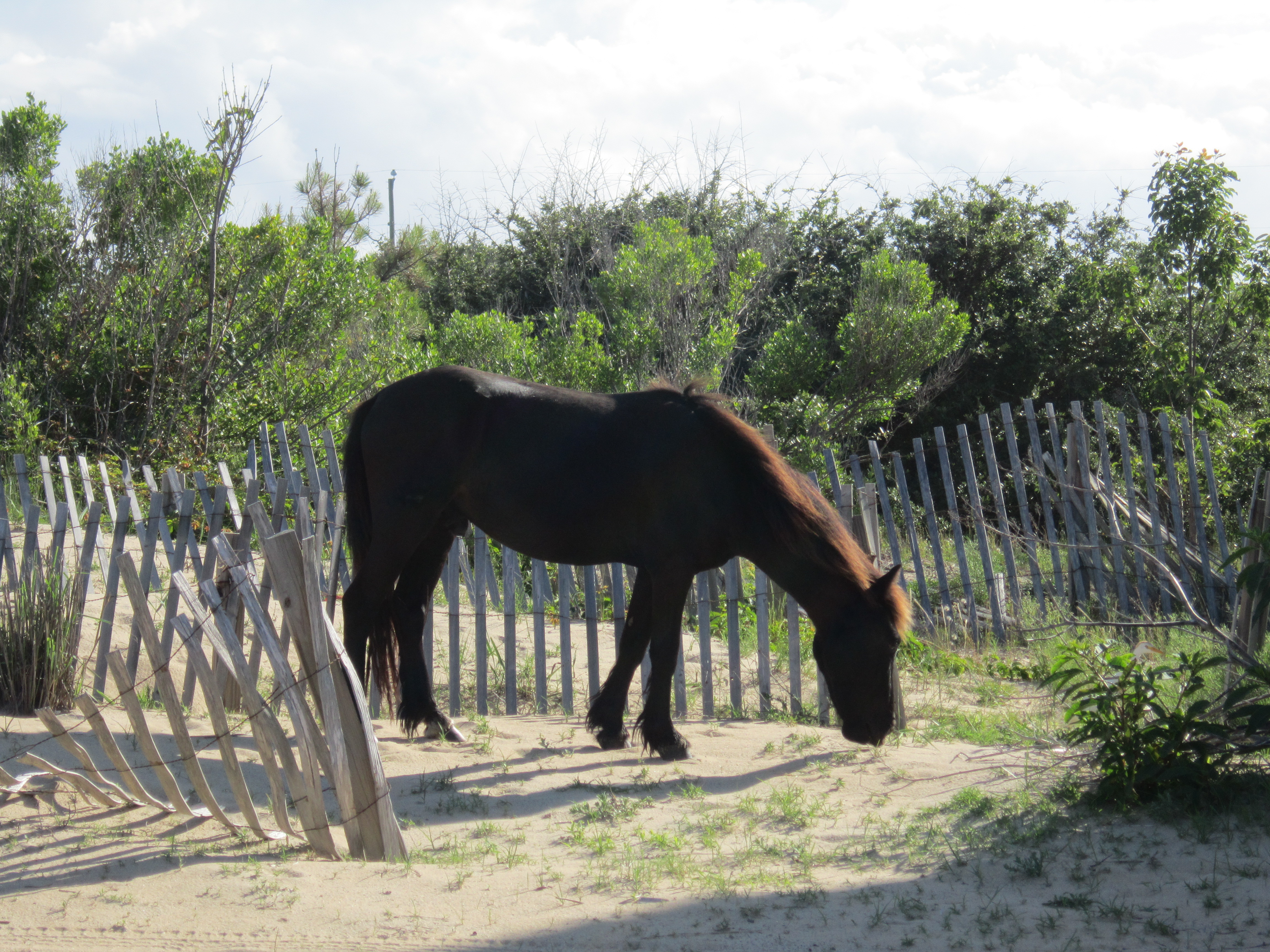
On Sunday afternoon we went four-wheeling northward to look for wild horses. Driving on the beach is fun, though I feel a bit guilty at what people like us do to the beach and its creatures. We saw lots of sanderlings and grackles in the shallows, and flying pelicans, gulls, terns, and one snowy egret. We drove through the narrow sandy pathways that wind through the marine forest, working our way around occasional pools of standing water. We finally found three groups of horses, and got close views of two of them.

We sat on the porch for a while and read and talked. Over the weekend, I dipped into the following books: I Am a Strange Loop, by Douglas Hofstadter, This Is Your Brain on Music, by Daniel Levitin, The Short Game Bible, by Dave Pelz (golf), Indignation, by Philip Roth, Winner Take All Politics, by Jacob Hacker, and The Social Conquest of Earth, by Edwin O. Wilson.

Sunday evening Sally mixed cocktails for the adults using cucumber vodka, ginger infused simple syrup, lime juice, and elderberry liquor. Keith made gluten-free vegetarian lasagna, which he had to complete with penne pasta because there were no lasagna noodles, but which turned out great. He’d also made vanilla ice cream and peach-and-blueberry cobbler. We played a game called “left right center” which involved rolling dice and losing or acquiring chips. It was a game requiring no skill, but gave the enjoyment of possible good fortune without exacting much pain for bad fortune. There was merriment. After dinner, we lit sparklers and set off some fireworks rockets.


A lovely Friday cocktail, Bill Cunningham, the anti-gay vote, David Brooks’s The Social Animal, learning to listen while playing the piano


How nice it is to have a cocktail and relax at home on Friday evening! Of course, strong drink must be handled with care. A glass of wine with dinner is certainly a pleasure, but the habit can sneak up on you, and a glass of wine can so easily turn into three.

A few weeks back, Sally and I decided to limit drinking to weekends. Among other good effects, this makes the Friday evening drink particularly delightful. Last night, Sally made us margaritas with fresh lime. For the first time in years, I had a sudden urge to listen to Stevie Wonder hits from the seventies, which we now can easily stream from Rhapsody. I dedicated my streaming of the wonderful Signed, Sealed, Delivered to my sweet Sally.

We watched a documentary called Bill Cunningham New York. Cunningham is a photographer whose specialty is candid shots of New Yorkers wearing interesting clothes. He has a feature in the Sunday NY Times style section in which he shows this week’s street fashion trend, which, although I’m far from a fashion person, I always enjoy looking at. But I didn’t know him by name, and would have missed the documentary but for Sally’s putting it at the top of the Netflix queue.

It was sweet and kind of inspiring. Cunningham is in his mid-80s. He’s still snapping pictures all the time (using 35 mm film), publishing weekly in the Times, and travelling by bicycle on the streets of Manhattan. Age may have slowed him down a bit, but he’s still passionately creative. He’s got a great, boyish smile.

We voted in the North Carolina primary this week, which involved primary races for governor, secretary of agriculture, and various other offices, and an amendment to the state constitution to ban gay marriage. Why a gay marriage ban? It’s mysterious, and bizarre. I am stunned that it passed by a 20-point margin. Raleigh, the part of North Carolina in which I spend most days is multi-cultural and tolerant, with a visible and completely uncontroversial gay population. (I blogged about this visibility a while ago.) But most of the state is rural. What is going on in the heads of homophobes? I’d like to understand, but I don’t get it. It’s a different culture. I believe that that culture is eventually going to change, but for now it’s still alive and kicking.

Speaking of culture, I’ve been reading The Social Animal, by David Brooks, the NY Times conservative columnist. Brooks has collected recent ideas on psychology and culture, including those of Daniel Kahneman and Jonathan Haidt, and woven them into a readable and, in places, intriguing book. The theme, which is getting considerable attention lately, is that people are primarily driven by unconscious perceptions and desires, rather than rational thought.

But Brooks views this in a positive light, arguing that although our brains make all kinds of mistakes, they work better than a completely rational system running in real time could. He argues that behavior is best viewed as a function of those around us and our surrounding environments rather than of individual intelligence, and proposes that we think about meaning more in terms of relationships and cultural systems. I don’t much like his device of two imaginary characters who gradually discover or rub up against the various theories he explores; the characters never really come to life. But I think it’s worthwhile — I’m more than half way through, and likely to finish.

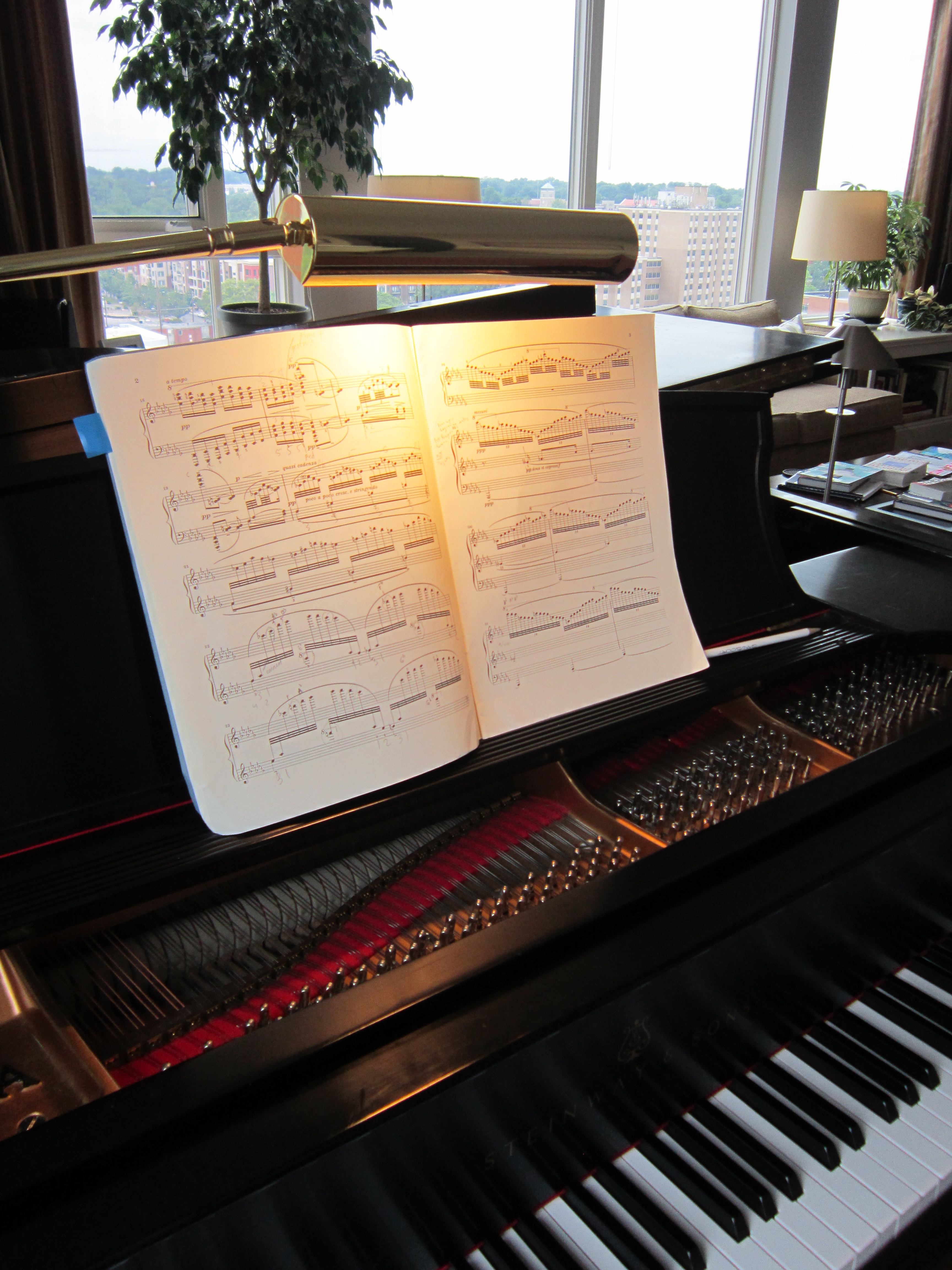
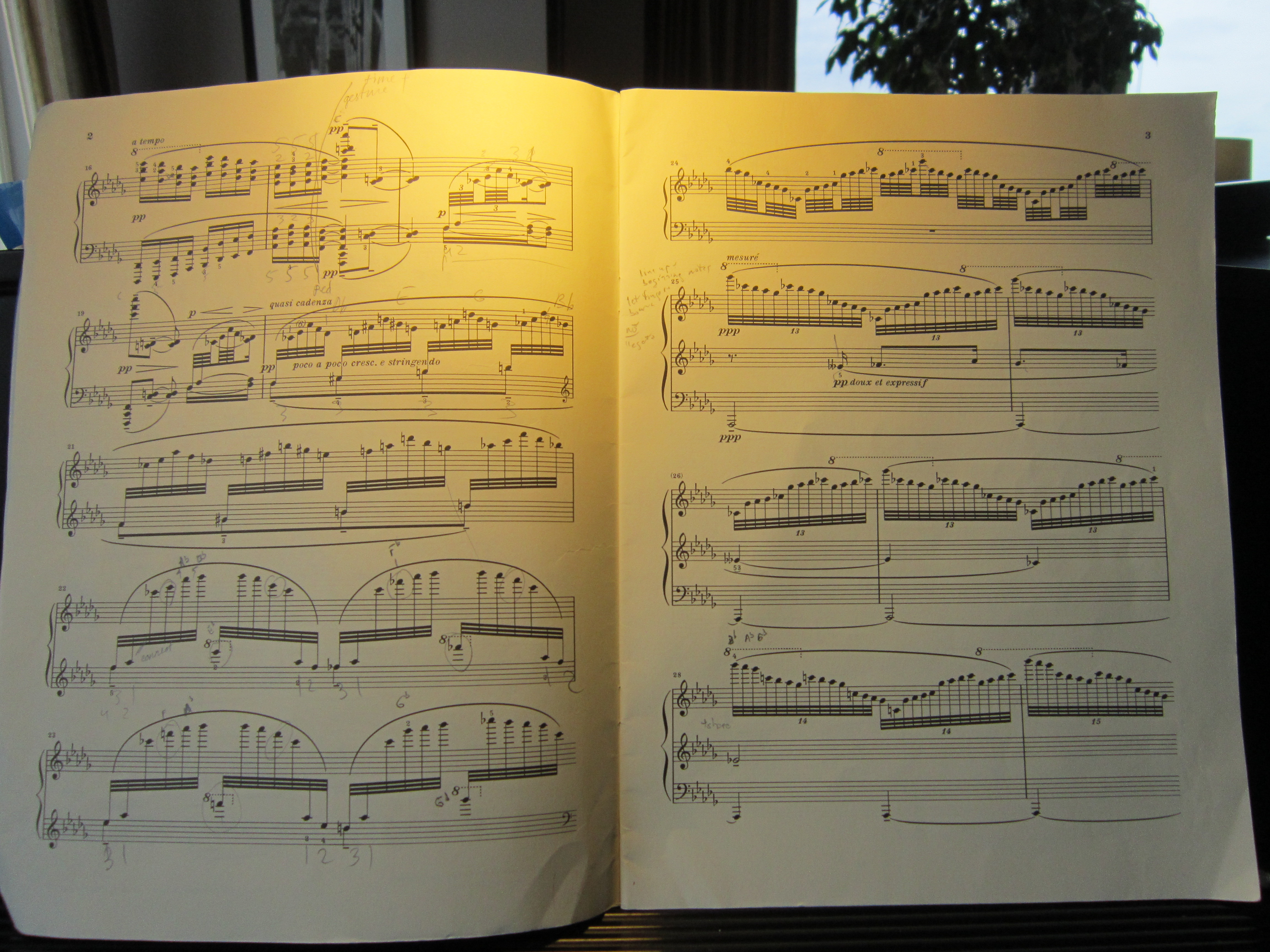
On Saturday I had my last piano lesson of the season with Olga Kleiankana, who’s headed to Moldova for the summer. We talked about some Rachmaninoff and Scriabin pieces for me to work on over the summer, and then worked on Scriabin’s second prelude (op. 11). Olga admitted that it sounded significantly better, but pointed out places where the tone seemed flat. She continued to emphasize the importance of gesture in sound production and expression, and when pedaling problems emerged she taught me how to test out pedaling improvements.

Then I played Debussy’s Second Arabesque for her for the first time. She pointed out that I seemed to be reading note by note, when many of the elements were repeated with slight variations. As she went through a quick score analysis, I had a eureka moment: score analysis was not designed to torture hapless students, but rather to make it possible to understand and learn music more quickly and effectively.

Finally I played Debussy’s Reflets dans l’eau, from Images, premiere serie. This is a gorgeous impressionist piece that calls to mind (especially after hearing the title) reflections in water. It has dazzling effects, some of which are difficult. Olga noticed that I got tense in my shoulders in the fast 32nd-note passages, and advised me that that could be fixed by breaking the passages into simple parts for practice. We also talked about the relationship of touch and tone color. At one point, I played a simple chord, and she said, with a pained expression, “Don’t just play the notes! You need to always think before you touch the keys!”

And she was serious. She listens with a level of concentration that’s almost scary, and expects me to at least try to do the same. I’m having occasional glimmerings of what this might be like. The sound seems richer, with more depth and detail. It’s like hearing in 3D. Of course, little flaws, like unbalanced chords or inappropriate accents, are more jarring. But when a musical statement works, it touches more deeply.

Strawberries, memory flaws, driverless cars, manufacturing, massage, and Il Trovatore

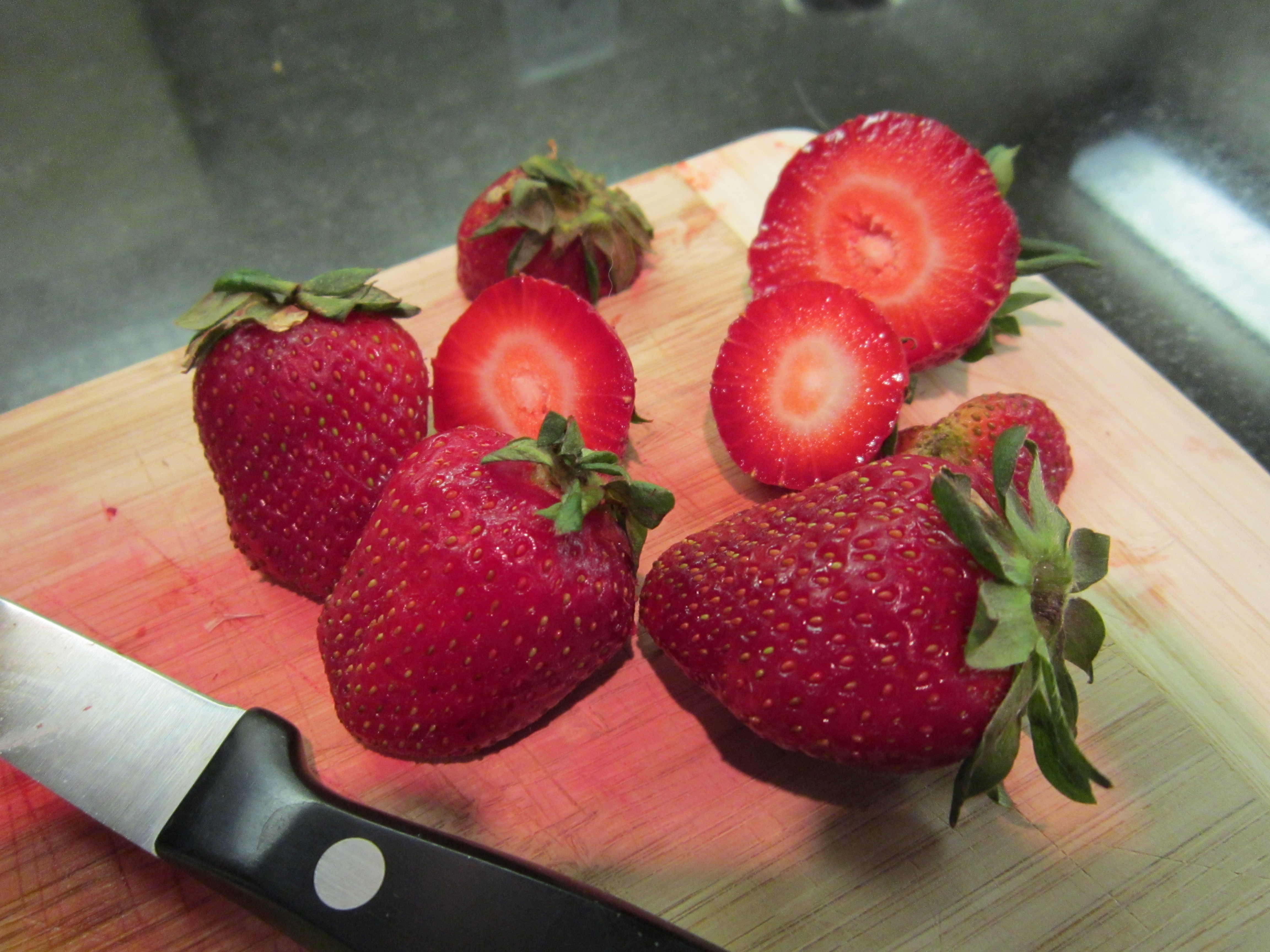
The strawberries from the Raleigh farmers’ market were good this week — firm but not too much so, and fairly juicy. I put quite a few in my breakfast smoothies (together with kale and other nourishing things), and also made a point to taste them in their unprocessed state. Still, I couldn’t help thinking that the strawberries of years ago were sweeter. Are strawberries losing their taste little by little, like tomatoes before them? Or is this just memory playing tricks?

It’s unsettling to think that memory is unreliable. It is such a vital part of our interior lives, of our concepts of our ourselves. But it is highly prone to error. Thousands of Americans “remember” being abducted by aliens. Many others recall, after extensive coaching by incompetent therapists but without any confirming evidence, being sexually abused by their parents. In Mistakes Were Made (But Not by Me), social psychologists Carol Tavris and Elliot Aronson take a swing at explaining these and other social-psychological debacles involving strongly felt, but completely wrong memories.

Tavris and Aronson explain that complex memories are not a literal or objective recordings of events. There is no place in the brain where everything that happens to us is stored. Our brains hold selected vivid highlights of events, which we mix together with other knowledge or impressions to construct storylines. These storylines can, especially when repeated many times, come to feel like literal truth. The “mistakes” of the book title refers to our tendency to construct the storylines according to our own biases and tendencies towards self-justification.

Tavris and Aronson give a lively, readable account of the theory of cognitive dissonance, which drives us to reduce internal discomfort by ignoring information that conflicts with strongly held beliefs. They convinced me that there are systematic flaws in our mental functioning, even when we are healthy and operating normally. This is, as I say, unsettling, but it is worth pondering. It may be that by understanding the likelihood of certain kinds of mistakes we can lessen their likelihood.

Humans do some ridiculous things, but also amazing ones: our machines keep getting better and better. The self-driving car was in the news this week, with Google, which has been road testing its design, announcing plans to commercialize, and with Nevada becoming the first state to legalize one. What does this mean for the future of human driving? The end is near. As a person who enjoys driving, I say this with some sadness, but our AI drivers will be much more reliable and efficient than we are. There will be fewer accidents and better fuel consumption. Human driving will become like horseback riding — a noble but slightly mannered hobby allowed only in special areas.

More on amazing machines in last week’s Economist: a feature headlined The Third Industrial Revolution which gave a valuable perspective on how manufacturing is changing, and those changes are starting to transform societies. Major players include more sophisticated robots, improved software, nanotechnology and 3D printing. The new factories use significantly fewer people. The U.S. has a manufacturing output worth about the same as China’s, but uses only ten percent of the workforce used by China. Amazing, right? 3D printing is making possible product customization to a remarkable degree, and lowering costs. So it sounds like we’ll get more remarkable products cheaper, but have fewer manufacturing jobs. What are all the excess people going to do? Especially once their cars no longer need them?

I have a couple of ideas. Number one: more massage. This is a no brainer. Massage is simply wonderful, and we should all get more and give more. I saw Meredith at Hands on Health this week to get some work on my shoulders. Meredith does therapeutic massage, which is designed not to relax you but to make you healthier, and it can involve some discomfort. There were moments when I was close to my pain redline. To cope, I did deep yoga breaths, and was very proud when she told me that my breathing had been “fantastic.” Afterwards I felt great. Meredith is seven months pregnant now, and doing just fine. She’s helped me a lot, and I’ll miss her while she’s on maternity leave.

Another idea: more art. Art is something humans really like to make and share, and they’ve been doing it for millinea. I worry about our artists and artistic institutions, but they’re not dead yet, and there are still endless possibilities.

I felt particularly optimistic Friday night after the N.C. Opera’s production of Verdi’s Il Trovatore (The Troubadour). They performed the work in a “semi-staged” fashion, with no scenery, and the singers moving in front of the orchestra. Il Trovatore has great music, and the soloists were very fine. Leah Crocetto as Leonora was excellent — an exceptional voice, a sensitive musician, and an expressive actress. But gosh, she’s heavy! I’ll say no more about it, except that it detracted from her effectiveness as an artist. But I just loved her singing, and think she could go far.

I was also impressed with tenor Noah Stewart, who was a powerful and sensitive Manrico. Another cheering point: casting an African-American as a romantic lead for a North Carolina audience has become completely uncontroversial. Liam Bonner was strong as the Count de Luna, and Robynne Redmon was a marvelous Azucena. Richard Ollarsabe as Ferrando had a wonderful bass voice. I was impressed with the sensitivity of the conducting of Timothy Myers. One cavil: the male chorus was raggedy. But this was on the whole a fine production, and made me very happy to be living in Raleigh at this moment in history

Utah skiing, a relaxing massage, and The Righteous Mind

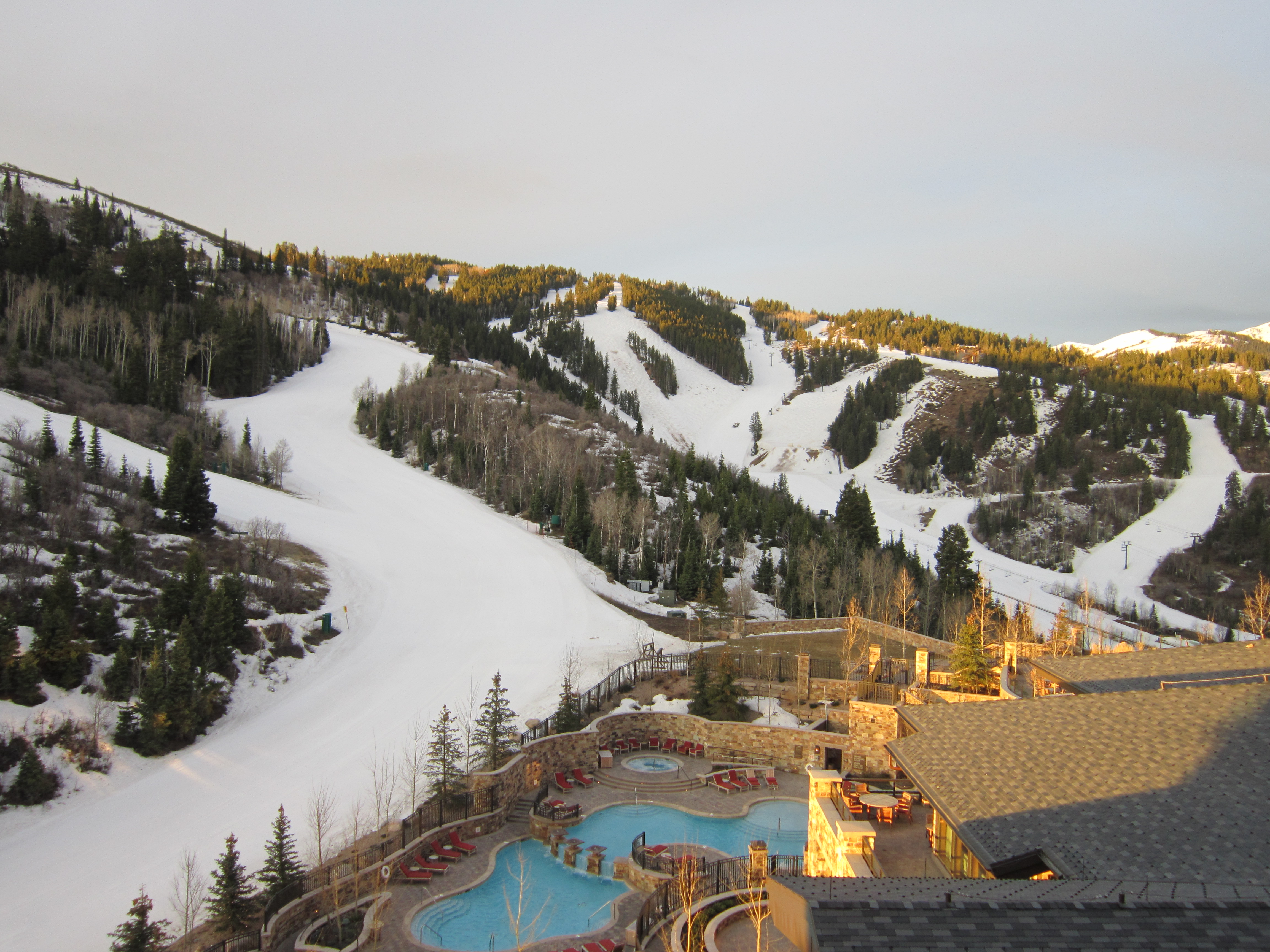
The view from room at Deer Valley, Utah

Last week I had some meetings in Deer Valley, Utah, and also managed to get in one last bout of skiing for the season. Deer Valley is famous for coddling a high-end clientele with personal service and carefully groomed slopes. This doesn’t sit well with my personal skiing value system, which is more about rugged natural beauty, self-reliance, adventure, and transcendence. But I have to say, particularly in variable spring conditions, Deer Valley was pretty sweet.

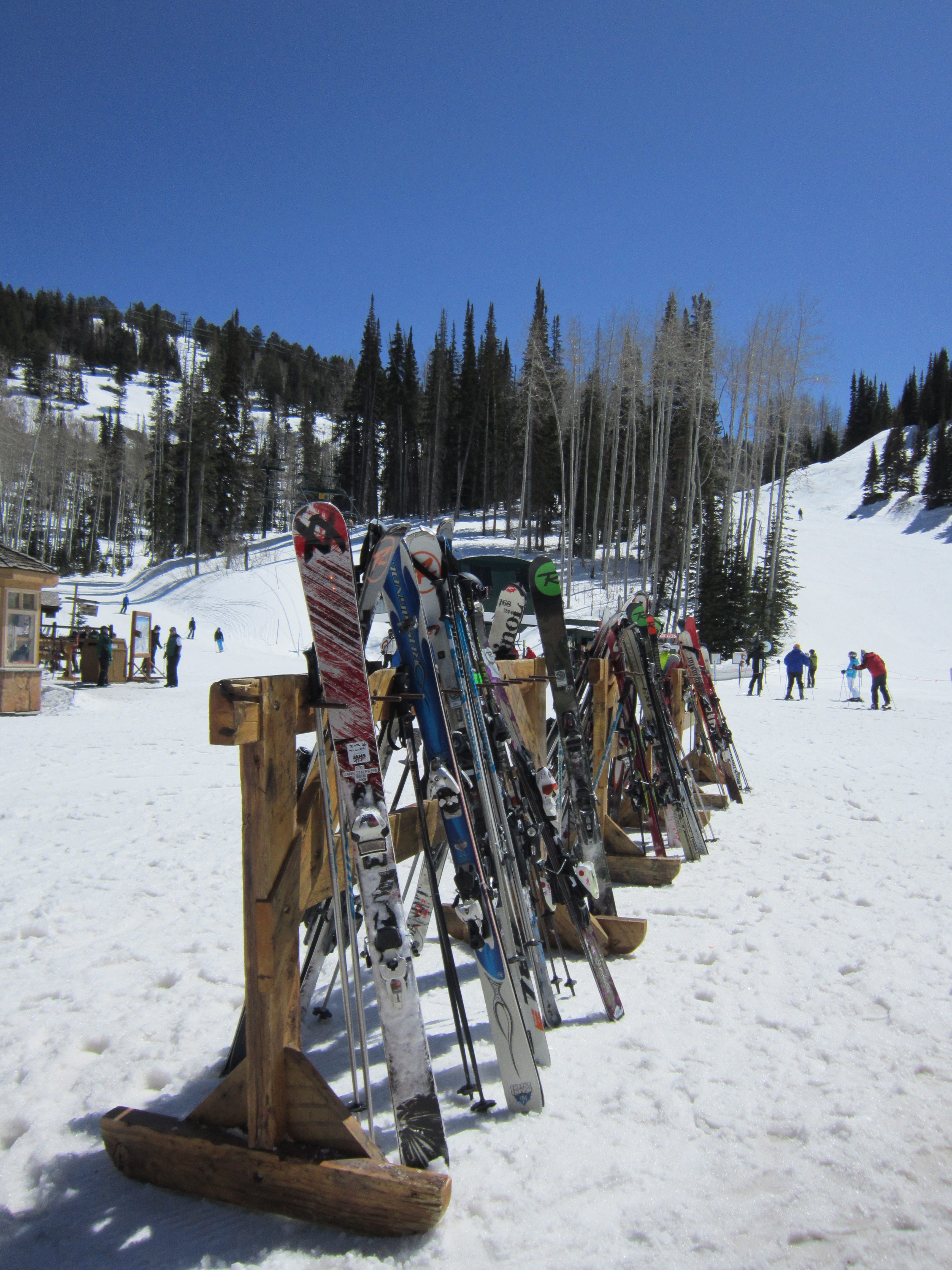
At my hotel, there was friendly, attentive service. A personable young people offered to help you get boots on and off (to which I said no thank you), and carried your skis on and off the slopes. I rented Volkyl Mantra skis, which Gabe had recommended last year. They turned out to be a good choice – a very versatile all mountain ski that performed well in powder, packed powder, crud, and mush, all of which I eventually experienced. It was reasonably quick edge to edge, stable when carving at higher speeds, and workable in bumps and trees.

My rented Volka Mantras (the red and white ones on the end)

It’s been a disappointing year for snow over most of the U.S. Could global warming be to blame? Utah had not had snow for some time, and the mountains looked much more brown than white on the drive from the SLC airport. I had my doubts as to whether skiing would be worth the pain, but in the end, it was.

On Wednesday I skied with business friends and did mostly blue cruisers, with a few bump runs. It was a beautiful, sunny day, with temperatures in the 40s. The snow got soft and mushy in the afternoon, but it was still skiable. Spring skiing, as they say.

Thursday I had work to do, but Friday I got over to Park City to do some skiing by myself. It snowed most of the day, but only lightly, and visibility was limited. The winds were so strong in the morning that only half the lifts were operating. The only double black terrain open in the morning was off the McConkey lift. There were swatches of powder, but much of the skiable area was hard, rutted ice, or worse, ice with a deceptive thin dusting of snow – ice that looked like powder. On one lift ride, I chatted with a couple who’d lived there ten years. They wanted to apologize to visitors for the conditions, which were the worst they’d ever seen. But it got better in the afternoon. The Jupiter lift opened after lunch, and I found some fun steeps that hadn’t been skiied. The bumps were crusty. There were some interesting looking gladed areas that were, unfortunately, closed for lack of snow.

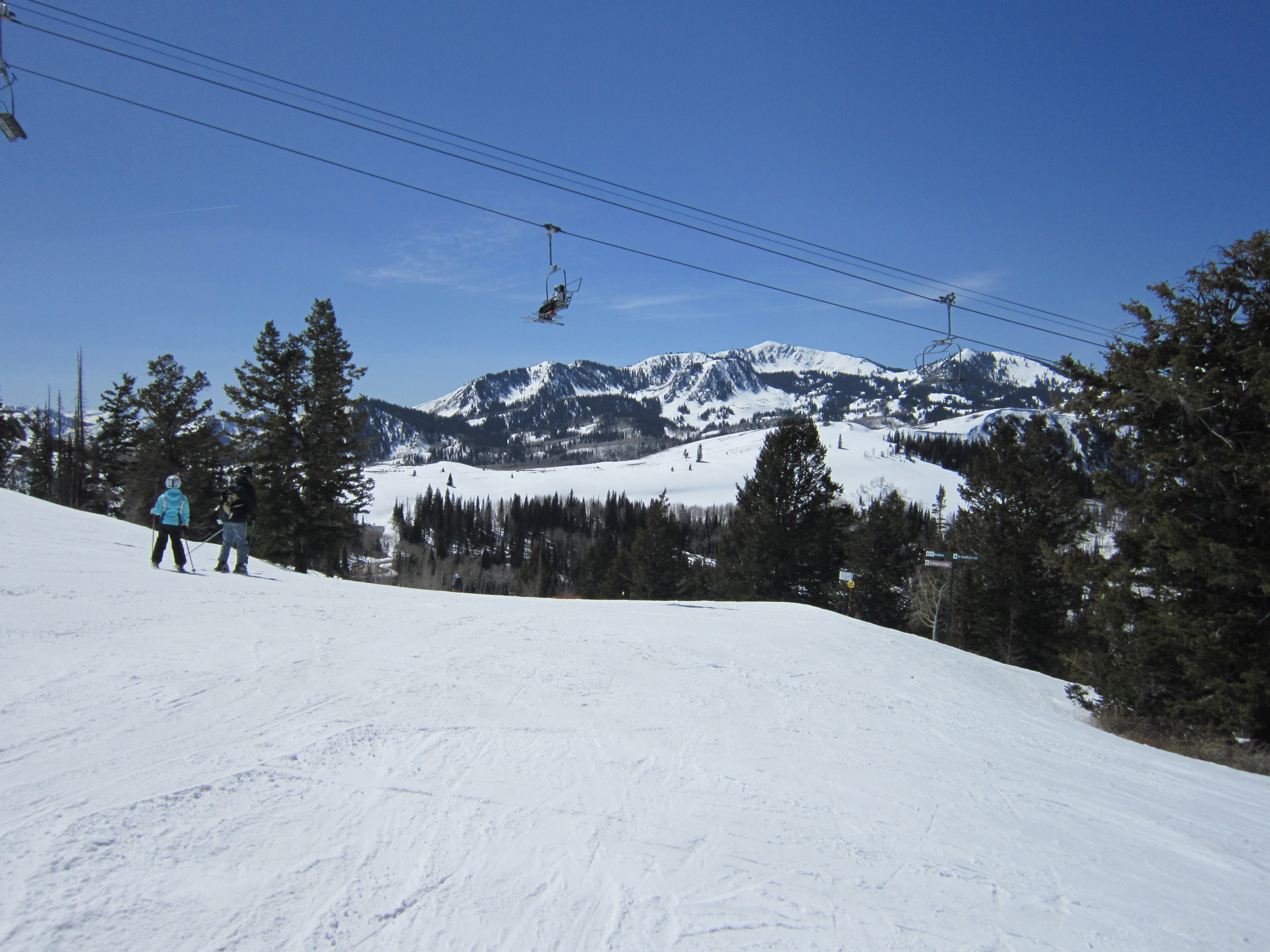
On Saturday it was another chilly bluebird day, which I spent at Deer Valley. The packed powder stayed good until mid-afternoon. I spent most of the time working the Empire and Lady Morgan lifts, both high speed quads that I generally had to myself, and listened to Mahler symphonies on my iPod. I particularly liked the Lady Morgan bowl, where I saw only a handful of other skiers. The lower part of the run is gladed, and after following the tracks of others, I began composing my own routes. It went well, except for one collision between my left ski and a pine tree.

After lunch, I did some carving on the cruisers off the Northside and Silverstrike lifts. After watching one kid catch some good air on a small jump, I tried to follow suit, but figured out a beat too late that the jump was canted to one side. I came down hard on my right hip, lost the right ski, and sprained my left thumb. It hurt! I’ve hurt that thumb the same way before, and it took a long time to heal. But I regrouped and pressed on.

Late in the afternoon, I treated myself to a massage at the Remede spa. Although I’ve become a big fan of deep tissue massage as therapy, I’ve assume that spa massage was mostly about relaxing, which is something I tend to regard as time-wasting. A sad legacy of my Calvinist heritage, no doubt, and I’m working on it. Anyhow, the Swedish massage was wonderful. It was a bit rougher in places than I expected, but also more sweet and sensual. My masseuse put hot was bags on my feet, which made no logical sense yet somehow worked. Over the course of the hour, my little fears melted away. Afterwards, I soaked for a bit in the hot tub, cooled off in the shower, and then sweated for a few minutes in the steam room. I felt a bit limp, and thoroughly relaxed.

On the way home I finished reading The Righteous Mind: Why Good People Are Divided by Politics and Religion, by Jonathan Haidt. In this new book, Haidt, a psychology professor at University of Virginia, offers a theory of the origins of morality and an explanation of the divide between liberals and conservatives. It’s ambitious, and he’s not kidding. I found it easy to accept his view that most human activity is driven primarily by emotion and intuition rather than reason. He was also persuasive in arguing that moral philosophy is primarily instrumental – a tool in service of other social goals, rather than a disinterested search for truth. He sees it as a vital instrument for human communities, and therefore for progress.

I was less persuaded, but still intrigued, by his idea that conservatives had a richer array of moral values than liberals. He argues that liberals define morality primarily in terms of reducing harm and increasing fairness, whereas conservatives also place significant weight on values such as loyalty, authority, and sacredness. That seems possible, but it doesn’t seem to connect up to the truly goofy aspects of conservative ideology, like demonization of liberals and discounting of science. I’ll go along with his idea that we need to figure out how to engage with ideas we don’t necessarily agree with if we’re to overcome our dysfunctional politics. I found the book thought provoking, and especially considering the density and breadth of the ideas, a surprisingly lively read.

Sharing piano music, buying a painting, and going to a new ballet

Stuart is not overly excited about our new painting

What does art mean to life? I’ll take a strong position, and say, simply, everything.

My brother, Paul, and sister-in-law Jackie were passing through last week, and we convened for dinner at Zely and Ritz. But first, they came up to our apartment to see the view and have a cocktail. I wanted to play some piano music for them, but hesitated to propose it. Sharing serious music just isn’t something people normally do in these modern times.

I also recognize that for some people it would be an imposition. I think my playing is thoughtful and nuanced, but it isn’t perfect. Even if I were a seasoned professional concert artist, it would still be true that my nineteenth and early twentieth century repertoire would not be to the taste of everyone. Although it amazes me, I understand that some people find it bewildering or boring. I hope this is mostly because of lack of education and exposure — which is one reason I think it’s important to share it.

Fortunately, Paul and Jackie studied music in college and enjoy various genres. And so I played for them some Chopin (the Nocturnes in c-sharp minor and D flat) and Debussy (the First Arabesque). They sounded good, though maybe a little stiffer than when I play for myself alone. Playing for someone else dramatically changes the sensation of making music. Perhaps it’s from adding adrenalin. Things that seemed settled can become unsettled. Sometimes new beauty emerges, and sometimes things fall to pieces. This is one of the reasons I was happy to have these family listeners — without listeners, it’s impossible to learn how to communicate the music. Paul and Jackie seemed to enjoy it, and were very gracious.

At lunch time on Wednesday, Sally and I met at the Adam Cave gallery to look at some paintings. Sally had followed up on a review she’d read with investigation on the Internet, and come up with some works that might work for us by Byron Gin. Adam, the proprietor of the gallery, had agreed to pull together his stock of Gin works, and told us more about the artist. We both felt excited about Three Birds and a Cup, and discussed it more over a lunch at the Remedy Diner (great veggie sandwiches and rock music). The next day, we decided to take him up on his offer to take the painting home and see how it looked before committing.

Three Birds and a Cup, by Byron Gin

I think it’s a touching, slightly funny and engaging painting. The house sparrows look like quizzical house sparrows, but the space looks vibrant blue and gold paint. The yellow cup looks like a cup. The eye and mind shift back and forth between the birds and the cup, and the natural and human world. I find it nourishing and stimulating.

Friday night, we ate at Buku before going to the ballet. It was unseasonably mild, so we sat outside at dinner. Buku has increased its vegetarian offerings, and the ones we tried were good: baba ghanoush, arepas, and lentil wat. I also had the flight of three half glasses of Chilean wines, which were quite delicious.

At Fletcher Hall, we heard choreographer Lynne Taylor-Corbett speak on the new work to be performed that evening, The Little Mermaid. We’ve liked many of LTC’s works, including Carmina Burana and Carolina Jamboree. She’s a very engaging personality, and articulate and down-to-earth about what she’s trying to do.

She didn’t put it this way, but The Little Mermaid seems designed for ballet newcomers and kids. This was somewhat true of her The Ugly Duckling, but I found Duckling more elegant and touching. Jan Burkhard as the mermaid was lovely and girlish, and fun to watch, and Randi Oseteck as the sea witch was a great villain. And I particularly liked Lindsay Purrington as the sly village girl who tricks the prince. She made the part more sympathetic than the story might have suggest, so that I was sorry when she got her comeuppance. The costumes were mostly delightful. But I found the music intensely cloying, and the narration at times plodding.

The second half of the program was duets of a serious and more classical nature. I particularly enjoyed Lara O’Brien in an intensely tragic Weiss pas de deux with music by Gustav Mahler (one of the true greats). Peggy Severin-Hanson and Marcelo Martinez were powerful and delightful in Le Corsaire pas de deux. It was great to see this significant chapter in ballet history brought intensely to life.

I recently finished reading Apollo’s Angels, a history of ballet by Jennifer Homans. I found some of it heavy going, particularly the early stages, but it was worth it all for the last couple of chapters, including her writing on Balanchine, which was full of insight. It’s unfortunate that she ends the book on a sour note in which she opines that ballet is dying. From where I sit, there’s still a lot of life. I just checked the repertoire list of the Carolina Ballet, and noted that they’ve presented versions of many of the works that Homans discusses and treats as high points of the art. I’m so glad they’re here.

Curiosity, live chamber music, and wonderful ballet

Curiosity killed the cat, but I’ve come to see curiosity and openness to new experiences as major contributors to happiness. This week the NY Times science section had a story that supported this view. The story by John Tierney focuses on “novelty seeking” as a personality trait. According to one study, persons with the highest life satisfaction were those who scored high in novelty seeking and balanced that trait with high levels of persistence, meaning staying with an effort when there’s no immediate reward.

The same study mentioned a third trait associated with those who flourished most, in terms of health, friends, and emotional satisfaction, which it labeled “self-transcendence.” This is “the capacity to get lost in the moment doing what you love to do, to feel a connection to nature and humanity and the universe.” Tierney cites research indicating that novelty seekers exhibit more personality growth as they age. But it is also associated with such problems as gambling and drug addiction, compulsive spending, and criminal behavior. Too much of a good thing, perhaps.

I’ve noticed that lately I’m getting more and more enjoyment from music and dance, which may derive from persistently seeking novel forms and self-transcendence. I’ve been getting out to more live performances these last few years, which helps. I heard an interview with James Levine, the great conductor, in which he compared a recorded performance to music to a post card of a scenic view — that is, a pale reflection of the live event. That may be an exaggeration, but I think he was right that there is no good substitute for live performance.

And so Sally and I made our way to Fletcher Hall last Sunday afternoon to hear one of the world’s premier piano trios, named for its members: the Kalichstein- Laredo-Robinson Trio. They were master musicians and played an excellent program of Mozart, Debussy, Richard Danielpour (b. 1956), and Ravel. Laredo (violin) and Robinson (cello) have been married for 35 years, and the Danielpour piece was a duet written for them entitled Inventions on a Marriage. It covered a range of moods, from passionate to tender to humorous, and the musicians were, as you’d expect, in intimate communication.

Unfortunately, the audience was sparse — about 160 people. I felt embarrassed on behalf of Raleigh that there weren’t more people to hear these truly great performers. As a member of the board of the sponsor, the Raleigh Chamber Music Guild, I felt some responsibility. Afterwards, several board members exchanged emails theorizing about what happened.

Did we not publicize the event enough? I think we did not. Is the audience for this music disappearing? I sincerely hope not, but I guess it’s possible. Chamber groups like string quartets are what TV ad writers plug in when they want to quickly depict the opposite of cool and hip. And they aren’t really wrong. Unlike things that are cool, chamber music is not instantly accessible. It takes years of training and devotion to play, and it also takes education and experience to enjoy. Those of us who have been privileged to have such education had better figure out some way to educate others, or we may lose something precious.

Enjoying ballet also requires some amount of education and experience, although it doesn’t rank as high on the endangered-arts list. I’ve been fortunate to have had early exposure, starting with my sisters’ elementary ballet recitals and continuing through high school at the N.C. School of the Arts. I got to see George Balanchine’s New York City Ballet and other great companies. And I’m continuing to learn from watching the work of great choreographers and dancers, and also reading. I’ve almost finished Apollo’s Angel’s, Jennifer Homan’s impressive, and daunting, history of ballet.

On Thursday we went to opening night of the Carolina Ballet’s new program, Balanchine Rarities. The program opened with three short but very technically demanding Balanchine works. The dancers were beautiful, even in sequences that seemed designed to test their physical limits. I especially enjoyed A la Francaix, a piece in the playful spirit of Jerome Robbins’s Fancy-Free, with two rambunctious sailors, a fun-loving Flirt, a Dandy with a tennis racket, and a diaphanous Sylph, who competes with the Flirt for the Dandy. Jan Burkhard was delightful as the sexy Flirt, and Lindsay Purringon found a sweet combination of elegance and humor in the Sylph. Eugene Shlapko was athletic and funny as the Dandy. He’s getting better and better.

At intermission we talked with Lola Cooper, who had the night off. She was fighting a bad cold and losing her voice, but excited about working with Marina Eglevsky, who staged the Balanchine works. We also talked with Alicia Fabry, who had broken her right metatarsal the previous week during rehearsal. She was in a plastic cast and using a crutch. Poor thing! She said the break could have been worse and did not require surgery, but would take several weeks to heal.

The company also performed Lynn Taylor-Corbett’s Lost and Found, inspired by the 9/11 attacks and set to piano music by Robert Schumann. It is a elegaic work, somber but beautiful. The last work was Robert Weiss’s Moving Life to piano music of Erik Satie. Roy Dicks’s review in the News and Observer singled out Cecilia Iliesiu for her performance, which I thought was fitting; I also thought she seemed like a rising star.