The Casual Blog

Category: books

A dive trip to Hatteras with a harrowing episode, visiting Manteo, and reading Robot Futures

13 08 01_3208-1
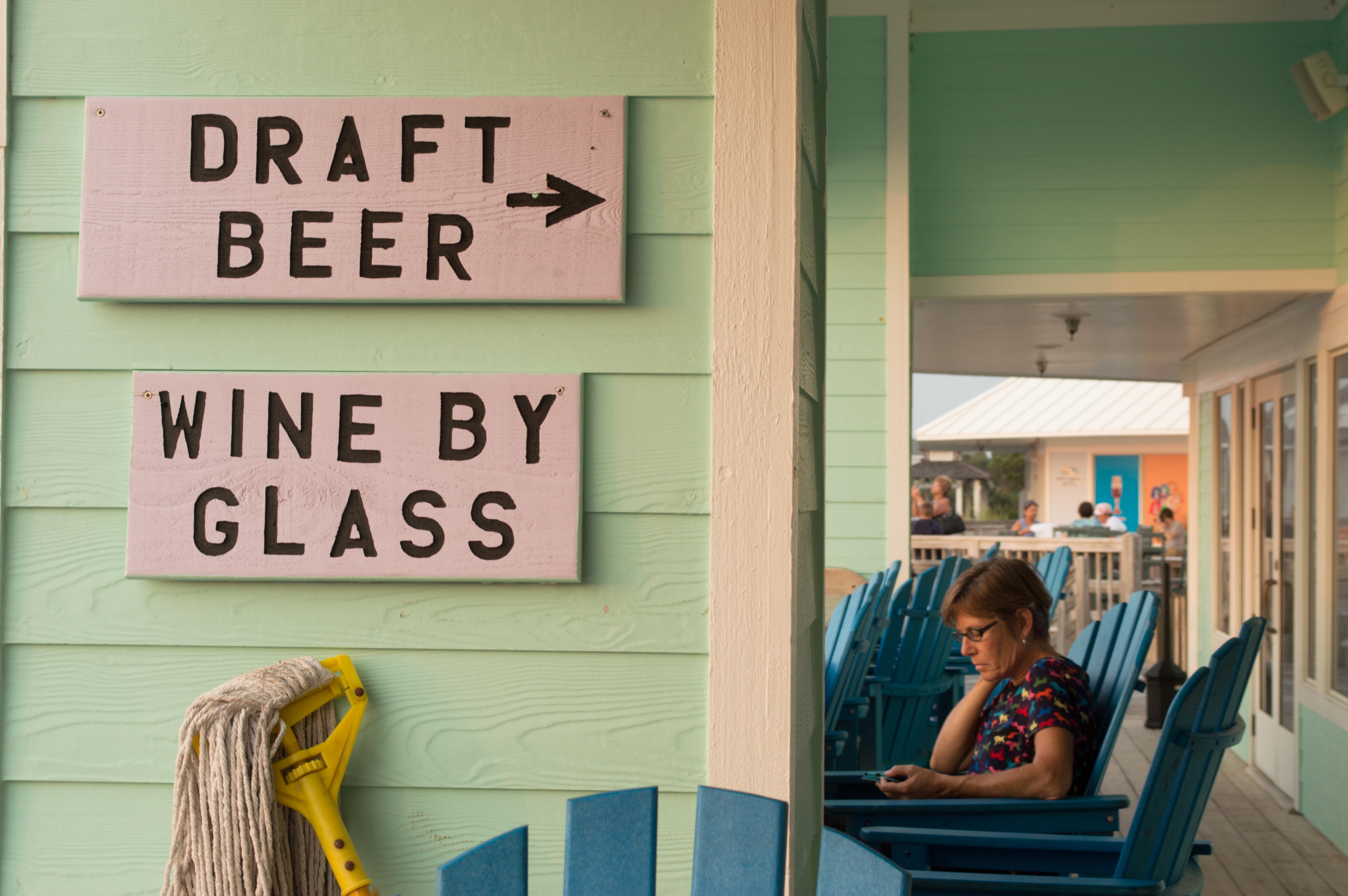
We undertook a four-day dive trip out of Cape Hatteras beginning last Thursday, but the weather didn’t cooperate. We made it OK to our base at Hatteras Landing, but high seas prevented our going out for the first three days. We made the best of things, enjoying some time together, exploring the local points of interest, listening to music, and reading.
13 08 01_3343

For us the most interesting non-diving local point was the N.C. Aquarium at Manteo. I particularly liked the sting ray encounter tank, where Atlantic and cownose rays came up to be petted. There was a large tank with several sand tiger and sand bar sharks, which are impressive. Their keeper got in the tank in scuba gear with a full face mask and speaking equipment, and answered questions as they swam around her. Her high degree of comfort with these fierce-looking creatures was, I’m sure, an educational moment for the kids and adults in attendance.
13 08 02_3289

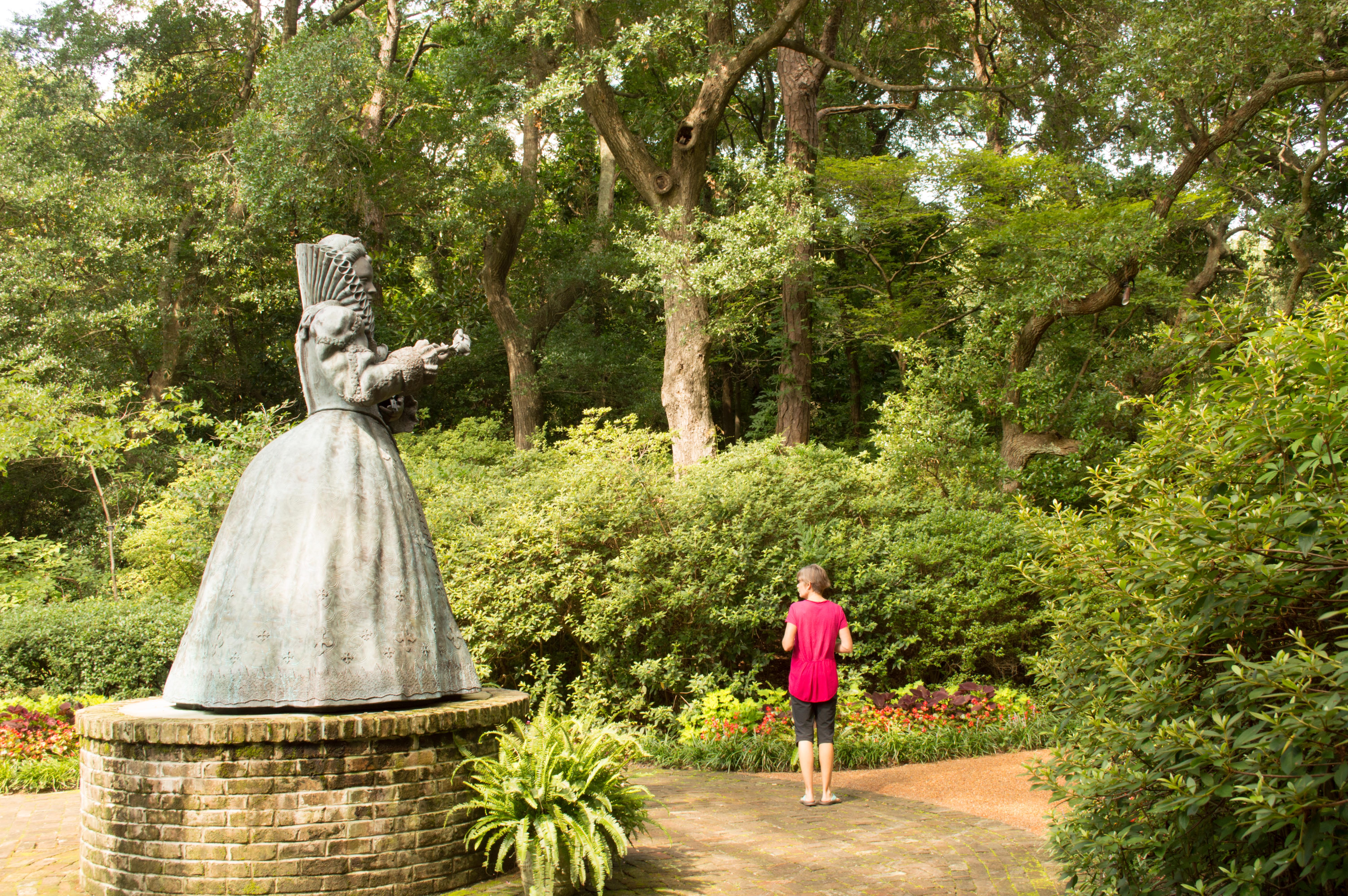
While in Manteo, we also visited the Elizabethan Gardens. Sally remembered my mother had talked about how beautiful it was, and we found it so. The first part is a formal garden with ornamental hedges, but the greater part of it is wooded, with enormous oaks and shade loving plants.
13 08 02_3300

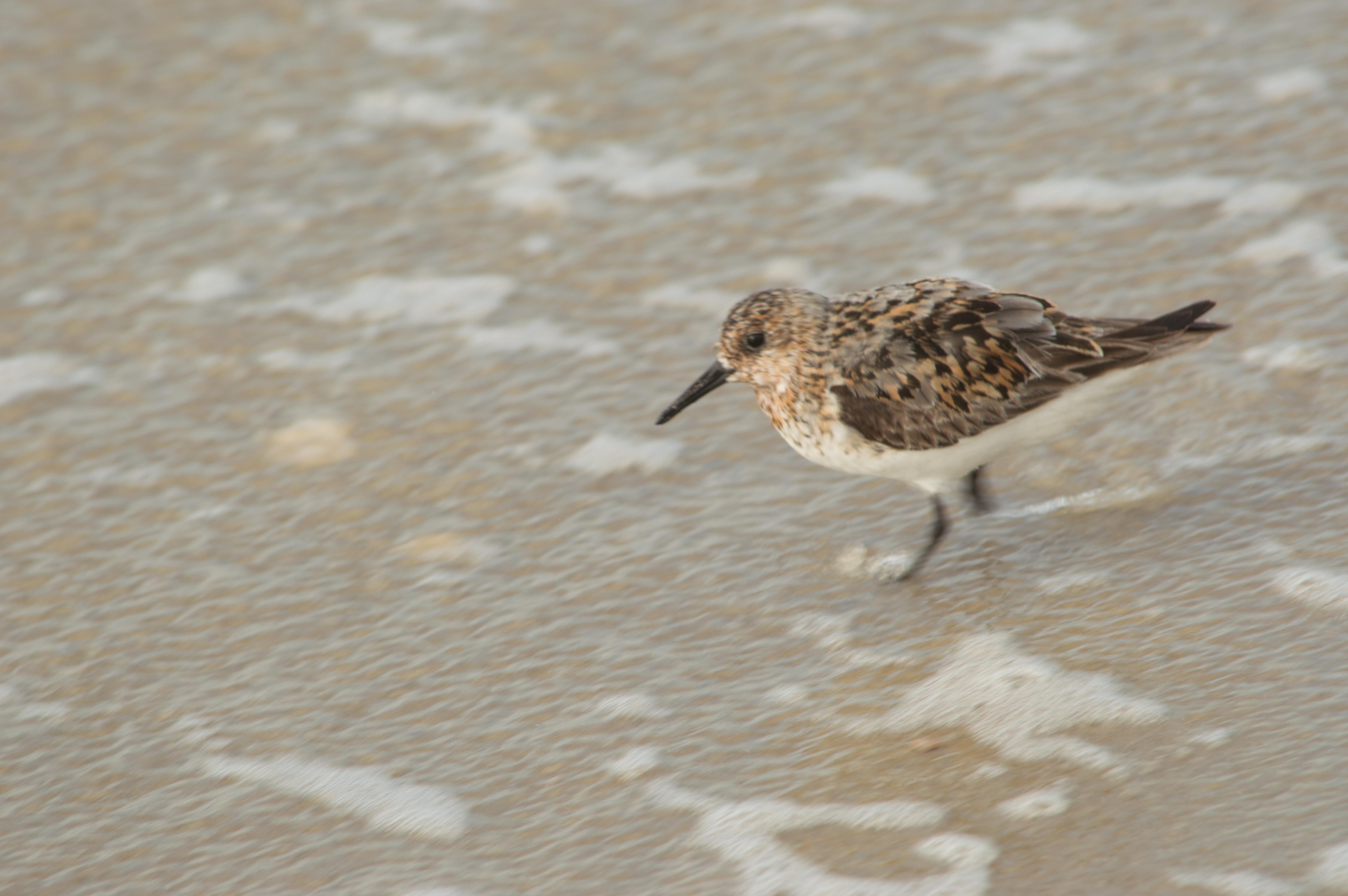
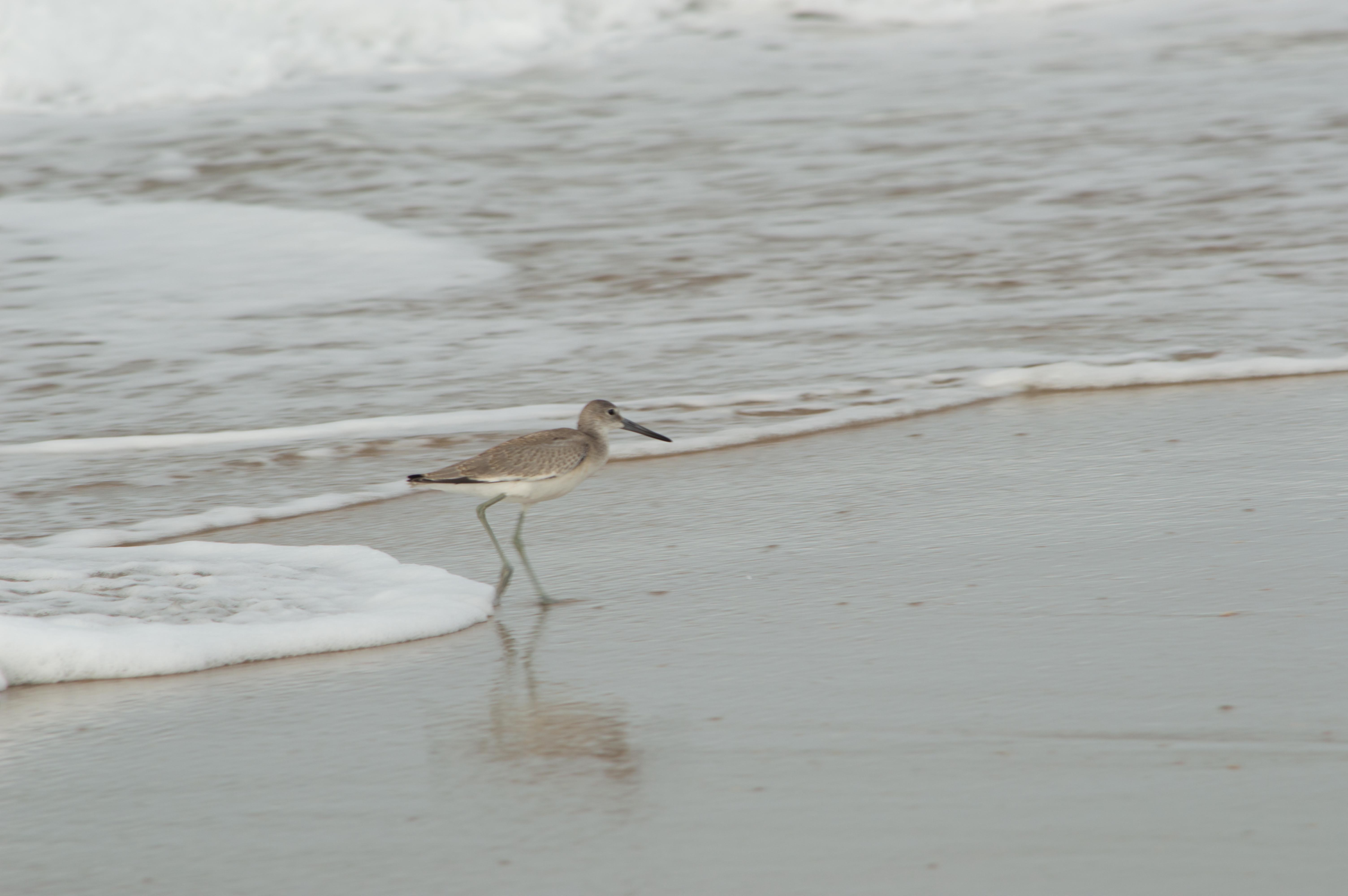
With no other pressing business, I did some walking on the Hatteras beach, and took some pictures of the birds at work there. I got a few of sanderlings and willets on the edge of the surf that I liked.
13 08 02_3318
13 08 02_3317
13 08 01_3275-1
13 08 01_3263-1
13 08 01_3232

As for reading, I started a biography of John D. Rockefeller, Titan by Ron Chernow, which seems lively so far. And I finished Robot Futures by Illah Reza Nourbakhsh. Nourbakhsh is a professor of robotics at Carnegie Mellon, and his book describes the current state of the art in robotics and also gives a forward projection of what several decades might bring. Some of it seems science fictiony, but that may be unavoidable – technology has already surpassed some of the science fiction of my youth.

Nourbakhsh describes robots as “a new form of living glue between our physical world and the digital universe we have created.” He gently makes clear that robots are not limited in their mental or physical abilities to what humans can do. Forget the Jetson and their butler robot. Real robots can be stronger and faster, and move in different ways (like flying, or crawling like a snake). They can perceive parts of the visual spectrum we can’t, and hear pitches that we can’t. They can connect to the internet more efficiently than humans, and potentially process information from numerous sources that are far beyond our capacities.

Robot Futures recognizes that there will be many different types of robots with widely varying abilities, including ones that are closely controlled by humans and others which will be partially or entirely autonomous. It will not be easy for humans to tell the difference. Autonomous robots with access to robot Google and links to other robot databases may well know more about us when we encounter them than we about them.

Nourbakhsh imagines a distant future where we can smoothly enter the consciousness of various robot agents that in effect teleport us to different places and allow interactions with multiple people and environments at once. He also has a darker vision of a possible world where human bodies are purchased for use as the physical casing for robot intelligence. Impossible? Let us hope so. But there is little doubt in my mind that, barring global catastrophe, the world of intelligent robots is taking shape. Robot Futures does a good job at starting the conversation of what that might mean for humans.

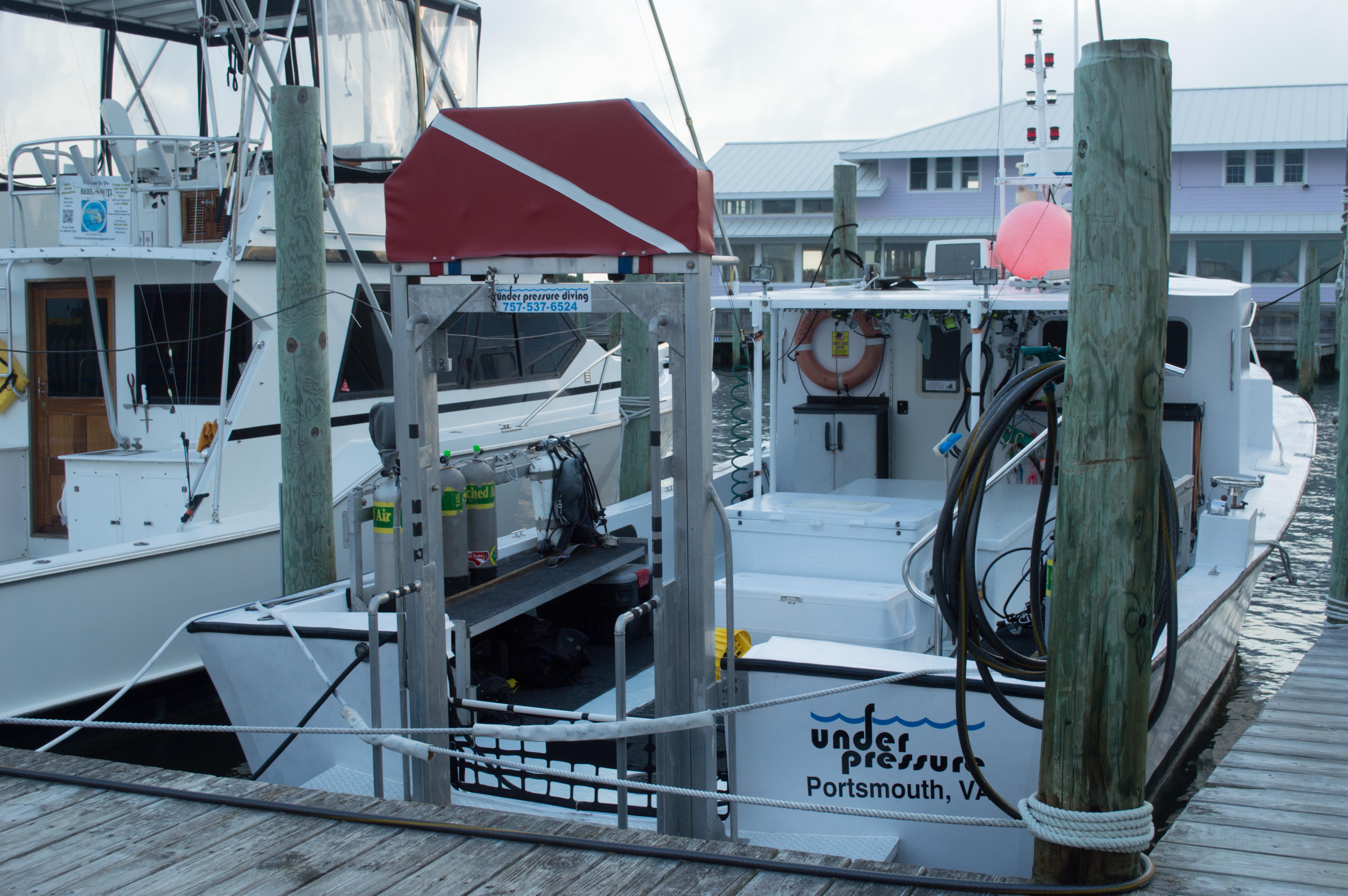
We finally got to dive on Sunday with Captain J.T. Barker on his dive boat, the Under Pressure. As I noted last year, J.T. designed and built an elevator on the back for getting divers out of the water. This comes in very handy in rough seas. The vessel has a large air-conditioned cabin, which permits some relaxing on long boat rides. Some video of the boat and our dives in early August last year is on his web site.
13 08 01_3201-1

We did two wrecks: the Proteus and the Dixie Arrow. The first was, for me, nearly disastrous. Immediately after I reached the bottom (118 feet), I paused briefly to clear water from my mask and tune my buoyancy. Visibility was limited to about 20 feet at that point. Then I looked around and saw no one and nothing. In just seconds, the current had carried me out of sight of the anchor line.

I struggled against the current for a bit, then relaxed and started working on plan B – ascend and find the boat. I began to slowly go up, then at 80 feet I suddenly noted that the air was not working at all well. The air pressure gauge showed zero. This seemed impossible – I had been under for only about 20 minutes, and usually the air lasts two or three times that long. Anyhow, it happened. Plainly, I should have checked the gauge earlier.

Although I thought it unlikely I could make an emergency ascent on one breath from 80 feet, I saw no choice but to have a go. I really didn’t feel panic, even at this point, though I was seriously concerned. I remembered my PADI training and exhaled gradually as I kicked upward. I ran out of air at about 30 feet, and hoped very much there was one last breath in the tank. I breathed in, and there was a tad — just enough to make it the rest of the way.

On the surface, I felt relief, but also concern that I might well have some degree of decompression sickness, a/k/a the bends. I was hoping to get some oxygen, but the boat, with oxygen, was far away.

As I started kicking against the current toward the board and watching to see if I was going to get sick, I felt something bump me. I reached down and felt a firm, smooth animal. A shark? I thought how really unfair it would be, after all my speaking up in defense of sharks, to end up as shark food. I finally figured out it was a ramora, which apparently wanted to attach itself to me.

I swam for quite a while with little progress, until at last Bobby, the mate, came out with a line. As we kicked, our divermaster Jim reeled us in. It was, of course, embarrassing. But I was grateful to be alive and not even ill, and it certainly was a learning experience.

During our surface interval, Captain J.T. put out some fishing lines, and hooked a fish. As the fish came near the boat, J.T. Announced with excitement that it was a wahoo, and grabbed a hook, with which he impaled the fish and hauled him aboard. The wahoo was about 3 feet long and about 30 pounds – a fine specimen.

Several folks commented on what a delicious meal he would make. Then J.T. and others observed Sally crying. These were tears for the wahoo. Our fellow divers were concerned but really puzzled. They just couldn’t comprehend Sally’s sadness at the brutal torture and death of this creature.

Our second dive, the Dixie Arrow, was less exciting, thank God. I had only a minor equipment problem: the wire to my strobe came loose – so no pictures. We got close to a lot of sand tiger sharks (maybe 10), a lot of Atlantic sting rays (maybe 12), a number of barricuda and thousands of minnows in shimmering thick clouds. It was fantastic.
Farewell to Cory Monteith of Glee, and a new pop science book on the unconscious

13 07 26_2802
Last week I was greatly saddened to hear of the death of Cory Monteith, the actor who played Finn in the TV show Glee. For a couple of years (though less so recently), Glee was one of my happiest guilty pleasures, a sweet spot on the largely mindless and boring TV firmament. I wouldn’t care to defend Glee as wholly original. It is, at one level, mostly about recycled pop songs, dance video conventions, and predictable plot lines. But they sing and dance with more than just precision. The total effect is of youthful energy and exuberance. Pop music that I never much cared for when it was new becomes fun and sometimes even moving.
13 07 26_2796

The existence of gays who were sweet, talented, and creative has been a major point of Glee, and it has pressed for tolerance for gays as a central value. How much has this affected the American zeitgeist? Some, I’ve got to think. The poll numbers of Americans supporting gay marriage have gone from negative to positive during the show’s run. Gay marriage is legal in several states, and the Supreme Court has gotten on board. Making anti-gay jokes and comments is becoming less socially acceptable. This is progress.
13 07 26_2815

Cory Monteith was probably the least flashy of core Glee cast in terms of good looks and song-and-dance talent. But he served as the anchor, allowing those around him to emote without floating into outer space. His relative normalcy gave the show more texture and sweetness than a simple music video. He was a point of stability.
13 07 26_2830

It was surprising, at least to me, to learn in his obituary that he “struggled with substance abuse,” and his death was attributed to a combination of alcohol and heroin. Plainly, he was a talented and hard-working actor. It simply is not possible to put out a weekly TV show without lots of hard work, and the supercharged Glee production numbers have got to be incredibly taxing on actors and crew alike. Monteith performed consistently at a high level, so it seems safe to say that he was not completely controlled by addiction. I don’t know more than that about his back story, and I won’t speculate. As I said, I’m sad such a talented young actor is gone.

I hope his death will encourage others to avoid addiction to dangerous drugs, but I also hope it will nudge forward the shift from a moralistic view of addiction. The “struggling with addiction” language in the news reports suggests a more medical view of the problem, instead of the traditional junkies-are-evil-zombies view. Glee reruns will give testimony for years to come that Monteith was so much more than that.
13 07 26_2848

There’s still a lot we don’t understand about our brains, but also so much we’re learning. I just finished a new book on this fascinating subject this week: Subliminal: How Your Unconscious Mind Rules Your Behavior, by Leonard Mlodinow. Mlodinow, a physicist by training, covers some of the same territory as Kahneman and Gazzaniga, taking an evolutionary perspective on the brain and describing research into conscious versus unconscious processes and the social nature of the human brain. But his emphasis is different, and in some ways more practical.

For example, he spends little time lamenting how little of our lives are lived at a conscious, rational level, instead emphasizing how useful and efficient our unconscious processes are. Yet we normally overlook this part of life or deny the extent to which it is critical. We trust our reasoning processes without noting their common biases and errors. We rely on our memories without accounting for their imprecision and shifts. Even our most basic perceptions and emotions are prone to manipulation and error. But Mlodinow is not a pessimist. Like Kahneman, he is ultimately hopeful that understanding how prone we are to mistakes and delusions can help us improve our lives.
13 07 26_2855

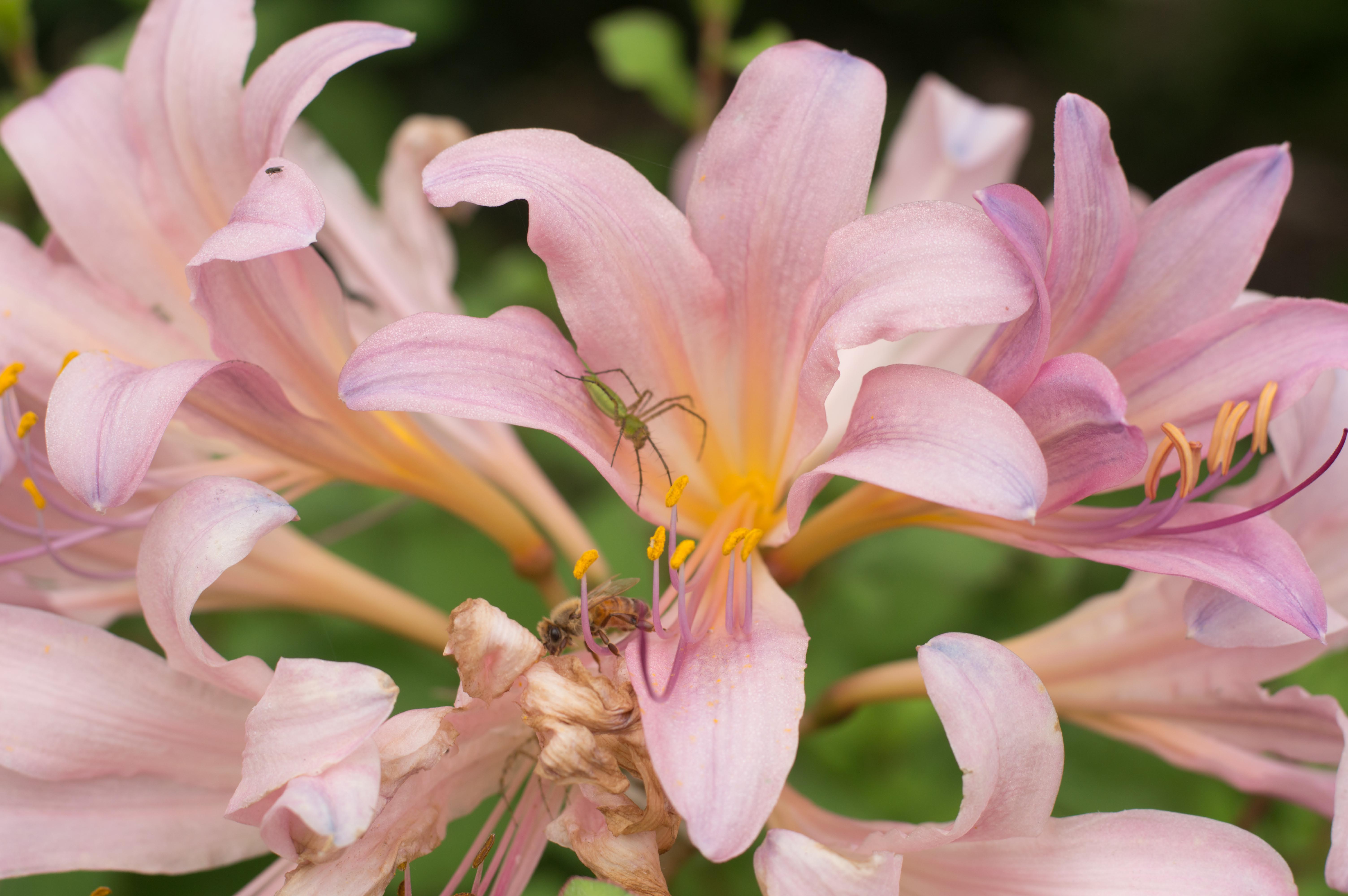
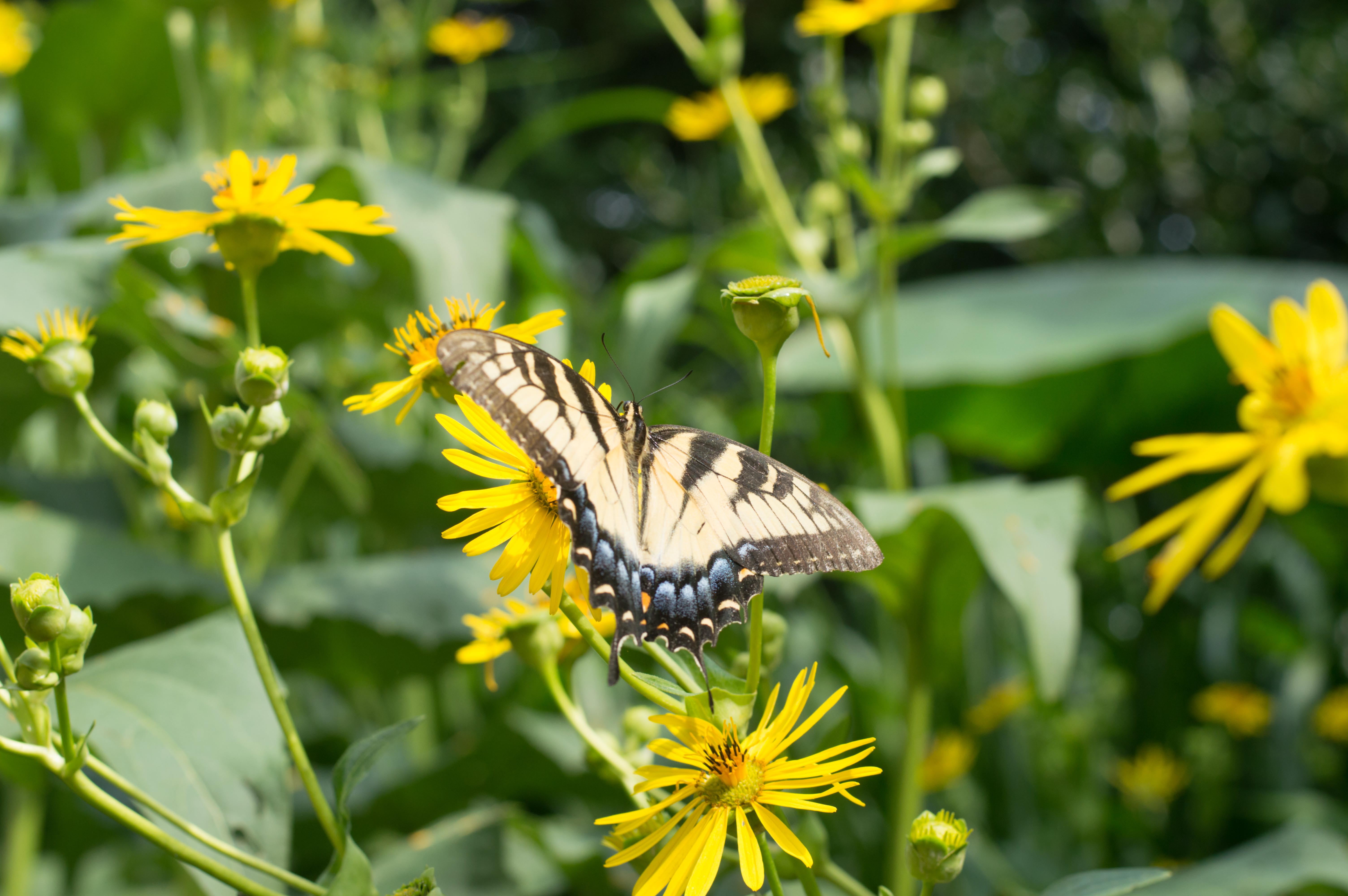
The photos above are from my latest photo safari to Raulston Arboretum on Saturday morning. As usual, there were new things blooming, including some spectacular lilies. Also there were quite a few butterflies, including a gorgeous tiger swallowtail.
13 07 26_2841

Stuart’s and my birthdays, a yoga class, a new green smoothie, and Beautiful Whales

13 07 14_2716

It was Stuart’s eleventh birthday on Tuesday. This is not ancient, but in dog years it is getting up there. It seems fitting to note that he is still the best little doggie ever. Sure, he’s grayer, but he still loves going on walks and being petted, and gets excited (drools) at meal time. He used to love to play with other dogs, but now, he doesn’t. But he’s very skilled at that greatest of dog skills: figuring out what his humans are feeling and making them feel better. He tolerates Rita, Isabel, and Phoebe (the cats).
13 07 14_2730
13 07 14_2726
13 07 14_2723

The next day was my own fifty-eighth birthday. I normally keep a low profile on birthdays. It just seems awkward, unfair in a way, to get extra affectionate attention for something that demands no skill beyond bare survival. And as will happen, those birthday numbers have gotten bigger. One of my coping mechanisms is to start thinking in the months running up to, say, the 58th birthday, that I’m about 58. Then when the day arrives, I initially think, good God, I’m 59. Then I realize I’m actually only 58, and feel a little better. I won’t be 59 for another whole year!

I don’t think I’m unusually fearful of death, but I’m still keenly interested in postponing it for as long as possible. Regular readers know that I have an interest in taking care of my physical self in a way that, if I observed it in a person I disliked, I might view as wacky. But if you’re in your later fifties, either you’re fighting the forces of entropy or you’re going downhill. I’m still getting up early almost every day and either going to the gym, swimming, doing a yoga class, seeing a personal trainer, or taking a spin class. And amazingly, I enjoy it! I wish I’d discovered how good it makes me feel when I was in my salad days.

Tuesday morning was my usual day for Early Bird Yoga at 6:30 with Suzanne. One of the things I like about Suzanne’s class is it’s always different, and usually fresh and lively.  Suzanne is inspired by ancient Vedic texts, which are not a particular interest of mine, but I’m glad they inspire her, because she inspires me. Her voice is sweet and low, with a lovely Trinidadian British accent. I just clear out my head, listen and do whatever she says to do. It’s simple, in a way, though not easy.

This week she had us go quickly through a typical flow (planks, chatarangas, cobras, down dogs, warrior ones, steps to the front of the mat, rising up, folds, half lift, fold, repeat, repeat again, etc.), then started throwing in side movements, twists, back bends, leg raises, and a series of one-legged balance poses. Then a few lovely minutes of complete relaxation in savasana. After considerable stress, I felt pleasantly calm at the end, and ready for an active day.

After crossing the street and taking the elevator back home, I made myself my usual weekday breakfast, a green smoothie. Each one is a little different. This one had kale and dandelion greens, a little orange juice and soy milk, a little flaxseed oil, a scoop of Vega One protein shake powder, strawberries, blueberries, and a banana. A little ice for coolness and texture. My restaurant grade blender is still working well, though I wish it were not so noisy. The smoothie was, as usual, dark green. I put it in the refrigerator to chill while I took a hot shower.

Back home after work, Sally gave me a birthday card with a male and female cardinal (birds that have strong couple bonds), and three presents: some workout shorts, a portable scales for luggage, and a book. I appreciated the new shorts and will find the scales useful for avoiding excess luggage fees, but I loved the book: Beautiful Whale, by Bryan Austin. It is an oversize coffee table volume with large photos of humpback, sperm, and other whales. One of my big dreams is to swim with these amazing creatures. The book is about as close to that experience as a book will get. The images are indeed beautiful and moving.

My walk to work, seeing Before Midnight, and eating at Dos Taquitos

13 06 12_2091
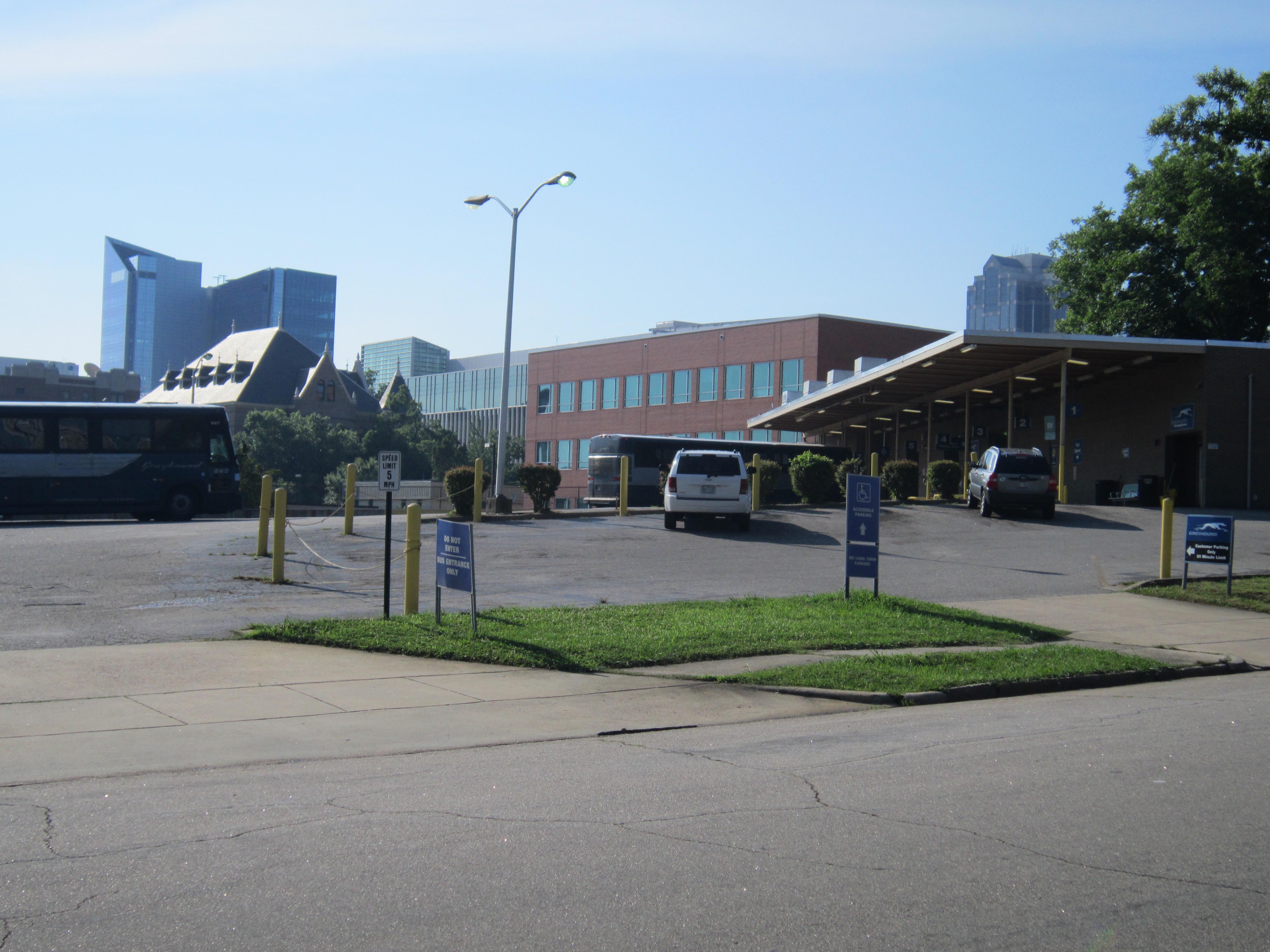
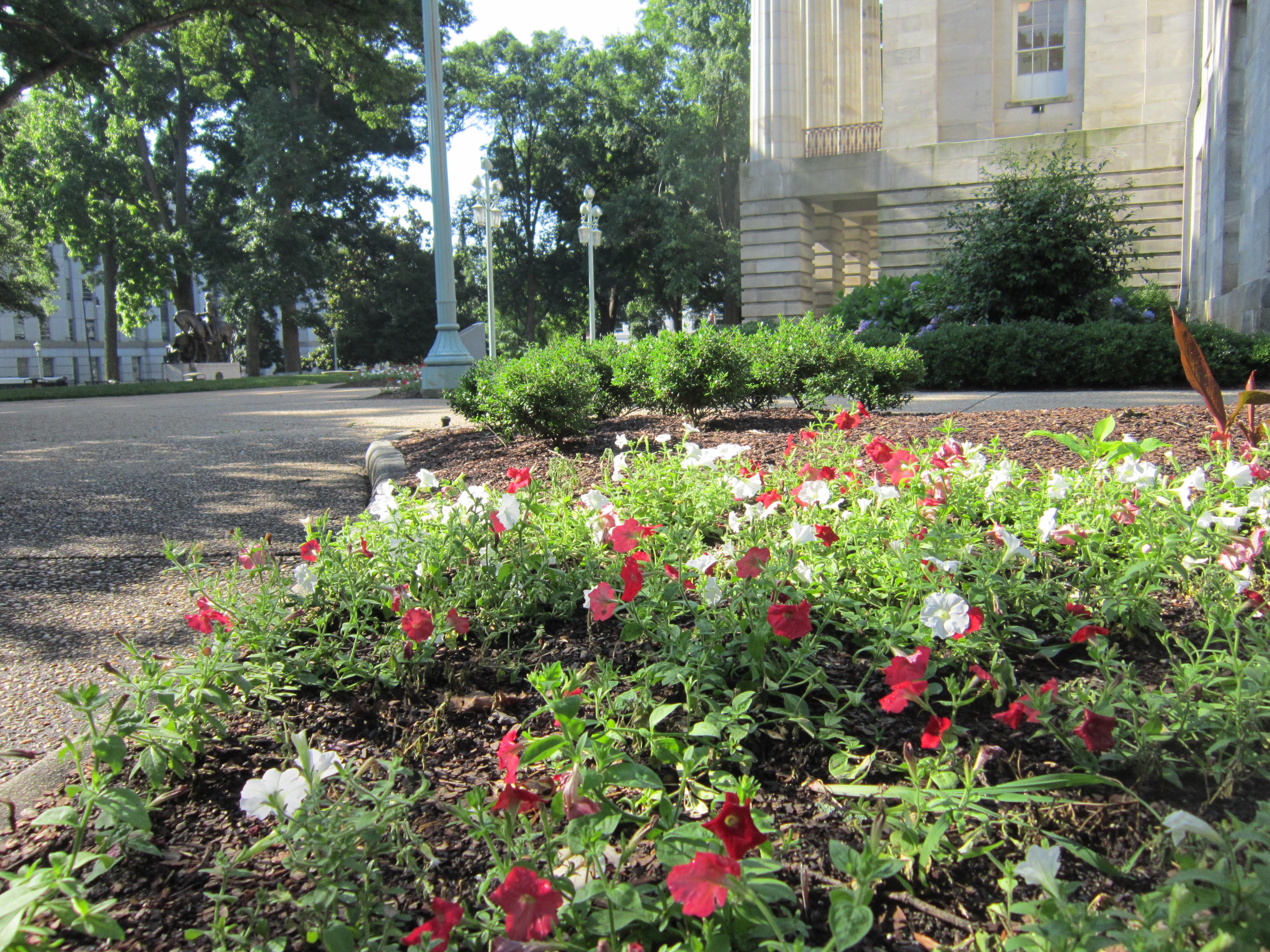
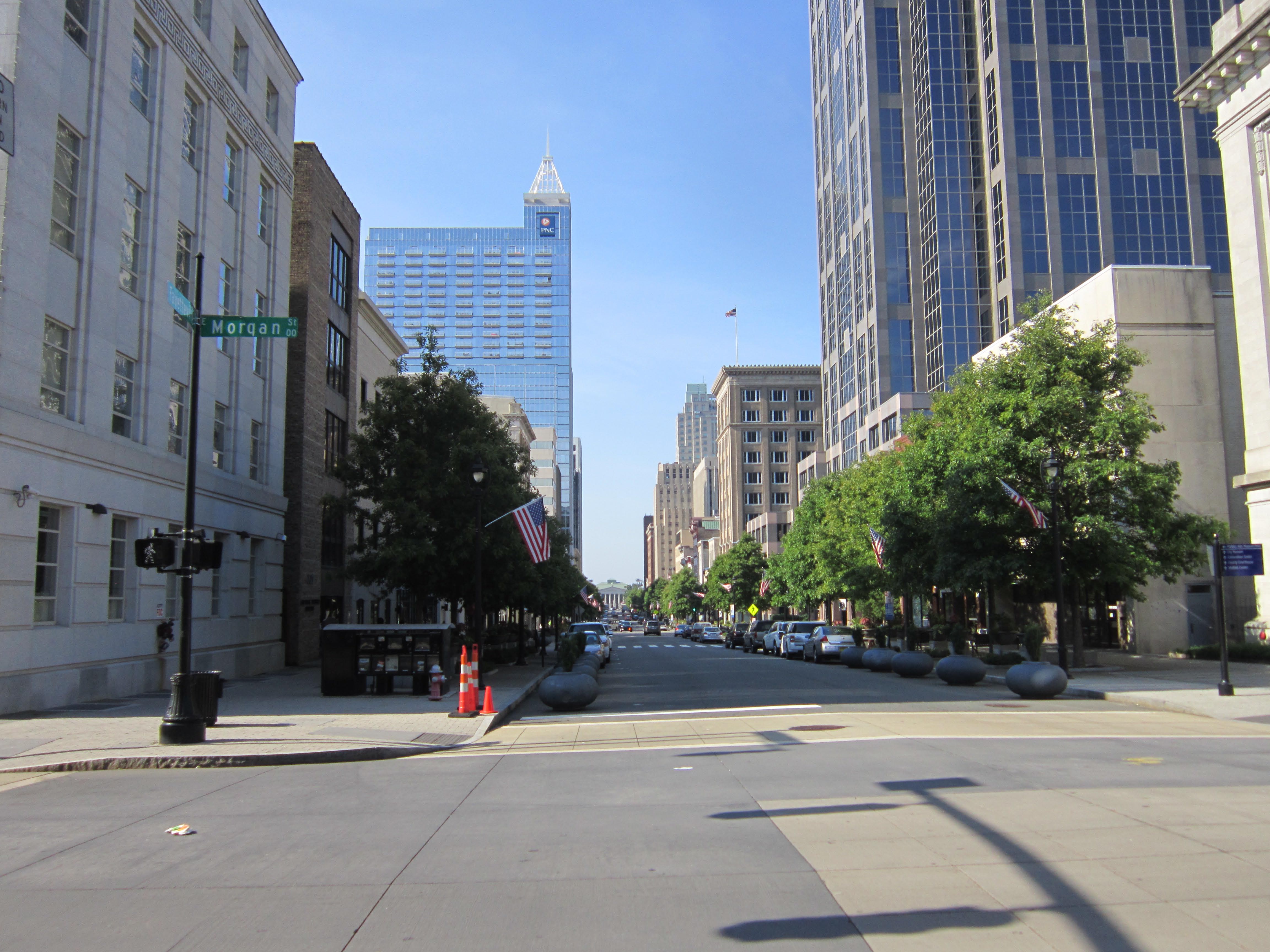
Now that we’ve moved our offices into Red Hat Tower, I’m within walking distance of work. How sweet it is! Last week I went carless three times. If I focus on moving along, I can make it in seventeen minutes. On a warm, humid day, that leaves me in a bit of a lather. On Thursday, I went a little slower, and took some pictures with my trusty Canon point-and-shoot, which are above and below in the order they were taken.
13 06 12_2095

On Saturday we went to the Rialto to see Before Midnight. I loved the two predecessor pictures, Before Sunrise and Before Sunset, both of which were romantic but also smart. Along with My Dinner with Andre, these movies prove that great conversations can be art. In both earlier movies, Ethan Hawke and Julie Delpy were astonishing in their seeming naturalness, and with great chemistry.

In the new movie, they return as the same characters, but middle-aged, and firmly a couple, with children of their own. Instead of gauzy romantic possibilities, they have frustrations and disappointments with life and each other, and anger. But they’re still talking. Boy can they talk! I really liked the movie.
13 06 12_2101

There’s a little conversational strand early in the film about the nature of the self that could have been inspired by The Self Illusion by Bruce Hood, which I’ve been re-reading. Hood works hard to deconstruct the conventional view of an unchanging self with conscious thought at the center. The characters briefly take notice of the force of this argument, but then do what we all usually do, which is plunge into a narrative.
13 06 12_2106

After the movie, we had dinner at Dos Taquitos on Glenwood. We’d tried to get in twice before, but both times the place was packed and the waits were long. The third time was a charm, although even at 9:00 we still had to wait half an hour. It was lively, with busy, colorful decor and lots of noise, and the food was just fine. I think the secret of their popularity is: it’s relatively inexpensive. And their margaritas have some kick.
13 06 12_2108
13 06 12_2116
13 06 12_2121

A fun Memorial Day weekend on the Outer Banks — eating, talking, running, looking at wild horses and birds, and reading

Jane and Keith's beach house in Corolla, NC

Jane and Keith’s beach house in Corolla, NC

Again this year, my sister Jane invited us out to the Outer Banks for Memorial Day weekend, and we happily accepted. The beach is a good place to relax and restore. After weighing the pros and cons, we decided to drive out in Clara, who with her sporting heritage rides rougher than the Suburu Outback, but is also prettier and more exciting. Traffic wasn’t bad. We went at the speed limit plus 9, and the heavy complement of state troopers along I-64 tolerated the overage.

Charlie the Boogle

Charlie the Boogle

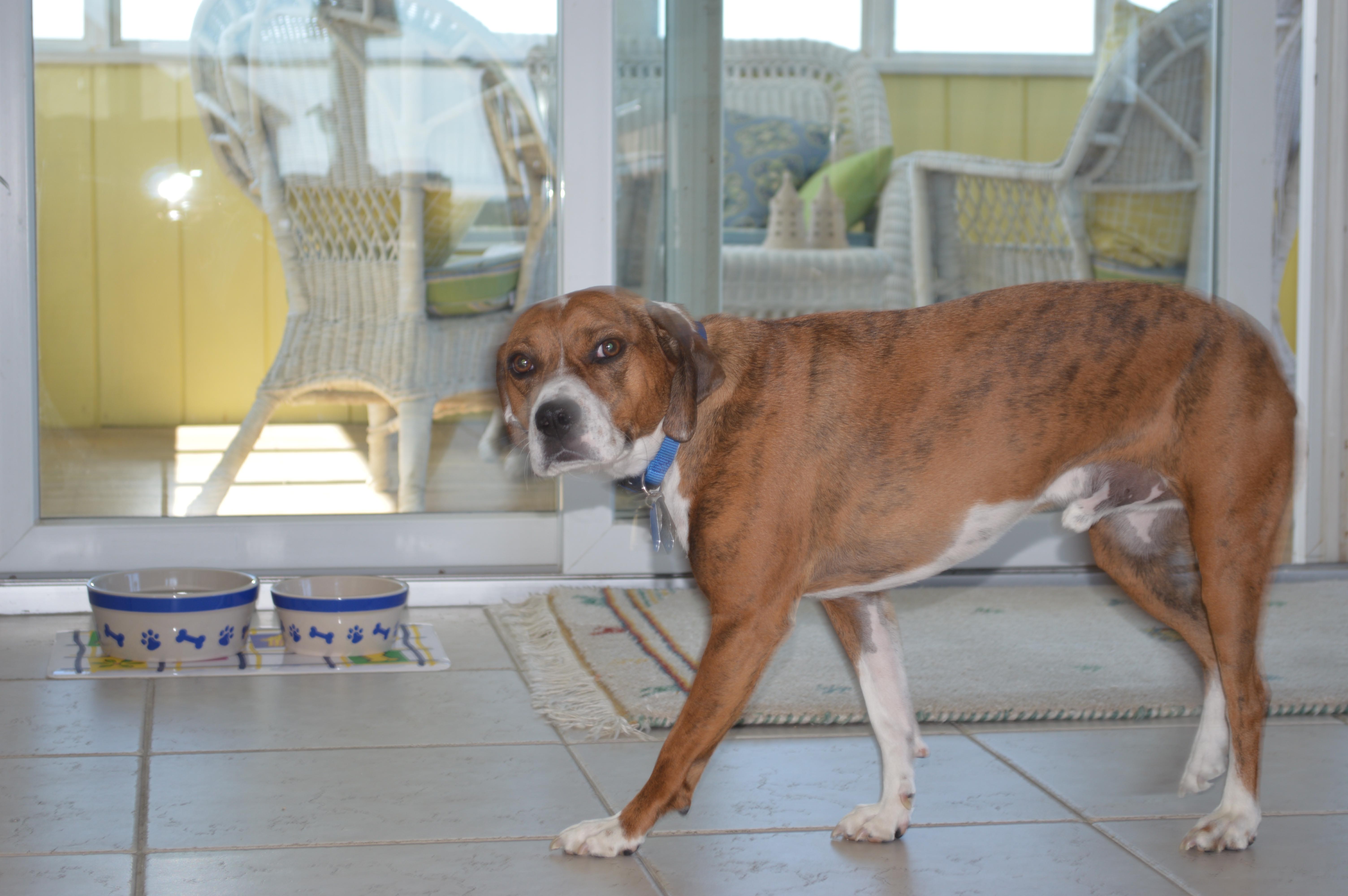
We got to Corolla about 9:30 p.m., and everyone was up and happy to see us. We enjoyed a glass of Keith’s merlot before bed. We also met their new dog, Charlie, a friendly beagle-boxer, or boogle. The camera made him a little nervous.

The next morning was sunny but chilly and windy. Keith prepared an egg casserole and fruit salad for breakfast, and we caught up on family news.
13 05 24_1703
We also talked a bit about technology and biology. I briefed them on some of the progress on understanding the human microbial community, which I read more about in the piece by Michael Pollen in last Sunday’s NY Times. Pollen wrote, “It turns out that we are only 10 percent human: for every human cell that is intrinsic to our body, there are about 10 resident microbes . . . . To the extent that we are bearers of genetic information, more than 99 percent of it is microbial. And it appears increasingly likely that this ‘second genome,’ as it is sometimes called, exerts an influence on our health as great and possibly even greater than the genes we inherit from our parents.”

This is mind-blowing, paradigm-shifting stuff. One researcher says “we would do well to begin regarding the human body as ‘an elaborate vessel optimized for the growth and spread of our microbial inhabitants.’” We’re just starting to understand some of the links between human health and microbial health. It’s a huge mistake, which most of us have previously made, to think of all germs as things that should be exterminated. Certain bacteria are essential to health, and problems in the microbiome appear to relate to chronic disease and some infections. Human health can be thought of as “a collective property of the human-associated microbiota . . . that is, as a function of the community, not the individual.”

The Pollen article is a great introduction to this subject, which is also discussed in The Wild in Our Bodies by Robert Dunn.
13 05 25_1642_edited-2

After breakfast, I went out for a run with my nephew David, now 13 and growing fast. David has fallen in love with lacrosse and is getting lots of playing time as his team’s goalie, so I figured he would probably run me into the ground. Instead, he developed a major cramp problem, and so we did more walking than running. I learned about his prize-winning science fair project, which involved growing and measuring characteristics of a fast growing plant called brassica rapa.
13 05 25_1640_edited-1
13 05 26_1751

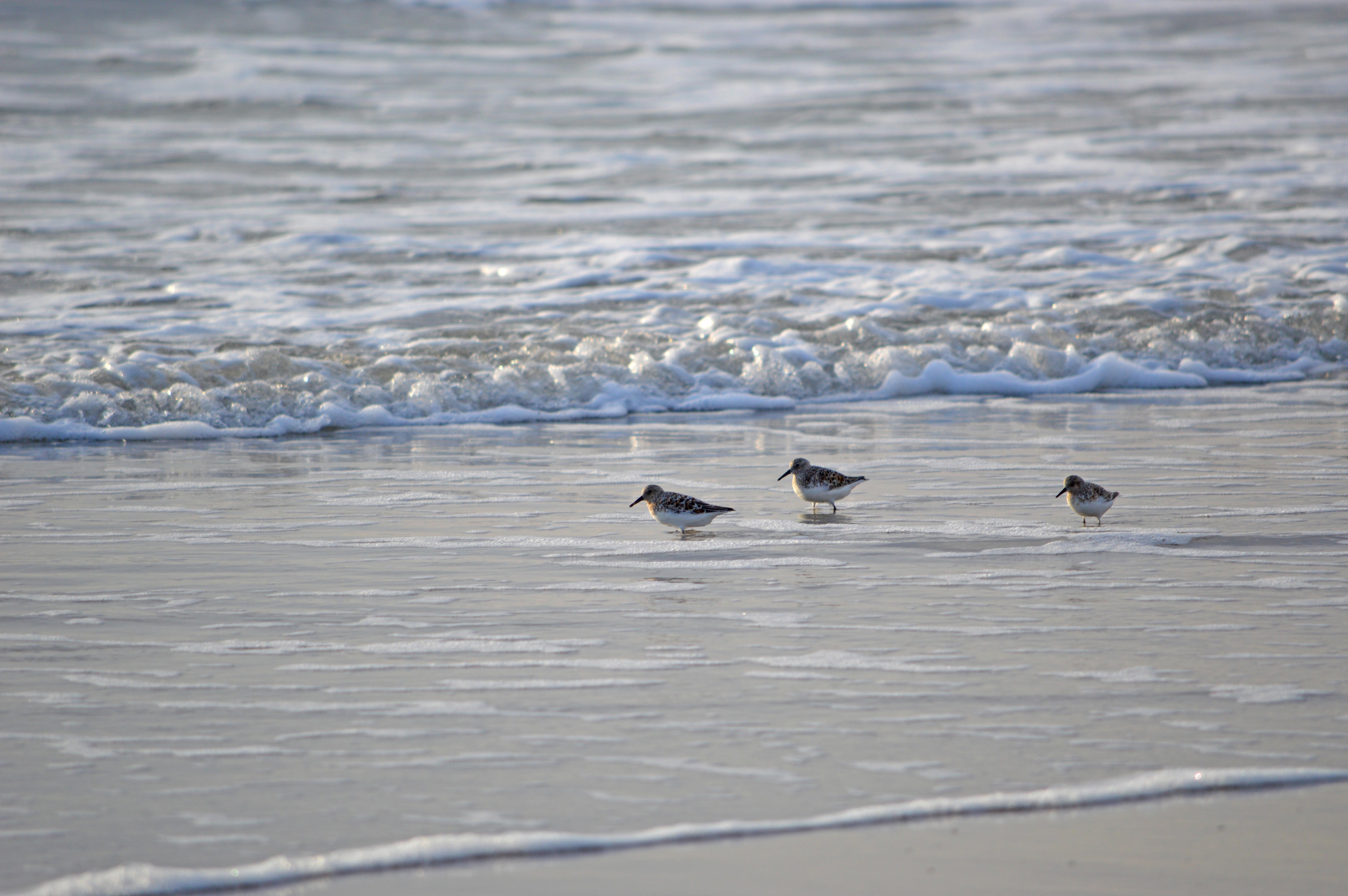
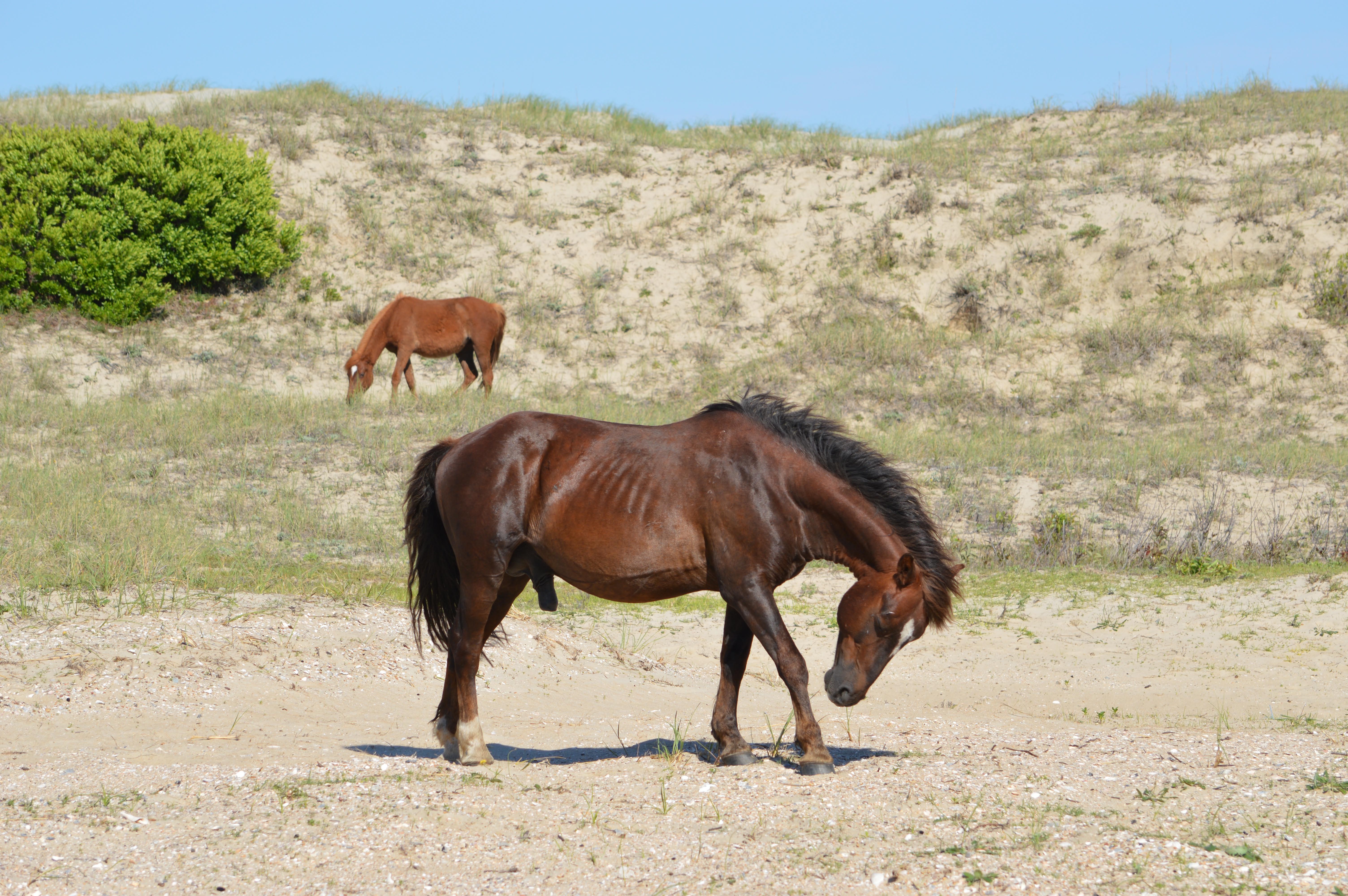
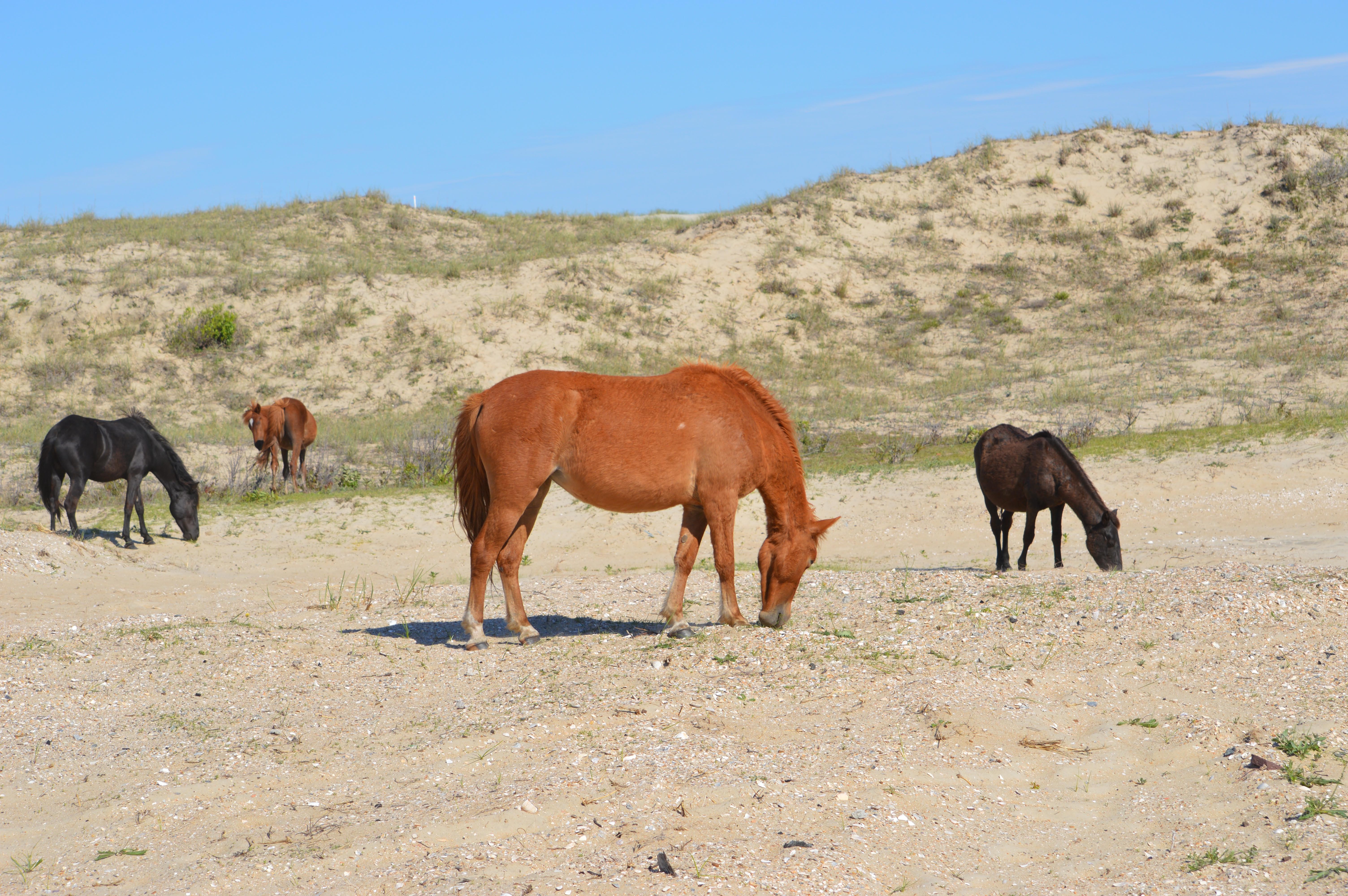
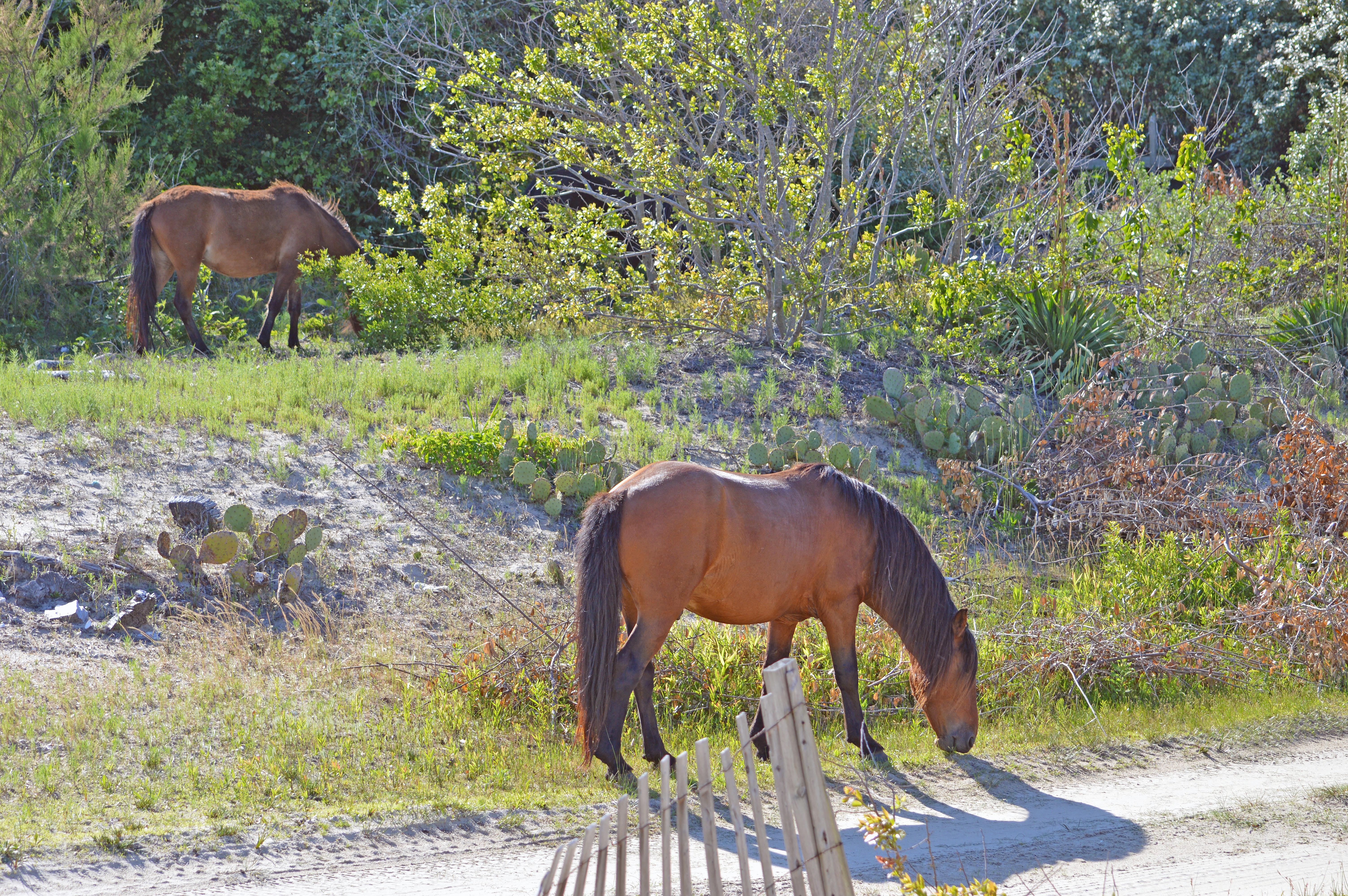
Keith cooked an amazing lunch – cucumber soup and pasta asparagus salad. Then we loaded up in the 4WD sport ute, and drove north on the beach looking for wild horses. Past the lifeguard station, we turned left into the sand roads through the gnarled trees and bushes of the maritime forest. We found several horses. It’s cheering somehow that these big animals can make their own way in small wild areas surrounded by development. We also saw a fox.
13 05 25_1571
13 05 25_156013 05 25_1608_edited-1

I had time for some reading in the afternoon, and got a good start on Things Fall Apart by Chinua Achebe, the Nigerian writer who died recently. This is his first and most famous book, and perhaps the most famous work of African literature to date. I was immediately hooked. The prose combines the muscular economy of Hemingway at his best with the vision of Faulkner, with an overarching tenderness and humanity. The story is about African village life, which, it turns out, has many of the same emotional components as our lives.

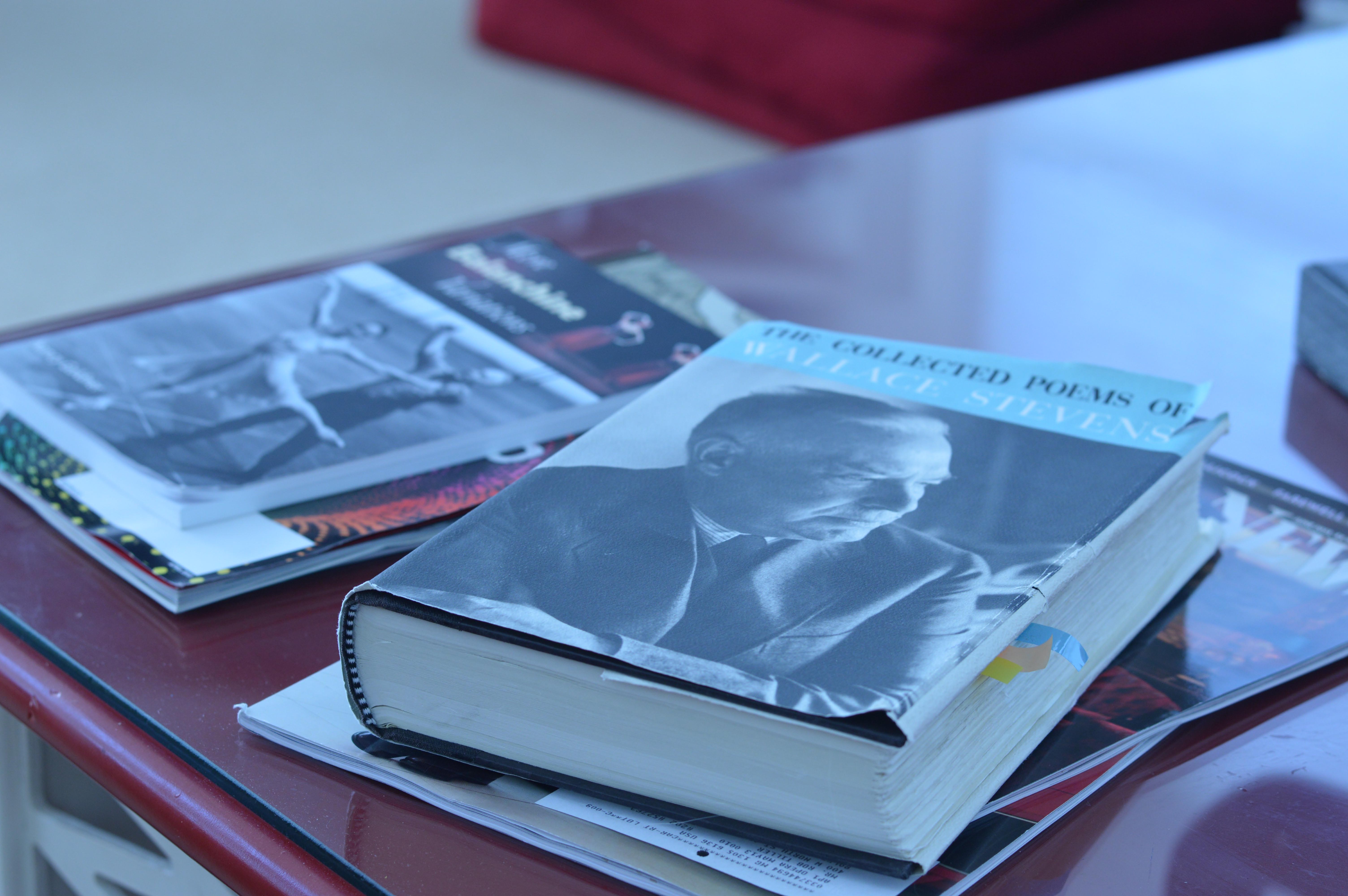
I also read more of More Balanchine Variations by Nancy Goldner, which is a book about various Balanchine ballets. Goldner is a generous-hearted critic, and she loves her subject. It’s so hard to bring dance to life other than by dancing, but she comes close.
13 05 25_1678

One other major bit of reading was chunks of the complete poems of Wallace Stevens. I came close to reading them all last year, before shelving the project some months back. Stevens is challenging, and not uniformly great – some of the poems seem mannered or even mad. But the greatest poems are both beautiful and profound. My favorite is still Sunday Morning, which is a sly, subversive, arresting, sensual, and humorous. I memorized it, and it still gives me goosebumps at the end, with its powerful image of “casual flocks of pigeons make/ ambiguous undulations as they sink,/ downward to darkness, on extended wings.”

Stevens proposes this joy in nature as an answer to religious asceticism, and it works for me. It also makes me look at the world with different eyes. For example, in back of Jane and Keith’s beach house, purple martins are still numerous, and still flying fast feeding on insects. It was a pleasure to watch them.

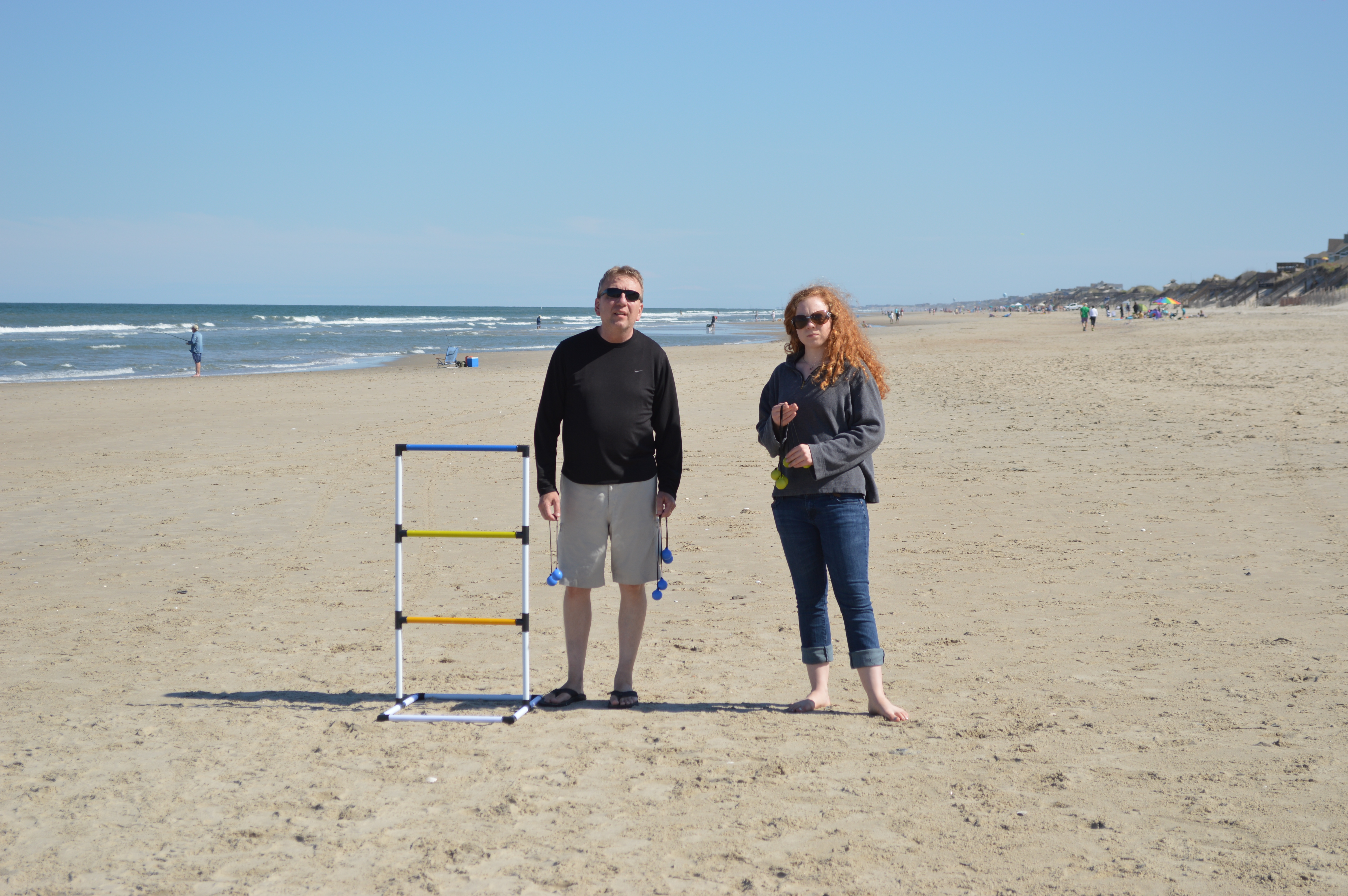
We played a new beach game on Sunday afternoon. It’s one of the many variations on horse shoes, but a good one. Points are scored by throwing a string with weighted balls on each end around a bar. They couldn’t remember the name of it, but no matter. It was fun!
13 05 26_1763

13 05 26_1759

Our dive trip to Cozumel

_DSC0015 copy

Sally and I just got back from a week of scuba diving in Cozumel, Mexico. As a friend recently noted, we like adventure vacations. If you do, too, you would probably like Cozumel. The diving was great, and the above-water scene was lively, too.

Cozumel is a warm and enterprising place. Most of the real beauty, for me, is in the reefs, but I also really liked the people. The Mexicans I met are mostly cheerful and good humored, but also polite and dignified. They worked hard to help us along our way.

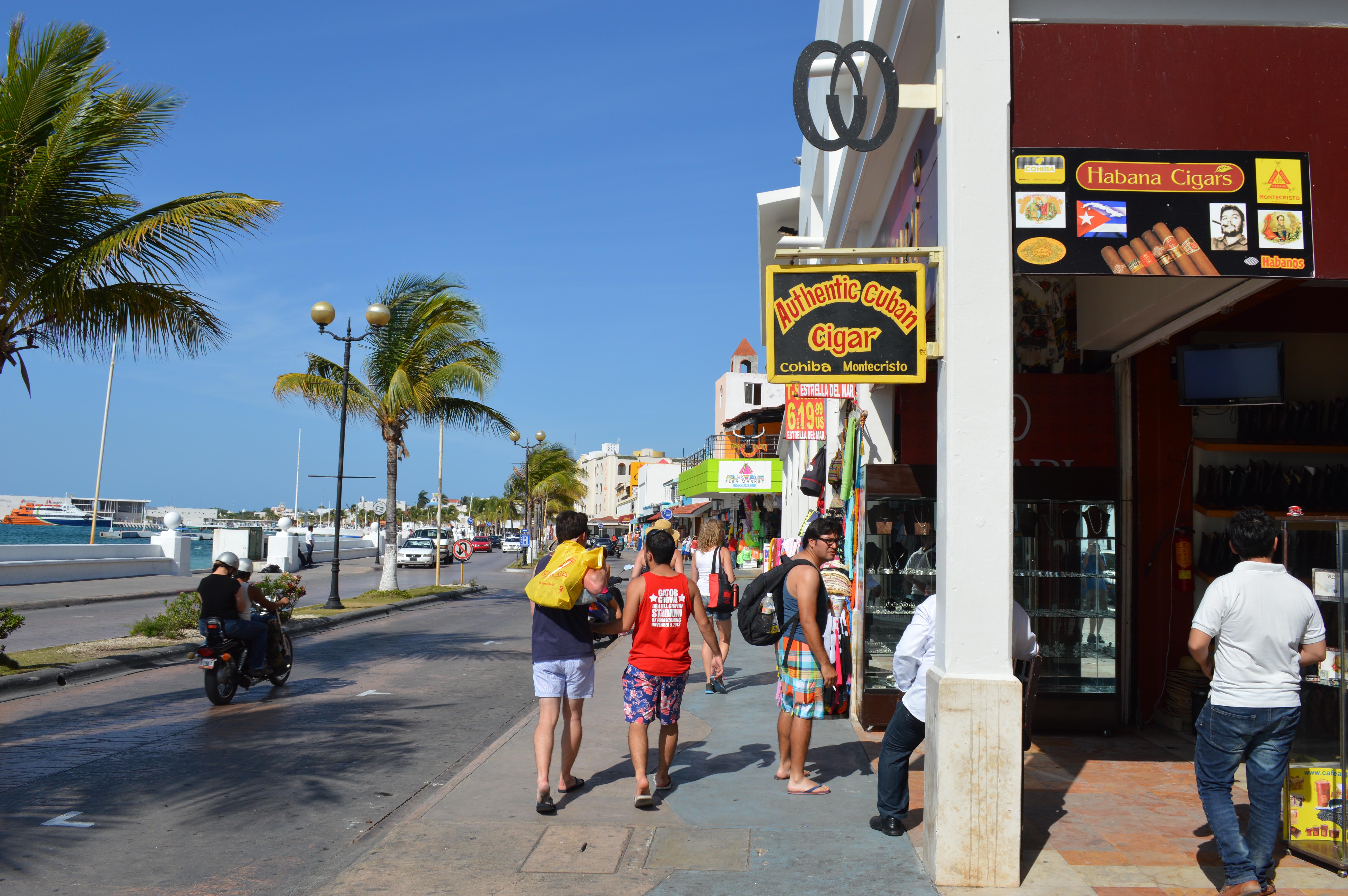
The business of Cozumel is tourism, and there are many layers to this business, from high end hotels to street hawkers. A stroll through the main part of town takes you past many gold and silver jewelry shops, clothing shops, crafts establishments, restaurants, and shops selling Cuban cigars. Most of these shops have a person who will try to persuade you to look inside, some of whom are aggressive and insistent. It’s a bit annoying if you’re not interested in the goods, but the beautiful blue water fronting the main street makes up for any inconvenience.
2013 05 04_1376

I’d been planning to use more of my Spanish, which is still a work in progress, but had little occasion to. The sales and service people of Cozumel have highly developed antennae for spotting los norteamericanos, and encourage expenditures by using English, which ranged from adequate to impressive. A couple of waiters gently corrected my usage mistakes, which I appreciated, and I think they appreciated my making some effort with their language, but it was clearly not required.

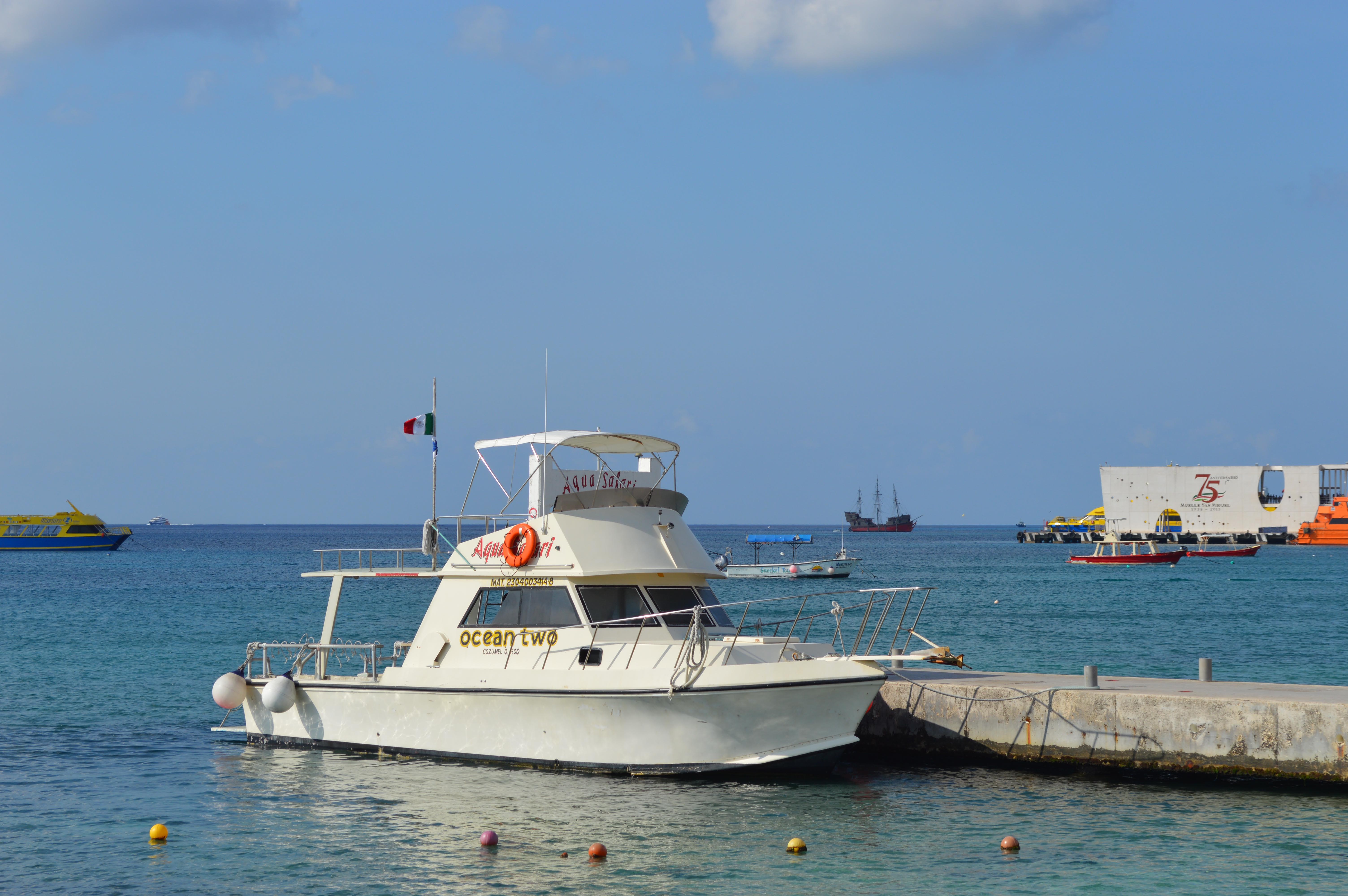
Our hotel was the Casa Mexicana, a mod-looking place on the water in the center of town. Our rooms was attractive and comfortable, with a balcony overlooking the courtyard restaurant where we ate very satisfying breakfasts. The lobby was on the second floor with a pool and deck chairs overlooking the water. Lots of restaurants were within walking distance, though we took a taxi to our favorite, Casa Mission. The hotel was only a few steps from the shop of the folks who took us diving, Aqua Safari, and the boat dock was just across the street.
2013 05 09_1356

Our boats usually had about fifteen divers. These included our group of six organized by our friend Dan out of Down Under Surf and Scuba. We did two dives in the morning, and after returning to the dock, we either ate quickly and went out for an afternoon dive, or on two days relaxed and then went out again at 7:00 for a night dive. The boat rides to the dive sites were generally one to 1.5 hours. Our guides were experienced, and showed us many interesting places and creatures. Early May seemed a good time to be there – sunny, breezy, and not un-Godly hot.

Our dive environments fell into three main groups: coral walls that went much deeper than we could dive, coral patches separated by sandy areas, and large coral structures shaped like pillars, boulders, mesas, and canyons, which made me think of southwest Utah. There were dozens of species of live coral. Some were vivid colors (purple, orange, green, yellow, red), and we also saw the famous black coral. Their shapes and textures were fantastically varied, including ones that looked like cactuses, pillars, antlers, brains, and various vegetables.
SeaLife DC1400

SeaLife DC1400
Cozumel is famous for drift diving, meaning a trip that goes where the strong current takes you. This can be exhilarating, but is also challenging at times. In the strongest current, there is no easy way to stop or reverse course, and it can feel by moments like Lost in Space. This requires alertness to avoid collisions with people or coral, and limits the chances to take photographs or look at things with deliberation. There were dive sites with little current, though, which were calm and sweet.

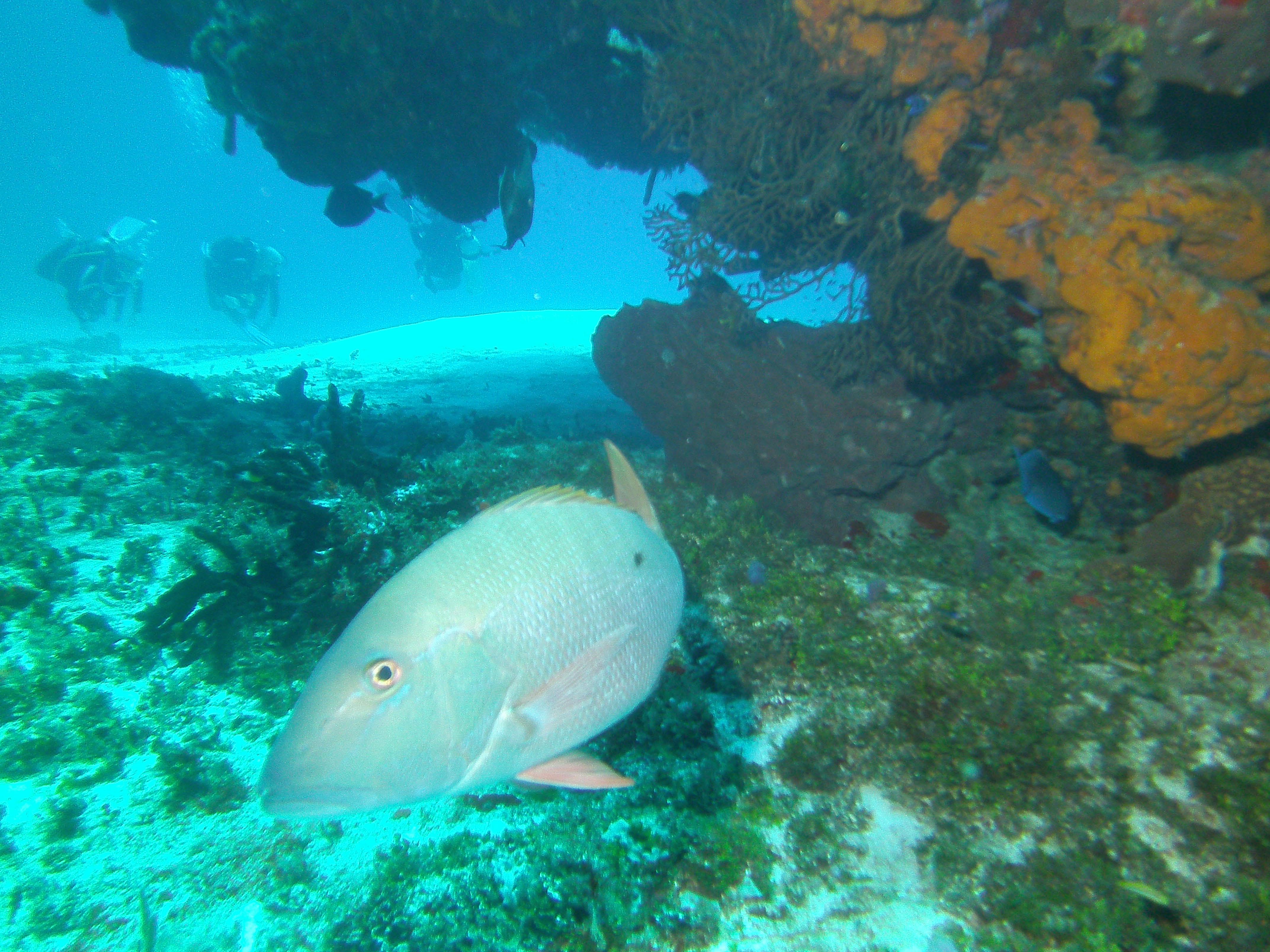
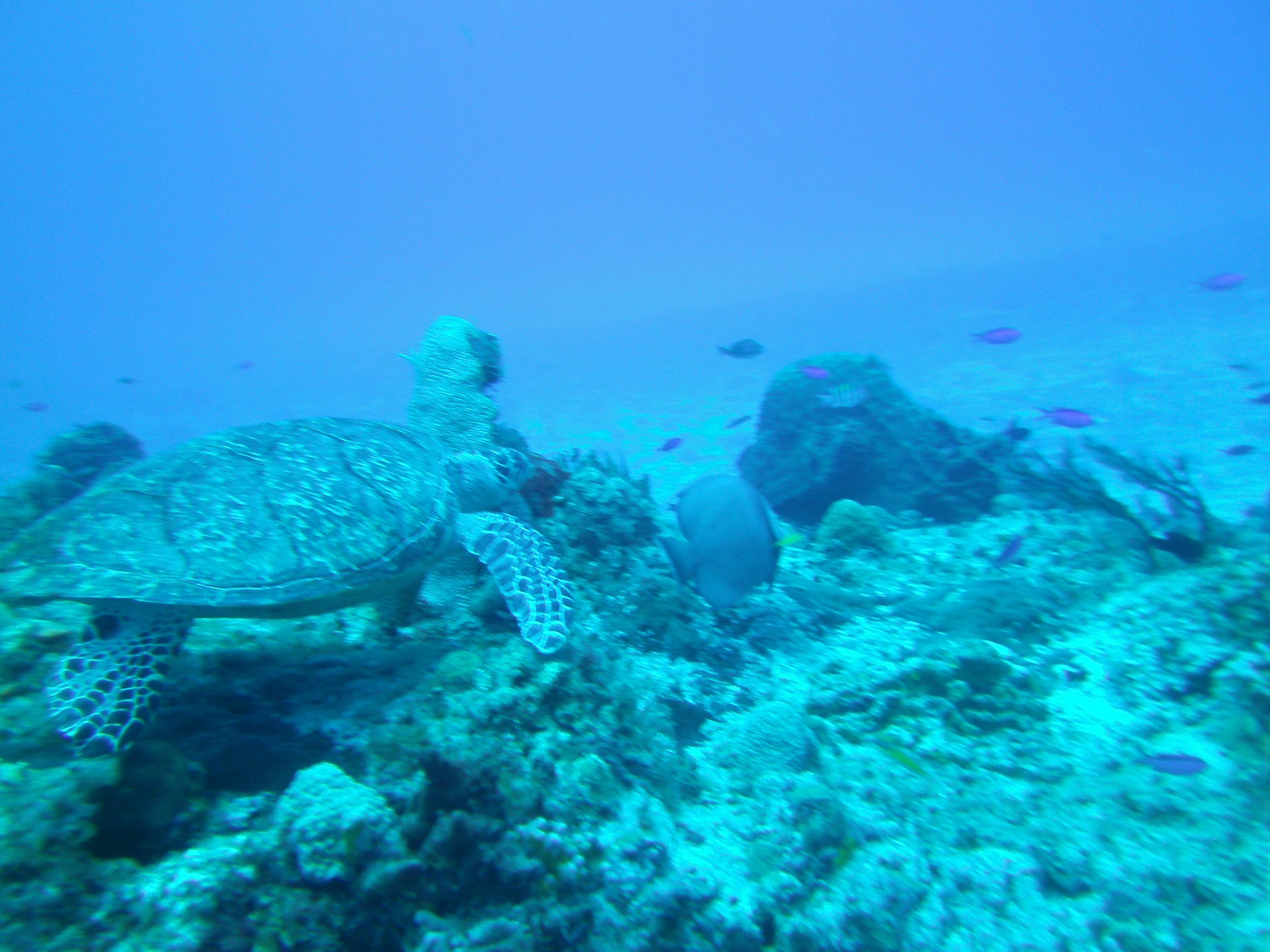
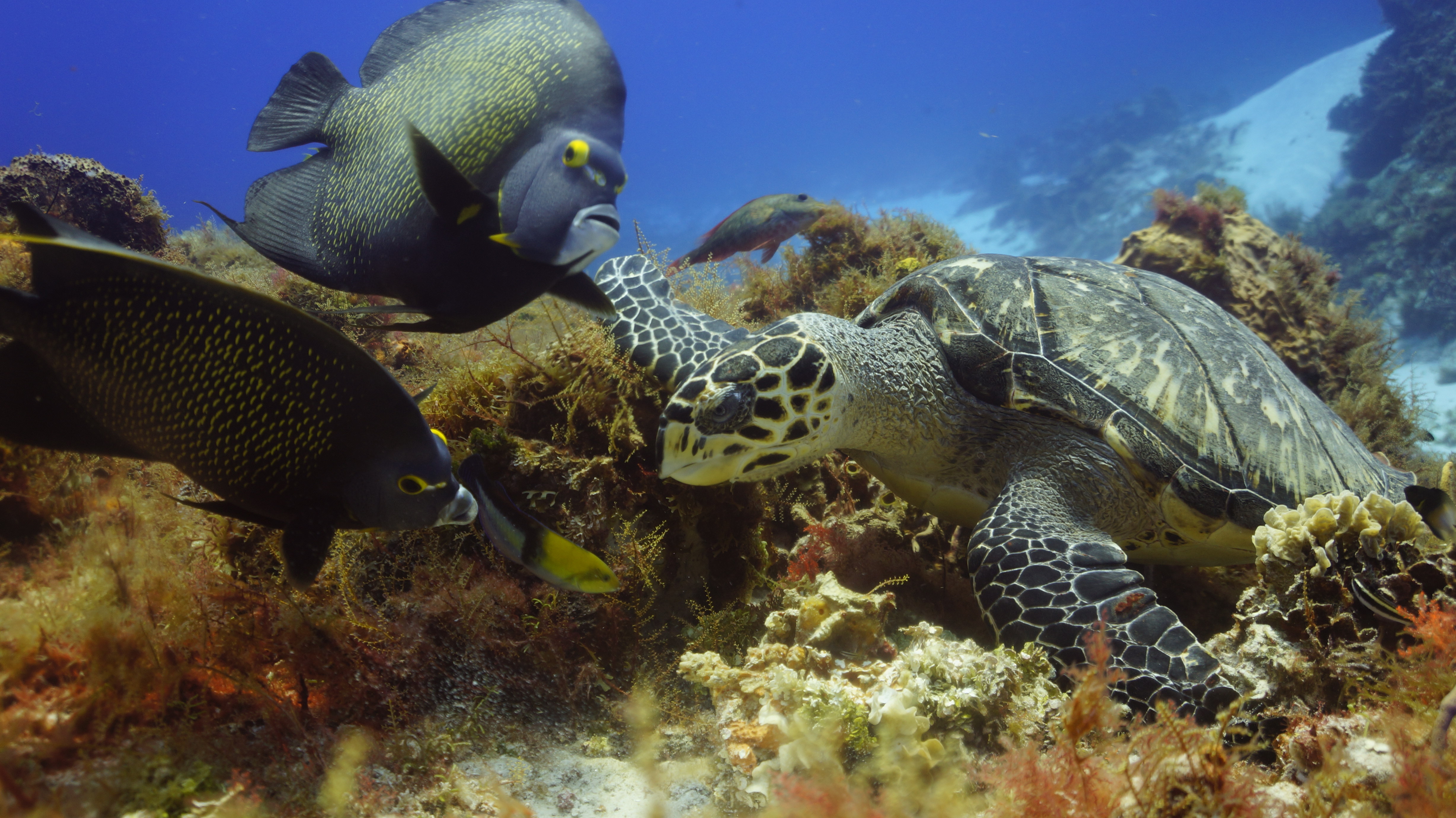
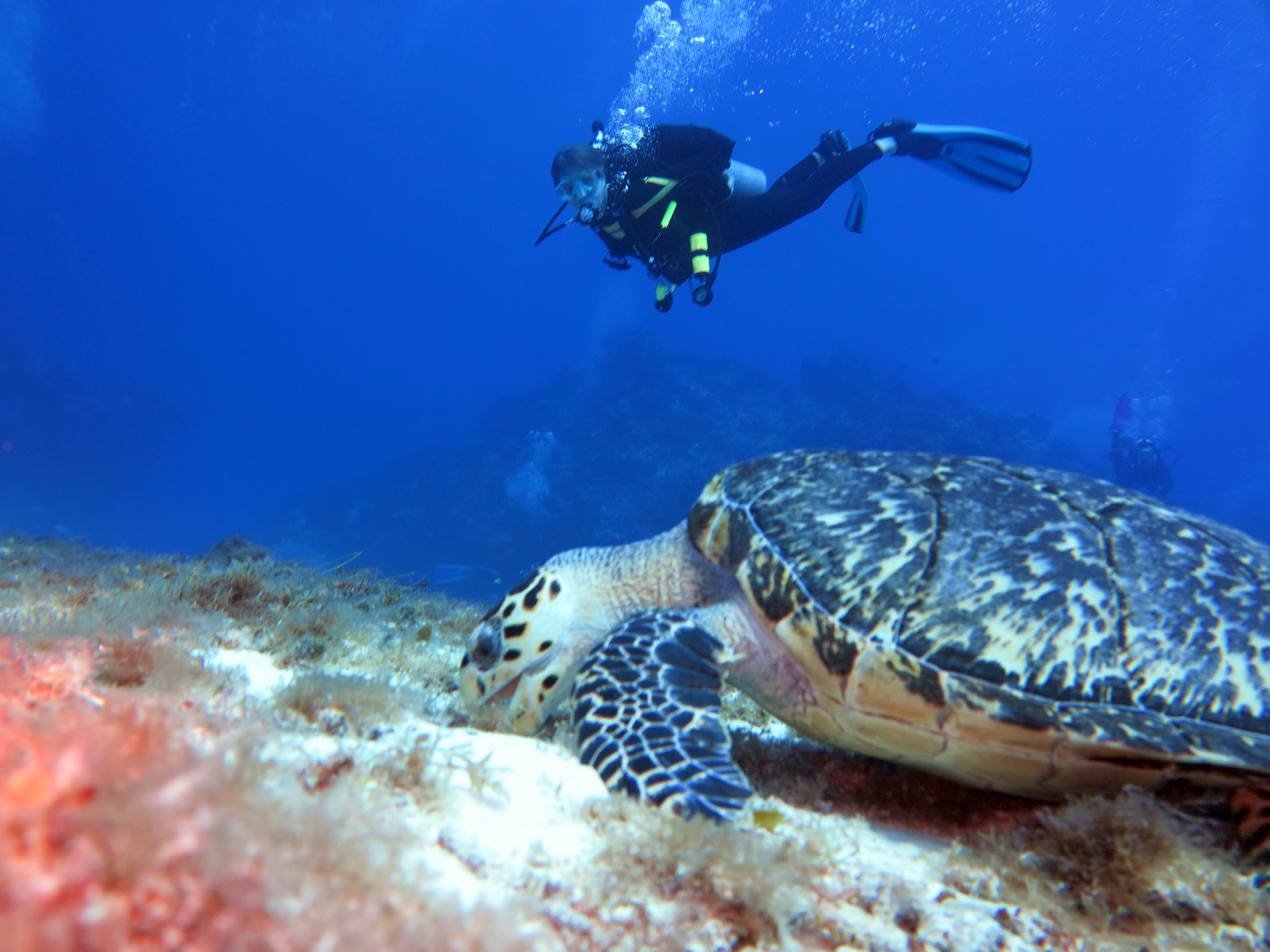
And of course, there were thousands of fish and other creatures. We’ve been trying to improve our identification skills, with the useful reference works on reef fish, creatures, and coral by Paul Humann and Ned Deloach. Sally was prepared to ID a green sea turtle, of which we saw only one, though we saw several hawksbills. She also introduced me to the whitenosed pipefish and various seahorses.

SeaLife DC1400
SeaLife DC1400
SeaLife DC1400

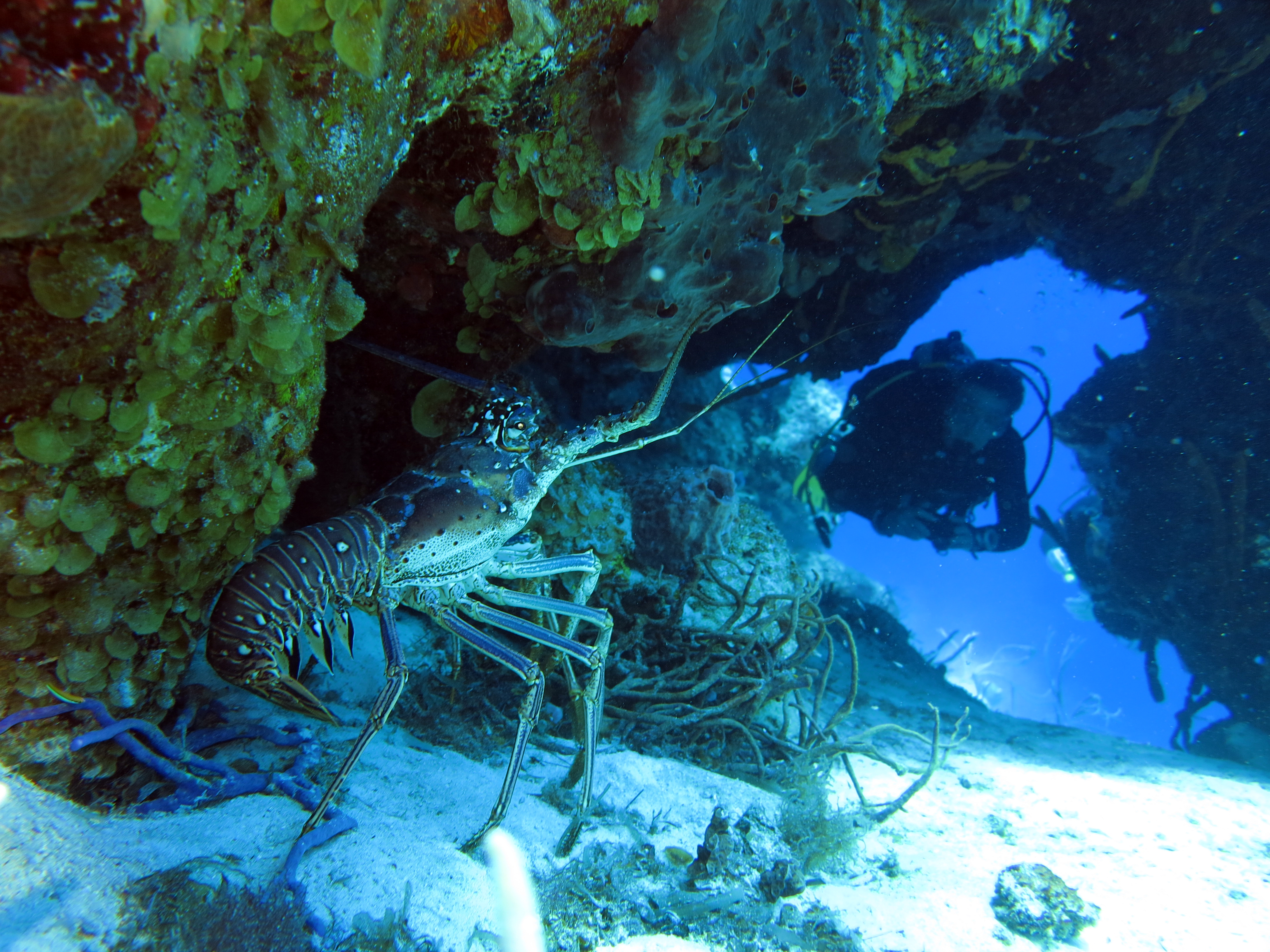
There was no shortage of bizarre looking creatures, including the porcupine fish, splendid toadfish, flying gurnard, smooth trunkfish, trumpetfish, honeycomb cowish, scrawled firefish, and queen triggerfish. We saw southern stingrays, as well as yellow rays and a Caribbean torpedo ray, and spotted and green moray eels. There were also large spiny lobsters and crabs. On a night dive I saw two octopuses that transformed themselves into objects of varying shapes and colors. It was fantastic!

One species we we pleased not to see many of was the lion fish. These invasive predators reproduce quickly, have no resident enemies, and consume voraciously. They’re now common in the northern Caribbean. Our main guide, Miguel, said that the dive guides in Cozumel had been authorized to kill them, and the numbers have been substantially reduced in the most dived areas of the south coast over the lat three years.

SeaLife DC1400
SeaLife DC1400

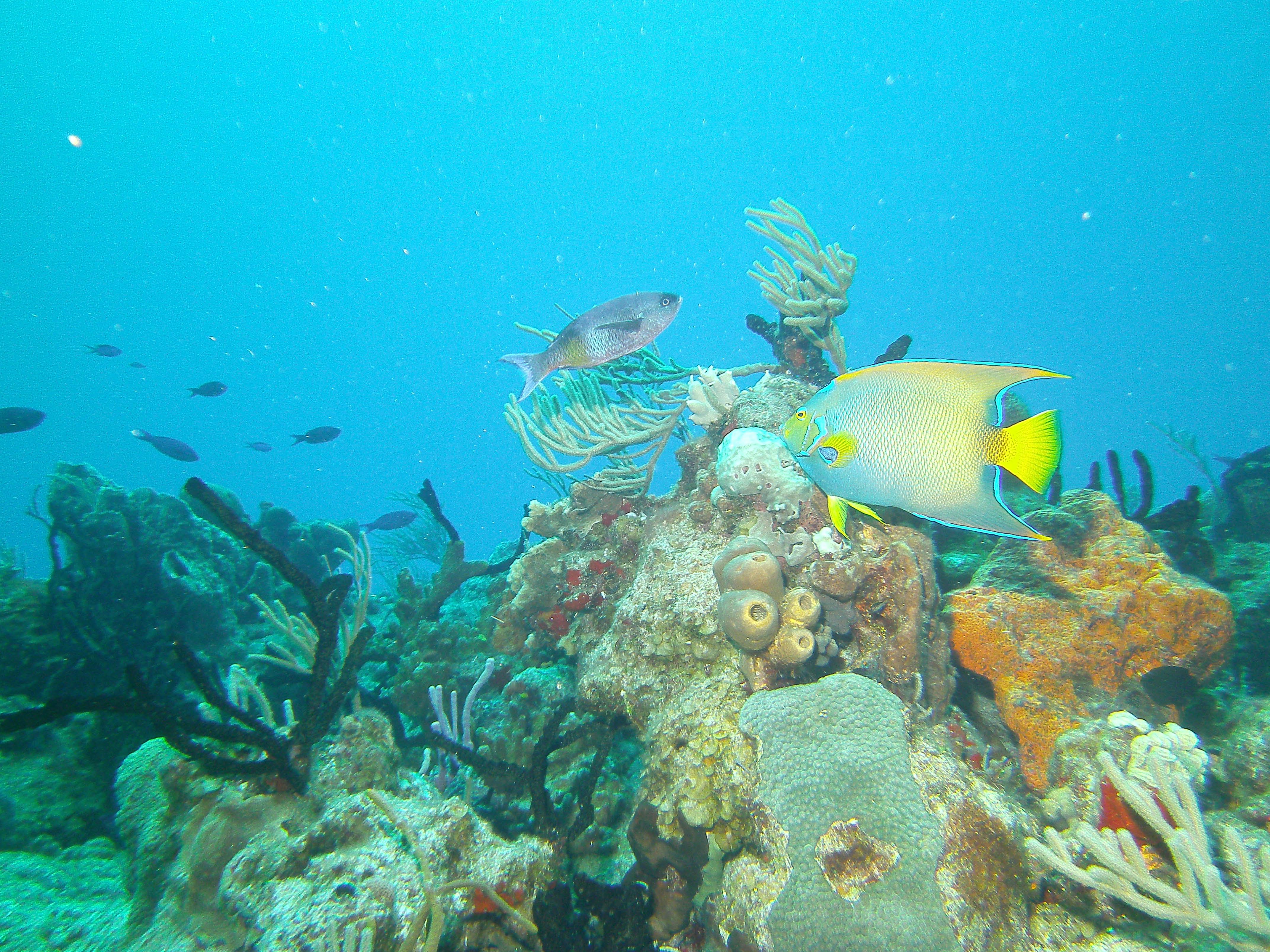
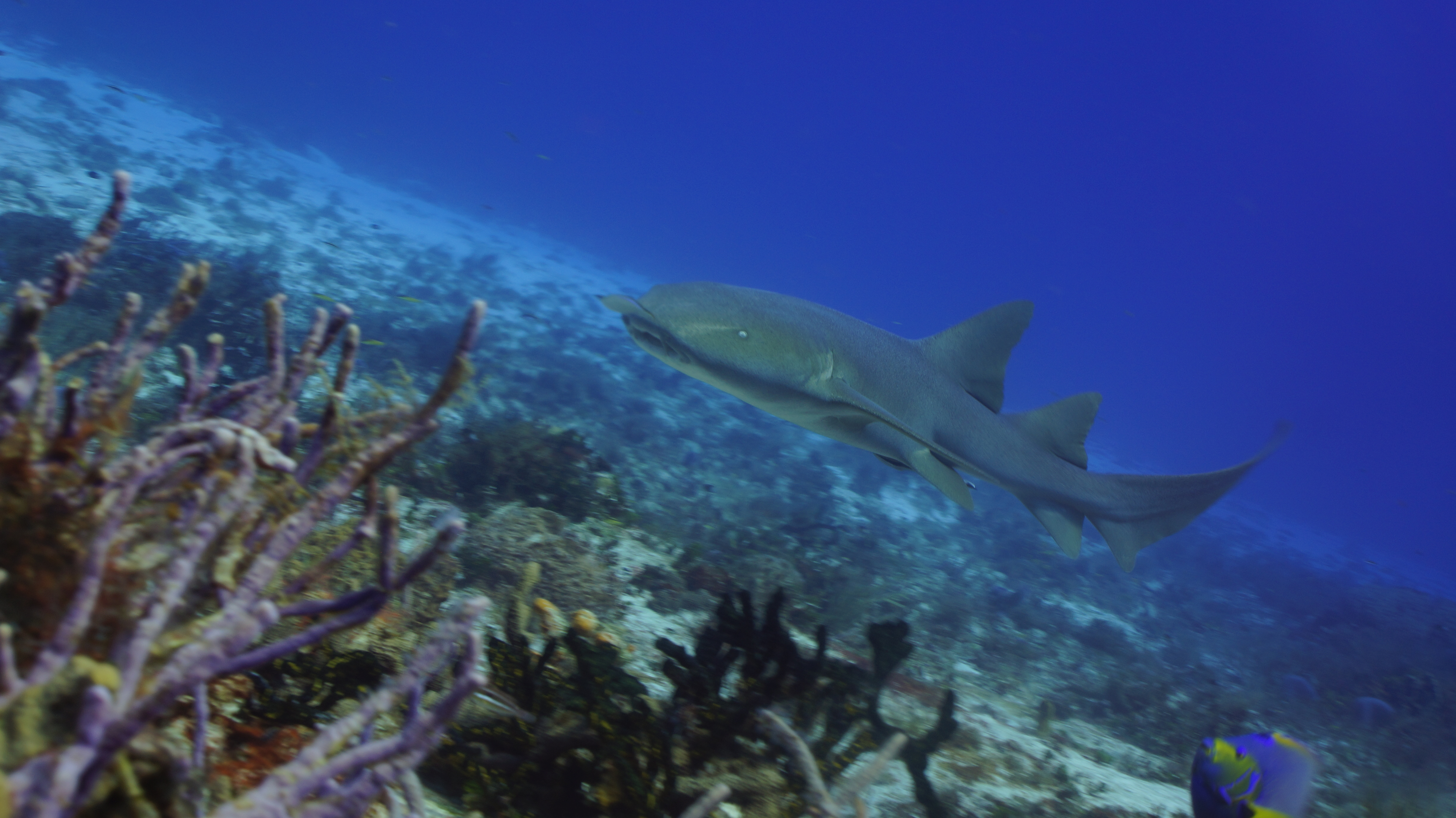
We also saw some big and medium creatures: nurse sharks, black groupers, barracuda, giant parrotfish, jacks, grunts, and snappers. I particularly adore the queen angelfish, and saw many, as well as French and gray angelfish. And there were untold numbers of colorful smaller tropicals – durgons, tangs, grunts, surgeon fish, butterflyfish, chromis, wrasse, and many others. The profusion of life is amazing, still!
_DSC0143 copy

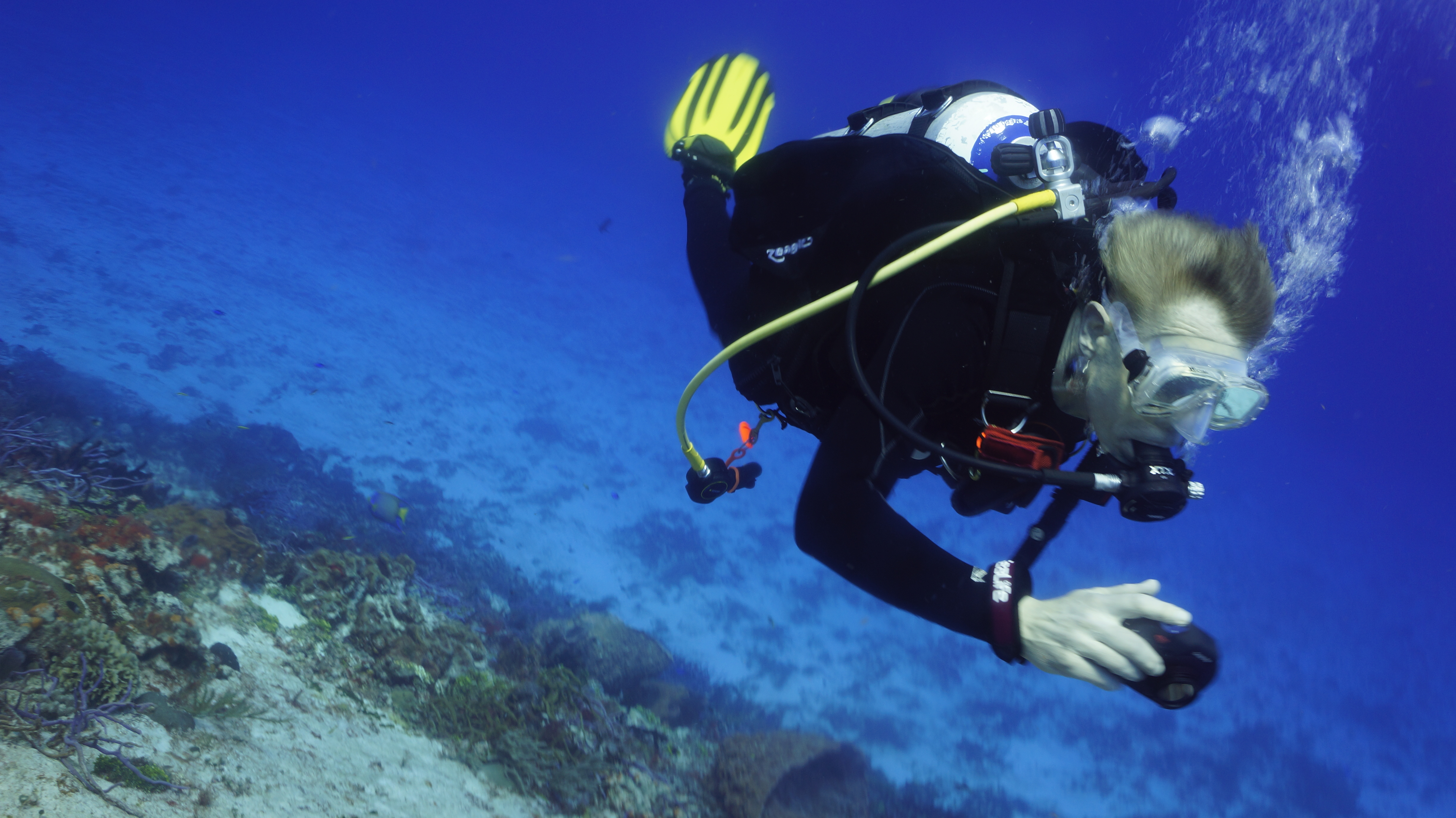
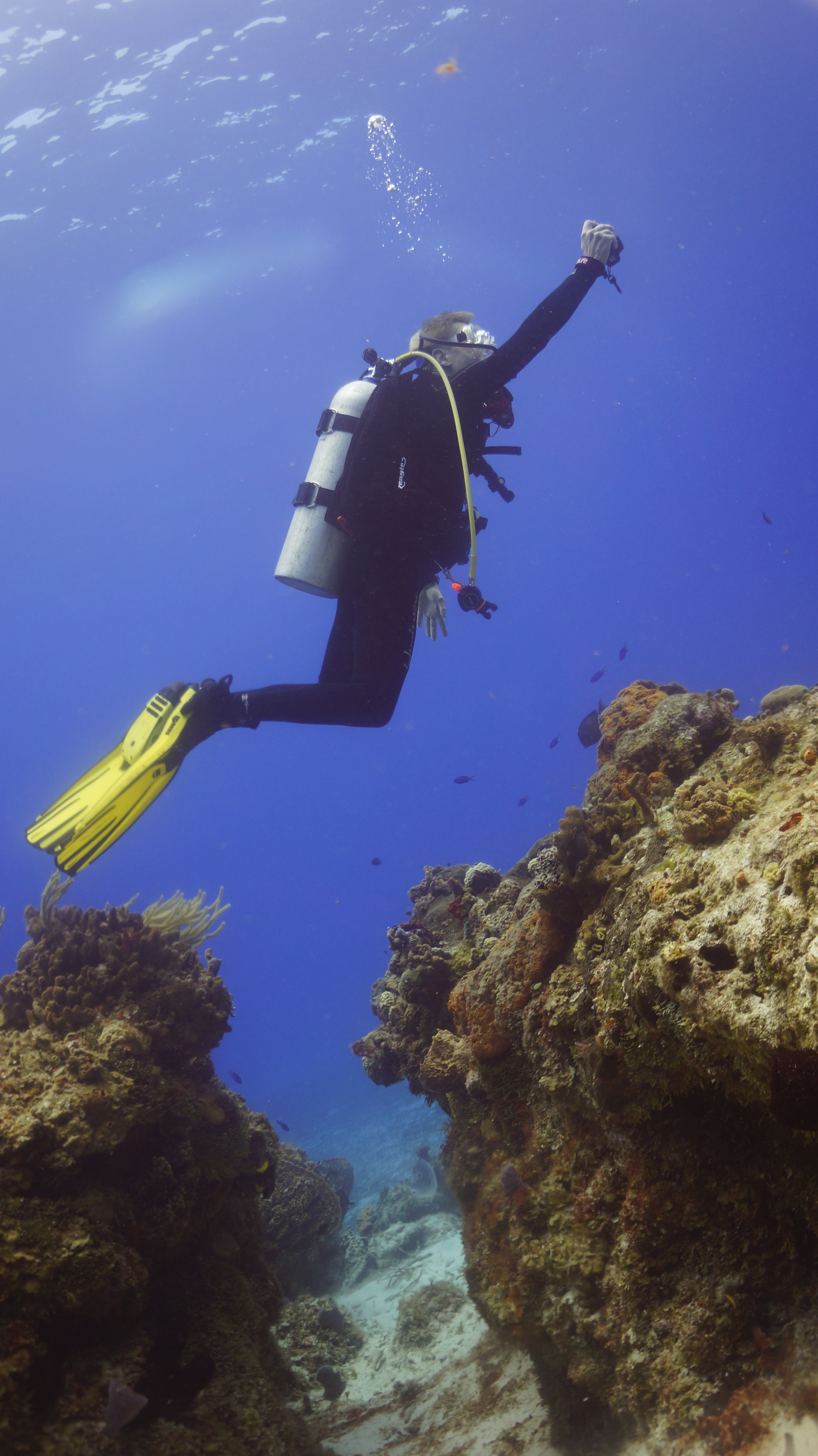
My camera strobe worked fine on day one and two, but then the supporting arm’s joint broke, and so my photographs after that were mostly by natural life. This was disappointing, because there are things that just can’t be captured without a strobe, but I liked some of the images I got. The pictures here are all mine, except the first, the one immediatelhy above, and the ones below of Sally and me, which were taken by Pete, a professional. (Yes, I realize his look a lot better than mine. My excuse is he had better equipment, though also probably more talent.)
_DSC0397 copy
_DSC0489 copy
_DSC0511 copy
IMG_9175 copy

_DSC0237 copy
_DSC0207 copy
_DSC0176 copy
_DSC0202 copy
IMG_9063 copy

The morning before our flight home, we rented a jet ski and sported about for a half hour. The machine, a Yamaha, seemed very powerful. The water was choppy, and I never quite managed to take the machine to full throttle, as it jumped and bucked. Sally rode behind me, and proclaimed herself thoroughly shaken and glad to still be alive when we were done. But note, she never complained or requested that we slow down. That’s my gal!

Helping bluebirds, and some good and not-so-good internet experiences

DSC_0015

Since 2004, Sally has tended a group of bluebird houses in Cary on the Lochmere golf course, near where we used to live.  She keeps fourteen houses in good working order and keeps track of the numbers of eggs and numbers of hatchlings, then passes the data along to the North Carolina Bluebird Society.  Bluebird rely on human-built boxes for breeding spaces, and Sally likes helping them.  It’s the breeding season, and this week she invited me to come along after work to see the activity.

She already had secured a golf cart when I arrived.  It was a sunny, mild afternoon, and there were plenty of golfers out on the course.  She started with hole number 1, where Sally opened the door, pulled out the nest of pine straw, and found several dark gray nestlings, which snuggled together quietly.  Their mama was not at home, but at the next house, the mama bird shot out as we got close to the house and nearly hit my face.  

At the third house there were both bluebird and chickadee eggs. We saw several others populated by hatchlings and eggs that must have been close to hatching. In one, where there had been eggs the week before, there were none.  Sally said a snake had probably got them.  It seemed sad, though not, I guess, for the snake.  Anyhow it was most pleasant to see the birds and birds-to-be with my dear one, and learn more about their lives.
DSC_0020

We have tickets for a trip to Cozumel next week for several days of scuba diving, and this week we met with our group at Down Under Surf and Scuba to get briefed on drift diving and other procedures.  Back home, we began our preparations — checking over the gear, refreshing on protocols, and paging through our sea creature identification books.  My underwater strobe wasn’t working properly, so I’ll need to get that over to the dive shop for a consult.  

Cozumel is English-language friendly, but even so I’ve been inspired to try to advance my Spanish.  In addition to Rosetta Stone, I’ve been working on verb conjugation at a very helpful web site that generates drills for every tense. I’ve been focusing on the preterite and the imperfect, and improving.

I’ve also been sampling lessons at Livemocha.  This service invites native speakers of one language, like Spanish, to help those interested in learning their language, like me, and they may also get help in another language, like English, from someone like me. I’ve gotten useful written feedback from folks in Columbia and Mexico, and have tried to give others some helpful tips on English.

The idea of the internet connecting language students is exciting. At the same time, it’s a little unsettling. Livemocha allows for “friending” requests, and I’ve gotten a few of these, but so far I haven’t accepted. I’m not quite clear on what the responsibilities, and risks, might be. I’m more or less constantly overcommitted already, and I would be sorry to disappoint my as yet unknown “friends” in, say, Columbia. And I would be particularly sorry if they turned out to be violent sociopaths of some sort.

Speaking of internet risks, I had an odd experience this week. I finished The Self Illusion: How the Social Brain Creates Identity, by Bruce Hood, which I’d purchased from Amazon in the Kindle edition to read on my tablet device. The next day, I got an email from Amazon asking me how I liked The Self Illusion. !!! I hadn’t realized that Amazon had invited itself quite so intimately into my reading life. Of course, I didn’t read whatever they required me to click on (does anybody?), so it’s possible that I in some hyper legal sense agreed to let them monitor my reading. But really! That’s just icky!

Lacrosse, seeing things, and ag-gag laws

Looking west at sunrise, April 13, 2013

Looking west at sunrise, April 13, 2013

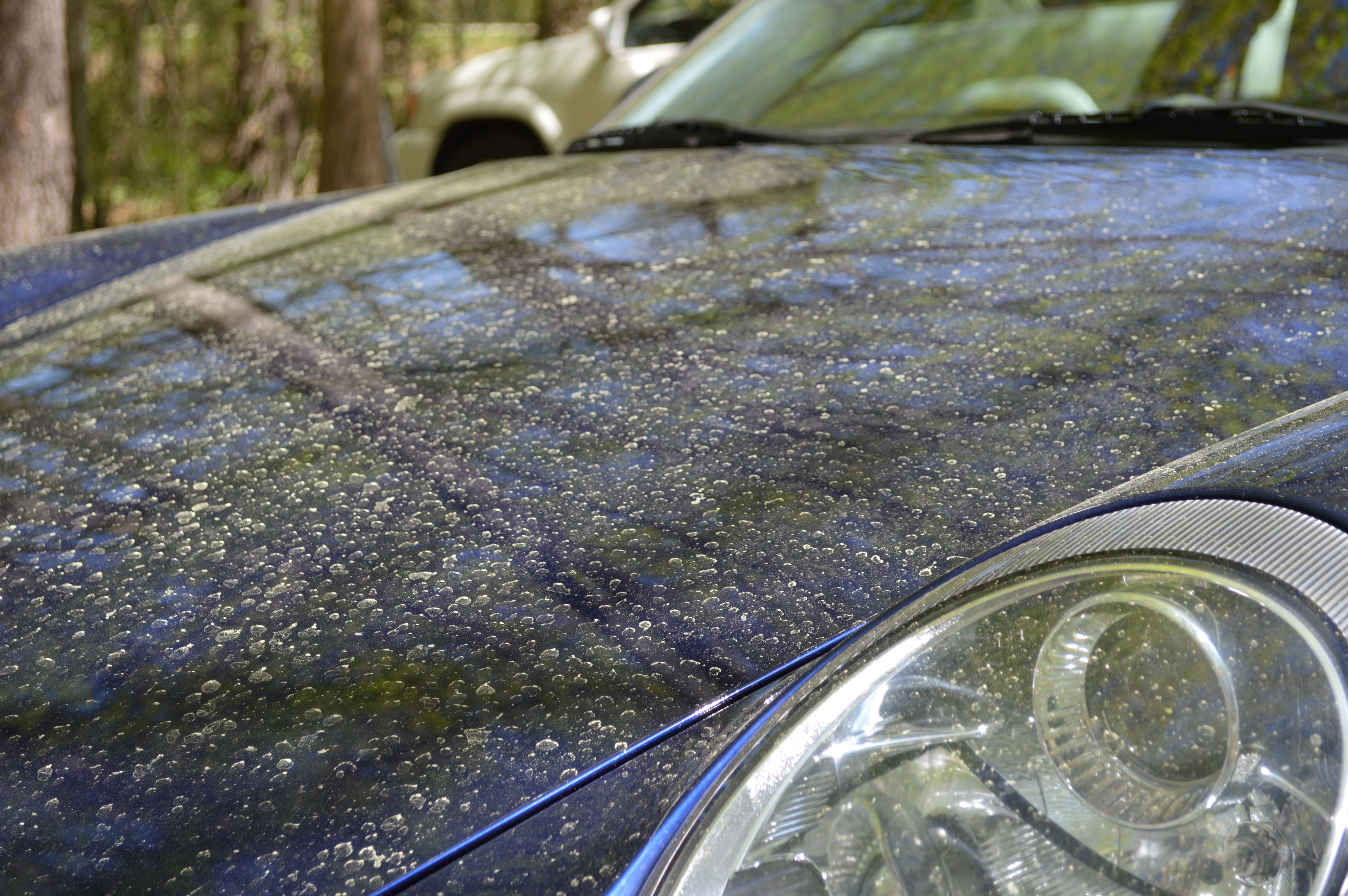
Friday evening was supposed to be rainy, but instead was sunny and mild, and the dogwoods had just blossomed. Looking out over Raleigh from our apartment, the deciduous trees are leafing in nicely, lots of pretty green. The pine pollen season is also here, with the yellow powder coating our cars, and causing woe to allergies.

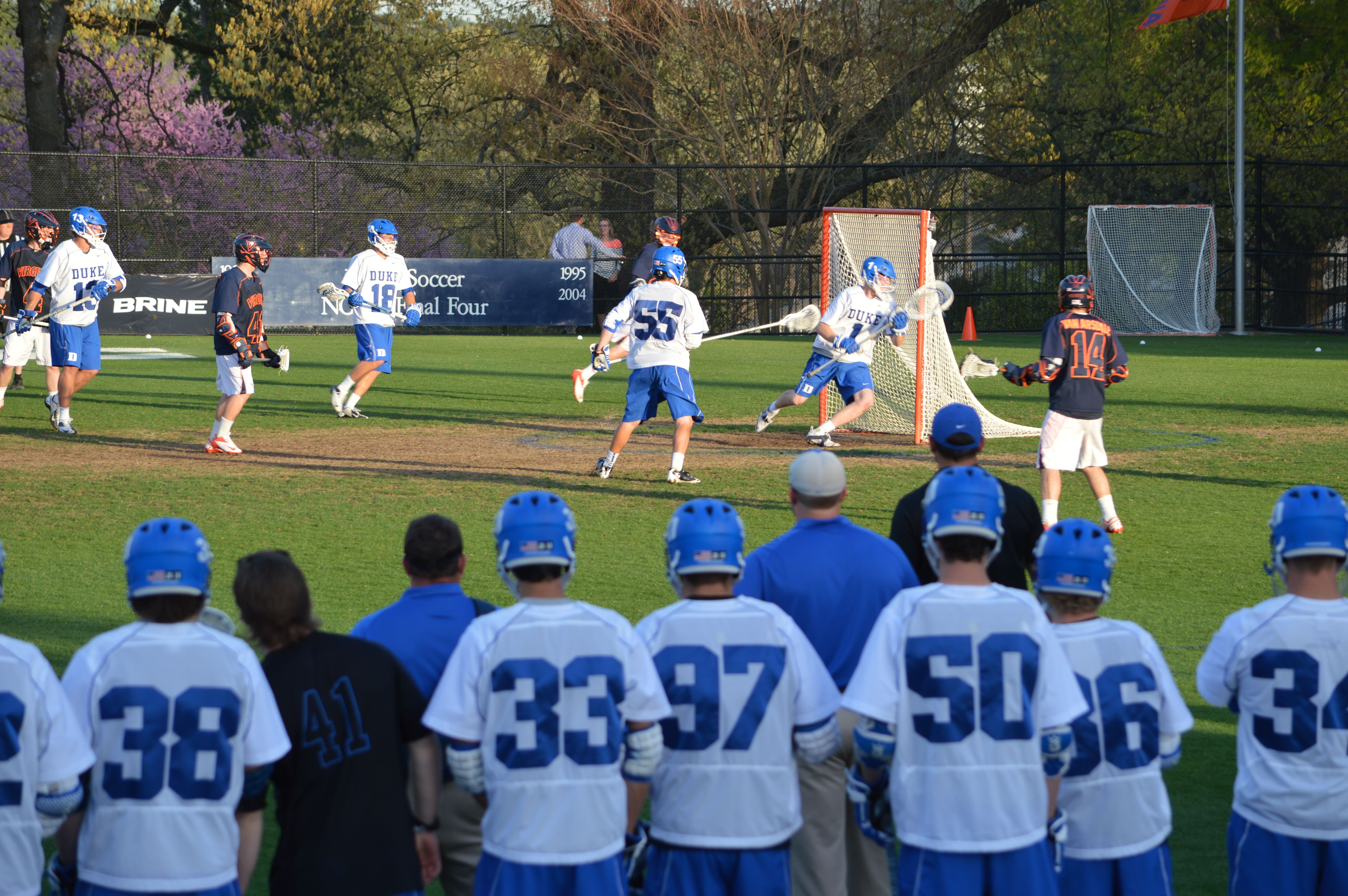
Sally and I drove over to Durham with Sally’s mom to see the Duke lacrosse team take on Virginia. Diane, at age 82, has become a big lacrosse fan, and bought us tickets as a gift.

It was a good contest. The score was 9-9 at the half. Virginia scored three unanswered points in the first five minutes of the third period, but Duke worked its way back to a 14-all tie with eight minutes to go. The final score was 19-16, Duke.

DSC_0024

The sport is fast and exciting, and combines some of the best things about soccer (strategy, cunning) and hockey (speed and physicality). But we’re neophytes, and still trying to figure out why some outrageous things are penalized and other outrageous things aren’t. Are they really allowed to beat each other with those hard sticks?

During timeout, I enjoyed looking at the athletes and the fans in their summer clothes. I’m still very much in recovery mode after the second surgery on my left retina a few weeks back, and conscious at times of struggling to see, and at other times conscious of how extraordinary it is to see.

Tulips outside Diane's apartment

Tulips outside Diane’s apartment

At my appointment this week with Dr. M, my eye doc and new hero, he declared that he liked what he was seeing, and that things were coming along nicely. The retina was still attached, the scar tissue was settling down, and the hole in the macula showed signs of healing. I did not, however, do well on the eye test: the best I could do with the left eye was identify where the chart was — no letters. Dr. M said that this could improve after the next surgery in four or five months to remove the silicone gel (isn’t that a strange thing?) and probably remove the cataract that is probably forming.

This eye injury has been a reminder of how provisional the visual world is. At times I see things I know are not there, like bizarre floaters, and at times I see double images (one very blurry and one not). My depth perception is imprecise, so that tasks like putting a key in a lock are tricky. It’s harder to find things in the dishwasher, and easier to lose things most anywhere.

Of course, I’m not the only one with imperfect vision. Apparently we all (with normal vision) have a blind spot where the optic nerve attaches to the retina, but our interpretive consciousness smooths out this problem and makes the visual field seem uninterrupted. Vision involves photons and neurons in an unbelievably complex process. Our ordinary sensation of a smooth continuous visual world is both a gift and an illusion.

This is one of the many interesting points in Bruce Hood titled The Self Illusion: How the Social Brain Creates Identity (Oxford University Press 2012), which I’m currently reading. It’s a lively assemblage of neuroscience and philosophy organized around the issue of the nature of consciousness. The brain is an amazing thing, with billions of neurons and trillions of synapses, but we’re just starting to understand the correspondence between the biological processes and perceived experience. Still, the evidence is accumulating that our understanding of conscious experience as a literal reflection of reality is quite wrong. Hood’s book also builds on the work of Gazzaniga (which I wrote a bit about here) and Kahneman (whose fine recent book I noted here), and takes some of their ideas a bit further.

Hood may be right that when we think of ourselves we are thinking about a thing that doesn’t really exist, at least in the way we normally thing about it. But he also seems to think that we can’t possibly completely dispense with our conventional notions of the self. Even with his throughgoing scientific perspective, he admits that part of him still cannot let go of the notion that his self is a thing. It does shake things up to try to think otherwise.

Speaking of shaking, I was dismayed to learn this week that several states have enacted or worked on making it illegal to expose animal cruelty at slaughterhouses with “ag-gag” laws. I thought that this was an issue that almost everyone agreed on: it’s just wrong to wantonly abuse farm animals. The corollary would be, it’s a good thing to expose and prevent such abuse. Videos and reports of such conduct are disturbing, to be sure, but they help correct the system. Why would we want to make that illegal?

There is, of course, an opposing argument, which posits that secret videos distort the truth, and those unused to the sight of ordinary animal killing may misinterpret what they see. That seems pretty weak — not entirely false, but not a justification for limiting free speech and insulating unspeakable behavior. In a brilliant little op ed piece in the Times, Jedidiah Purdy, a Duke law professor, agreed to take it at face value, and proposed a solution: let’s put webcams in all the slaughterhouses. This radical transparency approach would be educational and probably discourage some abuse.

Pine pollen

Pine pollen

Educational opportunities

Jocelyn doesn’t use the phone for talking too much anymore, at least to her dad, but she called this week to tell me she was admitted to the Columbia University publishing program. She was thrilled, relieved, and ready to start a new chapter: life in New York City. Her boss at the apres ski bar in Telluride agreed to buy her aging Nissan Altima, and she asked me to figure out the legalities. I said I’d be happy to do so.

Whatever doubts I may have about job prospects in the publishing business, I’m keeping to myself for the time being. It’s wonderful to see Jocelyn, so smart and talented, moving forward and exploring. Wouldn’t it be nice if we could all go to New York and be students again?

As a matter of fact, one of the great things about my job is that I get to talk to and learn from really interesting and gifted people. This week I had lunch with Jamie Boyle, professor of law at Duke and one of the most clear-eyed scholars of intellectual property law. His last book, The Public Domain: Enclosing the Commons of the Mind, explains with clarity and force some of the enormous problems with our patent and copyright systems, including how IP law can hinder innovation and creativity. He really is a brilliant guy, and a delightful conversationalist.

We ate at the Washington Duke Inn, which has a cozy clubby feel, and talked about some of the usual things, like sports and food, but also about his leading role in producing the Hargreaves Commission report, which advocated an evidence-based approach to IP protection. We discussed the possibilities for patent reform in Congress and the courts. We also talked about some of the hyper conservative activity in the N.C. legislature, and the N.C. constitutional amendment against gay marriage. We agreed that this right-wing crowd has gone beyond being embarrassing and is hurting the reputation and economy of our state. I also got to see his new car, a sporty and beautiful Jaguar XK.

In other education news, the NY Times reported this week that EdX, the online education consortium, has developed software that automatically grades students’ essays. Its new software is, it says, not perfect but about as reliable as human graders, and gives almost instant feedback to the student. This could be a game changer in education at all levels, potentially helping students with instant feedback, and also potentially eliminating a lot of teaching jobs. Will the net of it be better education at lower cost? And/or will it be another nail in the coffin of the traditional university, without a satisfactory replacement on the horizon?

David Brooks wrote a good column this week about online education and the role of the university. He proposed regarding the mission of higher education as having a technical knowledge part and a practical part. Technical knowledge is about things like formulas and facts, and practical knowledge is about skills that can’t be written down and memorized. Online outfits like EdX and Coursera can cover the technical part, but at least so far aren’t as effective at the practical part. We seem to need human-to-human interaction to learn some things.

Three Sparrows and a Cup, by Byron Gin

Three Sparrows and a Cup, by Byron Gin

At any rate, the human touch is a pleasant thing. On Friday Sally and I went out to First Friday, downtown Raleigh’s monthly art and food celebration. We stopped in the Adam Cave Gallery, where we’d bought a painting some months back, and met the painter, Byron Gin. His current show, titled Aviary, continues the theme of the work we bought, with abstract elements, rough textures, and birds. Byron was a pleasant, soft-spoken guy, who seemed happy to discuss how he made his paintings. We remembered the painting we bought, and it was good to be able to tell him how it had brought as daily joy. Among other things, we learned that we shared an interest in bird feeders and photography.

For dinner, we tried without success to get into Bida Manda (wait time 1.75 hours), Centro (wait time 1.5 hours), and noted crammed dining rooms or lines out the door at Caffe Luna, Remedy Diner, and Sitti. It’s good to see our restaurants doing a brisk business, but when you’re hungry, you’re hungry. We finally got a table at Gravy, an Italian place, and had a pleasant meal including a Tuscan Chianti.

On Saturday, we went over to Durham to take in some of the Full Frame Documentary Film Festival. The festival is an annual event that this year featured more than 100 documentaries, 7 different screens, and hundreds of cinephiles, which we somehow had never managed to get to in years past. The afternoon was sunny, and there was a happy energy to the crowd, an eclectic mix that reminded me of Oberlin (where the film club screened classic films once a week) and upper west side New York. The films we saw were all sold out, as were several others we couldn’t get tickets for.

Our favorites were a double bill by featured film maker Jennifer Yu: The Guide and Breathing Lessons. The first was about a park in Mozambique and a young man whose big dream was to be a tour guide. It explored serious environmental issues with a light touch. It featured E.O. Wilson, who at 82 was still charmingly fascinated by ants and other small creatures. Breathing Lessons was about Mark O’Brien, a writer who was paralyzed by polio as a child and spent most of the rest of his life in an iron lung. He seemed very honest about living with an extreme disability. Yu was in attendance, and after each film answered questions from the audience. She seemed really smart and likeable.

Time again to practice golf

IMG_0504
This weekend, after a spell of unseasonably cool weather, it finally started to feel like spring, and time once again for the game of golf. It’s a noble and beautiful game, played in lovely green gardens with flowering trees and streams. It requires strength and strategy, finesse and delicacy, repetition and creativity. There’s keen competition and also warm friendship. It is always challenging, and at times amazingly frustrating!

I’ve been re-reading my favorite golf instruction book, a book that changed my life, Ben Hogan’s Five Lessons (co-written with Herbert Warren Wind, the great New Yorker golf writer, whom I crossed paths with back in the day). It is remarkably careful and thorough, dissecting the intricate mechanics, helpful for beginners, but also with many details that will be understood only by more advanced students. It inspired me to check the details of my grip. Non-golfers, and many golfers, may not realize how intricate a matter it is to hold the club properly. Hogan (and Wind) realized. Anyhow, I decided to switch from the interlock grip to the overlap, with a view to hitting the ball farther. Will it help? We’ll see. For putting, it seemed promising. In practice I rolled in my first two hard breaking ten footers.

Practice, they say, makes perfect. An overstatement, of course, but practice is the way to cultivate a complex skill, like playing an instrument or a sport. I credit my early music training with instilling in me a belief in practice as a road to accomplishment. (Some of my thoughts on piano practice are here.) Fortunately, I actually like to practice golf. When things are working well, and the ball is flying high and long, it’s immediately satisfying. And when things aren’t, it’s an interesting puzzle: what’s not working properly? You can change a little of this and try again, and if that doesn’t work, try something else. It requires perseverance. It also requires patience. It takes time.

IMG_0523

On Friday (a holiday), I took a couple of hours to practice each of the basic skills — short irons, medium clubs, fairway woods, drives, finesse pitches, chips, and putts. (I didn’t have a chance to do sand shots.) In the full swing shots, I was focusing on getting more of my body into the shot by leading with the hips. Some were flying too much to the right, but I tagged a few quite properly. My sight problem made it difficult to see where the balls landed, but didn’t hinder my hitting.

On Saturday I played my first eighteen holes of the new year with friends at Raleigh Country Club. A lot of the grass was still brown, and the greens were bumpy from core aeration, but it was still good to be back. My playing was uneven, and the score was disappointing, but there were some good shots, and hope for the future.