The Casual Blog

Tag: Vietnam

To Southeast Asia with love, and reading Goliath’s Curse

Victoria Harbour in Hong Kong

It’s now two weeks since we got back from a two-week trip to Southeast Asia.  The travelling was tough, but worth it.  There was lush tropical beauty, ancient culture, and vibrant trade. Once I got over the severe jet lag, I felt changed in a good way.  

We flew from Raleigh to Seattle, and then to Seoul, and then to Hong Kong, where we boarded the Viking ship Orion.  After a day of sight-seeing in Hong Kong, we set sail for Vietnam, Cambodia, and Thailand.  

On the river at Hao Lu, Vietnam

Trip highlights included Ha Long Bay, Vietnam, where there are hundreds of dramatic limestone islands; Hoa Lu, an ancient capital where we visited a temple and took a lovely row boat trip; Hoi An, where we saw the grimier aspects of the country, a traditional medicine shop, silk manufacturing, and temples; Ho Chi Minh City (a/k/a Saigon) with modern high rises, teeming markets, and waves of hundreds of motorbikes; Siem Reap, Cambodia and the enormous temples of Angkor Wat, Thom Wat, and Ta Prohm; and the huge, modern city of Bangkok.  The Orion was like a first class hotel, beautifully appointed and serviced, and Viking provided good tour guides.

Ha Long Bay, Vietnam

Based on our short encounters, we found the Vietnamese people to be generally friendly and helpful, but business-like and hardworking.  Cambodians seemed more relaxed and laid back, though the street vendors were surprisingly aggressive.  For Bangkok we were mostly touring by bus, so we didn’t have many close personal encounters.

Surprise Cave in Ha Long Bay

I was interested in learning about the local religions.  I’ve long been interested in Buddhism, but I quickly figured out that Buddha’s original teachings, as they’d come to me, were barely recognizable in the religion as practiced in Southeast Asia today.  The local versions seemed to combine worship of Buddhist icons with elements of other traditions, including Taoism, Confucianism, Hinduism, and animism.  The temples, with their elaborate ornamentation, seemed undogmatic and undemanding.  

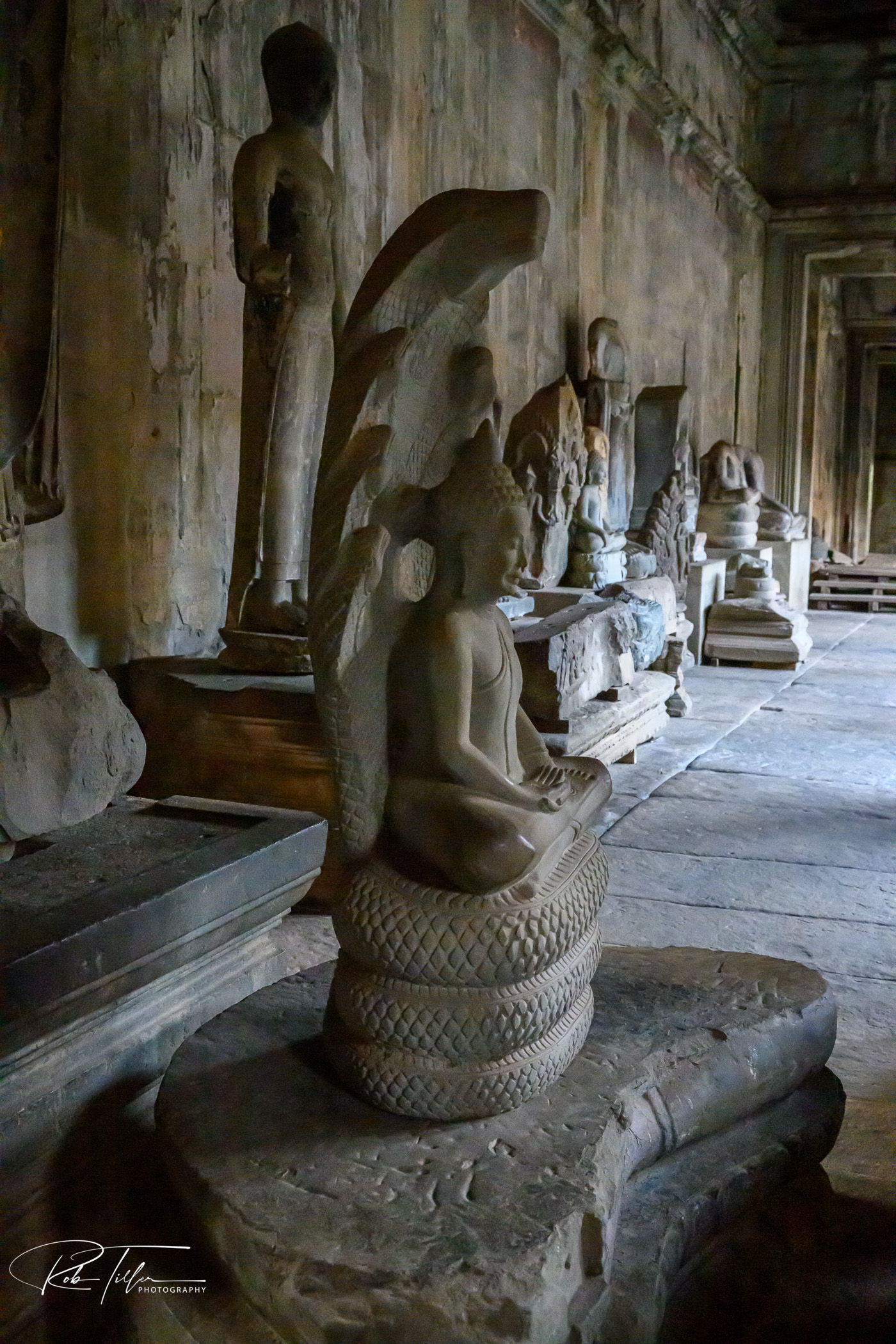
This was less true of Angkor Wat, which is the largest religious complex on Earth.  Built in the 12th century, it’s now mostly a ruin, but enough is left to show that its builders were highly serious about their religion as well as their armies.  A later generation of Hindus destroyed many of the icons, and most recently many statues of Buddha were decapitated by looters and the heads sold abroad. 

A pedalcab tour of Saigan,

During the trip I read Saigan, a historical novel by Anthony Grey.  (Thanks to my friend J, an old Vietnam hand, for recommending it.)  It resembled a James Michener novel in good ways, with a broad overview of Vietnam’s history in the 20th century woven together with some interesting characters.  Grey taught me some new things about the brutality of the French colonial regime, and brought key battles of the American war to life.  As with Michener, the prose was not especially beautiful, but I still found the book quite worthwhile.

Angkor Wat, in Cambodia

I learned a bit about the current Vietnamese system of government, which is managed by the Communist Party of Vietnam.  Opposing political parties and criticism of the CPV is not permitted.  But much economic activity is indistinguishable from the mostly free markets of the West.  At street level, it doesn’t look particularly unfree.  In fact, in places it looks highly energetic and dynamic.   

During the trip, I also delved into an important and fascinating new book, Goliath’s Curse:  The History and Future of Societal Collapse, by Luke Kemp.  Kemp, who is affiliated with Cambridge, examines the archaeological evidence of earlier large states and empires (“Goliaths”) looking for the factors that led to their collapse.  Like Graeber and Wengrow in The Dawn of Everything, Kemp challenges the conventional narrative of orderly human progress beginning with agriculture, and the assumption that increasing size and complexity of government is natural and unavoidable.    
Kemp finds that a key predictor of societal collapse across the centuries is extreme inequality.  Increasing inequality generally arises from domineering elites extracting resources (such as minerals, crops, and taxes).  Elite domination and corruption results in resentment and rebellion.  Combined with other factors, such as exhaustion of natural resources, war, disease, or climate change, extreme inequality can result in societal collapse.  

Goliath’s Curse is a timely book.  If Kemp is right, the extreme inequality in the U.S. and many other countries is a flashing red danger sign.  Dissatisfaction with this inequality has already begun to undermine our traditional democratic institutions by ushering in the age of Trump.  Kemp suggests that there is a possible path out of our current crisis:  reducing inequality and increasing democracy.  

Temple at Sihanoukville

On the long (31 hour) trip home, among other things, I watched for the second time Don’t Look Up (2021), the dark satire about two astronomers (Leonardo DiCaprio and Jennifer Lawrence) trying to warn of a comet on a collision course with the planet.  Merryl Streep is a hoot as a Donald-Trumpish president who tries to profit from and divert attention from the coming catastrophe.   As Trump continues to lead the insane battle against addressing climate change, the movie remains very much of the moment. 
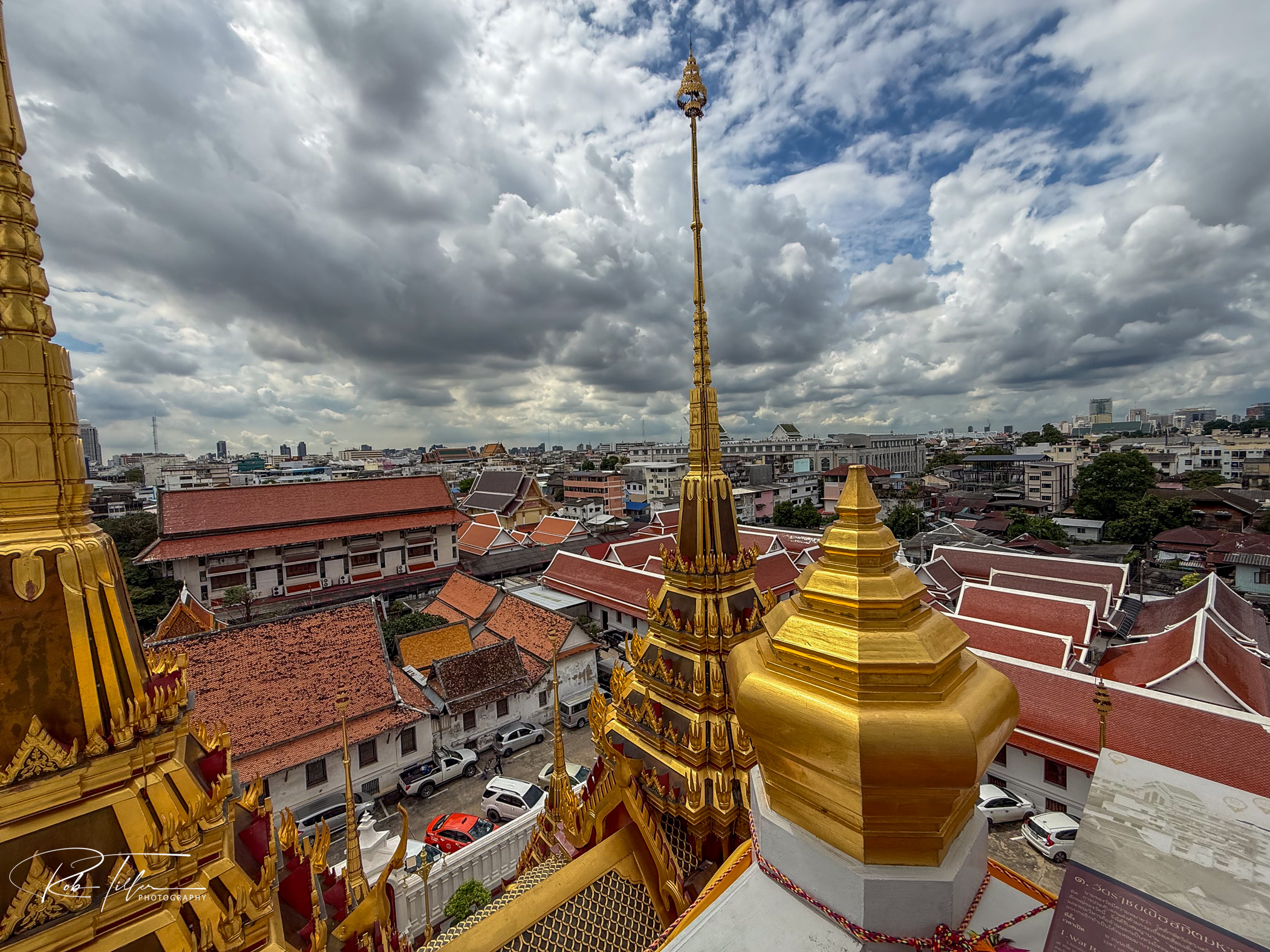
Temple in Bangkok

Caribbean misfortunes, reconsidering Vietnam, good drug news from Portugal, and rising Carolina dancers

It’s been tough to see the devastation of the Caribbean islands by hurricanes Irma and Maria these last weeks.  I’ve got a warm connection to some of the most affected islands (Dominica, Turks and Caicos, the Virgin Islands, Key West)  from scuba trips.  I found so much beauty and joy there from both the natural world and the people.  I recently read a new history of the region,  Empire’s Crossroads, by Carrie Gibson, and discovered some unexpected complexity.  

Beginning in the late 15th century with Columbus’s voyages and extending for another three hundred some years, these islands were not vacation paradises but rather economic powerhouses for an expanding Europe.  They were  fought over repeatedly, because they produced enormous wealth, mostly from growing sugar with slave labor from Africa.  At the time of the American Revolution England and France both valued their Caribbean possessions more highly than the American colonies, and England’s need to protect those islands from the French was part of what created a power vacuum that led to the revolutionaries’ victory.  Their normally kind and beautiful exterior conceals a lot of tragedy, and they just got more.  

The people there face desperate conditions — homes and businesses destroyed, no electricity, no drinkable water.   And of course, the animals and plants there have also suffered greatly, which is seldom noted.  Our tendency as humans to forget about other species is deep seated, but not insurmountable.  It’s possible to view nature as worthy of caring and respect, rather than just something for humans to exploit.  This viewpoint makes possible a deeper engagement with nature, but it also makes natural and man-made disasters more painful.  

Speaking of painful subjects, we’ve been watching the new Burns-Novick documentary on the Vietnam war, and I highly recommend it.  It’s by no means fun, but it feels positive to get a more rounded understanding of this chapter.  There’s a lot of tension between our abiding central national narrative (we’re always on the side of good), and the death and mayhem that’s almost impossible to get our heads around (58,000 lost American lives are a lot — but we tend to forget the 3,000,000 Vietnamese ones) .  It’s amazing in a way that we’ve mostly repressed and forgotten the Vietnam experience, especially when its combination of good intentions, hubris, cynicism,  and sheer cluelessness continues to be relevant to our quagmire in Afghanistan and violence elsewhere.  

In other quagmire news, there was a relatively cheering piece by Nicholas Kristof in the NY Times today entitled How to Win a War on Drugs.  It summarizes the experience of Portugal after it decriminalized all illegal drugs fifteen years ago.  Portugal’s drug mortality rate is now the lowest in Western Europe and one-fiftieth (1/50) of that in the US.  Portugal’s rate of heroin use has dropped by seventy-five percent.  Meanwhile, deaths in the US from opioids have risen dramatically.  The core of Portugal’s approach is to devote resources to medical treatment for addiction.  Though far from perfect, this approach has been far more effective, and far less expensive, than the US’s war on drugs.  While there’s a lot we don’t understand about drug addiction, it could hardly be clearer that our war approach hasn’t worked, and that there are better alternatives.

We went to our first Carolina Ballet performance of the new season last night, and thoroughly enjoyed it.  With all the disasters in the headlines, to find a couple of hours of nourishing, energizing beauty is particularly welcome.  Some of our favorite dancers retired last season, and they’ll be missed, but the change has brought vibrant talent from the company ranks into view.  Lily Wills was a sweet and touching Ugly Duckling.  Jan Burkhard, back from maternity leave, was exquisite in Flower Festival in Genzano, a Bournonville pas de deux.  

Dialogues, the new ballet jointly choreographed by Robert Weiss and Zalman Raffael, was bold and refreshing.  The Dialogues music, Rachmaninoff’s Variations on a Theme by Chopin, was played by pianist William Wolfram, who performed with insight, power, and passion.  With his daughter, Lauren Wolfram, now part of the company, I hope we’ll get to hear this great artist again.  We also enjoyed the angularity of Les Saltimbanques, with choreography by Weiss and music by Stravinsky.  Ashley Hathaway, Amanda Babayan, and Courtney Schenberger were striking and lovely.

Beauty, violence, and delusions: a Macbeth ballet, a Vietnam history, and a Kenya drone strike movie

Tiller7Bug 1-6
It was raining lightly on Saturday morning when I got to Raulston Arboretum, and there were quite a few new irises and roses. I enjoyed the colors, textures, and strange architecture, as accented by the raindrops. I had to work fast, because I’d scheduled a spin class for 9:30. But I had 25 minutes of strolling, peering, sniffing, and clicking, and made it to Flywheel in good time for the spin class with the cheery, peppy, hard-driving Vashti.

I’d felt a little discouraged after my spin class last week, when I was aiming for 300 points and managed only 281. I decided on a slightly different approach this week, involving more conscious pacing and allowing for short recovery periods. My results were better, with a final score of 307, and an average heart rate for the 45 minutes of 154, tying the record.

Tiller7Bug 1-10

That evening we went over to Durham for some food and ballet. We ate at Watts Grocery, where I had a delicious asparagus salad and couscous with beets. At DPAC we saw the new Carolina Ballet production of Macbeth. Shakespeare’s play is a bloody one, dense with painful emotion. This new ballet by Robert Weiss is also violent and anguished, but with interludes of light – friendship, play, and love. It succeeds as storytelling and as dance, with many subtleties and flourishes. Unfortunately, the music was not very interesting and highly repetitious. But I really liked the dancing, the craggy set, and the costumes.
Tiller7Bug 1-5

Speaking of bloody intervals, last week I finished reading a history of U.S. misconduct in Vietnam by Nick Turse, entitled Kill Anything That Moves. It is a difficult and almost unbearable story. The catalog of American atrocities is long – wanton murder of civilians, widespread rape, torture, and mutilation, not to mention the hundreds of thousands of civilians killed on a wholesale basis by massive bombing and artillery. Hardly any of those who engineered the policies behind this carnage or those who carried it out were held accountable.

This history has been substantially suppressed, ignored, and forgotten. The human capacity for sustaining ignorance and self-delusion is a remarkable thing. In general, we are amazingly adept at suppressing new information that’s inconsistent with our prior beliefs, at justifying bad conduct when it fits with our preferences and self-interest, and at repressing memories that don’t fit into our preferred narratives. For Americans, coming to grips with any story of American action where we aren’t heroes is extremely difficult.
Tiller7Bug 1-3

But doing so is important work. Understanding the conditions that give rise to cruelty can help us prevent it. Therefore, with some hesitation, I recommend Turse’s book, with the caveat that it should be read only by mature readers not currently considering suicide or other violence and that, when reading, they take frequent breaks from these dark chapters to get hugs and kisses from their loved ones. One of my takeaways was that it’s usually or never a good idea to invade distant countries where we are ignorant and contemptuous of the people and culture.
Tiller7Bug 1

We saw Eye in the Sky last week at the Raleigh Grande. It was our first visit to the recently upgraded theater, and we liked the soft reclining seats. The movie is about setting up a drone strike by combined British and American military leaders and technicians in Kenyan on Al-Shabab terrorists. The primary tension in the movie is whether they should fire a powerful hellfire missile when it looks like it will kill a sweet little girl.

I thought it was well-played, and it was interesting to see what may well be close to state-of-the-art spying and killing technology. It was nice, in a way, to think that some military leaders might find it hard to decide whether to kill one little girl when they had a chance to execute several terrorists. The big question I left with, though, was never addressed in the movie: why would the U.S. and Britain be devoting themselves to fighting enemies of Kenya?
Tiller7Bug 1-9

Is delusional thinking driving us once again to war in the Middle East? And reading Eating Animals.

14 11 09_3628
I used to think that mass delusions were historically rare and unlikely to recur, but I’m coming to think they’re common and unlikely to ever cease. We seem to have largely gotten over ideas like witches’ spells are dangerous and stars determine our fates, but we’re constantly exposed to and threatened by ideas that are just as loony.

It would be interesting to work out a taxonomy of mass delusions, from those that are usually harmless to those that may cause death. The classification system could also identify the strength of the delusion, from ones, like fear of black cats, that are persistent but not really serious, to those that are sometimes subject to reconsideration, to those whose adherents will kill to establish them as eternal truths.

Yesterday I learned that the President has ordered more troops into Iraq to fight ISIS. This is clearly premised on the view that this crazy outfit is bent on the destruction of our way of life, and will in due course attack us. There is, to be sure, some support for this view in their rhetoric and brutality, but it may be totally wrong. Remember, they haven’t attacked us, and it is entirely possible that their strategy is to provoke us to fight them so as to inspire their supporters. And if they aren’t really a threat to us, the idea that we must wipe them out to survive should be classed among the most pernicious of delusions – ones that seems so reasonable as to be beyond question, and that lead inexorably to violence and mass death.
14 11 09_3639

Tom Friedman wrote an unusually thoughtful column a week or so back comparing ISIS and North Vietnam. He reminded me that in the 1960s, US leaders, and presumably a majority of the electorate, were convinced that the Communists in North Vietnam were primarily motivated by an anti-capitalist ideology and a willingness to fight along with other Communists for world domination. Thus we pursued a war that led to the deaths of some 58 thousand of our soldiers and more than a million Vietnamese. We now know, or at least are starting to understand, that the Vietnamese were primarily driven by nationalist concerns. They weren’t a domino.

Friedman suggests that the success of ISIS may similarly be attributable less to religious or political ideology than to nationalist concerns and anger at Sunni oppression by Shiites. There clearly are some jihadists with dreams of regional, if not world, domination, but their numbers are probably much smaller than those who back them out of more pragmatic and local concerns. In short, this looks more like a civil war with mainly regional implications, not an existential threat to the western way of life. If this is correct, there is no way the US can wipe out this enemy, and it would be a horrific folly to try.
14 11 09_3635_edited-1

While I’m talking about uncomfortable subjects, I’ll mention I just finished reading Eating Animals by Jonathan Safran Foer. The book is part factual reportage, part memoir, and examines what factory farming means to the animal victims and to human society. I knew something about this subject beforehand, but learned a lot from the book. It’s written in an easy-going, thoughtful, personal voice, but includes some very disturbing subject matter, particularly the accounts of routine corporatized animal torture and abuse.

Here are some sample facts: “Animal agriculture makes a 40% greater contribution to global warming than all transportation in the world combined; it is the number one cause of climate change.” “More than ten billion land animals [are] slaughtered for food every year in America.” “We know, at least, that [not eating animals] will help prevent deforestation, curb global warming, reduce pollution, save oil reserves, lessen the burden on rural America, decrease human rights abuses, improve public health, and help eliminate the most systematic animal abuse in world history.”

Here is a sample aspirational thought: “What kind of world would we create if three times a day we activated our compassion and reason as we sat down to eat, if we had the moral imagination and the pragmatic will to change our most fundamental act of consumption?”