The Casual Blog

Tag: scuba

Thanksgiving in Nassau with sharks and Proust
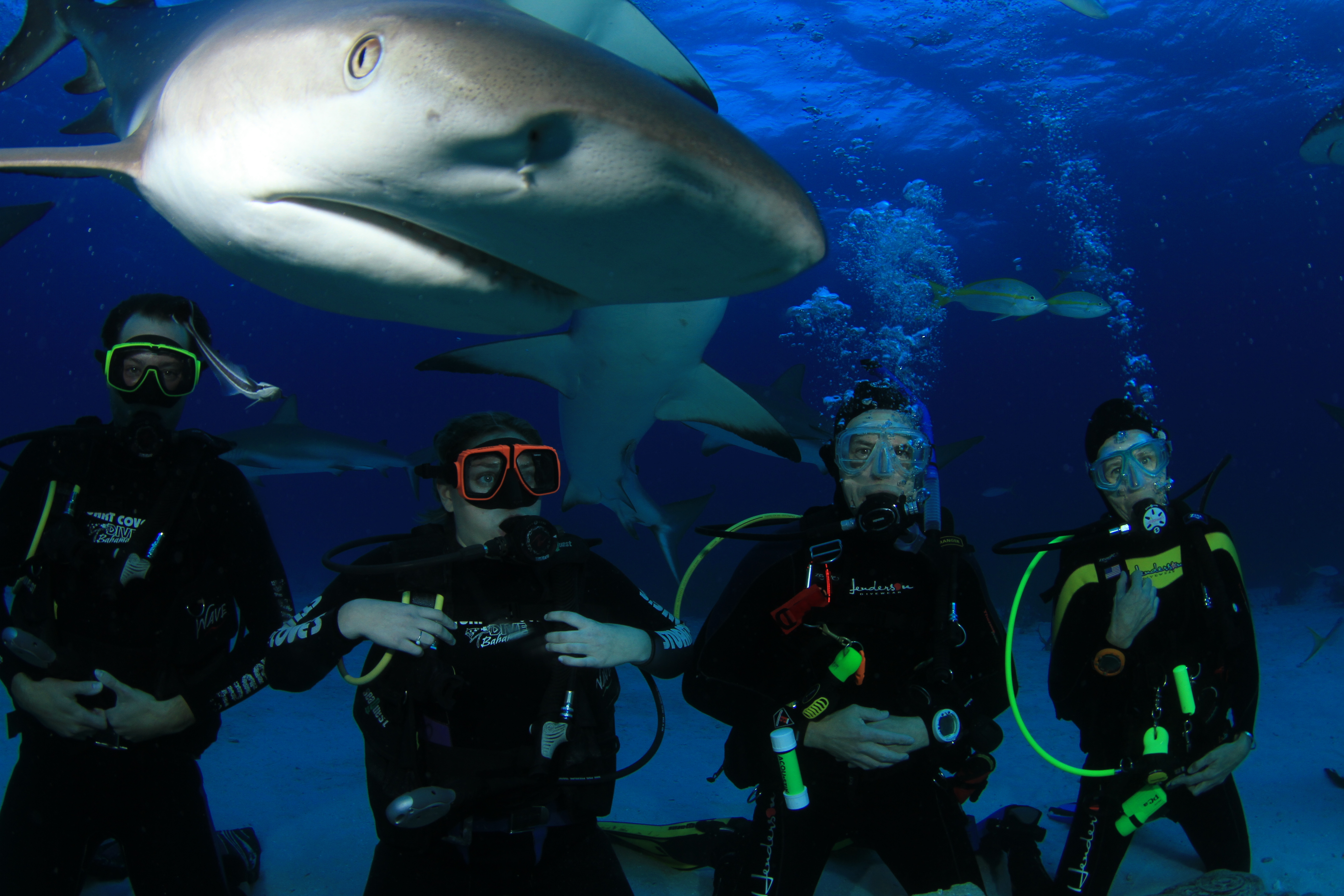
Gabe, Jocelyn, reef shark, Rob, and Sally

For Thanksgiving we went down to Nassau, Bahamas, and did some scuba diving with sharks. I was looking forward to some time with Sally, Gabe, and Jocelyn, and also to the palm trees, beaches, and beautiful turquoise water. But we chose the destination in large part because of the abundance of reef sharks.

For those with long exposure to anti-shark hysteria (Jaws, cheesy nature channel specials), this probably sounds crazy. In fact, people do these dives safely every day. For me, there was some element of facing down an irrational inner fear, but the bigger driver was curiosity and a desire to experience a particularly beautiful force of nature.

We stayed at the Sheraton on Cable Beach, a large hotel with a white sandy beach, lots of curvaceous pools with waterfalls, palms, and plenty of deck chairs. The staff seemed friendly, though slightly shy. Restaurant service both in the hotel and elsewhere was surprisingly slow (except for Luciano’s, where the food and service were both excellent). One bummer: the food was much more expensive than I expected — about three times the price of equivalent meals at home. There was a casino, which we walked through, and where no one looked like an extra for Bond film. I tried, unsuccessfully, to comprehend why these people couldn’t find something more fun to do than just throw away their money.
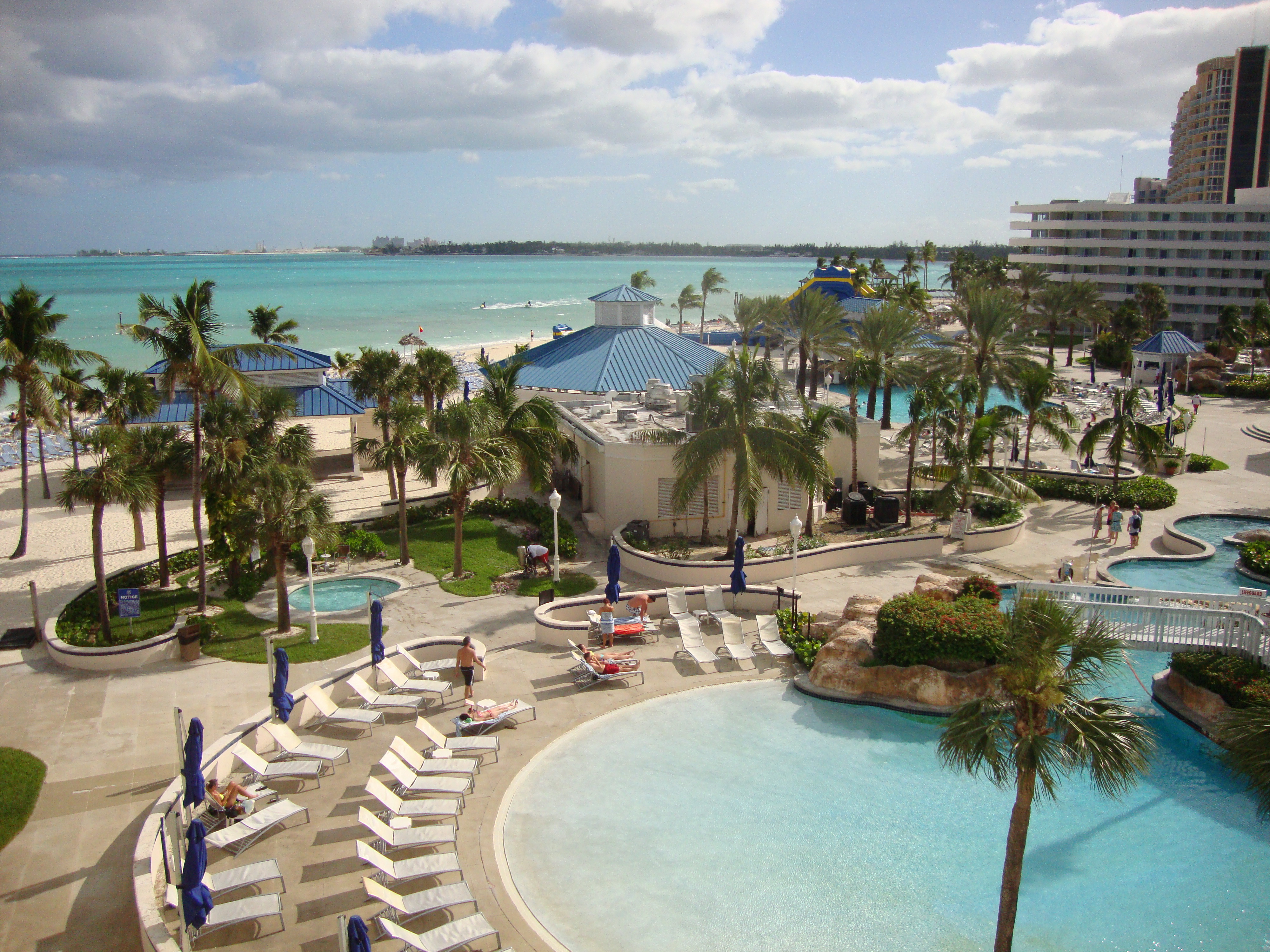
Sheraton Hotel, Nassau, Bahamas -- our view

But there is no accounting for taste, and no explaining some of the strange things people like to do. Which brings me back to the sharks. Humans kill around 100 million of them a year (a substantial number of those by torture — cutting off fins for shark fin soup and leaving the fish to drown), whereas unprovoked sharks around the world account for around four human deaths a year. Of those exceedingly rare deaths, the perpetrators are only four of the 360 species (great white, oceanic whitetip, bull, and tiger). It is simply a myth that sharks are mindless killing machines. Some species are highly social and demonstrate problem solving skills, curiosity, and play.

Some species of modern sharks reached their current form about 100 million years ago, in the age of dinosaurs. Species come and go (for mammals, the average species lasts about a million years), but the sharks have remained. The basic, gorgeous design has clearly stood the test of time.

We dove with Stuart Cove’s dive operation, which was generally well run with cheerful young dive leaders and staff. Sally and I did ten dives and all. Gabe and Jocelyn were not certified divers, but after refreshing on their skills with a resort course, they came with us on four dives with an instructor, a smart, well-travelled (including a stint diving in Mozambique, which she recommended highly), and good-humored young Englishwoman named Ruth.
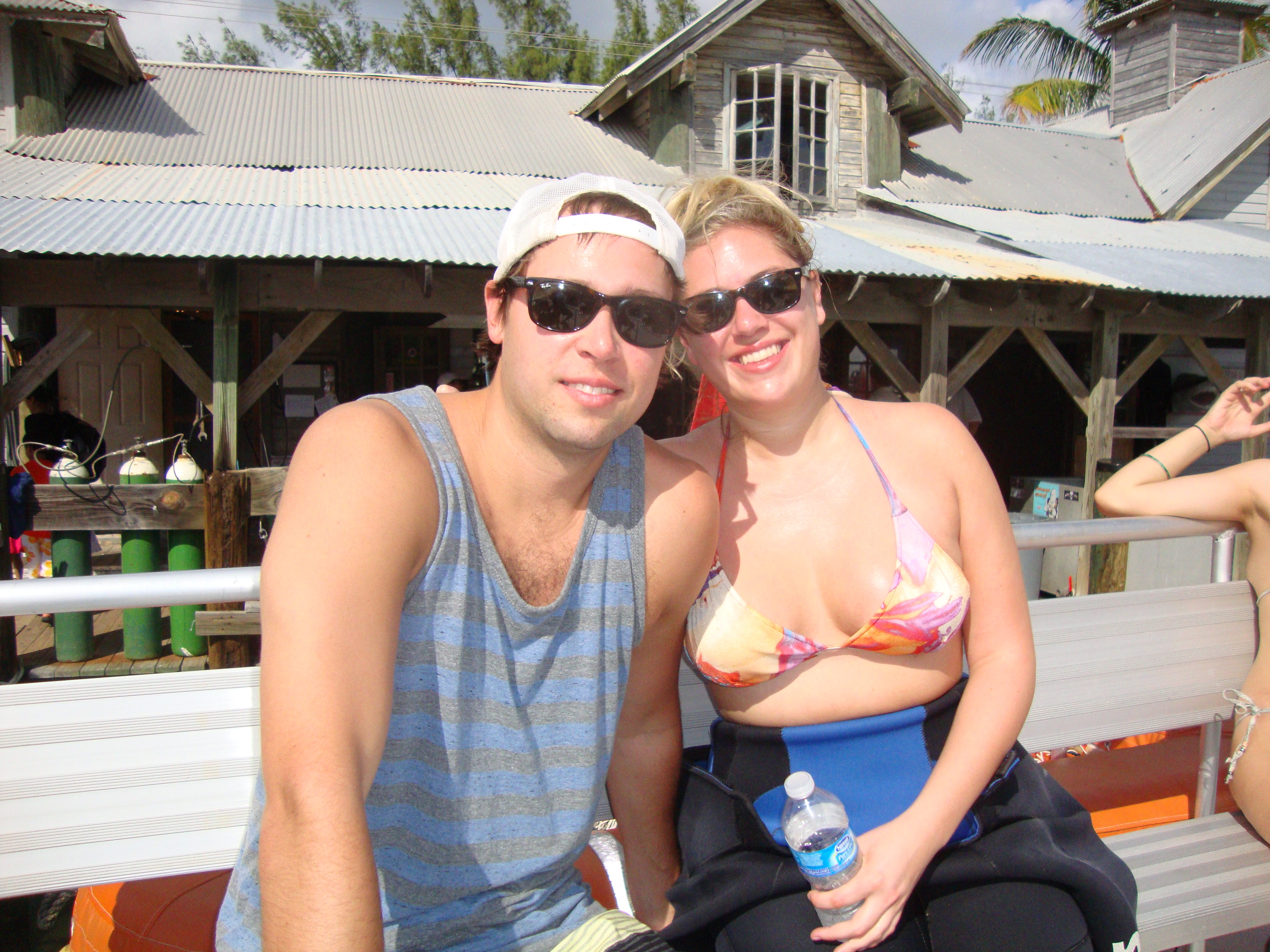
Gabe and Jocelyn at the start of a shark dive

The climax of our diving was Thanksgiving day, when we did an area called Runway Wall, where Sally and I swam at about 70 feet (with G and S shallower) along a wall that goes down to a depth of 5,000 feet. Beside us, in front of us, and behind us were reef sharks. I counted 15. At times they swam quite close (inches), coming up on us from behind, or heading straight for us. We also got to within a few feet of a large sea turtle (probably a loggerhead), and saw a few Atlantic spadefish, a spotted drum, a spotted moray eel, and a Goliath grouper, along with many smaller fish.

After a surface interval, we descended again and sat in a circle in a sandy area. One of the staff, Rich, had donned a chain mail body suit, hood, and gloves, and brought down a cage with chum. The sharks increased in number (perhaps 20-25 showed up), and began swimming faster and closer to the cage. Rich would take a thin metal pole, spear a steak-size piece of chum, and whip it upward quickly, and the closest shark would instantly bite and swallow it. Rich would position himself in front of each diver and do some feeding while the staff took photos and videos.

I had mixed feelings about feeding sharks (or any wild animal), out of concern that it might lead to dependency or otherwise disrupt the ecosystem. I also wasn’t crazy about the emphasis on photography. But in the end I put those ideas to one side and was simply overwhelmed by the experience: about 50 minutes of a close encounter with prehistory. The distance between us got down to zero (I was bumped a few times). After a few minutes, I began to distinguish individual differences among the sharks. One had a mouth that gaped on one side, another had a fish hook in his back. They would swim in lazy circles, and then suddenly accelerate toward the food, sometimes colliding. All told, I was deeply moved by their power, grace, and beauty.

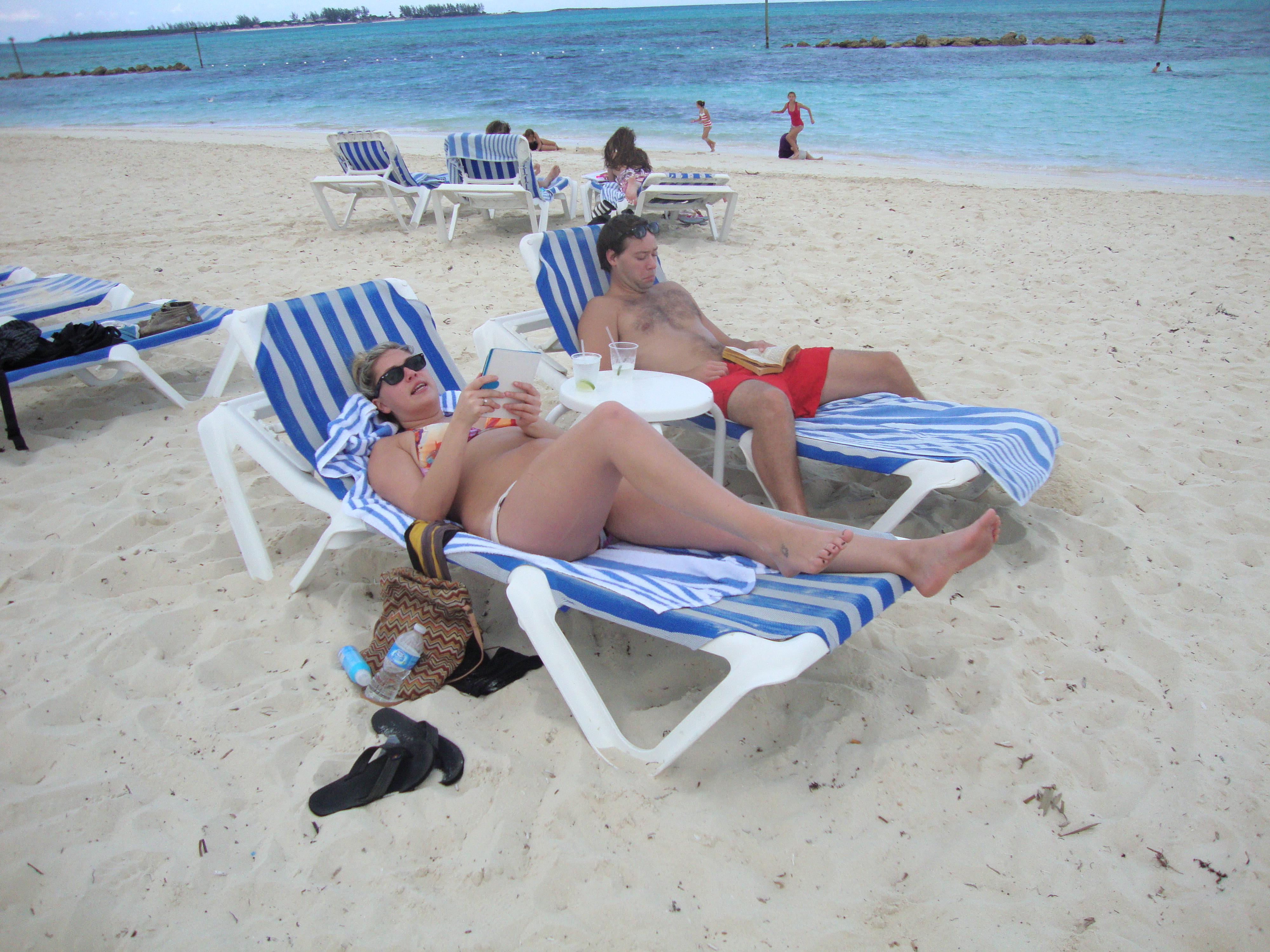
We did not dive on our last day before flying home to decrease the risk of decompression illness. We spent much of the day lounging on the beach or by one of the pools reading our various books. It was windy, sometimes cloudy, but sometimes sunny. It was lovely to see our kids reading for hours. I used to worry that they’d end up as hopeless TV addicts. But they didn’t!
I began rereading Swan’s Way, this time in a translation by Lydia Davis. Many years ago, I read the entirety of Remembrance of Things Past, and have from time to time returned to sections of it, but the length of the work is daunting in these frantic times. I found the Davis translation much more graceful and lively than the Moncrieff and Kilmartin. It may be that accumulating more life experience makes the book itself better. In any event, I was struck once again by the strange hypnotic beauty of the prose.

For the first time, I saw how the apparently casual, improvised sound of the early part of the book includes a lot of delicate prefiguring of people and events that will gradually come into sharp focus. There is so much richness in the book. It makes us realize how rich our own lives can be in perception and feeling, and makes us want to use our memories and our eyes, ears, noses, touch, and taste buds better. But it is not a self-help book; there’s something magical about it. I had the odd, strong feeling as I was reading that the book was my own consciousness coming into being. Of course, it’s only a novel — or is it?

More shark photos:


Work, Pilates, Bjork, and musical play time

Nocturne in D flat major by Frederic Chopin

It was another busy week of many meetings, calls, and issues, with business dinners almost every night, and my email backlog continuing to pile up. But interesting, always interesting. On Friday I was scheduled to go to the coast for two days of wreck diving, but bad weather arrived and the trip was cancelled. I was not heartbroken. It was good to get some down time.

On Saturday morning it was cold and rainy. I thought of taking Yvonne’s open level Vinyasa yoga class at Blue Lotus, but learned from the web site that someone else was filling in for her. I check for alternatives, and found an early Pilates class at the Y. And so it was that I had my first Pilates experience. It was similar to yoga, with its emphasis on breathing throughout a series of exercises with unusual stretches and contractions. I found this particular class less strenuous than my normal yoga classes, and also less serenity-inducing. Still, I would do it again, especially if there’s no yoga available.

Other new things: earlier in the week I read a news story about Biophilia, the new multimedia production of Bjork, the Icelandic singer-songwriter, and downloaded the work to my iPad. Biophilia is in part a collection of songs about nature and science, but rather than being an album, it’s something we don’t have a word for yet. Bjork worked with scientists and artists to make interactive productions that allowed the listener to participate actively in the music by adding notes and altering images. After a few minutes of experimenting, I could make a bit of music with the tools provided, and participate in some of Bjork’s visions of microscopic, geologic, and celestial phenomena.

The idea of sharing a vision this way — not just providing passive entertainment, but inviting participation as a way of inspiring and teaching — is exciting, and the NY Times story took the view that it was ground breaking. For me, the experience was intriguing but not really thrilling. I liked being allowed to work with Bjork’s electronic instruments and play with her, but the musical possibilities were narrowly circumscribed and not expressive enough to satisfy me.

For example, by using the touch screen, in various songs you can add to Bjork’s fairly simple musical backdrop more harp notes or more synth notes, and play faster or slower, but so far as I could figure out without taking any new harmonic direction. The videos were in some cases beautiful, but the songs themselves were more performance art than either art music or dance music. Still, I liked the ideas, and I will probably play some more with Biophilia.

Phoebe, Holtkotter lamp, and music technology

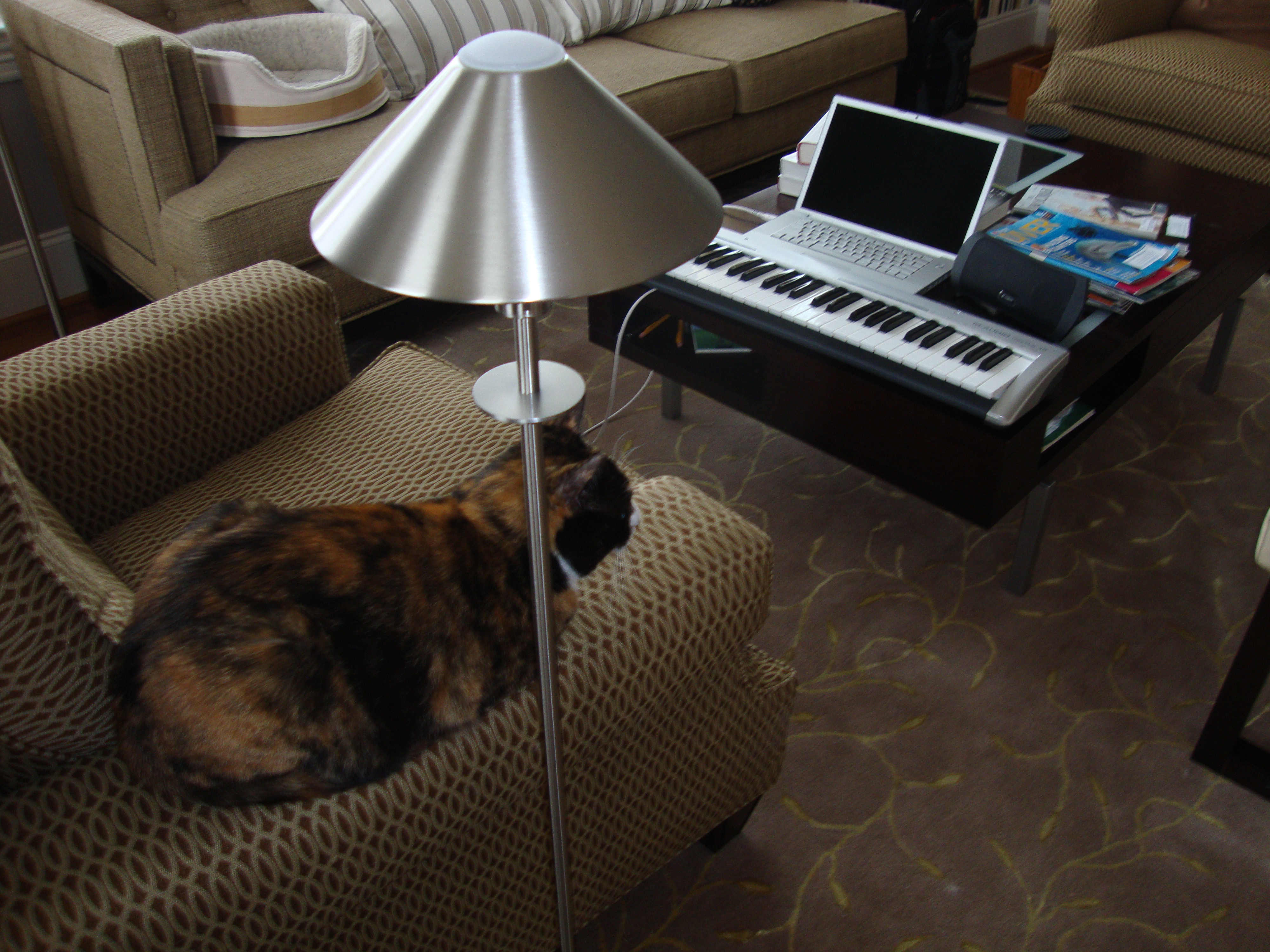
The idea of using technology to express new musical thoughts has interested me for a while. This past spring, I began playing with the instruments built into GarageBand (a Mac application), and eventually purchased a cheap electronic keyboard and a cheap auxiliary speaker to experiment with. One of my ideas was to translate early music (1500s) through synthesizer voices to see what new things emerged. The sheet music came with a lot of interpretive problems, so I didn’t get far on the vector. But I had fun improvising with various synthesizer personalities using various systems, like Greek modes and pentatonic scales. I thought of it as playing, in the sense of playing a game. It’s a different kind of musical outlet.

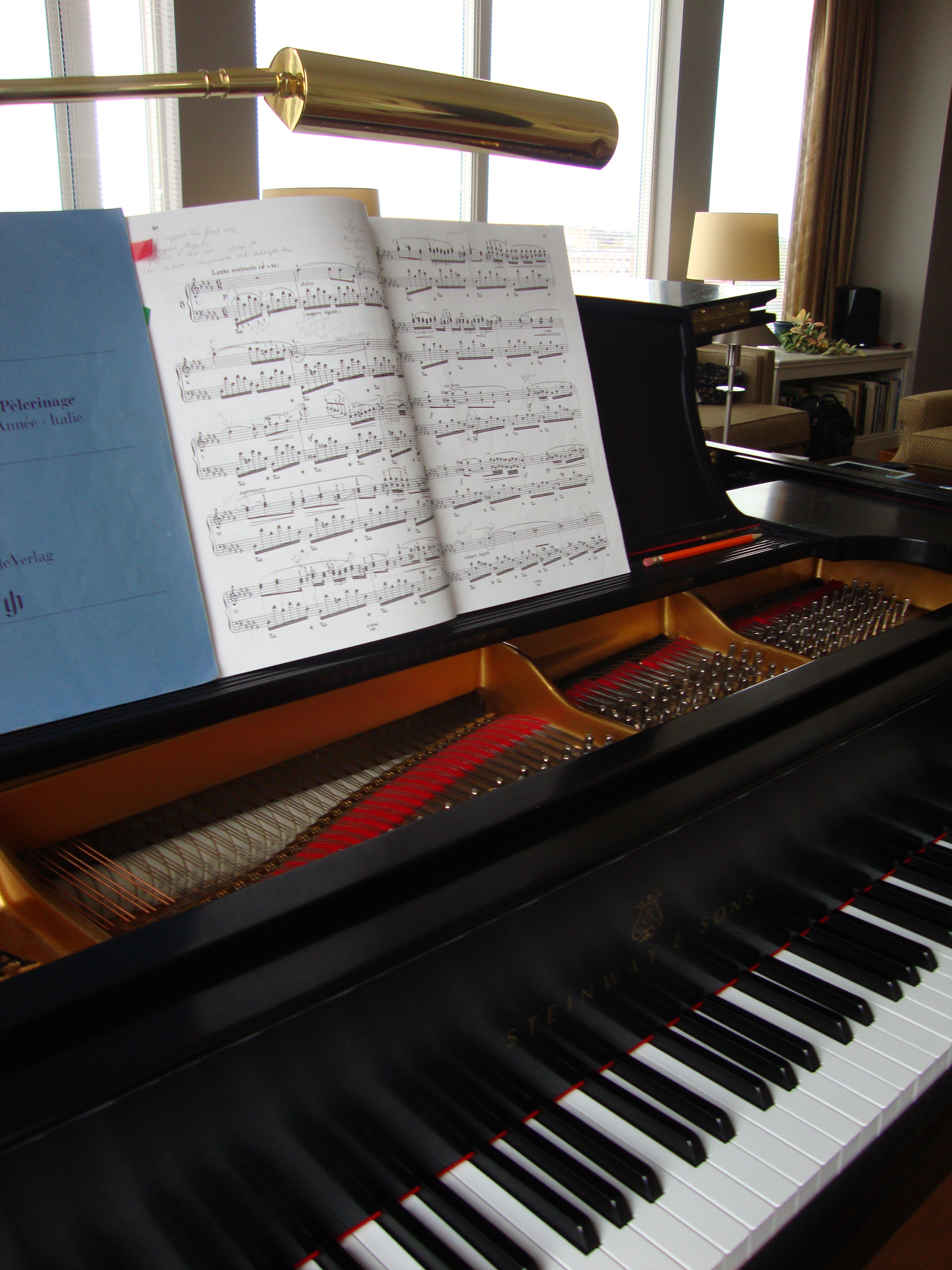
Bjork’s idea of engineering a collaboration with an unknown audience has a distinguished heritage. It’s what we do when we open a volume of Chopin nocturnes and start to play. Chopin left us the architectural drawings, which the pianist uses to create musical in real time, while at the same time personalizing the structure with thousands of unwritten details according to the pianist’s experience, intelligence, and feelings.

This system — master composer, written music, trained pianist — has worked amazingly well for a couple of hundred years. It does, however, depend on musical education — there has to be a support system for training pianists, and also listeners. For music with the harmonic complexity of the great Western tradition, you have to learn a lot before you can interpret it, and you have to learn a fair bit to get deep enjoyment from listening to it. It is worth the effort.

I sometimes worry that there is a long historic curve in which our music devolves from the complex and brilliant to the simple and sweet, and from there to the just plain dumb. The traditional system of classical music education and performance is not in good health. But perhaps humans are just getting started in discovering what music can do. Who knows where it goes? We have to keep experimenting, keep creating. That’s what Bjork is doing, and good for her.

Looking for good news, and finding some about prisons

These are stressful times. Current stressors include wars, riots, financial turmoil, unemployment, political gridlock, nuclear weapons, droughts, earthquakes, volcanic eruptions, tsunamis, global warming, and mass extinction. It doesn’t feel right to be indifferent to so much suffering and so many potential disasters, but taking it all fully on board seems impossible.

When I took the PADI scuba rescue course last month, I had in mind the possibility of helping someone in an emergency. One of the lessons, though, was that sometimes you can’t help. You may see someone in dire peril, and be the only person in a position to act, but lack the necessary equipment, experience, or strength to save the person without endangering yourself. In such a case, you should not attempt a rescue. Not acting would be traumatic, but it would be the least bad choice.

Some of the current crises feel bad in this way: we have a ringside seat as the disasters unfold, and there’s very little you or I can do directly. Well, we could try to avoid electing as our representatives people who are delusional. And maybe it does some good to keep talking about good choices as opposed to delusional ones. Maybe more sane days lie ahead. But meanwhile, even to have a chance, we need to take care of our own mental and physical health.

One of my strategies is to take special note of the occasional story involving something really positive. Good news is often disfavored for the front page, so you have to keep a sharp eye out for it. Recently I’ve spotted good news about decreasing crime rates, decreasing highway fatalities, decreasing intolerance for gays, and increasing skepticism about the war on drugs.

Here’s the latest from the NY Times: “Trend to Lighten Harsh Sentences Catches on in Conservative States.” The story by Charlie Savage identifies sentencing and parole reforms in a number of states that are lowering the prison population, helping drug addicts with treatment programs, and assisting convicts in reentering society. The driving force is not humanitarian concerns, but rather budgetary ones — imprisonment is expensive.

The prison overhaul movement is happening in Texas, South Carolina, Kentucky, Arkansas, Ohio, and elsewhere. The movement is supported by a number of prominent conservatives, including Edwin Meese III, Newt Gingrich, and William J. Bennett — all strict law-and-order authoritarians from way back. This is quite amazing.

The story notes that there are also a few states that have revoked programs for early parole, including New Jersey, which changed its policy after two inmates released early committed murder. It is difficult for statistical evidence of social benefits, no matter how strong, to overcome a vivid anecdote. So the whole thing could still fall apart. But maybe it won’t.

Getting better (scuba rescues)

If I like doing something, I like getting better at it. In fact, I probably won’t like it for long if I can’t get better at it. They would mean doing the same thing over and over, and why would anyone want to do that?

I’ve recently been improving at several things I like, including playing the piano, golf, and scuba diving. This weekend, I took a big step forward in scuba when I took the PADI rescue diver course.

As I’ve noted in a prior post, I really like the idea of having enough first aid skills to help save a life, and so this project was particularly meaningful to me. The reading and classroom sessions gave me a greater knowledge base on the various things that could go wrong for careless or unlucky divers — equipment problems, encounters with venomous plants and animals, or underlying medical conditions. In each of these situations, there are ways to help, even if there are not complete solutions.

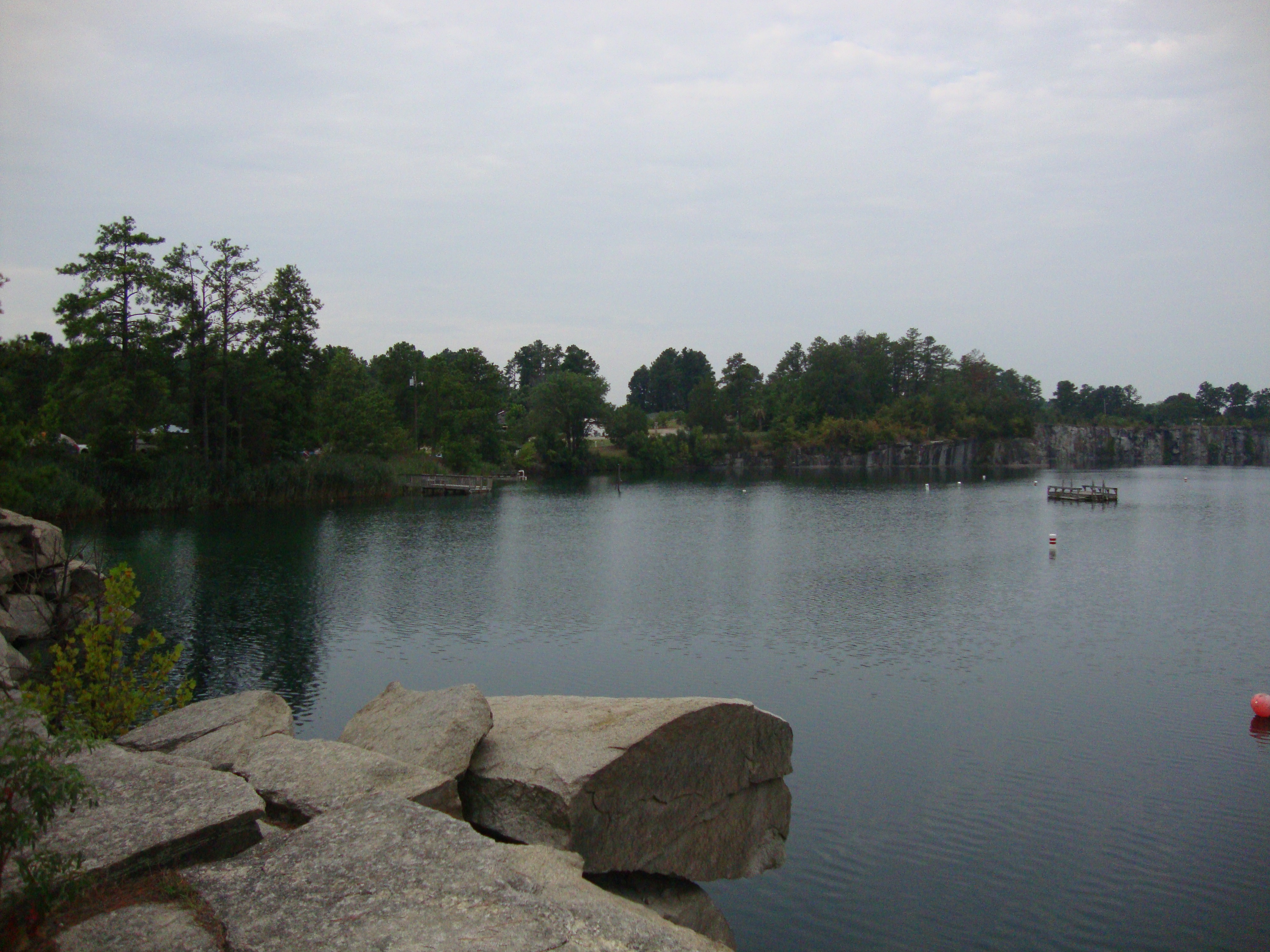
In the two-day skills class at Fantasy Lake Scuba Park (a former quarry), I was fortunate to have an experienced teacher (Nikki) with three able assistants, and a class (counting me) of four. There was a lot of individual attention. My fellow students were experienced divers who were focused and good humored. Charlie, a UPS driver, was particularly impressive in his emergency problem solving skills.

We were tasked with various stressful problems. A tired diver. A panicked diver. A missing diver. And many others. The required skills were many. We dealt constantly with situations that were novel and unsettling. This was, of course, tiring, but also stimulating.

There were physical challenges. I cut a finger, got stung by a yellow jacket on another finger, and got a bruise on an arm. Propelling a victim in while giving rescue breaths and removing equipment was complicated and exhausting.

There were also psychological challenges. I particularly dreaded trying to find a missing diver underwater; the combined problems of navigation in low visibility and a potential fatality were anxiety producing. I also dreaded the issues of rescue breathing for an unconscious diver in the water. The physical intimacy of face to face contact (even, as we did it, with simulated mouth-to-mouth breaths) with a relative stranger, even in the practice situation, was something I would rather have avoided. But in the end, it was manageable, thanks to my teacher and the assistants. With the benefit of the practice, I have a high degree of confidence I could actually take a run at helping someone in dire distress.

The exercise inspired thoughts of mortality, and life. I felt happy to be as healthy as I am. My regular morning exercise routine paid major dividends in the physically demanding parts of the course. My careful eating with an emphasis on things that are good for my body gave me good energy and balance. It worked out well. I would be very happy never to have to use these new skills, but I feel like I can do it, if necessary.

A scuba Xmas in Bonaire

Bonaire is a small island is in the southern Caribbean about 60 miles north of Venezuela. It does not have pretty beaches or glitzy nightlife. It does, however, have a thing that make it world famous among scuba divers — fantastic coral reefs. Sally and I spent Xmas doing lots of diving there, and I can affirm, the coral is healthy and gorgeous.

This is no small thing. Coral all over the world is under stress from global warming with rising ocean temperatures and acidification, as well as pollution, industrial fishing, and various poorly understood diseases. At the same time, a significant percentage of creatures in the ocean life depend directly or indirectly on the reefs for food and shelter. They are the rainforests of the ocean. From a human perspective, they have an additional important attribute — incredible beauty.

It is hard to believe that simple, tiny animals do what coral do. Over long periods they form large structures of great complexity, with each new generation building on top of its predecessors, layer upon layer. The structures have many colors, textures, and shapes. They may resemble cacti, ferns, mushrooms, pillars, antlers, flowers, bowls, or giant brains. In Bonaire, there is a band of coral reefs around the entire island that starts in water about 20 feet deep and goes down below 100 feet.

The reefs of Bonaire are teeming with thousands upon thousands of tropical fish and other creatures. From time to time, we were engulfed in enormous schools. We brought along our copy of Reef Fish Identification, and identified a number of species new to us. Many of them are not at all shy, and some are actually interested in examining humans. On one of our night dives, there were five tarpon that followed us about like large, curious dogs, circling and gliding up from behind close enough to touch.

Close encounters with so much exuberant life was inspiring, though not without some drama. We did some dives from boats run by the operation at our hotel, Divi Flamingo, which generally were delightful. The water was a pleasant 81-82 degrees, and visibility around 60 feet. This visibility is not especially good by Bonaire standards, but we were not complaining.

We had more drama on the shore dives, for which Bonaire is famous in dive circles. Sally and I served as our own guides and safety checks for these, and generally there were no other divers nearby. I enjoyed the solitude, but it also increased the risk level. The reefs are generally only a short swim from shore. However, getting to the water over the uneven volcanic rock with heavy dive equipment can be difficult. At times the ocean surge makes entry and exit dangerous. We got stung by jellyfish and fire coral and sustained minor bruises, cuts, and scrapes from being tossed about on the shallow rocks. Once we made a navigation error because of a strong current, got lost, and I ran uncomfortably low on air. But it was all worth it for the amazing beauty.

Out of the water, we saw flamingos, magnificent frigatebirds, parrots, and various warblers. There were also wild donkeys. The predominant European language of the island is Dutch, followed by Spanish and English. The vibe of the island residents had a strong dose of Dutch reserve along with the Caribbean relaxedness. We were sometimes surprised at the slowness of restaurant and hotel service, and equally surprised that the dive boats always left on schedule, or earlier. Among the tourists the Dutch were predominant. They seemed unusually handsome as a group, though unfortunately a surprising number of them smoked cigarettes.

Bonaire has character and charm, and, as I say, those incredible coral reefs. We’ll likely go back, but I hope next time we can find direct flights. Getting there went smoothly, but getting home ended up taking 31 hours, rather than 9 we’d expected. The customs process in Curacao was amazingly slow, and so we missed our flight to Miami. So, stuck on Curacao, we found a cheap hotel near the airport, took a cab into Willemstad for a walkabout, and ate a good meal. The next day we finally made it back to Raleigh to find snow on the ground.

Diving Key Largo

Sally and I just got back from a four-day mini-vacation diving out of Key Largo. I’m a bit battered. My hands got sliced in several places from razor clams, my wrists itch from some sort of bites, my neck got stung by fire coral, I bruised my thigh climbing into the boat in rough water, and something took a slice of skin off my left ankle. I had a low air/decompression scare (apparently a computer malfunction). We spent quite a few hours moving fast on small boats in up to three-foot seas, and early on I had a couple of bouts of sea sickness. But it was fantastic.

I did thirteen dives (only four without Sally), including two deepish wrecks (the Spiegel Grove and the Duane), a night dive (at the Benwood), and a lot of shallow coral reefs (including Molasses Reef, Elbow Reef, North Dry Rocks, Eagle Ray Alley, North North Dry Rocks, Christ of the Abyss, and Horseshoe Reef). I got certified on nitrox the week before, and used it for the first time on several dives. The trip included my fiftieth logged dive.

The reefs were really beautiful. There were thousands of reef fish, including quite a few new to me. Among many other fish, we saw several schools of barracuda, a goliath grouper, a nurse shark, green and spotted morays, and such exquisite creatures as gray and queen angelfish. The coral and plant life were also incredibly varied and amazing. It was really cheering to see the reef looking healthy.

We had our moments of anxiety (wondering, where are we, and where’s the boat?). At times there was current or surges to contend with. Visibility was not always great. But most of the time it was so peaceful. Floating weightless. And more and more, my body seems to know how to maneuver in the water with very little effort. There’s a feeling of wonderful freedom.

We went with a group of sixteen or so other divers organized by Dan P. and Down Under Scuba. The price was amazingly cheap, and it was great not to have to worry about the flights, hotels, and such. It was also good to spend some time with experienced divers, who were generally good folks who shared interesting tips. Dan was an inspiration, as a diver and a person, and we’ll look forward diving with him again.

A scuba voyage of discovery

Sally and I got back late last night from a four-day trip to Ambergris Caye, Belize.  We accomplished our primary objective of scuba diving the beautiful coral reefs, and had several unexpected pleasures in addition.

Travel consumes a lot of physical and emotional resources.  Even when things are going well, they may at any moment suddenly stop going well and require swift and decisive action.  There are many ups and downs. I’ve gradually refined by baseline holiday travel model, so I usually remember to bring the essentials, anticipate the common annoyances, avoid the greatest risk of infectious diseases, and leave reasonable space for some relaxation and reflection.  Especially when travelling, I love my iPod and noise-canceling headphones.  Lately on the road, I’ve been listening to Mozart operas, which I find at once nourishing, comforting, and exhilarating, and I’m happy to have the time to listen.  I always carry at least a couple of books, and appreciate a chunk of uninterrupted time for reading.  But it isn’t completely relaxing; there’s always some residual vigilance.  I generally notice if the plane, or another passenger, starts making strange noises.  I always note the location of the nearest exit.

We flew from Belize City to Ambergris Caye in a single-engine plane in which I was able to read the pilot’s instruments (we flew at 2100 feet).  We stayed at the Mayan Princess, a clean, unfancy, and convenient hotel in San Pedro, a bustling little town with hotels, restaurants and bars along a narrow beach.  San Pedro has an interesting stew of cultures — Hispanic, English, Indian, West Indian, creole, and of course tourists from all over.  At first, I thought that everyone who greeted us in a friendly manner was hustling to sell something, but I soon figured out that that many people were just being friendly (though others were hustling).  The streets were narrow with few sidewalks, and at times we had to dodge heavy traffic of golf carts and minivan cabs.  We saw more people who seemed to be working for a living than we did tourists.  As Sally observed, the local vibe was very casual.  All the men’s shirt  tails were out.  The buildings were bright but many could have used a new coat of paint.  Over all, it seemed a little down at the heels, but full of life.

We did all our diving with Amigos del Mar, which was located about 50 yards from our room.  On the first and last diving days, we did short boat trips to local reef hot spots.  They did not disappoint.  The coral was abundant and varied, and the wall and canyon topography was fascinating.  We saw several nurse sharks at close hand, and at one point were in the midst of a dozen of them in a feeding frenzy.  Like many people, from long socialization I’ve inherited some fear of sharks, but very quickly I felt comfortable with the sharks swimming close enough to touch.  They seemed curious about us.  I suspect part of the explanation is that some dive operators feed them.   At least these particular sharks seemed a lot like our cats, except much bigger and with more teeth.  We also saw swimming green moray eels, sting rays, barricudas, a scorpion fish, and many gorgeous smaller species.  We also encountered a couple of lionfish, which are poisonous and highly destructive, and which our guide captured.

Our biggest adventure was a trip to the Blue Hole, a circular reef formation that is about 60 miles from Ambergris Caye.  On the trip out, it was drizzly and windy, and the seas were very choppy.  It was even choppier coming back, and we were wet.  All told, we had around 8 tough hours on the water.   We did not get sick, though others were not so fortunate.

The main draw of the Blue Hole is stalactite formations, which are about 130 feet down.  There was not much except the divers swimming at that depth.  We had better luck seeing fish at 60-80 feet at Half Moon Caye and West Point Wall at Long Caye.  At lunch time, we also visited an observation deck at tree top level where there were hundreds of roosting magnificent frigatebird pairs, with males displaying enormous bright red inflatable throats.  There were also many roosting red-footed boobies.

At dinner after the Blue Hole trip, I asked Sally to explain how it is possible that some people do not care for scuba diving.  Her theory was that it does not suffice simply to have a love of nature, the absence of certain phobias, and a modicum of courage.  As she said, you have to be a trooper.  Put another way, you must have some fortitude.  I suddenly realized that fortitude is a necessary but seldom discussed virtue that makes scuba, and other adventures, possible, and makes them richer.  WIthout fortitude, a significant part of the experience could be counted as unfun.  But developing and exercising fortitude is part of the satisfaction of the thing.