The Casual Blog

Tag: Rick Shenkman

Getting close to big cats, a ballet Dream, transgender recognition, and Political Animals

Tiller7Bug 1
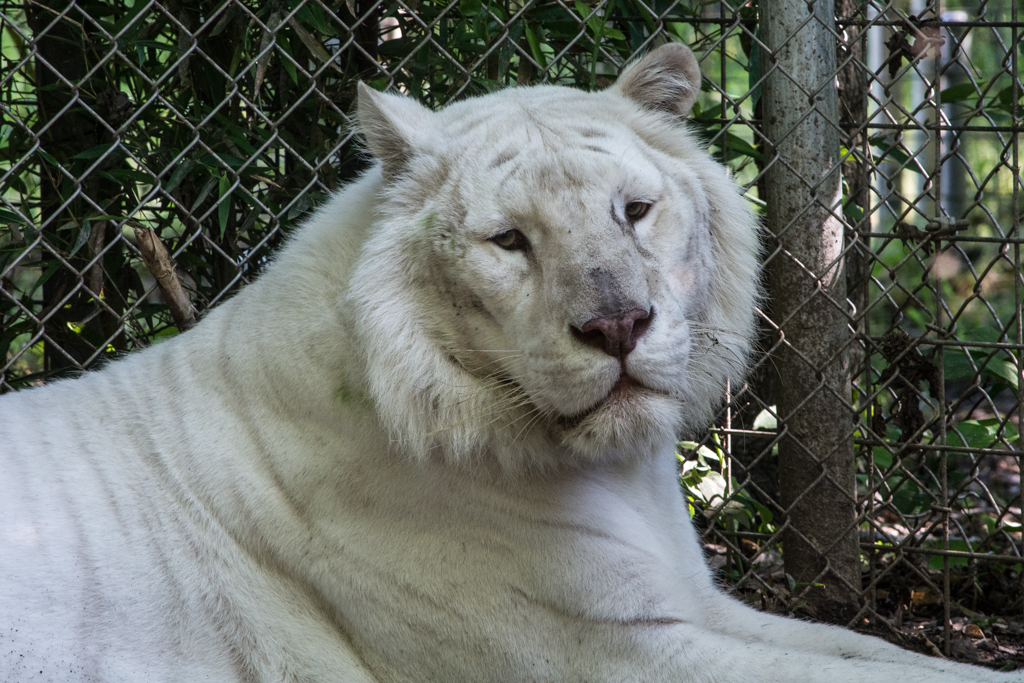
On Saturday morning I saw some big cats at the Conservators’ Center near Mebane, NC, where I got a tour with a group from the Carolina Nature Photographers’ Association. We got wonderfully close to lions, tigers, leopards, caracals, servals, and binturongs, as well as wolves, dingos, and coyotes. We were allowed to poke our lenses through holes in the fences, on the condition that we had to be ready to move back quickly when directed, which we were and did. A couple of times we heard several of the big cats roar together, which was a deep, rich sound. The friendly staff seemed devoted to these beautiful animals. Still, there’s no getting around the fact that their lives are unnaturally circumscribed, which made me kind of wistful.
Tiller7Bug 1-6

I got cheered up that evening by the Carolina Ballet’s last program of the season, with Robert Weiss’s Water Music and George Balanchine’s A Midsummer Night’s Dream. Water Music, with Handel’s iconic score, was at once regal and playful, danced with wonderful elegance by leads Margaret Severin-Hansen, Richard Krusch, and Alicia Fabry. Balanchine’s Dream, with Mendelssohn’s shimmering music, was gorgeous and funny. Pablo Javier Perez threatened to steal the show as an exotic Puck, and Ashley Hathaway, Lindsay Purrington, Adam Schiffer, and Oliver Beres had extended romantic complications. The children who played fireflies and ladybugs were delightful.
Tiller7Bug 1-7

With so much beauty and creativity in North Carolina, it’s particularly unfortunate that our Republican politicians continue to embarrass us on an industrial scale. We’re now known nationally and internationally for our anti-leadership in the area of transgender rights. This week they sued the Justice Department in federal court over their beloved HB 2, a/k/a the bathroom bill. I read the complaint, and I think I now understand how they can view themselves as non-discriminatory.

In a nutshell, these so-called conservatives do not believe transgender people actually exist. There are, for them, only two possible sexes, defined according to a look at the genitals of a just-emerged newborn. Any person whose behavior does not align with gender stereotypes – say, a person with a penis who likes wearing dresses – is by definition a fake and a fraud, and up to no good. We need to protect the children from them.

This binary categorization system is similar to that once widely used to marginalize and dehumanize blacks as inferior and gays as defective perverts. It is ignorant and mean. But, as I’ve noted, it is good that this prejudice is now out in the open where it can be debated and changed. The conservatives’ exclusion of gays from the joys and privileges of marriage got thrown on the ash heap of history more quickly than expected, and the view that trans people are not real people entitled to respect could change quickly, too.
Tiller7Bug 1-4

This week I finished reading Political Animals: How Our Stone Age Brains Get in the Way of Smart Politics, by Rick Shenkman. It’s about how our thinking processes often lead us astray because they were developed to serve hunter-gatherers living in small groups and facing many dangers (tigers, snakes, other hominoids). These thinking processes do not always work well in the modern world. For example, we’re strongly biased, when in doubt, to prioritize and react quickly to possible threats, and so overreact to some things that are not actually threats.

Shenkman, a historian, draws ideas from Kahneman and others, and applies them to illuminate various political and historical puzzles. He demonstrates that our powers of self-deception are amazing and almost limitless. I found particularly interesting his discussion of the evolutionary roots of empathy. He proposes that it was an evolutionary advantage to empathize and support our close kin, while regarding unrelated humans with indifference. By supporting and protecting kin who share more genes, our ancestors maximized the chances that their genes would be passed on, but doing the same for unrelated persons was wasted energy from the genes’ perspective.

It’s both helpful and disturbing that think that our most natural way of thinking is far from altruistic. It certainly could explain some of our puzzling indifference to war crimes not committed against ourselves and to large-scale humanitarian disasters, like the current refugee crisis. But we also know that it’s possible to acquire moral vision and empathy that extend beyond our close kin. This is one of the challenging lessons of Christianity (“love thy neighbor as thy self”) and other religions. We may be naturally selfish and brutish, but we can become better.
Tiller7Bug 1-5

A surprise flower, Salgado photos, Mahler symphonies, stone-age brains, and bathroom fear-mongering

Tiller7Bug 1
Earlier this week Sally was eager to show me a flower: the first we’d ever seen on a houseplant we’d had for 20 years. It was completely unexpected, delicate, and lovely. You never know what amazing things will turn up in nature, even when it’s this highly domesticated. In photographing the plant with my macro lens and Lightroom software, I discovered new colors and textures.

Speaking of amazing nature, I’ve been spending some time looking at Genesis, a book by Sabastiao Salgado, the great Brazilian photographer. I wrote about being greatly moved in seeing his exhibition in New York last year, and I’m very glad I got the catalog. It shows some of the most pristine and awe-inspiring places on earth, such as the Antarctic,the Amazon, and West Papua, with their native animals and people. If you have a loved one interested in photography and nature, this would be a wonderful gift. It took Salgado 32 trips over 8 years to get these images. We can take it in a lot quicker, though I expect to be drawing inspiration from these photographs for decades.
Tiller7Bug 1-7

Speaking of art that is at once accessible and challenging, I’ve been gorging on the symphonies of Gustav Mahler (1860-1911) for the last few weeks. I first fell in love with this music as a teenager, and I’ve returned to it every so often with great joy. I have CDs of all Mahler’s symphonies, but recently I discovered a trove of recordings unknown to me on Spotify. This was a revelation: hearing multiple recordings of a great work expands understanding.

It turns out that there are at least several great orchestras and conductors around the globe that perform this music splendidly. Who knew that the Tokyo Metropolitan and Seoul Philharmonic orchestras would be so excellent? If you haven’t ever explored this music, now you can, with a low barrier to entry: some time, and an inexpensive Spotify subscription. I recommend starting with Symphony No. 1, and following that with No. 4, No. 5, No. 2, No. 9, No. 6, No. 7, and No. 3. I still struggle with No. 8, and I’m just starting to learn the posthumously completed No. 10. It takes some time to grasp this music, but it is completely worth it.
Tiller7Bug 1-4

I was happy to discover this week that Bill Moyers has a podcast, and the first edition I listened to was a good one: an interview with Rick Shenkman, a historian with an interest in evolutionary biology. Shenkman thinks that a lot of our political problems stem from our having brain structures well adapted to life as hunter-gatherers of a million years ago – stone age brains. We react strongly and quickly to threats, which works well in responding to possible attacks of poisonous snakes or sabre tooth tigers. When in peril, we can’t consciously think at all – we just react.

Speedy automatic responses helped our ancestors survive, and they sometimes helps us, too. But politicians have figured out how to exploit this feature. By giving alarming messages (e.g. we’re being invaded by criminal immigrants!), they generate fear that prevents rational thought. The antidote is to somehow get past the first excited emotional reaction and to do more rational thinking, looking at the evidence and considering the most likely explanations. But that’s not so easy.
Tiller7Bug 1-5
A case in point: transgender people in bathrooms. This has suddenly become a new front in the culture wars, right here in NC, with even presidential candidates weighing in. The dominant right-wing narrative has it that trans folks are actually male sexual predators who would molest little girls in the ladies’ room absent a statute to prevent them. The child molester story has undeniable force – it’s horrible to think of – but there has yet to be a single confirmed case of a man pretending to be a woman so he can go to the ladies’ room and molest little children. It’s just raw fear-mongering.
Tiller7Bug 1-6

The mean-spirited ignoramuses who form the majority of the NC legislature are apparently impervious either to reason or economic self-interest. For the immediate future, they will continue to embarrass themselves and us, and cause increased pain and fear for unfortunate minorities. But there’s one silver lining: more people are finding out that transgender people exist, and that they are not freaky perverts. The conversation on this has really gotten started. Maybe we’ll move from ignorance and fear to tolerance quickly, as we’ve recently done for gays. Let’s hope so.

Meanwhile, let’s have a laugh when we can. Here’s a link to a wonderful mock news story about the bathroom law, including enforcement by requiring birth certificates and genital checks at public bathrooms.