The Casual Blog

Tag: Proust

My three-hundredth post

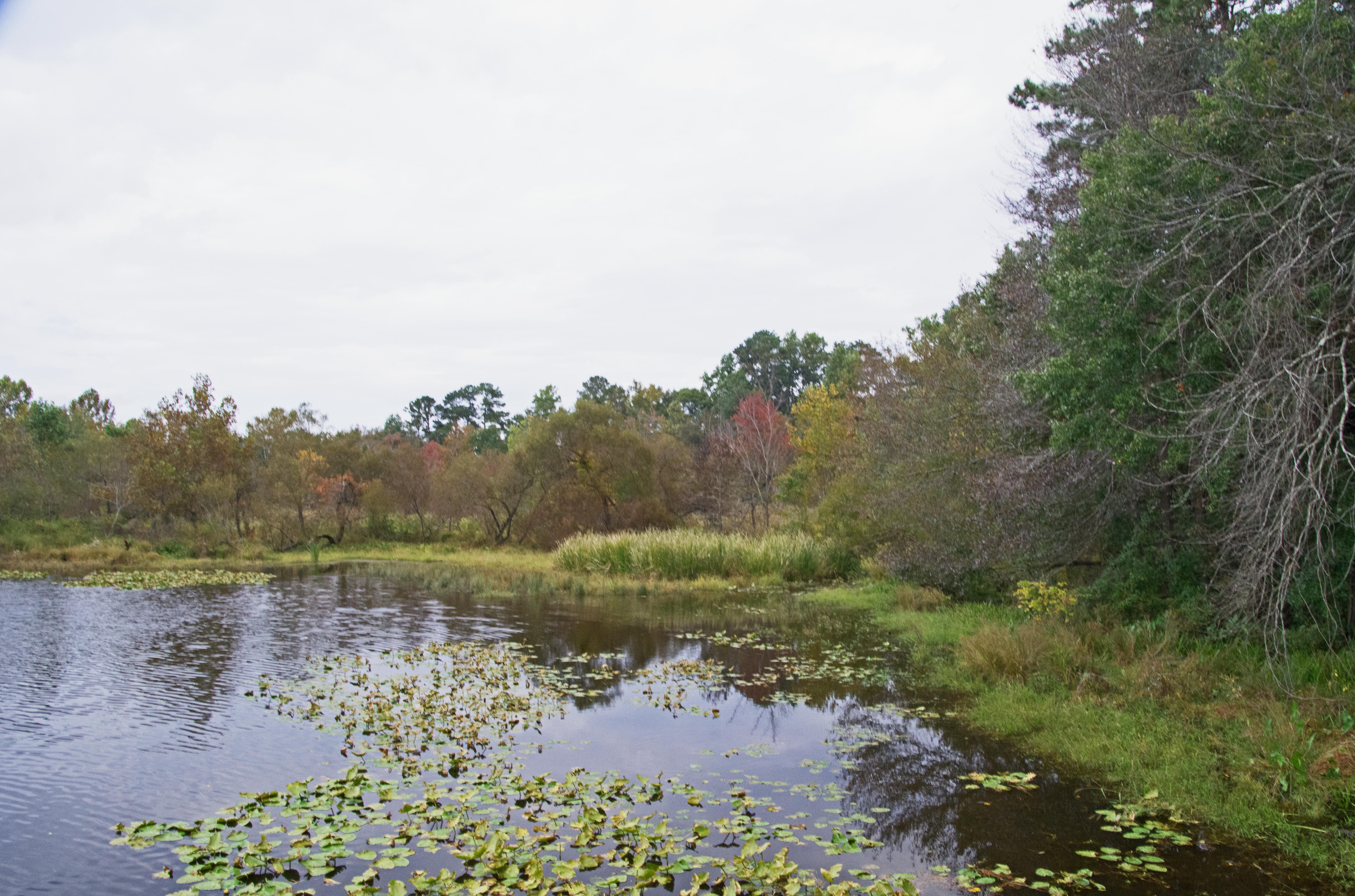
Yates Mill Pond, October 11, 2014

Yates Mill Pond, October 11, 2014

Early Wednesday morning I saw the lunar eclipse. On Thursday I reinstituted my meditation practice after a long sabbatical. On Friday evening I attended an inspiring recital by the great pianist Richard Goode, and reconnected with several of my good piano friends. On Saturday, for the first (and possibly last) time, I finished first in my spin class at Flywheel, and happily read the front page headline of the first gay couples in North Carolina to experience legal wedded bliss. These would ordinarily be potential subjects for this week’s post. But this week is special, inasmuch as it’s the 300th edition of the Casual Blog.

Many moons ago, I set myself the goal of writing one post a week on my non-professional activities and thoughts, and that’s pretty much what I’ve done. I’ve been trying to think what to say about this milestone, and it occurred to me to explain why I create the Casual Blog, or what I get out of it. But if I’m honest, which I try to be, I must admit I’m still not completely sure.

I enjoy finishing a post, but starting one always involves a degree of existential dread. Once a week, I ask myself, do I have anything else worth saying/sharing, and I always worry that the answer is no, I’ve run dry. And so it was this week. But I’ve already succeeded in writing three paragraphs!

I generally dislike writing about writing, and now I’ve gone and done it. But onward! There’s some odd part of me that enjoys the exertion of forcing the buzzing blooming flood of experience into the narrow channel of language. Writing about an experience usually shows me something about the experience I hadn’t known before. And there is at times a joy in language that has less to do with the meaning than with pure sound.
14 10 11_3469_edited-1

Then there’s always the struggle for understanding, for meaning. Things happen. Events flow out of other events, sometimes cohering in an orderly way, with pleasing patterns, and other times cracking and scattering. What does it all mean? Blogging will likely not yield an ultimate answer, but it creates a platform, a workbench for reviewing experience that yields new perspectives.

As with Heisenberg’s famous uncertainty principle, we can’t observe and record our lives without changing them. That is, writing about one’s life changes the life. The imperative to make a post non-boring could lead to inauthenticity, but not necessarily. It could also inspire curiosity and get you out of your shell. The blogging commitment could lead to adventure!

Most important, there’s also the complicated sensation of communicating with another human. For the writer, the reader is ever-present as an as idea and concern, but almost never physically present. Without the reader, the writer would never write, but the connection is always tenuous. Who is the reader? Open or closed? Friend or foe? Can we connect? The writer in the act of writing is never certain.

And whenever we reach out to another human, trying to be honest, showing something about ourselves that’s real, there’s an element of risk. There’s a chance we’ll make total fools of ourselves. This gets the juices going. It’s kind of exciting. Actually, it is exciting!
14 10 11_3463

But it is also difficult. Whatever words are chosen means other words are not chosen. So many possible words, and possible choices, but whatever the choices, however good they are, others just as good will be excluded, sacrified. You know this when you start. But something still causes you to reach out, to explore, to experiment. There are satisfying little discoveries, and sometimes there’s evidence that you got through, made a connection.

So, you ask, what lies ahead for the Casual Blog? I really don’t know. Part of what I like about it is it’s voluntary, unnecessary, and contingent. It doesn’t have to be any particular thing, and could cease at any time. As I said, I’m always aware of the possibility of running dry, and I would stop posting if it stopped being fun. Or if my readers disappeared.

But part of me feels that I’m just getting well started, and I’m still enjoying experimenting and learning. If there were somehow more hours in the day, I could imagine writing a number of more specialized blogs, in addition to my professional writing. It would be fun to tend blogs on scuba diving, playing the piano, travel, global warming, opera, golfing, animal rights, ballet, political corruption, vegetarian restaurants, exercise, neuroscience, nuclear weapons, nature photography, poetry, artificial intelligence, the surveillance state, migratory birds, history, books I’m reading, etc. We shall see.
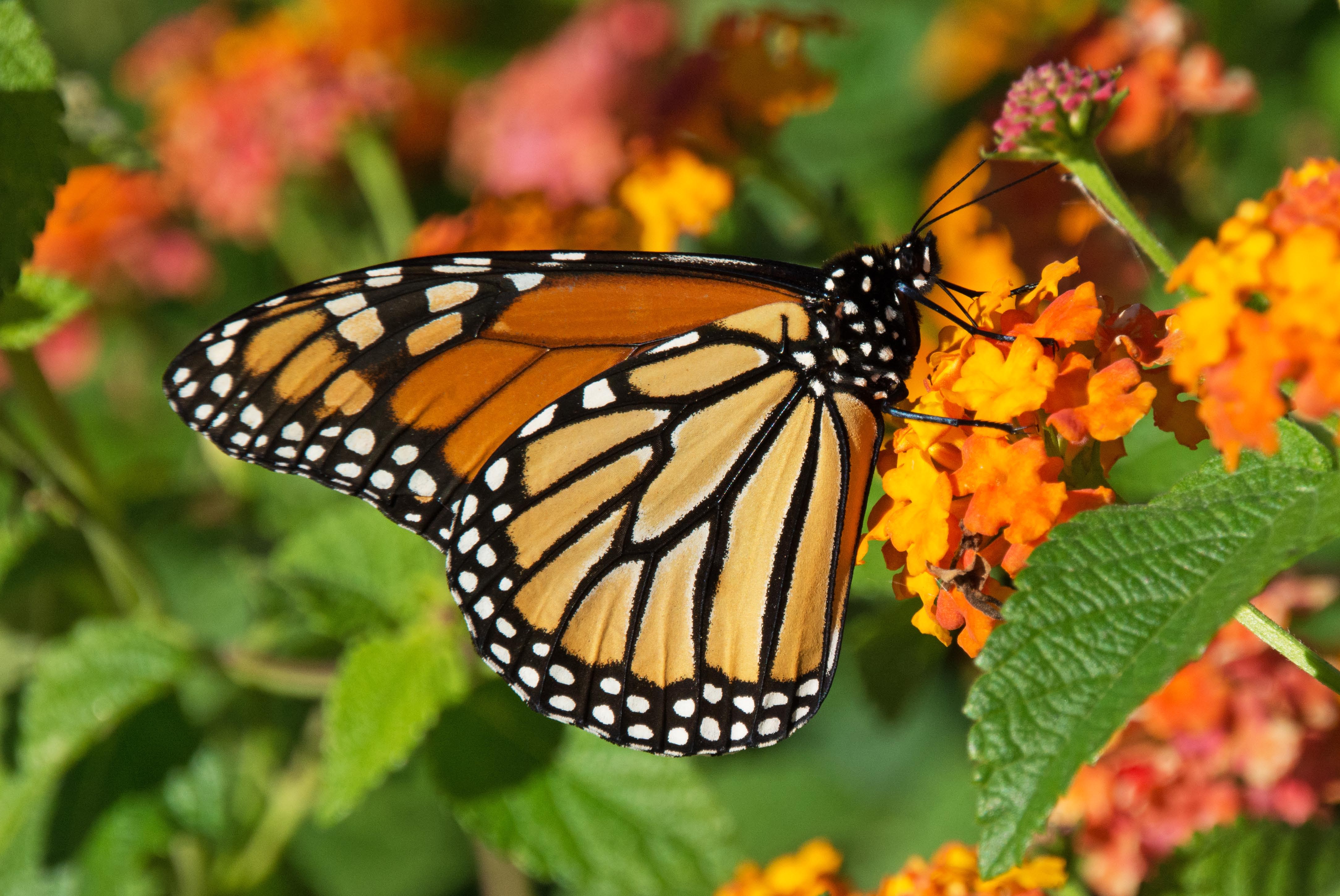
A monarch in downtown Raleigh, October 8, 2014

A monarch in downtown Raleigh, October 8, 2014
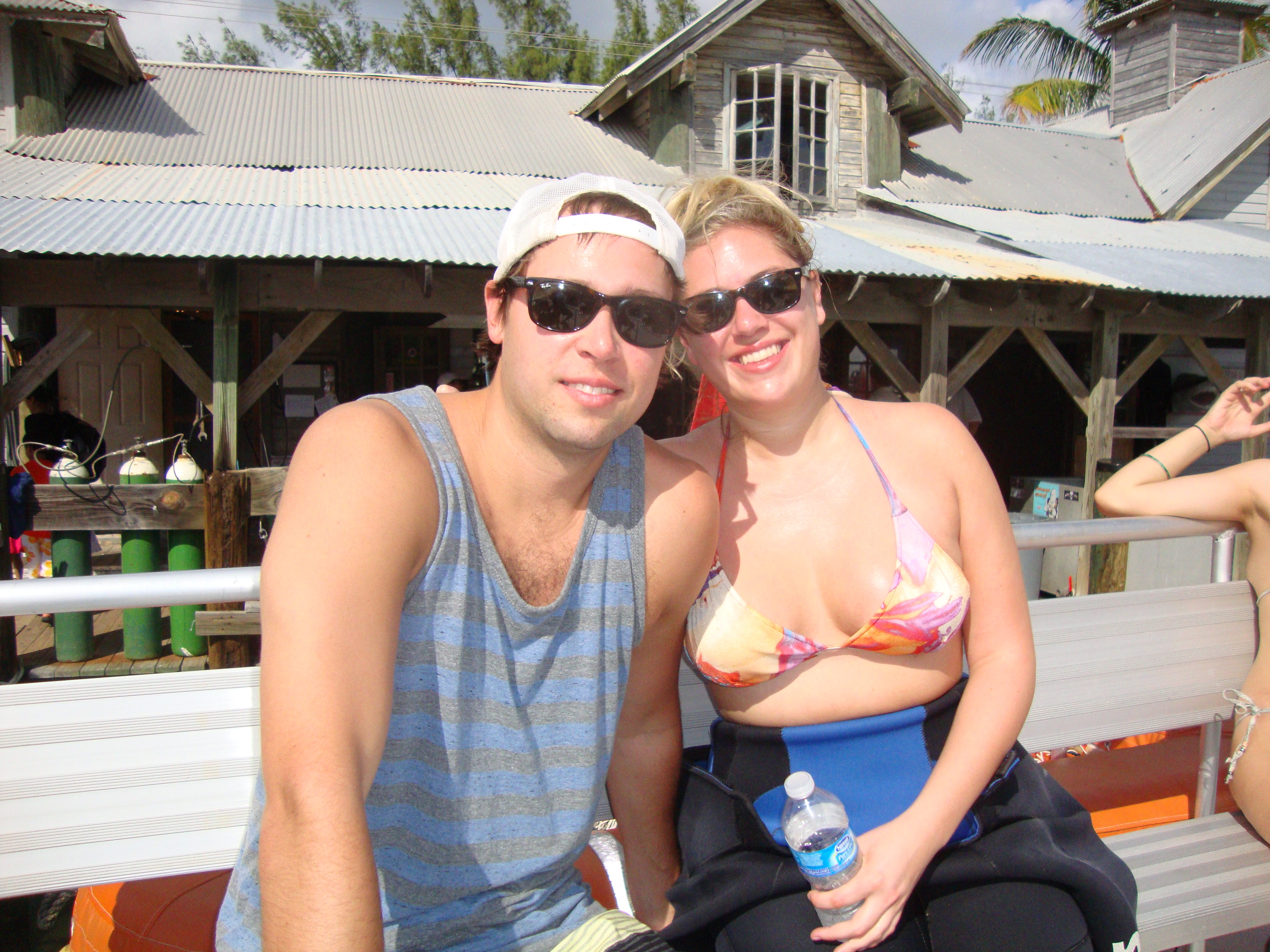
Thanksgiving in Nassau with sharks and Proust

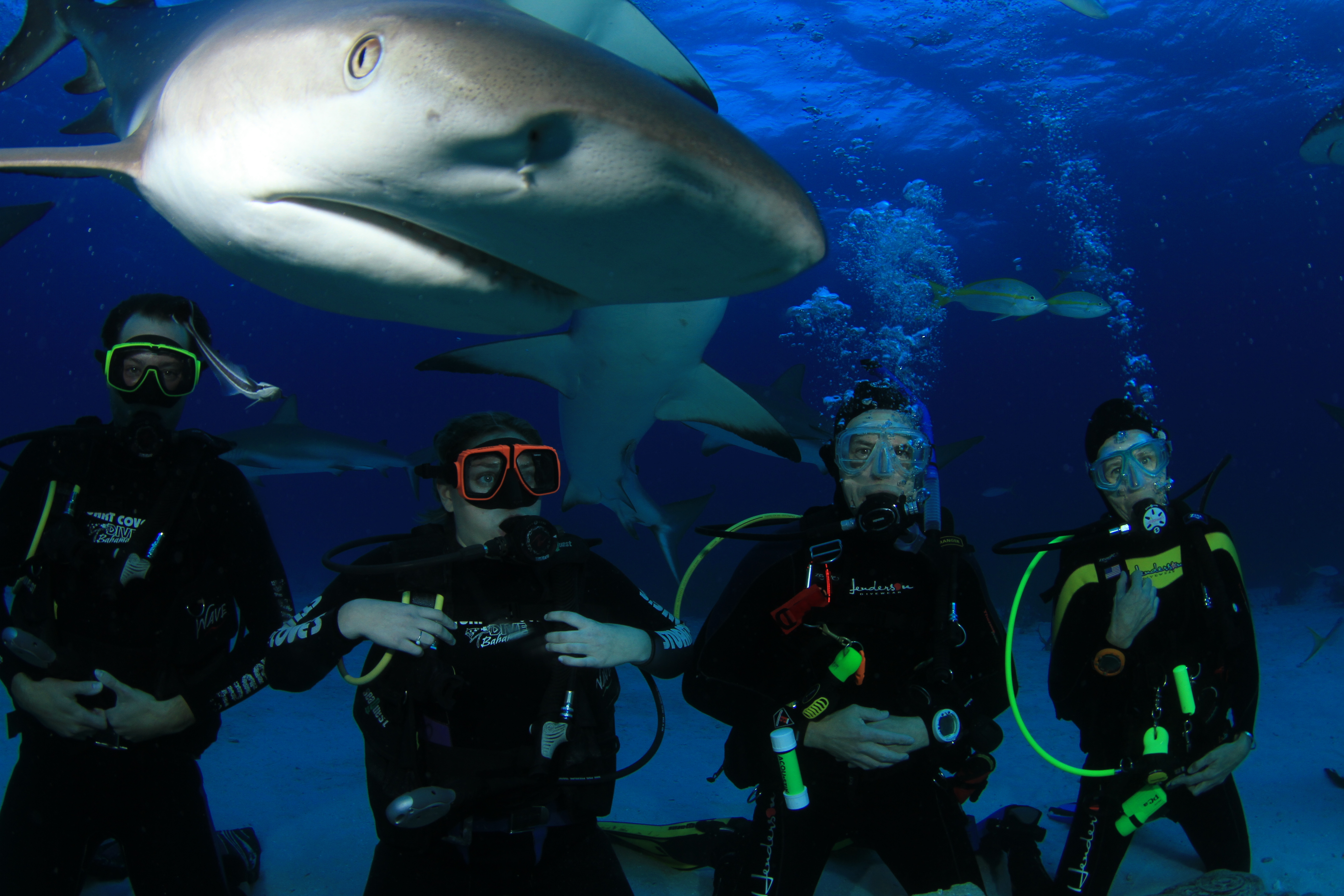
Gabe, Jocelyn, reef shark, Rob, and Sally

For Thanksgiving we went down to Nassau, Bahamas, and did some scuba diving with sharks. I was looking forward to some time with Sally, Gabe, and Jocelyn, and also to the palm trees, beaches, and beautiful turquoise water. But we chose the destination in large part because of the abundance of reef sharks.

For those with long exposure to anti-shark hysteria (Jaws, cheesy nature channel specials), this probably sounds crazy. In fact, people do these dives safely every day. For me, there was some element of facing down an irrational inner fear, but the bigger driver was curiosity and a desire to experience a particularly beautiful force of nature.

We stayed at the Sheraton on Cable Beach, a large hotel with a white sandy beach, lots of curvaceous pools with waterfalls, palms, and plenty of deck chairs. The staff seemed friendly, though slightly shy. Restaurant service both in the hotel and elsewhere was surprisingly slow (except for Luciano’s, where the food and service were both excellent). One bummer: the food was much more expensive than I expected — about three times the price of equivalent meals at home. There was a casino, which we walked through, and where no one looked like an extra for Bond film. I tried, unsuccessfully, to comprehend why these people couldn’t find something more fun to do than just throw away their money.

Sheraton Hotel, Nassau, Bahamas -- our view

But there is no accounting for taste, and no explaining some of the strange things people like to do. Which brings me back to the sharks. Humans kill around 100 million of them a year (a substantial number of those by torture — cutting off fins for shark fin soup and leaving the fish to drown), whereas unprovoked sharks around the world account for around four human deaths a year. Of those exceedingly rare deaths, the perpetrators are only four of the 360 species (great white, oceanic whitetip, bull, and tiger). It is simply a myth that sharks are mindless killing machines. Some species are highly social and demonstrate problem solving skills, curiosity, and play.

Some species of modern sharks reached their current form about 100 million years ago, in the age of dinosaurs. Species come and go (for mammals, the average species lasts about a million years), but the sharks have remained. The basic, gorgeous design has clearly stood the test of time.

We dove with Stuart Cove’s dive operation, which was generally well run with cheerful young dive leaders and staff. Sally and I did ten dives and all. Gabe and Jocelyn were not certified divers, but after refreshing on their skills with a resort course, they came with us on four dives with an instructor, a smart, well-travelled (including a stint diving in Mozambique, which she recommended highly), and good-humored young Englishwoman named Ruth.

Gabe and Jocelyn at the start of a shark dive

The climax of our diving was Thanksgiving day, when we did an area called Runway Wall, where Sally and I swam at about 70 feet (with G and S shallower) along a wall that goes down to a depth of 5,000 feet. Beside us, in front of us, and behind us were reef sharks. I counted 15. At times they swam quite close (inches), coming up on us from behind, or heading straight for us. We also got to within a few feet of a large sea turtle (probably a loggerhead), and saw a few Atlantic spadefish, a spotted drum, a spotted moray eel, and a Goliath grouper, along with many smaller fish.

After a surface interval, we descended again and sat in a circle in a sandy area. One of the staff, Rich, had donned a chain mail body suit, hood, and gloves, and brought down a cage with chum. The sharks increased in number (perhaps 20-25 showed up), and began swimming faster and closer to the cage. Rich would take a thin metal pole, spear a steak-size piece of chum, and whip it upward quickly, and the closest shark would instantly bite and swallow it. Rich would position himself in front of each diver and do some feeding while the staff took photos and videos.

I had mixed feelings about feeding sharks (or any wild animal), out of concern that it might lead to dependency or otherwise disrupt the ecosystem. I also wasn’t crazy about the emphasis on photography. But in the end I put those ideas to one side and was simply overwhelmed by the experience: about 50 minutes of a close encounter with prehistory. The distance between us got down to zero (I was bumped a few times). After a few minutes, I began to distinguish individual differences among the sharks. One had a mouth that gaped on one side, another had a fish hook in his back. They would swim in lazy circles, and then suddenly accelerate toward the food, sometimes colliding. All told, I was deeply moved by their power, grace, and beauty.

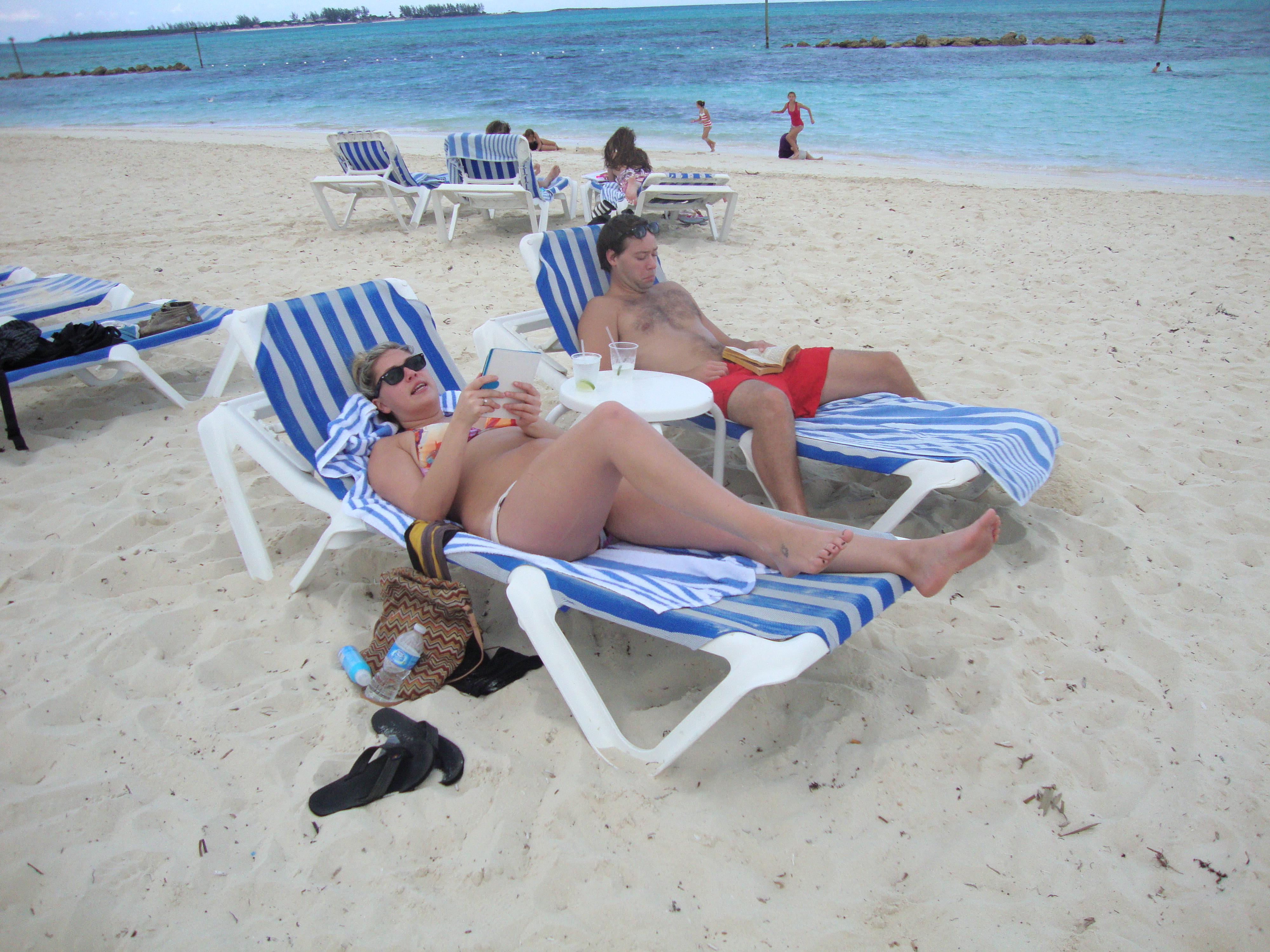
We did not dive on our last day before flying home to decrease the risk of decompression illness. We spent much of the day lounging on the beach or by one of the pools reading our various books. It was windy, sometimes cloudy, but sometimes sunny. It was lovely to see our kids reading for hours. I used to worry that they’d end up as hopeless TV addicts. But they didn’t!

I began rereading Swan’s Way, this time in a translation by Lydia Davis. Many years ago, I read the entirety of Remembrance of Things Past, and have from time to time returned to sections of it, but the length of the work is daunting in these frantic times. I found the Davis translation much more graceful and lively than the Moncrieff and Kilmartin. It may be that accumulating more life experience makes the book itself better. In any event, I was struck once again by the strange hypnotic beauty of the prose.

For the first time, I saw how the apparently casual, improvised sound of the early part of the book includes a lot of delicate prefiguring of people and events that will gradually come into sharp focus. There is so much richness in the book. It makes us realize how rich our own lives can be in perception and feeling, and makes us want to use our memories and our eyes, ears, noses, touch, and taste buds better. But it is not a self-help book; there’s something magical about it. I had the odd, strong feeling as I was reading that the book was my own consciousness coming into being. Of course, it’s only a novel — or is it?

More shark photos:


An Xmas Carol

As a nonbeliever, I feel a deep ambivalence about Christmas.  The customs and traditions are strongly evocative of a many happy episodes in my childhood — longed-for toys, rich food, friendship and love.  But it also evokes memories and feeling of sadness and loss for loved ones now gone, who were integral to those early years.

And I’m deeply ambivalent at the sweet and absurd idea of Santa Claus.  The red felt suit, the jolliness, the limitless generosity are all great ideas.  But even now, I feel a slight bitterness and chagrin that my normally reliable and credible parents, when I put the “Is he really real?” question  to them squarely, gave some type of yes and set me up to make a fool of myself in defending the existence of Santa to the neighborhood kids.  I trusted them to tell the truth!  There may be, as recent studies suggest, some value in Santa for developing children’s imaginative powers.  But for me, even years later, there was a cost in terms of injured trust.  My Mom’s solution was to let me read the old chestnut Yes Virginia, There is a Santa Claus, which proposes to escape the problem of no Santa by redefining Santa as the Christmas spirit.  Really?

I know I’m not the only one with complicated feelings about Christmas.  Some love the shopping and the happy surprises, some love the story of the baby Jesus, some love being with family.  With all the pain and confusion in the world, I have no wish to add to the store without good reason.  I usually keep a low profile about my own irreligion, and especially so at Christmas time, when it seems that Christian beliefs are  for many on balance a source of joy.  But I don’t like flying under false colors, and I feel less than forthright when I say Merry Christmas.  There’s no problem with “merry,” but I don’t care to suggest I’m on board with the Christ part.  I usually go with “happy holidays” or something like that, but really, that just doesn’t sound as happy.  Yet another problem with no good solution.

Still, yesterday, after playing some really rich and beautiful music of Debussy, I found myself digging through the bottom of the music pile for my rarely used Xmas sheet music, and without any particular internal discussion I was soon playing through some favorite carols of my youth:  Angels We have Heard on High, Oh Christmas Tree, Oh Come All Ye Faithful, Joy to the World, Hark the Herald Angels Sing, and the Chipmunk Song.  It was a bit like Proust’s madeleine:  memories of family gatherings caroling, happy shopping, beginner band concerts, presents, vacations from schoolwork, trips to see grandparents, fresh smelling decorated trees, wrapping presents, and houses smelling of fresh-baked cookies hit me all at once.  I felt the pure childlike joy of Christmas.