The Casual Blog

Tag: photography

Admiring damselflies, Colombia at peace, recognizing addicts as humans, Syria’s bizarre war, and our Saudi problem

damselsBug 1
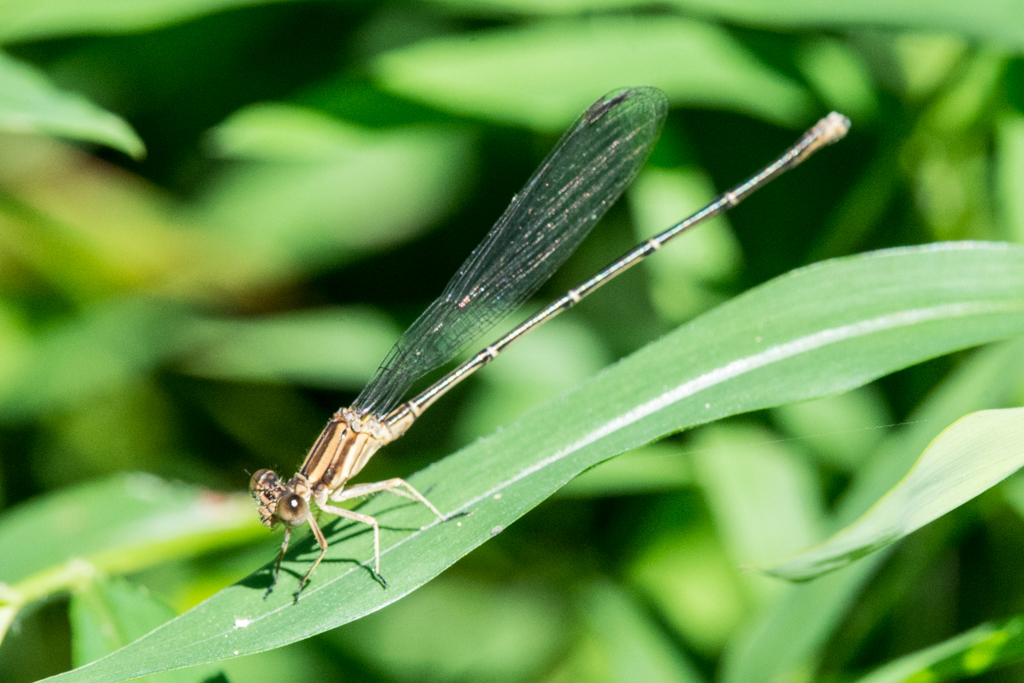
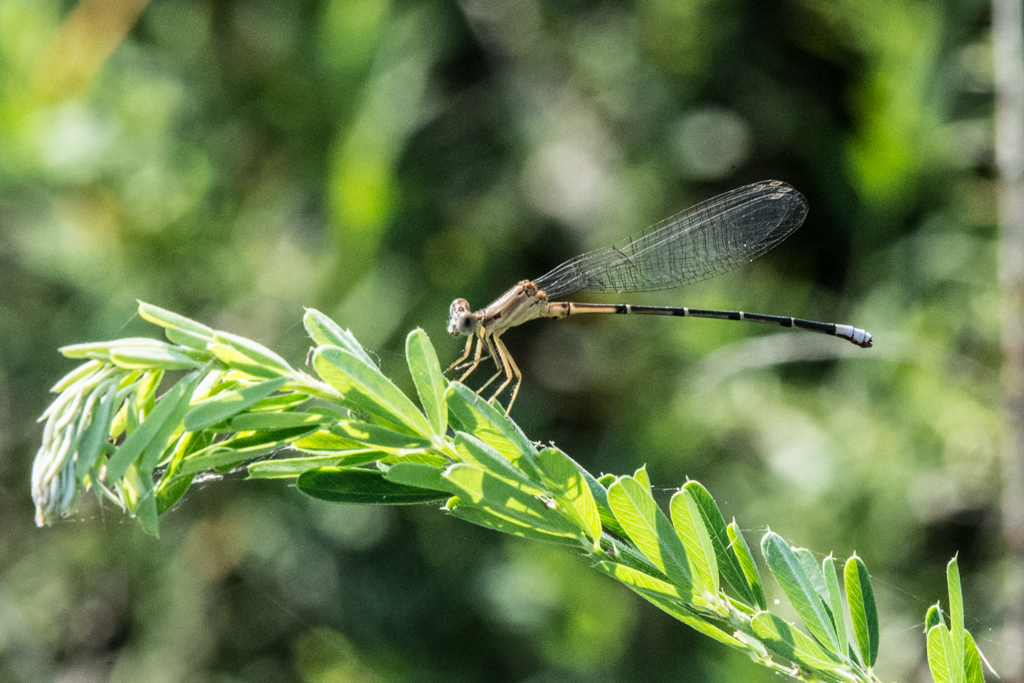
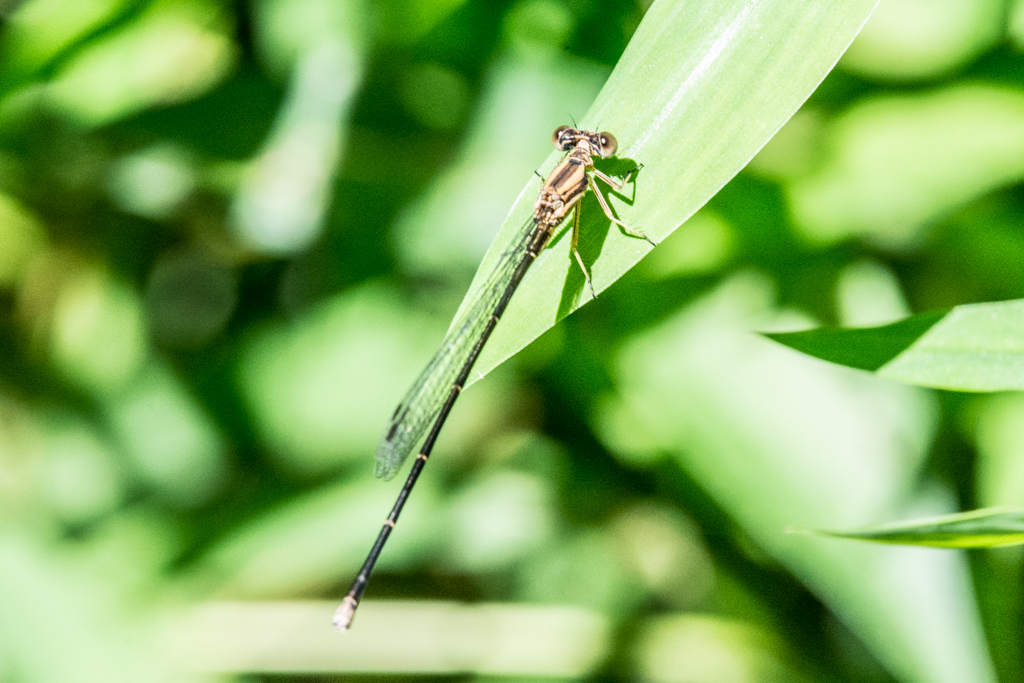
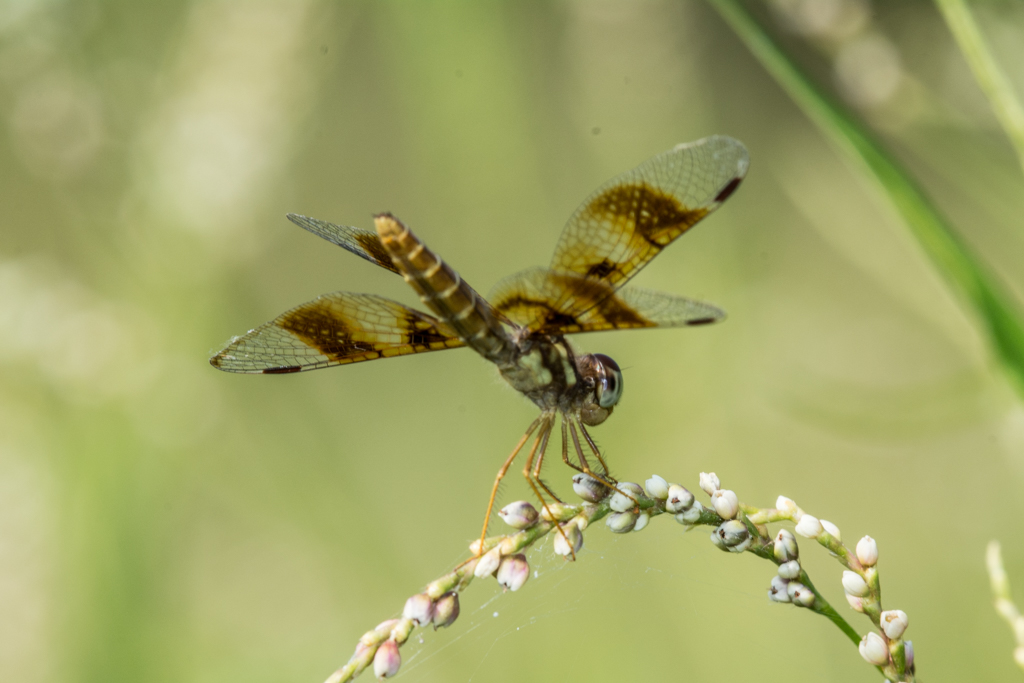
I’m ready for fall. It’s been a hot August here in Raleigh, and relentlessly humid. As usual, I got outside to see if I could find and photograph something beautiful in one of our parks, and found these damselflies and the dragonfly along the Buckeye Trail and at Lake Crabtree. They were very small and usually moved quickly. It took some exertion to make these images, handholding a heavy 180 mm lens, struggling to get tight focus and good exposure with sweat getting in my eyes, but I thought it was worth it.
damselsBug 1-3

When there is good news, it should be noted, and there was very good news this week from Colombia. The civil war between the government and FARC was tentatively resolved with a peace accord, subject to approval in a vote of the citizenry. This war, which began more than half a century ago, has cost hundreds of thousands lives and displaced millions. Columbia has so much beauty and so much human potential, but for my entire life has seemed a scary place. Now peace, after decades of horrendous carnage, is possible.
damselsBug 1-6

I also spotted some good news on the drug war out of Seattle. On Page A13 (far past where busy people normally stop skimming), the NY Times of Aug. 26 reported that an official Seattle task force established to combat the heroin epidemic has proposed establishing sites where addicts could take heroin and other illegal drugs under the supervision of trained professionals. The idea is to decrease the risk of infections and overdoses. Sites like this already exist in the Canada and the Netherlands.

This is huge! They’re thinking of addicts as human beings whose lives have value, rather than simply as worthless derelicts and criminals. That is, they’re recognizing that people who take illegal opioids are not really different from people who take legal opioids. Both groups include people with varying intensities of physical and mental pain, and also varying cravings for stimulation.

This is a big conceptual step toward the end of the drug war that has destroyed millions of lives. The idea that an arbitrarily defined group of chemicals is inherently evil has been official policy and a quasi-religion going back several generations. It’s a foolish idea, but it’s so deeply lodged in our brains that it’s going to be very hard to correct. Fingers crossed that we move forward.
damselsBug 1-2

Meanwhile, the Times presented a brilliant, though far less cheering, piece by Max Fisher on the complex dynamics of the war in Syria. I started to say “the civil war in Syria,” but as I finally grasped, this is not simply a struggle between two, three, or four internal groups seeking dominance within the country, but a multi-dimensional struggle for regional dominance involving several local groups and Saudi Arabia, Iran, Russia, Turkey, and, unfortunately, the US.

There are many forces that make this conflict particularly horrendous for civilians and assure it cannot quickly be resolved. An important perpetuator is the involvement of the outside nations, who have effectively endless military resources and do not bear the pain of the constant death. I can partially understand the political and venal interests that drive some of these actors to kill each other and hundreds of thousands of innocent civilians. The big exception is the United States of America. Why are we a primary arms supplier and dealer of death from above in this catastrophe?
damselsBug 1-7

Also worth reading is a piece on Saudi Arabia by Scott Shane, which asks the question, has Saudi Arabia been the primary exporter and supporter of the version of Sunni Islam (Wahhabism) that underpins the worst of the jihadist violence afflicting many countries? It seems that it has. Shane does point out, however, that there are other causes of such violence, including extreme poverty and authoritarian rulers.

But the Saudis have a lot to answer for. And, it should be noted, their primary armorer and military mentor is the United States. So we have a lot to answer for. Without thinking it through, we have indirectly supported Saudi exports of jihadist ideology, which morphed into al Qaeda, ISIS, Boko Haram, and other bloody-minded groups, which we then fight by dropping US bombs. And, of course, when we kill innocent civilians, we transform some of their relatives into vengeance-minded jihadis. To put it as mildly as possible, this is not a sensible policy.

A photo contest, getting shoulder therapy, trying fasting, and not debating climate change

Rob Tiller -- Passionate Embrace -- 2015 (1 of 1)
Sally spotted a notice in the local paper of a nature photography contest at Raulston Arboretum. The theme was gardens and plants, which you may have noticed I have an interest in, and so I decided I might as well have a go.

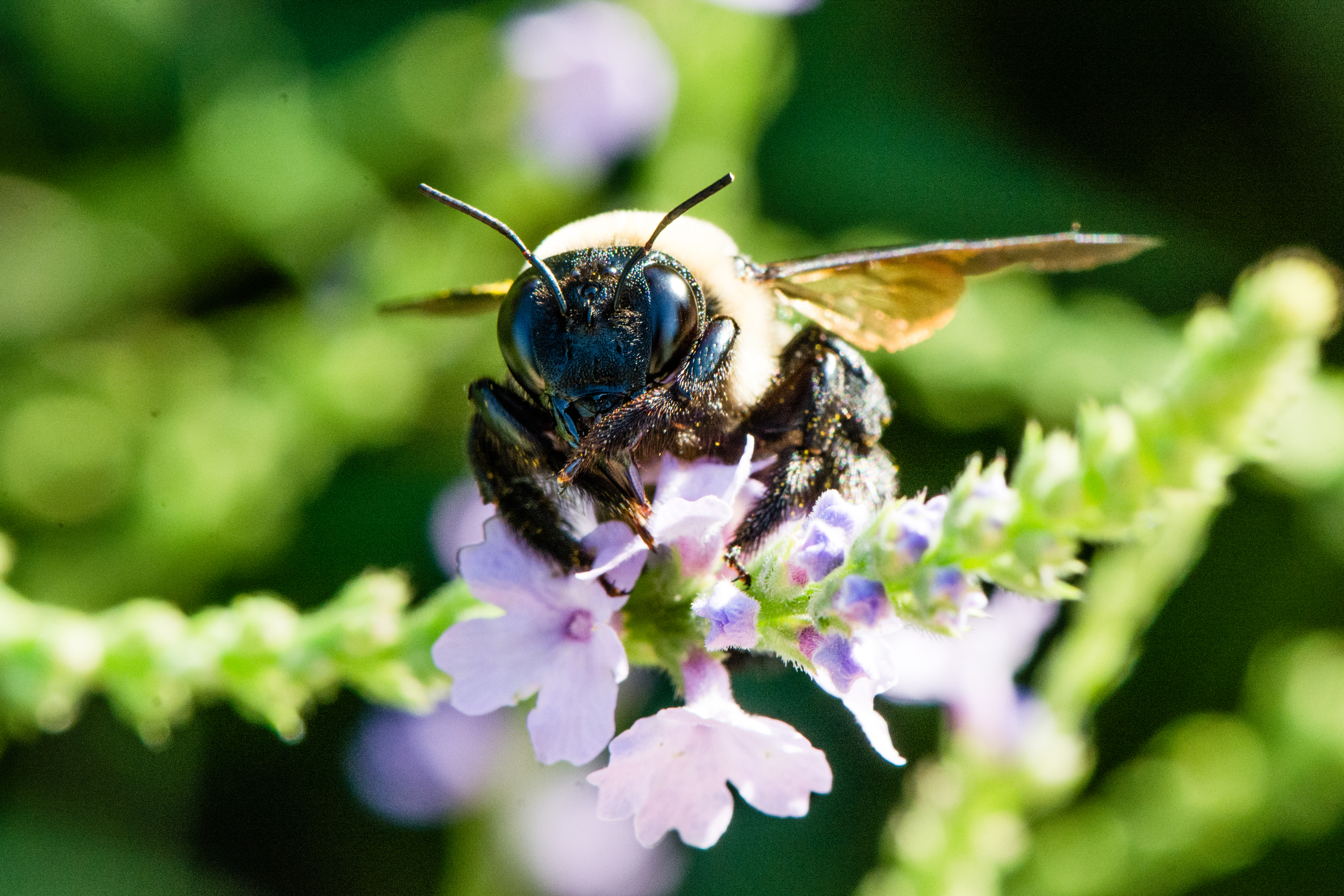
Competition is a good way to make yourself try a little harder. With the thought of critical judging, I took a careful look through some of my favorite images, and found little disqualifying problems on most of them. Of those still left, some just didn’t touch me. That exercise alone was worthwhile, good for my eye and mind, win or lose. Ultimately, I settled on the two bees shown here, worked on them for a bit with Lightroom software, and got them printed on metallic paper nearby at JW Image. Still to do: getting them framed, submitted, back, and hung in the apartment.

Speaking of self-improvement, I finally decided this week to get physical therapy help for my left shoulder. I’d tried letting the thing heal itself with several weeks of relative rest (no heavy weight lifting), but that didn’t work. I got in to see Geert Audiens at Results Physiotherapy, who’d helped me with back and shoulder issues before. Geert quickly diagnosed a torn rotator cuff, which, he said, would get worse if not attended to. He predicted it would take several weeks of specialized exercises, but it would likely get better. It’s good to have well-functioning arms and shoulders. And so we began, with simple little exercises, antiinflammatories, and icing four times a day. It’s a substantial commitment, which I hope will be worth it.

I’ve also been experimenting for a few weeks with a modification of my food consumption. I’d somehow picked up 5 pounds that would not come off, even with hard cardio work outs and careful healthy eating. I saw a story on alternate day fasting for the weight control, which basically means eating very lightly (500 calories) every other day. I decided to have a go for two days a week, a variation which, I just learned by googling, has been promoted elsewhere by others.

My method was my normal greens-and-fruit smoothie for breakfast, salad for lunch, and nothing for dinner. The no eating intervals were challenging, especially at dinner time with Sally eating. But it helped clear the mind, and made me more conscious of eating well on the normal eating days. And I did get rid of those 5 pounds in about 3 weeks.
Raulston8-1-15-1779

The debate of the Republican presidential contenders this week promised to be rich with irony and ridiculousness, with the numerous conventional candidates facing off with the loutish Donald Trump. As a Democrat, I’d never looked forward to a Republican debate so much. There were, as it happened, no meltdowns. In fact, I was surprised at how articulate and intelligent most of the field seemed (with the Donald as usual the big exception).

Yet collectively they have such enormous blind spots. It’s difficult to see how you could propose to govern or even talk seriously about social policy without quickly getting to the issue of what to do about CO2-caused global warming and the many related problems, like rising oceans, mass extinctions, famine, resource-related wars, mass population dislocations, destructive storms, drought, etc. These related disasters are front page news now. Yet this issue doesn’t appear on the Republican agenda, except for opposing whatever action the President proposes. This is wildly irresponsible. The situation is dire, and getting worse.

Rolling Stone published a good piece featuring new climate change research by James Hansen and others, which I recommend. It isn’t easy to think about this problem, which makes us uncomfortable and unhappy, but we’ve got to do it. I was glad to see that Hansen thinks a carbon tax could potentially pull us out of our present suicidal course. Anyhow, we all need to get more educated on this, and to keep pressing our politicians for action.

Some edited bug photos and a new way of thinking about organized crime

14 08 15_1497_edited-1

It’s challenging to capture a convincing image of a fast-moving insect. It takes patience and also decisiveness. For these I was using a 105 mm lens with all manual settings, so I had to focus and adjust shutter speed quickly. My heart was going quickly, too – it was exciting to go after these little guys. These were shots I took late Friday afternoon at Raulston Arboretum.

It was also fun to examine the results in Photoshop Elements after the fact. To state the obvious, you can’t really see much detail in little insects with the unaided human eye. To me, it’s fantastic what you discover about these creatures with the aid of magnifying lenses and sensors. I’ve also been experimenting with improving the raw image with the Elements editing program. Typically I do some cropping and minor adjustments to the lighting and contrast. This week I decided to start working with the “expert” user interface and figured out (with help from some YouTube instructors) how to work with layers.
14 08 15_1512_edited-1

Is such editing somehow dishonest? I don’t think so. A photograph is always a combination of technology and human feeling, which is to say it is never purely objective. The sensor in my Nikon D7100 is amazing (24 million pixels!), but it is not God. My own vision has its imperfections and biases both from ocular structural issues and brain processing. Yours, too. We see through a glass darkly. But if we use our best tools as well as we can, we’ll see some new things and some amazing things.
14 08 15_1513_edited-1

How many of our fundamental assumptions are seriously flawed? Every so often, I get spun around when I find that an idea that I had thought was beyond question is far from it. This week in the New Yorker Malcolm Gladwell’s piece titled the Crooked Ladder, destabilized my assumptions about the Italian mafia and inner city drug gangs. I thought I knew that the mafia was a serious threat to the social order that was barely contained by virtue of strenuous law enforcement efforts. Gladwell cites scholarship indicating that the early mafia was generally less violent and lawless than the Godfather movies and journalism have led us to think. For some waves of new immigrants (including Irish and Jews), crime was a route to family stability and assimilation taken by relatively innovative community members. And it isn’t a curse on subsequent generations. On the contrary, the grandkids of mafia dons turn into ordinary suburbanites.

But Gladwell finds this pattern depended in part on societal tolerance, including relaxed policing during the liquor prohibition era. Few mafiosi went to jail. Gladwell suggests that what I always thought of as police corruption could have positive effects, in that it allows immigrants to feed their families, prosper, and gradually evolve and assimilate. But this process has not taken place for our inner city drug gangs. Instead, intense policing has resulted in mass incarceration at a terrible human cost.

Gladwell relies primarily on a new book titled On the Run: Fugitive Life in an American City, by Alice Goffman. Goffman was an undergraduate at University of Pennsylvania when she began tutoring a Black student in a rough Philadelphia neighborhood she calls 6th Street. She eventually spent several years living in the neighborhood and getting to know the young men who survived as minor league criminals, as well as their girlfriends, moms, and others. The young men generally had spent time in juvenile detention, jail, or prison, and were often on the run from the police for such wrongs as nonpayment of $173 in court costs or minor parole violations. They were constantly the targets of police harassment. It is no exaggeration to say they lived in a police state.

After I finished Gladwell’s article, I downloaded Goffman’s book and quickly read the first couple of chapters. It is vivid and hair-raising. It puts a human face on the urgent need to end the war on drugs, and more generally address the problem of overly severe policing and penal policies. Goffman illuminates a world that few middle-class white Americans have ever seen close up, or even learned about through books or newspapers. It seems particularly timely and important after the racial conflict this week in Ferguson, Missouri.

Cityscapes, intelligent plants, and weight loss work and play

14 02 08_6991_edited-1
I got up a little after 6:00 on Saturday morning to allow time for walking Stuart, feeding him and the cats, breakfast, newspaper, and a little neighborhood photo safari at sunrise before yoga class. I’m still figuring out all the buttons, dials, numbers, icons, and graphs on my Nikon D7100, and experimenting with my new 10-24mm (wideangle) Nikkor lens. Adding to the challenge – wearing gloves. It was overcast, with temperature in the mid-30s.
14 02 09_7111_edited-1

My neighborhood in downtown Raleigh has some stylish, pretty spots, and my usual way of seeing is to pay the most attention to those. But this morning I forcefully looked at older, grittier thing, and their shapes, patterns, and textures. I always enjoy construction sites, where you can see the innards of a building-to-be, but it was interesting looking at the opposite – destruction sites, and places where humans had run out of money or just don’t care anymore how things look. In those places, there’s nature: plants competing with concrete, pushing into cracks and crevices, revealing and exploiting areas that humans neglect.
14 02 08_7015

I read an interesting article this week by Michael Pollan on recent research into plant biology, and specifically neurobiology – how plants sense their environment and exchange information. Plant biologists are sharply divided on whether to call these abilities intelligence. Some scientists insist there cannot be intelligence unless there’s a brain, while others define it in terms of the ability to solve problems, which plants can do. But there seems to be general agreement that plants have some remarkable perceptual abilities.

Pollan describes plants’ “unique existential predicament as their being rooted to the ground and therefore unable to pick up and move when they need something or conditions turn unfavorable. The ‘sessile life style,’ as plant biologists term it, calls for an extensive and nuanced understanding of one’s immediate environment, since the plant has to find everything it needs, and has to defend itself, while remaining fixed in place. A highly developed sensory apparatus is required to locate food and identify threats. Plants have evolved between fifteen and twenty distinct senses, including analogues of our five . . . .”

Plants have also developed some remarkable chemical methods of defending against marauding insects and communicating with others of their species regarding threats and food opportunities, and even recruiting other species to perform services. One researcher estimated that a plant has three thousand chemicals in its vocabulary. Researchers have also found examples of plant learning and memory. Most plant behavior is either invisible or happens too slowly for humans to perceive, but time-lapse photography is opening new windows.
14 02 08_6989_edited-1

One of the challenges of this research is the ethical implications. One scientist, Stefano Mancuso of the University of Florence, argues that “because plants are sensitive and intelligent beings, we are obliged to treat them with some degree of respect. That means protecting their habitats from destruction and avoiding practices such as genetic manipulation, growing plants in monocultures, and training them in bonsai.” Mancuso doesn’t go so far as to avoid eating them. He contends they have evolved to be eaten, which accounts for their modular structure and lack of irreplaceable organs.

Most of this research was news to me, but I didn’t find it hard to believe that plants have extraordinary abilities, or that humans might find this hard to accept. Some people have the same problem dealing with the existence of (non-human) animal intelligence. I guess it’s insecurity. To me, learning about and appreciating the abilities of other species of life makes the world that much more amazing.
14 02 09_7129_edited-1

In health news, I’m happy to say I finally got back to my fighting weight of 155 lbs this week (that’s a BMI of 22), after gaining 5 during our Xmas holiday travels. It is certainly harder to take them off than to put them on. I did it by working more interval training into my workouts, like jumping rope or rowing as part of a weight circuit, and lengthening my longer cardio work (elliptical, stairs, and such) from 30 to 40 minutes. Also, of course, eating sensible portions of healthy things (fruit, vegetables, legumes, and whole grains).

I also am grateful to my health and fitness guides, especially Larisa Lotz, who meets me each Thursday at 5:30 a.m. at Studio Revolution with several mind and body surprises. This week, for example, her latest workout creation had me lunging and twisting, slamming down a heavy medicine ball, squatting with a sandbag, old school dead lifts, rowing with kettle bells in plank position, and fast agility movements through a rope ladder, among several other aerobic and anaerobic activities. She didn’t have a new balance activity this week, but she’s got me working on several, including balancing on my knees on an exercise ball.

This week I also tried a new morning exercise class at O2 Fitness called Chisel. I’ve been enjoying/enduring the spinning class there on Fridays with Jenn, who is funny, inspiring, and relentless, and she told me I should give it a try. I hadn’t previously done gym classes other than spinning, in part because I’ve got plenty of other things I like to do, but also in part because of shyness – a little bit of fear of the unknown, of confusion and possible embarrassment.

But with Jenn’s encouragement, I showed up last Monday. She was, as usual tough and inspiring, and funny. The hour-long class involved a background of driving dance club music and foreground of intense intervals both with and without dumbbells. Hardest for me were the jumping lunges. I found it very sweat inducing, and after hanging on for dear life, I felt great afterwards – an endorphin surge.

On Saturday morning as usual I went to Blue Lotus Yoga for Yvonne Cropp’s open level Vinyasa class. This weekend is Blueversary – the seventh birthday for the studio – which made me particularly conscious of how grateful I am that it’s there. There were several new people in the class, which may have accounted for Yvonne’s keeping things relatively low-keyed, well within normal yoga conventions. It was good, as always, to really stretch and to breathe together with the class. Afterwards, there was a drawing for special prizes, and I won one – a basket with lavender-scented soap and such. I didn’t really need the lavender, but still, I felt lucky.

Amazing drawings, the N.C. Zoo, and some photos of butterflies

13 07 28_3063
Congratulations, to Jocelyn, who just graduated from the Columbia University publishing program. Now she’s hunting for a publishing job in New York, and we’re hopeful that she’ll quickly find one. (If you have any leads, please let me know.)

This week she sent me this link to a group of drawings and paintings that are astonishing in their photographic realism. Truly, the work is uncanny. I had no idea that there were humans with such technical facility.

But after the initial shock of astonishment wore off a bit, I wondered a little what was the point. If you could do the same thing with a camera, why wouldn’t you just use the camera? I suppose it might be like deciding to hike when you could drive, or building furniture with hand tools rather than power tools. There could be joy in the activity.

At any rate, I’m so glad I’ve got a camera, because it would take me at least another lifetime to learn to draw like these artists. Lately I’ve been learning more about my Nikon D3200, and having fun with it.
13 07 28_3013_edited-1

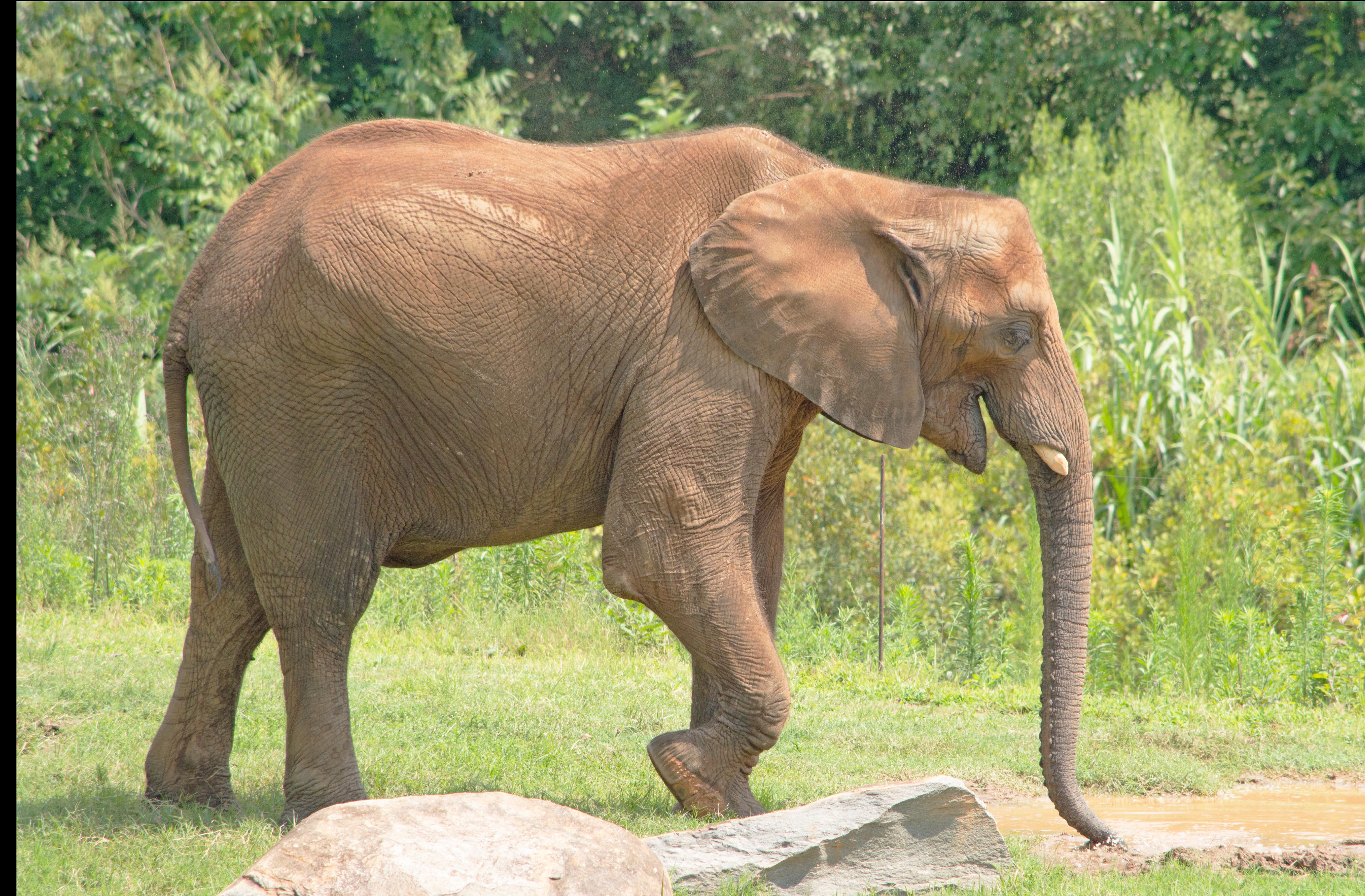
Week before last, I took the Sally and the camera over to the N.C. Zoo in Asheboro. We took in most of the Africa section, which features a spacious layout for such iconic species as elephants, giraffes, and rhinos, and relatively humane enclosures for the lions, chimps, baboons, lemurs, and exotic birds.
13 07 28_3084

We saw an adorable and sociable ostrich (above). I was also particularly touched by a baby baboon, just 6 months old, who rode about on mama, dropped off to bother brother, and hitched another ride on top of an aunt. We also enjoyed the many swimming turtles, including snappers, we saw from the bridge at the entrance.

I generally associate zoos with children, and recalled with pleasure taking my kids years ago, but also was reminded of the many challenges of young children and their needs (“I’m thirsty.” “I’m hungry” “I’m tired.” “I’m bored.”) It was good for a change to have no worries of that sort, and freedom to just enjoy the animals and environments.
13 07 28_3108_edited-1

Of course I have mixed feelings: it doesn’t feel quite right to cage these creatures up, even in nice cages. In the best of worlds they’d be free to live as best they could in habitat unmarred by humans. But in an imperfect world, I appreciate the chance to get close to these marvelous creatures.
13 08 09_3558

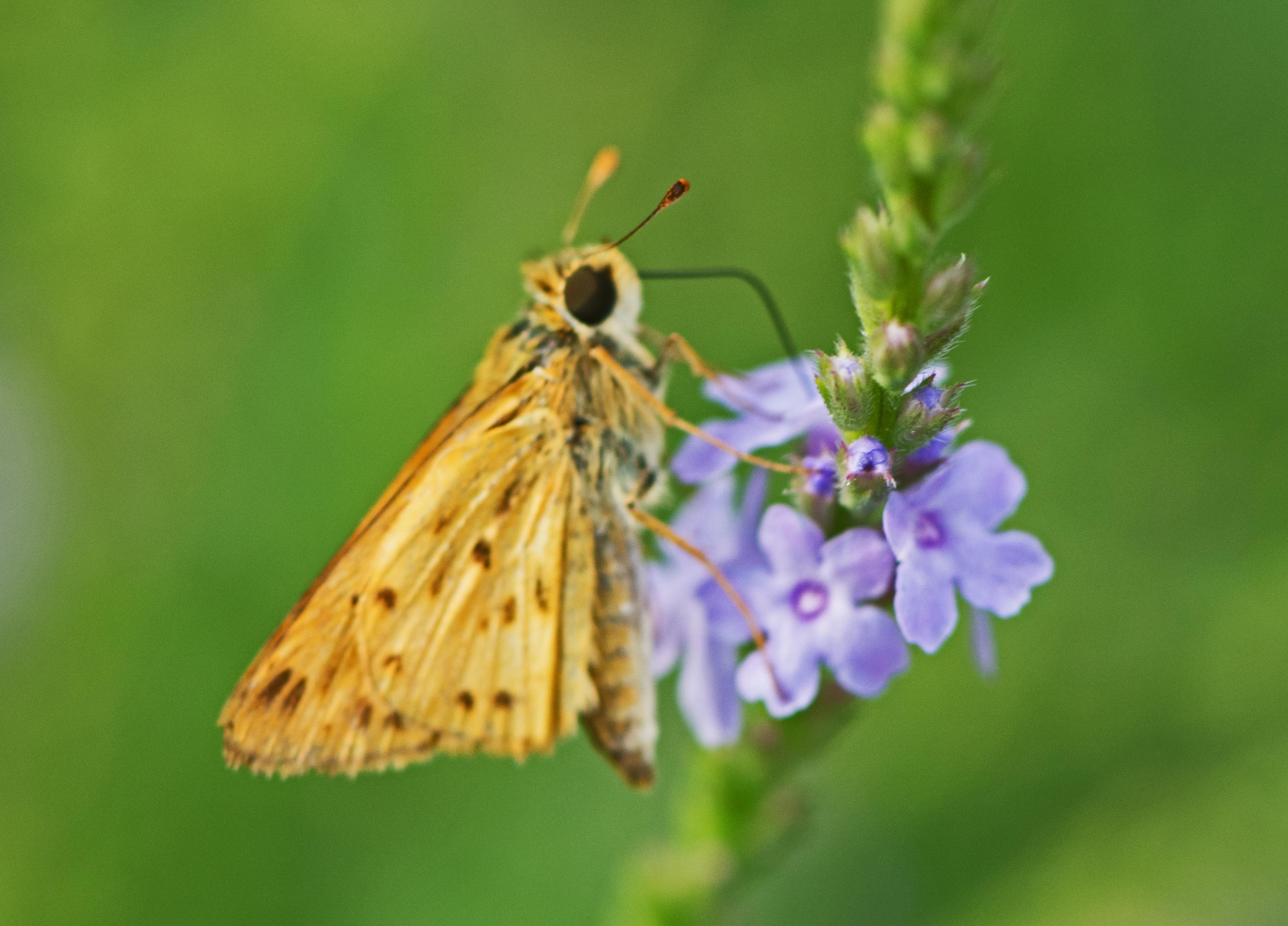
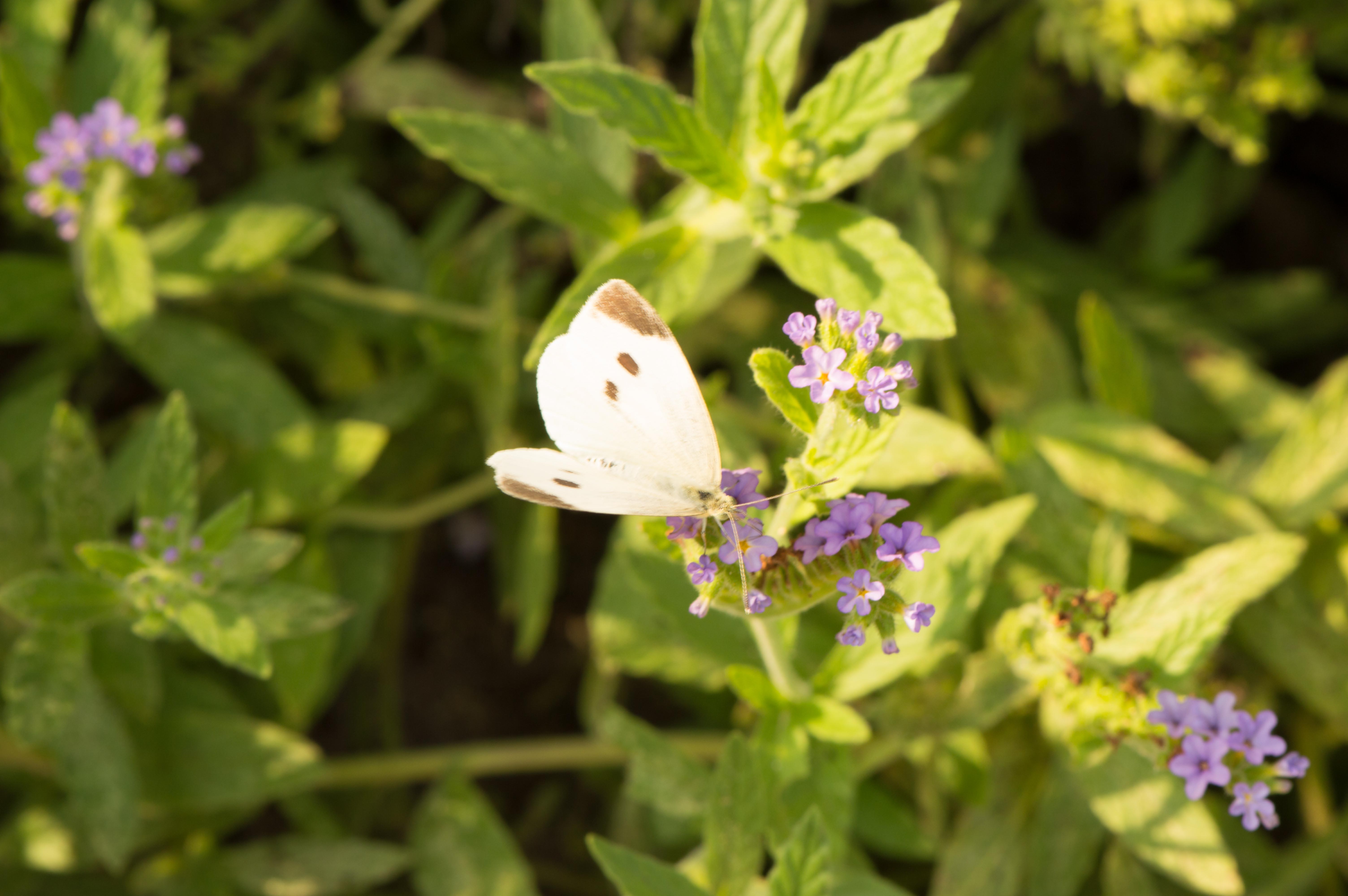
As a birthday present to myself I recently got a new tool: AF-S VR Micro-Nikkor 105 mm f/2.8G IF-ED. It’s a high quality macro lens suitable for extreme closeups. I’m interested in doing more with flowers and insects. Yesterday morning I got to Raulston Arboretum just after it opened at 8:00 a.m., and had good light, and proceeded thereafter to Fletcher Park. There were bees and butterflies hard at work, including these.
13 08 09_3576_edited-1-1
13 08 09_3523
13 08 09_3483
13 08 09_3513

Chilling with Robert Frost and a new camera

The hot weather finally broke last week, after setting a temperature record here in Raleigh for most consecutive days over 100 (6) and tying the all time high of 105. Most of the time, I’m in air-conditioned environments, but still, I usually try to spend some time in unprocessed air. During the recent heat wave, though, the idea of communion with the natural world seemed rash. The brutality of nature was in full display.

To cool off mentally, I refreshed on The Wood-Pile, a poem by Robert Frost. I memorized this chilly thing a while back for no good reason other than its stark strangeness. It begins, “Out walking in the frozen swamp one gray day, I …” The narrator at first sees nothing but “tall slim trees.” It seems matter of fact, but it’s completely strange! Who goes walking in a frozen swamp? Especially when the sky is gray and gloomy?

As with other great poems by Frost, what seems at first to be simple factual reporting turns out to raise question after question. The nominal focus of the poem is on a well-formed cord of wood incongruously left in the middle of the snowy swamp. The narrator has personal knowledge of the hard work required to cut so much maple with an ax, and is baffled and offended that anyone could invest such effort in a fine wood pile and leave it “far from a useful fireplace.” He speculates that such a person must be someone who “lived in turning to fresh tasks.” This is, from the narrator’s viewpoint, a strange and disturbing thing. And so we wonder more about the flinty narrator.

A woodchuck near the Buckeye Trail

Is it a bad thing to turn to fresh tasks? The poem make us wonder, but still I think, generally not. New challenges are, more often than not, good. I undertook one last week and bought my first digital SLR camera with the thought that I’d like to engage with the visual world a little differently and take better pictures. I’ve been drawn by photography since I was a kid, but in the pre-digital era was discouraged by the difficulty of working with film (dark rooms, chemicals, and so forth) and the expense.

I also worried about that the camera sometimes shuts off the photographer from experience. Think of gaggles of tourists taking snaps of the Grand Canyon — and forgetting to look at it. Direct experience of beautiful things, or even not-so-beautiful things, is a terrible thing to waste.

Balancing that risk, though, is the possibility of finding a different way of seeing, and also a different pathway for communication. I’ve enjoyed using my little point-and-shoot to share images with friends, and noticed that at times taking a picture created an interesting shift in my own visual perspective. A photograph is an abstraction from a larger visual reality, but being conscious of this can focus attention on the larger reality. Deciding whether something is worth snapping and how to snap can open things up.

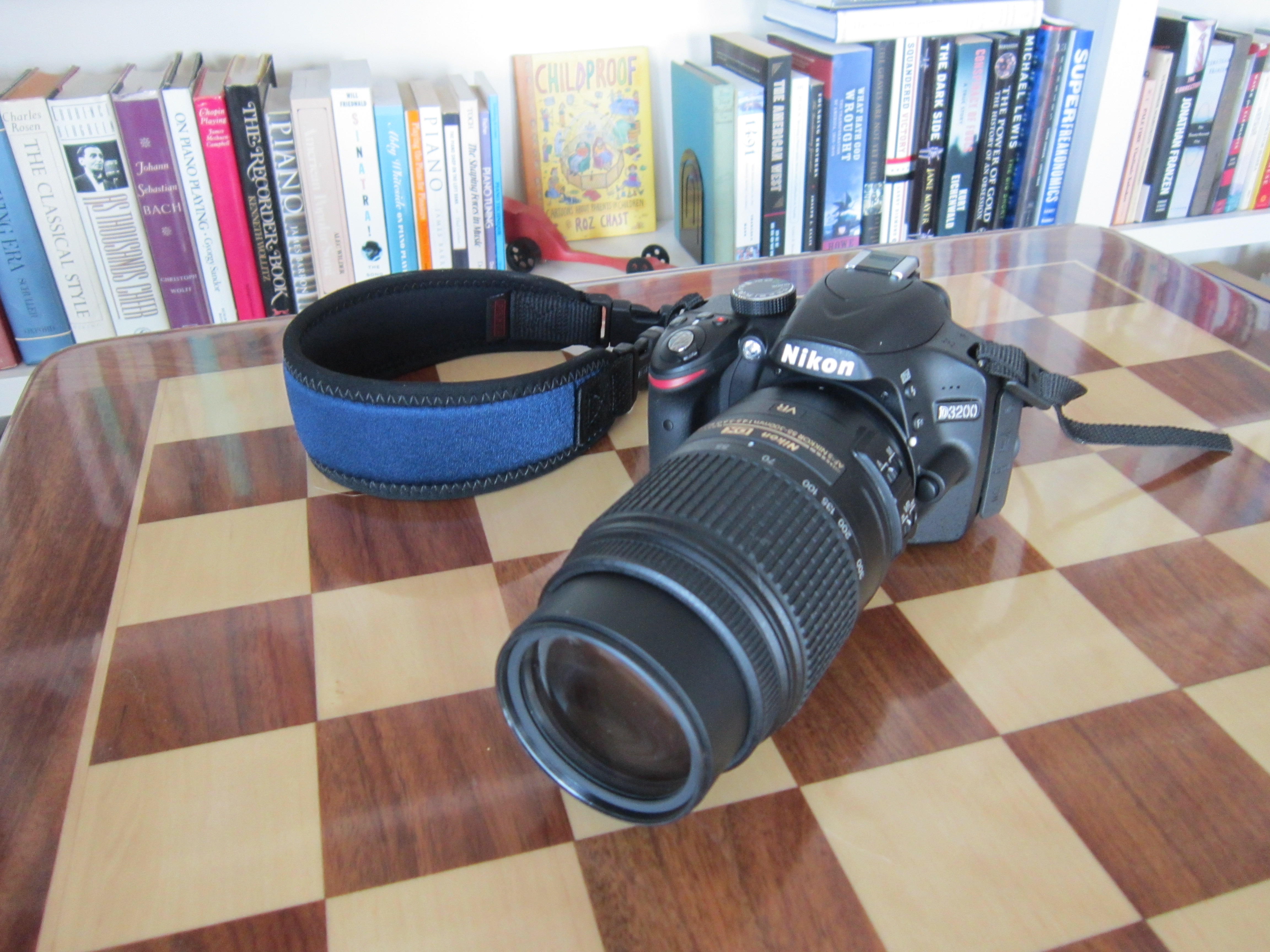
Anyhow, I got a Nikon D3200 with two Nikon lenses (an 18-55 zoom and a 55-300 zoom). Although the D3200 is an entry-level SLR, it is, to me, amazing technology. 24 million pixels! Four shots per second! ISO 100-6,400! Fast autofocus! A vibration reduction system! HD video with sound! And it fits my hands perfectly. All that it requires is knowledge, experience, and creativity.

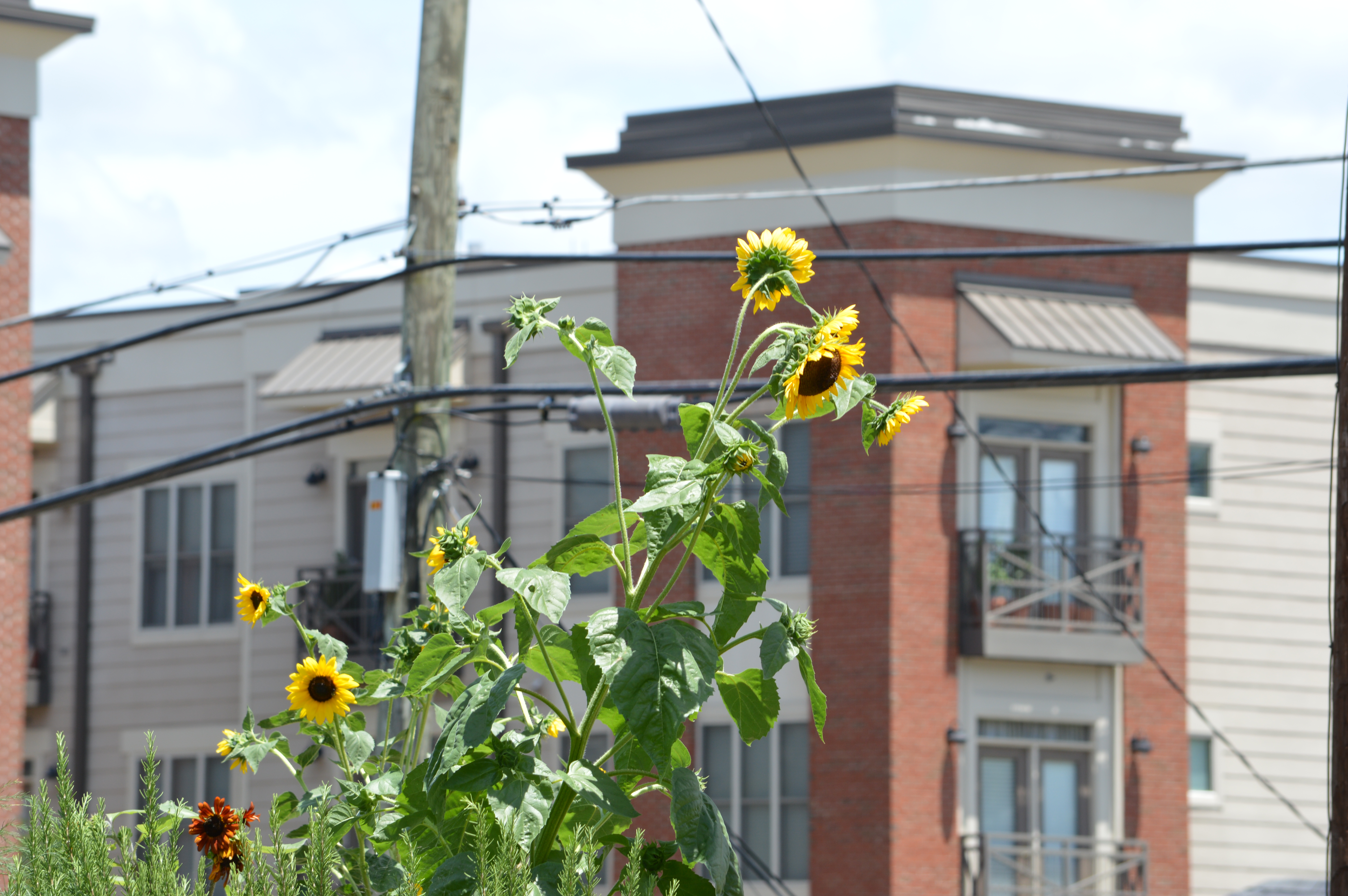
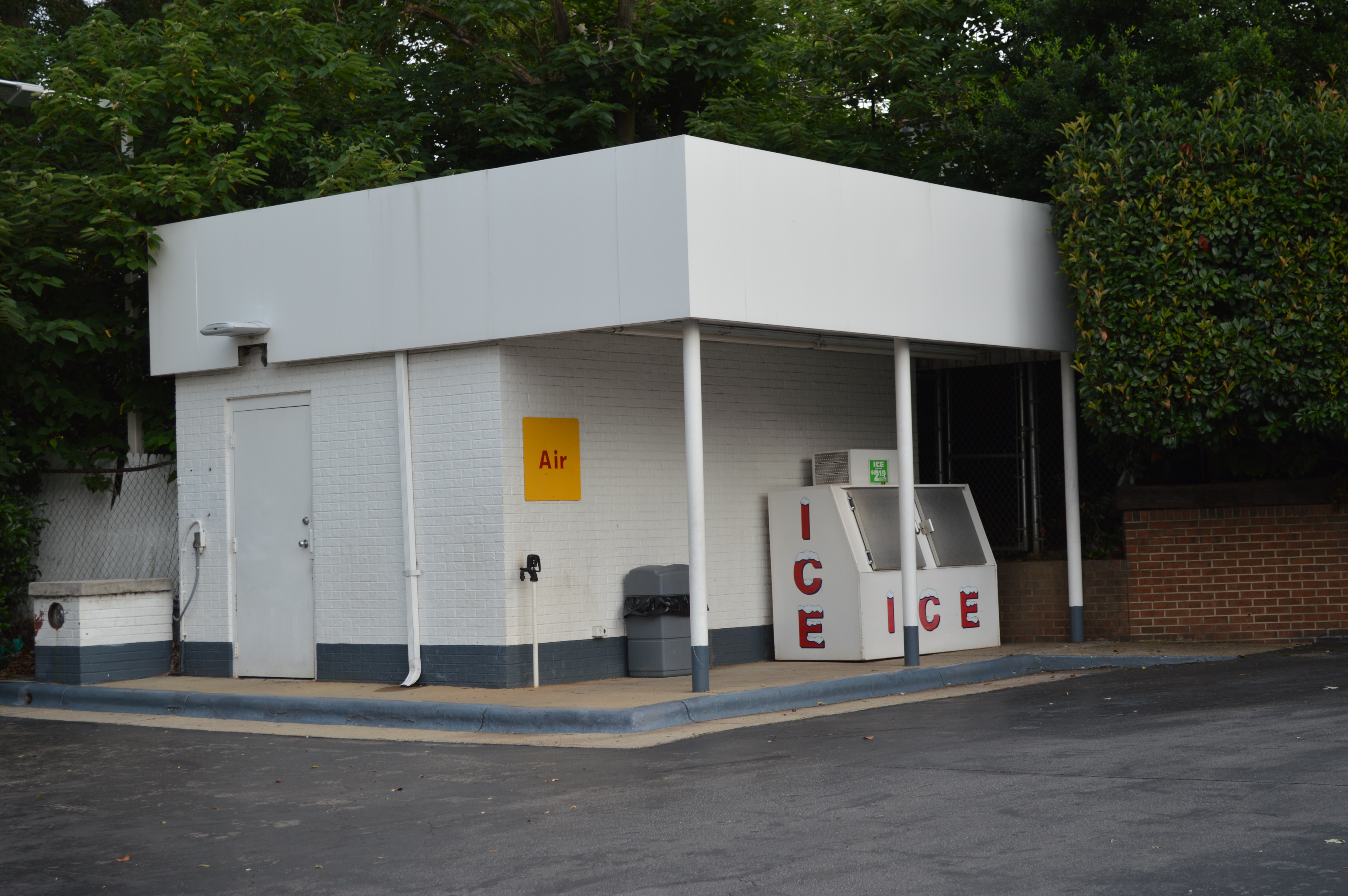
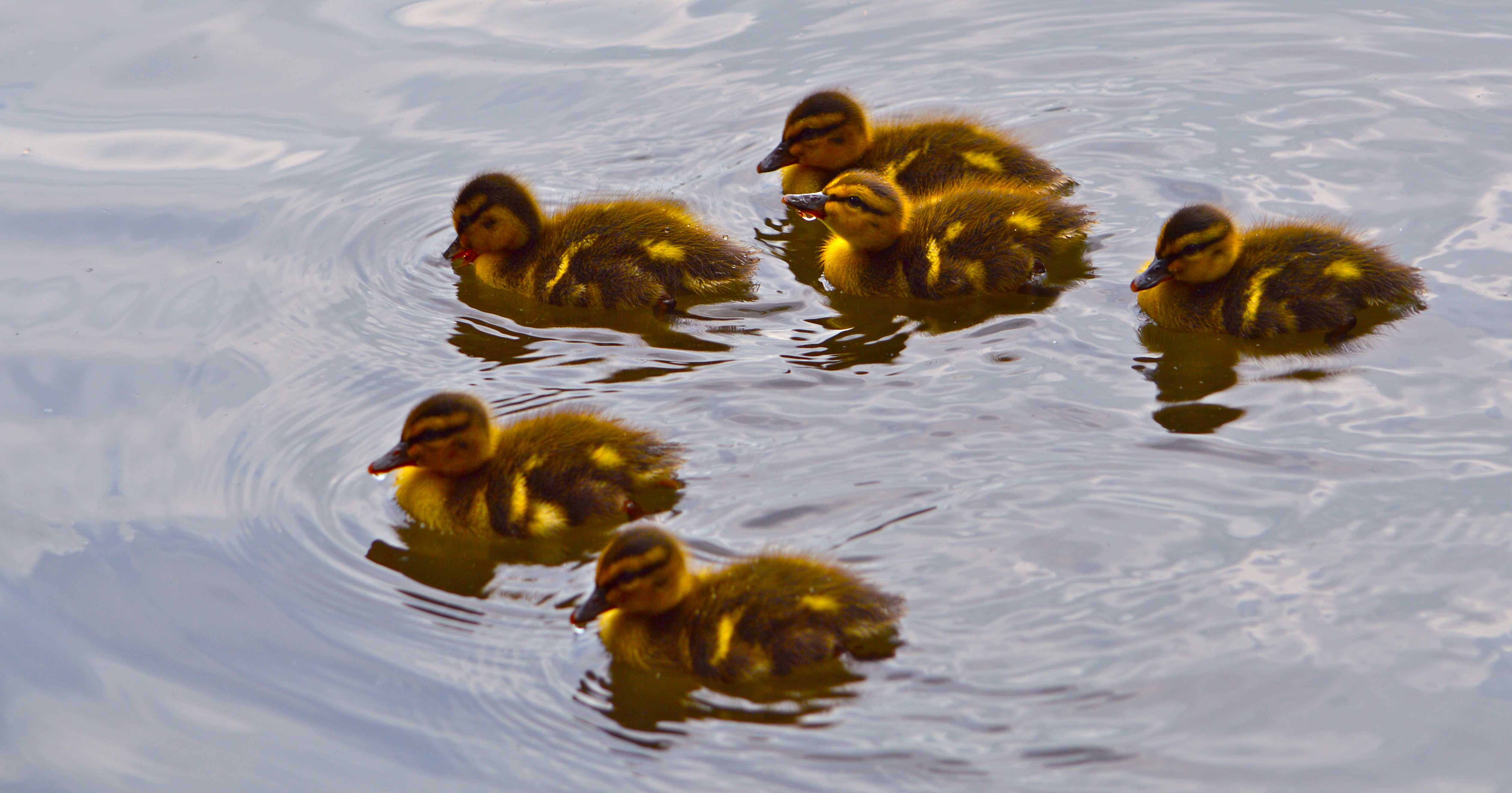
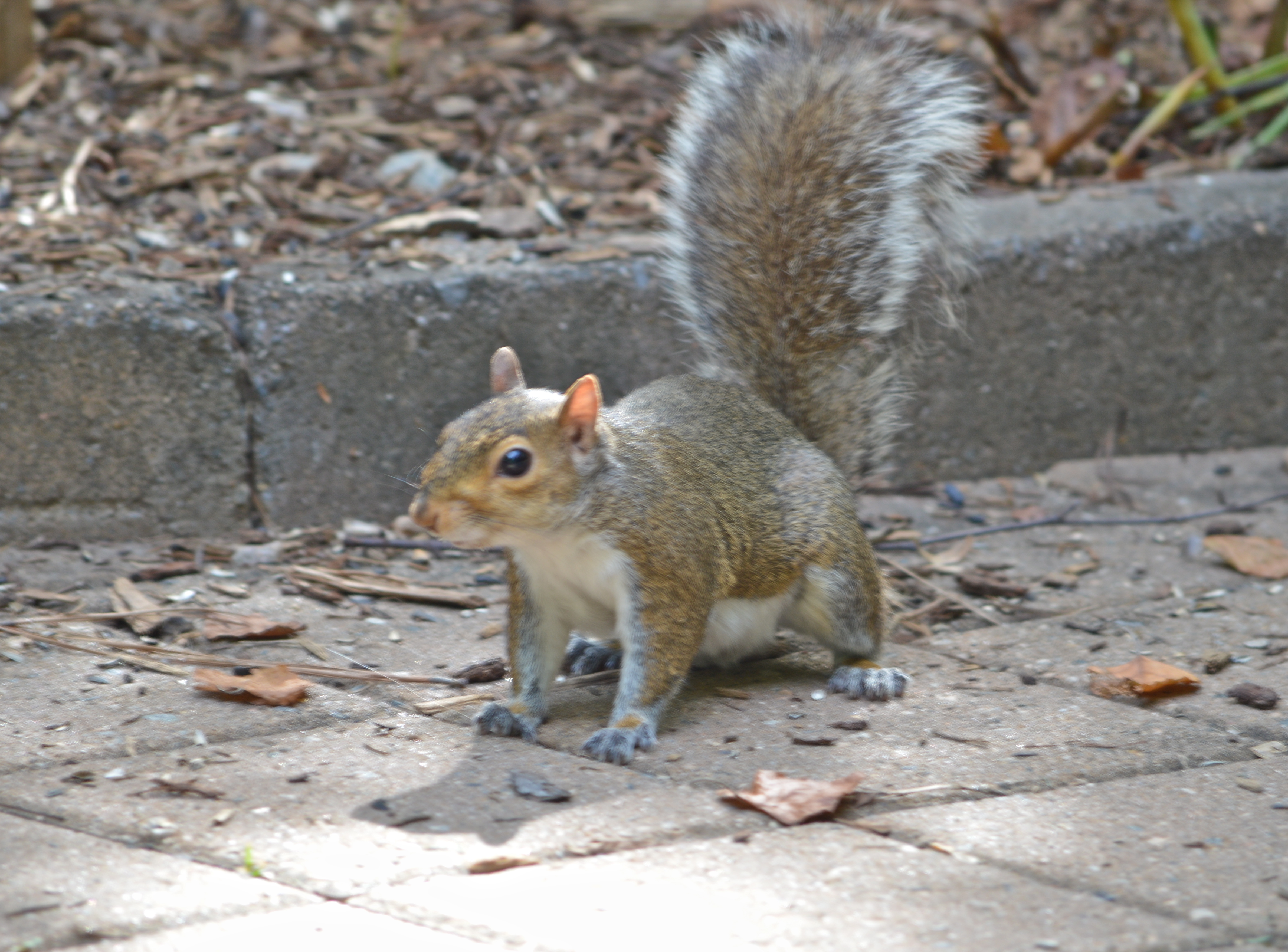
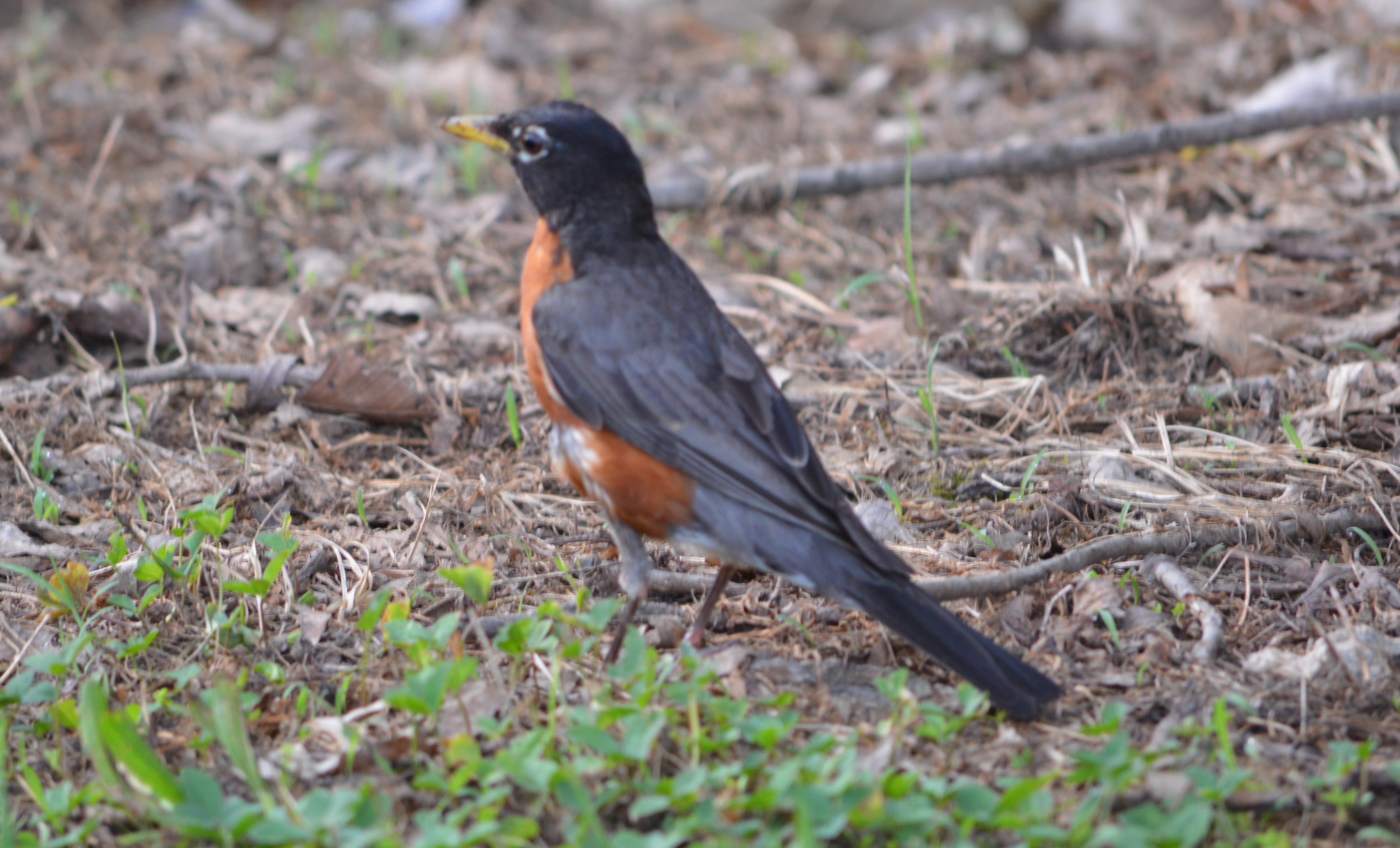
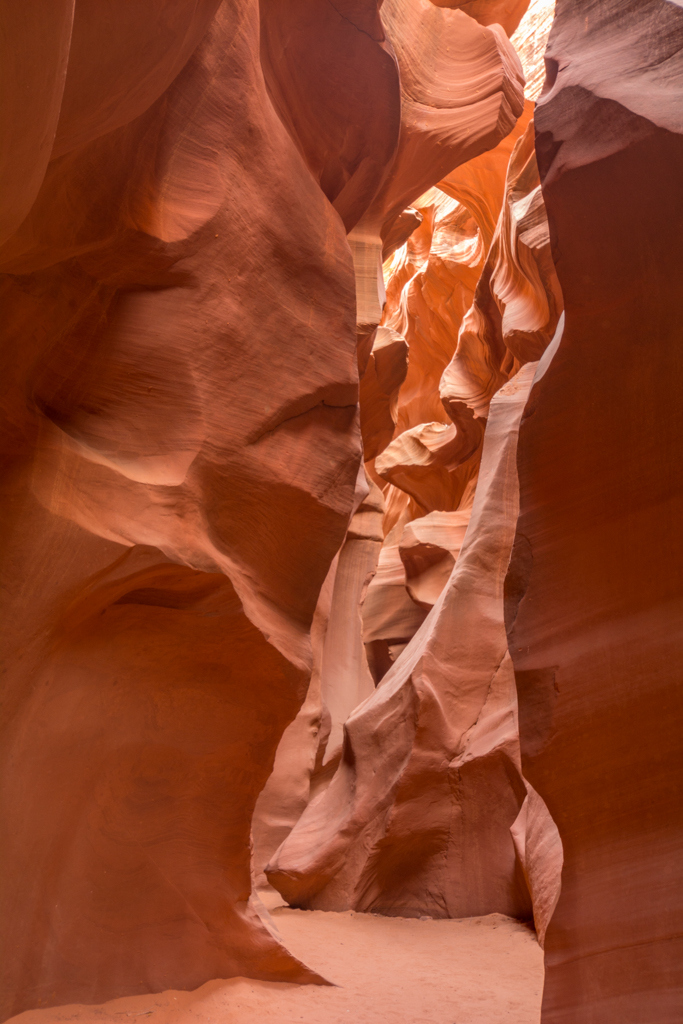
I was thinking that it would be fun to photograph wildlife, and especially birds. I’m also interested in trying to look at human-built places that are not intended for show, places that happen as a by-product of other objectives, to see what we might be missing. Above and below are some of my first efforts.

Mallard ducklings at Lake Johnson