The Casual Blog

Tag: Nikon D7100

A rodeo, a tennis match, a run, and a good curry meal
14 08 19_1548_edited-1
This was an unusually sporty week. I got to see a local rodeo and a semi-local professional tennis event, and took a run down memory lane.

It is always cheering and a little startling to find that there are communities of people who care passionately about something I know hardly anything about. Who knew there was a rodeo community in the Raleigh vicinity? Actually, I had just learned this the prior week from Walter magazine (an attractively designed and informative monthly that covers our area).

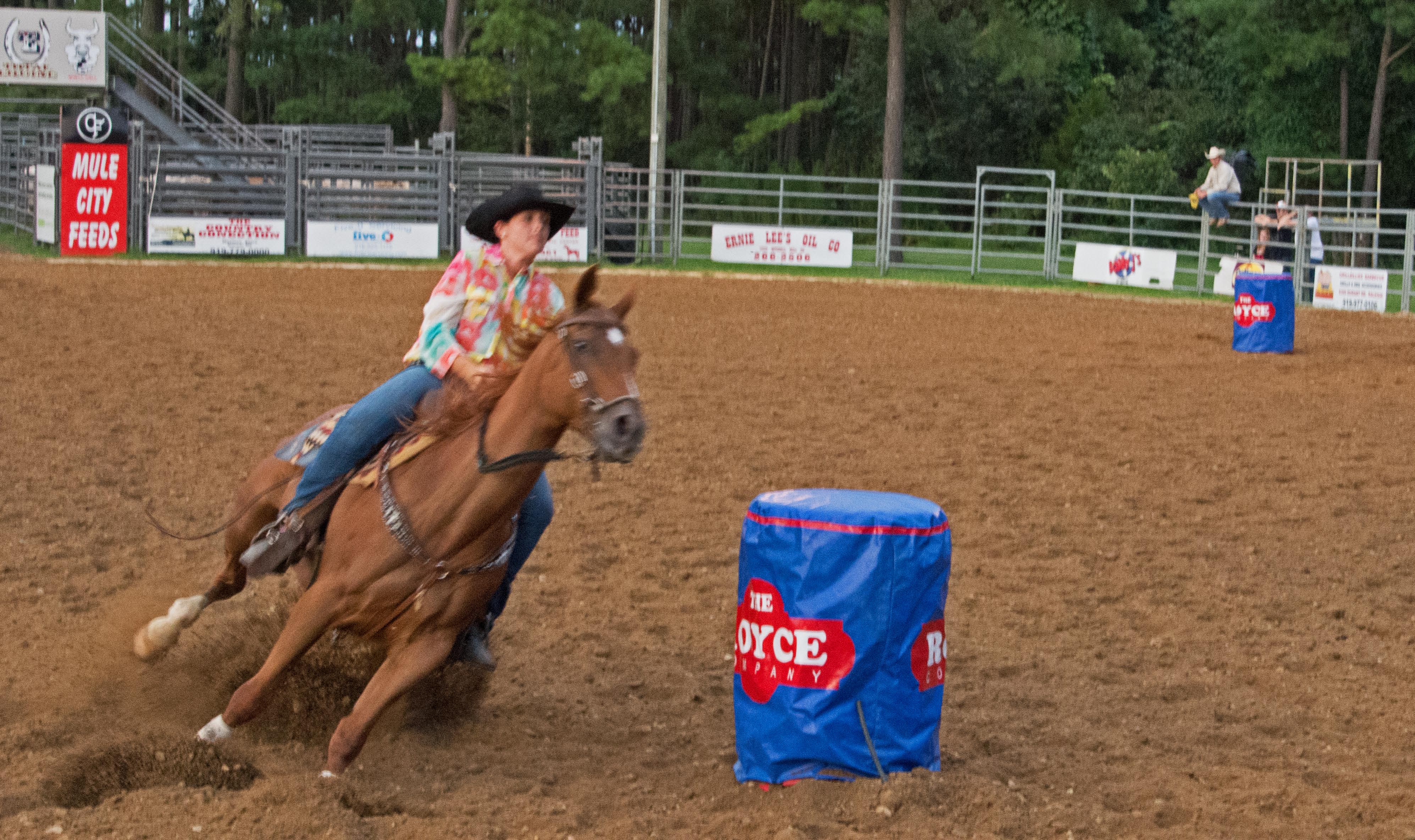
The rodeo was in northern Wake County off of Louisburg Road. The main events were barrel racing and bull riding. The barrel racers were all young women, and they rode their horses extremely fast. It reminded me of road course racing – in addition to extreme acceleration, they had to hit the brakes hard at the barrels. I was in awe of their riding skills.
14 08 19_1553_edited-1

The bull racers sat on bulls and got bucked off. This seems simple in concept, but the trick is not to get killed or severely injured by the bull. We got to see this event up close, and it looked extremely dangerous. I was not happy to think of the bulls being mistreated, but that didn’t prevent my appreciating the courage of the young riders.
14 08 21_1594

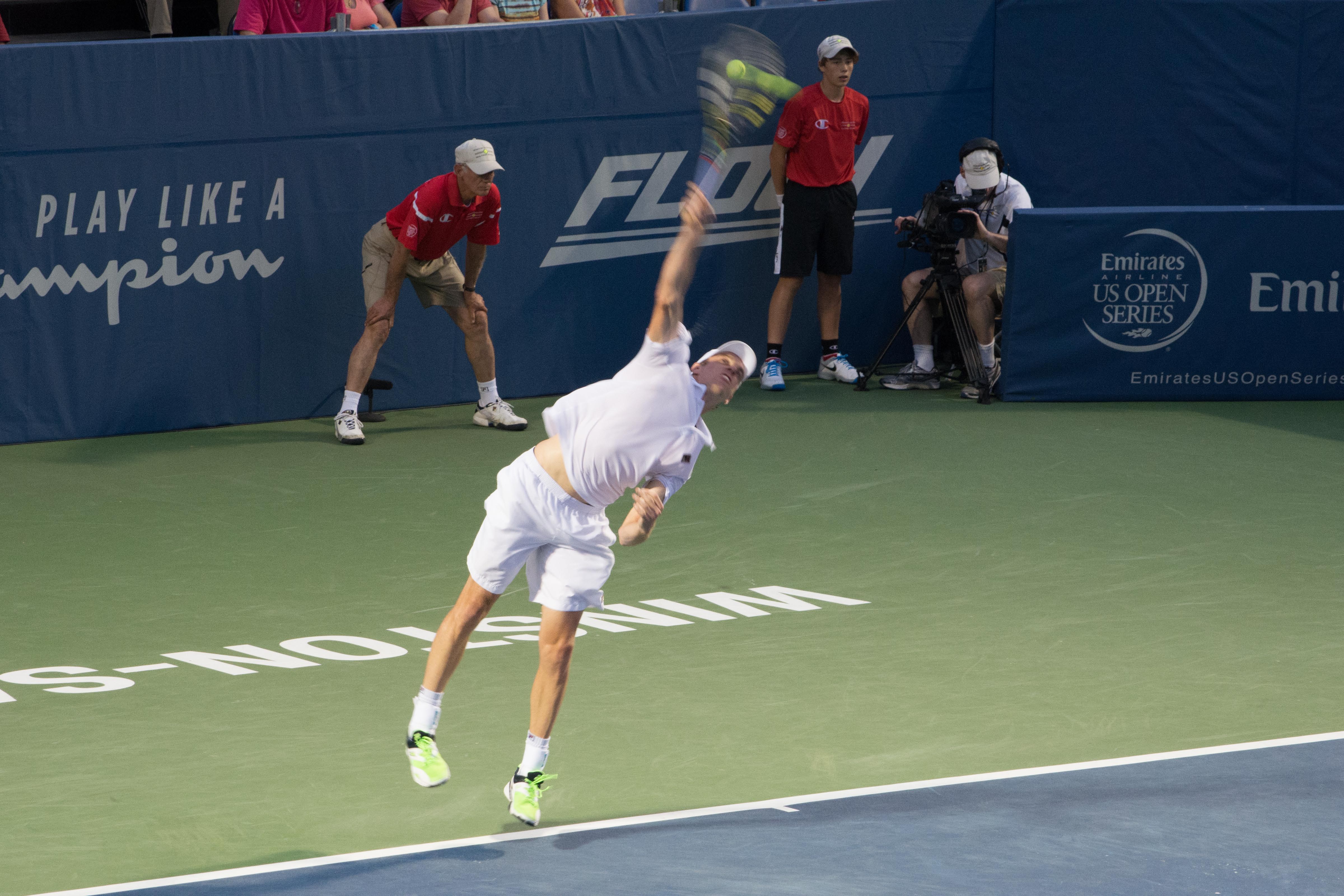
On Thursday Sally and I drove east to see some professional tennis at the Winston-Salem Open. We watched Sam Querrey play Guillermo Garcia-Lopez. These guys can play! Querrey had a huge serve which topped out at 137 mph. Garcia-Lopez had a beautiful one-handed backhand that he could hit with a lot of topspin. The match was close through two sets, but Querrey took control and prevailed in the third.
14 08 21_1592

That night we stayed in downtown Winston-Salem at the Brookstown Inn, built as a cotton mill in 1837 and now decorated with antiques and crafts. Our room was spacious (a 20 foot ceiling, at least), and the bed was particularly comfy.

When I’m on the road, I make it a habit to use the hotel gym first thing in the morning. The Brookstown’s web site didn’t mention an exercise facility (it turned out to have a tiny one), so I had packed most of what was needed for a run (forgot my tee-shirt). It was still dark at 6:15 when I went out, shirtless, for a run through the city of my youth.

There was hardly anyone out, so I don’t think I upset anyone with my shirtlessness. There was a pleasant breeze. Heading down Fourth Street, many of the businesses I remember were gone (no more Woolworth’s), but there were some interesting looking restaurants and galleries. I ran past the city’s most striking high rises, including the Reynolds Building (which looks just like a miniature Empire State Building), and along Main Street to Old Salem, the eighteenth-century Moravian town that’s now a tourist attraction. I went past the building where my parents had their bookstore and by the half-timbered brick buildings and grassy squares where I had a happy summer at Governor’s School.

This took about 40 minutes. I hadn’t run more than ten minutes for many a moon, because of various minor injuries. I felt comfortable and strong. The next day, though, my quads were sore.

On Saturday night we walked up to the Packapalooza festival on Hillsborough Street for some people watching and food. The festival was in celebration of the return of the students to N.C. State, and there were plenty of them there. It seems they get younger every year, as I get older. There was real diversity, including in music: some bluegrass, some hip hop, some rock, some Hare Krishna.

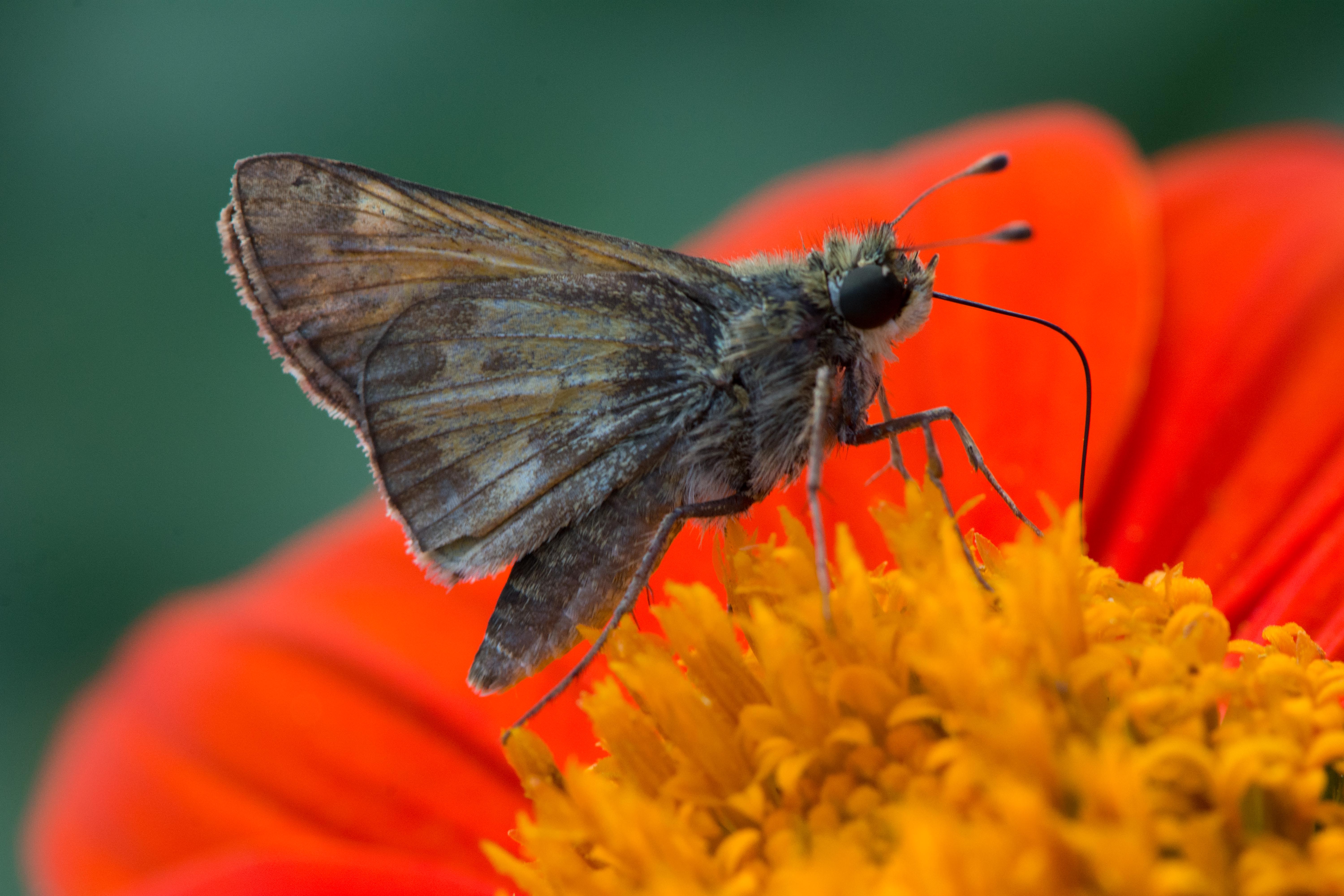
I had one moment of shock and horror, when my Nikon D7100 came loose from its strap. I’d gotten an over-the-shoulder strap that screws into the tripod mount, and it somehow got unscrewed. It hit the asphalt hard. Picking it up, I expected to see cracks in the lens and the back screen, but everything looked OK. My test shots seemed fine. The only apparent damage was a minor scratch on the bottom on the housing. It’s a tough little bugger! I got this butterfly at Fletcher Park the next morning.
14 08 24_1697

We ate at a new Nepalese/Indian restaurant on Hillsborough Street called Kabab and Curry. The menu had good options for vegetarians, and everything we tried was excellent. We shared veggie pakoras, and I had the vegetarian sampler, called rani thali, which included shahi paneer, alu gobi, chana masala, and dal makhani. The food was spicy in a colorful way, stimulating but not overwhelming, with a variety of textures. A bright addition to the local asian dining scene. I’ll definitely be going back.
14 08 23_1620_edited-1

Some new bug pics, a new smartphone friend, and more on robotization

14 06 07_9828_edited-1
This week I had a bit of a photography breakthrough. The books I’ve been reading advised against it, but I decided to experiment with the high-end ISO settings of my Nikon D71000.
14 06 07_9859_edited-1

Even at levels up to 5,000, I could not detect degradation in the image quality. This made it possible to use much smaller apertures with my 105 mm macro lens to get improved depth of field, while keeping shutter speeds high enough to capture some quickly moving insects. Here are a few of the images I got at Raulston Arboretum on Saturday morning. Thank you, brilliant sensor engineers of Nikon. Your technology is amazing and liberating.

14 06 07_9747

I got a Samsung Galaxy S5 smartphone this week, and I’m a little in love. It’s a marvelous device in most every way. The screen is a little larger than the S3 and a lot larger than the iPhone, but still fits in pants pockets. The screen is brighter and more vivid than leading competitors. It responds to you quickly, and gets things done more reliably. The voice recognition technology is improving, and sometimes works great. It is water resistant. It has biometric (finger swipe) security. Battery life is longer, and the battery is replaceable. (I always carry a backup.) And needless to say, as an effective interface to the internet, it can help answer any question that has an answer.
14 06 07_9901

As with every new device, there are switching costs and learning curves, but for me they turned out to be minor. My existing apps switched over automatically as soon as I followed the new phone protocol. I then spent a chunk of last weekend going through my apps, deleting those I never used, getting resituated with services I used (including hunting down old passwords), and getting the rest into new folders.
14 06 07_9849_edited-1

I kept the S5’s new health app, which can monitor your heart rate and count steps and calories, and experimented with its phone, which is surprisingly good – not not as good as my Nikon D7100, but also way less bulky. It took a few tries, but I eventually got my personal photos of roses and lilies on as wallpaper, found new ringtones that I kind of liked, got a pretty and practical new font. I put it in a handsome blue rubber case to protect against the inevitable jars, jolts, and plops. Even with the case, she’s amazingly thin and light.
14 06 07_9900

As I started to get to know her better, I noticed that the autofill feature of Swiftkey, which anticipates either the rest of a word I’m typing or the next word I was going to type, was getting more accurate. I’d type something like “Let’s” and up would pop “go.” Sure, that may seem obvious, but there were some that suggested a deeper understanding of my psyche, occasionally connecting words in a way that sounded like my own voice. This could be fun for a while, but it could also be heading towards a dark place. What if, when I typed I, it autofilled “worried that you might have taken my awkwardness for something more sinister, and resented it, when actually, I adore you.” And that was what I was starting to say? What if it allowed for the outsourcing not just of spelling and grammar, but actual feeling? Impossible? We shall see.

The effort, the struggle to communicate feeling in language is part of what I like about writing, and if that struggle were not so necessary our lives would be different, and possibly poorer. Could technology change the game on that? Of course.
14 06 07_9808_edited-1

Speaking of the transformative force of technology, this week I read the 2013 paper of Carl Frey and Michael Osborne out of Oxford on the continuing effects of computerization and roboticization. They draw on the work of Brynjolfsson and McAfee, which I’ve written about before, and add interesting historical and social context.

They find that 47% of American jobs are at risk of vanishing in the next decade or two as a result of increasing automation and artificial intelligence. That’s almost half! Jobs in manufacturing, transportation, logistics, office work, and administrative support are all at substantial risk, while jobs requiring creativity and social intelligence are less so. Big economic changes are coming, folks, just as big climate changes are coming, and we need to be preparing for both.
14 06 07_9780_edited-1
14 06 07_9782_edited-114 06 07_9784_edited-1

Some pre-spring photography, and appreciating Diana Nyad, a swimmer for the ages

14 03 16_7805This week we had one day in the high 20s, and another in the low 70s. It’s been a roller coaster winter, and we’re all ready for spring. On Saturday morning after yoga, I went to Fletcher Park with my camera and checked for signs of emerging life. Daffodils had popped out, and tulips and others were getting ready. On Sunday I scouted Raulston Arboretum, which was mostly brown and gray (as in photo at bottom), but there were some delicate blooms and buds. Spring is getting close. We’ve just got to hang on!
14 03 16_7790

As I’ve been taking more pictures I’ve also been trying to figure out what it is I’m trying to do. Make a picture, of course, but there’s more to it. The camera subtly changes the way you see and feel. You look a little harder, and discover there are feelings associated with objects. You wonder, can they be captured, and can they be shared? Your relationship to the visual world has changed. Sure, there’s always a risk that the camera will distance you from the world, but I’m finding it can also draw you closer.
14 03 16_7782

So there’s a little voyage of discovery that happens in photographic outings, even when the output isn’t especially remarkable. It’s a type of meditation. And from time to time everything is right – the light and shapes and the colors – and none of the many things that can go wrong go wrong (you didn’t forget to take the lens cover off, or get a cat hair off the lens, or to adjust the white balance, ISO, aperture, etc.). At just the right second, you push the shutter, and everything clicks. Ah, happiness.
14 03 15_7740

It’s just a tiny fraction of a second (say, one six-thousandth). But it ‘s the culmination of many moments – years and years. It depends on your having looked carefully at your subject, but also your having looked for a long time at nature with intensity and affection. It also takes having looked at a lot of art, and considered how humans use images to represent things and communicate emotions. It also depends on your having learned your craft – how to hold the camera steady, how to frame the subject, how to choose the settings. It takes time. And usually there’s something a little off. There are so many not bad, almost-good, but ultimately useless, pictures. But you keep trying, and gradually get better.
14 03 15_7762

I’m crazy about my new Nikon D7100. Such marvelous engineering – a sensor with twenty-four million pixels! Fifty-one point auto-focus! The focus responsiveness is truly amazing. But I’m also a bit overwhelmed by the apparatus. Weeks into our relationship, I’ve got the basics, but I’m still finding new little buttons I hadn’t previously noticed. I seldom read users manuals, but for the D7100, I’ve felt moved to purchase two additional how-to books. Seriously, its complicated. But on the bright side, I don’t feel the equipment is holding me back. It’s more like I’m holding it back. So I’m daunted, but also inspired. I don’t want its brilliance to go to waste.

Also inspiring: Diana Nyad, who finally made the swim from Cuba to Florida at age 64 – a 53-hour, 110 mile swim, which she was the first to do without a shark cage. This is a feat of human endurance almost beyond imagination. I got round to reading Ariel Levy’s piece on her in the Feb. 10 New Yorker, which gave me a new appreciation for the amazing grit and relentlessness behind this feat. Nyad turns out to be at once a dreamer and a grinder, a brilliant, charming personality with considerable gaps and flaws. It soundss like she has OCD, relationship problems, and no money sense. She was horribly molested as a child. She has a drive that surpasses all known limits.

She started thinking about the Cuba-Florida swim when she was a little girl, and became a world-famous endurance swimmer in her twenties. After becoming the first to swim from the Bahamas to Florida (102 miles), she retired at age 30 and became a network sportscaster and did other things. Then she took up the quest for the Cuba to Florida at age 60. She failed. Then failed again. Then again. And each of these was physically harrowing – hours of nausea, shark worries (perhaps exaggerated, but understandable), and jelly fish stings. And then she did it. After two nights of swimming, she saw the lights of Key West, and knew she had 14 or 15 more hours to go. Which for her was a mere training swim.
14 03 16_7797

Cityscapes, intelligent plants, and weight loss work and play

14 02 08_6991_edited-1
I got up a little after 6:00 on Saturday morning to allow time for walking Stuart, feeding him and the cats, breakfast, newspaper, and a little neighborhood photo safari at sunrise before yoga class. I’m still figuring out all the buttons, dials, numbers, icons, and graphs on my Nikon D7100, and experimenting with my new 10-24mm (wideangle) Nikkor lens. Adding to the challenge – wearing gloves. It was overcast, with temperature in the mid-30s.
14 02 09_7111_edited-1

My neighborhood in downtown Raleigh has some stylish, pretty spots, and my usual way of seeing is to pay the most attention to those. But this morning I forcefully looked at older, grittier thing, and their shapes, patterns, and textures. I always enjoy construction sites, where you can see the innards of a building-to-be, but it was interesting looking at the opposite – destruction sites, and places where humans had run out of money or just don’t care anymore how things look. In those places, there’s nature: plants competing with concrete, pushing into cracks and crevices, revealing and exploiting areas that humans neglect.
14 02 08_7015

I read an interesting article this week by Michael Pollan on recent research into plant biology, and specifically neurobiology – how plants sense their environment and exchange information. Plant biologists are sharply divided on whether to call these abilities intelligence. Some scientists insist there cannot be intelligence unless there’s a brain, while others define it in terms of the ability to solve problems, which plants can do. But there seems to be general agreement that plants have some remarkable perceptual abilities.

Pollan describes plants’ “unique existential predicament as their being rooted to the ground and therefore unable to pick up and move when they need something or conditions turn unfavorable. The ‘sessile life style,’ as plant biologists term it, calls for an extensive and nuanced understanding of one’s immediate environment, since the plant has to find everything it needs, and has to defend itself, while remaining fixed in place. A highly developed sensory apparatus is required to locate food and identify threats. Plants have evolved between fifteen and twenty distinct senses, including analogues of our five . . . .”

Plants have also developed some remarkable chemical methods of defending against marauding insects and communicating with others of their species regarding threats and food opportunities, and even recruiting other species to perform services. One researcher estimated that a plant has three thousand chemicals in its vocabulary. Researchers have also found examples of plant learning and memory. Most plant behavior is either invisible or happens too slowly for humans to perceive, but time-lapse photography is opening new windows.
14 02 08_6989_edited-1

One of the challenges of this research is the ethical implications. One scientist, Stefano Mancuso of the University of Florence, argues that “because plants are sensitive and intelligent beings, we are obliged to treat them with some degree of respect. That means protecting their habitats from destruction and avoiding practices such as genetic manipulation, growing plants in monocultures, and training them in bonsai.” Mancuso doesn’t go so far as to avoid eating them. He contends they have evolved to be eaten, which accounts for their modular structure and lack of irreplaceable organs.

Most of this research was news to me, but I didn’t find it hard to believe that plants have extraordinary abilities, or that humans might find this hard to accept. Some people have the same problem dealing with the existence of (non-human) animal intelligence. I guess it’s insecurity. To me, learning about and appreciating the abilities of other species of life makes the world that much more amazing.
14 02 09_7129_edited-1

In health news, I’m happy to say I finally got back to my fighting weight of 155 lbs this week (that’s a BMI of 22), after gaining 5 during our Xmas holiday travels. It is certainly harder to take them off than to put them on. I did it by working more interval training into my workouts, like jumping rope or rowing as part of a weight circuit, and lengthening my longer cardio work (elliptical, stairs, and such) from 30 to 40 minutes. Also, of course, eating sensible portions of healthy things (fruit, vegetables, legumes, and whole grains).

I also am grateful to my health and fitness guides, especially Larisa Lotz, who meets me each Thursday at 5:30 a.m. at Studio Revolution with several mind and body surprises. This week, for example, her latest workout creation had me lunging and twisting, slamming down a heavy medicine ball, squatting with a sandbag, old school dead lifts, rowing with kettle bells in plank position, and fast agility movements through a rope ladder, among several other aerobic and anaerobic activities. She didn’t have a new balance activity this week, but she’s got me working on several, including balancing on my knees on an exercise ball.

This week I also tried a new morning exercise class at O2 Fitness called Chisel. I’ve been enjoying/enduring the spinning class there on Fridays with Jenn, who is funny, inspiring, and relentless, and she told me I should give it a try. I hadn’t previously done gym classes other than spinning, in part because I’ve got plenty of other things I like to do, but also in part because of shyness – a little bit of fear of the unknown, of confusion and possible embarrassment.

But with Jenn’s encouragement, I showed up last Monday. She was, as usual tough and inspiring, and funny. The hour-long class involved a background of driving dance club music and foreground of intense intervals both with and without dumbbells. Hardest for me were the jumping lunges. I found it very sweat inducing, and after hanging on for dear life, I felt great afterwards – an endorphin surge.

On Saturday morning as usual I went to Blue Lotus Yoga for Yvonne Cropp’s open level Vinyasa class. This weekend is Blueversary – the seventh birthday for the studio – which made me particularly conscious of how grateful I am that it’s there. There were several new people in the class, which may have accounted for Yvonne’s keeping things relatively low-keyed, well within normal yoga conventions. It was good, as always, to really stretch and to breathe together with the class. Afterwards, there was a drawing for special prizes, and I won one – a basket with lavender-scented soap and such. I didn’t really need the lavender, but still, I felt lucky.

Picturing light snow, and thinking about privacy and our digital selves

14 01 29_6909
It snowed in Raleigh this week, which was kind of exciting and kind of annoying. I love the transformative quality of snow – all that clean white soft quietness. But moving about in a normal human way becomes difficult. When I tried to drive rear-wheel-drive Clara to work, we got stuck as soon as I cleared the door of the apartment building garage. Unable to get up the modest slope, we managed to back down to a lucky parking space, and I walked the mile or so into work – in 18 degree cold. Burrr!
14 01 29_6916-1

On the way, I used my new camera, a Nikon D7100 with a Nikkor 10-24mm lens, to get a few images of my snowy neighborhood. I forgot to adjust the ISO, which I’d previously set at 800, but it didn’t seem to cause noise problems. I’ve been reading a book titled Mastering the Nikon D7100, which sounds very boring, but doesn’t seem so at all – which suggests I’m becoming a photo nerd. Oh well. There really is a lot to learn about this camera, but it can do so much! It sounds a little weird, but I’m feeling warmly towards it – almost like a new friend.
14 01 29_6919_edited-1

Speaking of digital devices and friends, there was a lively essay by Colin Koopman in the NY Times this week about why we’re struggling so to grasp the nature of the problem with the NSA’s increasing intrusiveness into our lives. Koopman proposes that we should start viewing ourselves more as data (“info persons”). It is, after all, the way we’re viewed by our internet service providers (Google, Bing, Facebook,LinkedIn, Twitter, Amazon, eBay, Opentable, Angry Birds, etc. etc.).

Koopman proposes a simple thought experiment: imagine what would happen if all our digital data, from social security numbers to credit card accounts, medical records, school records, bank records, insurance records, search queries, book preferences, food preferences, porn preferences, avatars, Instagrams, Tweats, and posts – suddenly disappeared. Try it.

When I did, my stomach did a quick shimmy and I felt a bit of vertigo.

His point, I think, is that we have trouble grasping the privacy issue posed by mass electronic surveillance, because we have trouble grasping how our digital technology has transformed us, changed what a human being is. Our digital selves are an increasingly integral part of the human fabric. Because we still don’t quite get how they relate to the pre-digital revolution part of our lives, we tend to not notice them or downplay their significance.

But advertisers and spys have realized that, from another point of view, the digital self is a high value target, enabling the intruder to predict with a high degree of accuracy what we will buy on Amazon and view of Netflix tonight and do with ourselves tomorrow. The new Age of Information is transforming commerce and law enforcement, but it we haven’t evolved political or legal tools to address it.

Our privacy is closely related to our dignity, and to community. We all have imperfections or oddities that we prefer to keep concealed. They may be physical flaws, financial limitations, unusual appetites, or unpopular ideas. Our ability to maintain self-respect and to live in cooperative groups depends on a tacit mutual agreement to respect boundaries for these differences, and to not insist that they be exposed.

We didn’t realize until recently that just by using the new normal tools of communication and commerce, we had opened the door on our private selves. Once we know that our health problems, financial problems, sexual proclivities, and other traits are within view of strangers, we feel diminished and alienated. This is why, even leaving aside the risk of tyranny, data privacy matters.

Speaking of technology and transformation, on Friday we had a nice dinner at Capital Club 16 (an eclectic and vegetarian-friendly place) and went over to Mission Valley to see Her, starring Joaquin Phoenix, the voice of Scarlett Johansson, and the wonderful Amy Adams. It’s about a new sort of digital assistant app that is so human that humans fall in love with it – and it with them.

The premise didn’t seem farfetched to me. I thought it was touching and unsettling, though kind of slow toward the end. The next day I was still thinking about the themes: how prone to loneliness we are, how desperate to connect, how ecstatic in love, how despondent in loss, how changeable, and also how resilient.
14 01 29_6925_edited-1