The Casual Blog

Tag: New York City Marathon

In New York — FOSS, museums, Broadway, and the marathon

A window table at Stella 34, with the Empire State Building in the background

A window table at Stella 34, with the Empire State Building in the background

New York City is still the greatest! It’s so energizing. I went up Thursday night to attend the Software Freedom Law Center’s fall conference on Friday, and for the weekend we did some fun city things – museums, Broadway, sports, and food.

The conference at Columbia Law School was in part a celebration of how far free and open source software has come, but also discussed less pleasant things, like copyright trolls and security. I enjoyed seeing a number of business friends from leading tech companies and catching up.

Jocelyn picked out some fun places to eat, including Stella 34, which is on the fifth floor of Macy’s. The Italian food was good, and we had an epic view of the Empire State Building.
Tiller6Bug 1-6

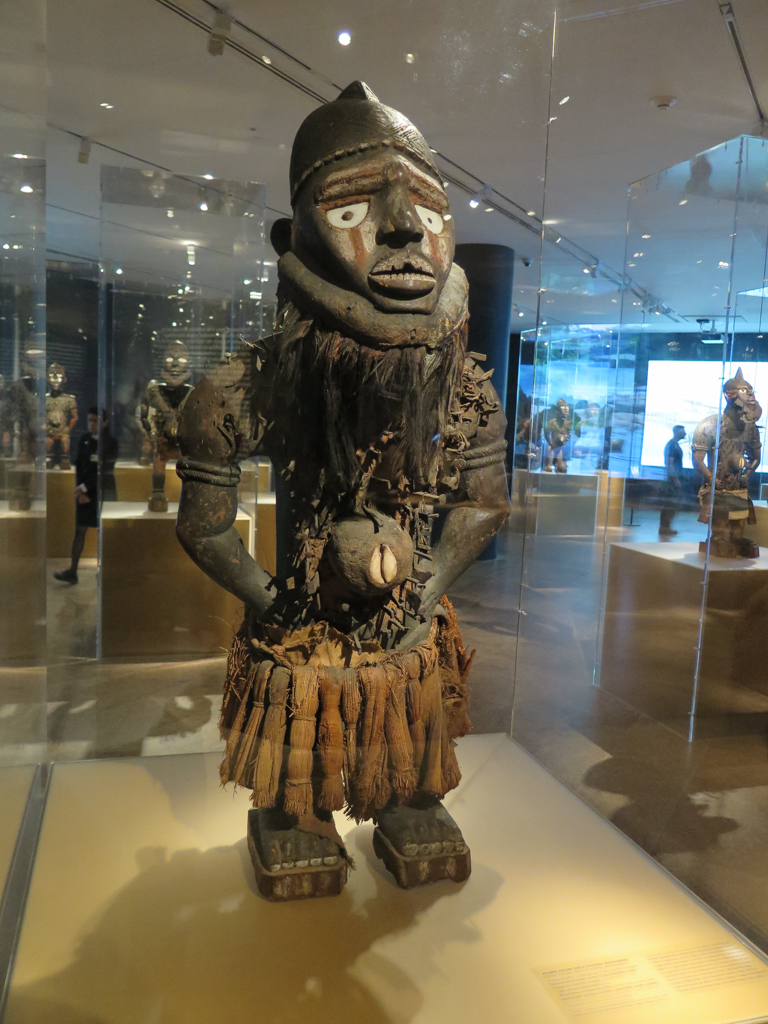
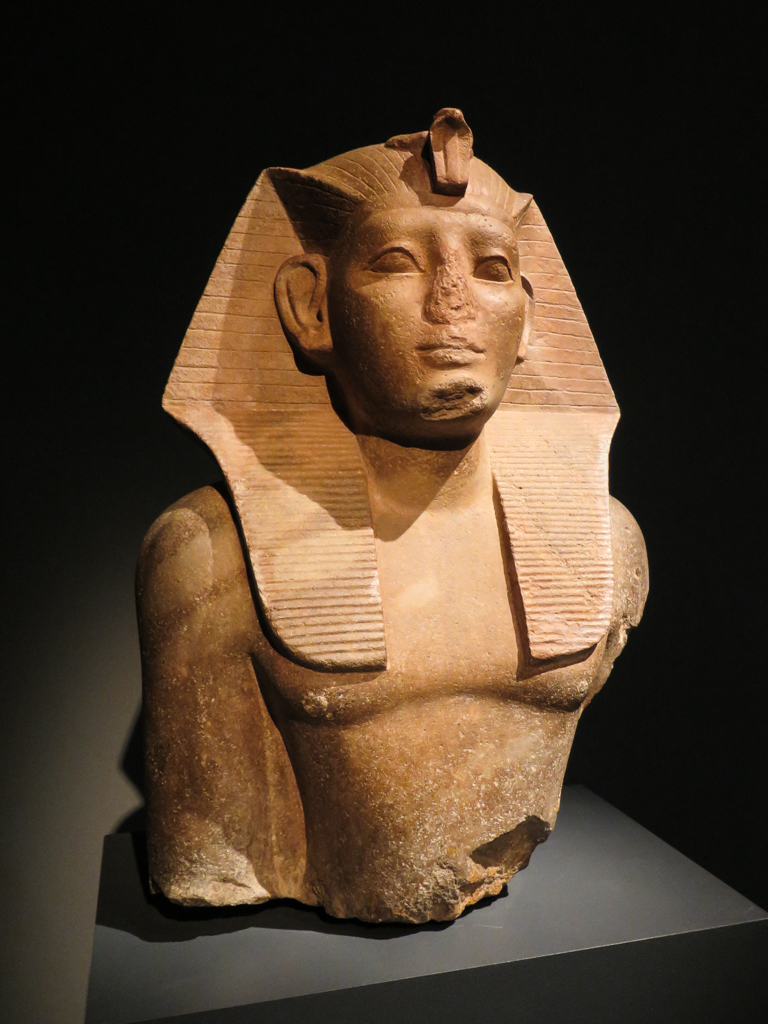
On Saturday morning Sally and I went to the Metropolitan Museum and saw two special exhibits – Kongo: Power and Majesty (art of central Africa), and Ancient Egypt Transformed: the Middle Kingdom. After our recent Africa trip, I’ve been listening to African music, and was eager to learn more about its art.

Slavery and horrendous colonial exploitation is what I think of first when I think of central and western Africa, but the exhibit demonstrates that there was an elaborate and well-developed culture and artistic tradition before Europeans arrived. There was extraordinary craftsmanship in their carvings and weaving, and something powerful in their religious objects. If you can’t get to the Met, you can see all the objects here.
Tiller6Bug 1-7
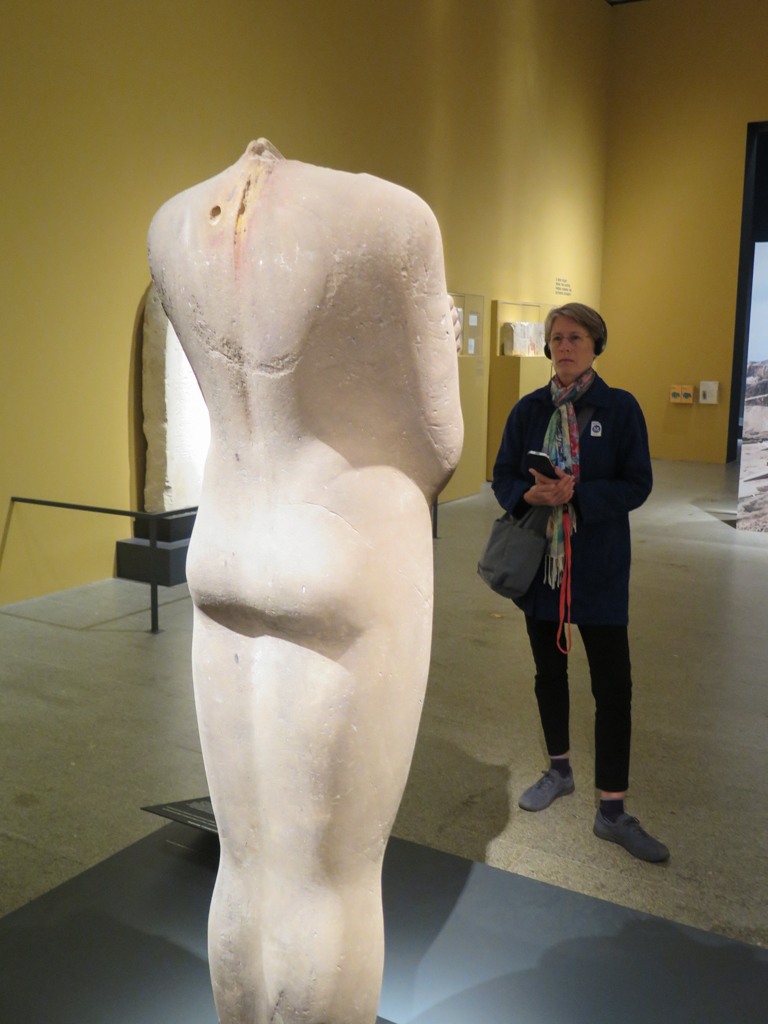
As for Egypt, the Middle Kingdom ran from 2030-1650 BC and from the 11th through the 13th dynasties. This exhibit also changed the way I thought of this society. It’s strange, of course, to think that pharaohs were viewed as gods, but all religions have their quirks. I’d thought of the sculpture as normally cold and formulaic, if well crafted, but was struck by how tenderly human and individual some of it was. Here again, you can check it all online.
Tiller6Bug 1-9

I’ve generally avoided museum audio guides, on the theory that it’s good to struggle with finding the message of objects than to be spoon fed. But it was well worth using the Met’s audio guide for these exhibits. The commentary was usually intelligent, and it was helpful to hear the pronunciation of the unfamiliar African and Egyptian words.
Tiller6Bug 1-5

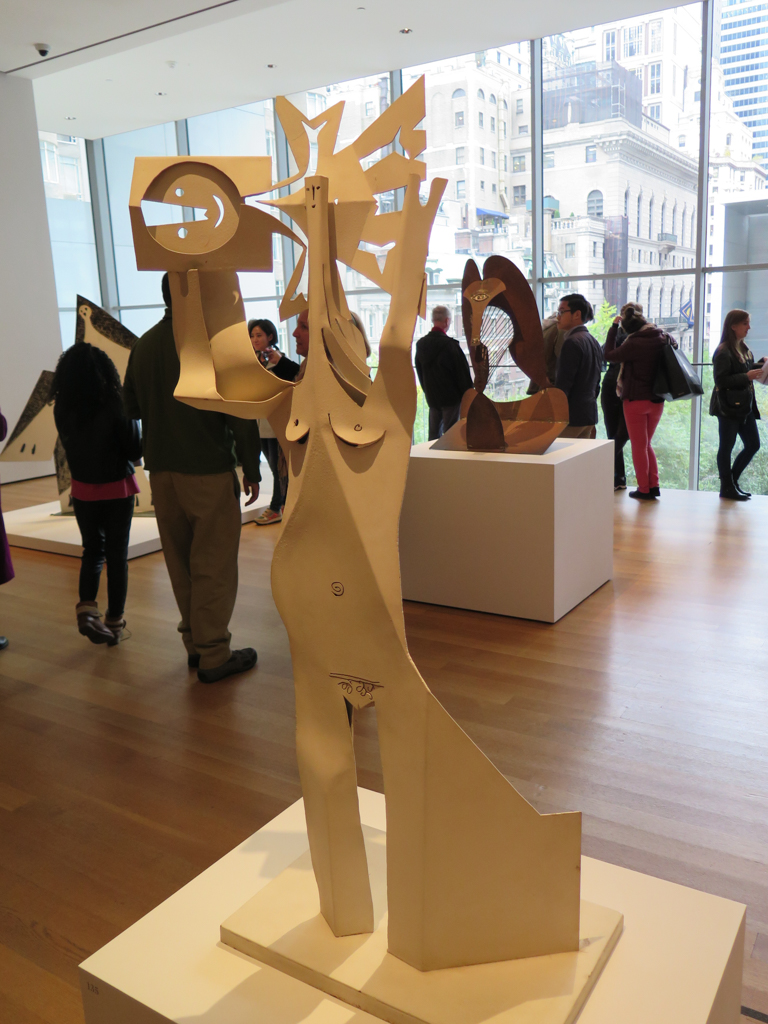
Afterwards, I went down to the Museum of Modern Art to see a special exhibit of the sculpture of Picasso. Apparently Picasso did not think of himself as a sculptor, but used sculptural tools for exploring new ideas. These were often witty and lively works, in a variety of styles and media. Picasso is really inspiring in his never-ending curiosity and energy.
Tiller6Bug 1-4

That evening we went to see Hamilton, a big hit on Broadway about the life of Alexander Hamilton told in the hip hop vernacular. Jocelyn had seen it twice off-Broadway, and was hugely excited about seeing it again. Her enthusiasm had motivated me to do a bit of homework beforehand, including reading the Ron Chernow biography of Hamilton, listening to the cast recording, and listening to some of the big hip hop hits of the last three decades.

I really liked the show. Hamilton’s life story is richly dramatic, and his achievements were extraordinary. That’s a good start, but to bring them into the present with an urban vernacular is such a great idea! At the same time, to take on some complicated history, with a spirit that is both playful and serious, is remarkable! The creator and star, Lin-Manuel Miranda is surely brilliant, and seems to understand that history is not something that is fixed, but rather always subject to reexamination and new understandings. Anyhow, it’s both a fun show, and richly thoughtful. How often does that happen?
Tiller6Bug 1

On Sunday morning we walked up to Central Park South to see the New York City Marathon. It is, of course, remarkable that people can run 26.2 miles at any speed, much less the pace that the elite athletes do. We were privileged to see the top finishers approaching Columbus Circle, close to the end. They looked focused, but not miserable. I read the next day that the men’s winner, Stanley Biwott of Kenya, ran mile 21 in 4:24, and only a few seconds slower for the next two miles. That is beyond amazing!
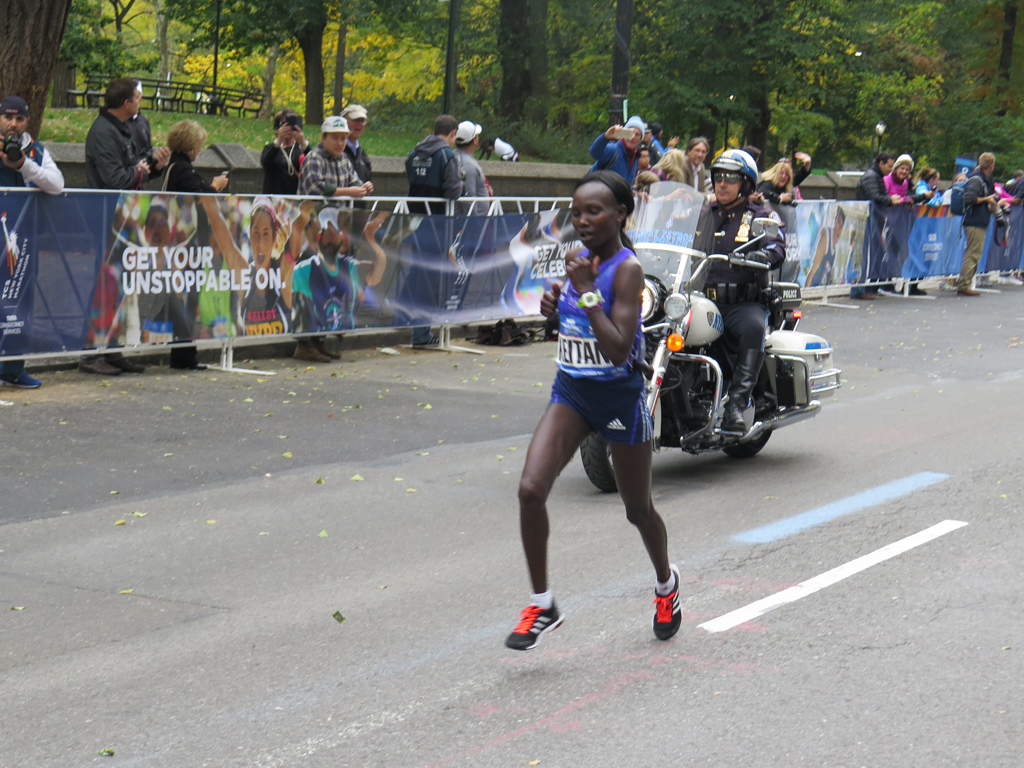
Winner Mary Keitany of Kenya, with about a third of a mile to go
Winner Mary Keitany of Kenya, with about a third of a mile to go

Taking in some art, sport, and food in New York

14 11 02_3603Last Friday I attended the Software Freedom Law Center’s tenth anniversary conference in New York, wishing my friends at the SFLC happy birthday and learning something about the state of the art in FOSS law. Afterwards I met up with Sally and daughter Jocelyn at the Warwick Hotel for a Manhattan weekend. I had in mind to see some painting, some photography, some opera, and some ballet, all of which we did, plus some good food and conversation and the New York City Marathan.

As for the painting, on Saturday we went to the Metropolitan Museum, where we focused mainly on the exhibit of recently donated Cubist paintings by Picasso, Braque, Leger, and Gris. Cubism has never been my favorite thing, but I was curious to see some reputed masterpieces not shown in public for generations. The exhibit ultimately had its way with me.

I’d known that Braque and Picasso collaborated, but I hadn’t understood that they were basically partners and co-inventors of the Cubist style. What remarkable courage for guys in their mid-twenties to work exclusively in a style that was so radically new and difficult. They must have known it would be tough to sell at a time when, I’m guessing, they needed money. How excited they must have been to be seeing visions no one had ever seen before, and imaging they would permanently change the cultural/visual world. And they were right!

Engaging with art, and particularly art that requires commitment and struggle, changes you at a fundamental level. Your brain rewires itself, neuronal axons and dendrites making new connections. You are a subtly different person afterwards, who sees the world a little differently.

And though it involved some commitment and struggle, I warmed up to the paintings. There is steely rigor, but there’s more than that. There are moods, from sunny to brooding, and a surprisingly amount of humor. But you have to give the paintings some time and let them speak.
14 11 02_3558

We met Jocelyn for lunch in a Korean place on 37th Street, where our table got covered with savory little vegetarian plates and vegetable dumplings. Our waitress intervened when she realized Sally didn’t know she was supposed to spice up and mix up her kimbap. It was drizzly and chill when we came out and walked up 6th Avenue to the International Museum of Photography.

There we saw an exhibit called Genesis by the Brazilian photographer Sebastiao Salgado. The black-and-white photos are of remote, vulnerable, and magnificent places around the globe, including Antarctica, Galapagos, Patagonia, Indonesia, and Africa. I was very moved by this art. The works were big, some like large posters, and they had lots to say. Some of the landscapes have a stately lyrical classicism, and his photos of indigenous people are frank and intimate. He succeeded in his aim of making me think more about how beautiful and fragile is our planet.

We had dinner at Robert restaurant on the 9th floor of Museum of Arts and Design looking out at Columbus Circle. The room had the energy of forward leaning design, and the food and service were both really good.

Then we walked up to the Metropolitan Opera to see The Death of Klinghoffer. After all the recent controversy (charges of anti-Semitism, which I thought were way off base), I had some worries that there would be protesters, and a tiny worry that there might be a homicidal fanatic ready to attack. But happily there were only normal opera folk. Sally and I both thought John Adams’s music was beautiful and expressive. However, I found the staging static and dull. I’m not sure how much this problem was a matter of direction and how much is inherent to the work. On the whole, I was glad I saw it, but a little disappointed.
14 11 02_3565

Sunday morning was clear but chilly as we walked up from the Warwick Hotel to Central Park South to a spot about half a mile from the end of the New York City Marathon. We saw the first wheelchair competitors, then the first women, and then the first men. After almost 26 miles, most looked like they were in a hard, painful place. But they were booking! The leaders were preceded by a truck with a sign showing the elapsed time. It was particularly interesting to see how close the fight was for number one and two for both women and men. As they passed us, both pairs were so close that I thought perhaps they were friends that enjoyed running together. The women’s finish was the closest in the history of the race, and the men’s was also quite close.
14 11 02_3585

After a quick lunch, Jocelyn came with me to Lincoln Center to a matinee performance of American Ballet Theatre. We saw Sinfonietta (music by Janacek, choreography byJiri Kylian), Bach Partita (Bach, Twyla Tharp), and Gaite Parisienne (Offenbach, Massine). I greatly enjoyed it all, but particularly adored Gaite Parisienne. It was like Nutcracker for grownups: sumptuous, slightly risque fun. Hee Seo was a gorgeous Glove Seller, and Herman Cornejo was a manic, hilarious Peruvian. There were a LOT of really good dancers!

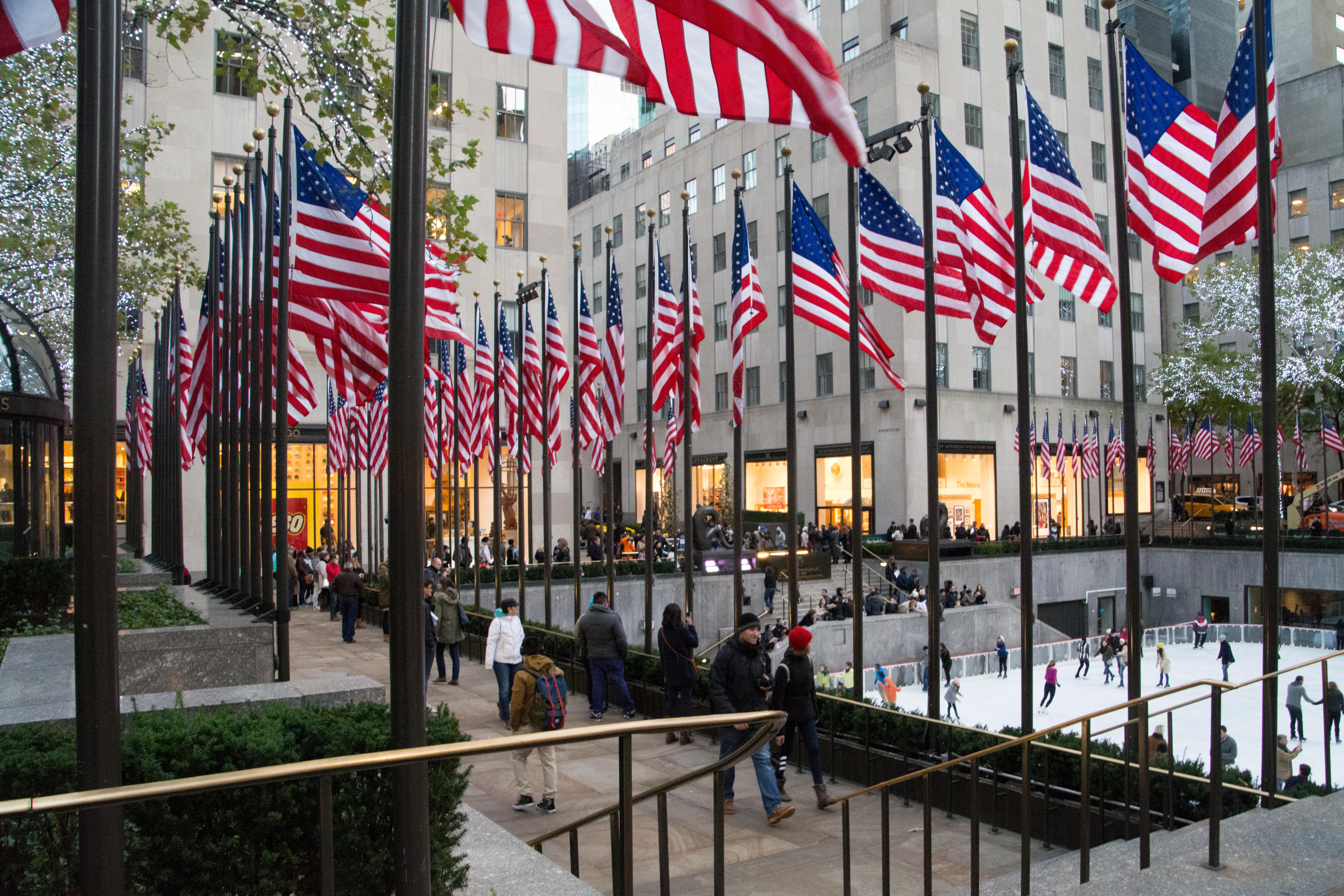
After Jocelyn got on the subway to go home to Brooklyn, I had a little time before we were due to head to the airport. I walked down Fifth Avenue and over to the skating rink at Rockefeller Center. I noted that the varied collection of flags from many nations had at some point been replaced by all US flags. Good looking flags, though .