The Casual Blog

Tag: Johann Hari

A lovely wedding, and new books on evictions and the war on drugs

20160416_194912
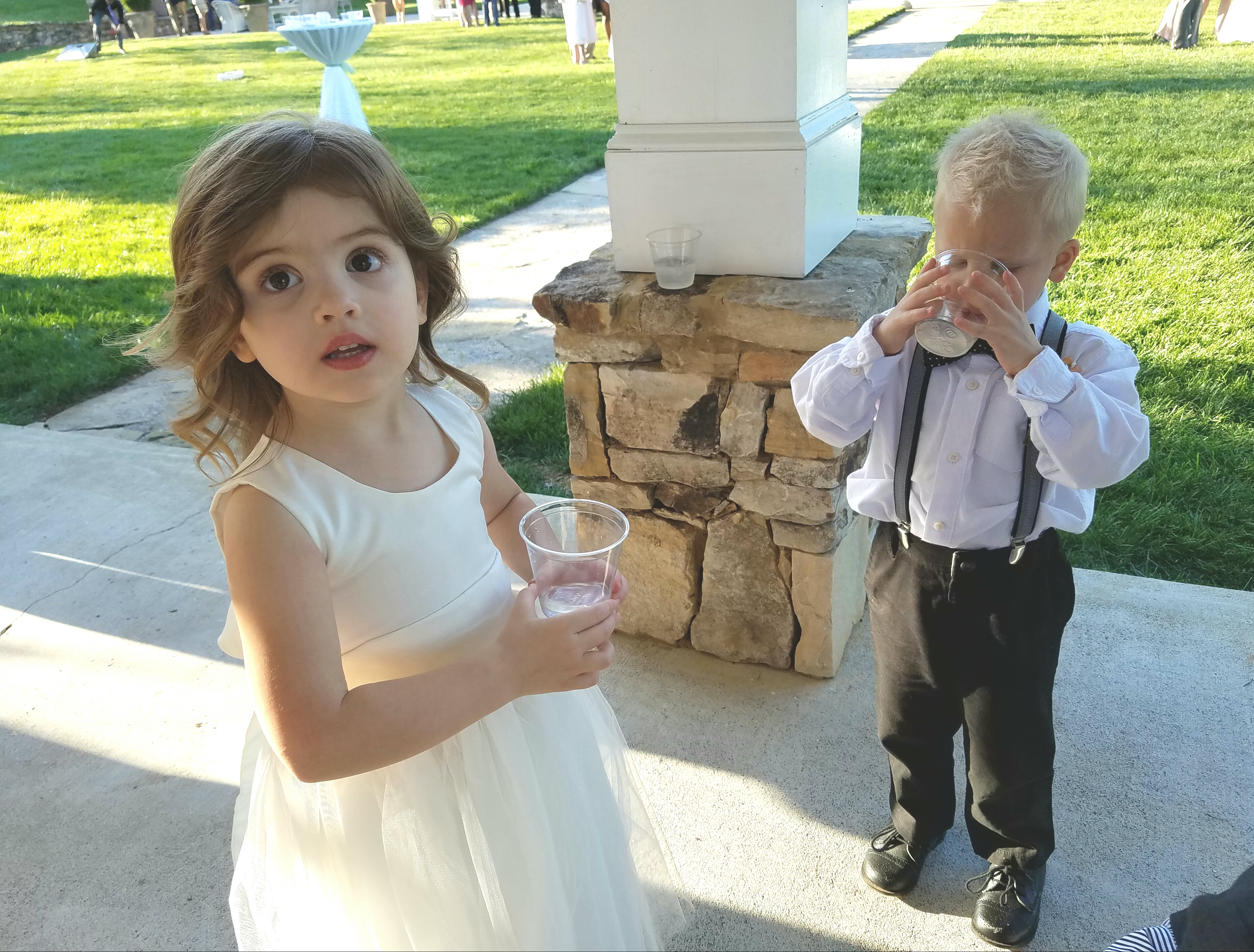
On Saturday we drove down to Charlotte and then flew to Chattanooga for my nephew’s wedding. After we checked in to the downtown Holiday Inn, we took a cab to Dalton, Georgia for the ceremony.  The venue was a converted farm, with green meadows and mountains in the distance, and the skies were sunny and blue.  It was good to see family, and good to see the loving groom and bride.

On Sunday morning we walked from the hotel down to the river, and that was all the time we had to check out Chattanooga before flying out.  We would have visited the aquarium if we’d had a little more time.  People we encountered seemed unusually friendly.
20160417_174136

With the benefit of all that happiness, I was able to have a look at some counterbalancing sad truths, including finishing reading Evicted, by Matthew Desmond.  It’s a close up view of the lives of poor people in Milwaukee who can sometimes barely, and sometimes can’t, make rent.  The problems related to housing insecurity are basic but also big — joblessness, poor nutrition, poor education, and lack of community.  It’s an eye- opening  and disturbing portrait, and a call for reform. I highly recommend it.

I also finished a Chasing the Scream, by Johann Hari, a book about our war on drugs.  The book focuses on a few individuals who were either drug warriors (government officials, drug logs) or victims. I hadn’t known the story of Harry Anslinger, a primary architect of the federalization and internationalizing of the war on drugs starting in the 1930s. In this telling, he is a ignorant, peculiar man, but, unfortunately, highly effective in promoting the idea that some drugs are inherently evil, and the people who take them should be treated as criminals.

Hari offers the alternative view that illegal drugs are not inherently different from legal ones, and although they can be harmful, we’ve inherited a greatly exaggerated view of their harmfulness.  Drug addicts are not zombie monsters, but rather troubled human beings who can be helped.  He examines the results of the legalization programs in Portugal and elsewhere, and looks at how we might get to legalization in the U.S.  I thought the book was a bit heavy on the human interest anecdotes and sometimes light on the science, but still well worth reading.

20160416_193101

There was also a good short primer this week on the history of the war on drugs in the Huffington Post by Tessie Castillo. Castillo makes a good case that the main reason we treat certain drugs as illegal was economics and cultural prejudice, and particularly fear of immigrants.  Opium was perfectly legal and widely available until Chinese workers were demonized as taking American jobs, at which point it was criminalized.  Similarly, marijuana was legal until it became associated with Mexican immigrants and other minorities, at which point it became “dangerous.”  The myths required to sustain this view, including explicitly racist nonsense, eventually began to seem real.  

Richard Nixon has been treated unfairly by history in some respects, such as our tendency to forget his progressive social programs, but he deserves disdain and disgust for his whipping up the hysteria on drugs.  According to reporting by Dan Baum, John Ehrlichman, White House counsel to President Nixon, fessed up as follows: “The Nixon campaign in 1968 and the Nixon White House after that had two enemies: the antiwar Left and black people… We knew we couldn’t make it illegal to be either against the war or black. But by getting the public to associate hippies with marijuana and blacks with heroin, and then criminalizing both heavily, we could disrupt those communities. We could arrest their leaders, raid their homes, break up their meetings, and vilify them night after night on the evening news. Did we know we were lying about the drugs? Of course we did.”

Political cynicism? Perhaps a wee bit. But note, President Reagan followed suit, and President Clinton, and …. Well, we’re still fighting a war on drugs that with enormous costs in dollars and lives, based on fundamentally false premises. I think we’re starting to realize this is crazy, but we’ve still got a ways to go.

A piano recital, Turing’s secrets, NSA surveillance, and the cure for addiction

_DSC8060_edited-1
It was rainy and raw on Friday evening when Sally and I drove over to Durham, and the traffic kept bunching up. We were a bit anxious about being late to meet our friends at Watts Grocery, and we were late – they’d already ordered drinks and salads. But they forgave us, we caught up, had a good dinner, and made it in good time to a concert at Duke’s Baldwin Auditorium, where we heard a program by the eminent pianist Jeremy Denk.

Denk is a musician’s musician. His program was, as he put it, a mix tape of Schubert dances shuffled together with short Janacek pieces, and also some atypical Haydn, some atypical Mozart, and Schumann’s odd and powerful Carnival. Everything he played seemed thought through to the smallest detail, but at the same time full of feeling.

For encores he played the slow movement of Ives’s Concord Sonata, and one of the slower Goldberg Variations, both of which were exceptionally colorful and beautiful. Though not a particularly good-looking guy, he was also fun to watch, with gestures that accorded with the music and magnified the feelings. Later, I re-read his wonderful autobiographical essay from the New Yorker, Every Good Boy Does Fine, which I highly recommend.
_DSC8033-1_edited-1

We saw The Imitation Game last week, which was a bit staid but also touching. I knew something of Alan Turing, including his brilliant contributions to computing theory (including the Turing machine and the Turing test) and that he helped break the Nazi’s Enigma code. I hadn’t known how he did it, or much about him as a person. From the movie, he appeared distinctly anti-social. This being Hollywood, it seems safe to assume he was probably even harder to like in real life. But he contributed enormously to the world, before being hounded to death at age 41 for the crime of being gay.

Turing’s death was a tragedy, but in earlier chapters he was lucky, in a way. How inspiring and daunting it must have been to think that thousands of lives, and perhaps the future of western civilization, depended on whether you could succeed in an almost impossibly difficult code-breaking task. And by golly, he did it!

Indeed, although I’ve never thought of it this way before, our forebears who found themselves facing Nazism and Fascism were lucky, in a similar way. They had an unambiguous enemy, a massive threat, that could only be defeated by joining together, and with heroism and sacrifice. We seem to need big enemies to unite us as a society. That may be why, when we don’t have big enemies, we magnify smaller ones.

And so, as I discussed here last week, we push forward with the 13-year-old war on terror, which continues to morph. This week a coup in Yemen resulted in headlines suggesting we should panic over a new terror threat. The coup was actually by sworn enemies of Al Qaeda, but the fear seemed to be that increasing disorder was likely to lead to increased space for militant anti-Americanism to expand. That’s possible, I guess. But it’s possible that this is a civil war with entirely different drivers, tribal, religious, or financial. Perhaps it’s not all about us.
_DSC8016-1_edited-1

The thing is, when we panic we do foolish and deplorable things – domestic spying, torture, assassinations, war. This week the New Yorker has a piece by Mattathias Schwartz about the NSA’s collection of internet searches, social media, and metadata on phone calls – hundreds of billions of records, at a cost of tens of billion of dollars ($10.5 billion in 2013). Schwartz examines the question of how many terrorist attacks were stopped by this program, and finds . . . perhaps one. Not exactly saving western civilization.

Actually, the one was not so much a potential attack, and not so much in the US, as a financial contribution of $8,500 by a Somali born U.S. citizen that may have been made to Somalian guerrillas (the Shabaab) who had jihadist ambitions and Al Qaeda connections. The evidence sounds ambiguous, but there were three convictions, and rightly or wrongly, the defendants were sentenced to prison terms of up to 18 years. That’s all we got, in return for billions of dollars and constant surveillance of our everyday lives that undermines our privacy, our public discourse, and our Constitution.
_DSC8025-1_edited-1

As crazy and depressing as this is, it should be noted that there’s hope: our mass panics can be overcome. For example, it seems like there’s a light at the end of the tunnel in our costly and tragic war on drugs, at least as to marijuana. With several states in various phases of legalization, it’s increasingly hard to argue that using pot should be punishable as a crime. But it is still being punished as a crime in places, and we’re still spending $51 billion a year on fighting drugs here and around the world.

Jocelyn pointed up a piece this week in the Huffington Post with a new, to me, take on drug addiction. A basic premise of the war on drugs is that some drugs are so fantastic that they’re irresistible, and so they take control of and destroy lives. But the piece, by Johann Hari, suggests an alternative paradigm.

Hari reexamines the famous rat-with-cocaine experiment, where the rat is alone in a cage and keeps taking cocaine until it dies. Later research by Professor Bruce Alexander focused on the environment of the rat – which was caged and alone. When rats were put in more stimulating environments, including toys and rat friends, and offered the same drugs, they mostly shunned them. Alexander found that even rats that were thoroughly addicted to heroin kicked the habit when they had the benefit of other rats to socialize with and stimulating environments.
_DSC7995-1_edited-1

The theory expounded by Hari is that what drives addiction is not primarily chemical hooks, but rather isolation, and that what prevents it are meaningful human connections. This may also explain some non-drug addictive behaviors, like gambling. That is, drugs or gambling may be responses to other problems, like loneliness.

Hari notes that Portugal, which once had a very high rate of drug use, decriminalized all drugs 15 years ago, and invested some of the money saved from drug warring in social programs, such as housing and jobs. The rate of injected drug use has fallen by 50 percent. Fifty percent! I recommend reading Hari’s piece.