The Casual Blog

Tag: fireworks

Fireworks, wildlife, and Carl Hart’s book debunking drug myths

14 07 04_0378_edited-1-1
Fourth of July fireworks are hard not to like. As a friend once observed of sex, even when it’s not particularly well done, it’s magnificent. On Friday we were planning to walk a few blocks to see the one of the two downtown Raleigh fireworks shows, but Sally was not feeling well, so we got some takeout Indian food from Blue Mango and watched from our twelfth-floor balcony.
14 07 04_0402_edited-1

That afternoon I’d Googled how to take good fireworks photos, which is a bit involved (use a tripod, remote control, bulb setting, manual focus, etc.), but I found it interesting. I got a few images I liked of the display at Red Hat Amphitheater. I could also see parts of the display at Memorial Auditorium, which appeared to be more magnificent, but this could be the grass-is-greener effect.

14 07 04_0404_edited-1-1

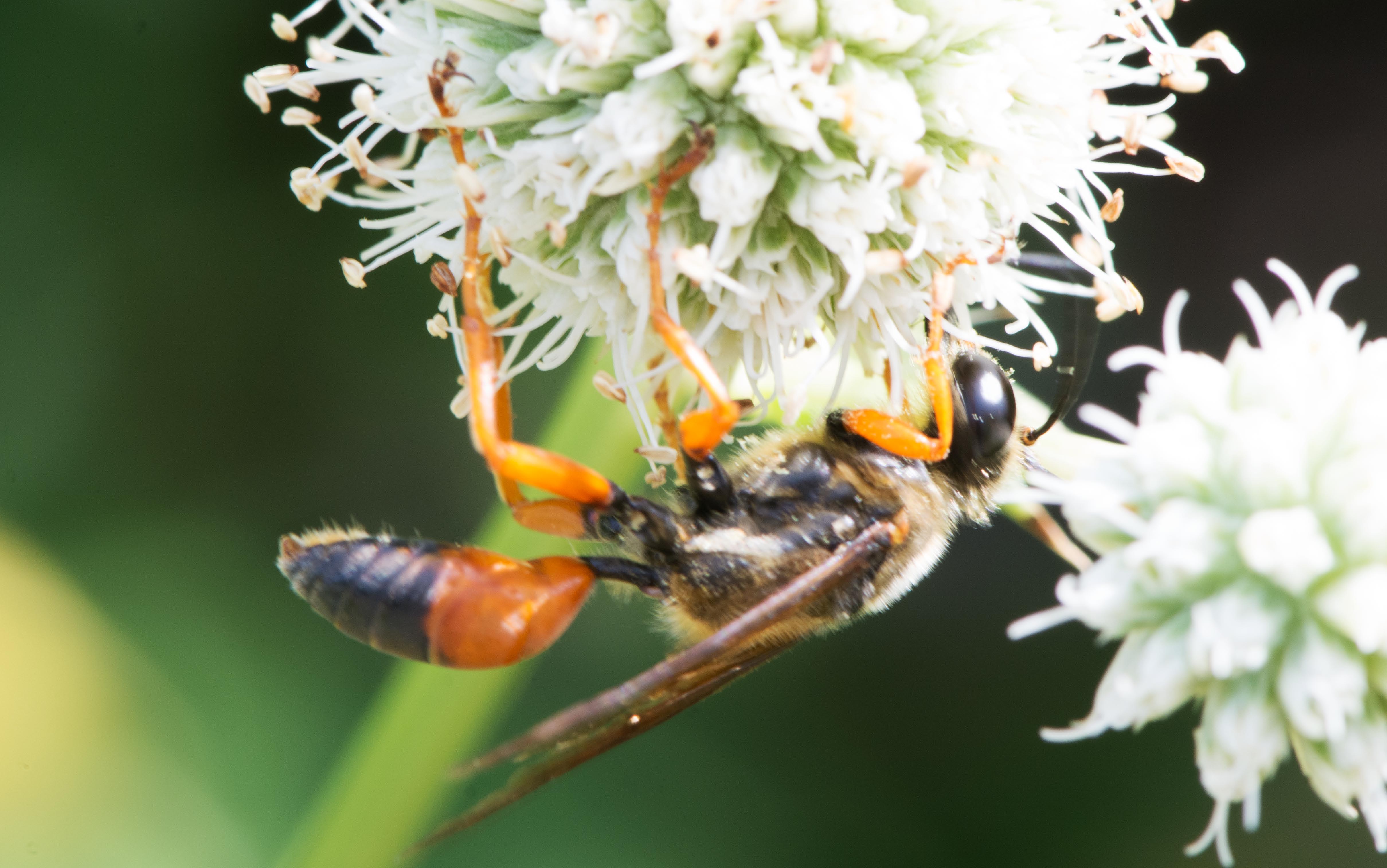
I continued exploring local parks, looking for dragonflies and other wildlife, this time stopping at Shelley Lake. There were lots of mallards and geese, but the one below, by herself, got my attention. I also stopped in at Raulston Arboretum on Sunday morning and focused on some little creatures communing with the flowers.

14 07 05_0538_edited-1

On Saturday I finished reading an unusual and worthwhile book: High Price: A Neuroscientist’s Journey of Self Discovery That Challenges Everything You Know About Drugs and Society, by Carl Hart. Hart is a professor at Columbia University who’s devoted his scholarly career to studying the effects of illegal drugs on the brain. His book is an autobiography of growing up poor and black in south Florida, and somehow not getting shot, becoming a dropout, becoming a hardened criminal, becoming an addict, or going to jail (which were common outcomes of his friends and family), and instead somehow getting an education, becoming a respected scientist, and learning to question his own assumptions. It’s remarkably honest.

I was particularly interested in his take on the war on drugs. As I’ve noted before, I view the drug prohibition regime as a terrible social policy from every perspective. Hart focuses particularly on the costs to the black community, with draconian laws resulting in mass long-term imprisonment and destruction of the social fabric. He combines an overview of the human toll with his own drug experiences.

14 07 06_0462_edited-1

Like almost all of us, he initially accepted uncritically the media/government claims that crack cocaine was a menace that threatened to make addicts of everyone who tried it and turn them into zombies who cared for nothing but the next high. He gradually realized, based on his own experience and his research, that this was a wild distortion of reality. Crack cocaine is chemically almost identical to cocaine, and the effects on the body are basically the same. The primary difference is social: crack cocaine is cheaper and marketed more to black communities, while cocaine is an expression of wealth and status. And crack prison sentences are much more severe.

This has become almost common knowledge, and the sentencing disparities have been substantially reduced (but not eliminated, unfortunately). For me, Hart’s account highlights how media and politics can create a moral panic, and even otherwise responsible scientists can get swept along. Thus the famous example of the experimental rats that can’t resist crack, which supposedly proved that crack was uniquely addictive. Hart explains that the rats, which are social creatures, were unhinged by isolation, and had no alternative activities to getting drugs.
14 07 06_0514_edited-1
Hart did experiments with human subjects who were in fact crack addicts, and offered them a choice of getting high or getting $5. They took the money frequently enough to disprove the idea that addicts cease caring about anything but drugs.

Hart contends that the problem of drugs in poor communities is complex, and viewing drugs as the primary source of social ills is mistaken. The kinds of social problems that he grew up with – domestic violence, petty crime, an extreme culture of honor magnifying violence, teenage pregnancy, and unemployment – preceded the arrival of crack. The central problem of poor communities is poverty. It’s not surprising that people with few other entertainment options are more prone to entertaining themselves with drugs.

Hart finds that the great majority of people who use drugs, including crack and heroin, are in no sense addicted. Most users have jobs, families, and orderly lives. The notion that addiction always results from exposure is simply false. This doesn’t mean that addiction never happens, or that it is not a serious medical and social problem. There are addicts who need help. But we need to get our facts straight, quit moralizing, and quit punishing people for addiction.

The war on drugs is a fascinating case study of how fantastically wrong ideas with horrendous consequences can propagate and take over entire societies. We tend to think of this happening in the distant past (think of witchcraft) or foreign lands (murderous religious extremists). But it happened to us! With all our wealth, education, science, and technology, we were still overpowered by groupthink that stopped critical thought. And while we may be winding down the war on drugs, it is definitely not over.

Thus it took courage for Hart to write this book. With an entire population raised on constant messages of moral panic, to challenge the basic foundations of the war on drugs is risky. You will be viewed by many as dangerous and immoral, which could be career-limiting.

But this book may help shift the debate. I was a little disappointed that Hart didn’t follow his sound reasoning all the way on the question of legalization, and ended up promoting instead decriminalization. As the Economist has repeatedly pointed out, decriminalization leaves the drug markets in the hands of criminals, whereas legalization with careful regulation would deprive criminals of a major source of revenue. But never mind. I’m grateful for Hart’s book.
14 07 06_0483_edited-1
14 07 06_0485_edited-1

Fireworks, new bluebirds, right-wing NC Republicans, and bees at work

13 07 05_2398-1

Sally fixed chilled cucumber soup and two salads for our July 4th dinner, with homemade coffee ice cream for dessert. From our condo on the twelfth floor we had a good view of the fireworks show at Red Hat Amphitheater. Fireworks shows vary, but I’ve never seen one I really didn’t like, and this was no exception. OK, it could have been faster and bigger, but there were interesting shapes and sparkling colors, and lots of noise. This may be my favorite ritual in the American civil religion.
13 07 04_2543_edited-1

Earlier that day, Sally took me along when she monitored the bluebird houses at Lochmere Golf Club. She’d promised that there should be some new eggs and nestlings, and there were! We were pleased to see the new arrivals.
13 07 04_2570

Speaking of country clubs, the News & Observer reported this week that Carolina Country Club, Raleigh’s old line club, finally admitted its first black member. This was front page news, and I was glad to hear it. CCC maintained the color barrier for way too long. Now that the curse has been broken, I hope they will implement a policy of true non-discrimination going forward.

In my lifetime, we’ve made so much progress on the race issue, for which I am happy and grateful. For all my disappointments with President Obama, every day I feel proud and a little amazed that we have a black president. I can go for weeks or months without observing anything like the racial prejudice that was pervasive when I was a boy.

But we’re still not done. Republican measures to limit the voting power of blacks in NC and elsewhere by imposing ID requirements are moving forward. This is just shameful. With this movement in process, the Supreme Court was surely wrong in striking down part of the Voting Rights Act. There’s still a ways to go to build a color-blind society.
13 07 05_2414

Our North Carolina Republican legislators have gone on a right-wing tear this session. Some of their activities make sense from the point of view of bettering the lot of the wealthy or pandering to the ignorant, but some are inexplicable in ordinary moral or practical terms.

Does any rational person, no matter how selfish or cynical, think it makes sense to get more people carrying concealed firearms into more public spaces? Would a person with a shred of decency change the law to protect agriculture operations that abuse farm animals and criminalize the behavior of those who seek to expose the abuse? Would a normal caring parent or employer find it sane to reduce school funding and increase class size? Would any responsible leader or citizen turn down federal funds meant to help the unemployed or ailing? Does any moderately educated person school think that North Carolina has the right to establish its own state religion? In establishing the highest priorities, does anyone think Is outlawing Sharia law makes the top-thousand list?

And while we’re outlawing Sharia law, why not work in a slew of anti-abortion measures? This actually happened this week without fanfare and without the usual legislative formalities, presumably to minimize the chance of organized opposition. I’ve never found the abortion issue as easy as some of my friends, but the state Senate’s work this week under cover of darkness is really disturbing from a process point of view, and looks like a huge mistake. In the aftermath of this latest fiasco, my liberal friends were looking glum, and worrying at the damage this is doing both to the humans affected (such as women with unwanted pregnancies and poor people) and to the image of our state.
13 07 05_2401

This onslaught really doesn’t seem like the result of a theory of government. To the extent it has a direction, it seems aimed less at accomplishing any policy objective than at making liberals screaming mad. Once a liberal value gets identified, it is attacked with extreme prejudice.

To a certain extent, the NC right-wingers seem to be reproducing the values battles identified by national-level right-wingers. What else could be going on? I heard an NPR interview with Bill McKibben, an environmentalist and college professor, who said the problem with building a green movement was that a movement needed an enemy. In a sense, all of us are conflicted on environmental issues, since we all like cars and electricity. We can’t be our own enemy and still feel motivated to get into the streets. His solution was to declare the oil companies the enemy. This would, he thought, allow a green movement to cohere.
13 07 05_2480

So maybe that’s what our NC right-wingers are up to: building their group cohesion by identifying liberals as the enemy and trying to cut out their hearts (metaphorically speaking). It’s hard for a liberal to find a silver lining at the moment, but I’ll still take a swing. I don’t think this is the direction a majority of the state, or even a majority of Republicans, want to go. And by forcing minorities, low-income people, women, immigrants, and the reality-based community to see their common interest, the wing-nut legislators are increasing the chances that their “public service” will not last past the next election.
13 07 05_2466

In the meantime, President Obama has seized the initiative on climate change by ordering rules on power plant reductions for CO2 and other measures. Longtime readers of the Casual Blog will know that this is a big issue for me that I think should be a big issue for everyone. At issue are mass extinctions and dislocations on a scale previously unknown in human history. The significance is much greater than putting a man on the moon, and we ought to mobilize with a level of commitment on a scale comparable to the Apollo project. I hope this is the start.
13 07 05_2522

And while we’re on the subject of things to feel good about and continue working on, let us not forget, the long fight for gay rights has made real progress. The Supreme Court, a highly conservative institution (even if not all of its justices are conservative), struck down the Defense of Marriage Act! A majority recognized this as a human rights issue. It seems the tide has turned.
13 07 05_2538

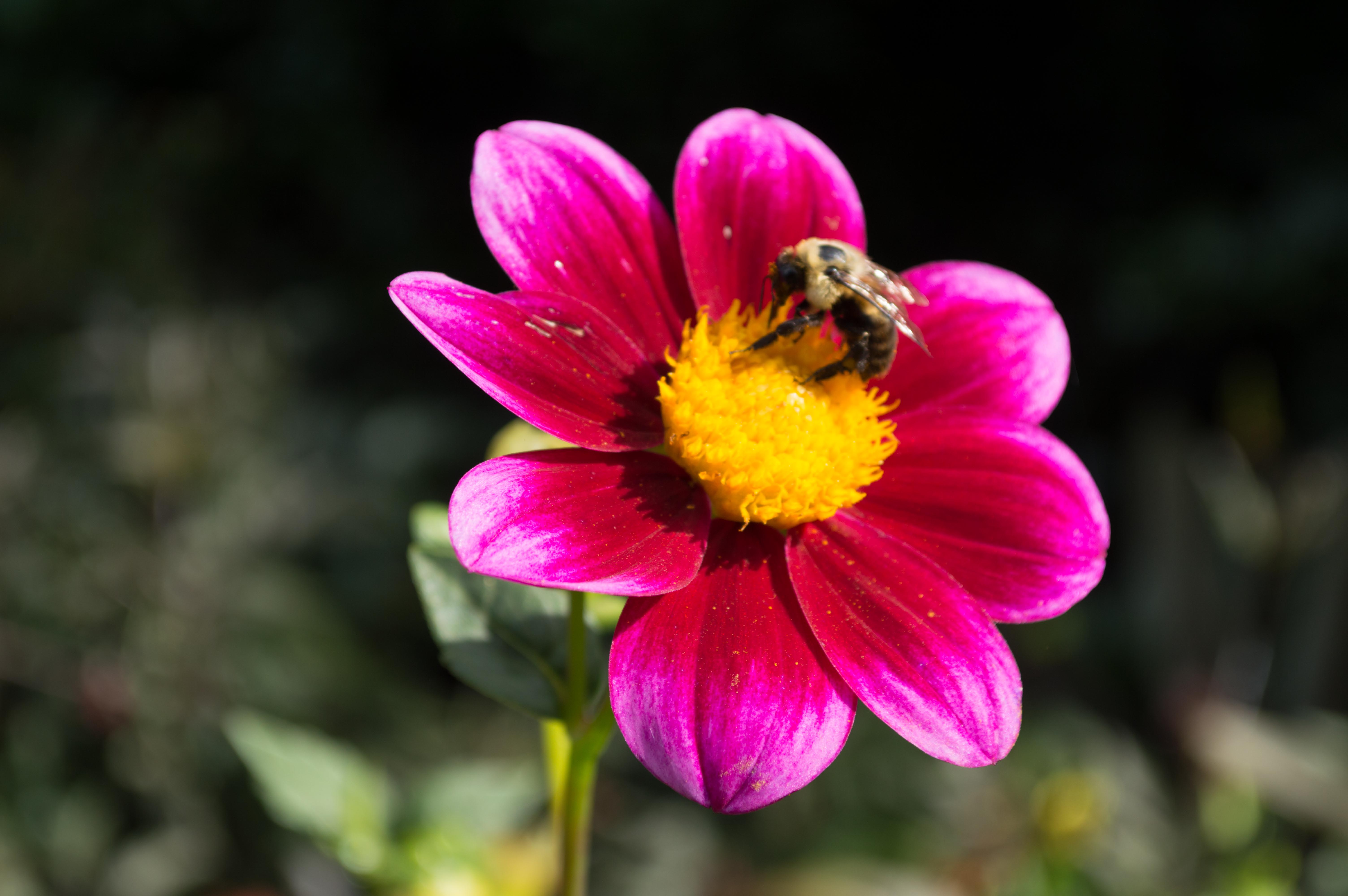
Well, that’s it, I’m climbing off my soap box. I got out to Raulston Arboretum on Saturday and found a lot of bees hard at work. I took along my tripod and used a Nikkor 18-55 mm lens in aperture priority mode. Along with a variety of bees and flowers, I was struck by the sculptural qualities of some of the blooms. My favorites are above and below.
13 07 05_2396
13 07 05_2452