The Casual Blog

Tag: Edward Snowden

Our old friend Stuart, rainy Duke Gardens, N.C. Opera, and Snowden reconsidered
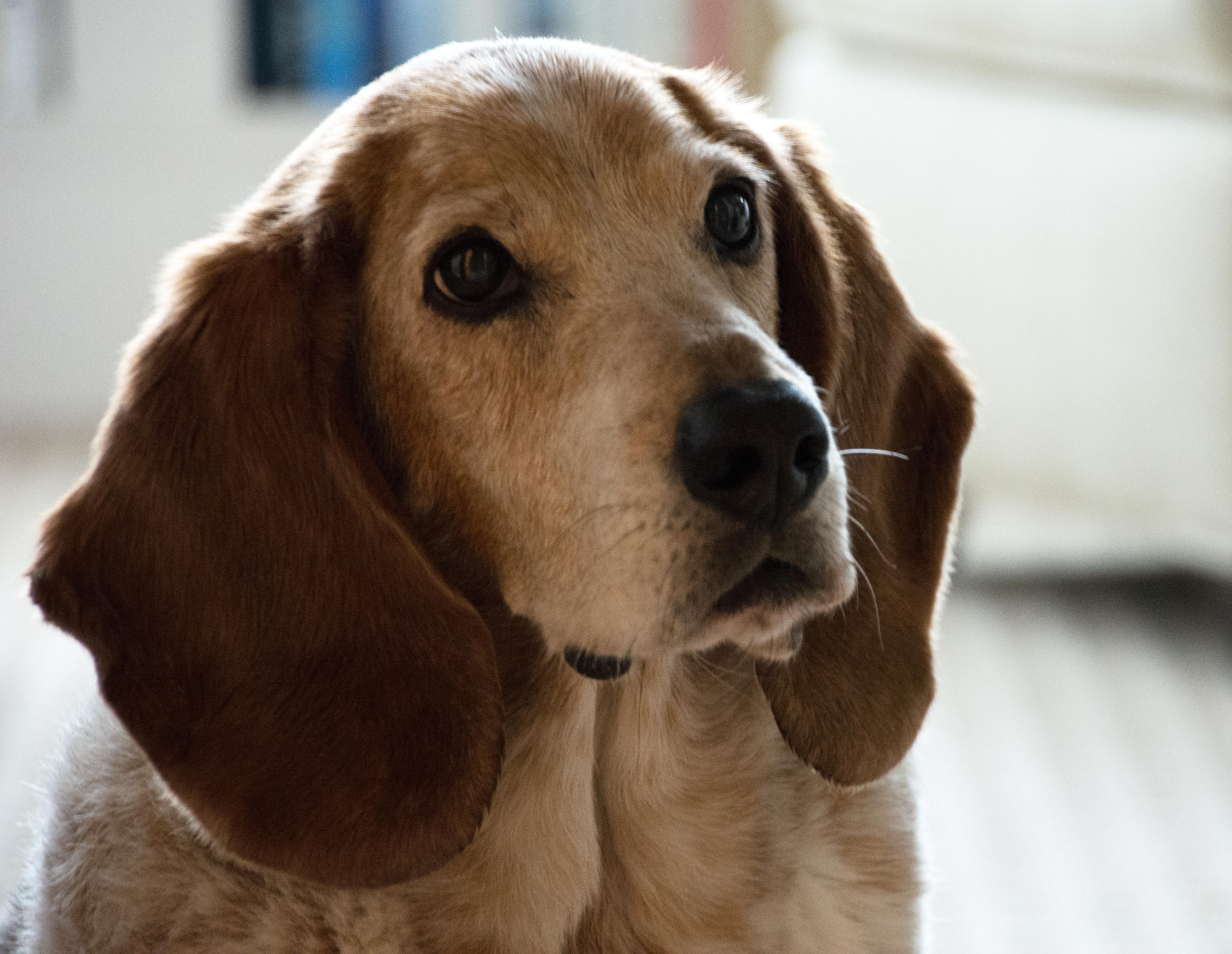
Stuart Tiller, April 26, 2015

Stuart Tiller, April 26, 2015

This week I was particularly aware that our sweet Stuart is getting grayer and slower. He’s almost thirteen, so this is no great surprise. But I had a sudden pang when I realized he will not be with us too much longer. He still likes eating and going for walks, and from time to time wants to play with the tennis ball, but only for a bit. He still really likes being petted, as I like petting him. It’s a good thing now and again to pause to note how precious this short time together with a good friend is.
_DSC9485_edited-1

Azalea at Duke Gardens, April 25, 2015

Azelea at Duke Gardens, April 25, 2015

Duke Gardens. On Saturday morning I drove over to Durham to visit Duke Gardens. It started to rain just after I arrived, so I took along an umbrella and tried to keep my Nikon from getting too wet. The rain fell gently, and the gardens were very peaceful and beautiful. This is a place I would love to live if I were a plant. The azaleas were spectacular. In the terrace garden, the tulips were gone, replaced by a wild profusion of white irises, orange poppies, and many colorful spiky and flowing flowers I could not name.

_DSC9456_edited-1
_DSC9481_edited-1

N.C. Opera. On Sunday we saw and heard the final performance of N.C. Opera’s new production of Don Giovanni. It was excellent! It really is hard to believe that we’ve got opera of this quality right here in the Piedmont. The singers were all young, but they all were well-trained musicians with depth and maturity.

I was particularly struck that all three sopranos had gorgeous and powerful voices, and big personalities. Hailey Clark (Donna Elvira) was probably my favorite for the beauty of her tone, but Alexandra Loutsion (Donna Anna) was also a wonderful singer, and Jennifer Cherest (Zerlina) was quite charming. Adam Lau (Leporello) had a fine bass-baritone and good sense of humor. Jeongchelo Cha was Don Giovanni, and ultimately delivered a convincing performance of this deeply flawed but fascinating character.
_DSC9409_edited-1
Snowden reconsidered. I finished reading No Place to Hide, by Glen Greenwald, about breaking the Edward Snowden story. Parts of it read like a Le Carre thriller, but the main points are highly thought-provoking. As the real events began unfolding almost two years ago, it was unclear to me whether Snowden was a kook or fanatic, and whether his disclosures had done more harm to America than good. Greenwald’s book makes clear that Snowden was careful, thoughtful, and idealistic, and his revelations were considered ones that showed that our security apparatus has pushed aside and undermined some of our most important constitutional values. He makes a strong argument for viewing Snowden as a patriot.

It may well be that the NSA folks looking at our personal electronic information mean well, supposing that they might find hidden terrorist threats and suchlike. But even if their work was productive and effective (which it hasn’t been), it is corrosive.

The consciousness that we might be being watched is very close to the consciousness that we are being watched. In either case we lose an important component of personal freedom. Consciously or not, as we come to understand our electronic lives may be constantly monitored, we modify our thoughts and behaviors. We become more passive and compliant. Both our inner lives and our social lives are deprived of oxygen. This is a psychological force that is hard to resist, though of course we need to try.

_DSC9436_edited-1

Rectal feeding???

14 12 14_3866_edited-1
This week I was quite shaken by the new Senate report on the CIA’s program of “enhanced interrogation techniques” used on those suspected of Jihadist terrorist intentions. I had, of course, already heard there’d been some very rough stuff, like water boarding. But I hadn’t known (and may still not, since much information is still secret) the full extent of the barbarity and depravity.

For example, the concept of “rectal feeding” was new to me. I suspected based on high school biology that it was not possible to feed humans through the southern side, and I checked – this is correct. Folks, we’re talking about our government, which is to say, humans purporting to act on your and my behalf, anally raping prisoners. It’s hard to see how we can just let this pass.

I also hadn’t known that the foundation of the program included systematic and pervasive lies not just to the public but also to Congress and the Executive. It was certainly news to me that the architects of the program were amateurs with no prior experience in intelligence. And I hadn’t previously known for certain that the program was not remotely justified by intelligence gathering achievements.

Some may say I’m just sentimental about human dignity and the concept of the rule of law, and these are notions we can’t afford when we’re in an existential battle with evil. Perhaps. But the evidence from the Senate report is that the successes of the CIA interrogators actually came from conventional, non-“enhanced” methods. The enhanced techniques produced misery, madness, and death, but did not defuse any ticking time bombs. It may be that those who directed this program were the ones who were in a dream world, imagining both an existential threat from terrorism and a simple solution to that threat.

It’s fascinating, and disturbing, to see present and former CIA and Bush administration officials stepping up to praise and defend the program. It’s no surprise that they would defend their work, and perhaps they are in some sense sincere. They’ve probably got cognative dissonance, and are managing it as best they can. They could also have more practical and selfish motives, like heading off any discussion of whether they should be tried for war crimes.

In any event, the fact that these officials are still willing to defend the CIA torture program underlines the importance of our holding accountable those who directed and participated in this abomination. We cannot leave ambiguous the question of whether it is acceptable to torture prisoners. No future official should be in doubt that this is criminal behavior, for which they are subject to imprisonment.

Of course, though I hate to say, they’ll probably get away with it. There’s no special interest that will provide campaign dollars in exchange for standing up for human rights of prisoners. There are a few, but too few, of our representatives prepared to spend political capital on an issue that none of us enjoy thinking about.

And the knowledge, thanks to Edward Snowden, that our electronic communications may well be being screened by the NSA for signs of dissent will make some of us who feel outrage and shame hesitate to speak up and demand justice and accountability. These are, after all, the people who so far have the unchecked power to make us disappear into “black sites” and rectally feed us. I don’t mean to exaggerate. Plainly, I don’t think this is an immediate threat, since I’ve just made a critical public statement about it. But I must admit, I hesitated. I’m so sorry this has happened to our country.

I’d like to call out The Washington Post for its extensive and clear-eyed coverage of this dark and shameful chapter. Here is a particularly helpful quick guide to the Senate report from the Post.

Hammering nails, my sweet cable repair robot, privacy concerns, and some flower pictures

13 06 21_2142
On Friday afternoon the Red Hat legal department in Raleigh worked on a Habitat for Humanity house in Apex. We met the owner to be, who sounded like he might have originally been from west Africa, and who said this was his dream house. I watched a group of colleagues get trained in installing windows, and then got drafted to do some work in the rafters, including repairing some mistakes of a previous crew.
13 06 21_2134

Hammering nails is not something I’m particularly good at, and I learned that this was even more true when standing on a ladder, reaching upward, and swinging within limited space. My wrist and arm got tired. But, though slow, I got quite a few nails well in, and avoided serious injury. I do not think the next crew will need to re-do them.
13 06 21_2133_edited-1

Speaking of repair work, I had an interesting experience on the frontiers of automation this week with my cable service, Time Warner. Our on-demand movie service didn’t work properly last week. When I called TW, my call was answered by an automated female voice of the sort that usually reads service options (press 2 for billing inquiries, etc.).

It (she) asked me to describe the problem. She then correctly paraphrased it, and said she’d be right back. Then she said that she’d checked and my cable box needed to be re-set. She said she would do that. She did it! This was the first fully automated repair encounter I’ve ever had, and it was excellent! When the automated repair entity told me I could hang up, I couldn’t help myself: I thanked her.
13 06 21_2205

On Saturday morning I got up with the plan of being at Raulston Arboretum when it opened at 8:00 a.m. to walk about and take some pictures with early light. I got slowed down by some interesting stories in the Times — market reactions to the Fed’s new strategy, dysfunctional courts in the Bronx, arms for Syrian rebels, protests in Brazil and Turkey, China’s and Russia’s economic policies. And particularly by the latest on Edward Snowden and the NSA surveillance program.

I’m still trying to figure out what I think about Snowden and the NSA data collectors. Clearly, it’s wrong to break your oath and betray your employer. Clearly, it’s wrong for the government to invade our privacy without due process. Clearly, it would be a mistake to acquiesce in terrorist plotting.

These conflicting imperatives make this a tough one. I tend to focus on the high risk of governmental abuse of power. Curiously, though, for some reason I’ve felt less fear and outrage over the data mining than I would have expected. I don’t think I’m alone on this. Possibly, as my colleague David said, we exhausted our outrage muscles over the Patriot Act, and the NSA intrusions are not such a big surprise.

We may have already passed an inflection point in the history of privacy. Most of us understand that Google, Facebook, Amazon, and others are using our data in ways we wouldn’t necessarily approve, but which don’t do any noticeable harm. Is the NSA program a bigger threat to civil liberties?

Well, the government is awesomely powerful, so the risk is plainly greater. But for most of us, the harm is abstract — an automated intrusion into our personal space that we never directly perceive. Will we eventually come to accept this diminution of private space as the new normal? Probably yes. Will that change our thinking and behavior? Probably yes.

A more immediate by-product of this affair is a new round of erosion of trust between government and the governed. Privacy’s cousin, honesty, has also been compromised. Can we ever be sure that any government explanation of the project is true?
13 06 21_2163

When I finally got to the arboretum, it was cloudy, but pleasantly mild, and many flowers were blooming. It smelled wonderful! I took many deep breaths. Wouldn’t it be nice if we could record those smells?

In the meantime, we’ve got digital photography, which is itself pretty amazing. I was looking for dramatic colors and shapes, and interesting textures. I was also thinking about the complex patterns that nature made, and others that the gardeners made, and others that only I could make on that particular morning with those particular blooms. I generally focused on the flowers that were at their resplendent peaks, but I also caught a few that were well into the process of dying, and beautiful in sadder way.
13 06 21_2170
13 06 21_2191
13 06 21_2154
13 06 21_2186
13 06 21_2179
13 06 21_2219
13 06 21_2156
13 06 21_2210
13 06 21_2217