The Casual Blog

Tag: Carolina Ballet

An eye exam, a veggie burger, and a new ballet

It was a busy week at work, with many new issues popping up as I tried to address the existing backlog. I also made a visit to the Duke Eye Center for an exam in preparation for my eye surgery next week. My ophthalmologist, Dr. Prithvi Mruthyunjaya, seems both brilliant and humane, but his patients have to spend an awfully long time in the waiting room. This was also true of Drs. Denny and Casey. Is this a retinological tradition? Are damaged retina patients more-than-usually patient? Dr. M. described my prognosis as “guarded.” At a number of levels, I felt not so great.

On Friday Sally and I did dinner and a ballet. For dinner, we made our first visit to Chuck’s, a new place on Wilmington Street that features in gourmet hamburgers. We quit eating cows many years ago, and so initially assumed Chuck’s was not for us, but then were told on good authority that they made the best veggie burger in town. It was, in fact, really good. It had flavor and pleasing, chewy consistency. And it didn’t fall to pieces.

The Carolina Ballet led off with a new work called A Street Symphony by Zalman Raffael. It was set to hip hop music, which, as almost everyone knows, is music emphasizing pulsing polyrhythms and rhyming gritty lyrics, and deemphasizing melody and harmony. I developed a taste for hip hop a few years back, when I found the Sirius radio hip hop channels, and found it to be good music for driving a sports car. I liked the raw immediacy and experimental transgressiveness. It is also, of course, good dancing music, but hip hop dancing seems worlds away from the ballet tradition.

Combining radically different movement vocabularies could be a banal experiment or a disaster, but Raffael succeeded brilliantly. His work Rhapsody in Blue, presented earlier this season, was soundly designed and had some marvelous flashes, but seemed more the work of a skilled apprentice than a master. With A Street Symphony, he has arrived, with a strong sense of architecture and humor.

The work is made up of seven songs, with the dancers arrayed in solos, couples, and ensembles. The set and costumes are minimalist, with the women wearing gauzy tutus of various colors pulled above their tights. In the beginning, the pounding rhythm is unsettling, and the first piece, Clockwork, uses a robotics theme that is fairly familiar. But Alicia Fabry’s replicant is both energized and vulnerable, with limbs shooting about at amazing speeds and a startled doe-eyed gaze.

I also really liked Jan Burkhard and Yevgeny Shlapko in Best of Me. Jan is a dancer with an sensual quality, and here she was fearless. Classical dance walks a fine line with respect to sex: it candidly reveals dancers’ bodies and deals with intimate subject matter, but almost never references the act itself, and is careful not to push the red button. But hip hop is sexy, and Jan embraced it. So did Eugene, who had a rangey freedom that recalled the hood.

Lindsay Purrington was really touching and beautiful in Cry Me a River. She did various transformations, including a streetwise tough and a Swan Lake swan. At one point her tutu started to fall to pieces, which added an unplanned degree of tension to the performance, but she dealt with the issue with grace, eventually ditching the thing stage right, and strutting boldly forward. Adam Crawford Chavis lifted her magnificently overhead.

This was unquestionably ballet, with pointe shoes and the traditional vocabulary, but augmented with exciting movements from urban street culture. The most successful dancers seemed to personalize their roles, though some stuck close to the familiar classical lines. For one, Margaret Severin-Hansen, who is a fantastic classical technician, was sharp and intriguing, but seemed to me to hold back a bit from the street. On the other hand, I thought Sokvannara Sar, Nikolai Smirnov, and Cecilia Ilieusiu all found interesting individual ways of combining the upmarket and downmarket.

Anyhow, I really liked A Street Symphony, and also Robert Weiss’s new work Idyll, set to Richard Wagner’s lovely Siegfried Idyll. It featured three couples and flowing lines. I was looking forward to The Rite of Spring, but it came after the second intermission, and I was just too tired to take it all in. Sally thought it too was wonderful.

It’s time to subscribe to next year’s ballet season. We’ve been going on Friday nights for fourteen years and have excellent front-center orchestra seats, but I think we’ll switch to Saturdays. On Fridays I often find myself tired after a busy week that includes 5:30 a.m. workouts, and not always able to hang in there intently for a full evening of beautiful performances. Our NC Symphony subscription has been on Saturdays, and so we’ll have to manage some conflicts, but it seems worth it.

Ballet paintings, fossils, and a piano recital

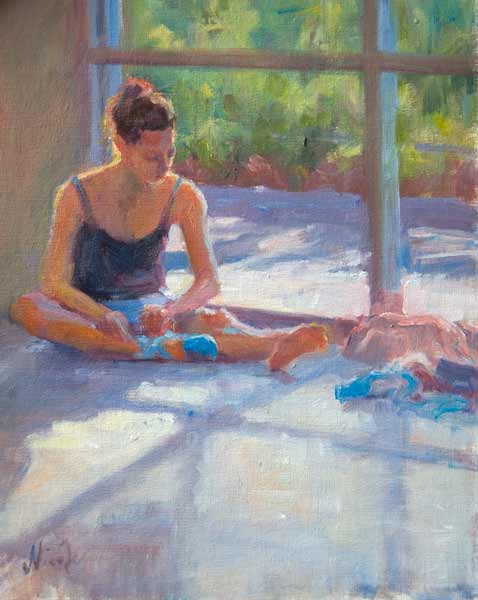
Light on One’s Feet by Nicole White Kennedy

Last Thursday Sally and I had lunch at the Remedy Diner, where my sandwich was the Tempeh Tantrum, then went to a gallery to to look at paintings by Nicole White Kennedy. Kennedy, a local artist, paints in an Impressionist/Post Impressionist style that I once thought of as old hat. My early art education stressed the triumph of modernism and abstraction. But over the years I’ve really enjoyed Kennedy’s landscapes and cityscapes in her husband’s fine Italian restaurant, Caffe Luna. I’ve gradually gotten past my prejudice in favor of the modernist aesthetic. Artists show us multiple ways to see the world, and it’s fun to try different ones.

Anyhow, I was intrigued to learn that Kennedy had worked up a show of works featuring dancers from the Carolina Ballet. We really liked the show. No doubt it helped that we came to it as balletomanes, and that we could recognize some of our favorite ballerinas. But she unquestionably had a feel for the interiors and exteriors of the dancers and their work places.

I was conscious that the works owed a debt to Degas, both in their behind-the-scenes intimacy and the juxtaposition of ethereal sweetness and stark angularity, but I didn’t find this bothersome. Artists always borrow ideas from other artists and build on them, just like scientists and inventors. We were particularly touched by the paintings above and just below, and bought them.

Dancer Removing Turquoise Points by NWK

The next day I flew up to DC for a gathering at the Supreme Court in honor of my old friend Justice Elena Kagan, which was highly nostalgic and which I will try to write about soon. But as post-election therapy, I’m focusing just now on art. With my free morning I sampled the Smithsonian museums, which always make me proud and happy to live in the USA.


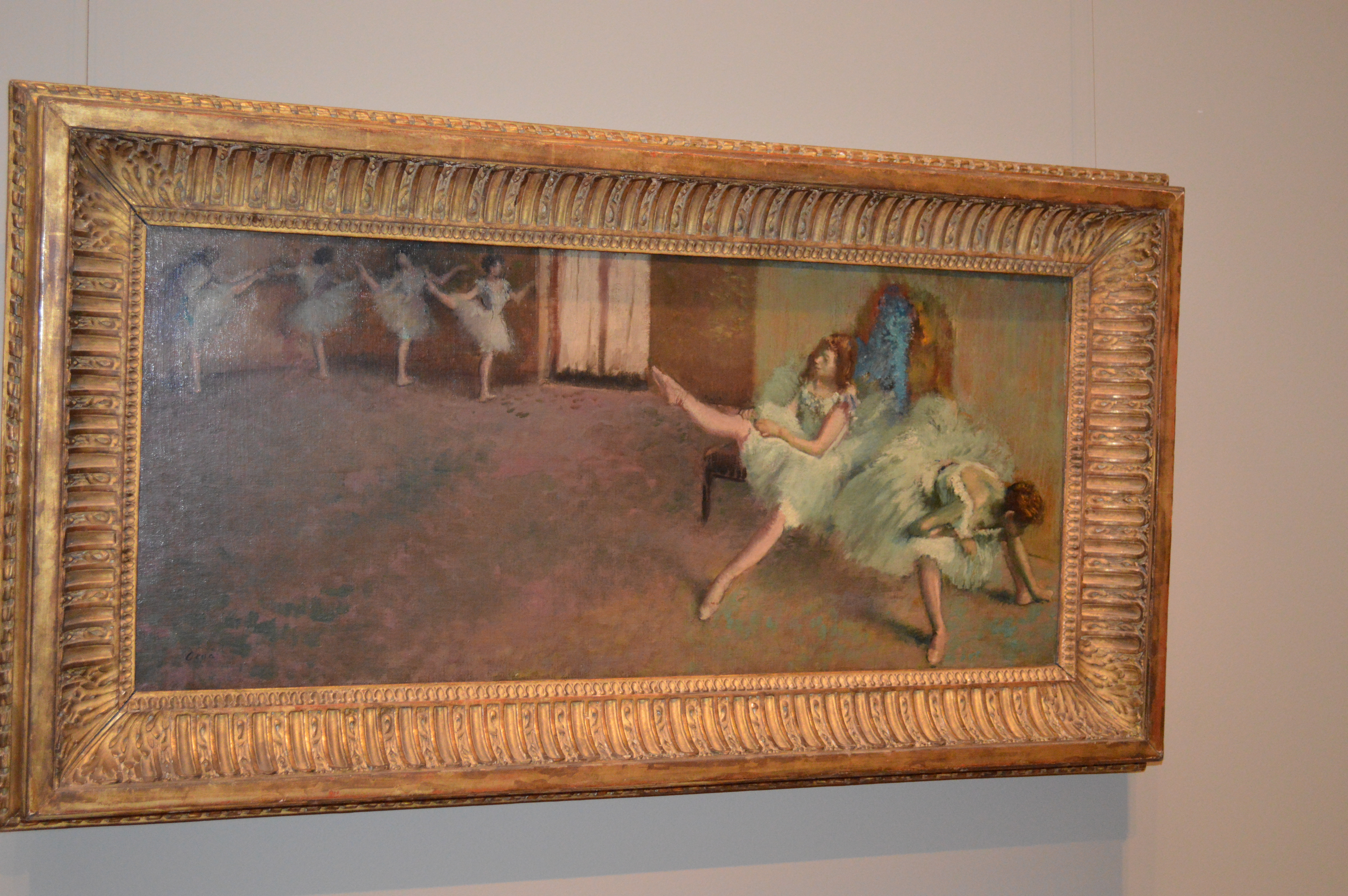
First I visited some of my favorite works at the National Gallery. These included the Rembrandts and other Dutch masters, including especially the two exquisite Vermeers, as well as the French Impressionists. Still thinking about dancers and art, I paid particular attention to the Degas paintings and sculptures of dancers. He clearly loved the subject, and it touched me. But I must say, his dancers are not as lithe and athletic as the Carolna Ballet ones.

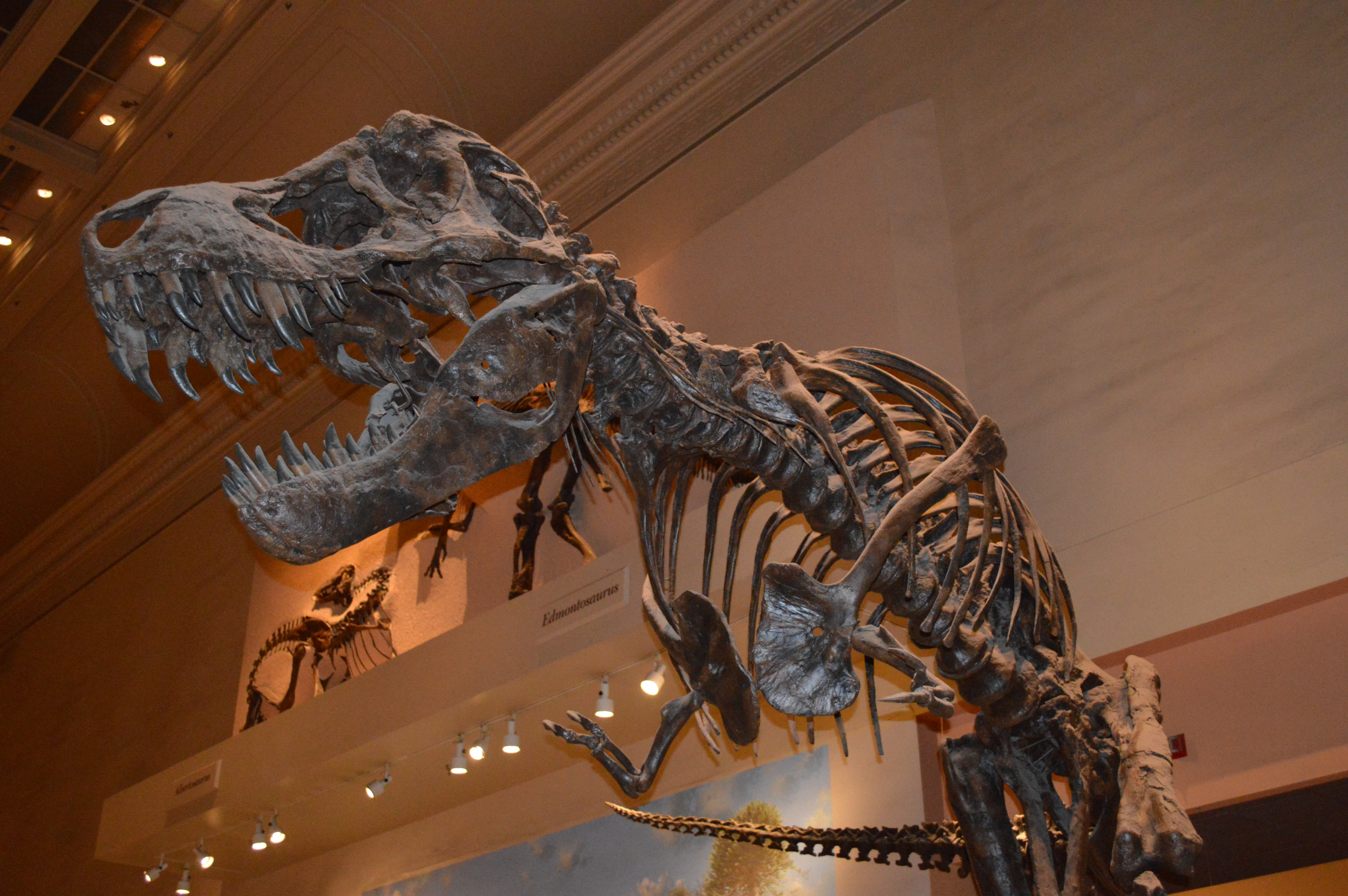
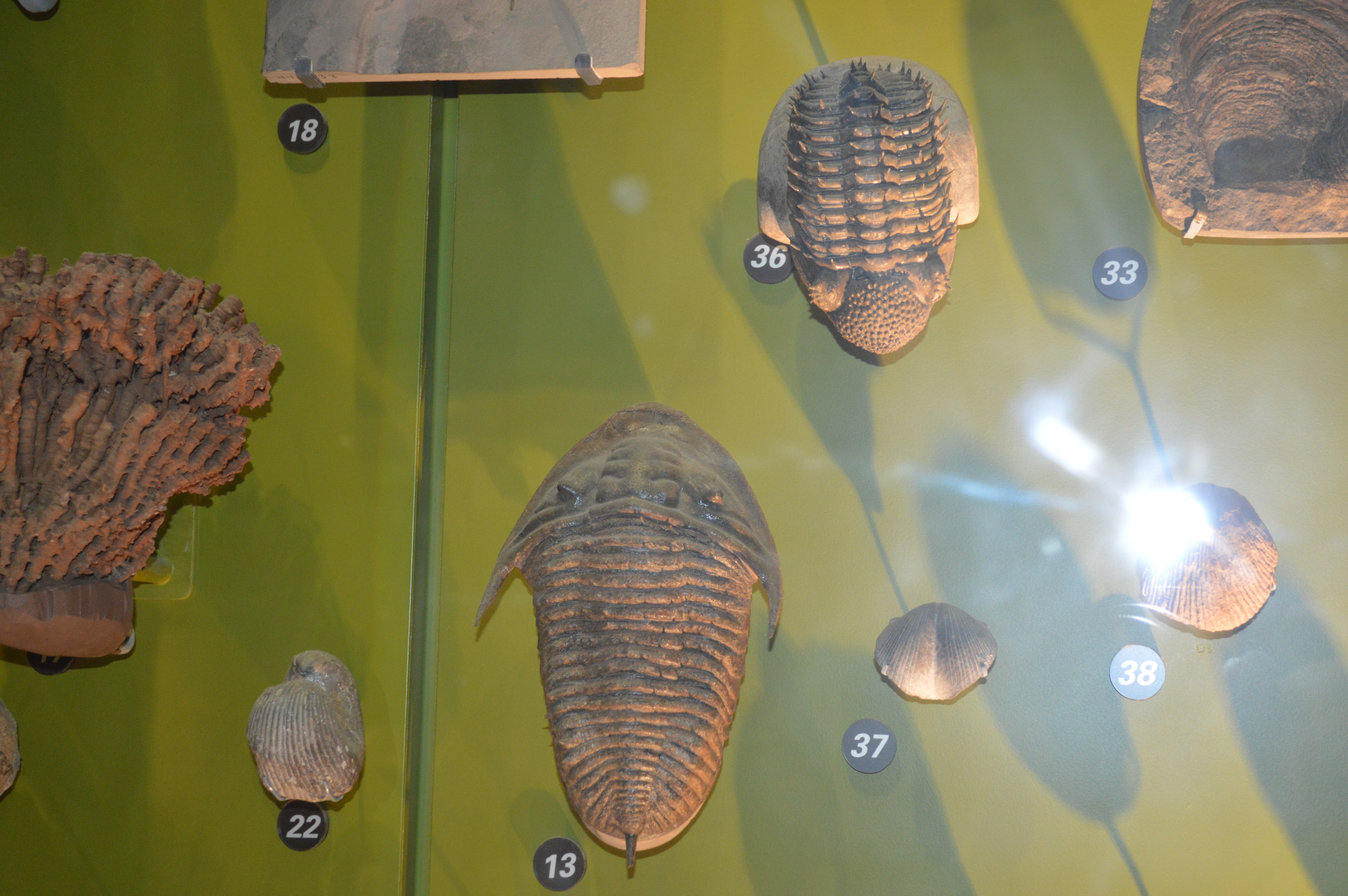
Next, I walked down the Mall to the Museum of Natural History. As always, I enjoyed looking at the dinosaur fossils, but I wanted to have a close look at the trilobites, which are much much older than dinosaurs.

Trilobites were marine arthropods that began their run around 520 million years ago. They developed an amazing variety of body types during the 270 million years (give or take) that preceded their extinction. RIP. Nature has done a lot of amazing experiments!

I returned to Raleigh on Sunday afternoon in time to go to the recital of my piano teacher, Olga Kleiankina. Her program, like her, was Russian: Alexandr Scriabin (1872-1915), Nikolai Medtner (1880-1951), and Sergai Rachmaninoff (1973-43). She played brilliantly. She’d told me a couple of weeks ago that she was struggling with memorizing the Medtner piece (the Tempest Sonata), and I was feeling a little anxious for her, but she seemed completely in command. The piece was very dense, and at first I was a bit bewildered, but then I got my bearings. I particularly enjoyed the Scriabin Black Mass sonata. From our work together, I know how intensely she focuses on sound colors, and now that I’ve learned to hear some of those things, the music took on a new dimension.

There was a good piece on the Sunday NY Times about the sense of hearing, and the difference between hearing and listening. According to Seth Horowitz, we react to auditory signals 10 times faster than visual ones. Hearing is an early warning system, among other things. He notes that close listening is hard in a world where there are endless distractions, but that we can get better at it. I concur.

A piano tuning and a ballet board meeting

My Steinway grand piano (an A) is a gorgeous musical instrument, but it is subject to entropy. It needs a regular tuning, and lately a few notes in the lower-middle range sounded overly bright to me.

On Saturday, Phil Romano, a master Steinway technician, tuned it and did some voicing by needling the hammers. Phil was about to take off on another tour with Paul McCartney, and shared some interesting stories of Sir Paul’s performing in the Queen’s Jubilee, the Olympics, and South America.

With the benefit of Phil’s good tuning and voicing, I had a gratifying session with my instrument on Saturday. Recently I’ve felt a bit stuck on the same musical plateau. Although this has happened from time to time over the years, each time it’s uncomfortable, as I wonder whether I’ve gone as far as I can go. An essential part of the joy and challenge of the classical tradition, for me, is forward movement. It’s true that I’m now playing better than I ever imagined I would, but still, I would see no point to practicing if I didn’t expect to achieve greater technical and artistic mastery. This is one of the reasons it is so important to have a teacher — to get you unstuck when you’re stuck.

Anyhow, today felt as if I was getting unstuck. For a devoted student of the piano, there are few things more pleasurable than a freshly tuned Steinway. I played some of my favorite Chopin, Debussy, and Liszt works, and made some headway on my assignments from Olga — Rachmaninoff’s Elegy and Chopin’s etude op. 25 no. 12. Also, for a special treat, I read through some of Tchaikovsky’s Nutcracker. The Waltz of the Flowers really works as a piano piece! I’d like to polish it up for the holidays if I can find the time.

Speaking of the Nutcracker, this week I had my first meeting as a new member of the board of directors of the Carolina Ballet. I’m really pleased to be able to help support this wonderful company. It’s also good to meet other people who really love ballet. As Ricky Weiss pointed out at the meeting, not everyone likes it, and some actively dislike it, but those who care about it care a lot.

In his report, he noted that we have a particularly strong group of dancers now. In the all Balanchine program, he had four different Apollo’s. It is, he said, an extraordinary thing, particularly in a company of this size, to have four males who are all capable of fully expressing this difficult role. (In an interesting coincidence, this morning the dance critic of the New York Times discussed Balanchine’s Stravinsky ballets and led off the discussion with Apollo.)

There are lots of things to be happy about, including the company’s large number of performances, the large number of new works, and the consistently high standard of performance. Weiss noted that the current group of dancers have achieved a high level of individuality, by which I think he meant they are artists who express not only the classical tradition but also themselves.

At the same time, there is a real concern about company finances. This is no great surprise. Since the recession of 2008, times have been hard for lots of people, including lots of arts organizations. But realizing this does not lessen the difficulty for this particular organization. I continue to think that there are more people around here who would enjoy ballet who haven’t yet discovered it, including some who would find it rewarding to help support the company. I hope so.

Wonderful Balanchine ballets, and friends

We just loved the new Carolina Ballet program, A Balanchine Celebration, which we saw when it opened on Thursday night.  It ran the emotional gamut, from wrenching (Agon) to carefree (Who Cares?), all, naturally, by George Balanchine, the greatest choreographer of the twentieth century.  
It was all wonderful, but I have to mention especially Lara O’Brien and Eugene Barnes in the Agon pas de deux, with music by Stravinsky.  As I mentioned to Lara afterward, it truly made me uncomfortable, as it surely is meant to do.  She took the angular movements to a frightening extreme.  I was reminded of something I once read about Suzanne Farrell:  she made the audience sweat.  Margaret Severin-Hansen and Pablo Javier Perez were deft and delightful in Tarantella.  I also had a new appreciation for Jan Burkhard in Valse Fantaisie and in Who Cares.  She’s got a spunk and sass, which worked particularly well in the Gershwin.
I need to give a special note of appreciation to the pianist for the Gershwin, Karl Moraski.  I was on the second row, practically inside the piano, and could hear every detail.  In my jazz period, I listened to multiple versions of all these iconic standards, and learned not just the tunes and harmonic structures, but also the words to all these songs.  Moraski was faithful to the spirit of the music; Gershwin would certainly have approved.  I spoke to him afterwards to congratulate him, and verified that he had done the arranging.  I noticed that the dancers seemed to be smiling a lot during the Gershwin, and wondered for a minute if they’d been coached smiling.  Then I realized I was smiling a lot, too.  The great music, and Balanchine’s lighthearted ballet translation of MGM musical-type dancing, was delightful.  
Last year we made a contribution that made us the pointe shoe sponsors of Lola Cooper, and so we always watch her performances with particular interest.  She had a charming pas de deuz with Nikolai Smirnov in the Gershwin piece, S’Wonderful.  She’s got a ton of warmth and vitality, and just keeps getting better.
One of the great things about having exceptional artists in the 42d largest city in America (as opposed, say, to the first, second, or third) is you can, if you want to, talk to them.  Earlier in the week, I’d sent Ricky Weiss a link to a Ted Talks talk by the choreographer Wayne McGregor.  At intermission, he told me that he really appreciated my sending it, and he absolutely hated it!  It was contrary to everything he believed dance should be trying to do.  He found it hollow and superficial.  I didn’t think it was quite that bad, but what do I know?  As I told Ricky, whatever the merits ot McGregor’s choreography, I thought it was worthwhile that the Ted conference was engaging with dance, and it suggested another avenue for exploring and communicating about creativity.  Ricky seemed to be of the view that there was no redeeming quality.  He just couldn’t stand it.  
At the other intermission, we had a glass of wine and a chocolate in the donor’s room, and two of the new dancers of the company came up and introduced themselves:  Colby and Laren Treat, who are twin sisters from Ilion, New York.  I was so impressed that they had the gumption to come right up to us and start talking.  That’s not an easy thing to do, for a young person or any person.  They were really friendly and had interesting things to say about the program.  
I feel so fortunate to be able to meet and be inspired by all these artists.  It’s one more great reason to live in Raleigh, NC.  Earlier in the week, I had lunch with my friend David Meeker, who was recruiting me to join the board the City of Raleigh Museum.  David is still in his twenties, but has contributed significantly to civic life by founding the Busy Bee Cafe and developing the building with Beazley’s and other properties.  We agreed that Raleigh had come a long way and had a ton of great things happening (e.g. arts, food, sports, commerce), but was still struggling with its branding.  I thought the museum might help develop a richer understanding of Raleigh, and agreed to consider joining the board.
As I’m posting this, we’re in RDU airport (free wifi!) about to depart for Italy.   is our first trip there, and has been a long time coming.  I almost made it when I was sixteen, and was recruited for an orchestral music program by the NC School of the Arts in Siena, but lacked the necessary funding.  I almost made it six years ago, but then my Mom fell ill.  So now we’re going to do it.  I’ve reviewed numerous guidebooks, and listened to 15 CDs of Pimsleur’s Italian.  I think it’s going to be great.  More to come.  

A fine start to a new dance season

Looking south from Casa Tiller at sunrise.

Raleigh, where I live, is definitely not New York or San Francisco, but still, it has interesting people, universities, sports, and good restaurants. Also, lots of beautiful trees. And a thriving arts scene, including excellent music and dance. I’m particularly proud of our ballet company, the Carolina Ballet, which punches way above its weight class, both in terms of great choreography and great dancers. It started its fifteenth season this week.

On Friday we had a fine dinner at Poole’s Diner and then saw the new program, which features four works by artistic director Robert Weiss. Weiss, an alum of the City Ballet, is a legitimate and distinguished heir of George Balanchine, and he’s still creating masterworks. Each piece of the new program was quite different from the others and touched on different emotional places.

My favorite was a new piece titled Meditation from Thais, with familiar music by Jules Massenet. It was an adagio pas de deux performed by Lara O’Brien and Marcelo Martinez. The dancers, both in white leotards, began clasped together in single shape, which gracefully transformed itself and then divided into other aspects. There were no program notes on the piece, probably because the subject was clear: a man and a woman. It was sensuous. Lara is at once willowy and strong, and in this piece, intensely tragic.

The other new Weiss ballet was Intimate Voices to music by Jean Sibelius. Its theme seemed to be families and loss. The distinguished cast was headed by Melissa Podcasy, who is retiring after this program and assuming new coaching duties. Fortunately, she’s still in great form. The first movement had gorgeous Edwardian costumes, with the ladies in pastels and hats and the gentlemen in tails, and ended with a patriarch’s death. The scenery involved projections of country scenes, which were effective. I found the piece touching and look forward to seeing it again.

We talked with Ricky Weiss at intermission. He was happy with the performances, but worried about the company’s finances. Ballet is a labor-intensive business, and even with dancers working for less than seems fair and reasonable, the costs are high, and balancing the budget is a constant challenge.

The most cheerful piece was the first one, set to Prokofiev’s first (“Classical”) symphony. This involved classical costumes, complete with tutus, and a more traditional movement vocabulary. The last piece was Symposium to music of Leonard Bernstein, which is one of my favorite Weiss ballets. Eugene Barnes was particularly wonderful as Dionysos.

On Saturday we walked a few blocks to the SparkCon street festival and looked at dozens of pastel drawings on the Fayetteville Street pavement. There were musicians and circus performers, and lots of spectators. At sunset we went to the top of a parking deck at Salisbury and Hargett and watched hundreds of chimney swifts darting and swarming, and finally dropping into a large chimney.

Carolina Ballet’s brilliant Beethoven, and a Porsche track day

Clara at VIR on May 19, 2012

Sally and I went to the Carolina Ballet’s final program of the season on Thursday night. Ballet has so much emotional power. How fortunate are the dancers who can embody it and touch us with it. As they move, our minds move and feel. Could it be our mirror neurons? Perhaps that, combined with a common tradition and vocabulary of movement. Maybe, when all the stars align, we connect at a fundamental level with the dancers and the dance, and are changed ourselves.

On Thursday, we saw the world premier of Robert Weiss’s new ballet, Beethoven’s Ninth, and found it very powerful. The music is iconically familiar, but apart from the familiar ode to joy, extremely strange. Weiss’s creation honors the tradition of the music, and also brings it into the present. He uses a large cast and a lot of movement. The stage surges with high-speed running, leaping, and spinning in every direction, creating tension and excitement. It’s wonderfully dense and complex, like the music. The work seems more about groups and relationships than about individuals. I thought it was truly brilliant. Is this possible? Could a work of amazing complexity and transcendent beauty shine forth in Raleigh, our sweet but modest mid-size southern city Of course!

On Friday and Saturday, I took Clara up to Virginia International Raceway for some track driving fun. Both days were mild and sunny. There were dozens of beautiful Porsches, along with quite a few BMWs and Corvettes, and onesies and twosies of other vehicles. I was paired with Mike T, a very experienced teacher and Corvette guy.

There are seventeen turns in the 3.27 mile VIR course, and each one is different. Mike expected me to know them by name, and have a plan for each one. As we did laps, we communicated through in-helmet headsets. He coached me through each turn and gave instant feedback, such as, “You turned in too early,” “You need to brake earlier,” and, occasionally, “That was good.”

Like a lot of accomplished people, Mike was a perfectionist, and it was difficult to satisfy him. I felt a bit discouraged. At times he seemed to be coaching me towards a high-speed disaster, which in retrospect I think was the result of my not getting some of his vocabulary. Anyhow, there were some close calls involving taking too much speed into corners. But as the laps accumulated, the percentage of good turns increased, and I was passing most of the cars in my group. Mike didn’t make me feel great, but he may have helped me move me towards the next level.

Cutting wood, not fingers, trying a good new Italian restaurant, and enjoying the Carolina Ballet’s Carmina Burana, but worrying about the dancers’ low pay

On Friday afternoon a group from the Red Hat legal department worked on a Habitat for Humanity house in eastern Raleigh. It was a warm, sunny day. I managed to work up a good sweat nailing boards together, and pulling apart ones I didn’t line up properly before I nailed them.

I also spent some time cutting boards with a circular saw. My father was a passionate woodworker, and the sound of the power saw brought back childhood memories — of trying to watch TV and not being able to hear it because of the power saw. Dad was always worried that his or someone else’s children would hurt themselves with his power tools. He did not generally encourage visits to his wood shop, and managed to implant in me the idea that little fingers can be sliced off very easily. This is a particularly horrifying thought for a pianist. Thus I was probably a more deliberate sawer than most.

Afterwards, after knocking off some of the sawdust, a few of us had a beer at Sammy’s, a sports bar. We learned that Barrett is coming into the home stretch towards his wedding day, with a Caribbean honeymoon in St. Lucia to follow, and Madeline had decided that her next vacation will be in Curacao. I encouraged them to try some scuba diving. Madeline said that she had some claustrophobia issues and a dread of fish bites, and so she was not overly keen, but Barrett seemed game.

That evening Sally and I tried Tuscan Blu, a new Italian restaurant in the warehouse district. We got there at 6:20 with a view to finishing in good time for the ballet by 8:00, and were the first ones there. It was empty, but we quickly got a good vibe from the friendly staff. When we asked about wine, our server summoned the owner, a big, gray-headed, Italian guy, who, instead of discussing the matter, brought us out a bottle of Italian chardonnay that he said we would like. We did. People began to come in, and the place started buzzing. The olive oil in the salad dressing was excellent, as was the pear and ricotta fiochhi. We’ll be going back.

The Carolina Ballet featured a revival of Carmina Burana and three short new works inspired by a local exhibit of the art of Alexander Calder. This was our fourth Carmina, and I’ve liked it better each time. It is a rich, complex work. Lynn Taylor-Corbett’s choreography melds with Carl Orff’s powerful, strangely ancient-yet-modern choral music in a way that seems organic: it feels as though the music and dance were created together, instead of sixty some years apart. . The performance on Friday had a quasi-orchestra (two pianos and percussion) and the 140-voice Raleigh Chorale, well conducted by Al Sturges, made a big, pleasing sound.

The work opens with a group of male dancers in business suits with leather briefcases, which is both humorous and disconcerting. We quickly realize that it’s about our society, with a range of characters from Wall Street operators at the top to laborers at the bottom. The theme is the power of the goddess Fortuna — in other words, luck. Characters from all walks of life excitedly scratch lottery tickets, and are disappointed, and scratch again. Suddenly, one wins! And his life and the group’s is reorganized. One lover is discarded, another appears, then a child, who a moment later is a young woman. Temptations (lust, greed, etc.) arrive, and corruption develops, followed by pain and loss. The wheel keeps turning, with more rounds of the lottery, and eventually, there’s a new winner.

Yevgeny Shlapko played the Man Who Wins (the first lottery winner) with grace and maturity, and stylish athleticism, and paired well with Melissa Podcasy, who had beauty and depth as Woman Who Yearns. Their Daughter Who Dreams was played for the first time that night by Lola Cooper, who was both funny and graceful in conveying the excitement and storms of adolescence, including having a first cigarette. Marcelo Martinez was Man of Darkness, a personification of evil that was both frightening and seductive. I was very happy to see Alicia Fabry back after her injury as A Lost Soul, a role in which (against type) she projected a tragic neuroticism.

The first half of the program had works by Timour Bourtasenkov (a principal in the company), Zalman Raffael (a member of the corps), and Tyler Walters (now on the faculty at Duke). I particularly enjoyed Lindsay Purrington and Yevgeny Shlapko in Raffael’s piece, The Ghost, with music by Darius Milhaud. Walters’ I Mobile to music by Prokofiev was an intricate, modernist work that connected well to the mobile idea.

Afterwards, we met Lola at Humble Pie and caught up. She told us that there had not been much time to put together Carmina Burana, and she hadn’t had a chance to rehearse with the orchestra. She said she hadn’t tried smoking until the night before, and worried that she might have a coughing problem in performance. We talked about the problem of the extremely low salaries of the dancers, and particularly those in the corps.

This is something that has bothered me for a long time. These extremely gifted young people have spent most of their lives in sustained dedication to their art, and have overcome enormous odds to join the few who are paid professionals. They’re incredibly successful — sort of. They get the satisfaction of practicing their art at the highest level, but get paid at a level that is ridiculously low. Paying for the rent, the car payment, and groceries is difficult, or perhaps just not possible without a second job (which is very difficult to put on top of the time demands of the company) or help from parents or elsewhere. If we care about dance, we need to care about the dancers, and figure out a way to pay them a living wage.

Sharing piano music, buying a painting, and going to a new ballet

Stuart is not overly excited about our new painting

What does art mean to life? I’ll take a strong position, and say, simply, everything.

My brother, Paul, and sister-in-law Jackie were passing through last week, and we convened for dinner at Zely and Ritz. But first, they came up to our apartment to see the view and have a cocktail. I wanted to play some piano music for them, but hesitated to propose it. Sharing serious music just isn’t something people normally do in these modern times.

I also recognize that for some people it would be an imposition. I think my playing is thoughtful and nuanced, but it isn’t perfect. Even if I were a seasoned professional concert artist, it would still be true that my nineteenth and early twentieth century repertoire would not be to the taste of everyone. Although it amazes me, I understand that some people find it bewildering or boring. I hope this is mostly because of lack of education and exposure — which is one reason I think it’s important to share it.

Fortunately, Paul and Jackie studied music in college and enjoy various genres. And so I played for them some Chopin (the Nocturnes in c-sharp minor and D flat) and Debussy (the First Arabesque). They sounded good, though maybe a little stiffer than when I play for myself alone. Playing for someone else dramatically changes the sensation of making music. Perhaps it’s from adding adrenalin. Things that seemed settled can become unsettled. Sometimes new beauty emerges, and sometimes things fall to pieces. This is one of the reasons I was happy to have these family listeners — without listeners, it’s impossible to learn how to communicate the music. Paul and Jackie seemed to enjoy it, and were very gracious.

At lunch time on Wednesday, Sally and I met at the Adam Cave gallery to look at some paintings. Sally had followed up on a review she’d read with investigation on the Internet, and come up with some works that might work for us by Byron Gin. Adam, the proprietor of the gallery, had agreed to pull together his stock of Gin works, and told us more about the artist. We both felt excited about Three Birds and a Cup, and discussed it more over a lunch at the Remedy Diner (great veggie sandwiches and rock music). The next day, we decided to take him up on his offer to take the painting home and see how it looked before committing.

Three Birds and a Cup, by Byron Gin

I think it’s a touching, slightly funny and engaging painting. The house sparrows look like quizzical house sparrows, but the space looks vibrant blue and gold paint. The yellow cup looks like a cup. The eye and mind shift back and forth between the birds and the cup, and the natural and human world. I find it nourishing and stimulating.

Friday night, we ate at Buku before going to the ballet. It was unseasonably mild, so we sat outside at dinner. Buku has increased its vegetarian offerings, and the ones we tried were good: baba ghanoush, arepas, and lentil wat. I also had the flight of three half glasses of Chilean wines, which were quite delicious.

At Fletcher Hall, we heard choreographer Lynne Taylor-Corbett speak on the new work to be performed that evening, The Little Mermaid. We’ve liked many of LTC’s works, including Carmina Burana and Carolina Jamboree. She’s a very engaging personality, and articulate and down-to-earth about what she’s trying to do.

She didn’t put it this way, but The Little Mermaid seems designed for ballet newcomers and kids. This was somewhat true of her The Ugly Duckling, but I found Duckling more elegant and touching. Jan Burkhard as the mermaid was lovely and girlish, and fun to watch, and Randi Oseteck as the sea witch was a great villain. And I particularly liked Lindsay Purrington as the sly village girl who tricks the prince. She made the part more sympathetic than the story might have suggest, so that I was sorry when she got her comeuppance. The costumes were mostly delightful. But I found the music intensely cloying, and the narration at times plodding.

The second half of the program was duets of a serious and more classical nature. I particularly enjoyed Lara O’Brien in an intensely tragic Weiss pas de deux with music by Gustav Mahler (one of the true greats). Peggy Severin-Hanson and Marcelo Martinez were powerful and delightful in Le Corsaire pas de deux. It was great to see this significant chapter in ballet history brought intensely to life.

I recently finished reading Apollo’s Angels, a history of ballet by Jennifer Homans. I found some of it heavy going, particularly the early stages, but it was worth it all for the last couple of chapters, including her writing on Balanchine, which was full of insight. It’s unfortunate that she ends the book on a sour note in which she opines that ballet is dying. From where I sit, there’s still a lot of life. I just checked the repertoire list of the Carolina Ballet, and noted that they’ve presented versions of many of the works that Homans discusses and treats as high points of the art. I’m so glad they’re here.

Curiosity, live chamber music, and wonderful ballet

Curiosity killed the cat, but I’ve come to see curiosity and openness to new experiences as major contributors to happiness. This week the NY Times science section had a story that supported this view. The story by John Tierney focuses on “novelty seeking” as a personality trait. According to one study, persons with the highest life satisfaction were those who scored high in novelty seeking and balanced that trait with high levels of persistence, meaning staying with an effort when there’s no immediate reward.

The same study mentioned a third trait associated with those who flourished most, in terms of health, friends, and emotional satisfaction, which it labeled “self-transcendence.” This is “the capacity to get lost in the moment doing what you love to do, to feel a connection to nature and humanity and the universe.” Tierney cites research indicating that novelty seekers exhibit more personality growth as they age. But it is also associated with such problems as gambling and drug addiction, compulsive spending, and criminal behavior. Too much of a good thing, perhaps.

I’ve noticed that lately I’m getting more and more enjoyment from music and dance, which may derive from persistently seeking novel forms and self-transcendence. I’ve been getting out to more live performances these last few years, which helps. I heard an interview with James Levine, the great conductor, in which he compared a recorded performance to music to a post card of a scenic view — that is, a pale reflection of the live event. That may be an exaggeration, but I think he was right that there is no good substitute for live performance.

And so Sally and I made our way to Fletcher Hall last Sunday afternoon to hear one of the world’s premier piano trios, named for its members: the Kalichstein- Laredo-Robinson Trio. They were master musicians and played an excellent program of Mozart, Debussy, Richard Danielpour (b. 1956), and Ravel. Laredo (violin) and Robinson (cello) have been married for 35 years, and the Danielpour piece was a duet written for them entitled Inventions on a Marriage. It covered a range of moods, from passionate to tender to humorous, and the musicians were, as you’d expect, in intimate communication.

Unfortunately, the audience was sparse — about 160 people. I felt embarrassed on behalf of Raleigh that there weren’t more people to hear these truly great performers. As a member of the board of the sponsor, the Raleigh Chamber Music Guild, I felt some responsibility. Afterwards, several board members exchanged emails theorizing about what happened.

Did we not publicize the event enough? I think we did not. Is the audience for this music disappearing? I sincerely hope not, but I guess it’s possible. Chamber groups like string quartets are what TV ad writers plug in when they want to quickly depict the opposite of cool and hip. And they aren’t really wrong. Unlike things that are cool, chamber music is not instantly accessible. It takes years of training and devotion to play, and it also takes education and experience to enjoy. Those of us who have been privileged to have such education had better figure out some way to educate others, or we may lose something precious.

Enjoying ballet also requires some amount of education and experience, although it doesn’t rank as high on the endangered-arts list. I’ve been fortunate to have had early exposure, starting with my sisters’ elementary ballet recitals and continuing through high school at the N.C. School of the Arts. I got to see George Balanchine’s New York City Ballet and other great companies. And I’m continuing to learn from watching the work of great choreographers and dancers, and also reading. I’ve almost finished Apollo’s Angel’s, Jennifer Homan’s impressive, and daunting, history of ballet.

On Thursday we went to opening night of the Carolina Ballet’s new program, Balanchine Rarities. The program opened with three short but very technically demanding Balanchine works. The dancers were beautiful, even in sequences that seemed designed to test their physical limits. I especially enjoyed A la Francaix, a piece in the playful spirit of Jerome Robbins’s Fancy-Free, with two rambunctious sailors, a fun-loving Flirt, a Dandy with a tennis racket, and a diaphanous Sylph, who competes with the Flirt for the Dandy. Jan Burkhard was delightful as the sexy Flirt, and Lindsay Purringon found a sweet combination of elegance and humor in the Sylph. Eugene Shlapko was athletic and funny as the Dandy. He’s getting better and better.

At intermission we talked with Lola Cooper, who had the night off. She was fighting a bad cold and losing her voice, but excited about working with Marina Eglevsky, who staged the Balanchine works. We also talked with Alicia Fabry, who had broken her right metatarsal the previous week during rehearsal. She was in a plastic cast and using a crutch. Poor thing! She said the break could have been worse and did not require surgery, but would take several weeks to heal.

The company also performed Lynn Taylor-Corbett’s Lost and Found, inspired by the 9/11 attacks and set to piano music by Robert Schumann. It is a elegaic work, somber but beautiful. The last work was Robert Weiss’s Moving Life to piano music of Erik Satie. Roy Dicks’s review in the News and Observer singled out Cecilia Iliesiu for her performance, which I thought was fitting; I also thought she seemed like a rising star.

The Nutcracker and a piano lesson

We went to the Carolina Ballet’s new production of The Nutcracker last week. Over the years, I’ve seen many Nutcrackers, from student productions to the NY City Ballet’s. In days gone by we used to listen to the Tchaikovsky music when we decorated the Christmas tree. I’ve never actually gotten sick of it, but a few years back I started to worry that it could happen. With the ballet music, just as earlier happened with the Brahms symphonies, I decided that I needed to be careful not to get so familiar as to lose the great joy of the thing. And so we hadn’t gone to the Carolina Ballet’s Nutcracker for the last couple of years.

I’m glad we returned. The CB production was substantially upgraded with new sets and effects. I enjoyed the upgraded magic tricks in Act 1, and thought the costumes in the ball scene were opulent. Act 1 is the children’s act — with magic tricks and children playing, but not a lot of dancing. Act 2 is more for the grown-ups, with a variety of virtuosic classical dance. The leading female roles in the performance I saw were wonderful, including Lilyan Vigo as a regal Sugarplum Fairy, Jan Burkhard as an outgoing Dewdrop, and Lara O’Brien as an unusually poignant, melancholy Tea. The men seemed especially athletic (gravity-defying) this year, including a particularly impressive Richard Krusch and Nikolai Smirnov.

Before the show, we agreed to celebrate the occasion by relaxing as completely as possible and just drink in the production — that is, clear the mind of everything except the beauty in the moment. We mostly succeeded. There were a couple of rough spots with the props, including the giant book with the false back that didn’t quite get closed in time. The sound quality from the live orchestra coming through speakers was less than excellent. But mostly we were swept away to a beautiful, magical place.

We met up with Lola and her boyfriend, Rodrigo, after the show, and learned that she’d had to switch roles at the last minute and, due to another dancer’s health problem, perform in a position she’d never done before. She said it was one of the least enjoyable shows of her life, because it took so much work, and was very far from solid. Of course, none of that was visible to us — she looked great. It was good, though, to be reminded of how hard the performers work to create the appearance of effortlessness.

At my piano lesson last week, Olga touched on this point. I’ve been bringing at least some memorized music to our lessons, and from time to time memory glitches occur. To fix this, part of her approach is to minimize dependence on muscle memory and build security through harmonic analysis. At the same time, she recommends thinking about the movements of the arms, wrists, and fingers as choreography — that is, gestures that have beauty separate from the beauty of the sound (but contributing to it). Planning the gestures and getting them ingrained is part of learning the piece.

At the lesson I began with Chopin’s mazurka opus 63, no. 3 (c sharp minor). (It’s unfortunate that great composers of the Romantic period passed on giving their works names. With 51 published mazurkas, it’s hard even for musicians to keep them straight by number. I generally try to think of a name for the ones I learn. I think of this one as: Sharp Longing.) It has unusually strange, sad harmonies and dissonances. I managed to play it coherently, and was pleased that Olga noted some interesting and lovely things. But, she noted, there was still a lot of work to do.

It is daunting to face Olga’s listening powers. At one point she perceived, correctly, that I was not carefully listening to what I was doing. “You’re faking it,” she said. Note, I was playing the right notes, but not balancing them in a considered way. This is a high standard — not just playing right, but playing with deep understanding. She acknowledges that there are many possible ways to play a phrase, but it is not acceptable to just play the notes without understanding and feeling.

As best I can tell, she does not draw a sharp line between the physical, intellectual, and emotional aspects of playing the piano. She recommended that I think about touching the keys as though I were speaking, which I found helpful. She also forced me to consider carefully about how my thumb moved to contact a key as opposed to the other fingers. We also talked for a while about the role of the elbow in certain situations. Not to mention the wrists! And that’s before we even get to the form or the music, or what it is trying to say. After the mazurka, we worked on the Etude Op. 25, No. 1, and Debussy’s Reverie. At the end, I felt tired, but inspired: there’s so much more challenging, beautiful music ahead.