The Casual Blog

Post-Enlightenment thinking and Michelle Bachmann

Is there any question that science, logic, and reason are excellent tools for problem solving? OK, these systems aren’t perfect, and they don’t apply to every problem. But can any thoughtful person fail to recognize their power to transform civilization and improve lives?

The answer is yes. Some people rely primarily on myth and magic as thought systems. But I normally think of these people as a not-very-significant minority. It may be, though, that that minority is getting more significant.

A column in the NY Times today by Neal Gabler posits that we live in a post-Enlightenment society that has gone backward intellectually to a method that does not employ rational thought. Gabler takes this as settled, and argues that it’s even worse: that we are moving into a post-idea world, where thinking is simply no longer done. Instead, we exchange undigested facts. As evidence, he cites social media such as Twitter and Facebook.

I’m not persuaded that social media is killing ideas, or even that the post-Enlightenment has arrived. But anti-rationalism is alive and well. Exhibit A: Michelle Bachmann. Yesterday Bachmann won the Iowa straw poll. In this week’s New Yorker, Ryan Lizza discusses the ideas that shaped her thinking.

Bachmann comes out of a tradition that believes the Bible is the literal, infallible, and unerring word of God. She claims to have a personal relationship with Jesus Christ, and believes that he controls her life. She’s also been influenced by various fundamentalist thinkers who have some disturbing notions, including a revisionist view of slavery that holds that it was not all that bad.

It strikes me as implausible that Bachmann could be a serious contender for the presidency, but her style of thinking is having an impact on public policy. It’s hard to understand how the Tea Partiers could refuse to discuss the issue of tax rates, and be prepared to insist on this point at the cost of economic catastrophe. But if you believe that your ideas are coming directly from God, how could you question them? Why would you care to listen to opposing views? Why would you consider compromise? Thus usually harmless nonsensical beliefs become dangerous.

Looking for good news, and finding some about prisons

These are stressful times. Current stressors include wars, riots, financial turmoil, unemployment, political gridlock, nuclear weapons, droughts, earthquakes, volcanic eruptions, tsunamis, global warming, and mass extinction. It doesn’t feel right to be indifferent to so much suffering and so many potential disasters, but taking it all fully on board seems impossible.

When I took the PADI scuba rescue course last month, I had in mind the possibility of helping someone in an emergency. One of the lessons, though, was that sometimes you can’t help. You may see someone in dire peril, and be the only person in a position to act, but lack the necessary equipment, experience, or strength to save the person without endangering yourself. In such a case, you should not attempt a rescue. Not acting would be traumatic, but it would be the least bad choice.

Some of the current crises feel bad in this way: we have a ringside seat as the disasters unfold, and there’s very little you or I can do directly. Well, we could try to avoid electing as our representatives people who are delusional. And maybe it does some good to keep talking about good choices as opposed to delusional ones. Maybe more sane days lie ahead. But meanwhile, even to have a chance, we need to take care of our own mental and physical health.

One of my strategies is to take special note of the occasional story involving something really positive. Good news is often disfavored for the front page, so you have to keep a sharp eye out for it. Recently I’ve spotted good news about decreasing crime rates, decreasing highway fatalities, decreasing intolerance for gays, and increasing skepticism about the war on drugs.

Here’s the latest from the NY Times: “Trend to Lighten Harsh Sentences Catches on in Conservative States.” The story by Charlie Savage identifies sentencing and parole reforms in a number of states that are lowering the prison population, helping drug addicts with treatment programs, and assisting convicts in reentering society. The driving force is not humanitarian concerns, but rather budgetary ones — imprisonment is expensive.

The prison overhaul movement is happening in Texas, South Carolina, Kentucky, Arkansas, Ohio, and elsewhere. The movement is supported by a number of prominent conservatives, including Edwin Meese III, Newt Gingrich, and William J. Bennett — all strict law-and-order authoritarians from way back. This is quite amazing.

The story notes that there are also a few states that have revoked programs for early parole, including New Jersey, which changed its policy after two inmates released early committed murder. It is difficult for statistical evidence of social benefits, no matter how strong, to overcome a vivid anecdote. So the whole thing could still fall apart. But maybe it won’t.

Gary Player’s diet and exercise routine, and a few thoughts on yoga

One of the nice things about getting older is that you gradually worry less about being cool. You slowly realize it’s almost impossible to be old and cool, and give up on the idea. Letting go of such worry frees up some energy for more fun.

Age is tough on a body. Fight as we will, eventually we’ll all succumb. But I see no real choice but to fight. Over time I’ve become more dedicated to the battle for good health, though it occasionally strikes me that it could be viewed as hopeless, ridiculous, or both. A middle-aged white guy sweating — for what? It’s certainly not cool.

Thus I was cheered and inspired this week by an account of Gary Player’s fitness program now that he’s 75. As golfers know, Player is a legendary player, with more than 160 tournament victories. In his prime, the man was known to be serious about exercise, and he still is. His routine involves 1,000 sit ups and push ups every morning. He does lunges and squats, works with weights, and runs, swims, and does stairs. As for diet, Player says that it’s 70 percent of the fitness puzzle. He eats a mostly vegetarian diet heavy in fruits and vegetables, and aims for portions about half the size he used to eat. He says he has more energy since he cut the meat, and his stomach works better.

I also have found that a diet of moderate portions of plant foods is energizing. And so is regular morning exercising. Lately I’ve been noticing how during most of my waking hours I feel really good, and feeling grateful for it.

I’m especially grateful to my yoga teachers (Yvonne, Suzanne, Kathleen, Jill, and others). Over the past couple of years, yoga has gradually insinuated itself into my life, and has become a good friend. Lately I’ve been doing two or three classes a week at Blue Lotus. Every teacher and every class of every teacher is different. Some classes are quite arduous (think high heart rates and lots of sweat) with an element of risk, and some are very slow and calm.

When I began, I’d expected that yoga would help my flexibility and balance, which it has, but it has done some other good things that I hadn’t expected. It has made me a better breather and more conscious of the significance of breath. It has helped my focus and concentration. And it has made me view relaxation as an essential element of good health.

There’s also something pleasing about exercising in a class. It’s sometimes humbling but often inspiring to see so much strength and grace in the group as it moves together. I like the sound of people breathing in unison. It’s good to be with people who are committed to taking good care of their bodies. And it’s fun.

Golfing at Turnberry, Scotland

Turnberry, Scotland (Kintyre)

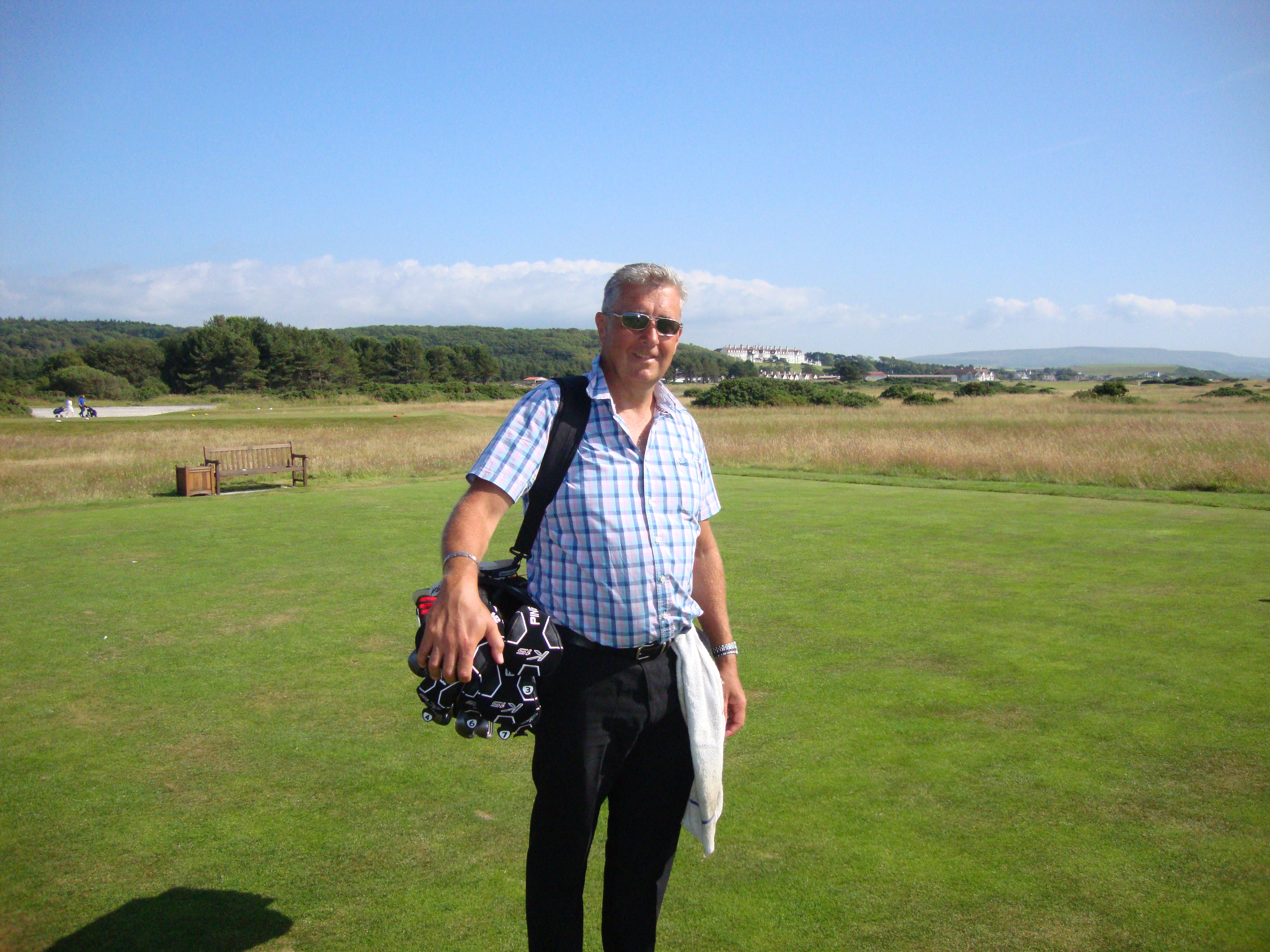
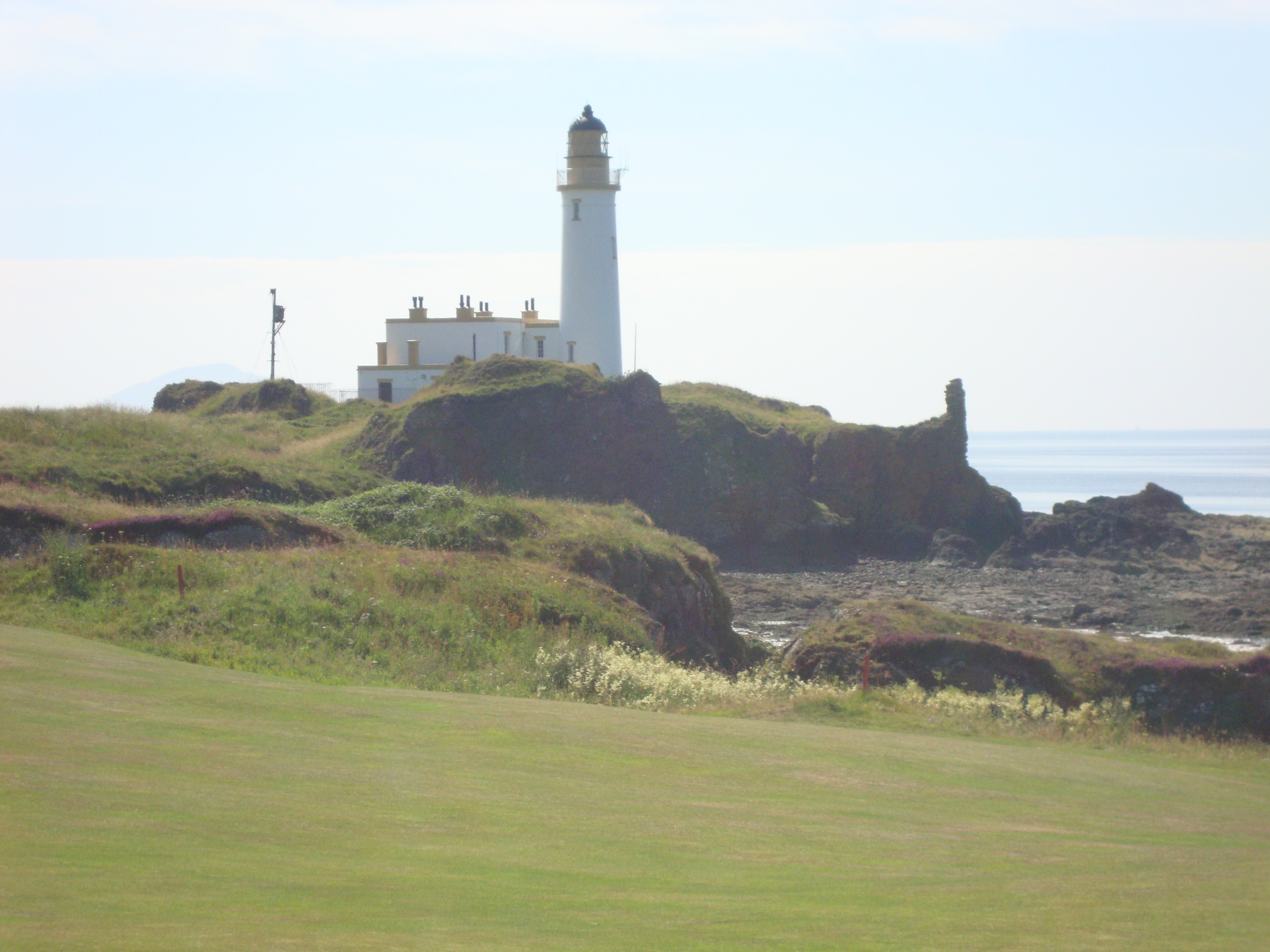
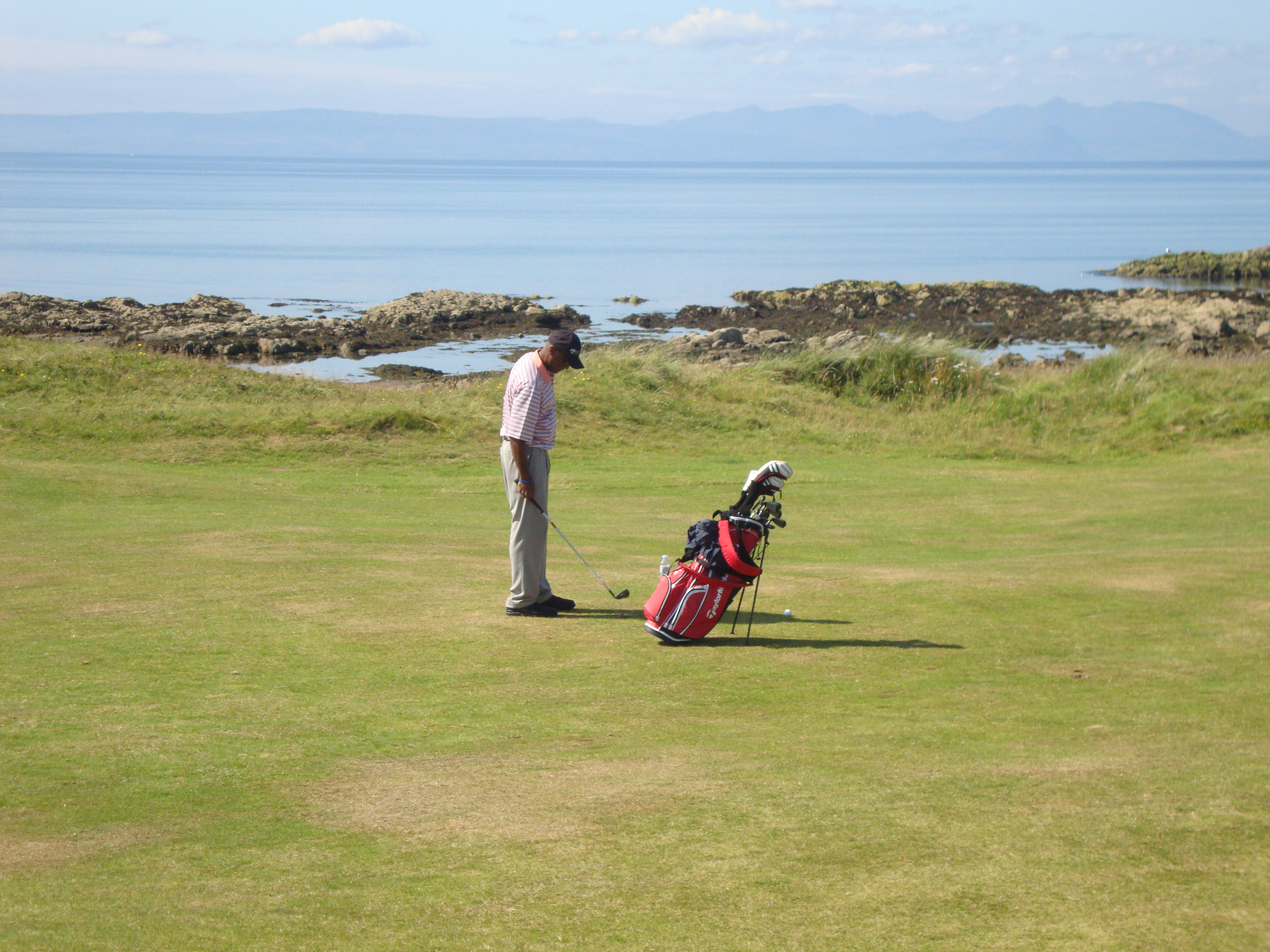
Last week I played golf at Turnberry, Scotland, rated the number one course in the British Isles, and the site of numerous British Opens. Is it really so great? In a word, yes. It was golf nirvana.

I played the famous Ailsa course the day I arrived, immediately after traveling all night. The day was sunny and mild — possibly too pleasant for a representative experience. At almost every hole, I had a shiver at the beauty. It had a raw, untamed quality, but I gradually realized that it brilliantly combined the natural contours of the terrain with a deep understanding of the essence of golf. Its authors and keepers loved the land, and the game.

It demanded constant vigilance and focus. The hazards were, in golfing terms, serious — deep bunkers with walled backs, knee-high grass, spiny gorse, and water. I had one disastrous descent into a bunker, costing four strokes to get out. But I generally controlled the ball well, with a handful of excellent shots. I did not putt particularly well till the end, when I finished with a flourish — sinking a thirty-footer on 18 for a birdy. I ended up with a 92.

I played the Kintyre course the next day. The skies were overcast, threatening (but never quite delivering) rain, and there were gusty winds — proper Scottish golfing weather. The ocean is a bigger element in this course, and the bunkers less. It seemed less imposing than Ailsa, with views of the surrounding hills and pastures, but the level of difficulty was challenging enough. I played reasonably well for me on the first nine (46), but had a couple of bad blow ups in the second and finished with a 99.

Jim, my caddie, and a Linux fan

There is something about Scotland that spoke to me powerfully. The people seemed friendly, but practical and tough and very proud of their country. The countryside was rolling and rugged. I got a lesson in single malt whiskey, and learned that it a dash of water loosens it up.

After finishing my meetings, I had a few hours to walk about in Glasgow, and found it a lively, modern city with Victorian charm. I made a stop at the Gallery of Modern Art to see works of several contemporary artists, and also visited the Kelvingrove Museum. Their collection of Impressionists and Post Impressionists is quite good, and I also liked their collection of 16th century armor. There were lots of people out in Kelvingrove Park, which reminded me of Central Park in New York, but with grass tennis courts and lawn bowling.

The trip back was long — about 19 hours all told. It started with a 5 hour delay because of weather in Newark, and the 7 air hours were bumpy. One good word for Continental — they provided surprisingly tasty curry as part of my requested vegetarian meal. I ran out of electricity on both my iPod and iPad, and came close to running out of other reading material (horrors!).

The Newark to Raleigh leg was uneventful until near the end, when the pilot suddenly pulled up from the final approach and banked to circle around. My first thought was that I might have a rookie pilot, but he explained that there was a local thunderstorm with microbursts of wind. A few minutes later we made the final approach, and the plane began bucking and shimmying. I focused on deep calming yoga breaths.

Getting better (scuba rescues)

If I like doing something, I like getting better at it. In fact, I probably won’t like it for long if I can’t get better at it. They would mean doing the same thing over and over, and why would anyone want to do that?

I’ve recently been improving at several things I like, including playing the piano, golf, and scuba diving. This weekend, I took a big step forward in scuba when I took the PADI rescue diver course.

As I’ve noted in a prior post, I really like the idea of having enough first aid skills to help save a life, and so this project was particularly meaningful to me. The reading and classroom sessions gave me a greater knowledge base on the various things that could go wrong for careless or unlucky divers — equipment problems, encounters with venomous plants and animals, or underlying medical conditions. In each of these situations, there are ways to help, even if there are not complete solutions.

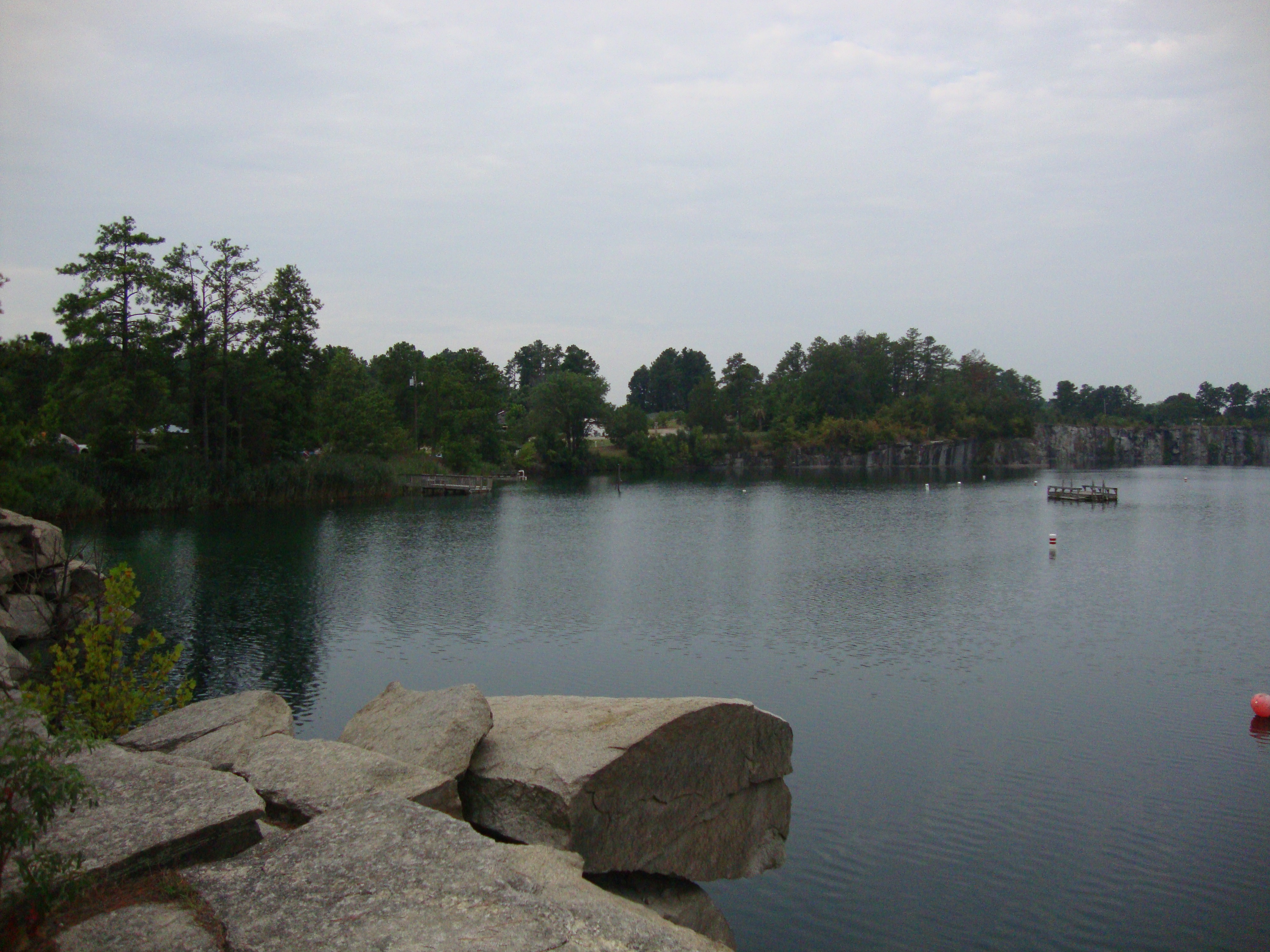
In the two-day skills class at Fantasy Lake Scuba Park (a former quarry), I was fortunate to have an experienced teacher (Nikki) with three able assistants, and a class (counting me) of four. There was a lot of individual attention. My fellow students were experienced divers who were focused and good humored. Charlie, a UPS driver, was particularly impressive in his emergency problem solving skills.

We were tasked with various stressful problems. A tired diver. A panicked diver. A missing diver. And many others. The required skills were many. We dealt constantly with situations that were novel and unsettling. This was, of course, tiring, but also stimulating.

There were physical challenges. I cut a finger, got stung by a yellow jacket on another finger, and got a bruise on an arm. Propelling a victim in while giving rescue breaths and removing equipment was complicated and exhausting.

There were also psychological challenges. I particularly dreaded trying to find a missing diver underwater; the combined problems of navigation in low visibility and a potential fatality were anxiety producing. I also dreaded the issues of rescue breathing for an unconscious diver in the water. The physical intimacy of face to face contact (even, as we did it, with simulated mouth-to-mouth breaths) with a relative stranger, even in the practice situation, was something I would rather have avoided. But in the end, it was manageable, thanks to my teacher and the assistants. With the benefit of the practice, I have a high degree of confidence I could actually take a run at helping someone in dire distress.

The exercise inspired thoughts of mortality, and life. I felt happy to be as healthy as I am. My regular morning exercise routine paid major dividends in the physically demanding parts of the course. My careful eating with an emphasis on things that are good for my body gave me good energy and balance. It worked out well. I would be very happy never to have to use these new skills, but I feel like I can do it, if necessary.

Celebrating a wedding and a birthday

Sally and I went to Virginia Beach last weekend for the wedding of my niece Lauren. We were looking forward to seeing my siblings and their families, but there was also a slight feeling of dread. We were from a different tribe from most of this community, which is largely evangelical Christian Republican. We always wonder how we’ll deal with our deep differences, but we always finesse it. Despite our different political and other beliefs, there are a lot of things we have in common, and we focus on those.

I used to find weddings (except for mine) slightly strange, but as the years go by, I find them more and more moving. Young people bravely pressing into the unknown, full of hope and optimism, full of love. Lauren was a beautiful bride, and bouncing with excitement. Dustin, her betrothed, seemed sweet and committed. The ceremony contained various religious elements which meant nothing to me, but the uniting of these young people meant much. And afterwards, I loved seeing all their friends dancing and having fun.

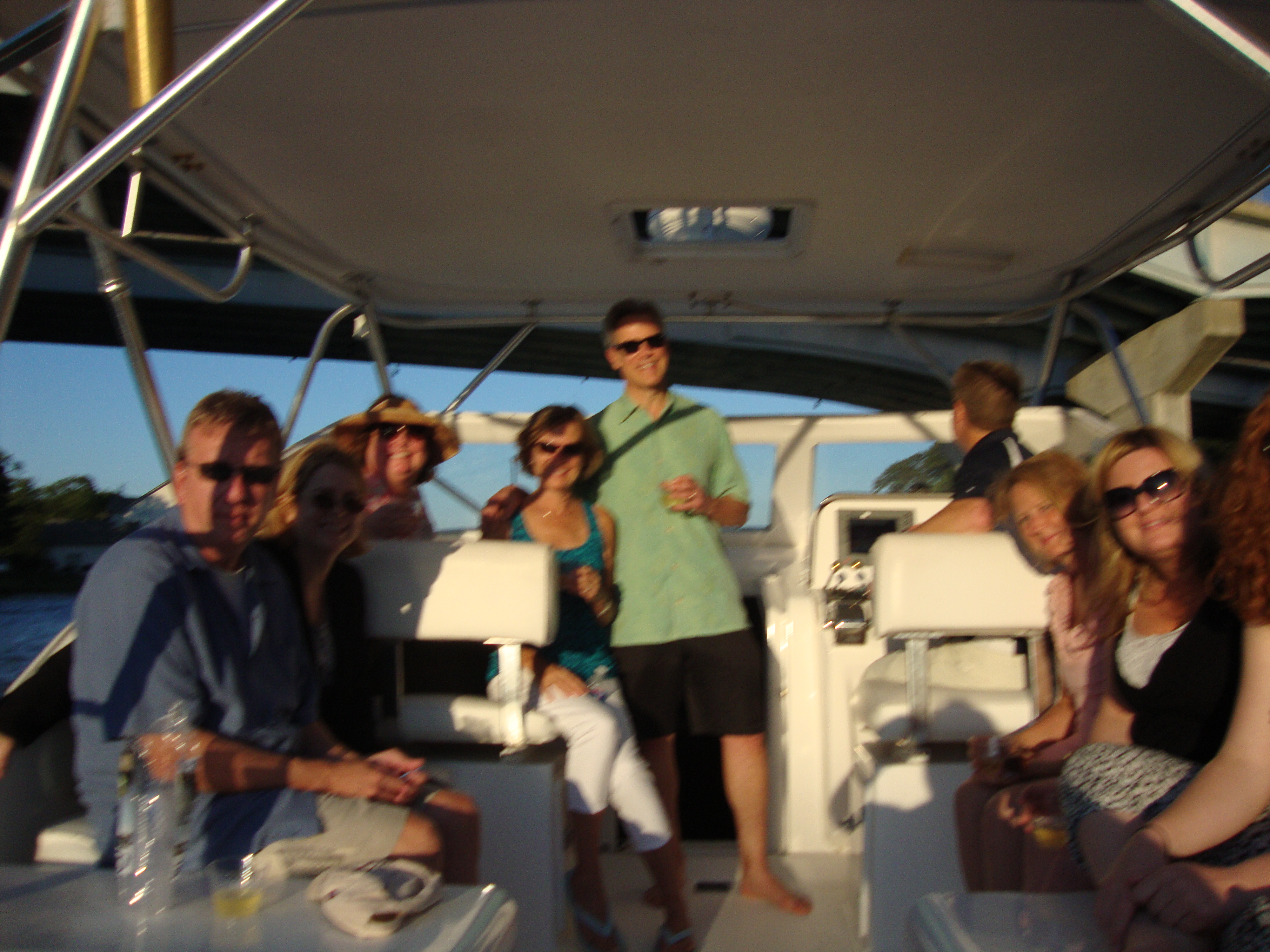
After the wedding, my brother Paul took us out on the Chesapeake in his 30 foot power boat. I took the helm for an hour or so, and found that keeping on course in choppy water was more work than I thought. It was sufficiently rough that there was some seasickness, and we aborted the longer journey we’d planned. But we found a group of at least a dozen dolphins, and got close to watch them play. We also cruised through the inlets and looked at the impressive homes and boats, and had some wine.

Lauren’s wedding day was also my 56th birthday. I don’t like making a big production out of birthdays, and was happy to have something to celebrate other than getting older. But over the weekend, I found myself thinking about this milestone, and how different it was from what I would have imagined. From the vantage point of Lauren (23 years old), I’d have assumed this would be a time of painful decline. But far from it. I feel full of life, full of passion, full of curiosity. There are so many things that I’ve just begun! So much beauty! So many possibilities!

A post-drive neck massage

The road trip last weekend was great fun, but the many miles of sport driving left me with a stiff neck. It was difficult to turn my head enough to back Clara out of her parking space. After three days, it was not much better. I got to early bird yoga early to ask Suzanne if she had a recommendation for a massage therapist. She did, and also was so kind as to take the class through some neck and shoulder stretches.

The next day I got the first appointment of the day with Meredith at Hands on Health. I was impressed with the professional atmosphere. The place seemed like a PT’s office, with a reception area, waiting room, and offices for several massage specialist. Meredith seemed friendly and chipper, and turned out to know a lot about neck problems.

She worked on my shoulders and lower back as well as my neck. In spite of her friendliness, she was not all sweetness and light. Parts of the work were amazingly painful. This was deep tissue work. She located muscular knots, and spent time digging into them. She’d given me permission to ask her to stop, but I wanted to get results. But it was a struggle. I worked on breathing deeply.

But afterwards I felt much better. Massage, like yoga, is a thing that I used to consider somewhat bogus, and have gradually come to think of as a wonderful gift.

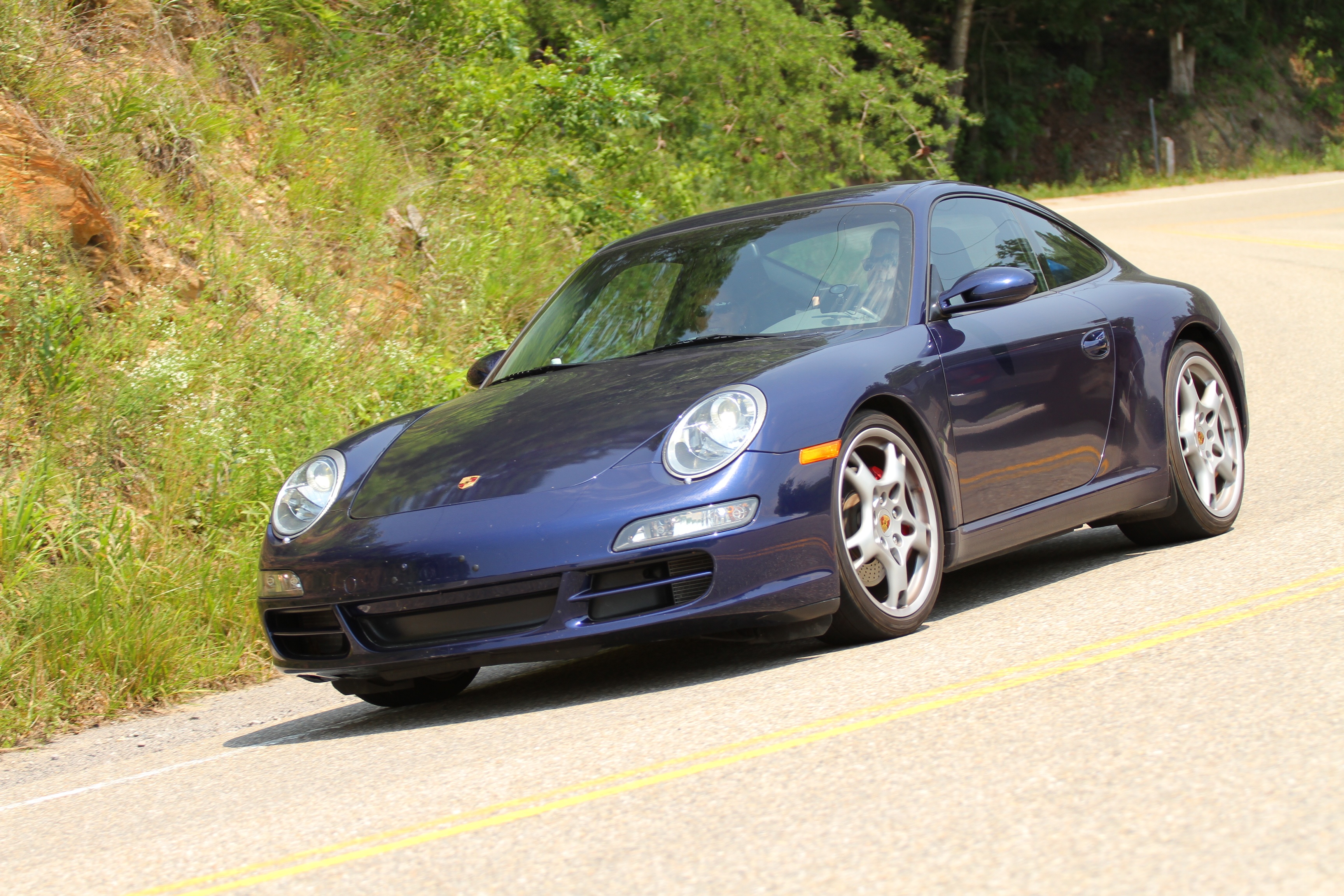
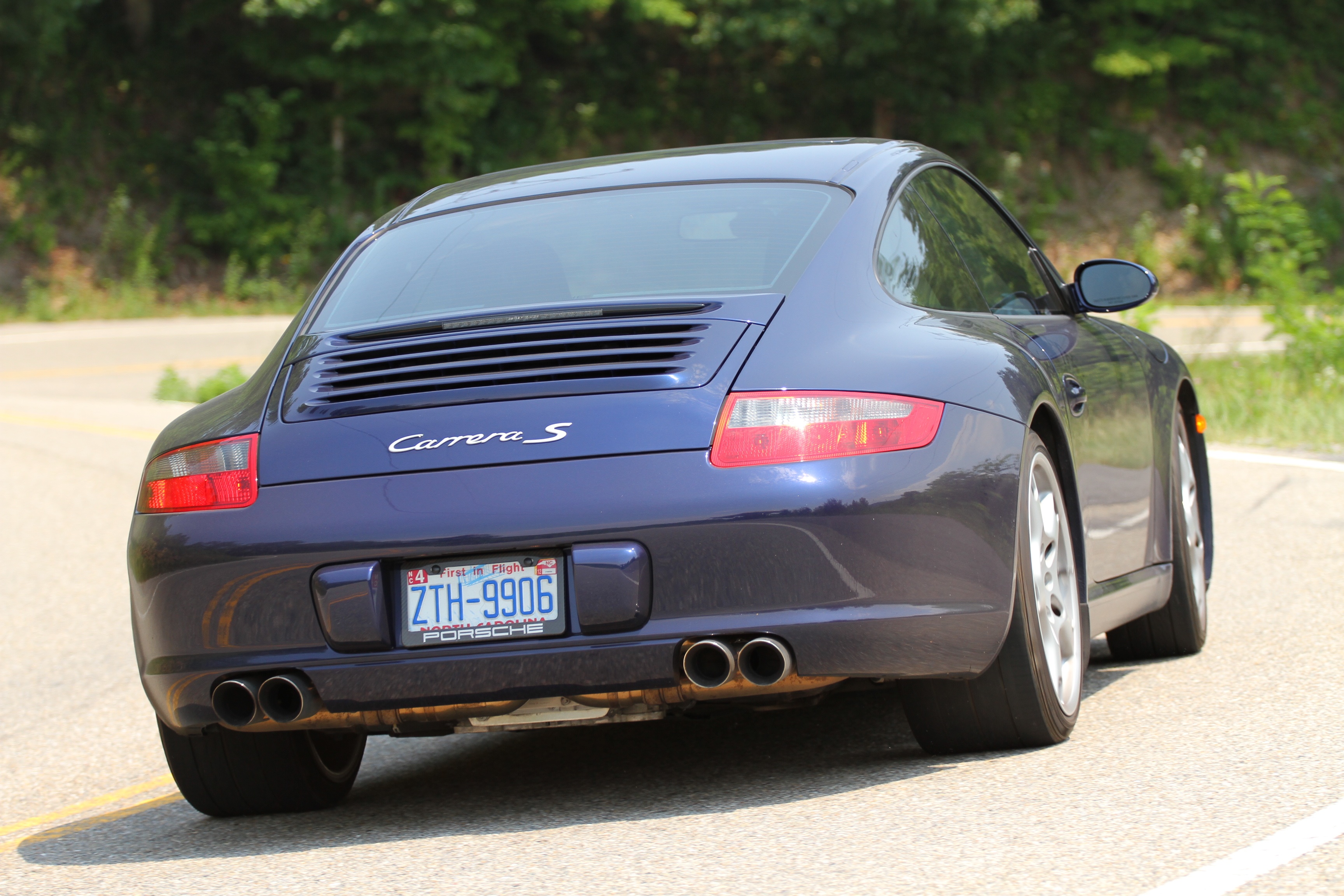
Thanks to killboy.com for the pictures of Clara on US 129, the Tail of the Dragon, on July 3, 2011.

A big road trip for the Fourth, including the Tail of the Dragon

For the Fourth of July weekend, I thought it would be fun to take a road trip to western North Carolina. It had been many moons since I spent time in the beautiful Blue Ridge mountains, and I’d never driven the serpentine roads in my beautiful Porsche. Sally was game, and so on Friday afternoon we loaded up and rolled out from Raleigh.

We spent that evening in Winston-Salem, where I grew up. We stayed downtown, and were surprised to find large numbers of young people eating at sidewalk tables and promenading. At our hotel, there was a convention of “greasers” into fifties/punk hair styles, big tattoos, and hot rods. I find big tattoos somewhat disturbing, but I found this group sort of cheering. These outsiders had some things to be happy about: something they really liked (cars and a certain look), the courage to come out proudly about their passion, and a community of like-minded people. It’s not easy being different.

We had dinner with my old old friend (since fourth grade) J and his wife N. J was my hero as a kid: great at things like throwing rocks, building model fighter jets, and finding discarded Playboy magazines in the woods. He’s become a successful construction supervisor for commercial projects, and pointed out some of his projects on the Winston-Salem skyline. It was good to refresh on our history and to catch up.

On Saturday we took Highway 421 to Boone, and once there decided to take 221 south. The road wound through the green mountains. During this stretch, I experienced a Zen-like connection to Clara and the road. No thought, just driving. Shifting to third, back to second, back to third, back to second, for miles. It was strange and wonderful to have no schedule and no place we had to be. We drank in the rolling mountain vistas.

We had lunch in Blowing Rock at Louise’s Rockhouse Restaurant, where we sat near a group of State Troopers in the motorcycle corp. The vegetarian options on the menu boiled down to one: a grilled cheese sandwich. But the service was friendly, and it was a perfectly fine sandwich.

We took the Blue Ridge Parkway south to Asheville, stopping now and again to enjoy the mountain views. In Asheville there were lots of street musicians and artsy looking folk, and no shortage of veggie friendly restaurants. We chose the Laughing Seed, where I had an interesting cocktail with ginger liqueur called East of Eden, and a mushroom risotto. We stayed the night in a B&B called Reynolds Mansion, which is an 1847 house that reminded me of the Addams Family’s place, but with beautiful rooms. The breakfast featured poached pears and eggs benedict, and the host told an elaborate ghost story about a portrait of a star-crossed plantation mistress.

After breakfast we drove west through Maggie Valley, Cherokee, and Bryson City, where we bought sandwiches at a Subway, then headed northwest toward Fontana Village. About 18 years ago, we had a week-long family vacation at Fontana, and remembered it happily. A significant memory of the trip was how difficult it was to get there on the windy mountain roads in the minivan, and it seemed like a good idea to try those roads again in a better vehicle. It turned out the roads had been widened to four lanes for most of the trip, and the only exciting part of the journey there was the last few miles. We ate our sandwiches at Fontana and recalled the happy vacation with little Gabe and Jocelyn — river rafting, horseback riding, swimming, ping pong, and shuffleboard.
Then we went north to US 129 and encountered the Tail of the Dragon. We’d heard of the road, but weren’t certain of the location until we came to Deal’s Gap and saw several dozens of Harleys in the parking lot of the motorcycle motel. So we drove it. It was like skiing black diamond moguls. It whipped back and forth, up and down through the Nantahala forest, never straightening for any length. Like a mogul run, it took total commitment and focus. We were fortunate to find long stretches with no one ahead or behind. 318 curves in 11 miles. A major dose of adrenaline. It was awesome. Awesome!

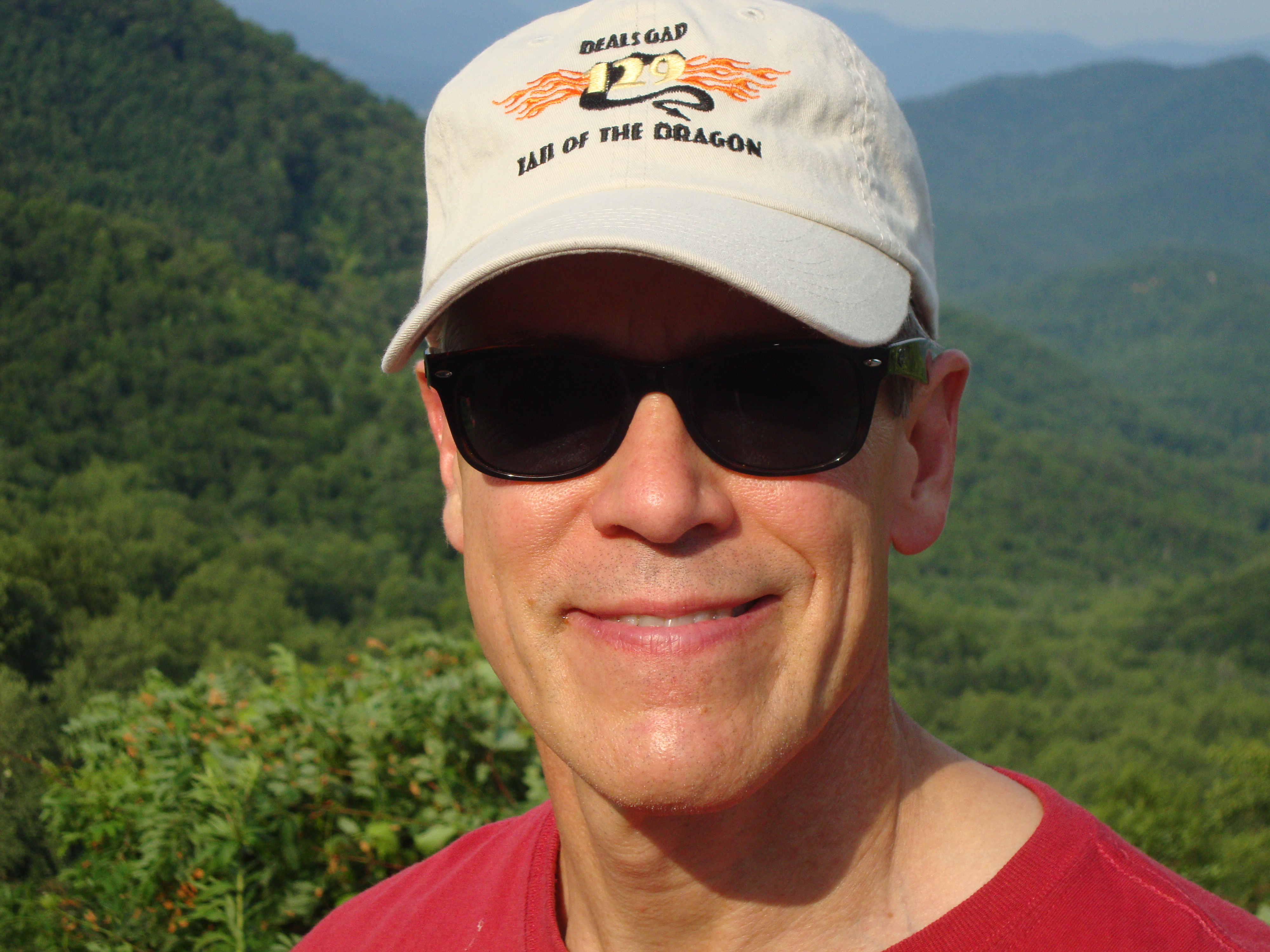
Returning, mentally exhausted, we stopped at Deal’s Gap and I bought a Dragon souvenir tee-shirt and hat. We sat around for a bit with the bikers, and noted the things we had in common and the things we didn’t. In common: love for vehicles and the road. Different: facial hair, cigarettes, tattoos. Some of them were scary looking. But I felt I understood much better what they were about after driving the Dragon. Like the greasers, these folks had embraced their differentness and found a kind of community.

Sally served as co-pilot and navigator throughout. She had no interest in taking the wheel, unless I threatened to fall asleep, which I never did. Amazingly, she was cheerful throughout. She never once expressed fear or even hesitation at the speed. She was game, and brave. We talked for periods, and were quiet and peaceful for periods. I realized, once again, that she was the girl for me.

For the most part, we navigated the old-fashioned way — with maps. I have a Garmin GPS, which is useful for getting from point A to B, but not for finding interesting byways. We missed our turns a couple of times as we headed back east (poor signage, we thought), but never worried excessively. We spent the last night in Franklin, then took US 64 back across NC. Total mileage for the weekend was just about 1,000. We couldn’t get over what a beautiful state this is.
A recording session at Manifold Studios with Michael Tiemann, John Q. Walker, and the ghost of Oscar Peterson

Last weekend I attended a recording session at Maniford Recording, my friend Michael Tiemann’s new recording facility in Chatham County near Jordan Lake. Michael’s been working on this project for four years, and it is clearly a labor of love. The setting is rural piedmont North Carolina, surrounded by farms and forest with lots of songbirds. (I heard a whippoorwill singing ardently for the first time this year or last.) The architect was inspired by Frank Lloyd Wright, and incorporated the golden ratio throughout the design. Michael explained his his purpose in terms of making great recordings with a total devotion to truthful sound. I noted that this is swimming against the tide of contemporary culture, which Michael conceded, but he noted that tides can turn.

The recording was done by software developed by Zemph, a company founded by John Q. Walker, who was also at the session. The objective was to reengineer a recording by Oscar Peterson (jazz pianist) and Ray Brown (bass) from 1949. A hundred-year-old Steinway that had once been at Carnegie Hall had been fitted out to play itself using Zemph’s software, and the Zemph folks had created a new instrument to reproduce the bass. The sound was uncanny. It was unsettling, but kind of moving, to see the piano keys moving, and the sound had authority.

I went through a long period of studying and really loving jazz. I still enjoy it from time to time. I particularly enjoy music from the big band era. But jazz sometimes gets more reverences than it deserves, based in part on the myth of improvisation. The non-musician perceives improvisation as a bold experiment, but it’s usually not. What improvisation mostly means is either variations on prior melodies or laying prefabricated riffs in various orders on top of fairly simple, repetitious chord structures. It can sometimes have energy and heart, but it can also be fairly boring. When I started to feel a little bored, I found my way back to the Western European musical tradition, in which composers wrote down ideas so rich that we still find, centuries afterwards, it interesting, and sometimes transcendently moving, to confront them. I don’t get that from Oscar Peterson.

John graciously allowed me try out the pianos after the session. I found the Carnegie Steinway a bit loose and diffuse, but the Hamburg Steinway was wonderful — brilliant colors and clarity. I worried that the reproduction equipment, including circuit boards attached to the keys, could affect either the sound or the action, but I couldn’t perceive any such effects. I played a bit of Chopin, including the Minute Waltz, and a bit of Debussy’s First Arabesque.

I enjoyed seeing the technology for recreating the performance, and the mixing session in the studio. And it was inspiring to see how passionate Michael and John were about the music. I have a soft spot for people that are absolutely passionate about art that will never win a popularity contest or make a dollar. It’s a reminder that art matters at the most intimate human level, and can inspire love so intense as surpass all rationality.

Discussing open source ballet with Robert Weiss

Do open source software and ballet have anything in common? Sure, they have some obvious differences. But they share an imperative to collaborate and a creative spirit. Anyhow, I’m a big fan of both, and I’ve been thinking about whether some of the lessons of open source could be applied to ballet. Last week got a chance to kick ideas on this around with a great choreographer, Robert Weiss.

Weiss, who goes by Ricky, is artistic director of the Carolina Ballet, which plays out of Raleigh, N.C. He spent the early part of his career as a dancer at the New York City Ballet with its famous director, George Balanchine. In more than a decade with the Carolina Ballet, he has been a prolific choreographer, producing dozens of ballets. He’s also recruited superbly talented dancers from around the world and melded them into an outstanding company. When we met last week, along with my friend CB Board Chair Melanie Dubis, at Buku for lunch, I thought, this must be close to the world’s greatest job — working every day with beautiful, talented, dedicated people to create art for the ages. What could be more wonderful?

When we met for lunch last week, it quickly became clear that it would be more wonderful to not be constantly worried about money. If only, he said, he had better funding, he could spend more time thinking about dance and less about fund raising. Ballet is an art form that entails numbers of dancers, all requiring paychecks, and the same for musicians, costume designers and costumers, set designers and sets, lighting designers and lights, stage management and crew, and of course, choreographers. As an art, it is capital intensive. There are inherent barriers to reaching a wide audience, including lack of exposure to the form and its traditions.

As Ricky described the process of creating a new work, it was plain that it was highly collaborative. When he choreographs a new work, it is created on specific dancers, and the work is shaped in view of their individual qualities. The work draws on a tradition that goes back to the Renaissance, with a large vocabulary of movements that are available for re-use. (As Ricky warmed to the subject, he stood up from the table and showed a couple of classical gestures, and his sudden transformation from regular person to dancer was electrifying.) And of course, there’s collaboration with the aforementioned costume designers, set designers, and many others. It is in general an art of great idealism and unselfishness, at least in the sense that almost no one expects to get rich from it, and many are prepared to subsist on a shoestring budget.

But in ballet as in most of our endeavors, there is an unexamined assumption that intellectual property protection is important. Thus copying of videoed performances is subject to the draconian penalties of copyright law. The dances are kept locked down, on the assumption that making them freely available could result in lost value. I raised the question with Rocky and Melanie whether this really makes sense. Is copyright protection actually increasing the value proposition of ballet, or is it lessening it?

As I explained, the open source software community has learned some lessons about this that the rest of the world is starting to apply. Open source innovators, whose projects are based on freely sharing their code, realized that the traditional approach to intellectual property would not work for them, and so they created new licensing models, such as the GPL, that encouraged sharing and re-use. That approach has led to incredible growth in open source software. The model is spreading outward to other creative endeavors with such tools as Creative Commons licensing.

Could it be that less IP protectiveness could expand the audience for ballet and bring in new funding? What if, instead of protecting ballet as carefully as possible with copyright, the product was unlocked and made available under a Creative Commons license? For example, if well-produced video of the Carolina Ballet was readily available on the internet without charge, couldn’t that introduce many more people to ballet, with some of them eventually becoming balletomanes?

Ricky noted that even the best video of ballet is only a pale reflection of the experience of live performance. But he also admitted that he knew of people who had had transformative personal experience through a recorded performance. He also noted that it would require funding to make video recordings of a quality that he’d be comfortable presenting in public. (Footnote: a couple of days after our meeting, I saw a documentary on the choreographer Jerome Robbins called Something to Dance About, which is great, and illustrates how video can communicate something meaningful about dance.)

Open source innovation generally involves experimentation. I noted that there could be approaches to video and to funding that none of us has thought of yet. We agreed to talk more about what might be possible. It may be that you have ideas or experience in applying open source methods to artistic endeavors. If you have ideas, please share them.